7 Days in Uzbekistan: Bukhara, Samarkand & Tashkent Itinerary

A week in Uzbekistan means three Silk Road cities: Bukhara, Samarkand and Tashkent. I planned my route from west to east — starting with the farthest city and gradually working my way toward the capital. Here’s how I split up the days, how I traveled between the cities, and what I managed to see in each one.
How This Itinerary Works
Bukhara gets 3 days, Samarkand 2, and Tashkent takes the rest of the week. I traveled from Bukhara to Samarkand by bus, and from Samarkand to Tashkent by train. Both legs take less than half a day, so no single day gets swallowed entirely by travel.
Why this direction and not the reverse? Tashkent has the country’s main international airport. If you start in Bukhara, you’re gradually moving closer to your departure point, and you spend your last night in the city you fly out of. If your flights are arranged differently, the route works just as well in reverse.
A quick word on the cities, if you’re just starting to figure things out. Bukhara is a compact old town where almost everything is within walking distance: madrasahs, minarets and trading domes stand just as they did centuries ago. Samarkand is a city of grand ensembles — Registan, Shah-i-Zinda, Gur-e-Amir — everything monumental and ceremonial. Tashkent is the modern capital, with Soviet modernism, the most beautiful metro in Central Asia and an enormous bazaar.
Day 1. Bukhara: The Old Town and Po-i-Kalyan
The first day is central Bukhara. You won’t need any transport here: it’s just a few minutes on foot from the trading domes to Po-i-Kalyan square. My main recommendation is to stay near the historic center — that way everything is a few minutes from your hotel, day and night.
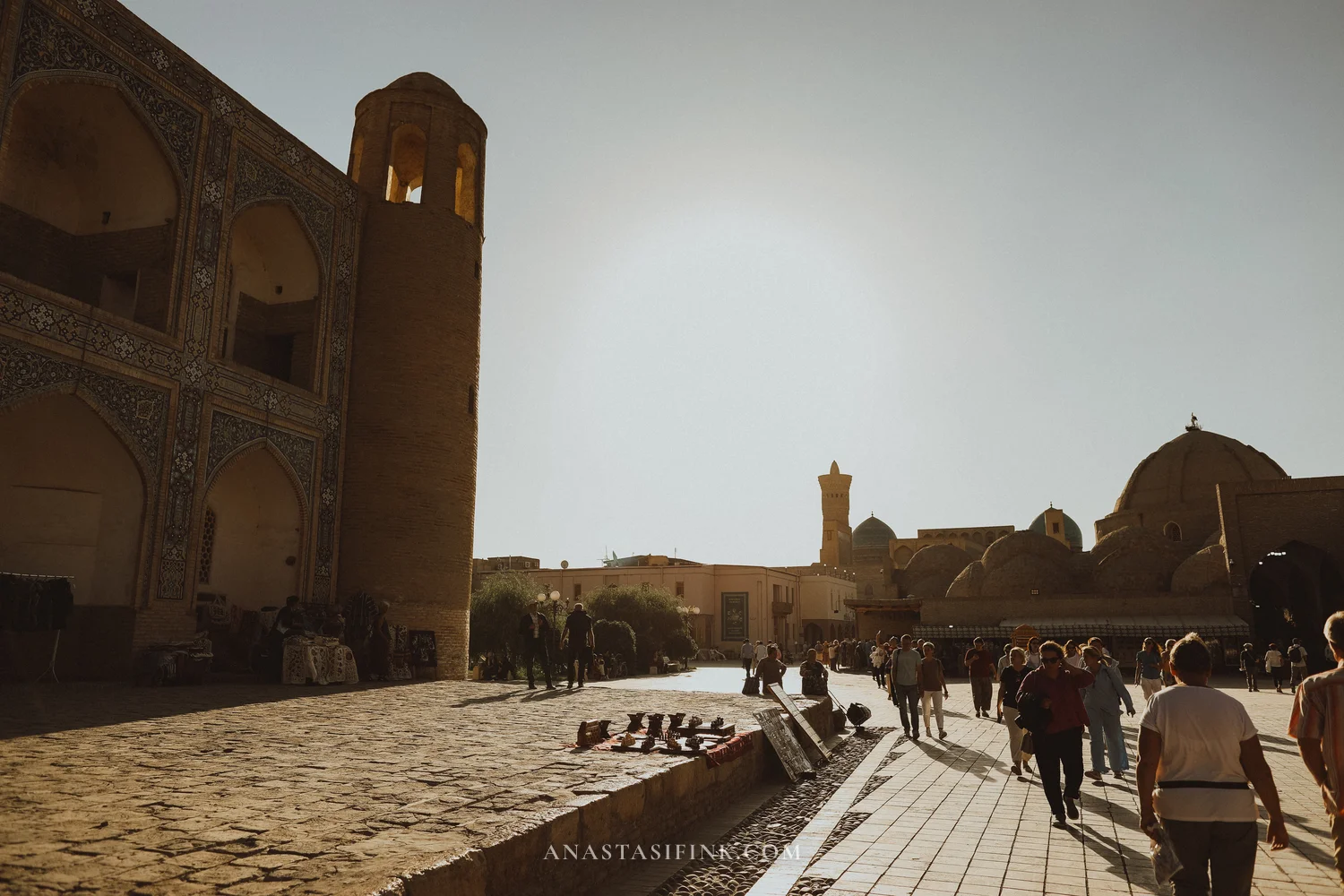
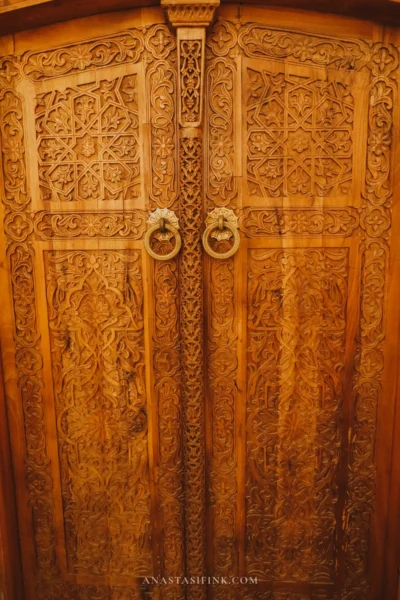
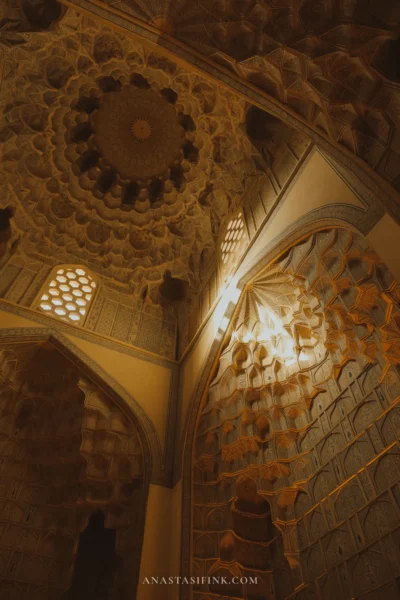
The city’s main ensemble is Po-i-Kalyan: a 12th-century minaret standing 48 meters tall, the Kalyan mosque and the still-working Mir-i-Arab madrasah. The square itself is free to enter; you only need a ticket for the mosque (around 30,000 UZS, ~$2.5). Right next door is the Abdulaziz Khan madrasah, with the most impressive muqarnas vaults in the city: the courtyard is free, and a small ticket (~20,000 UZS) gets you into a former study room housing a wood-carving museum.
In the evening, make sure to come back to Po-i-Kalyan: lit up at night, the square looks completely different than it does during the day.
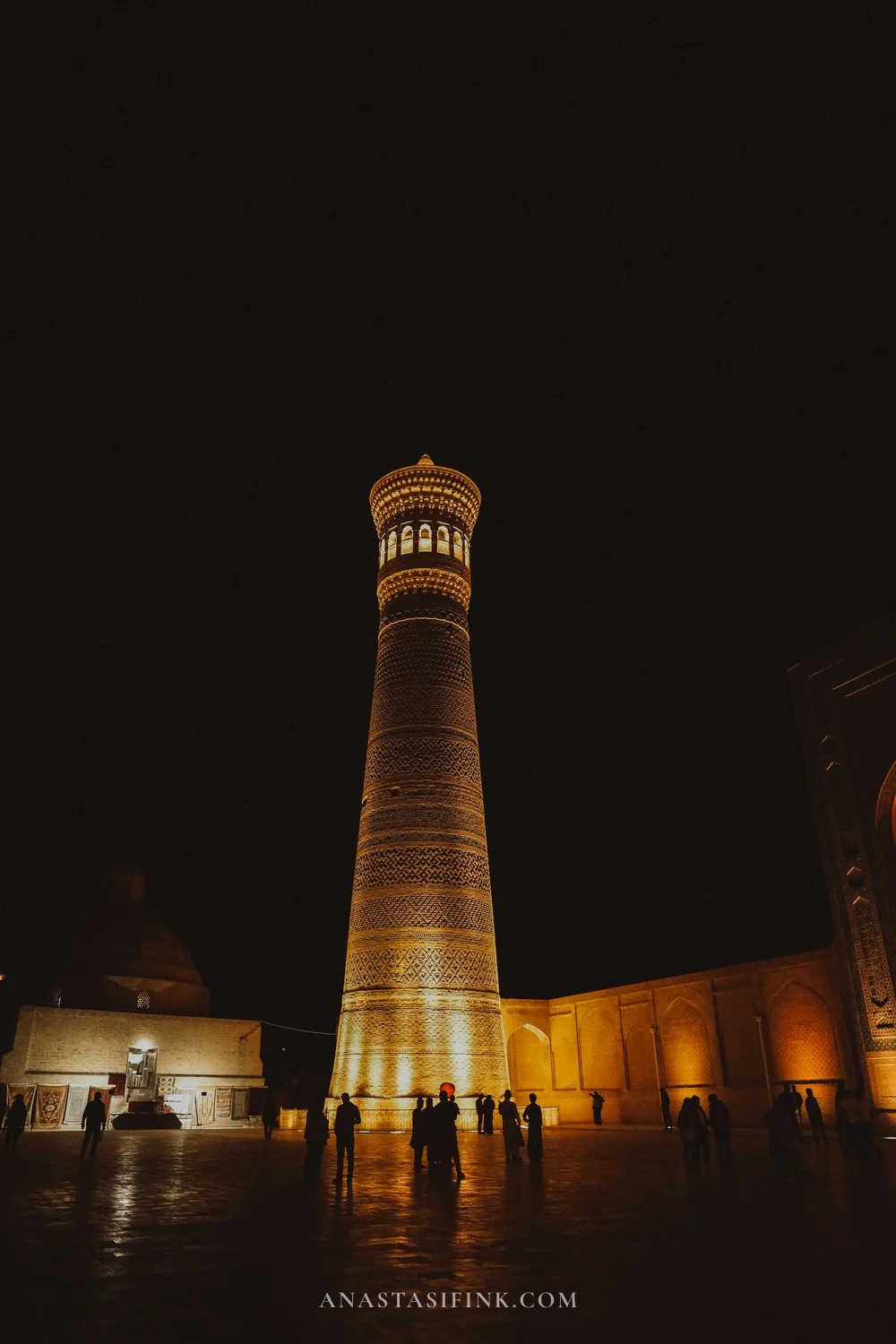
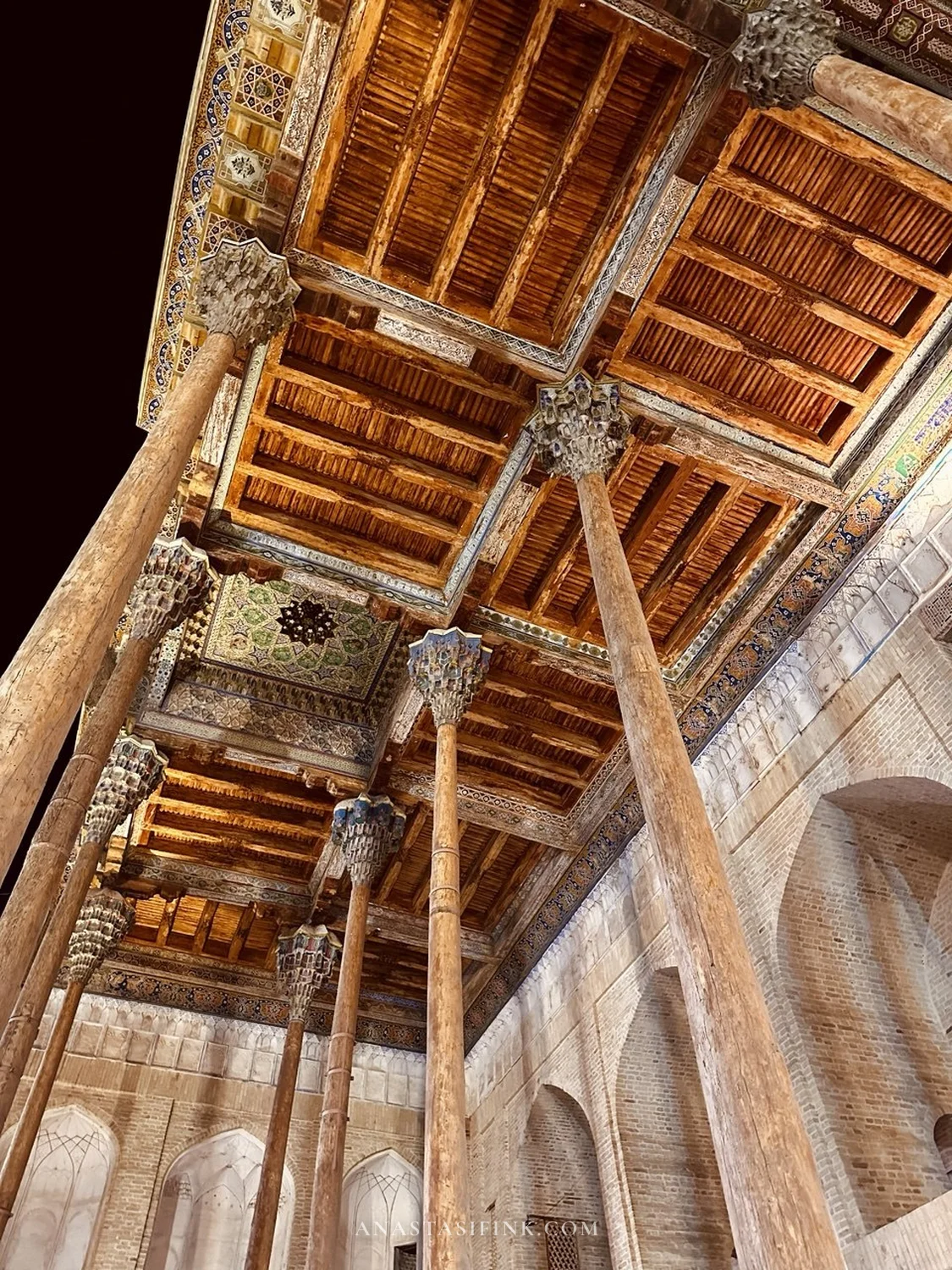
Bukhara in the evening: the Kalyan minaret and the wooden columns of the Bolo Hauz mosque
For a detailed breakdown of every spot in the old town — with prices, GPS coordinates and a walking order — see my separate guide: Bukhara, Uzbekistan — 8 Places to See: A Complete Guide.
Day 2. Bukhara: The Ark, the Samanid Mausoleum and the Emir’s Palace
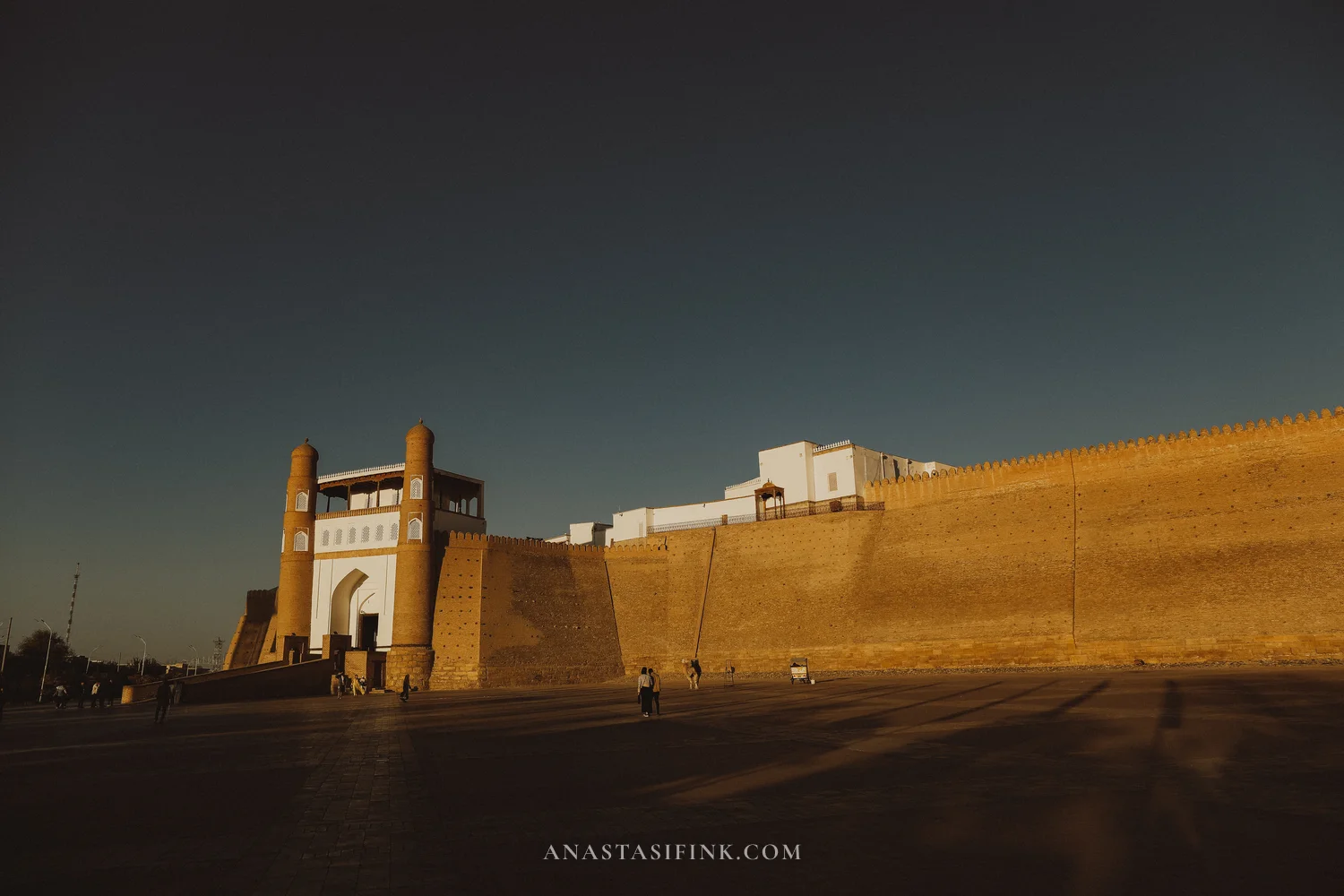
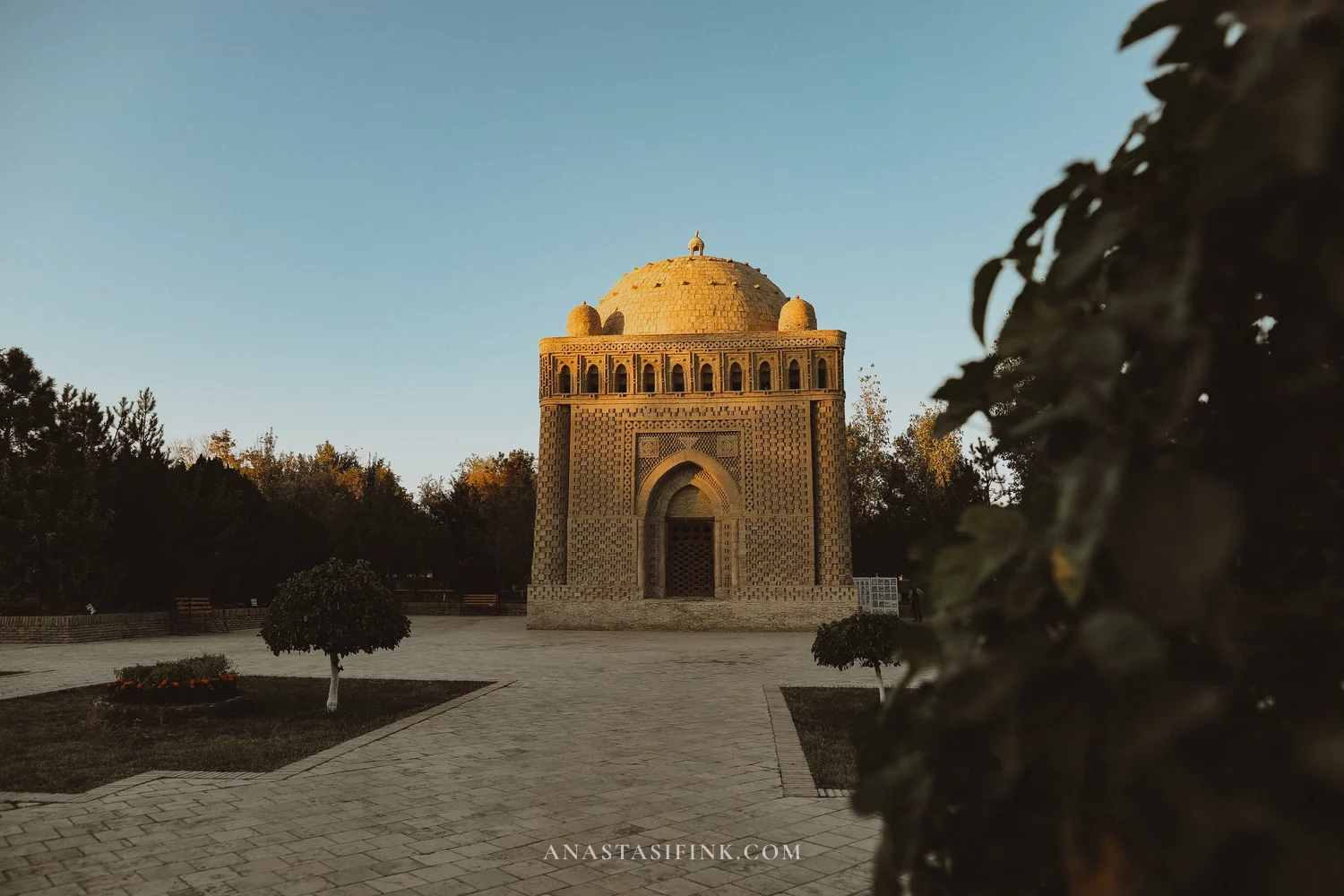
The morning of day two covers the western part of the center, again all on foot. The Ark fortress — the residence of Bukhara’s rulers, with massive clay walls — takes an hour to an hour and a half including the museums inside. Across from it stands the Bolo Hauz mosque with an iwan resting on twenty carved columns — another twenty minutes or so. Then, through the park, comes the Samanid Mausoleum, one of the oldest buildings in Central Asia (9th–10th century): a small brick cube whose pattern is formed by the brickwork itself; nearby is the Chashma-Ayub mausoleum with its unusual conical dome. Honestly, this whole program wraps up by lunchtime — which is why I saved the emir’s palace for the afternoon.
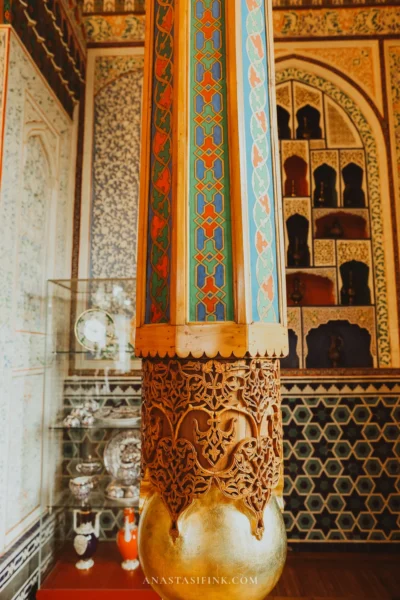
After lunch, take a taxi to Sitorai Mokhi-Khosa — the summer residence of Bukhara’s last emir, 20–30 minutes from the center. The palace is an unexpected place: from the outside, the gate has mosaics like a madrasah, but inside is the White Hall, where carved ganch (alabaster carving) is laid over mirrors, with crystal chandeliers and tiled stoves brought in from St. Petersburg. I didn’t see this combination of East and Europe anywhere else in Uzbekistan. Set aside two to three hours for the palace and the three museums inside.
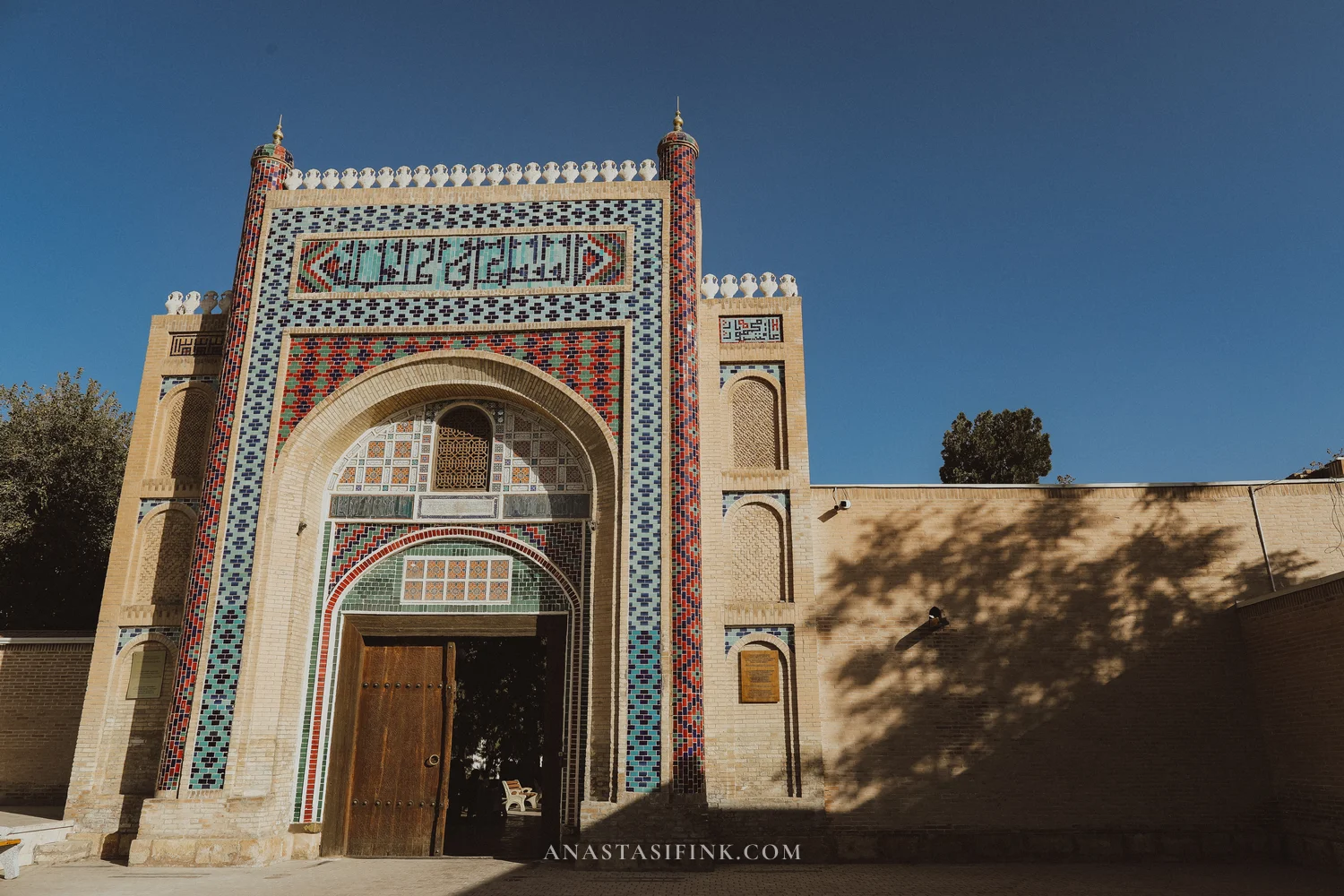
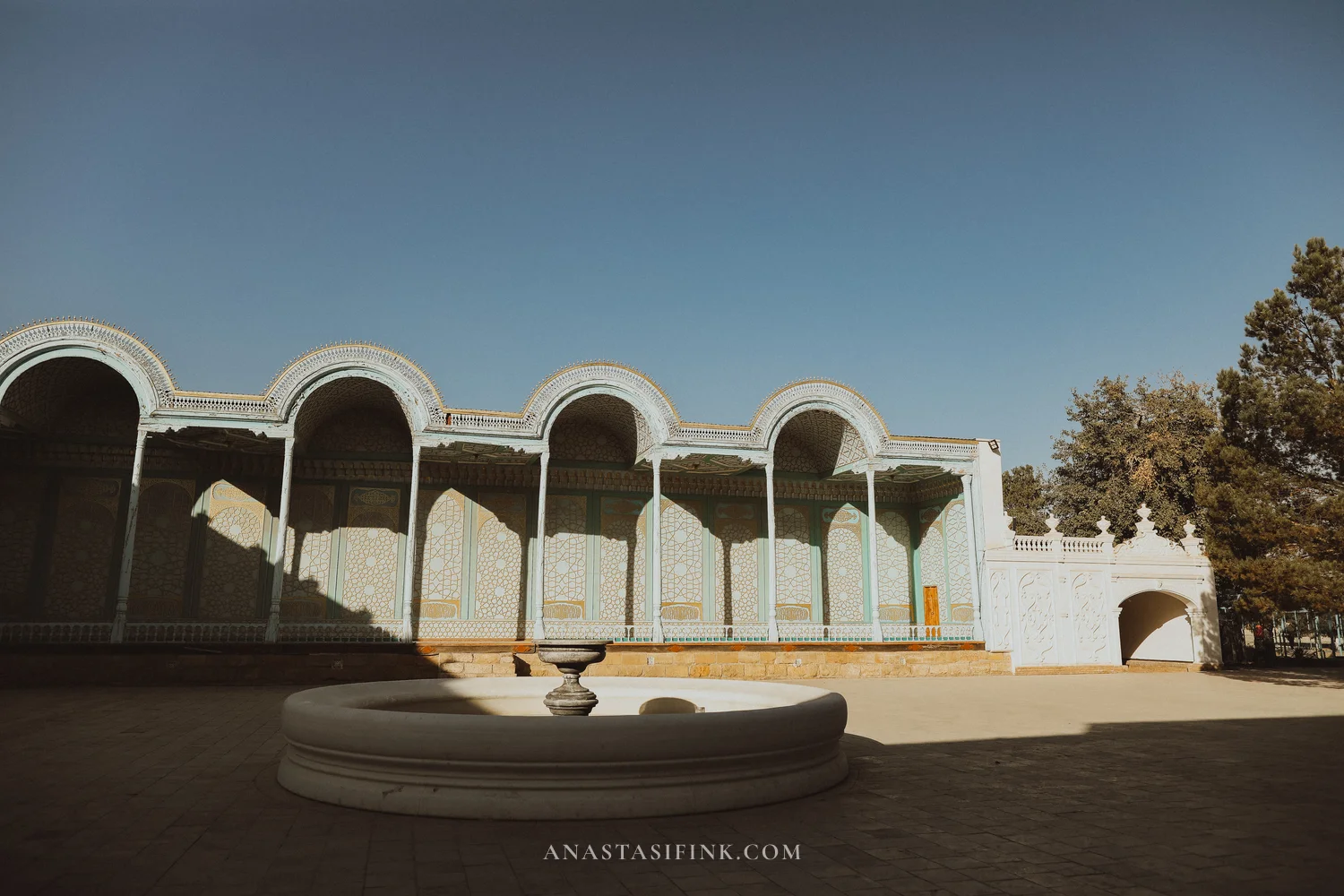
Sitorai Mokhi-Khosa — the summer palace of Bukhara’s last emir
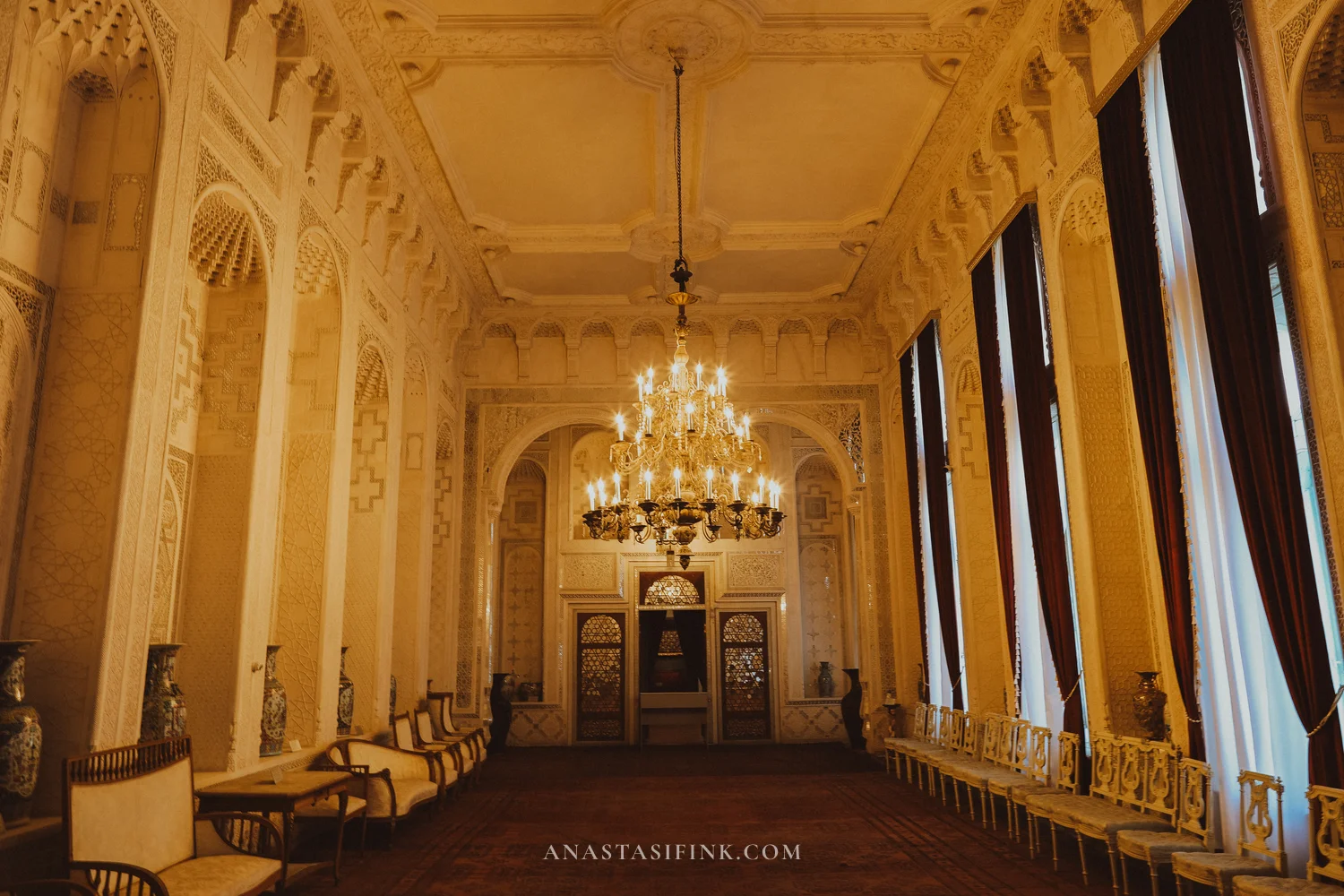
For the full story of the palace and all its halls, see my separate article: Sitorai Mokhi-Khosa Palace in Bukhara: The Last Emir’s Summer Residence.
Day 3. Bukhara: Chor-Bakr, Plov and Chor Minor
Start the morning with Chor-Bakr, the necropolis of the Juybari sheikh family in what used to be a suburban village, a 20-minute taxi ride from the center. They call it a “town of the dead”: it has its own streets, courtyards and gates, only instead of houses there are family tombs. And yet the place isn’t gloomy at all — there’s a garden, a pond with ducks, peacocks, and hardly any tourists. A couple of hours here is enough; for a detailed walking route, see Chor-Bakr Necropolis, Bukhara — Complete Guide.
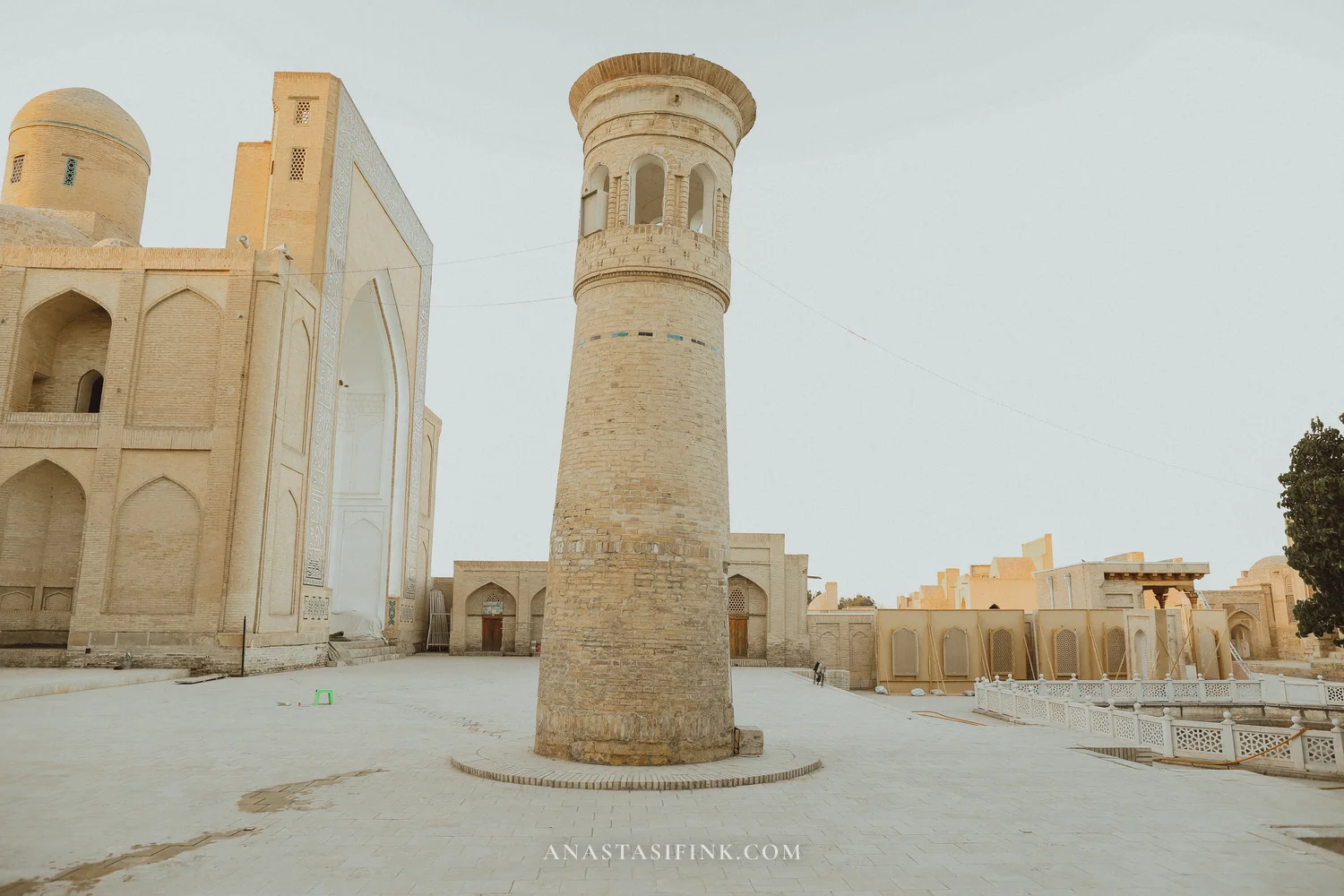
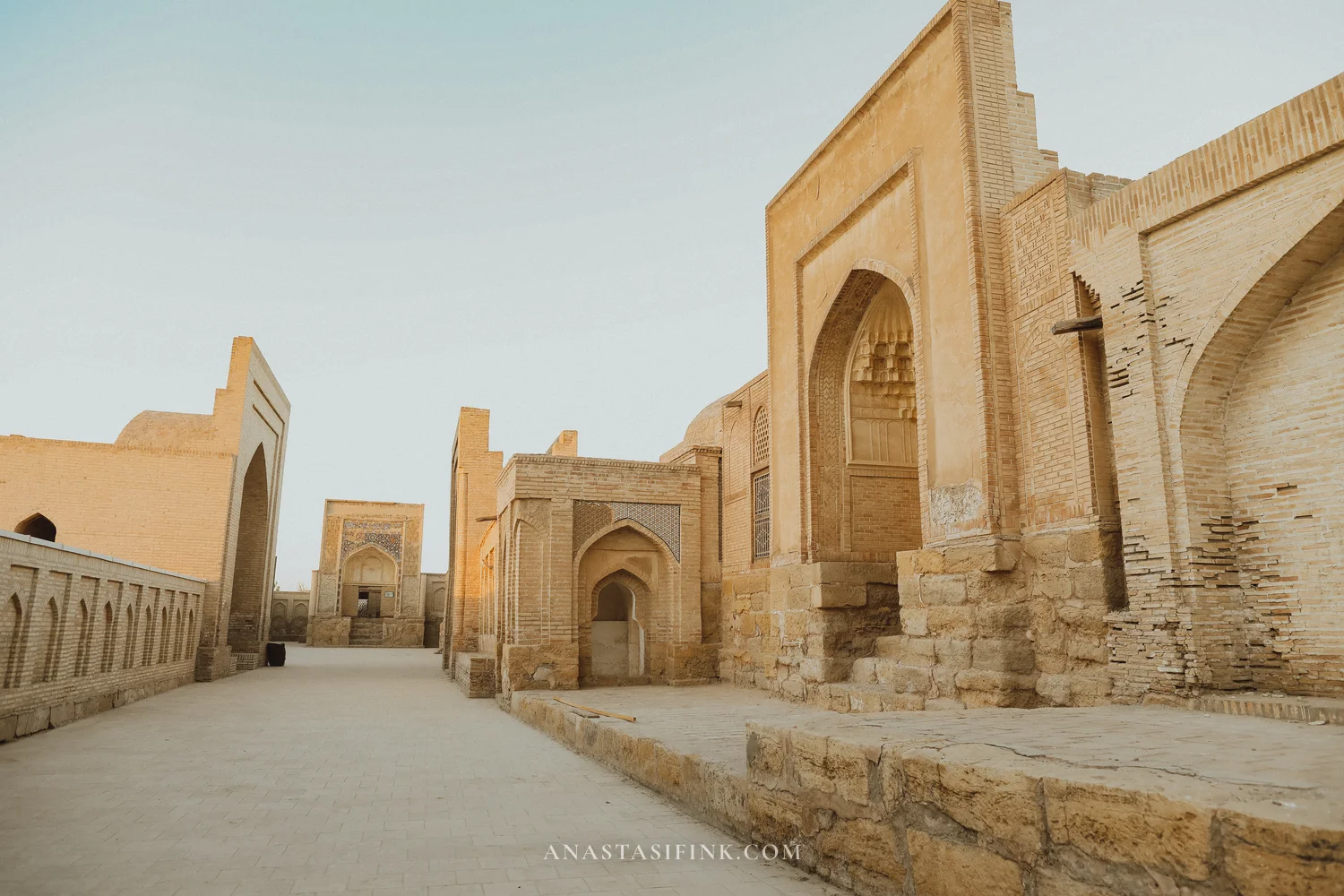
Chor-Bakr: the necropolis has its own streets and squares
Lunch today is your excuse to try Bukhara-style plov. Plov here is cooked for midday, and by evening many places have simply run out — don’t save it for dinner. Where to find plov and decent coffee in Bukhara is covered at the end of my Bukhara guide.
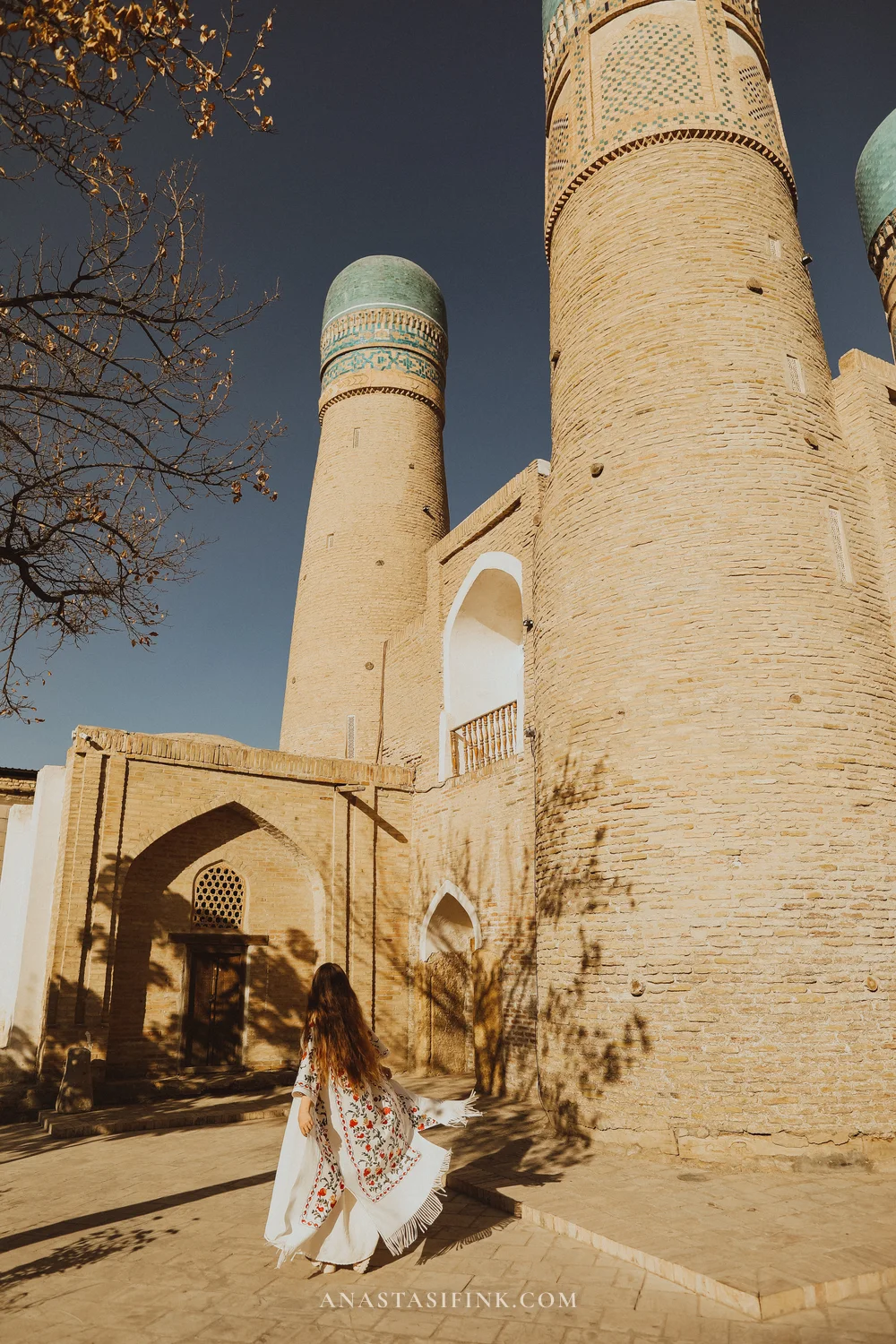
After lunch, walk over to Chor Minor — a small madrasah with four towers in a residential quarter. It looks like no other monument in the city and stands among ordinary houses: fewer tourists make it out here, and the neighborhood goes about its own life. Spend the rest of the day at the trading domes, souvenir shopping, and enjoying one last evening in the old town.
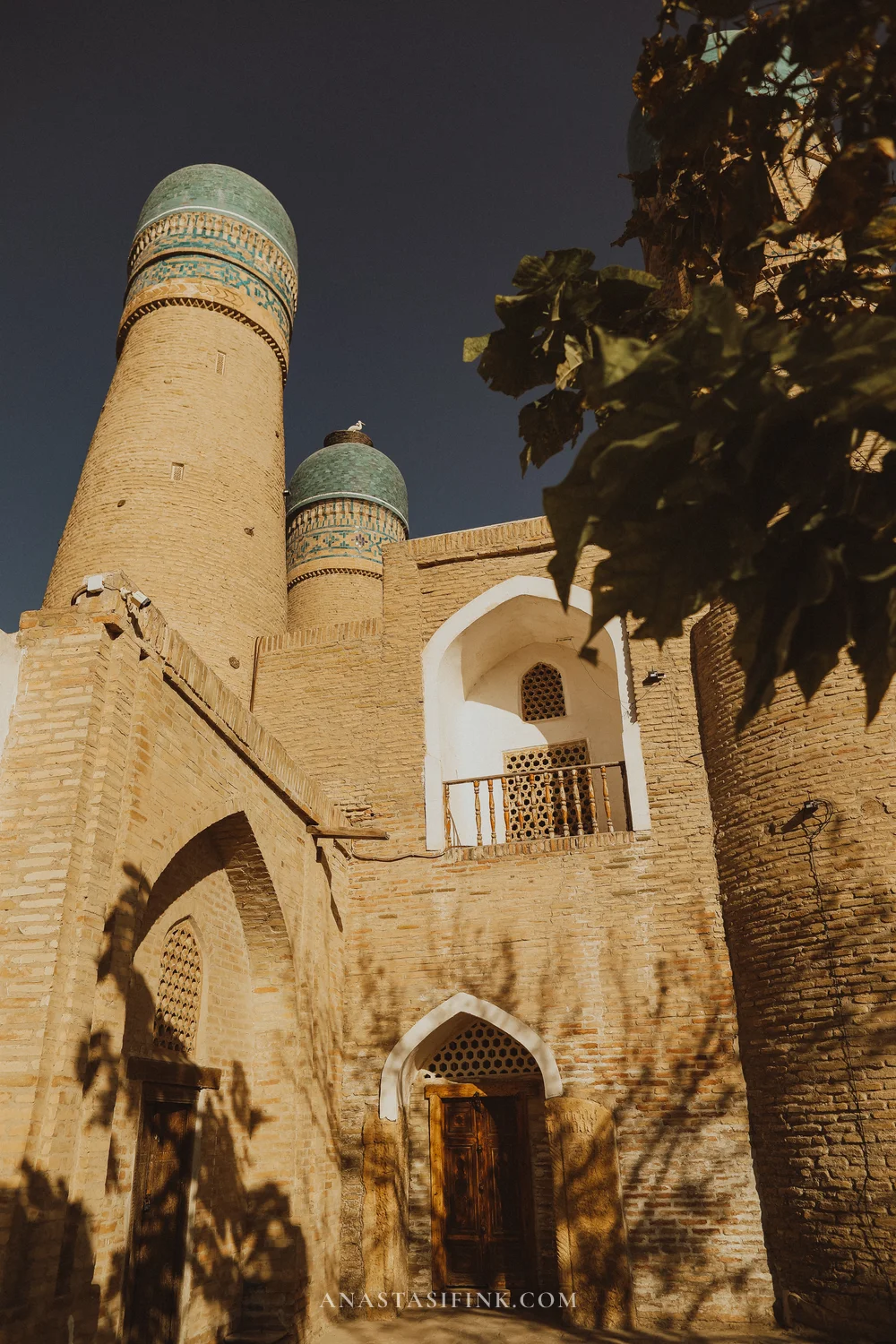
Day 4. Bus to Samarkand and Registan in the Evening
Morning is for the journey. It’s about 270 kilometers from Bukhara to Samarkand, and the bus takes 4–5 hours. It’s a convenient daytime option: modern intercity buses with air conditioning, and unlike the high-speed train, you don’t need to book tickets a month in advance.
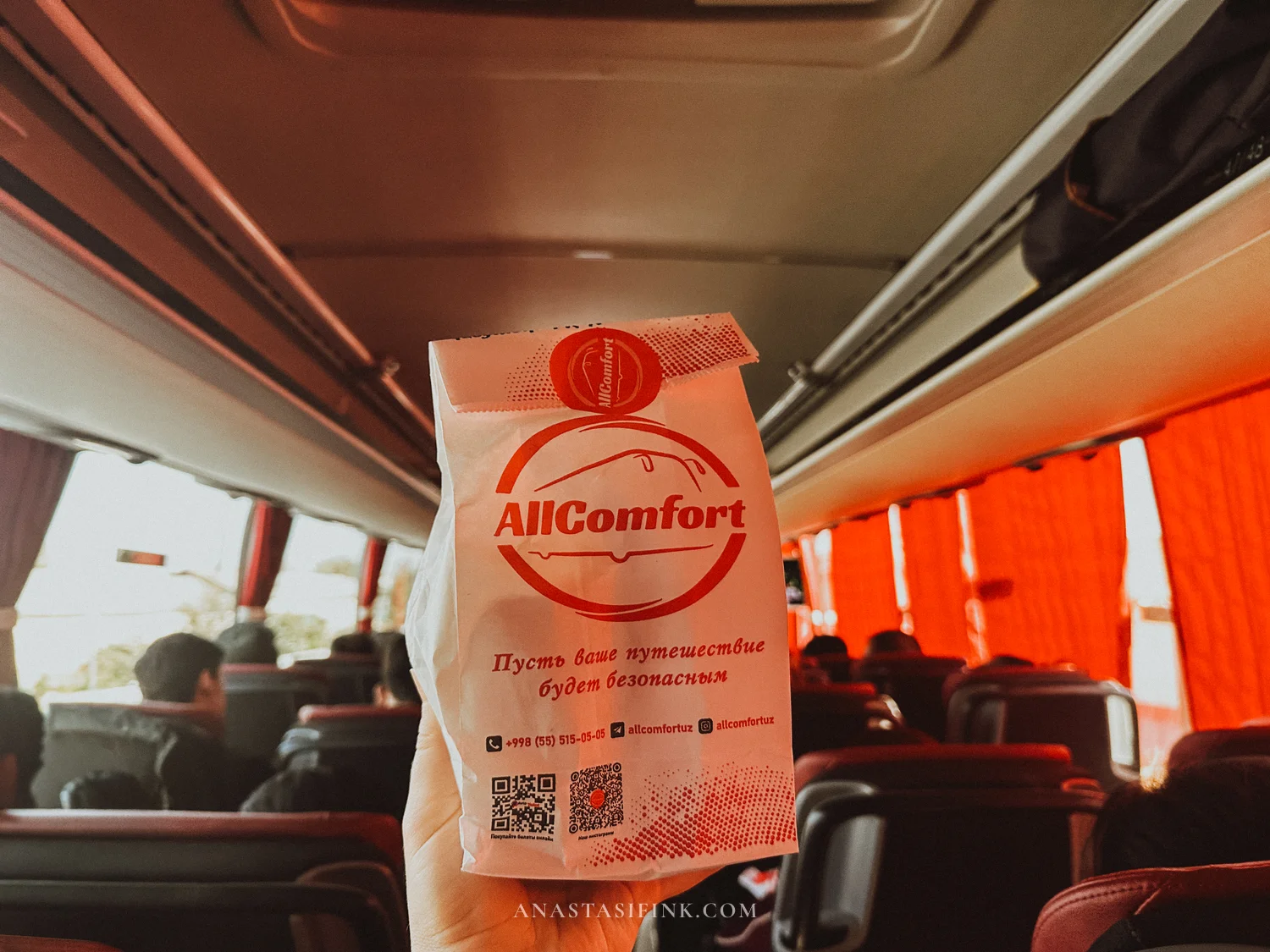
You can buy a ticket two ways: online at the official bus station website avtoticket.uz, or in person at the bus station ticket office — I bought mine at the ticket office and there were plenty of seats. A ticket costs around 90,000–110,000 UZS (~$7–9); prices change, and current ones are shown on the website. Bukhara’s bus station isn’t in the old town, so allow 15–20 minutes by taxi.
The bus arrives at Samarkand’s bus station, which sits on the edge of the city. That’s not a problem: order a ride through a ride-hailing app and you’re in the center within 15–20 minutes. The trip costs roughly 15,000–25,000 UZS (~$1.5–2).
Bus Bukhara → Samarkand
- Distance: ~270 km, 4–5 hours on the road
- Tickets: online at avtoticket.uz or at the bus station ticket office
- Price: ~90,000–110,000 UZS (~$7–9)
- Bukhara bus station: outside the old town, 15–20 minutes by taxi
- Arrival: Samarkand bus station on the edge of the city, then a ride-hailing app to the center (~15,000–25,000 UZS)
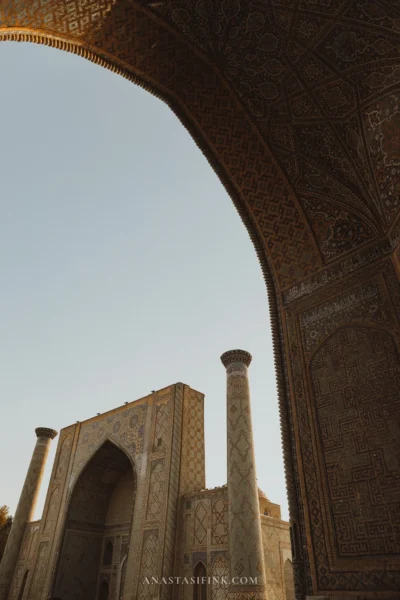
Once you’ve checked in, head to the Registan — aim for 4–5 pm. This is Samarkand’s main square and arguably the most famous place in all of Central Asia: three madrasahs from the 15th–17th centuries, covered in mosaics from the ground to the tops of the domes. The point of coming in the late afternoon is that on a single ticket (~100,000 UZS, ~$8) you get to see the square three times over: in daylight, at sunset and under the night illumination.
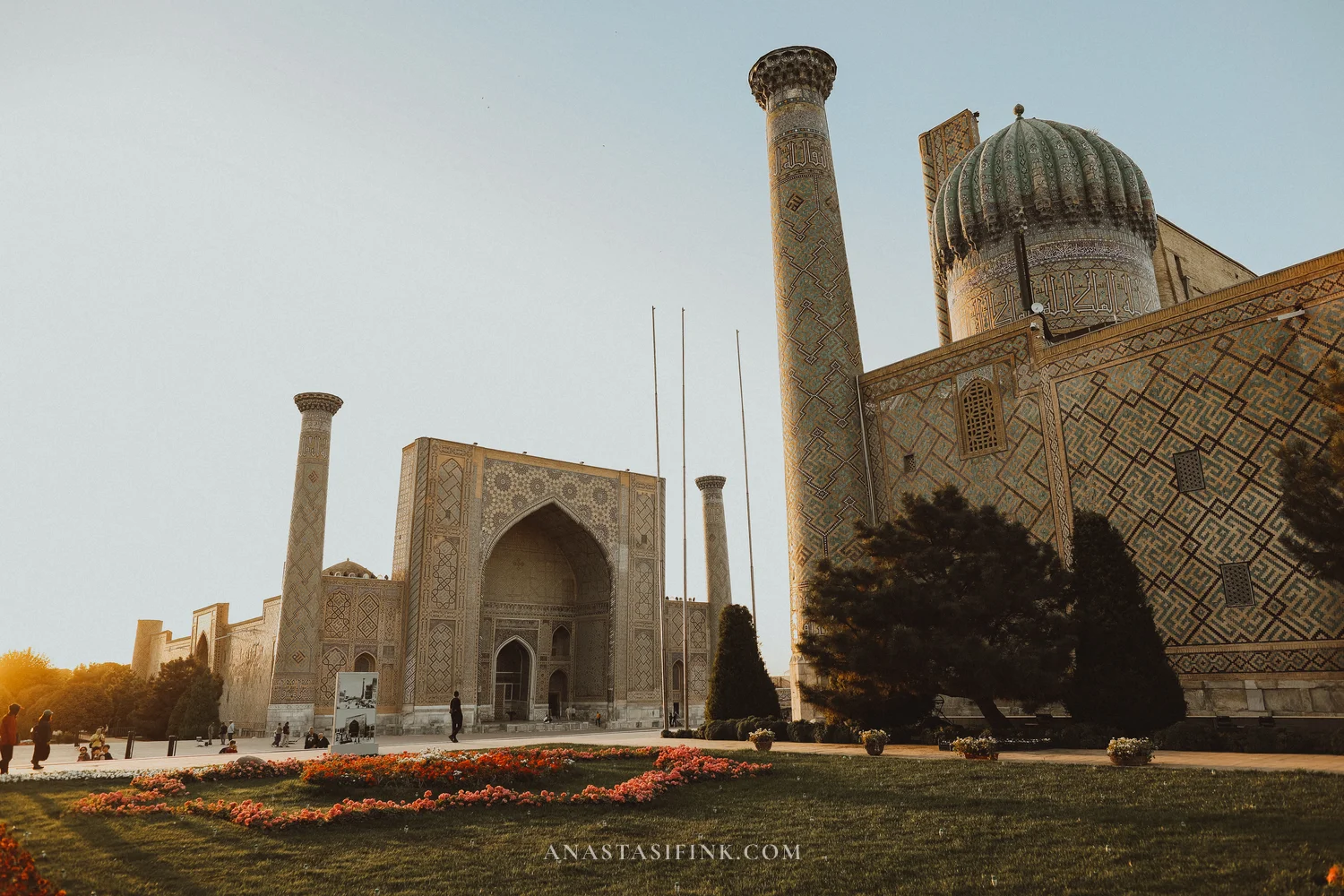
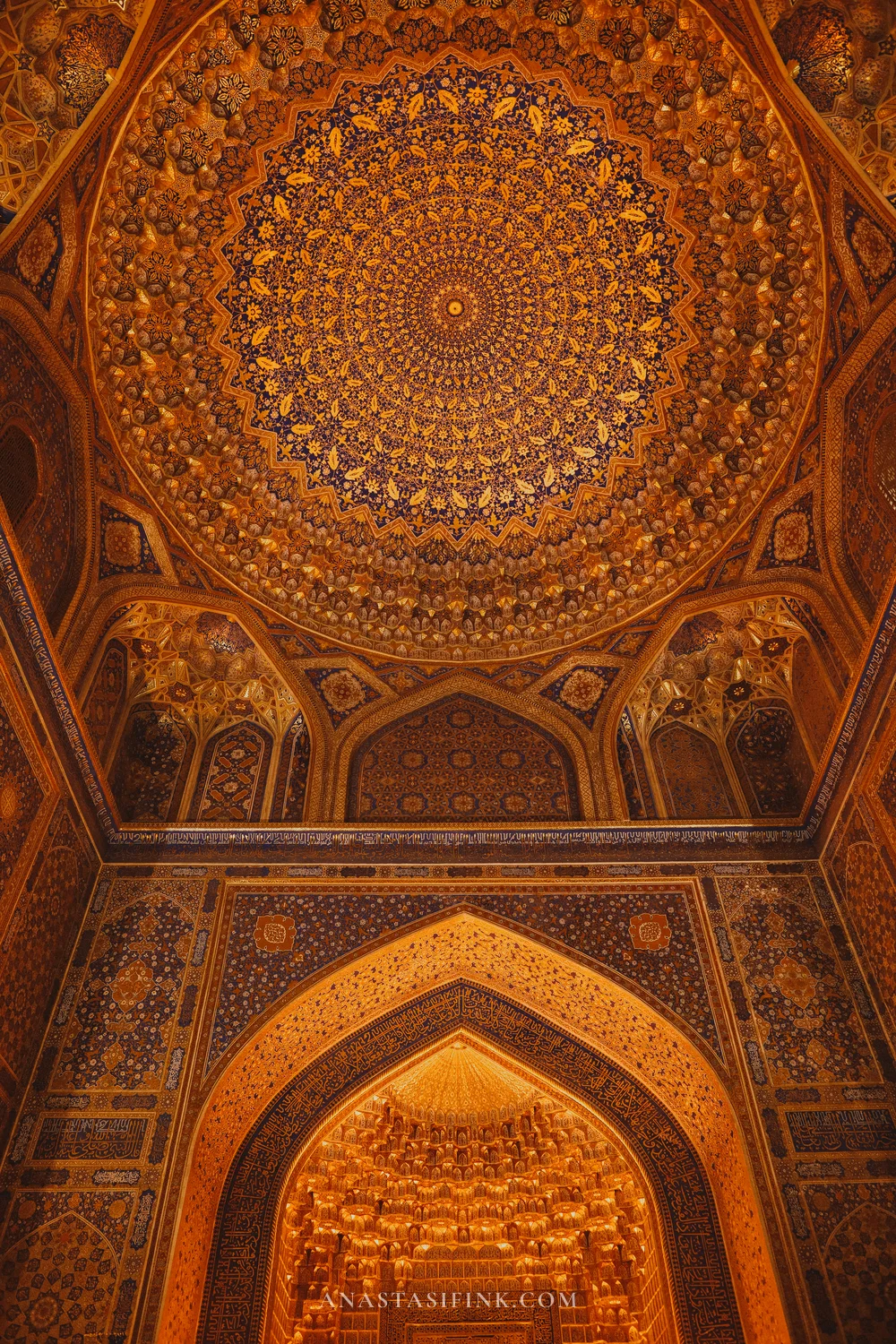
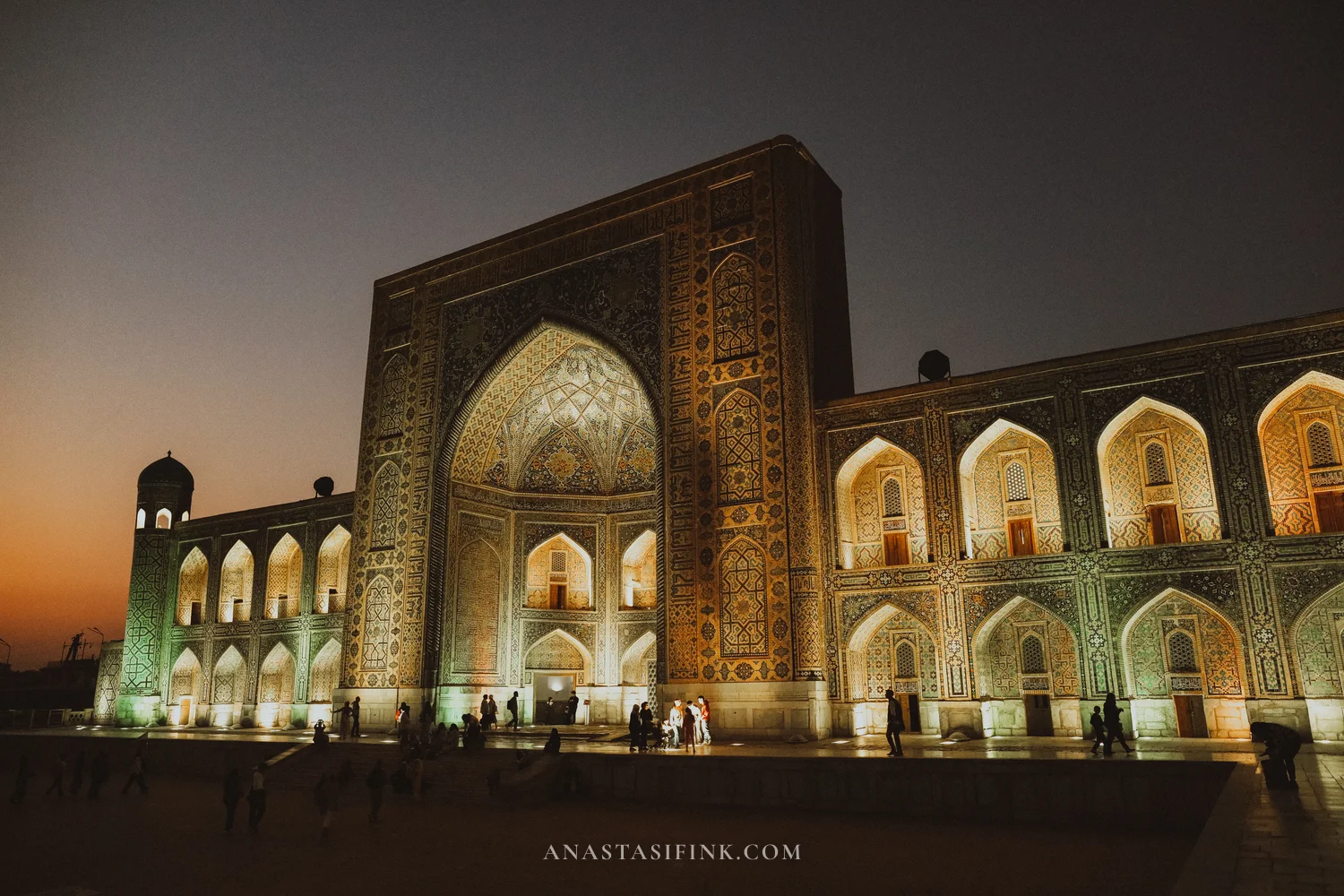
For a full breakdown of the square — why each madrasah was built, what’s inside and how to see it all — read Registan Square, Samarkand: A Complete Visitor’s Guide.
Day 5. Samarkand: Gur-e-Amir, Crafts and Shah-i-Zinda at Dusk
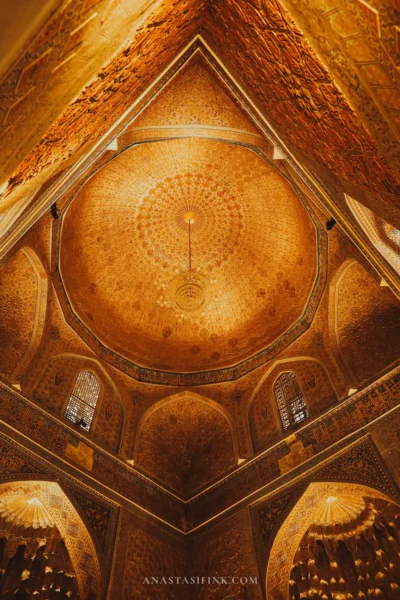
Start the morning with Gur-e-Amir — Tamerlane’s tomb, not far from the Registan. From the outside it’s a turquoise ribbed dome and two minarets; inside is a hall where the walls and dome are covered in gilding. Entry for foreigners is 50,000–75,000 UZS (~$4–6); tickets are sold on the spot, and it’s best to have cash. Morning is the quietest time here — the big groups arrive around midday.
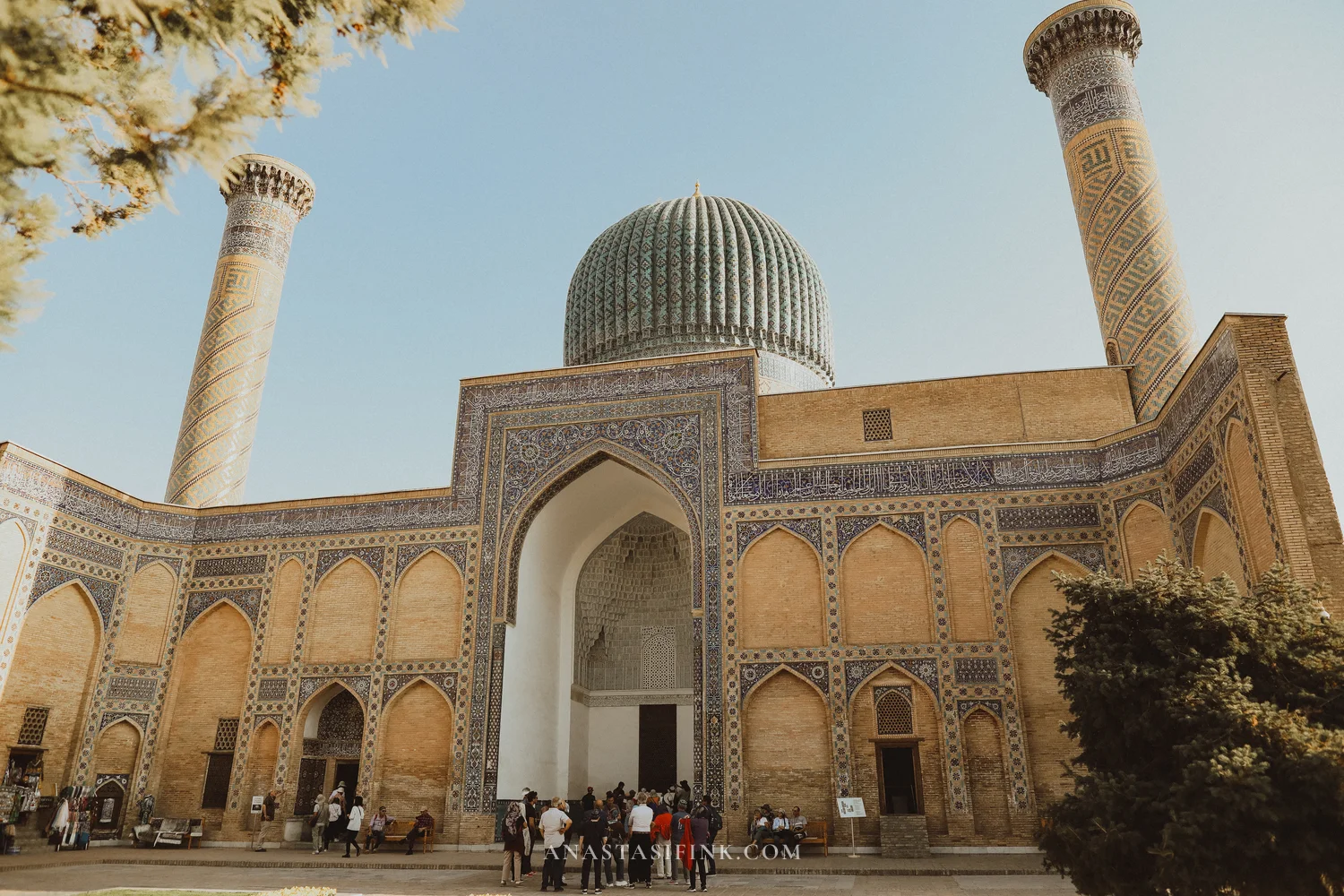
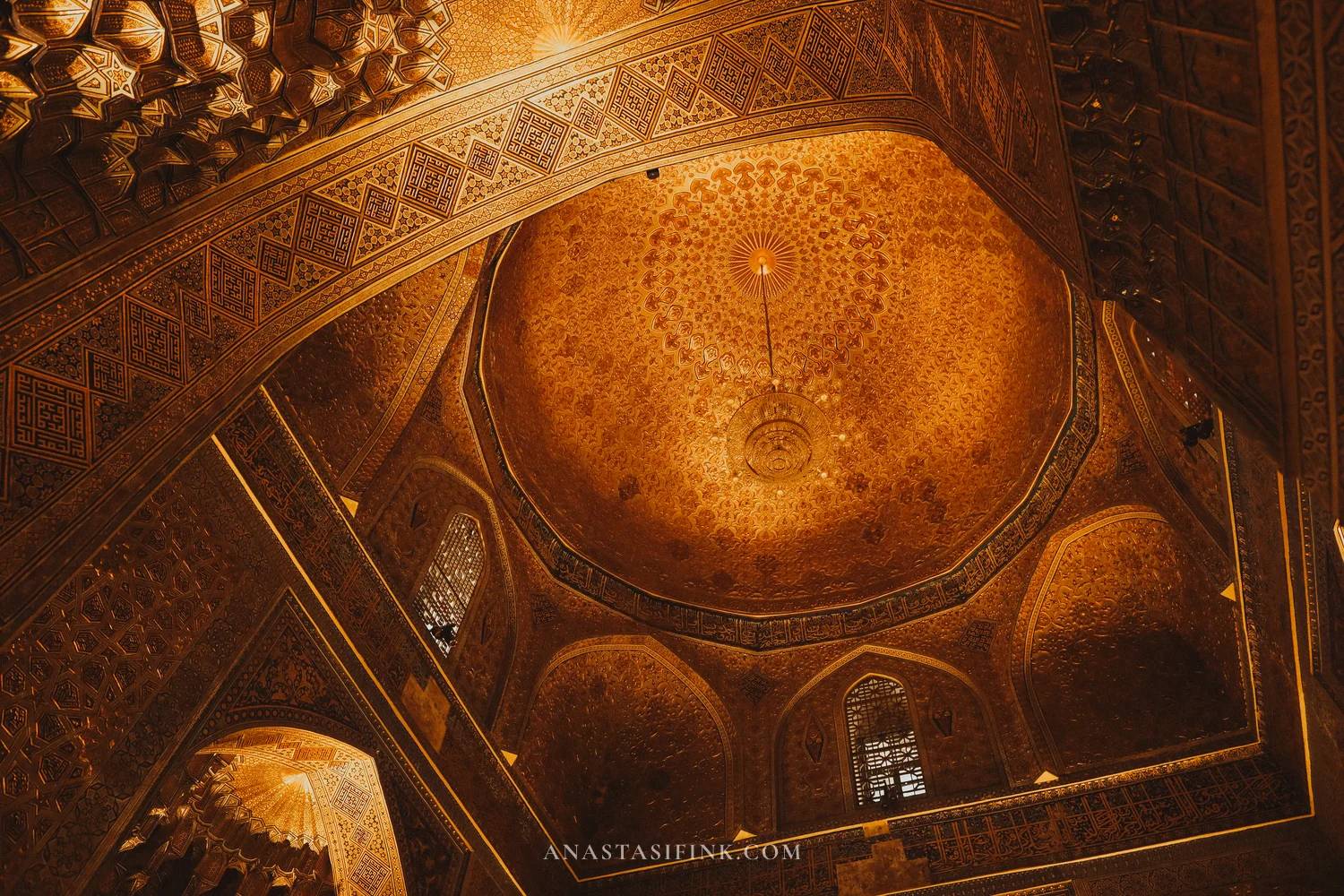
Gur-e-Amir: Tamerlane’s tomb, outside and in
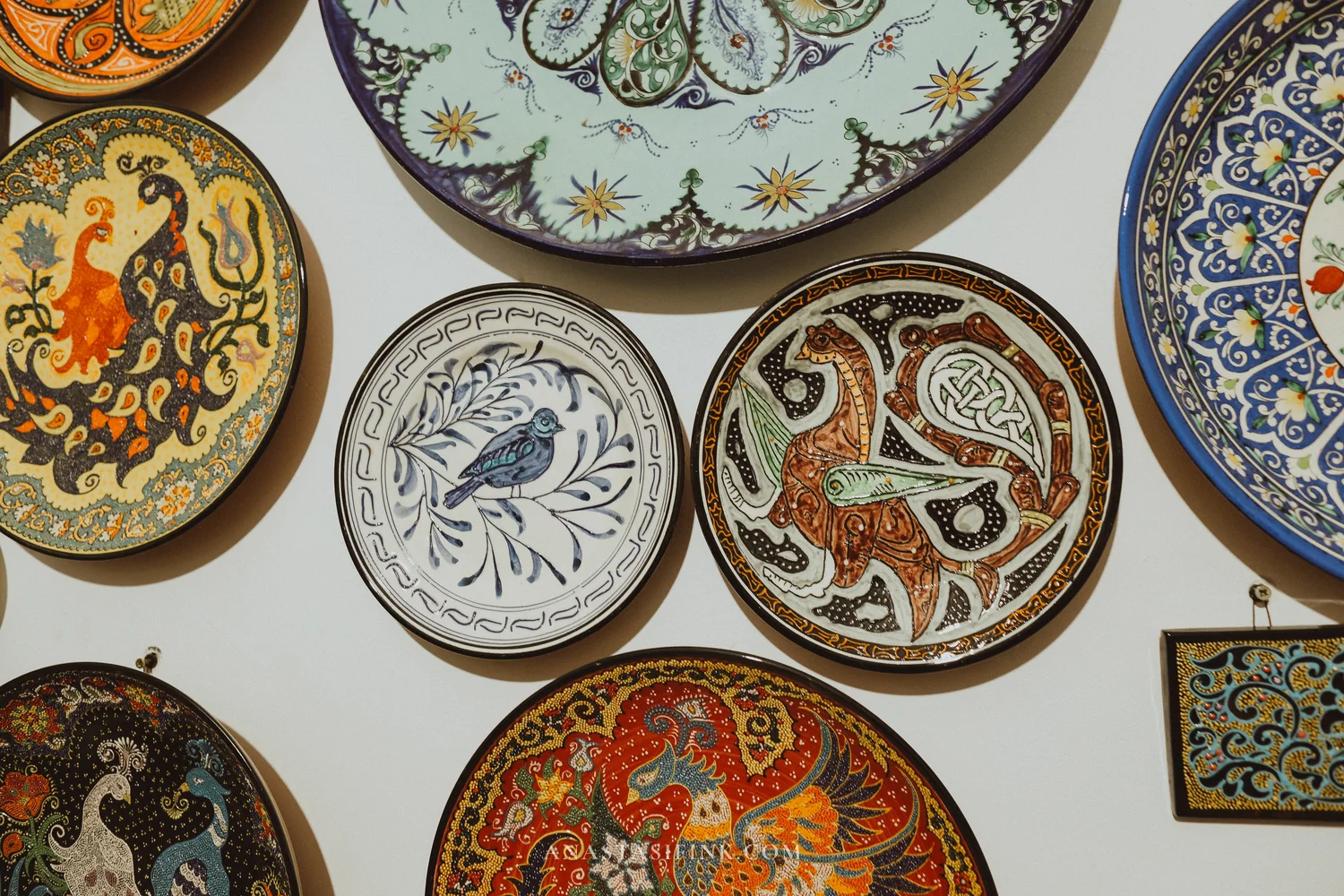
During the day, drop into the handicraft center in a former caravanserai and the artists’ shops — it’s the calmest time of day to pick out ceramics without rushing.
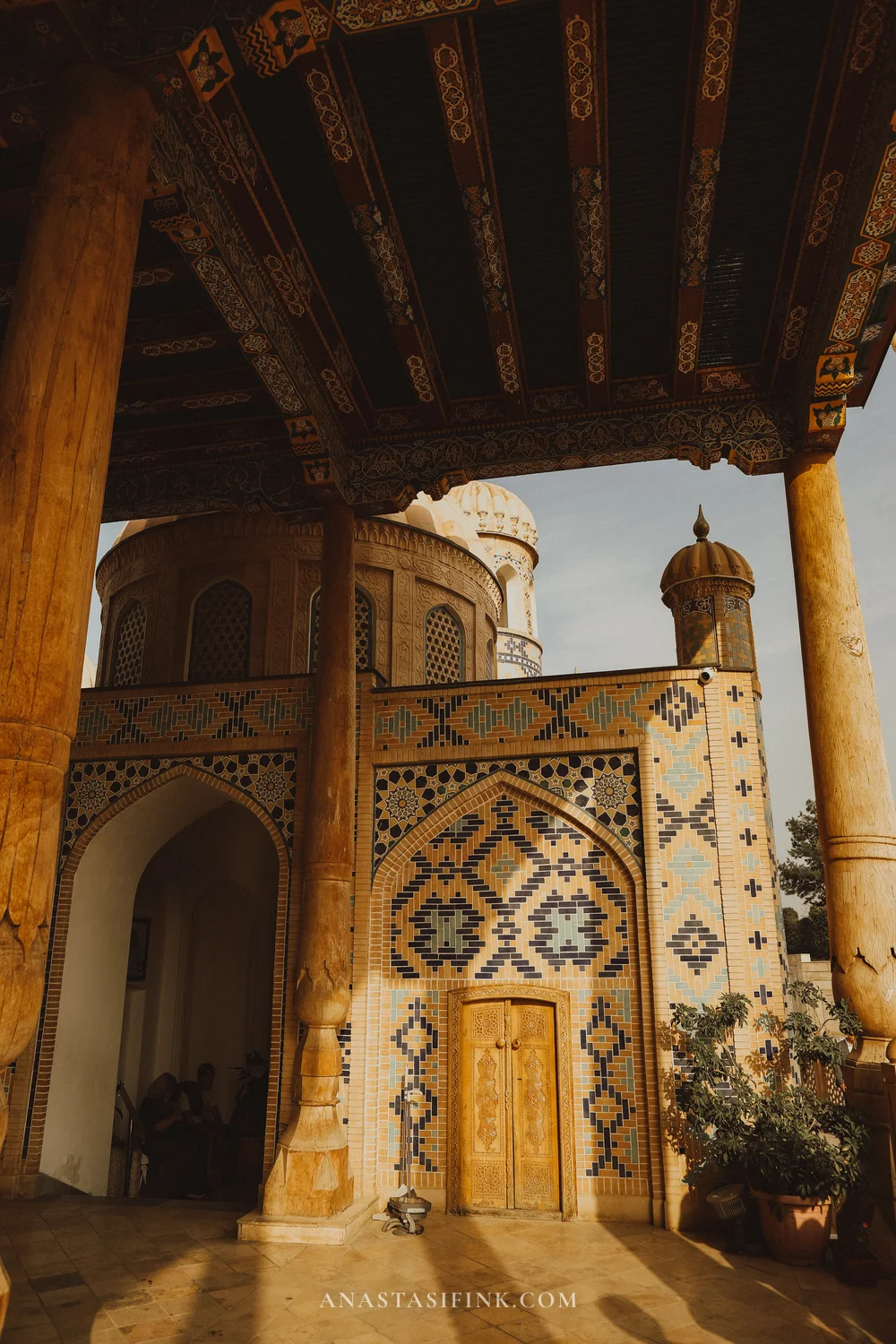
Toward evening, climb up to the Hazrat Khizr mosque — it stands on a hill directly opposite Shah-i-Zinda, so the two pair up nicely. Inside there’s a painted iwan and a terrace with a view over the city; entry is cheap (~20,000 UZS, ~$1.5).
Shah-i-Zinda — the avenue of mausoleums that was built over nearly eight hundred years, from the 11th to the 19th century — I saved for the end of the day, and not by accident. The best time to come is an hour before sunset: first the majolica catches the last of the sun, then the lights come on, and the narrow passages between the tombs look nothing like they do at midday. The crowds also thin out by evening — this is an active place of pilgrimage, and during the day the flow of people is dense.
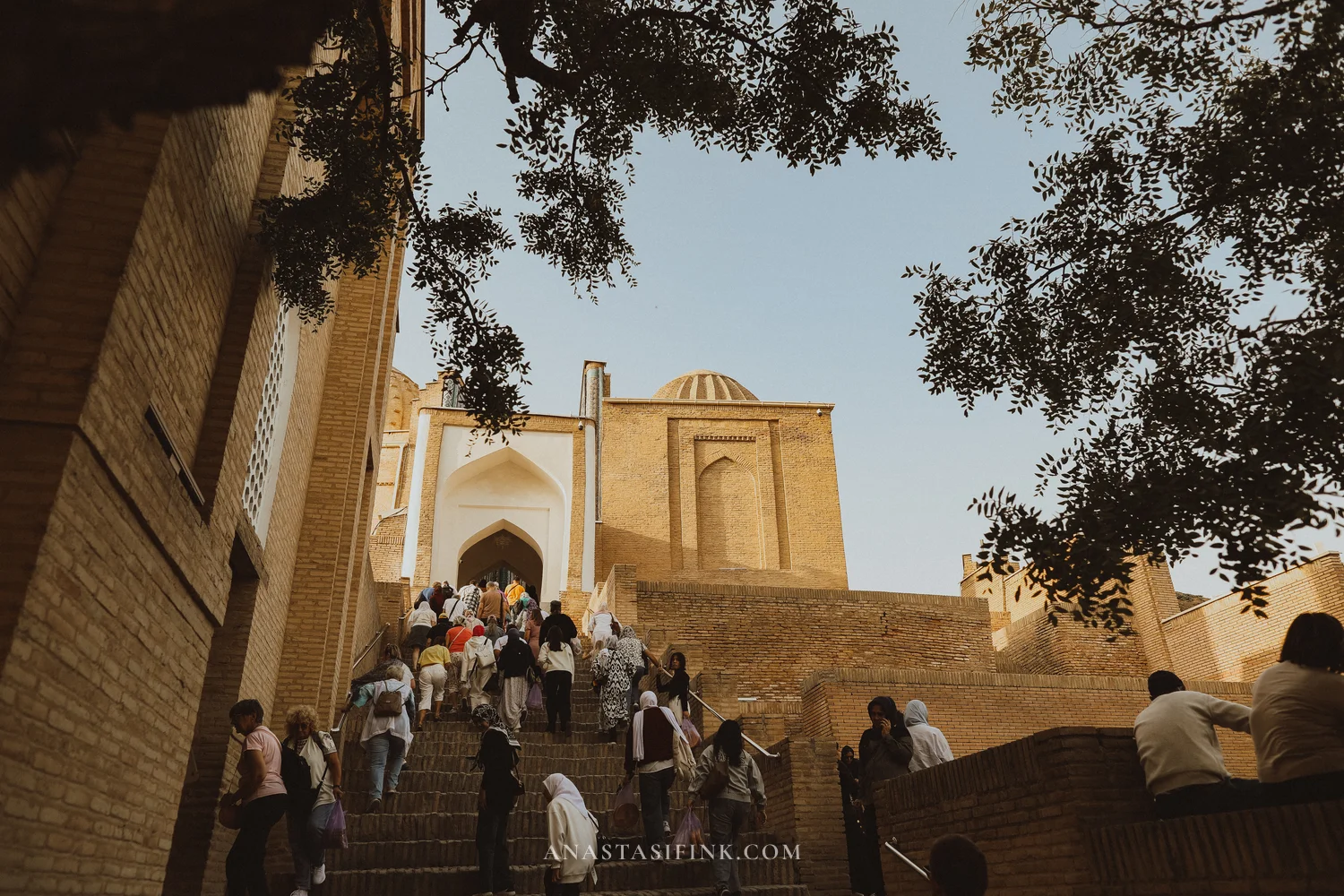
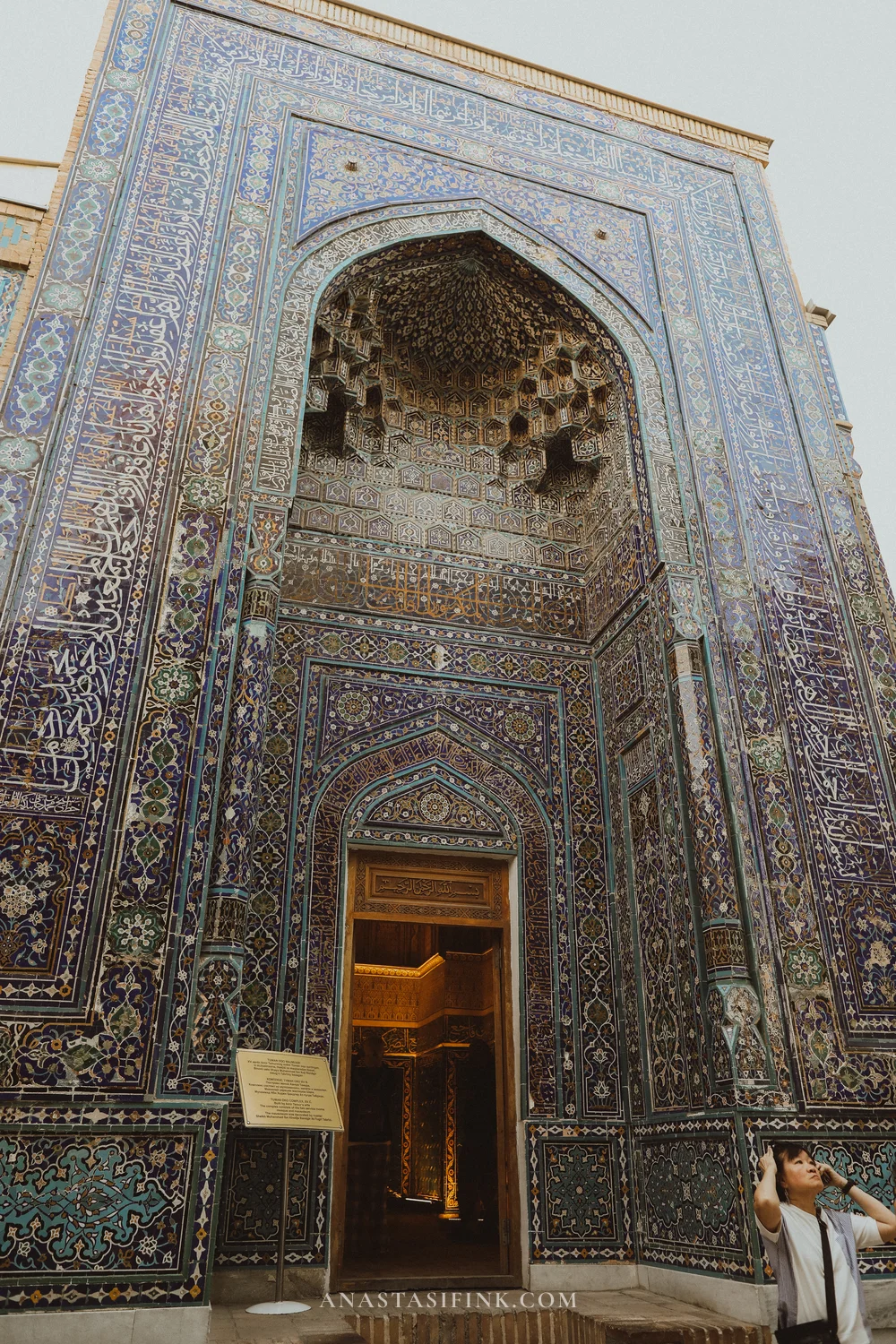
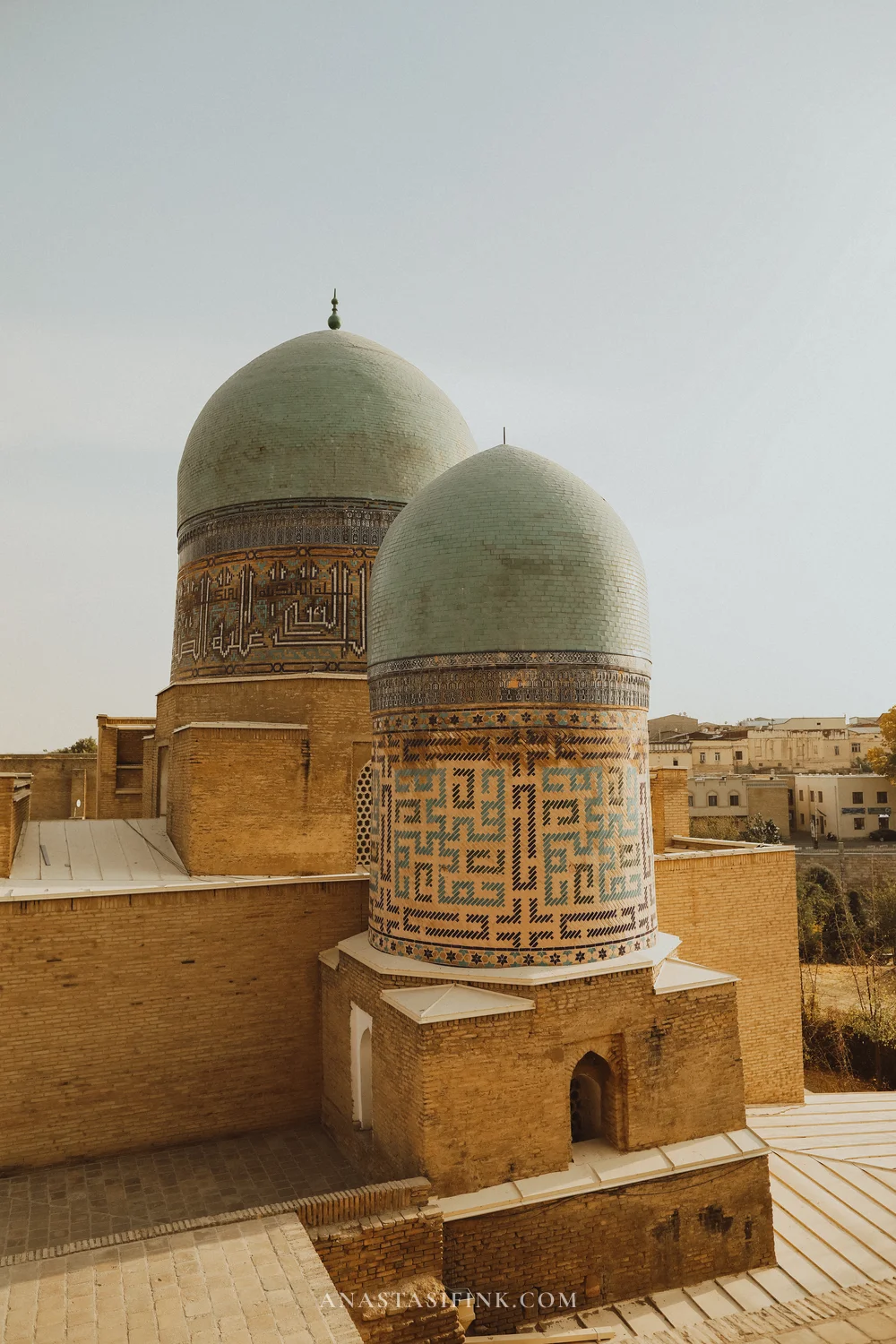
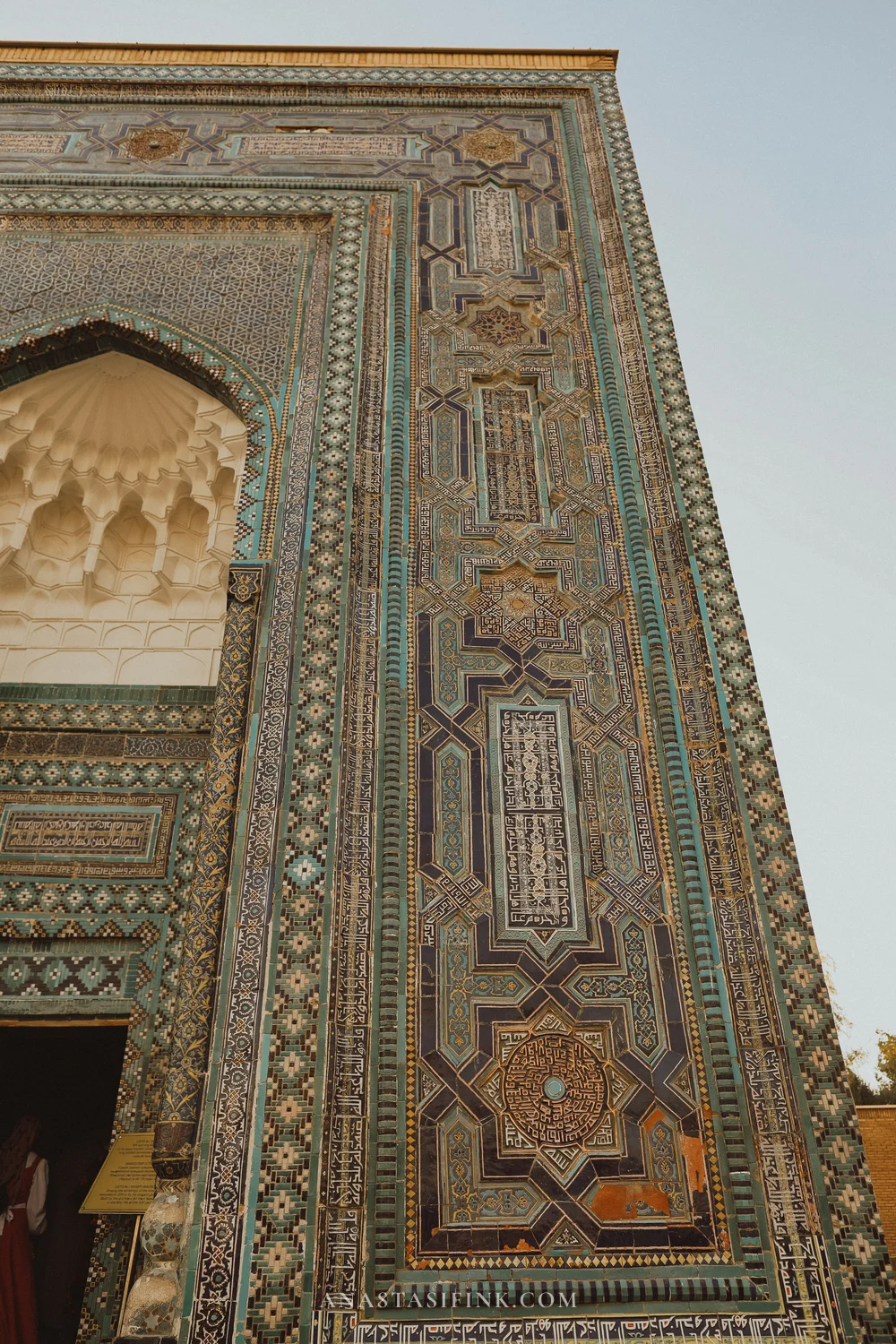
Shah-i-Zinda: eight hundred years of building and dozens of shades of blue
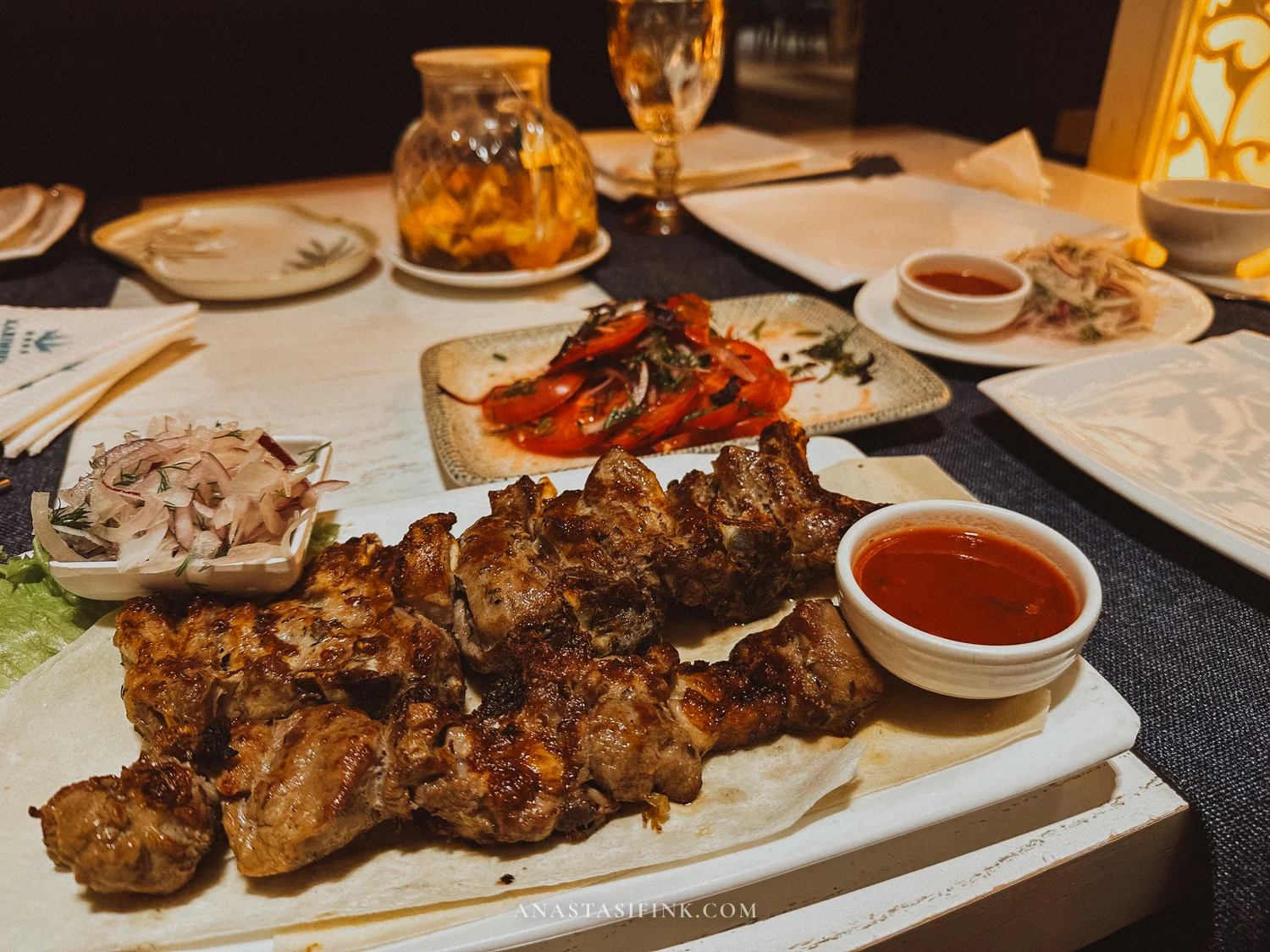
I had dinner at Karimbek — a big city restaurant where Samarkand locals eat too: kebabs, baklava and a pot of tea come to about $10 per person.
How I divided my time between these places is in my guide 2 Days in Samarkand — City Guide, and there are separate in-depth articles on Shah-i-Zinda and Gur-e-Amir: Shah-i-Zinda: A Guide to Samarkand’s Avenue of Mausoleums and Gur-e-Amir Mausoleum in Samarkand: Tamerlane’s Tomb Guide.
Day 6. Train to Tashkent
The easiest way from Samarkand to Tashkent is by rail — about 300 kilometers. I took the Sharq, the classic daytime train running the Tashkent–Bukhara route via Samarkand: the carriages are divided into compartments with soft seats and a table, and the trip takes about three and a half hours. The big advantage is that tickets are easy to buy just a few days ahead. There’s also a high-speed option — the Afrosiyob (a Spanish Talgo, up to 250 km/h), which covers the same stretch in 2 hours 10 minutes. But there’s a catch: tickets, especially in high season, sell out weeks ahead, so you need to book well in advance.
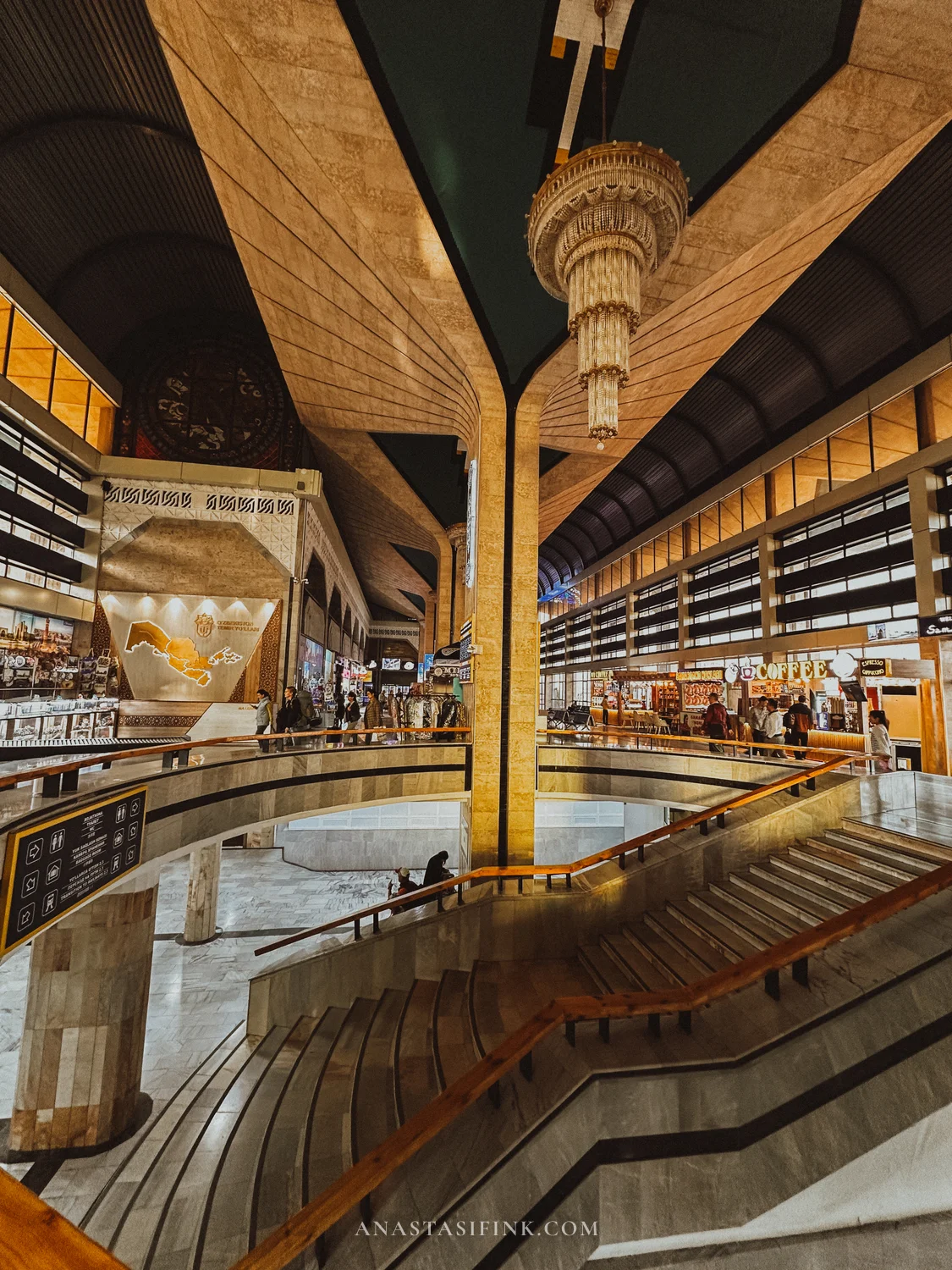
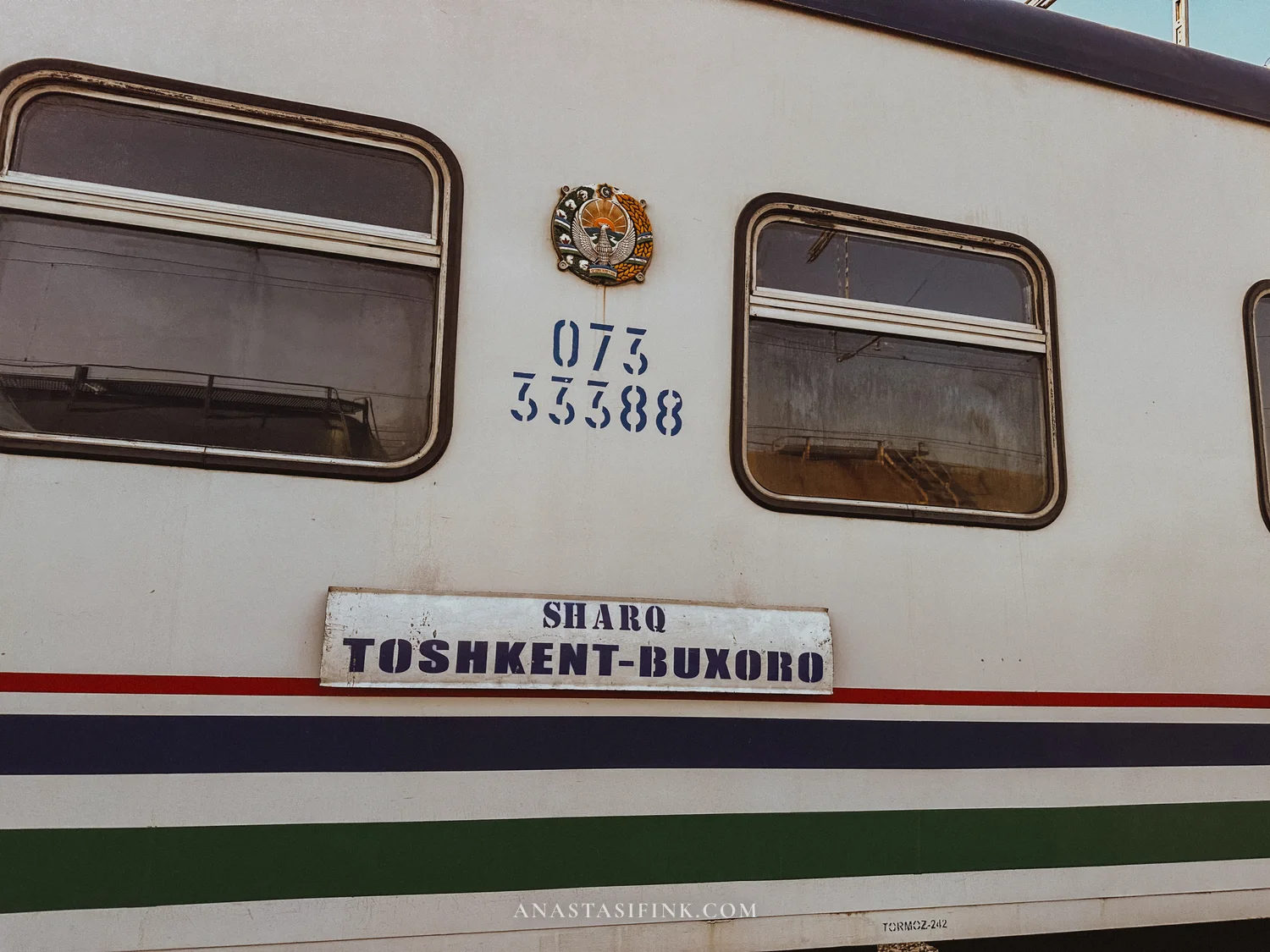
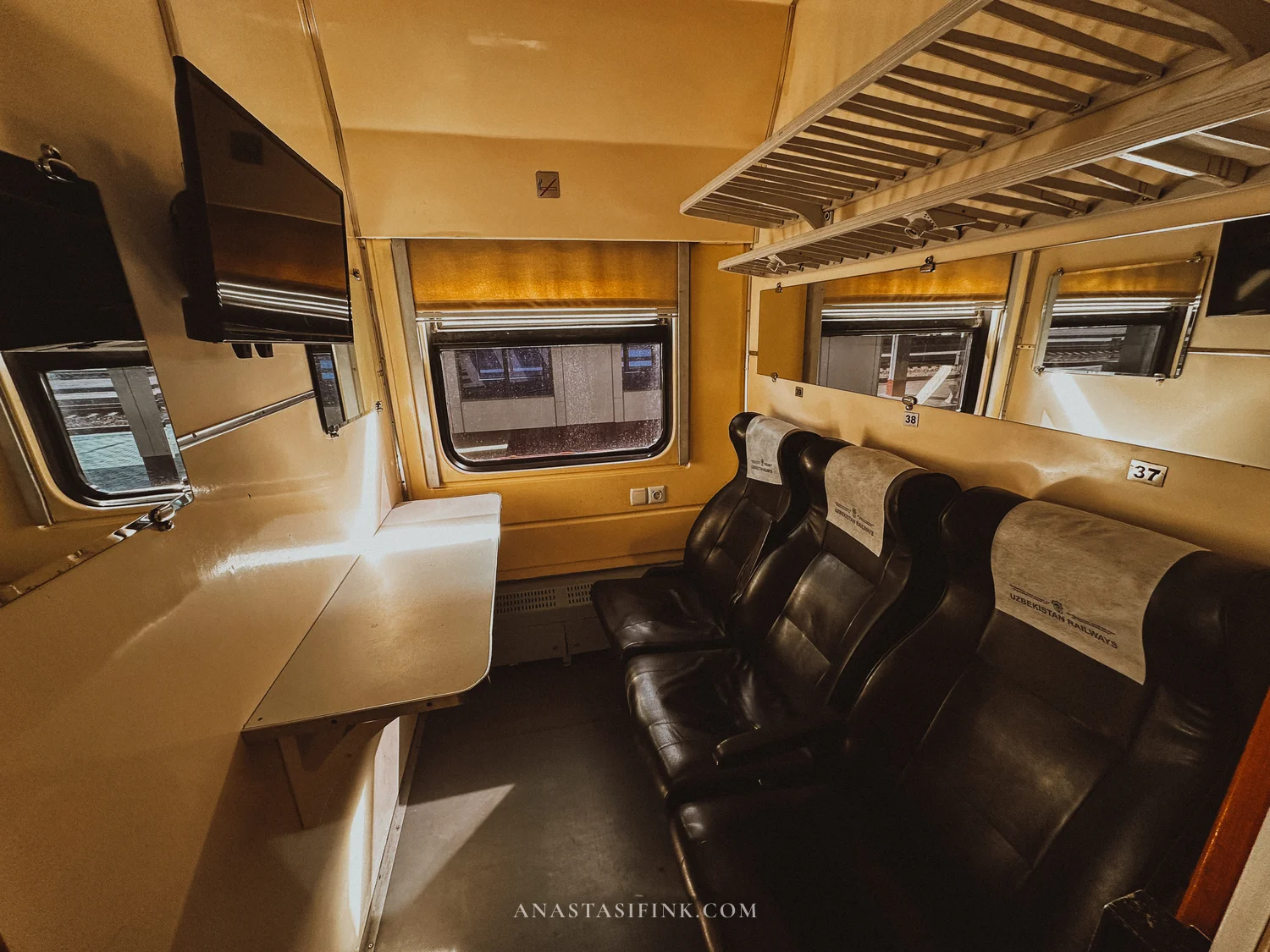
Our Sharq to Tashkent
Train Samarkand → Tashkent
- Sharq and regular trains: 3.5–4 hours, tickets available even a few days out; 2nd class ~200,000 UZS (~$16)
- Afrosiyob (high-speed): 2 hours 10 minutes, economy ~294,000 UZS (~$23), book 2–4 weeks ahead
- Where to buy: official site eticket.railway.uz, the Uzbekistan Railways app, or the station ticket office
By evening you’re in Tashkent. If you have energy left, take a walk around the center: Amir Temur Square, the pedestrian street and the illuminated Ezgulik Arch on Independence Square.
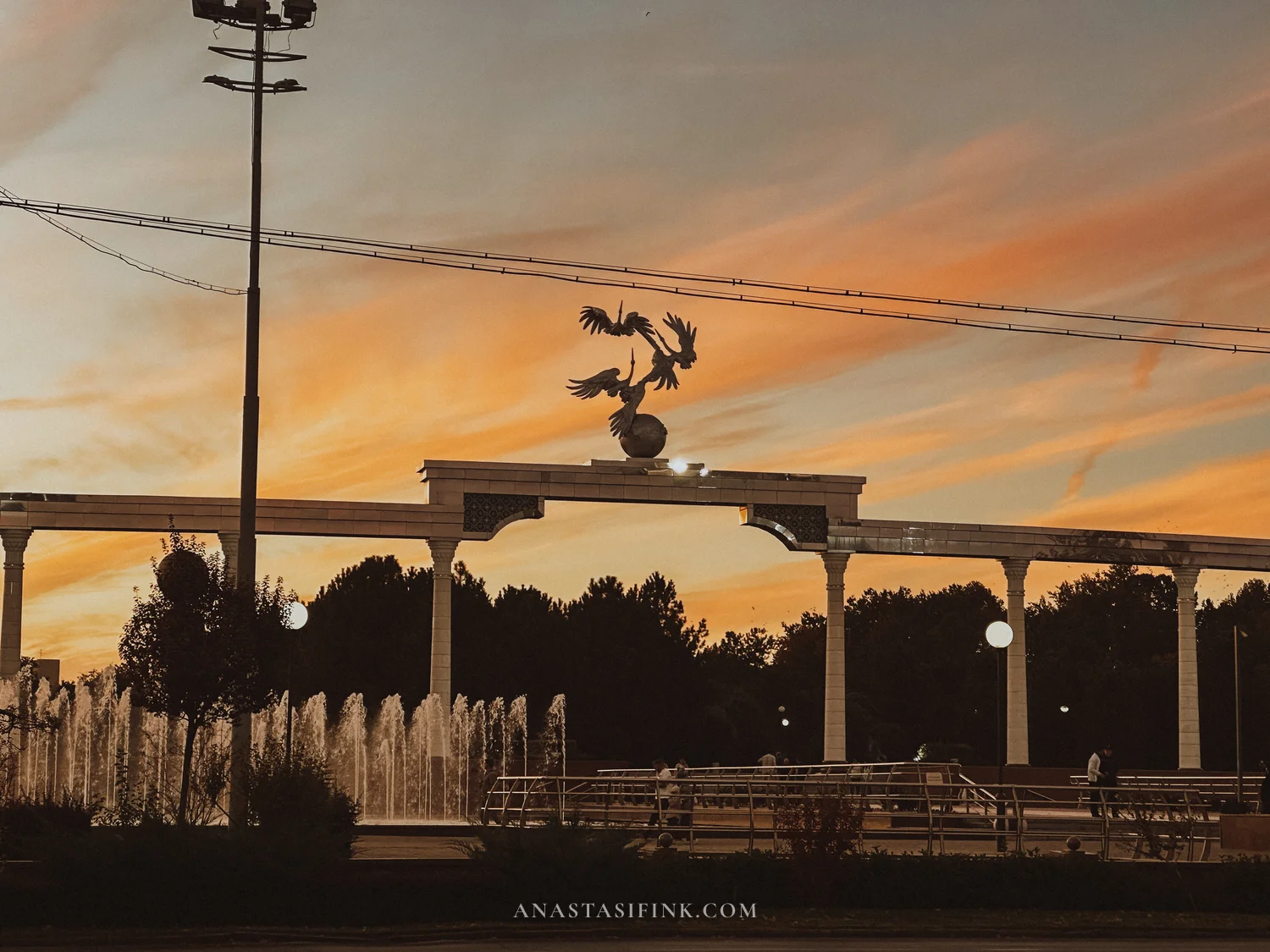
Day 7. Tashkent: Chorsu Bazaar, the Metro and the Polovtsev House
Start your last day at Chorsu Bazaar — locals shop here in the morning, and that’s when it’s at its liveliest. Spices, dried fruit, nuts, halva, rows of ready-made food — come hungry and bring cash. It’s also the perfect place to stock up on anything edible you want to take home.
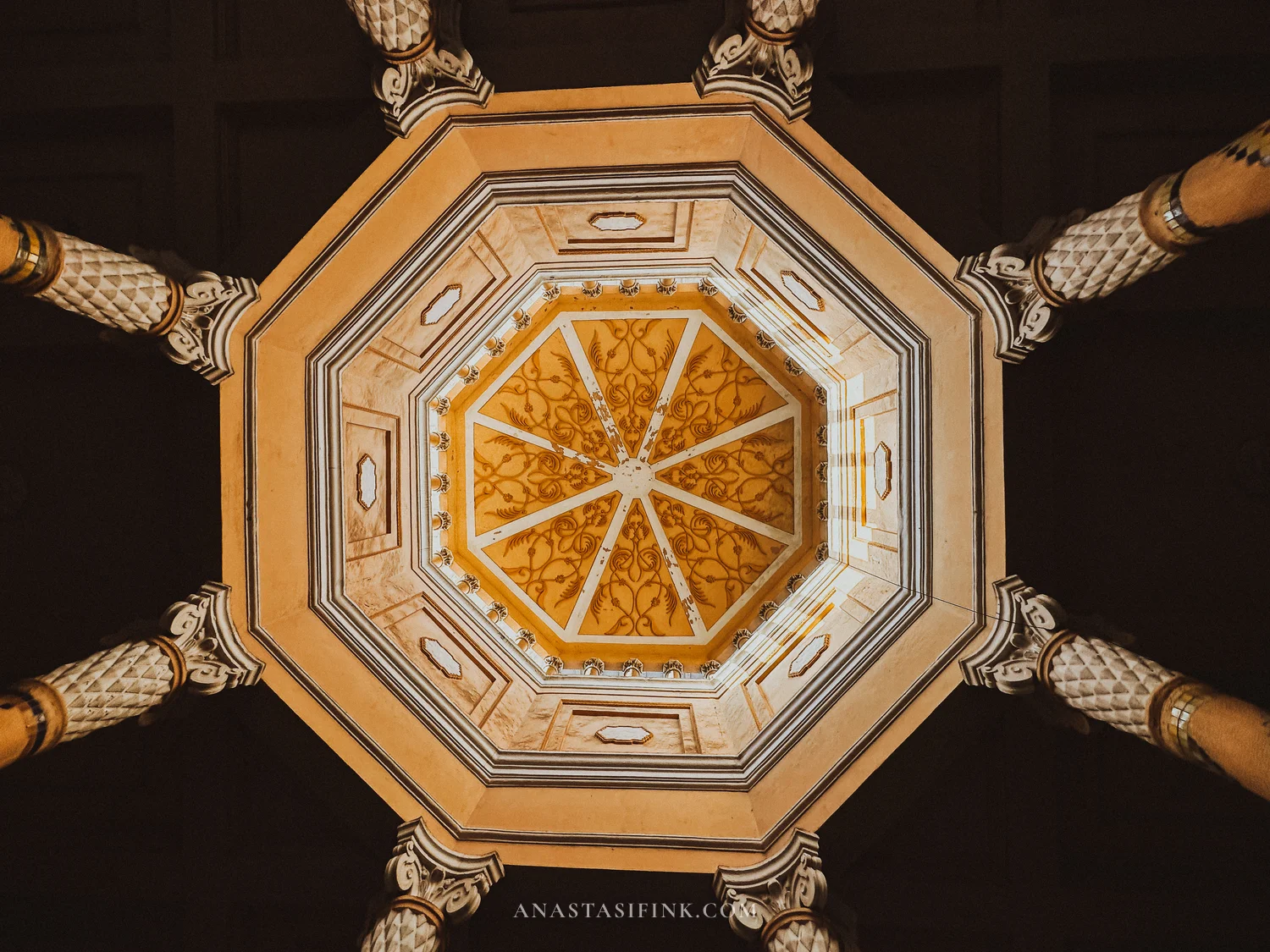
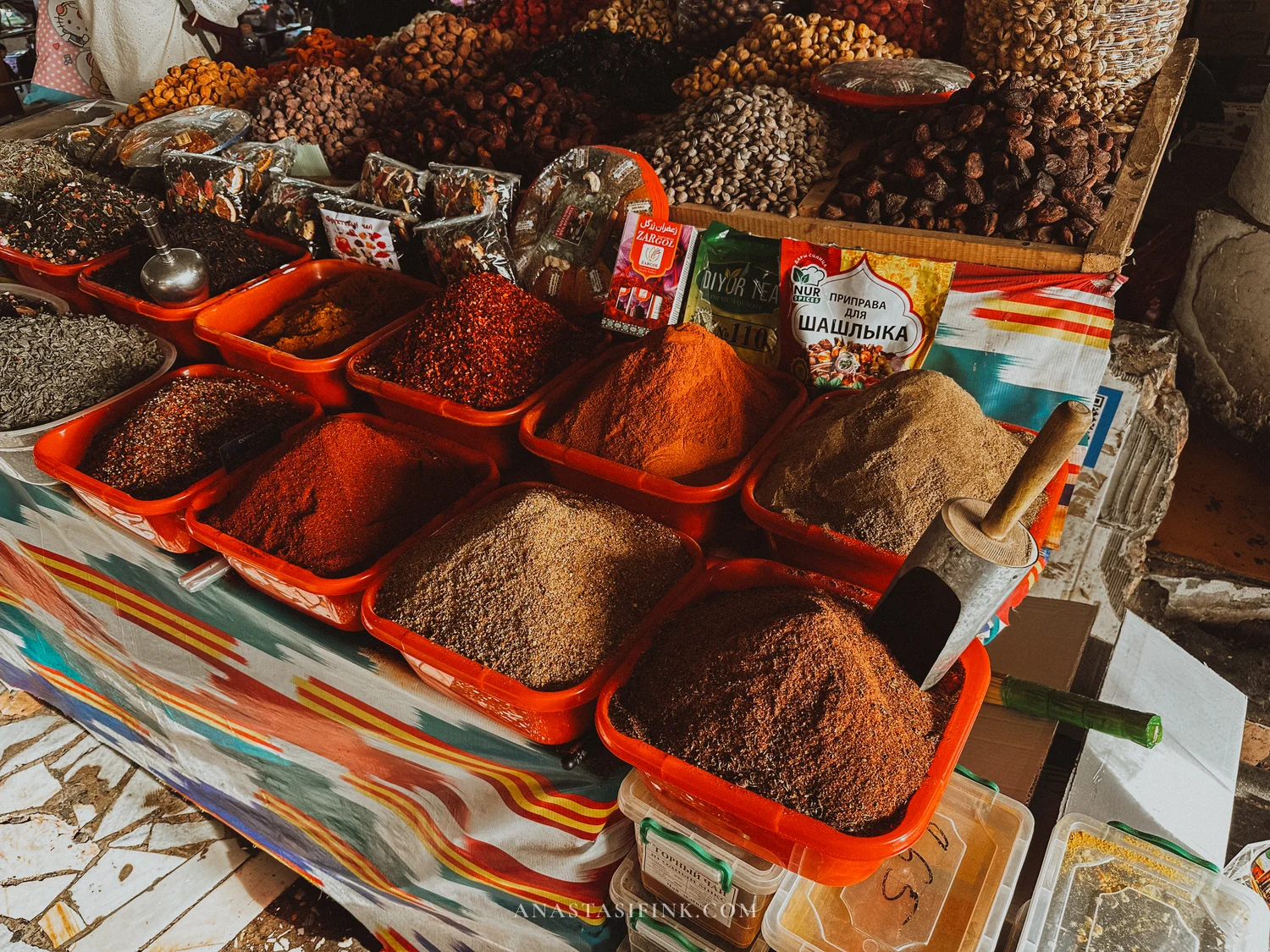
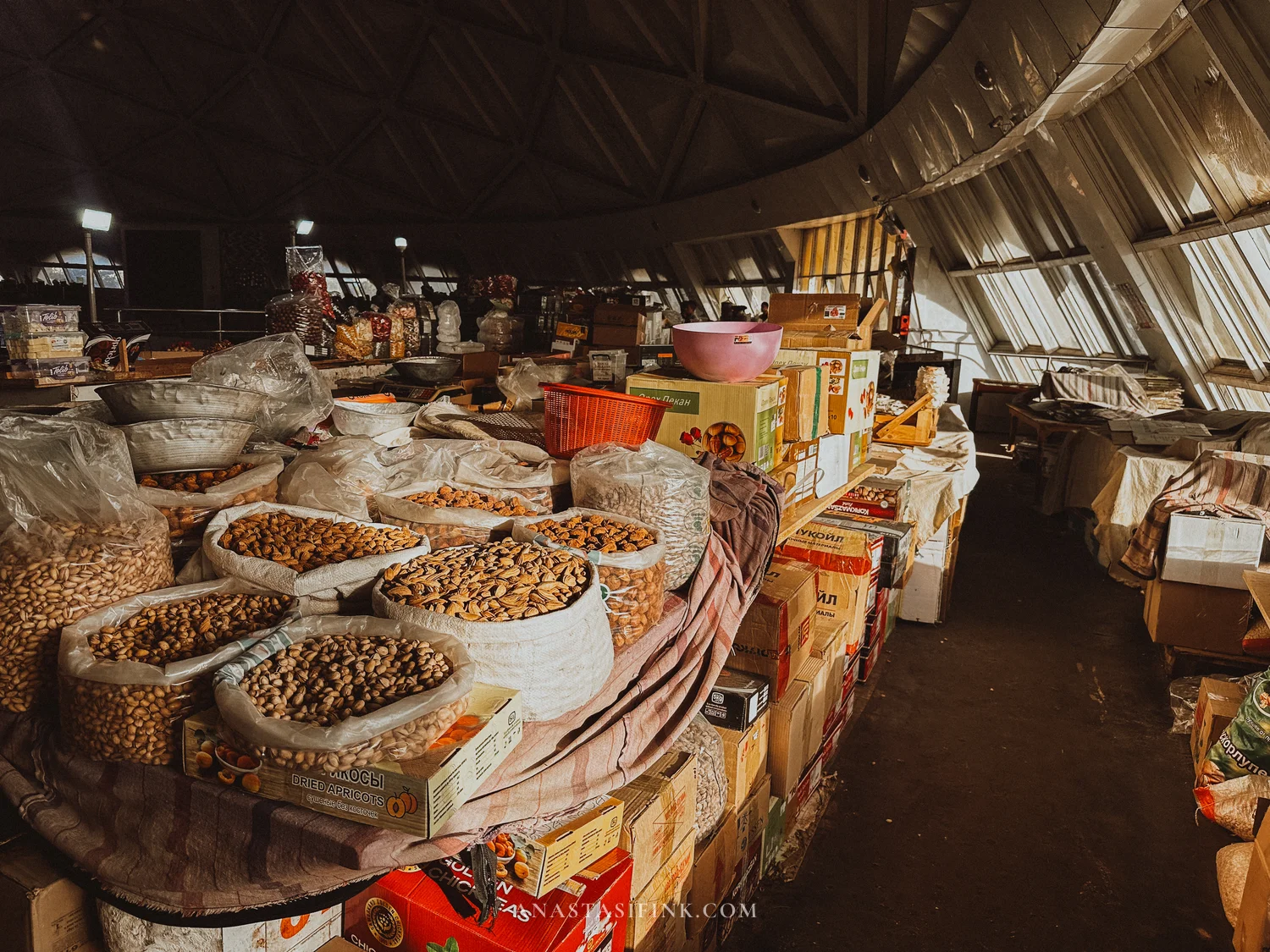
Spices and dried fruit — this is what Tashkent locals come to Chorsu for too
From the bazaar, it’s easy to leave by metro — the Chorsu station is right nearby. The Tashkent metro opened in 1977, the first in Central Asia, and every station has its own design: Kosmonavtlar has medallions with cosmonauts, Uzbekistan has chandeliers shaped like open cotton bolls, and Alisher Navoi has blue domes like a madrasah. A ride costs about 1,700 UZS (~$0.15).
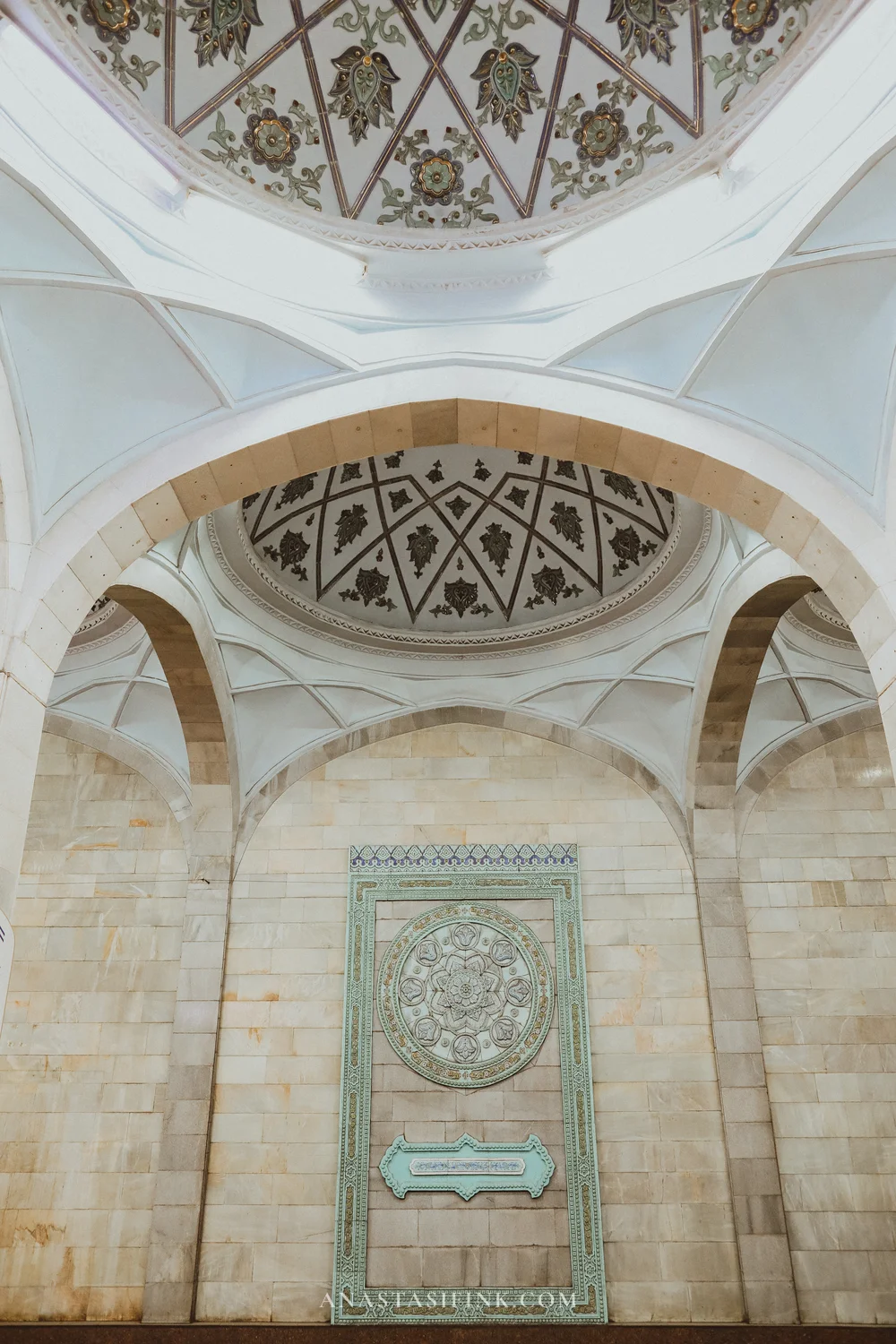
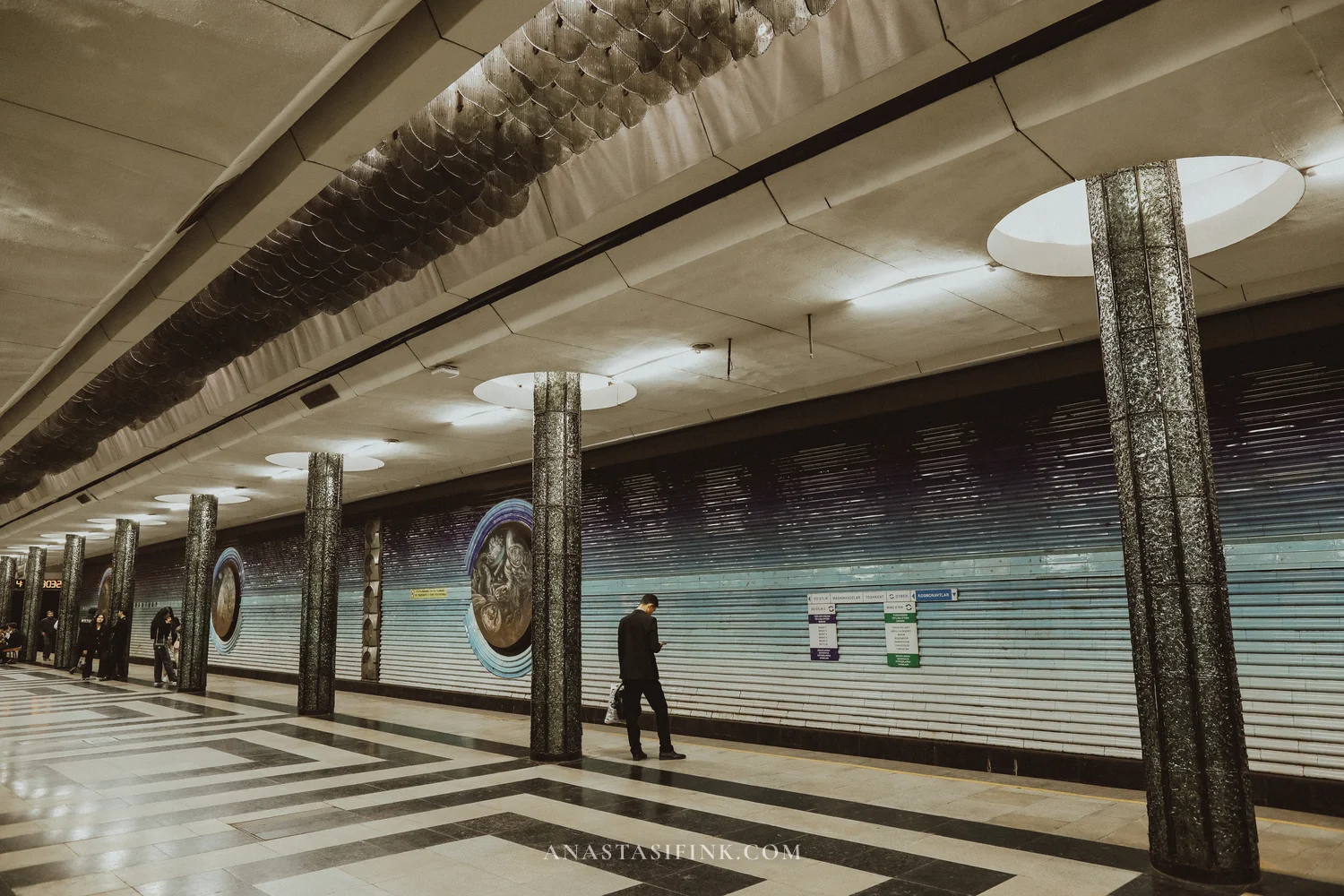
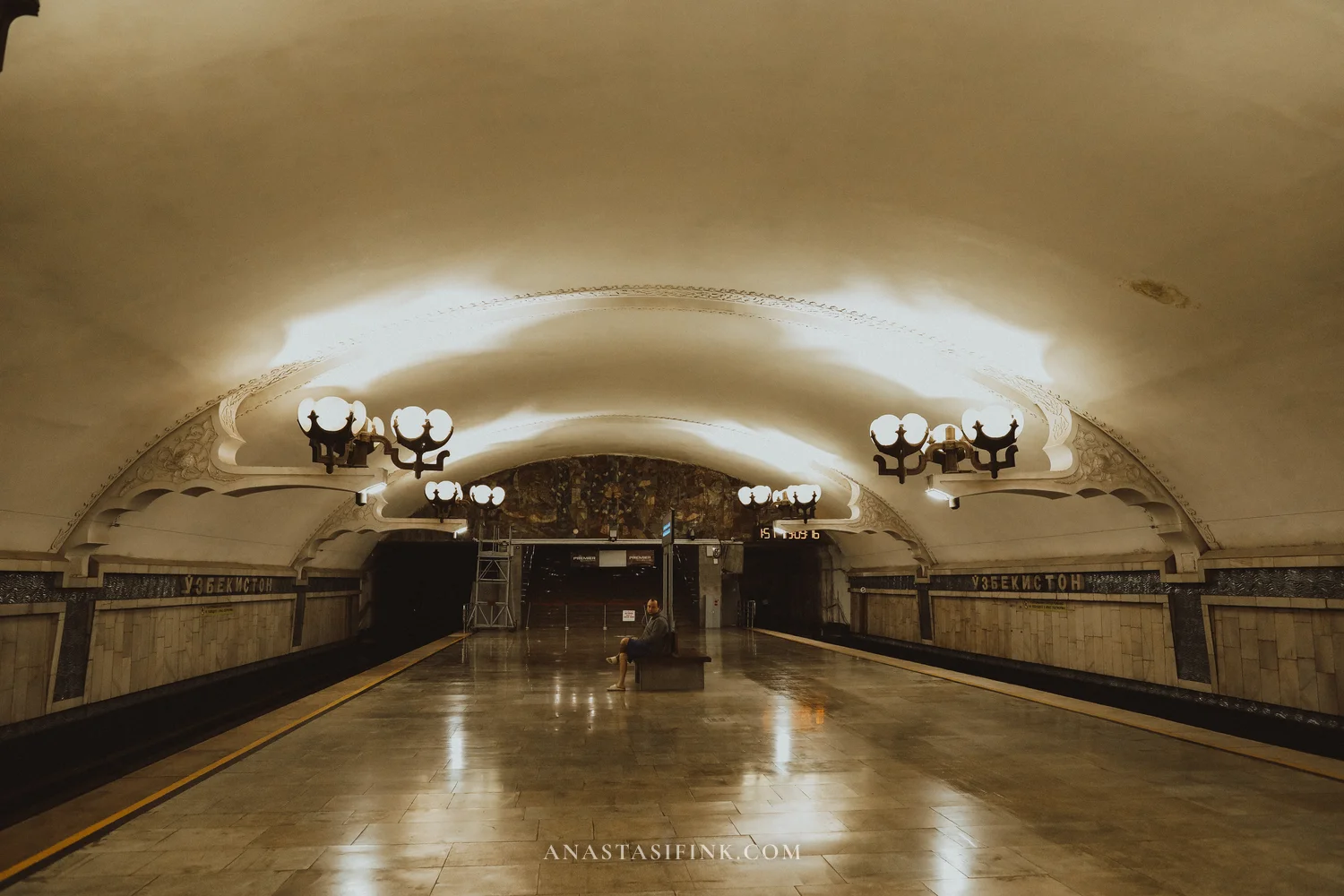
Kosmonavtlar and Uzbekistan — every station has its own theme
For lunch, you can head to the Besh Qozon Plov Center (address: Iftixor ko’chasi, 1 — right by the TV tower, easy to find by name in a taxi app), where plov is cooked in enormous cauldrons over open fire. Come around noon, before it runs out. If you don’t feel like going anywhere, the food rows at Chorsu itself will feed you just fine.
After lunch — the Museum of Applied Arts in the Polovtsev House: from the outside, an ordinary early-20th-century mansion; inside, halls entirely covered in carved ganch and painted decoration, plus a collection of ceramics, embroidery and miniatures. A ticket is about 40,000 UZS (~$3).
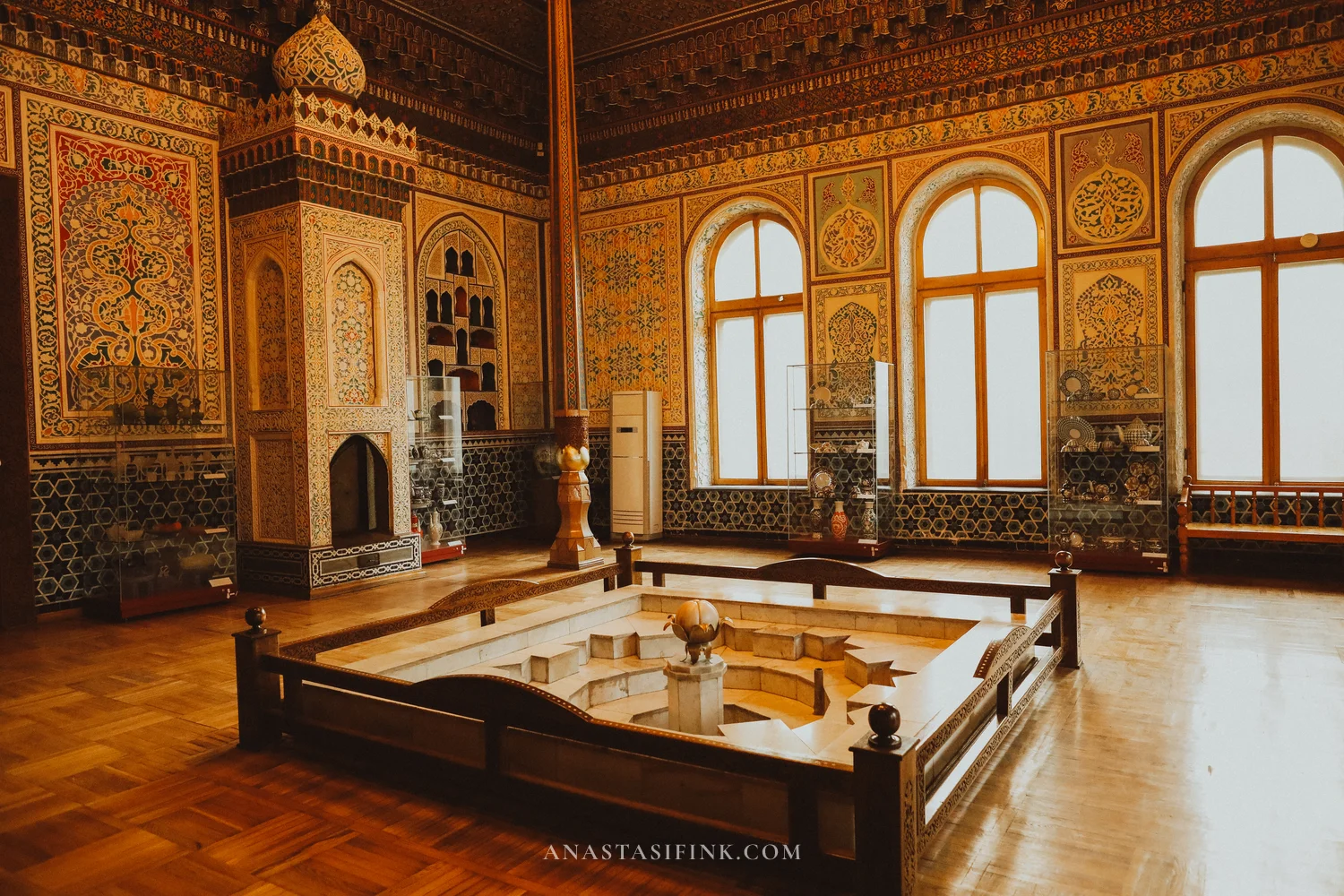
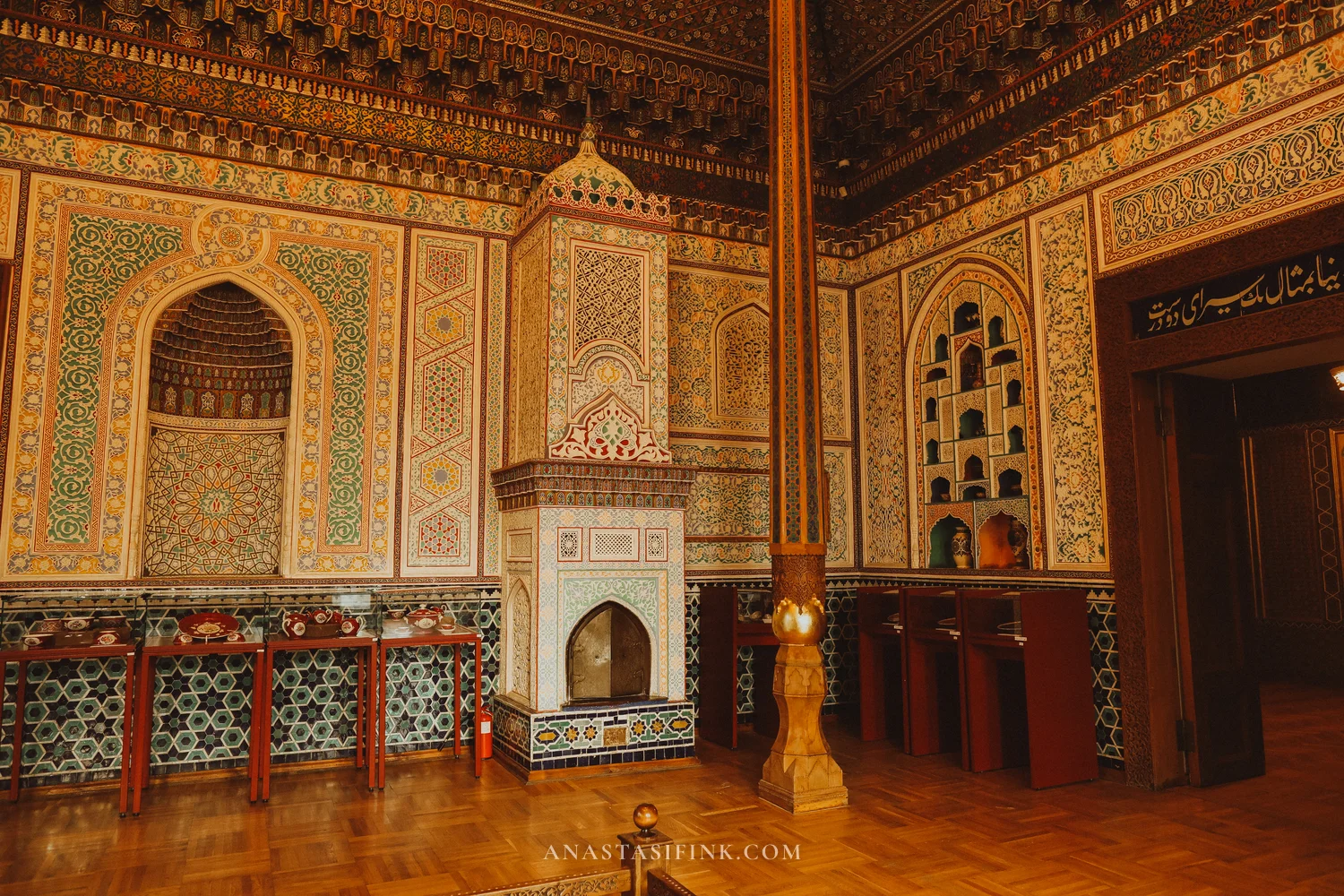
The Polovtsev House: a modest facade and anything-but-modest interiors
From there it’s a short walk to Human House — a gallery-shop of local artisans where you can buy ceramics, suzani and postcards by local artists, and have a cup of tea in the courtyard while you’re at it. Entry is free.
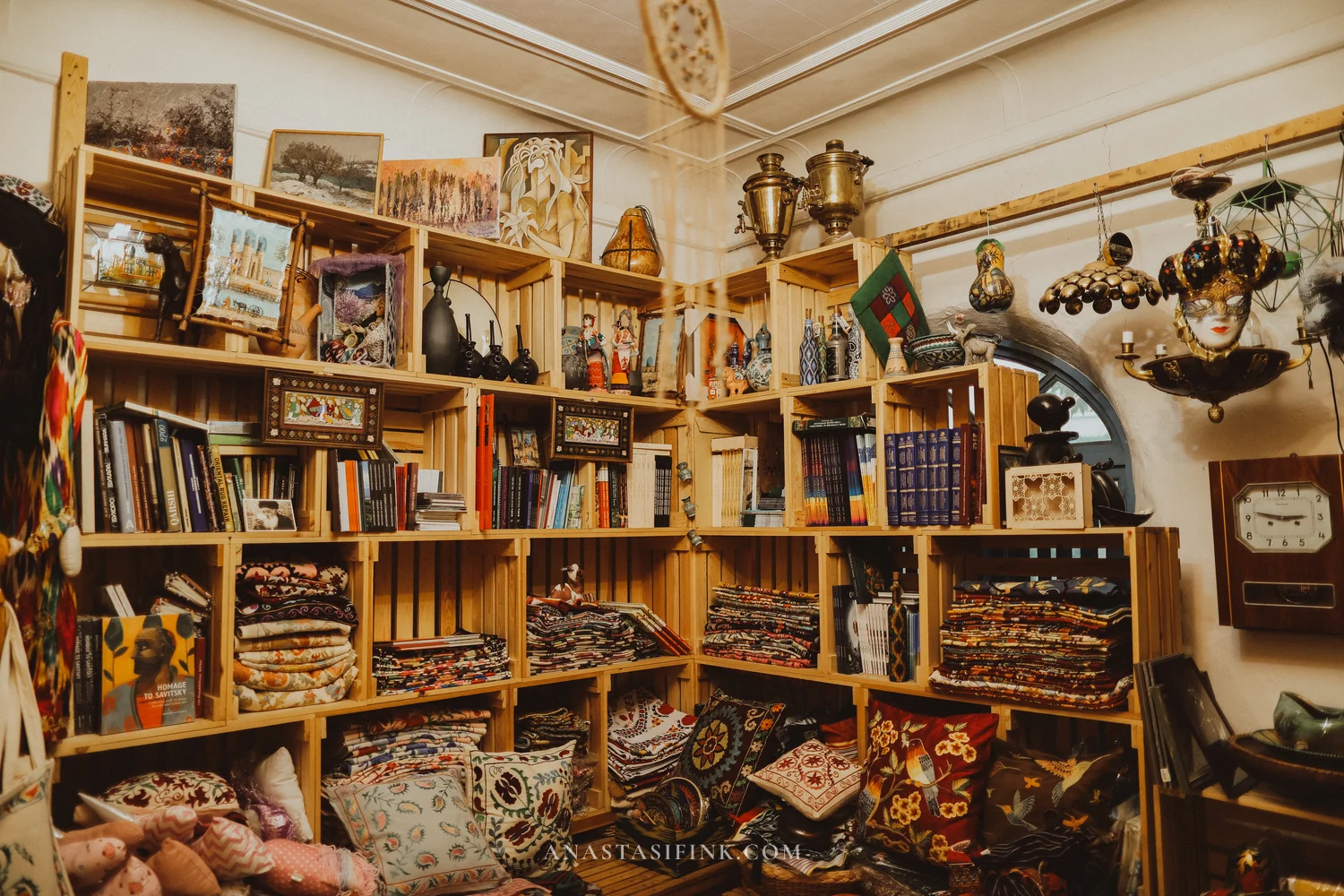
A detailed one-day route through the capital — with all the addresses and the order of stops — is here: Tashkent in One Day: A Full Walking Guide, and there’s a separate article about the Polovtsev House: Tashkent Museum of Applied Arts: Inside the Polovtsev House.
Practical Information
Uzbekistan in 7 Days — At a Glance
- Route: Bukhara (3 days) → bus → Samarkand (2 days) → train → Tashkent (2 days)
- Getting to Bukhara: a domestic flight from Tashkent (~1 hour) or an overnight train; Bukhara has its own airport
- Currency: Uzbek som (UZS); $1 ≈ 12,000–13,000 UZS. Cards are accepted in hotels and restaurants, but you’ll need cash for bazaars, tickets and taxis
- Taxis: ride-hailing apps work in all three cities — a ride within a city rarely costs more than $2
- Connectivity: a local SIM card is sold at the airport with your passport and costs very little
- When to go: April–June and September–October. In July–August it’s consistently above +35°C
- Visa: citizens of most European countries and many others get visa-free entry for up to 30 days; rules change, so check before your trip
A separate word about food: in Uzbekistan, plov isn’t a side dish but the main event, and every city cooks it its own way — try it in each and compare. Beyond that: kebabs, tandoor-baked samsa, flatbread, and at the bazaars, halva and dried fruit.
And a word about pacing. Seven days for three cities is comfortable: no rushing, but no empty days either. If you need to compress things, the third Bukhara day folds easily into the first two, and Tashkent can shrink to one day. And if you have an eighth day, I’d give it to Bukhara — that’s the city where you most want to just wander without a plan.
Final Thoughts
Uzbekistan turned out to be an easy country for independent travel: intercity transport is straightforward, tickets are bought online, and taxis are cheap. A week is enough to see all three cities at a relaxed pace. And if you want more — in the west of the country there’s still Khiva, which I’ve saved for my next trip.
FAQ
A week is the comfortable minimum for the three main cities: 3 days in Bukhara, 2 in Samarkand and 1–2 in Tashkent. With 10 days you can add Khiva — the fourth Silk Road city, in the west of the country.
By bus (4–5 hours, ~90,000–110,000 UZS) or by train. Bus tickets are sold online at avtoticket.uz and at the bus station ticket office. The bus arrives at the station on the edge of Samarkand; from there it’s 15–20 minutes to the center with a ride-hailing app.
For the high-speed Afrosiyob — yes, 2–4 weeks ahead, especially in spring and autumn. For regular trains and the Sharq, tickets are usually available a few days out. The easiest way to buy is on eticket.railway.uz or in the Uzbekistan Railways app.
April–June and September–October: warm but not hot. In summer the temperature regularly climbs above +35°C, and sightseeing during the day is tough. In winter there are few tourists, but it can be cold and gray.
No. Entrance tickets cost $2–8, a taxi ride within a city is $1–2, and dinner at a good restaurant runs $10–15 per person. The main expenses are flights and hotels.
Yes, the route is symmetrical: Tashkent → Samarkand → Bukhara works just as well. Starting in Bukhara makes sense if you’re flying out of Tashkent — that way you end the trip in your departure city.
Yes, it’s one of the calmest countries in the region for tourists. People are friendly and genuinely curious about travelers. The usual precautions apply — same as on any trip.