Gur-e-Amir Mausoleum in Samarkand: Tamerlane’s Tomb Guide

Gur-e-Amir sits a little off to the side of Samarkand’s main squares — between the Registan and the old town. From the outside it’s a fluted blue dome and two minarets; inside, it’s the mausoleum of Tamerlane, where almost every inch is covered in gold.
Gur-e-Amir: the tomb of Tamerlane
“Gur-e-Amir” translates as “tomb of the ruler.” This is the family mausoleum of the Timurids, and Tamerlane (Timur) himself is buried here — the conqueror who, in the 14th century, made Samarkand the capital of his empire.
Construction of the mausoleum began in 1403 — and not for Timur. The building was meant for his grandson and heir, Muhammad Sultan, who died unexpectedly. Two years later, in the winter of 1405, Timur himself died on a military campaign; his body was brought to Samarkand and buried here, in the still-unfinished building. Another grandson — Ulugh Beg, the astronomer and ruler — completed the mausoleum. Under him Gur-e-Amir became the dynastic tomb: besides Timur, his sons Shahrukh and Miran Shah lie here, along with his grandsons Ulugh Beg and Muhammad Sultan, and Timur’s spiritual mentor Mir Sayyid Baraka.
If the names mean nothing to you, it’s enough to know one thing: this mausoleum is considered the prototype for the later tombs of the Mughal emperors in India, including the Taj Mahal.
Outside: the dome, minarets and portal
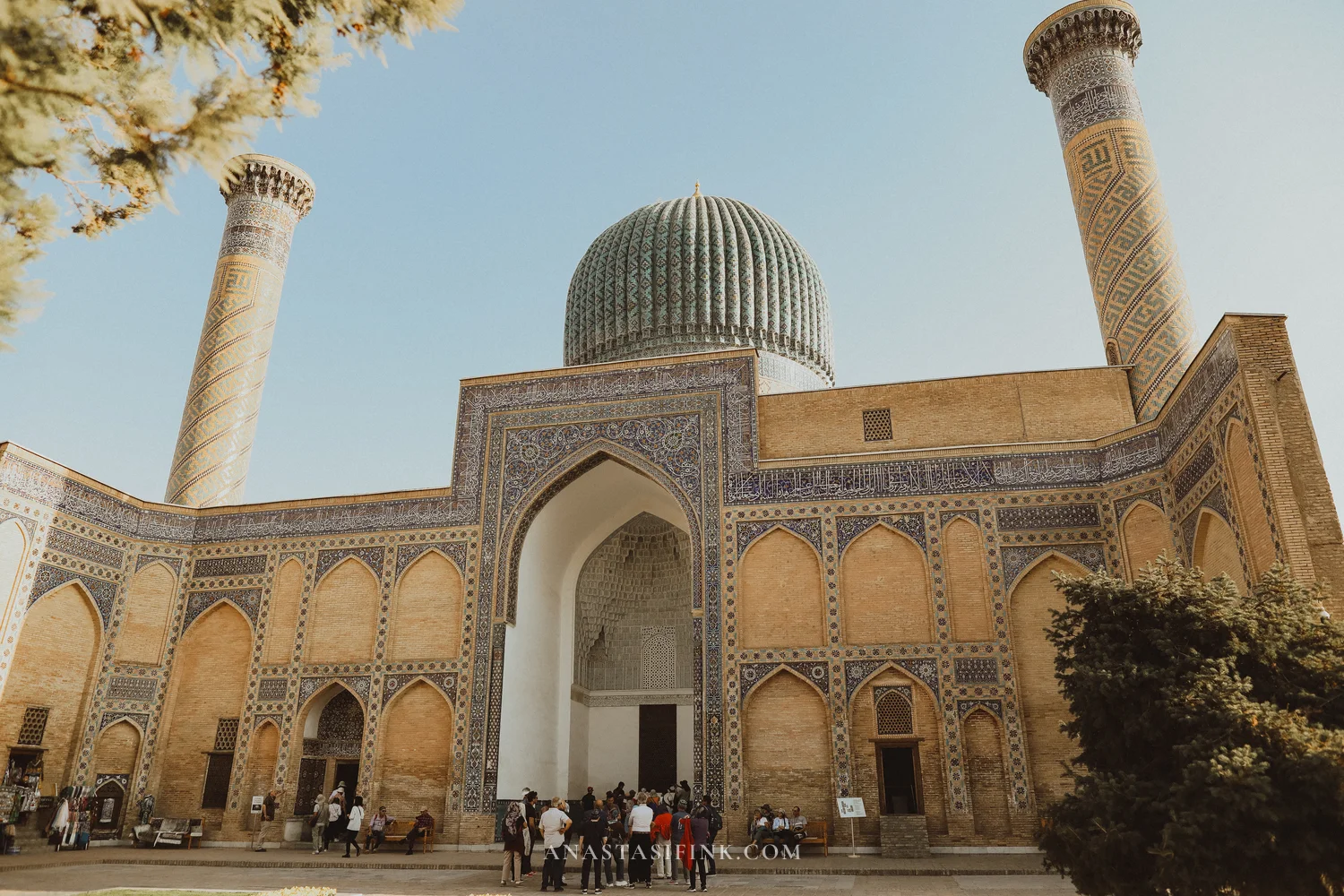
The dome is the first thing you see from afar. It’s covered in blue and turquoise tile and built from dozens of vertical ribs, which is why it looks fluted. Two minarets, about 30 metres tall, stand on either side, and the entrance is framed by a tall portal covered in mosaic.
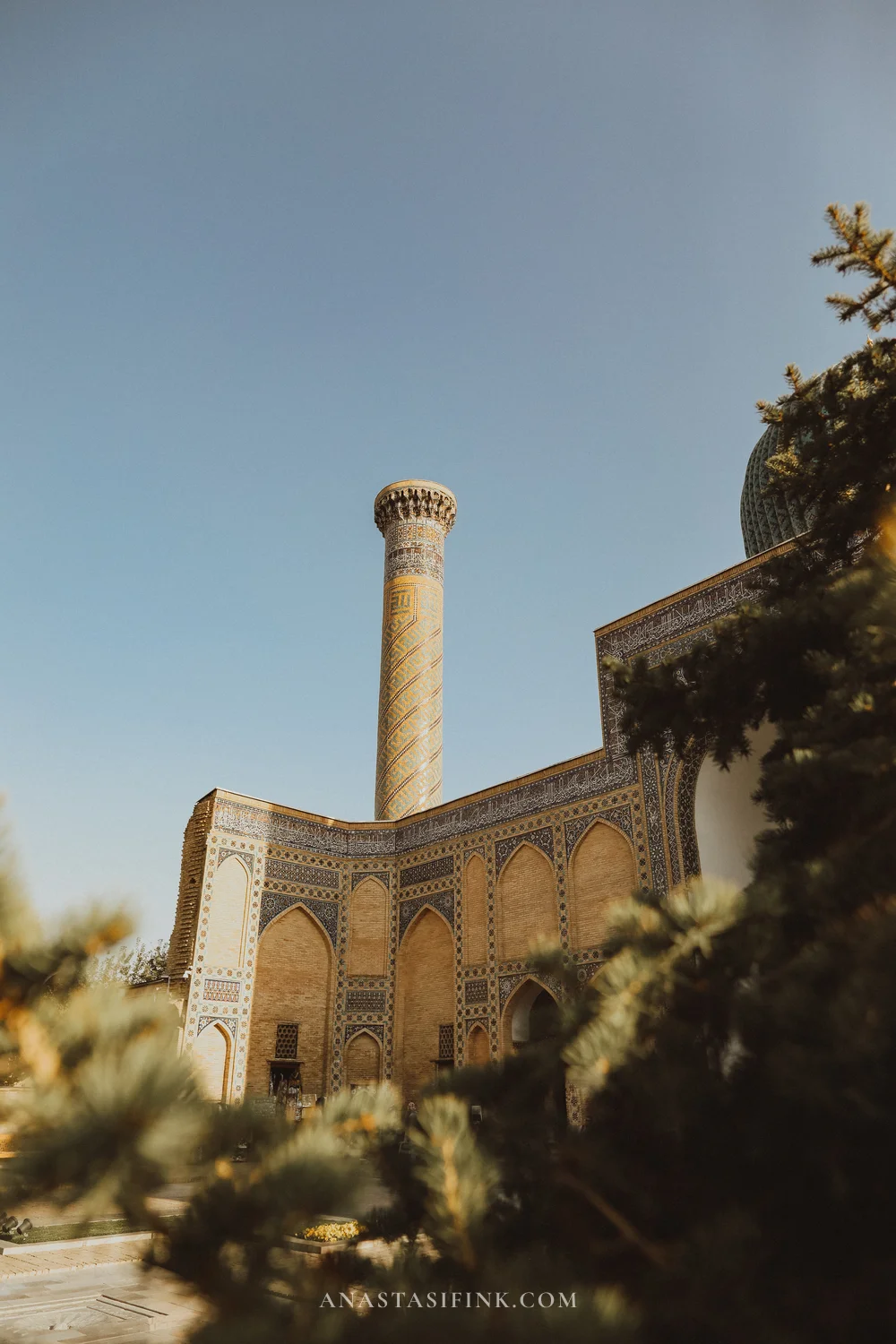
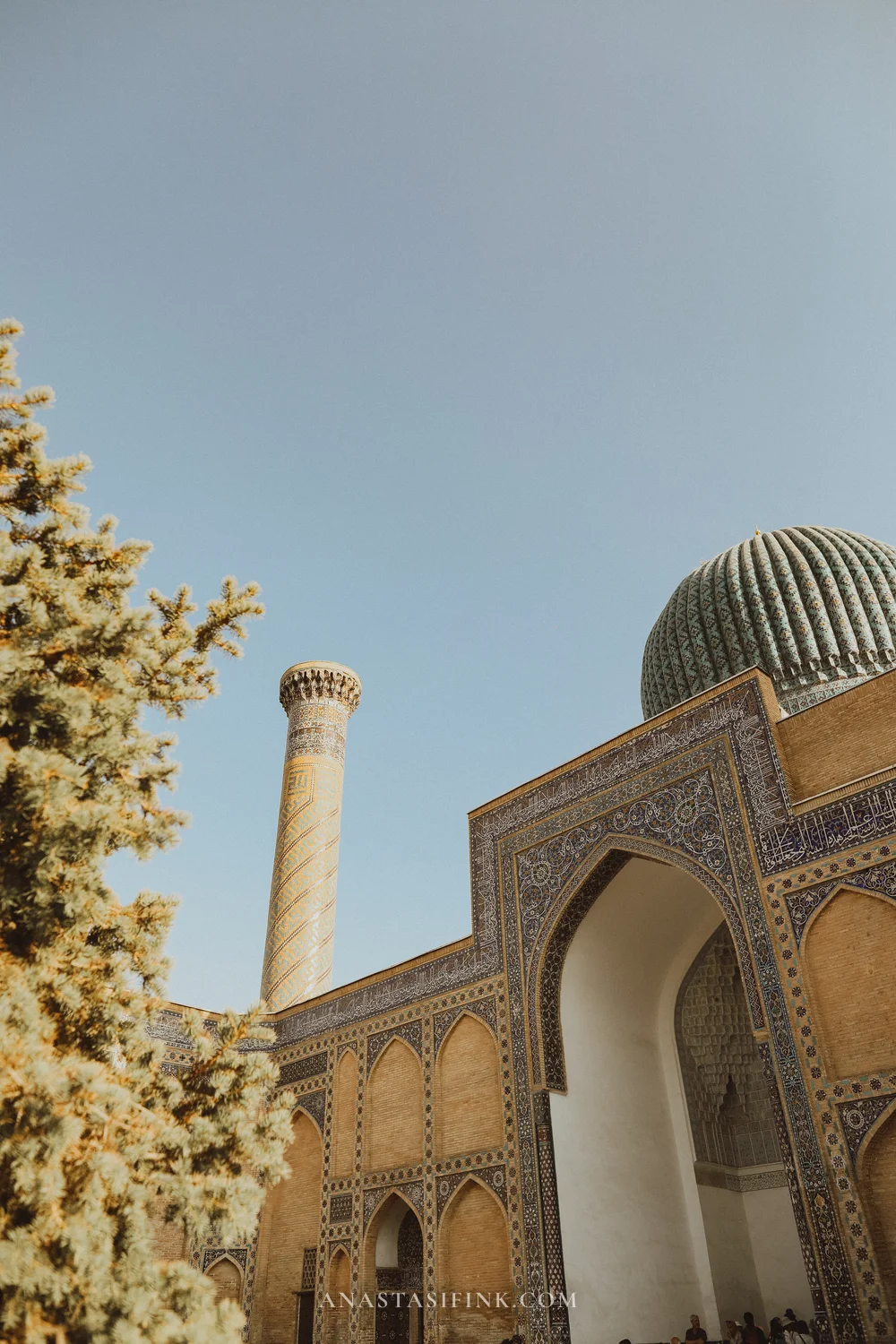
The dome and minaret from the garden — the fluted pattern of the dome shows clearly from here
You enter the complex through a separate gatehouse — a tall portal. Beyond it opens a courtyard: a small square in front of the mausoleum itself. By morning, tour groups have already gathered here, but the crowd isn’t as dense as at the Registan.
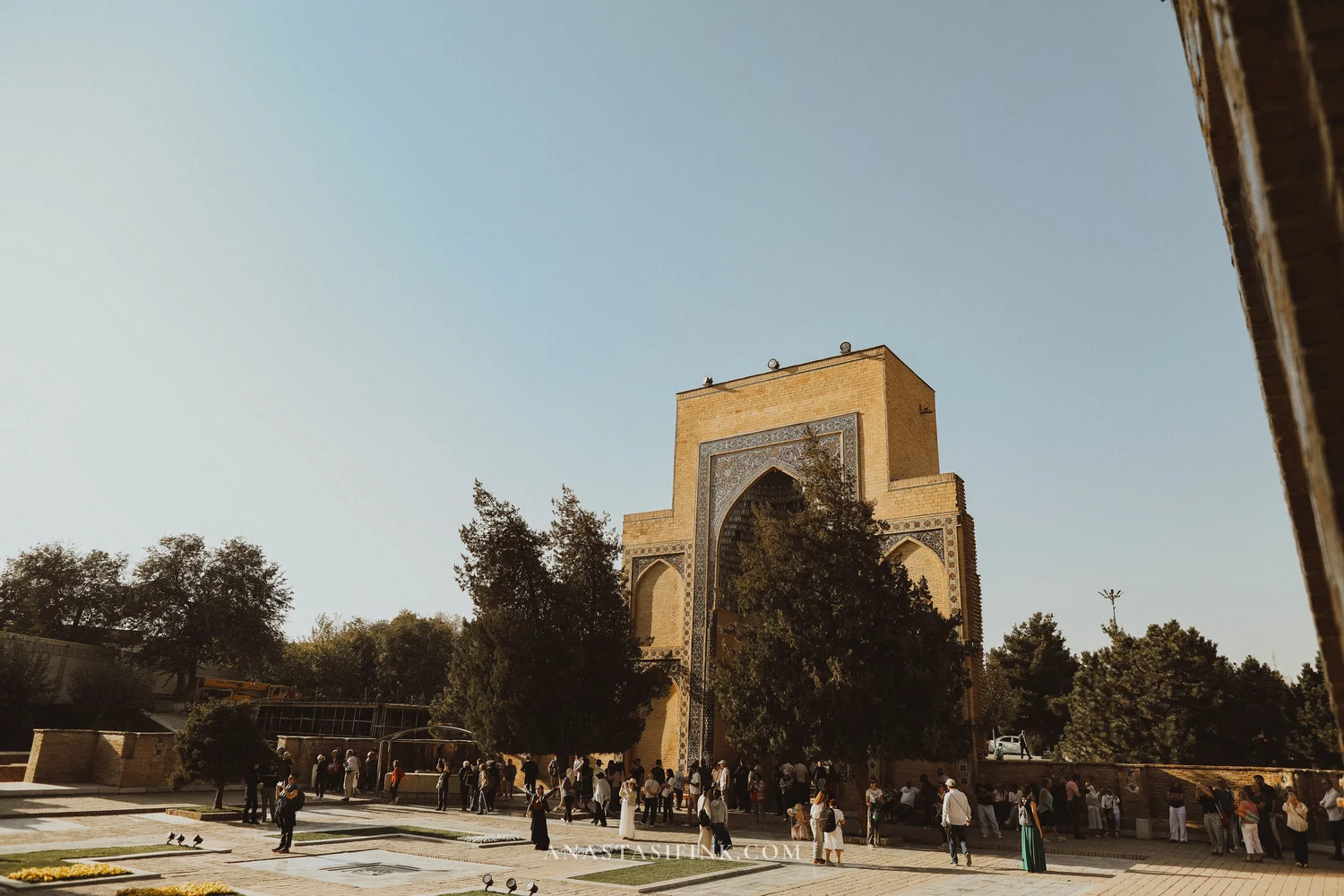
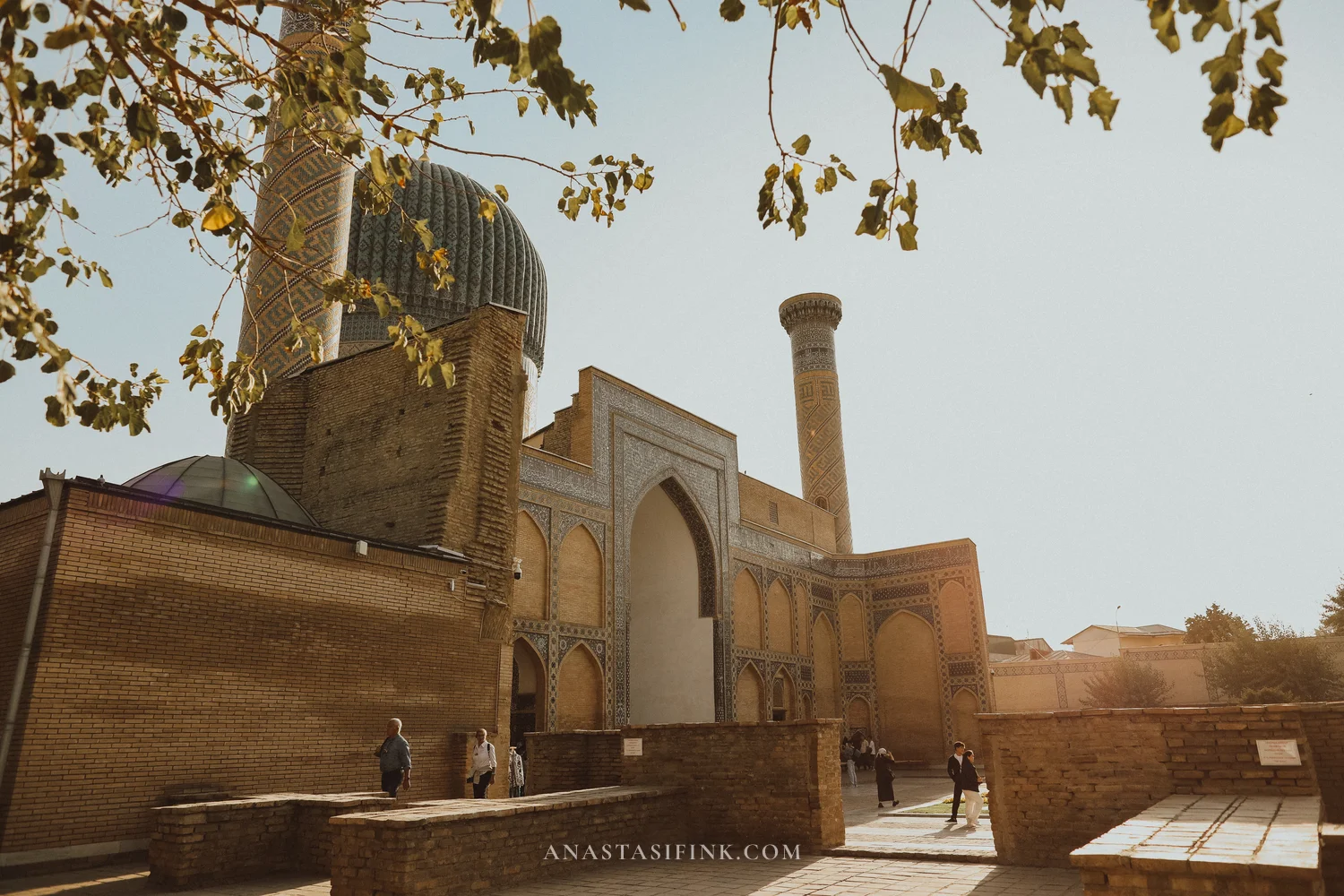
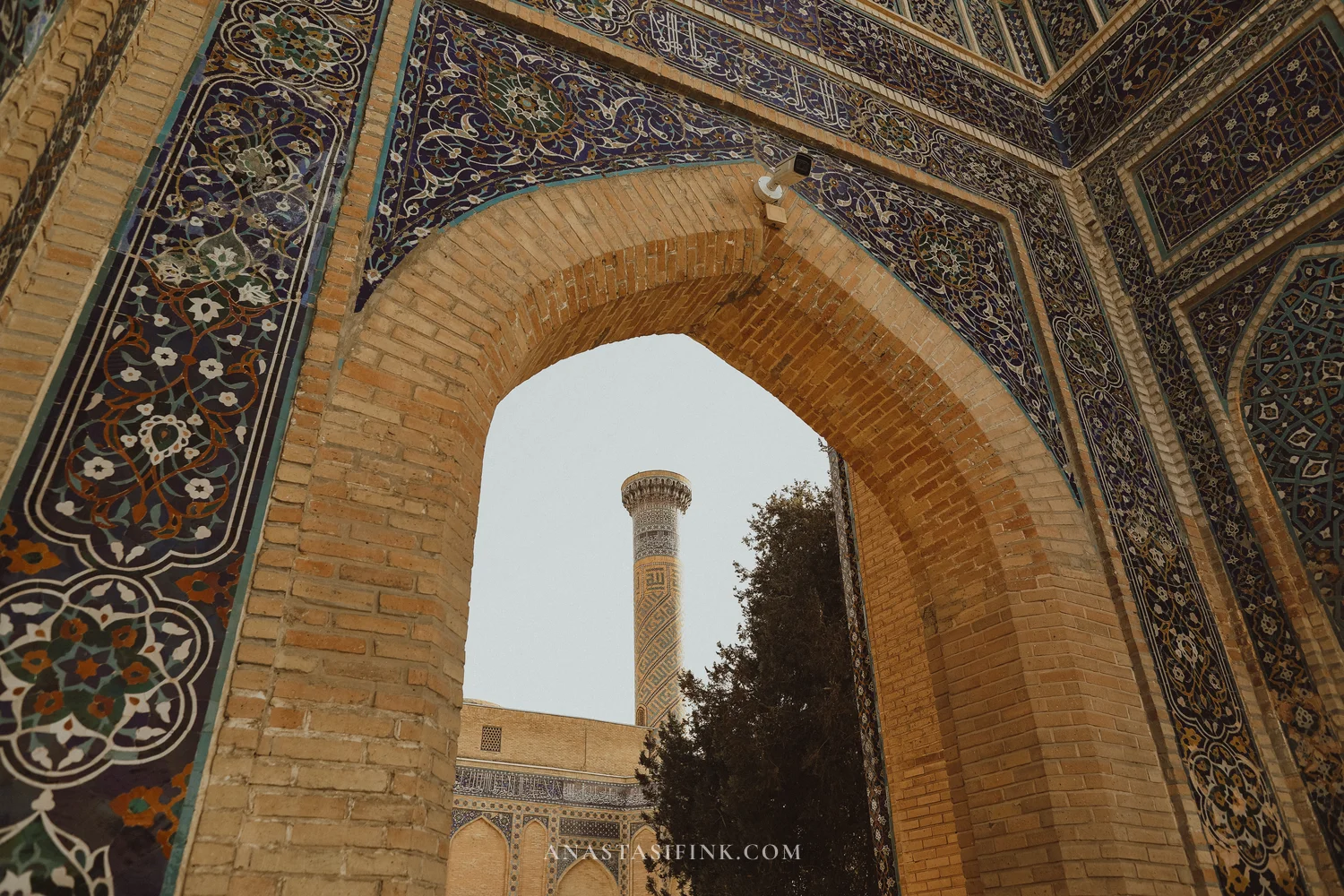
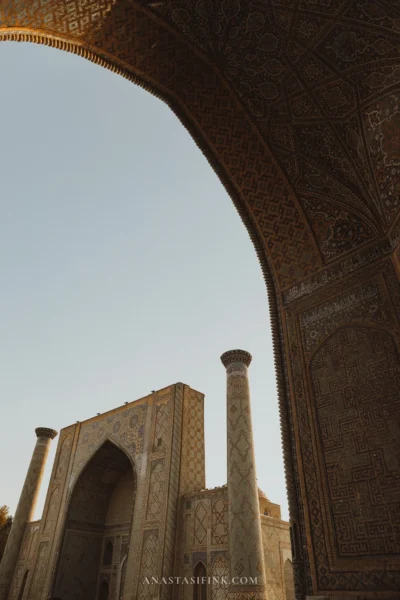
The complex from the courtyard and a view of the minaret through the portal arch
The tilework and mosaic of the portal
Up close you can see what it’s all made of. There are two kinds of pattern here. Majolica is whole tiles: the tile is painted, glazed and fired, then laid out in rows. Mosaic is more complicated: small pieces are chipped off coloured tiles and the design is assembled by hand, like a jigsaw, which is why the lines come out fine and precise. The walls of Gur-e-Amir have both.
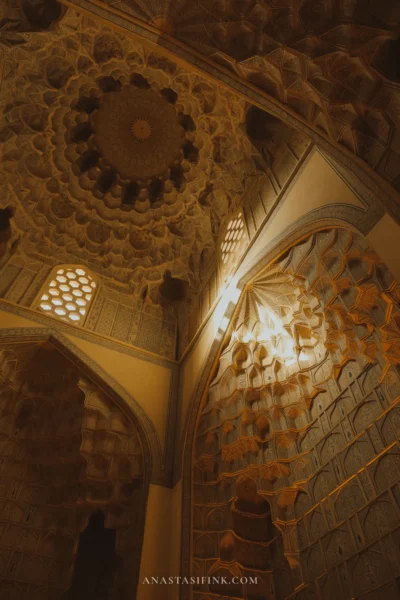
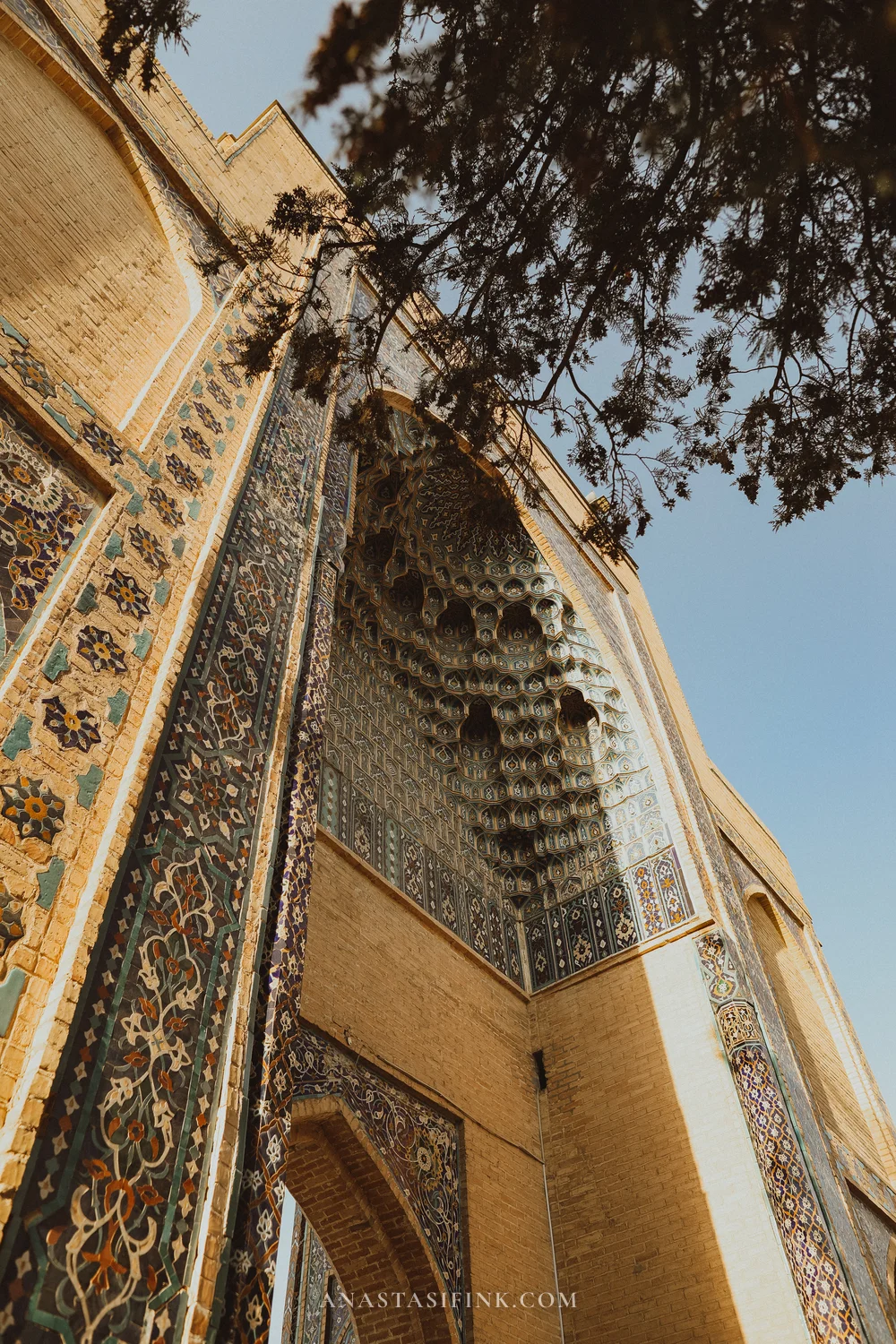
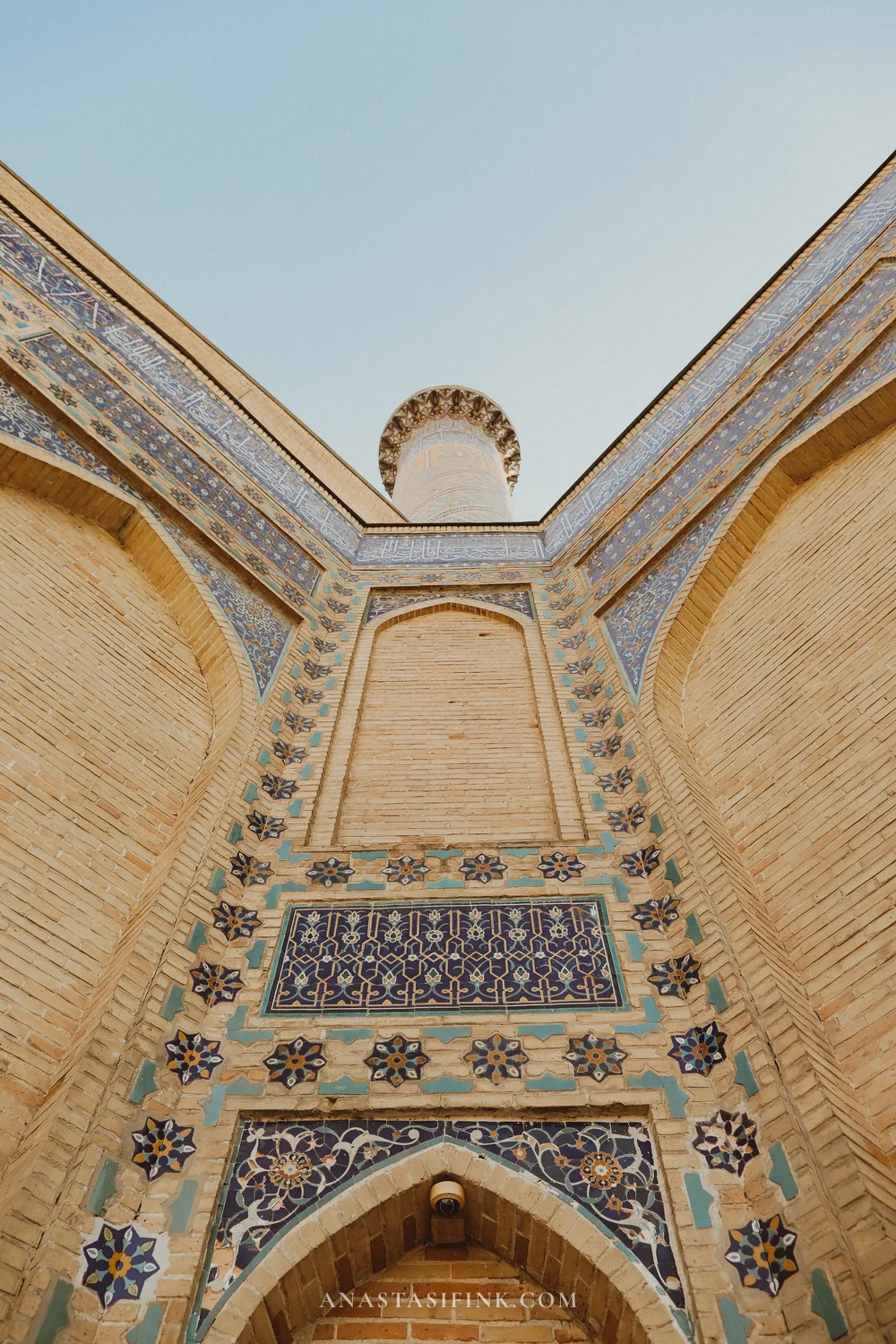
The vaults above the entrance are filled with muqarnas. These are three-dimensional “honeycomb” cells used in Eastern architecture to decorate niches and the transitions from a straight wall to an arch or dome. They carry no structural load — pure ornament — but with their tiers and shadows a flat corner seems to dissolve. At Gur-e-Amir the muqarnas appear twice: outside on the portal, laid in tile, and inside, entirely in gold.
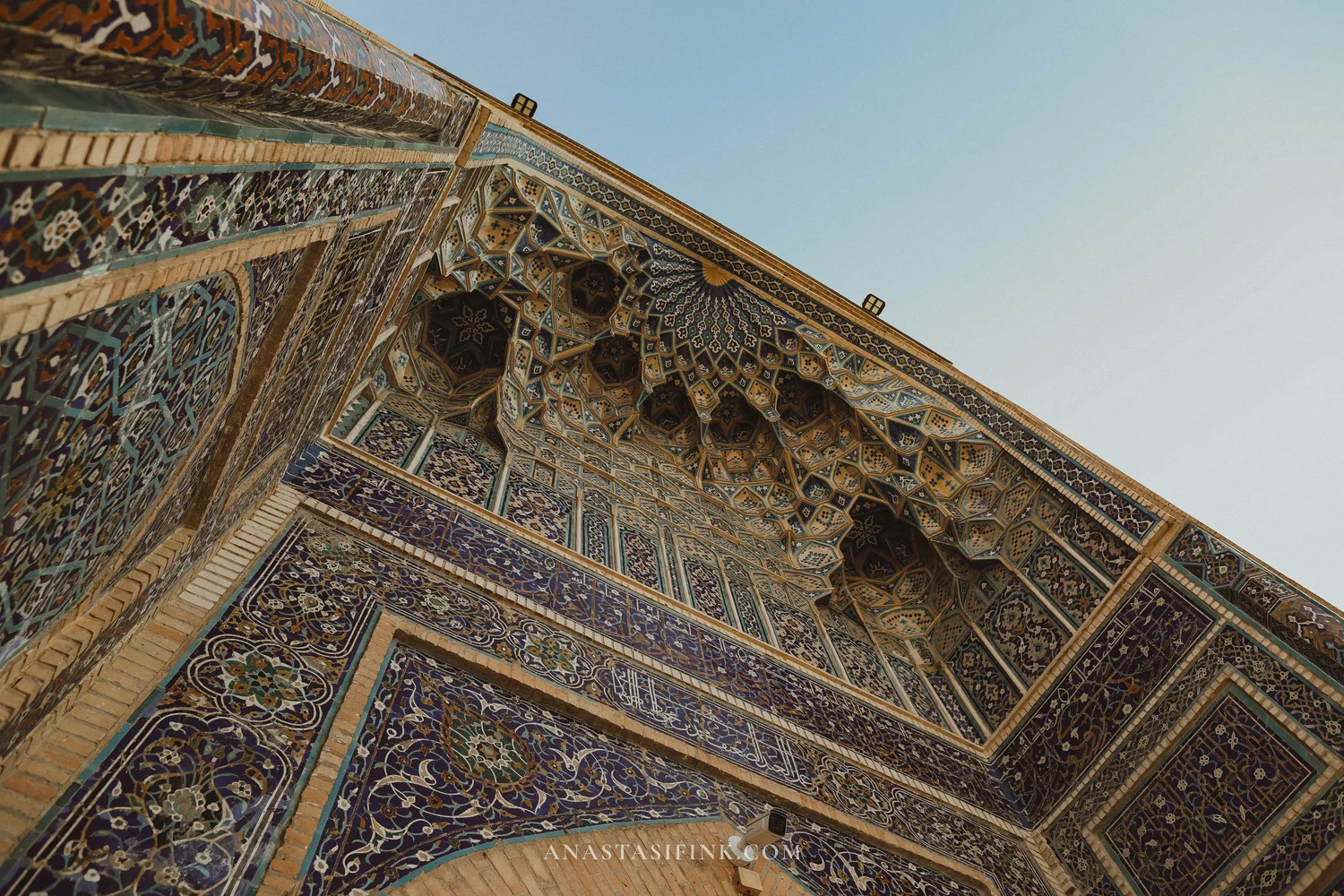
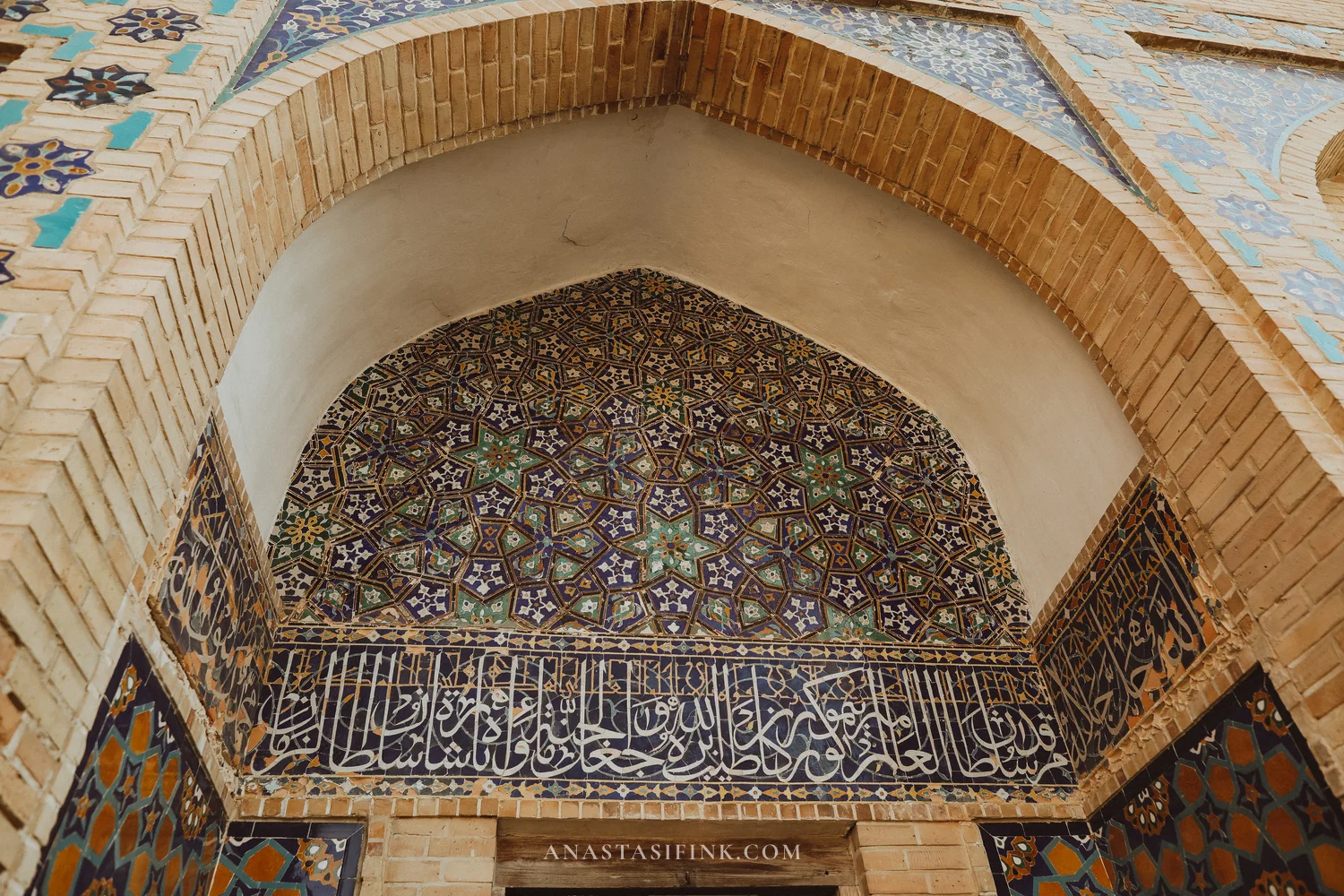
The portal vaults up close. Beneath the ceiling runs a band of calligraphy along the edge
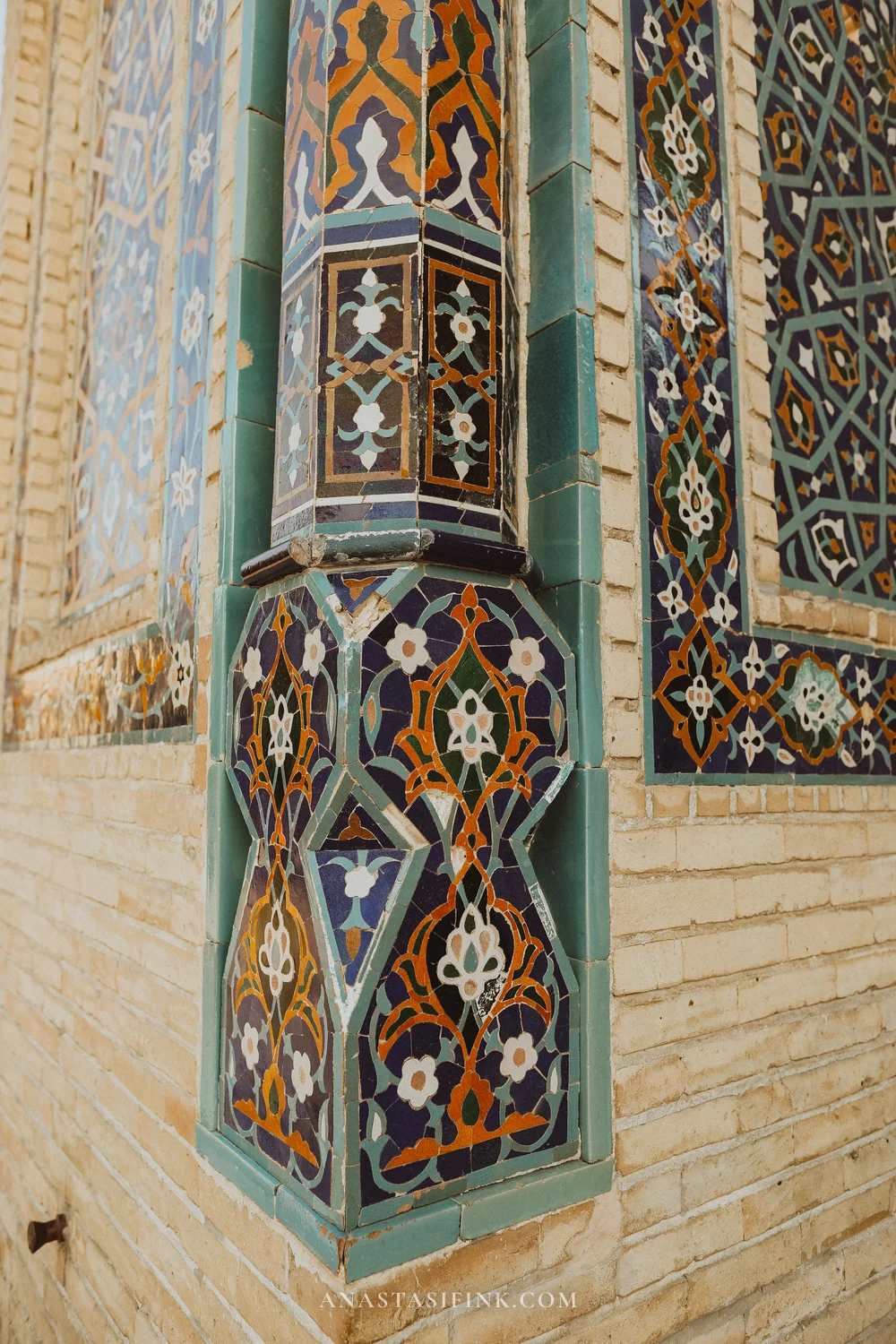
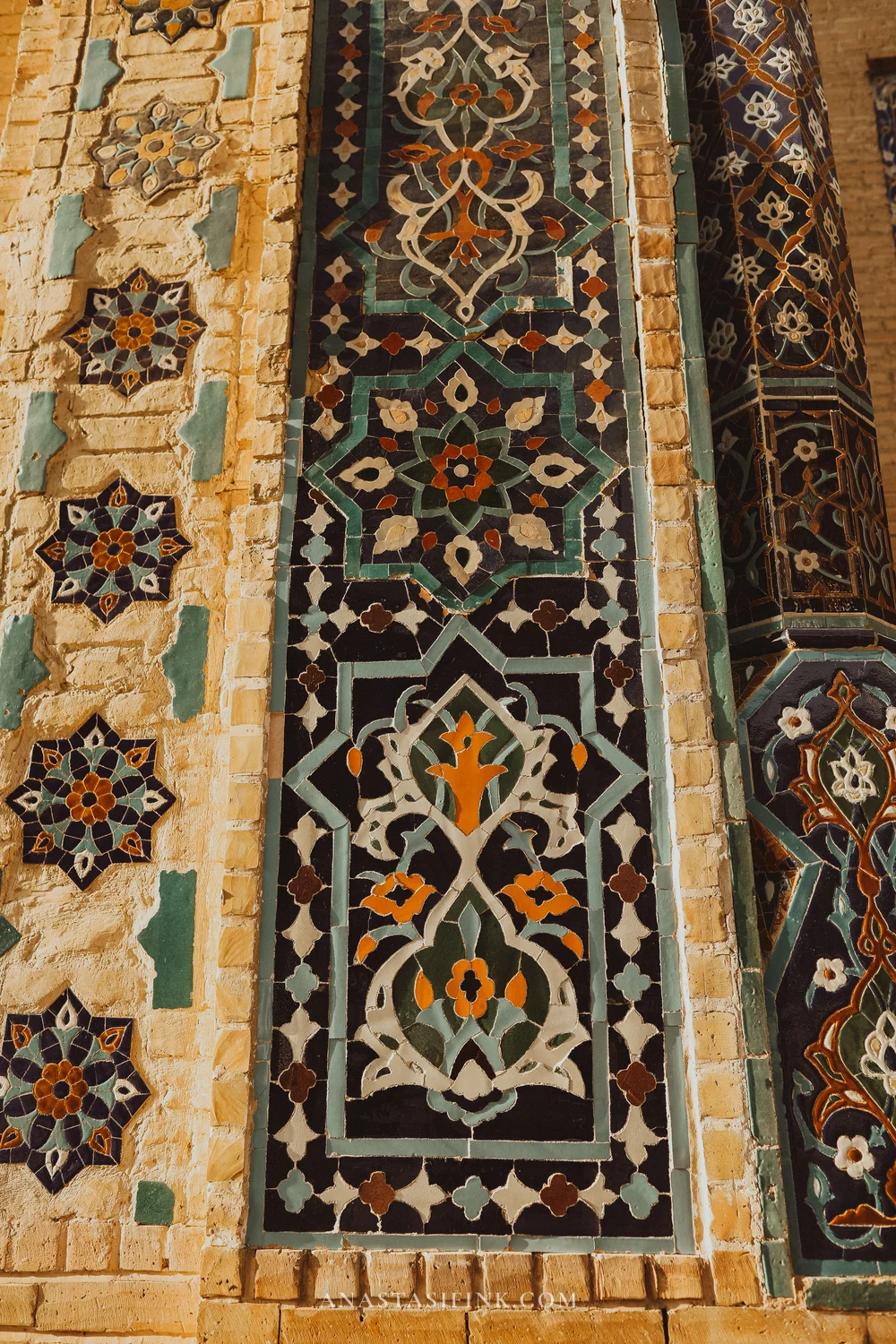
The ornament is built from glazed tiles of different colours — green, blue, ochre, white
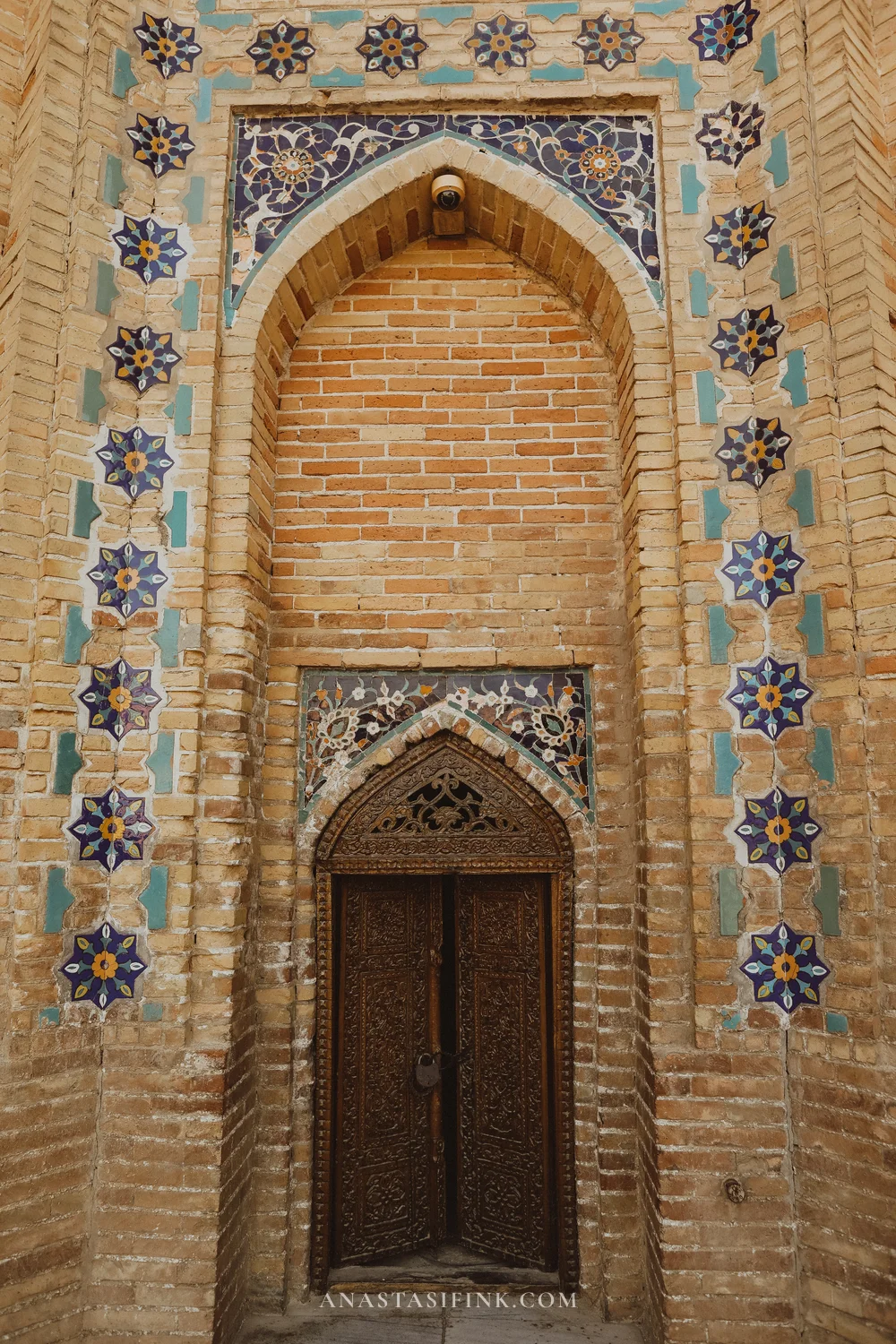
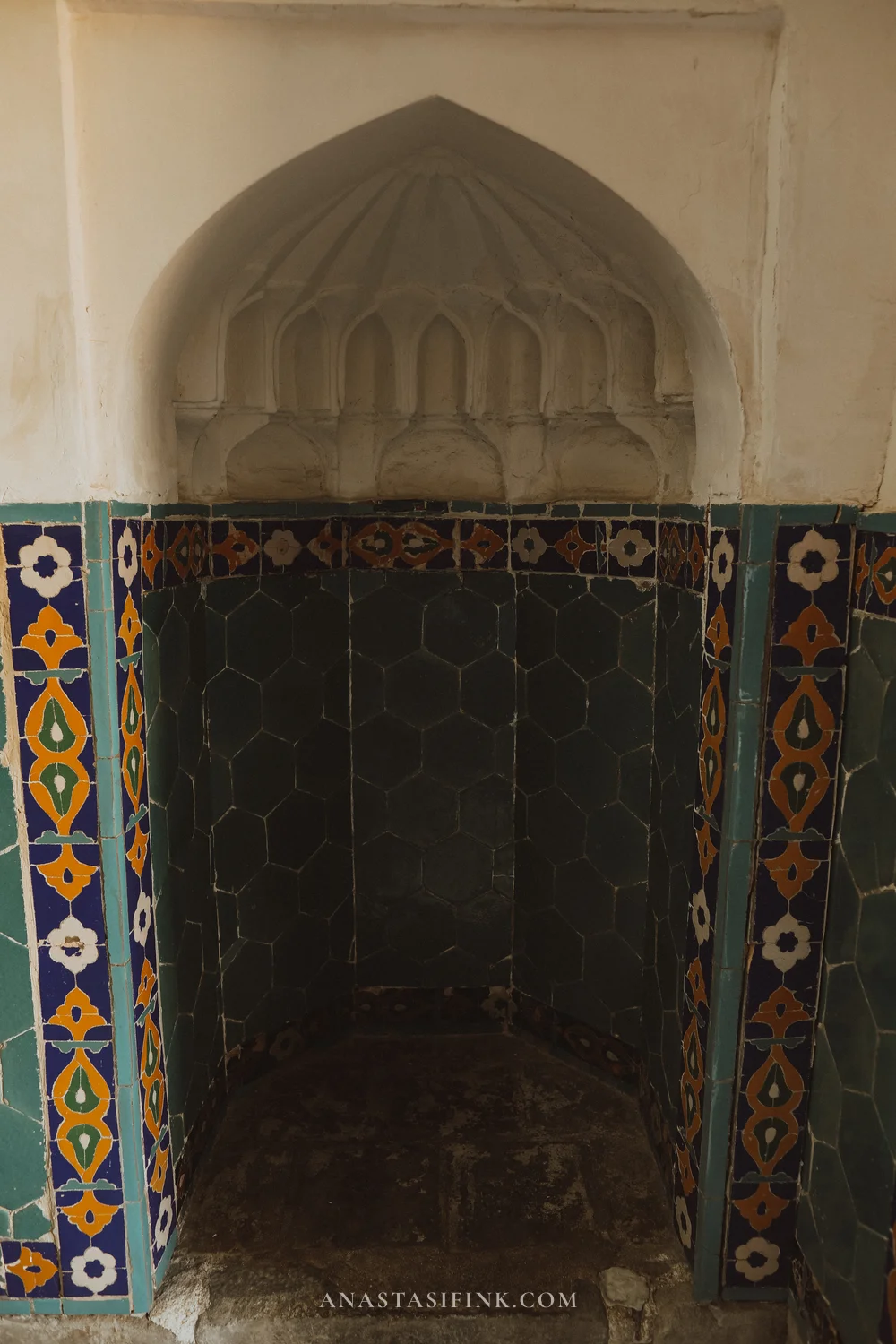
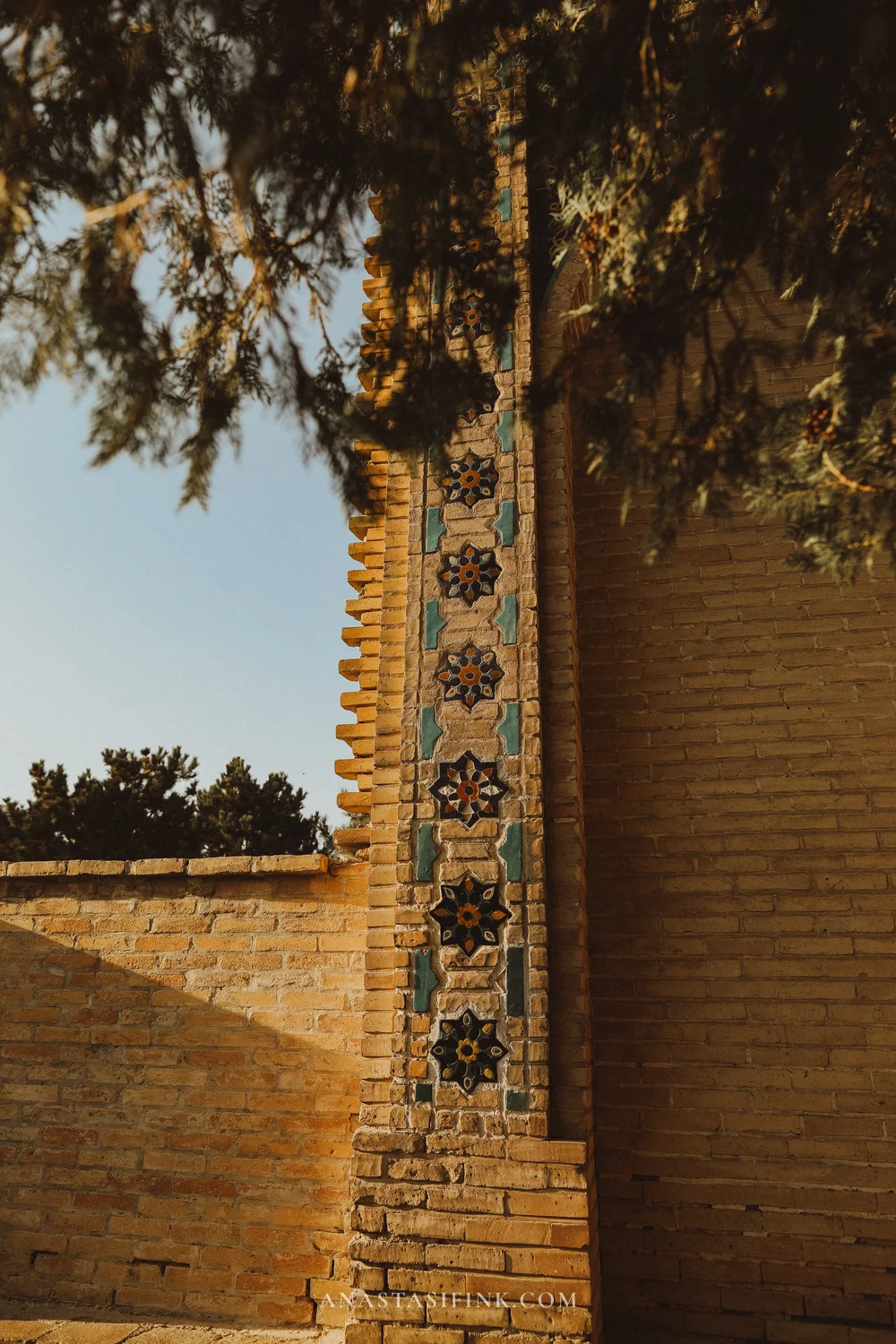
In places the tile is bright and intact, in others it has crumbled down to the brick — you can tell the building is six centuries old
The gilded interior beneath the dome
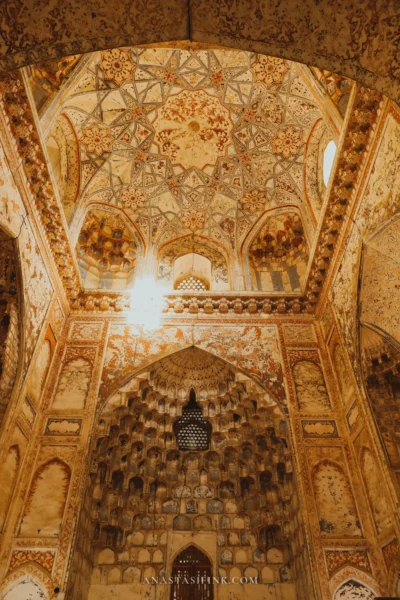
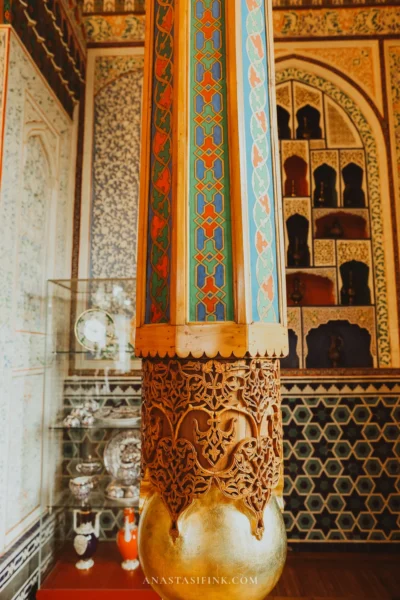
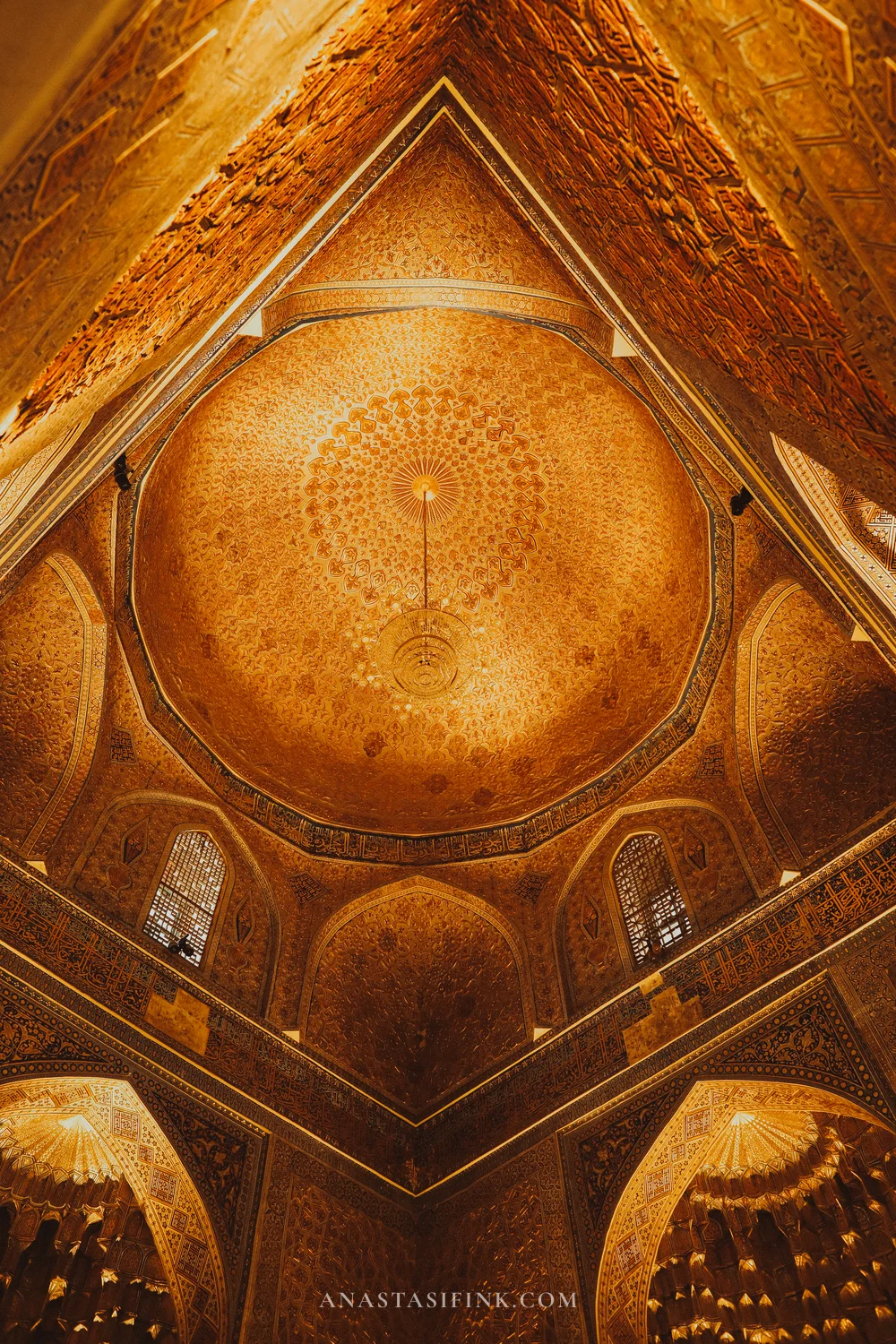
The best of Gur-e-Amir is inside. The hall beneath the dome is finished in gold: the walls, the vaults, the niches — everything is covered in gilded relief. The technique is called “kundal”: a raised pattern of ganch (carved alabaster) or papier-mâché is applied to the wall, then gilded and tinted. So in the half-light everything glows softly, and the pattern isn’t flat but has shadow. After the bright courtyard you step in — and don’t quite know where to look first.
If you look closely, the pattern breaks into layers: plant scrolls, geometric grids and bands of Arabic inscriptions. The inscriptions come in two styles — the angular Kufic script and a flowing cursive — and they are mostly quotations from the Quran.
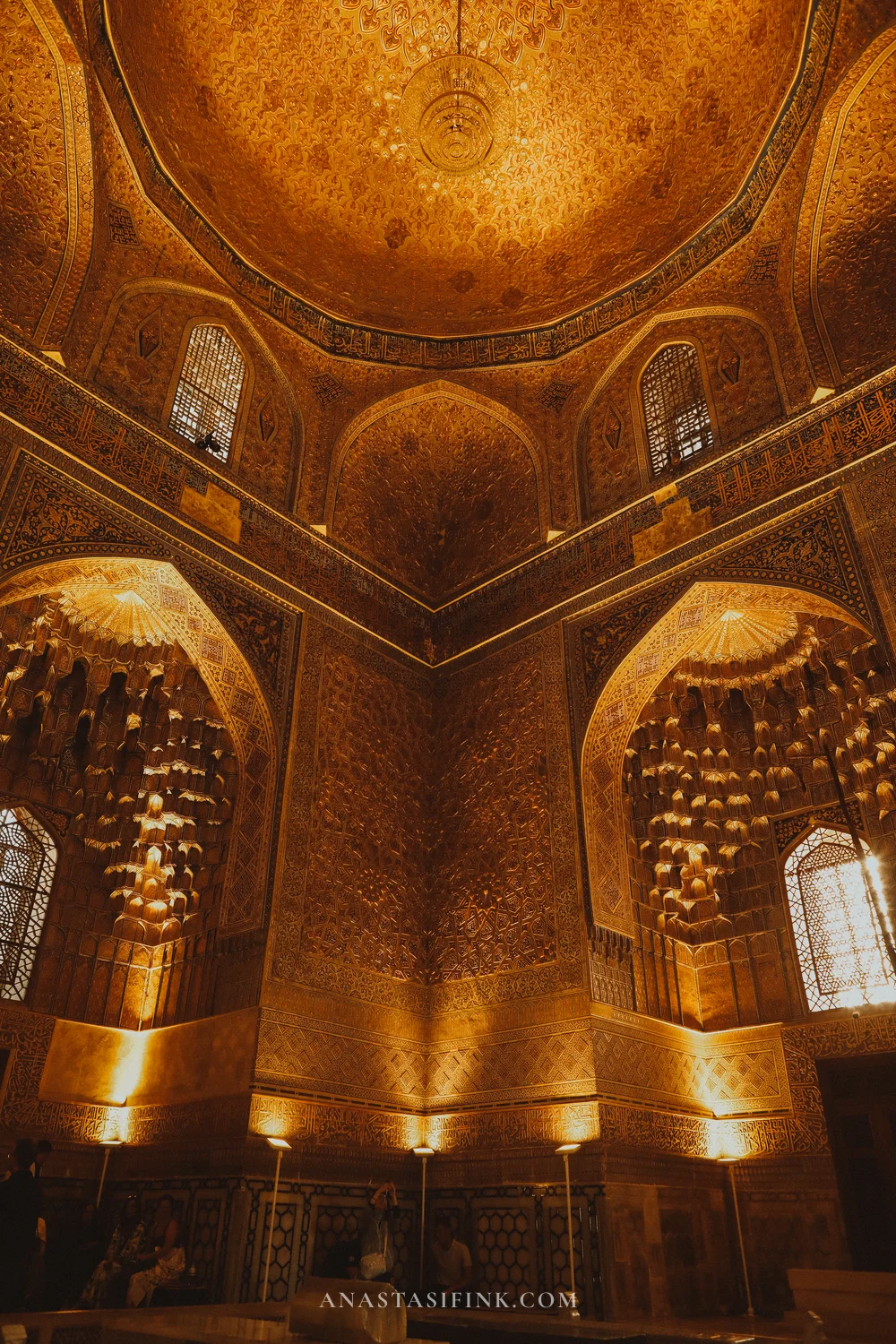
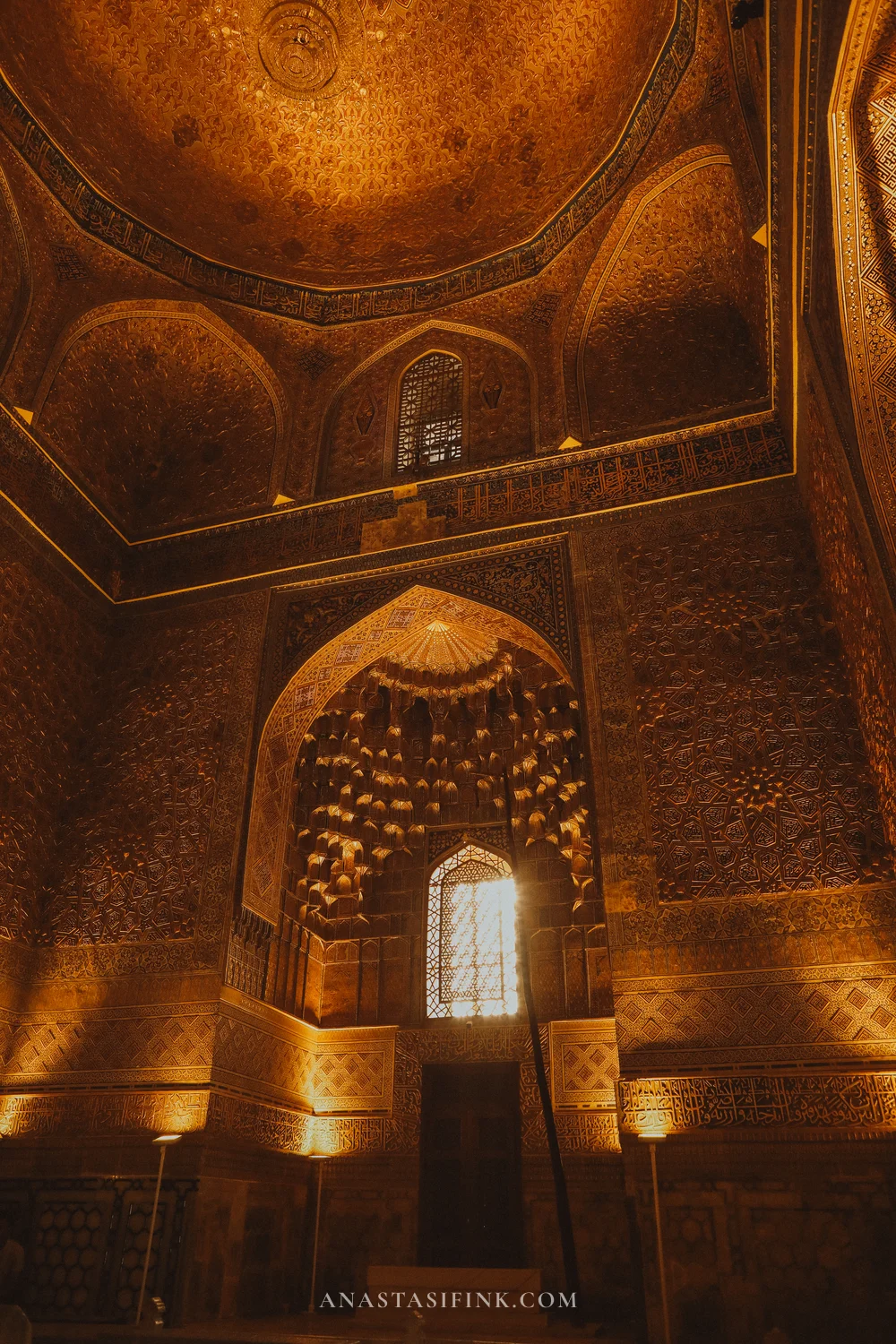
The hall from the floor up. Light comes in through narrow windows in the dome’s drum
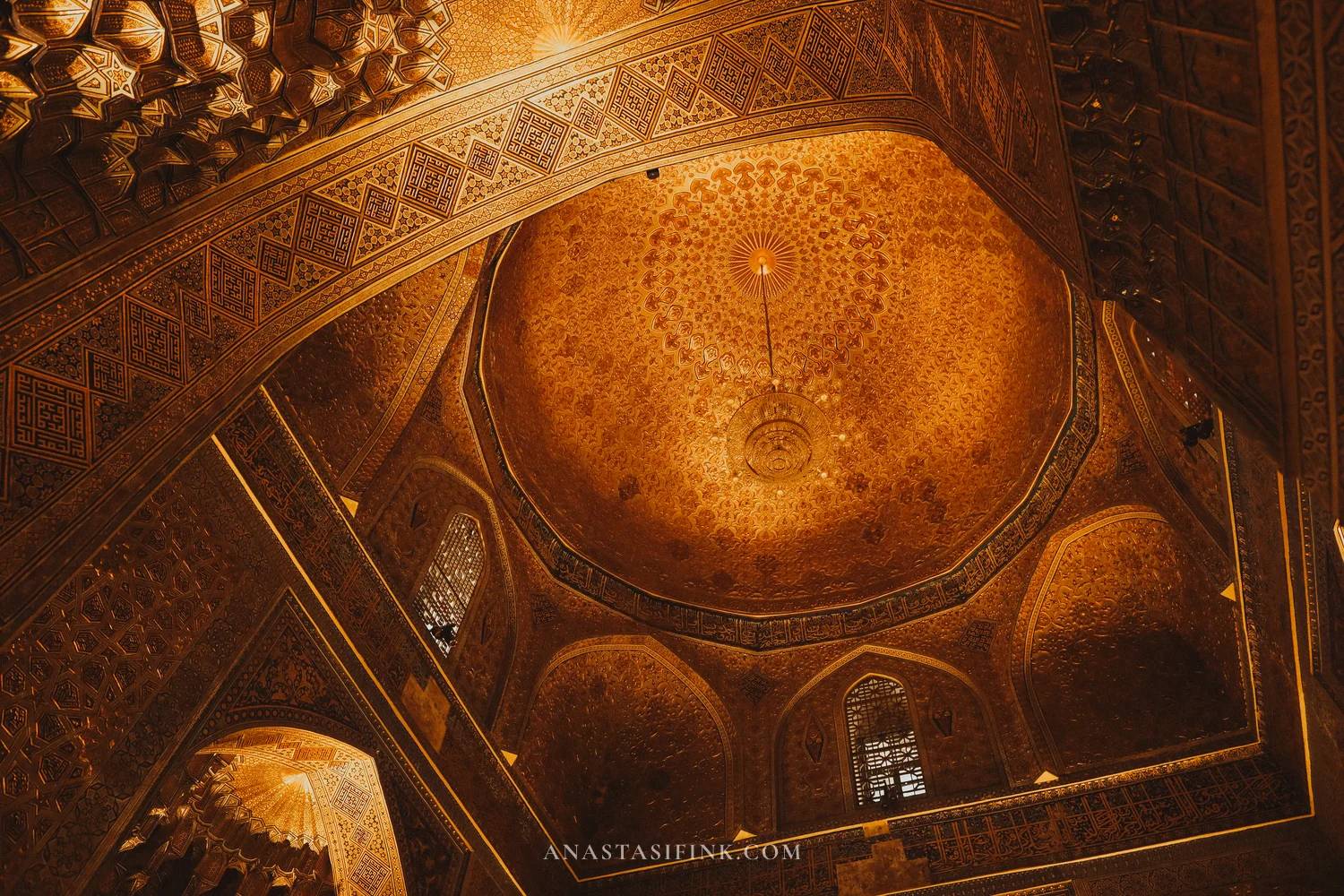
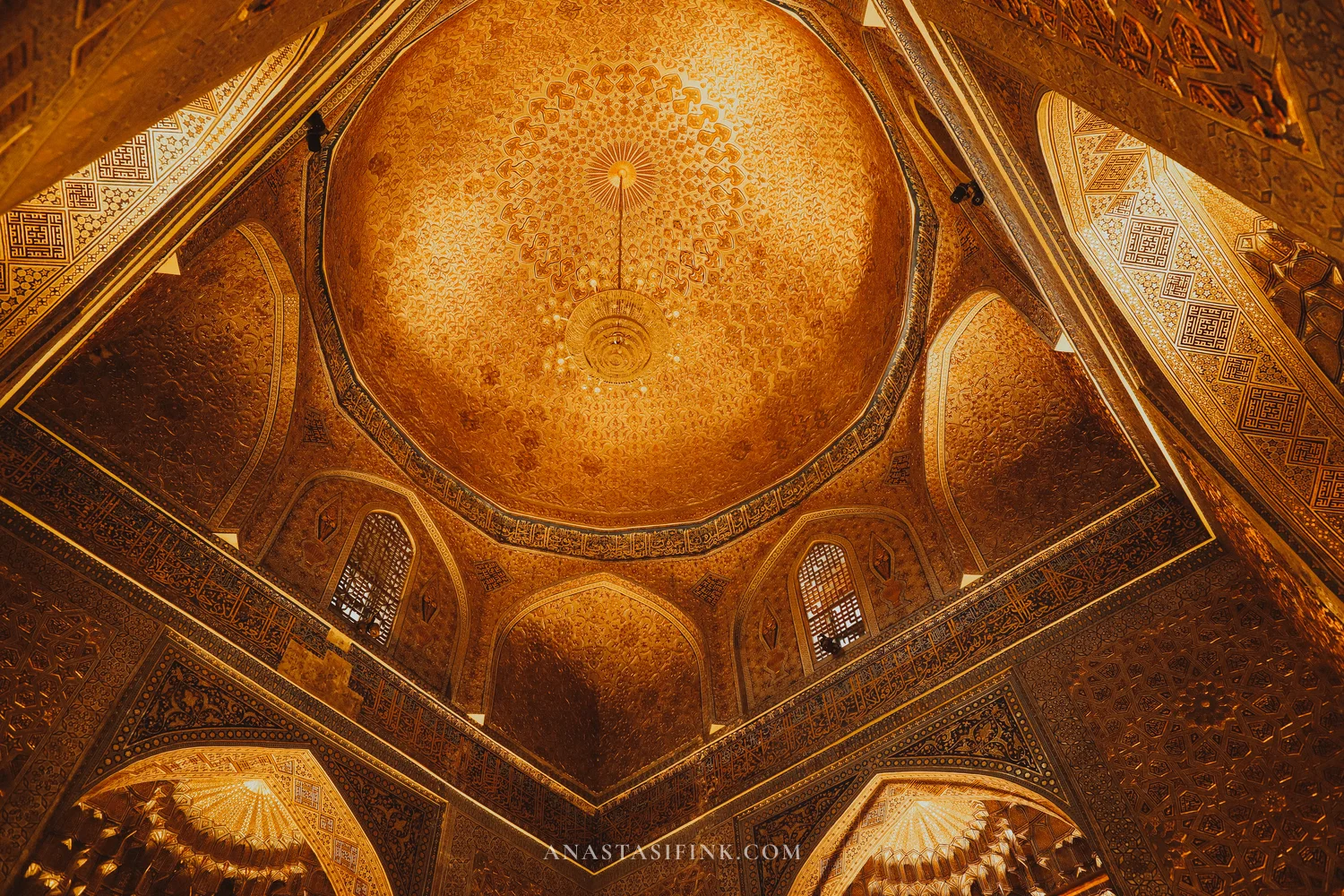
The inner dome sits lower than the outer one — there’s an empty space between them, a common device for buildings like this
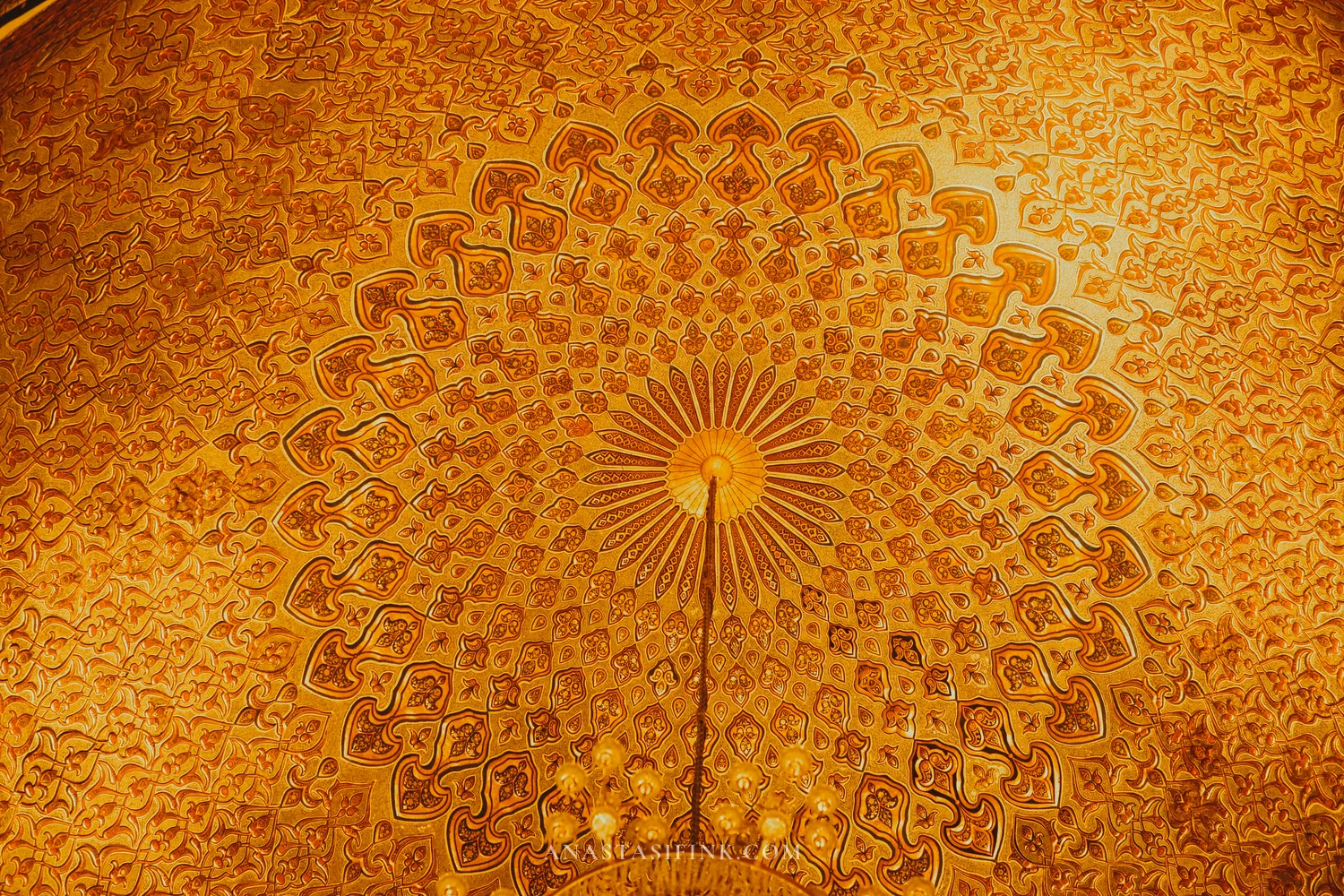
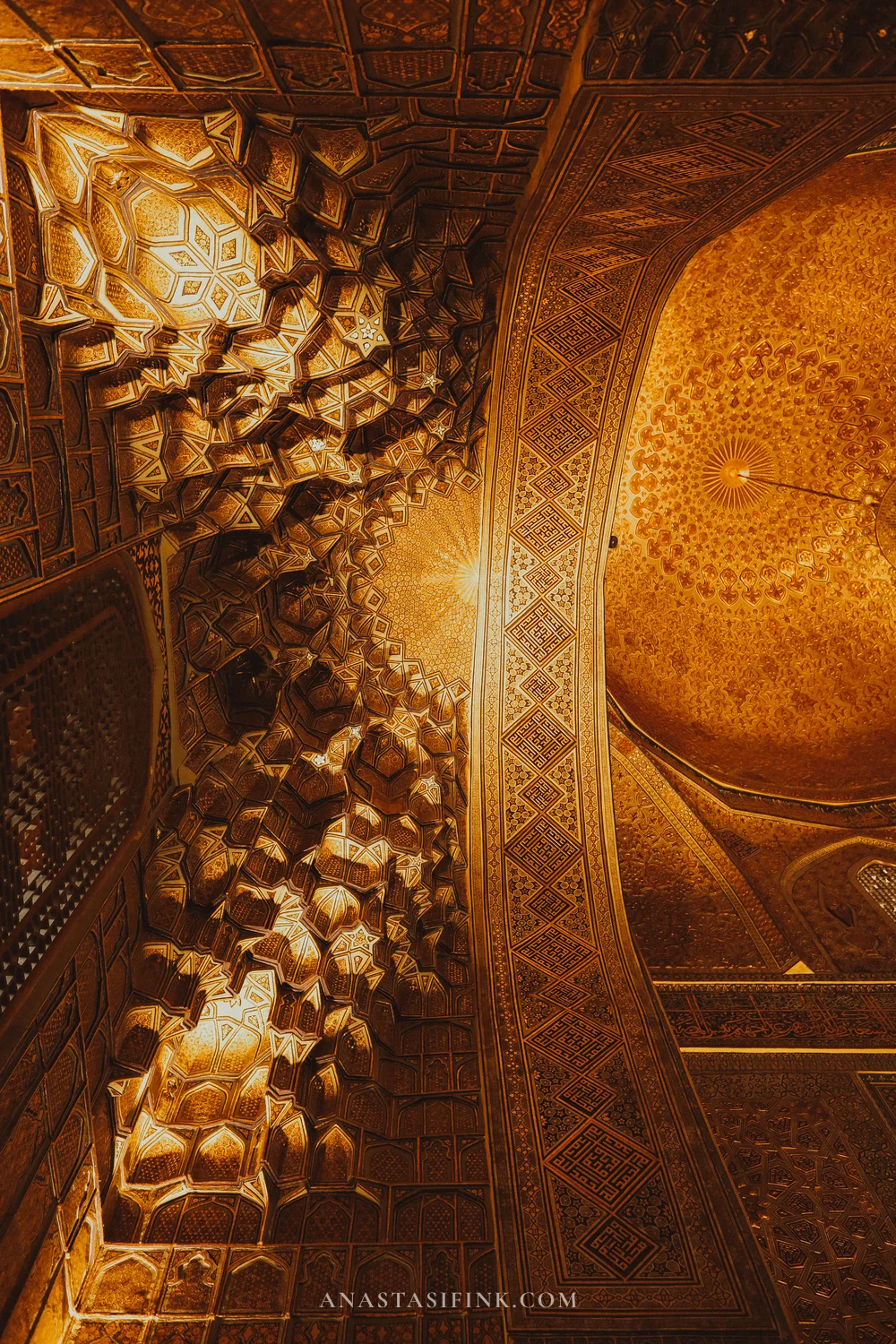
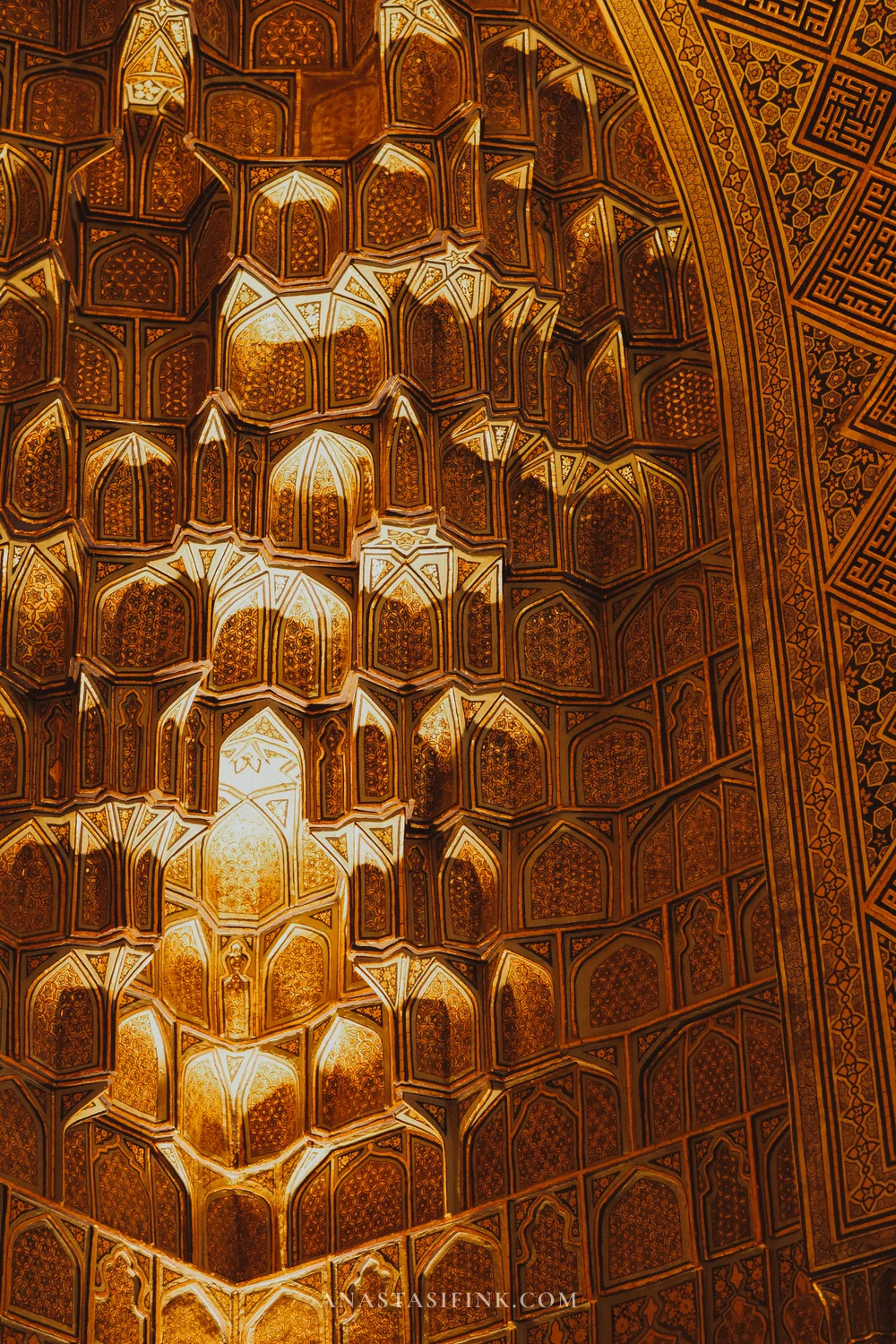
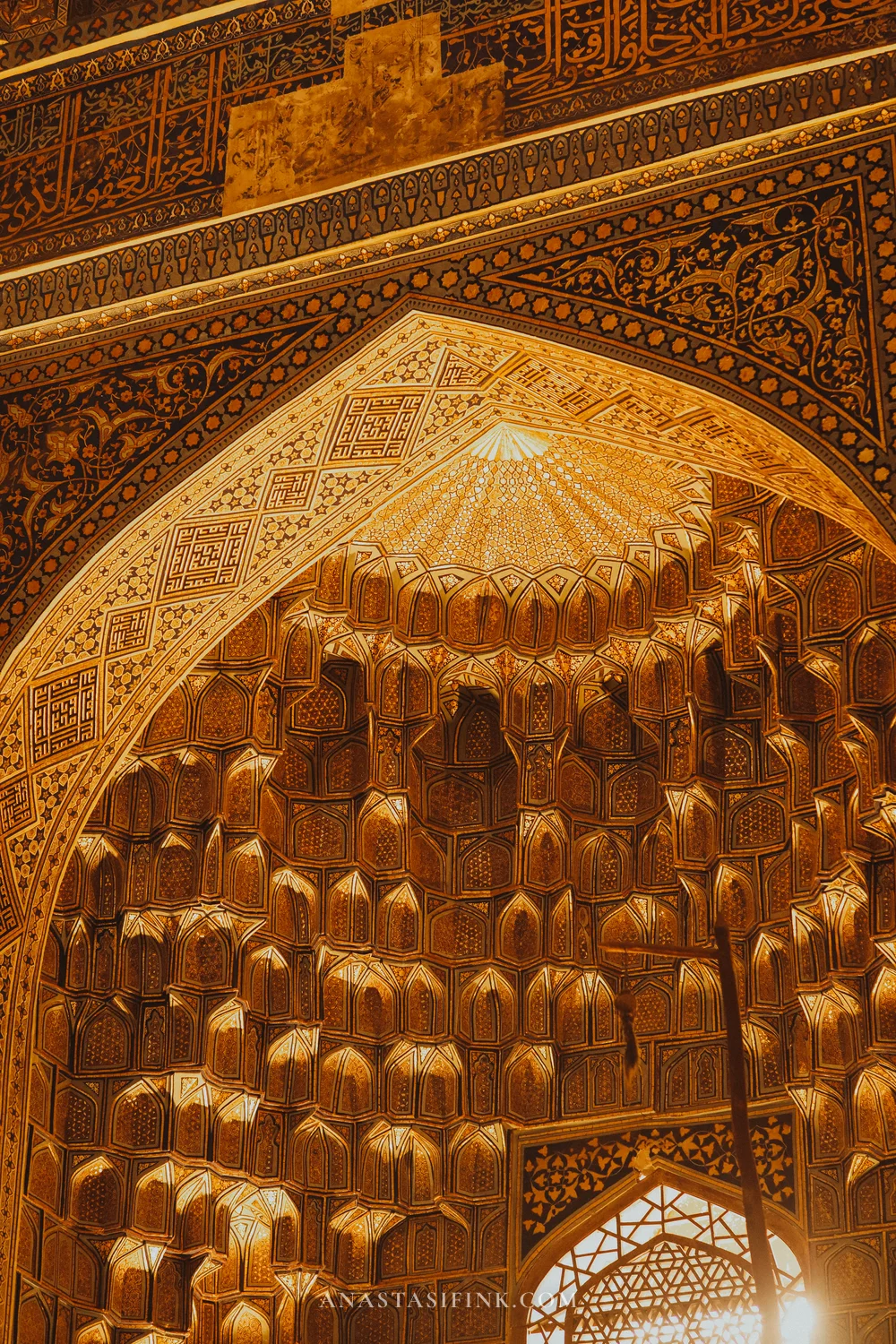
The muqarnas in close-up. Each “honeycomb” cell is a separate element, and all of it is gilded
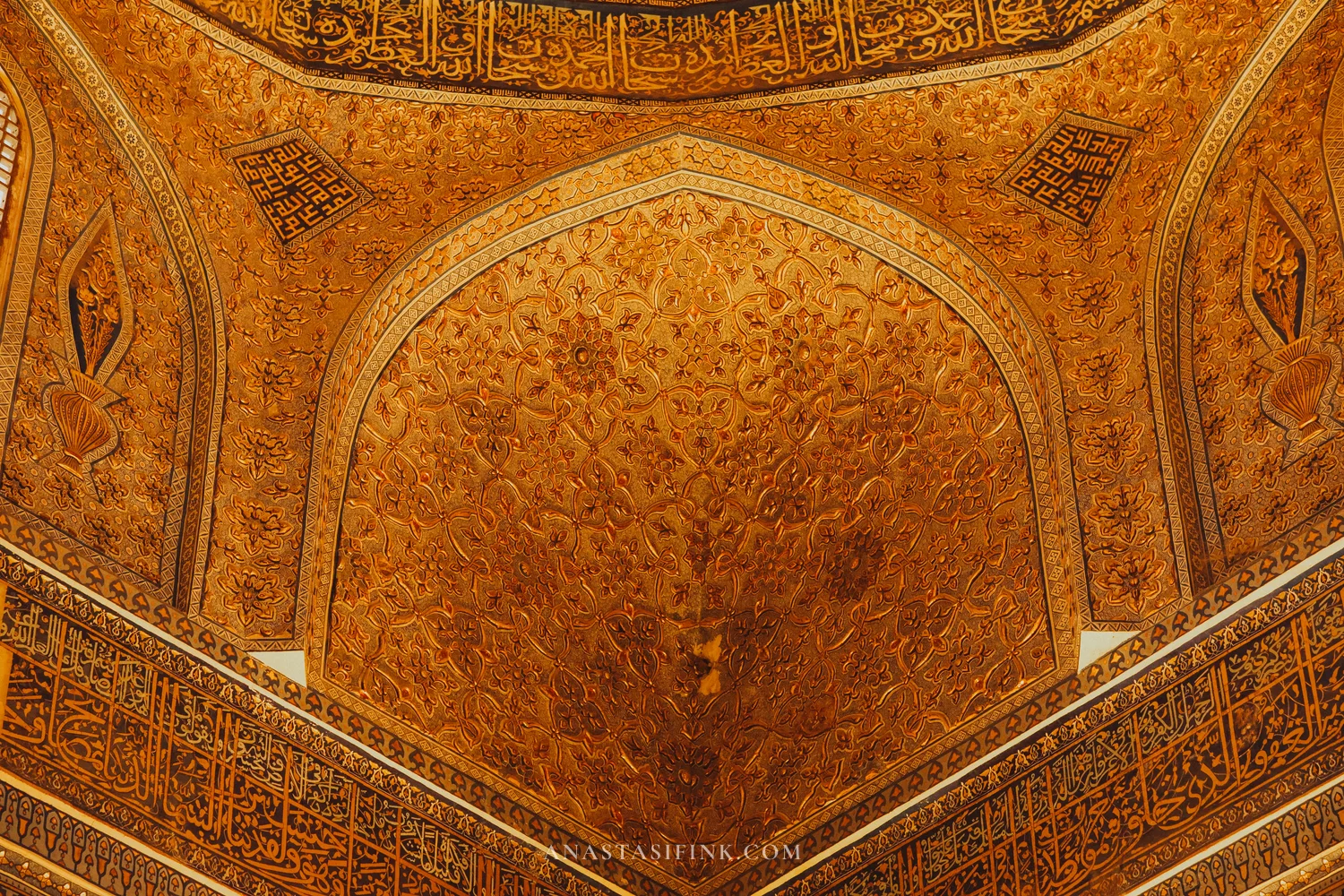
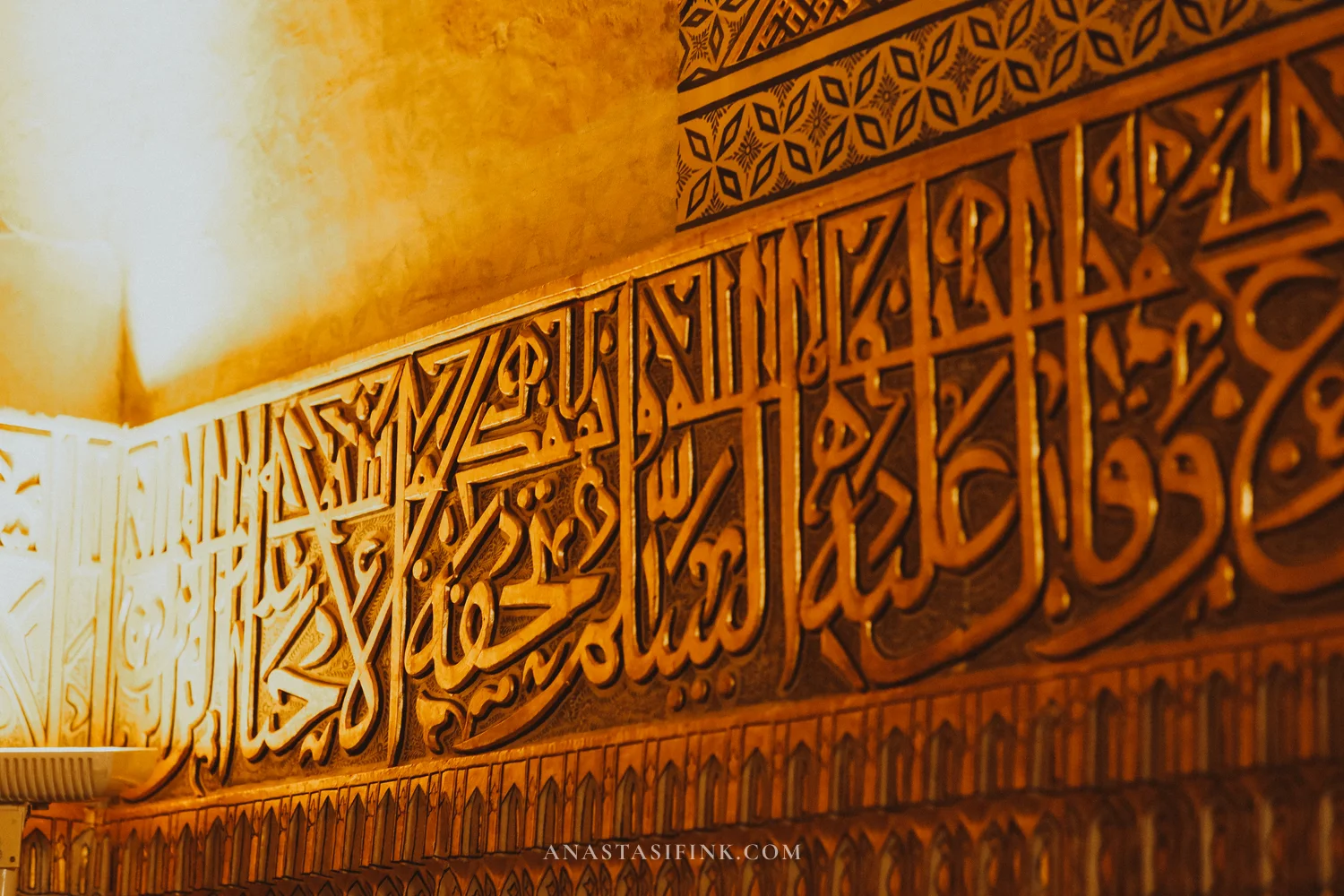
The gilded ceiling and the band of calligraphy below it
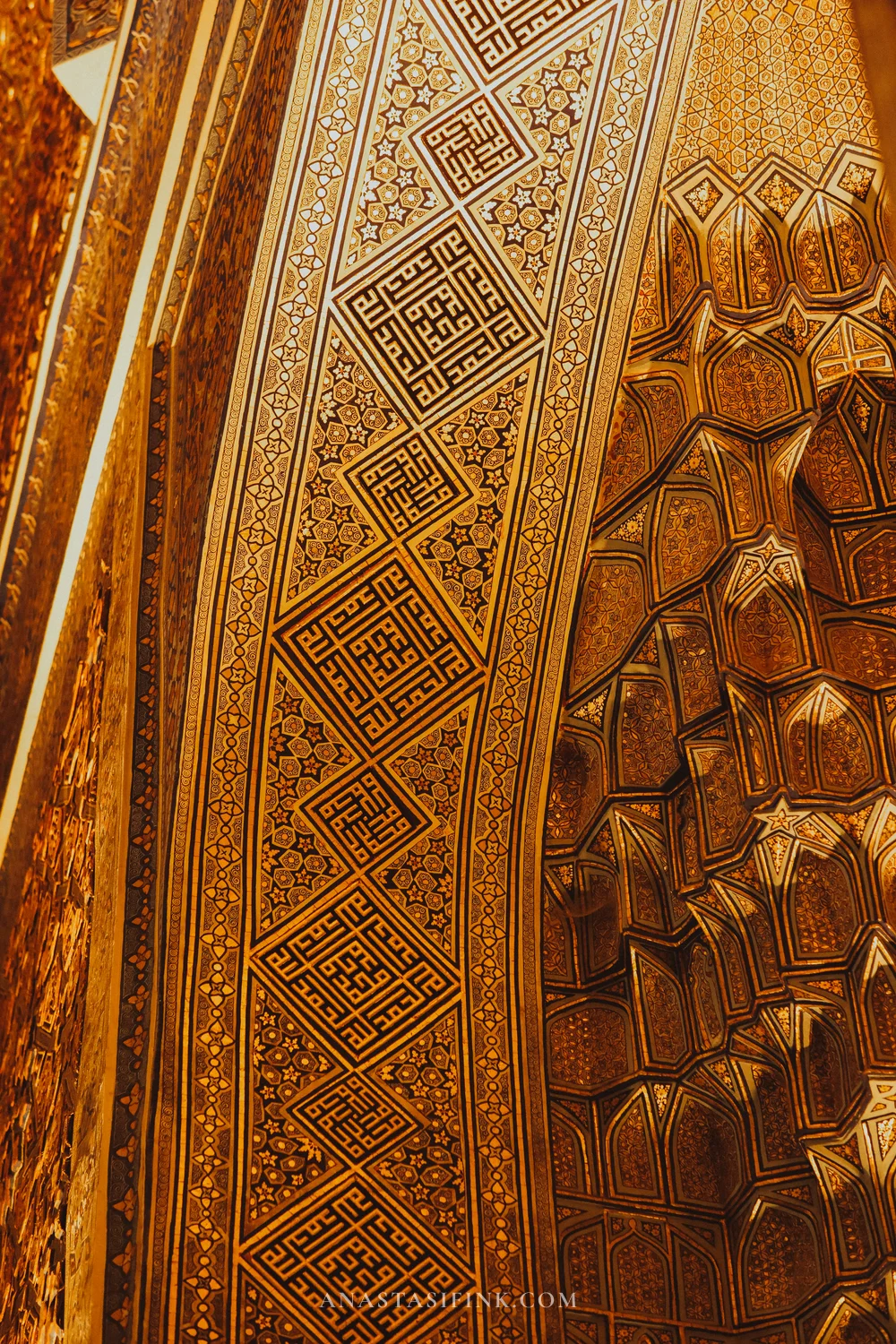
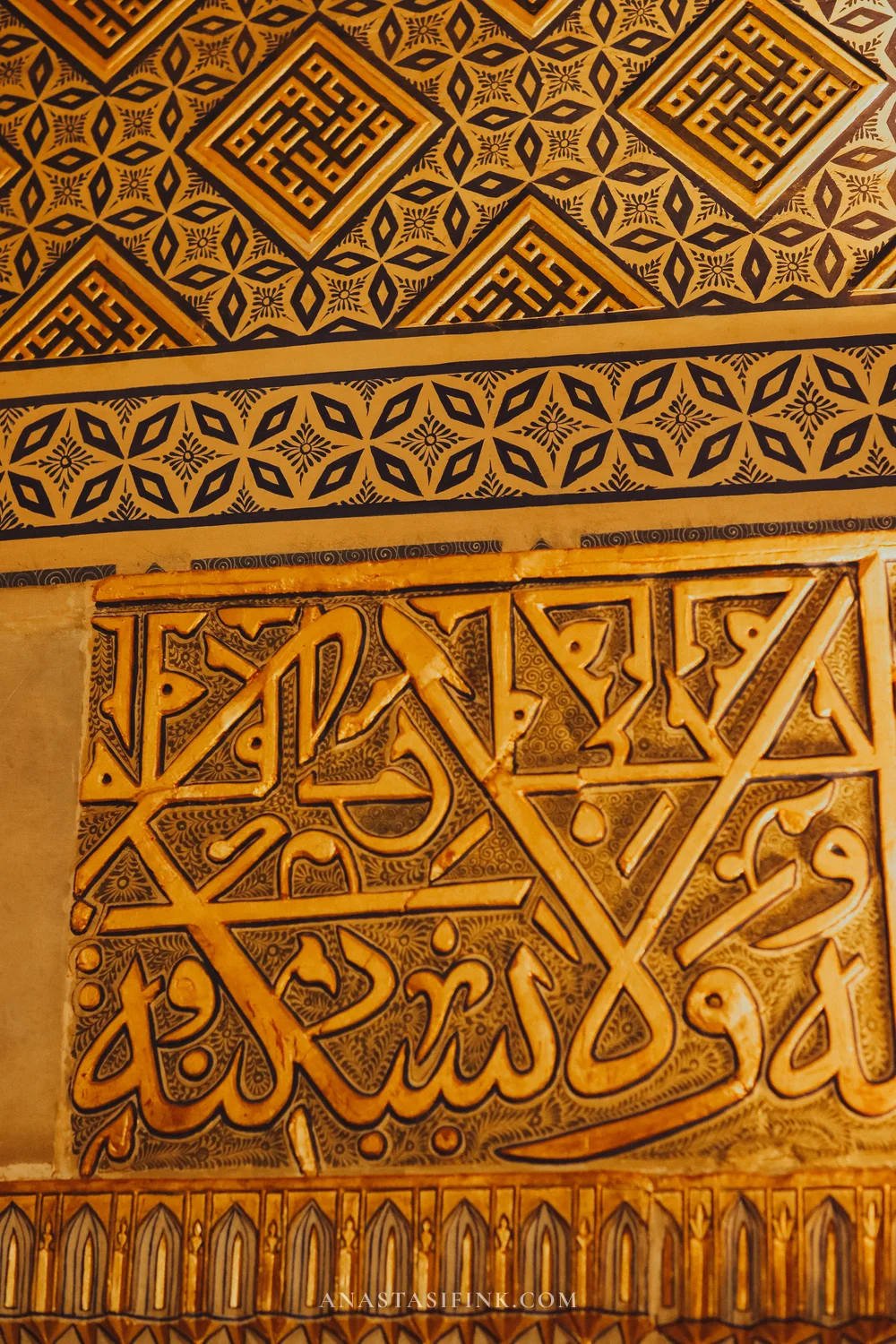
Close-up: that Kufic script — angular, almost like an ornament in itself
The cenotaphs of Tamerlane and the Timurids
In the centre of the hall, behind a low marble screen, stand the gravestones. An important detail: these are not the graves themselves. The real burials are in a crypt beneath the floor, and only the memorial slabs sit above. Over Timur’s grave lies a large stone of dark green jade; by legend it was brought by Ulugh Beg, and it’s said to be one of the largest single jade blocks of its kind.
Another fact people often mention: in 1941 the tomb was opened by a scientific expedition. The anthropologist Mikhail Gerasimov reconstructed Timur’s likeness from his skull — and confirmed that he had a limp (hence the nickname “Tamerlane,” from “Timur the Lame”).
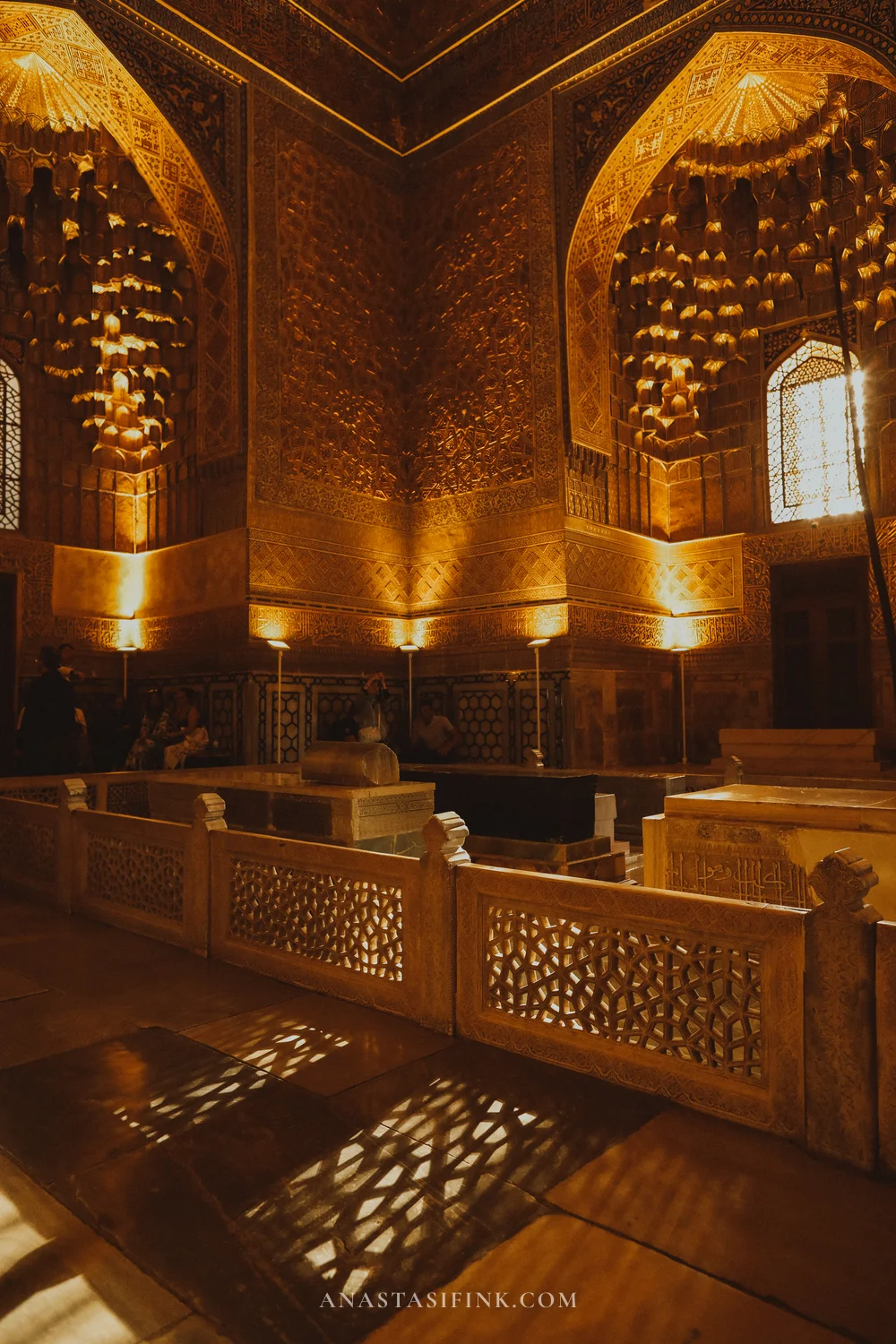
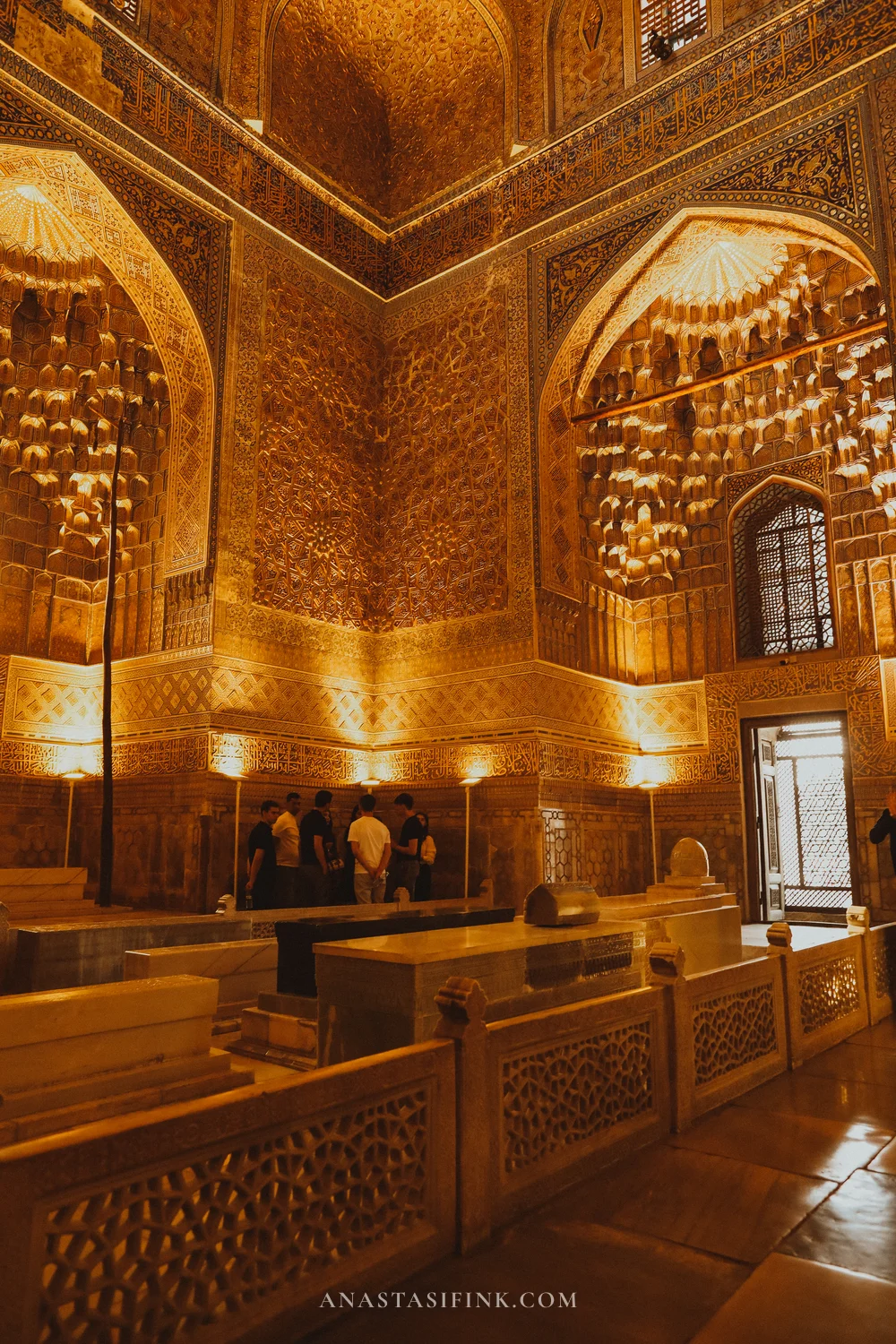
The hall with the cenotaphs. The slabs themselves are fenced off; you walk around the perimeter
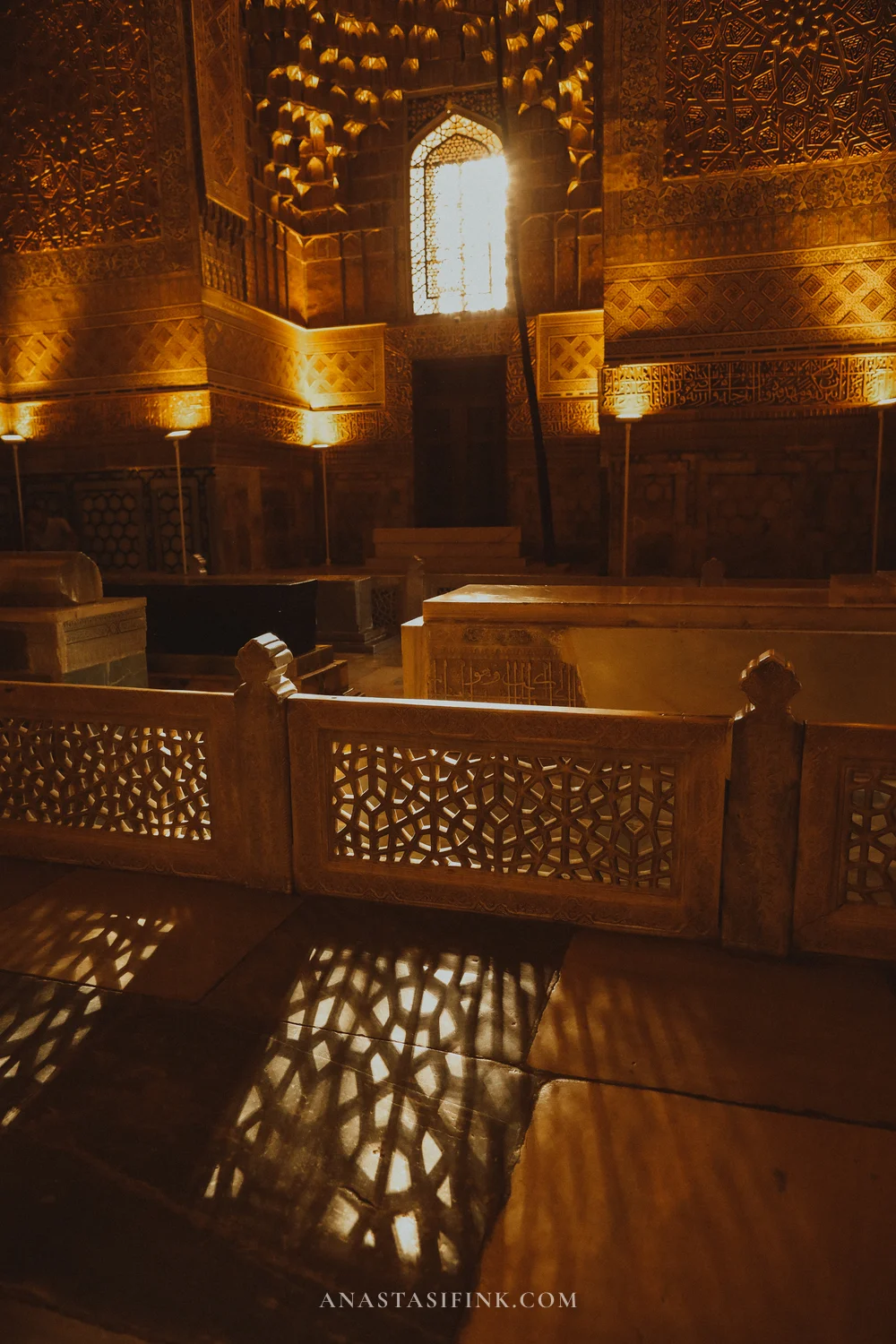
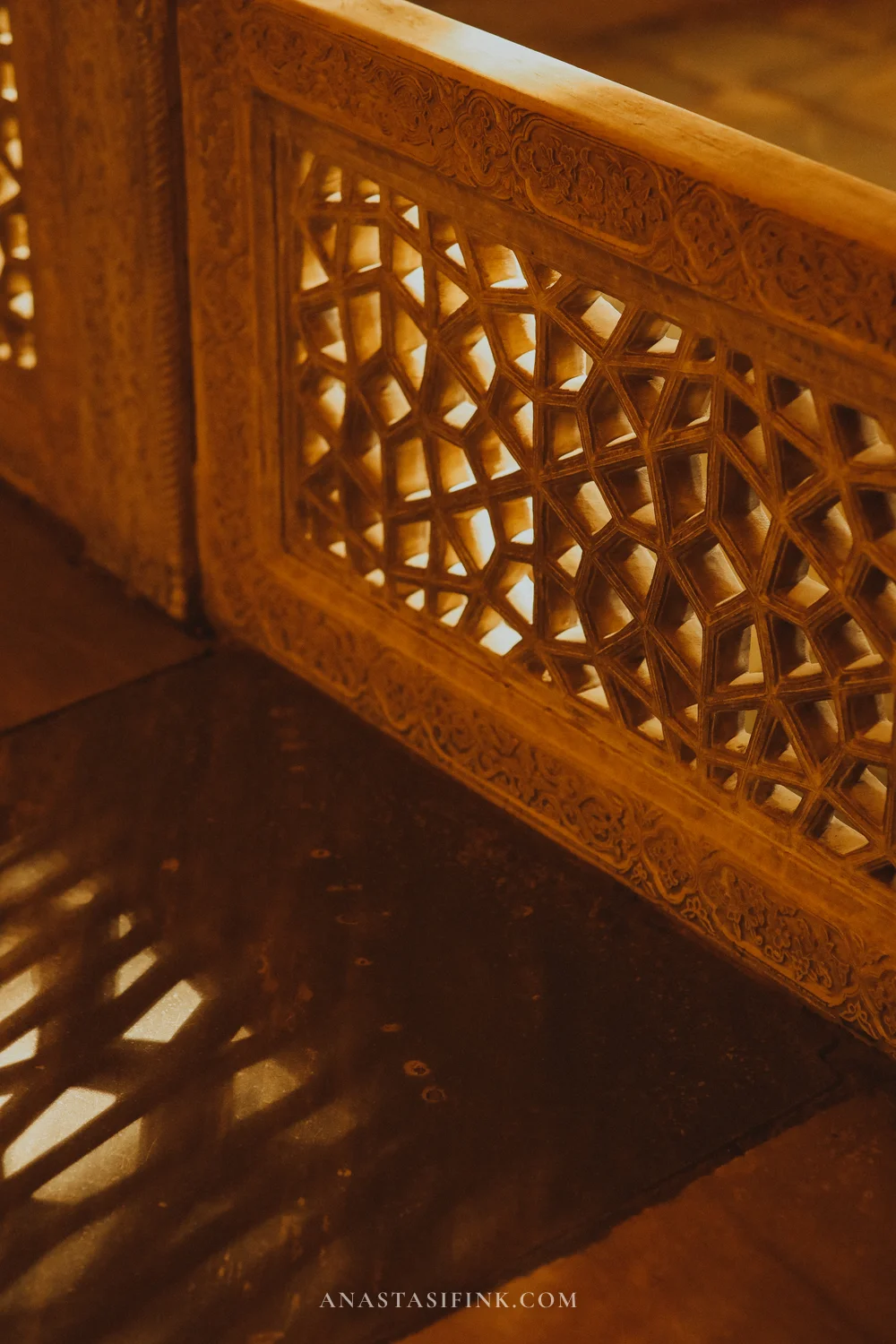
The screen around the cenotaphs is called a “panjara” — it’s carved so the light falls in a pattern on the floor
Old doors and carving
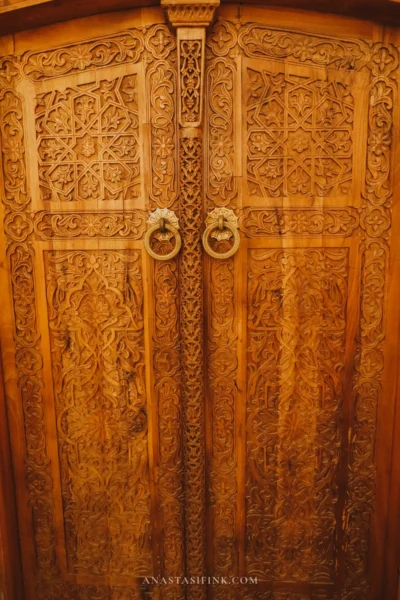
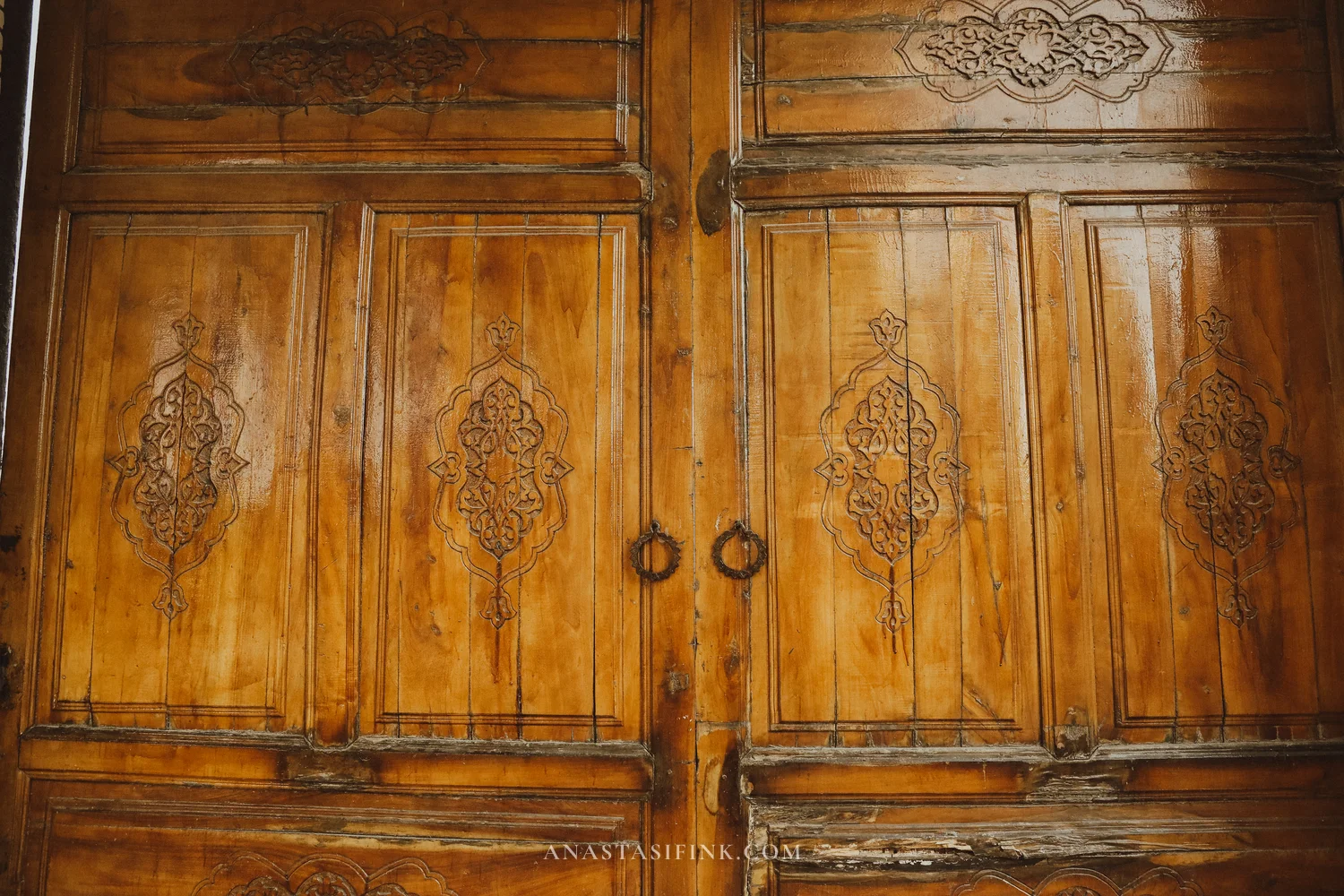
In the niches of the complex, old wooden doors have survived — darkened and covered in fine carving. Some are decorated with calligraphy, some with plant ornament.
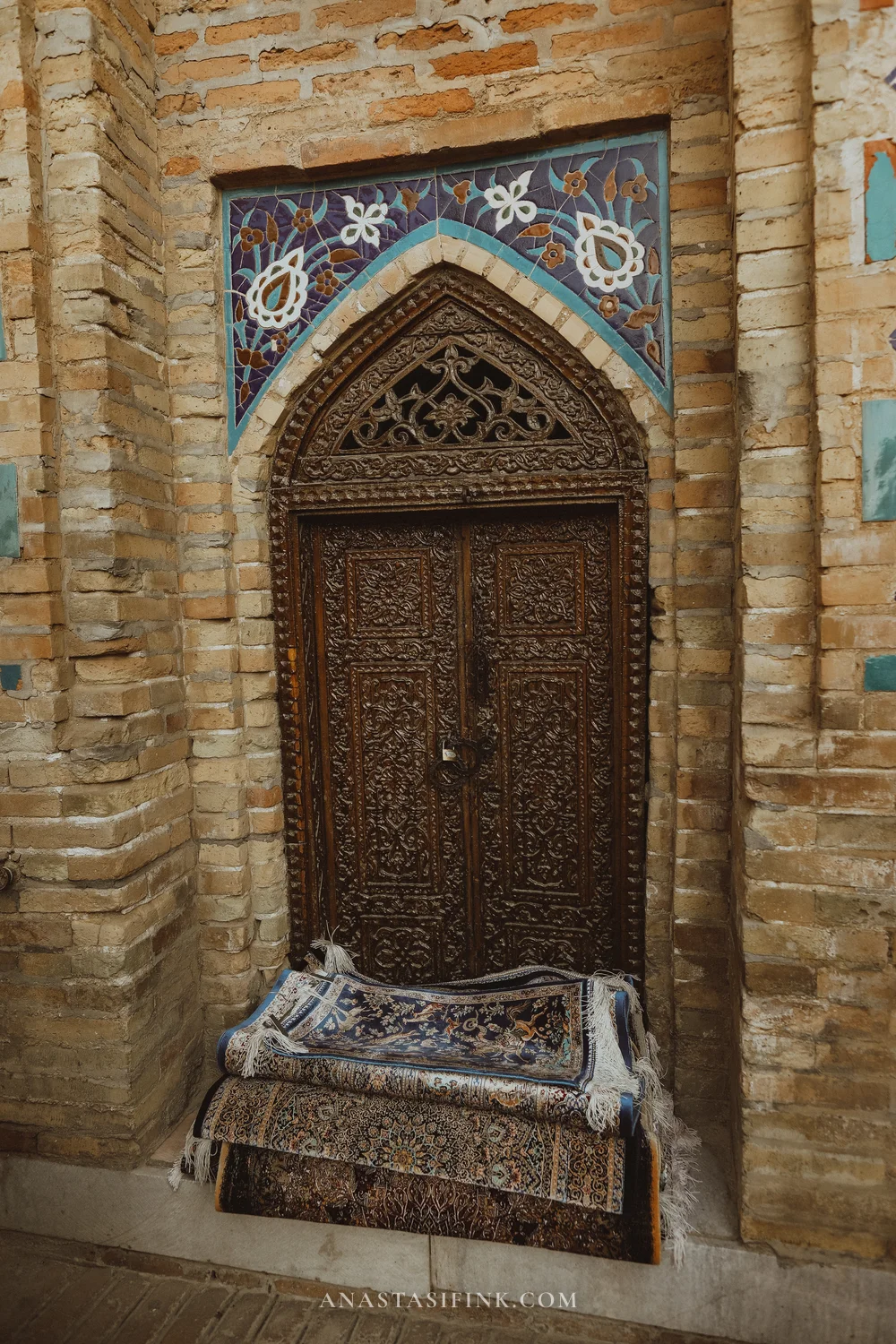
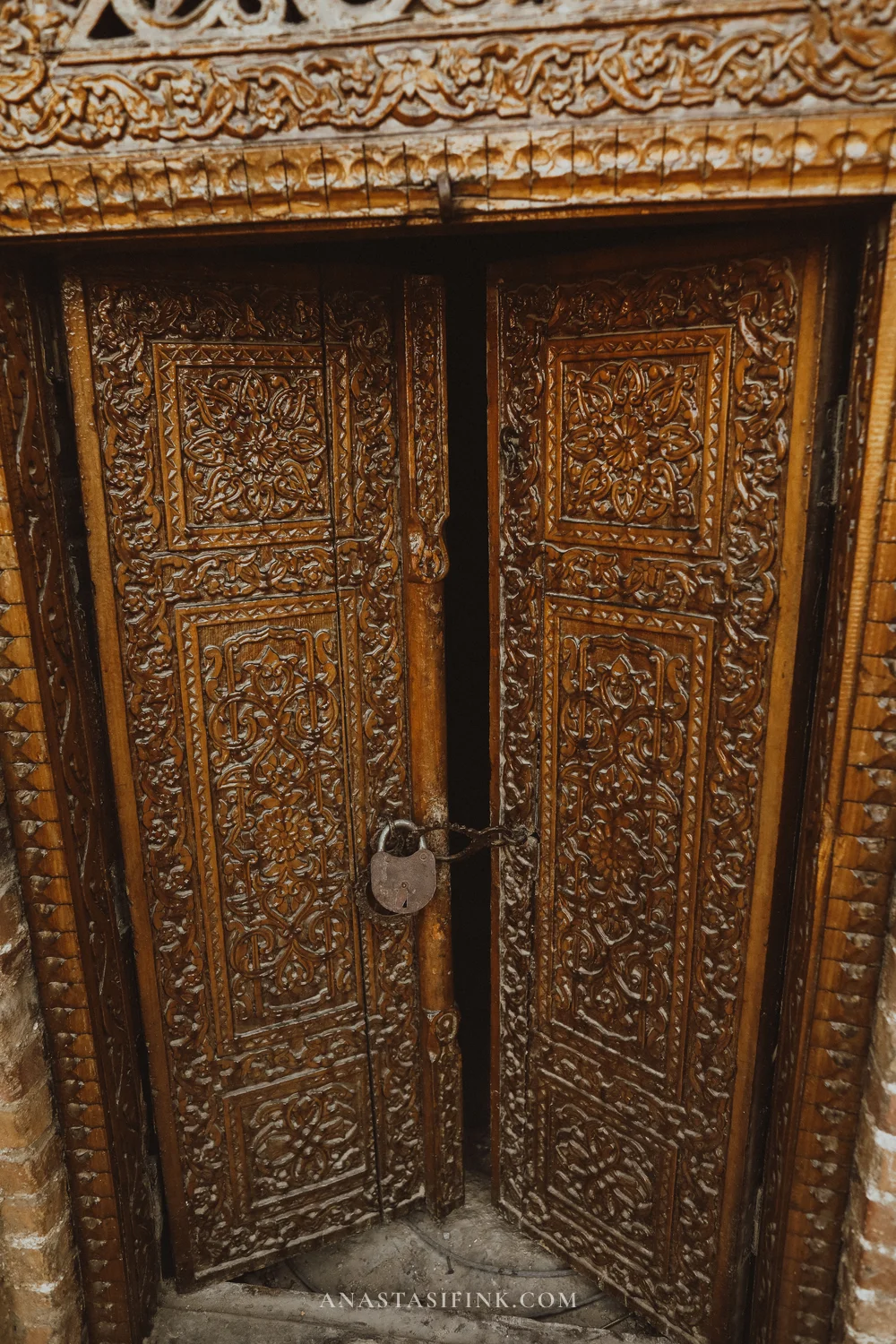
The doors in the side niches. The carving is fine and has survived surprisingly well
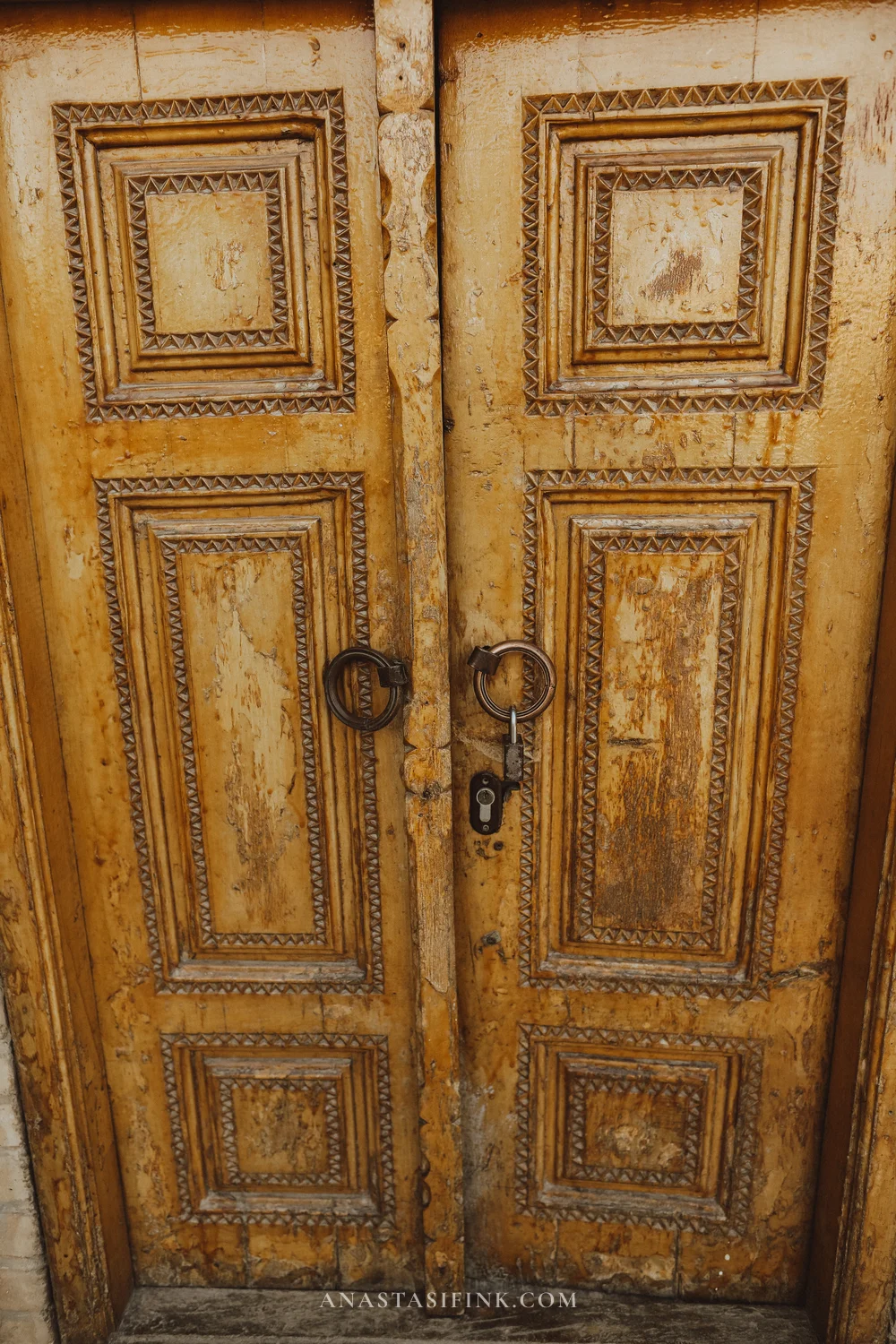
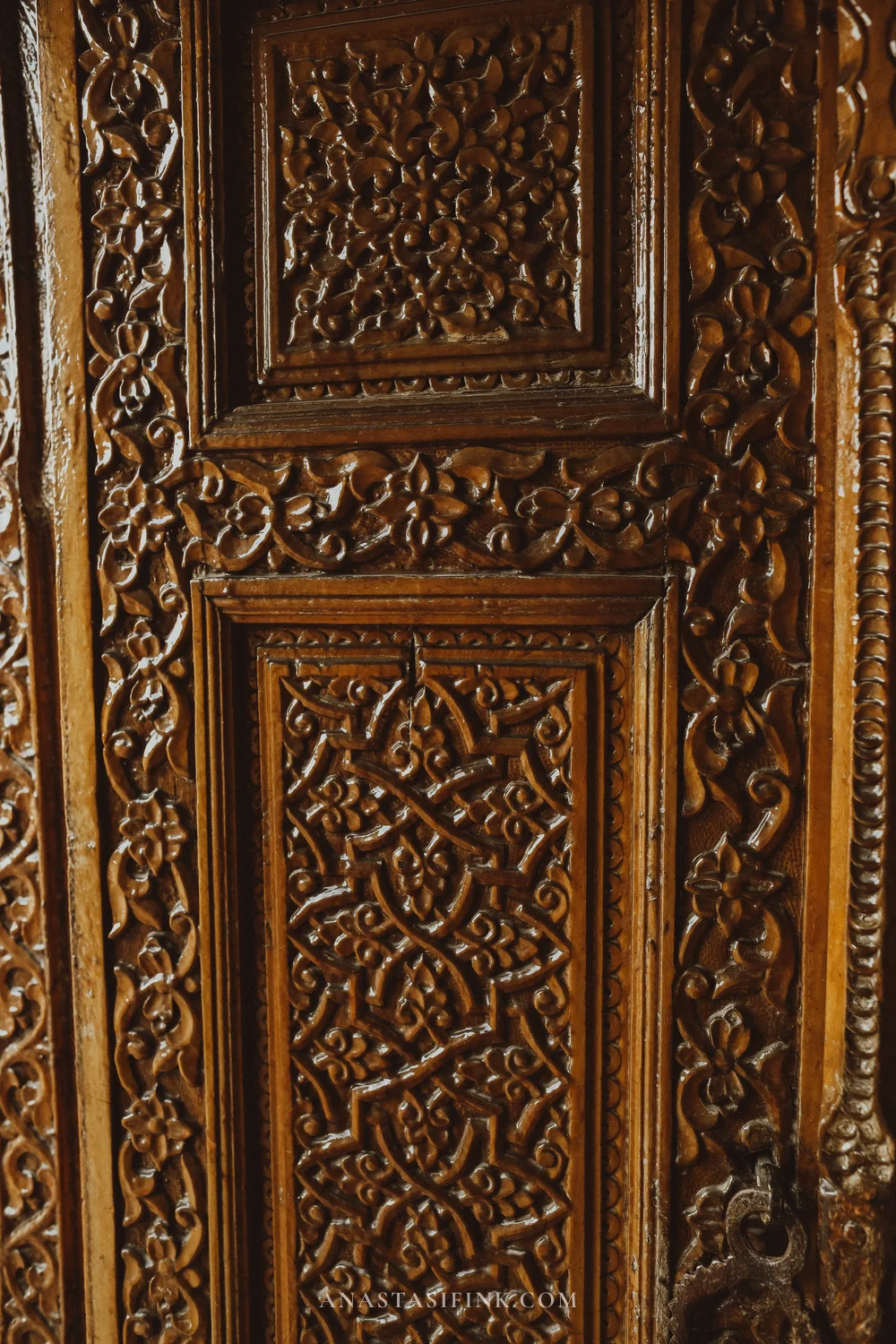
On the left a lighter door, on the right a close-up of the wood carving
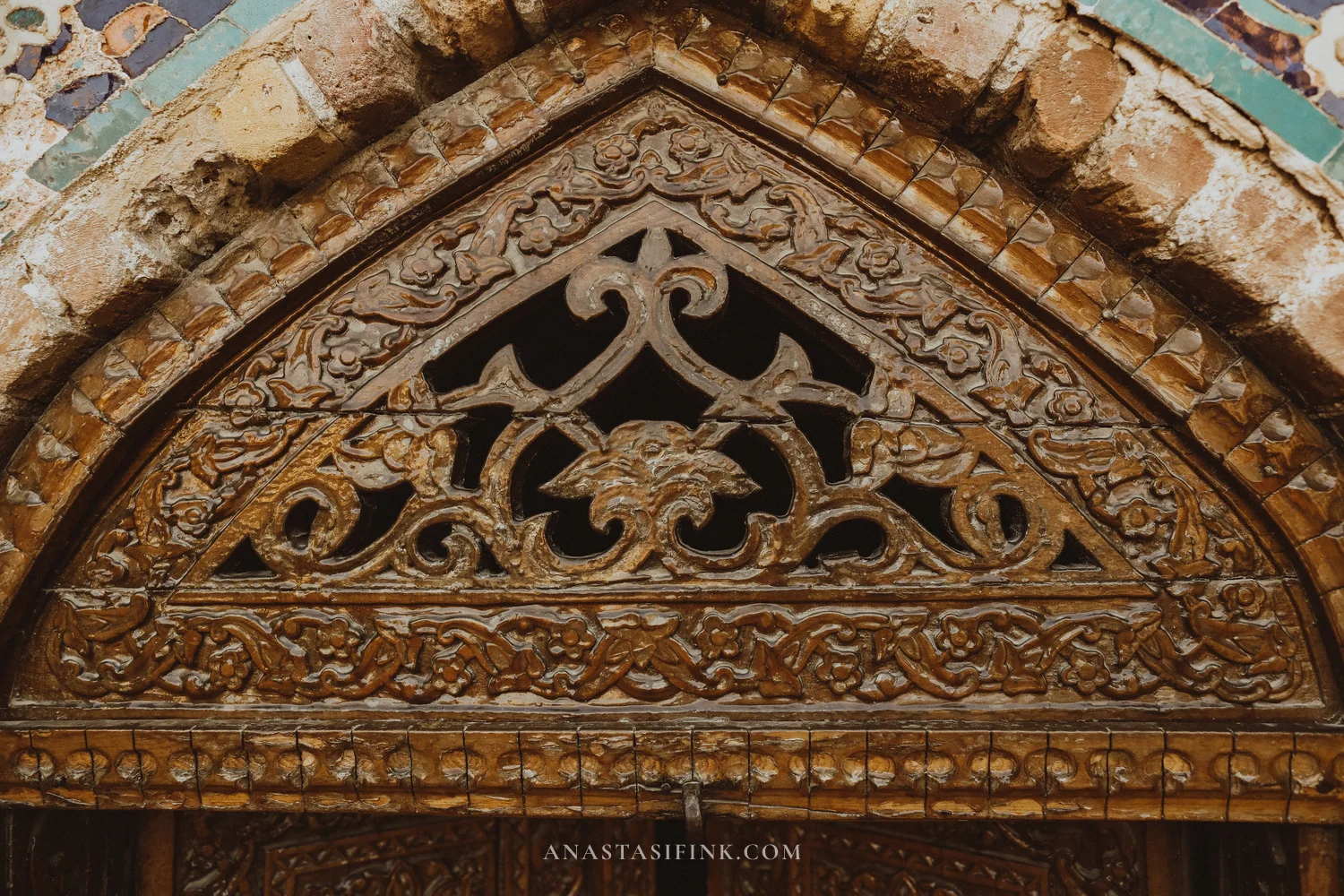
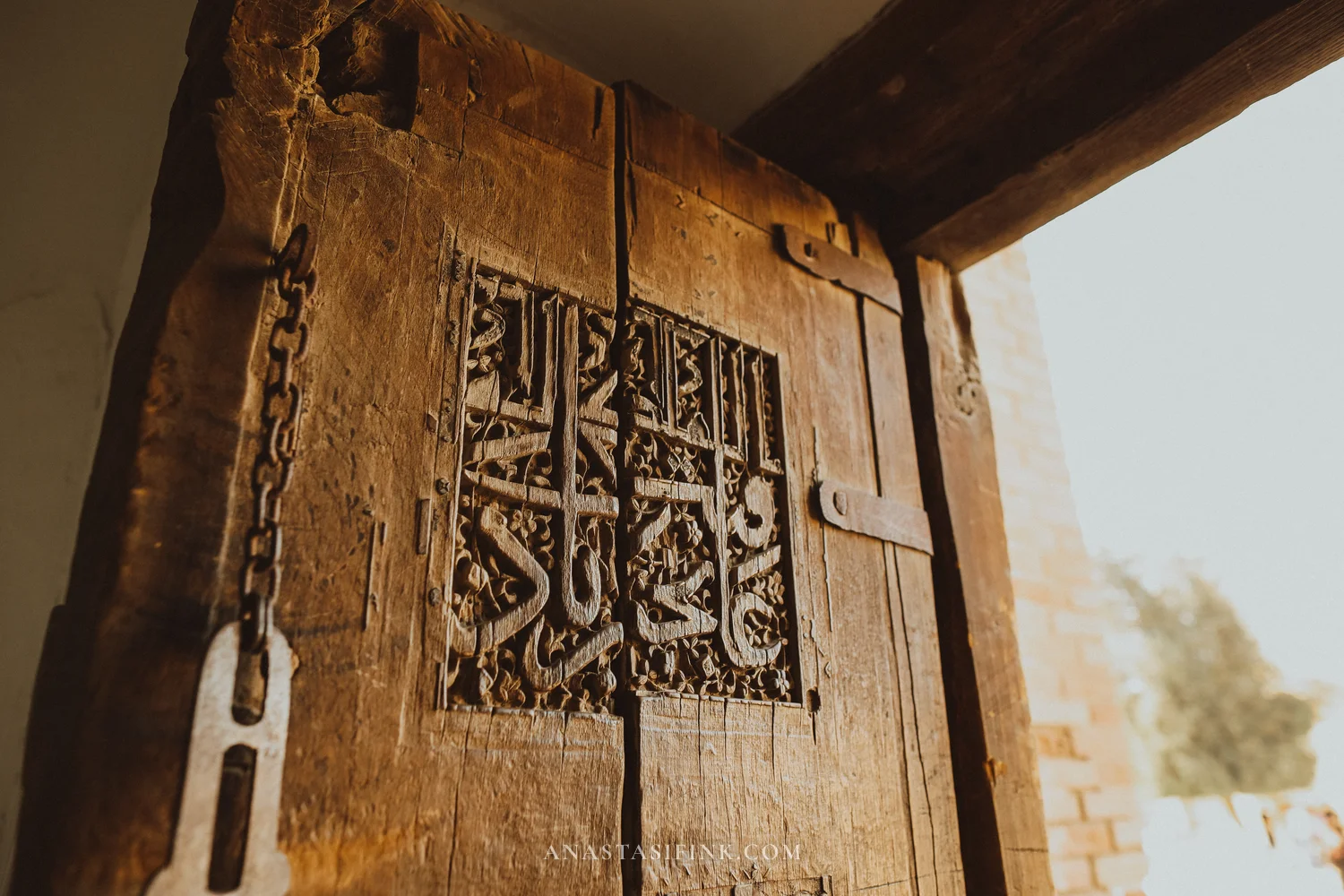
The upper part of the doors — a carved tympanum and a panel with an inscription
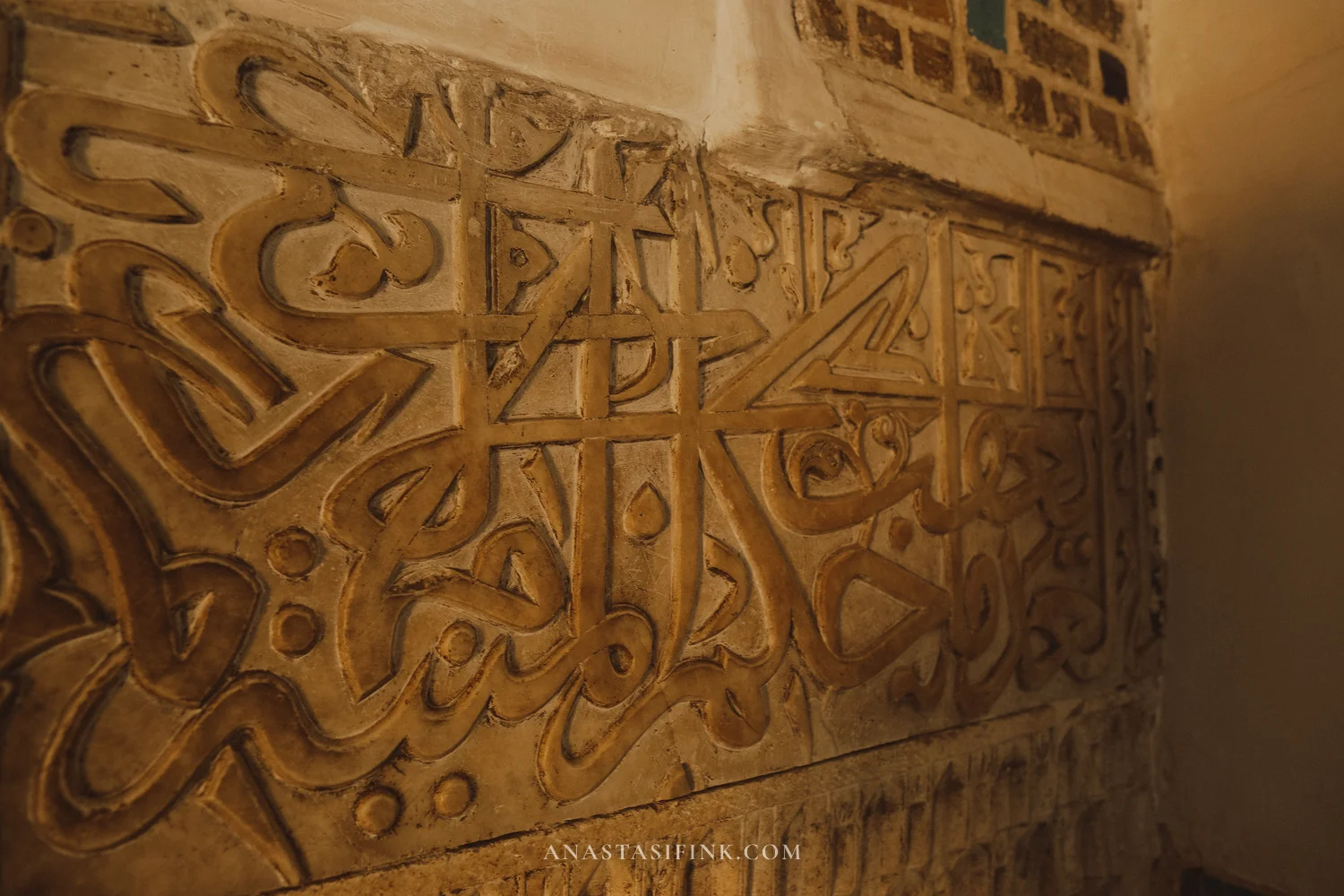
Not only wood: inscriptions were also carved into the ganch — the local carved stucco
What’s around
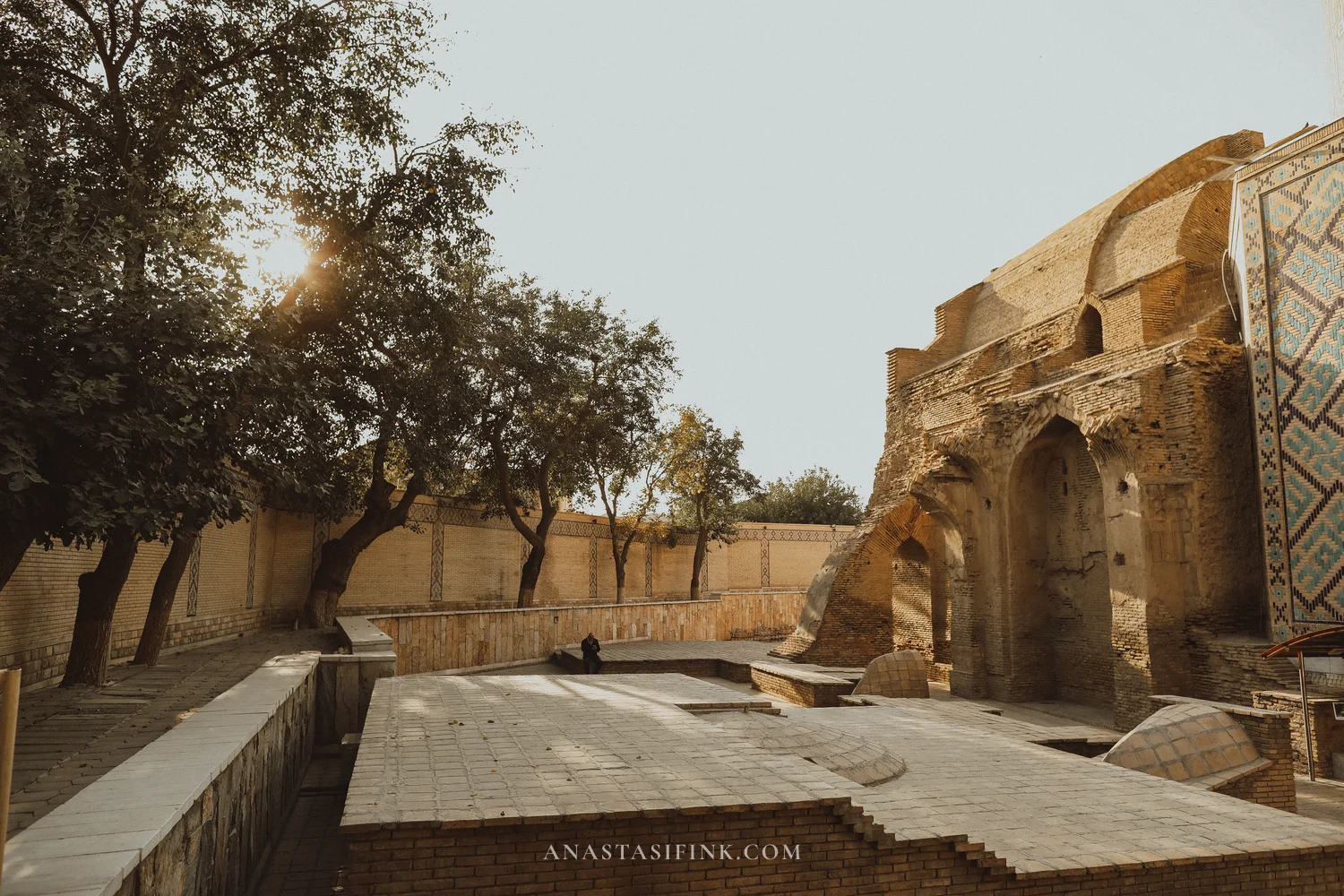
Behind the mausoleum lie excavated foundations — Gur-e-Amir was once part of a larger complex with a madrasah and a khanqah, of which only the brick footings remain. Few people wander over here, but the spot is quiet, and from it you can see clearly how the dome rises above the whole neighbourhood.
Practical information
- Address: Bustonsaroy St, Samarkand (near the Registan)
- GPS: 39.6486, 66.9690
- Hours: roughly 09:00–19:00, longer in summer; the building is lit up in the evening
- Admission: around 50,000–75,000 UZS (~$4–6) for foreigners; cash is best
- How long to allow: 30–60 minutes is plenty
- Visa: citizens of the US, UK and EU don’t need a visa for short trips — Uzbekistan is visa-free for stays of up to 30 days
How to get to Gur-e-Amir
- From the Registan: a 10–12 minute walk, with signs along the way
- From Samarkand railway station: a 15–20 minute taxi ride (~15,000–20,000 UZS)
- From Tashkent: the high-speed “Afrosiyob” train to Samarkand (~2 hours), then a taxi
- Around the city by taxi: easiest through the Yandex Go app — cheaper than haggling on the street
FAQ
Tamerlane (Timur), his sons Shahrukh and Miran Shah, his grandsons Ulugh Beg and Muhammad Sultan, and Timur's spiritual mentor Mir Sayyid Baraka. It's the family mausoleum of the Timurid dynasty.
For foreigners it's around 50,000–75,000 UZS (about $4–6). You buy tickets on site; it's best to have cash, as the card terminal doesn't always work.
First thing in the morning at opening, or in the evening — the most tour groups arrive during the day. In the evening the mausoleum is beautifully lit.
Usually 30–60 minutes is enough. The hall beneath the dome is small, but you'll want to linger in it.
It's a 10-minute walk from the Registan. Around the city it's easiest to order a taxi through Yandex Go. From Tashkent, take the high-speed "Afrosiyob" train, then a taxi.
For most travellers, no. Citizens of the US, UK and EU countries can visit Uzbekistan visa-free for stays of up to 30 days. Just bring a passport valid for the length of your trip.
The gravestones in the hall are memorial. The actual burials are in a crypt beneath the floor, which visitors can't access.
Yes. Gur-e-Amir is beautiful from the outside, but the main thing — the gilded interior beneath the dome — can only be seen from within.
Is it worth visiting
Gur-e-Amir is one of those spots in Samarkand that are easy to walk past if you stick only to the most hyped route. That would be a shame: from the outside it’s simply a beautiful building with a blue dome, but the main event — the gold hall — only opens up once you’re inside. Set aside half an hour, step in, and be sure to look up.