2 Days in Samarkand – City Guide: What to See

I arrived in Samarkand for two days. That was enough to see the turquoise domes of Registan, three of the great mausoleums, and a couple of spots most tourists never reach — all without ever having to rush.
Samarkand — the city in brief
Samarkand is one of the oldest cities in the world, more than 2,700 years old. It sat on the Great Silk Road and was the capital of Tamerlane’s empire (locally known as Amir Temur). It was under him, in the 14th and 15th centuries, that the turquoise domes and towering portals people come here for were built.
If it’s your first visit, you’ll be pleasantly surprised at how close the main sights sit to one another. In two days you can genuinely see everything that matters and still take it slow. Below is how I split those two days, with prices, opening hours and GPS for every spot.
Day 1: Registan, the city and Gur-e-Amir mausoleum
Registan — the main square
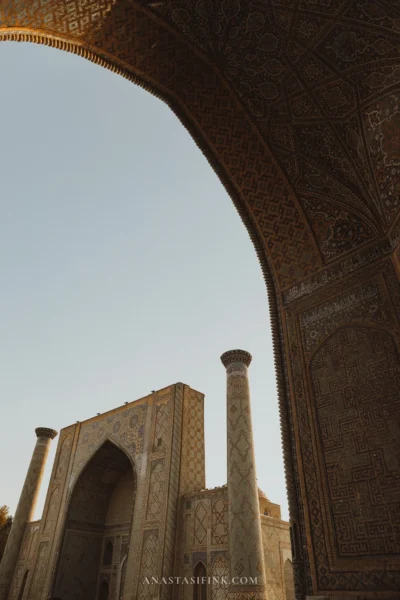
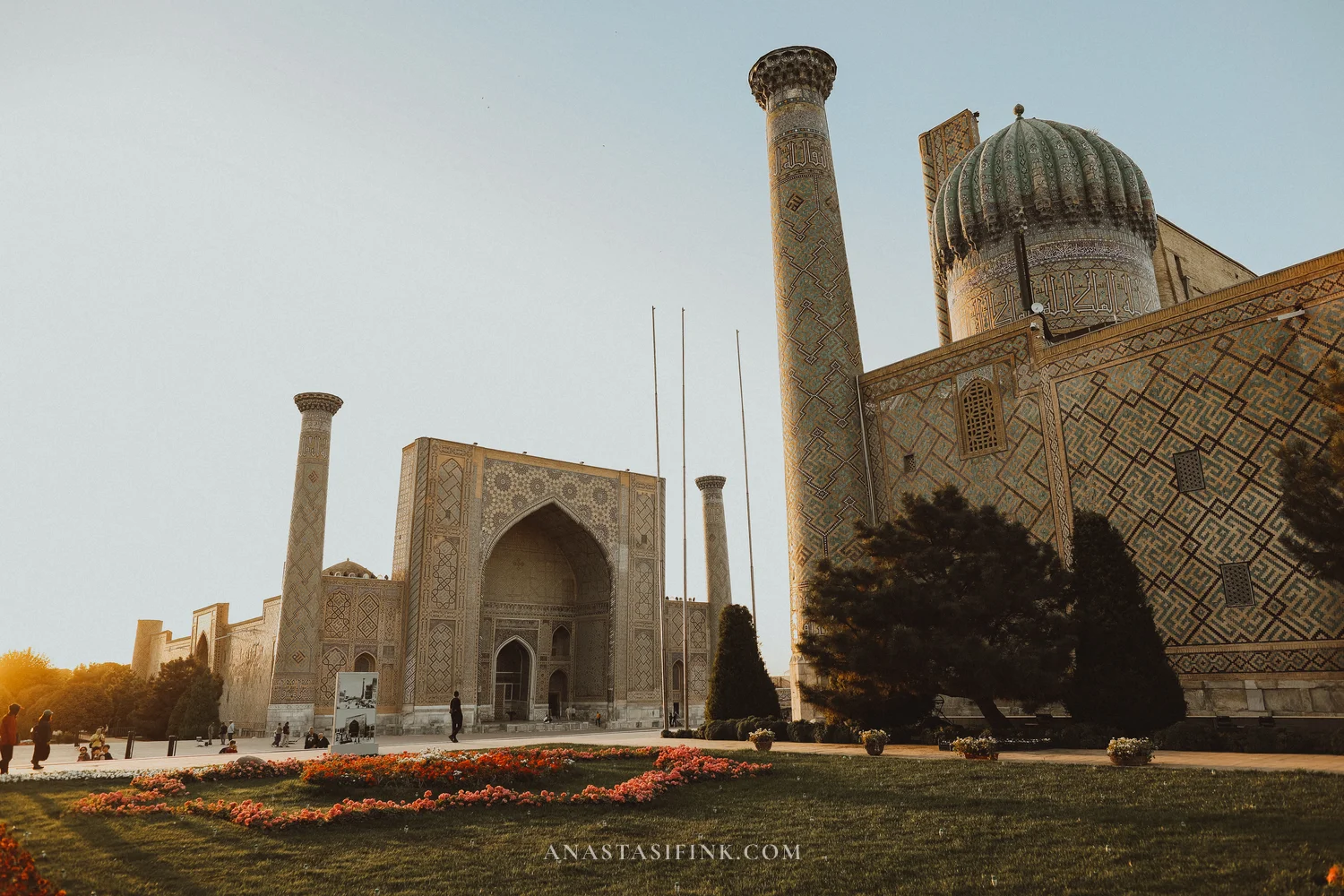
Registan is three madrasahs (old Islamic universities) arranged in a U-shape around a shared square. They were built between the 15th and 17th centuries, and up close you really feel the scale: portals as tall as an apartment block, covered from top to bottom in mosaic.
It’s best to arrive closer to sunset — you get to see the square in daylight and then catch the evening floodlighting without having to leave. Inside the courtyards you’ll find sellers with souvenirs and carpets, and under the dome of the Tilya-Kori madrasah there’s a gold ceiling that’s well worth stepping inside for.
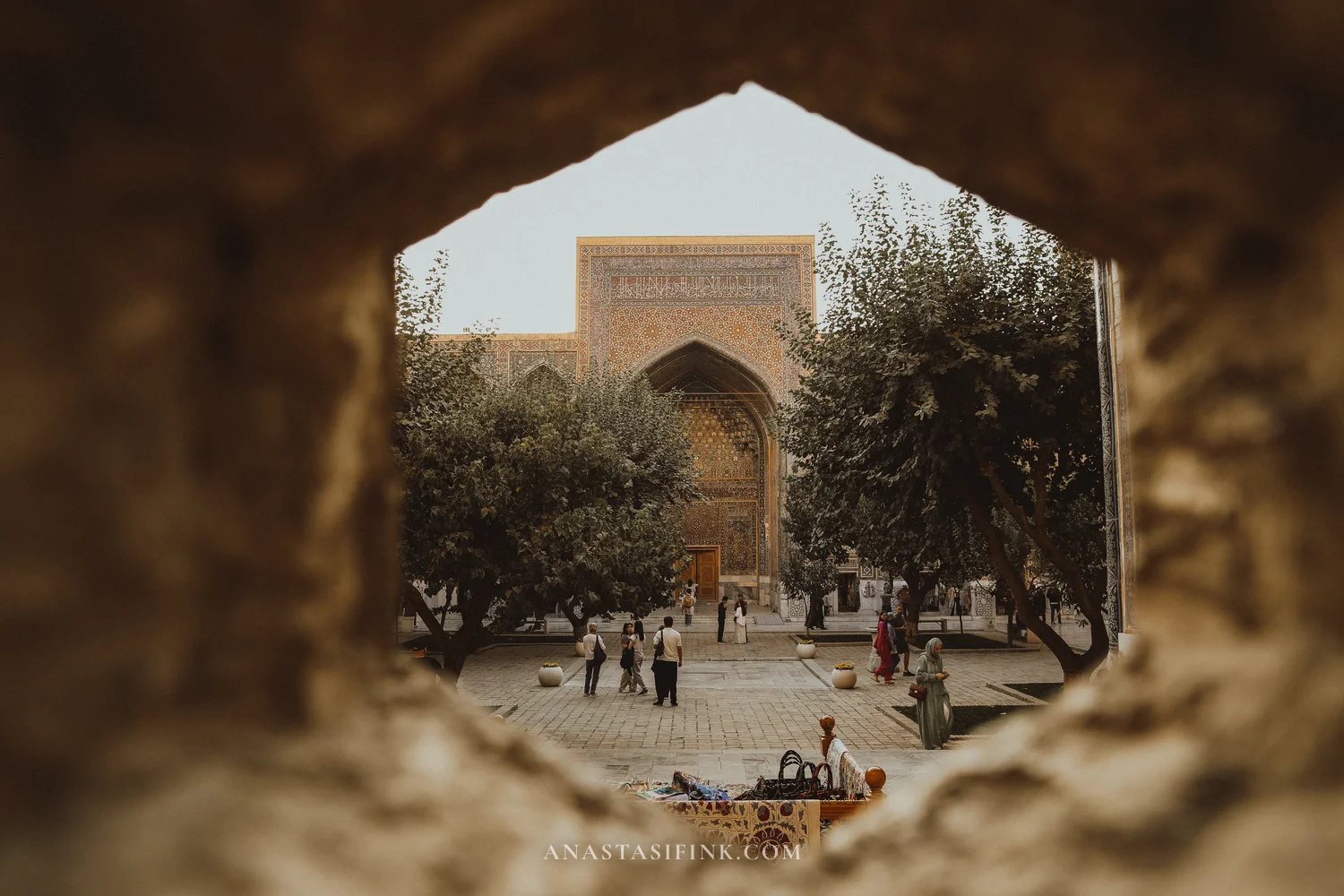
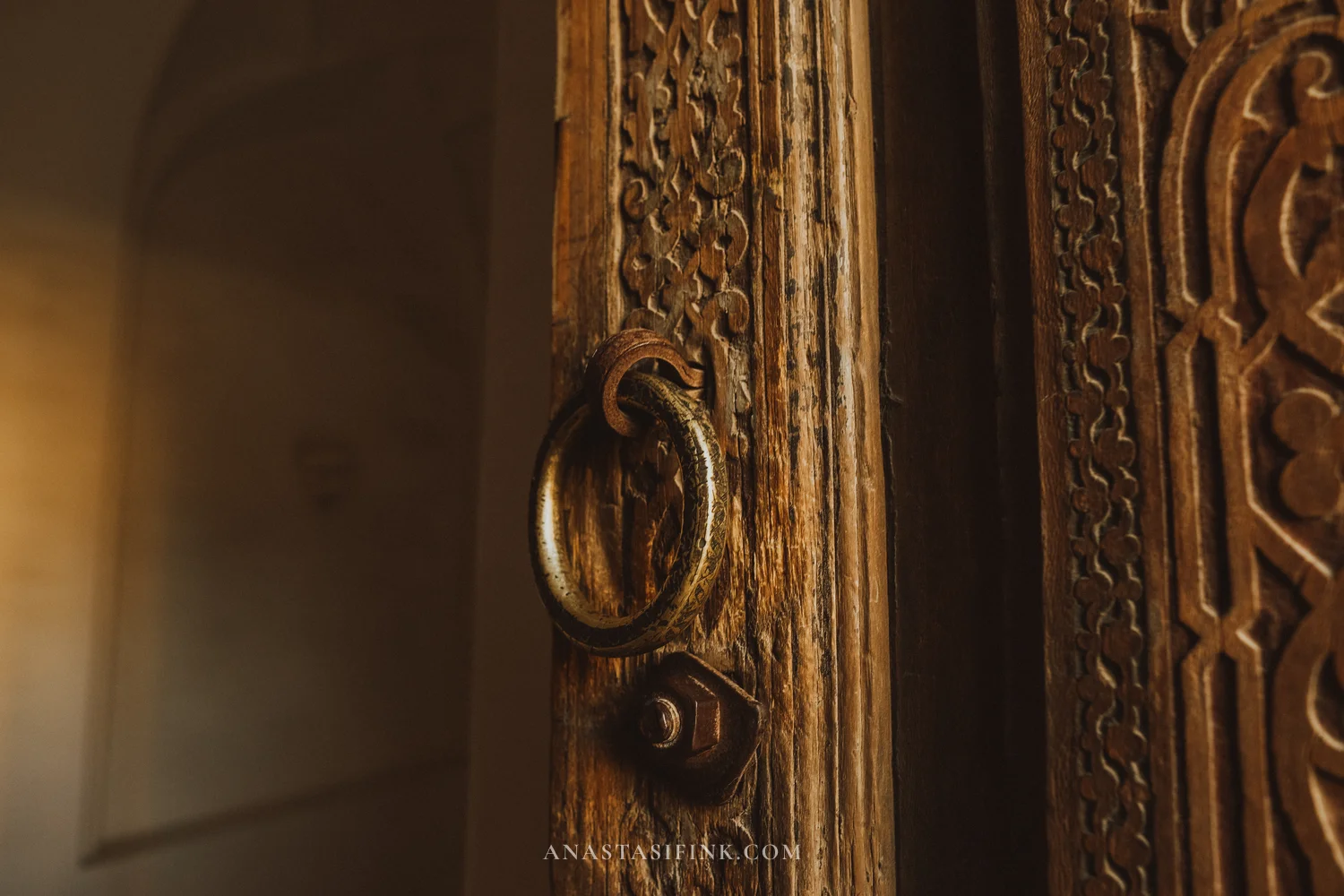
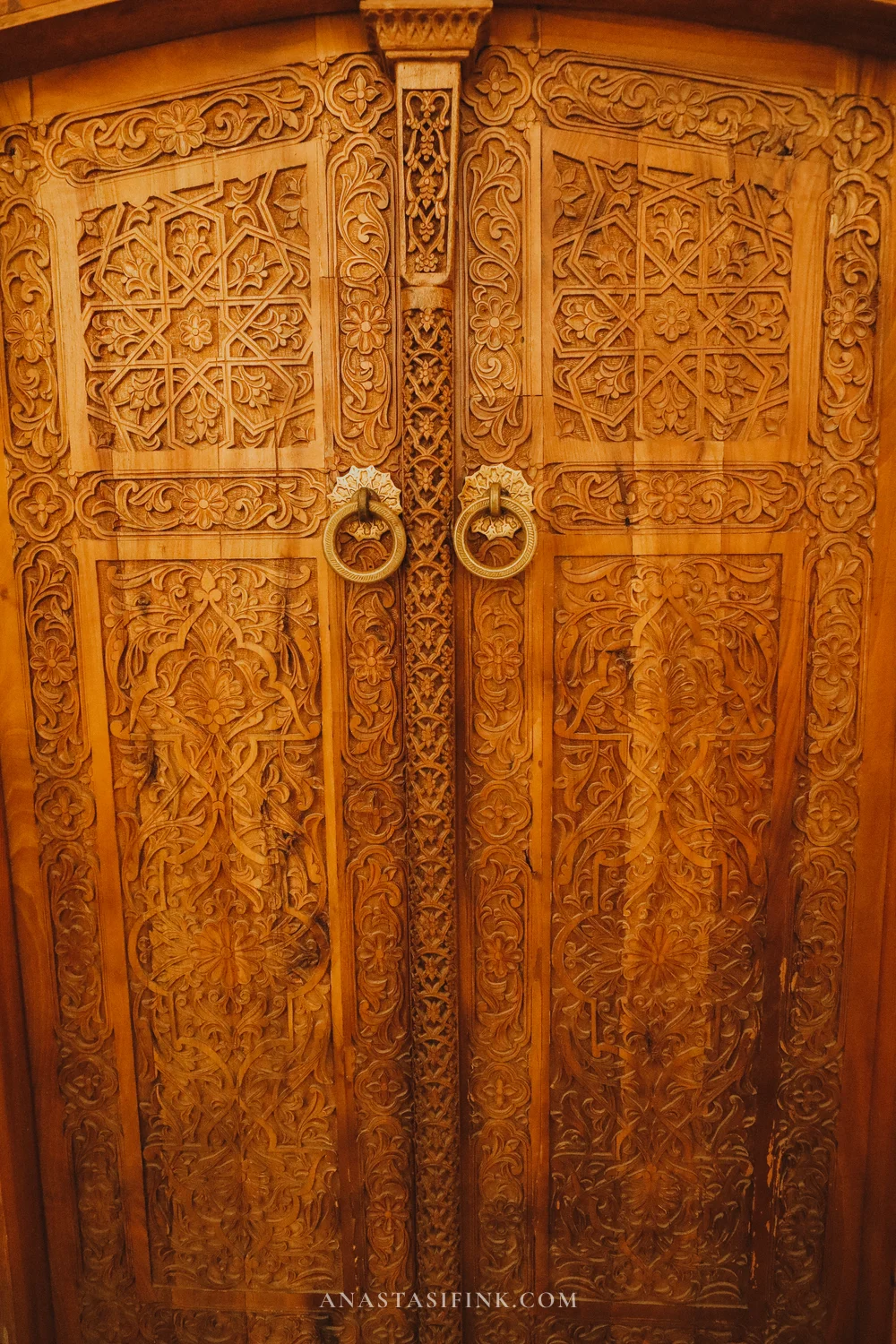
The details that are easy to miss
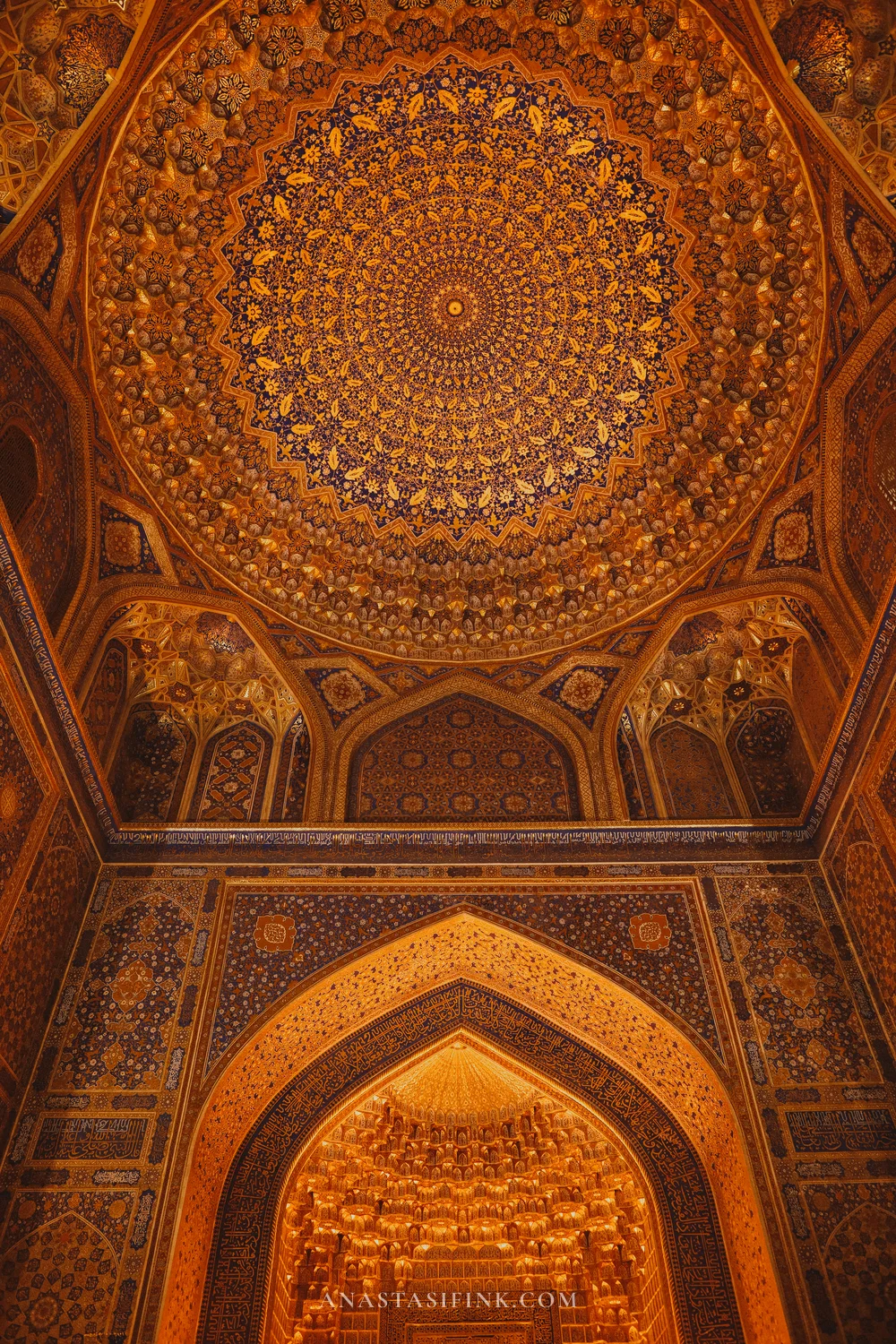
I’ve got a separate, detailed guide to Registan — with a plan of the square, what’s where, and how to get up the minaret.
Read more: Registan in Samarkand — the complete guide
Practical information
- What it is: a complex of three madrasahs from the 15th–17th centuries
- GPS: 39.6547, 66.9758
- Opening hours: 8:00–19:00 (later in summer)
- Entry: ~100,000 som (~$8 / €7)
- How long to allow: 1.5–2 hours
- Tip: come a couple of hours before sunset and stay for the evening lights — that way you see the square both in daylight and lit up
A walk through the city and Registan park
I walked between the main sights. Samarkand is leafy, with wide avenues, grand early-20th-century houses and fountains where locals shelter from the heat.
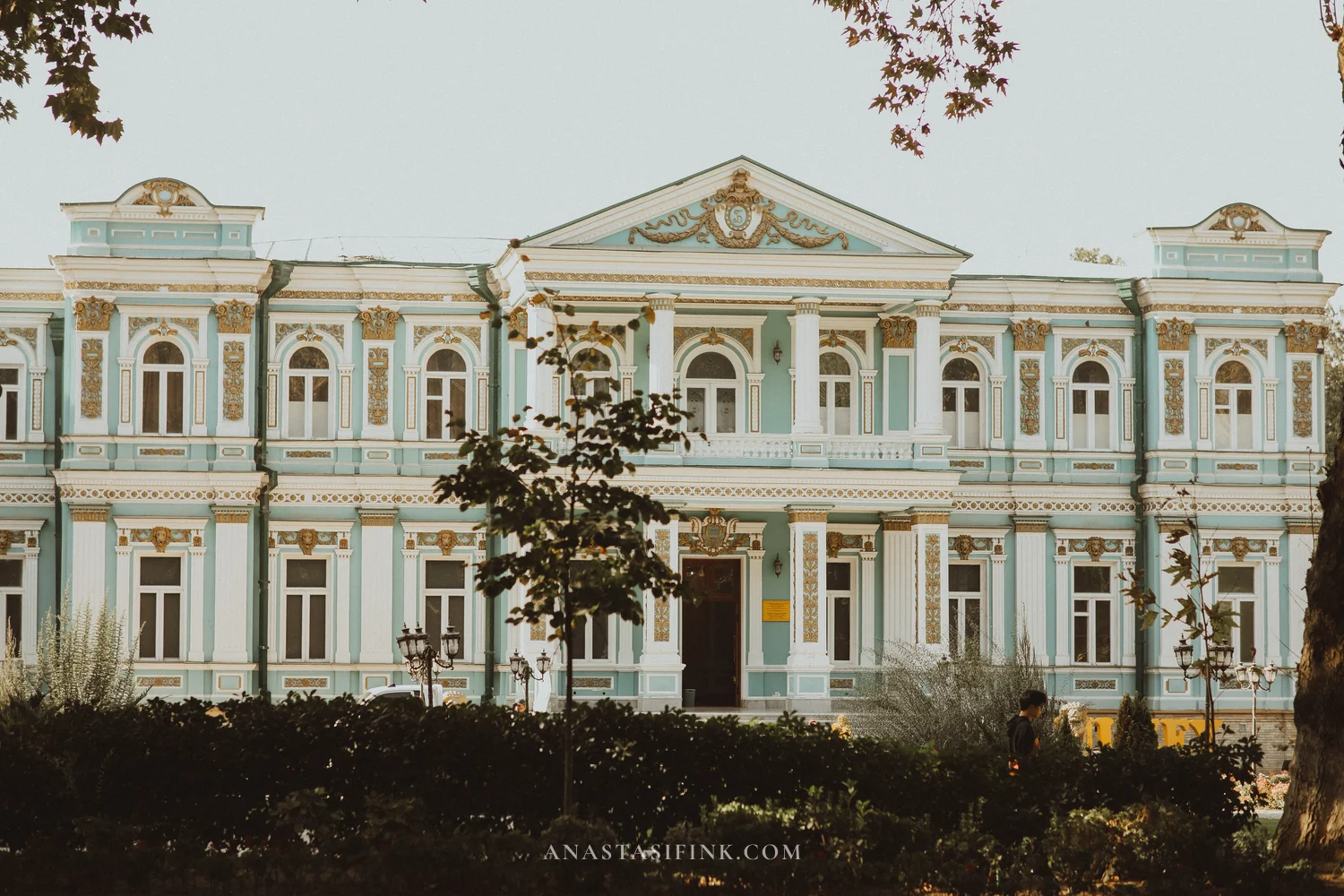
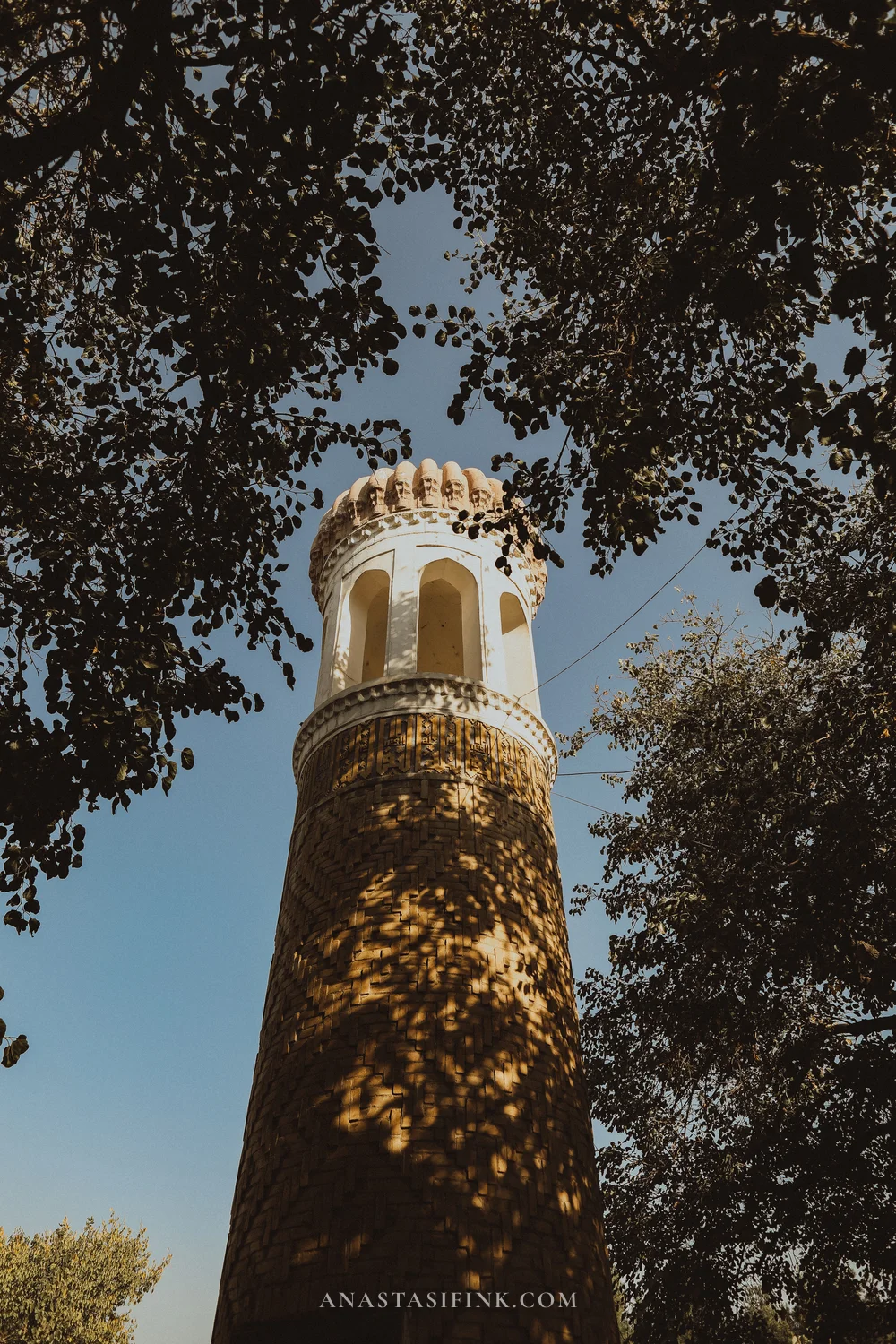
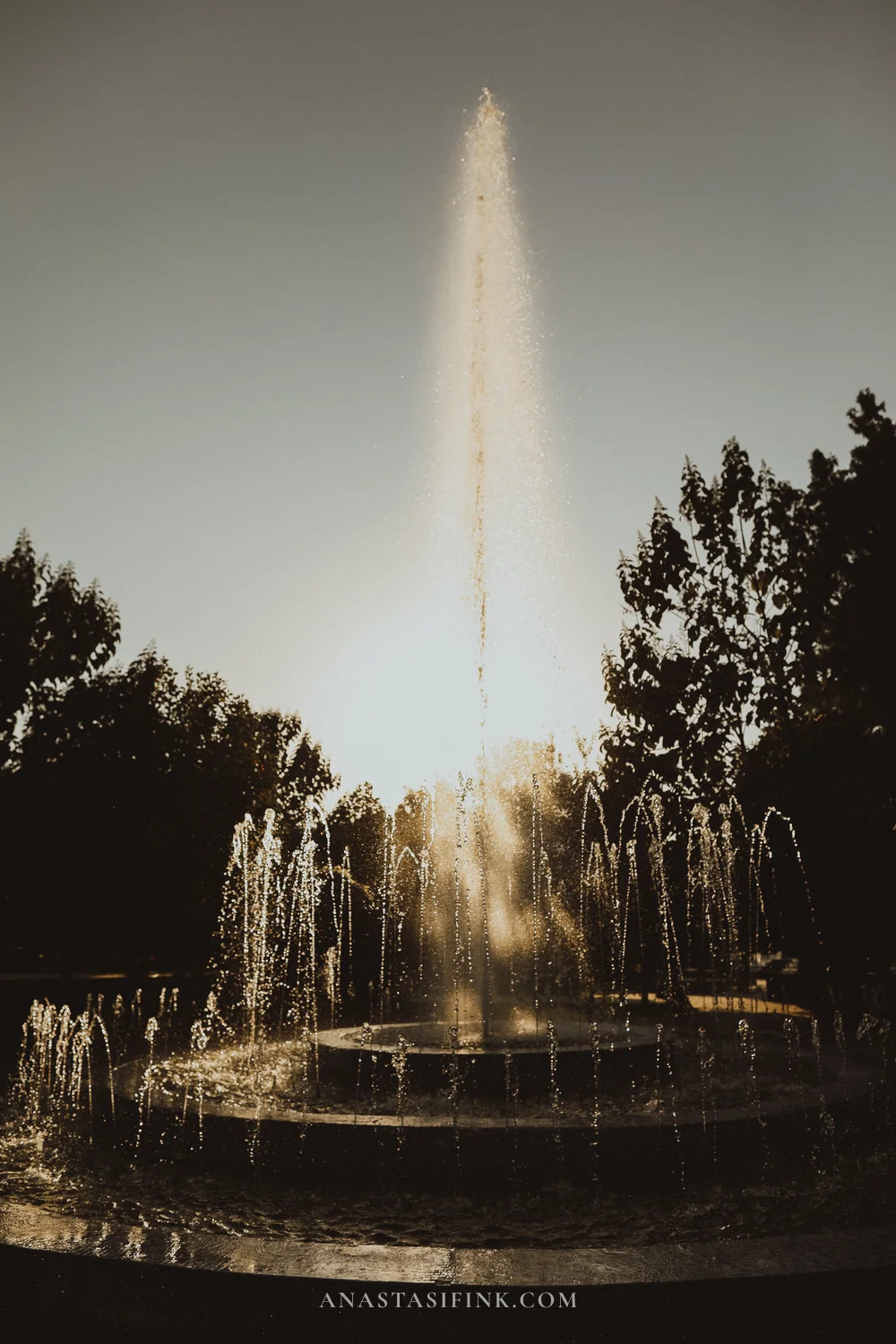
An old minaret and a park fountain
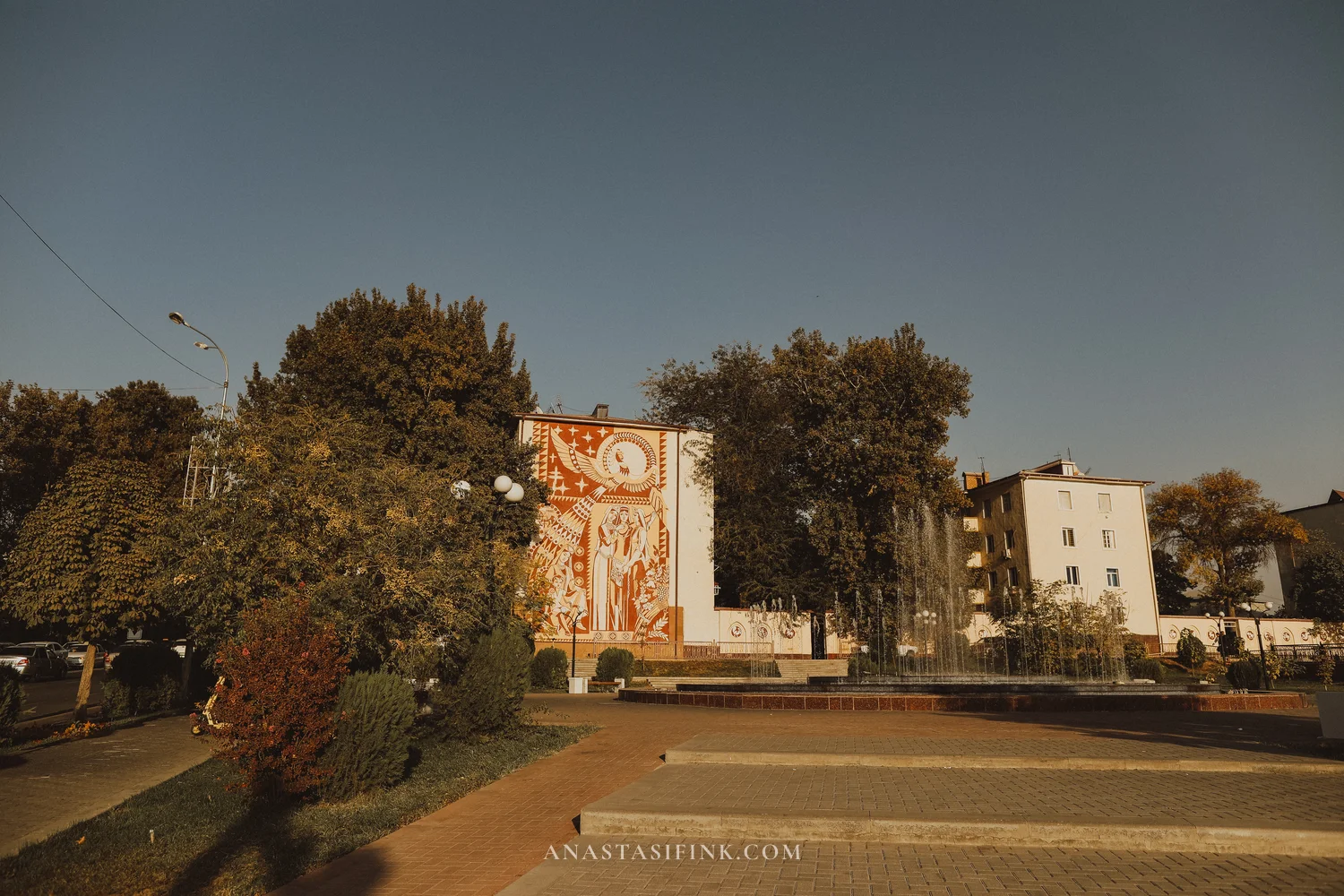
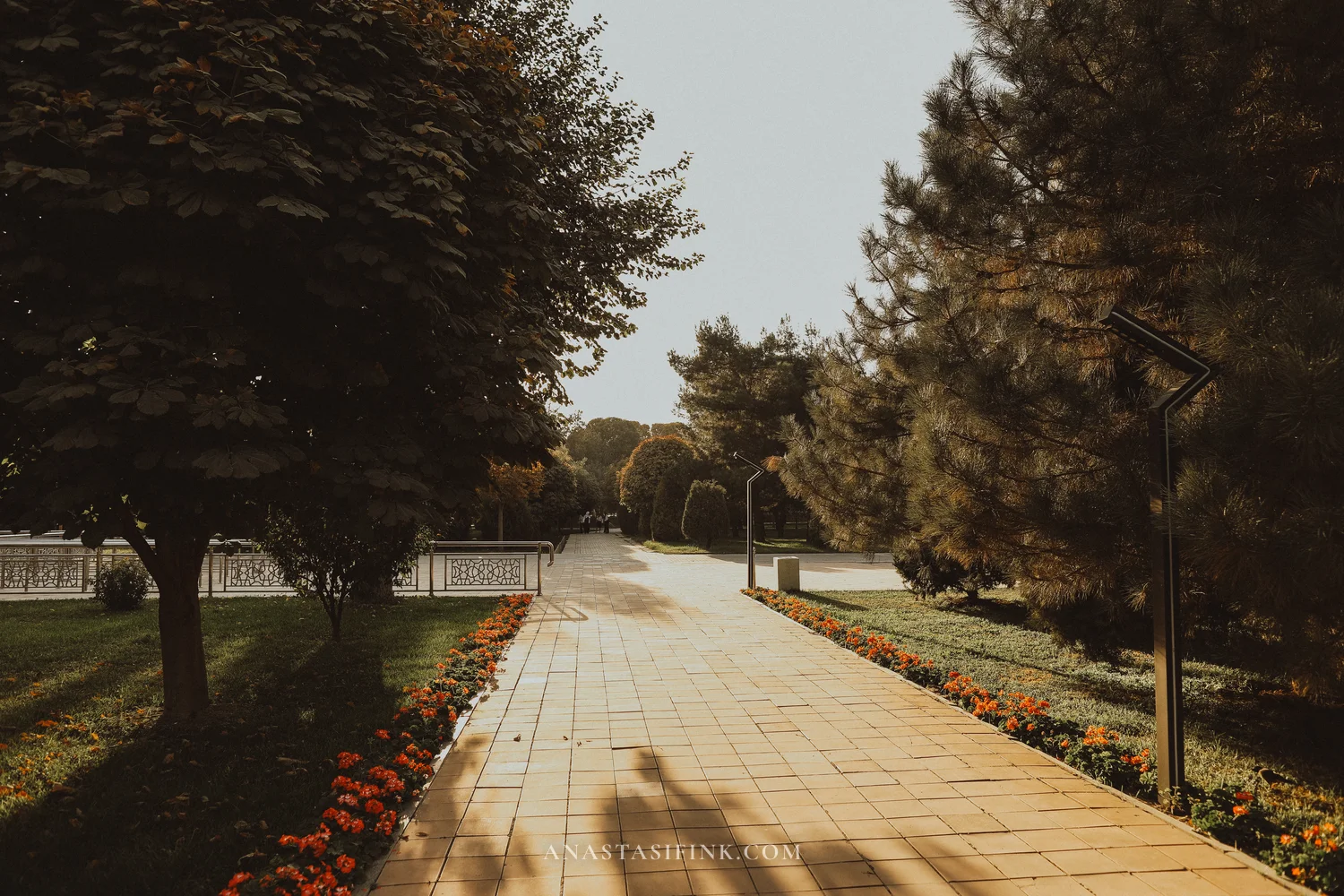
The park right next to the square
Gur-e-Amir — Tamerlane’s mausoleum
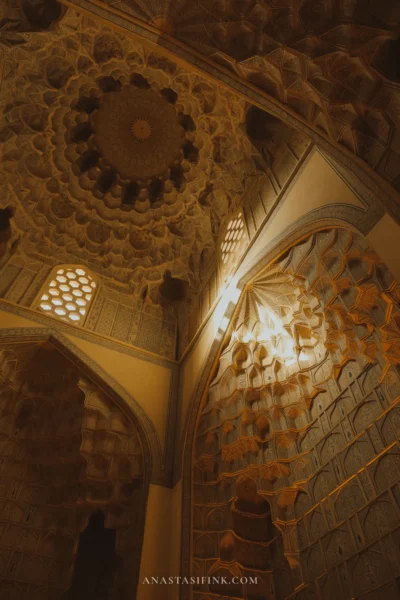
Gur-e-Amir is the tomb of Tamerlane and his descendants. From outside it’s a ribbed turquoise dome and a minaret; inside is one of the most beautiful interiors I’ve seen — walls and ceiling covered in gold and painted ornament.
It’s quiet and solemn in here. In the middle of the hall stand the gravestones (the actual burials are lower down, in a crypt). The dark green stone over Tamerlane’s grave is a single block of jade, one of the largest in the world.
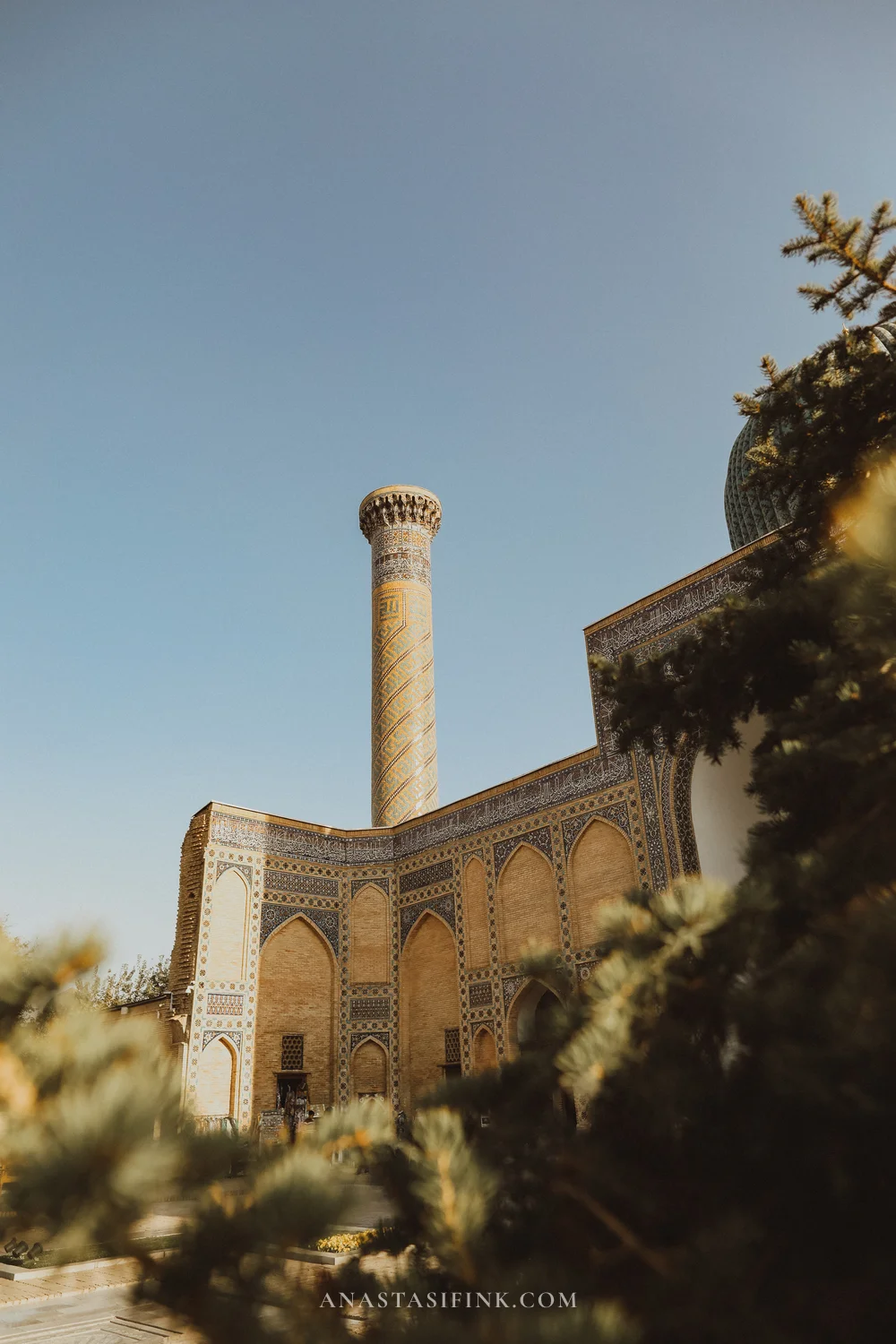
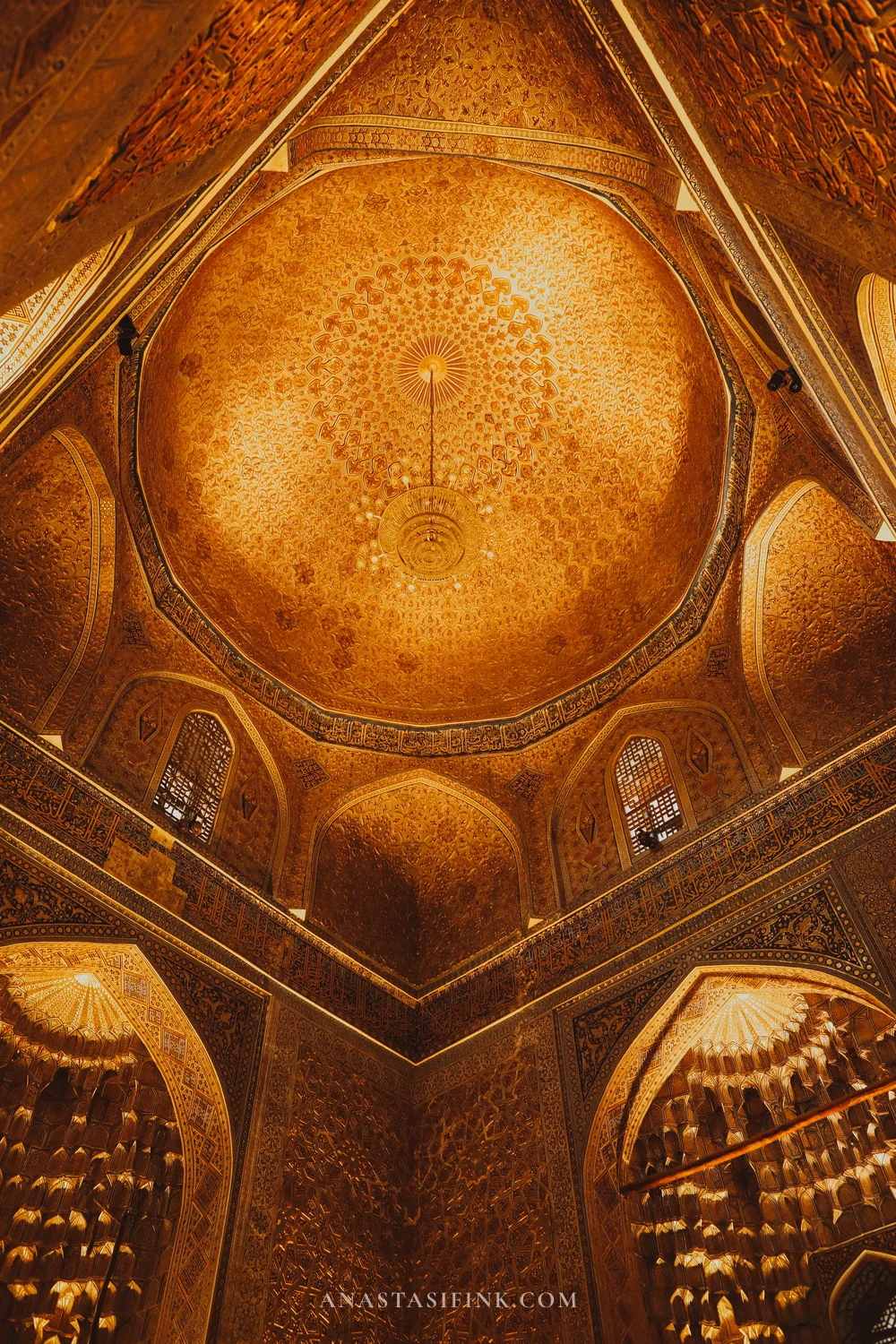
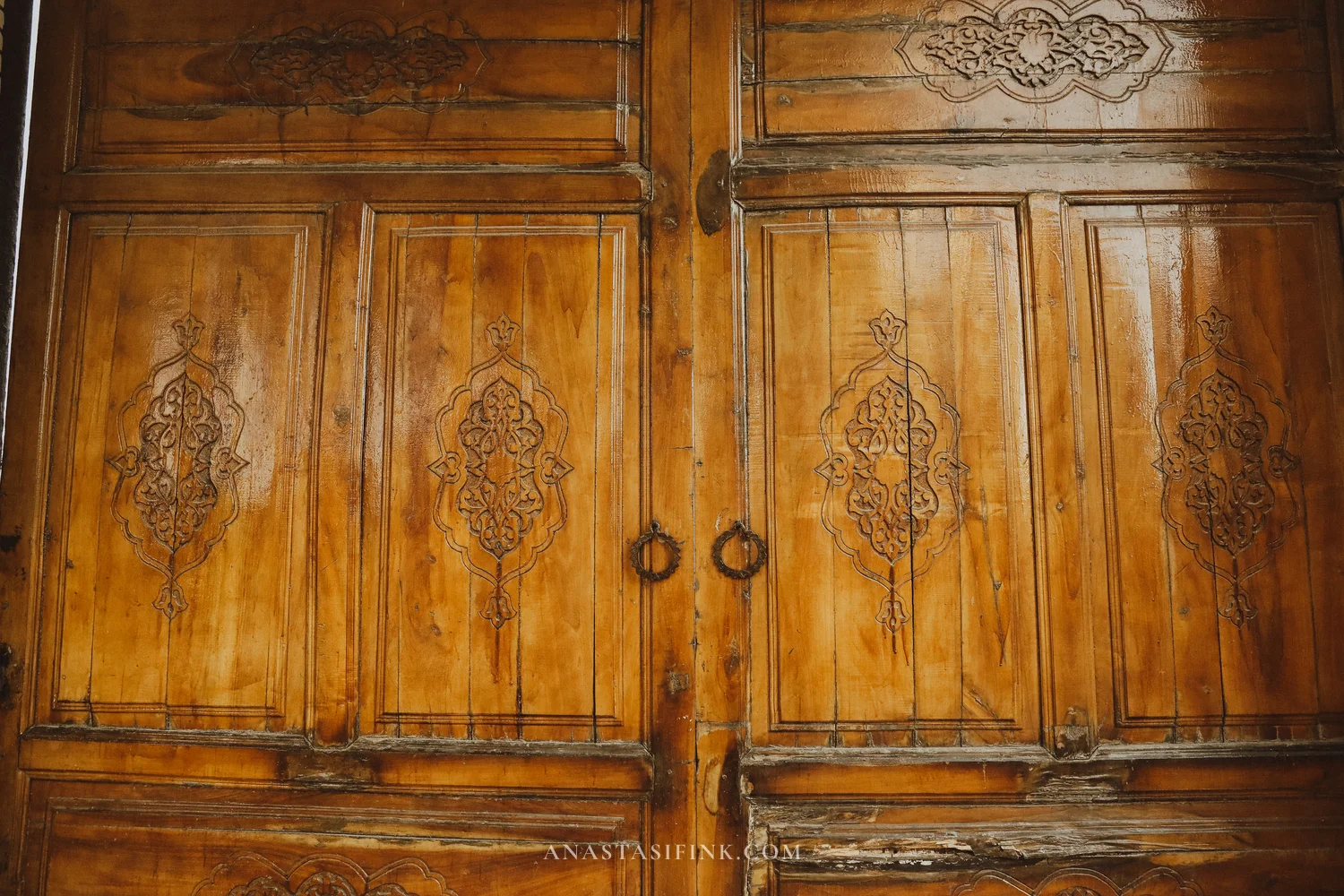
Inside the dome it’s solid gold
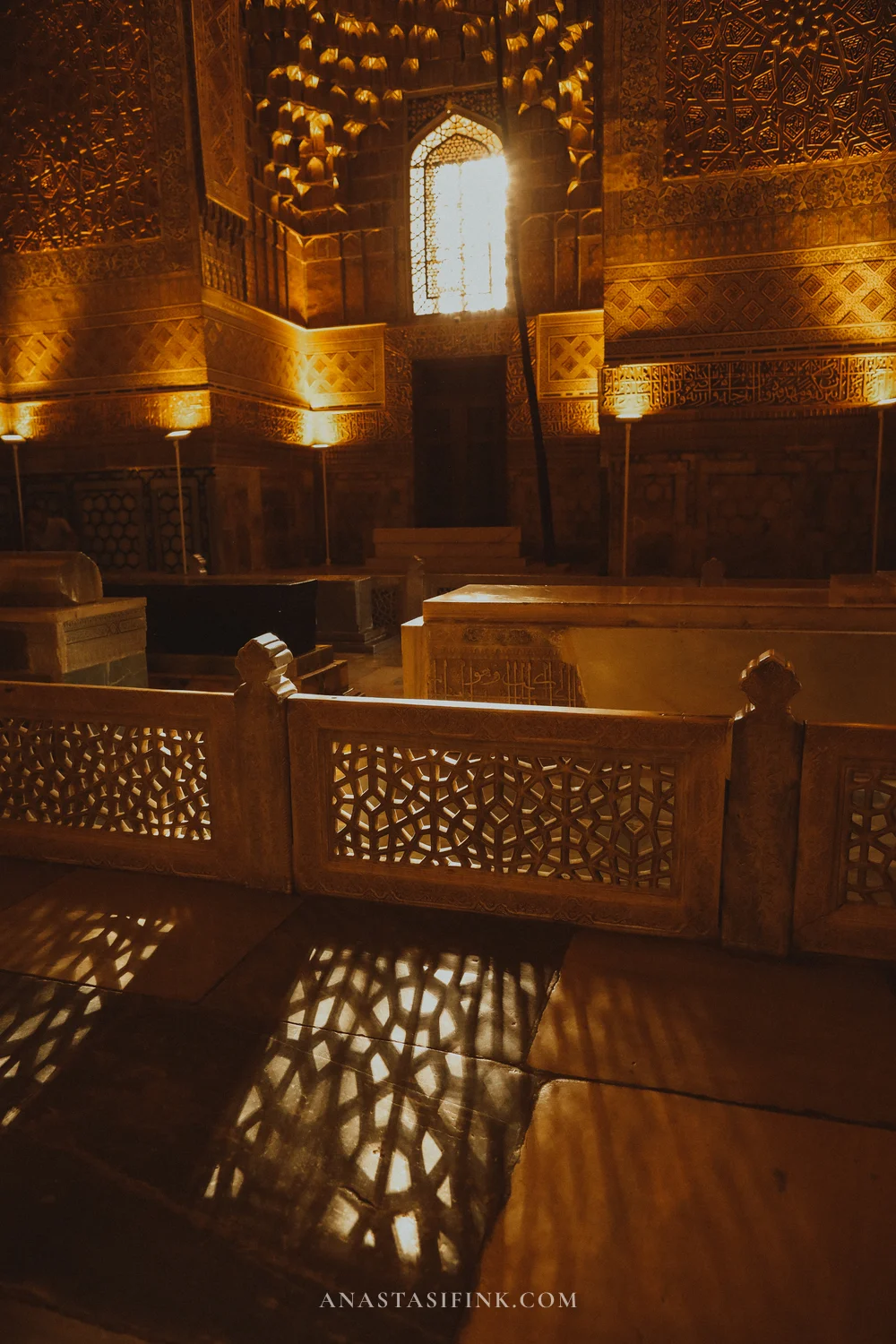
I’ve written a separate piece about this mausoleum — with its history, hours and details: Gur-e-Amir in Samarkand — a guide
Practical information
- What it is: the mausoleum of Tamerlane and his family, early 15th century
- Opening hours: 8:00–19:00
- Entry: ~75,000 som (~$6 / €5.5)
- How long to allow: 40–60 minutes
Registan in the evening
Once it gets dark the facades are floodlit, and the square looks completely different from how it does by day. The crowds thin out too — and that alone is reason enough to stay until nightfall.
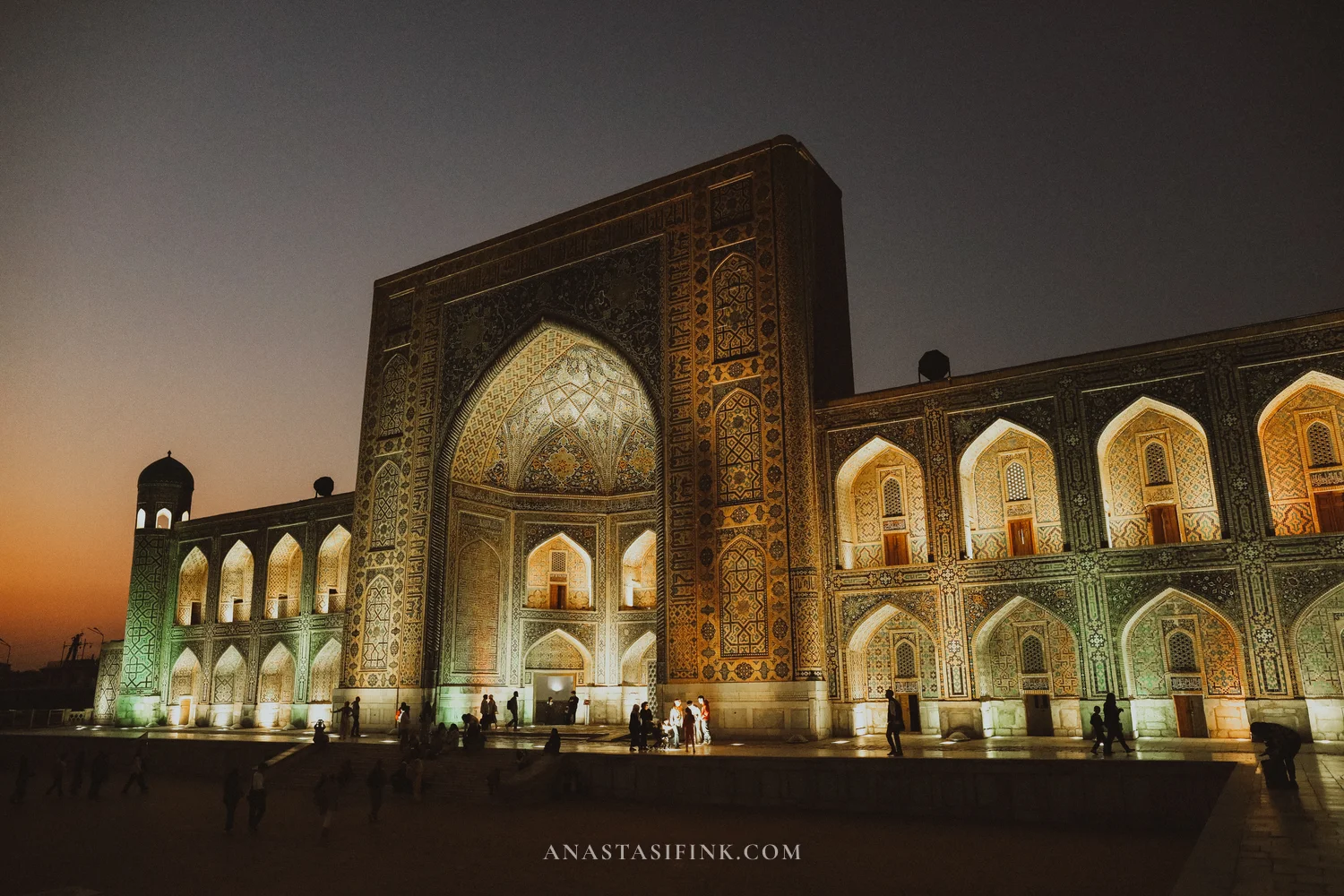
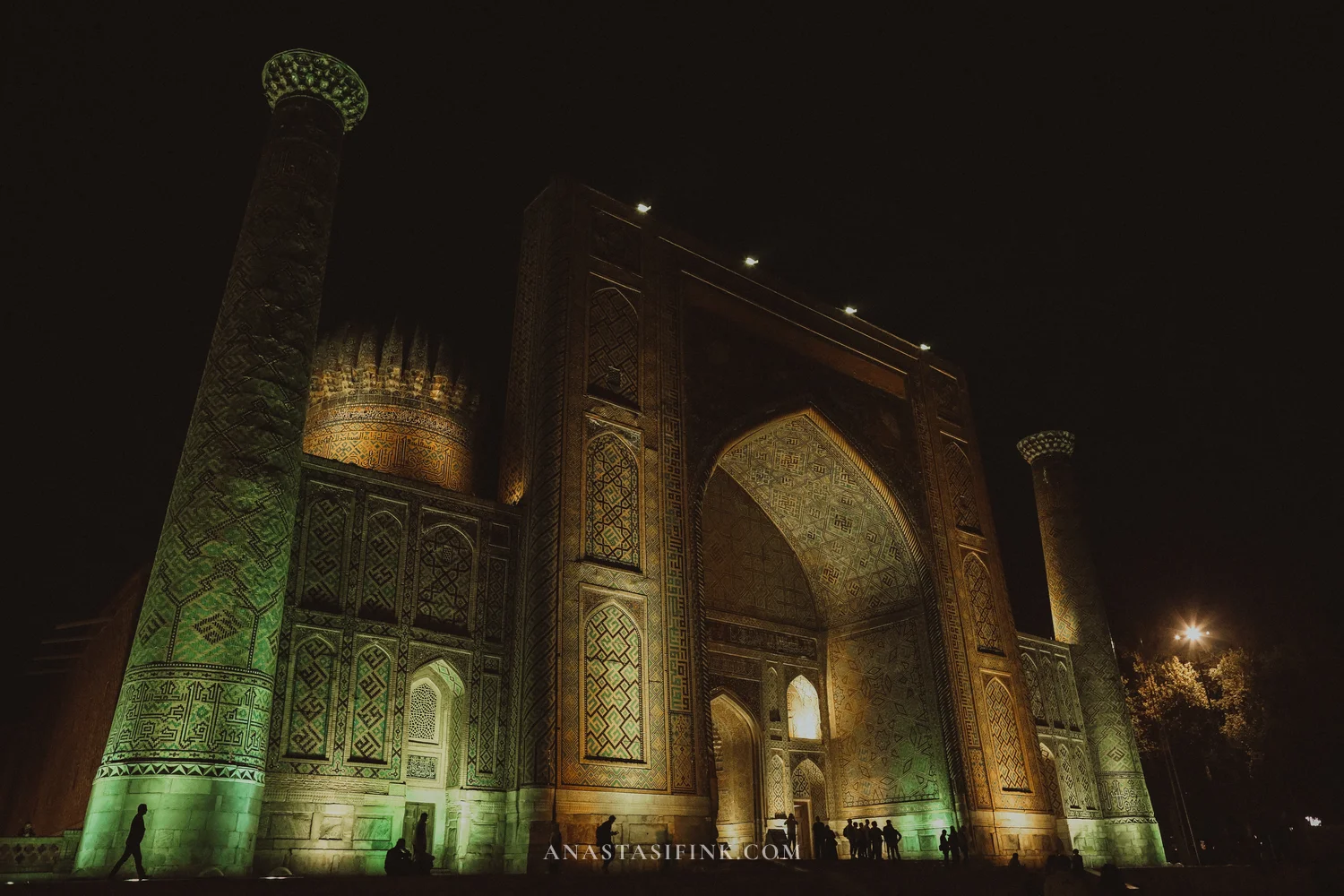
Registan under the evening lights
Day 2: Shah-i-Zinda, Hazrat Khizr Mosque and the craft center
Shah-i-Zinda — the street of mausoleums
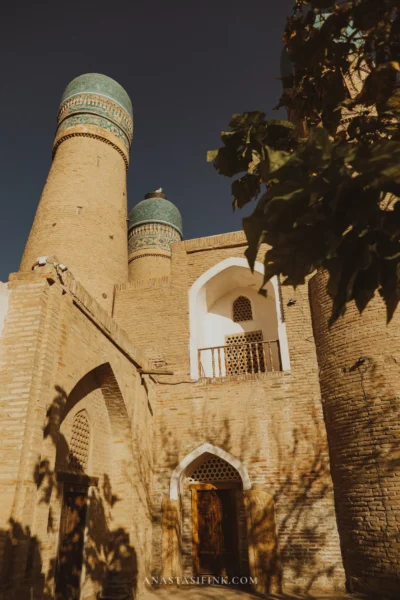
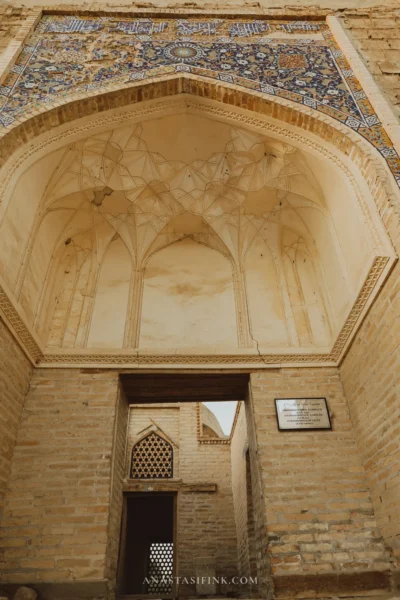
Shah-i-Zinda is a narrow necropolis lane: mausoleums line both sides, each one tiled from top to bottom. The shades of turquoise, blue and green shift with almost every step you take.
The name translates as “The Living King” — by legend, a cousin of the Prophet Muhammad is buried here. For many it’s a place of pilgrimage, so it’s worth dressing modestly and keeping quiet.
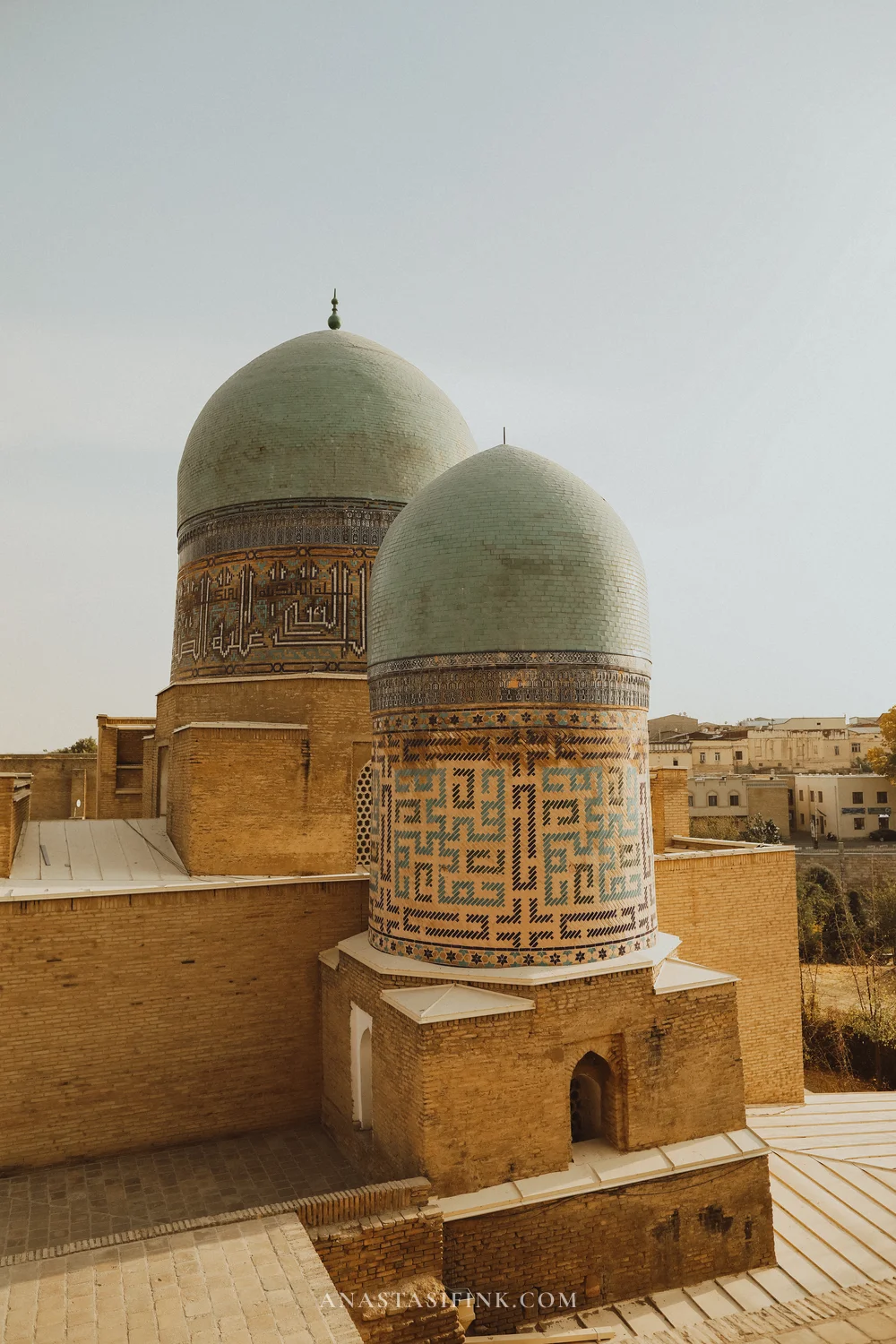
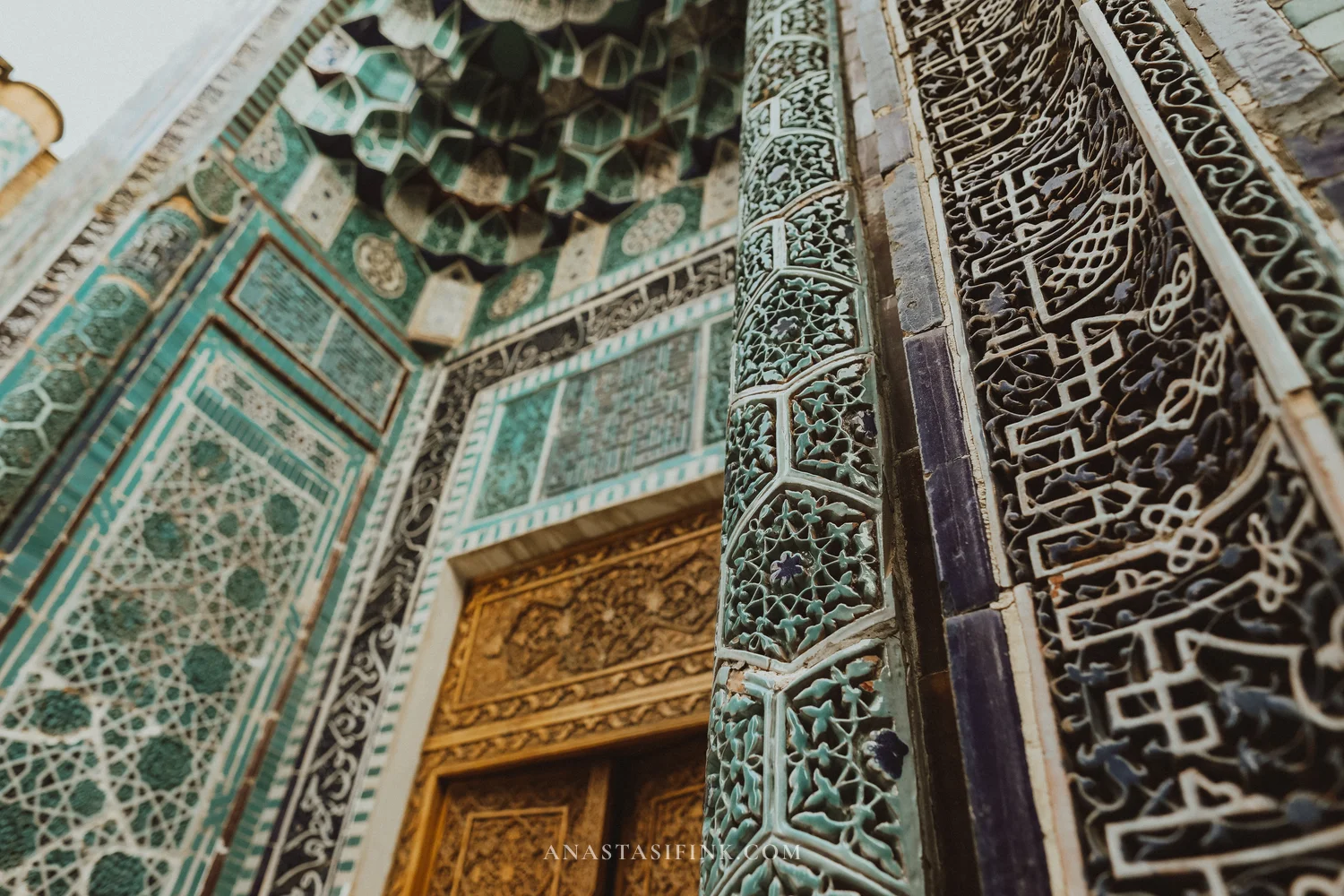
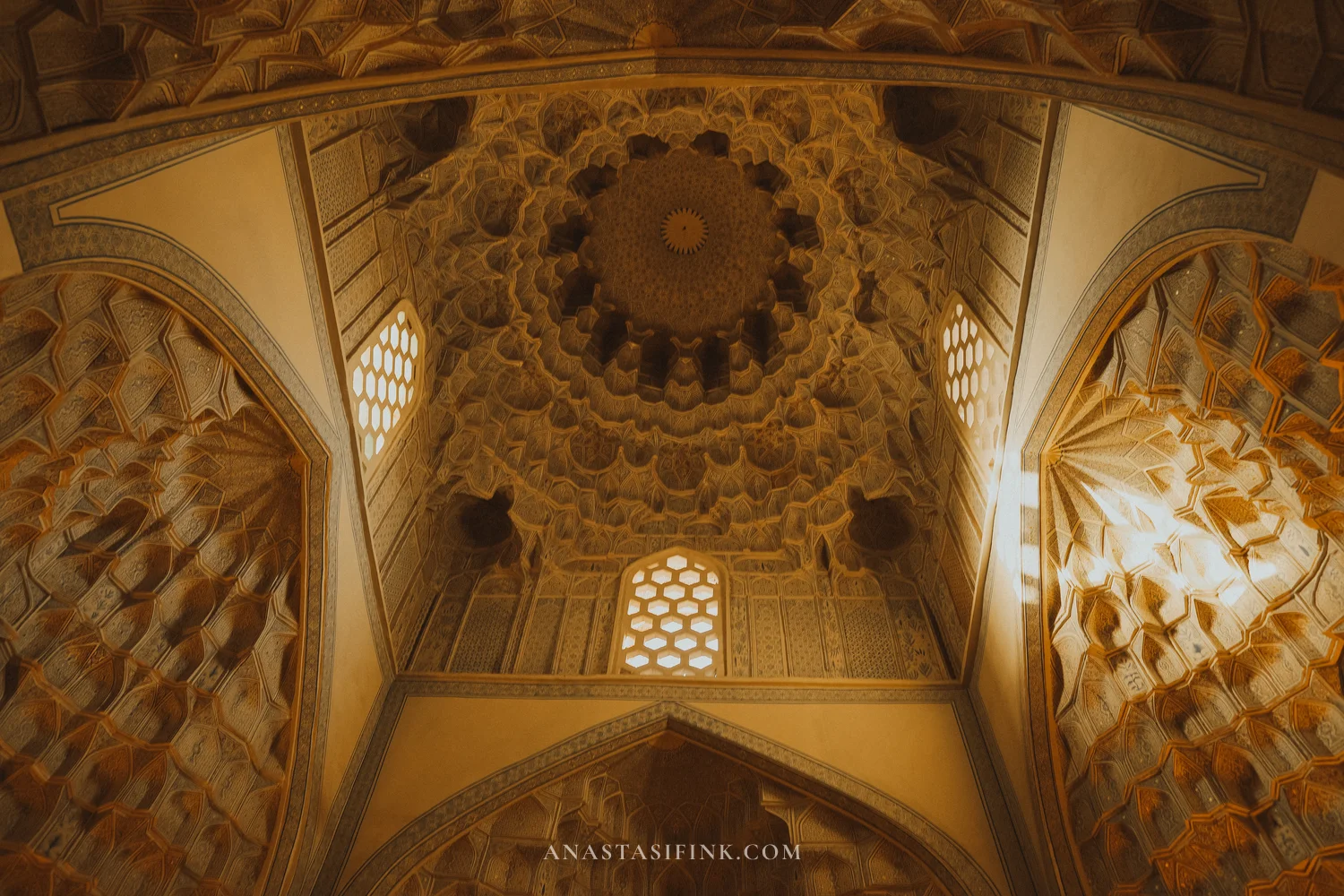
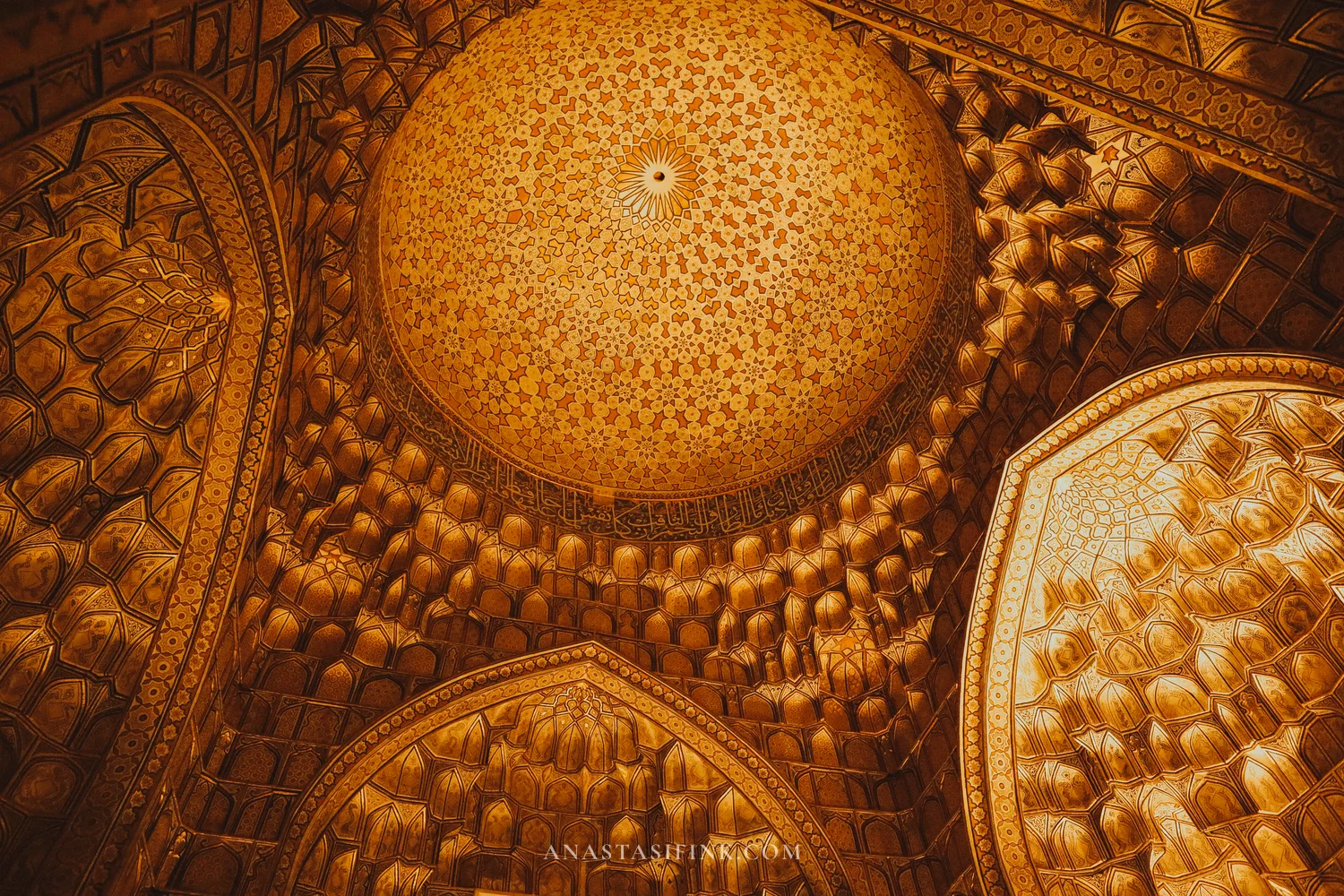
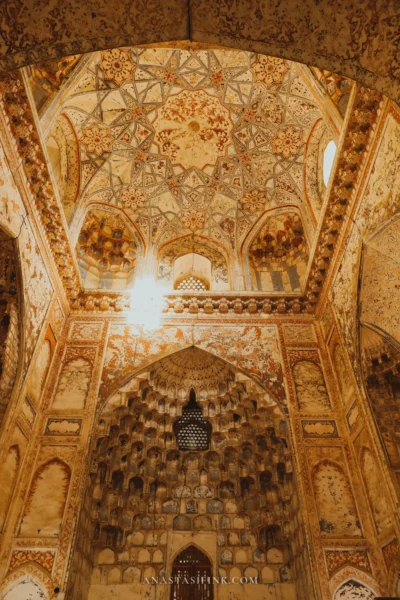
The domes from within — one carved, one gilded
A detailed guide to the necropolis: Shah-i-Zinda in Samarkand
Practical information
- What it is: a necropolis-street of mausoleums from the 14th–15th centuries
- Opening hours: 9:00–19:00
- Entry: ~80,000 som (~$6.5 / €6)
- How long to allow: 1–1.5 hours
Hazrat Khizr Mosque
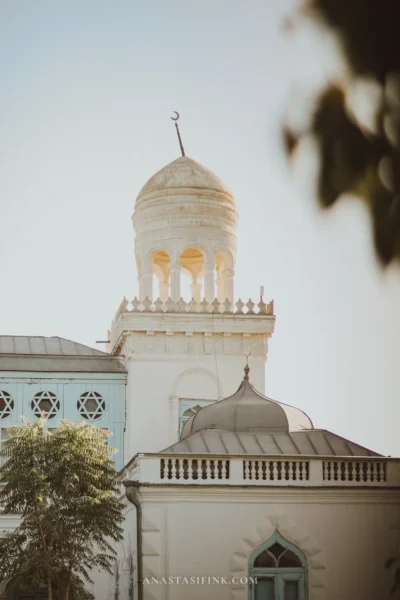
Hazrat Khizr Mosque sits on a hill directly across from Shah-i-Zinda, so the two are easy to combine. The first mosque here was built back in the 8th century; the current building dates to the mid-19th. Inside there are painted wooden ceilings and carved columns, and from the terrace you get a view over the whole old town.
Within the mosque grounds is the mausoleum of Islam Karimov, the first president of Uzbekistan. It’s a calm, well-kept spot, noticeably quieter than the squares nearby.
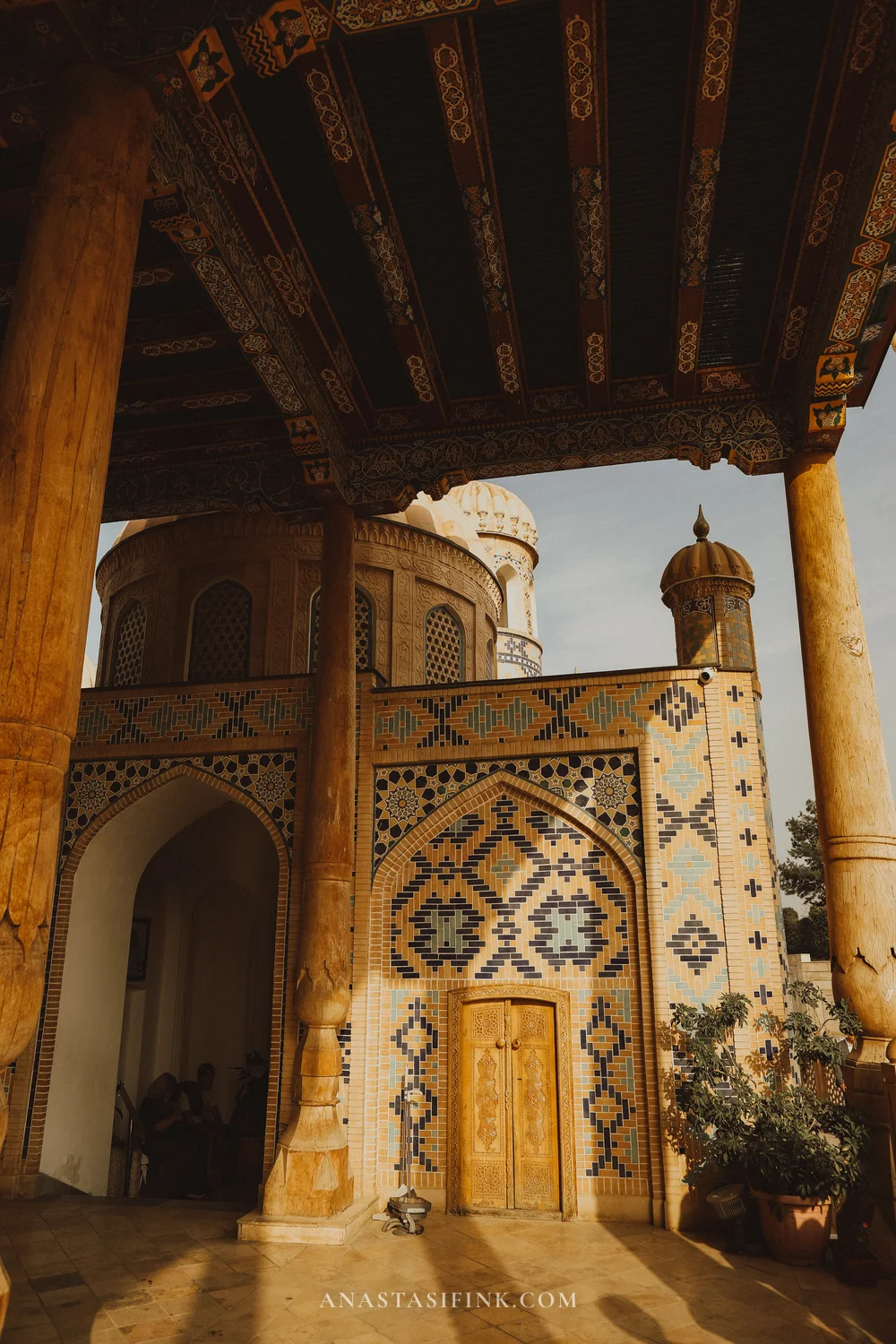
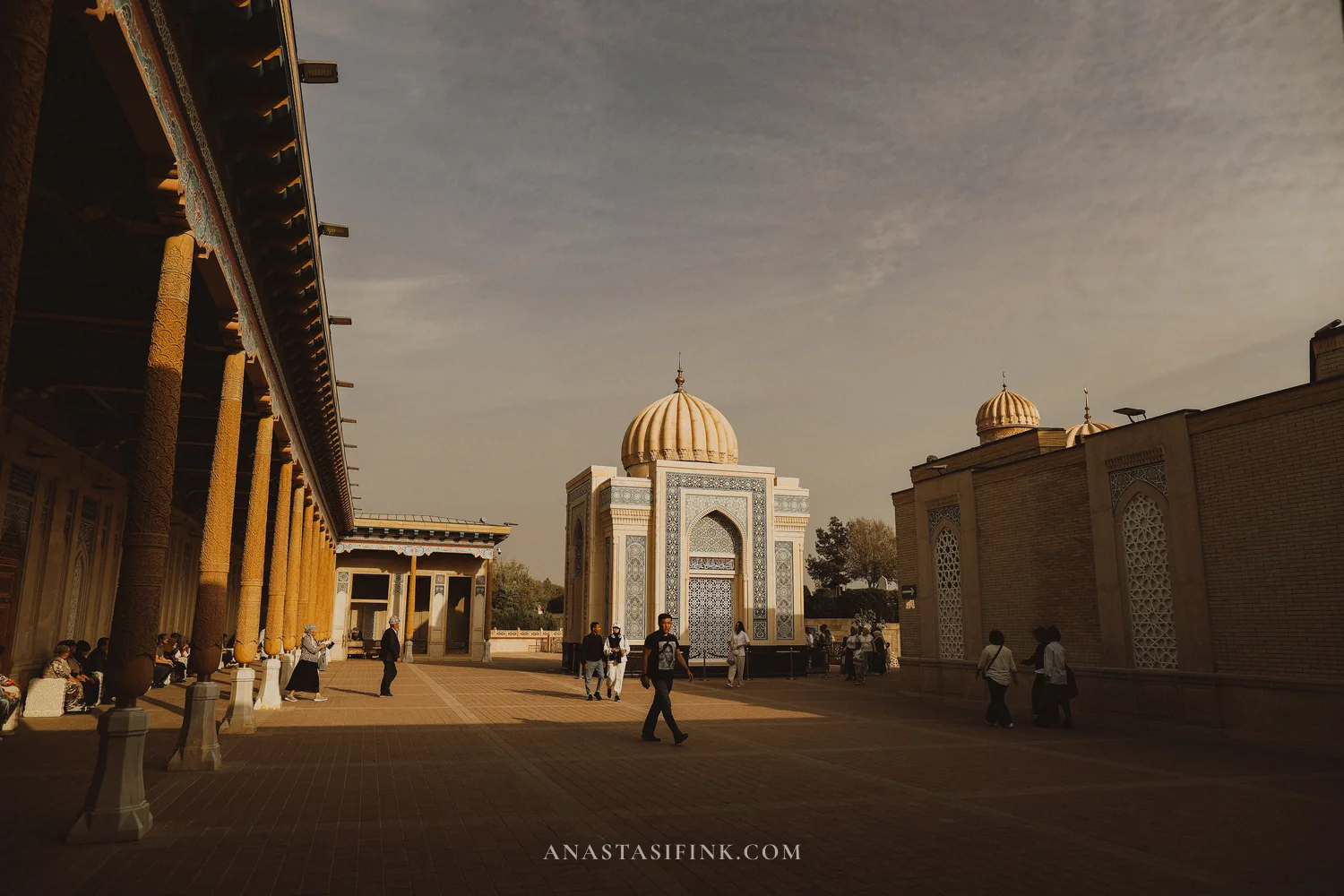
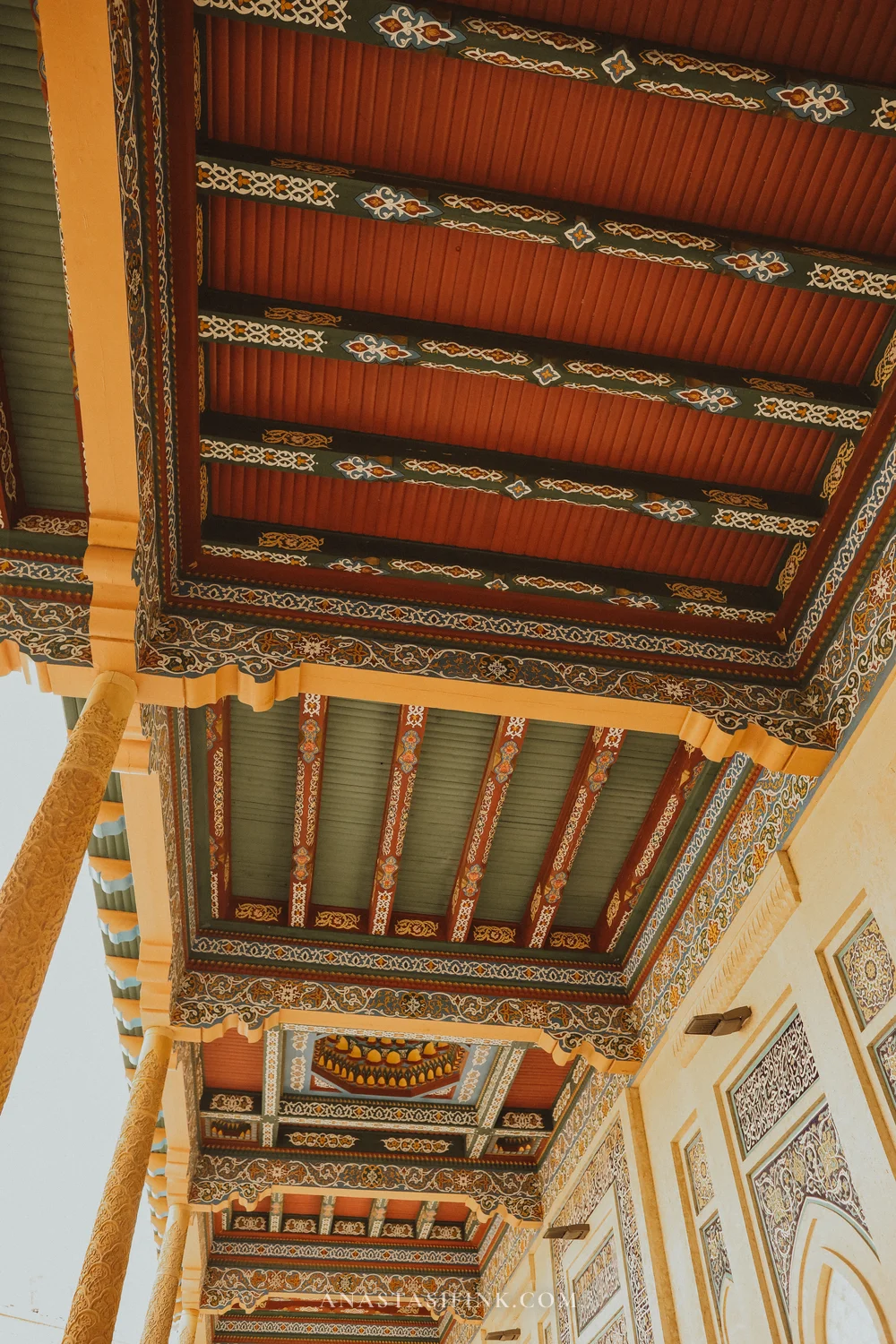
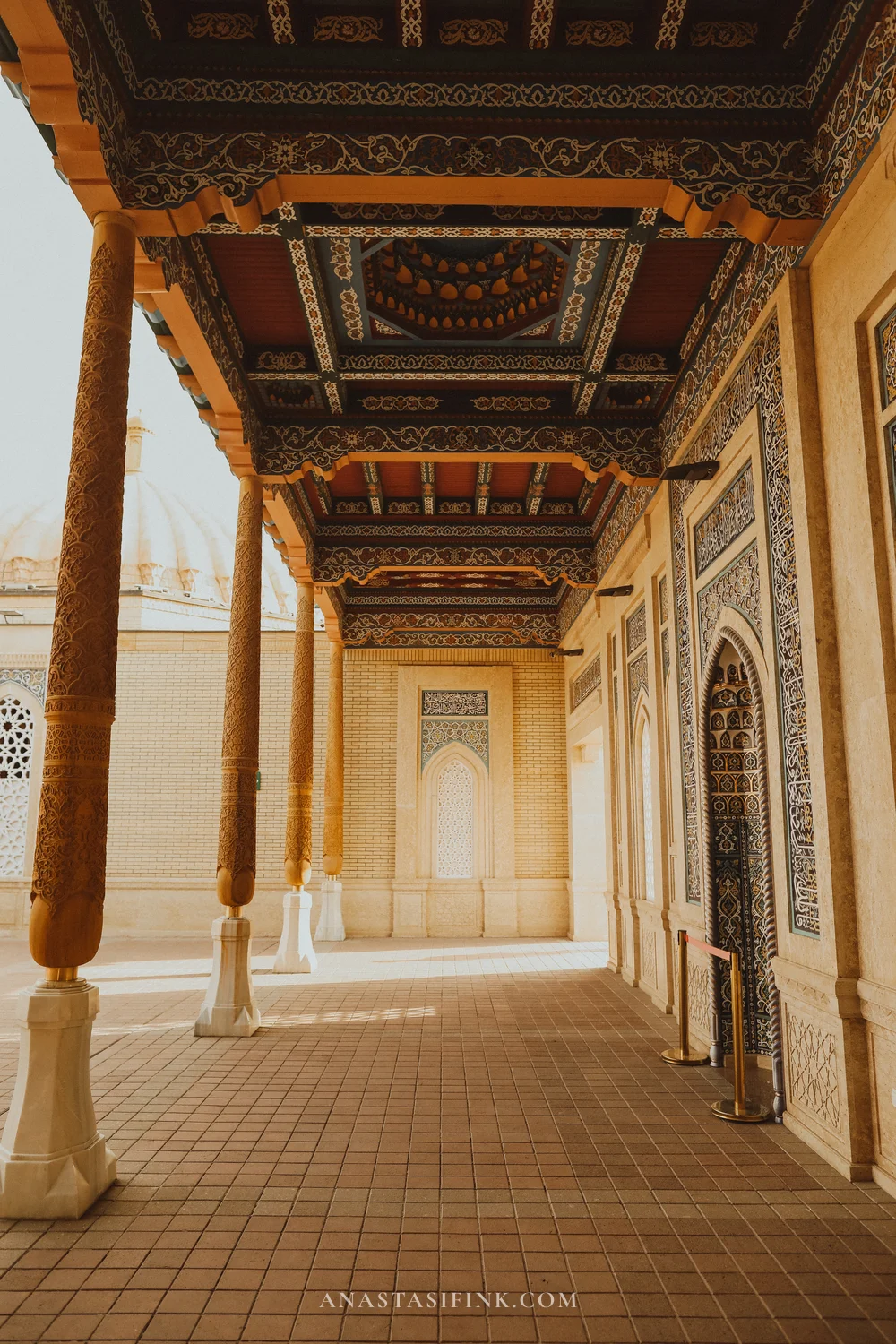
The painted ceiling and the terrace with its view over the city
Practical information
- GPS: 39.6626, 66.9836
- Opening hours: roughly 8:00–19:00
- Entry: a token fee, around 20,000 som (~$1.5); the mausoleum is free
- Tip: easy to pair with Shah-i-Zinda — they’re just across the road from each other
The craft center and the Happy Bird gallery
Toward evening I stopped in at the Samarkand Center of Crafts — a former caravanserai where workshops and shops fill two floors. It’s not a museum: the artisans work right there on site and sell their own pieces.
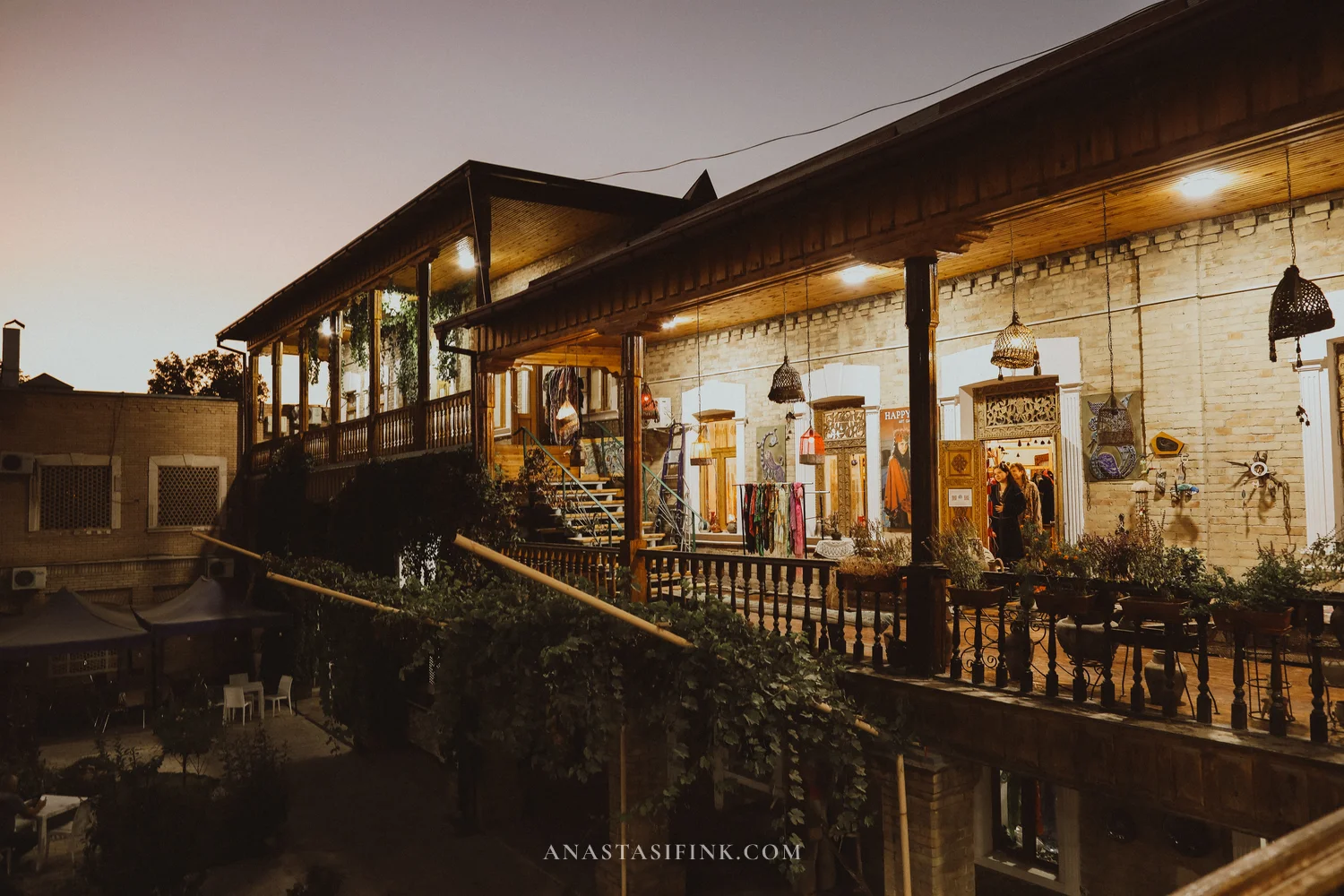
On the ground floor I’d suggest looking in at the ceramics shop. Hand-painted plates, every one different: birds, pomegranates, leafy patterns. The blue-and-green palette is the recognizable Samarkand style.
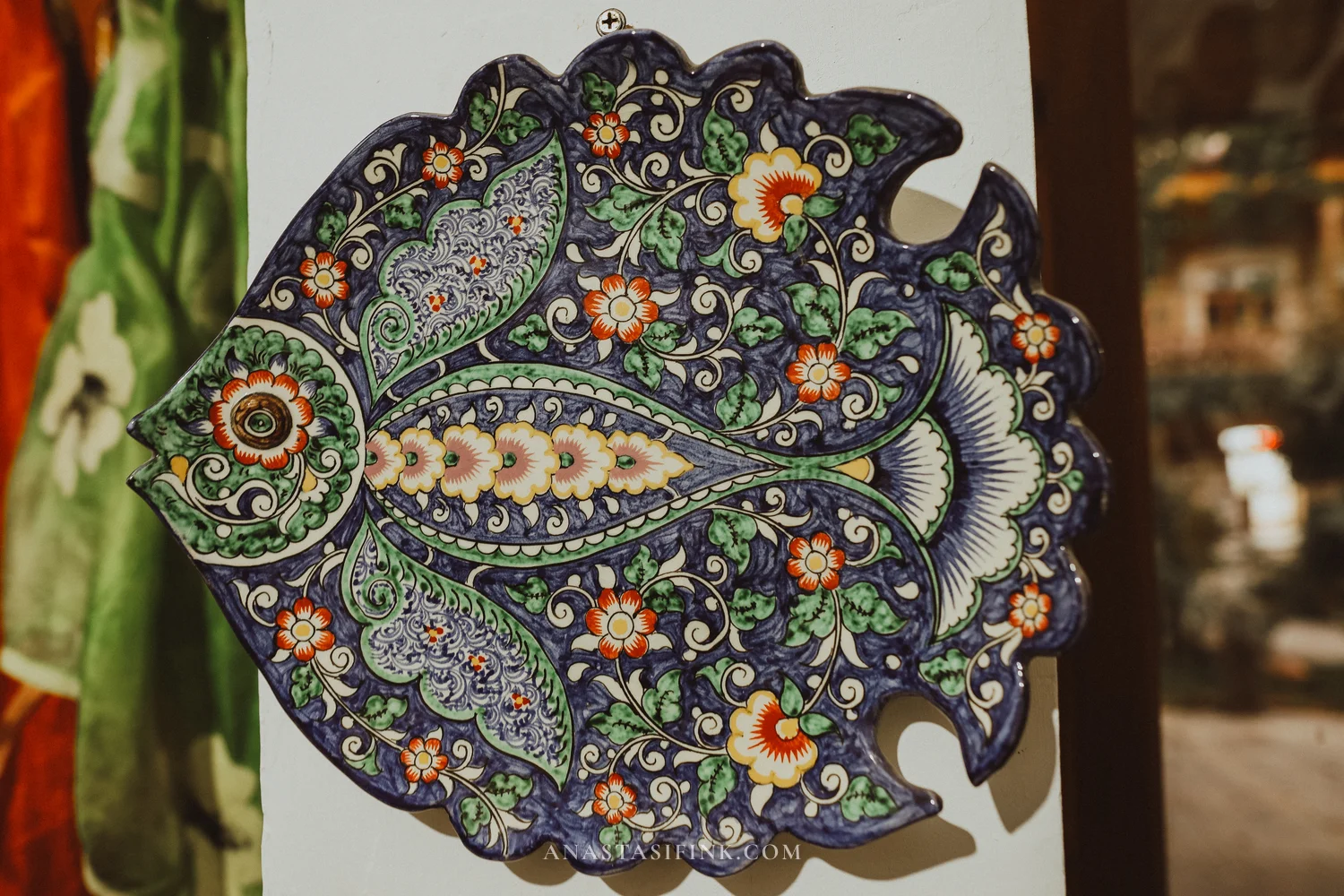
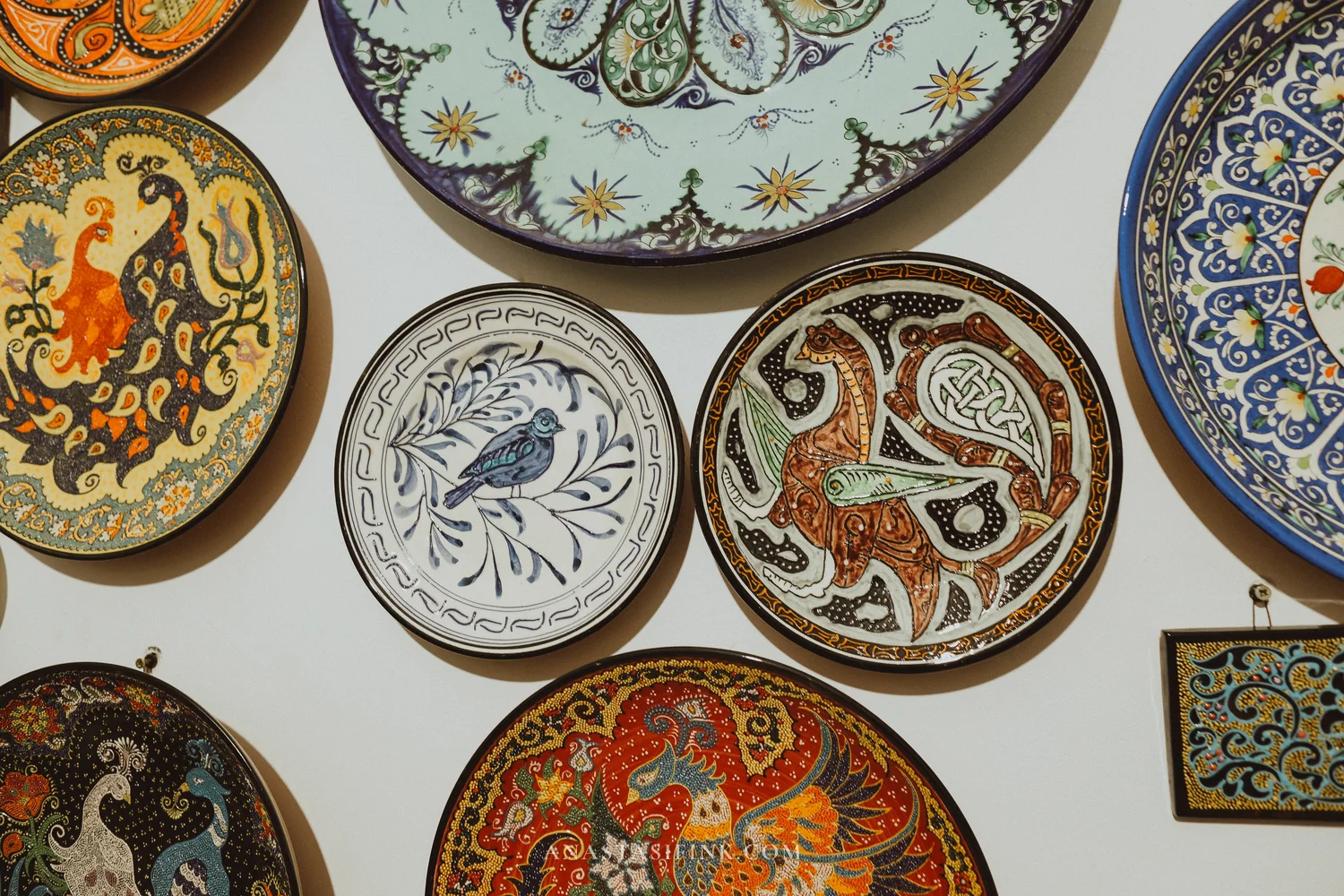
Every plate is painted by hand
Upstairs is the Happy Bird gallery. Designer Elena Ladik makes clothing from antique fabrics — locals keep bolts of old cloth at home for decades, and out of them come pieces that blend tradition with a modern cut.
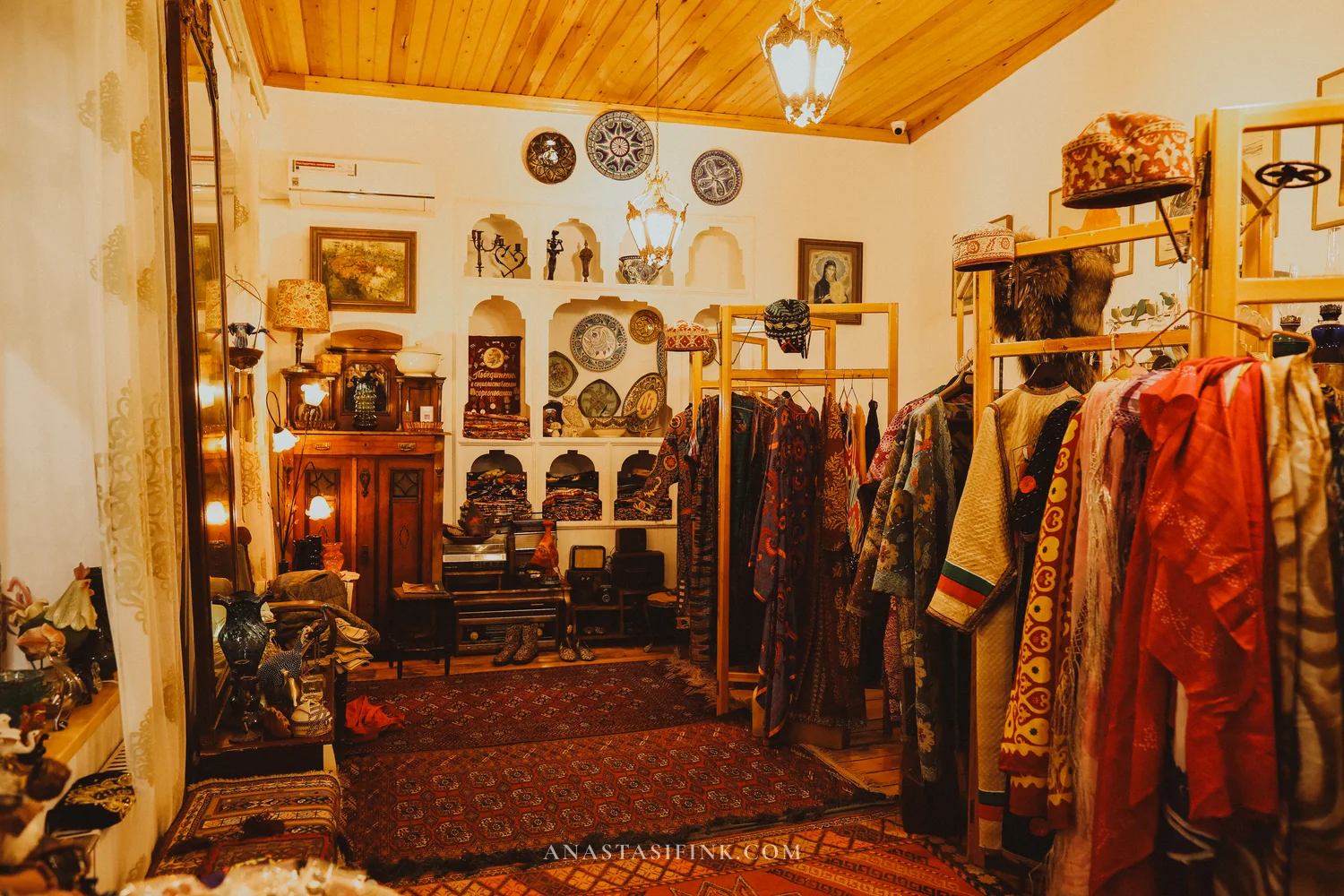
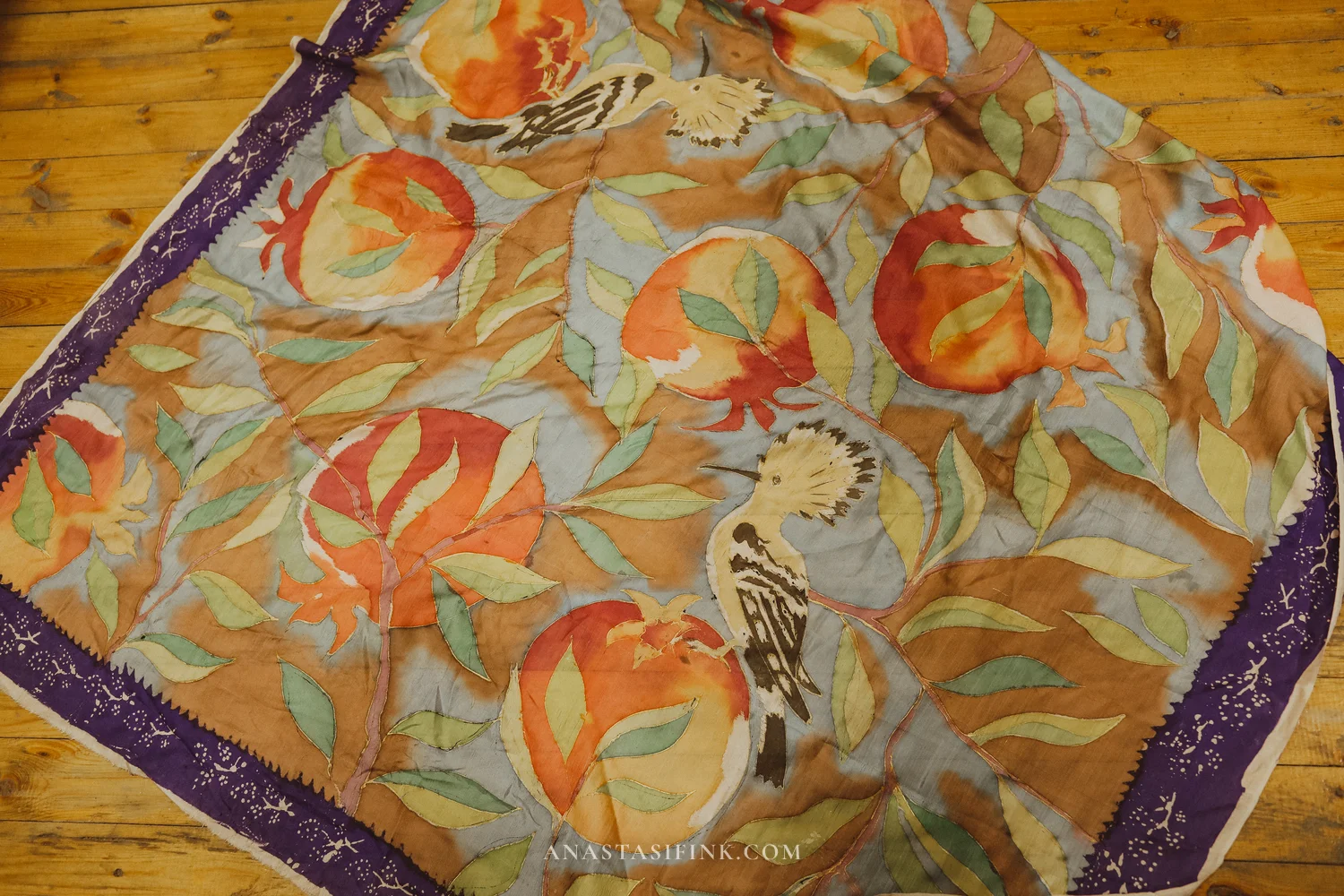
On the same floor there’s an artist’s studio too. Paintings, prints, pencil drawings and hand-painted silk scarves — with pomegranates and birds, just like on the plates.
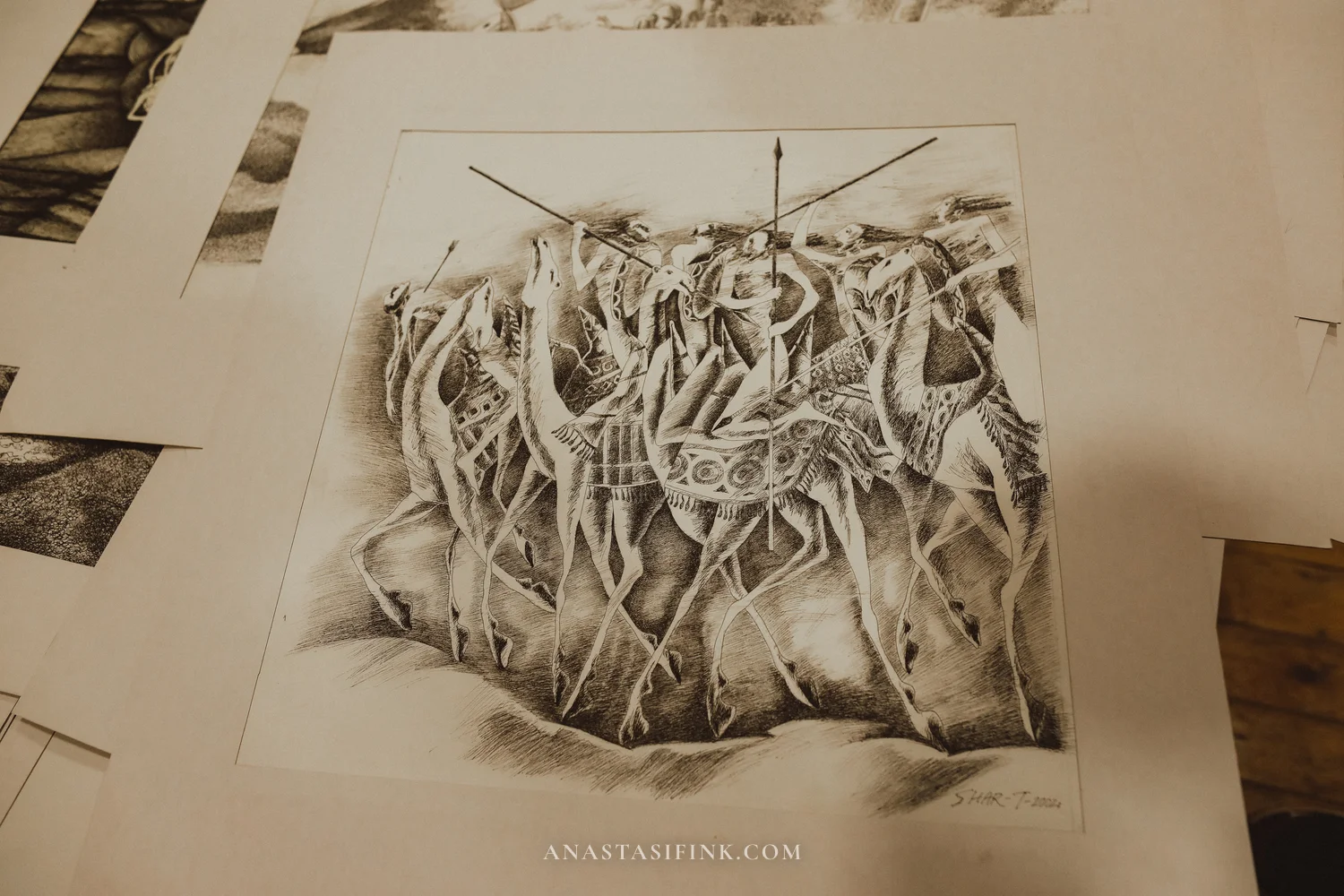
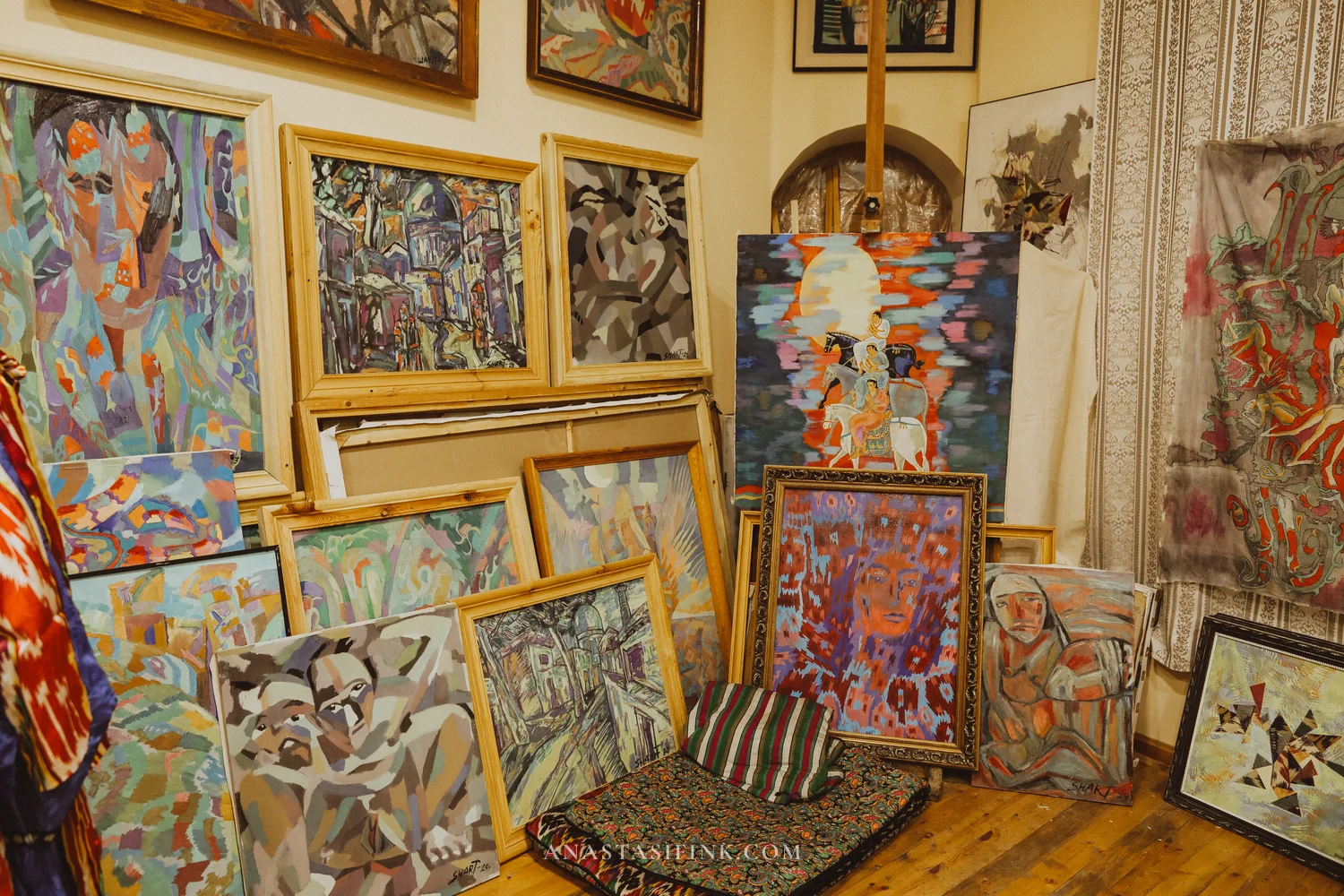
The artist’s studio: prints and paintings
Practical information
- What it is: the craft center (a former caravanserai), shops and workshops
- Inside: the Happy Bird gallery (2nd floor), ceramics (ground floor), an artist’s studio
- Opening hours: roughly 10:00–19:00
- Entry: free; purchases are up to you, and haggling is fine
- Google Maps: Happy Bird
The Catholic Church of St. John the Baptist
If you want a break from the squares and the crowds, drop into the Catholic parish of St. John the Baptist. It’s a neo-Gothic church of pale brick, surrounded by a garden. The courtyard inside is quiet, green and cool — and almost empty.
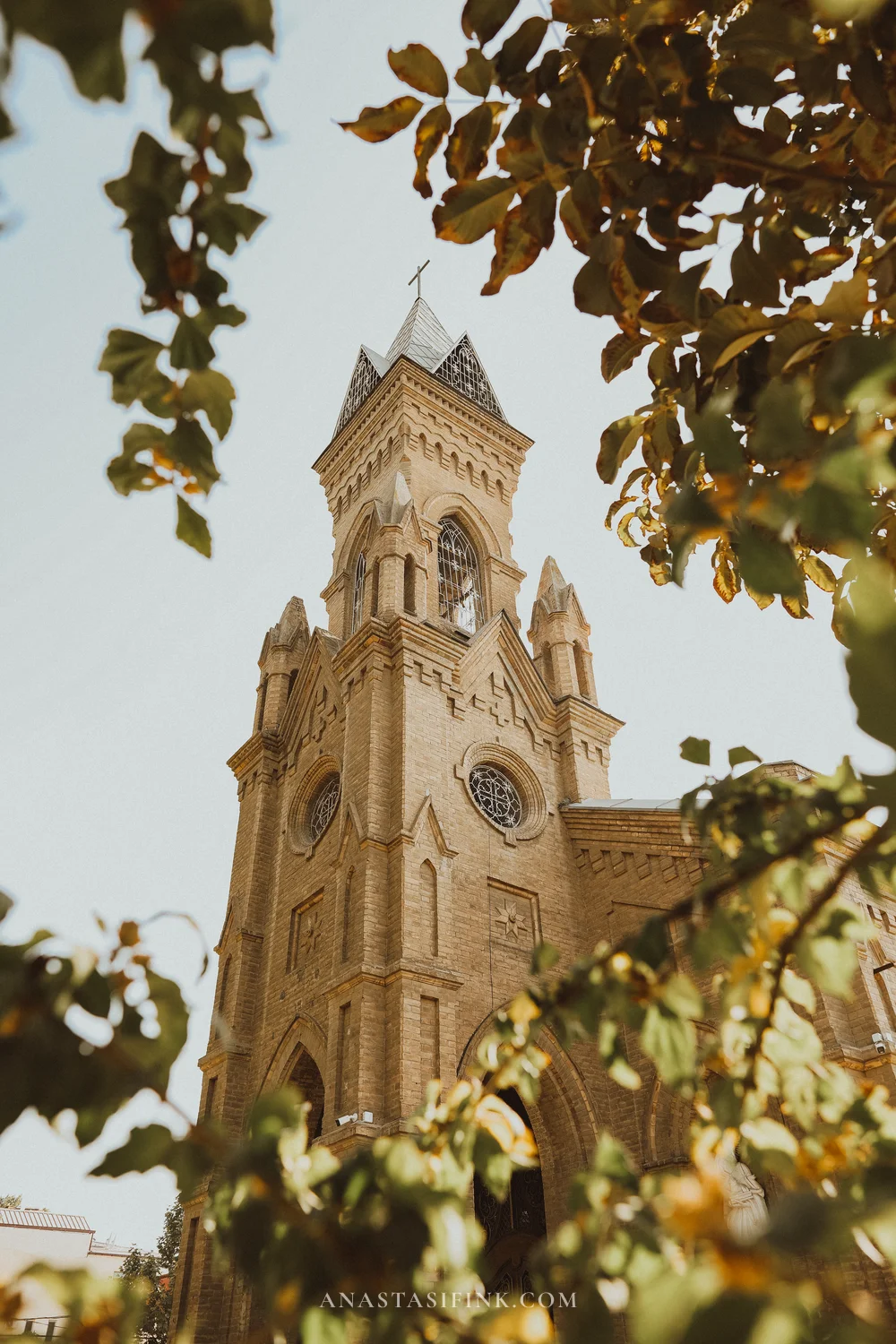
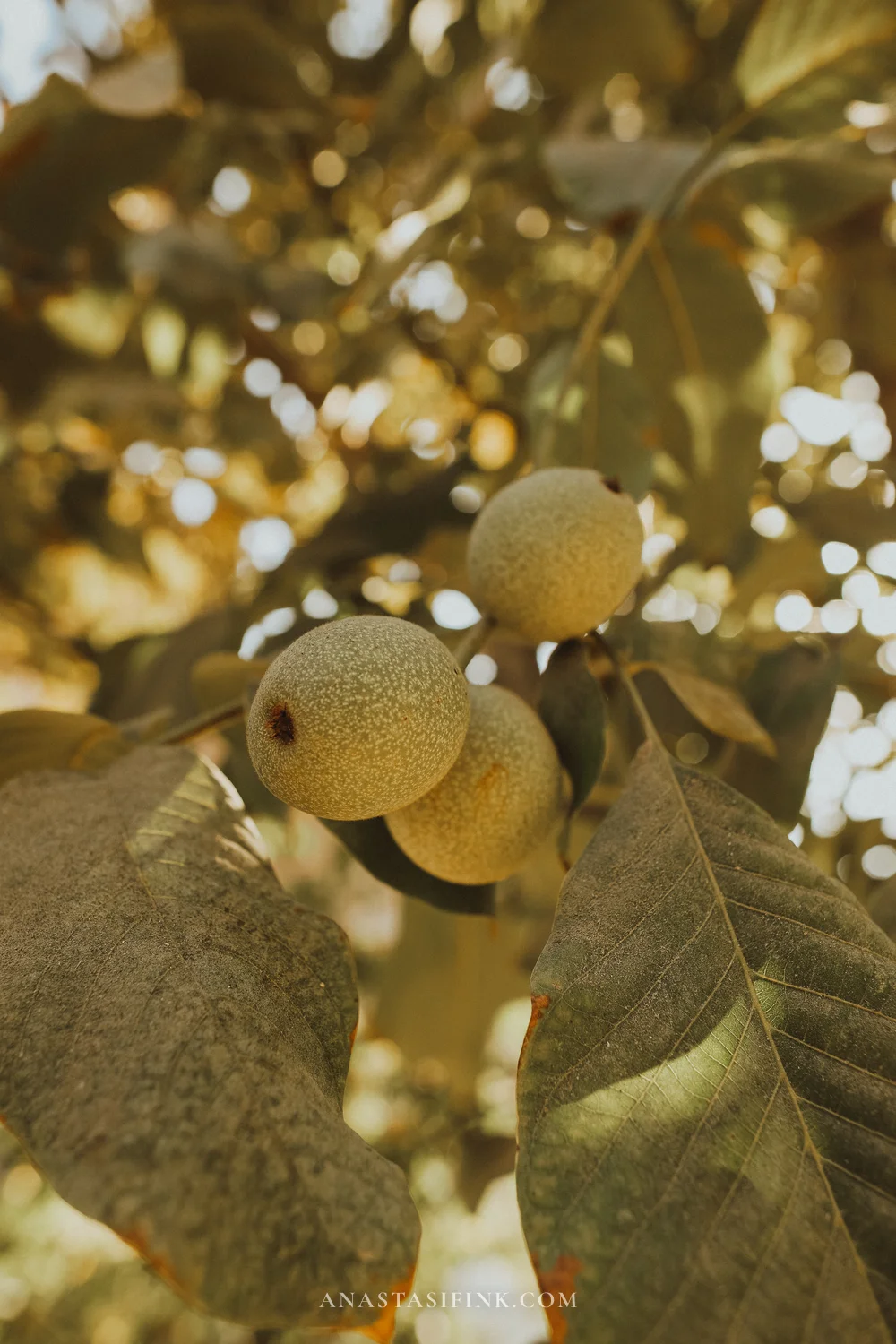
The Church of St. John the Baptist and its garden
Where to eat — Karimbek restaurant
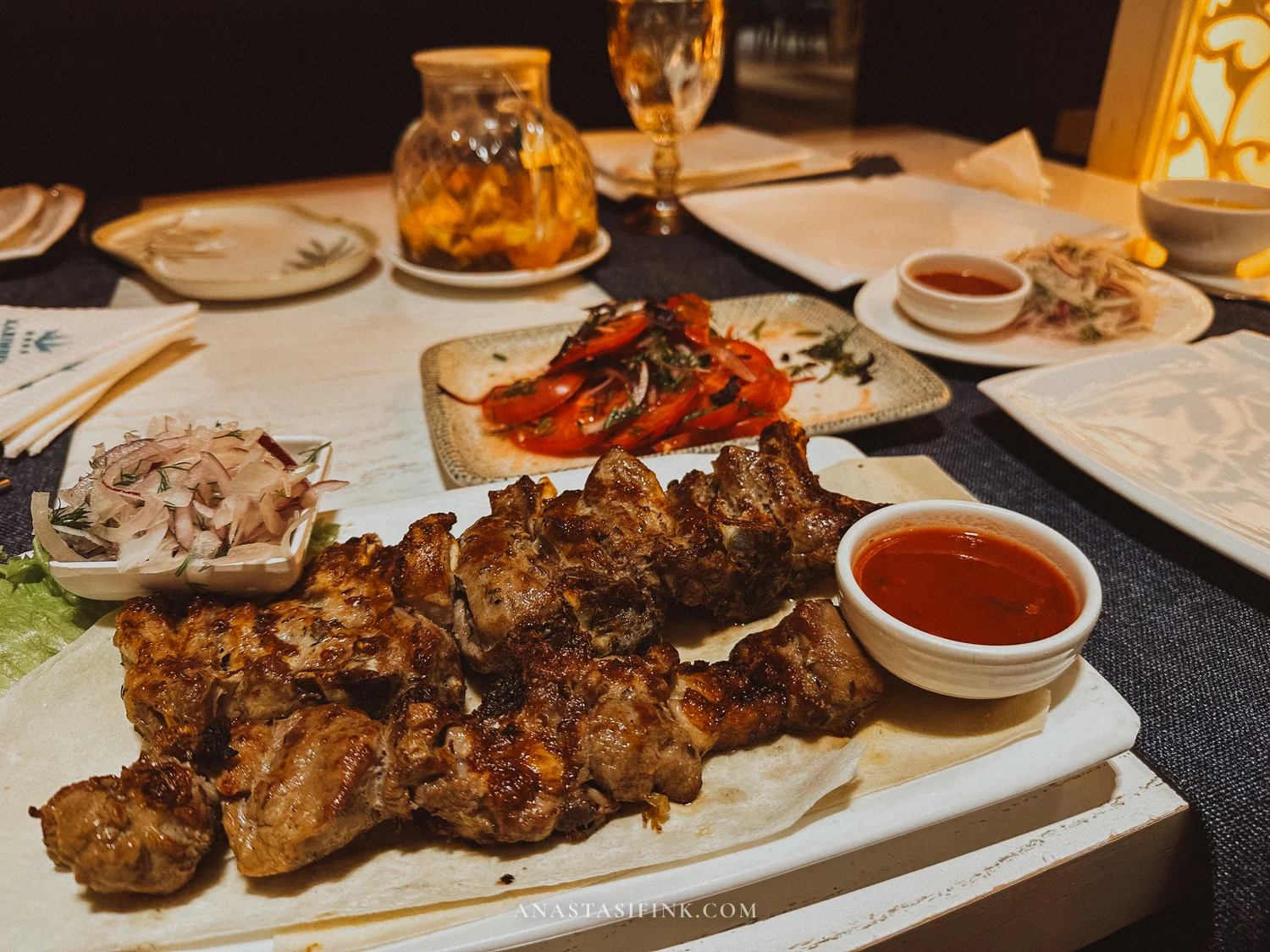
Over two days I ate in a few places, but the one I liked most was Karimbek restaurant. You can happily go for both lunch and dinner: a huge menu, everything tasty, and lots of locals — which is always a good sign.
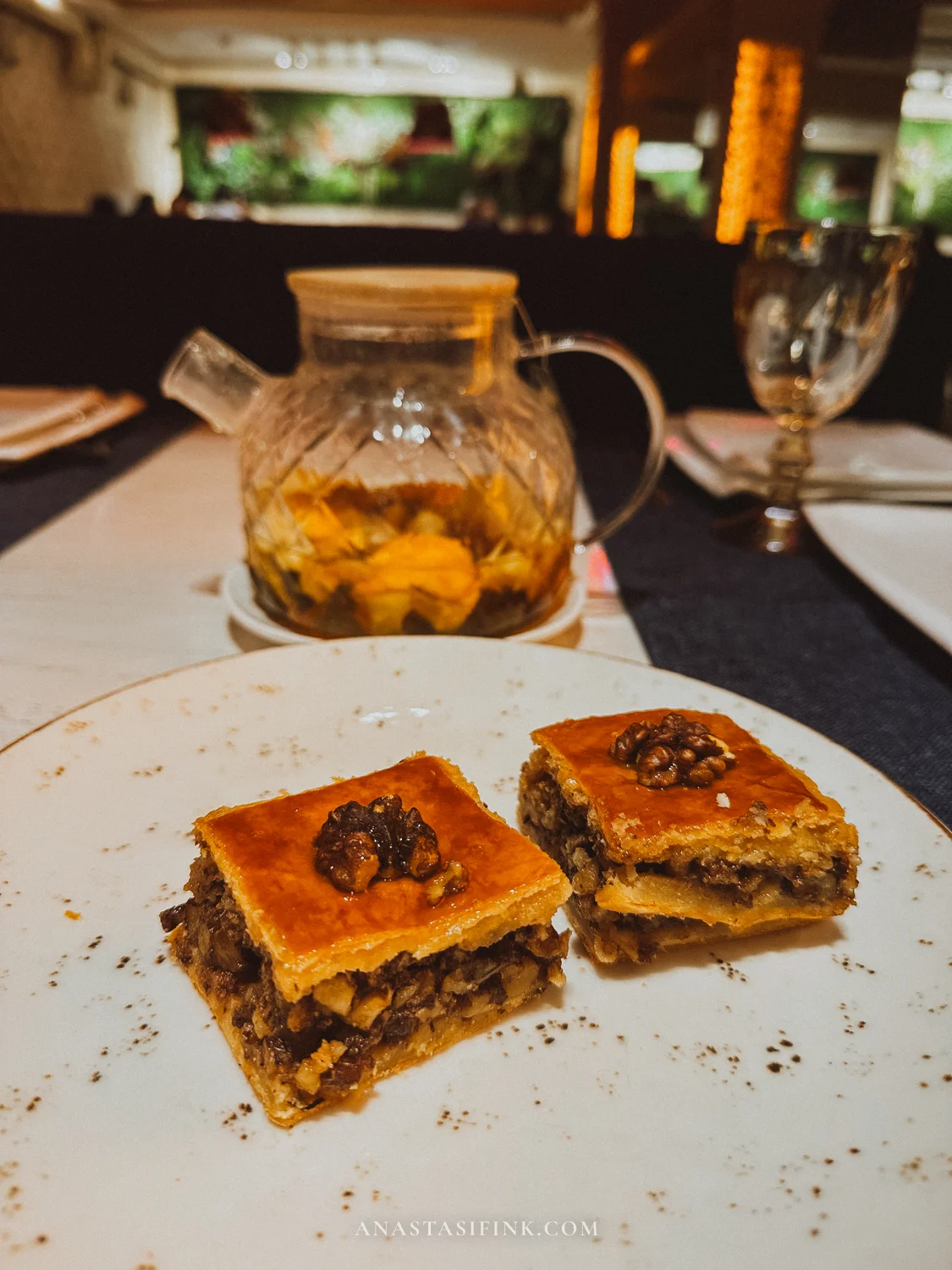
I had shashlik with pickled onions and achichuk, a salad of thinly sliced tomatoes and onion that’s served alongside meat almost everywhere in Uzbekistan (the best one, by the way, was in Bukhara). For dessert, baklava with tea. Big portions, gentle prices.
Practical information
- What to order: shashlik, plov, local soups, baklava
- Average bill: modest, with big portions
- Google Maps: Restaurant Karimbek
Getting around Samarkand
- On foot: the center is compact — it’s an easy walk between Registan, Gur-e-Amir and the parks
- Taxi: the easiest option is a ride-hailing app — cheap and no haggling
- To Shah-i-Zinda and Hazrat Khizr: these sit slightly outside the center, so a taxi is simplest (5–10 minutes from Registan)
Tips
- When to go: spring (April–May) and autumn (September–October) — mild and lovely. In summer the days can top +35°C
- What to wear: for mosques and Shah-i-Zinda, cover your shoulders and knees; a scarf isn’t required but comes in handy
- Cash: som is handy for souvenirs and taxis, though cards are accepted more and more
- What to combine: Shah-i-Zinda and Hazrat Khizr Mosque are close together, so it makes sense to see them in one go
Nearby: My 7-day Uzbekistan itinerary gives 3 days to Bukhara, 2 to Samarkand, plus Tashkent. In Tashkent, the Museum of Applied Arts fills the 1907 Polovtsev house with ceramics, suzani and ikat. More cities are in all my Uzbekistan travel guides.
FAQ
Two days is enough to see all the highlights without rushing: Registan, Gur-e-Amir, Shah-i-Zinda, Hazrat Khizr Mosque and the craft shops. If you want to add museums and the Ulugh Beg observatory, allow a third day.
Registan, the Gur-e-Amir mausoleum, the Shah-i-Zinda necropolis and Hazrat Khizr Mosque with its view over the city. Along the way it’s worth stopping at the craft center and the quiet Catholic Church of St. John the Baptist.
Roughly: Registan about 100,000 som (~$8), Shah-i-Zinda 80,000 som (~$6.5), Gur-e-Amir 75,000 som (~$6). Prices change from time to time, so check on the spot.
Spring and autumn are the most comfortable. Summers are hot and winters cool but quiet. Whatever the season, the best time to wander is early morning and evening.
The center is easy to cover on foot. For Shah-i-Zinda and Hazrat Khizr Mosque, a taxi through a ride-hailing app is simplest — 5–10 minutes and very cheap.
My favorite was Karimbek restaurant: a big menu, tasty local food and plenty of local diners. A good bet for both lunch and dinner.
Is it worth going?
Samarkand is one of those cities where two days is enough to see the highlights and still just wander without rushing. Turquoise domes, quiet courtyards, craft shops and plov for dinner — that was enough to make me want to come back.