Sitorai Mokhi-Khosa Palace in Bukhara: The Last Emir’s Summer Residence

Sitorai Mokhi-Khosa is the summer residence of the last emir of Bukhara: a white palace with carved verandas, tiled stoves shipped in from St. Petersburg, and a hall of mirrors. It was finished just eight years before the emirate vanished from the map.
About Sitorai Mokhi-Khosa — "stars and moon"
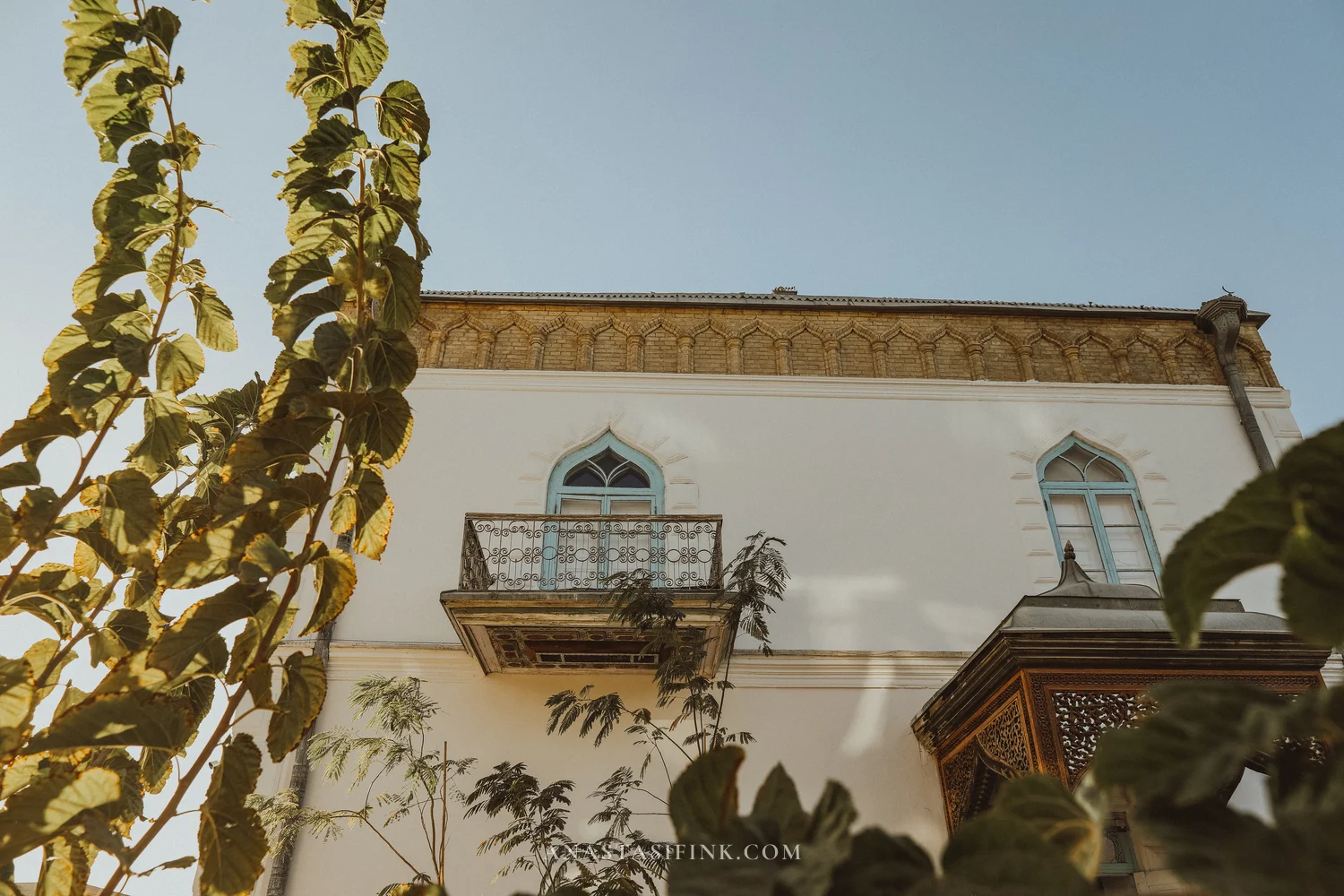
The name translates as “the palace that resembles the stars and the moon.” People had been building in this garden since the eighteenth century, but the complex tourists see today is the work of the last emir, Sayyid Mir Muhammad Alim Khan, between 1912 and 1918.
The Bukharan craftsmen the emir sent to study in St. Petersburg and Yalta came home with European skills. The result: walls and ceilings inside the palace were done in the traditional ganch technique (carved plaster), while the tiled stoves, cast-iron balcony railings, and crystal chandeliers all arrived from Russia by rail.
The emir himself didn’t get to enjoy it for long. In 1920, the Bukharan emirate fell, Alim Khan fled to Afghanistan, and by 1927 the palace had already been turned into a museum. Since then it has housed a collection of decorative arts — suzanis, costumes, ceramics, miniatures — everything that survived from the court and from Bukhara‘s craft workshops.
What greets you at the entrance: the wooden iwan and the stalls
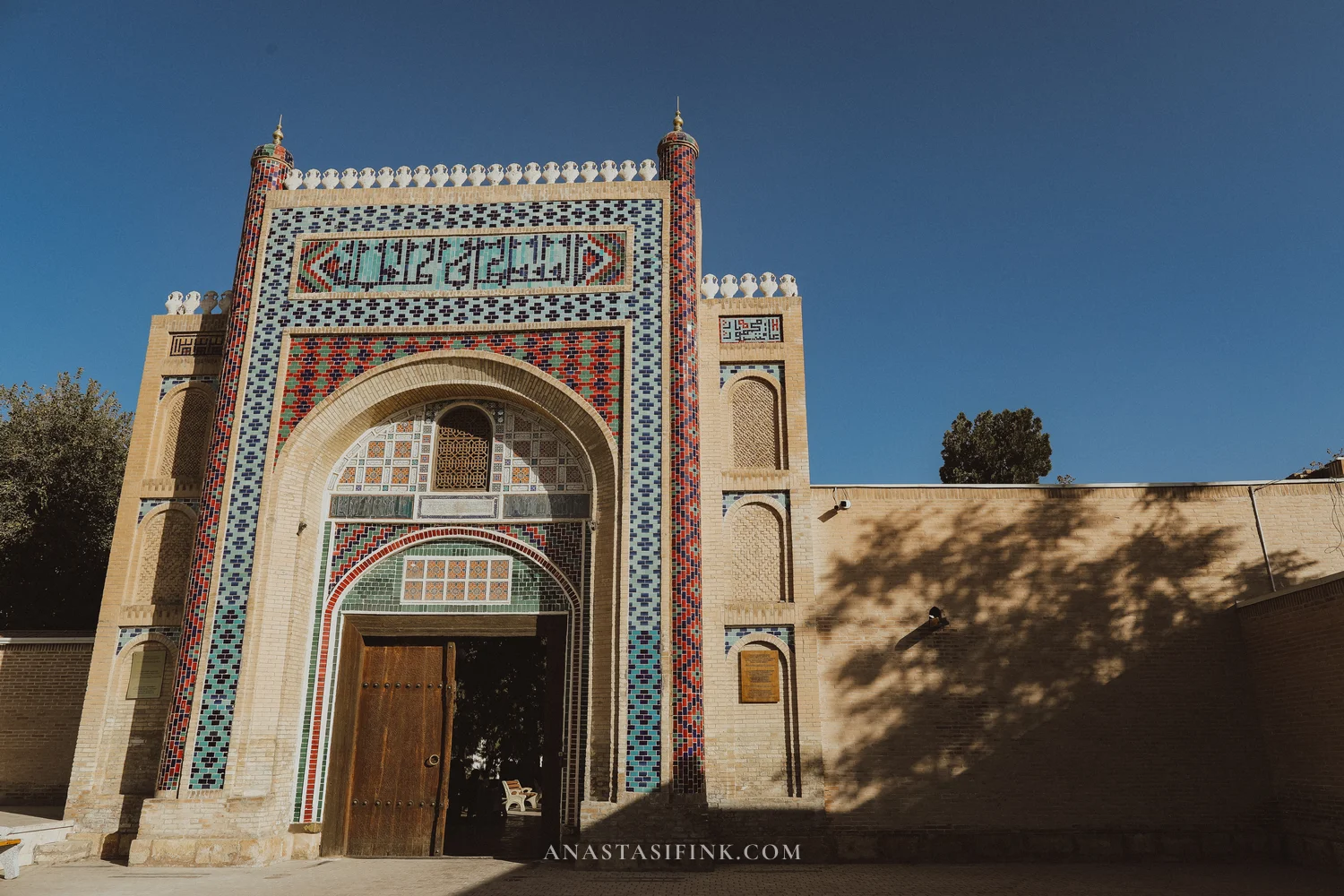
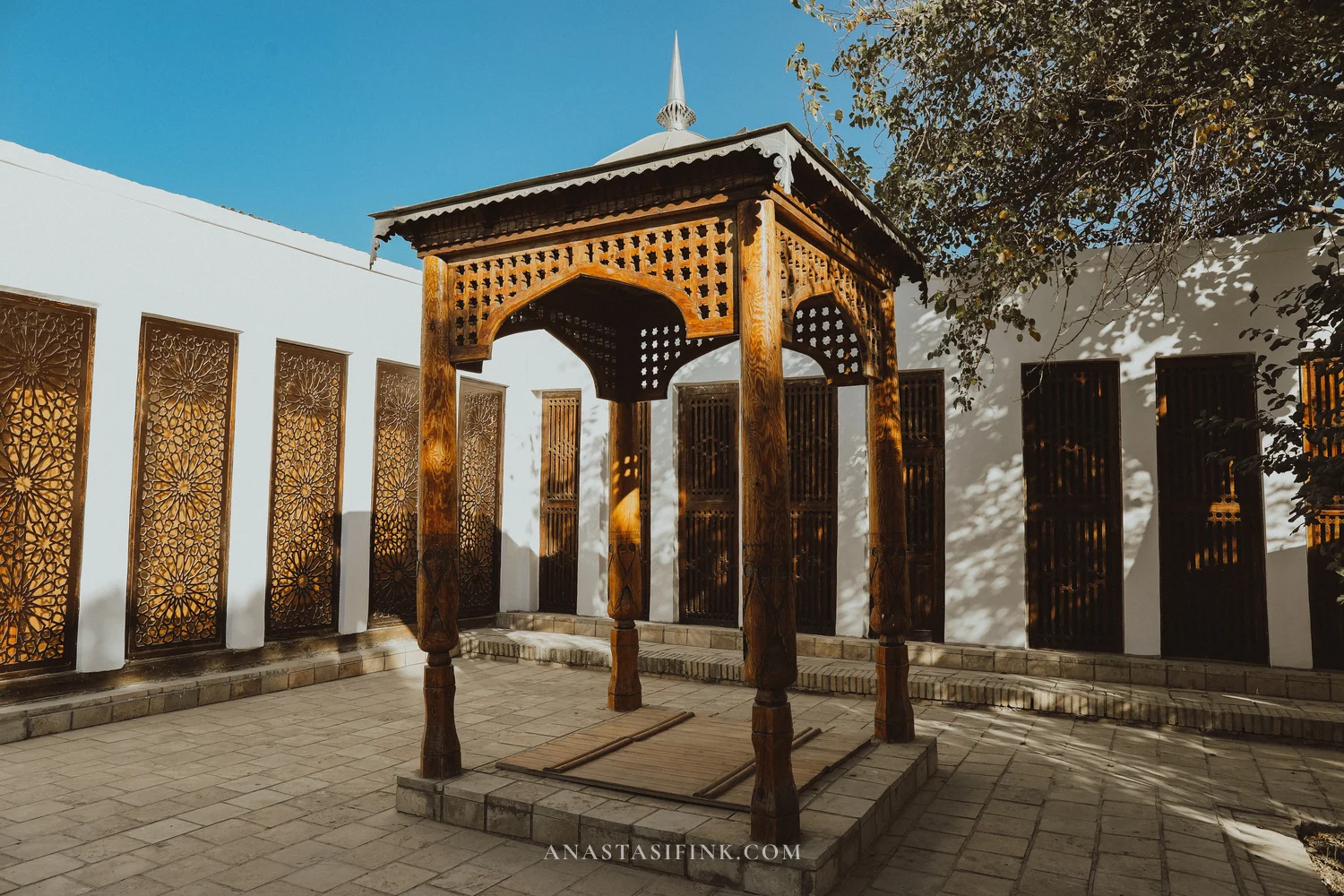
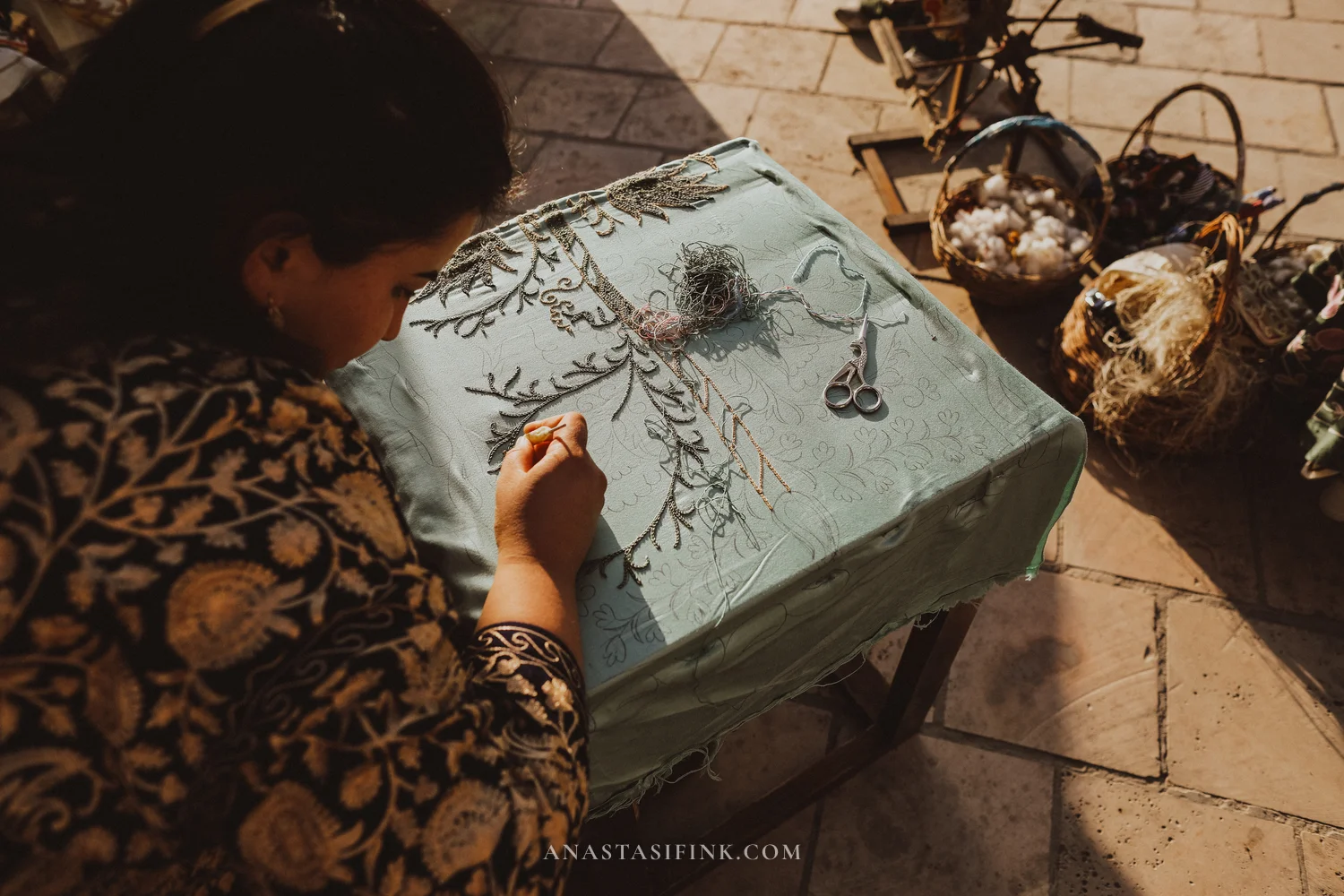
Just past the main gate is a small inner courtyard with a wooden pavilion-iwan. It’s the first thing you see once you walk in. To either side stand a few stalls where local women sell robes, ikat fabric, suzanis, and embroidered bags. You can browse, or you can buy something straight away — the prices aren’t tourist-trap-level, especially if you arrive in the morning.
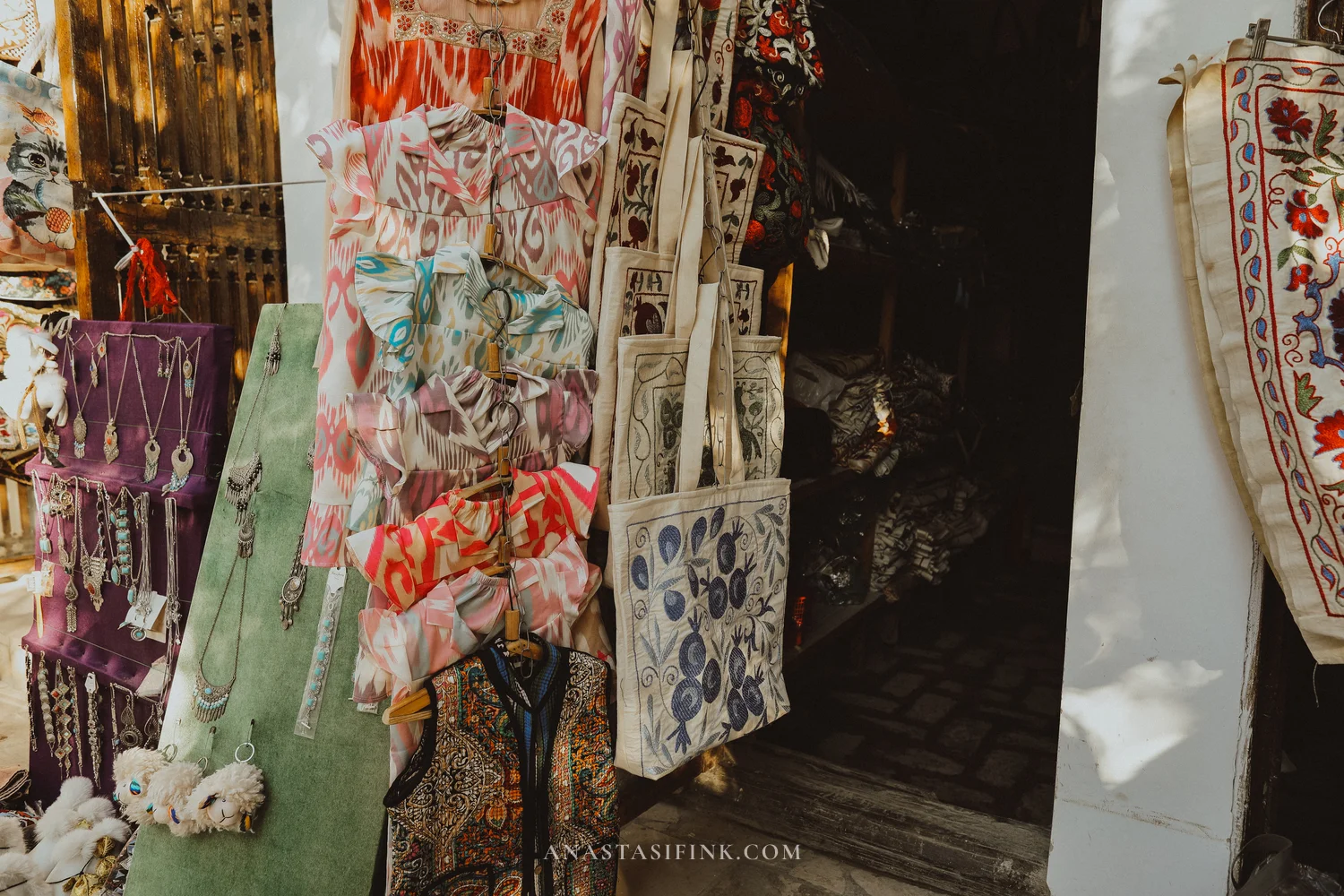
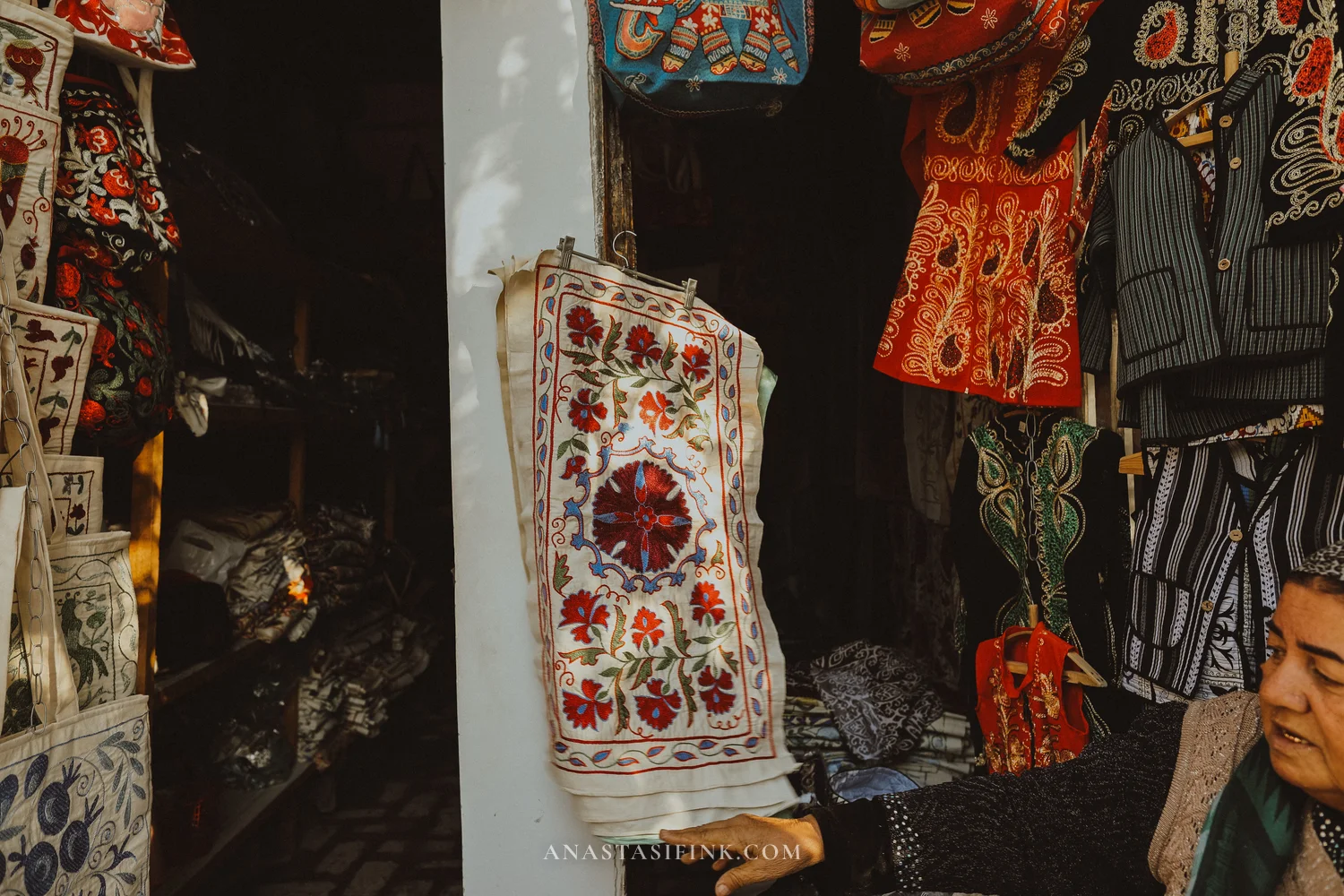
The stalls right by the gate: ikat robes, suzanis, hand-embroidered bags. Most of the women sew right there — you can watch them work
The main courtyard: lions, arcade, and a fountain
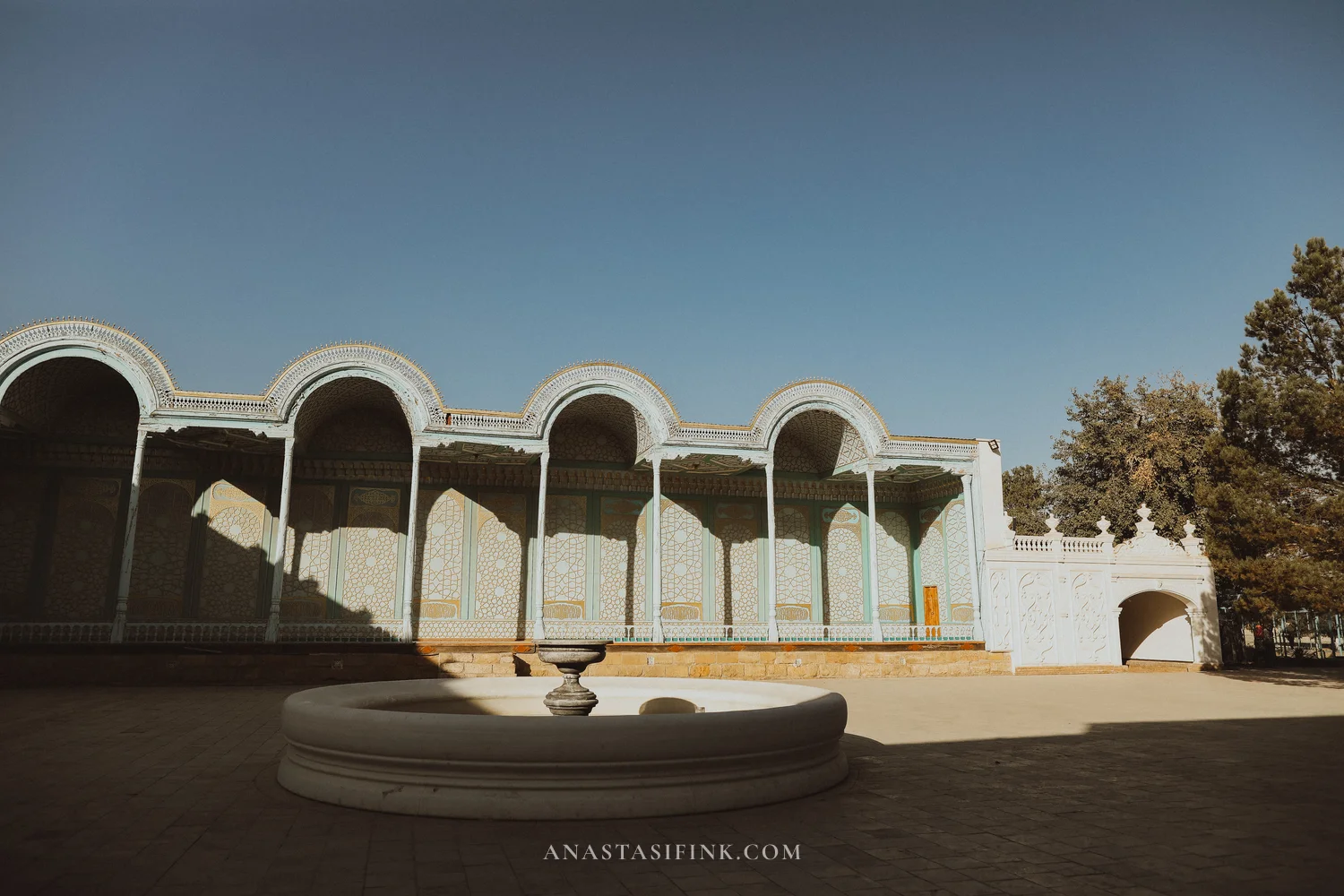
After the gate you step straight into a large ceremonial courtyard — a white arcade, a fountain in the middle, and two stone lions guarding the entrance to one of the pavilions. This is the part of the palace where the emir received guests and held official ceremonies.
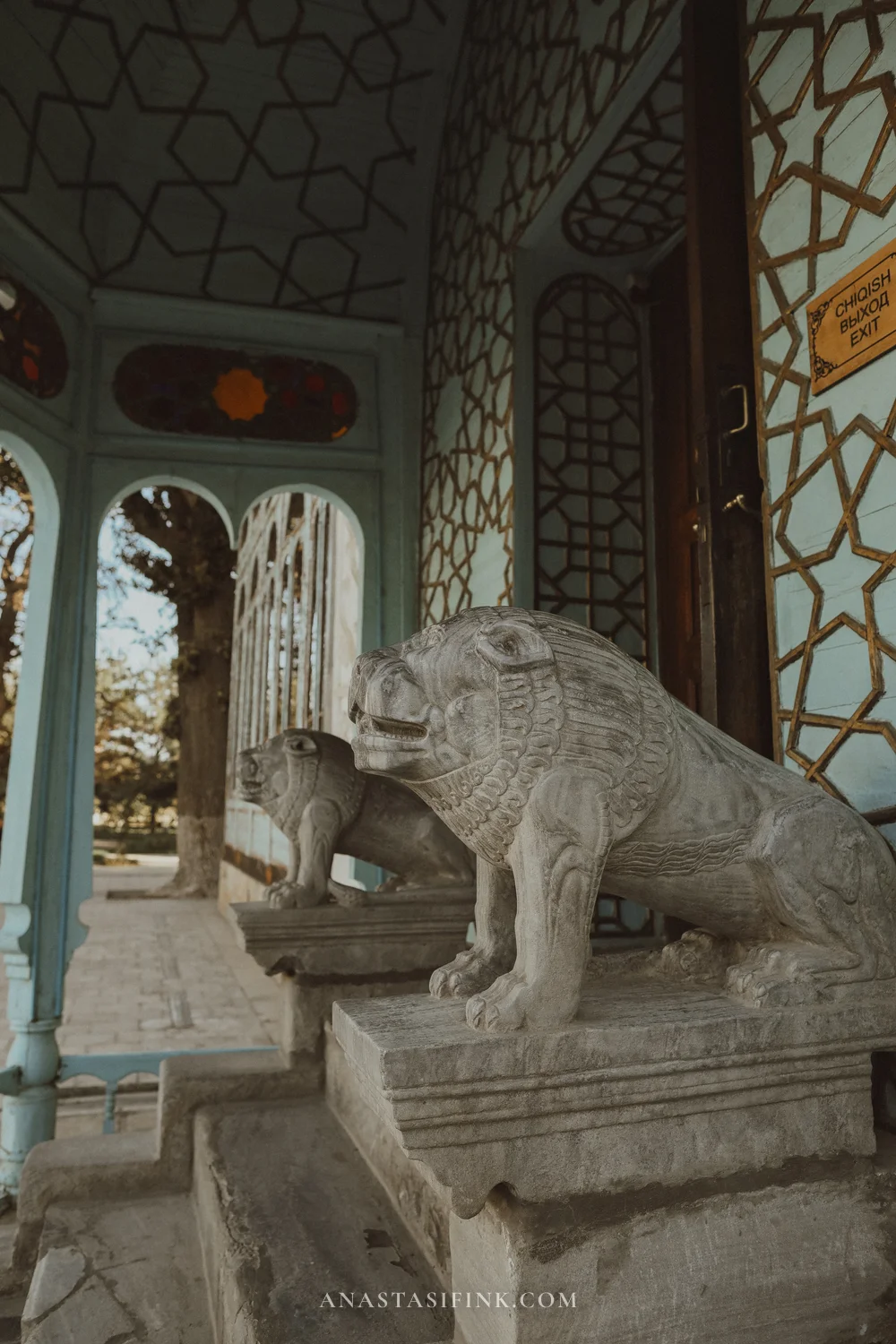
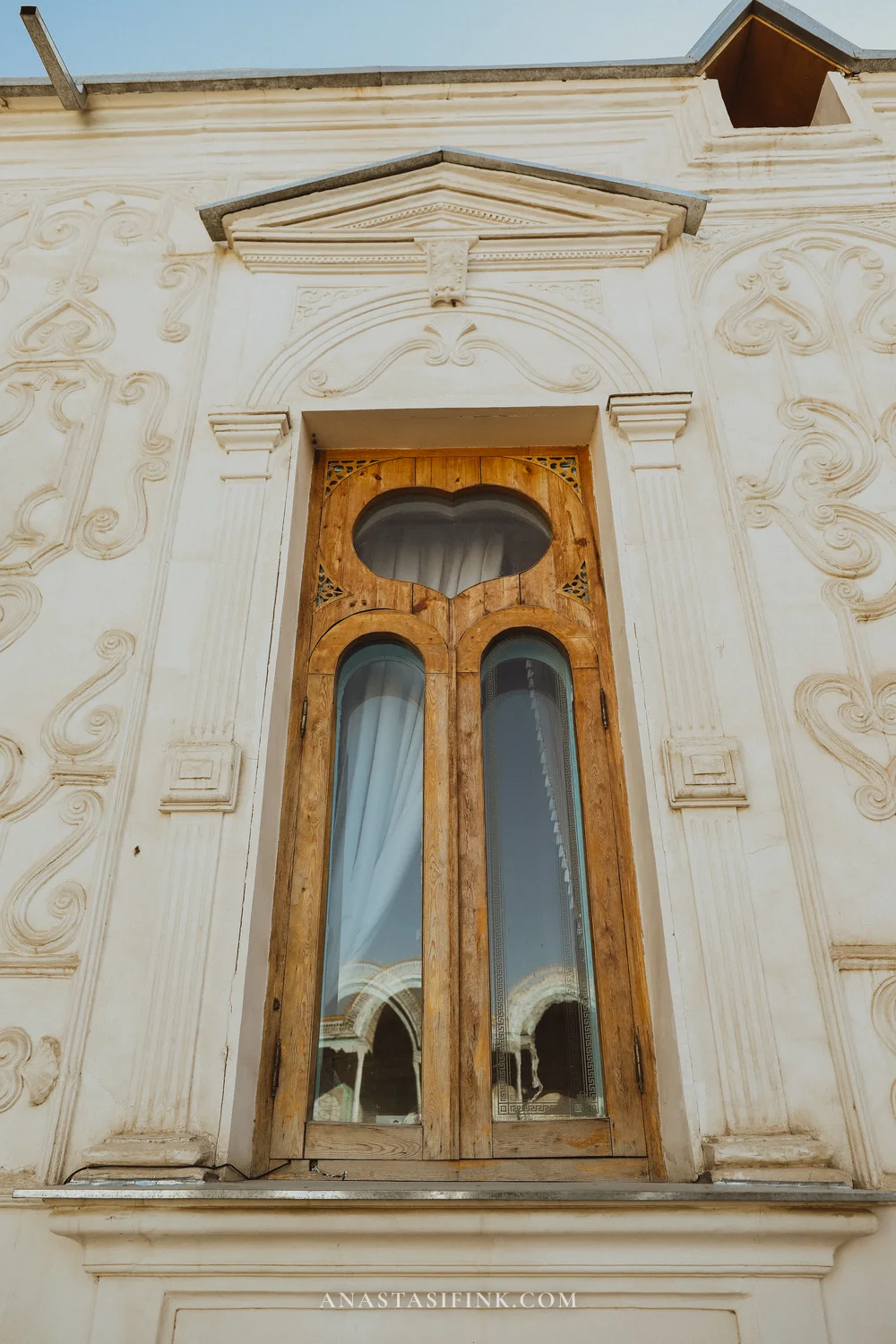
Lions and a carved window: Eastern decoration over a European structural shell — the signature trick of this palace
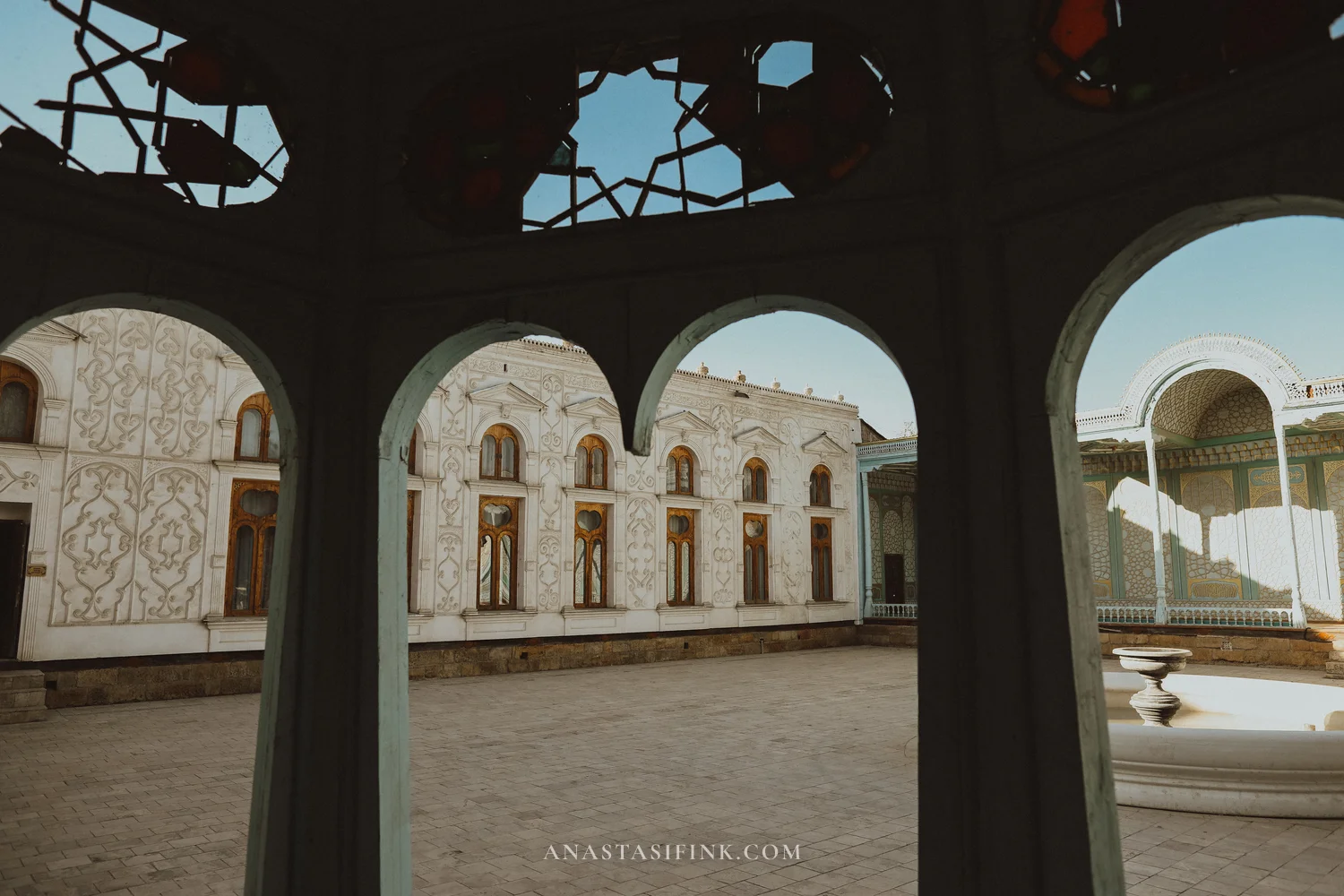
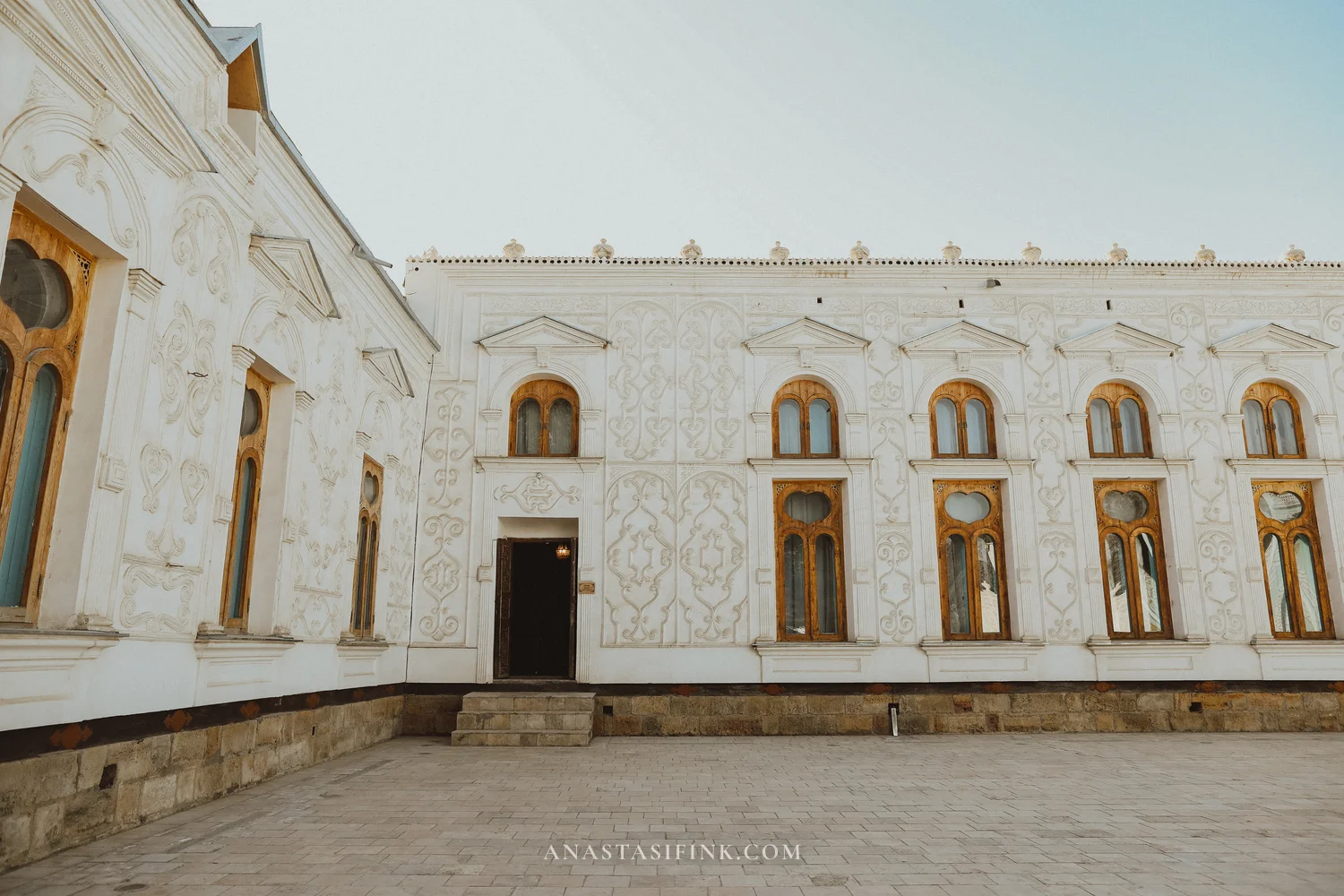
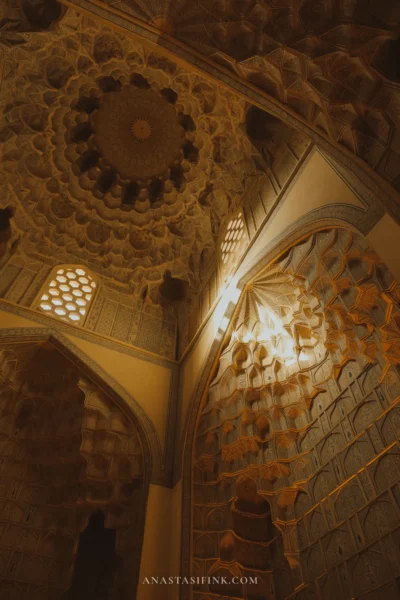
Ganch carving — white plaster with a recessed pattern. A photo can't really do it justice: up close you realize the lines are finer than a pencil tip
The White Hall: throne room and the work of Shirin Muradov
The main reason people come here is the White Hall. Long, light-filled, with tall windows and a crystal chandelier in the middle. It’s the former throne room, and the ganch work is by Usto Shirin Muradov, a Bukharan master considered one of the finest ganch carvers in the entire history of Uzbekistan.
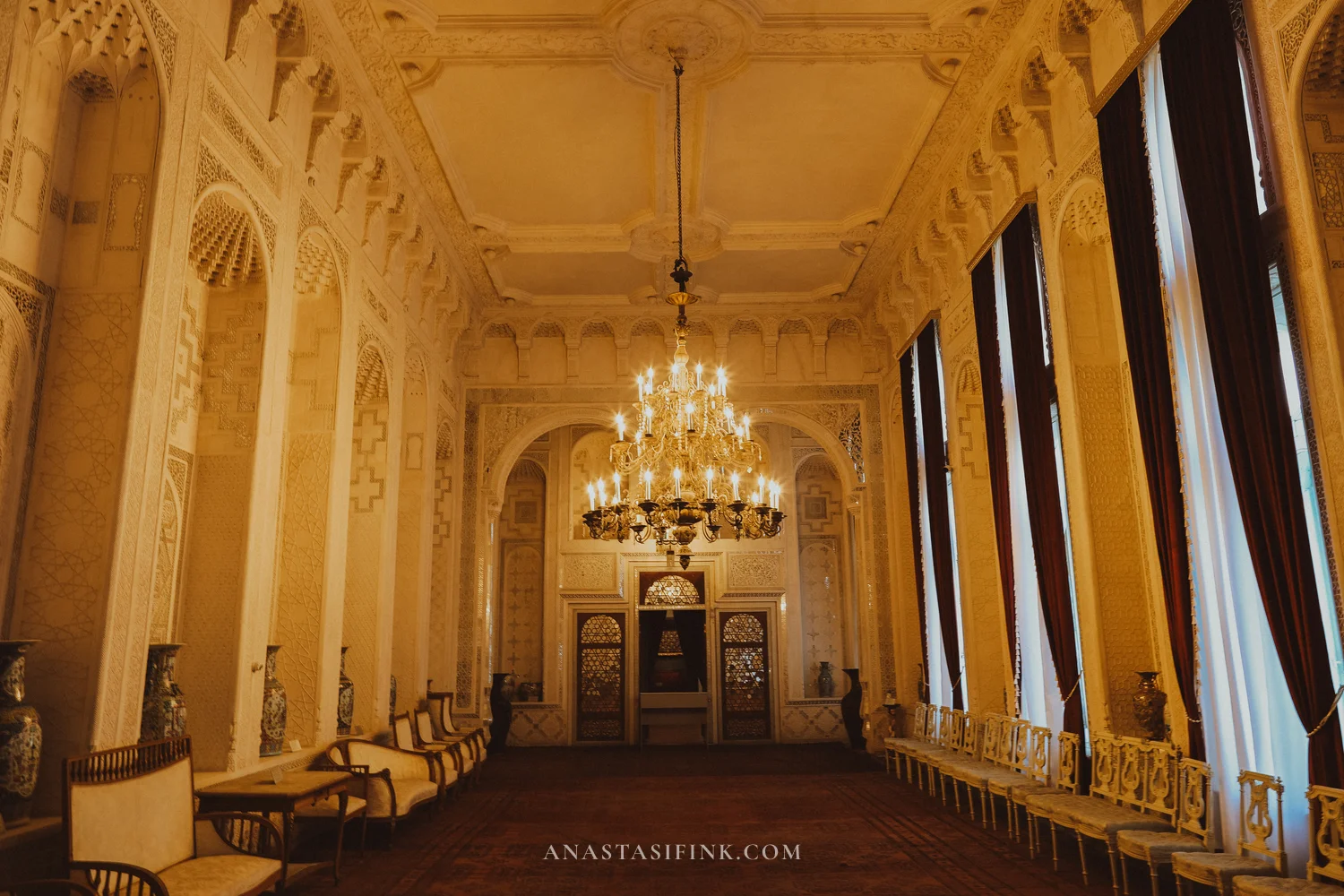
What made Shirin Muradov special is that he came up with the idea of laying white ganch over a mirrored surface. So behind every piece of lacework carving sits a mirror that lights the pattern from within. If you arrive on a sunny day around noon, the effect is at its peak: the walls genuinely start to glow.
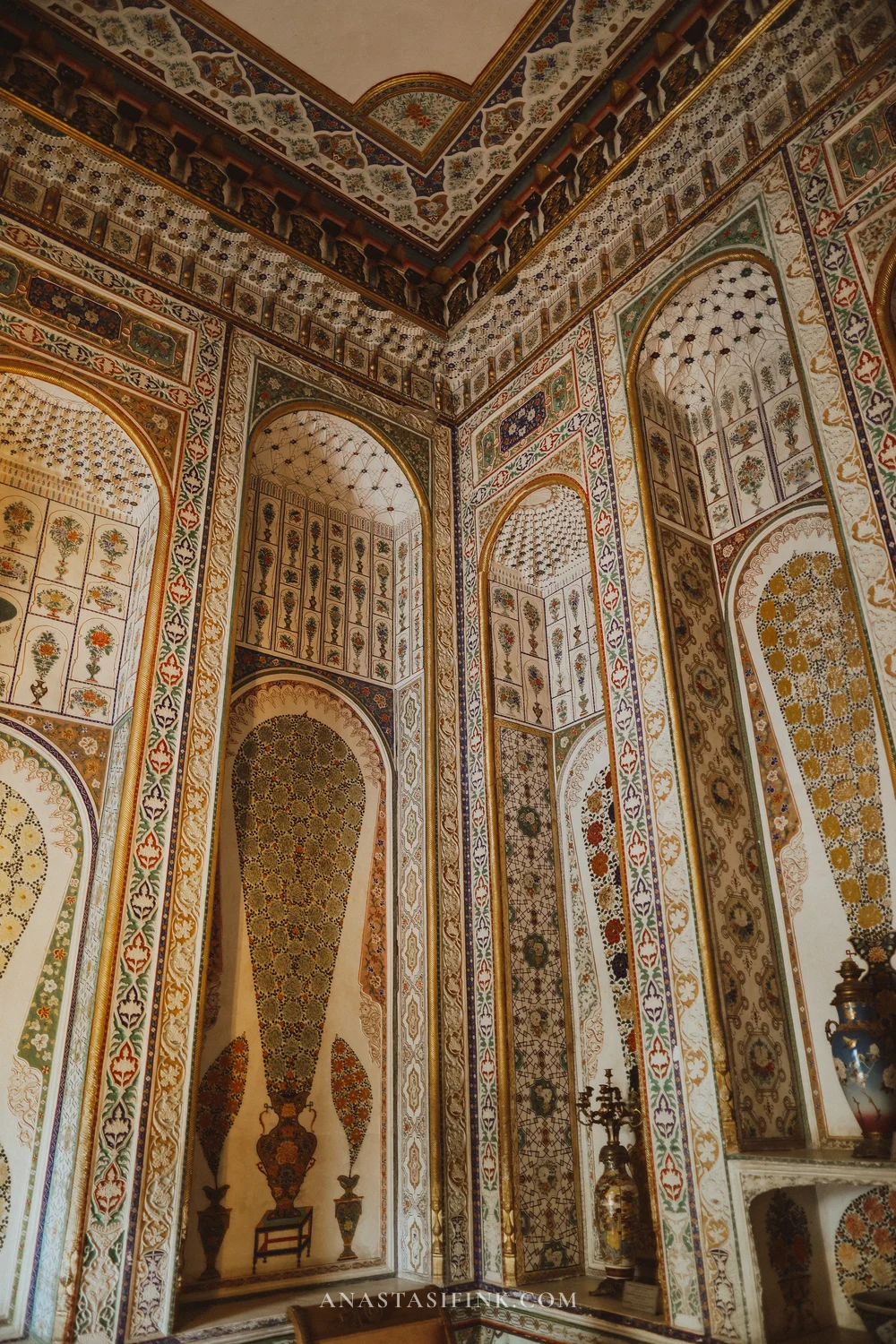
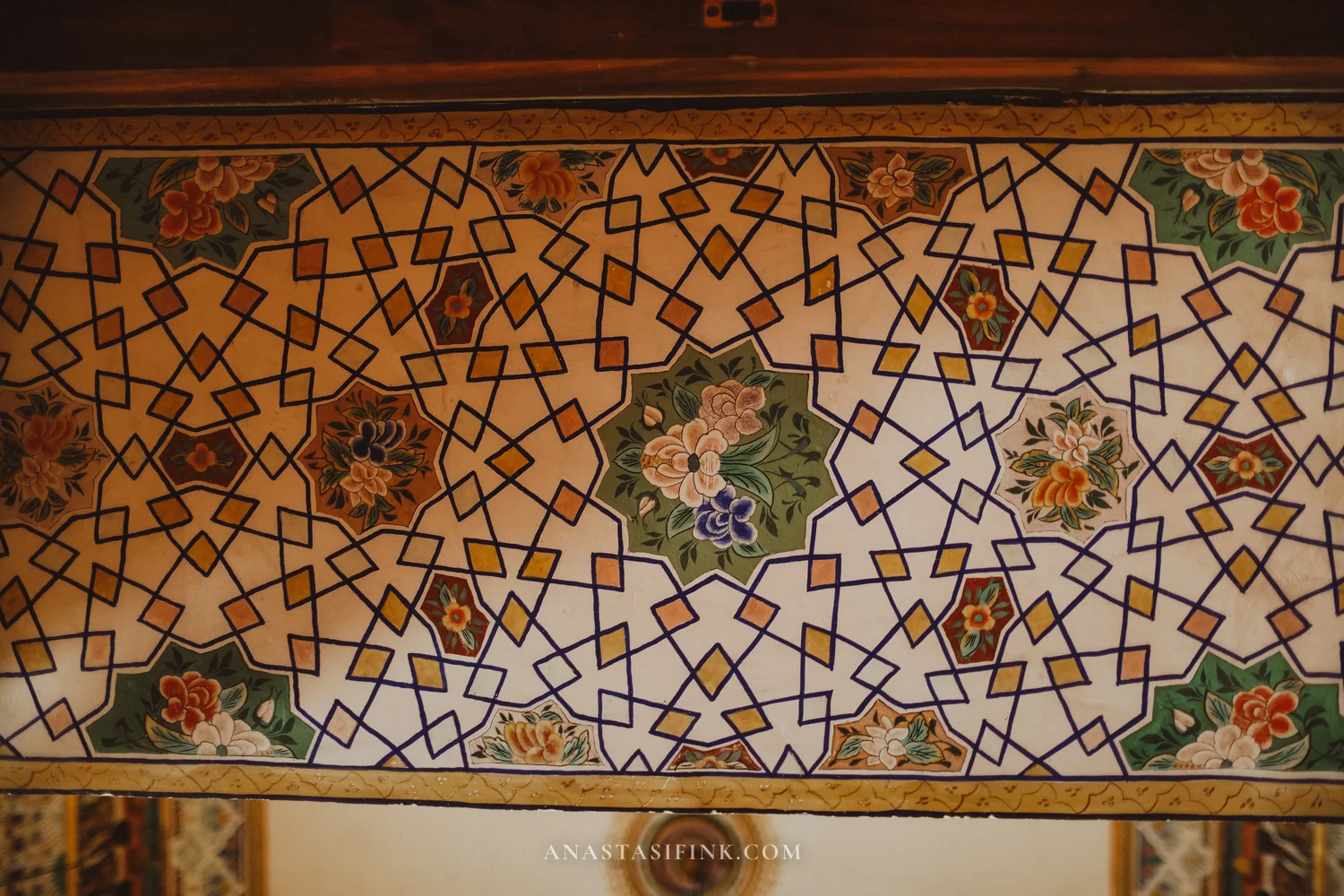
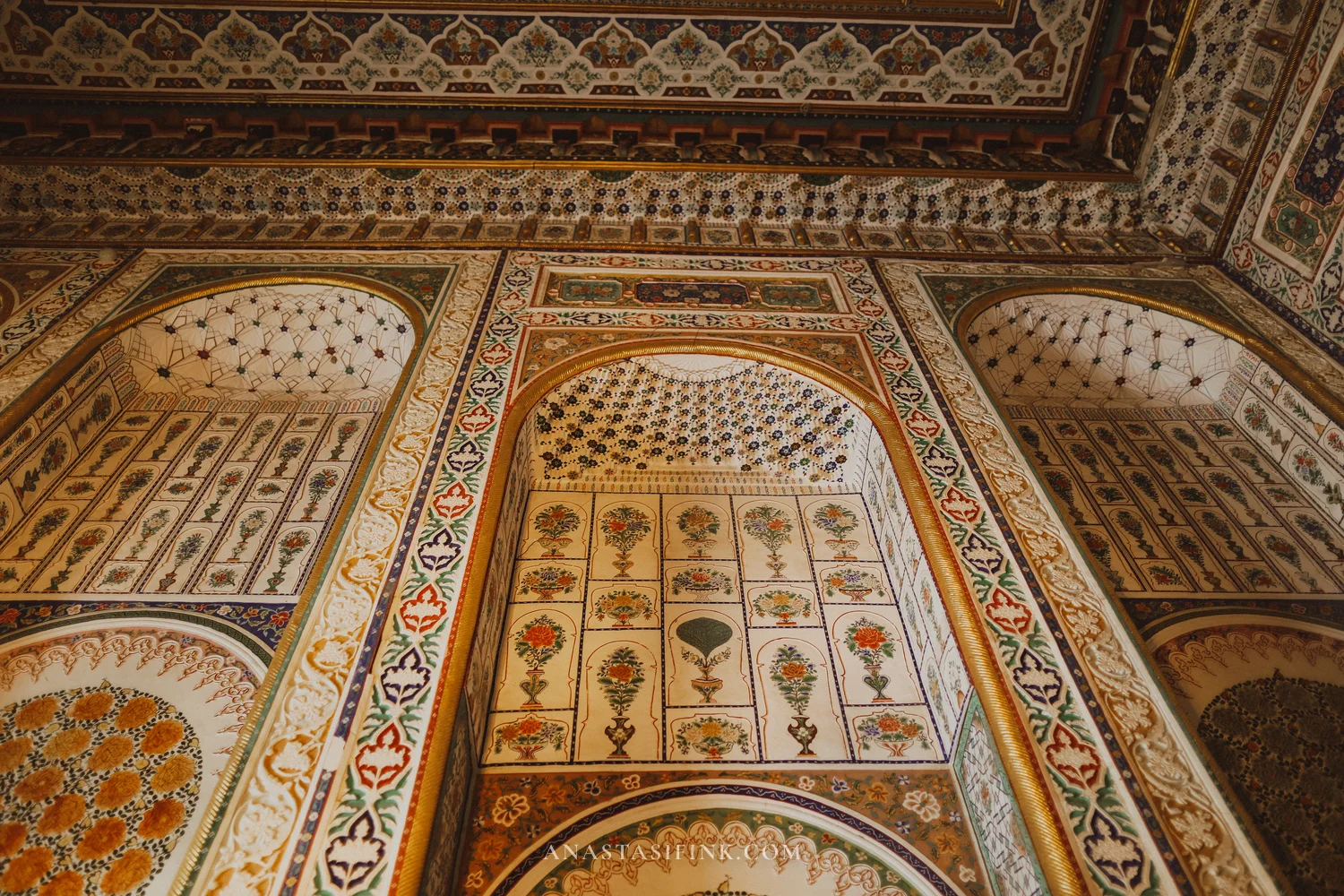
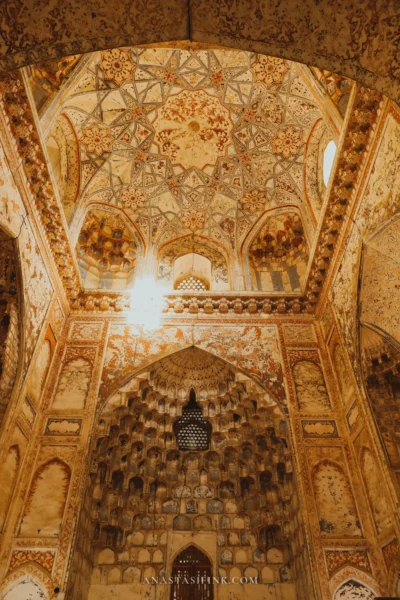
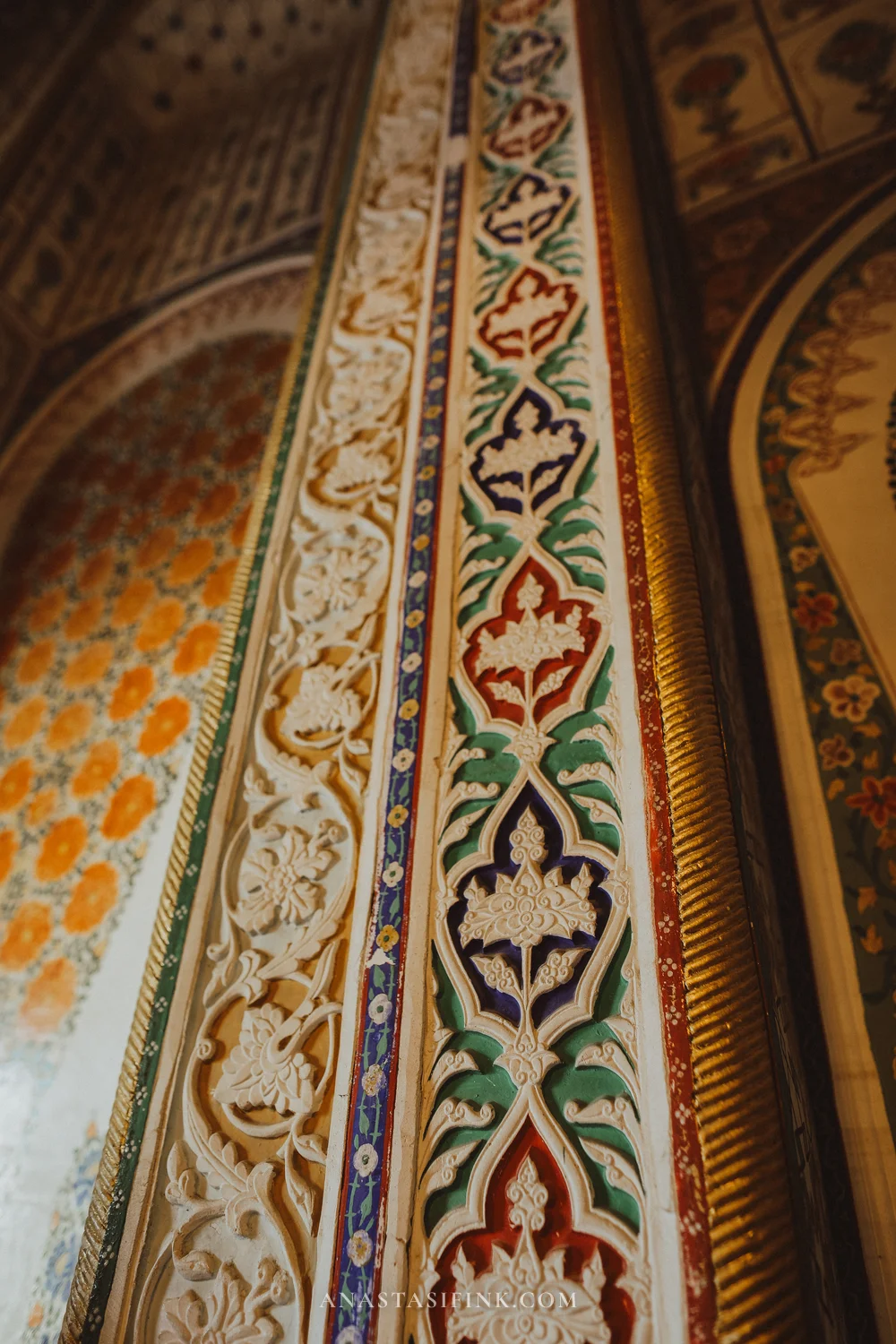
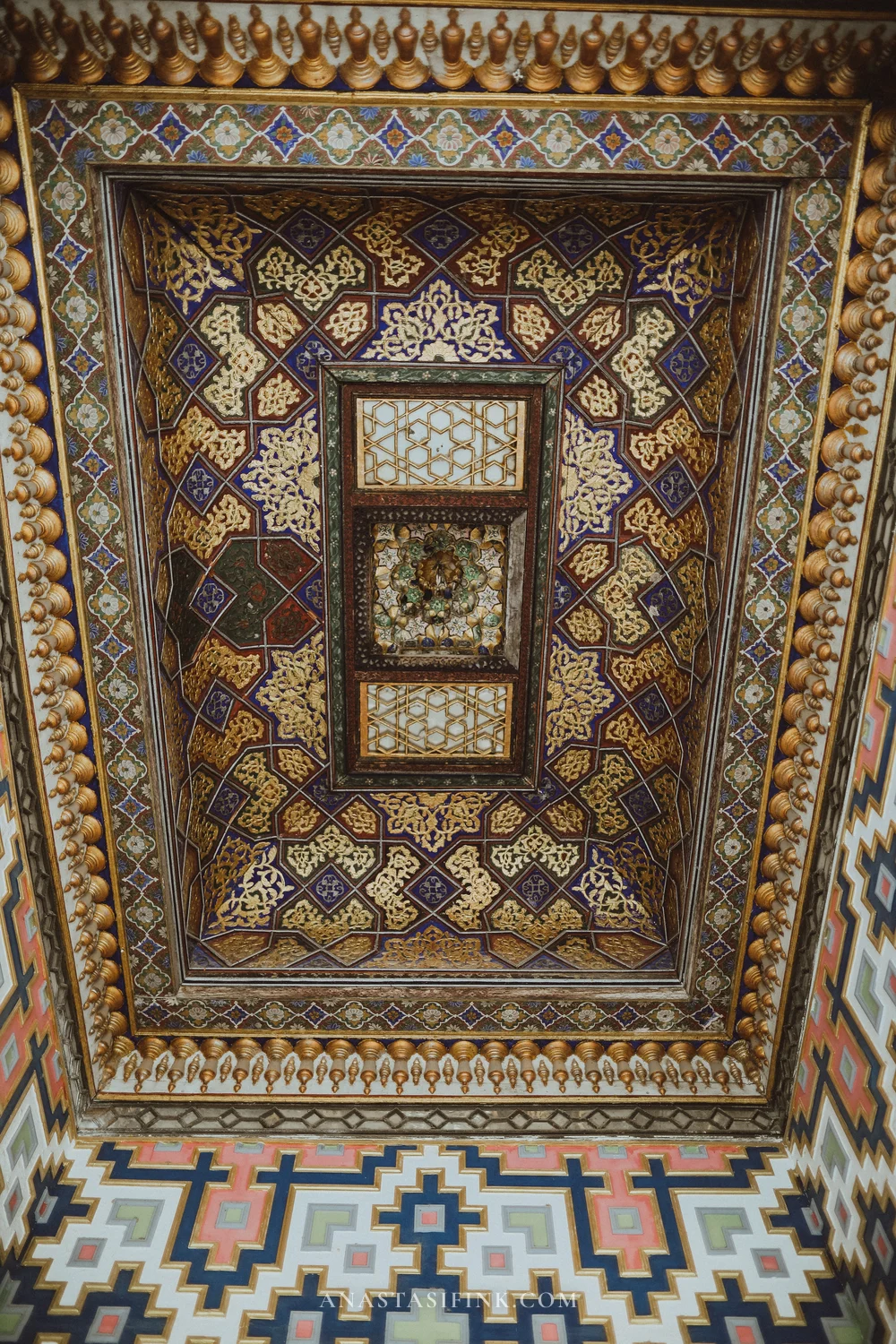
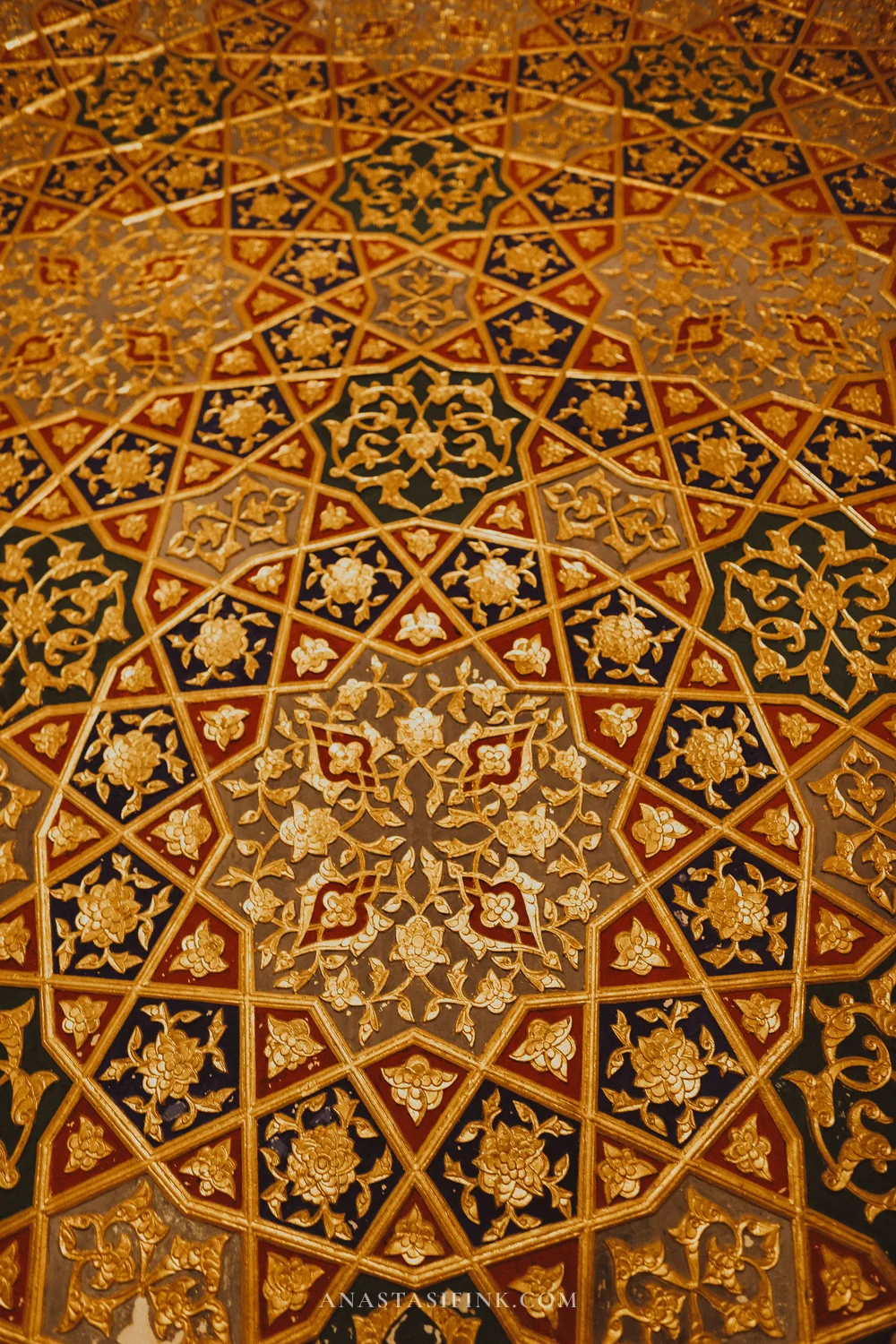
Ceilings and niches: every pattern is hand-done. There aren't two identical elements anywhere in the room
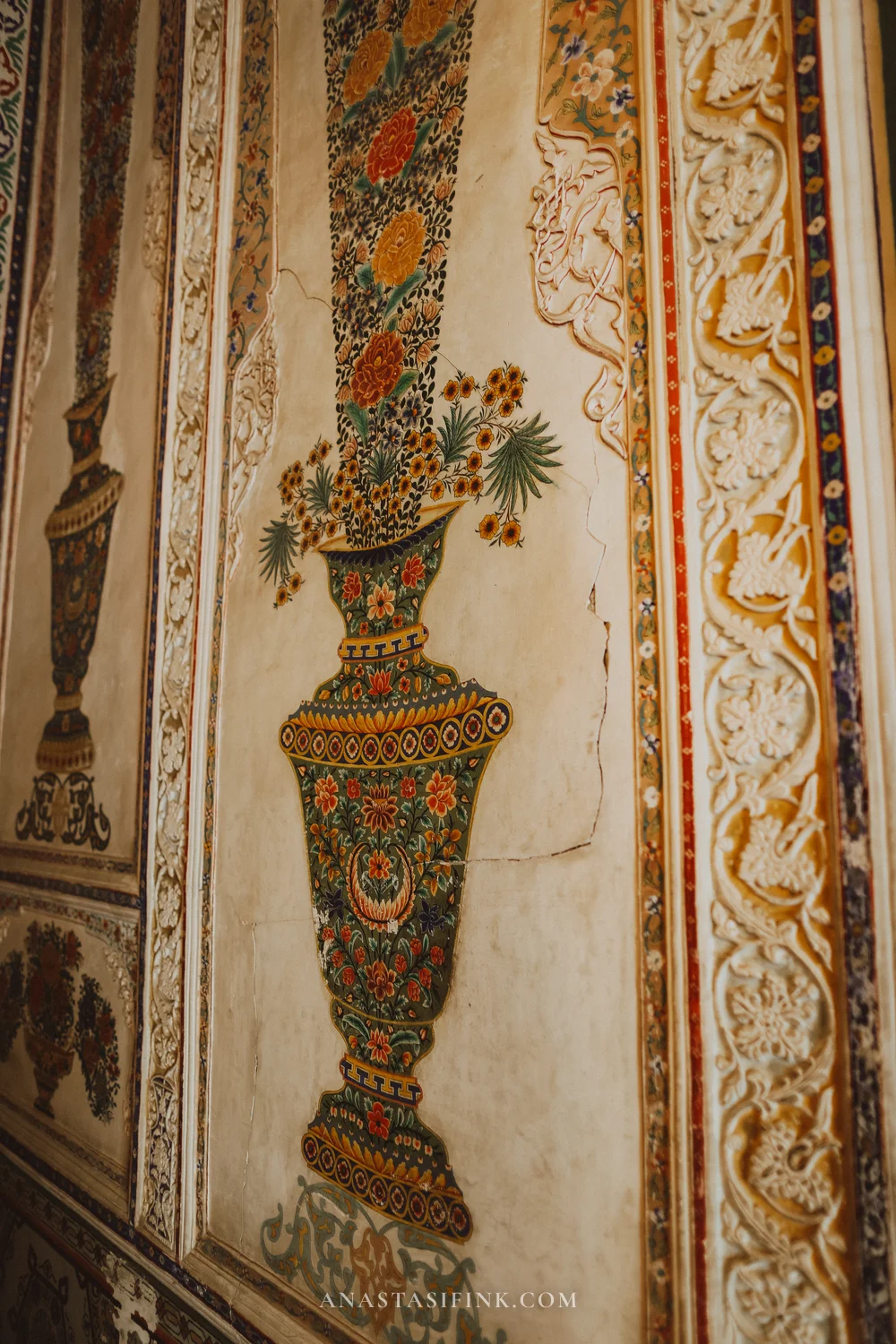
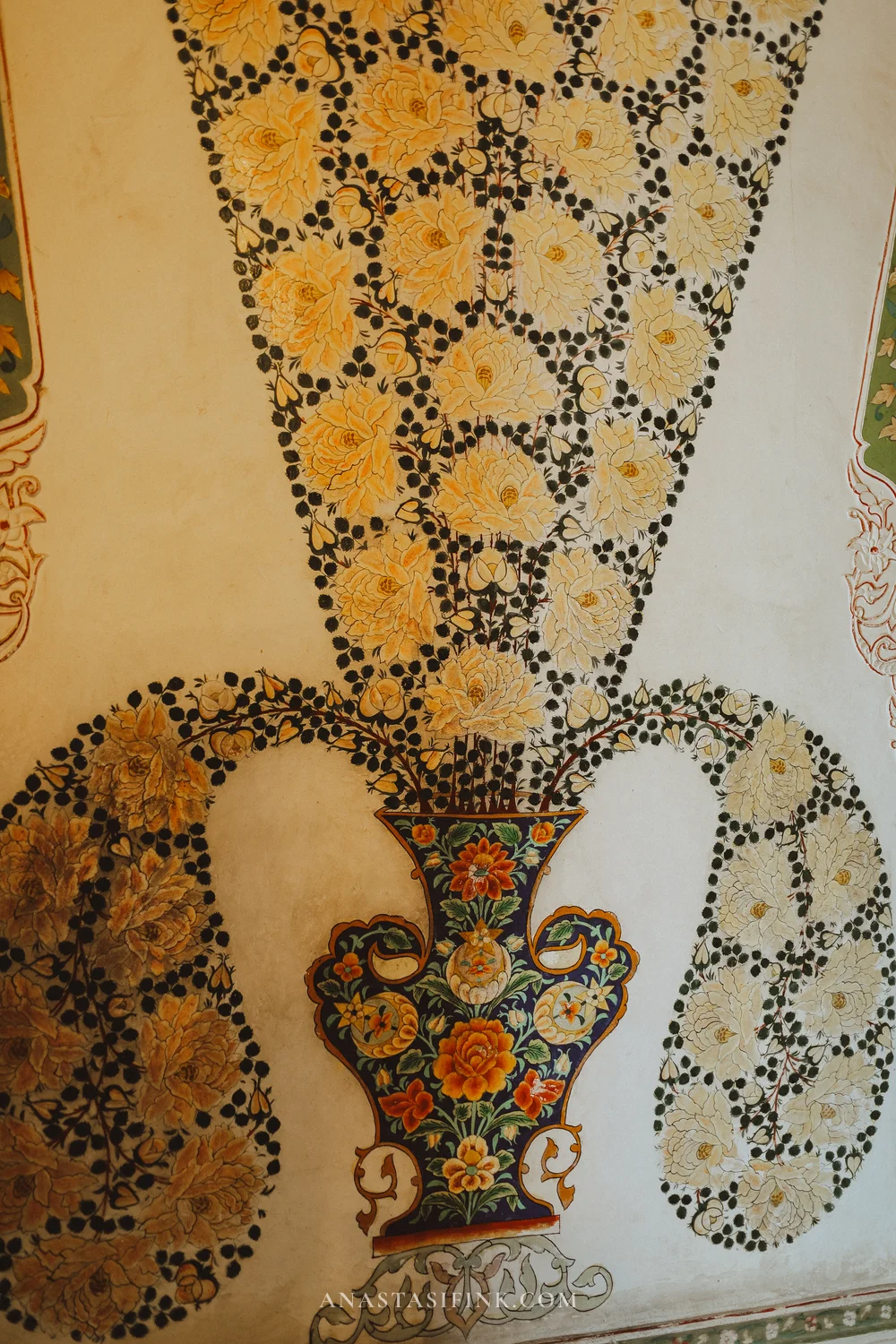
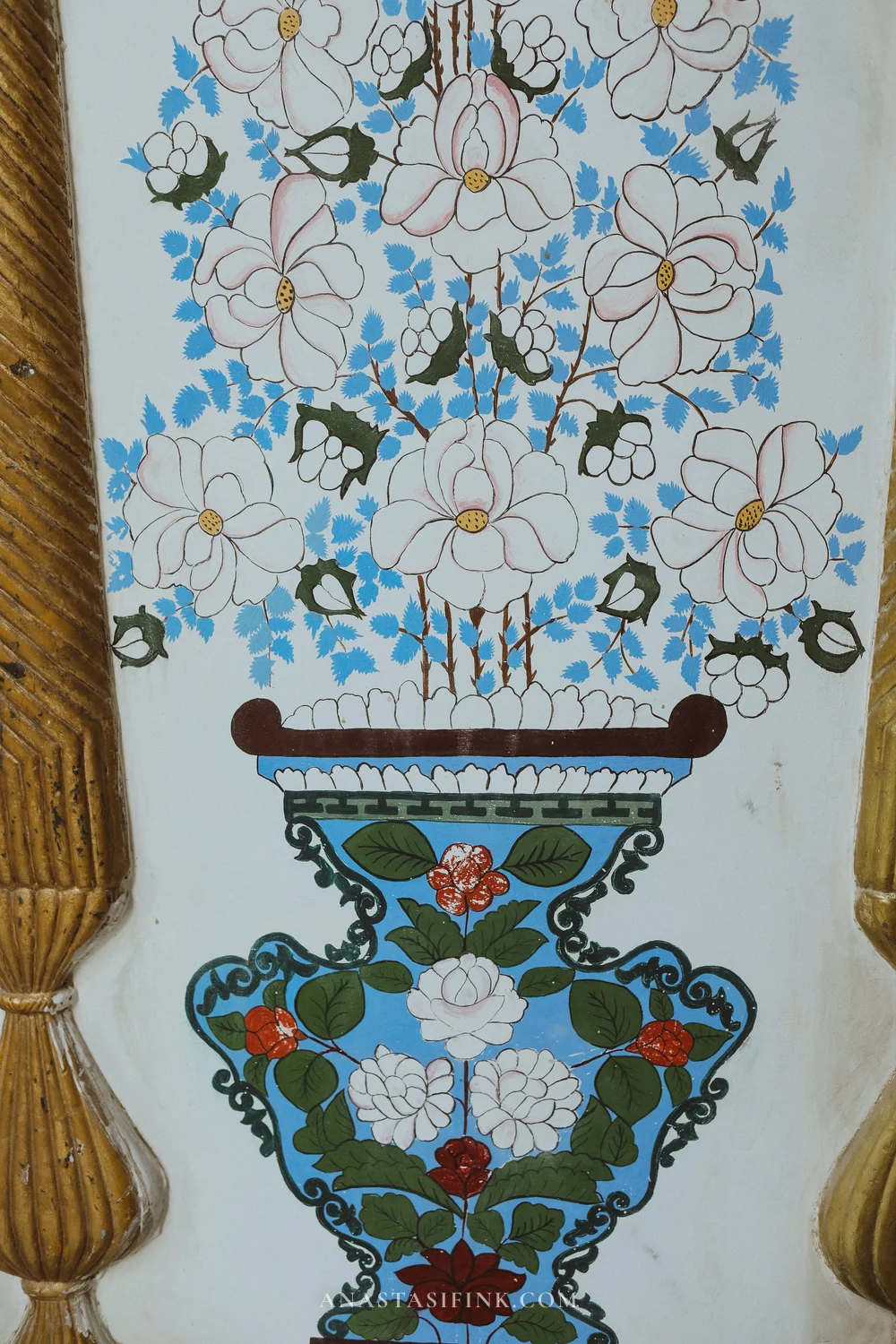
The painted vases on the walls are a genre of their own. Each one is composed like a standalone painting
The room with carpets and decorative pieces
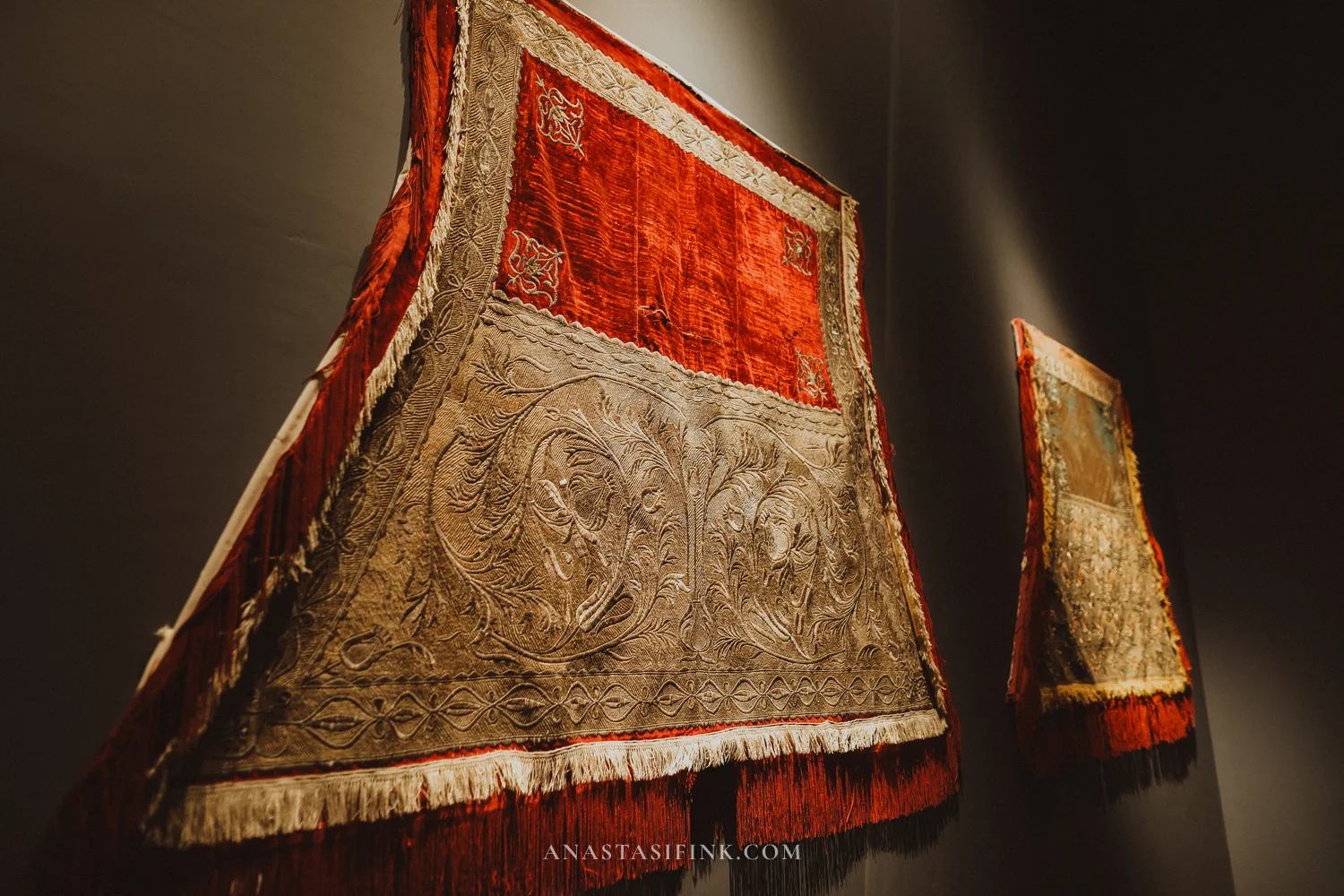
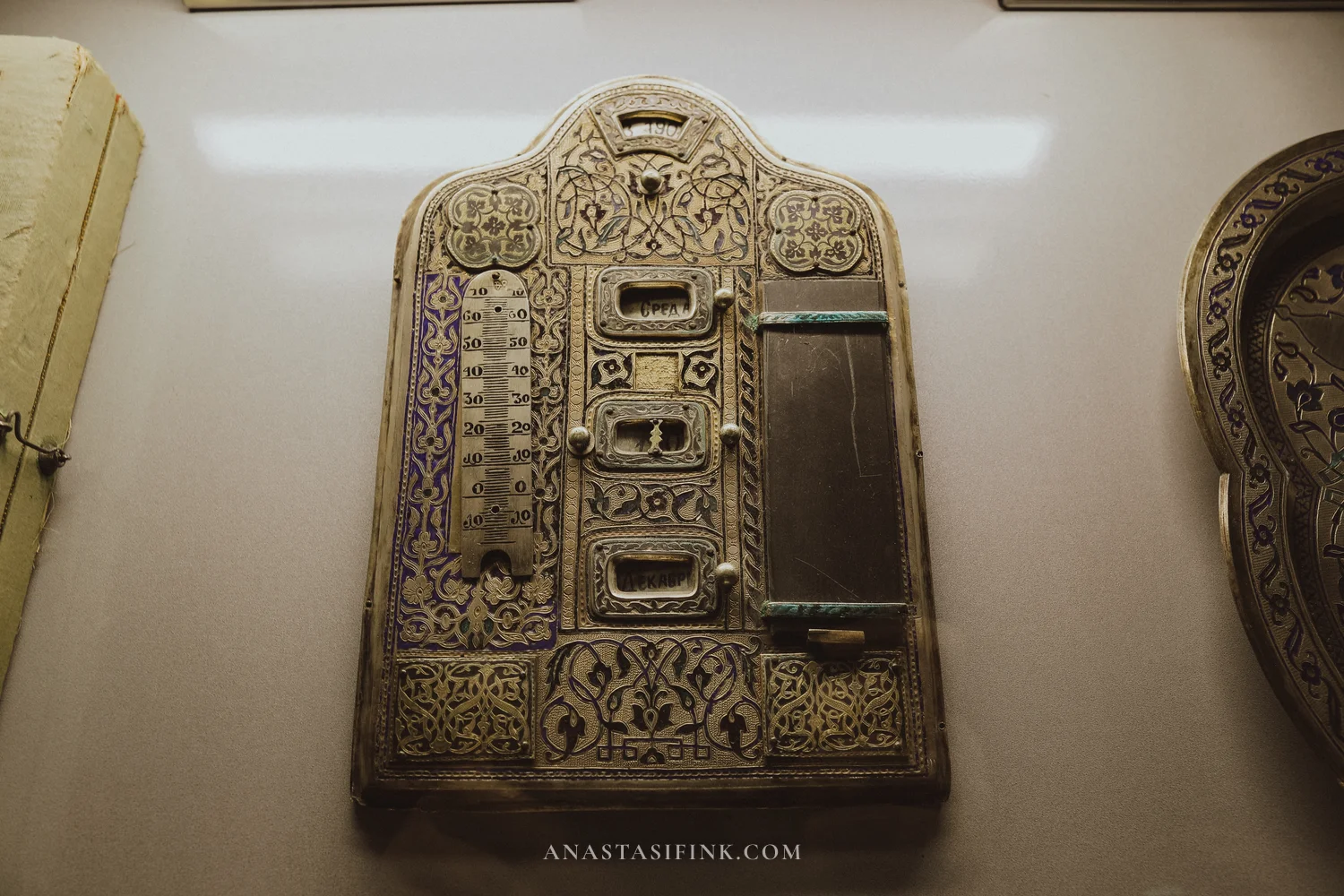
Right after the White Hall is a smaller room with a carpet on the floor, displaying the small objects from the emir’s daily life: bronze trays, colored stained-glass set into the niches, velvet curtains, a silver barometer. You don’t need to linger, but it’s worth walking through.
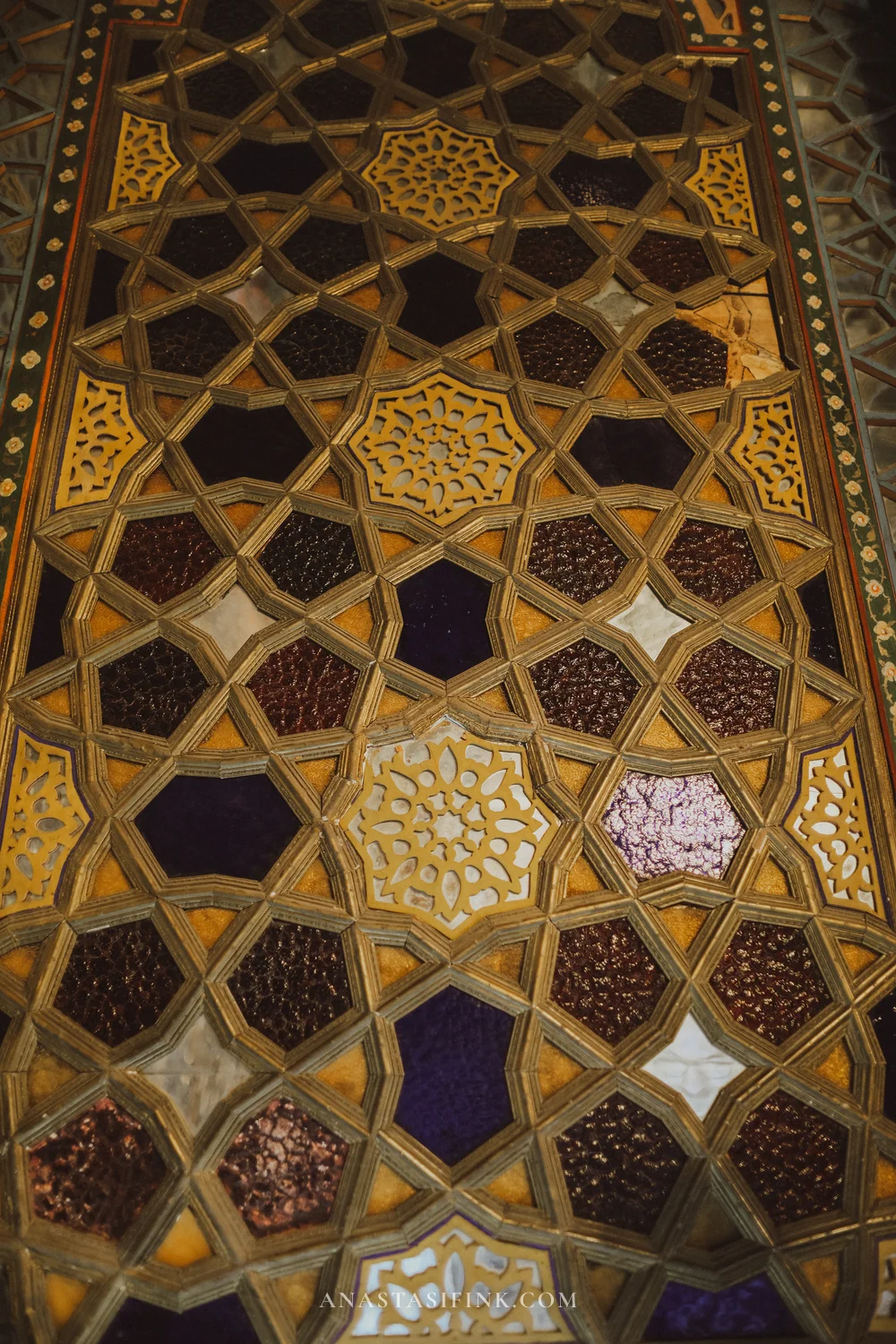
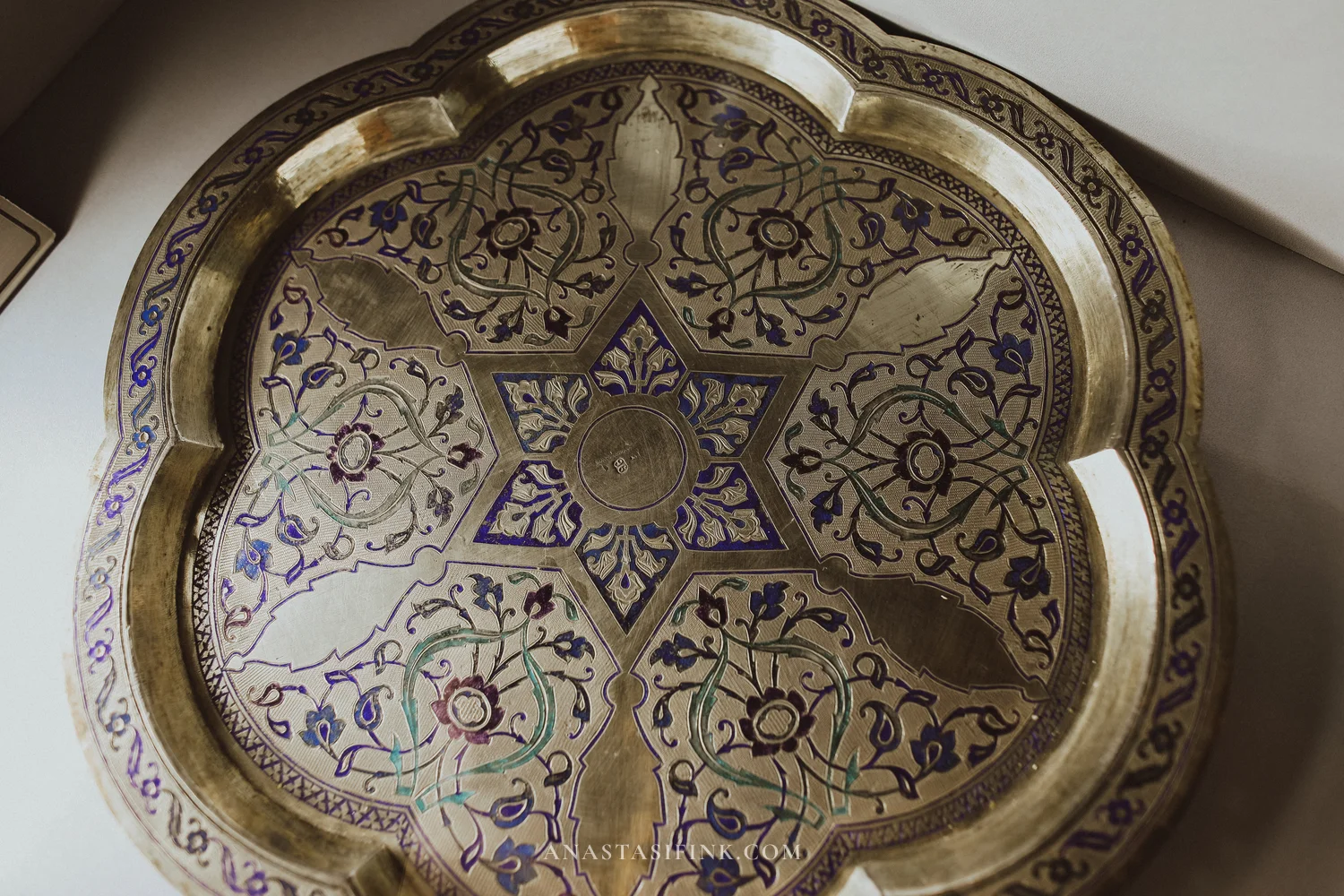
Stained glass and a bronze tray with Arabic script: both came from the emir's dining room
The Hall of Mirrors: gold and portraits of emirs
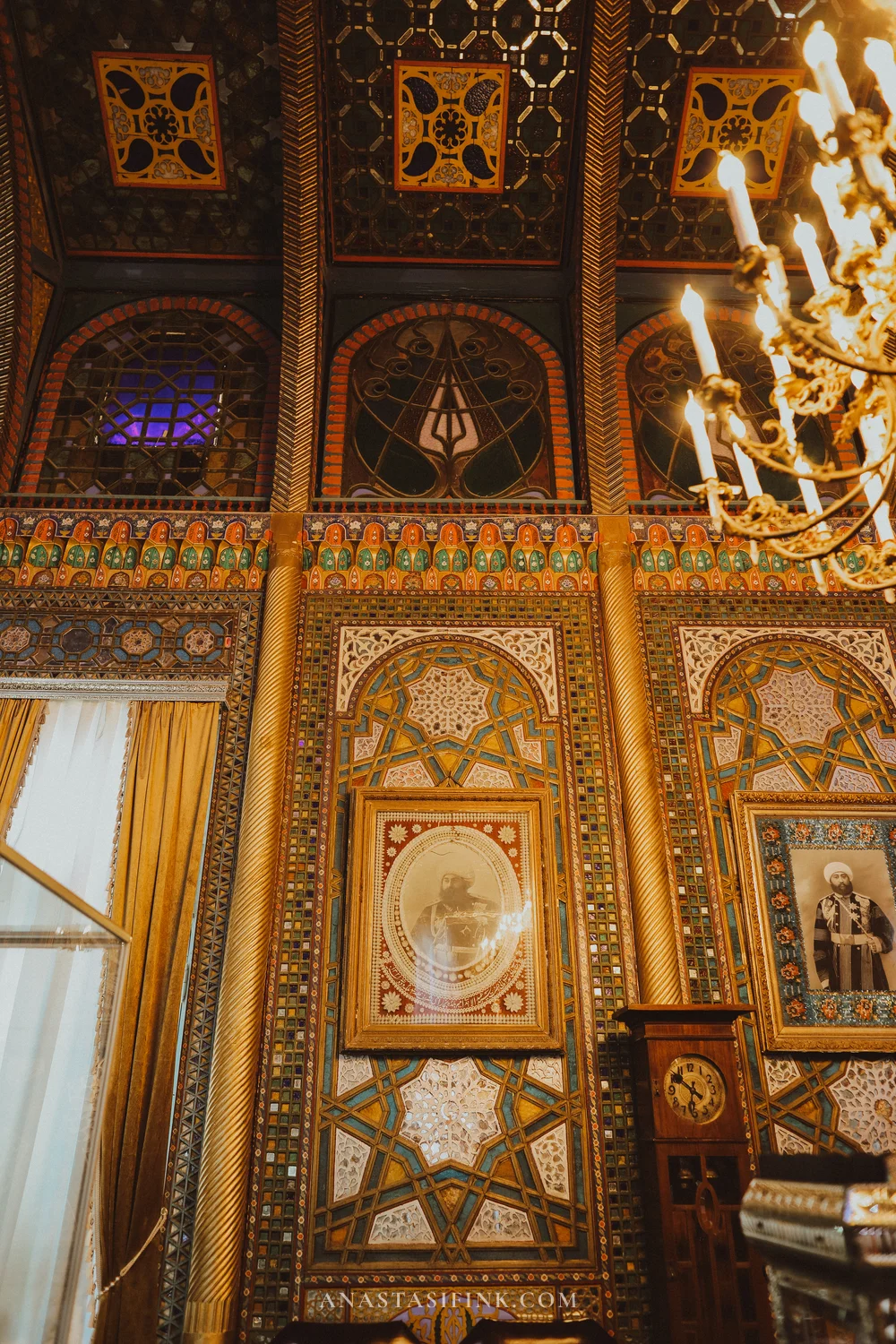
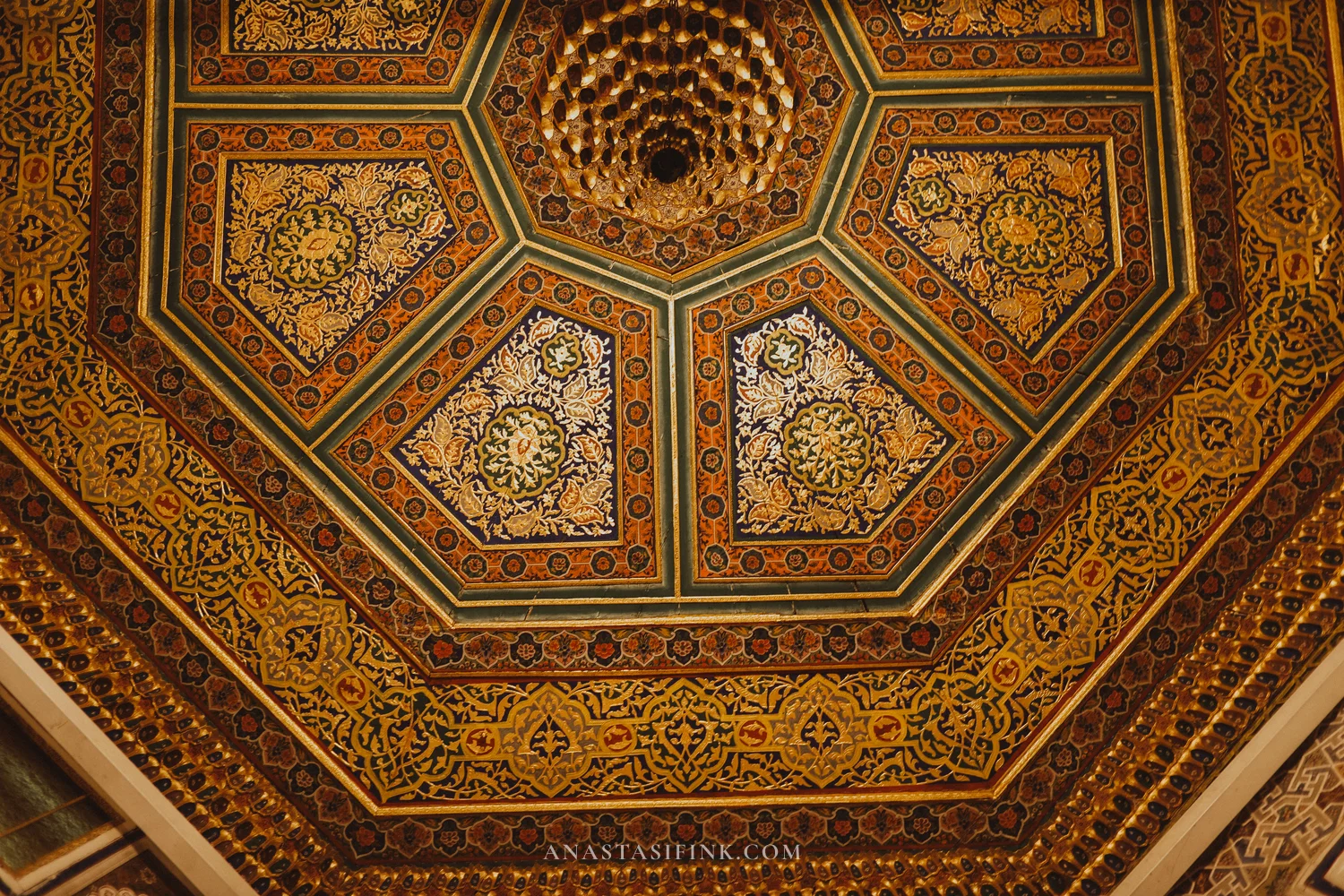
The walls and ceiling of the Hall of Mirrors are covered with hundreds of small mirrors set into carved frames. Between them sit portraits of emirs, colored stained glass, and gilding. As you walk through, the reflections move with you, and the room feels almost alive on its own.
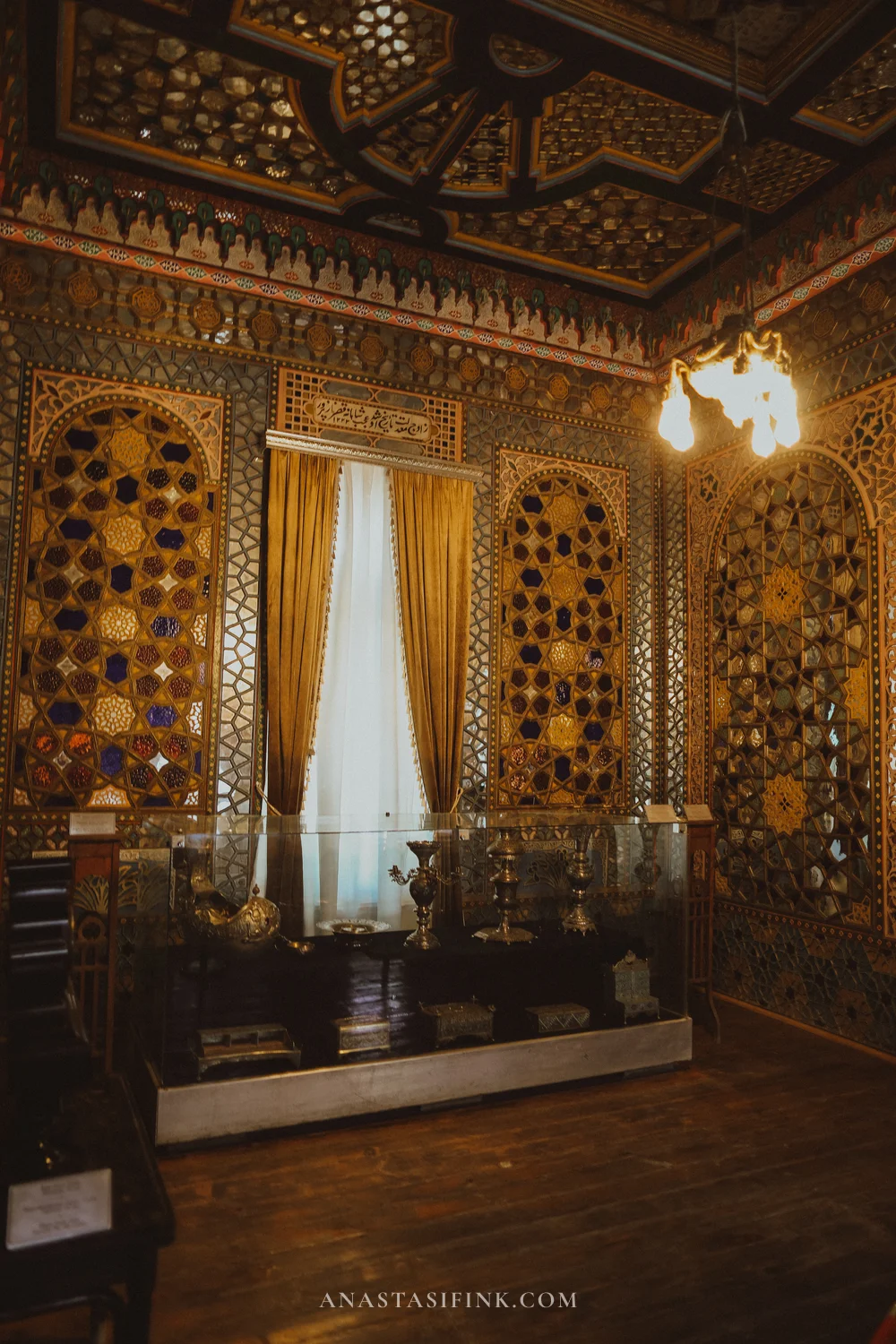
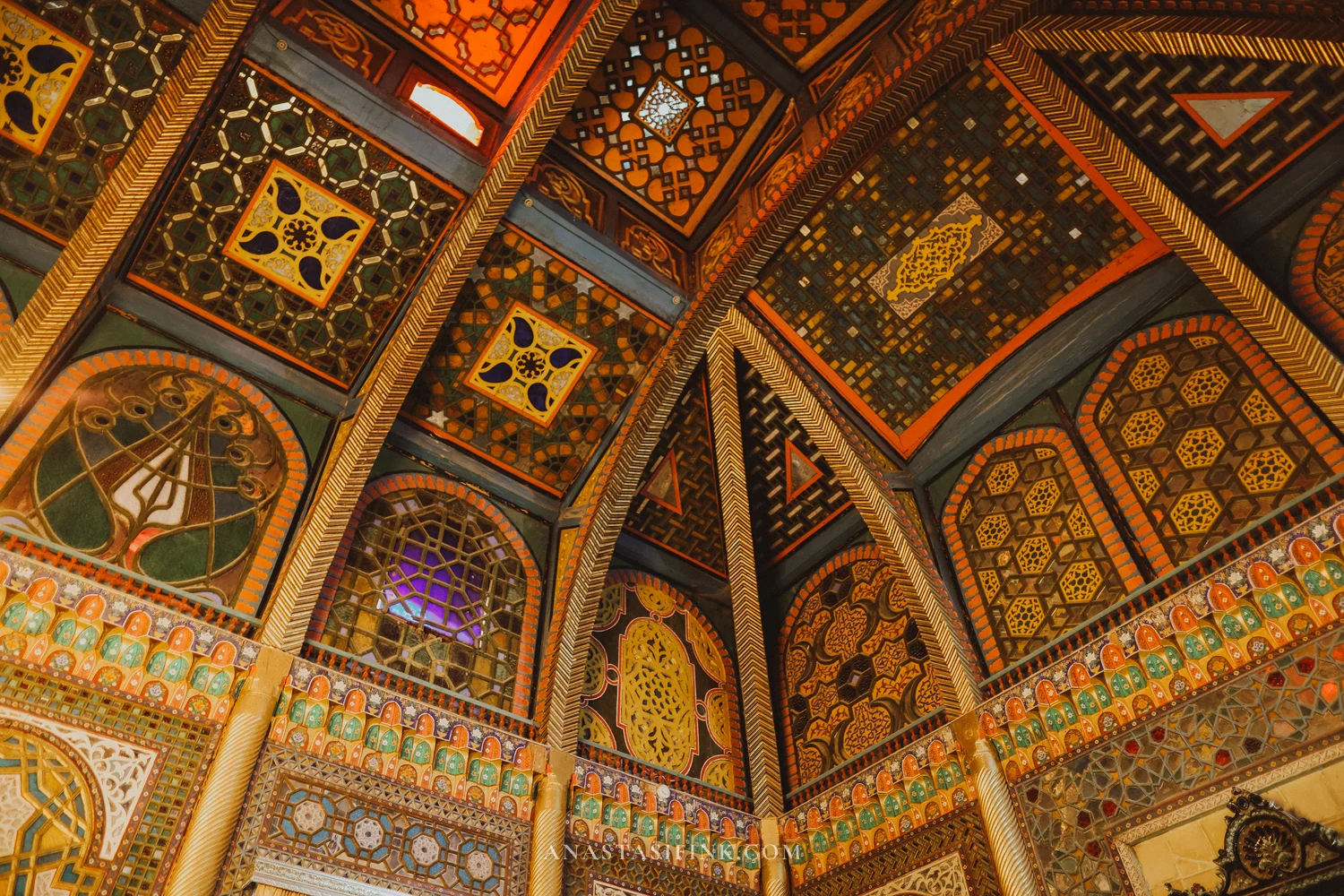
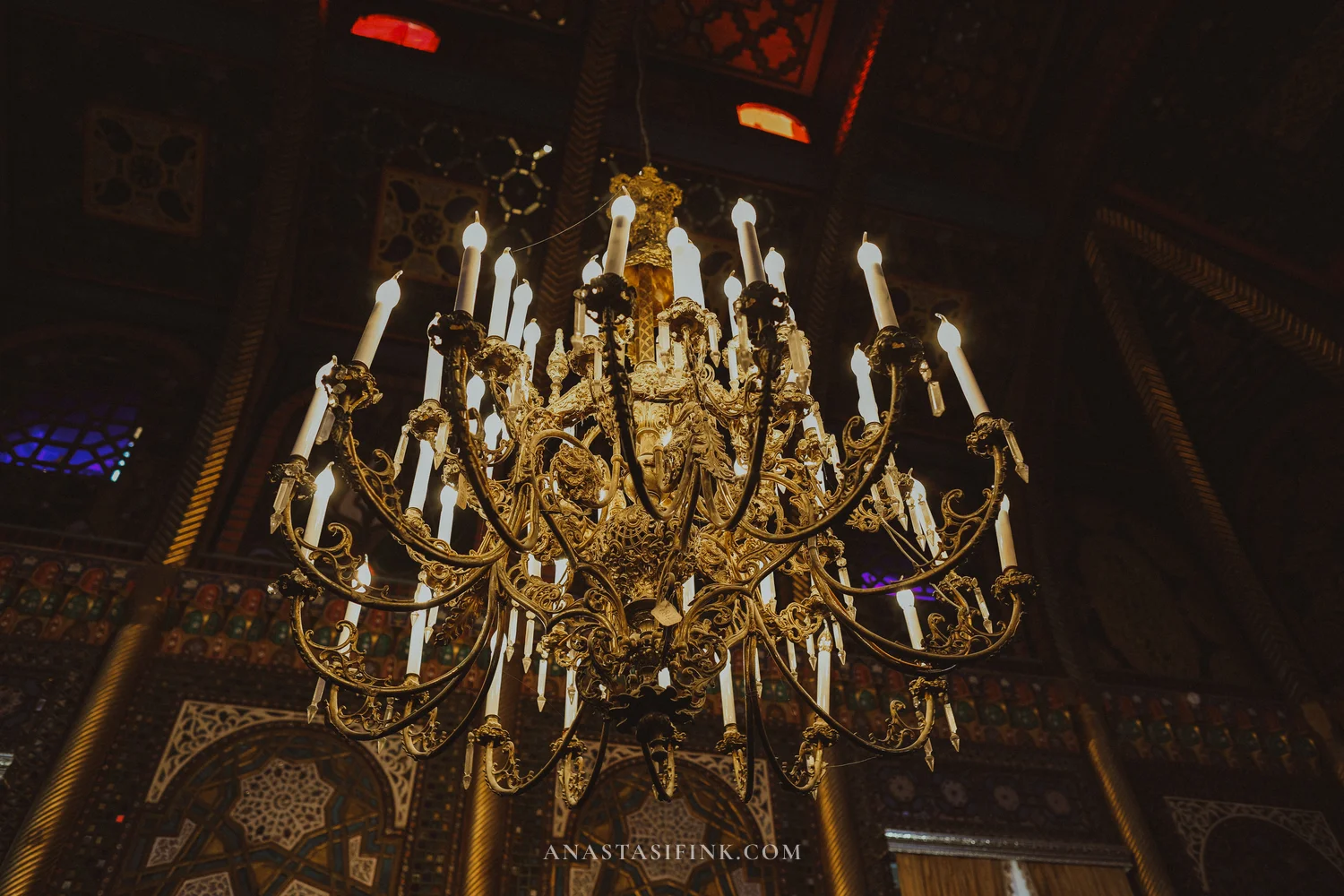
The ceiling and the chandelier — the crystal was custom-ordered in Europe specifically for this room's dimensions
The Russian inheritance: tiled stoves and crystal chandeliers
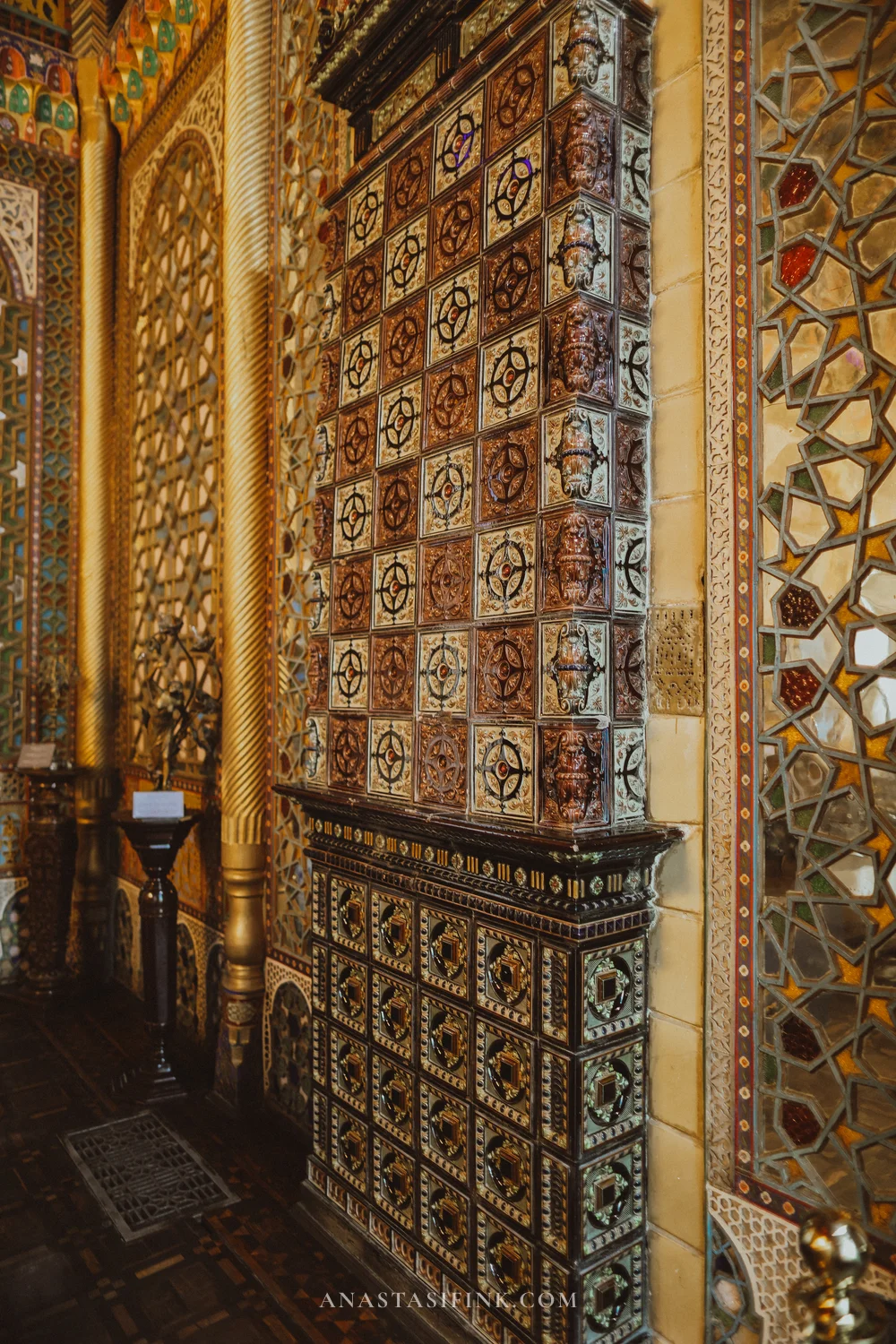
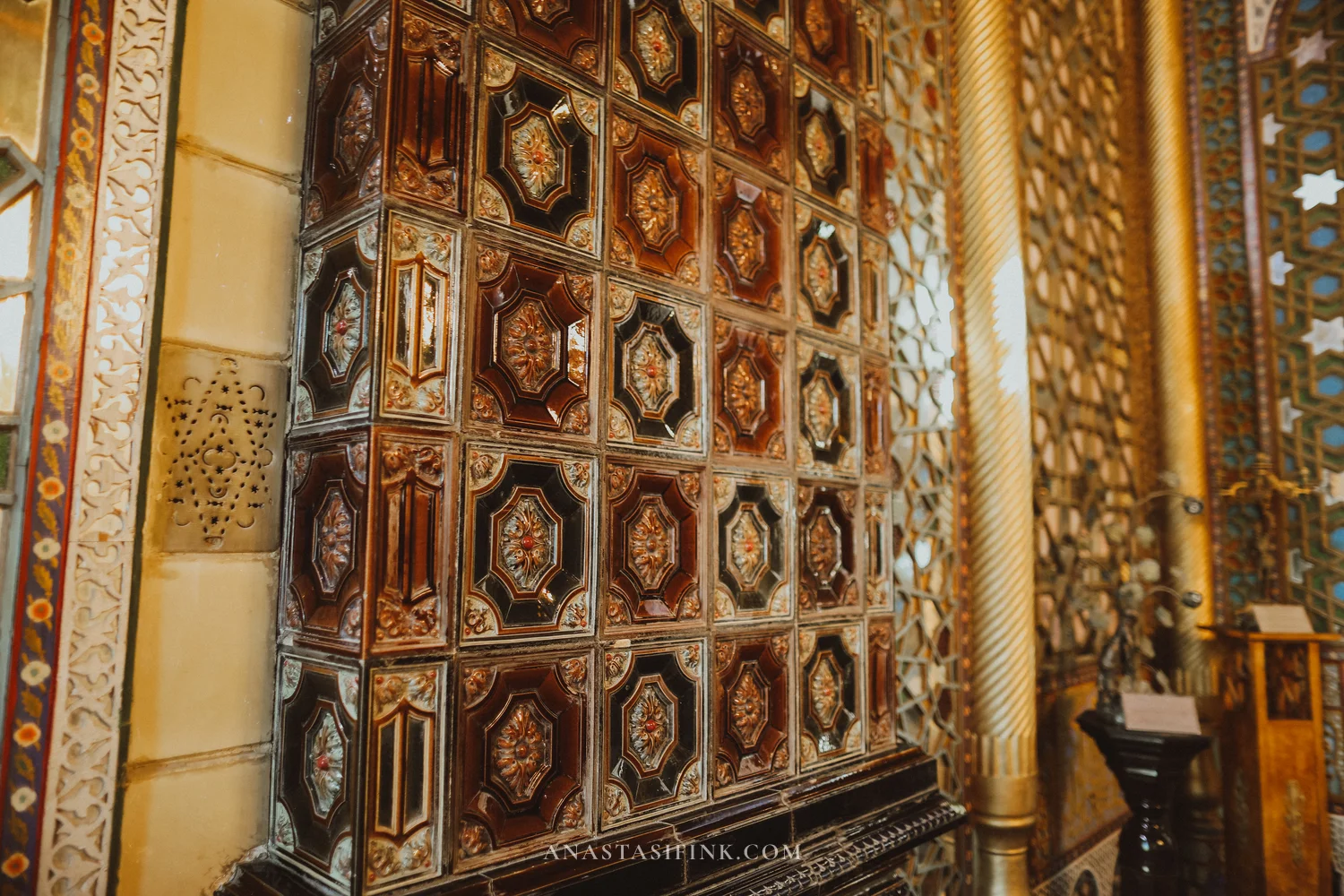
This is probably the most surprising part. The emir ordered everything from Russia — furniture, dishes, porcelain, and most importantly, the tiled stoves. Every room has a large ceramic-tile stove brought in from St. Petersburg or Moscow. And they actually worked: the emir and his family lived in the palace year-round, not just in summer.
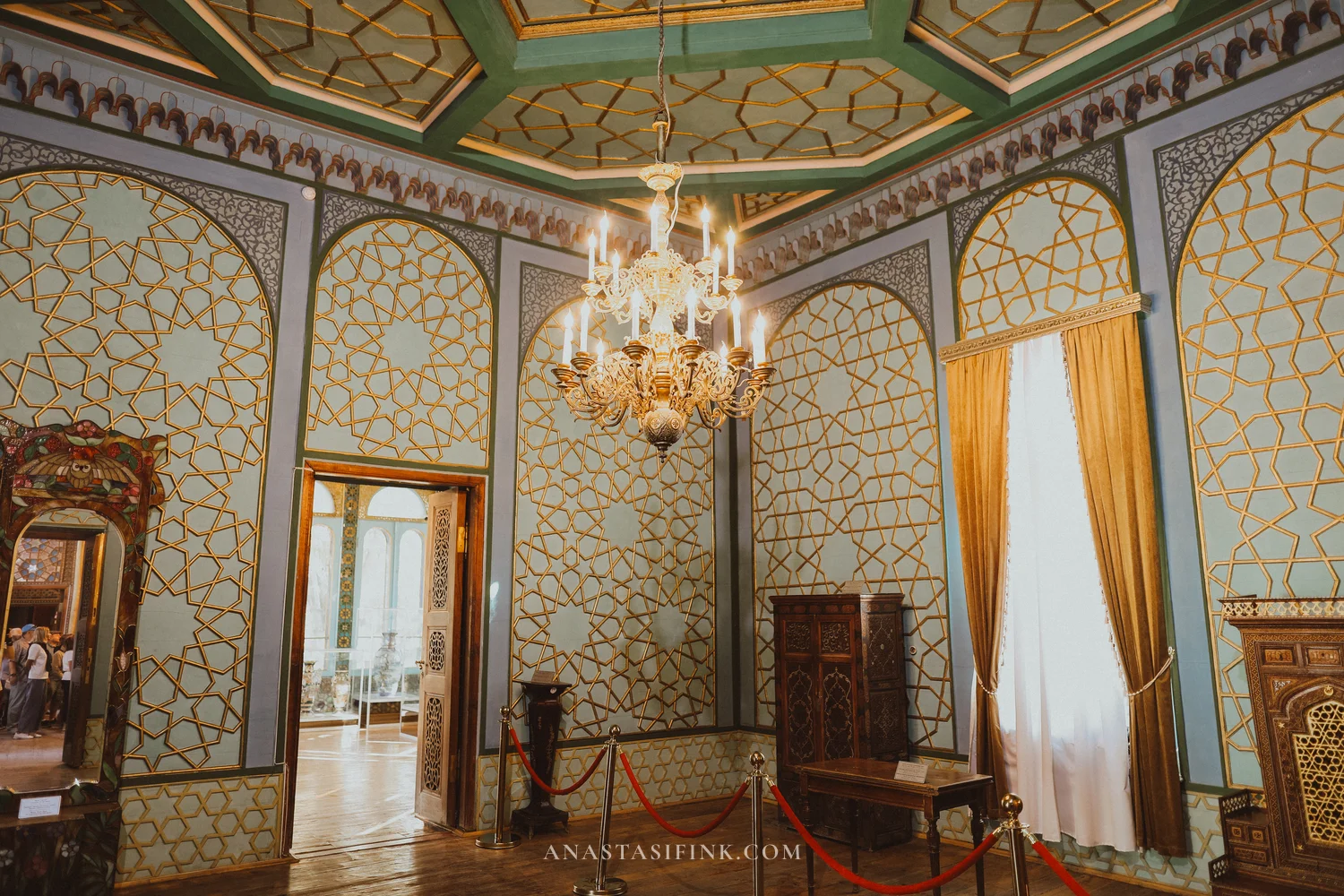
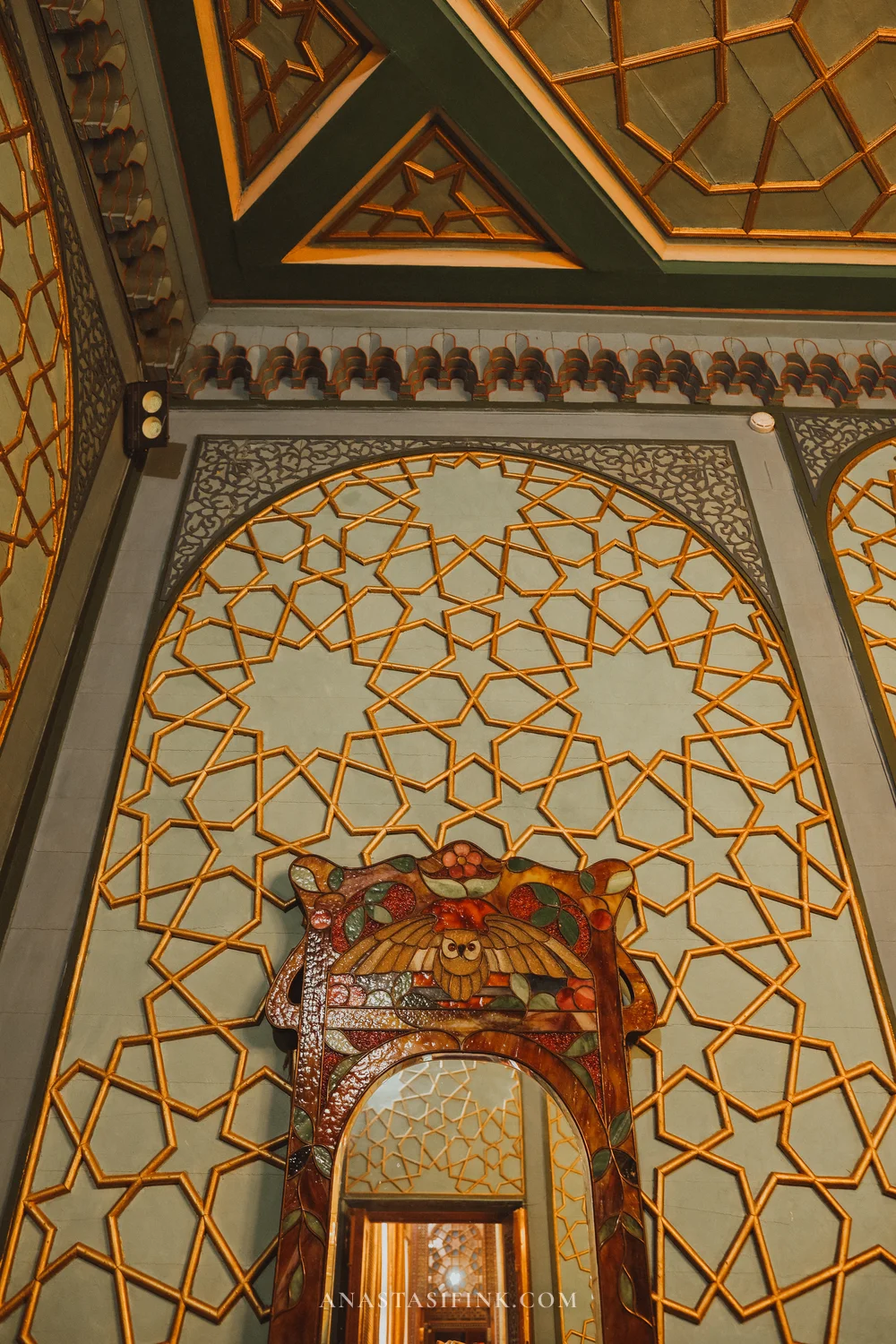
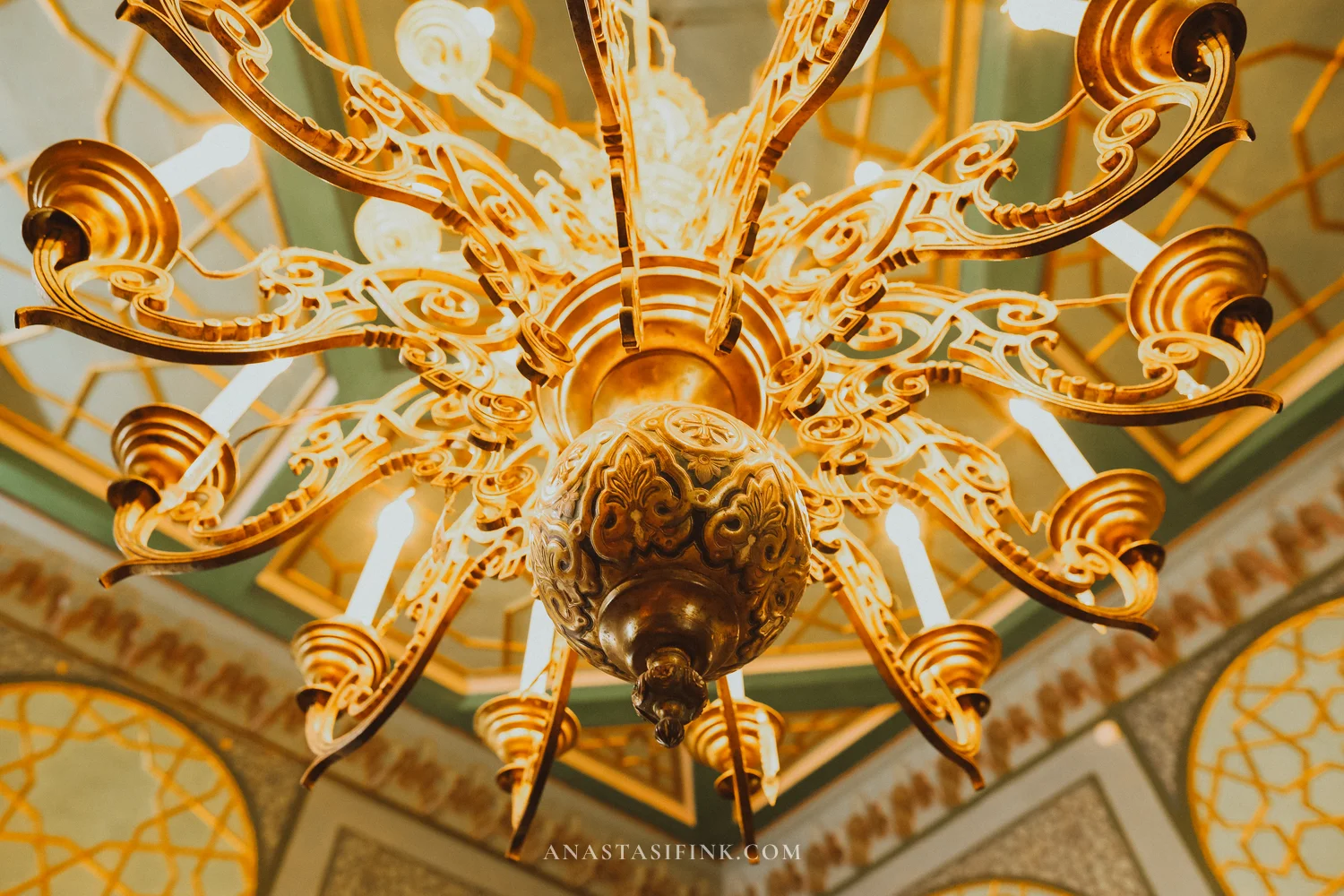
The Blue Room also still has its carved furniture — a chest of drawers, a cabinet covered in Arabic calligraphy, and a display case of dishes. This is essentially the “lived-in” part of the room: things the emir and his family actually used.
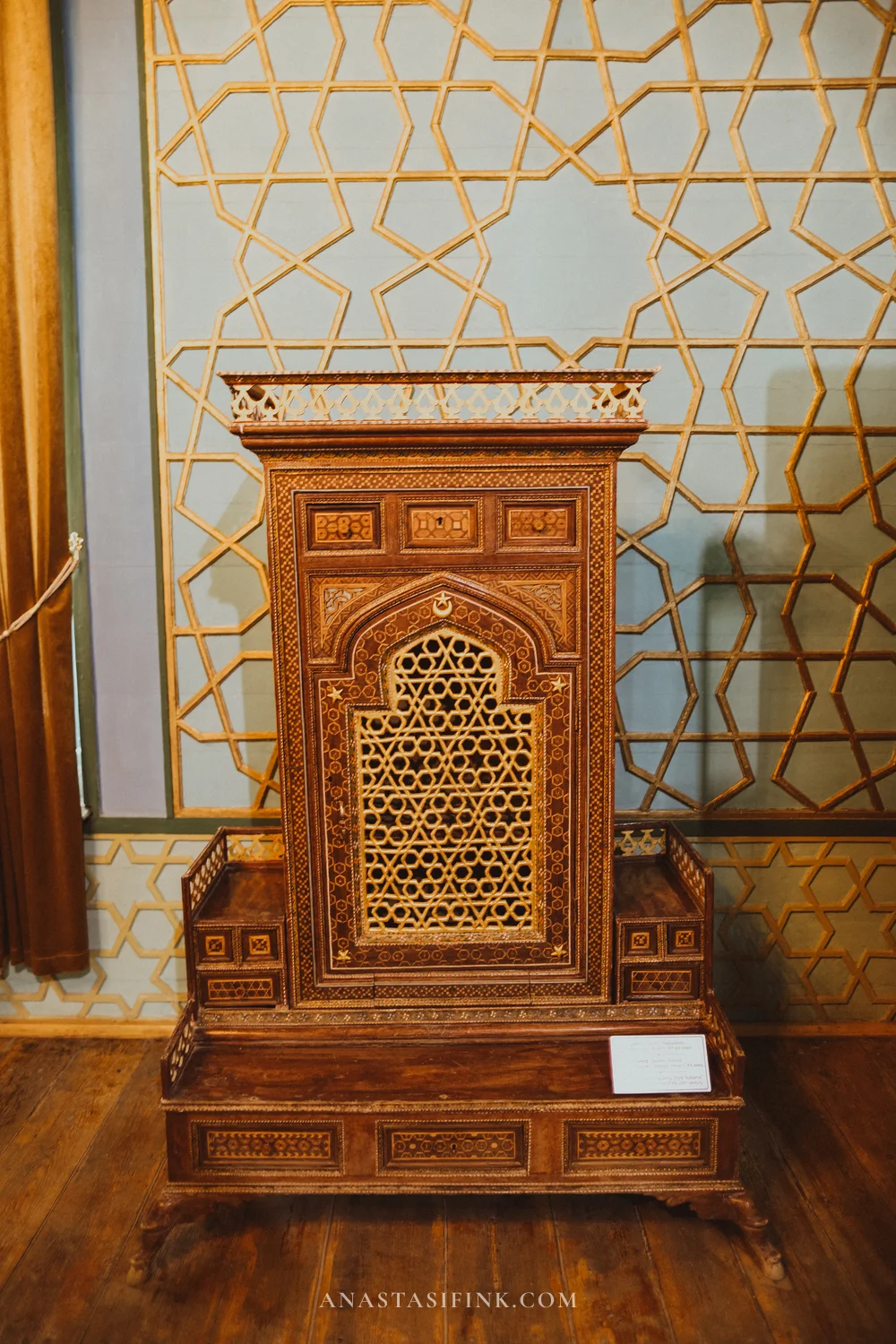
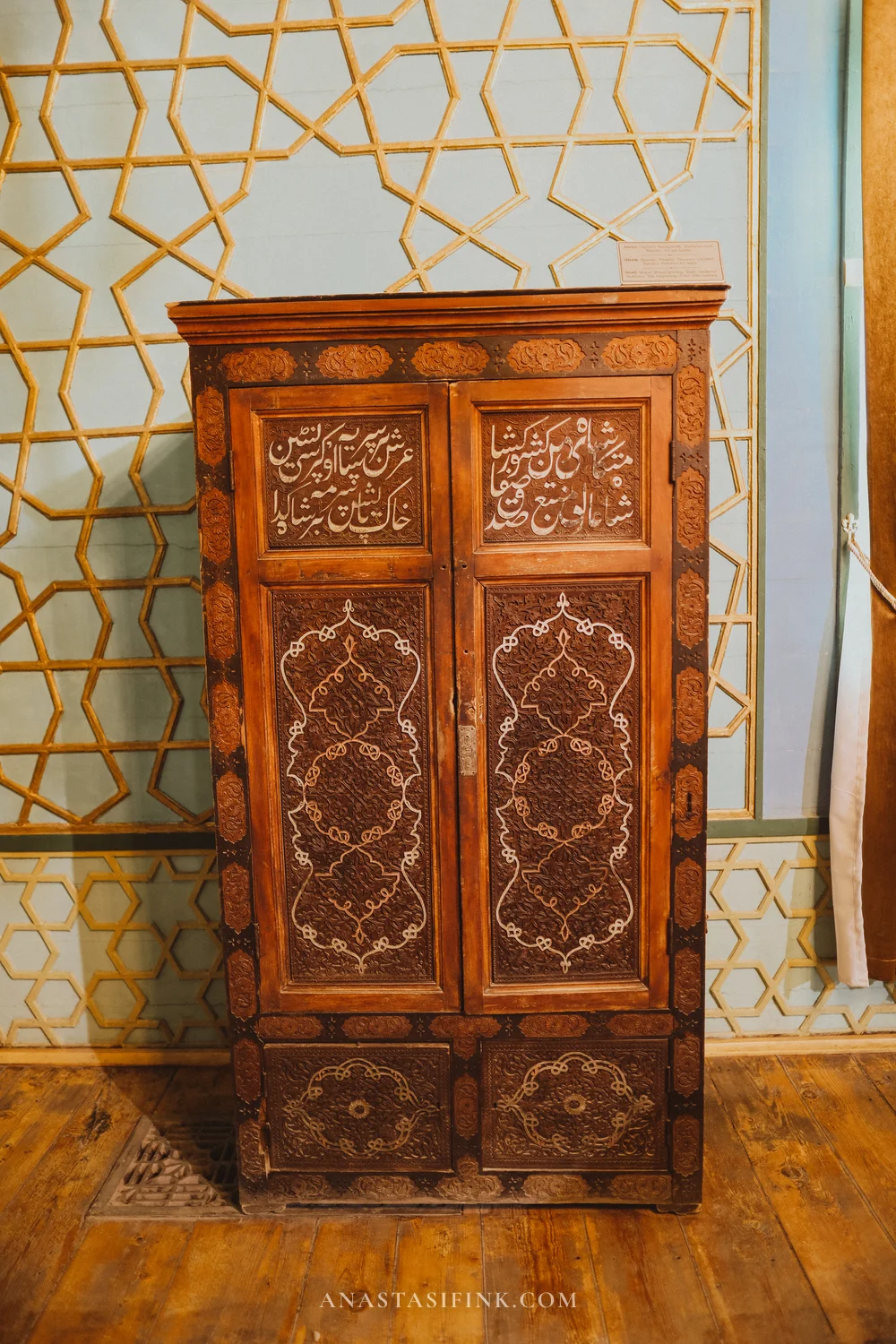
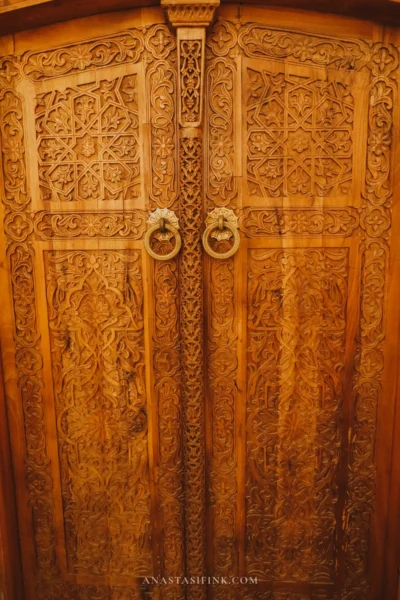
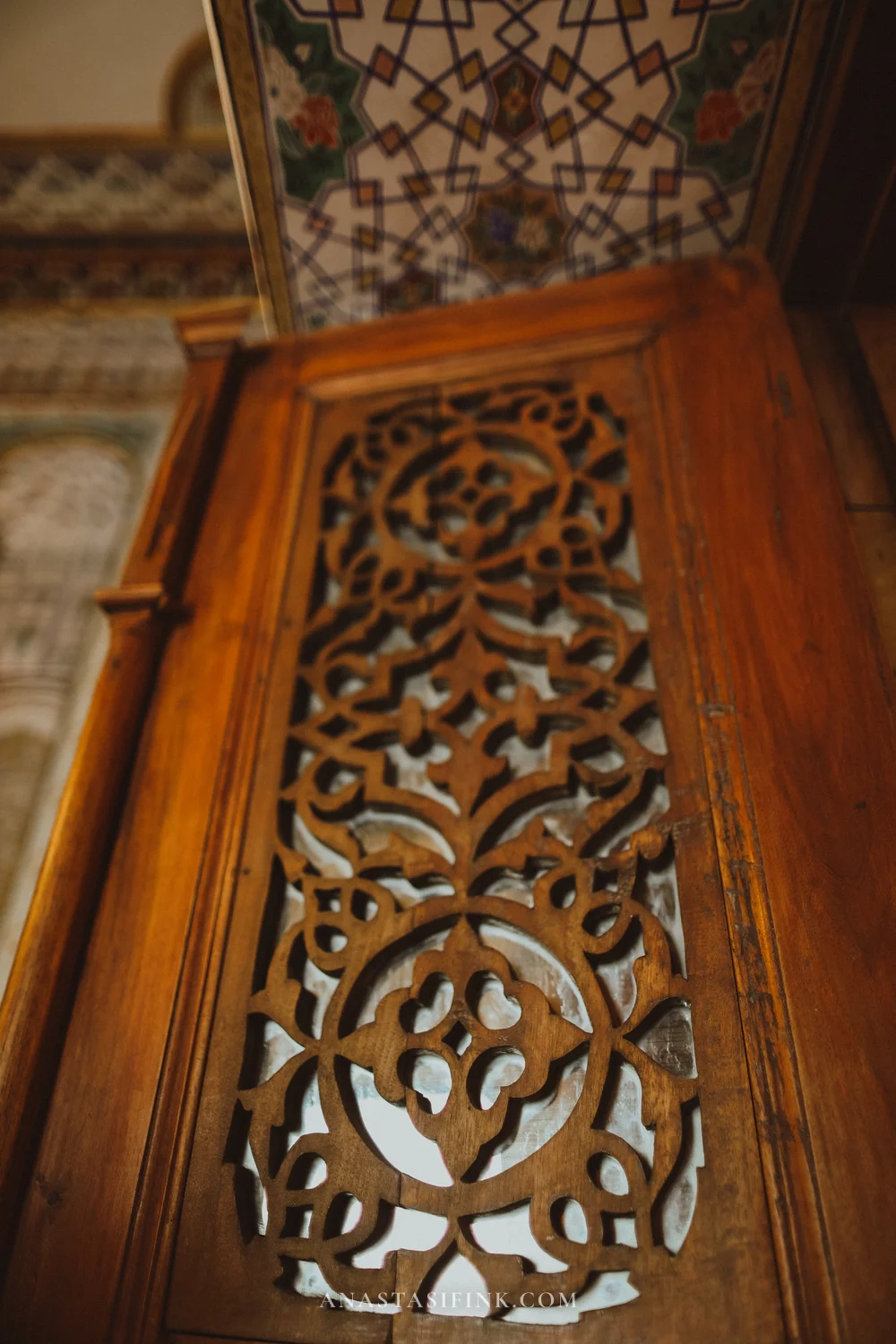
The chest and the calligraphy cabinet: the cabinet doors carry verses in Old Uzbek (Chagatai). The master carver did them all by hand
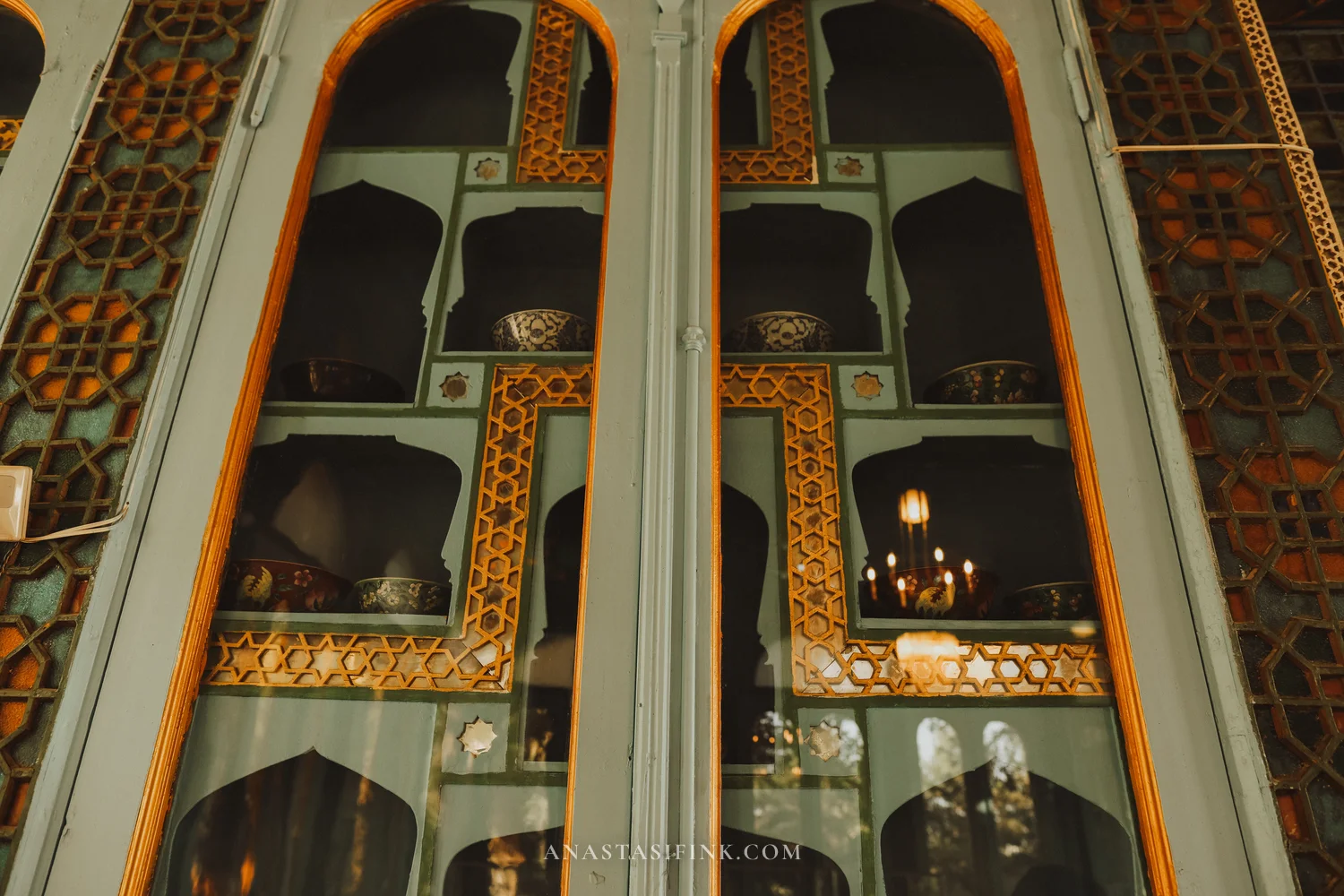
The glass veranda — the last room of the main palace
The very last space in the main wing is a wooden glass extension painted blue, opening onto the courtyard. Essentially a veranda-greenhouse: tall windows on every side, a stained-glass ceiling, a display case of dishes, and large floor vases. When I was there, daylight was pouring in from every direction at once — tricky to photograph, but beautiful.
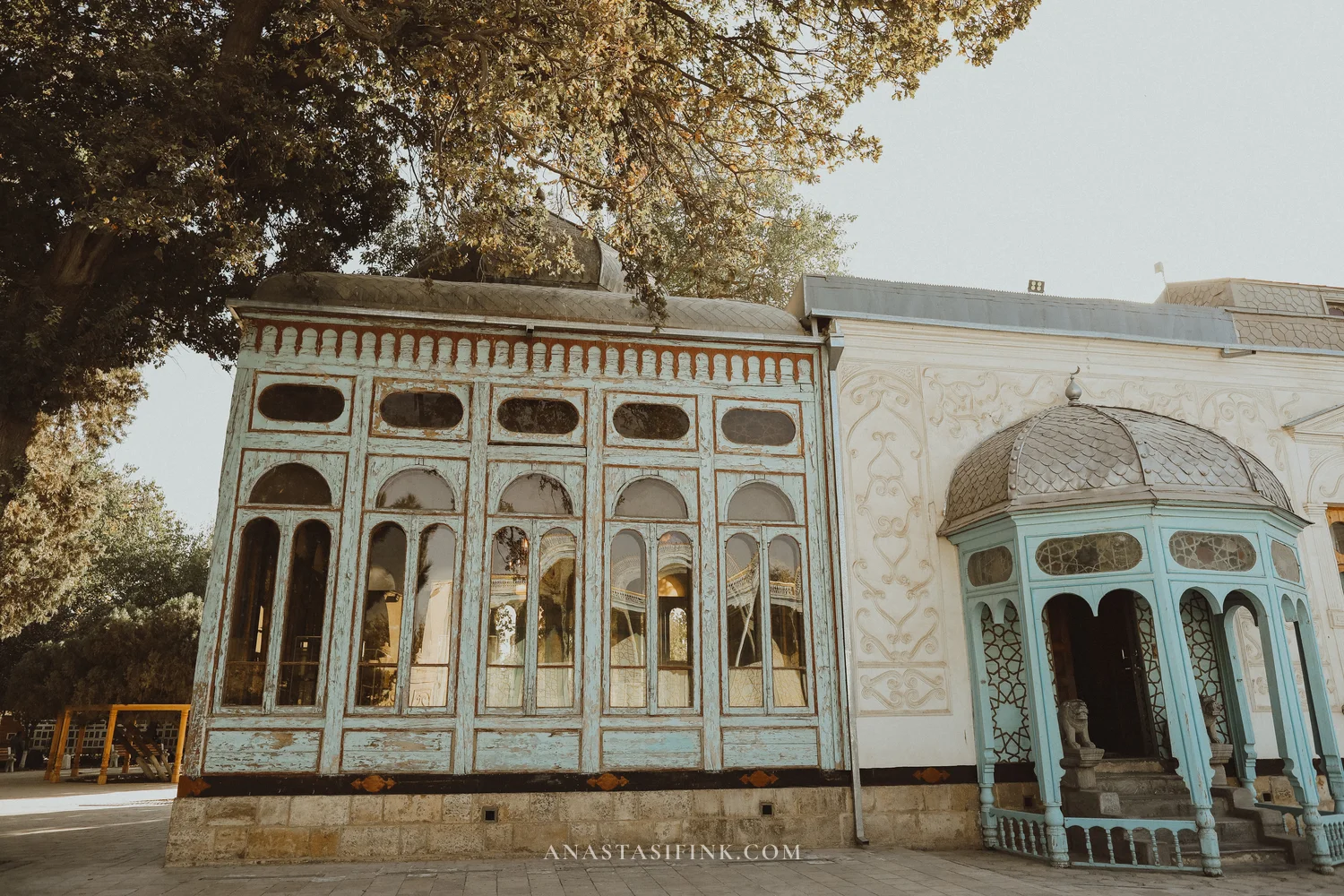
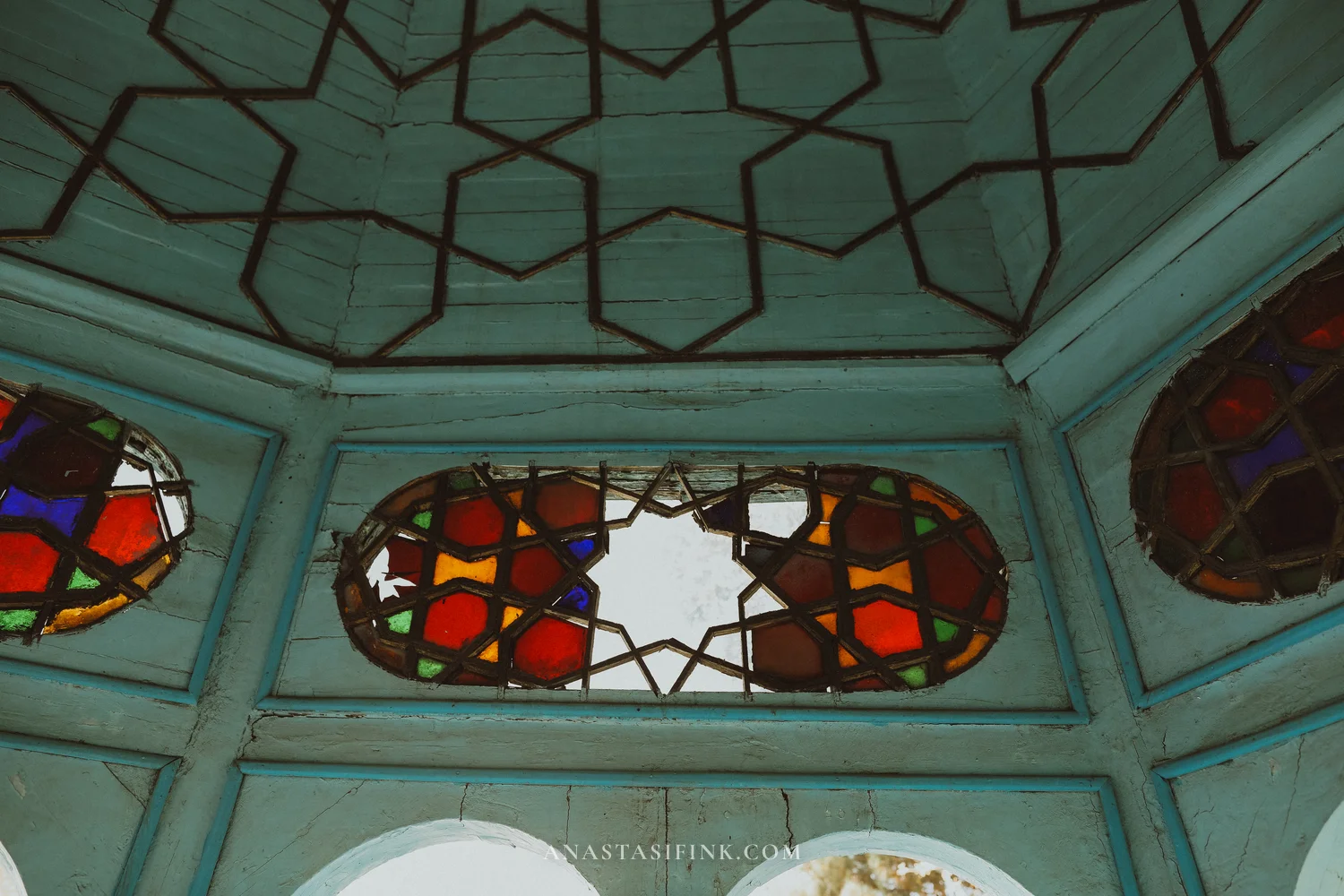
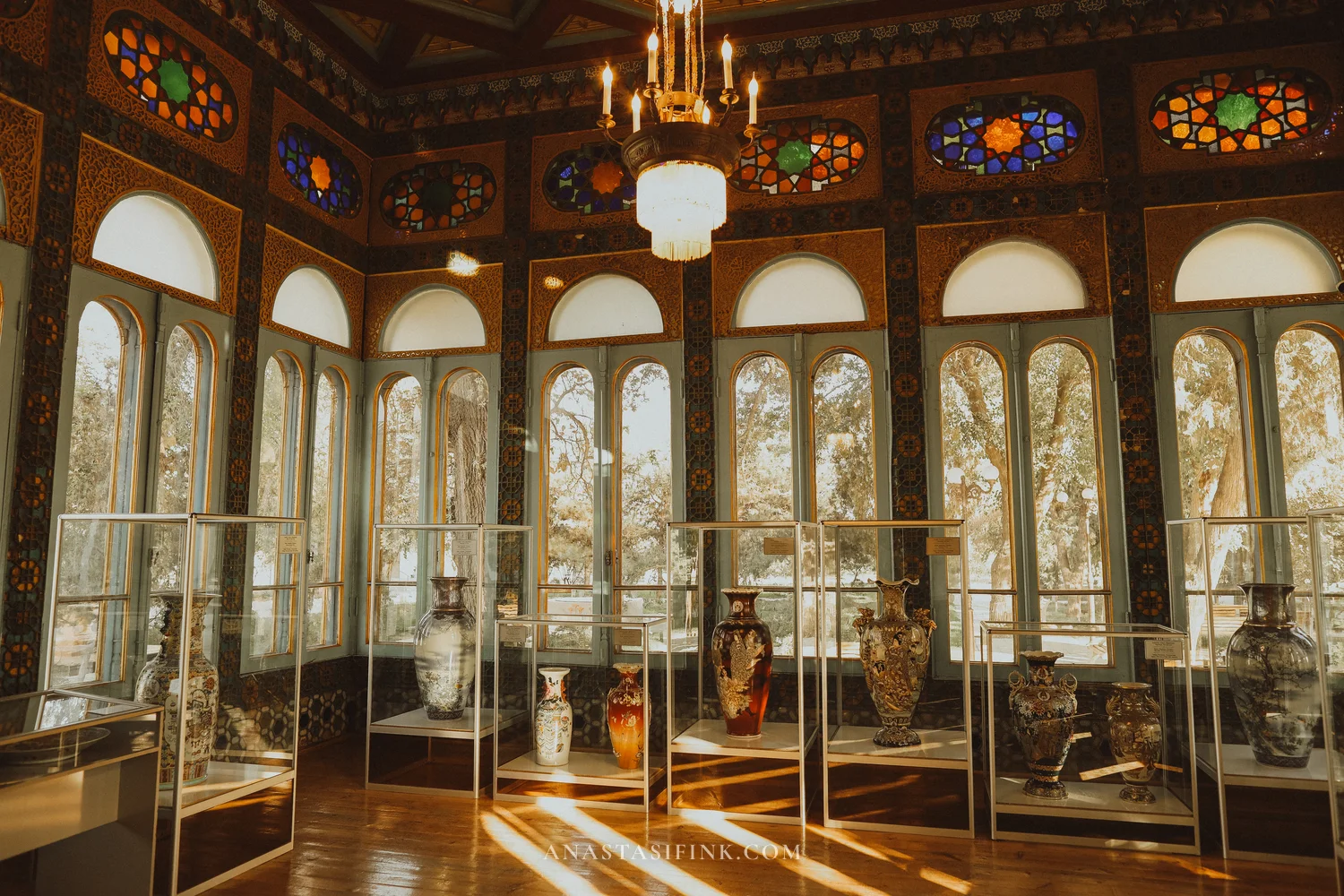
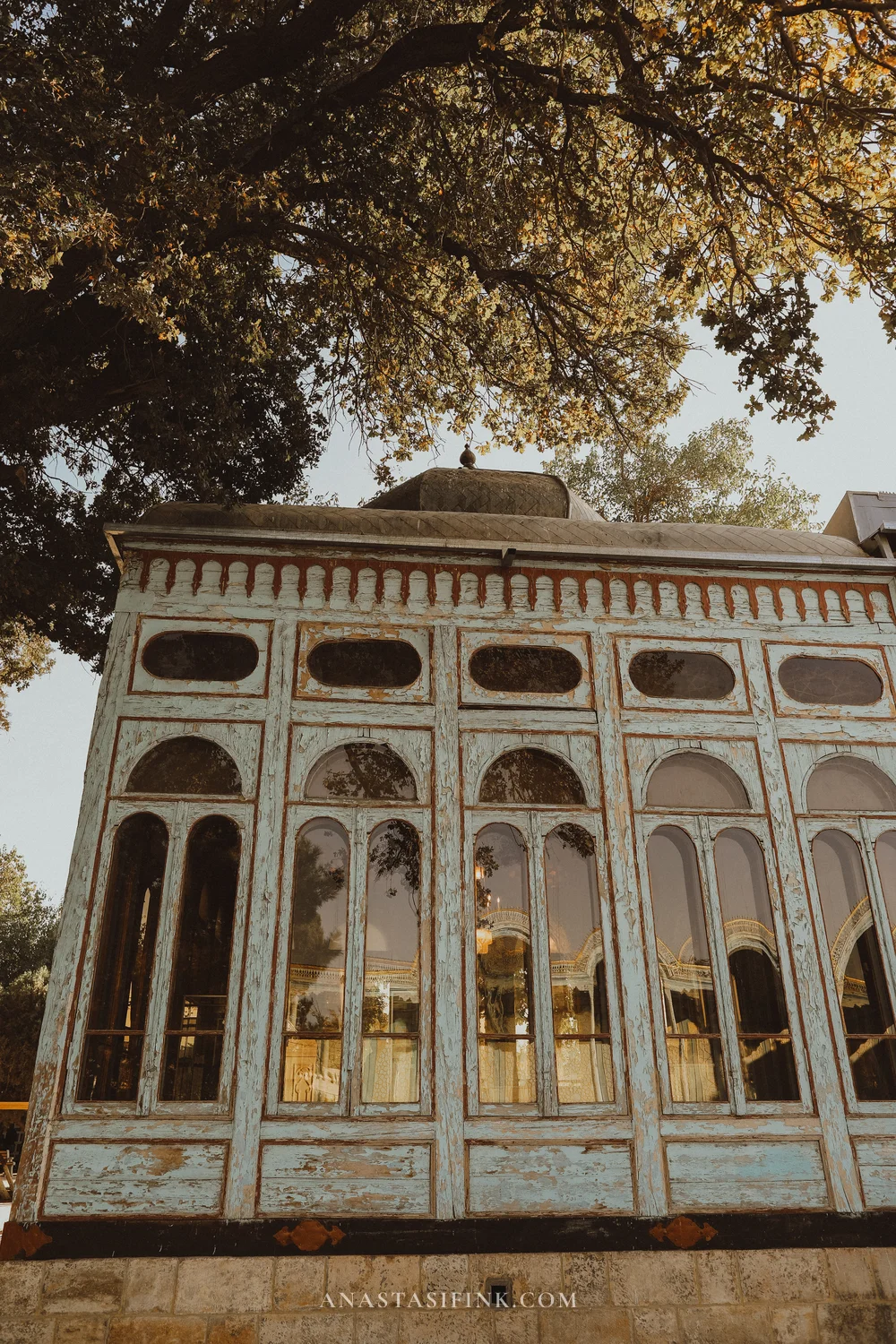
The veranda inside and out: the wood and glass are original, late nineteenth–early twentieth century
The Costume Museum: emirs' robes and embroidered slippers
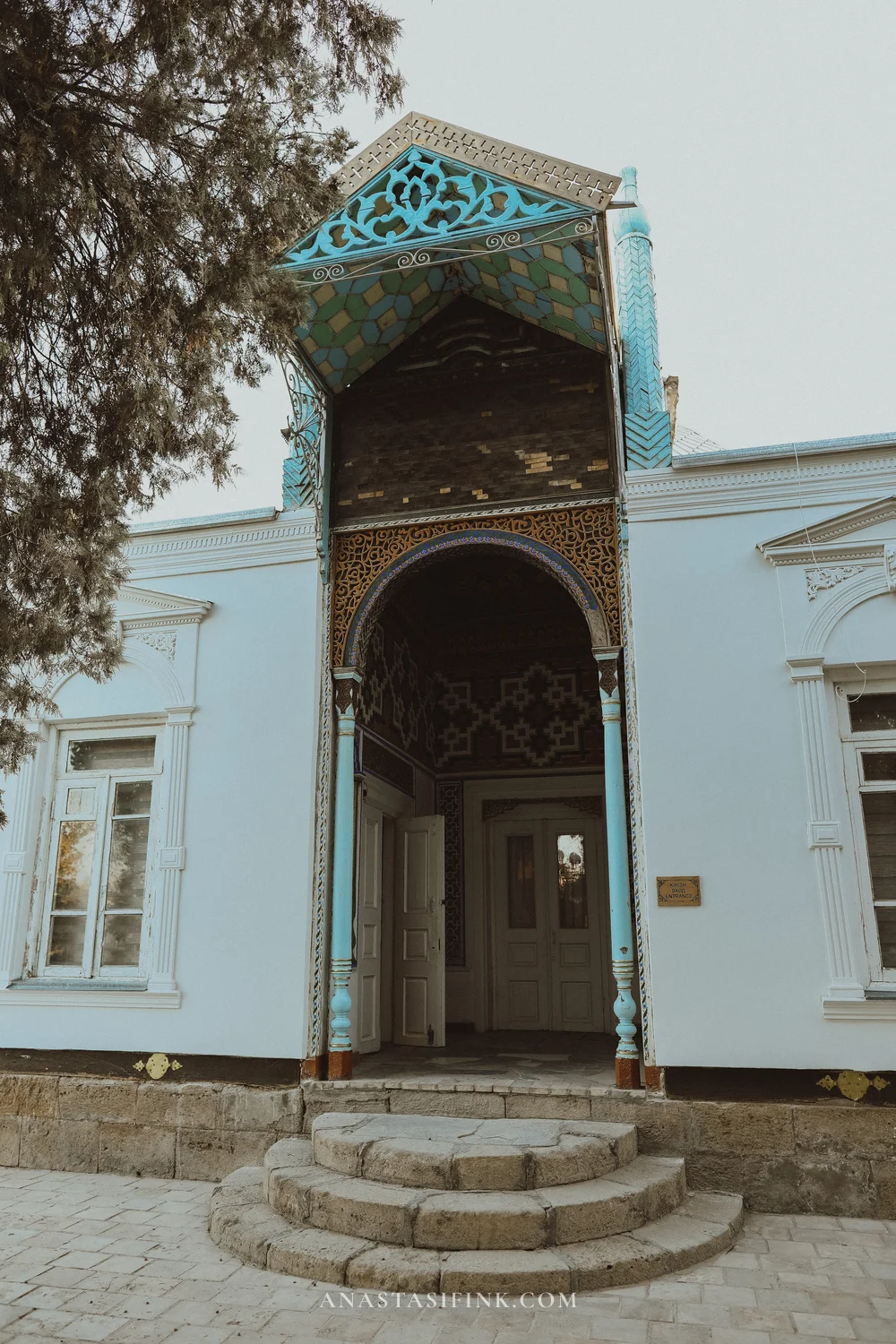
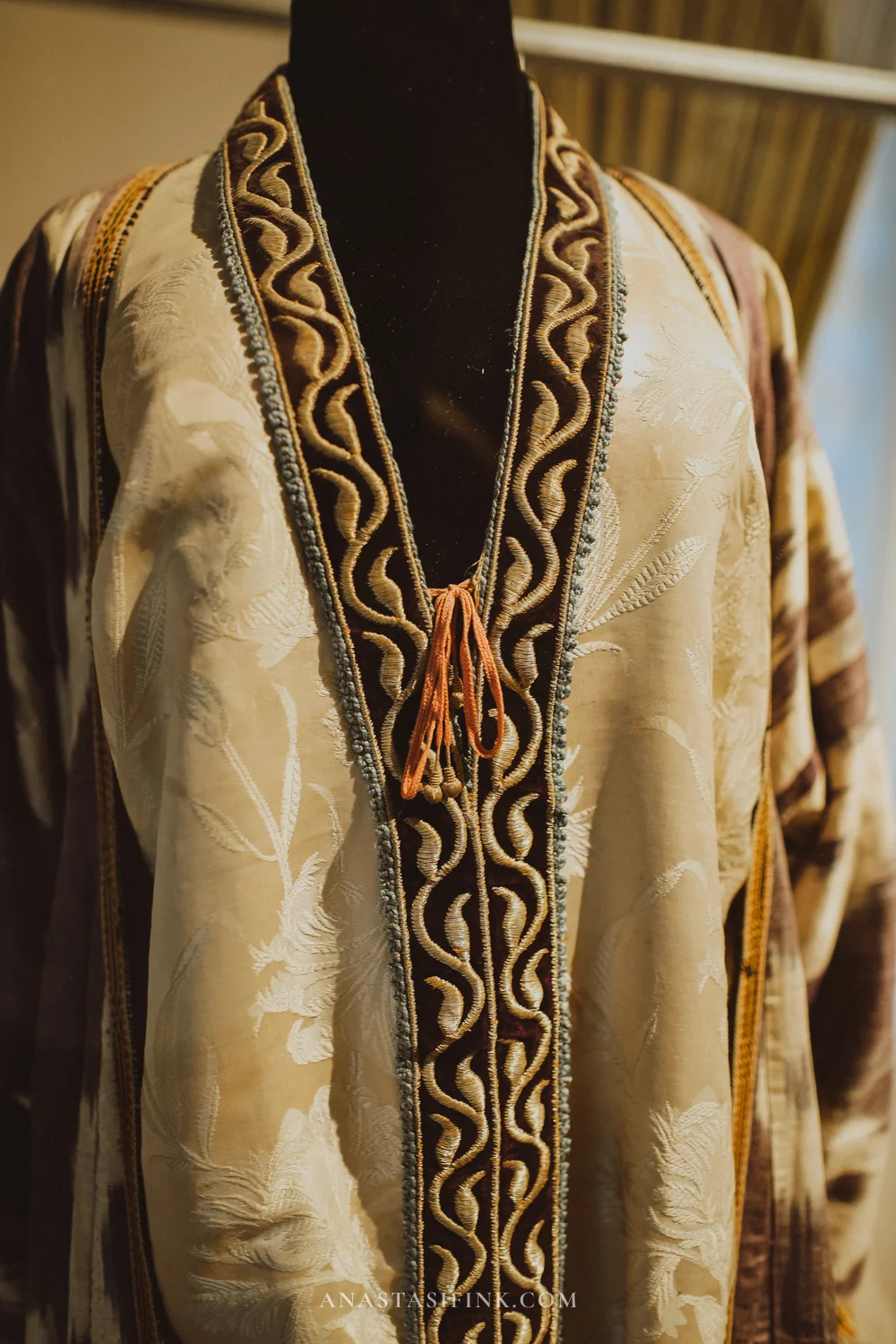
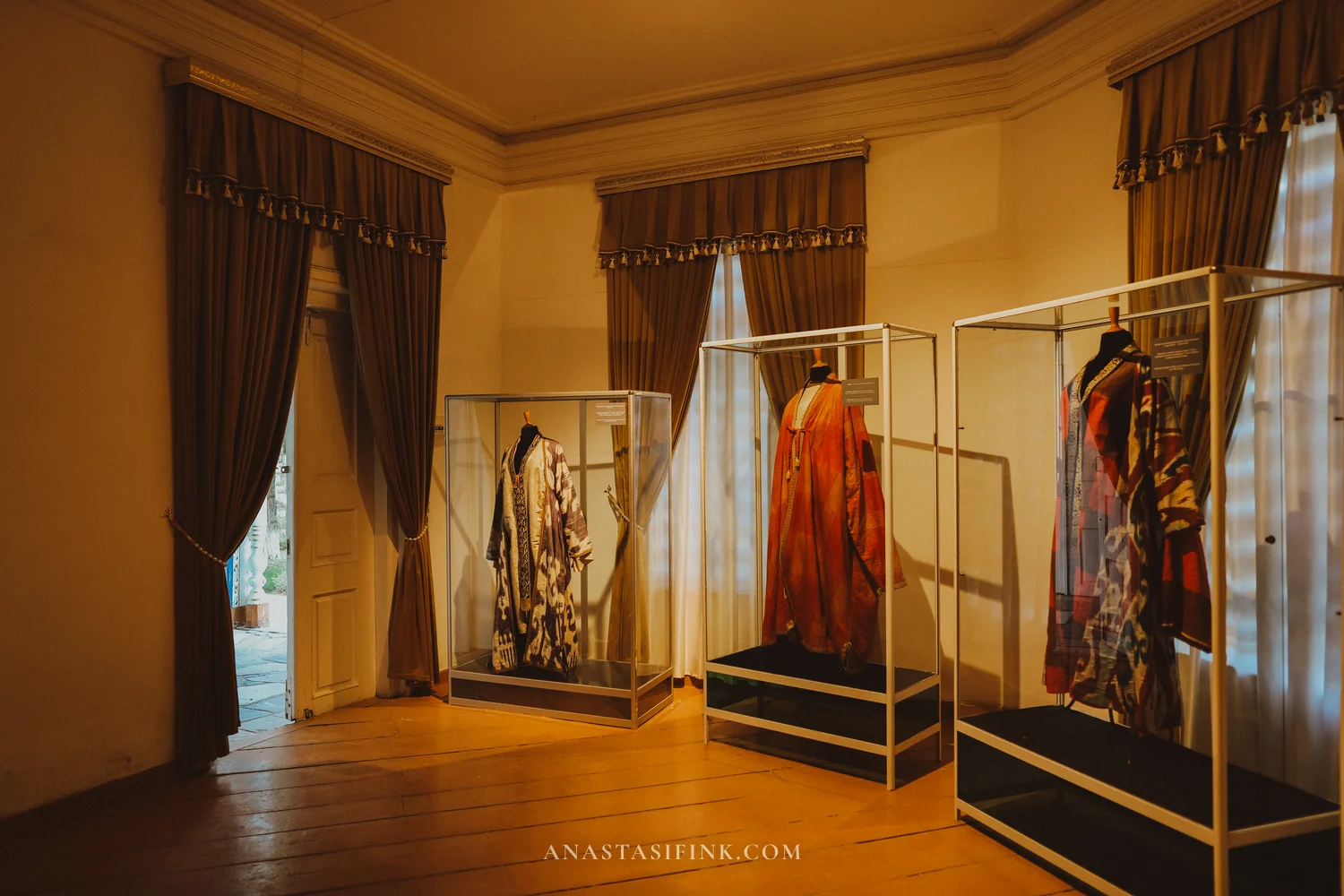
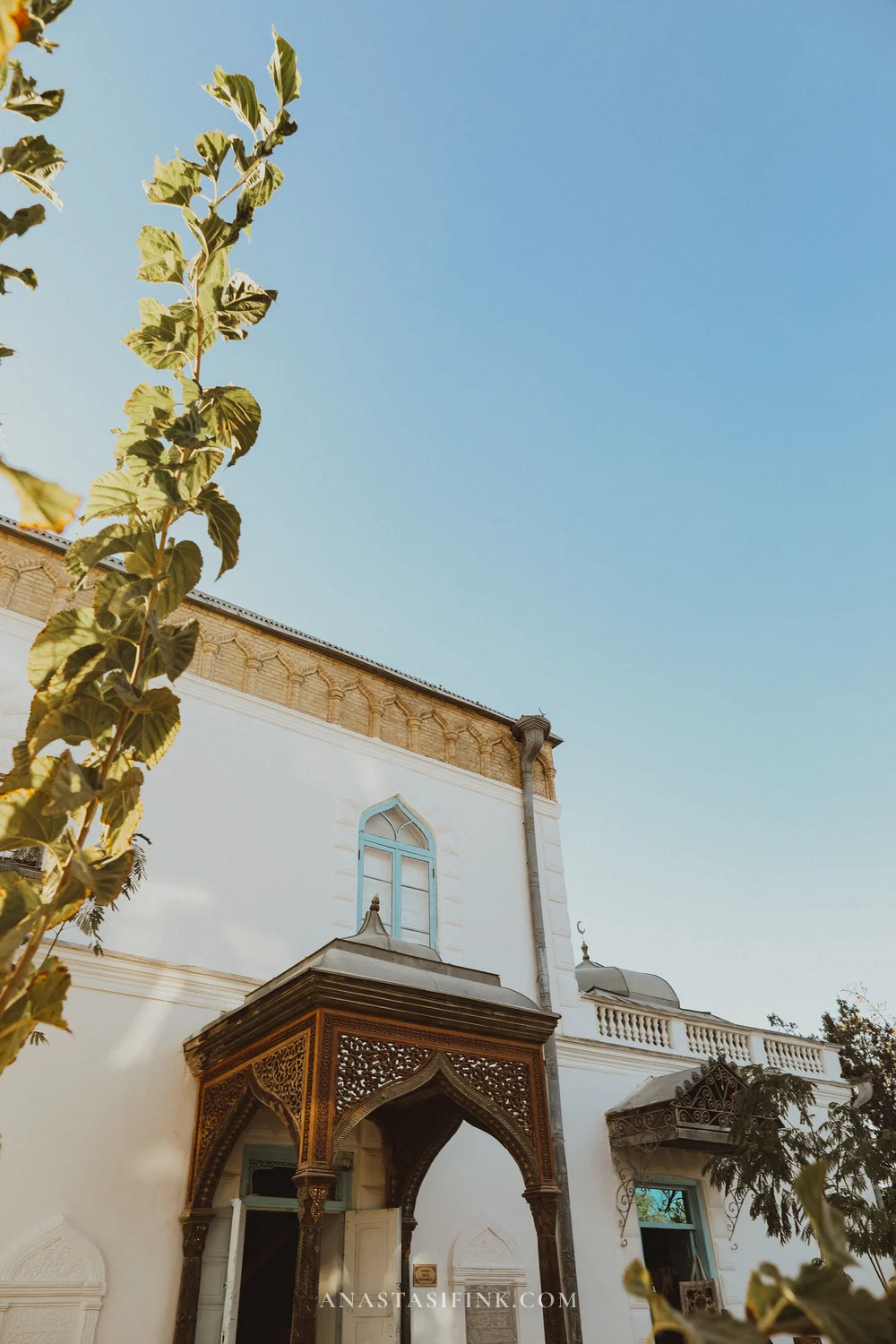
A separate building on the grounds houses the Costume Museum. It’s a freestanding structure with a carved blue iwan over the entrance. Inside is a collection of court costume: emirs’ robes, women’s dresses, shoes, headwear. Some pieces are behind glass, others on mannequins. If you love textiles and embroidery, give yourself at least half an hour here.
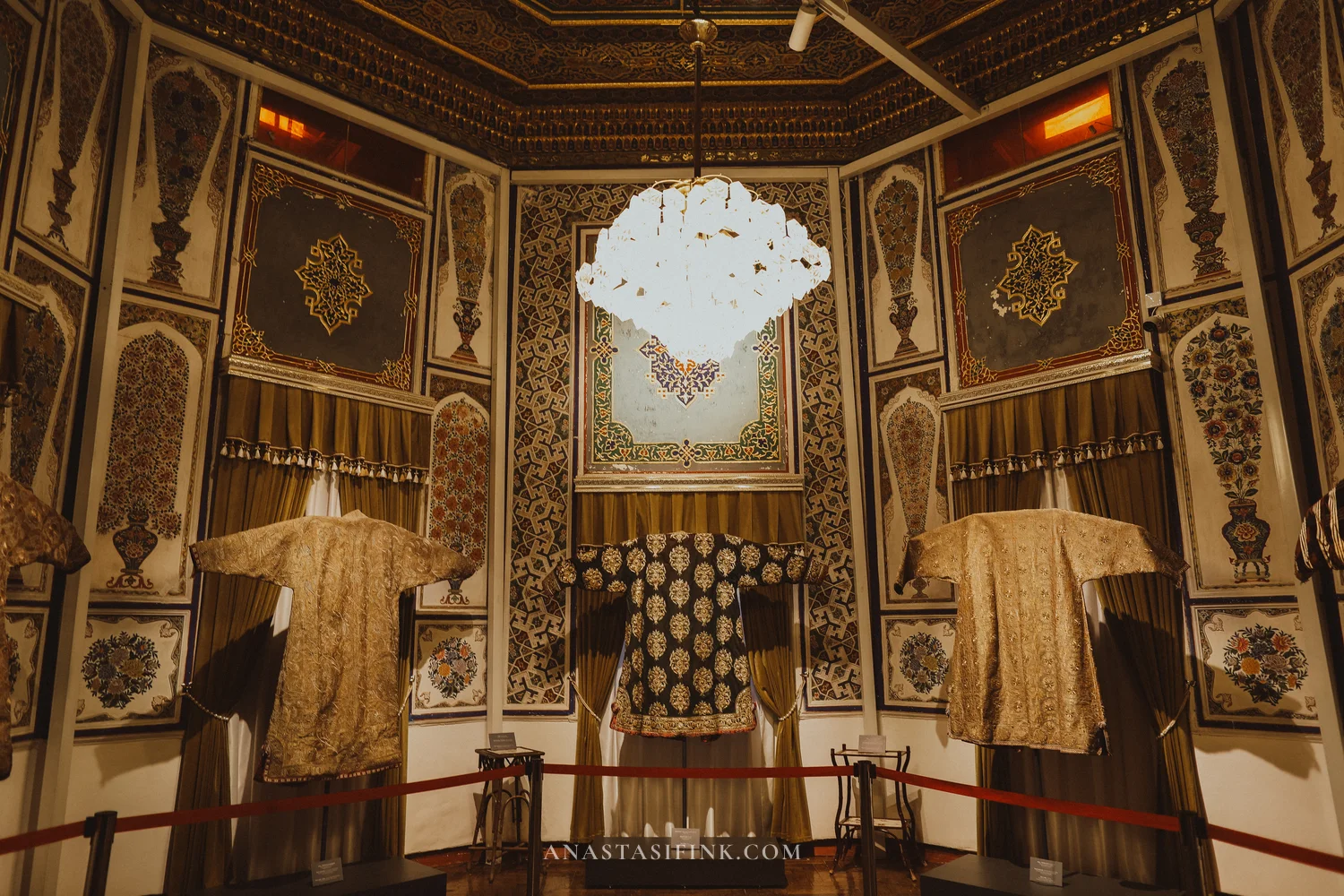
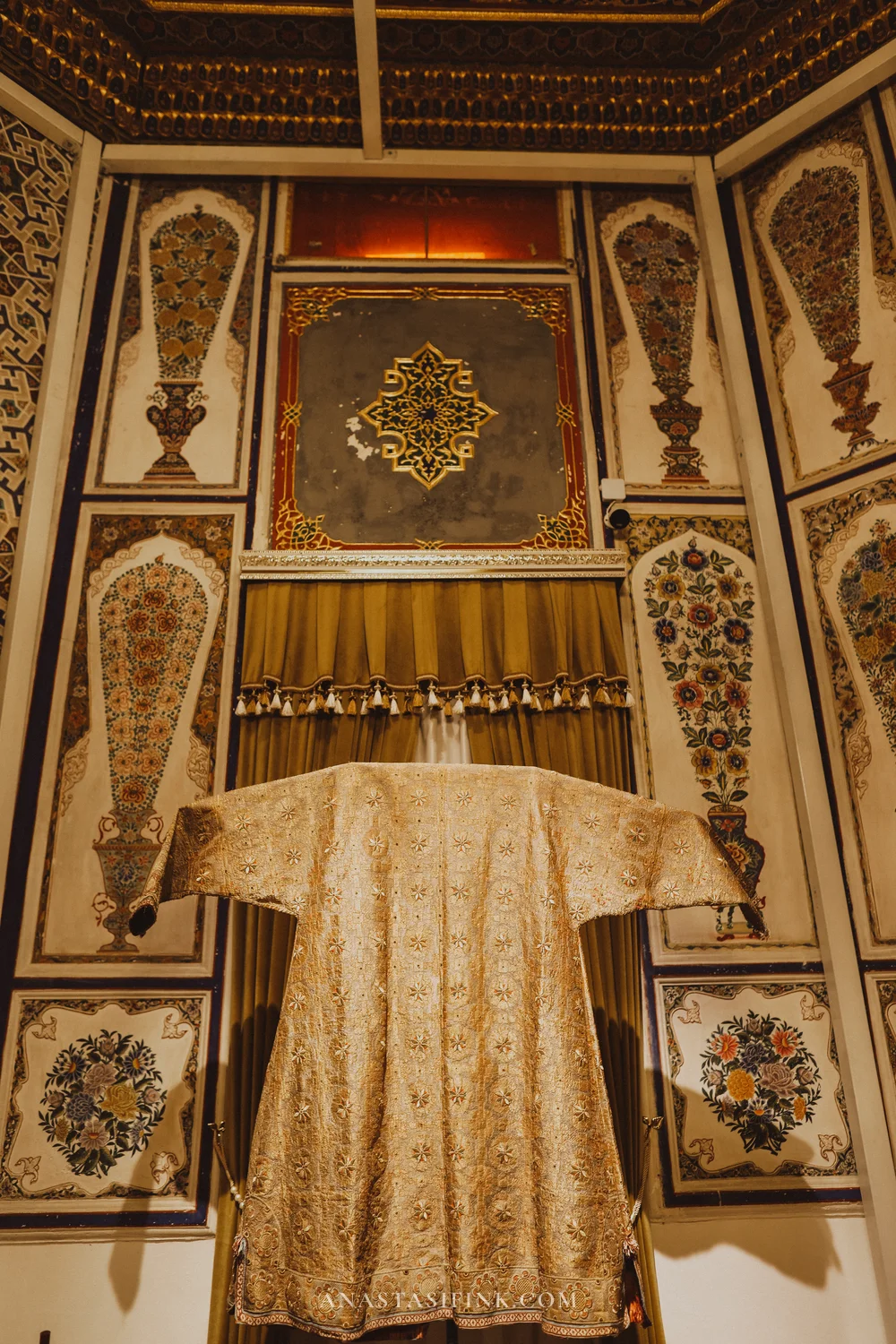
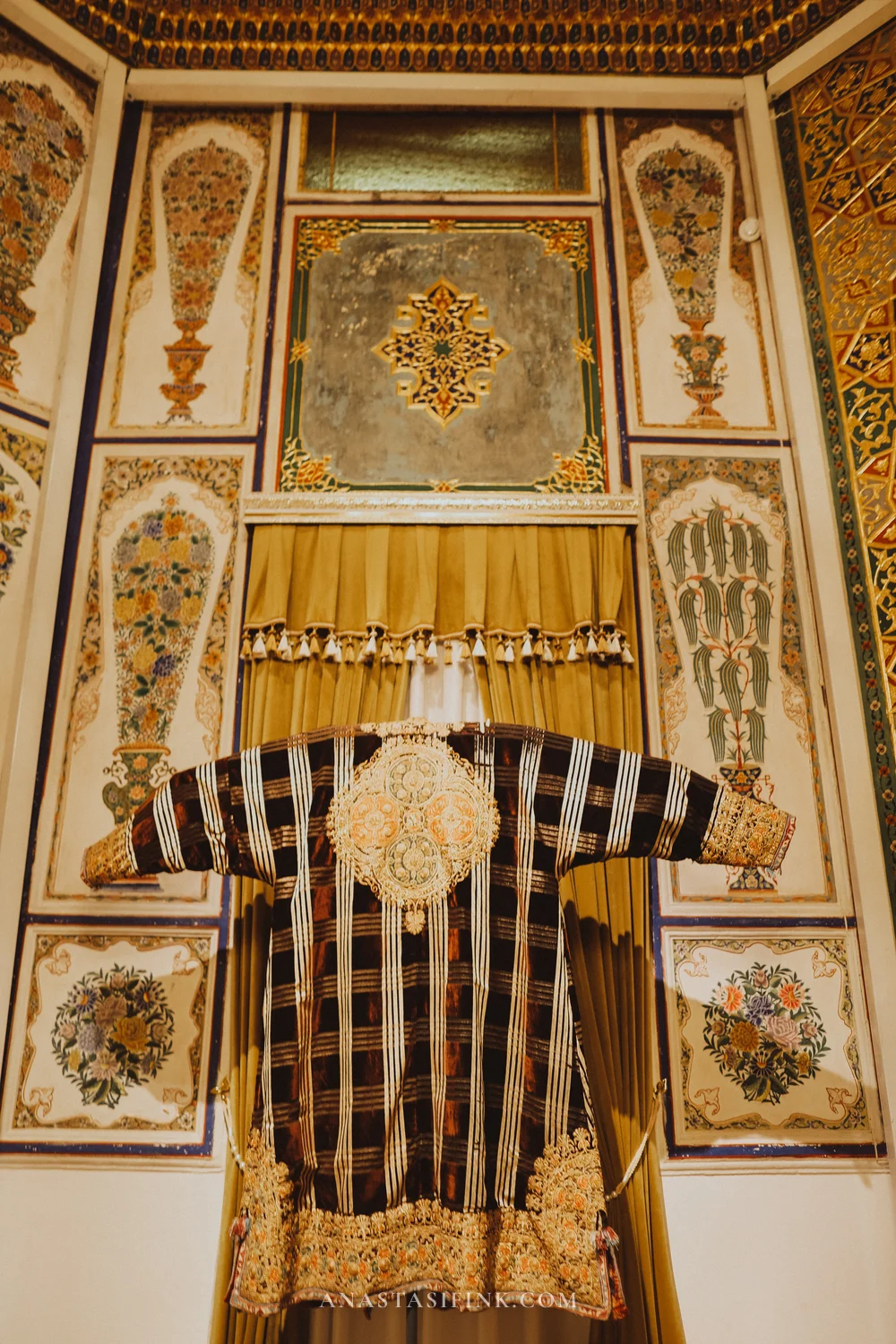
The ceremonial gold robe and the everyday striped one. Silk, gold thread, around five kilograms each
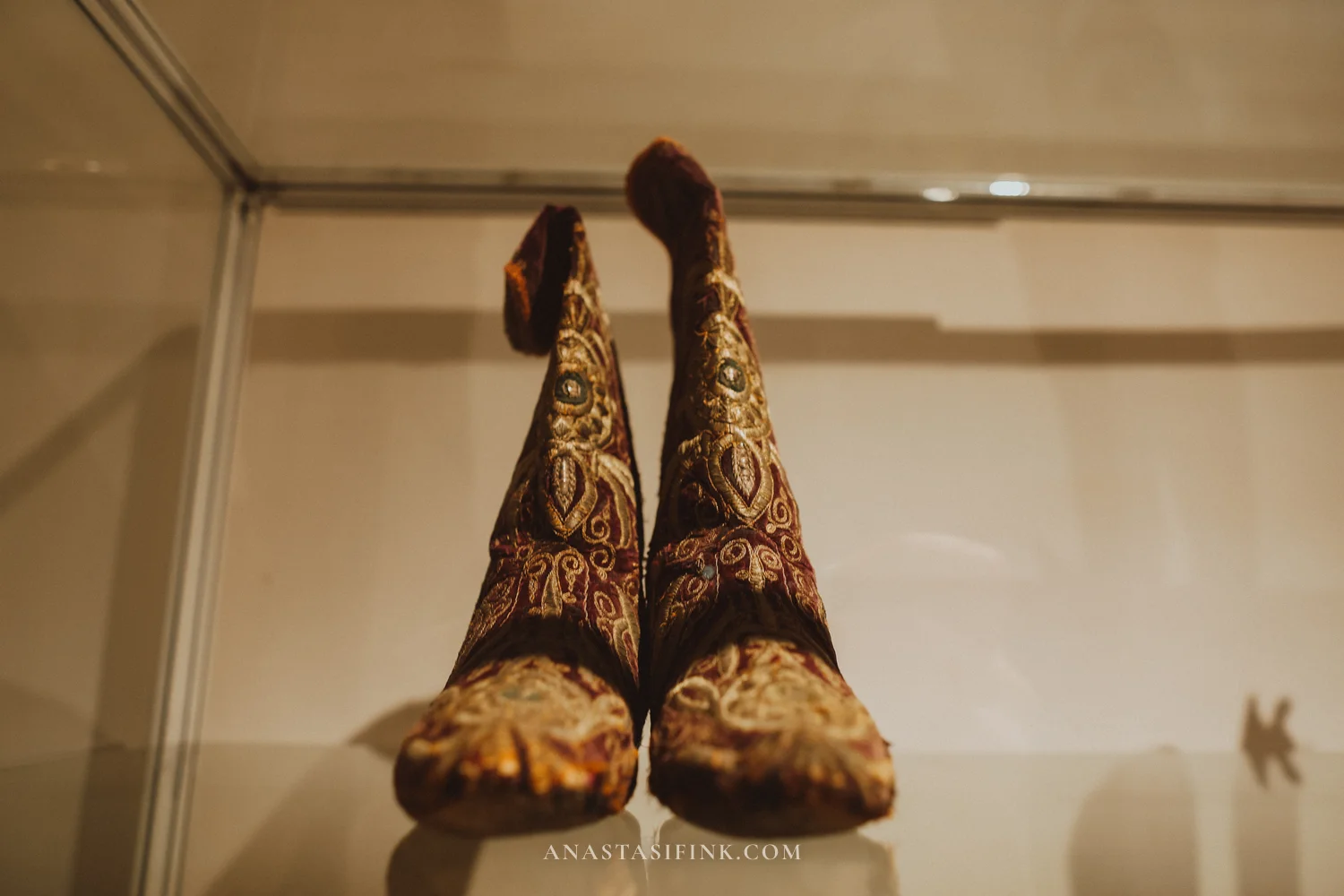
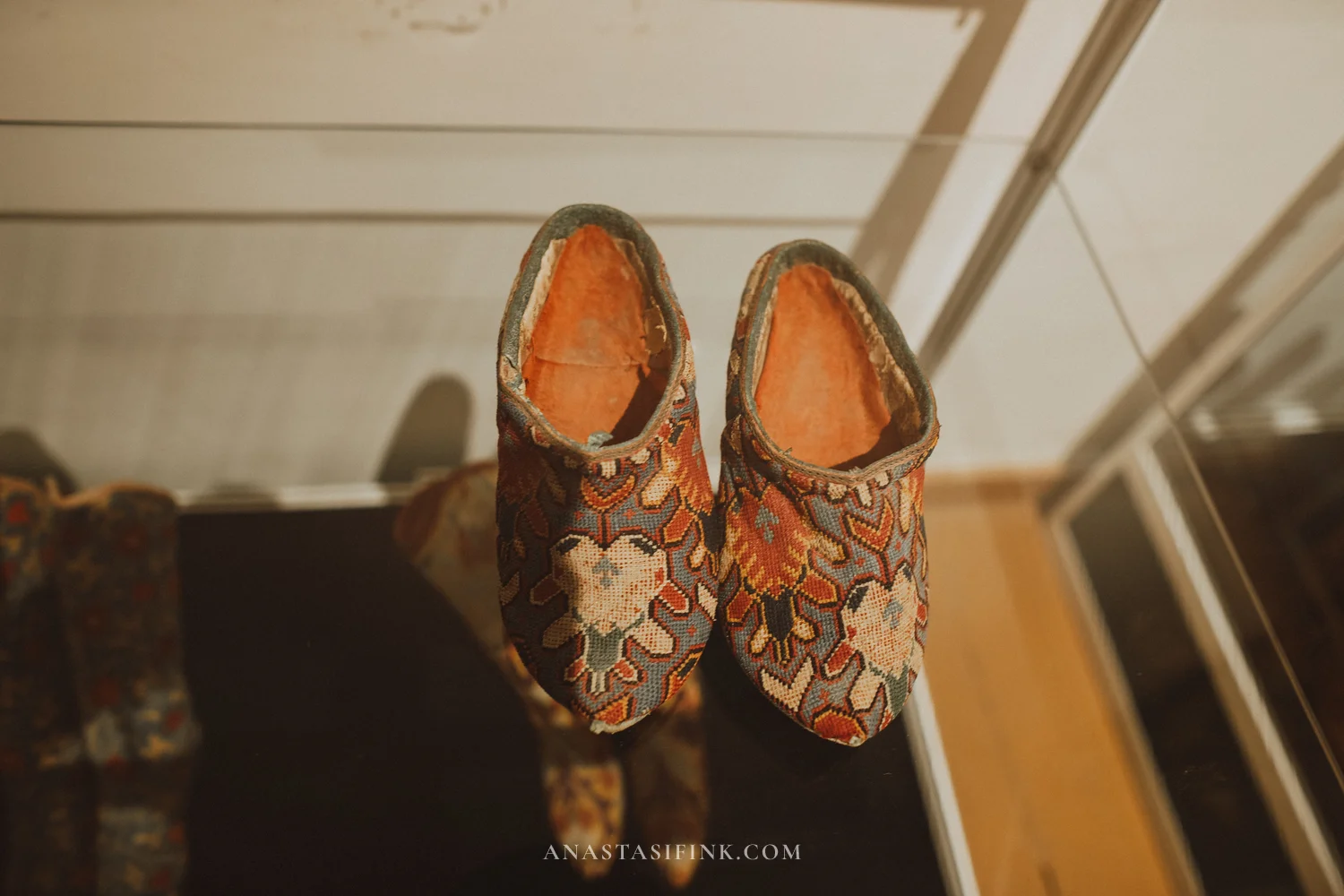
Boots and slippers — all hand-embroidered. The boots are men's, ceremonial. The slippers are women's, for indoors
The harem: a white pavilion by the pond — museum of suzanis and ceramics
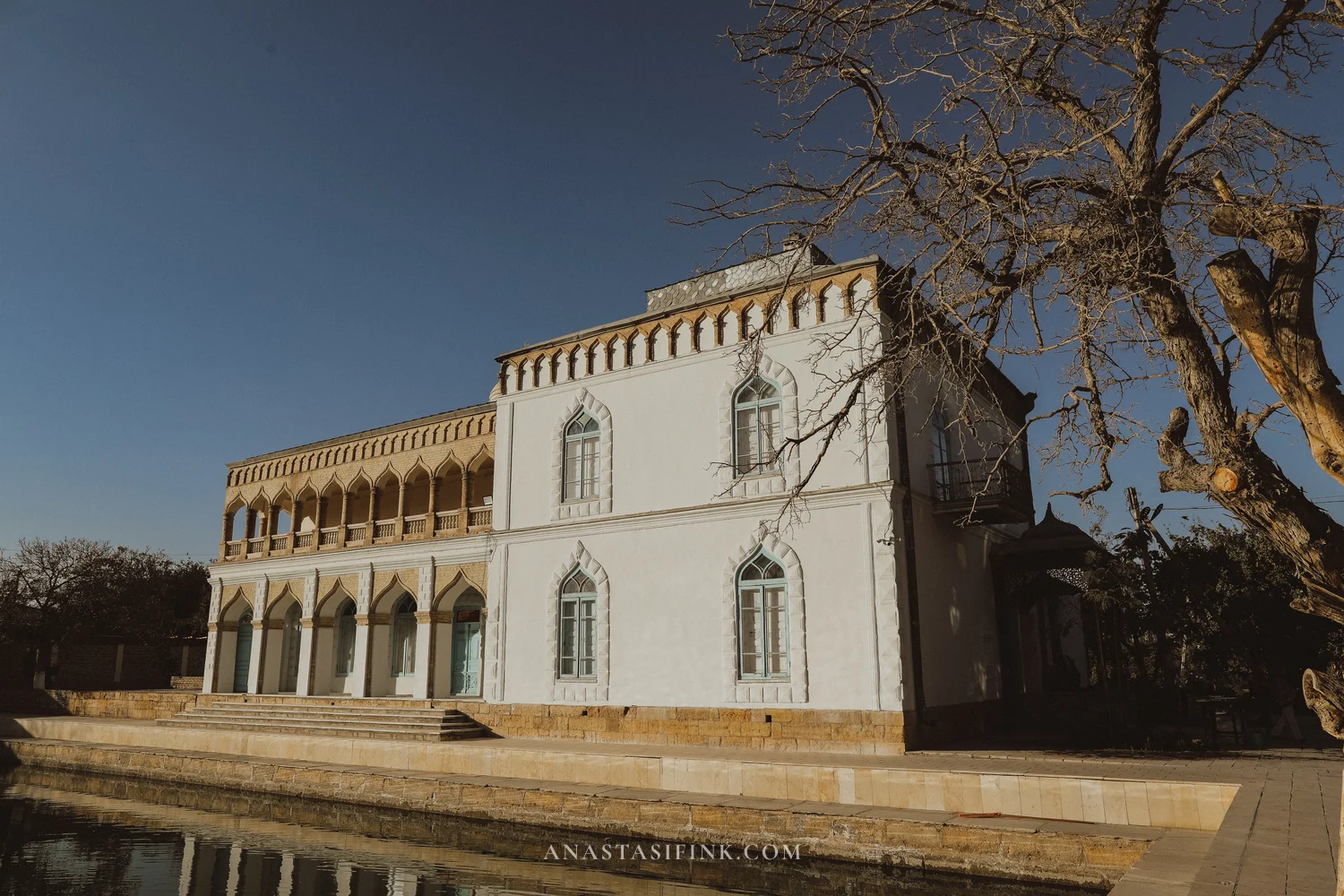
A little off to the side of the main complex stands a separate white pavilion with a pond in front of it. This is the former harem of the emir. Alim Khan had several wives, and each lived in her own section of the house. According to a popular Bukharan legend, the emir chose one of them after seeing her bathing in this pond — which is why the pond was kept right next to her quarters.
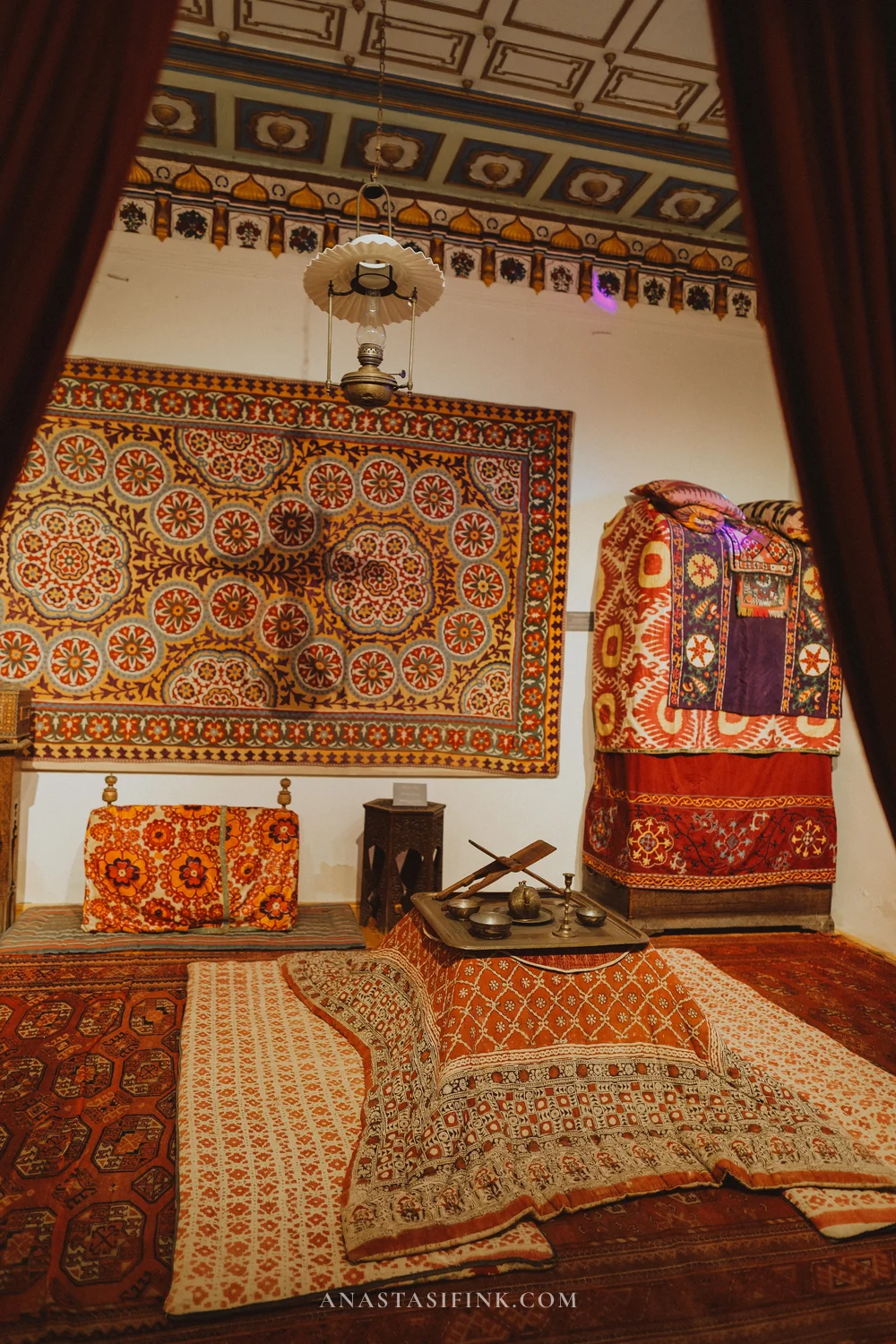
Today the harem houses the palace’s second large museum: a collection of suzanis (Bukharan hand embroidery), floor vases, tiled stoves, ceramic panels, and reconstructed living rooms.
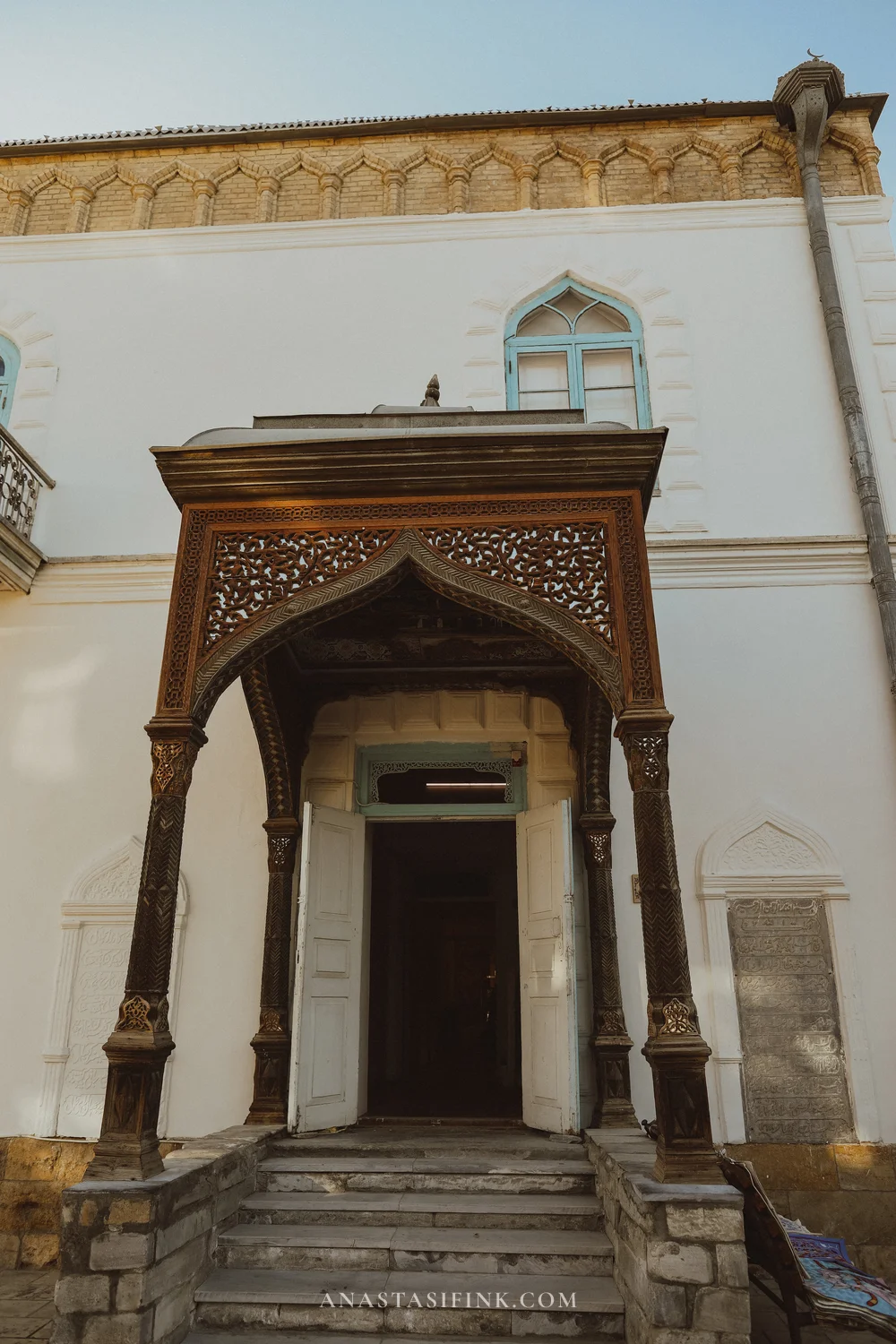
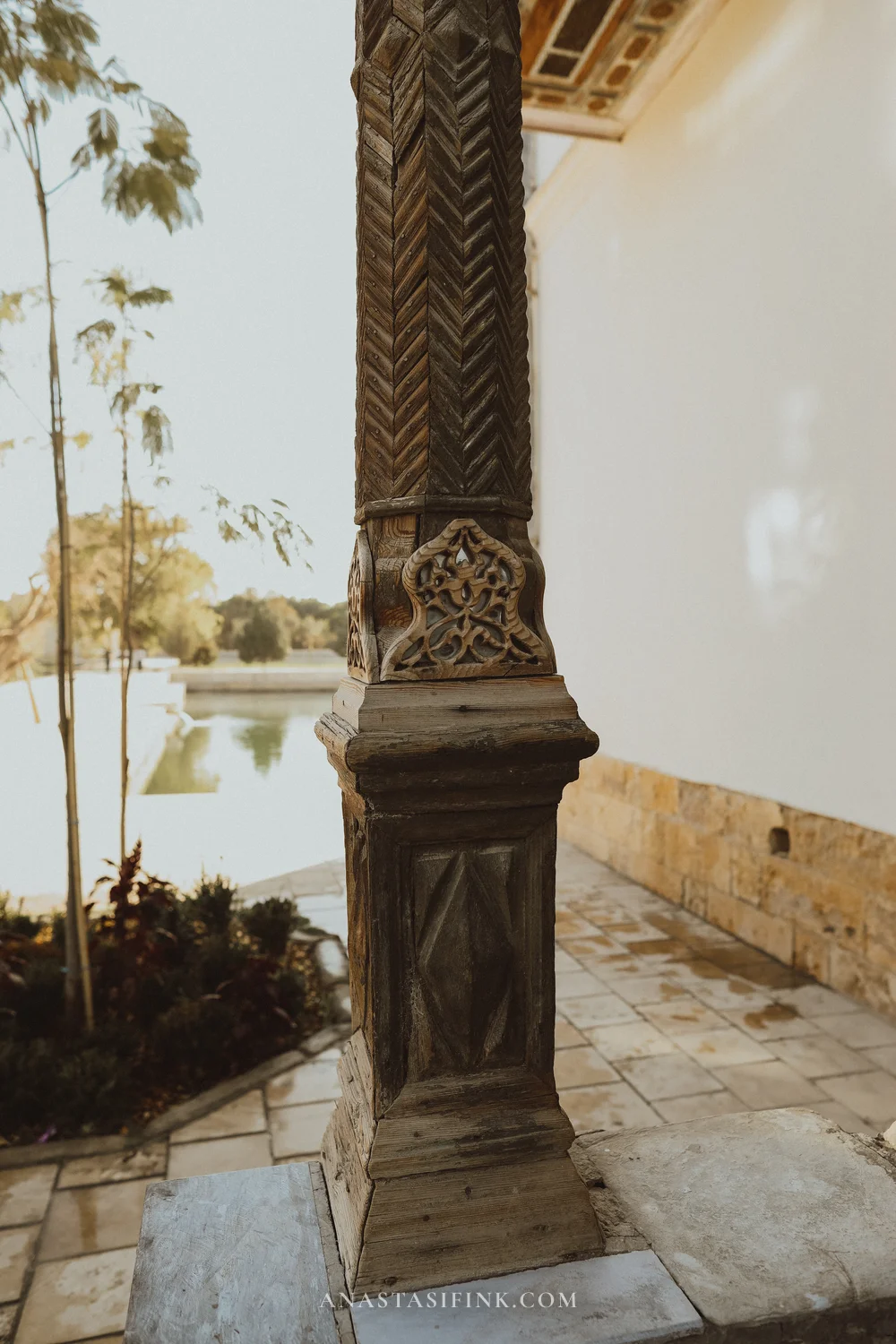
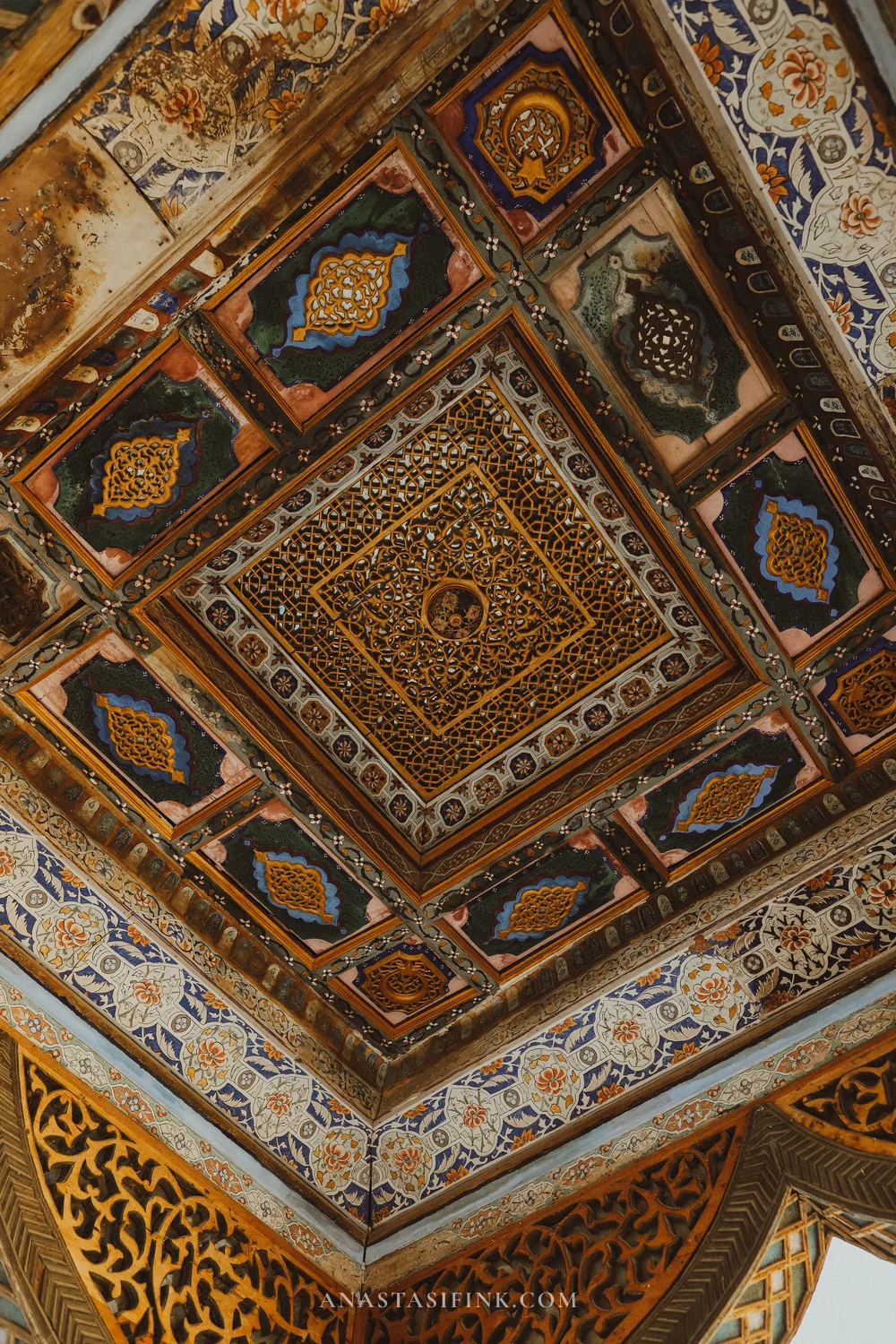
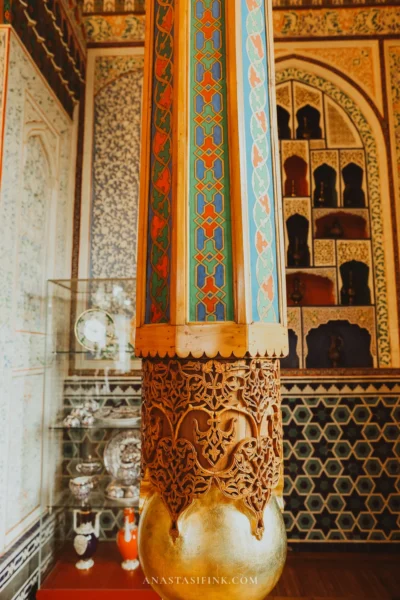
A column by the pond and the painted ceiling above the entrance. The pattern is just like a miniature, blown up ten times in scale
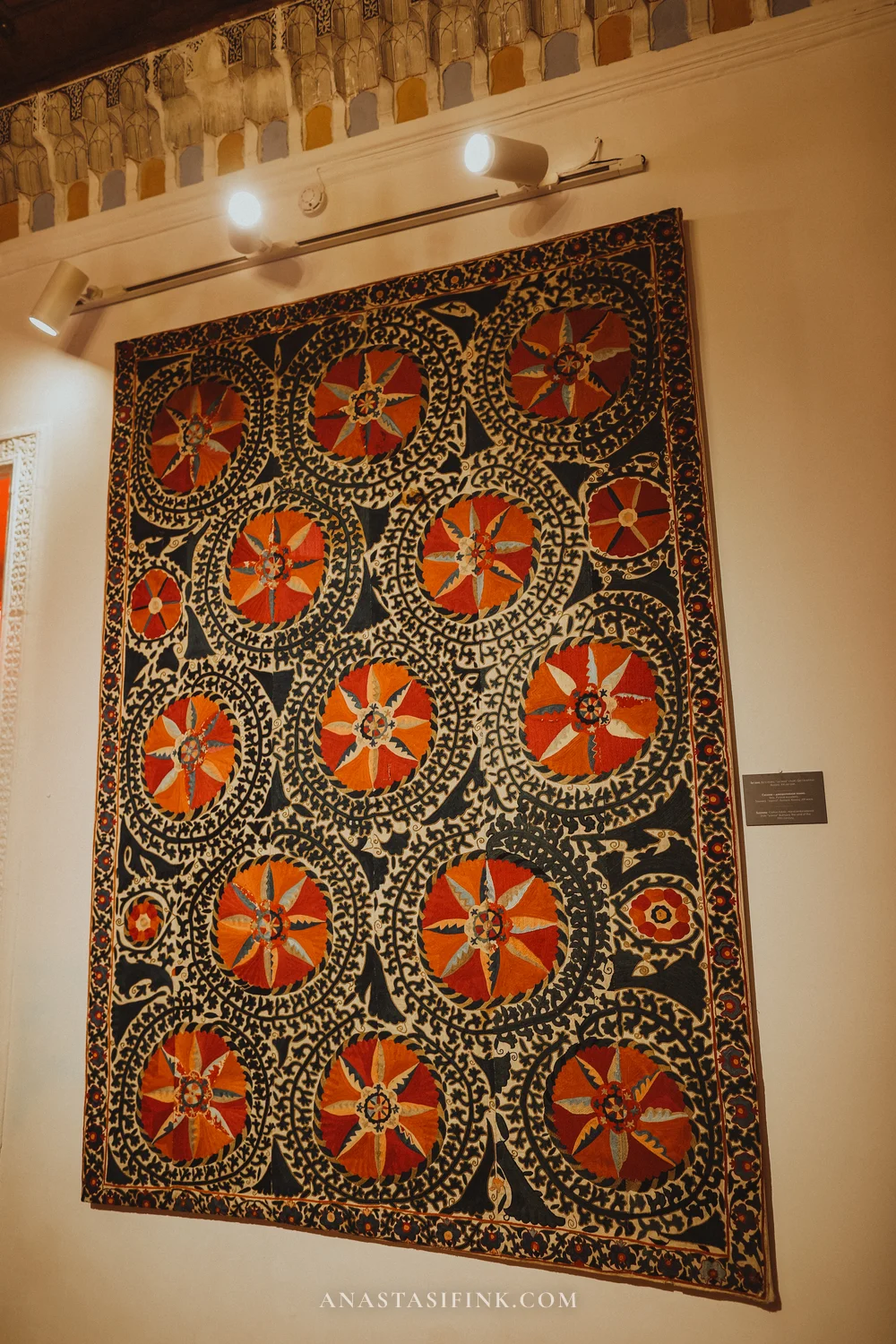
Suzanis and reconstructed rooms
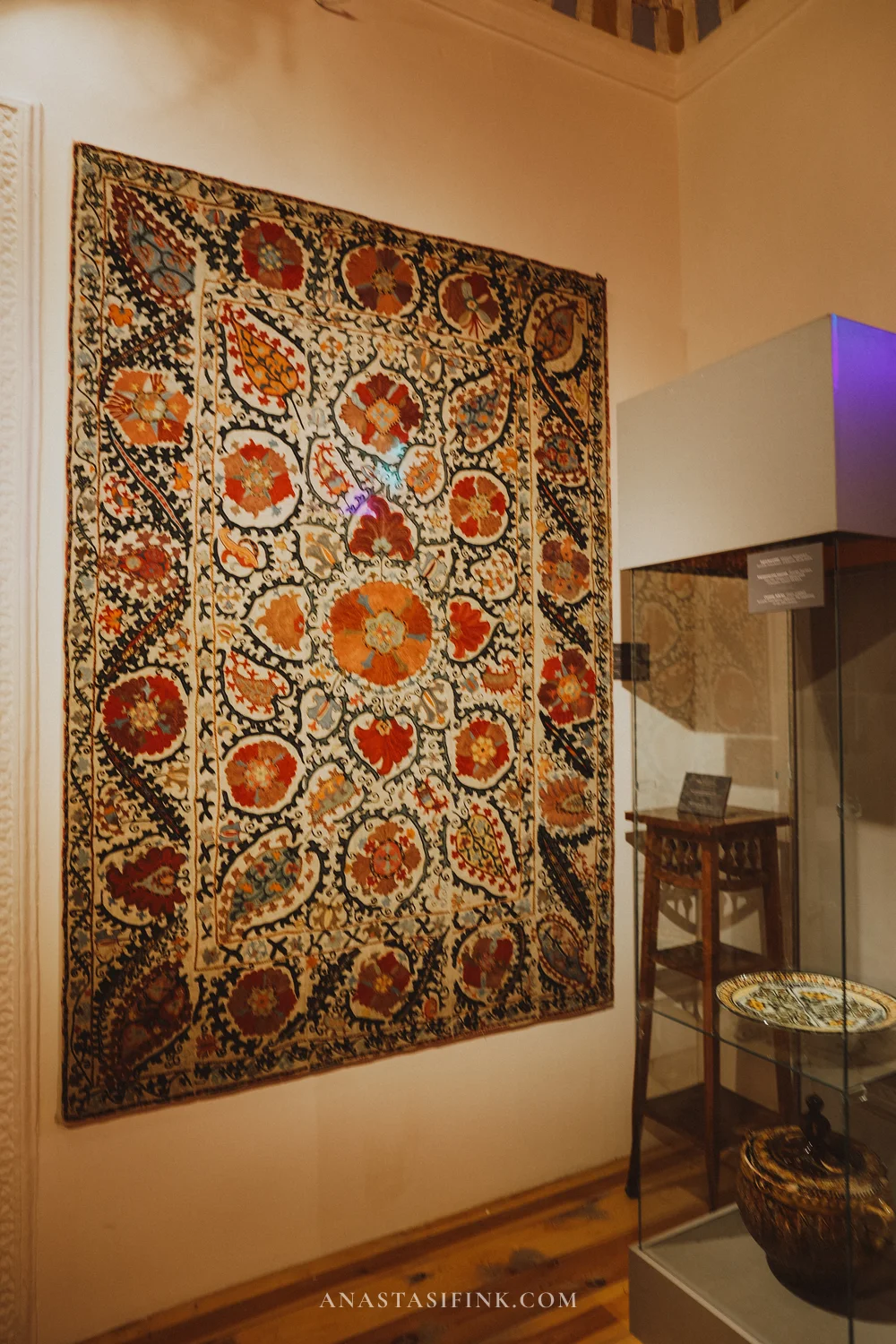
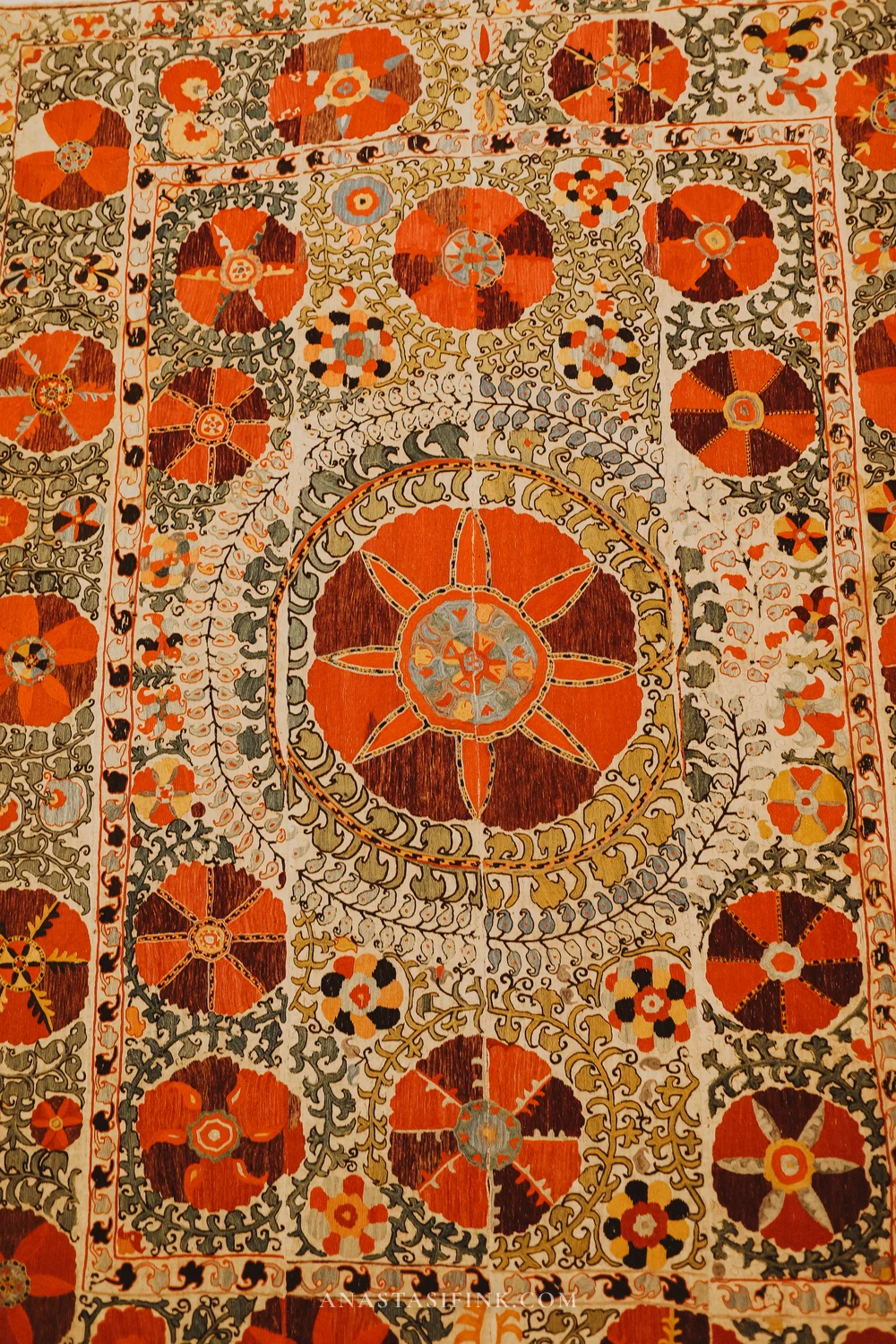
Suzanis with medallions: a typical Bukharan pattern. Each circle is its own motif, symbolizing the sun or a flower
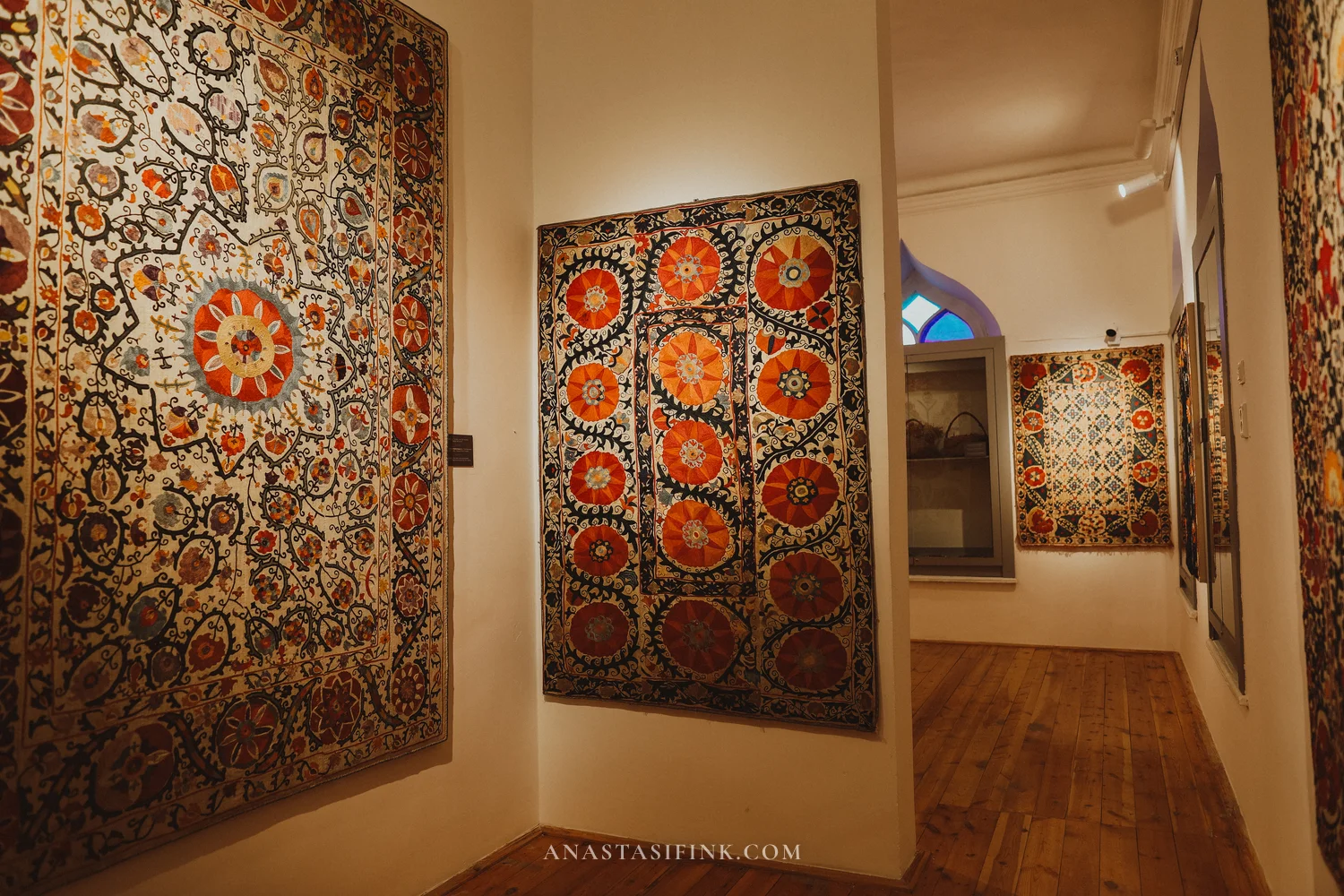
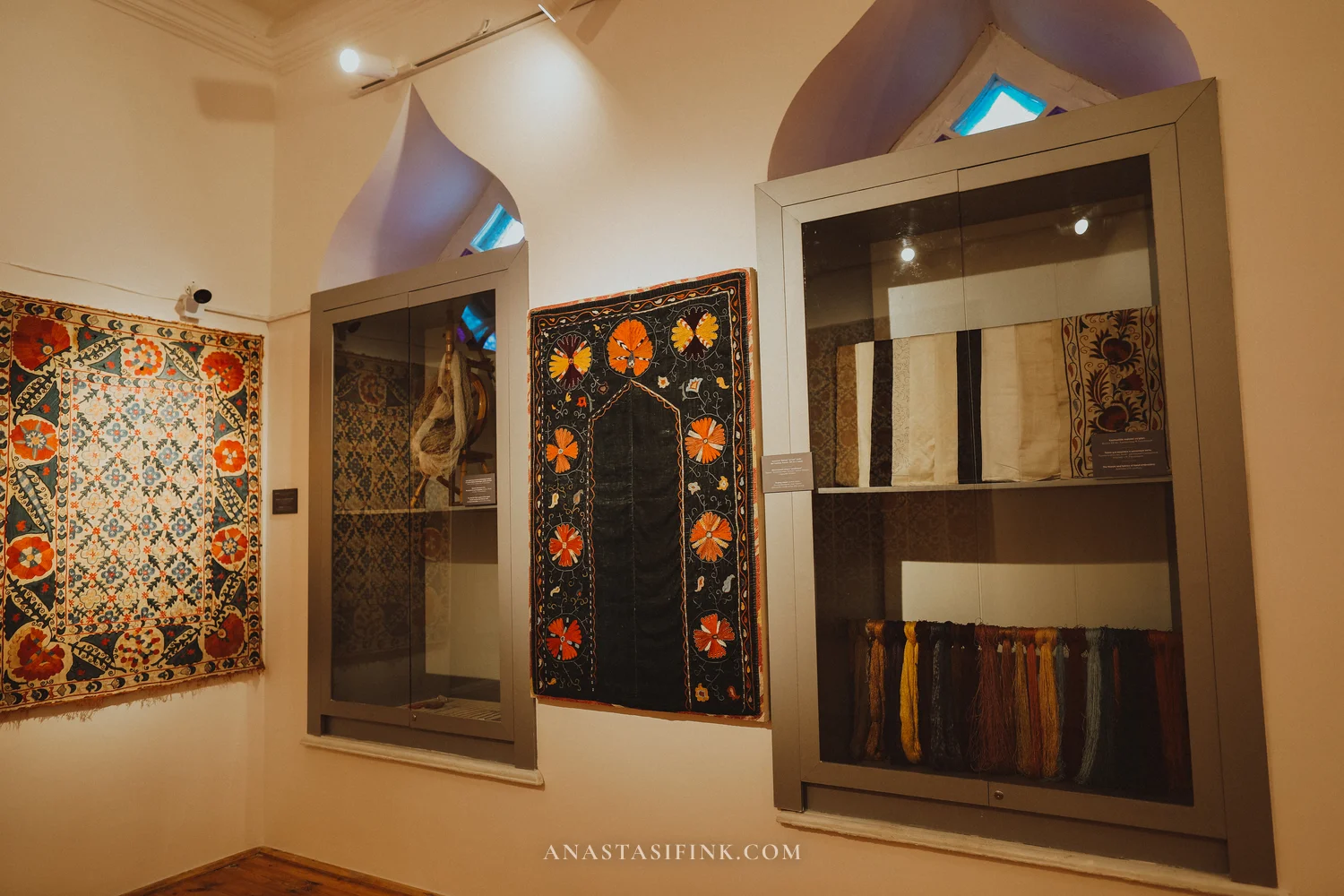
The whole suzani hall: large nineteenth- and early twentieth-century panels on the walls, with thread and needle samples in the cases
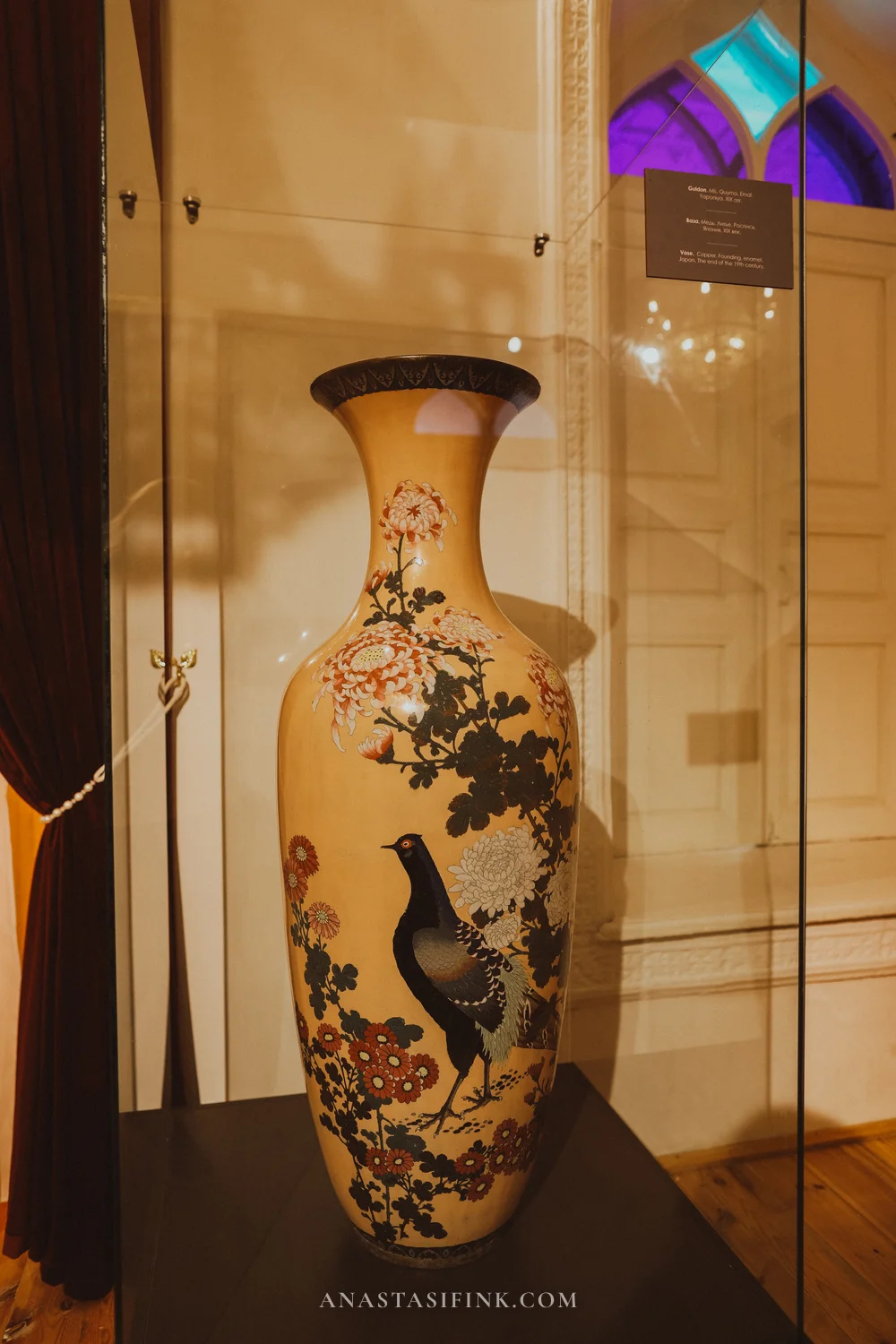
Tiled stoves and ceramic panels
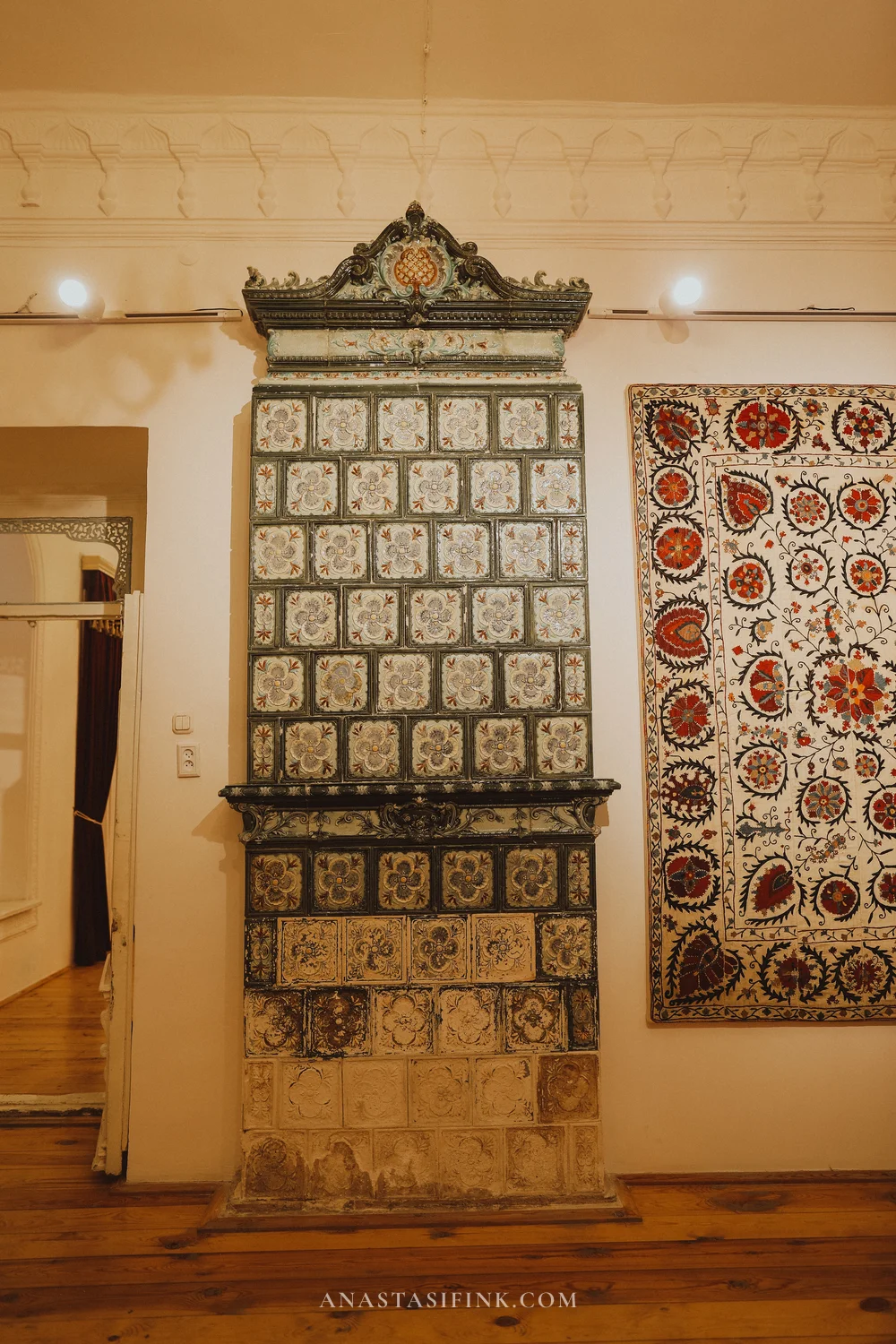
The same halls also display tiled stoves, ceramic panels, and dinnerware. It’s essentially a reconstruction of the lived-in interiors: what the sitting room and dining room looked like in the early twentieth century.
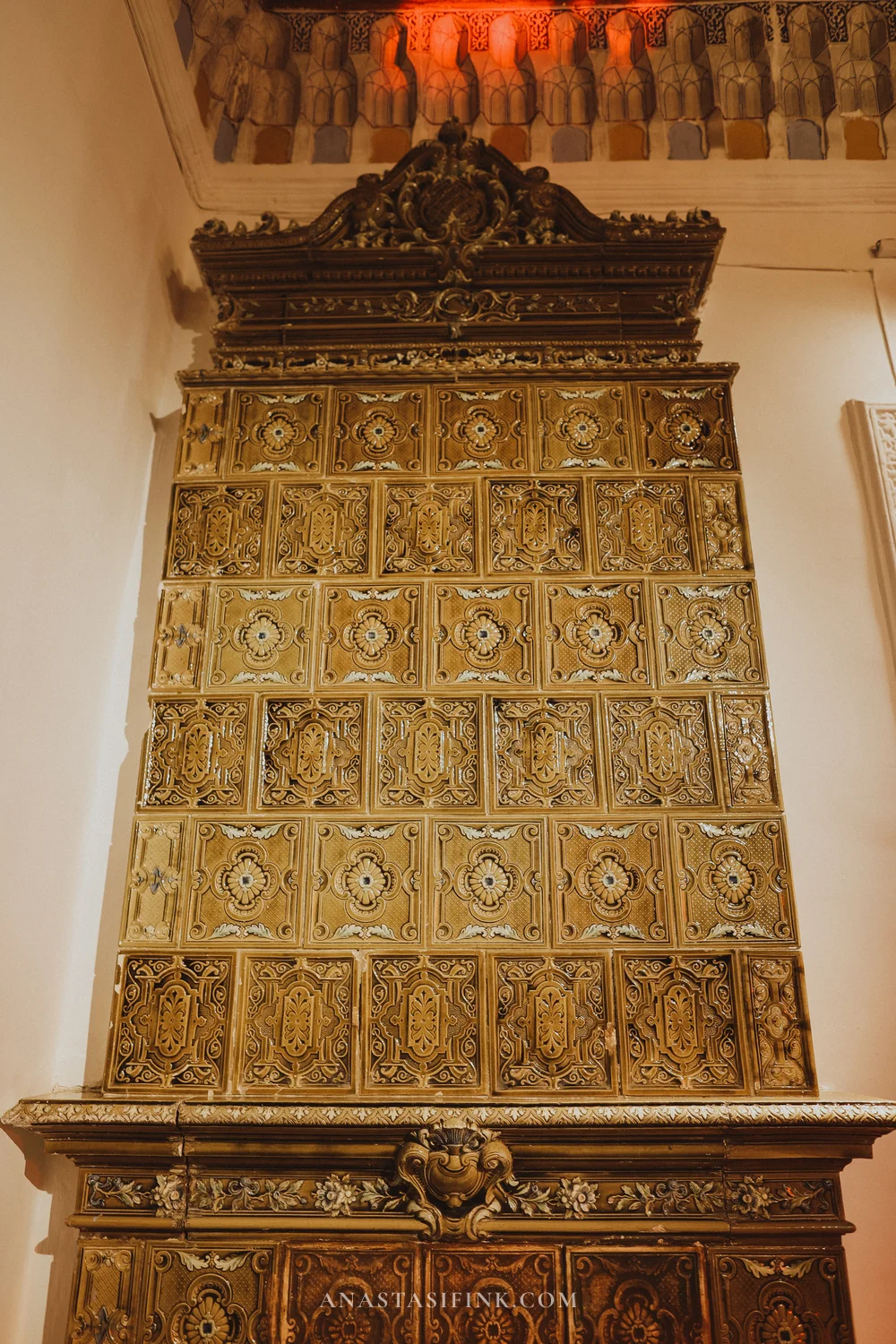
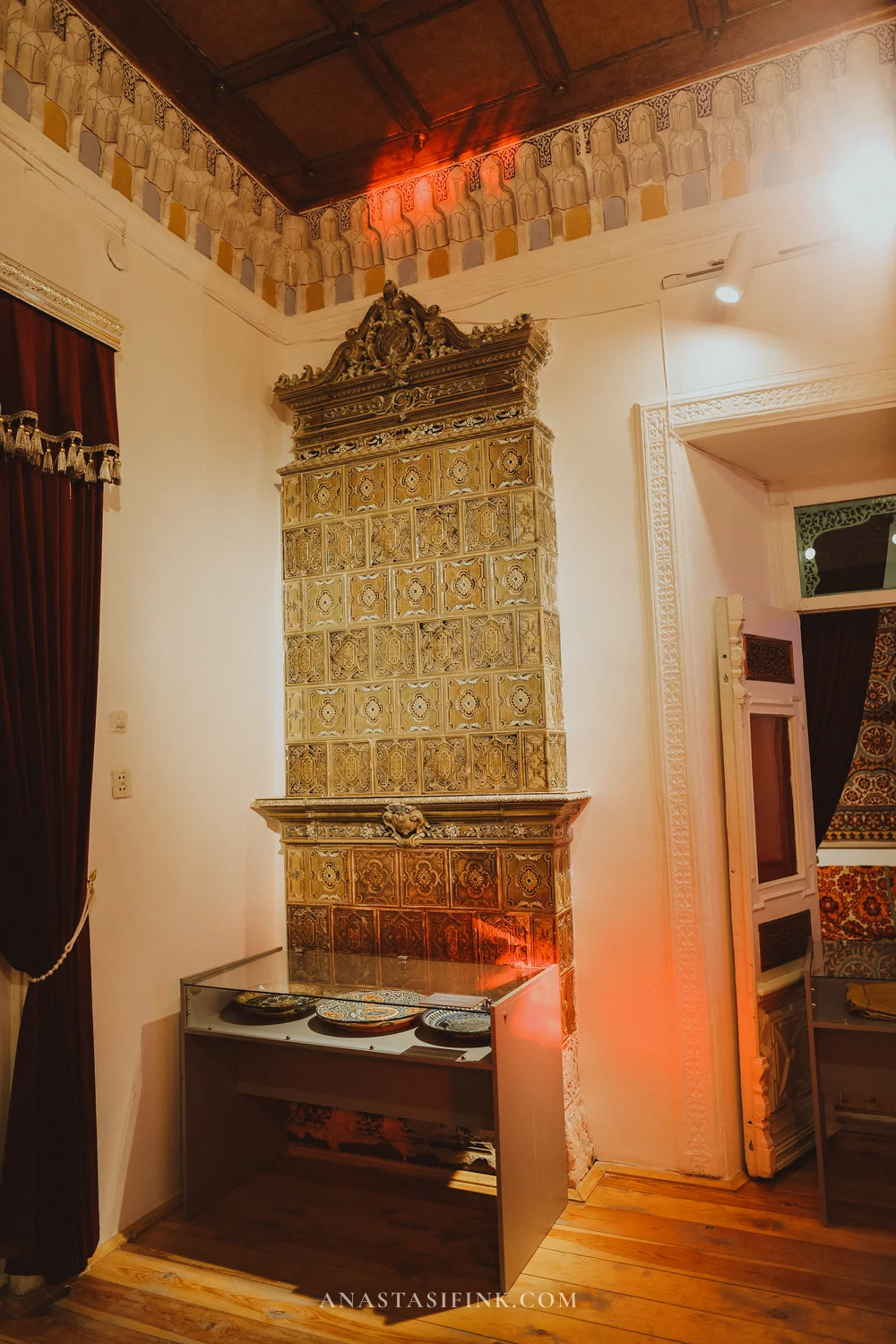
The stoves: the cream-colored one is late Art Nouveau, with dishes from the same period arranged beside it
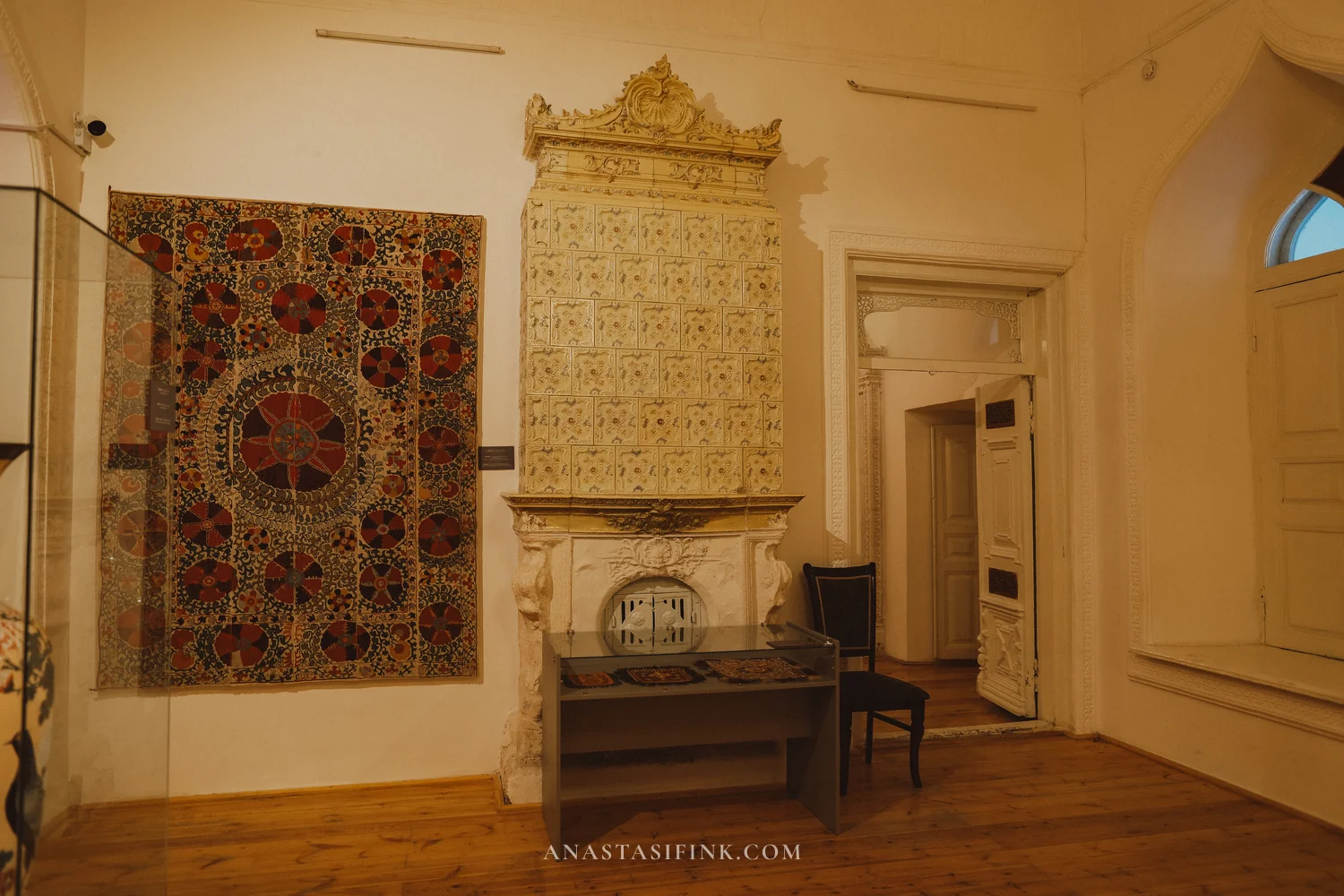
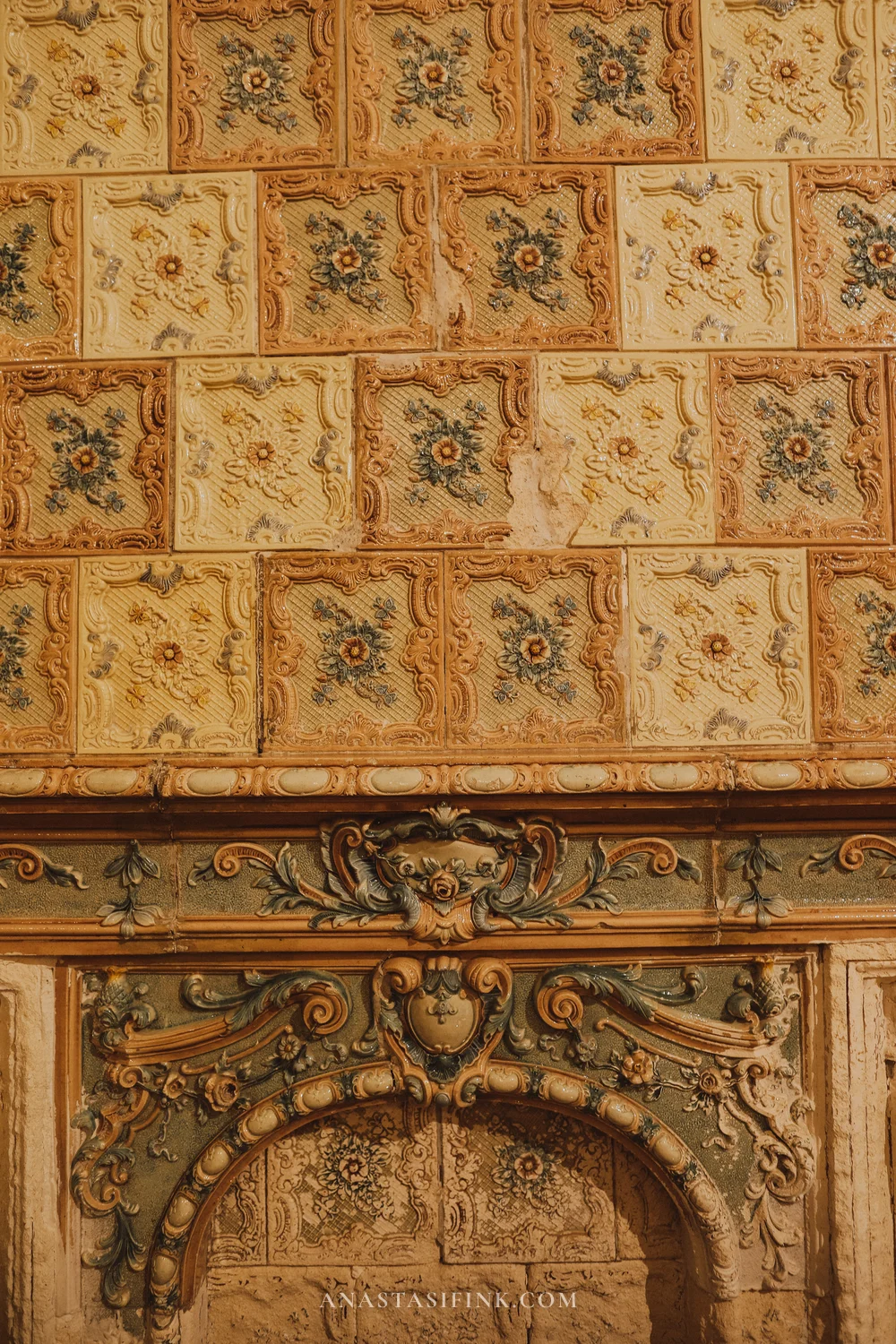
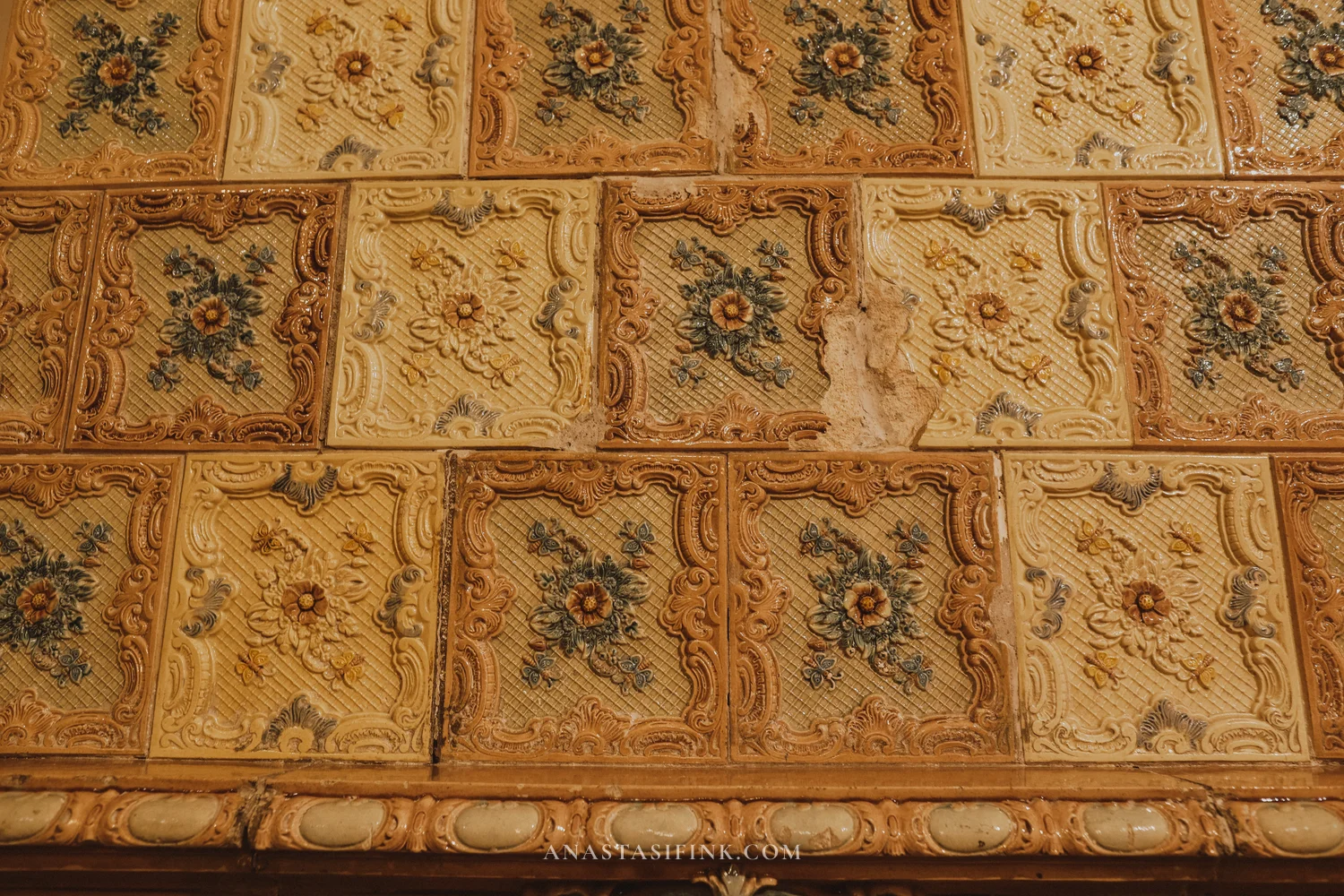
Tiles up close: relief Art Nouveau, early twentieth century. You can see small chips — the stove is old, but the restoration was done gently
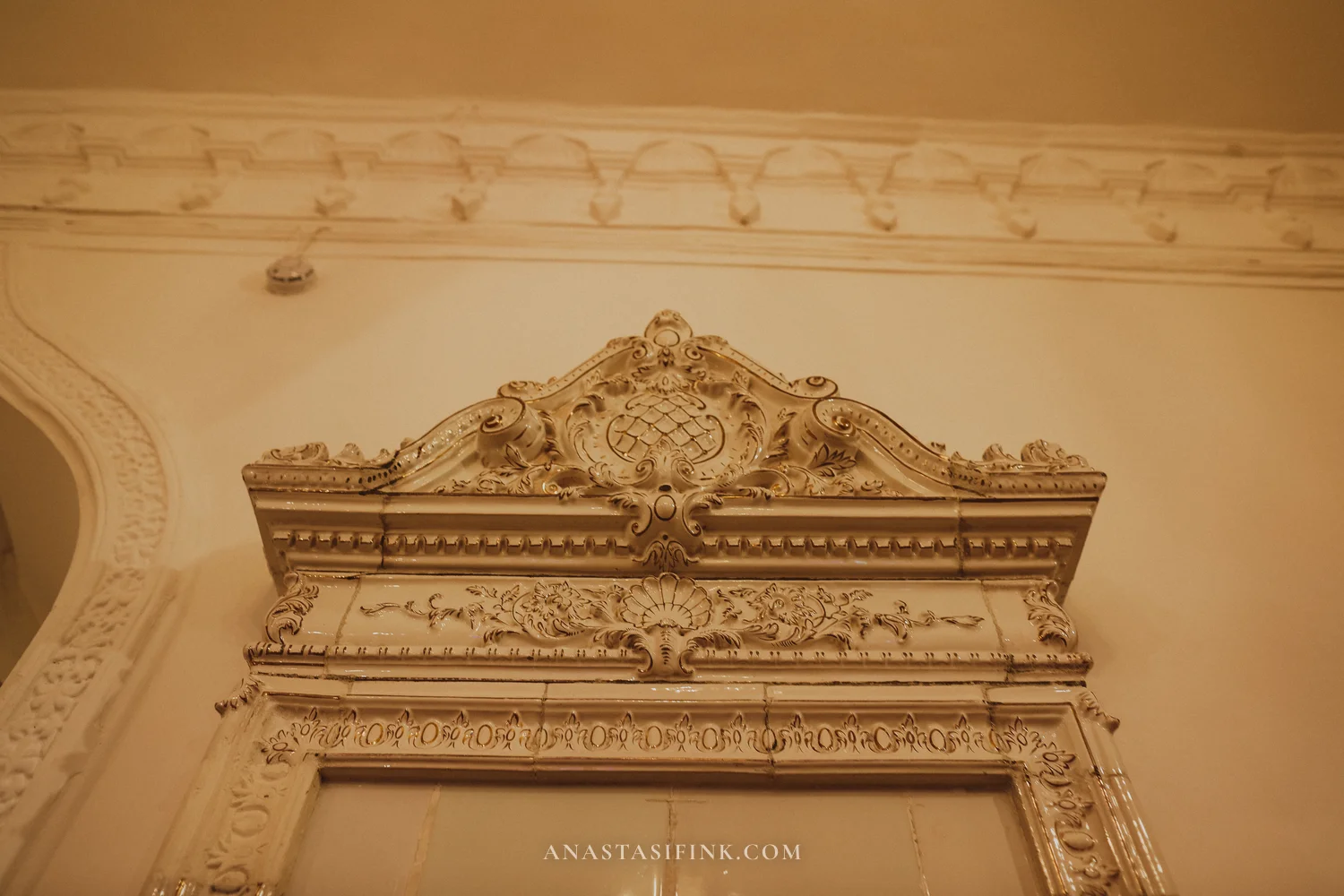
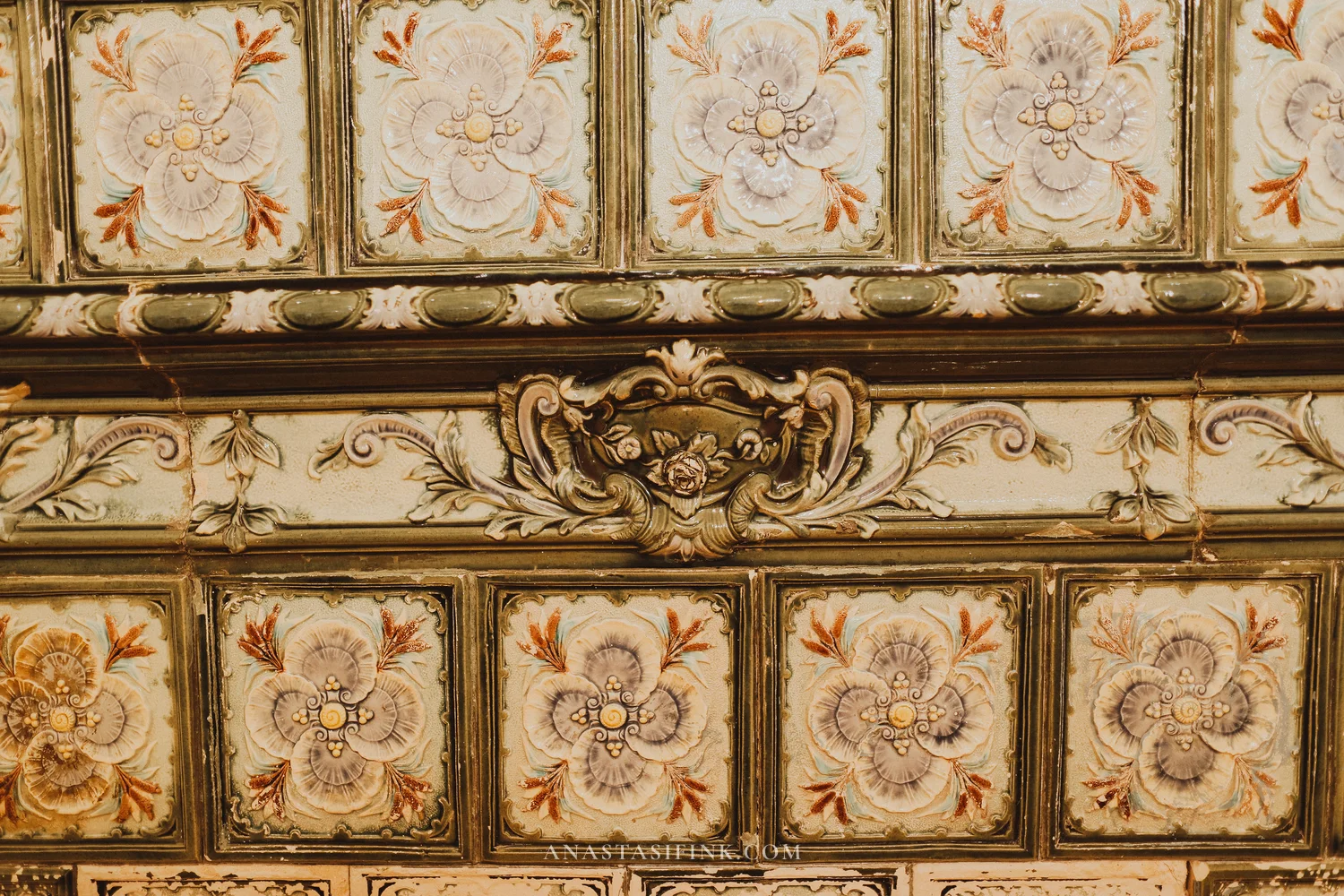
Stucco and medallions: all of it from Russia, but the subjects were chosen for local taste — no figures, just flowers and geometry
The summer mosque in the garden — the emir's carved pavilion
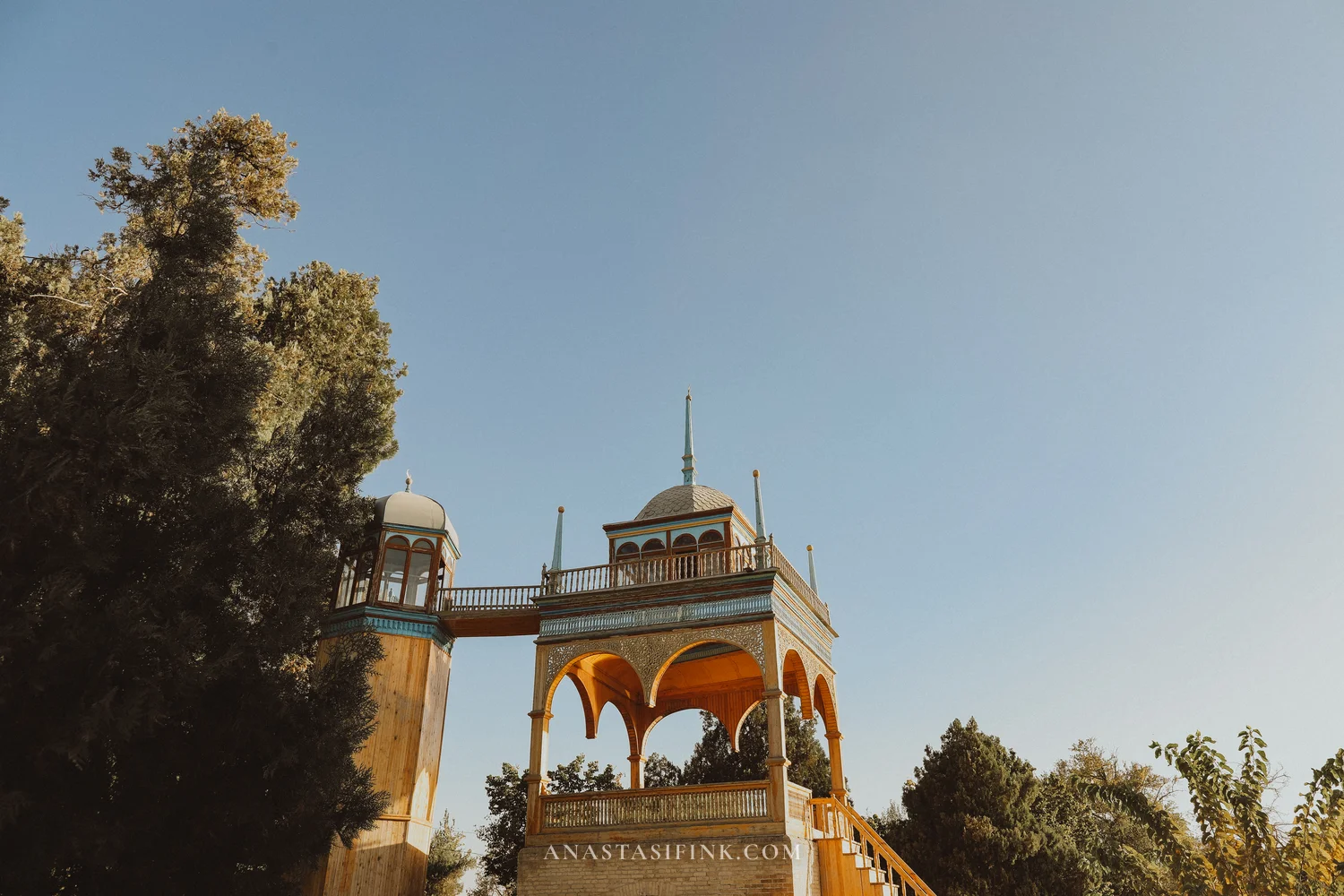
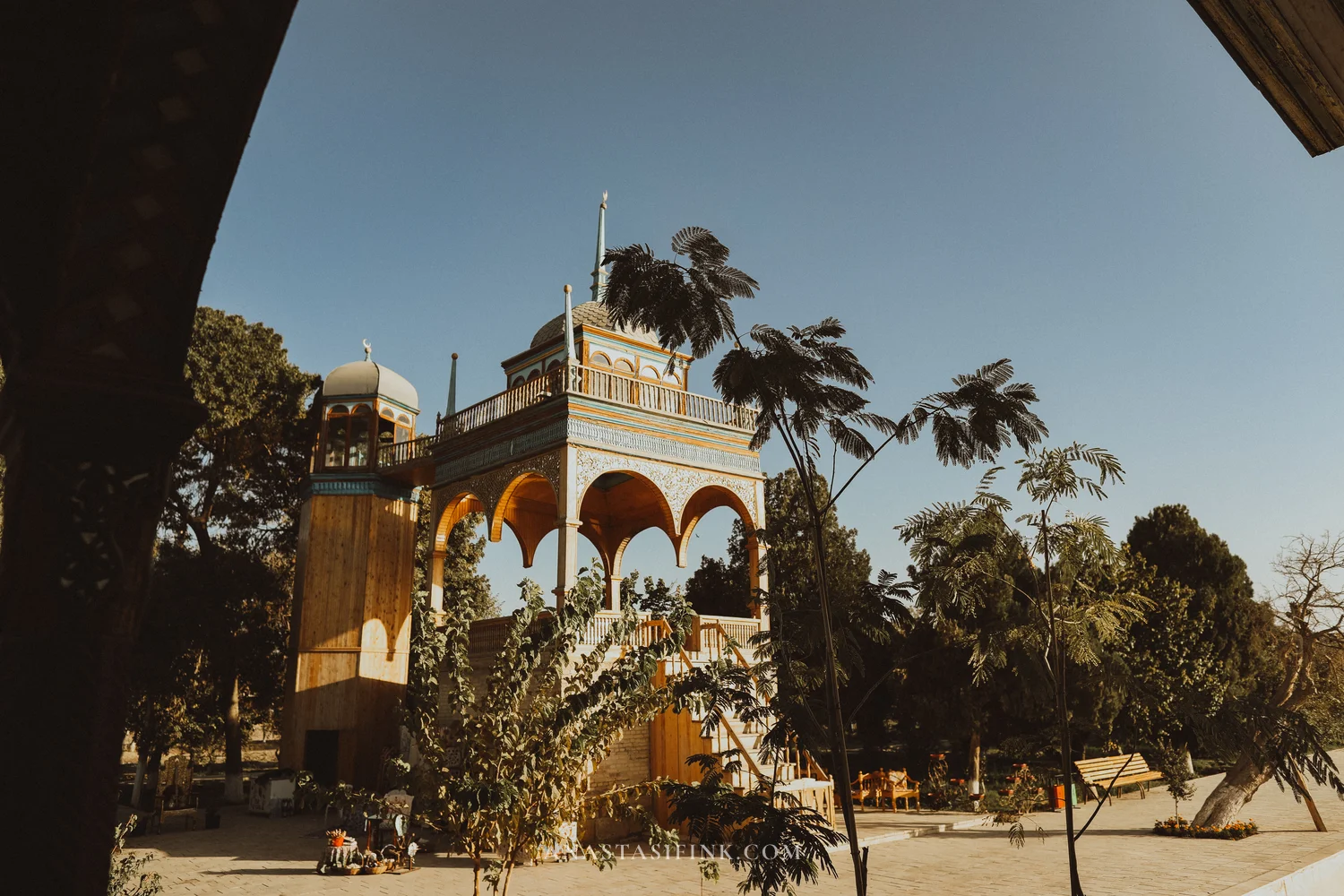
The most unusual building in the complex stands in the garden: a two-story carved wooden pavilion on a small rise. According to local sources, this was the emir’s personal summer mosque — a place for prayer in the warm months. A wooden staircase leads up to the second tier, which is open on all sides with arches.
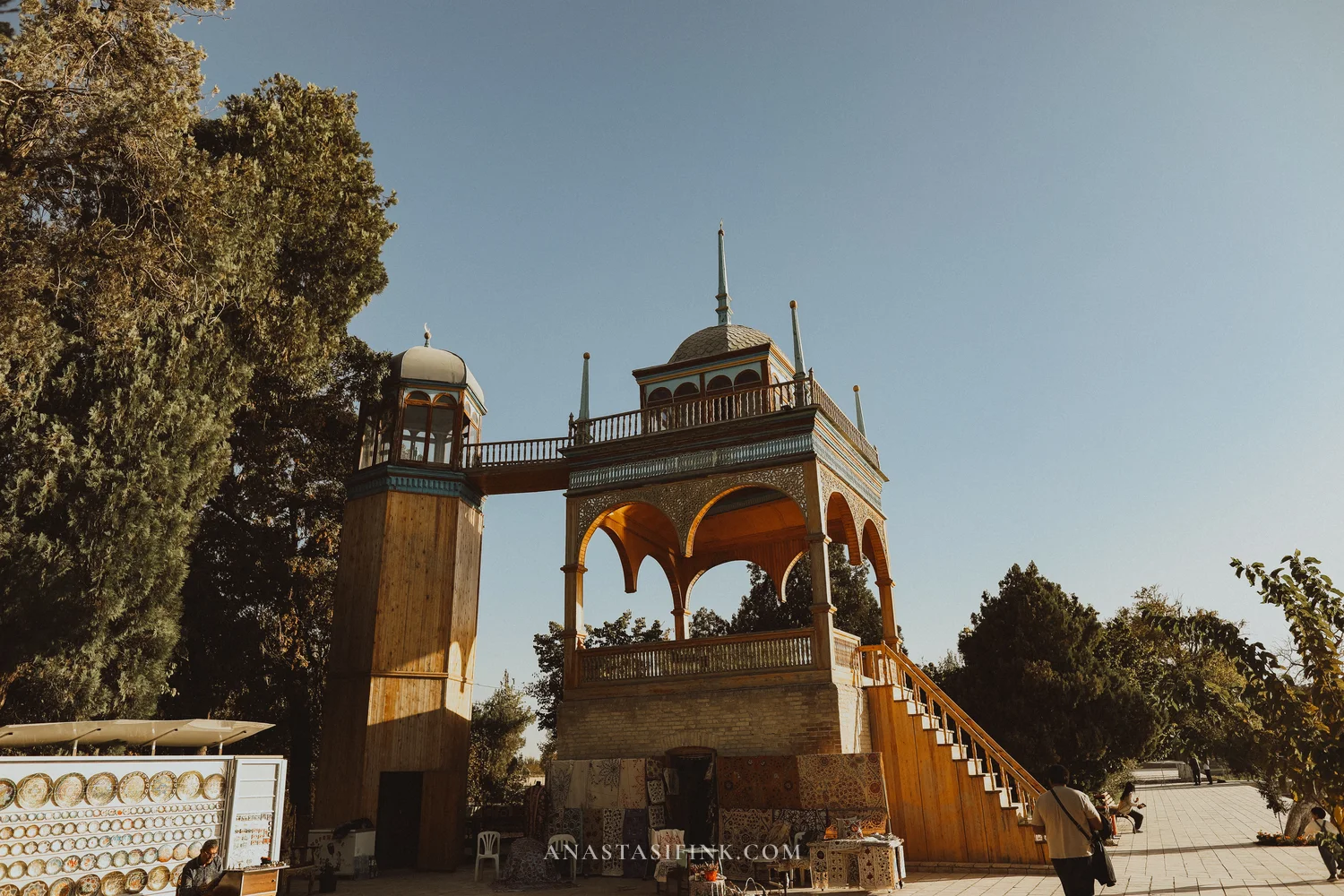
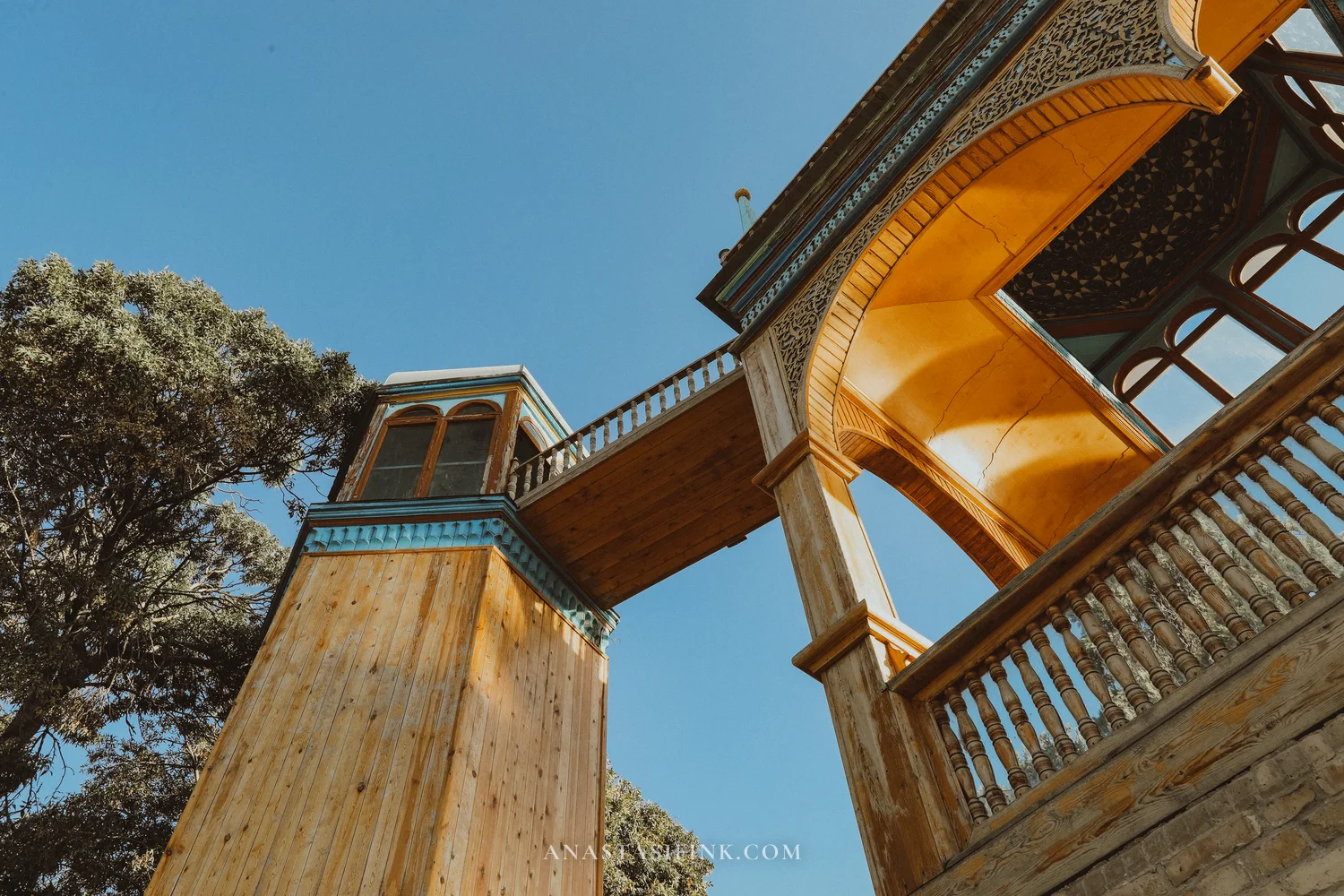
The summer mosque on its hill: a wooden staircase leads up to the second floor. From the top you get the best view of the garden
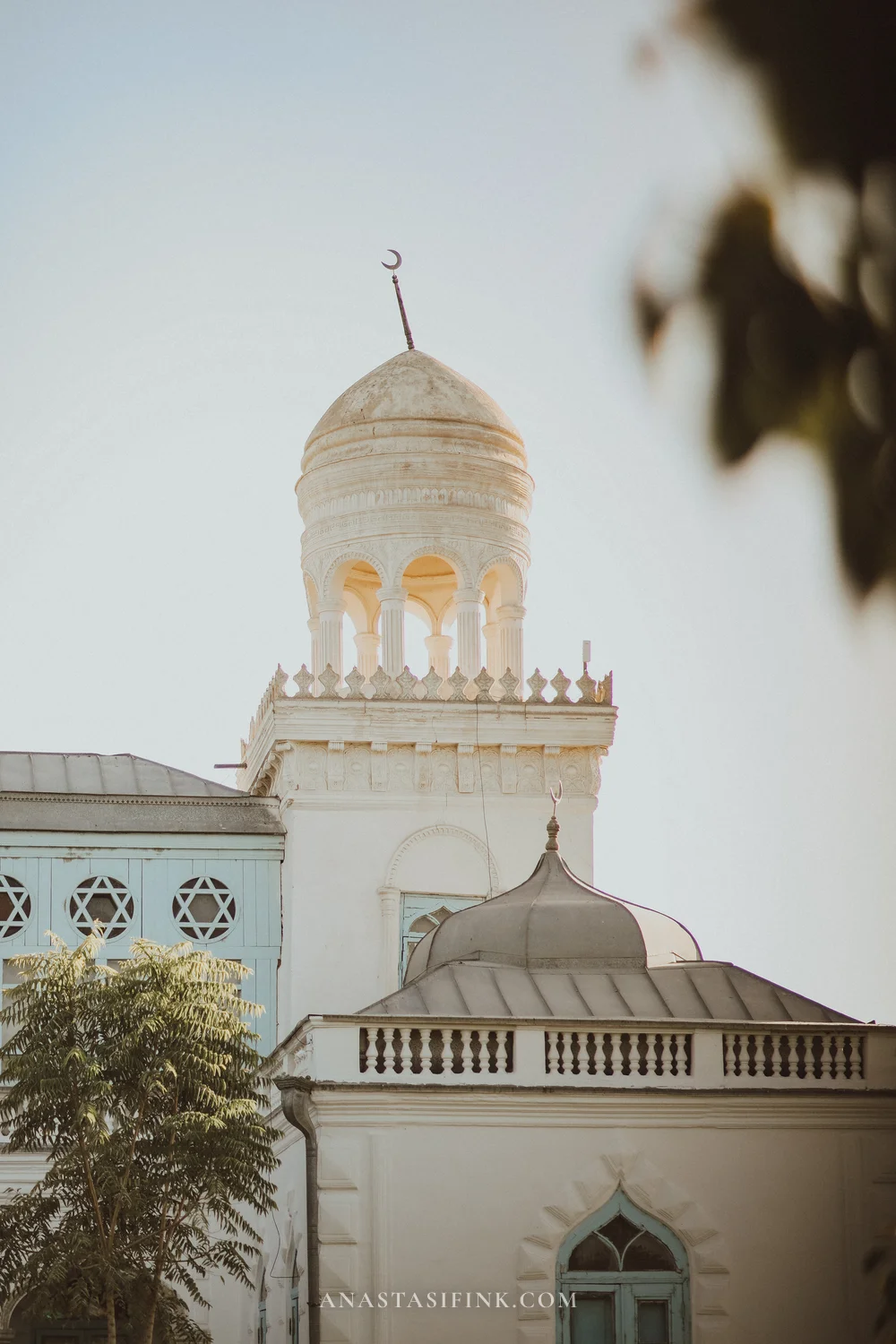
The palace tower: the main landmark
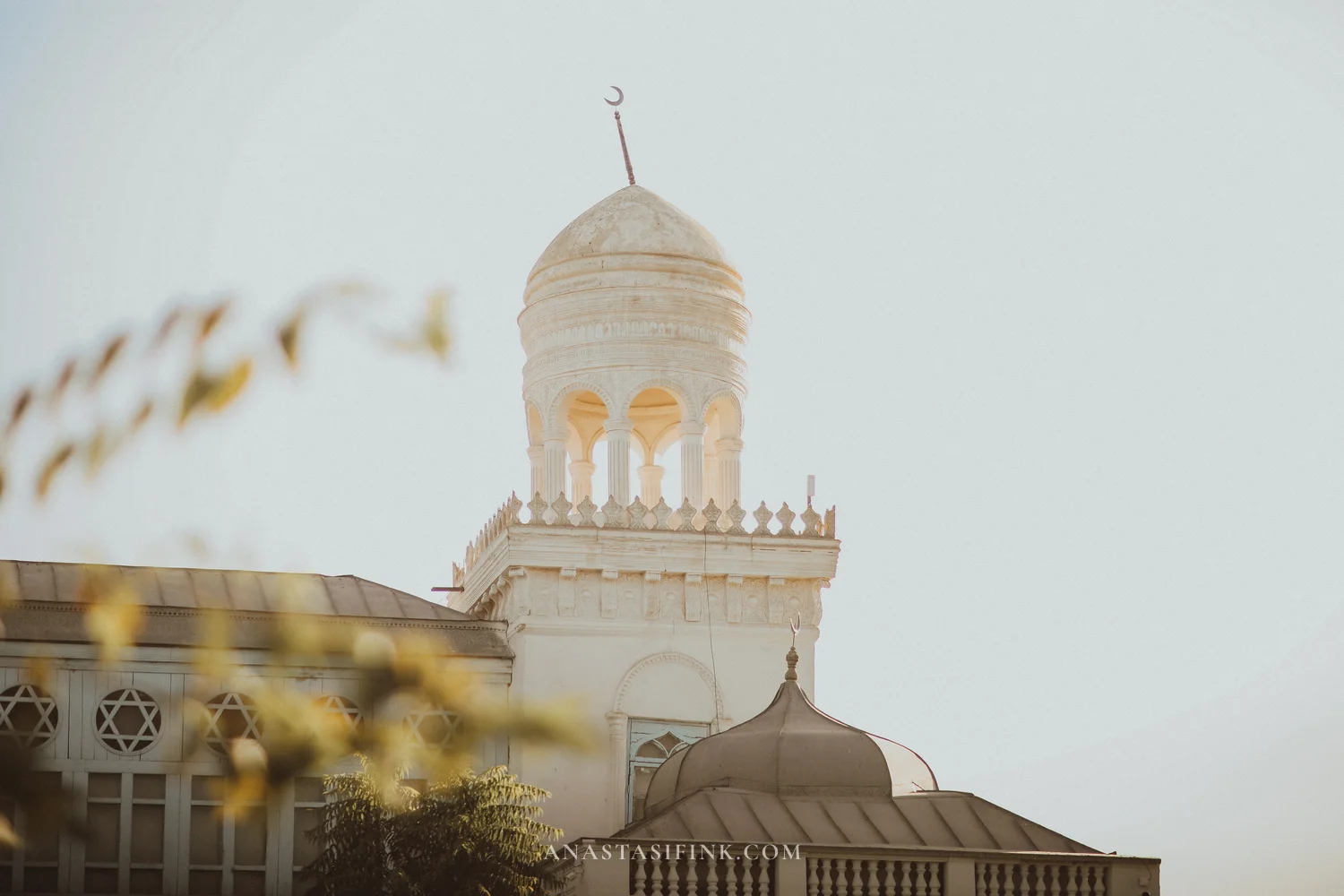
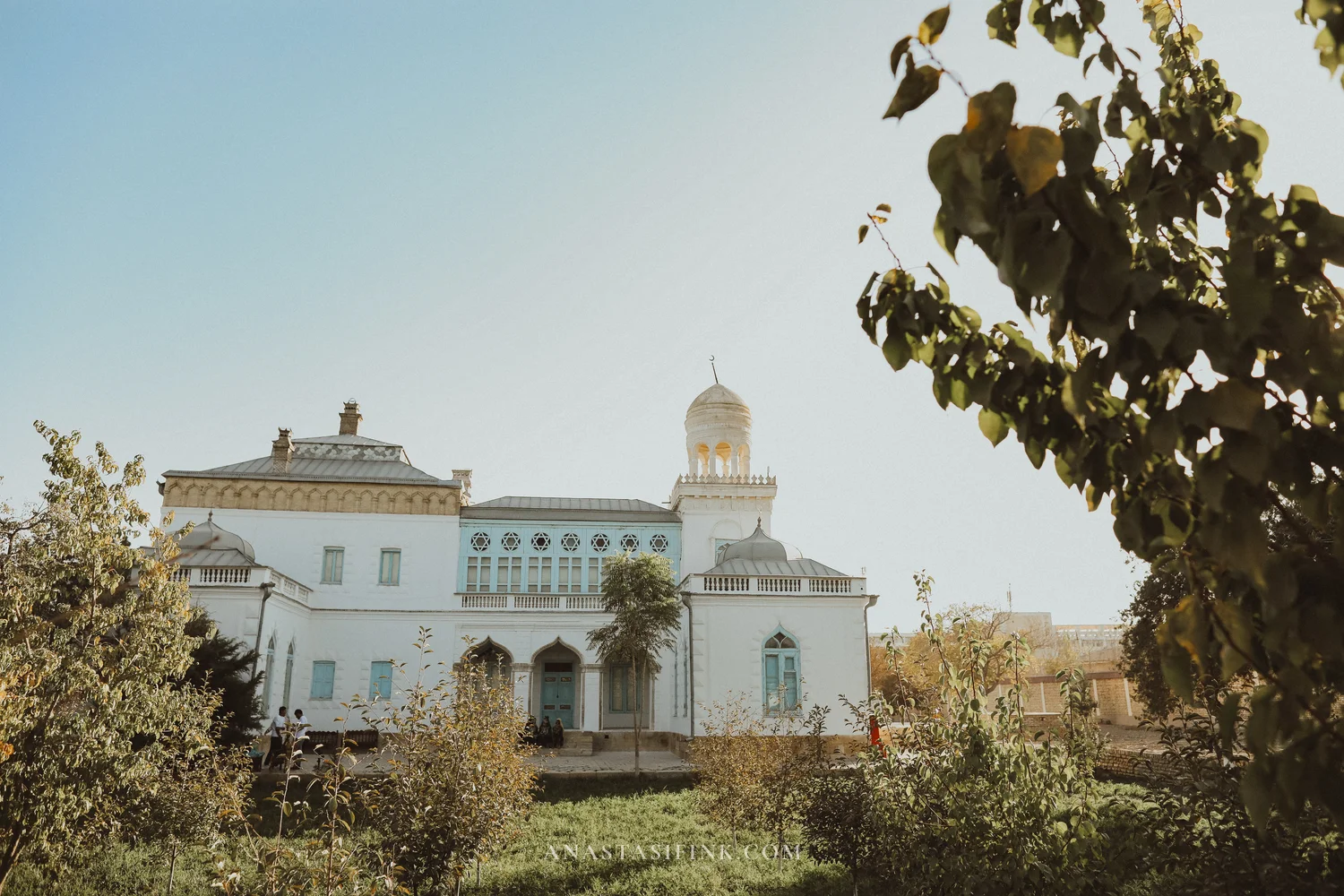
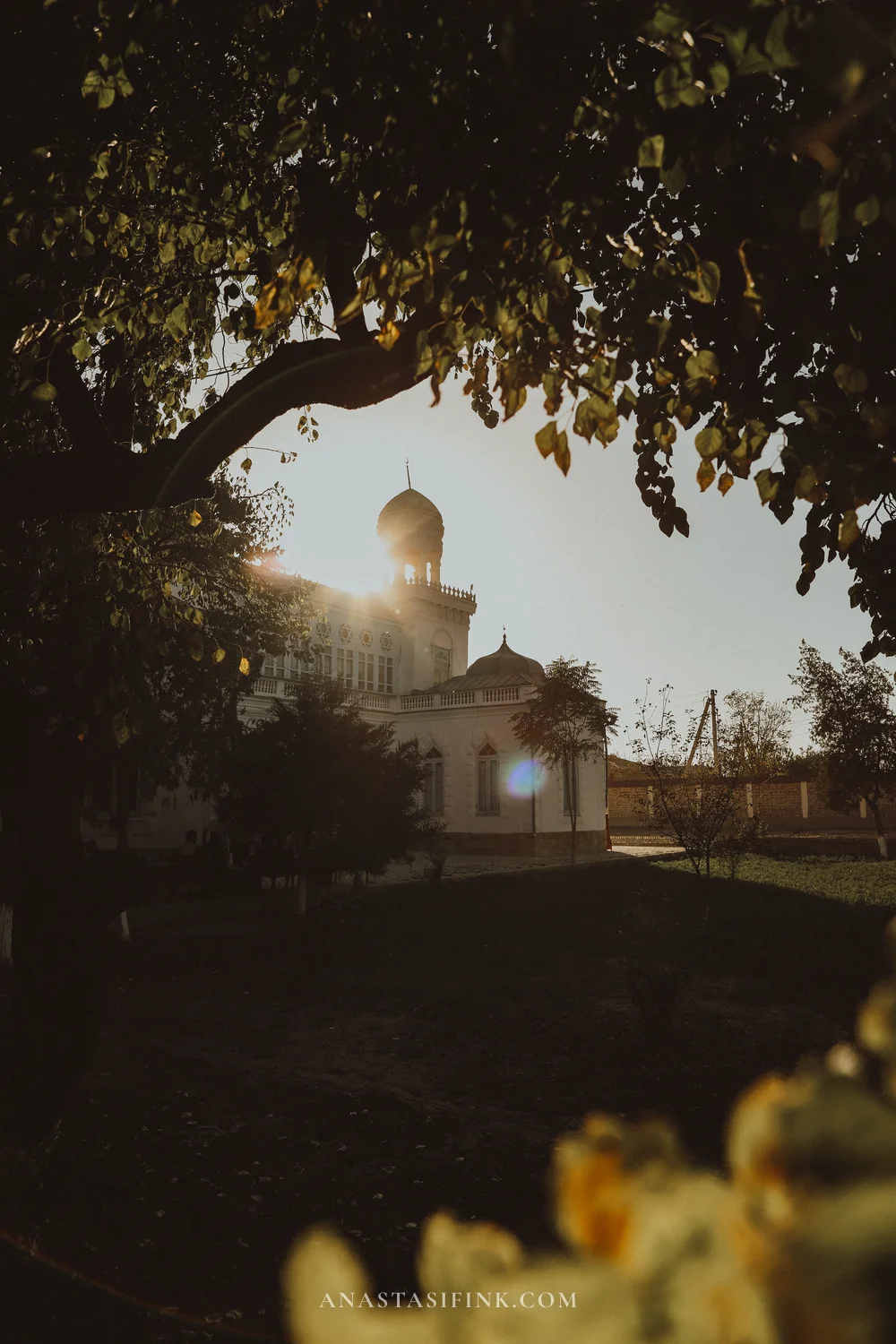
A white tower with a dome and a crescent moon rises above the roof of the main building — the most recognizable detail of the palace. The emir is said to have looked over his garden from up there. You can’t go up anymore, but the tower is visible from everywhere outside.
The garden: autumn light, peacocks and roses
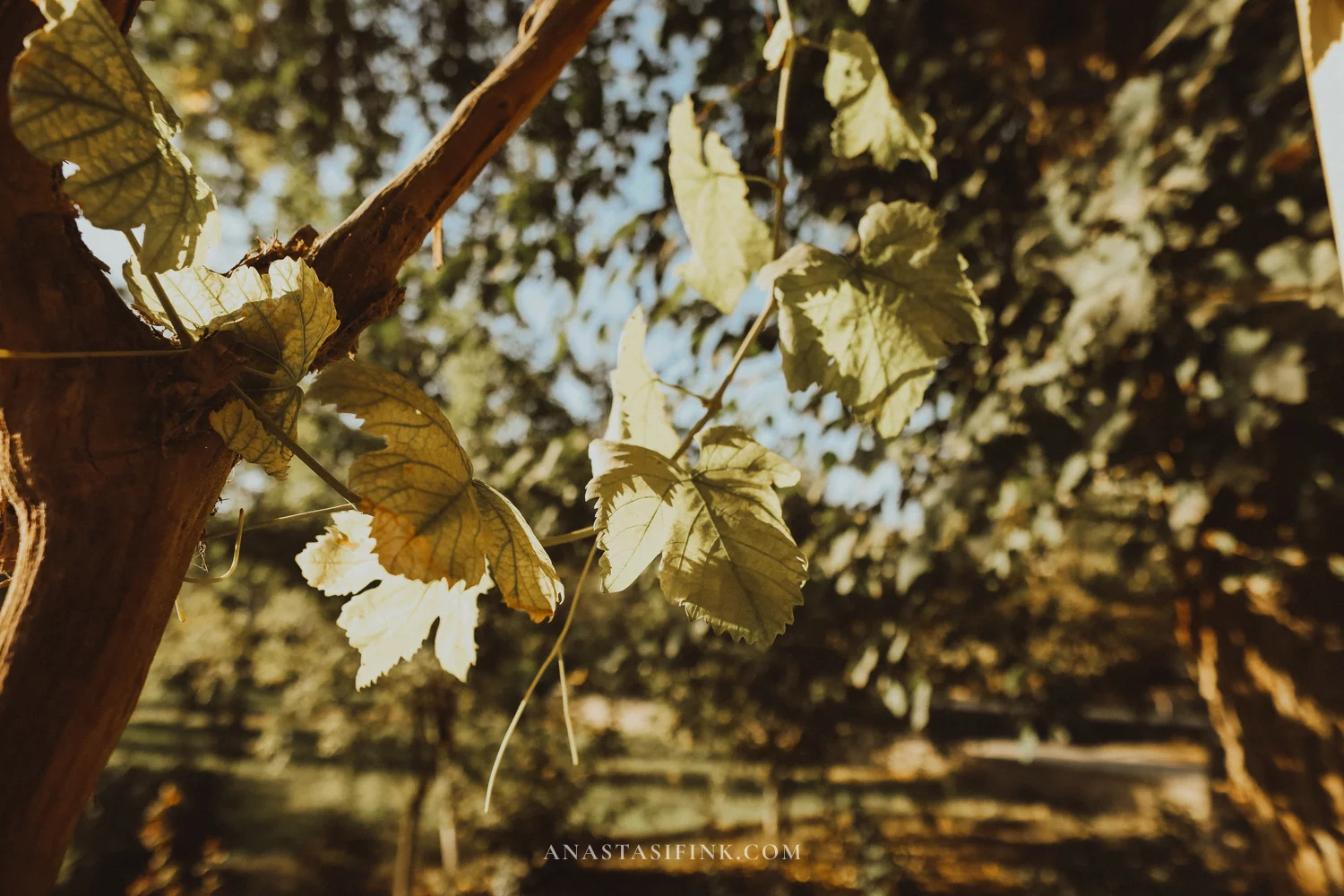
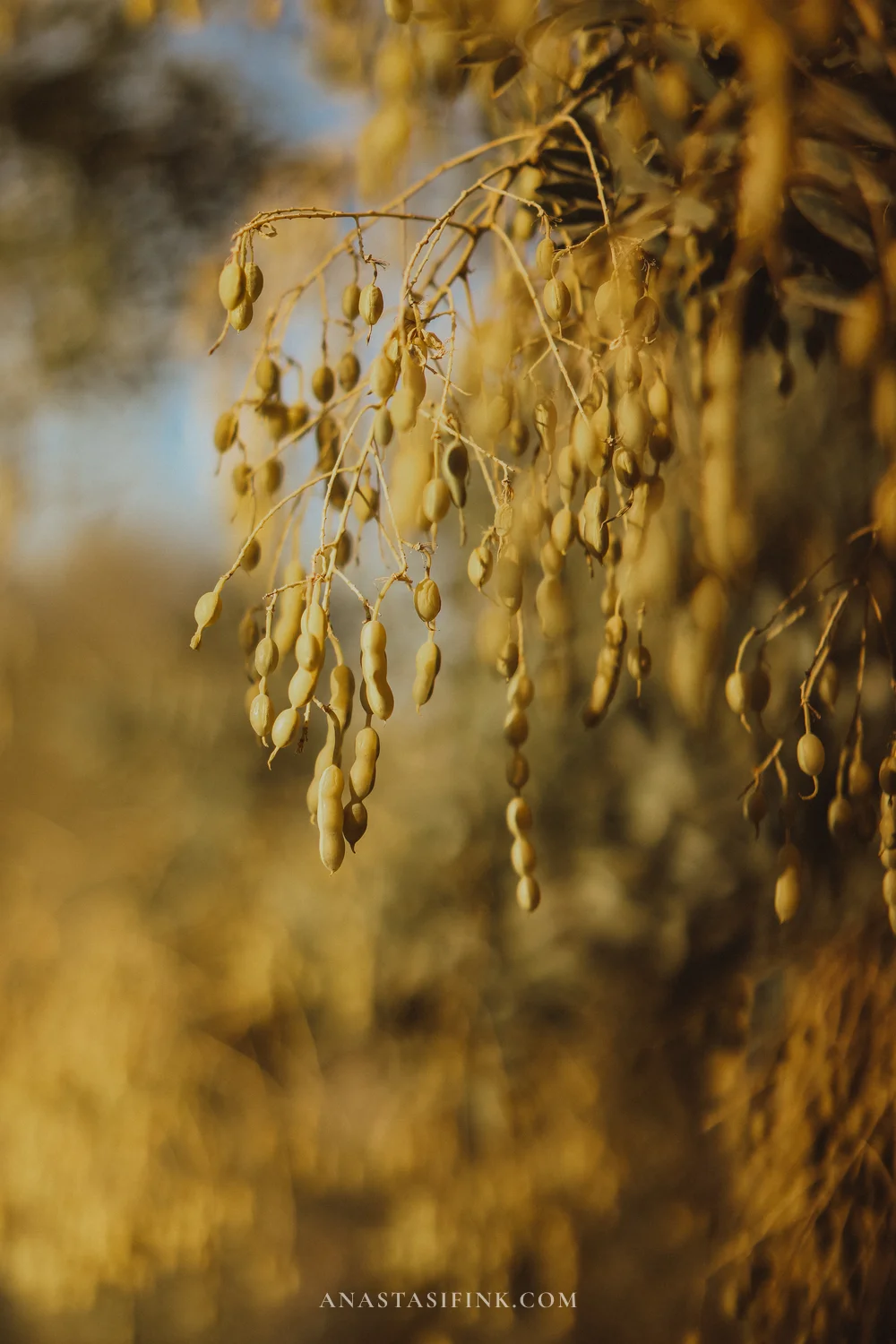
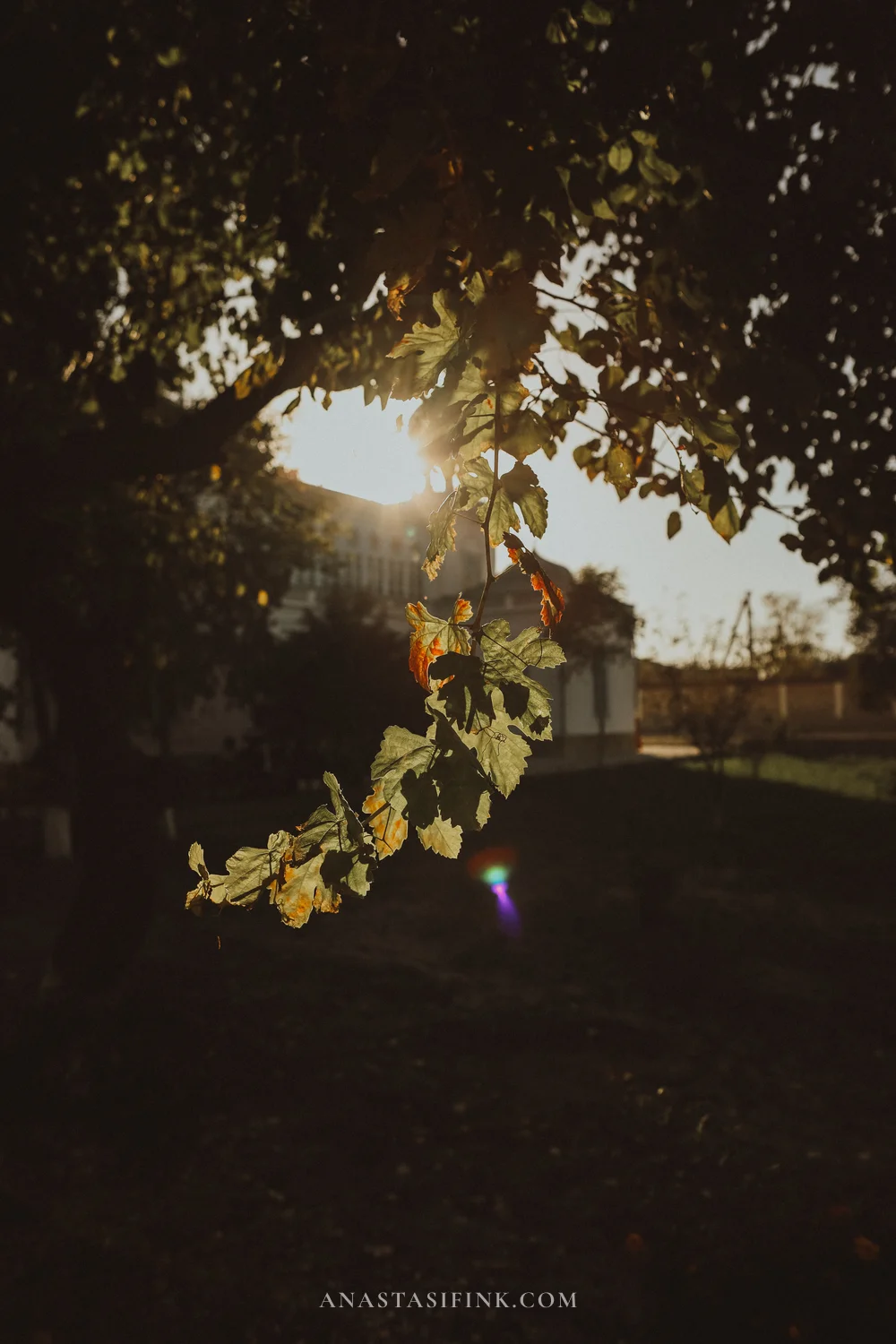
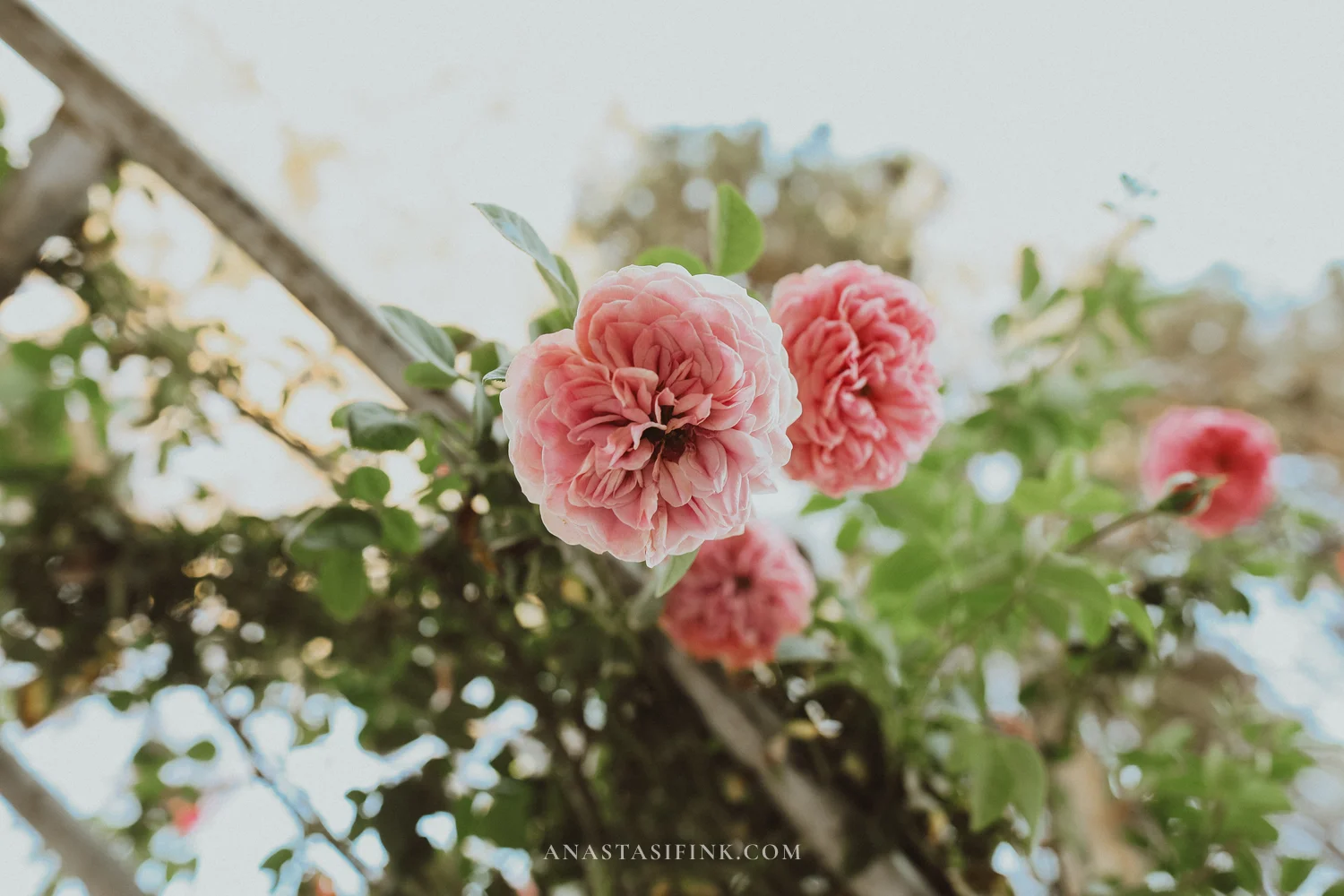
In the palace garden grow old sophora trees, apple trees, and pomegranate trees. The autumn light here is soft, without that midday contrast, and October–November is the best time to photograph the architecture. The palace also has its own large aviary of peacocks, dating back to the emir’s time.
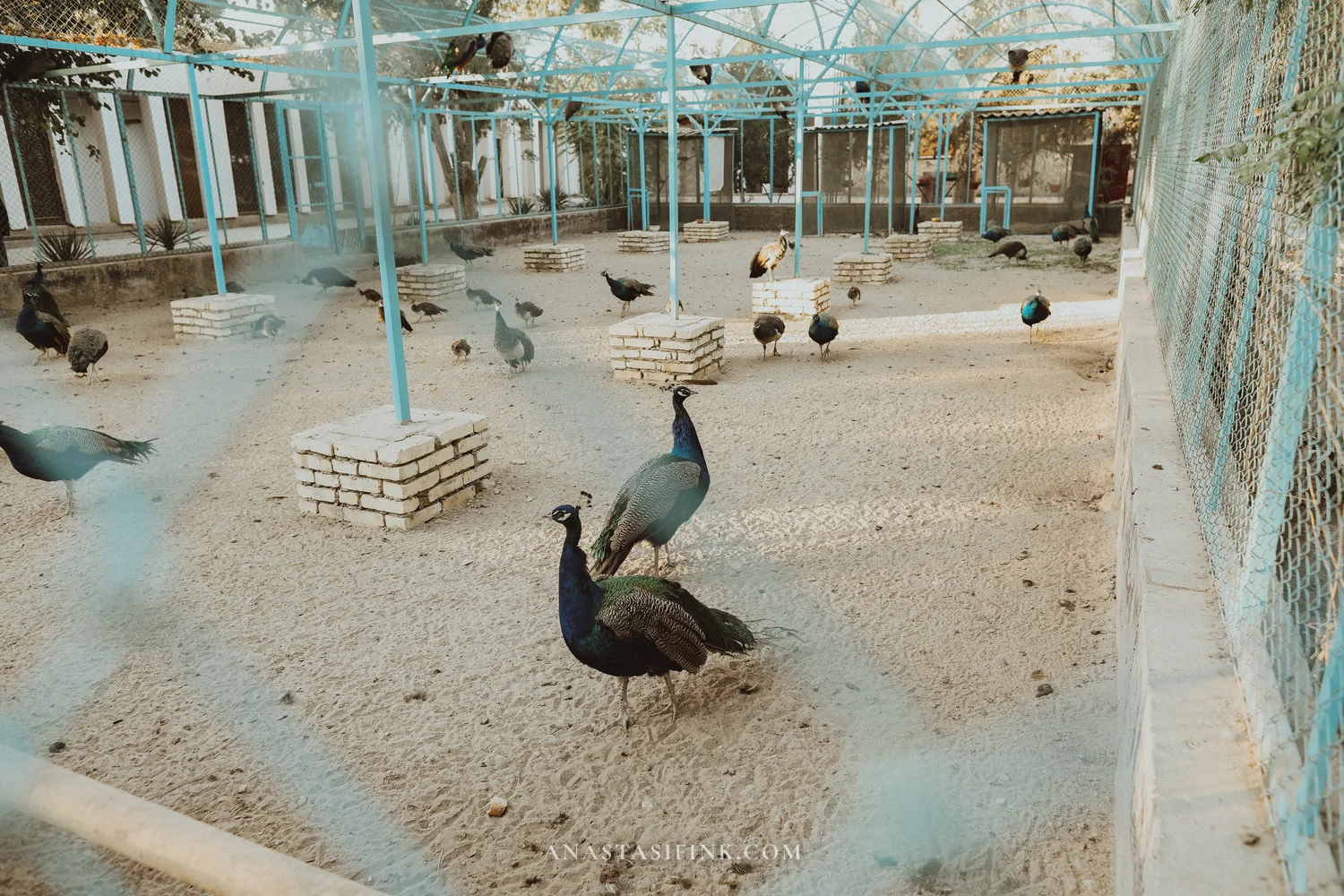
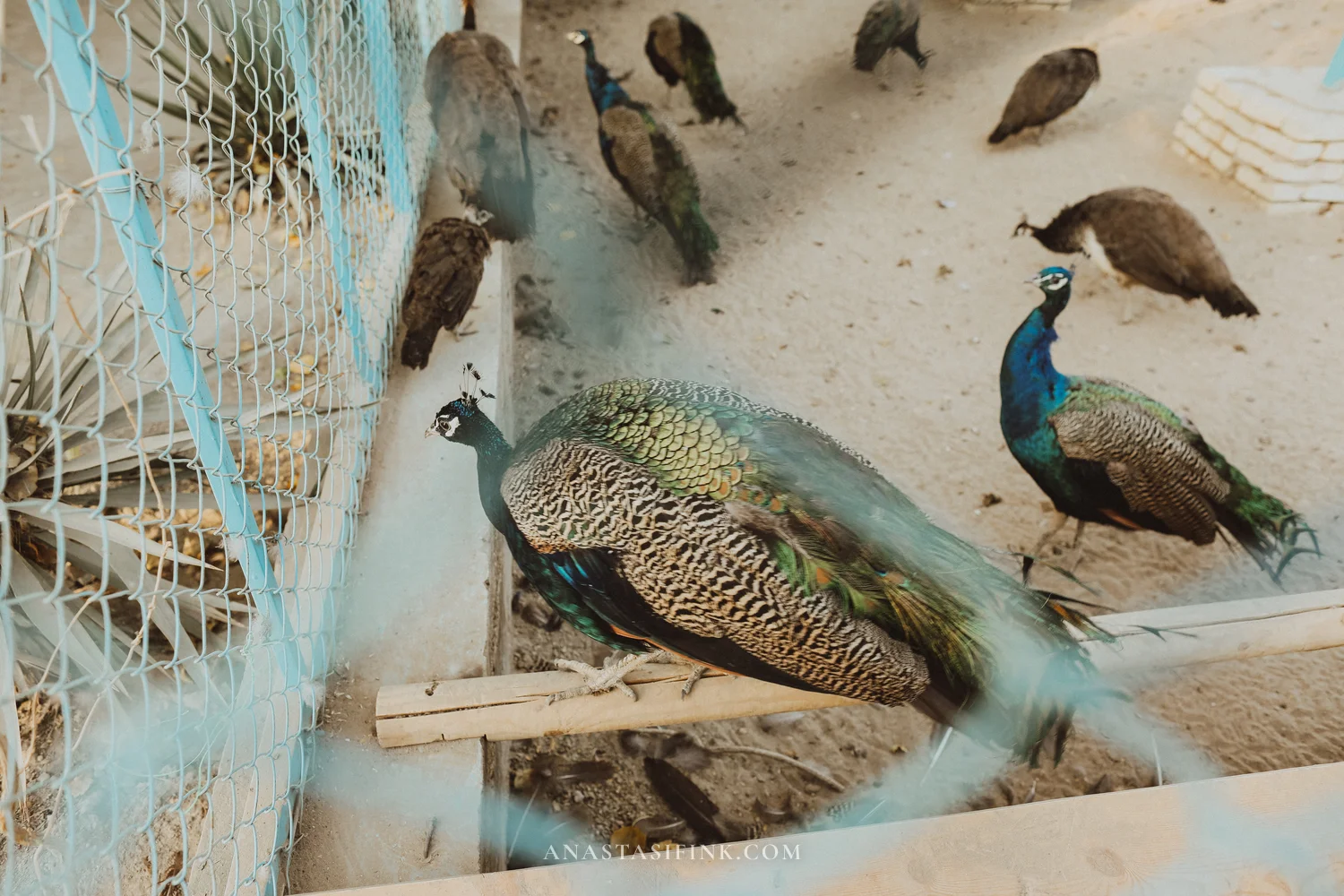
Peacocks: there are more than twenty of them here. If you're lucky, you'll see one with its tail spread — that usually happens in March–April, mating season
Bukharan miniature
Right out in the open, on the grounds of the garden under a canopy, a man was sitting at a small table painting something incredibly detailed onto a tiny sheet of paper with a fine brush. I stopped, watched, and walked over. Just out of curiosity: how does this work, what are the subjects, who paints them. That’s how I met him — his name is Abror.
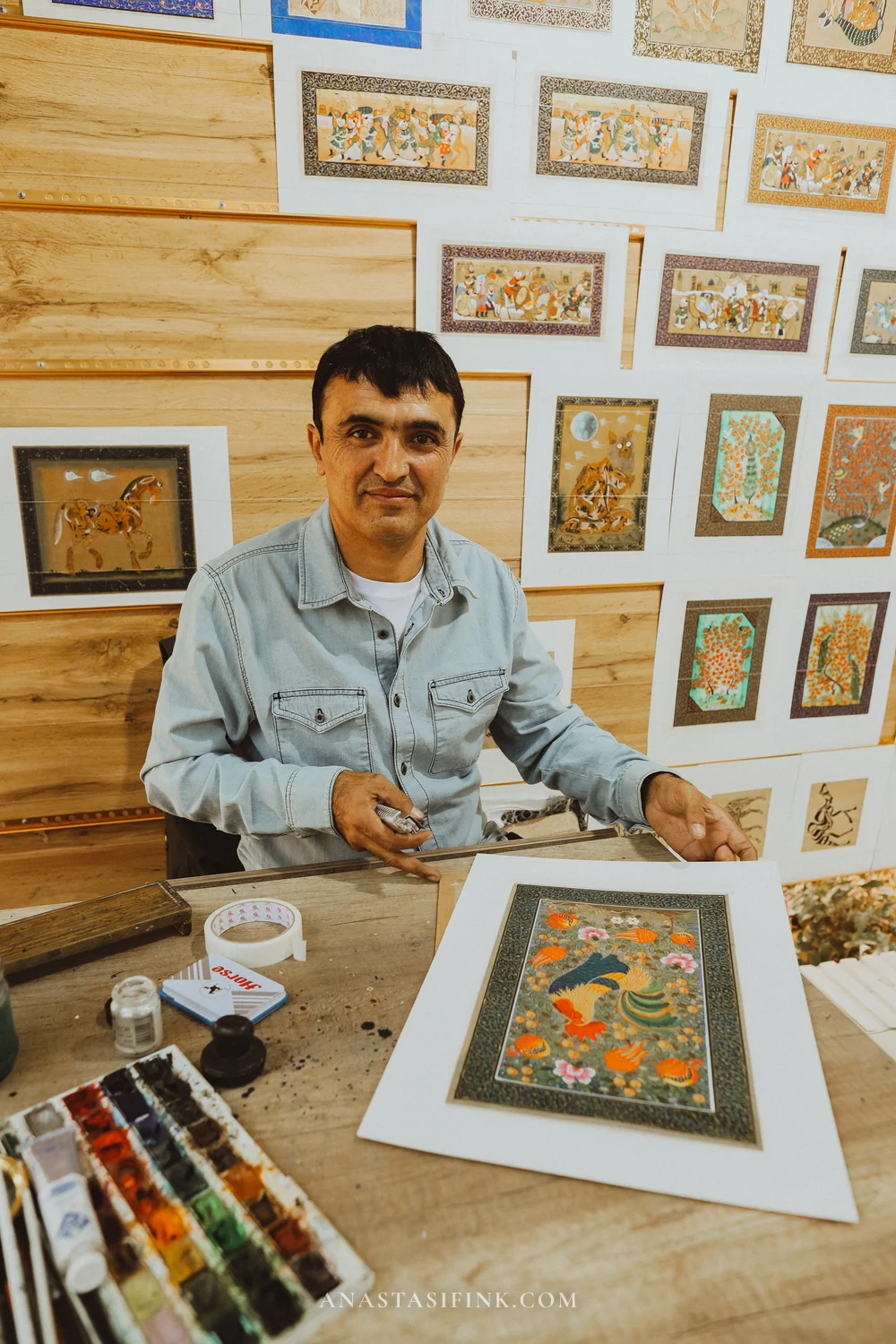
Abror told me he’s been working in this technique for twenty years and that he trained at art school. His studio is right here on the palace grounds — he sits at this table every day, and a single large miniature takes him anywhere from two weeks to a month.
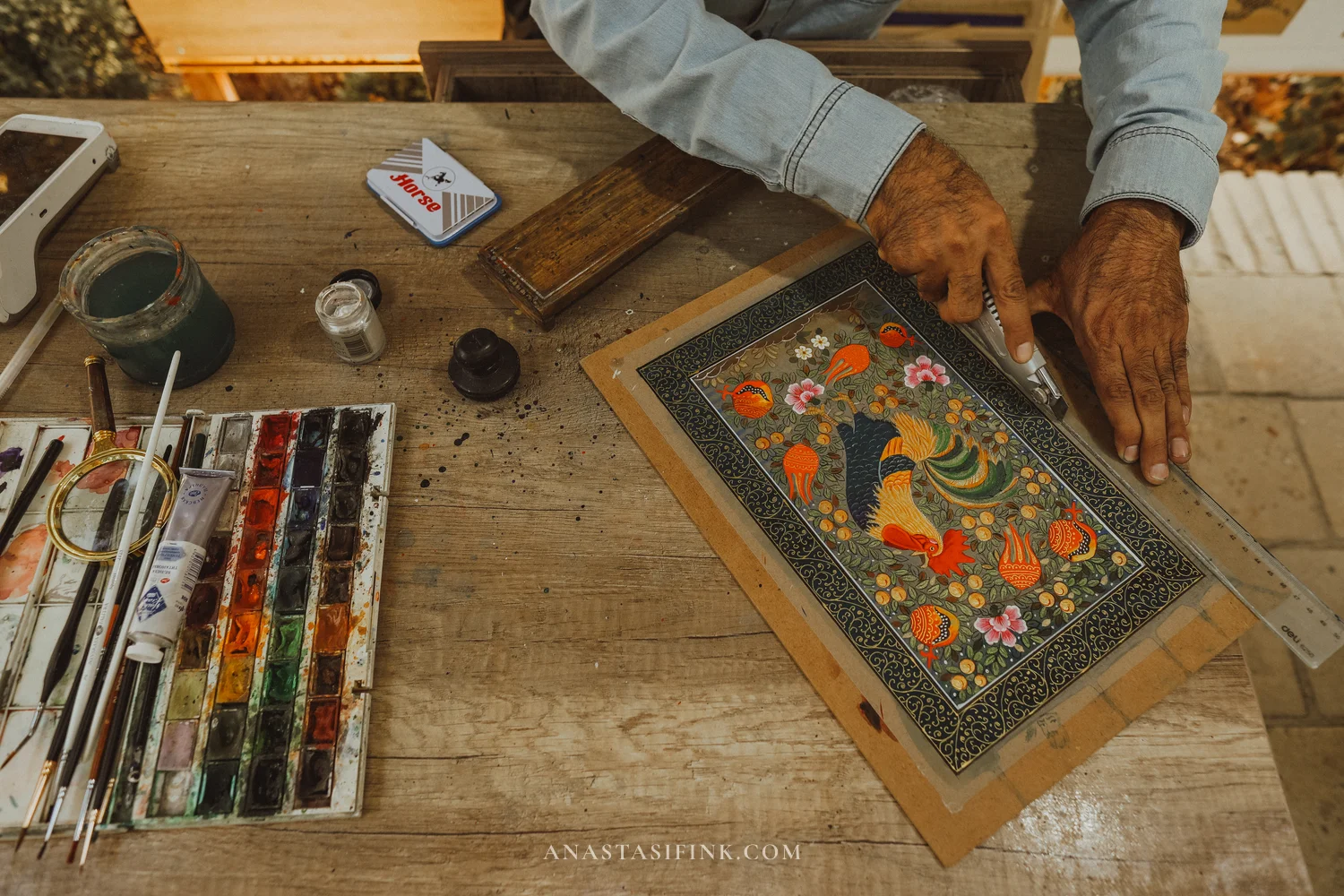
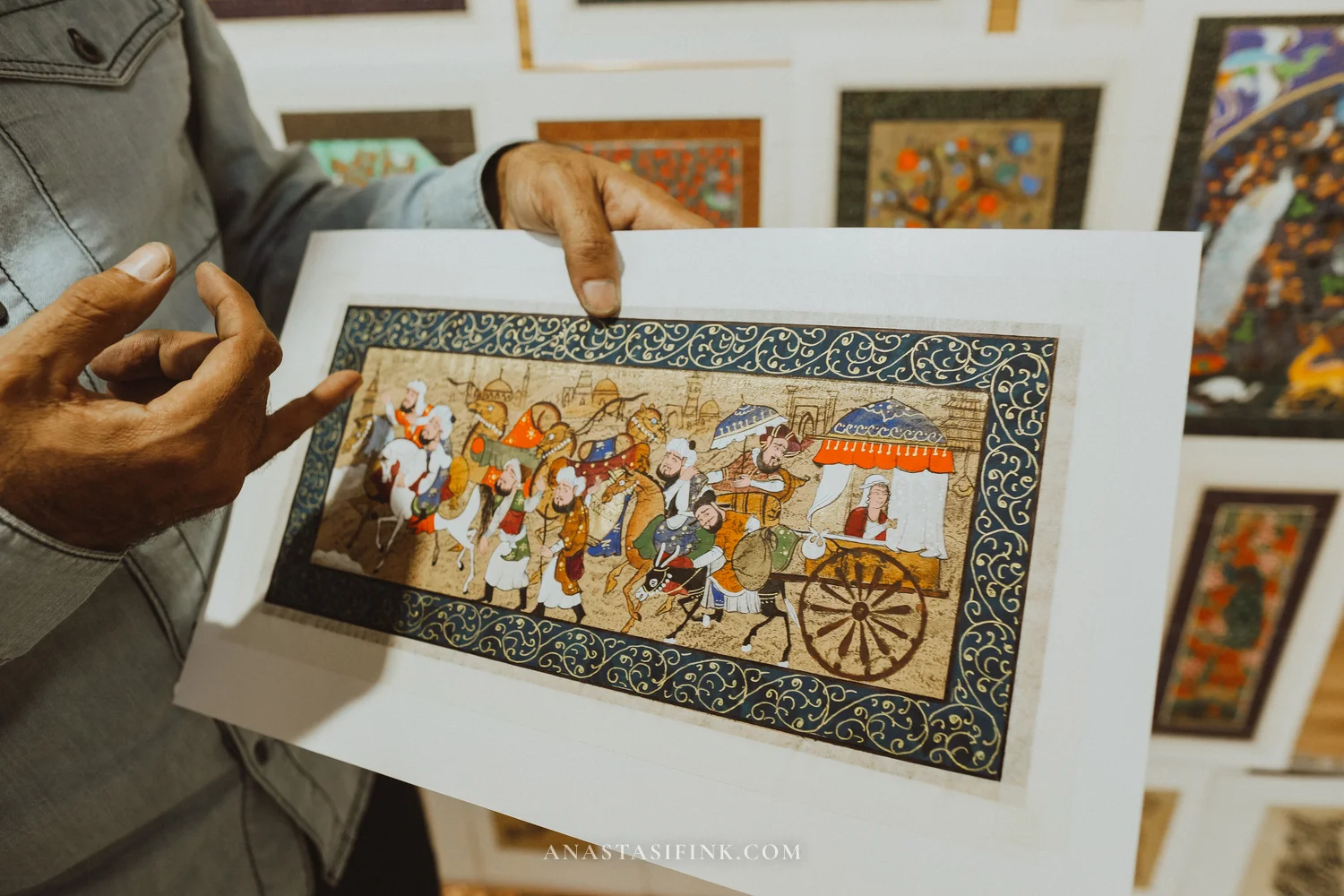
Abror at work and one of his finished miniatures — a scene with a carriage and figures on the Silk Road. He showed it to me right then and there
Symbolism: every animal means something specific
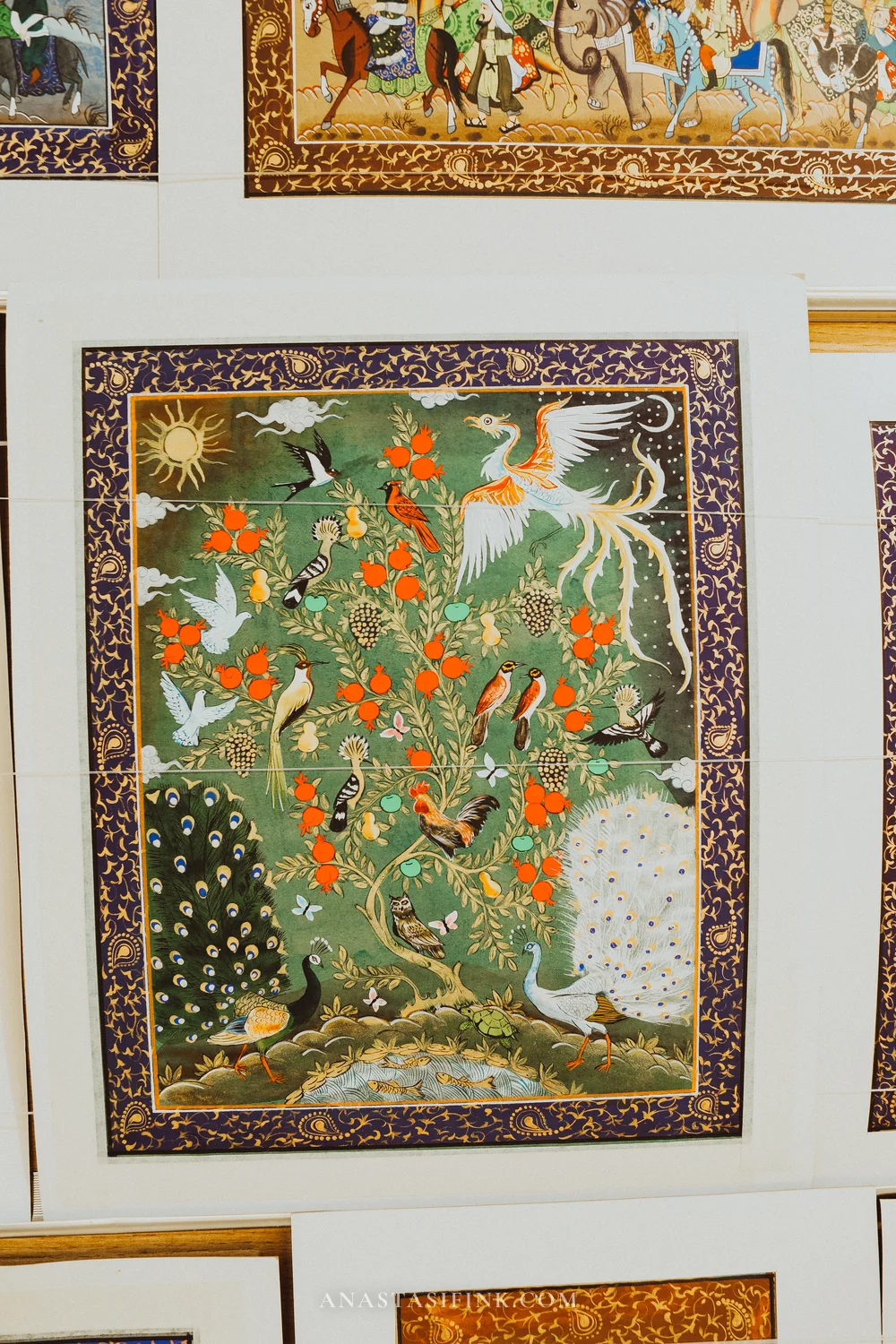
A Bukharan miniature isn’t just a pretty picture, it’s a language of signs. Abror would hold up a piece and walk me through it: every painting has its own set of symbols, and local masters read them like text.
- Owl — wisdom
- Hoopoe — Sufism
- Tiger — power
- Horse — loyalty
- Cat — tenderness
“When people look at a miniature and see an owl on a branch, it isn’t just a bird. It’s a sign: this is a conversation about knowledge, about wisdom,” Abror explained.
The Great Silk Road and its heroes
The main theme running through all his work is the Great Silk Road. From China to Venice, by way of Samarkand, Bukhara and Khiva. Some miniatures show Marco Polo’s caravans; others depict the journey of Ibn Battuta, the “Arab Marco Polo” from Morocco; others again feature Scheherazade or Khoja Nasreddin.
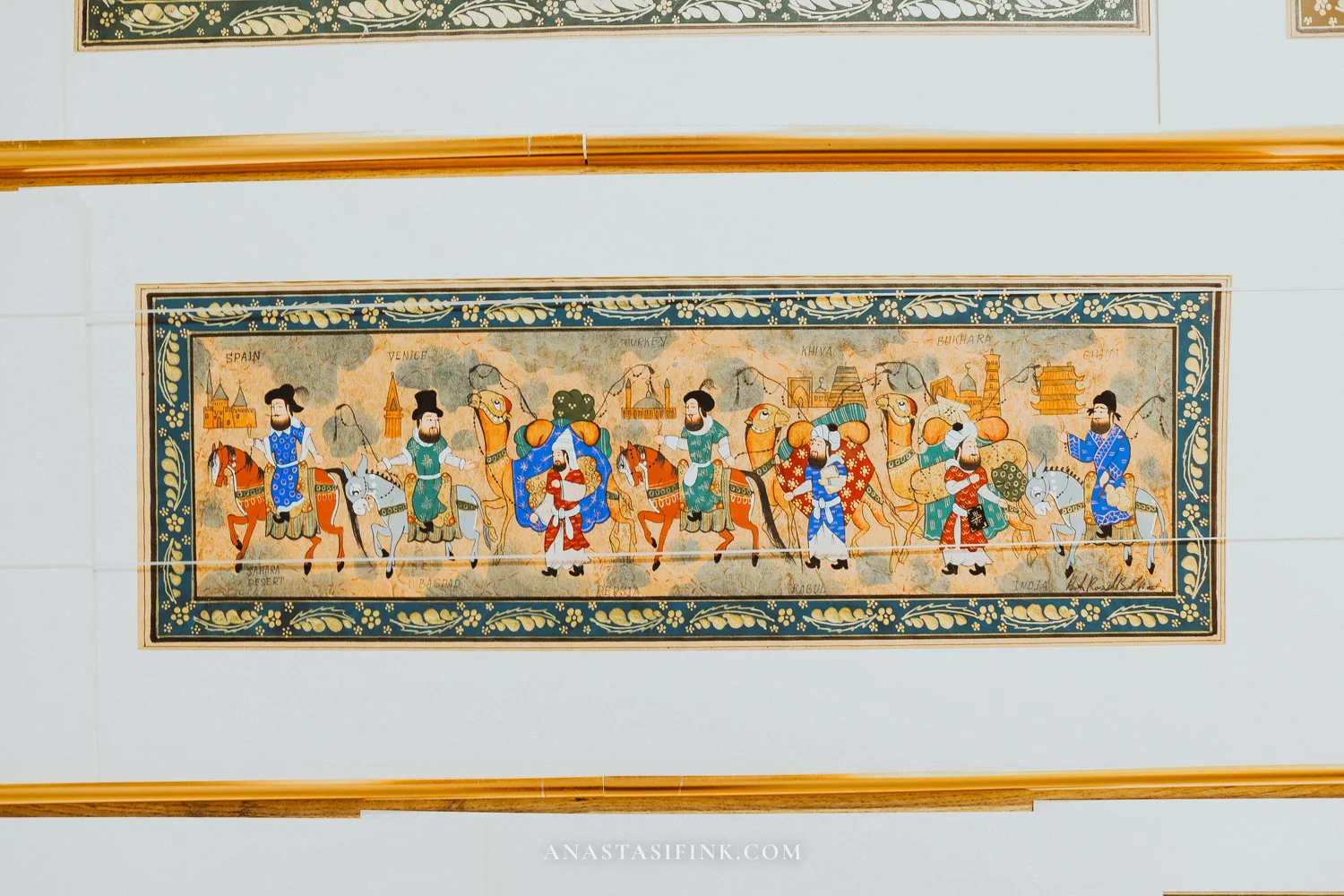
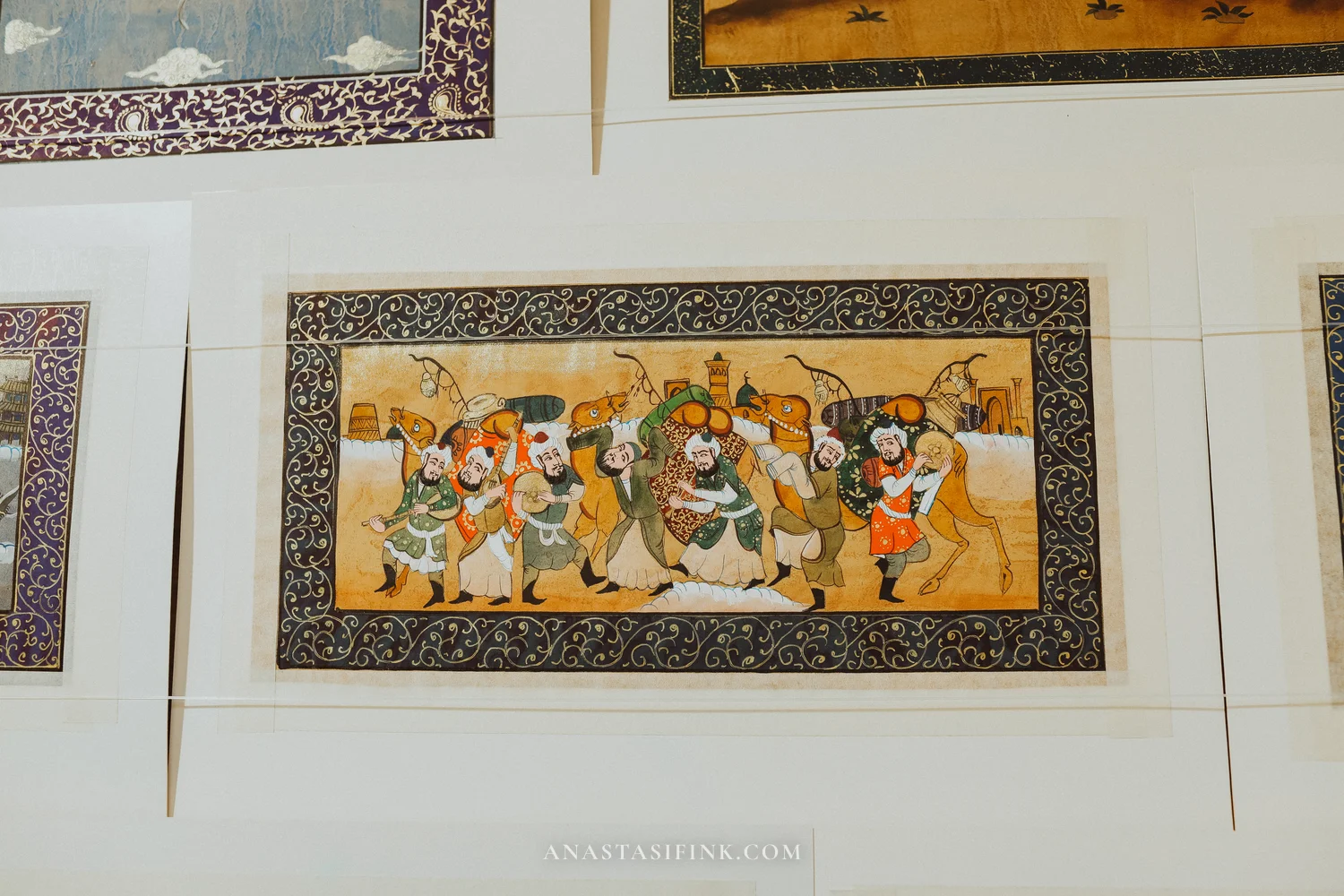
Caravans and dancers — typical subjects of Bukharan miniature. A whole story fits inside a single frame the size of your palm
Among the figures Abror paints:
- Ulugbek — astronomer, grandson of Amir Timur, from Samarkand
- Avicenna (Ibn Sina) — physician, born in Bukhara
- Al-Khwarizmi — mathematician from Khiva, known in Europe as “Mr. Zero” because he introduced the concept of zero
- Rumi — poet and spiritual leader of the dervishes
- Marco Polo and Ibn Battuta — the two great travelers of their age
If you want to bring a miniature home as a gift, this is a better place to buy one than the souvenir bazaar in central Bukhara. The prices are similar, but the quality is different: with Abror you can clearly see this is one person painting, not a workshop. And if you’re lucky, he’ll explain it to you himself — every caravan, every hero, every animal tucked into the corner of the composition.
Practical information
Getting there and where it is
- Address: Sitorai Mohi Hosa, Bukhara, Uzbekistan
- GPS: 39.8456, 64.4406
- Distance from central Bukhara: ~4 km north
- Opening hours: 9:00–18:00 (summer), 9:00–17:00 (winter). Day off is usually Wednesday, but worth double-checking
- Entry: ~50,000 UZS (~$4) for foreigners, photography free
- How long to plan for: minimum 2 hours, ideally 3
- Google Maps: Sitorai Mokhi-Khosa
Visa
- Most travelers can get an e-visa online in minutes (about $20). Citizens of many countries — including the EU, UK, Japan, and South Korea — are visa-free for stays up to 30 days. Check the official Uzbekistan e-visa portal before booking.
How to get to Bukhara
- By air: there are no direct international flights to Bukhara. Most travelers fly into Tashkent (TAS), the capital, which has connections from Istanbul, Dubai, Frankfurt, Seoul and other major hubs. From Tashkent, hop on a domestic flight to Bukhara (about 1 hour) or take the Afrosiyob high-speed train (about 4 hours, very comfortable, around $20–$30 depending on class).
- From Samarkand: the Afrosiyob train takes around 1.5 hours. Easy day connection if you’re already on the Silk Road route.
- From Khiva: about 6–7 hours by car or shared taxi across the Kyzylkum desert. There’s also a sleeper train.
From central Bukhara to the palace
- Taxi: 30,000–50,000 UZS (~$2.50–$4) one way. Agree on a wait time up front, because catching a ride back is harder.
- Marshrutka #70 or #7: stops about 200 meters from the gate, around 4,000 UZS (~$0.30)
- Bicycle: flat ride, 4 km, 25 minutes. Rentals in the center start at 50,000 UZS (~$4) per day
- On foot: technically possible, but 50 minutes along a busy road isn’t the most pleasant option
Nearby: Ten minutes from Bukhara, Chor-Bakr is the 16th-century necropolis of the Juybar sheikhs. My 7-day Uzbekistan itinerary links Bukhara with Samarkand and Tashkent by bus and train. More places are in all my Uzbekistan travel guides.
FAQ
The easiest way is taxi, around 30,000–50,000 UZS (~$2.50–$4) one way. You can also take marshrutka #70 or #7 for about 4,000 UZS (~$0.30). It's 4 km north of the city center.
Minimum 2 hours, ideally 3. If you love textiles, costume, and miniature painting, add another hour for the suzani museum and a chat with the local artisans.
The best months are April, May, October and November. Summer is brutally hot (over 40°C / 104°F), and in winter the palace is cold — the heating is weak. Mornings (9:00–11:00) mean fewer tourists and beautiful soft light.
It's part of the broader Bukhara itinerary, but on its own track — give it half a day. You can pair it with other outlying spots like Chor-Bakr, which lies in roughly the same direction.
Yes. By the gate and in the garden there are workshops selling suzanis, miniatures, ceramics and ikat clothing. Prices are comparable to the Bukhara bazaars, but the quality is higher.
About 50,000 UZS (~$4) for foreigners. Photo and video are free. You can buy an audio guide for an extra fee, around 30,000 UZS (~$2.50).
Water (it's available on site but pricey), comfortable shoes — there's a lot of walking, a scarf for women (not mandatory, but nice for the harem), and a good lens if you're carrying a camera.
A quiet palace off the main route
Most travelers in Bukhara only get as far as the city center — Lyabi-Hauz, Kalyan, the madrasas. Sitorai Mokhi-Khosa ends up as a “bonus” most people don’t make time for. Which is a shame, because this is where you can see the everyday side of the emirate — how they lived, what they ordered in, who worked on these walls.
If you have at least two or three days in Bukhara, set aside half a day for the palace — ideally the second half, so you can catch the evening light on the tower and through the garden.