Tashkent Museum of Applied Arts: Inside the Polovtsev House

I’m walking you through the State Museum of Applied Arts of Uzbekistan in Tashkent — the former Polovtsev house from 1907. I’ll cover every room: the aivan, the grand hall with the fountain, ceramics, miniatures, lacquer, suzani, ikat, carpets, instruments. At the end — address, prices, opening hours, and how to get there.
What this place actually is
The mansion was built in 1907 for a Russian diplomat named Alexander Polovtsev. Instead of hiring a fashionable European decorator, he brought in master craftsmen from all over what was then Turkestan: from Khorezm, Bukhara, Samarkand and Fergana. They spent years turning a regular house with European floor plans into an Eastern palace from the inside out. Ganch (carved plaster — the local equivalent of stucco), painted walls, coffered ceilings, majolica — everything done by hand, and almost all of it has survived to today.
The house became a museum in 1937, when an exhibition of folk and applied arts opened here, and the collection grew from there. The archives now hold over 7,000 pieces. For me, it’s the single best place to see everything notable about Uzbek applied arts: ceramics, ikat, suzani, lacquer miniatures, metal chasing and wood carving.
The aivan and the front courtyard
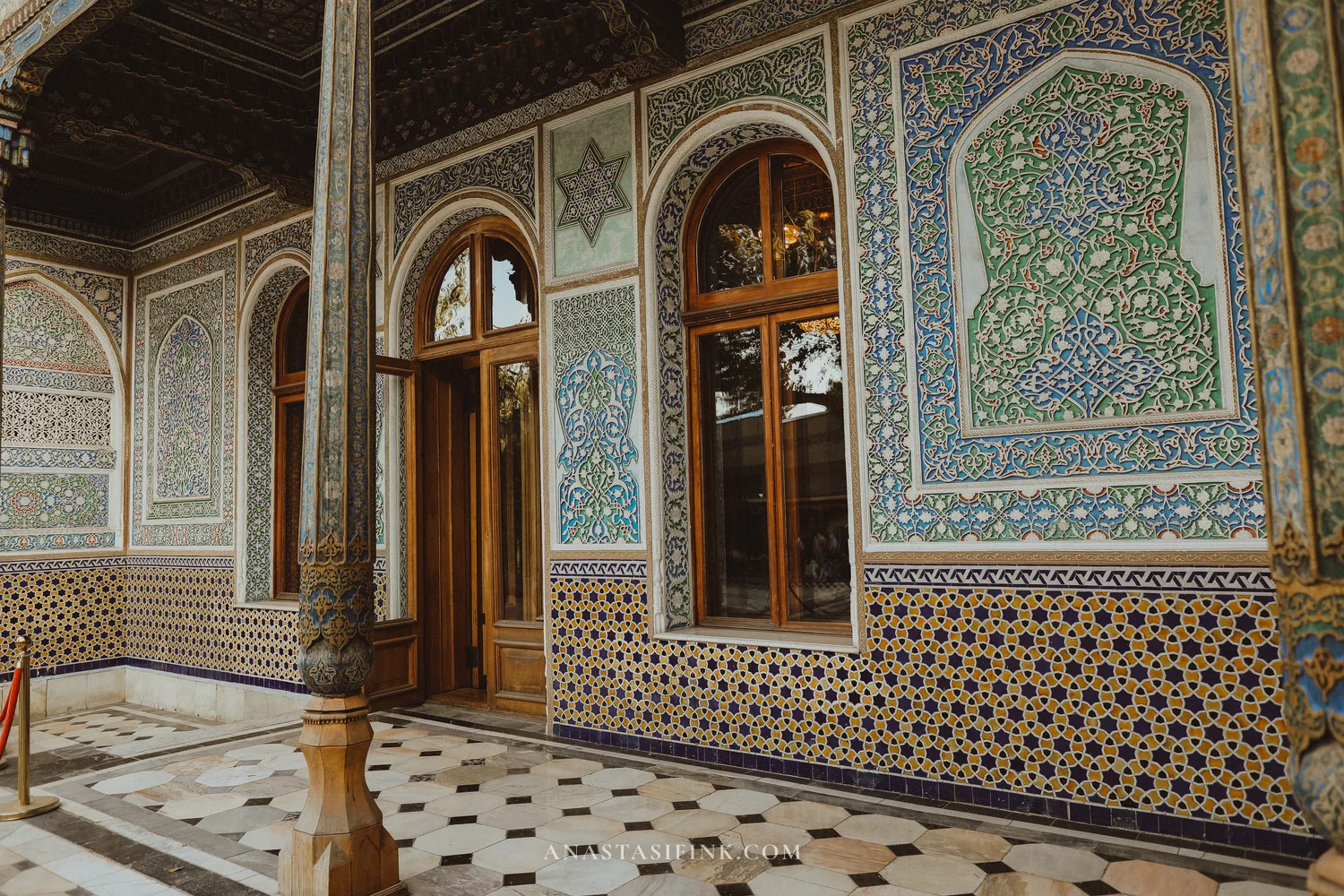
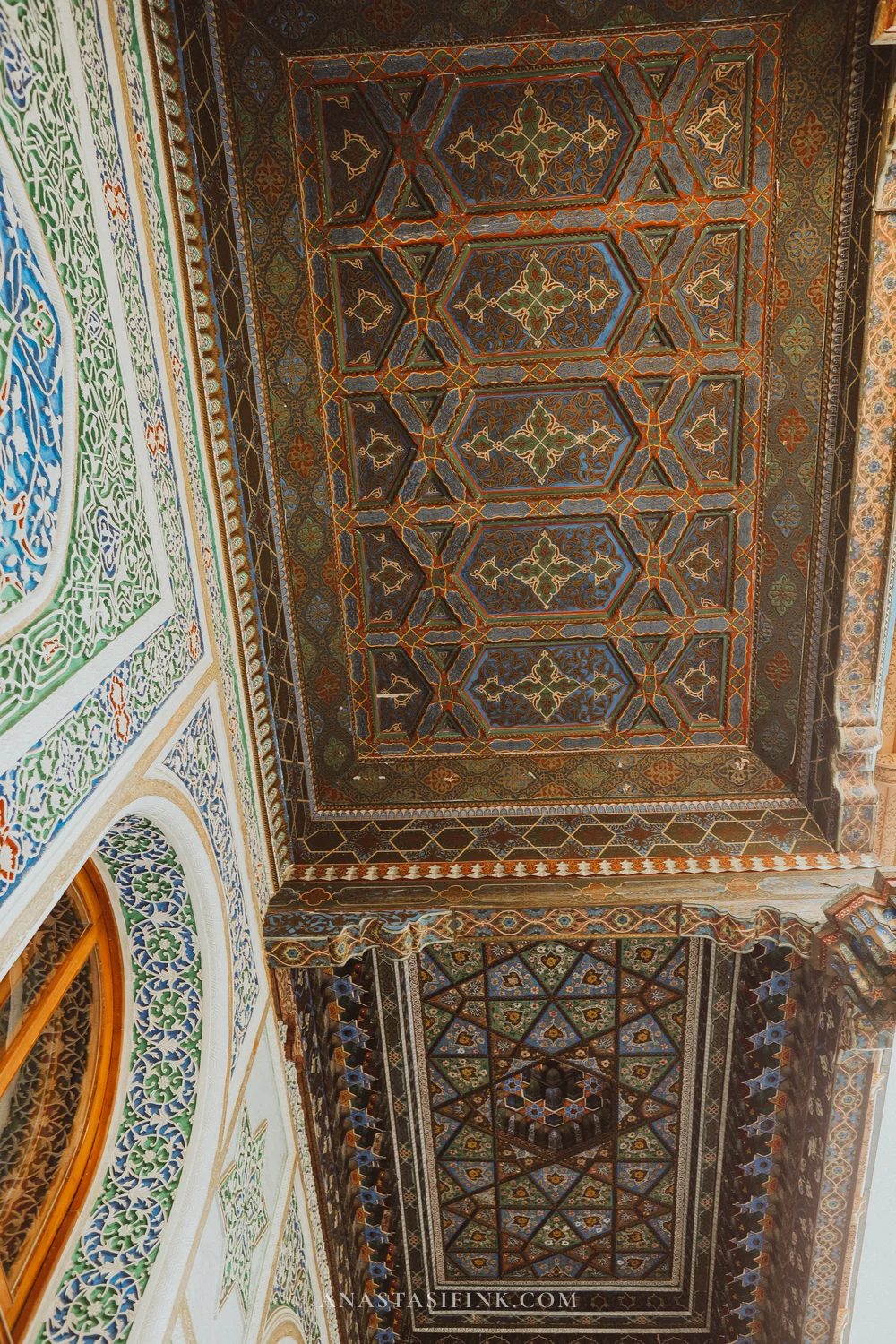
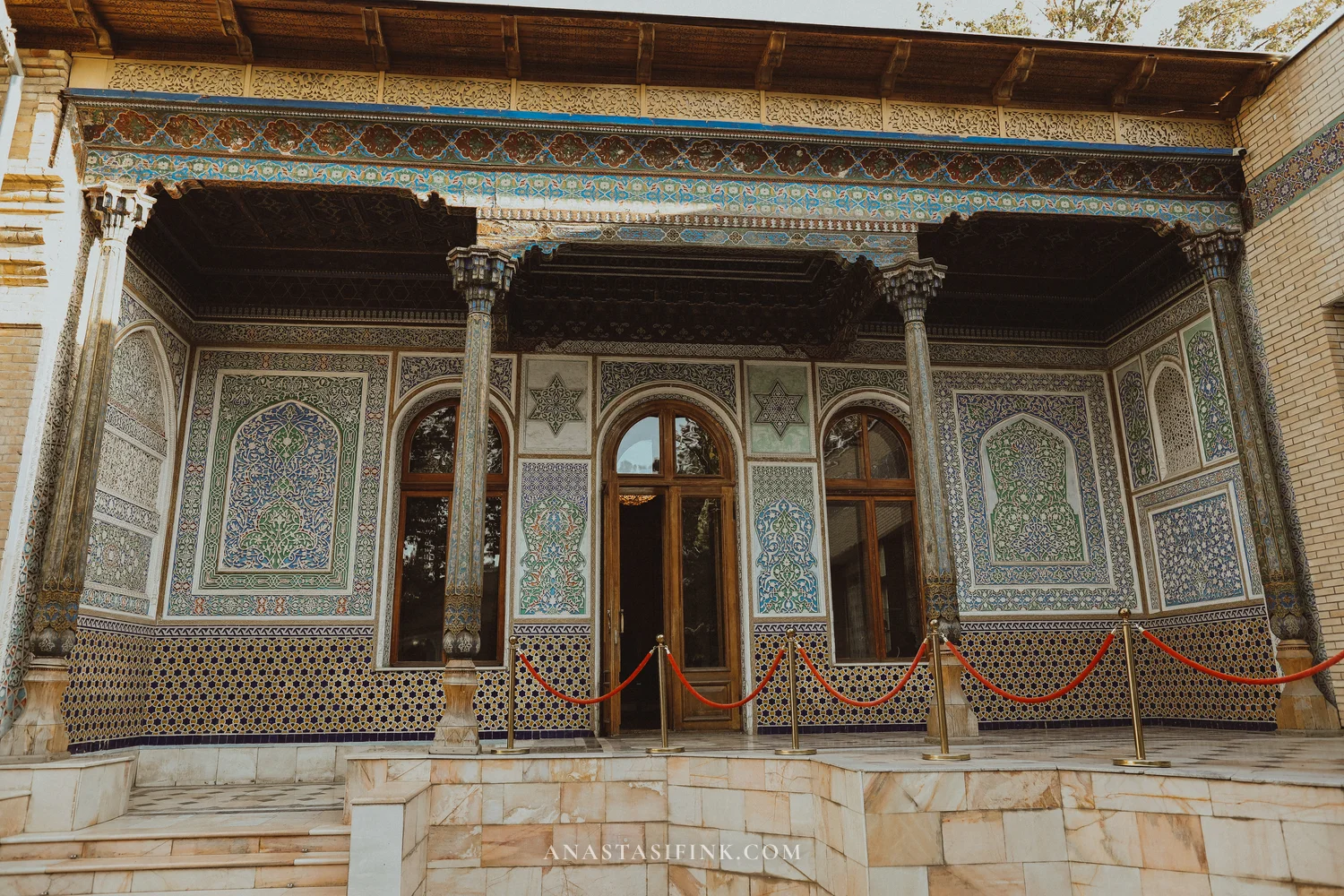
I’ll start with the aivan, because that’s where the museum starts. An aivan (covered veranda) is an open, roofed gallery in front of the entrance — closest in English to “porch” or “loggia.” In traditional Uzbek homes, the aivan is where you sit, drink tea, and receive guests. The Polovtsev aivan ended up with European proportions — tall and symmetrical — but the finishing is purely Eastern: walls covered in majolica, an inlaid carved ceiling, painted everywhere.
The grand hall with the fountain and painted dome
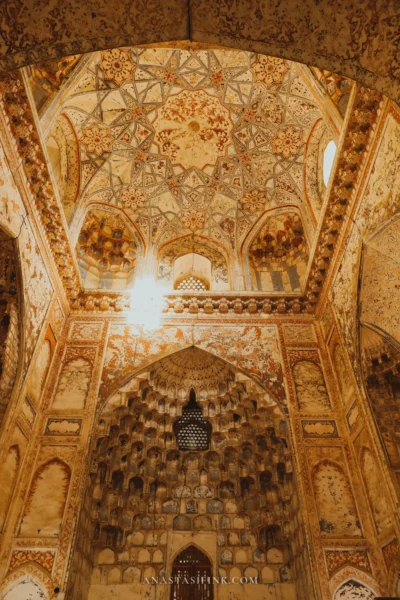
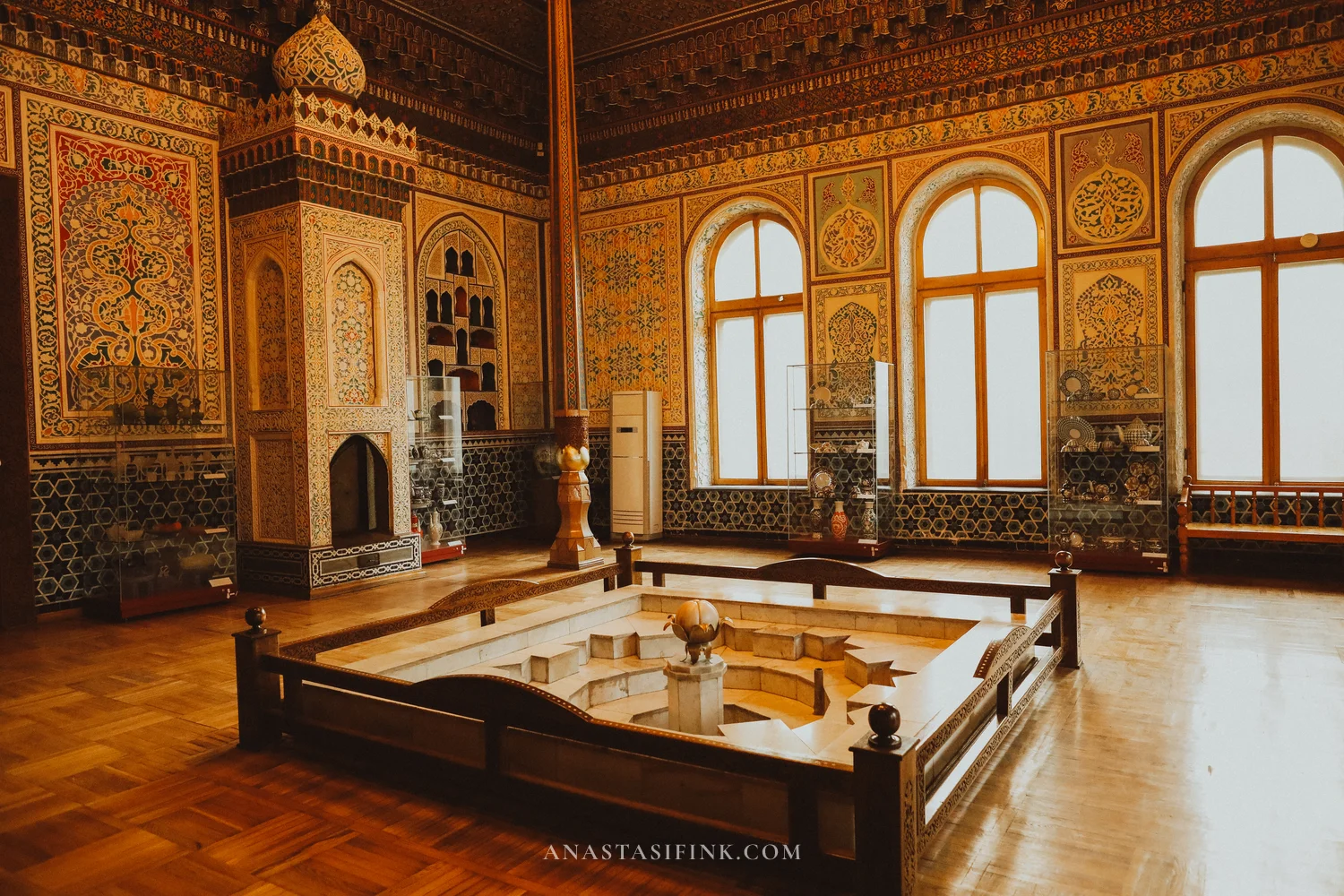
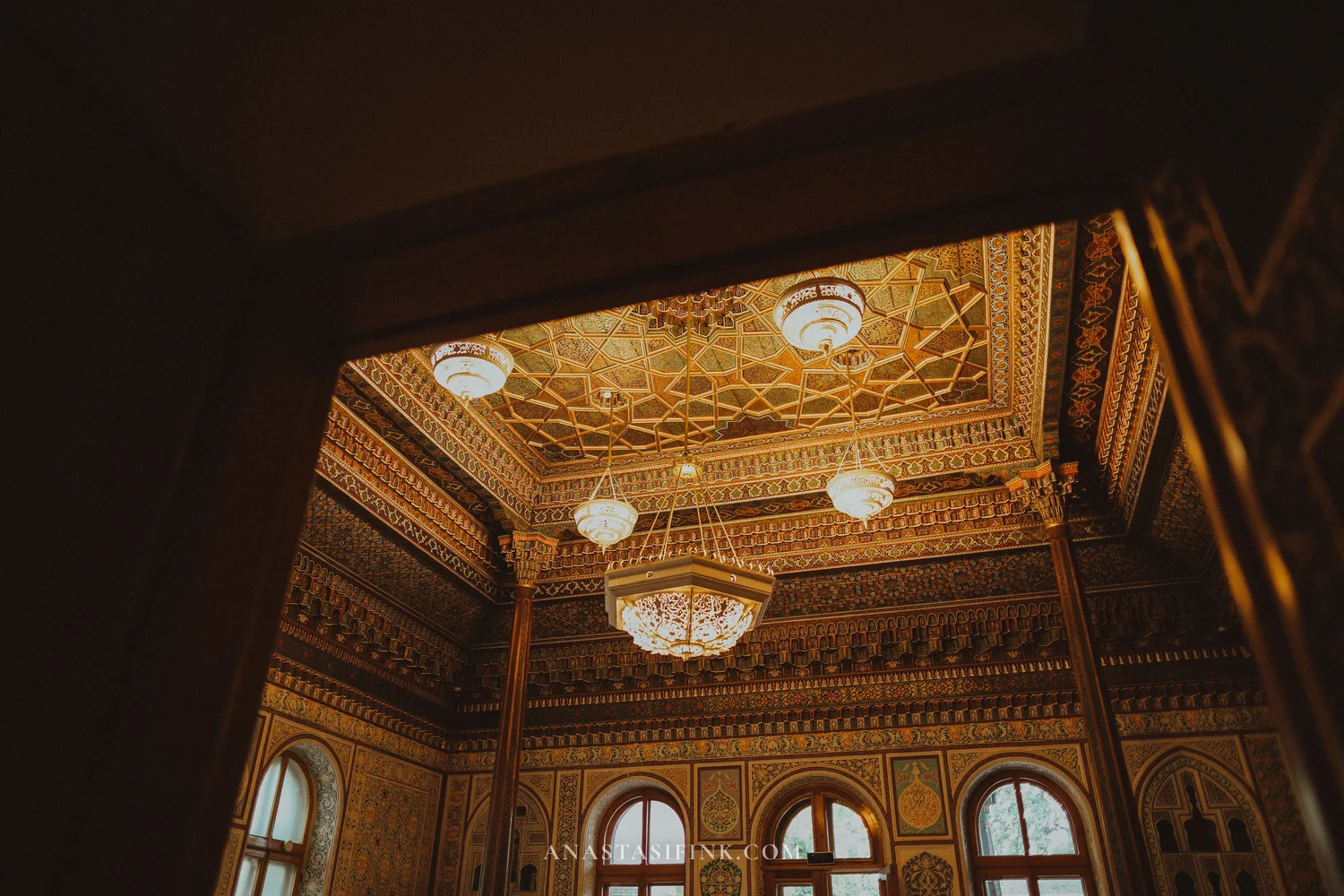
The doors from the aivan open straight into the main hall. This is probably the most famous room in Tashkent — and I get why. In the center, a low marble fountain with an octagonal basin. Around the perimeter, windows facing the garden. In one corner, an enormous decorative niche shaped like a mihrab. The ceiling is coffered and topped with a backlit dome. The strongest impression: there is literally not a single empty surface. Every centimeter is either painted or carved.
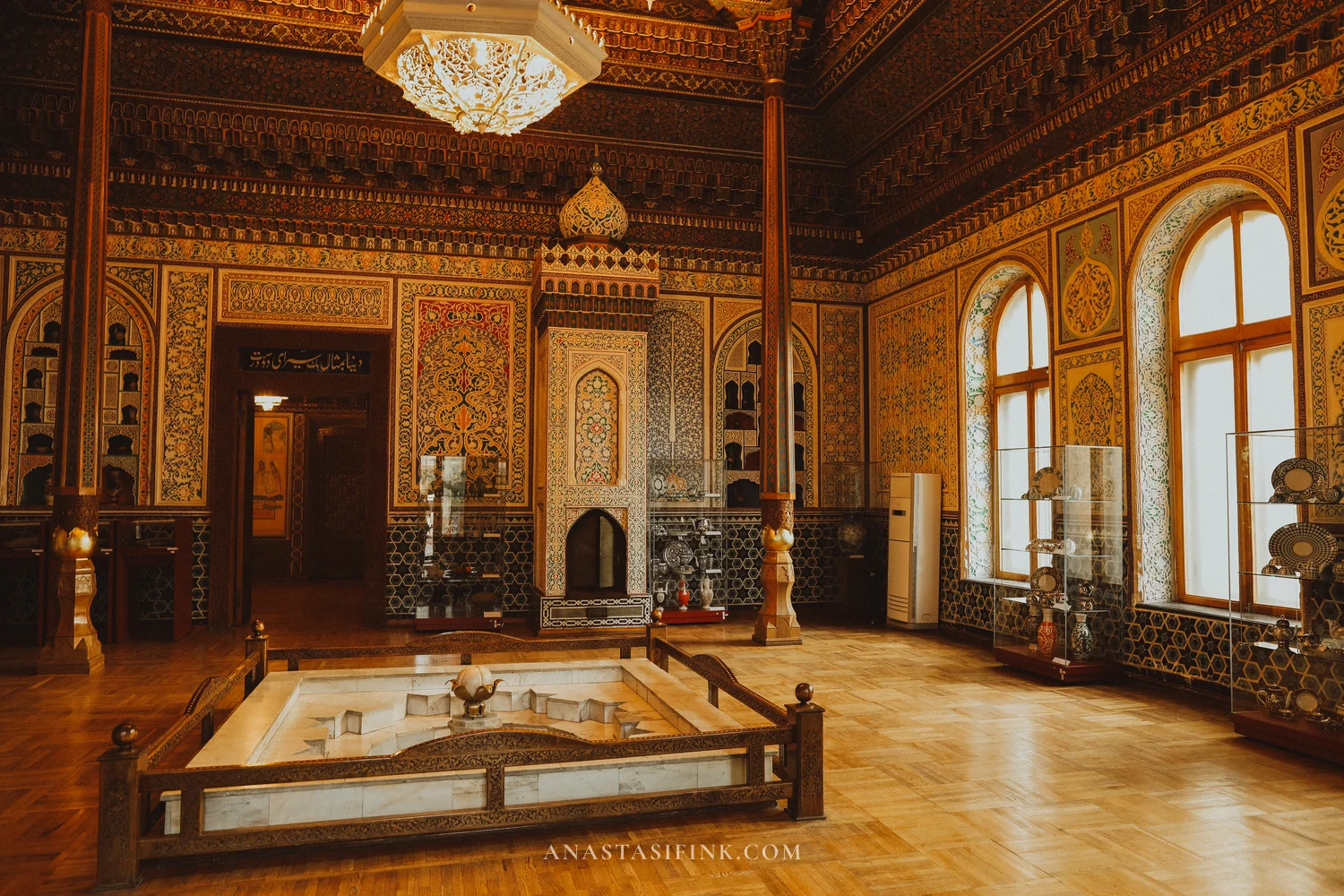
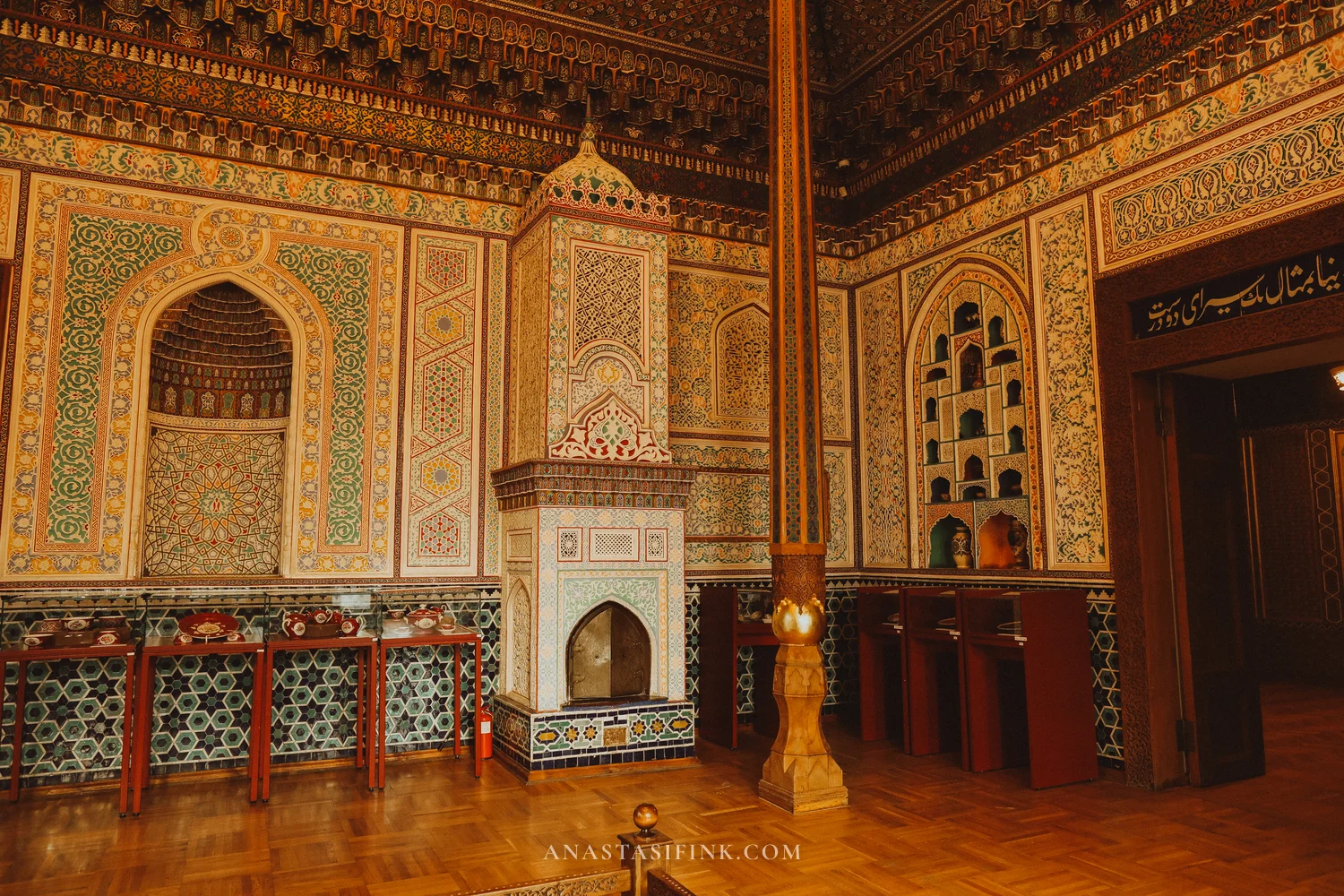
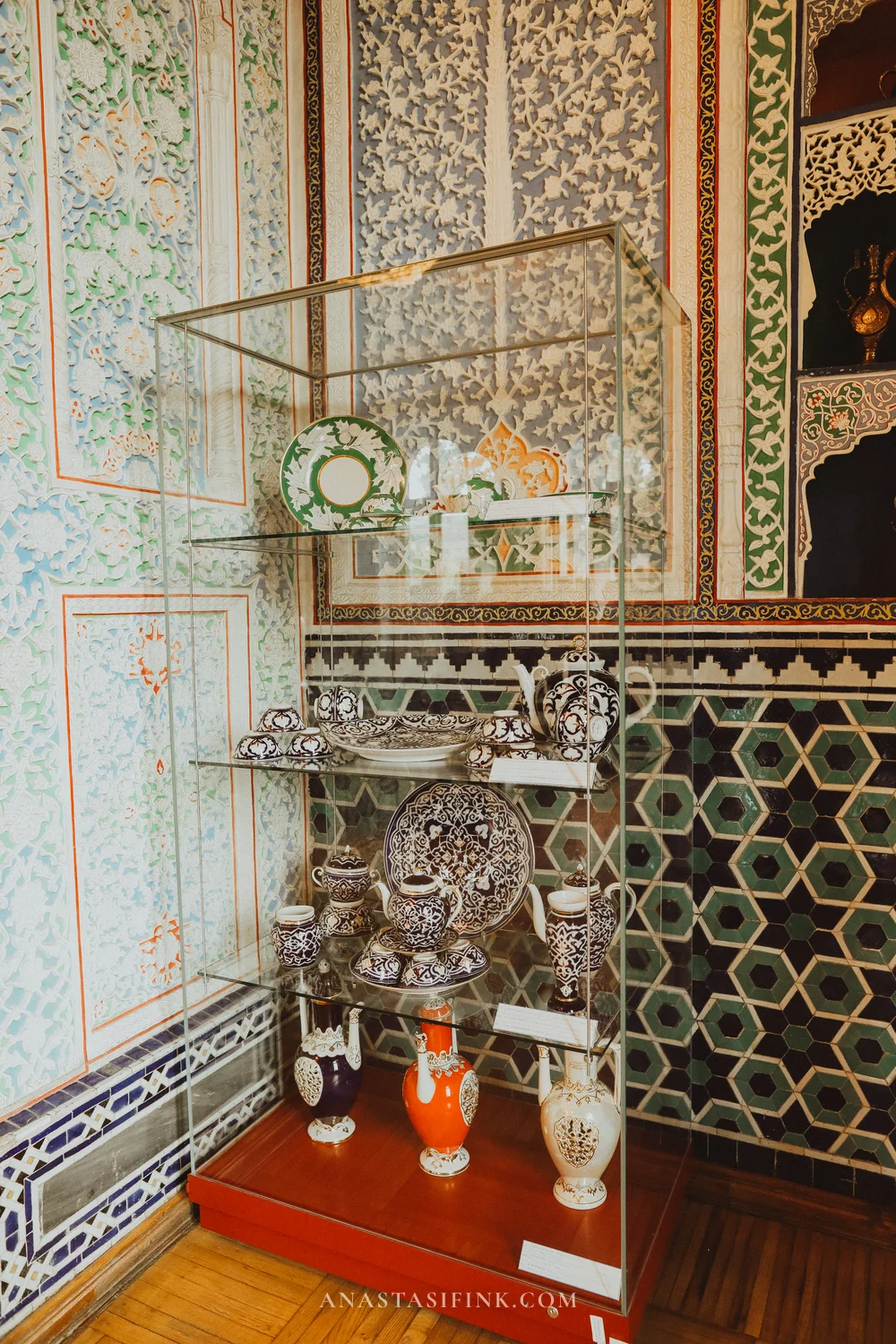
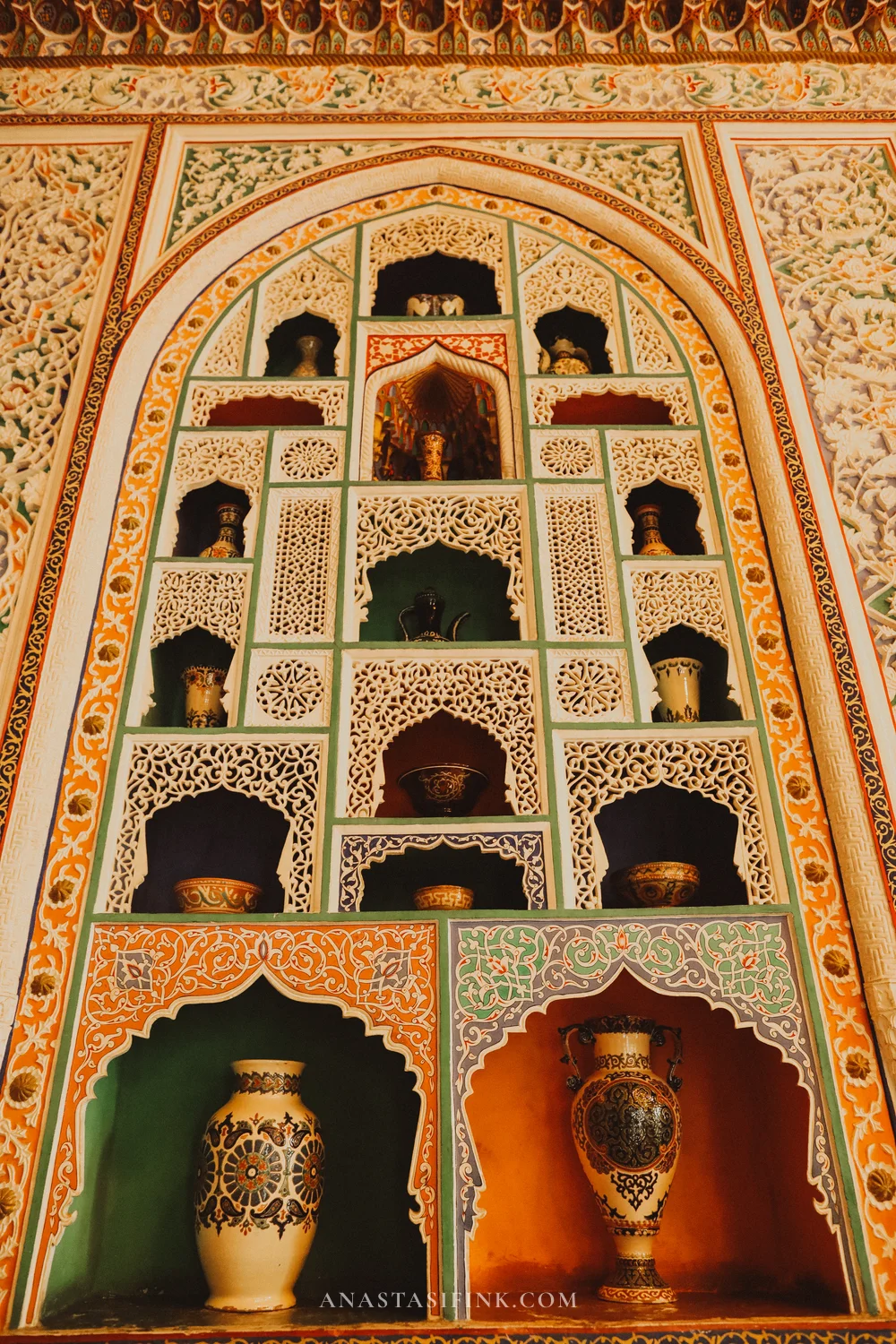
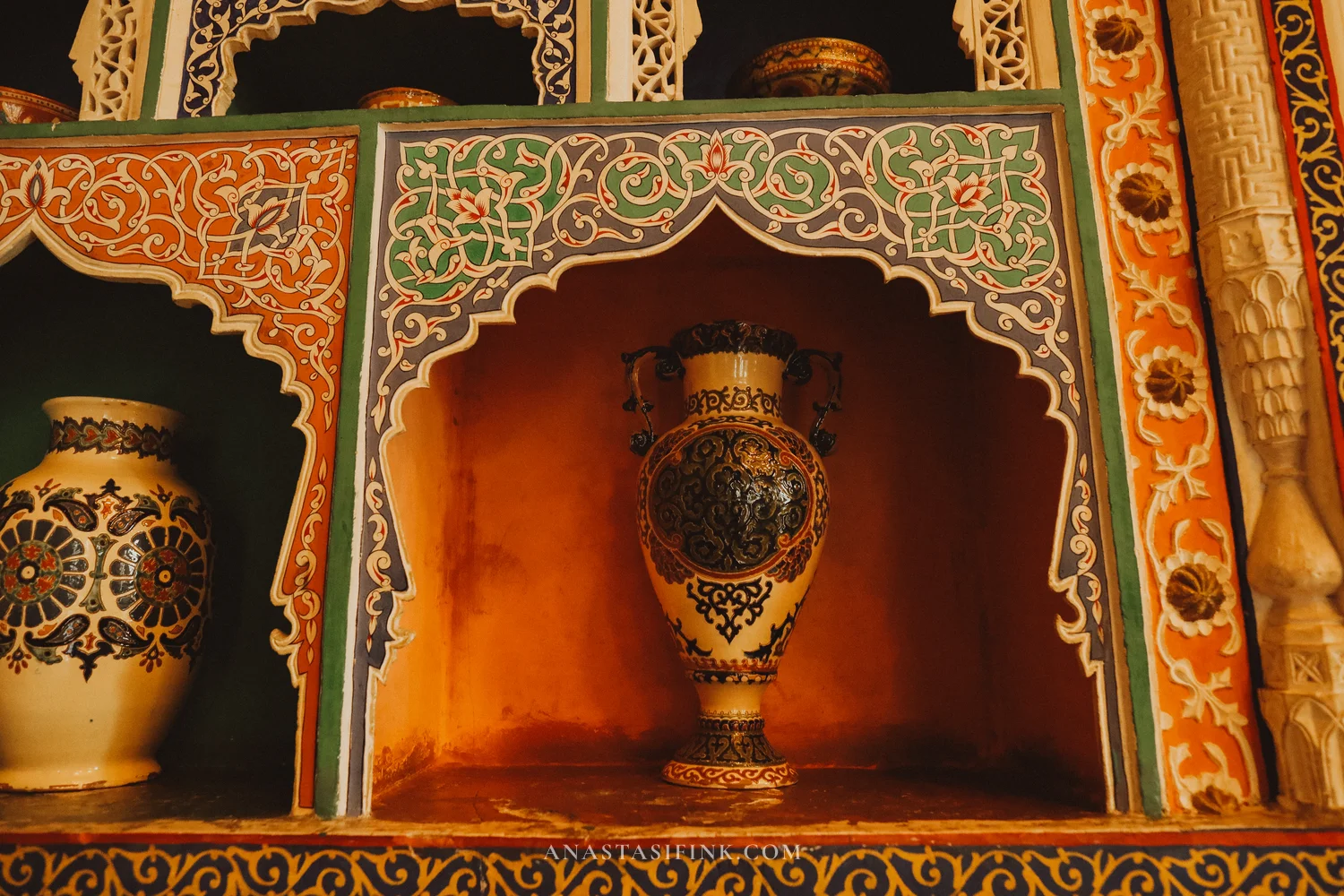
Openwork niches are a signature feature of Uzbek homes. Each one is carved separately and painted by hand
The ceiling and carving — what came from where
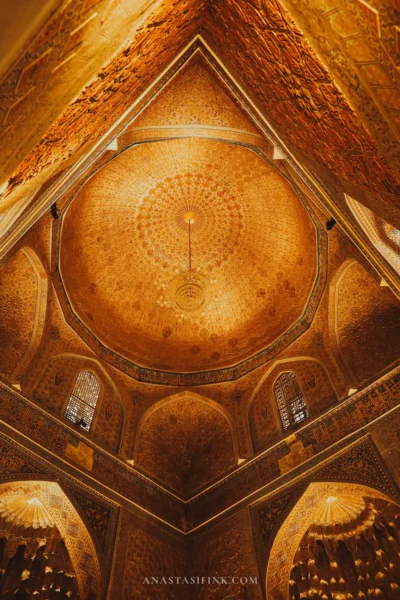
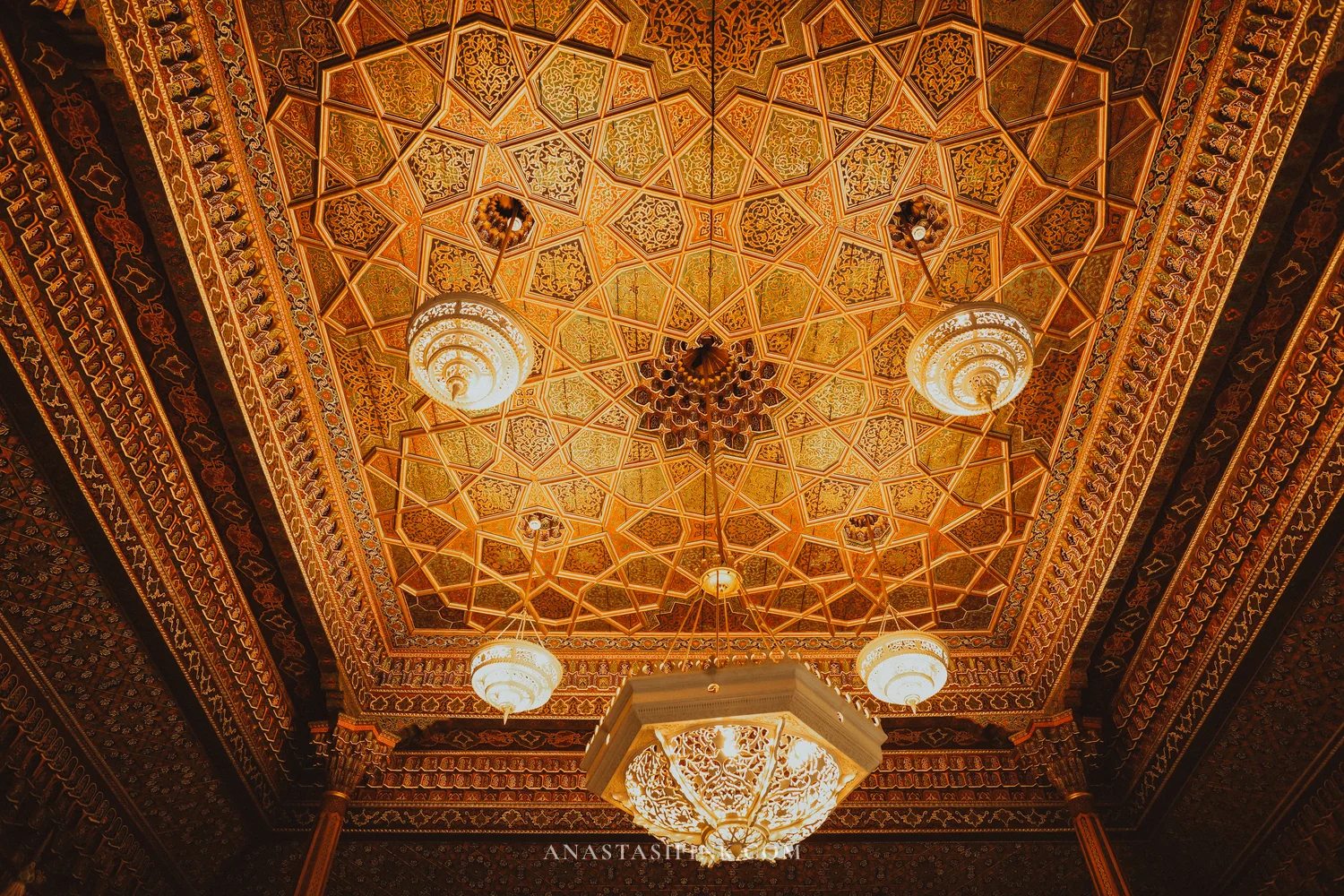
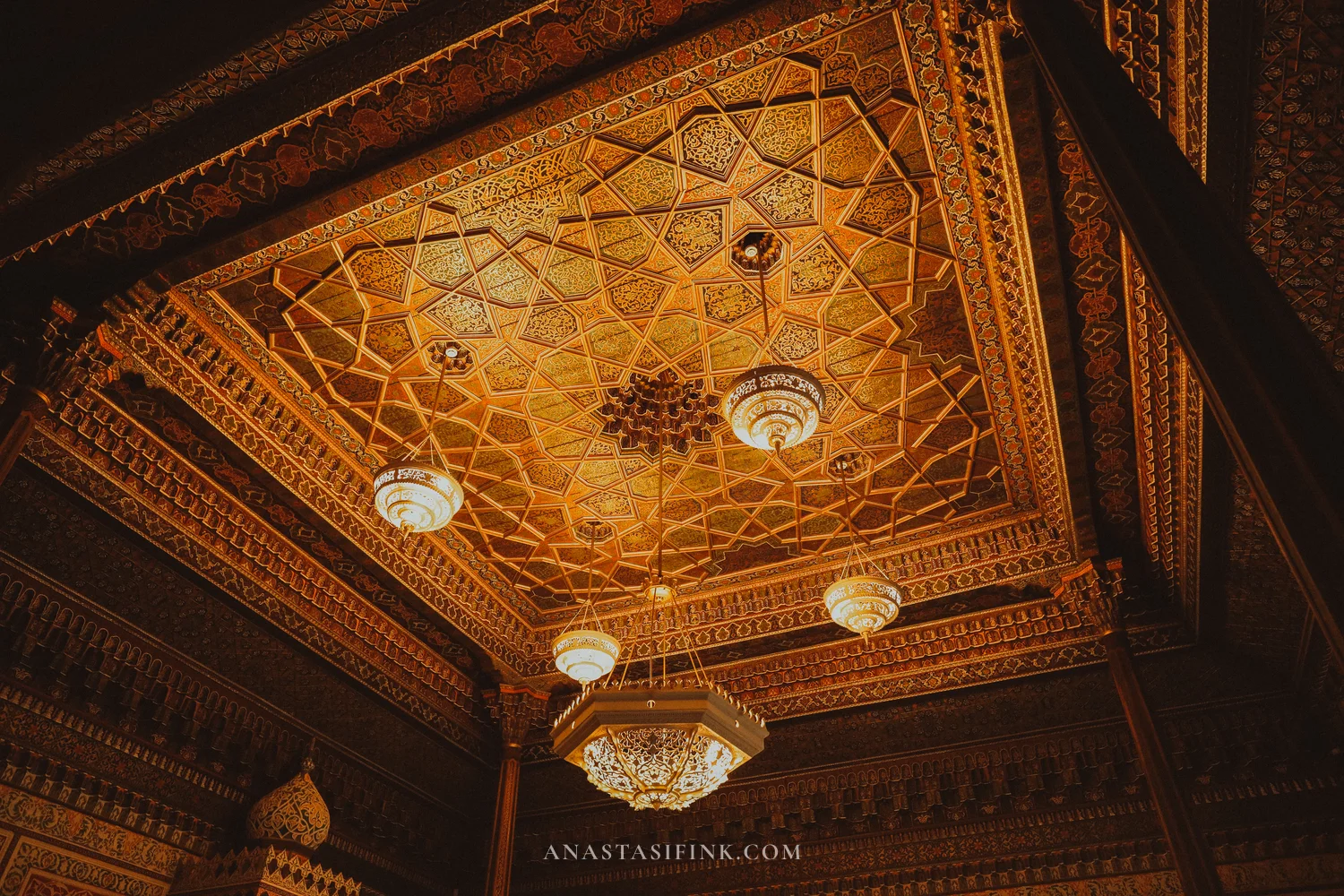
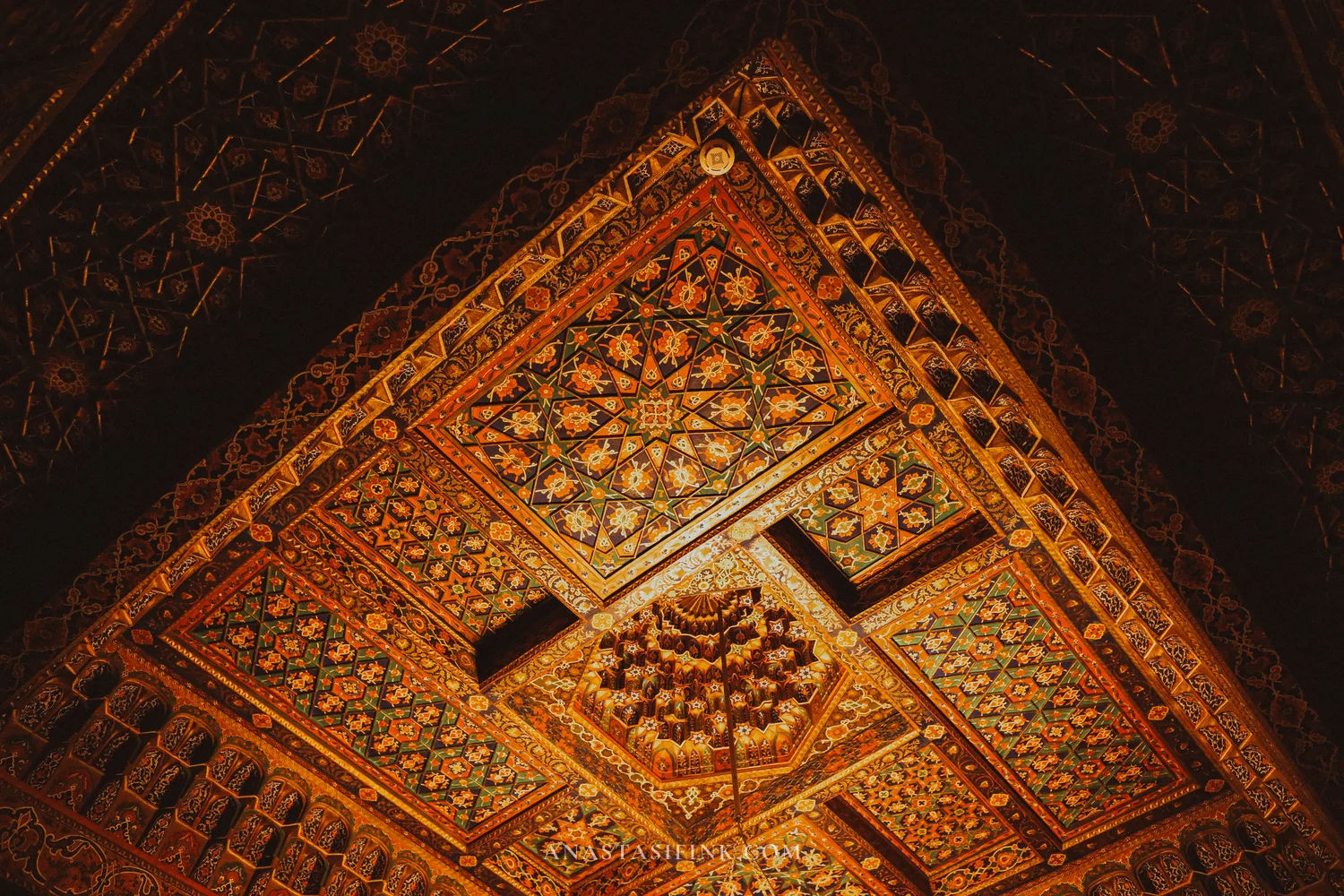
The ceiling is the thing that gets me every time. It’s not a single dome but a complicated system of beams, coffers and stalactite forms — Muqarnas (the Arabic word for those tiered, hanging projections). I read that part of the carving was done by craftsmen from Khiva, part by craftsmen from Bukhara, and the styles are different: Khiva work is finer and more geometric, Bukhara work is larger with floral motifs.
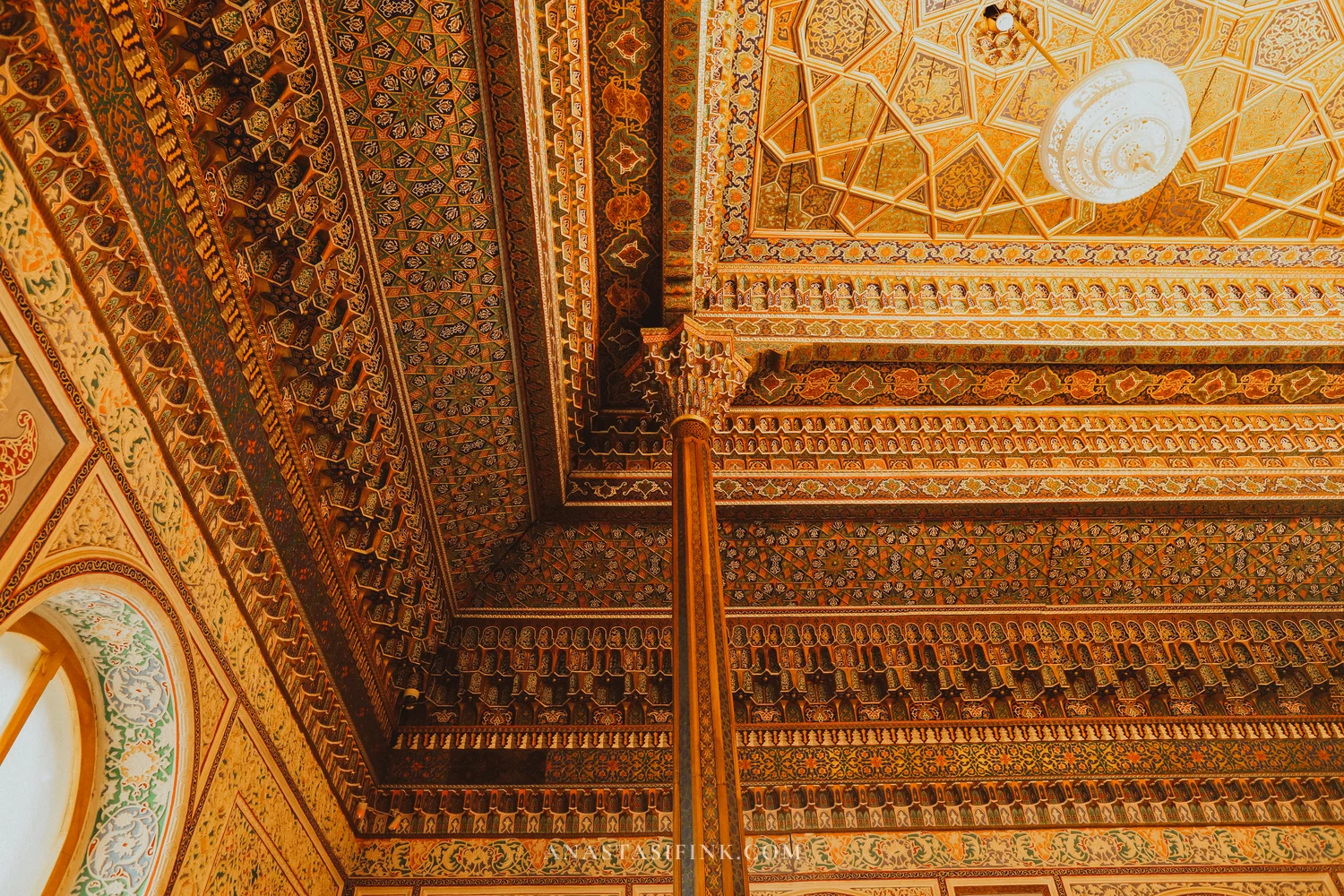
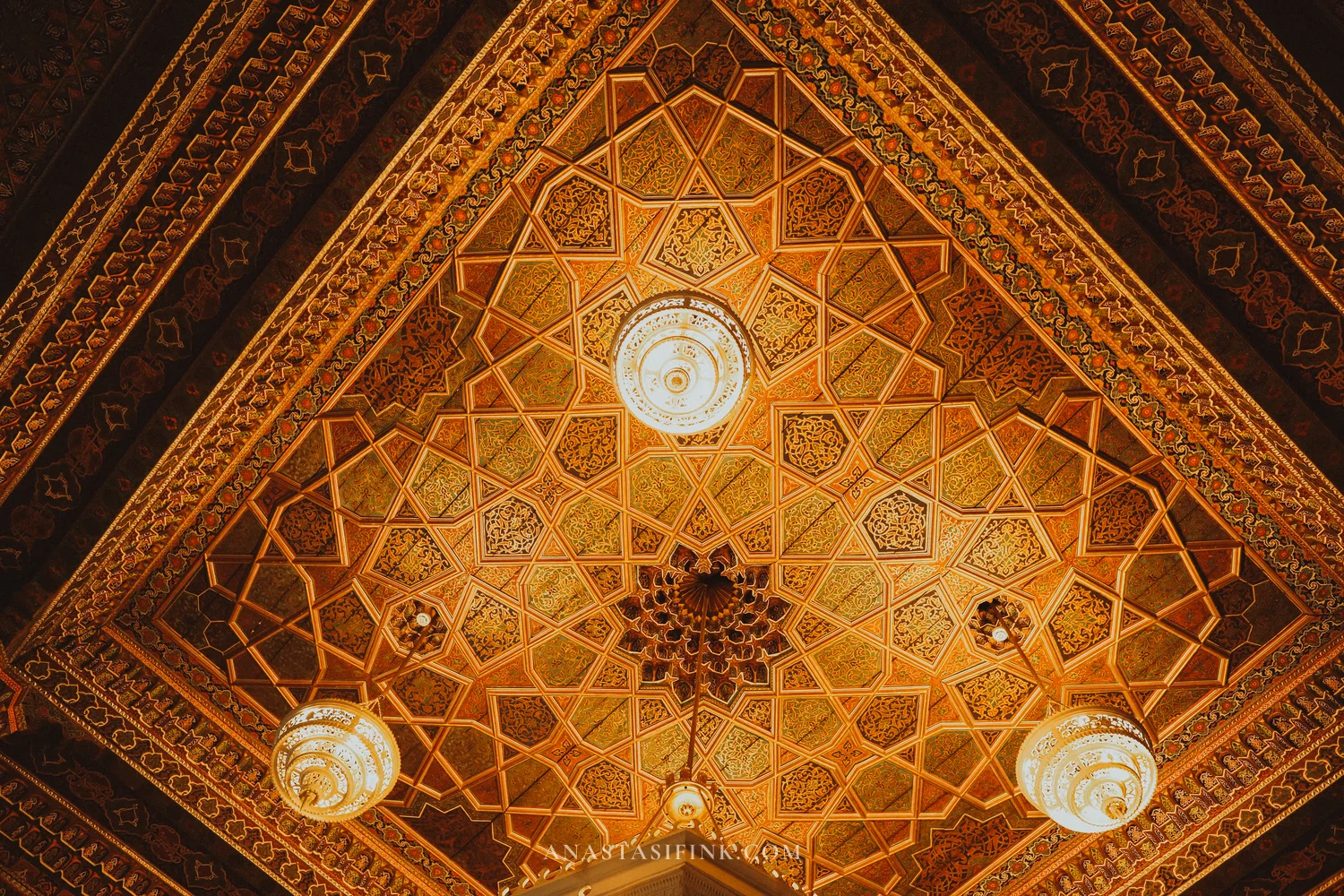
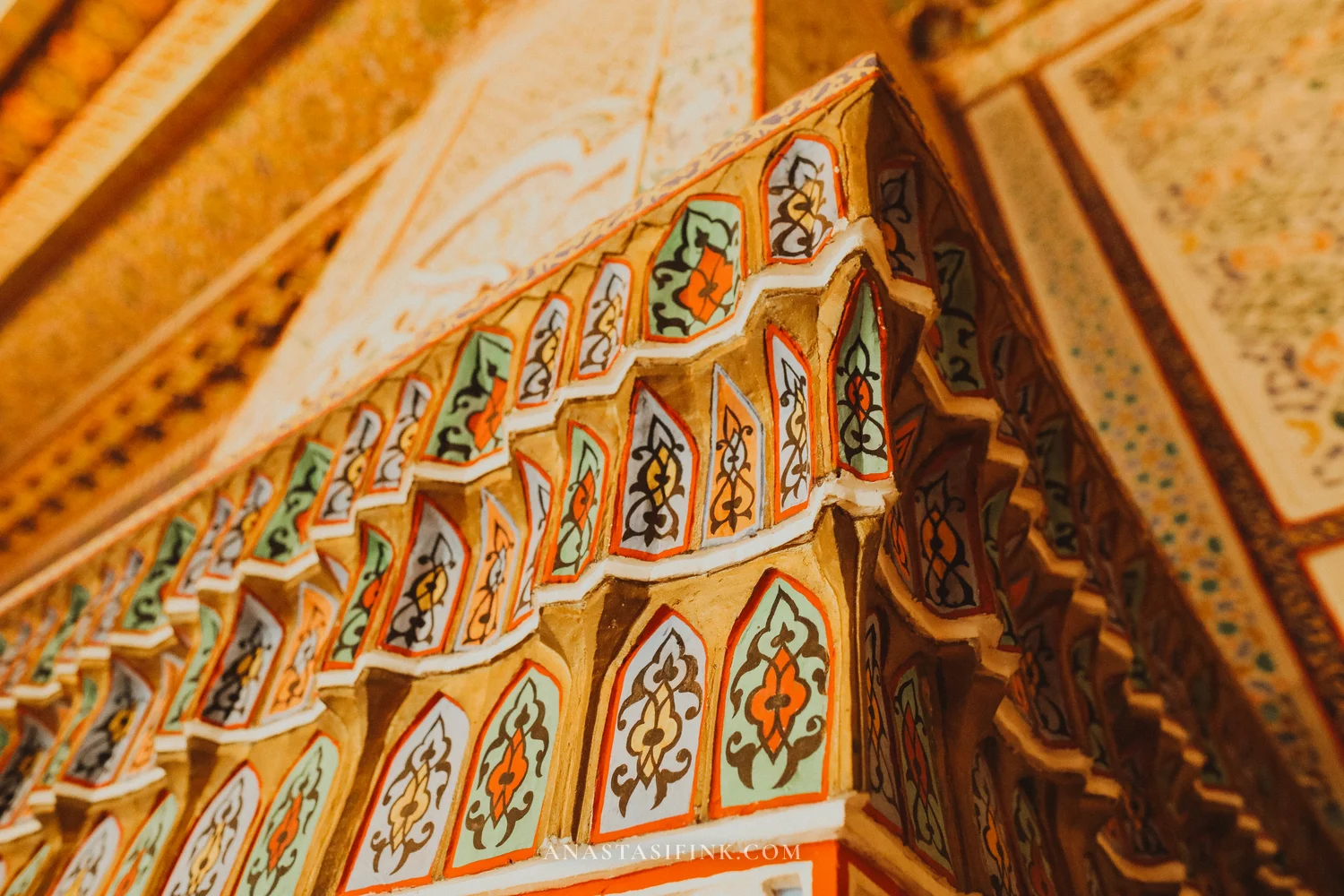
The geometric pattern is built around an eight-pointed star — a Central Asian classic. The corners of the Muqarnas are angled so the chandelier light catches them differently throughout the day
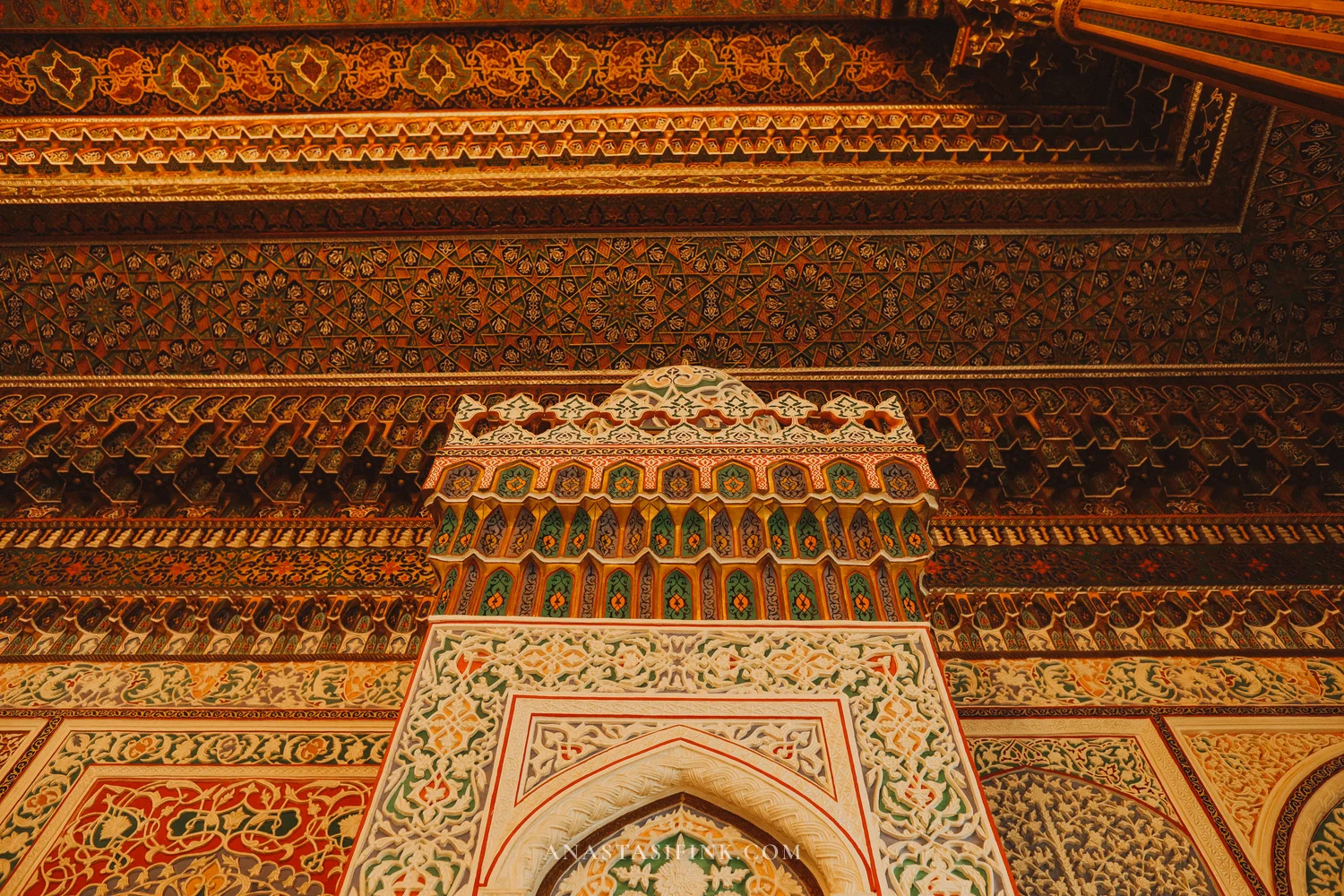
Columns, doors and the fountain up close
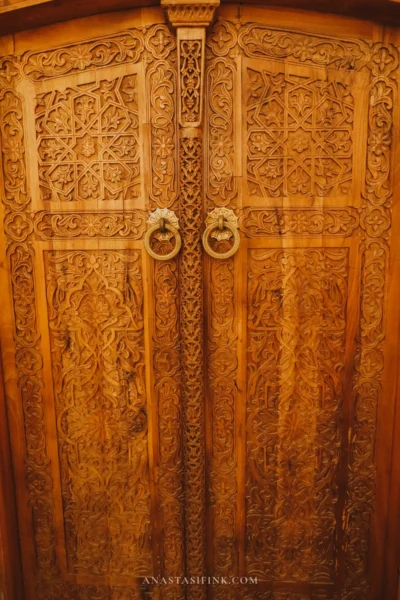
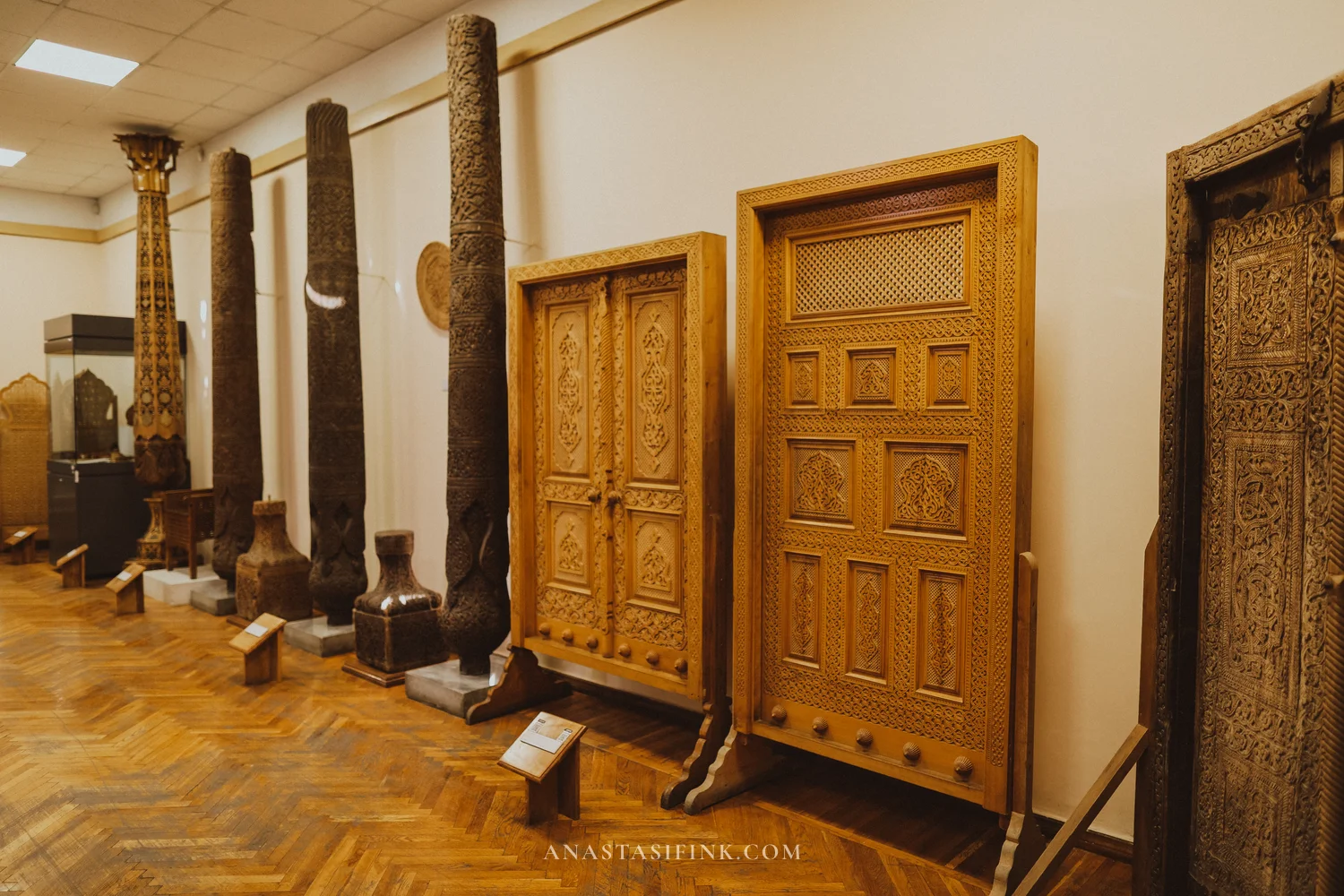
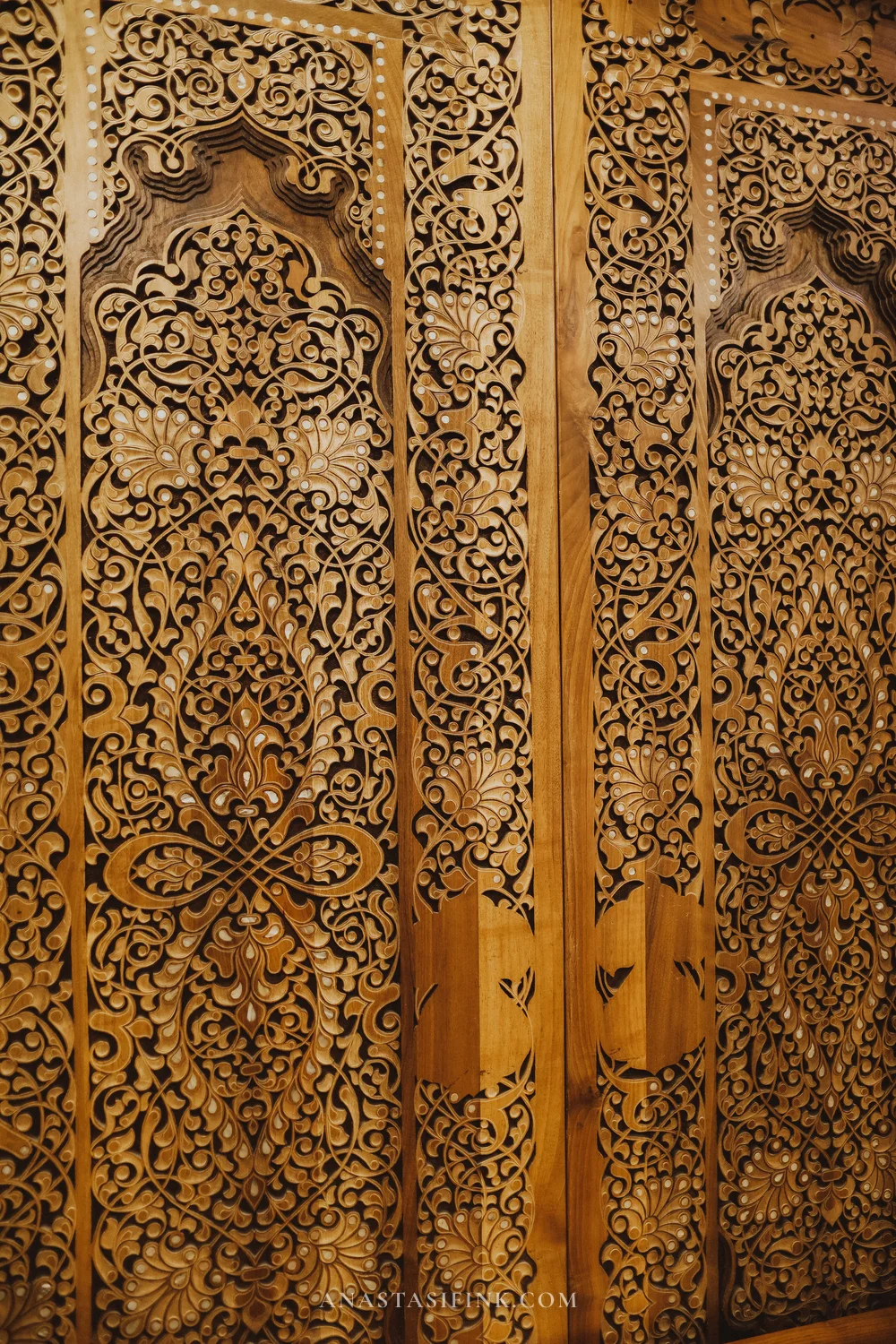
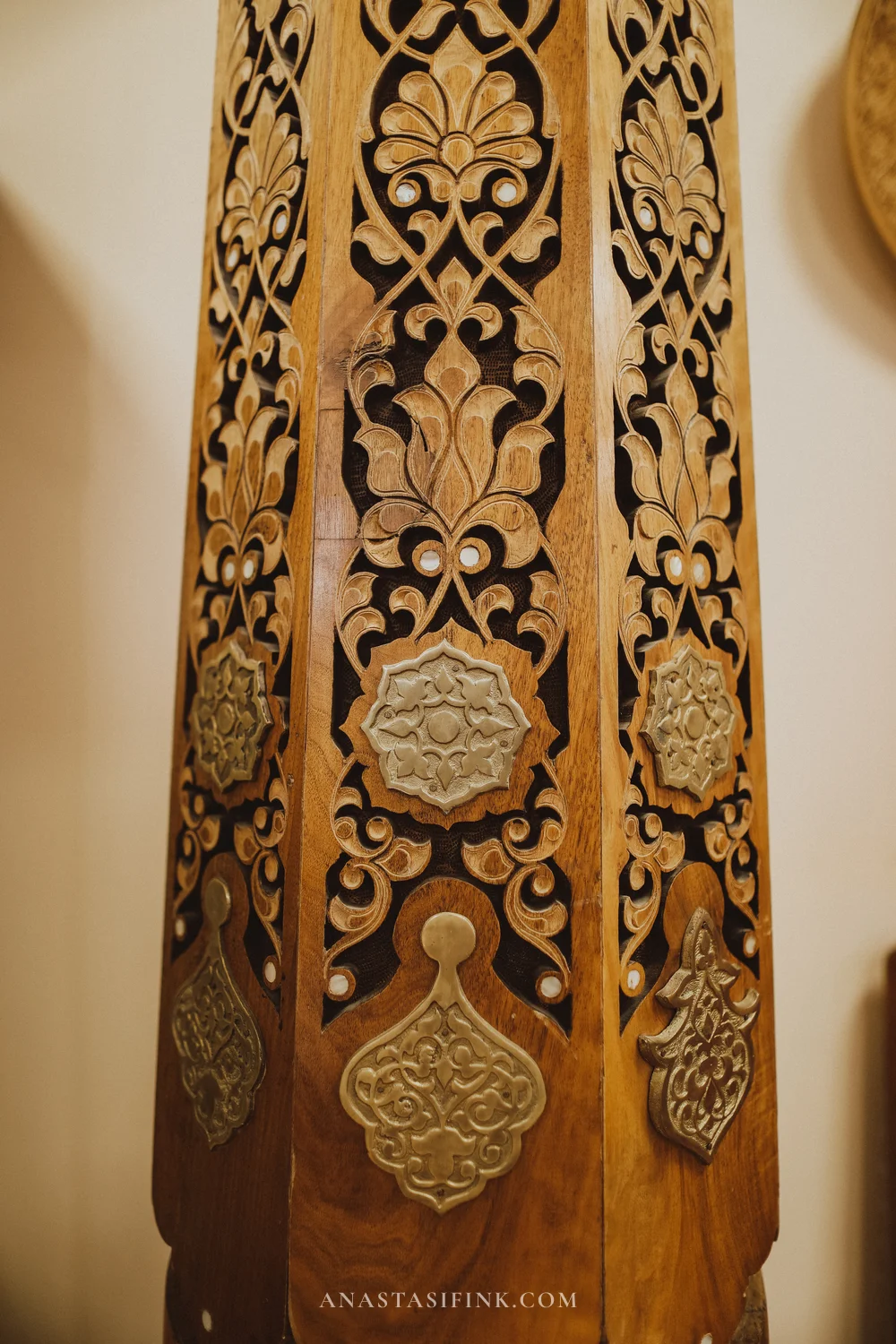
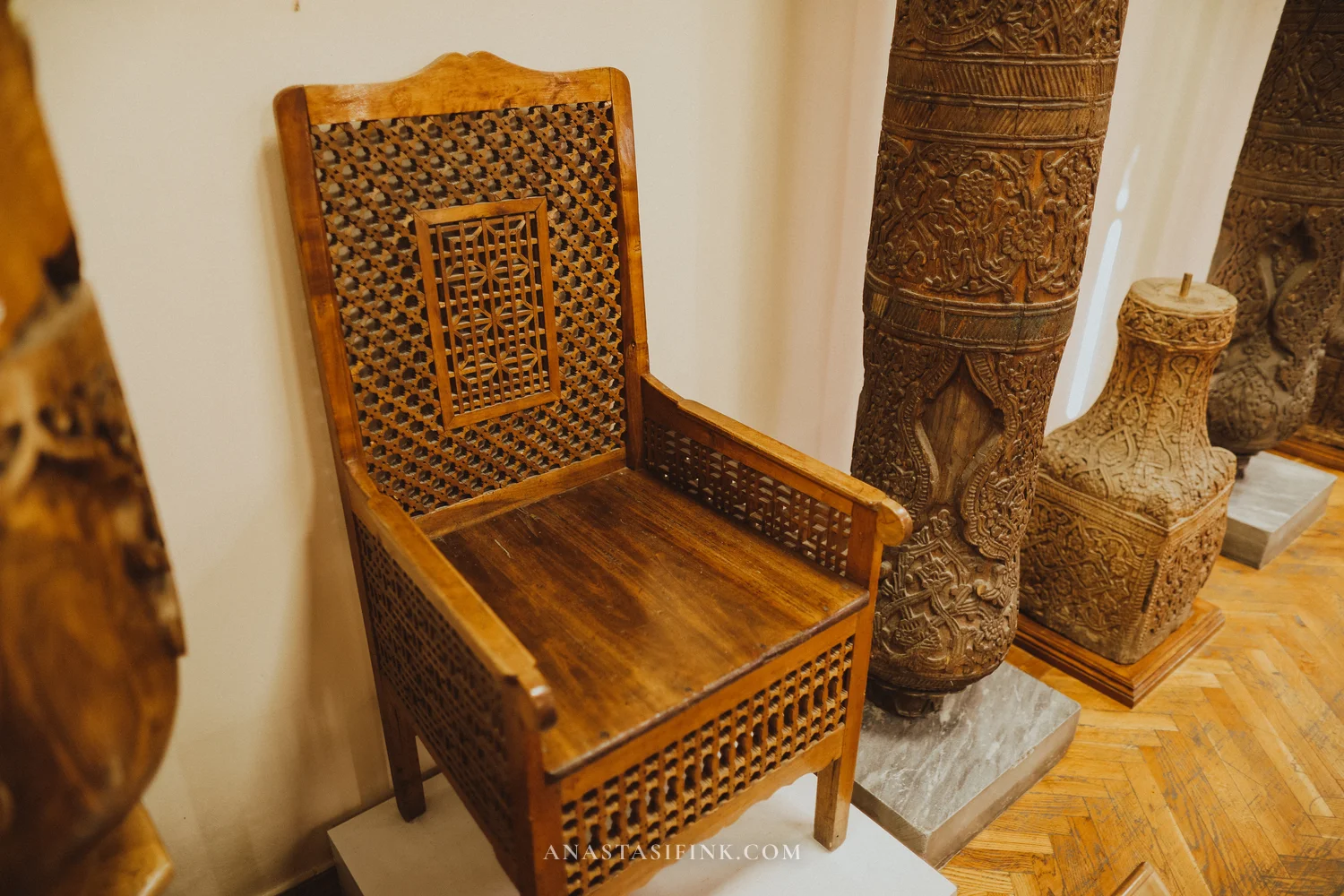
The columns are carved from Karagach (Asian elm — a local hardwood), the doors from walnut. Karagach is dense and fine-grained; it’s still used in Bukhara today for doors and columns. The carving isn’t just relief work — it’s openwork, all the way through. Like lace, only made of wood.
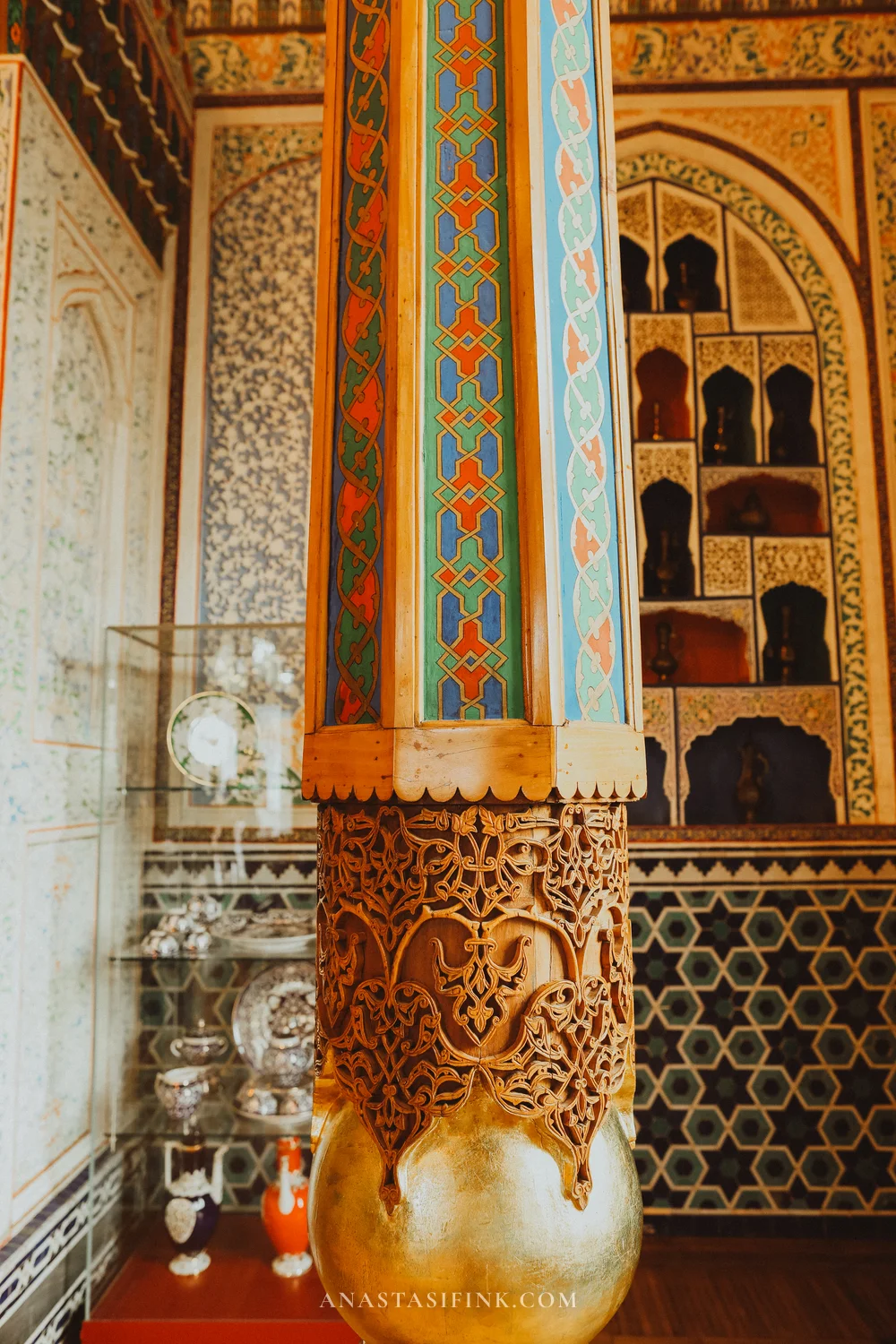
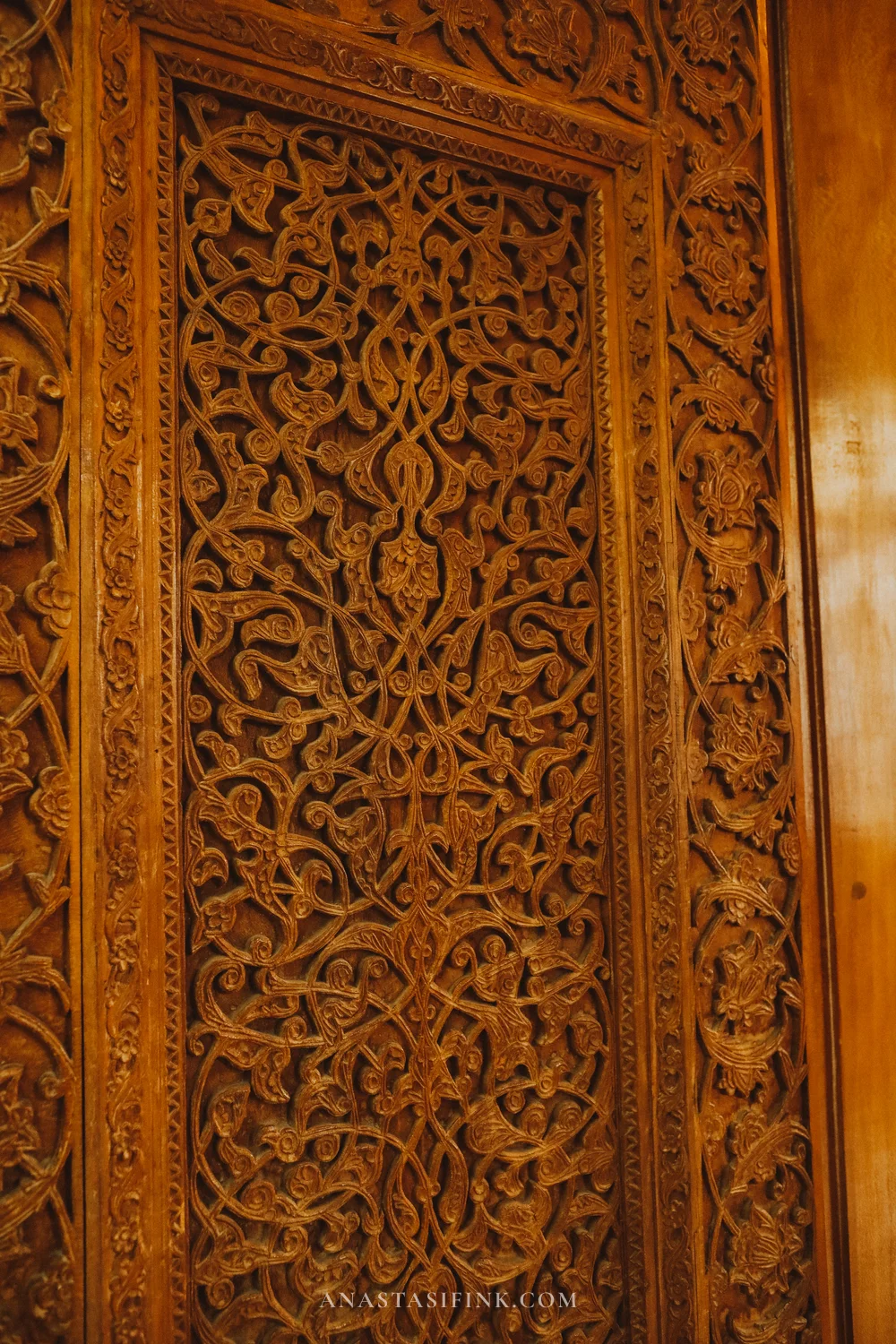
Left — the base of a column: silvered with gold-leaf inlays, openwork carving running top to bottom. Right — a walnut door with carving covering every surface
Narrative paintings around the main hall
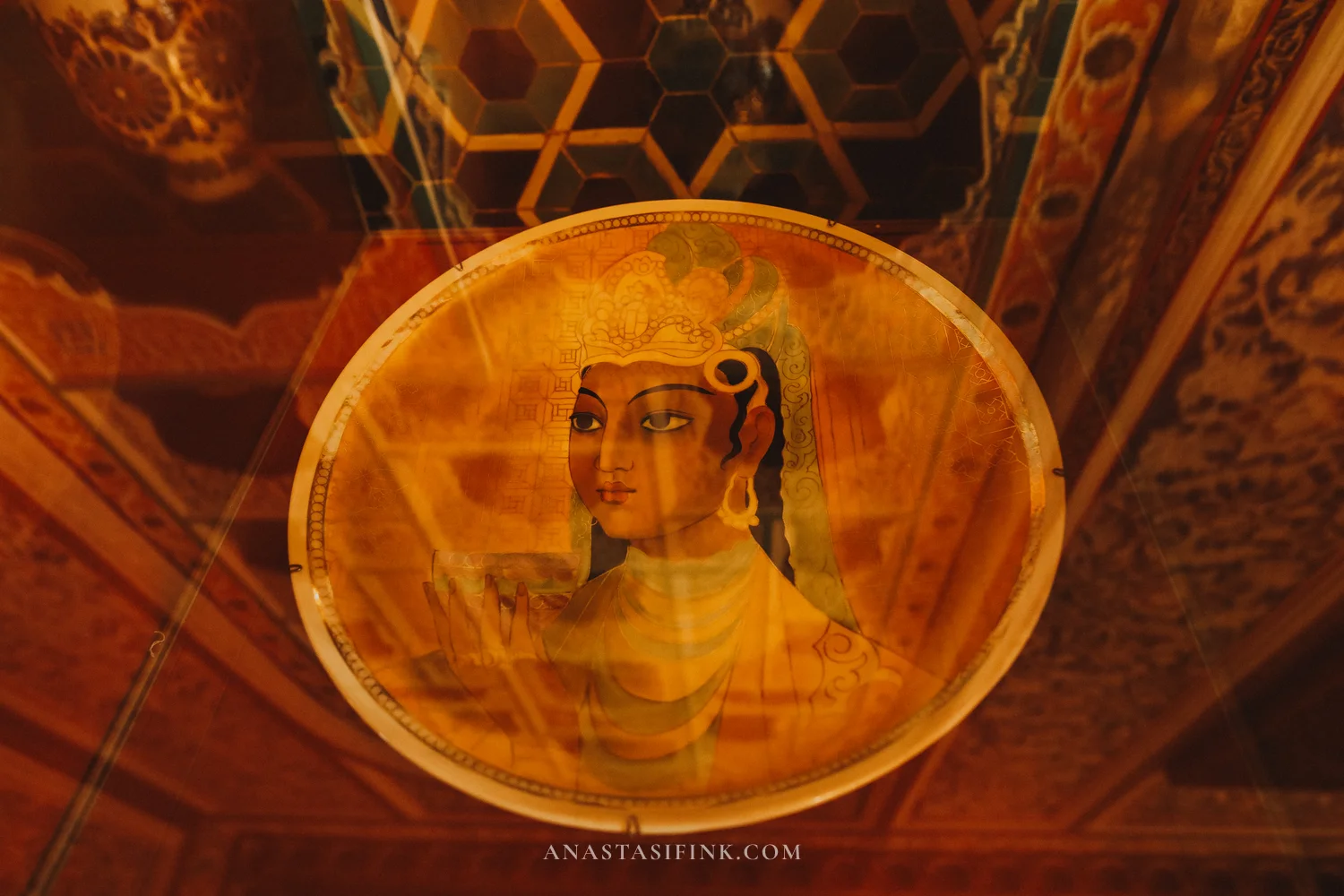
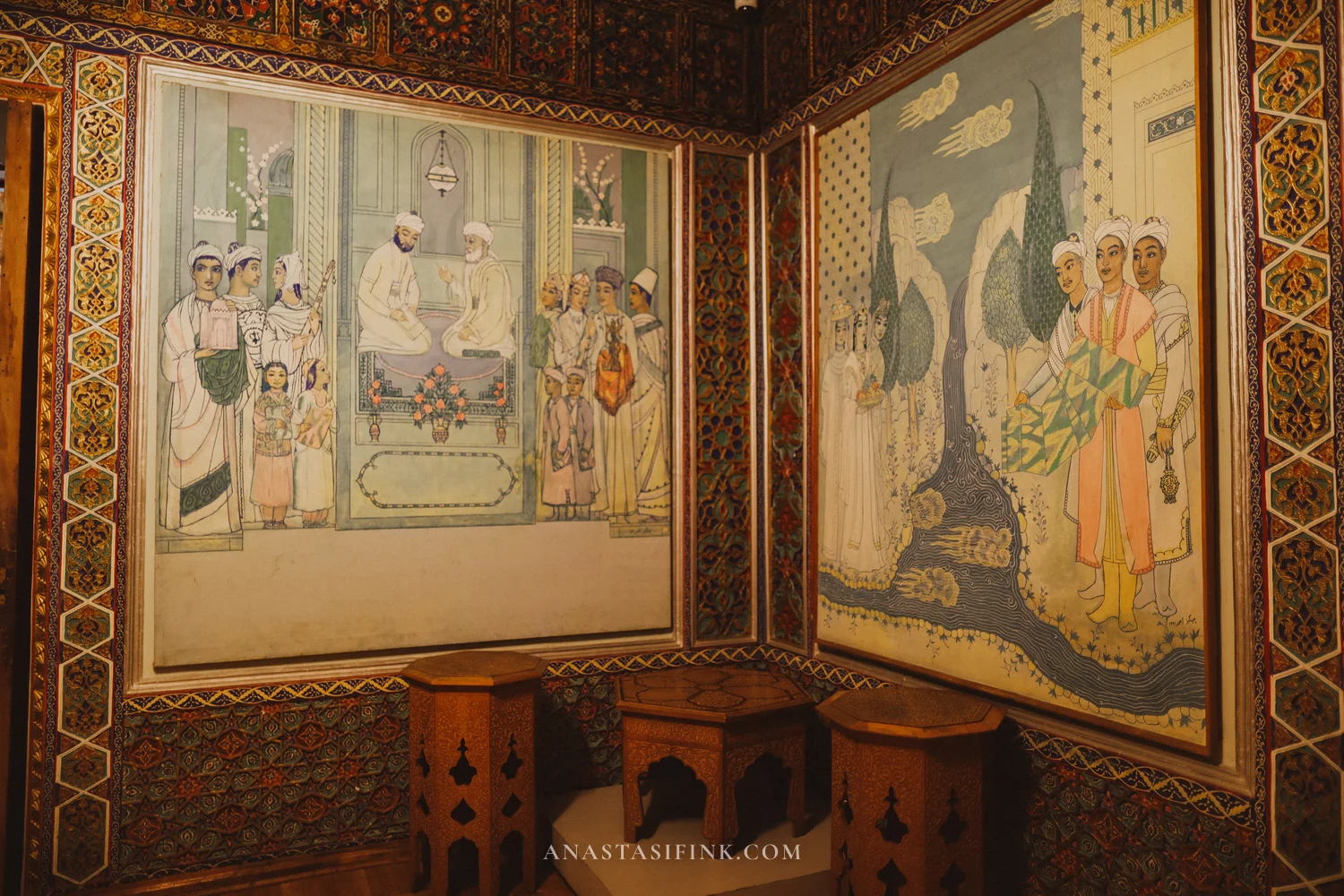
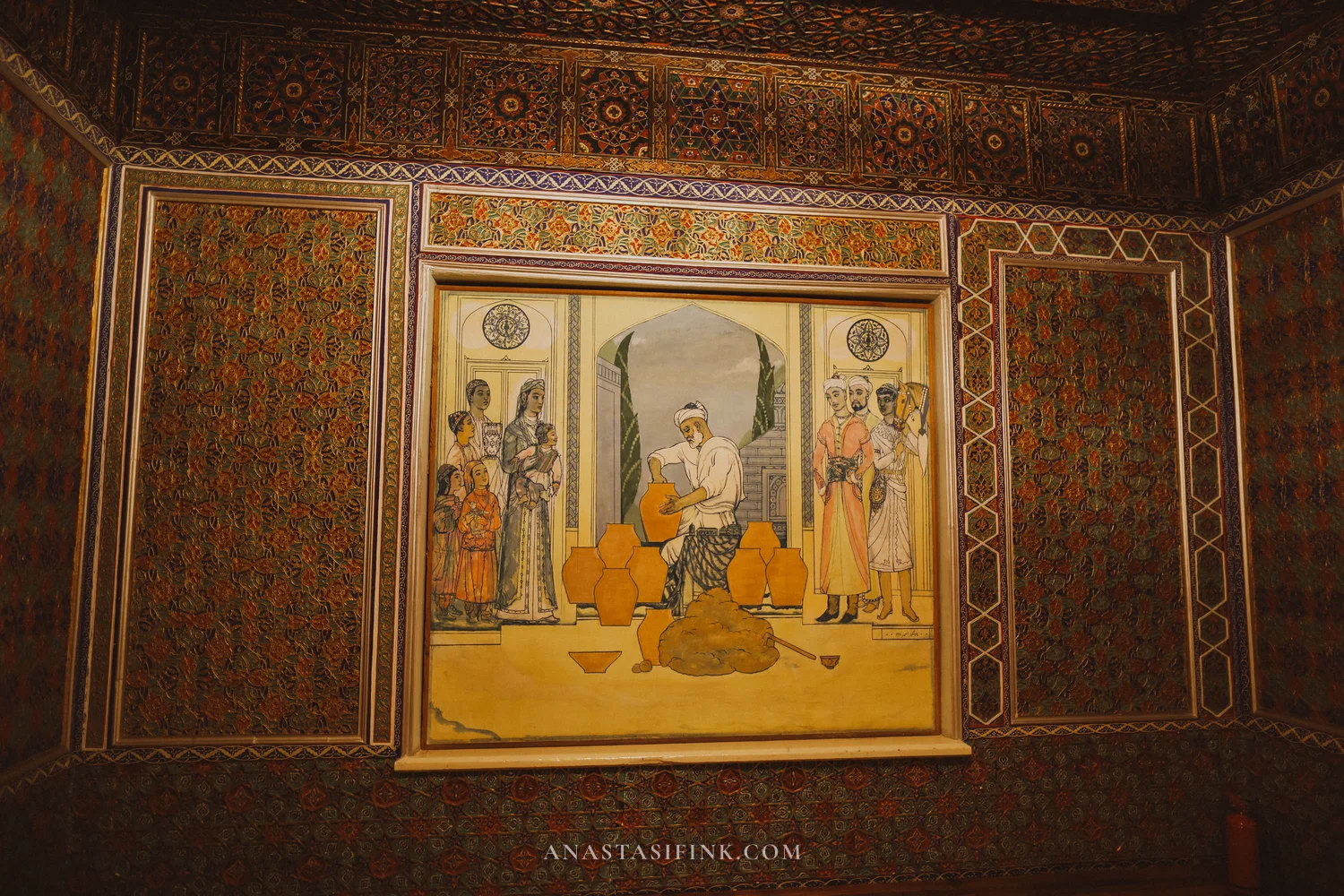
There’s a doorway in one corner of the grand hall that leads to small ceremonial rooms — almost alcoves. That’s where I found the most stunning decor in the whole house — not just ornament, but actual figurative painting. Weddings, craft workshops, scenes of city life.
The ceramics hall
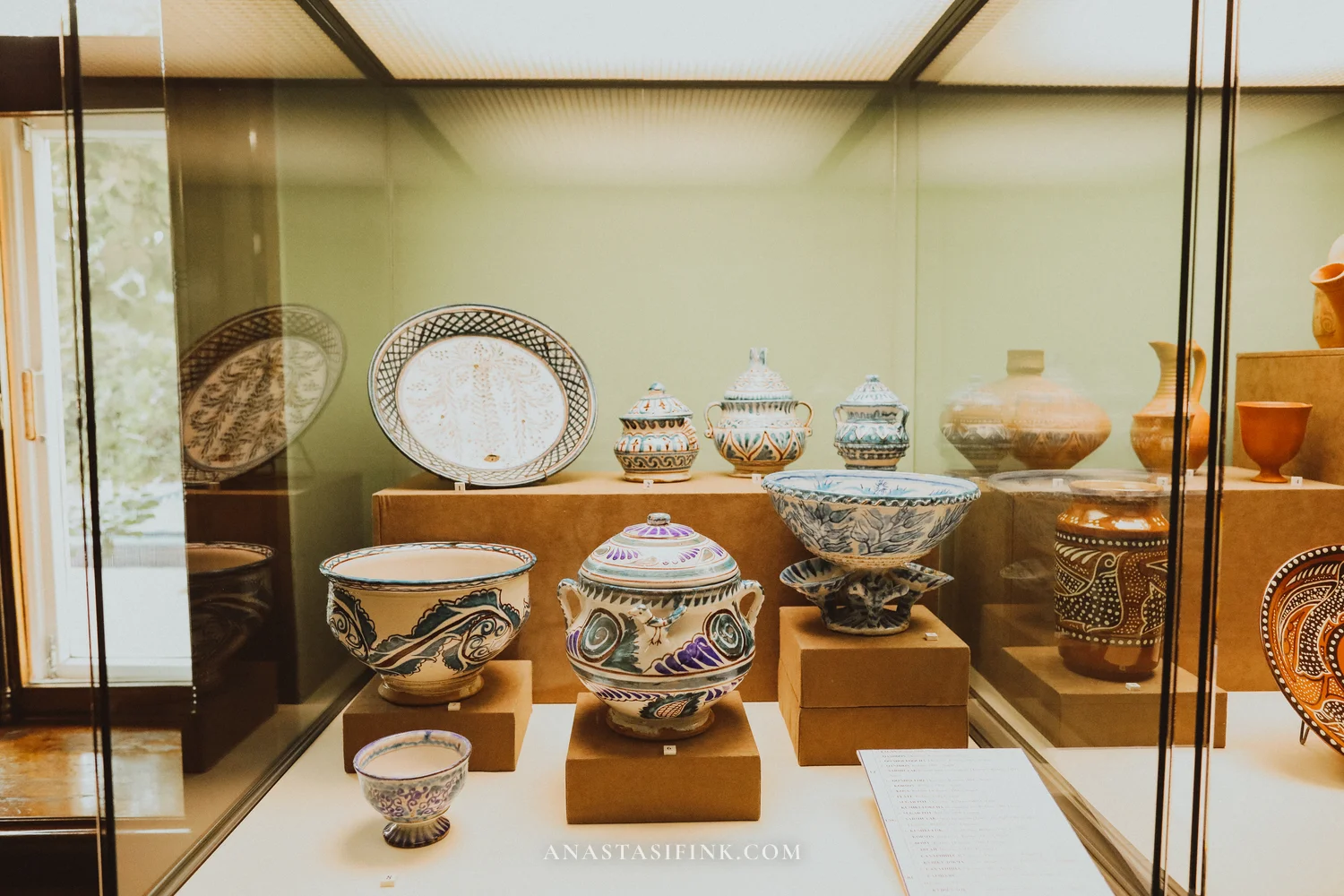
After the ceremonial rooms, the actual collection begins. The first room has green walls and large windows facing the garden — it’s noticeably calmer after the exuberance of the grand hall. This is where the ceramics from the three main schools live: Rishtan (recognizable by its turquoise glaze, from the Fergana Valley), Gijduvan (earthy tones, the Bukhara school), and Urgut. Some plates carry the master potter’s mark.
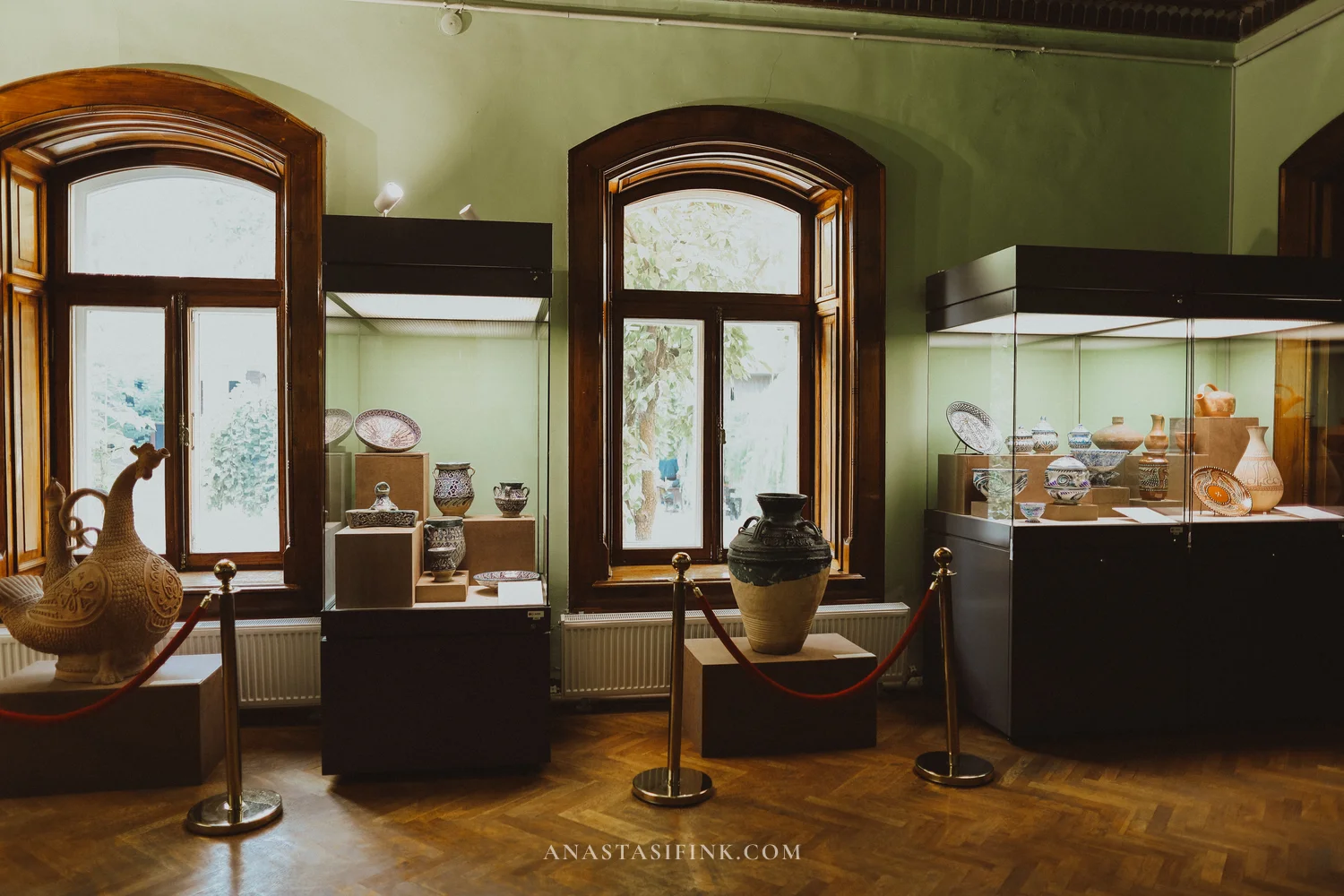
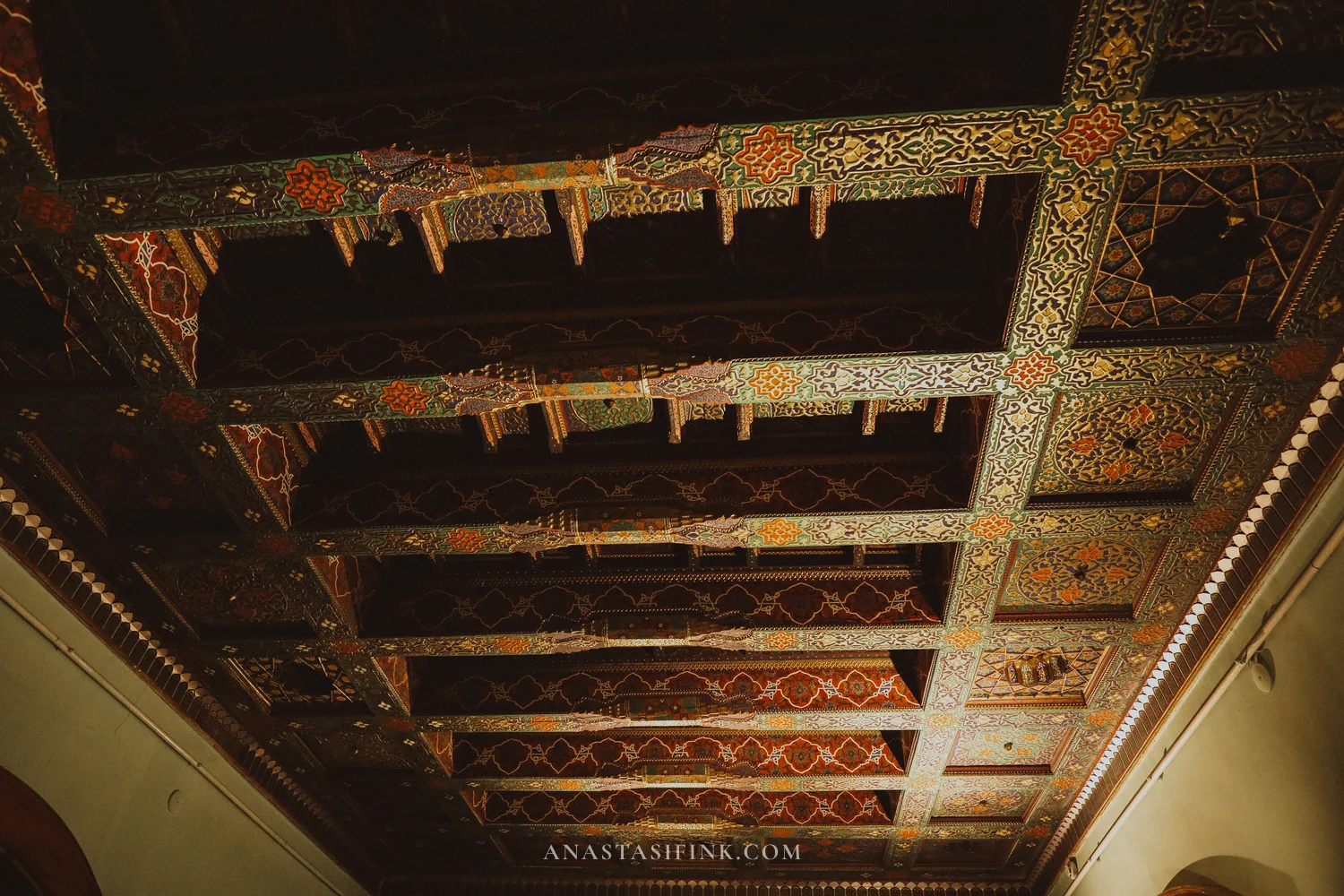
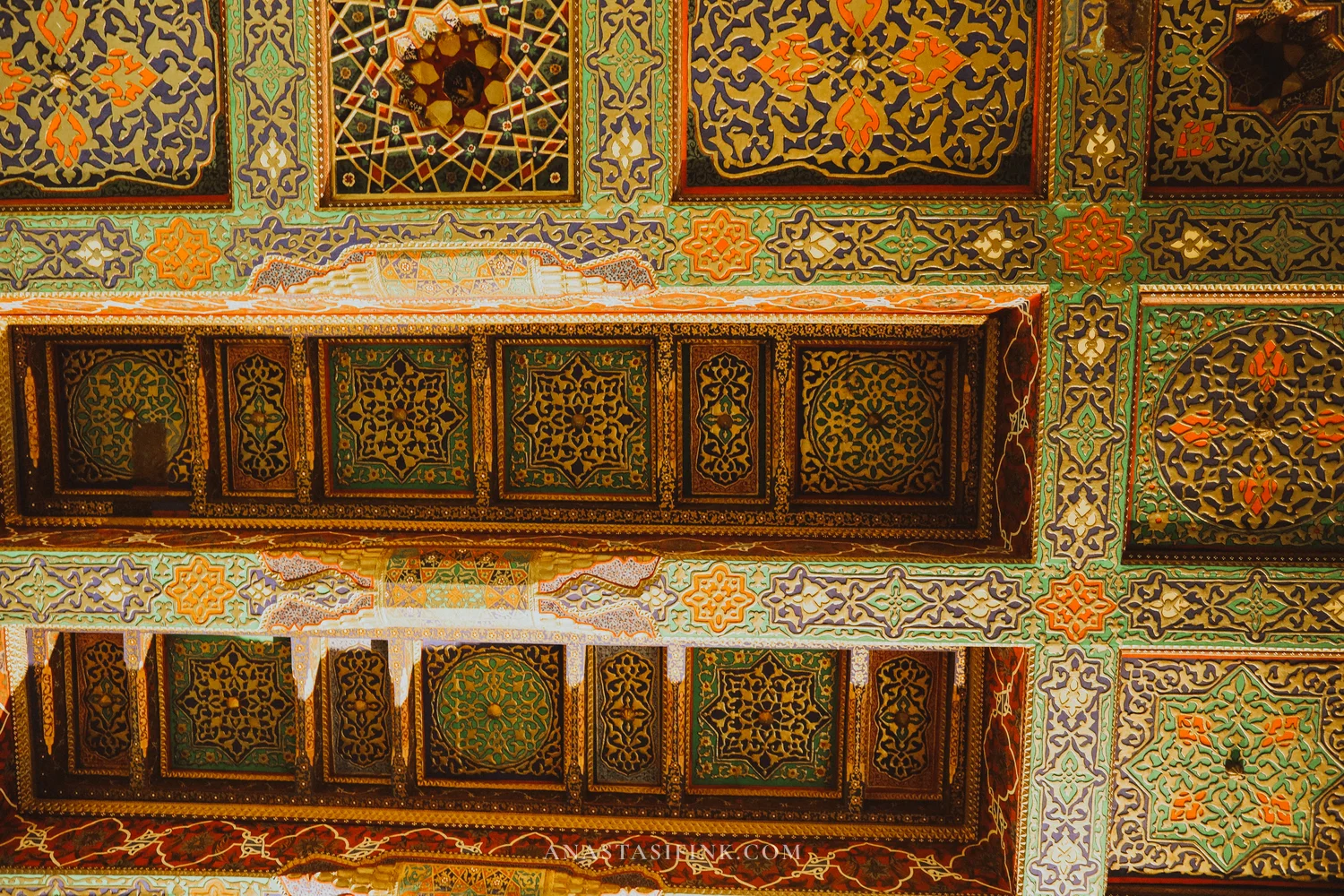
The ceilings here are simpler than in the grand hall, but still painted by hand. Geometric and floral motifs alternate beam by beam
The corridor of miniatures and the old clock
From the ceramics hall, you walk into a long corridor — a passageway with oak paneling, herringbone parquet floors, and an antique pendulum clock at the far end. This is the part of the house that has stayed closest to its “lived-in” state — i.e. how it was when Polovtsev lived here. And the walls of this corridor hold the museum’s collection of Uzbek miniature painting.
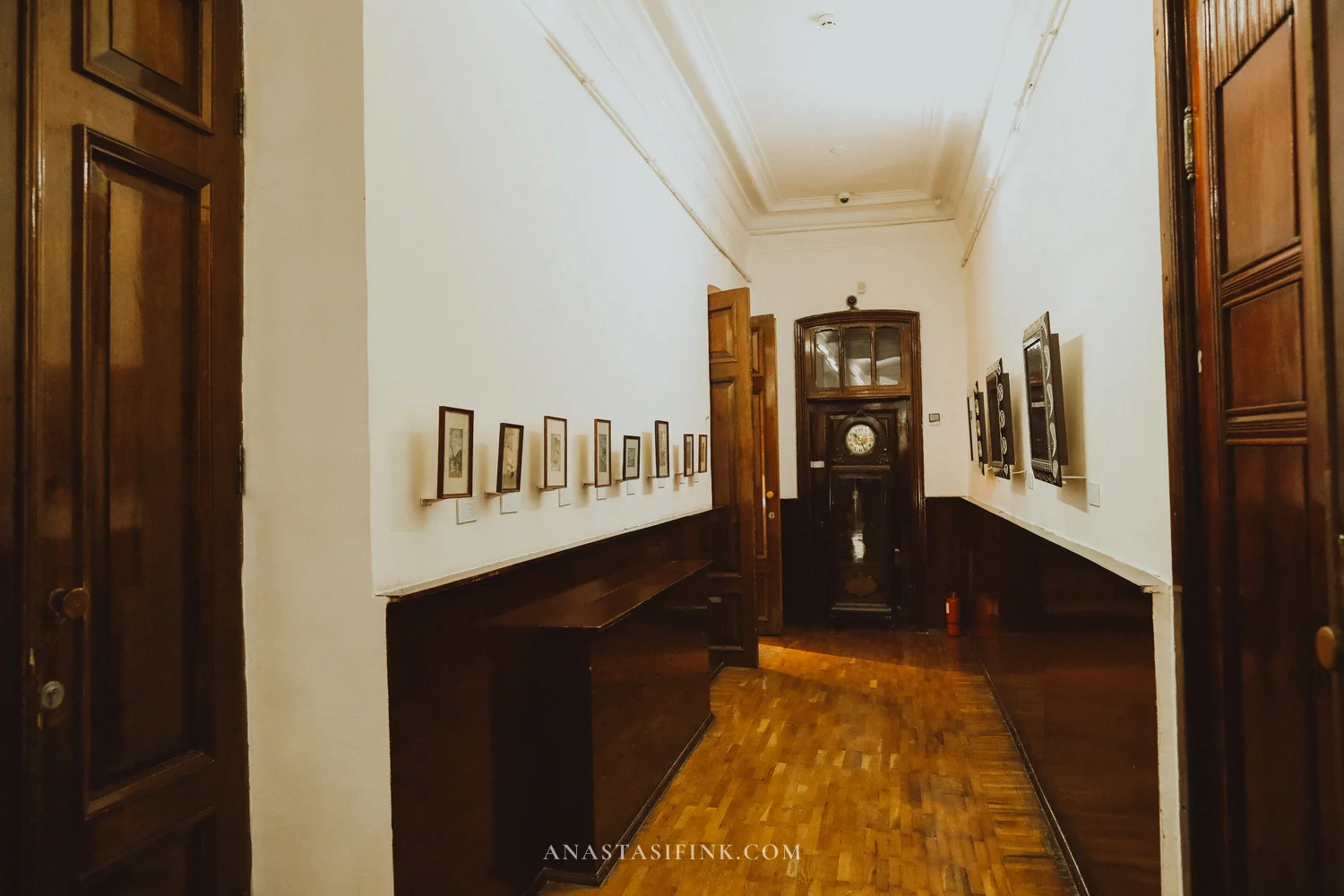
These aren’t medieval miniatures — they’re modern Uzbek school, mostly late-20th-century works by F. Rakhmatillaev and his circle. The style is traditional, like the Persian miniaturists: gouache and tempera on leather or paper, small format, fine details.
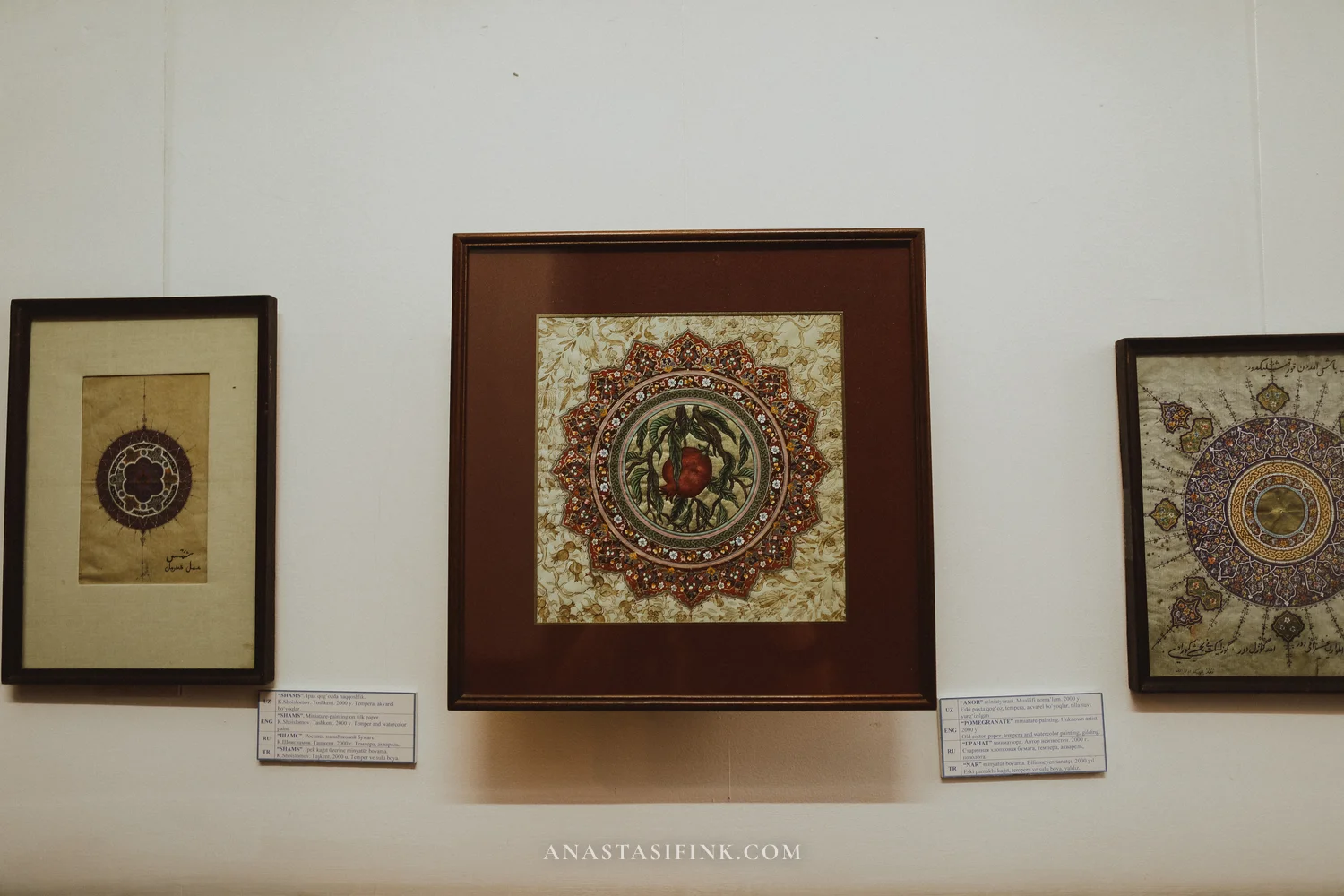
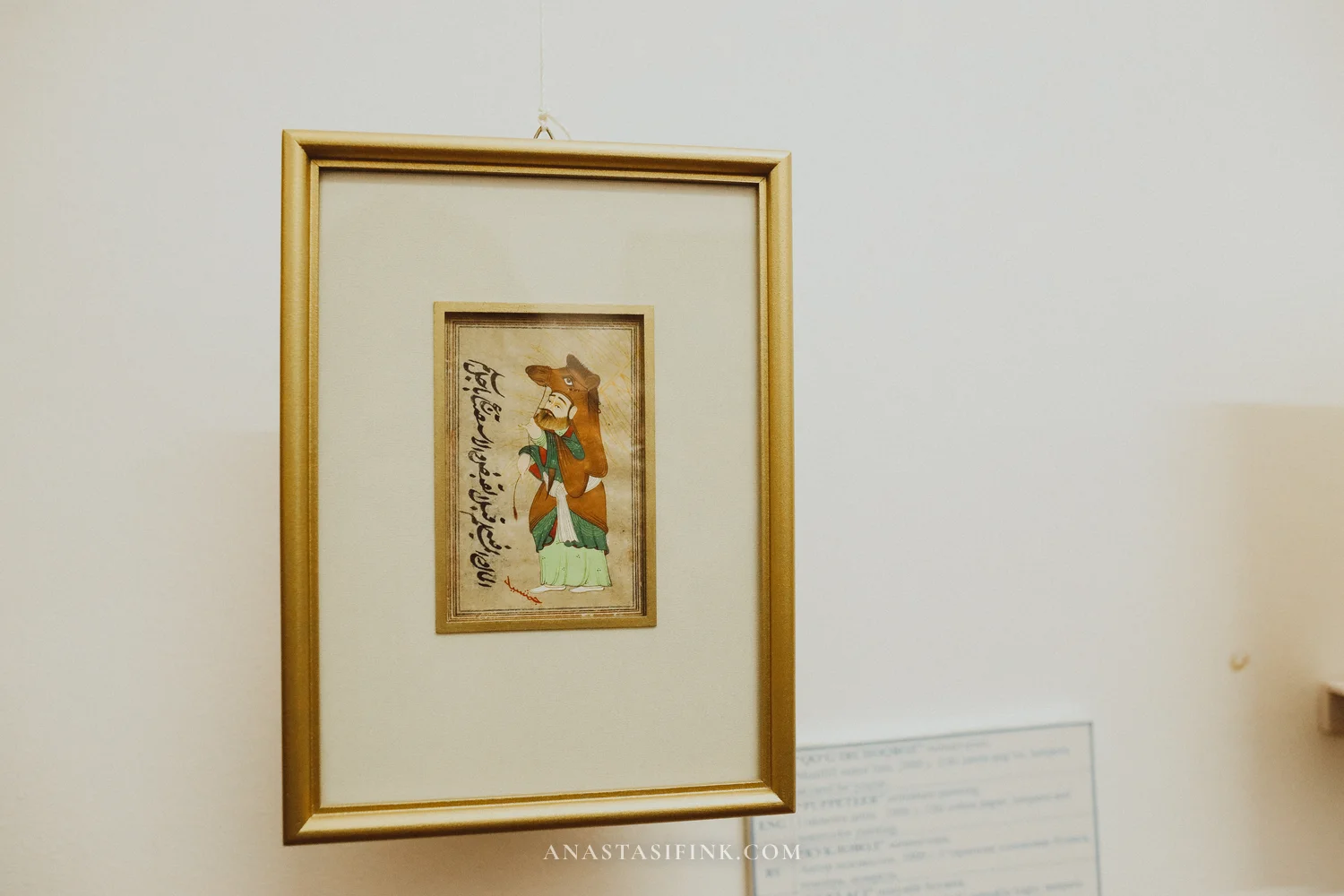
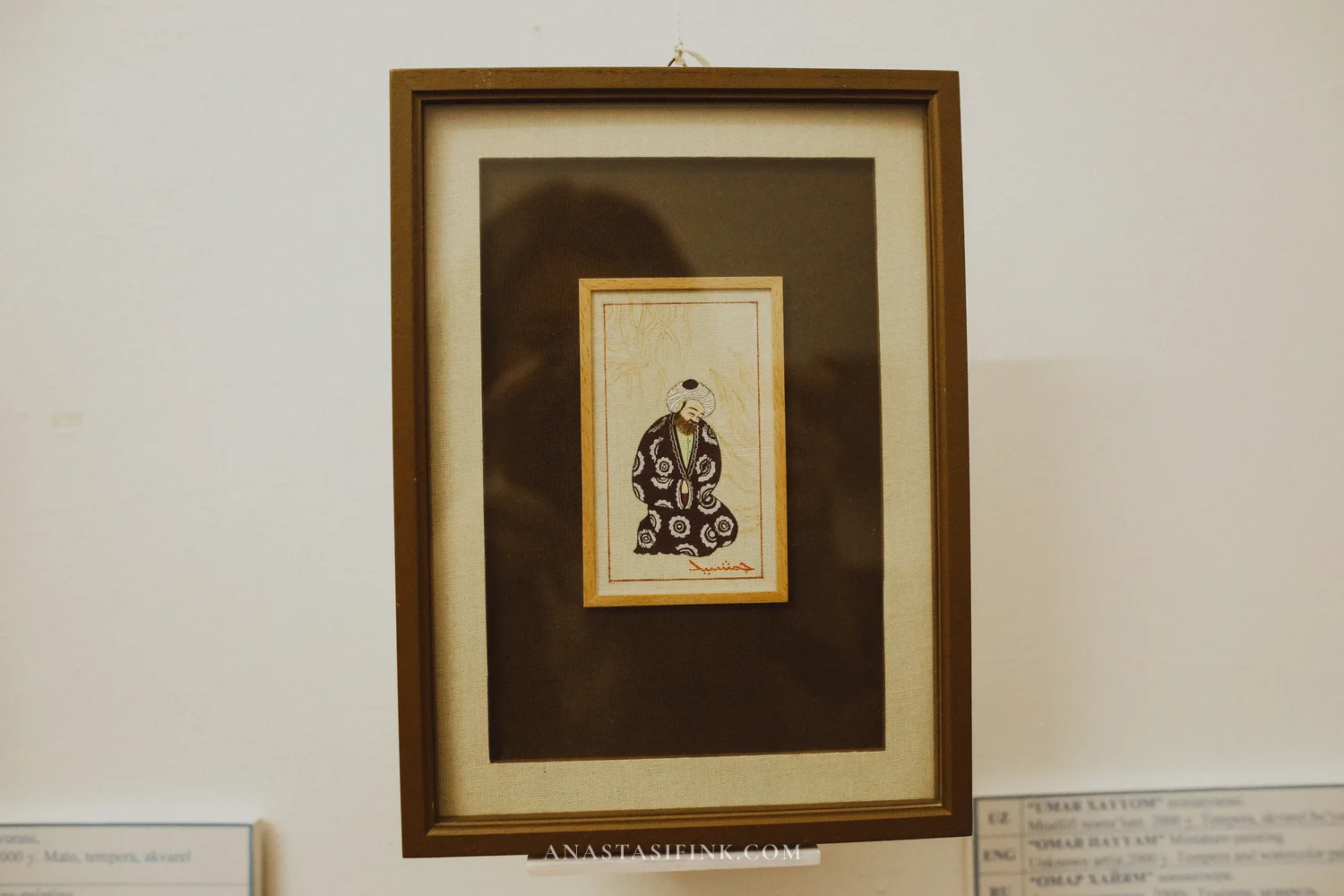
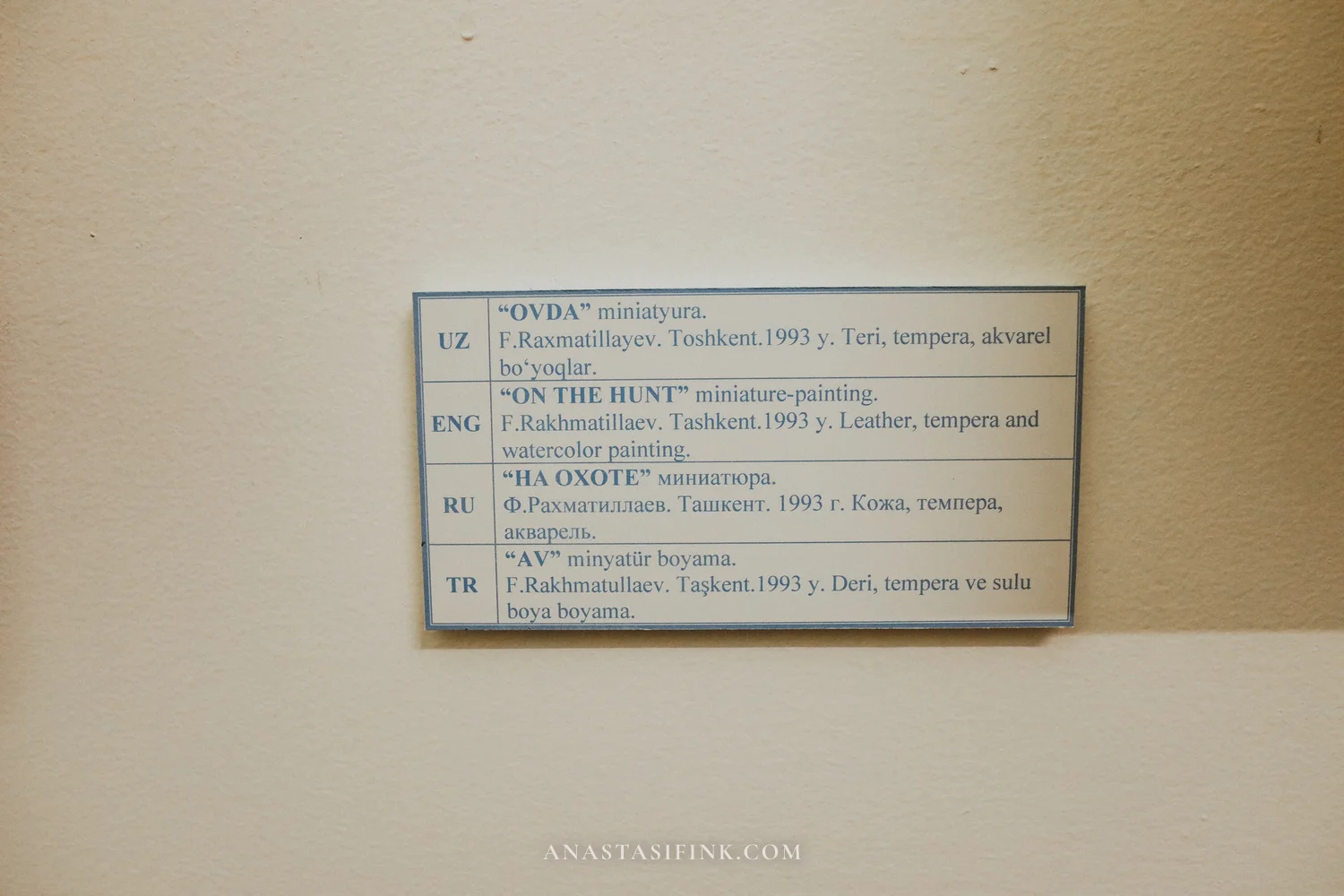
Left and right — single figures in traditional Chapan robes. Names and signatures appear on labels in four languages: Uzbek, English, Russian and Turkish
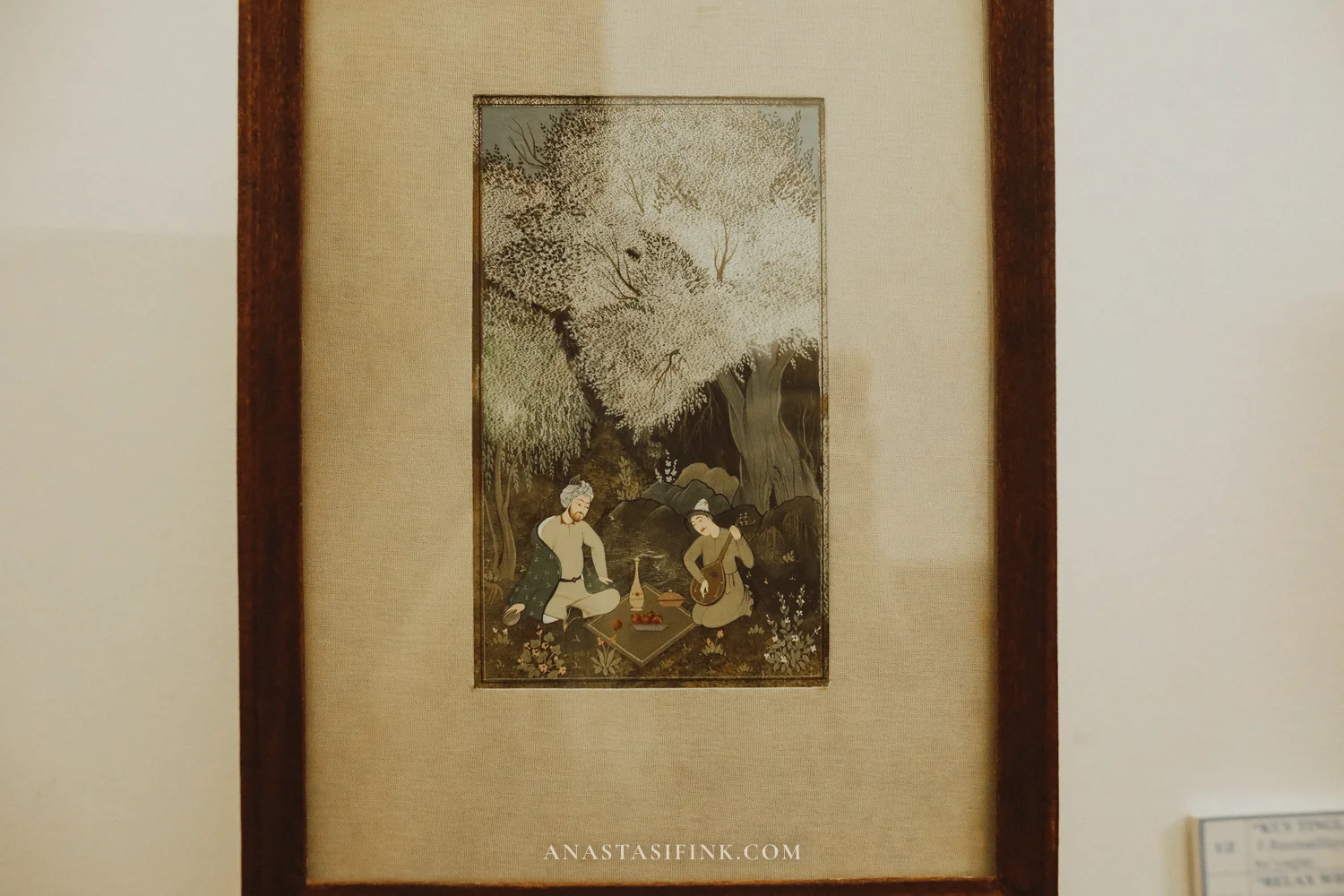
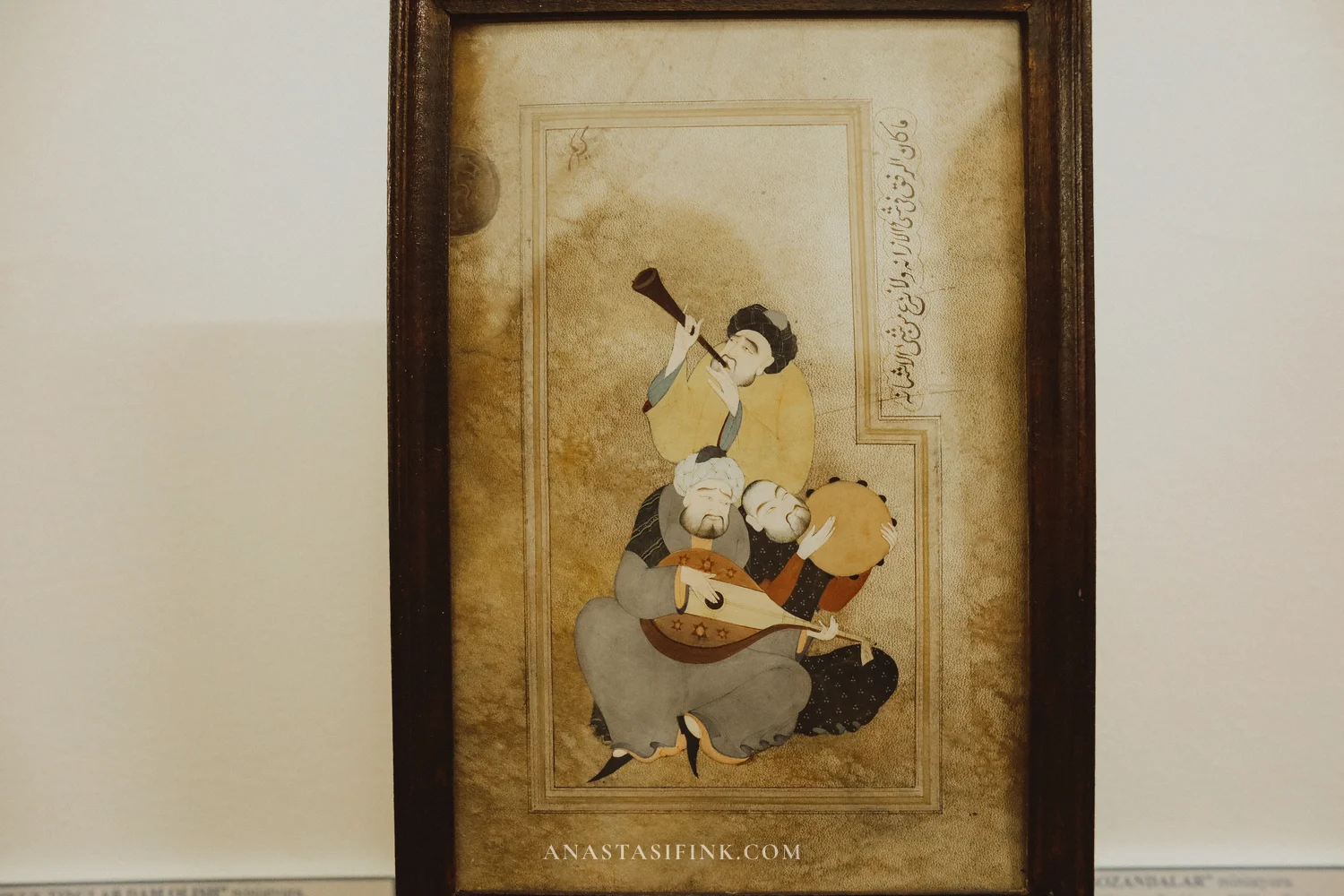
The themes repeat: couples under trees, musicians, hunting, court scenes. This is the same canon medieval masters worked from
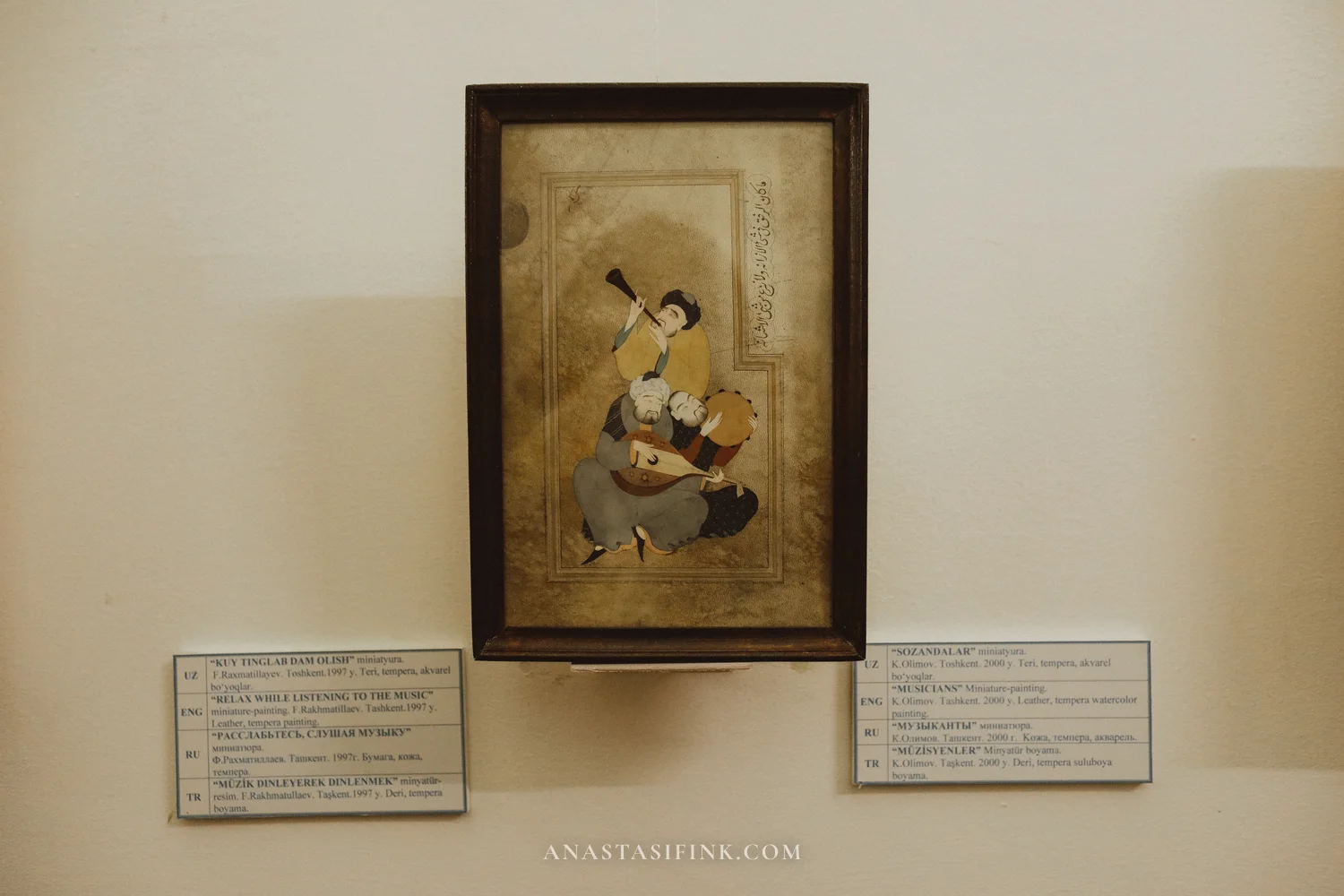
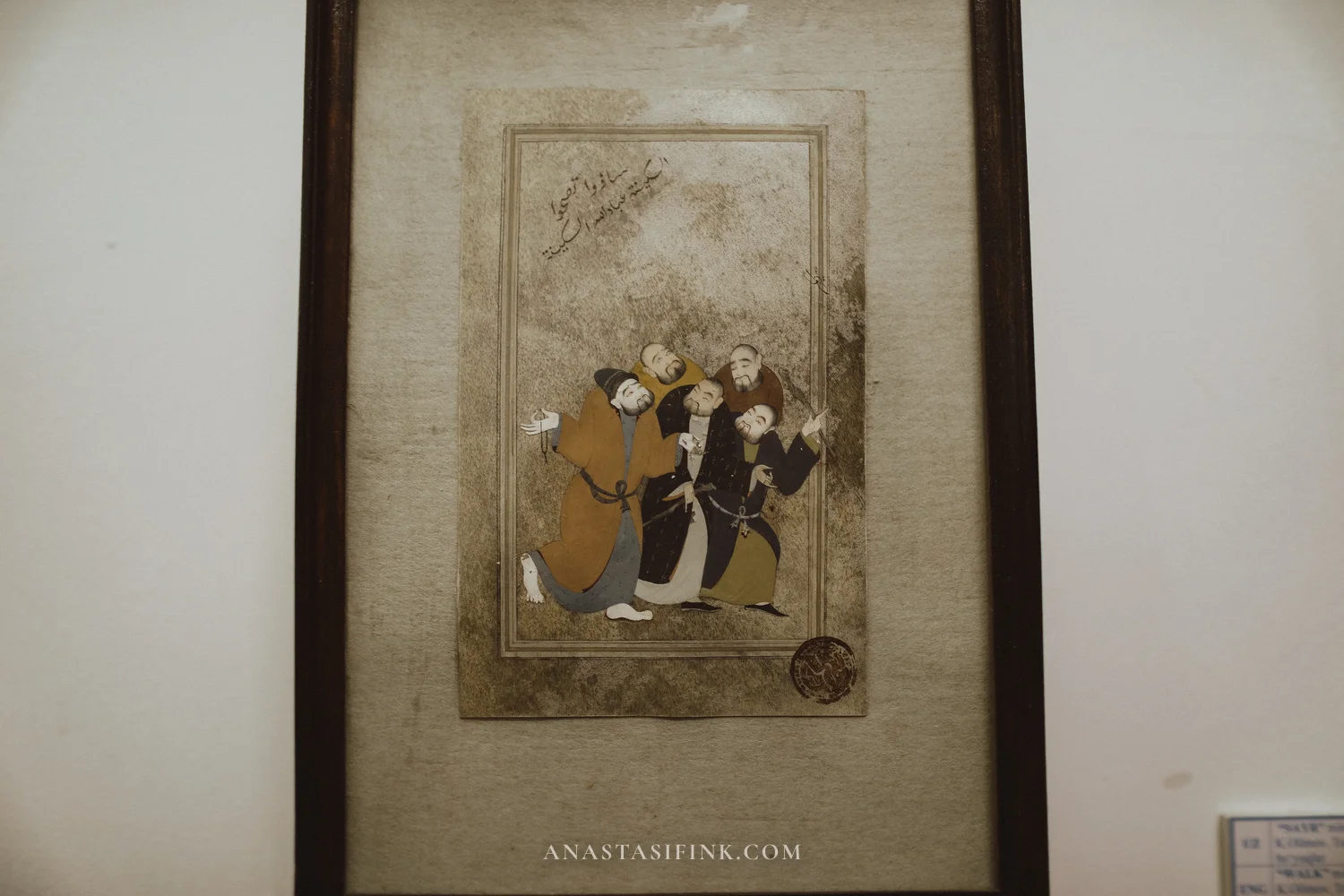
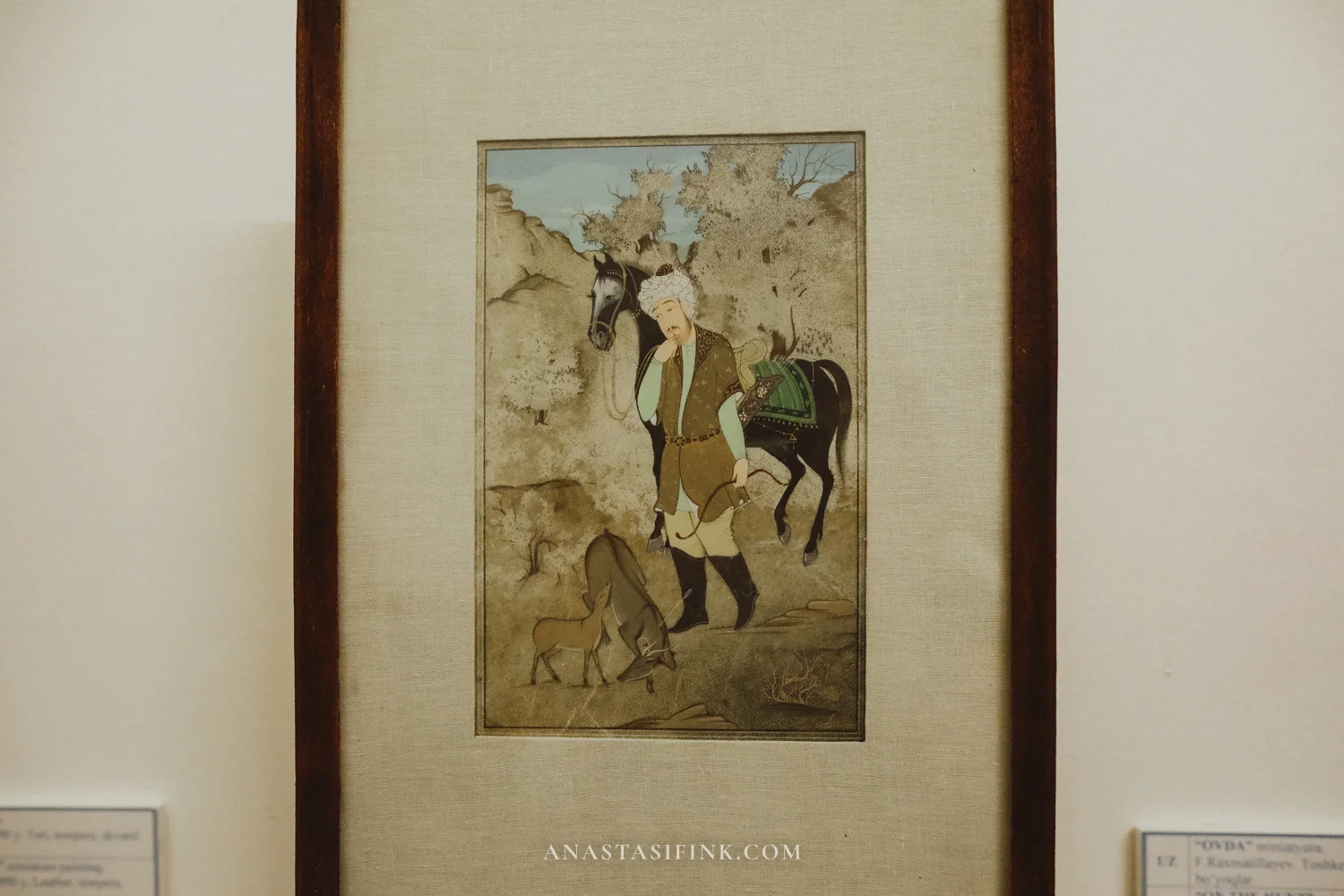
Dance and the hunt — two more classical themes. Leather as a base gives that warm background tone
Hall of gold embroidery (Zardozi) and carved wood
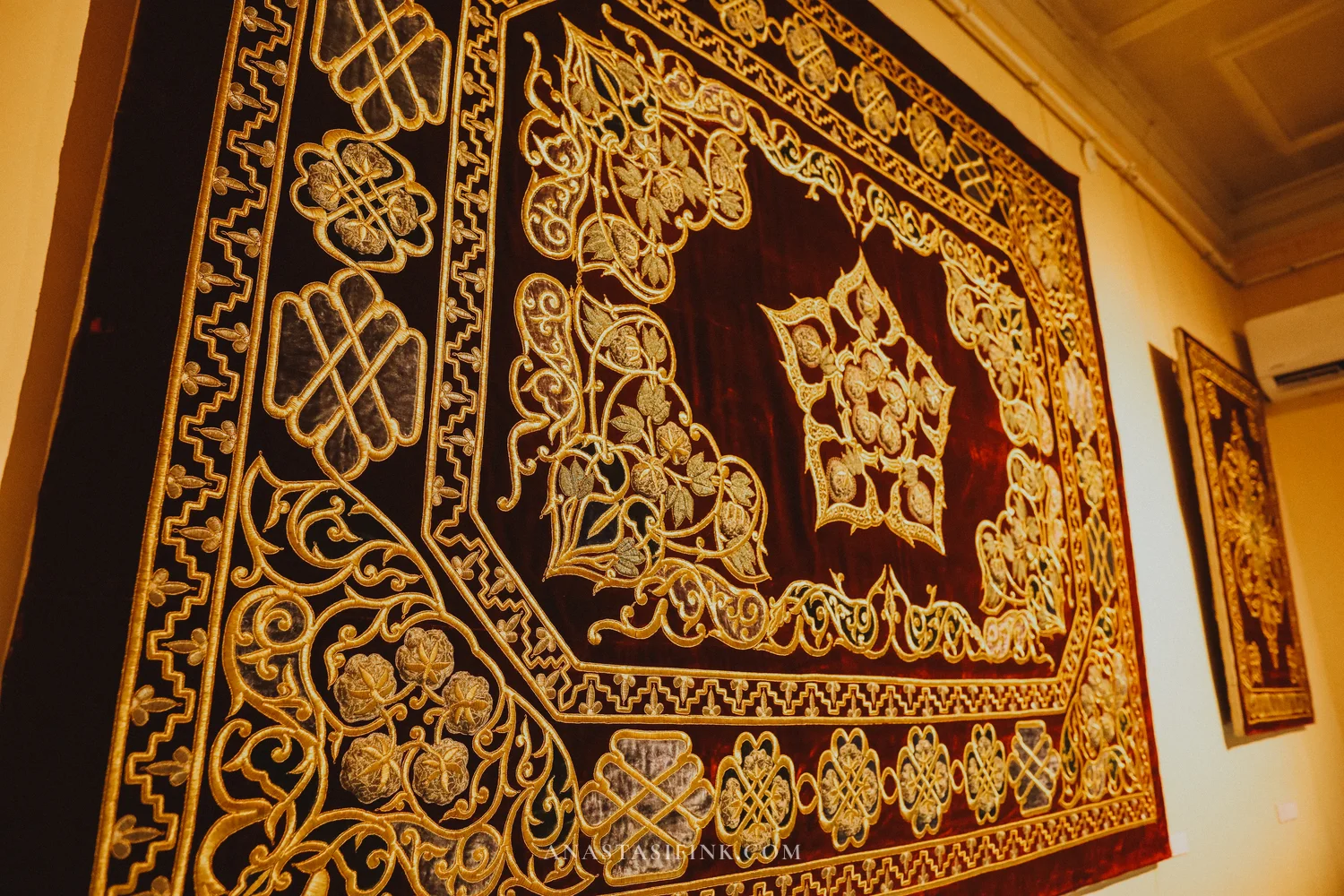
After the corridor of miniatures, I walked into the hall of Bukhara gold embroidery — Zardozi (gold embroidery). The work is done with gold and silver thread on velvet, classically on caps, robes and ceremonial covers. The museum has several enormous panels — they used to be banners or ceremonial covers for receptions. Standing next to one, you realize: a single piece like this represents months and months of hand labor.
Hall of lacquer miniatures
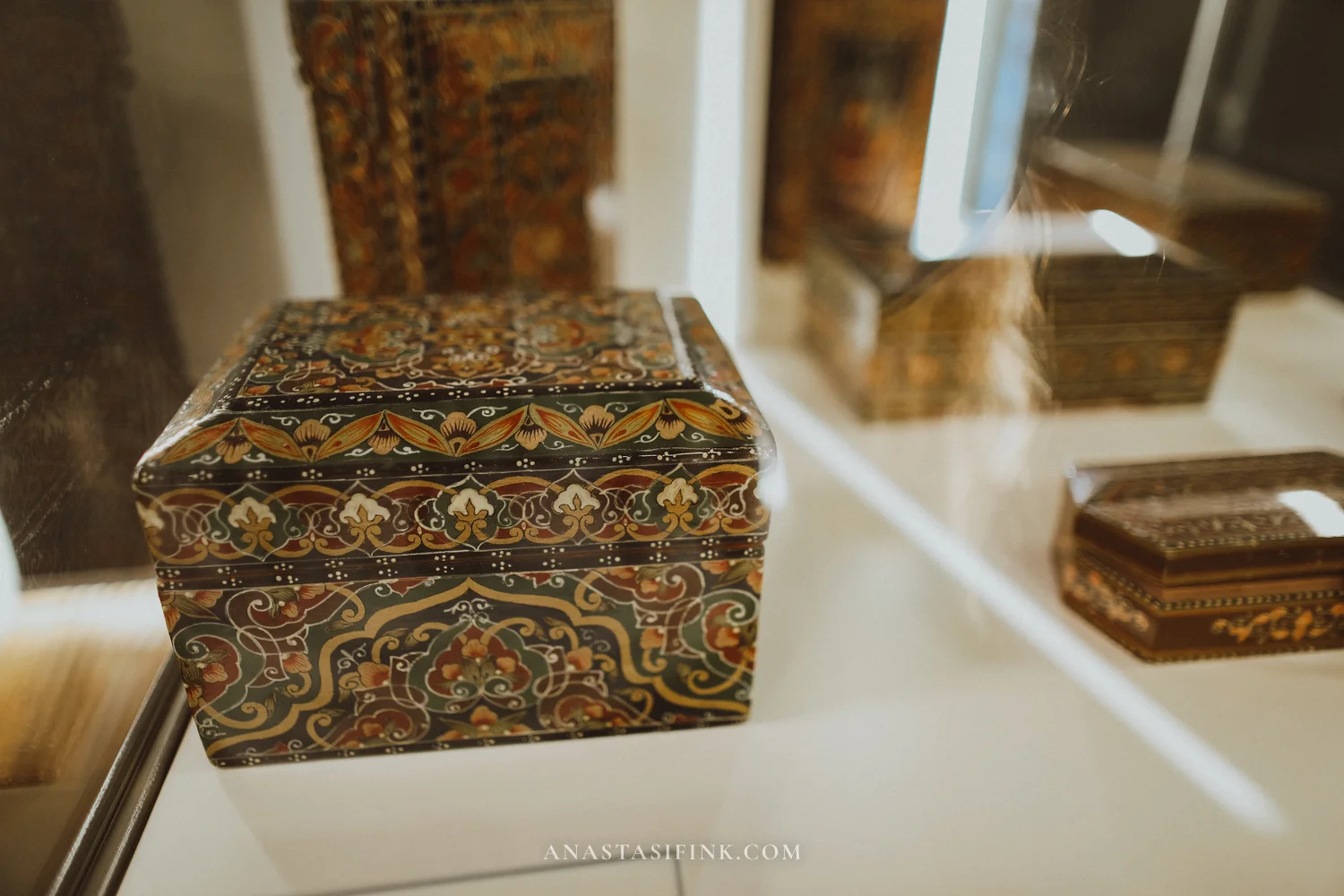
Lacquer boxes, plates, entire chess sets. Lacquer miniature painting came to Uzbekistan from Persia and really hit its stride during the Soviet period in the 20th century. The process: first the blank is coated in layers of black lacquer, then miniature scenes are painted on top with very fine brushes — hunts, battles, lovers, courtiers. Each box is its own little painting.
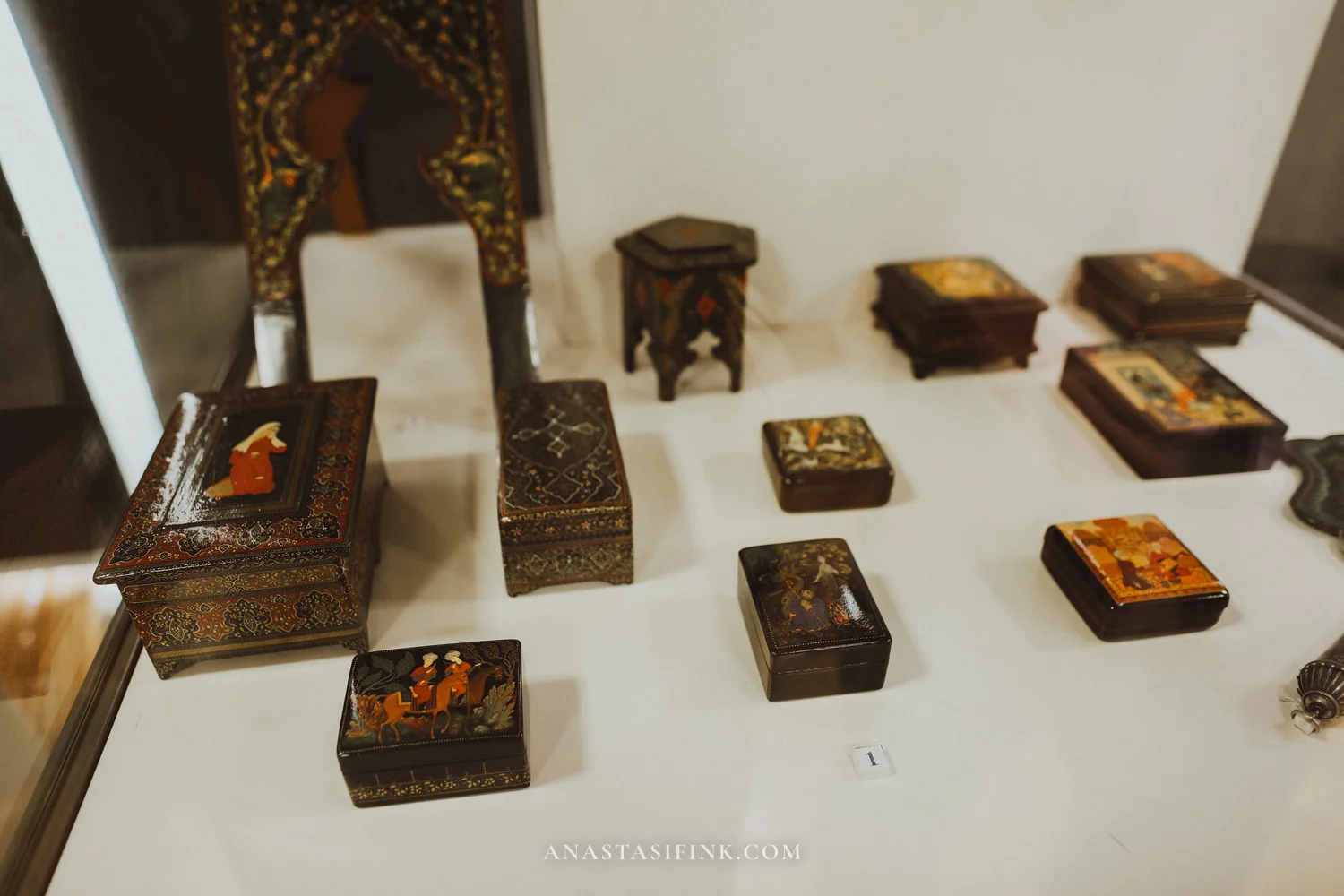
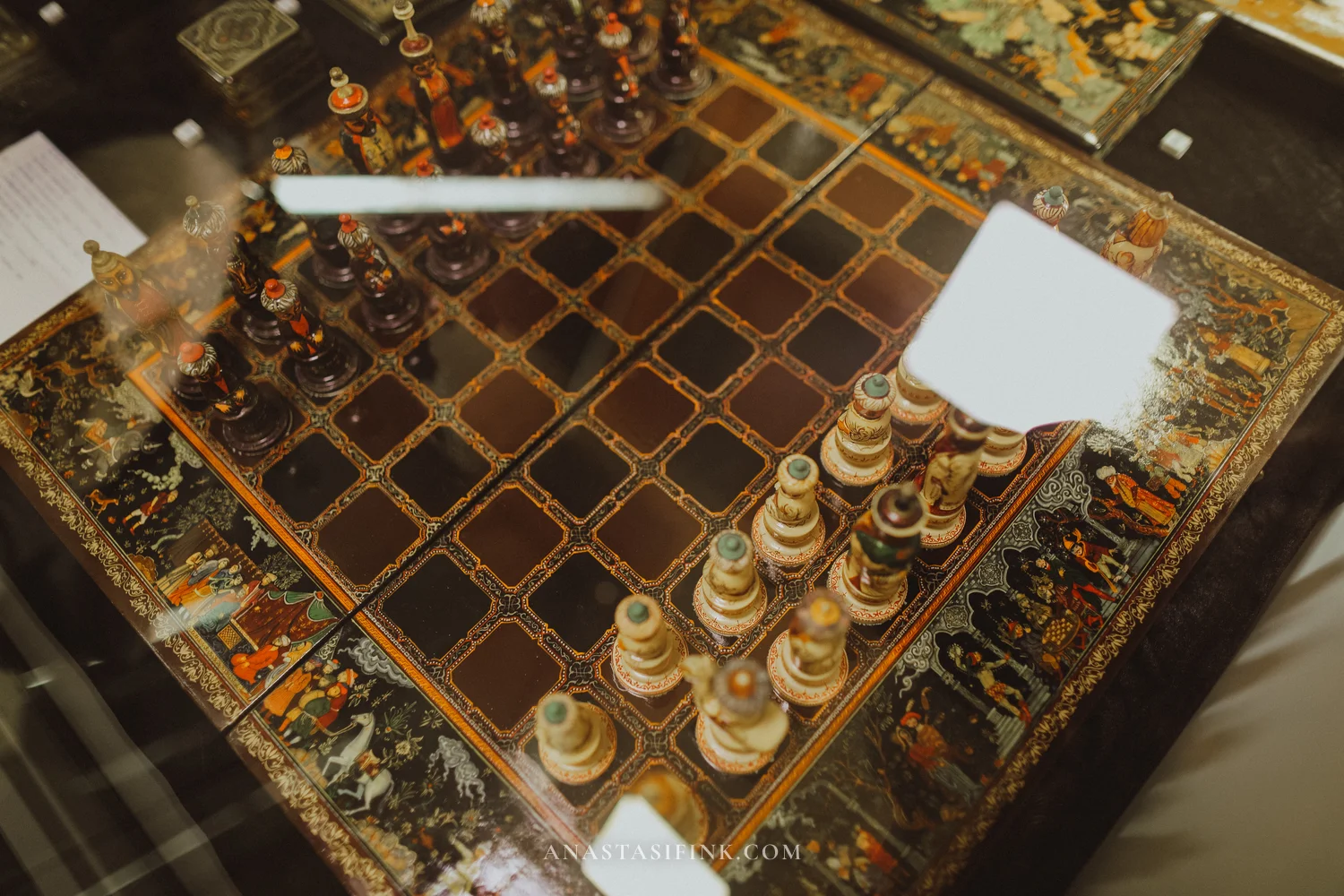
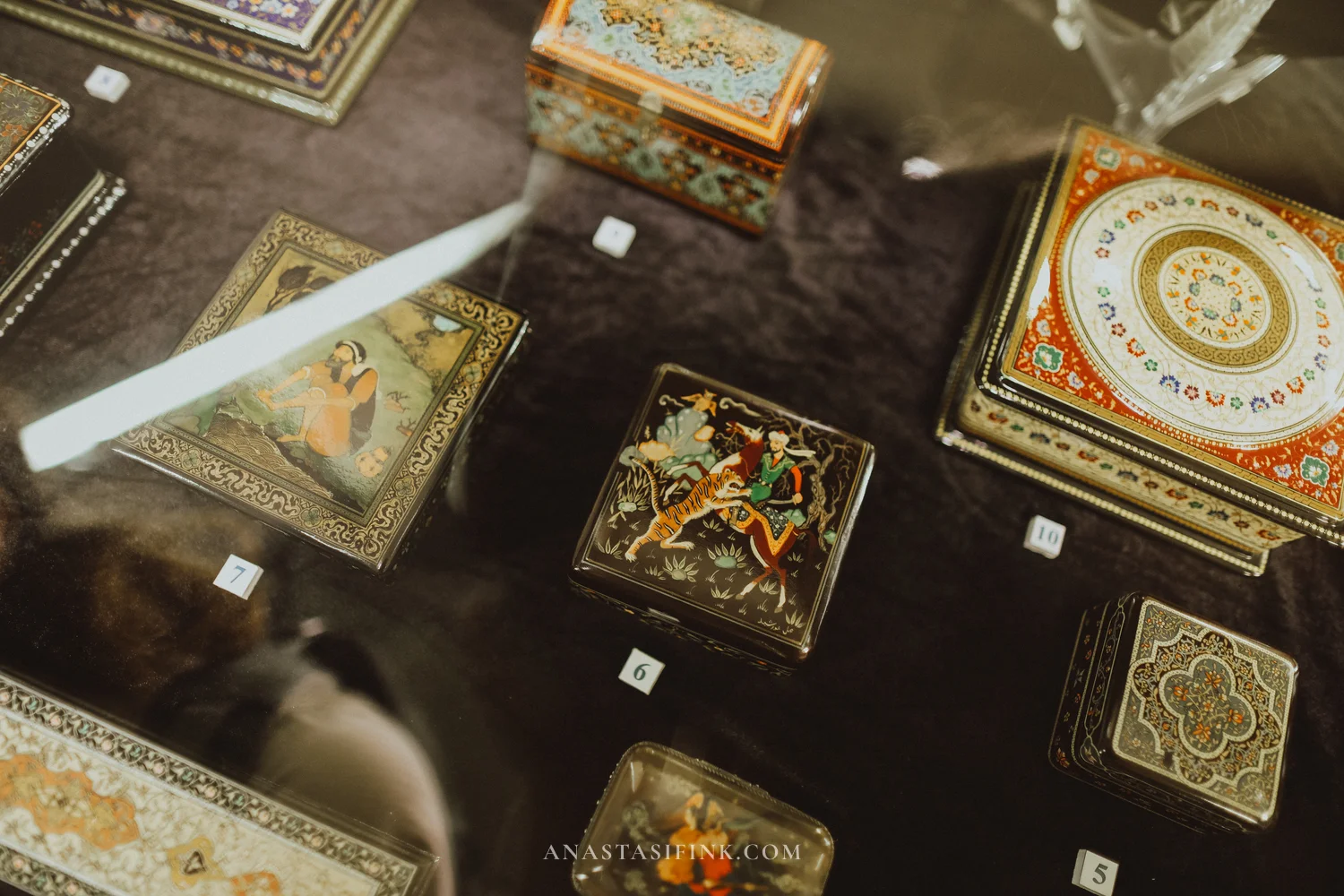
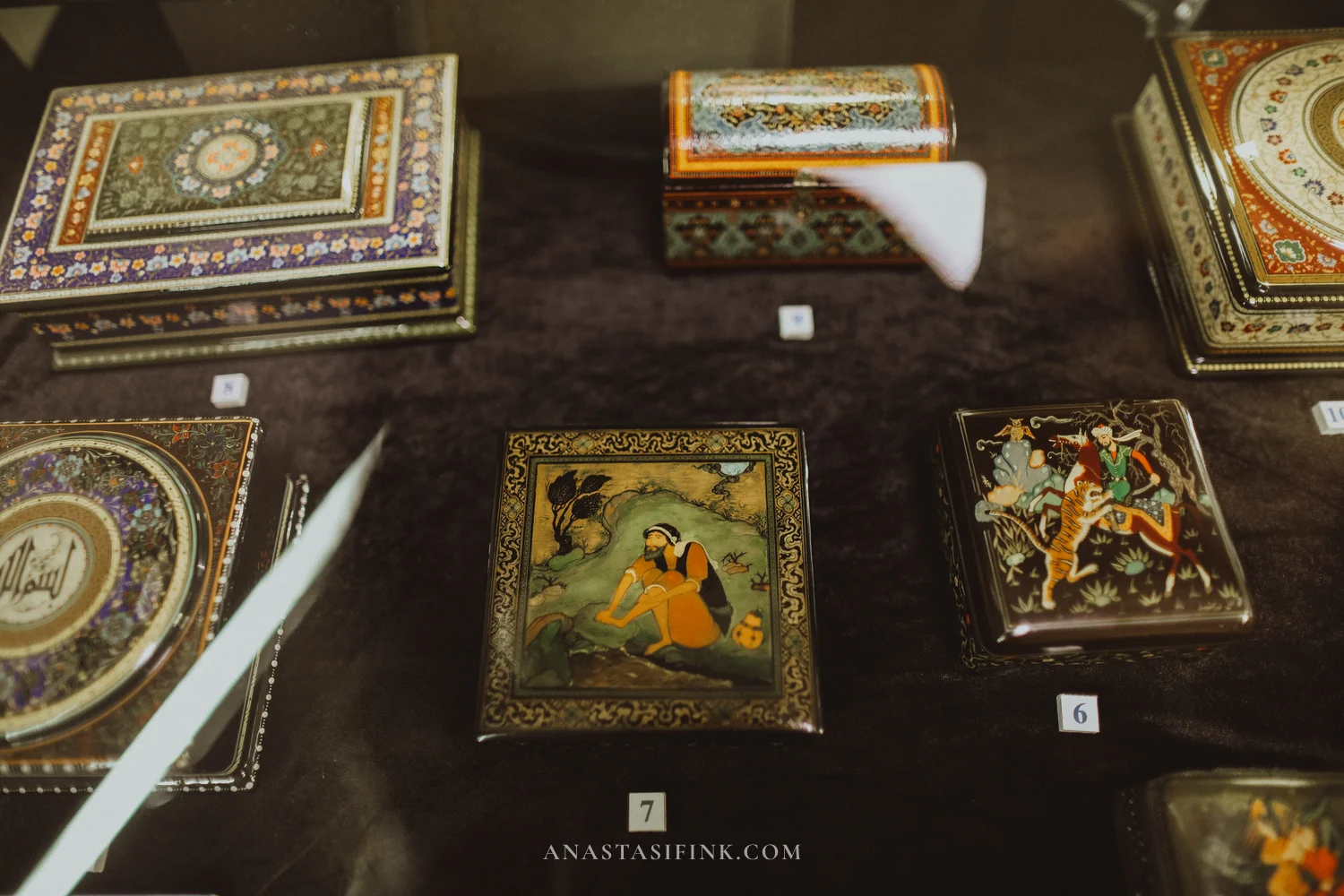
The collection is numbered, with a label for each piece sitting nearby. Easy to find a specific item
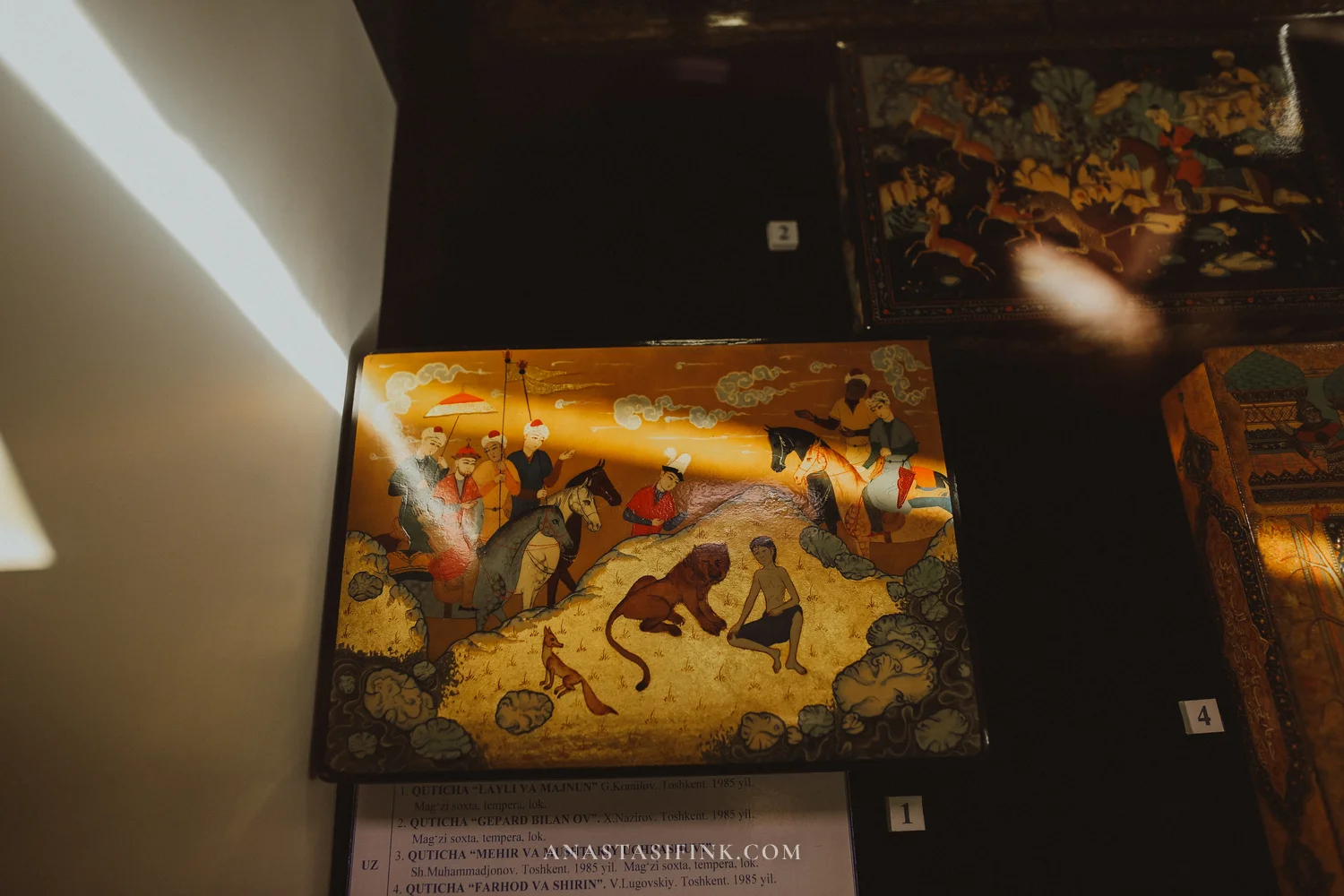
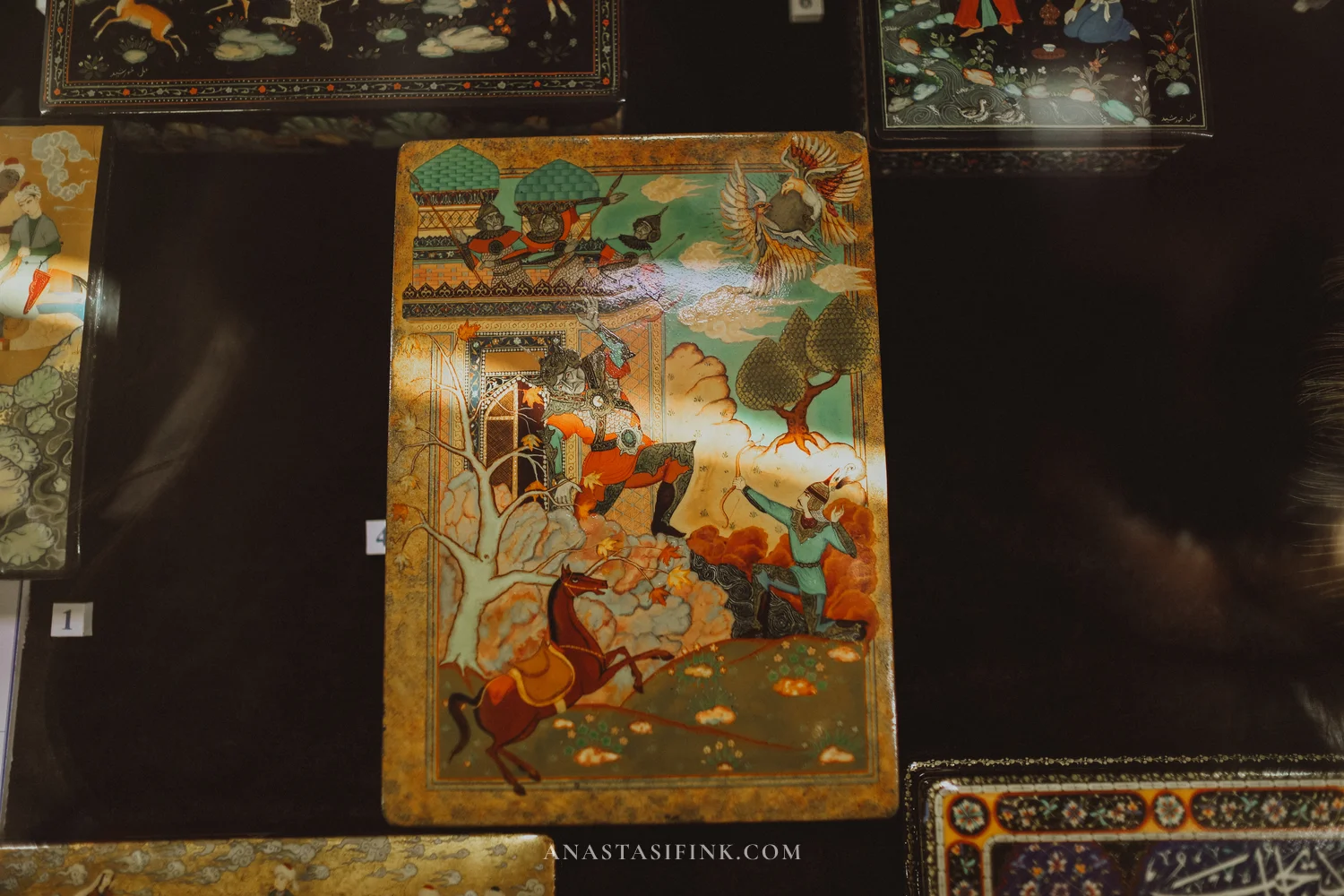
The themes are the same as in book miniatures: hunts, battles, court scenes. Just a different format — a box lid is roughly 10 by 15 cm
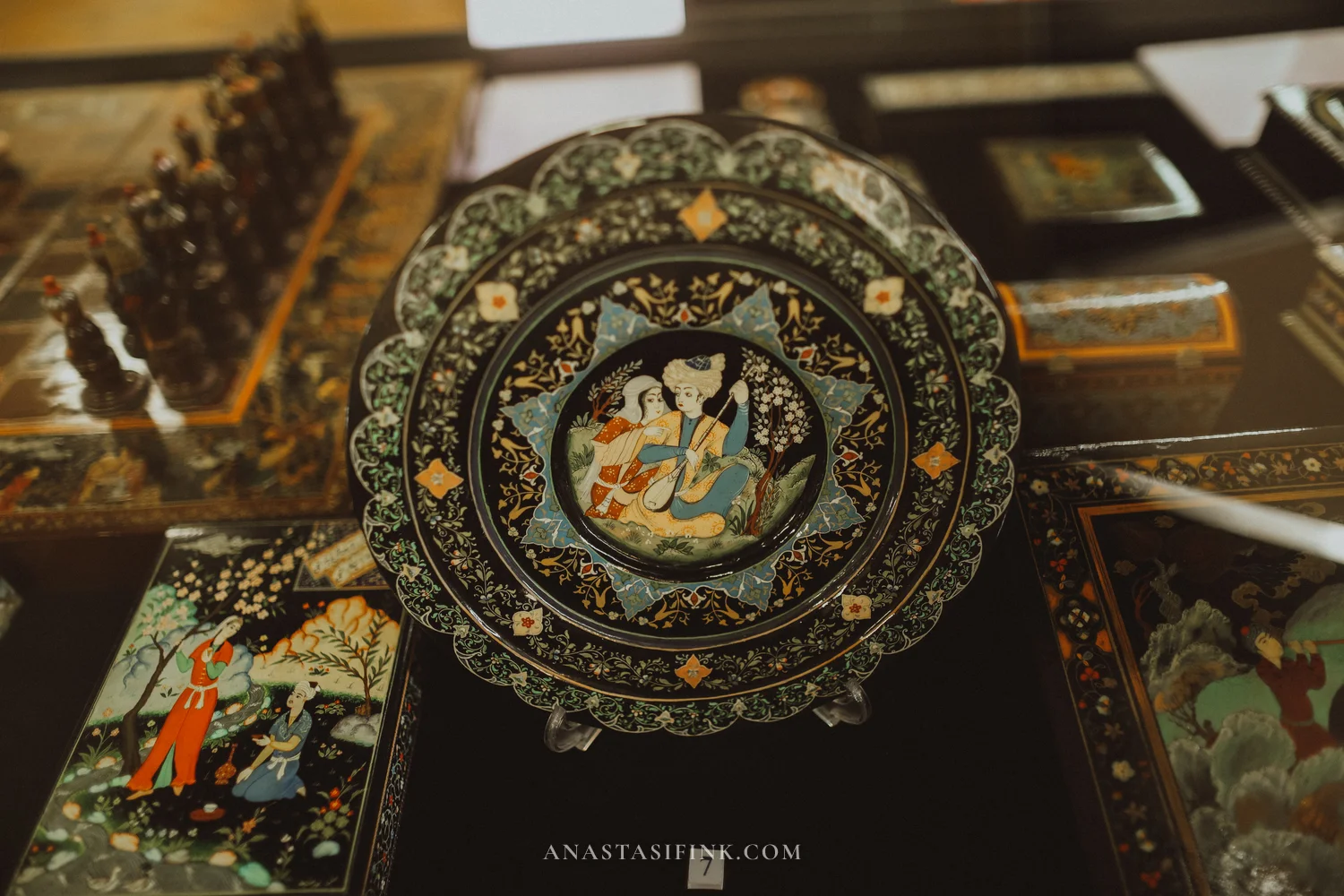
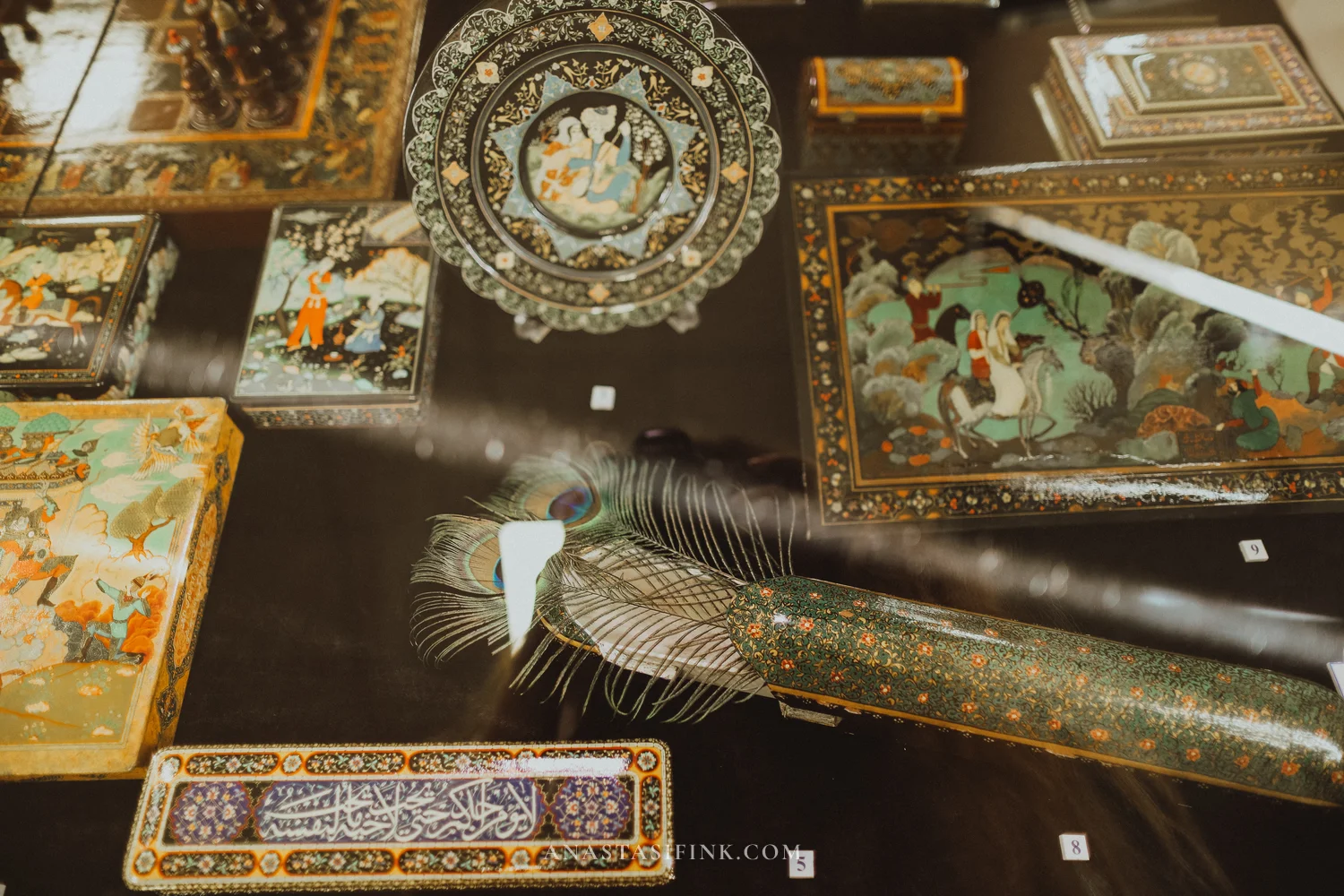
A plate with a pair of musicians, plus a wider view. The peacock feather in the middle isn’t random: it used to be used to dust miniatures, since a feather is gentler than a brush
Hall of furniture and decorative art
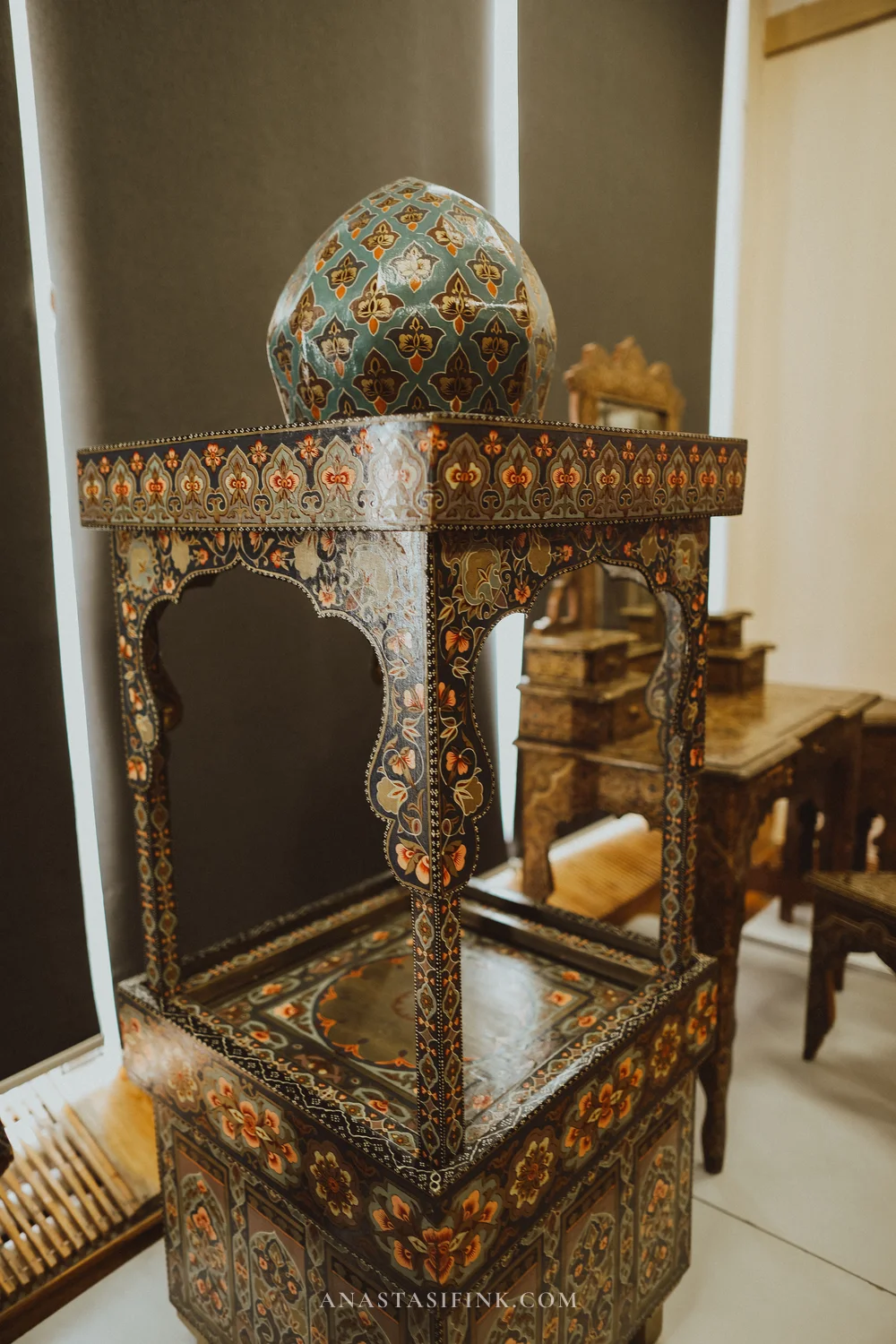
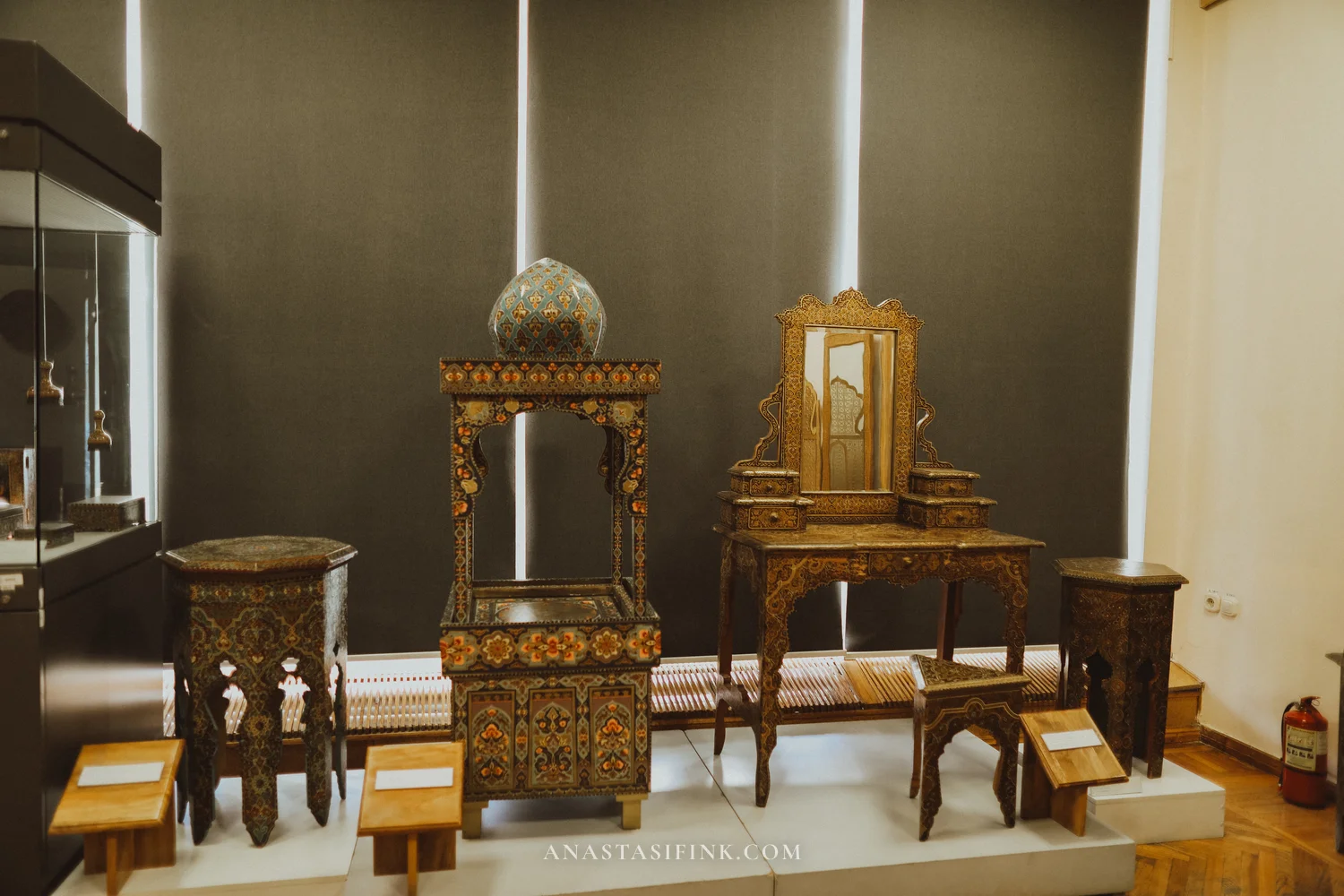
Right after the lacquer room comes the furniture hall. This is where it gets especially interesting for me: some pieces are made in European forms — vanity tables with mirrors, chairs with backs — but they were painted by Uzbek masters in local styles. This is 19th and early 20th century, when clients wanted “like in St. Petersburg” but the craftsmen translated everything into their own visual language anyway.
Hall of metalwork — chasing and copper
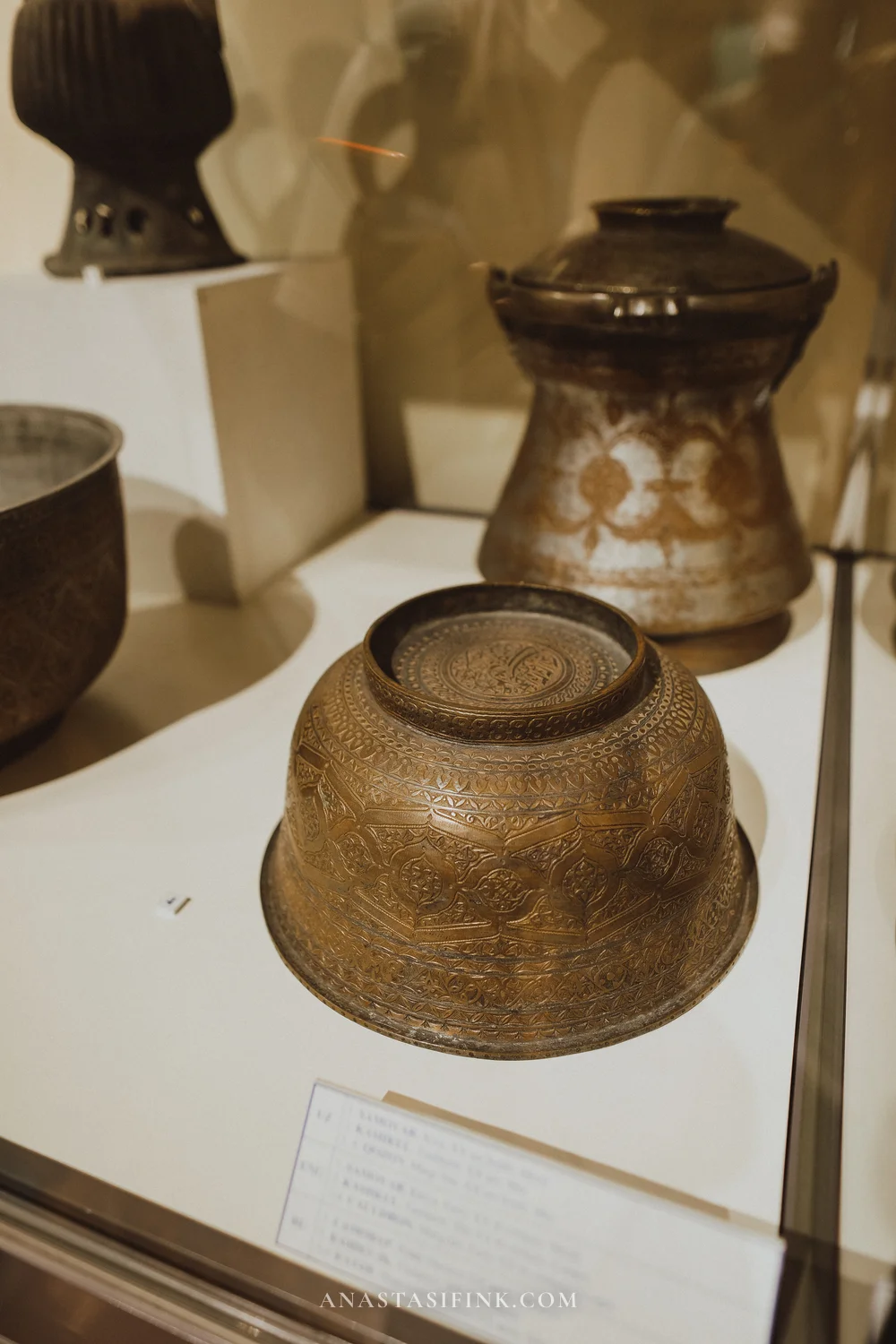
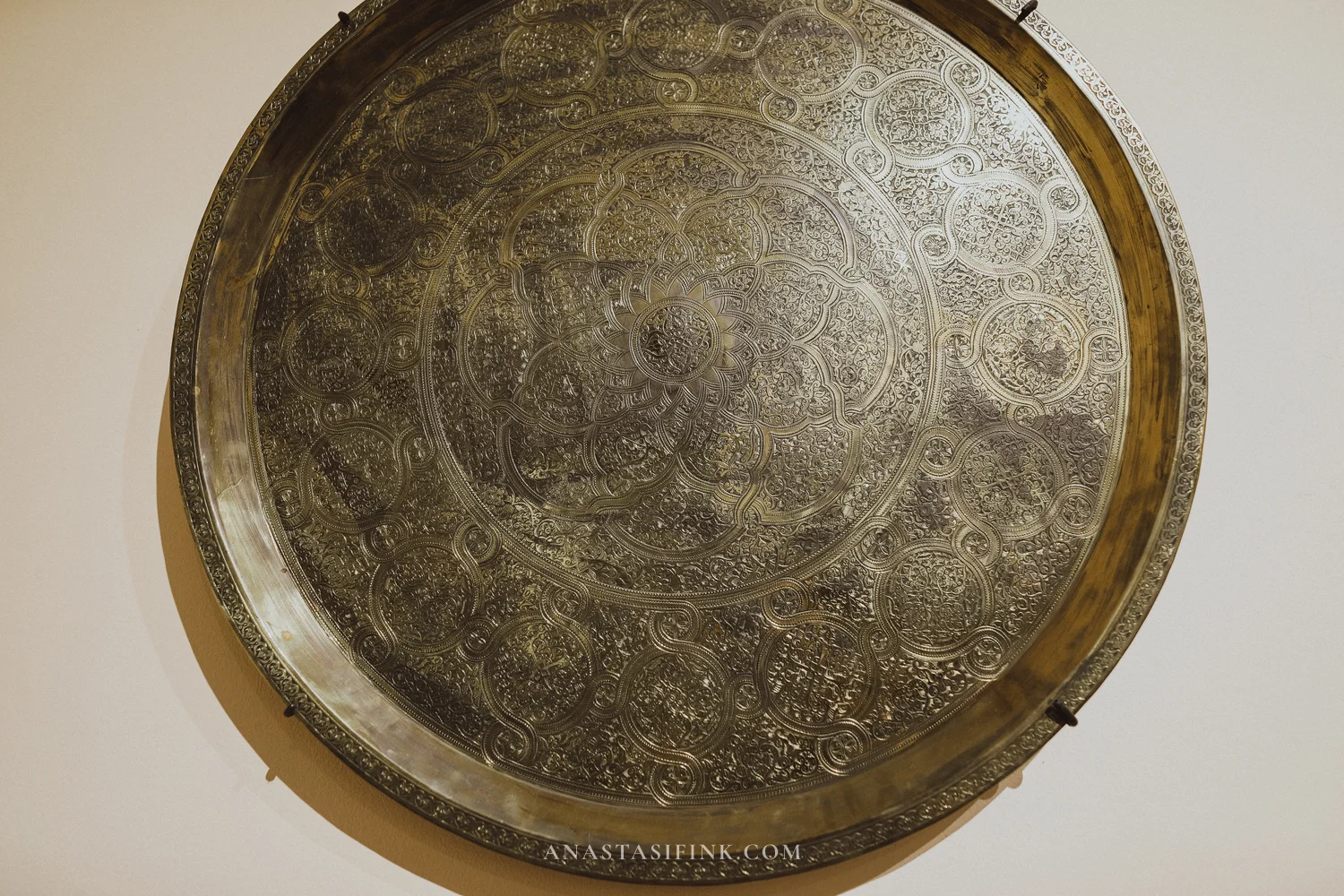
A small room of copper and brass utensils. Uzbek metal chasing — Kandakori in the local term — is done with chisels and punches: the master strikes the metal thousands of times until the pattern emerges. A large tray can take a master from three weeks to a month.
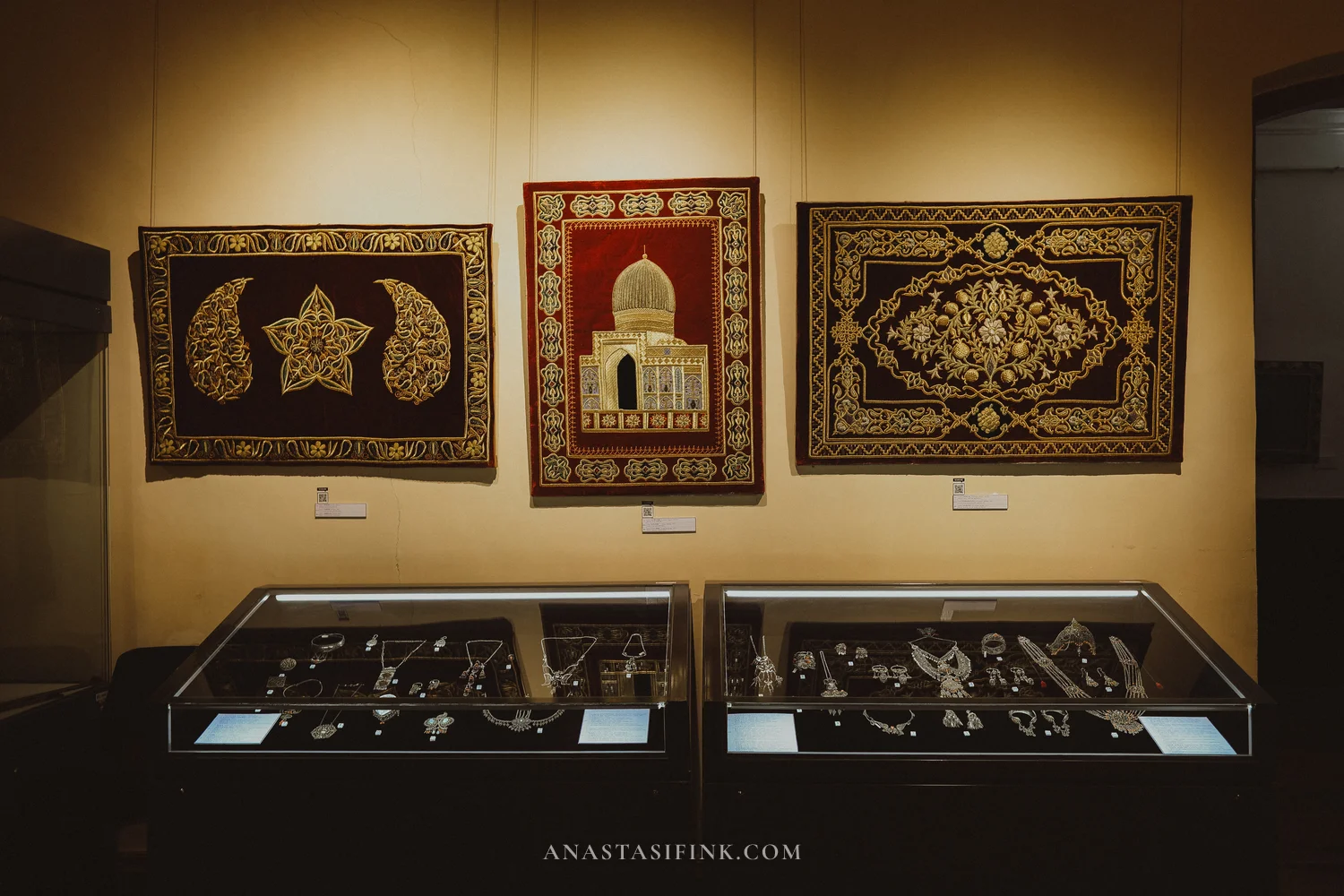
Hall of gold embroidery and jewelry
Another room dedicated to Zardozi (gold embroidery) and silver. Silver is the main material for women’s jewelry in Uzbekistan: Bukhara plates, Fergana pendants, Khorezm necklaces.
Hall of carpets and musical instruments
The ethnographic part comes next: Turkmen and Uzbek carpets on the walls, musical instruments under glass, and in one corner a recreation of an actual living room — with a Takhta (low wooden platform), Kurpachi (narrow quilted mattresses) and a low table. A really atmospheric room!
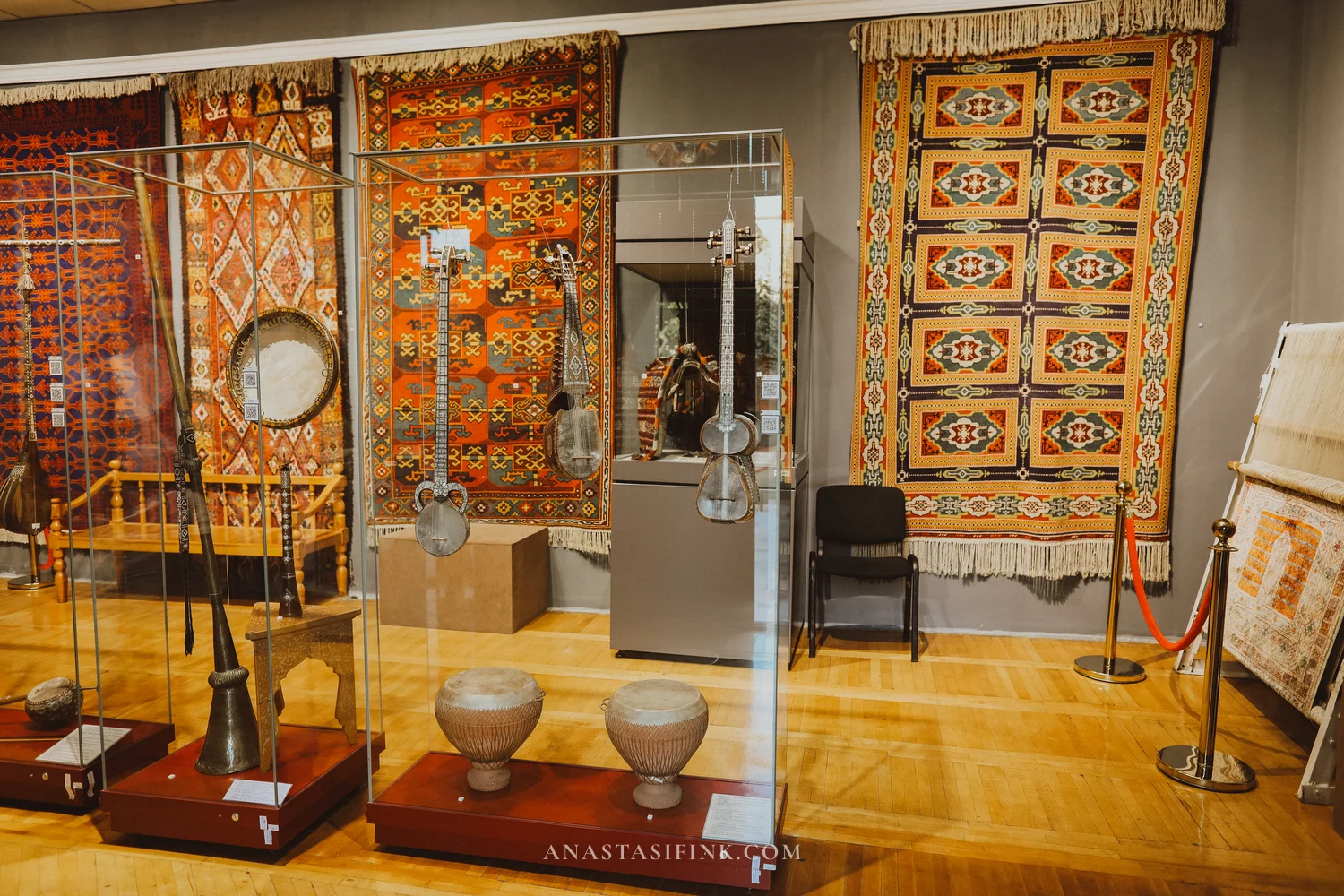
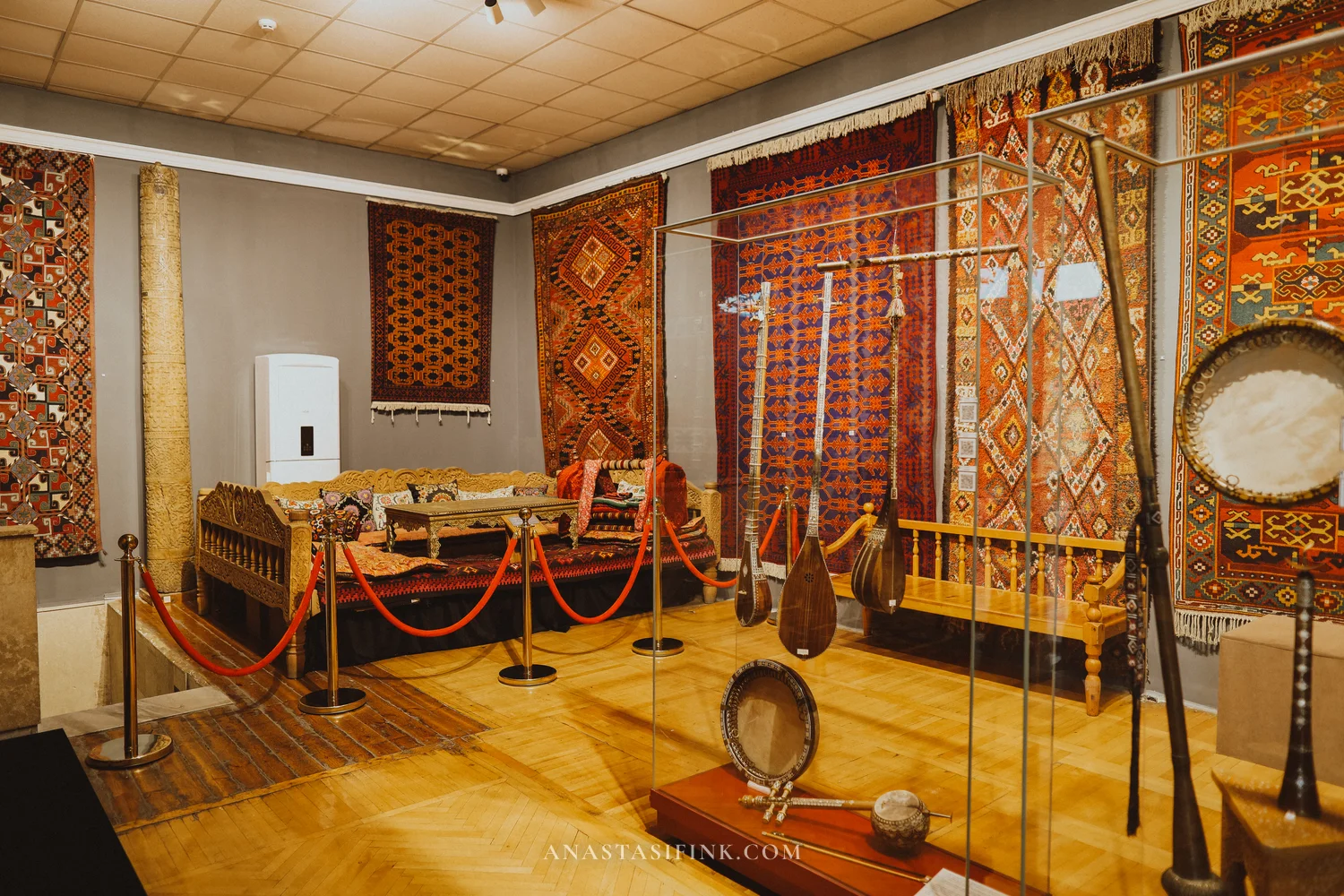
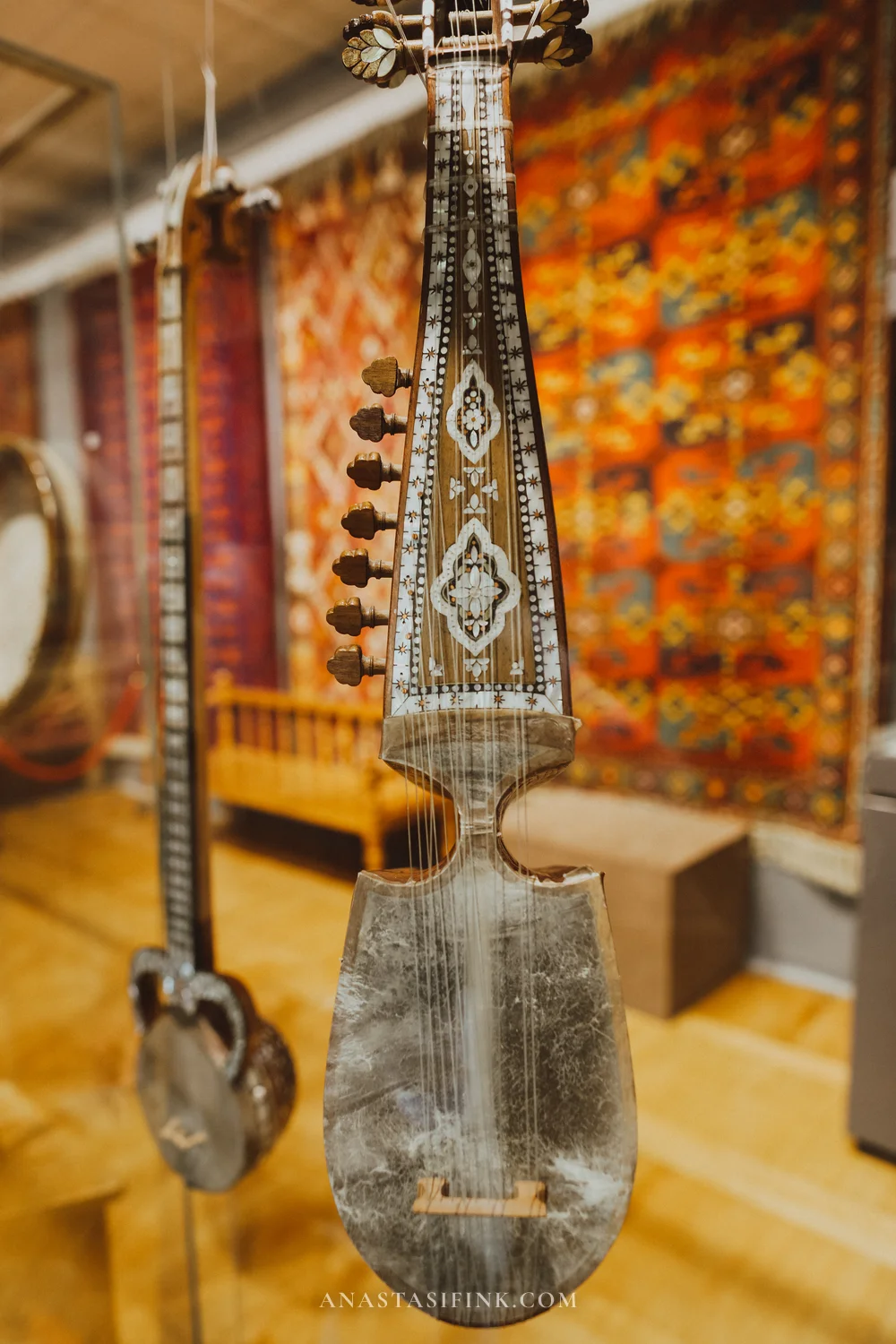
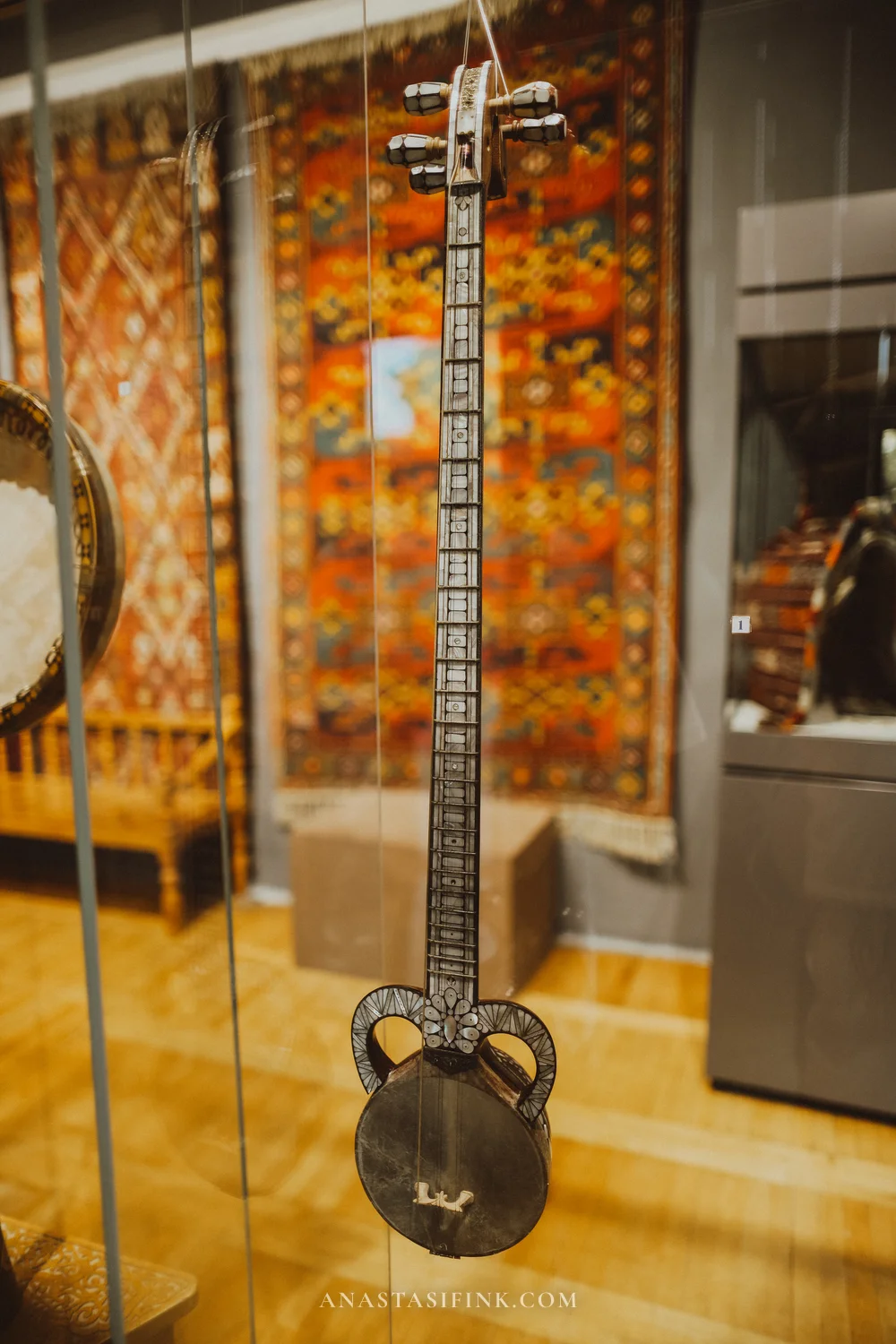
Left — a rubab (short neck, body of mulberry wood). Right — a dutar or tanbur (long neck, soft sound). Both are painted and inlaid
The suzani hall — Uzbek wall embroidery
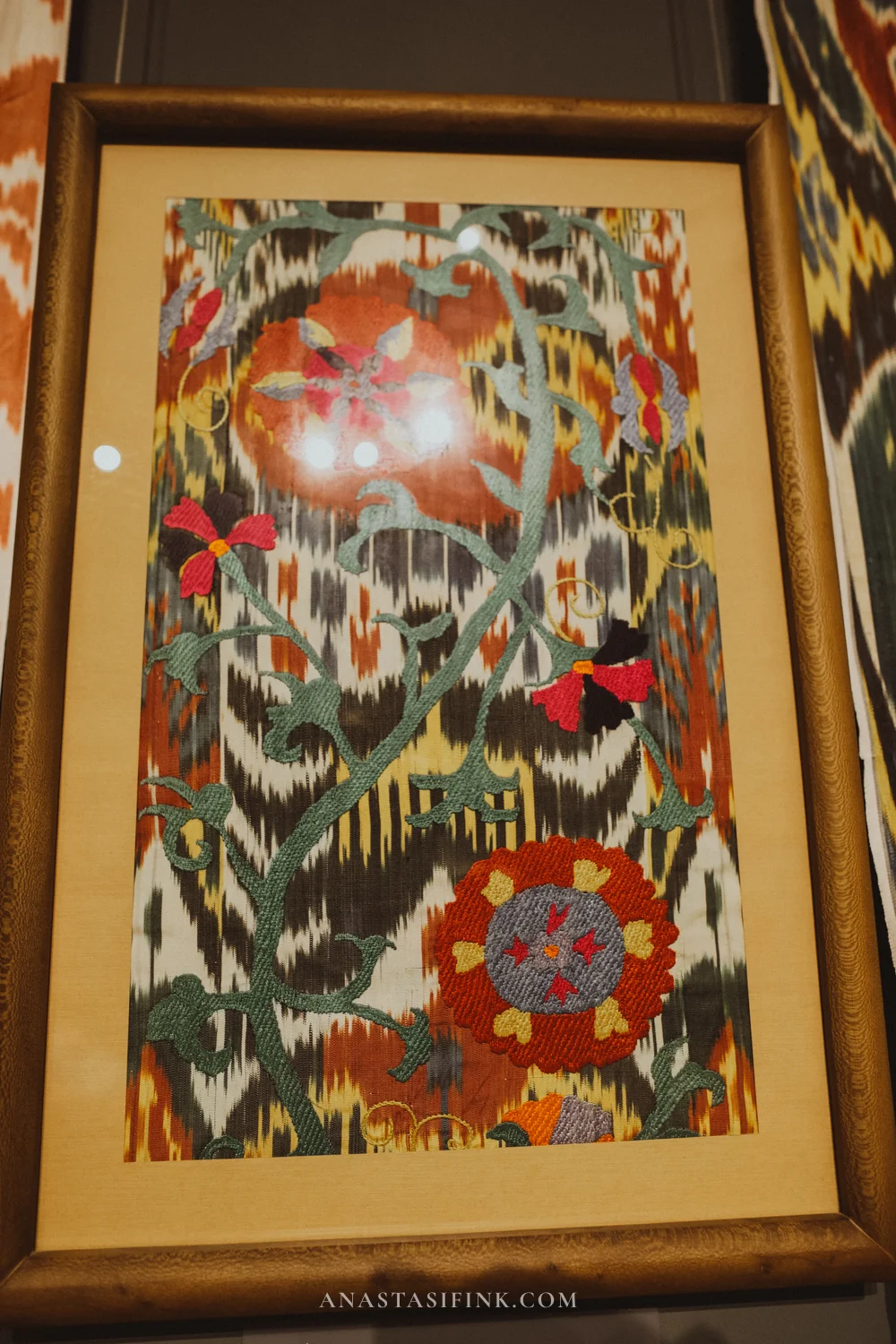
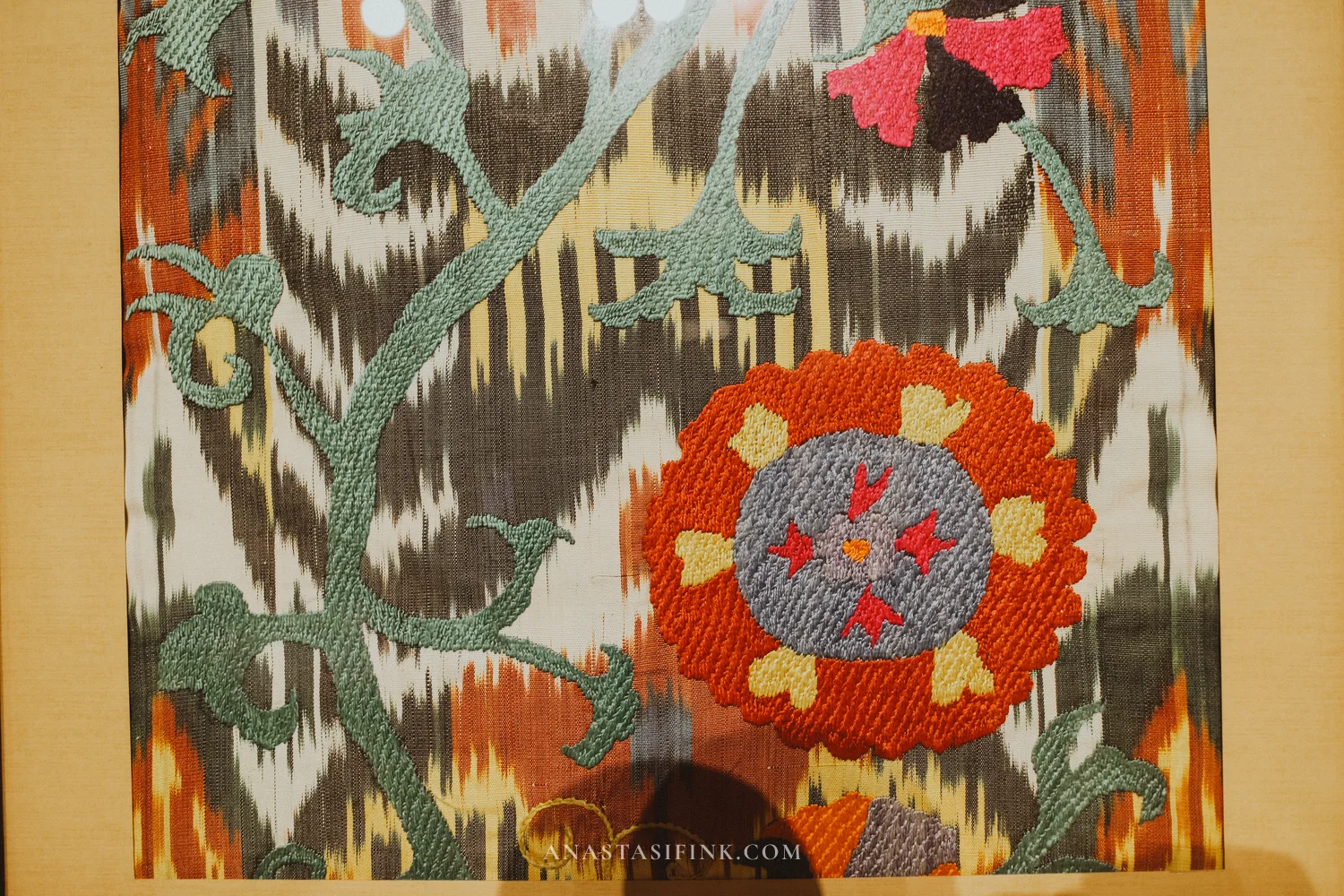
If I had to pick one room you really shouldn’t miss — for me it’s the suzani room. The word itself comes from the Persian “suzan,” meaning needle. Suzani are large wall embroideries done in chain stitch or satin stitch on cotton or silk. In old Uzbekistan, every bride would prepare several Suzani as part of her dowry: one for the wedding room, another for the guest room, a third for the children’s room. Standing next to one and realizing that a single panel represents six months of one woman’s labor — it changes how you look at embroidery.
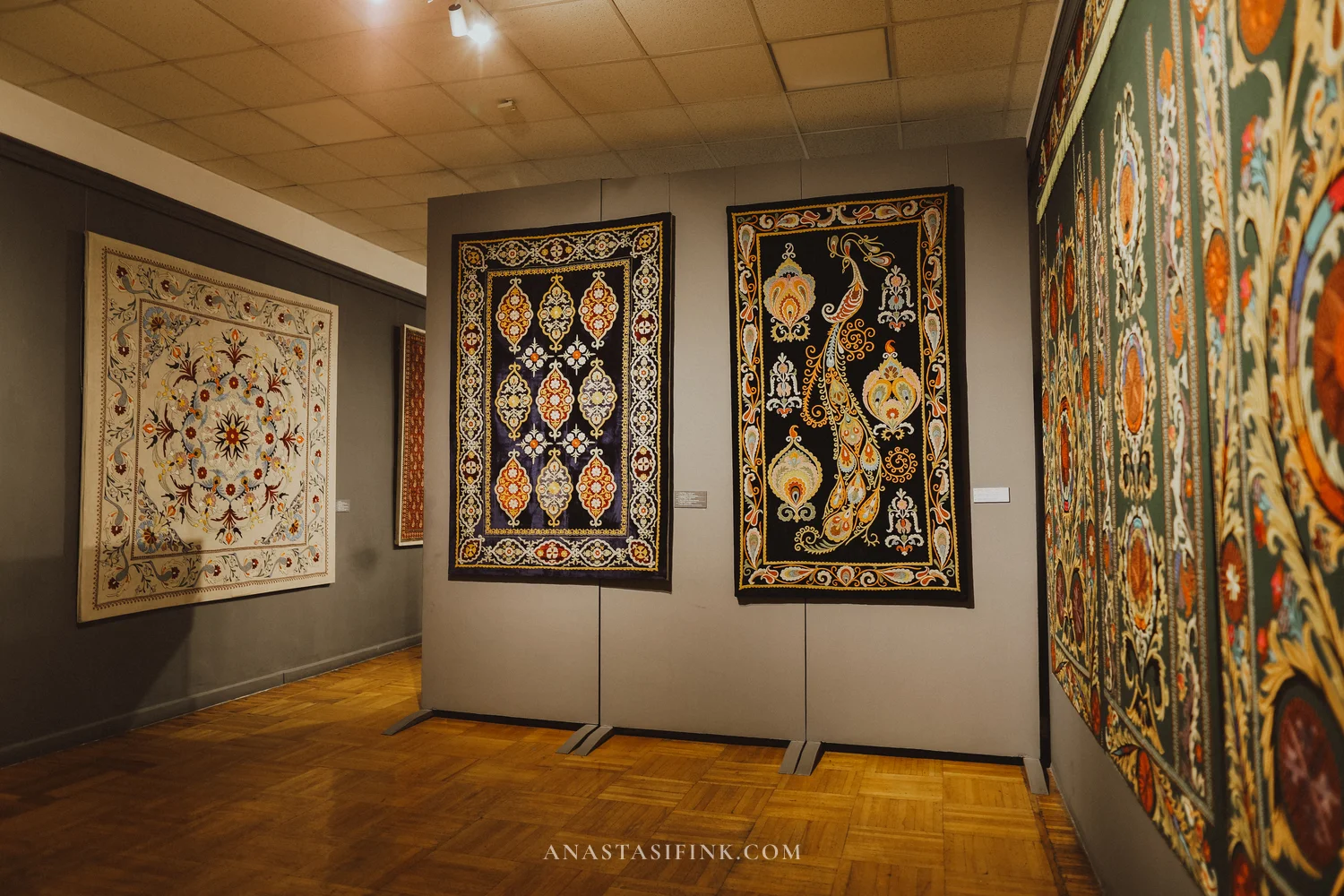
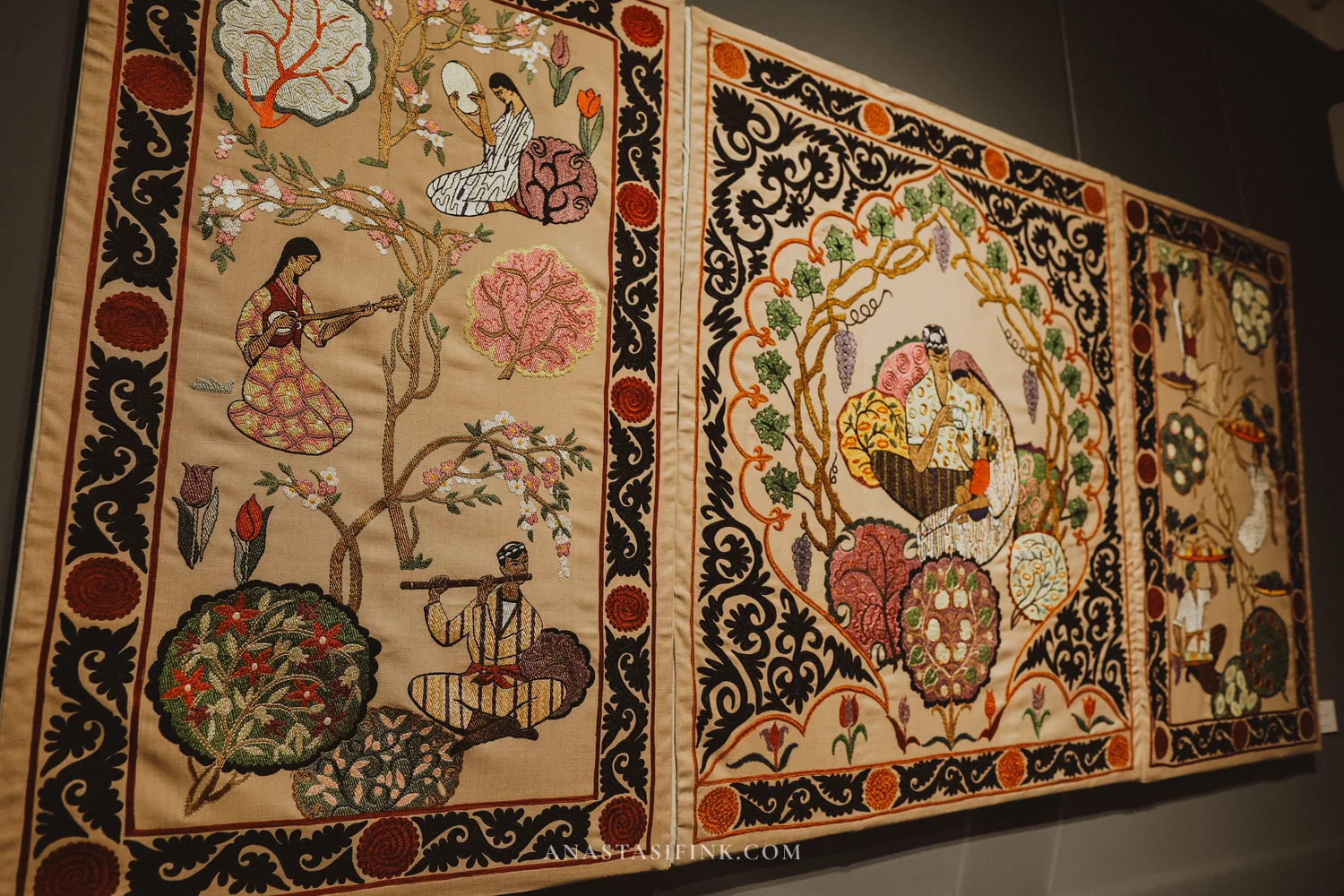
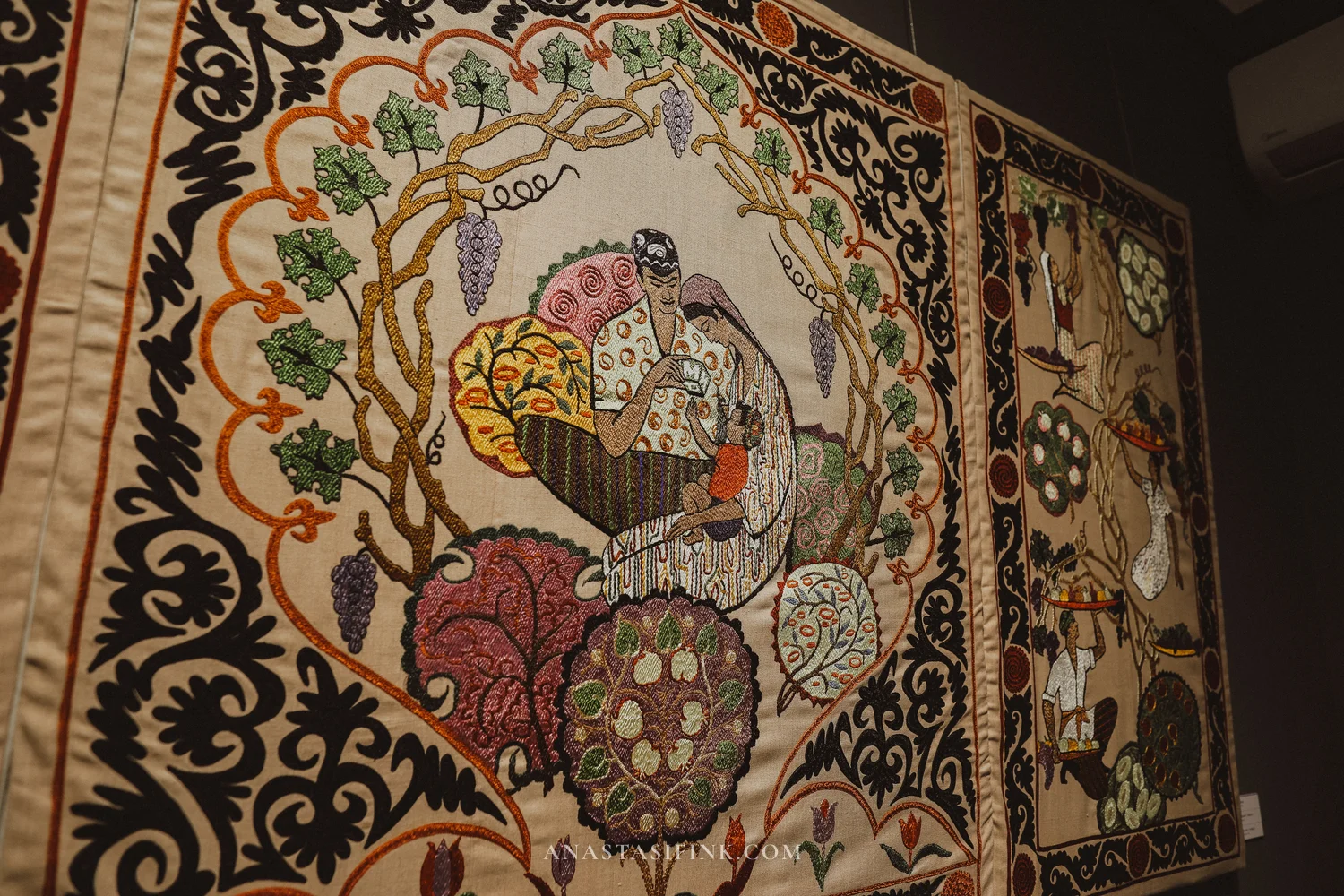
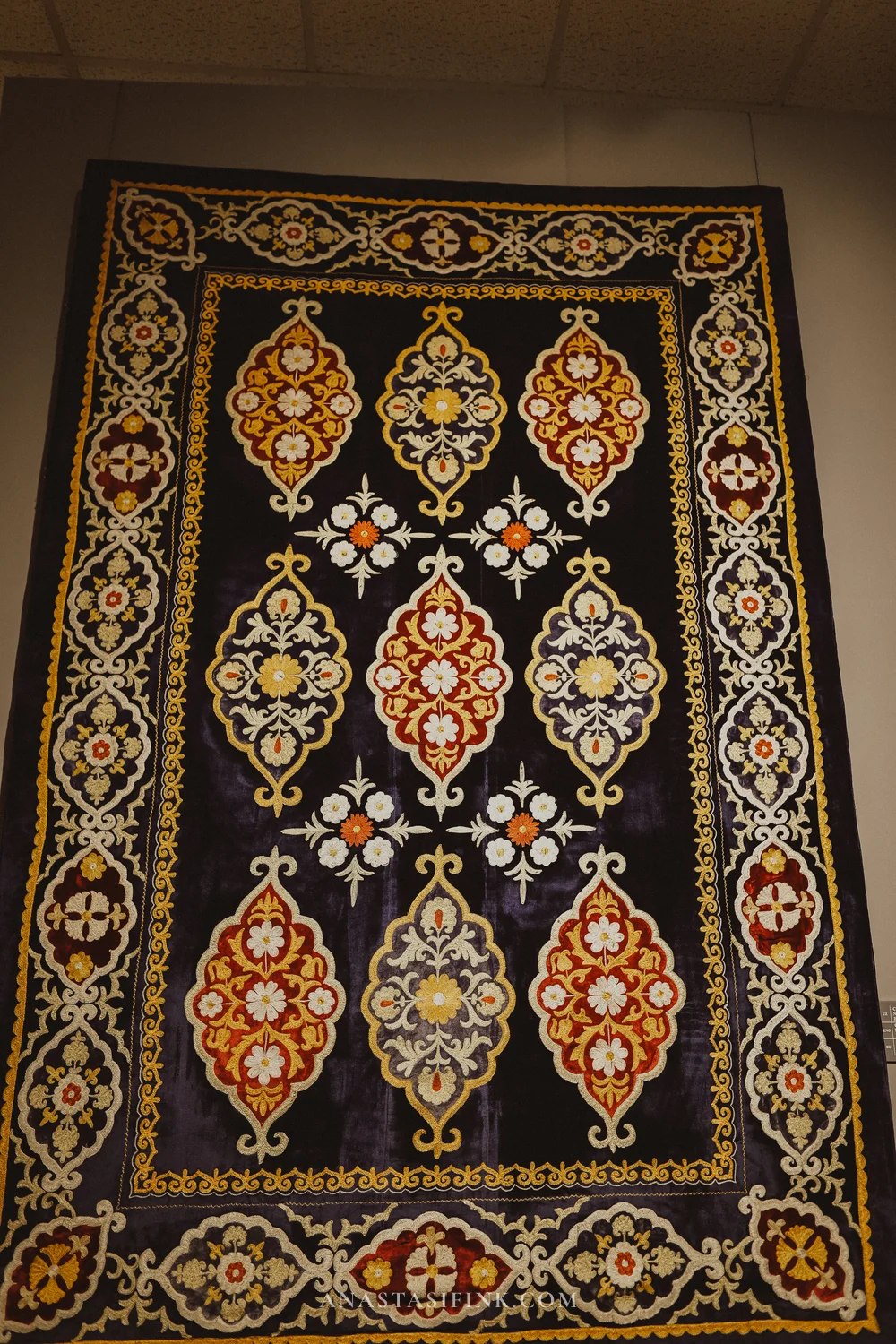
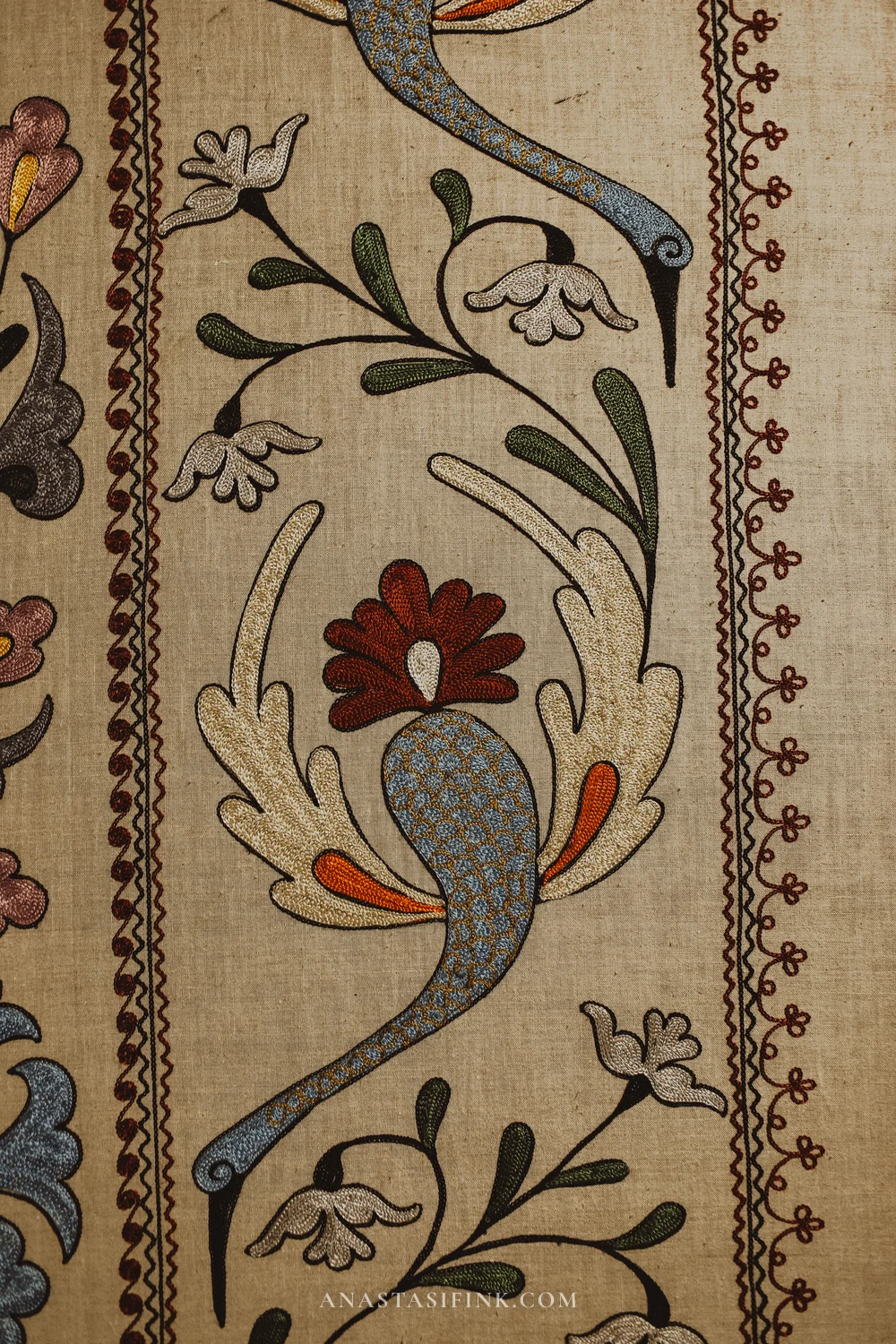
Left — the classic “8 medallions” composition. Right — bird and flower detail; bird-with-flower is a Bukhara motif
Robes and skullcaps
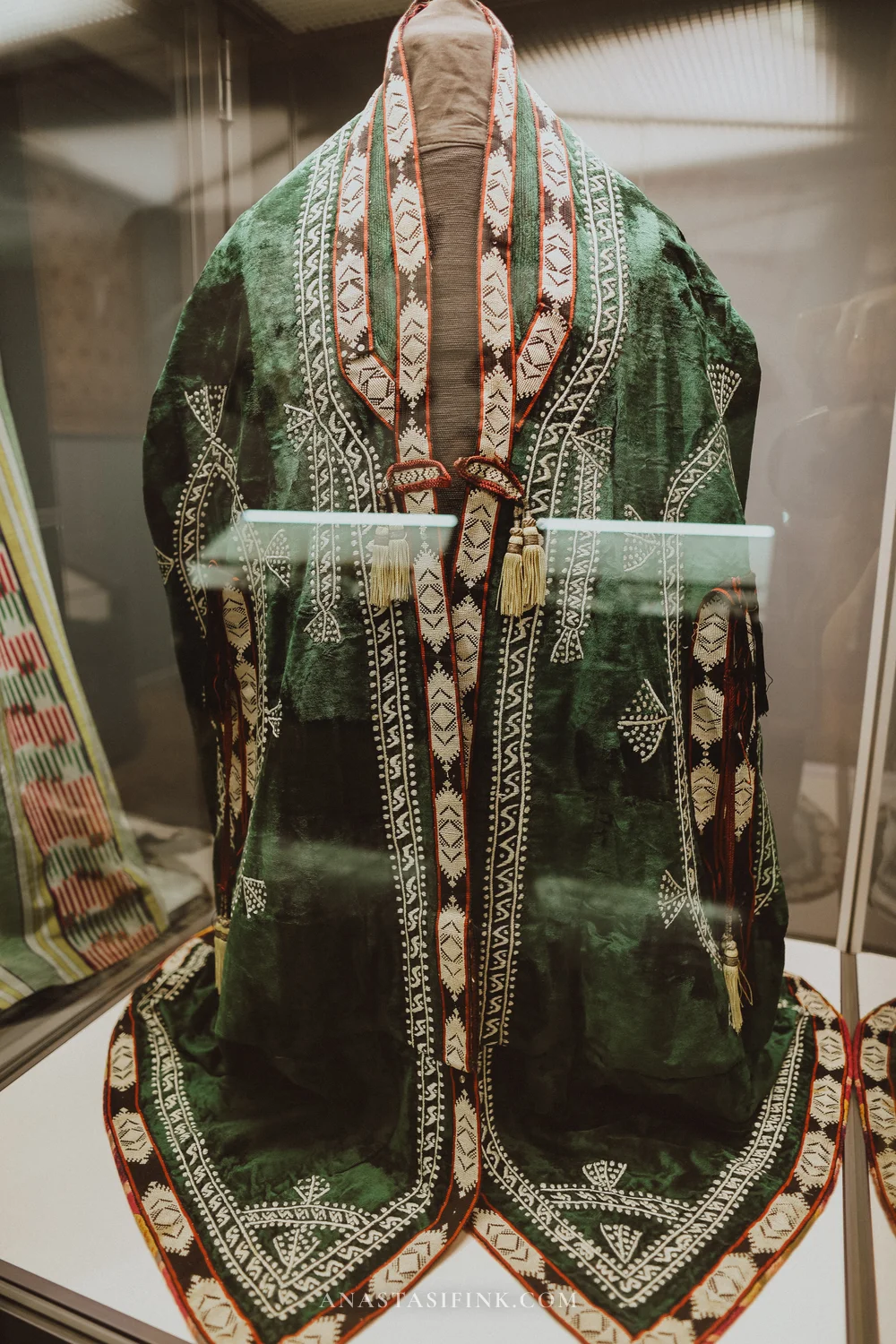
Next to the suzani hang the robes (Chapan) and there are display cases of Tubeteika (skullcaps). The Chapan was once worn by everyone in Uzbekistan, and from the fabric, the embroidery and the cut you could read instantly where someone was from, their age and their status. Same with the Tubeteika — it’s not just a hat, it’s a regional marker. Chust ones are black-and-white with almond shapes, Bukhara ones have gold, Fergana ones are bright with flowers.
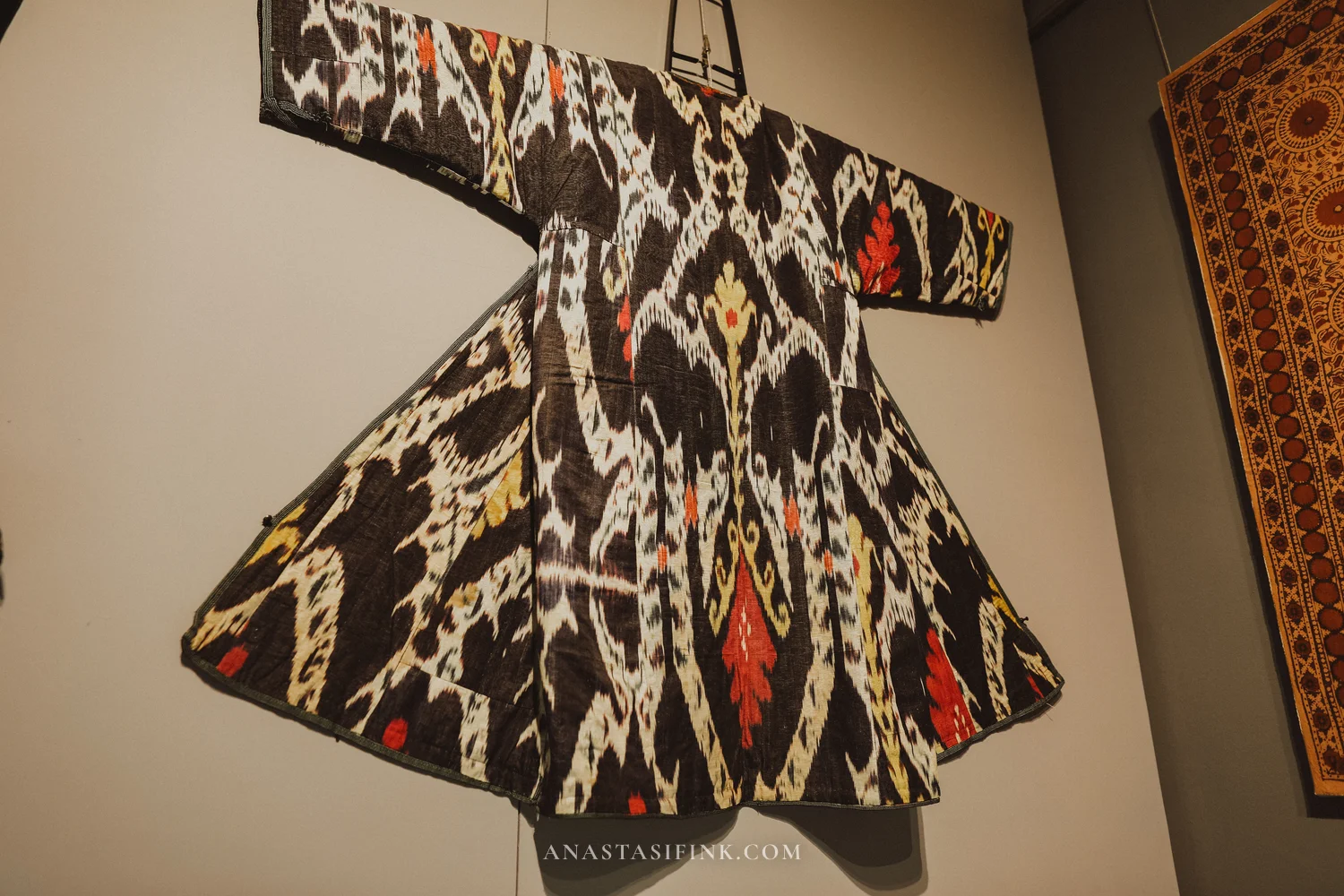
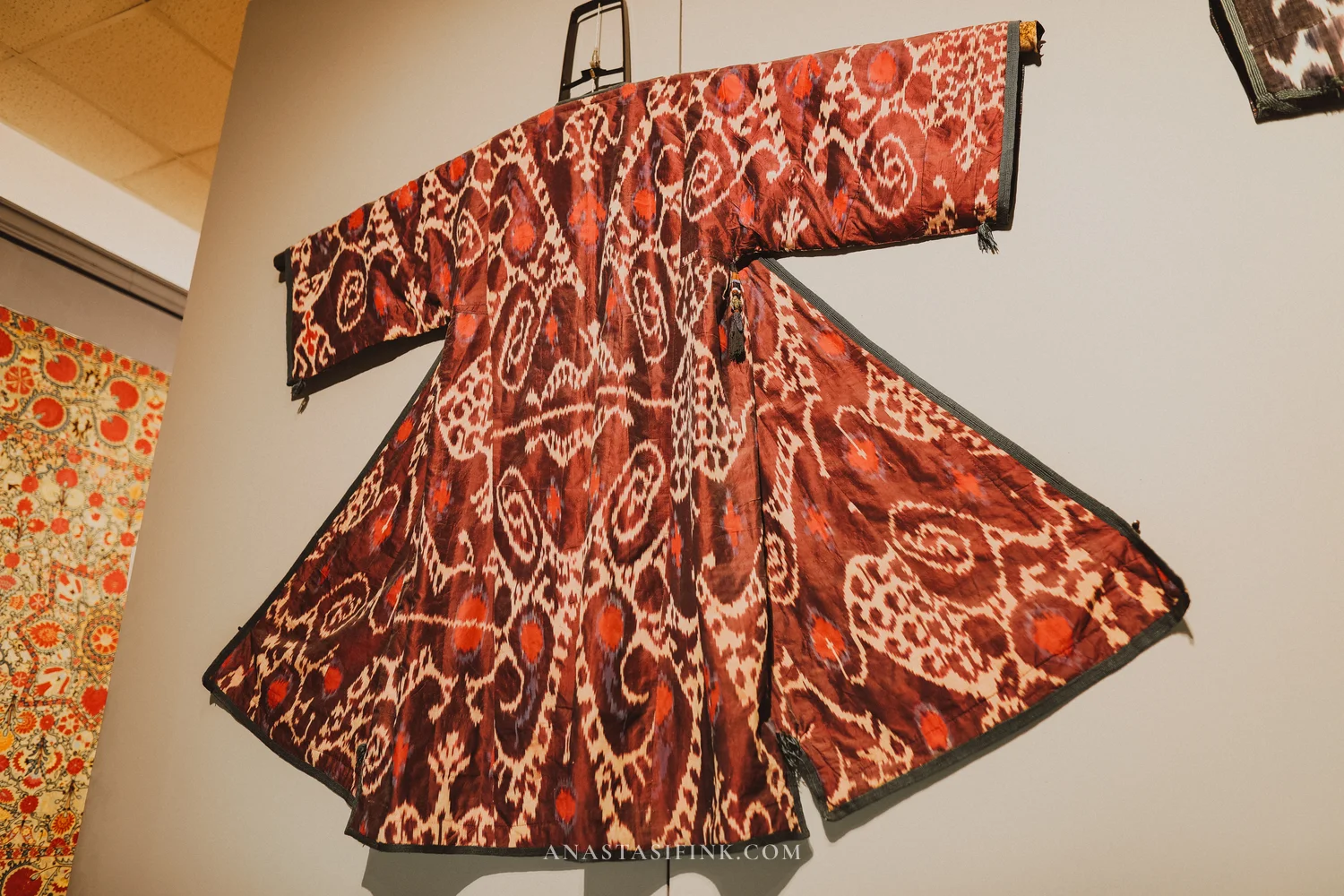
Ikat Chapan made from “abr” — a silk fabric with the characteristic “blurry” pattern, achieved by dyeing the threads before weaving (more on this below)
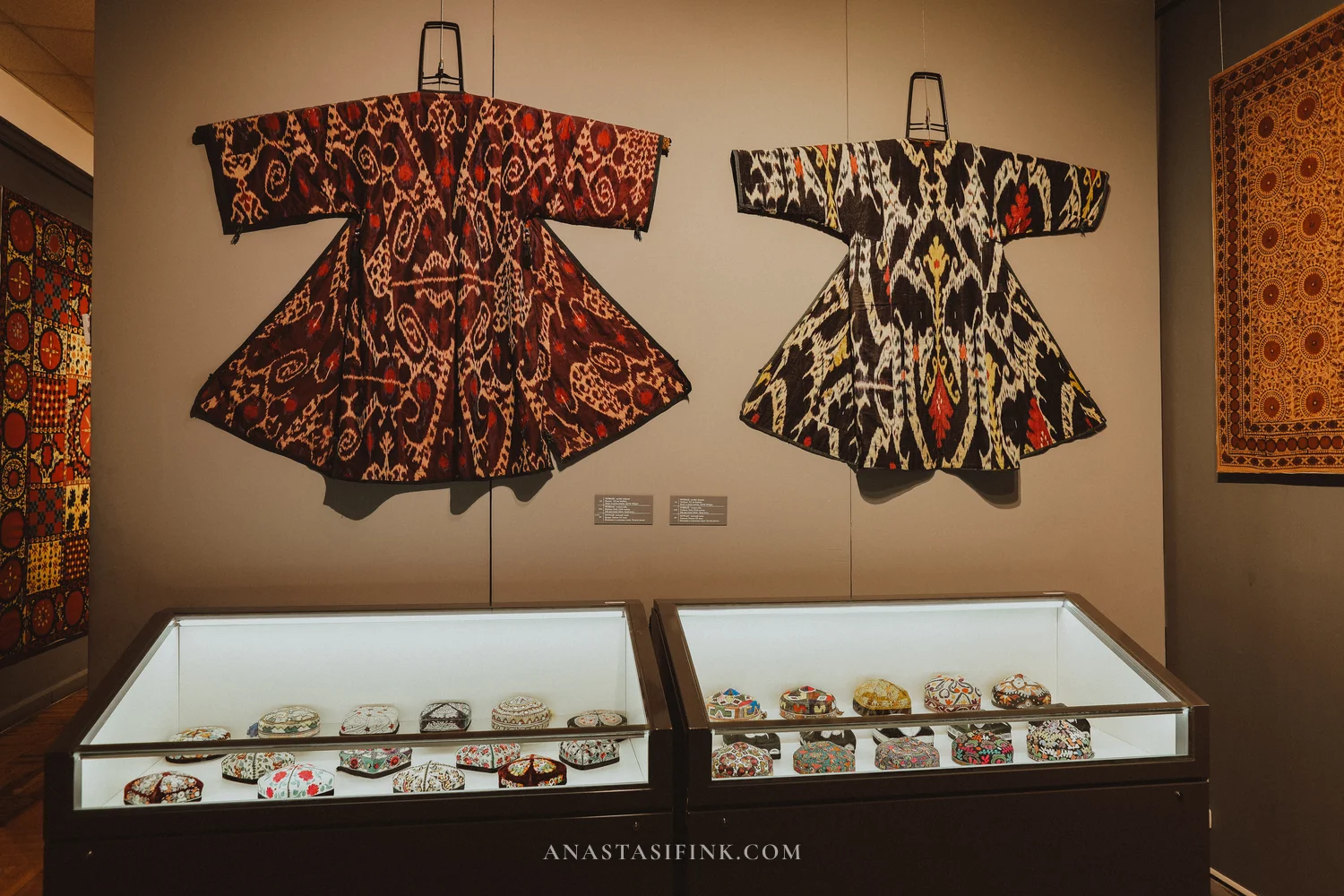
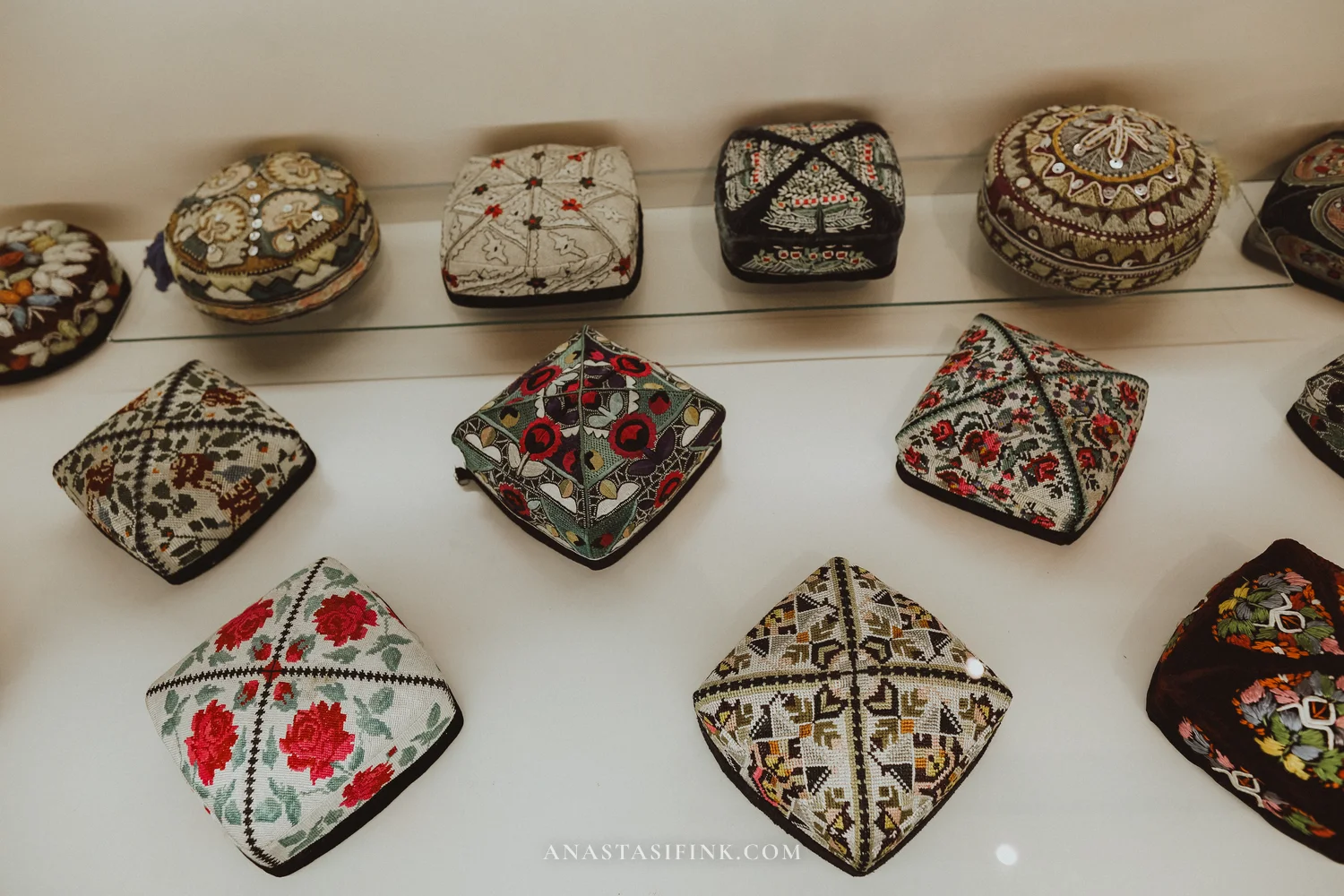
Classic 19th-and-20th-century suzani
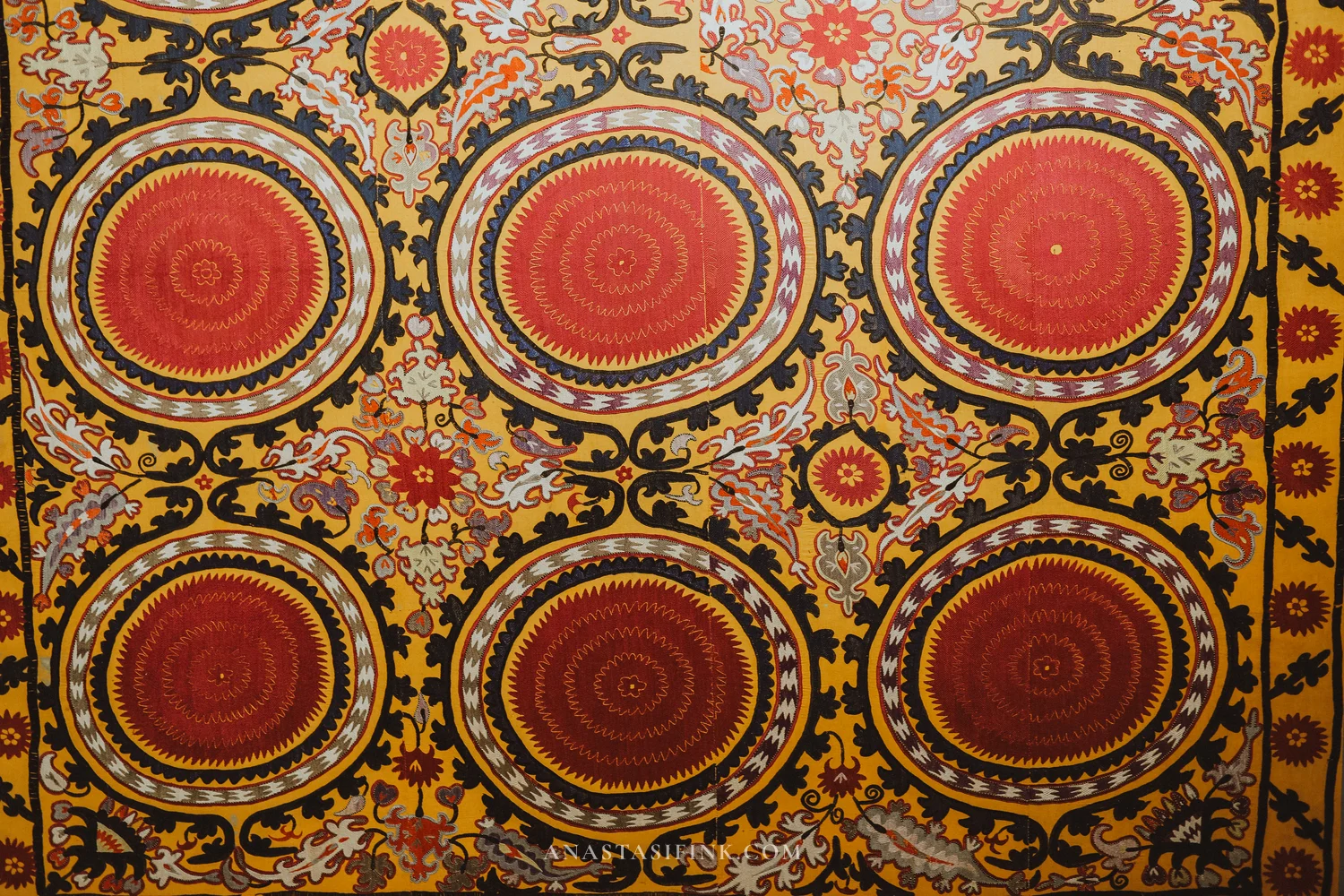
After the robes comes a hall with older Suzani — 19th and early 20th century. They’re more restrained in color and larger in composition than the modern ones. These weren’t author pieces for collectors — these were things sewn for the family home: to hang, to cover, to use. Take a close look — the work is incredible.
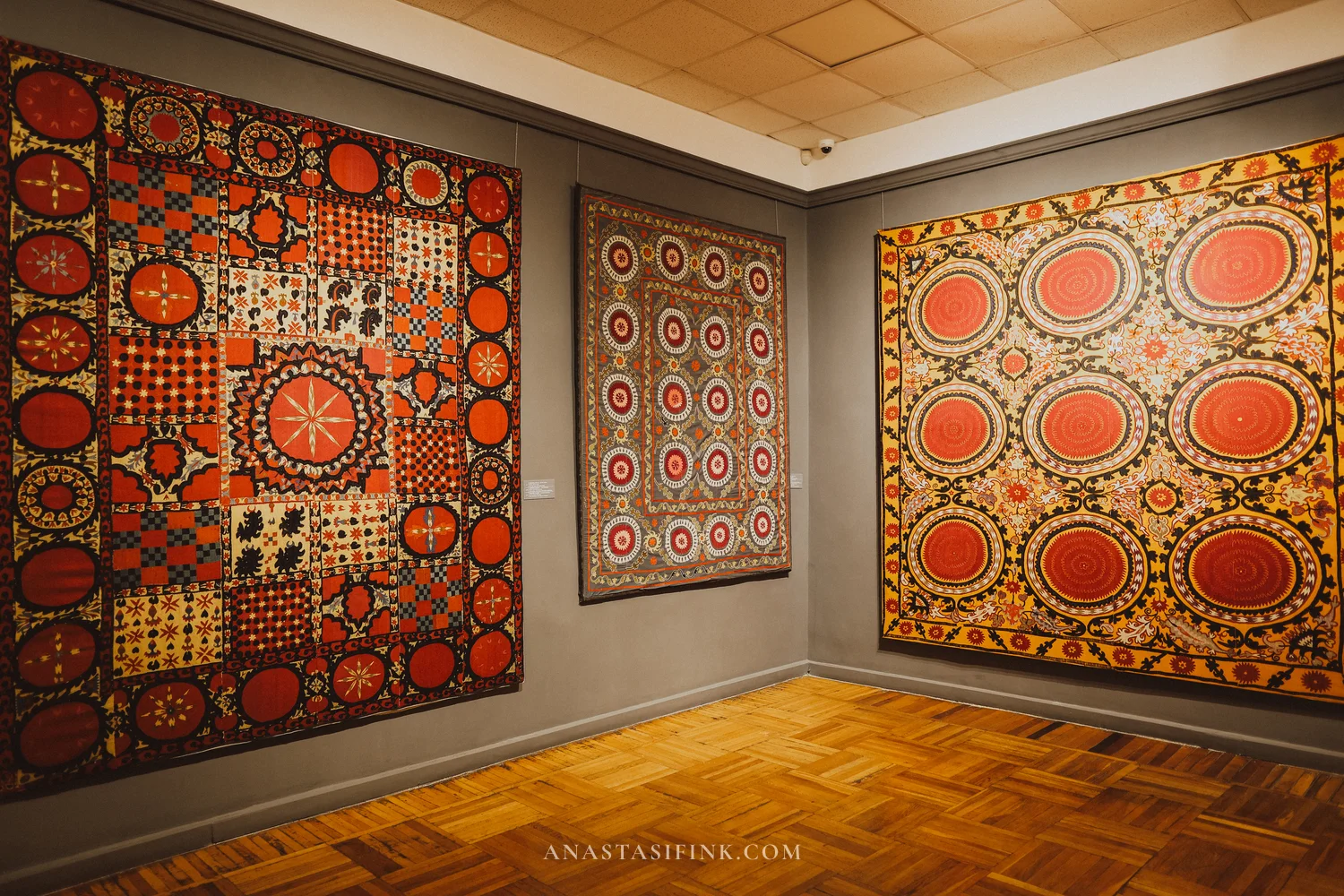
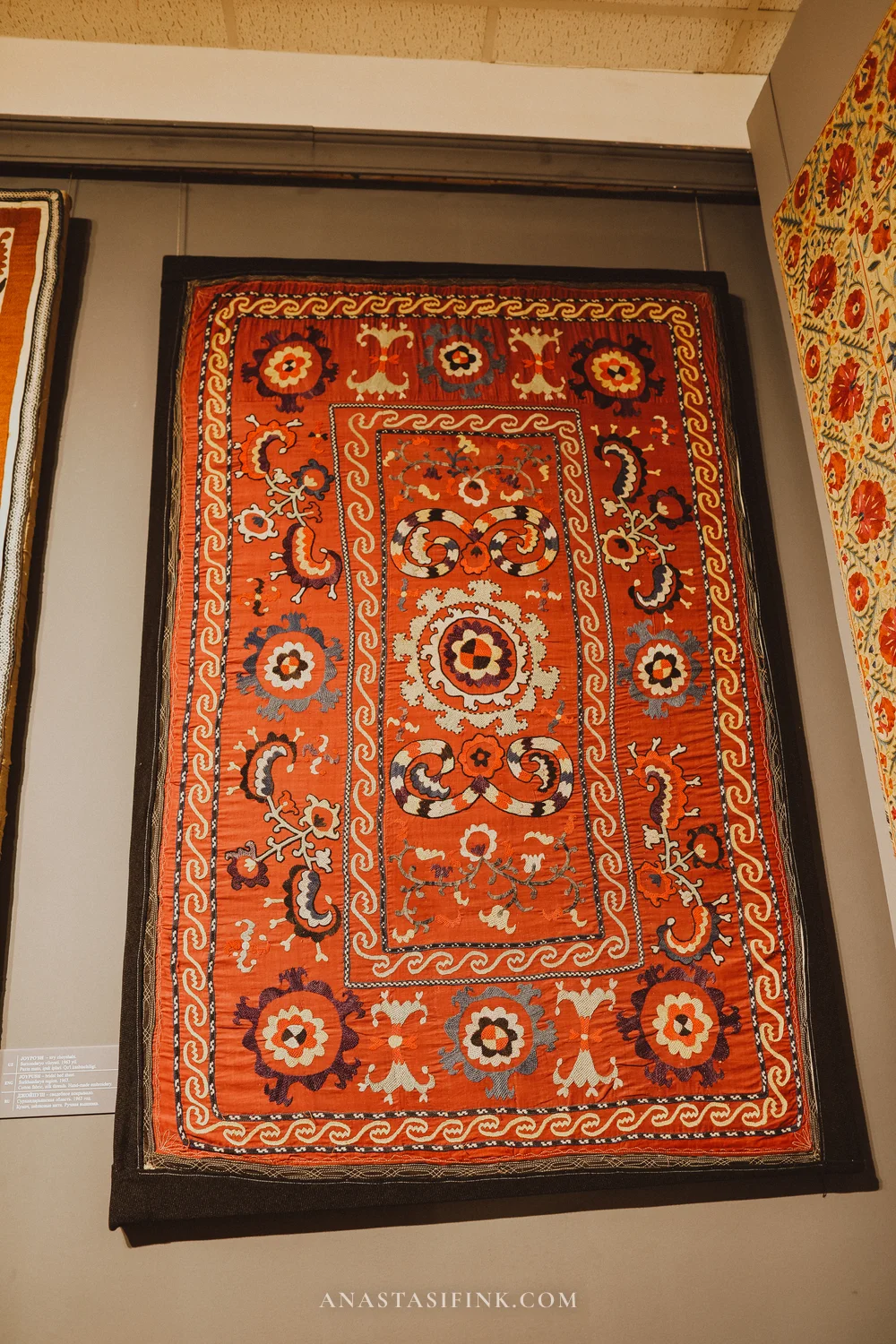
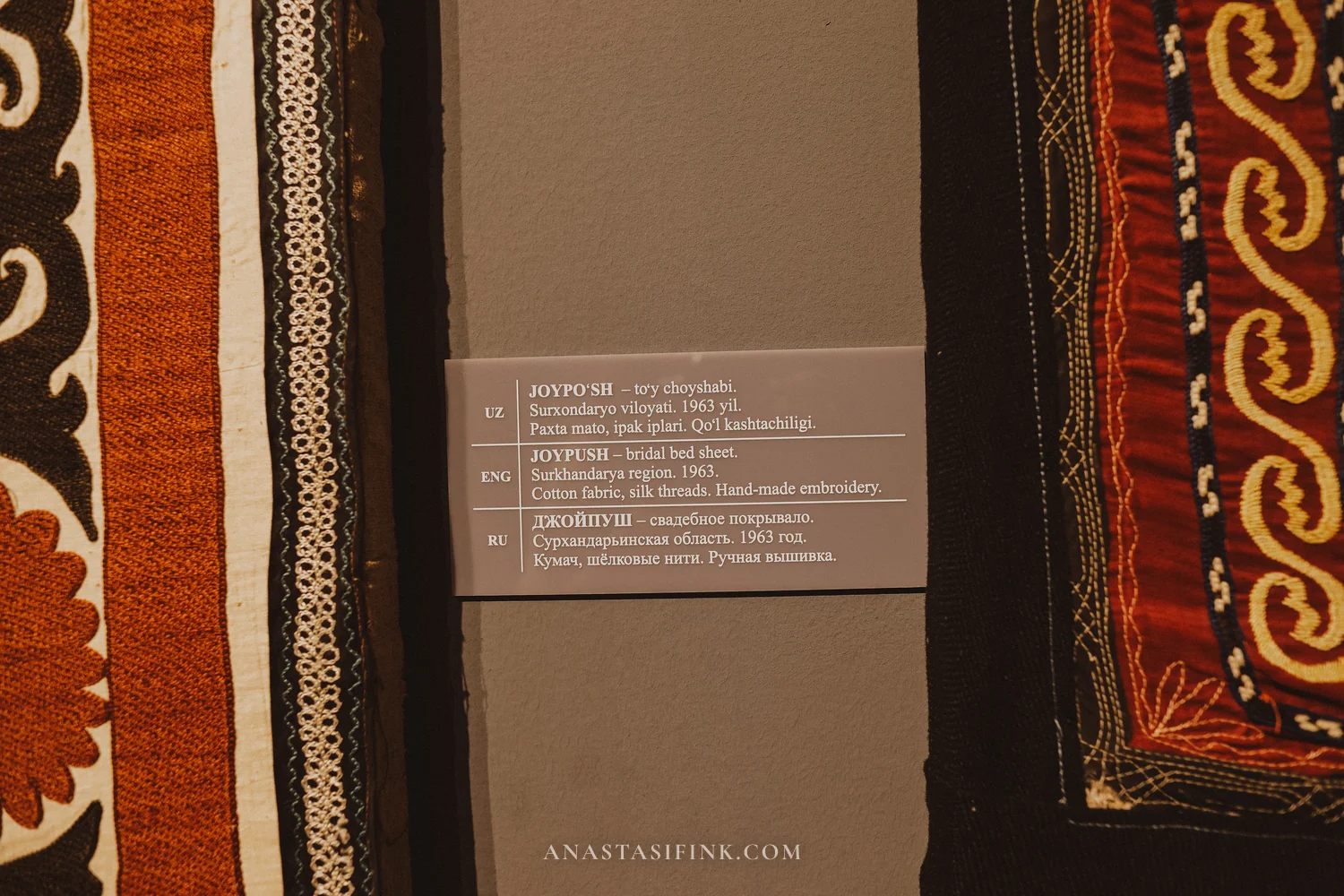
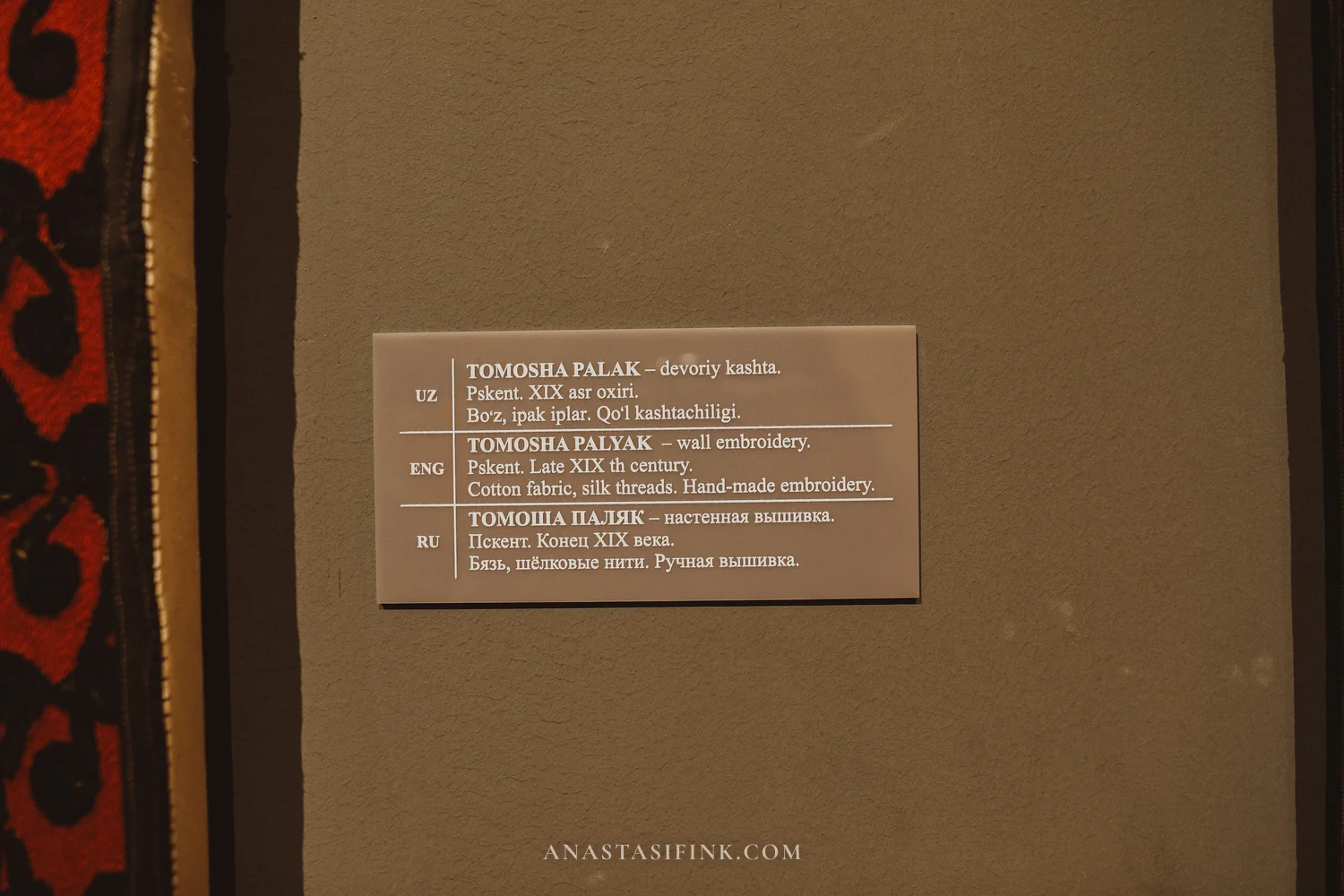
Labels. Joypush — a wedding cover from Surkhandarya (the south of the country). Tomosha palyak — a wall hanging from Pskent (near Tashkent), late 19th century
Ikat and the weaving workshop
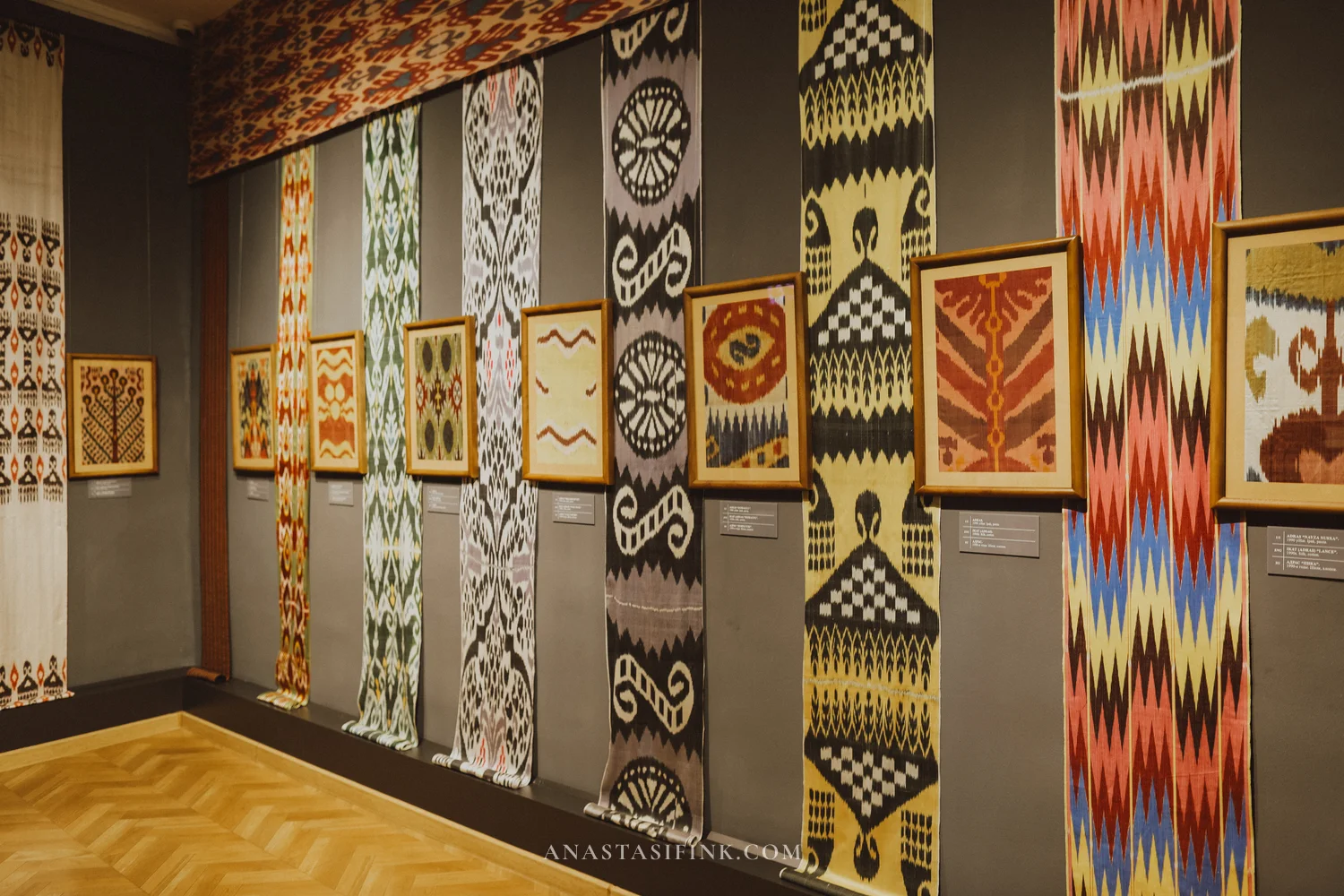
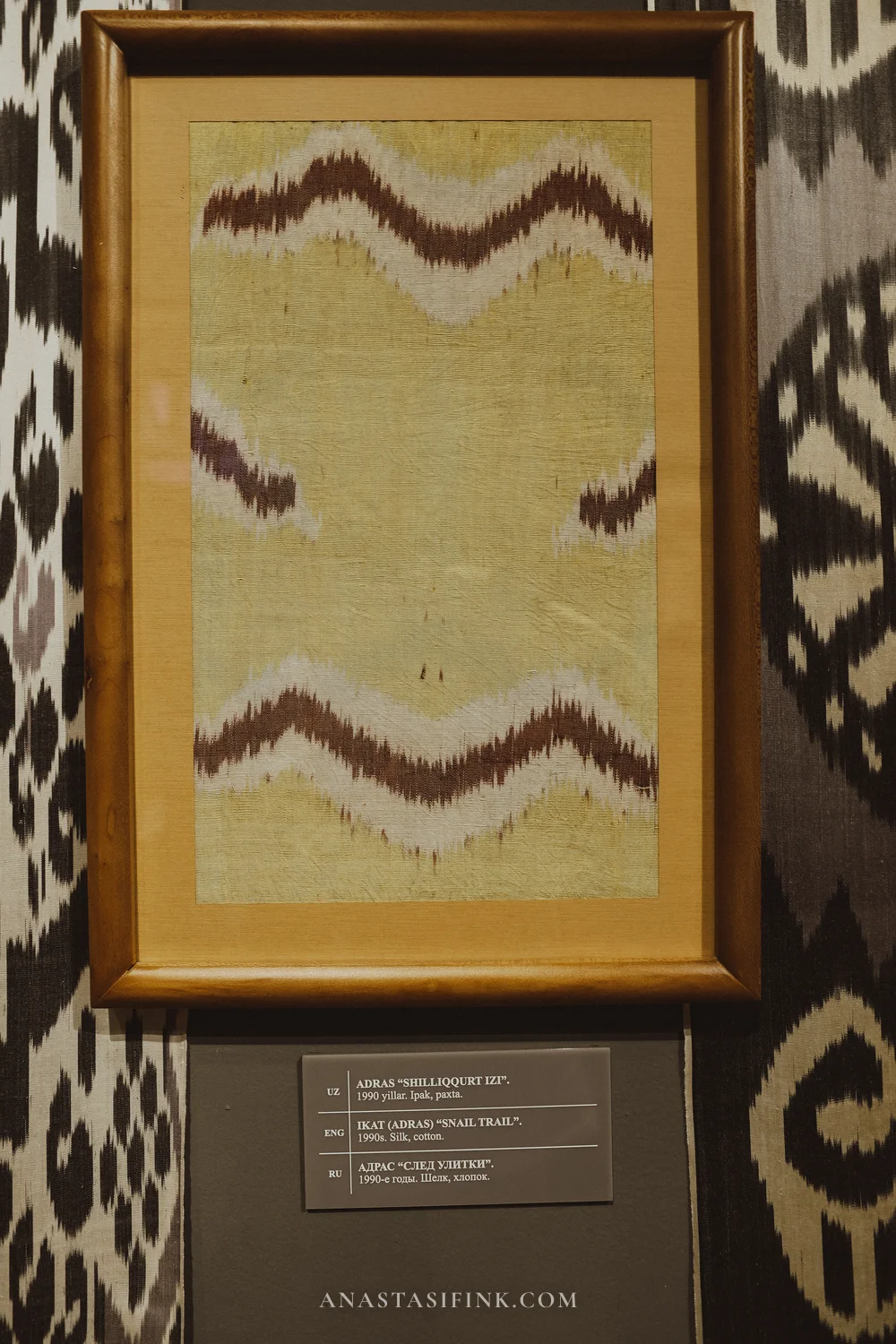
The final hall is all about Ikat, my favorite Uzbek fabric. In Uzbek it’s also called “abr” or “abr-bandi,” meaning “tied clouds” — and that name perfectly describes how the finished piece looks. The technique is wild: the threads are dyed before weaving. Bundles of threads are tightly tied off in specific places, then dyed, then tied again and dyed in another color, and so on, several times over. When the threads are stretched on the loom and the weaving begins — the pattern appears almost on its own. Slightly blurred at the edges, which is exactly why it’s so recognizable.
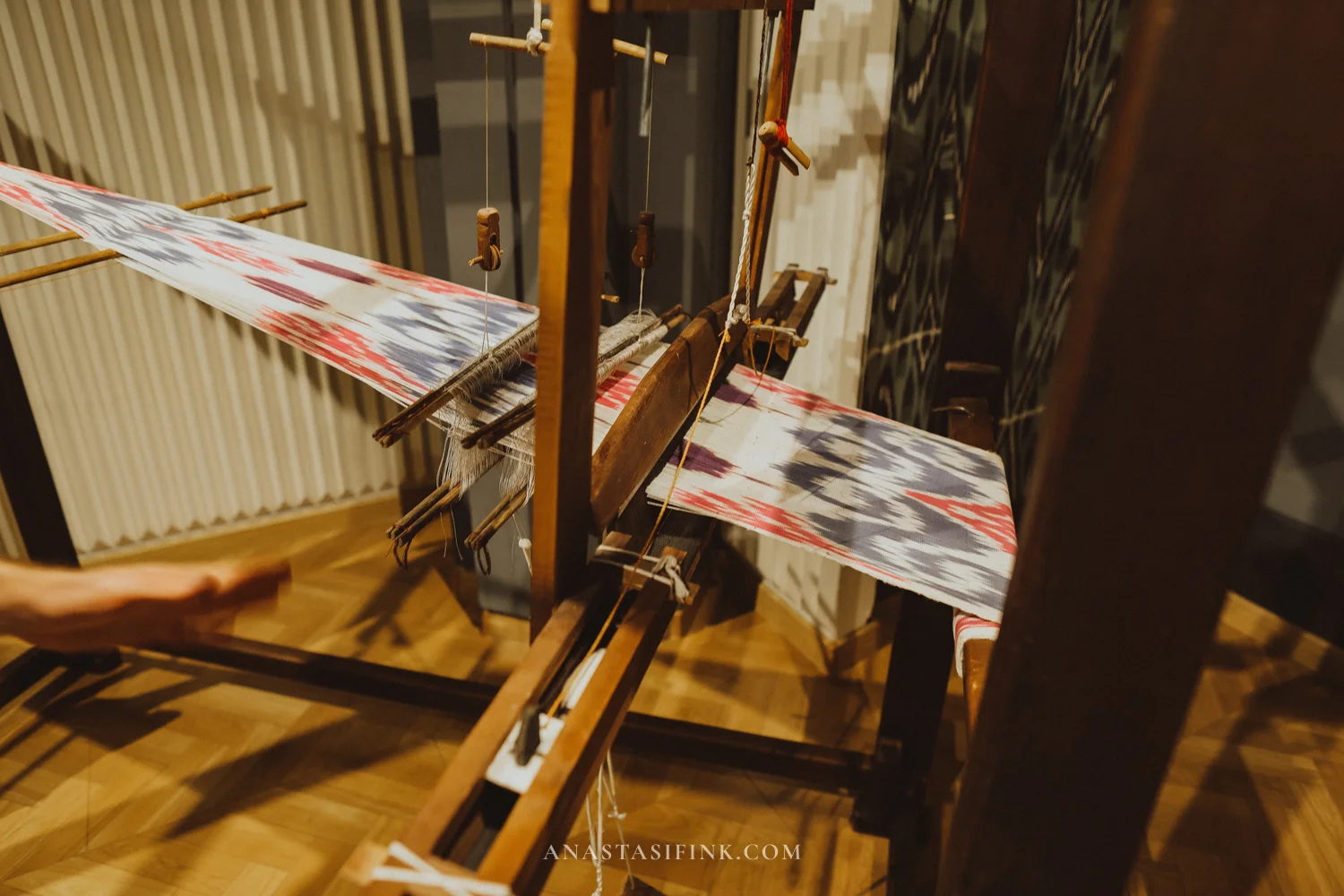
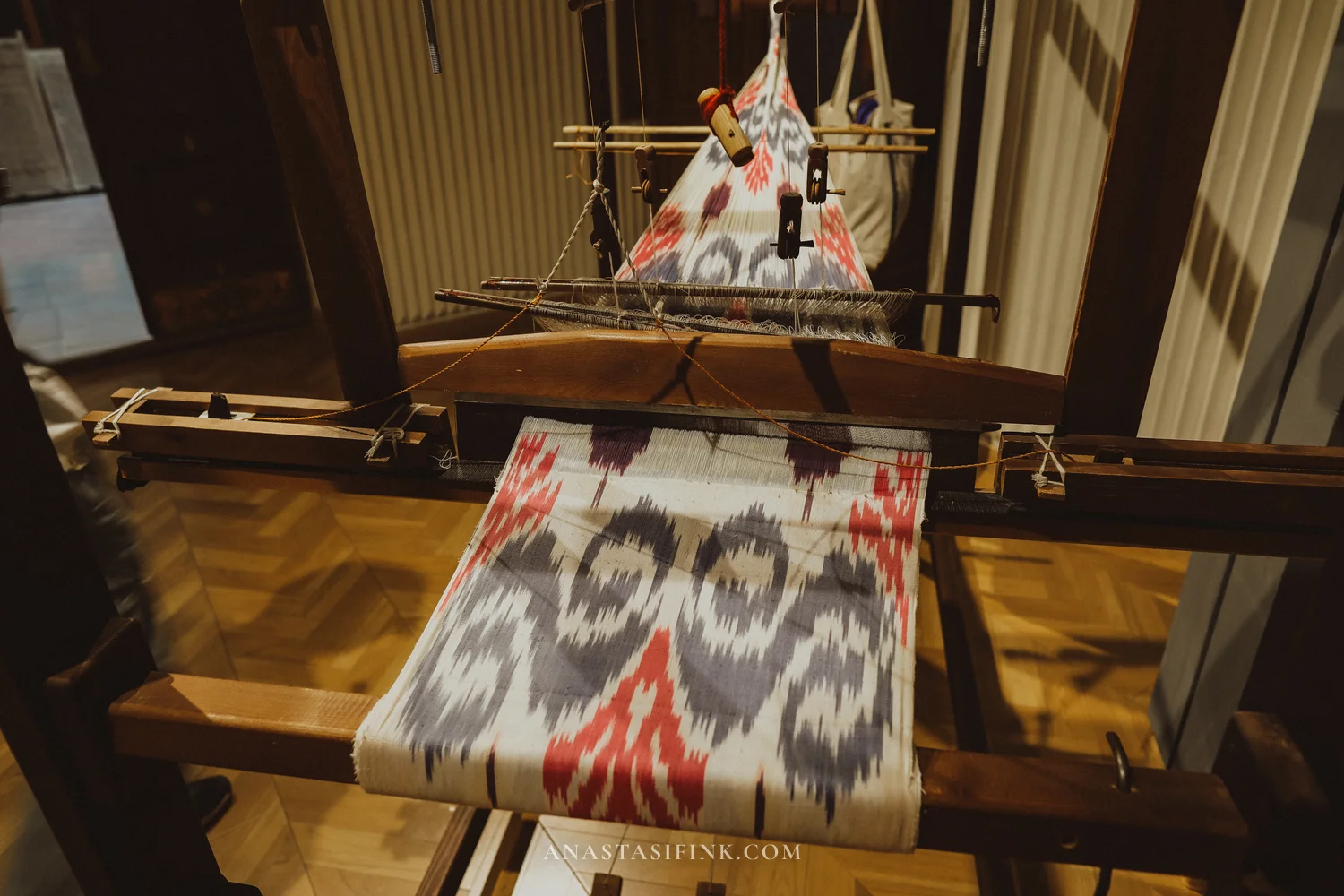
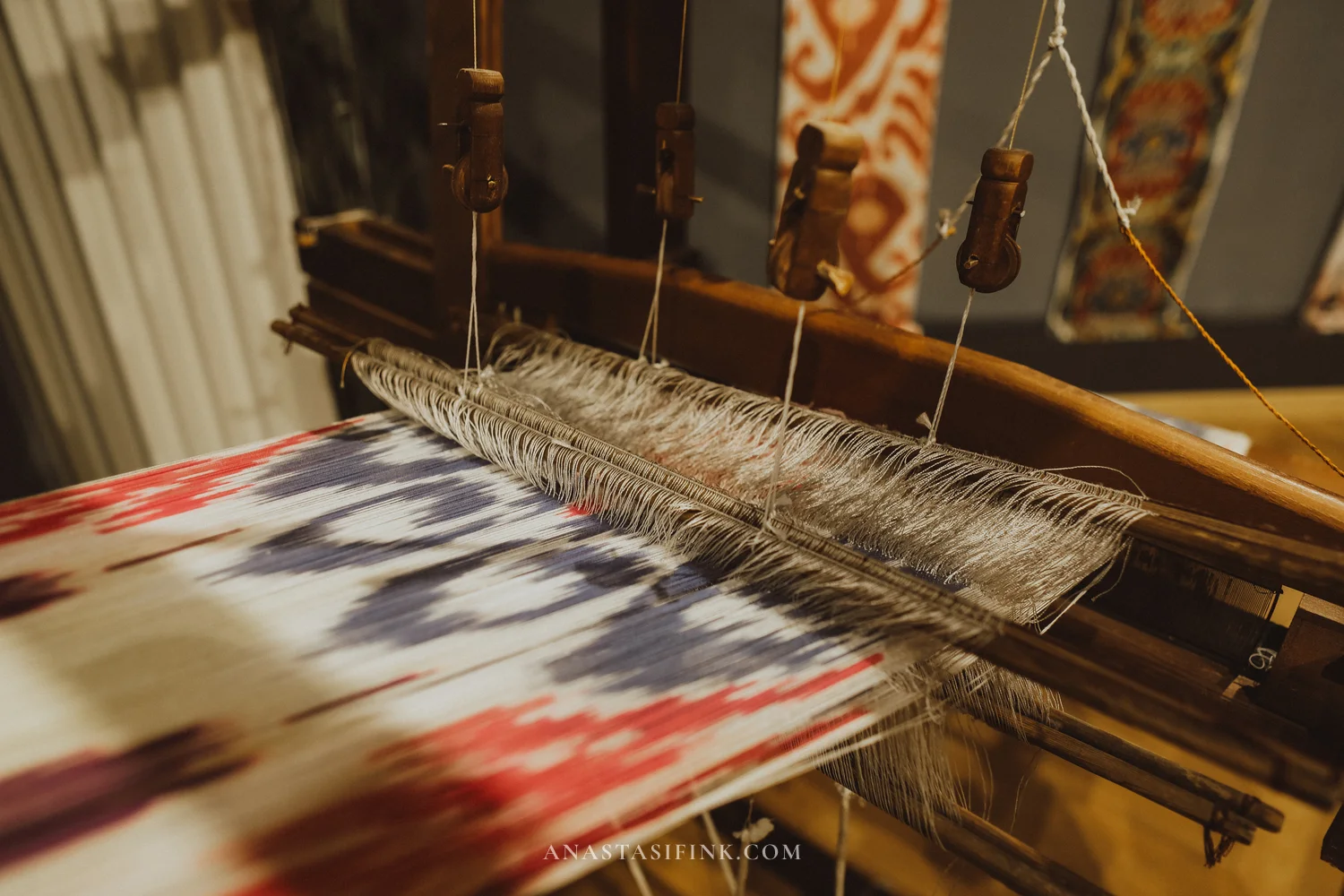
Left — a wider view of the loom with nearly-finished cloth. Right — a detail: you can see the individual warp and weft threads
Practical info
Museum of Applied Arts of Uzbekistan
- Address: 15 Rakatboshi street, Tashkent
- GPS: 41.2880, 69.2742
- Hours: 09:00–18:00 daily (ticket office until 17:30)
- Entry: 30,000 UZS (~$2.50) for foreigners, 5,000 UZS (~$0.40) for Uzbek citizens
- Photography: included in the ticket; tripods need separate approval
- Time needed: 1.5 hours minimum, 2–2.5 is better
- English/Russian guide: 100,000 UZS (~$8) per group, book ahead
- Metro: nearest station is “Oybek,” 15 minutes on foot
- Taxi: Yandex Go from the center — 15,000–25,000 UZS (~$1.20–$2)
How to get there
- From Tashkent airport: Yandex taxi to the center (~30 min, 50,000–80,000 UZS / ~$4–$6.50), then another 10 minutes to the museum
- From Chorsu or Hazrati Imam: metro to “Oybek” (green line), then 15 minutes on foot or 5 minutes by taxi
- From a hotel in the center: walk or grab a taxi — the museum is 1–2 km from most tourist hotels
Tips
- Combine it with: the State Museum of History of Uzbekistan and the Uzbekistan State Museum of Arts are nearby. You could squeeze both into one day, but I’d split them up — your eyes get tired after applied arts.
- Dress code: there isn’t one. Shorts are fine, dresses are fine. This isn’t a religious site.
- Souvenirs: there’s a small shop on the way out with modern Suzani, Tubeteika and ceramics. Prices are slightly above the bazaar, but the quality is guaranteed.
- Cafe: nothing inside. Across the street, a couple of chaikhanas; closer to Shahrisabz street, decent cafes serving plov and lagman.
- Best time of year: April–May and September–October. Tashkent summers hit +40 °C (104 °F). The museum has air conditioning, but the aivan stays hot.
Nearby: My 7-day Uzbekistan itinerary combines Tashkent with 3 days in Bukhara and 2 in Samarkand, with buses, trains and real prices. More places are in all my Uzbekistan travel guides.
The museum is at 15 Rakatboshi street. The nearest metro station is “Oybek,” about 15 minutes on foot. From anywhere in the center, the easiest option is Yandex Go: the ride takes 5–15 minutes and runs about 15,000–25,000 UZS (~$1.20–$2).
Foreigners pay 30,000 UZS (~$2.50); Uzbek citizens pay 5,000 UZS (~$0.40). Photography and video are included; tripods may cost extra — best to confirm at the ticket window.
Ideally weekday mornings, 10:00 to 12:00: the fewest visitors and the softest light in the grand hall. On weekends after 14:00, tour groups arrive. The best seasons are April–May and September–October, when Tashkent’s weather is comfortable.
At least an hour and a half to walk through every room. If you want to really study the collections (miniatures, lacquer, suzani, ikat) and the ceilings in the grand hall — plan on 2.5 to 3 hours.
The grand hall with the fountain and painted dome, the lacquer-miniature room, the Suzani, and the Ikat. Those are the four essentials. If you have time, linger in the miniatures room and check out the loom in the final hall.
For a first visit — yes, especially if it’s your first trip to Uzbekistan. A guide will explain the differences between ceramic schools, what sets Bukhara embroidery apart from Khorezm work, and point out details in the architecture of the Polovtsev house you’d otherwise miss. If you already know Central Asian art, the labels are enough.
Yes — photo and video are allowed and included in the ticket. No flash, no tripod; tripods only by arrangement with the attendant.
My takeaway
Under one roof, you’ve got everything I love about Uzbekistan: Rishtan ceramics, Bukhara Suzani, Margilan Ikat, Bukhara Zardozi (gold embroidery). And it’s all inside a house that’s an exhibit in its own right — its own story about a Russian diplomat who invited local masters and gave them a free hand.
If I only had time for one place in Tashkent, I’d come here.