National Orchid Garden, Singapore: Botanic Gardens Guide

Singapore Botanic Gardens is a big, free park almost in the centre of the city — the kind of place locals come to wander and tourists come for the orchids. There’s a genuine rainforest here, lakes with wild otters, and the National Orchid Garden, home to more than sixty thousand plants. Here’s what to see and how to plan your day.
A garden older than modern Singapore
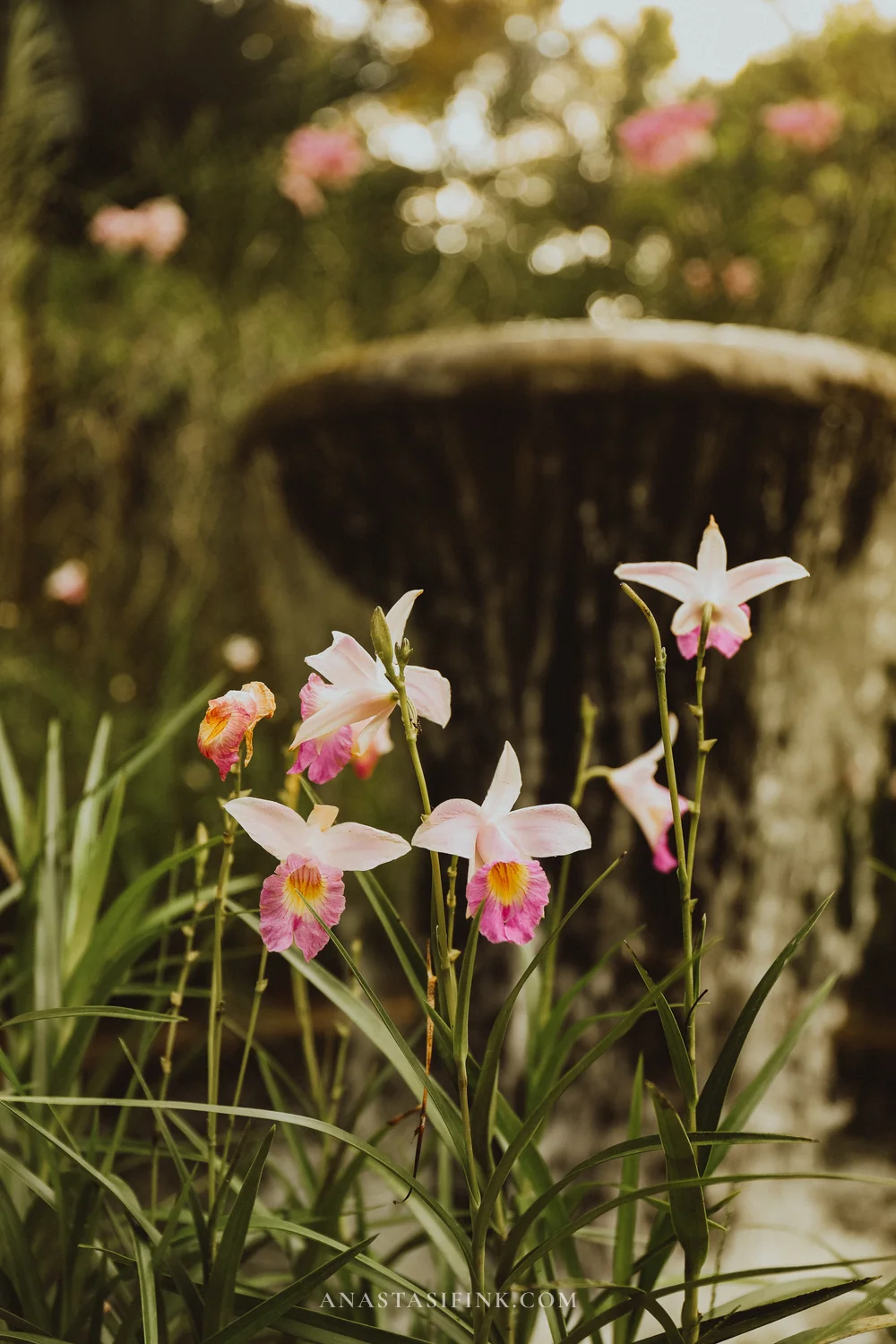
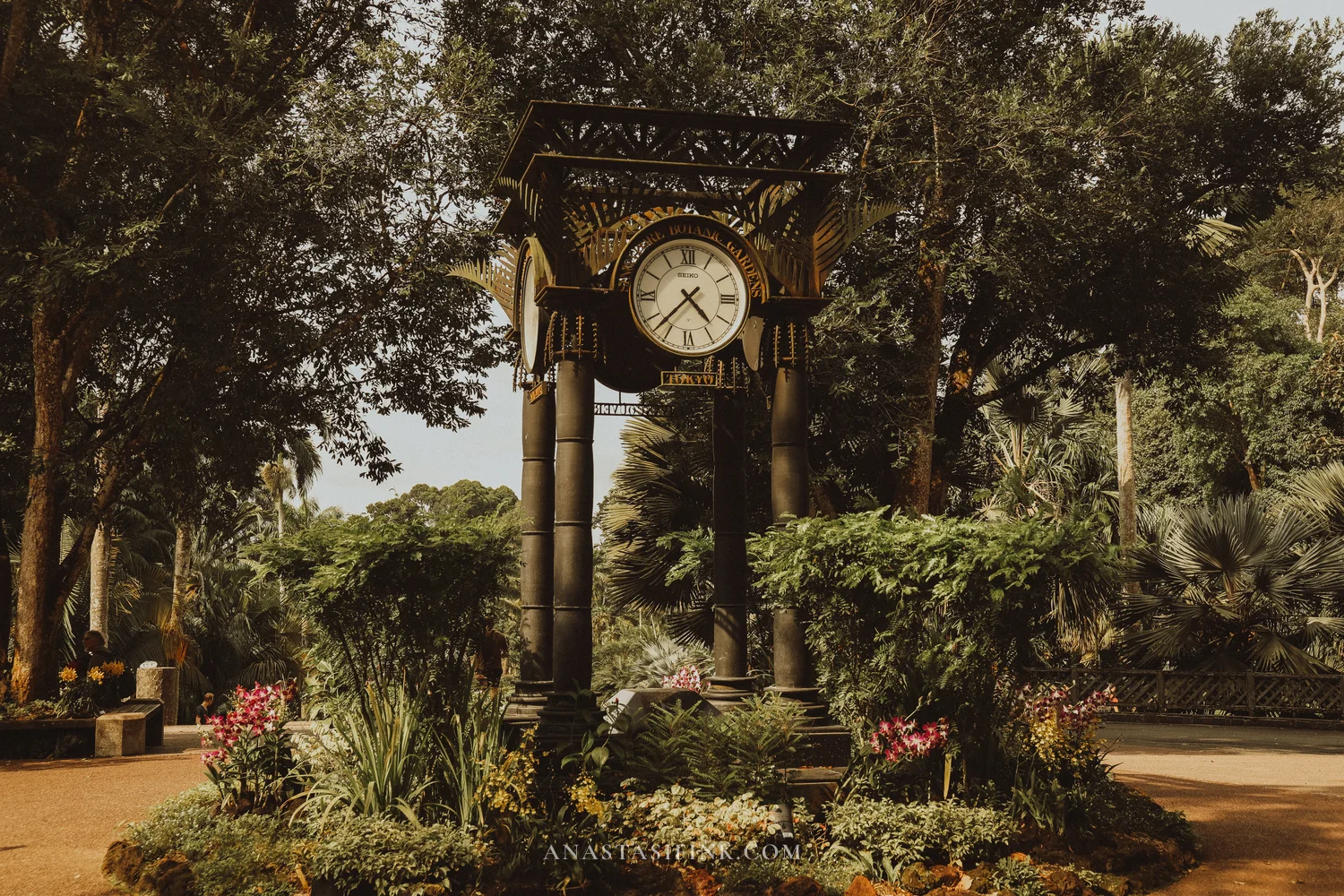
Singapore Botanic Gardens is loved by locals and visitors alike. It opened on this spot back in 1859, covers 82 hectares — roughly 115 football pitches — and in 2015 it became a UNESCO World Heritage Site. It’s the first, and still the only, tropical botanic garden on that list, sitting alongside the Taj Mahal and the Grand Canyon.
The park is huge — lakes, lawns, rainforest, century-old trees — and it’s open from 5am to midnight. This part is free to enter; only the National Orchid Garden, the one up on the hill in the middle, charges admission. People come for the whole day: runners at dawn, families with picnic mats by midday, couples shooting wedding photos under the trees. Around 4.5 million people pass through each year, and yet it almost never feels crowded. If you’ve been to Kew Gardens in London, think of that — only tropical, and roughly the size of a small town.
I came in through the Tanglin Gate and followed the paths deeper into the park.
Swan Lake and the otters
The first thing you reach from the Tanglin Gate is Swan Lake. It was dug out in 1866, making it the oldest ornamental lake in Singapore. It’s named after a pair of mute swans brought over from Amsterdam.
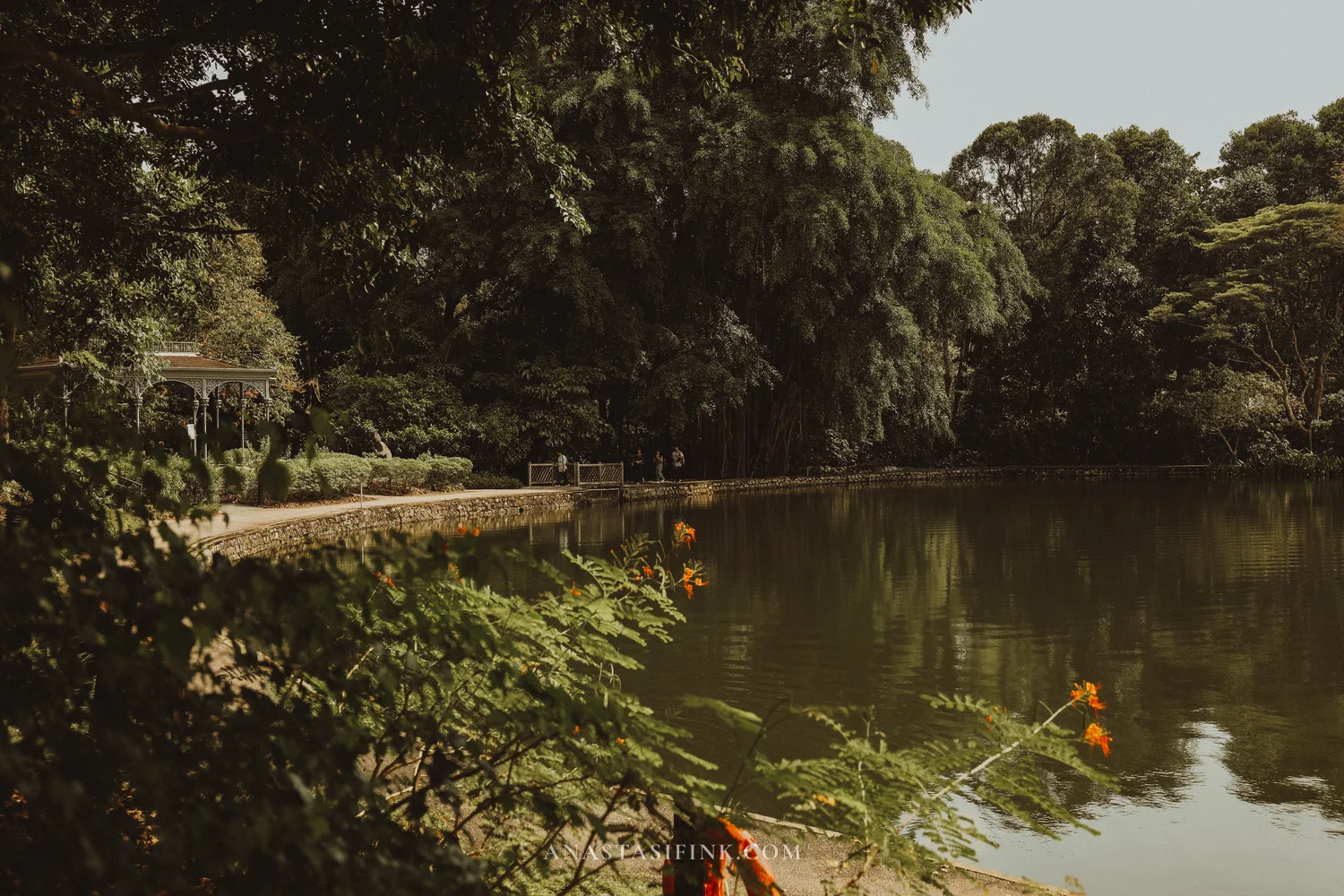
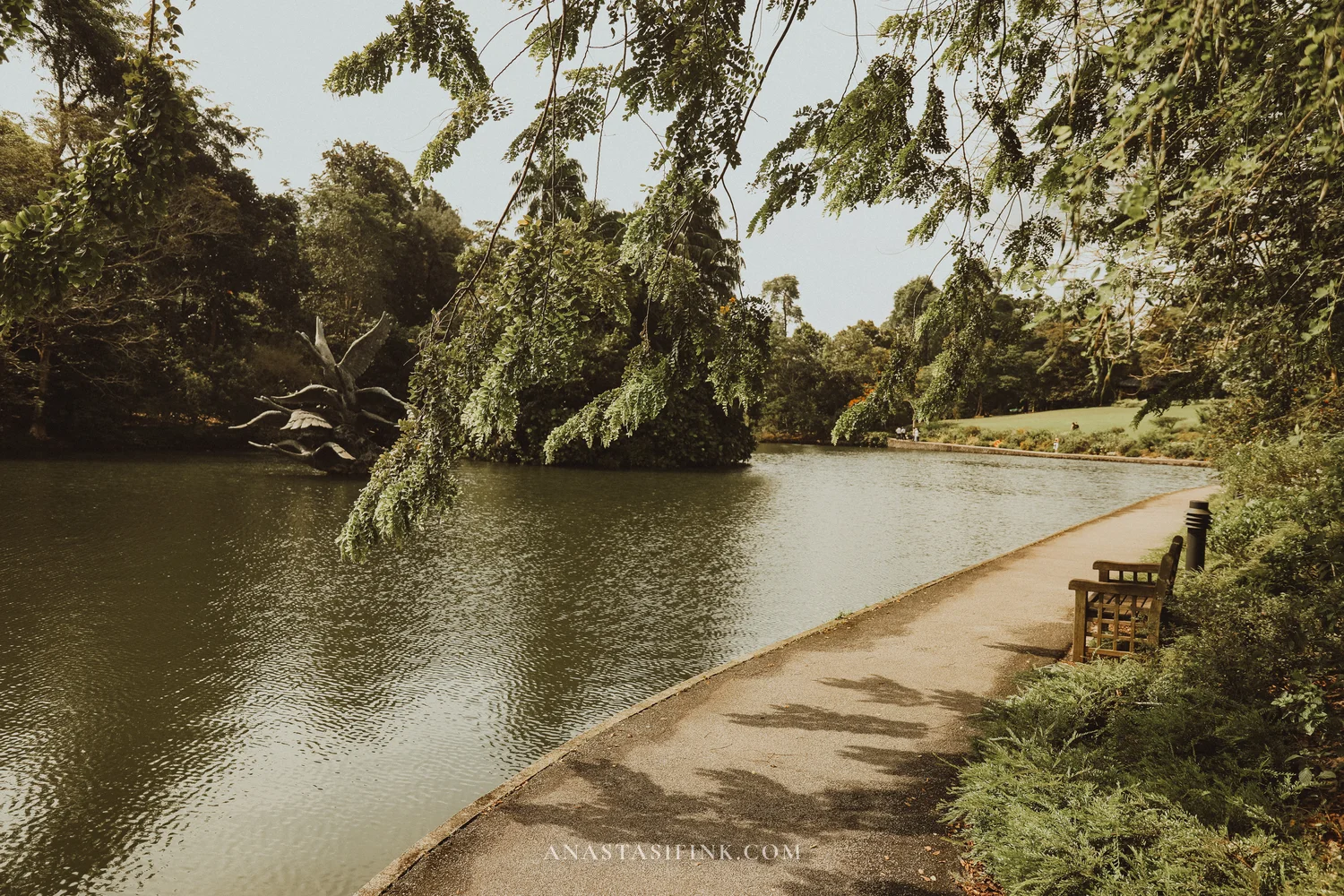
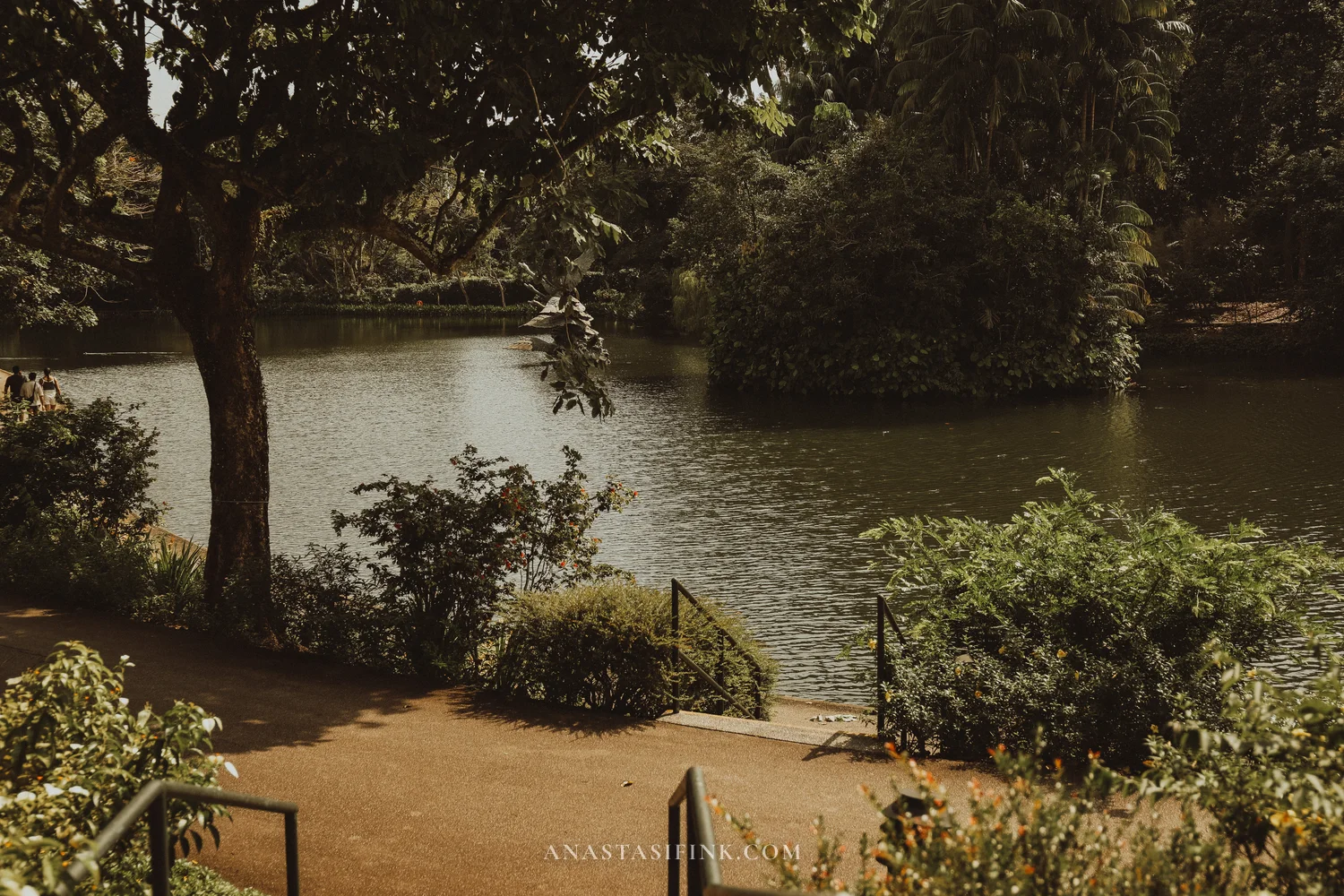
A path with benches runs all the way around the lake.
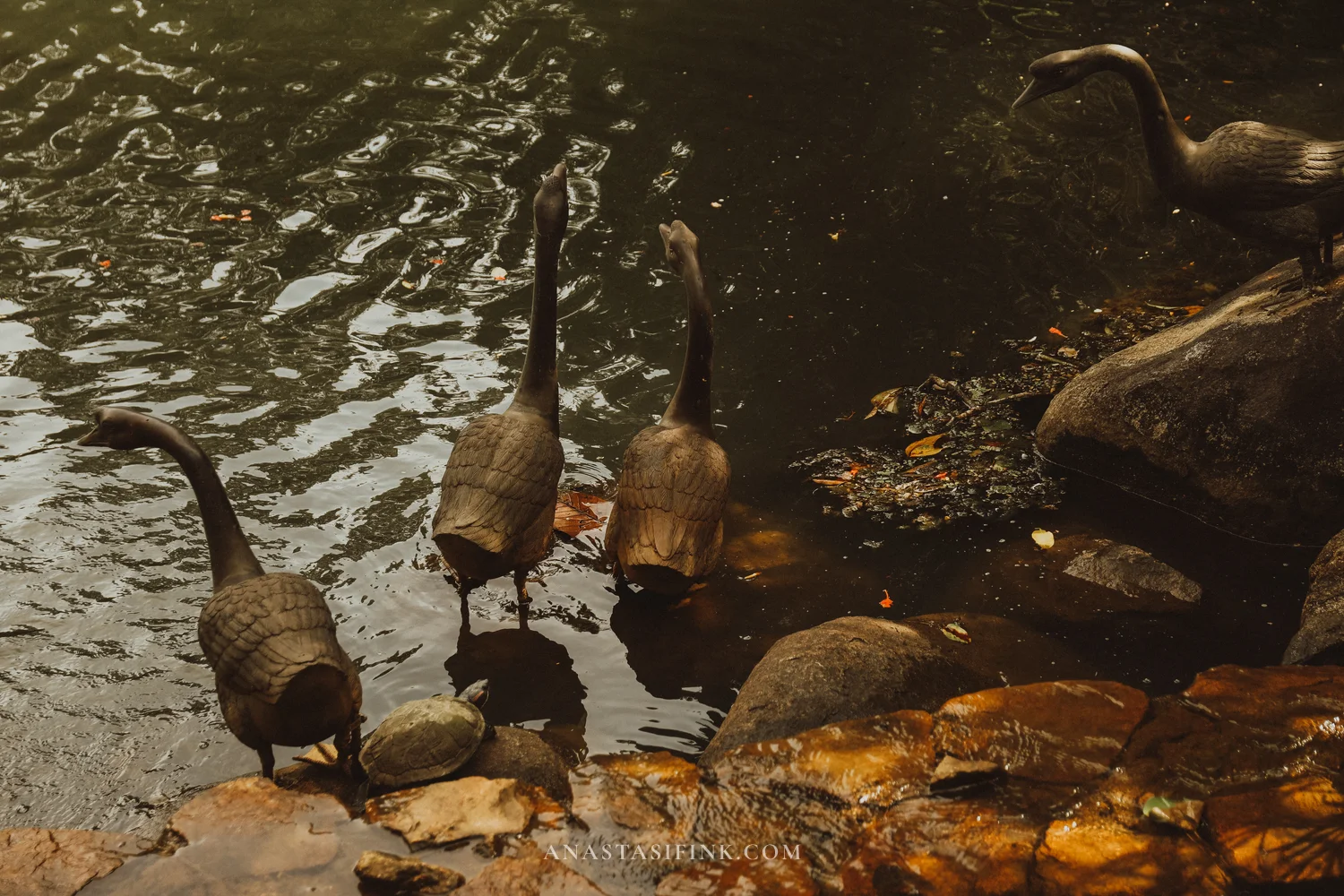
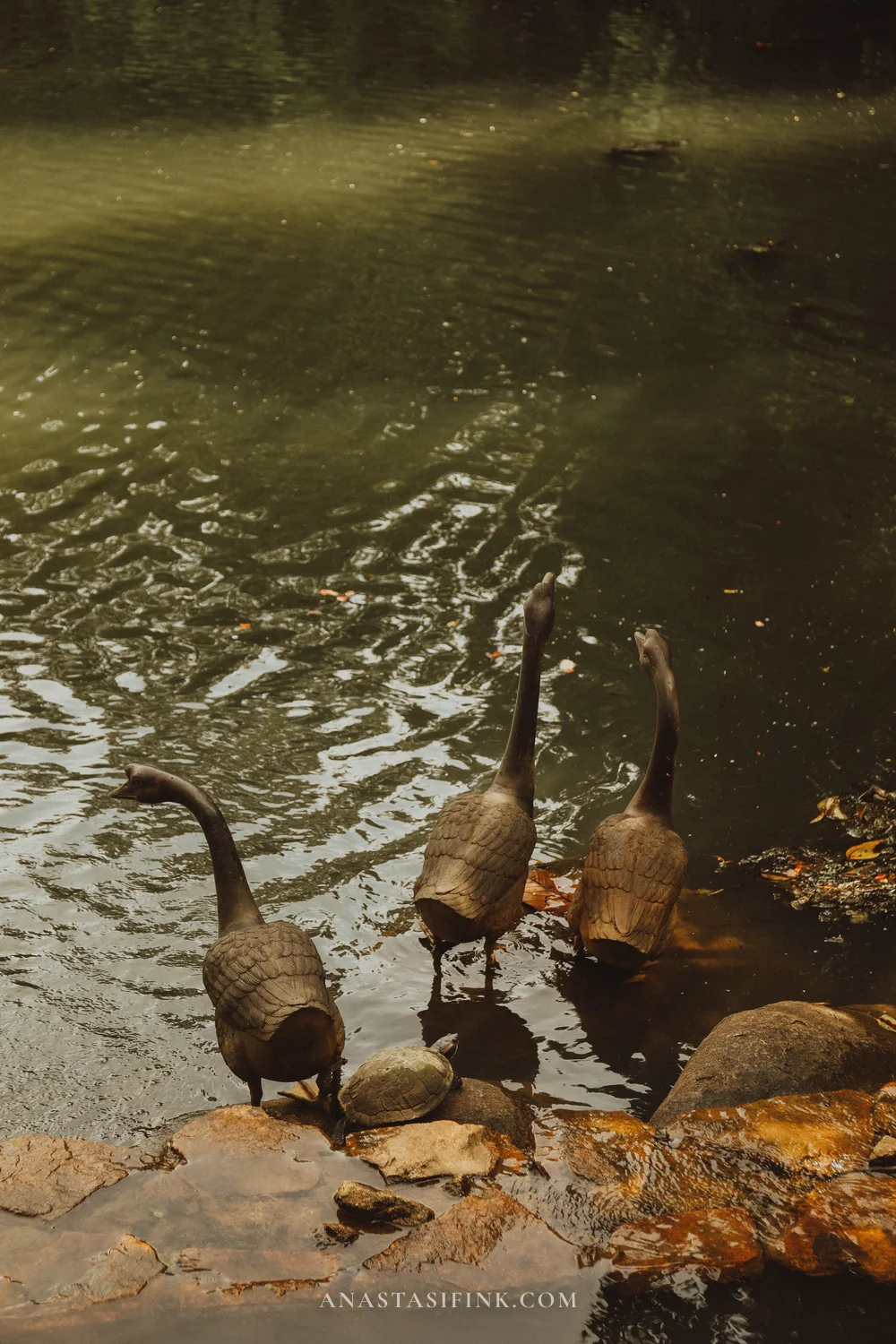
Right by the water there’s a sculpture of three bronze swans. I nearly walked straight past it — then I spotted a real turtle that had hauled itself out of the lake and settled at their feet.
And then something I wasn’t expecting: otters. Singapore is home to wild smooth-coated otters that move around the island’s waterways in family groups. One was swimming in the lake right in front of me. They’re not fed and they’re not penned in, so getting a close look at one really is a bit of luck.
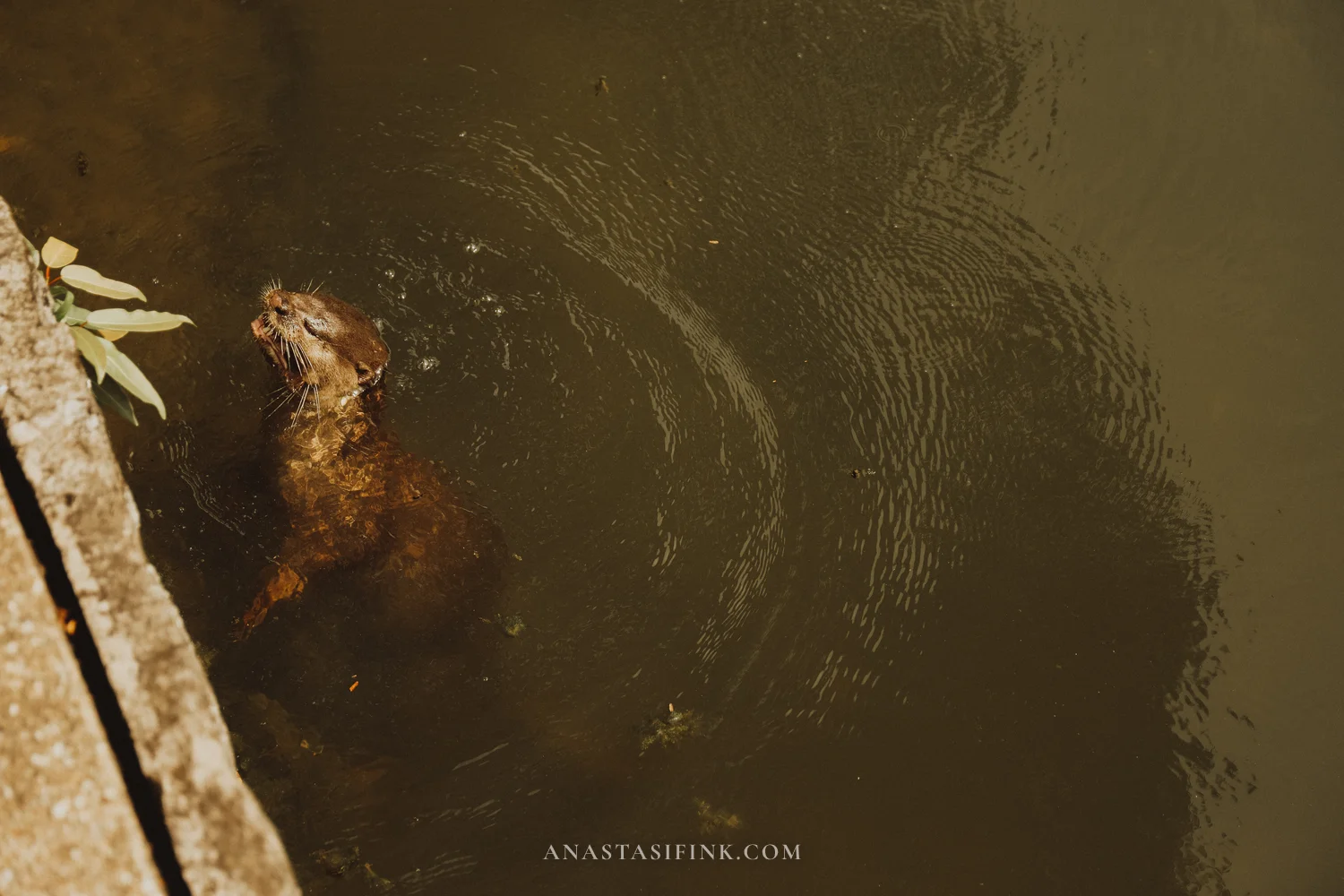
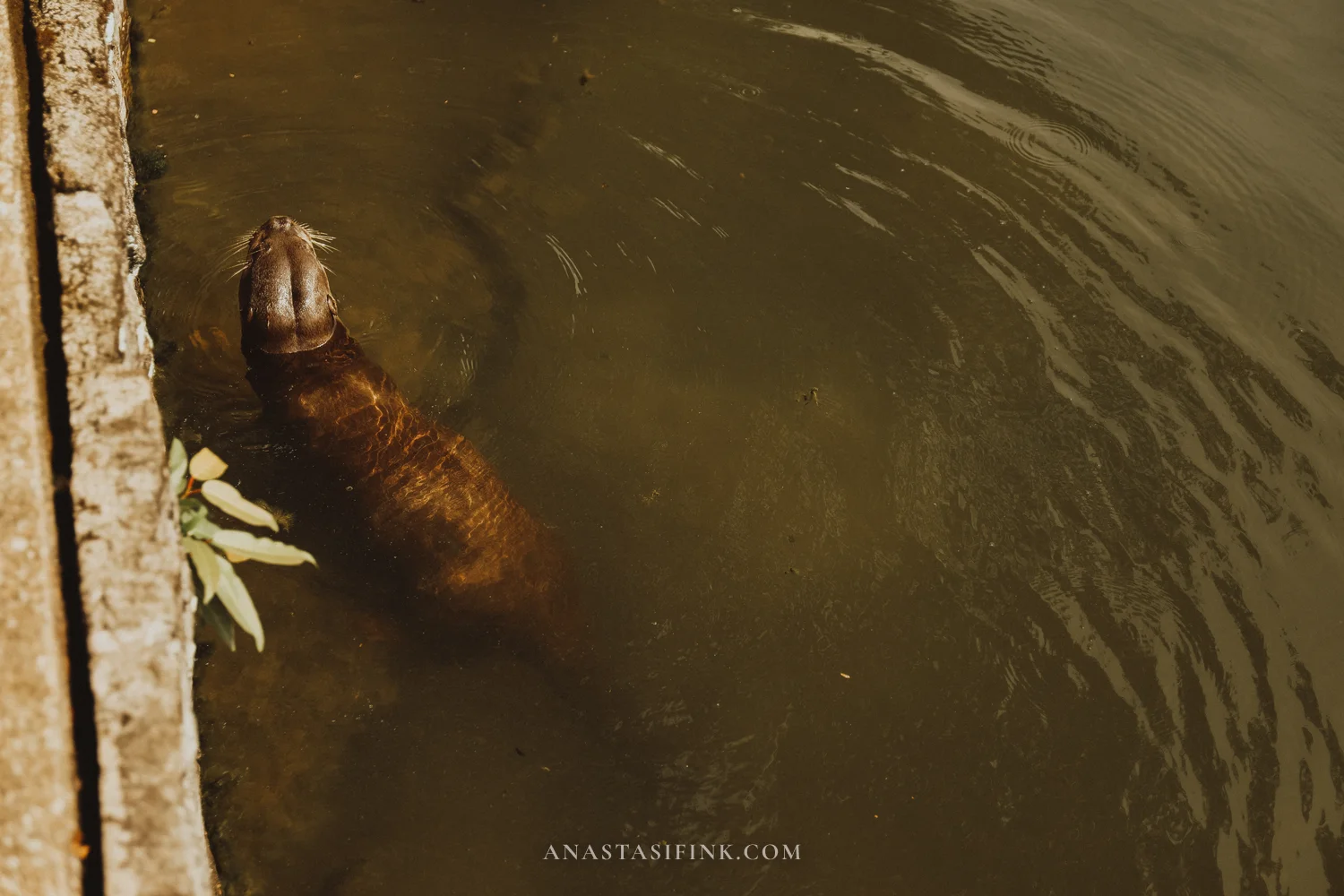
The otters here are wild and live entirely on their own terms.
A rainforest in the middle of the city
Right in the centre of the garden sit six hectares of primary rainforest. Primary means it’s never been cleared or replanted: it was standing here before the garden itself existed, and some of the trees are older than modern Singapore, whose story dates back to 1819. A genuine tropical forest within the city limits is a rare thing — as far as I know, only Rio de Janeiro can claim the same.
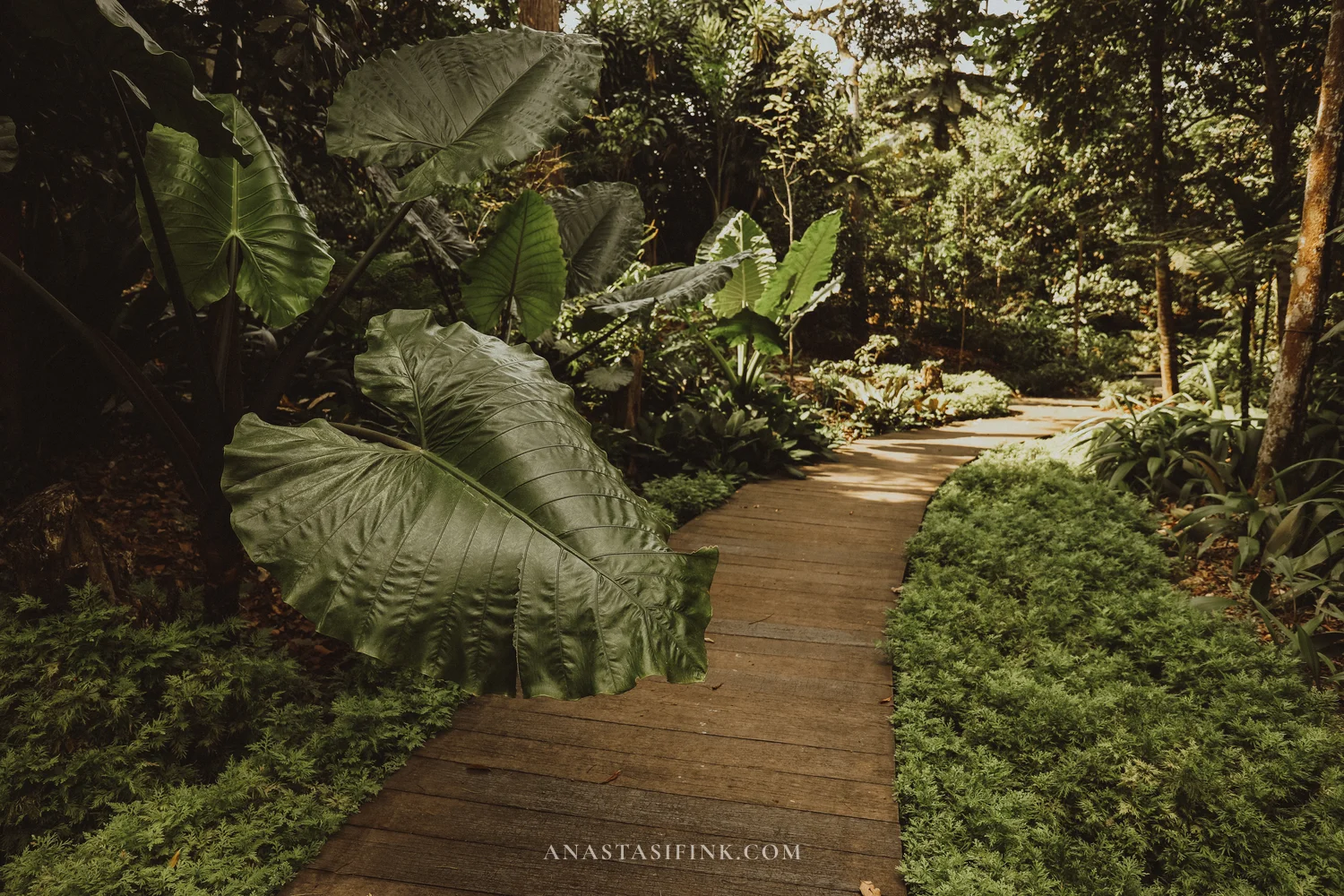
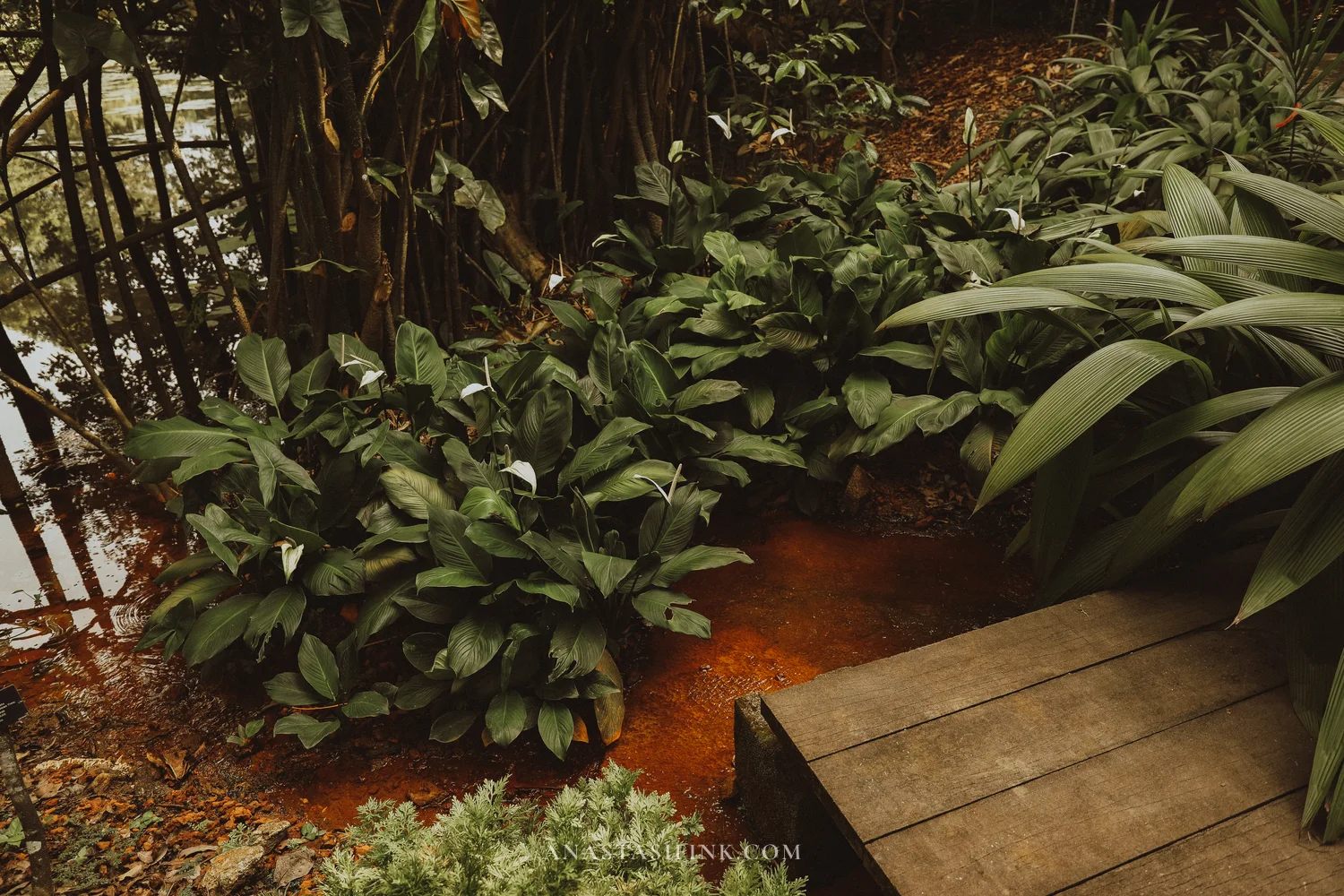
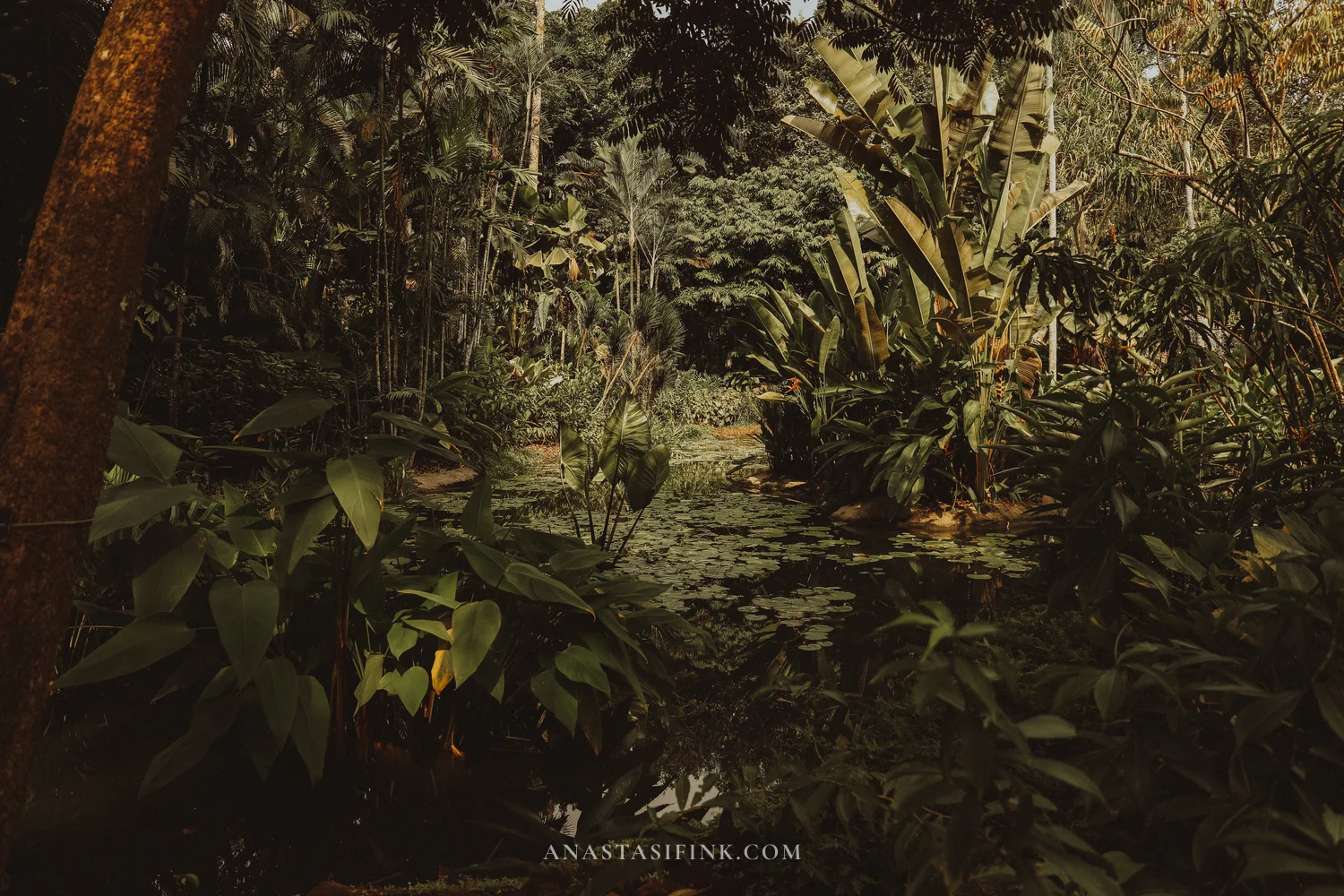
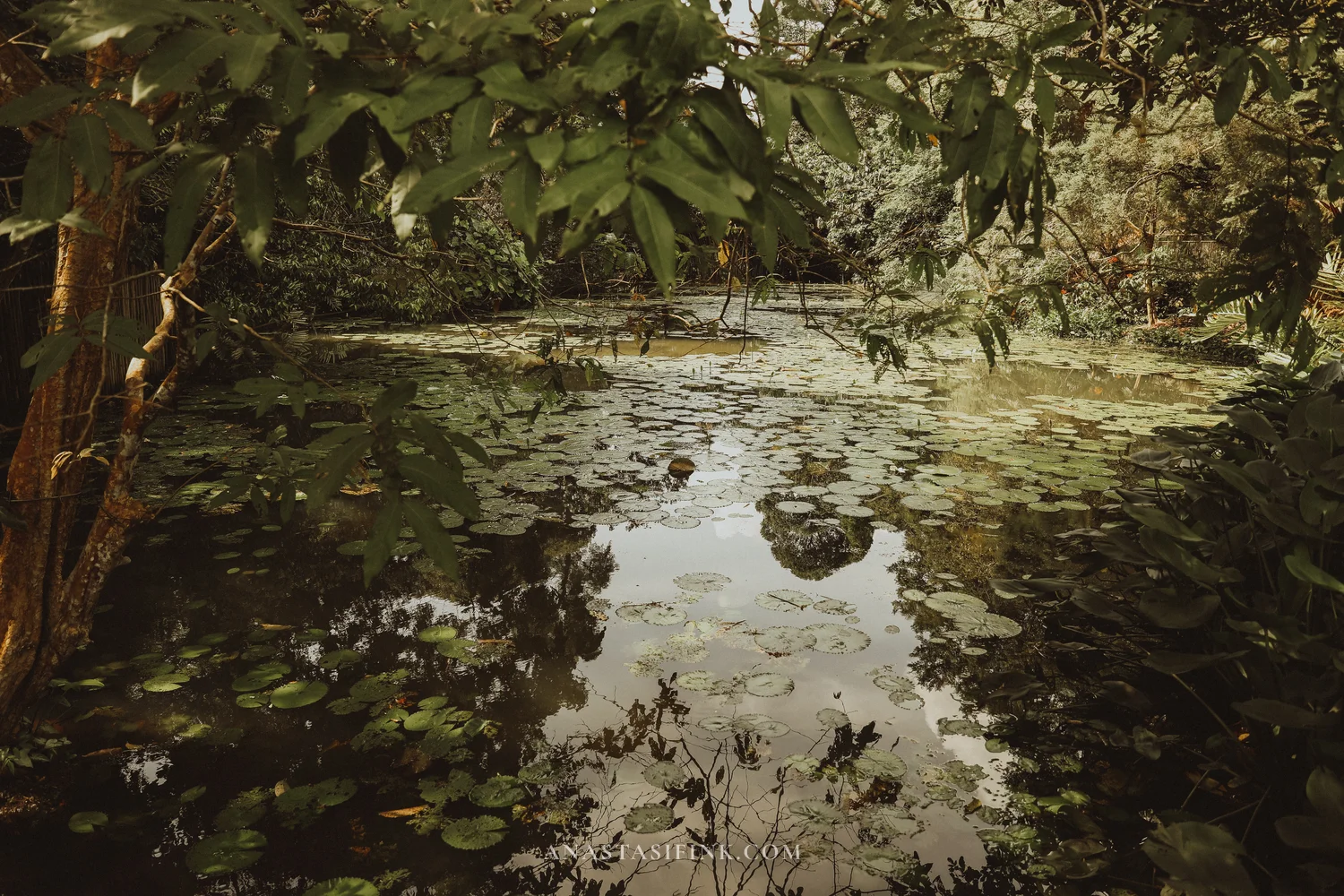
Little ponds tucked among the greenery, half covered in water lilies.
Some of the trees are enormous, with buttress roots taller than I am. Down at ground level, it’s all ferns.
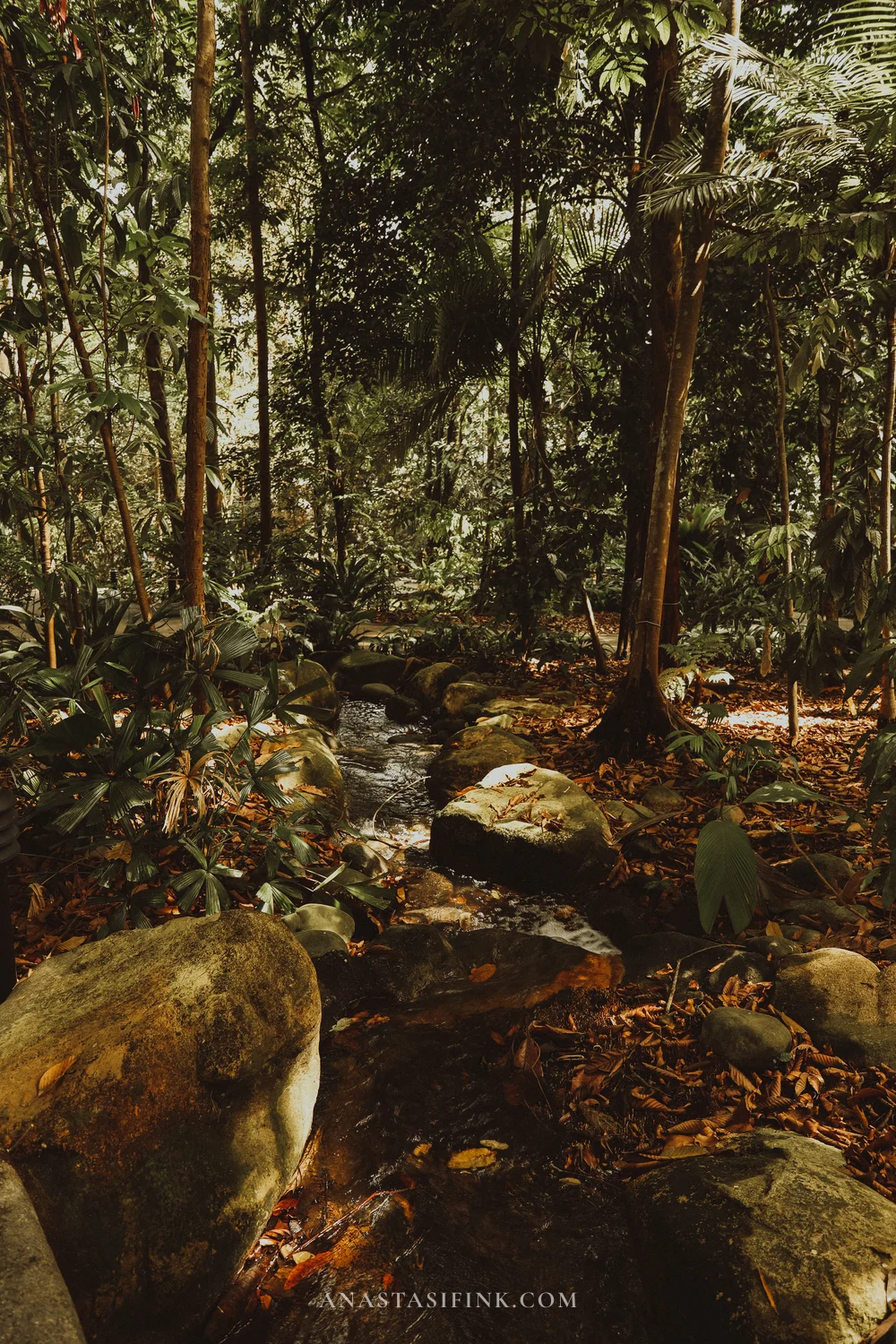
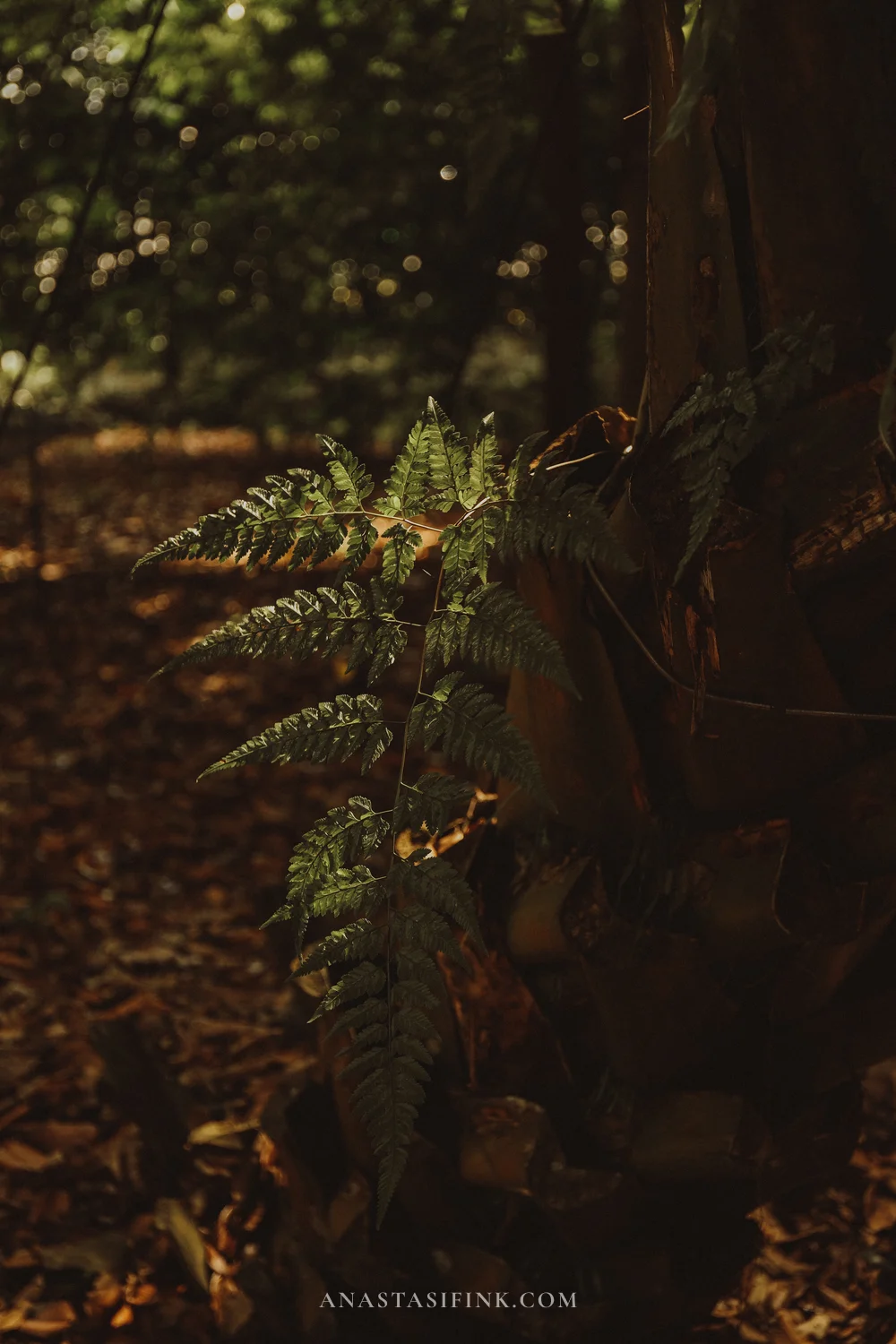
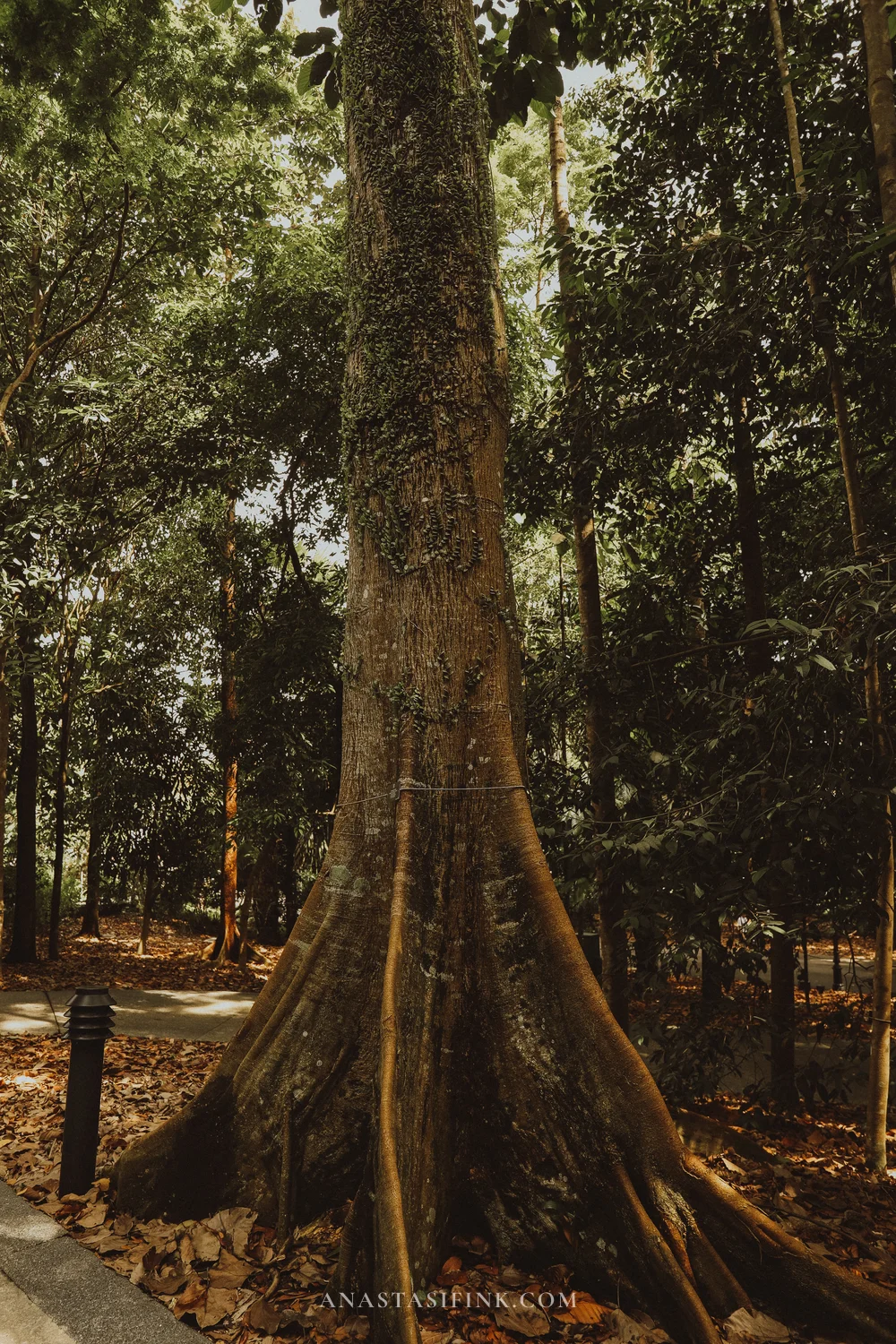
A stream, a fern and a tree with roots taller than a person.
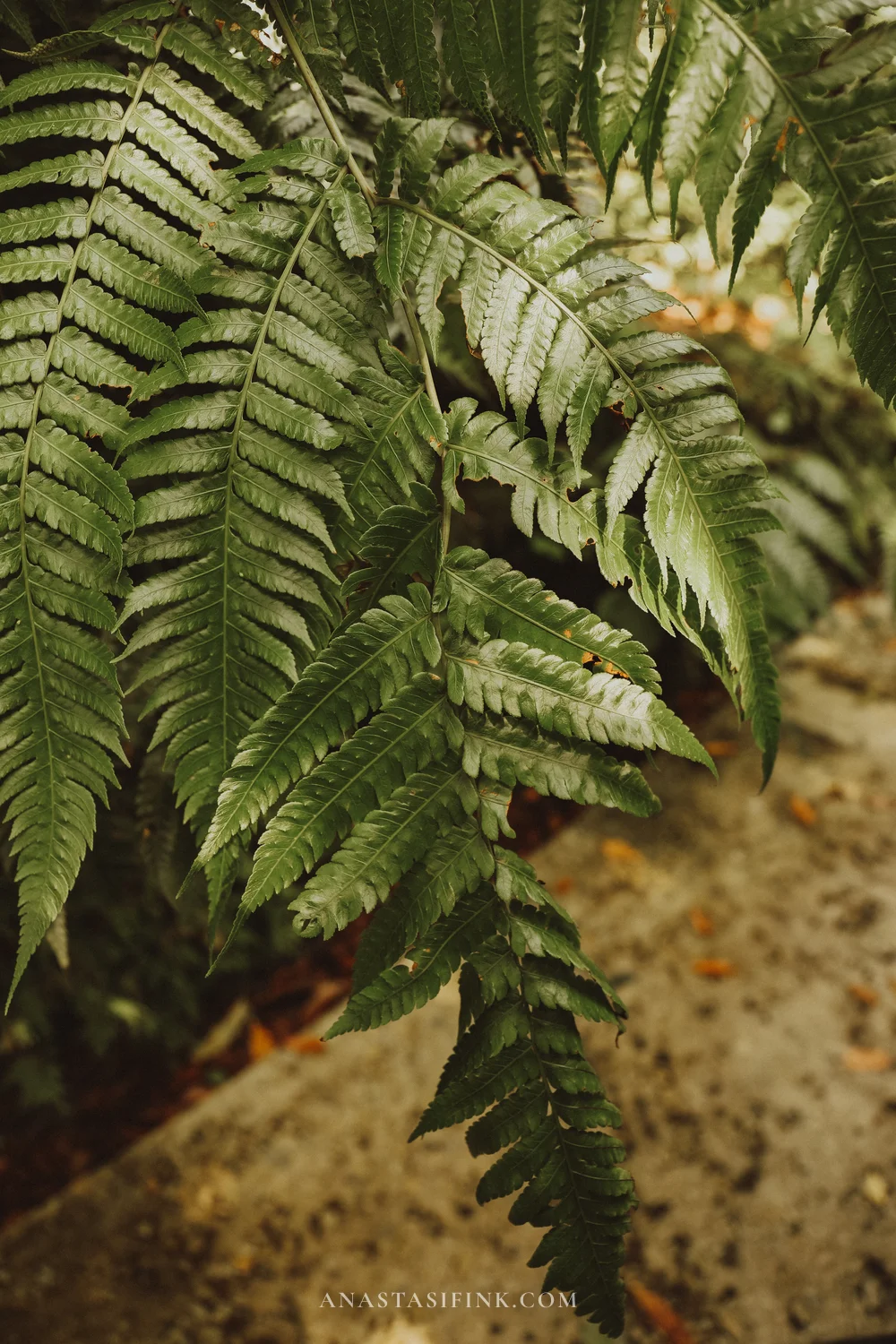
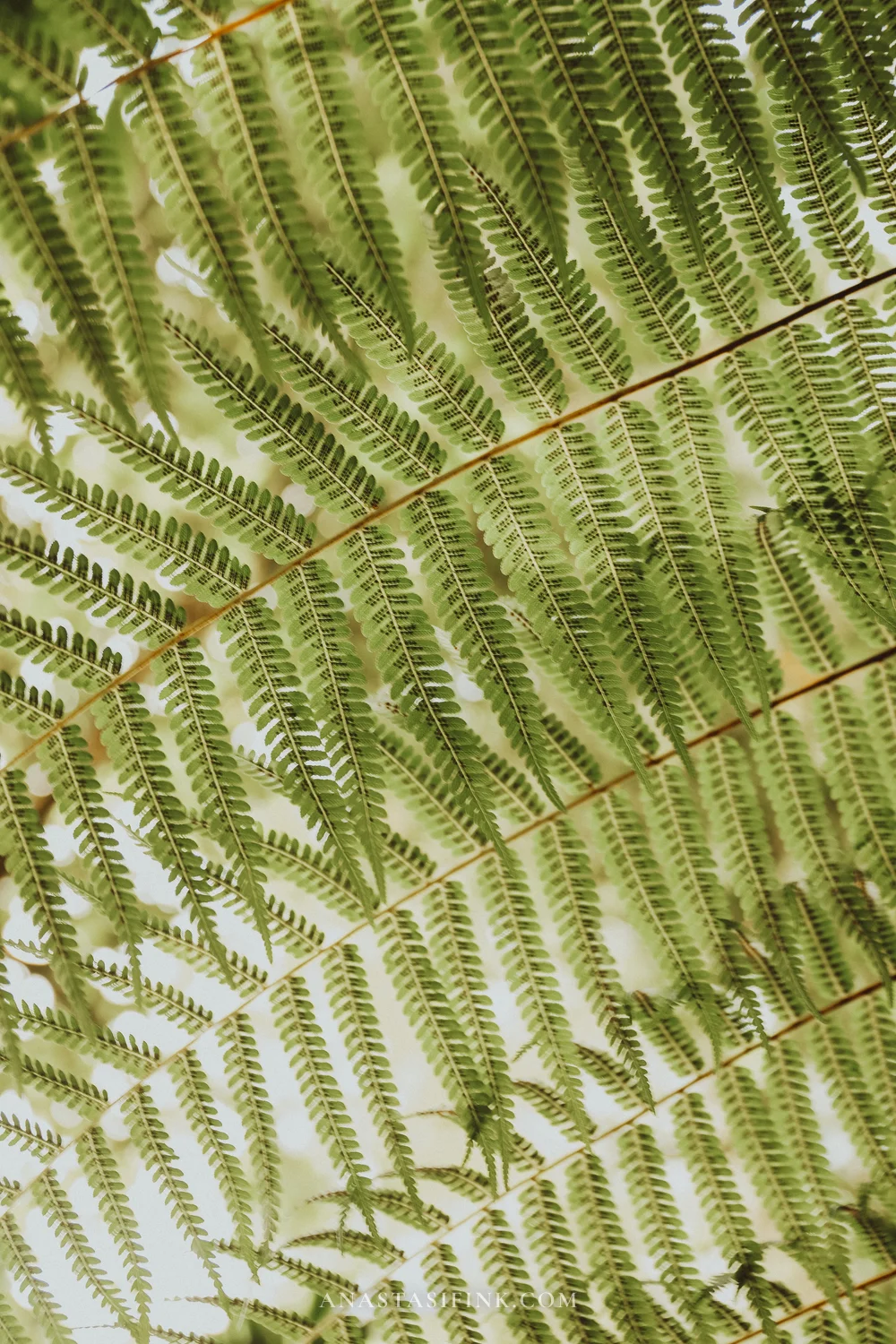
Ferns are everywhere here.
Along the paths you’ll come across bright flowers — orange heliconias and the spiky orange-and-white “peacock flower”.
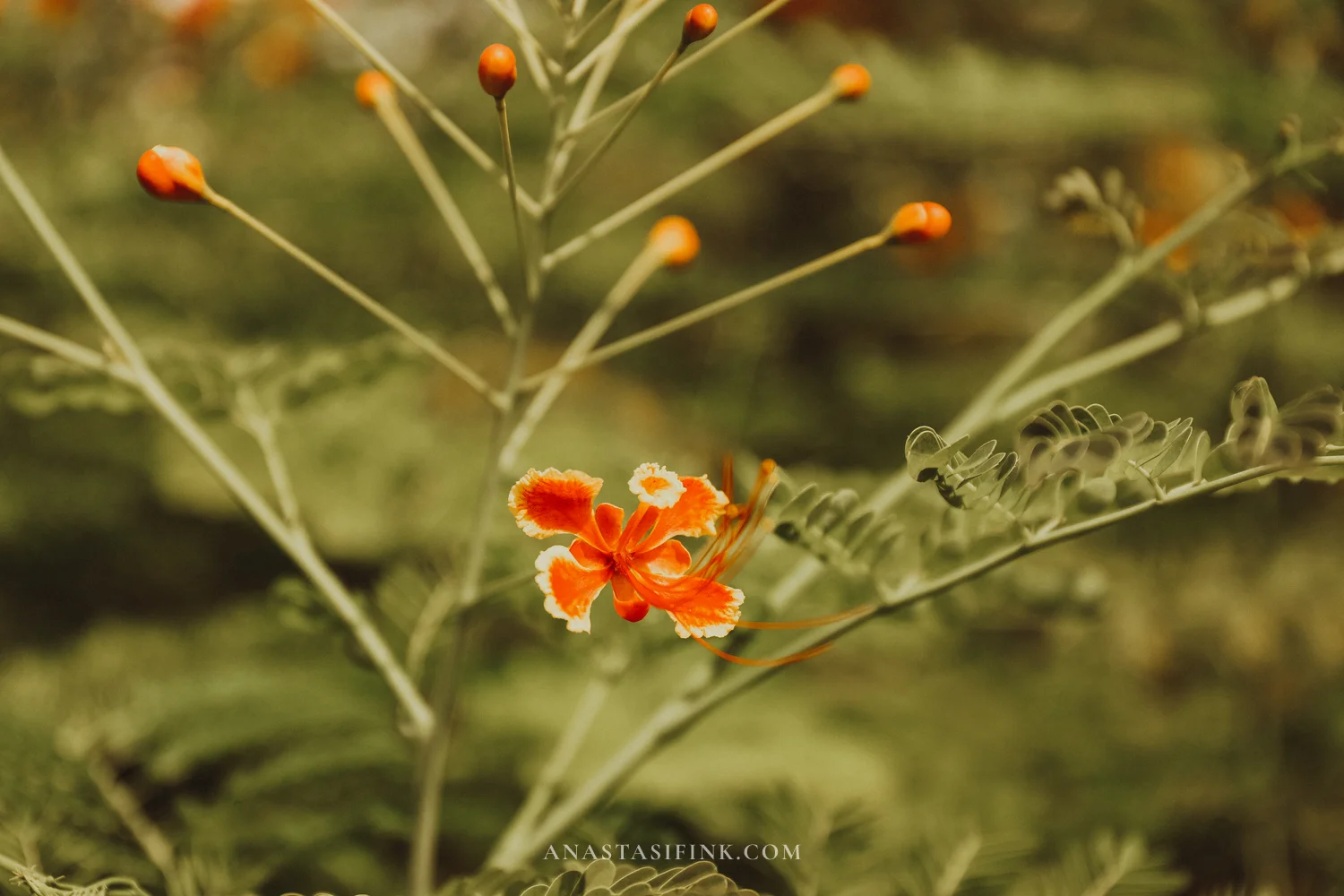
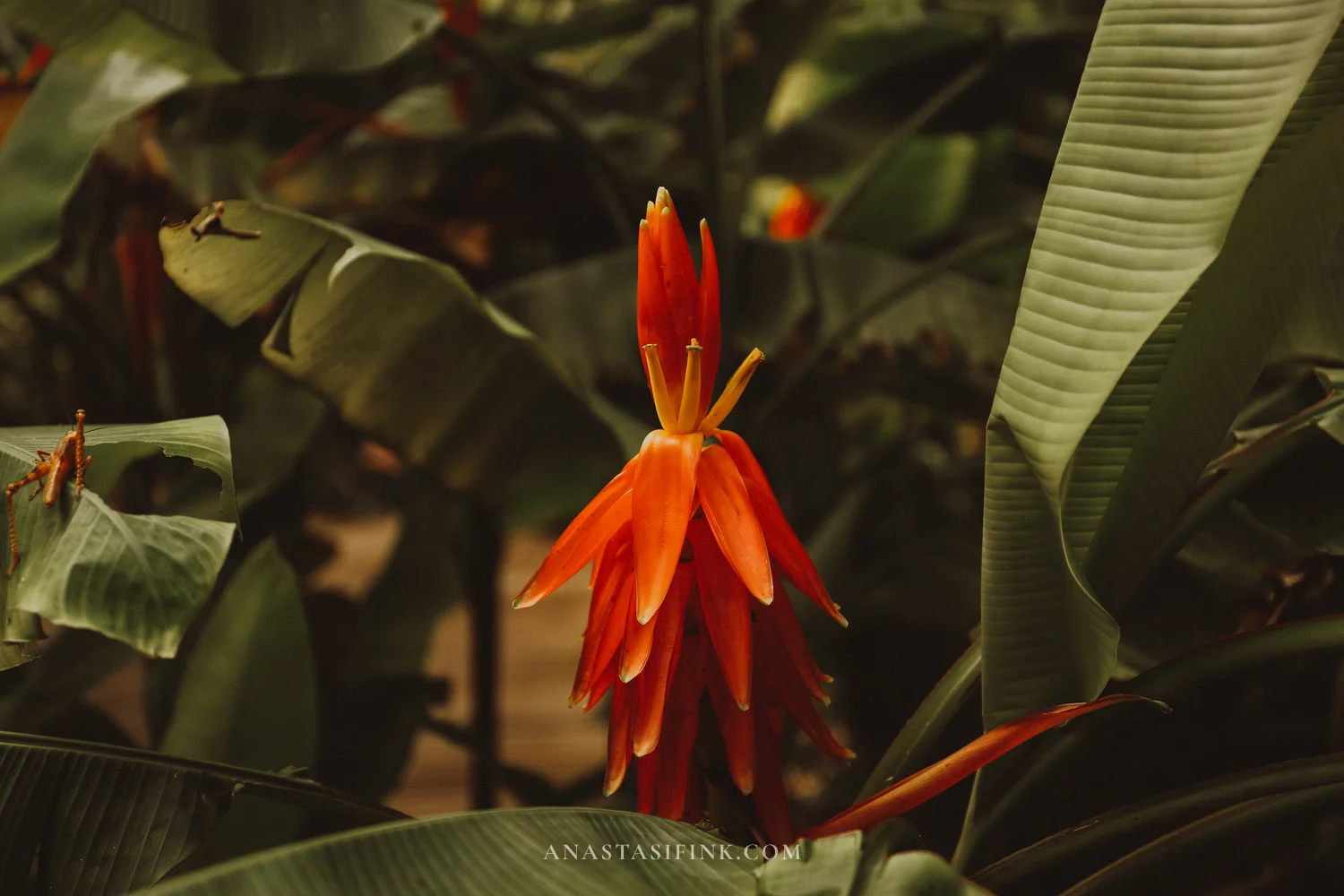
The peacock flower and a heliconia.
The National Orchid Garden
This is the main draw, and the only part you pay for. The National Orchid Garden covers a three-hectare hill on the western side of the park and holds over 1,000 orchid species and more than 2,000 hybrids — around 60,000 plants at any one time. It’s said to be the largest orchid display in the world, and it’s certainly the biggest I’ve ever walked through.
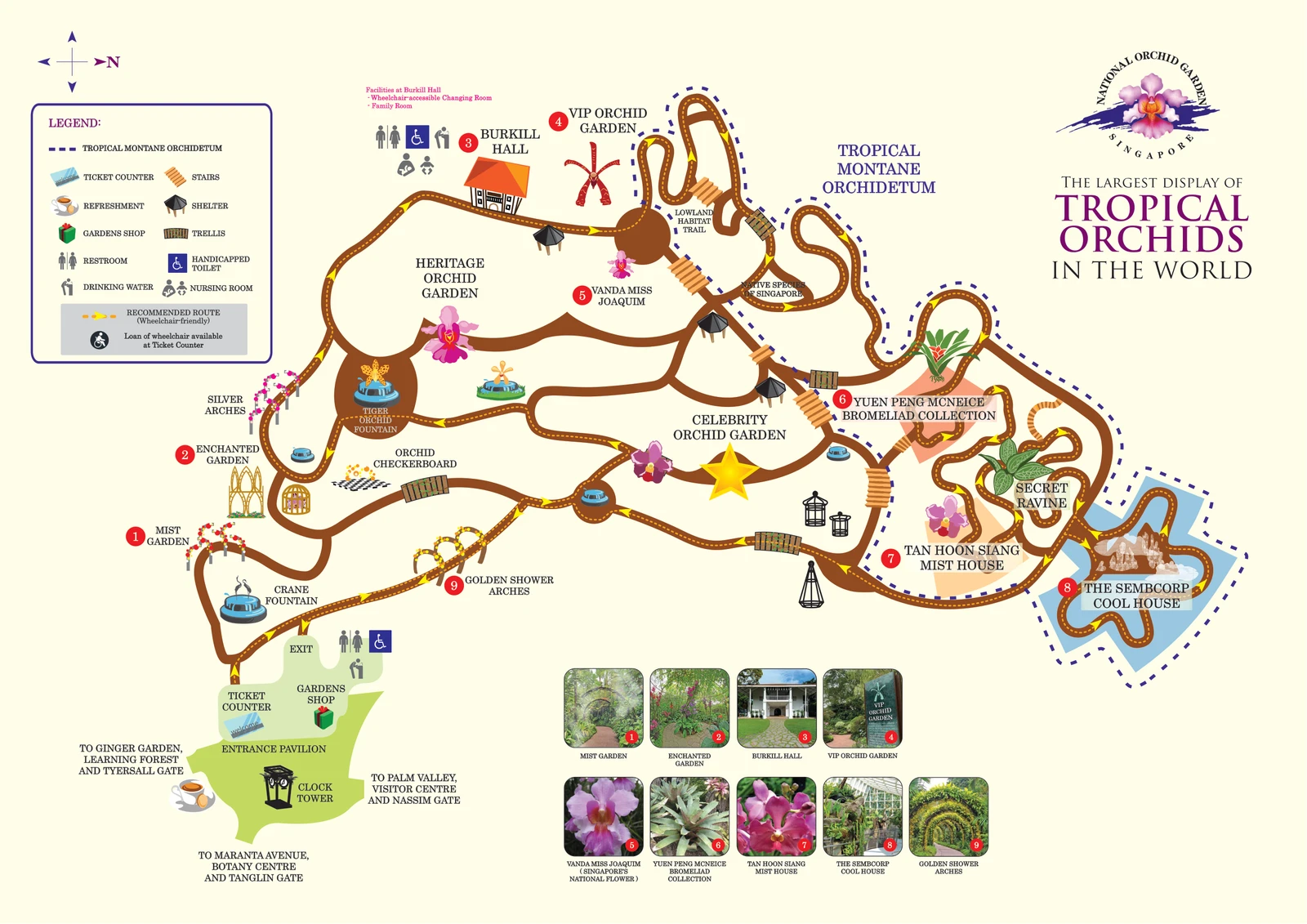
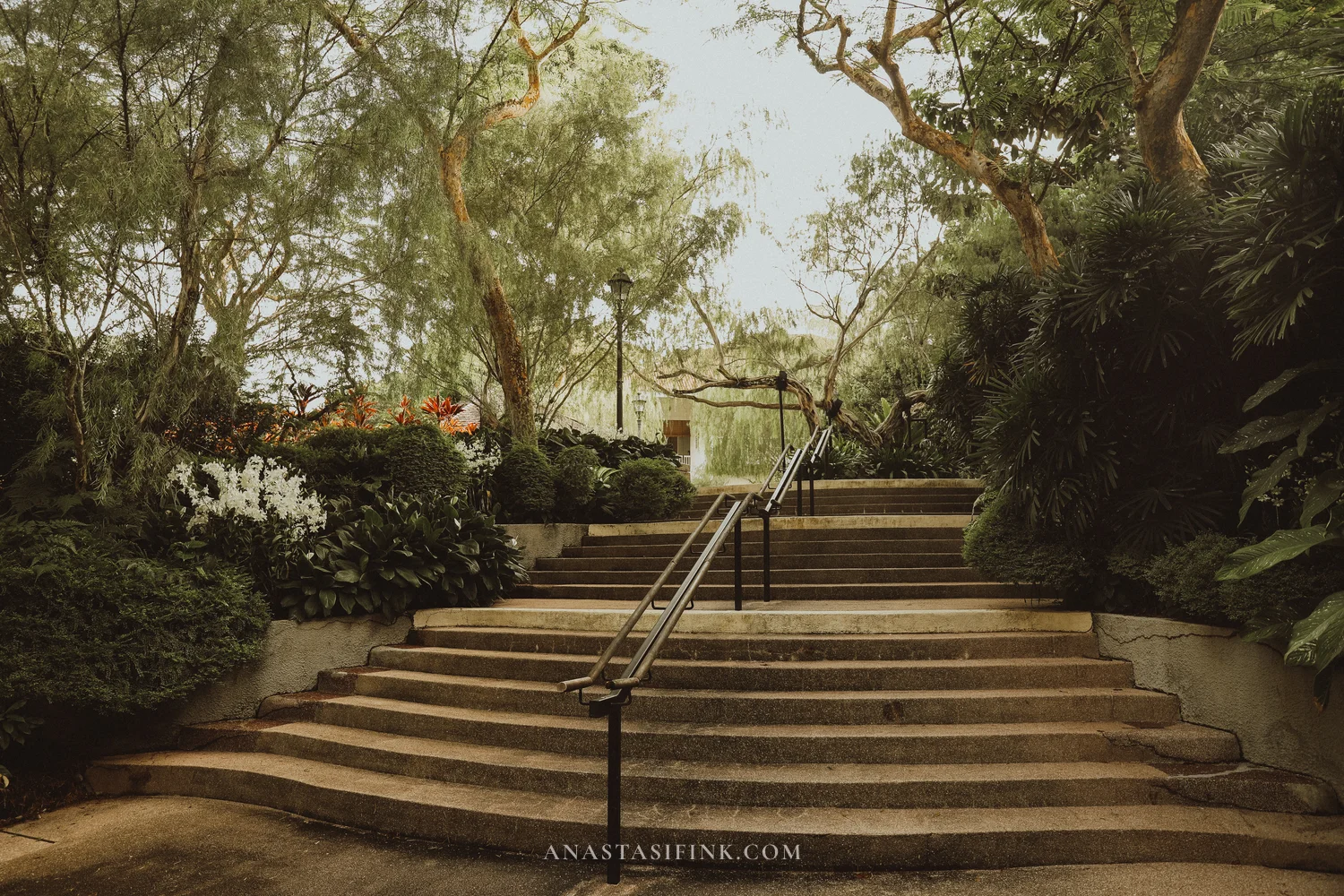
You climb in via a wide flight of steps, and orchids are everywhere from the moment you arrive — in urns, up the walls, lining the paths. The garden is split into themed sections, and it’s easiest to follow the suggested route, heading from the entrance past the fountains and the Mist Garden to the glasshouses at the far end.
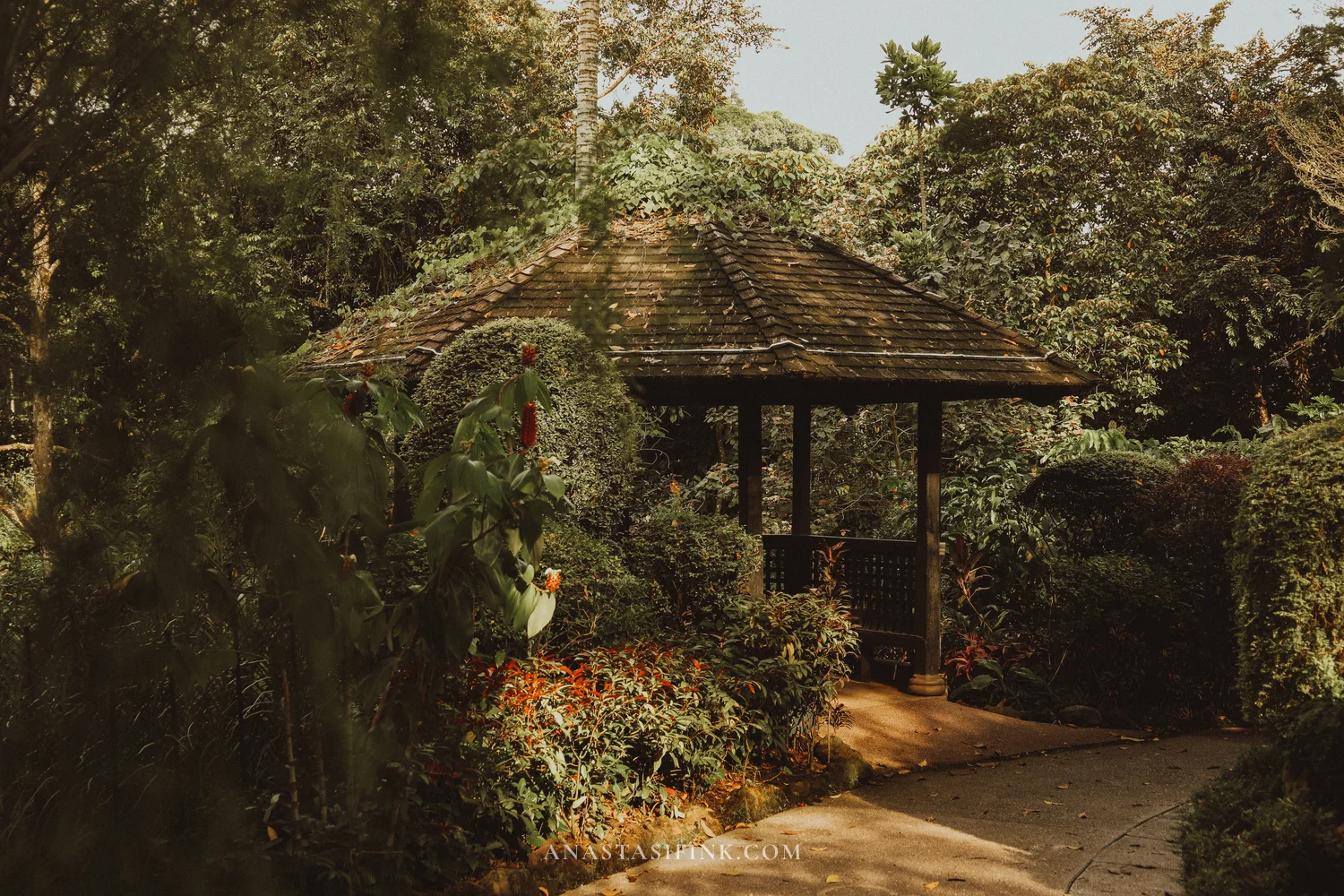
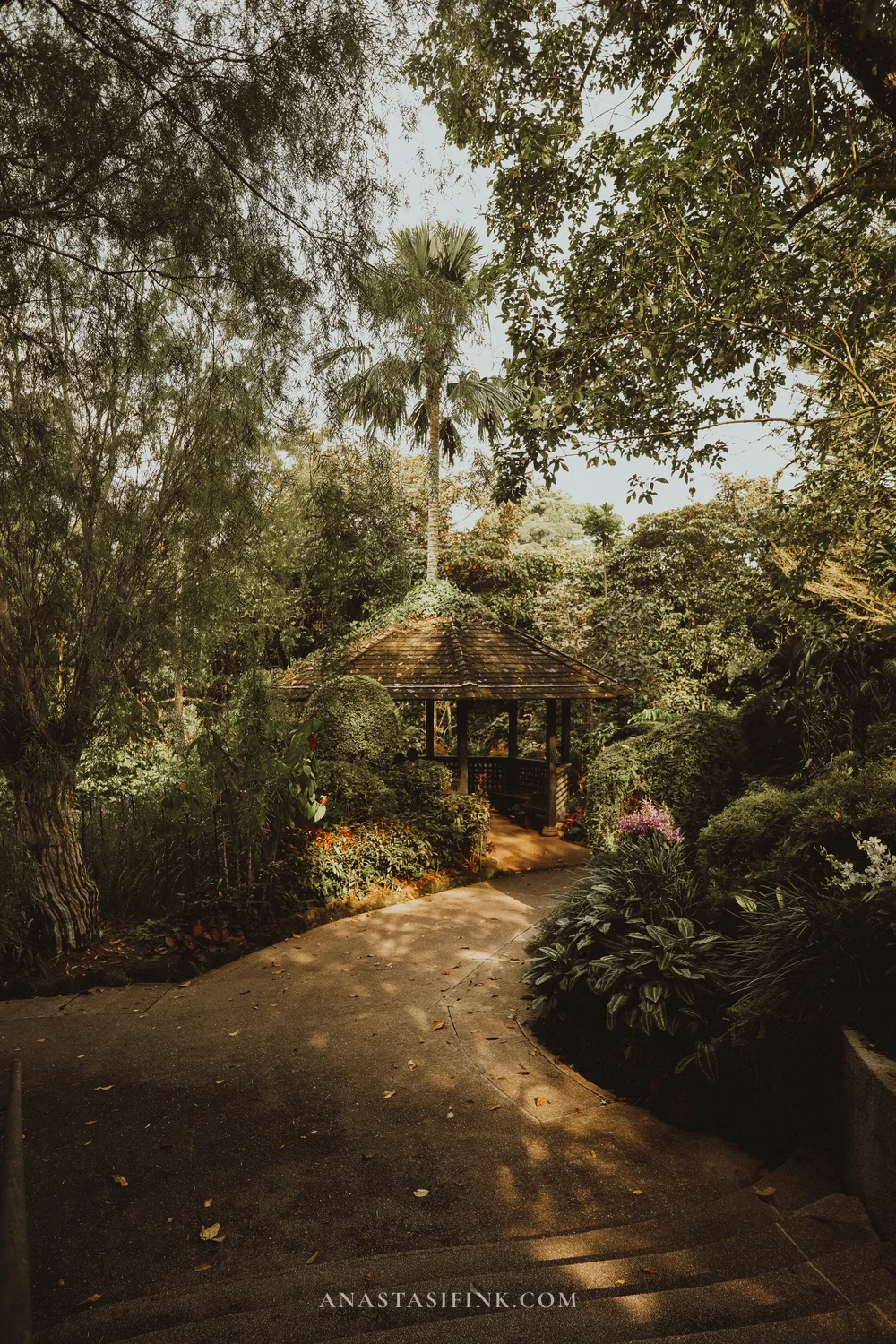
The garden is arranged by colour, loosely following the idea of four seasons: cool whites and blues in one area, hot reds and golds in another. Old statues are dotted between the beds, along with a couple of wooden pavilions where you can sit in the shade.
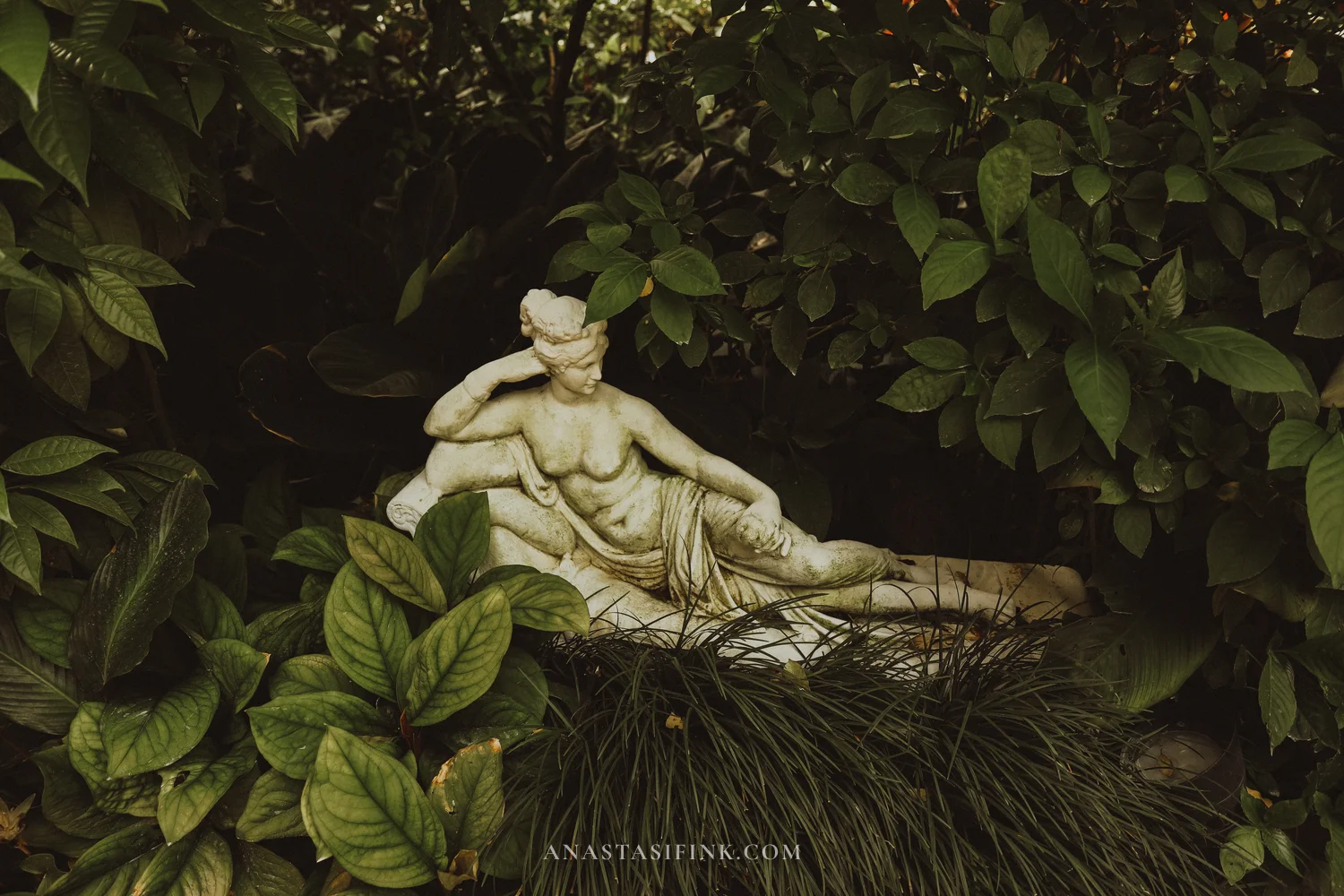
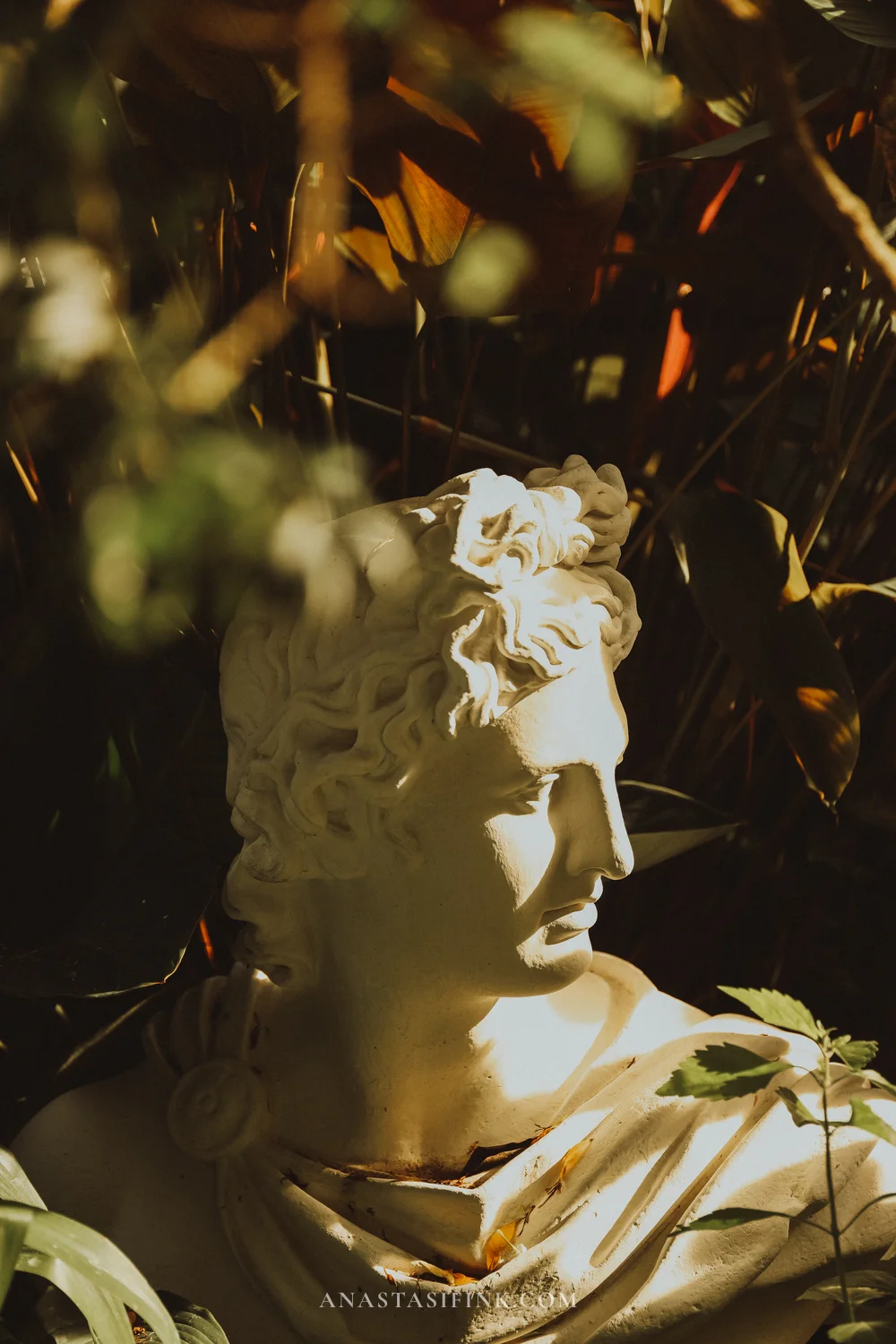
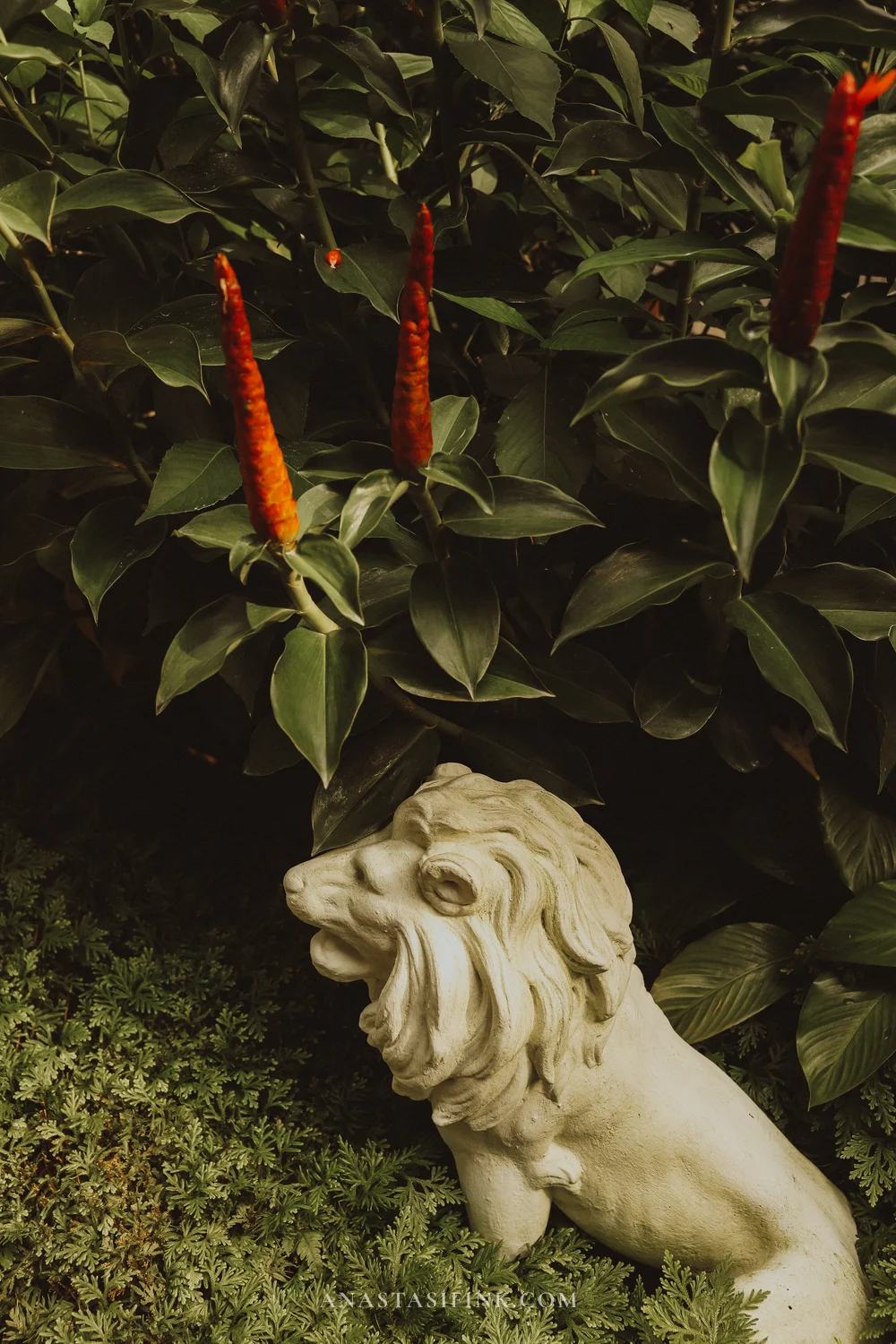
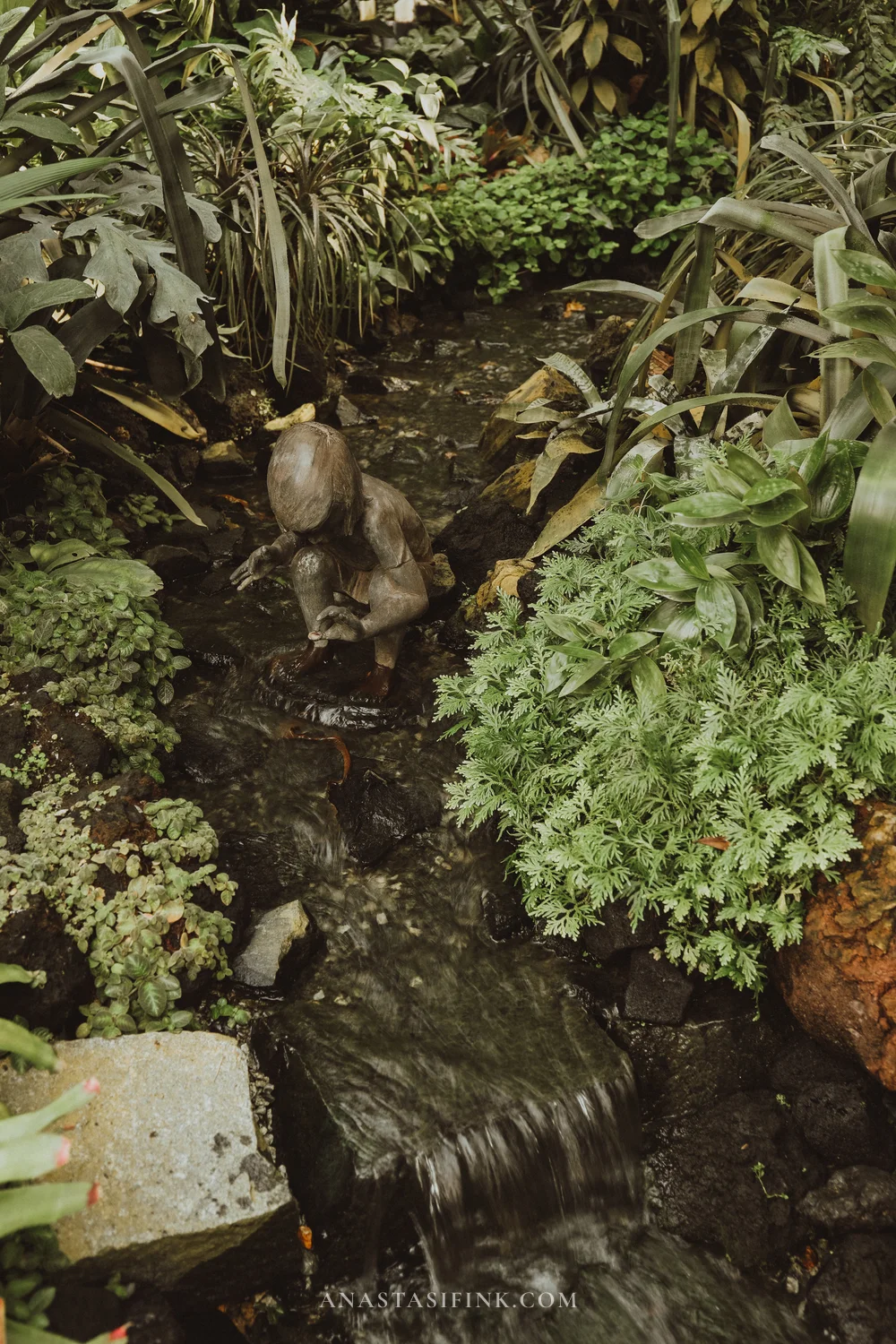
A bust, a stone lion and a little bronze figure in the stream.
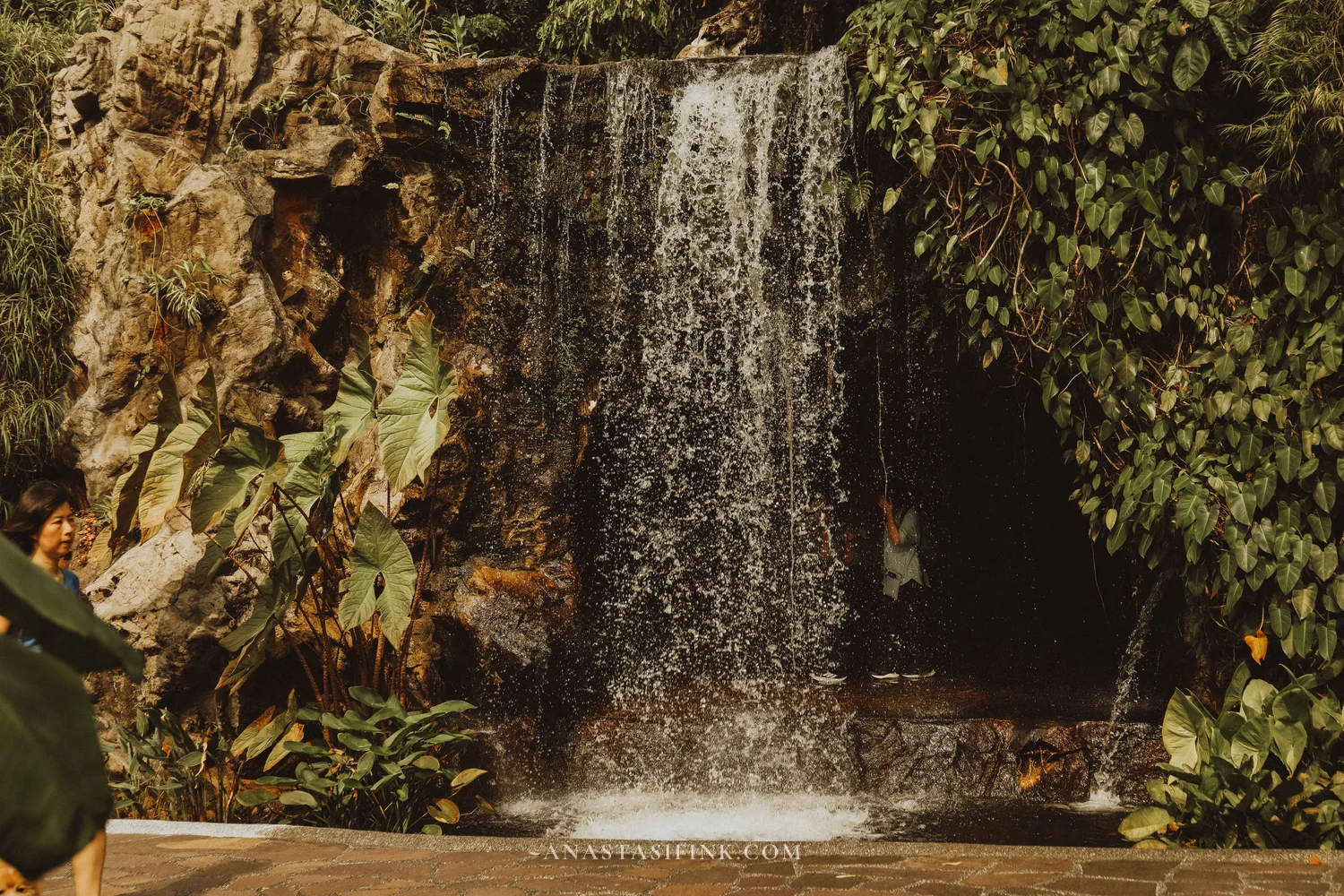
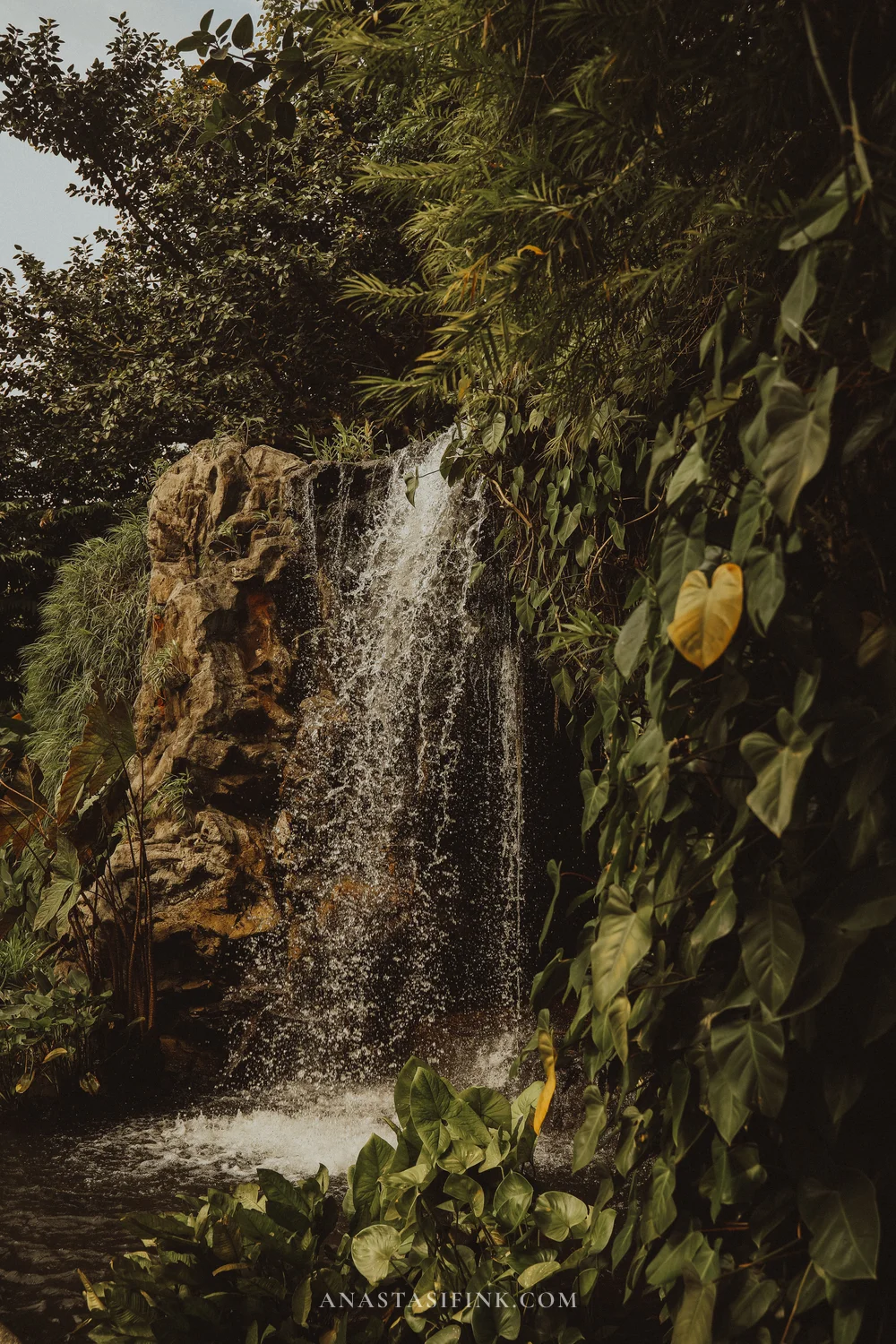
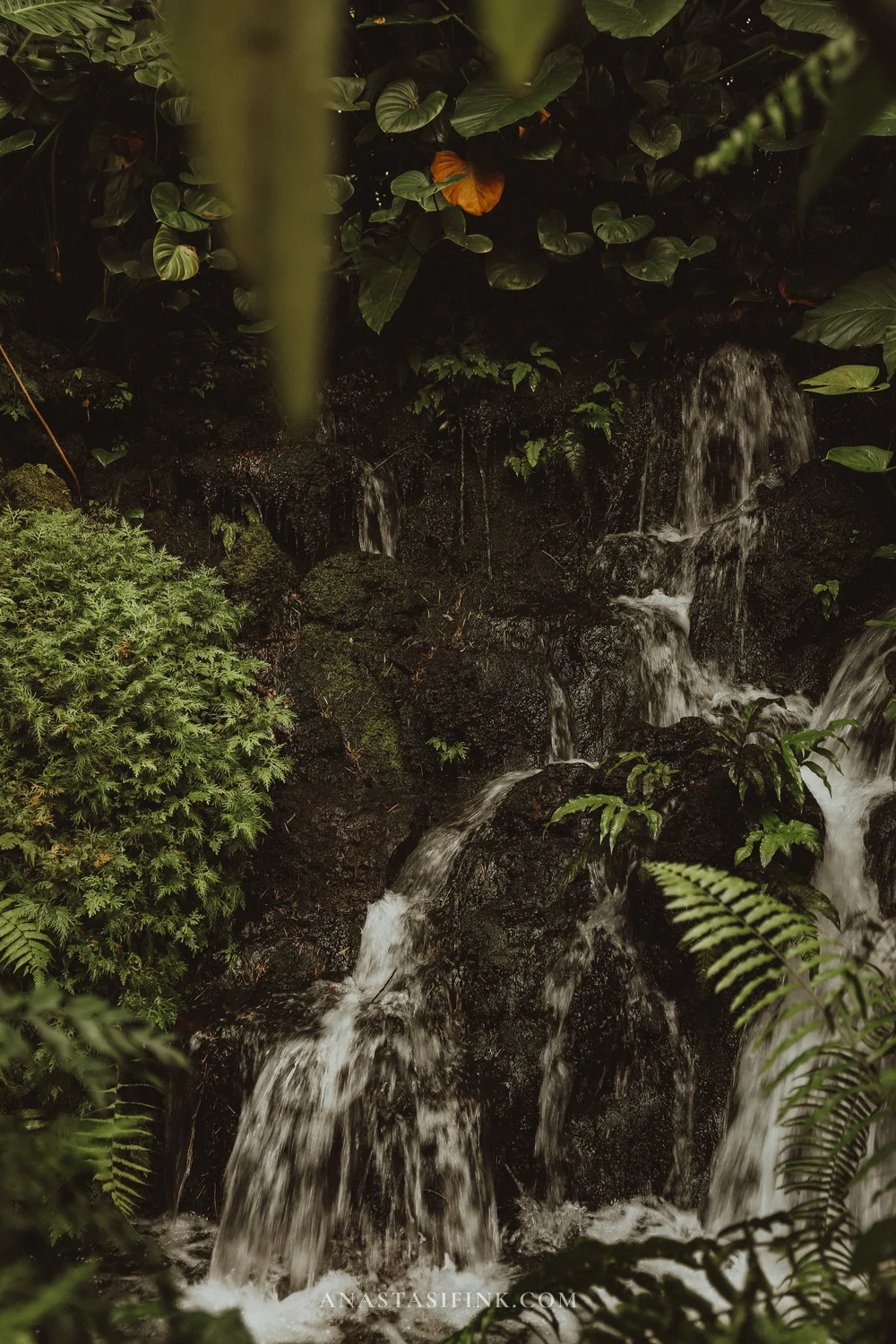
The orchid garden has its own water features too. In one shady corner, a narrow waterfall slips down a fern-covered rock.
There’s a shaded walkway along the bromeliads — part of the Yuen Peng McNiece Bromeliad Collection — and benches set among the greenery where you can catch your breath.
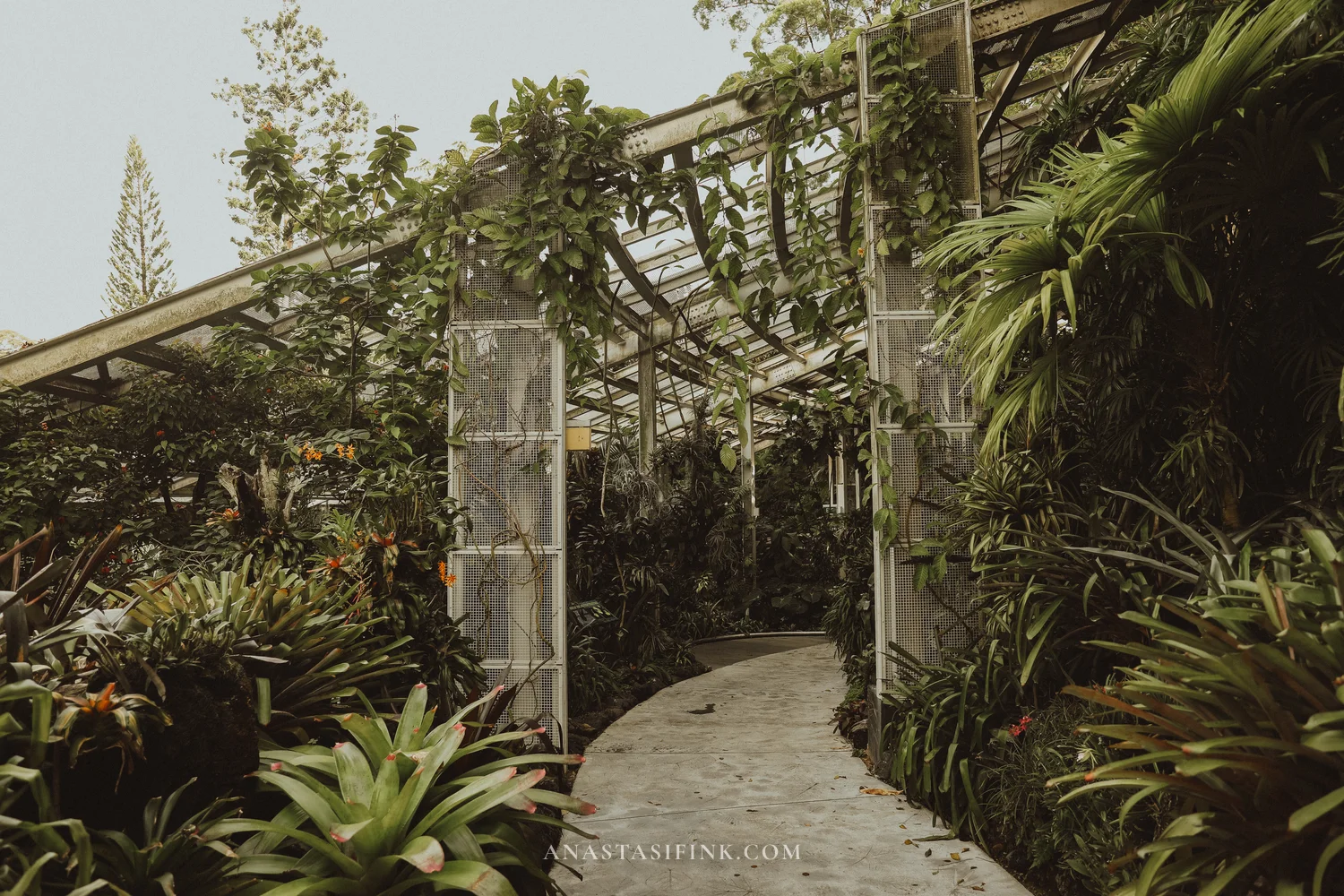
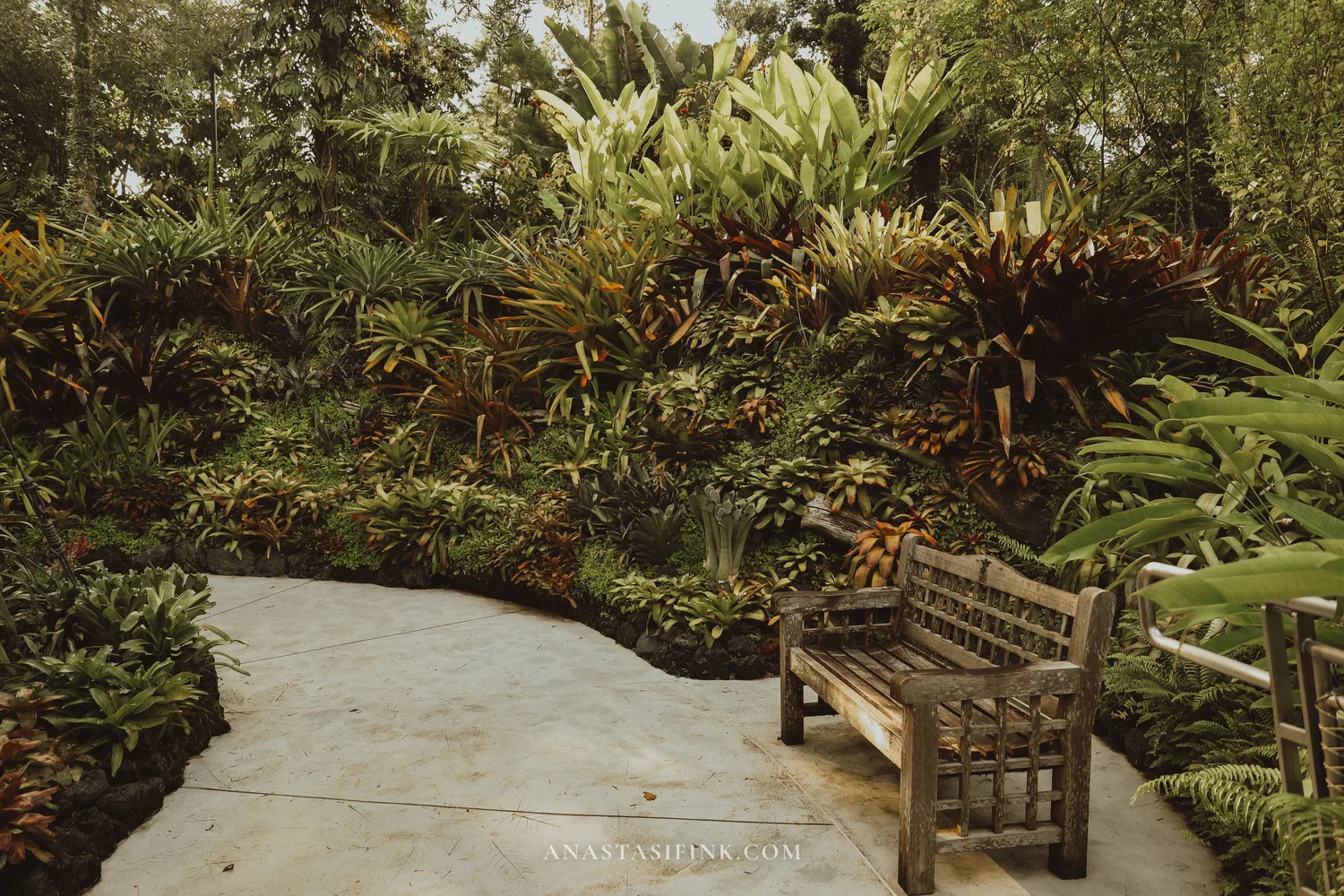
The walkway along the bromeliads.
It’s not all orchids, either — other tropical plants grow between them: ginger, wild banana, flowering vines.
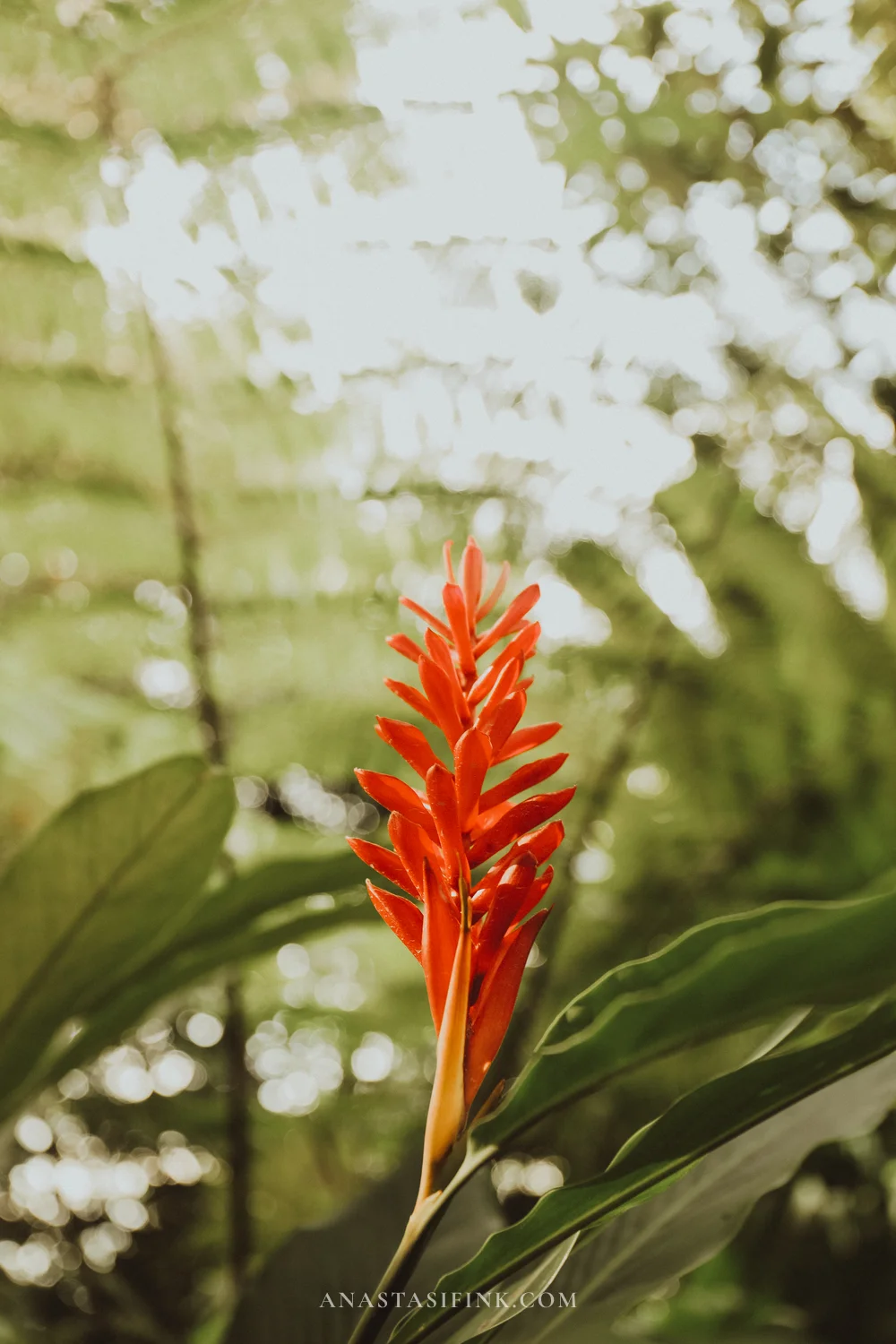
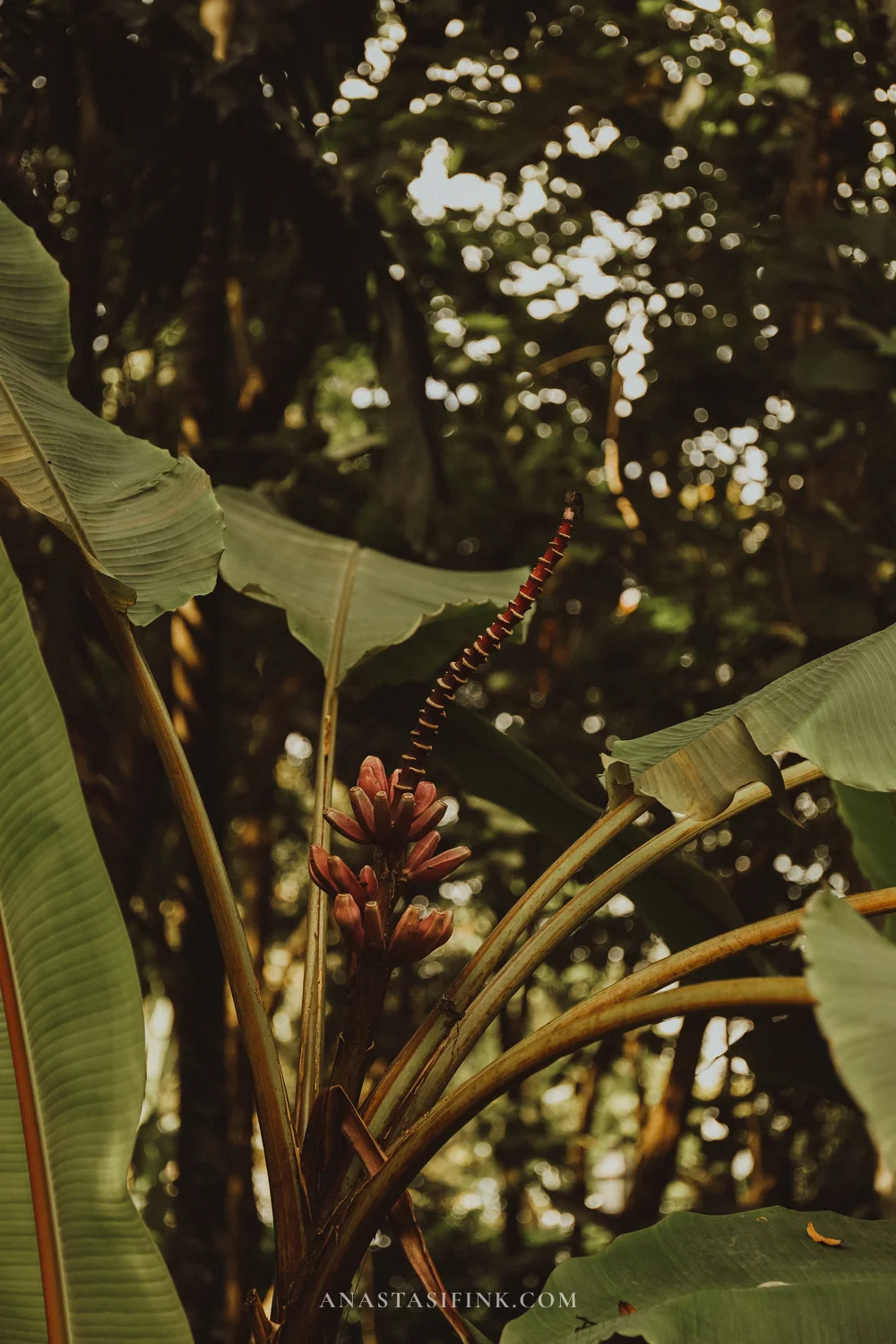
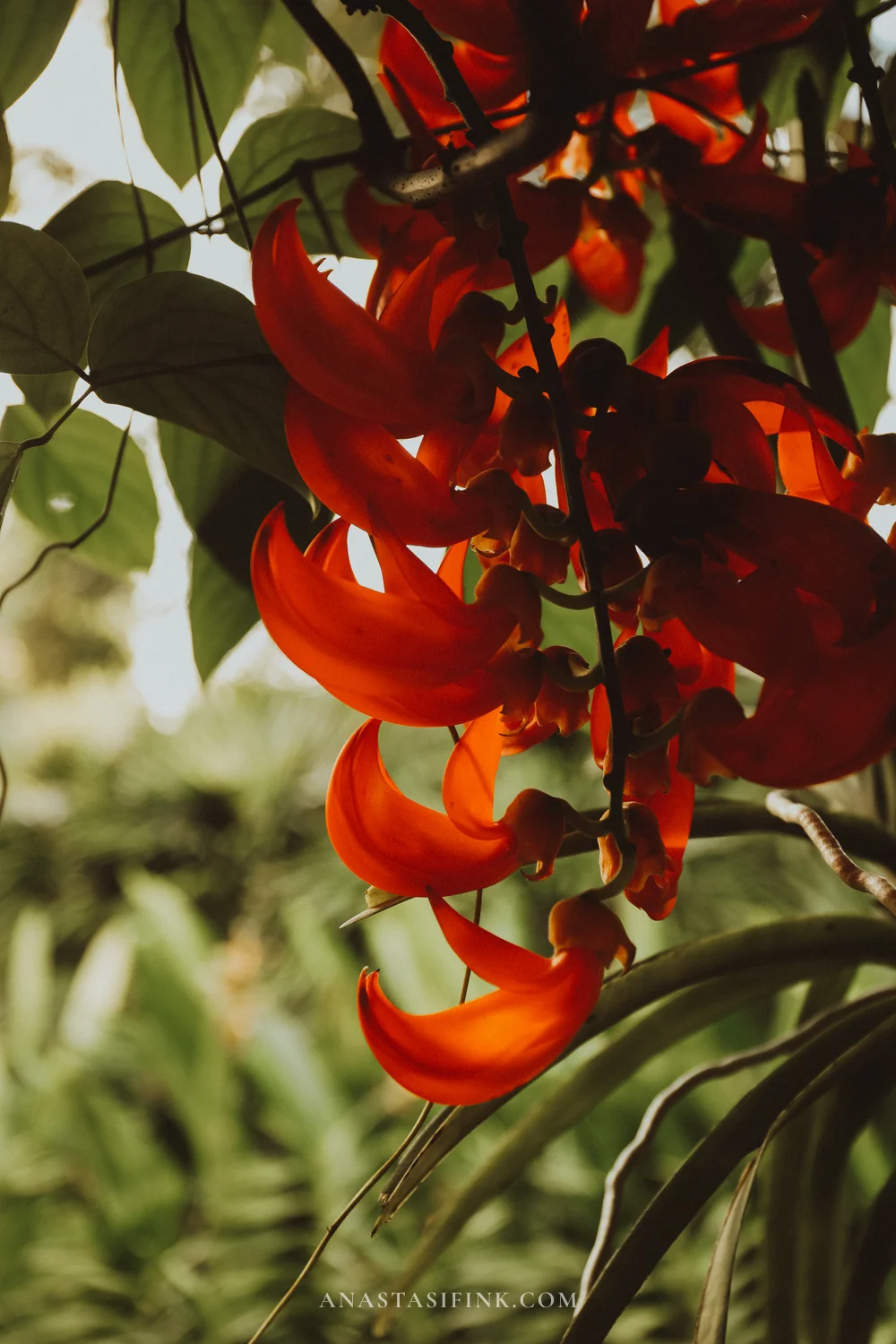
Red ginger, a wild banana flower and a flame creeper.
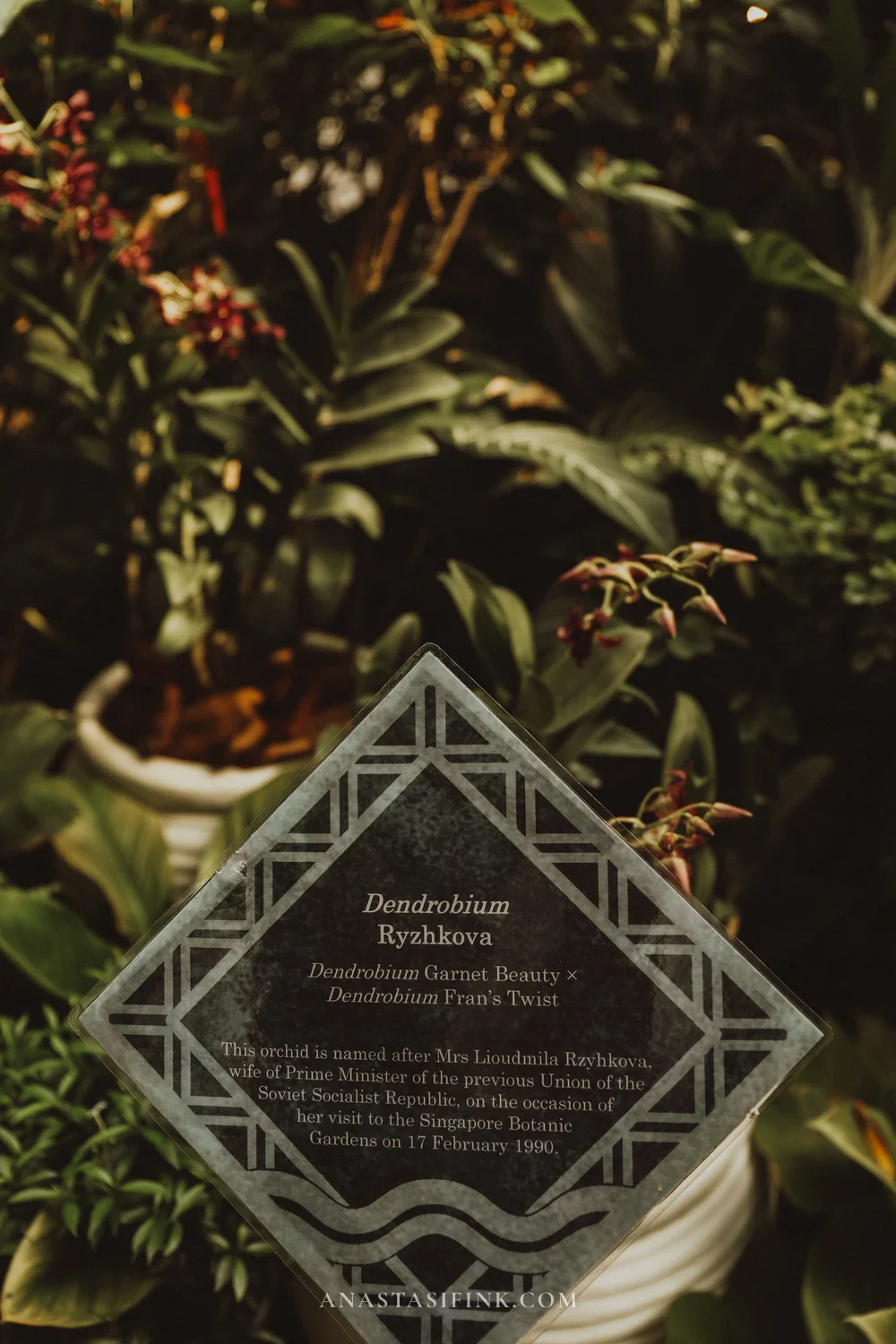
And one more thing — take a look at the labels next to some of the plants. Singapore has a long tradition of naming new orchid hybrids after distinguished guests and celebrities: there are orchids here named for Princess Diana, Nelson Mandela and many more. It’s lovely to suddenly stumble on a name you recognise.
The orchids themselves
And then there are the flowers. I won’t pretend to know all their names, but I tried to photograph the ones that stopped me in my tracks. Singapore’s national flower, as it happens, is also an orchid — the climbing hybrid Vanda Miss Joaquim, chosen back in 1981.
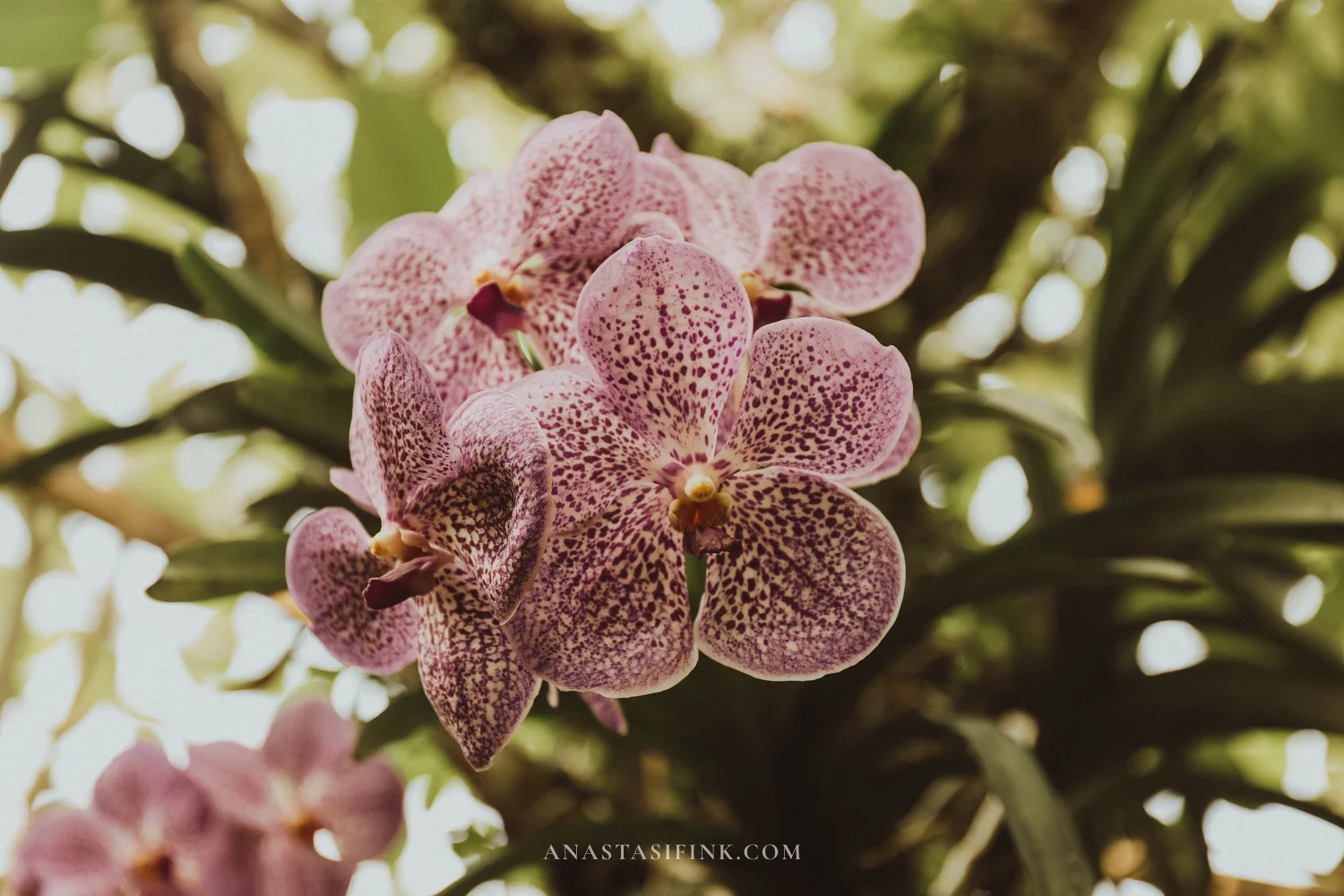
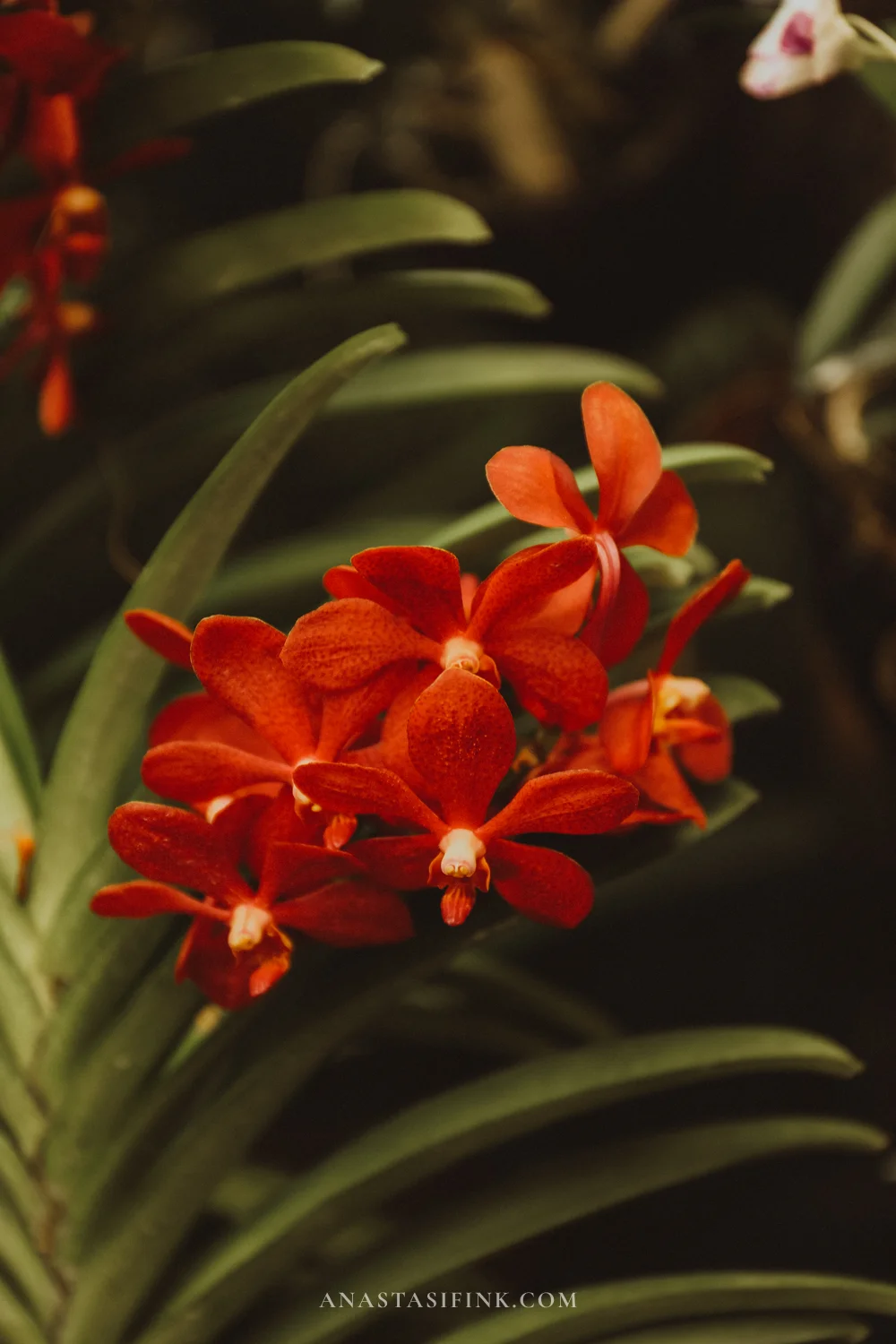
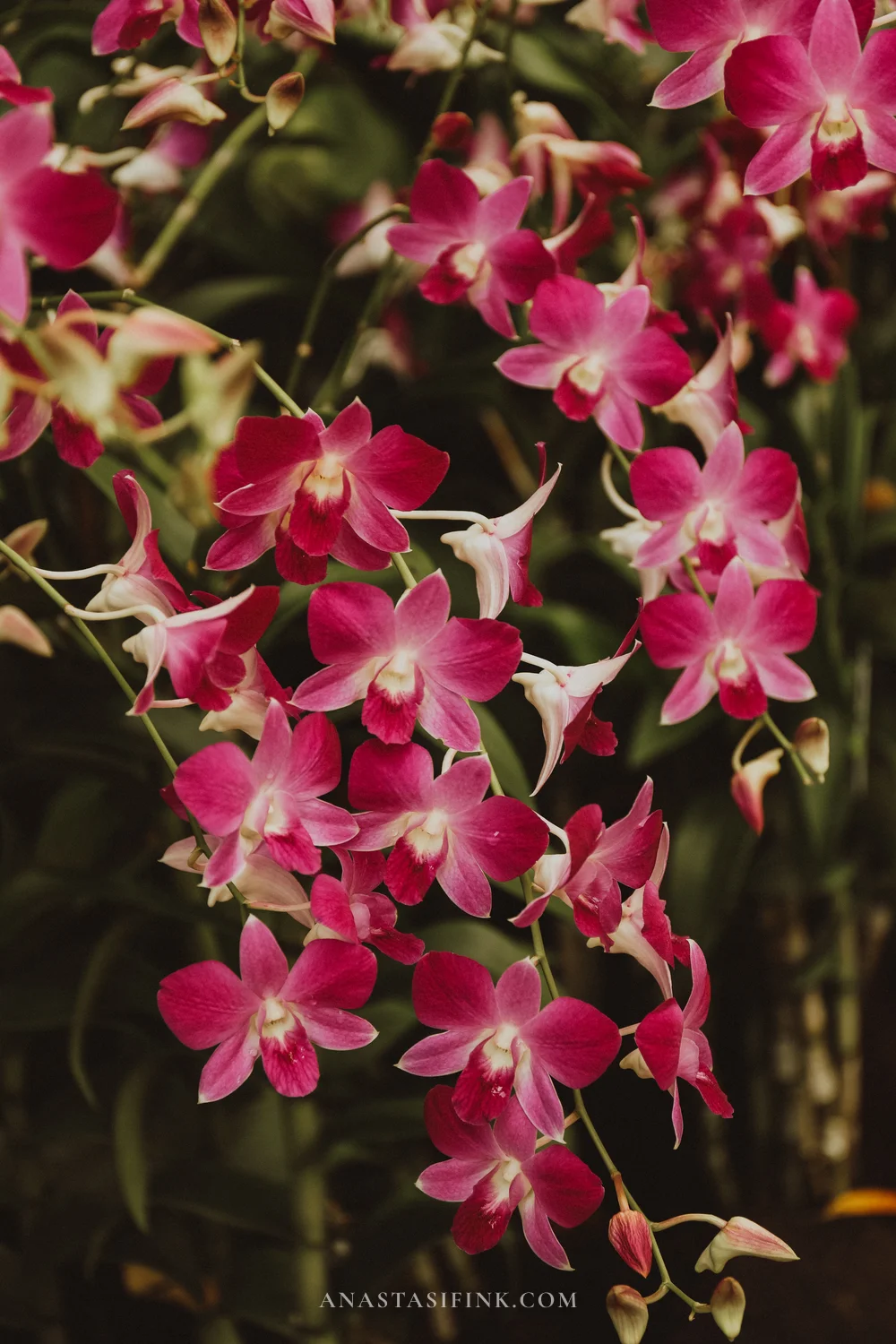
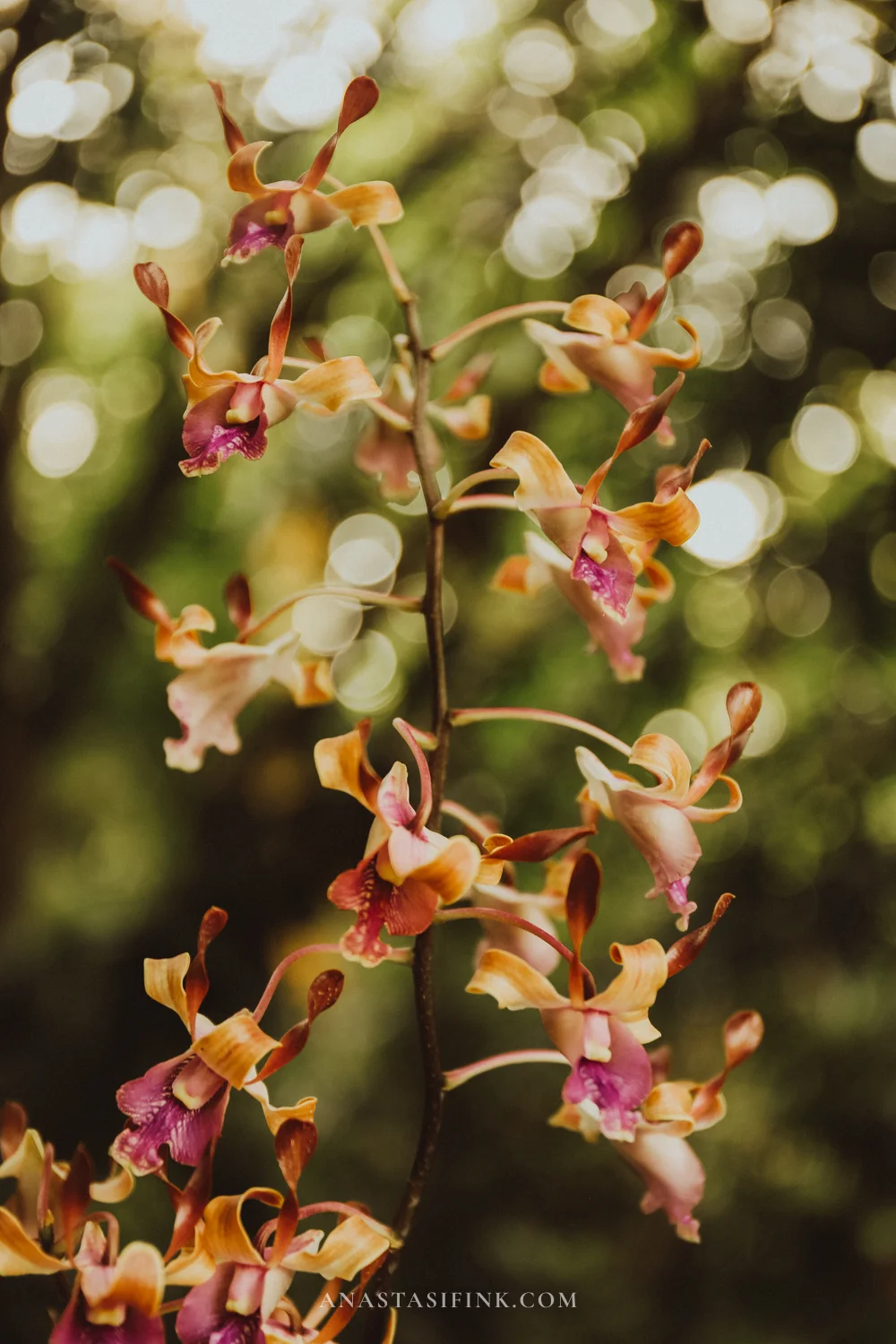
Red, magenta and orange orchids.
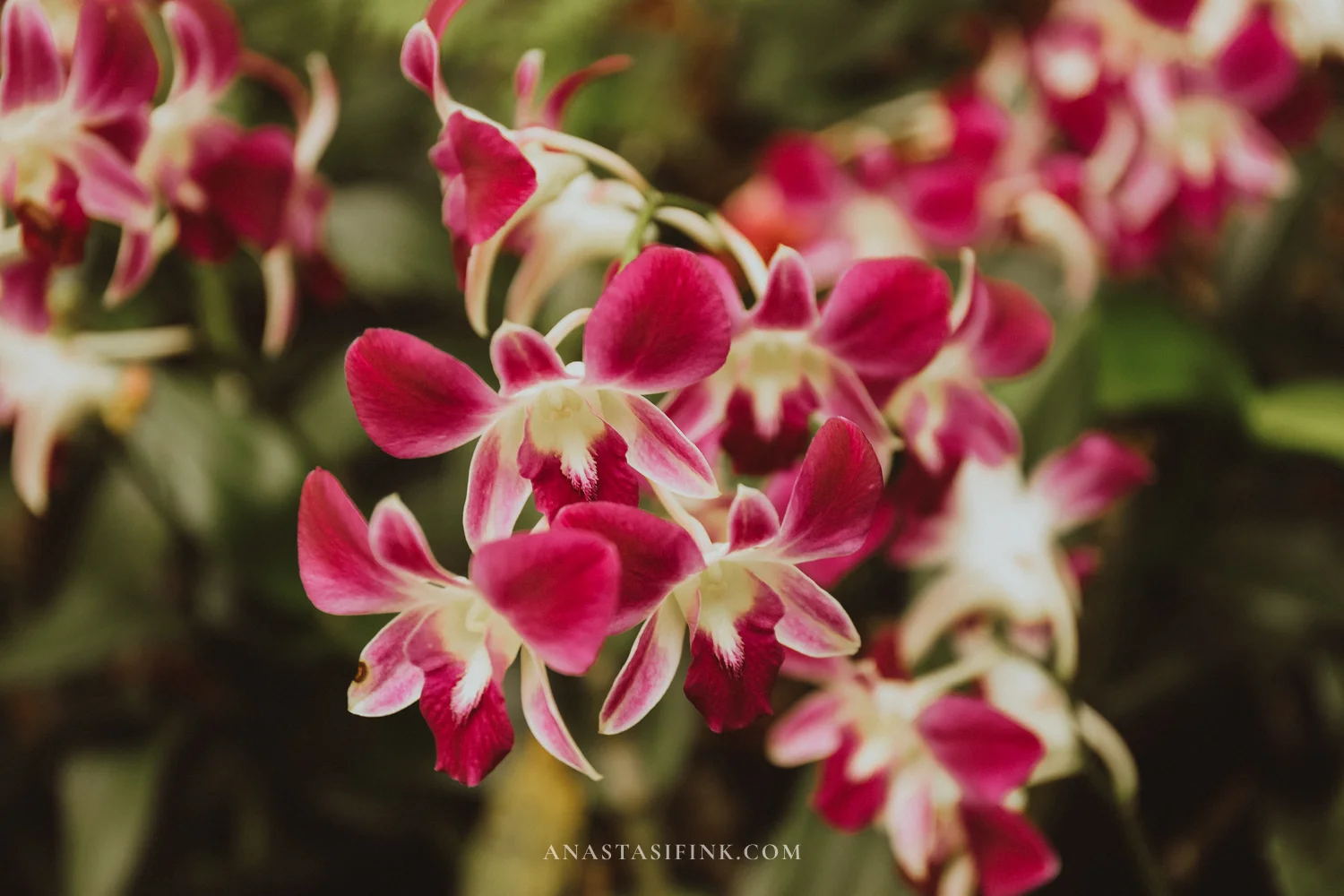
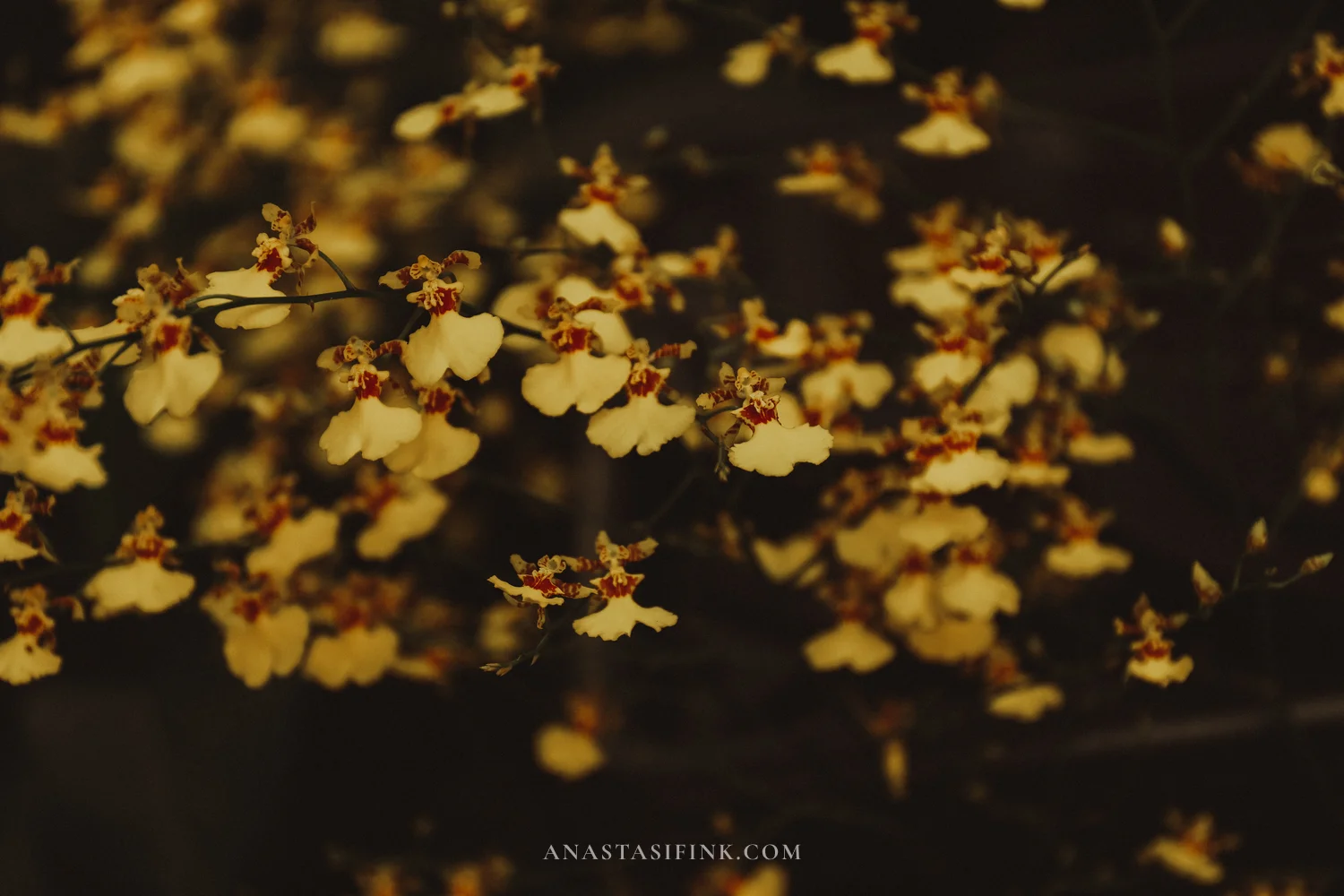
Pink Dendrobiums and the yellow “dancing ladies”.
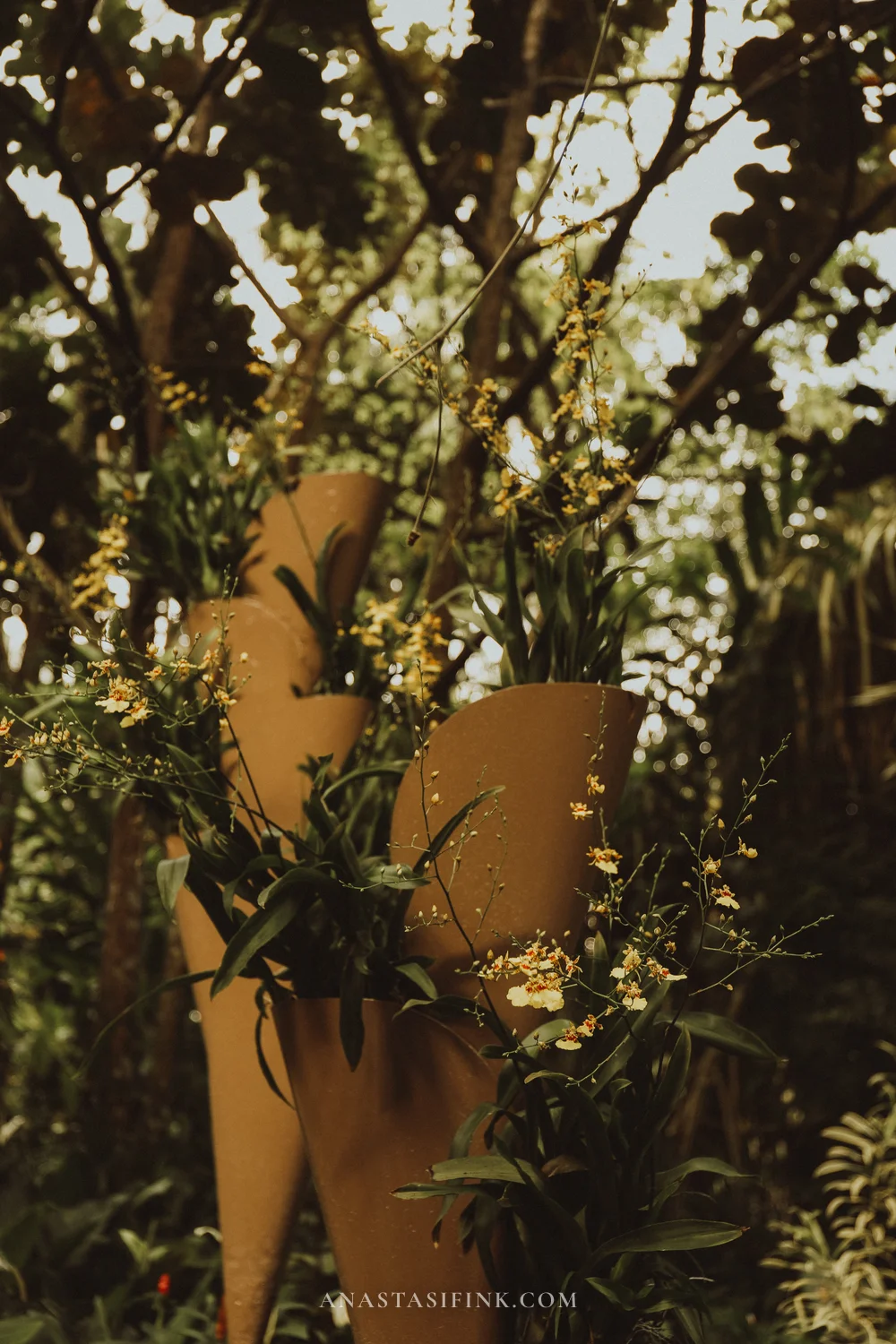
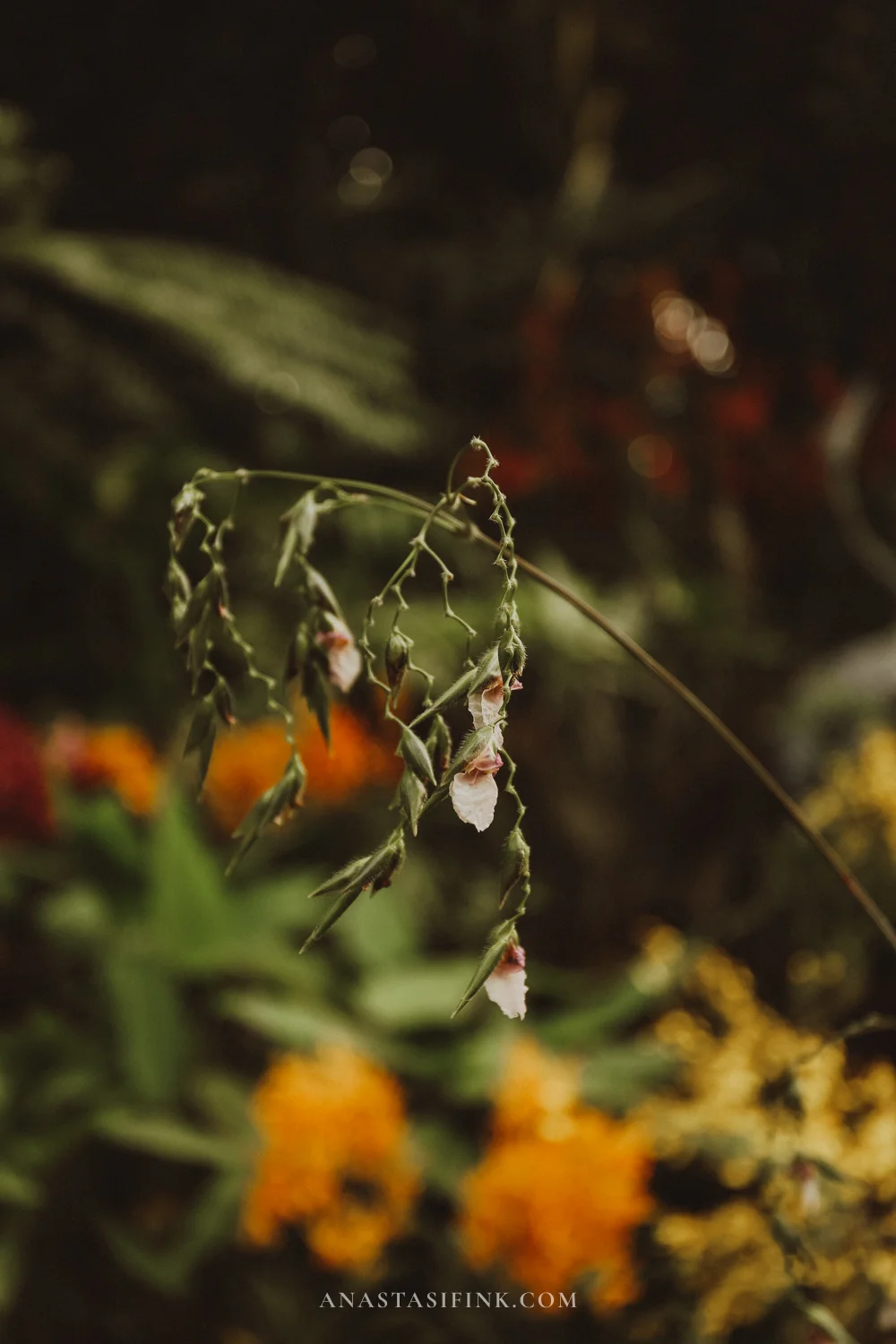
Orchids in tall planters and fine white sprays.
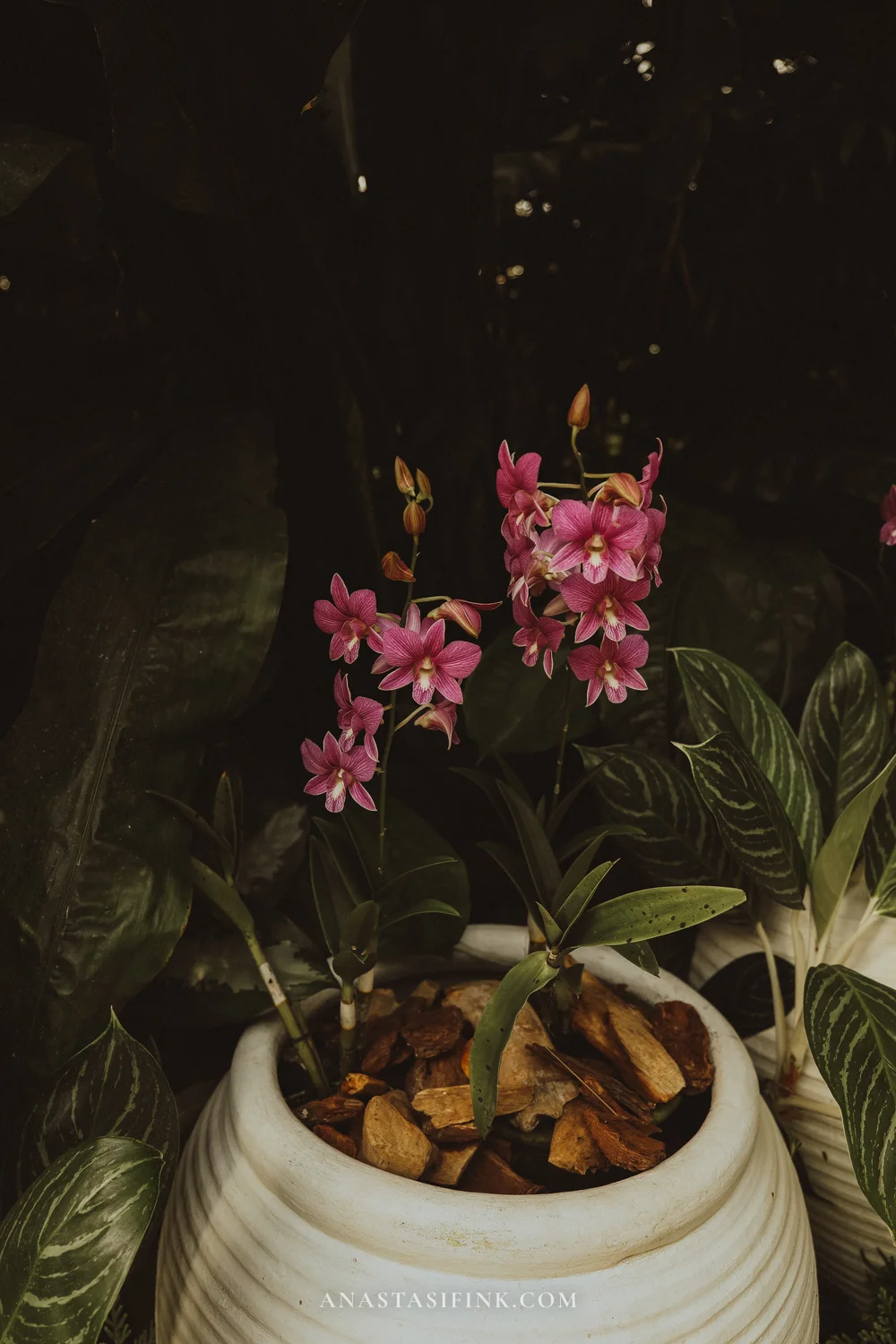
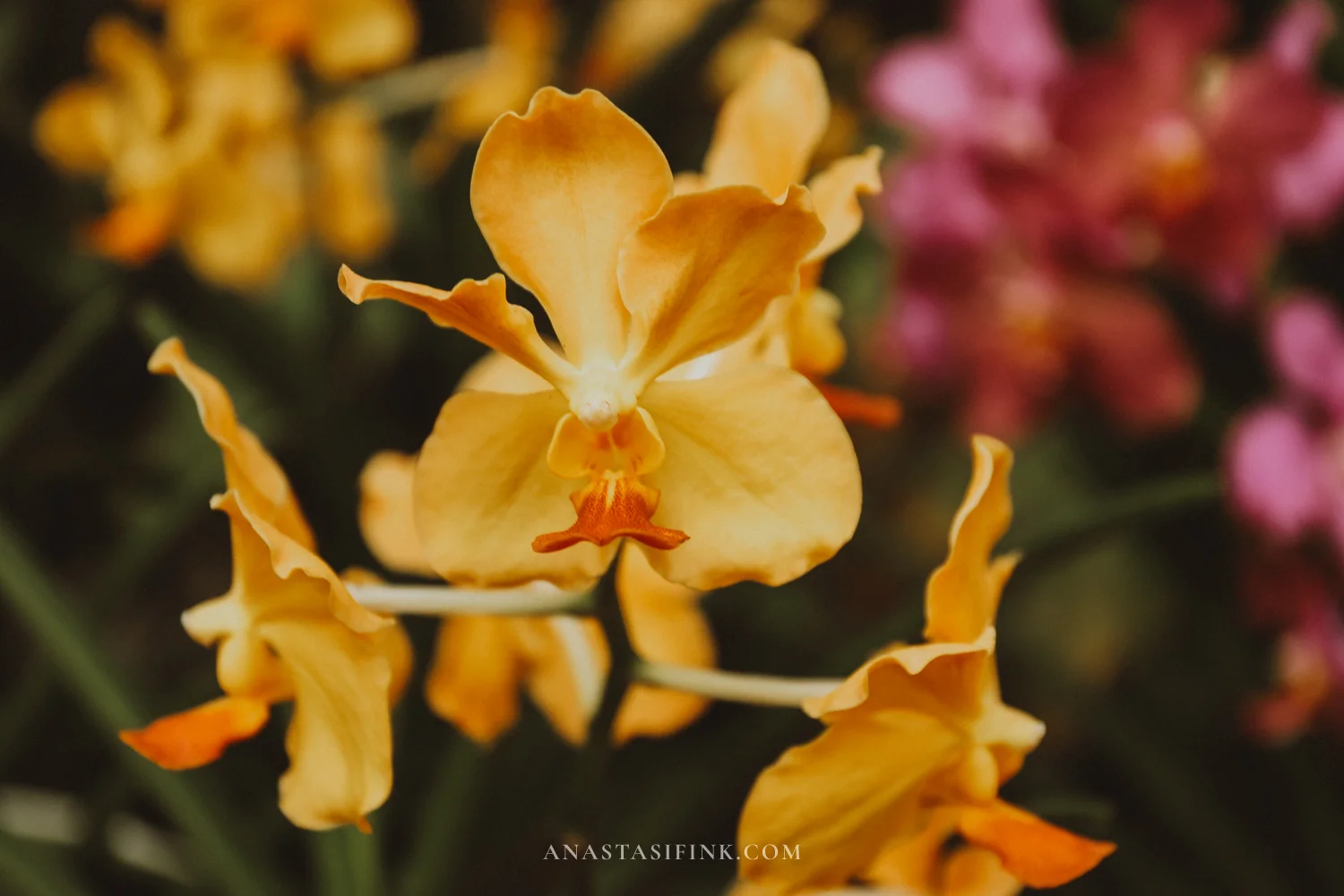
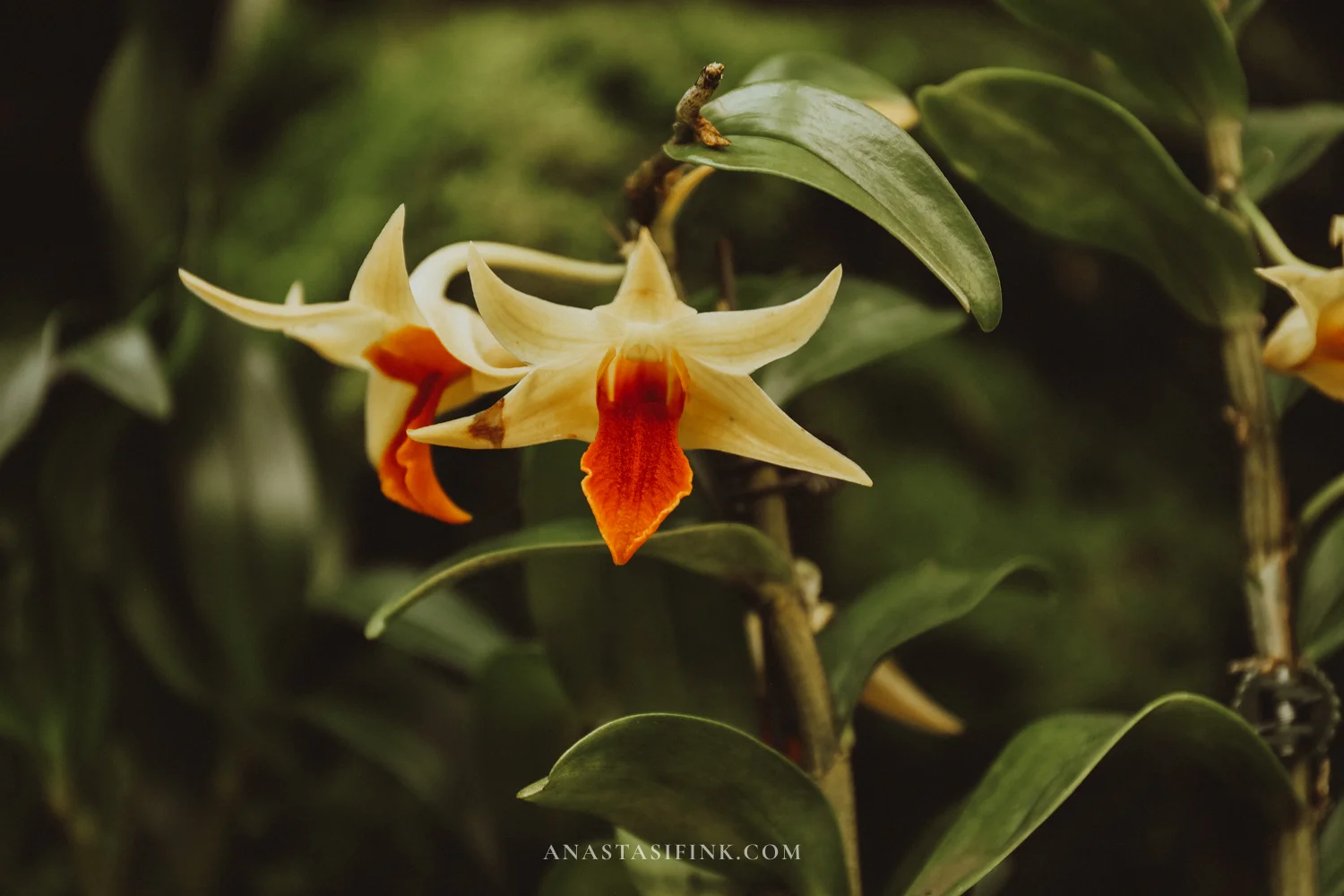
Yellow Vandas and Dendrobiums.
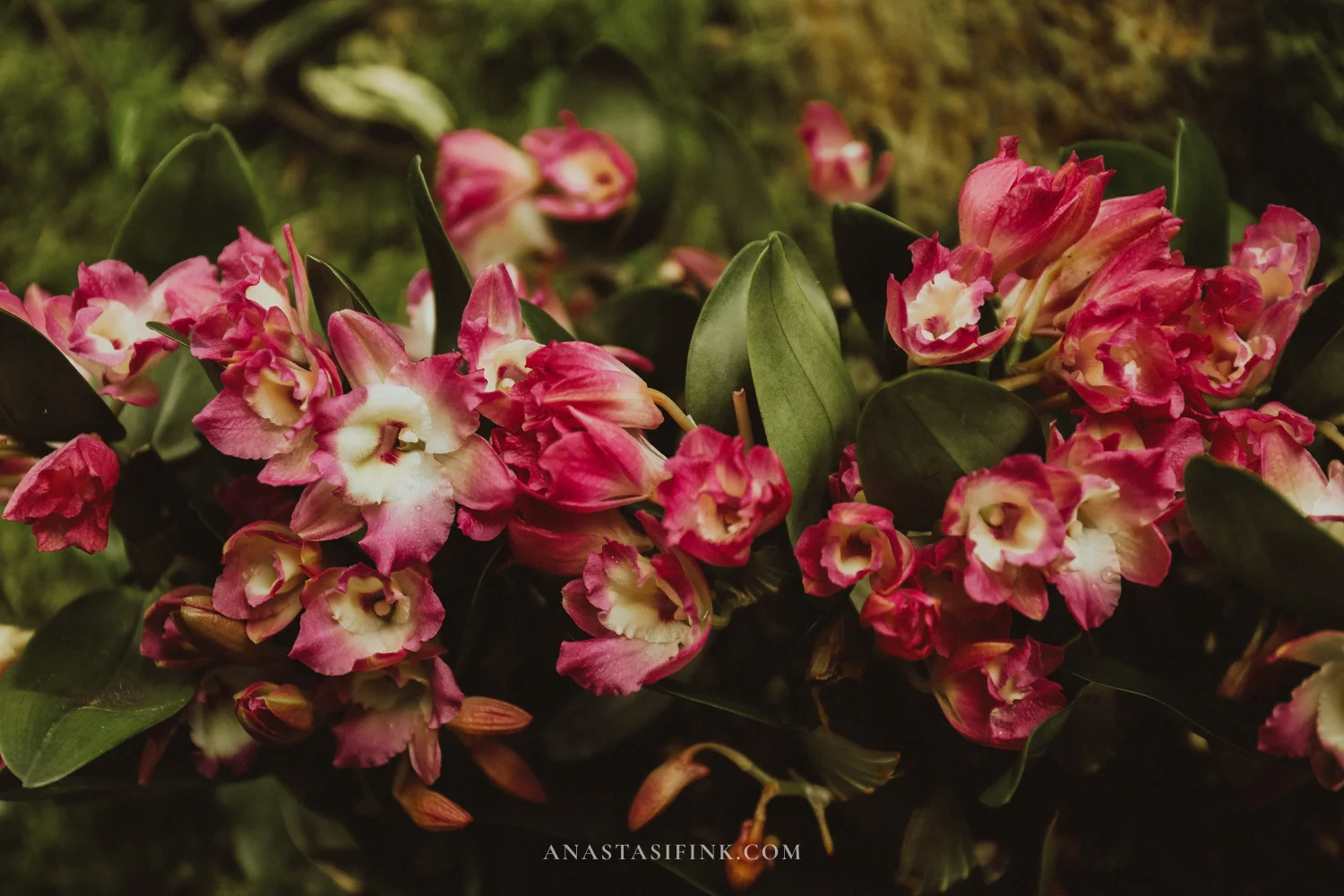
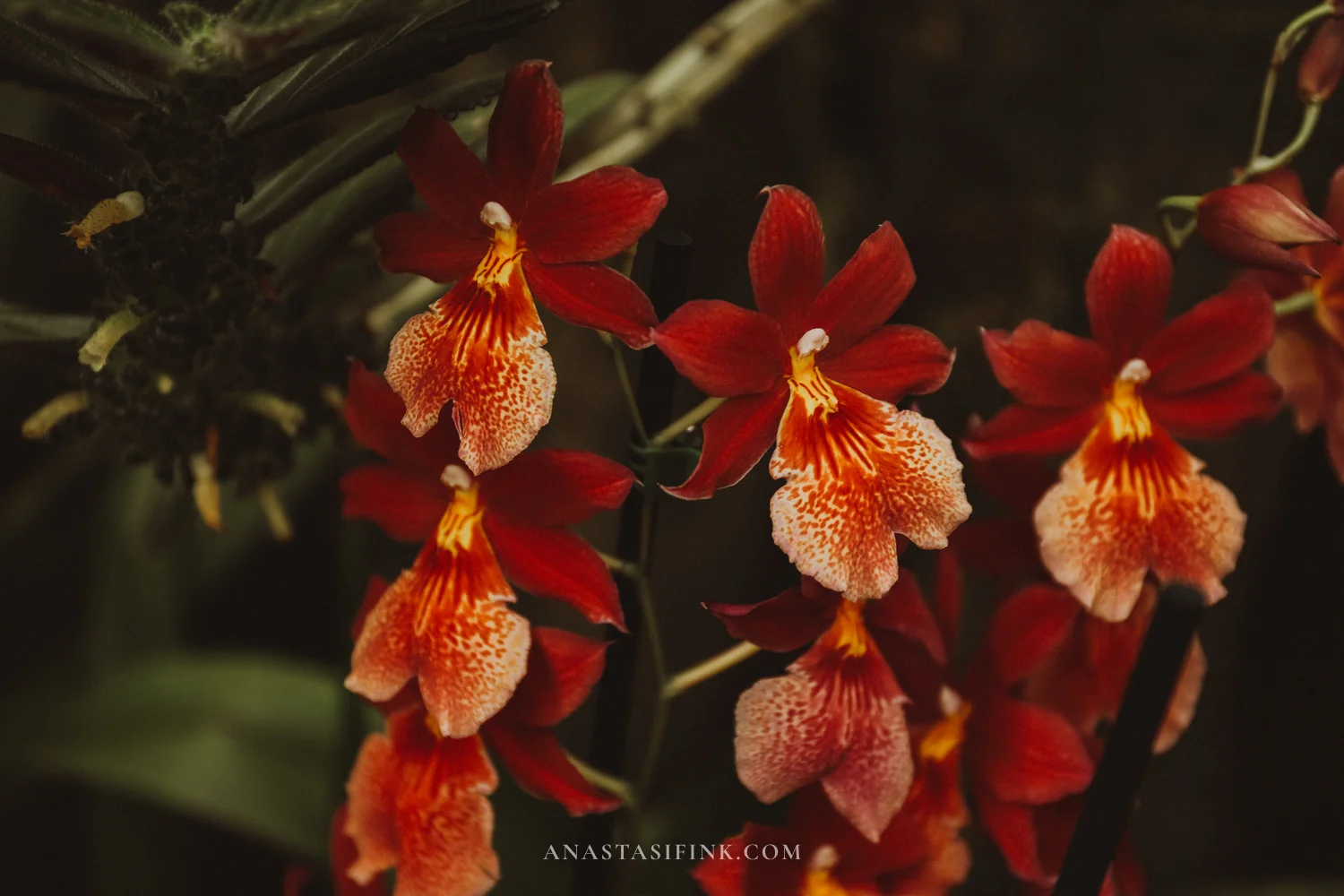
More orchids from the warm-coloured beds.
Inside the cooled glasshouses
Towards the back of the orchid garden, the path leads into a run of glasshouses, and this is probably the most interesting part. Singapore sits almost on the equator, so it’s hot and humid all year round. To grow the orchids that live high up in tropical mountains, the garden built cooled glasshouses that recreate the climate of a misty highland forest. On the map this complex is labelled the Tropical Montane Orchidetum.
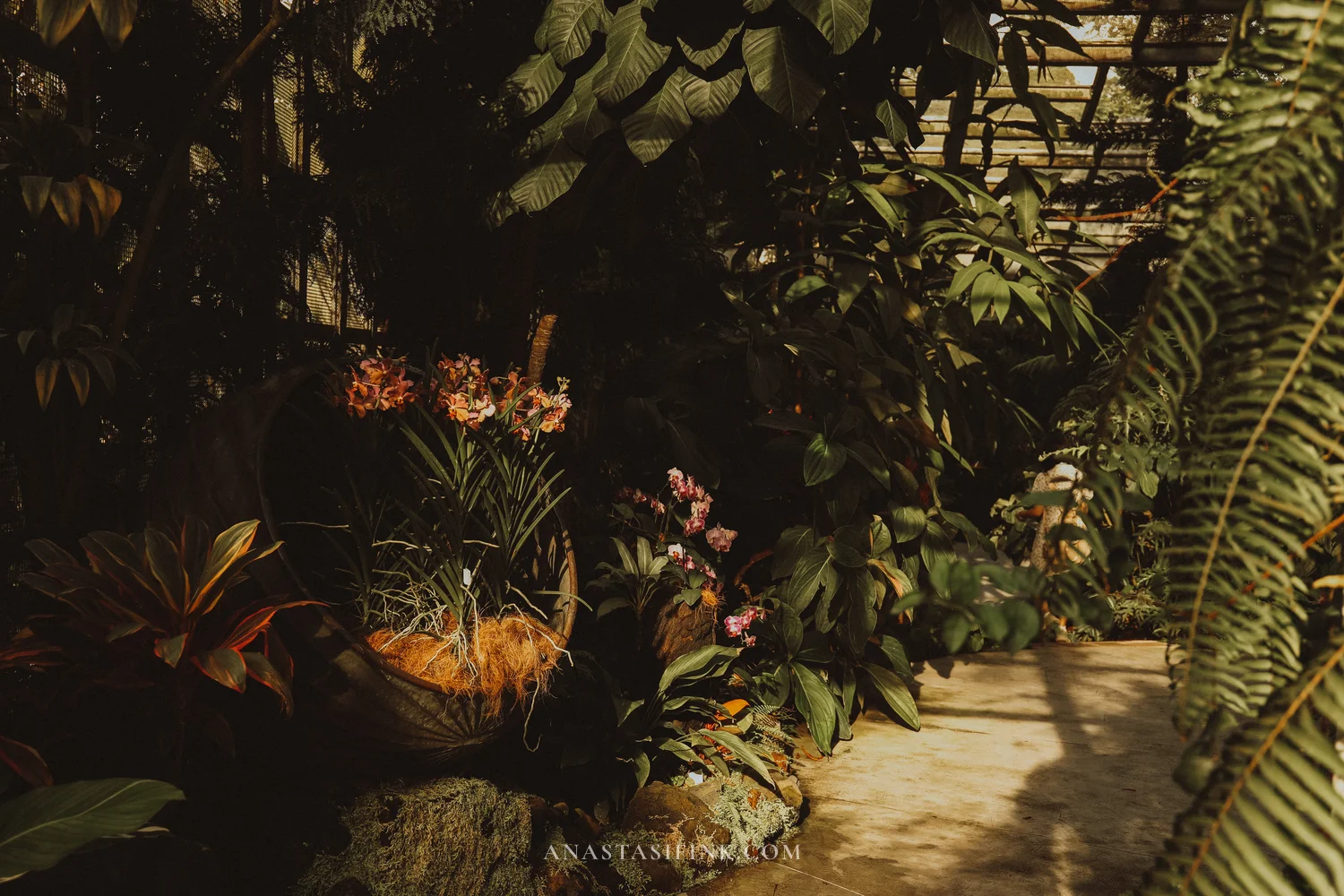
The Tan Hoon Siang Mist House recreates a tropical garden at 650–1,000 metres — humid and full of scent. Beyond it is the Sembcorp Cool House, kept at 16–23°C, the first cool air all day. It shelters more than 500 orchid species, many of them threatened in the wild.
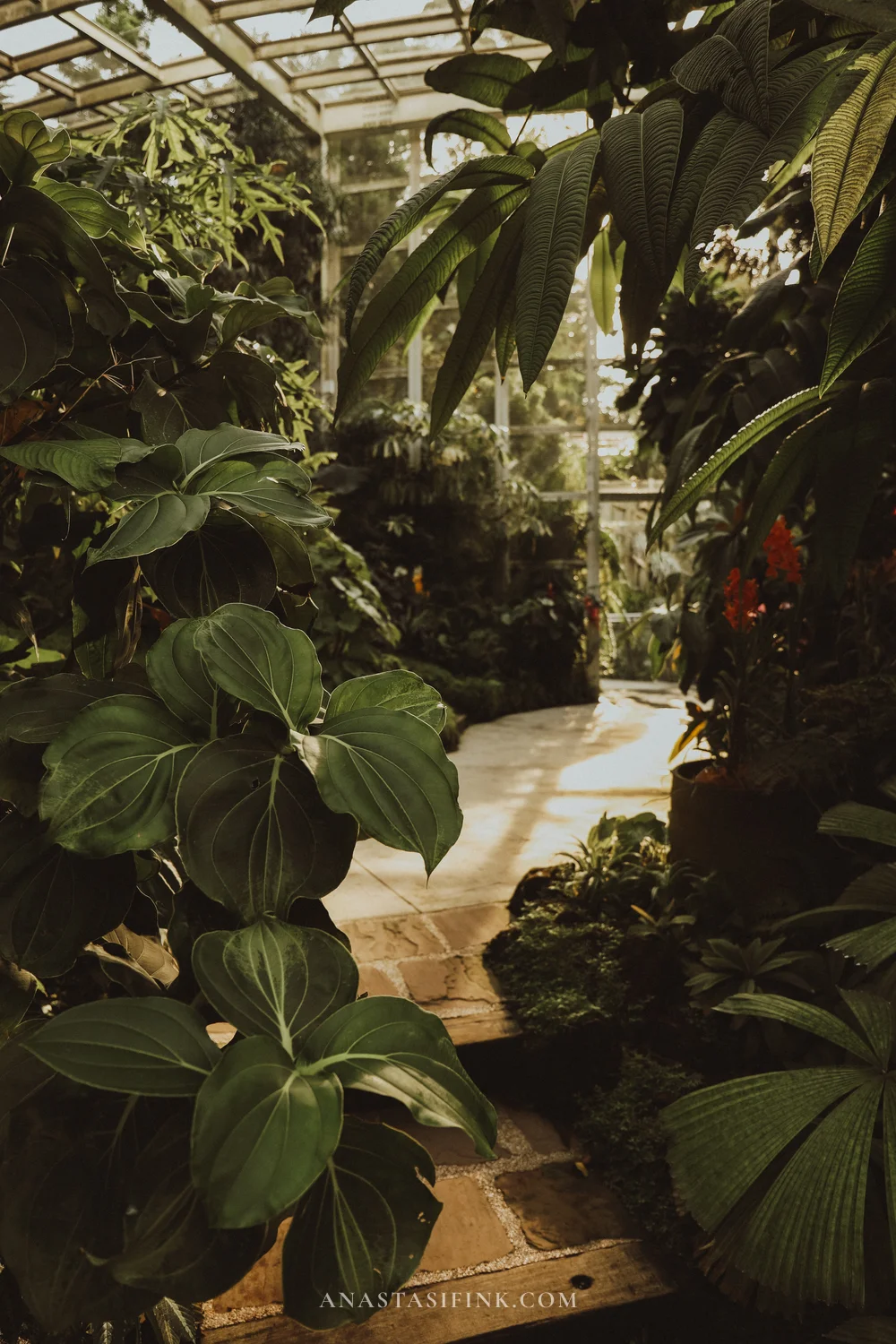
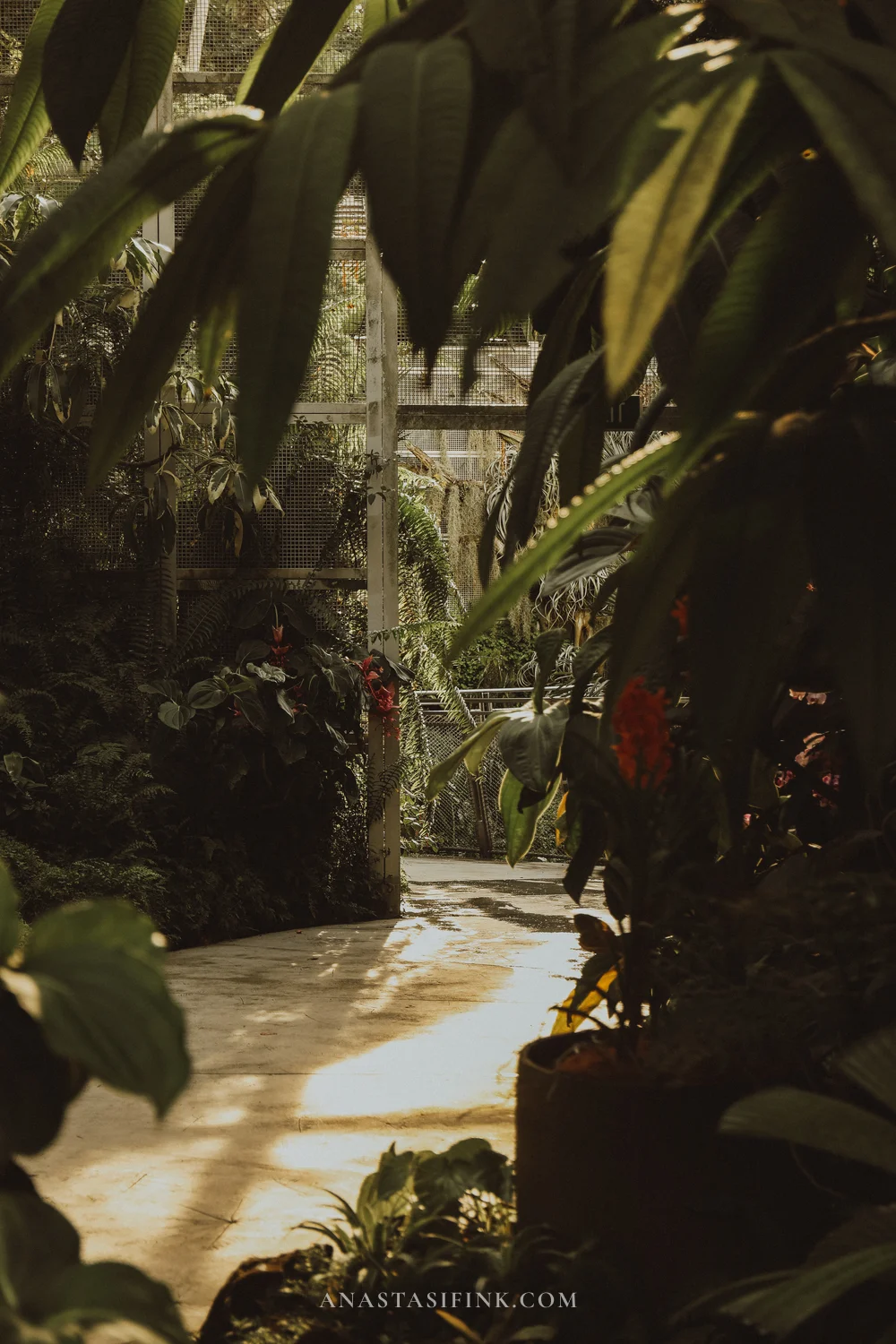
Inside, plants are everywhere — up the walls and overhead.
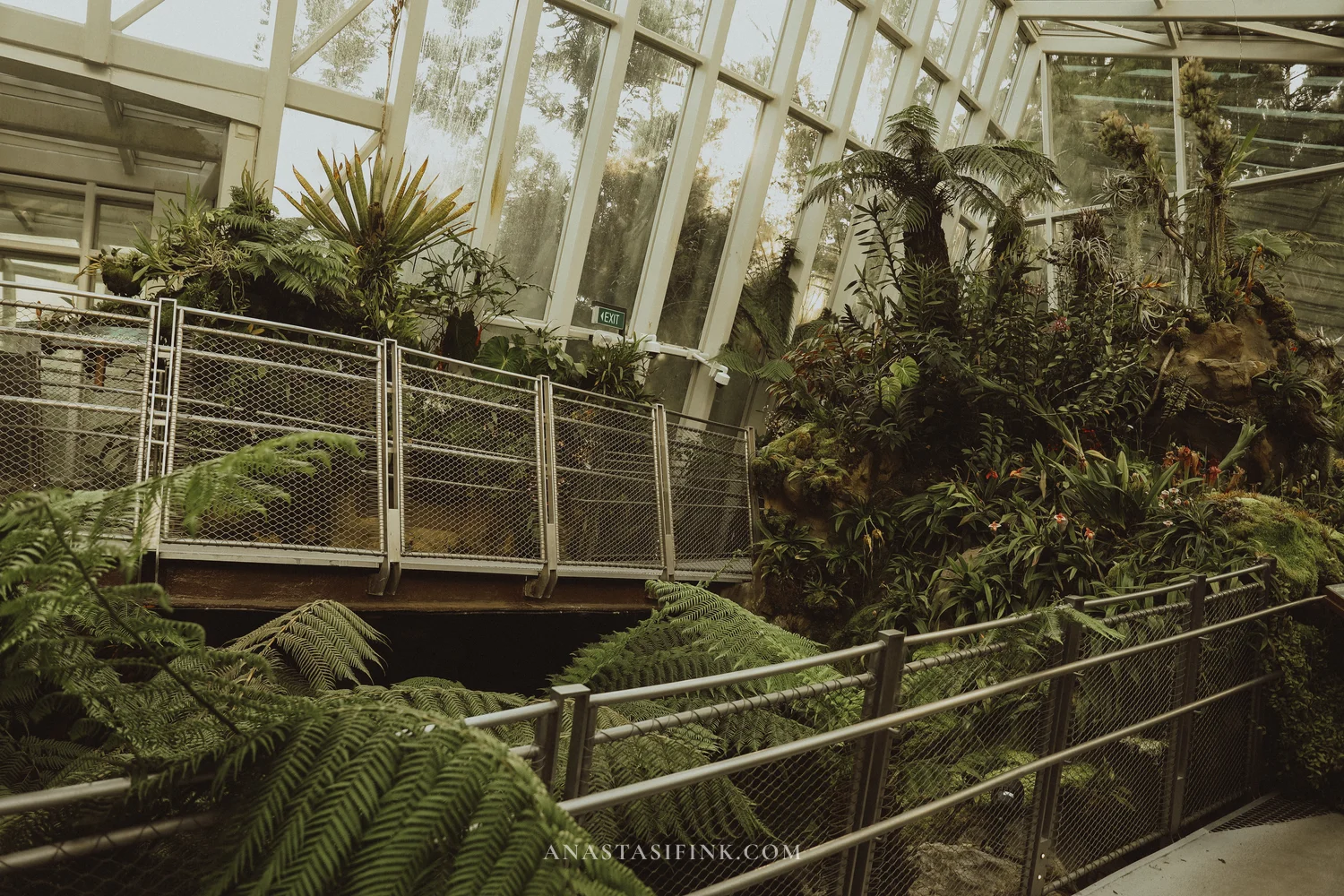
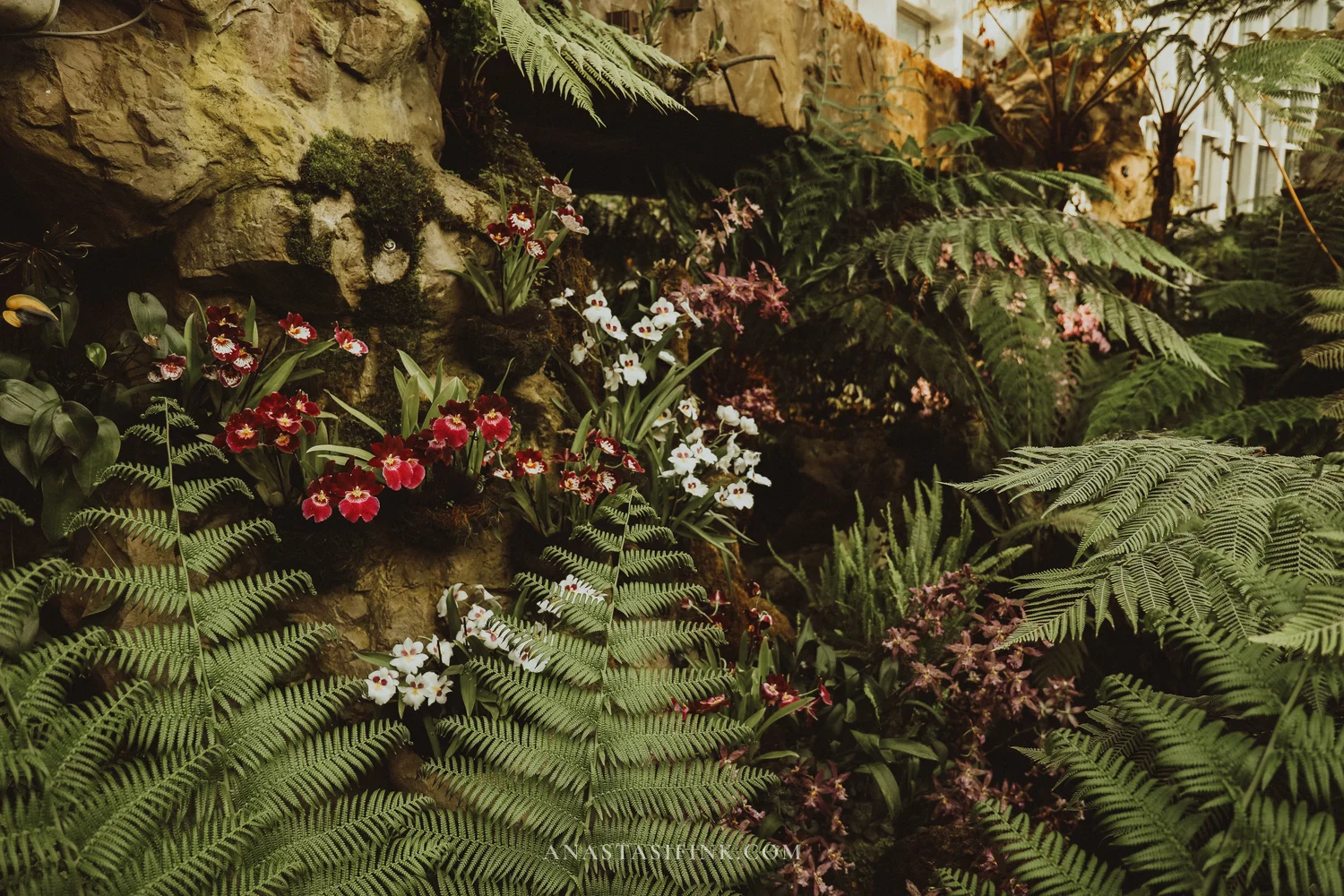
The Cool House feels like a highland forest, with ferns and wet rock.
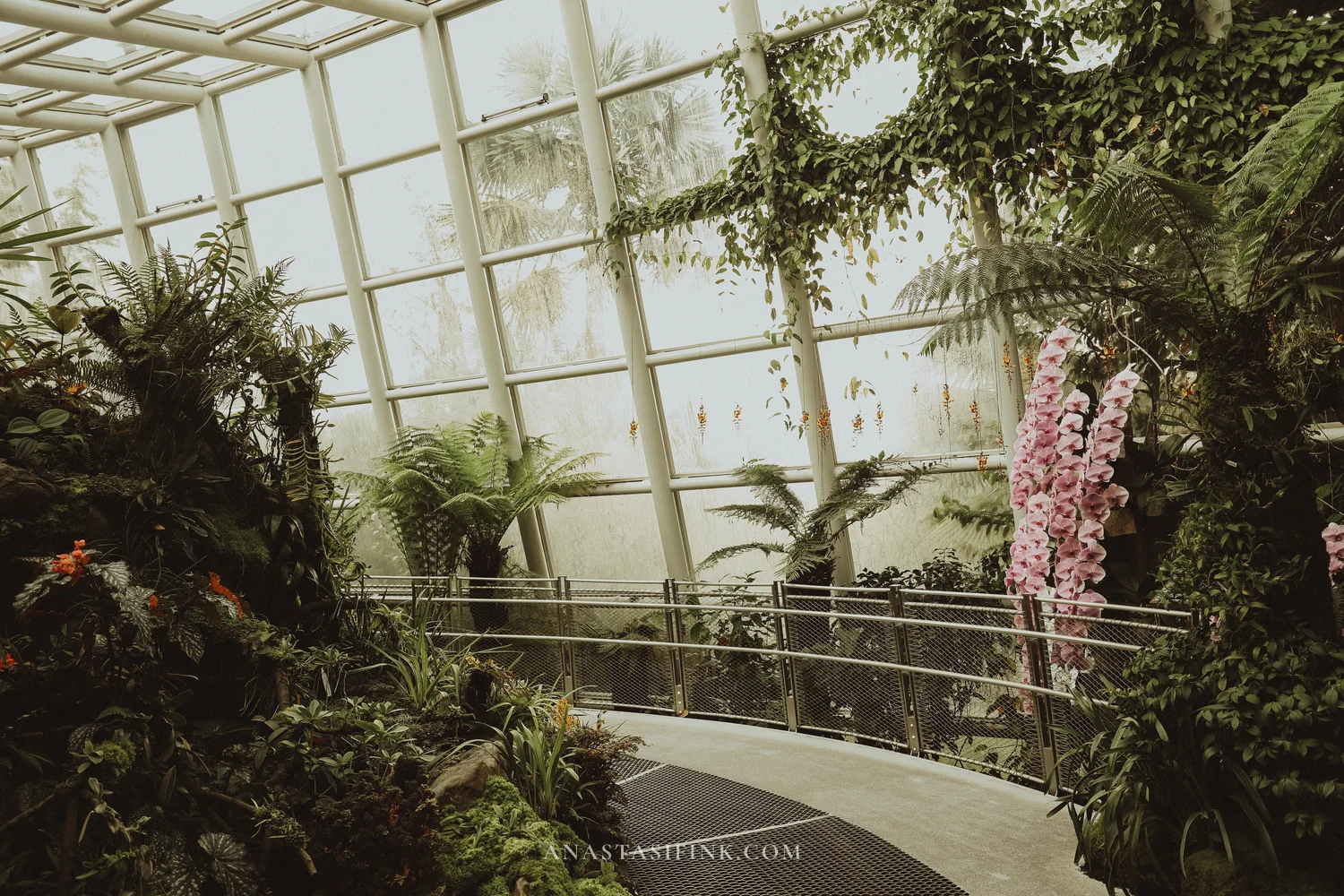
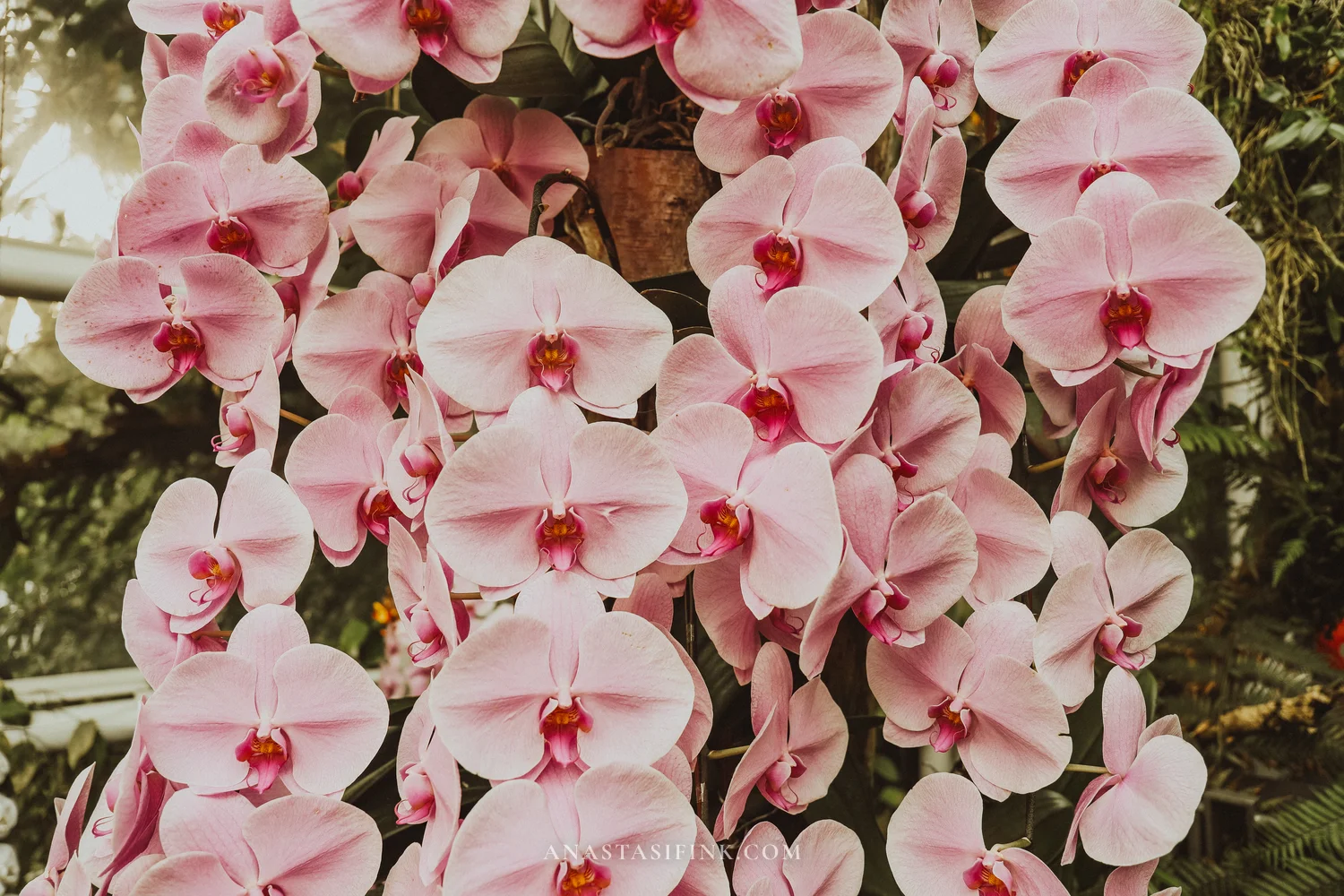
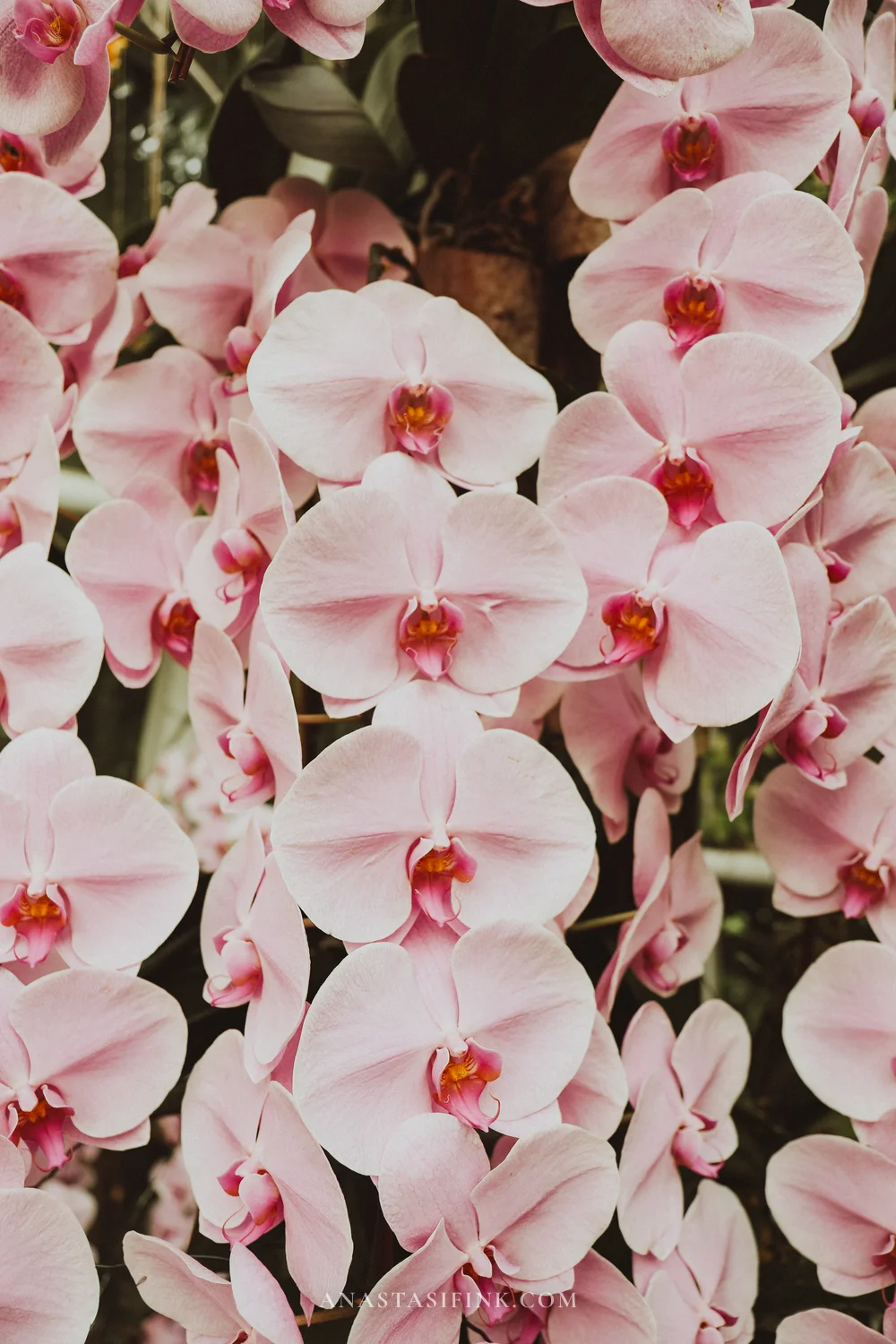
In the same glasshouse, a whole wall is covered in pale-pink “moth” orchids, hundreds of blooms stacked one above another. It doesn’t quite look real until you’re standing right in front of it.
Inside, growing right beside the orchids, are carnivorous plants — pitcher plants with their dangling “jugs” that trap insects. Next to the delicate flowers, they look almost prehistoric.
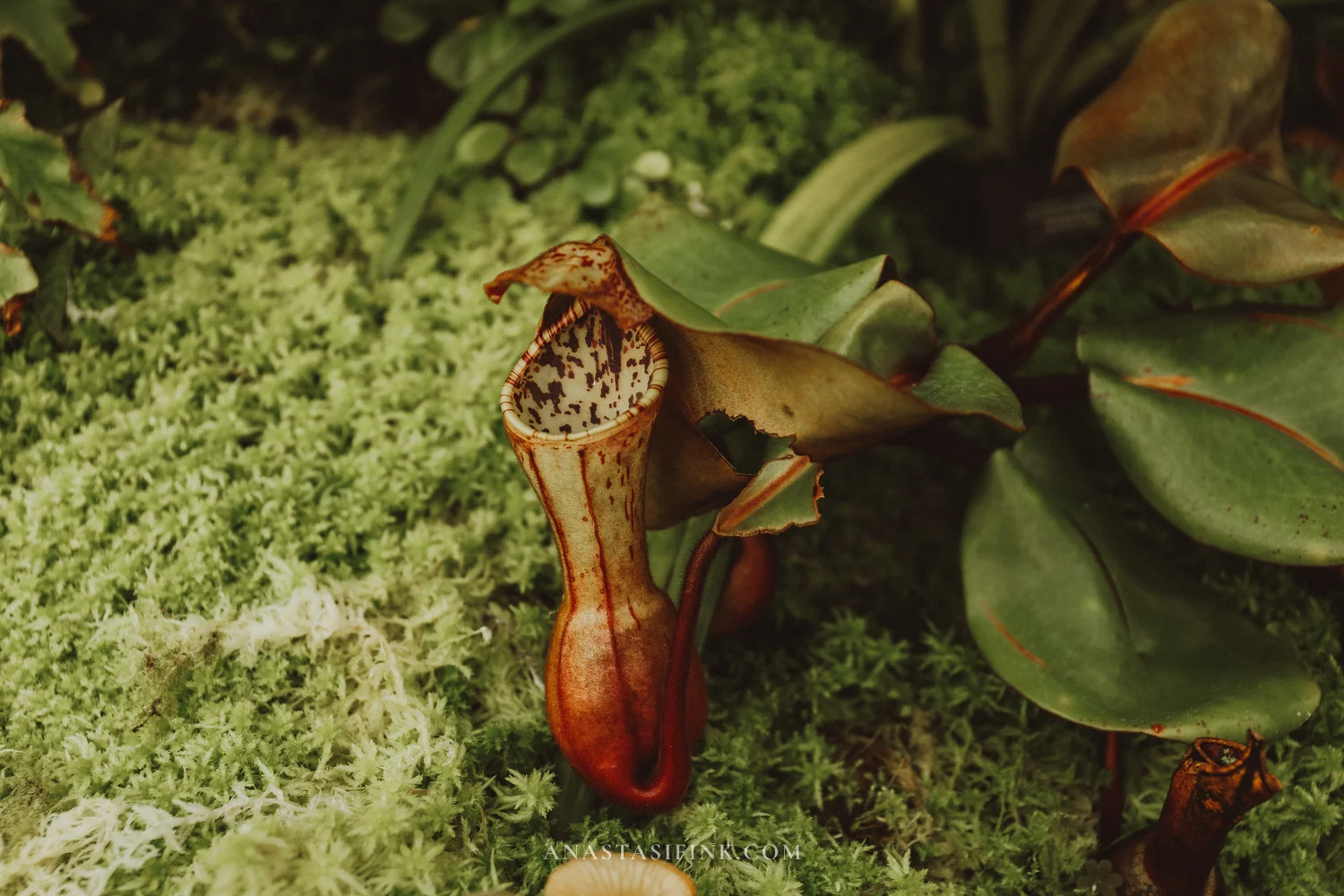
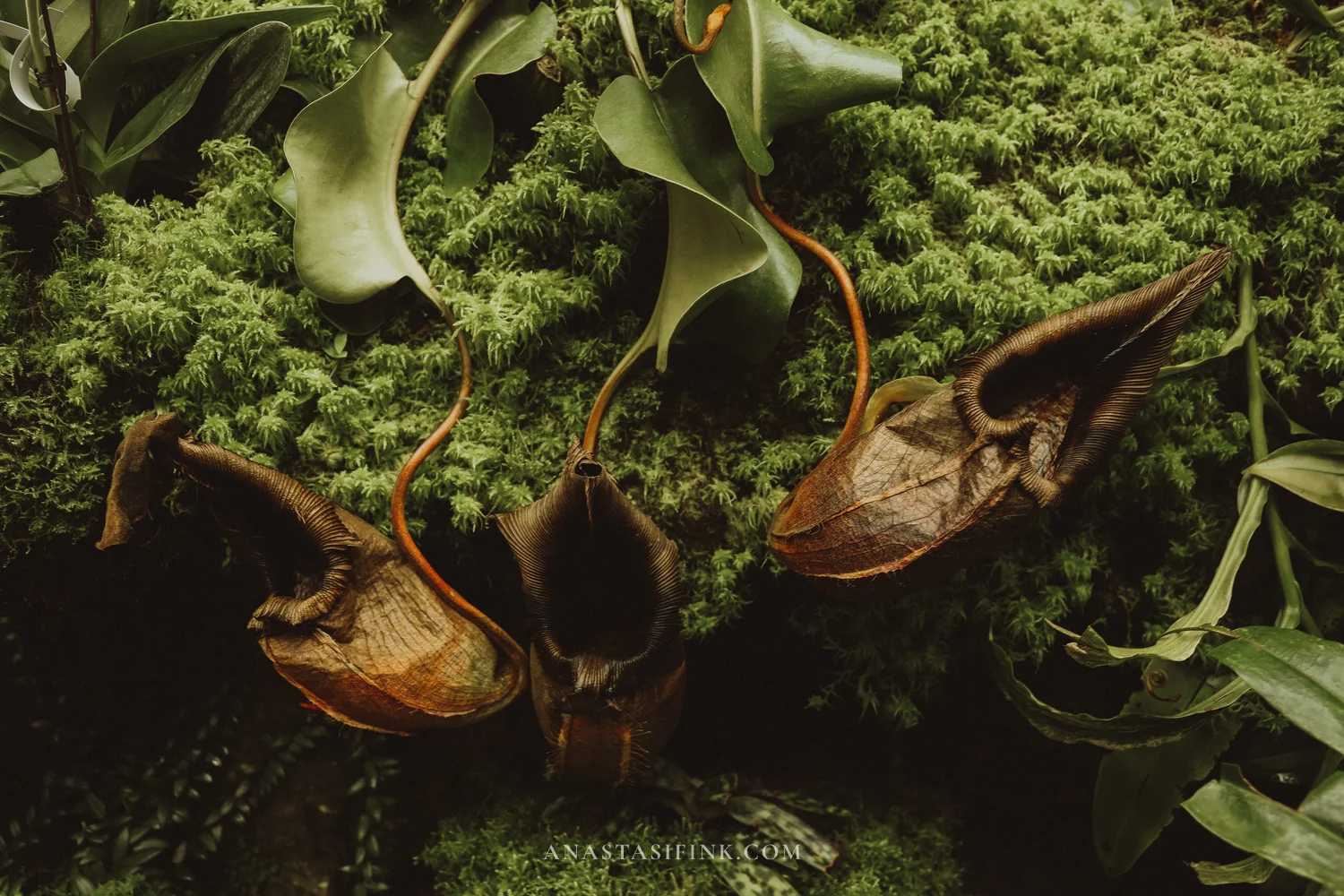
Carnivorous pitcher plants grow alongside the orchids.
This is also where the most unusual orchids live — nothing like the classic shop-bought flower. Slipper orchids with their tiny “shoes”, speckled ones, spider orchids with long twisting petals, and pansy orchids.
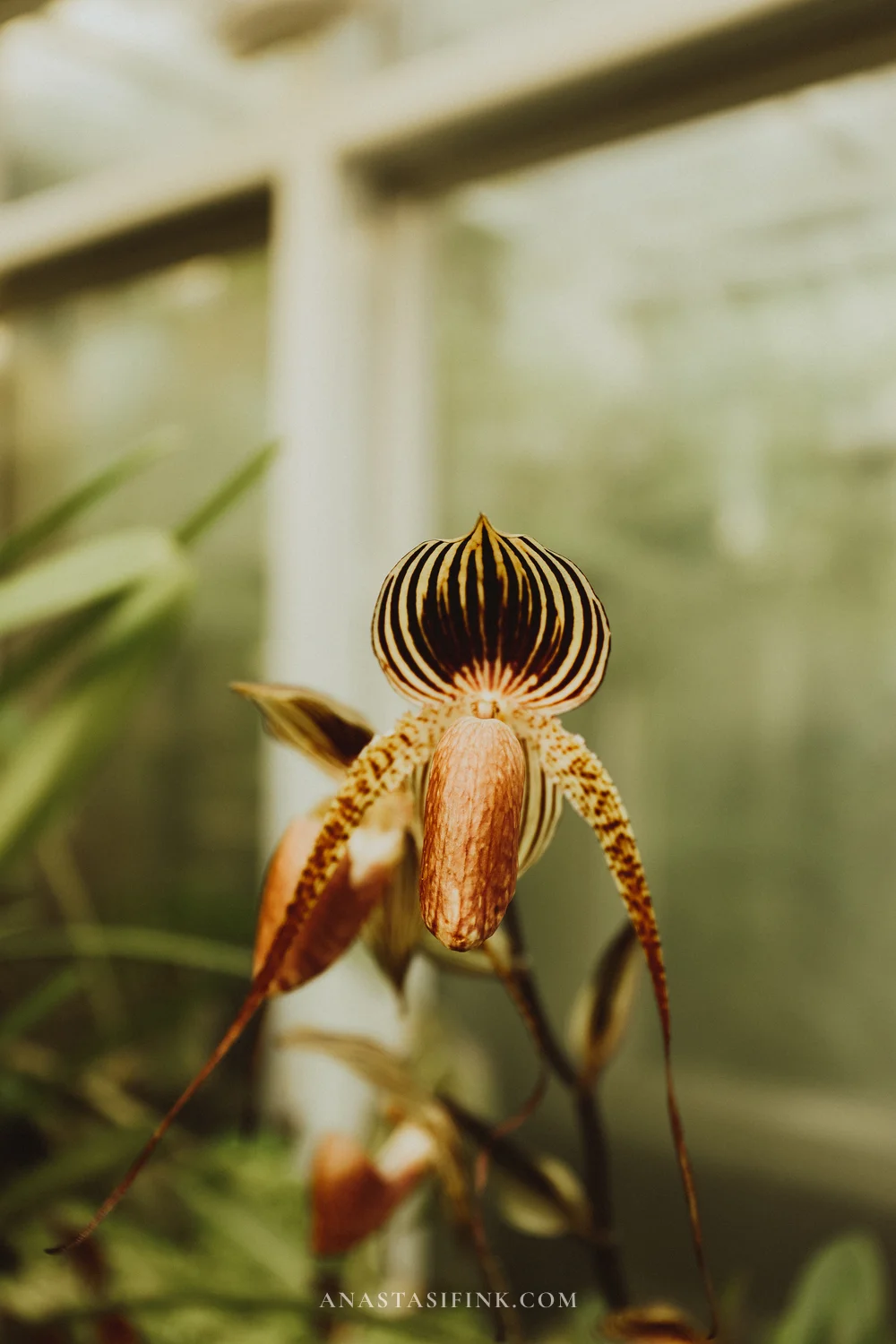
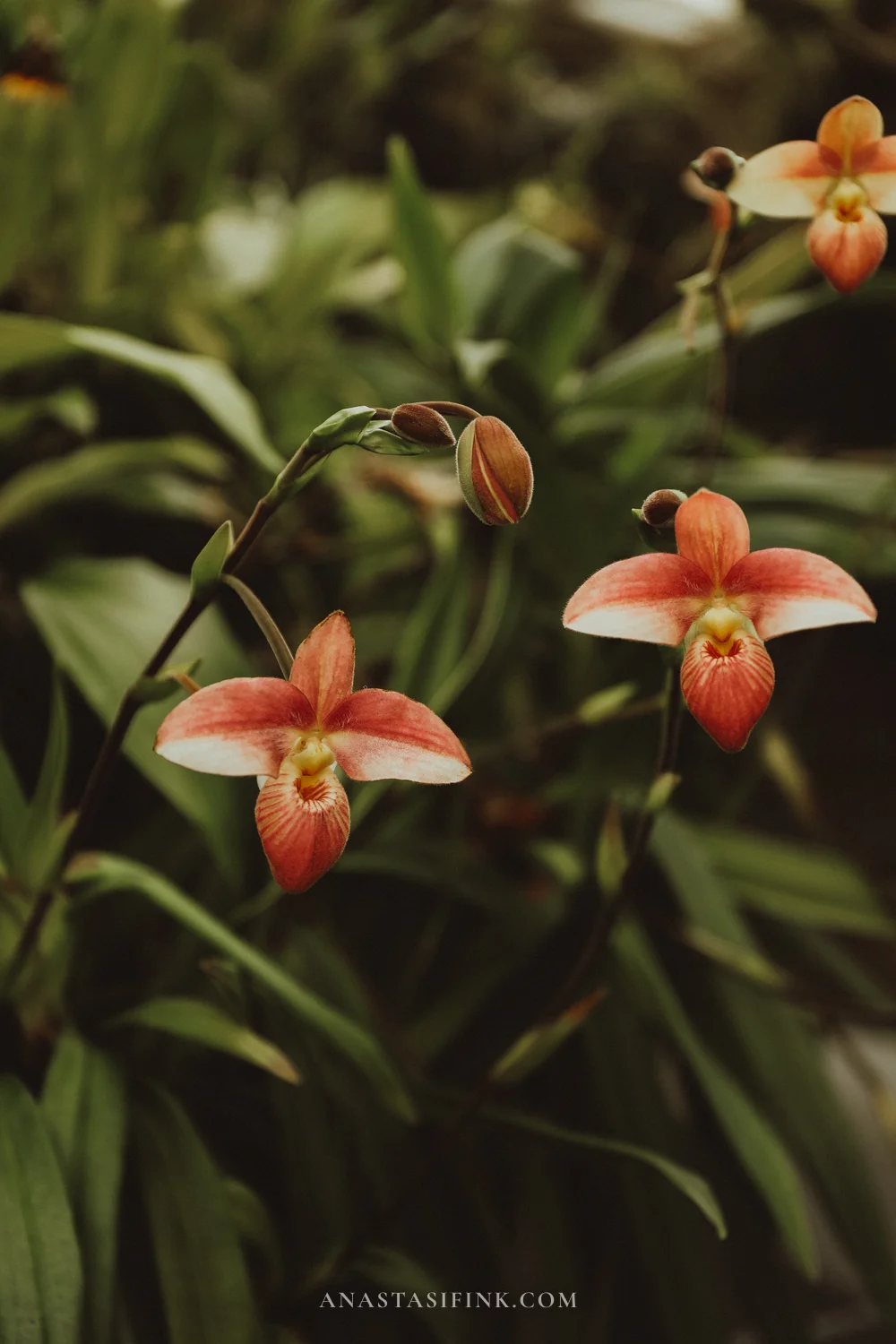
Slipper orchids.
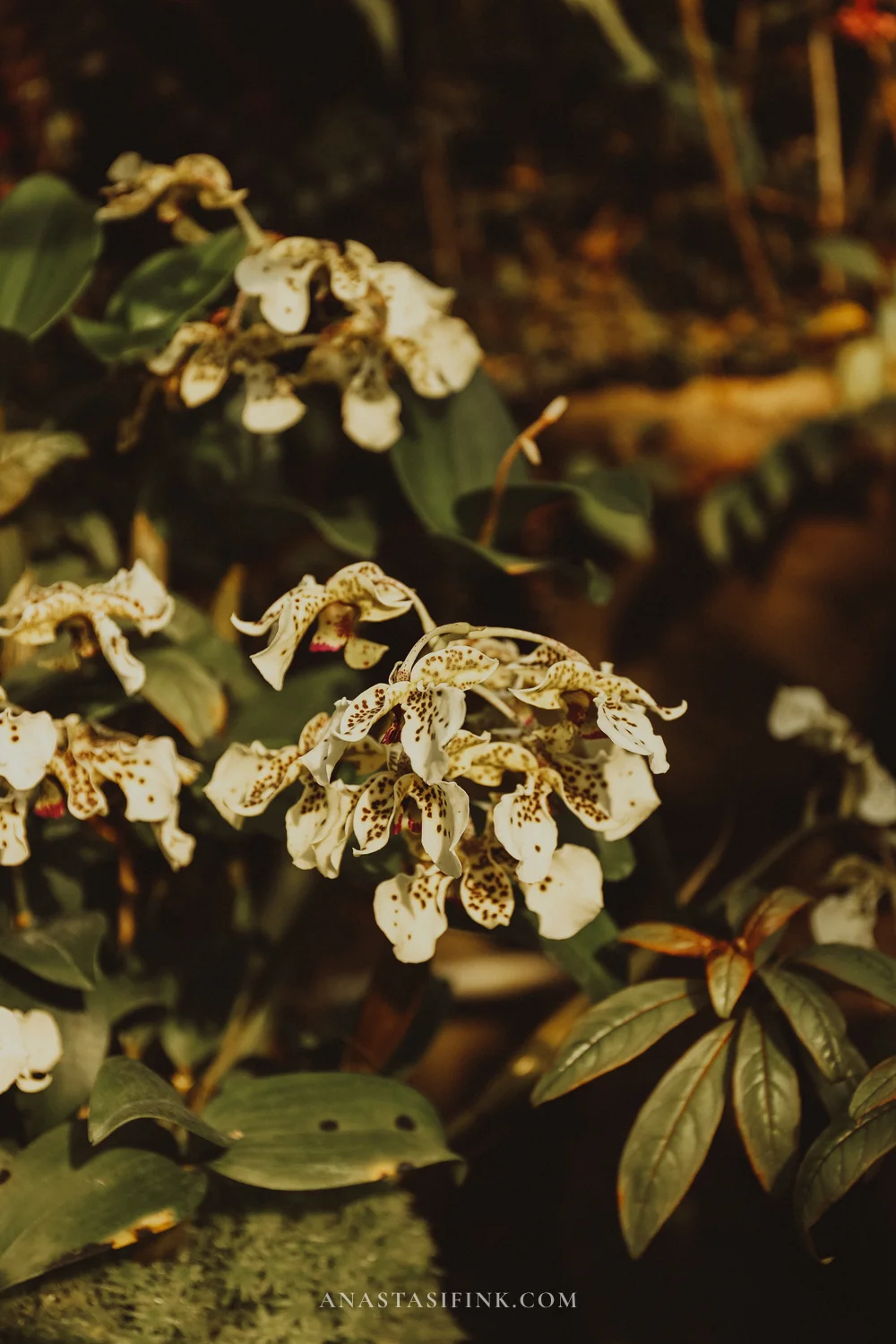
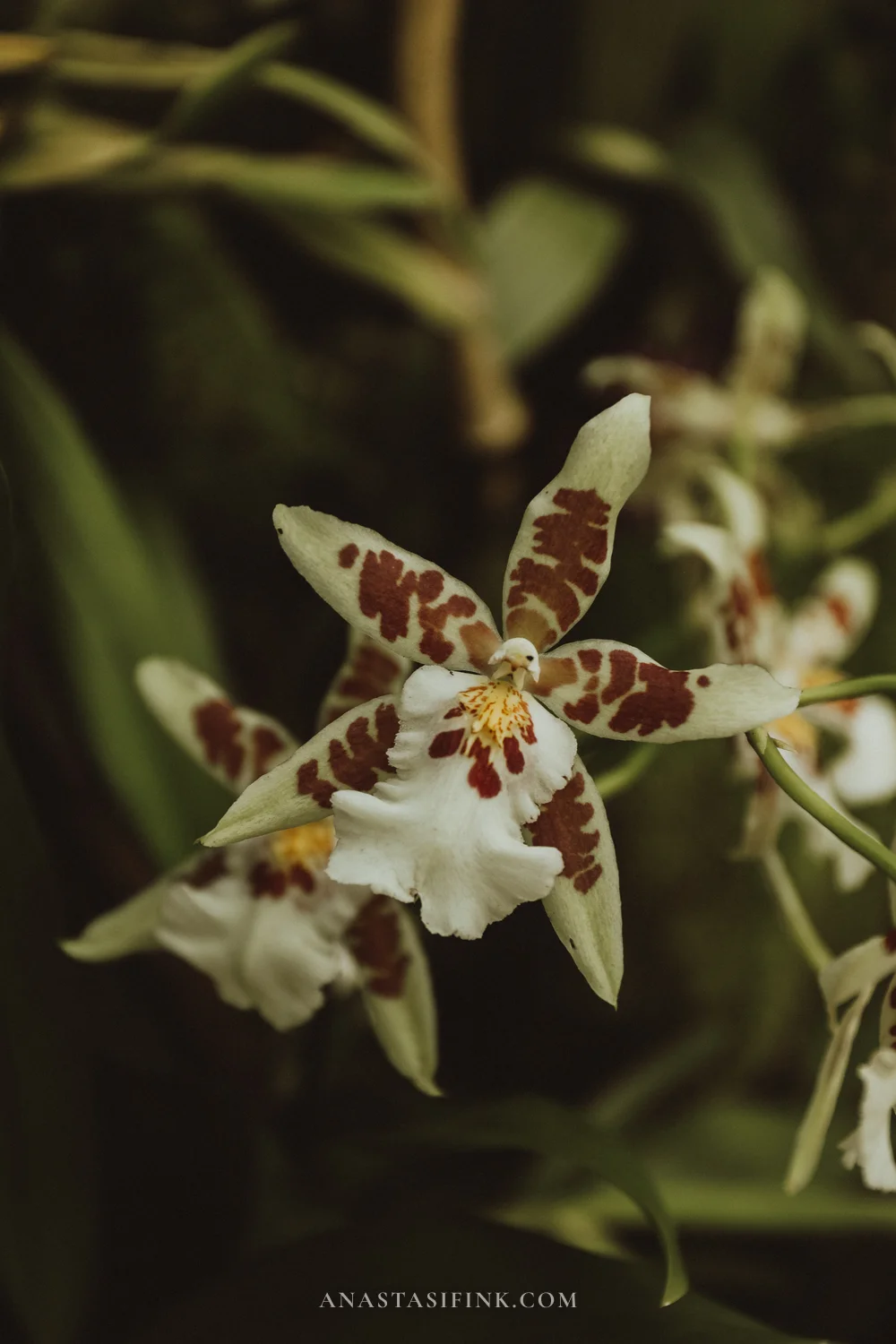
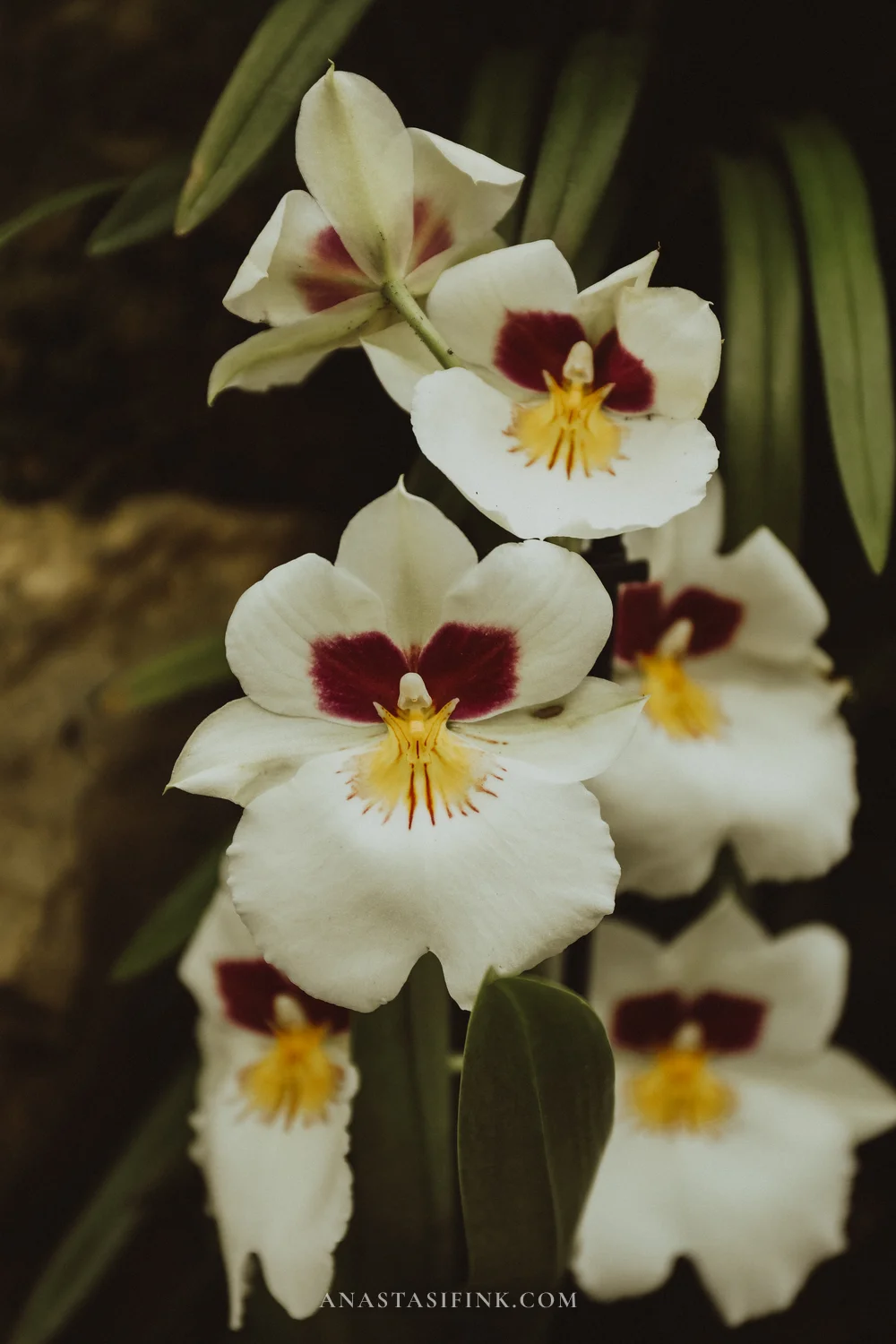
A speckled one, a two-tone one and a pansy orchid.
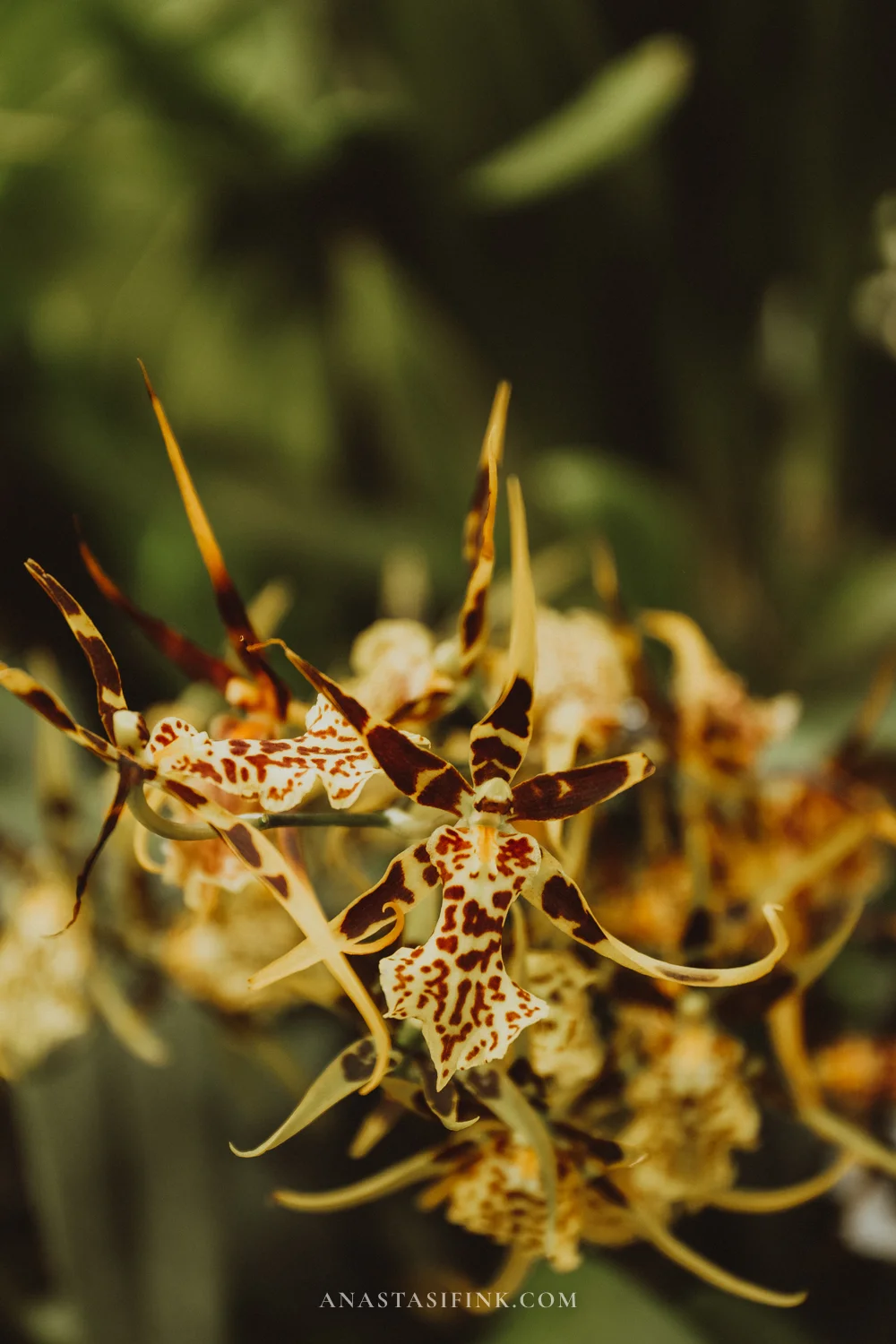
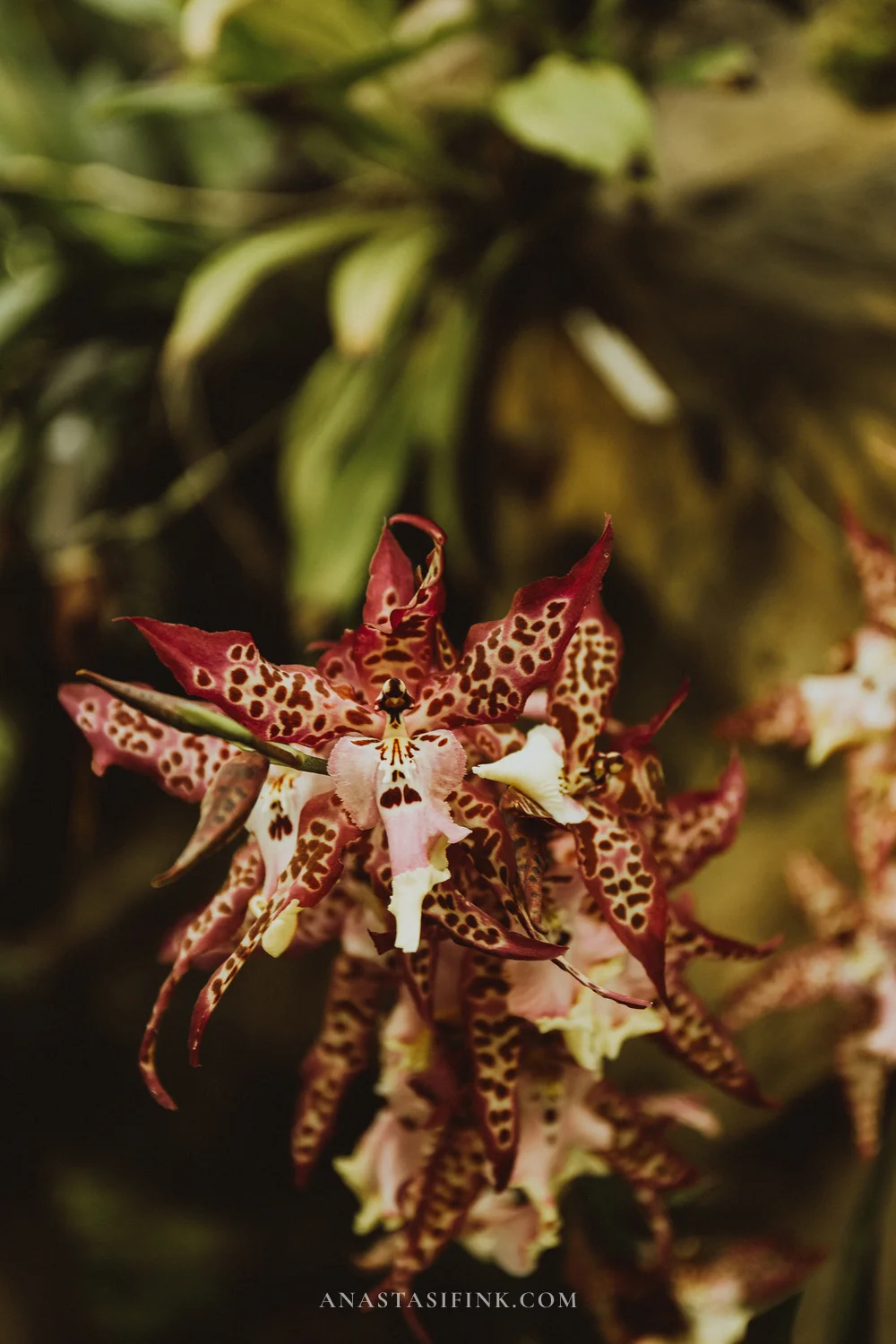
Spider orchids with their long petals.
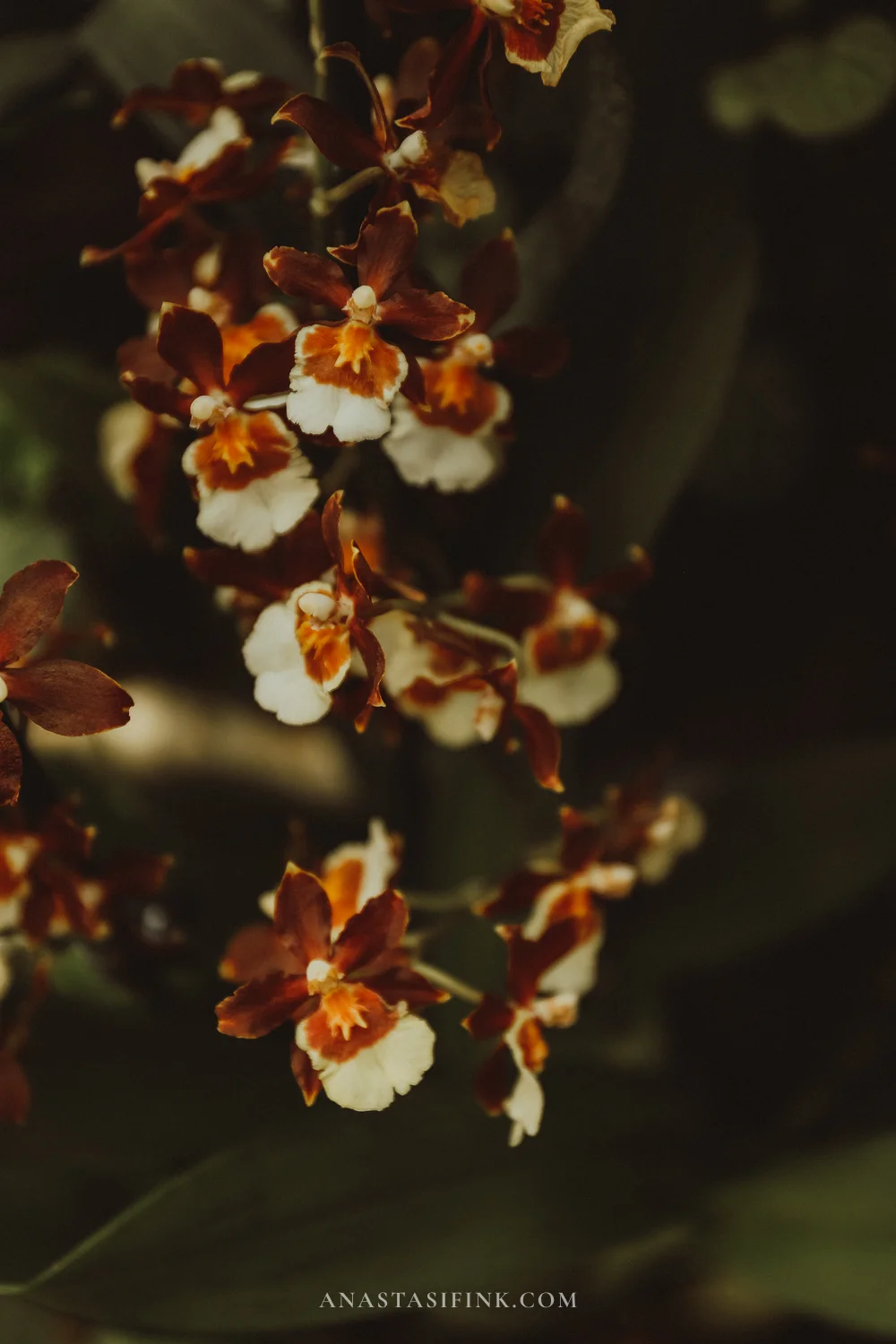
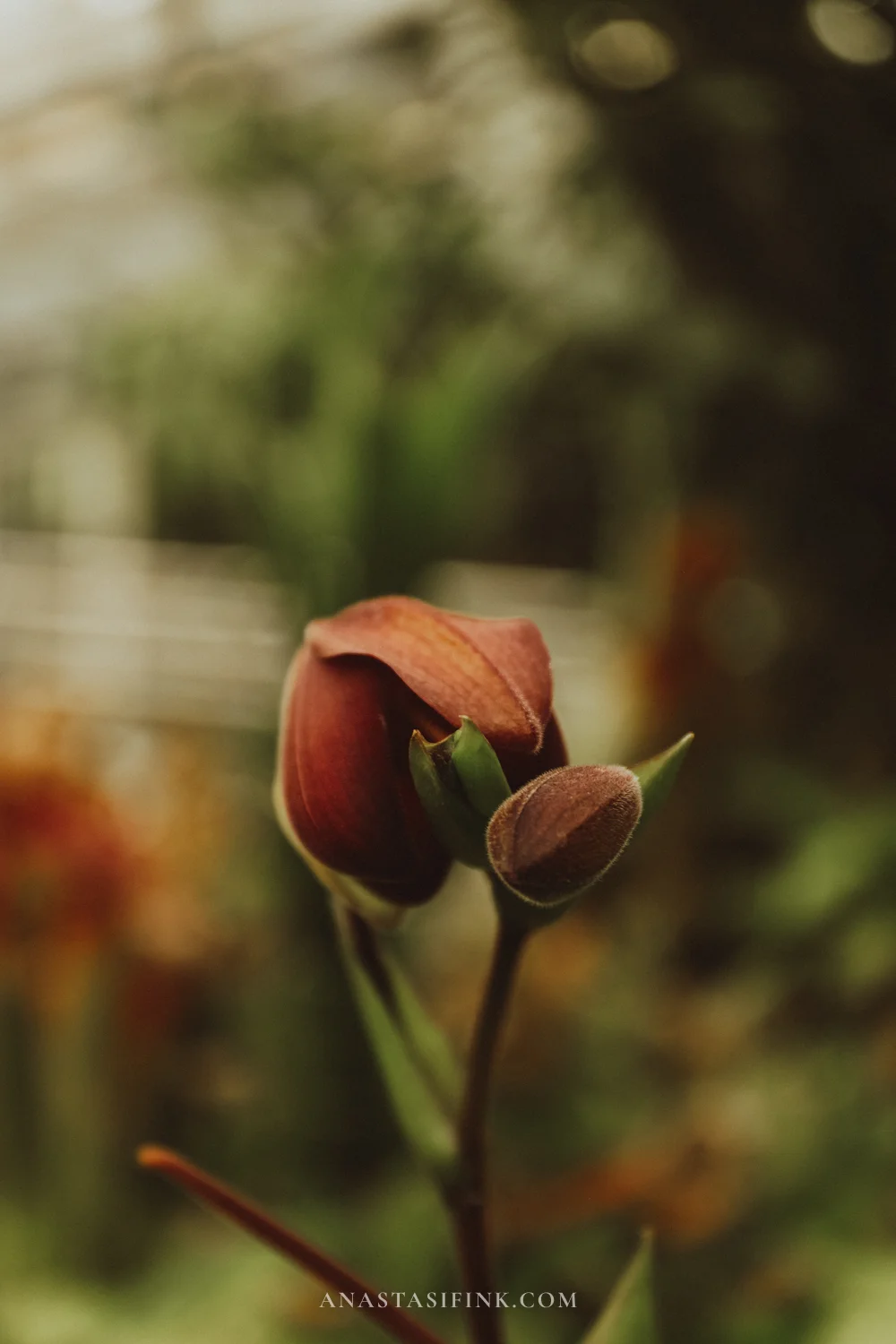
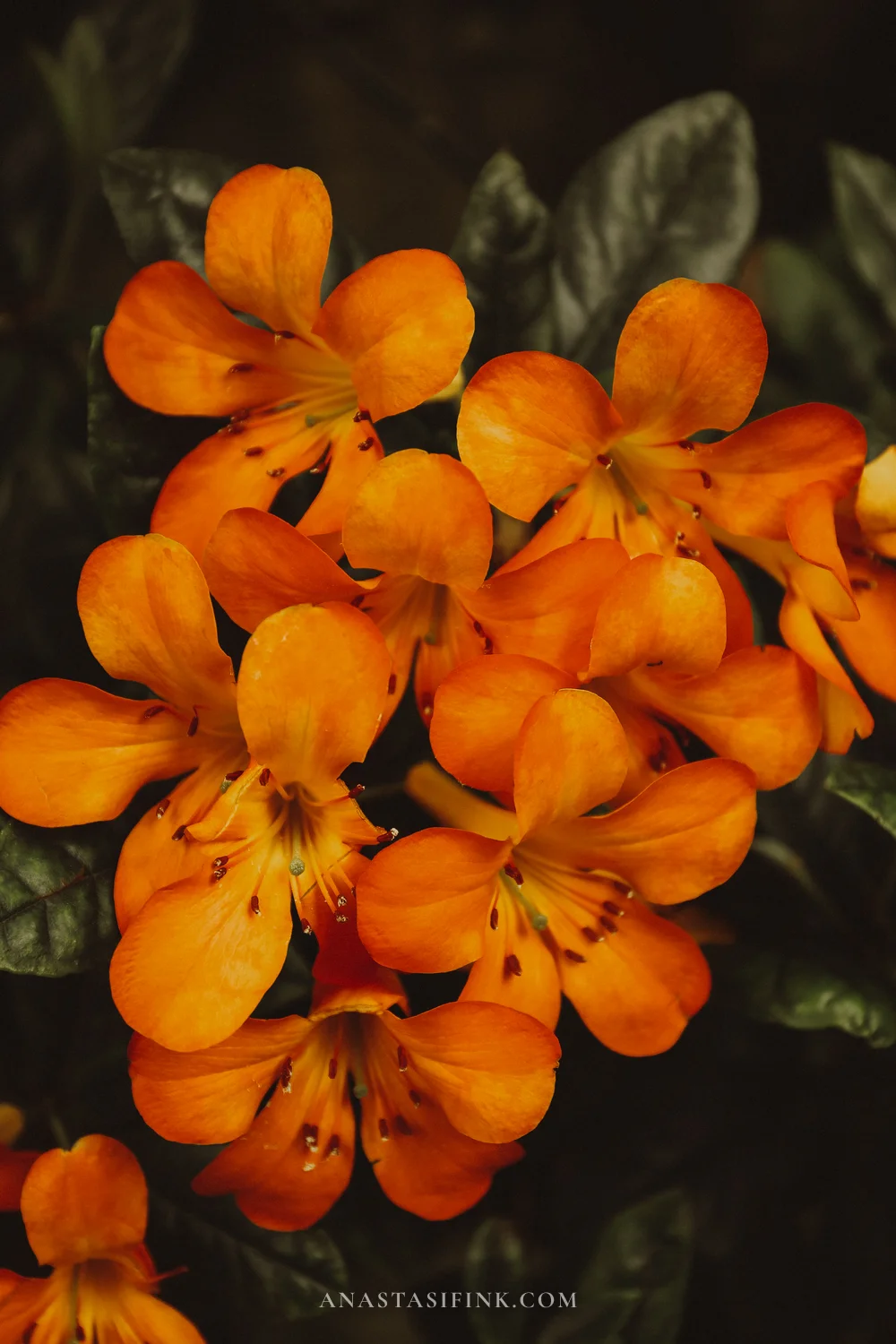
An Oncidium, a bud and an orange vireya rhododendron.
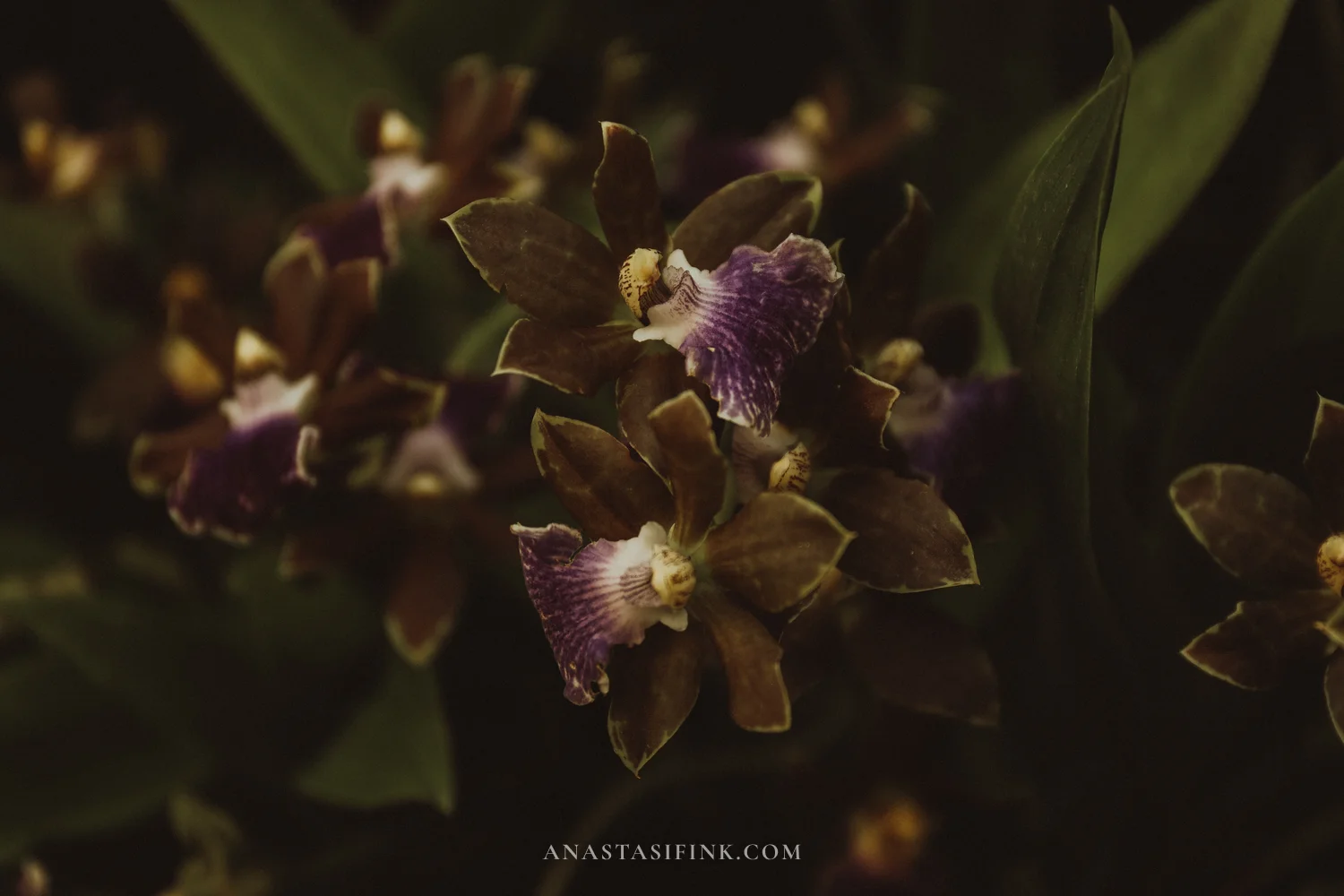
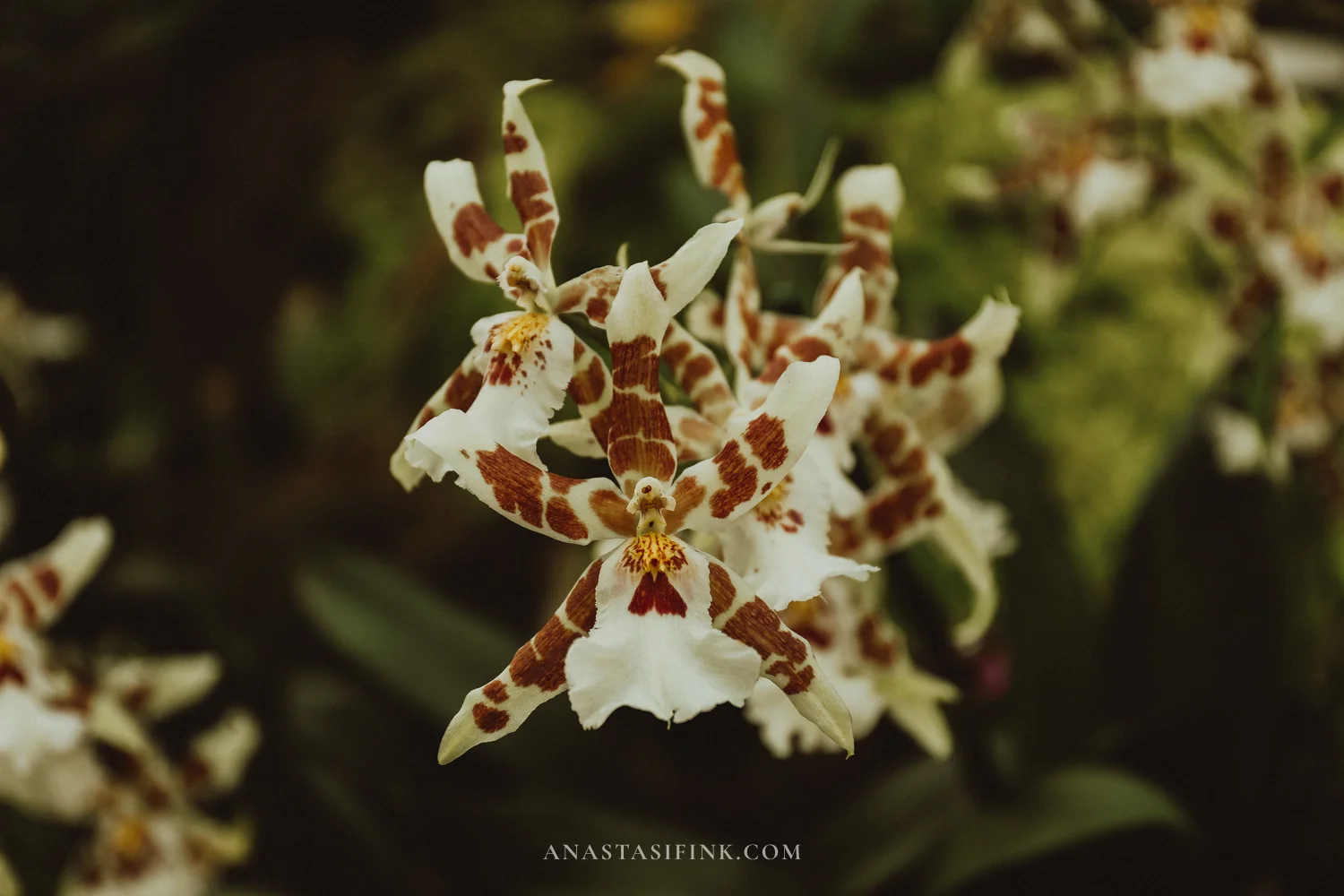
A couple more orchids from the glasshouse.
Practical information
Singapore Botanic Gardens — the essentials
- Address: 1 Cluny Road, Singapore 259569
- GPS: 1.3138, 103.8159
- Park hours: 5:00 – 00:00, daily
- Park admission: free
- Orchid Garden hours: 8:30 – 19:00 daily (last entry 18:00)
- Orchid Garden tickets: S$15 (~US$11 / ~£9) adult for overseas visitors; S$3 students and seniors; children under 12 free
- How long to allow: half a day for the park; at least 2 hours for the orchids alone
- Website: nparks.gov.sg/sbg
How to get there
- By MRT (metro): take the Circle Line or Downtown Line to Botanic Gardens station (CC19/DT9). The Bukit Timah Gate is a 2-minute walk from the exit — this is the closest entrance to the rainforest and the orchid garden.
- To the other end of the park: the park stretches about 2.5km down to Swan Lake and the Tanglin Gate — a long but lovely walk between the two gates.
- By bus: buses 7, 75, 77, 105, 106, 123 and 174 stop at the Tanglin Gate; buses 48, 66, 67, 151, 153, 154, 156 and 170 stop at the Bukit Timah Gate.
- By taxi or Grab: quick and cheap from the centre (about 15 minutes from Orchard Road).
- Getting to Singapore: Changi Airport is the regional hub and is well connected from London and other major hubs, often with a single non-stop flight. Most Western visitors (UK, US, EU, Australia and more) get visa-free entry for up to 30–90 days, so for a short trip there’s no visa to arrange.
Tips
- Come early. The park opens at 5am and the orchid garden at 8:30am. Mornings are cooler and calmer; by midday the heat gets serious.
- Bring water and top up your bottle. It’s hot and humid year-round, and there are free drinking fountains around the park. Tap water in Singapore is safe to drink.
- Light clothes and sunscreen, but pack a thin layer for the Cool House — it really is cold inside.
- What to pair it with: a morning here and an afternoon on nearby Orchard Road, or save a separate day for Gardens by the Bay.

FAQ
Take the MRT (Circle Line or Downtown Line) to Botanic Gardens station — the Bukit Timah Gate is a 2-minute walk away and is the closest entrance to the orchids. Several bus routes stop at the Tanglin and Bukit Timah gates, and a taxi from the centre takes about 15 minutes.
The main park is completely free and open from 5am to midnight. You only pay for the National Orchid Garden — S$15 (about US$11) for an overseas adult, with discounts for students and seniors and free entry for children under 12.
Allow at least two hours to take in the colour gardens, the VIP orchids, the mist house and the Cool House without rushing. If you also want to walk the rest of the park — Swan Lake and the rainforest — plan on half a day.
Early morning. The park opens at 5am and the orchid garden at 8:30am, and the air is cooler and calmer before the tropical heat peaks around midday. The orchids flower year-round, so there’s no off-season.
Most Western visitors don’t. Travellers from the UK, US, EU, Australia and many other countries get visa-free entry for short stays (typically up to 30–90 days), so a city break needs no visa — just a valid passport. Check the latest official rules before you fly, as requirements can change.
Swan Lake (Singapore’s oldest ornamental lake), six hectares of primary rainforest with a boardwalk, waterfalls, century-old trees and — if you’re lucky — wild otters.
Yes. It’s a UNESCO World Heritage Site, free to enter, and the National Orchid Garden alone — over 60,000 orchids on a single hill — wins over even people who aren’t usually fussed about flowers.
The nice thing is having it all in one place: a walk in the park, the rainforest and the orchids. If you’re in Singapore, the garden is well worth setting aside at least half a day for.