Gijón, Spain – What to See: Old Town, Coastal Trail, Market and Food

Gijón is the largest city in Asturias, on the north coast of Spain: a working port with a long city beach and an old fishermen’s quarter on a hill between the marina and the sea. It has a breakwater that waves fly over, a basilica painted from floor to vault, an old covered market, pastry shops with a century of history and a coastal cliff trail that starts right at the beach.
Gijón – what kind of city it is
Gijón (Xixón in Asturian) sits on the Bay of Biscay. It is a working, port city without a long list of must-see monuments, and that is exactly what makes it easy: there is no checklist to run through. I spent a few days here in early October. The centre is compact, the beach is two steps from the old town, and half an hour’s walk from the promenade you are on cliffs and beaches without a single building in sight.
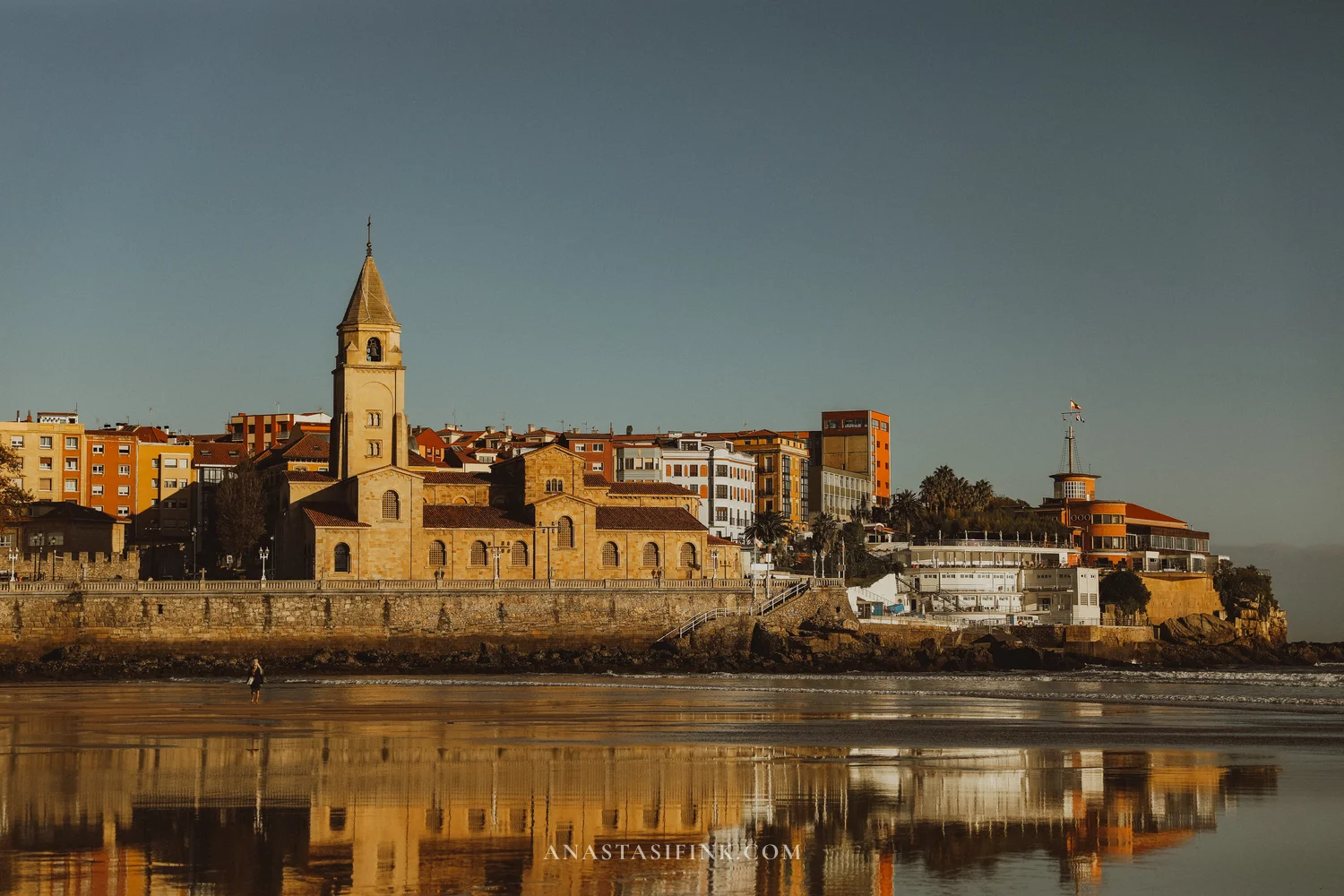
The old quarter is called Cimavilla (also spelled Cimadevilla). It takes up a small peninsula: the marina and port on one side, Playa de San Lorenzo on the other, and on top the hill of Santa Catalina with a concrete sculpture by Chillida. This was the quarter of fishermen and tobacco factory workers, and its residents are still called “playos”. It is quiet during the day; in the evening the sidrerías open – that is what Asturians call the places where you drink natural cider and snack on seafood.
Cimavilla – the old town in the morning
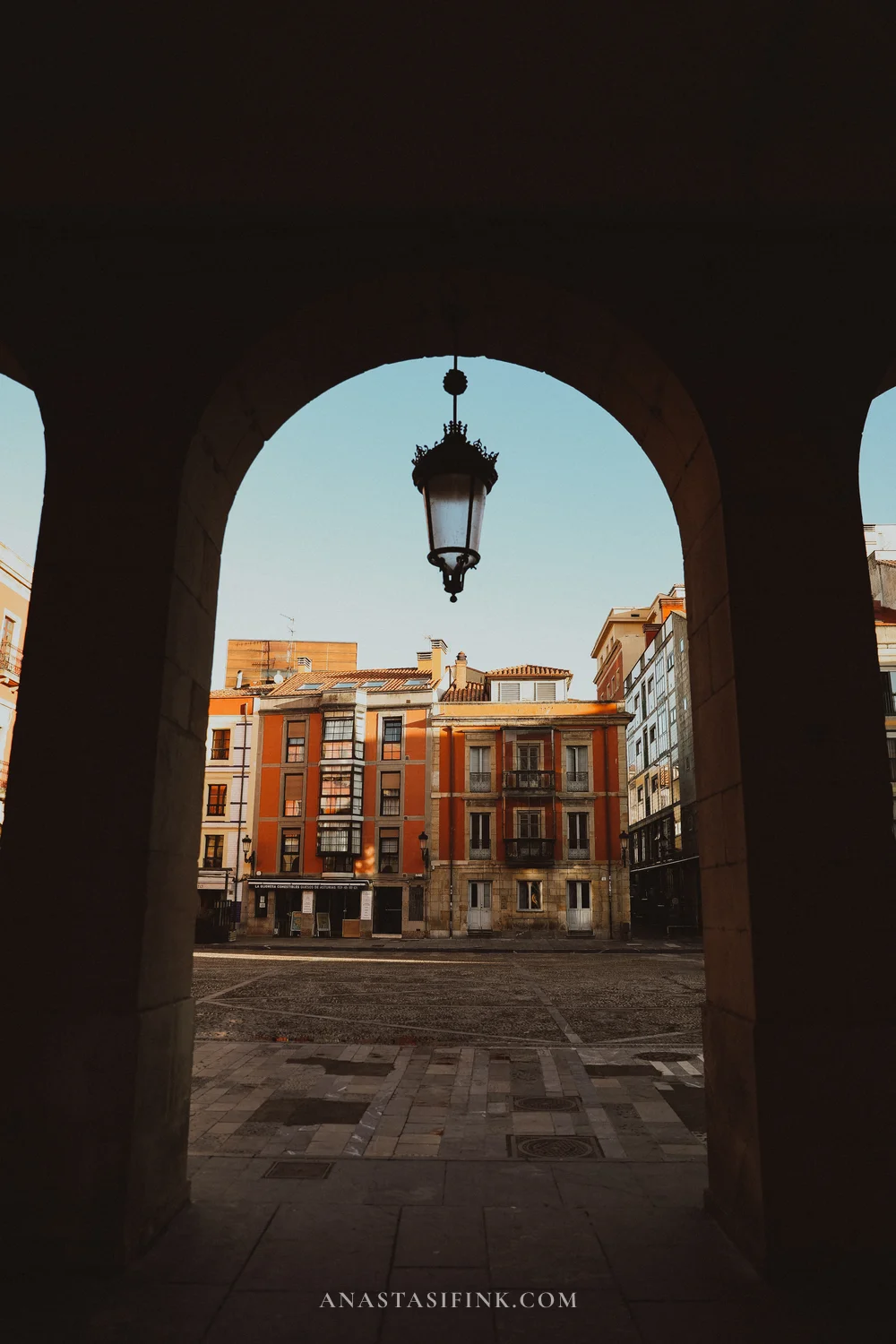
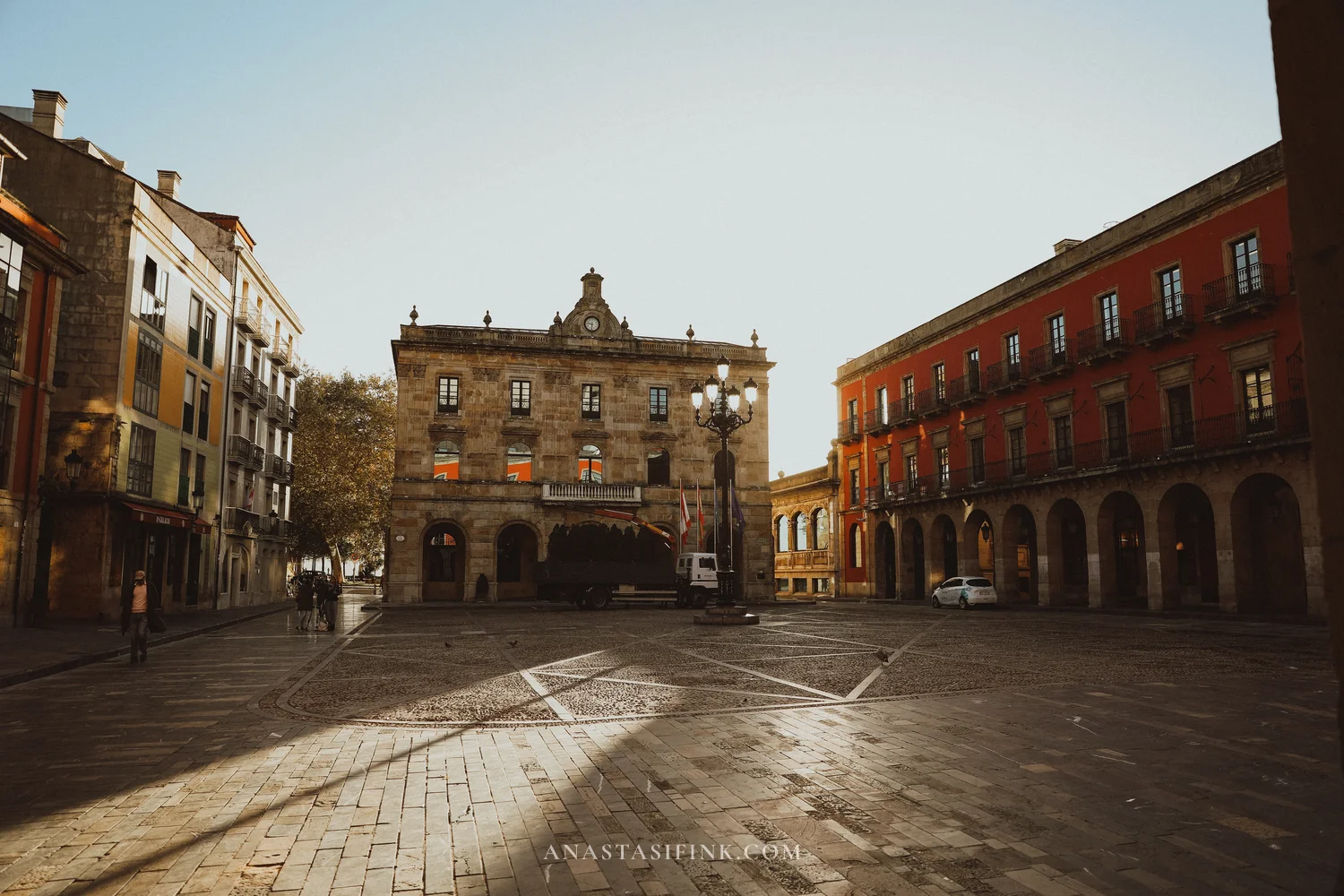
I went out at around eight, and there was nobody on Plaza Mayor except a street-cleaning truck. This is the city’s main square: the nineteenth-century town hall on one side and arcaded houses with cafés underneath on the others. The carnival and the main city festivals happen here.
Next to it is Plaza del Marqués with the monument to Pelayo, the first king of Asturias, who started the Reconquista in the eighth century. The square is closed off by the Palacio de Revillagigedo: baroque, early eighteenth century, with two crenellated towers. The towers look identical, but one of them is three hundred years older than the other – the palace was built onto a medieval tower. Today it is an exhibition centre. The collegiate church of San Juan Bautista adjoins the palace on the left and hosts concerts.
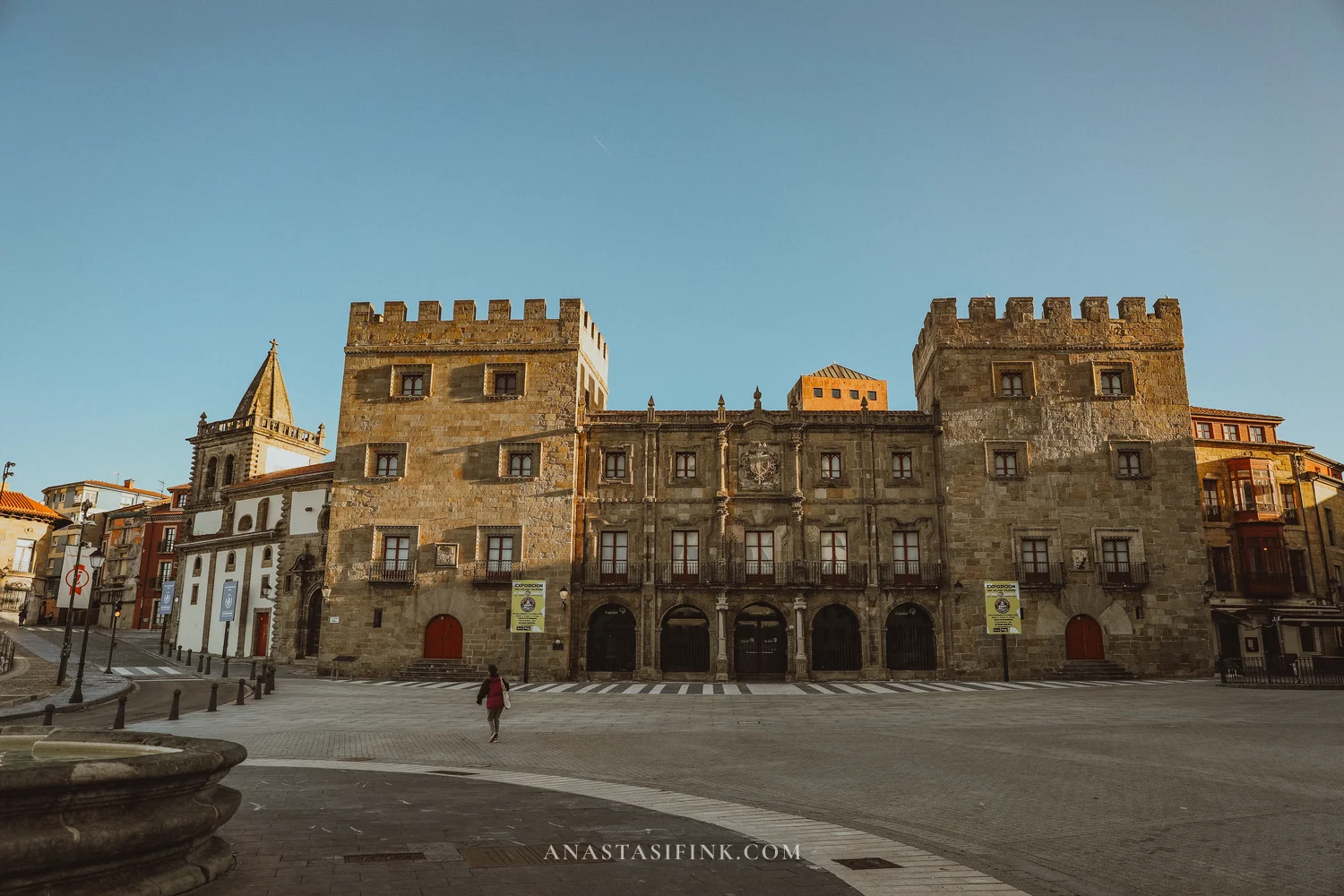
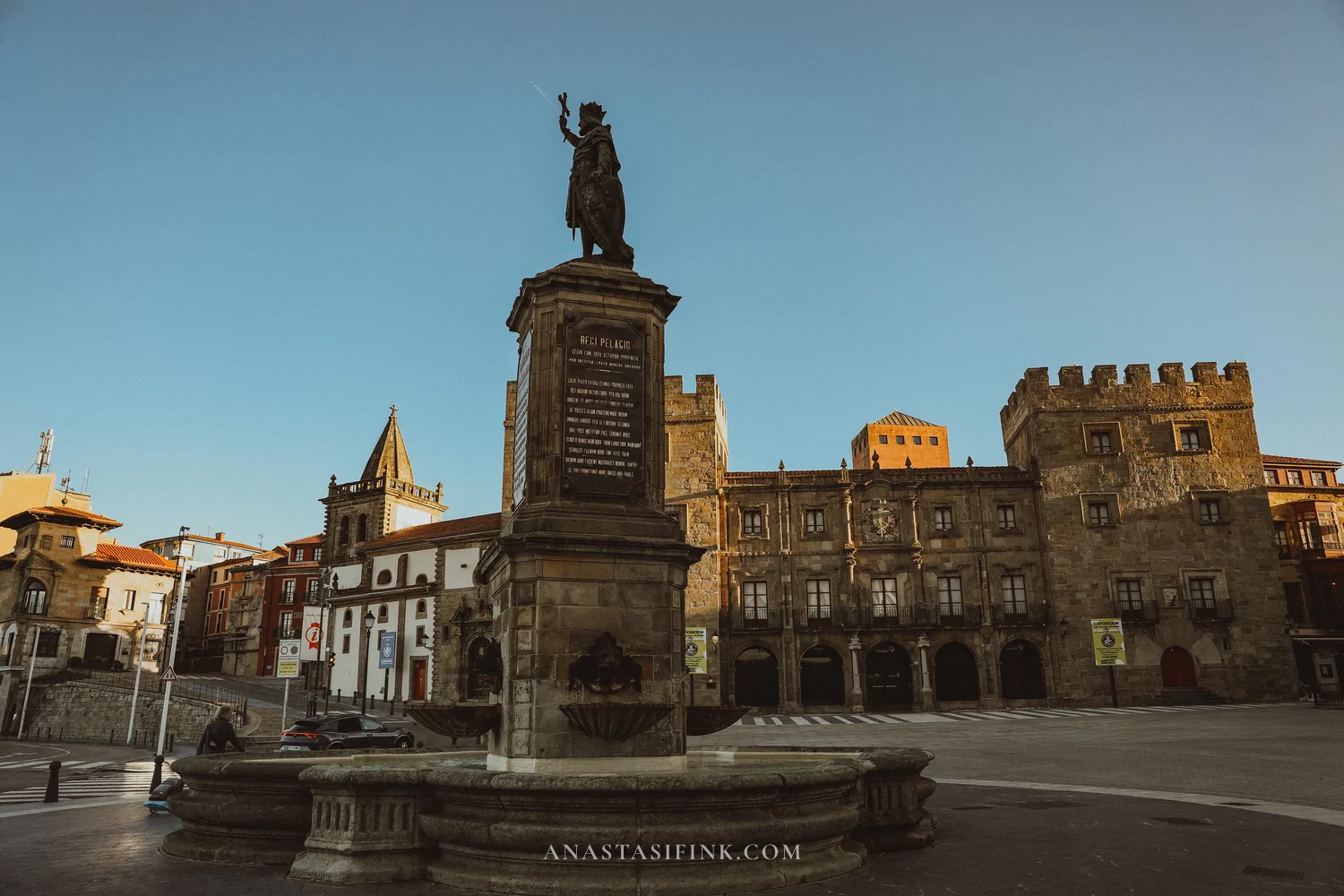
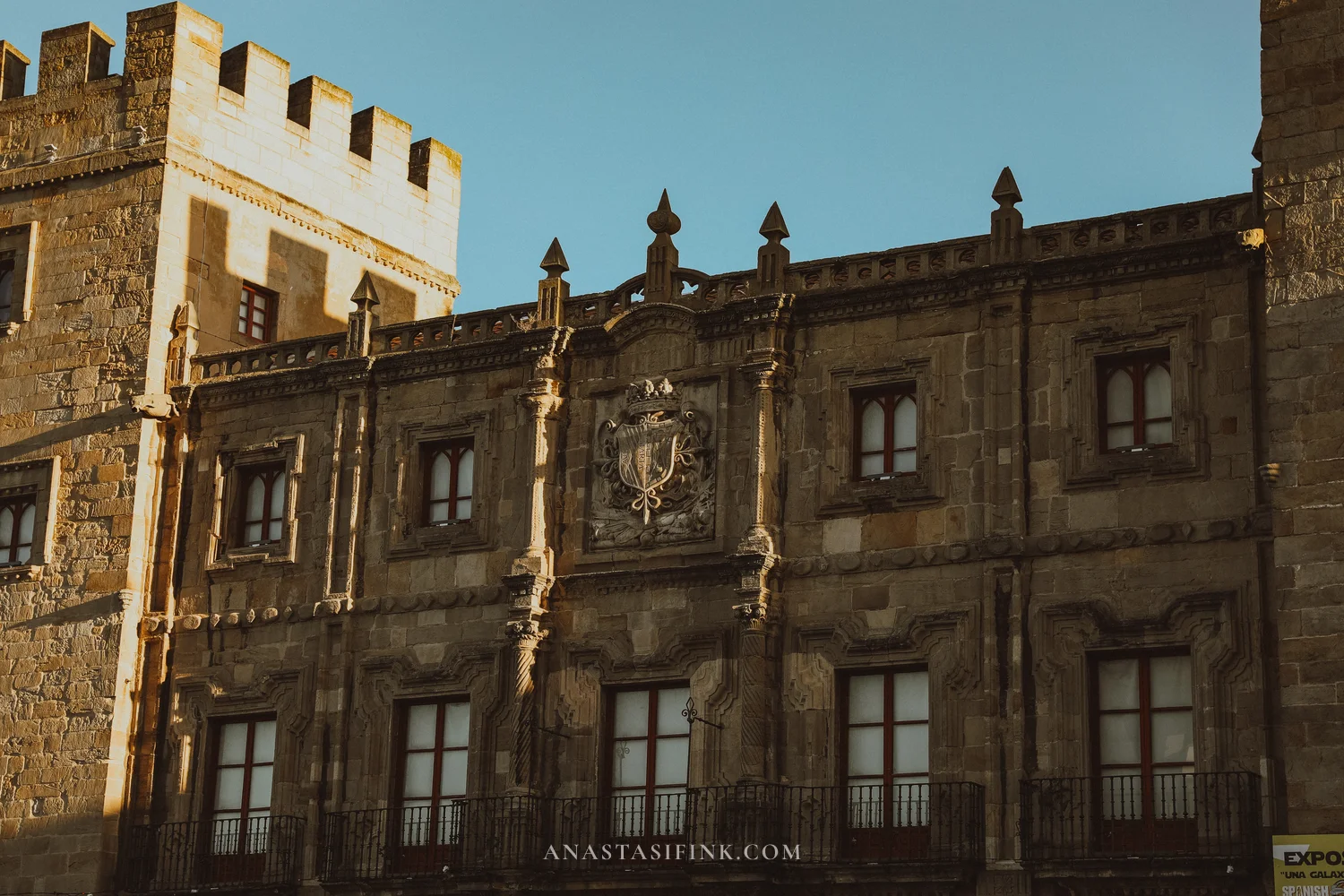
Pelayo monument and the palace coat of arms
From here, just follow the streets uphill. Cimavilla is small: stone houses with glazed wooden galleries, an old chapel with a bell on its gable end, steep lanes that run straight into the sea. Above a brick wall by one of the houses, a green dragon’s head sticks out.
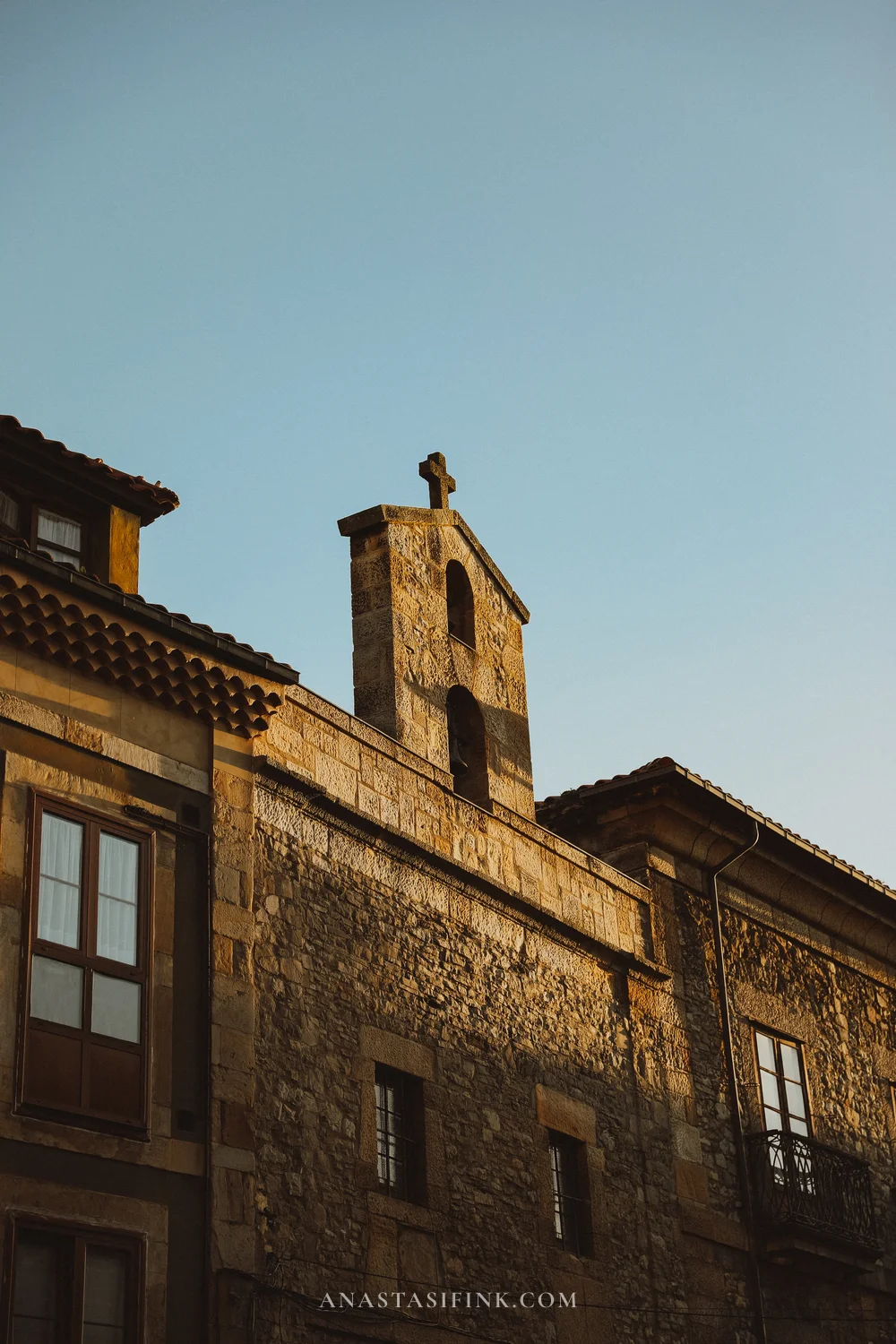
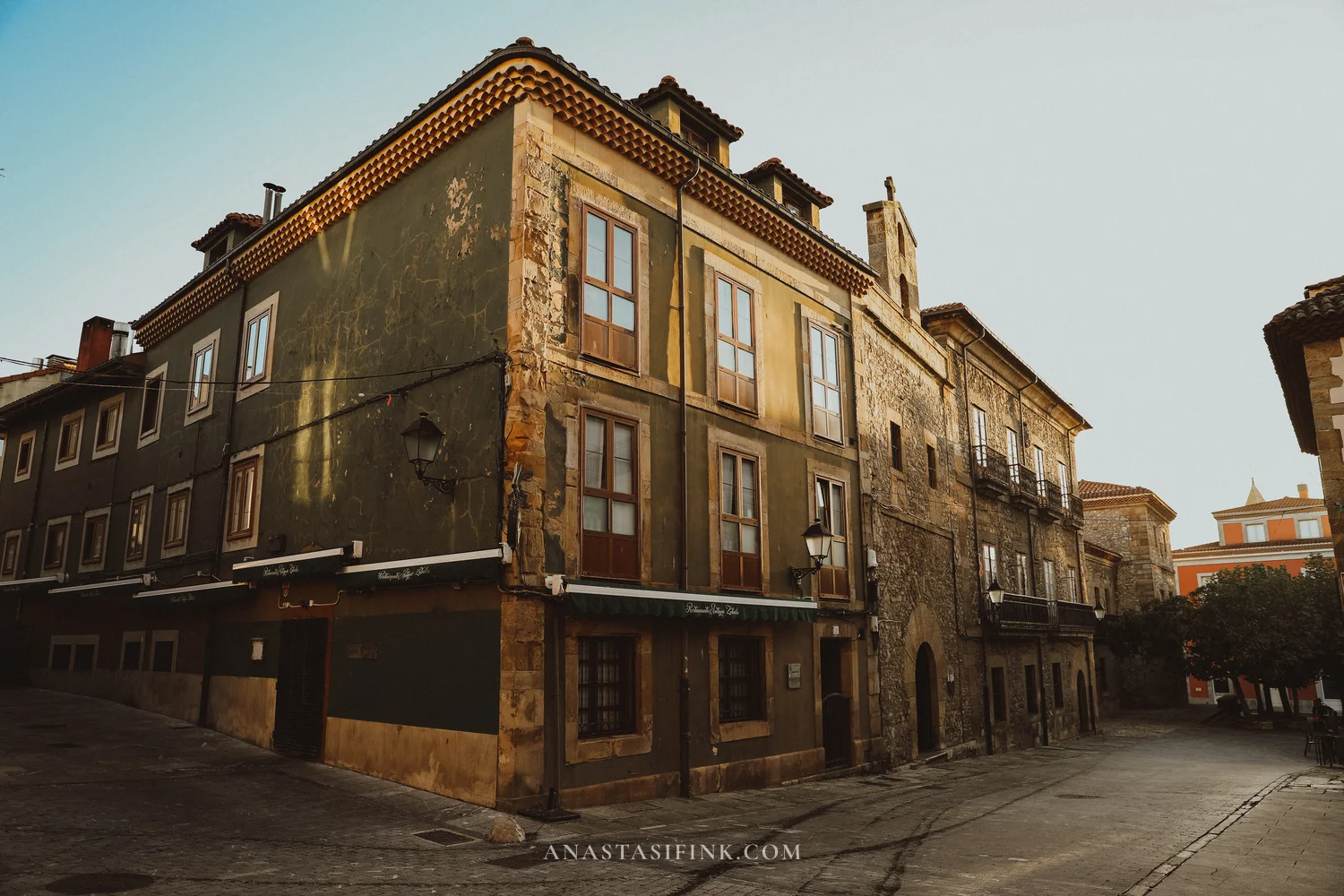
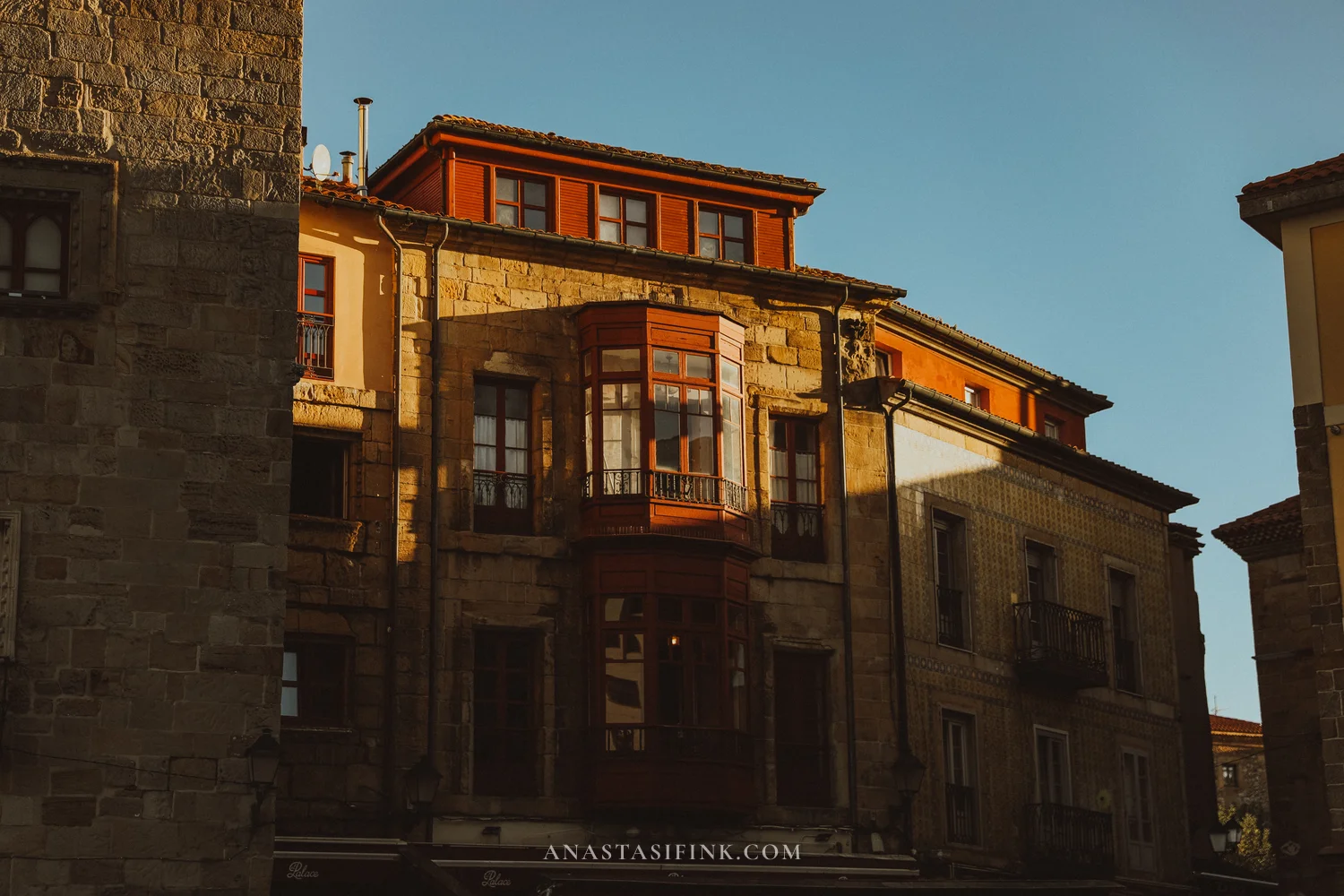
Houses of the old quarter
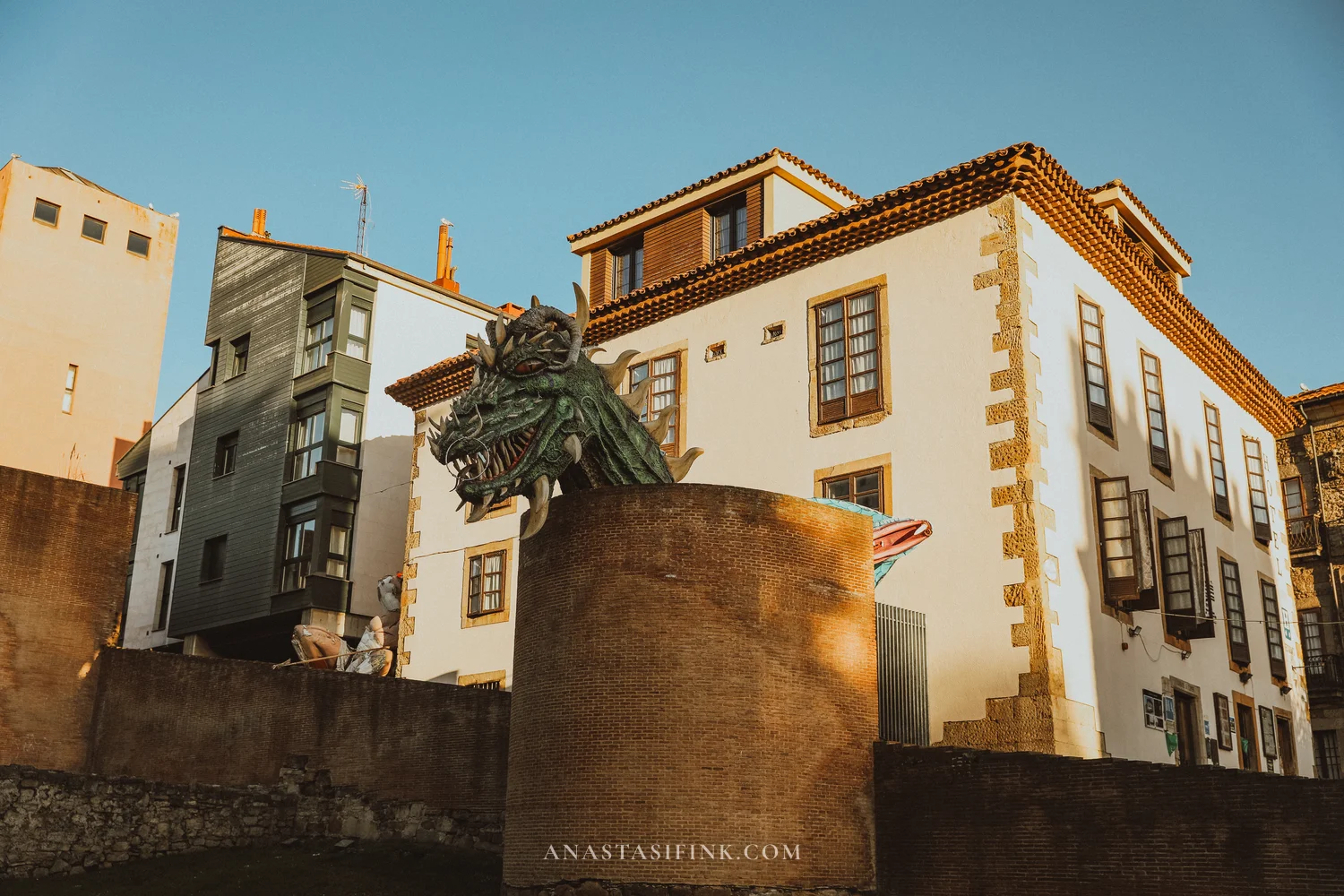
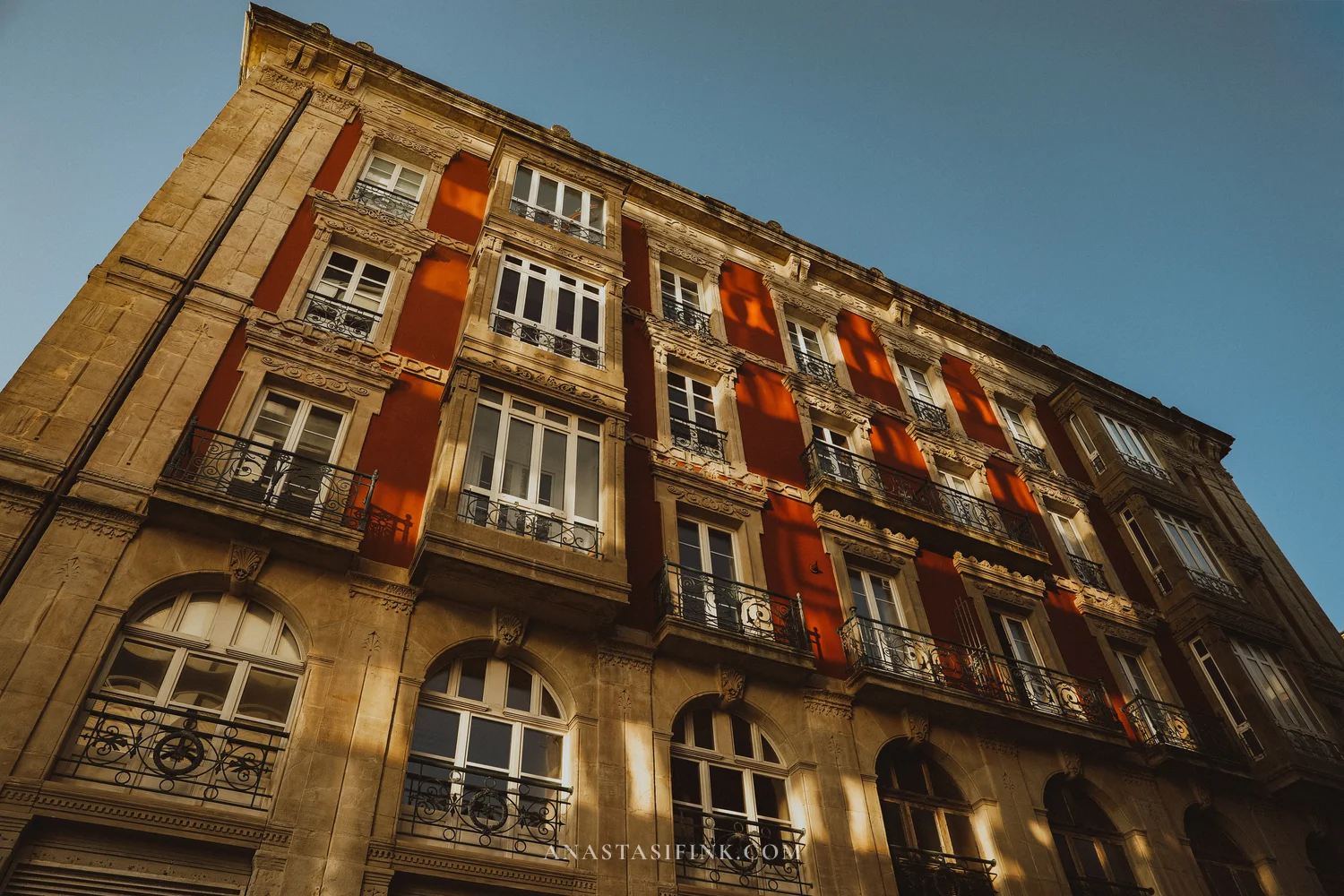
Dragon over the wall and a facade in the centre
At the top of the peninsula is the hill of Santa Catalina. For over a hundred years it was a military zone closed to the public; the park opened in 1990 together with “Elogio del Horizonte” (In Praise of the Horizon), a sculpture by the Basque artist Eduardo Chillida. It is a concrete arch weighing around five hundred tons that people grumbled about at first and now print on every postcard. Inside the arch the sea hums – step in and listen. From the hill you can see the port of El Musel with its cranes, all in haze at sunset.

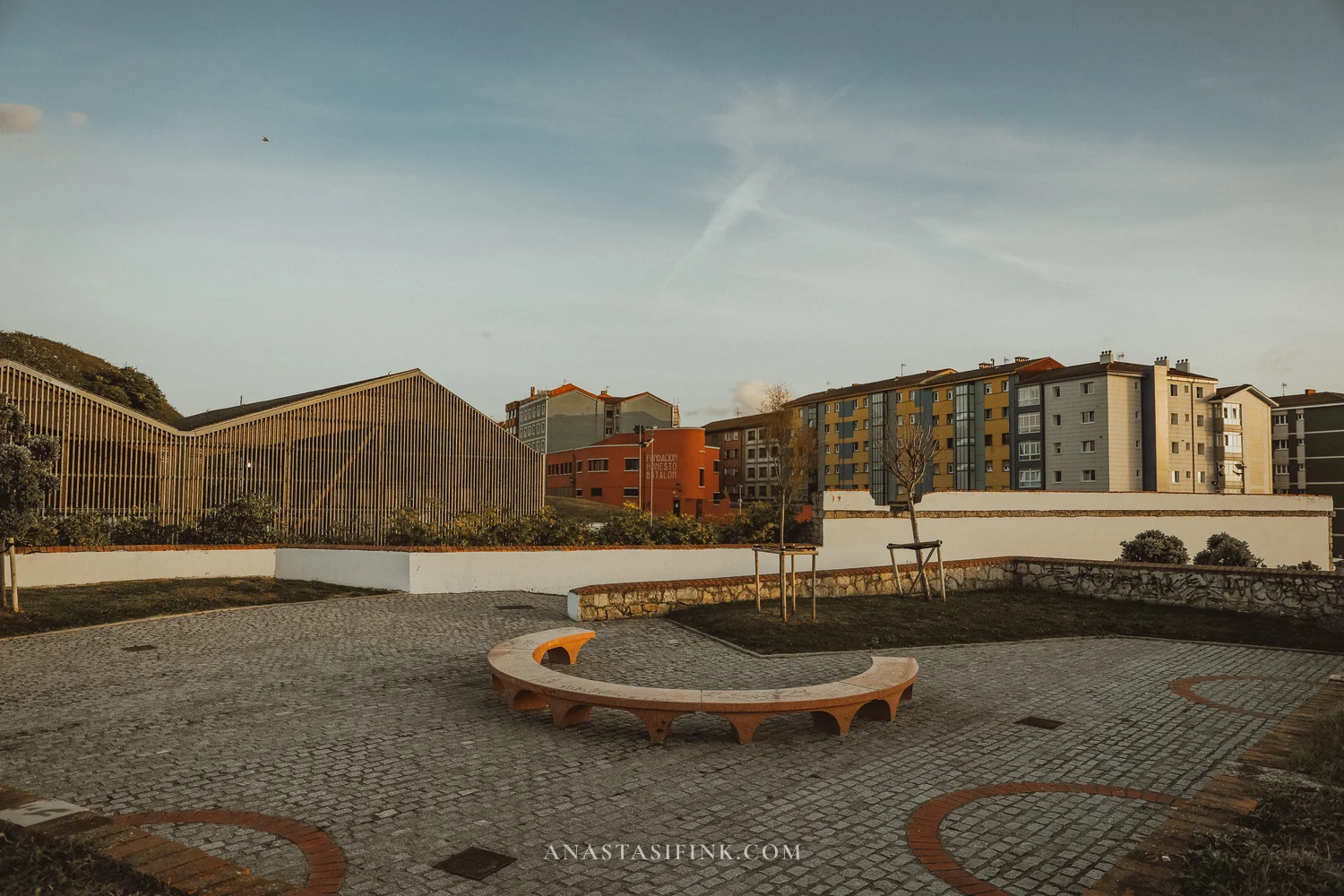
El Musel port from the hill and a square on the edge of Cimavilla
On the beach side the quarter ends at Campo Valdés. Here stand the church of San Pedro, a monument to Emperor Augustus and the museum of the Roman baths: baths from the first and second centuries AD were found here in the early twentieth century, and they are now under glass, with free entry. Gijón began as the Roman settlement of Gigia, and this is the only visible thing left of it.
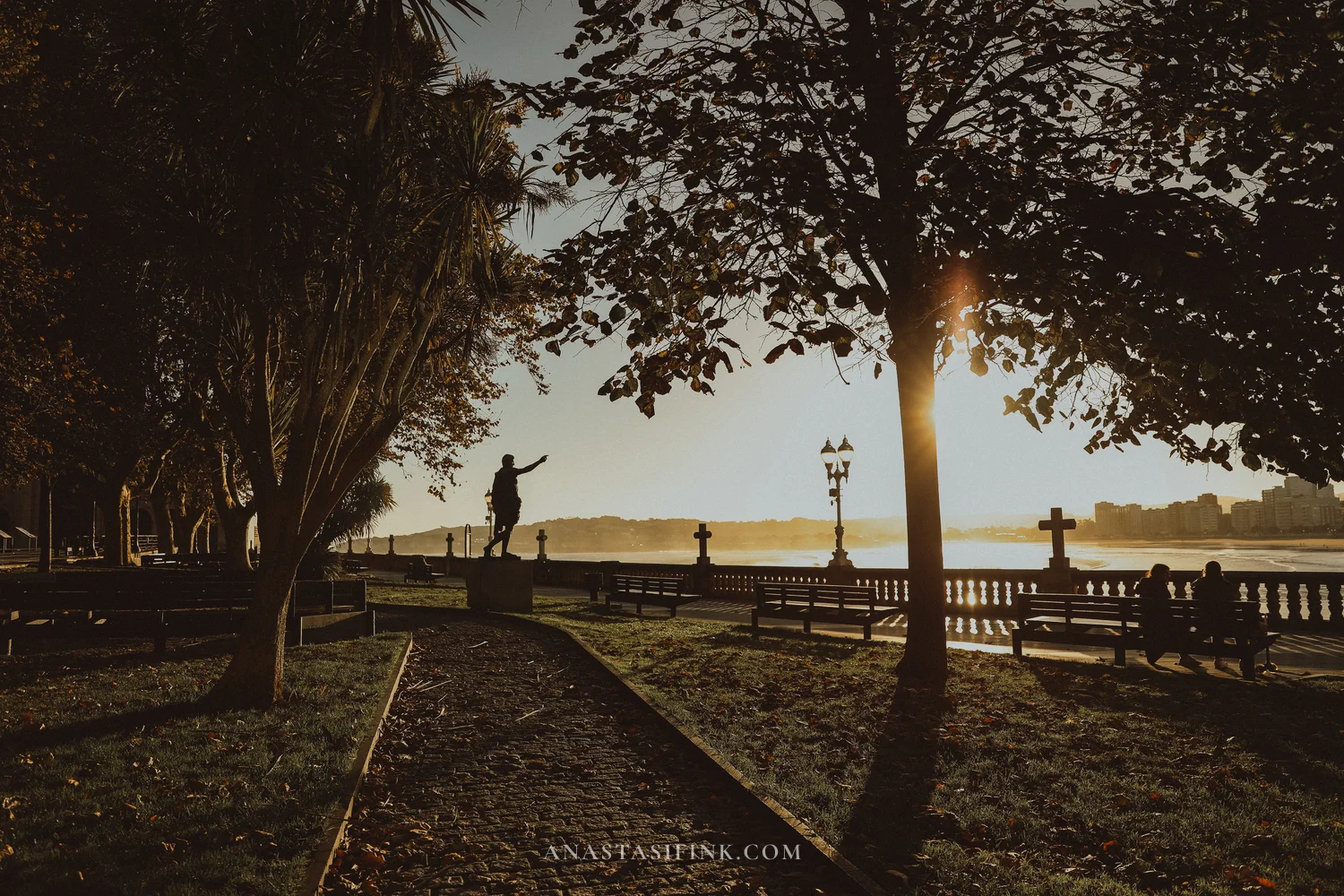

Campo Valdés: Augustus monument and San Pedro church
Practical information
- Museo de las Termas Romanas: Campo Valdés, free entry; Tue-Fri 9:30-14:00 and 17:00-19:30, Sat-Sun 10:00-14:00 and 17:00-19:30, closed on Mondays
- Palacio de Revillagigedo: Plaza del Marqués, exhibition centre, exhibitions are usually free
- Elogio del Horizonte: top of Santa Catalina hill, open access around the clock
- How long for Cimavilla: 1.5-2 hours without the museums
The marina and the breakwater the waves fly over
At the foot of Cimavilla, from Plaza del Marqués, a wide promenade with yachts runs along the marina, and beyond it the breakwater that shelters the port stretches out to sea. I came here in the evening, before sunset, when the promenade is full of people out for a stroll.
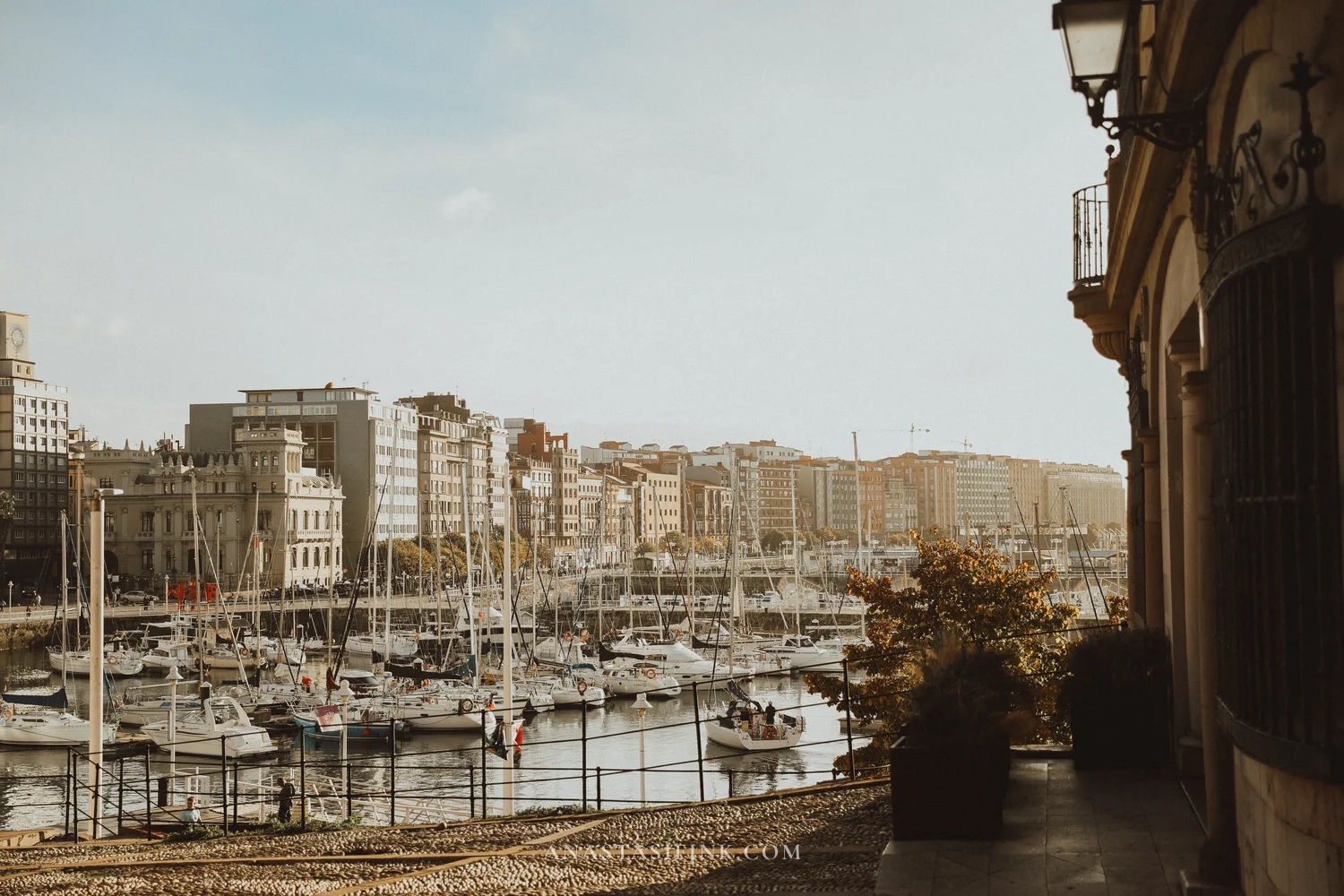
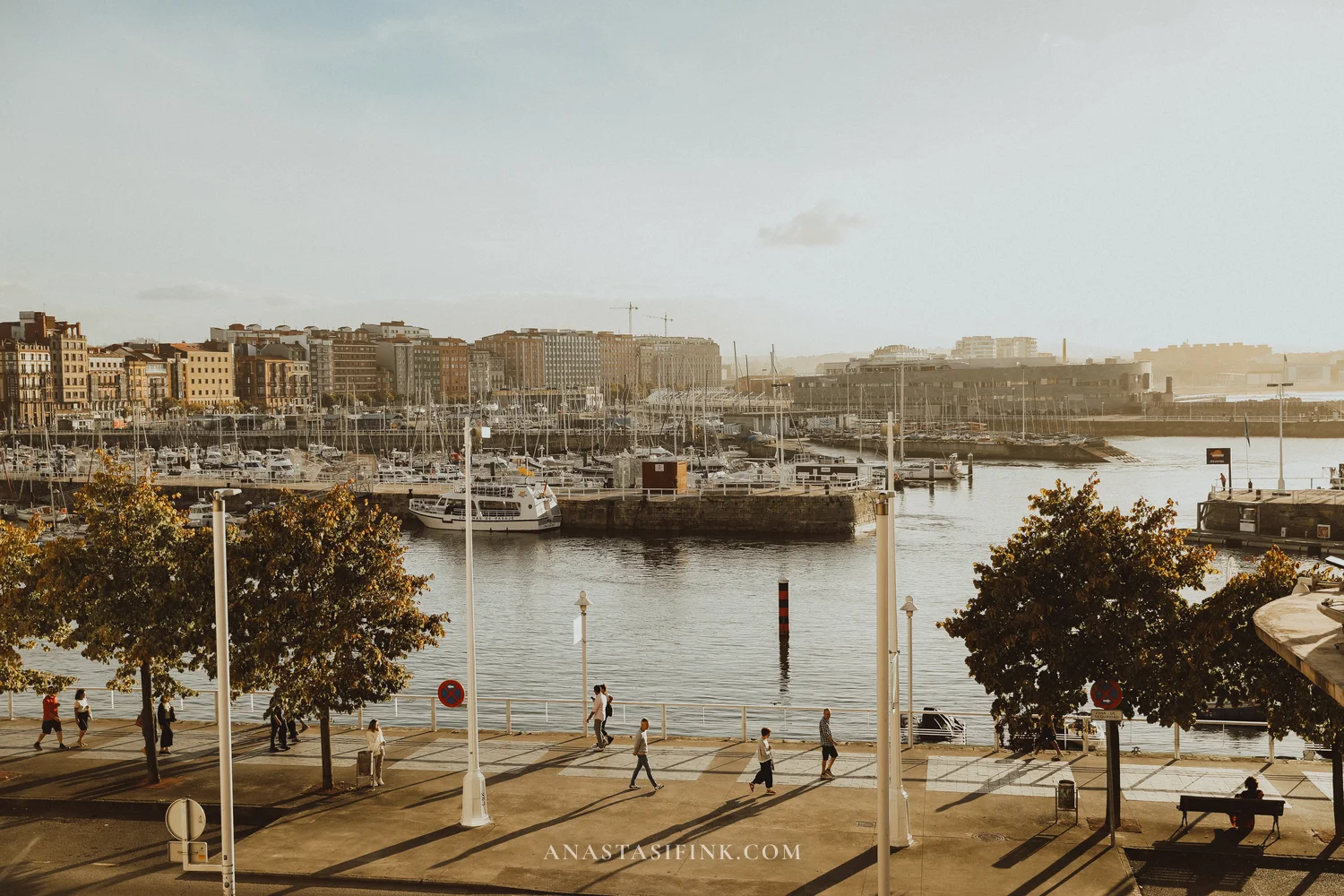
The marina in the evening
In the morning I walked through again: the water was flat, the yachts were mirrored in it, and behind them stood the row of colourful old-quarter houses.
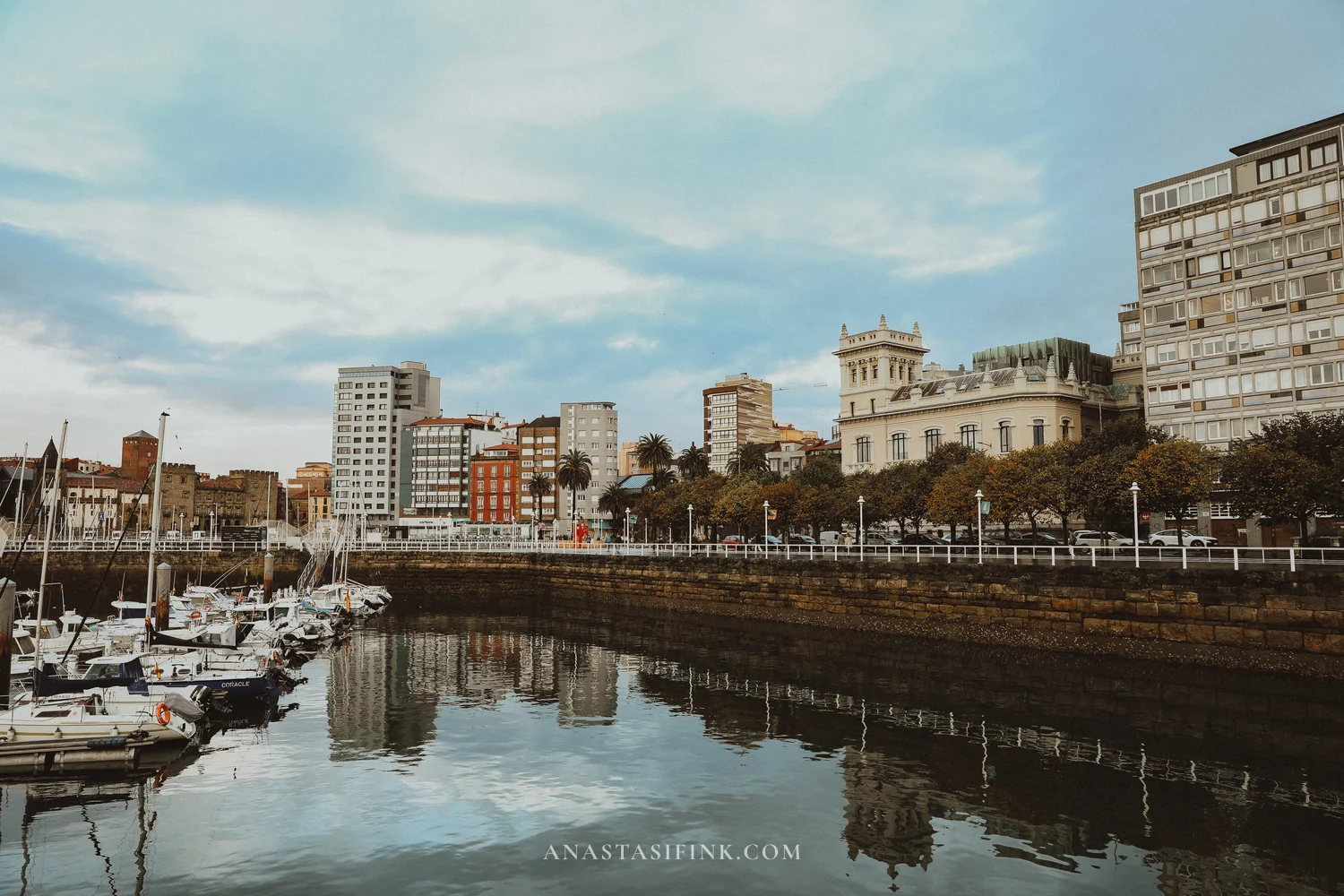
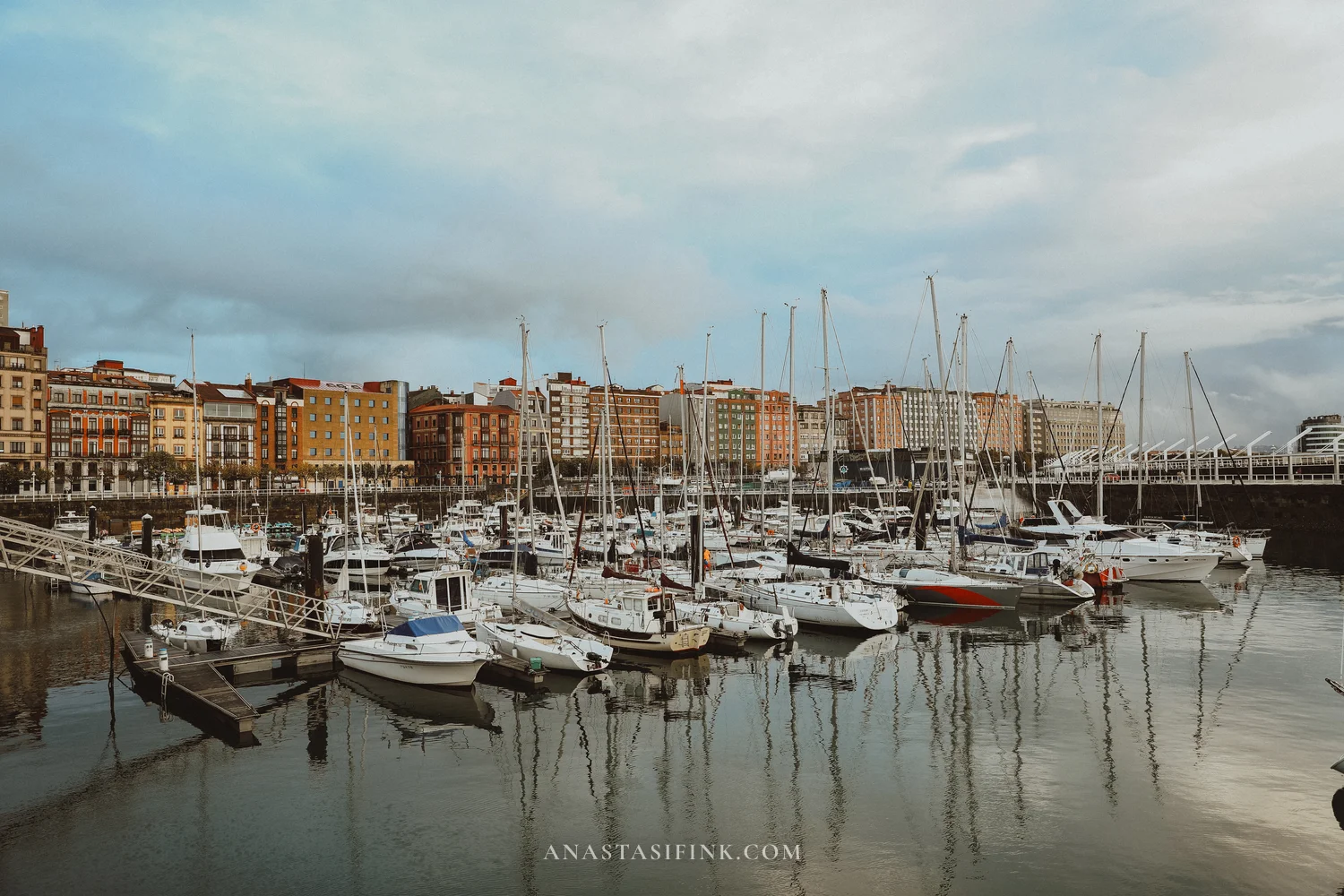
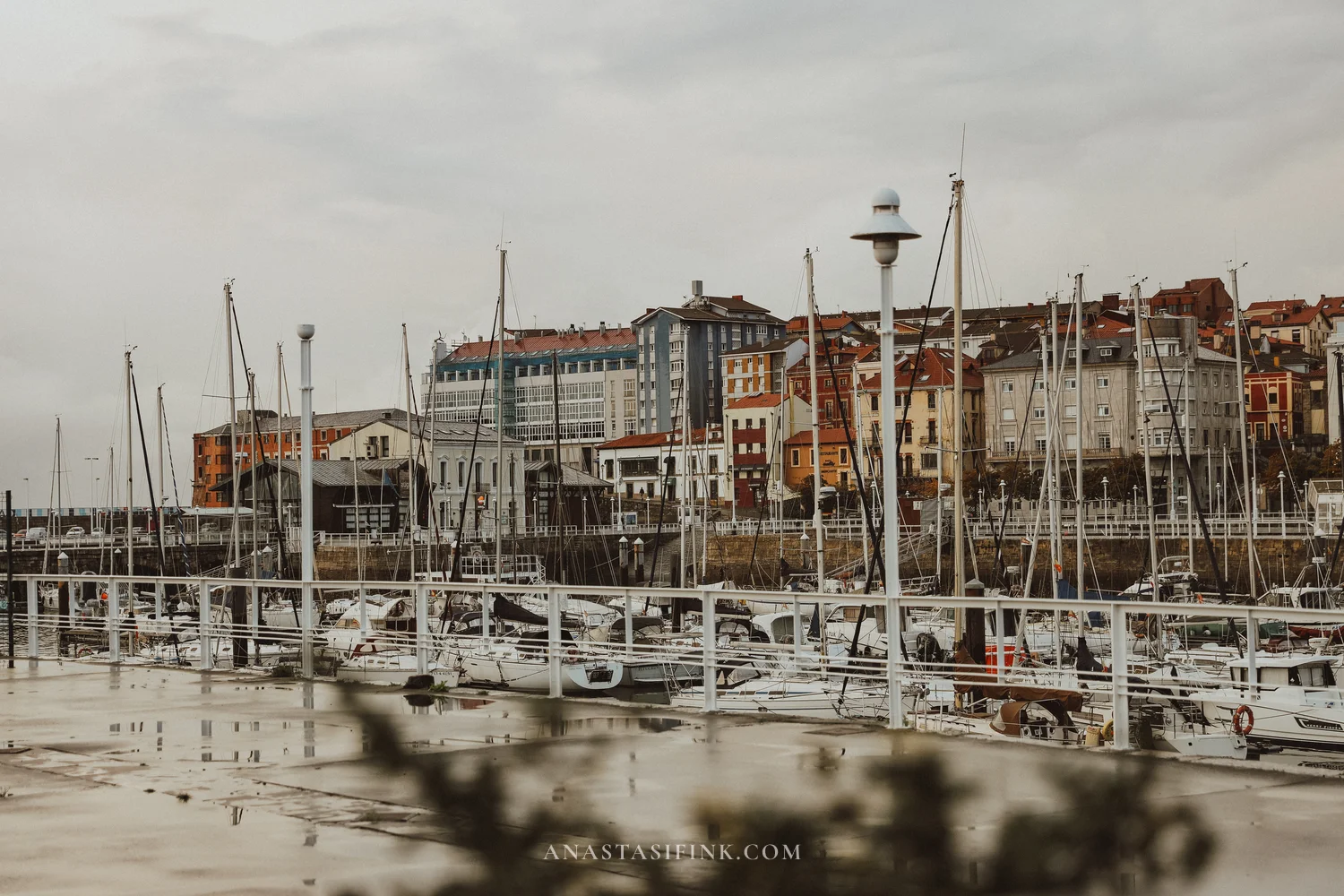
Yachts and Cimavilla houses
The breakwater has a concrete parapet painted in red and white stripes. When a swell comes in from the sea, it breaks against the wall and shoots up in a fountain of spray several metres high. That evening the waves were big: kids ran along the parapet and shrieked when they got drenched, while the adults stood a little further back waiting for the next one. It is easy to get soaked here, so keep your phone and camera out of the way. From the end of the breakwater you can see the whole city: the marina, Cimavilla on its hill and the sunset over the port.
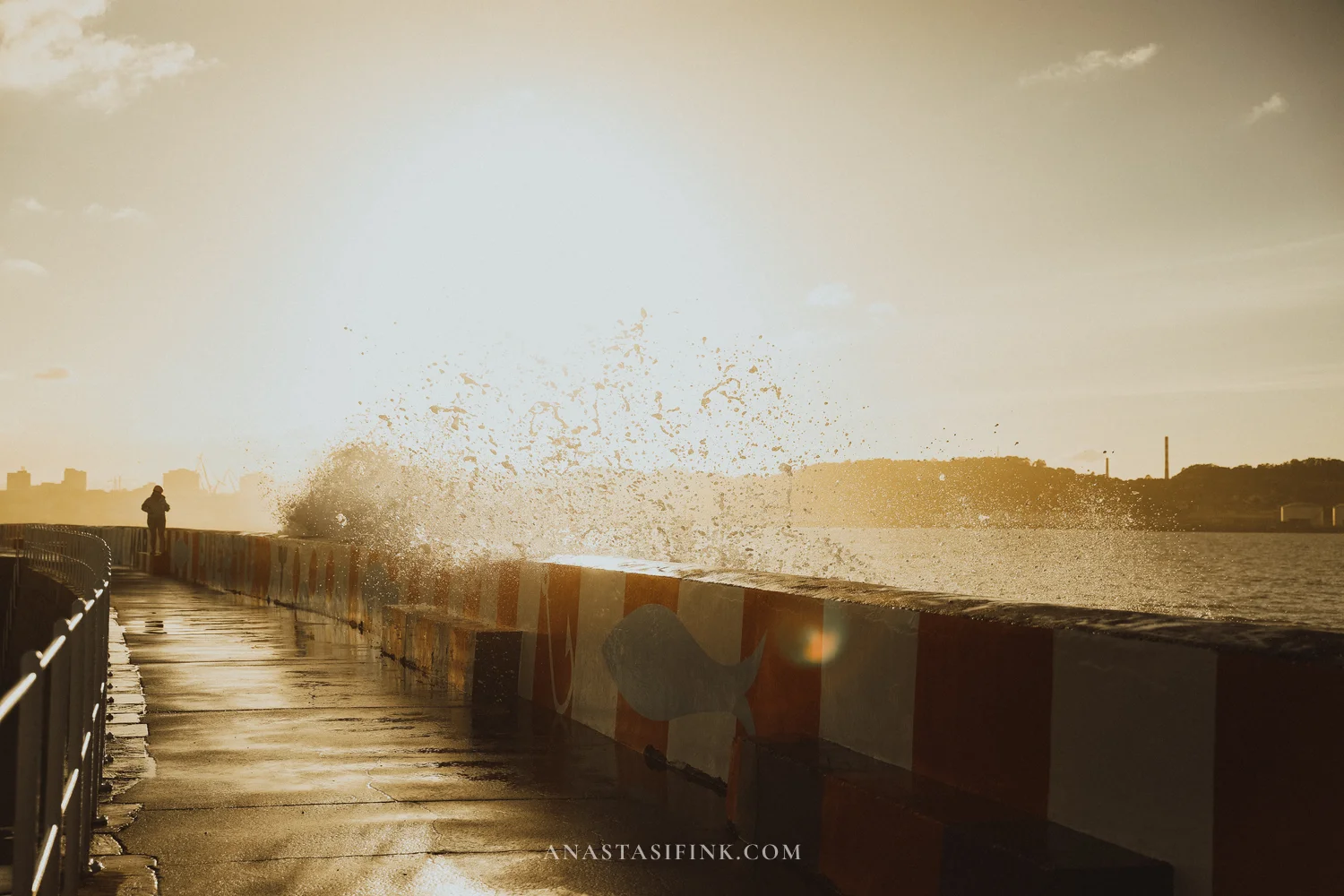
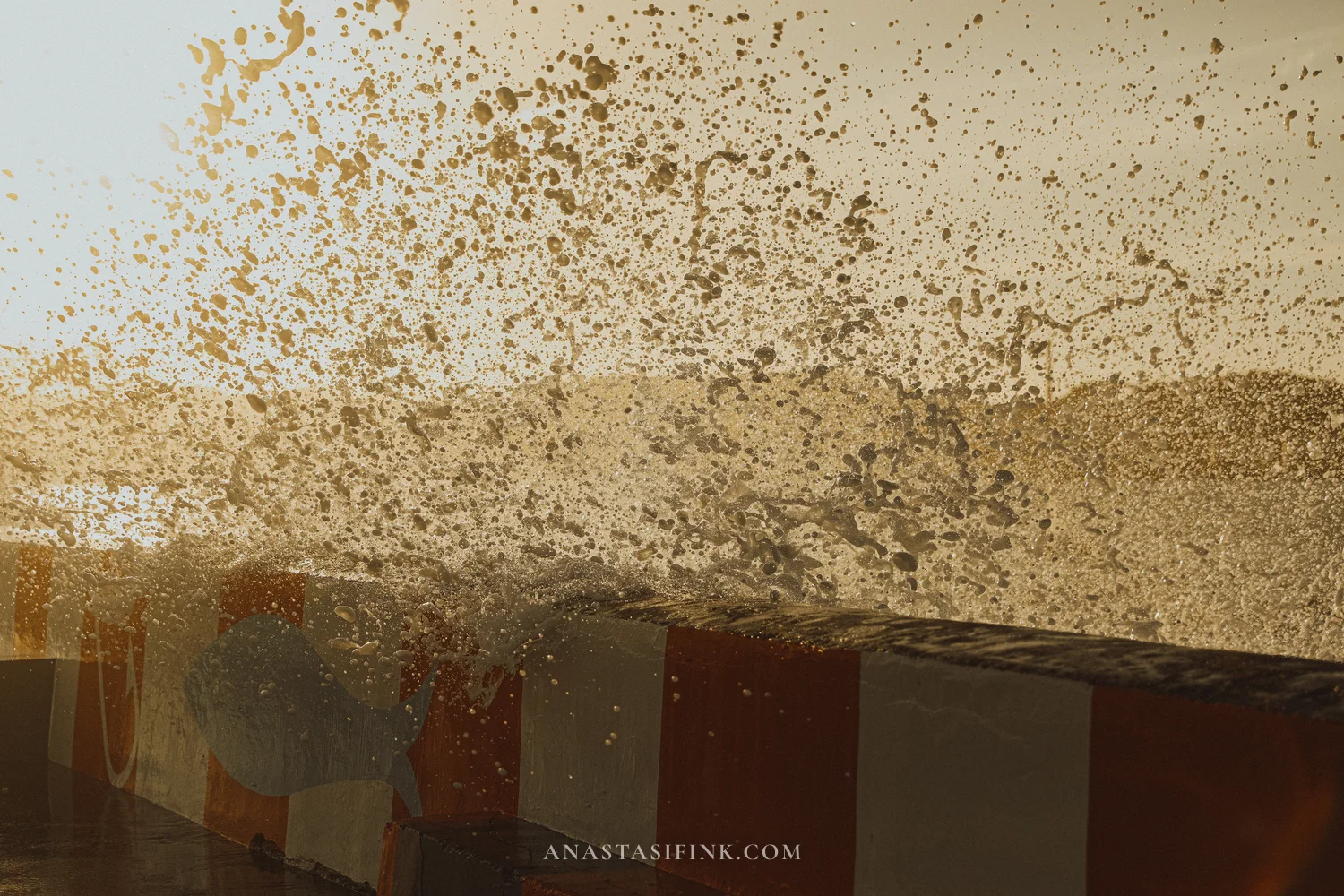
Waves on the breakwater
Playa de San Lorenzo and the surfers
The main city beach curves from San Pedro church to the mouth of the river Piles, about a mile of sand. The promenade along it is known simply as El Muro, “the wall”. The stairways from the promenade down to the sand are numbered from zero to sixteen, and locals arrange to meet “at stairway four” – that is the Escalerona, the wide ceremonial staircase with lampposts.

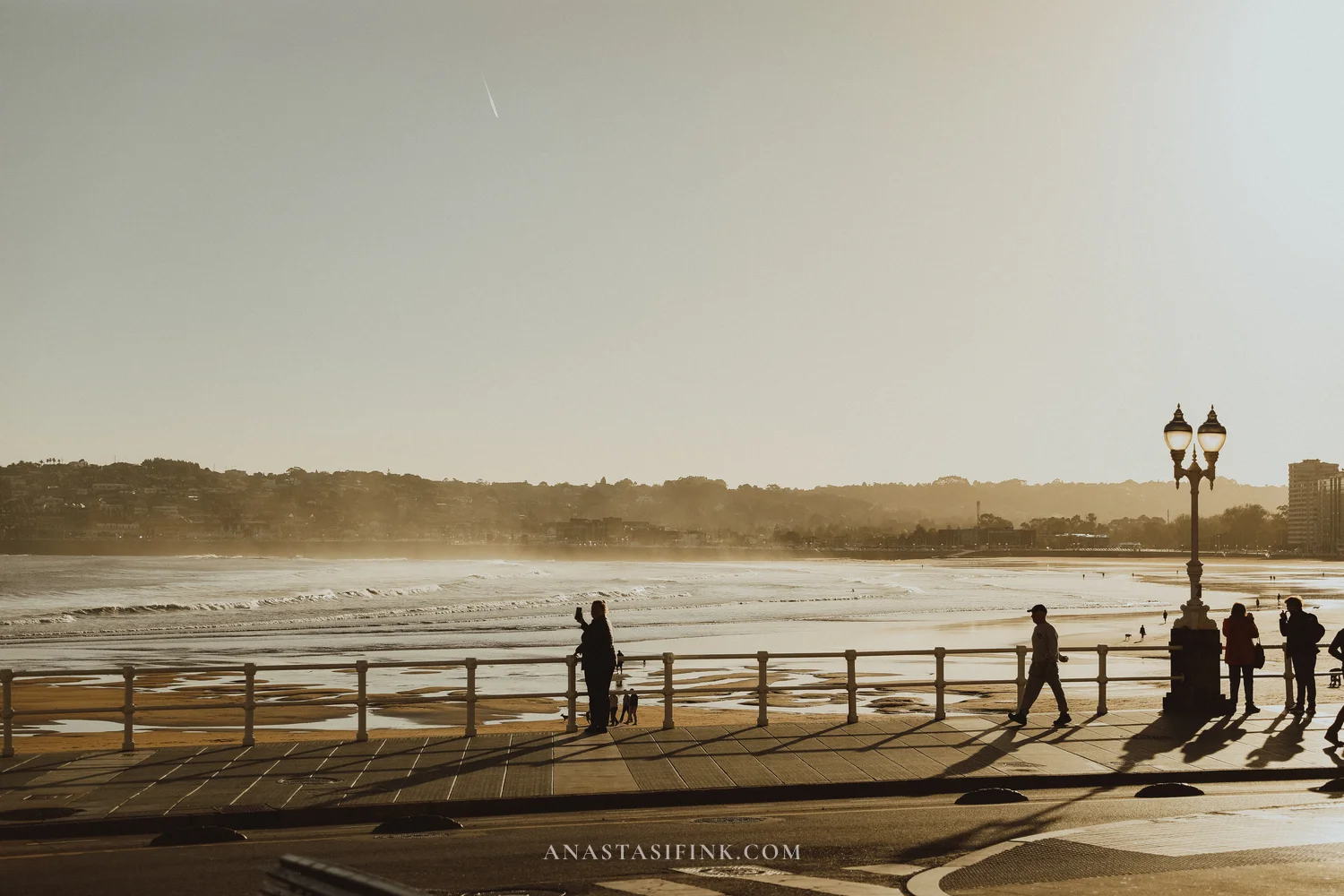
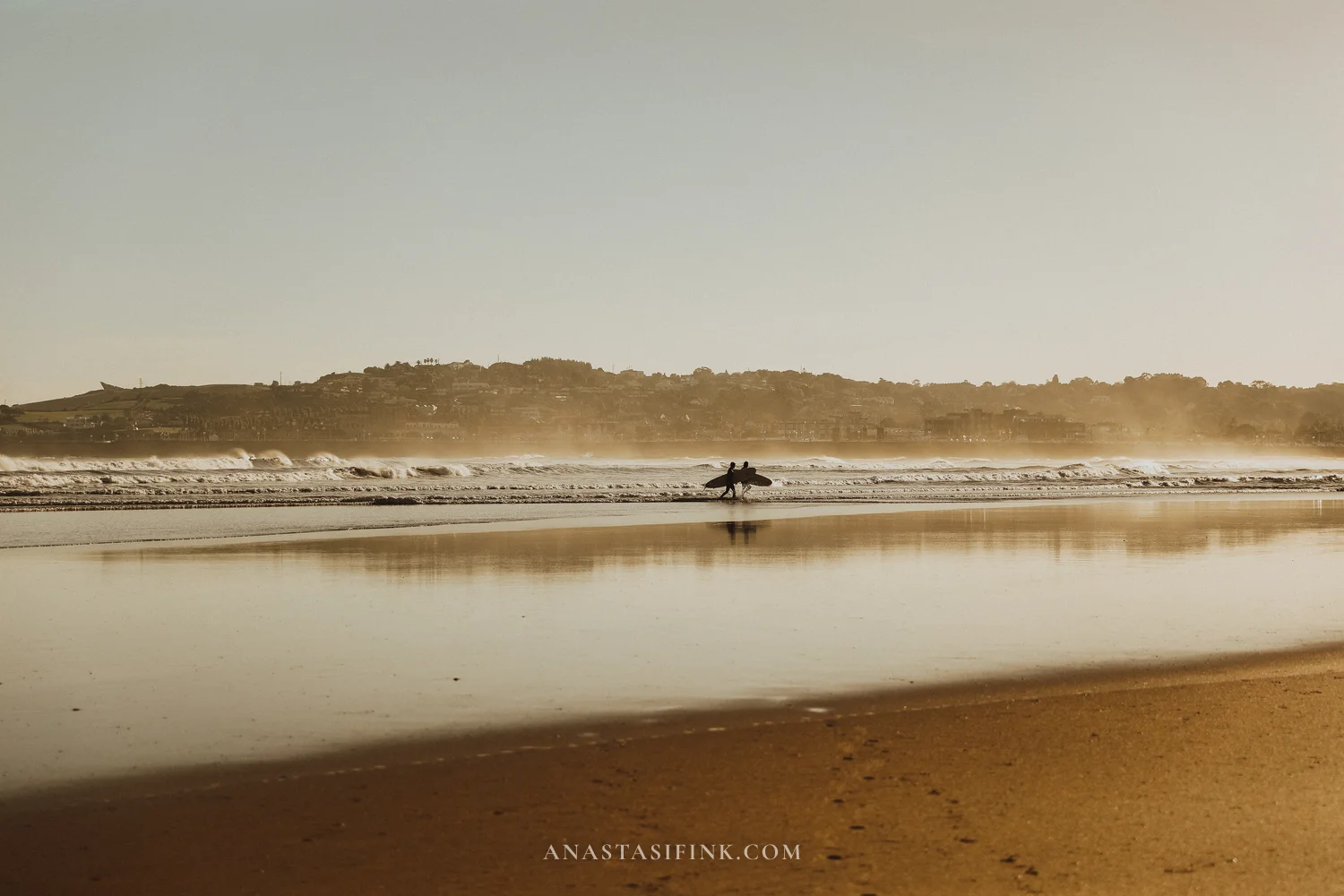
Surfers ride here all year round; in October there were a dozen of them every morning. At low tide the beach is enormous, but at high tide there is hardly any sand left, so it is worth checking the tide table before a walk.
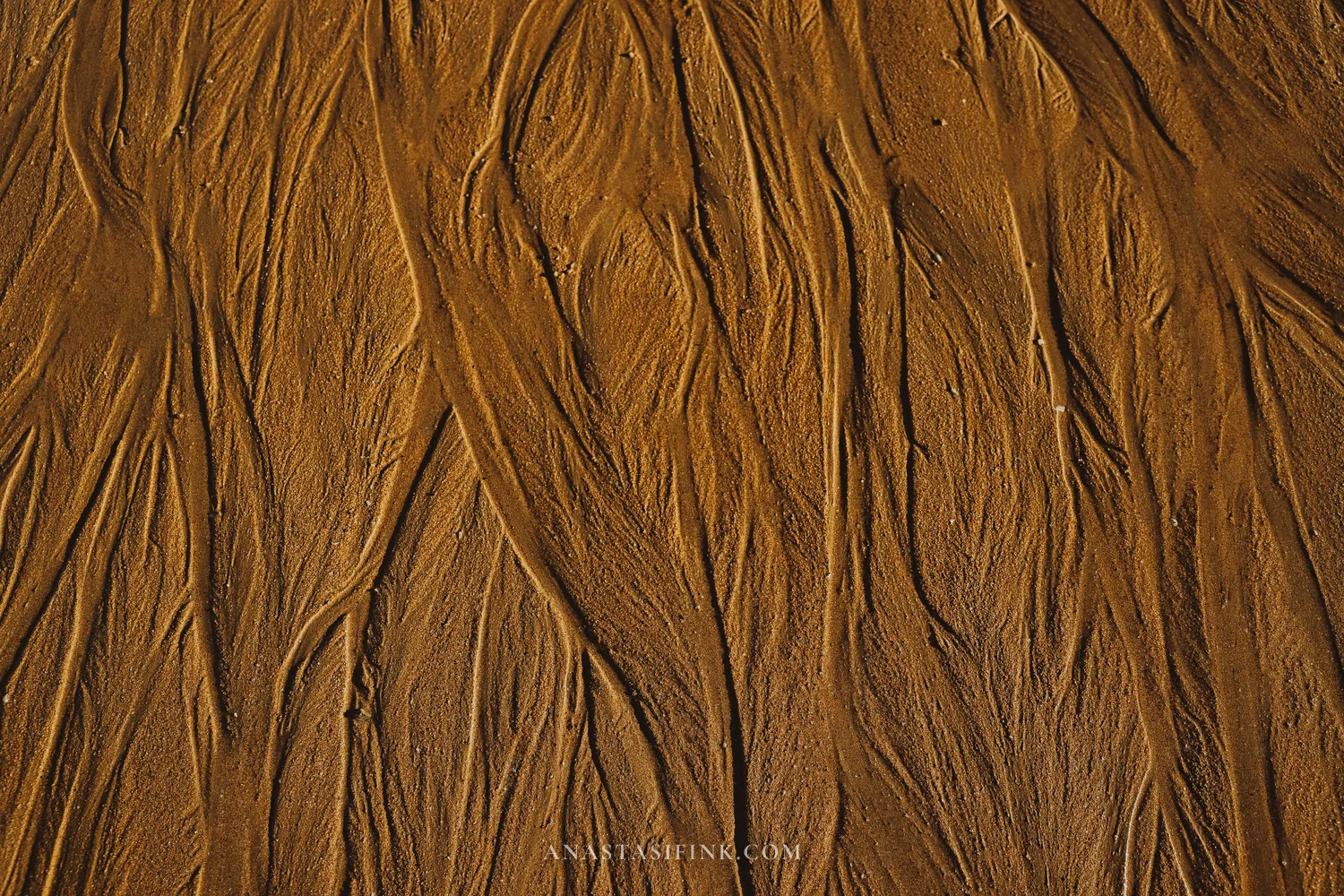
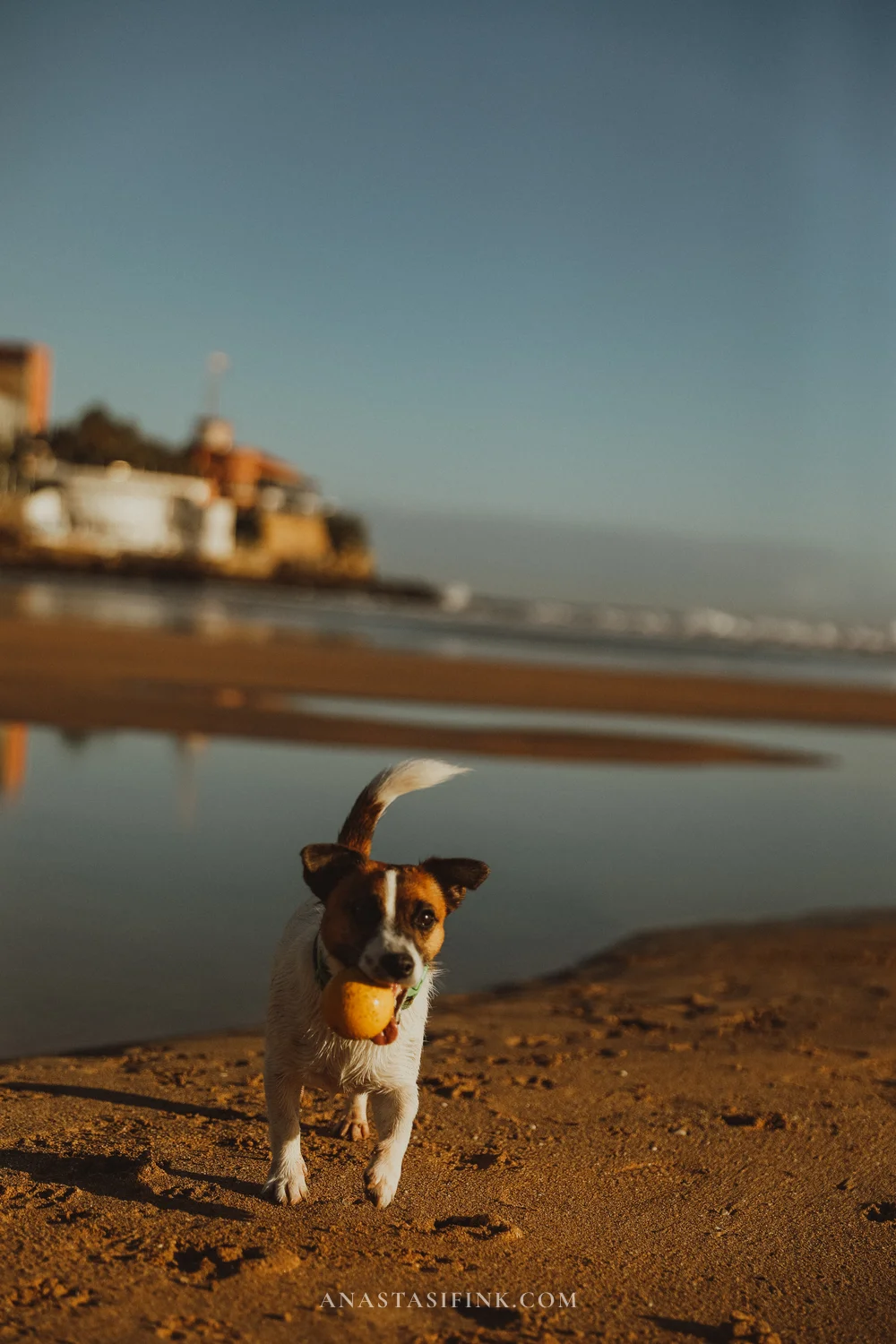
In the morning people walk their dogs on the wet sand, lots of them, of every breed imaginable, and it makes the whole place feel homely. One little dog brought me his ball and I played with him for a while.
Basilica of the Sacred Heart – La Iglesiona
In the city centre, opposite the old Jovellanos Institute, stands the basilica of Sagrado Corazón de Jesús. Locals call it La Iglesiona, “the big church”, and the marble statue of Christ on the facade El Santón. Outside it is early twentieth-century neo-Gothic, but inside every wall and vault is painted from top to bottom in ochres and reds, with Latin inscriptions along the arches. There was no service on, just silence, the paintings and the light from the round stained-glass windows, and for the first few minutes I simply stood in the middle of the nave with my head tilted back.
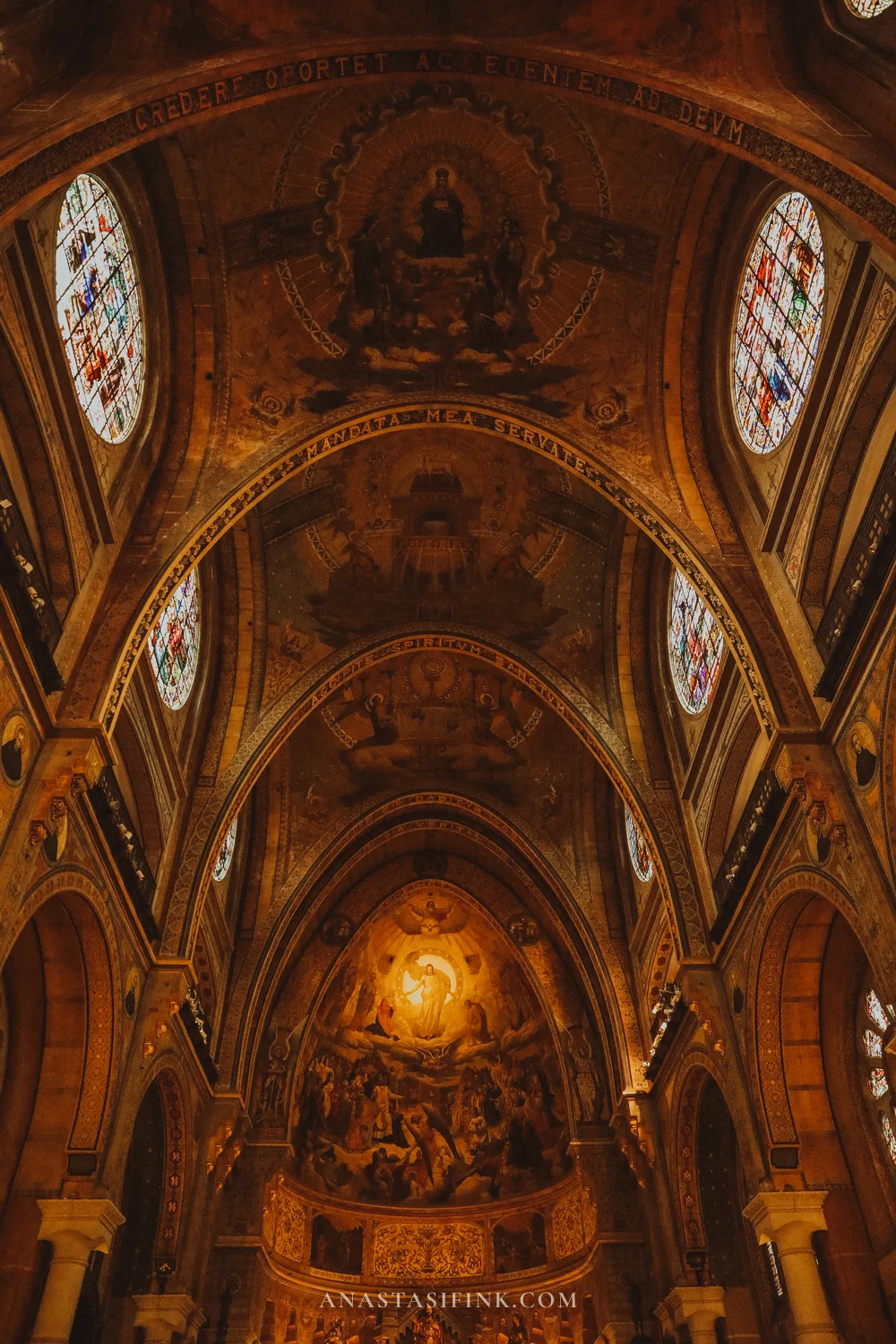
The basilica was built by the Jesuits in the early 1920s to a design by the Catalan architect Joan Rubió i Bellver, who had worked with Gaudí. The paintings were done by two brothers from Bavaria, Wilhelm and Heinrich Immenkamp, in tempera and oil, over almost two years. In the apse above the altar is the composition “Triumph of the Just”: Christ in glory surrounded by around fifty saints and historical figures. The four vaults are painted on themes from the catechism – faith, virtues, sacraments and prayer – and each vault has its own dominant colour.
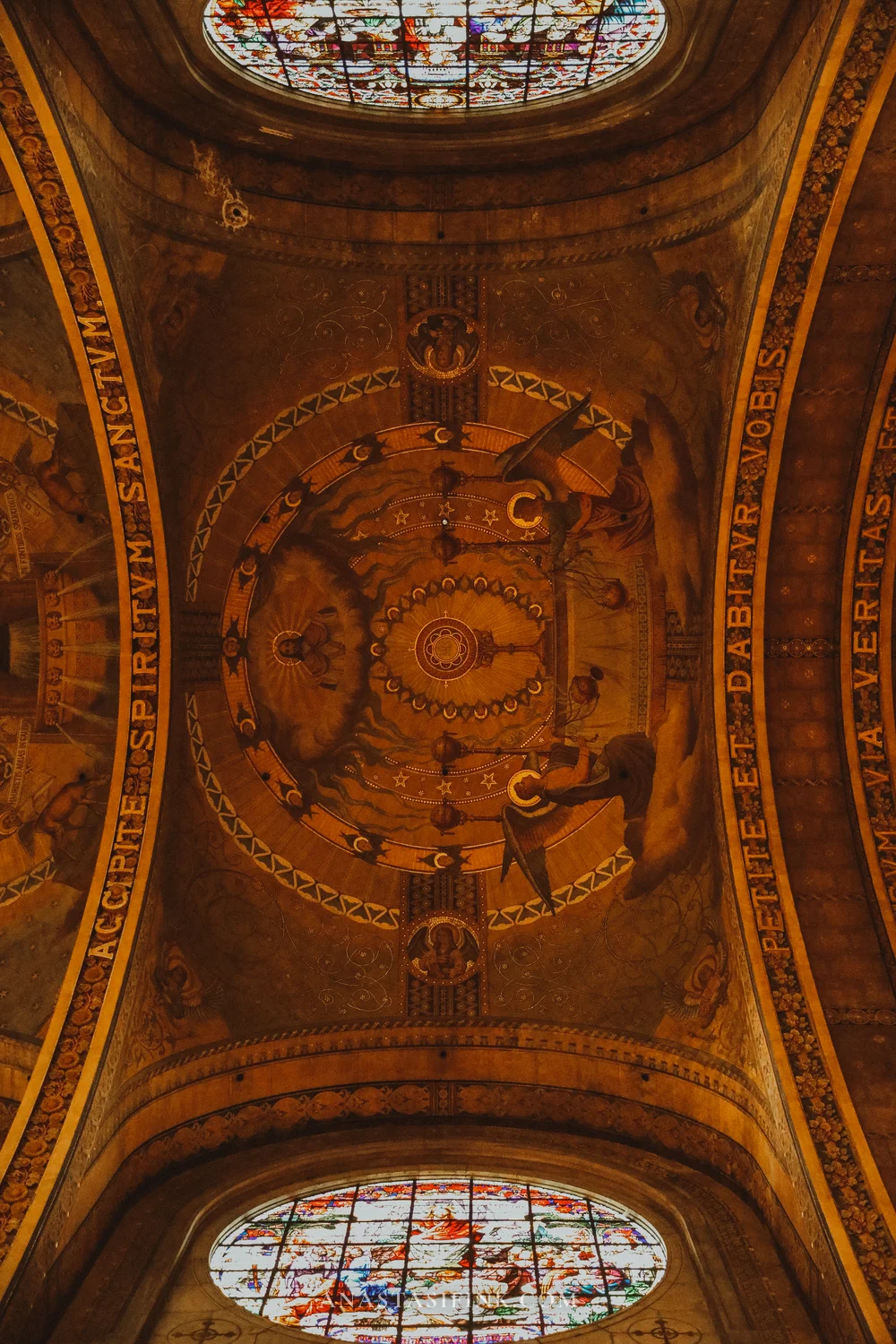
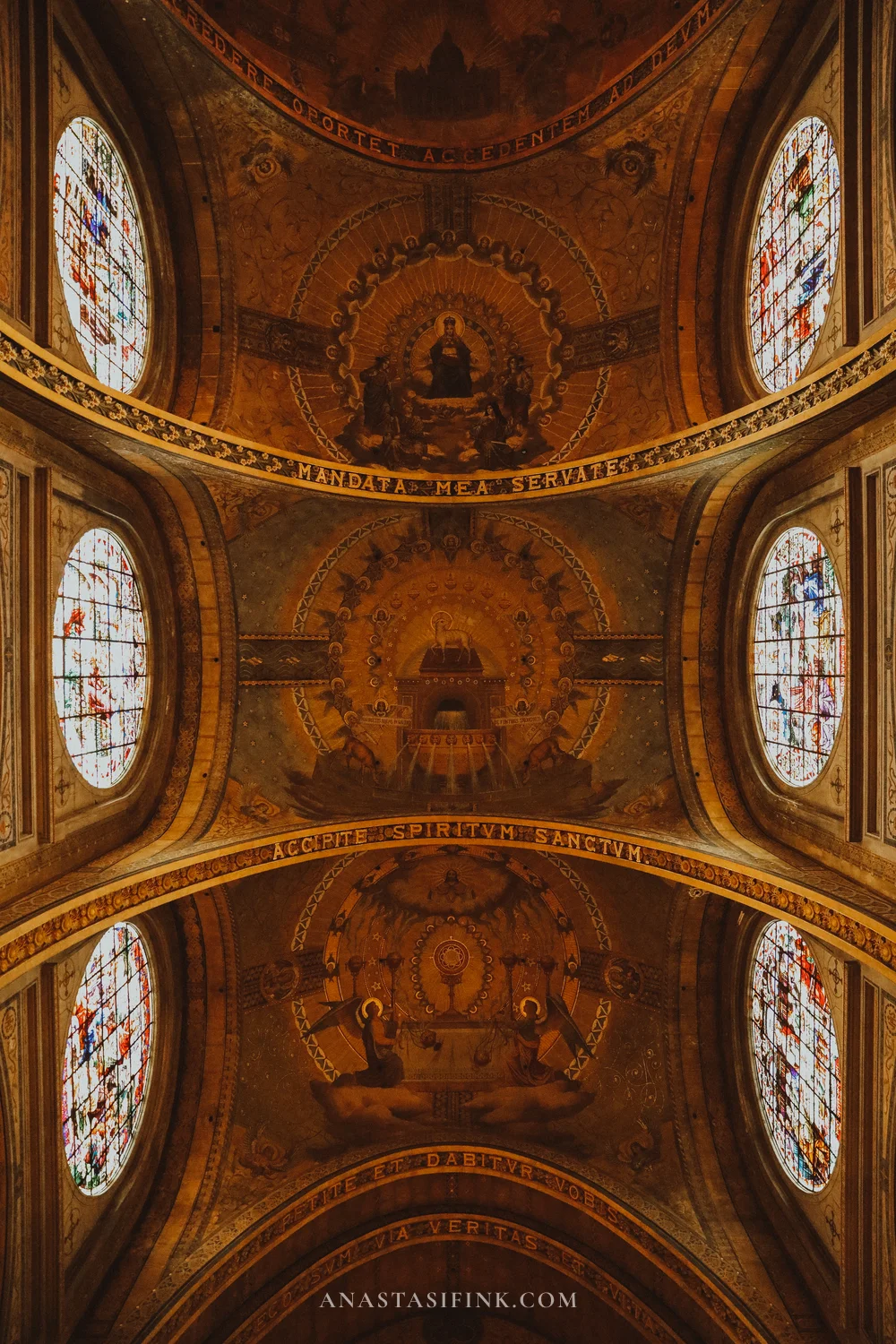

Vaults and the apse with the “Triumph of the Just”
The round stained-glass windows along the upper walls are around five metres across and show scenes from the life of Christ. Many of the original windows were lost in a fire in 1930 and were remade by the same Madrid workshop, Maumejean. Take a separate look at the woodcarving: the pulpit and the columns with flowers, a rooster and intertwined stems.

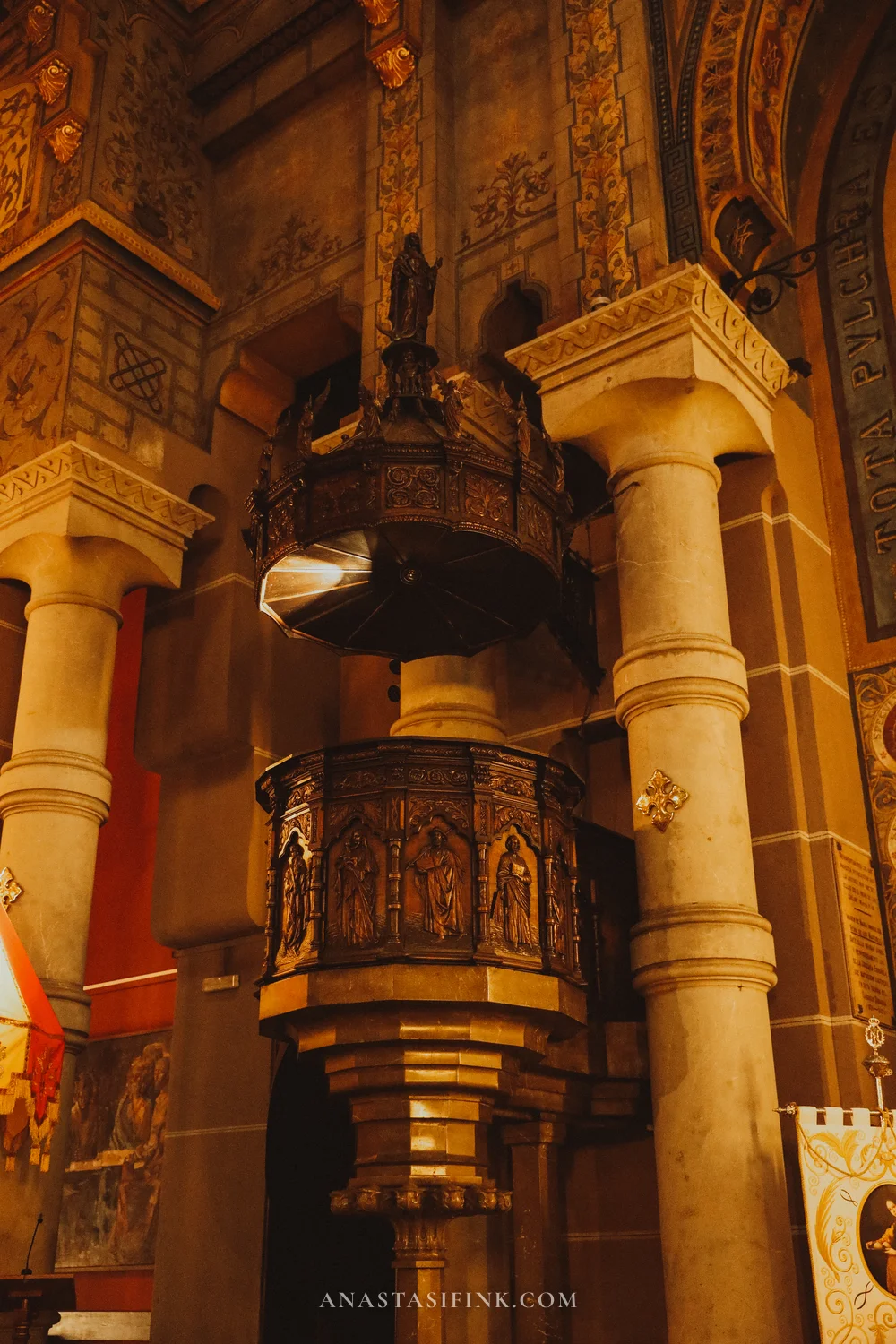
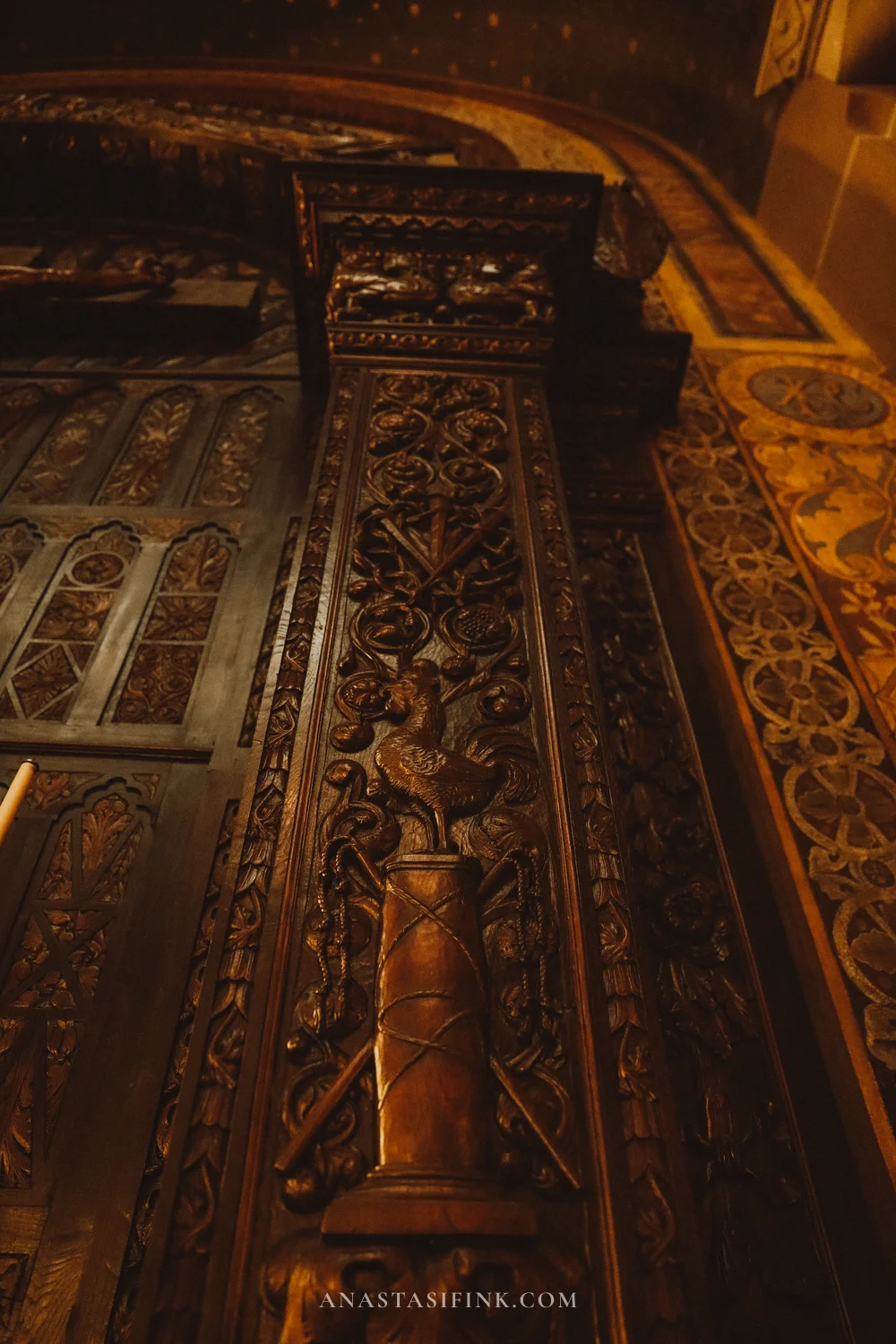

Woodcarving
Practical information
- Address: Calle Jovellanos, 6, opposite the Real Instituto Jovellanos
- Entry: free, during the church’s opening hours; during a service do not walk around the nave or take photos
- How long: 20-30 minutes
Senda del Cervigón – a coastal trail straight out of the city
If I had to pick one thing in Gijón, it would be this trail. The Senda del Cervigón officially starts at San Pedro church, follows the San Lorenzo beach promenade for the first mile, then beyond the mouth of the river Piles climbs onto the cliffs and follows them east to Playa de La Ñora. That is around eight and a half kilometres one way, but you do not have to do the whole thing: the cliffs begin right after the river.
Past the mouth of the Piles it is still a promenade with benches and viewpoints, then the tarmac gives way to a path of stone slabs. The trail is simple and obvious, there is nowhere to get lost: you just keep the sea beside you. I recommend installing the Maps.me app, which shows all the side paths and the turn-offs down to the beaches.
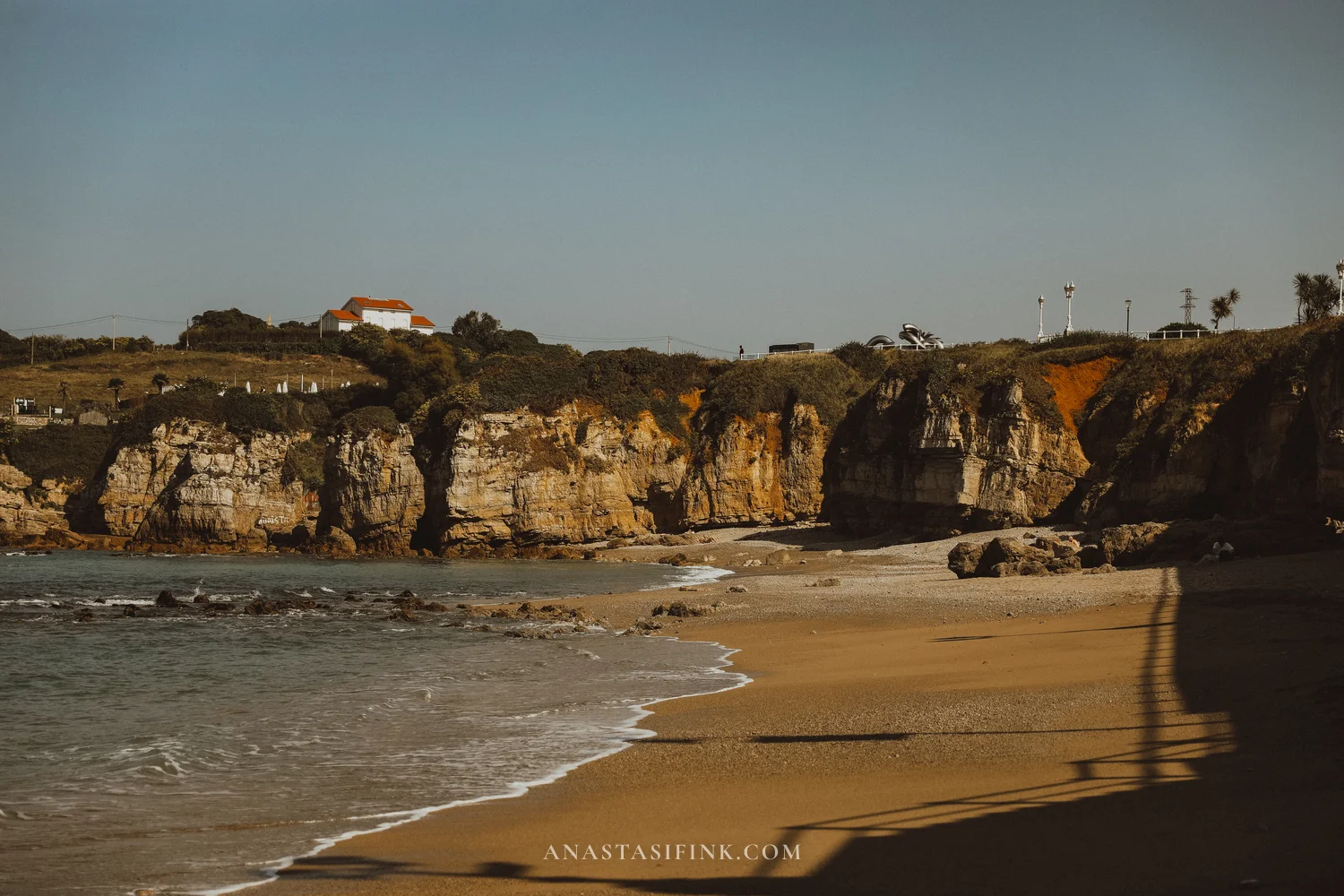
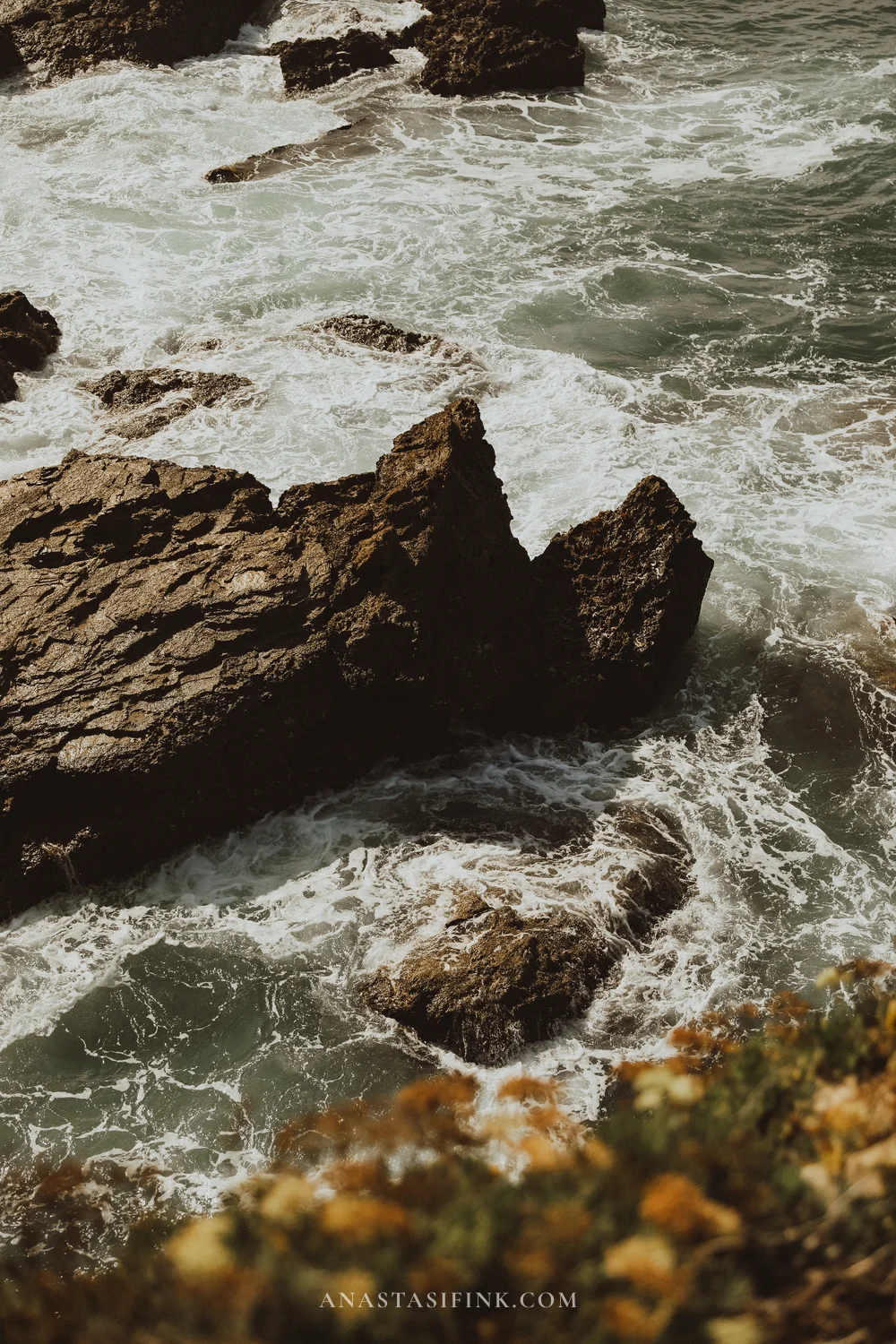
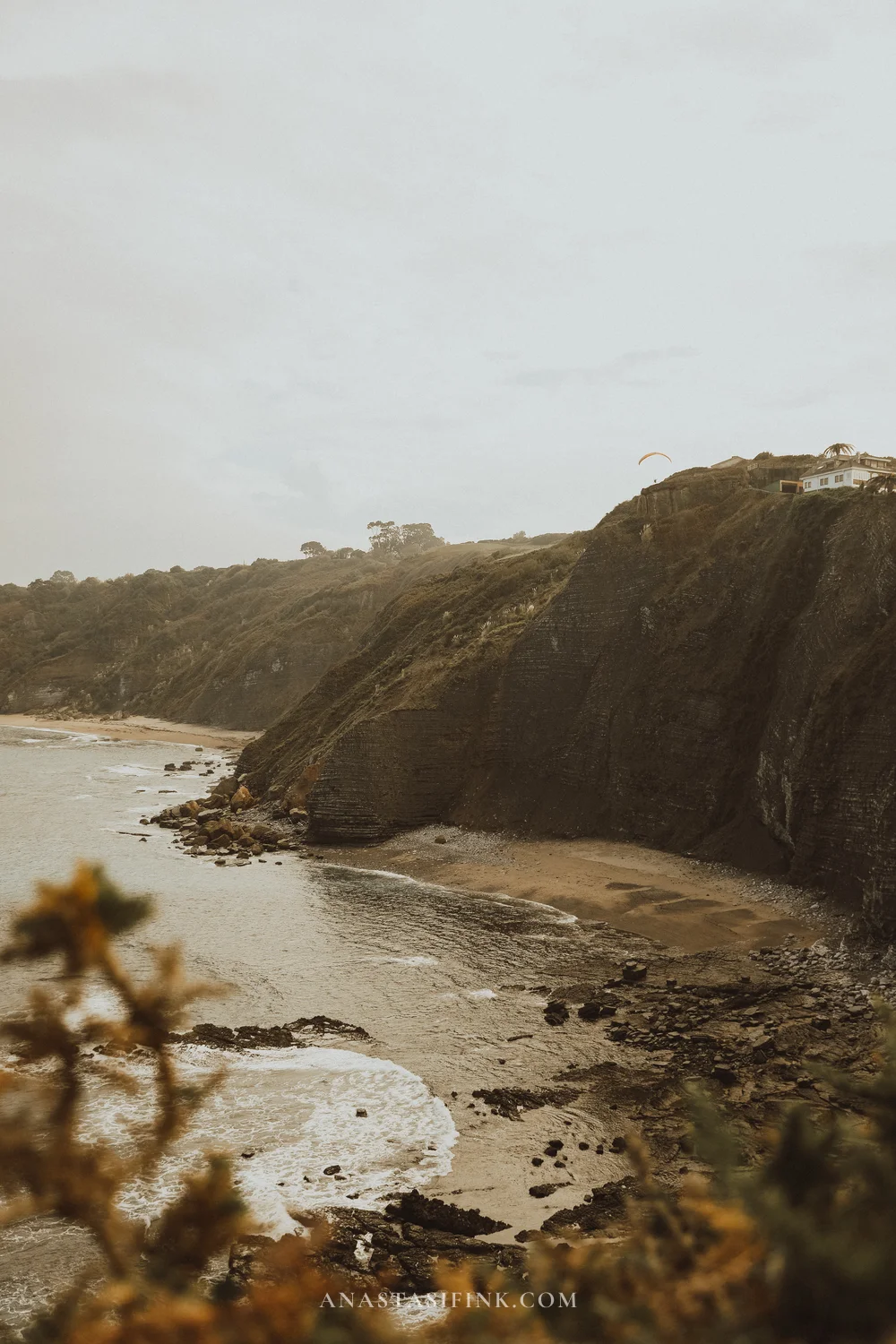
Rocks at the water and Playa de Serín
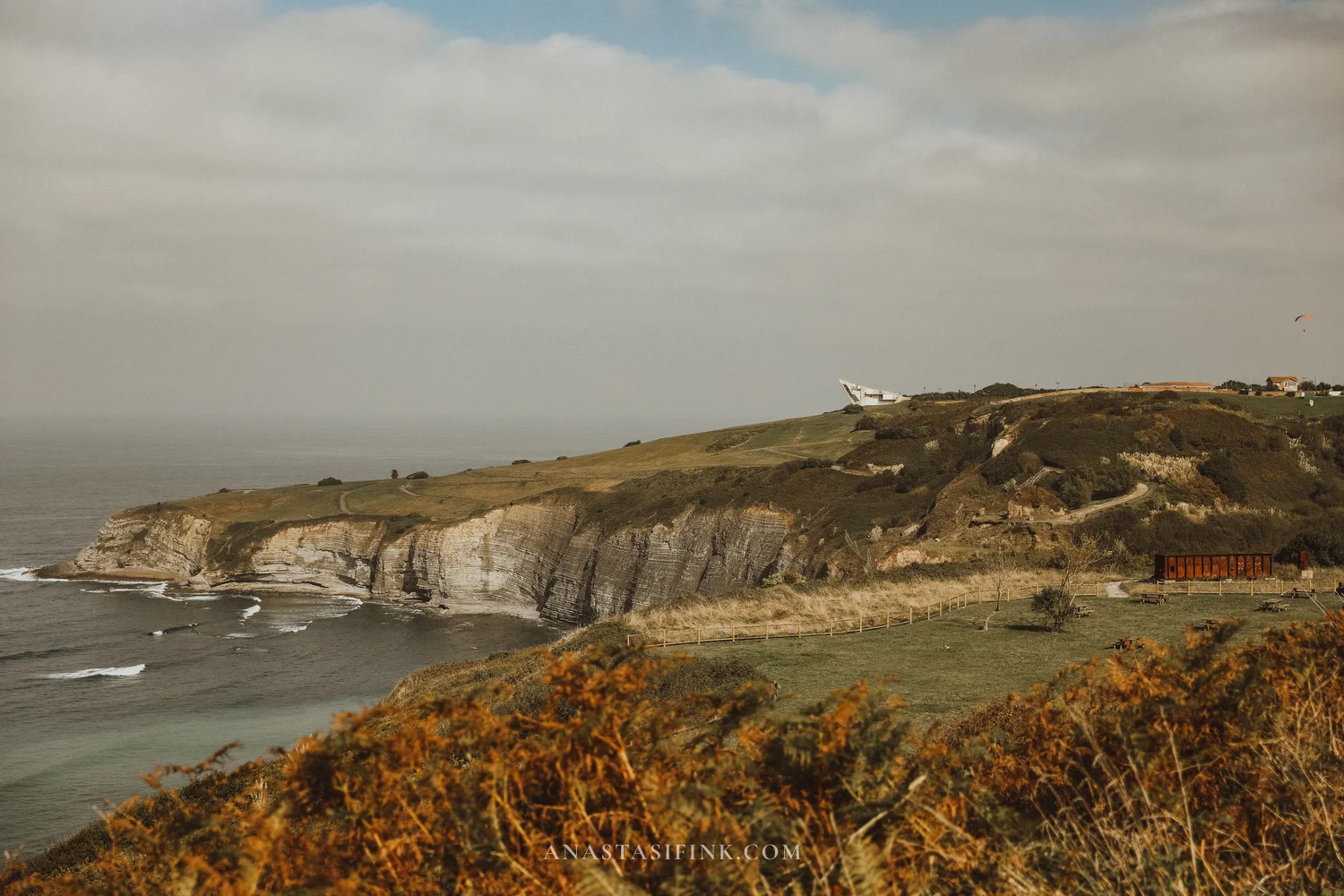
The first big stop is La Providencia park on Cabo San Lorenzo. It was laid out in the late nineties on former military land, and at the very tip of the cape there is a viewpoint shaped like the bow of a ship. From here you can see the whole coast to the east: cliffs, small beaches tucked between them and paragliders over the hill.
A little further on, at the point given in the info box, you can leave the trail through the bushes. There is a short passage to the edge of the cliff, and from it you look down on Playa Centollera and the rocks in the water. You cannot see this spot from the trail, and there was nobody there but me. Be careful at the edge.
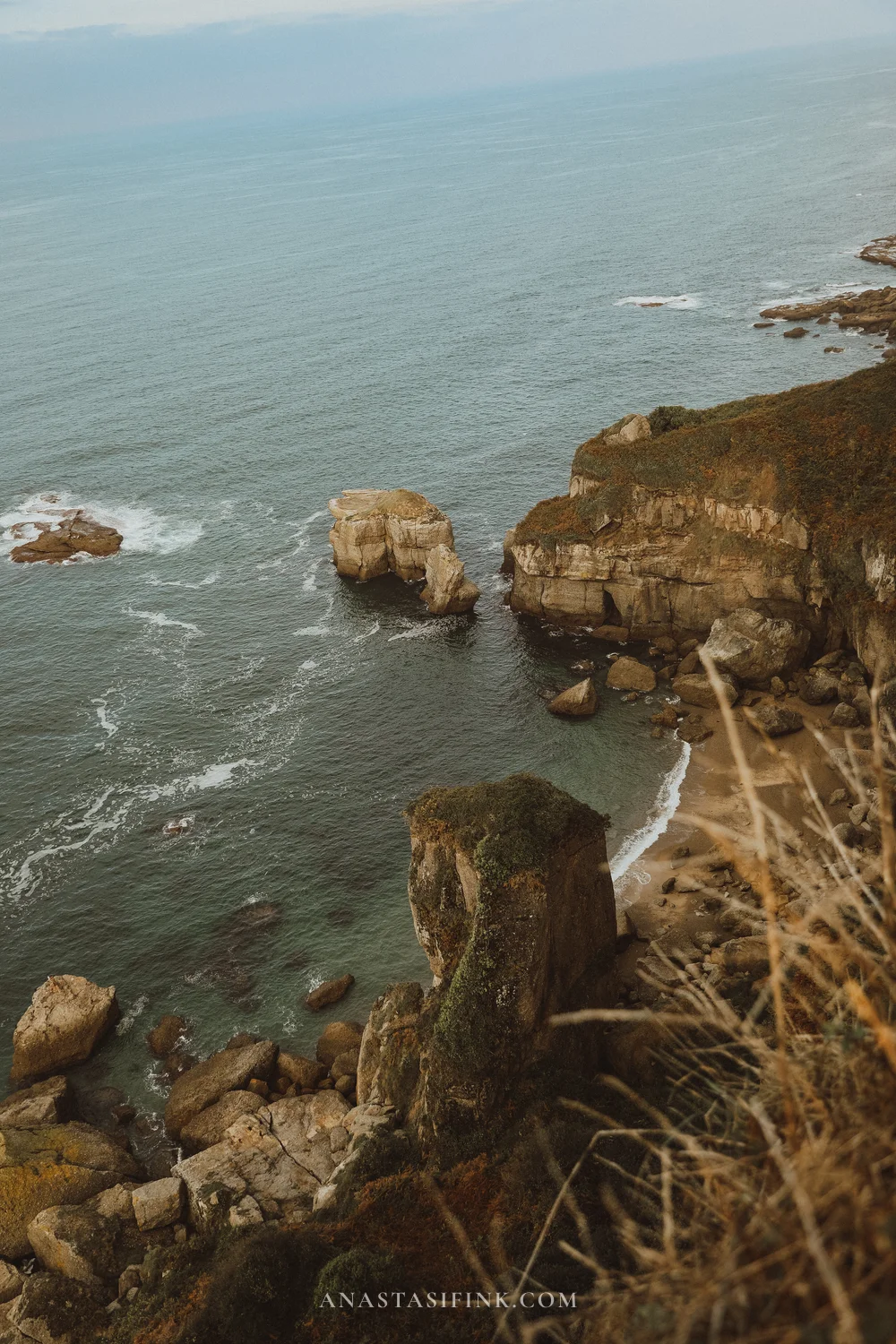
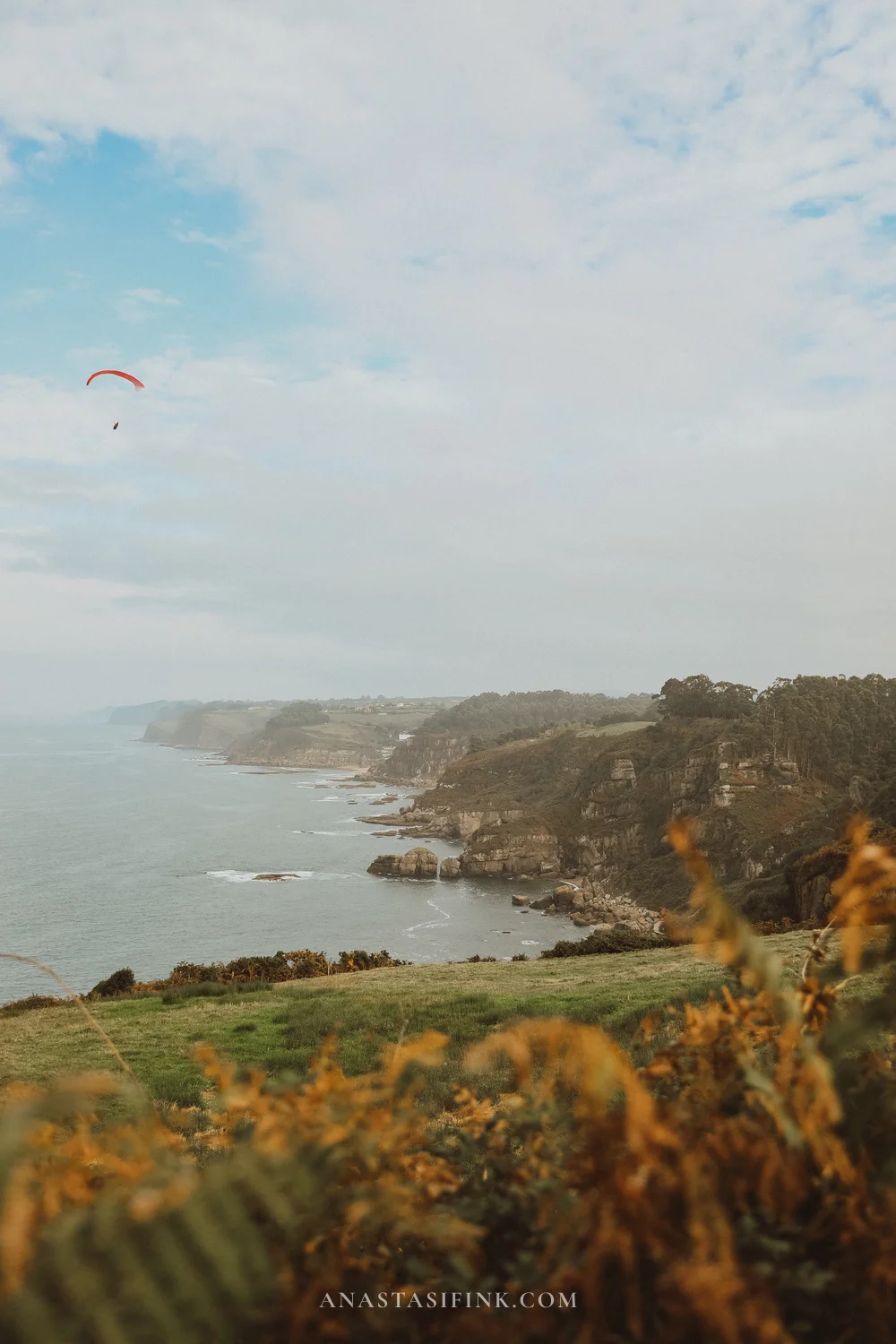
View of Playa Centollera and a paraglider over the cliffs
Next to the park, on the hill of Colina del Cuervo, the paragliders fly. Several schools operate here, and that day there was always someone hanging in the air. You can sit on the grass and watch, or book a tandem flight with an instructor.
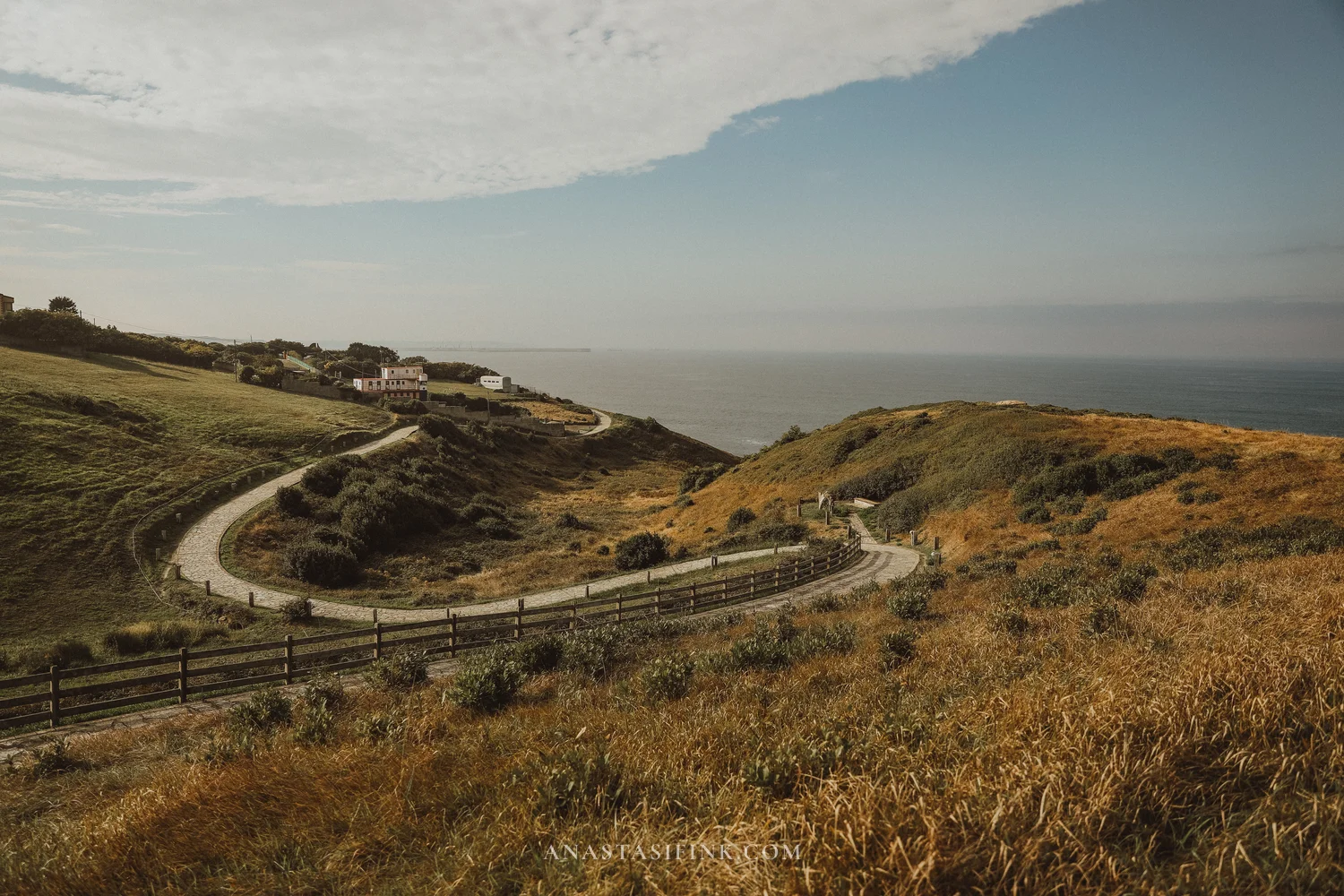
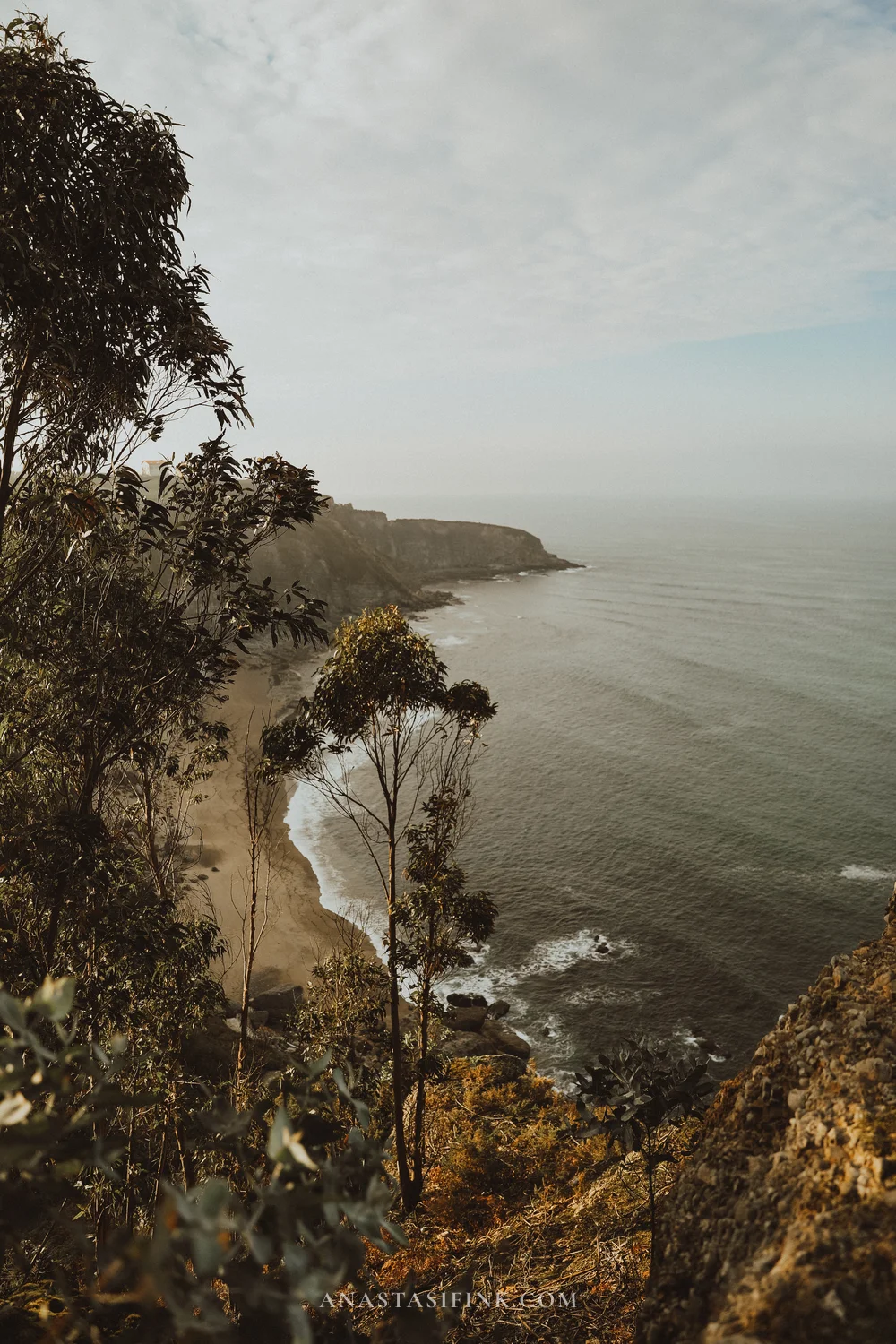
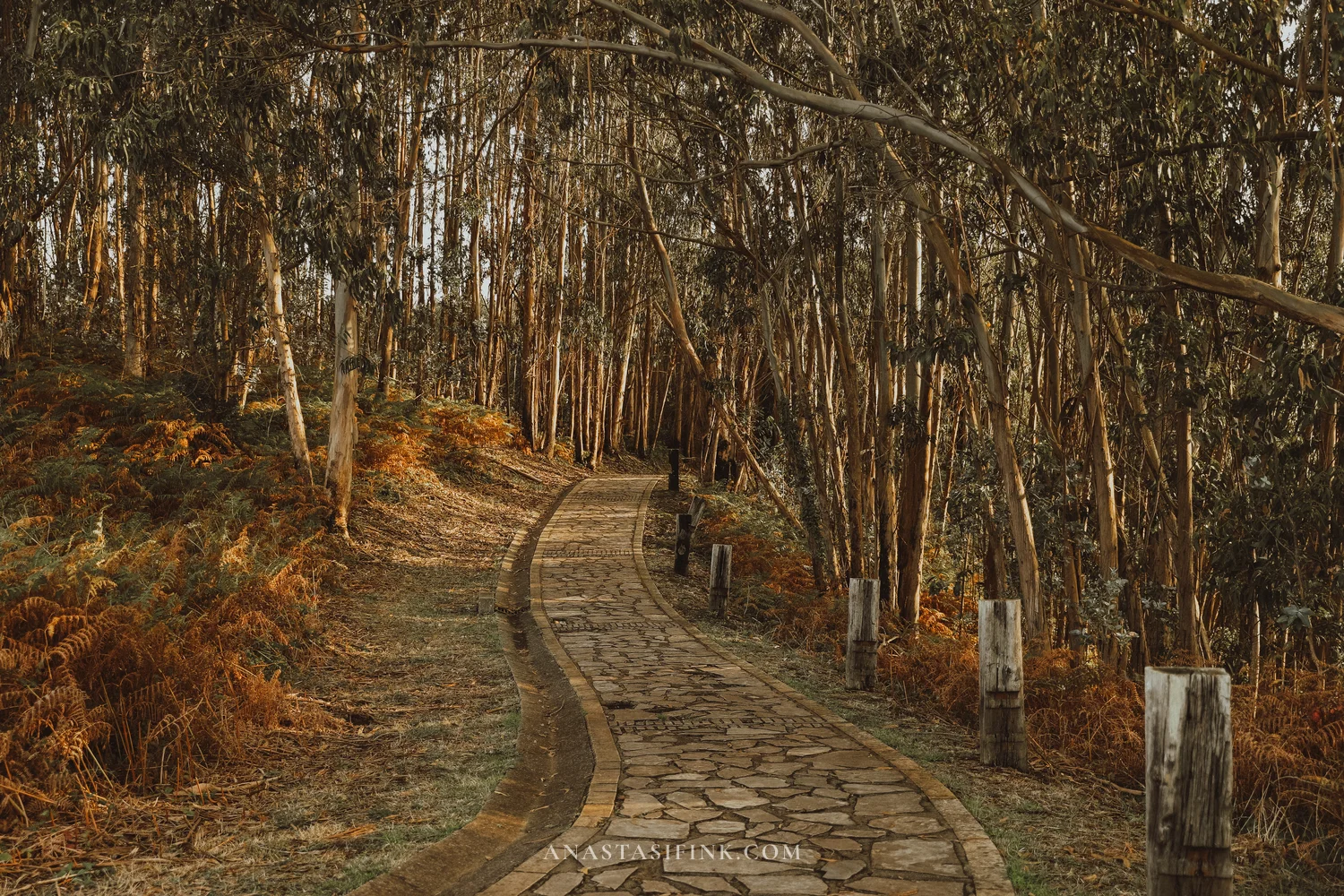
Further on, the trail drops down to Playa de Serín, a narrow strip of sand beneath the cliffs reached by a long staircase. There is no café and no lifeguard, and in October there was not a single person on it. After the beach the path runs through meadows with the sea in view, and at the end of the stretch I walked, a eucalyptus grove begins: tall pale trunks, rusty-orange ferns underfoot and the beach far below glimpsed through the trees. There is a viewpoint there too.
Practical information
- Trail: Senda del Cervigón, from San Pedro church along the San Lorenzo beach promenade and then along the cliffs to Playa de La Ñora
- Length: around 8.5 km one way from San Pedro church, around 3 hours at an easy pace; from the mouth of the Piles to the eucalyptus grove around 5 km
- Difficulty: easy, but with some climbs and stretches along the cliff edge
- Hidden viewpoint over Playa Centollera: 43.555712, -5.614792 – Google Maps, a passage through the bushes to the cliff edge
- Paragliders: Colina del Cuervo, 43.550429, -5.612844 – Google Maps
- Eucalyptus grove and viewpoint: 43.549483, -5.605432 – Google Maps
- Navigation: Maps.me shows the paths better than Google Maps
- Getting back: I walked back the same way. Other options are a taxi or the EMTUSA city bus: according to the timetables, line 12 serves La Ñora with a stop on the N-632 road at the Quintueles turn-off; check the route and times in the EMTUSA app
- What to bring: water and a snack, there are no cafés or shops after La Providencia park
Botanical garden and Universidad Laboral
On the eastern edge of the city, reachable by city bus, is the Atlantic Botanical Garden. I have a separate article about it with a route through the zones, prices and tips, so here is the short version. The garden opened in the early 2000s and is devoted to the plants of the Atlantic regions on both sides of the ocean. Inside there is a laurel maze with a little lighthouse at its centre, an oak forest several hundred years old and exhibition halls that explain how medicines were made from plants.
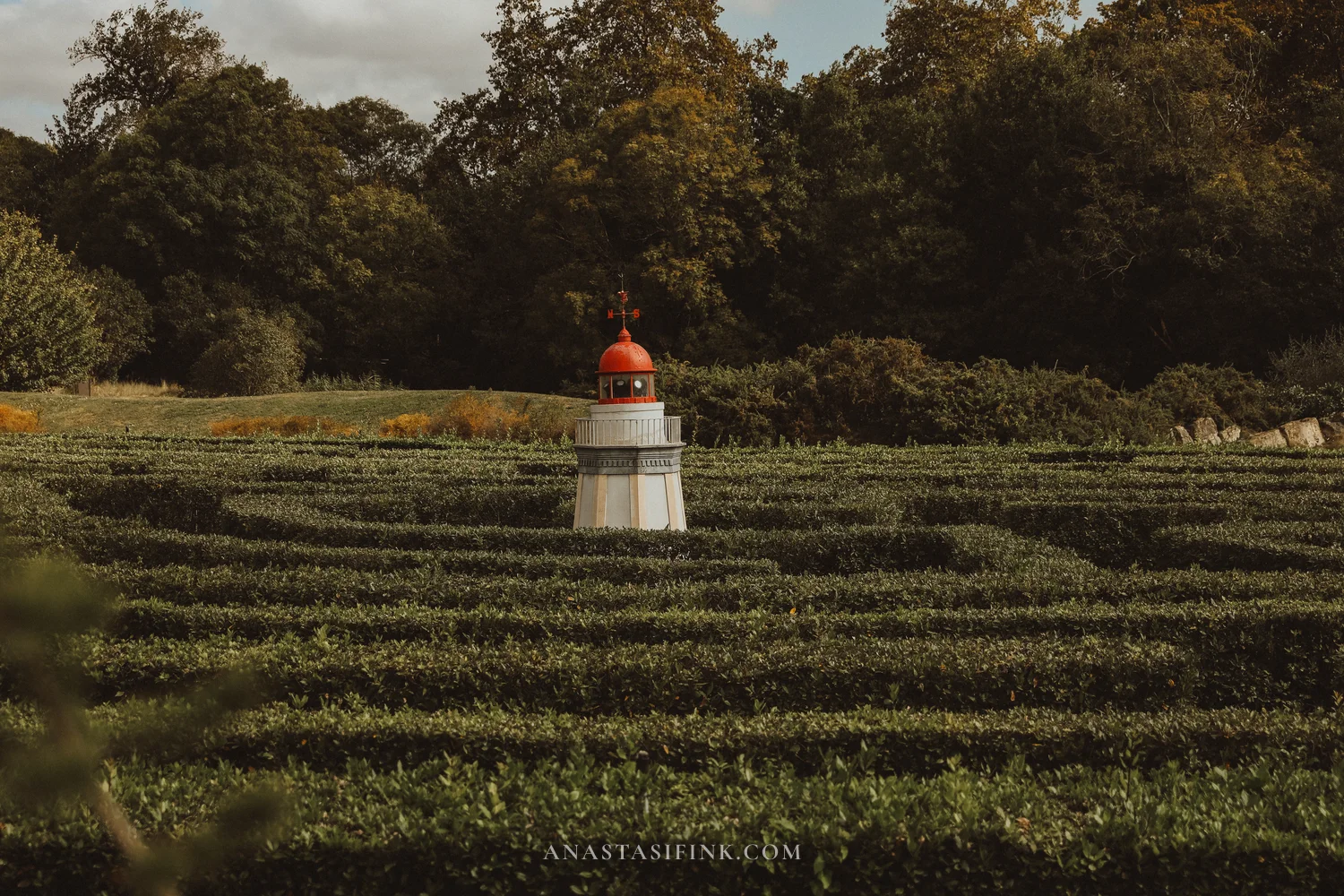
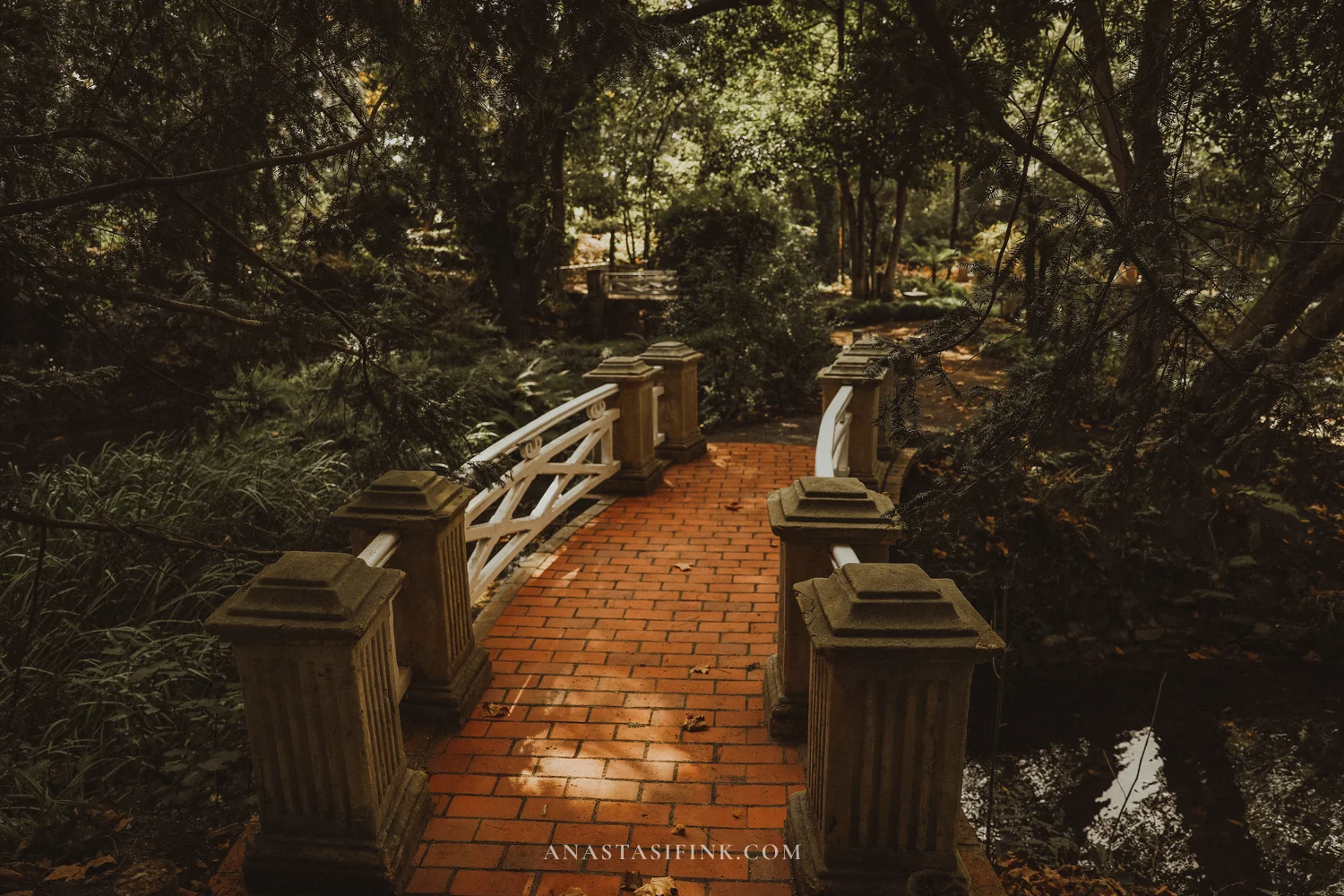
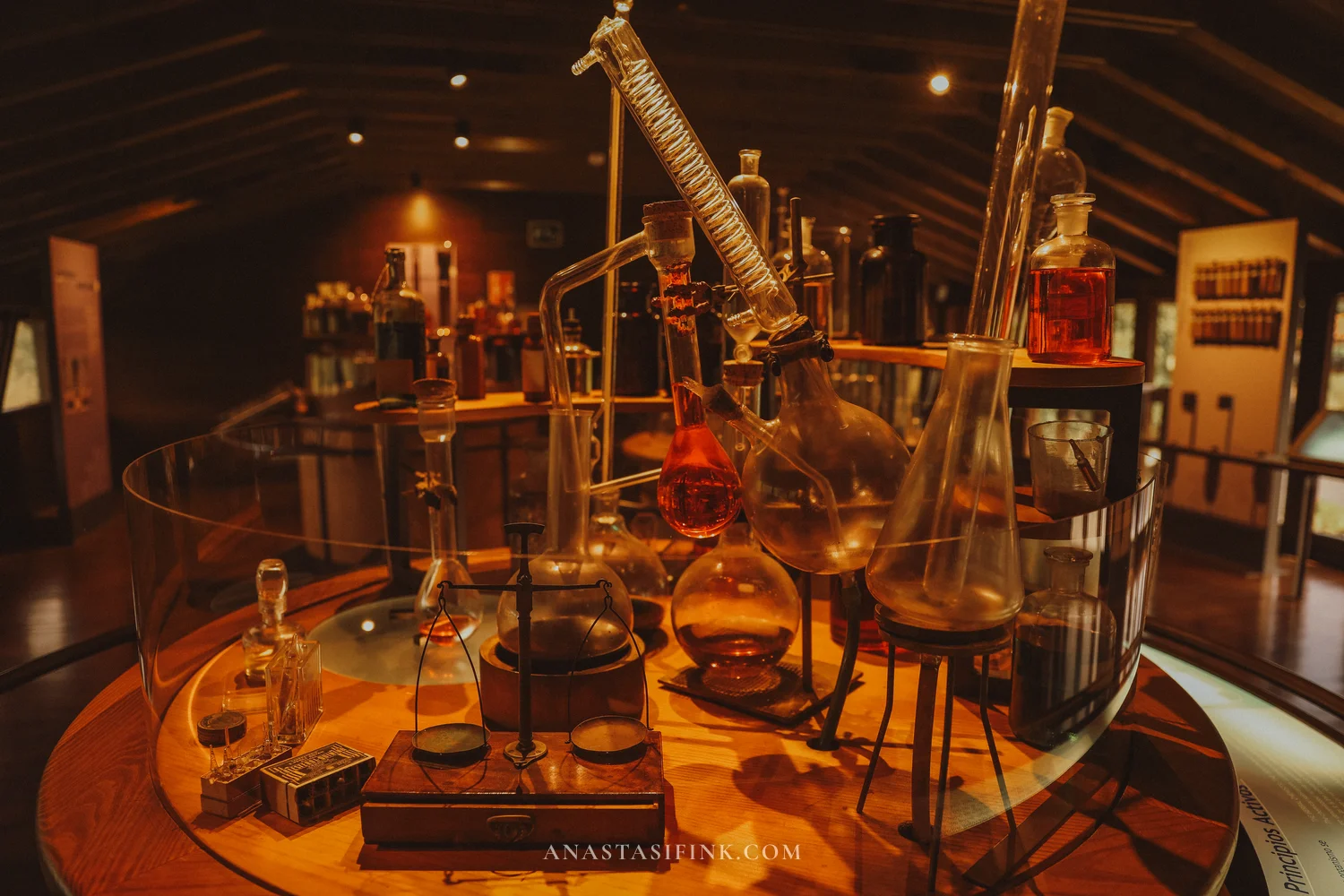
A bridge in the garden and a display of laboratory glassware
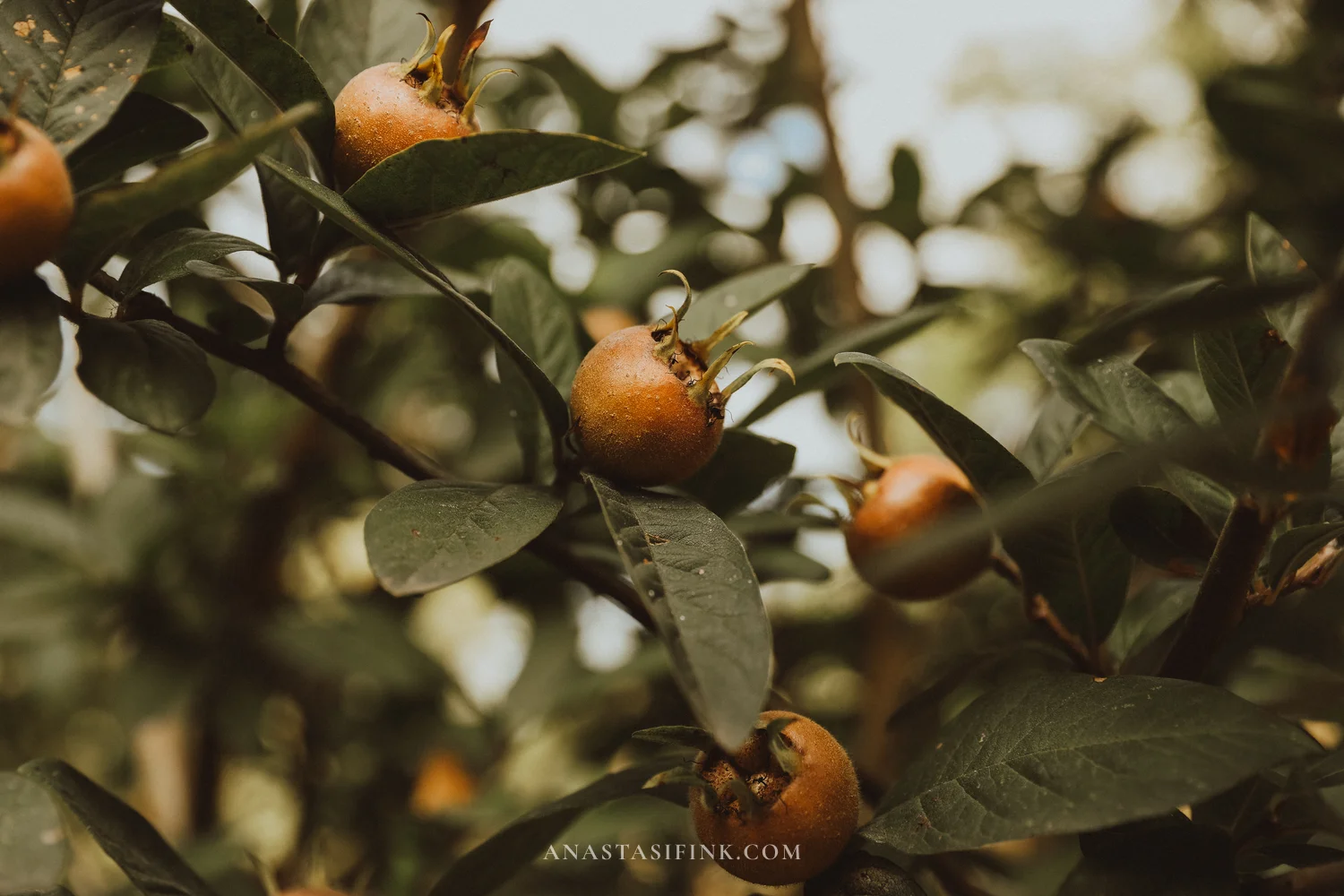
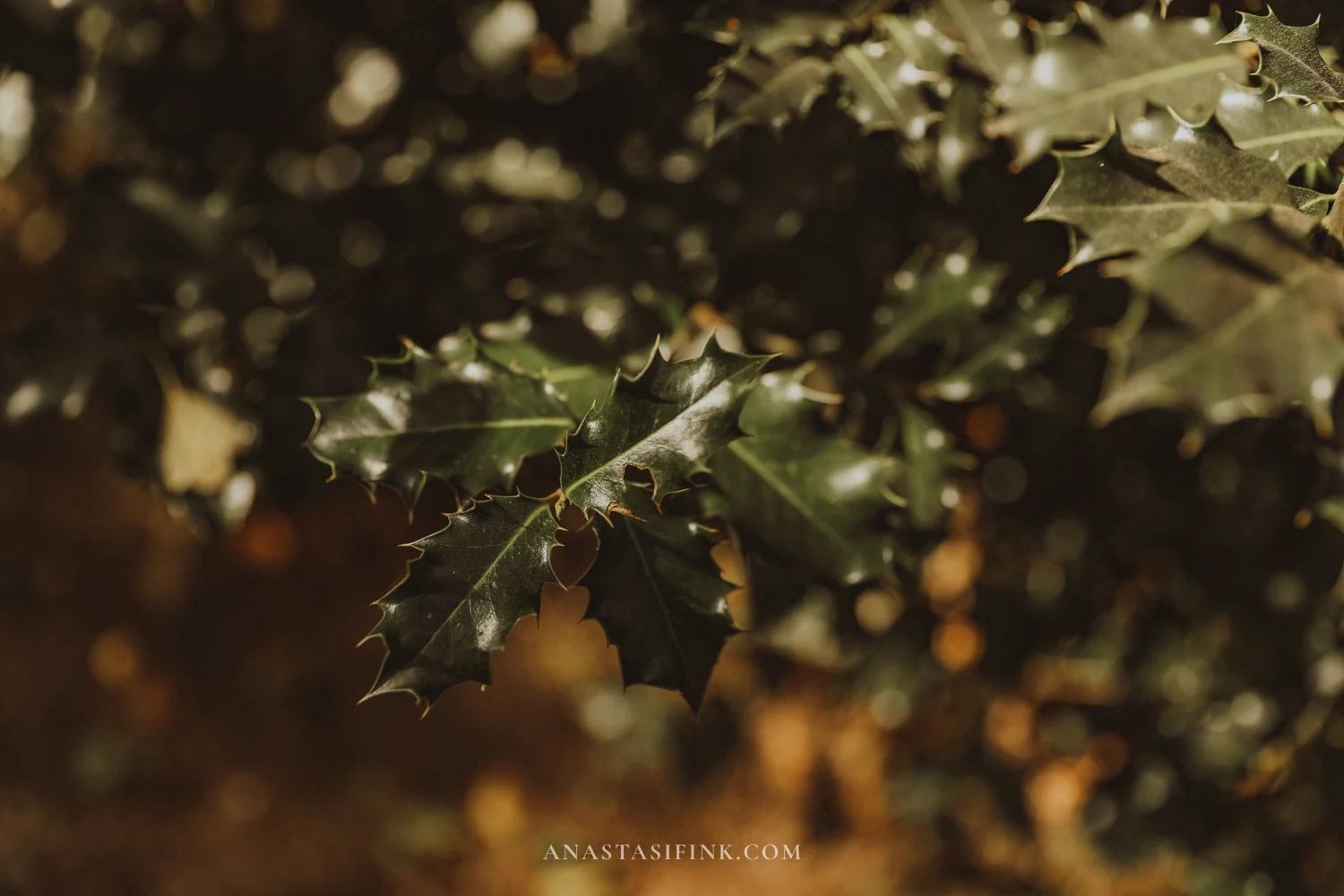
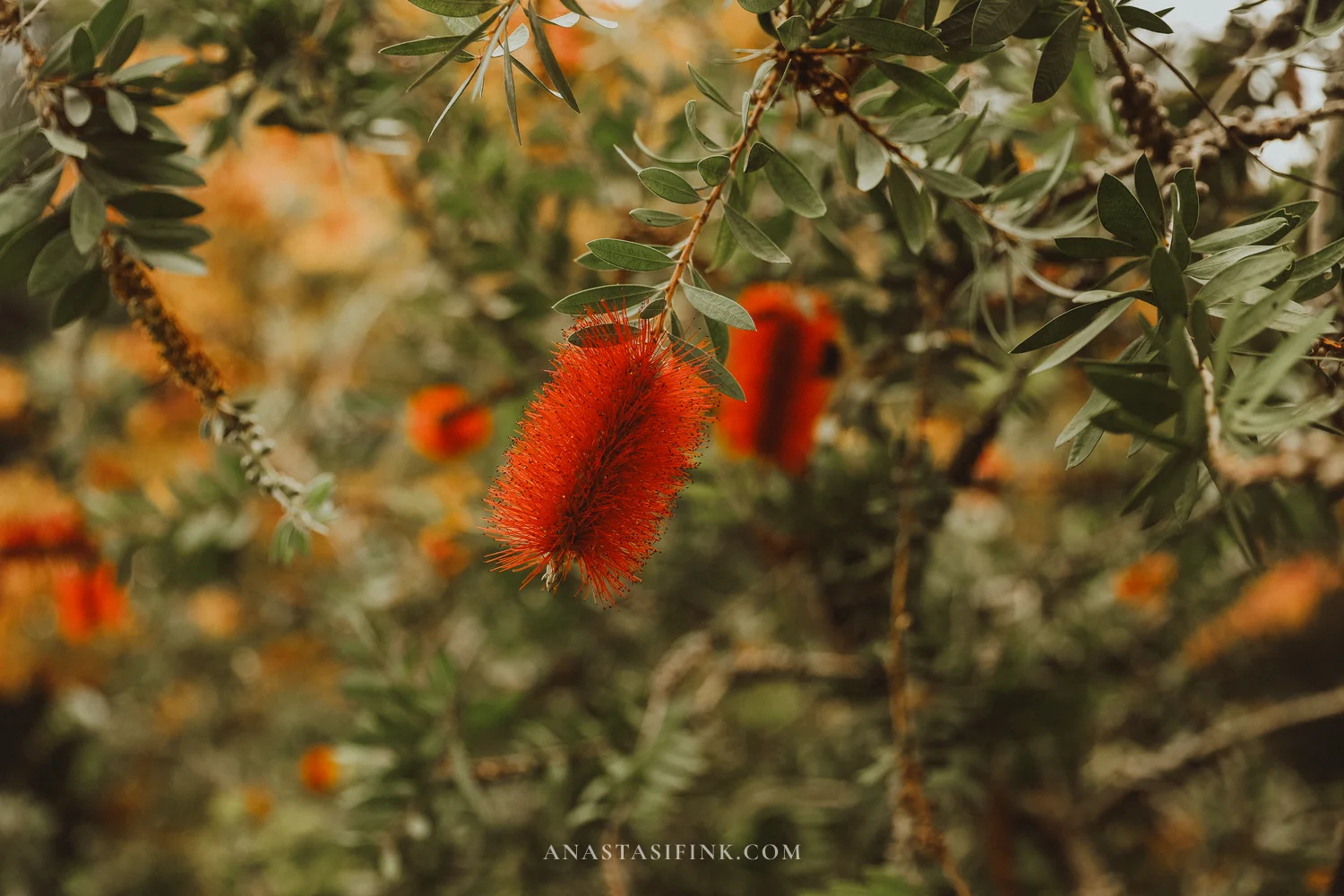
Medlar and holly
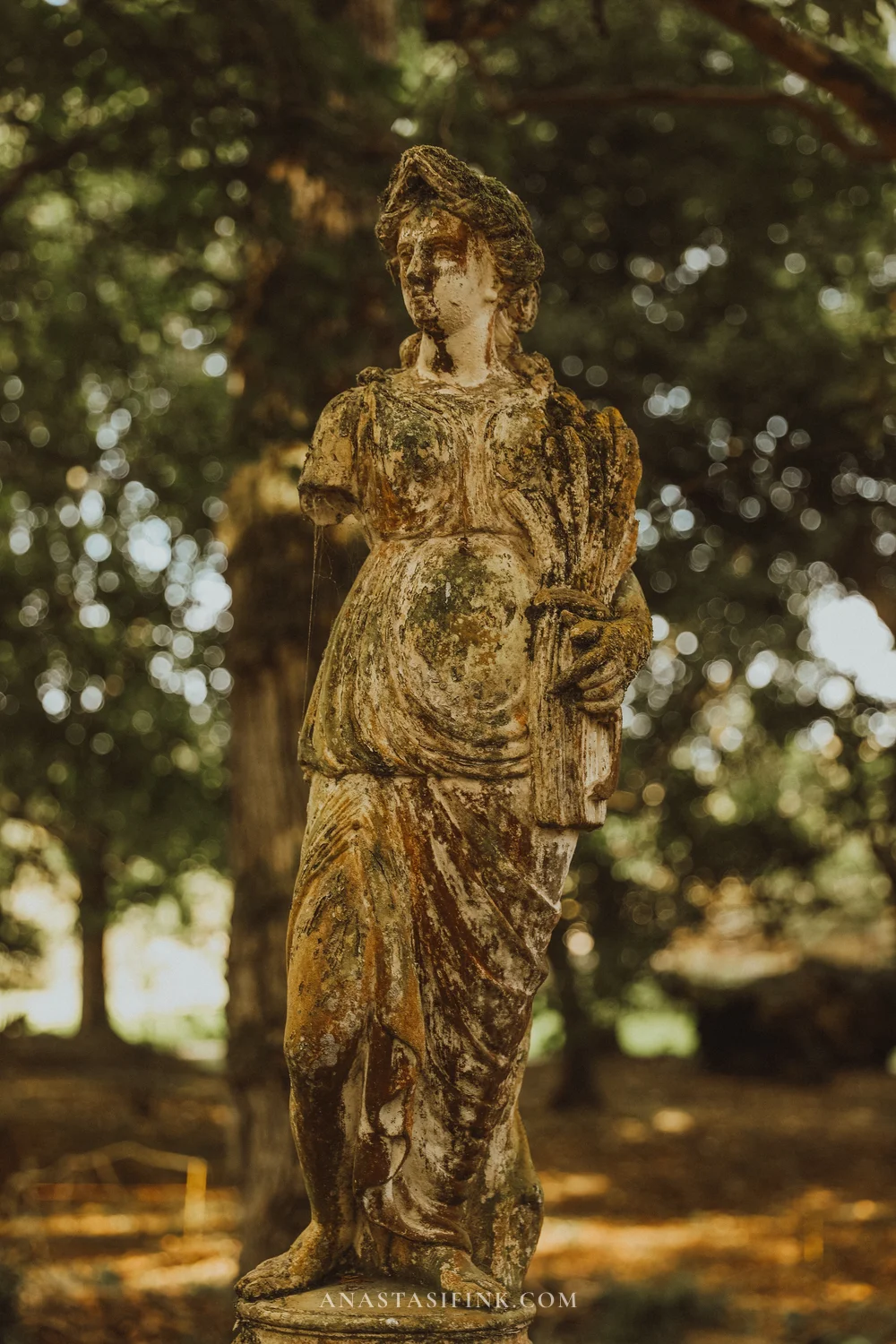
Opposite the garden stands the Universidad Laboral, a mid-twentieth-century complex that is called the largest building in Spain. It was built as a boarding school for miners’ children; today it houses a cultural centre, a theatre and university faculties. Its tower, around a hundred and thirty metres high, can be seen from almost anywhere in the city. The inner courtyard is open to everyone, while the tower and the church with its elliptical dome can be visited on a guided tour. There is a combined ticket for the tour and the botanical garden, and the two together take half a day.

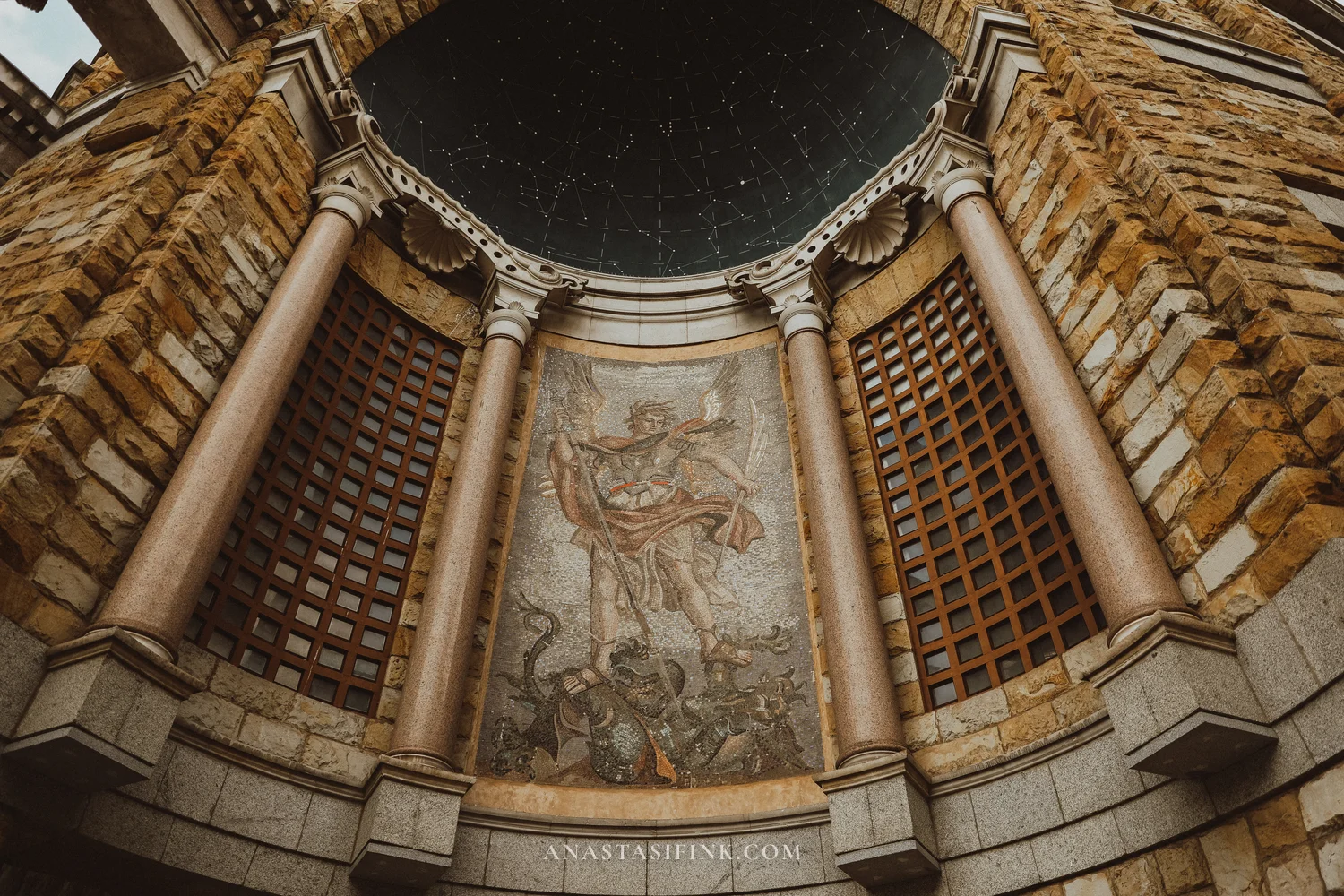
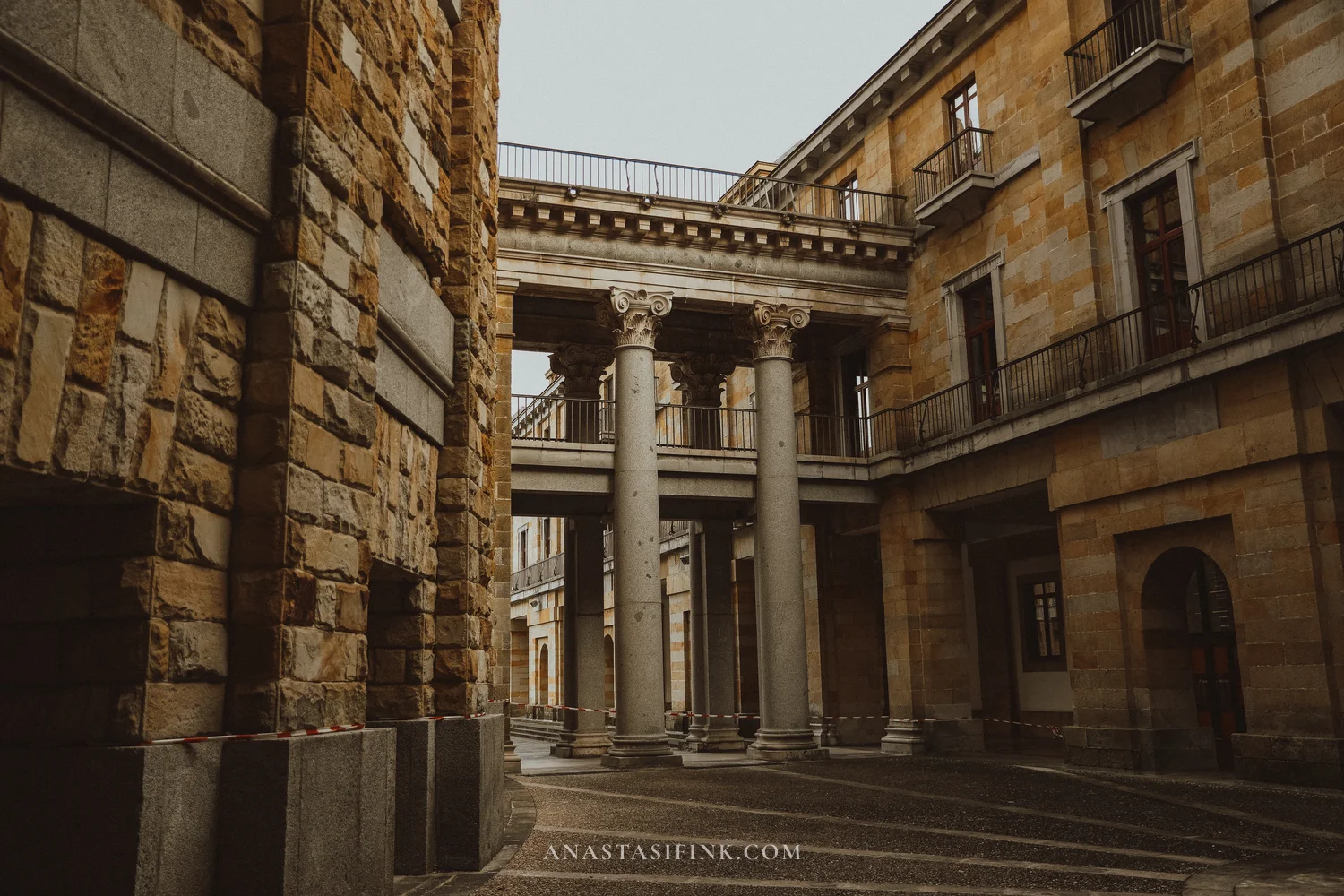
Mosaic in the church portico and the colonnade
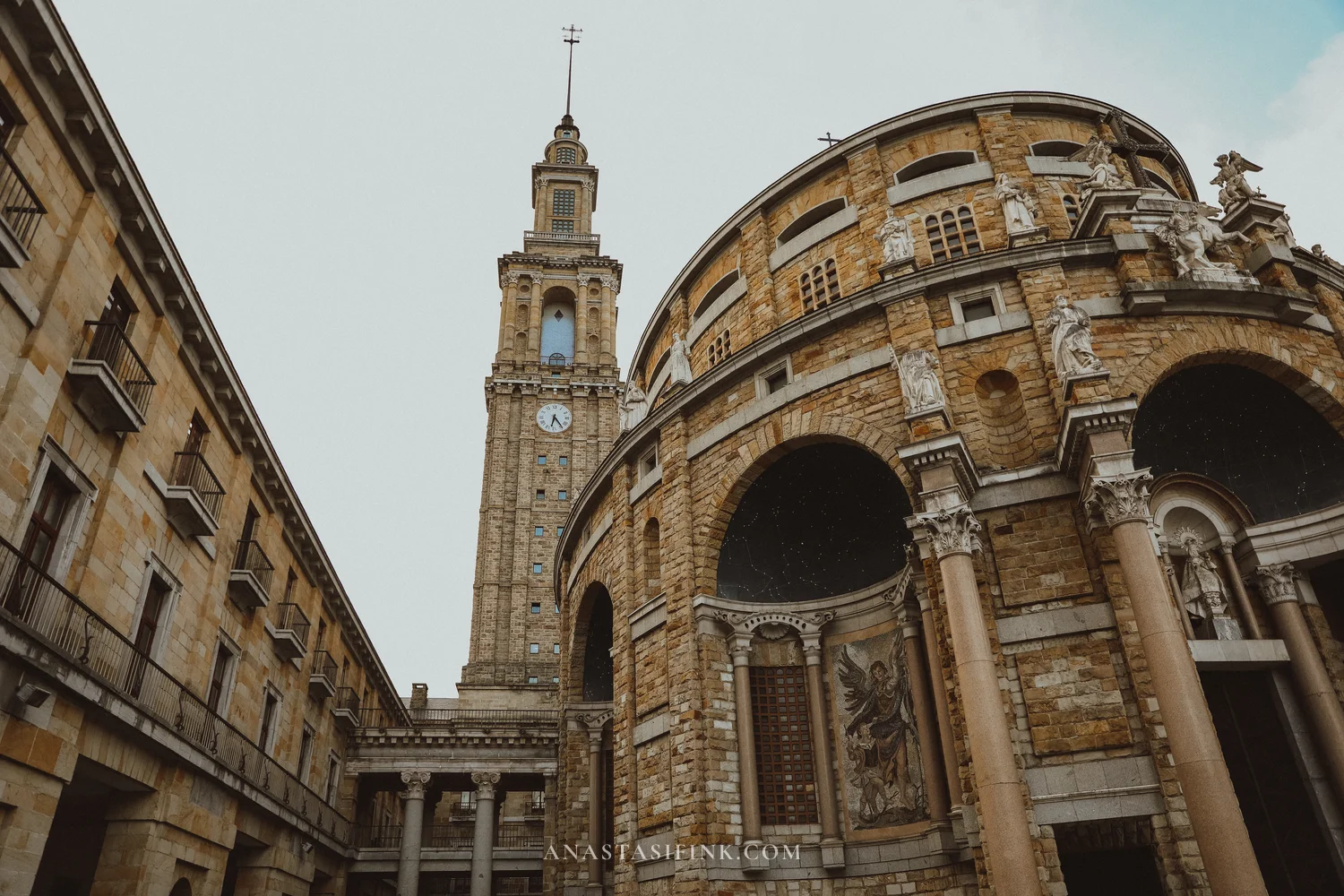
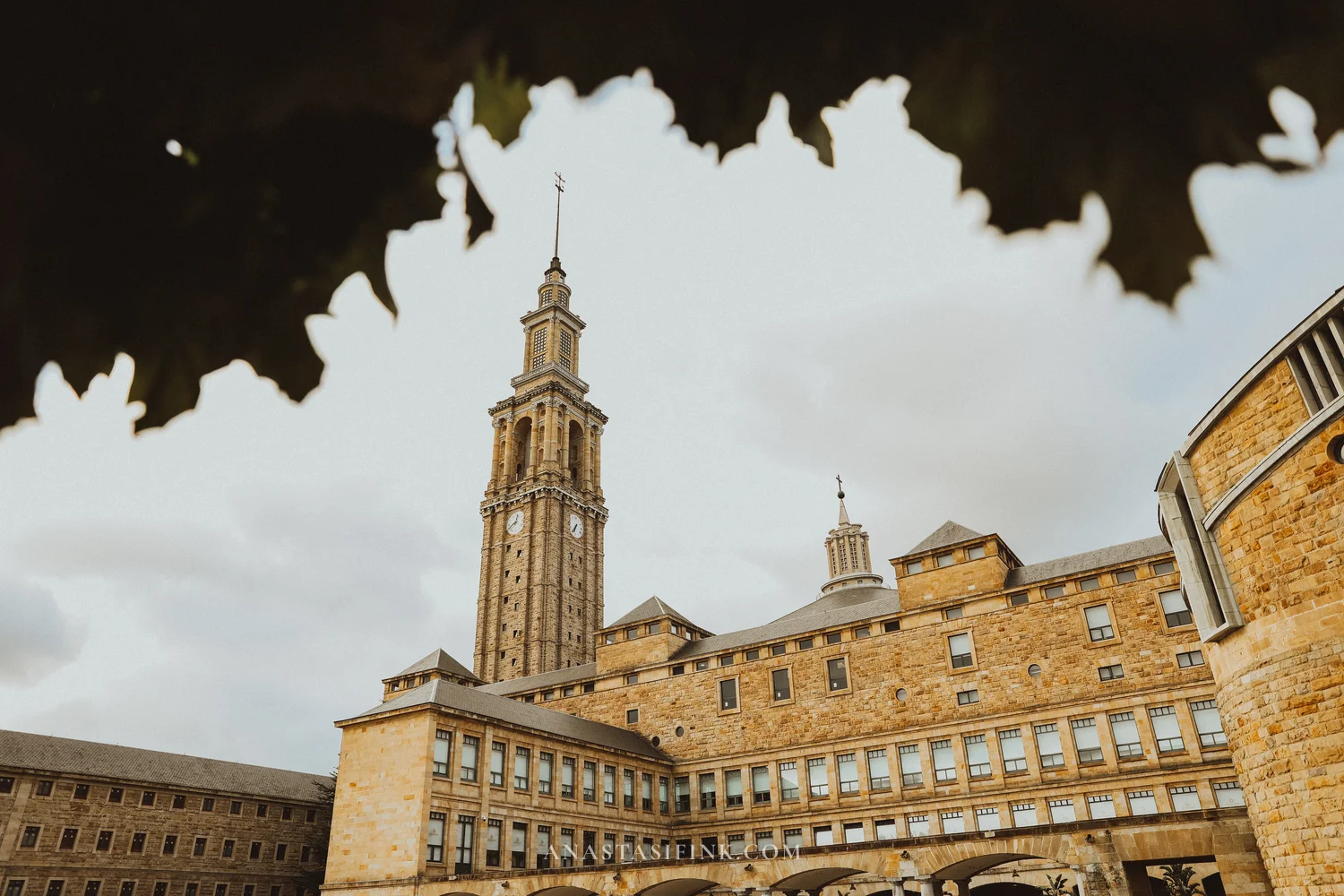
Universidad Laboral tower
Coffee and ice cream
NUBO is a café on Paseo de Begoña, in the centre, which opened in summer 2026. Coffee by both alternative and classic methods, and their own baking. I had a cappuccino and a slice of layered cream cake – one of the best things I ate on the whole trip.
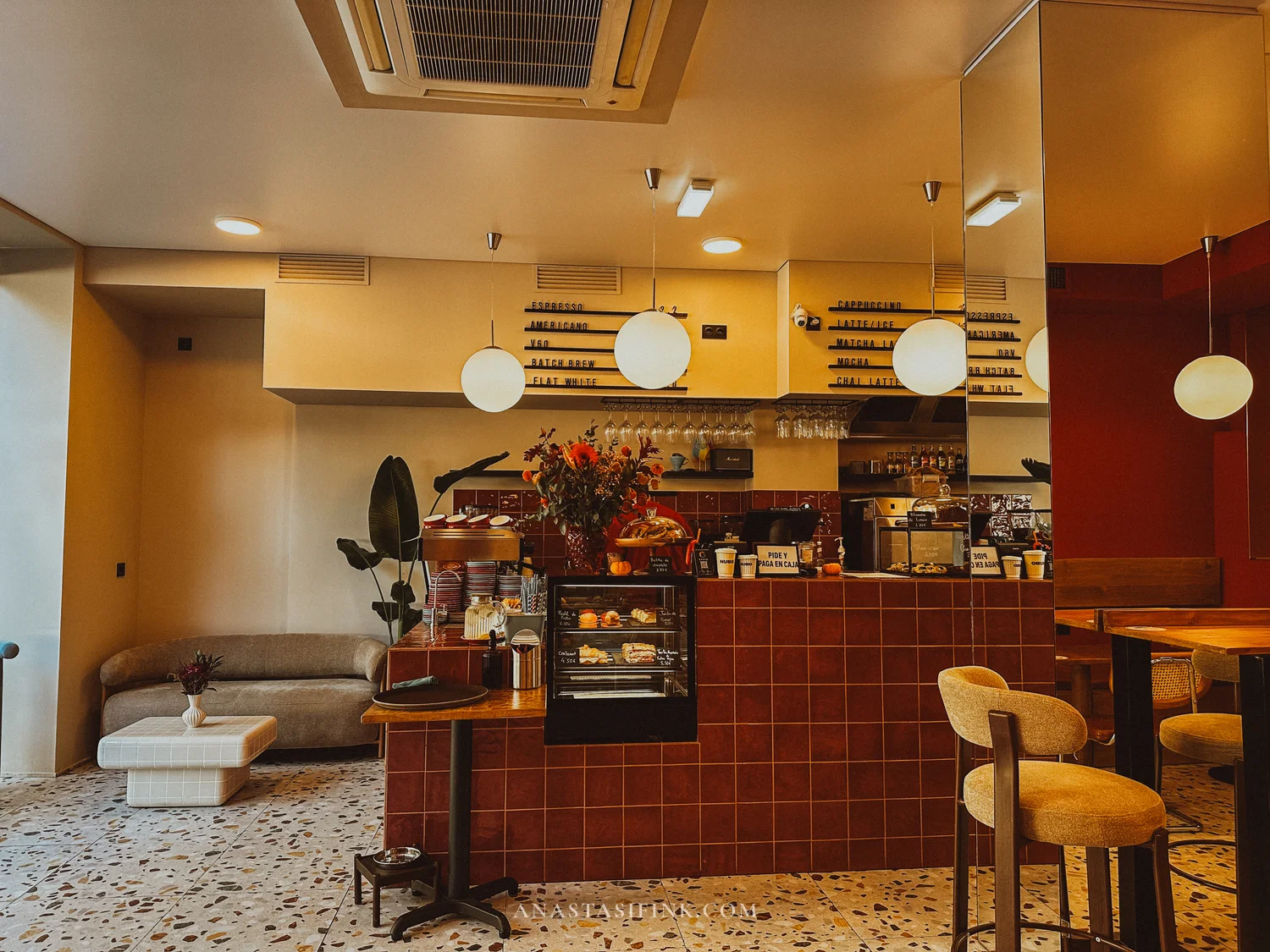
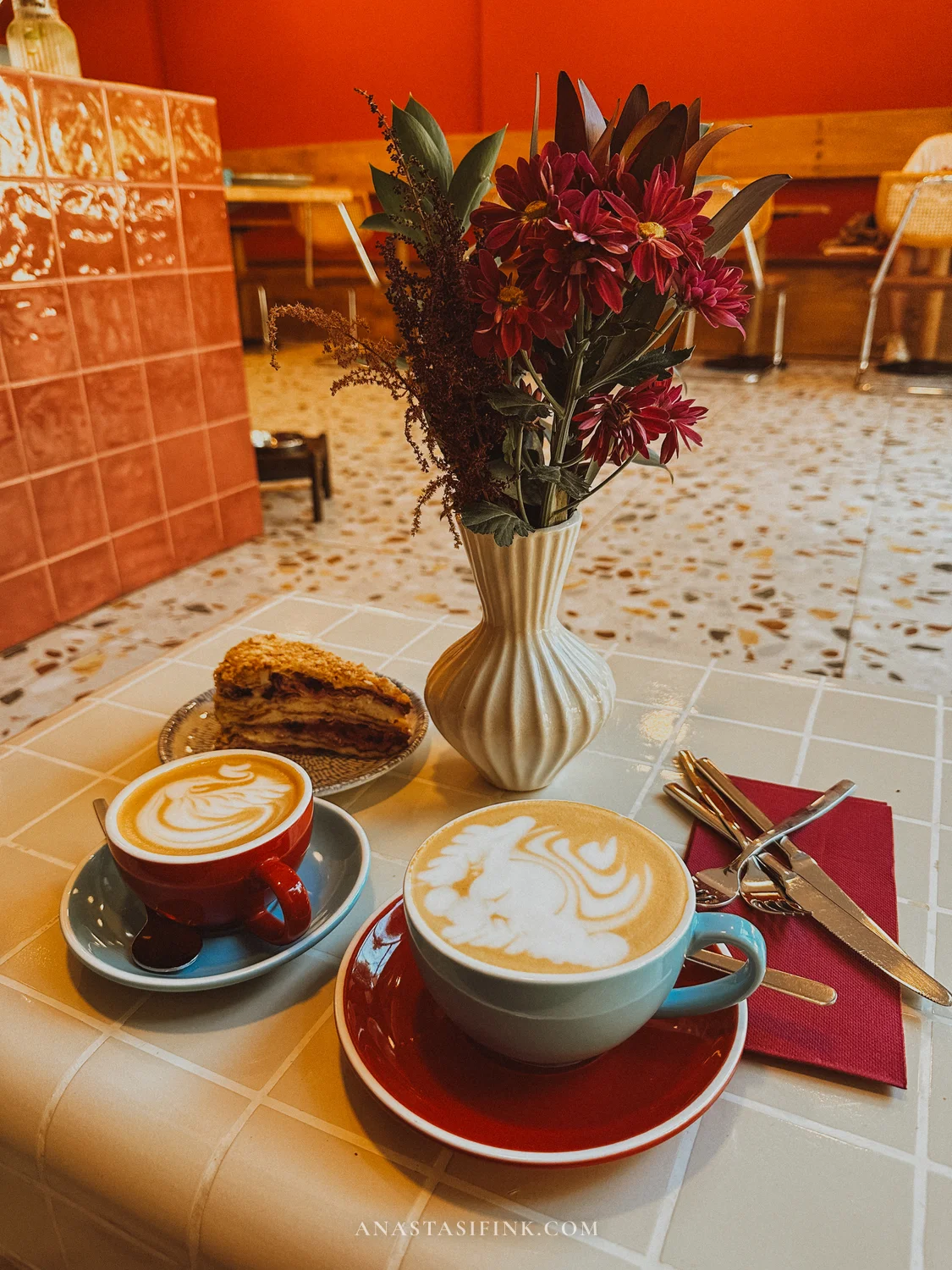

Coffee at NUBO and La Ibense ice cream
For ice cream, go to Helados La Ibense next to the beach. The shop has been going since 1934, the ice cream is homemade, and the chocolate was especially good.
Practical information
- NUBO: Paseo de Begoña, 16 – Google Maps; breakfast from 9:00, coffee and pastries
- Helados La Ibense: by Playa de San Lorenzo, open since 1934 – Google Maps
Mercado del Sur and what to bring home from Gijón
The city’s main covered market stands between Plaza de Europa and Plaza del Seis de Agosto, ten minutes’ walk from the beach. It was built at the very end of the nineteenth century: a cast-iron frame, a pentagonal plan filling a whole block, big windows and four entrances. In 2001 the building was restored with the old structure kept intact. Downstairs it is fish, meat, cheese and tinned goods, and upstairs, ever since the market opened, the “aldeanas” have been trading – women from the surrounding villages who bring seasonal vegetables, eggs and homemade butter. What exactly is on sale changes from week to week. I arrived close to closing time, when most of the stalls were packing up, but locals were still standing at the cheese counter buying something to take home.
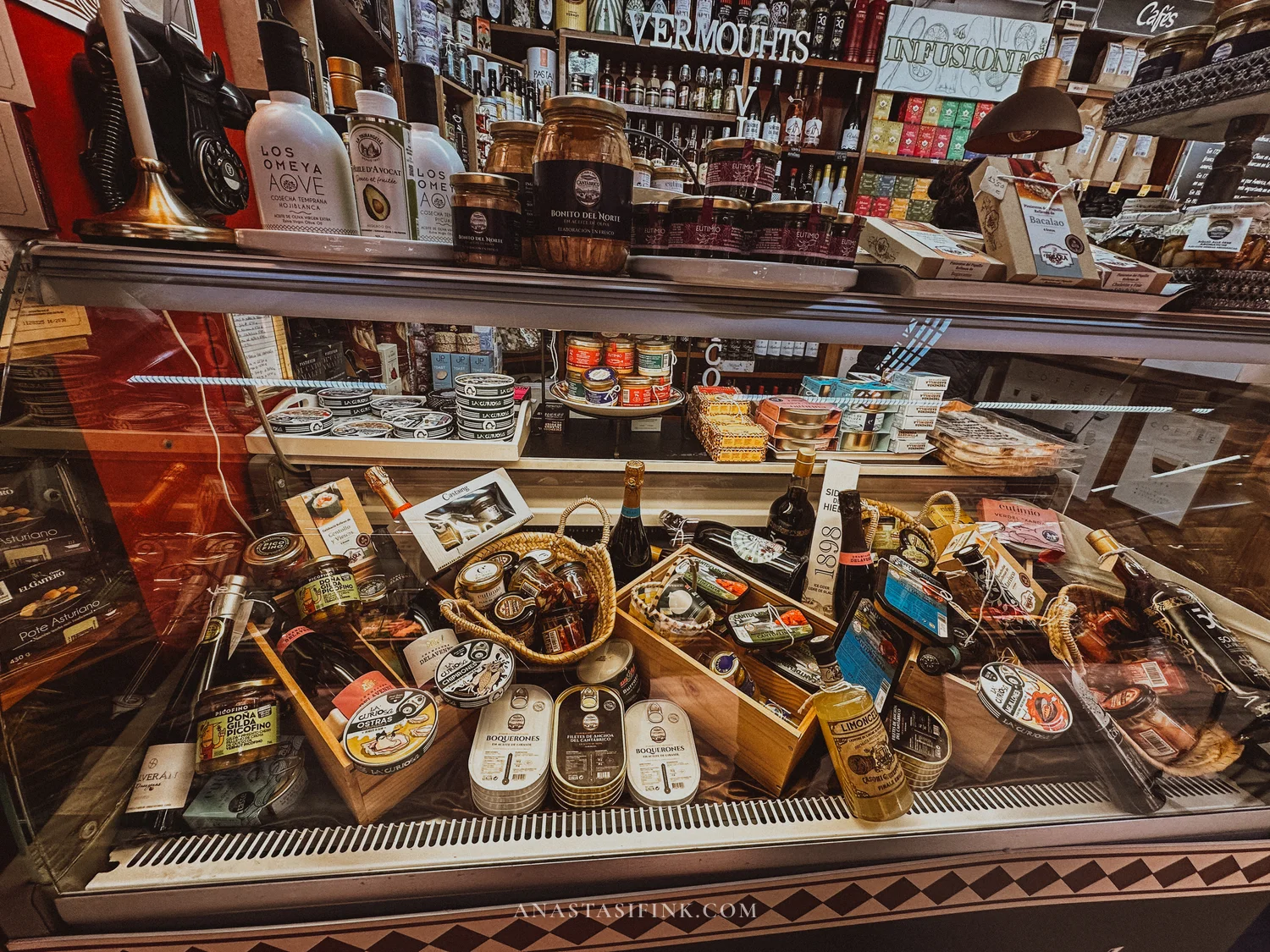
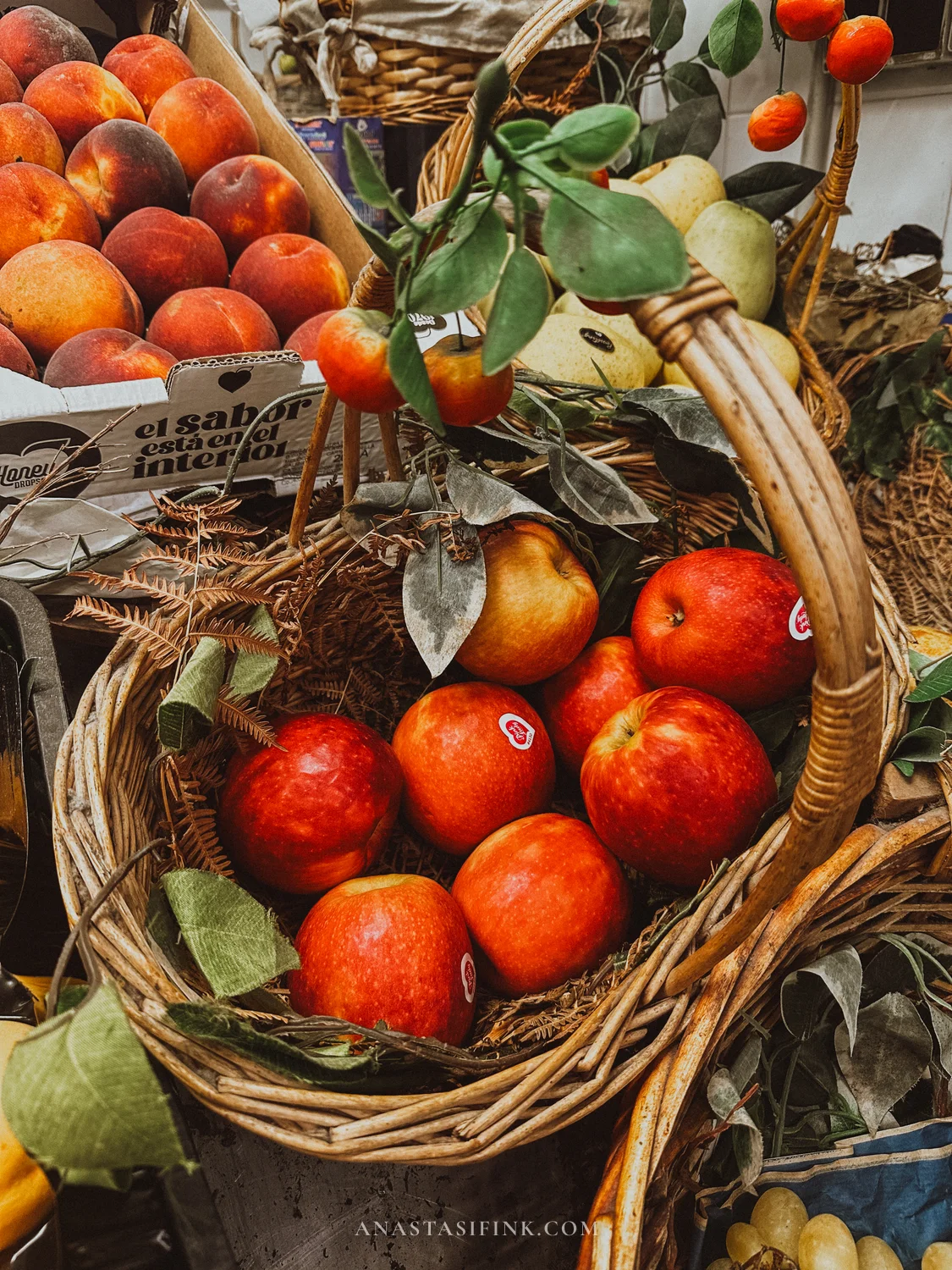
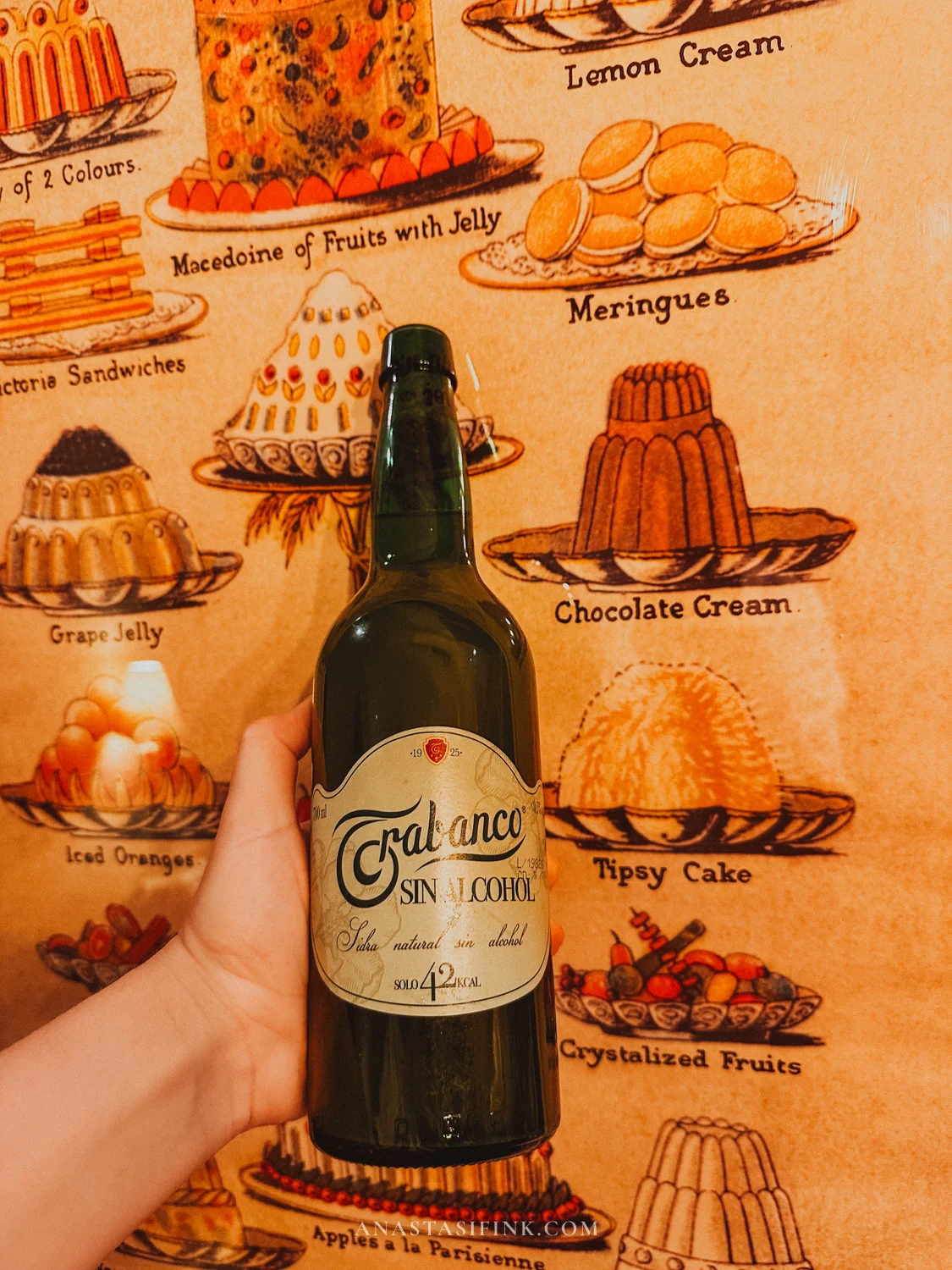
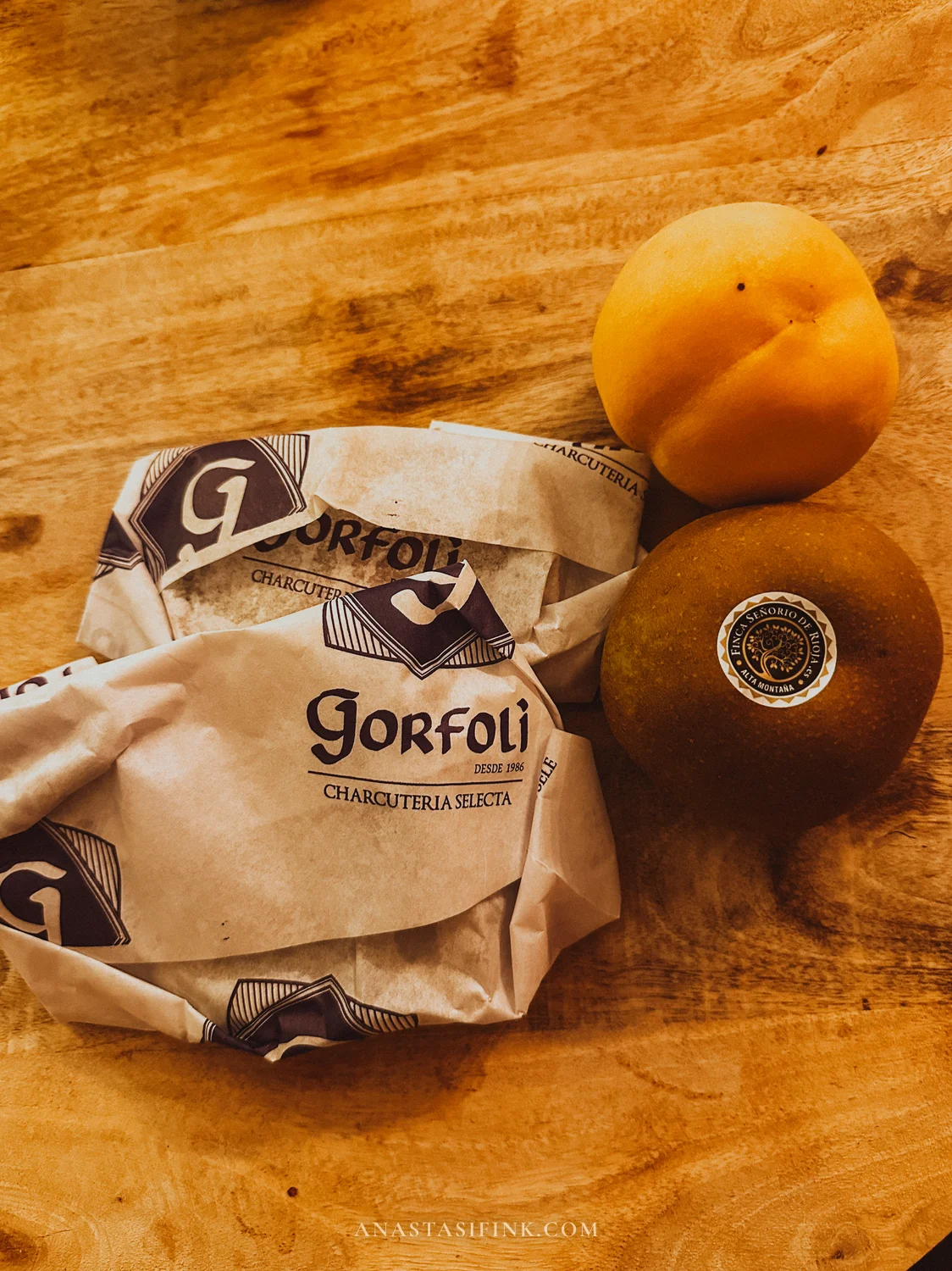
Market shopping

What I bought:
- Trabanco non-alcoholic cider. Sidra is the drink of Asturias: made from apples only, with no sugar, and poured from a height so it fizzes up in the glass – think of it as a stage trick that here is simply the rule. Trabanco is one of the region’s old cider houses, and it makes an alcohol-free version: natural cider with the alcohol removed, not fizzy apple juice. Sour, dry, very close to the real thing.
- Cabrales cheese. Asturias makes more than forty kinds of cheese, four of them with a protected designation of origin: Cabrales, Gamonéu, Casín and Afuega’l Pitu. At the Gorfolí stall in the market I bought Cabrales, the best known of them: a blue cheese aged in mountain caves. It is sharp and strong, and it goes well with an apple and with apple paste.
- Dulce de manzana. A firm apple paste that is cut into slices and eaten on cheese, the way membrillo (quince paste) is in other parts of Spain. In autumn people in Asturias make it at home from their own apples.
- Local apples and peaches. Apples are the foundation of everything in Asturias, and there are dozens of varieties. In October there were still peaches, big and sweet.
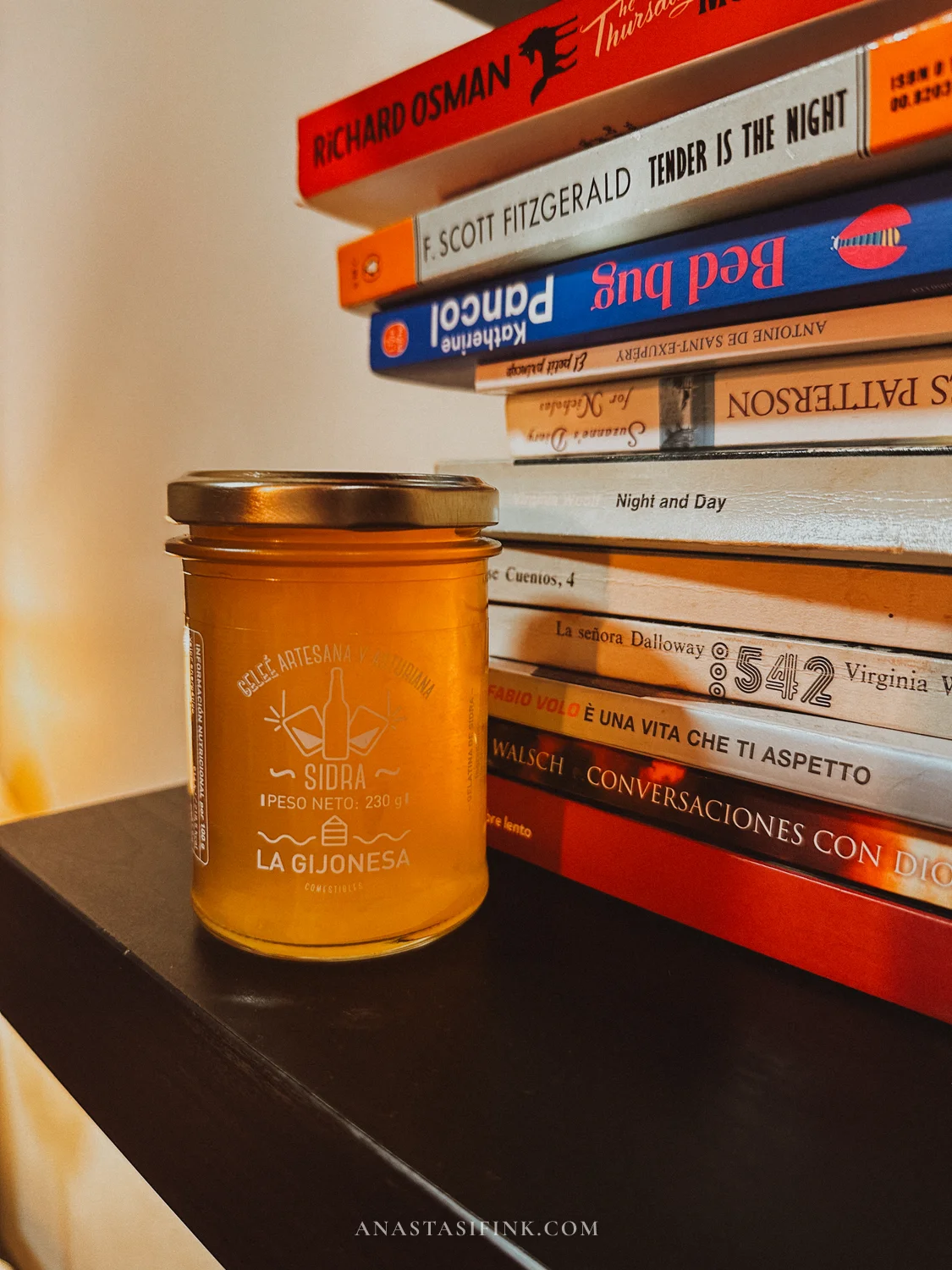
Another unusual thing is La Gijonesa cider jelly. The ingredients are just cider, sugar and pectin, and cider makes up exactly half. It tastes exactly like cider, only sweet: no sugar goes into the drink itself, but here there is, so it is an acquired taste, though an interesting one. It is sold in a small local-produce shop near Plaza Mayor.
Practical information
- Mercado del Sur: between Plaza de Europa and Plaza del Seis de Agosto
- Hours: Mon-Fri 7:00-19:00, Sat 7:00-16:00, closed on Sundays (individual stalls may keep different hours)
- What to buy: cheese, tinned seafood, cider, dulce de manzana, seasonal fruit
Pastry shops of Gijón
Gijón still has pastry shops that opened a hundred years ago, and the city has sweets of its own: princesitas and tarta gijonesa.
Confitería La Playa opened in 1921 on Calle Corrida, the main shopping street of the centre, and is still there. Its signature is princesitas: small almond-paste cakes filled with egg-yolk cream. They are made all over Asturias, but the ones from Gijón are considered the original. People also come here for pasta de nuez, walnut biscuits with praline, and chocolates. A box in gold paper tied with a ribbon makes a good gift to take home.
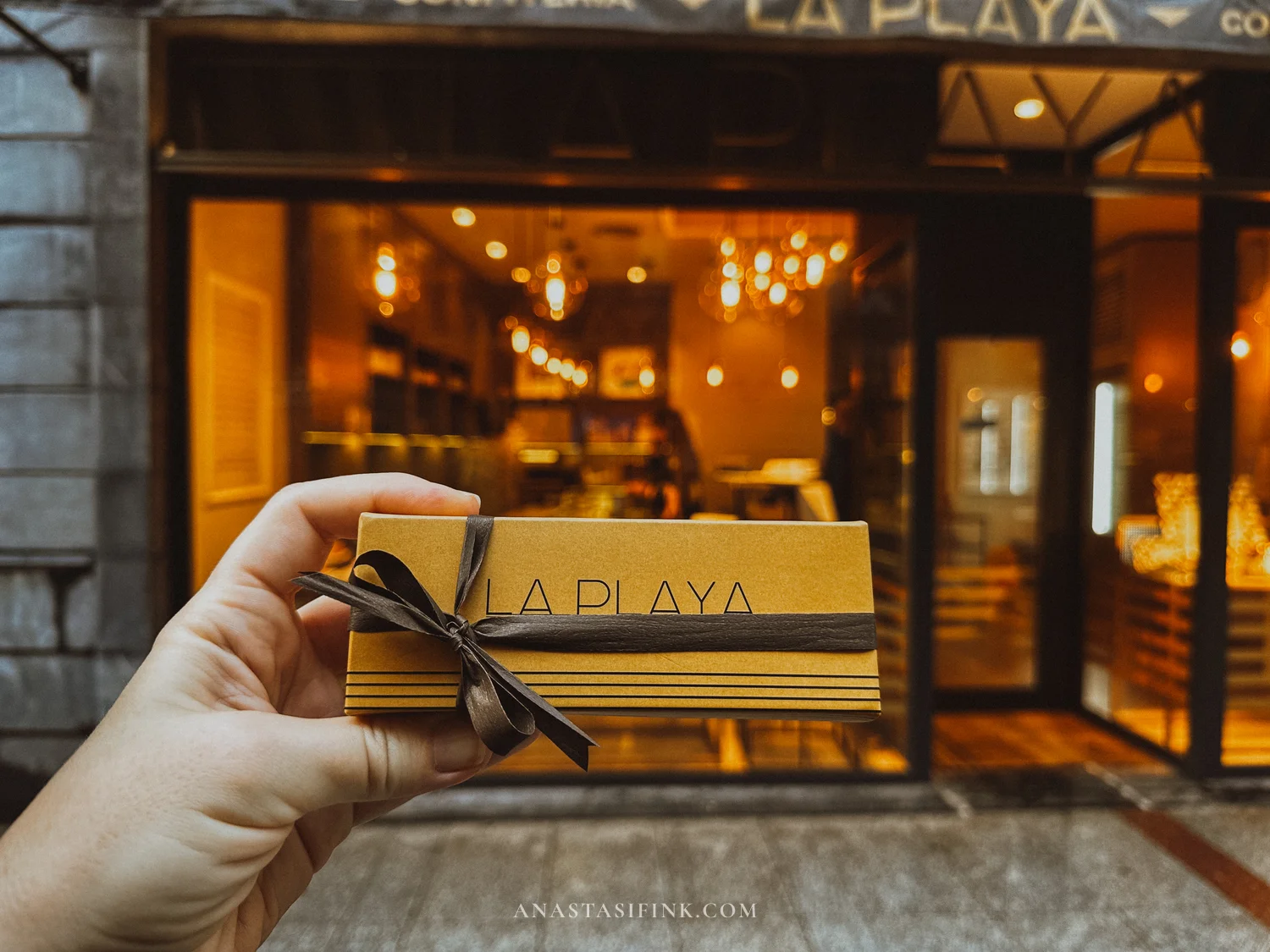
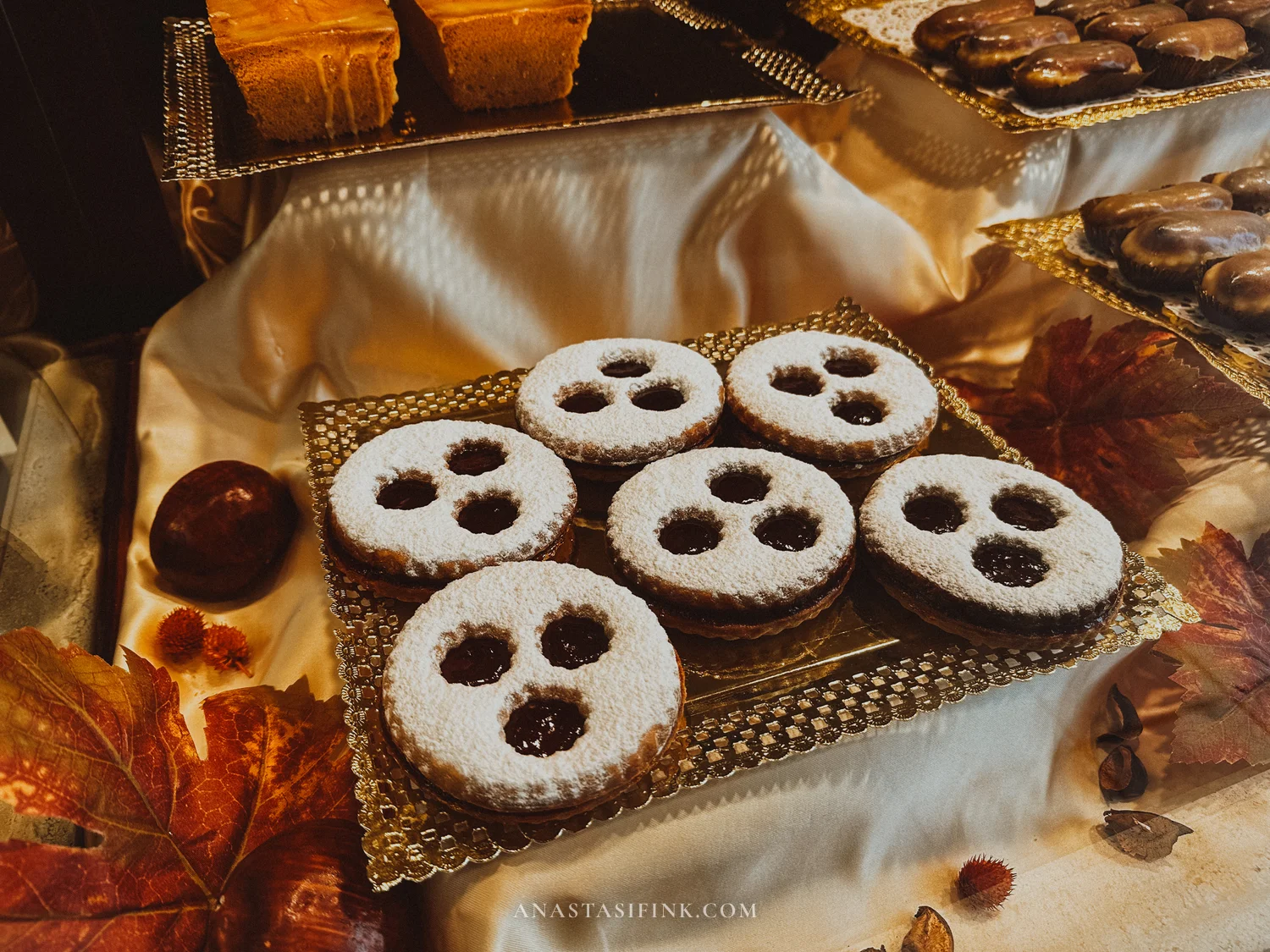
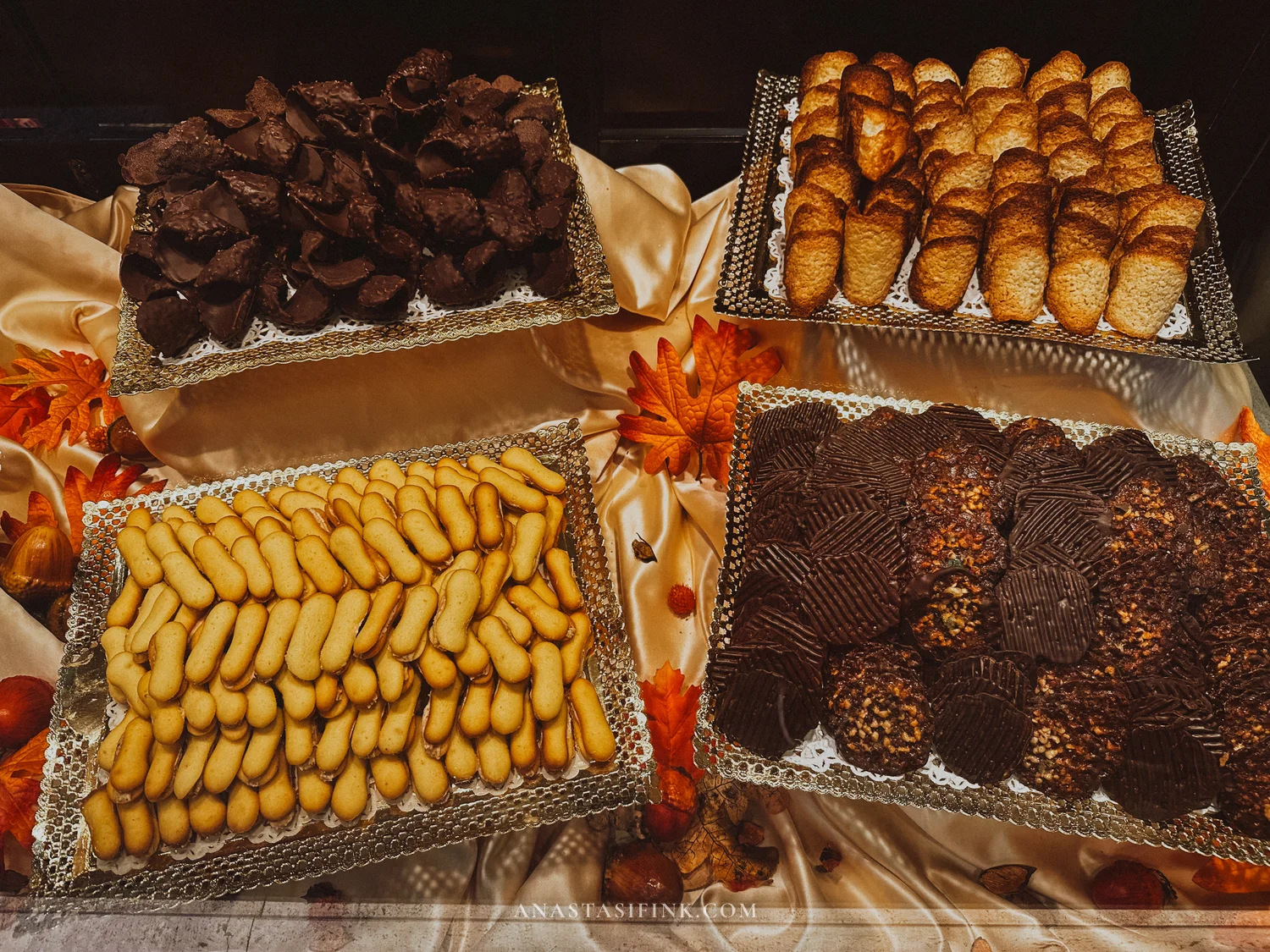
Pastry shop windows in Gijón
Confitería La Fe has been open since 1938 and now stands by Plaza de Europa, next to the market. This is where the name tarta gijonesa was coined for the local cake: a sponge base with a soft-turrón cream, browned on top. The cake is served cold and sold in most of the city’s pastry shops. I tried it here: the cream is dense, with a strong turrón flavour and very sweet, so one slice is enough for two. I also took casadielles, Asturian pastries of thin dough filled with ground walnuts, sugar and anise. They are baked all over Asturias, usually for carnival, but the pastry shops have them all year. The display case also had chocolate eclairs, almond cakes, caramel squares and florentine biscuits.
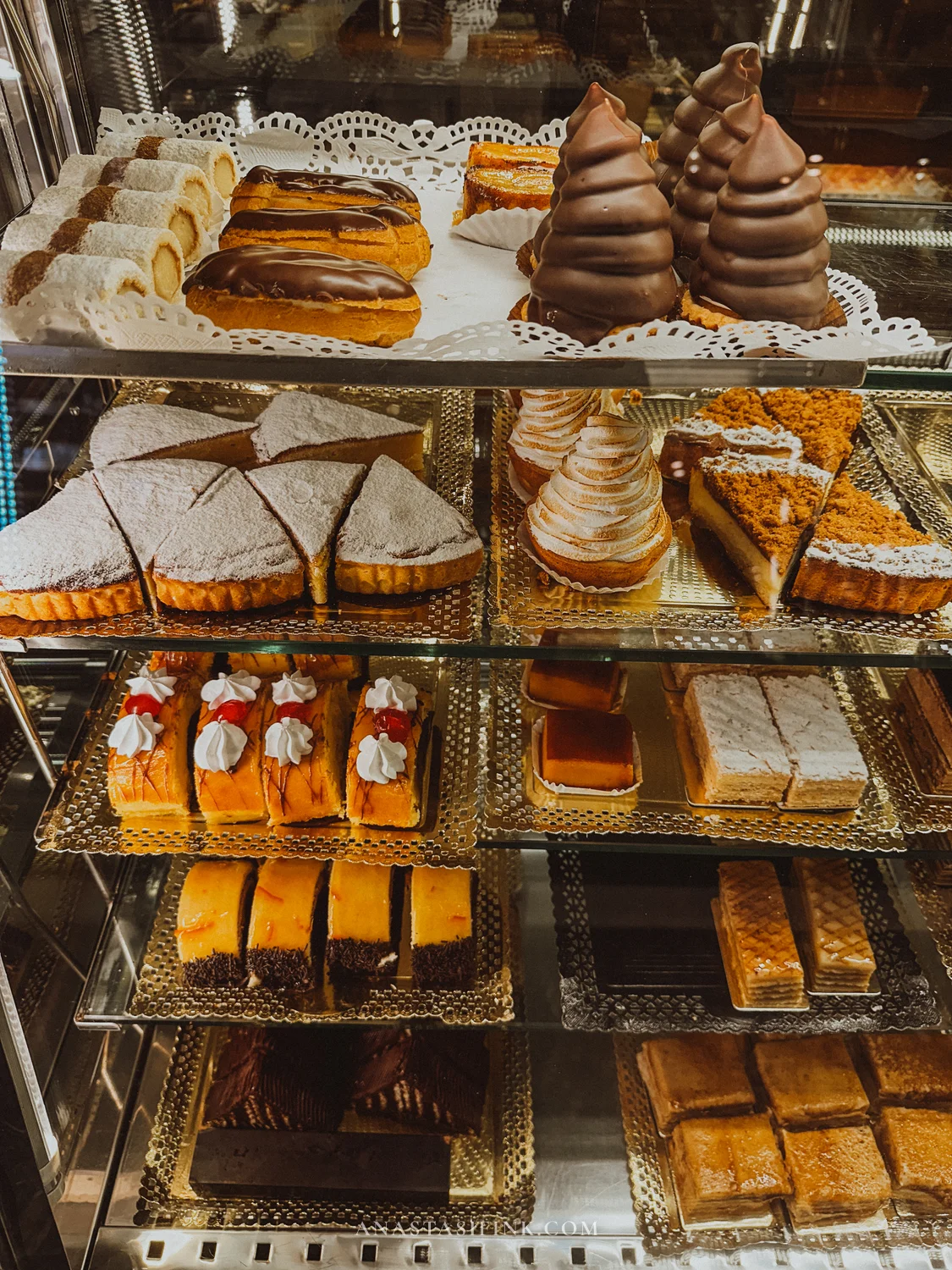
Practical information
- Confitería La Playa: Calle Corrida, 61; princesitas, pasta de nuez, chocolates
- Confitería La Fe: Calle Periodista Adeflor, 3, by Plaza de Europa; tarta gijonesa, casadielles
- What is turrón: a Spanish sweet made of almonds and honey; the soft turrón from Jijona (a town in the province of Alicante, not to be confused with Gijón) is the base of the tarta gijonesa cream
Dinner at the El Veleru cider house
For dinner I went to Cimavilla, to the sidrería El Veleru. It is an old tavern in a sixteenth-century building two steps from Plaza Mayor: wood, beams, a low ceiling. The kitchen is all about the sea: seafood soup, rice with lobster, fish baked in salt or grilled. It is popular, so it is better to book a table.
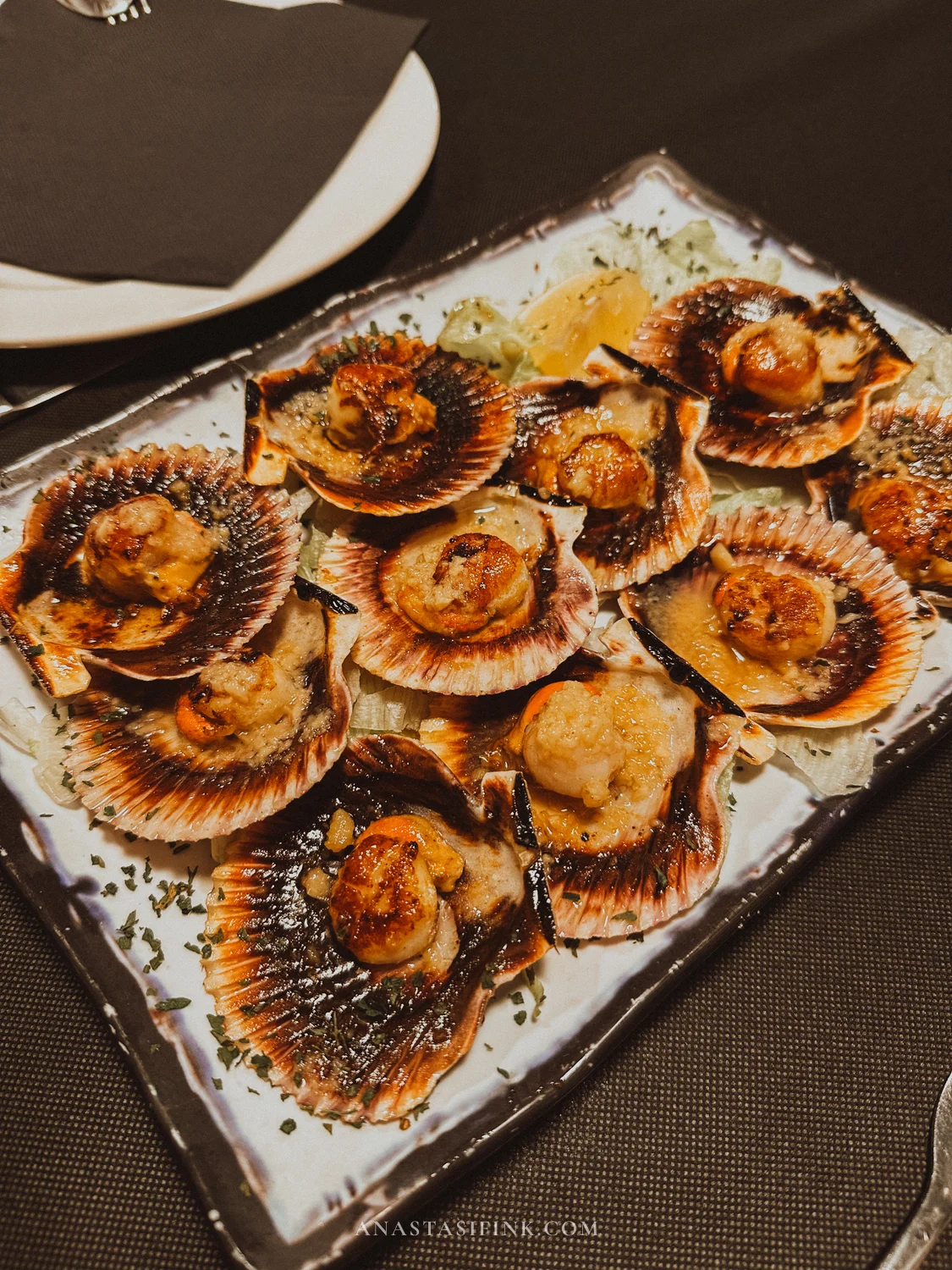
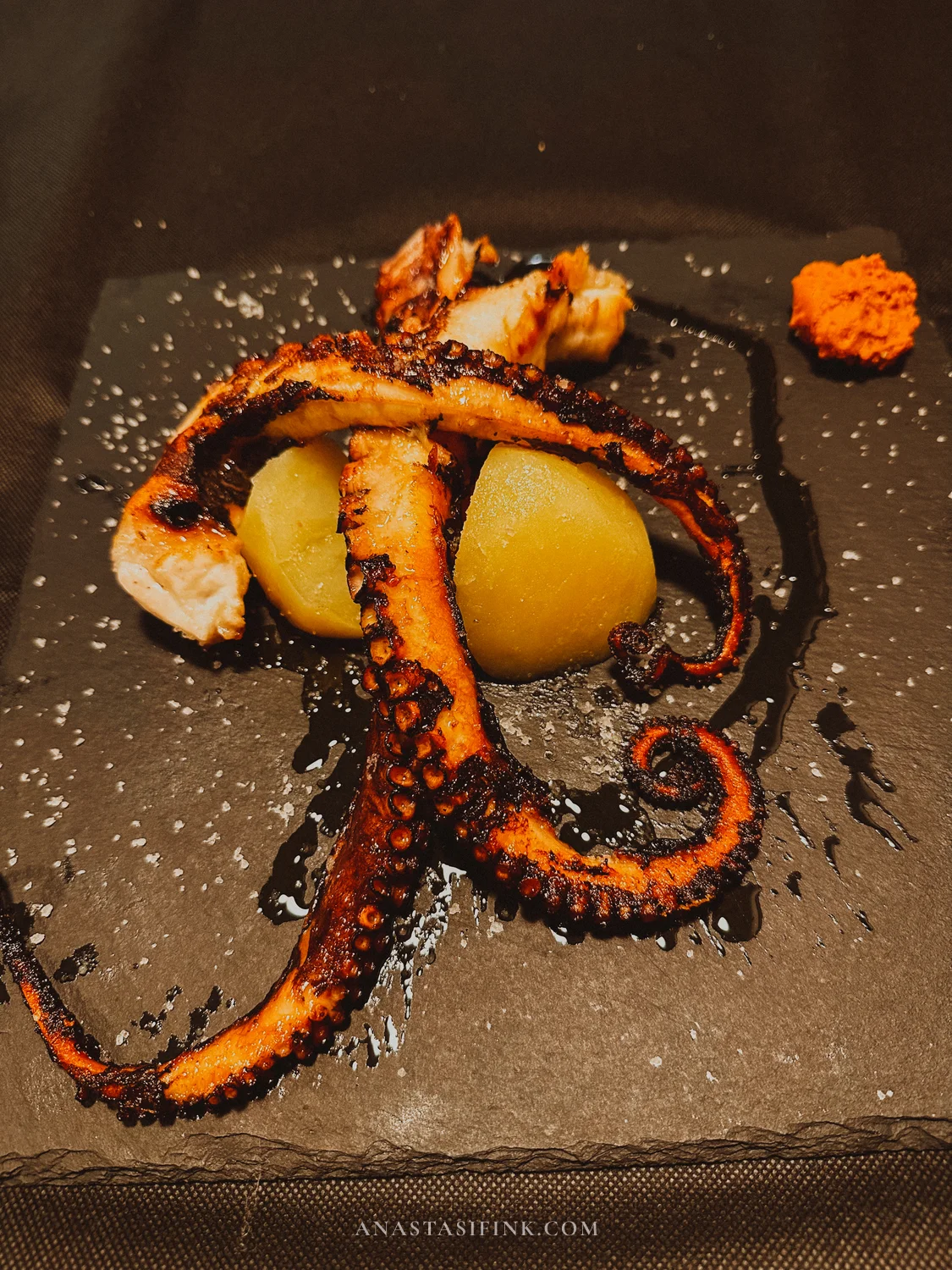
Scallops and octopus at El Veleru
I ordered grilled scallops in their shells and the octopus. The octopus is the house speciality; on the menu it is called pulpo con helado de pimentón, “octopus with paprika ice cream”. It is grilled tentacles on boiled potatoes with a cold, thick paprika spread on the side, which is what they call the ice cream. It is spicy, and with the octopus it is very good. The only thing is that the dish is rich, with a lot of oil, so one portion between two with something light alongside is plenty.
Practical information
- Sidrería Restaurante El Veleru: Calle Rosario, 2, Cimavilla; phone +34 984 706 515
- What to order: octopus with paprika “ice cream”, grilled scallops, seafood soup
- Booking: by phone, tables are full on weekend evenings
How to get to Gijón
- From Oviedo: the Renfe Cercanías suburban train or an ALSA bus, 30-40 minutes, around 3-4 € one way. Trains and buses run every half hour to an hour.
- From Asturias airport: the ALSA bus to Gijón bus station, around 50 minutes, around 9 €, roughly once an hour.
- Around the city: the centre, Cimavilla and the beach are all walkable. EMTUSA city buses go to the botanical garden and the Universidad Laboral.
Tips
- Two or three days are enough for Gijón: one for the city and the beach, one for the trail, and half a day for the botanical garden and the Universidad Laboral.
- See the old town and the beach early in the morning: there is nobody around, and at low tide the beach is enormous.
- Take water and food on the trail, there is nothing after La Providencia park.
- In October it was warm, the sea was still fine for swimming, and there were few tourists.
Final thoughts
I would come back here for the trail and the eucalyptus grove. And for the octopus.
If you want to brush up your Spanish before the trip, lingvero.com has free grammar exercises; they will come in handy at the market and in the cider house.
FAQ
In the morning the old quarter of Cimavilla with Plaza Mayor and the hill of Santa Catalina, then the Sagrado Corazón basilica and Playa de San Lorenzo. In the afternoon, the start of the Senda del Cervigón as far as La Providencia park, and in the evening the breakwater by the marina and dinner at a sidrería.
Two to three hours from the mouth of the river Piles to La Providencia park and back: this stretch has the cliffs, the ship-bow viewpoint and the paragliders. The full trail to La Ñora is around three hours one way.
By Renfe Cercanías train or ALSA bus, about half an hour on the way. Services are frequent, a ticket costs a few euros, and there is no need to buy in advance.
Cabrales cheese, dulce de manzana, cider, tinned seafood, princesitas from La Playa and La Gijonesa cider jelly. Everything except the sweets can be found at the Mercado del Sur.
In summer the city is crowded and the beach is packed. In September and October it is still warm enough to swim, and there are noticeably fewer people. Surfers ride all year round.
Yes, as long as you do not lean over the parapet or stand right at the edge; people walk there with children. But you can get soaked through, and in a real storm it is better not to go out on the breakwater at all.