San Juan de Gaztelugatxe, Spain – How to Get There and What to See

San Juan de Gaztelugatxe is a rocky islet on the coast of the Basque Country, joined to the shore by a stone bridge, with a hermitage on top that you reach by climbing 241 steps. You can visit on a day trip from Bilbao without a car: take the bus to Bakio, then follow the coastal trail to the place many people know as Dragonstone from Game of Thrones.
What Is San Juan de Gaztelugatxe
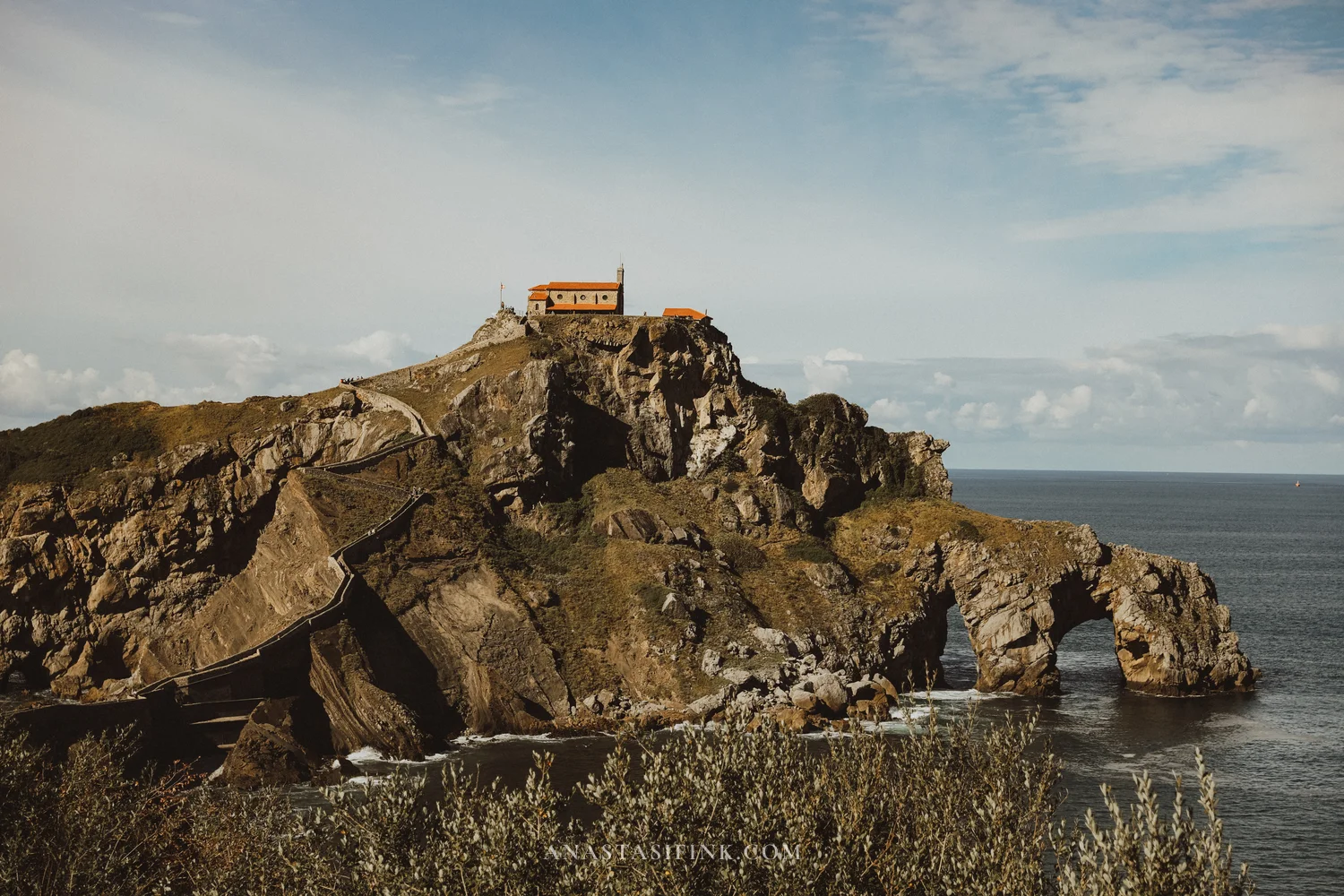
San Juan de Gaztelugatxe is a small rocky island in the Bay of Biscay, between the towns of Bakio and Bermeo. A man-made stone bridge links it to the shore, and on top stands a hermitage dedicated to John the Baptist. In Basque it is called Doniene. The island’s name is usually traced to the Basque words gaztelu (castle) and aitz (rock), though there are other explanations too.
The first hermitage here is believed to date from the 9th century. It has been damaged by battles and fires more than once, so the current building is not old at all: the last rebuild was in the early 1980s. It is still a working hermitage, and local pilgrimages come here several times a year.
Many people visit because of Game of Thrones. In season 7 the island played Dragonstone, the ancestral castle of the Targaryens. The bridge and stairs in the series are real, while the fortress on top was added digitally in place of the hermitage.
The coast around the island is a protected natural area that runs from the outskirts of Bakio to Cape Matxitxako.
How to Get to Gaztelugatxe from Bilbao by Bus
I went in October on the Bizkaibus A3518. It leaves from Moyua Square in central Bilbao and runs through Mungia to Bakio. You need the last stop, San Pelaio (Begiratokia/Mirador). From there I continued on foot: first to the beach, then along the trail to the island.
Outside summer there is no direct bus to Gaztelugatxe. If you would rather not walk, a shared minibus taxi, the A3524, runs from Bakio, but only on weekdays and not often. Summer is simpler: from June to September the direct A3517 line runs from Bilbao.
Practical information: the bus
- Line: Bizkaibus A3518 Bilbao – Mungia – Bakio
- From: Moyua Plaza 6, Bilbao
- To: last stop San Pelaio (Begiratokia/Mirador), Bakio
- Weekdays: every hour, 06:30-21:30
- Saturdays: every hour, 06:15-22:15
- Sundays and holidays: 08:00, 10:00, 12:00, 14:00, 16:00, 18:00, 20:00, 22:00
- Journey time: about an hour
- Ticket: €3.40 from the driver, €1.90 with a Barik transport card
- From Bakio to the island: A3524, an 8-seat minibus taxi, weekdays only, roughly every two hours, cash only
- In summer: direct A3517 line from Bilbao, June to September
- Timetable: Bizkaibus website, bizkaia.eus/es/web/bizkaibus. Check the return buses in advance
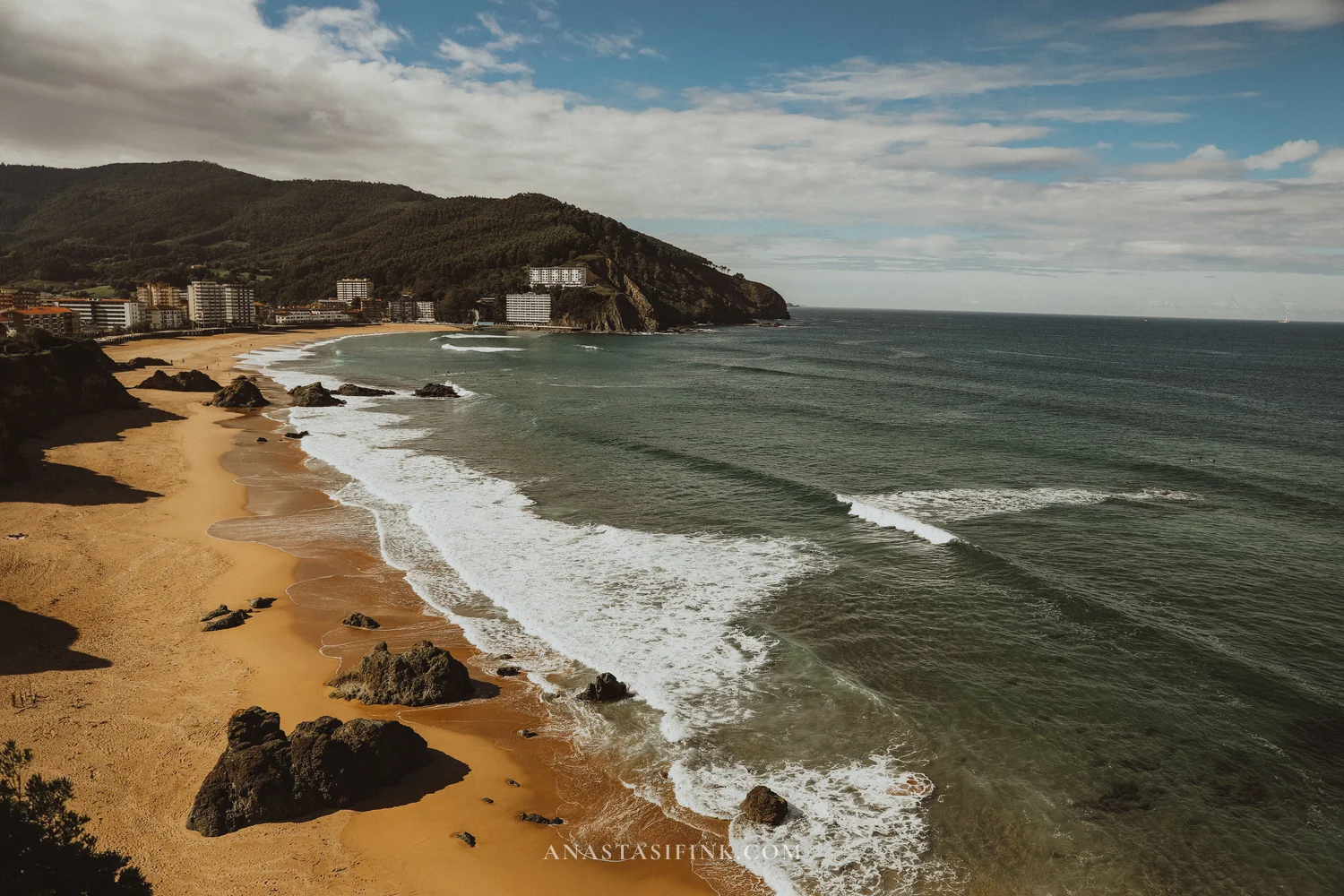
Bakio Beach
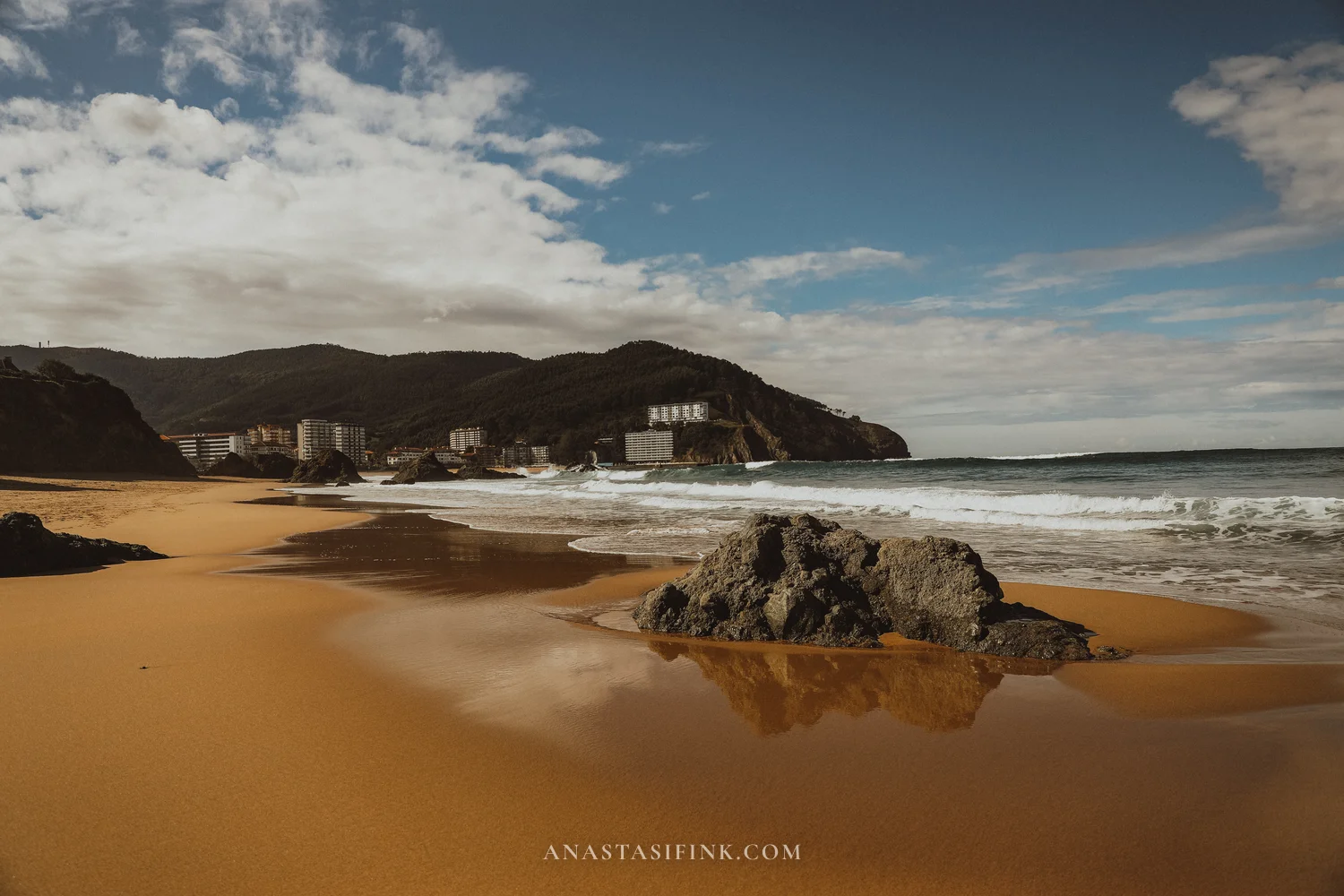
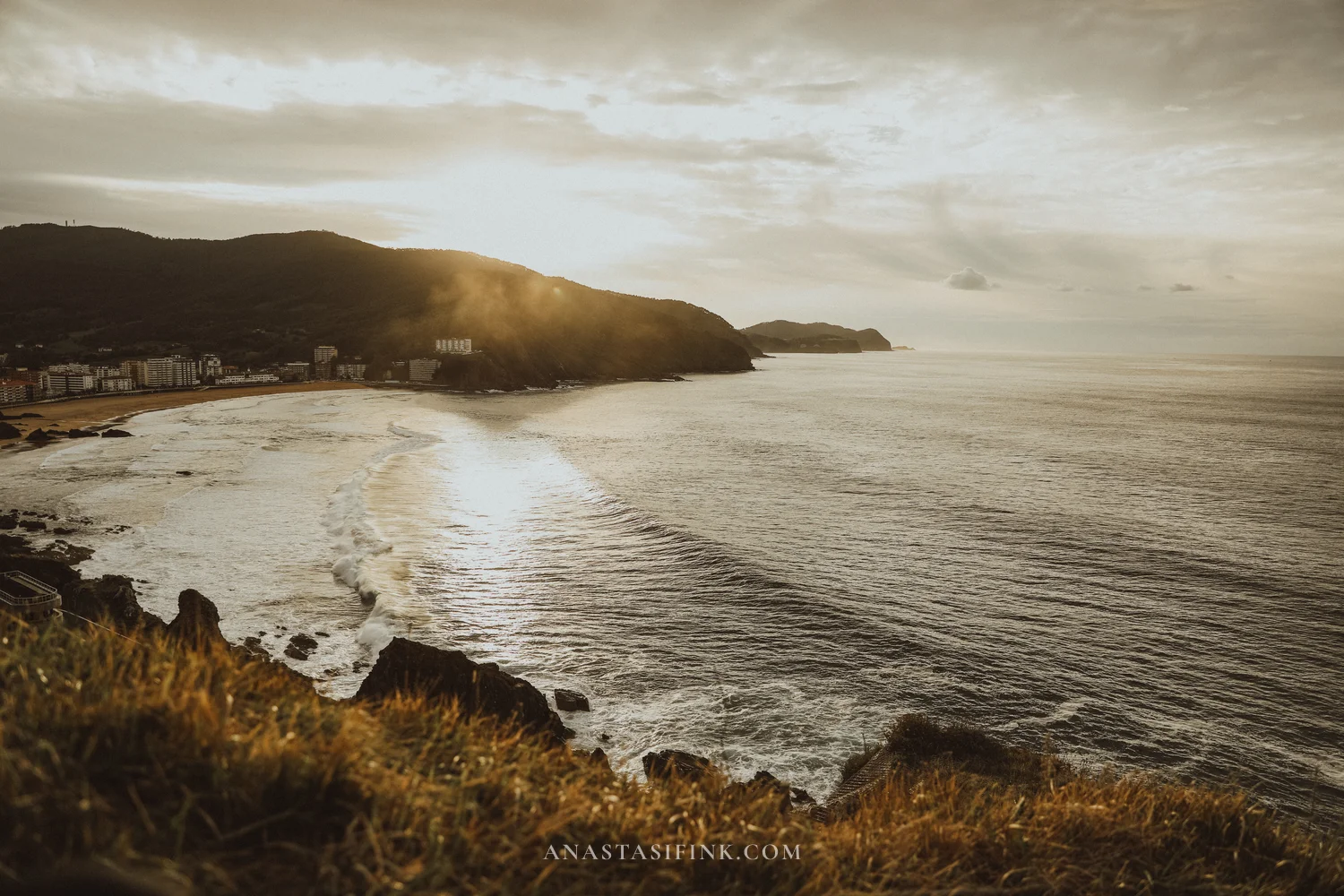
You can walk onto the beach straight from the bus stop. The sand here is golden, with dark rocks sitting right on it. I recommend going down to the water before you set off, because after this the path climbs away from the sea.
The Trail from Bakio to Gaztelugatxe
The Gaztelugatxe trail (Senda Gaztelugatxe) starts just past the beach. It follows the coast from Bakio to Cape Matxitxako, with signposts showing distances along the way.
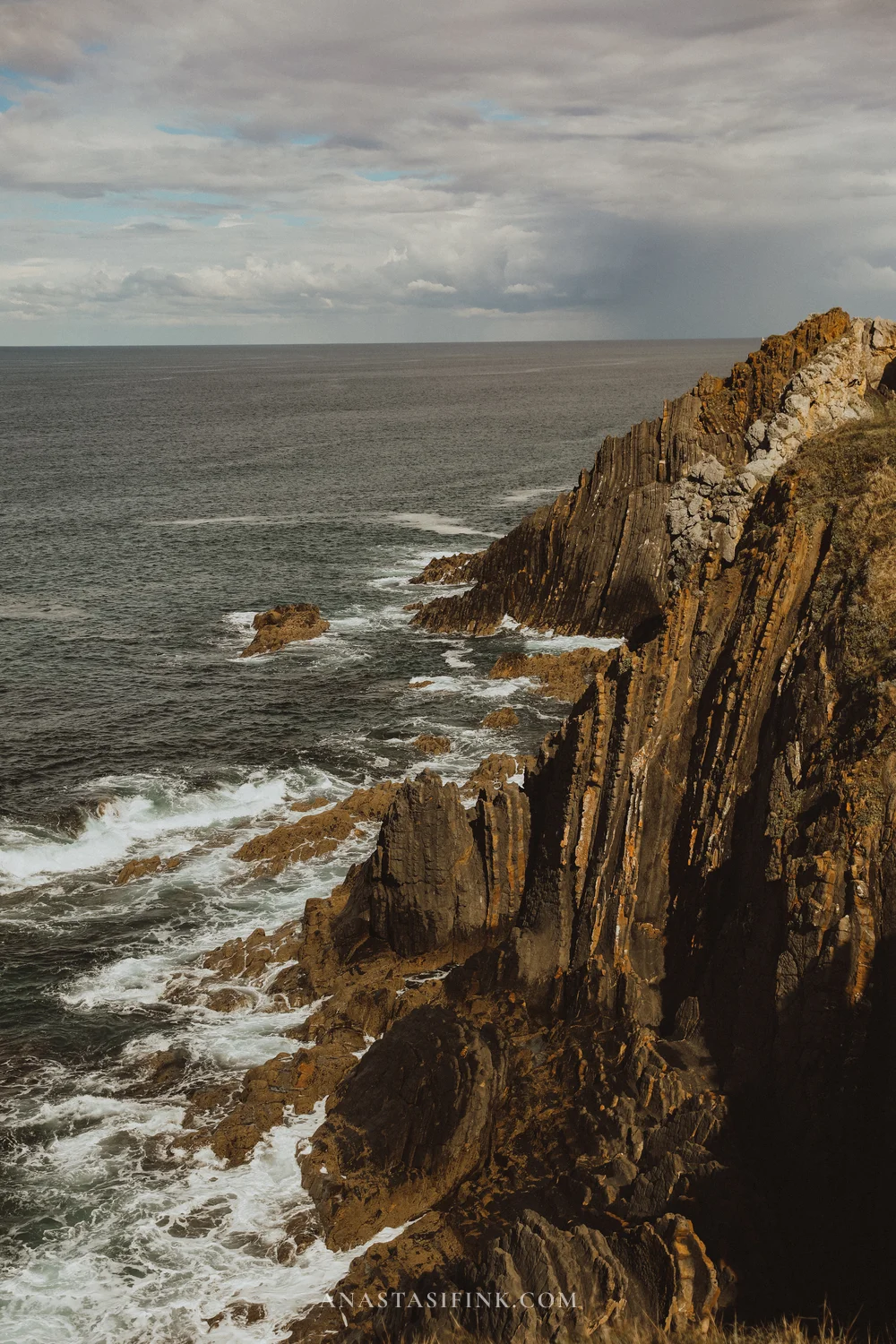
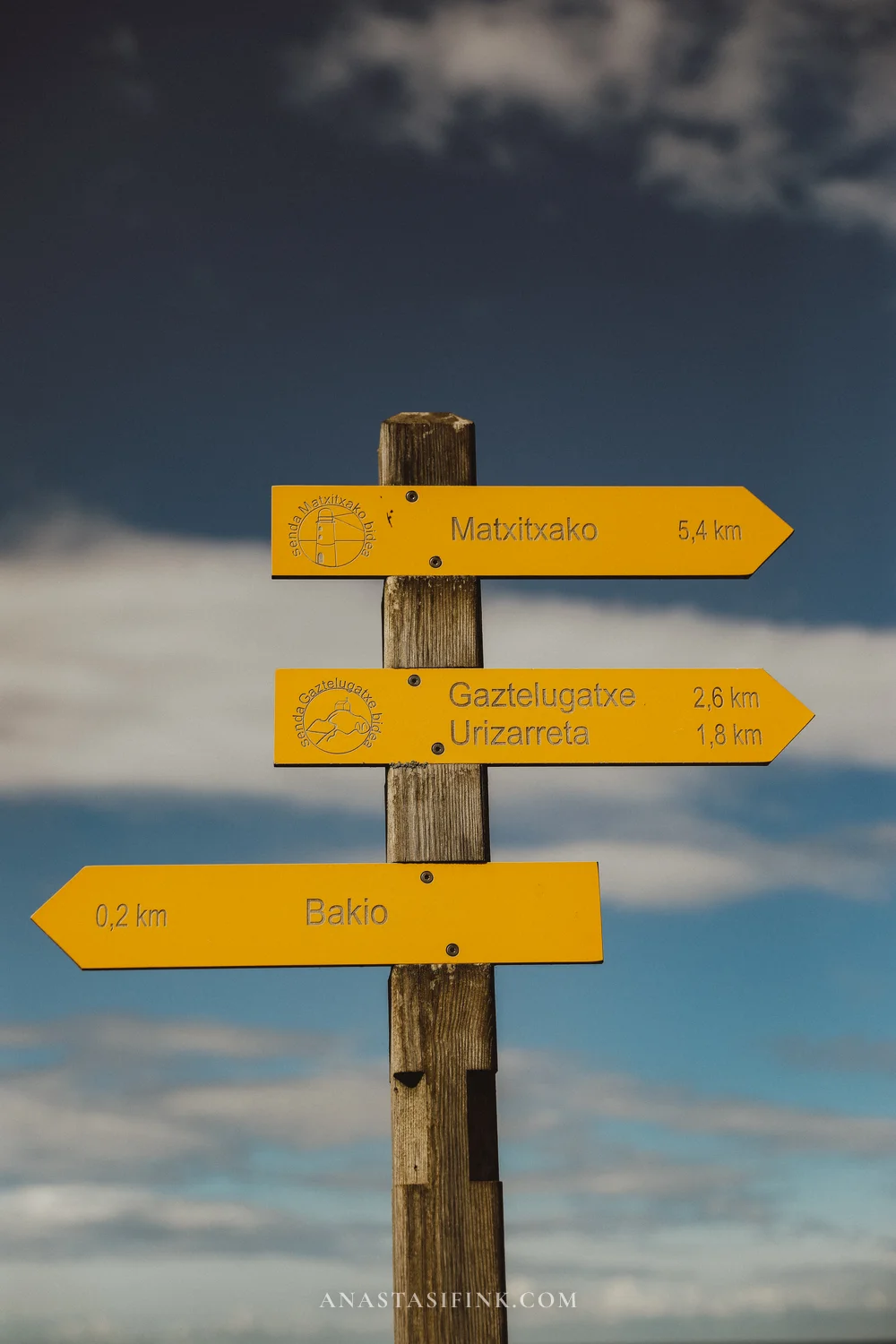
Cliffs near Bakio and a signpost on the trail
The trail is mostly uphill. Keep this in mind, especially if you want to go all the way to the hermitage and walk back. But it is a very beautiful walk: the sea and rocks are on your left, and the shrubs along the path were already turning orange in October.
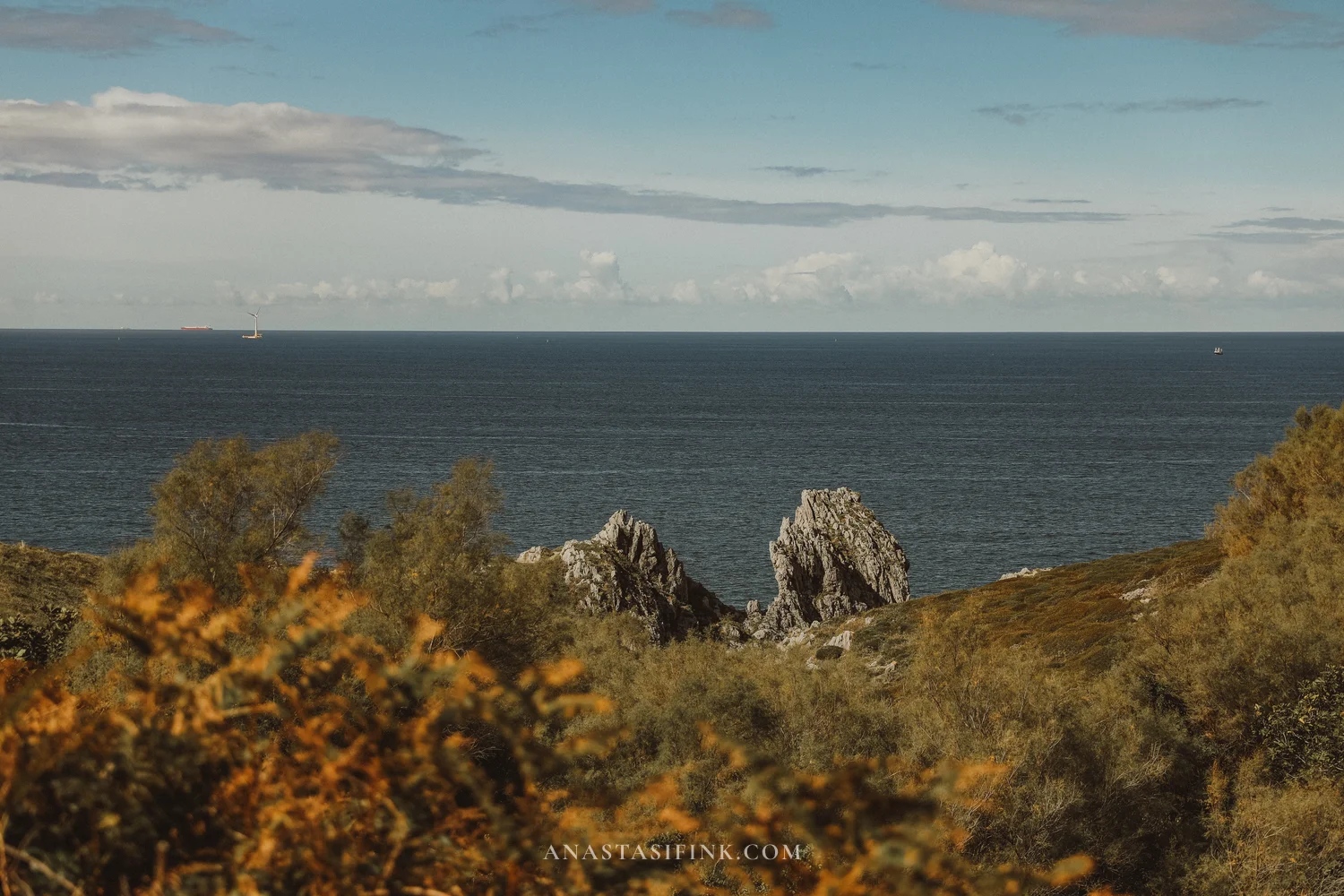
This stretch of the trail is a narrow paved lane. It climbs past fenced meadows with hills all around.
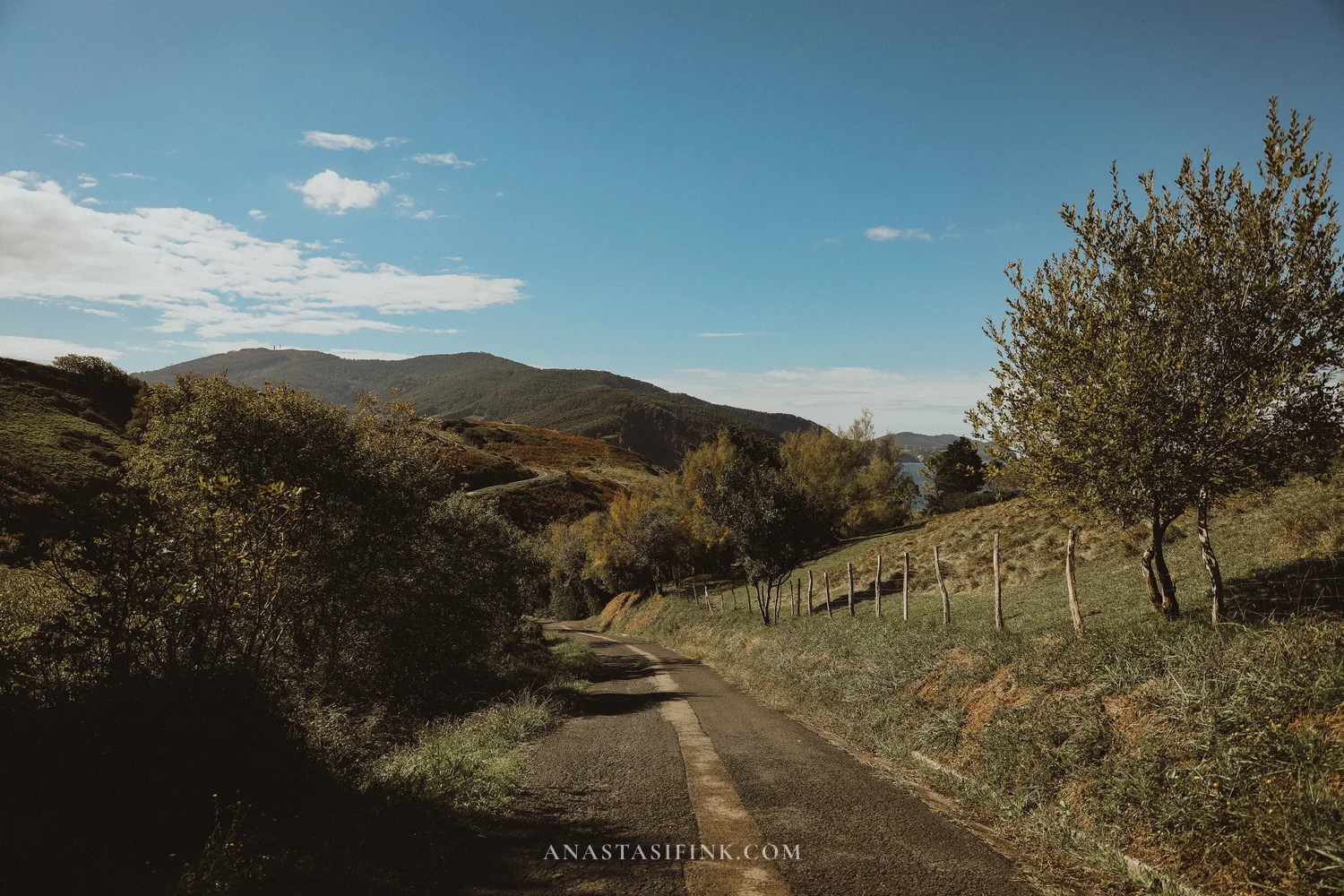
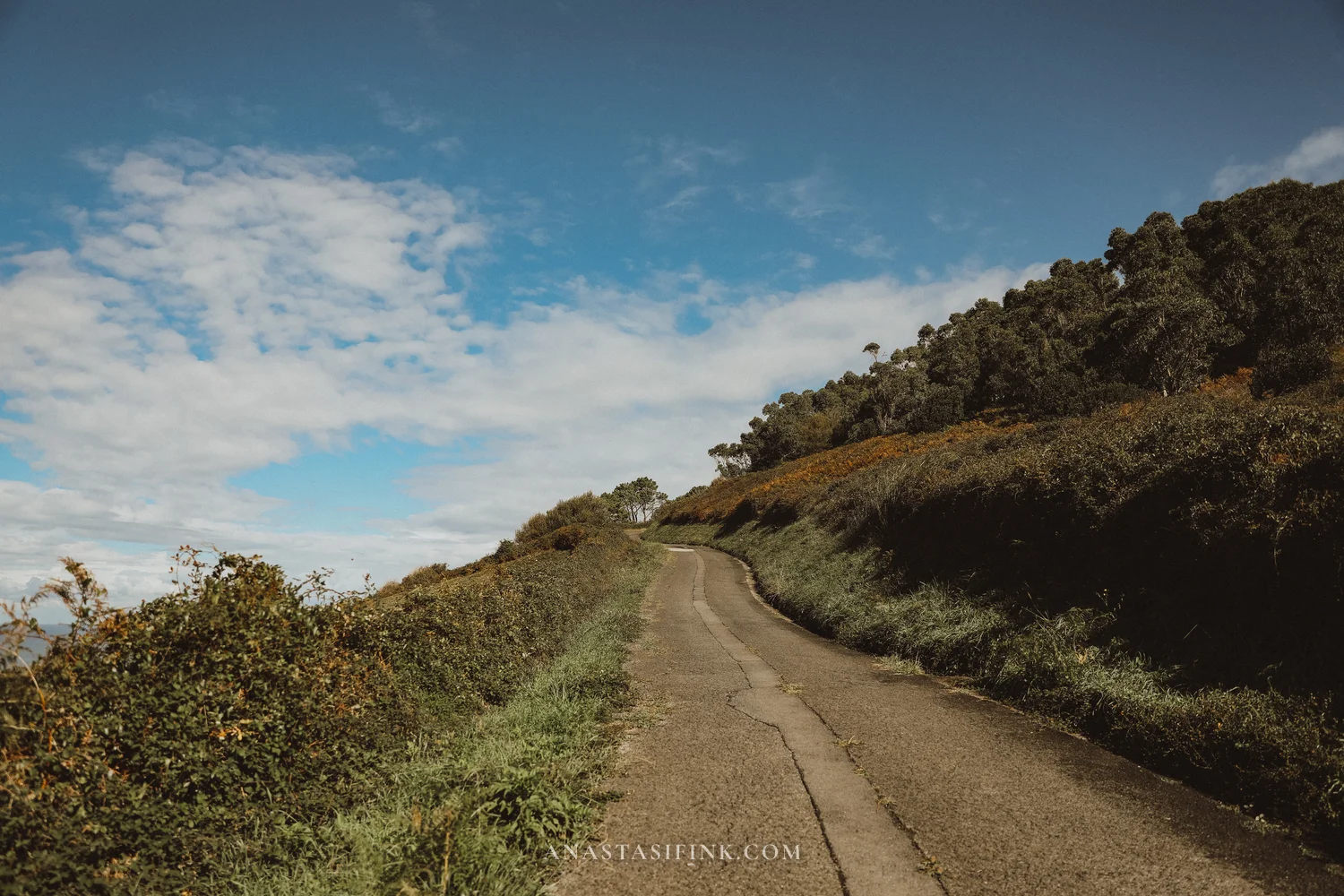
The lane towards Gaztelugatxe
Then the path enters a pine forest, which is nicely shady after the open hillside.
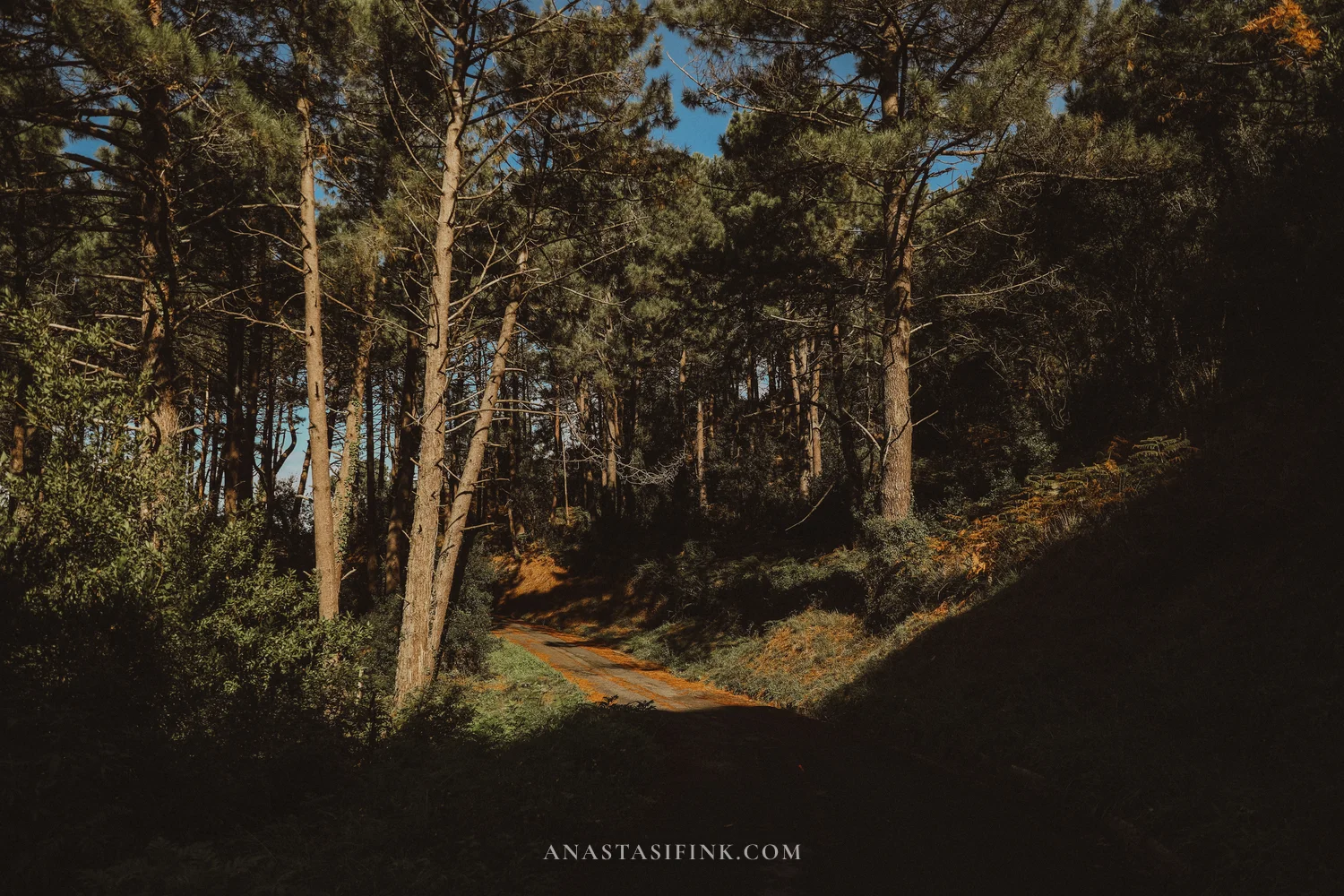
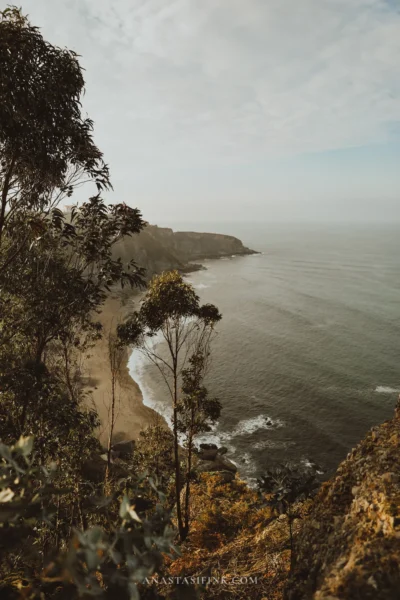
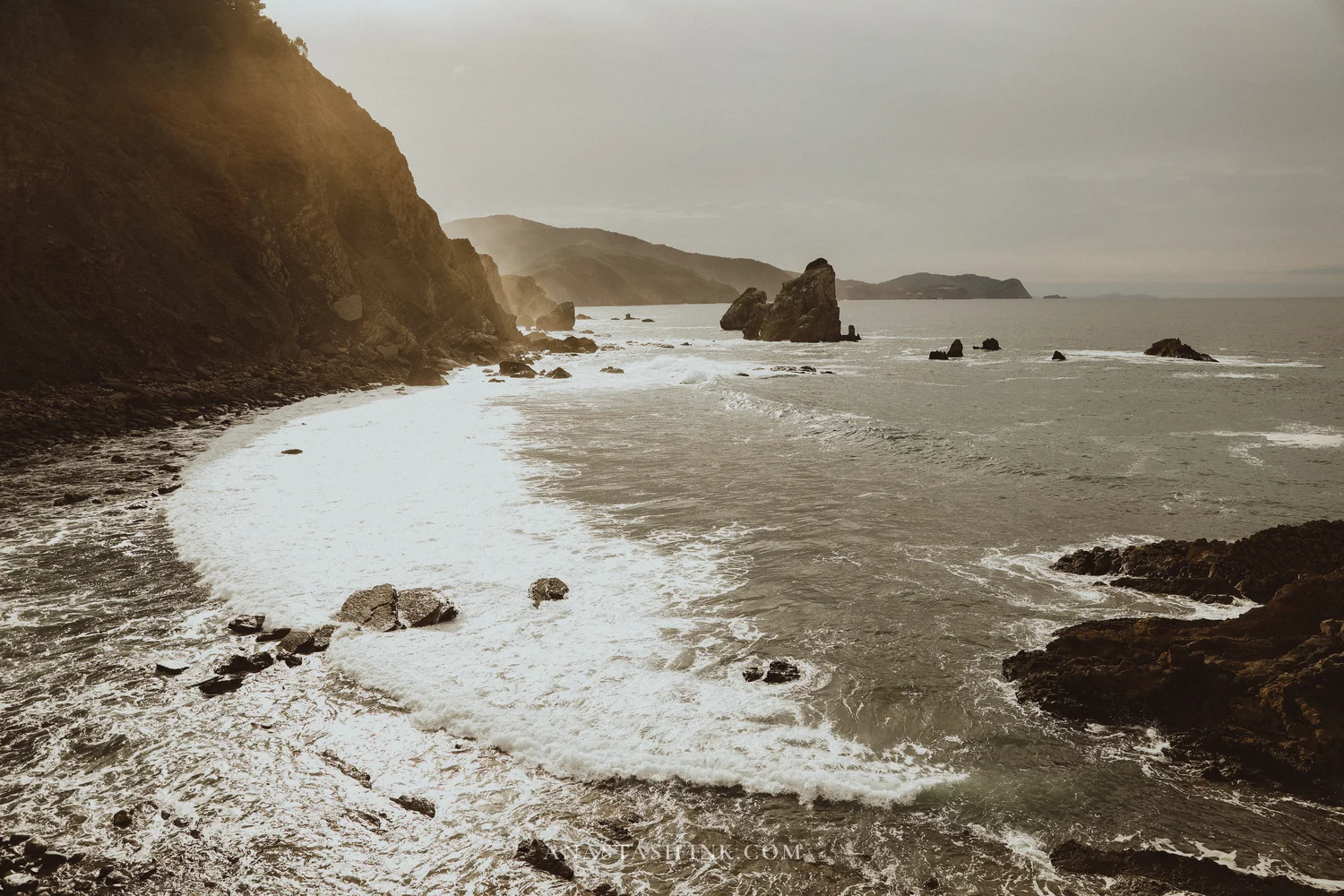
After the forest the path comes back to the cliff edge, and you can see rocks in the sea below.
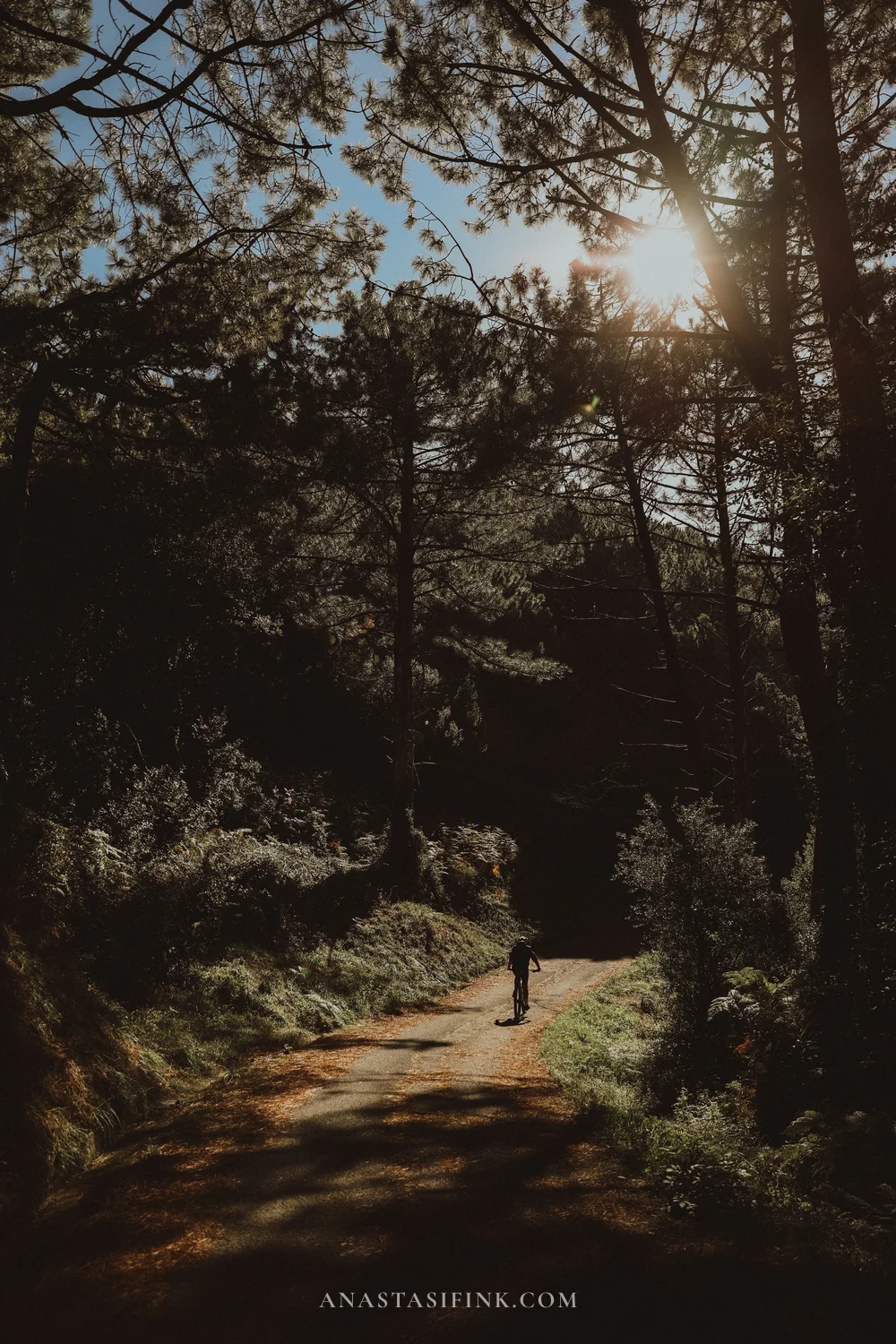
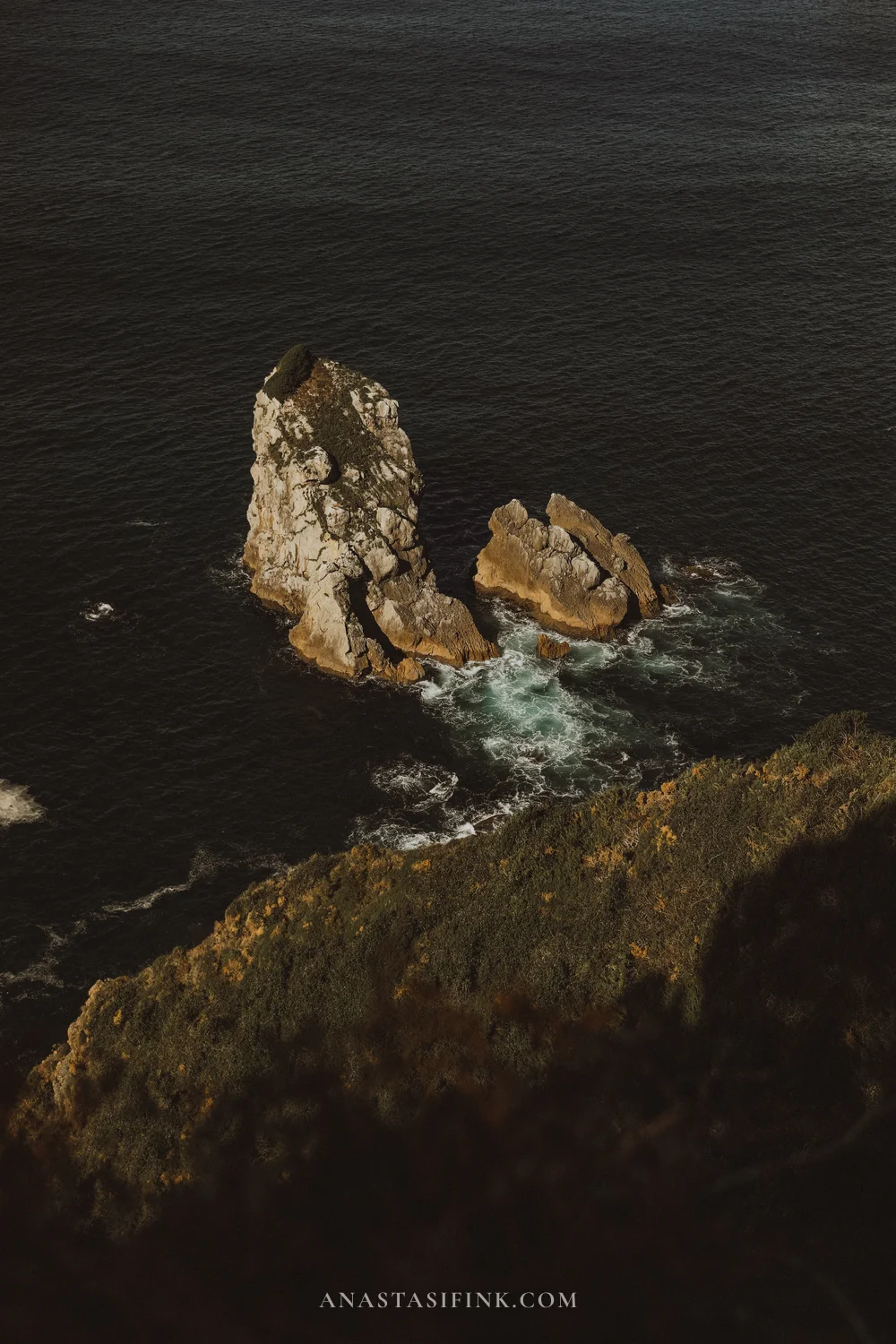
The pine forest and the rocks below
I recommend choosing a sunny day for this trip. Nearly the whole walk is in the open, and the colours of the sea and the rocks are the main thing here.
The Entrance and the First View of the Island
The trail leads to a wooden gate with the word Gaztelugatxe on it. This is the Urizarreta entrance and check point: on days with controlled access, bookings are checked here. I came on a weekday outside the season, so I did not need to book a ticket in advance.
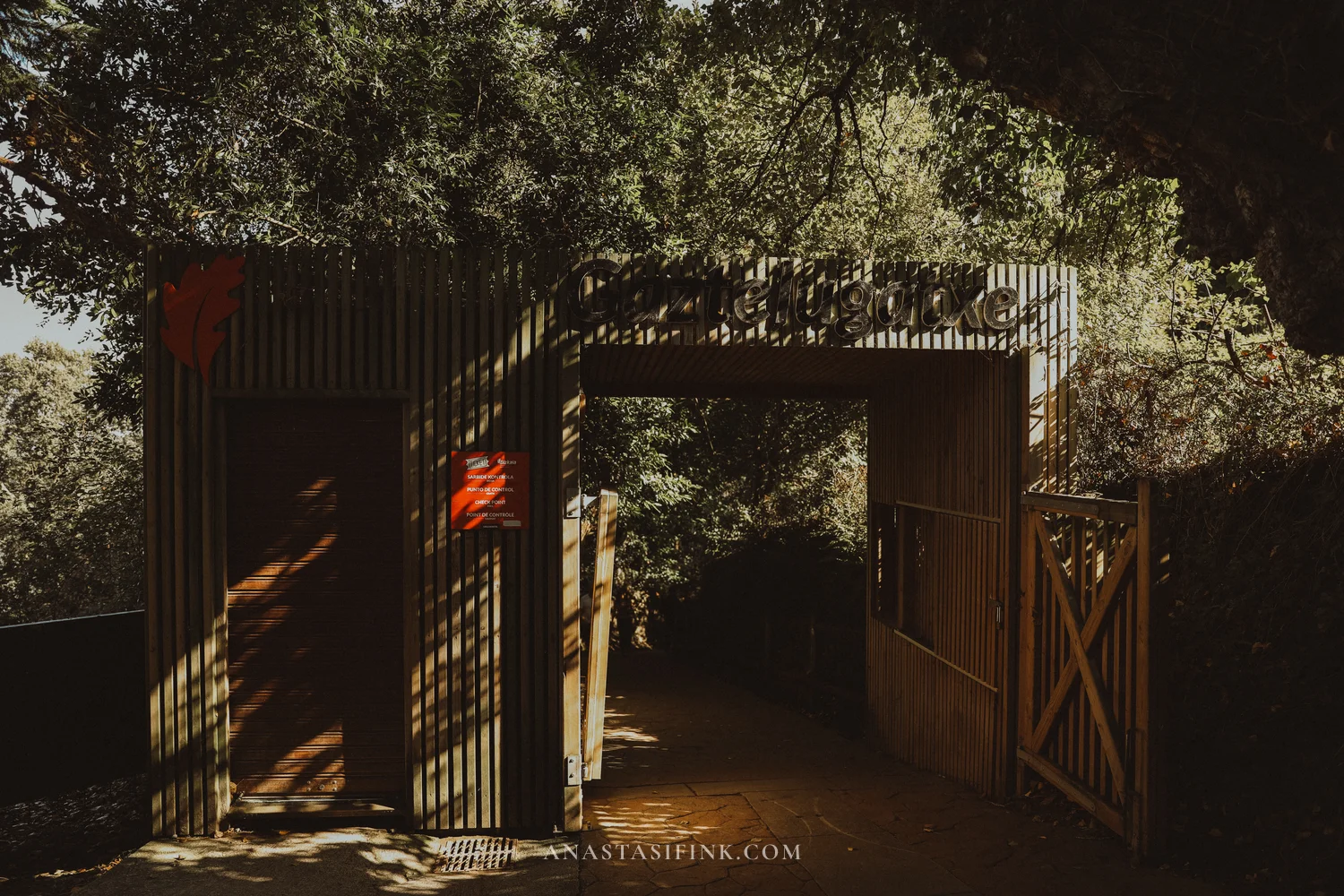
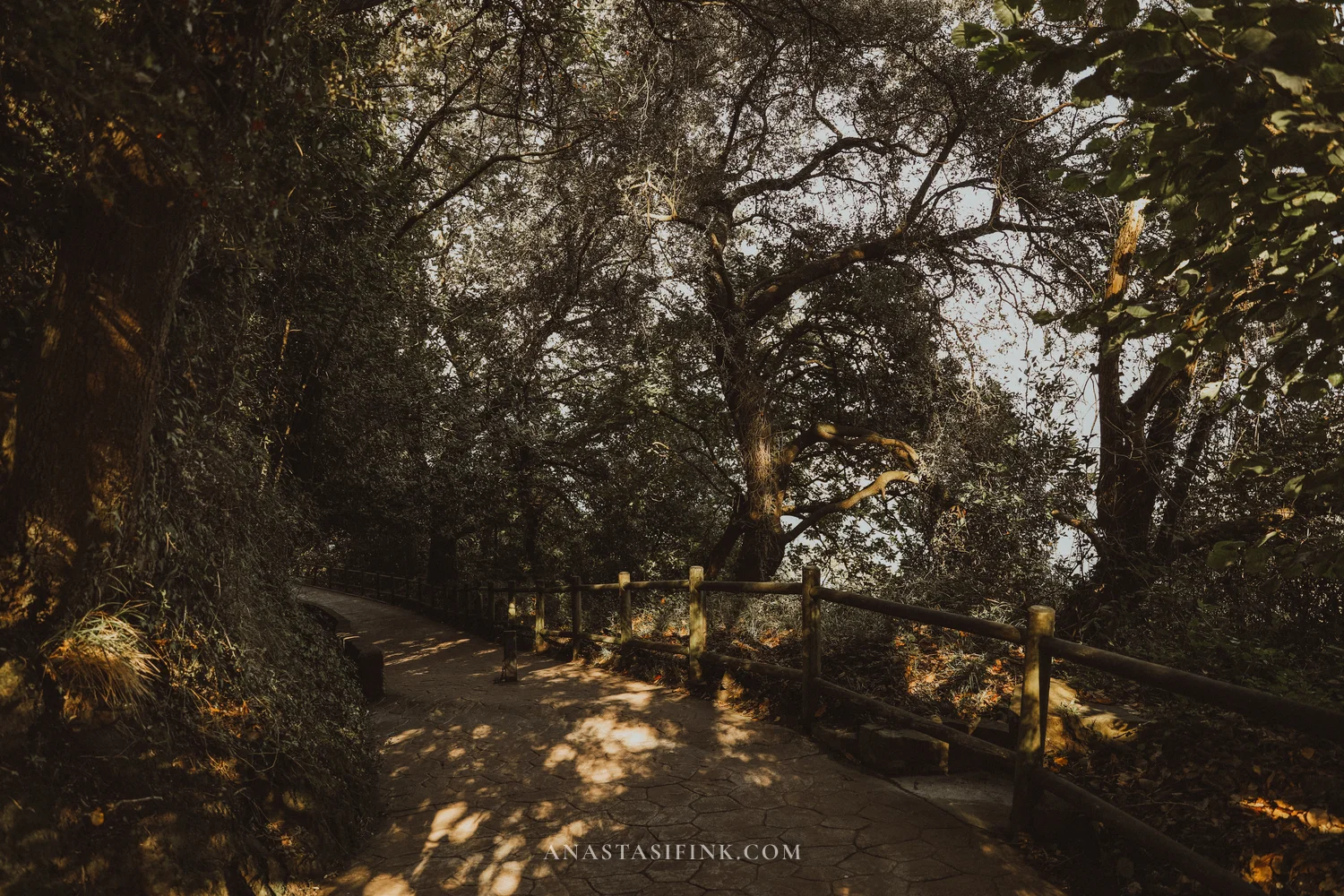
The Urizarreta entrance and the path beyond the gate
Past the gate the path is paved, with a wooden fence, and runs into the shade of the trees. Soon you get a view of the coves, and then of the island itself with its stairs and hermitage.
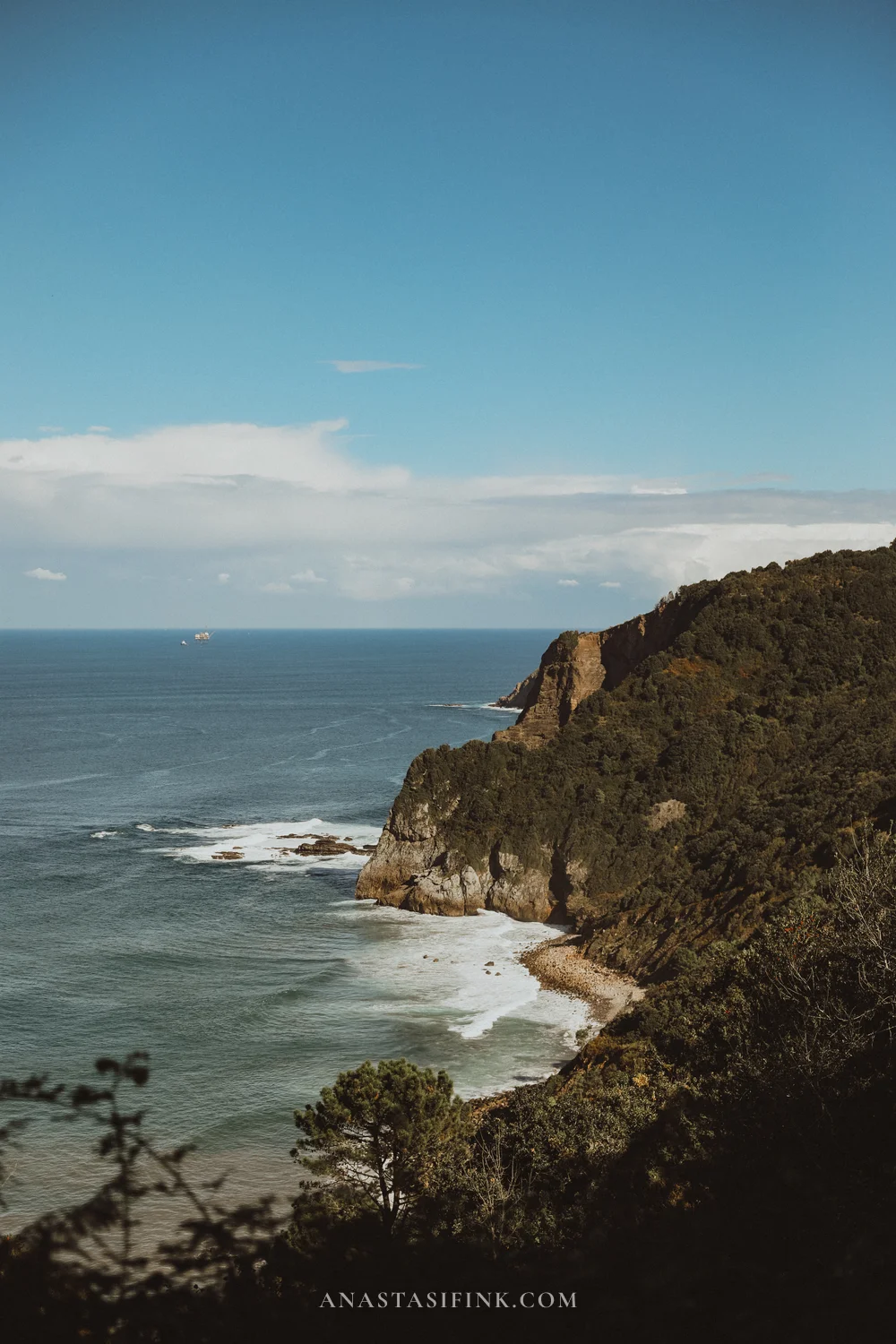
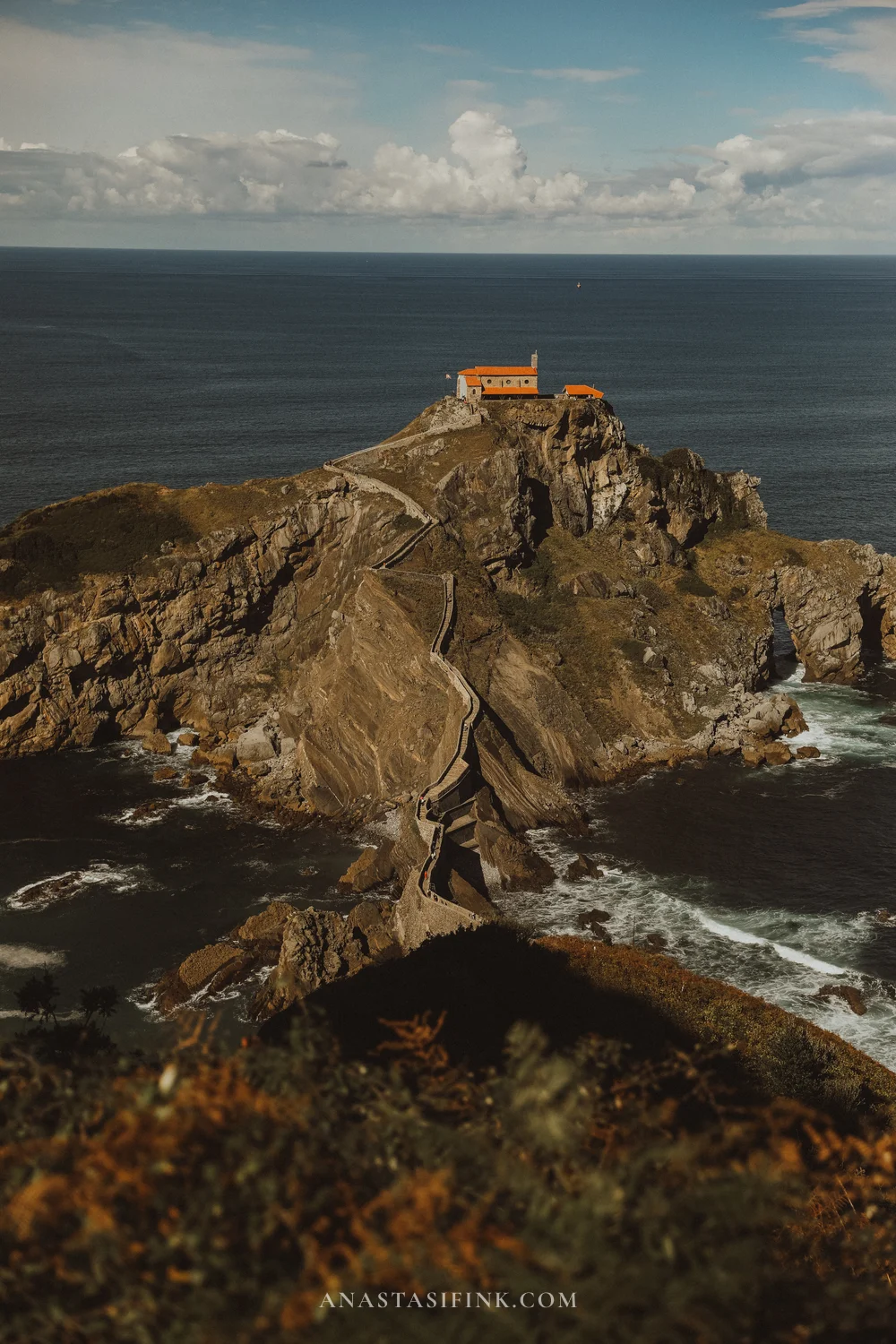
A cove and the first view of Gaztelugatxe
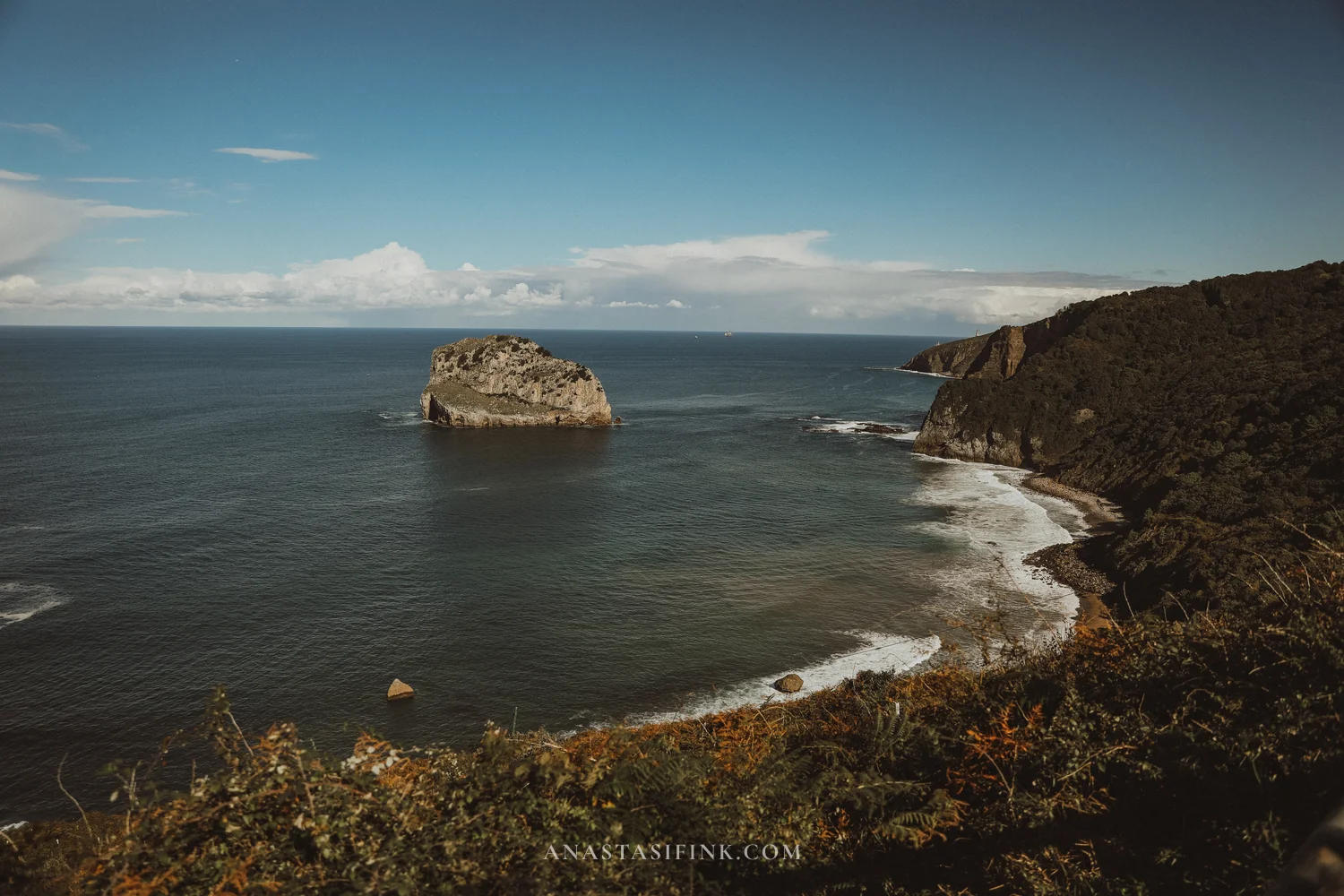
If you turn the other way, you can see another island out at sea: Aketxe. It can only be reached by boat, and seabirds nest there.
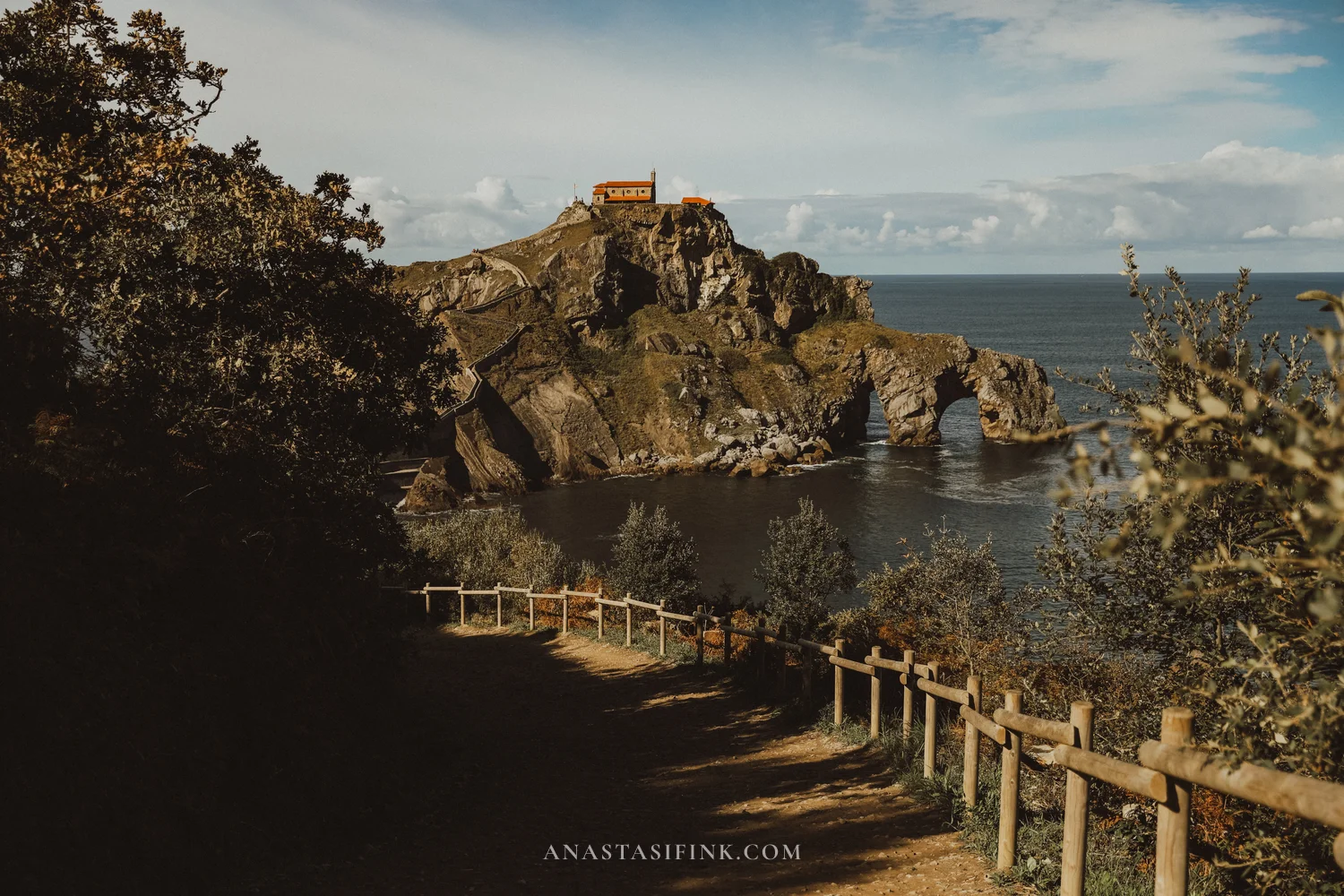
From here the path goes down to the sea. You can see a natural arch in the rock, and the stairs get closer and closer.
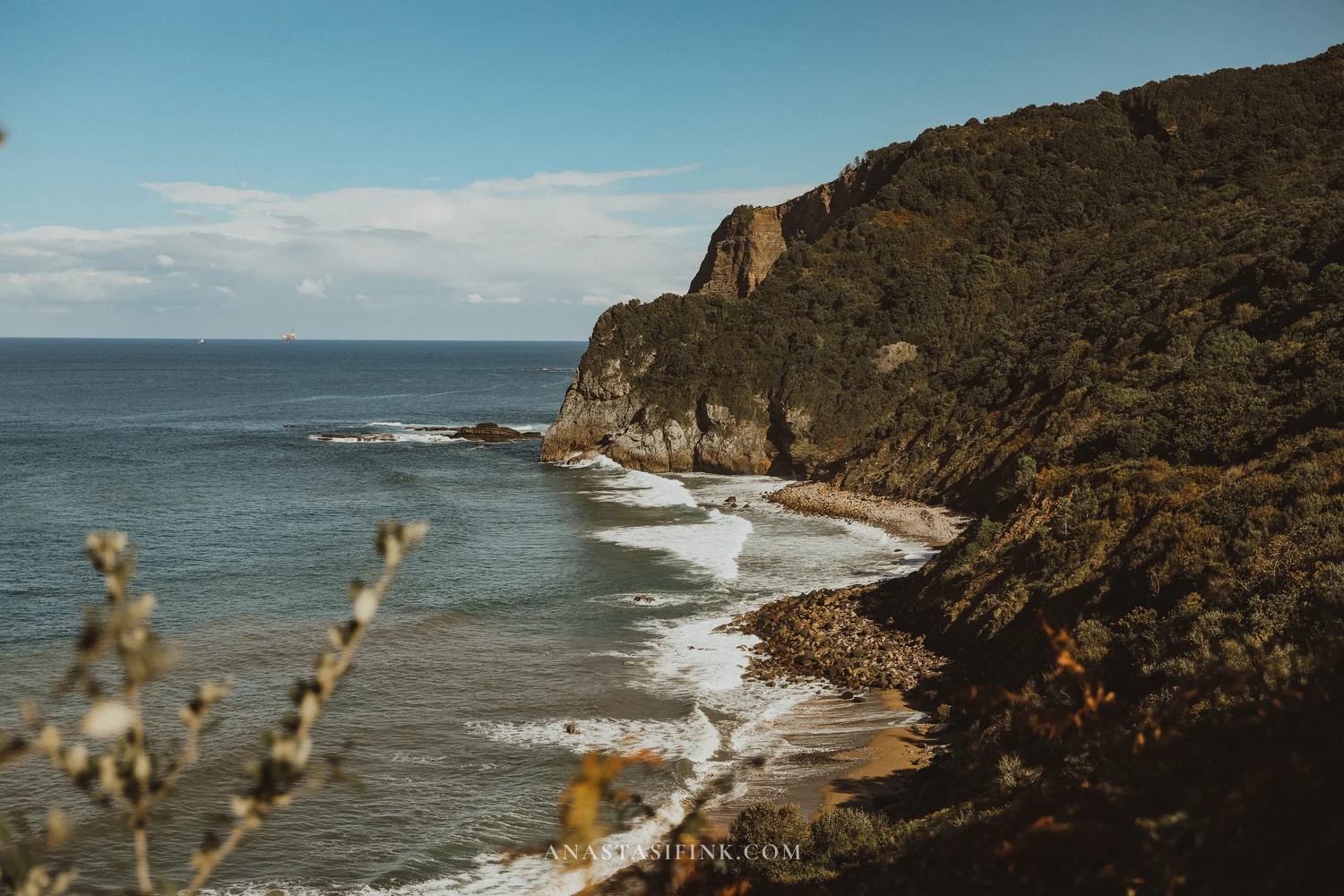
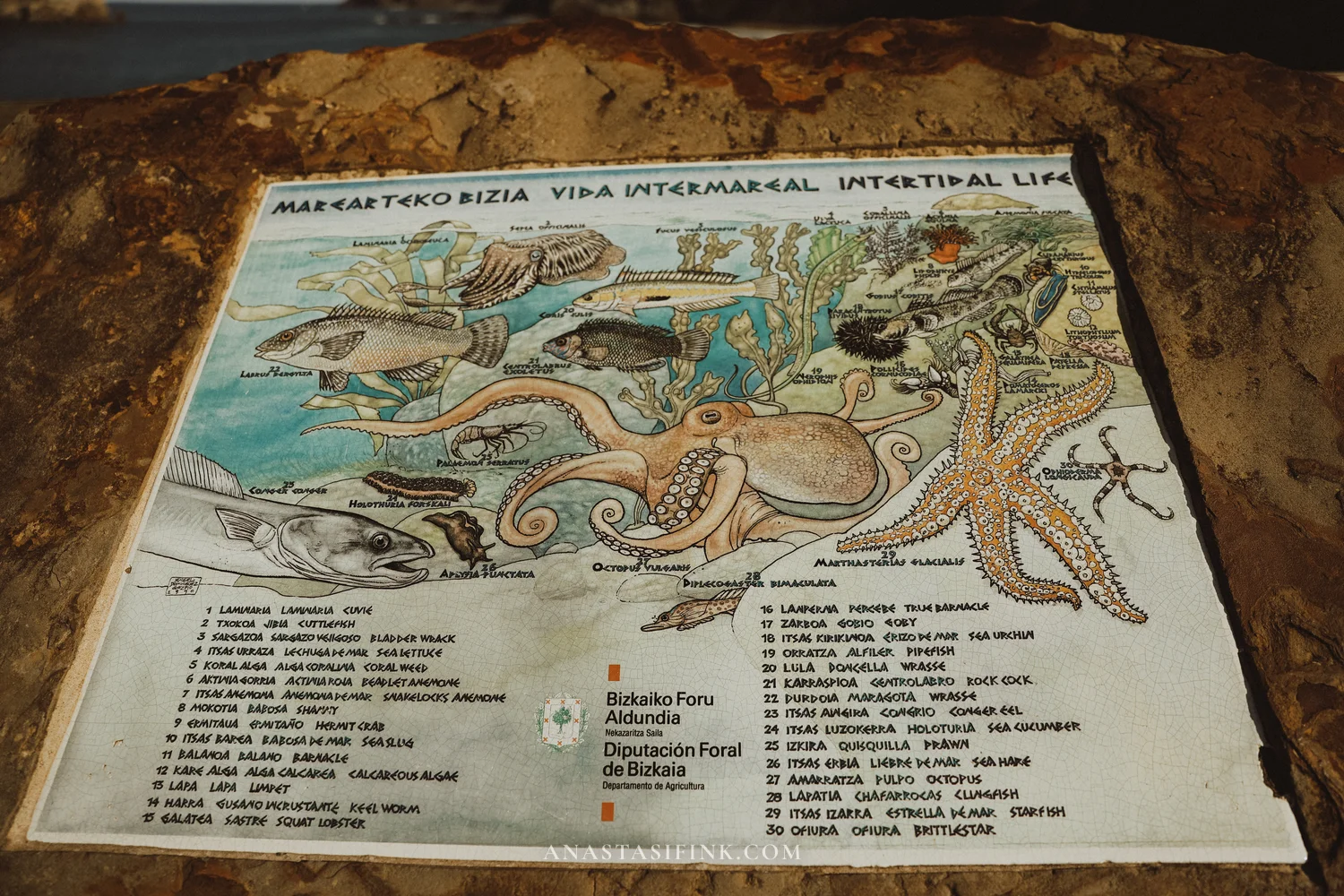
Closer to the bridge there is a fountain with taps and shell-shaped basins, and next to it a board about the sea life of the tidal zone: octopus, starfish and fish, labelled in Basque, Spanish and English.
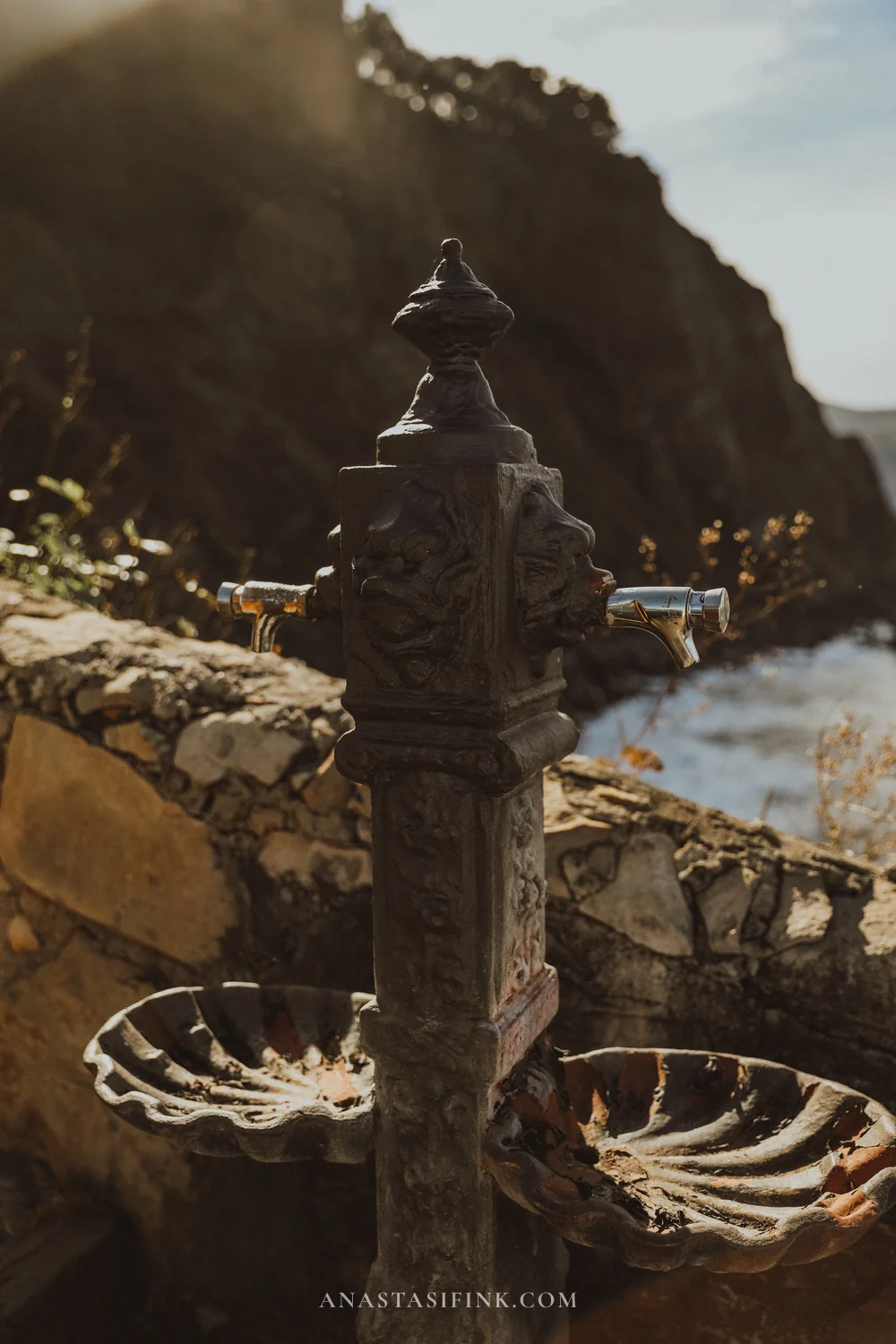
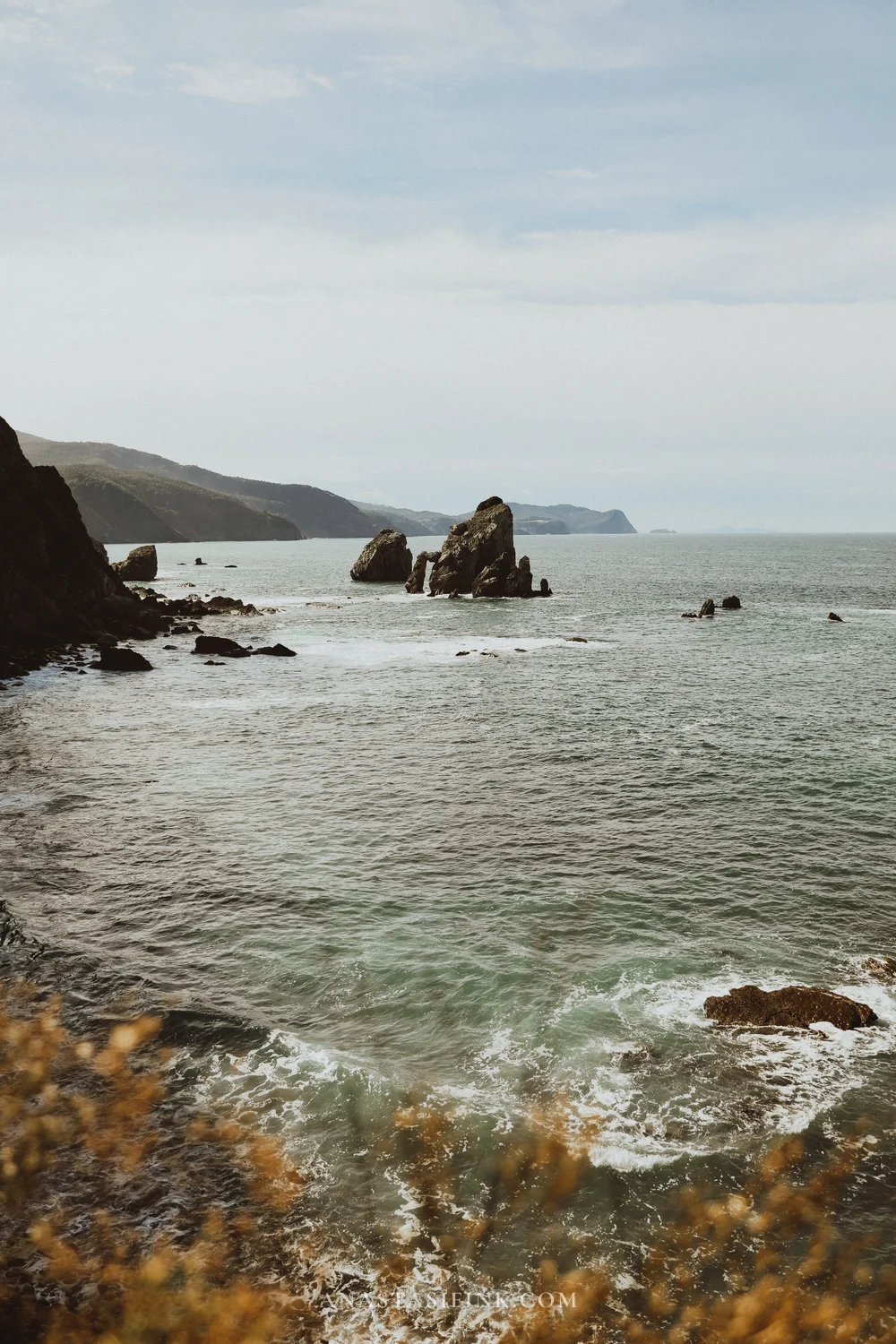
The shell fountain and rocks in the sea
The Bridge and the 241 Steps
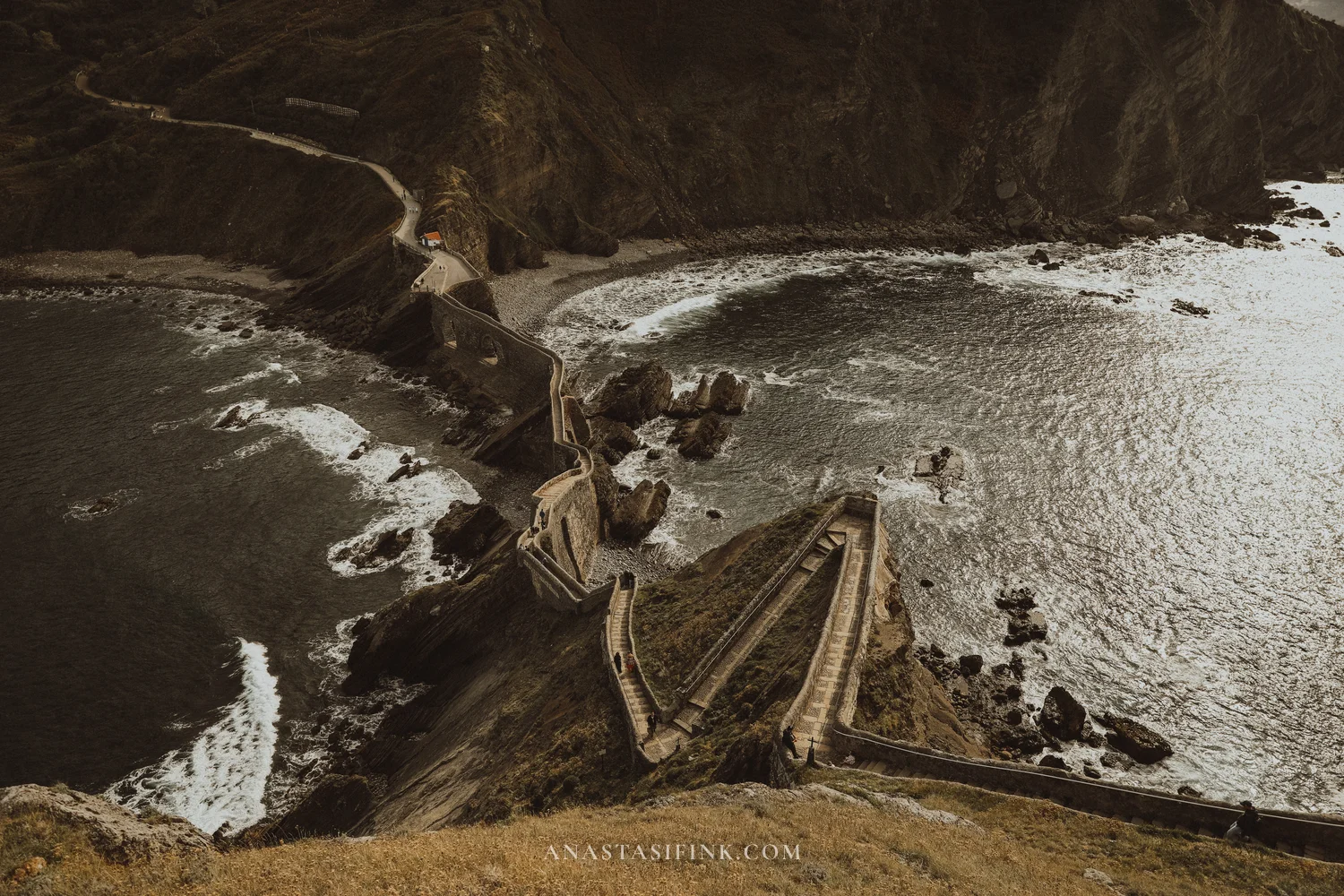
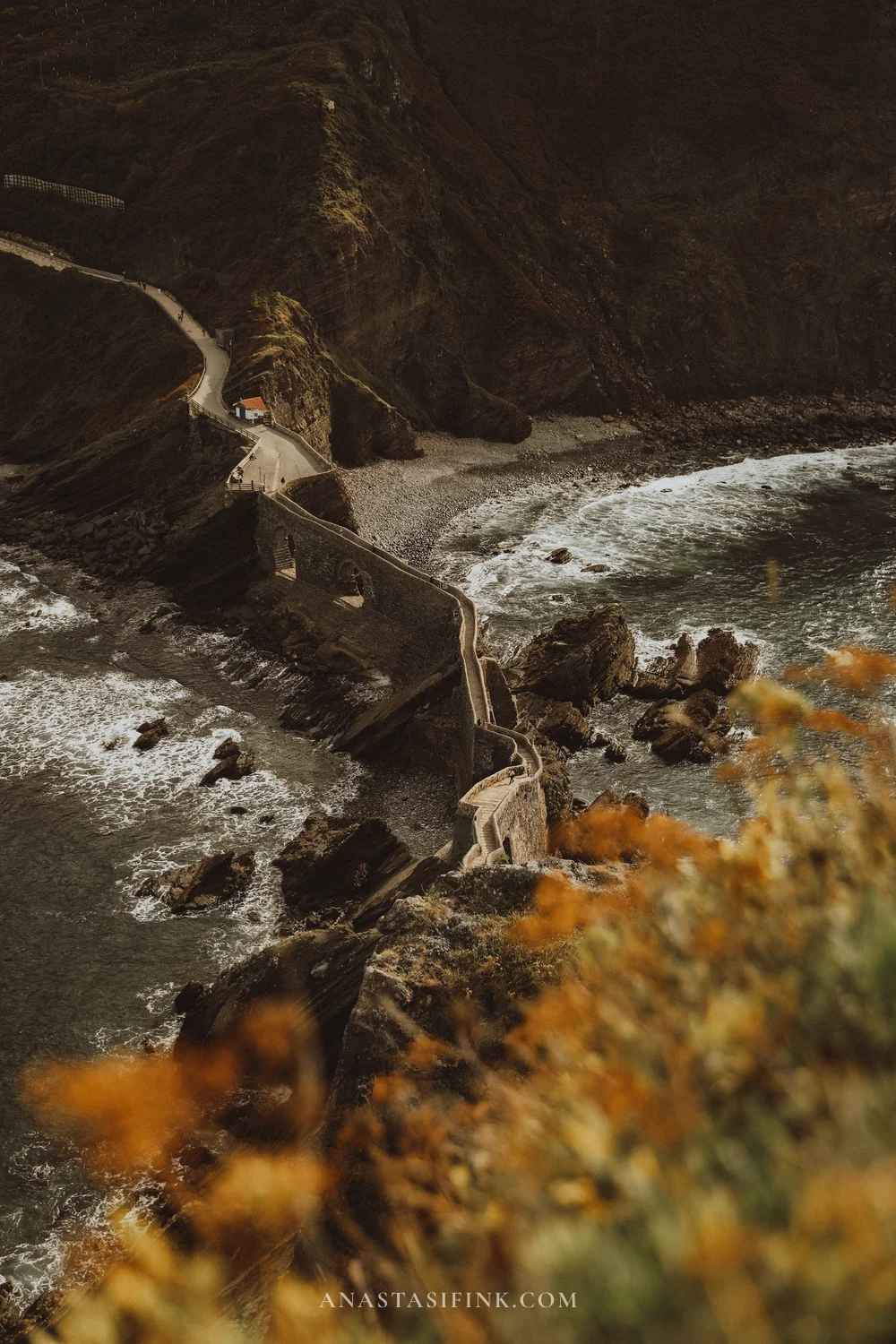
Next comes the most recognisable part: the stone bridge with its arches and the stairs that zigzag up to the hermitage. Waves break below on both sides.
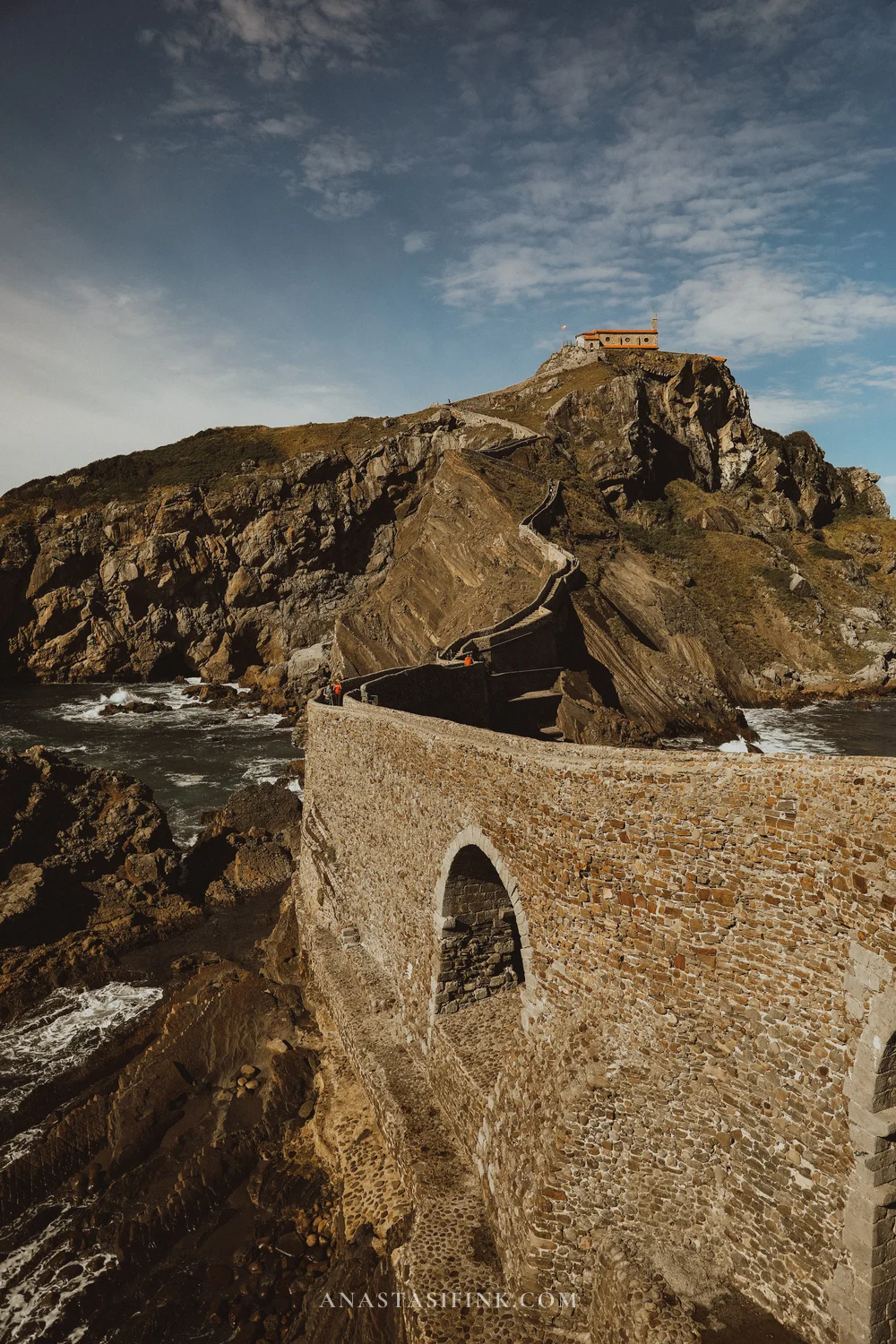
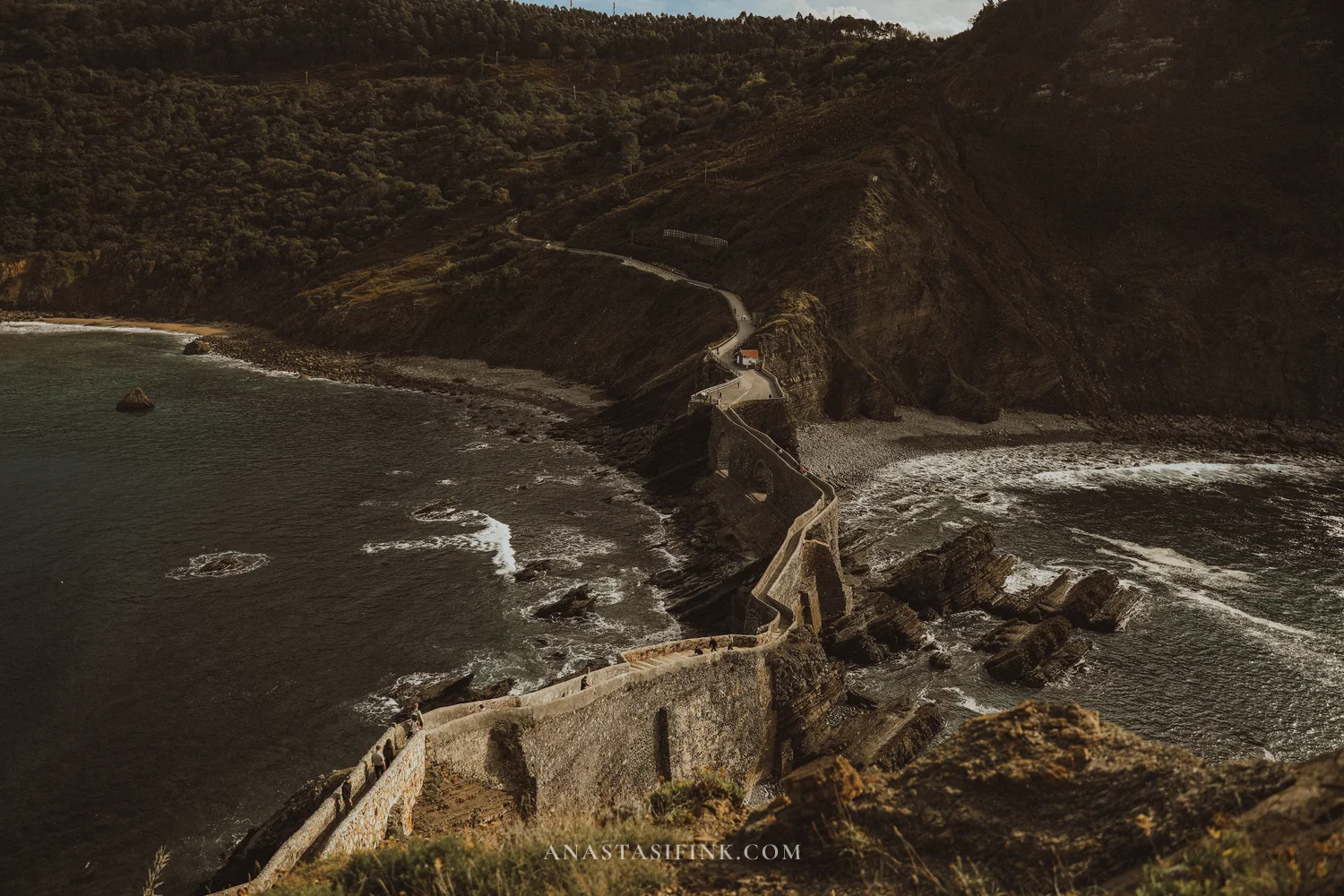
It is worth looking back from the bridge: you can see the path to the island and a cove on each side of it.
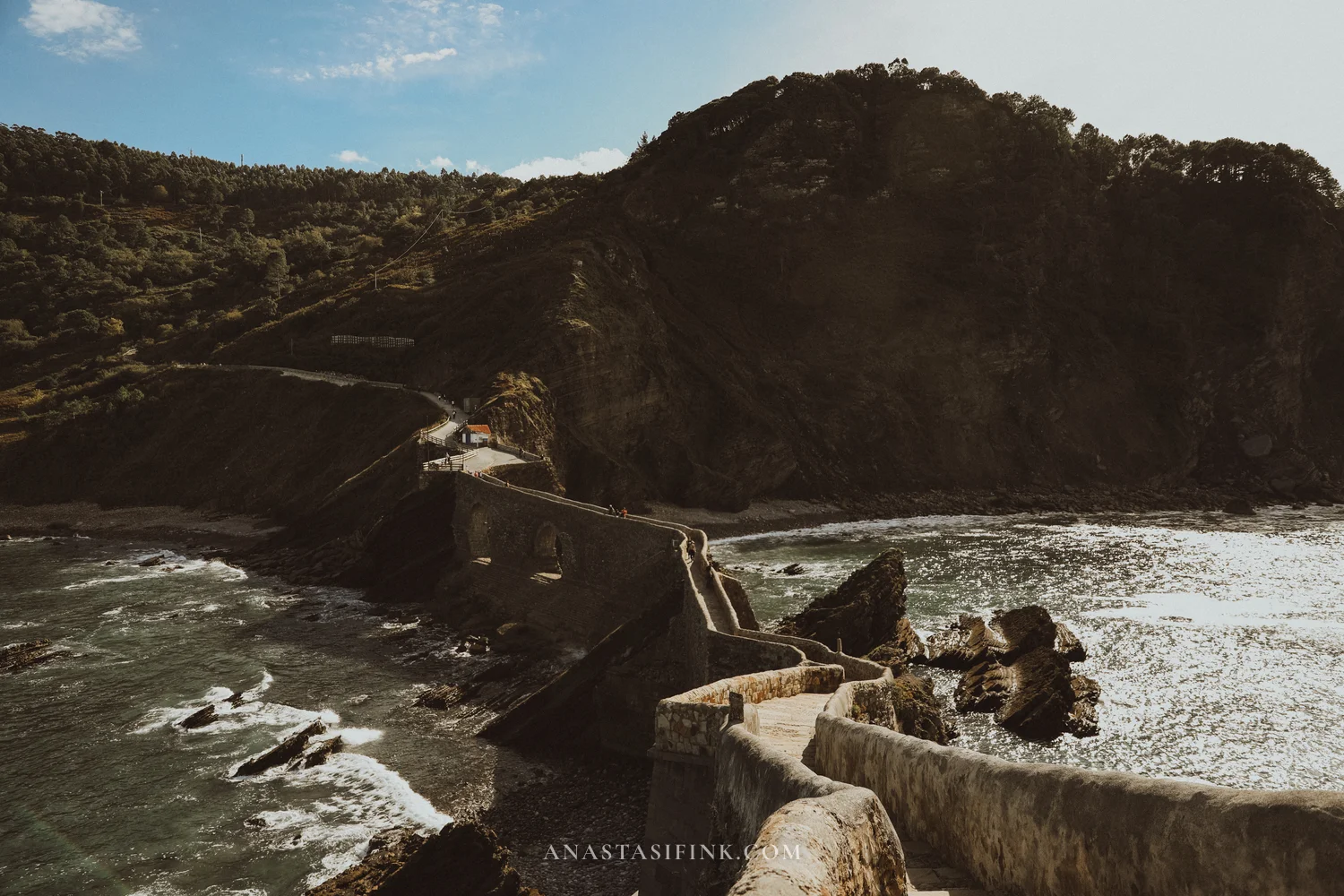
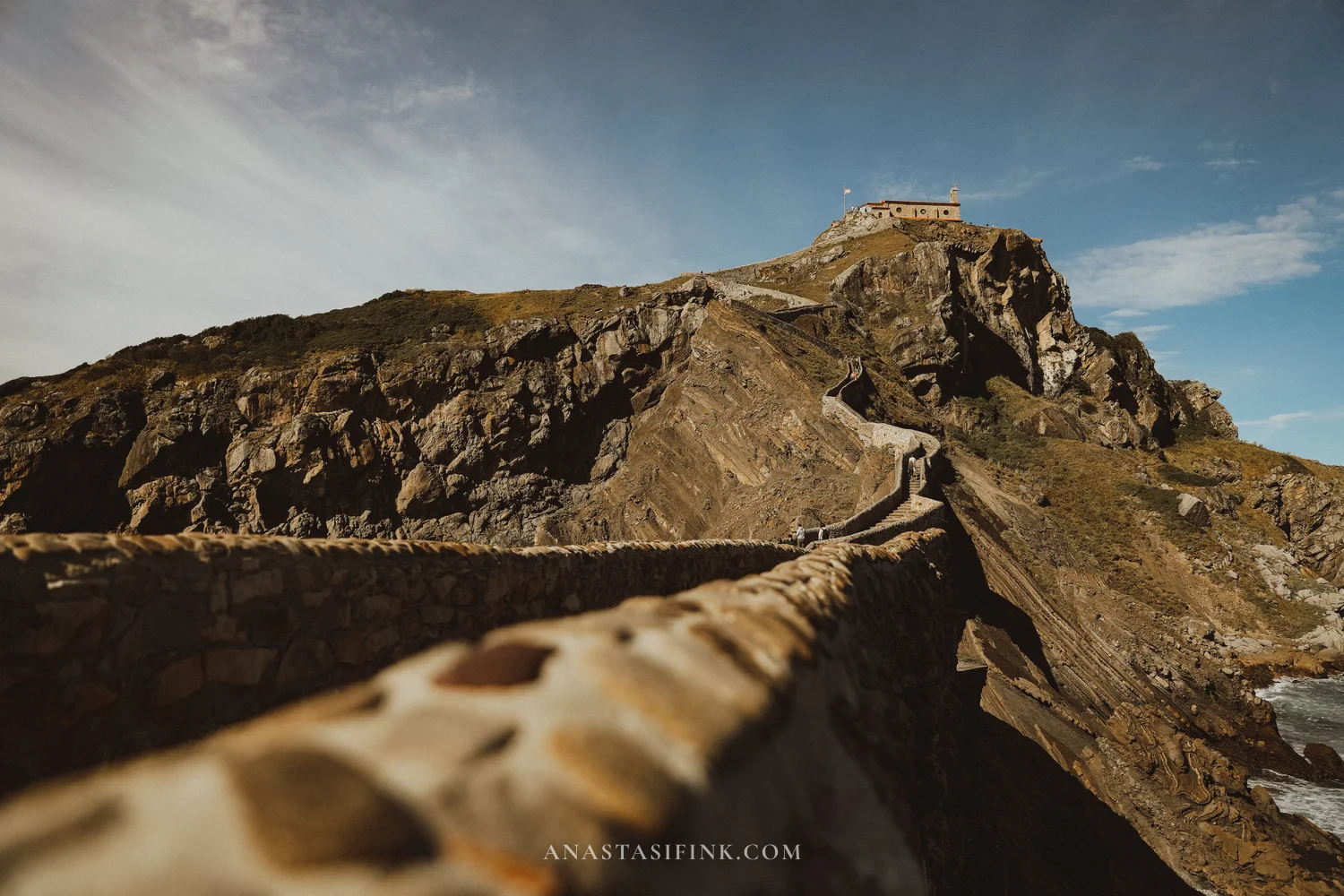
The stairs have 241 steps. You climb right up the open slope, and the bridge and coves look better with every turn.
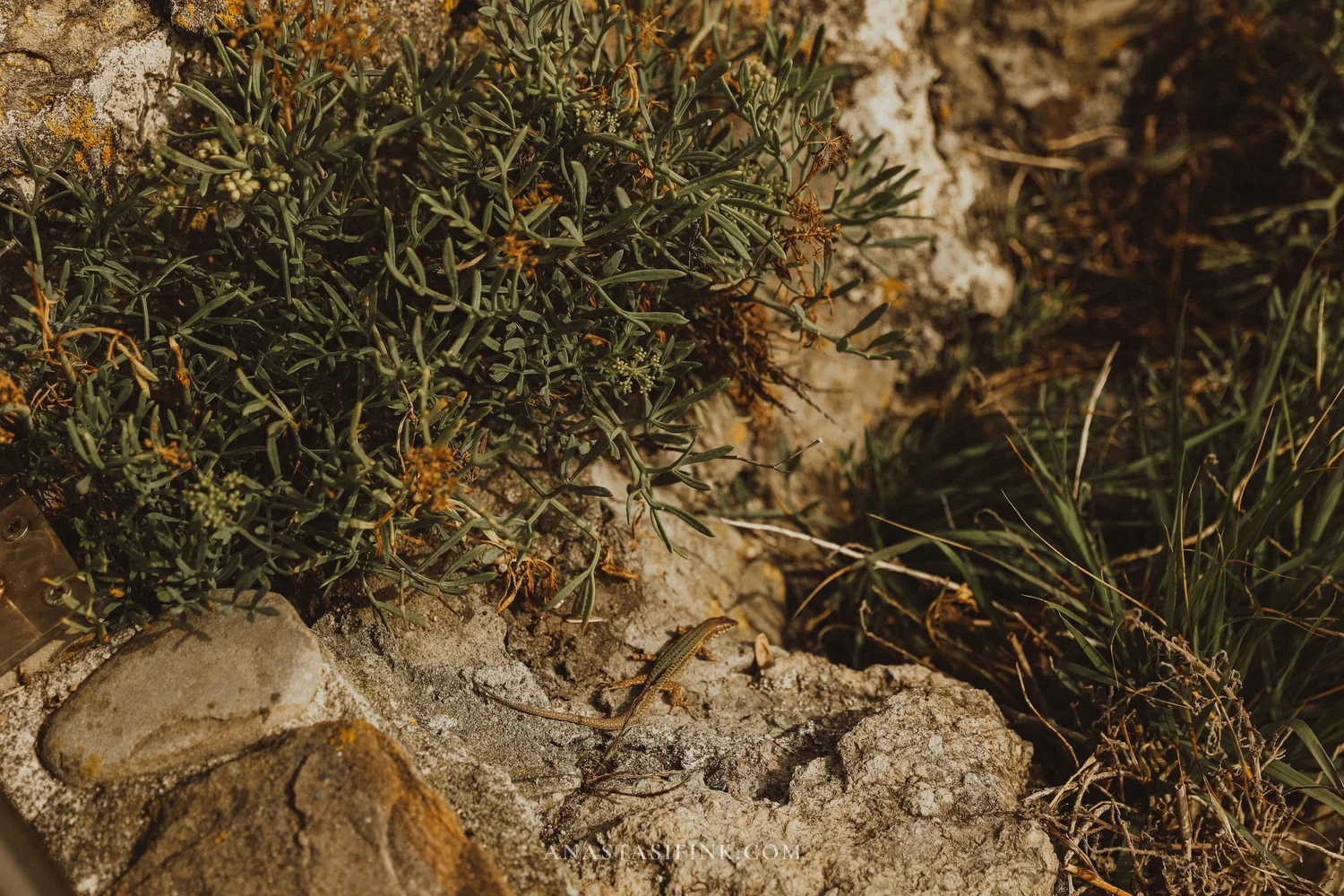
I spotted a lizard on the stones by the stairs. The slopes here are covered in low shrubs and grass.
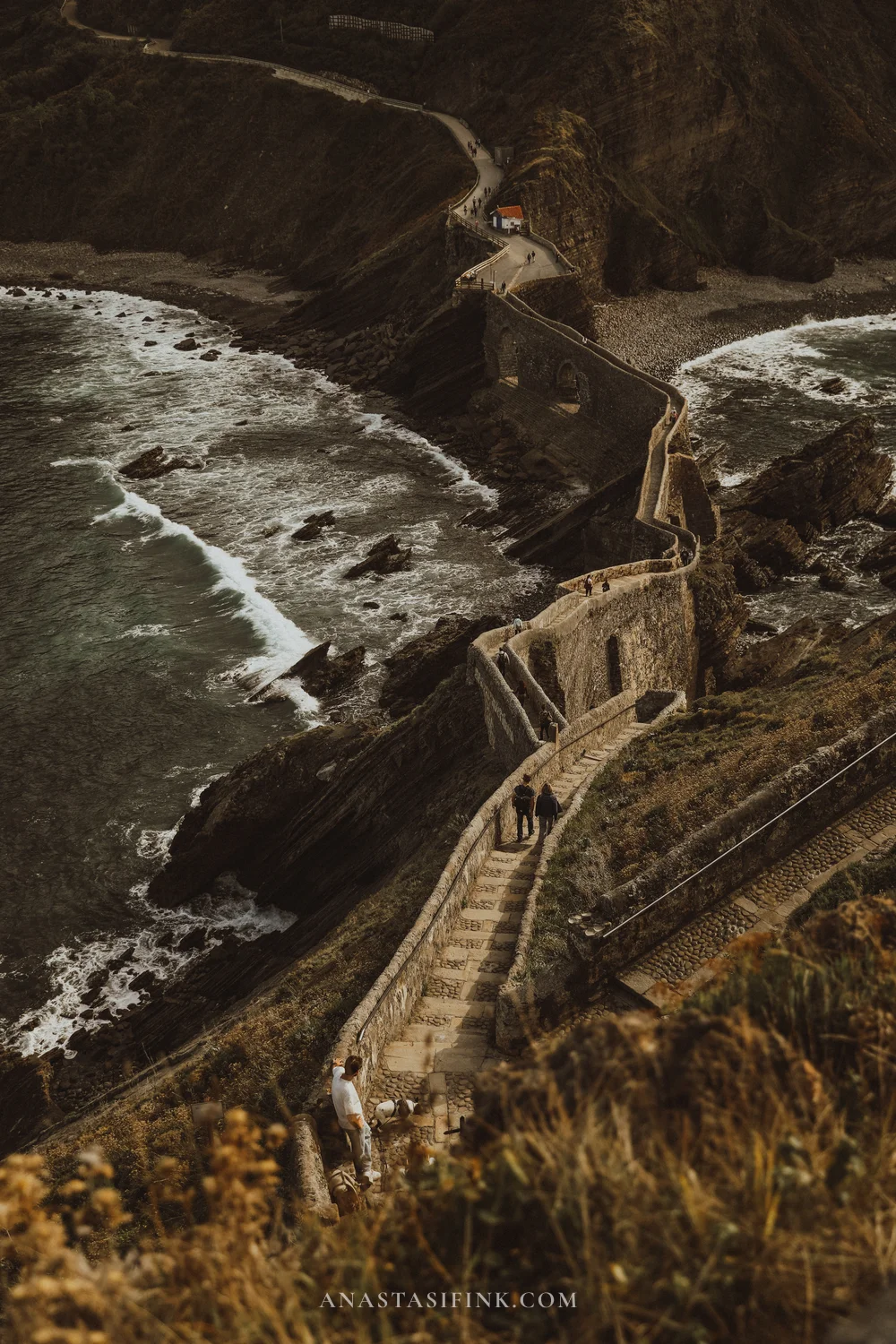
Near the top the stairs make several sharp turns, and this is where you can best see how they are laid out.
The Hermitage at the Top
The hermitage was closed, and unfortunately I could not go inside. The official page gives no opening hours for it, so I would not count on seeing the interior.
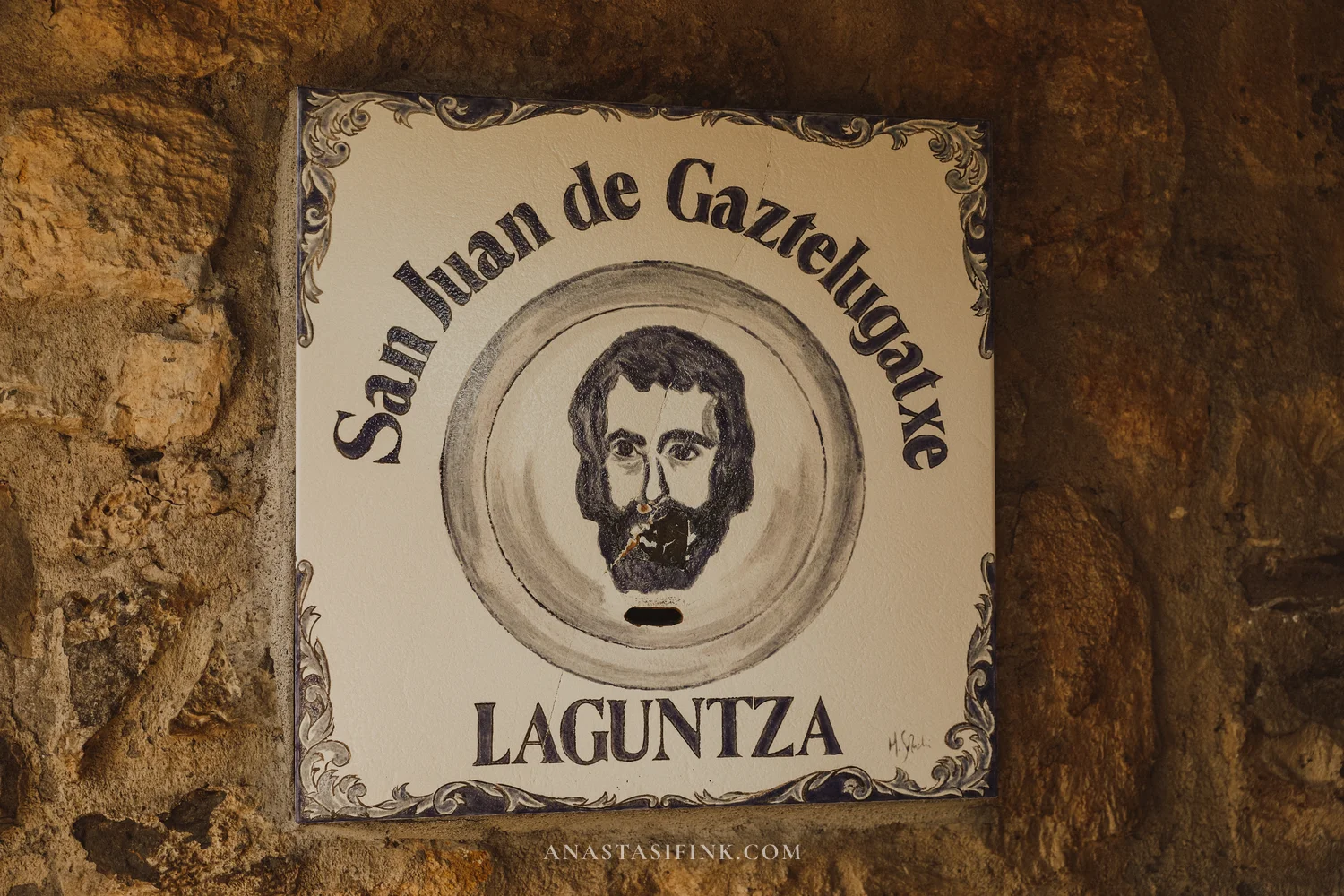
The hermitage does have a covered porch that is open to everyone. There is a stone table and a bench, and on the wall hangs a tile showing the head of John the Baptist on a plate, with a slot for coins. Laguntza means “help” in Basque. The door has a ship’s silhouette and the word Doniene, and next to it there is a sign with QR codes about the sanctuary.
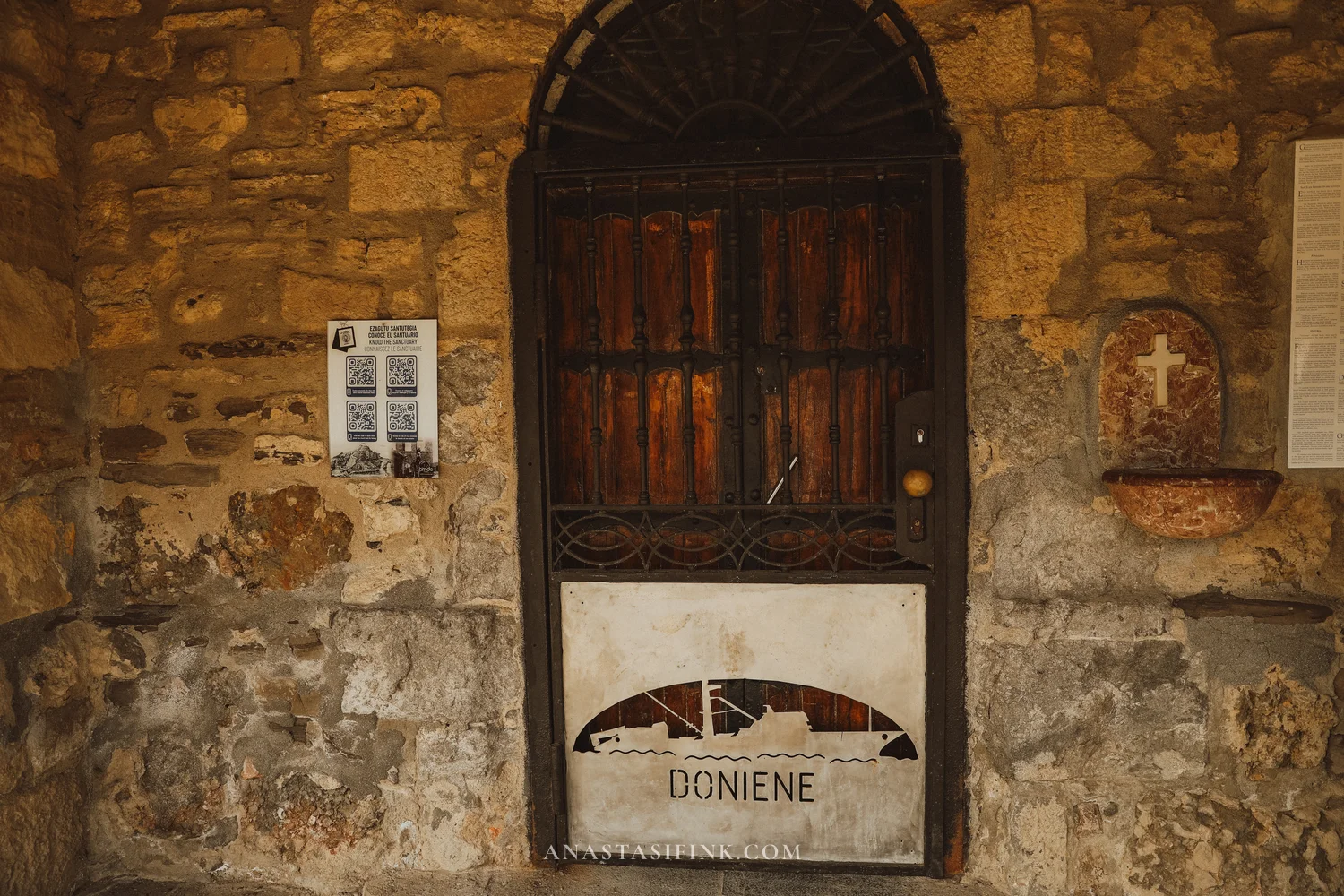
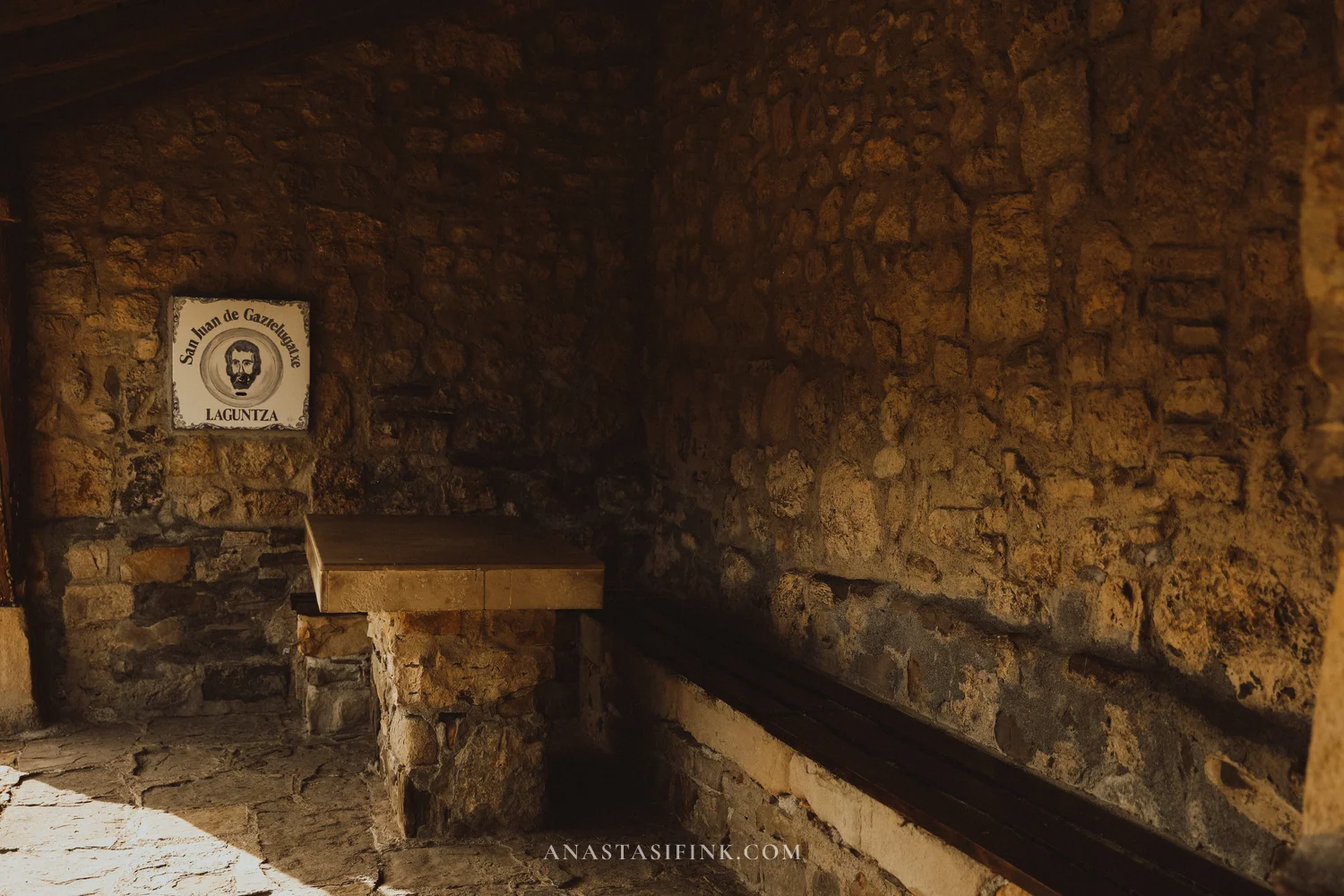
A bell hangs on the facade. By tradition, people ring it three times and make a wish.
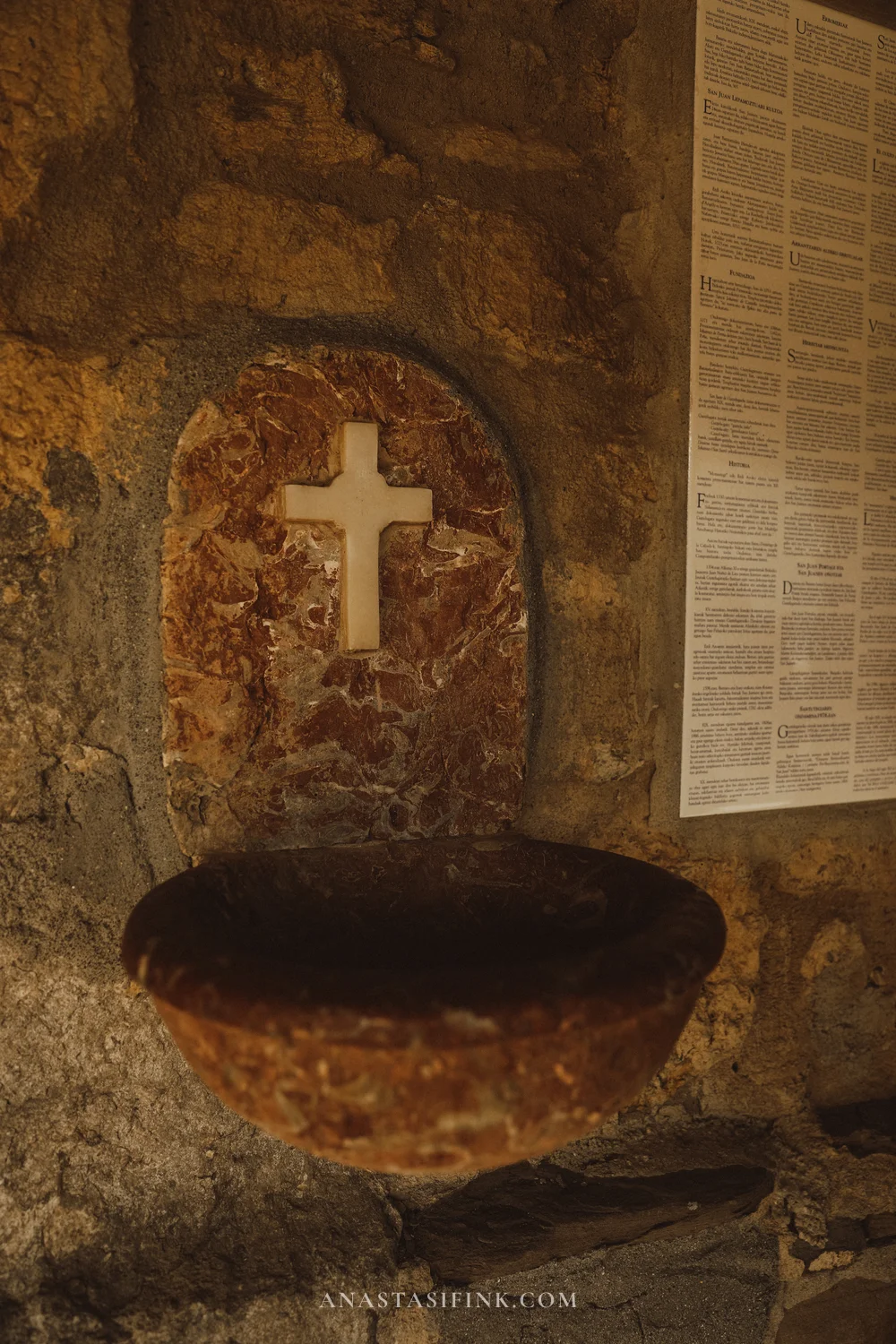
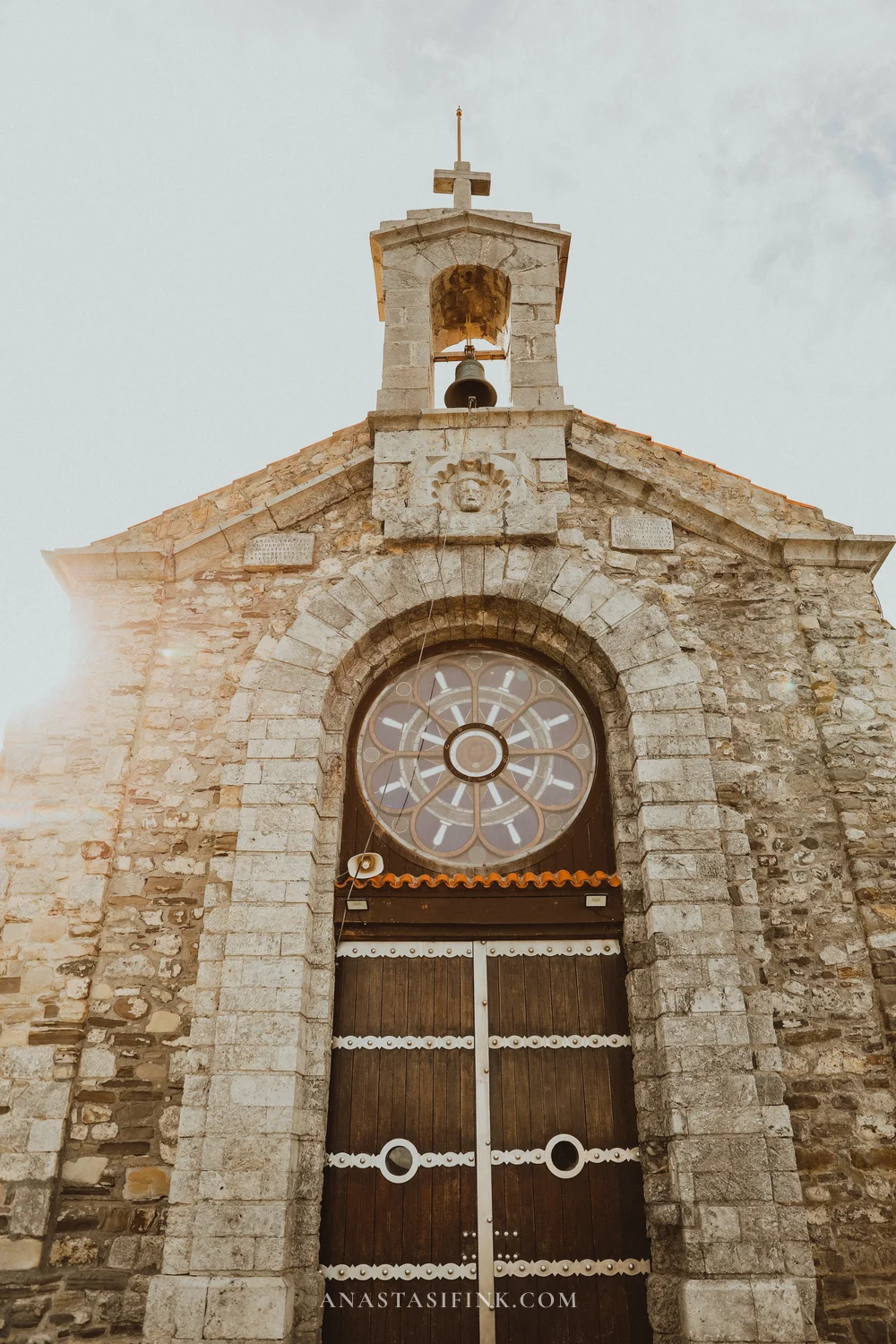
The holy water font and the hermitage facade
The Way Back
From the bridge back to the entrance the path climbs steeply, so save some energy for it. There is also a second route, through the Ermu entrance: it is longer but less steep, and it comes out on the road on the Bermeo side.
Practical information: Gaztelugatxe
- Address: San Juan de Gaztelugatxe, BI-3101 road, between Bakio and Bermeo, Bizkaia
- GPS: 43.4469, -2.7850
- Entry: free
- Booking: on days with controlled access you need a free ticket from reservagaztelugatxe.bizkaia.eus; on all other days entry is open. Show the ticket at the check point, on your phone or printed
- Controlled-access days in 2026: 28 March – 12 April, weekends in April and May, 1-3 May, weekends in early June, 15 June – 20 September, weekends from late September to 25 October, 12 October, 31 October – 1 November, 5-8 December, 30 December. The calendar changes every year: bizkaia.eus/es/gaztelugatxe
- Daily limit: 1,462 people
- Check point hours: 10:00-19:00
- Better to avoid: 24 June, 31 July, 29 and 31 August, 30 December – local festivities, and visitors are asked to choose another day
- On foot from Bakio: the signpost at the start of the trail says Urizarreta 1.8 km, Gaztelugatxe 2.6 km
- From the Urizarreta entrance to the bridge: 1.2 km, gradient up to 35%
- Via the Ermu entrance: 1.6 km, gradient up to 15%
- Stairs: 241 steps
- How long: about 2.5 hours for the walk from the entrance and back. From Bakio beach to the hermitage it took me about 2.5 hours one way, with stops
- Toilets: only at the Urizarreta and Ermu entrances
- Bring: comfortable shoes, water, sunscreen
- Not suitable for: the route is not recommended for people with health problems or for pushchairs
- Weather: on an orange weather warning (Euskalmet forecast) you are advised not to climb to the hermitage
- Phone: +34 688 73 81 47
If you are in Bilbao and want to get to the coast without a car, this is an easy option: the bus, the beach and the trail to the island fit comfortably into one day.
FAQ
The Bizkaibus A3518 runs from Moyua Square to the last stop, San Pelaio, in Bakio. From there you can walk the coastal trail or, on weekdays, take the A3524 minibus taxi. From June to September the direct A3517 line runs as well.
Only on controlled-access days: summer, Easter, many weekends and holidays. The ticket is free and you book it on the Bizkaia website. On weekdays outside the season entry is open, but check the calendar before you go.
241.
I could not: the door was closed. The official page gives no opening hours, but the covered porch by the hermitage is open.
The signpost at the start of the trail gives 2.6 km to Gaztelugatxe, and after that you still go down to the bridge and up the stairs. The path is mostly uphill, so allow half a day for the walk there and back.
Yes. In season 7 the island became Dragonstone. The bridge and stairs are real, and the castle on top was created on a computer.
On a sunny day, when the sea and rocks look much brighter. If you want to skip the booking and the crowds, choose a weekday outside the season.