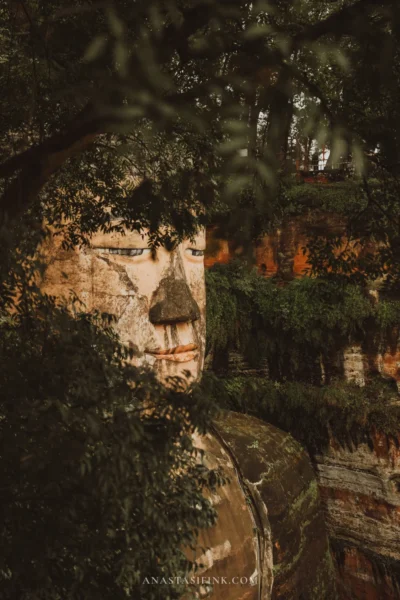
Huanglongxi Ancient Town near Chengdu: A Guide to Sichuan’s Water Town

Huanglongxi is an old town about an hour from Chengdu. Wooden houses along the canals, stone bridges, temples and narrow lanes full of shops and street food. It’s touristy but lovely, and an easy half-day or full-day trip from the city. And if you’re lucky enough to come in the off-season, you can catch some completely quiet, empty quarters.
About Huanglongxi — an ancient town 1,700 years old
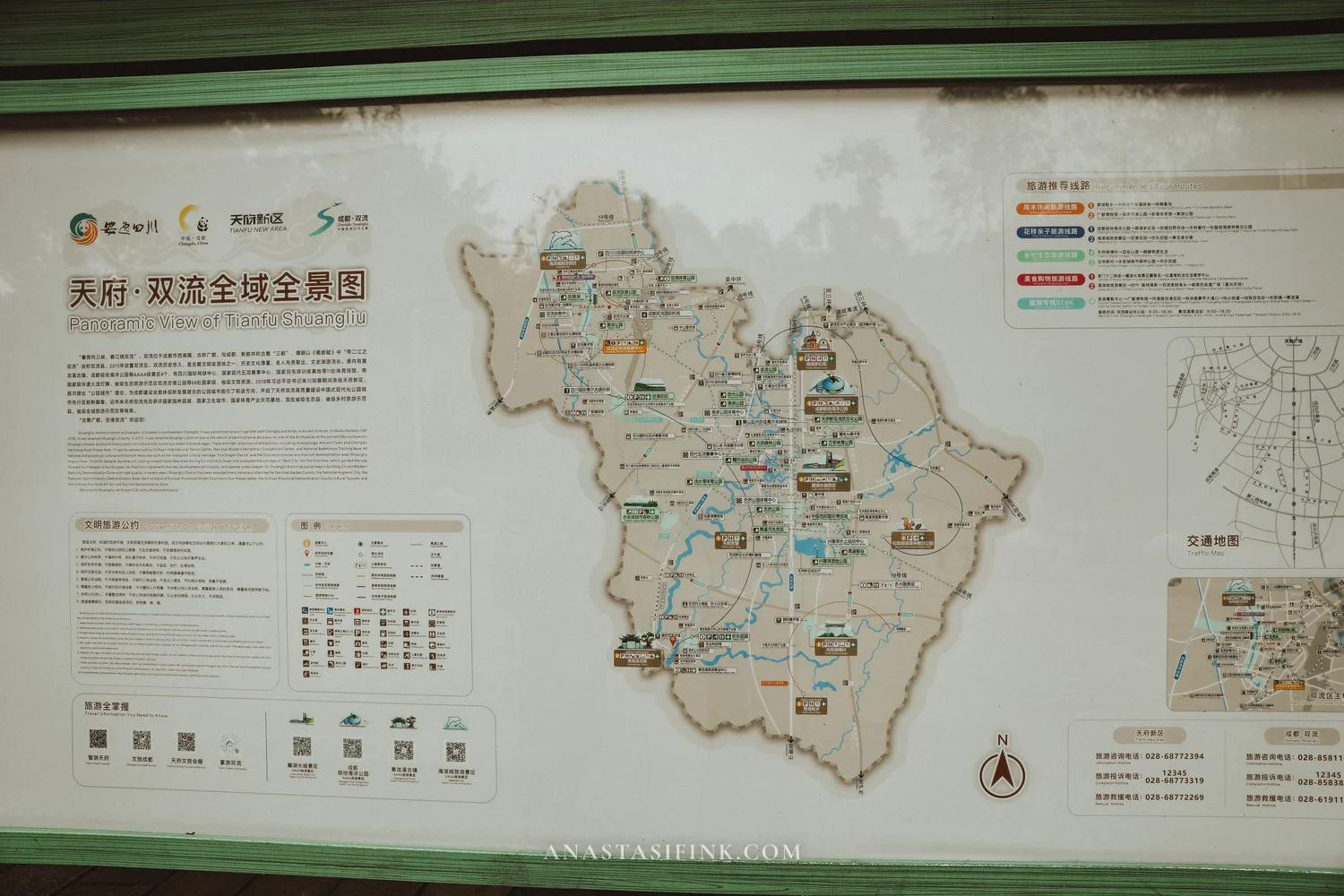
Huanglongxi (黄龙溪) is an old town in Shuangliu District, about 40 km southeast of central Chengdu. Its history goes back to the Han dynasty (206 BC–220 AD), and during the Three Kingdoms period it was a military outpost guarding the approach to the capital of the Shu kingdom. Later the town sat on a branch of the Tea Horse Road, the ancient trade route that carried tea from Sichuan in exchange for horses from Tibet.
It’s basically a Sichuan-style water town. If you’ve heard of the famous water villages near Shanghai — Zhouzhuang or Wuzhen — Huanglongxi is roughly the same idea, only Sichuanese: wooden houses along the canals, stone arched bridges, temples and streets paved with flagstone. Seven old streets and around 76 buildings from the Ming (1368–1644) and Qing (1644–1911) dynasties have survived almost intact.
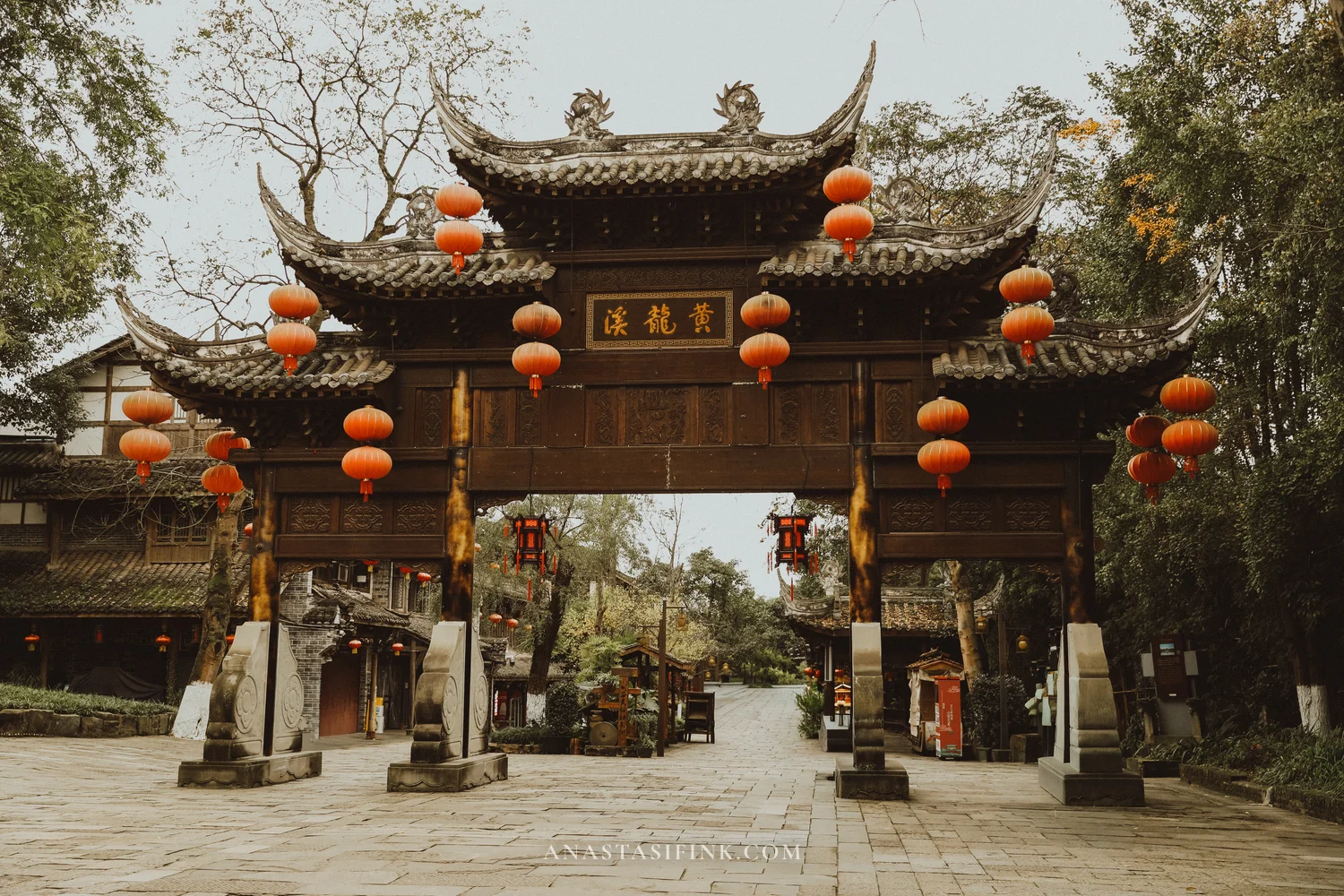
Huanglongxi has long been used as a set for historical films and TV series. That’s why a lot of it has been restored to look “old” specifically for the camera, and in places the town really does look like a film set. I actually liked that — it feels like walking through a movie.
How to get to Huanglongxi from Chengdu
The easiest way is metro plus taxi. Take the metro to Science City station (the southern end of Line 1), then grab a taxi for the last stretch to the town. It’s easy to order the taxi through Didi right inside the Alipay app.
There’s also a direct bus — from Xinnanmen bus station (新南门, near the center) to Huanglongxi, about an hour, with a ticket around 14 RMB.
Practical info
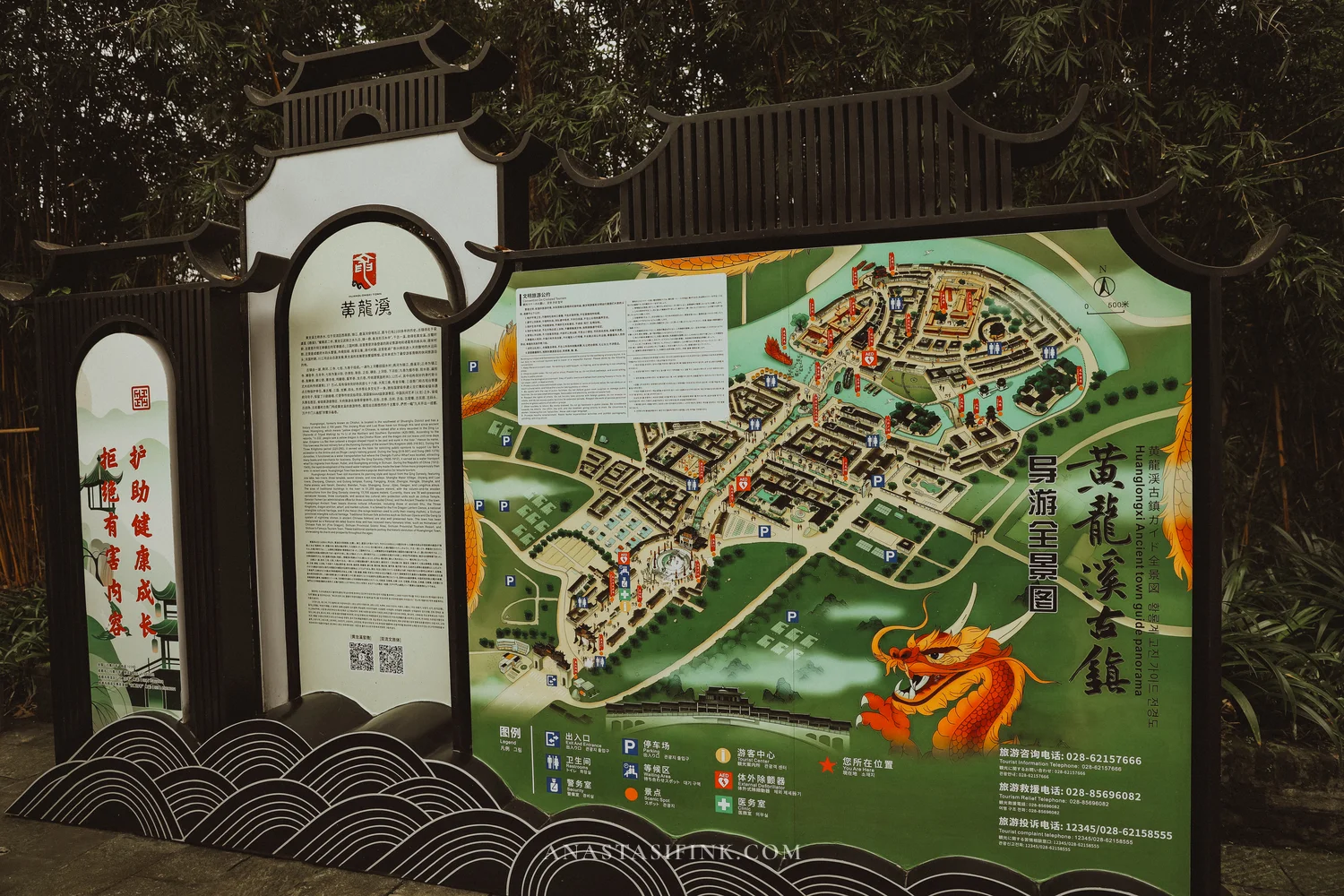
- Where: Huanglongxi, Shuangliu District, Chengdu, Sichuan Province
- GPS: 30.3186, 103.9786
- Entry to the town: free (individual museums and attractions inside may be paid)
- Hours: the town is always open, but shops and cafes work roughly from 9:00–10:00 until evening
- Getting there: metro to Science City + taxi (Didi via Alipay); or the direct bus from Xinnanmen (~1 hour, ~14 RMB)
- Time needed: half a day minimum, a full day is more comfortable
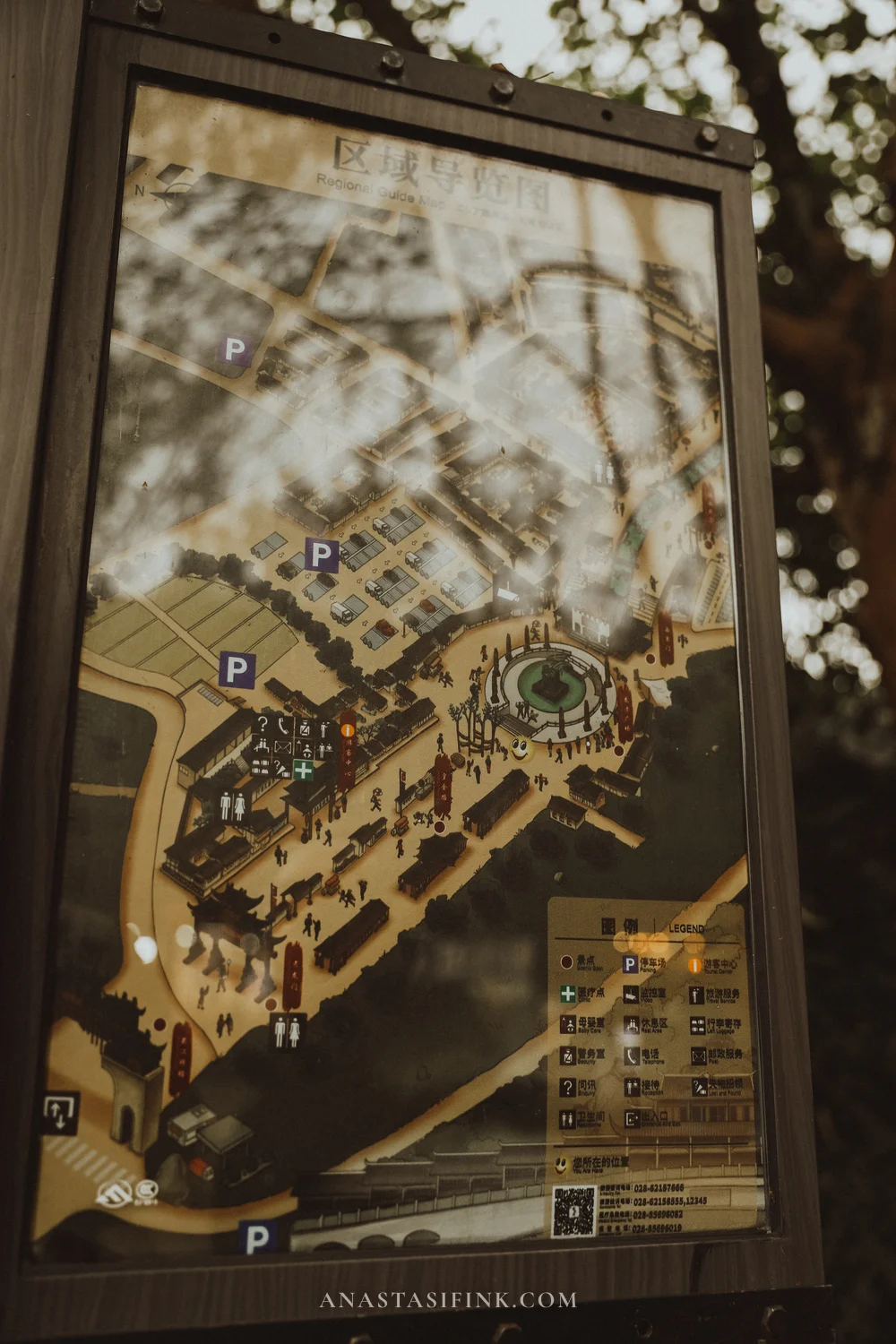
Old streets and wooden architecture
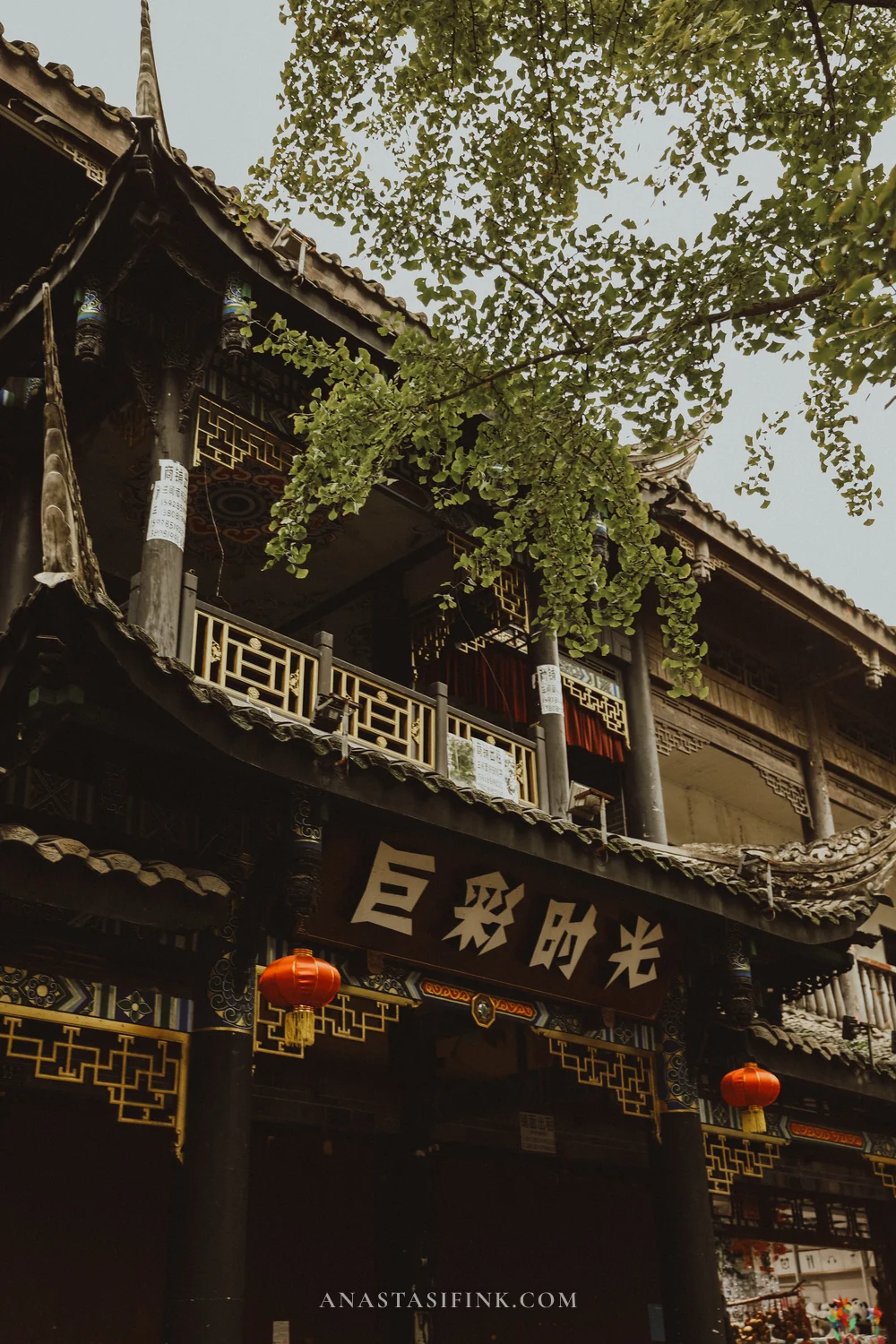
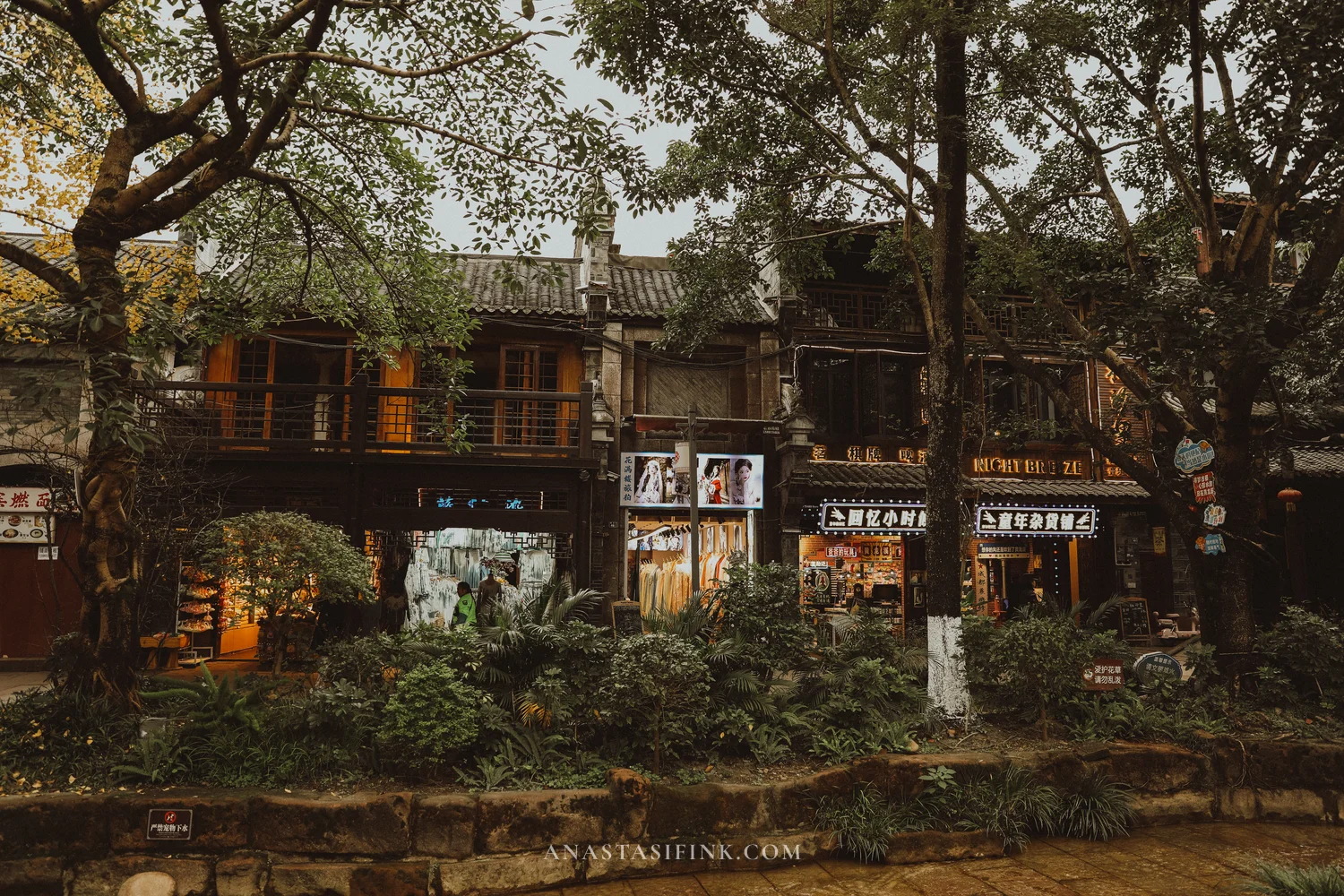
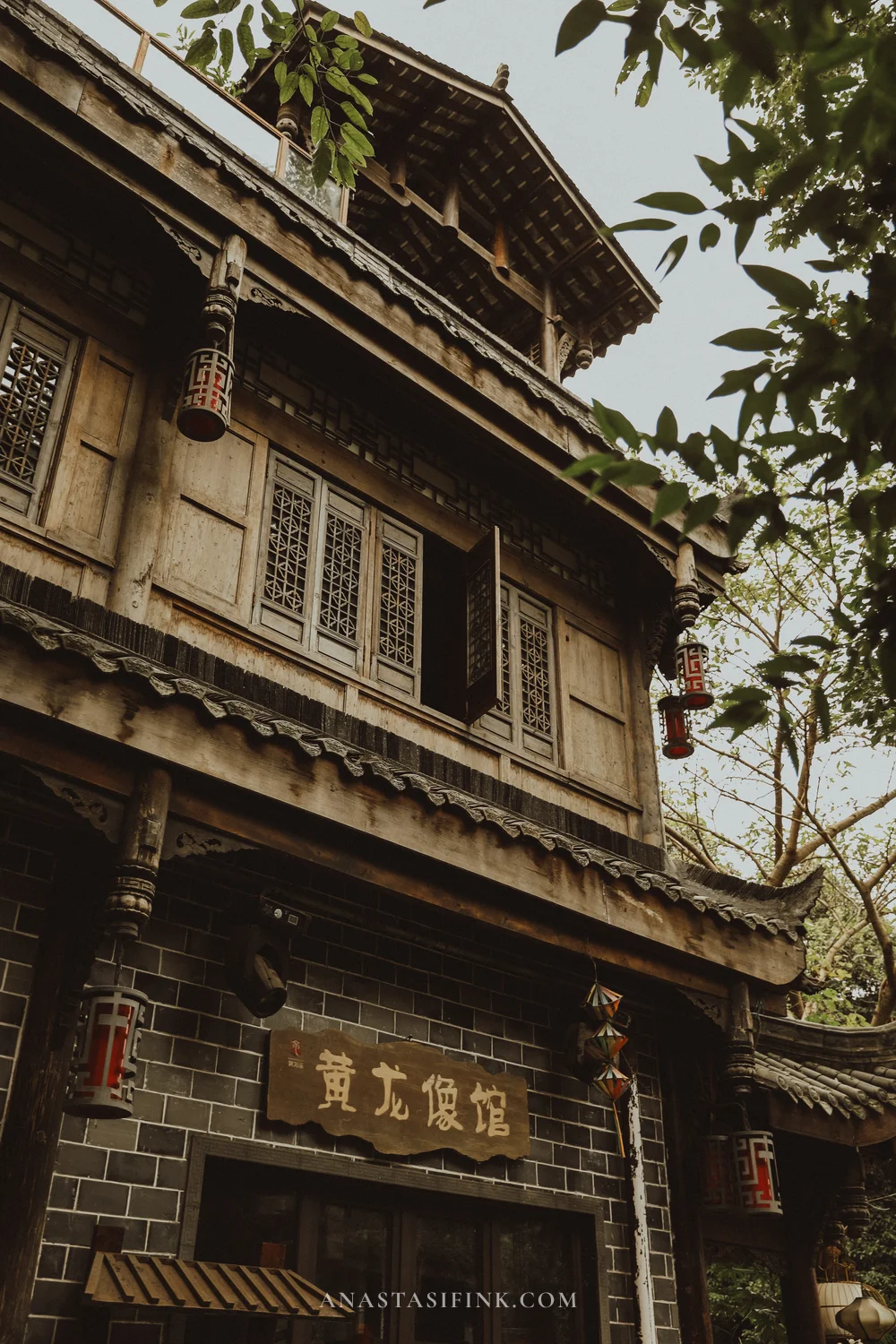
The nicest thing in Huanglongxi is simply walking slowly through the streets and looking at the details. The houses are mostly two or three storeys, with wooden lattice windows, balconies and heavy tiled roofs. Many ground floors are taken up by shops, teahouses and small cafes, with red lanterns and vertical signs over the doors.
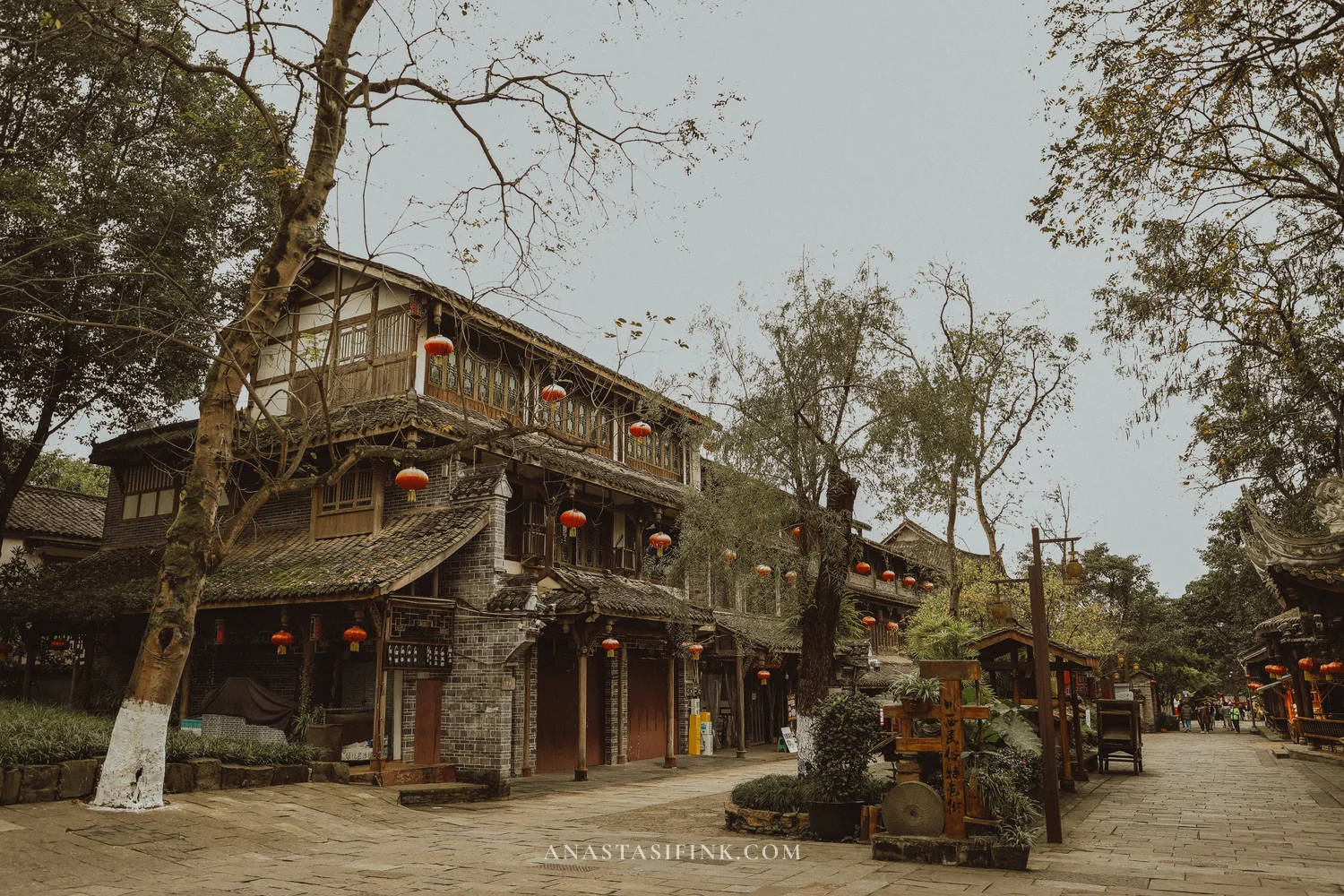
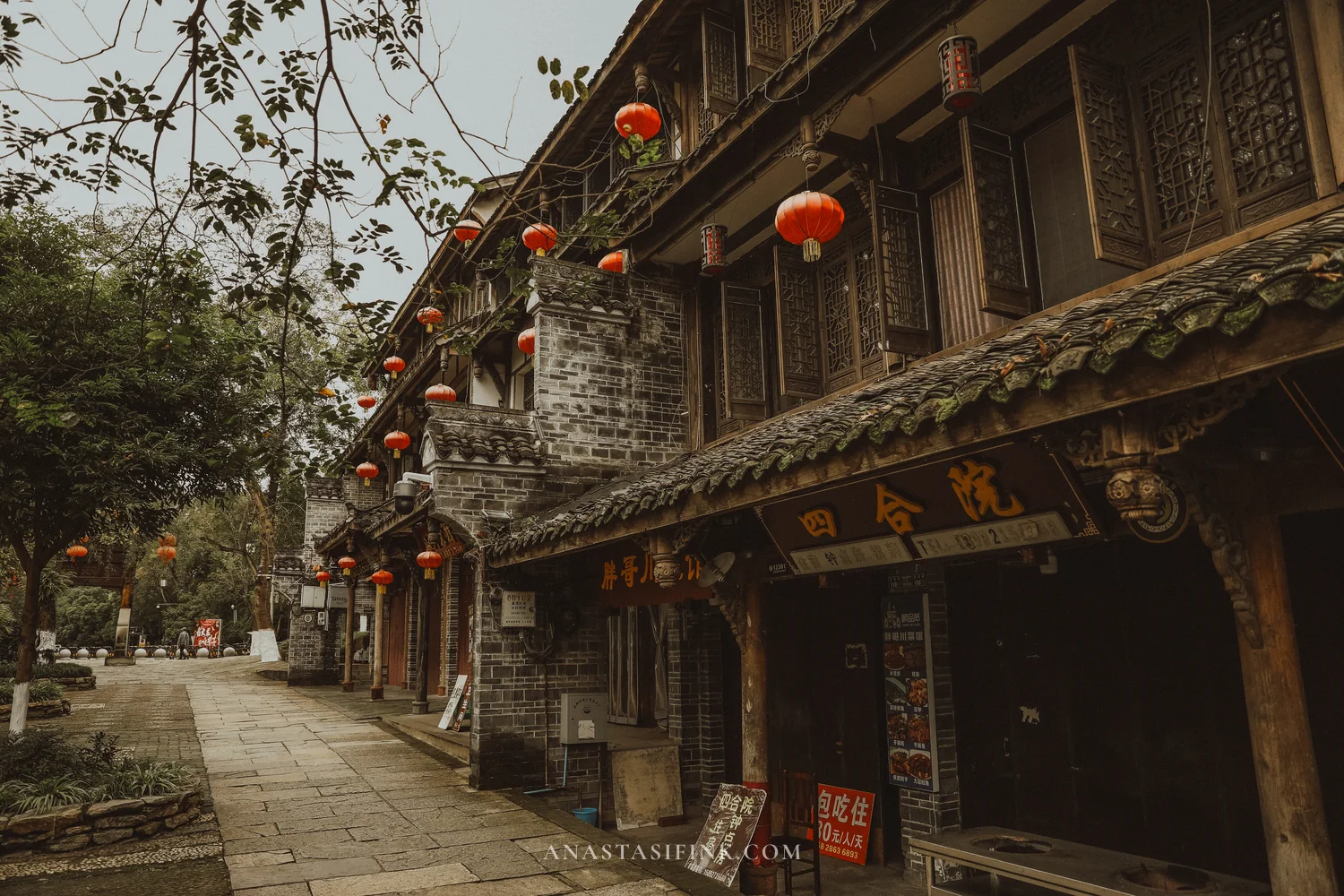
Typical streets of the town. In the morning, before the crowds, they’re almost empty and very quiet
There are tons of details here, you just shouldn’t rush. Carved wooden doors, the ends of the tile rows with little molded guardian faces, finely made old lanterns.
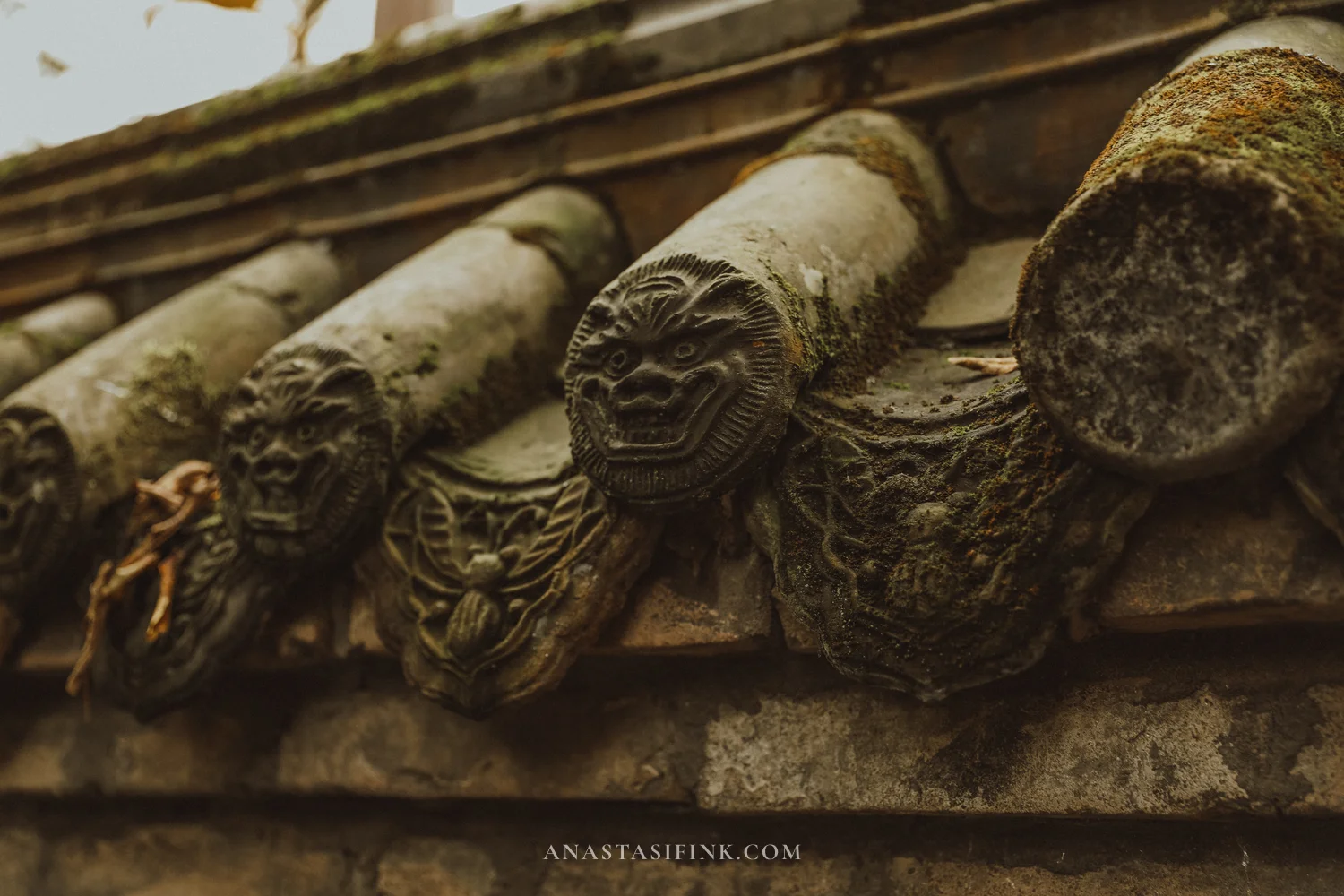
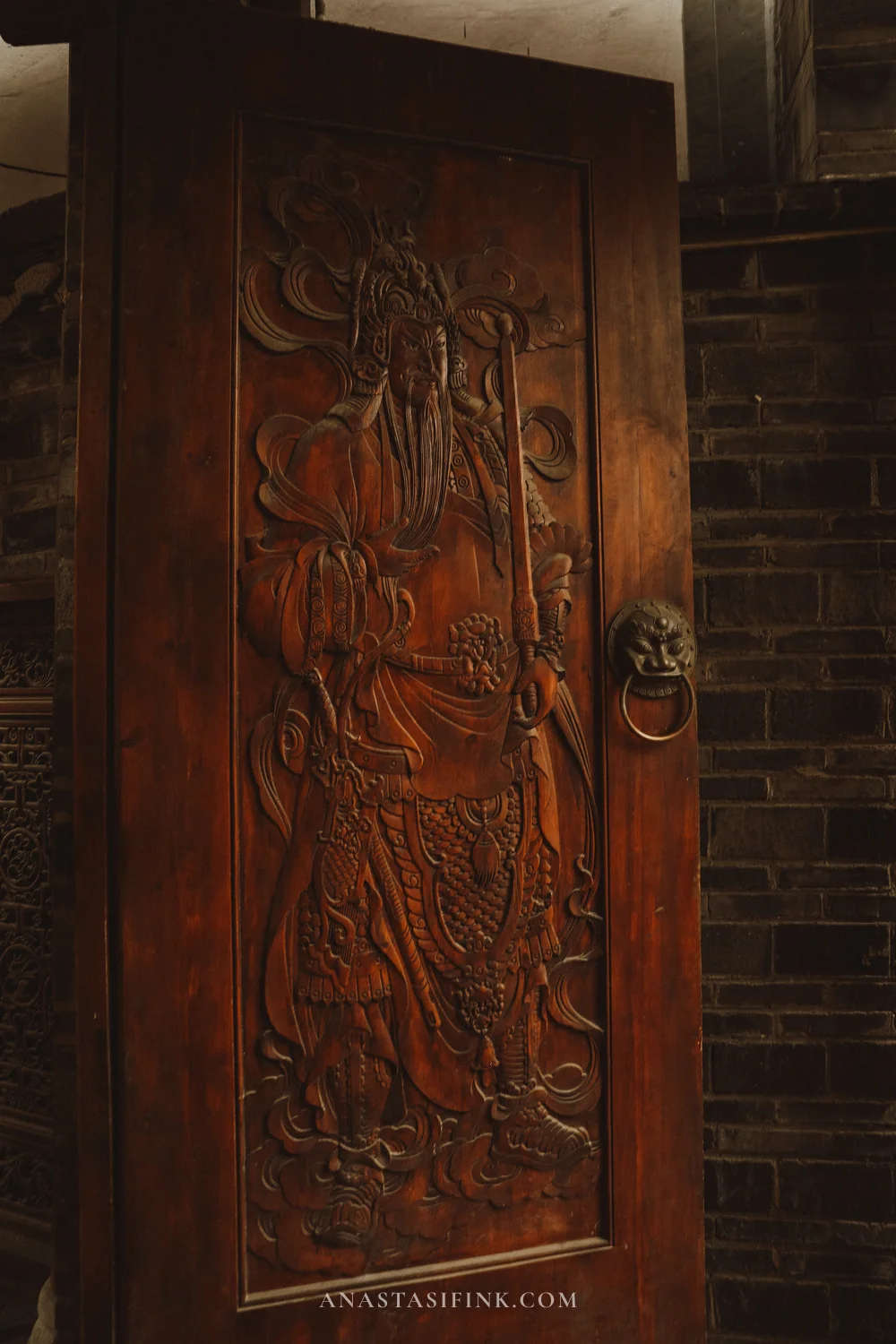
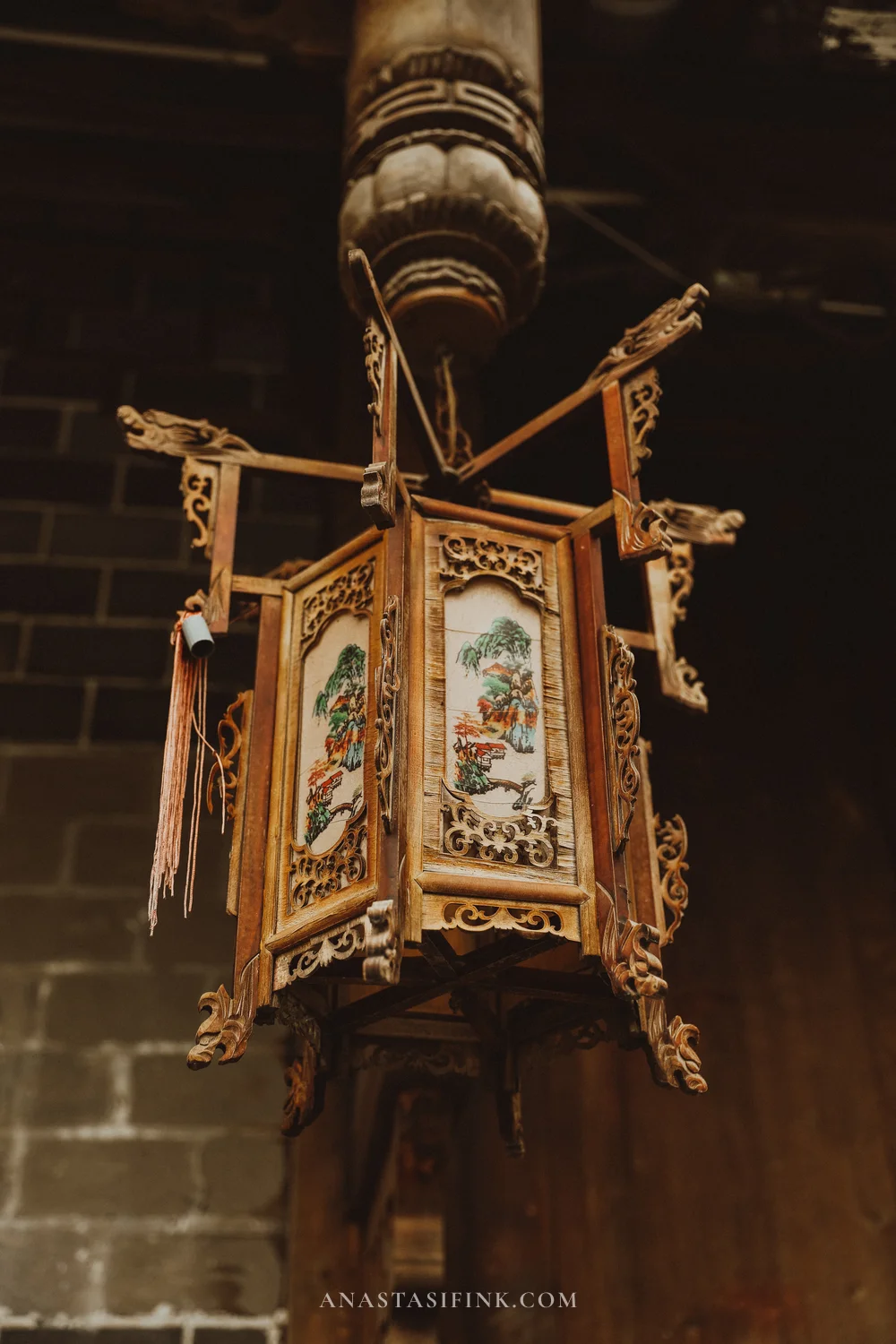
Details worth slowing down for: wood carving, guardian faces on the tiles and handmade lanterns
In places the streets are decorated — lanterns, bamboo, autumn branches. A pretty corner like this greets you right at the start of the town.
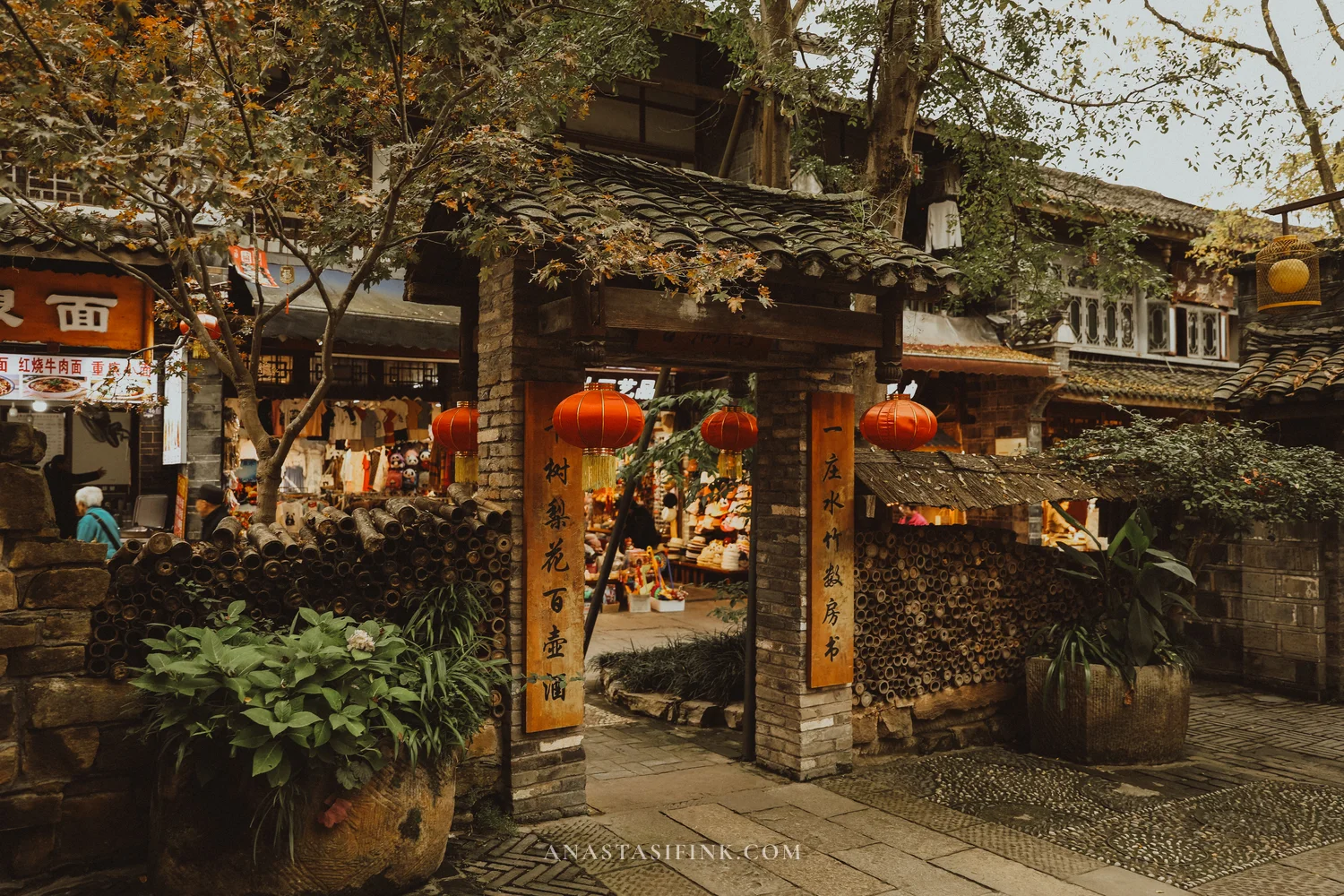
Right here, near the entrance, there’s also a temple courtyard with a tiered pavilion and quiet little courtyards under red lanterns.
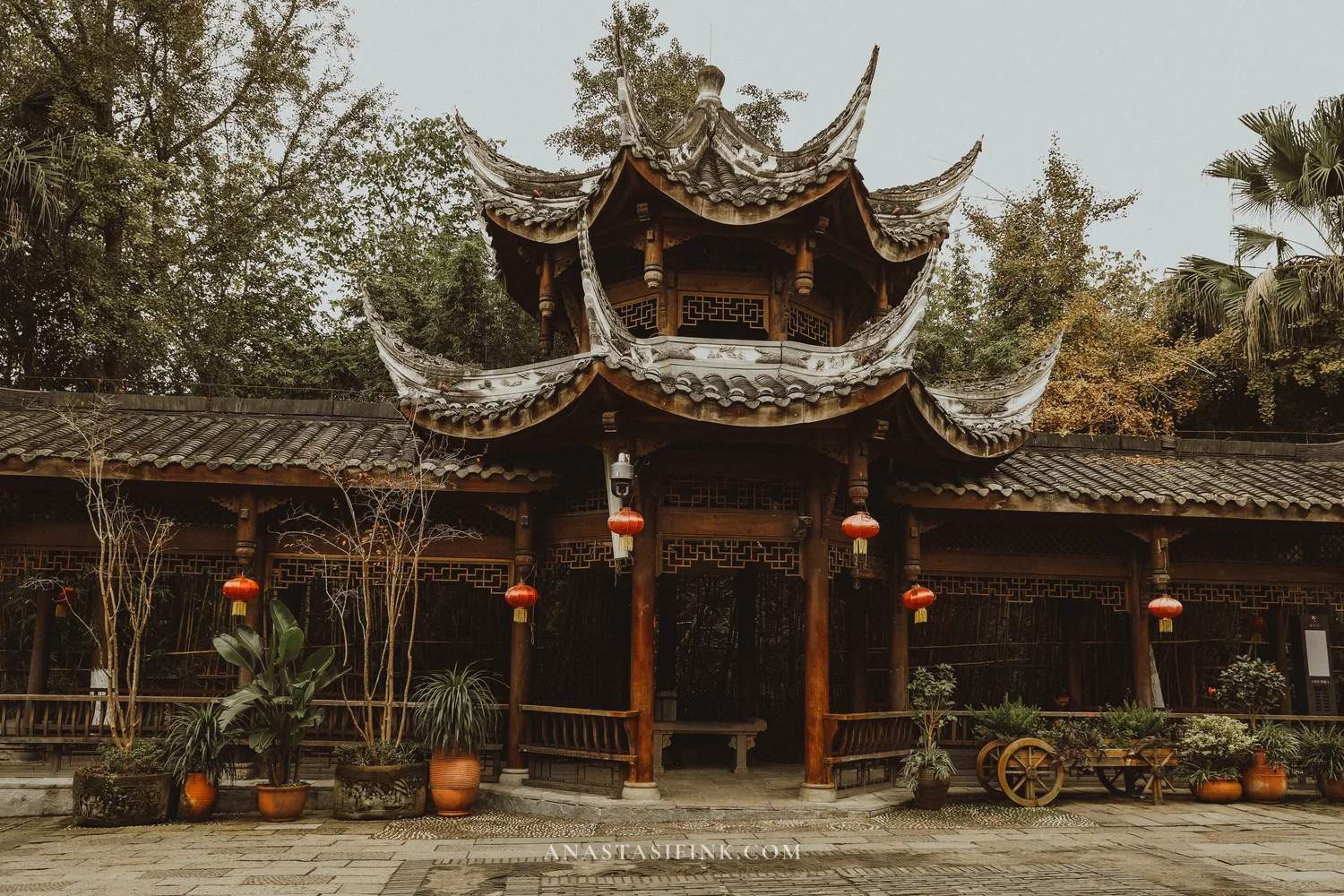
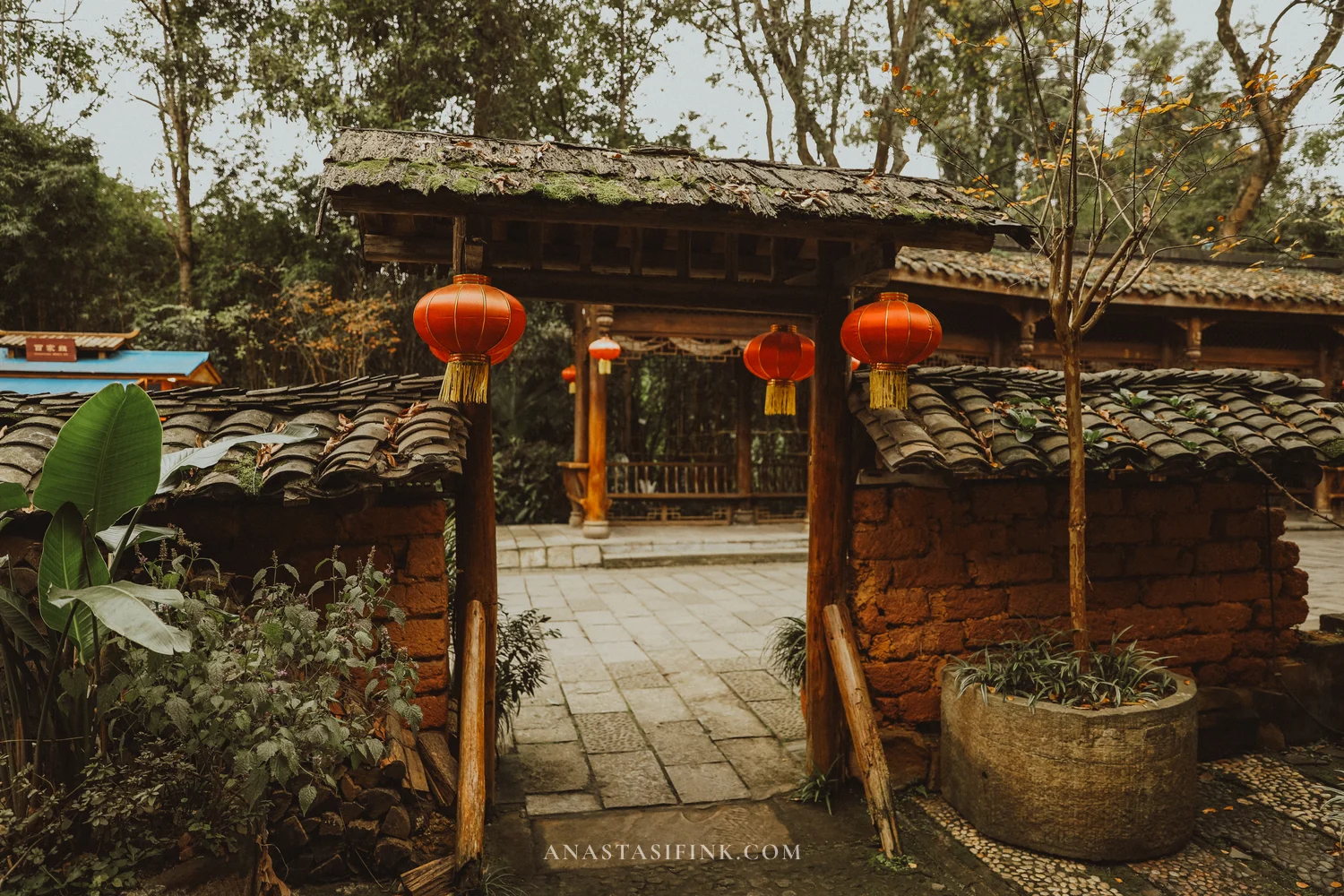
A temple courtyard with a pavilion and a simple entrance into a courtyard under lanterns
Many of the houses have lovely details: a pearl shop with carved wood, a bamboo crafts workshop, houses with ginkgo branches right by the balconies. Toward evening the windows light up from inside and the street turns warm and cozy.
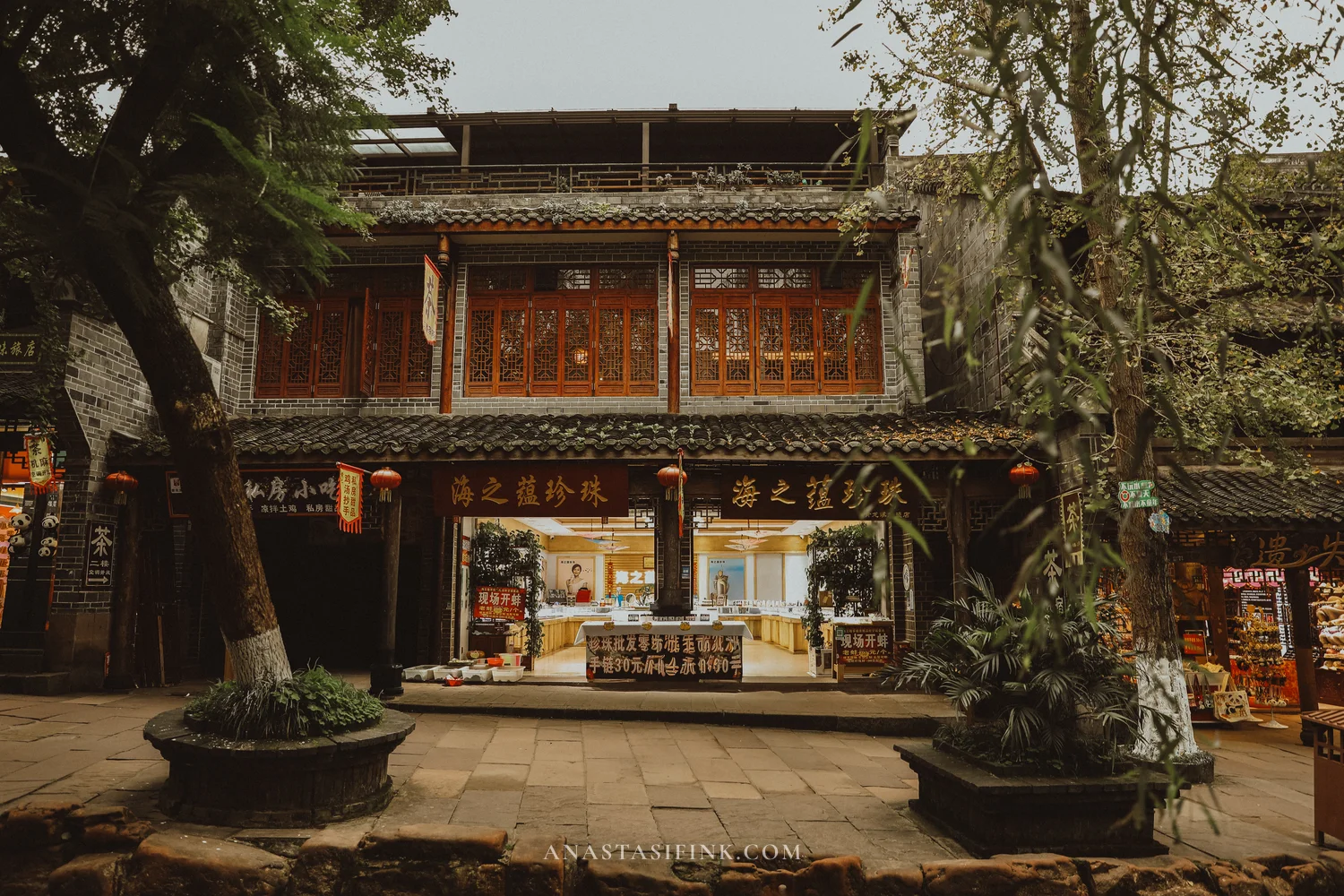
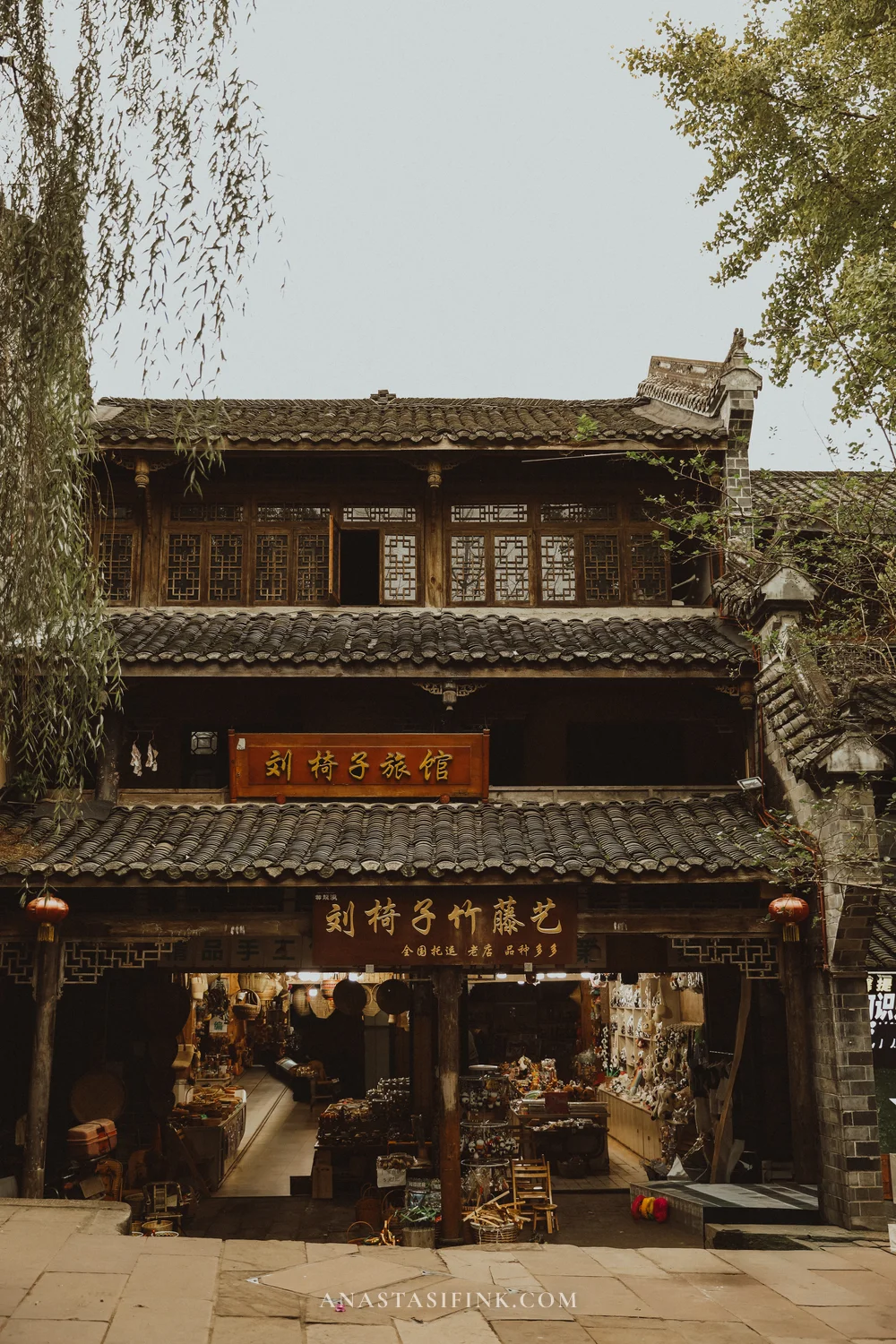
A blue motor rickshaw — the local “taxi” — passes through the lanes now and then. And over one of the streets stands a gate with the characters “千古一溪”, “an ancient stream through the ages”.
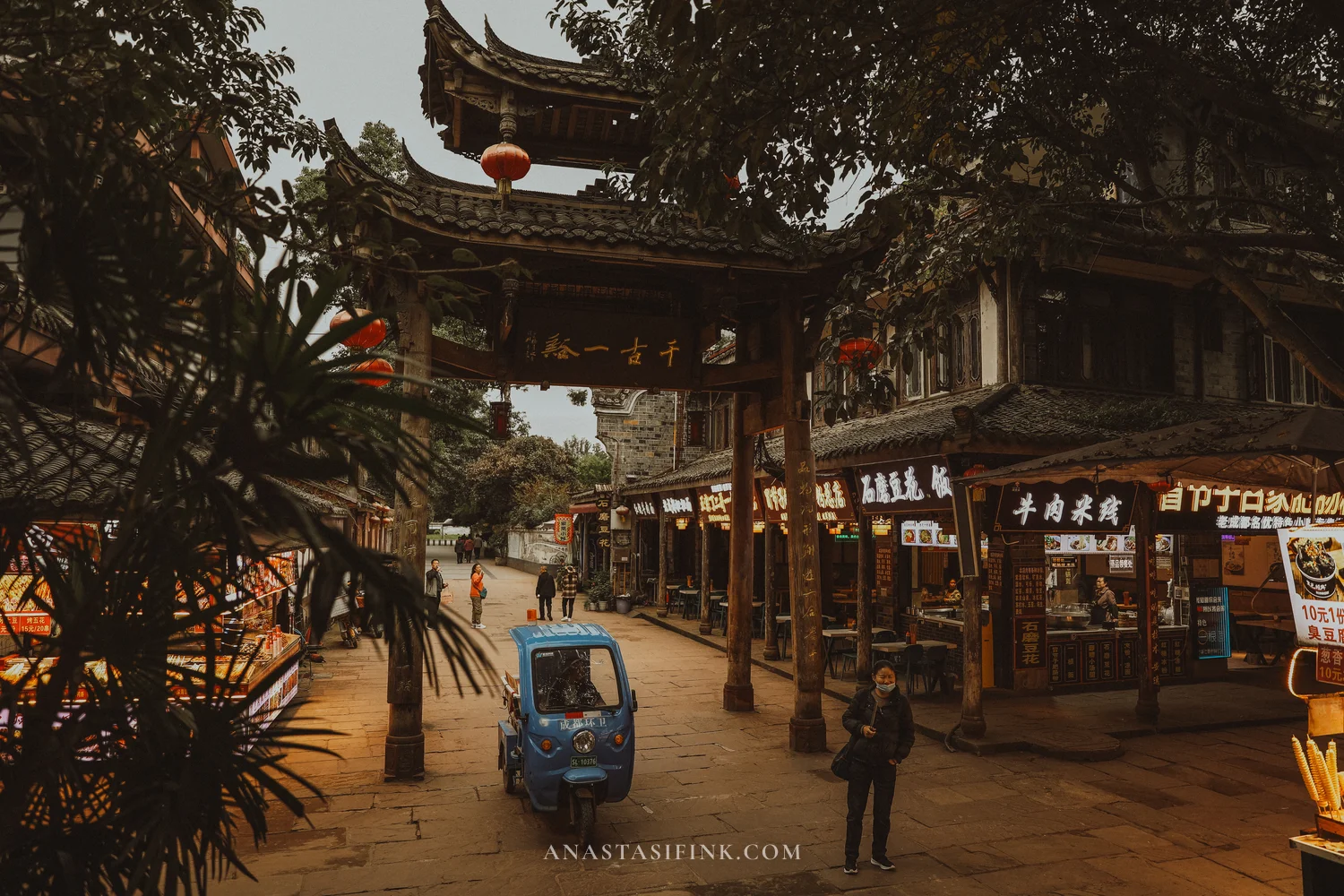
In general I’d just wander the lanes — drop into Gulong Temple and walk through the residential part of town, where there are lots of old houses and narrow alleys. If you come in the off-season, many shops will be closed — but you get to feel a completely different mood and walk in peace.
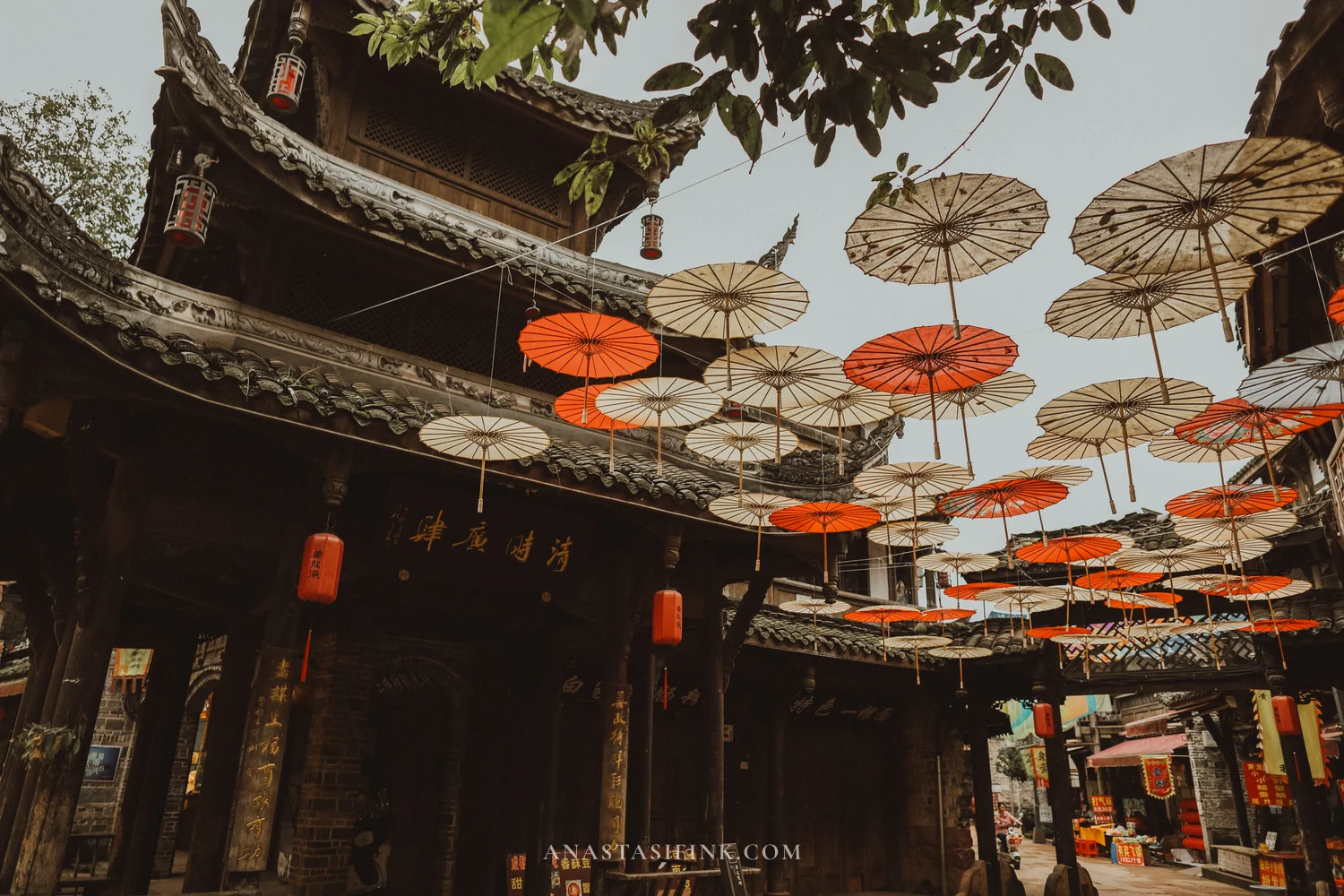
Toward the far end of the town, near Gulong Temple, paper umbrellas are strung over one of the squares — red and cream, a whole sky of umbrellas.
Canals, bridges and the waterside
Huanglongxi sits on water — hence the “溪” (stream) in its name. A narrow stream runs right down the middle of the main street, with shops and cafes along it. Further on it opens out to wider water, where stone arched bridges cross the canals and wooden walkways and galleries line the banks. This is the most scenic part, especially in autumn, when the leaves turn yellow and reflect in the still water.
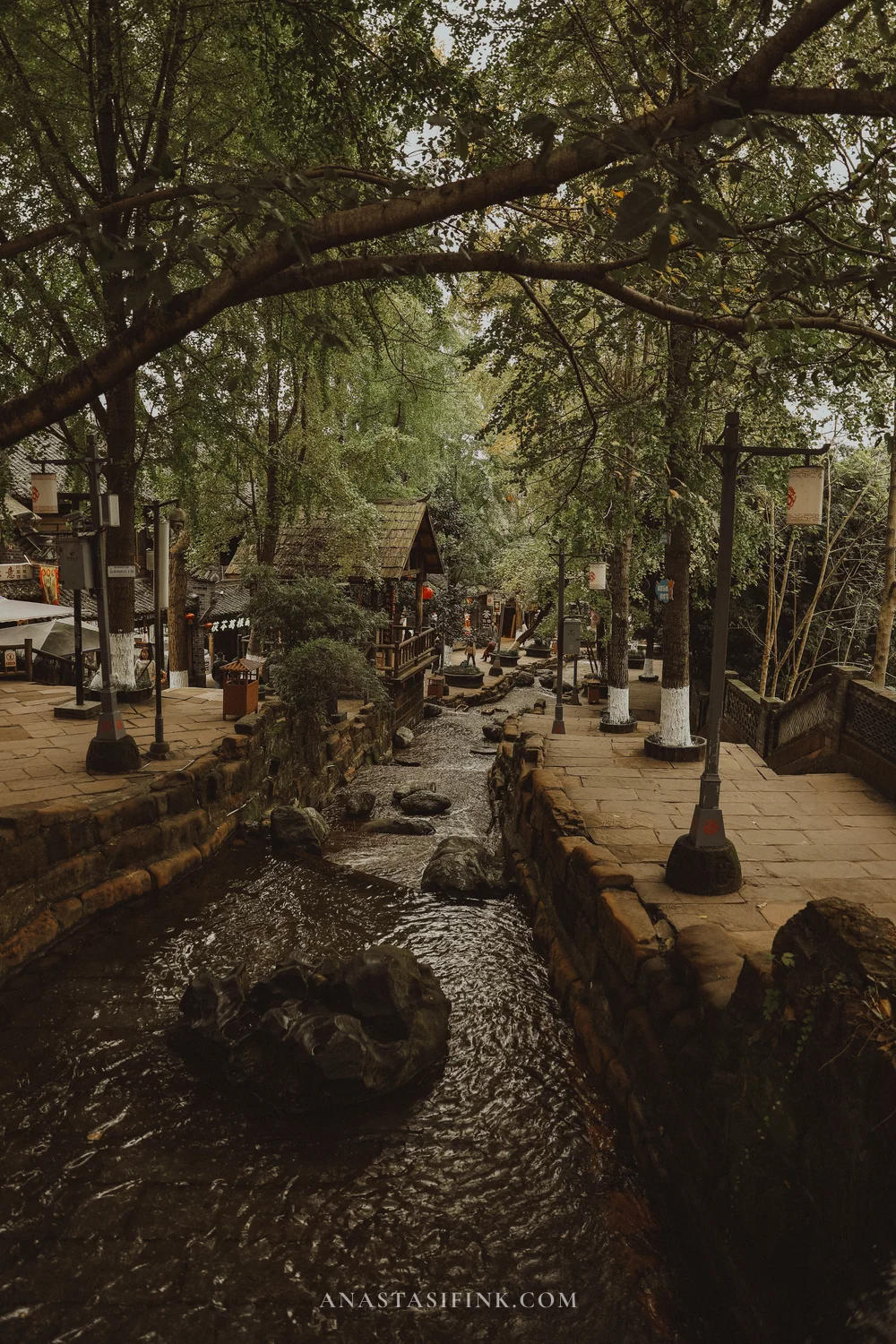
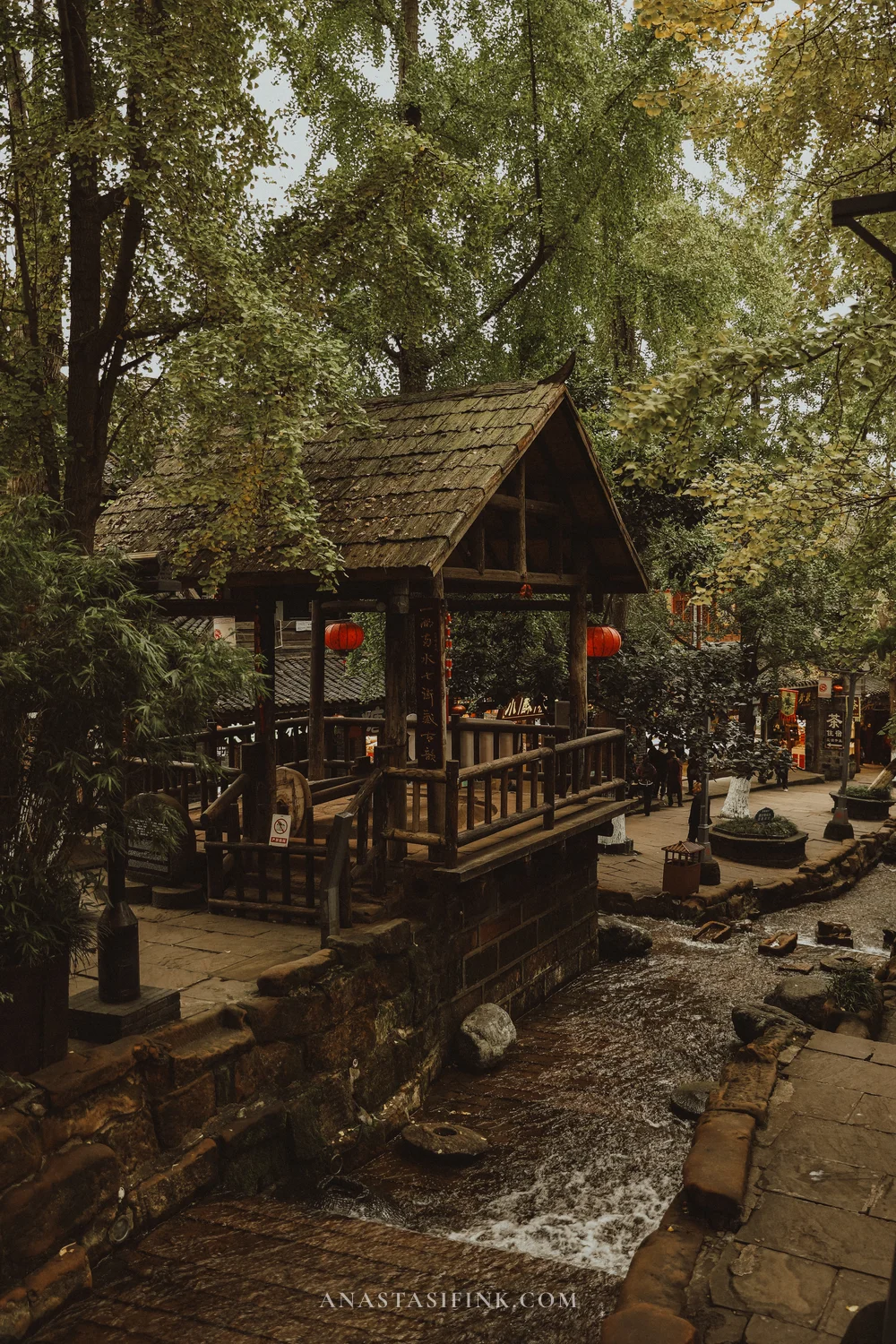
The canals run right alongside the streets. I lingered longest under the covered wooden bridge — it’s especially quiet there
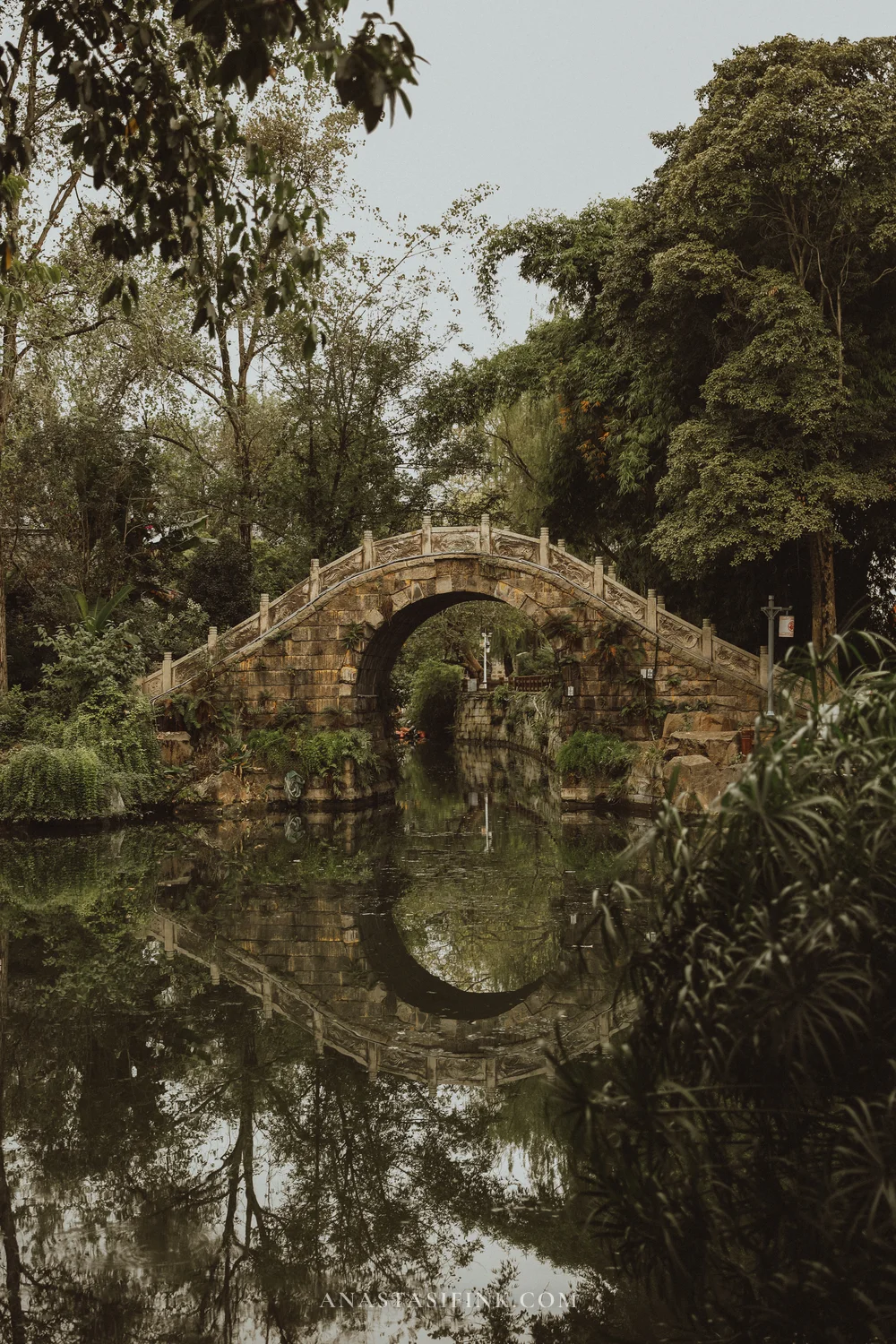
What stays with you most in Huanglongxi are the stone arched bridges — the “moon bridge” from the photo at the top is one of them. There are several, and each is good in its own way: one with a carved balustrade and figures along the railing, and under another you can walk right by the water and watch the red lanterns of the house opposite reflected in the dark arch.
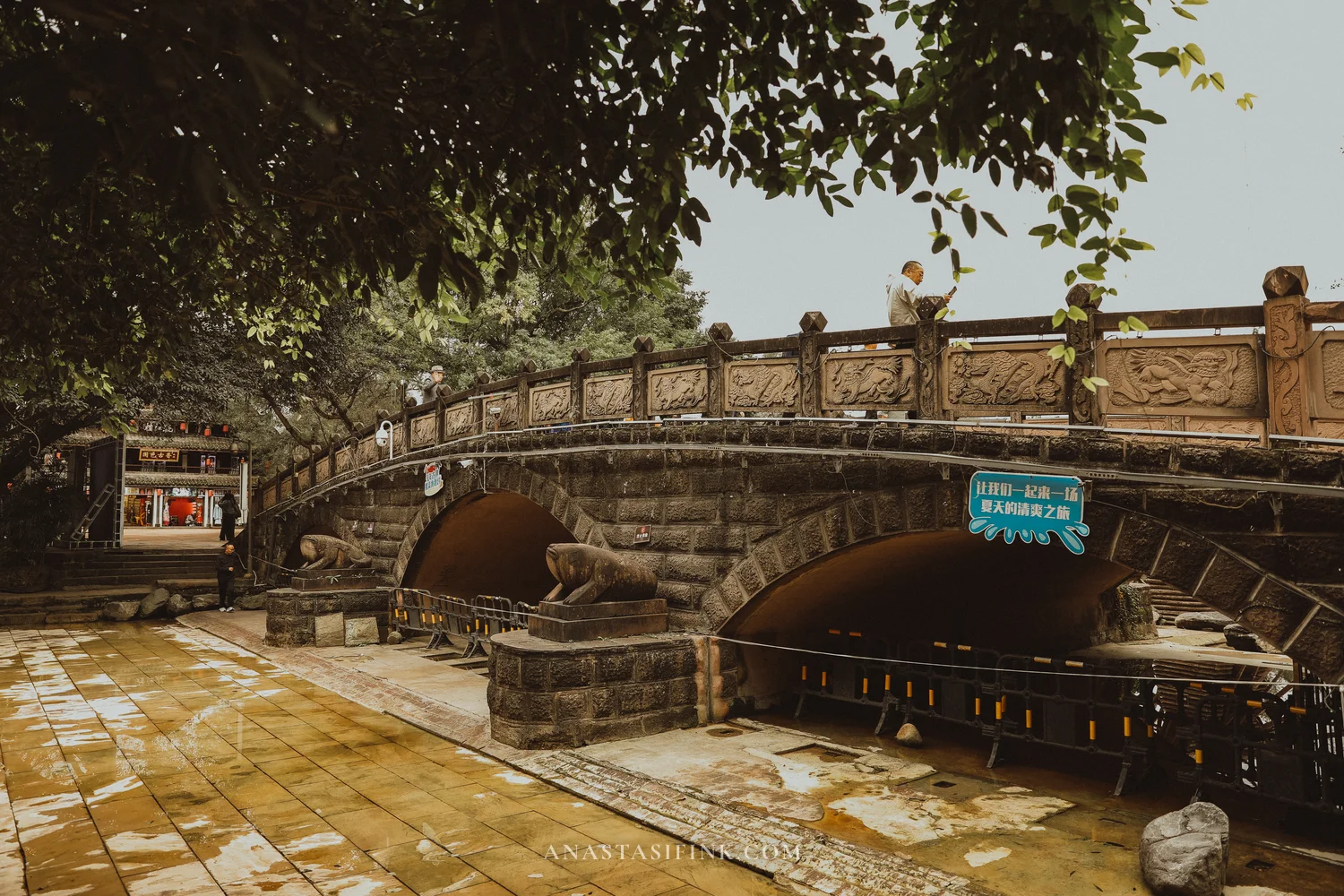
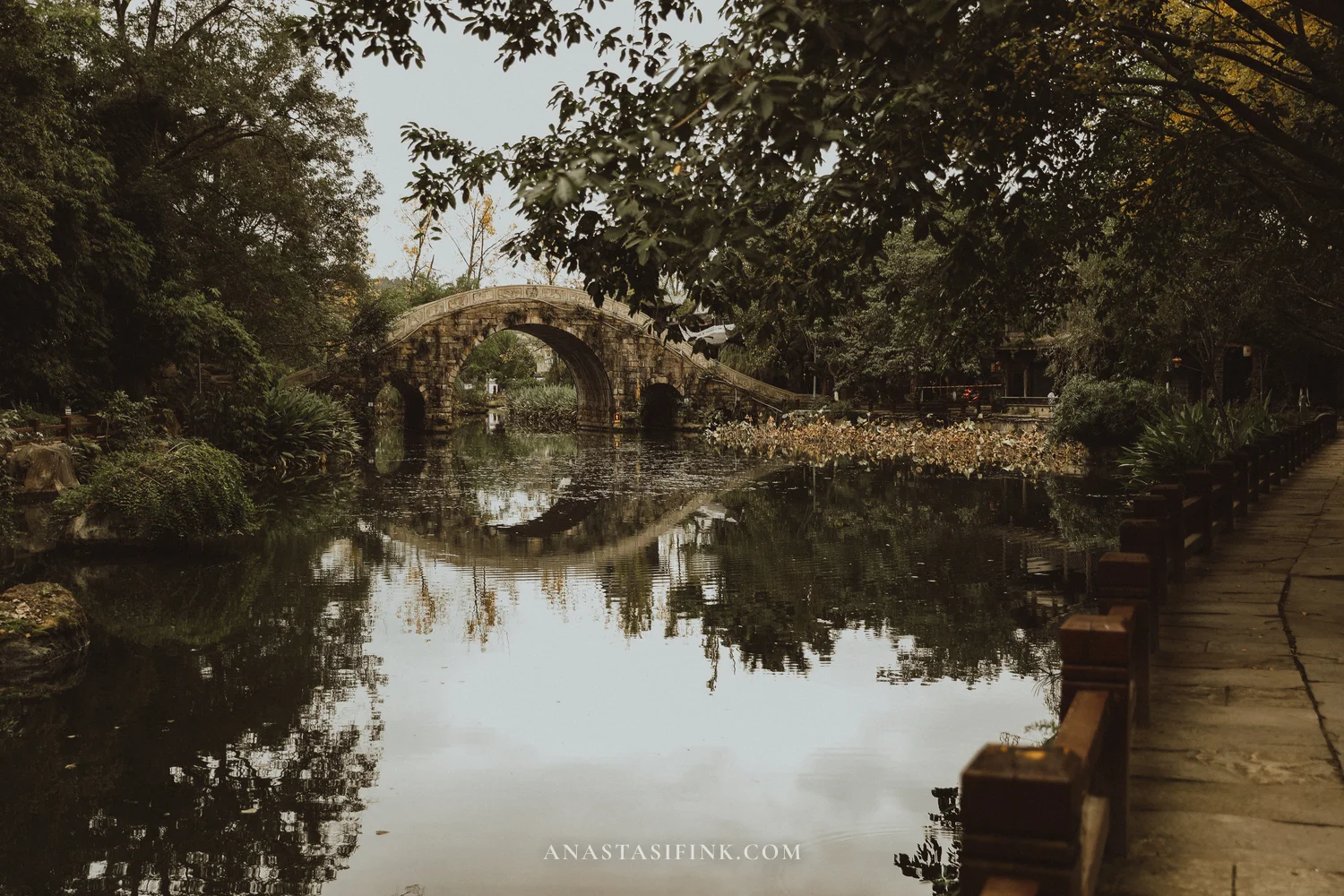
One bridge is quite plain, while the arched one on the right is the same “moon bridge” from the top of the article, just from the other bank
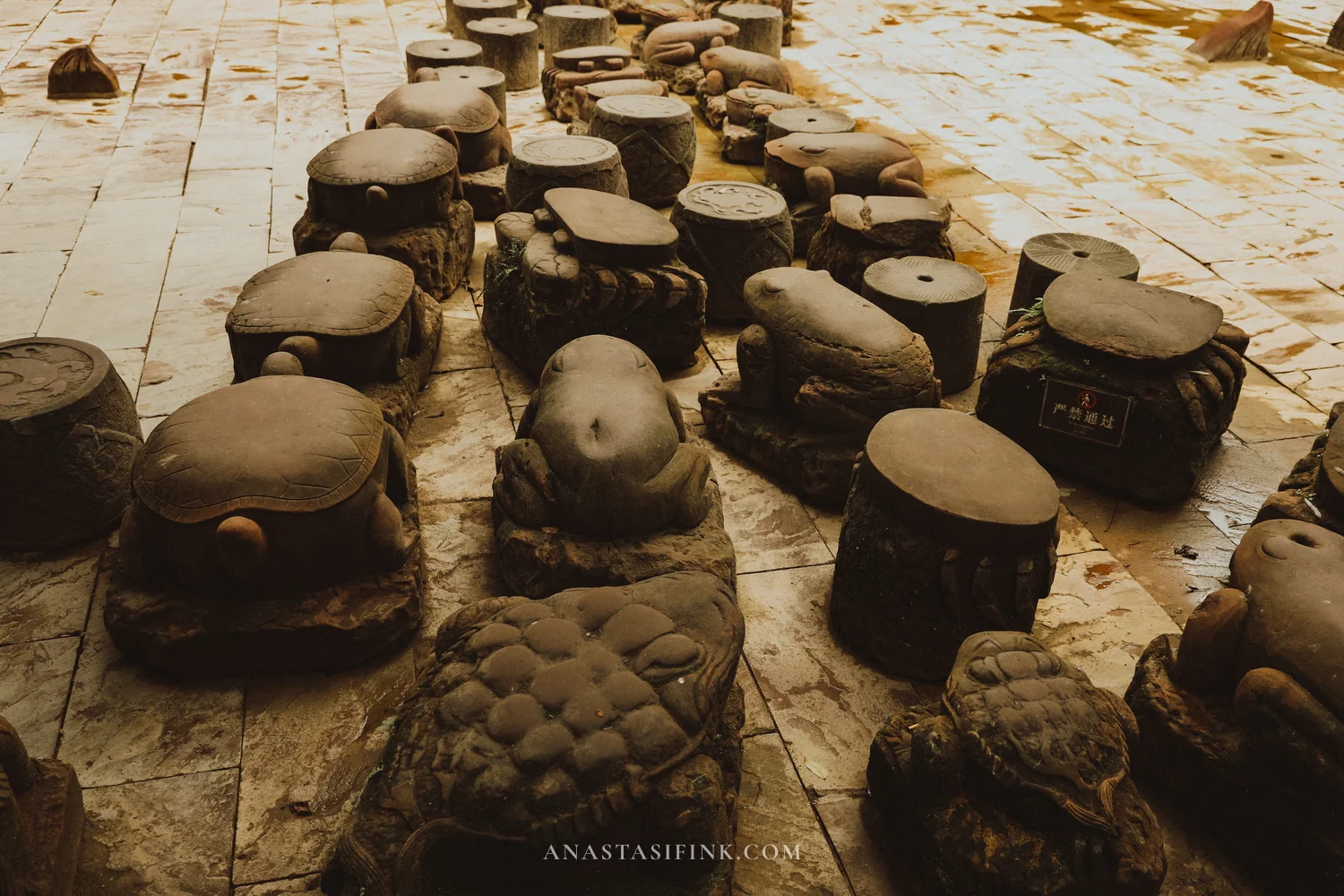
Next to one of the flat little bridges across the canal, instead of a railing there are stone “stepping stones” shaped like turtles and frogs — you cross to the other side on them. When I was there, the water was almost gone.
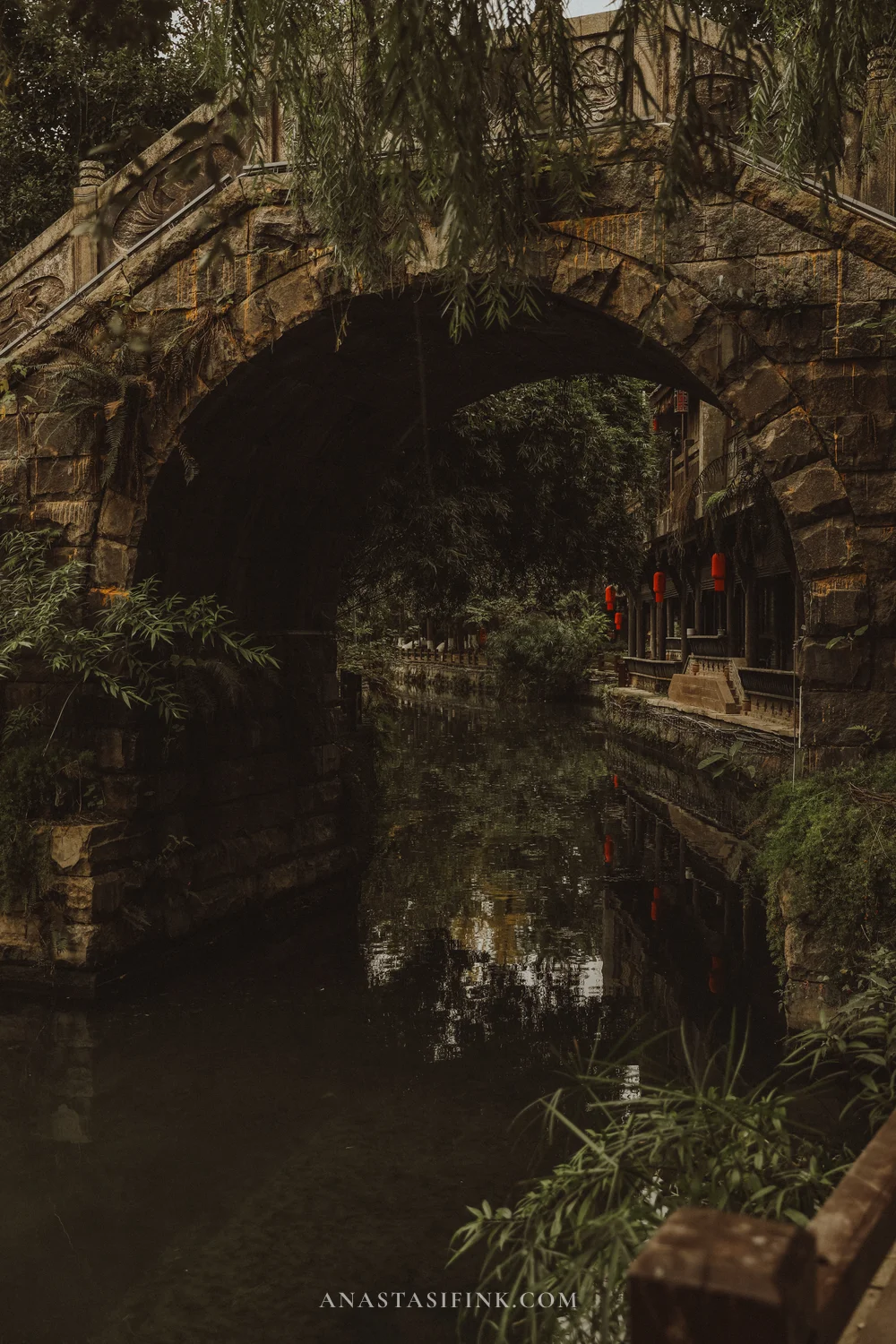
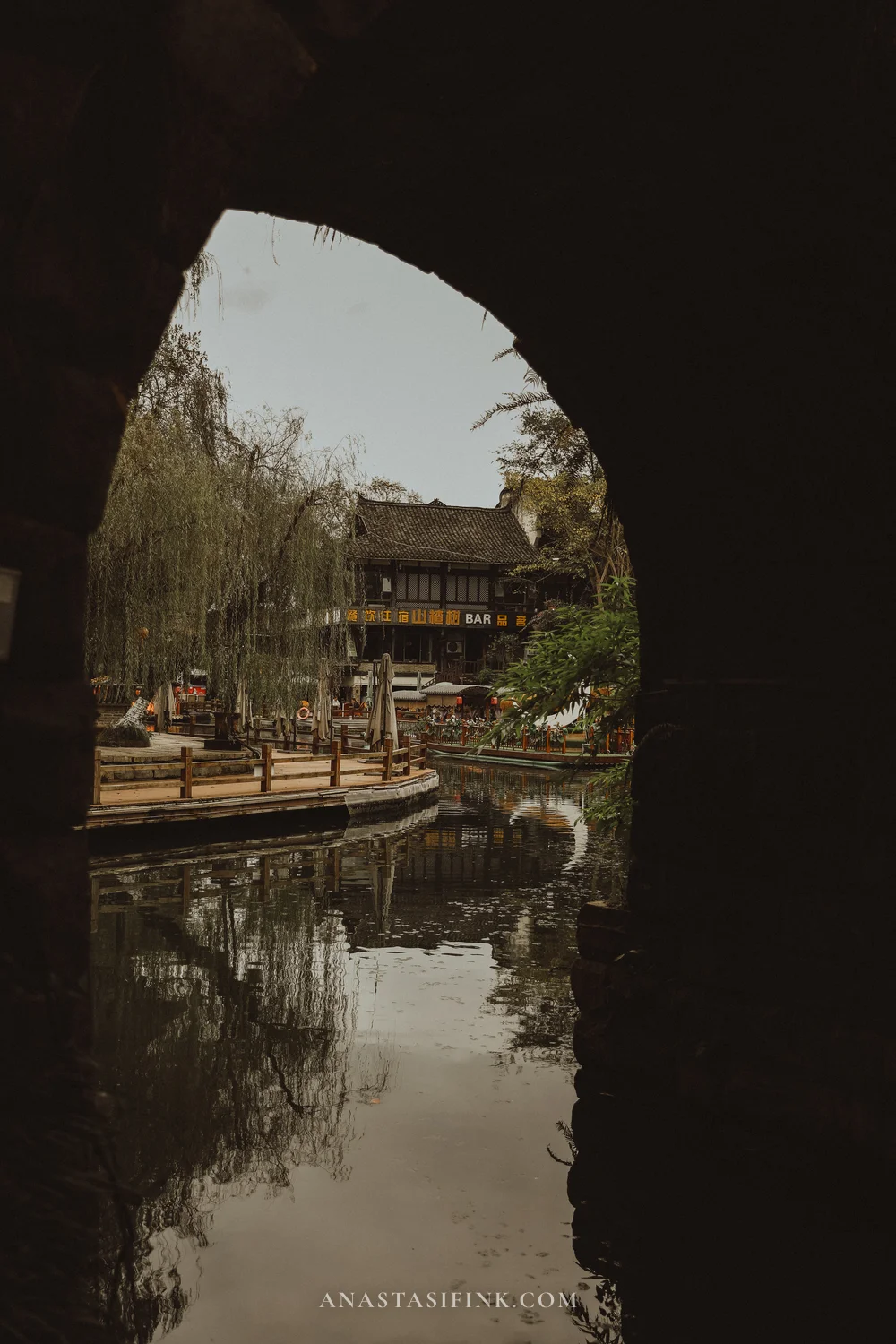
Look under the bridges too — there’s a lovely view of the water and the houses on the far bank
There are plenty of quiet corners by the water: a pavilion with a fountain on the bank, wooden walkways along the channels, pavilions on stilts right over the pond. Somewhere a small fountain stirs the water, somewhere boats sit quietly at the moorings.
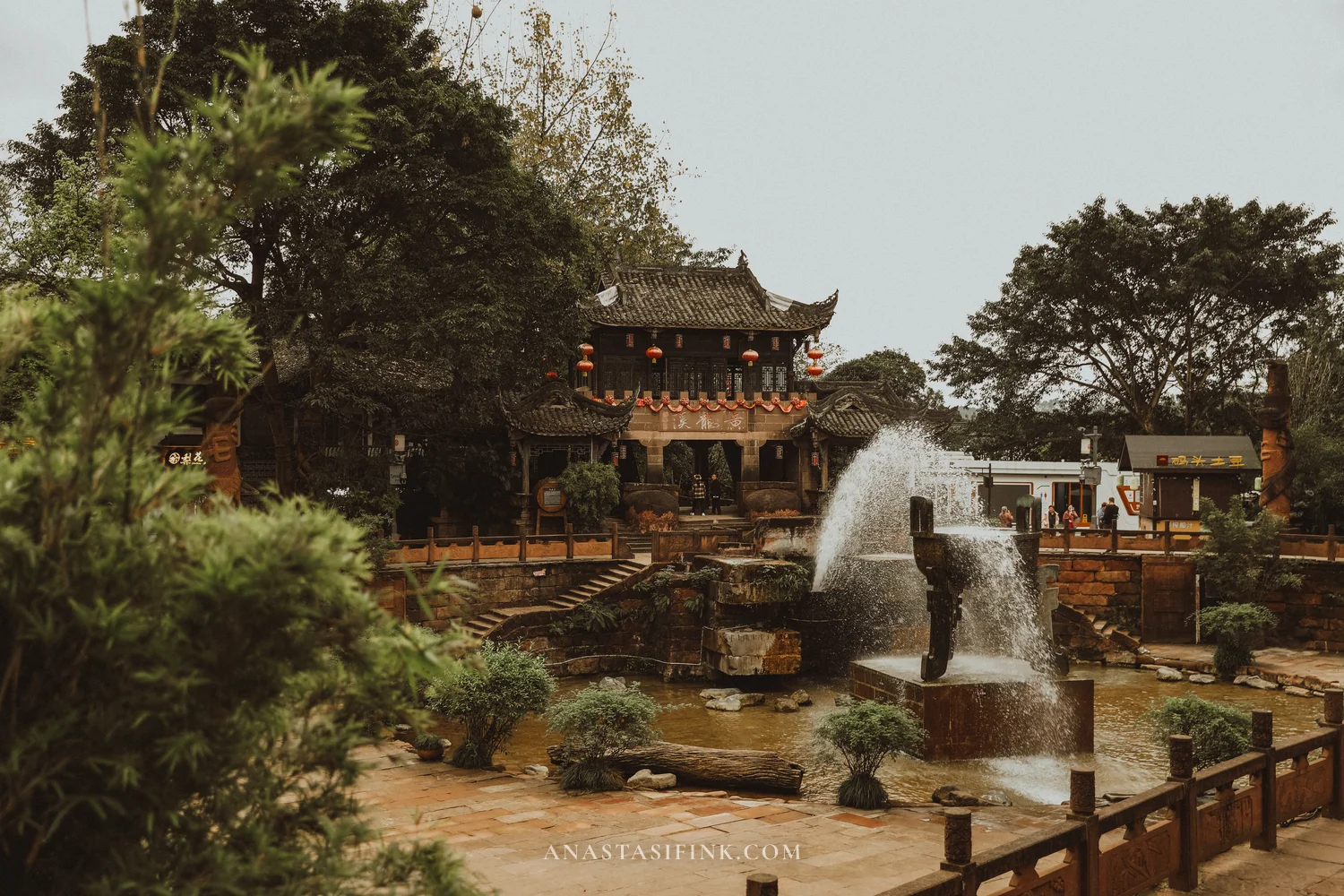
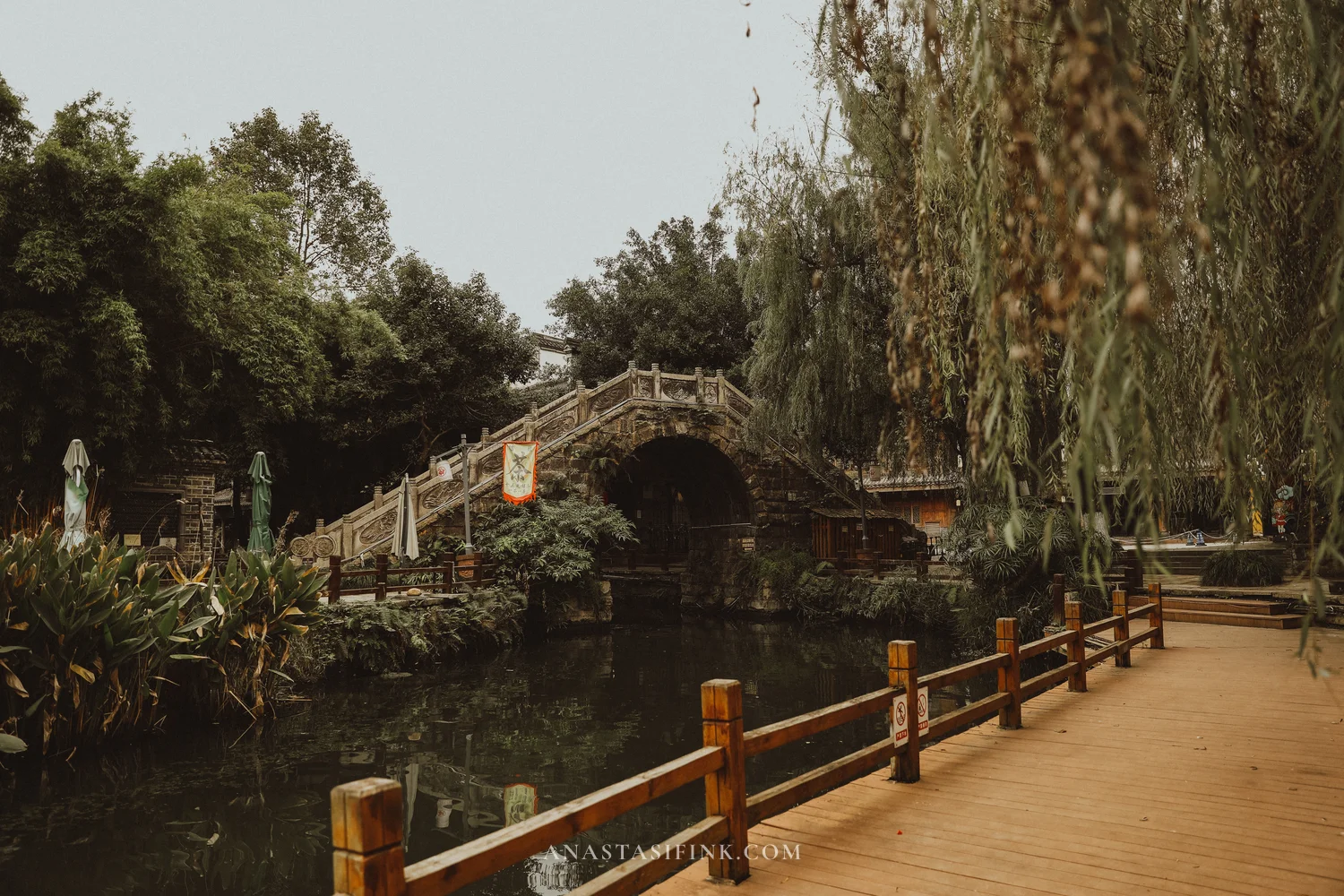
A pavilion with a fountain in the central part of the town and a wooden walkway along the pond
Above the water rises a tiered wooden tower — you can see it from far off.
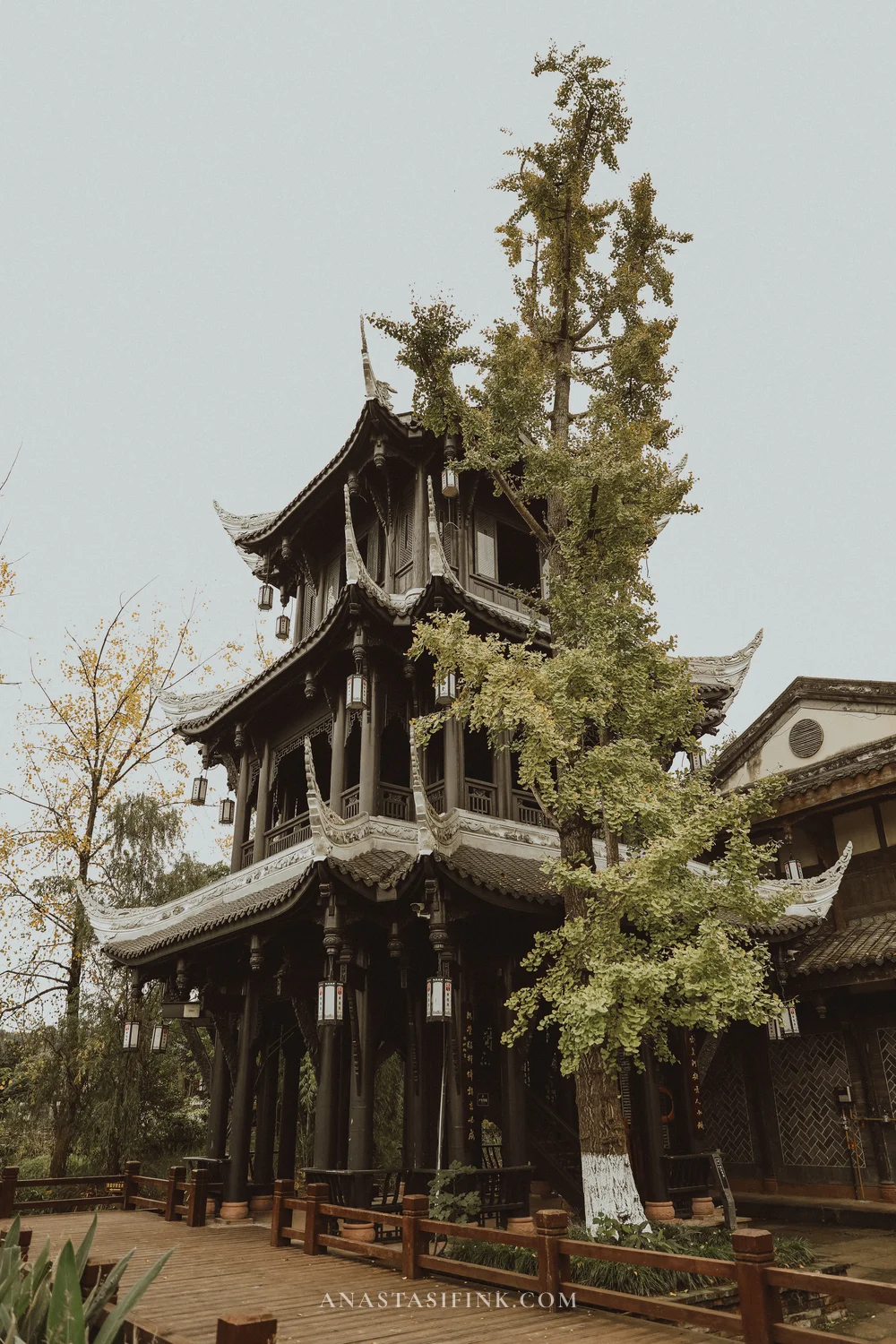
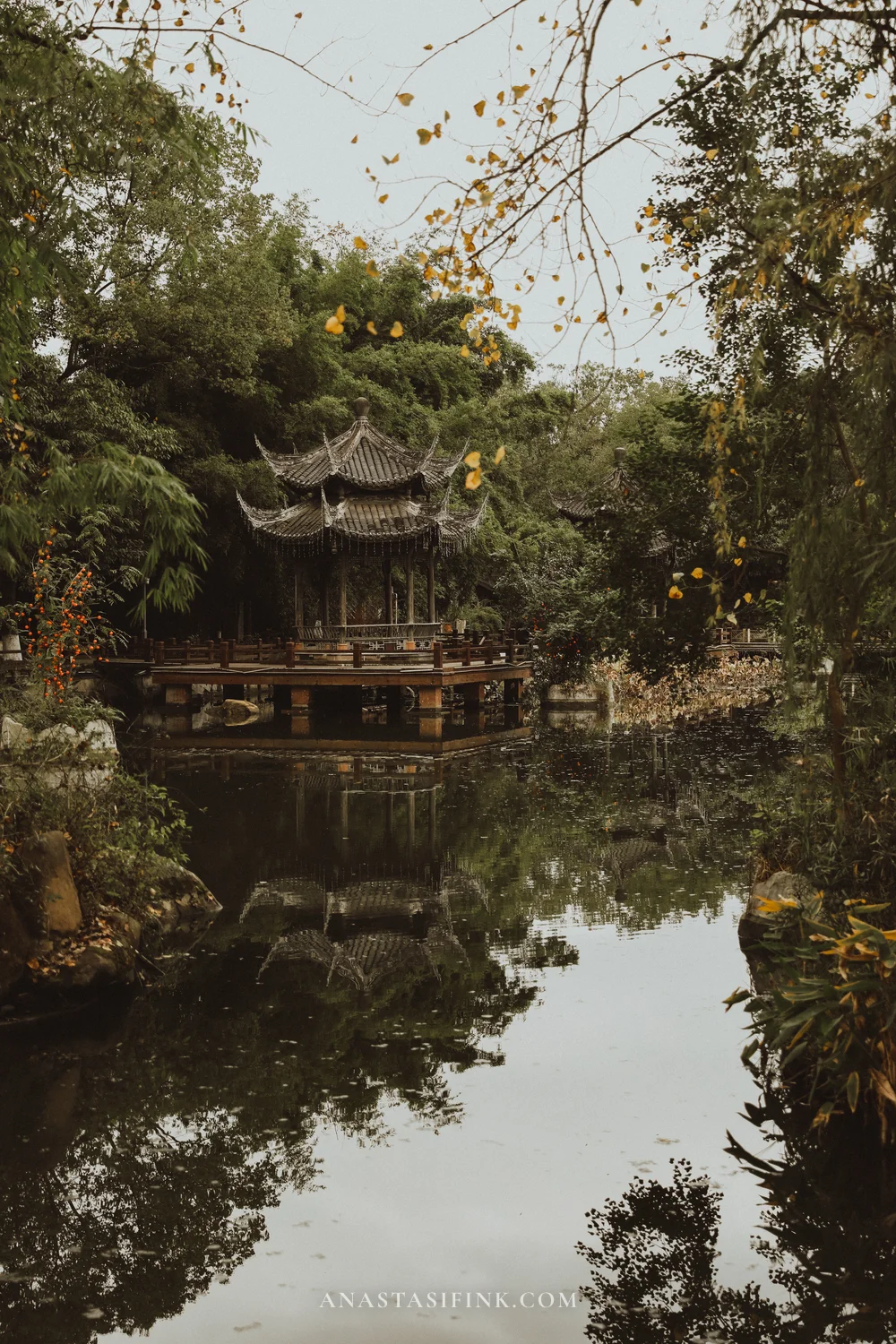
The tiered wooden tower and a pavilion over the pond
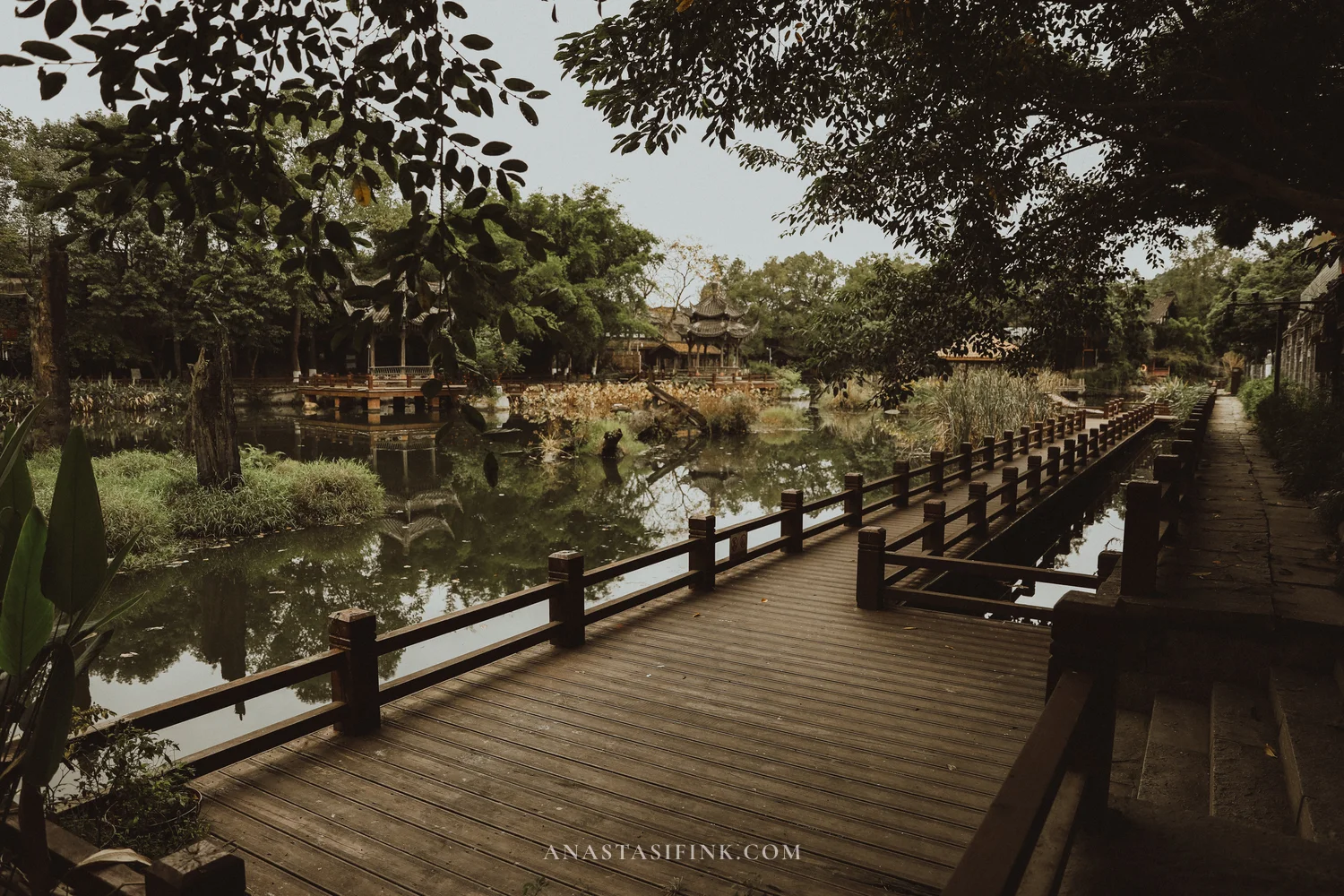
By the wider water there are wooden boats — you can take one for a ride between the old houses and bridges. I didn’t go, but it looks lovely from the bank.
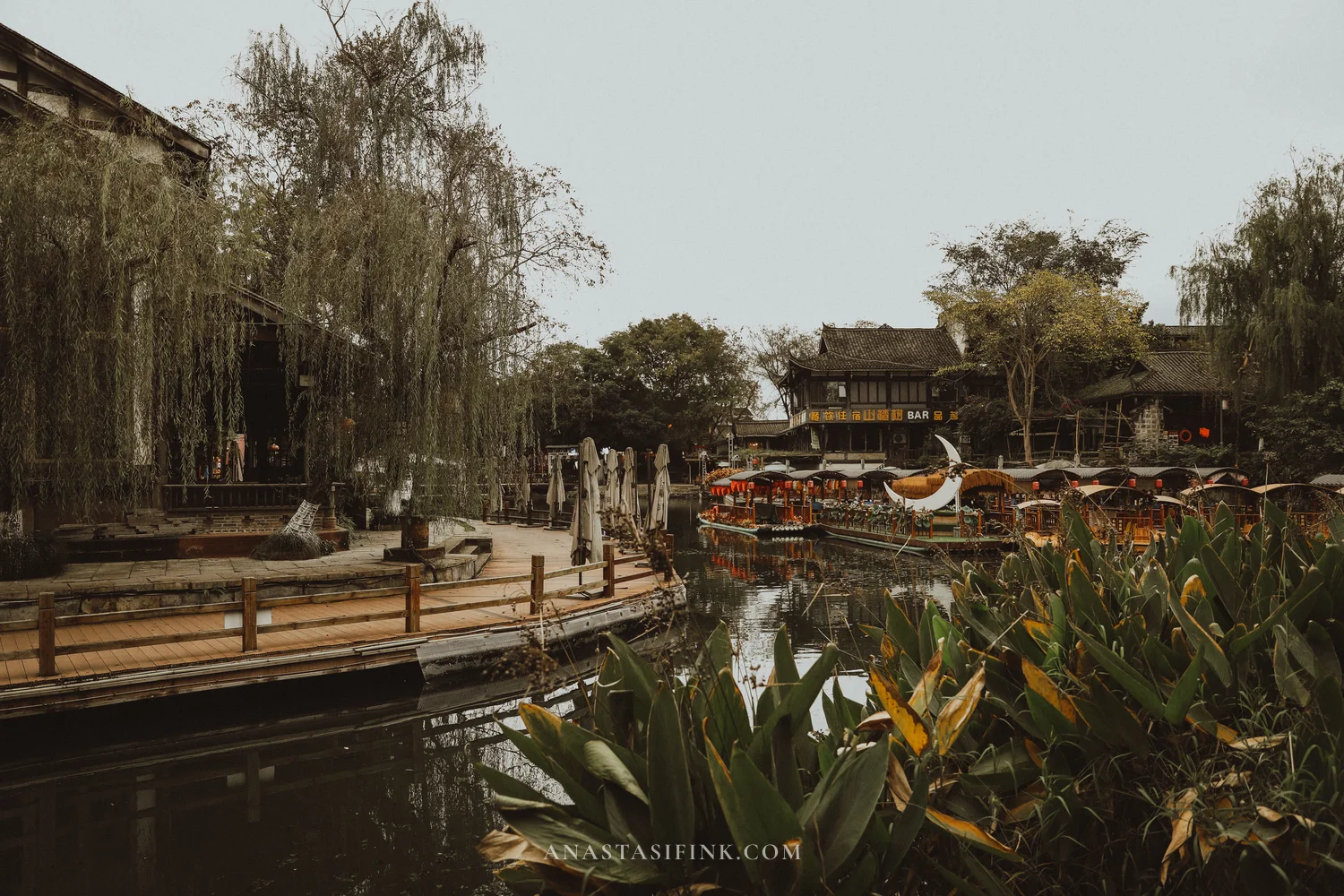
The almost-empty quarter: like walking through an old film
And now — the thing that, to me, makes Huanglongxi worth not a couple of hours but a whole day.
At some point I turned off the busy part and came out into a quarter where literally everything was closed. Lowered shutters on the shops, locked doors of hotels and cafes, not a single person around. This is a newer, expanded part of the town — it was built to handle the growing flow of tourists, but that day (off-season and a weekday, by the look of it) it stood completely empty.
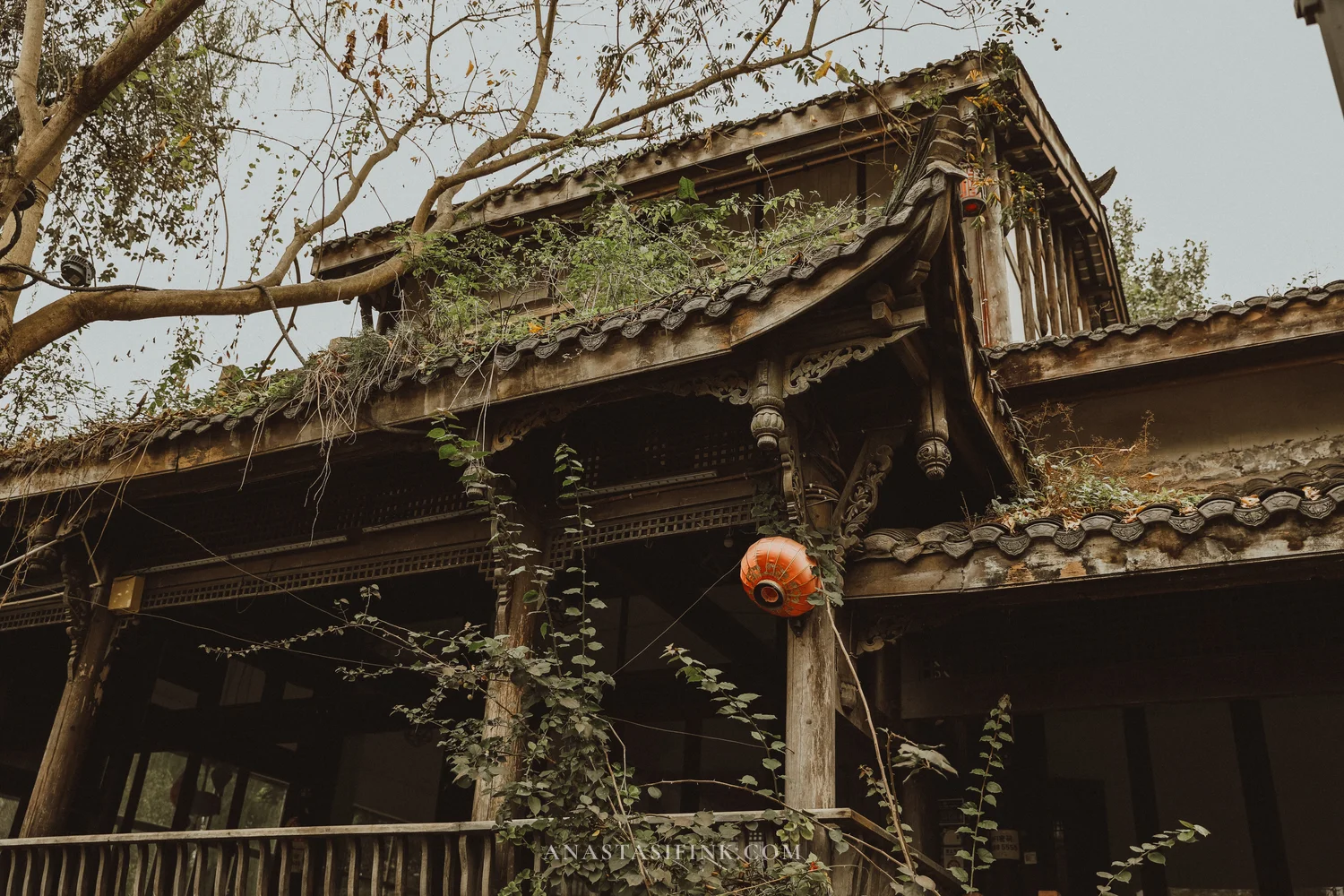
The feeling was strong and a little eerie — in a good way. Like walking through a switched-off amusement park, or a historical film set after everyone has left. Empty courtyards under the lanterns, tightly shut carved doors with wildflowers already sprouting in front of them. So quiet you could hear your own steps on the stone.
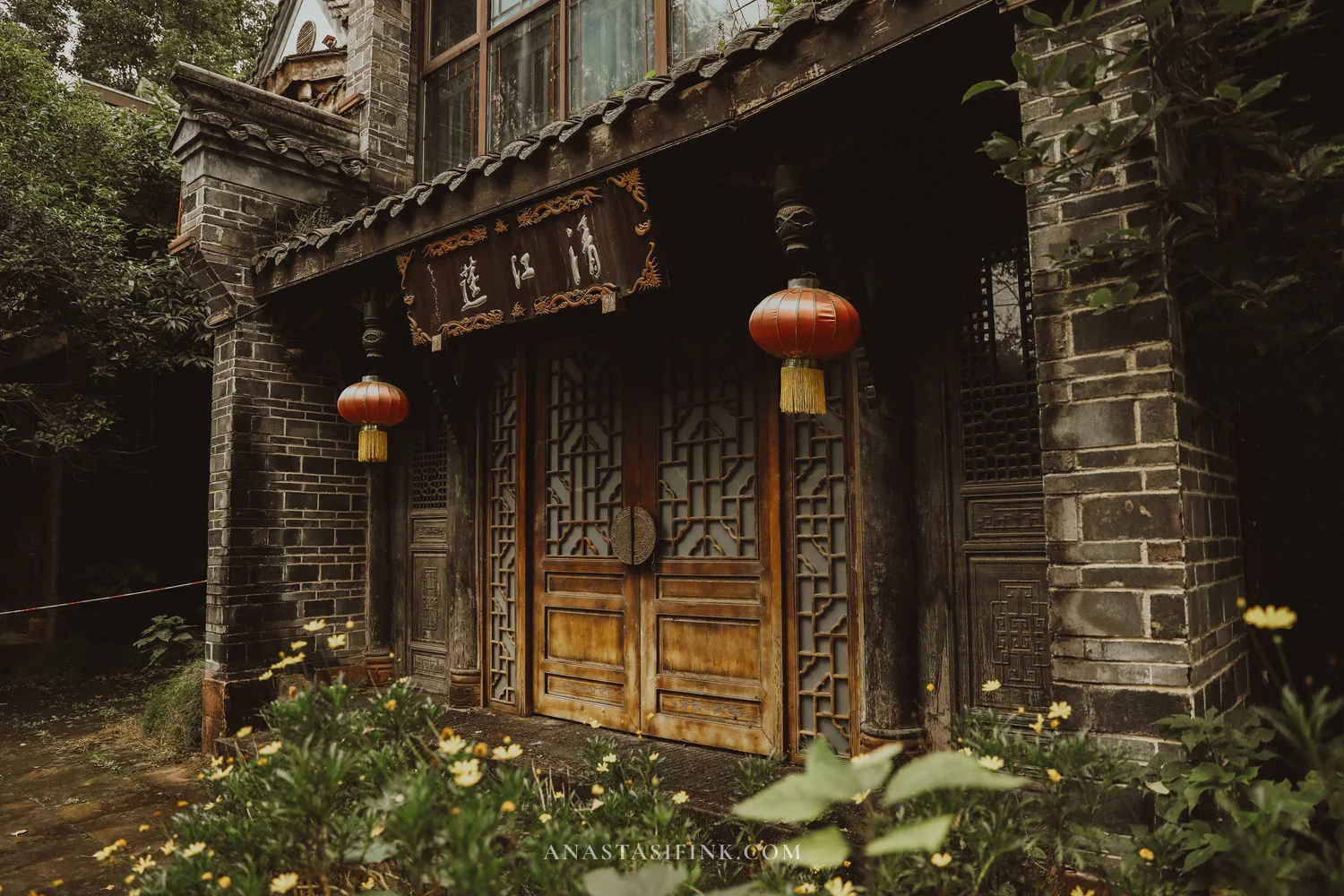
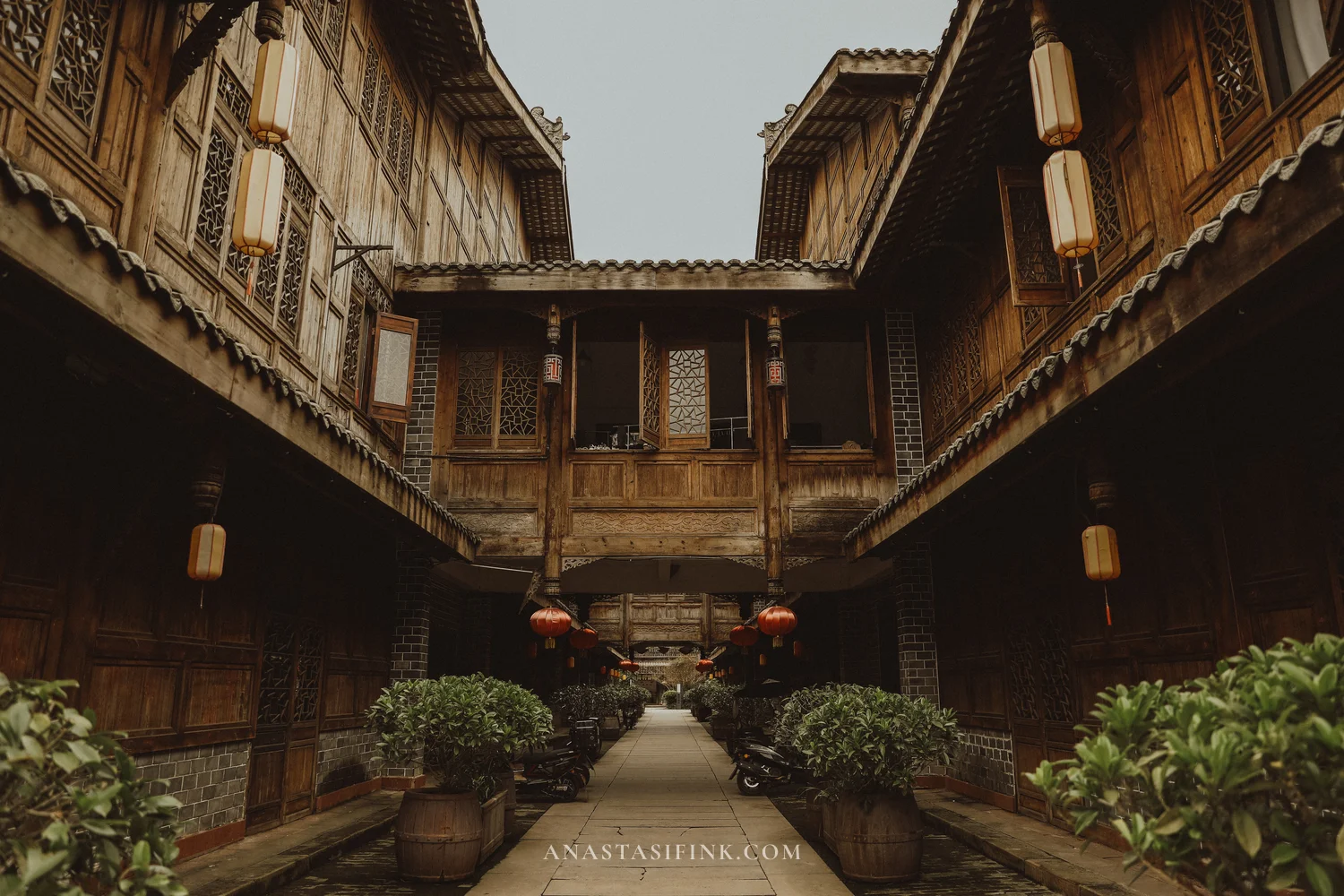
Locked doors with wildflowers already sprouting, and an empty courtyard under the lanterns where there was no one at all
There are also buildings clearly made “for the camera”: a guesthouse with wall murals, a big old house with a tree growing through the roof, a white horse and a pumpkin carriage straight out of a fairy tale. With no people around, it all looks surreal.
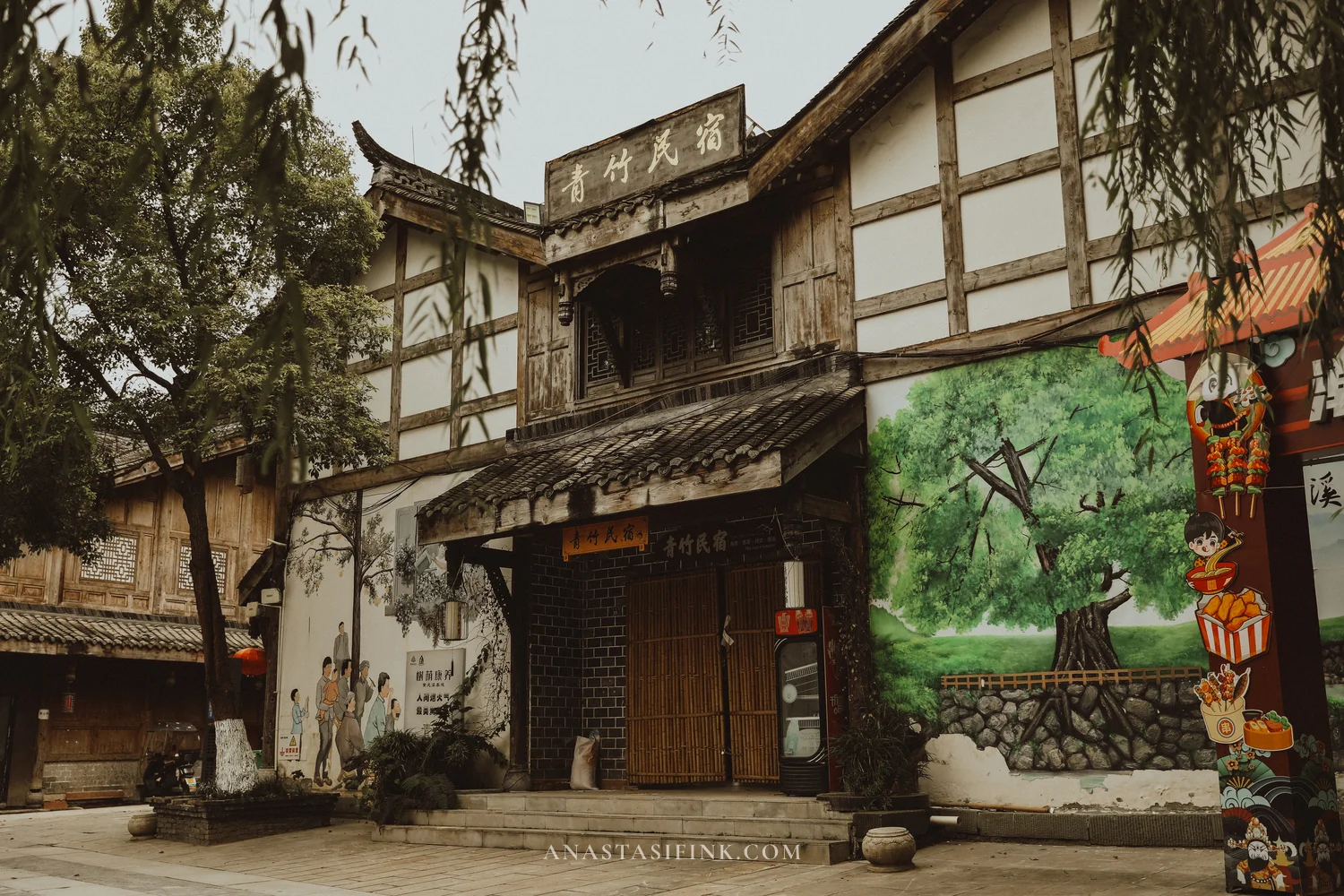
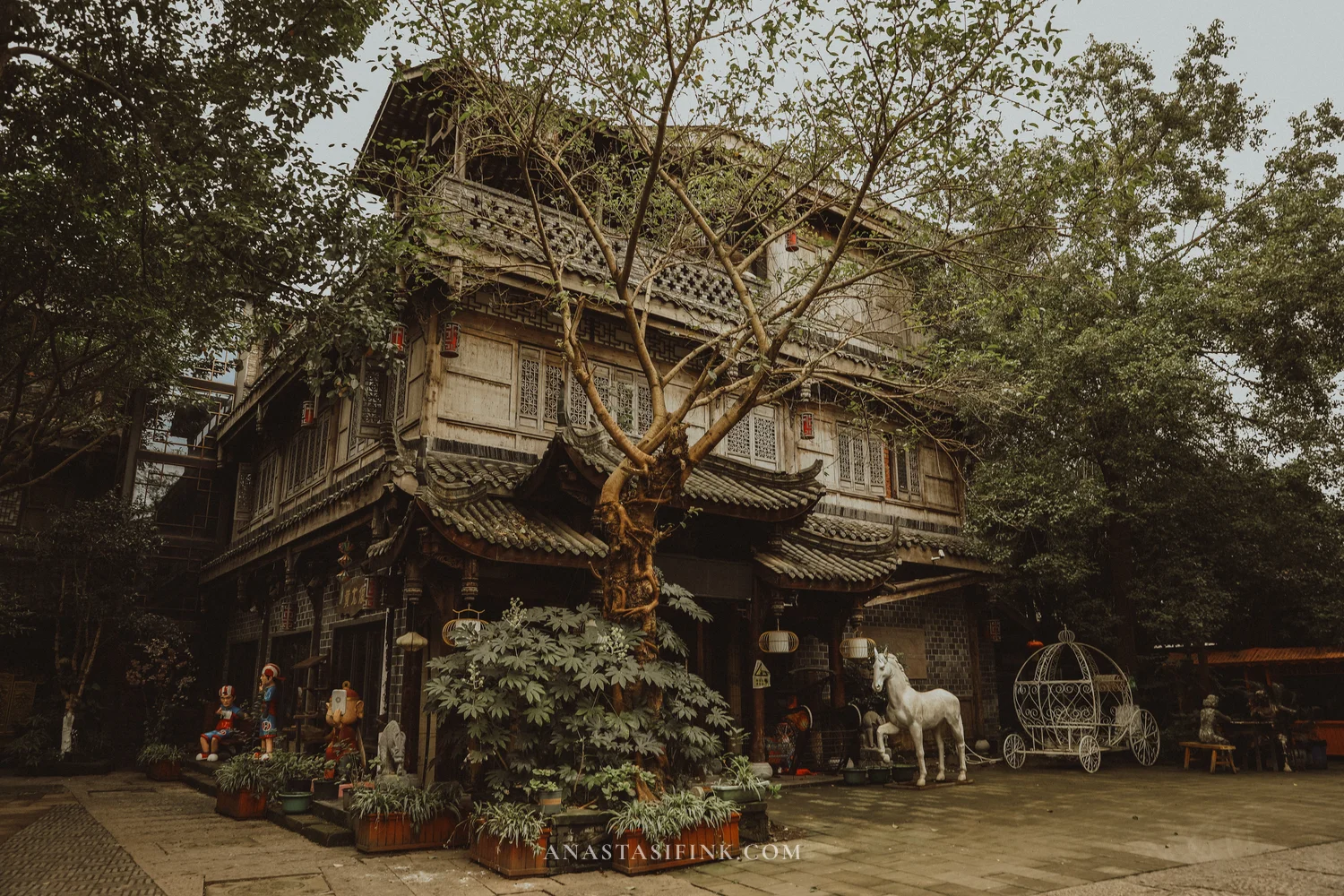
Sets “for the movies”: a guesthouse with murals and a courtyard with a fairy-tale carriage. In the empty quarter it looks like a frozen film frame
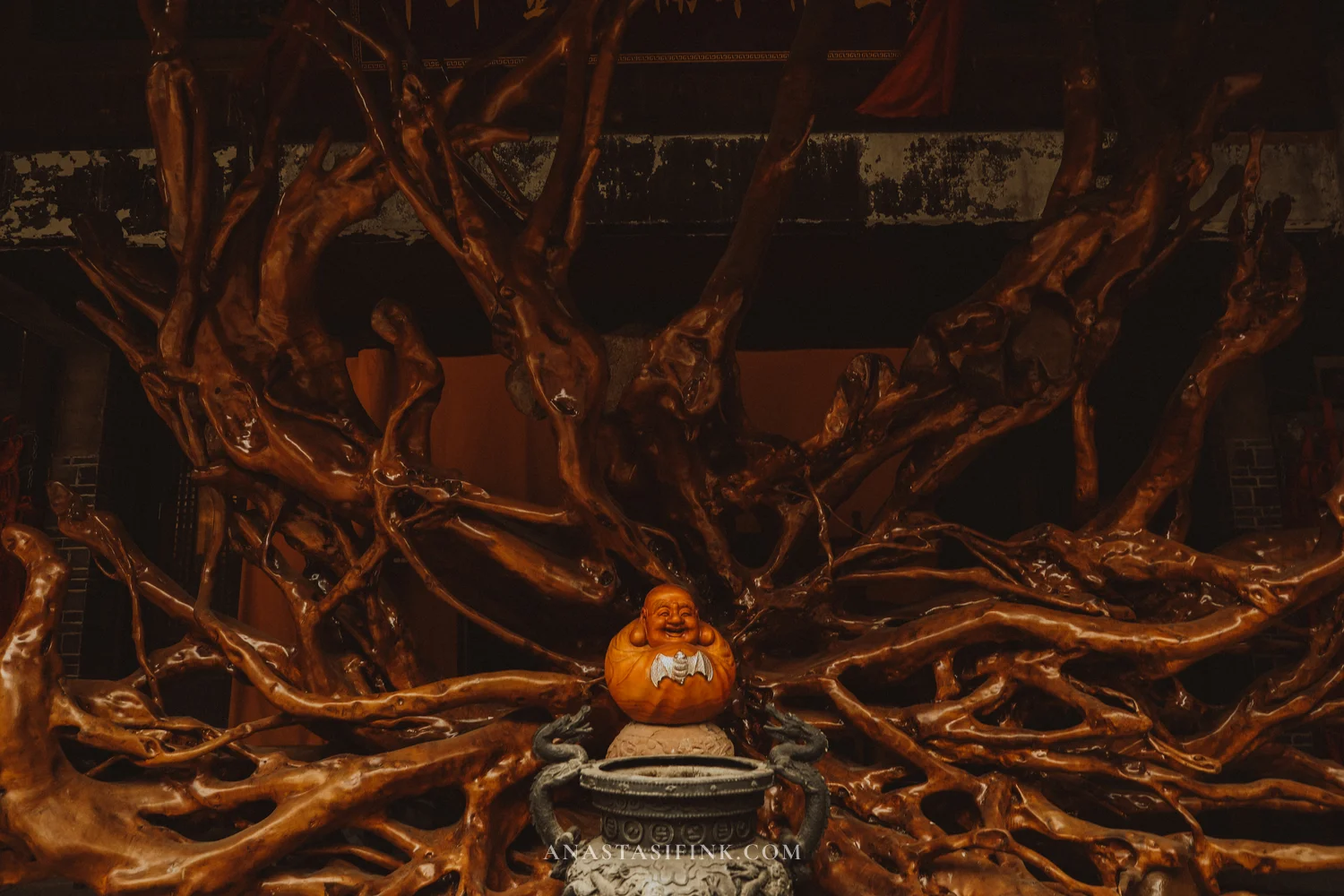
Inside one of the buildings I came across a wall of intertwined tree roots with a little figure of a laughing Buddha in the middle. In the dim light, in total silence, it looked like a prop from some fantasy film.
And of course, in this quiet part the wooden houses by the water look especially good — the ones that in season are busy guesthouses, and in the off-season stand empty and reflect in the still channels.
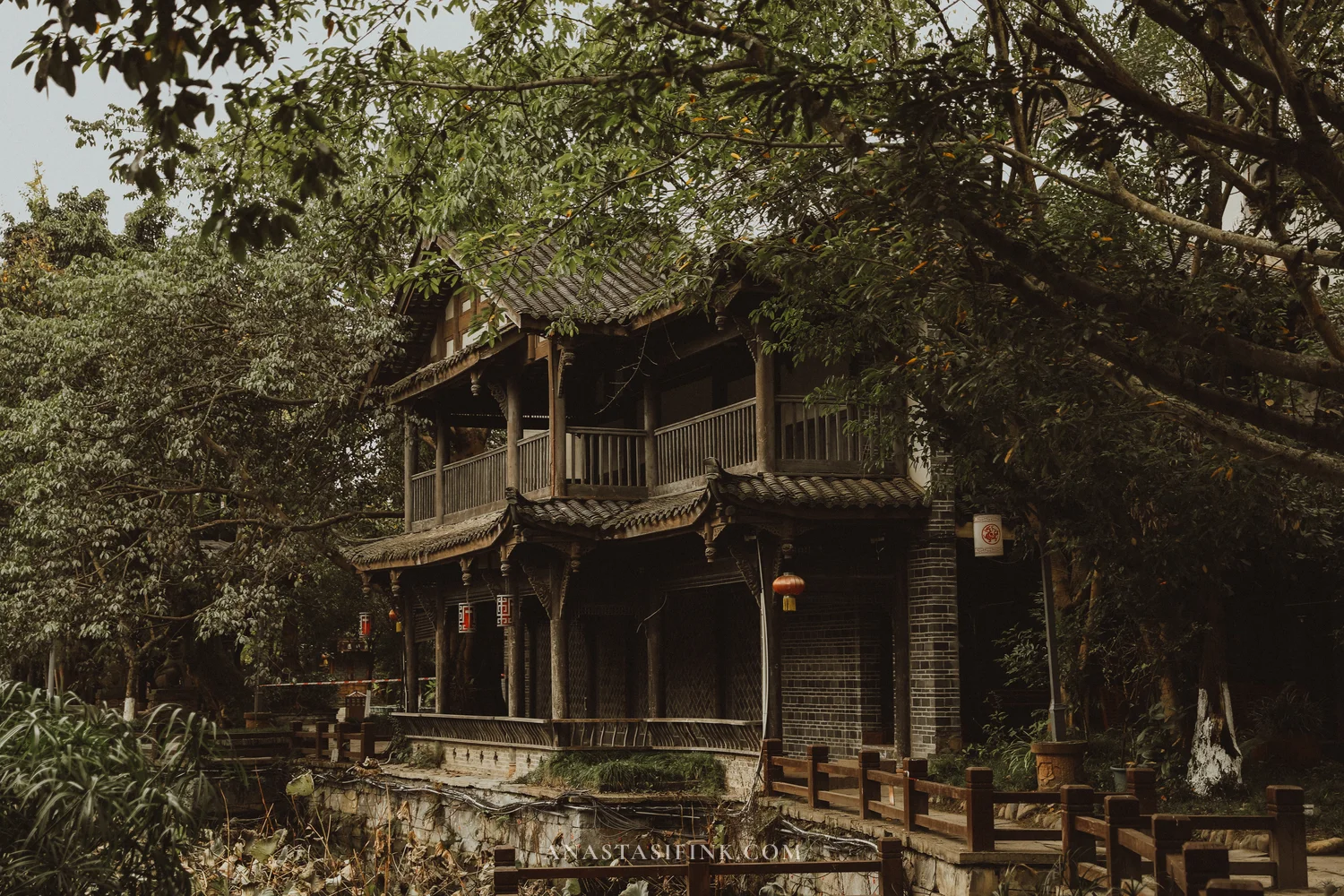
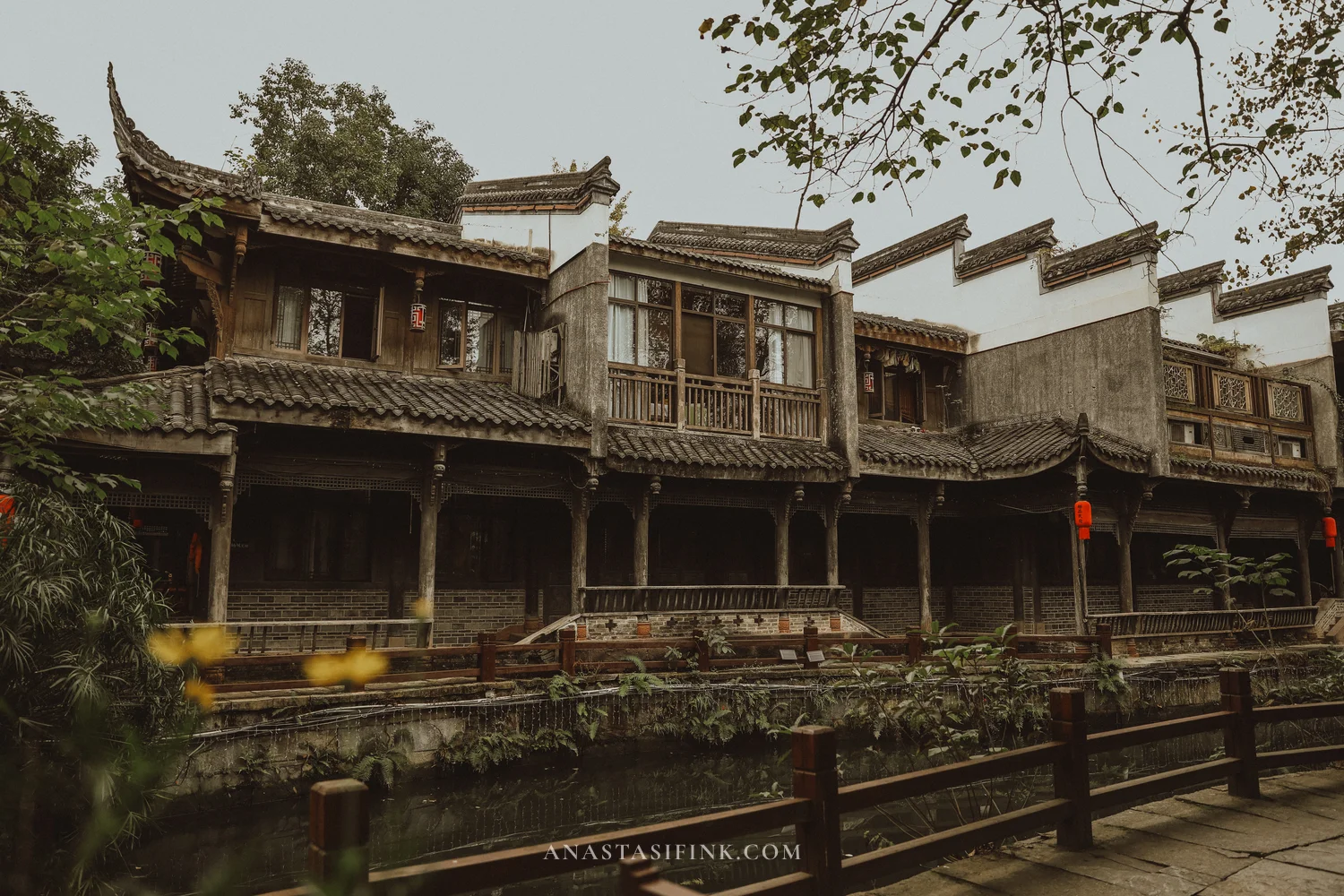
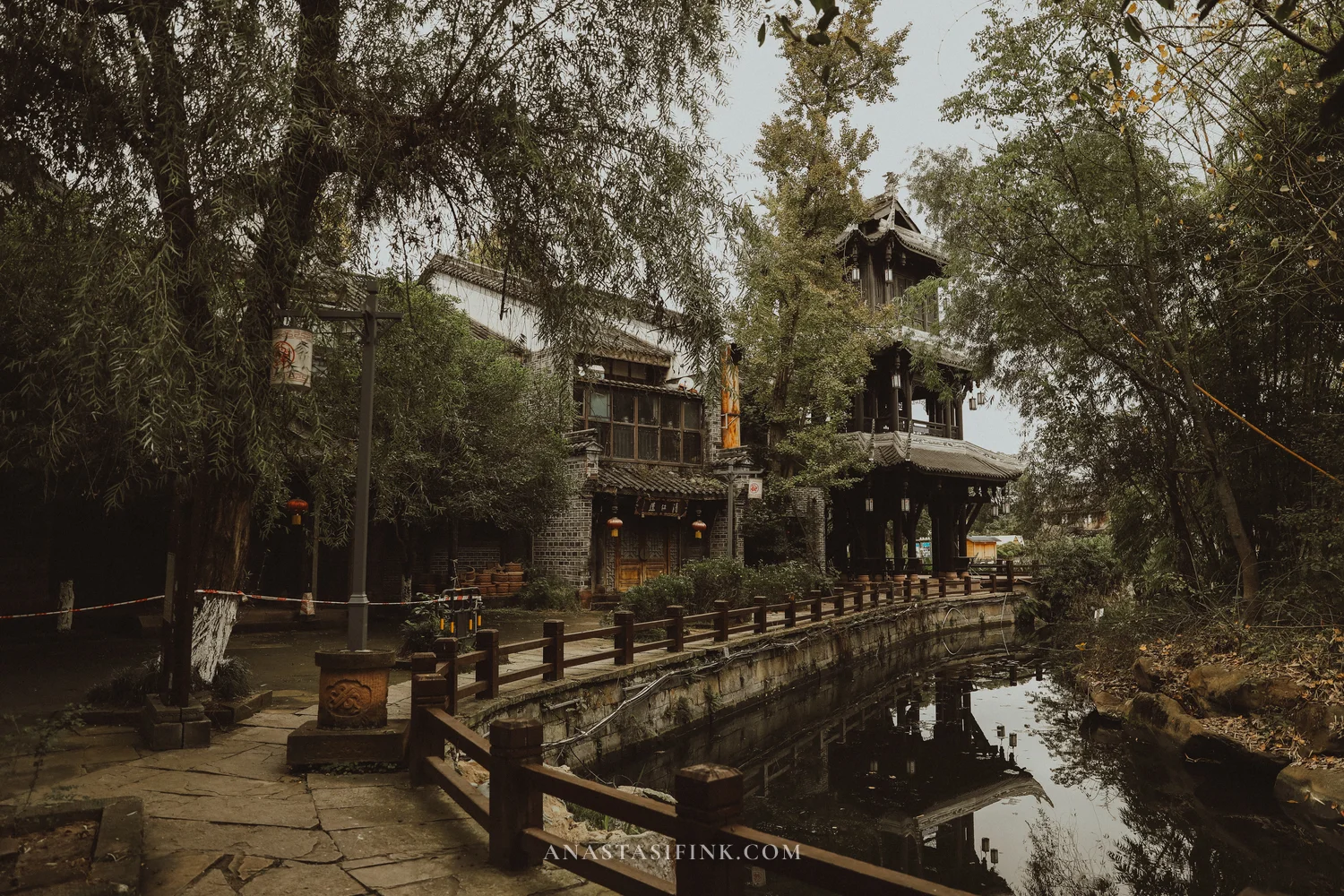
Houses with white gables along the canal and a completely deserted channel behind them
If you, like me, love these quiet, deserted places — definitely walk out to the far quarters of the town. Just keep in mind: since everything is closed there, buy water and a snack in advance, in the busy part.
Temples, statues and lucky symbols
There are several Buddhist temples in the town. Stone guardians stand by the staircases and bridges: lions (shi) and mythical qilin beasts, many already covered with moss. By Chinese tradition, figures like these guard the entrance and ward off evil spirits.
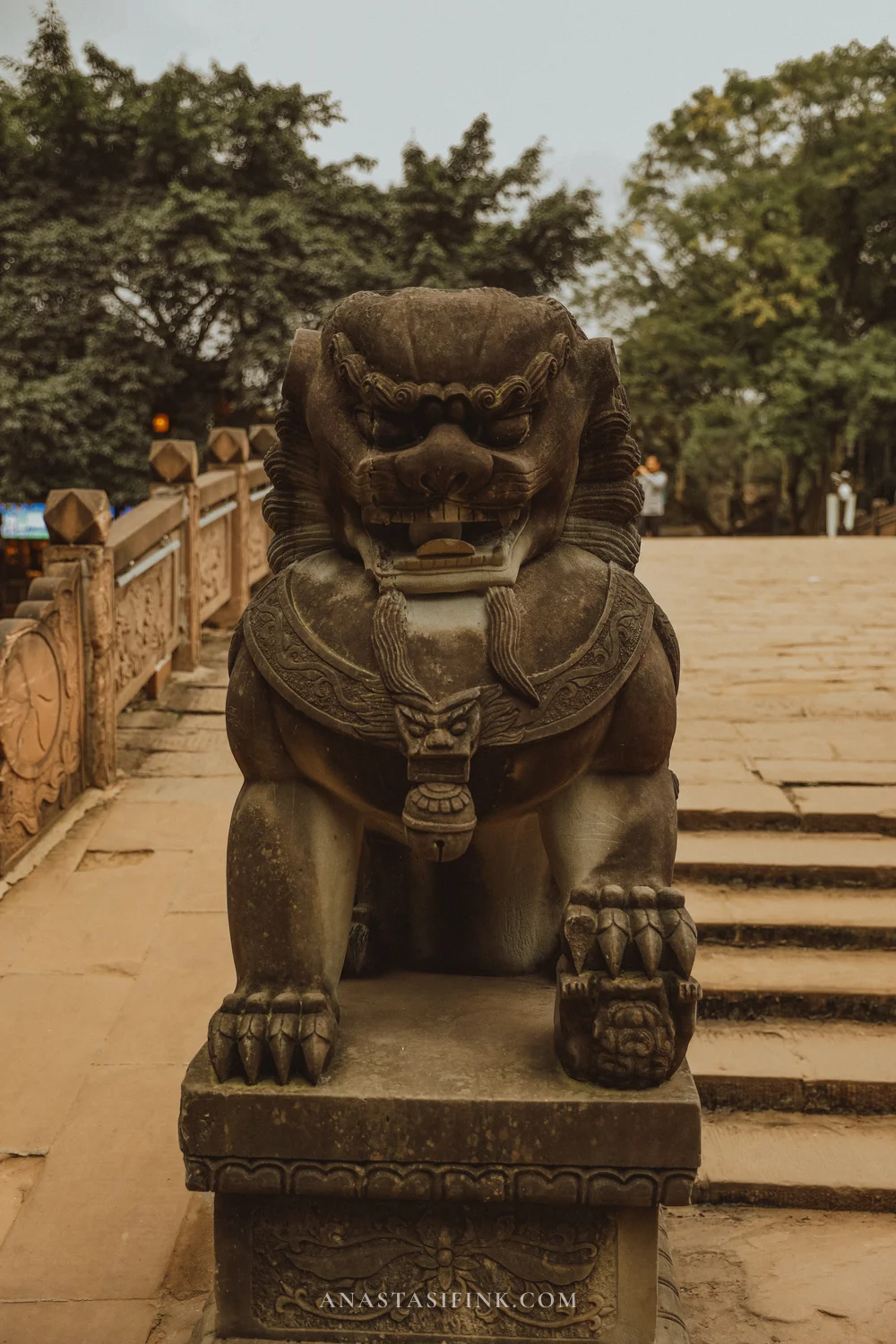
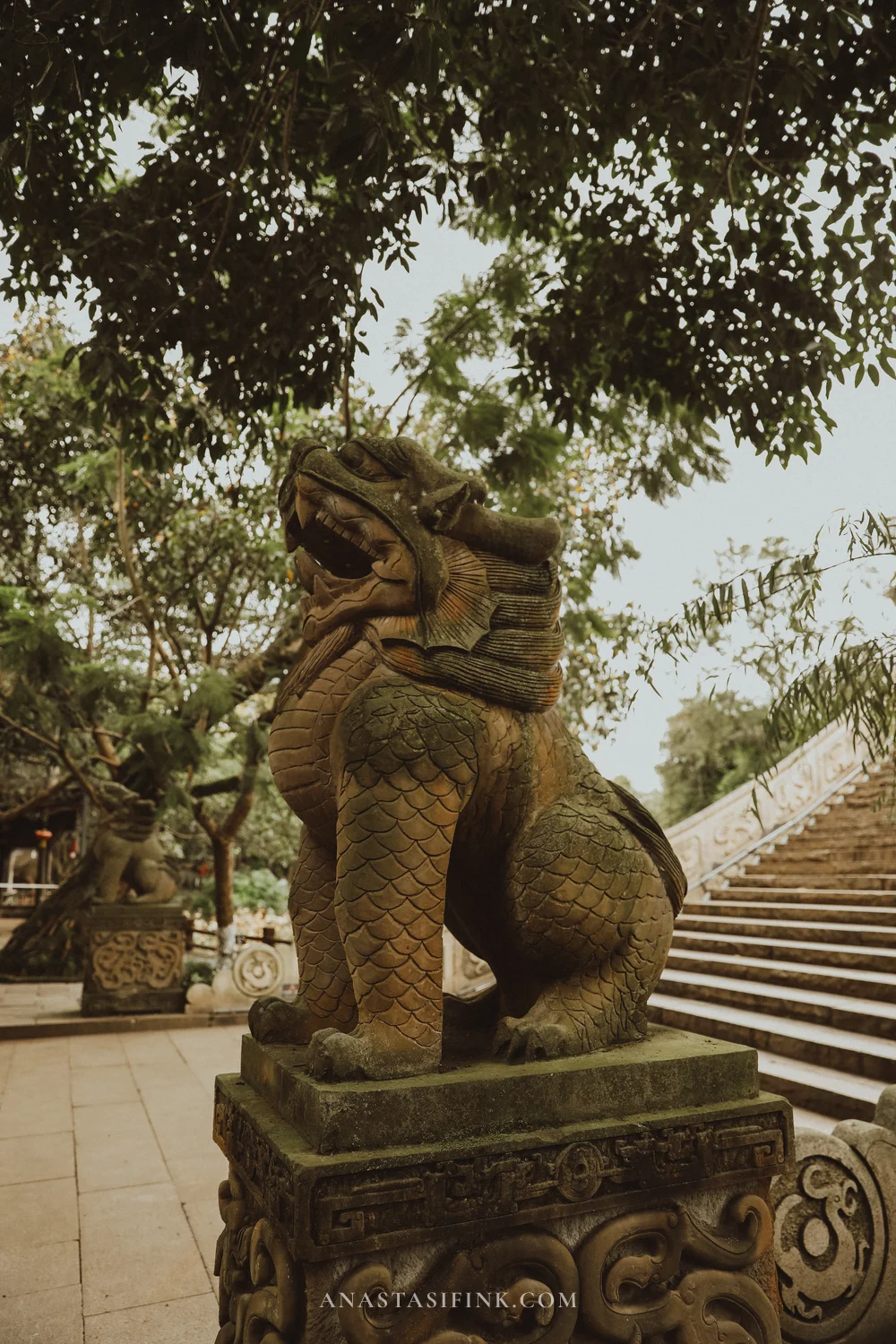
Stone guardians by the temple stairs: a lion and a mythical qilin. They’re said to guard the entrance
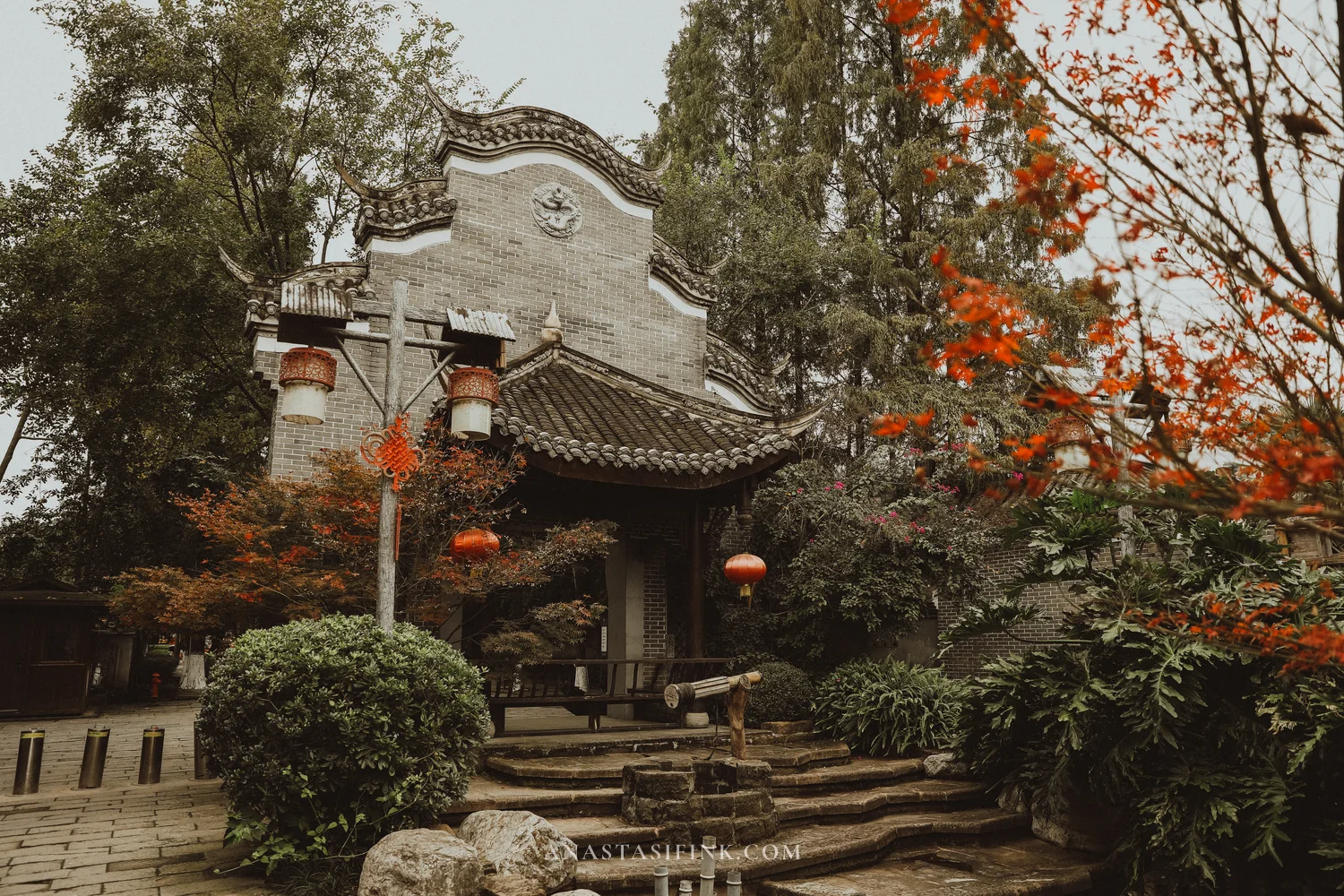
There’s also a brick temple hall with a curved gable, reached by steps through a garden — especially pretty in autumn, when a maple turns red nearby.
Another local tradition is wishing trees and walls. People tie red plaques and ribbons to them with wishes for luck, health and love. They hang in whole “waterfalls”.
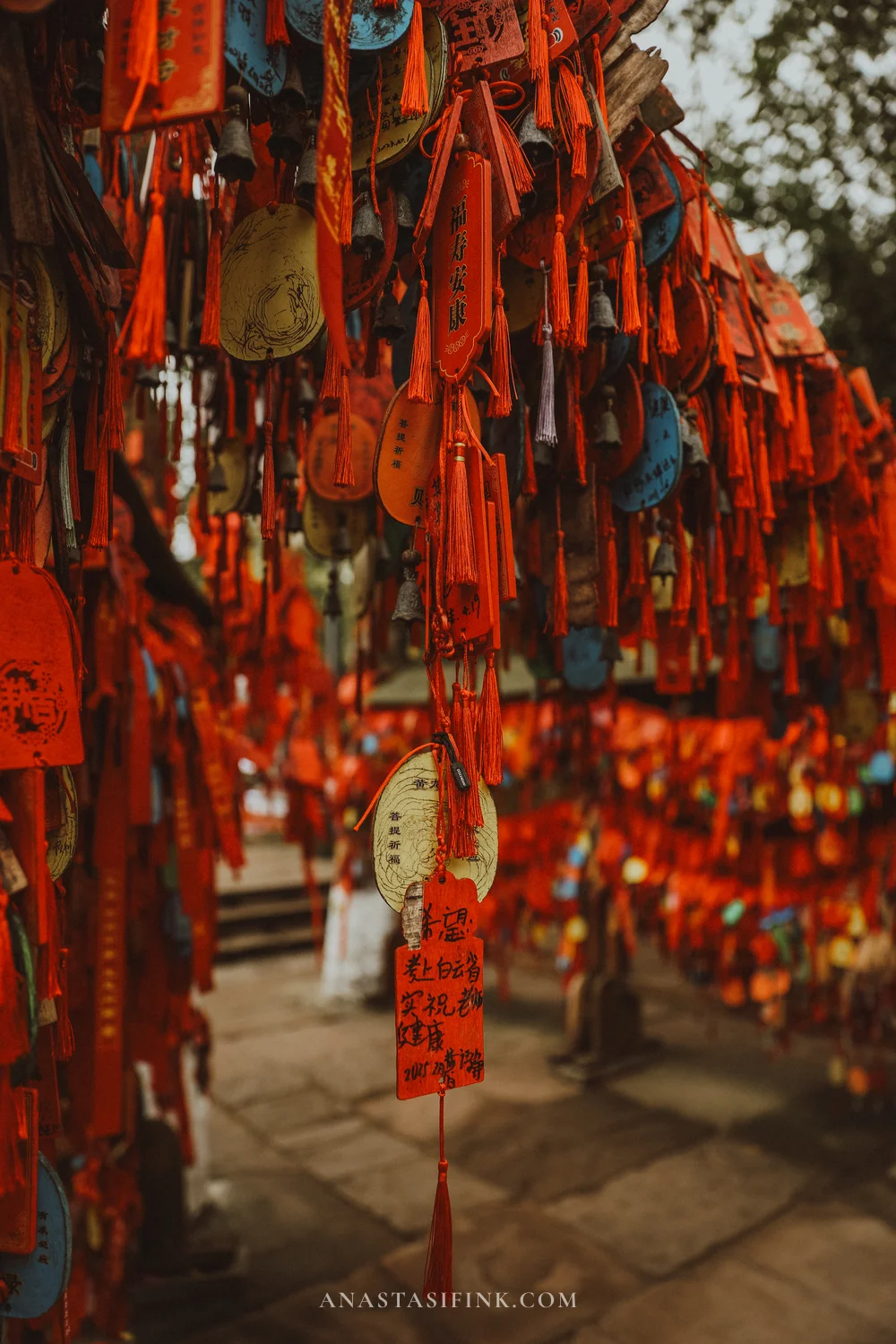
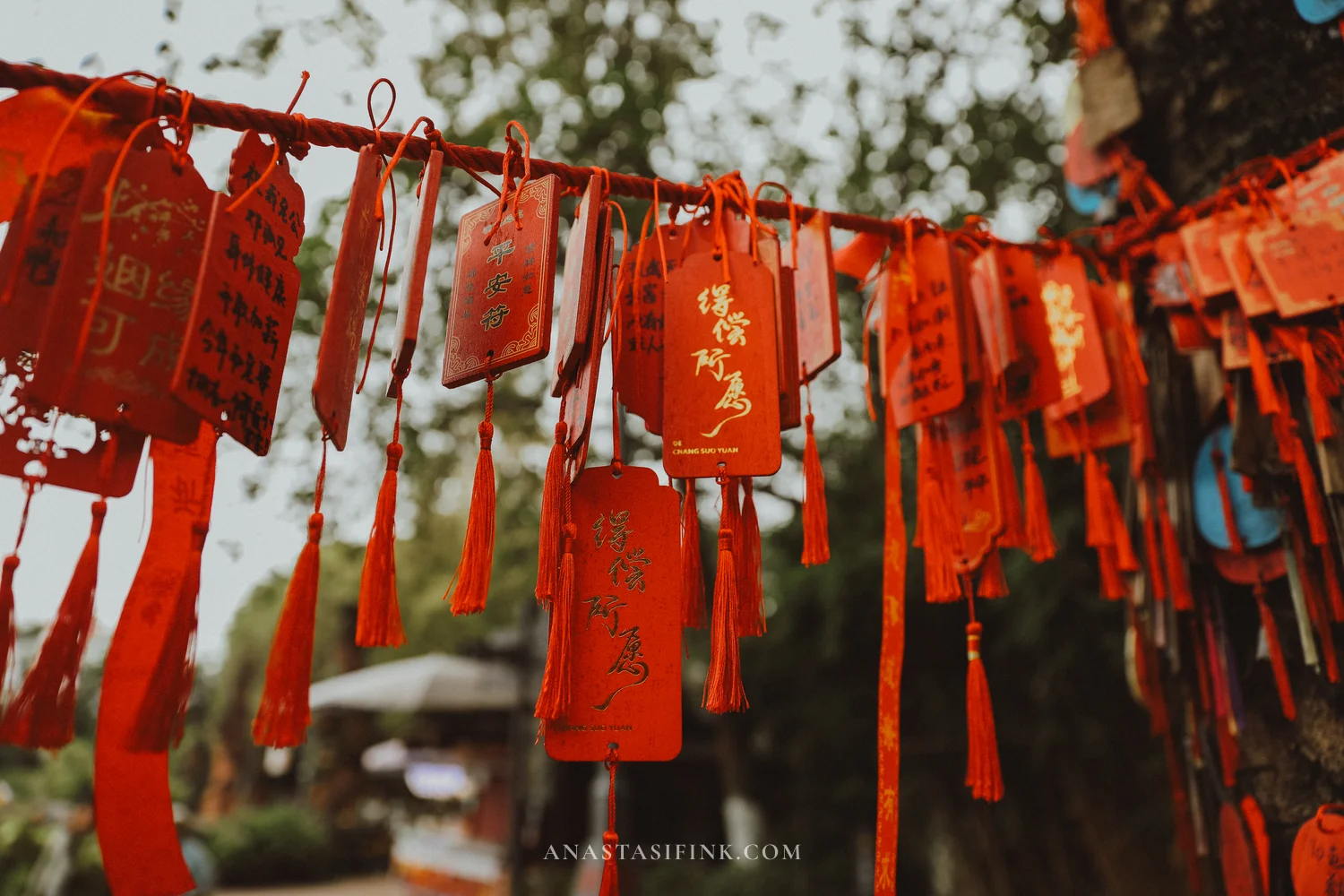
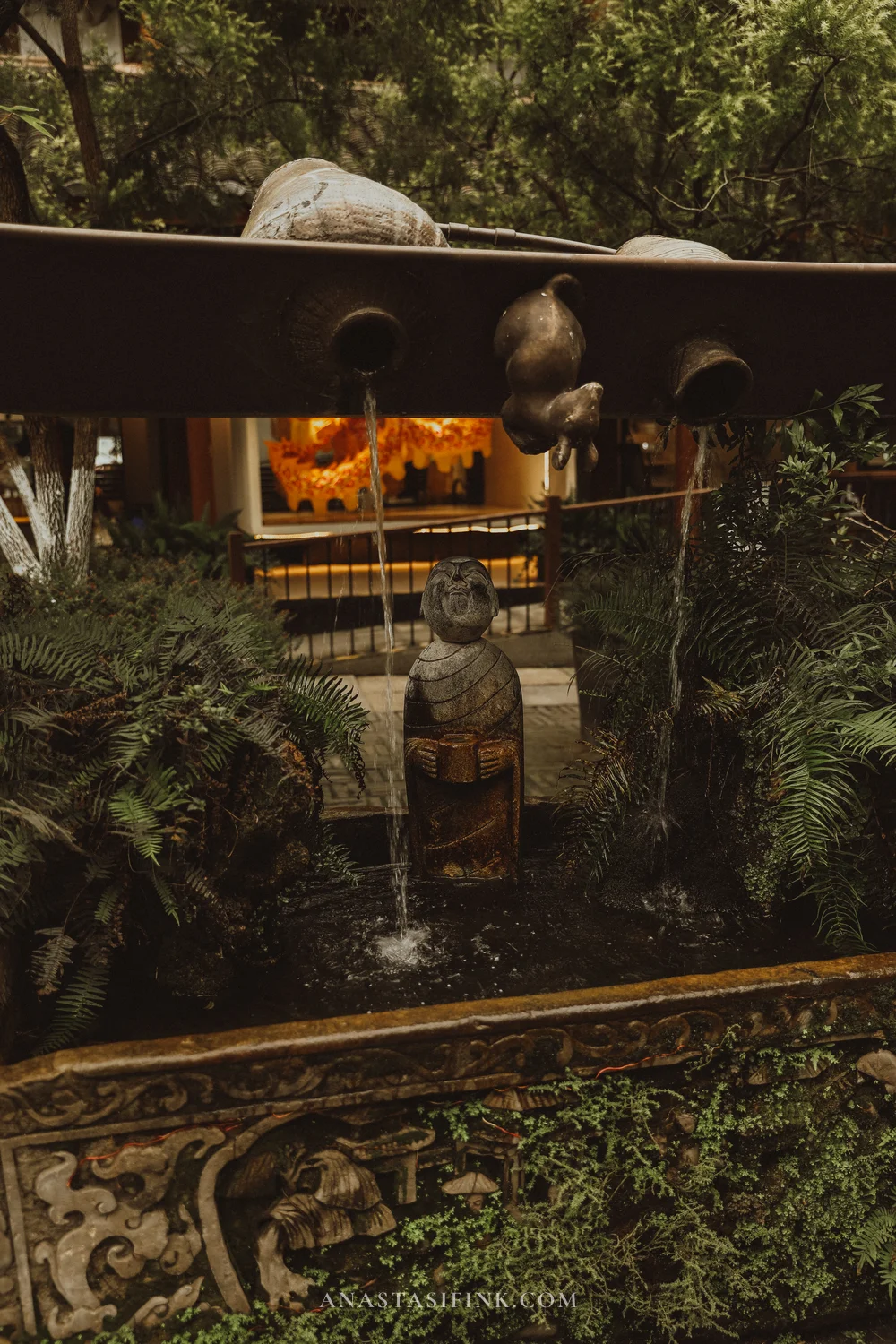
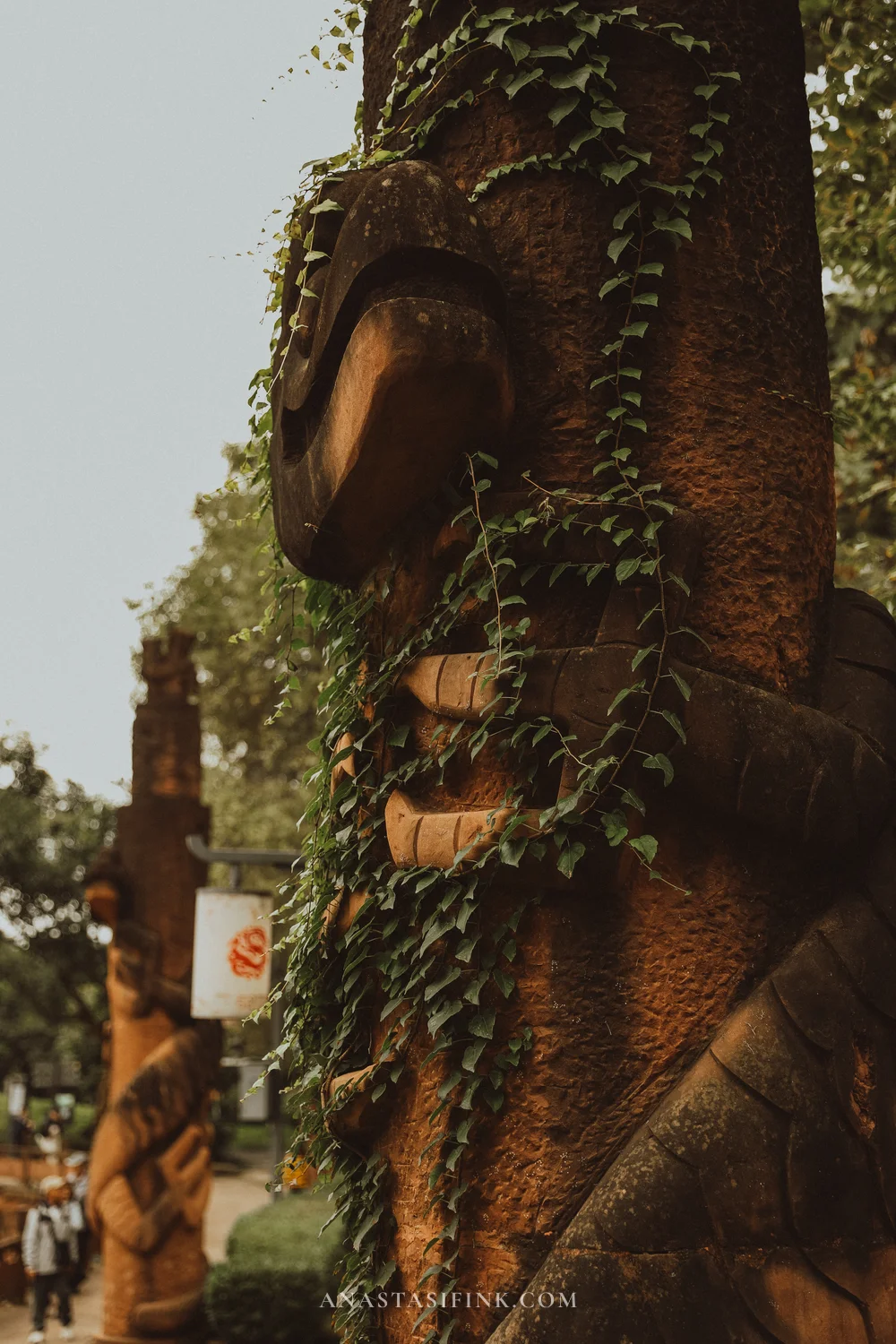
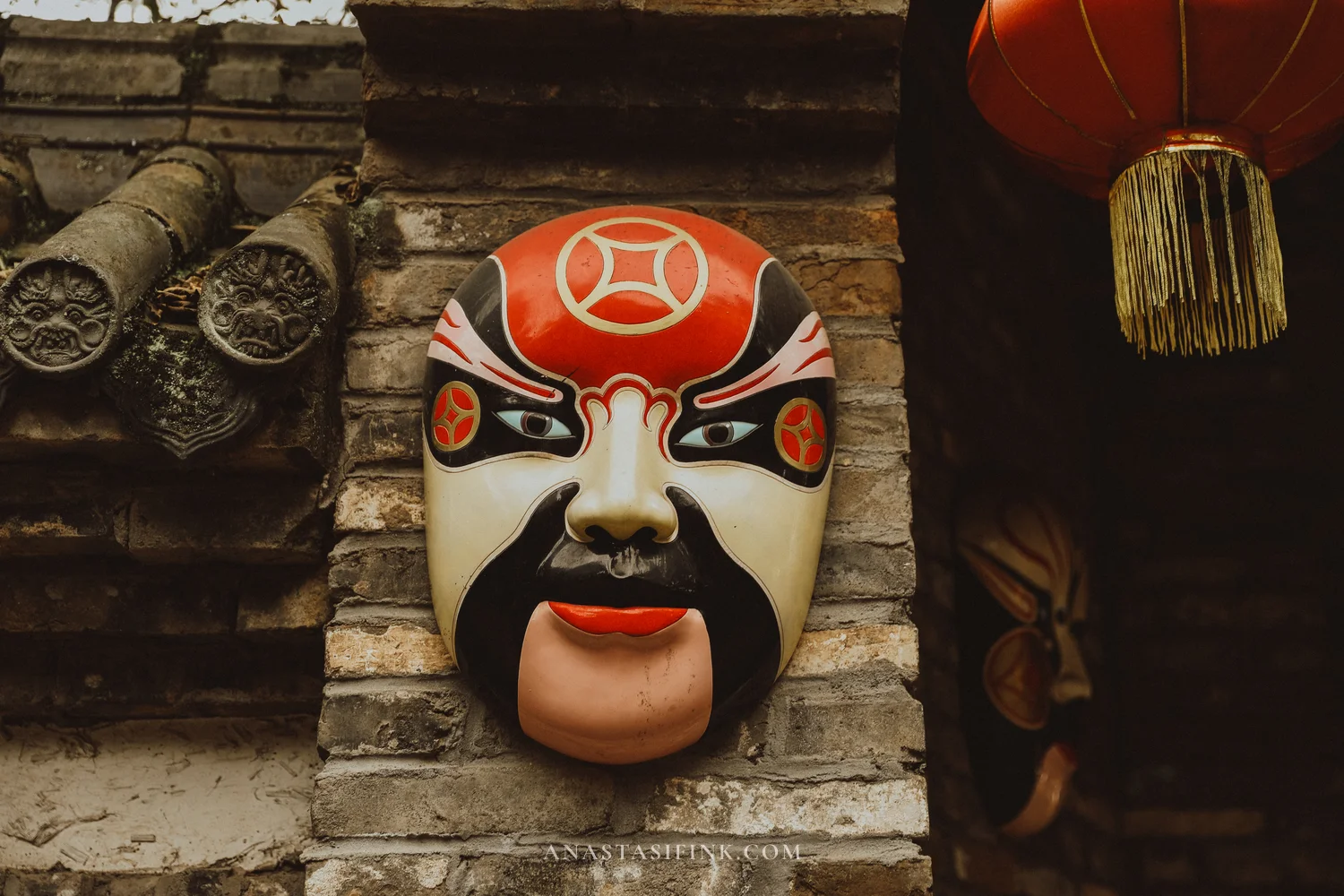
There are other curious details: a fountain with a carved figure among ferns, a wooden “totem” with a human face overgrown with ivy, and a Sichuan opera mask on a brick wall. Sichuan opera is known for the “face-changing” trick (bian lian), where the actor swaps masks in an instant — and you’ll find those masks for sale everywhere here.
What to eat and bring back from Huanglongxi
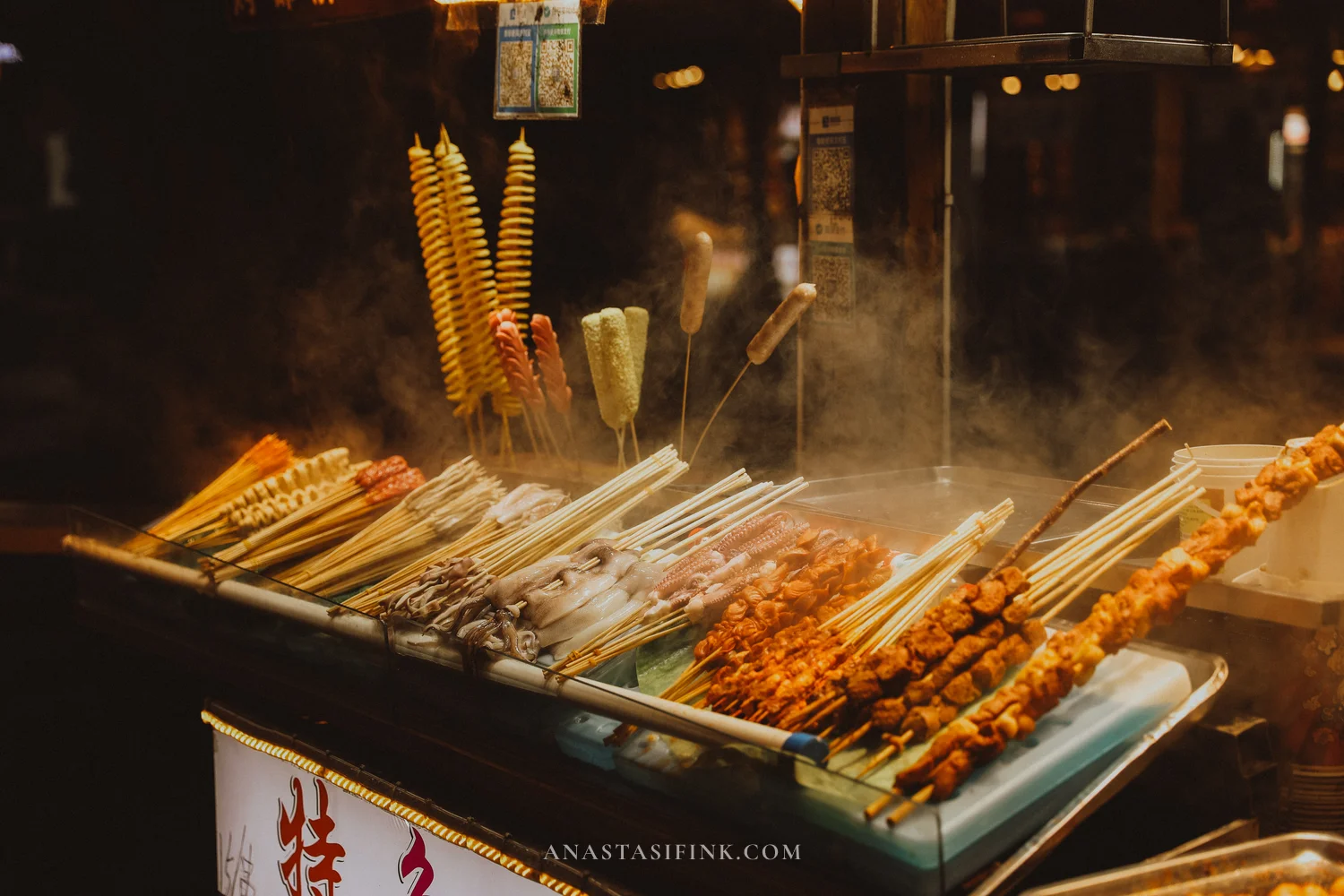
There’s plenty to eat here. On the streets they grill skewers on bamboo sticks and twist “spiral potatoes”. Of the local food, try the river fish dishes — that’s everyday eating here.
For souvenirs there are embroidered scented sachets with herbs, fabric fish for luck, stone jewelry.
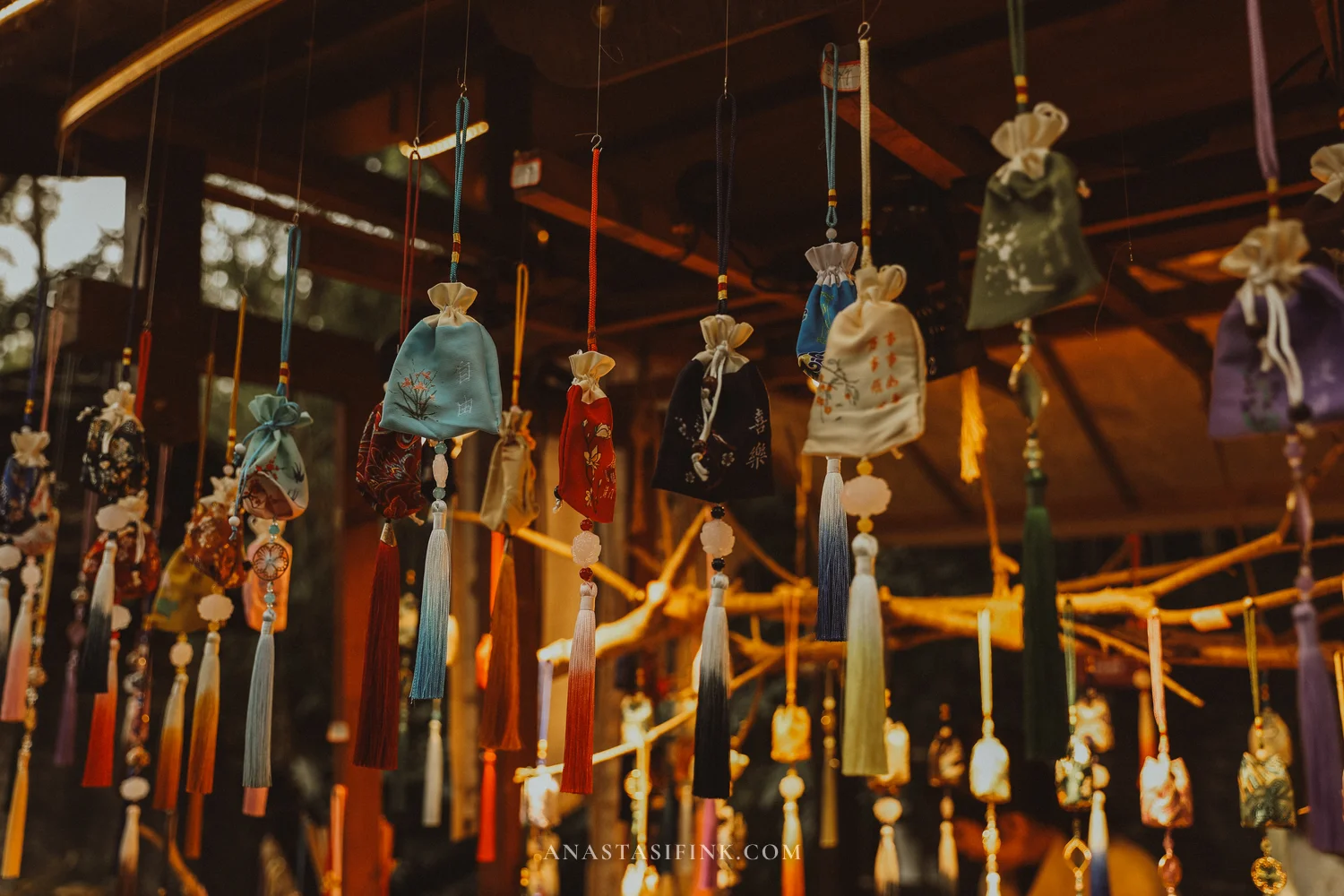
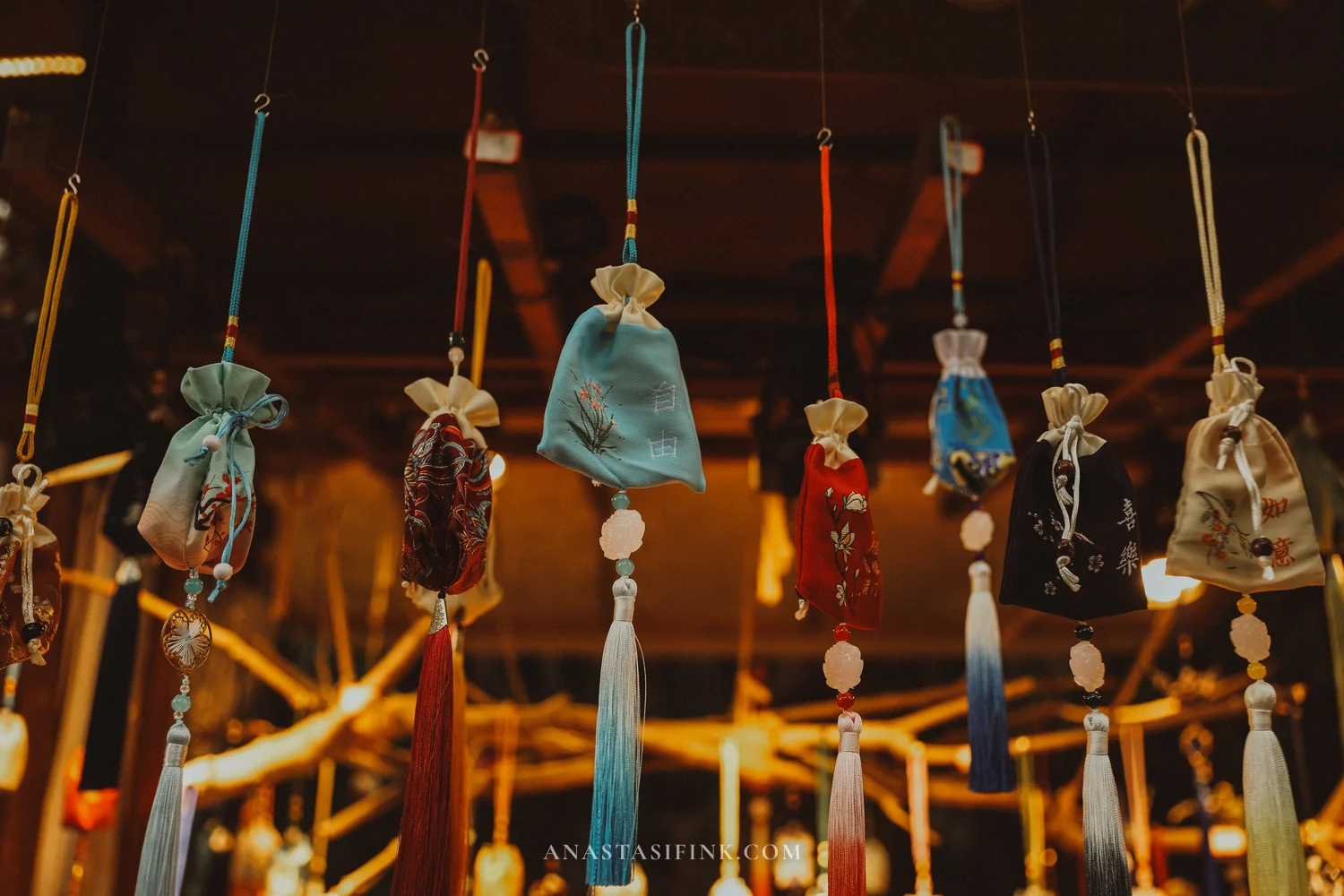
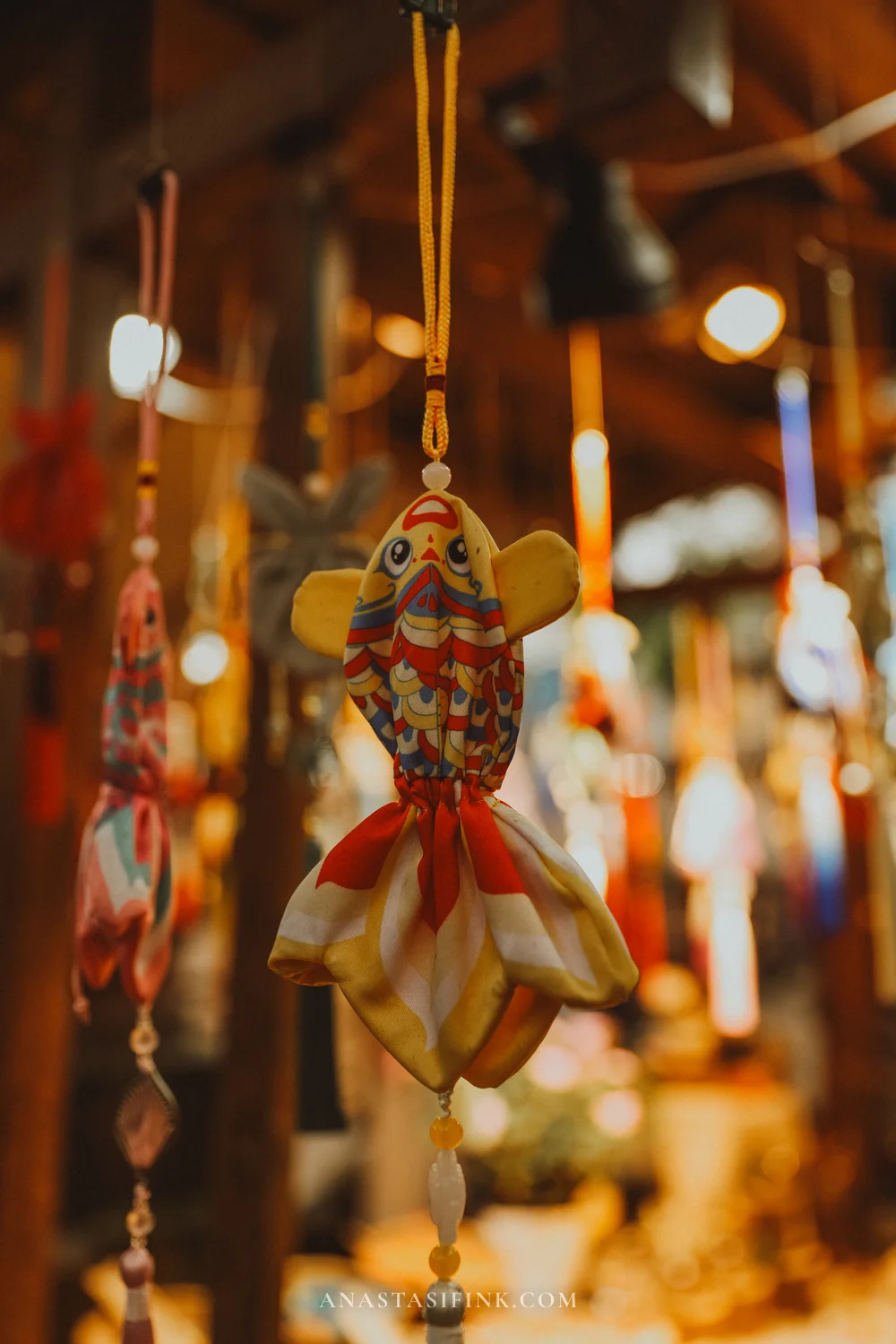
And in the lanes near Gulong Temple there are a couple of small shops with wooden items — combs, massagers, figures carved from roots. You don’t find crafts like these everywhere, and there are some worthwhile pieces. Worth a look.
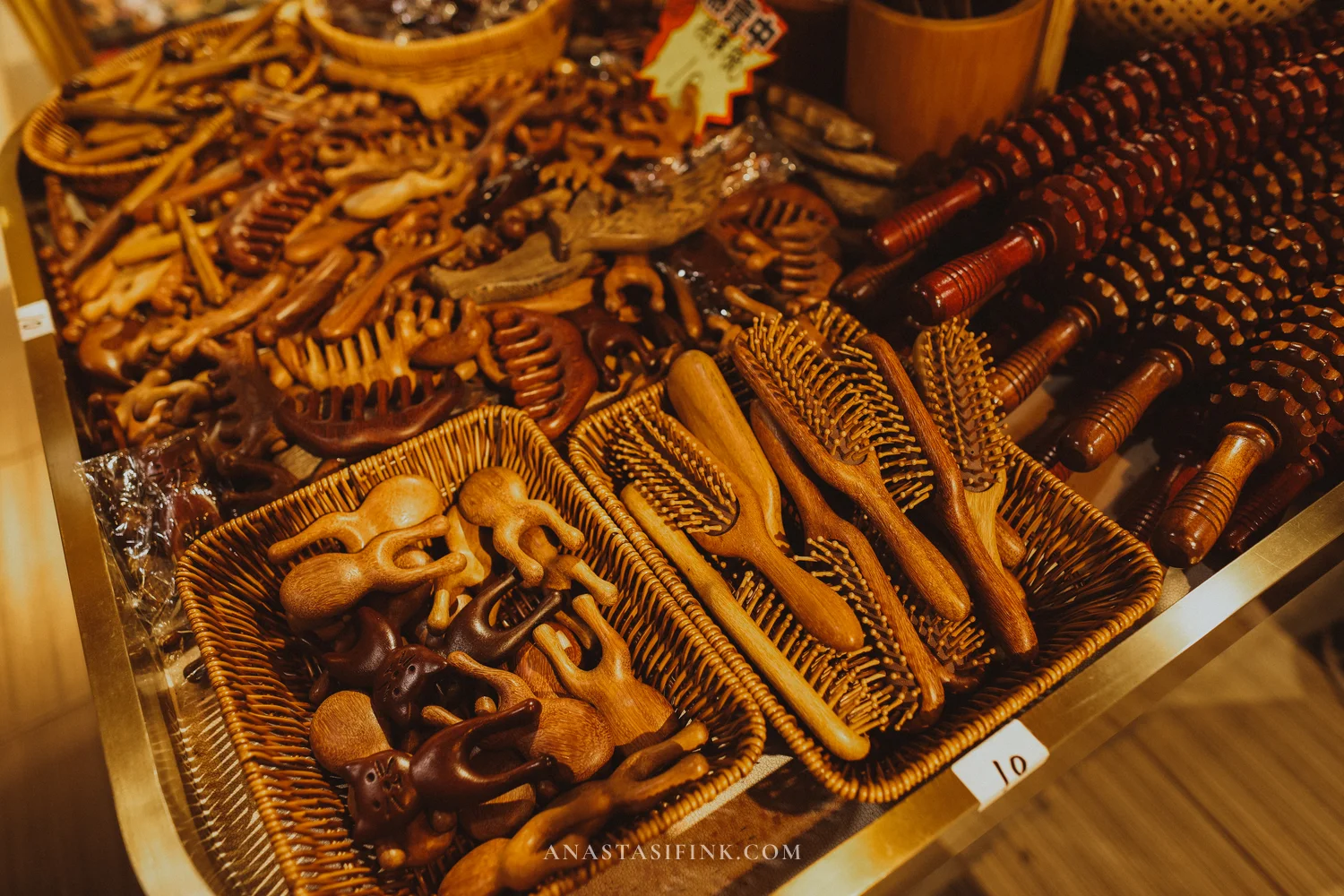
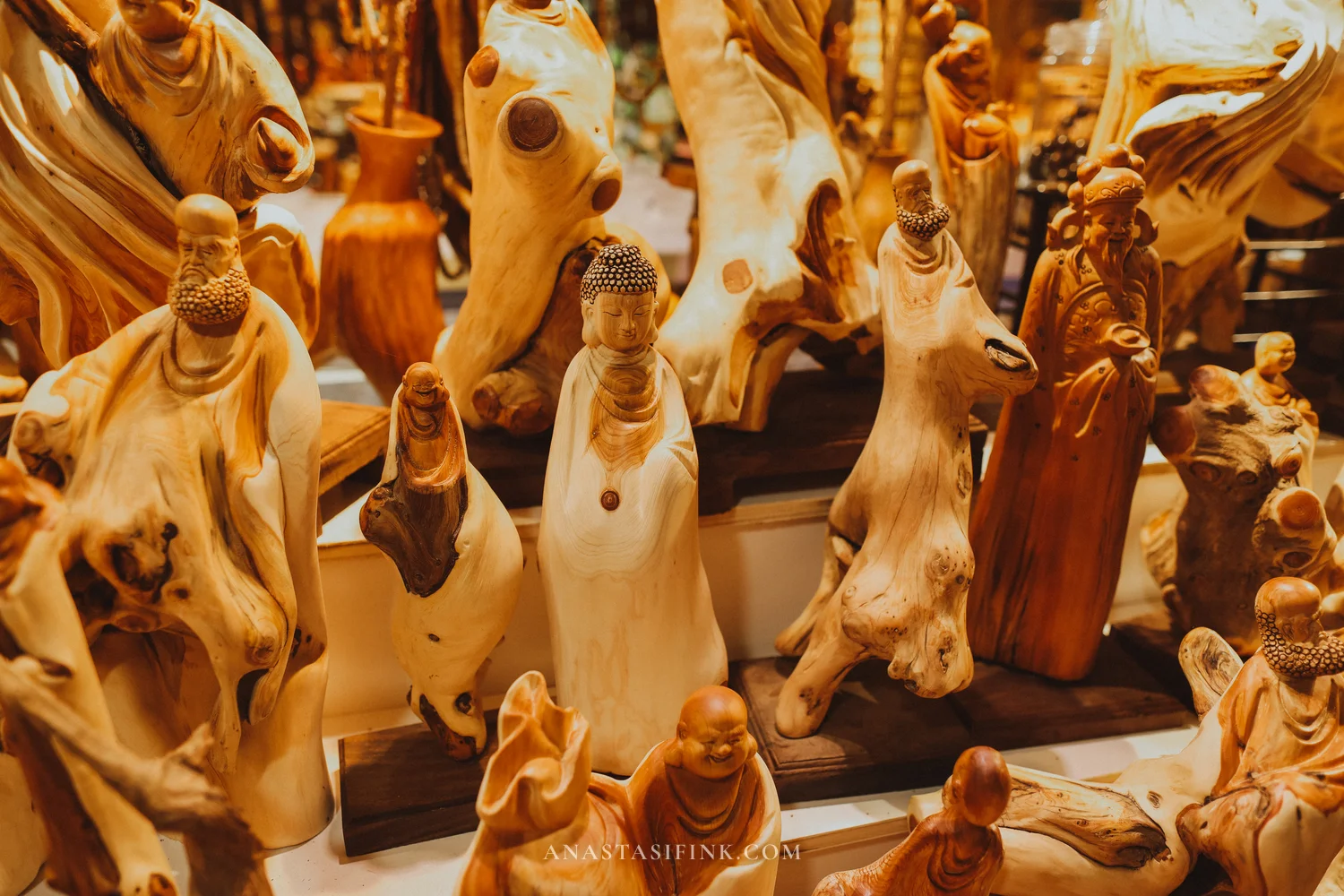
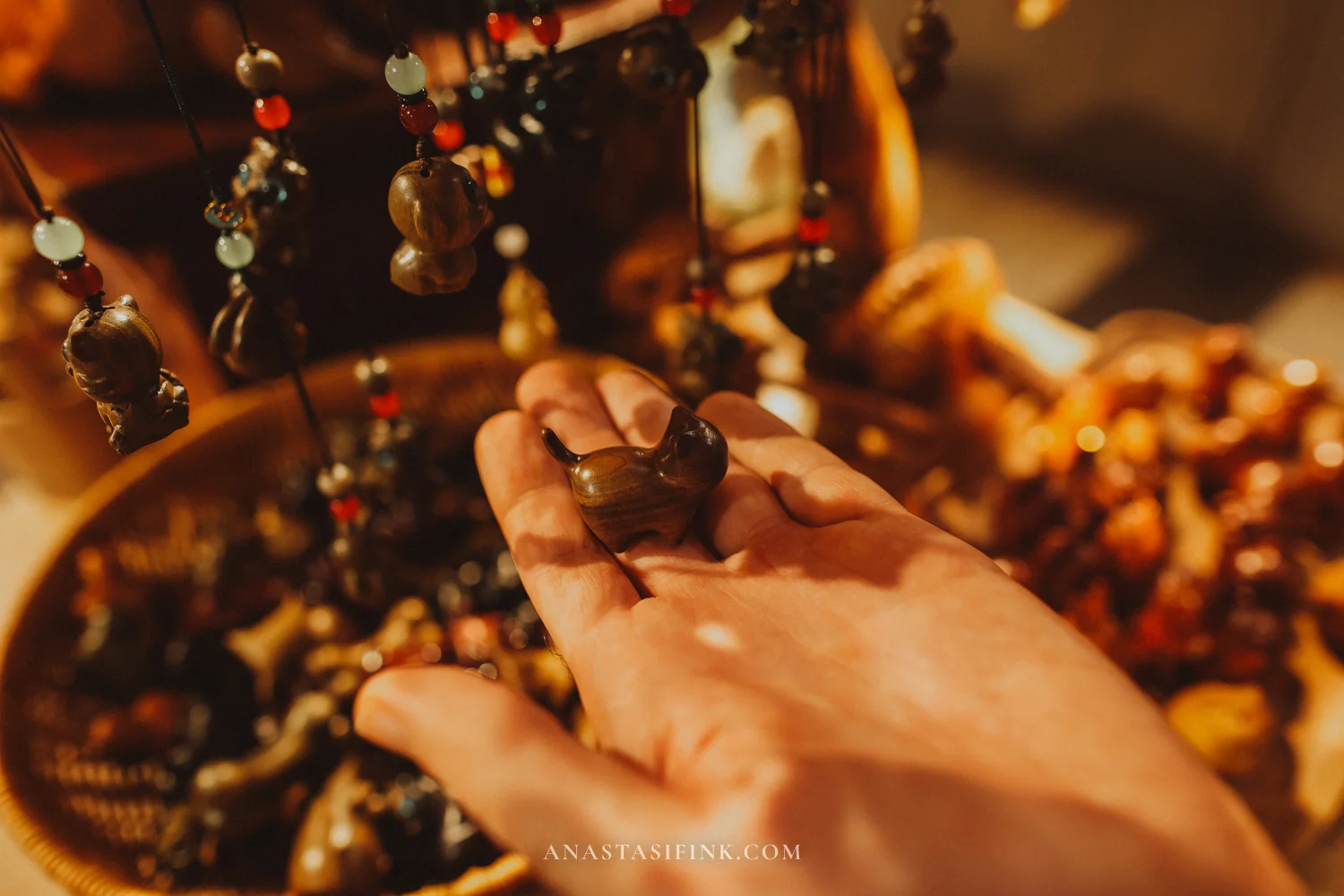
Wooden items and stone pendants in the shops near Gulong Temple
There’s also a Starbucks in the town — you can grab a coffee and pick up the city-series mugs with “CHENGDU” and “CHINA” on them.

Is Huanglongxi worth visiting
Huanglongxi isn’t untouched antiquity — it’s more of a living set: restored for film here, genuinely old there, busy in some spots and completely empty in others. What stuck with me most was exactly that contrast — from streets with street food and lanterns to a silent quarter where you walk as if inside an old film. If you have a spare day in Chengdu and feel like stepping a little off the standard routes — go. And be sure to walk out to the far streets.
FAQ
The most convenient way is metro plus taxi: take the metro to Science City station (the southern end of Line 1), then grab a taxi via Didi right in the Alipay app. There’s also a direct bus from Xinnanmen bus station — about an hour, ticket around 14 RMB.
Entry to the town itself is free. You only pay for individual museums, attractions and activities inside, if you decide to use them.
Half a day minimum, but a full day is more comfortable. That way you’ll see the old streets, the canals and bridges, the quiet far quarters, and have time to eat some street food in peace.
Come in the morning, around opening time, to catch the empty streets and soft light. The prettiest season is autumn, when the ginkgos turn yellow and the maples redden by the water.
Yes. Besides the busy center there’s a newer, expanded part of the town. In the off-season and on weekdays it can stand almost empty — shops and hotels closed, no people. For lovers of quiet, “cinematic” places it’s probably the most interesting thing in town.
Street skewers on bamboo sticks, “spiral potato”, sesame cakes, tofu and river fish dishes.
Yes, absolutely. The town is small, easy to navigate, and you can get there by metro and taxi without a guide.