Fairy Lake Botanical Garden Shenzhen: Hongfa Temple, Flowers & a Full-Day Guide

A huge botanical garden on the eastern edge of Shenzhen, where a Buddhist temple, lakes with pavilions, a bamboo grove and a cactus garden hide between the skyscrapers and the mountains. Here’s how to get there, how to get around inside the park, and what to see in a single day.
What is Fairy Lake Botanical Garden
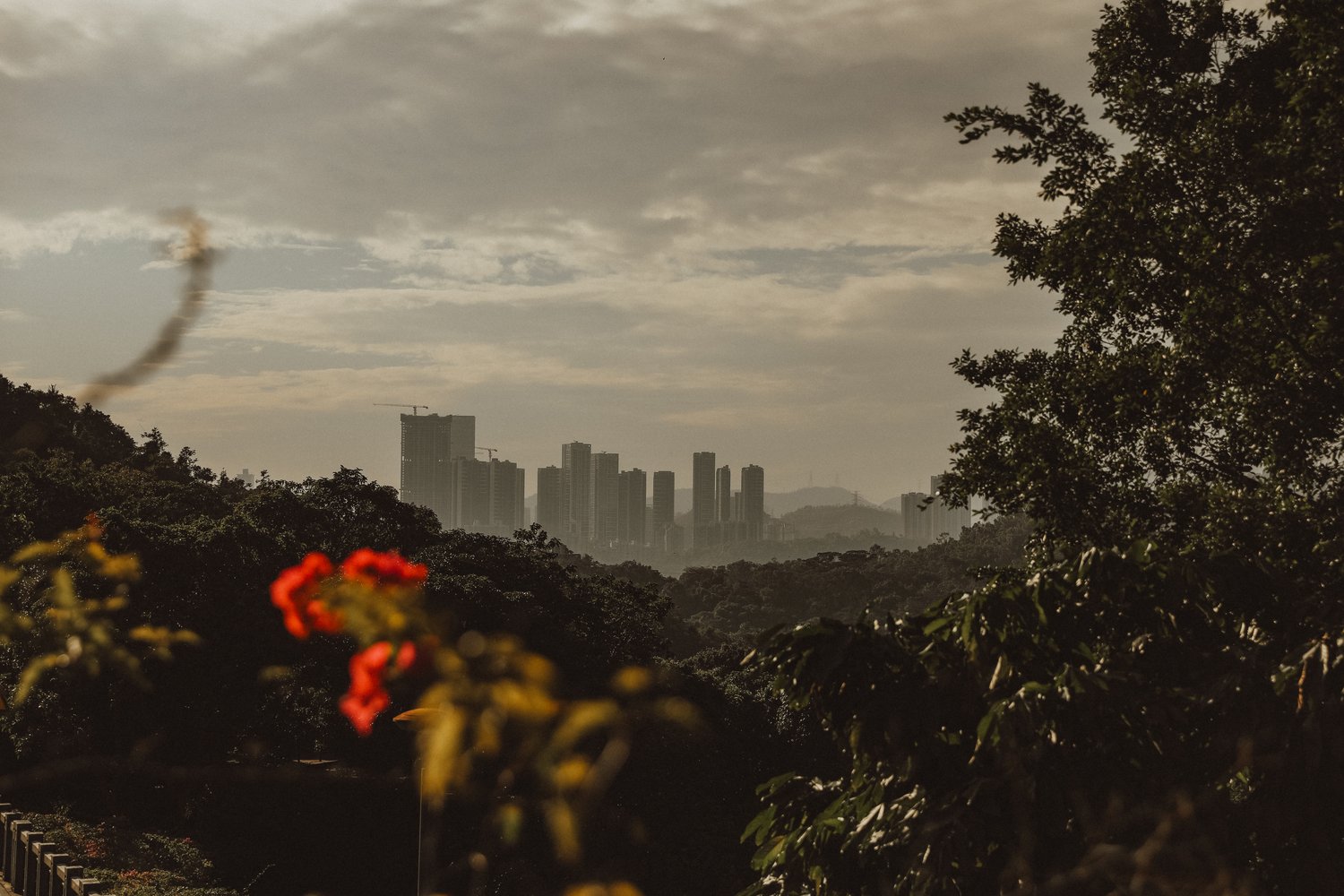
Shenzhen’s botanical garden is called Fairy Lake (仙湖植物园, Xianhu in Chinese). It’s on the eastern side of the city, at the foot of Wutong Mountain, and covers almost 590 hectares. This isn’t a small city park — it’s a whole landscape of hills, lakes, a temple and dozens of themed sections. The garden opened in the 1980s, and today Shenzhen locals come here all the time just to walk and relax.
The park roughly splits into several big areas: the temple area (around Hongfa Temple), the lake area, the pine and azalea garden, the desert garden with its cacti, and the fossil forest area with a palaeontology museum. You can’t see all of it in a couple of hours — it’s much better to come for a full day, and to start early.
How to get to Fairy Lake Botanical Garden
There are two easy ways to get here. The first is the metro: from the station it’s about a 15-minute walk to the park entrance. The second is to take a taxi straight there. I went by taxi through the Didi app (China’s version of Uber) — in Shenzhen that’s the simplest option.
Entry is cheap — around 15 yuan (about $2). Tickets are usually bought online, through the garden’s official WeChat account. Early in the morning, roughly from 6 to 8 am, entry is often free — locals use this to come for an early walk.
Getting around the park: the shuttle bus
The park is enormous, and covering all of it on foot is hard work. A shuttle bus loops around inside — it’s the easiest way to move between the main spots. It stops at all the key areas: the temple, the lakes, the bonsai garden, the cactus garden and so on. The route is a loop, so you can hop off wherever you like, walk around, then catch the next bus.
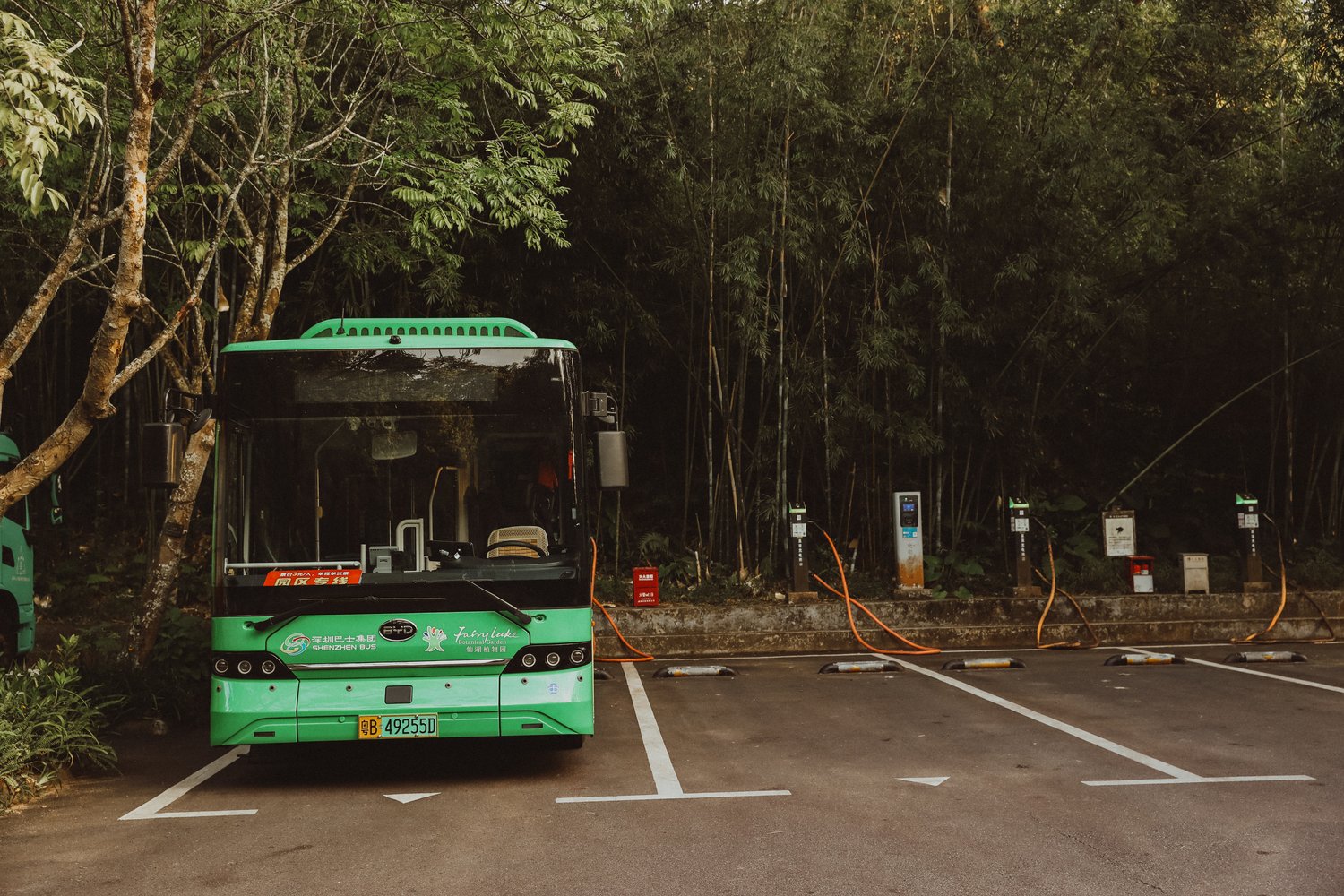
You buy the bus ticket in WeChat. But here’s something useful for visitors: if you don’t have WeChat, don’t worry. Next to the bus stop there’s a little pavilion where you can buy the ticket in person and pay with Alipay. So even without Chinese apps you can still ride — just head to the pavilion by the stop.
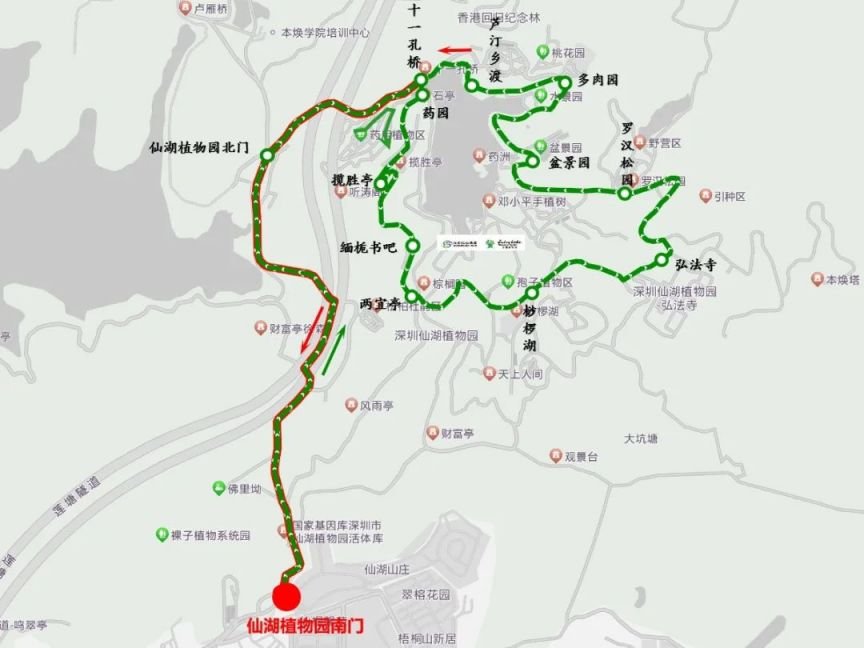
Below I’ll walk you through my own route — it went around the garden in a loop, from the temple to the lakes and the plant gardens.
Stop 1. Hongfa Temple
The first stop on the route is Hongfa Temple. It’s the largest Buddhist temple in Shenzhen and one of the main sights in the park. It was built late in the 20th century — construction ran from 1985 to 1992 — and was founded by the Chan Buddhist master Benhuan. It was one of the first temples built in China during this period, so it means a lot to the city.
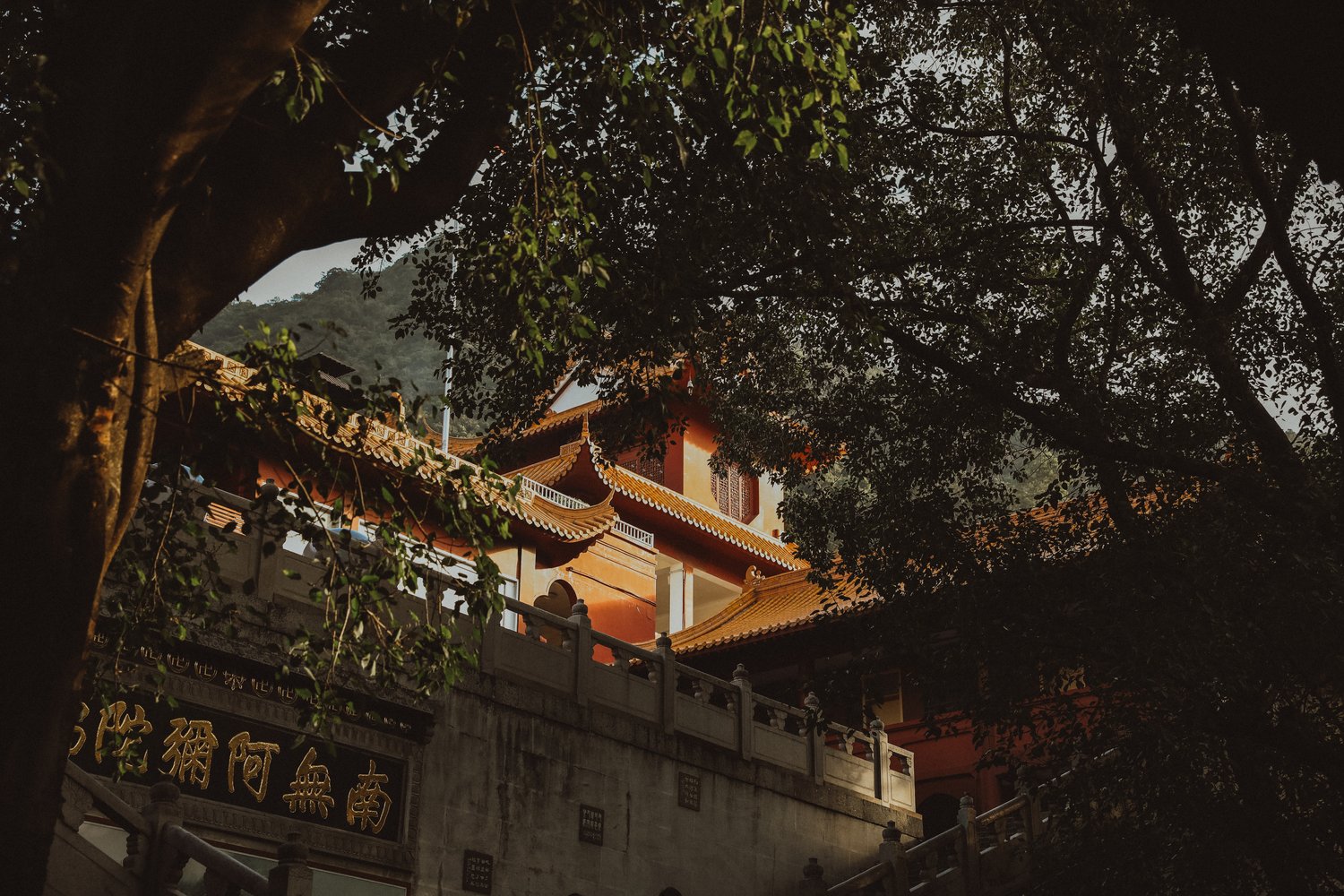
The temple is built on a mountain slope and rises in tiers from bottom to top. The halls follow one after another: a gate with stone lions and guardians at the bottom, then courtyards and lower halls, then a large plaza with the main hall, and a pagoda right at the top. You walk uphill the whole time, and the complex opens up bit by bit.
It all starts at the bottom, by the gate. Stone lions stand on either side of the entrance, and inside the gate are golden guardian figures. Beyond them come the lower courtyards and halls — dim inside, with lanterns burning and the statues lit up.
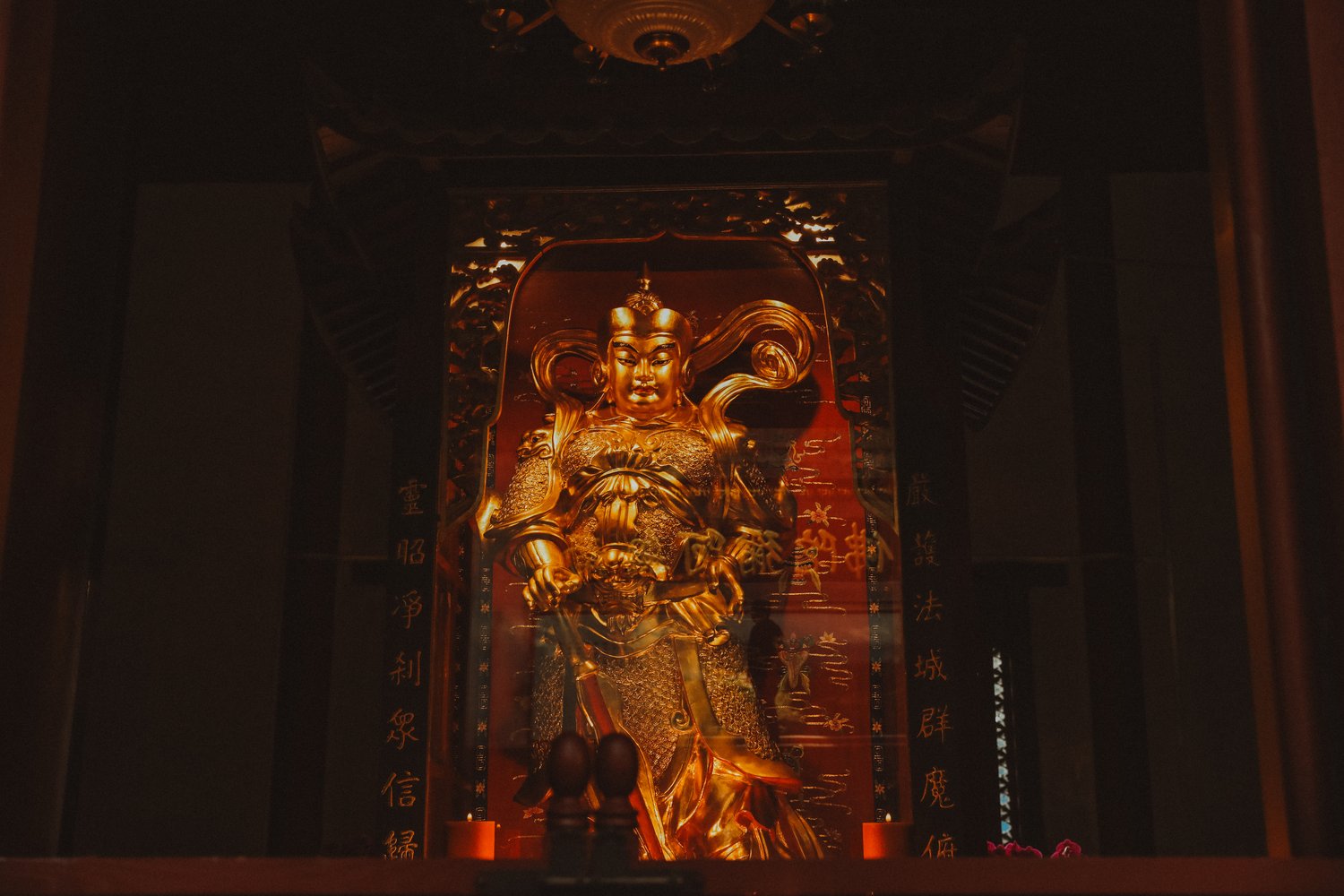
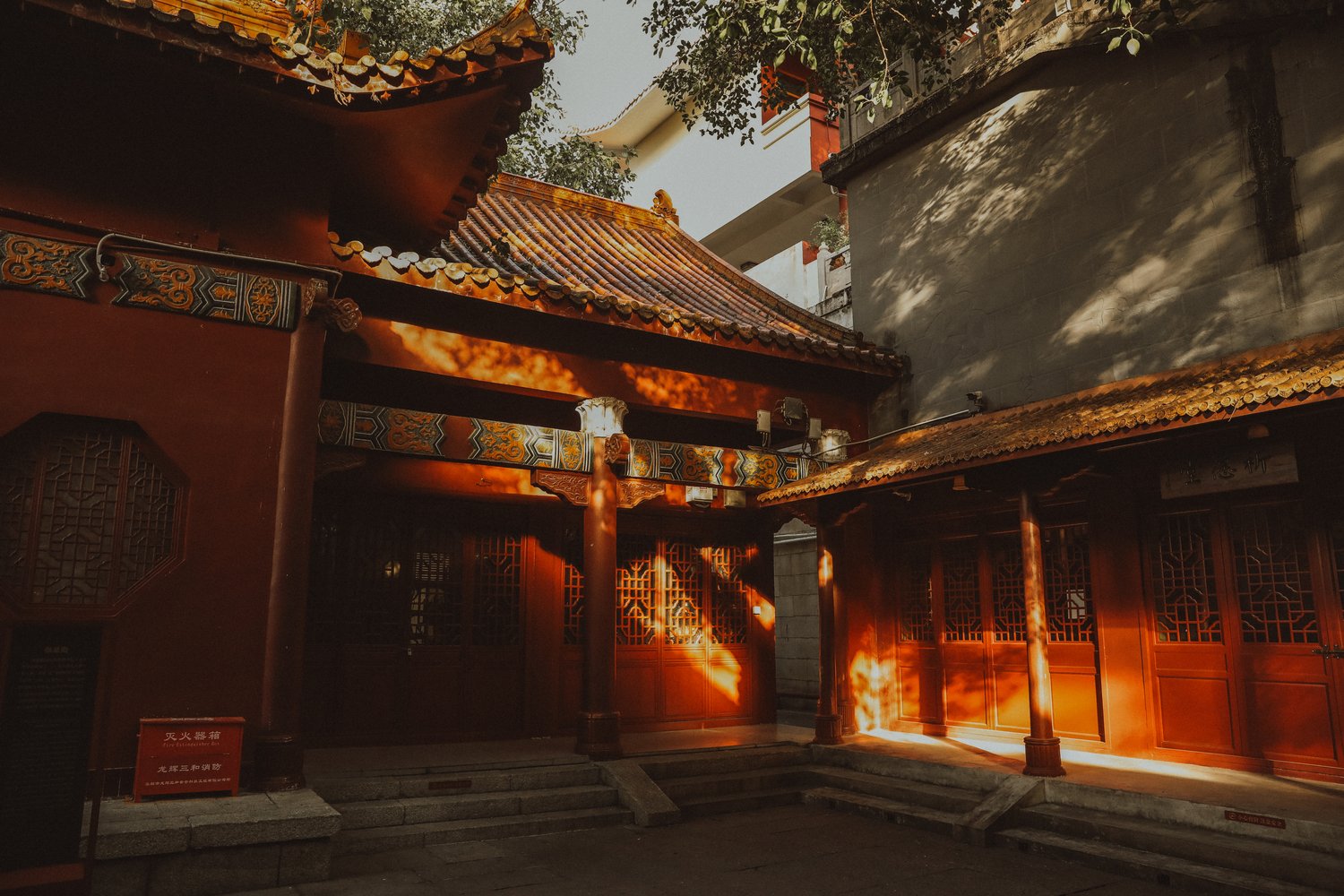
Down at the bottom — the temple entrance: a golden guardian in the gate and the lower courtyard
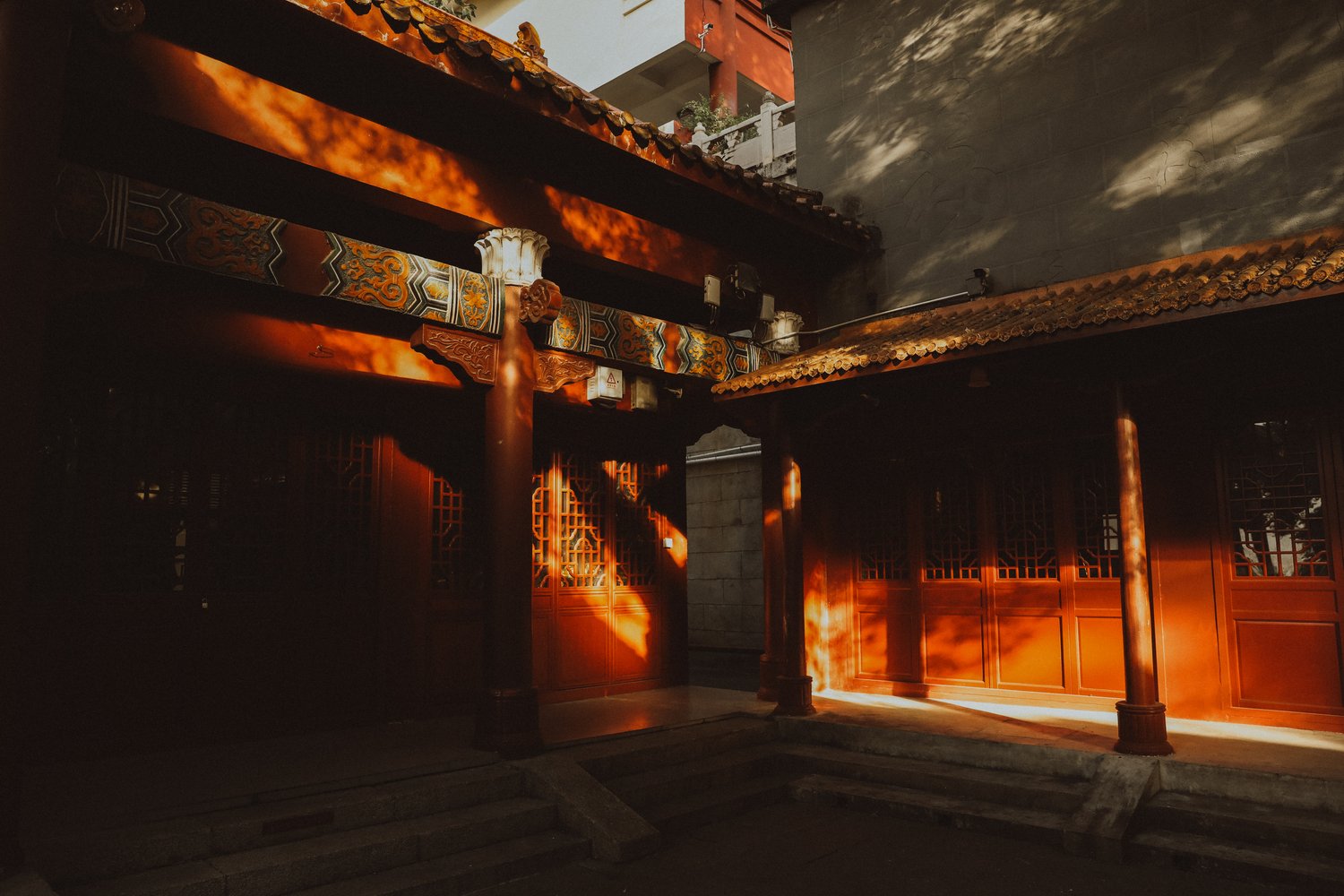
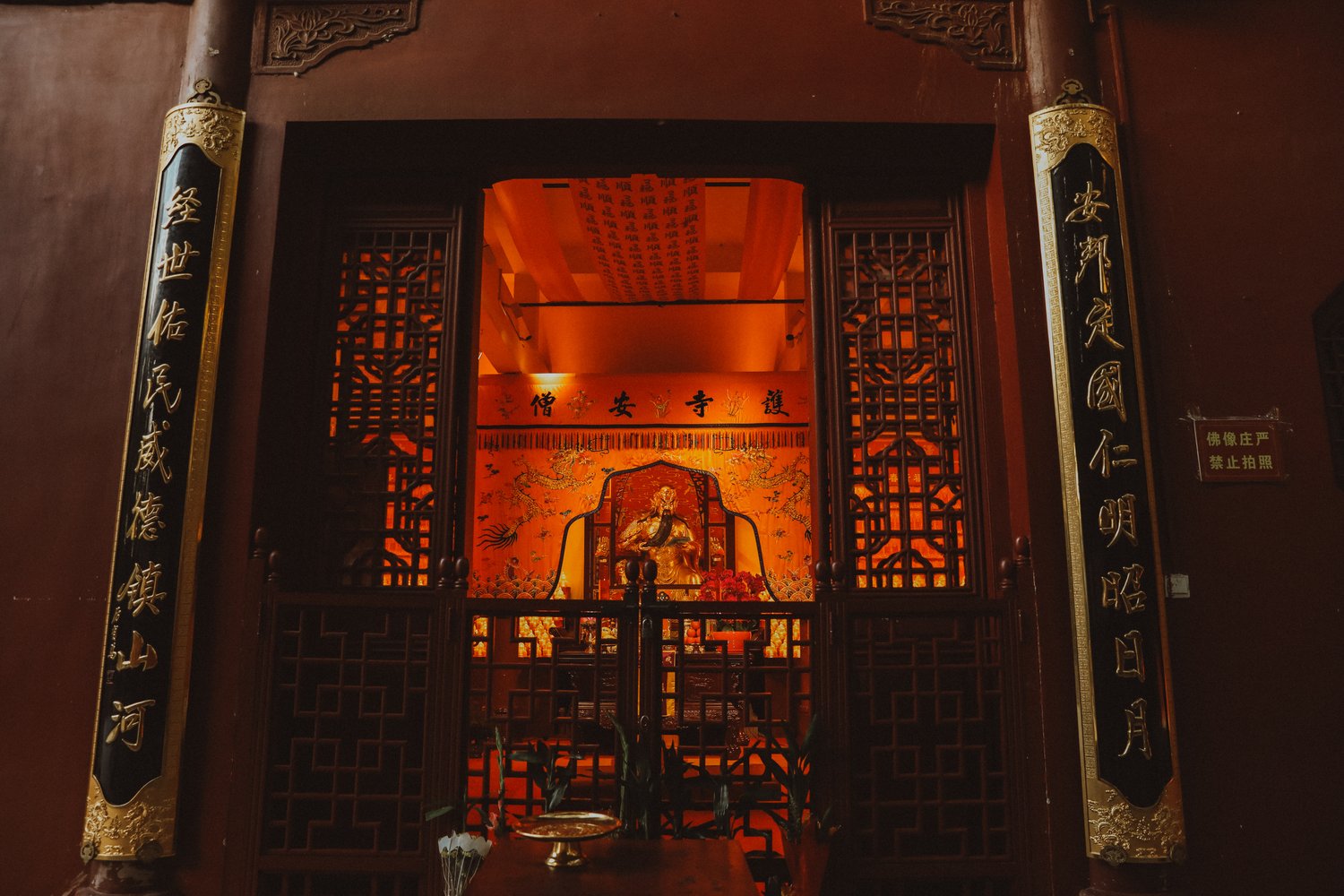
It’s dark in the lower halls — lanterns glow and the Buddha is lit up
Along the path up there are big panels with Chinese characters and carvings in stone.
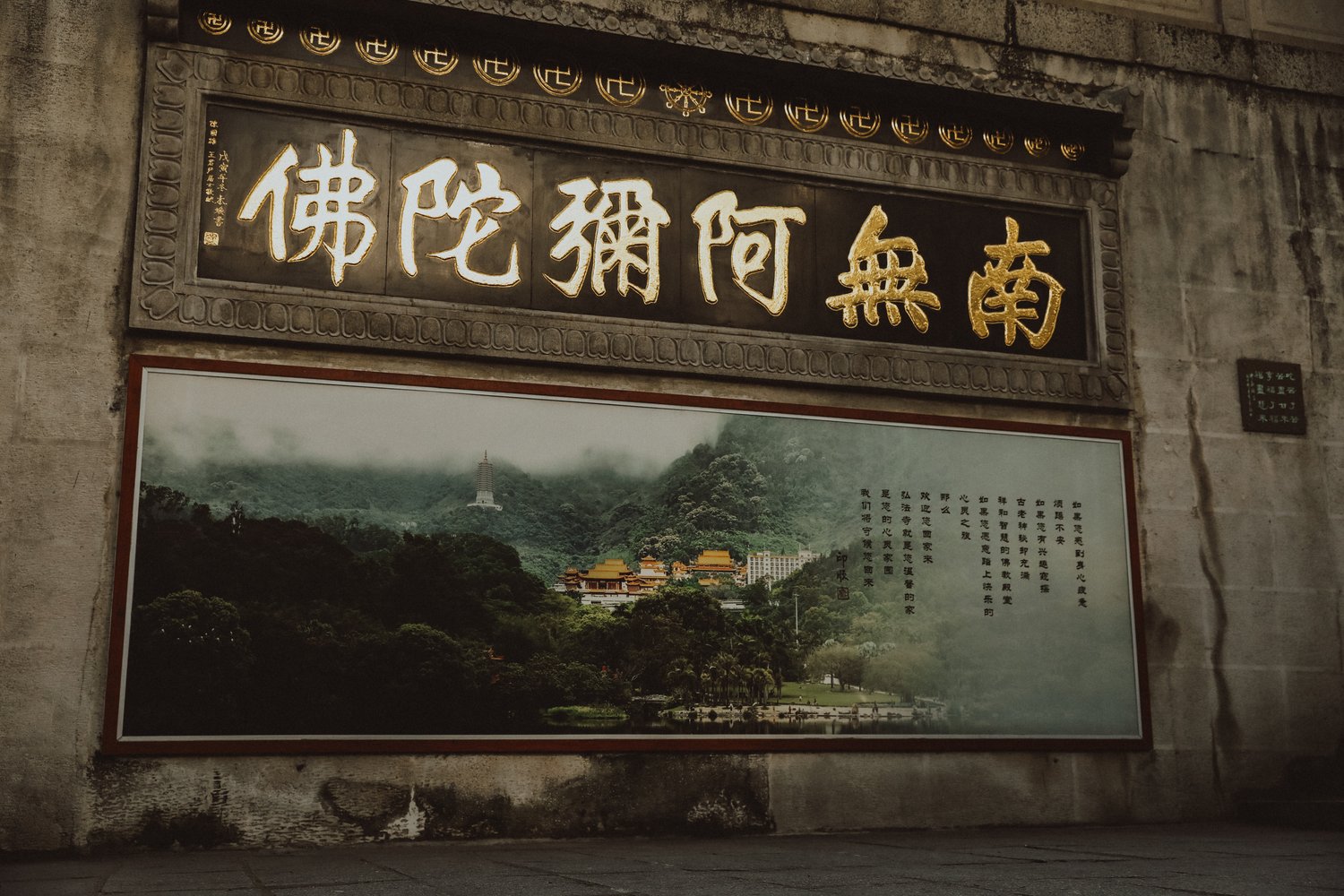
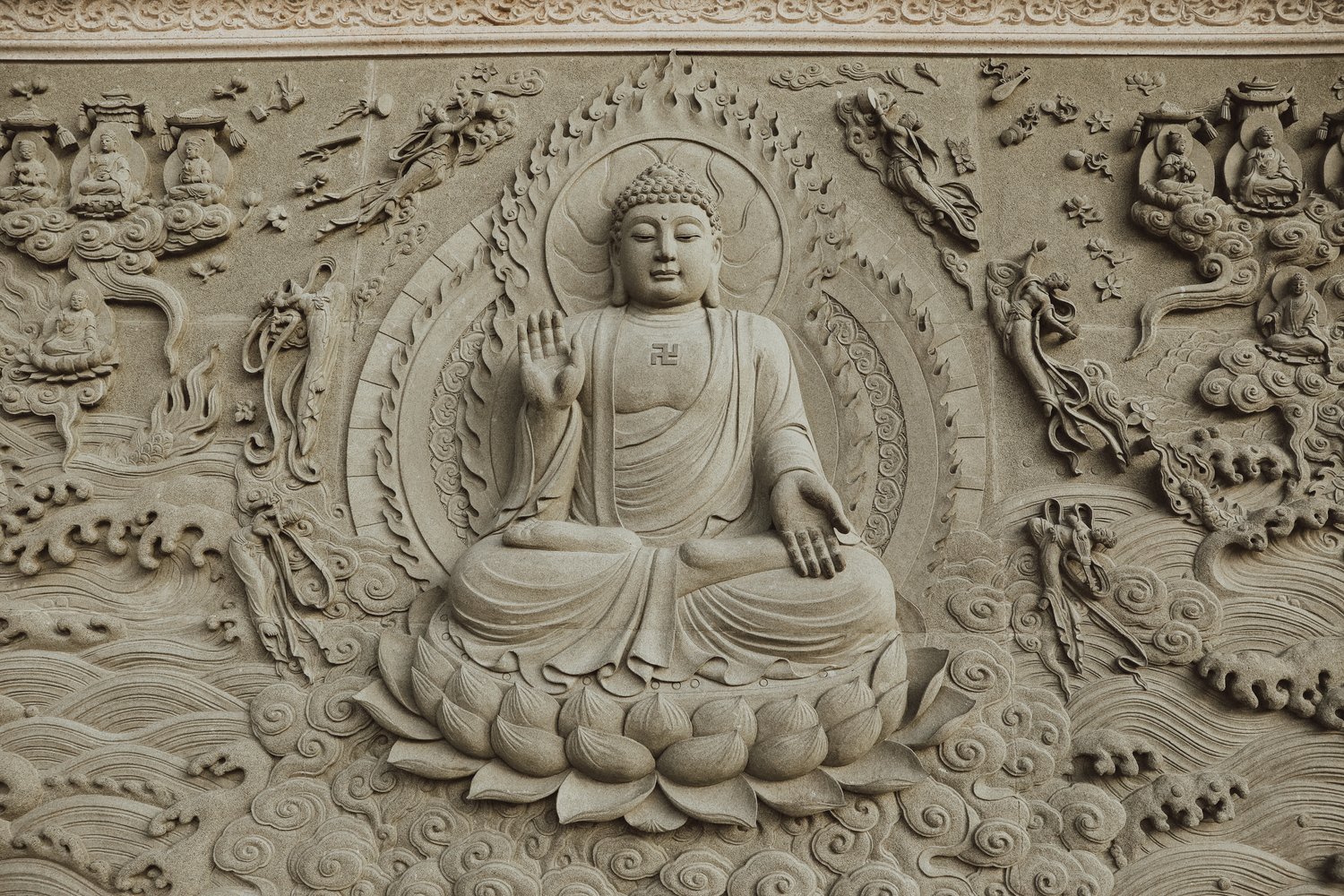
A panel with characters and a carved Buddha on a lotus
Higher up, the path opens onto a wide plaza. The main hall stands here with its golden roof, and big bronze incense burners sit in front of it. After the dim lower halls, the plaza feels especially bright.
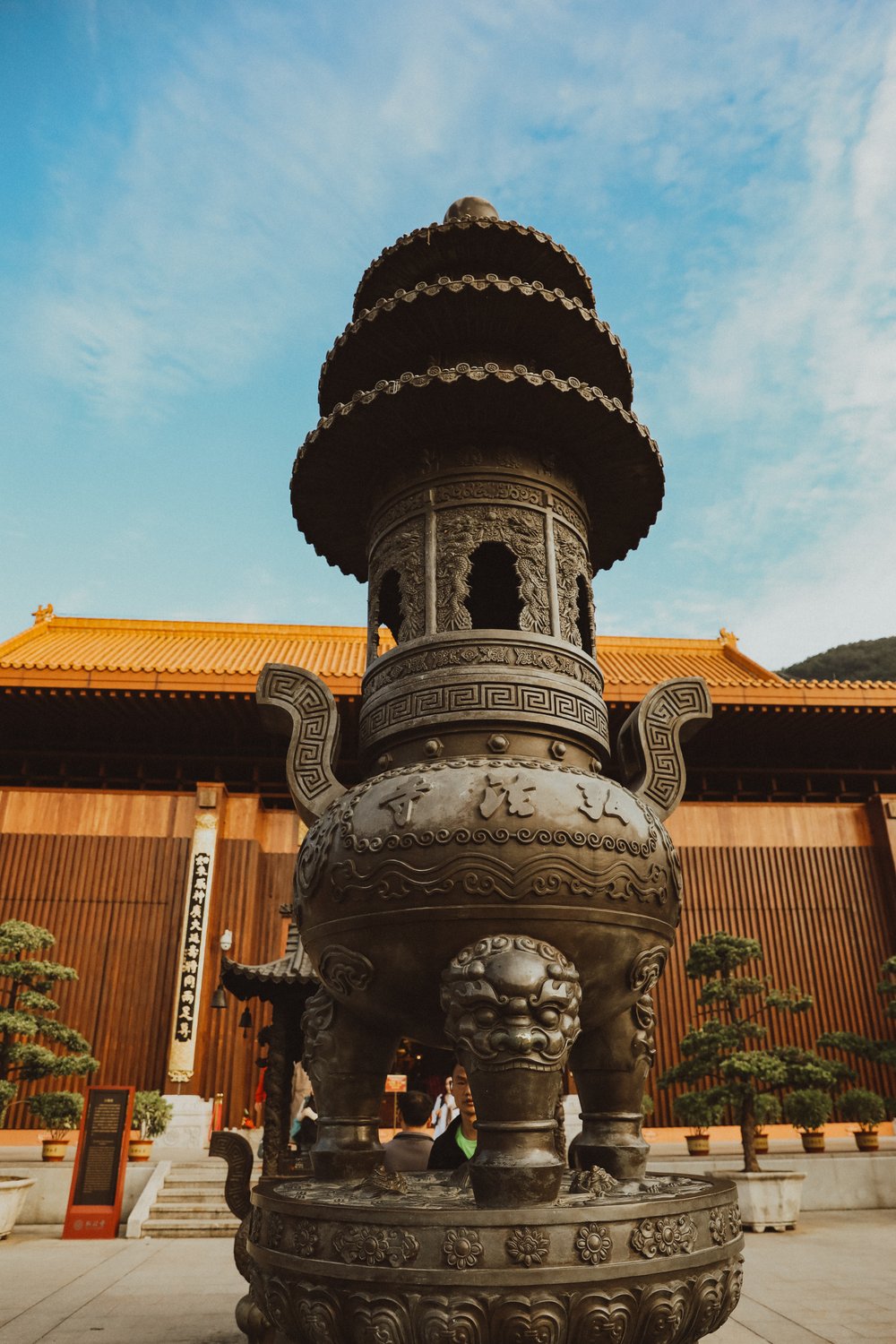
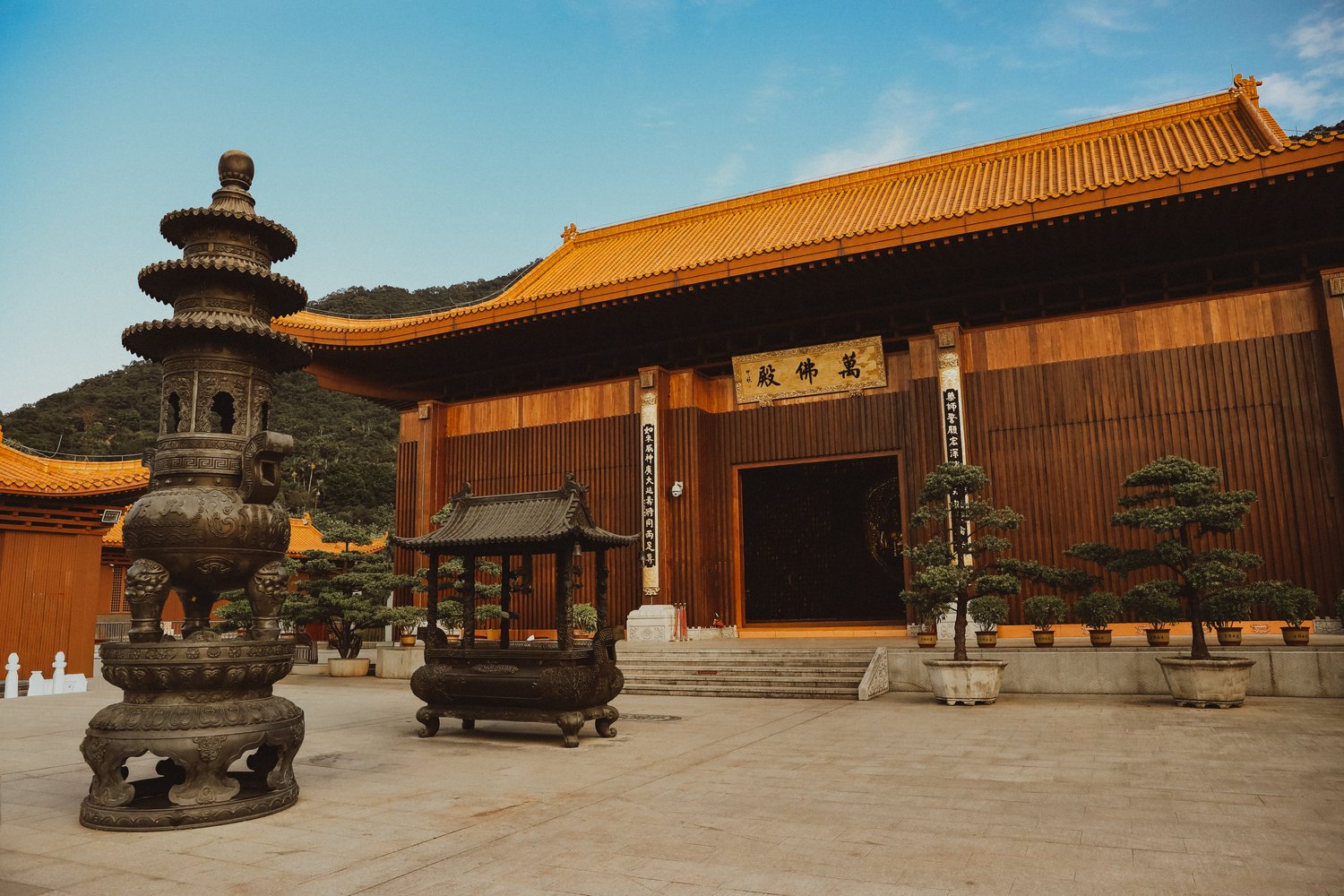
The upper plaza: bronze incense burners and the main hall
This is a working temple, and people come here to pray. They buy incense and light sticks by the halls, and the smoke hangs in the air all day. Fruit and other offerings are placed on the altars. There are a lot of locals here — you can tell it’s part of everyday life for them.
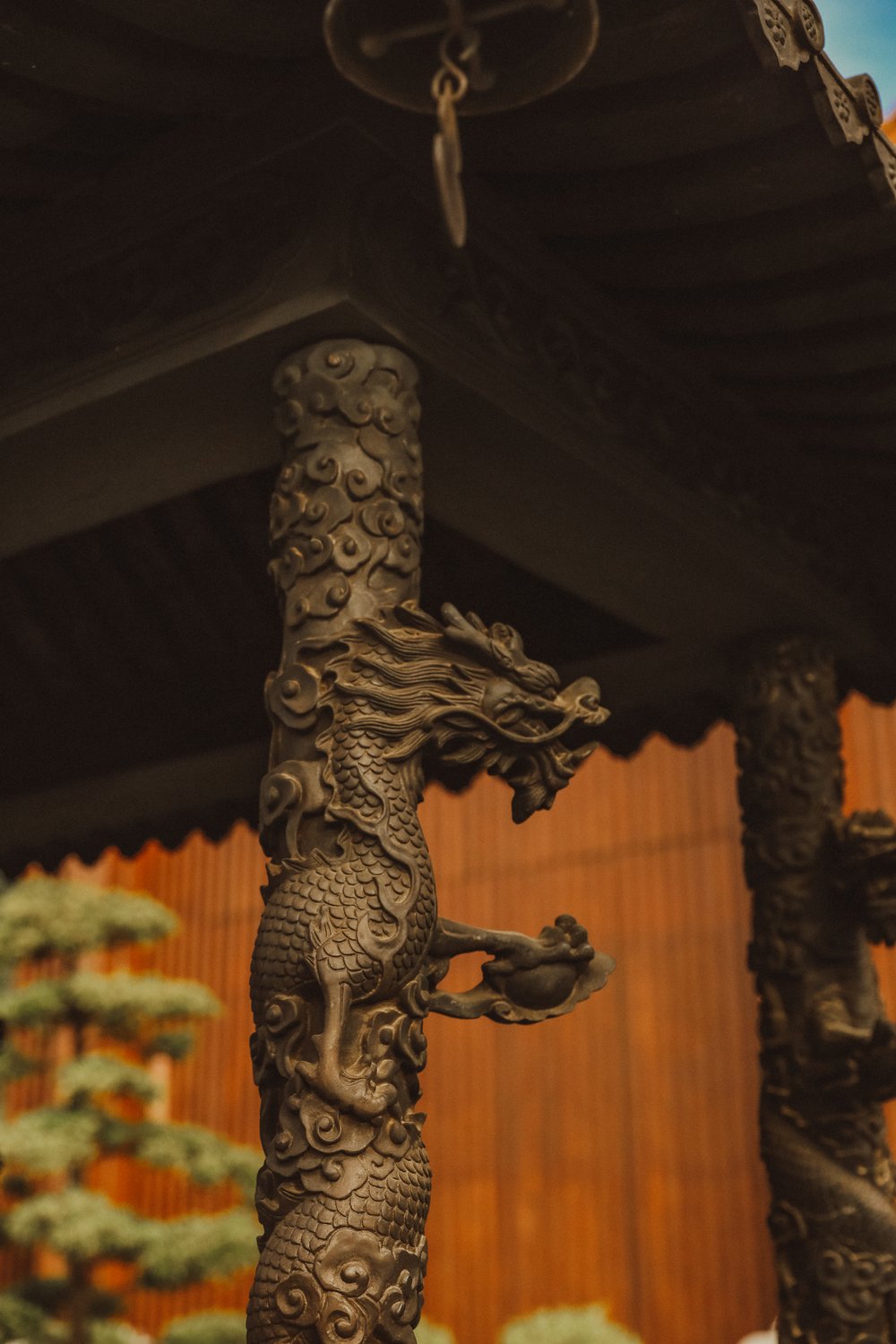
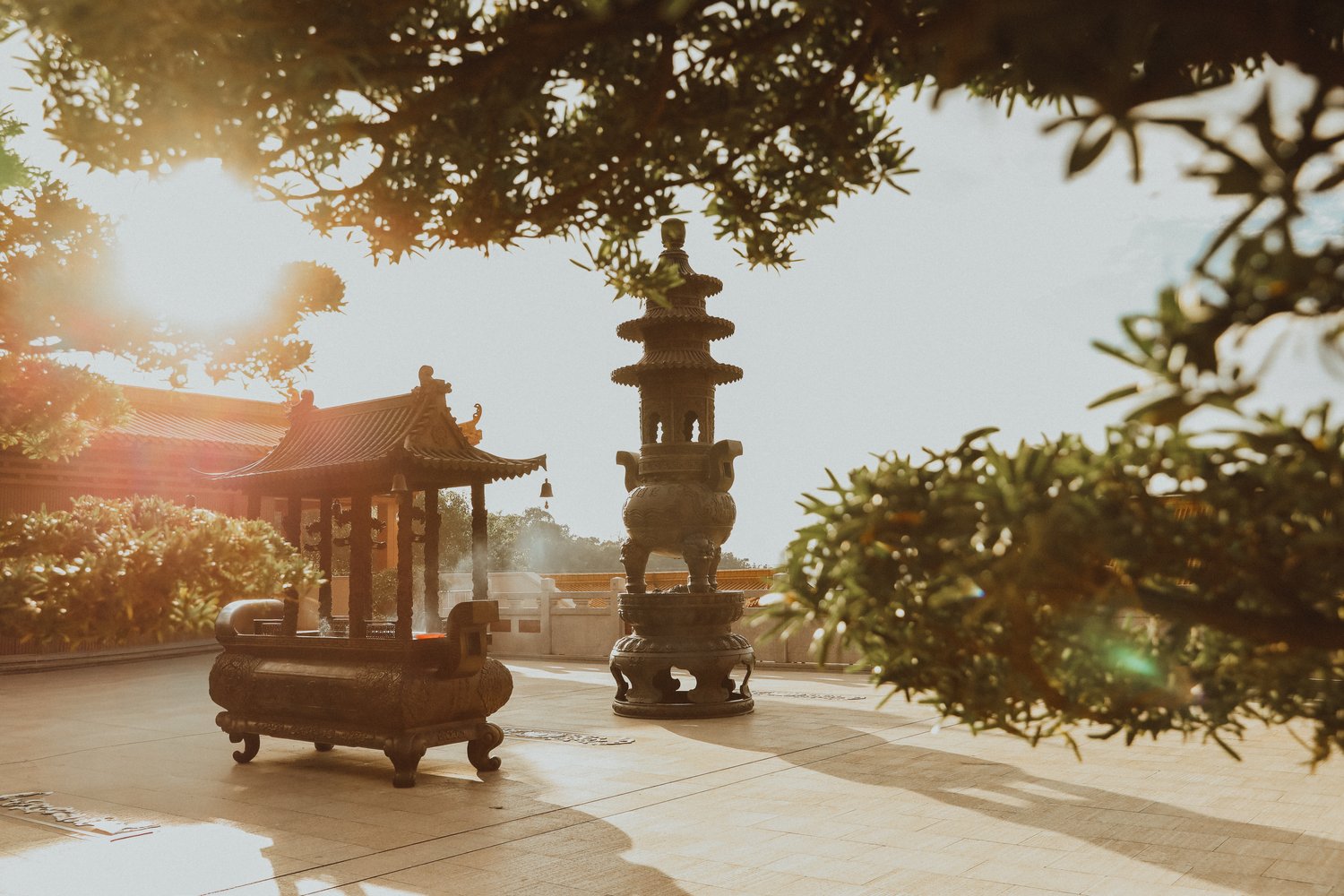
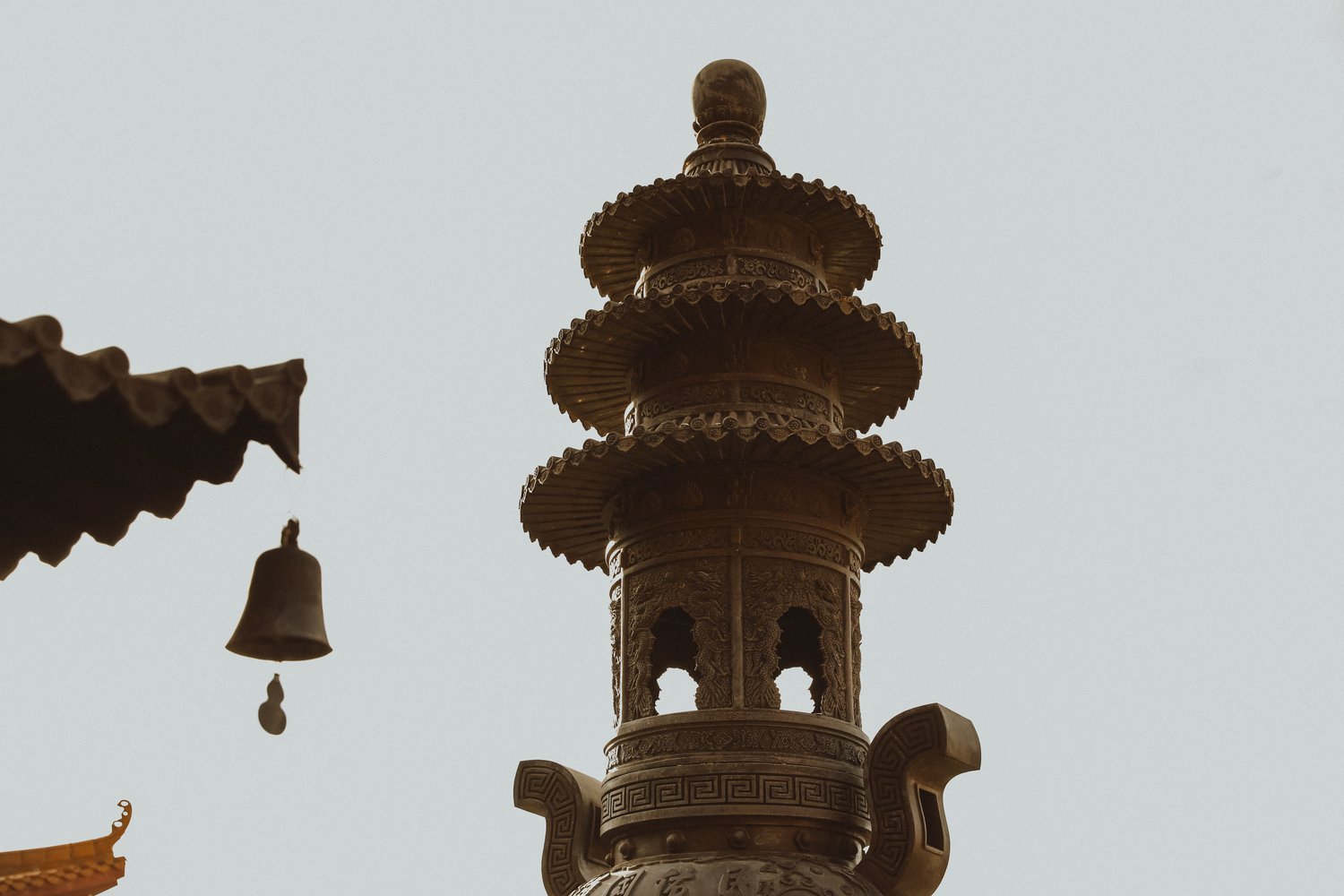
Incense burners in the sun, and a stone pagoda with a bell
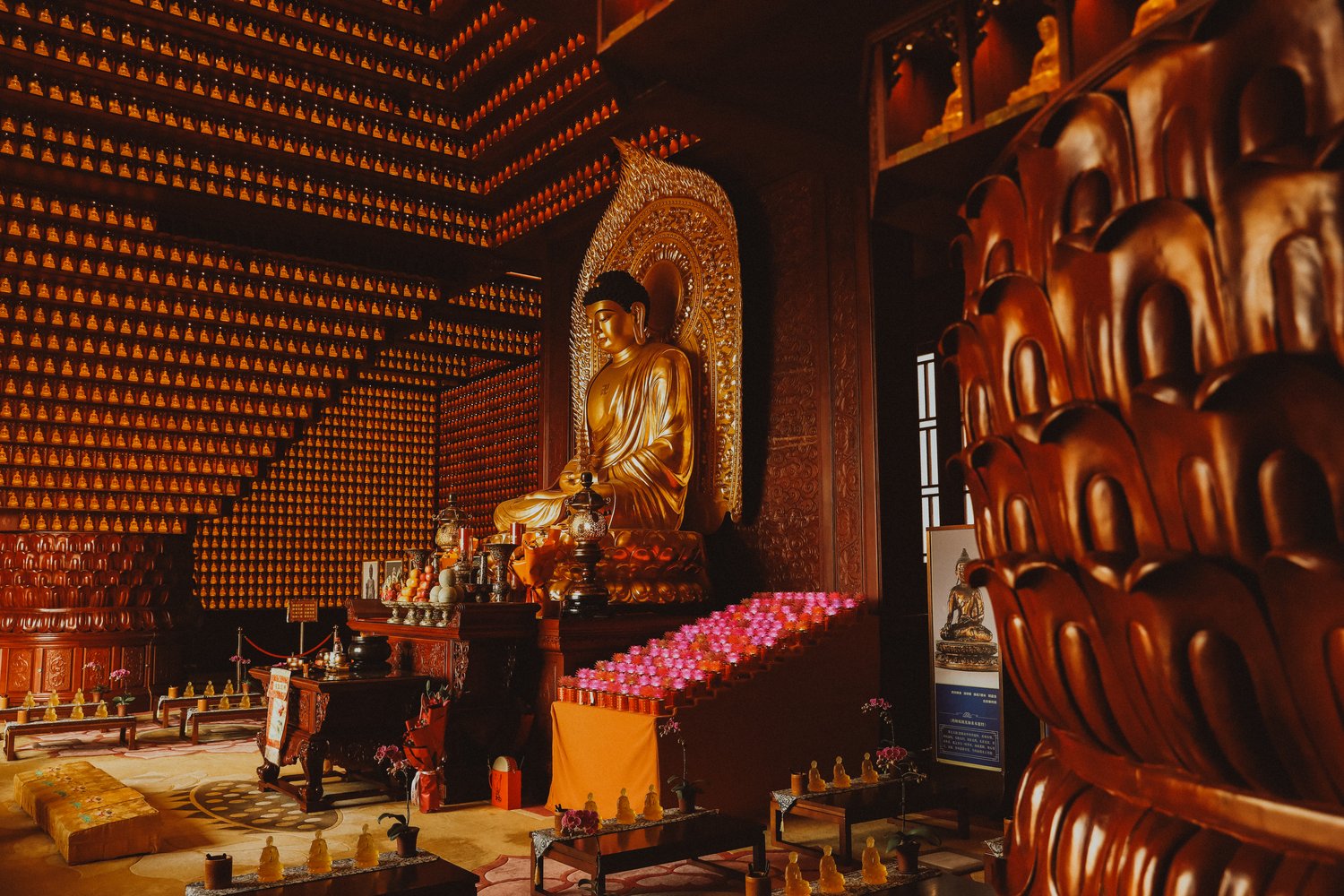
Inside the main hall it’s all gold. A golden Buddha sits in the centre, the walls are lined with rows of small identical statuettes, and overhead there are painted panels and a carved ceiling.
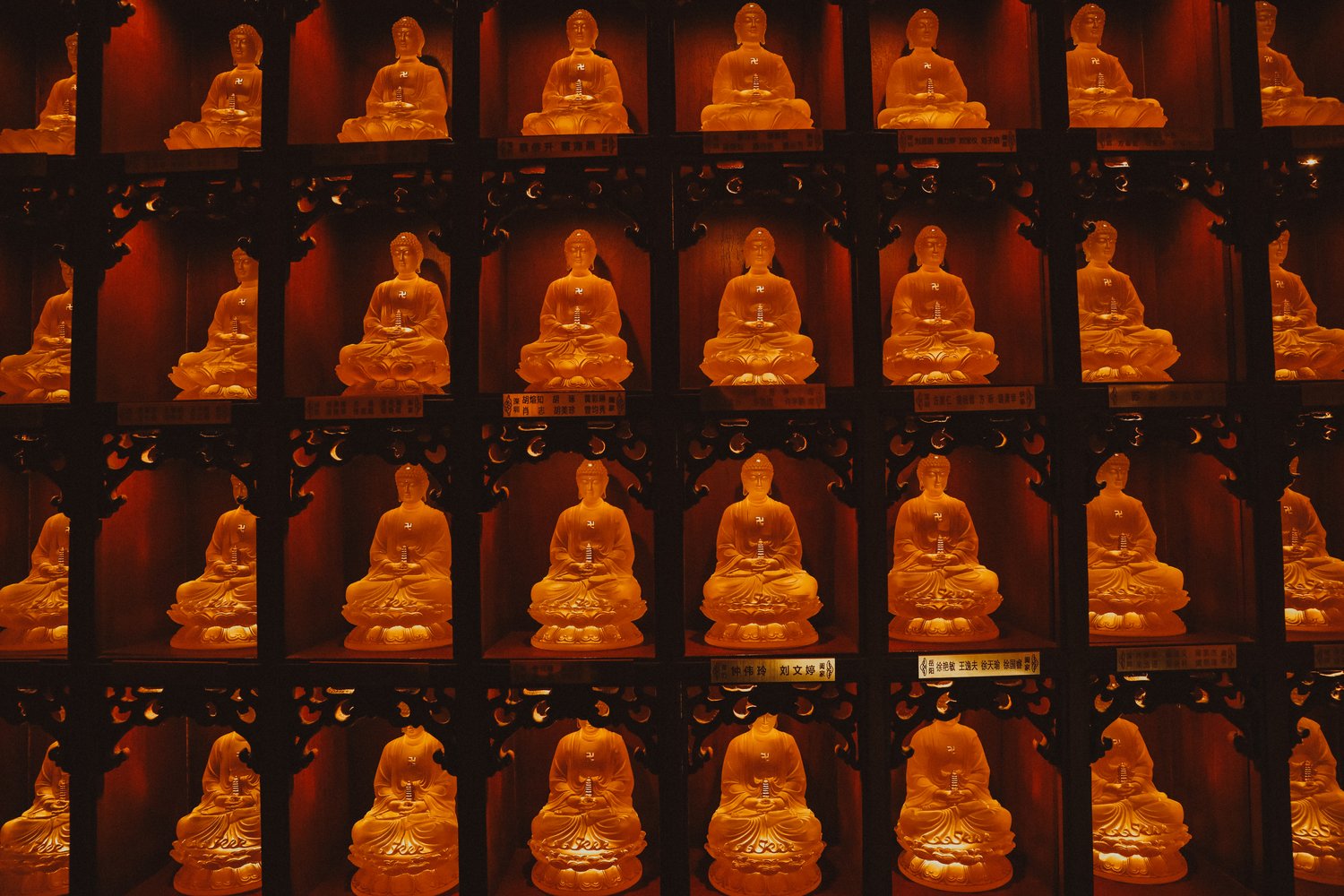
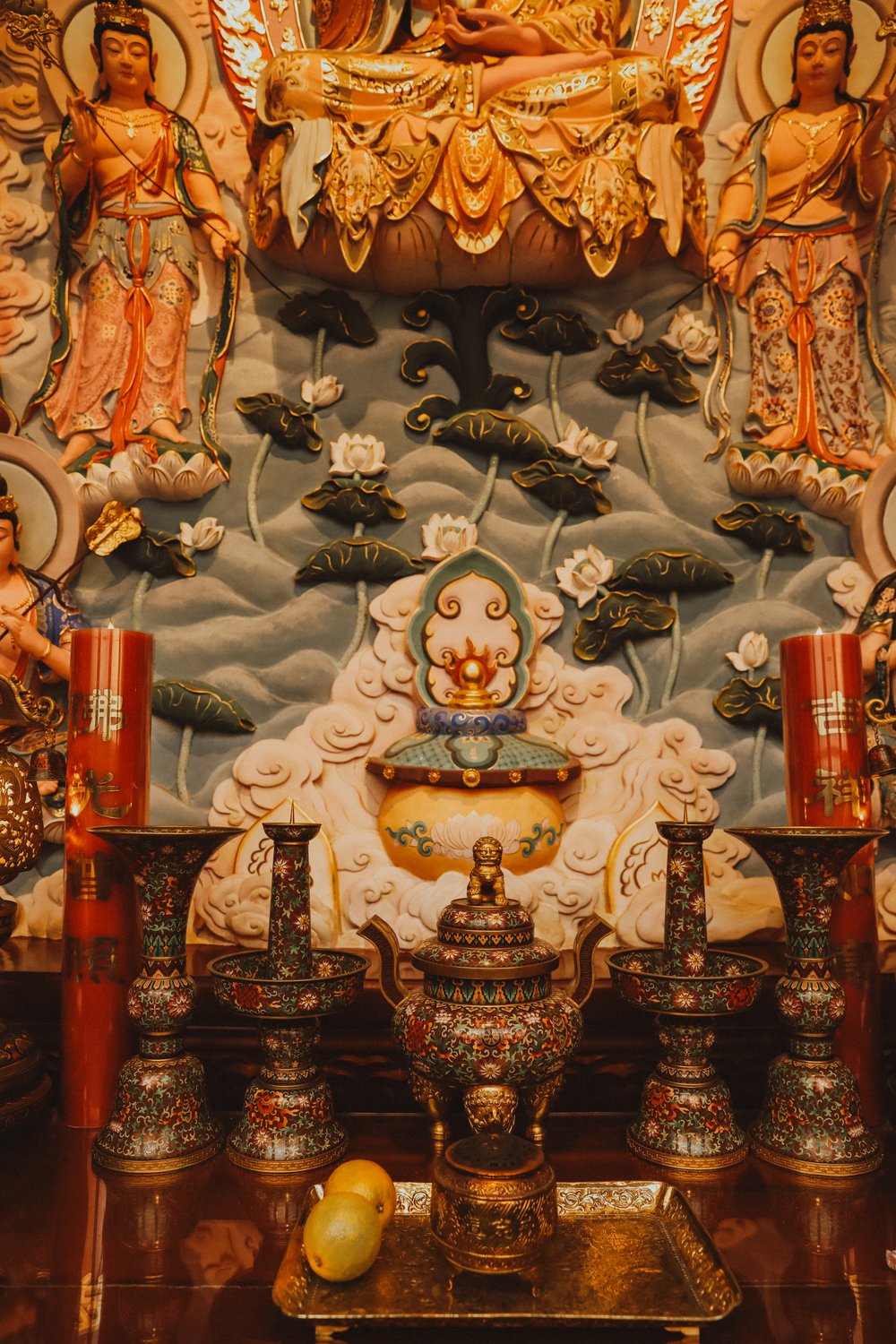
A wall of golden statuettes and an altar with offerings
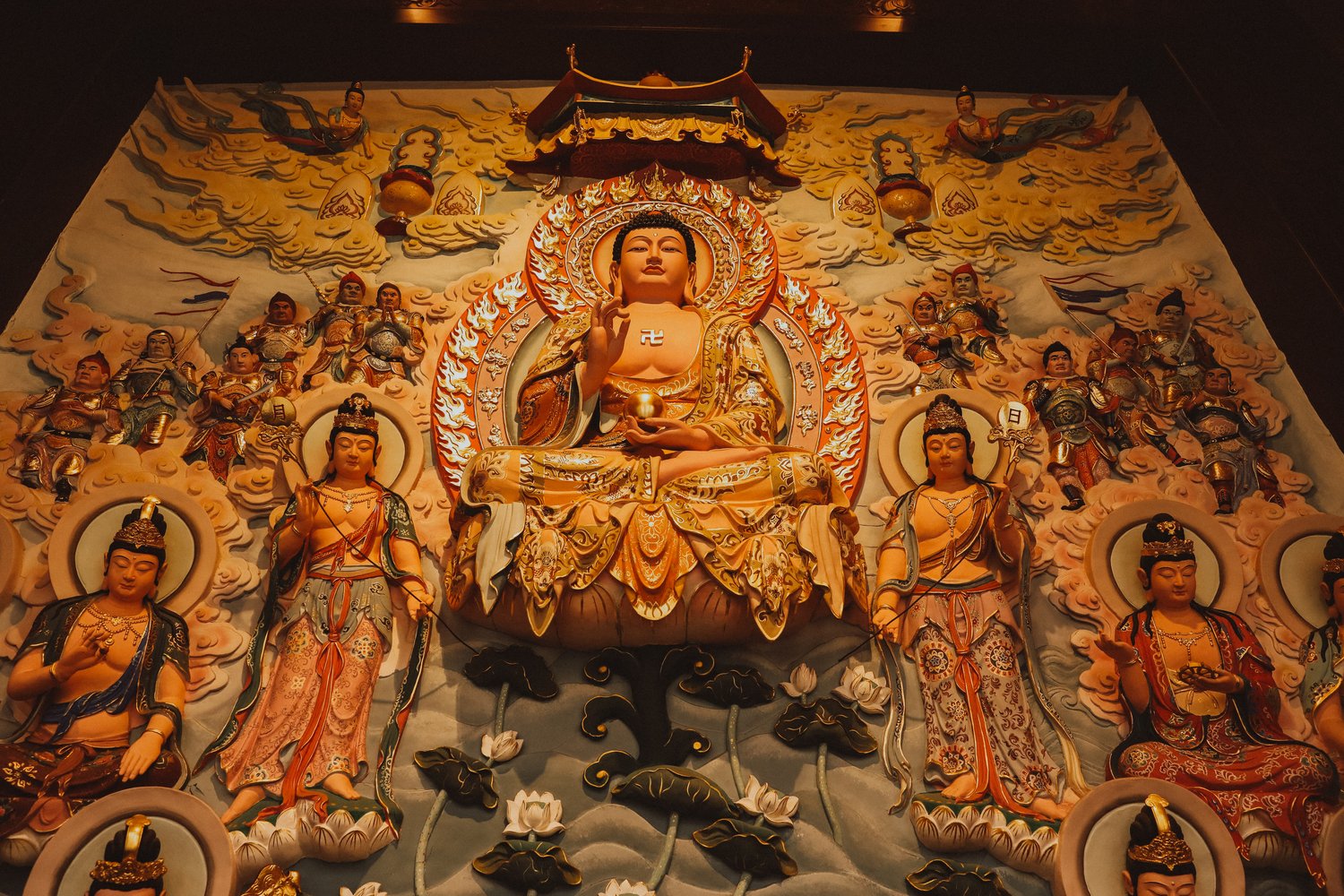
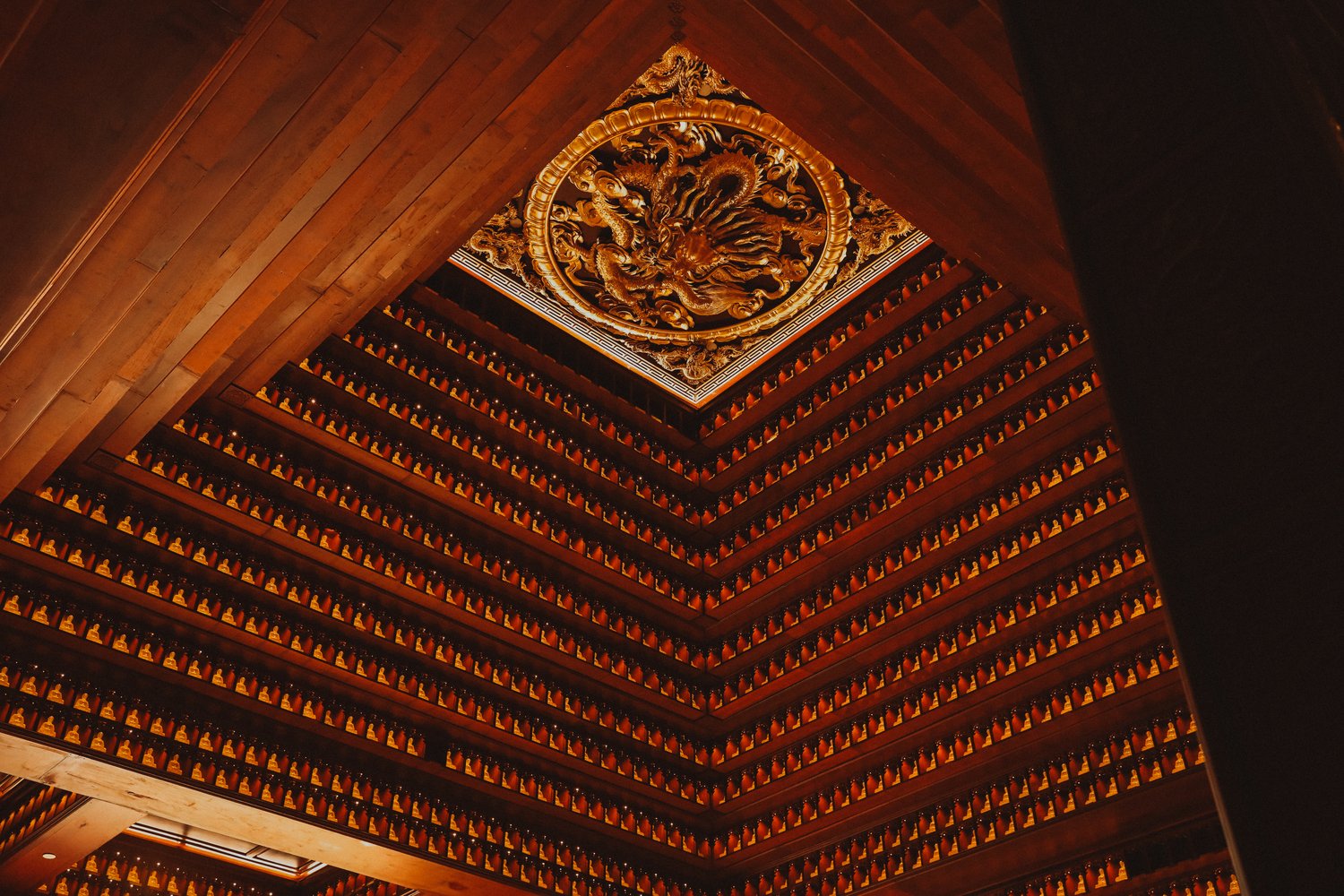
A gilded panel and a carved ceiling
From here the path leads back down. Stone lanterns and lions line the way, trees are in blossom around you, and from up top you get one more view over the halls and the plaza you just walked through.
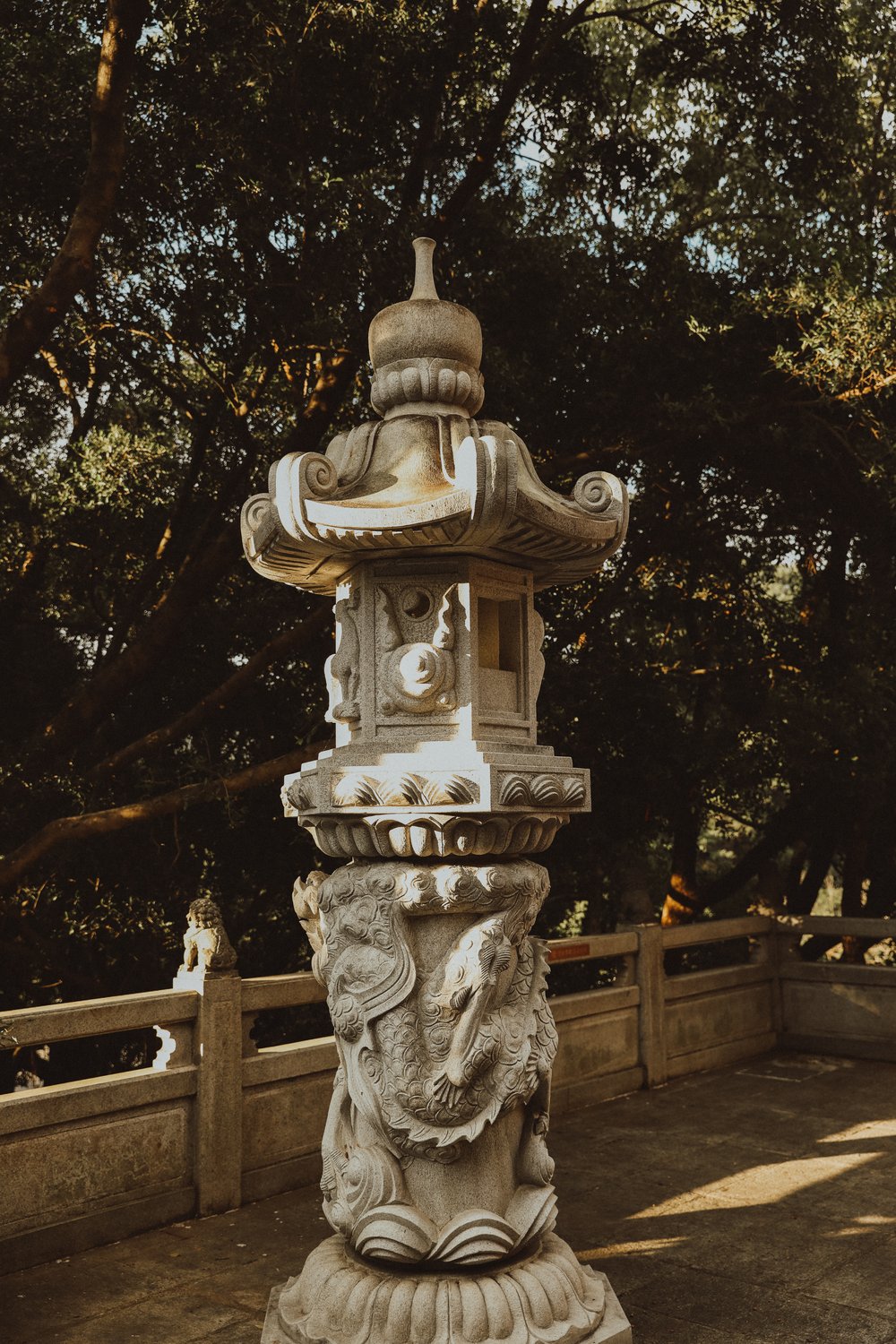
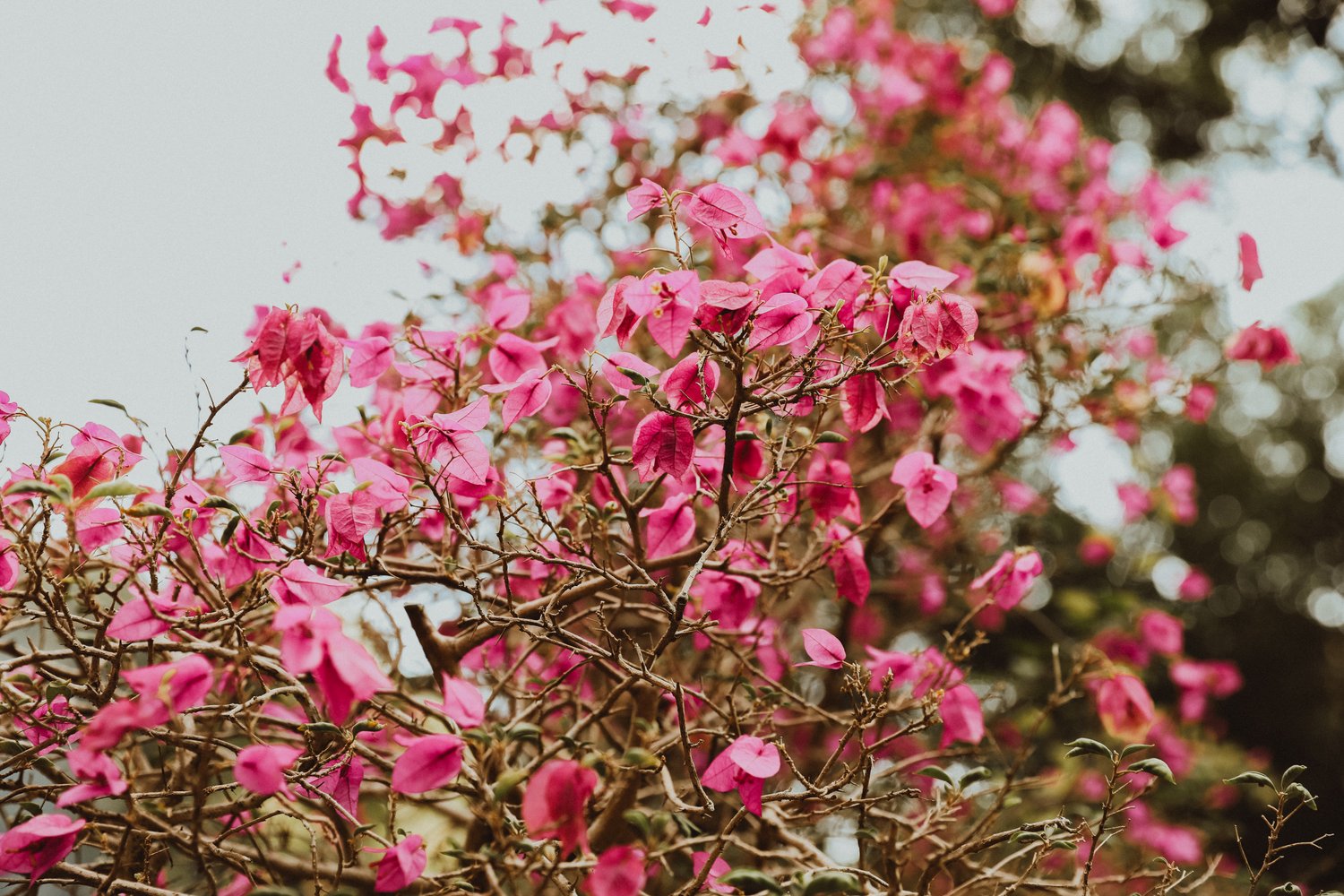
A stone lantern and blossoming branches
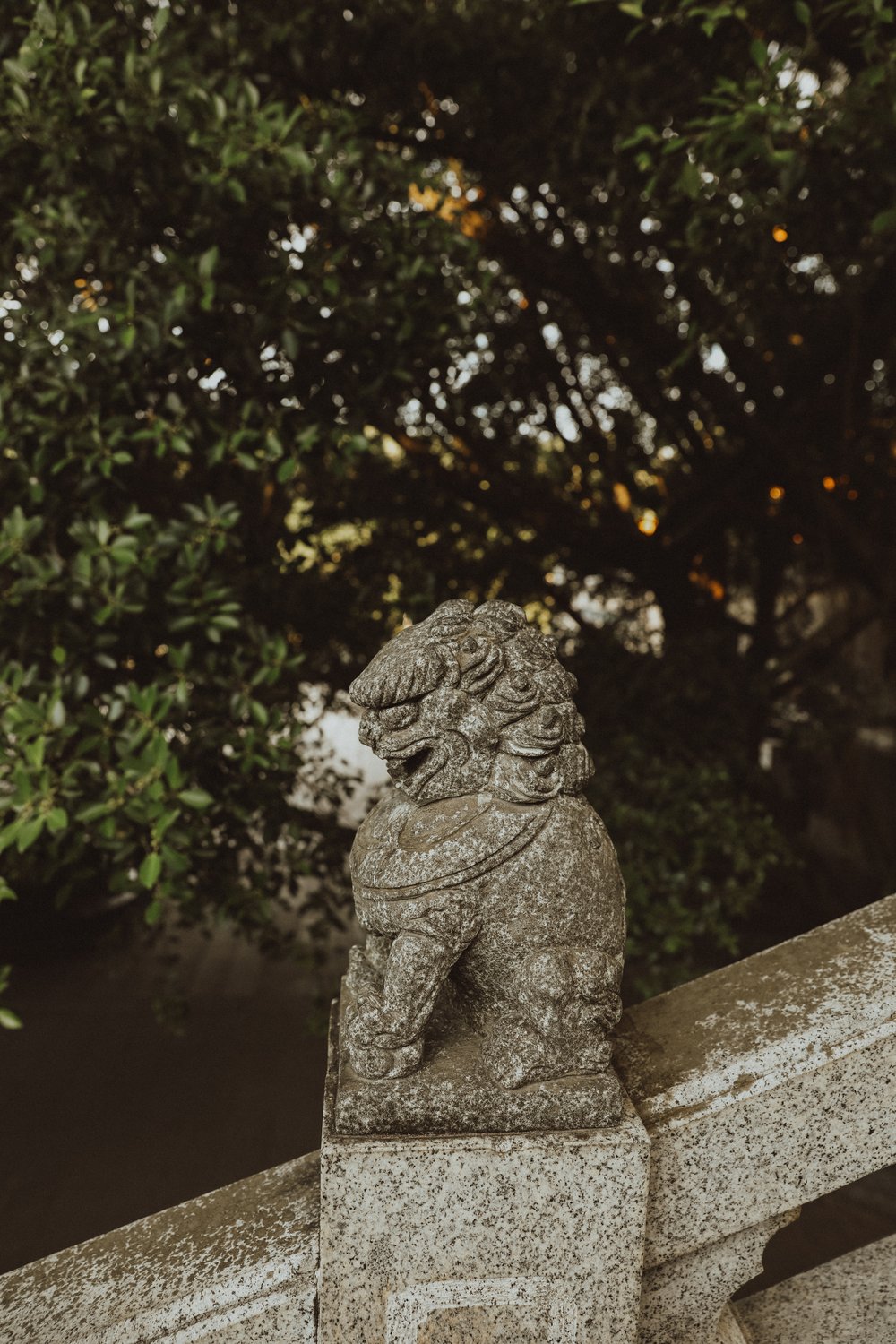
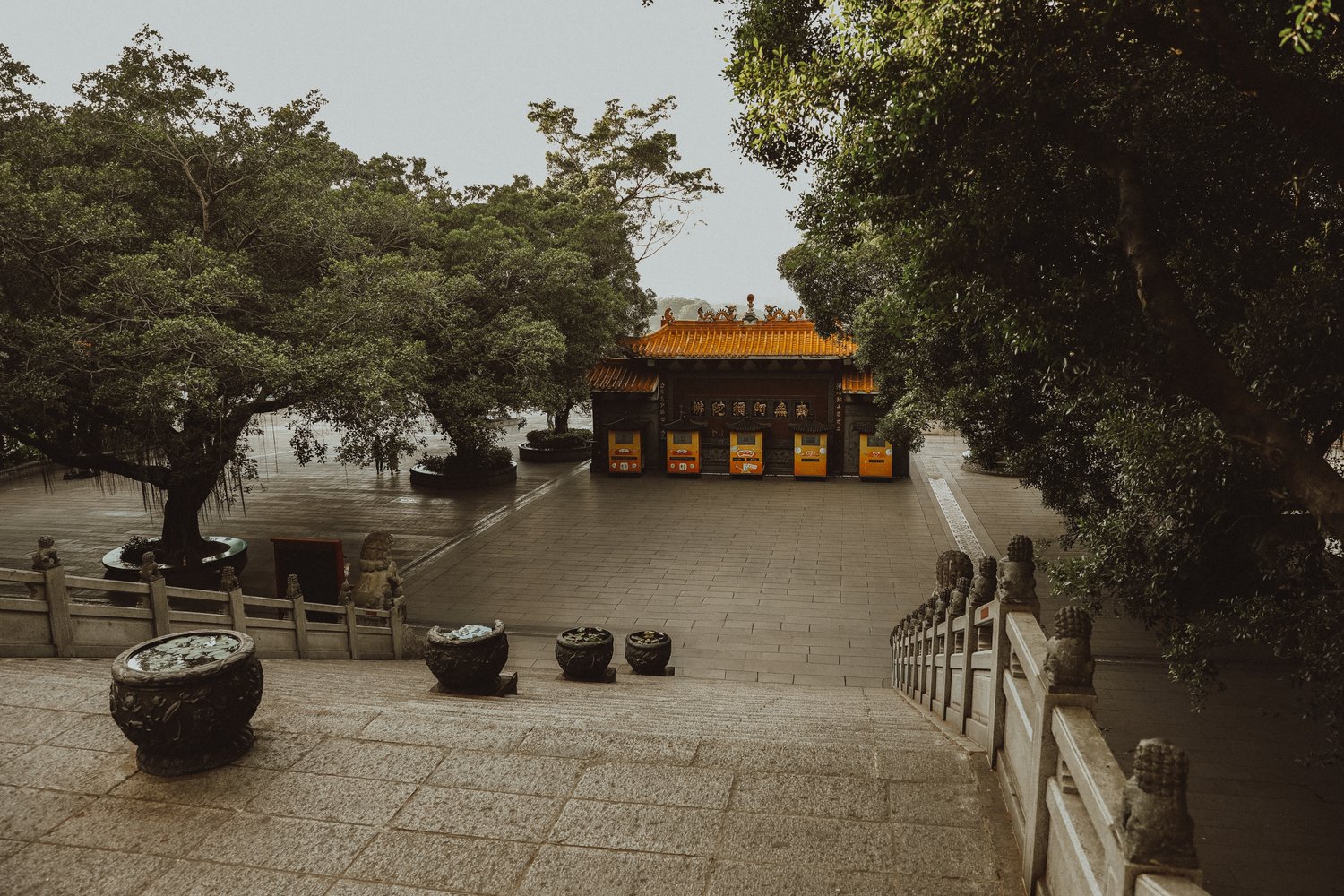
A guardian lion on the railing, and the view down over the temple halls
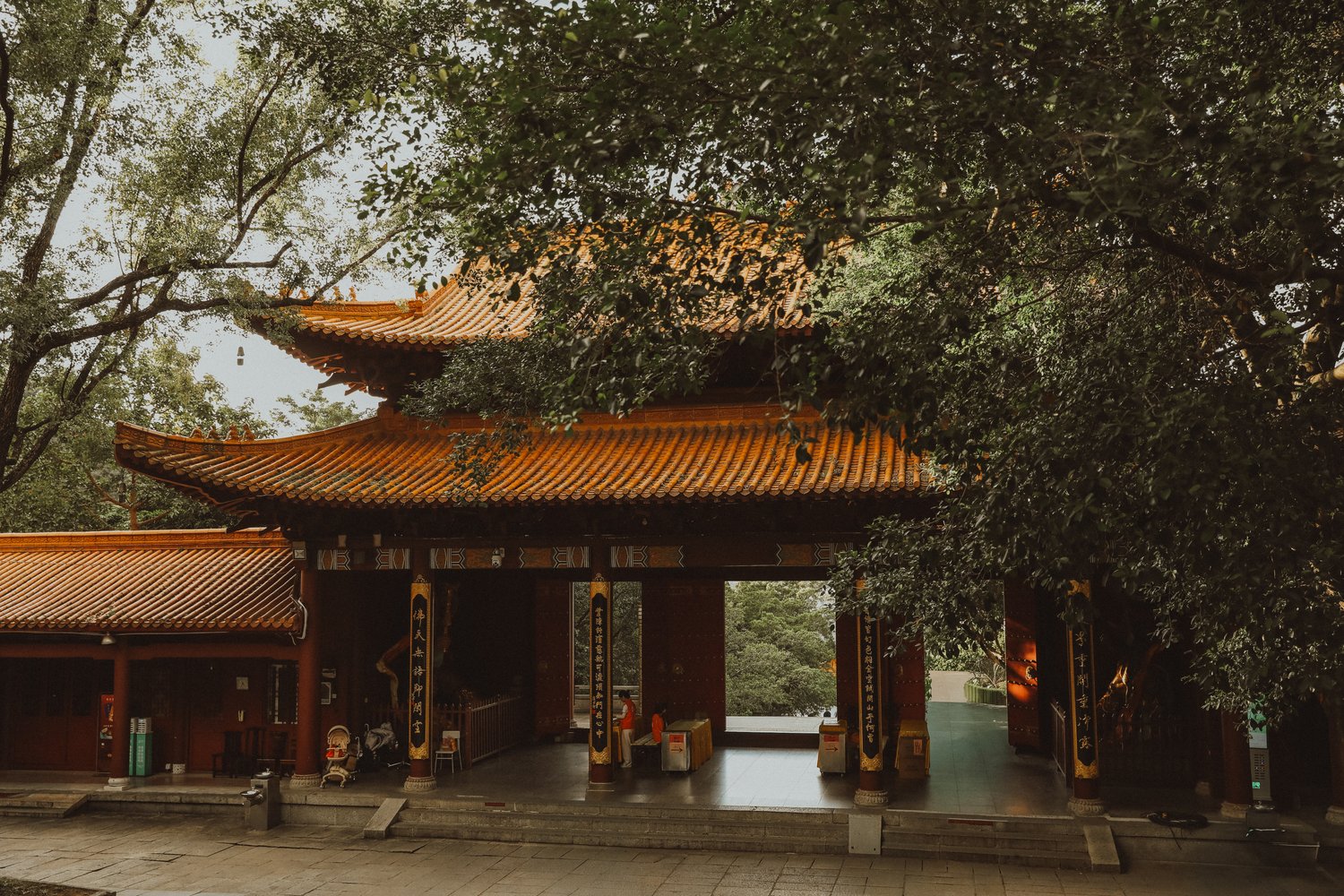
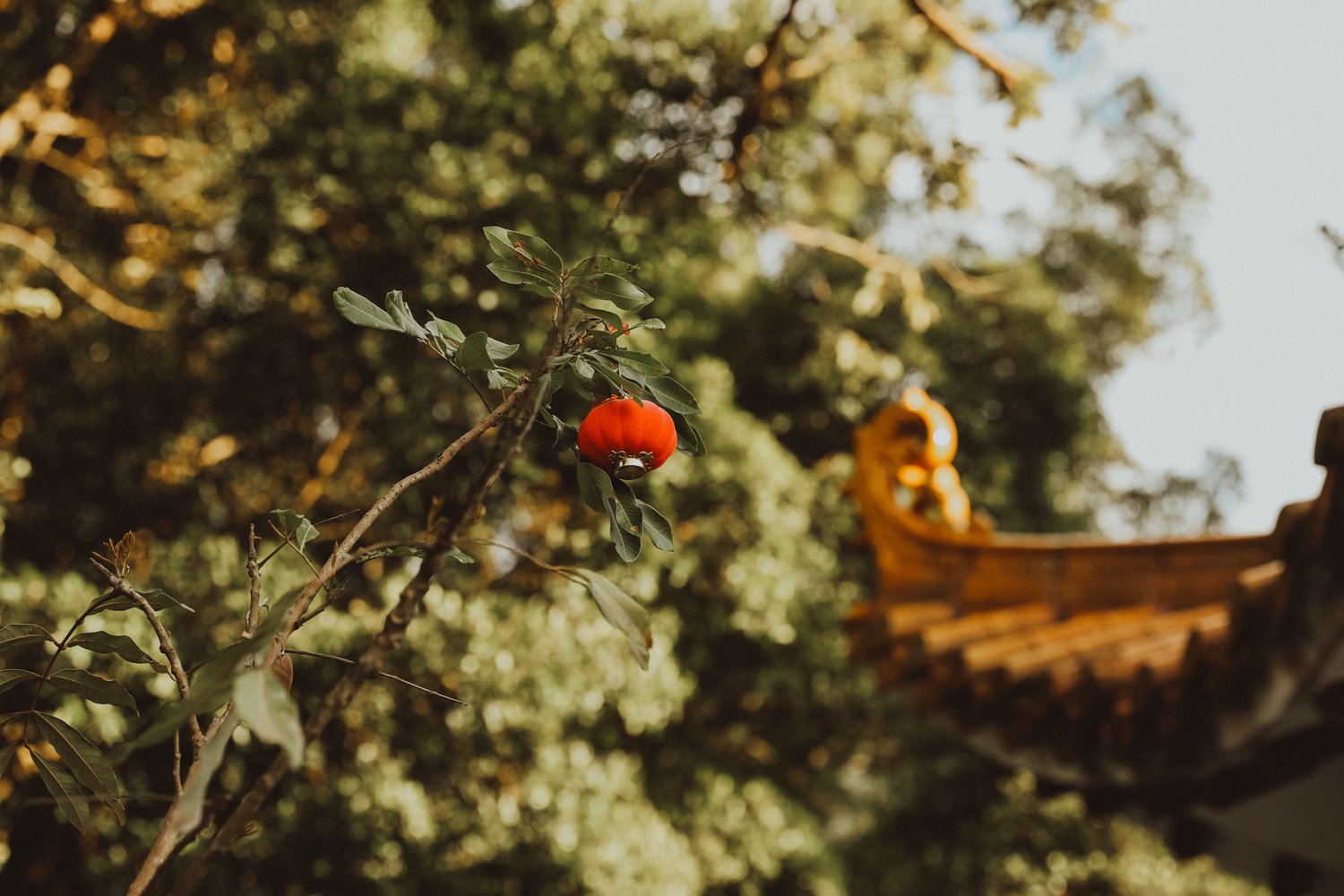
A gate pavilion and red berries by the roof
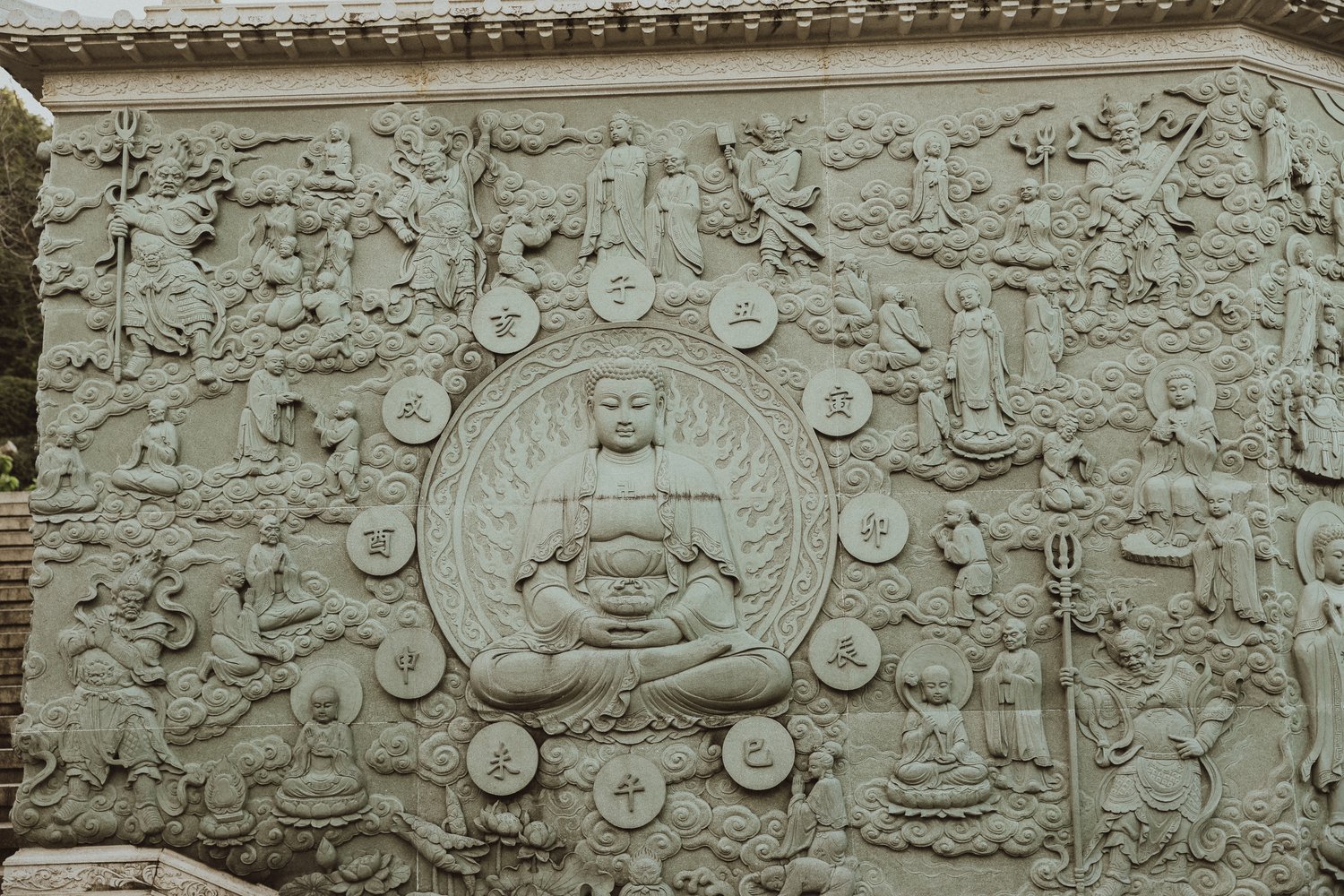
Along the way you pass a big carved wall: a Buddha in the centre, surrounded by dozens of smaller figures.
Right at the top, above the trees, you can see a pagoda — the Pagoda of Ten Thousand Buddhas (万佛宝塔). You can’t get close to it, but it’s clearly visible from below.
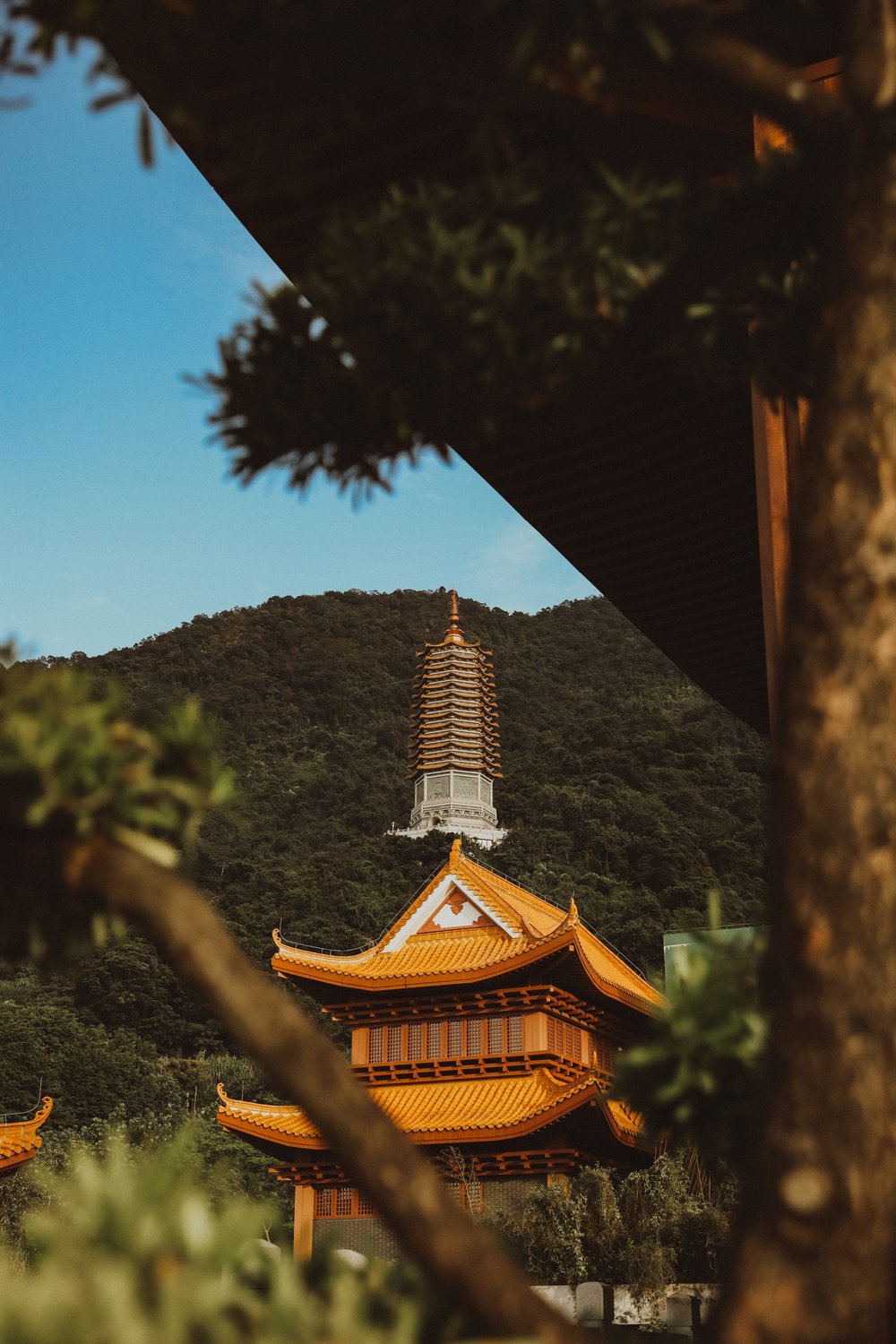
The temple looks new — and it really isn’t old. But it’s beautifully and carefully made: carvings in wood and stone, painted ceilings, gilded statues. It’s just a nice place to wander between the halls.
Stop 2. Pine garden and the plant area
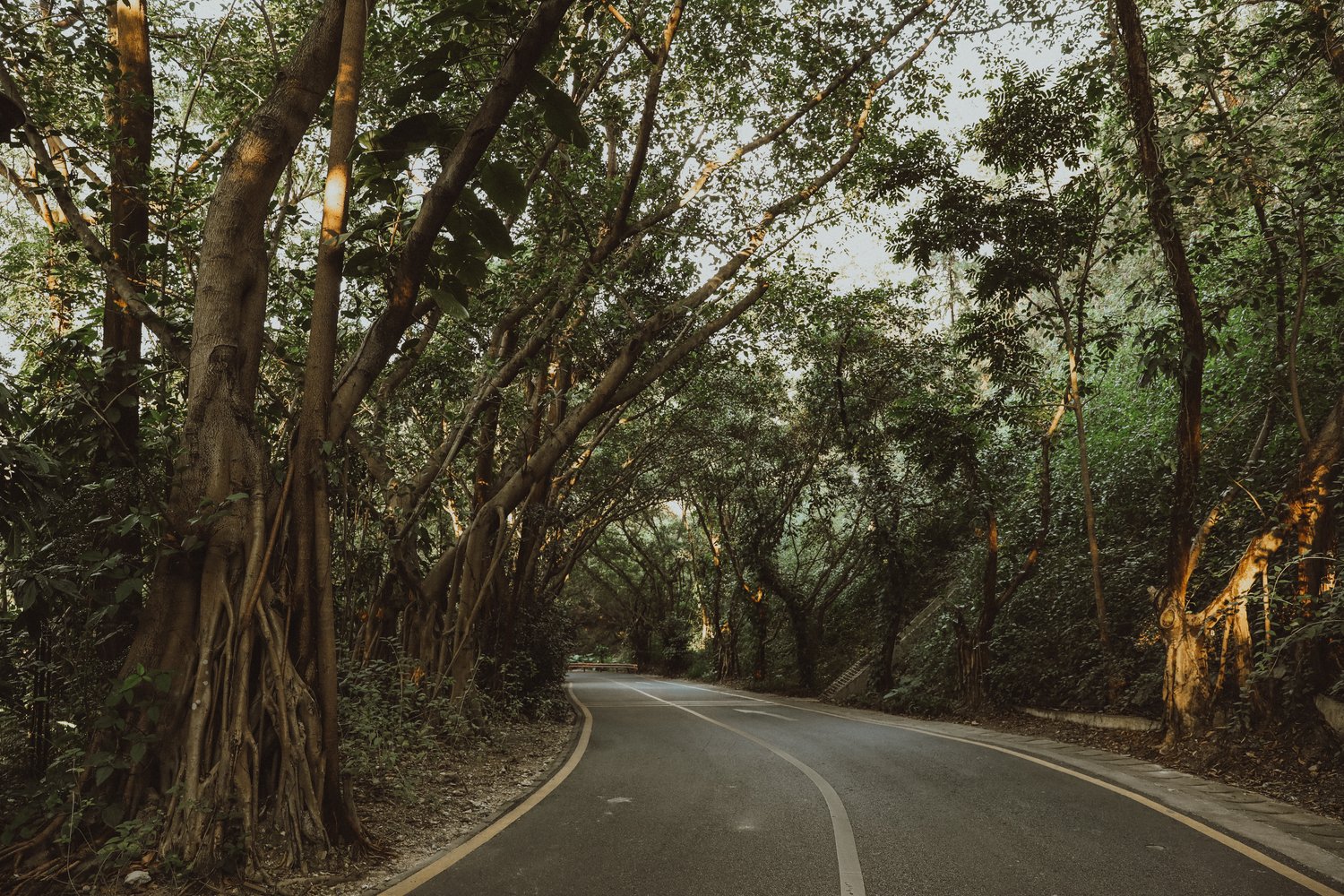
From the temple I walked towards the pine garden. The road runs under the trees — quiet, shady and almost empty.
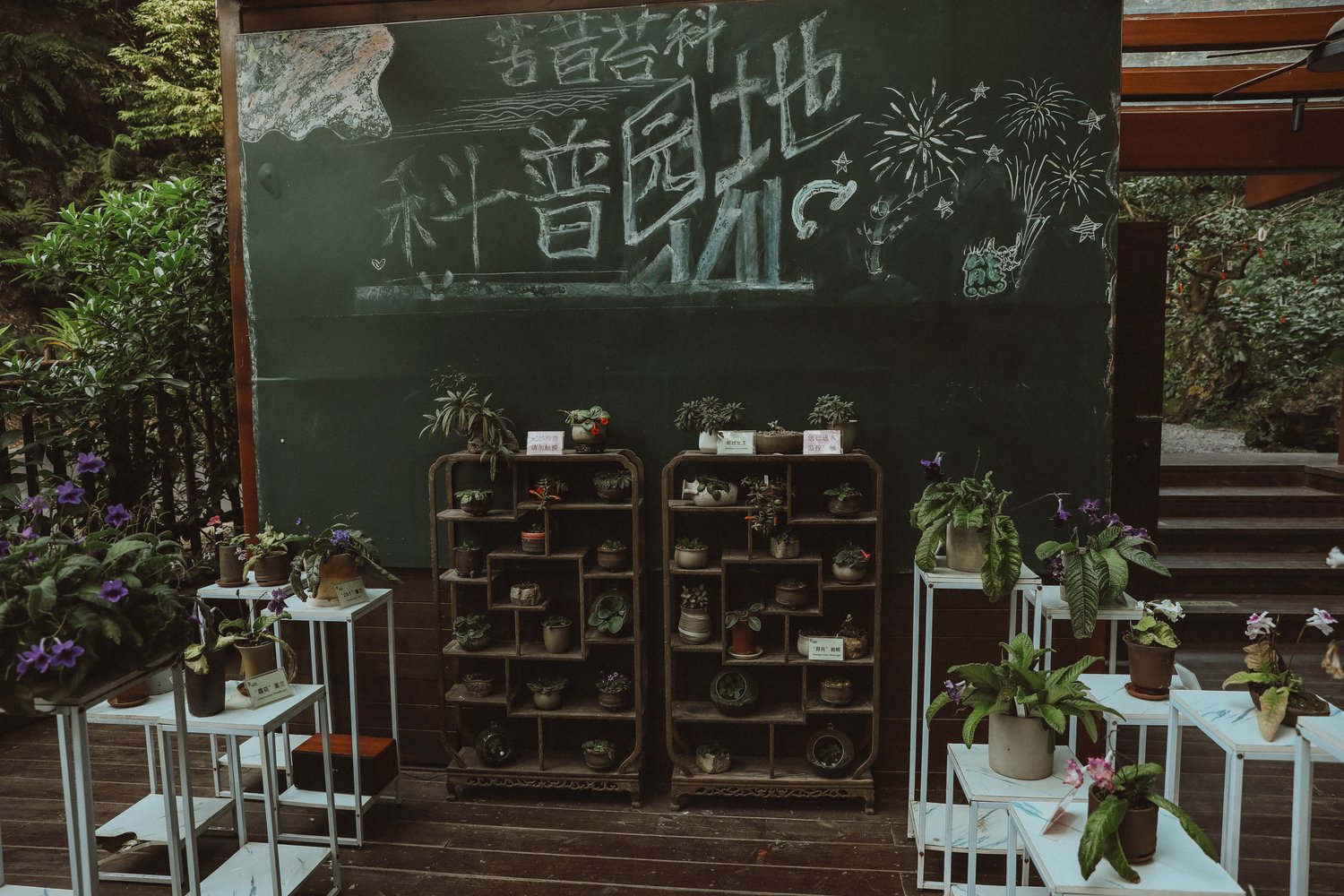
Along the way I came across a pavilion with plants and a small photo spot. Pots of houseplants and ornamental plants are on display here: African violets, succulents, greenery in hanging baskets.
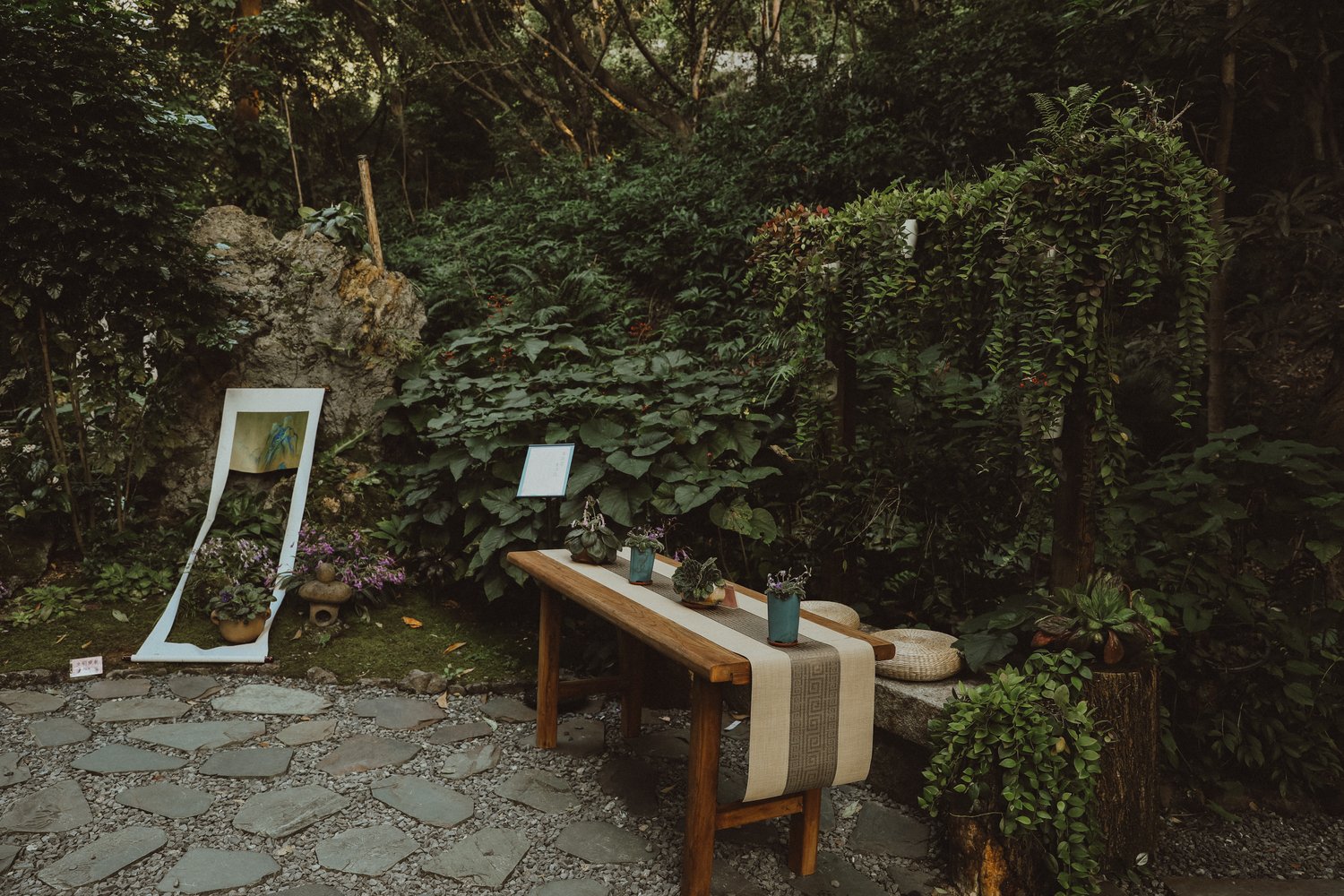
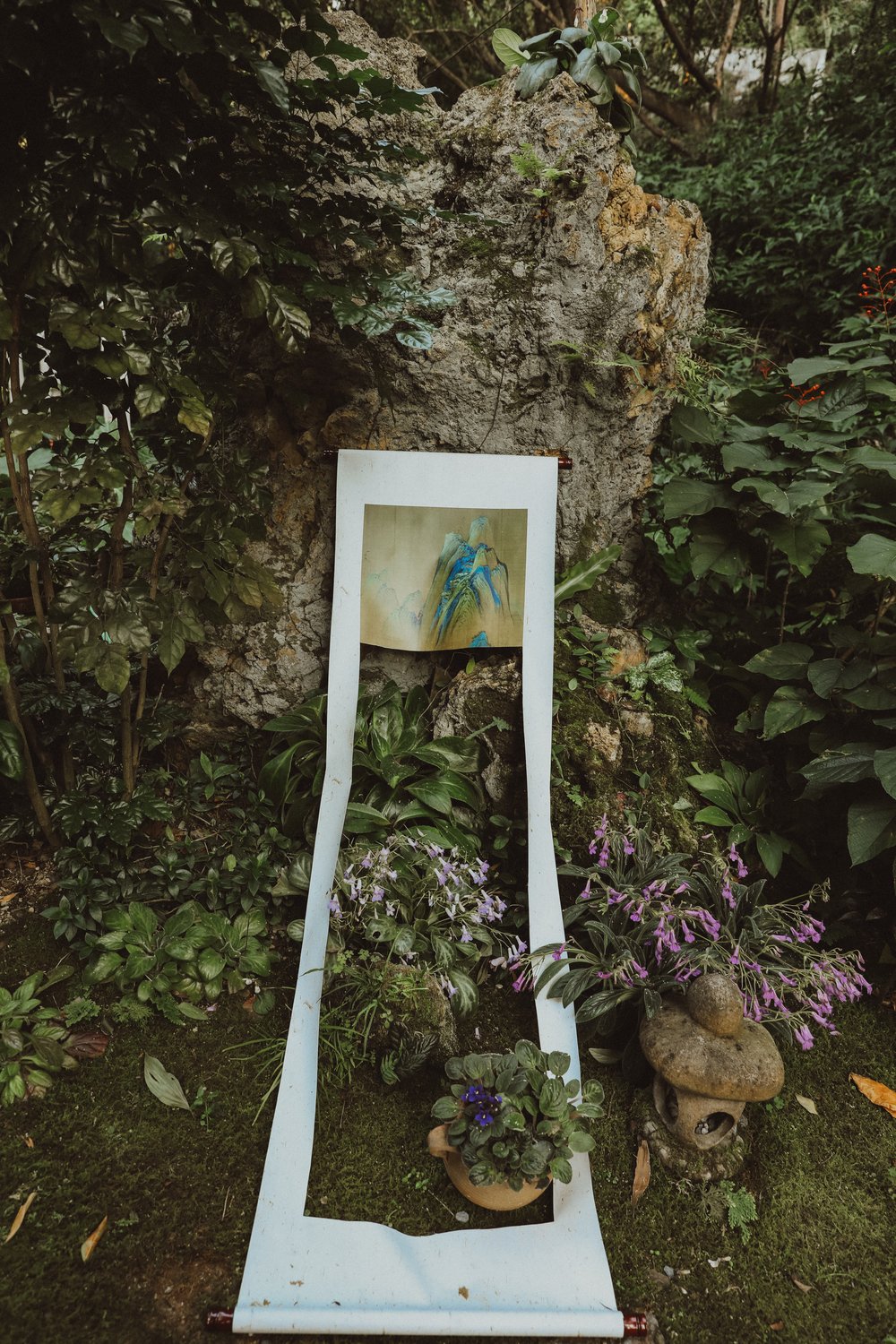
A photo spot and stands with plants in the nature-education area
One of the chalkboards here has a sign in Chinese — 科普园地. It means “nature-education area” or “science-education plot”. So this isn’t just a pretty corner: visitors are shown different plants and told about them. Botanical gardens in China set up areas like this so people can actually learn something about the plants, especially with kids.

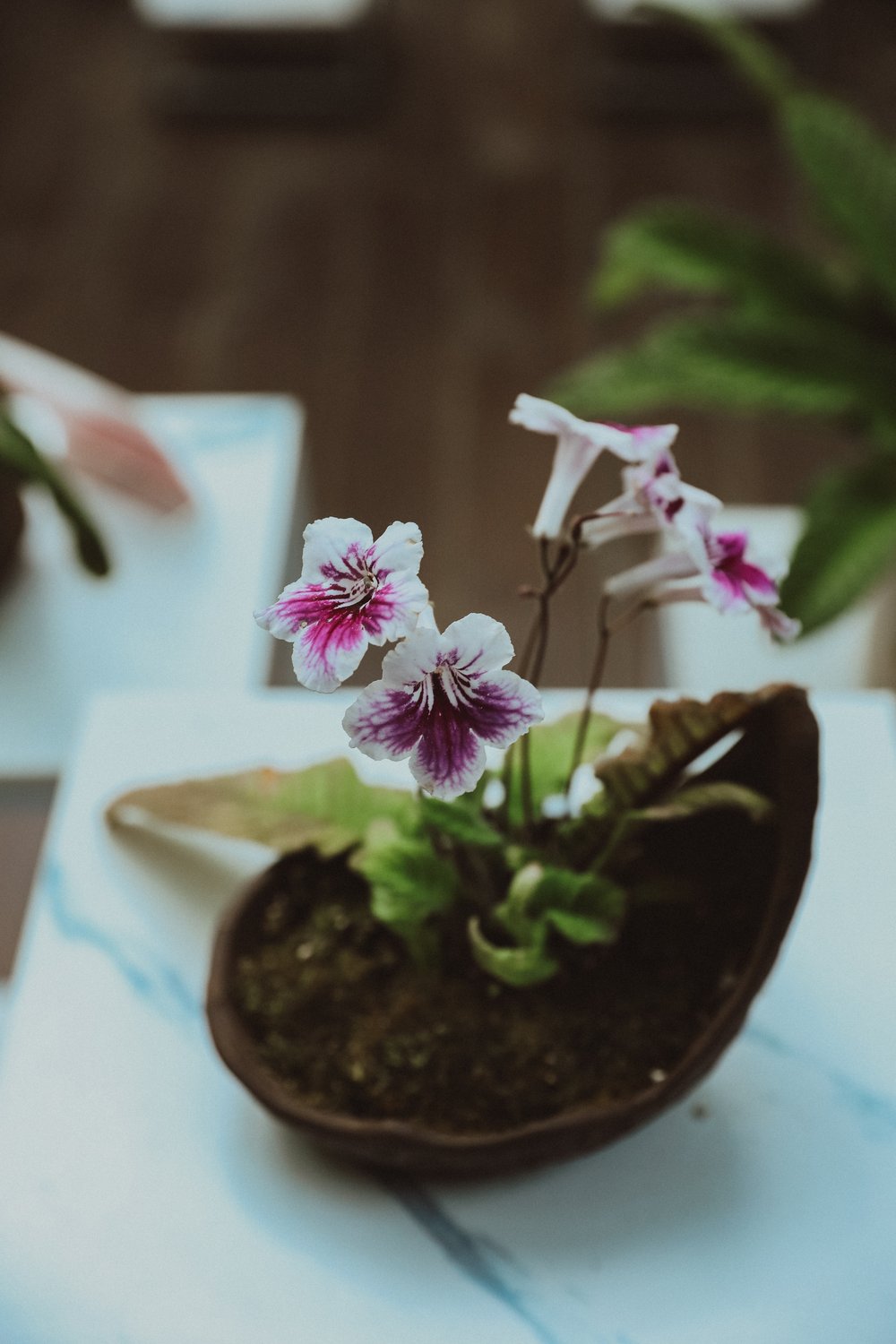
Pots of flowers on the tables
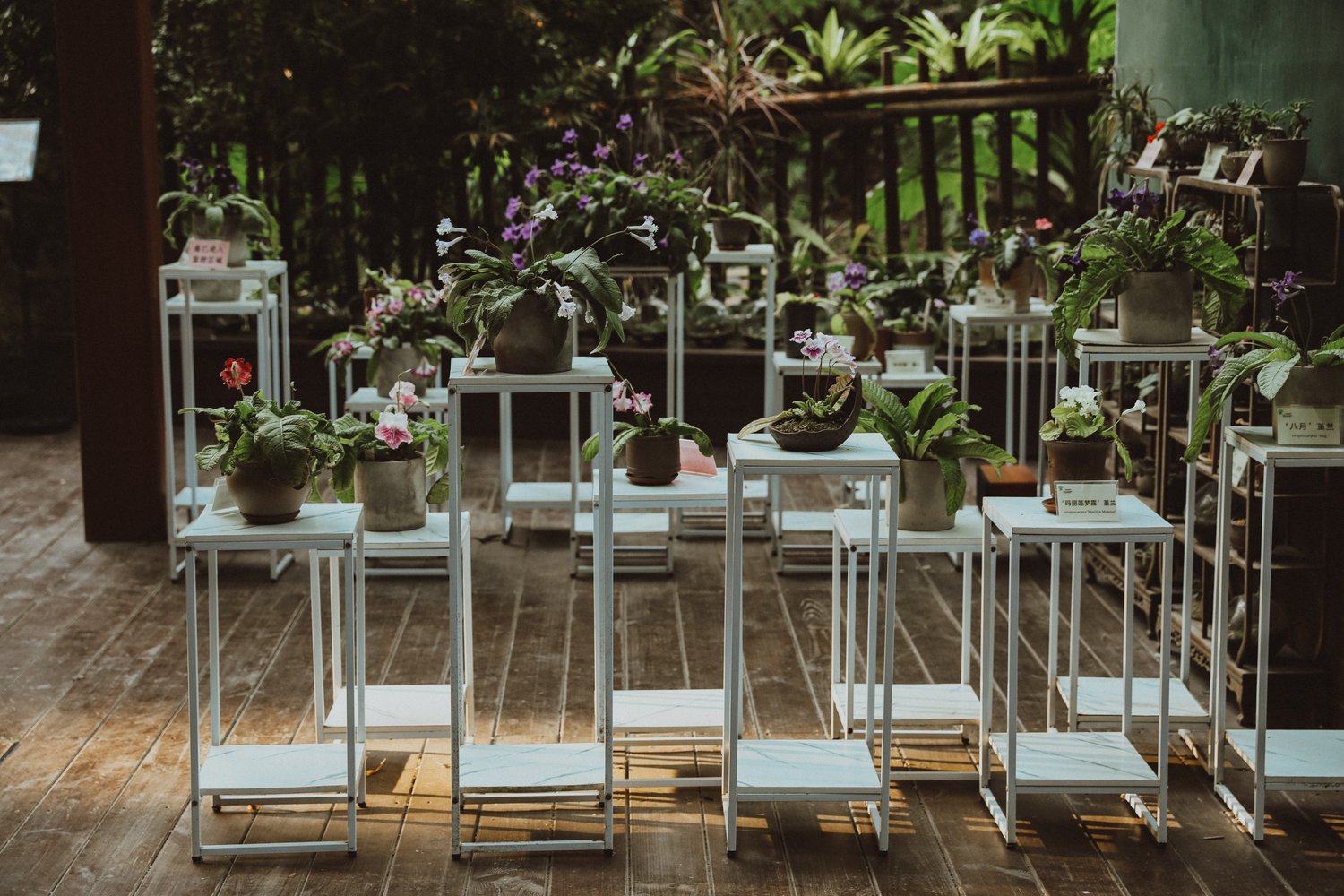

Plants lined up on shelves
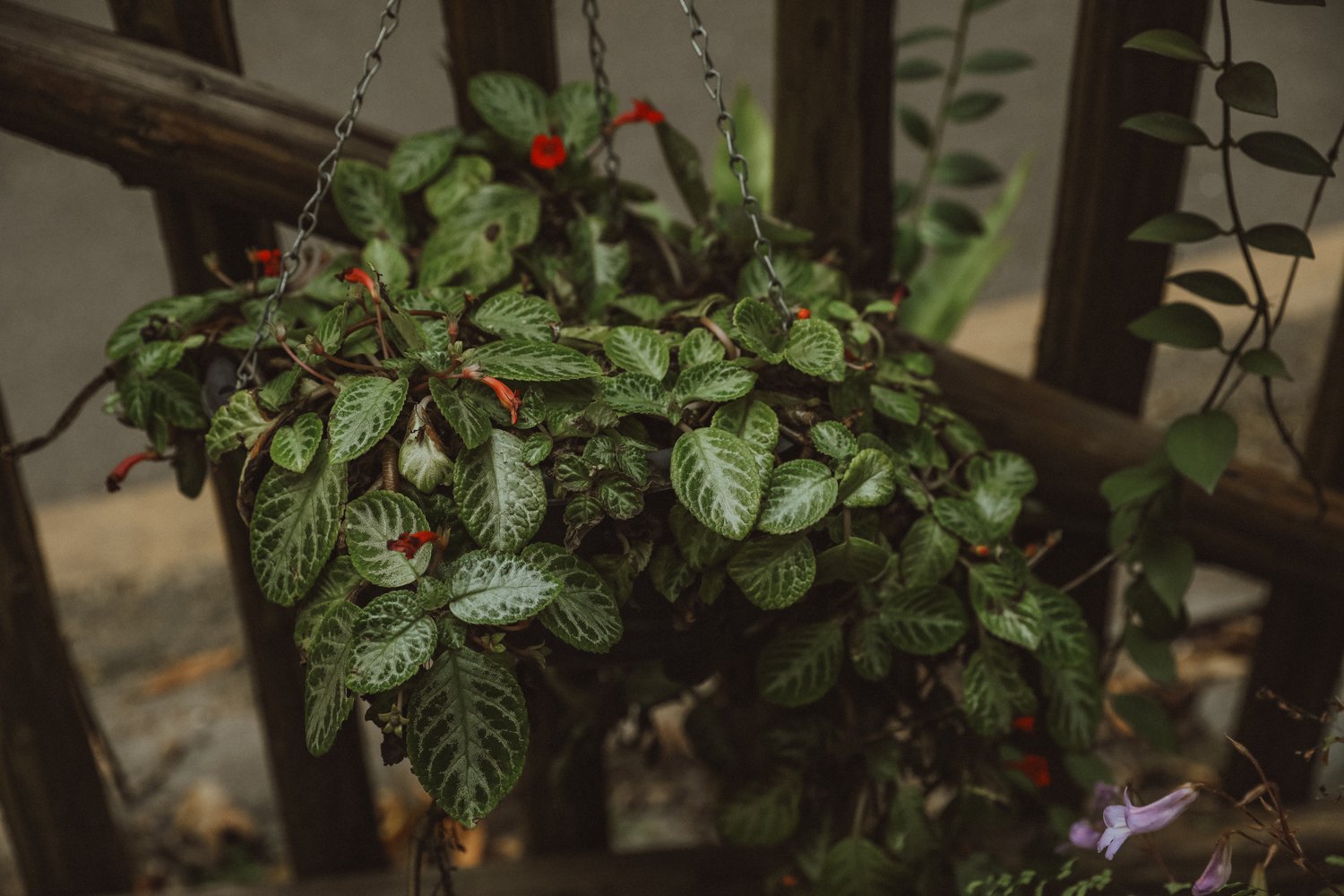
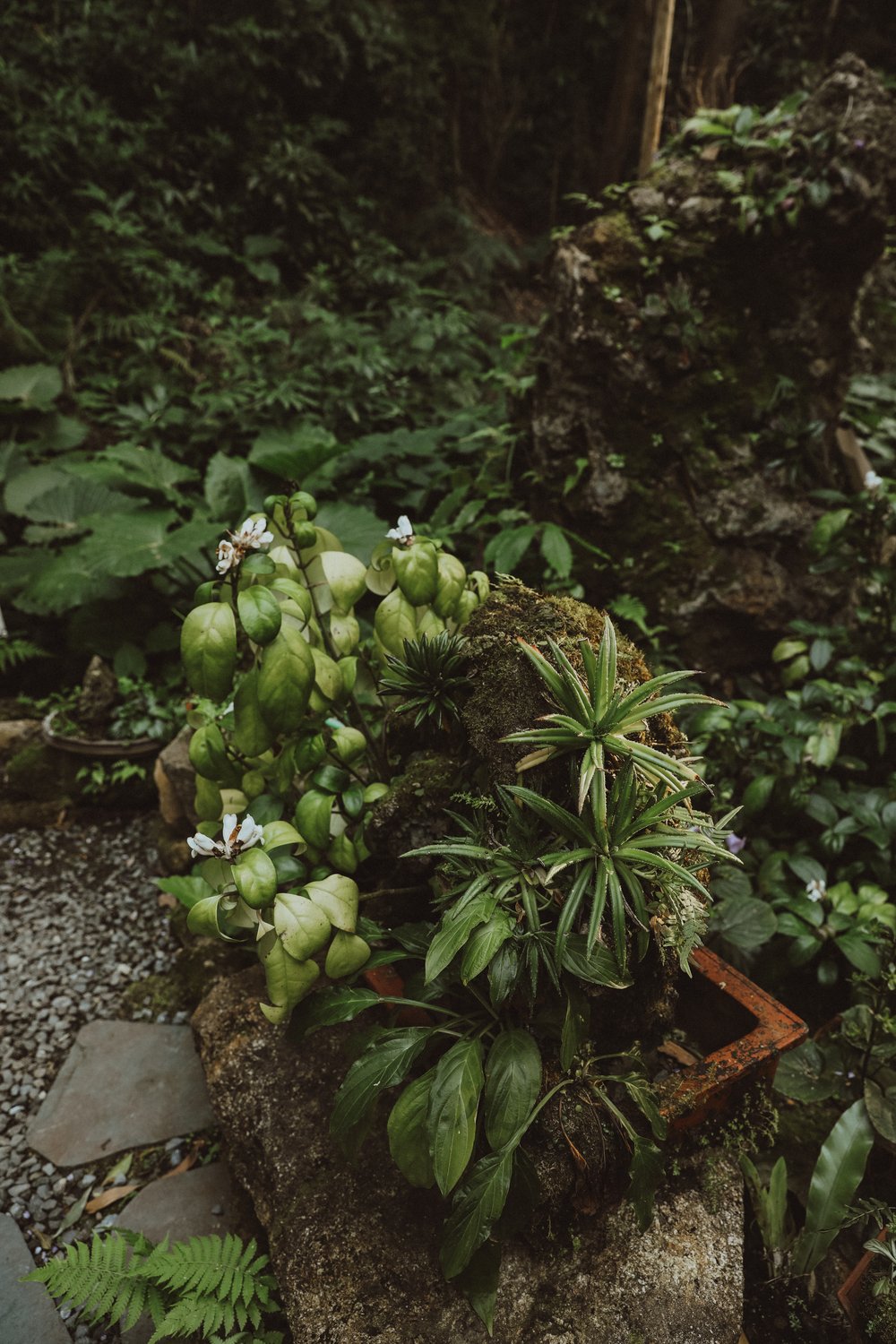
Greenery in hanging baskets and on the beds
The bonsai garden and the flower fields
Next comes the landscaped part of the park — a Chinese-style garden with lawns, paths, ponds and rockeries. The bonsai garden is here too. It’s a calm place, nice for a walk between the trees and the water.
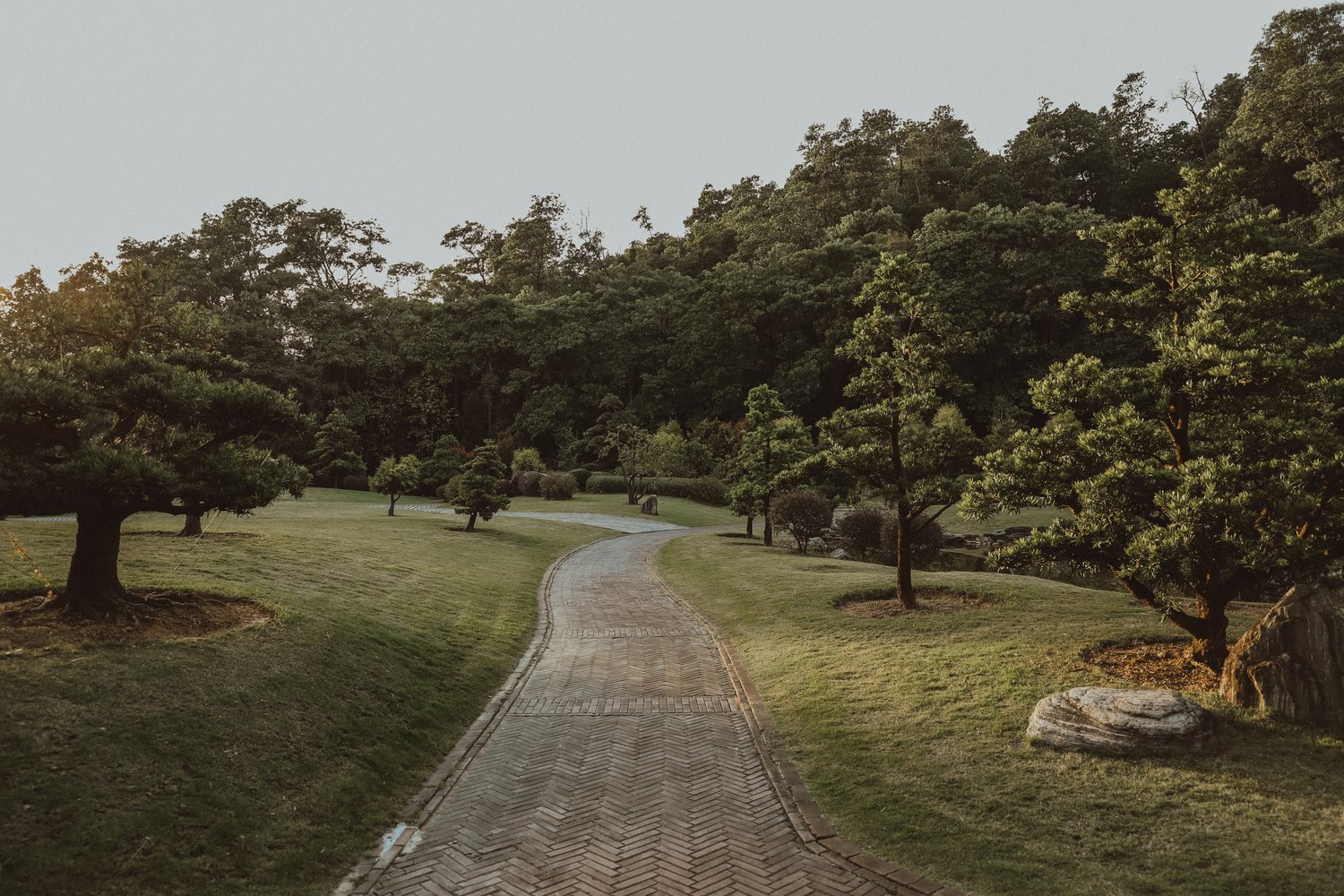
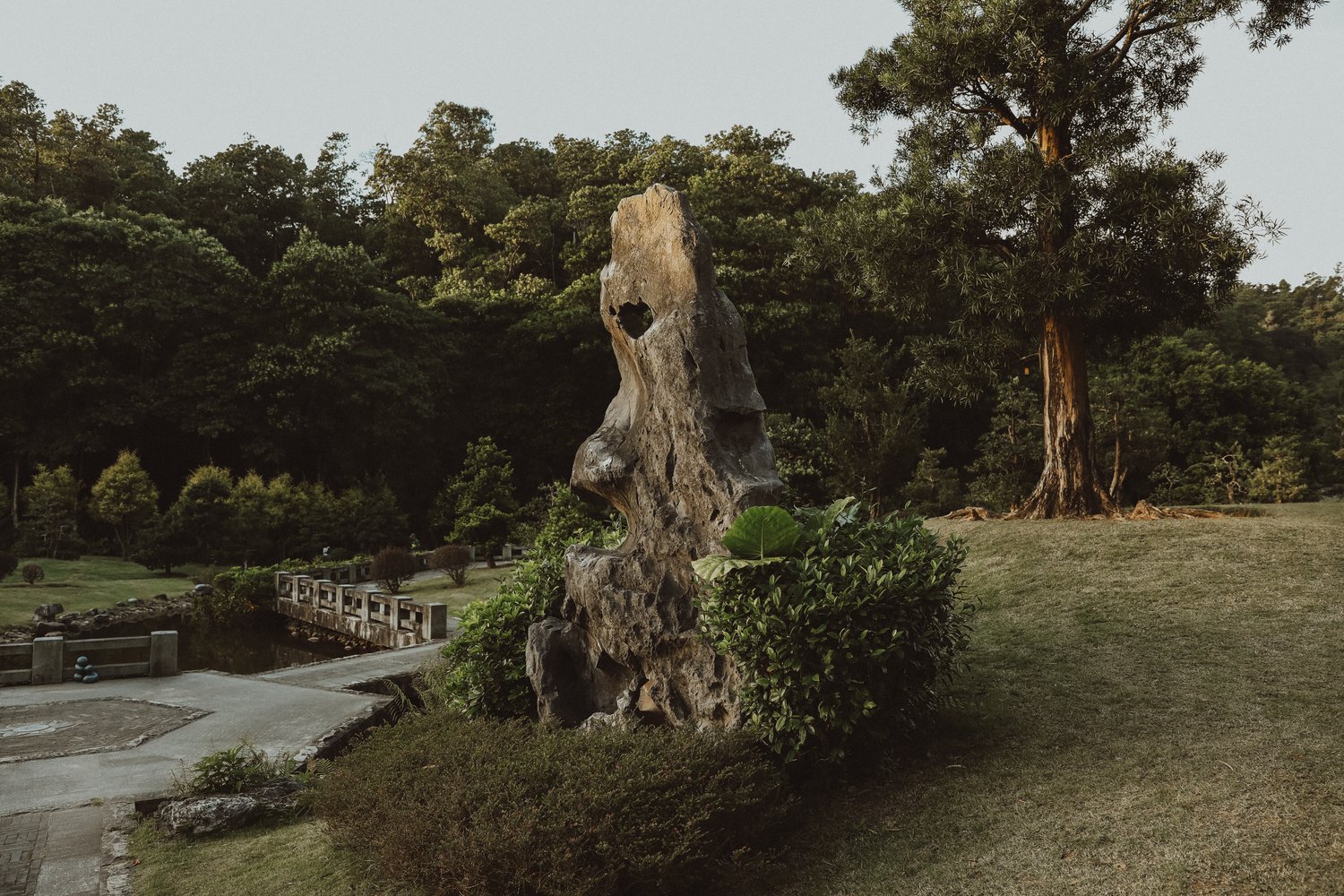
Paths and rockeries in the garden
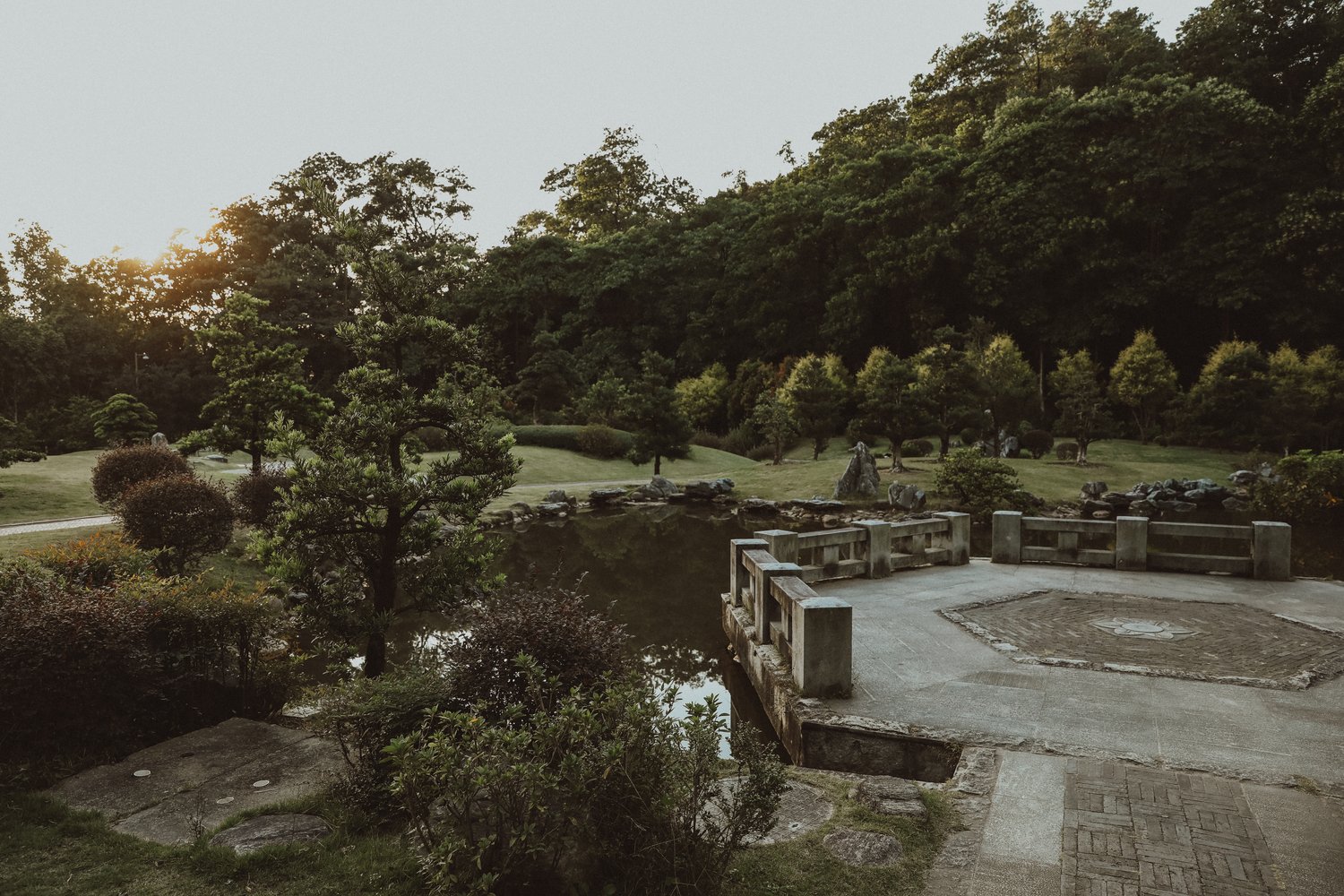
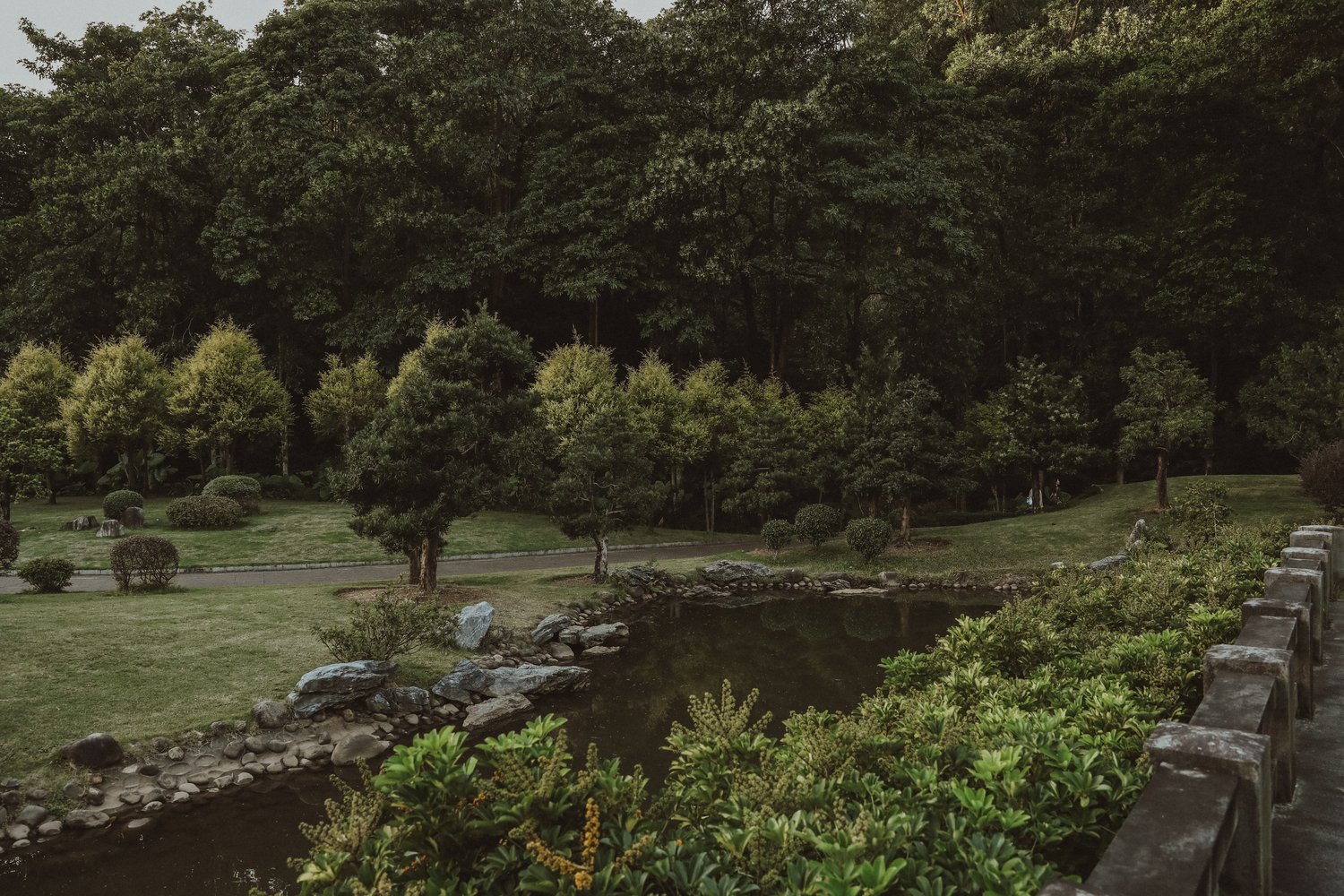
Ponds and terraces in the bonsai garden
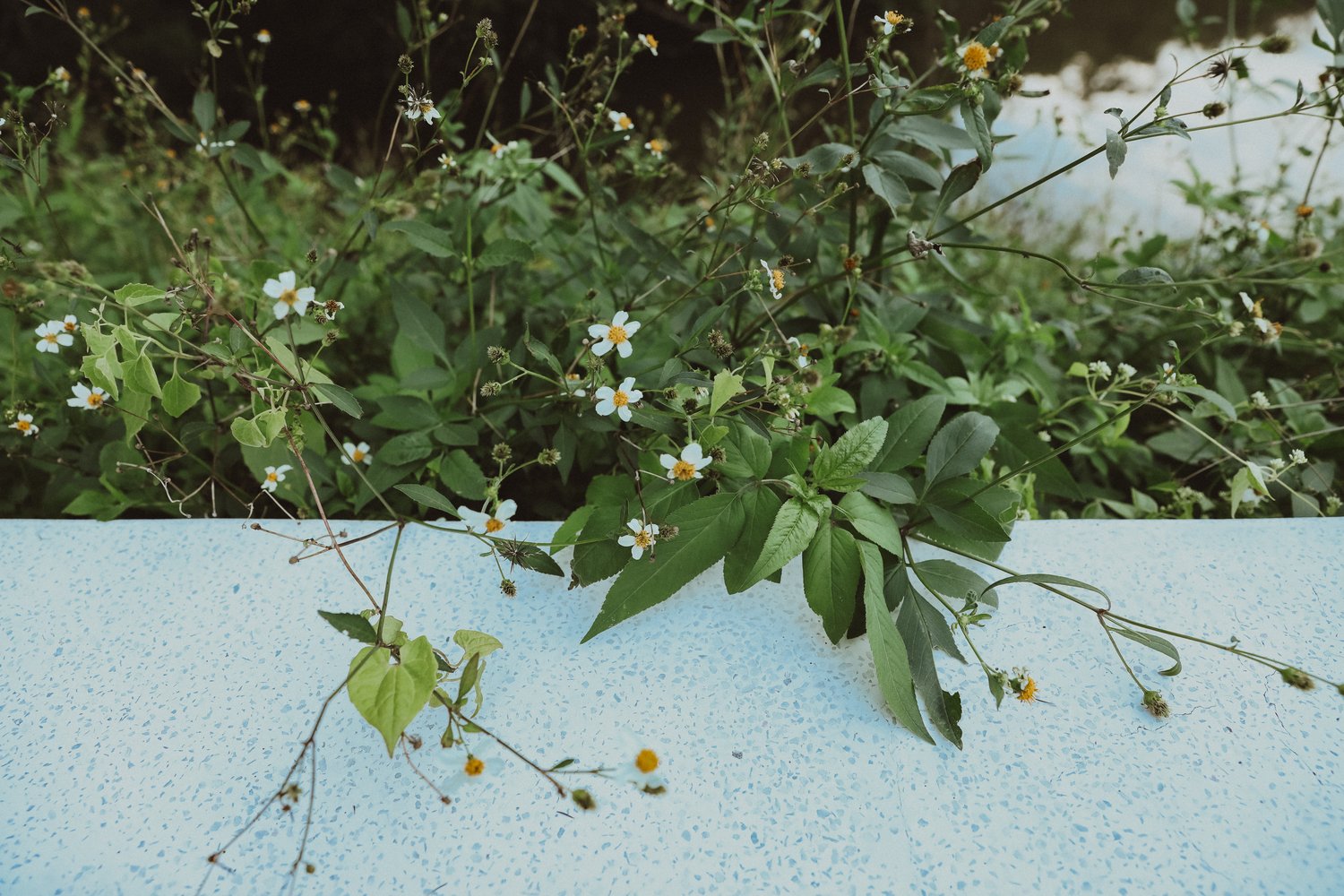
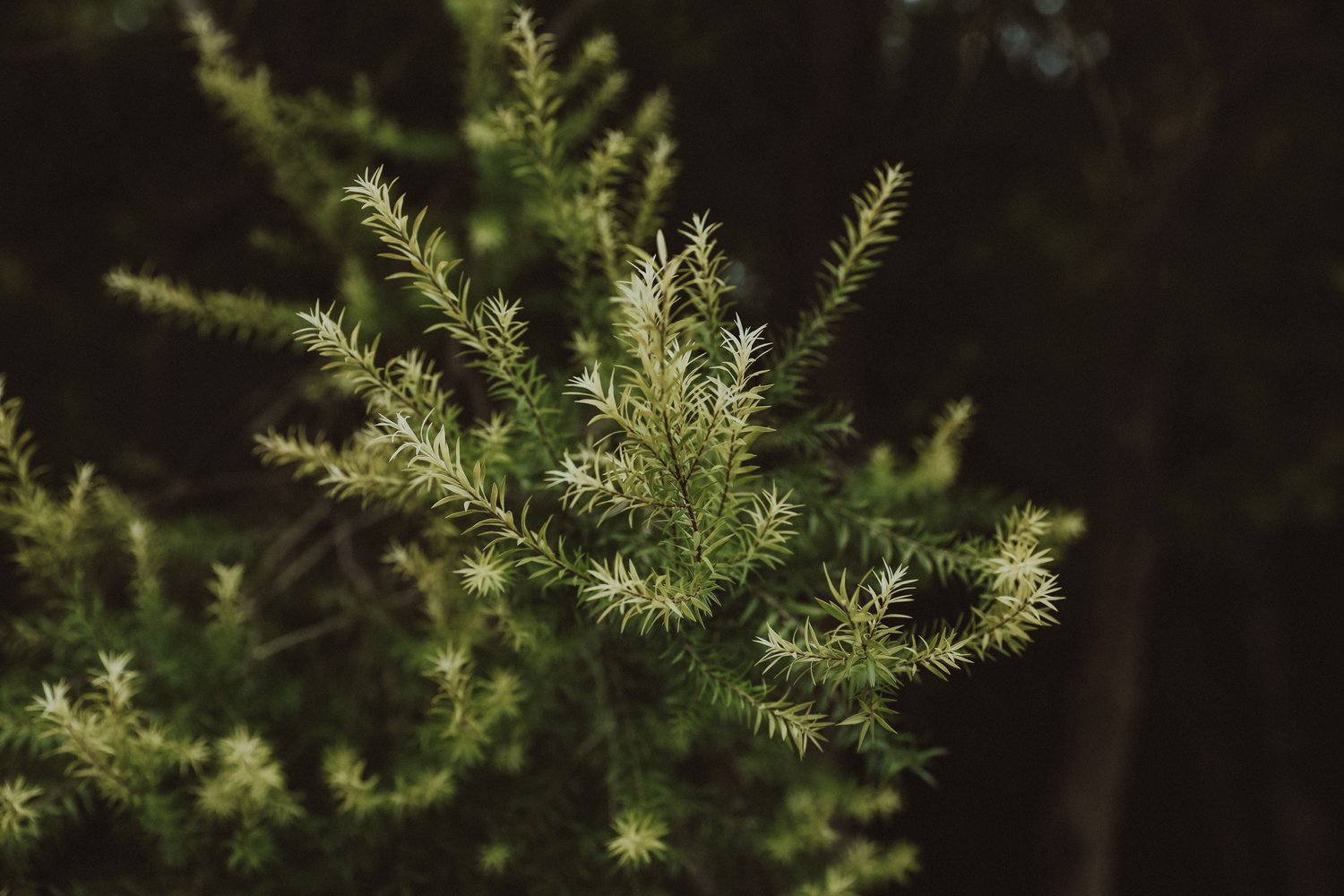
Wildflowers and conifer branches in the pine garden
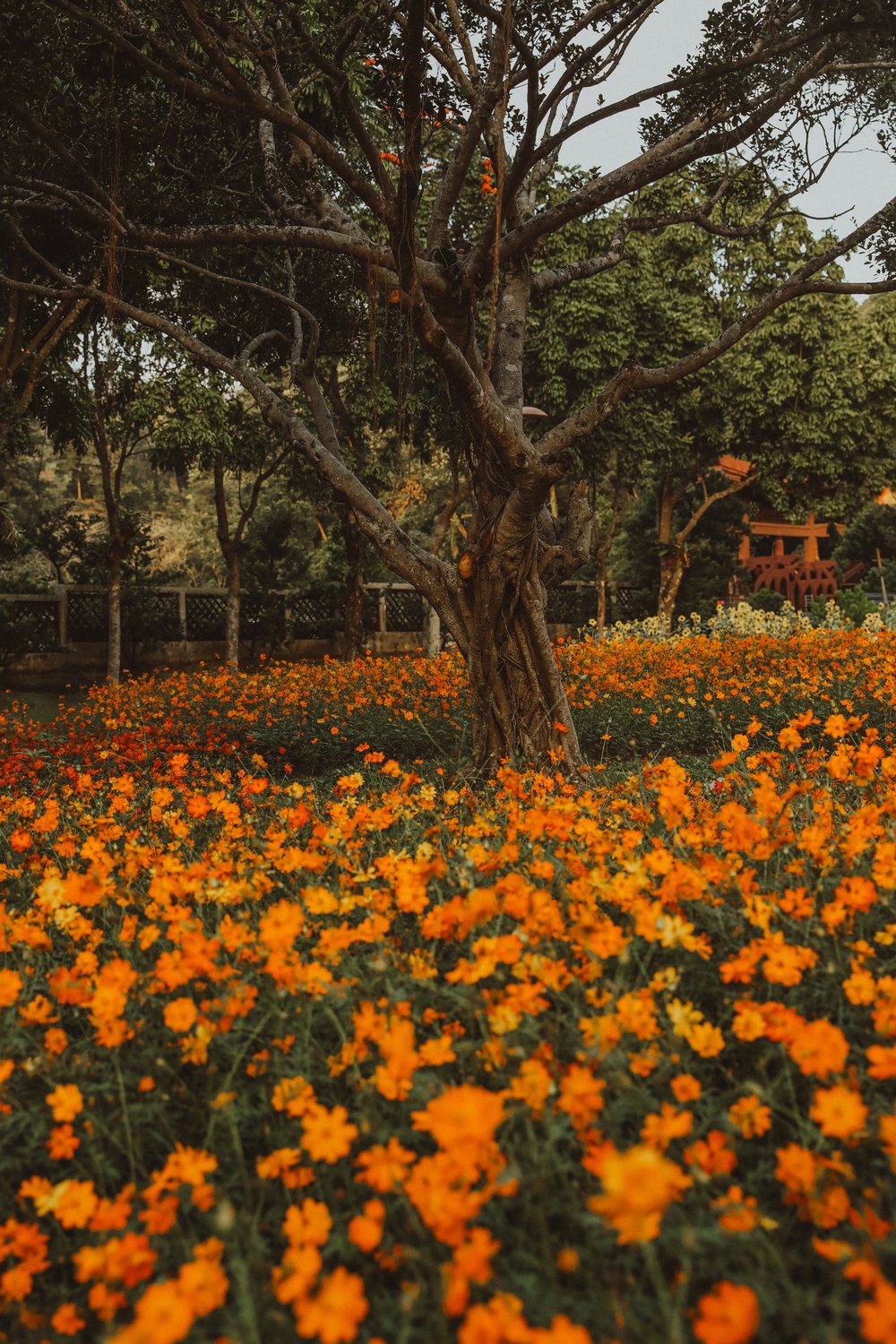
Next to the bonsai garden there are big flower beds. They plant sunflowers and bright orange cosmos here, in whole fields. It’s a very popular spot with locals — everyone takes photos here. Some shoot portraits among the flowers, some just stroll. If you come in the flowering season, the photos turn out lovely.
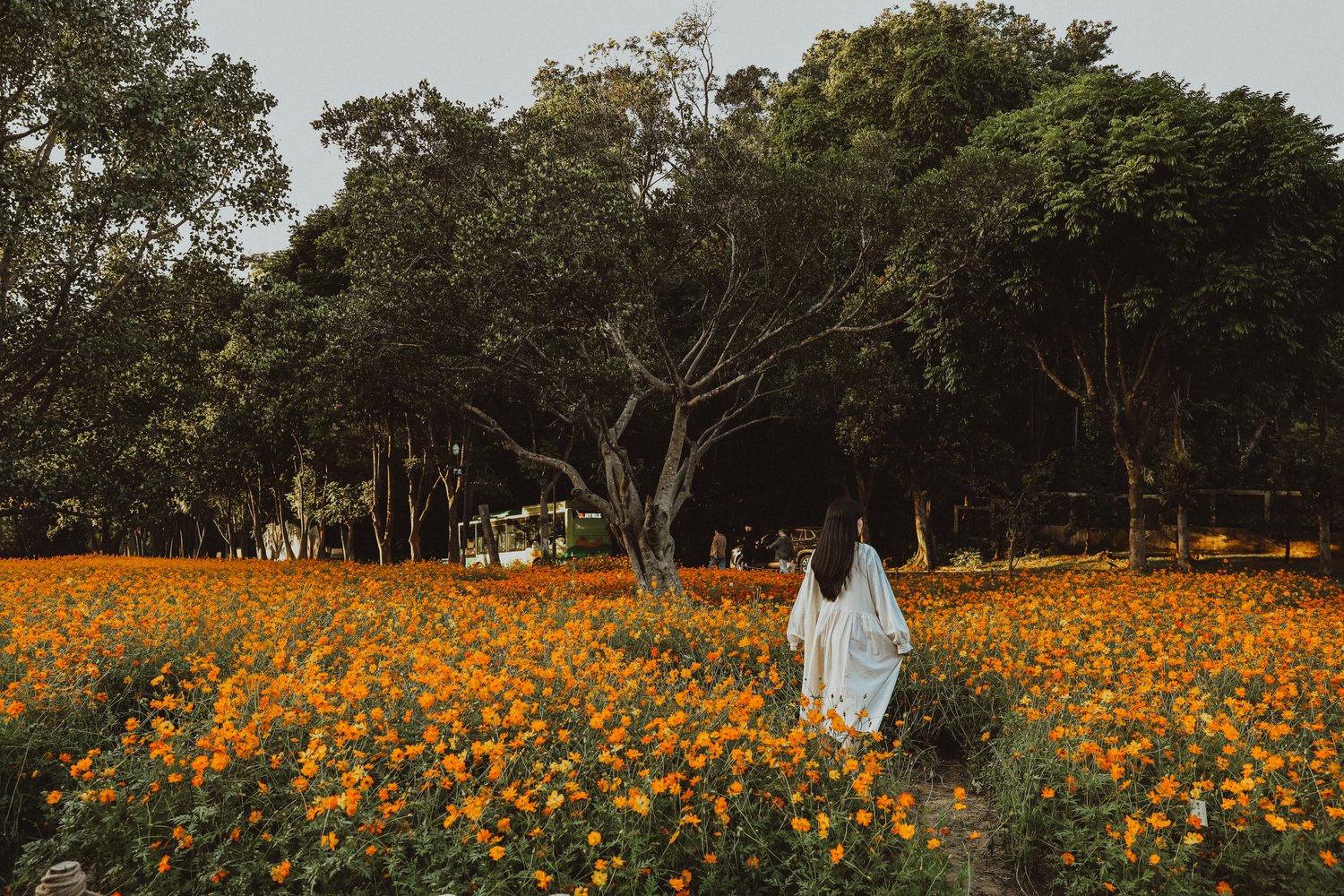

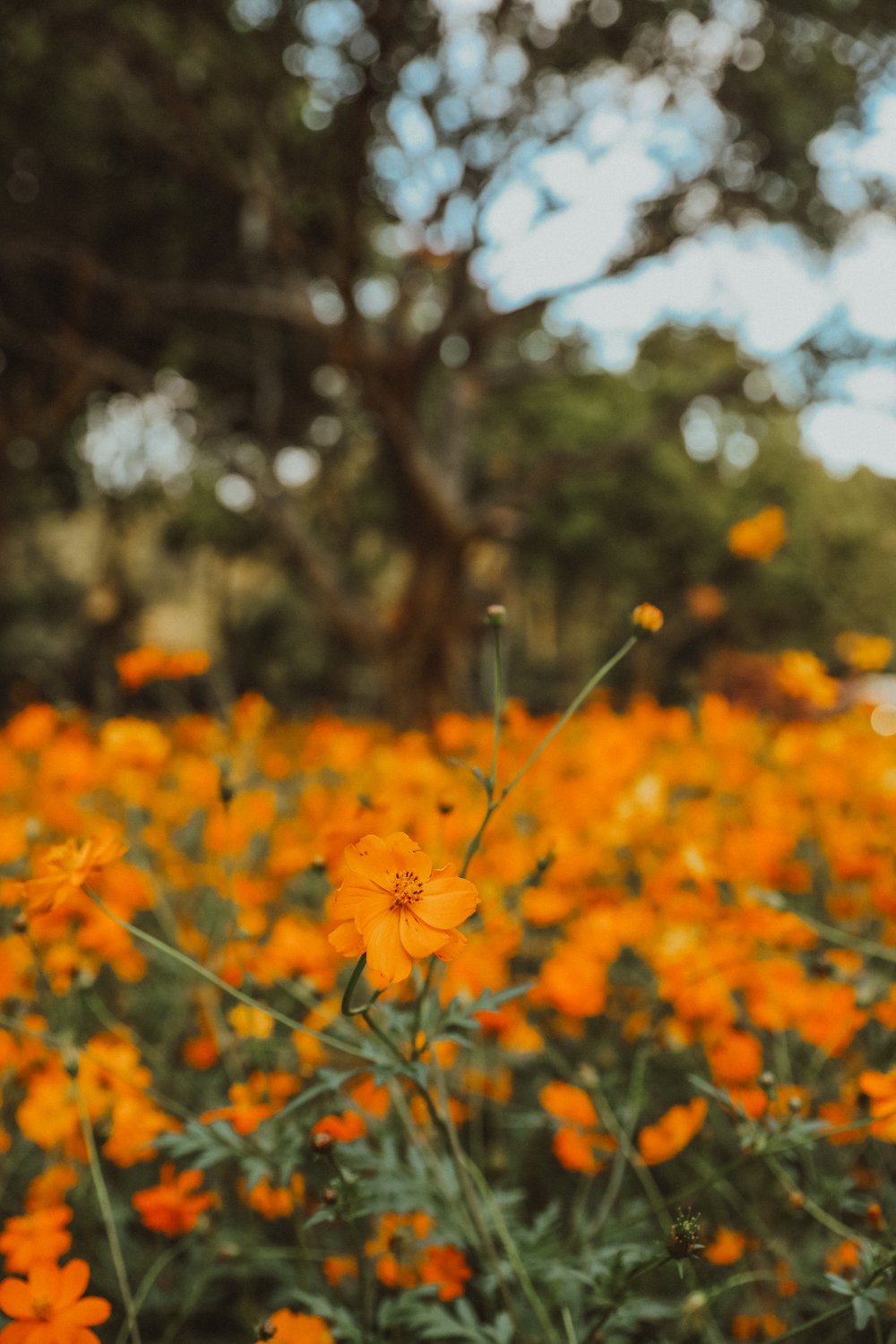
Sunflowers and orange cosmos
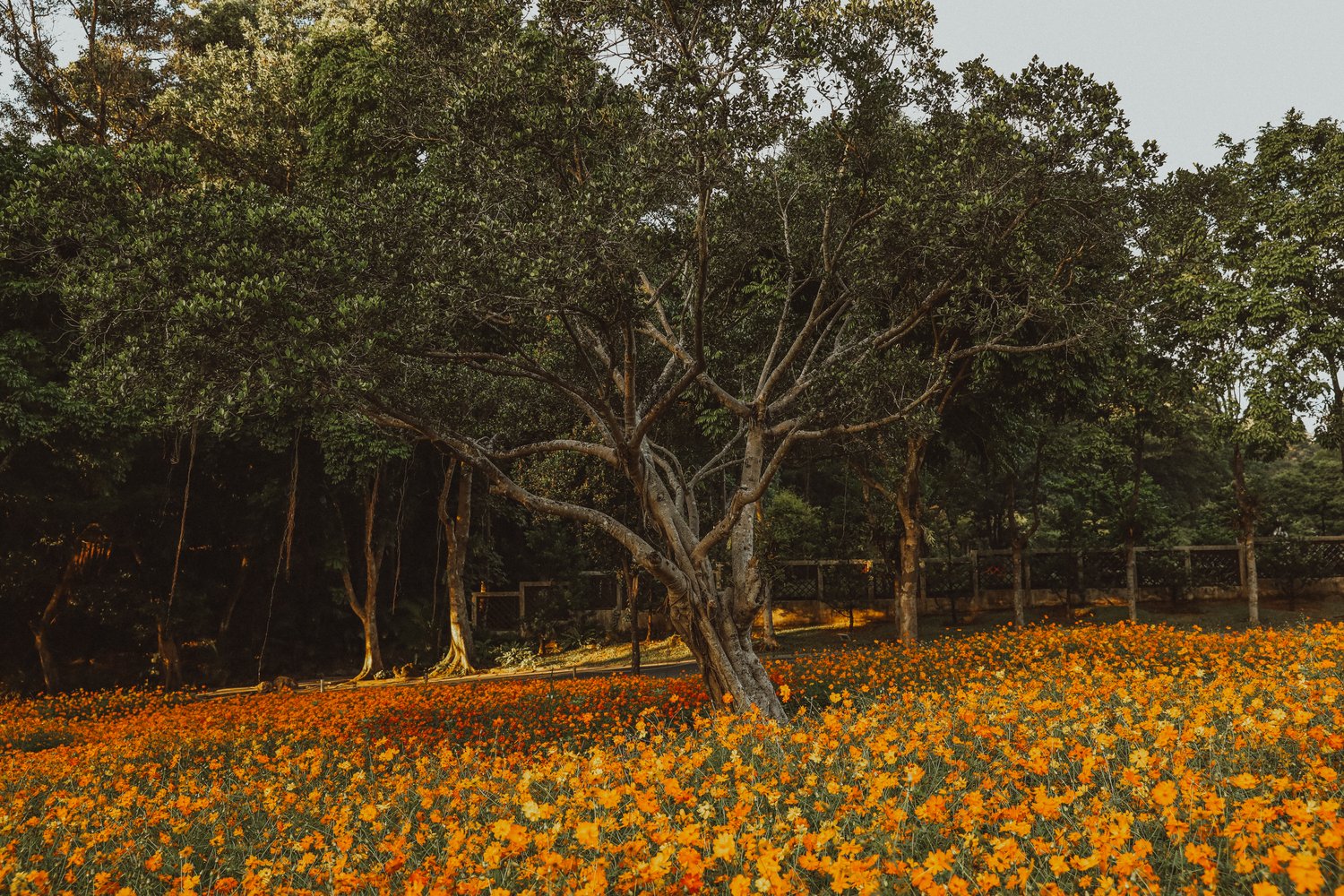
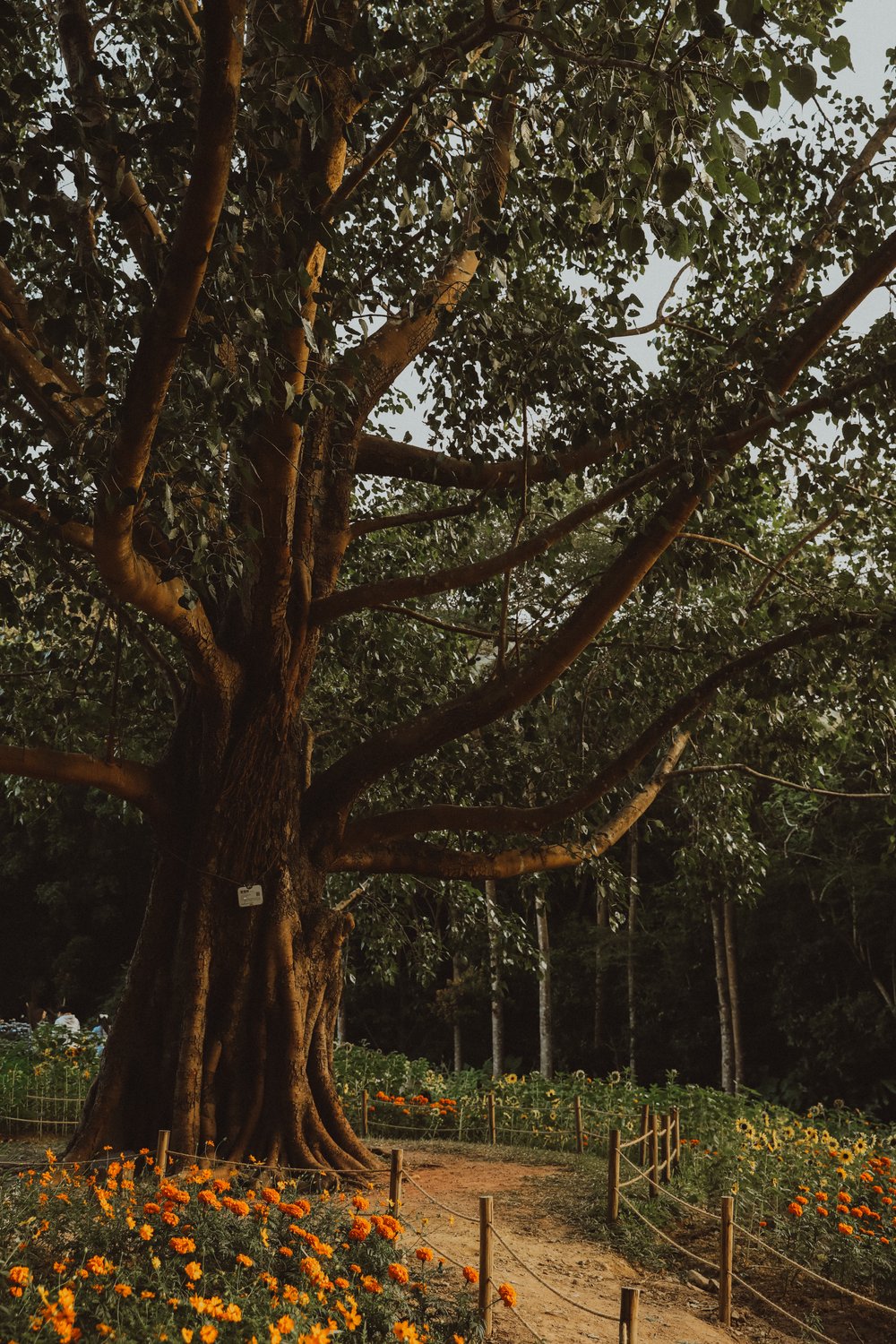
Trees in the middle of the flower fields
The bamboo grove
On the way to the lakes the bamboo grove begins. The path runs through tall bamboo, with a stream beside it. It’s cool and quiet here.
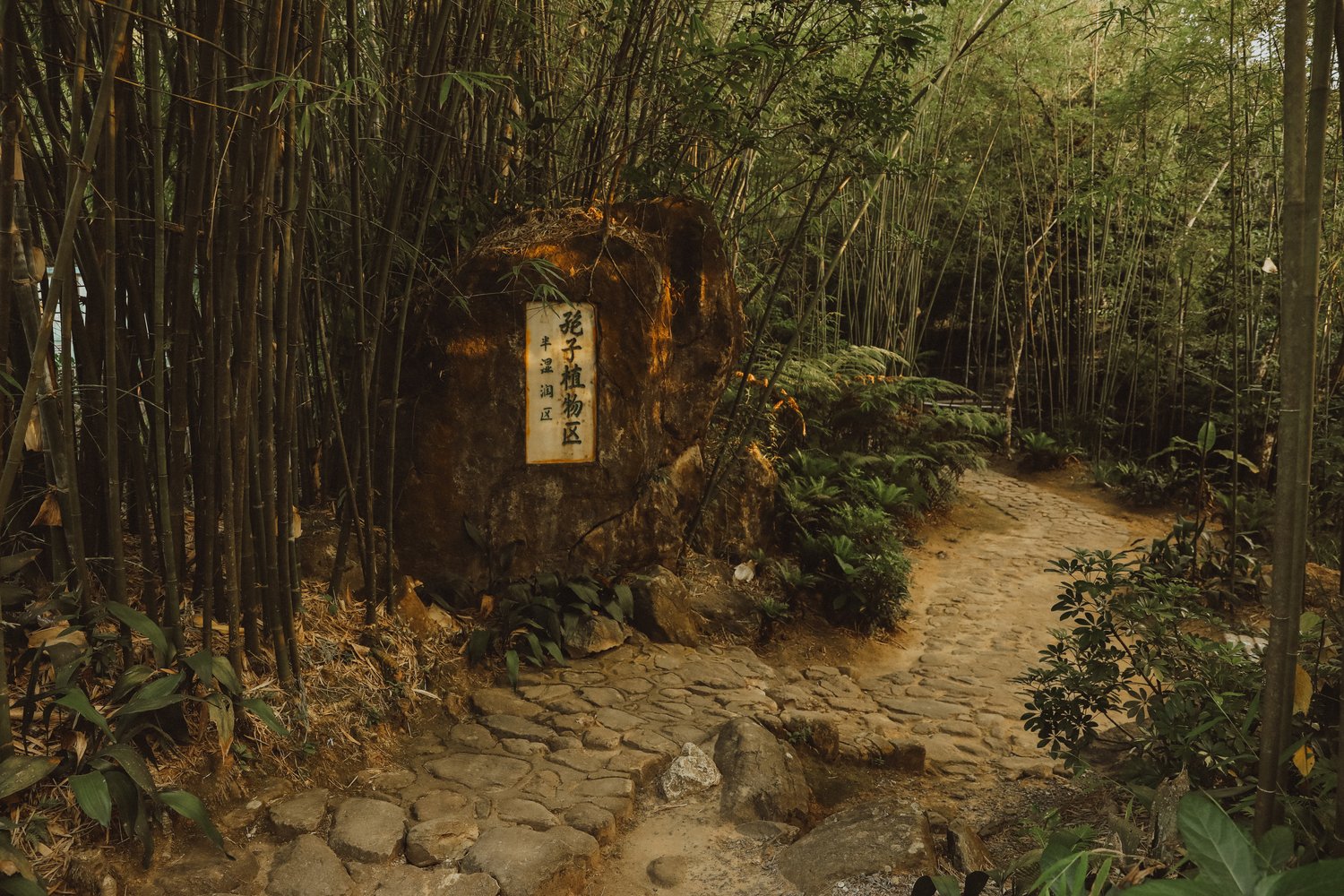
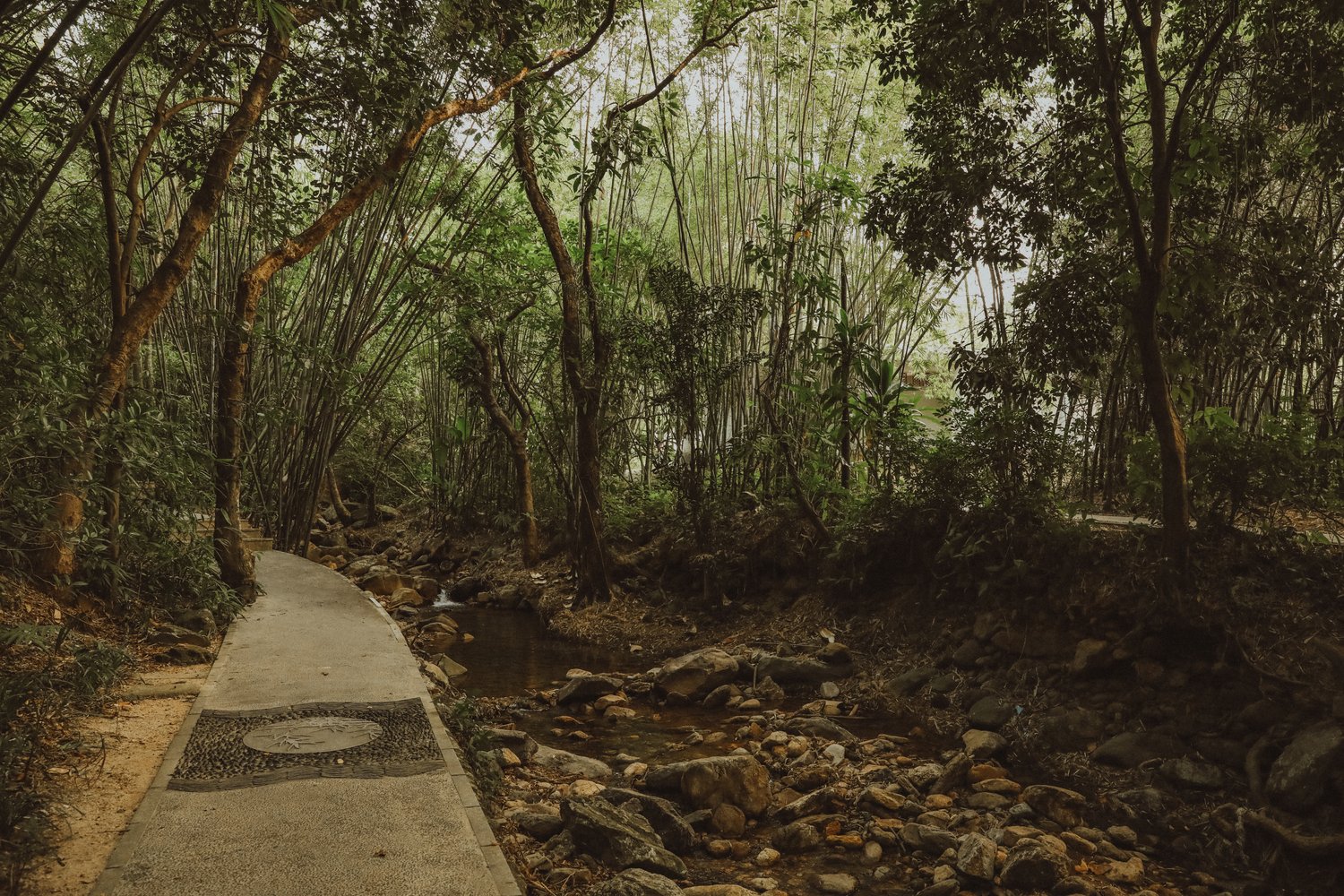
Paths through the bamboo grove
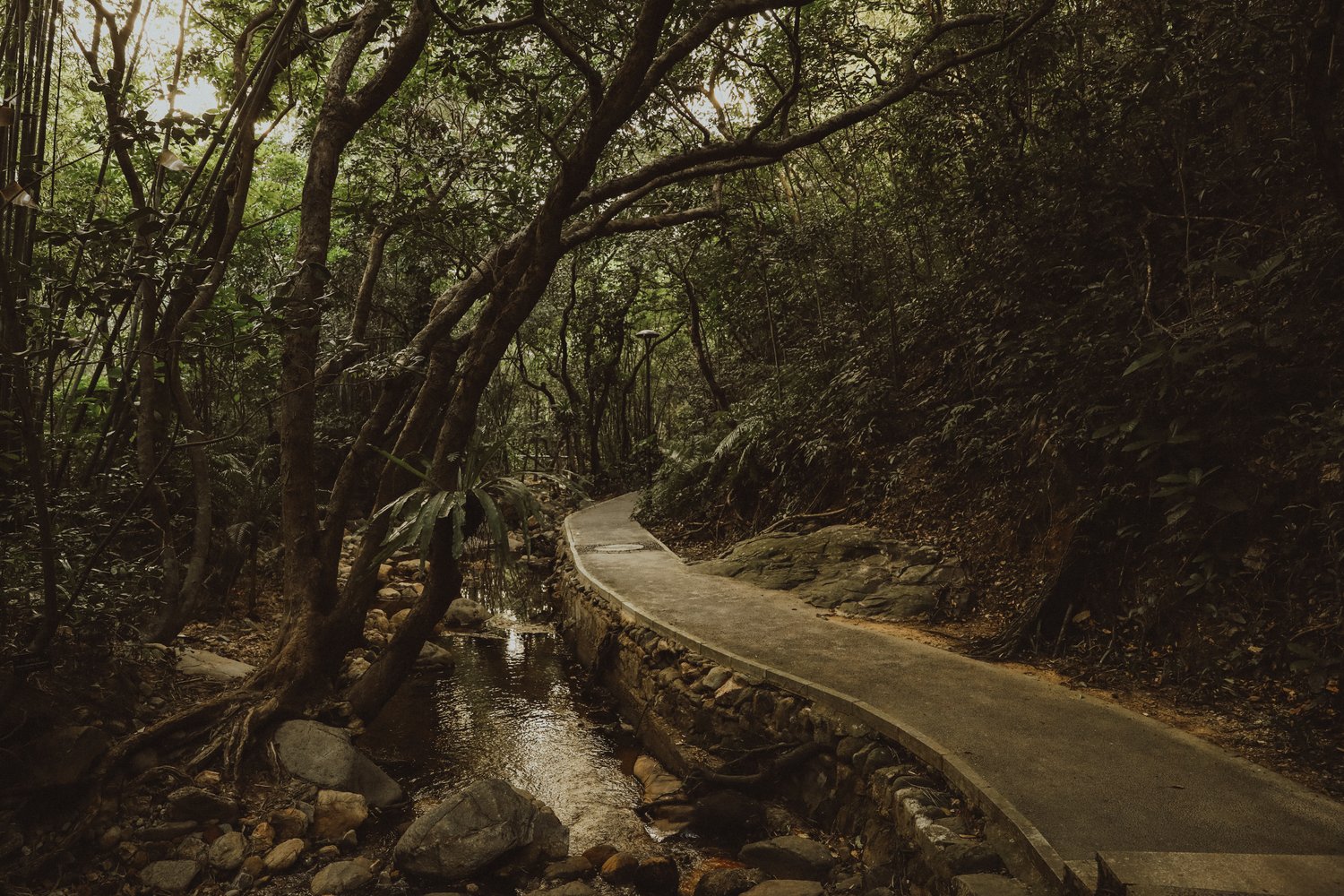
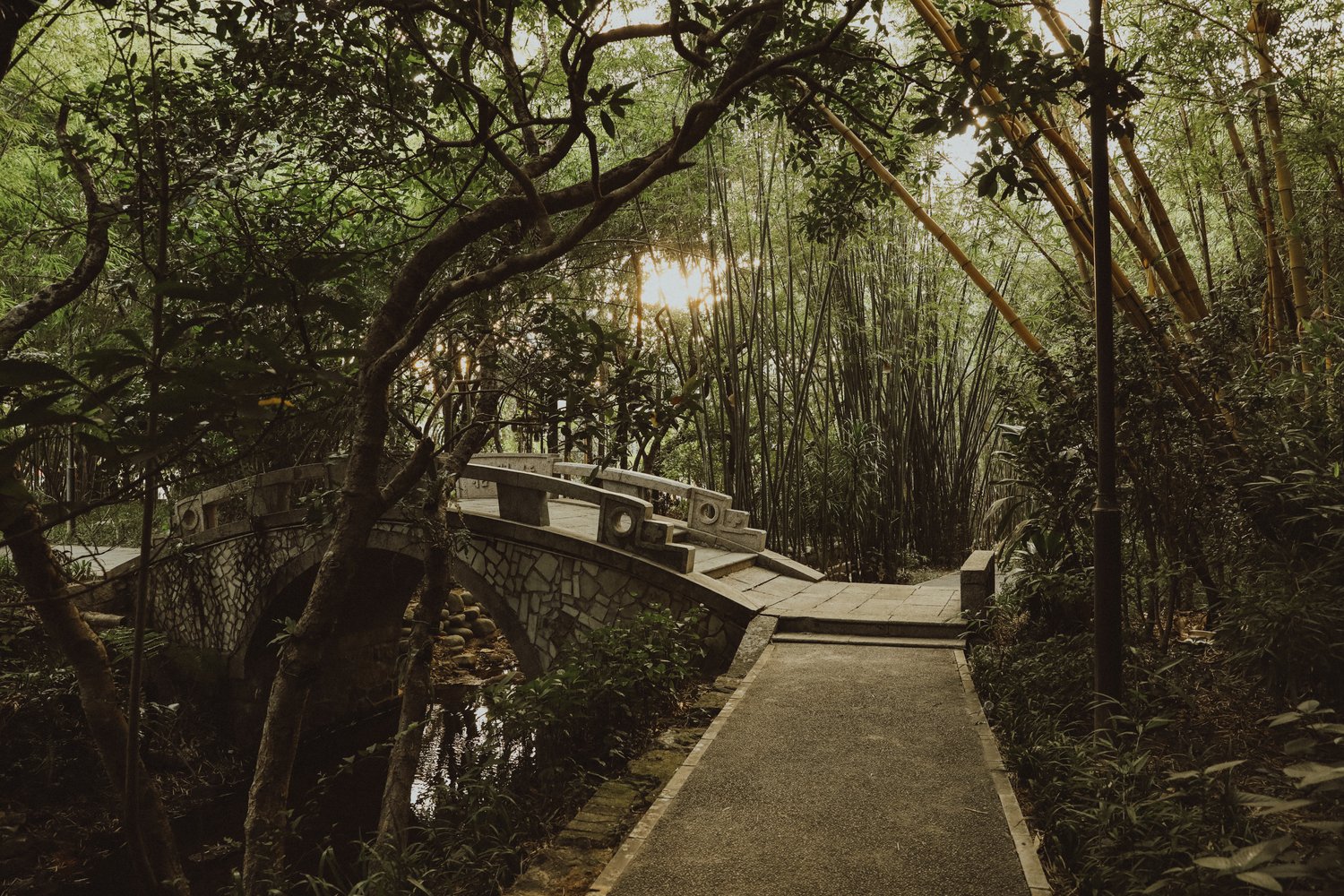
A road along the stream and a little bridge by the bamboo
A walk along the lake and the lotus pavilion
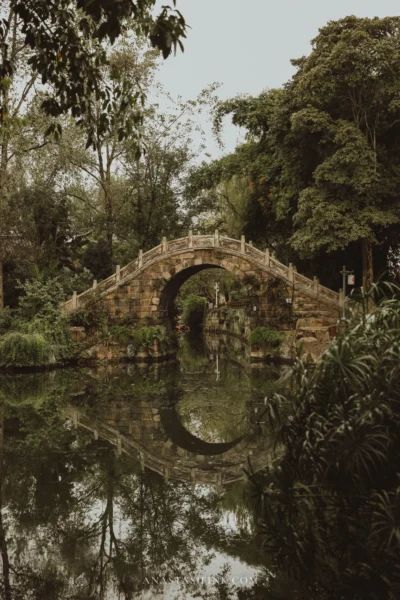
The next part of the route runs along the lake. These are the calmest views in the park: water, weeping willows, old stone bridges and wooden boardwalks right by the water. Arched bridges cross the lake.
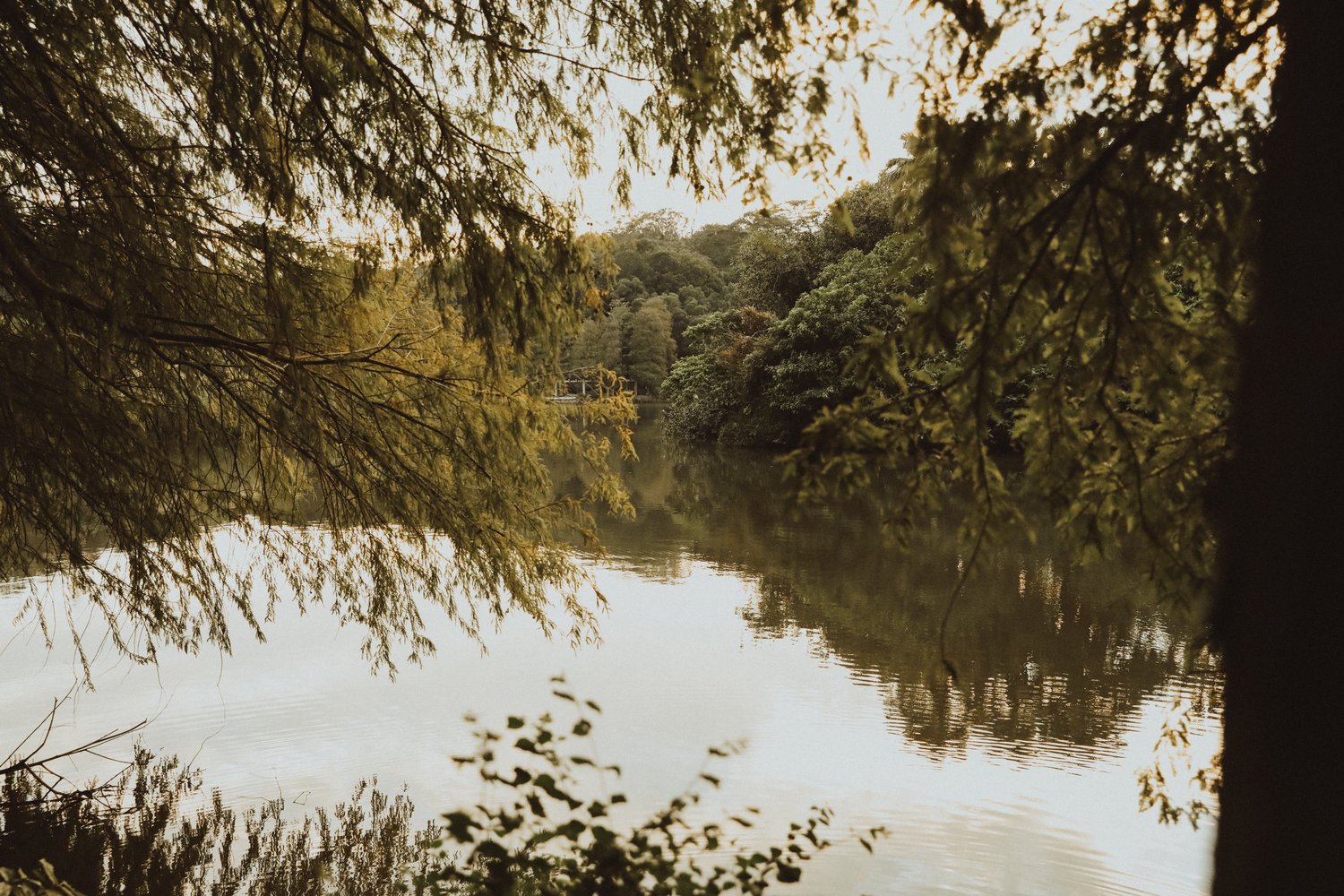
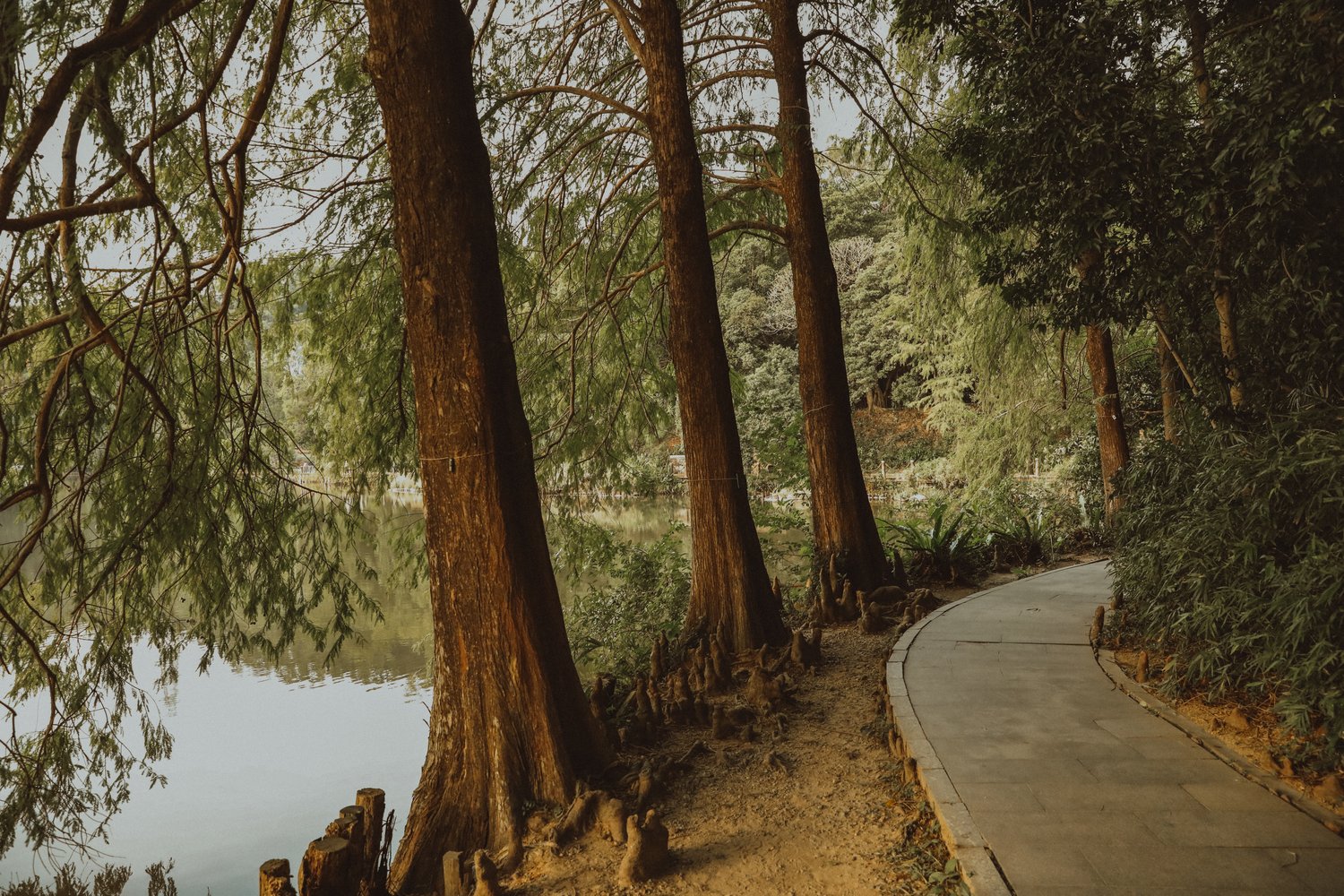
Views over the lake and paths along the shore
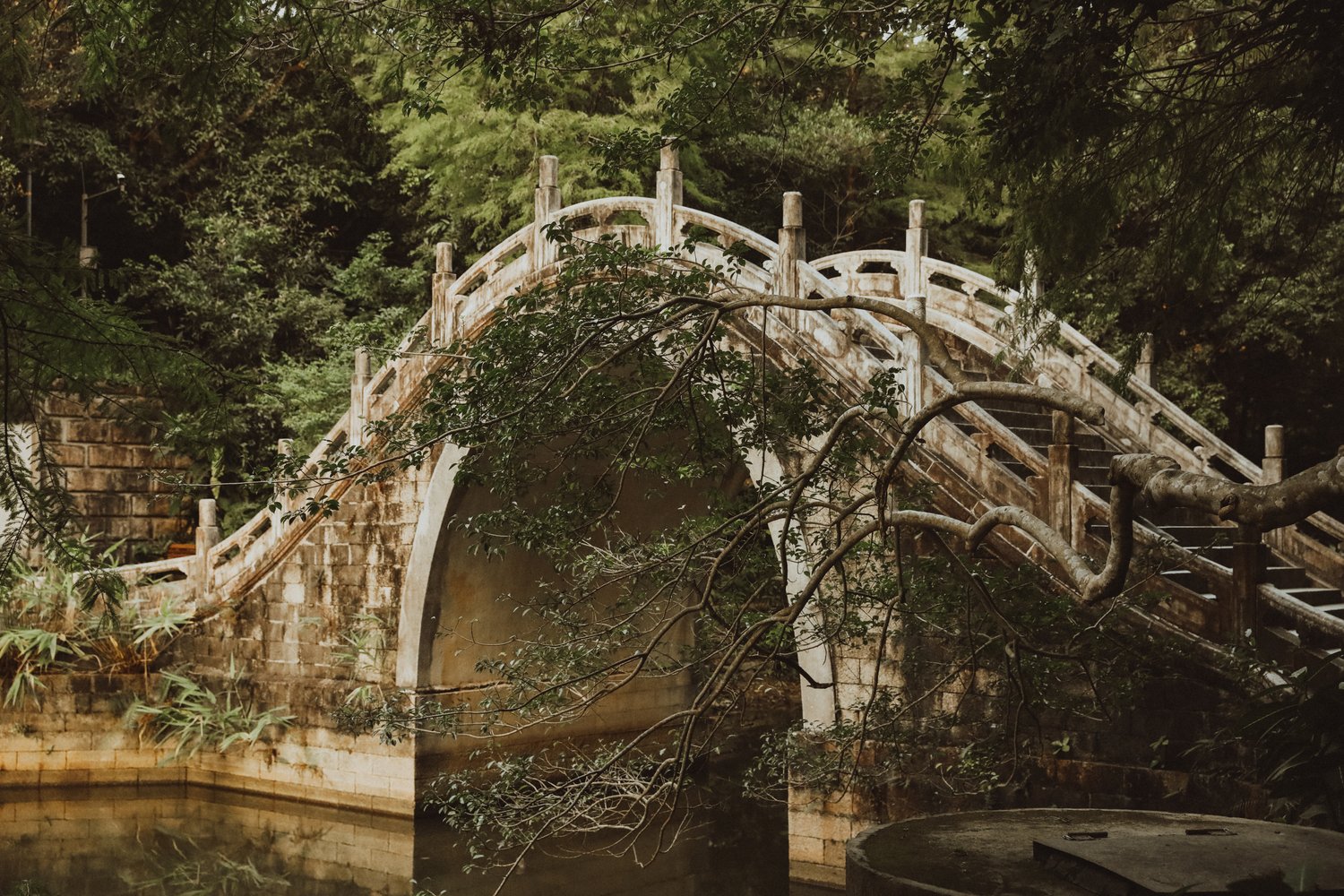
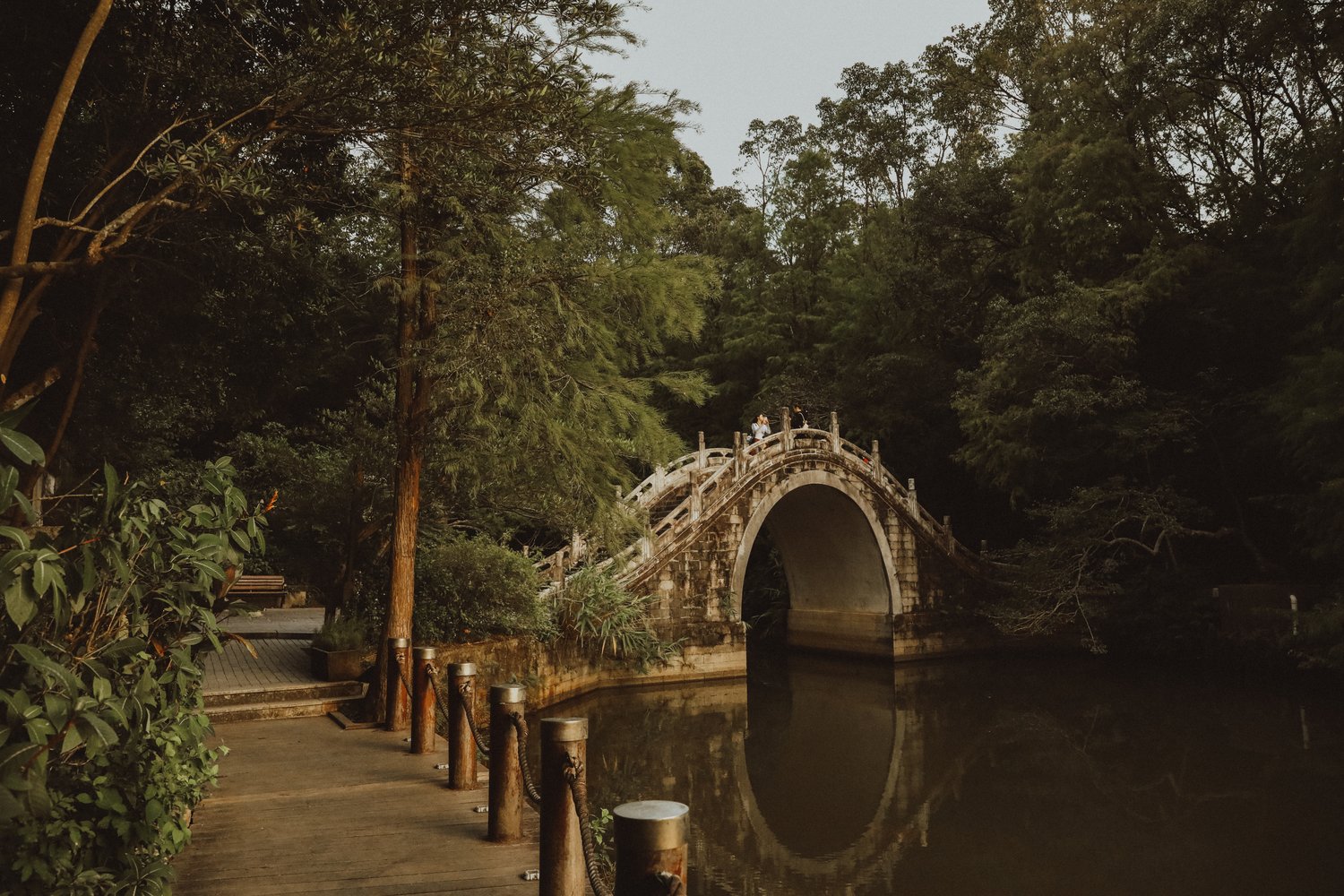
Old stone bridges over the water
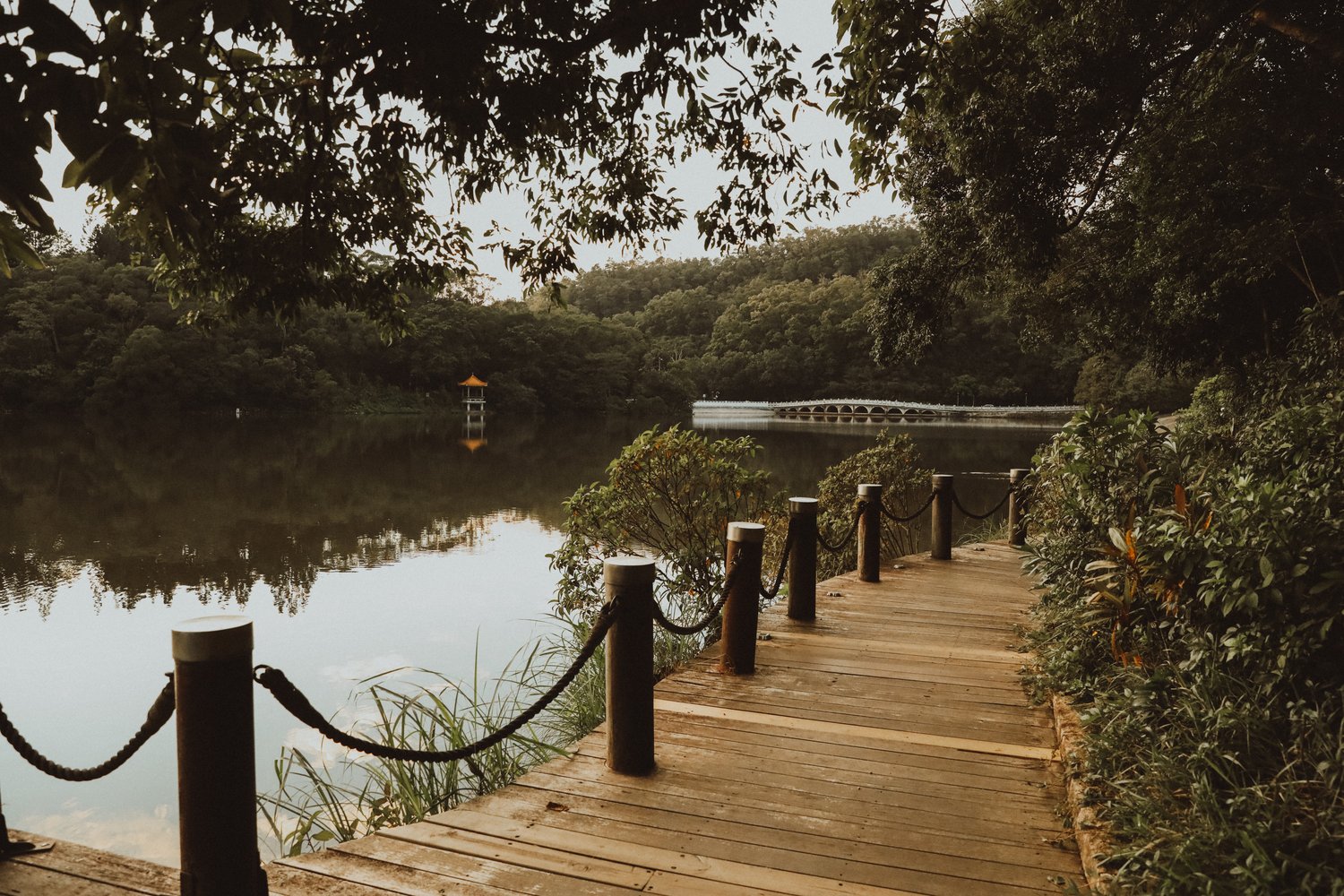
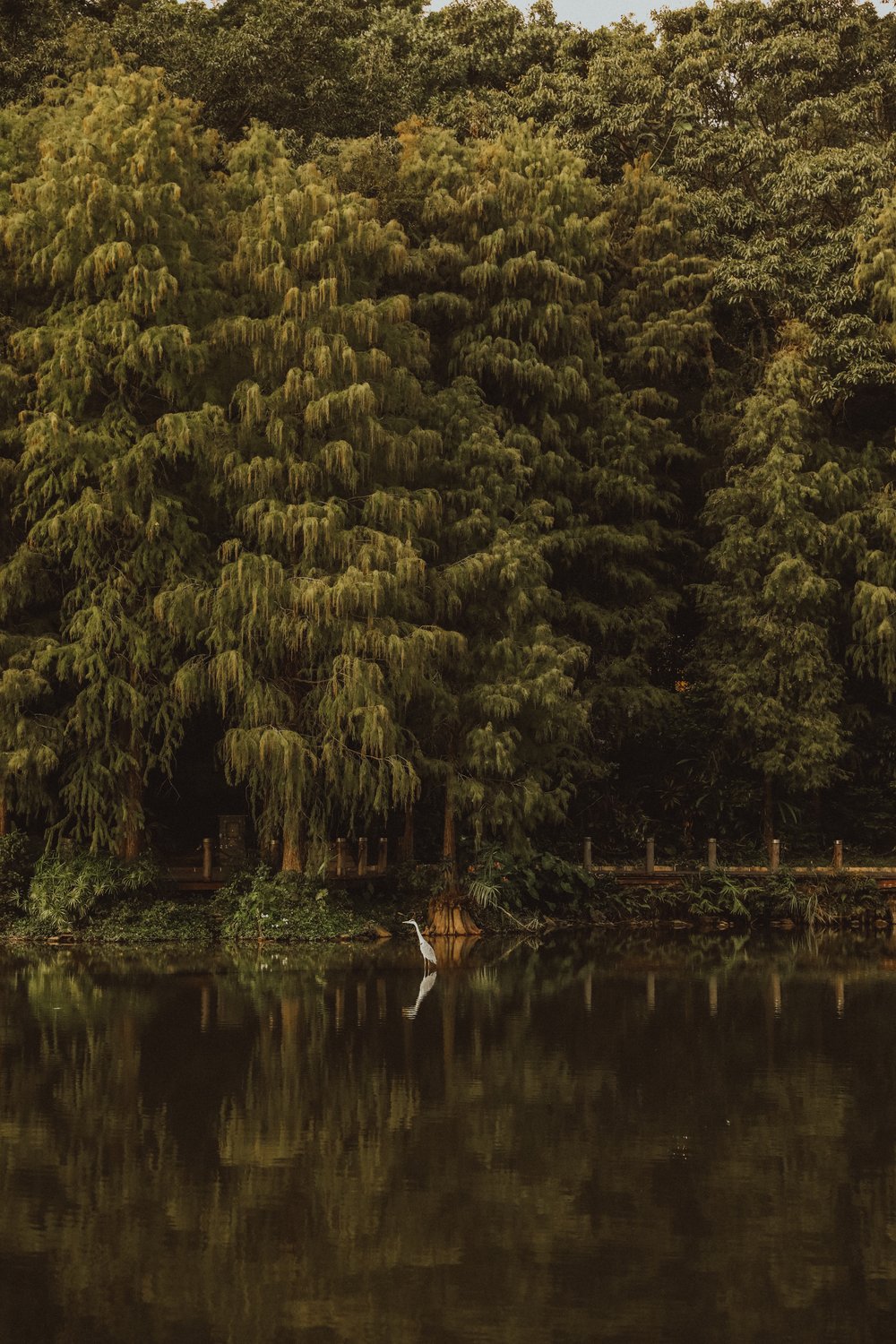
Wooden boardwalks and weeping willows by the water
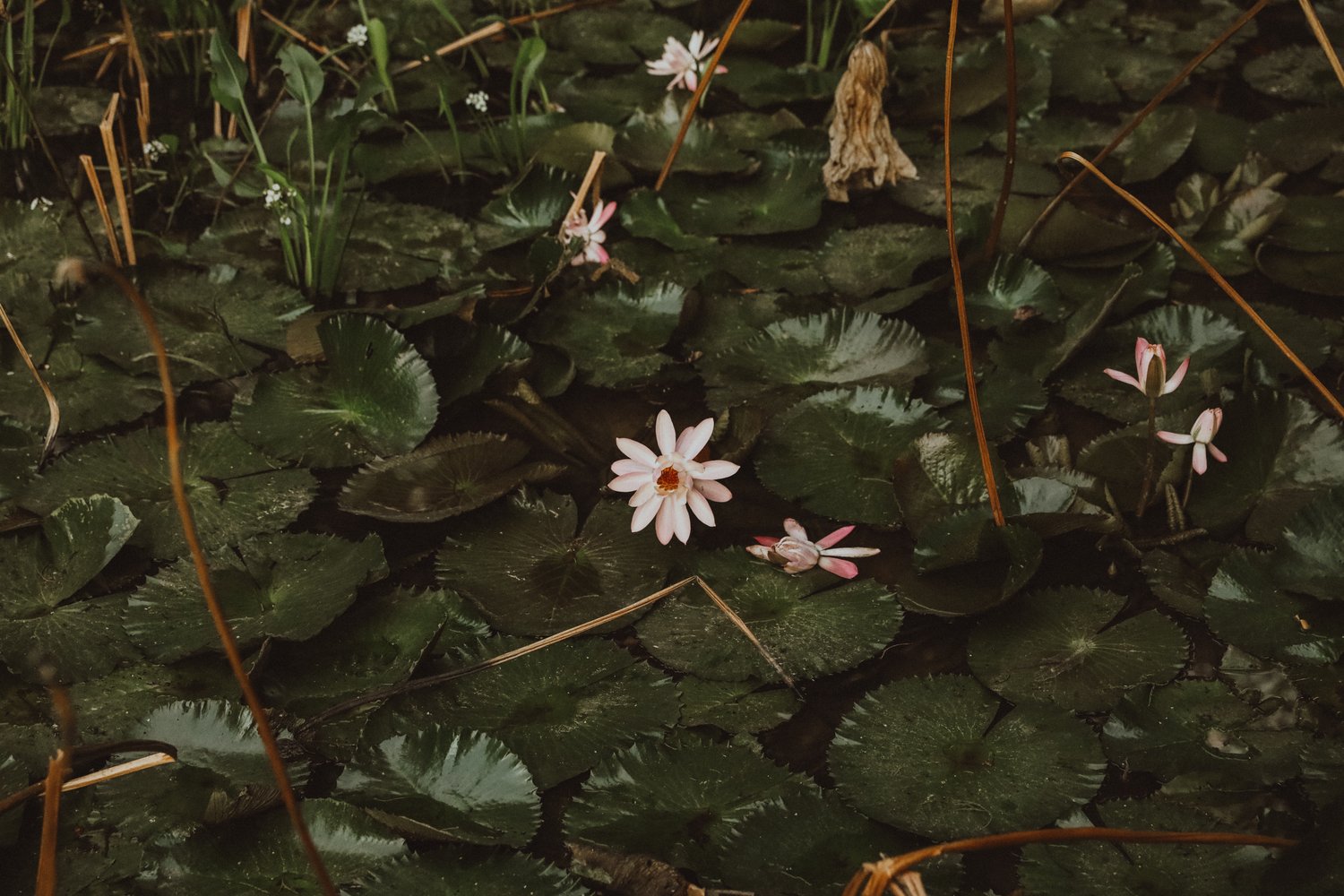
By the water there’s a pavilion and an area with lotuses and water lilies. It’s especially peaceful towards evening, and the light goes soft.
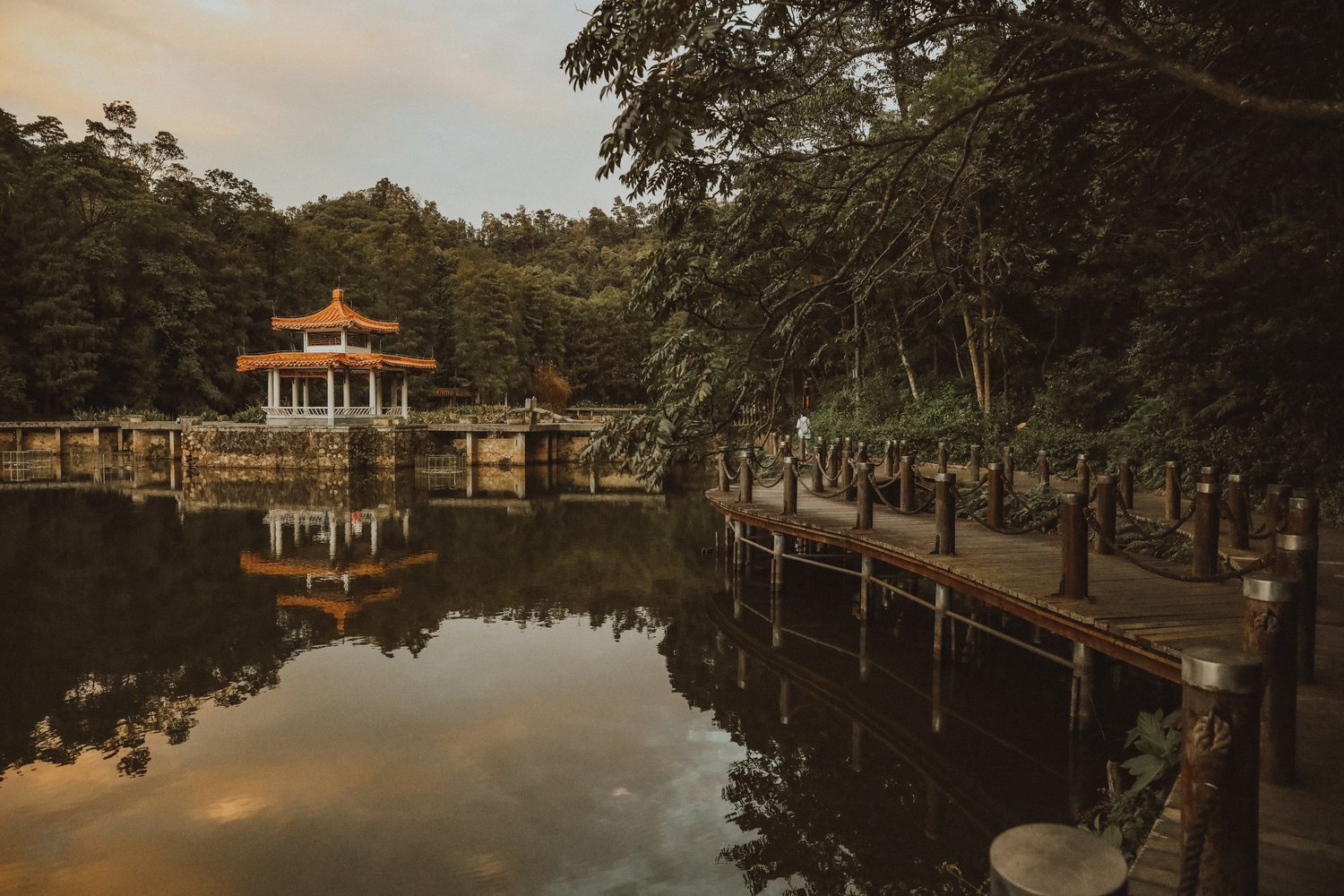
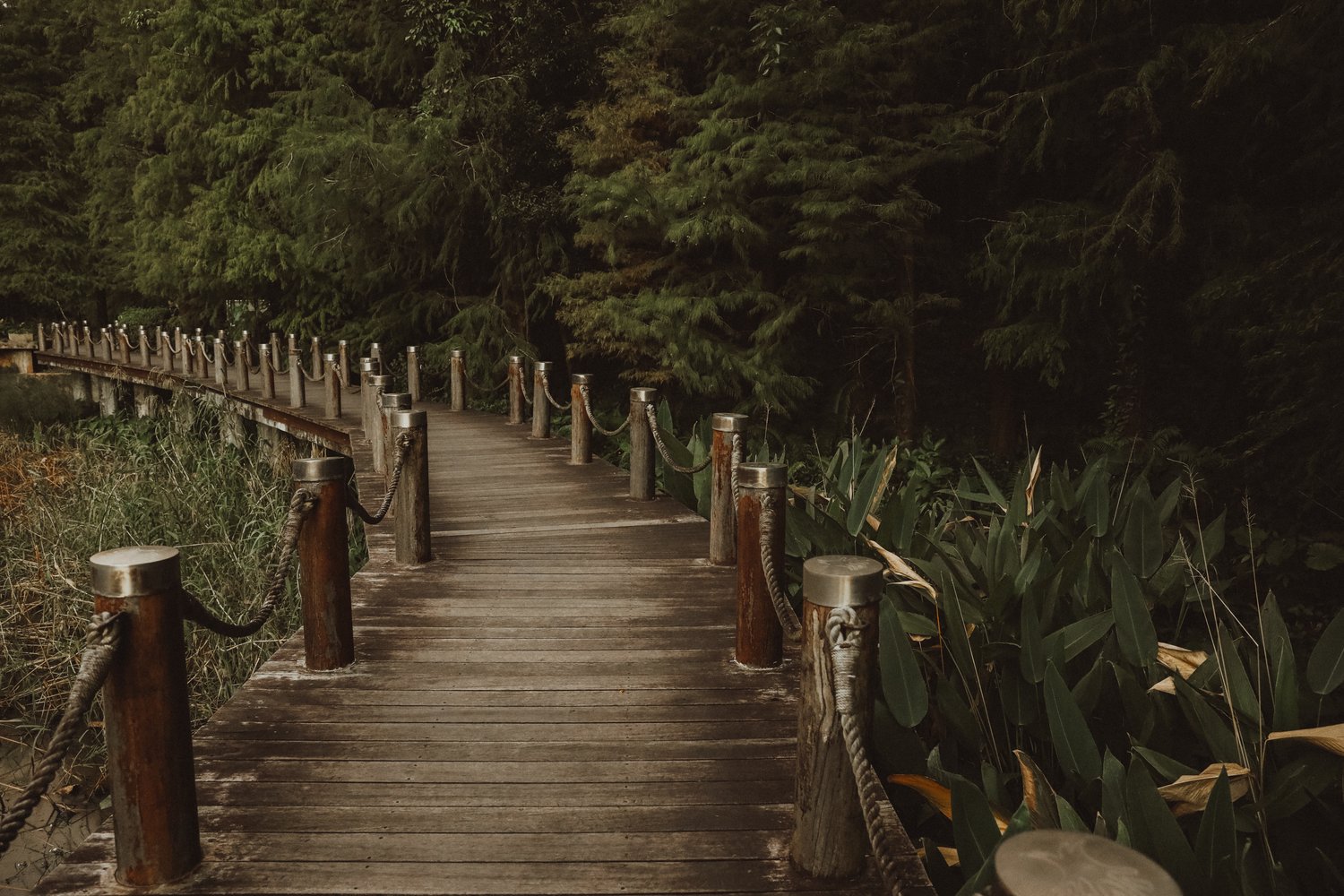
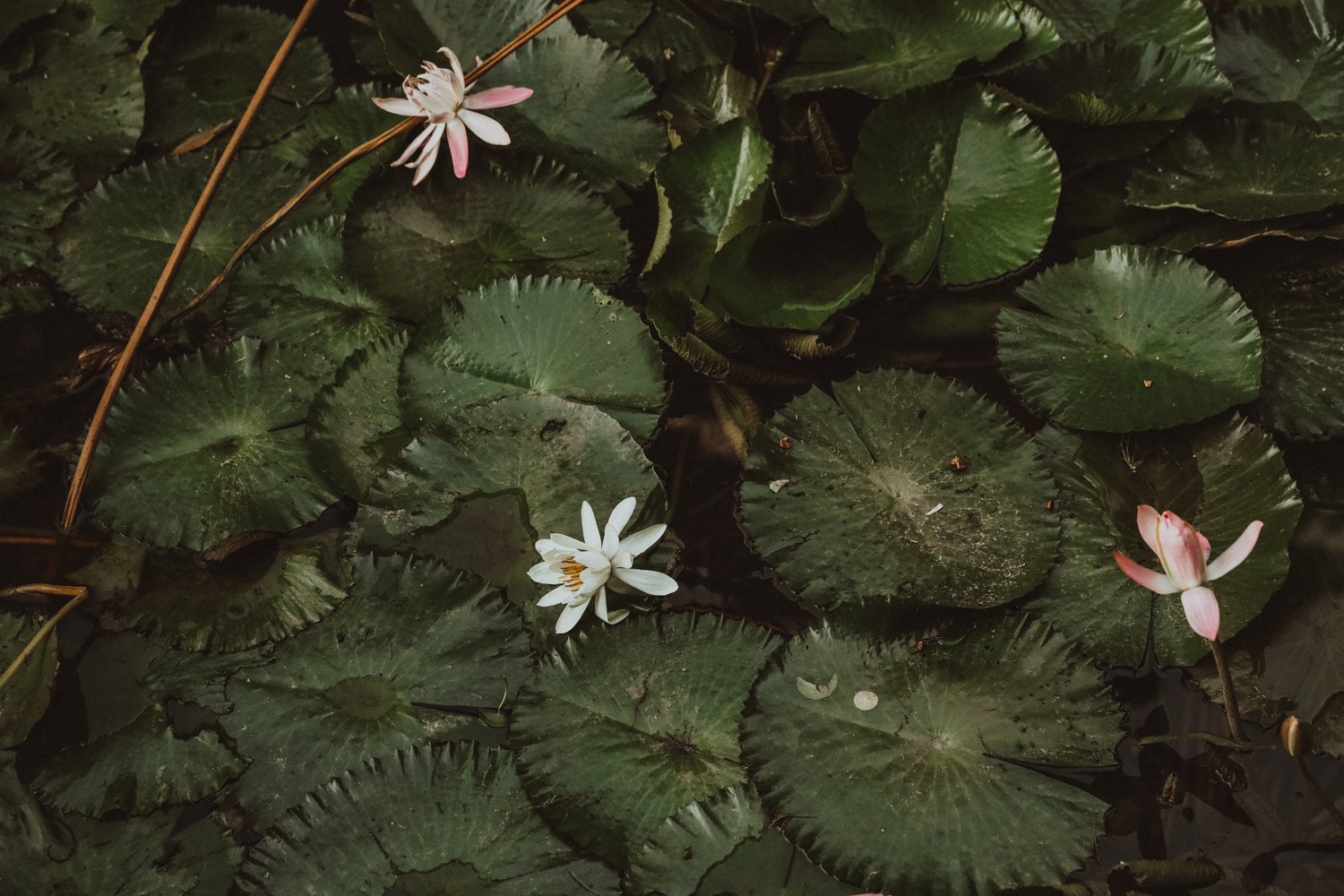
The boardwalk and the water lilies
The cactus and succulent garden
The last stop was the desert garden — with cacti and succulents.
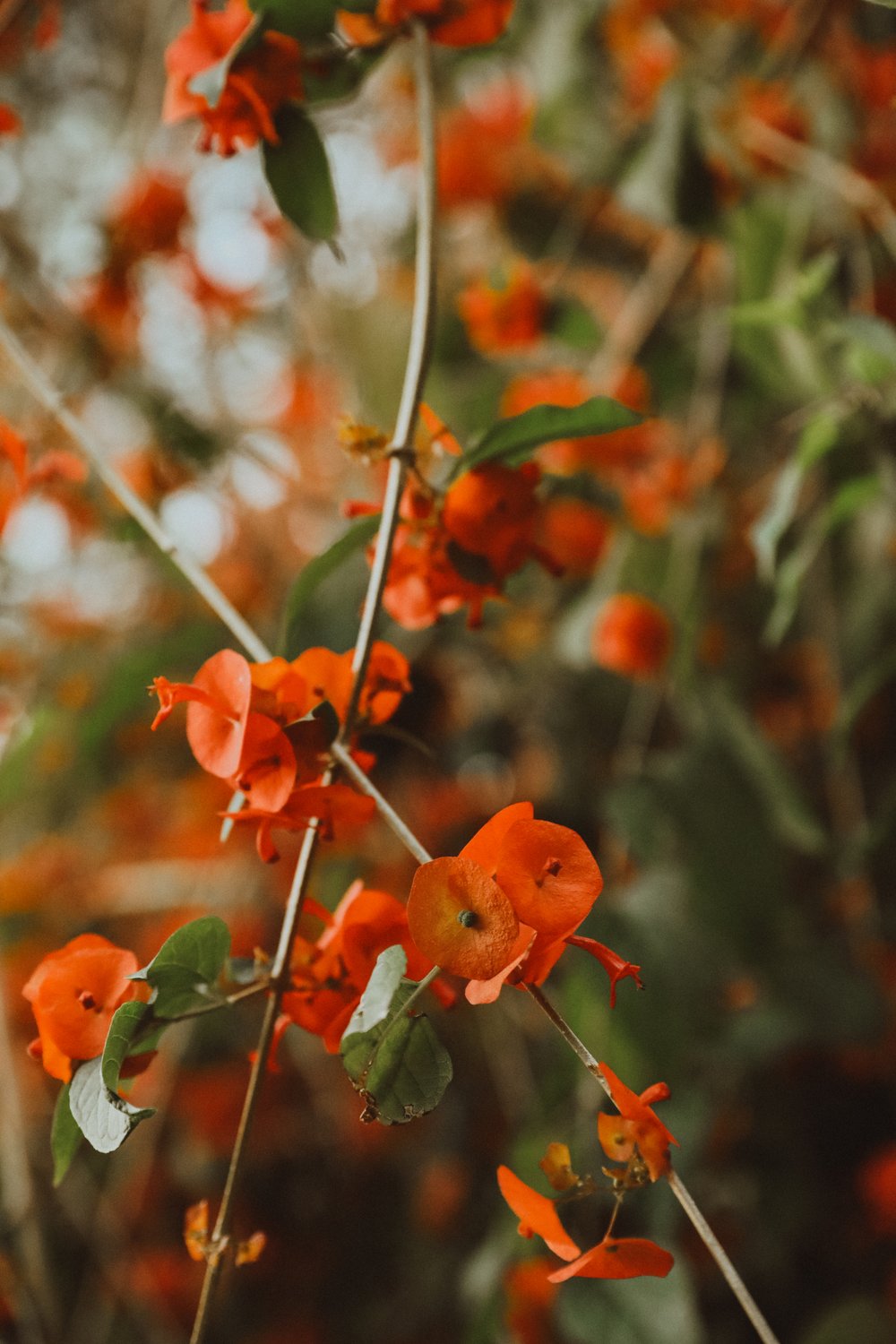
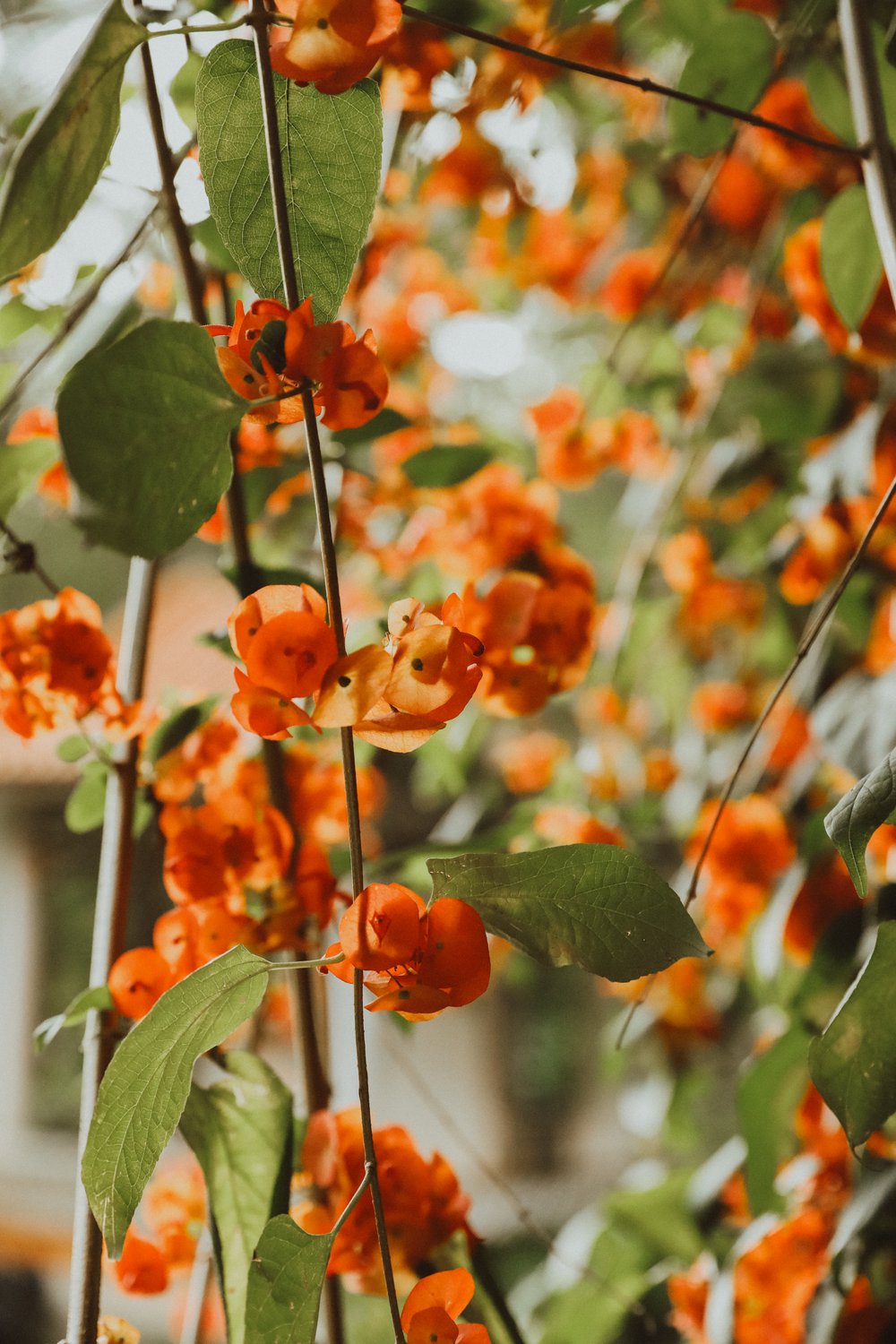
Bright flowers in the garden
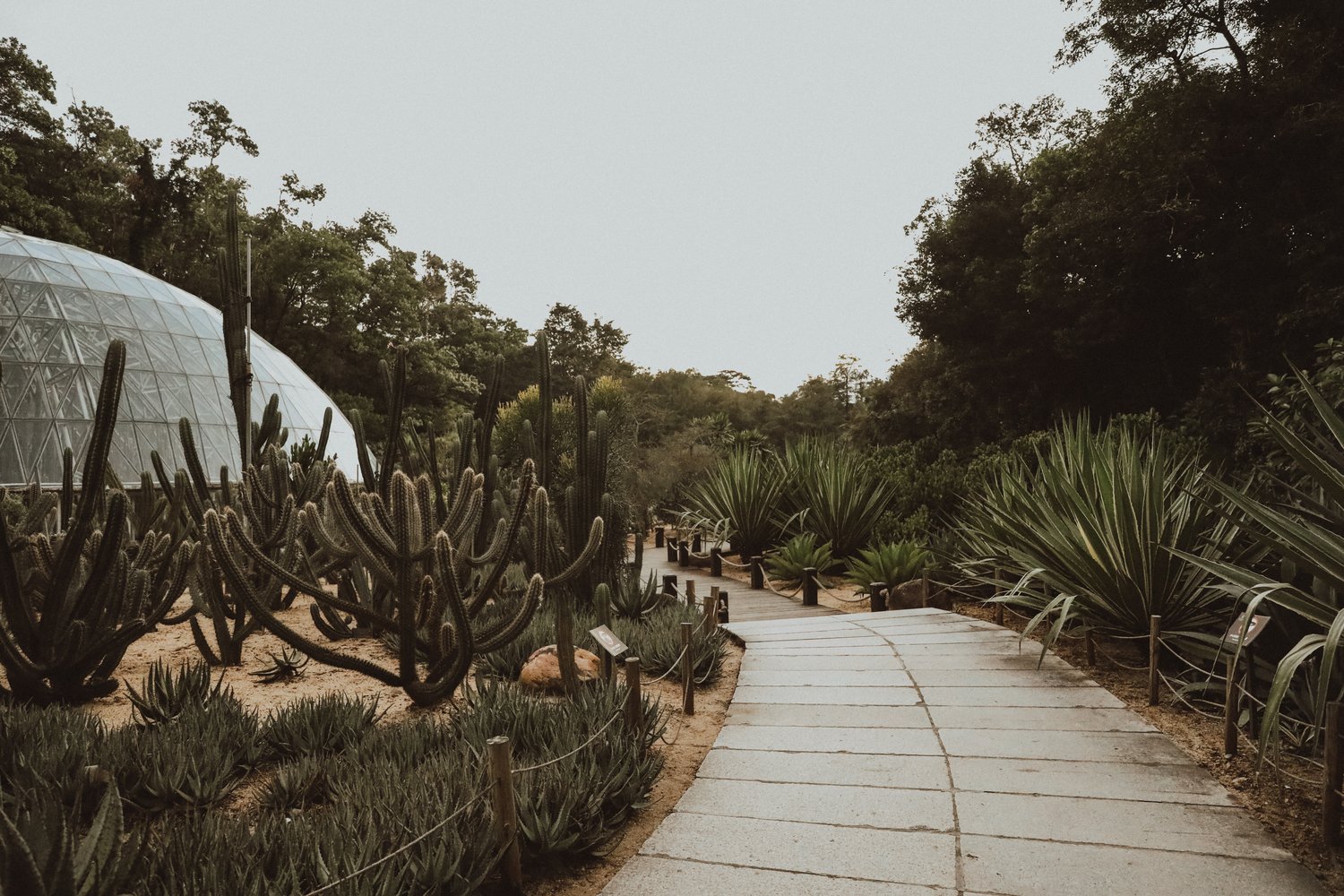
The succulent pavilion was already closed by the time I arrived, so I only saw the garden from the outside. Out in the open there’s a whole collection of cacti and agaves, with stone paths running between them and domed greenhouses in the centre. There are three greenhouses in all: American cacti, Asian succulents, and African plants such as euphorbias. By the entrance there’s a yellow vintage car turned into a flower bed.


The yellow vintage car with plants by the entrance
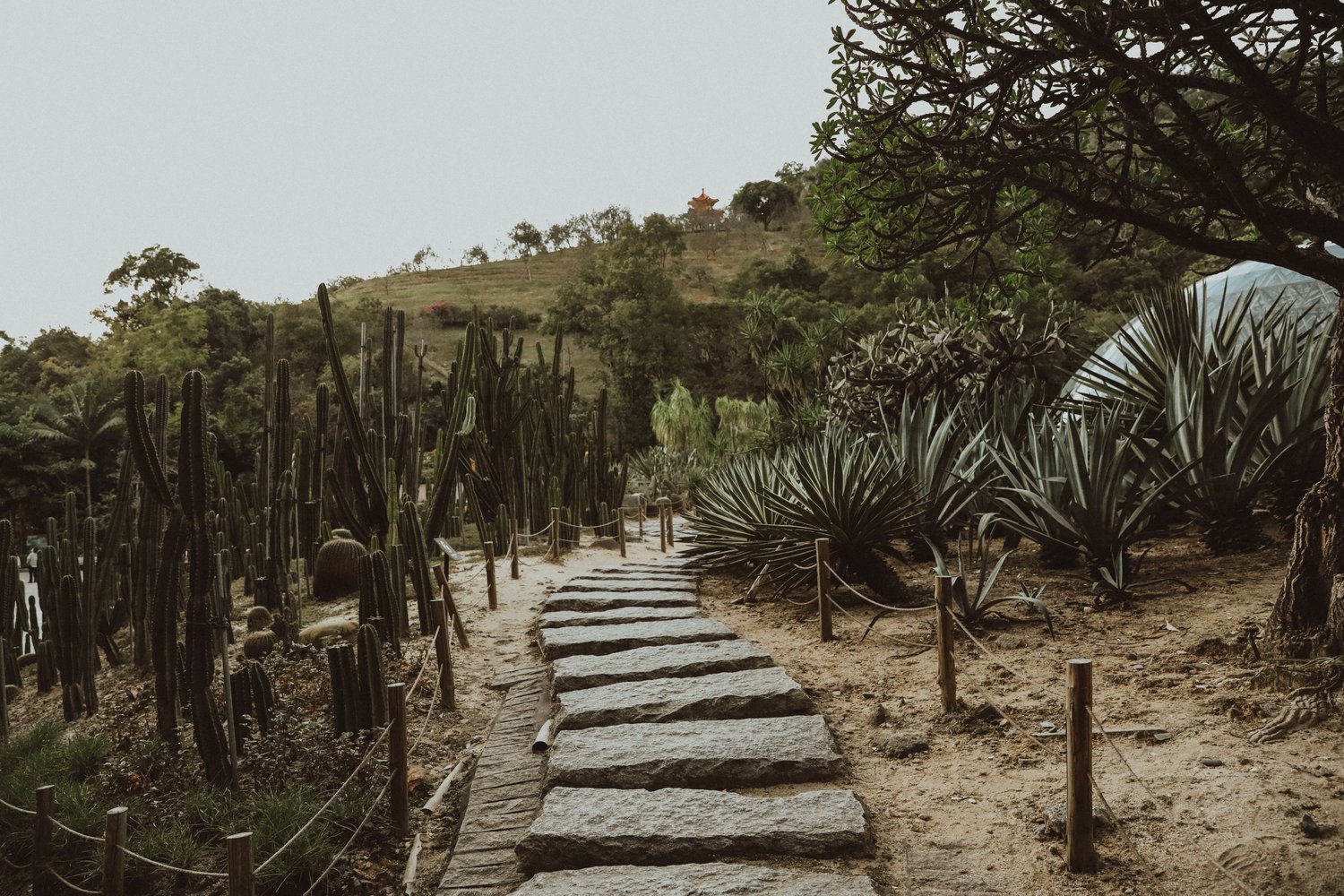
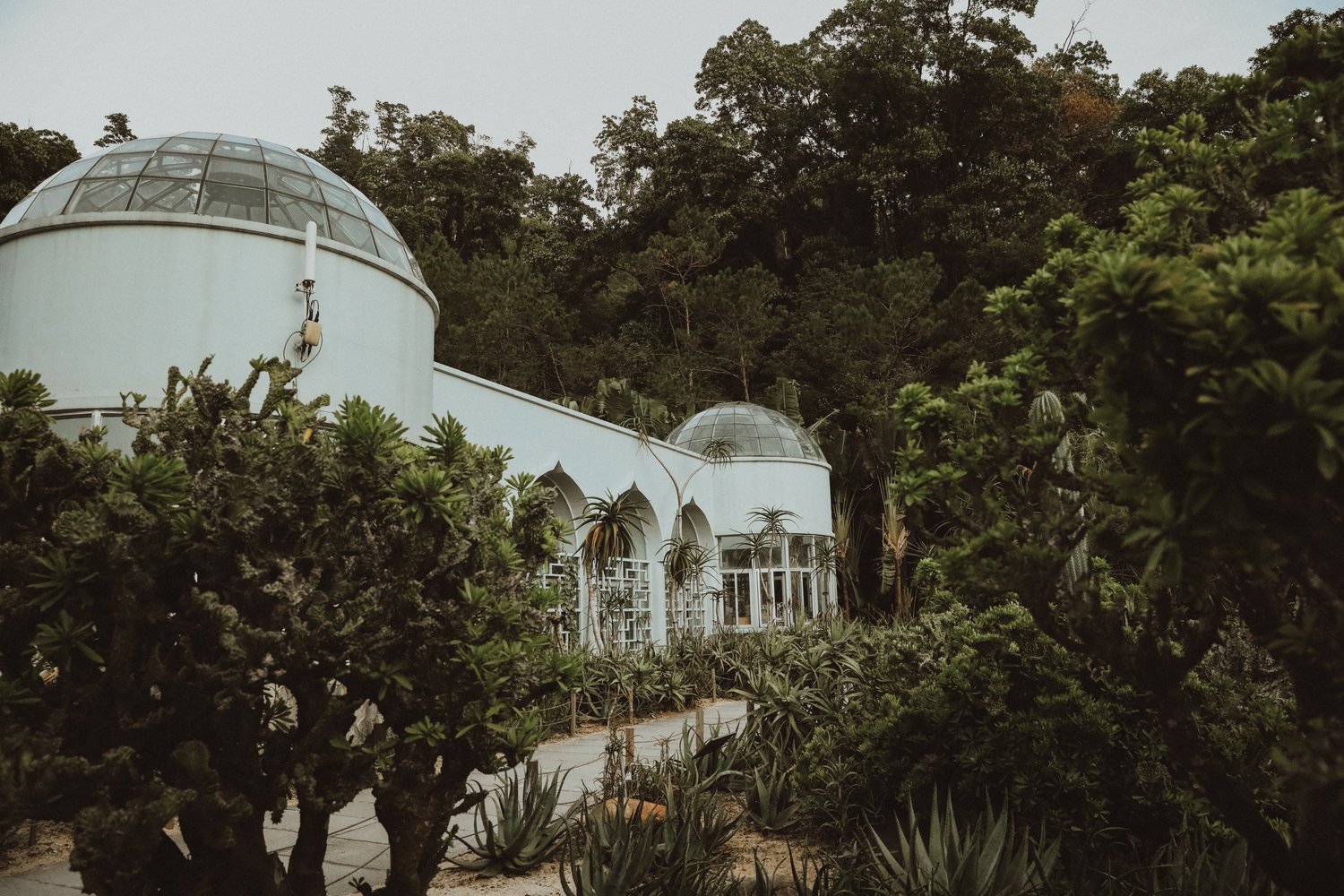
Stone paths and the domed greenhouse

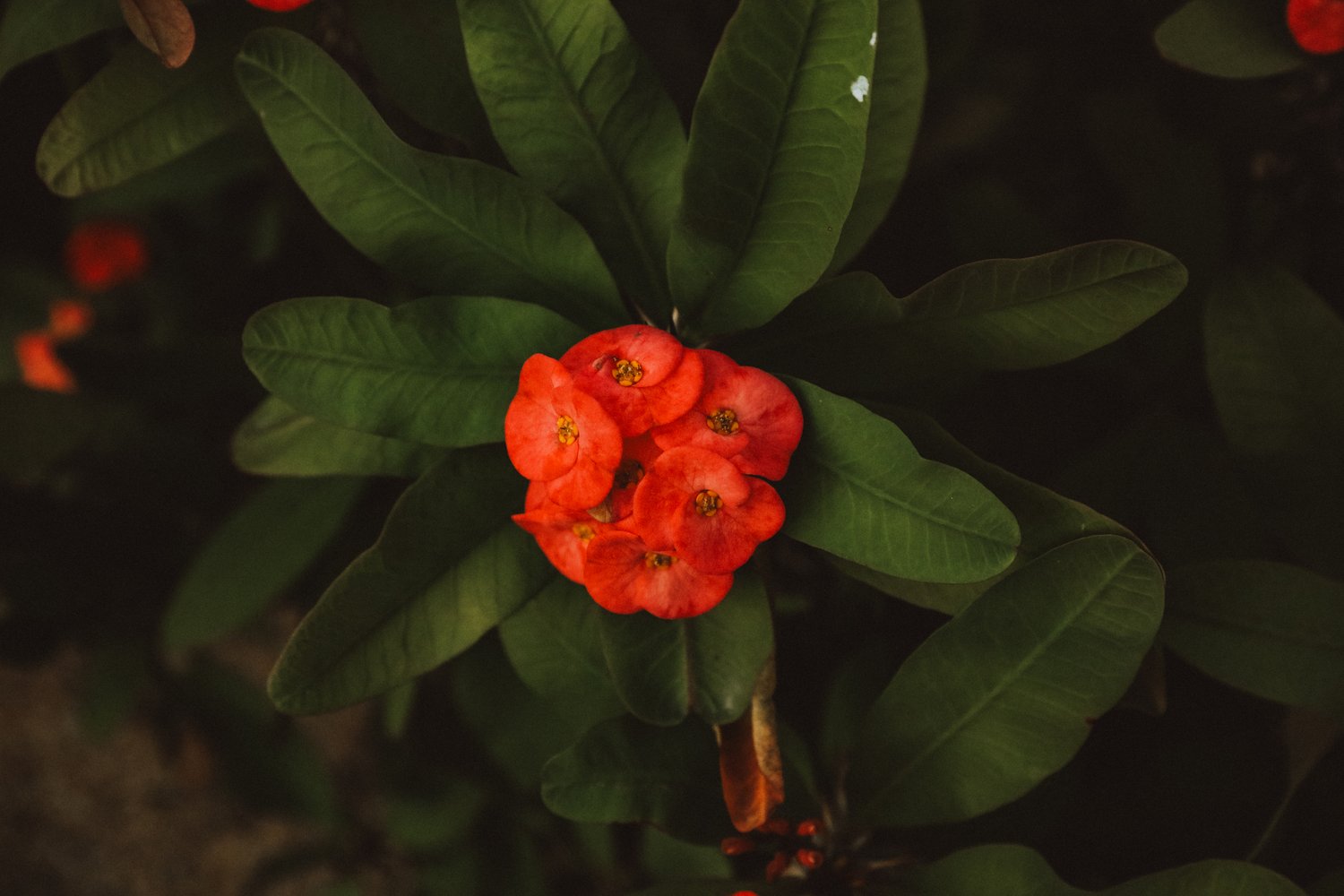
A prickly pear and a red euphorbia flower
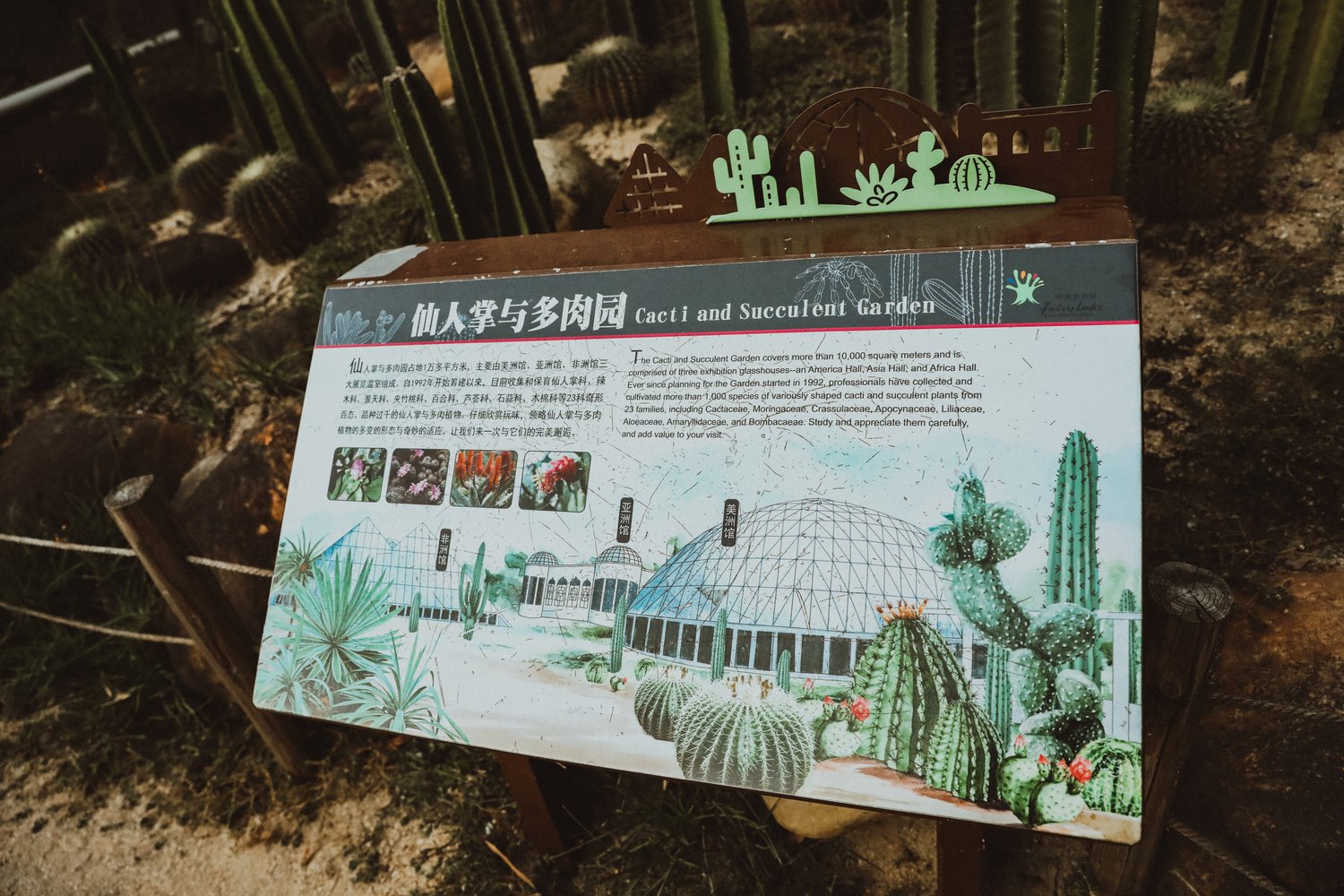
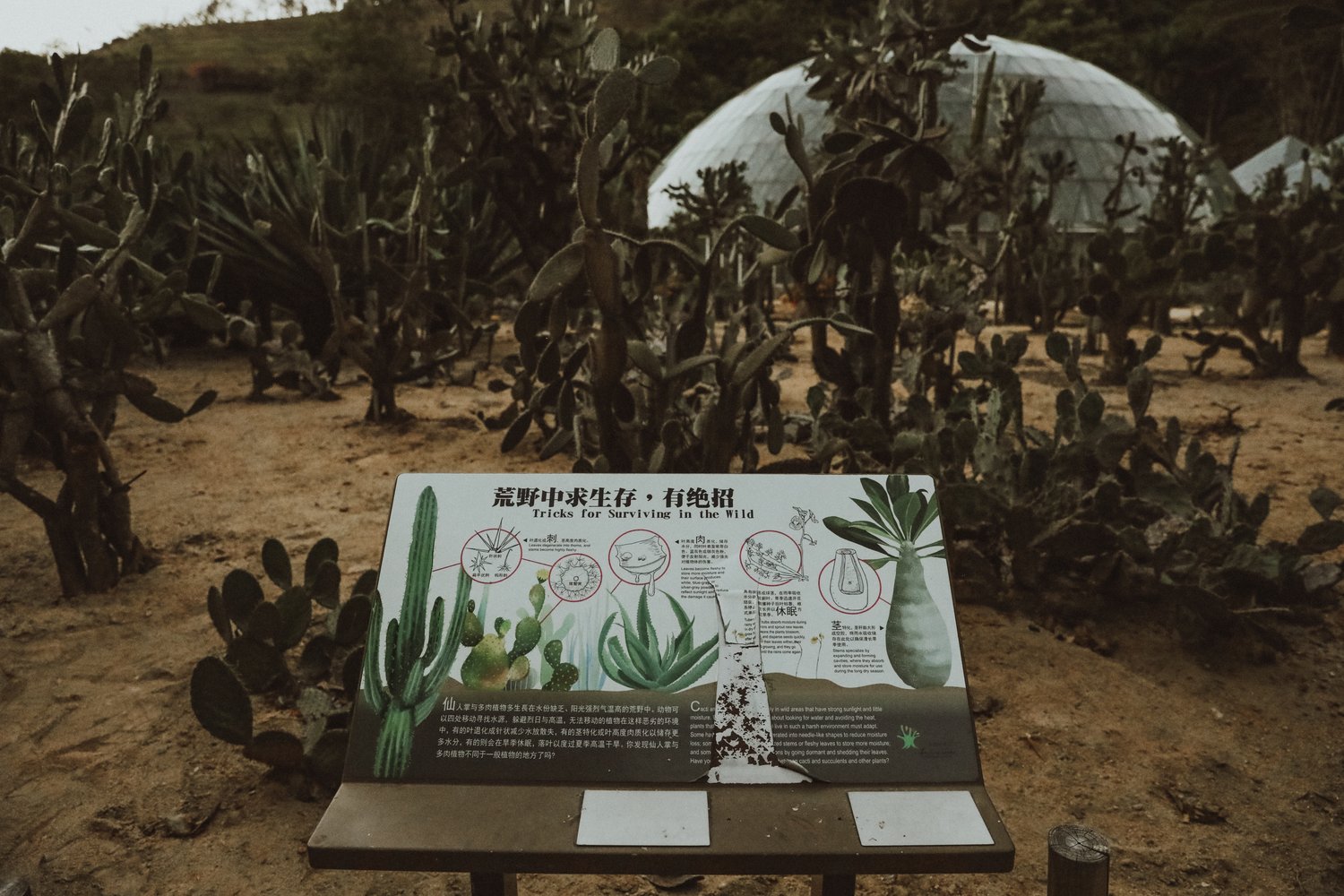
Boards describing the plants by the entrance
The thing is, the desert garden’s greenhouses are only open from 9 am to 5 pm — much less than the park itself (which is open from roughly 6 am to 9:30 pm). So by the end of the day the cactus and succulent pavilions are already closed, and I didn’t make it inside. Simple advice: plan your trip for the morning so you can actually go into the greenhouses, not just see the garden from outside.
What else is in the garden
The park is so big that seeing every area in one visit is almost impossible. Here’s what else there is, in case you’re planning a route:
- The fossil forest and palaeontology museum. There’s a large collection of petrified wood here — trunks millions of years old. It’s one of the garden’s main scientific attractions.
- The “Heaven and Earth” scenic area (Tian Shang Ren Jian). The high part of the park, with viewpoints over the hills and lakes.
- The medicinal plant garden. An area with plants used in traditional Chinese medicine.
- The azalea and magnolia garden. Especially beautiful in spring, in the flowering season.
- Orchids and the palm area. Collections of tropical plants and orchids.
All of these are connected by the same shuttle bus, so getting to them is easy — you just need to leave enough time.
Useful information
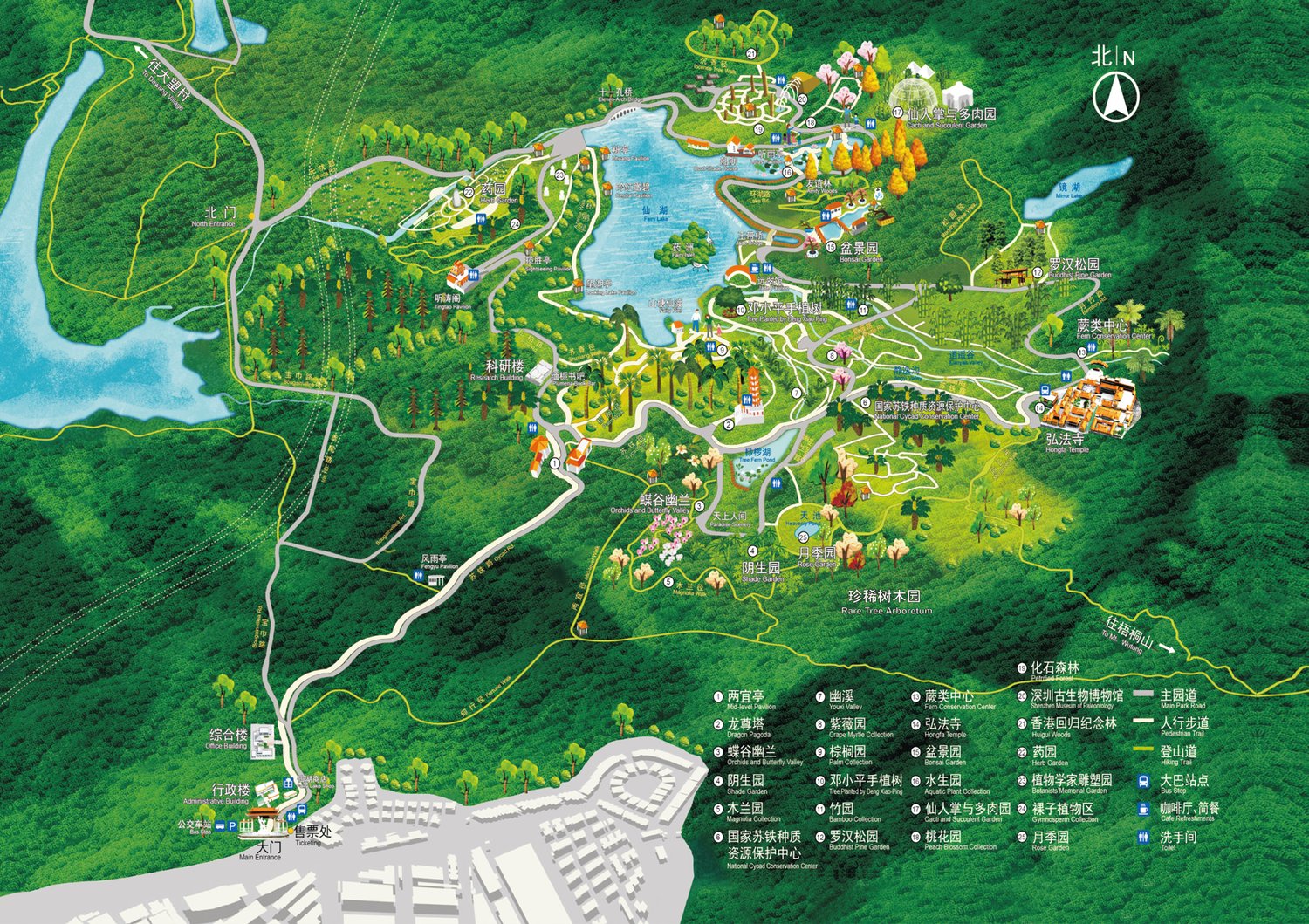
Practical information
- Name: Fairy Lake (仙湖植物园, Xianhu) Botanical Garden, Shenzhen
- Where: eastern Shenzhen, at the foot of Wutong Mountain
- GPS: 22.5766, 114.1772
- Getting there: by metro (about a 15-minute walk from the station) or straight there by taxi (the Didi app is handy)
- Entry: around 15 yuan (about $2); early in the morning (roughly 6:00–8:00) entry is often free
- Tickets: usually bought online through WeChat
- Shuttle bus: loop route, day ticket; pay in WeChat, or if you don’t have WeChat, buy the ticket at the pavilion by the stop and pay with Alipay
- Cactus garden and greenhouses: open only 9:00–17:00 — go in the first half of the day
- How much time: a full day, and it’s best to arrive early
One main tip: Fairy Lake Botanical Garden is very big. It’s worth coming for a full day and starting early — that way you’ll have time for the temple, the lakes and the plant gardens, and you’ll make it into the pavilions before they close. And one more thing: you don’t have to walk between the areas — it’s easy to hop on the shuttle bus, which takes you to the next stop.
In a single day at Fairy Lake you can see all sorts of different things: a working temple full of incense, quiet lakes with pavilions, flower fields and a cactus garden. And all of it right next to one of the most modern cities in China. Come in the morning, get a bus ticket, and take your time.
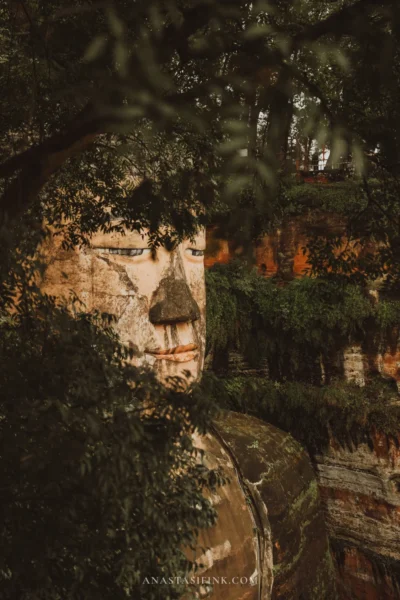
More to see: In Sha Tin, Hong Kong, the Ten Thousand Buddhas Monastery is about 430 steps up past golden arhats, with free entry. The largest stone Buddha in the world is the Leshan Giant Buddha, with a steep descent to its feet. One hour from Chengdu, Huanglongxi Ancient Town has old streets, stone bridges and temples. More in all my China travel guides.
There are two simple options: take the metro (about a 15-minute walk from the station to the entrance) or go straight there by taxi — the Didi app is handy. By taxi from the city centre it takes around 40–50 minutes.
Entry is cheap — around 15 yuan (about $2). Early in the morning, roughly from 6:00 to 8:00, entry is often free. Tickets are usually bought online through the garden’s official WeChat account.
The park is very big (almost 590 hectares), so set aside a full day. To have time for the temple, the lakes and the plant gardens, and to get into the pavilions before they close, it’s best to arrive early.
A shuttle bus loops around the park, stopping at all the main areas. The ticket is for the whole day and lets you ride several times. You pay in WeChat; if you don’t have WeChat, you can buy the ticket at the pavilion by the stop and pay with Alipay.
The main spots: Hongfa Temple (the largest Buddhist temple in the city), the lakes with pavilions and lotuses, the bamboo grove, the flower fields with sunflowers and cosmos, the bonsai garden and the cactus garden. The park also has a fossil forest with a palaeontology museum and viewpoints.
Yes. It’s a calm, green place right next to a modern megacity, with a working temple, beautiful lakes and flower fields. It’s especially good if you want a break from the city and a day out in nature.