Bay of Kotor, Montenegro: Full Guide to Perast, Kotor & Herceg Novi

The Bay of Kotor is one of the prettiest corners of the Adriatic: old towns tucked under the mountains, a man-made island with a church on it, and a road that runs right along the water’s edge. In this guide, what to see in Herceg Novi, Perast and Kotor, where to have lunch overlooking the Verige strait, why you should get out on the water under sail, and what makes the quiet Lustica peninsula worth your time.
What the Bay of Kotor Is and Why It’s Worth the Trip
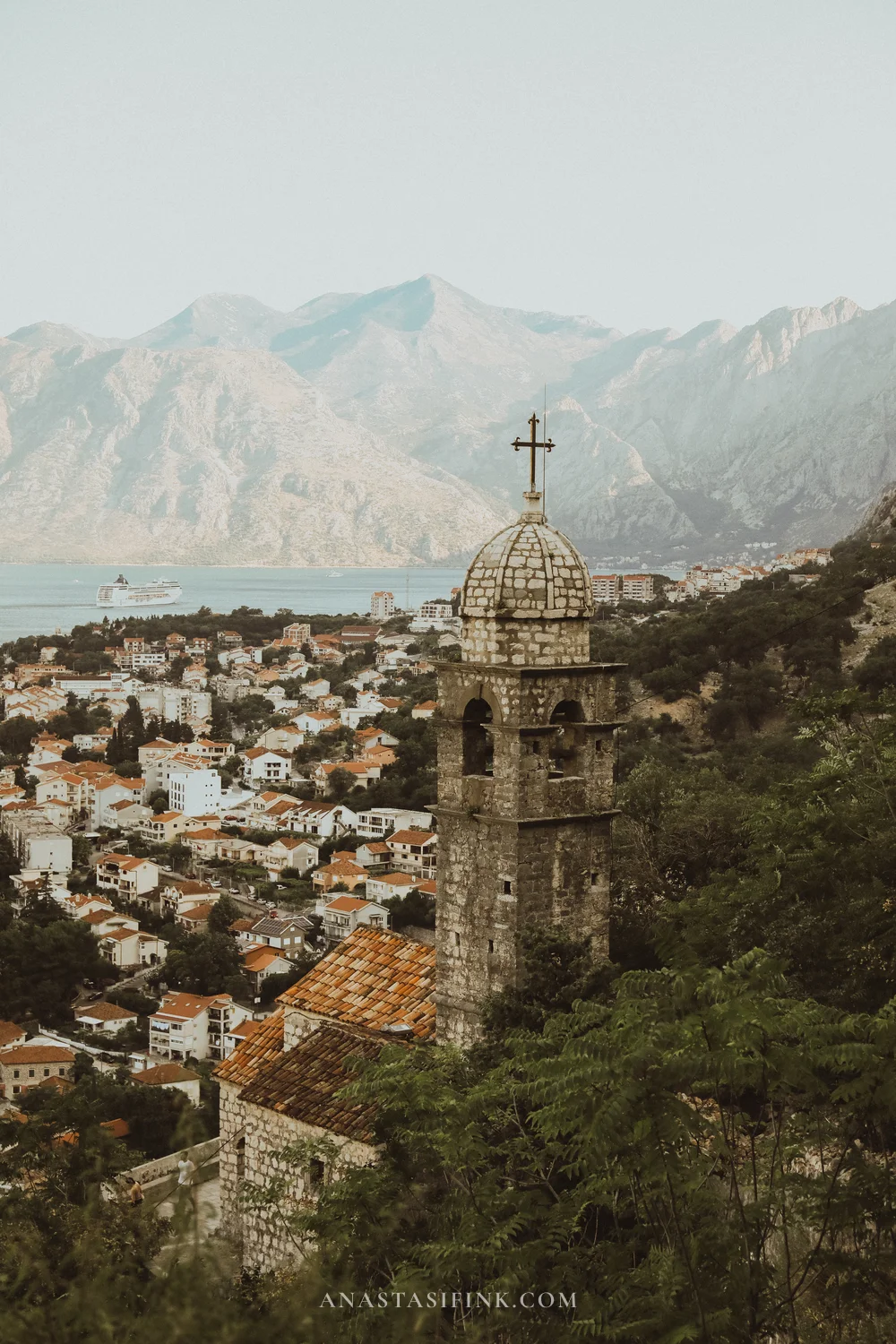
The Bay of Kotor (Boka Kotorska to the locals) is an inlet of the Adriatic Sea in southern Montenegro that cuts almost twenty miles deep into the mountains. People often call it Europe’s southernmost fjord, and when mile-high mountains drop straight into the water, you don’t really feel like arguing.
Inside the bay sit several old towns: Kotor with its fortress walls, baroque Perast, and Herceg Novi right at the entrance to the bay. All of them once belonged to the Venetian Republic, and you can see the Italian legacy in every facade. Old Kotor and the whole bay are under UNESCO protection.
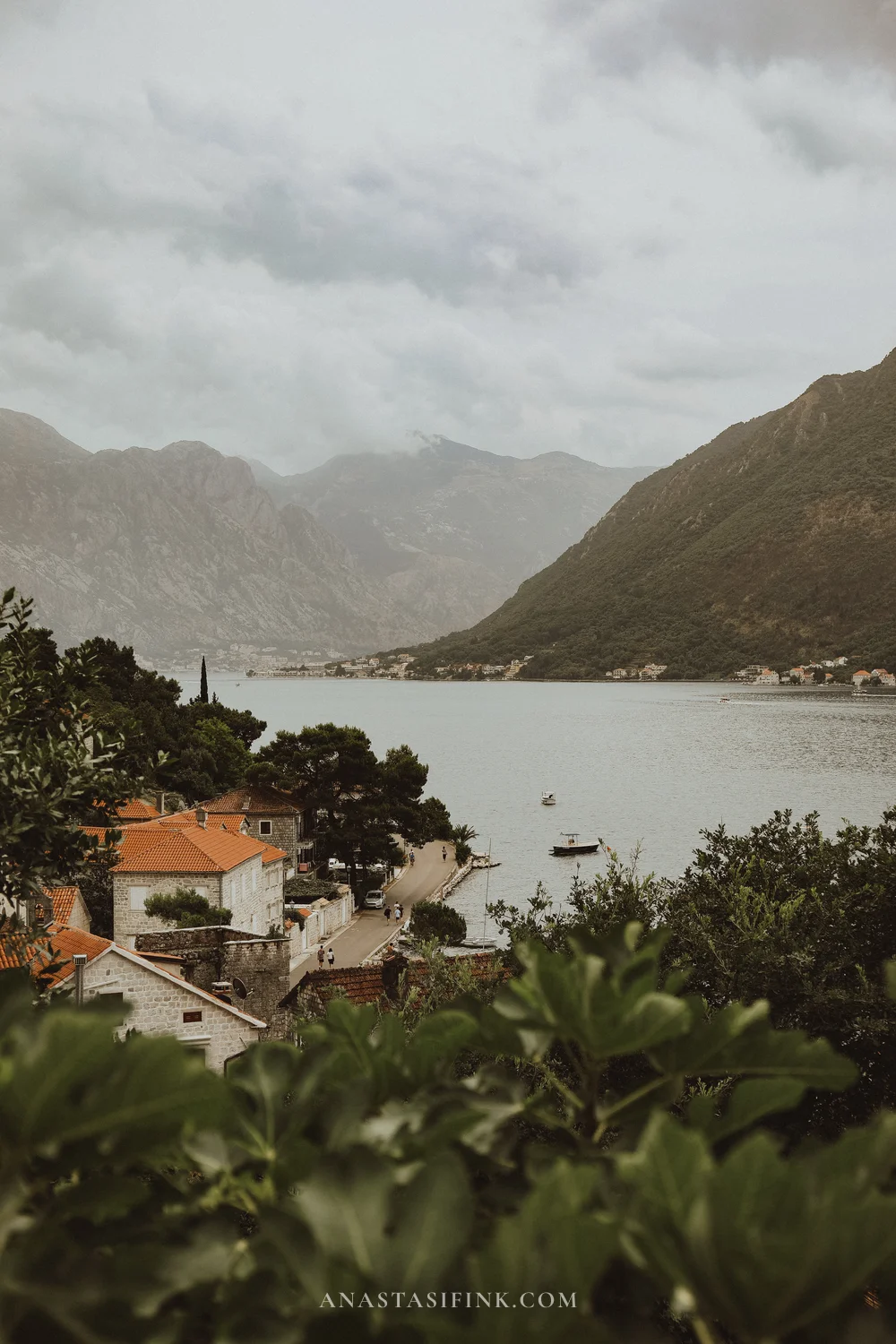
The distances are small: from Herceg Novi to Kotor along the shore is about twenty-five miles. But give yourself more time than the GPS says. The road is narrow, it hugs the water’s edge, and you’ll want to pull over every ten minutes.
Driving Around the Bay
The easiest way to explore the bay is by car: the main stops, Herceg Novi, Perast, Kotor and the Lustica peninsula, all sit along one coastal road, and you can cut across the bay on the Kamenari – Lepetane ferry. What order to see it all in is up to you: some people come from the Dubrovnik side and start with Herceg Novi, others start from Kotor or Tivat. The full loop along the shore is around forty-five miles.
Practical Info: The Road Around the Bay
- Herceg Novi – Kotor along the coast: ~43 km, 1-1.5 hours without stops
- Kamenari – Lepetane ferry: runs 24/7, the crossing takes 5 minutes, ~€5 per car
- Parking in Perast: at the town entrance (the center is closed to cars), €1-2 per hour
- Parking in Kotor: paid lots by the old town walls, €1-3 per hour
- Gas stations: in Herceg Novi, Kamenari, Kotor and Tivat
- Tip: in July and August, leave before 9 am, by midday the road along the bay is one long traffic jam
Along the shore you keep passing tiny stone churches, chapels and sailboats at anchor. The road itself is half the attraction.
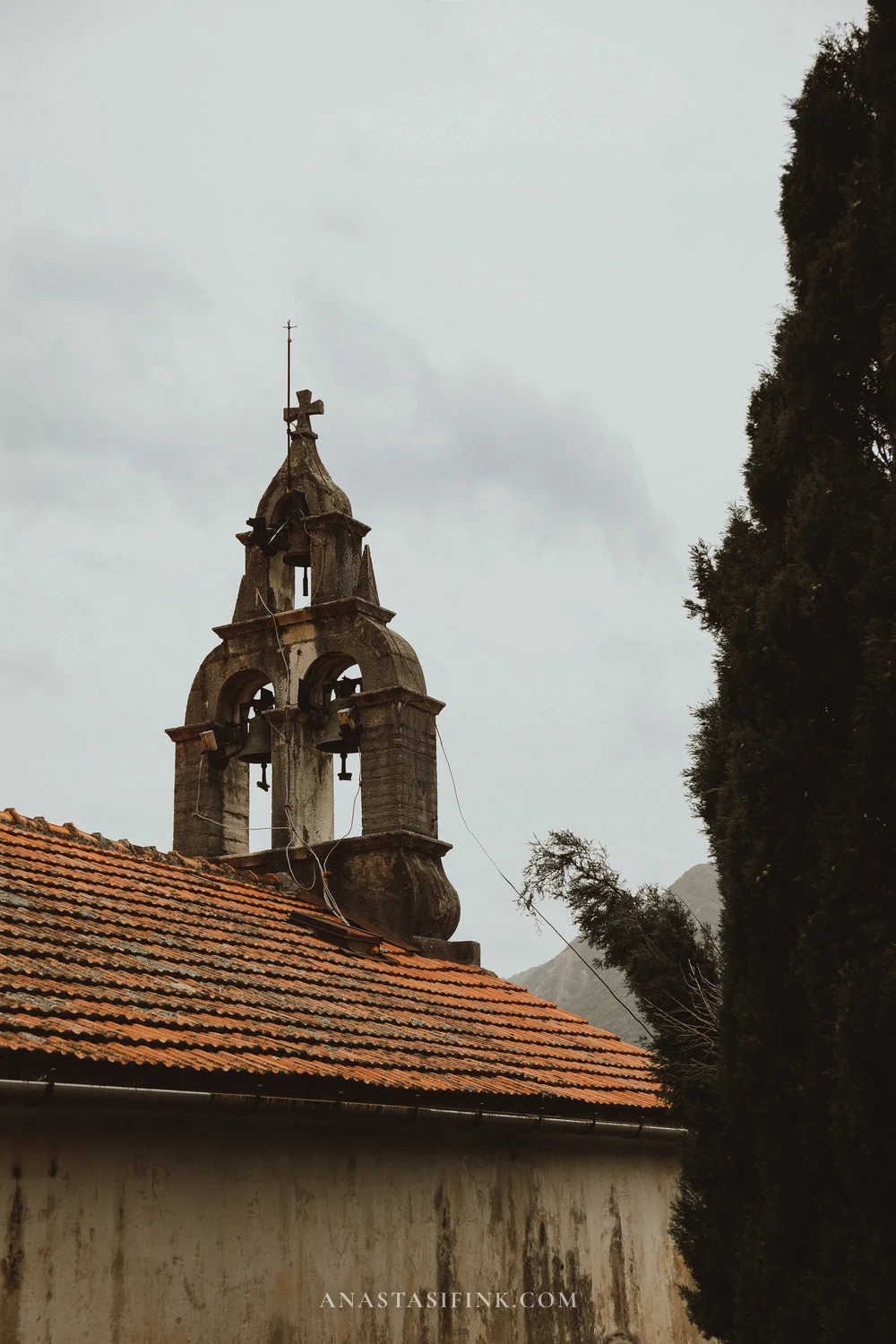
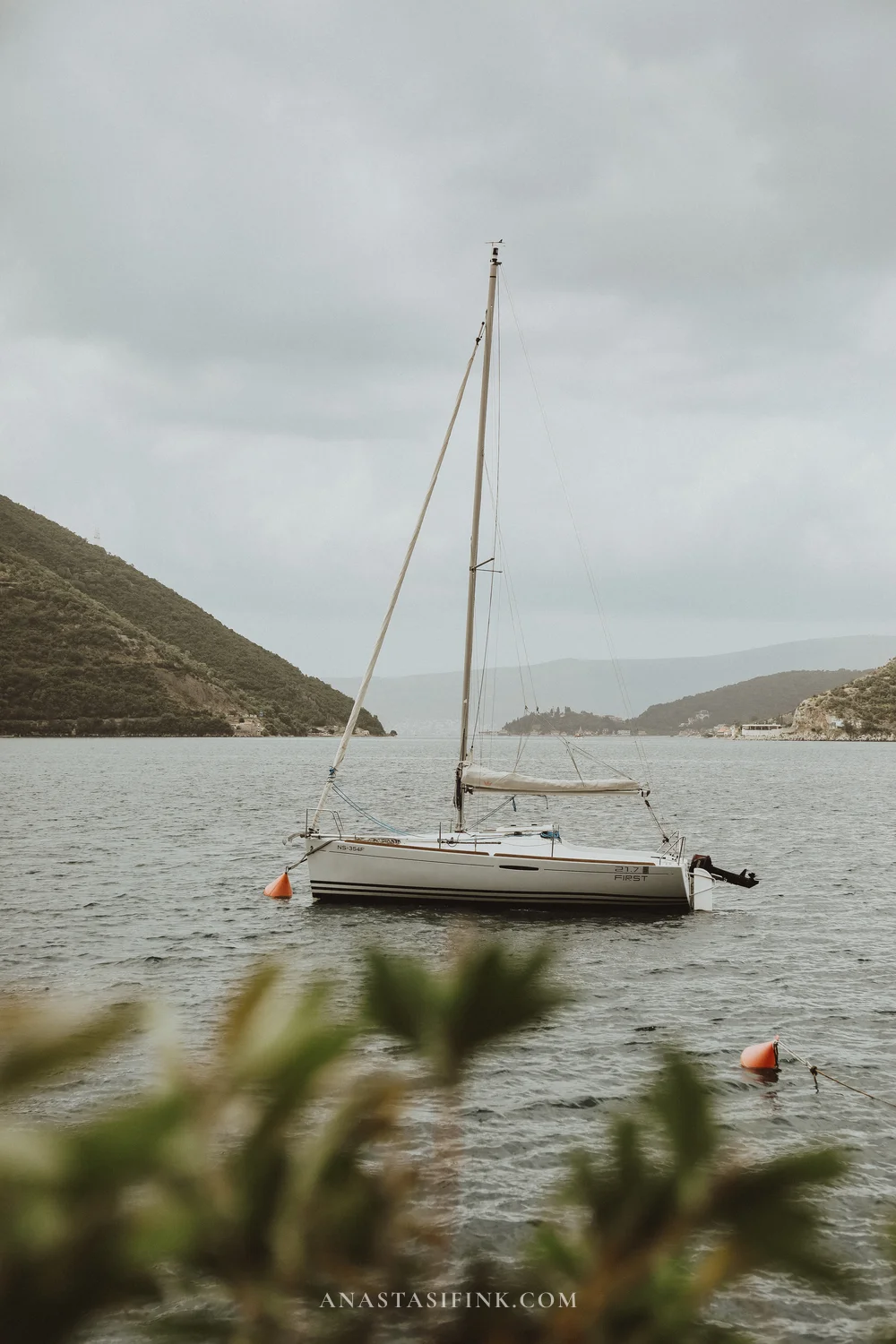
Stone chapels and yachts at anchor, the everyday scenery along the bay road
Herceg Novi: The Town at the Mouth of the Bay
Herceg Novi stands right at the entrance to the bay, which makes it a natural first stop, especially if you’re coming from the Dubrovnik side. The town was founded in 1382 by the Bosnian king Tvrtko I, and over the centuries it passed through Ottoman, Venetian and Austro-Hungarian hands. Every era left behind a fortress or a tower.
The old town is small but built on a steep slope: instead of streets you often get staircases, and you’re constantly climbing up or down. There’s a reason they call Herceg Novi the town of a thousand steps. Better to leave the car on the waterfront or by the upper road and continue on foot.
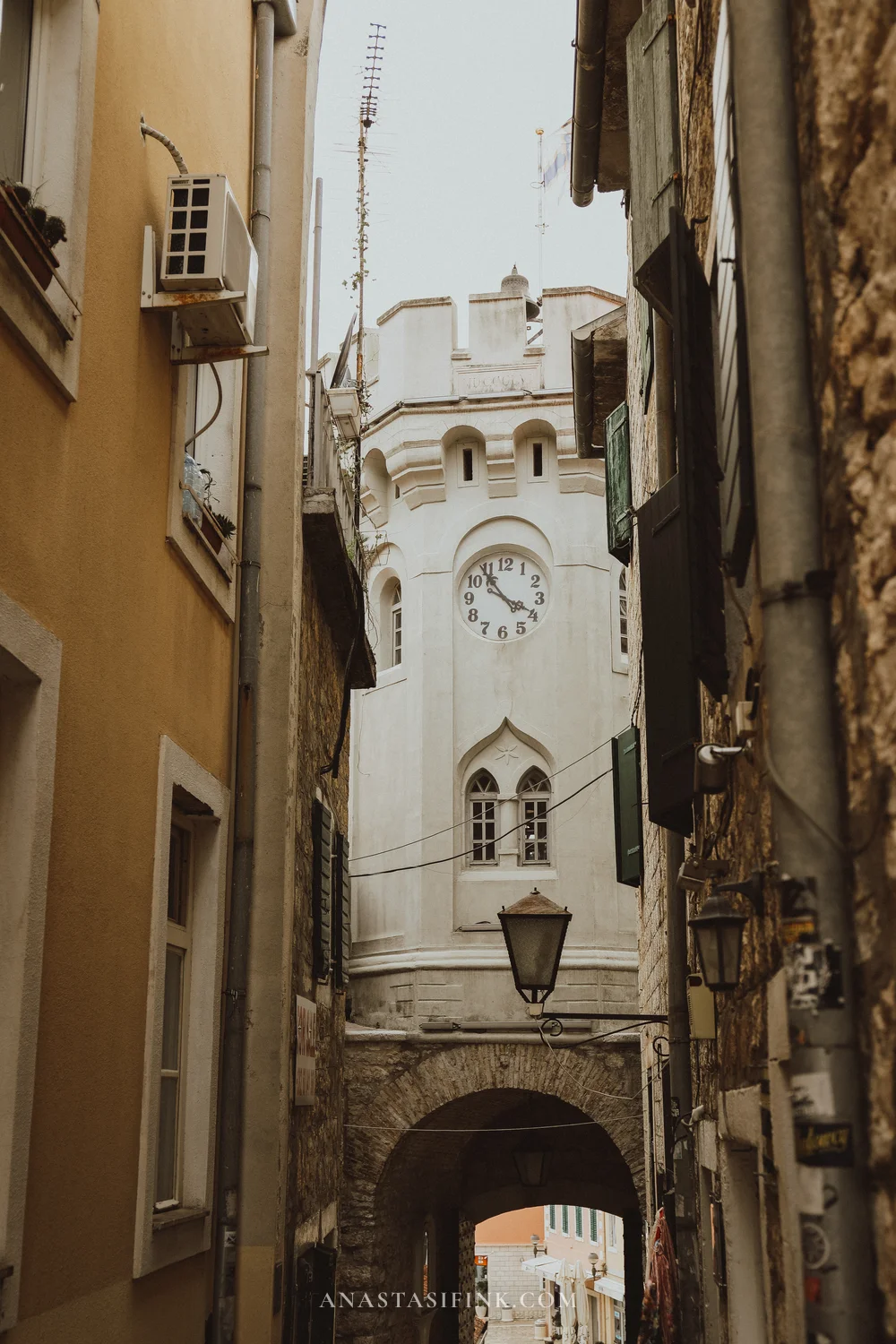
The main way into the old town is through the arch of the Sat Kula clock tower. Inside the arch there’s a small relief of the Black Madonna carved from charred olive wood, easy to miss if you don’t know to look. Beyond the tower is Belavista Square with its cafes and the Church of Archangel Michael, whose pale dome peeks out from side streets all over town.
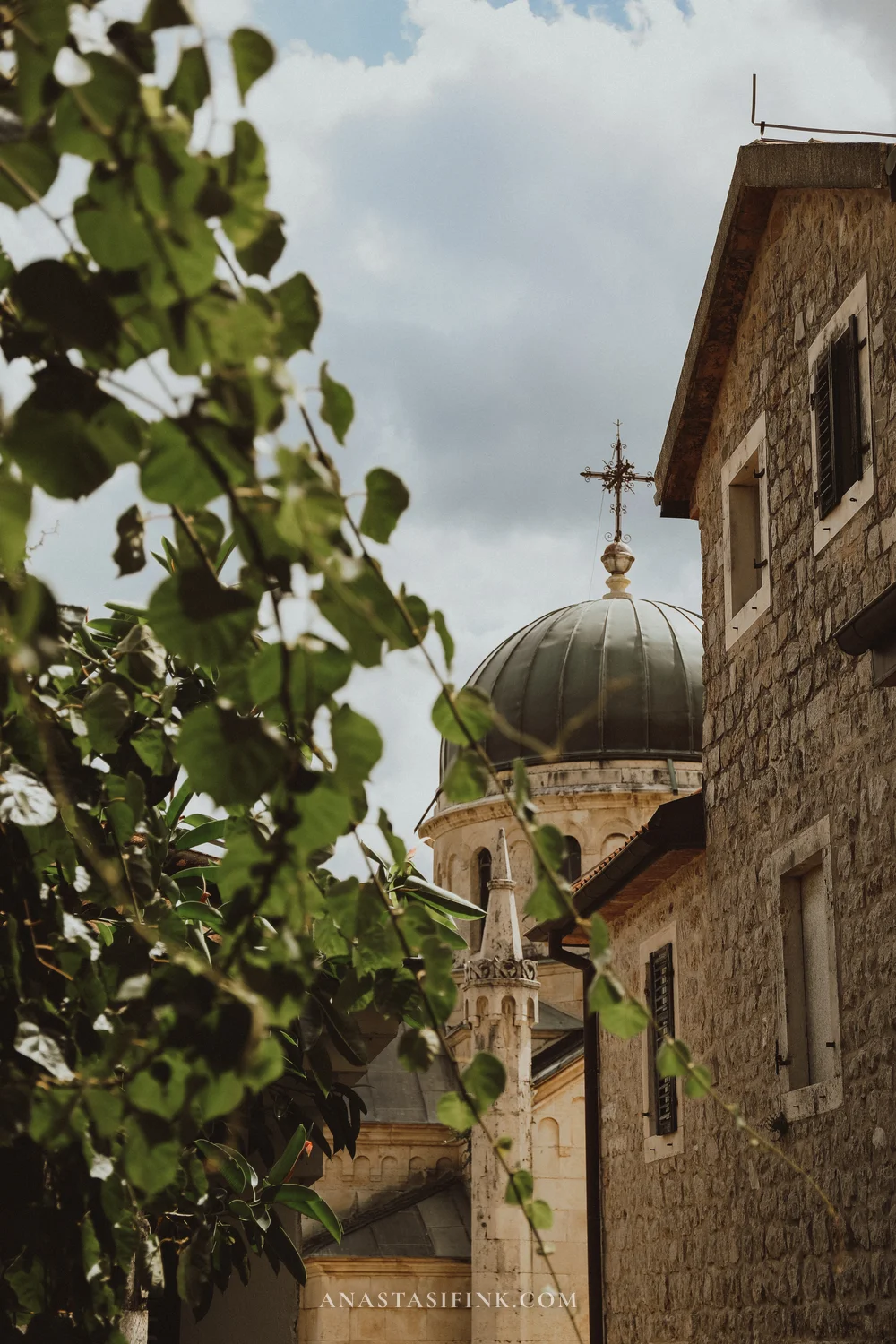
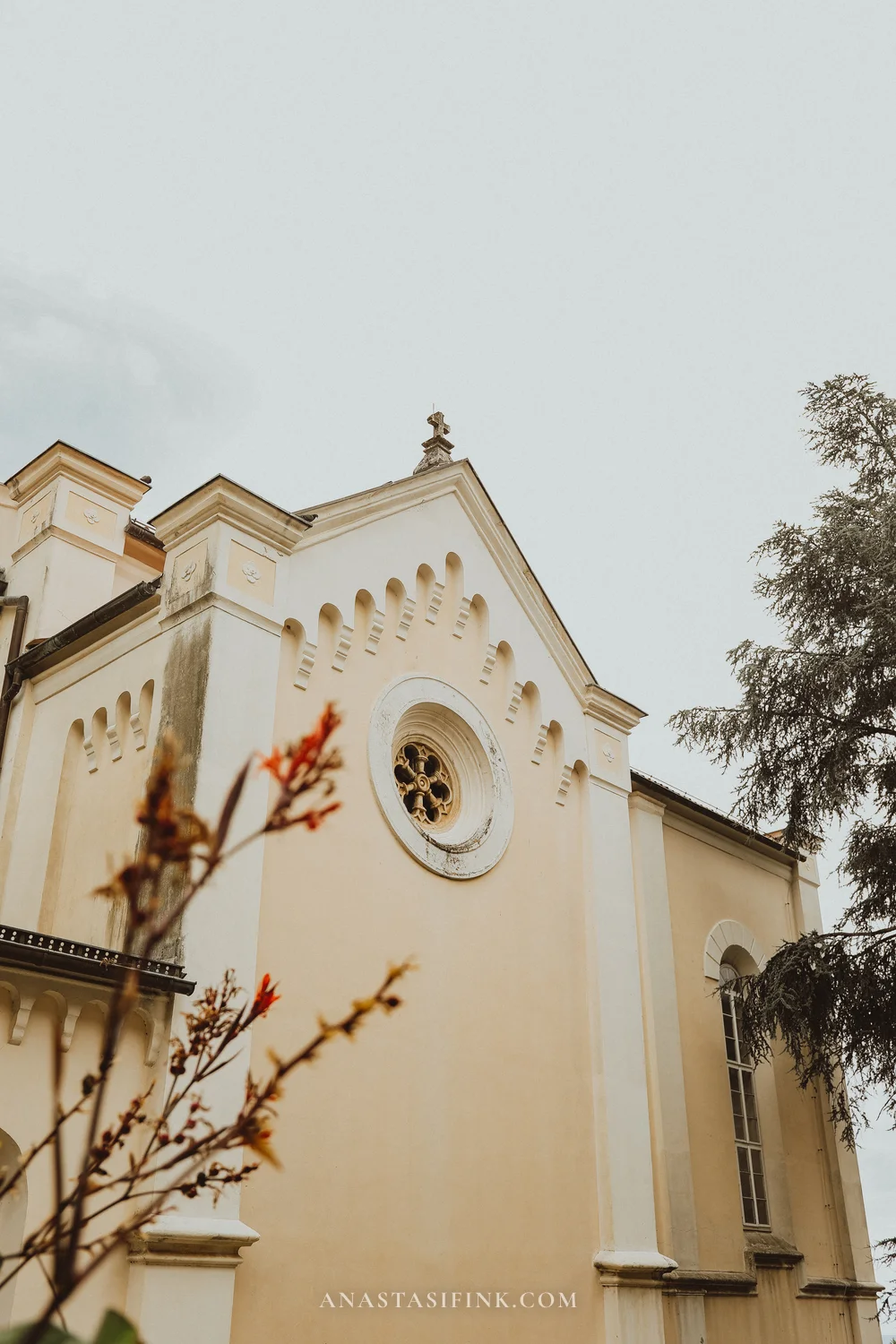
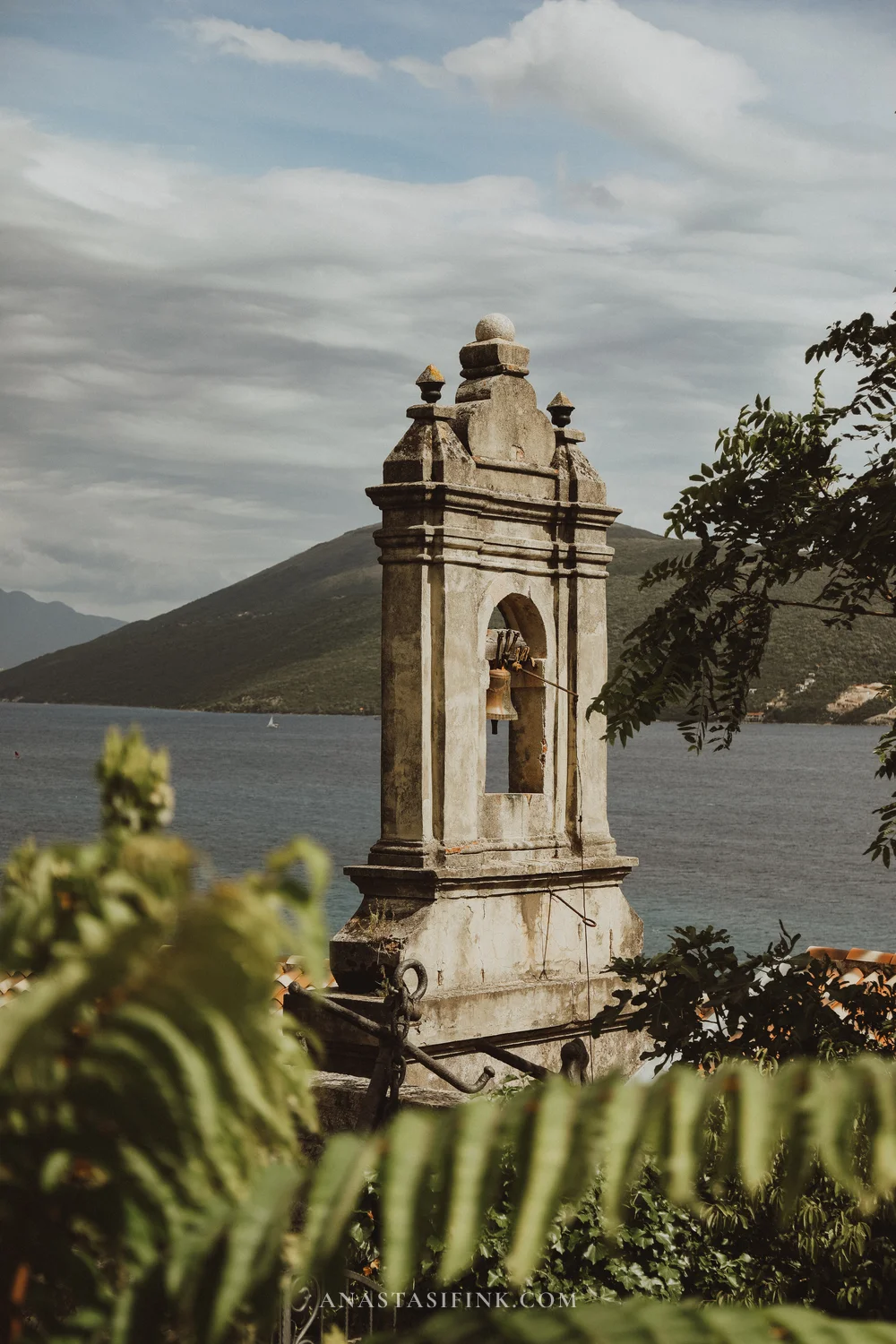
The churches of Herceg Novi: the dome of Archangel Michael, the facade of St. Jerome and a bell tower above the sea
Herceg Novi is a lived-in town: there are fewer tourists than in Kotor, laundry dries on the staircases, and ordinary apartment buildings sit wedged between the old facades. Just wander it without a plan, you can cover the whole old town in an hour.
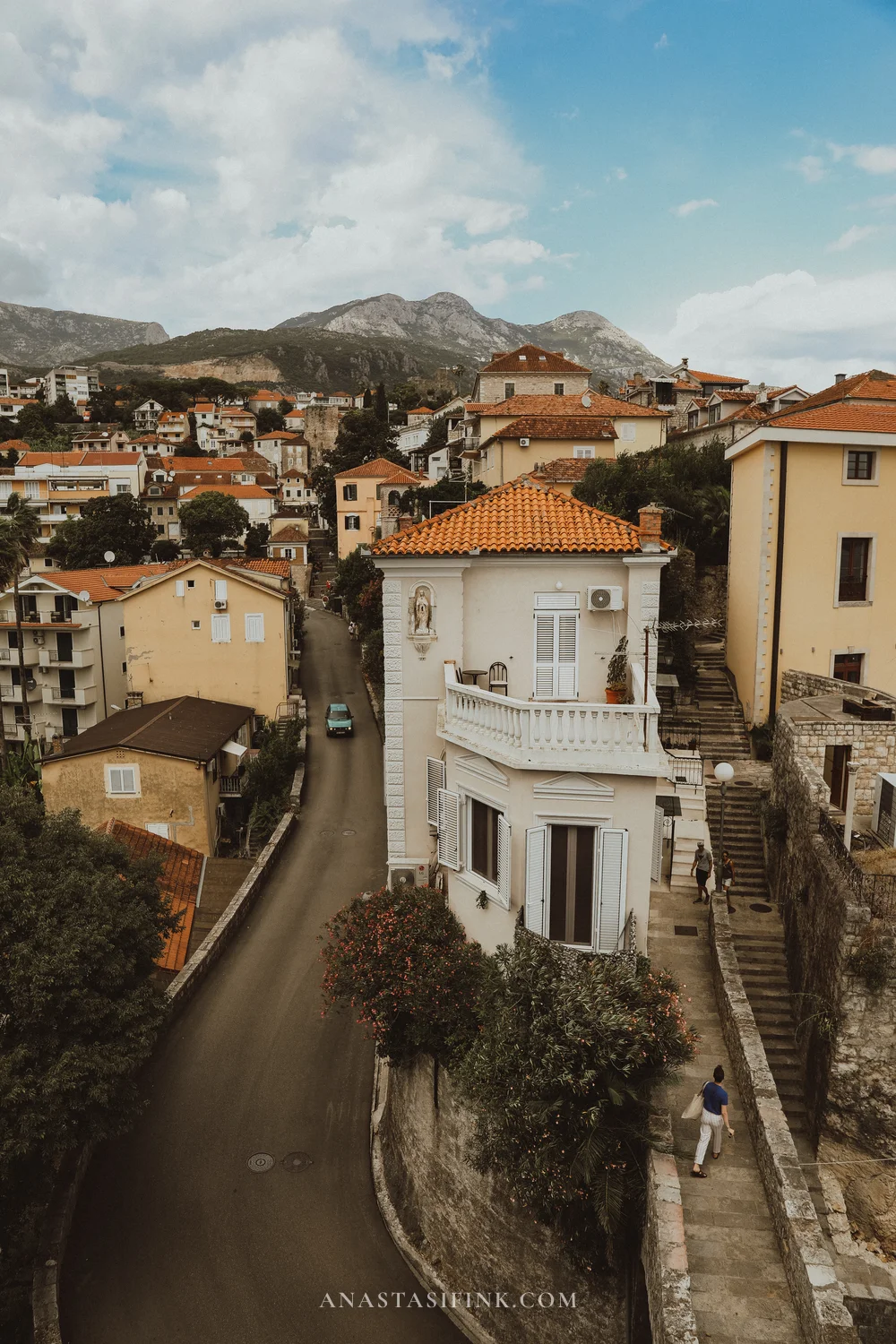
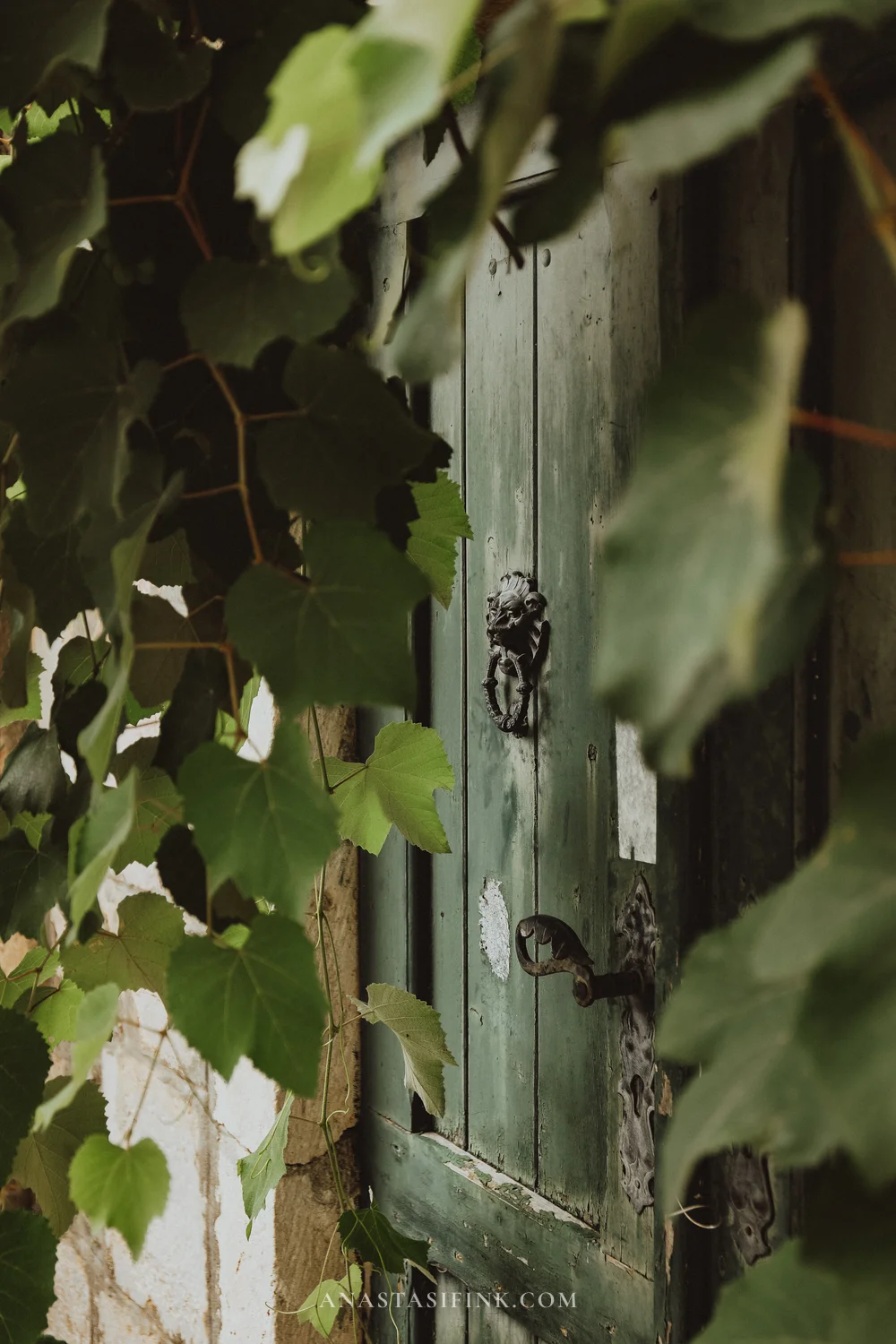
Streets of Herceg Novi: early 1900s villas and doors that haven’t changed in a hundred years
Practical Info: Herceg Novi
- Old town GPS: 42.4531, 18.5375
- How long: 1.5-2 hours for a stroll
- Kanli Kula fortress: entry ~€3, with a view over the whole bay from the top; concerts are held here in summer
- Parking: along the Setaliste Pet Danica promenade or by the upper road
Verige 65: Lunch with the Best View of the Bay
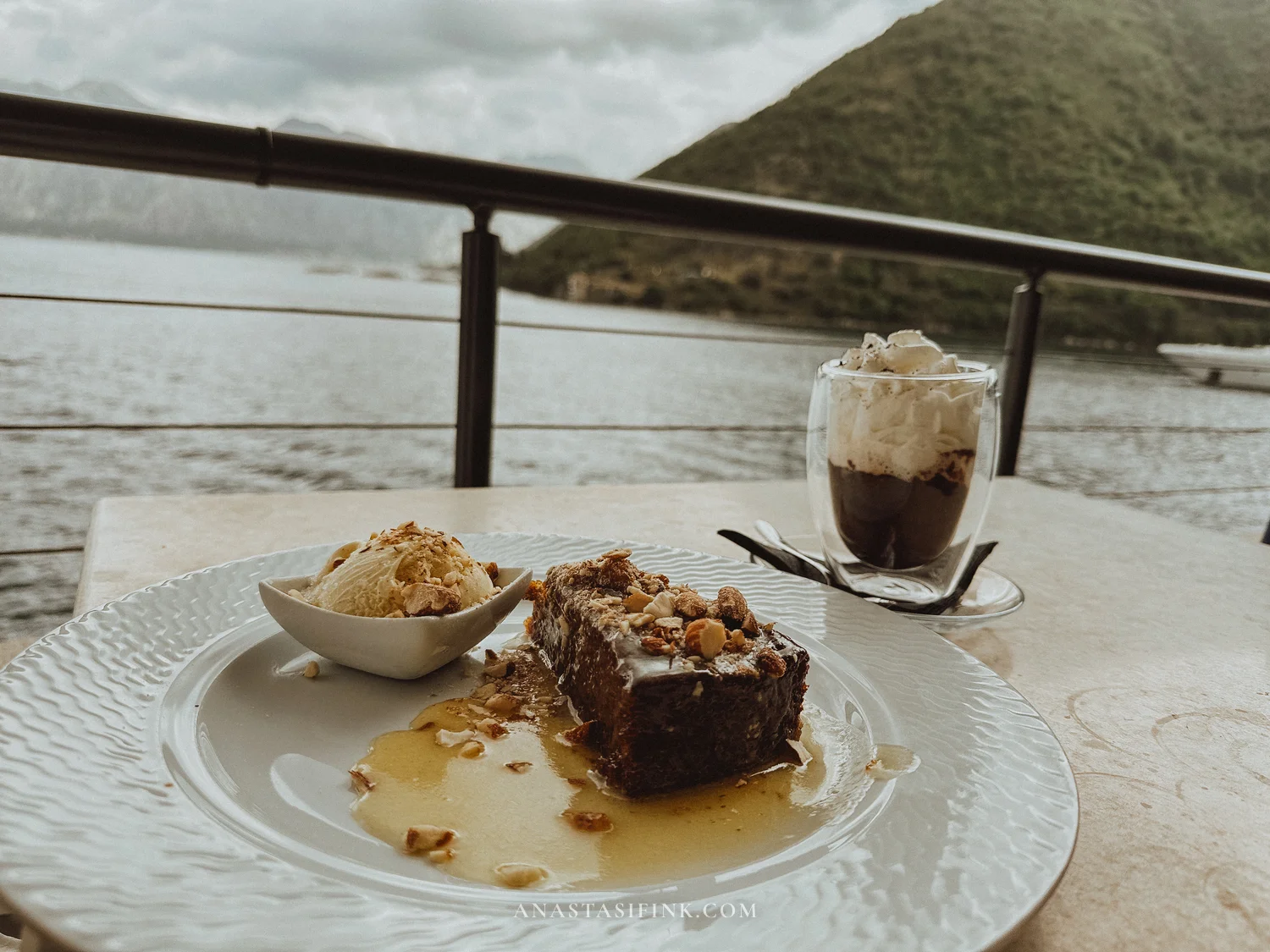
Between Herceg Novi and Perast, by the Kamenari ferry crossing, there’s a place worth planning your lunch around, the restaurant Verige 65. It sits at the narrowest point of the bay, right on the Verige strait. The tables are directly above the water, and from them you can see Perast and both of its islands.
It’s a lovely spot, and I recommend stopping at least for a coffee, the view is worth it. This is one of those places where Montenegro’s laid-back summer mood really sinks in.
Practical Info: Verige 65
- Address: Kostanjica bb, by the Kamenari ferry crossing
- Hours: 08:00-01:00 daily
- Average bill: €15-30 per person (dessert and coffee, around €10)
- Google Maps: link
- Tip: book a waterside table in advance for sunset, the place is popular
Perast: A Baroque Town of One Street
Perast is the most famous spot in the bay. This tiny town, essentially a single waterfront, was a wealthy port of the Venetian Republic in the 17th and 18th centuries: local captains sailed their ships all over the Mediterranean. That money built the dozen or so palazzos and churches that still line the water today.
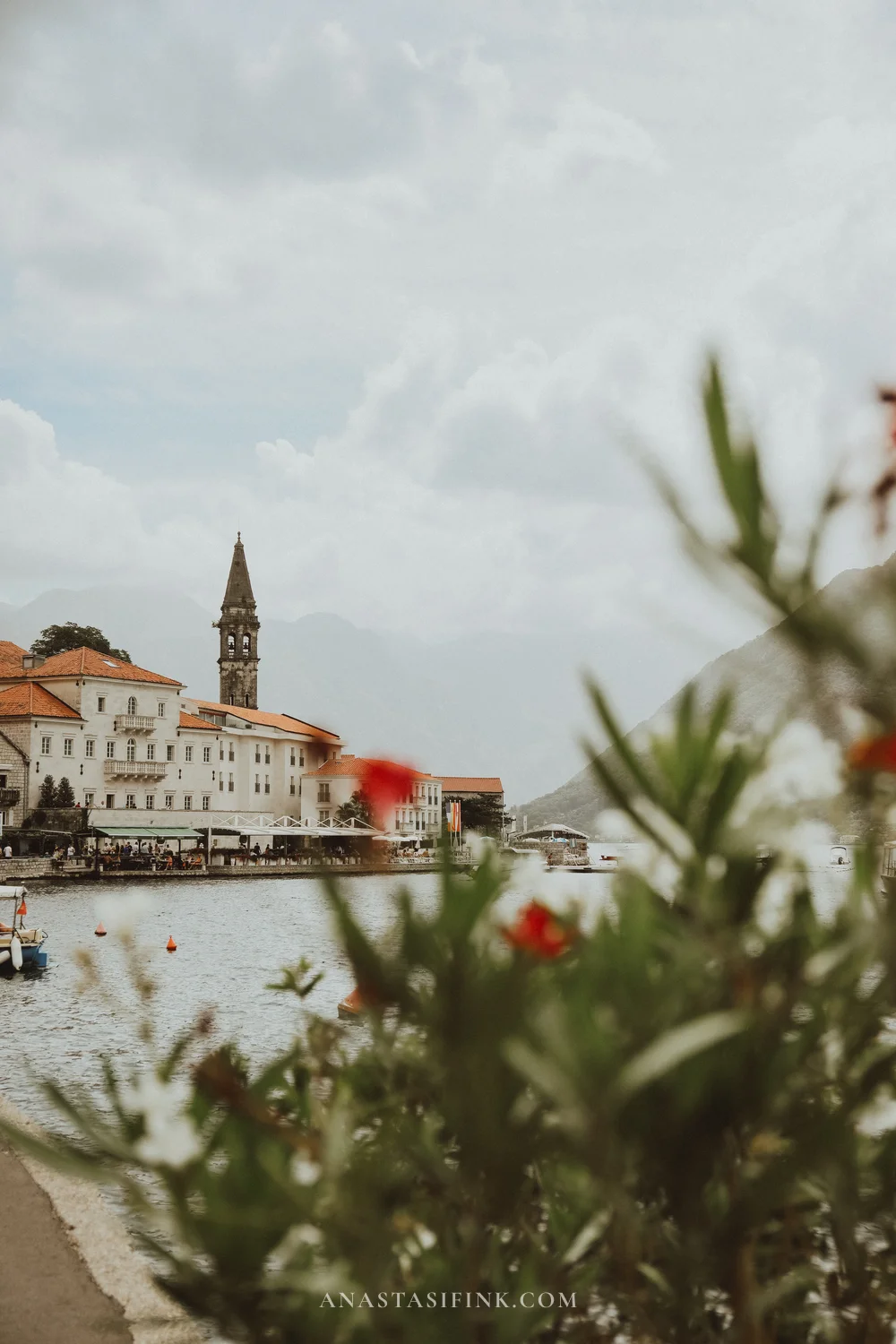
The town center is closed to cars, so you park at the entrance and walk. The whole waterfront stroll takes about twenty minutes, but give yourself an hour or ninety minutes, you’ll want to poke into every courtyard.
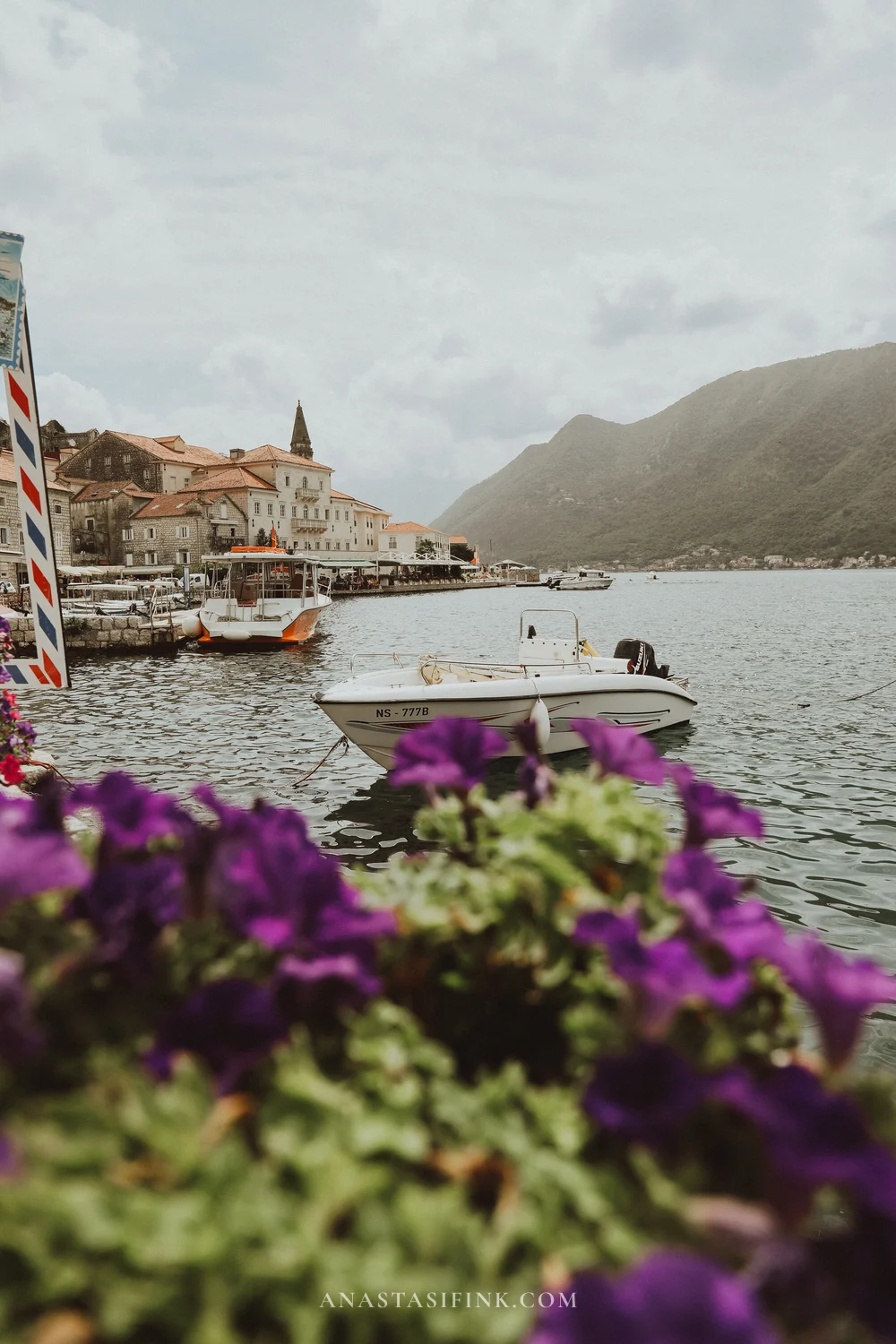
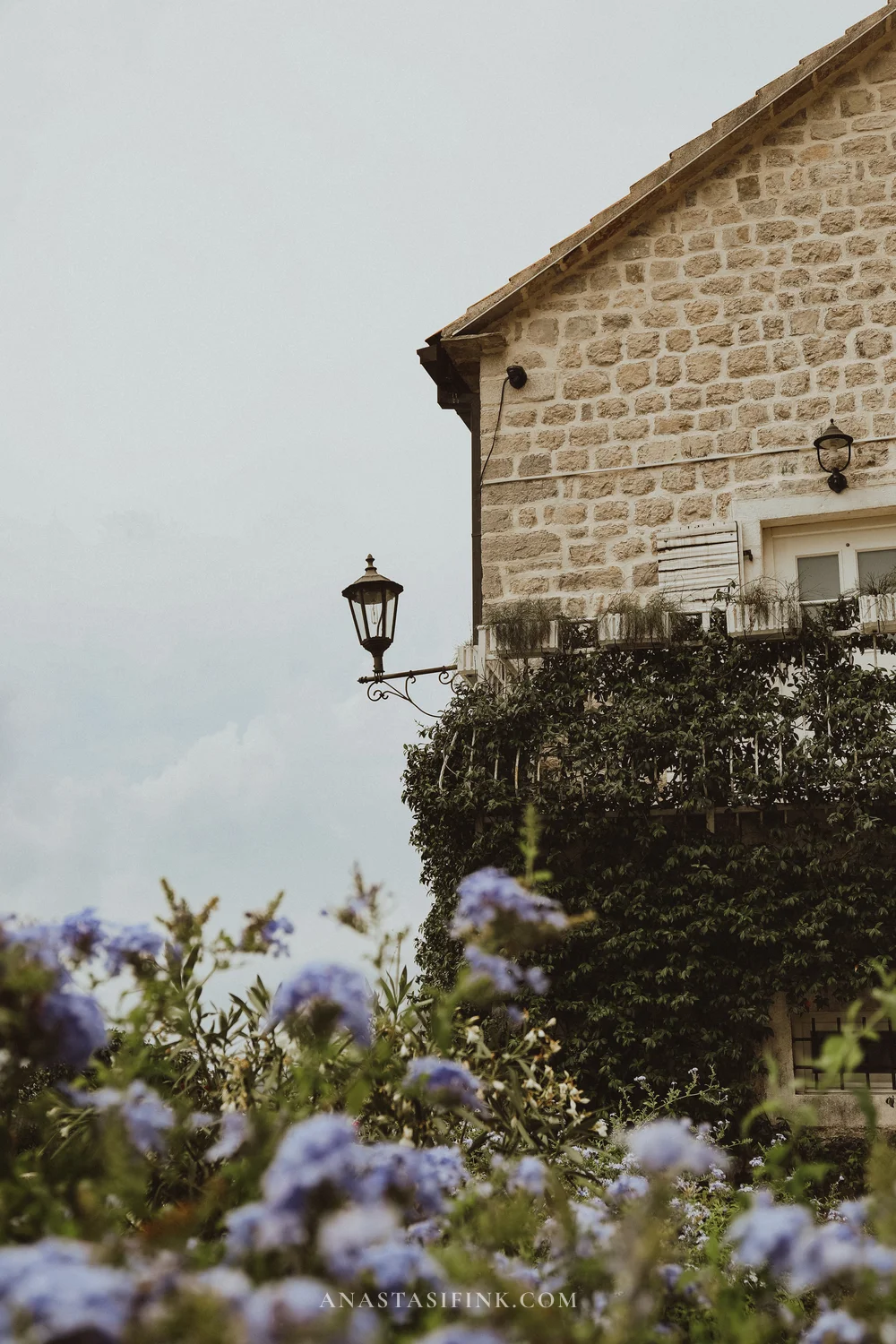
The Perast waterfront and stone houses draped in flowers, well kept but not overly polished
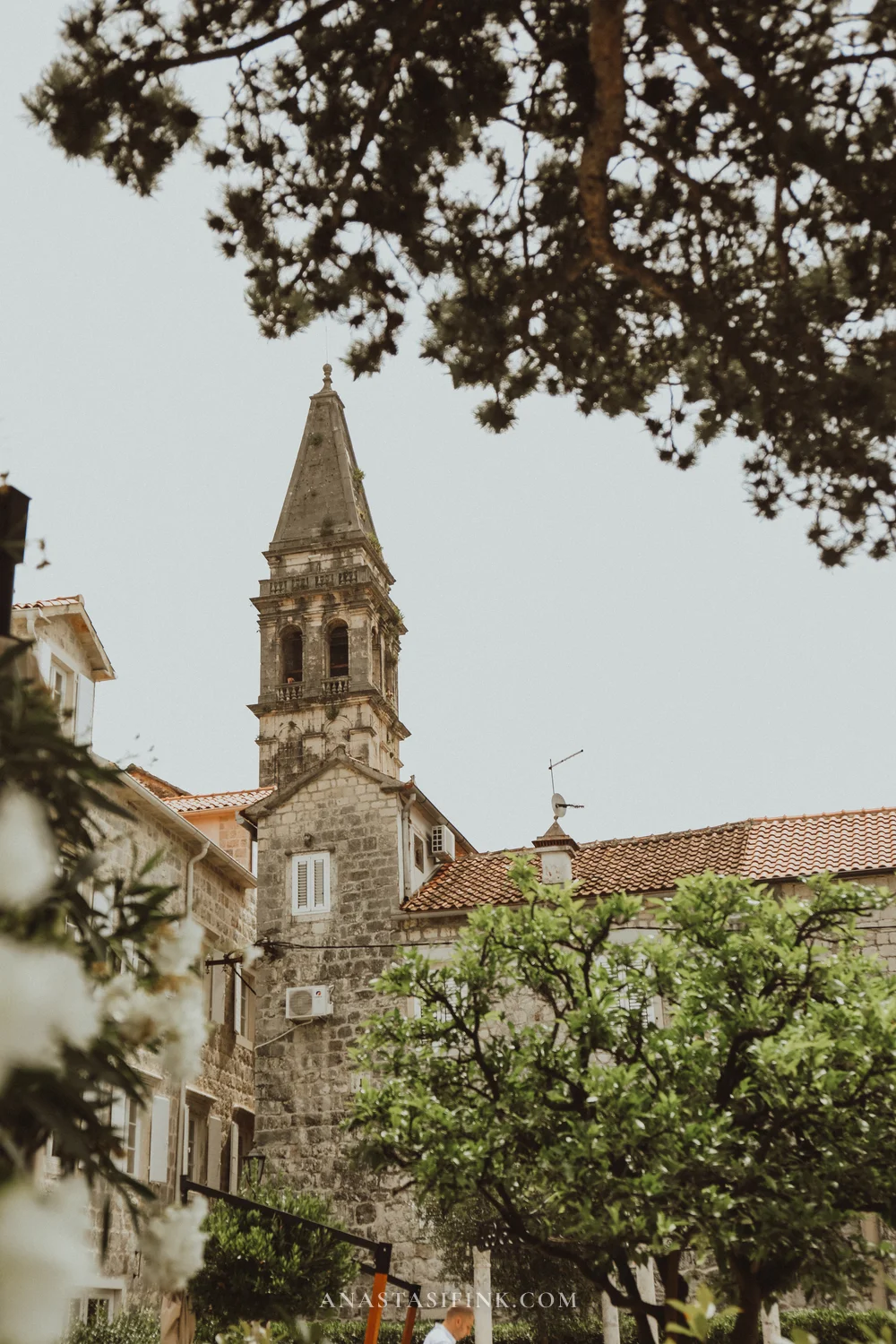
The town’s main church is St. Nicholas, patron saint of sailors. Its bell tower is visible from anywhere in Perast, and you can climb it. Inside, the church is more modest than you’d expect from a baroque town: a wooden ceiling, a marble altar and quiet.
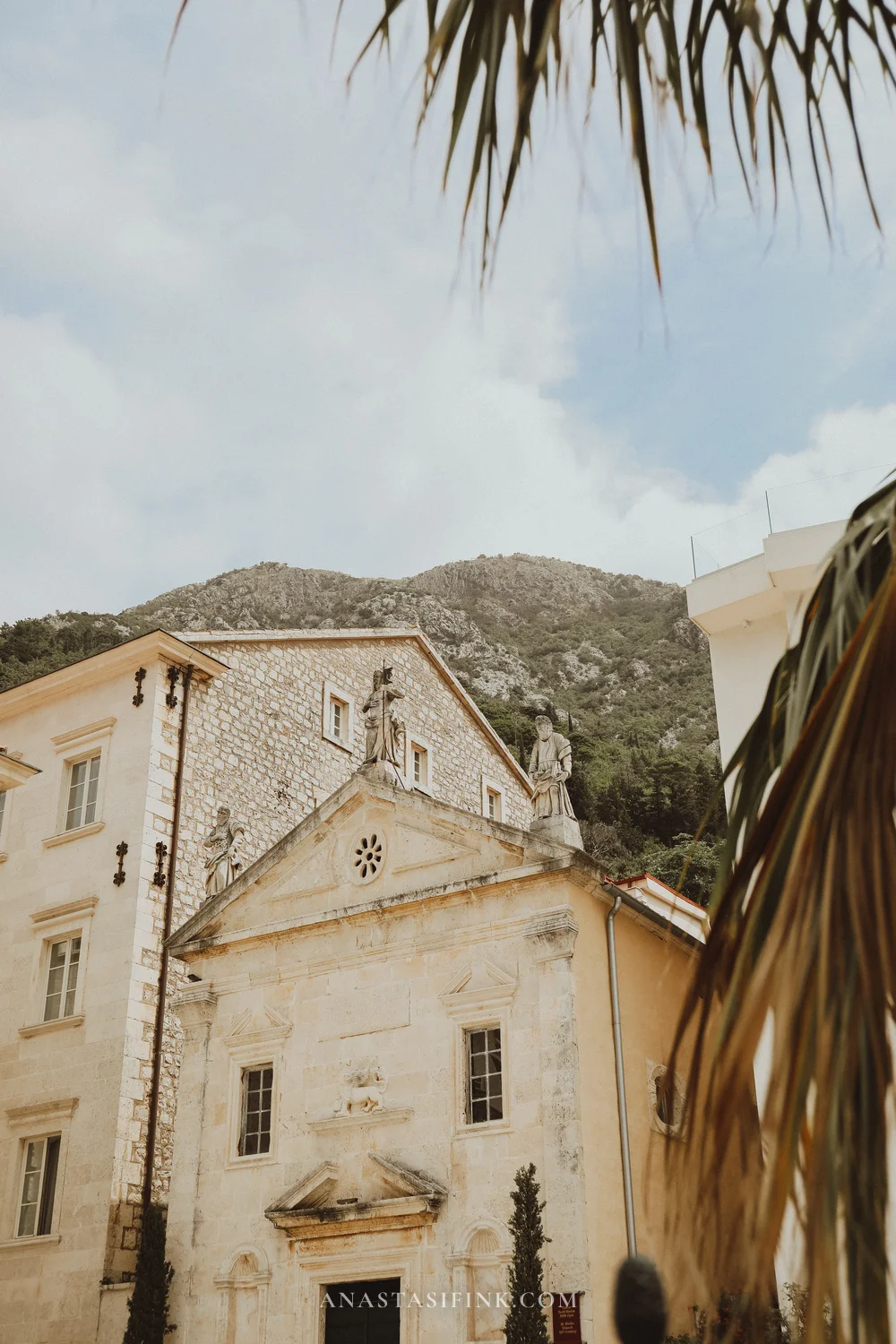
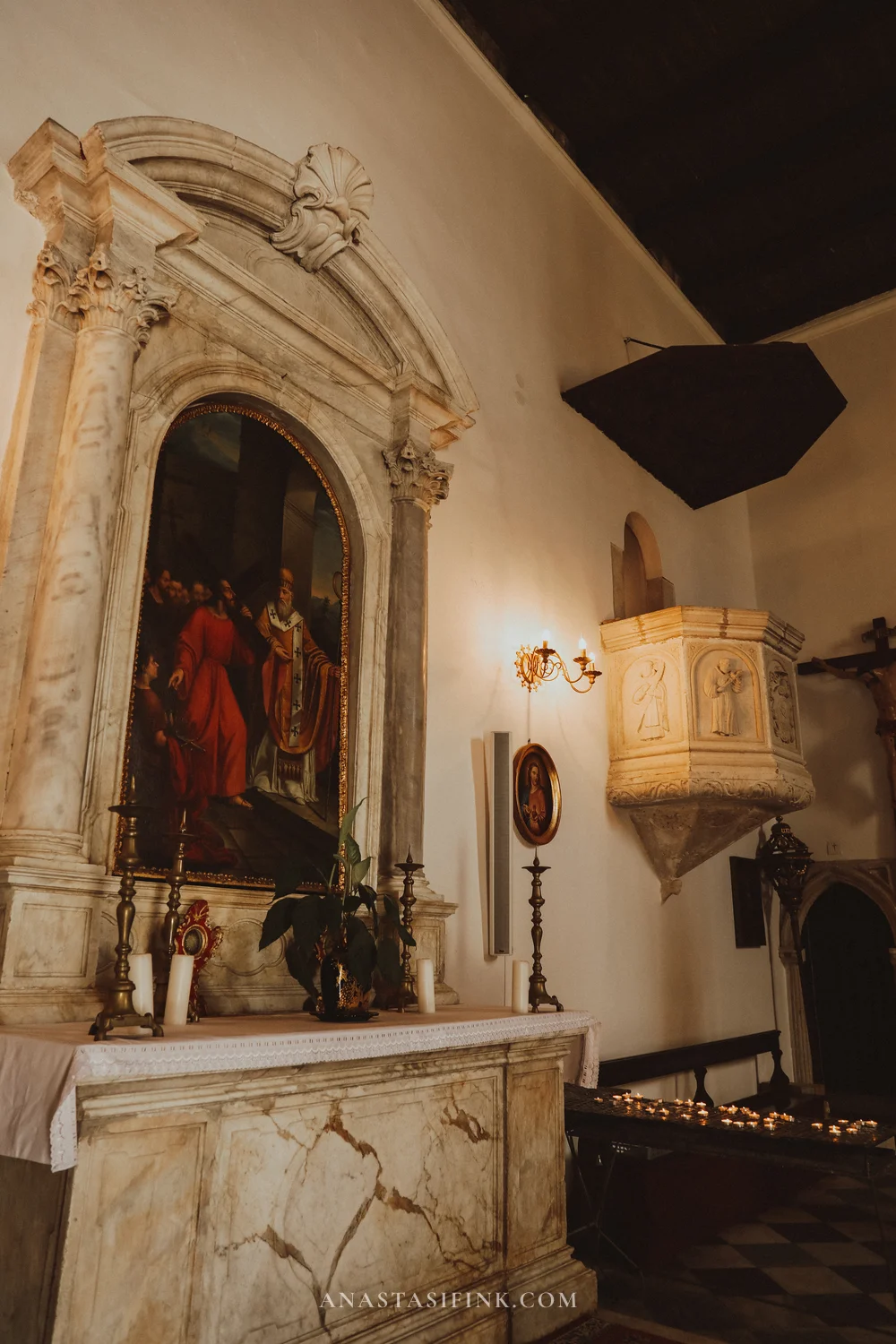
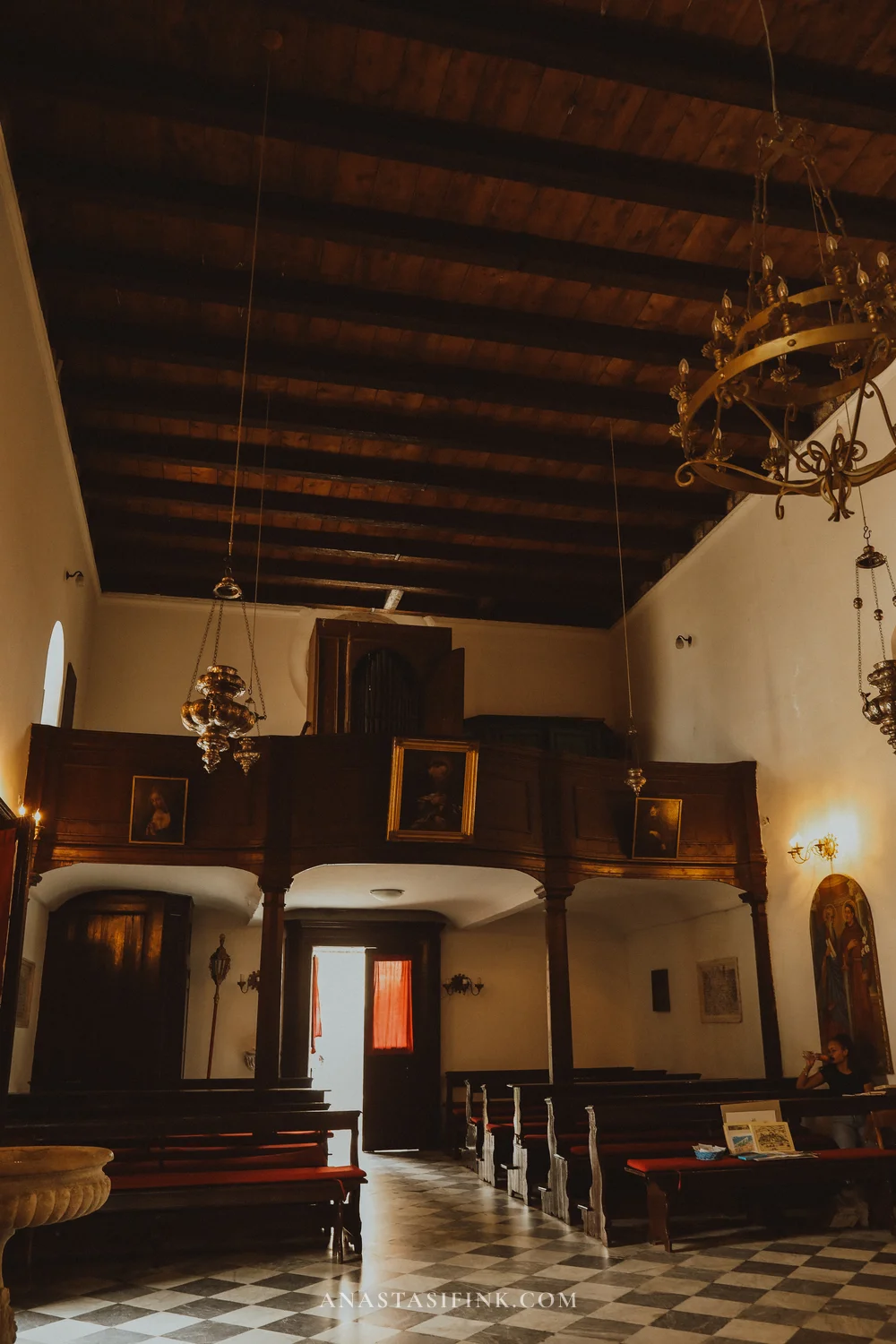
Inside the church of St. Nicholas: marble, wood and candles
On the waterfront you’ll find Moritz Eis, an ice cream chain started in Montenegro by an Austrian entrepreneur. The raspberry sorbet tastes like someone dropped a handful of frozen berries into your cup, none of that syrupy sweetness.
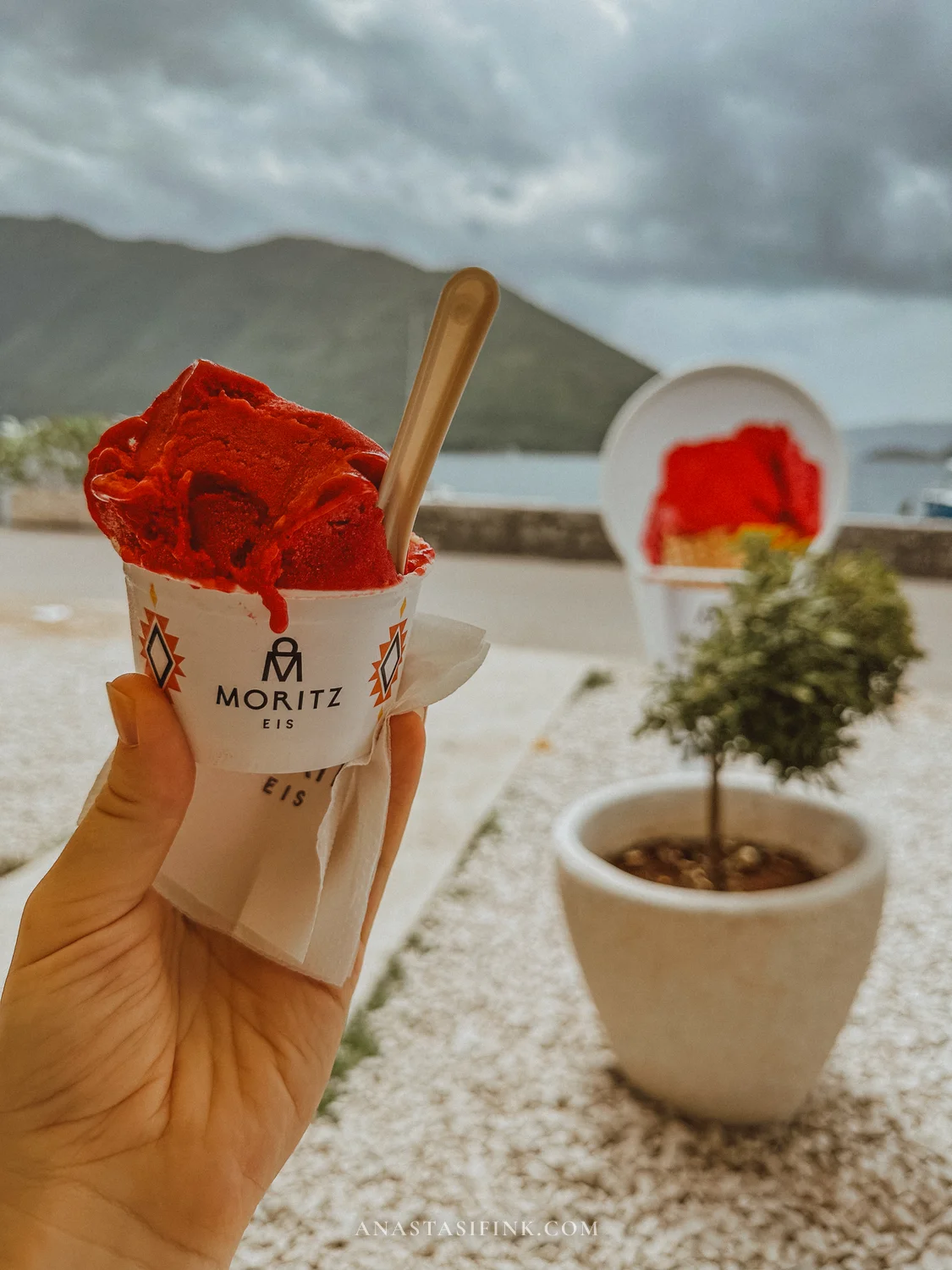
This is subtropical territory: oleander and plumbago bloom along the streets and roads, cacti grow out of the stone walls, and the courtyards are full of roses and pomegranate trees.


Plumbago and a blooming cactus, the towns of the bay are buried in flowers
And Perast is full of cats. They sleep on stone parapets, under the oleanders, in boats, and they barely register the tourists at all.
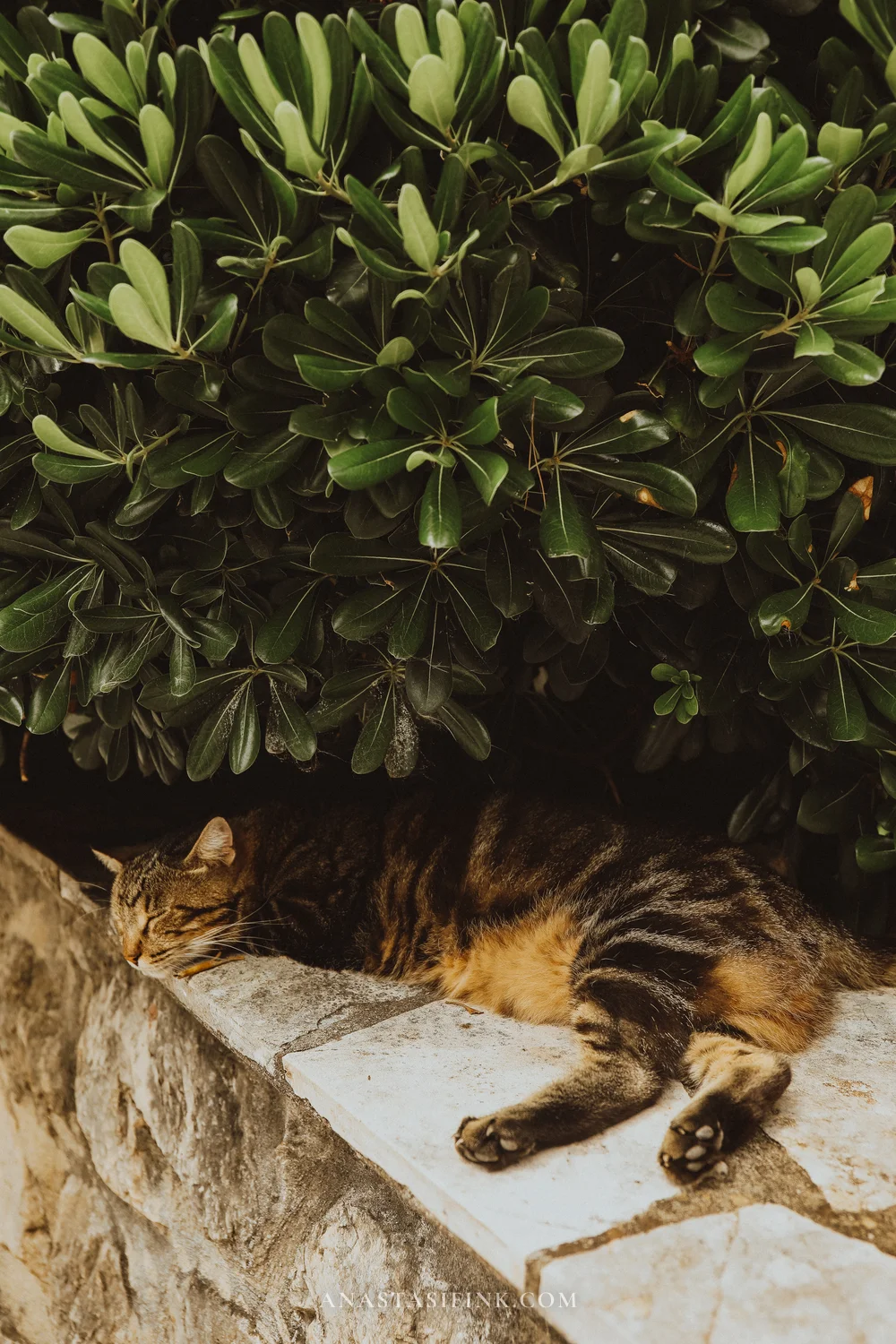
Practical Info: Perast
- GPS: 42.4864, 18.6979
- Parking: at the town entrance, €1-2 per hour; fills up by 10 am in season
- St. Nicholas bell tower: climb €2-3
- How long: 1.5-2 hours including a coffee stop
- Getting there without a car: Kotor – Perast bus (30 minutes, ~€1.50) or a tour boat from Kotor
Our Lady of the Rocks: A Man-Made Island with a Legend
Two small islands sit just off Perast. The first is St. George, with its cypresses and a 12th-century Benedictine monastery: you can’t land there, only look from the water. The second, Our Lady of the Rocks (Gospa od Skrpjela, “Our Lady on the Reef”), is the only man-made island in the Adriatic, and that one you can actually visit.
The legend goes like this: in 1452, two fishermen from Perast found an icon of the Virgin Mary on an underwater rock. From then on, sailors returning from sea would drop stones at that spot. Over a few centuries, the stones and scuttled old ships added up to an entire island, and a church was built on it. The tradition is still alive: every year on July 22, the people of Perast row out in boats and throw stones by the island, a festival called the fasinada.
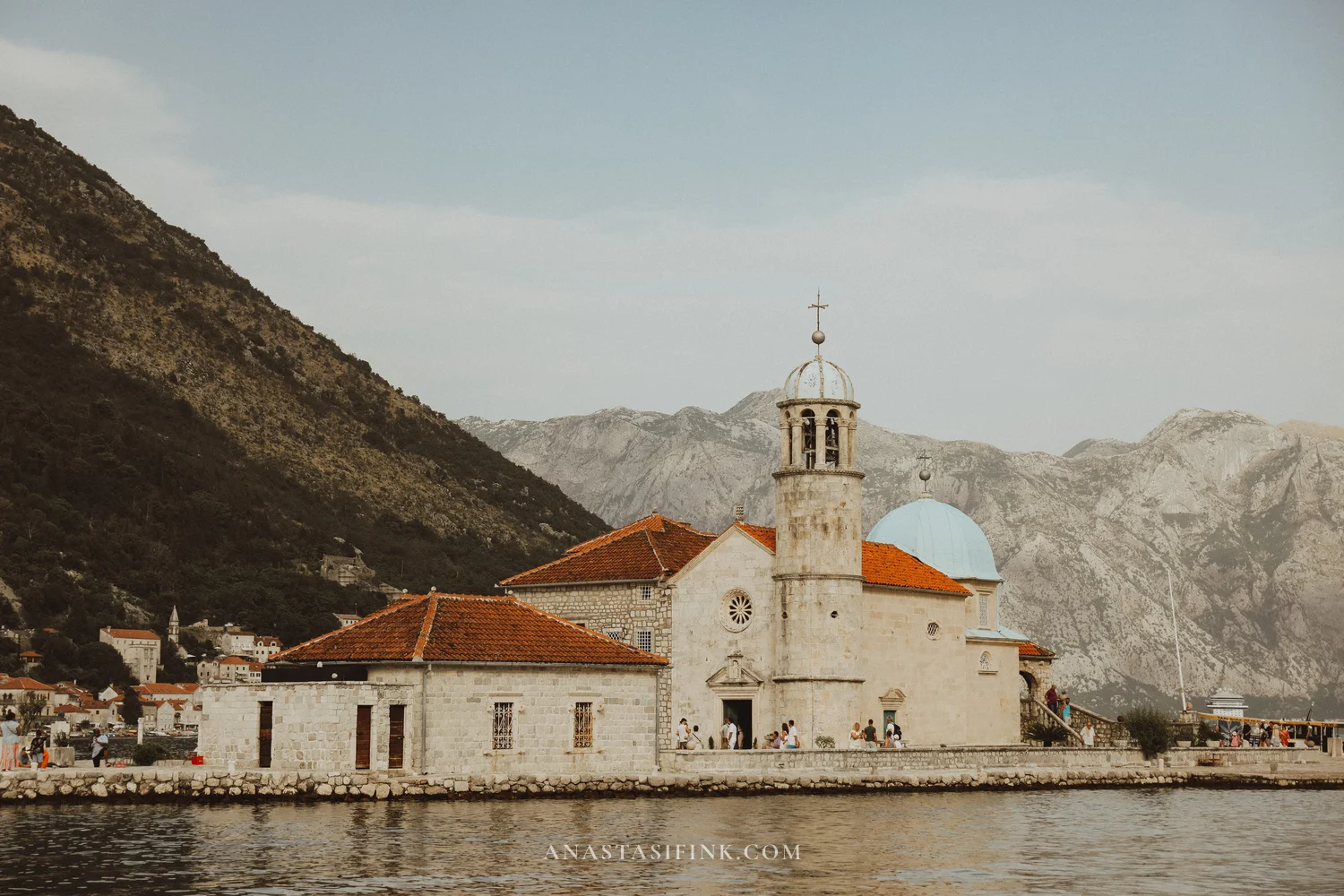
Boats leave for the island from the Perast waterfront every few minutes, and the ride takes five minutes. Inside the church is a museum of sailors’ offerings: silver plates engraved with ships, paintings, and the most touching piece of all, an icon that a local woman named Jacinta Kunic embroidered over 25 years, weaving her own hair into it.
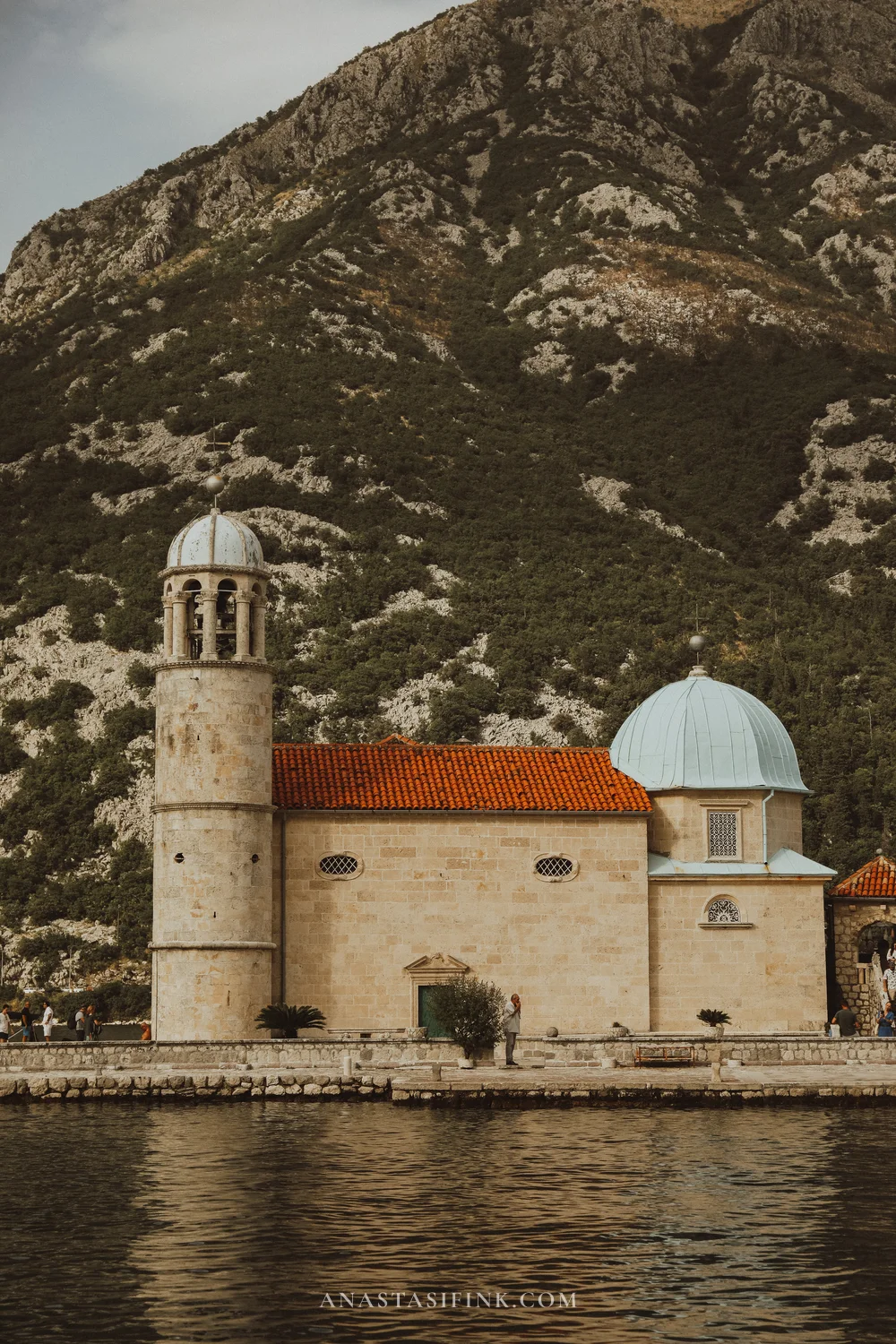
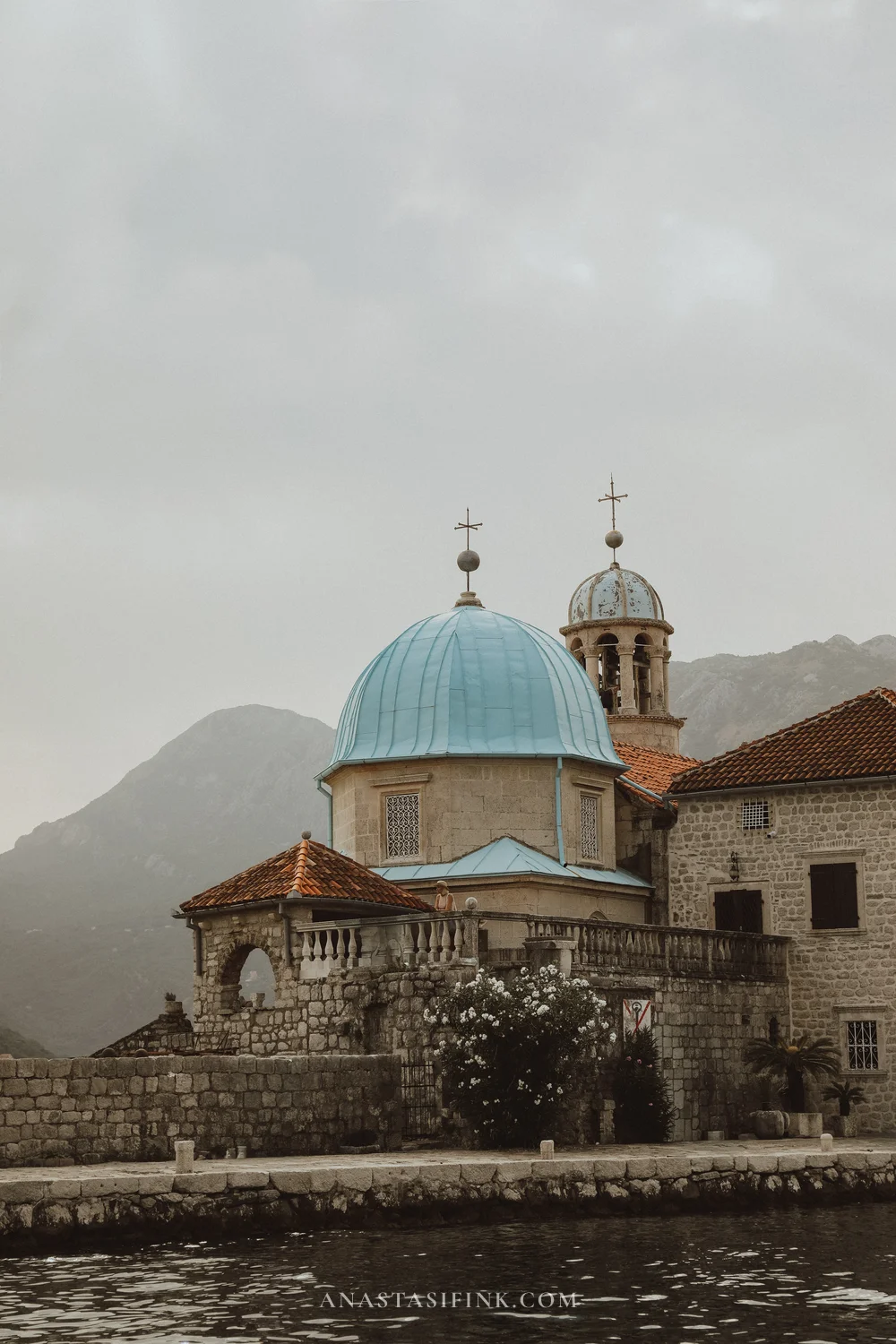
The church’s blue dome stands out from far away: it was covered in copper that has faded to this shade
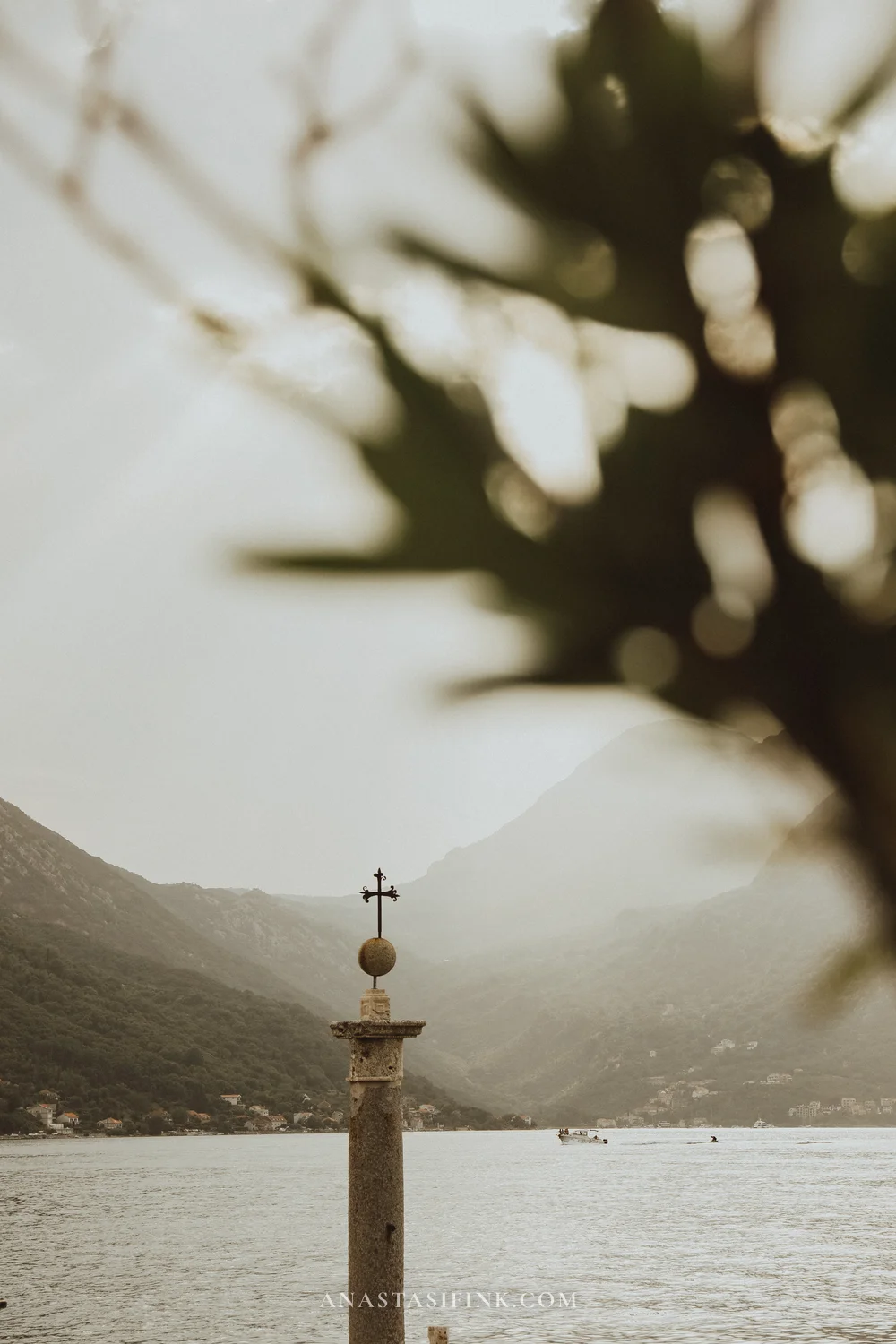
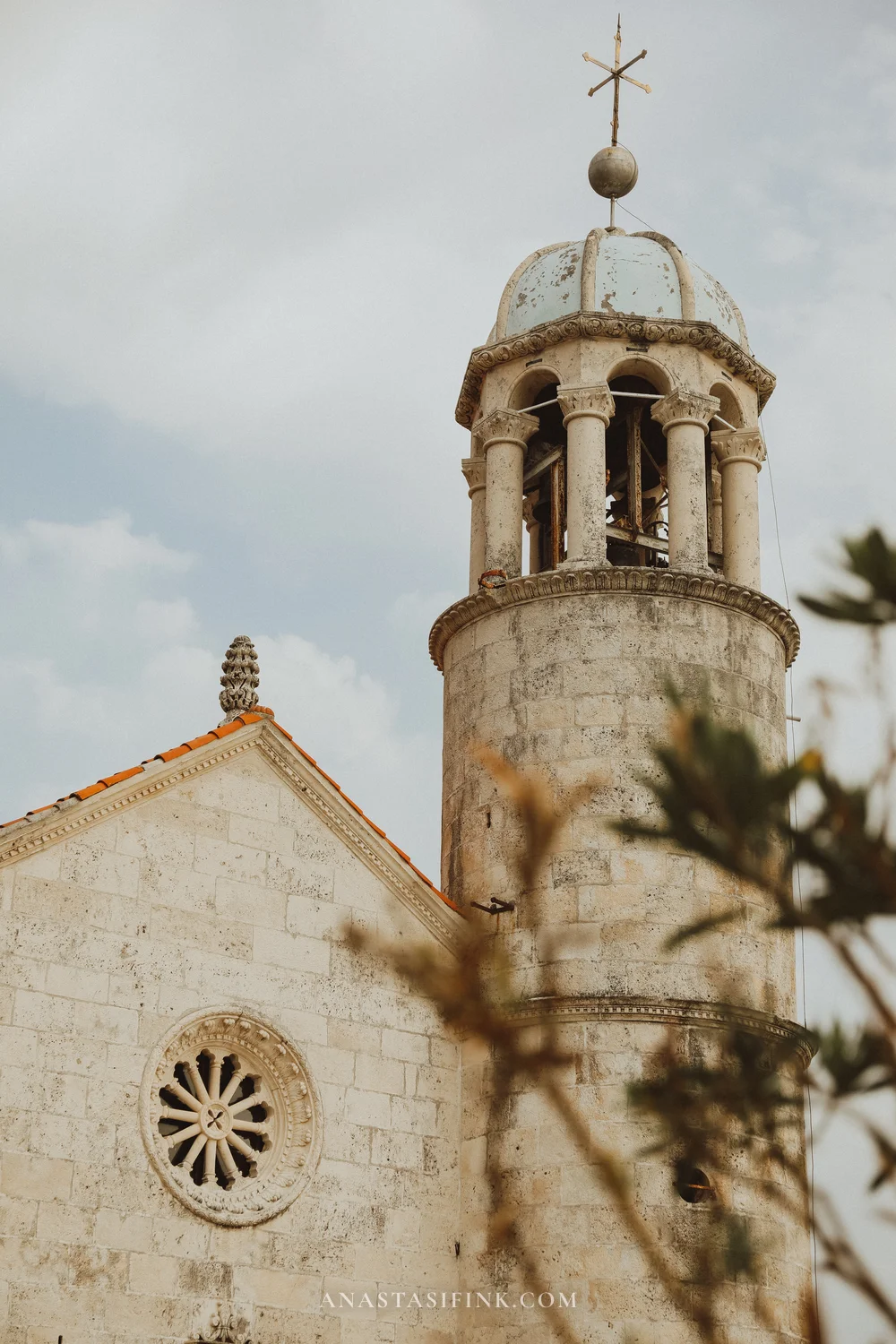
The island is tiny, you can walk all the way around it in ten minutes
Practical Info: Our Lady of the Rocks
- Boat from Perast: €5-10 round trip, boats leave as they fill up
- Church and museum entry: €3-5, cash
- Hours: roughly 09:00-18:00 in season, shorter in winter
- How long: 40-60 minutes including the boat ride
- Dress code: it’s a working church, best to cover shoulders and knees
A Boat Trip on the Bay: My Number One Recommendation
If I had to pick one single recommendation from this guide, it’s getting out on the bay under sail. From the water, the bay looks completely different than it does from shore: the towns shrink into thin strips of tiled roofs, and only from out there do you realize how high the mountains around the bay really are.
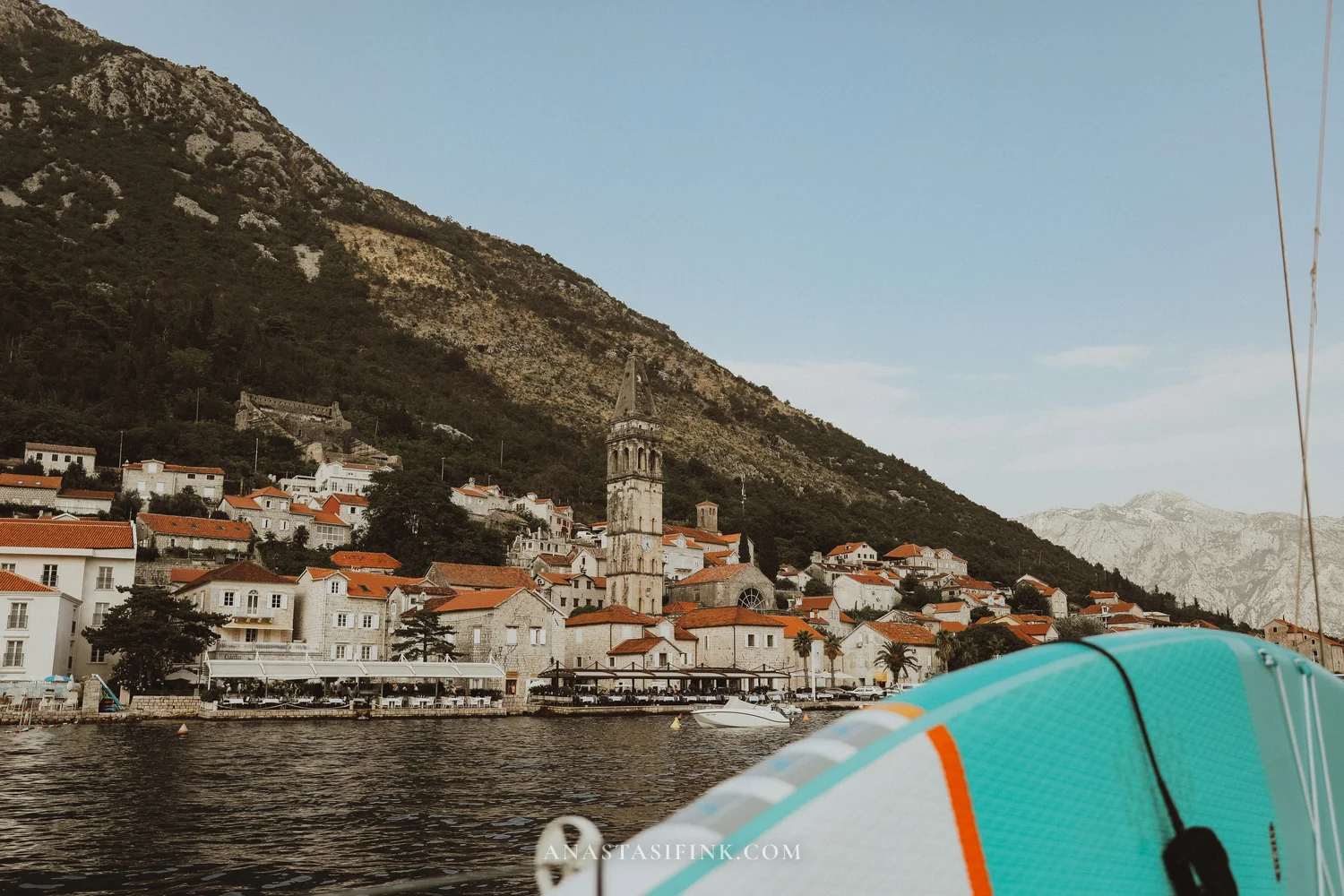
There are options for every taste: group boats out of Kotor (2-3 hours, with a stop at Our Lady of the Rocks), renting a motorboat with a skipper, or a sailing yacht for half a day. The evening sail deserves a special mention: the wind in the bay turns gentle toward sunset, the water goes glassy, and when the sun drops behind the mountains, the whole bay glows orange for half an hour.
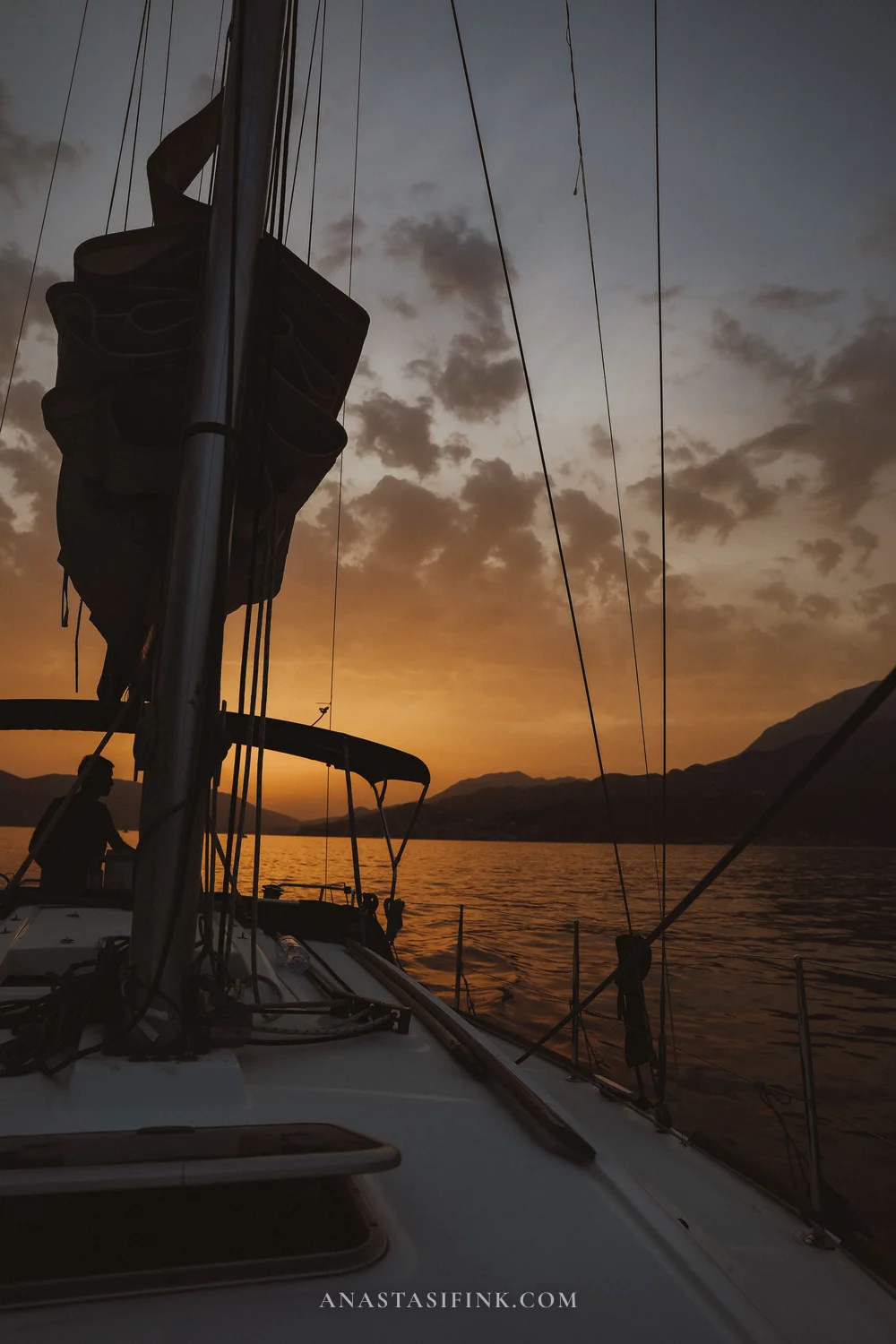
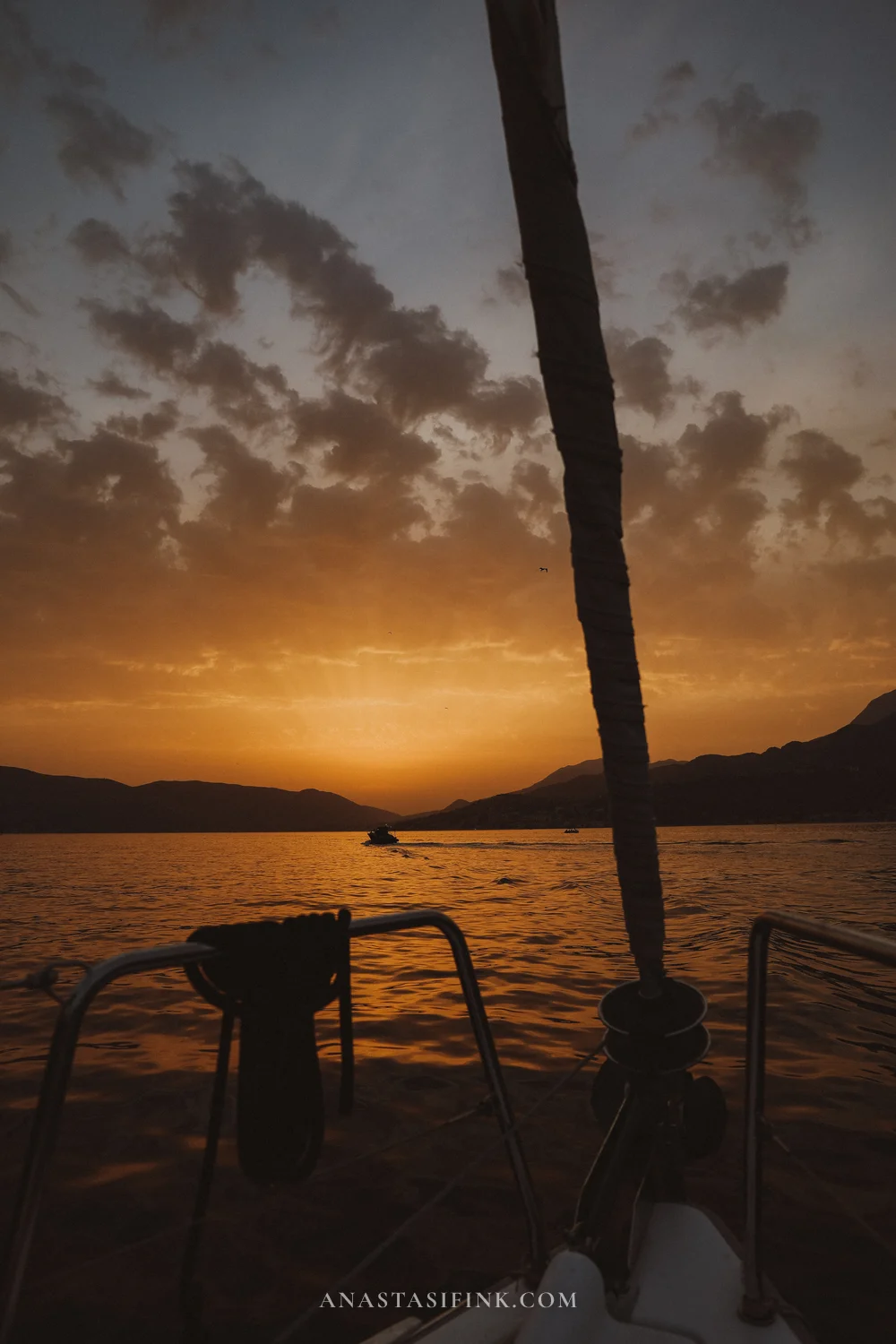
Sunset from the deck, at this hour there’s almost no one on the water
Practical Info: Boat Trips on the Bay
- Group boats from Kotor or Perast: €25-50 per person, 2-3 hours
- Sailing yacht with a skipper: from €200 for half a day for your whole group
- Departure points: Kotor, Tivat, Herceg Novi, Perast
- Tip: go for the evening sail, midday on the water is hot in July and August, and the bay is at its most beautiful at sunset
Kotor: The Town Behind the Fortress Walls
Kotor is the bay’s main town and one of the best-preserved medieval settlements on the Adriatic. The old town hides behind fortress walls that climb high up the mountainside, from below they look painted onto the rock.
There are no cars at all inside the walls. The town is a maze of cobbled squares, alleys as wide as your outstretched arms, and courtyards that appear out of nowhere. You don’t really need a map: the town is small, and any alley eventually spits you out onto one of the squares.
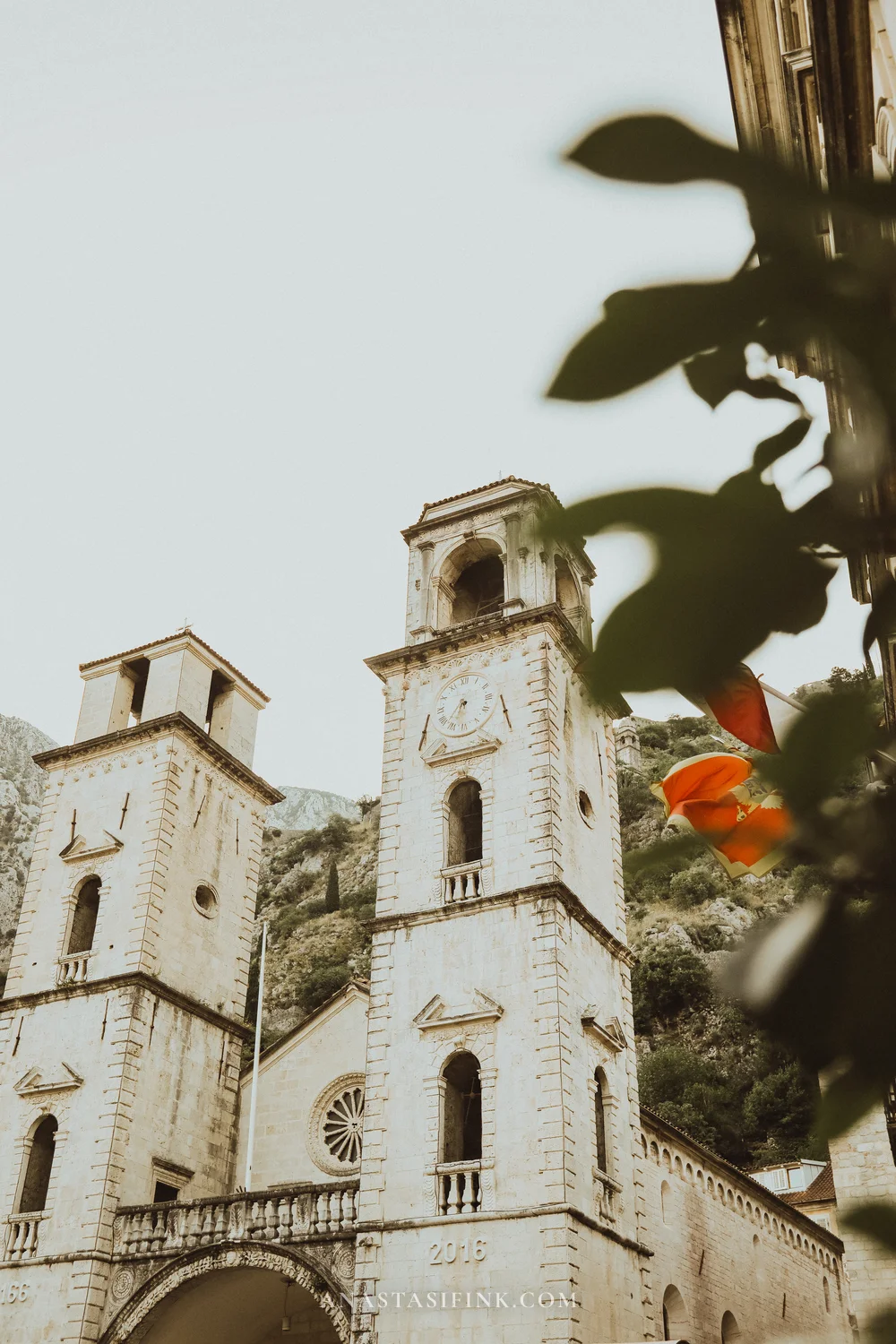
The town’s main building is St. Tryphon Cathedral, as old as the oldest Romanesque cathedrals in Europe. Inside there’s a gold and silver reliquary, and you can climb up to the upper gallery between the towers.
After that, just wander. Here’s the kind of thing you stumble on in the alleys with no plan at all:
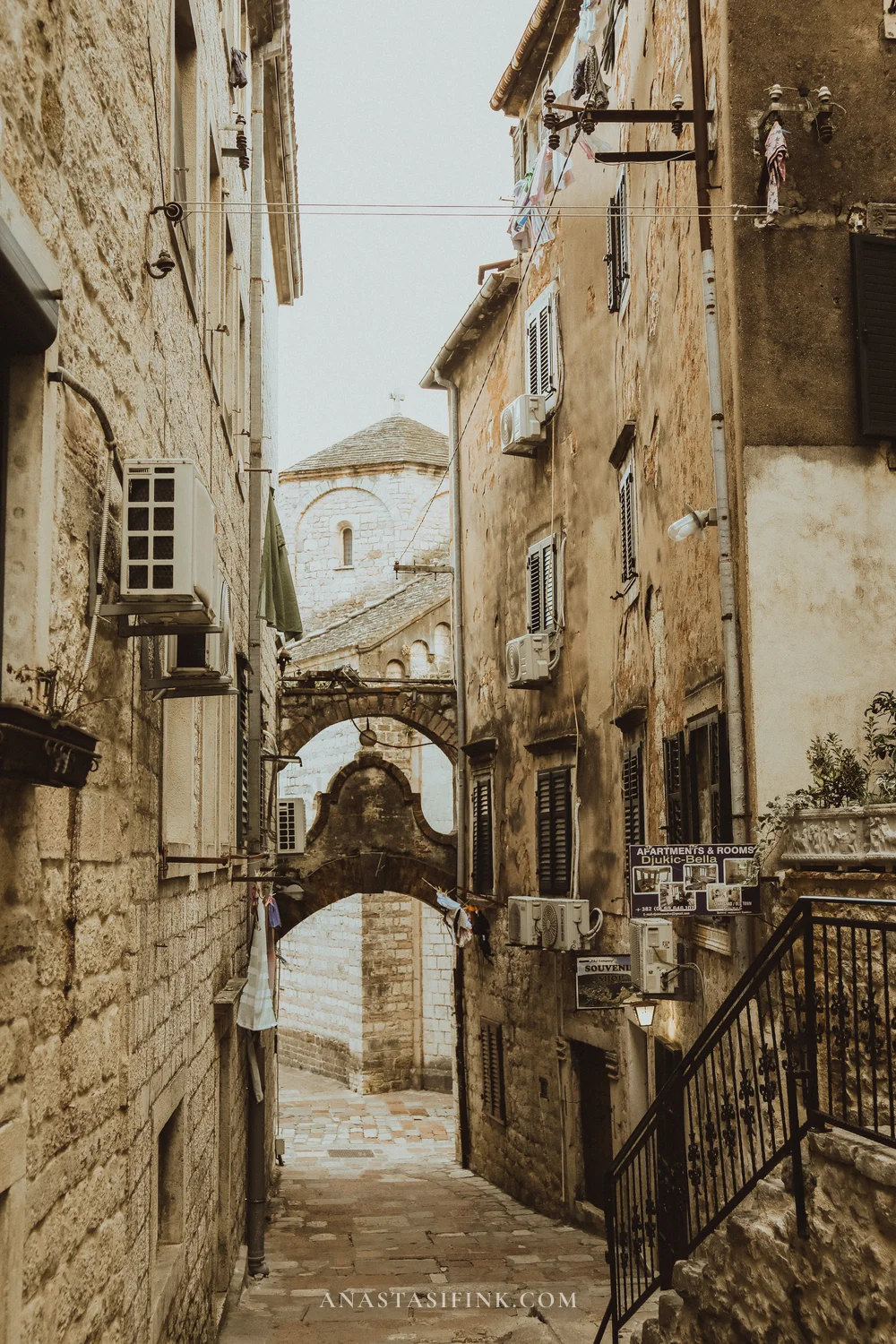
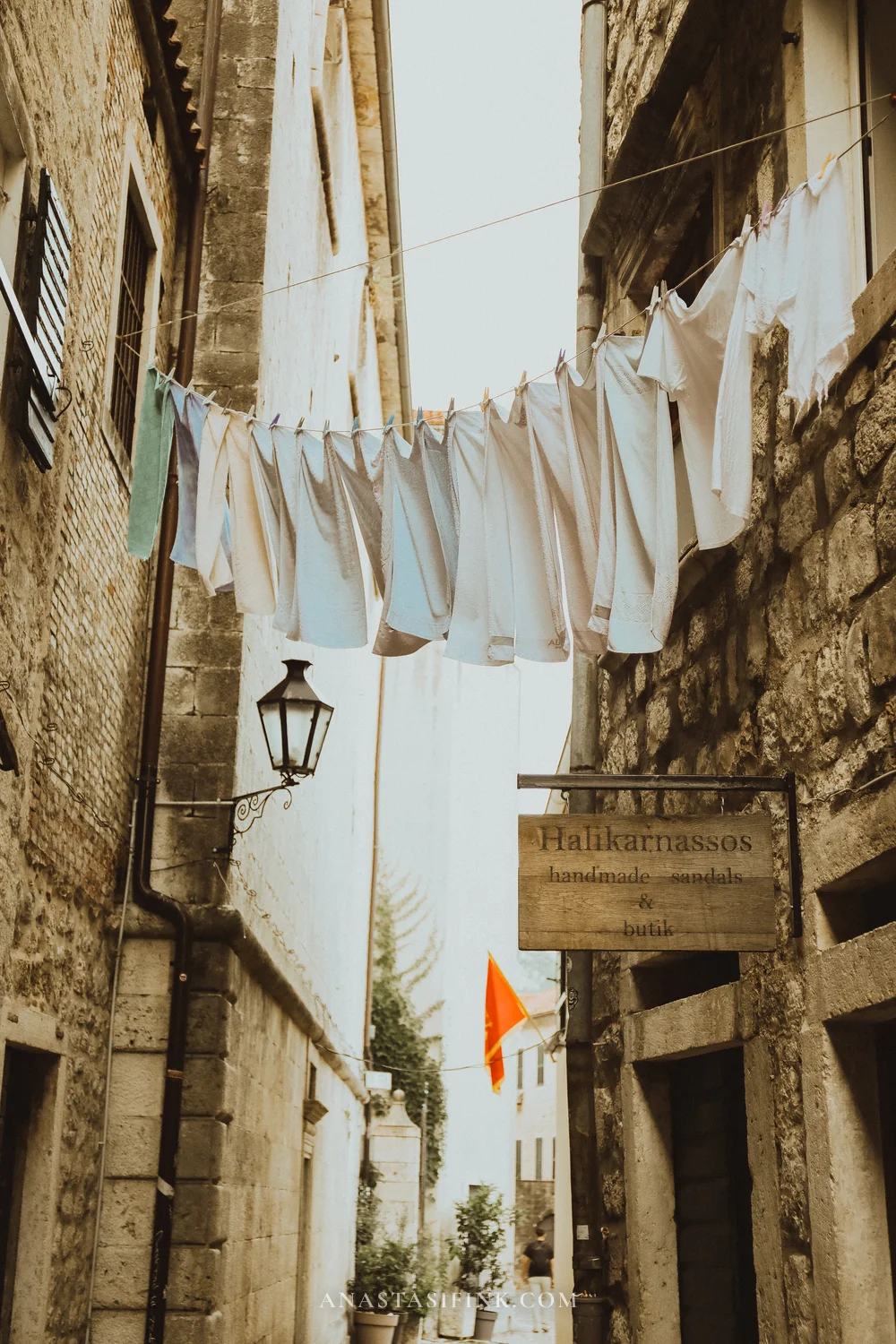
Kotor’s alleys: laundry lines strung between the houses, people still live inside the walls
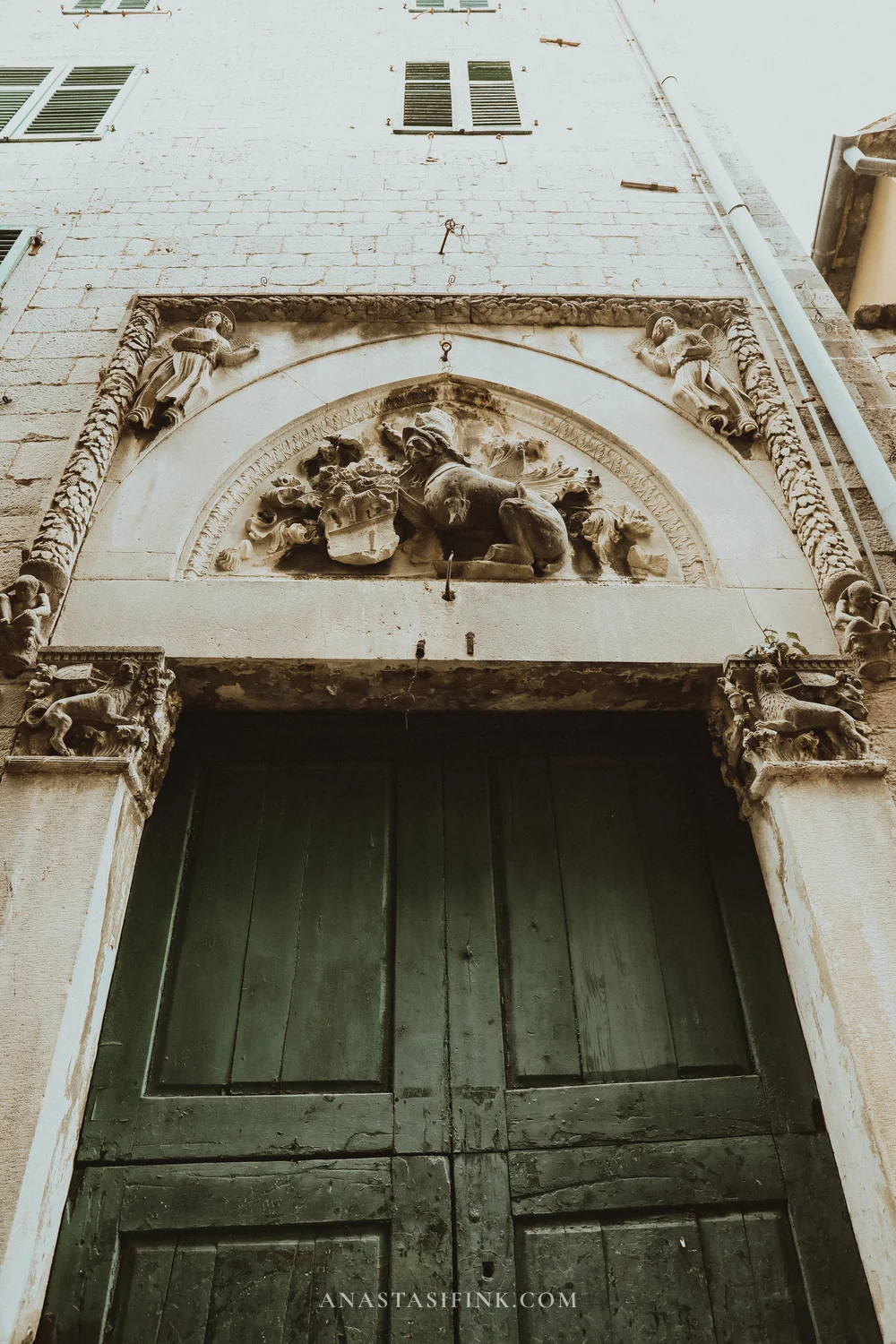
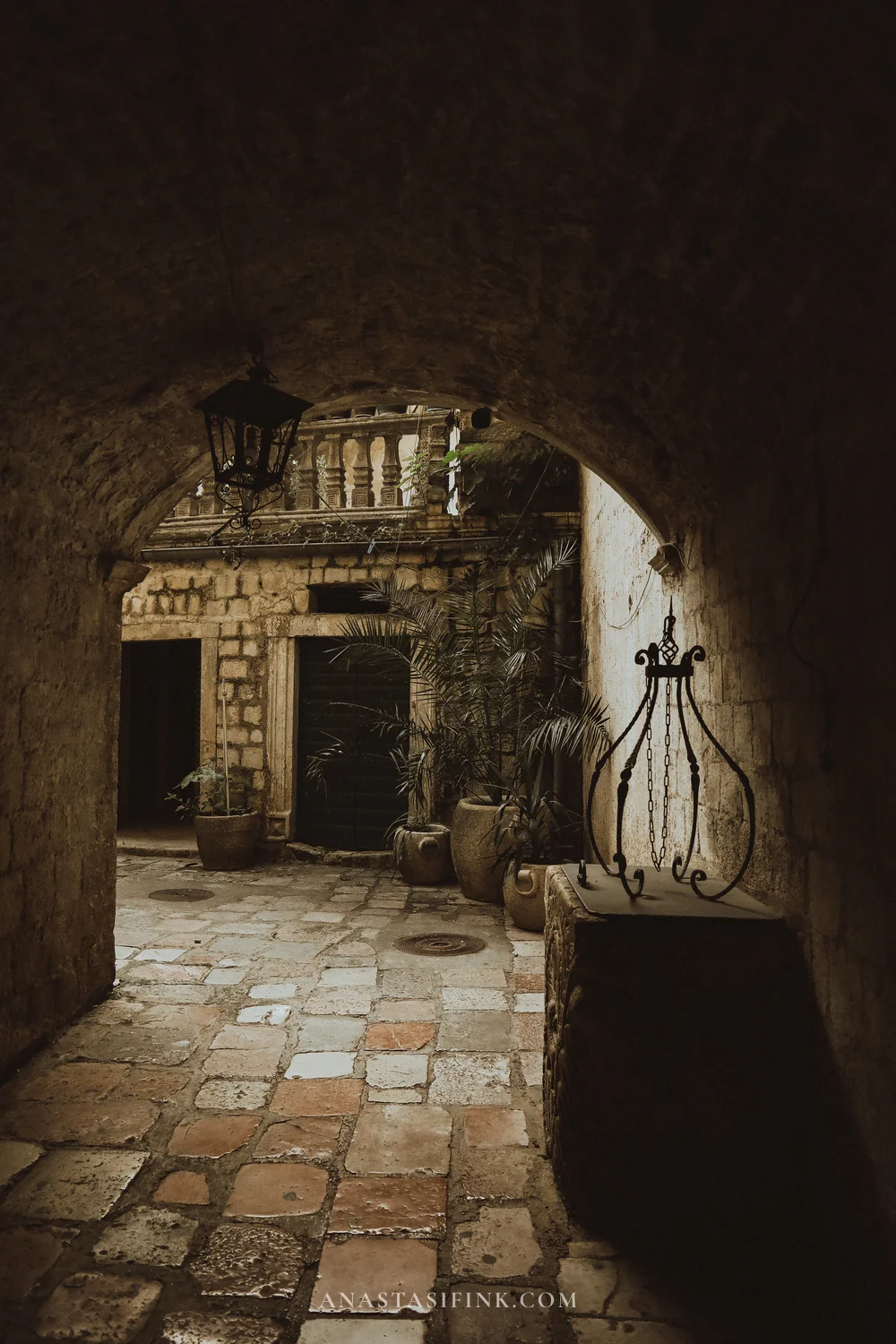
Palazzo portals and pass-through courtyards, there’s something behind every arch
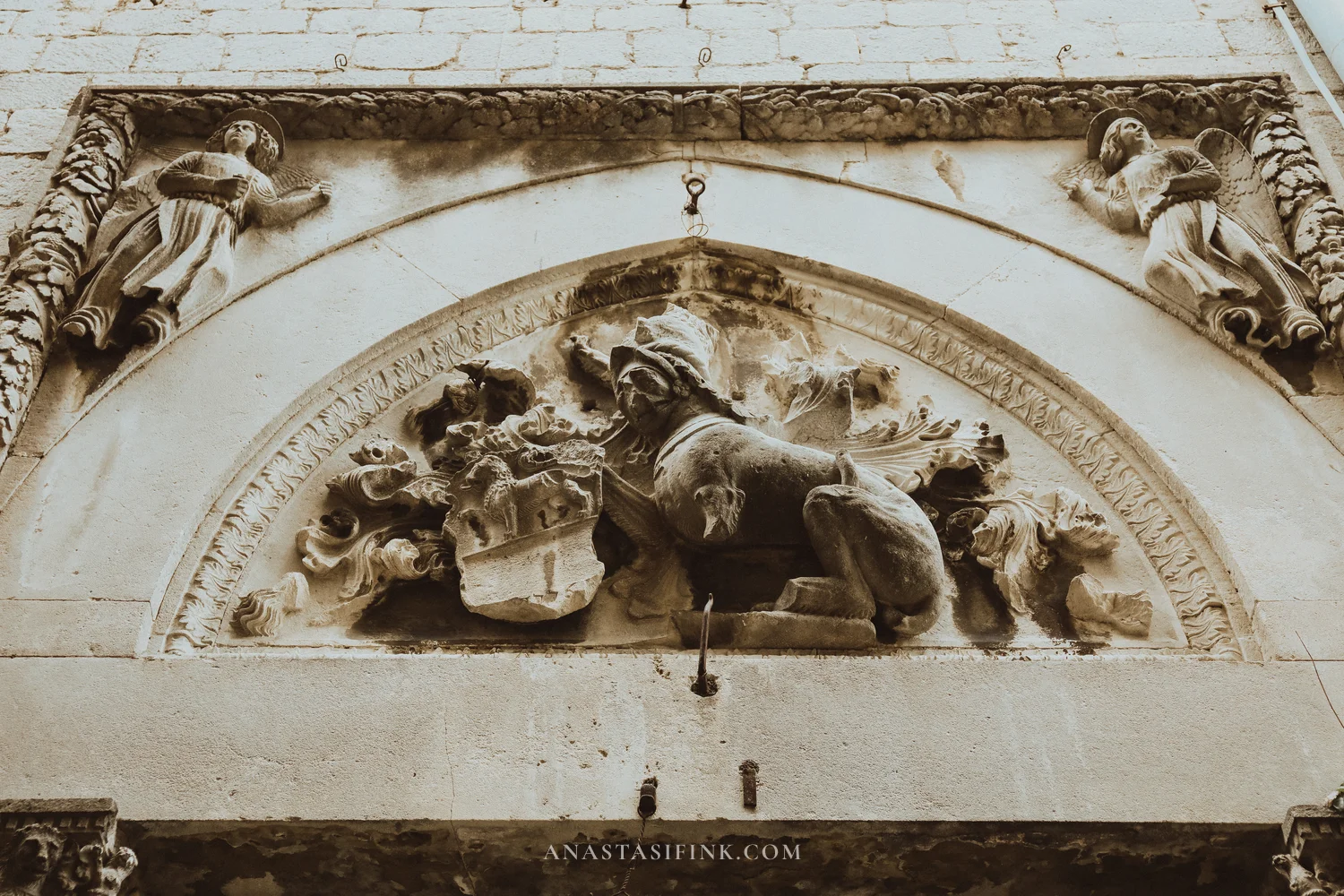
The Venetian era left Kotor its winged lions of St. Mark, you’ll spot them on gates and arches all over town. And on the doors of one of the churches, bronze panels show scenes of town life: ships, weddings, processions.
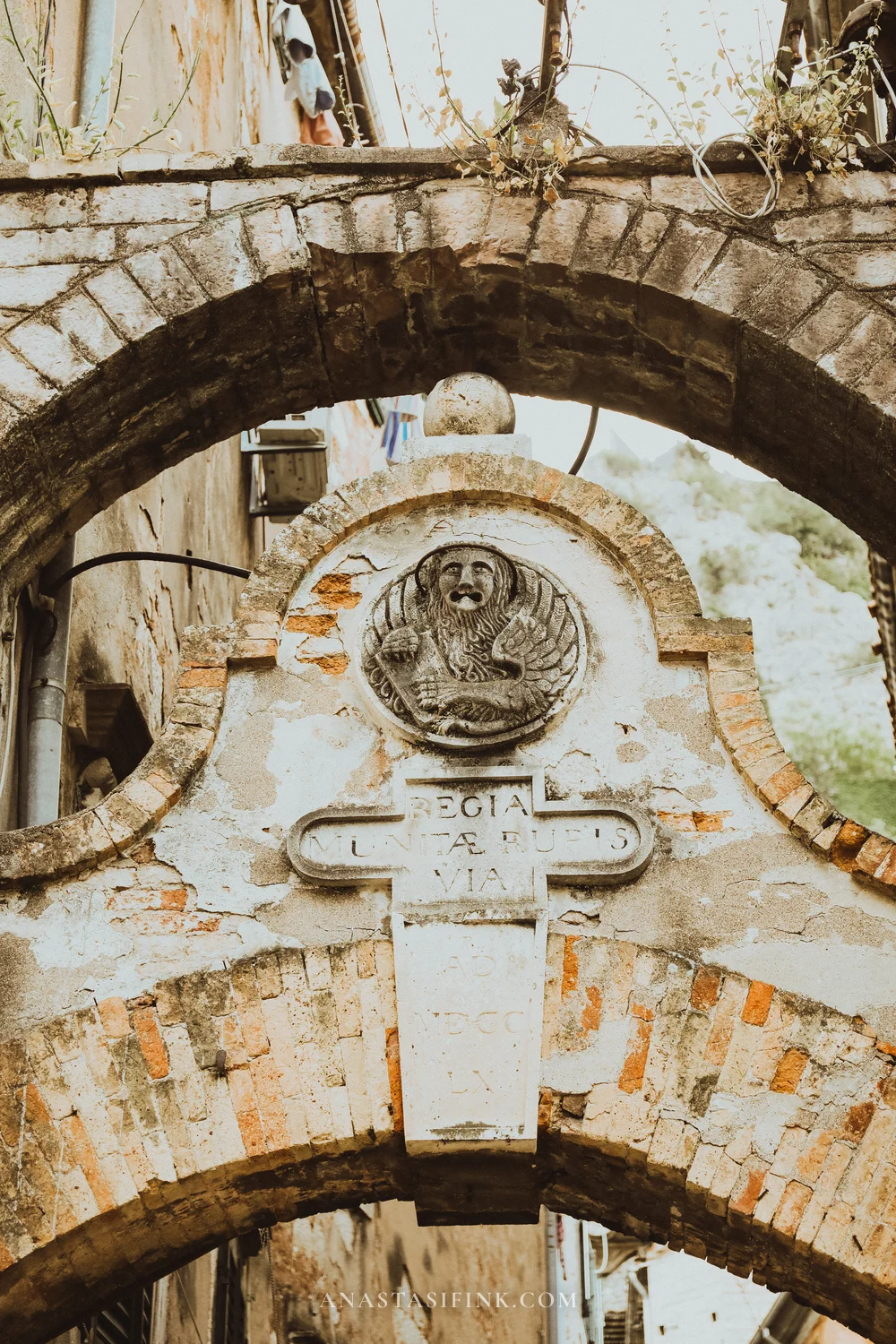
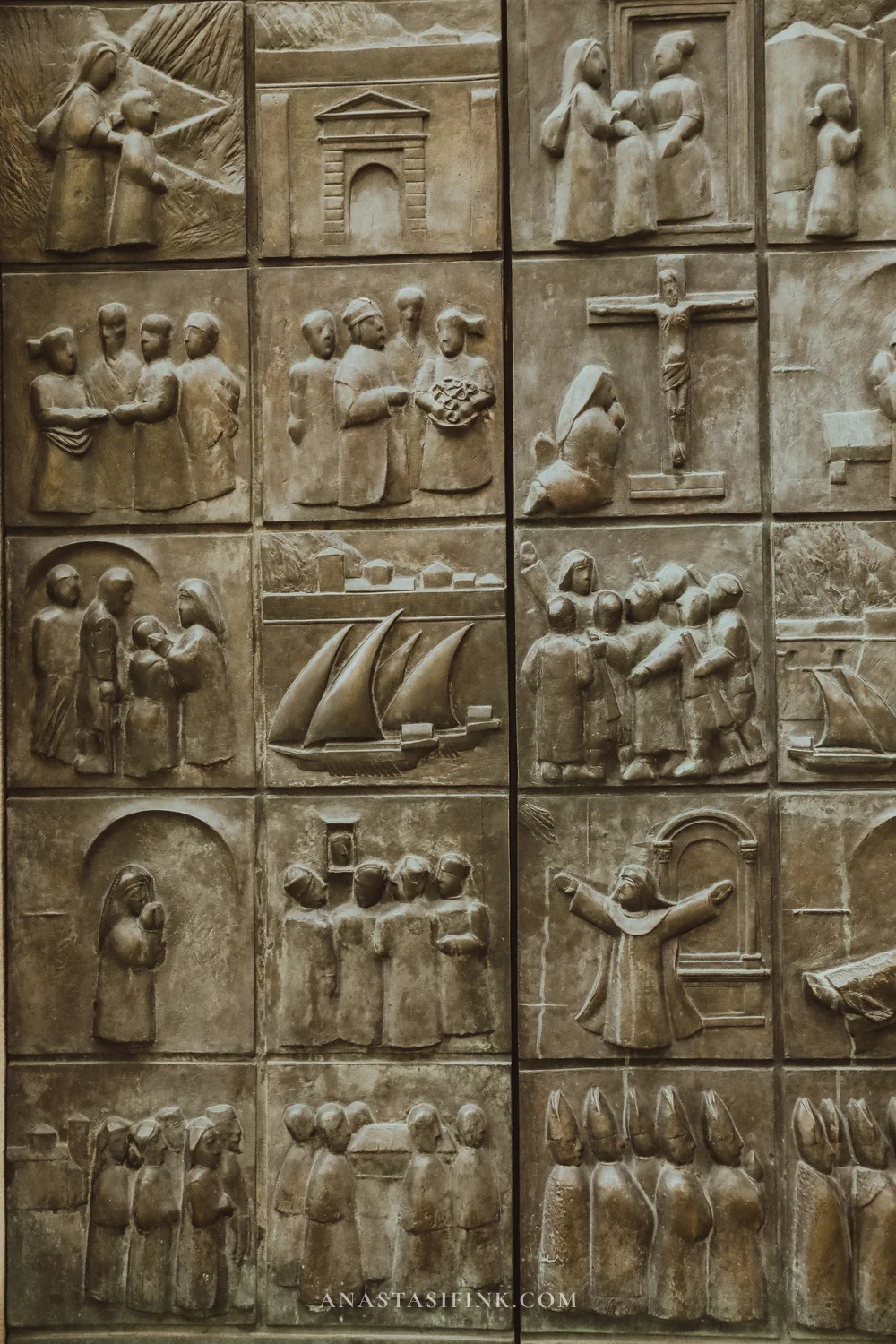
The winged lion, Venice’s calling card, and bronze doors telling the town’s story in pictures
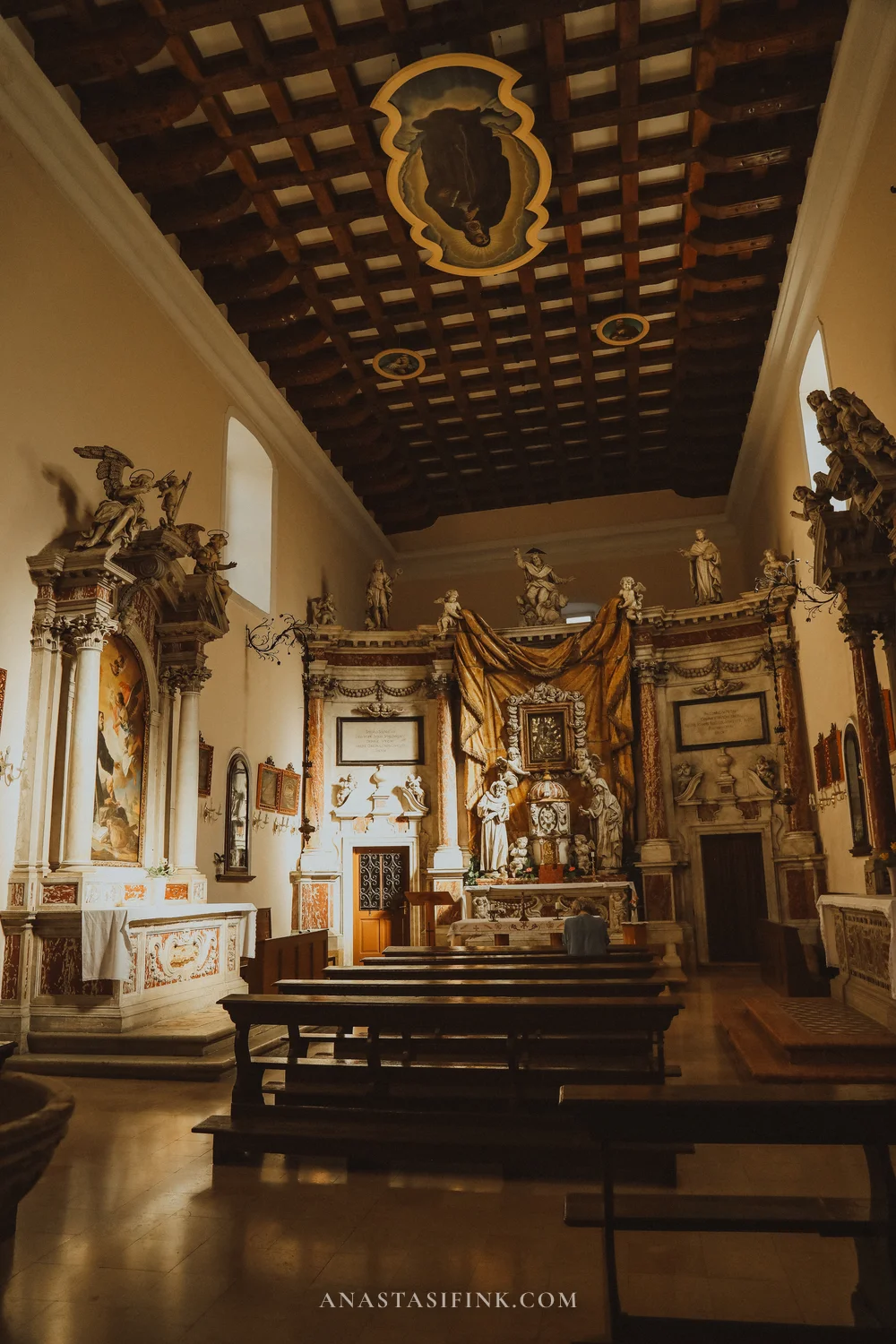
Step inside the churches too: Kotor has more than a dozen, and nearly all of them are open. In one you’ll find baroque marble altars and a painted wooden ceiling.
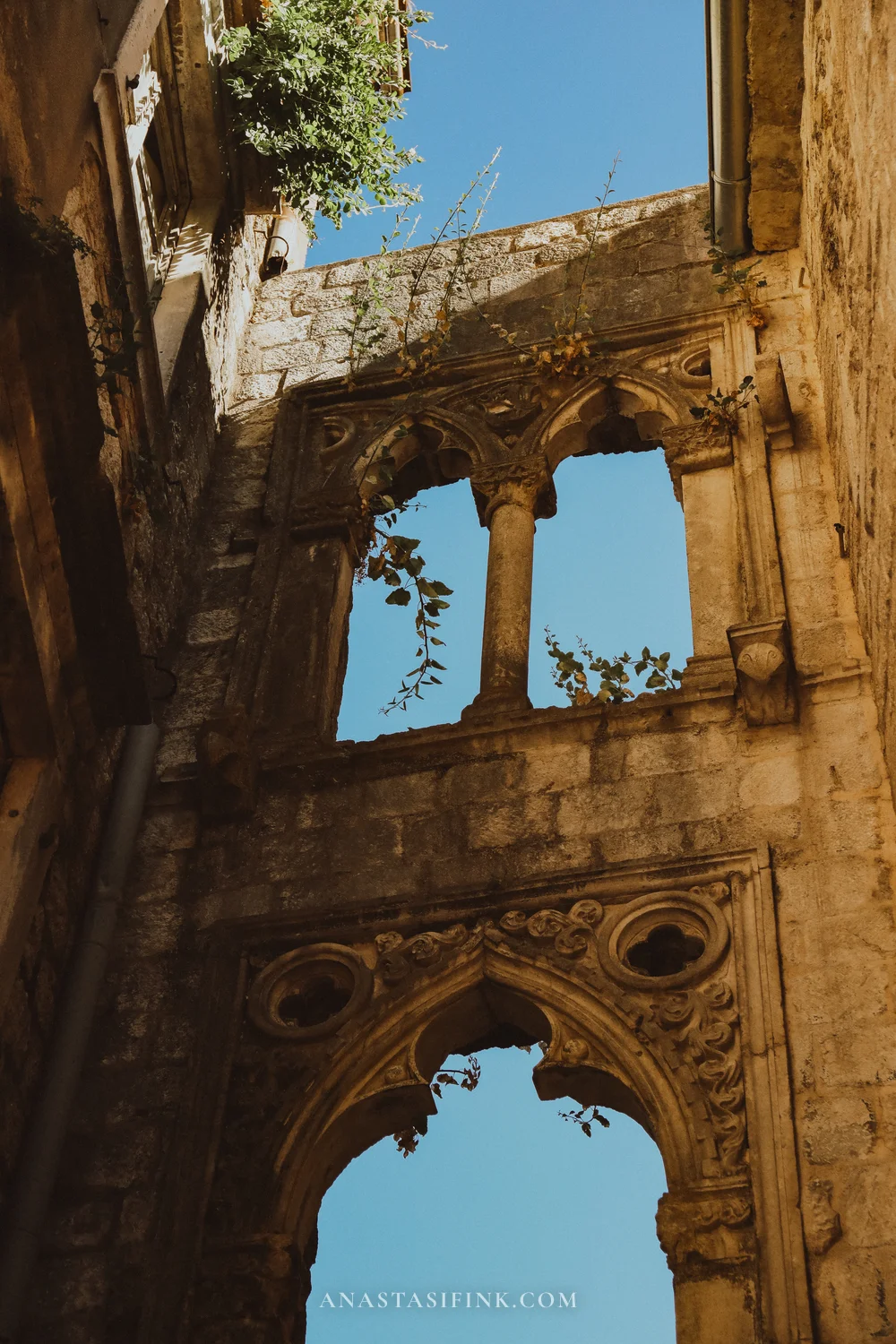
Traces of the 1979 earthquake: some palazzos still stand roofless while the houses next door have been restored
Kotor is also a city of cats, it’s the official symbol of the town. There’s a cat museum, the souvenir shops are stacked with cat everything, and real cats occupy every other bench and windowsill.

Practical Info: Kotor
- GPS: 42.4247, 18.7712
- Old town entry: free, through one of three gates – Sea Gate, River Gate and Gurdic Gate
- St. Tryphon Cathedral: entry €3, daily ~08:00-19:00
- How long: at least half a day; a full day if you climb the walls
- Tip: on cruise ship days (check the port schedule) the center is packed from 10 am to 4 pm, come early in the morning or in the evening
Climbing the City Walls: The Best View of the Bay
From the old town, a staircase of roughly 1,350 steps leads up to St. John’s Fortress (San Giovanni). The climb takes 45-60 minutes, and with every landing you see more and more of the bay.
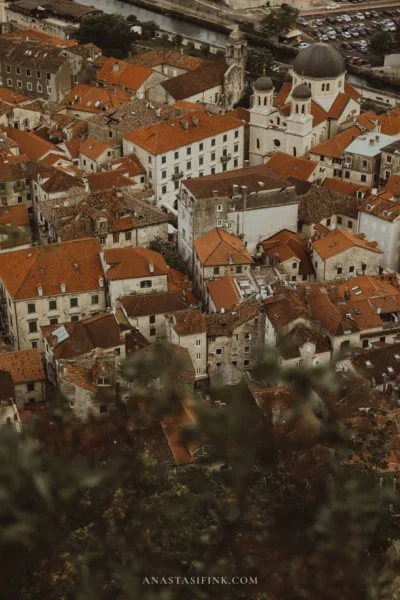
About halfway up stands the 16th-century Church of Our Lady of Remedy. From the church you can already see all of Kotor at once: the tiled roofs, the squares, the port and the ships at anchor.
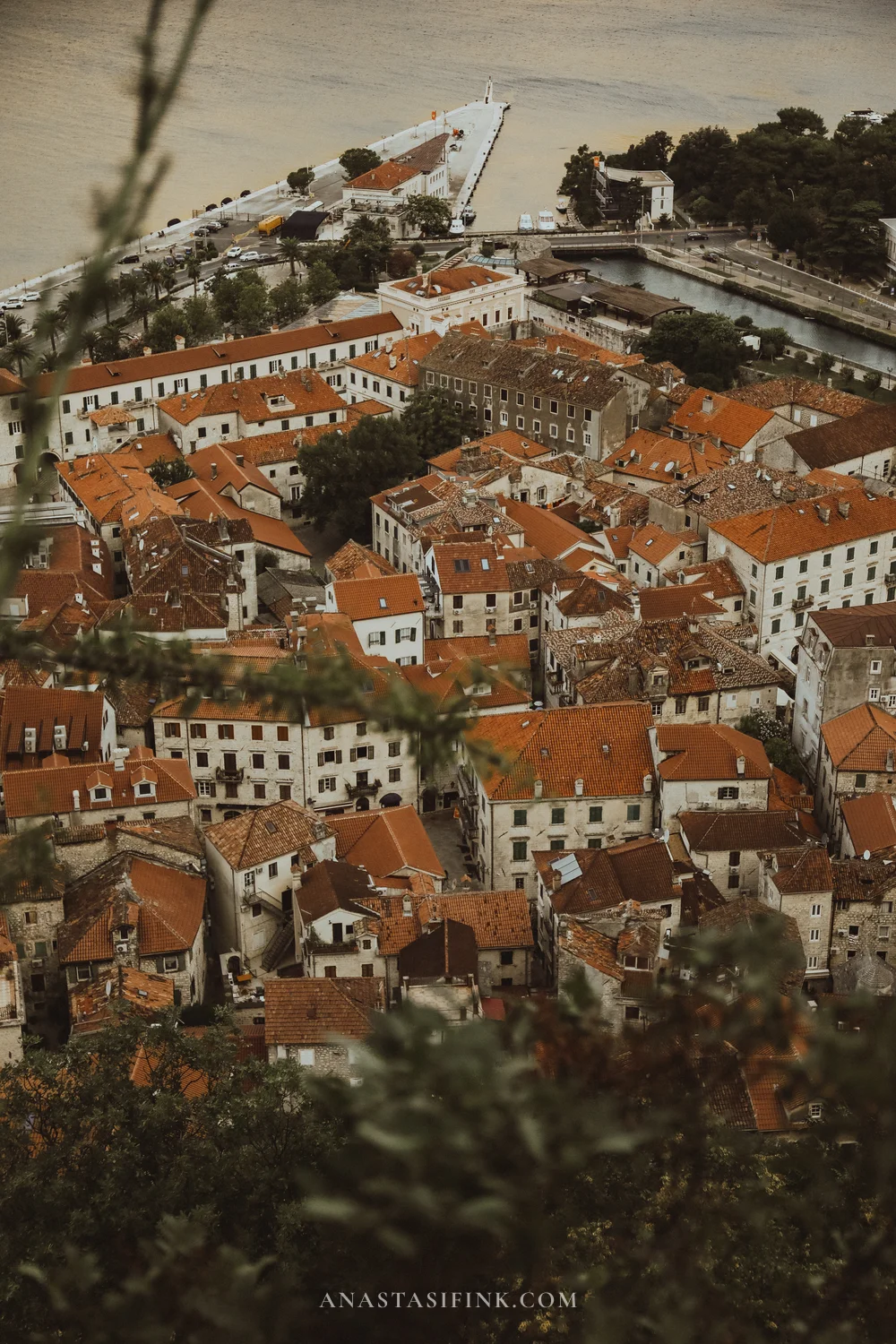
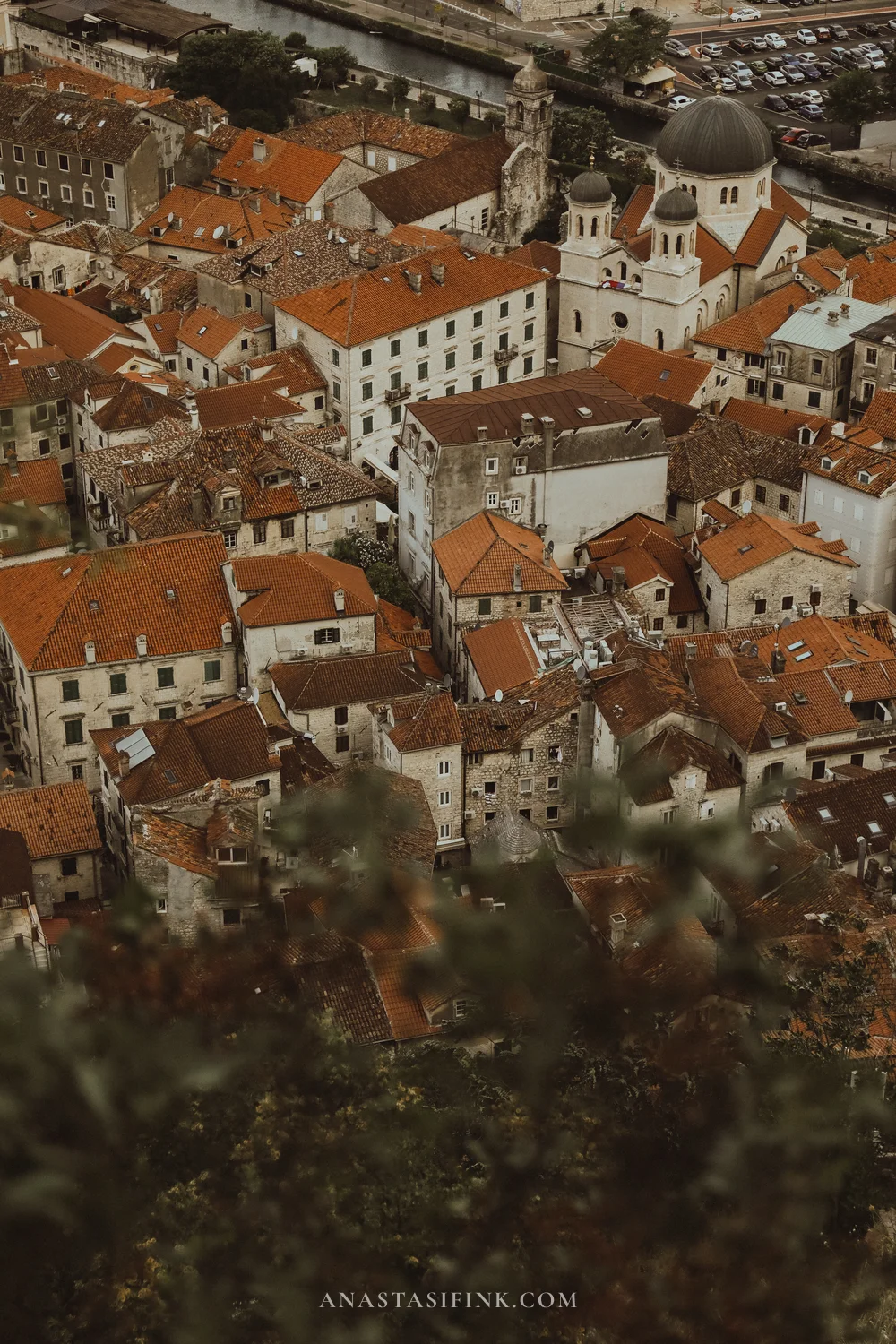
Kotor from the lookout by the Church of Our Lady of Remedy: the whole old town spread out like a scale model
Practical Info: St. John’s Fortress
- Trail entry: €8-15 depending on the season, cash only; often free in winter
- Hours: roughly 08:00-20:00 in season
- The climb: 1,350 steps, 280 meters of elevation gain, 45-60 minutes up
- Tip: go in the morning before the heat and bring at least a liter of water per person
Lustica Peninsula: The Quiet Side of the Bay
The Lustica peninsula separates the Bay of Kotor from the open sea, and it’s a completely different Montenegro: olive groves, stone villages of a dozen houses, narrow roads and hardly a soul around. Deep in the peninsula, near the village of Klinci, a view opens up over the Herceg Novi bay and the mountains beyond.
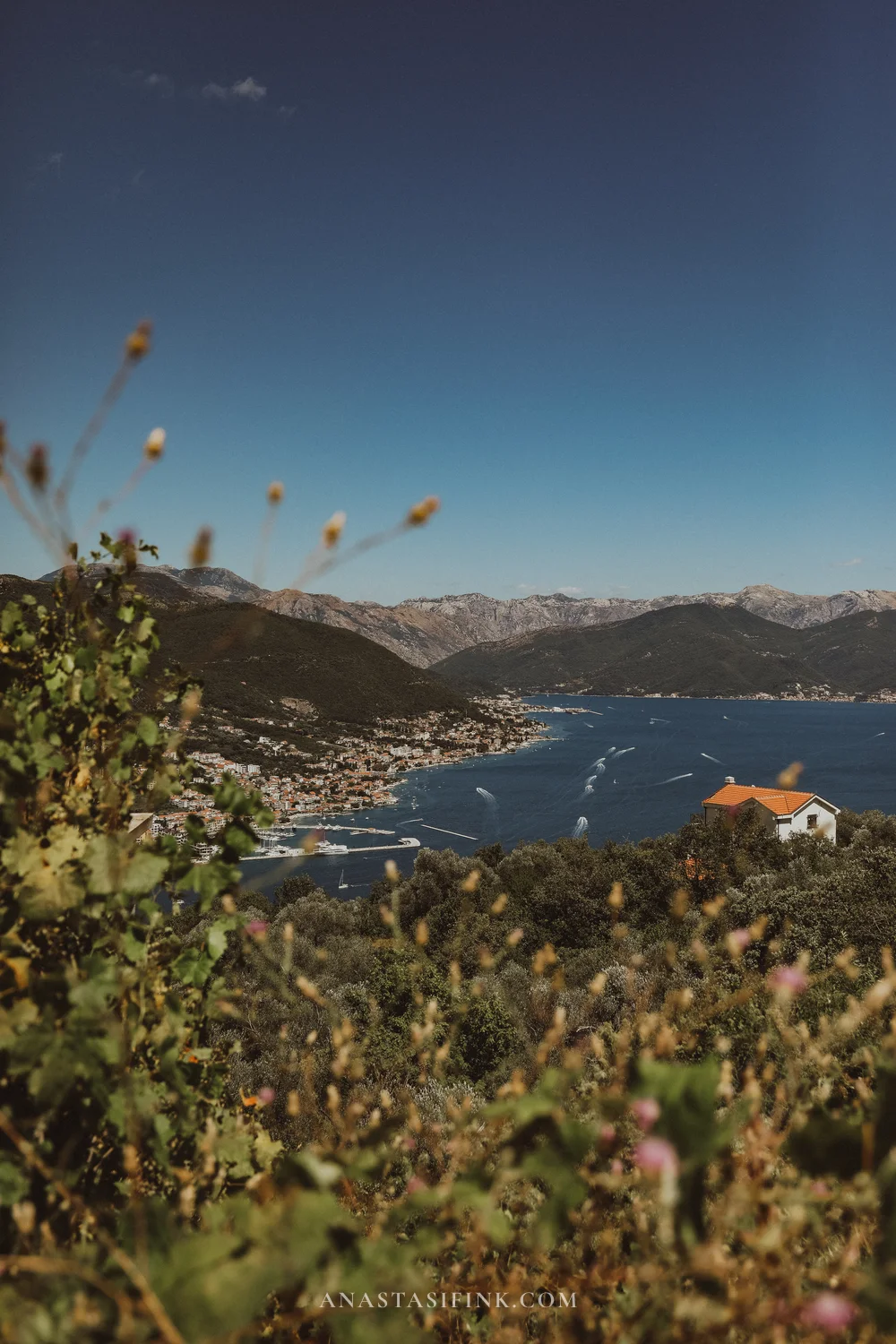
From the peninsula’s shores you can see the old fortifications that once guarded the entrance to the bay: the Austro-Hungarian fortress of Arza on the cape and the round Mamula fort on the islet across from it. Along the coast are the well-known Zanjic and Miriste beaches and the Blue Cave, which boats run to.
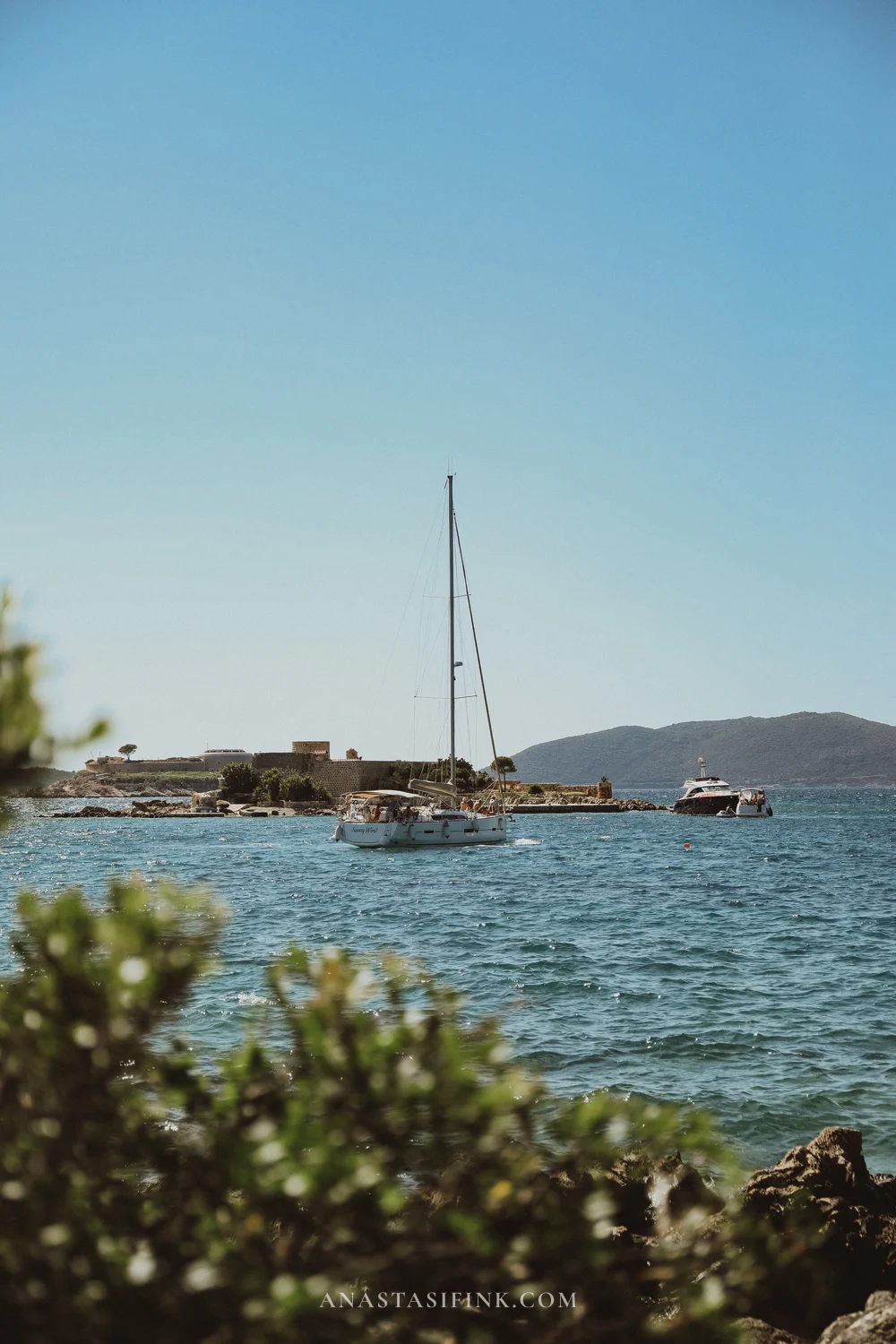
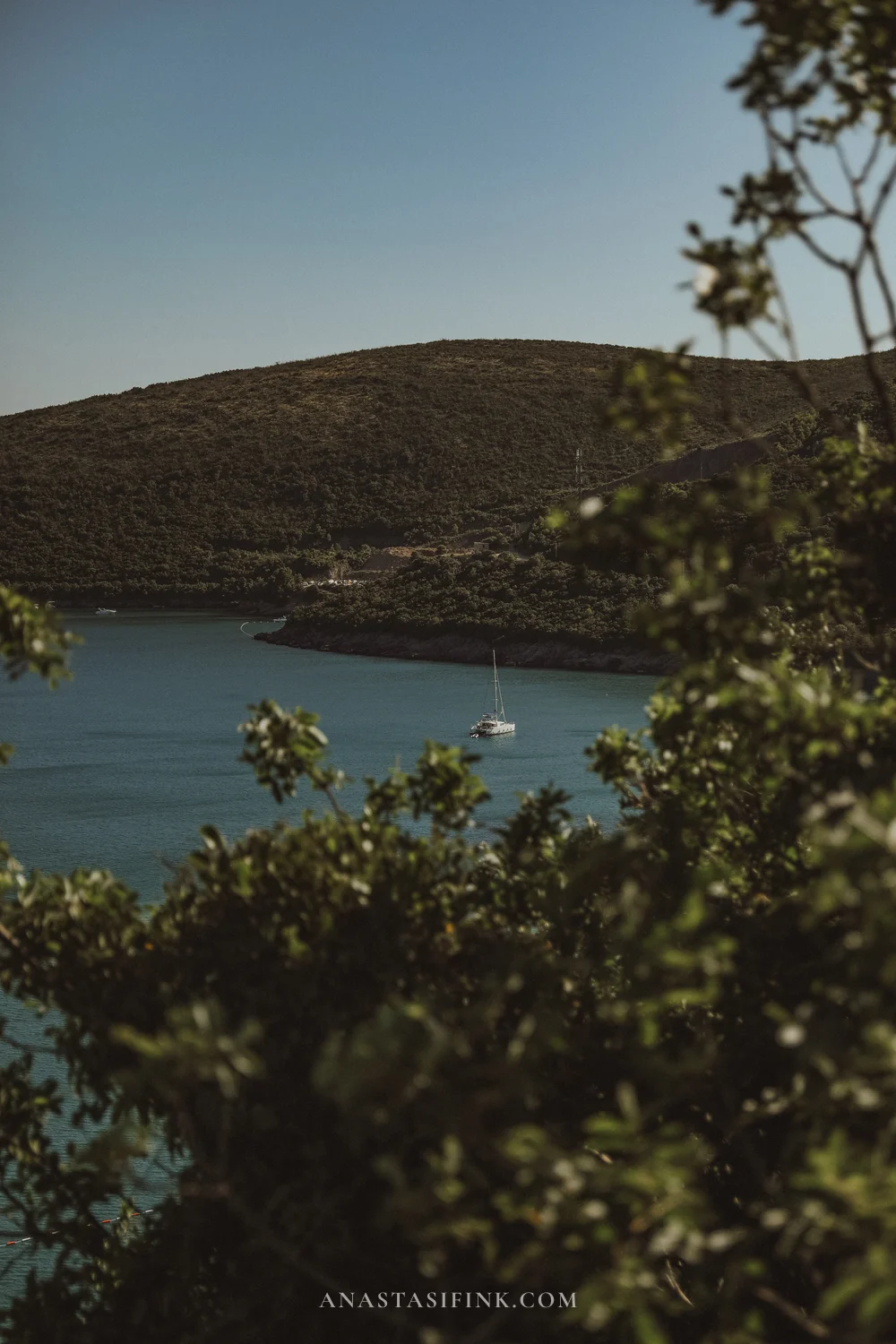
Lustica’s coves: an old fortress on the cape and quiet anchorages
Practical Info: Lustica
- Getting there: by car from Kotor via Tivat and Radovici, ~30 km to the village of Klinci (50 minutes); the roads are narrow, in places cars take turns passing
- Zanjic beach: white pebbles, crystal-clear water; boats run from Herceg Novi in summer
- Blue Cave: boat from Zanjic, ~€10-15 per person
- How long: half a day to a full day
- Tip: fill up the tank beforehand, there are no gas stations on the peninsula itself
How to Plan Your Trip
For the bay’s towns, Herceg Novi, Perast and Kotor, you’ll want at least one full day, and two is more comfortable. The climb up the city walls, the boat trip and the Lustica peninsula each take half a day or more, so pick what appeals to you, or give the bay three days.
The most convenient bases are Kotor (everything is close, but it’s noisy in season), Perast (beautiful and quiet), or apartments in the villages between them, Dobrota, Orahovac, Stoliv. Seeing the bay without a car is doable too: buses and water taxis run between the towns, but with a car you’ll fit in twice as much.
The best time to visit is May, June and September: it’s warm, the sea has warmed up, and the cruise ship crowds are still bearable. In July and August the bay is just as beautiful, but the coastal road and the parking lots become a test of patience.
FAQ
At minimum one full day with a car to see Herceg Novi, Perast and Kotor. Two or three days is ideal: that leaves time for the fortress climb, a boat trip and the Lustica peninsula without rushing.
Yes. Buses run along the coast between Herceg Novi and Kotor with stops in Perast and Risan, and tour boats go from Kotor to Perast and the islands. But budget more time for public transport and check the schedules, there aren’t many evening runs.
Boats leave from the Perast waterfront as they fill up and cost €5-10 per person round trip. Entry to the church and museum is another €3-5 in cash. An hour is enough for the whole visit.
Yes, it’s the best view of the bay. The climb is 1,350 steps, 45-60 minutes, entry €8-15 in season. Go in the morning before the heat, wear shoes with good grip and bring water.
From the terrace of the Verige 65 restaurant on the Verige strait, the narrowest point of the bay: from there you can see Perast and both islands. Other options are the viewpoints on the Kotor – Cetinje road and the fortress trail above Kotor.
May through September. The most comfortable months are June and September: warm, but without the peak crowds and traffic. The bay is open and beautiful in winter too, but some restaurants and boat routes shut down.
A Few Last Words
The Bay of Kotor is a place that puts you at ease: life moves slowly here, and everything around you is beautiful, the mountains, the water, the old towns right at the shoreline. It’s one of those places you find yourself wanting to come back to, if only for one more sunset under sail.