Topli Do, Serbia – Stara Planina Village Under Midžor: What to See

Topli Do is one of the most atmospheric places in Serbia, a real time machine. It’s an old mountain village where the houses are built of clay, stone and timber, the roofs are laid with stone slabs, and sheep and goats wander through the yards. Walking down the street, you feel like you’ve stepped into an old black-and-white film about village life, only in colour. Around thirty-five people live here year-round, the asphalt ends at the first house, and between here and Midžor, the highest point in Serbia, there are no more villages.
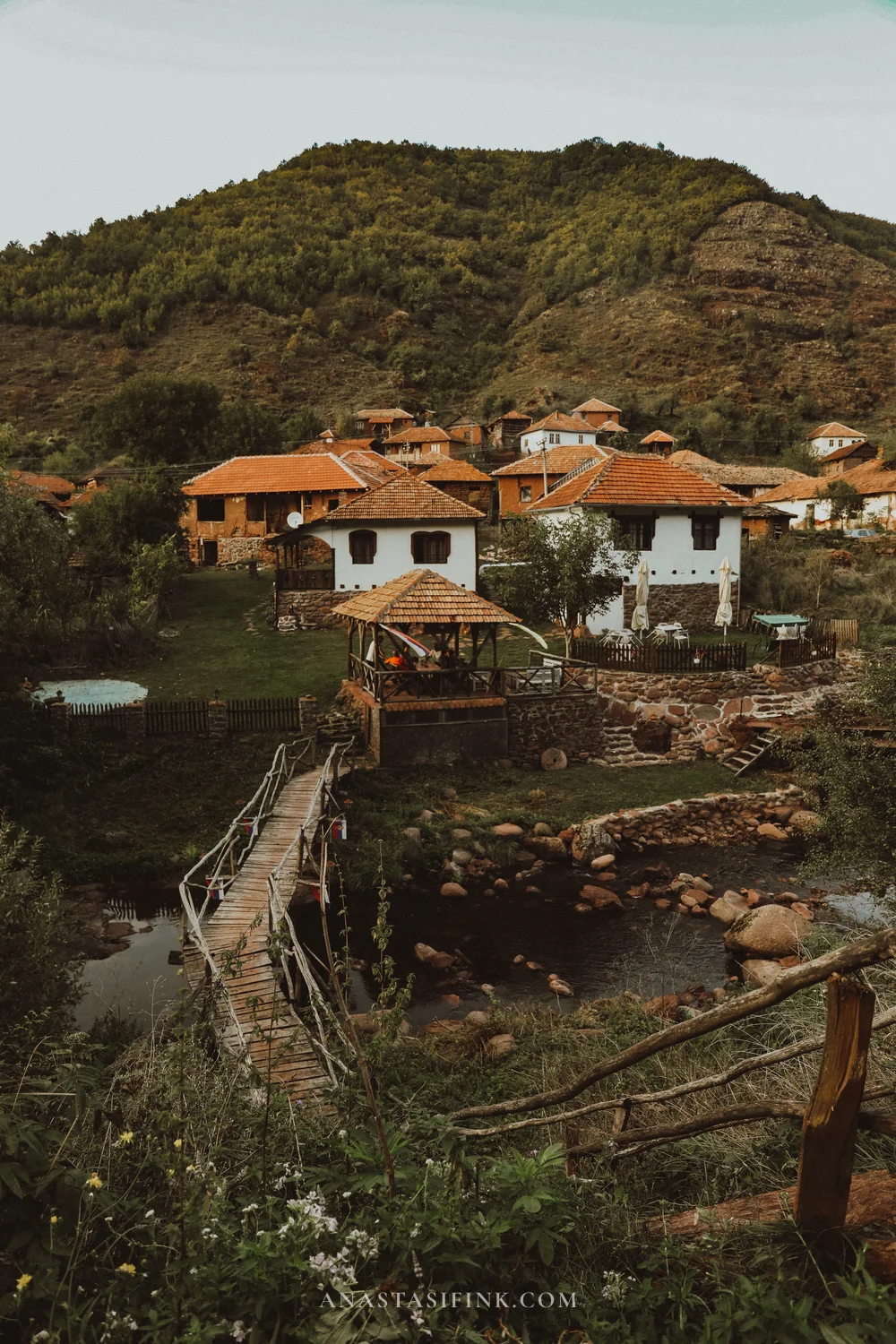
Where Topli Do Is
Topli Do is in the east of Serbia, in the Stara Planina mountains, almost on the Bulgarian border. Stara Planina is the Serbian part of the Balkan Mountains, the range the whole peninsula is named after. It’s about an hour’s drive from Pirot, and this is the last village on the road: beyond it there are only trails and Midžor, the highest mountain in the country.
The name means “warm valley”, though it’s only warm here in summer. The village is old, most of the houses are a hundred years old or more, and the whole thing has been protected as a monument, not individual buildings but everything together, barns and fences included. There aren’t many residents. In the early 2000s there were just over a hundred; now about thirty-five people live here all year. In summer relatives come to visit and the village livens up a little.
People come here for two things. The first is the houses themselves: there’s almost nowhere else in Stara Planina where this kind of old mountain architecture has survived. The second is the waterfalls. There are more than thirty around the village, more than anywhere else in Serbia.
But the main thing here isn’t the individual houses or the waterfalls, it’s the feeling. There isn’t a single new building in Topli Do, no signs, no cars on the streets. Just clay walls, smoke from the chimneys, sheep behind the fences and the sound of bells. It all looks as if the film crew has gone off for lunch and will be back any minute. You feel this most in early autumn, and I’ll explain why below.
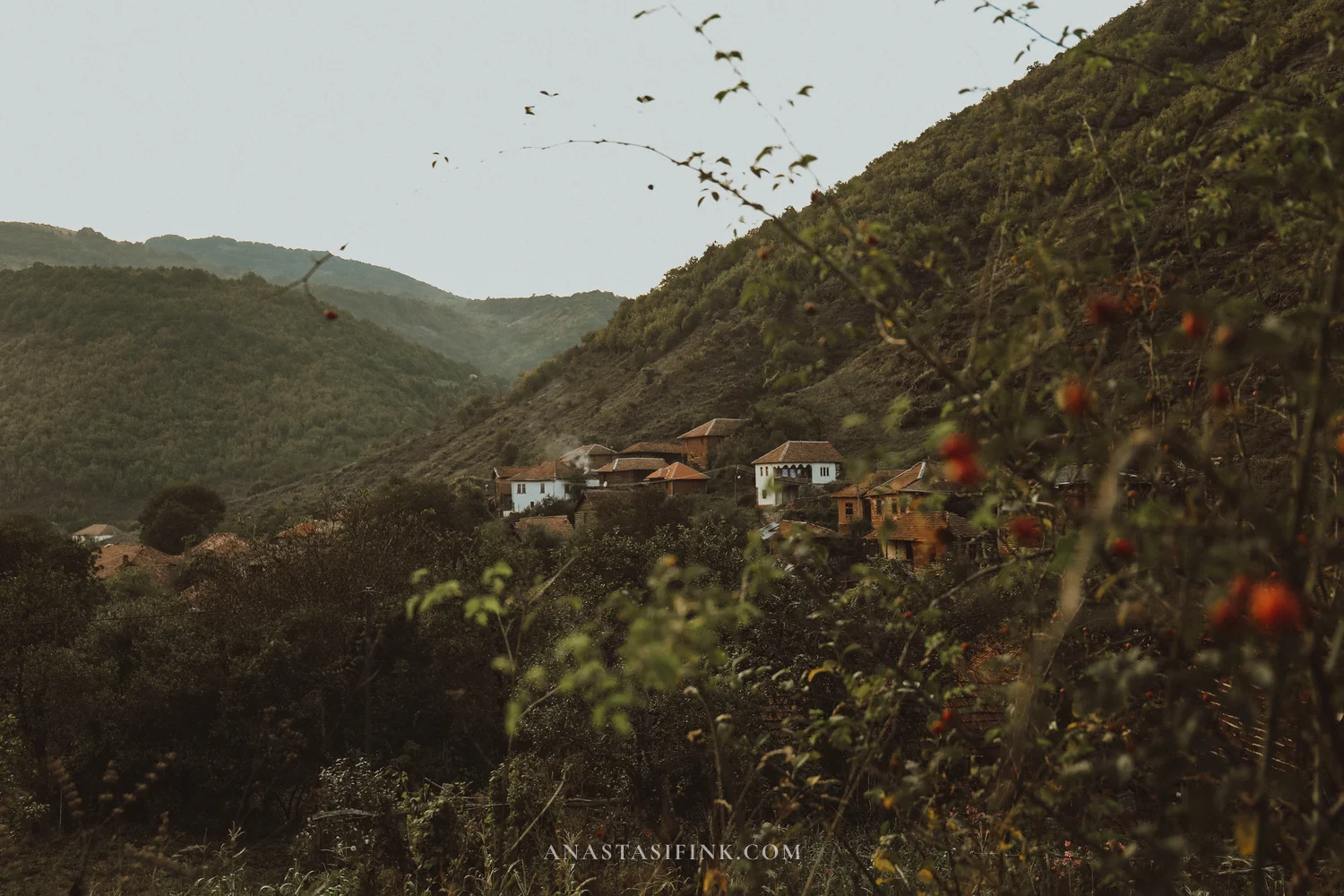
The Road Through the “Mali Kolorado” Canyon
From Pirot you drive to the village of Temska, and from there a narrow asphalt road starts along the Temštica river. This stretch is called “Mali Kolorado”, Little Colorado, because of the red cliffs and the deep canyon. The road is narrow, and in places it’s hard to pass an oncoming car, but the surface is fine and an ordinary car gets through without any trouble.
The canyon works like a threshold. You spend half an hour driving between red cliffs without a single house, the phone signal drops out, and when the road finally opens into the valley, the modern world has been left somewhere behind you. The asphalt ends in the village; after that there are only dirt streets and footpaths. After rain they turn red-brown from the local clay, the same clay the house walls are made of.
The easiest thing is to leave the car at the start of the village by the ethno centre and continue on foot. An hour to an hour and a half is enough for the whole village if you peek into the yards along the way. There’s no reason to hurry here. Walk slowly, stop at every fence and listen. All you hear is the river, the chickens and the bells on the sheep.
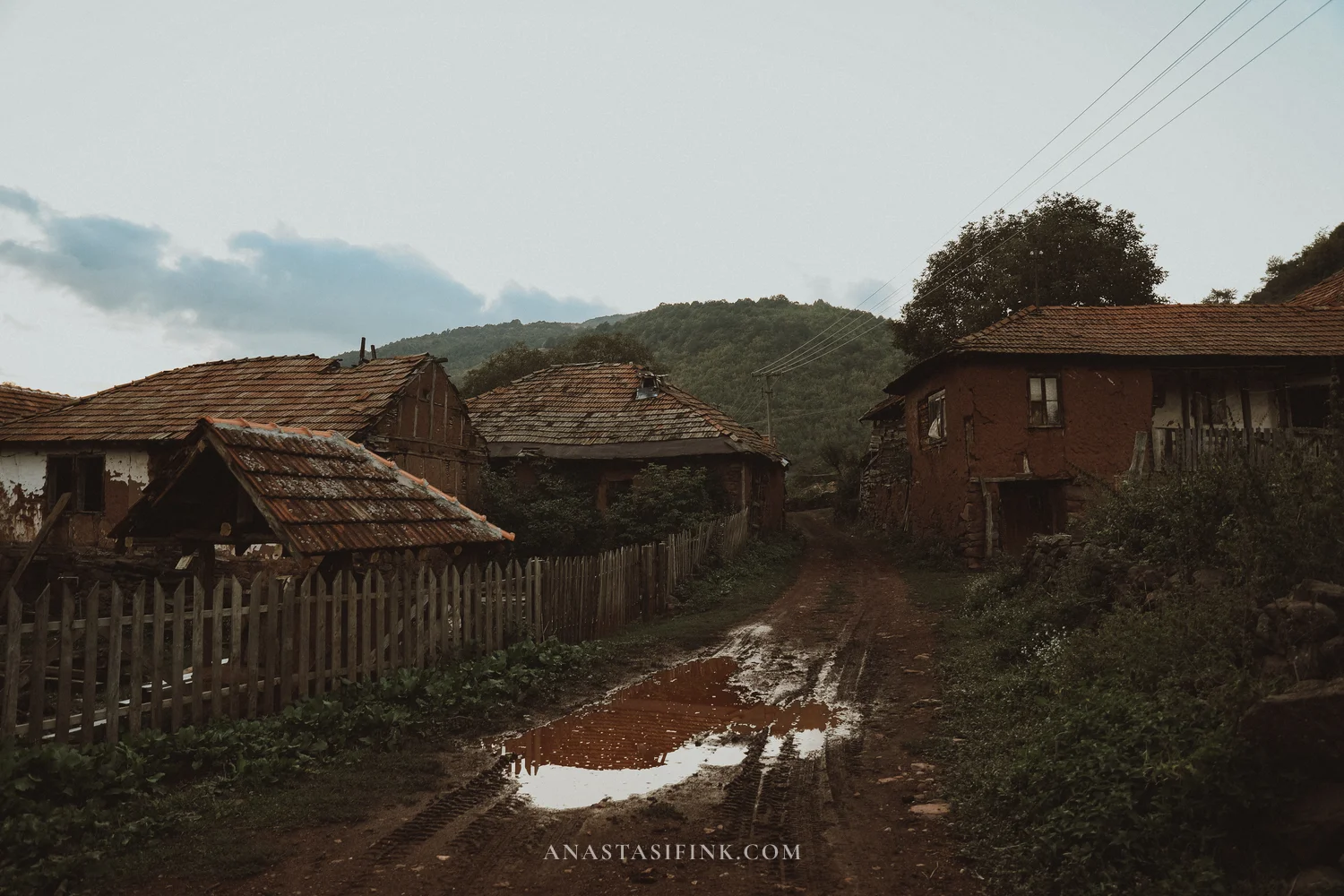
What to See in Topli Do
Houses With Stone Slab Roofs
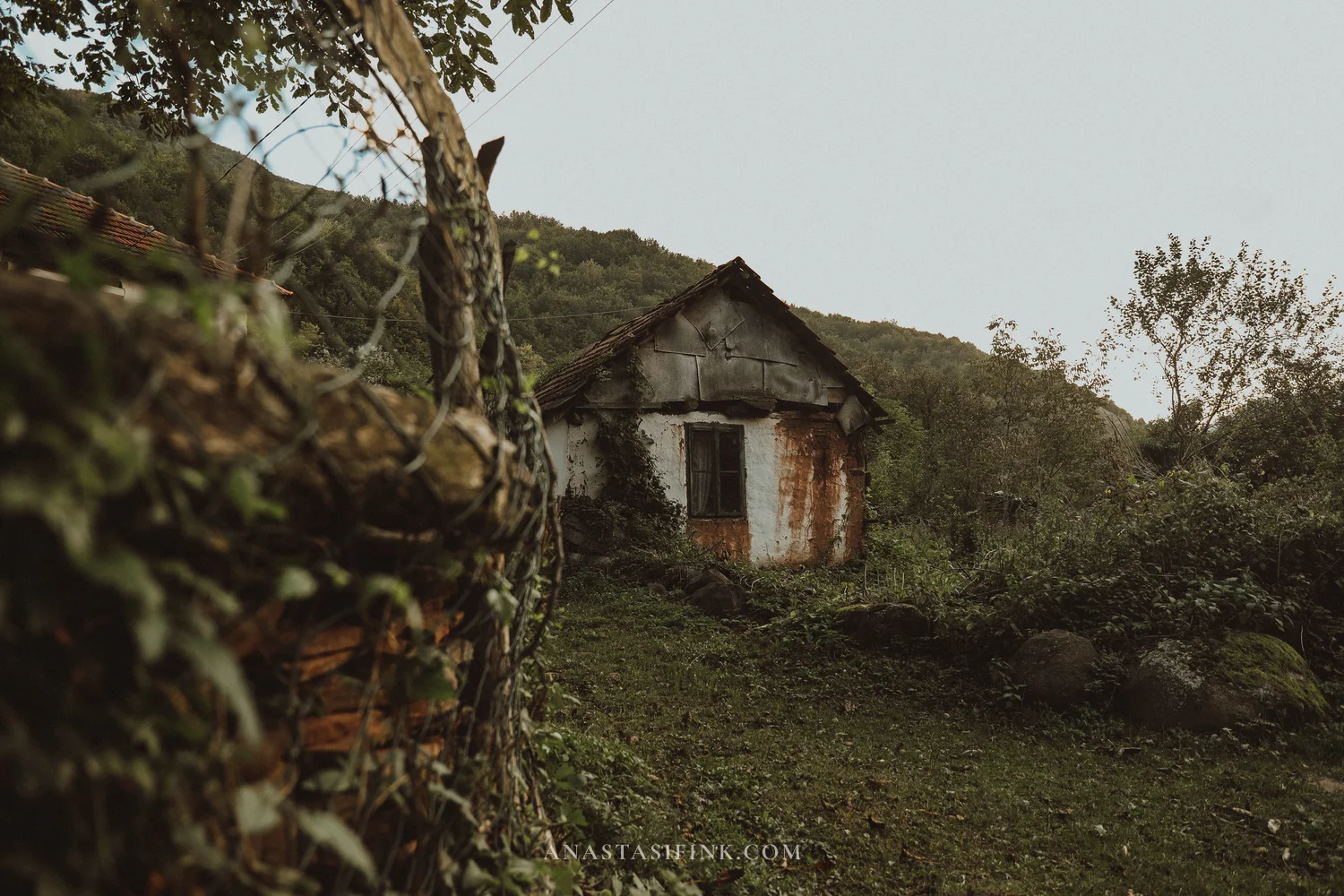
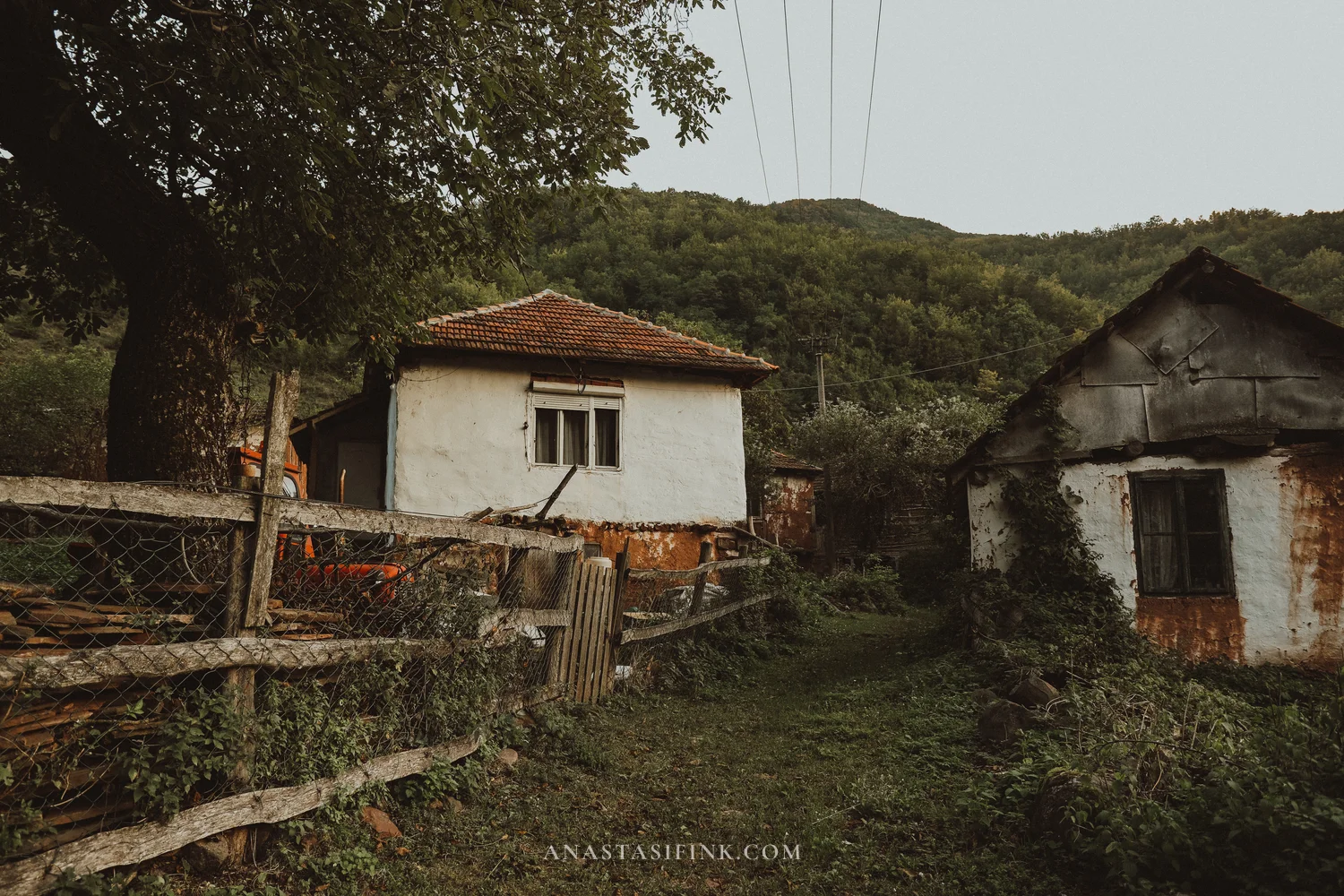
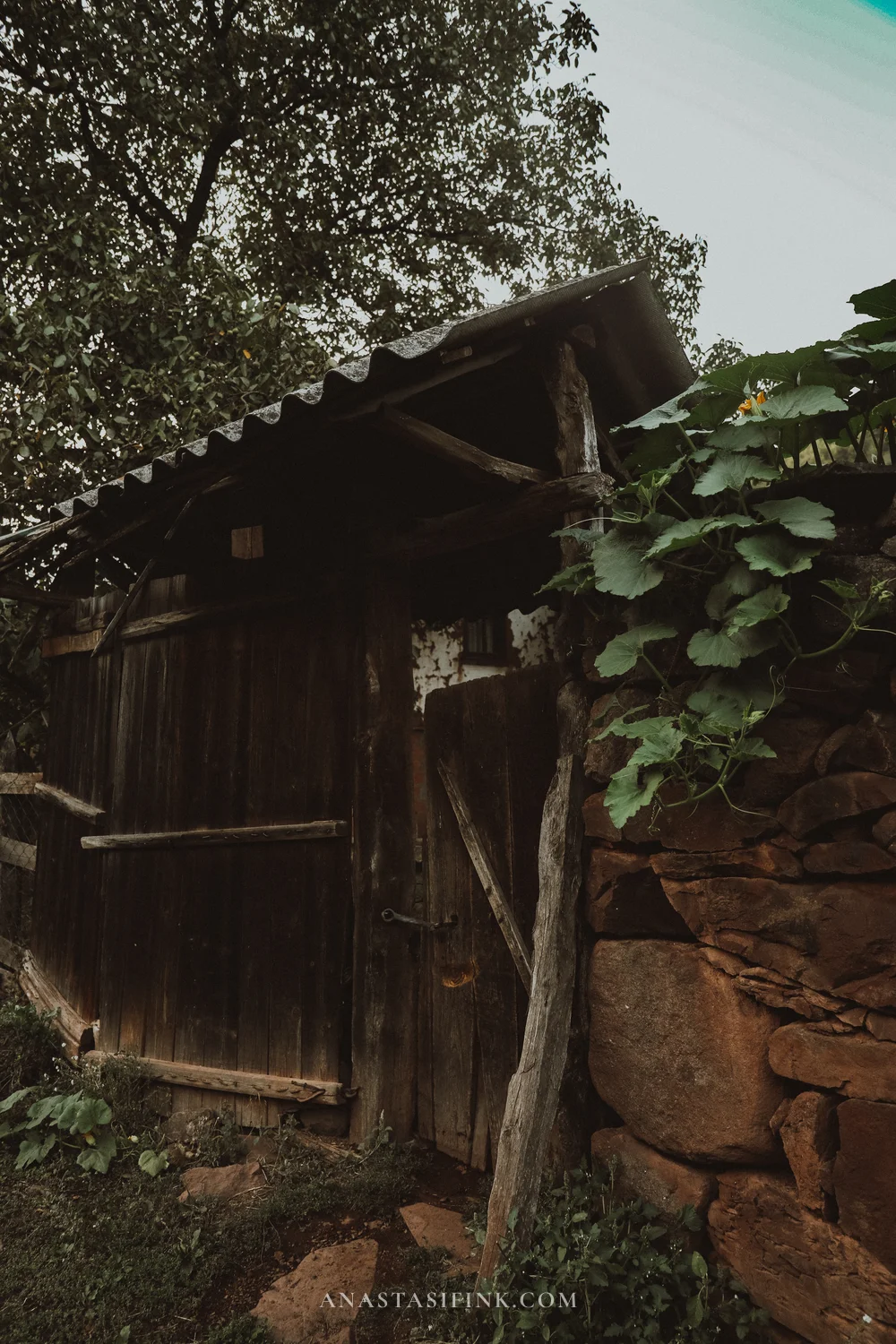
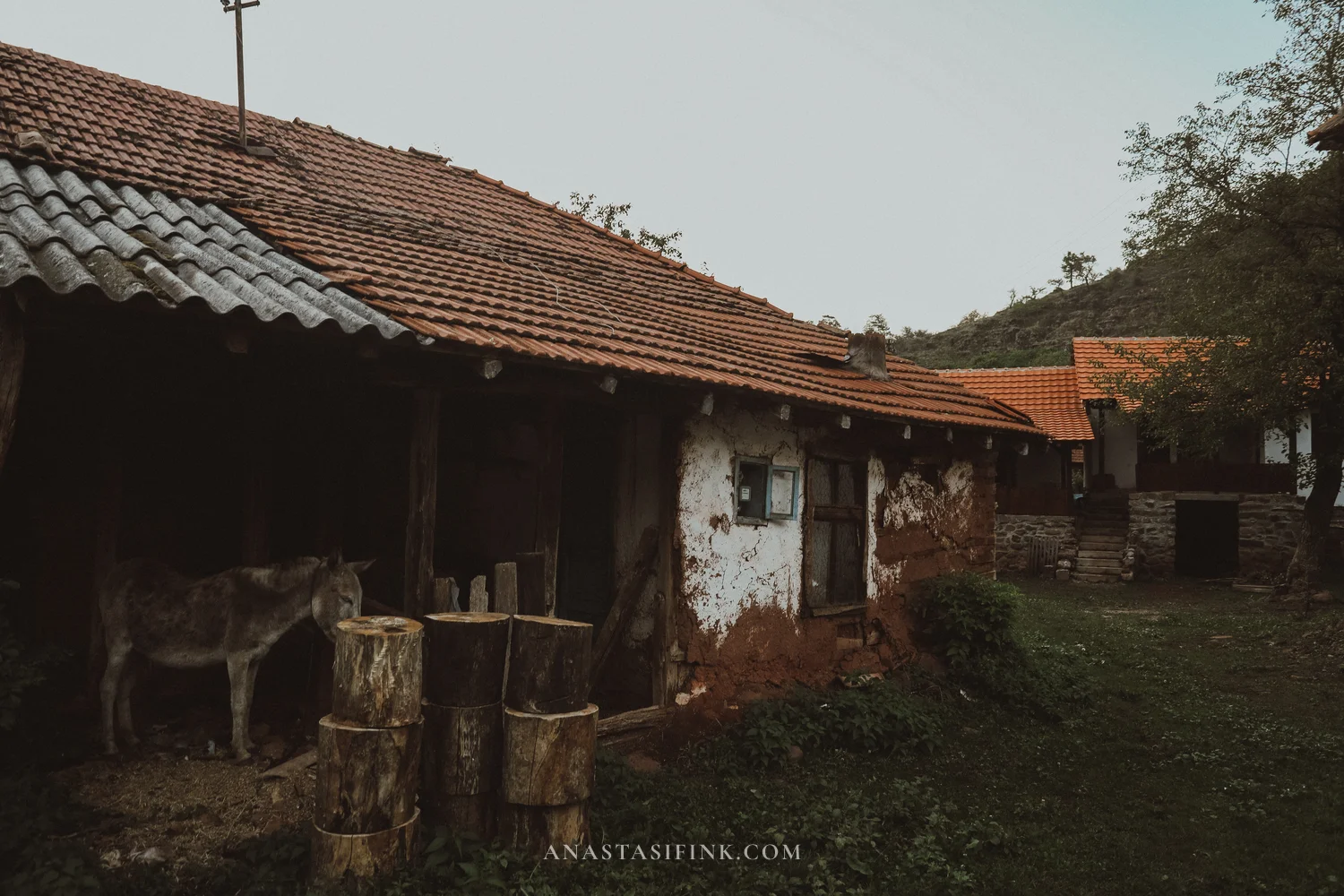
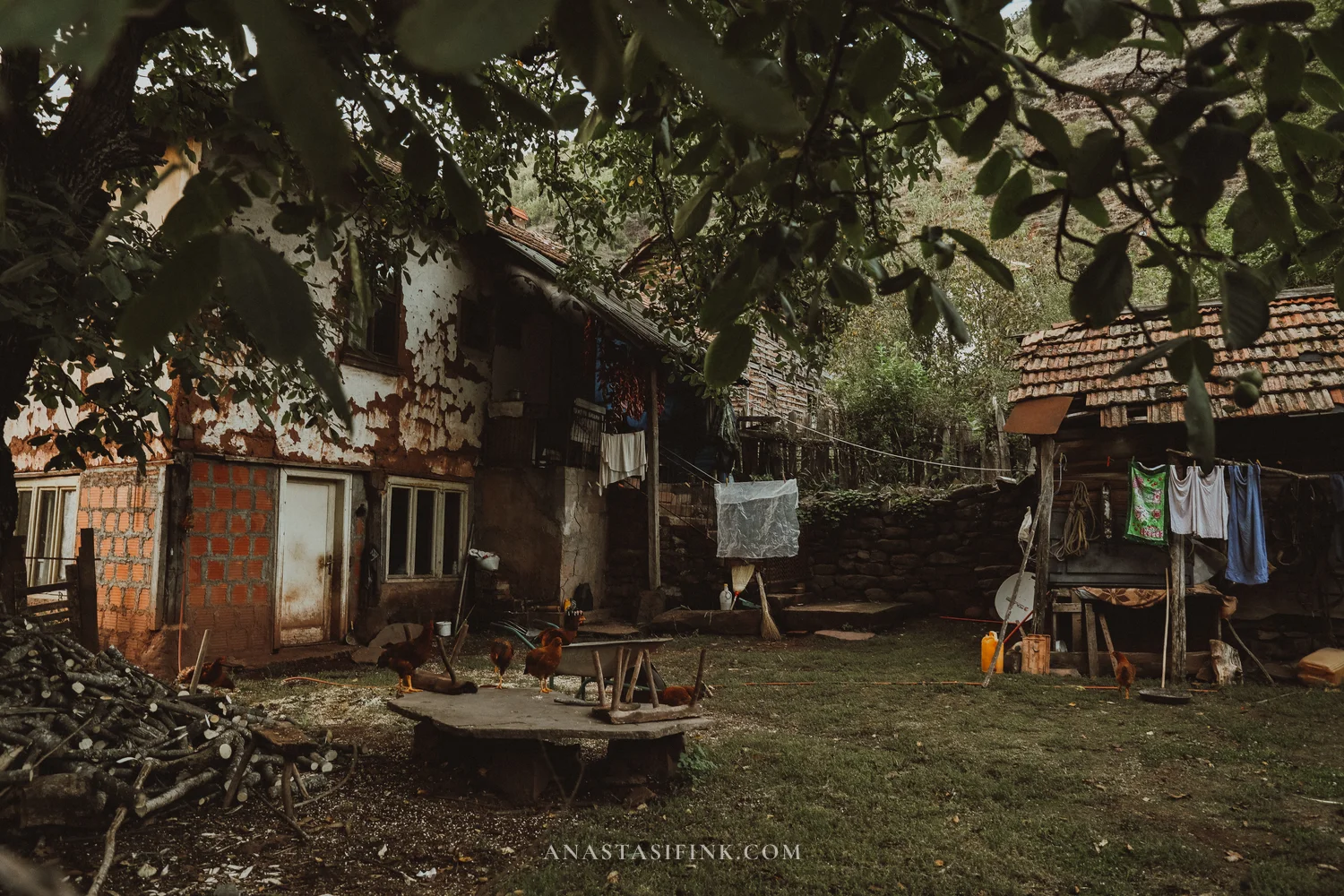
The houses in Topli Do were built from whatever was at hand: a stone base, a timber frame, walls of clay mixed with straw, whitewash on top. The roofs were covered with thin stone slabs quarried right here in the mountains. Few of these roofs are left in Stara Planina, but here they’re on many of the houses and barns.
On many walls the whitewash has peeled away, and the rusty-orange clay shows through underneath, so it’s easy to see how a house is put together. Some of the buildings stand empty, but most of the yards are lived in: laundry drying, firewood stacked, a tractor parked. It’s this combination, peeling walls, a living yard and silence all around, that creates the feeling of an old film. Not a museum where everything has been touched up, but a village where nothing has changed in seventy years.
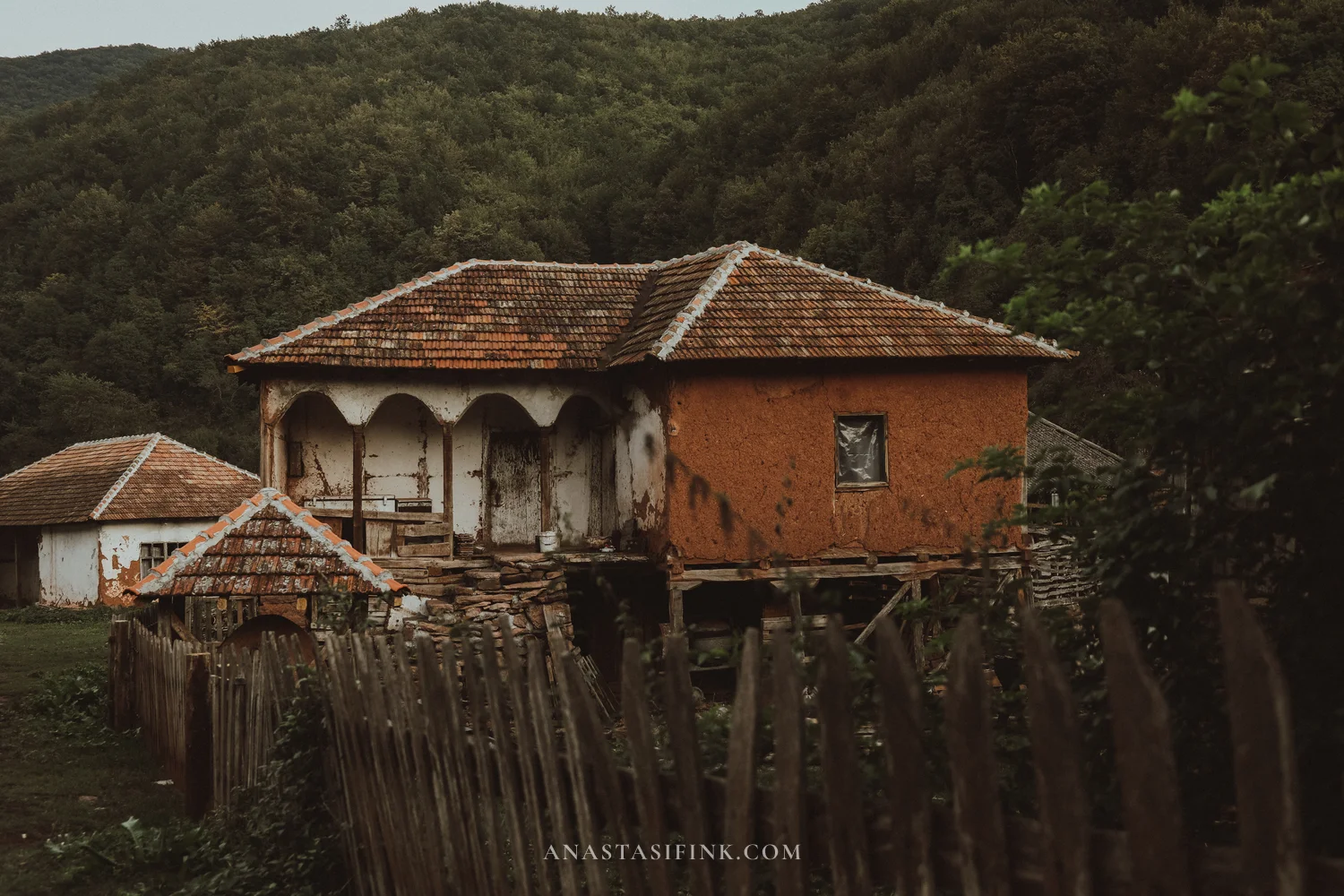
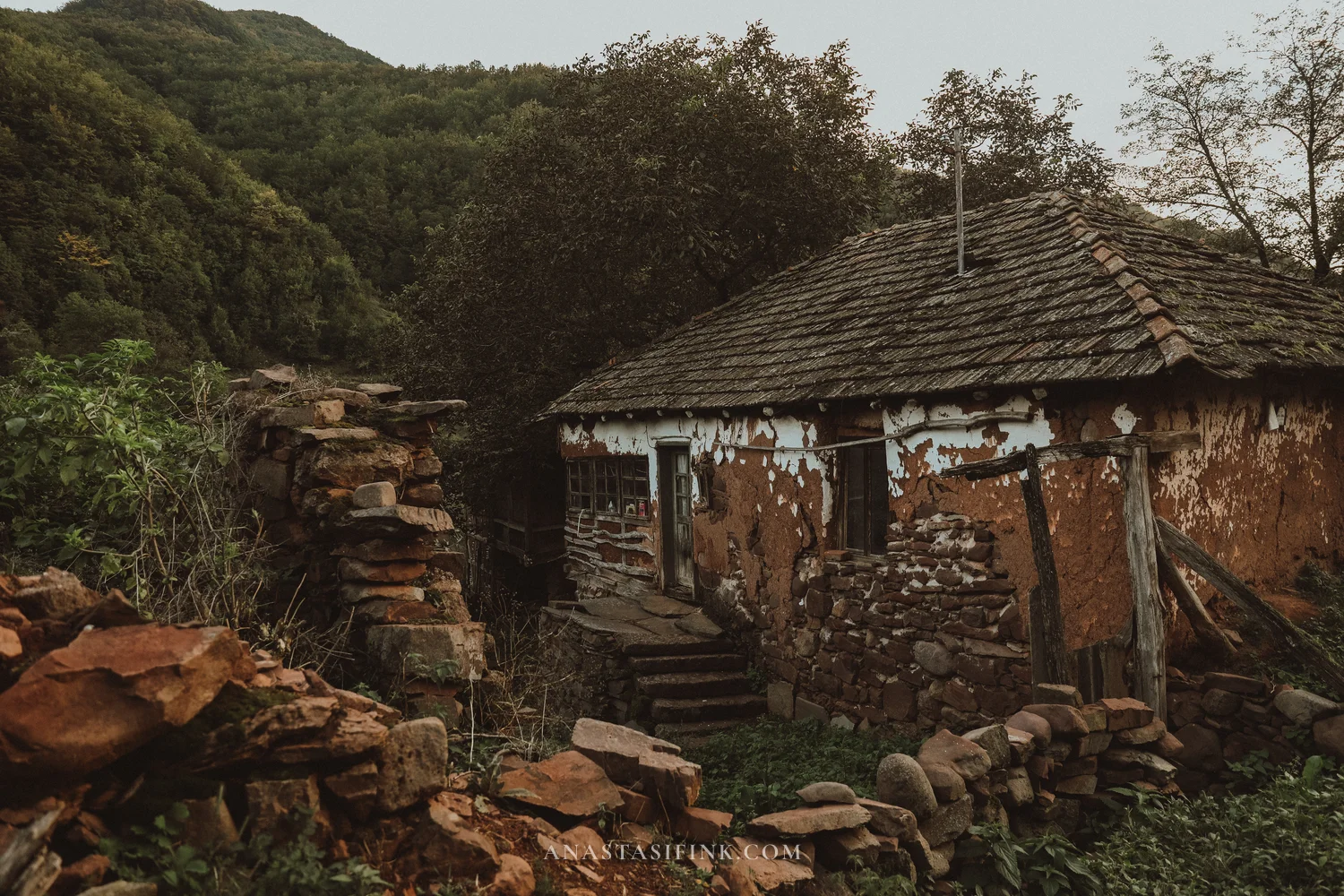
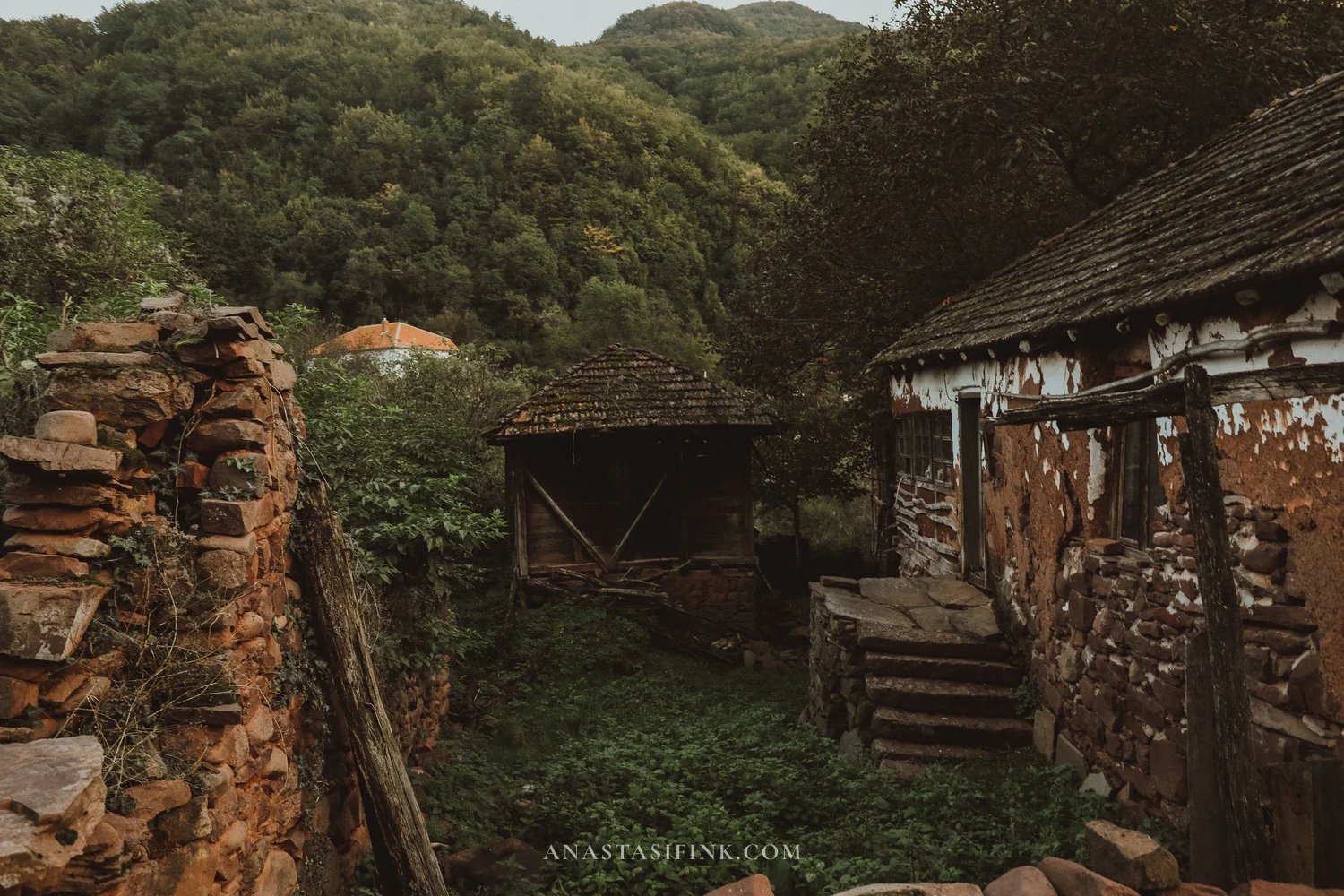
Those stone slab roofs
From the side you can see the whole construction: a ground floor of rough stone, timber beams above it and clay packed in between. This is how they built all over Stara Planina and in the neighbouring Bulgarian mountains, but in most villages the old houses were replaced with brick long ago. That never happened in Topli Do; the village is too far from the roads and the towns.
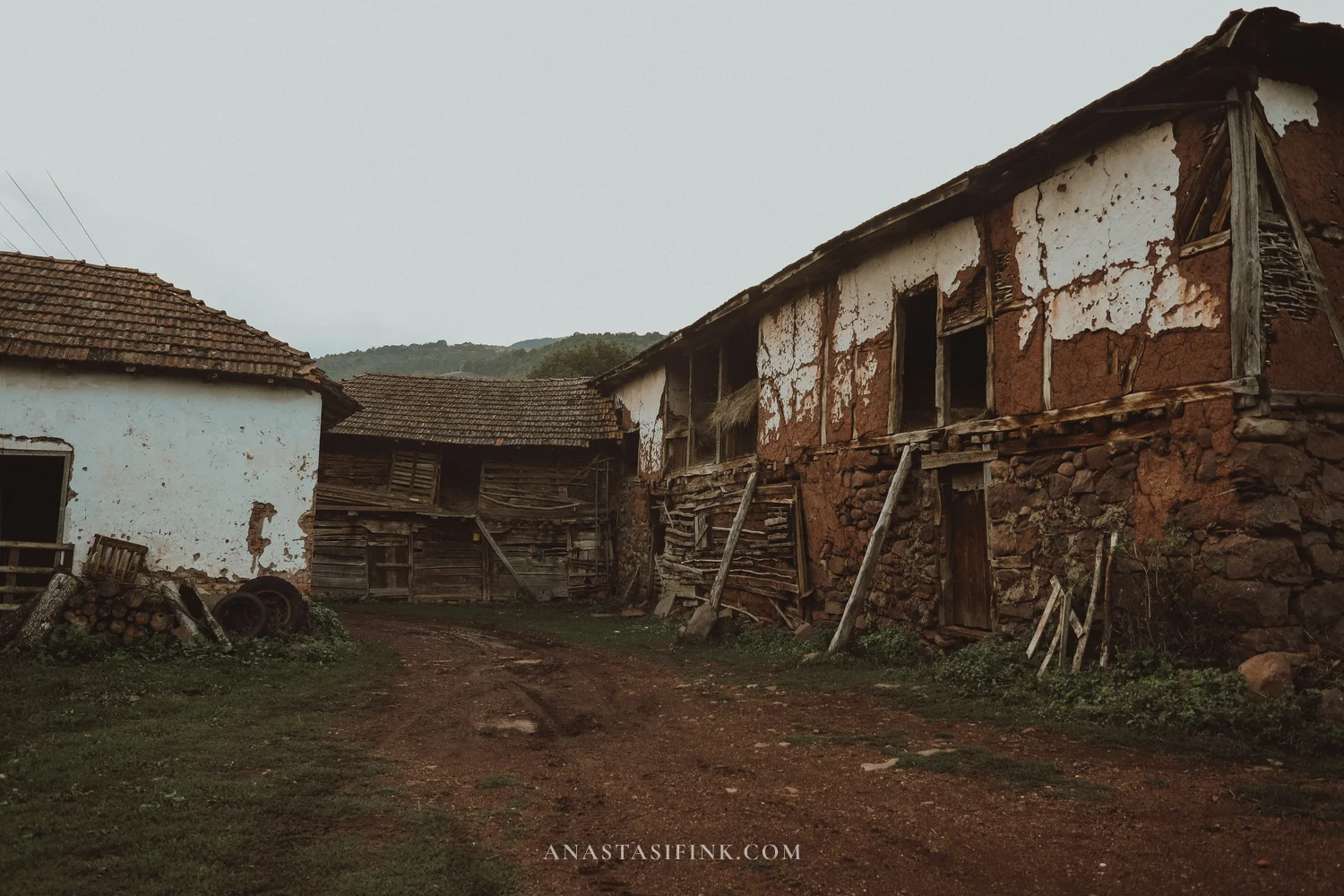
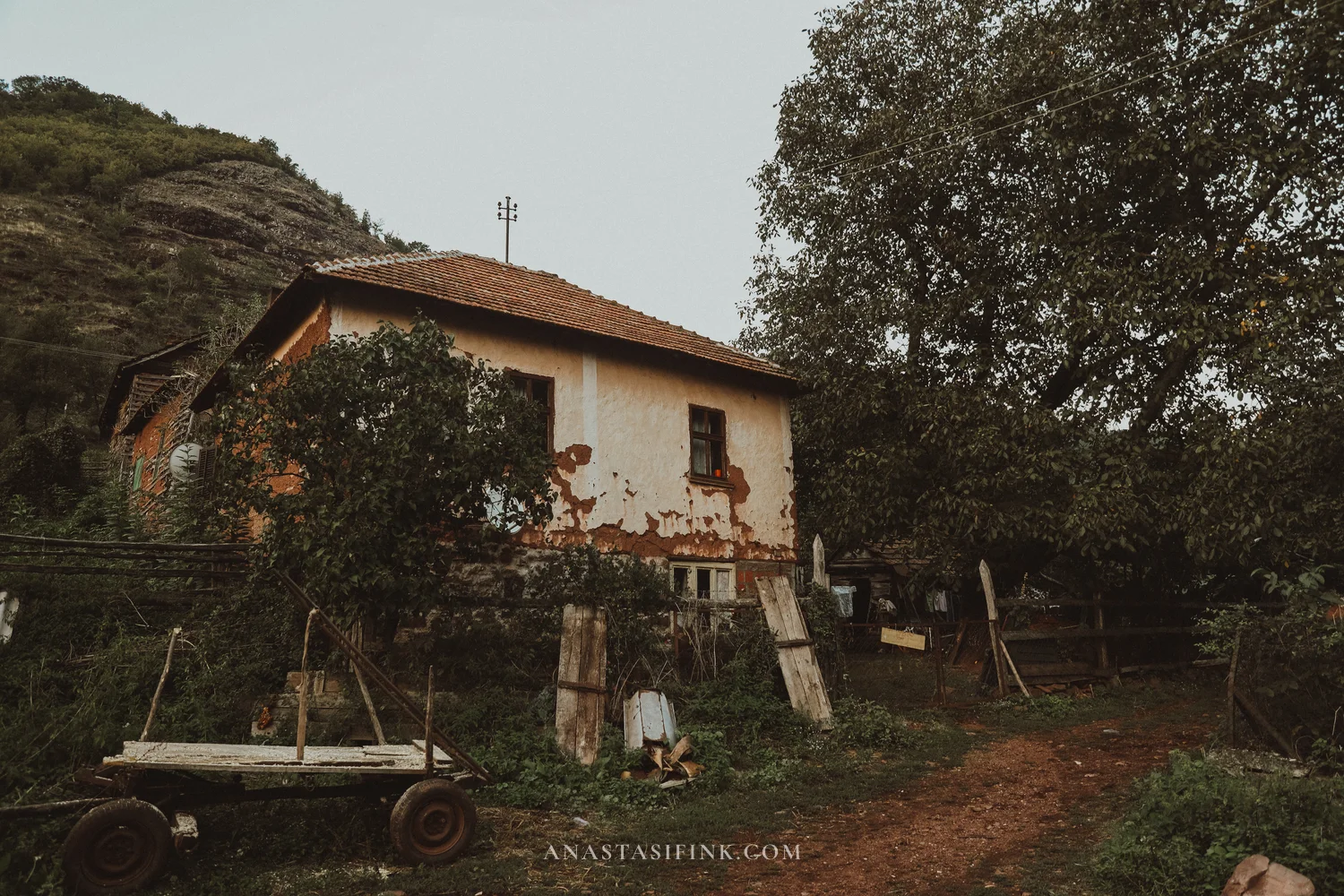
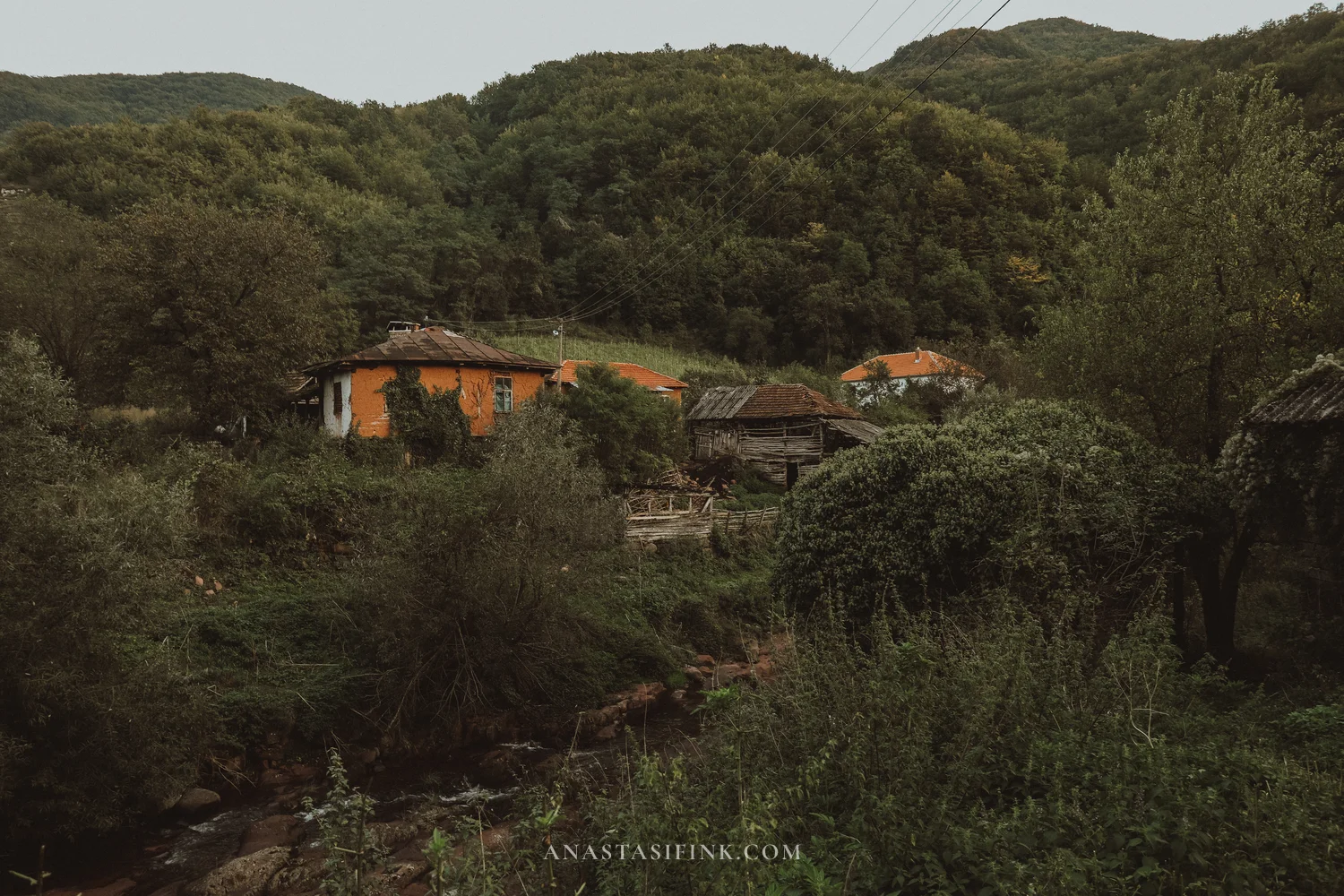
Houses on both sides of the river
The vegetable gardens start right at the stone walls. Cucumbers are planted along the walls, and by late summer the vines with their yellow flowers hang out over the street.
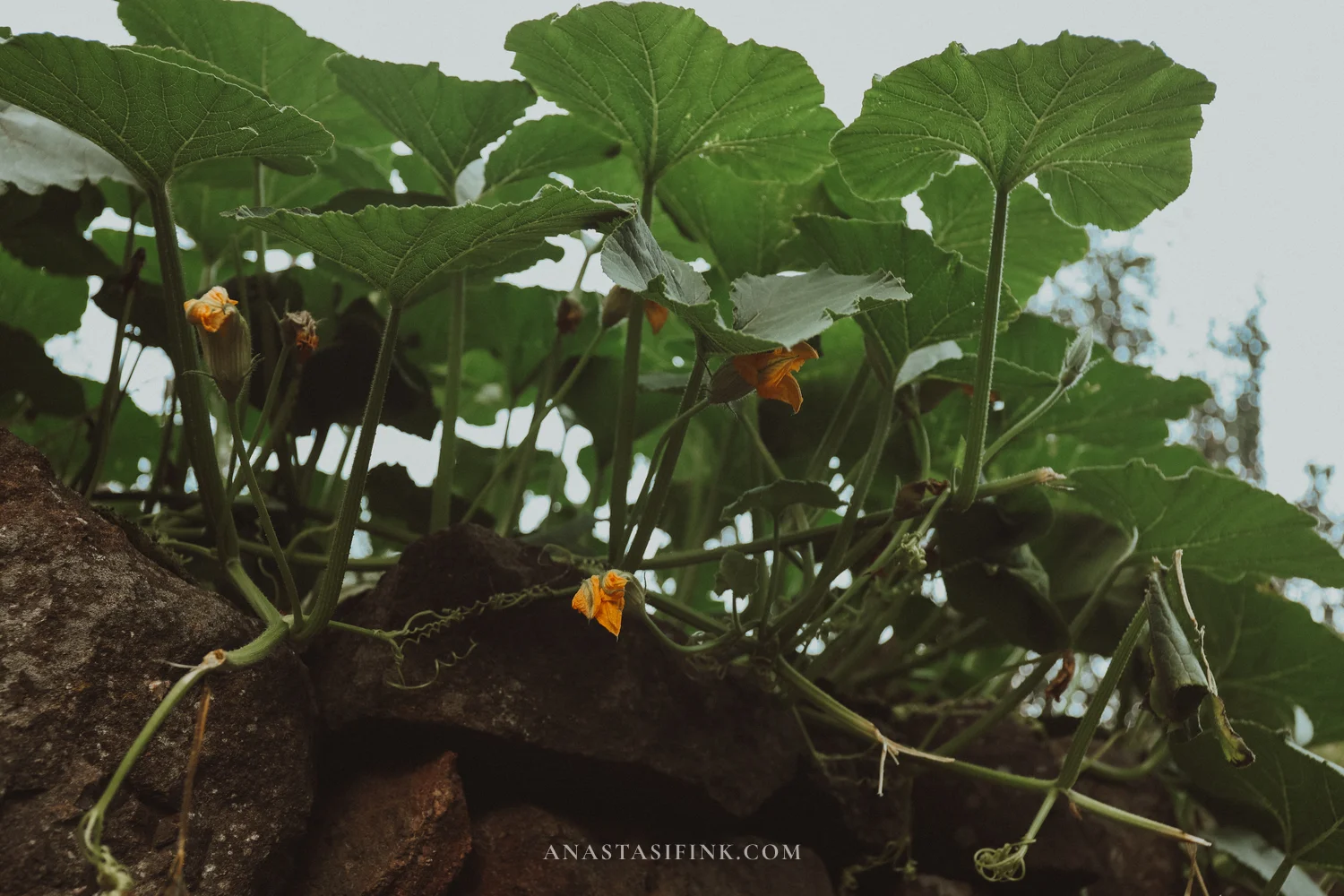
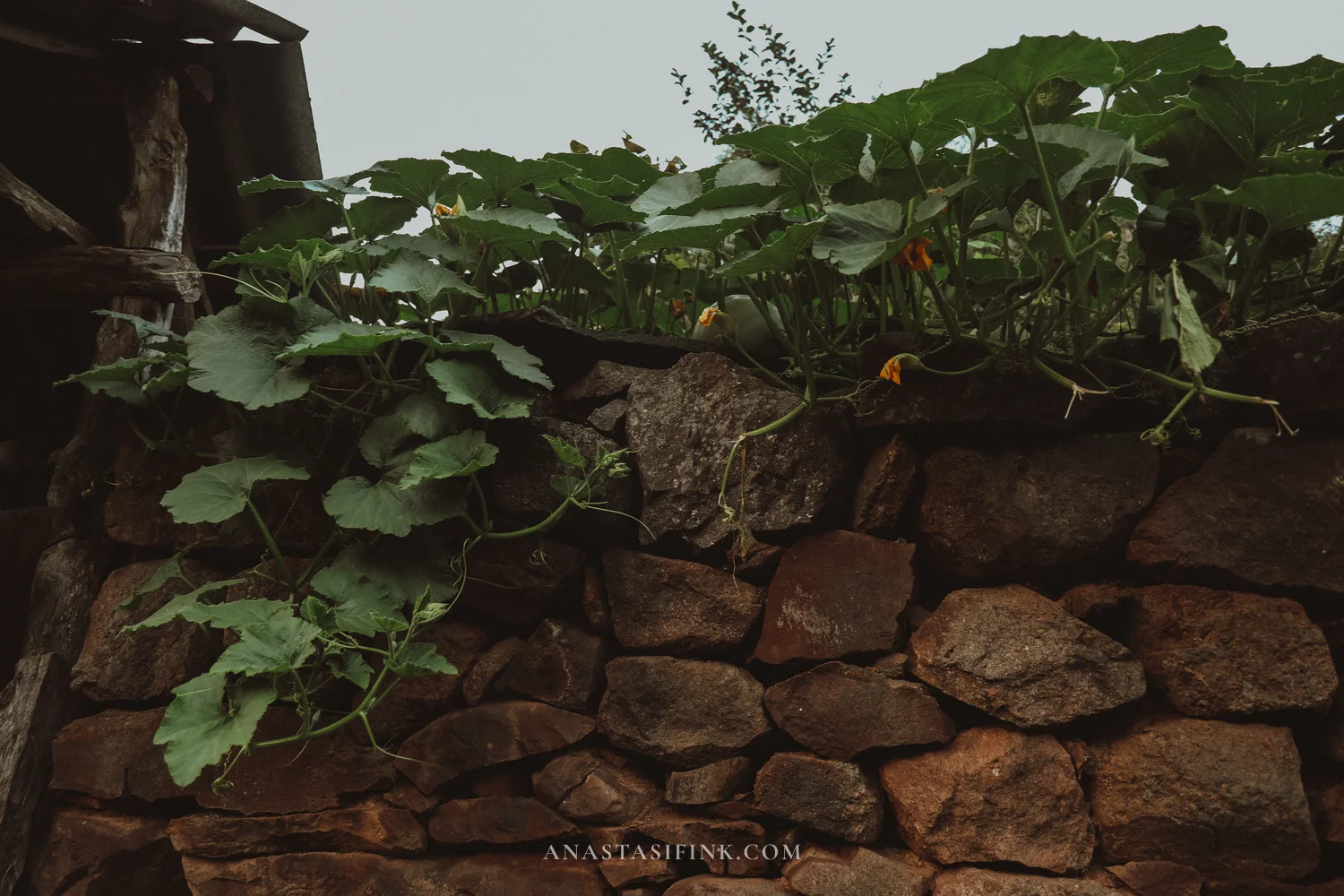
Cucumbers on the walls
Sheep, Goats and a Donkey in the Yards
The main occupation in Topli Do is raising livestock. In spring the shepherds take the flocks up to the high pastures below Midžor and live there in huts all summer, and in autumn they bring the sheep back down to the village. By September the flocks are already down, and there are sheep in the pens by almost every old house.
That’s why early autumn is the time to come. In summer it’s empty and quiet here, the sheep are up in the mountains and their owners are with them. But in September everything falls back into place: flocks in the yards, people fussing with hay by the barns, smoke above the roofs in the evening, goats being driven down the streets. For these few weeks the village looks the way it did a hundred years ago.
Looking into the yards over the fence is fine here, but it’s better to say hello first. A couple of words in Serbian, “dobar dan”, and the owners will usually show you the animals themselves. Hardly anyone in the village speaks English.
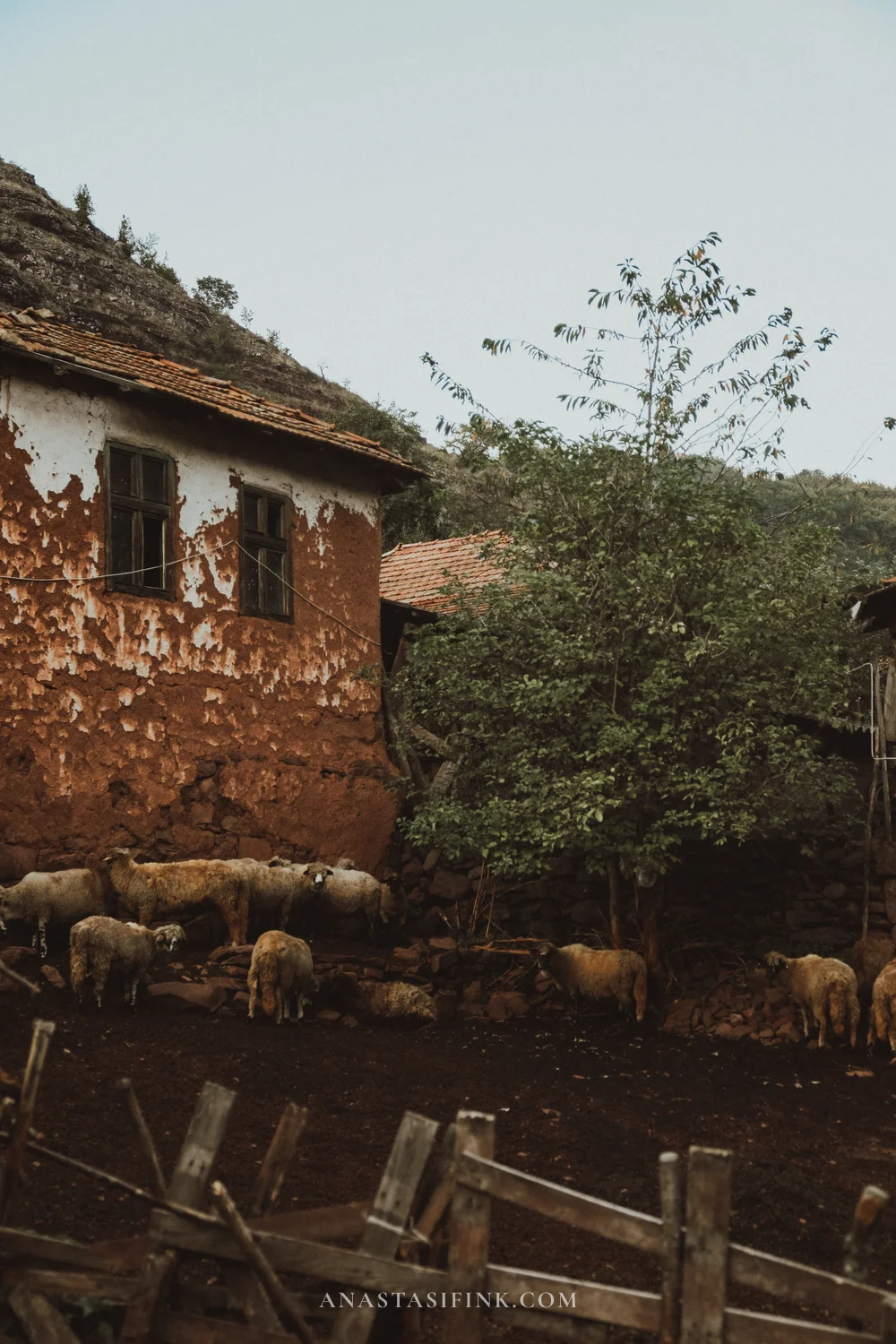
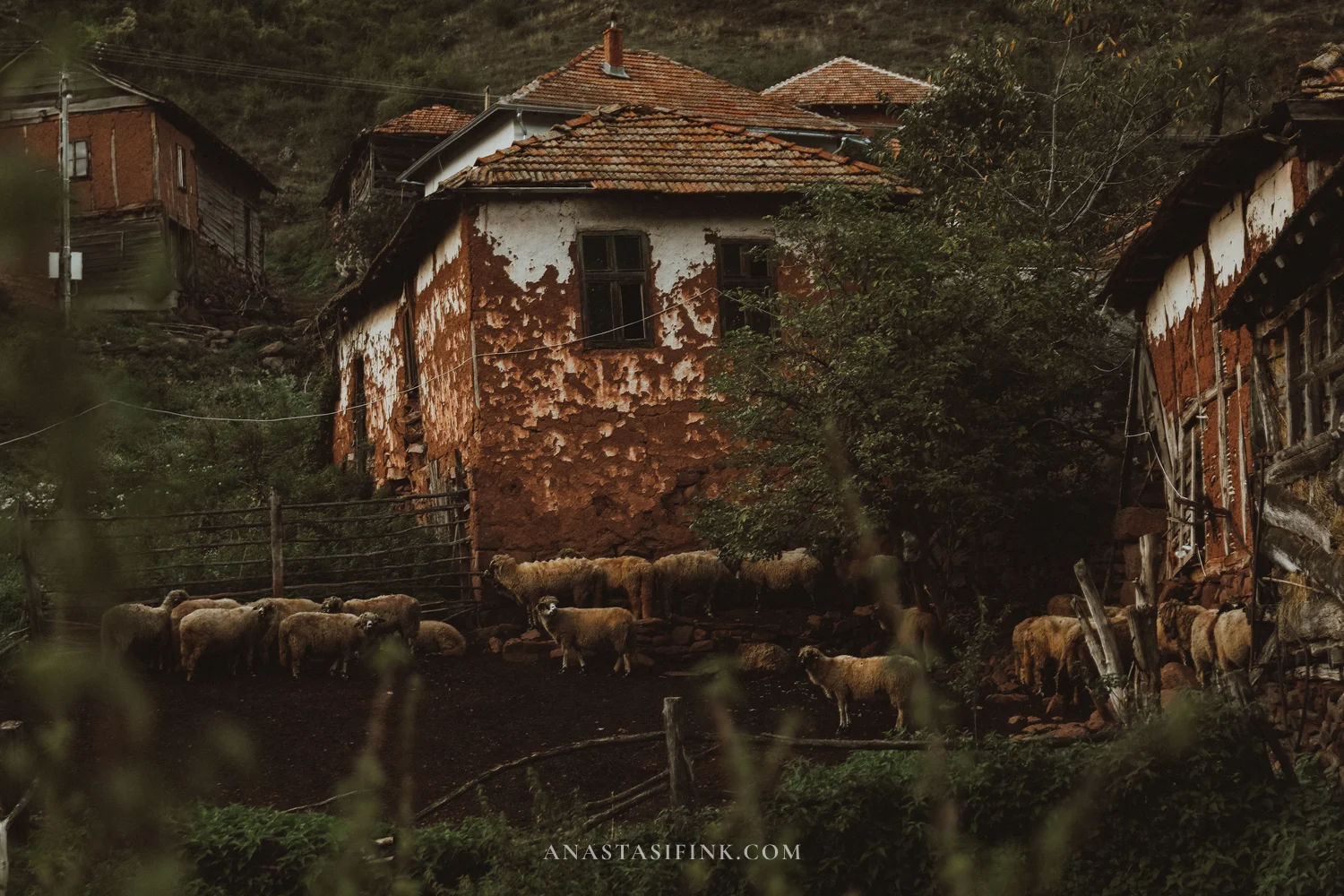
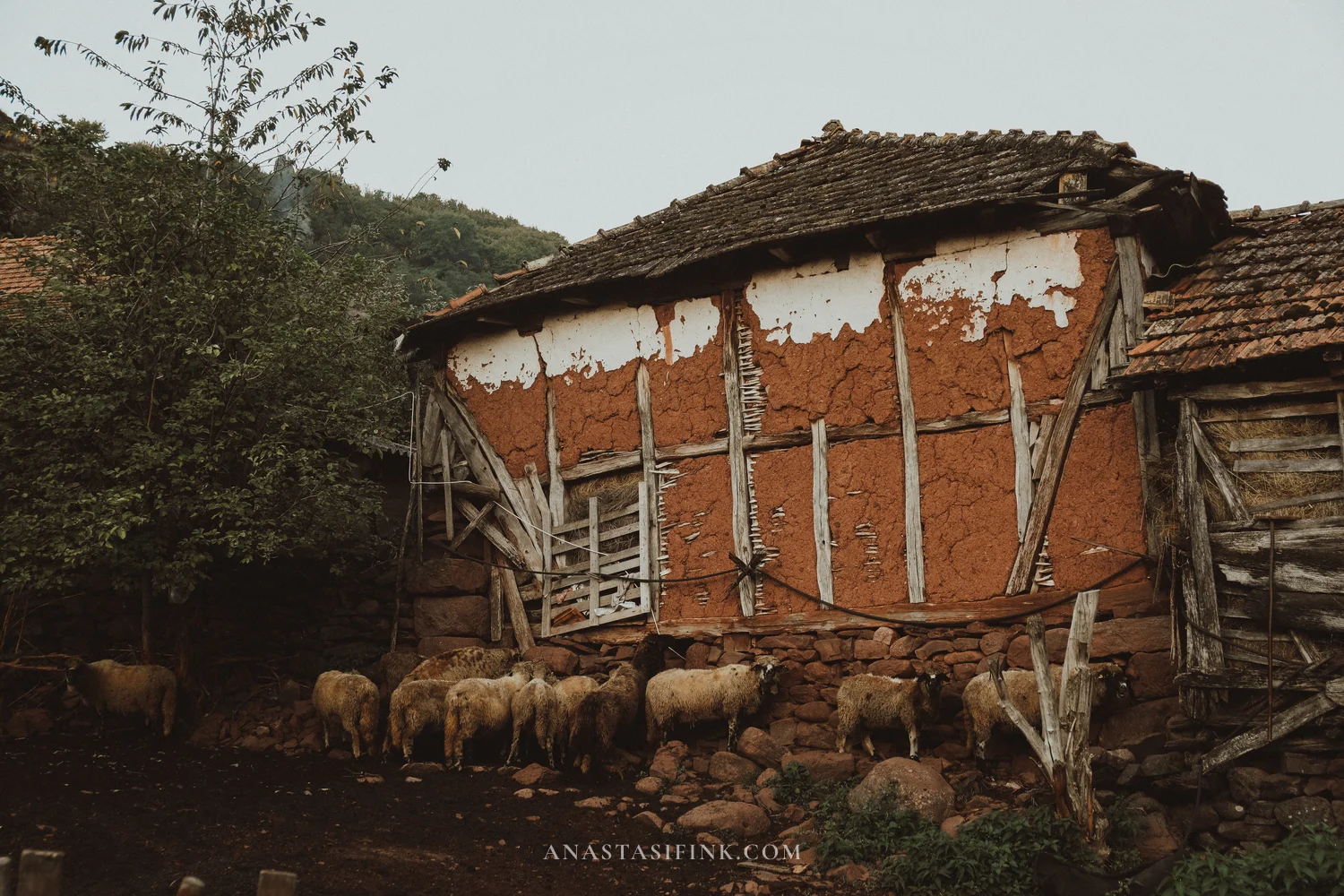
September, the sheep are back from the mountains
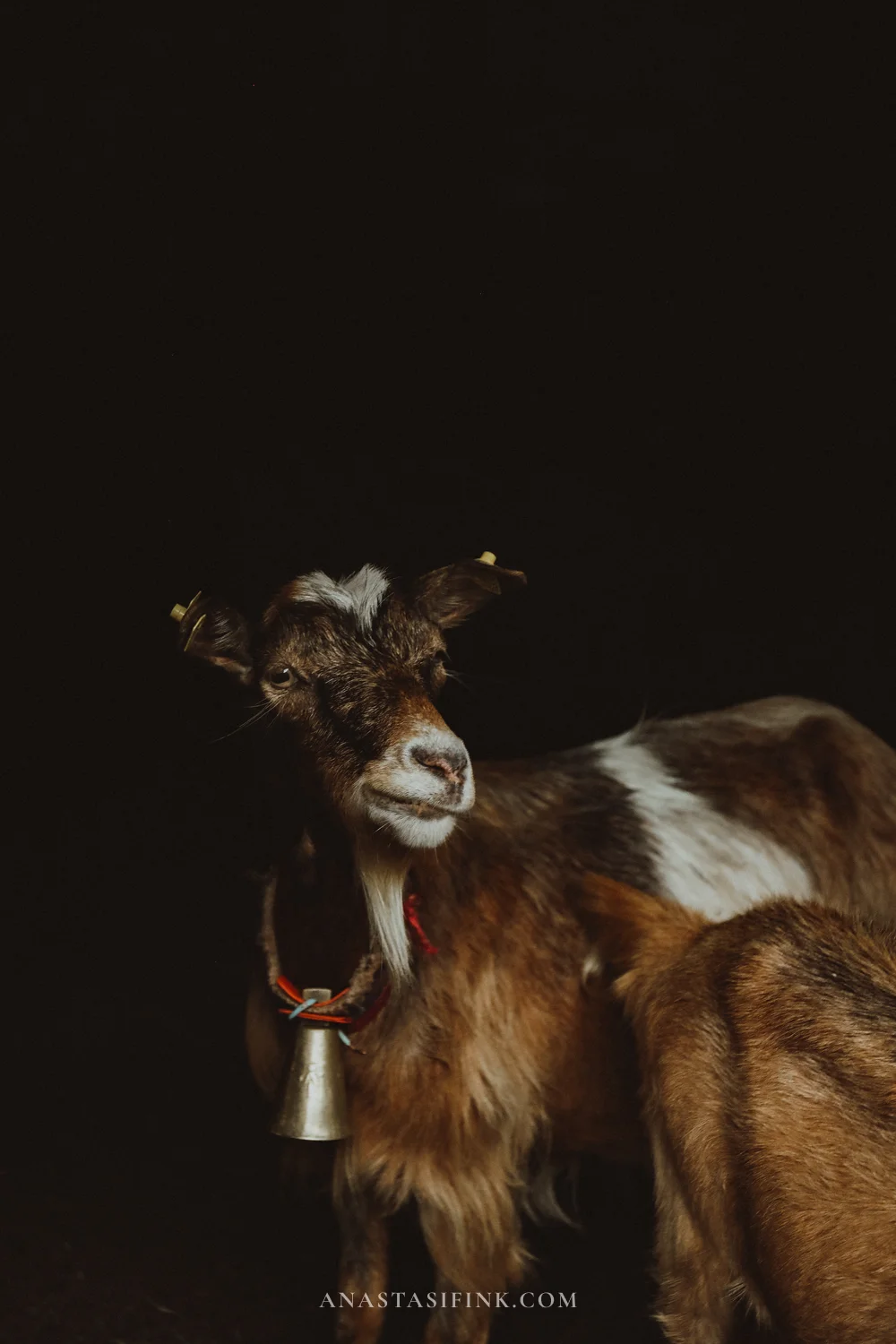
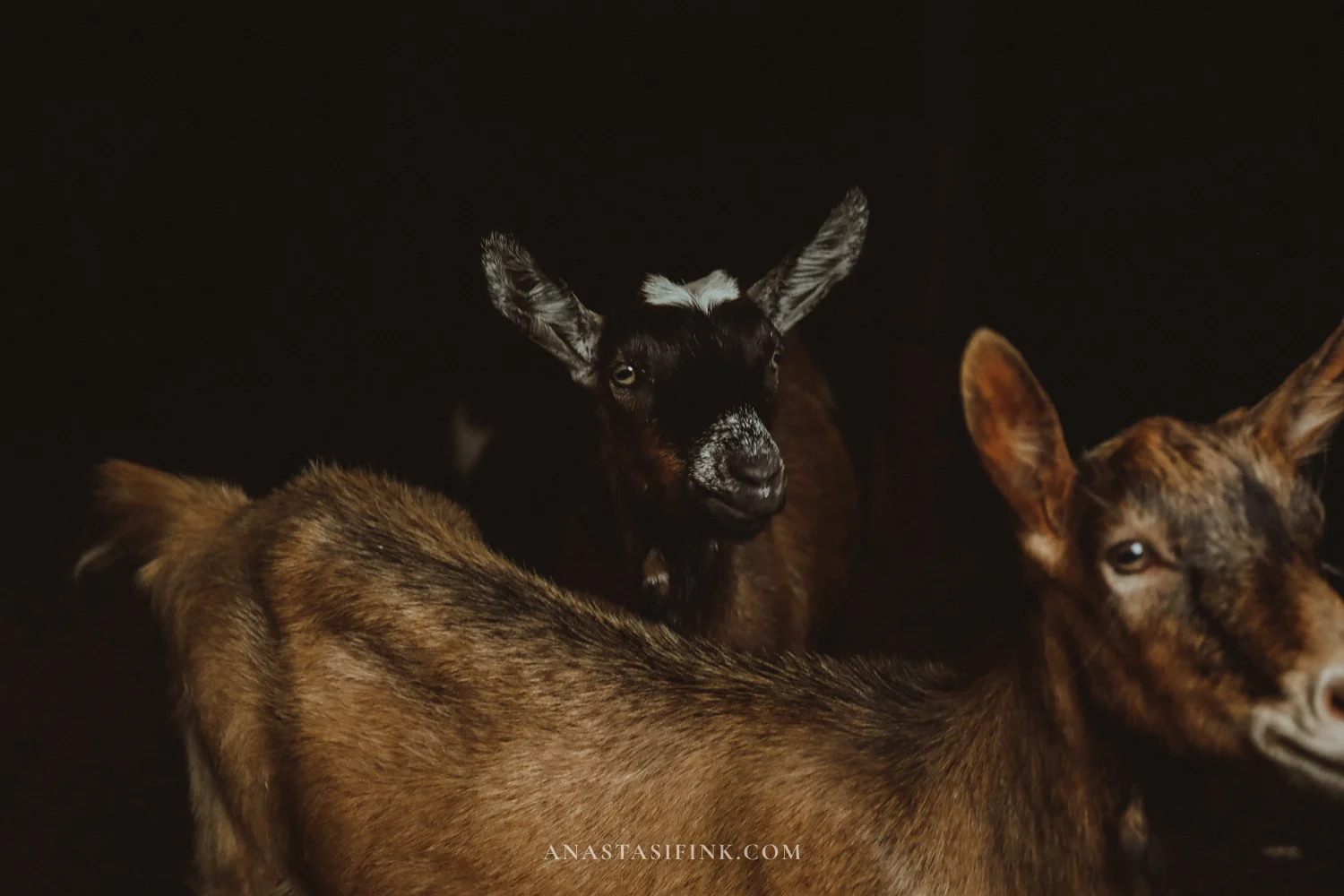
Goats are kept in the barns. Each one has a bell around its neck, which is how the owners find the animals in the mountains.
The old IMT tractor is another feature of these parts. They were made in Yugoslavia from the 1960s onwards, and in the mountain villages they’re still working.
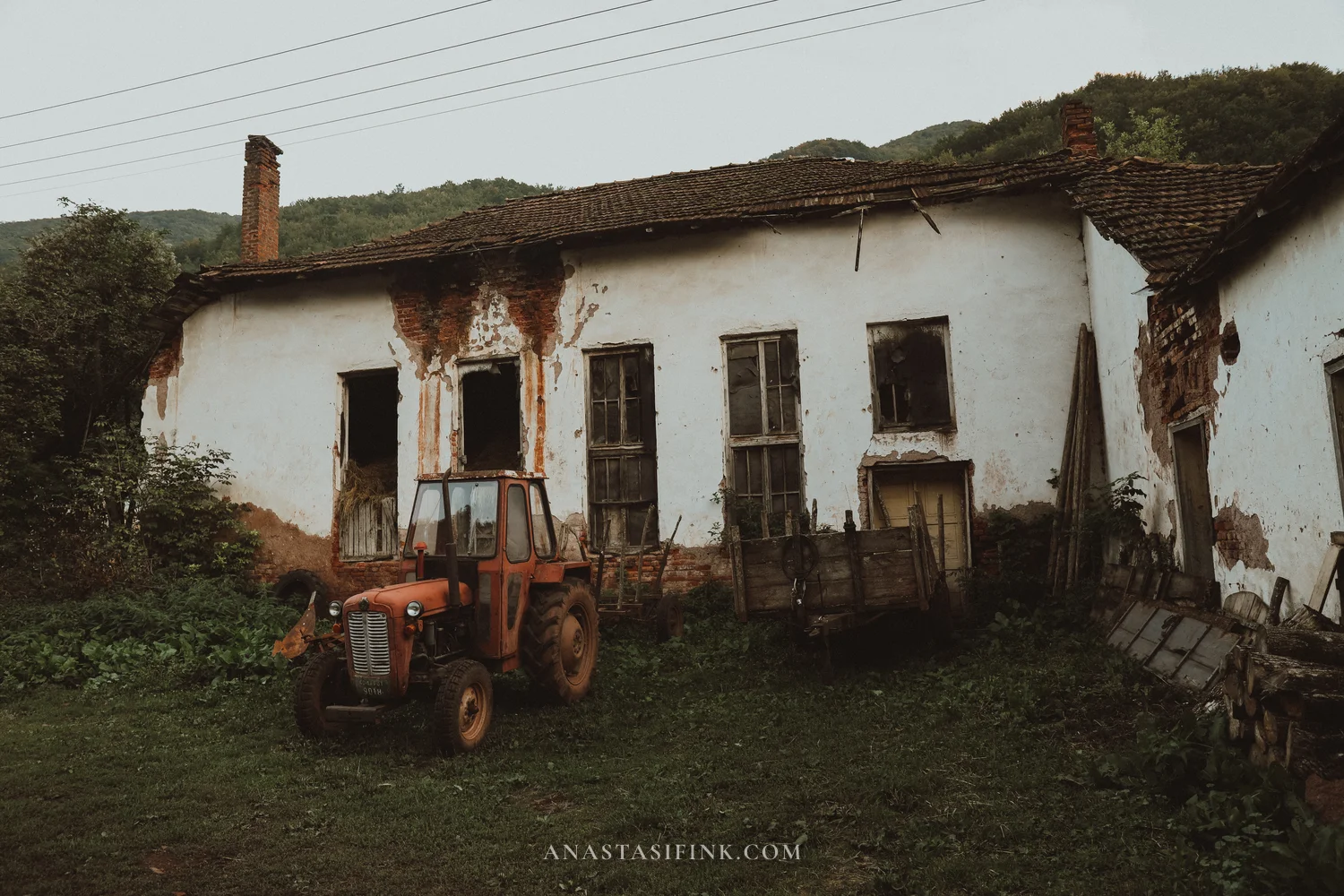
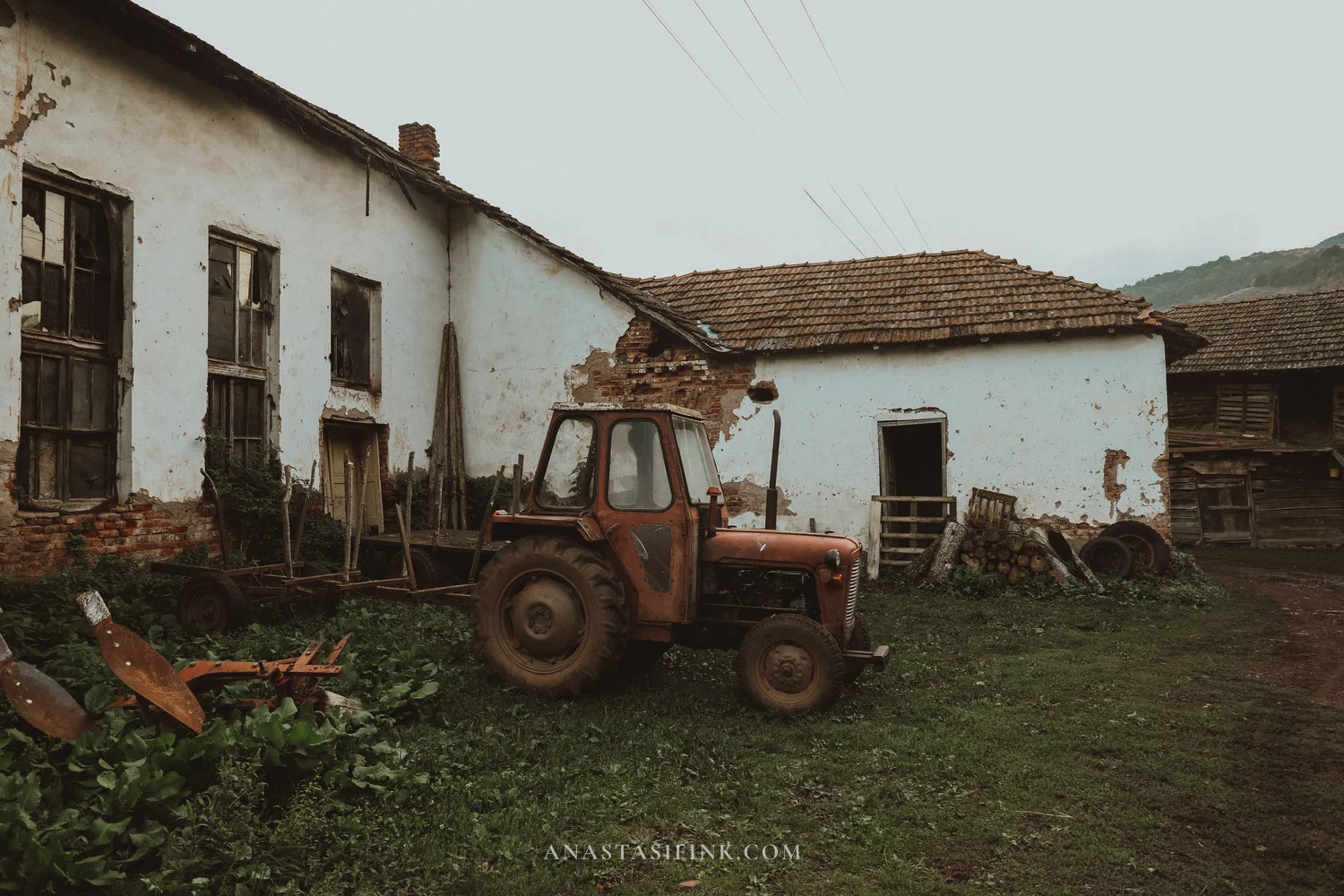
An old Yugoslav IMT tractor
The Ethno Centre by the River
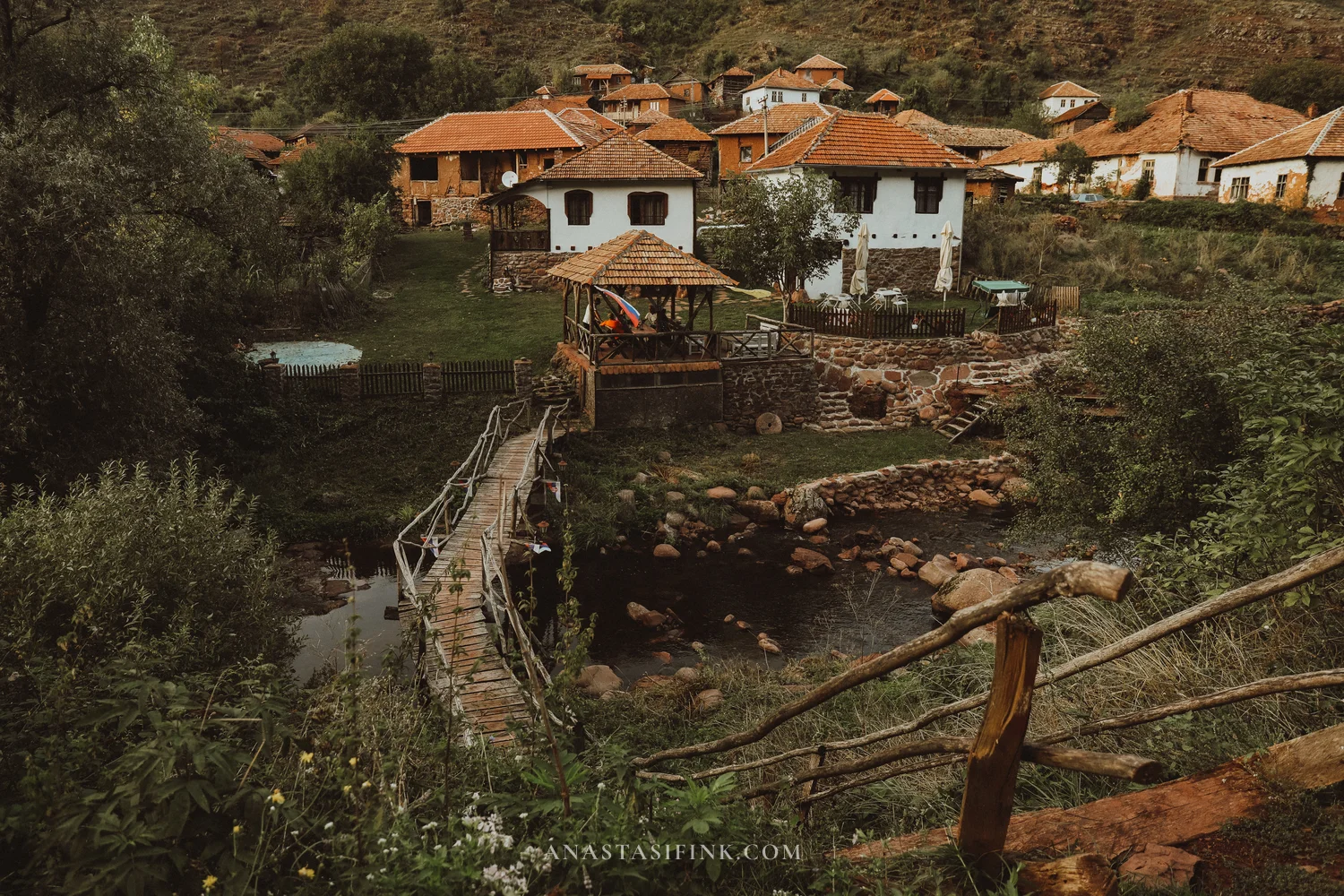
At the start of the village, where two streams meet, stands the Topli Do ethno centre: two restored old houses, a gazebo and a small wooden bridge across the river. It’s the only place in the village set up for visitors: white walls, tiled roofs, a little pool. You can stay the night here, eat if you order in advance, and leave your car.
The trails to the waterfalls start here too. The bridge over the river leads to the other bank and the old part of the village.
Practical information – Topli Do village
- Where: Pirot municipality, Stara Planina Nature Park, eastern Serbia
- GPS: 43.3398546, 22.6797886
- Altitude: about 750 m
- Distance from Pirot: 33 km, about 1 hour by car
- Entry: free, it’s a living village
- How long: 1.5-2 hours for the village, a full day with the waterfalls
- Shop: one small one, open irregularly – bring your own food and water
- Google Maps: link
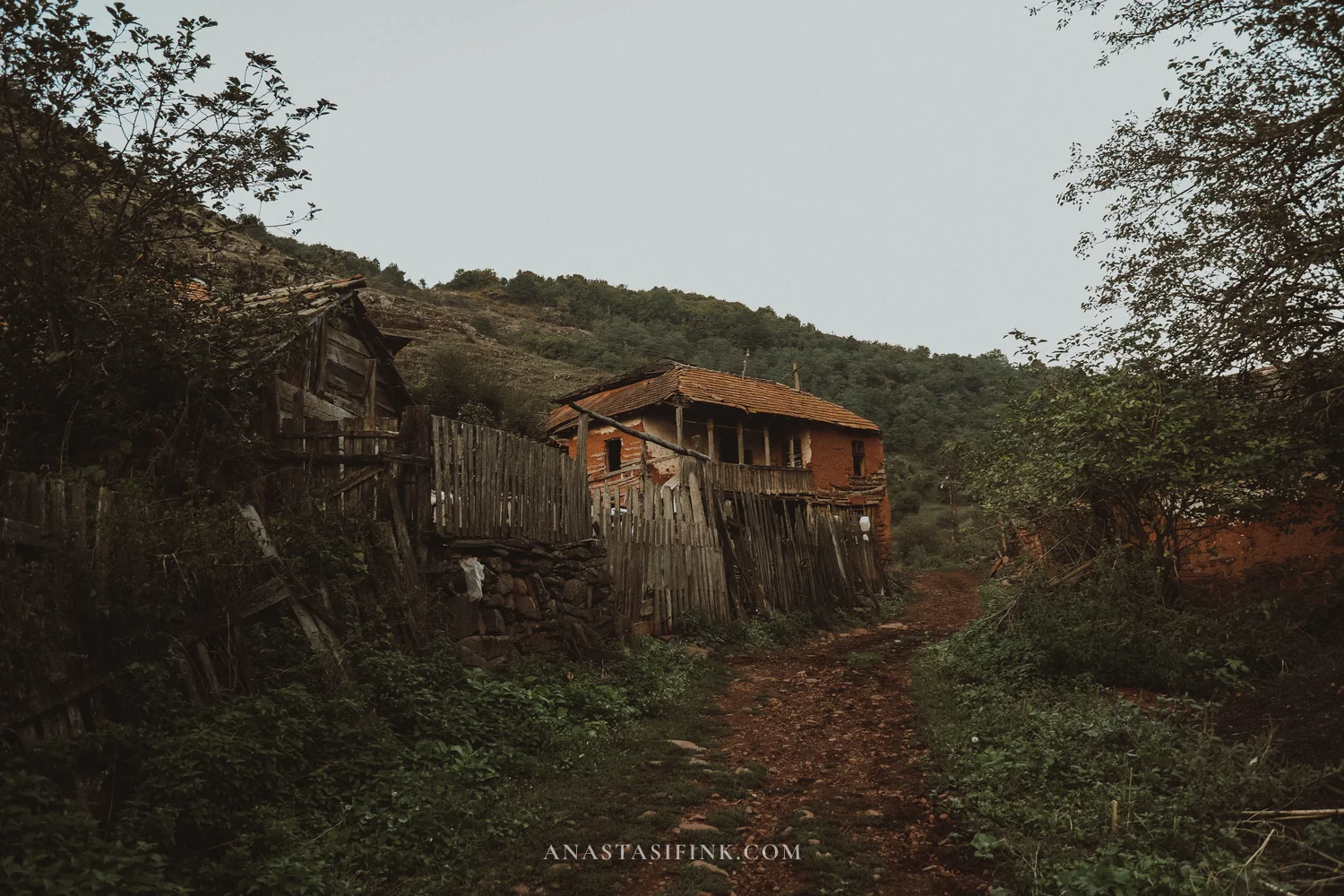
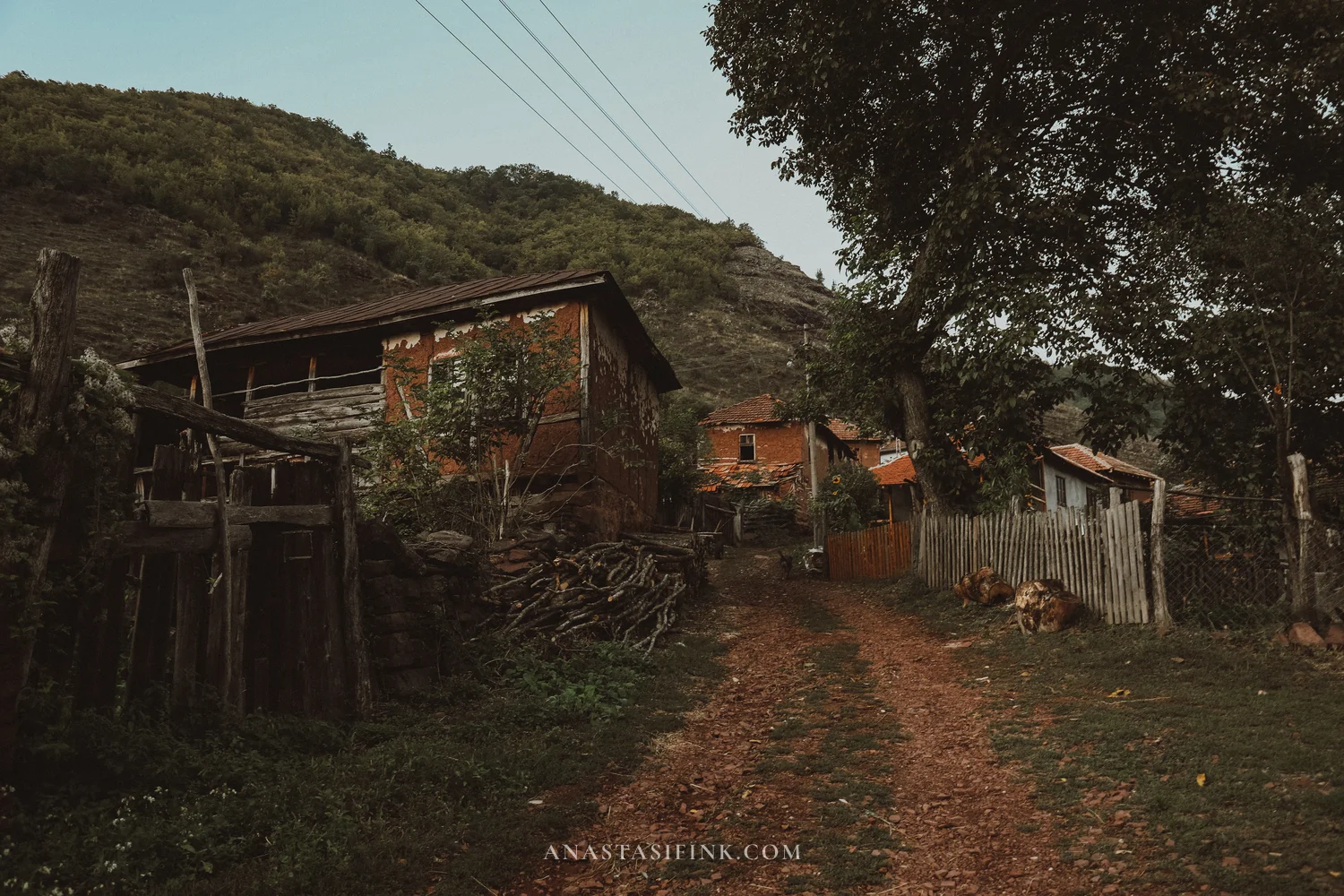
Village streets
Waterfalls and Hikes Around Topli Do
There are more than thirty waterfalls around the village. Three routes deserve a special mention. In autumn they carry less water than in spring, but the forest around them is yellow and orange, and there’s nobody on the trails.
Pilj waterfall (Piljski vodopad) is about four kilometres from the village towards the village of Dojkinci, with a drop of around sixty metres. The trail is easy, roughly an hour each way. There’s little water in summer; the most is in spring and after rain.
Kaluđerski skokovi is a cascade with a total height of more than two hundred metres, the highest waterfall in Serbia. It’s about six kilometres up the gorge from Topli Do, 2-3 hours each way. The trail is marked, but steep and wet in places, so you need proper footwear.
Midžor is a 2,169-metre peak, the highest point in Serbia. The climb from Topli Do takes a full day: the elevation gain is more than fourteen hundred metres. Many people do a loop via the Babin Zub mountain hut, which is about twenty-seven kilometres.
Tip: The Pirot Tourist Organisation (TO Pirot) runs guided hikes to the waterfalls and up Midžor. If you’re going on your own, download an offline map in advance; the signal disappears in the gorges.
Where to Stay and Eat
There isn’t much choice in the village itself, but there is some. The Topli Do ethno centre is two old houses rebuilt in stone, timber and clay, with a kitchen, terraces above the river and a place for a barbecue. A few families also rent out rooms and whole houses, mostly in summer. There are no restaurants in the village: at the ethno centre you can order breakfast and dinner in advance, and everything else you bring with you.
Practical information – accommodation
- Topli Do ethno centre: a house for 8 people, from €22 per person per night (about 2,600 RSD), €32 with breakfast, €42 half board
- Kuća Stojanovića: four apartments for 4-7 people, each with its own kitchen and terrace
- Booking: through selo.rs or directly by phone, English via a translator app
- Alternative: stay in Pirot (plenty of guesthouses from €20-30) and visit Topli Do for the day
For a proper meal, go to Pirot. The town makes kačkavalj cheese and weaves carpets, and there are several good kafanas, traditional Serbian restaurants. On the way to the village, in Temska, there are also a couple of places for a bite to eat.
How to Get to Topli Do
Topli Do is a place for people travelling by car. There’s no public transport to the village: the bus from Pirot only goes as far as Temska, and after that it’s eighteen kilometres through the canyon. Without your own or a rental car, the only option is a taxi from Pirot, and that’s a lot less convenient.
All the distances below are by car, with Pirot as the reference point everywhere; from there, the only way to the village is through Temska and the Temštica canyon.
- From Pirot: 33 km, about 1 hour. If you really have no car, a taxi is roughly 3,000-4,000 RSD (€25-35) one way; arrange the return trip in advance
- From Niš: about 75 km to Pirot on the E80 (1 hour), then another hour to the village. Niš has an airport and car rental
- From Belgrade: about 300 km to Pirot on the motorway via Niš, 3.5-4 hours, plus an hour to the village
- From Sofia (Bulgaria): about 100 km to Pirot via the Kalotina-Gradina border crossing, 1.5-2 hours, plus an hour to the village
The road through the canyon is narrow but paved and fine for any ordinary car. In the village the asphalt ends, and from there it’s on foot only. In winter the canyon can be closed because of snow. You can drive here from May to October; the best time is September and early October.
Tips
- Come in early autumn: in September the flocks are back in the village, the yards are alive, the slopes are starting to turn yellow, and there are no tourists at all. In summer the village is half empty; in spring there’s more water in the waterfalls but less life in the yards
- Leave in the morning: the village and one waterfall fit into a single day if you set off from Pirot by nine
- Footwear: even without hiking to the waterfalls, the village streets are unpaved, and after rain they’re clay
- Cash: cards aren’t accepted here and there’s no ATM. The nearest one is in Pirot
- Combine it with Pirot (Momčilov grad fortress, the carpet museum) or with Temska (the 14th-century St George monastery); both are on the way
- Weather: it’s a few degrees colder in the mountains than in Pirot, and rain can start at any moment. Put a jacket in your backpack
- People live in these yards: ask before you step through a gate
By car: 33 kilometres via the village of Temska and the Temštica river canyon, about an hour on the road. There’s no public transport to the village; the bus only goes as far as Temska. Without a car, the only option is a taxi from Pirot.
Early autumn, in September or the first half of October. The flocks come back from the mountains, there are sheep and goats in the yards again, the forest on the slopes turns yellow, and there are no tourists. In spring the waterfalls are fuller, but the village is emptier. In winter the road through the canyon can be closed.
For the village itself, an hour and a half to two hours of unhurried walking. With the hike to Pilj waterfall, half a day; with Kaluđerski skokovi or Midžor, a full day.
Old clay and stone houses with stone slab roofs, yards with sheep and goats, the ethno centre where the rivers meet, and nearby the Pilj and Kaluđerski skokovi waterfalls and Midžor peak.
Yes, at the ethno centre (two restored old houses) or in private guesthouses. A night costs from €22 per person. There are no restaurants; food has to be ordered in advance or brought with you.
Not for the village. For the hikes to the waterfalls and up Midžor a guide isn’t required either, but the Pirot Tourist Organisation runs group outings, which is handy if you don’t usually walk in the mountains on your own.
Yes, if you’re interested in rural Serbia as it really is. It’s one of the few villages in Stara Planina where the old architecture has survived in its entirety, and you can get there in an ordinary car.
Instead of a Conclusion
There are no souvenir shops in Topli Do, no cafés with a view, no signposts to the sights. There are thirty-five residents, their sheep, hundred-year-old houses and the mountains all around. A couple of hours here and you start to feel you’ve become part of that old film yourself: walking down the clay street, greeting a woman at her fence, stepping aside to let a flock pass. It makes a good day trip from Pirot, and it’s even better to stay the night, hear the village in the evening when the animals are brought in, and set off for the waterfalls in the morning.