Yala National Park, Sri Lanka – Safari Guide, Animals & Tips

Yala is the best-known national park in Sri Lanka and the main place on the island to see wild animals. Elephants, buffalo, crocodiles, monkeys, peacocks and hundreds of birds live here among dry forest, lagoons and rocks right on the ocean. You see it all from an open jeep, usually early in the morning: the safari starts at six and lasts about four hours.
What Yala Is
Yala sits in the southeast of Sri Lanka, about five hours by car from Colombo. It’s a big park – almost a thousand square kilometres of dry forest, lagoons and plains that run down to the ocean. The territory is split into blocks, and not all of them are open to visitors. Most safaris go through Block 1, which has the most animals. Yala became a national park in 1938, making it one of the two oldest parks in the country.
The main reason to come here is leopards. Yala has one of the highest leopard densities in the world, and they come out during the day: with no competitors like lions around, they walk along the roads and lie on the rocks without a care.
How the Safari Works
The only way into the park is in a special open jeep with a driver, who also acts as your guide.
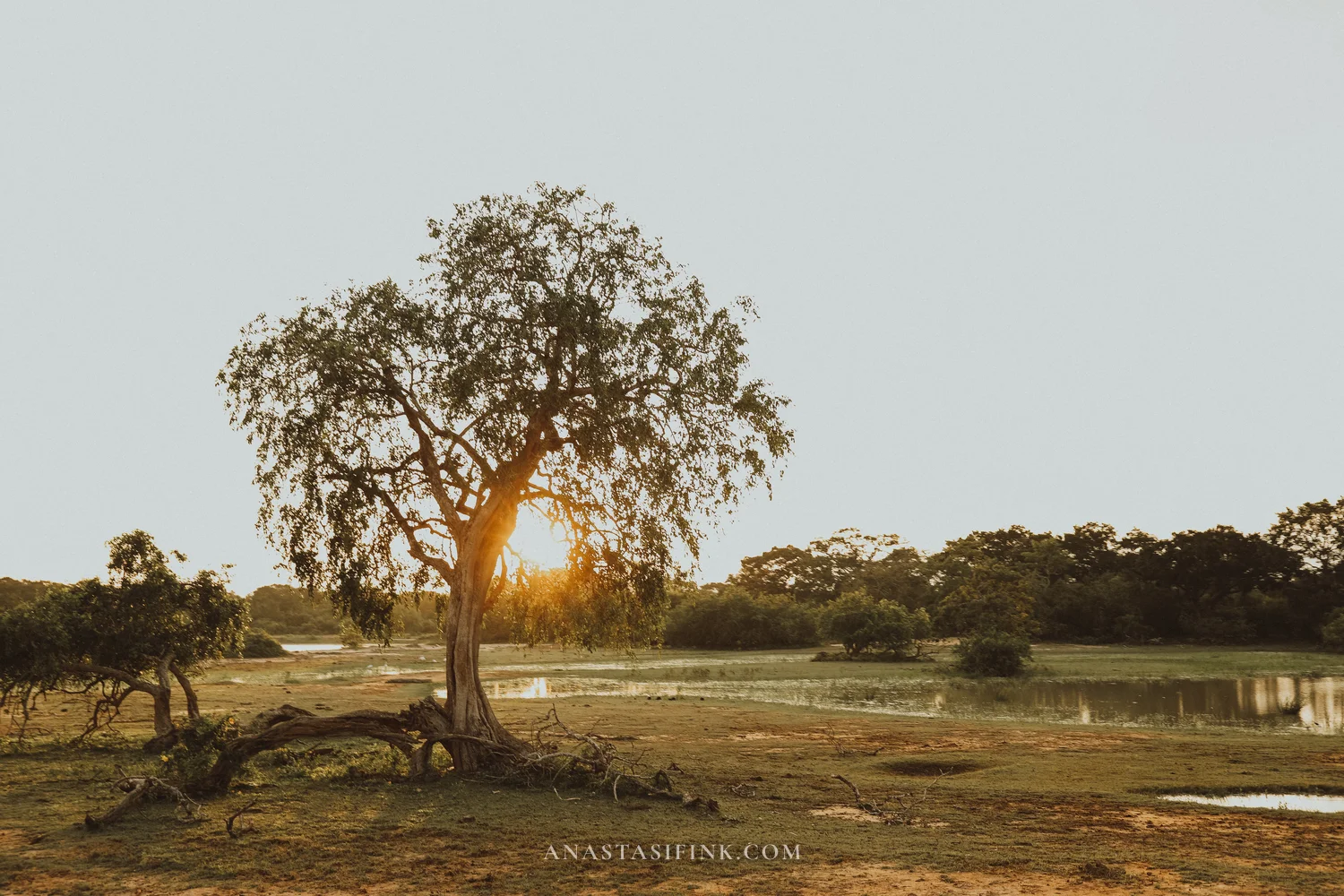
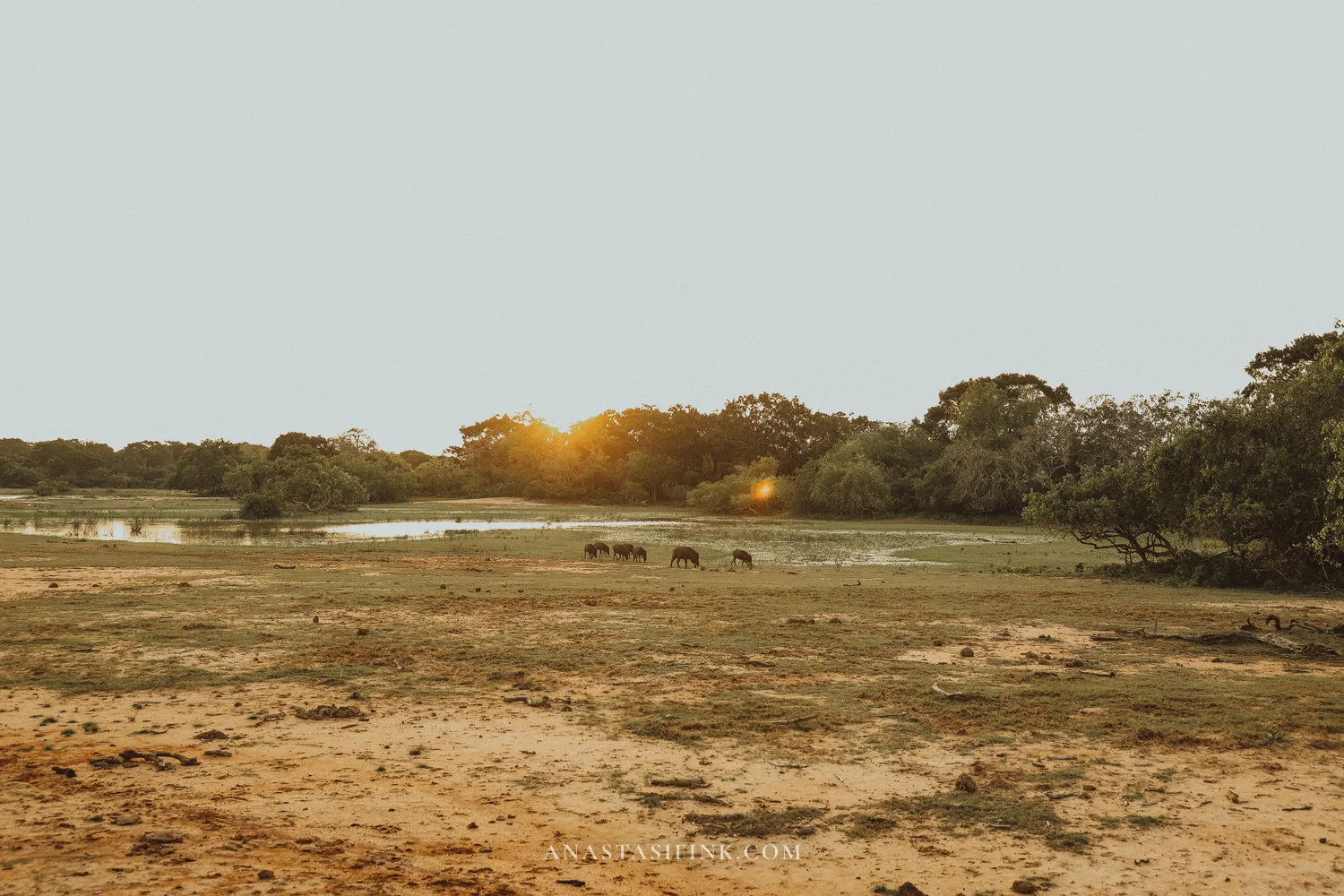
The standard safari is the morning one. You leave the hotel at half past four to be at the gate when it opens at six, then spend about four hours in the park, until ten. That’s how I did it, and it was enough time for several waterholes, the lagoons and every animal you see in these photos. There’s also an afternoon safari, from two to six, and a full-day option.
The main entrance to Block 1 is Palatupana, the closest one to Tissamaharama. The second entrance to the same block, Katagamuwa, is on the Kataragama side, and there are usually fewer jeeps there.
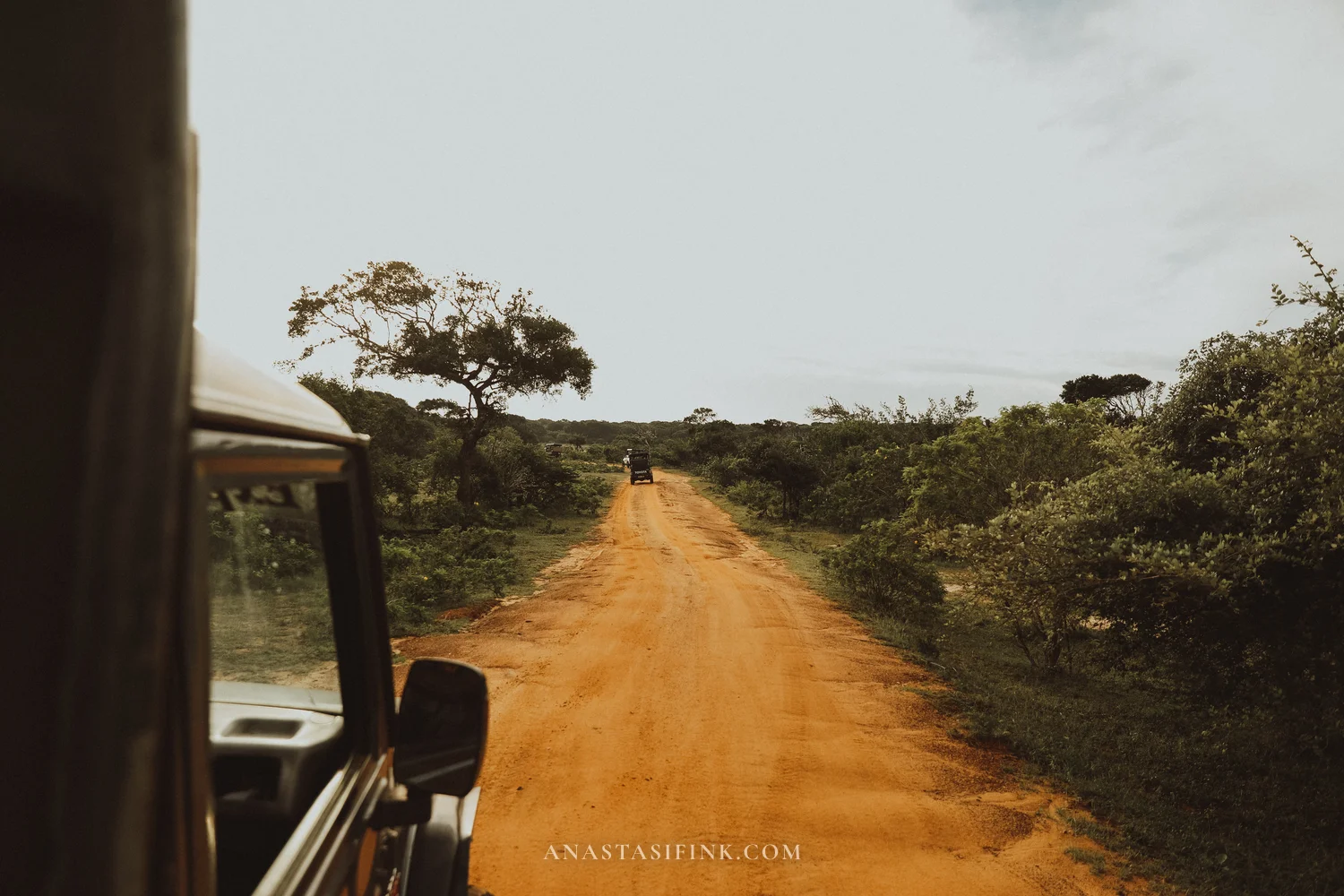
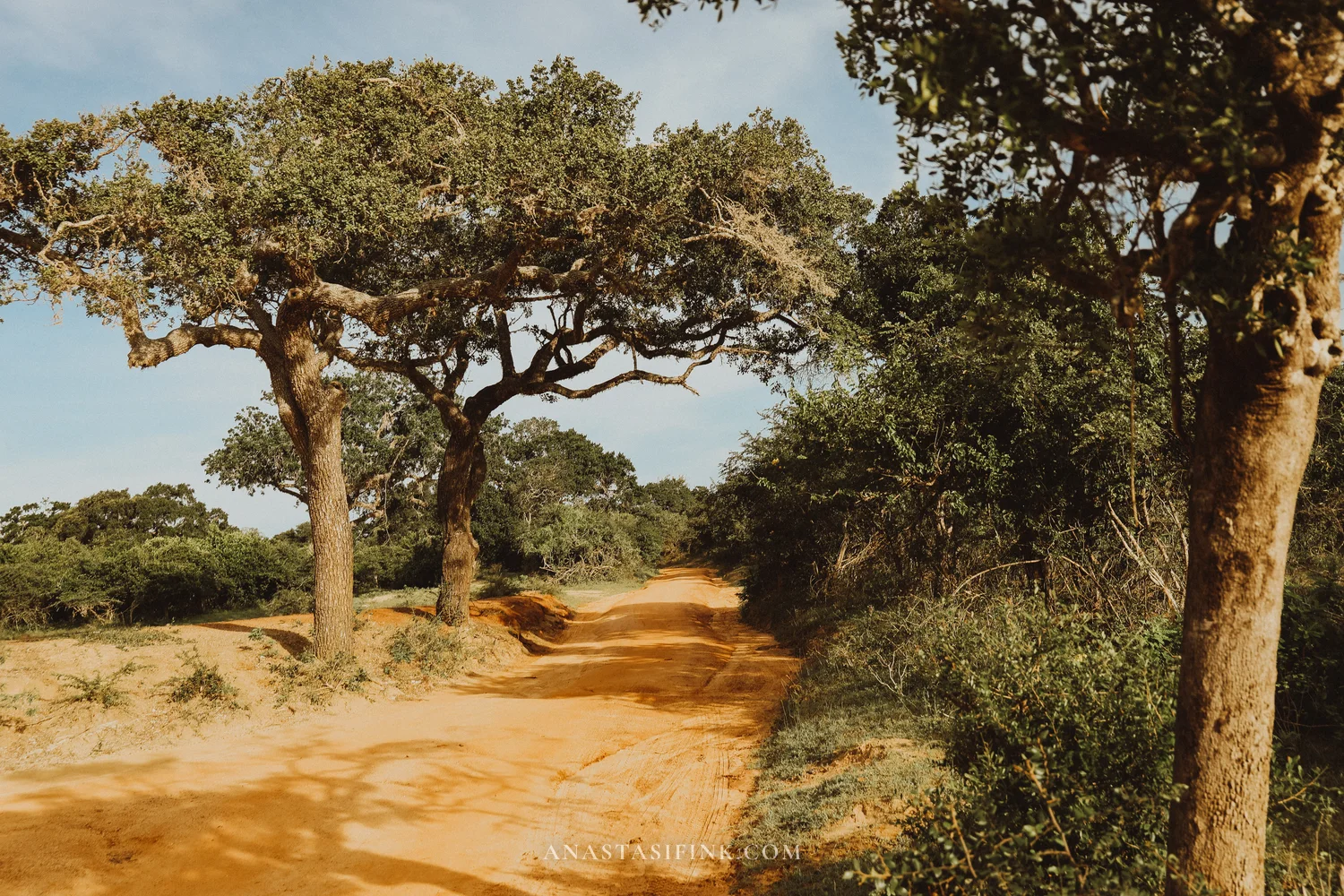
Park roads
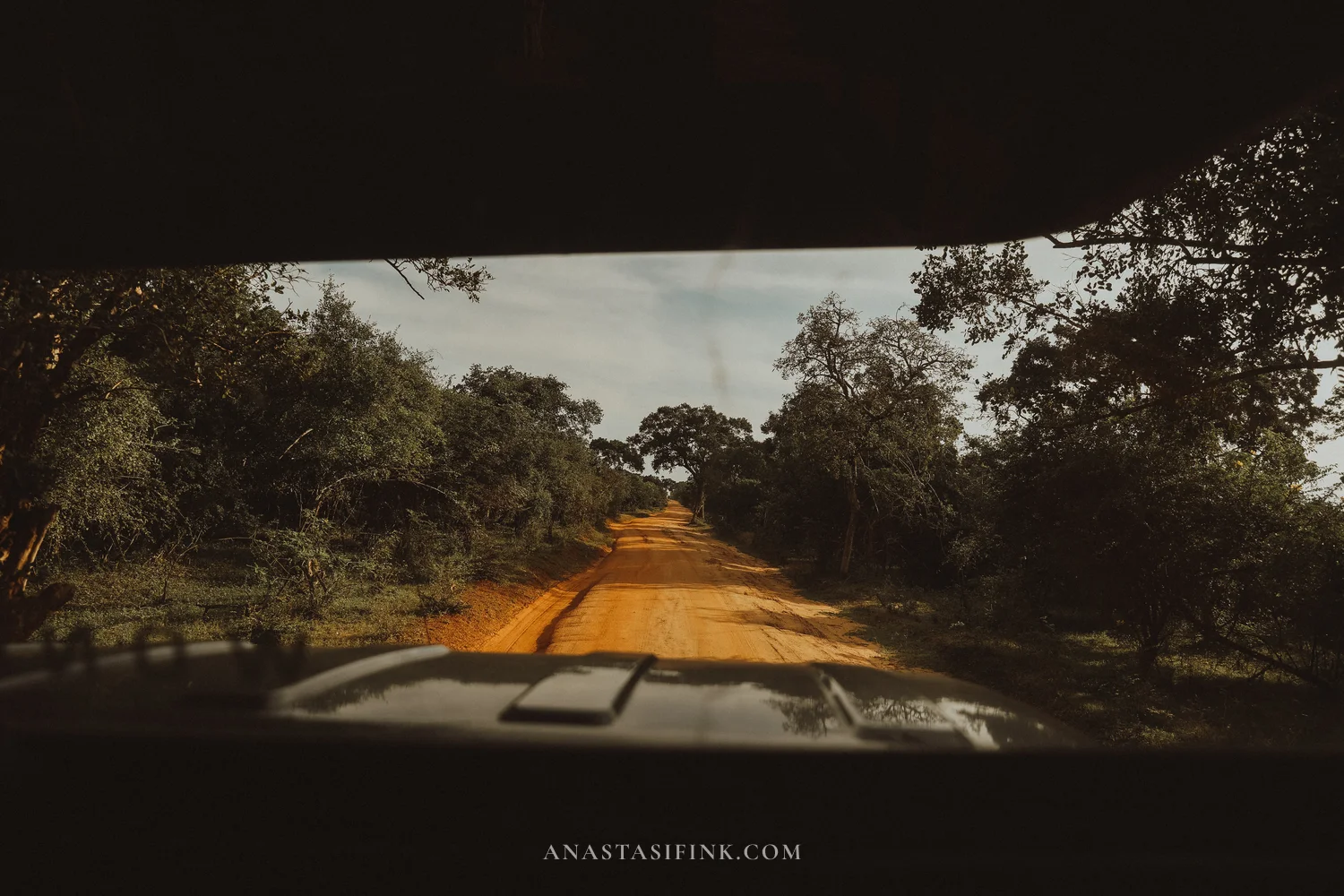
Private Jeep or Shared
You can book a seat in a shared jeep for six people, or hire the whole vehicle. I took a private one and I’d tell everyone to do the same. In a shared jeep you depend on the others: someone wants to sit by an elephant for half an hour, someone else is in a hurry to get to a leopard. In your own jeep you go where you want and stay at a waterhole as long as you like. The price difference isn’t that big, especially if there are two or three of you, and the memories last a lifetime.
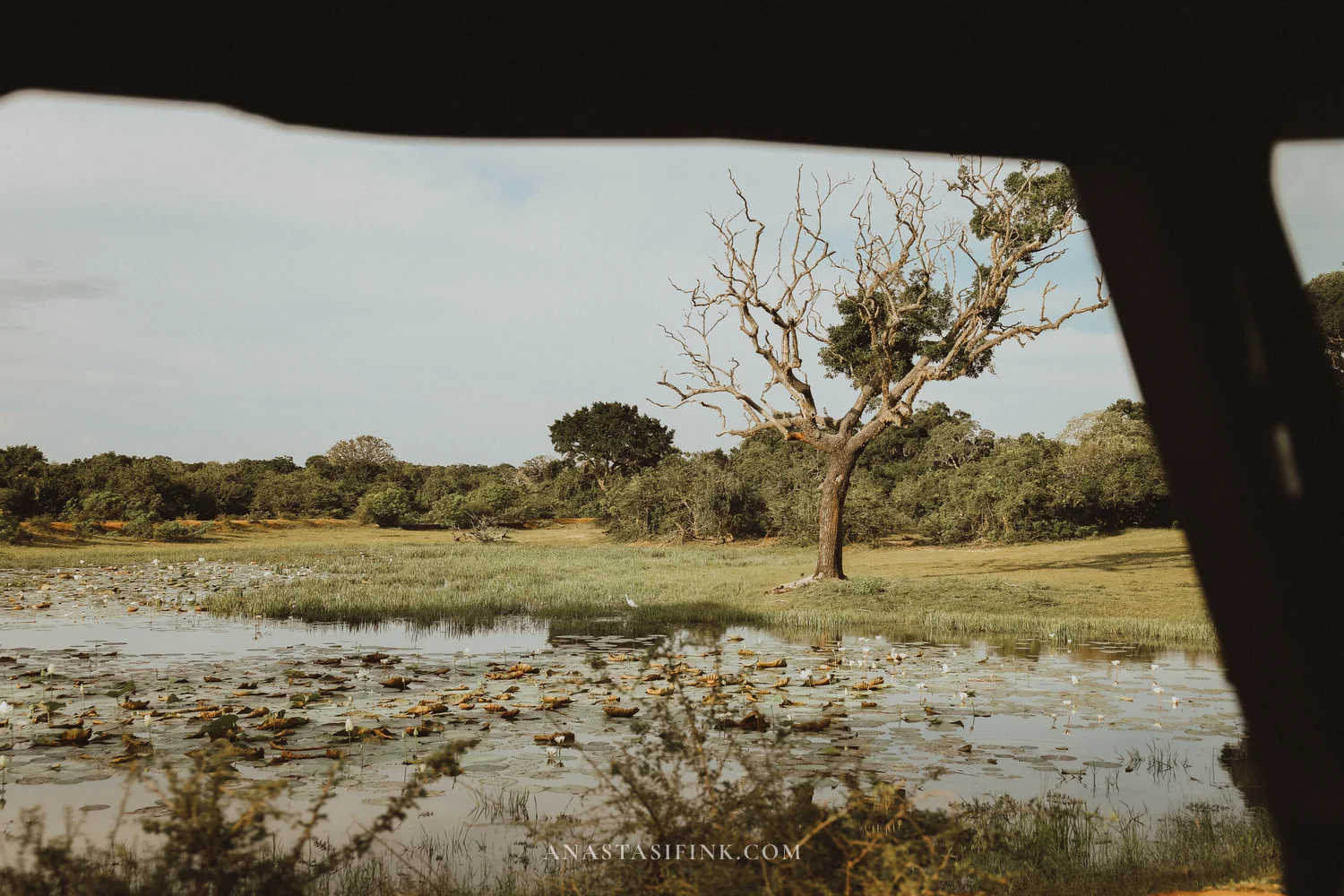
Which Animals Live in Yala
The park has around forty species of mammals and more than two hundred species of birds. These are the ones you can realistically spot on a safari:
- Sri Lankan leopard – a local subspecies, bigger than the Indian one
- Sri Lankan elephant – a few hundred of them live in the park
- Sloth bear – rare, most often seen in May and June
- Wild water buffalo – at every waterhole
- Crocodiles – mugger and saltwater, on the lagoon shores
- Spotted deer and sambar
- Wild boar, jackals, mongooses
- Grey langurs and macaques
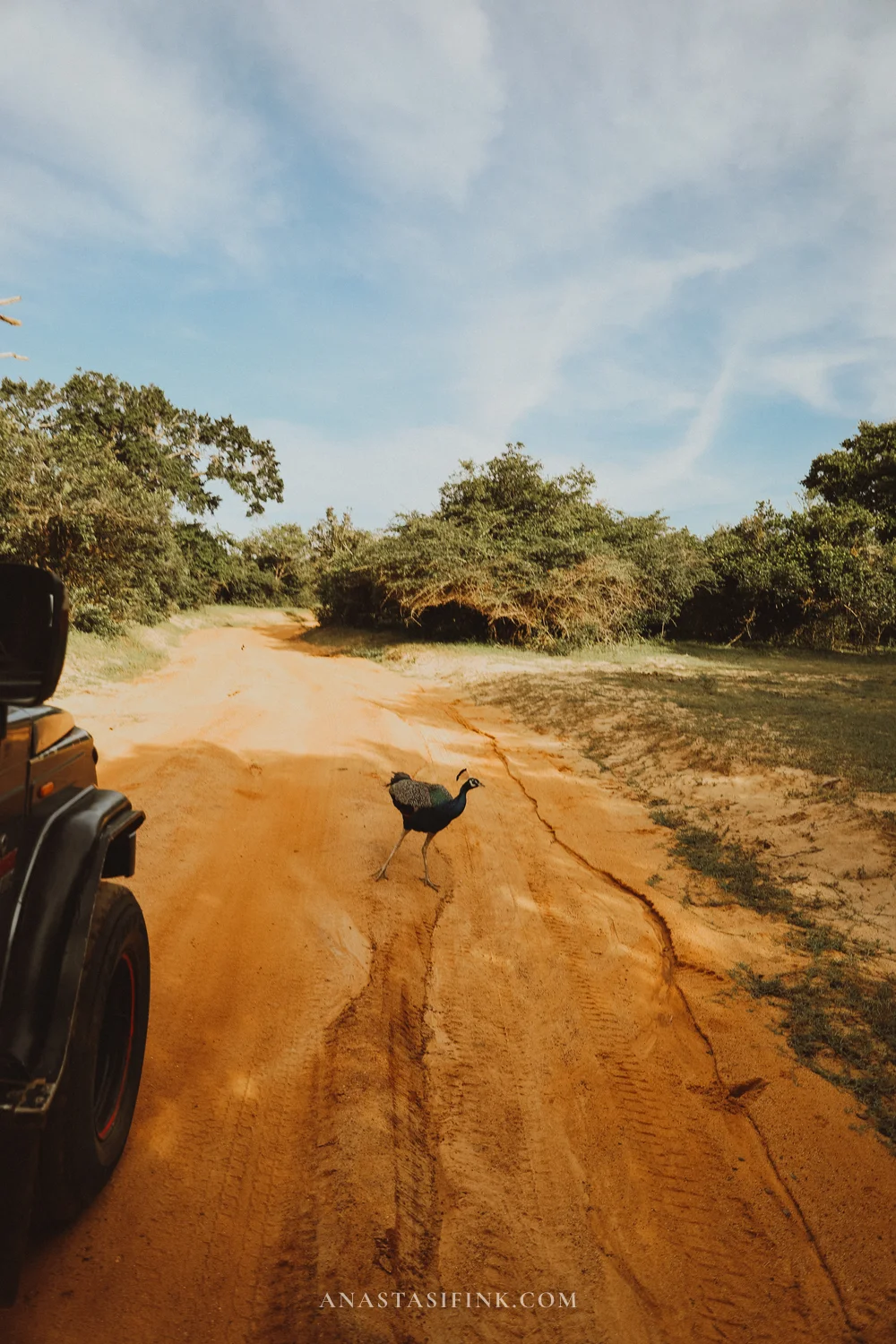
- Peacocks – there are loads of them, and they aren’t afraid of jeeps
- Birds – painted storks, pelicans, eagles, kingfishers, Sri Lanka junglefowl
Elephants
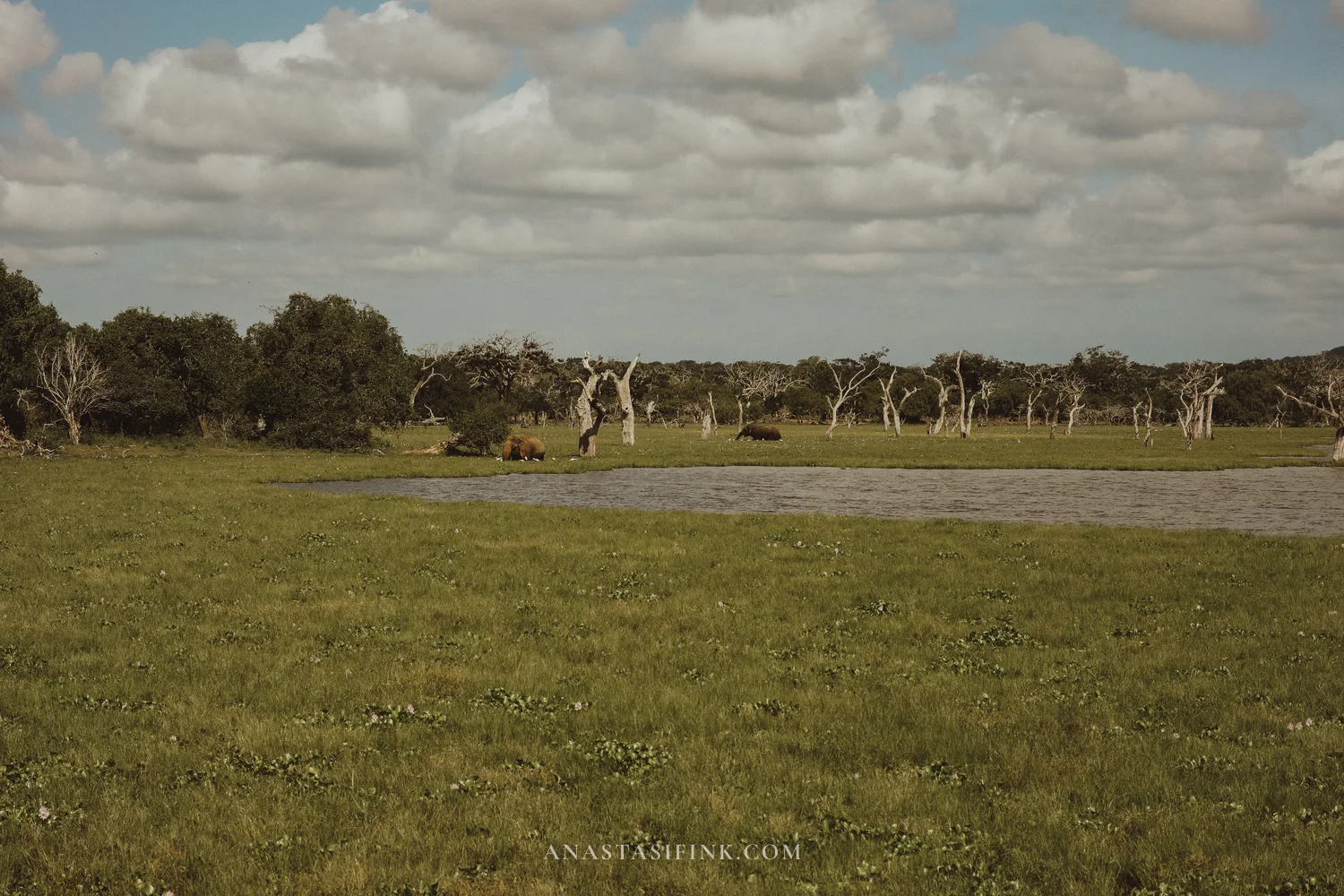
I came across elephants several times. The first was by a lake among big trees, standing right at the water’s edge and paying no attention to the jeep at all. Sri Lankan elephants are smaller than African ones, with smaller ears, and the males almost never have tusks.
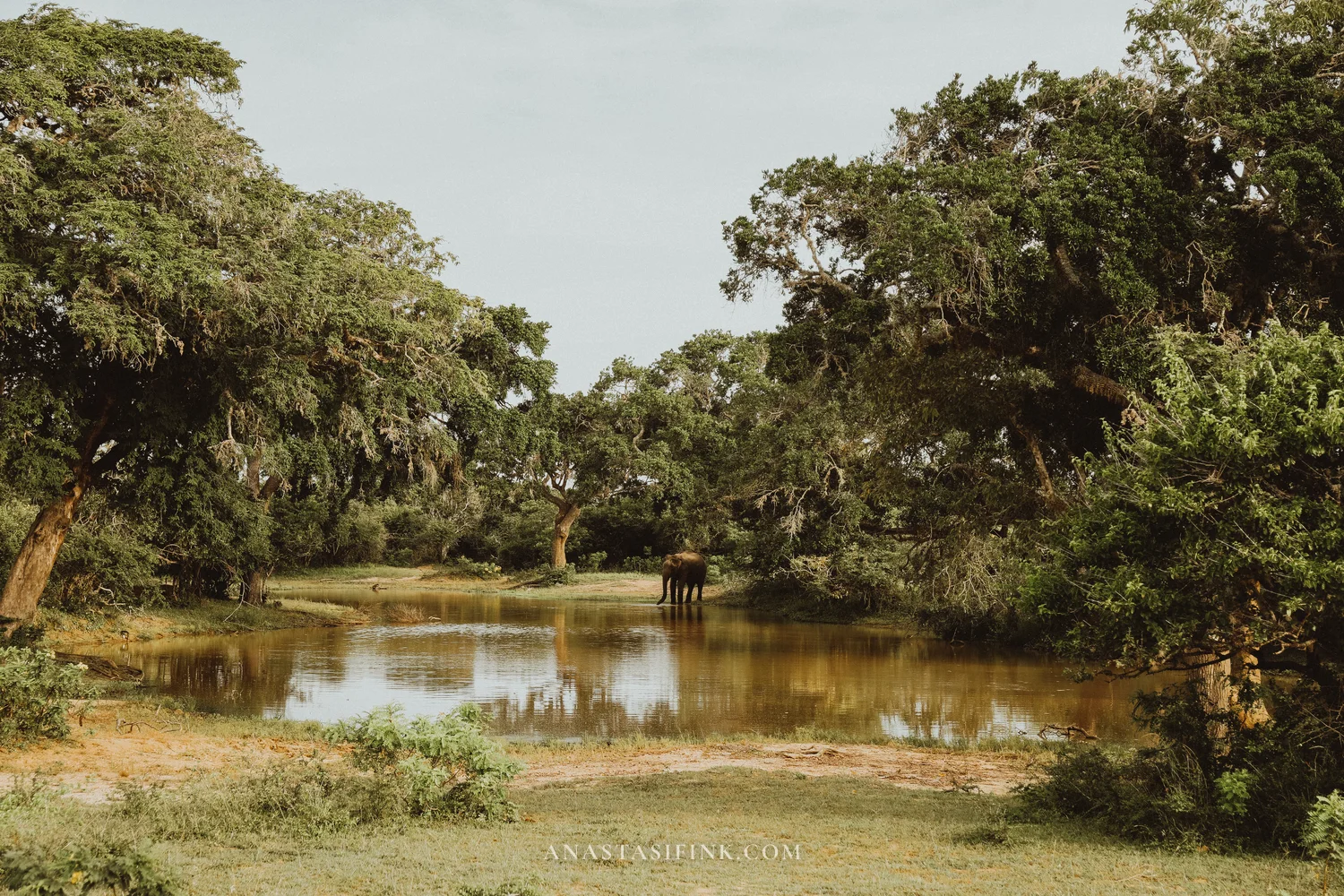
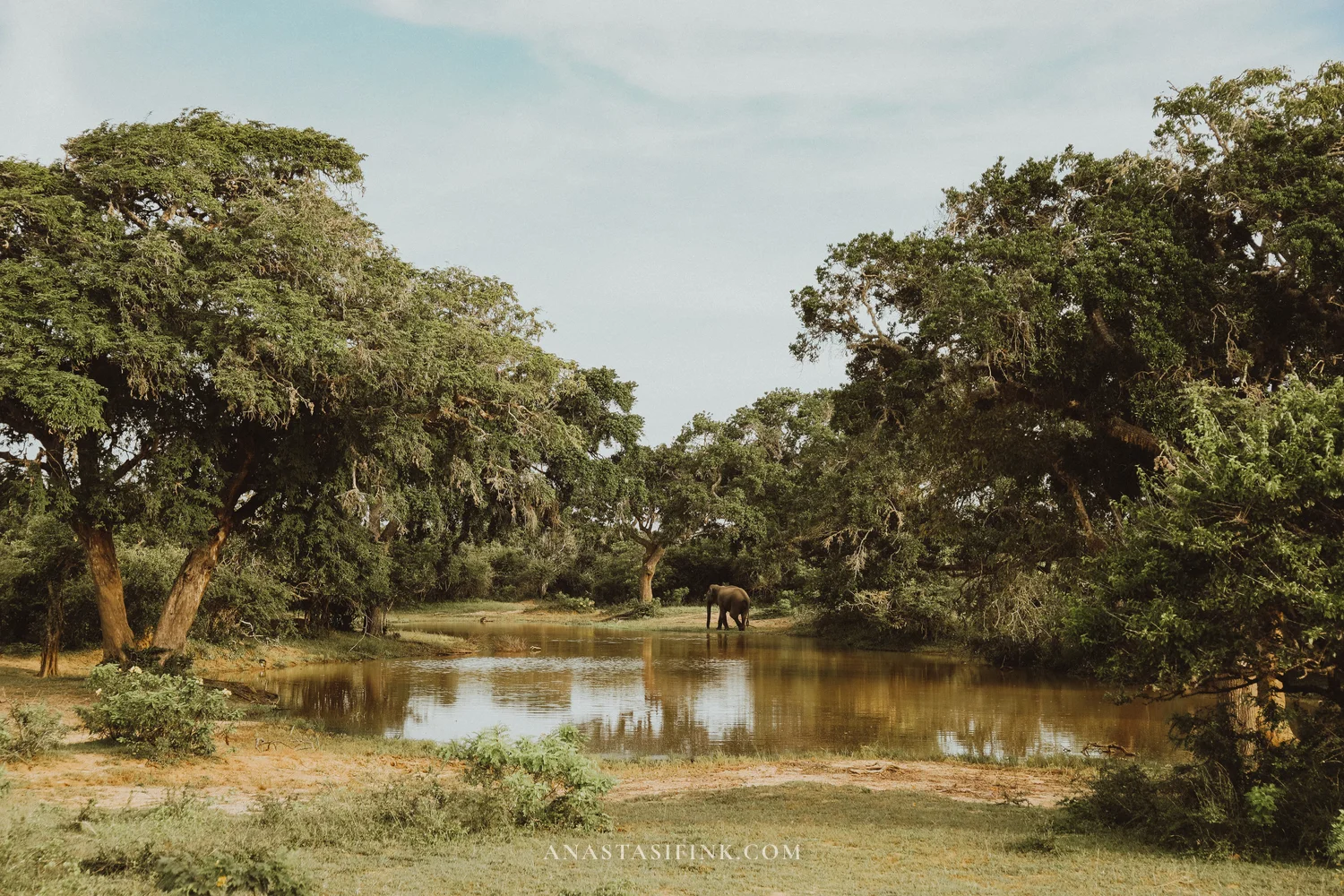
Elephant by the lake
I saw another elephant at a waterhole on the open plain, and a group of them on the far shore of a lake.
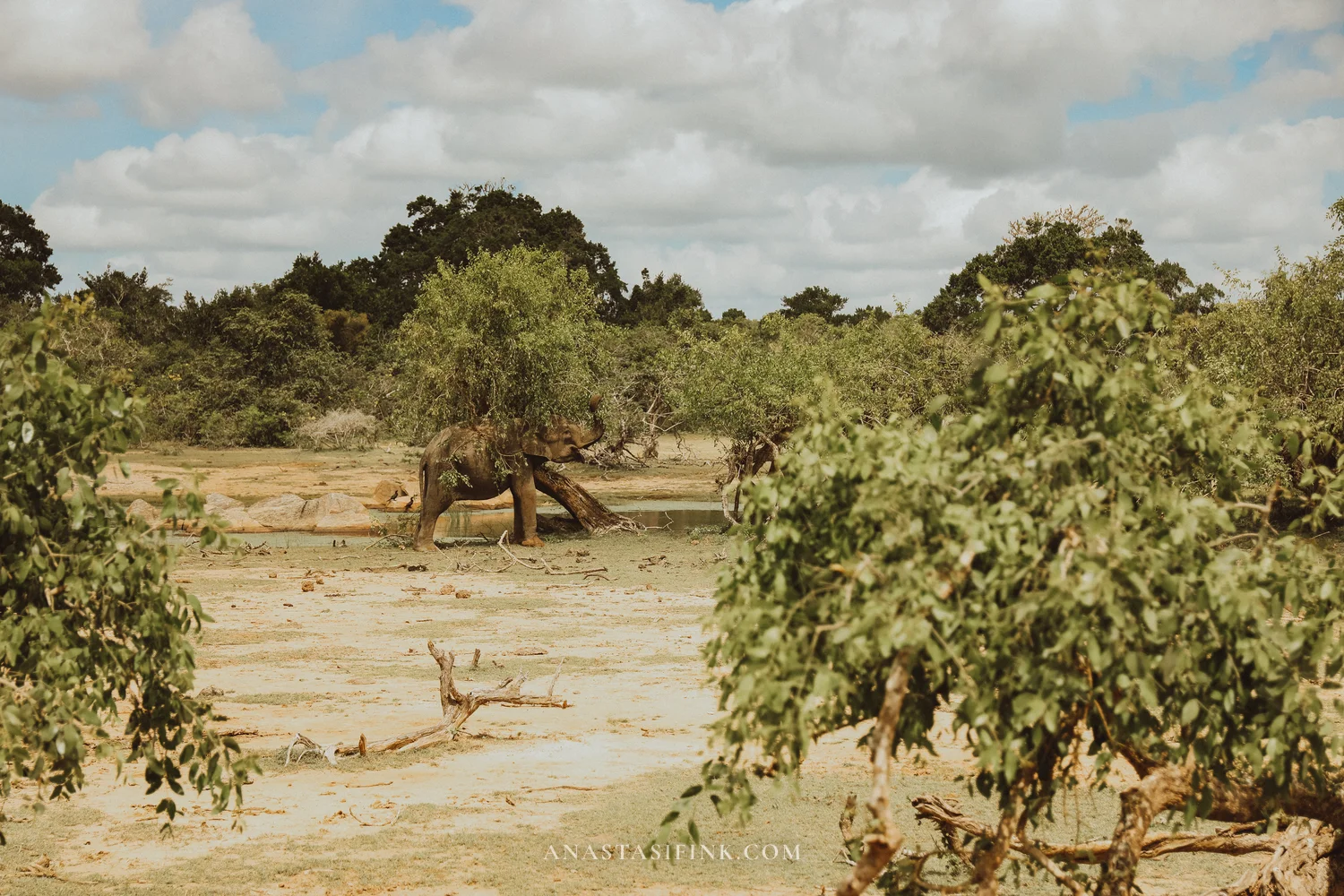
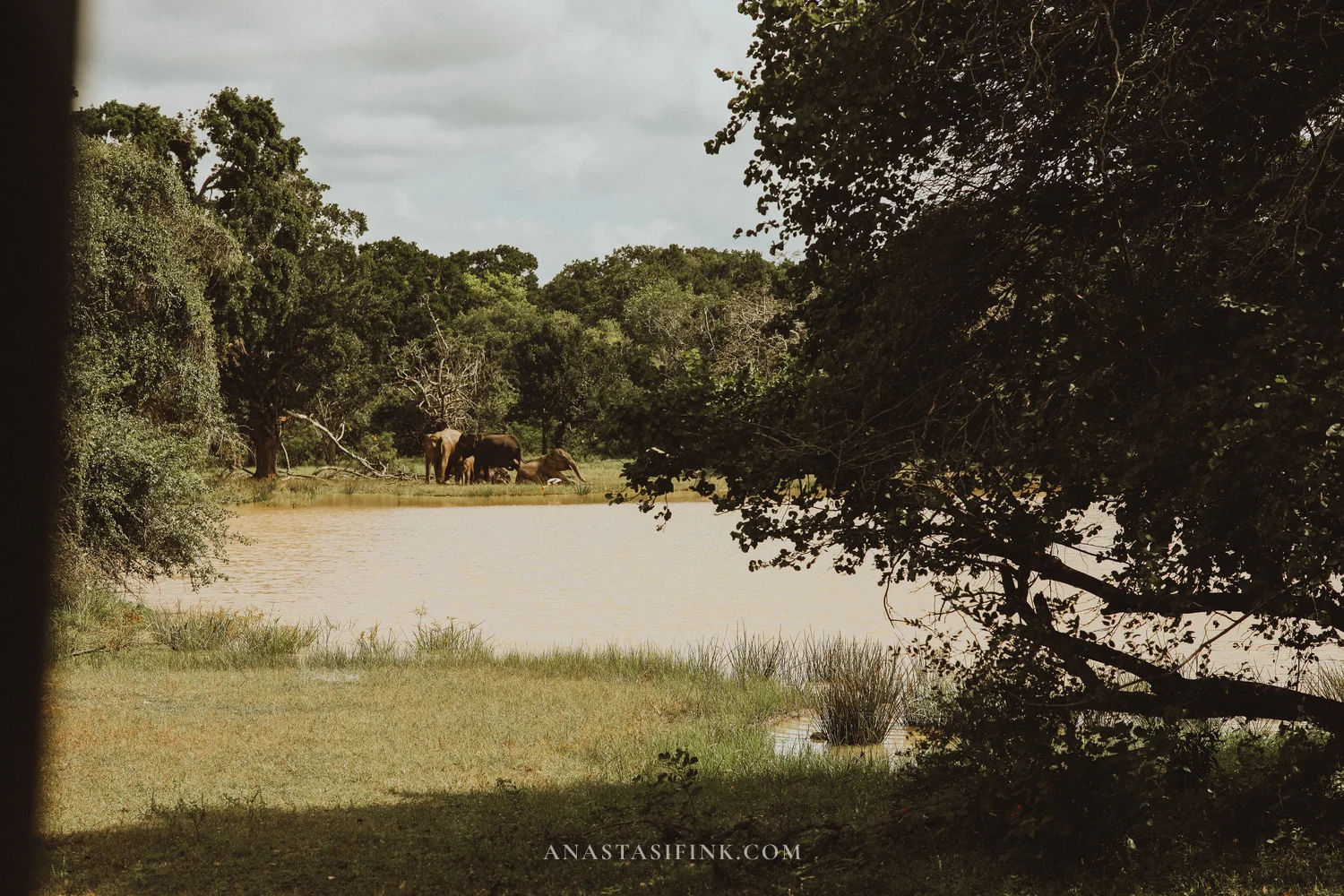
Elephants on the plain and by the lake
Buffalo
There are a lot of wild buffalo in Yala. Huge, black, with wide horns. I saw a few of them in a lagoon, and another one by a lake next to bushes covered in yellow flowers.
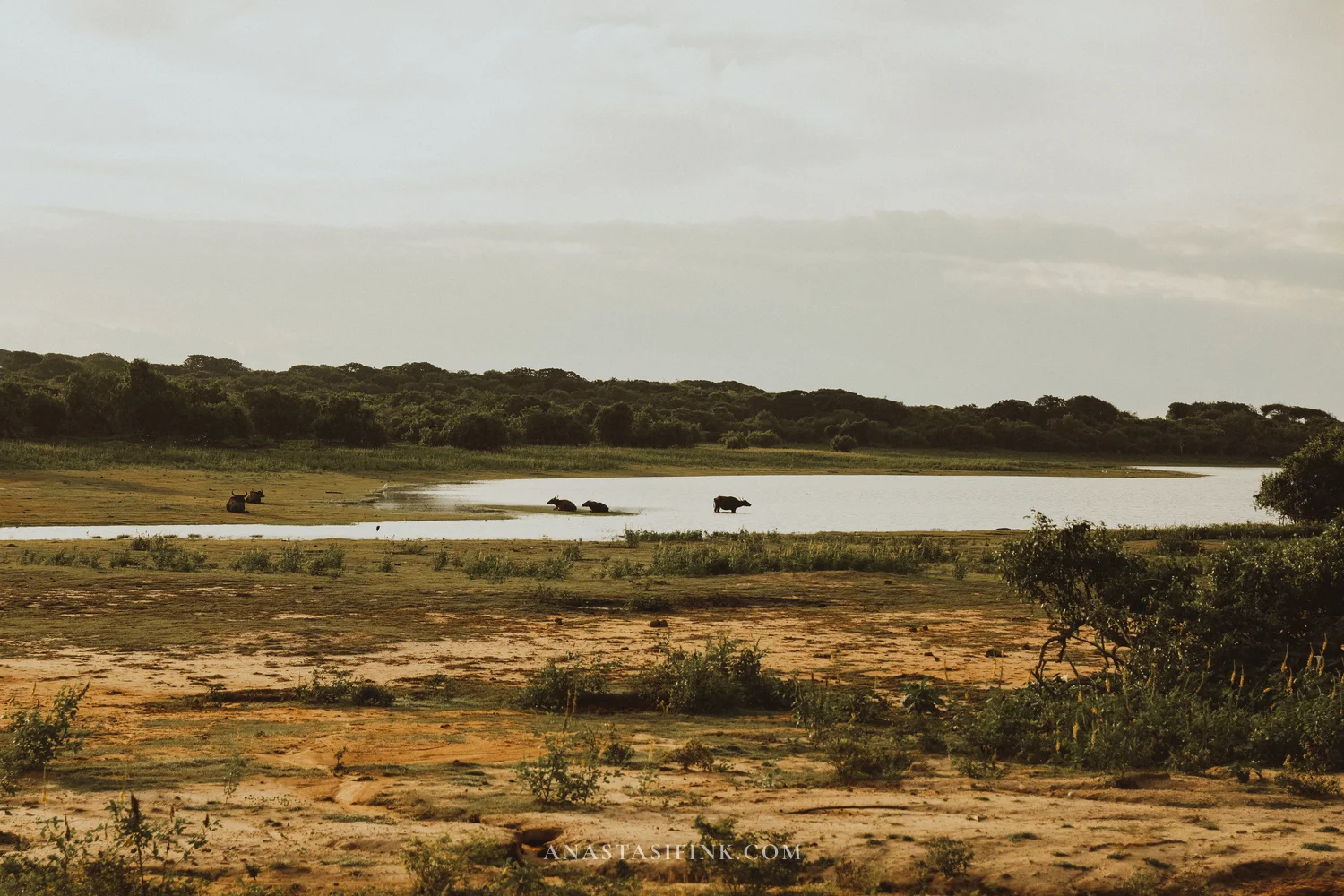
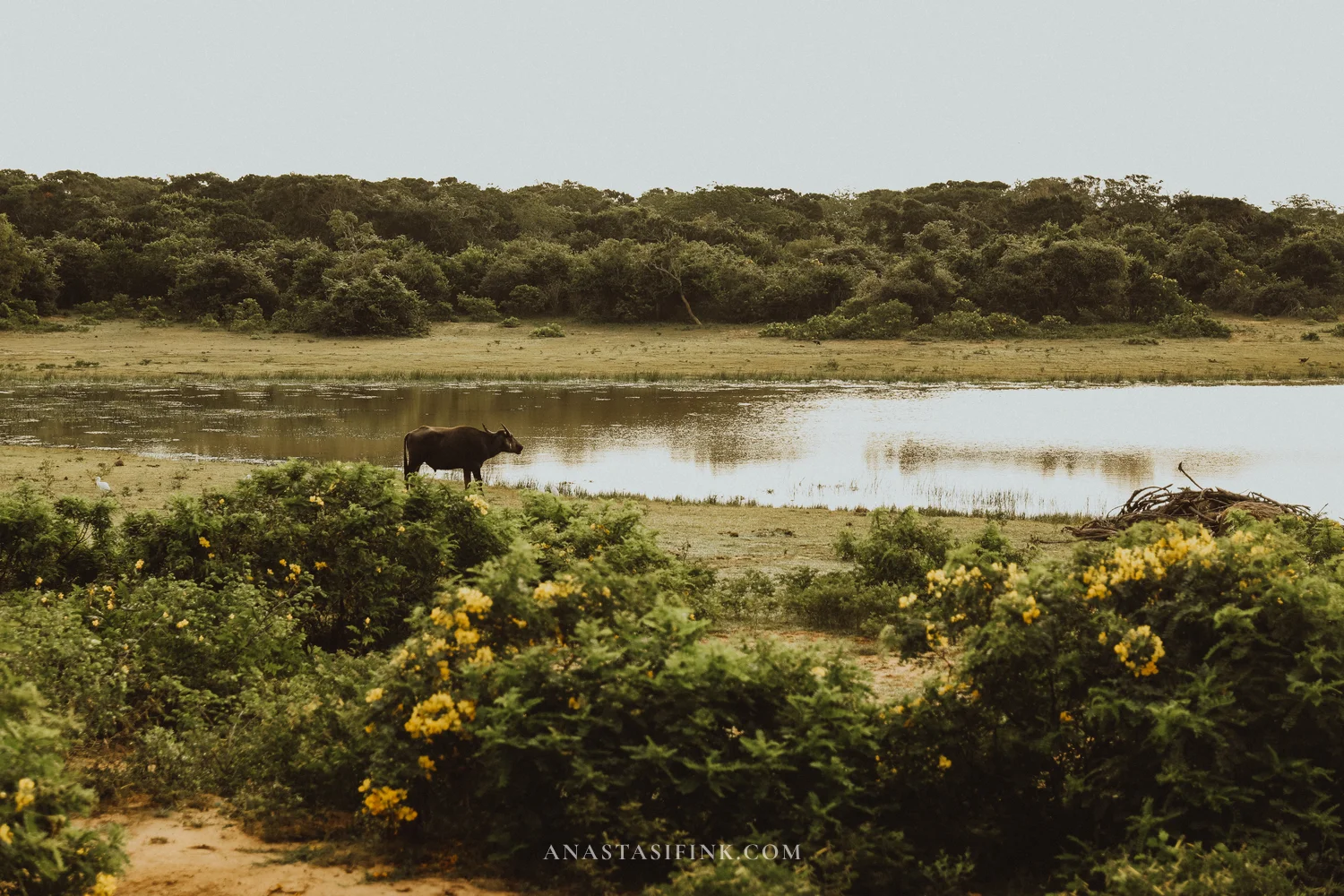
Buffalo by the lagoon
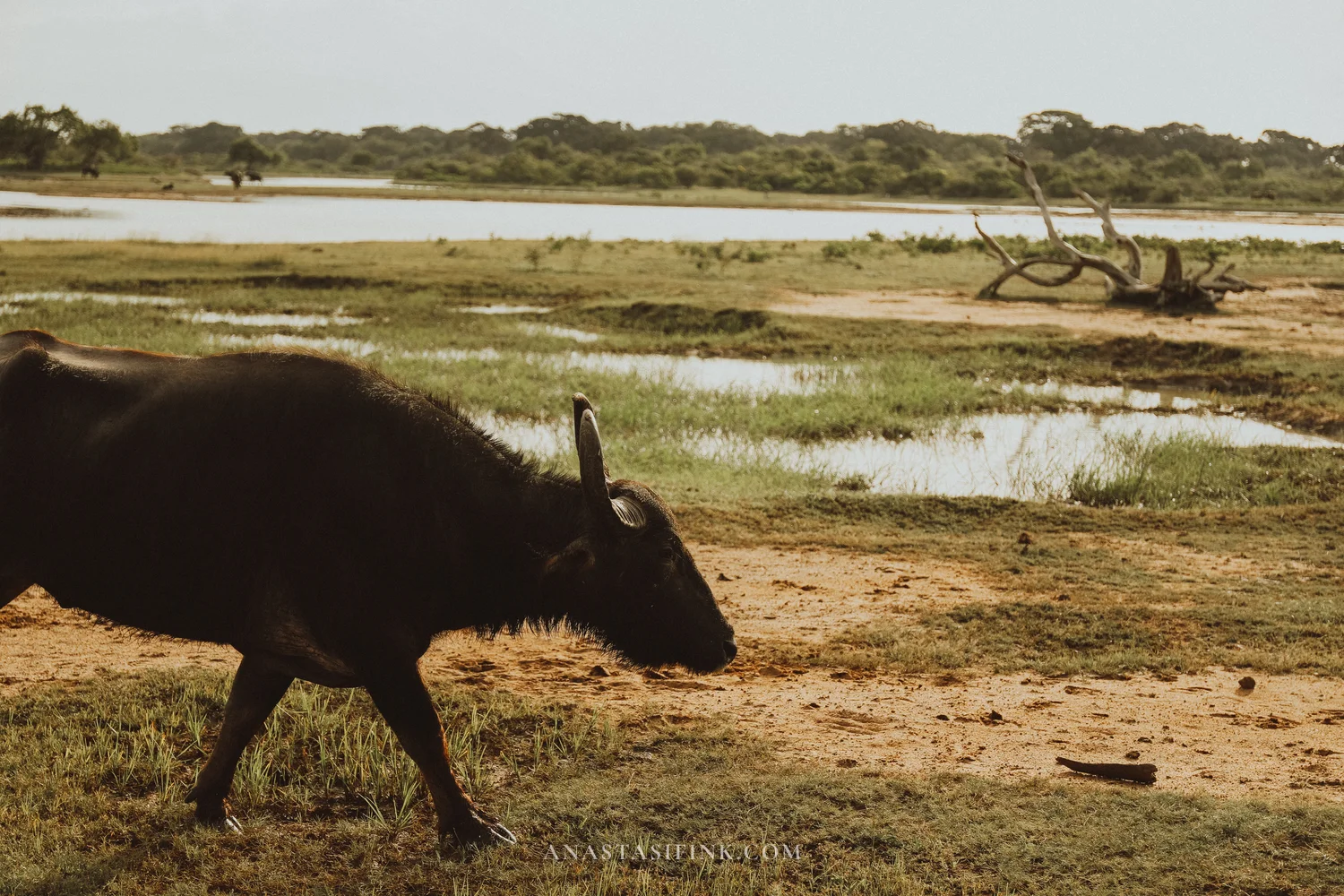
One walked right past the jeep without even glancing my way. They’re used to vehicles, but you can’t approach them on foot – this is one of the most dangerous animals in the park.
The funniest ones are those escaping the heat by sinking completely into a pond. All you can see from outside is the horns and the tip of the nose. You’d never guess a small pond could be that deep, but a whole enormous animal fits inside.
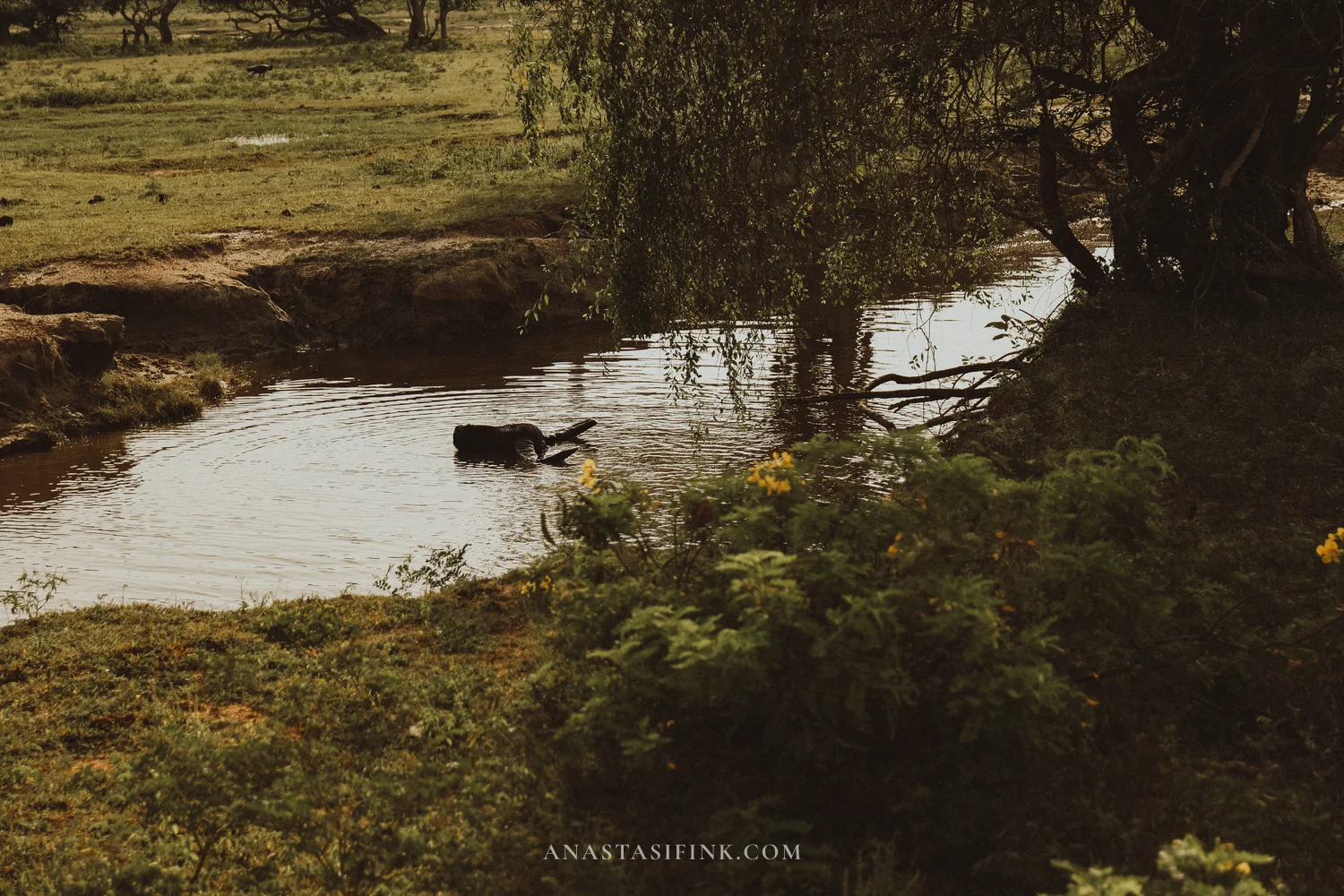
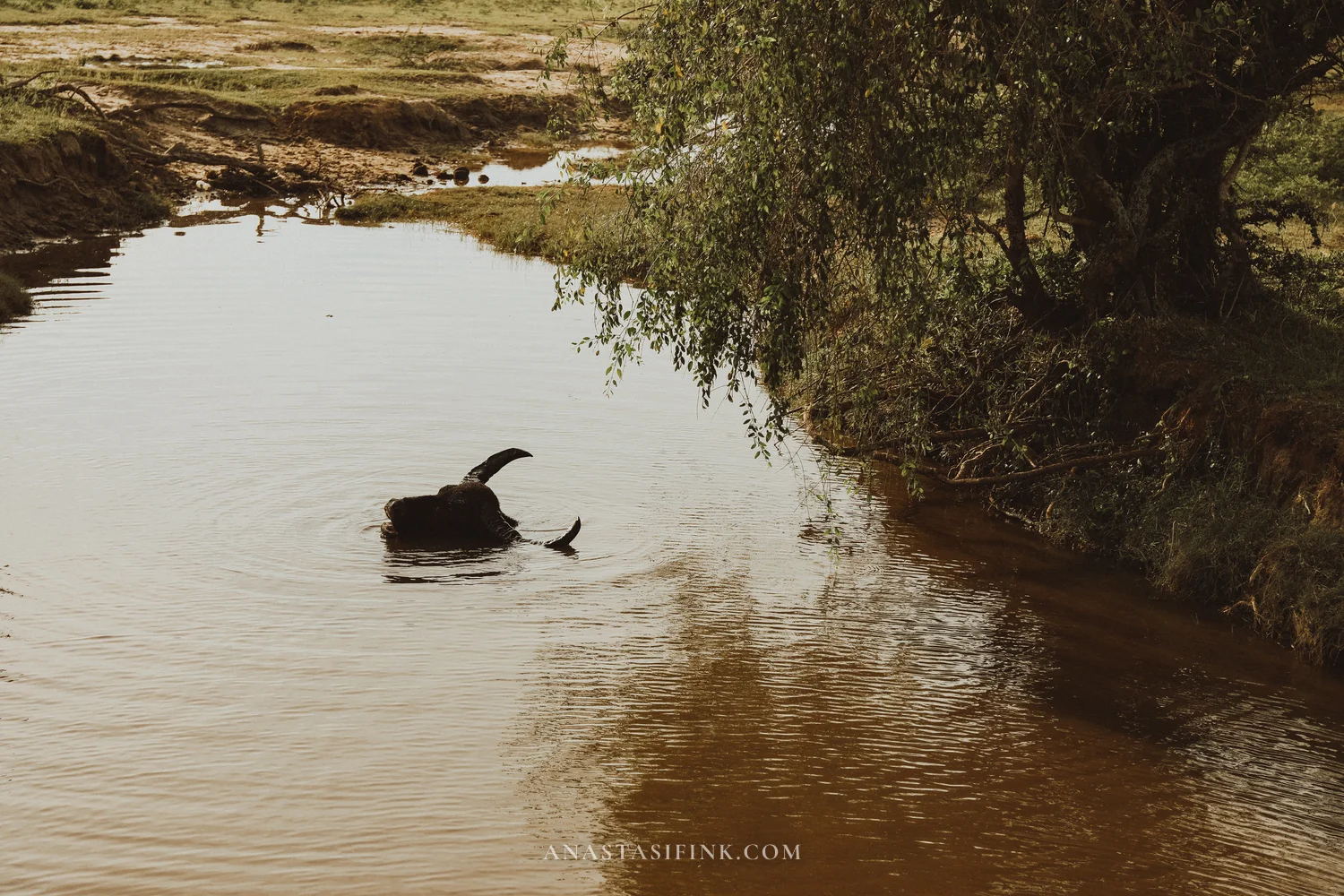
In the water
The Leopard – No Luck
I looked for one all morning. The driver listened to the radio and drove to wherever other jeeps had spotted a leopard, but it never showed up. Even in Block 1 in a good season, the chance of seeing a leopard on a single safari is roughly one in two or three. If that’s your main goal, book a full day or two separate drives.
Monkeys, Birds, Wild Boar
Grey langurs are slim, light grey monkeys with black faces and long tails. They sit in the trees along the roads in families and dash across in front of the jeep. They’re curious and friendly, and I met them all over Sri Lanka: at one house where I stayed, a family of langurs came to play in the trees out front every morning.
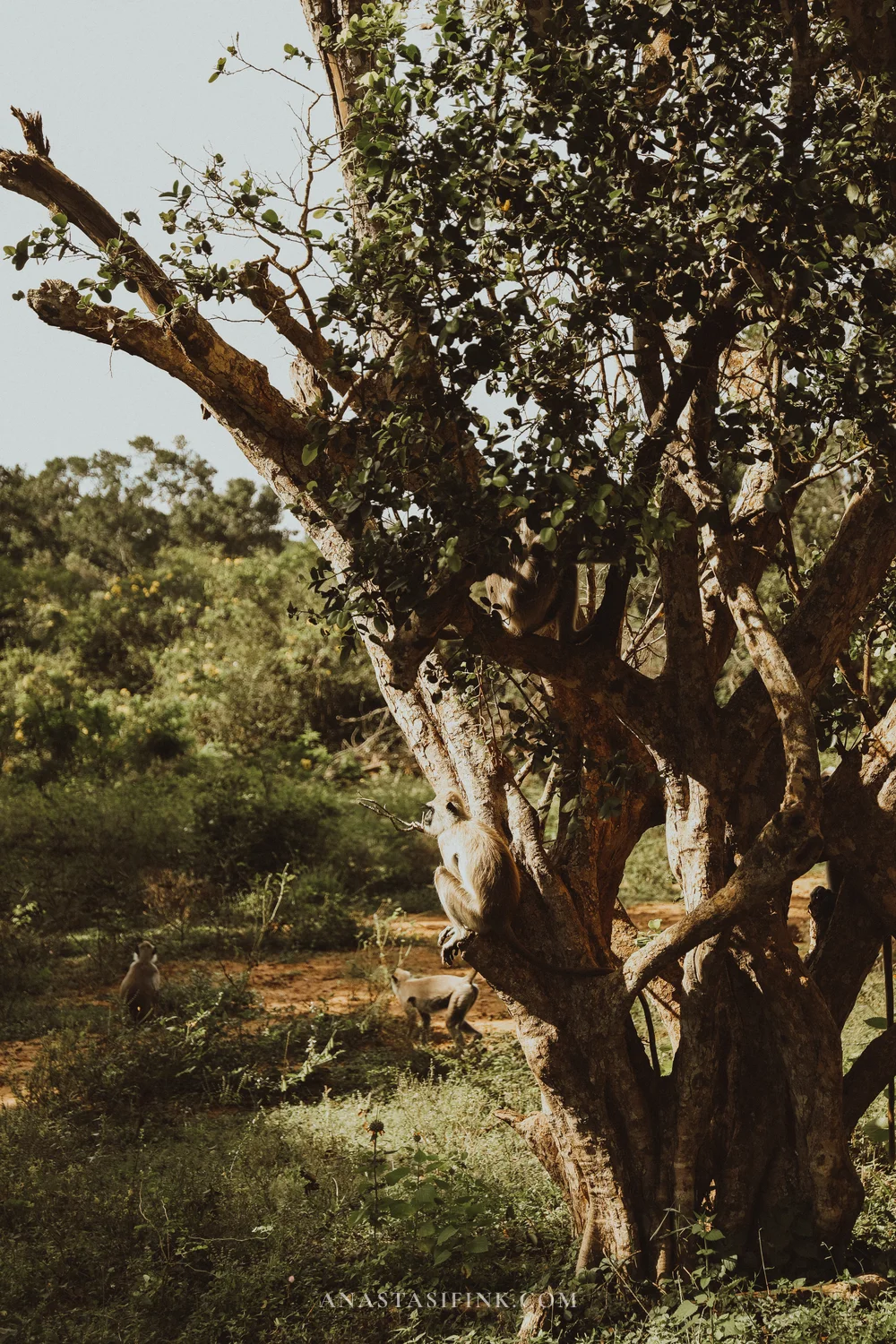
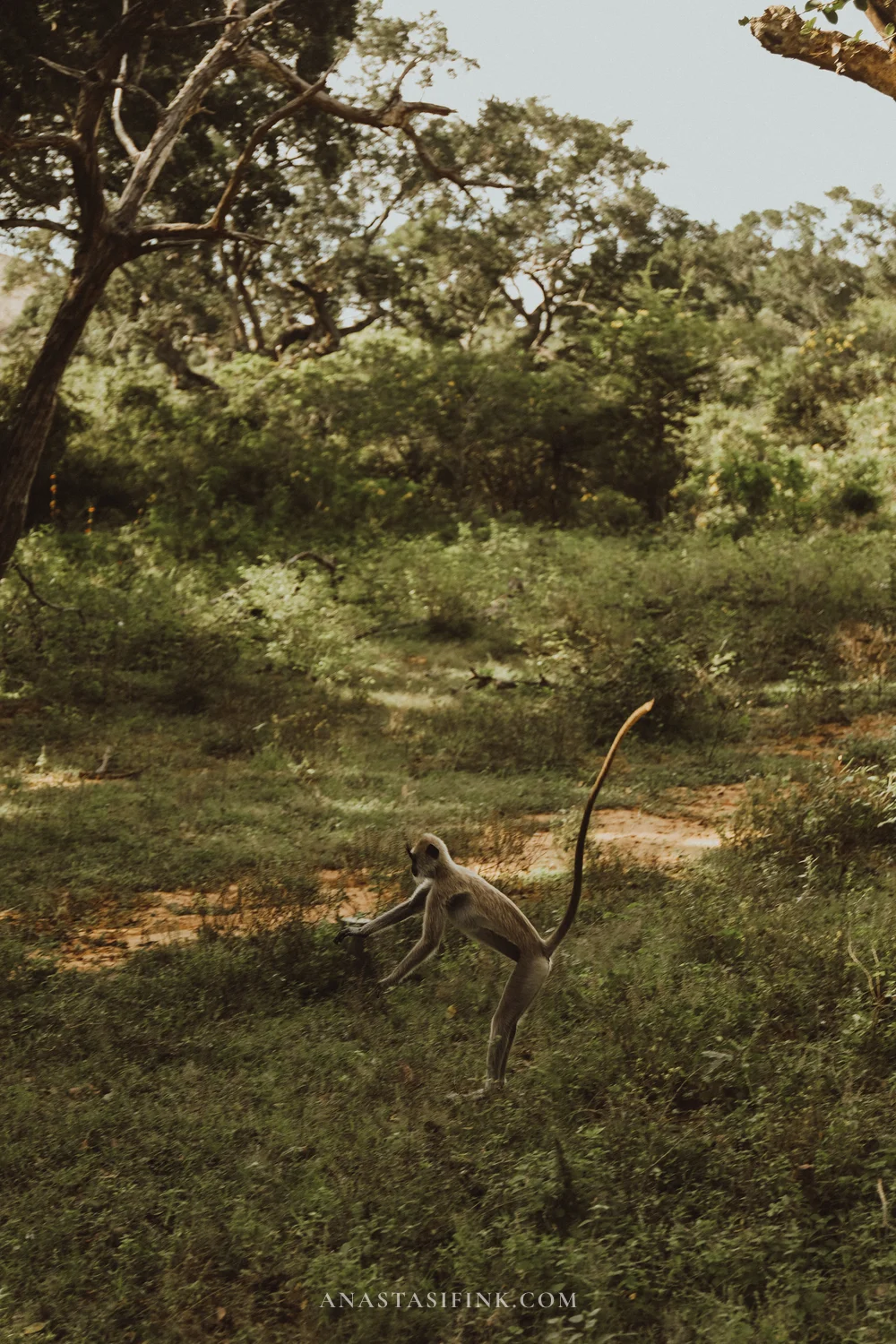
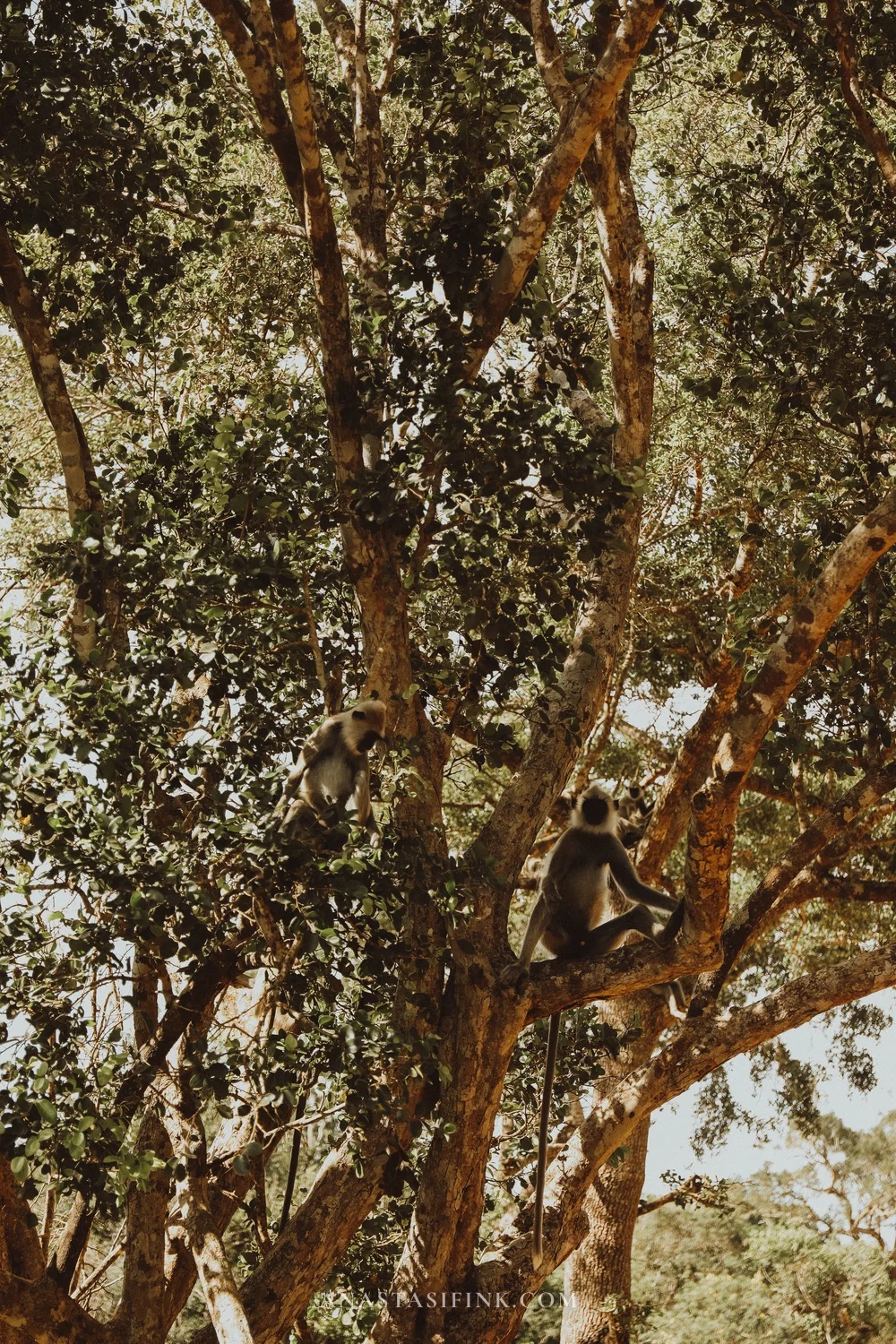
Langurs
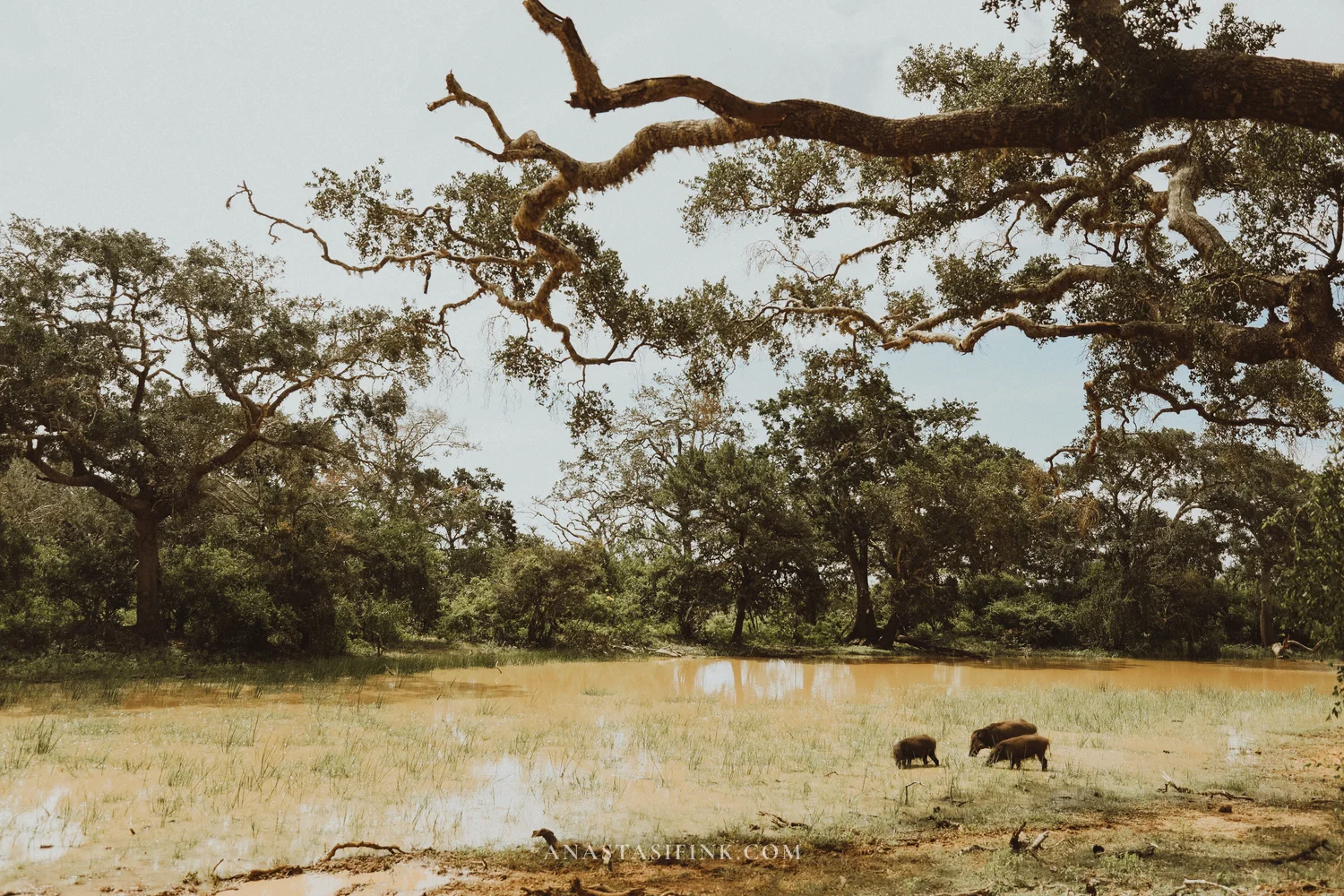
Painted storks wade through the shallows, pelicans and herons sit by the lagoons, eagles circle over the plains. Wild boar move in small groups along the edges of the ponds – I found three of them under a big spreading tree.
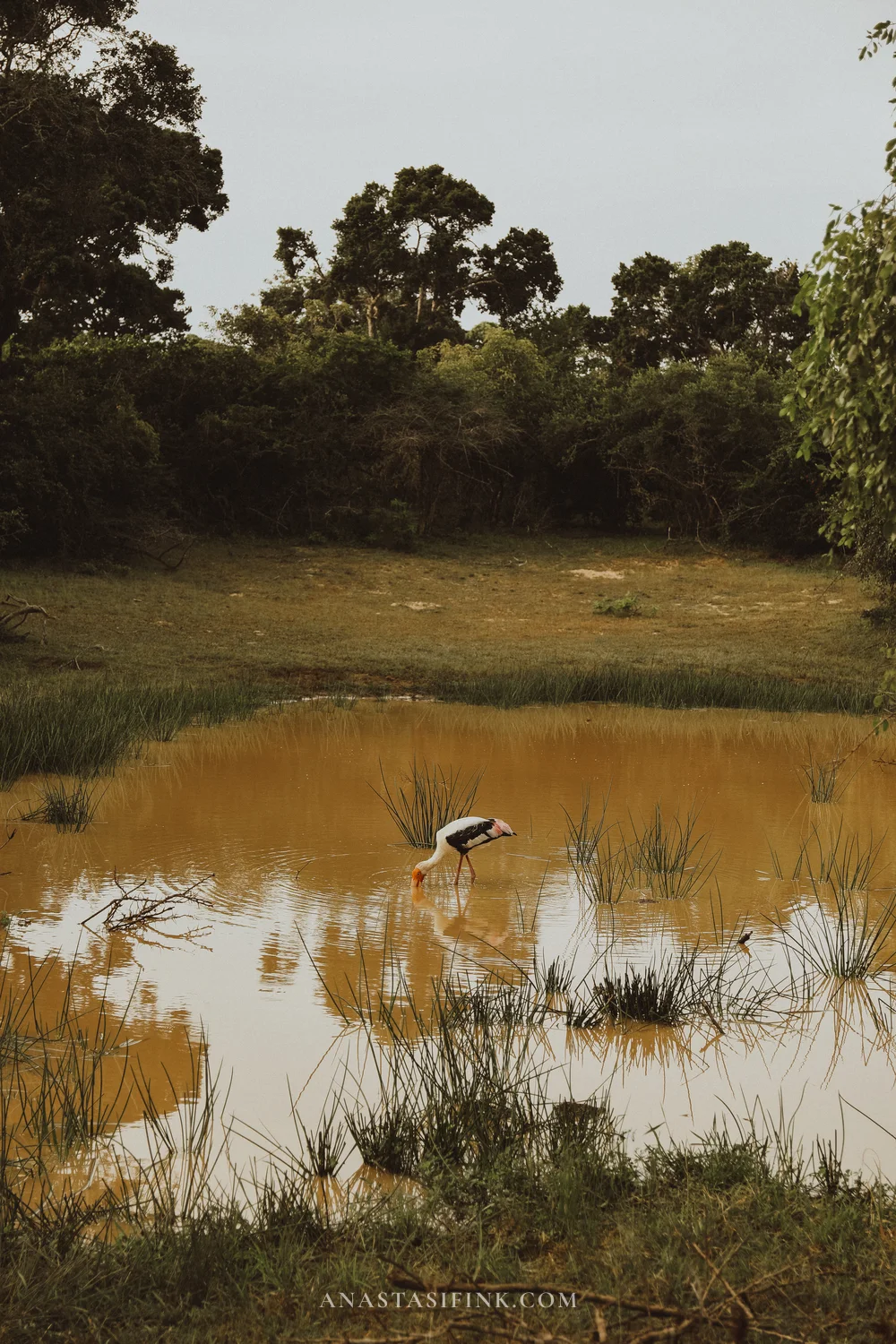
Yala Landscapes
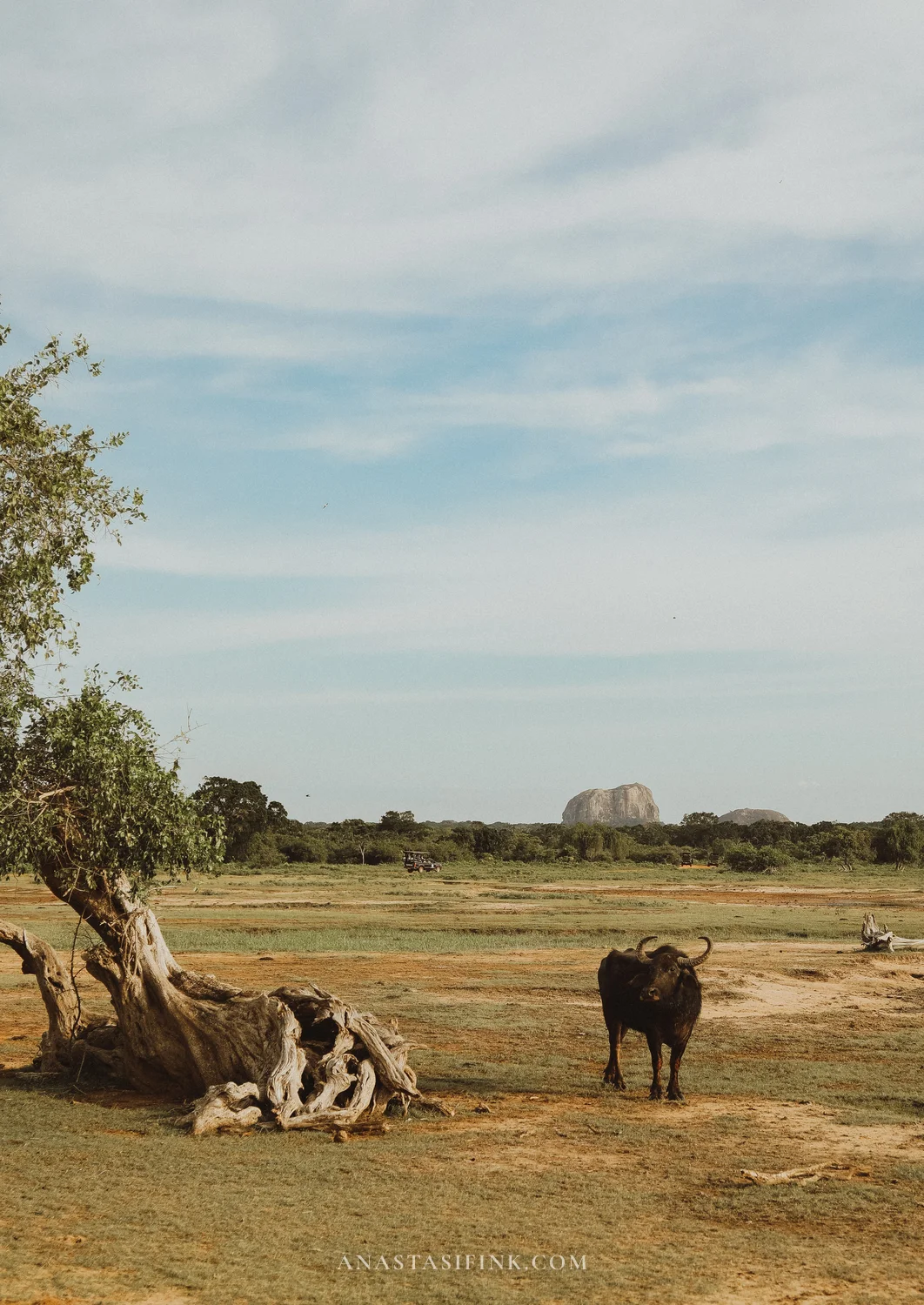
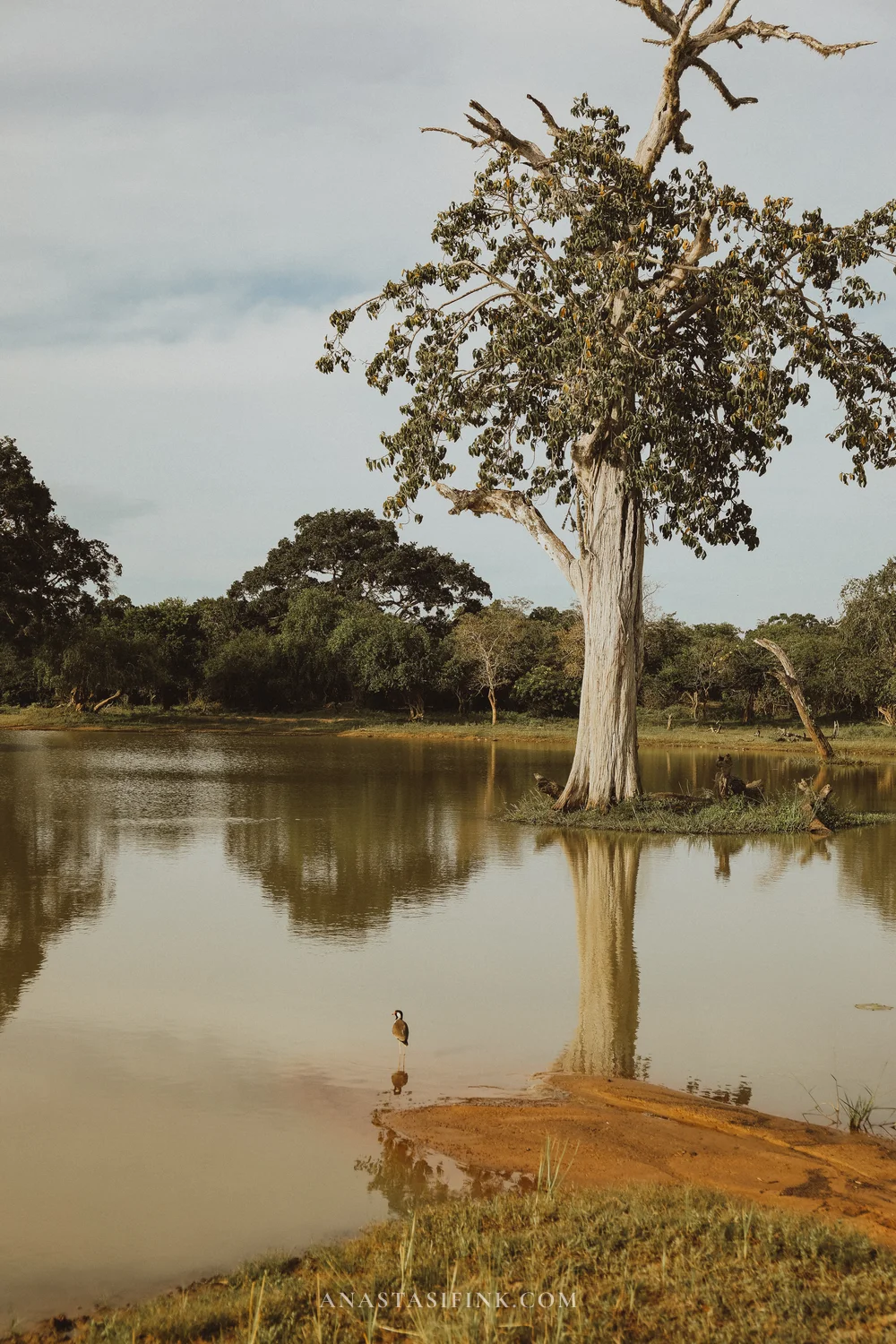
The park is beautiful in its own right. It’s dry, with lots of open plains dotted with scattered trees, salt lagoons, ponds and big granite rocks sticking up out of the flat ground. The most famous of them is Elephant Rock in Block 1.
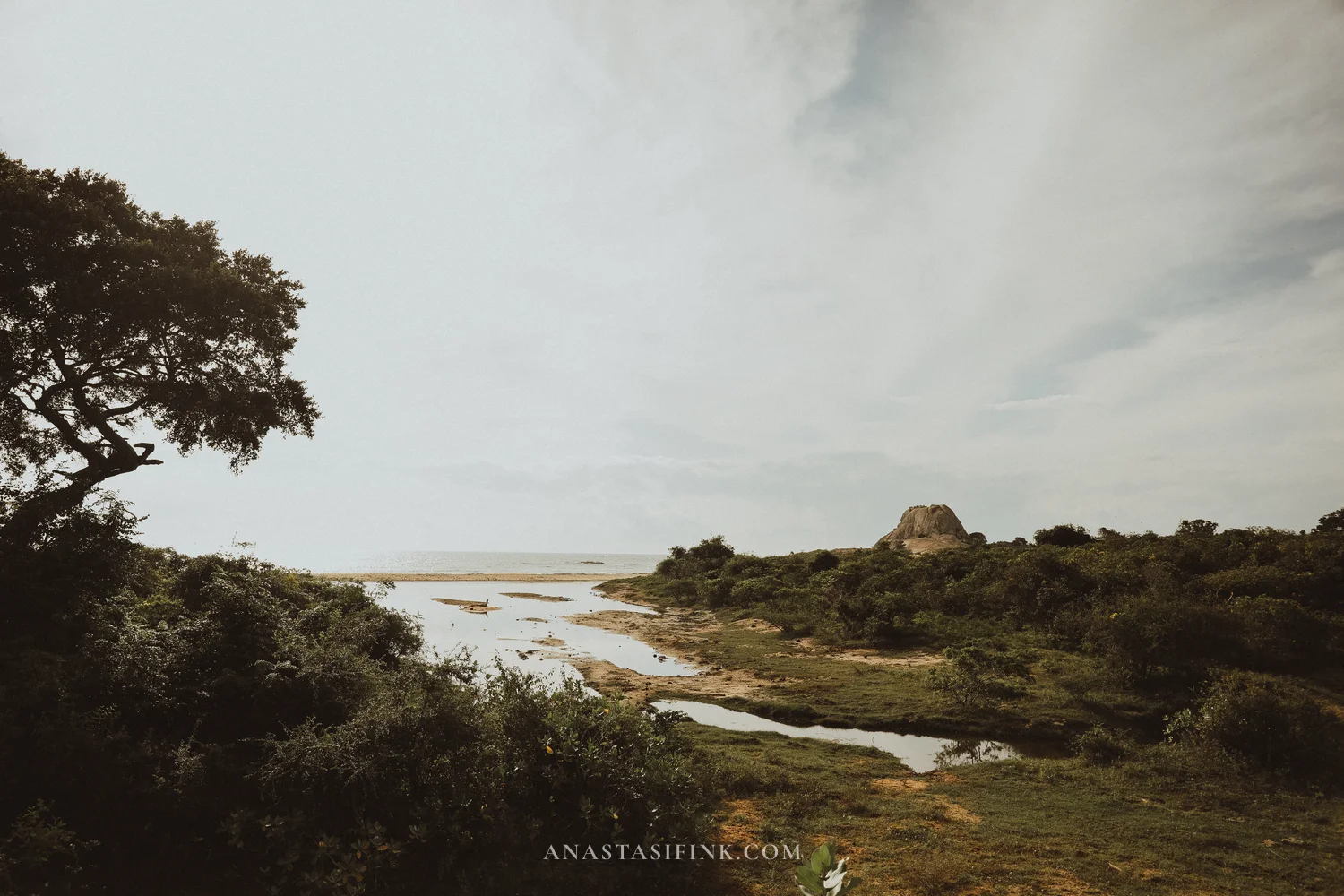
The park runs right down to the ocean. At Patanangala beach there’s a viewing spot, one of the few places in the park where you’re allowed out of the jeep. This part of the park was hit by the tsunami in 2004, and there’s a memorial by the shore.
Where to Stay
Book somewhere close to the park and arrive the day before: the morning safari starts at half past four. I stayed in Mahasenpura – a quiet area between Tissamaharama and Kataragama with family-run hotels, gardens and pools, about half an hour from the park gate.
Get in touch with your hotel ahead of time. Almost every hotel and guesthouse here arranges safaris themselves: they have their own jeeps or drivers they know, they know the ticket prices, and they pick you up right at the door. That way you know exactly what’s included. Drivers on the street sometimes quote a price for the jeep only and mention the tickets once you’re at the gate.
- Tissamaharama (Tissa) – the main town near the park, with cafes, ATMs, guesthouses and hotels by the lake
- Mahasenpura – a quiet area on the road from Tissa to Kataragama
- Kataragama – a pilgrimage town with a famous temple, closer to the Katagamuwa entrance
- Kirinda and Palatupana – on the ocean, closest to the main entrance, with eco-lodges and glamping
How to Get There
The nearest town is Tissamaharama, about twenty kilometres from the park entrance.
- From Colombo: 4-5 hours by car, 5-6 hours by bus to Tissa
- From Ella: 2.5-3 hours by car, 4-5 hours by bus with a change in Wellawaya
- From Galle and Mirissa: 3-4 hours by car or bus
Practical Information
- Park: Yala National Park, Block 1, main entrance Palatupana
- Palatupana entrance GPS: 6.2811, 81.4211
- Opening hours: 06:00-18:00, morning safaris 06:00-10:00, afternoon safaris 14:00-18:00
- Annual closure: Blocks 1 and 2 are closed in September-October (in 2026, from 14 September to 15 October), the other blocks stay open
- Entrance ticket for foreigners: around $25-30 plus taxes and fees, roughly $35-42 per person per safari in total. Children 6-12 pay half, under 6 free
- Private jeep, half day: $40-60 per vehicle (up to 6 people), tickets not included
- Private jeep, full day: $120-160 per vehicle, tickets not included
- Seat in a shared jeep: $15-25 per person, tickets not included
- Full package through a hotel (jeep + tickets + guide): usually $85-95 per person for half a day
- Google Maps: Yala National Park, Palatupana Entrance
Tips
- Best time – February to July, when it’s dry and the animals gather at the waterholes. May and June are less crowded than February
- Clothing – neutral colours, long sleeves, a hat. The sun is strong
- Water and food – bring your own, there’s nothing to buy inside the park
- Don’t get out of the jeep anywhere except the designated spots
- Binoculars come in handy, a lot of the animals are far away
- What to combine it with: the Kataragama temple, Kirinda beach with its temple on the rock, and the Sithulpawwa rock temple – it stands inside the park, but you can drive there separately from Kataragama along a dirt road, with no ticket and no jeep
Is It Worth Going
Yes, even without the leopard. Get your own jeep, stay close to the park and take your time.
FAQ
Only at the entrance and at the viewing spot by Patanangala beach. There’s nothing else inside the park, so it’s best to use the toilet at the gate before you set off.
No, only at the designated spots, like the one at Patanangala beach. The rest of the time you stay in the vehicle, even if the animals are far away.
Yes, children under six get in free, and six to twelve pay half price. Keep in mind that the safari lasts four hours on bumpy roads, starts before dawn, and you can’t get out of the jeep. With small children the afternoon safari is a better fit.
The park stays open in the rain, and the jeeps have a roof, but the sides are open. Most of the rain falls from October to January, when the roads get muddy and there are fewer animals at the waterholes. The dry season from February to July is more reliable.