Mackovac Ethno Village, Bosnia: Old Balkan Open-Air Museum

If you want to see what everyday life on the old Balkans actually looked like, this village does it better than anywhere I’ve been — every corner is packed with detail: old machinery, a blacksmith’s stall, carved houses, brightly painted shutters and sagging roofs. Step inside and it’s genuinely easy to forget what year it is.
What Mackovac Ethno Village Actually Is
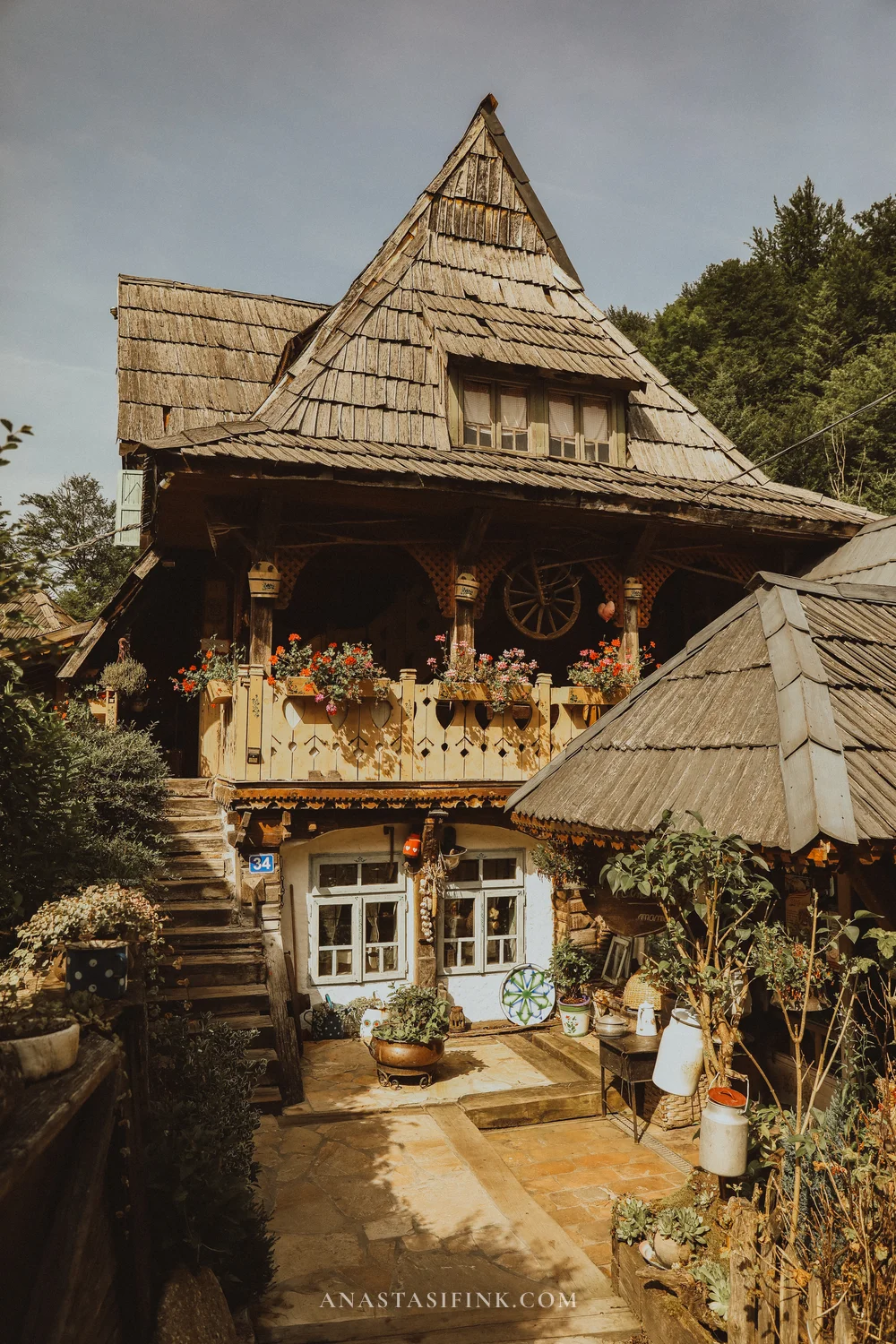
Mačkovac is a private open-air museum about half an hour’s drive from Tuzla, in northeastern Bosnia and Herzegovina. Its official name is Etno avlija Mačkovac — “avlija” came into Bosnian from Turkish and means courtyard. And that’s exactly what it is: the whole complex is laid out like one big village yard, where old houses, barns, workshops and watermills are linked by little bridges, staircases and cobbled paths. That Latin-script name is the one to type into your GPS and look for on road signs.
This isn’t a state museum — it’s one family’s project. The founder, Refik Halilović, is a local who has been collecting old Bosnian houses, tools and household objects since 2010. Some of the buildings were moved here whole from surrounding villages and reassembled on site. The collection now holds over 30,000 items — from Ottoman rifles of the 16th–18th centuries to Yugoslav badges, of which there are more than four thousand.
Walking the Village: Yards and Workshops
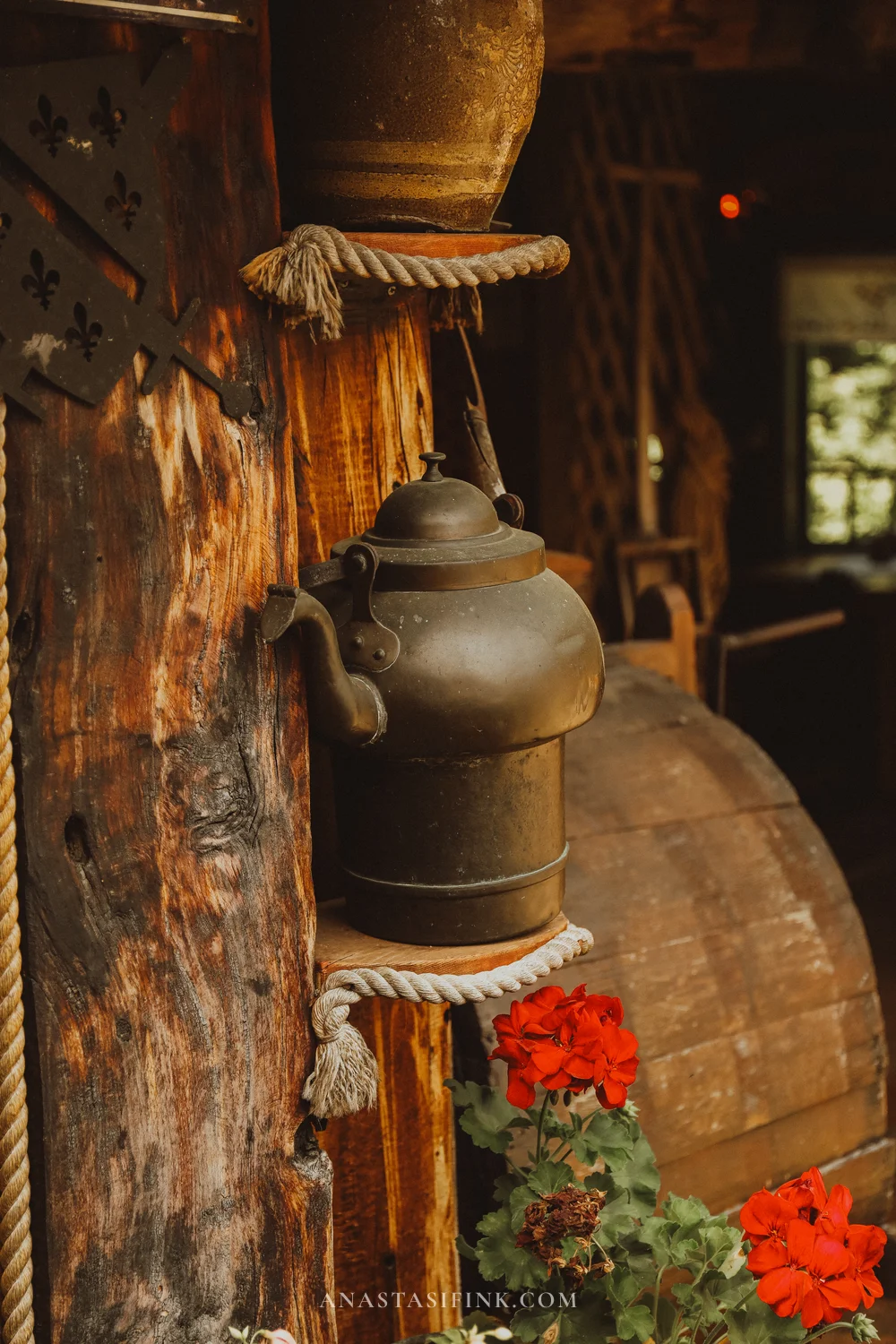
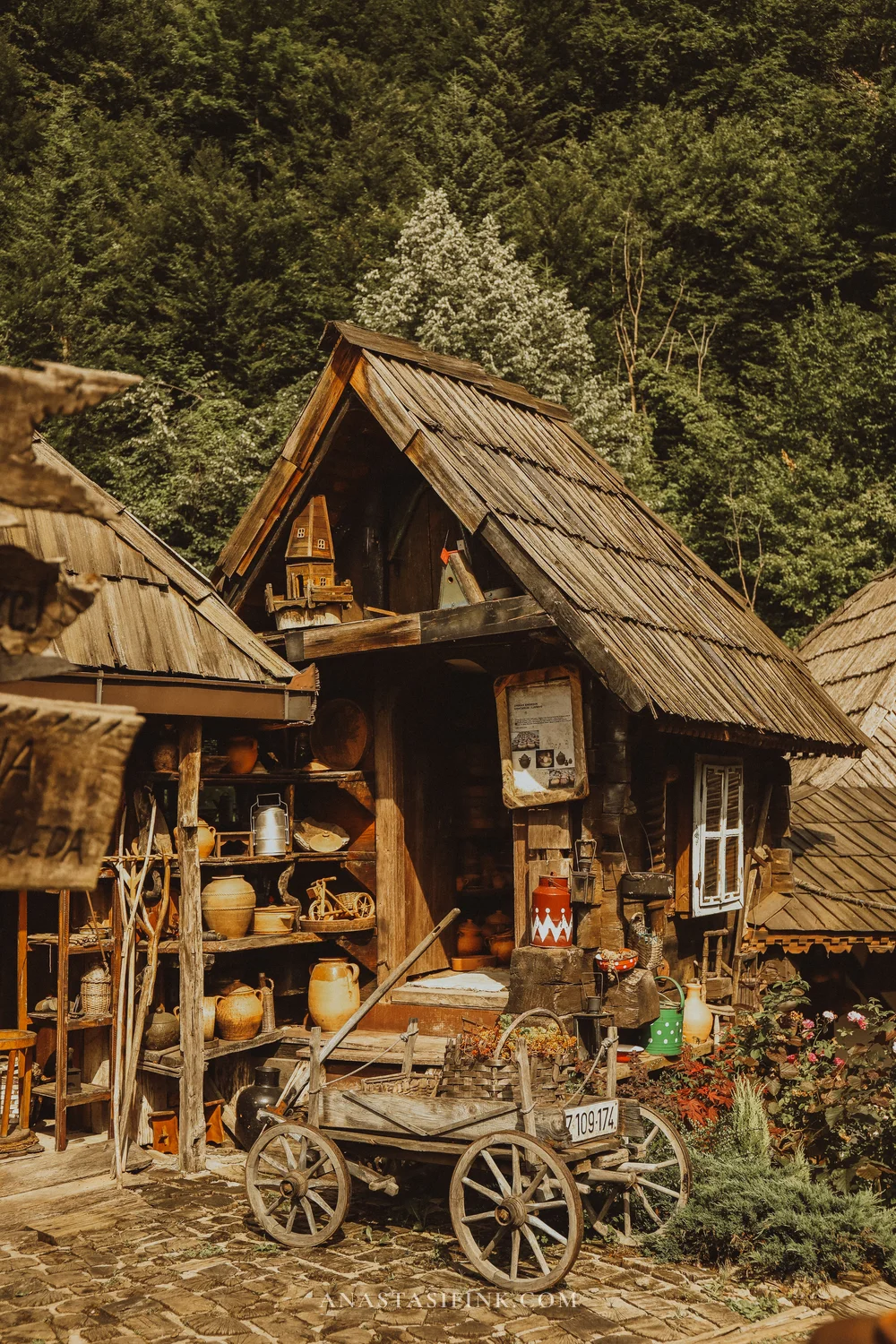
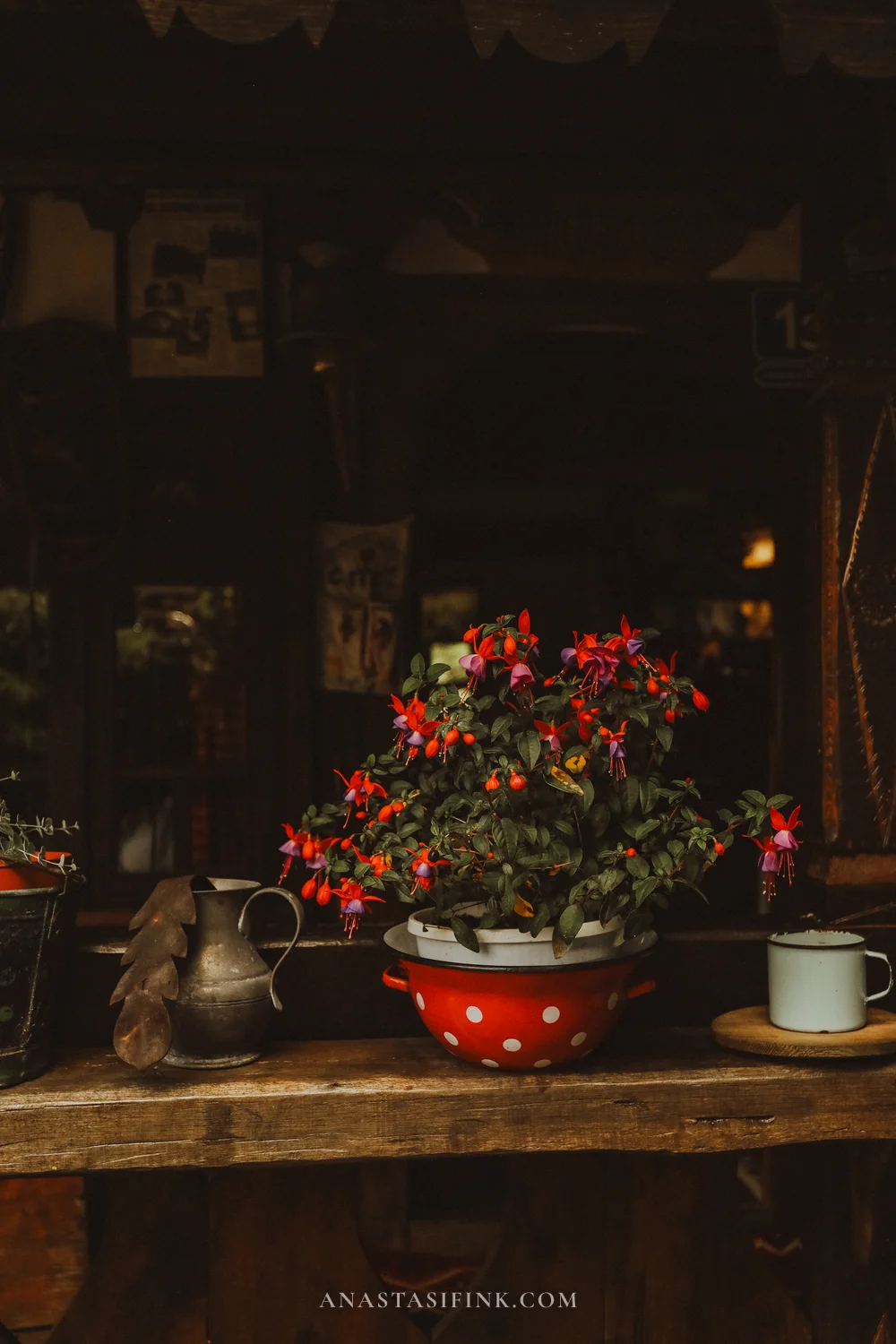
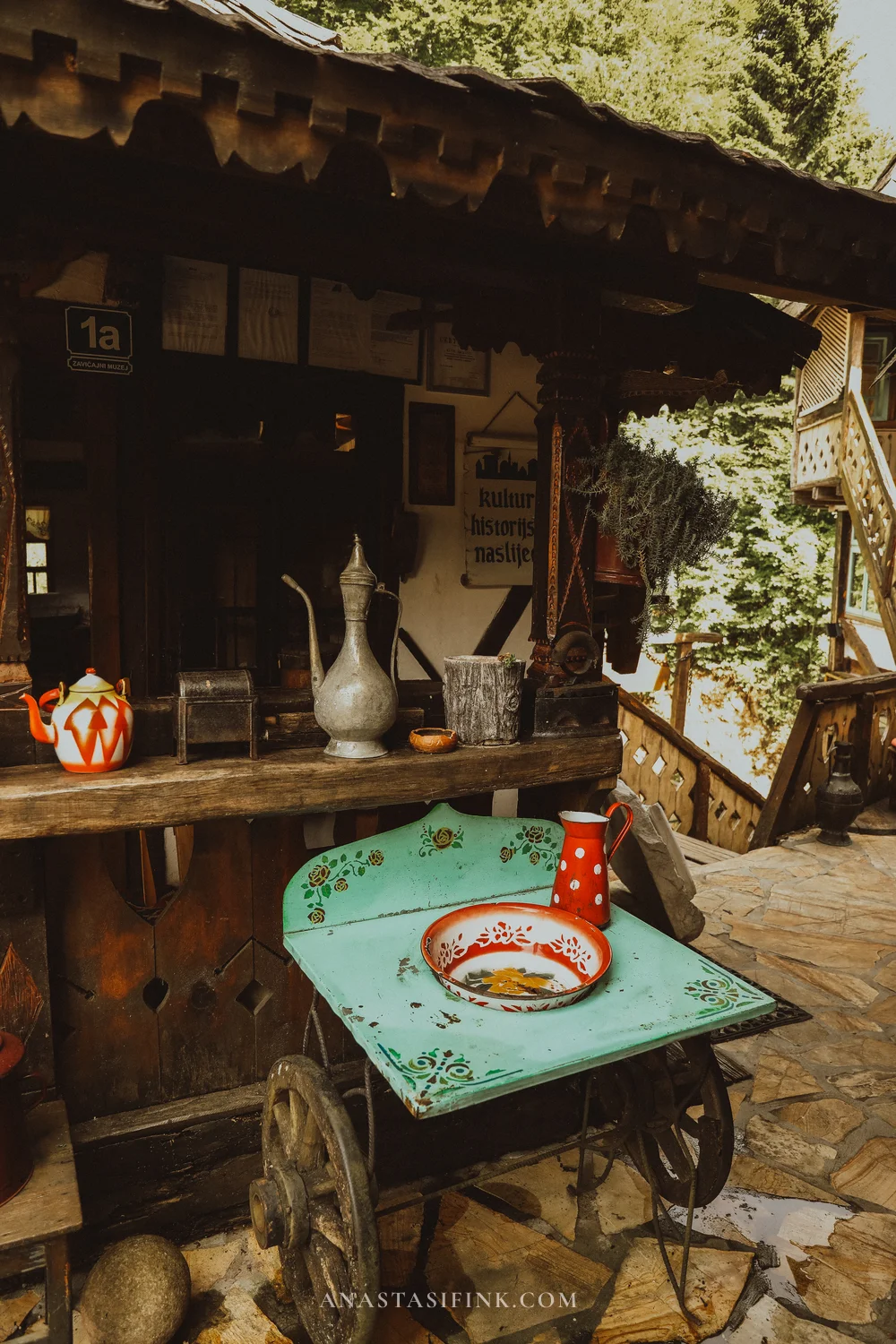
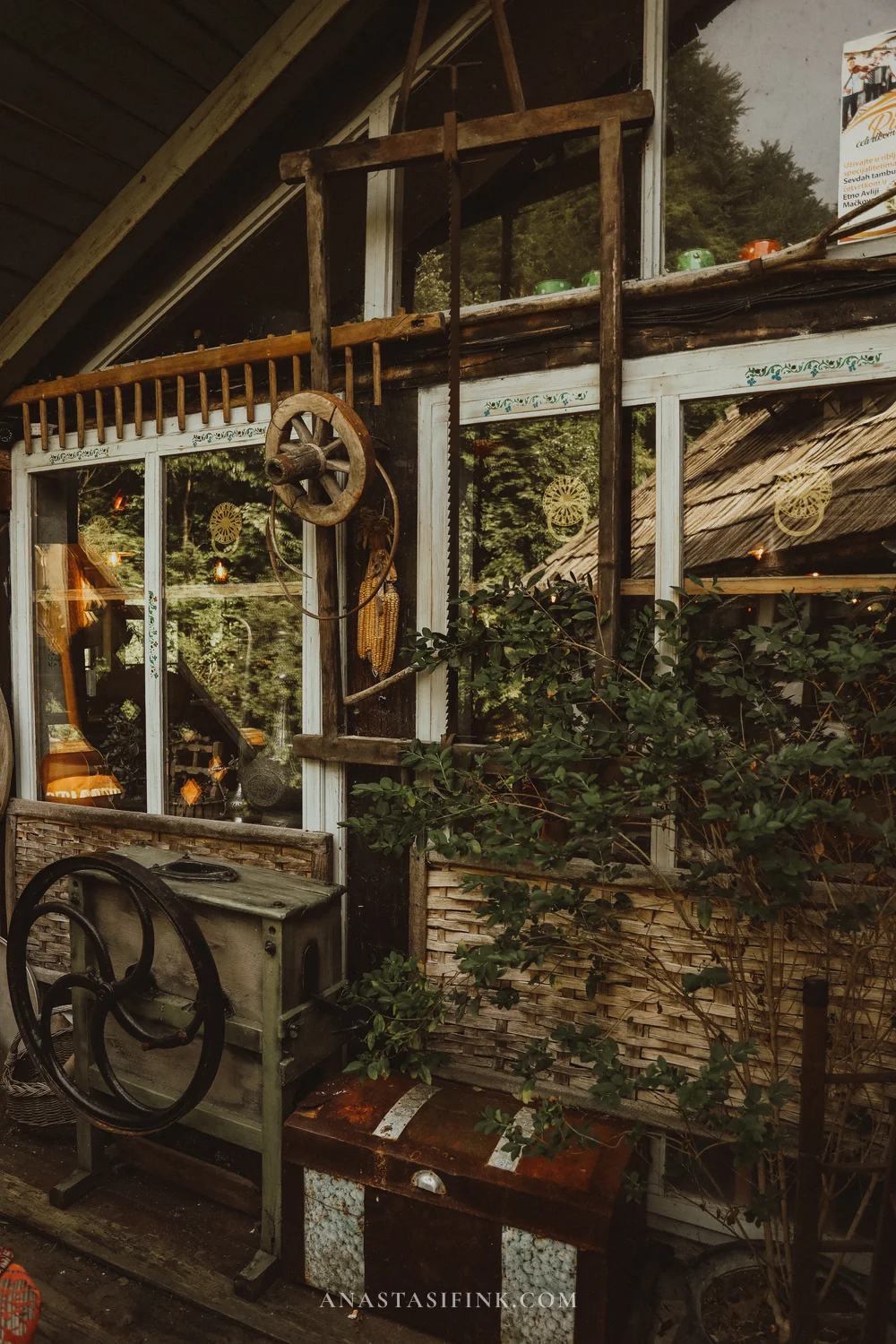
The point here isn’t any single exhibit — it’s the sheer density of detail. Every wall, shelf and windowsill is busy with something: braids of onions and garlic, copper coffee pots, polka-dot enamel pans, old scales with flower pots where the weights should be.
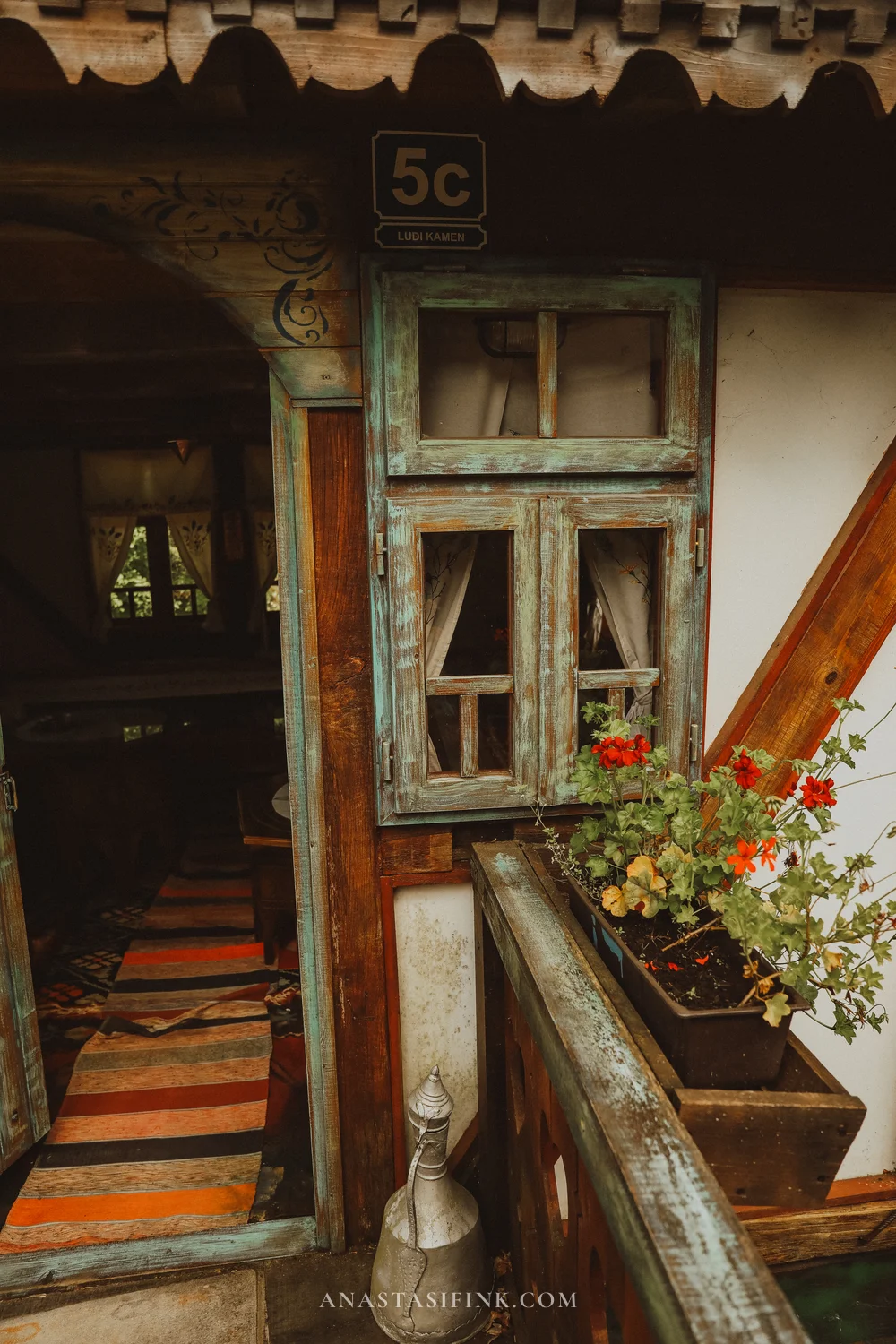
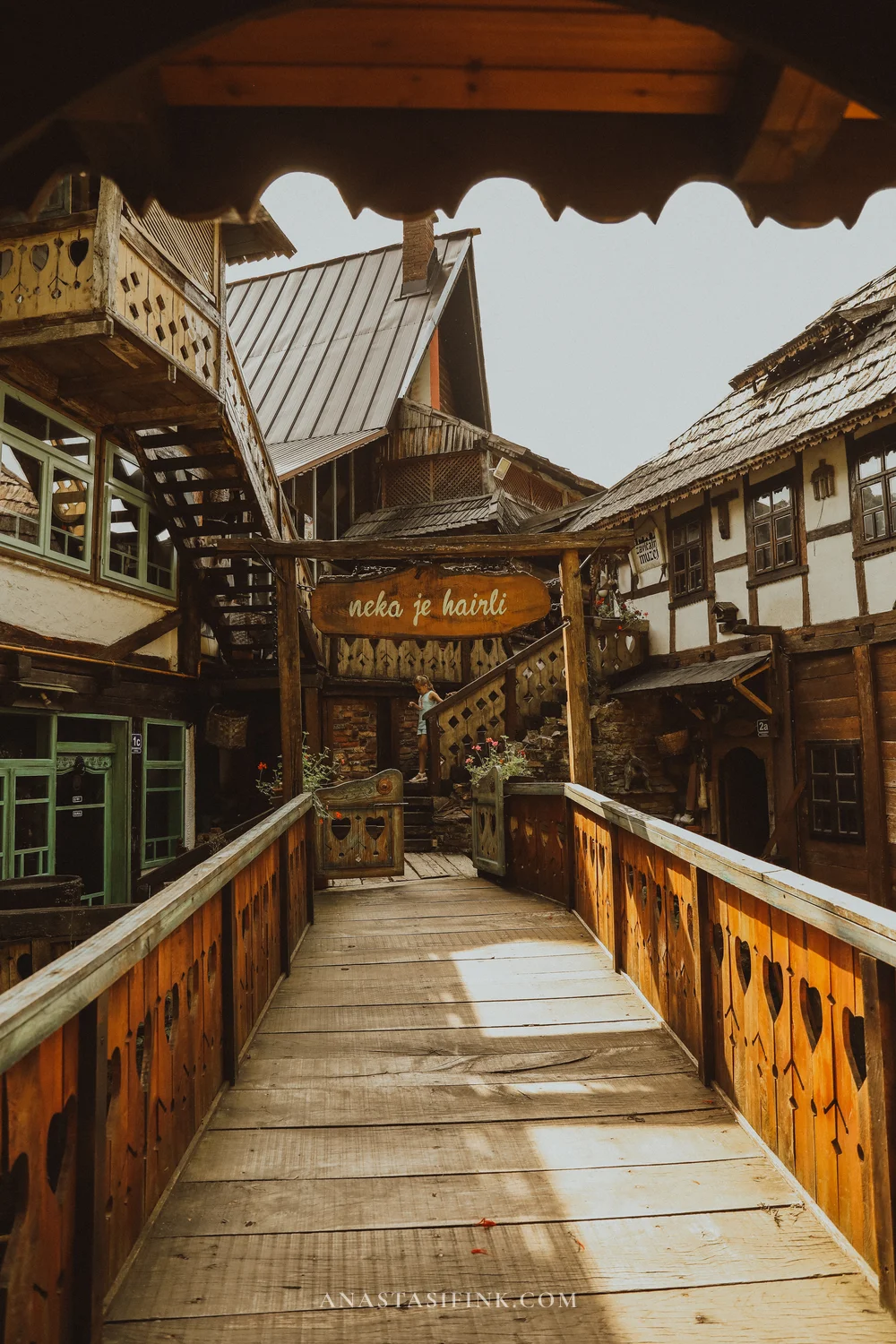
Along the paths stand open-fronted stalls styled like the trading rows of an old čaršija — the Balkan word for a town’s craft and market quarter. Each little house has its own number and a street-name plaque, just like a real village.
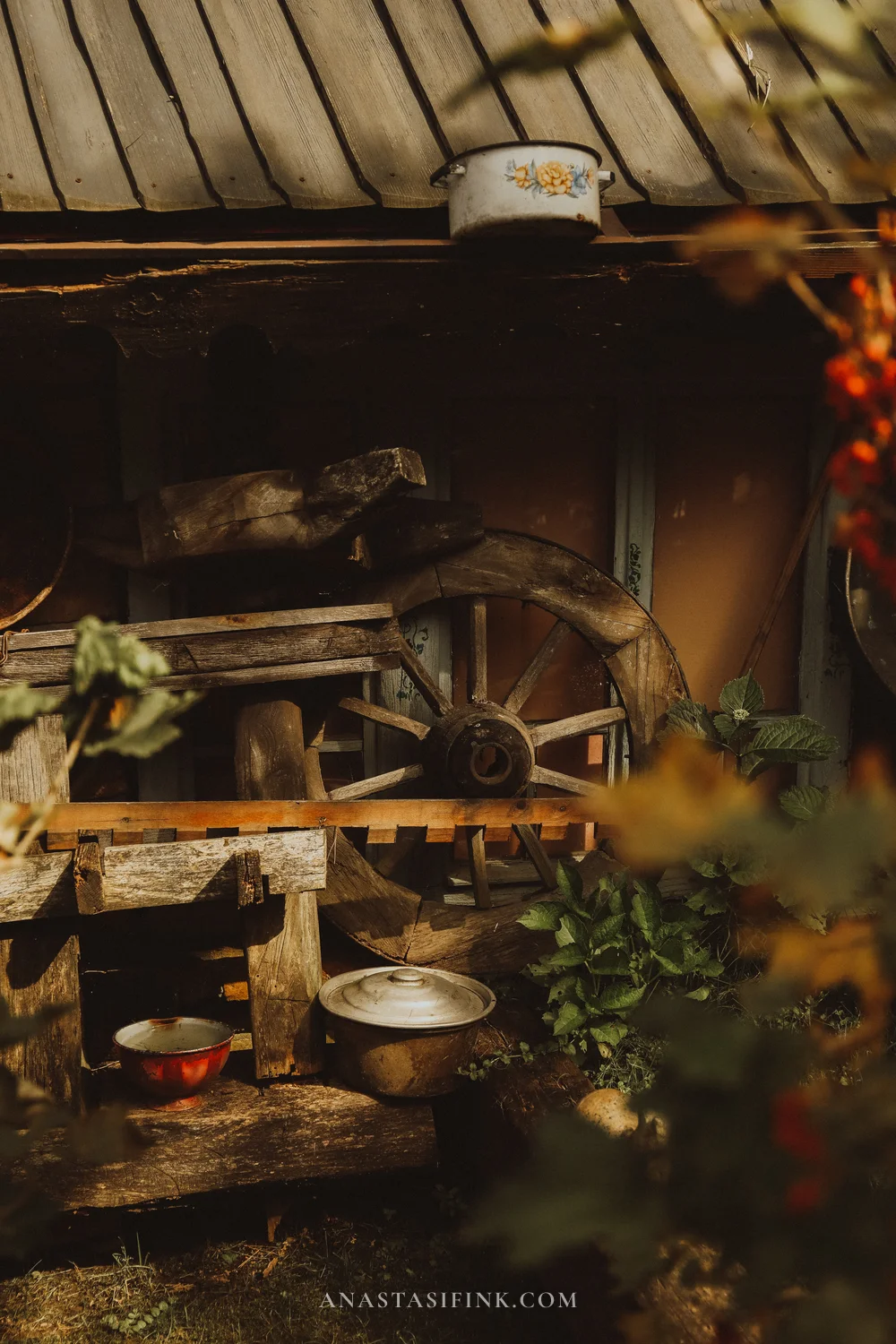
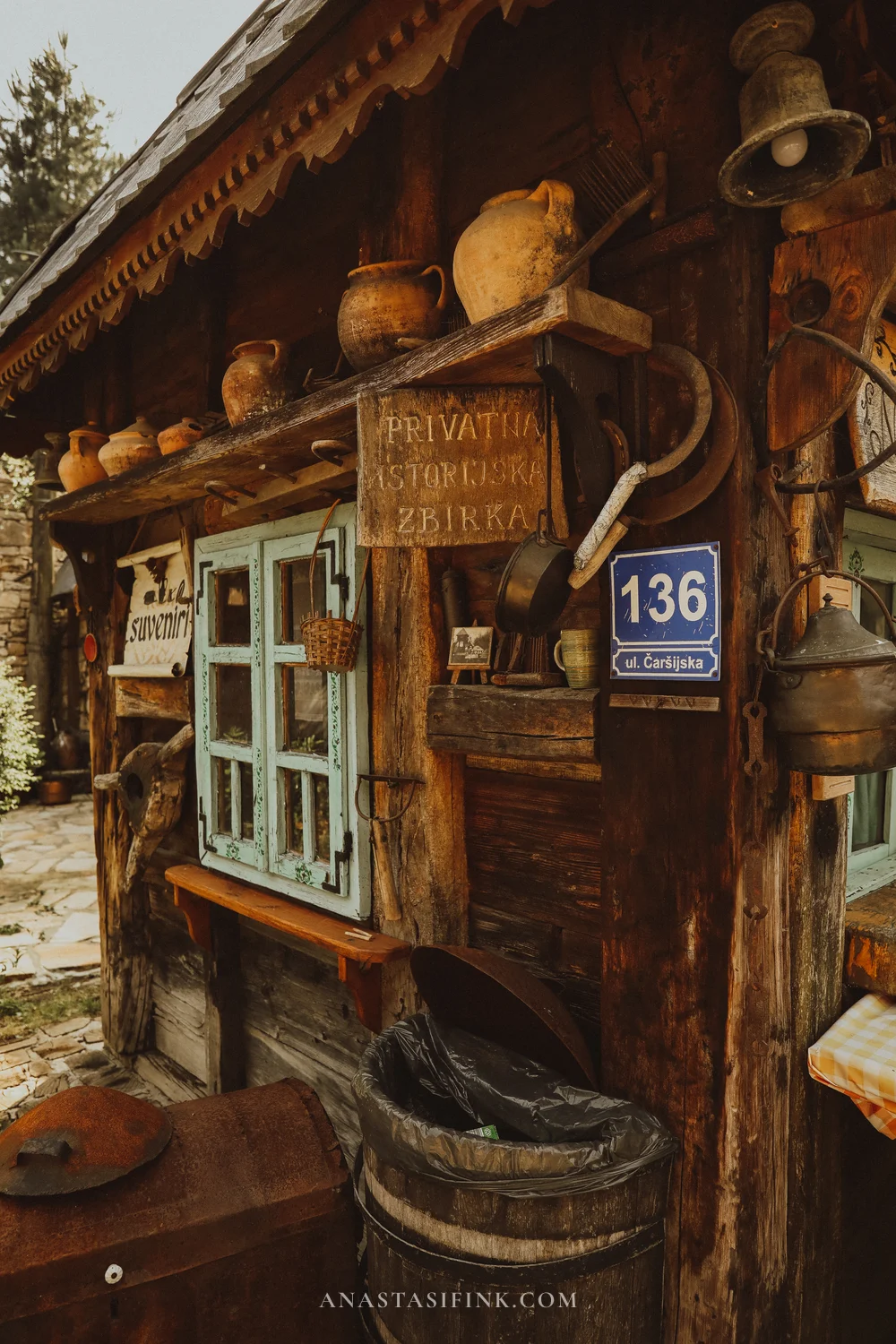

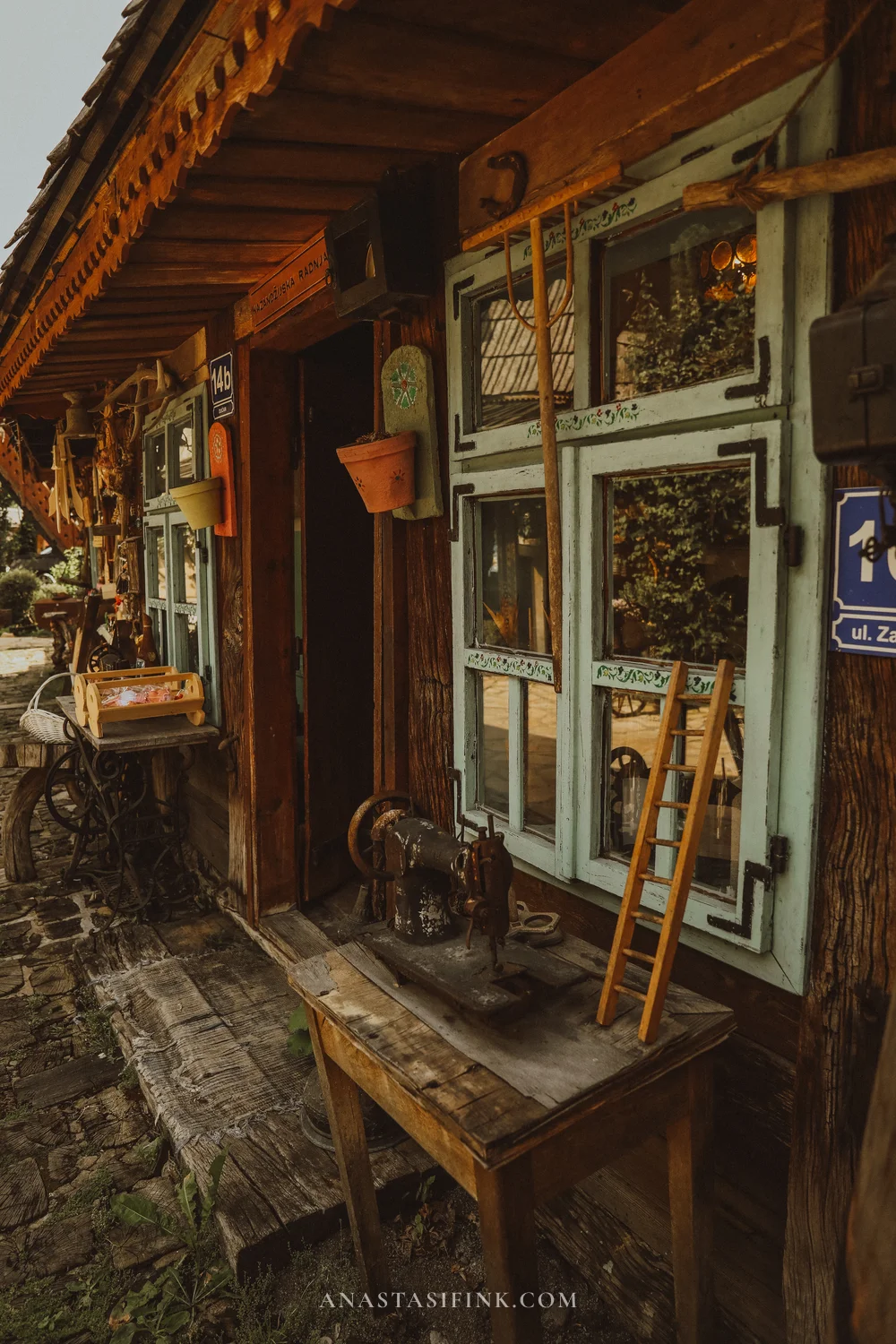
No display cases, no glass — everything just sits out along the facades
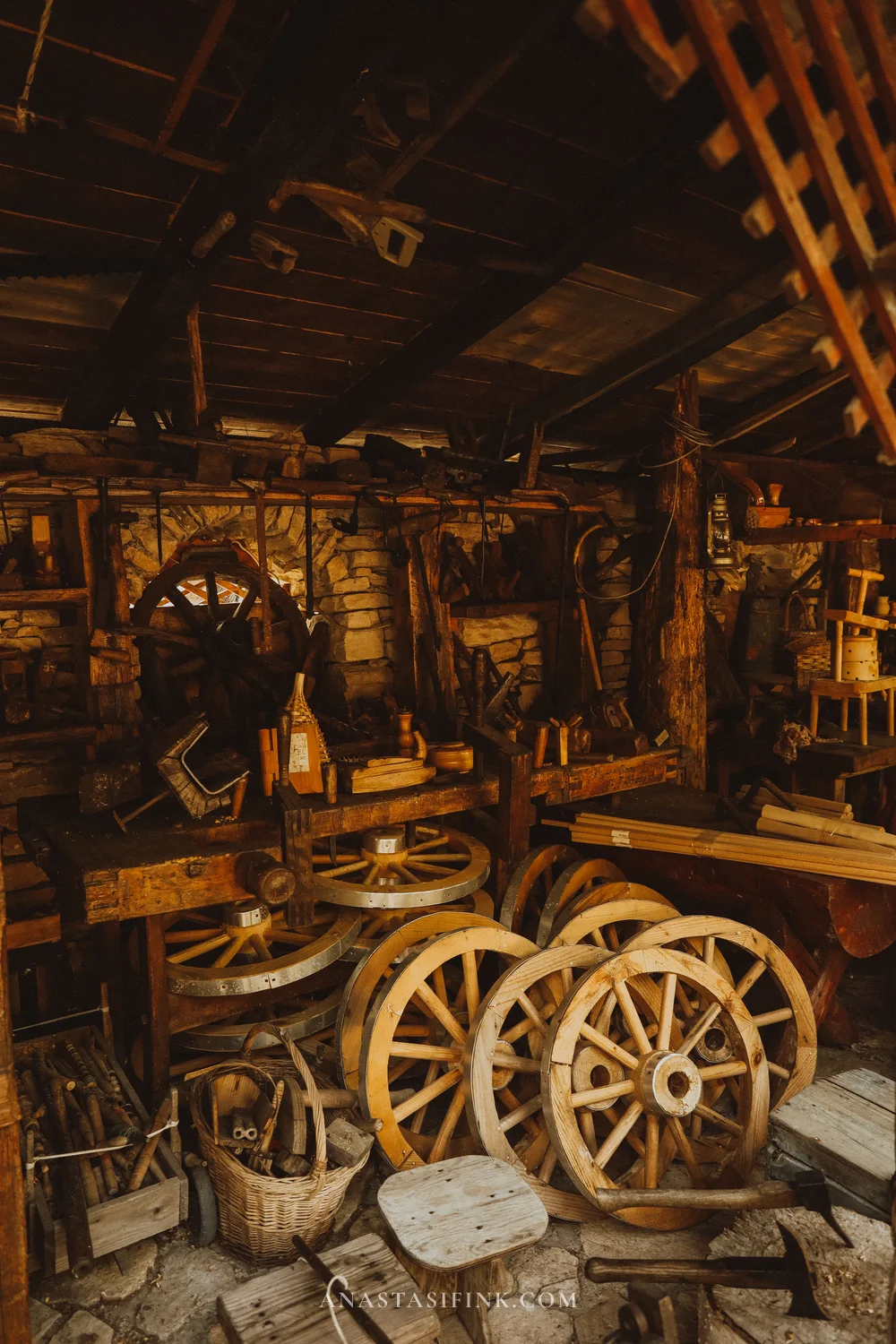
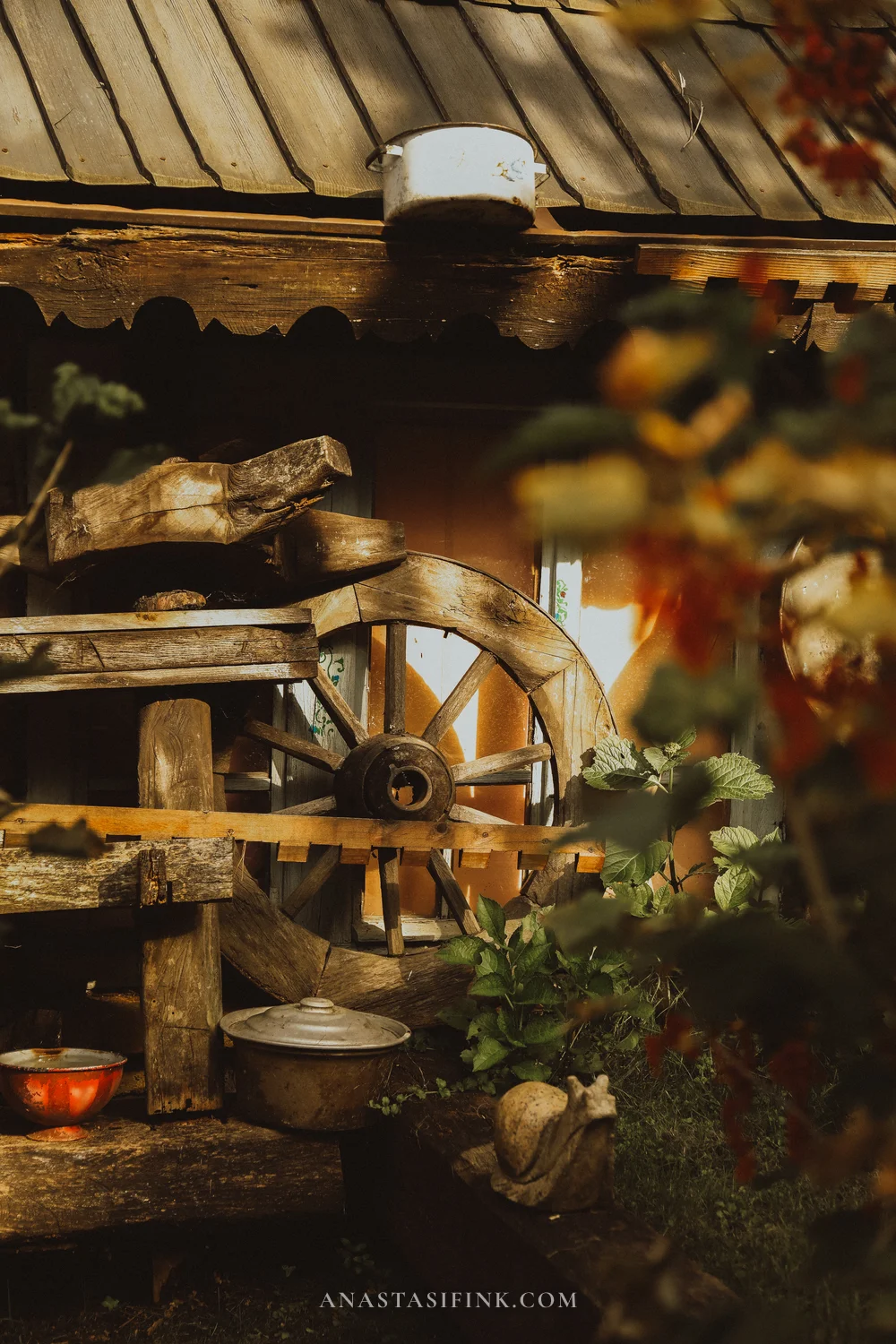
Deeper into the complex there’s a carpentry workshop crammed with wooden wheels, workbenches and tools. It’s not a stage set — the workshops here actually operate, and there are more than ten of them.
Inside the Houses
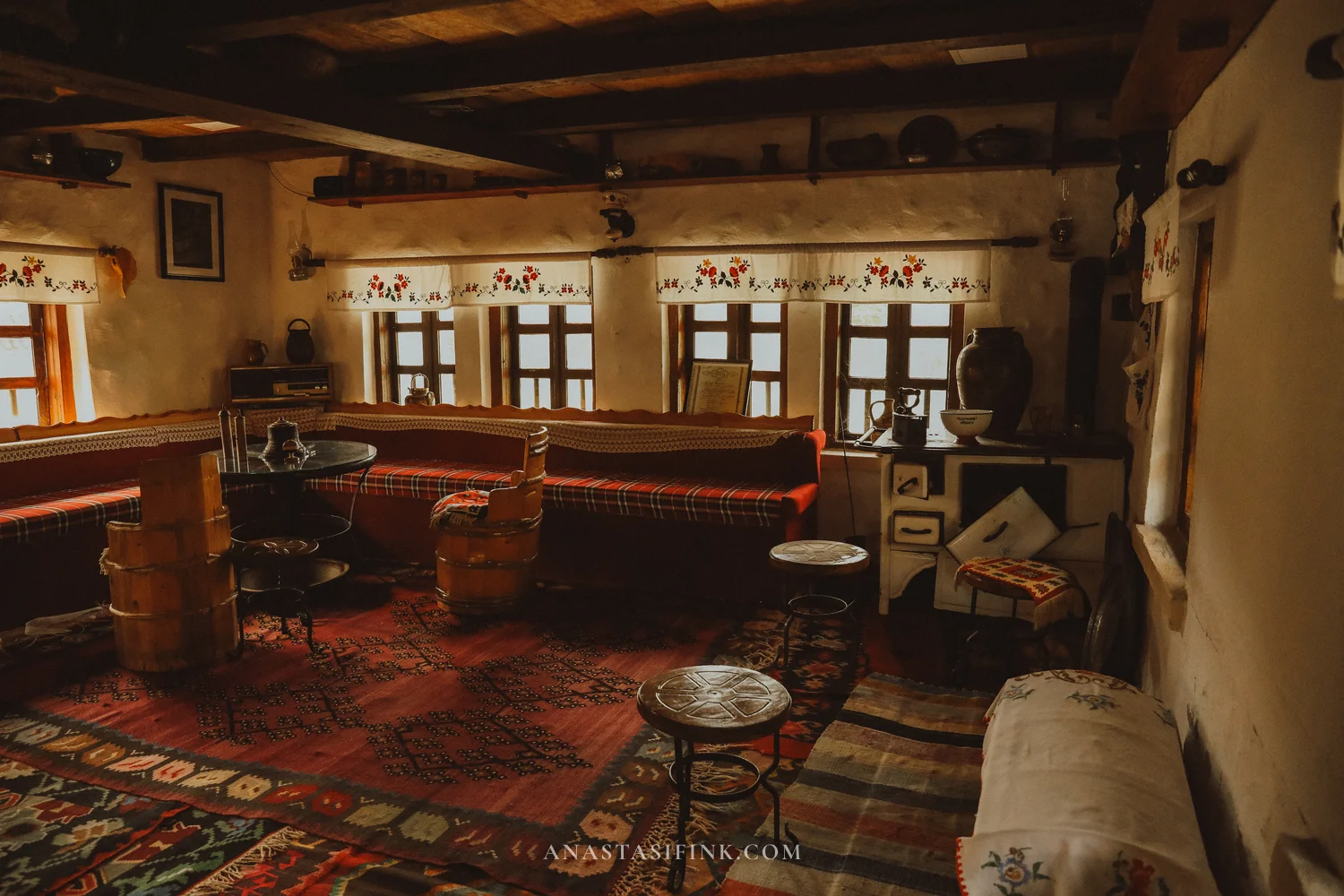
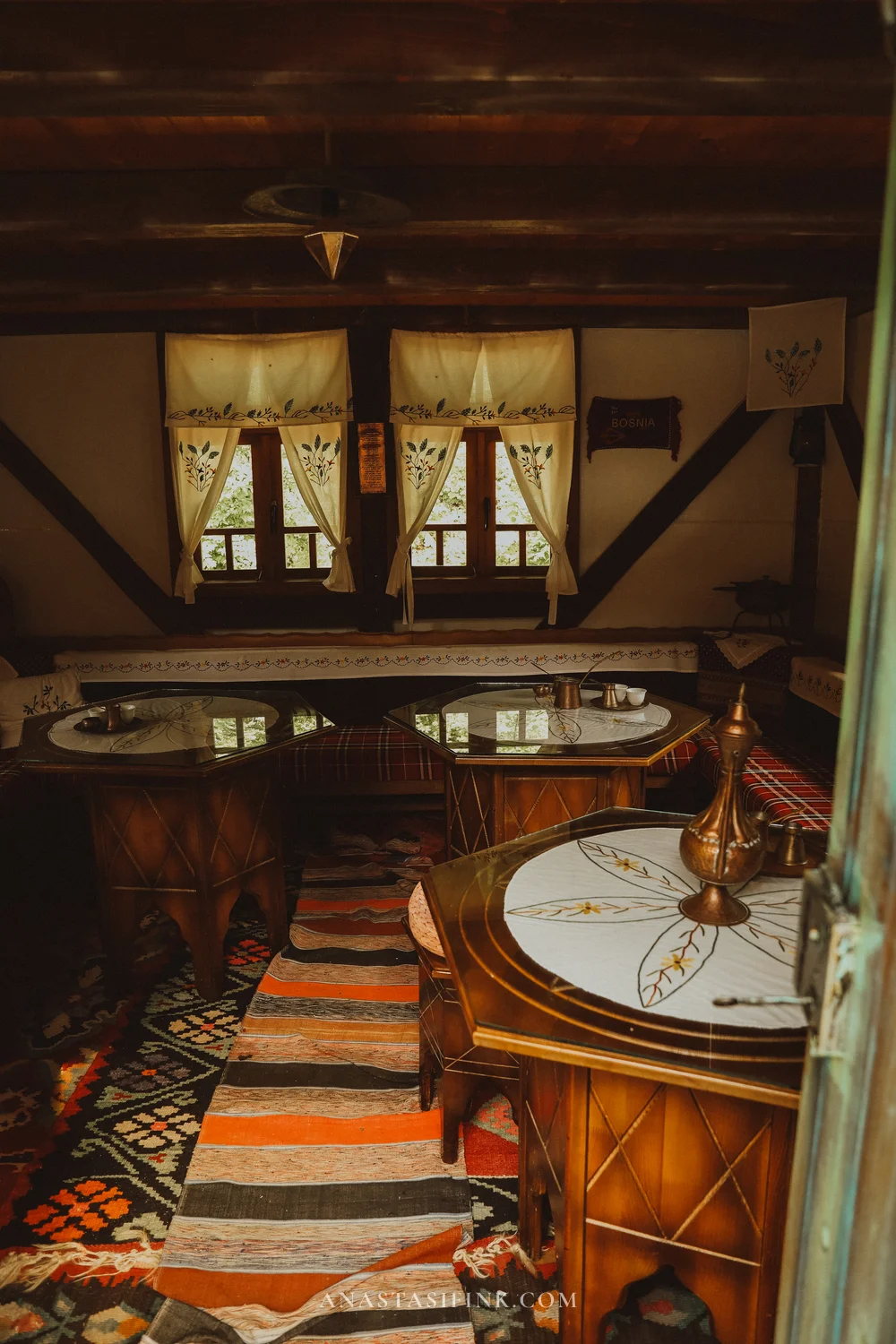
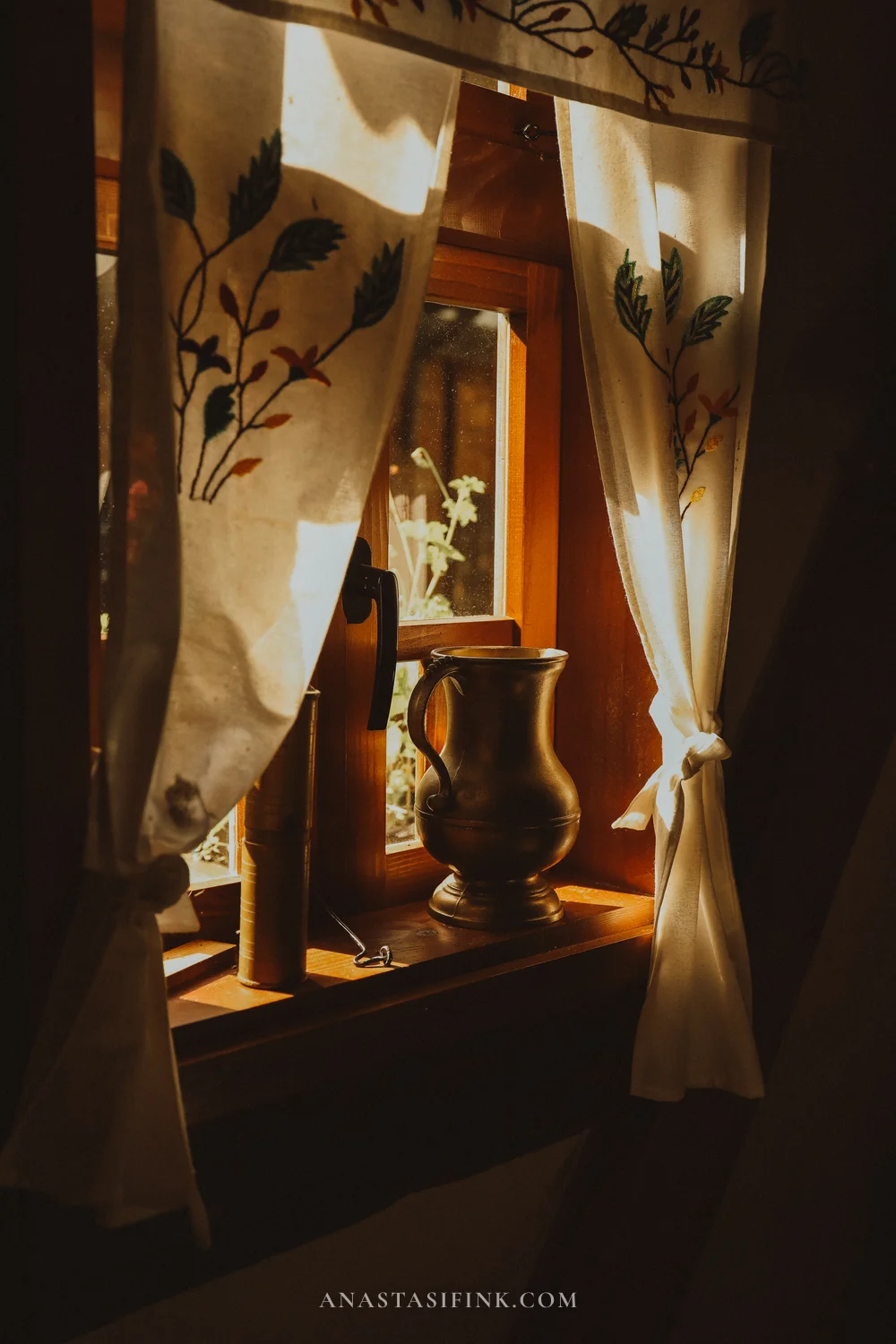
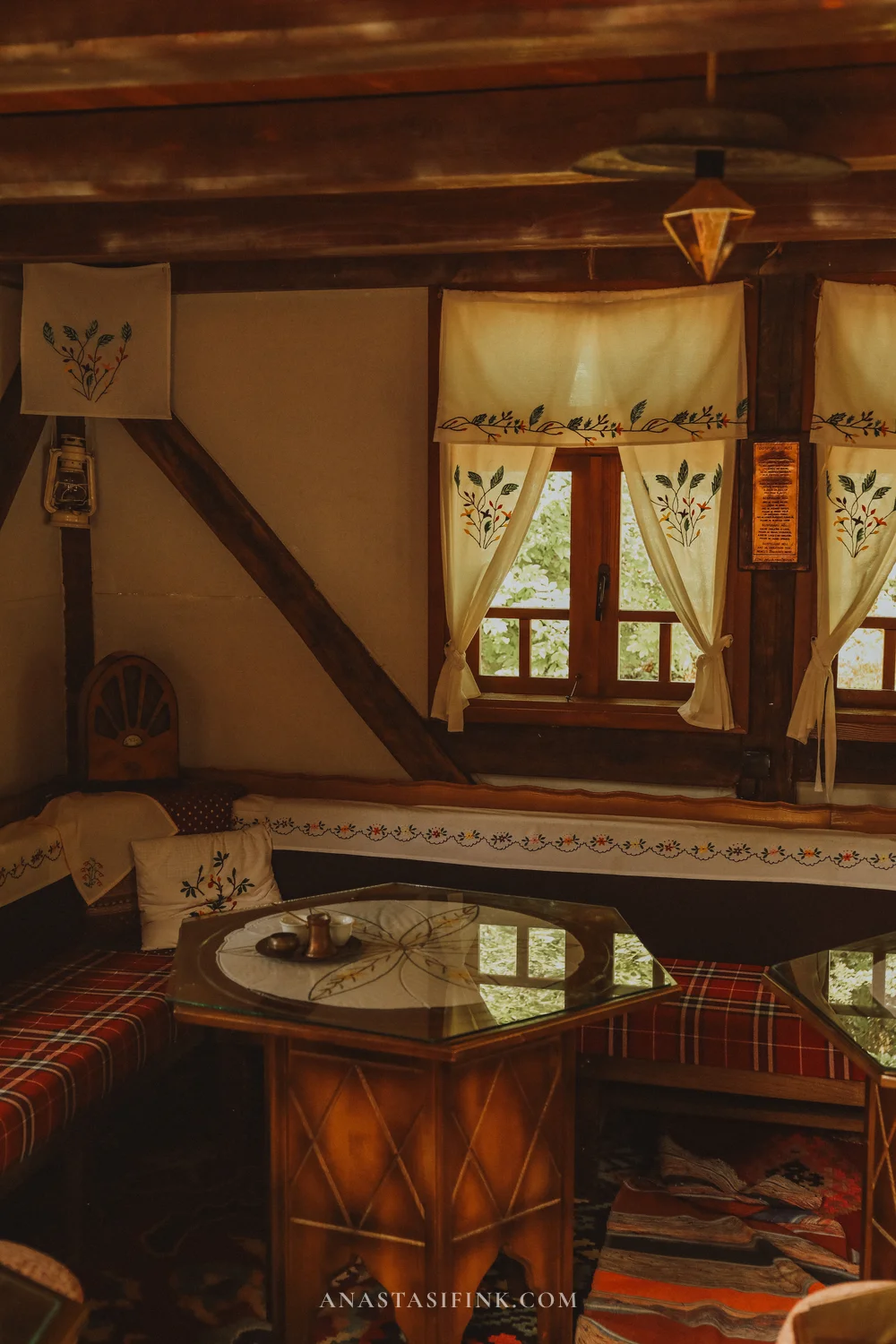
Inside, the houses recreate Bosnian home interiors from the 19th and early 20th centuries. Low bench-sofas called sećija line the walls, handwoven kilim rugs cover the floors, embroidered curtains hang in the windows, and there’s a stove with copper cookware.
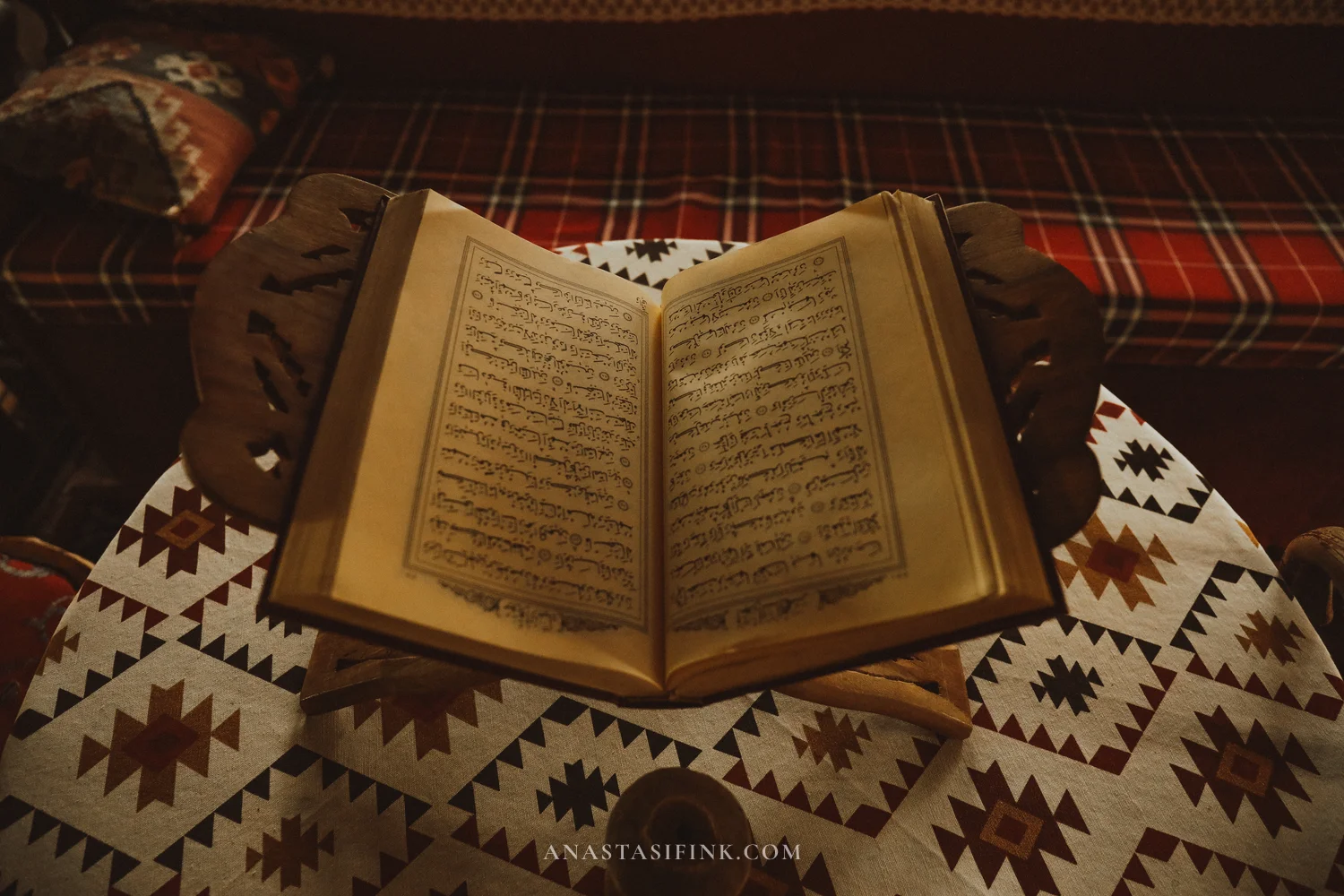
The Quran lies open — as if the owners just stepped out for a minute
Some of the objects will look familiar to anyone who’s spent time in old village houses in Eastern Europe: cast-iron irons, kerosene lamps, tube radios. Others are distinctly Bosnian: copper coffee pots called džezva, long-spouted ibrik jugs, hexagonal sofra tables that people ate at while sitting on the floor.

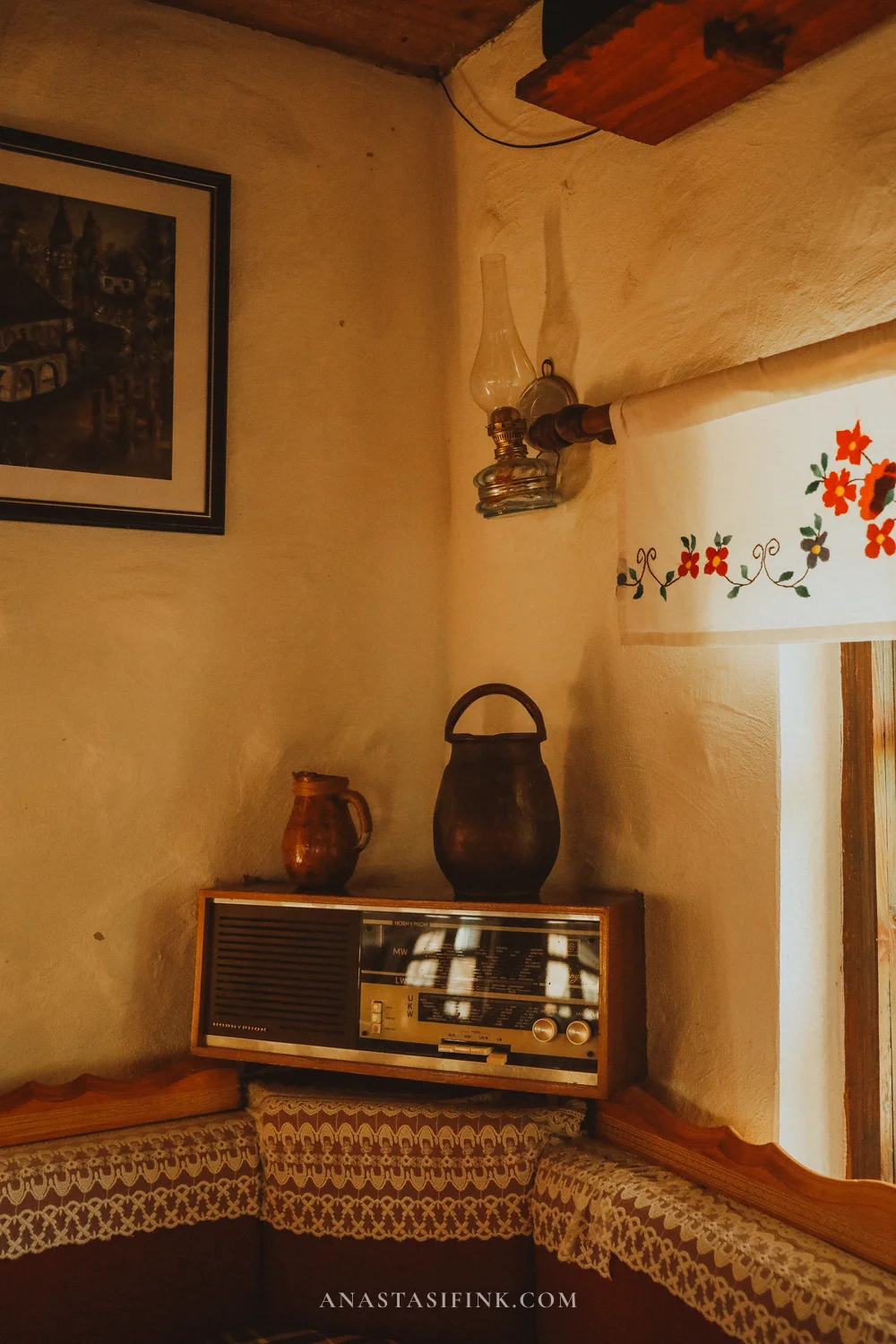
This is what a home looked like seventy-odd years ago
Out in the Yard
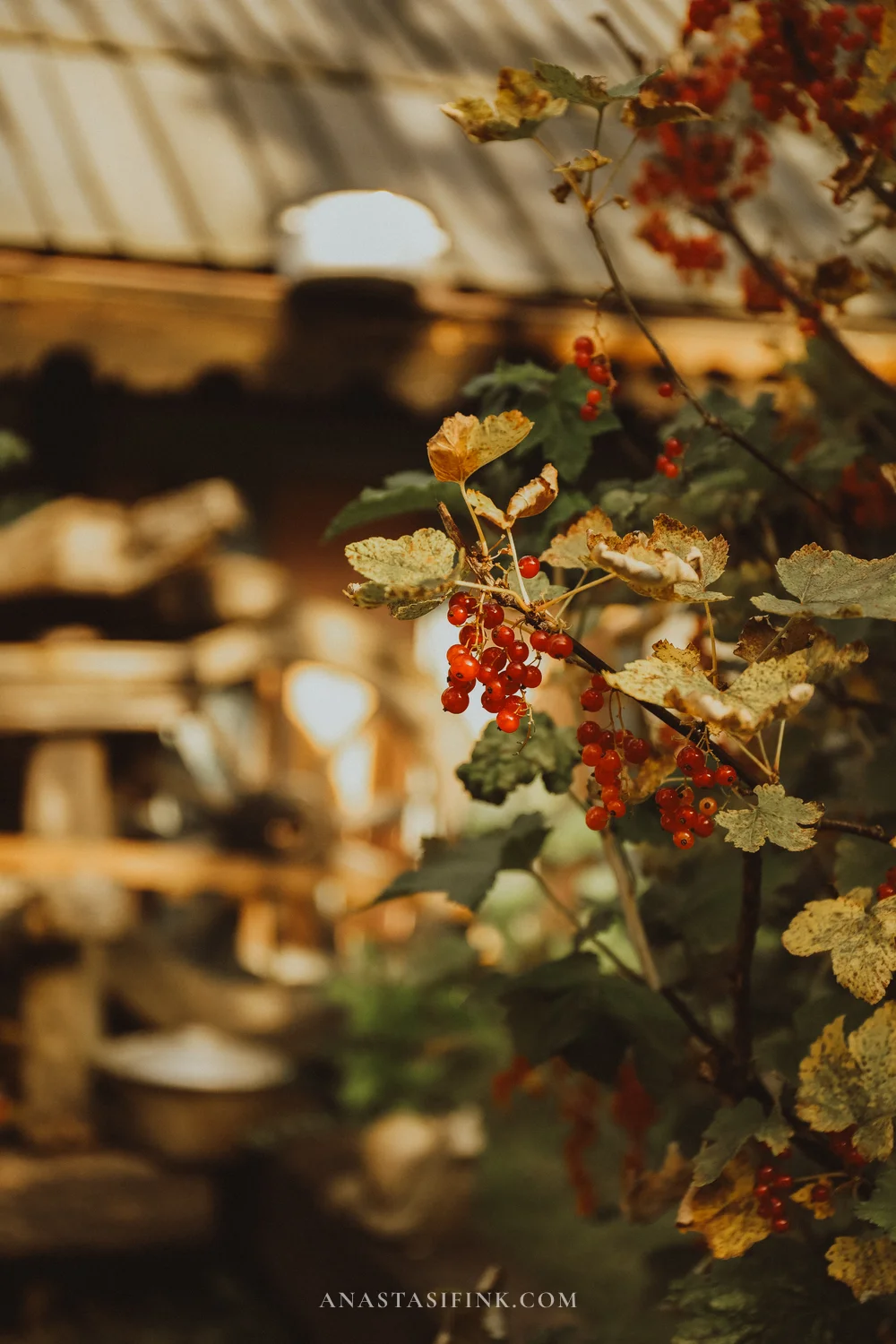
Currant bushes grow between the buildings, and succulents sit in hanging planters made from old scales. The whole place feels lived-in rather than curated.
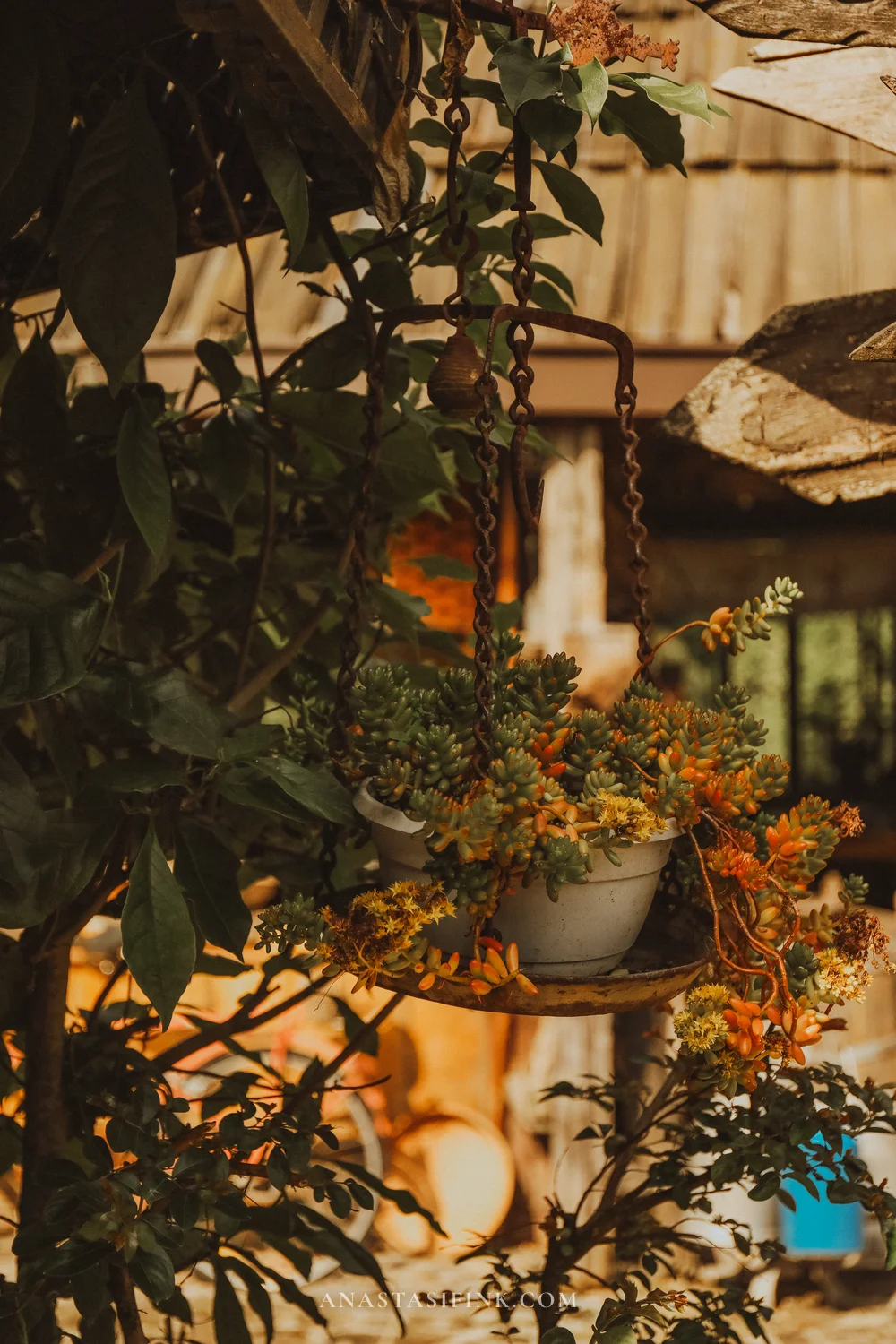
Flowers get planted in anything here — even old scales

The Bridge Over the Oskova and the Watermills
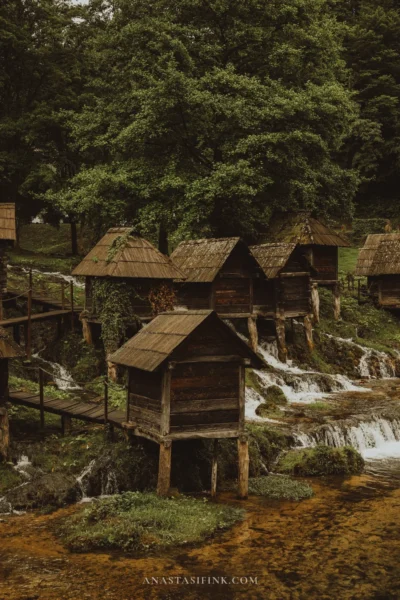
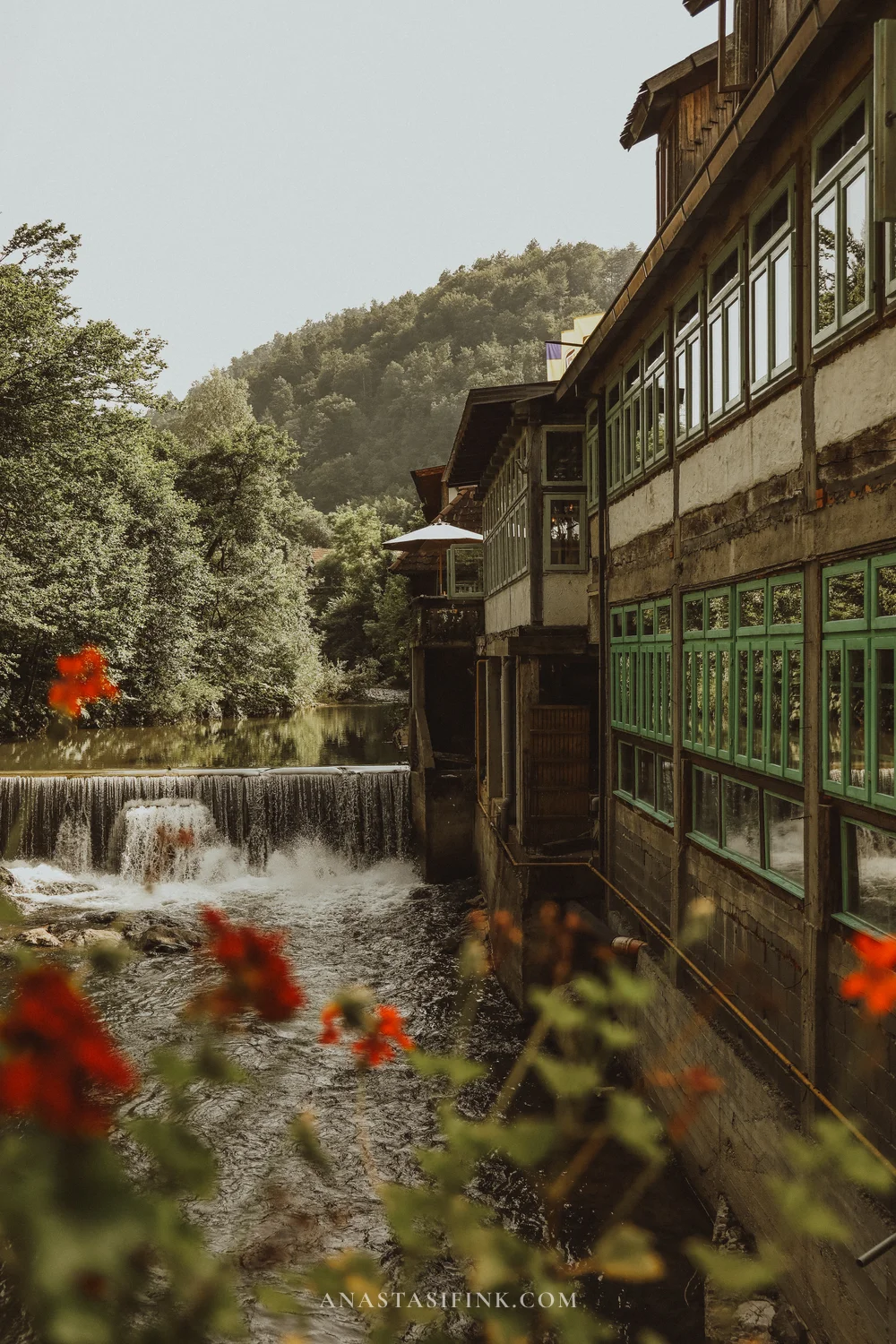
The complex sits right on the Oskova river, and some of the buildings hang out over the water. A wooden bridge crosses the river — it’s a dead end with just one little house at the far side, but it gives you a view of the weir and its small waterfall. Two working watermills stand on the grounds — like the houses, they were brought here from nearby villages and restored.

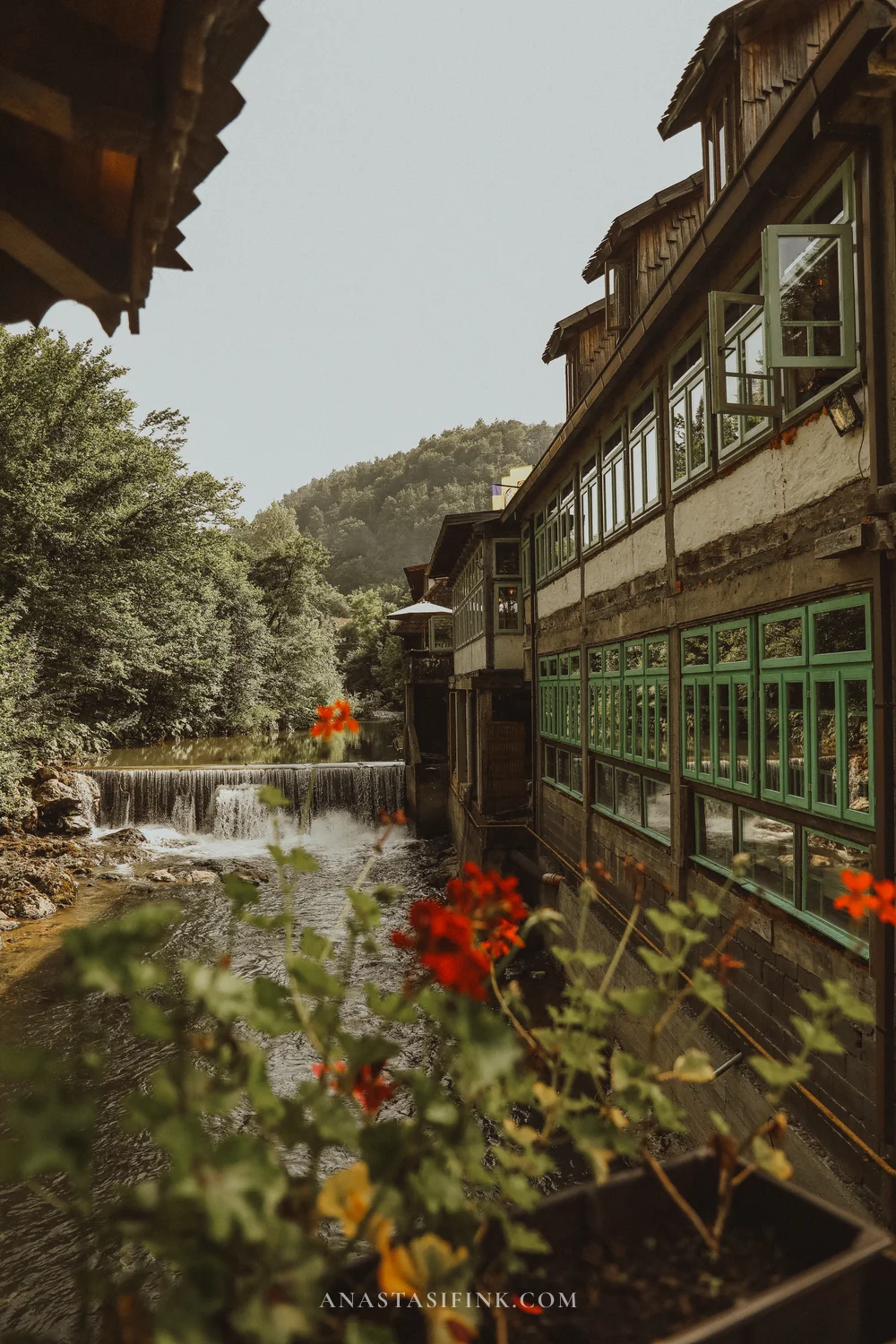
The riverside houses hold more rooms with old interiors: low tables, kilims, copper jugs on the windowsills.
Gates, Hearts and Carved Details
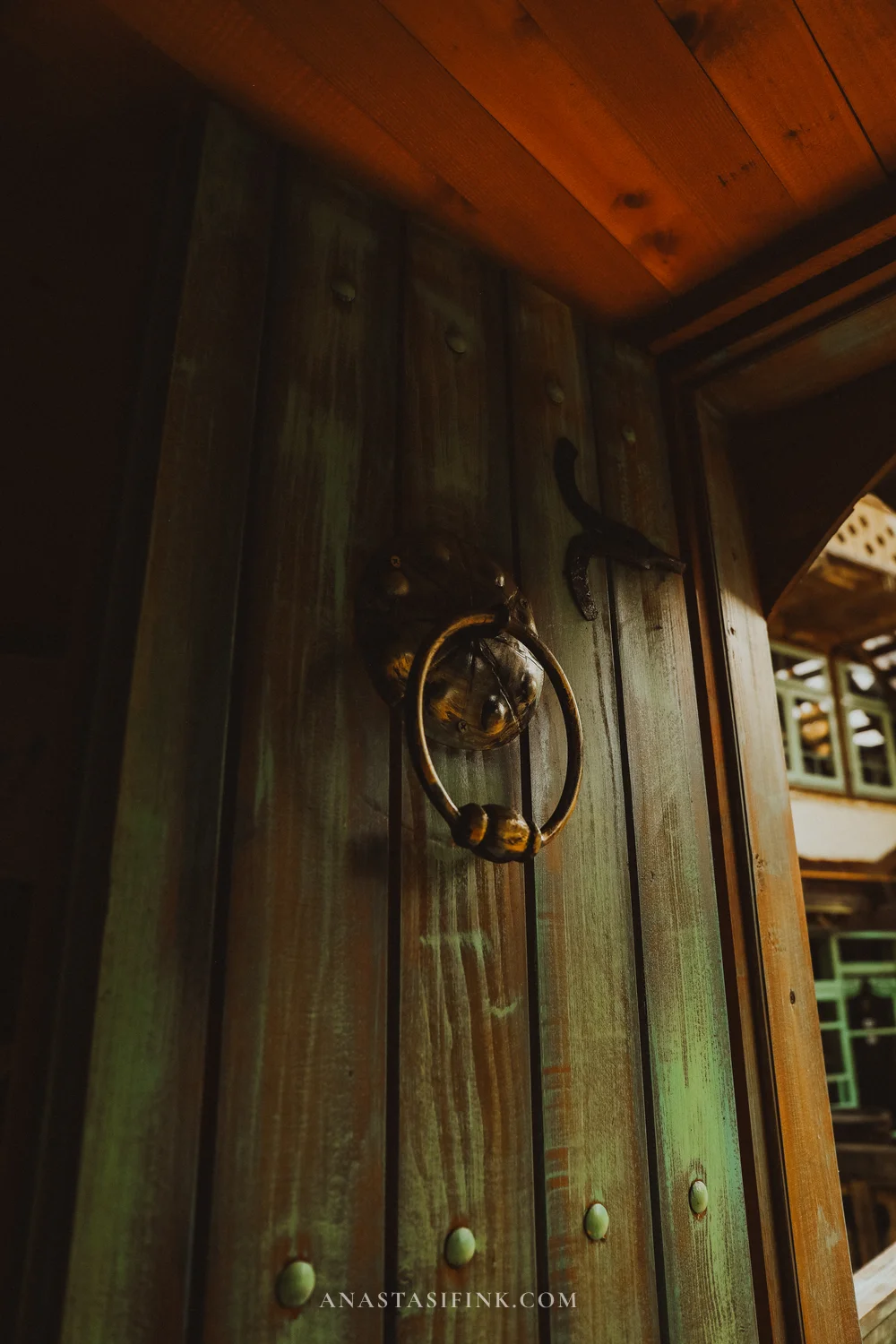
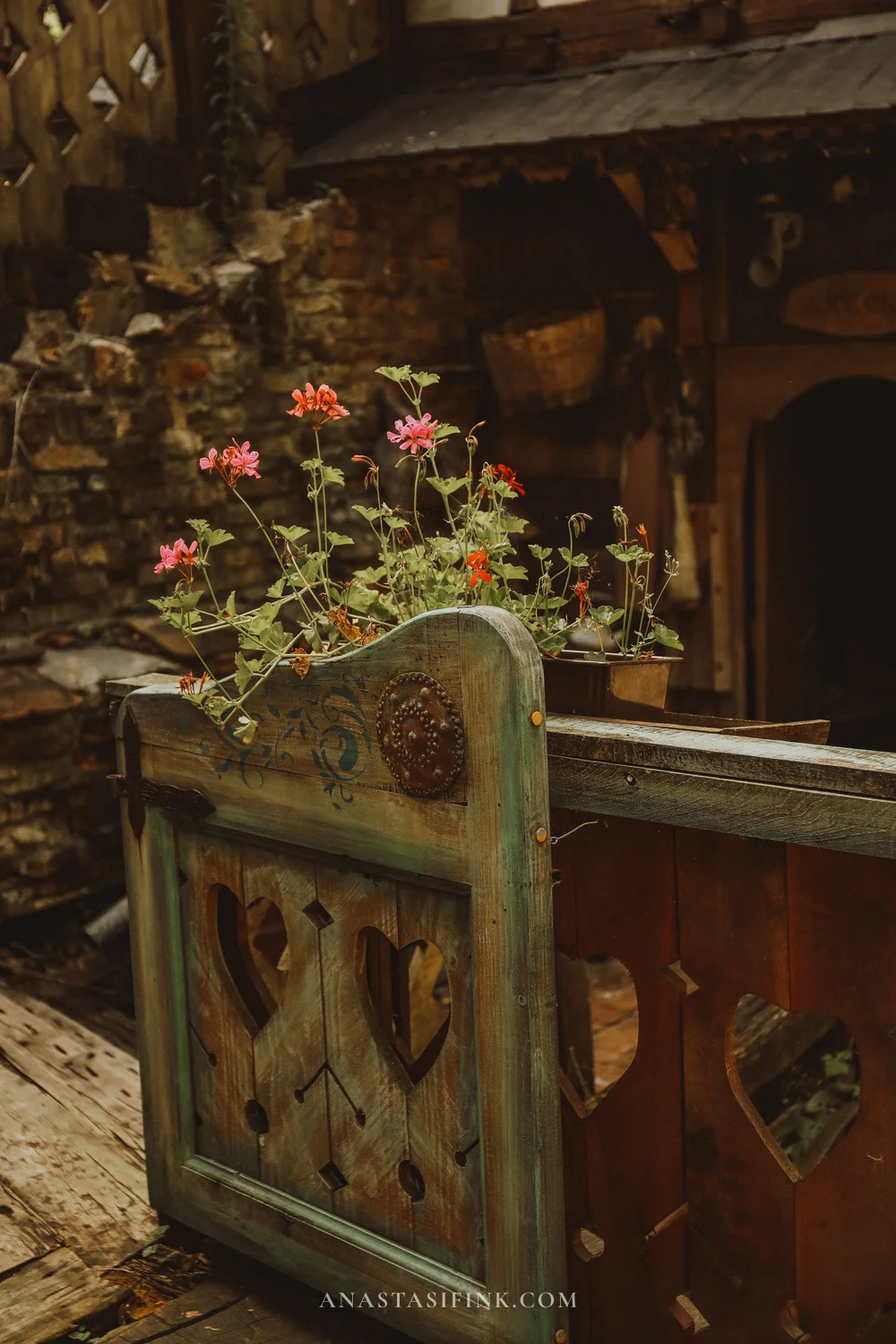
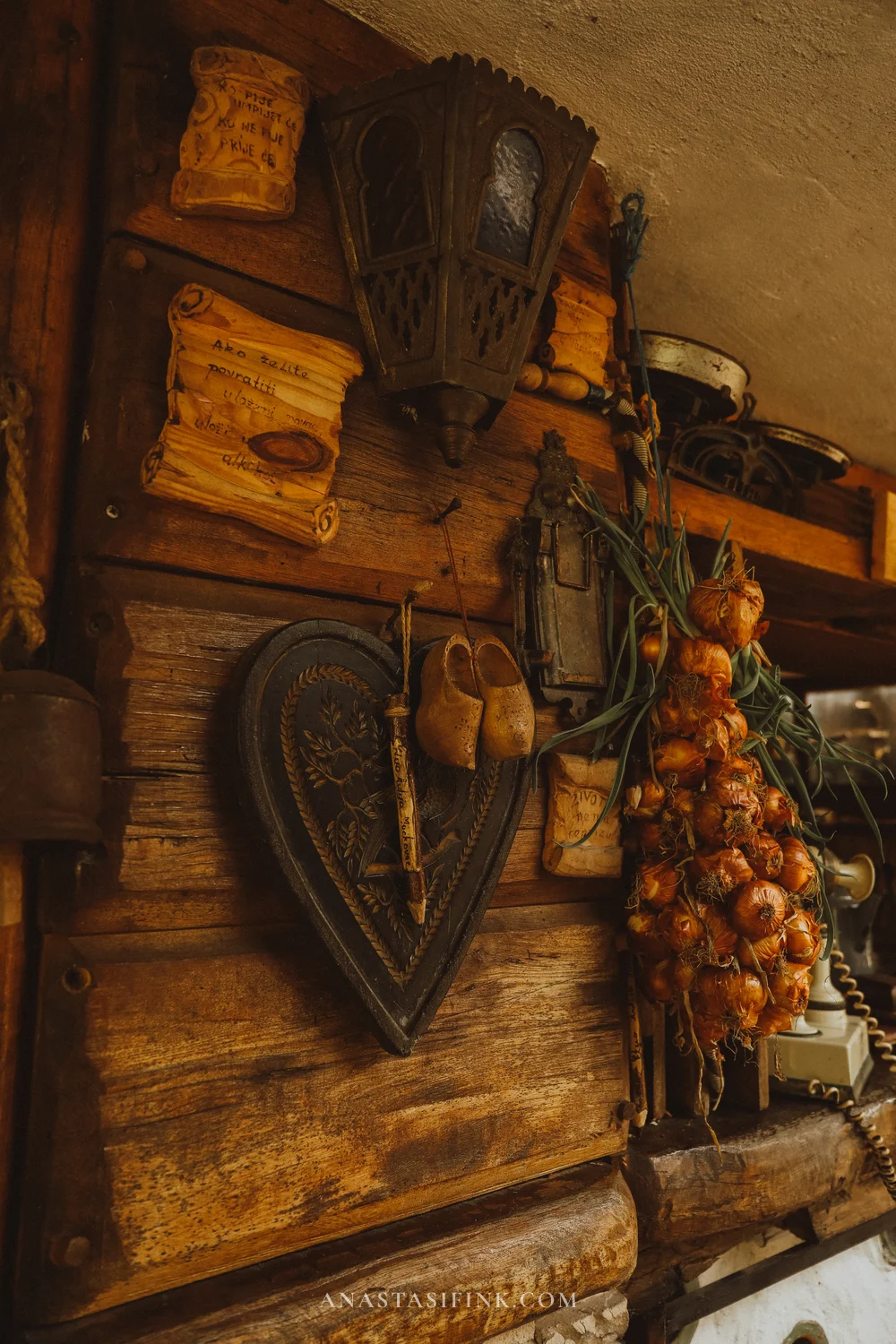
At Mačkovac it pays to look closely at the doors and gates. One wooden archway carries a sign reading “Neka je hairli” — a Bosnian blessing, something like “may it bring good.” The gates are decorated with cut-out hearts, and the doors have wrought-iron ring knockers, the kind people used before doorbells existed.
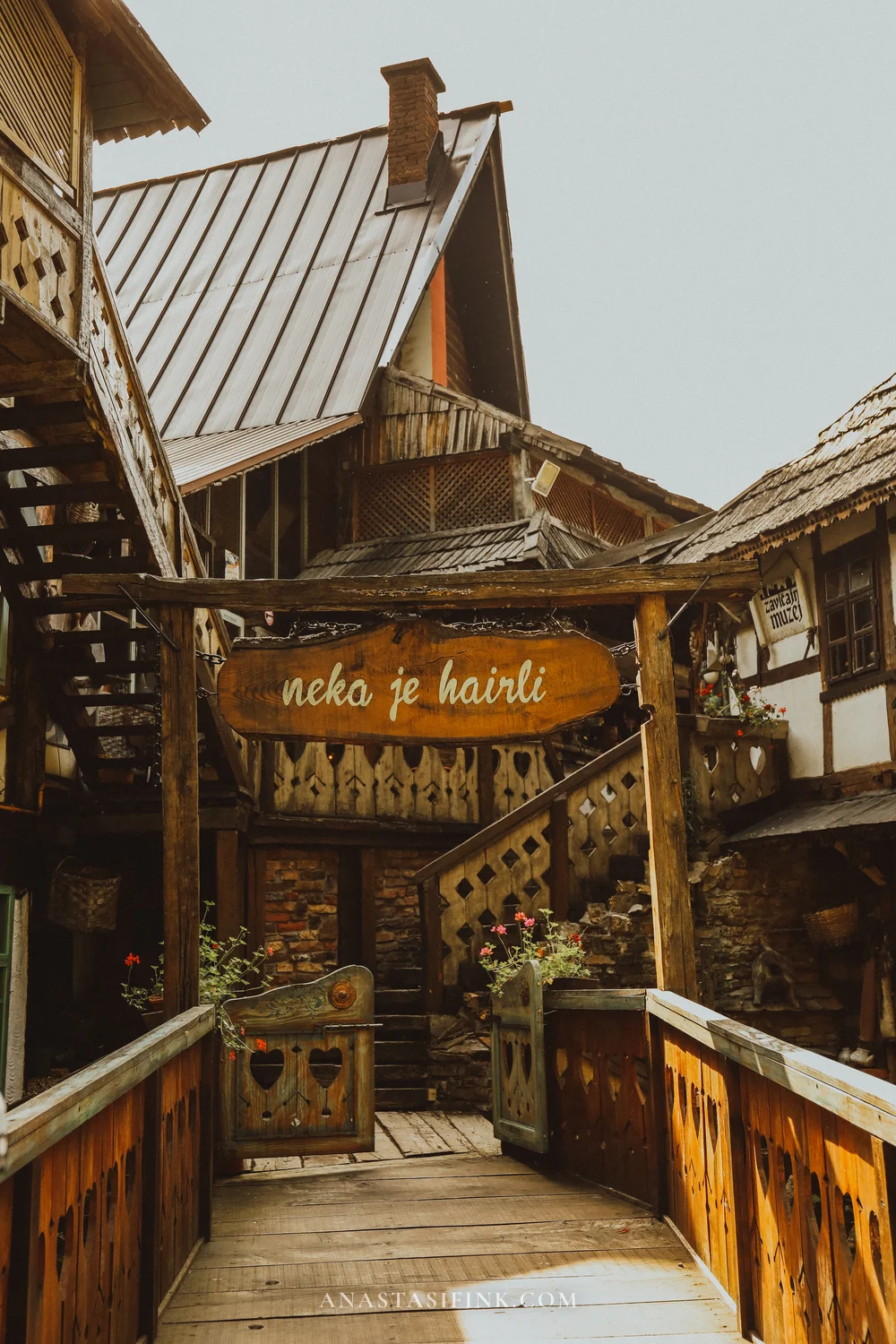
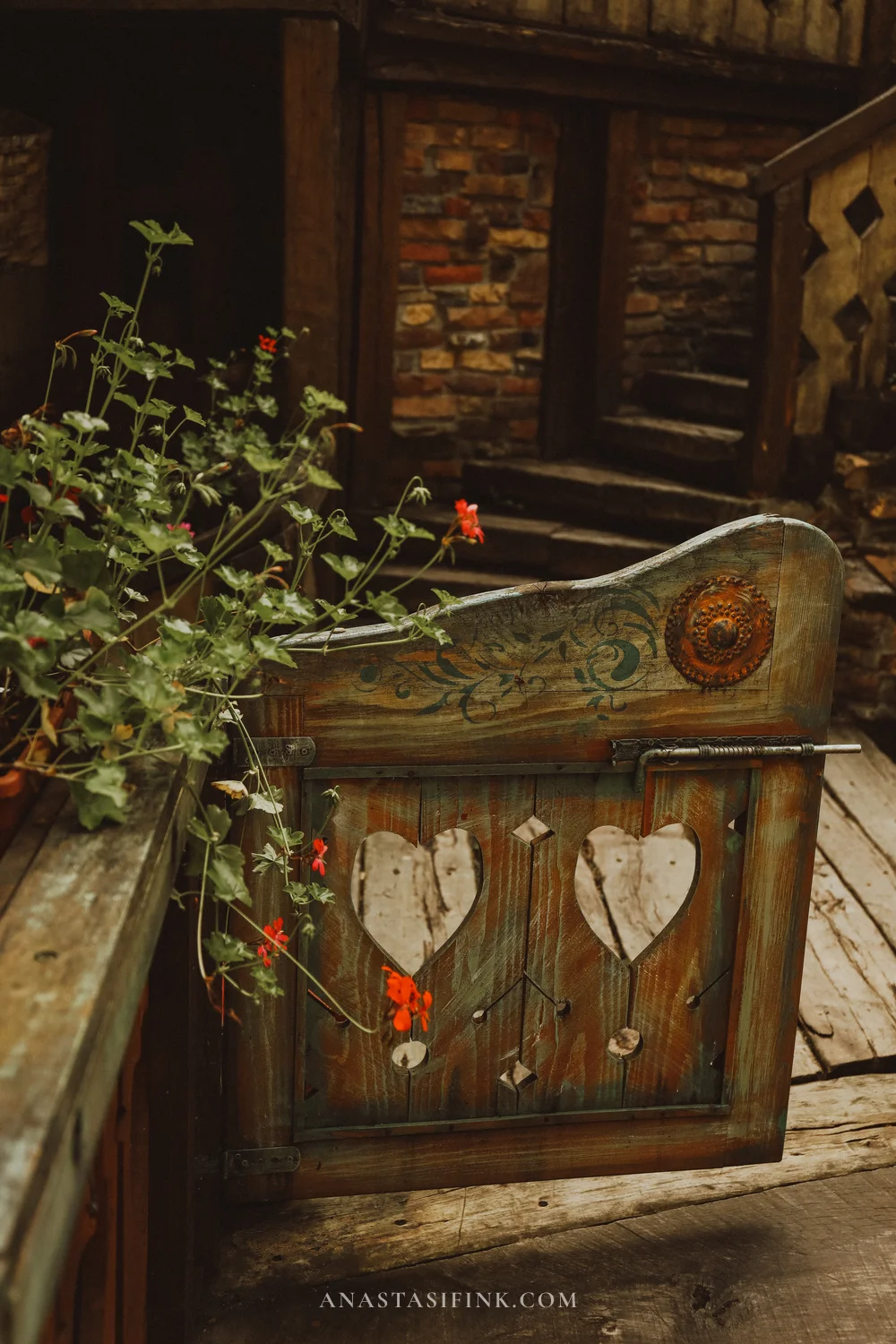
The heart is the most common motif in the carving here
The doors and window frames are painted a faded turquoise, peeling in places — and it’s hard to tell where time did the work on its own and where it got a little help.
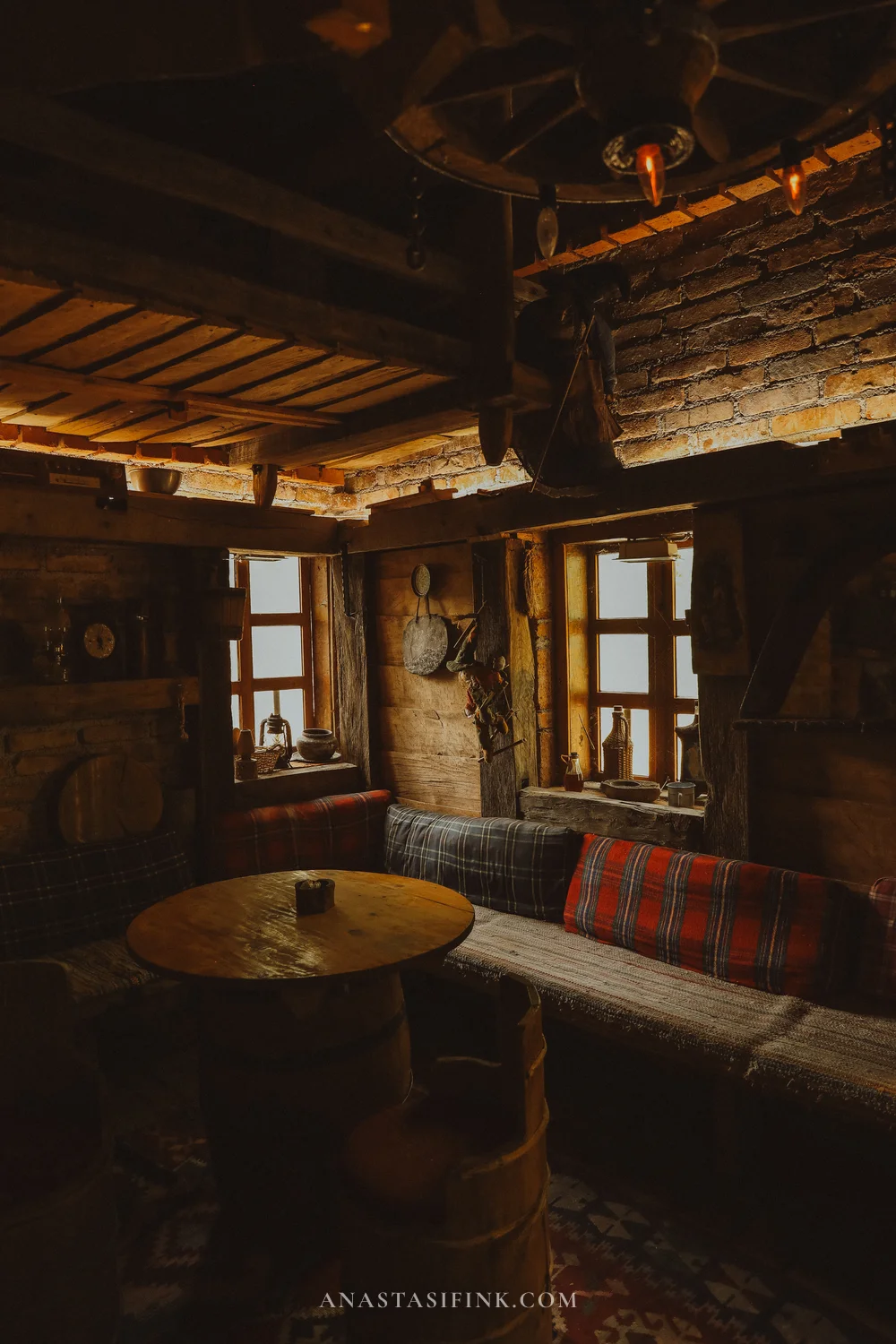
Tucked into one of the half-basements is a small room with brick vaulted ceilings and a wagon-wheel chandelier — part of the restaurant here, more on that below.
The Heritage Museum: 30,000 Objects From the Past
A separate house holds the heritage museum — zavičajni muzej. Its collection includes around 1,600 old books and documents spanning the last two hundred years, 25 pocket watches from the Ottoman era through World War II, and 150 wedding wreaths.

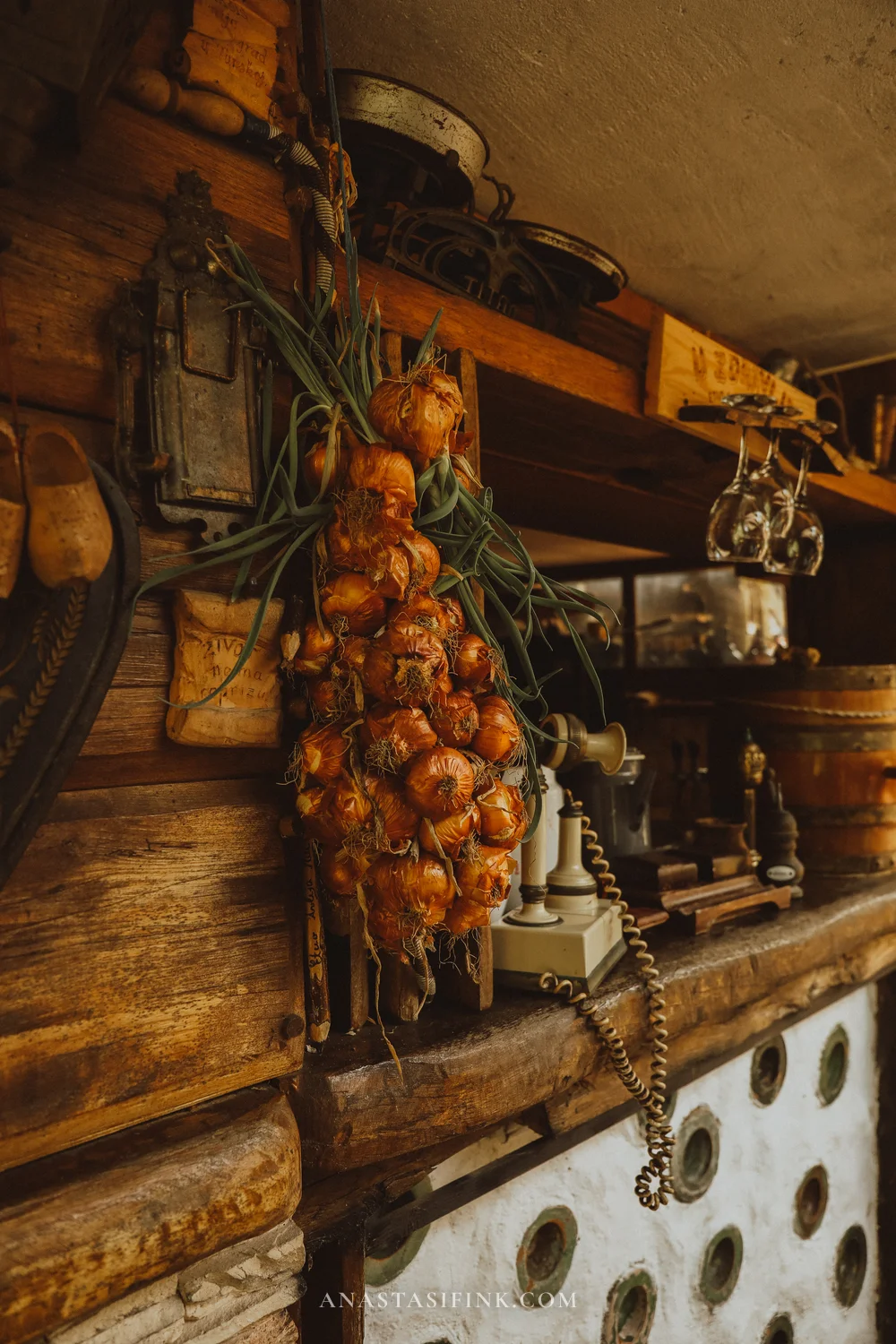
Onions dry next to an old telephone here, and nobody bats an eye
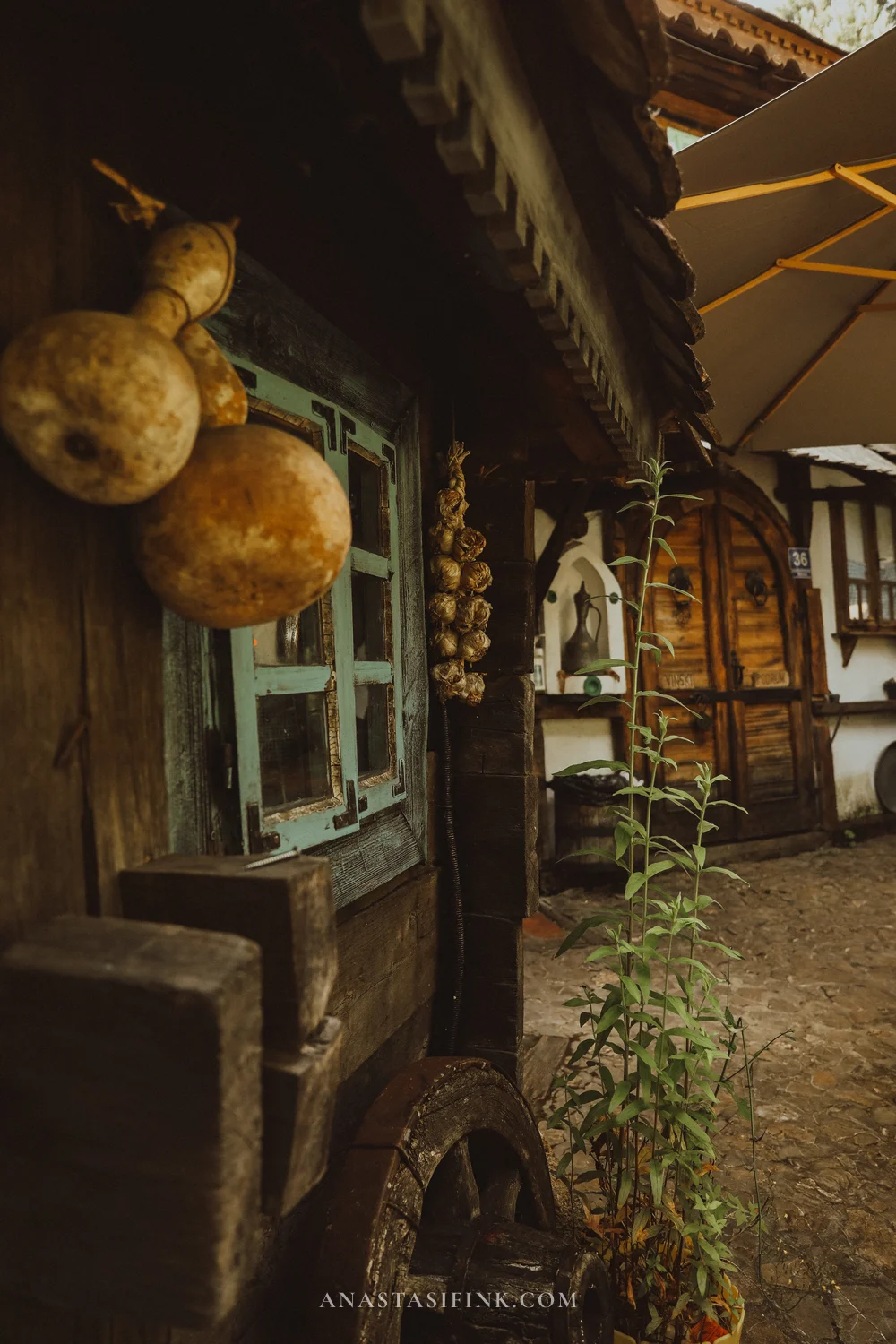
Gourds like these used to be made into water flasks
The Restaurant: Soup Under a Copper Lid
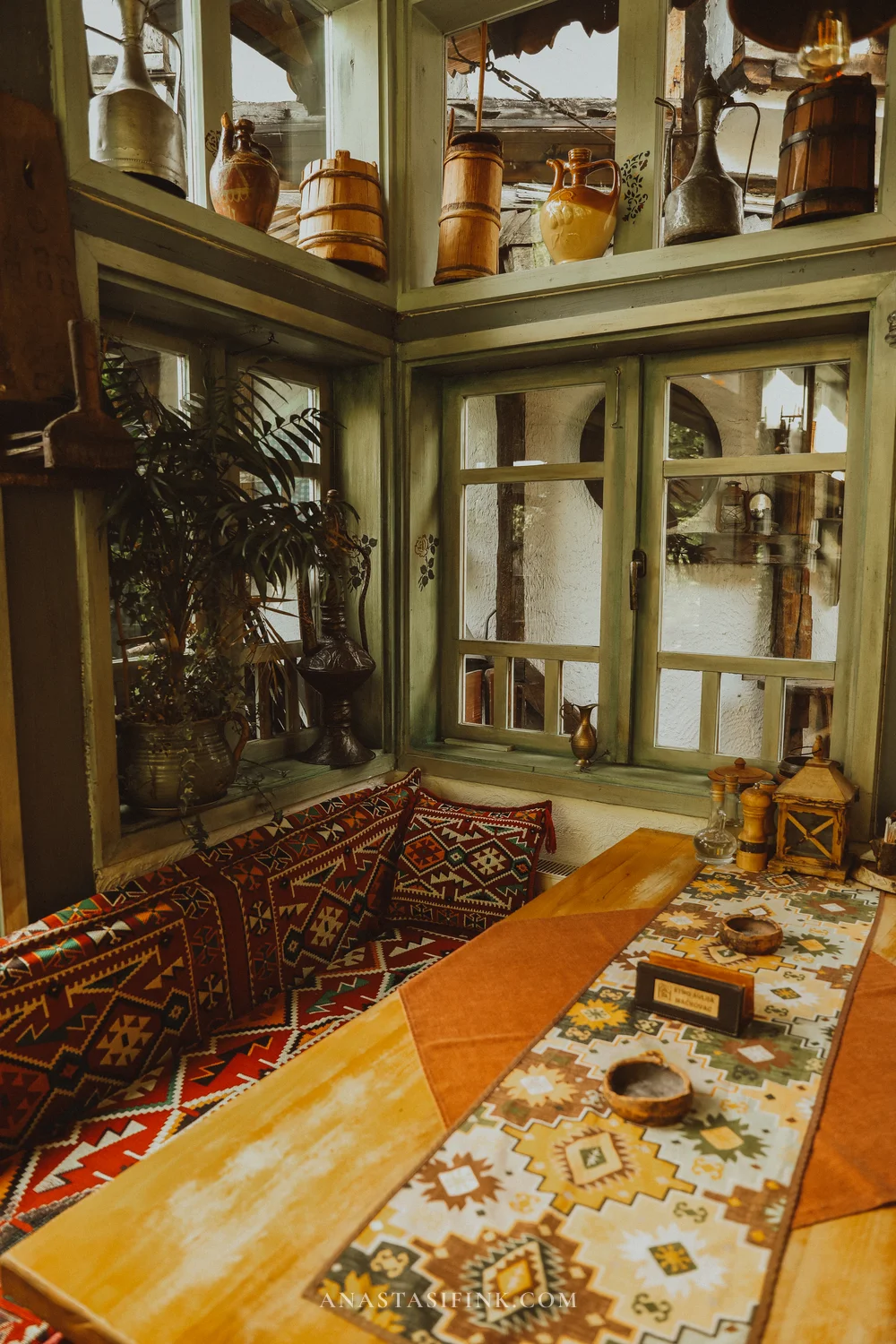
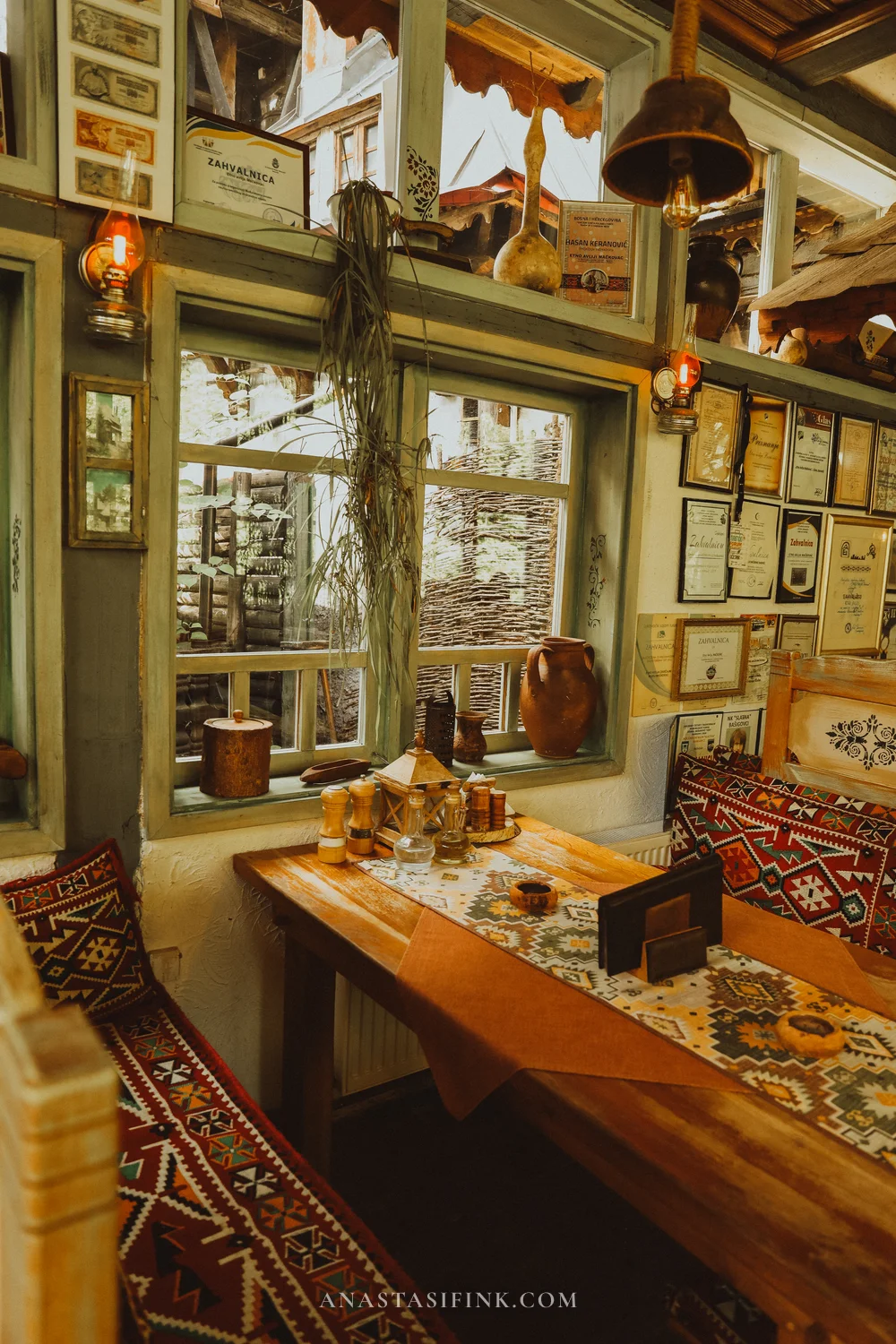
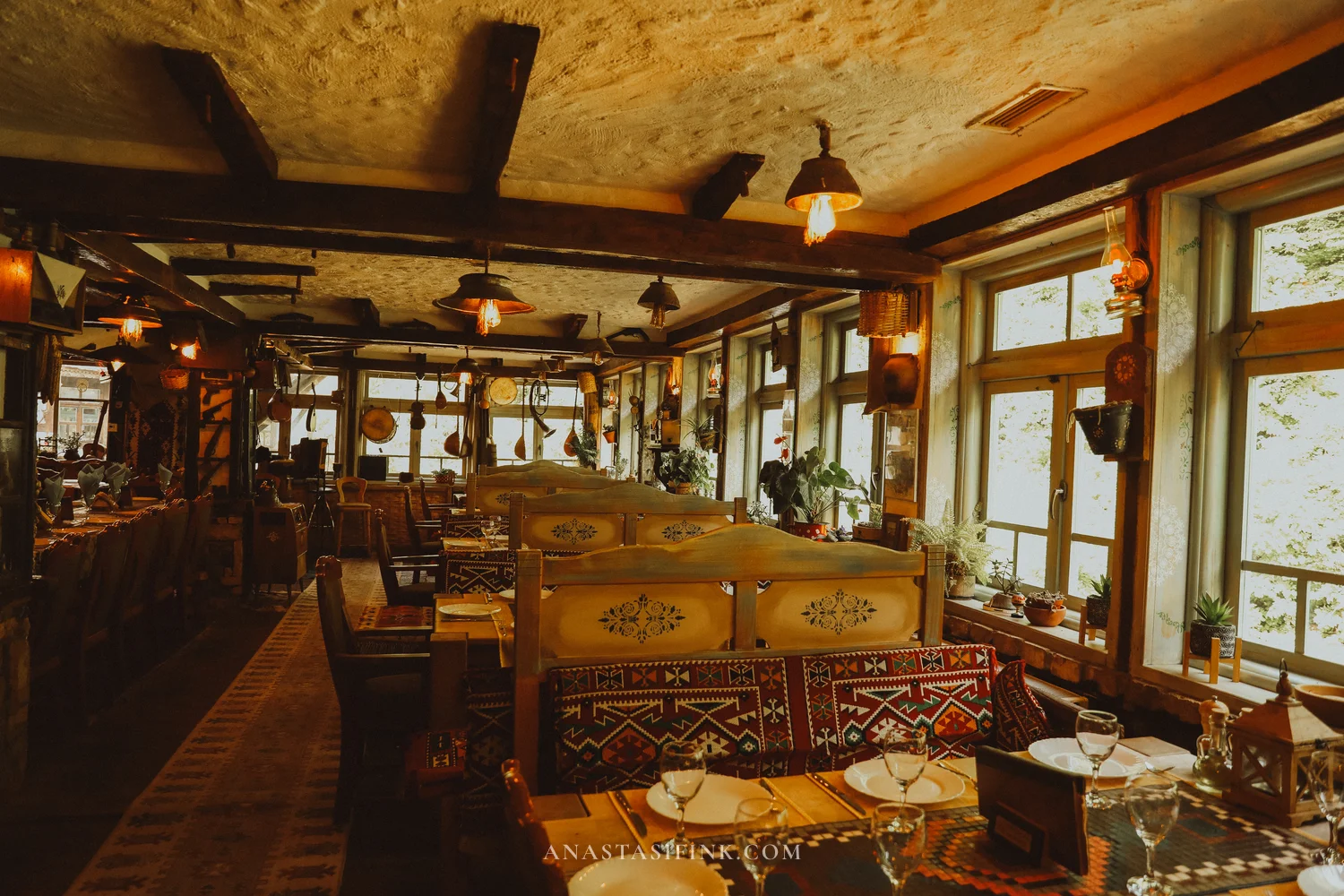
The complex has its own restaurant serving traditional Bosnian food. The dining rooms are decorated the same way as the museum houses: carved wooden partitions, cushions in kilim patterns, old lamps and framed certificates on the walls.
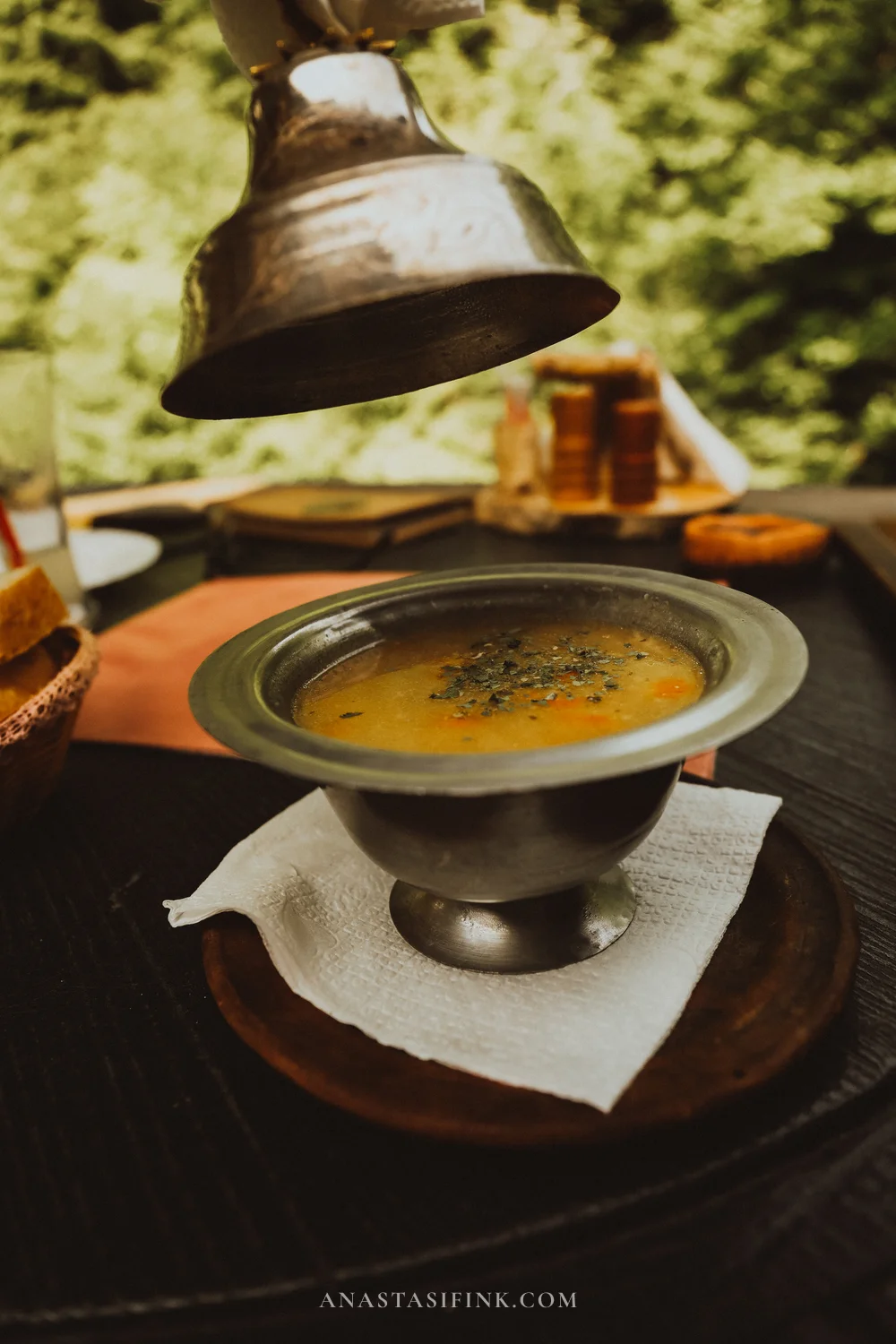
I ordered begova čorba — a thick veal soup with vegetables and okra, one of Bosnia’s most famous dishes. The name translates as “bey’s soup” — a bey was a local governor in Ottoman times, and the dish was considered festive food. It arrives in a footed metal bowl under a domed copper lid, with homemade bread.
The house specialties are cooked “ispod sača” — under a metal dome buried in embers. It’s the Balkan way of slow-cooking meat: veal or lamb spends several hours under the dome and comes out incredibly tender. There’s also charcoal-grilled fish — trout from the local rivers. Main dishes run about 10–20 KM (5–10 € / ~$6–11), and the čorba is around 5 KM (2.50 €). The convertible mark (KM or BAM) is Bosnia’s currency, hard-pegged to the euro: 1 € ≈ 1.96 KM.
Practical Information
- Name: Mackovac Ethno Village (officially Etno avlija Mačkovac)
- Address: Mačkovac village, 5 km from the town of Banovići, Tuzla Canton, Bosnia and Herzegovina
- GPS: ≈ 44.38, 18.50 — search for “Etno avlija Mačkovac” in your navigation app
- Opening hours: daily 9:00–22:00
- Entrance: free
- Lunch: main dishes 10–20 KM (5–10 €), soups ~5 KM (2.50 €)
- How long: 2–3 hours to look around, plus lunch
- Google Maps: Etno avlija Mačkovac
How to Get There
The complex is in the village of Mačkovac, 5 km from the small town of Banovići and roughly 35 km south of Tuzla. A car is by far the easiest way:
- From Tuzla: about 45 minutes via Živinice and Banovići. After Banovići, a narrow paved road follows the Oskova river toward Konjuh mountain.
- From Sarajevo: about 130 km, 2.5 hours via Olovo and Banovići.
- From Serbia: if you’re driving into Bosnia from the Novi Sad side, Mačkovac makes a convenient first stop — it’s right on your way, via Bijeljina and Tuzla.
- Without a car: take a bus to Banovići (regular departures from Tuzla), then a taxi — the ride costs a few marks.
The drive itself is a pleasure: the last few kilometers run through dense forest. The complex also makes a handy stop on the way to the Konjuh protected landscape and the Zlača canyon, so it’s easy to pair the visit with a walk in the mountains.
Tips
- Come at opening time or on a weekday — on weekends families drive in for lunch from all over the area, and the restaurant halls can get crowded.
- Budget more time than you think you need: on paper it sounds like “an hour to see it all,” but the details pull you in.
- Bring cash in marks — cards aren’t accepted everywhere in rural Bosnia.
- Combine it with a trip to the mountains: the entrance to the Konjuh protected landscape and the Zlača canyon is just a few kilometers away.
- In summer, pack insect repellent — the complex sits by a river in the forest.
Final Thoughts
Bosnia has plenty of ethno villages, but most of them were built new in an “old style.” Mačkovac is different because almost everything here is real: houses moved from dying villages, tools people actually worked with, dishes people actually ate from. It’s one of those places worth a detour from your main route — even if Banovići was never part of your plans.
The complex is 5 km from the town of Banovići and 35 km from Tuzla. By car from Tuzla it takes about 45 minutes. Without a car: bus to Banovići, then a taxi.
Entry to the grounds is free. It’s worth combining the visit with lunch at the on-site restaurant — main dishes cost 10–20 KM (5–10 €).
The complex is open daily from 9:00 to 22:00, year-round. Weekday mornings are the quietest; on weekends many local families come for lunch.
An unhurried walk through the yards and the museum takes 2–3 hours, plus time for lunch at the restaurant.
Begova čorba — a thick veal and vegetable soup — plus meat cooked “ispod sača,” slow-cooked under a metal dome covered with embers, and charcoal-grilled trout.
Yes, especially if traditional Balkan life interests you: it’s one of the most authentic ethno villages in Bosnia, with genuine relocated houses and a collection of 30,000 objects. The visit pairs well with Konjuh mountain and the Zlača canyon.