Pliva Lakes, Bosnia: Mlincici Watermills and Bridge of Love in Jajce

Pliva Lake Park on the Pliva Lakes is one of the best-known natural spots in central Bosnia, five kilometers from the town of Jajce. Here, on the cascades between two lakes, stand the old wooden Mlinčići watermills, with the Bridge of Love and lakeside boardwalks right next to them.
What Are the Pliva Lakes
The Pliva Lakes are two lakes on the Pliva river in central Bosnia: the Great Lake (Veliko Plivsko jezero) and the Small Lake (Malo Plivsko jezero). They sit five kilometers from Jajce — the former capital of the medieval Bosnian kingdom, famous for its 22-meter waterfall right in the town center. Most travelers come to Jajce for the waterfall and the fortress and leave the lakes “for later.” I think that’s a mistake: this is where the best part is.
The park around the lakes is free and always open. People stroll along the wooden boardwalks, swim in designated areas, rent boats and pedal boats, sit in cafes by the water. But the main reason to come here is the mills.
The Mlinčići Watermills
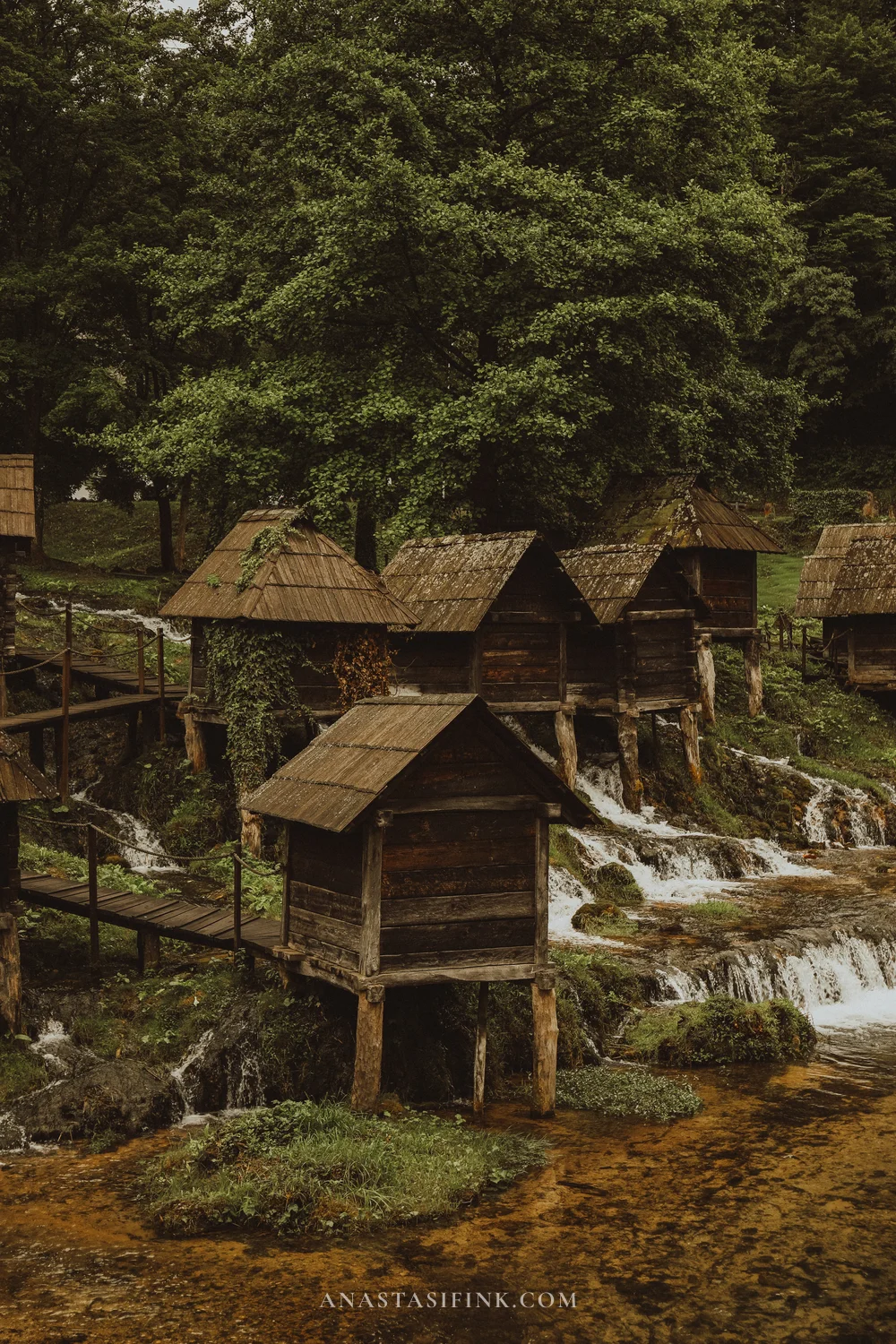
Where the water drops from the Small Lake to the Great Lake, the river splits into dozens of channels and small waterfalls. And right on these cascades, on wooden stilts, stand tiny log huts with plank roofs — watermills, mlinčići in Bosnian, “little mills.” Each one is about the size of a garden shed.
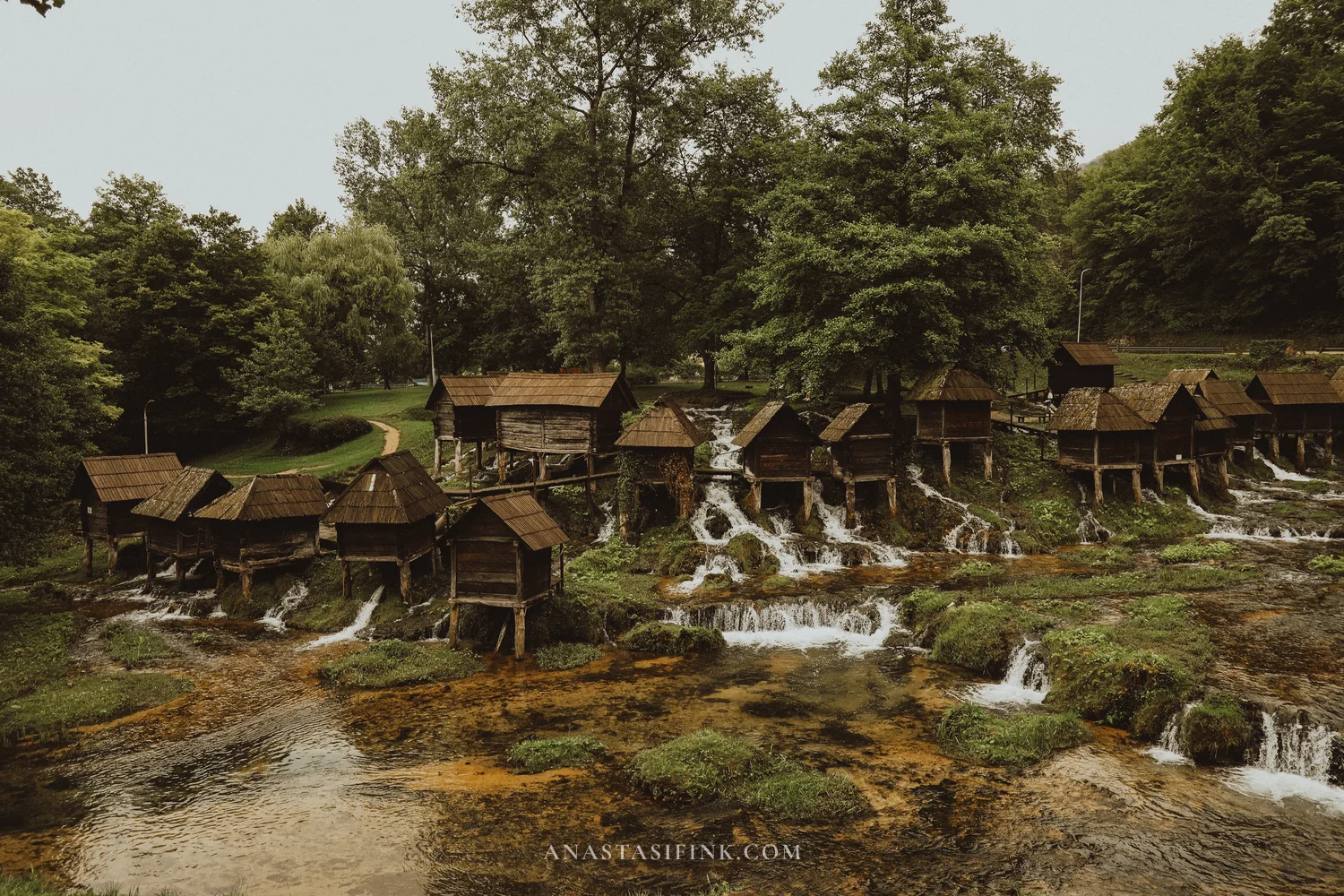
This is no stage set — it’s a genuine monument. The mills on the Pliva have been known since the Middle Ages: an Ottoman census of 1562 counted 24 mills here, and by the 17th century there were 26. The huts were built of oak; each belonged to a landowner and was rented out to peasants from nearby villages, who paid for the milling in flour. Grain was ground here right up until World War II. In 2009 the complex was declared a national monument of Bosnia and Herzegovina.
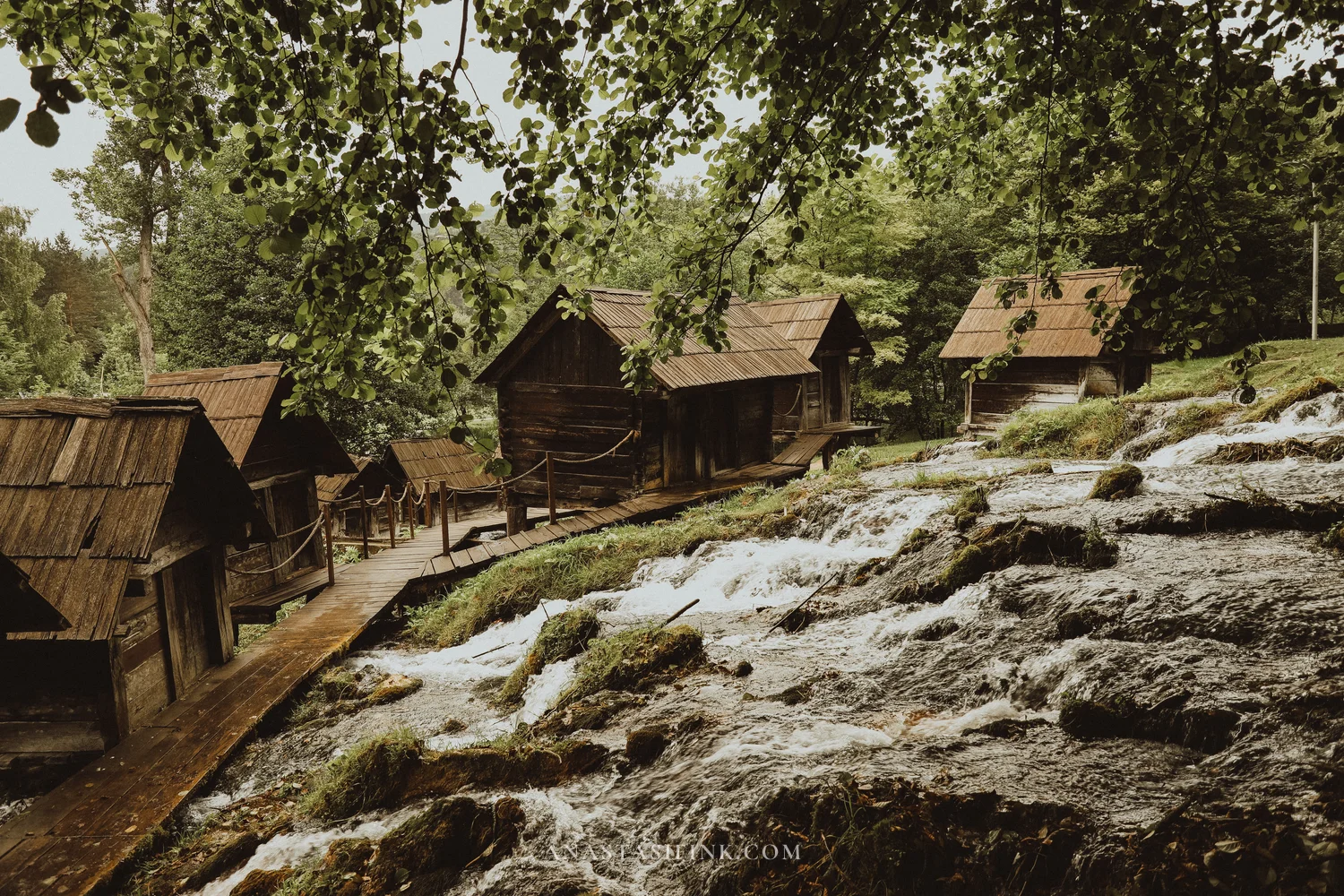
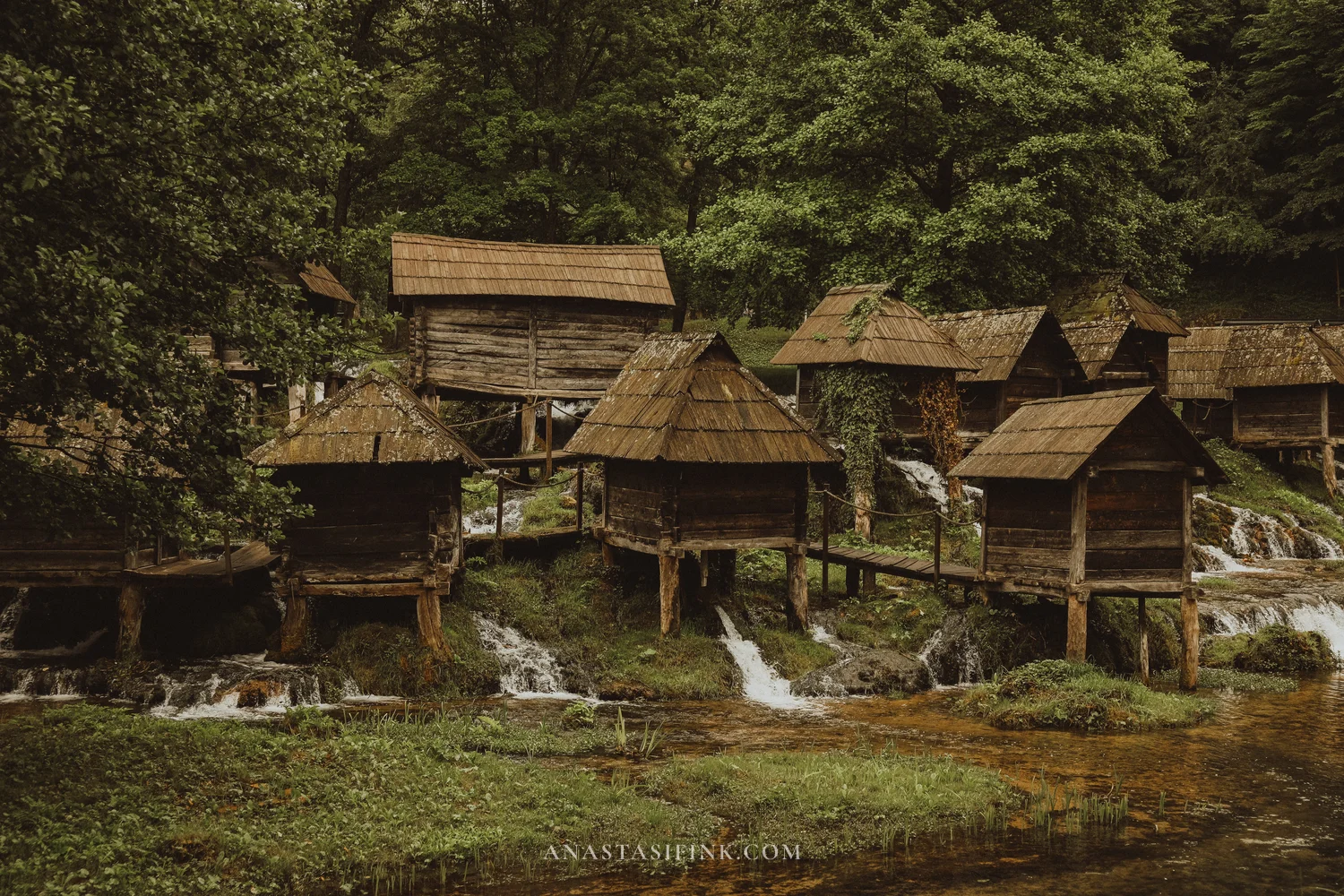
Water rushing underneath
You can’t go inside the mills — they’re locked. But wooden walkways run between the huts, so you can walk around the whole complex with the water racing right under your feet. One mill has a roof overgrown with ivy, another has crooked stilts, but these structures have stood on the rapids for centuries.
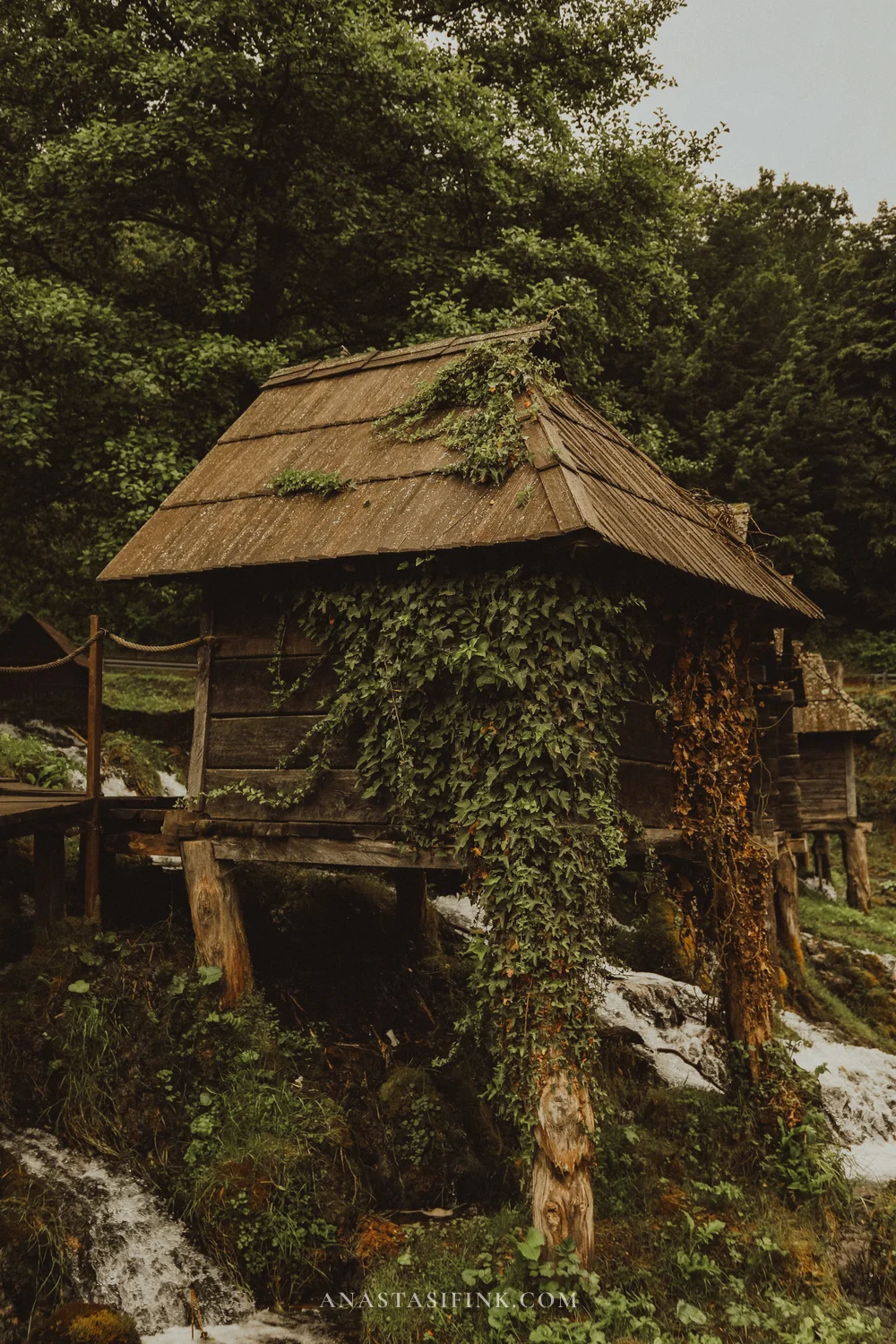
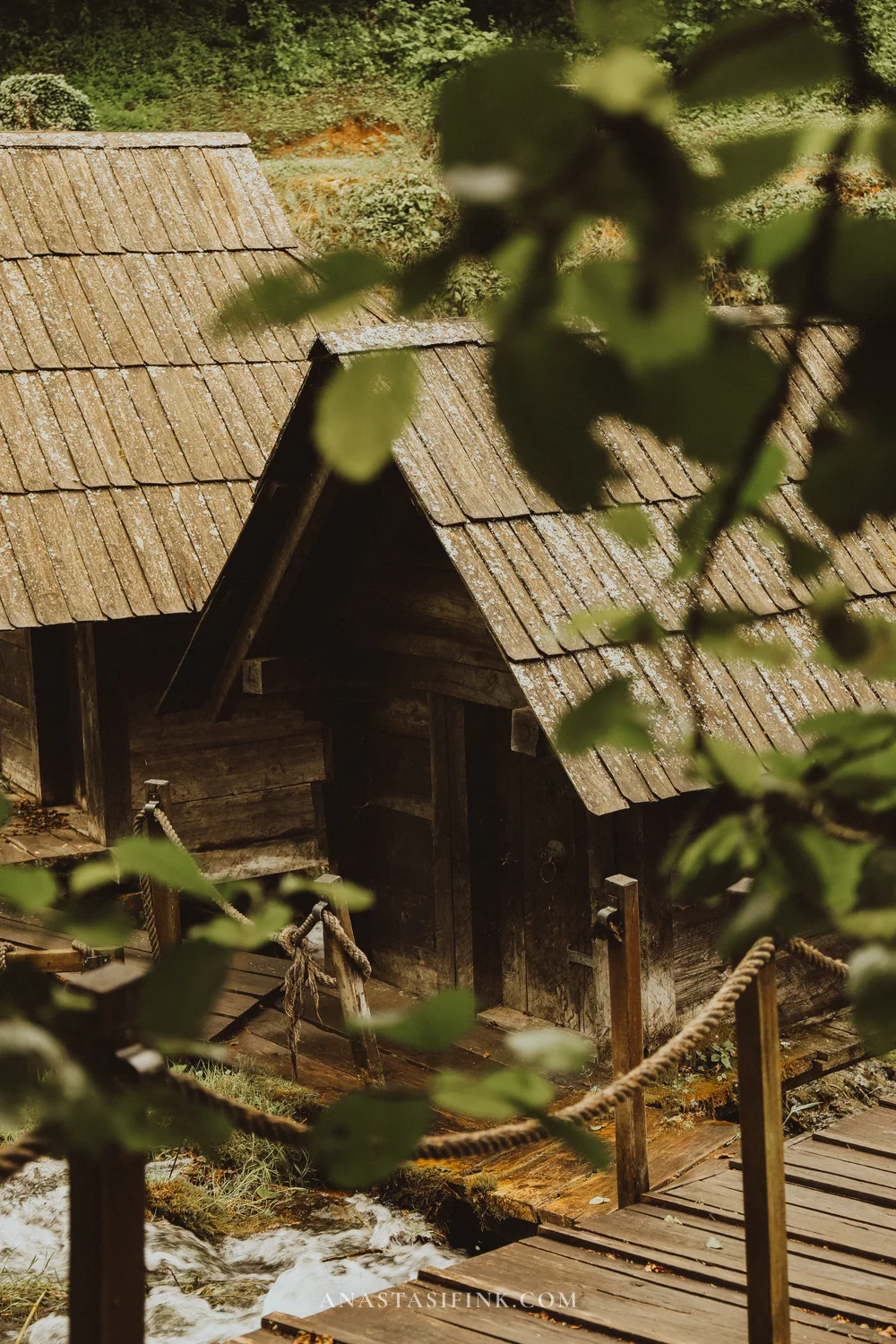
The mills up close
Bridge of Love
Next to the mills, a wooden bridge crosses the channels — Most ljubavi, the Bridge of Love. It’s a long curved pedestrian boardwalk with railings that runs right above the cascades: waterfalls on one side, the calm surface of the lake on the other. It’s considered a romantic spot, and couples come here for walks.
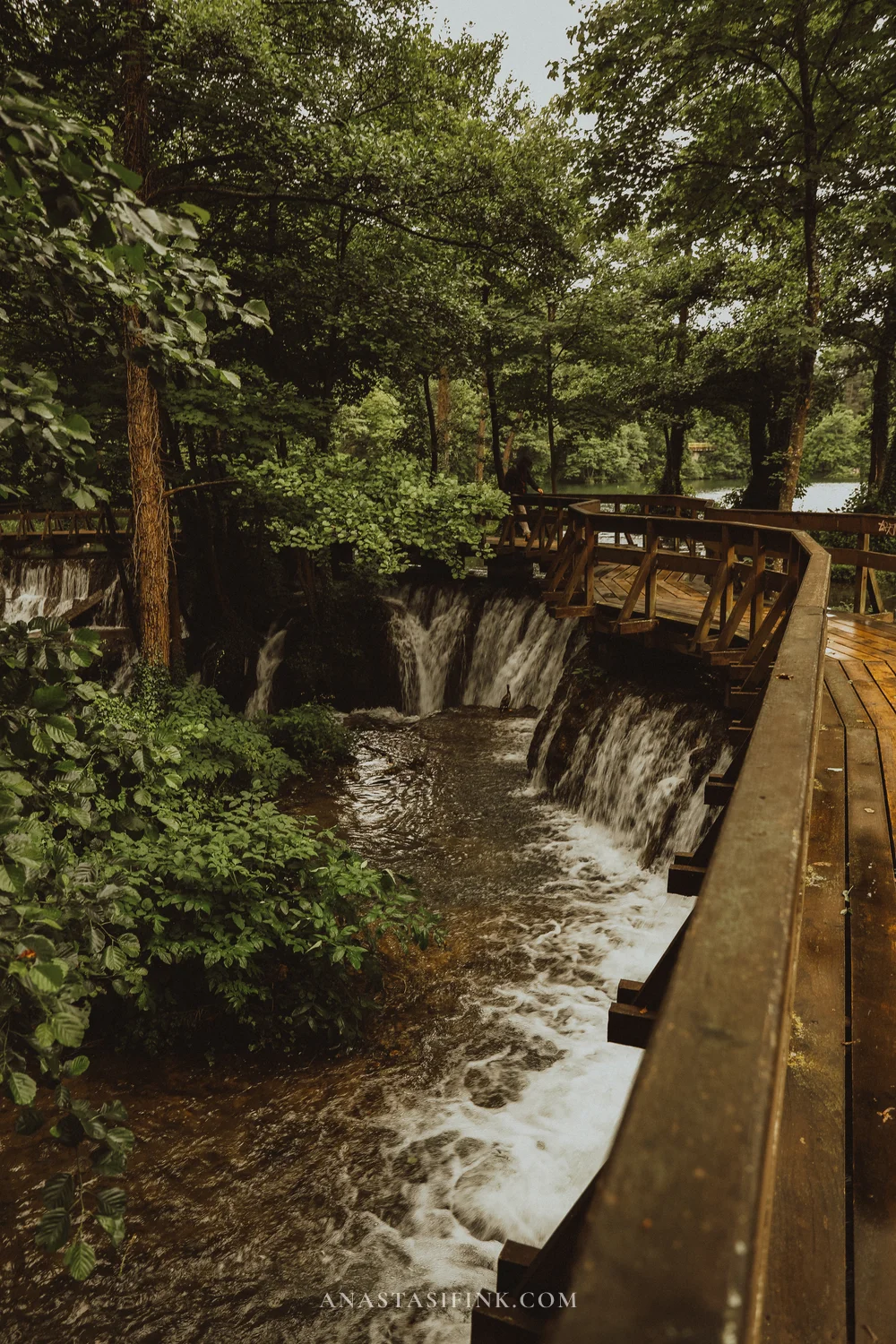
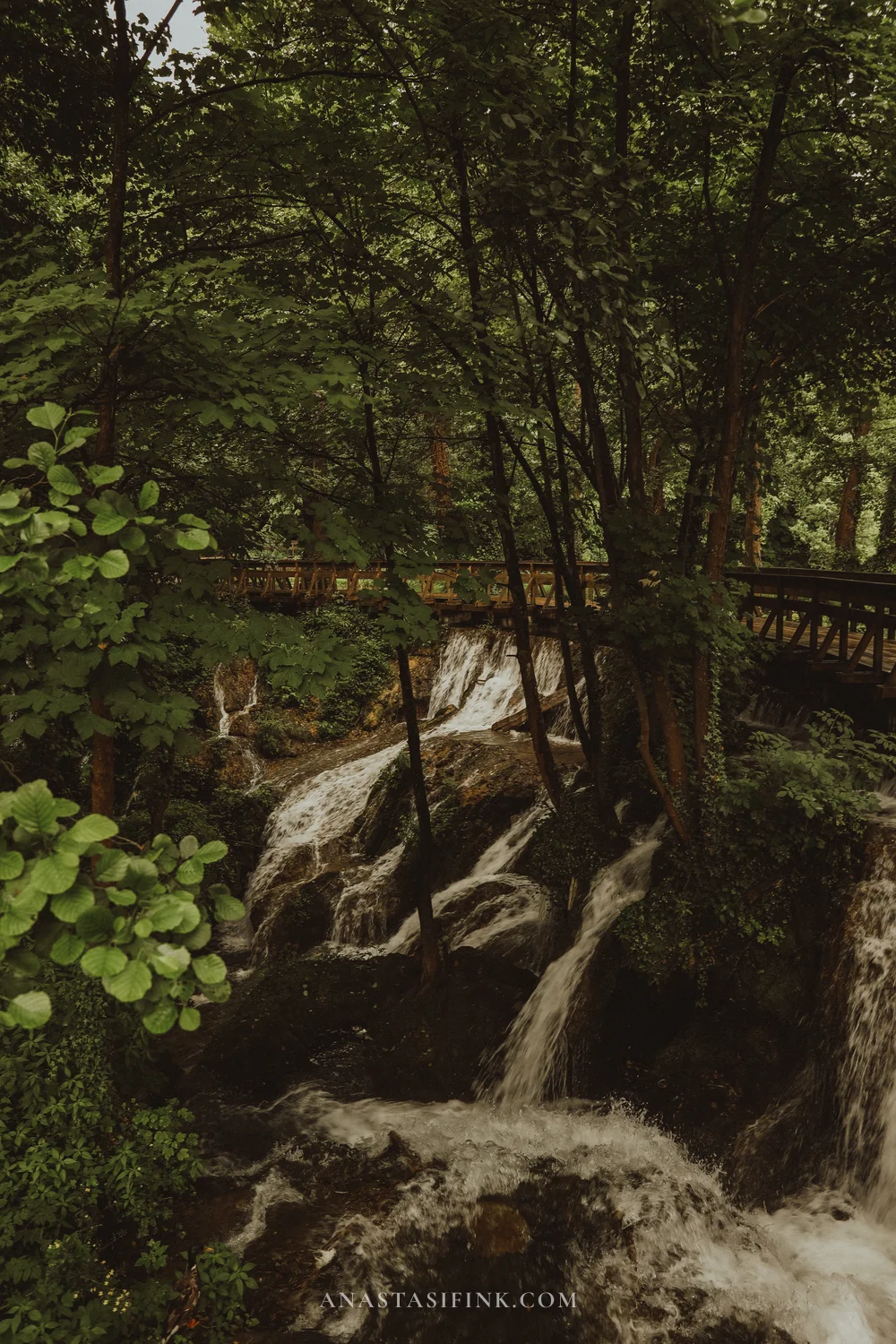
Bridge of Love
After rain the boards can be wet and slippery — hold on to the railings.
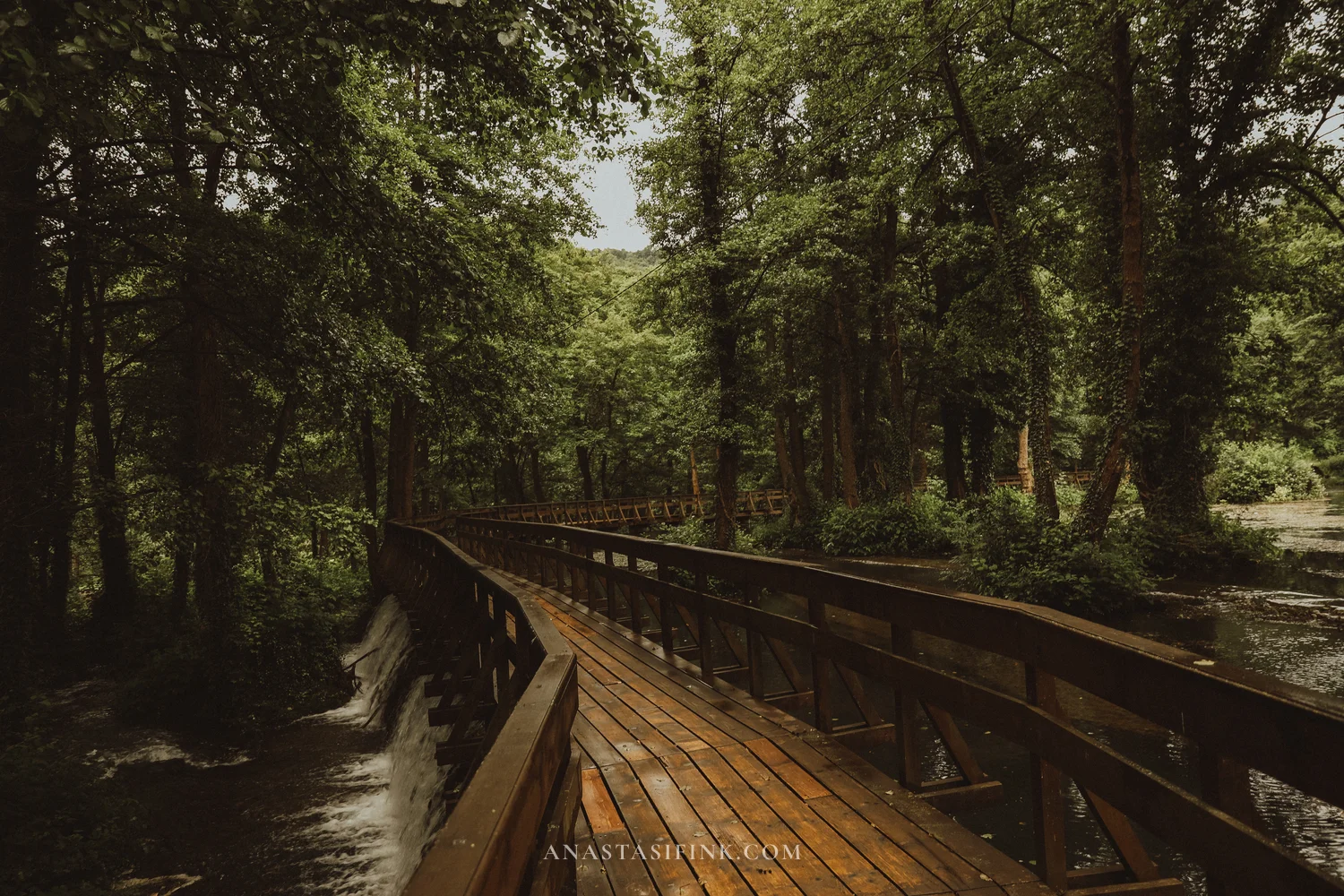
Walking Along the Lake
From the bridge and the mills, boardwalks and paths spread out along the shores. The Great Lake stretches for almost two kilometers, with a shaded path running alongside it, benches by the water and a couple of cafes. In summer people swim and go boating here, and there’s a campsite on the shore.
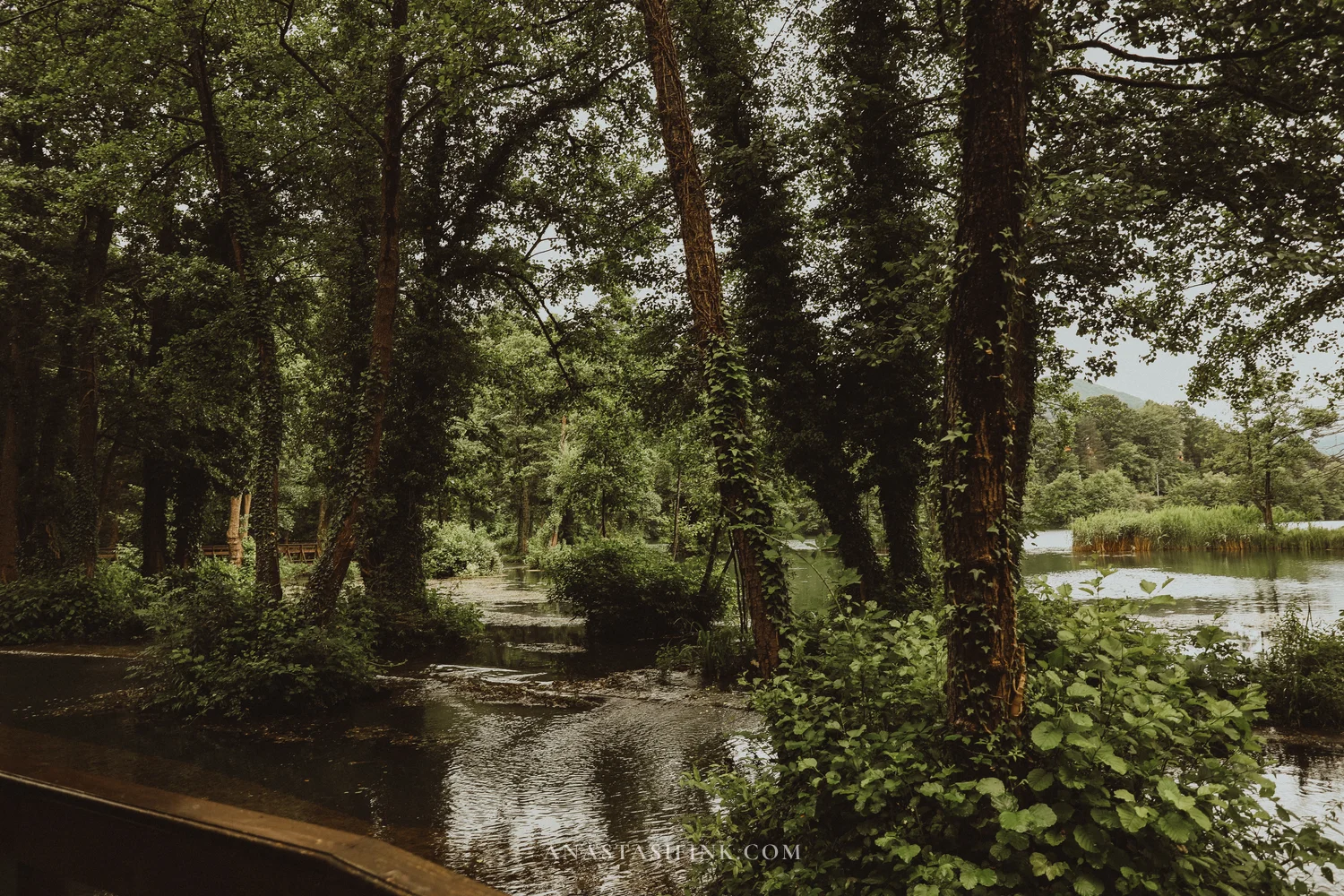
Fun fact: in 1899, one of the first hydroelectric power plants in the Balkans started running on the Pliva in Jajce — people were harnessing this river’s energy long before the tourists arrived.
Practical information
- What: Pliva Lake Park — the Pliva Lakes, the Mlinčići watermills and the Bridge of Love
- Where: 5 km west of Jajce, on the road to Bihać
- GPS: 44.3474, 17.2286
- Entrance: free, the area is open around the clock
- How to get there from Jajce: 10 minutes by car or taxi (5–10 KM / ~3–5 €); on foot — about 90 minutes along a flat road following the river
- How much time: 1–2 hours for the mills and the bridge, half a day if you add swimming and lunch by the lake
- Nearby: the waterfall in the center of Jajce (viewing platform 10 KM / ~5 €), the fortress (5 KM / ~2.5 €)
- Google Maps: Pliva lake park
Tips
- Come on a weekday — on weekends and holidays the mills get crowded, as this is a popular spot with locals.
- Wear shoes with good grip: the boardwalks and walkways are wet after rain.
- Bosnia’s currency is the convertible mark (KM/BAM), firmly pegged to the euro: 1 € ≈ 1.96 KM. Cash comes in handy at the lakeside cafes.
- Combine it with sightseeing in Jajce: the waterfall, the fortress and the old town take another half day. Together it makes a great stop on the way between Sarajevo and Bihać.
- Bring a swimsuit in summer — the Great Lake has designated swimming areas, and the water is clean.
Nearby: My Bosnia road trip runs for 7 days through Travnik, Sarajevo, Mostar, Blagaj and Kravica. Near Banovici, the Mackovac Ethno Village is an open-air museum with 30,000 exhibits and watermills. More in my Bosnia and Herzegovina guides.
FAQ
The lakes are 5 km west of the town on the road to Bihać. By car or taxi it’s about 10 minutes (a taxi costs 5–10 KM / ~3–5 €). On foot it takes roughly 90 minutes along a flat road following the Pliva river.
Entrance is free. The area is open around the clock — no tickets, no ticket booths. You only pay for boat rentals, cafes or the campsite.
It’s a complex of about two dozen small wooden watermills from the 16th–17th centuries, built on the cascades between the two Pliva Lakes. They ground grain right up until World War II. Since 2009 the complex has been a national monument of Bosnia and Herzegovina.
No, the huts are locked. But wooden walkways run between them, so you can walk around the whole complex and see the mills up close.
1–2 hours is enough for the mills and the Bridge of Love. If you want to swim, rent a boat or have lunch at a lakeside cafe, plan on half a day.
From late spring to early autumn: everything is green, the cafes and boat rentals are open, and you can swim. Weekdays are noticeably quieter than weekends. After rain there’s more water in the cascades — that’s when the mills look their best.
Yes, especially on the way between Sarajevo and Bihać. In a single day you can see the waterfall in the town center, the medieval fortress and the mills at the lakes — few places in Bosnia pack so much into such short distances.
Final Thoughts
The mills on the Pliva are one of those places where there’s nothing to “tick off a list”: you come, walk the boardwalks, sit by the water. If you’re passing through Jajce, take that five-kilometer detour. It’s the kind of place you want to come back to when you’re tired of the big-name routes.