GWK Cultural Park Bali: Complete Guide to Garuda Wisnu Kencana

GWK Cultural Park in Bali turned out to be such a pleasant surprise. I came here a little skeptical — just to see the giant Garuda Wisnu Kencana statue that you can spot from anywhere on the Bukit Peninsula. But the park had way more in store: a massive grounds, Balinese dance performances right at the foot of the statue, tropical gardens, and these incredible corridors carved straight into the limestone cliffs!
Why visit GWK
GWK stands for Garuda Wisnu Kencana, which translates to “Golden Garuda and Vishnu.” It’s a huge park (the equivalent of nearly 80 football fields!) with a giant statue at its center, sitting on the southern tip of the Bukit Peninsula. From the viewpoints, you can see the airport, the ocean, and half of southern Bali.
The statue is the work of Balinese sculptor Nyoman Nuarta. He dreamt it up in the early 1990s, but it took almost 30 years to build and only opened in the fall of 2018. The result: 121 meters tall, made of copper and brass on a steel frame — one of the tallest statues in the world. The scene depicts Vishnu, the Hindu protector god, riding the giant bird Garuda. It’s a moment from the Mahabharata.
For some perspective for my American friends — the Garuda Wisnu Kencana statue stands taller than the Statue of Liberty (93m with pedestal) and Christ the Redeemer in Rio (38m). It’s a serious monument.
This park often shows up on those “tourist trap Bali” lists — kind of like how some people talk about the Bird Park (which is actually amazing!) or the Monkey Forest in Ubud. And honestly, I went in thinking the same thing. But the park genuinely surprised me!
Sure, it’s built for tourists, but it’s done really well. Big grounds, thoughtfully laid-out paths, local performances every half hour or hour in different parts of the park, and those quarry corridors — a totally unexpected vibe for Bali.
Entrance and fountain
Right past the ticket booths, there’s a plaza with a fountain and a small golden statue of Garuda and Vishnu. A mini version of what’s waiting at the end.
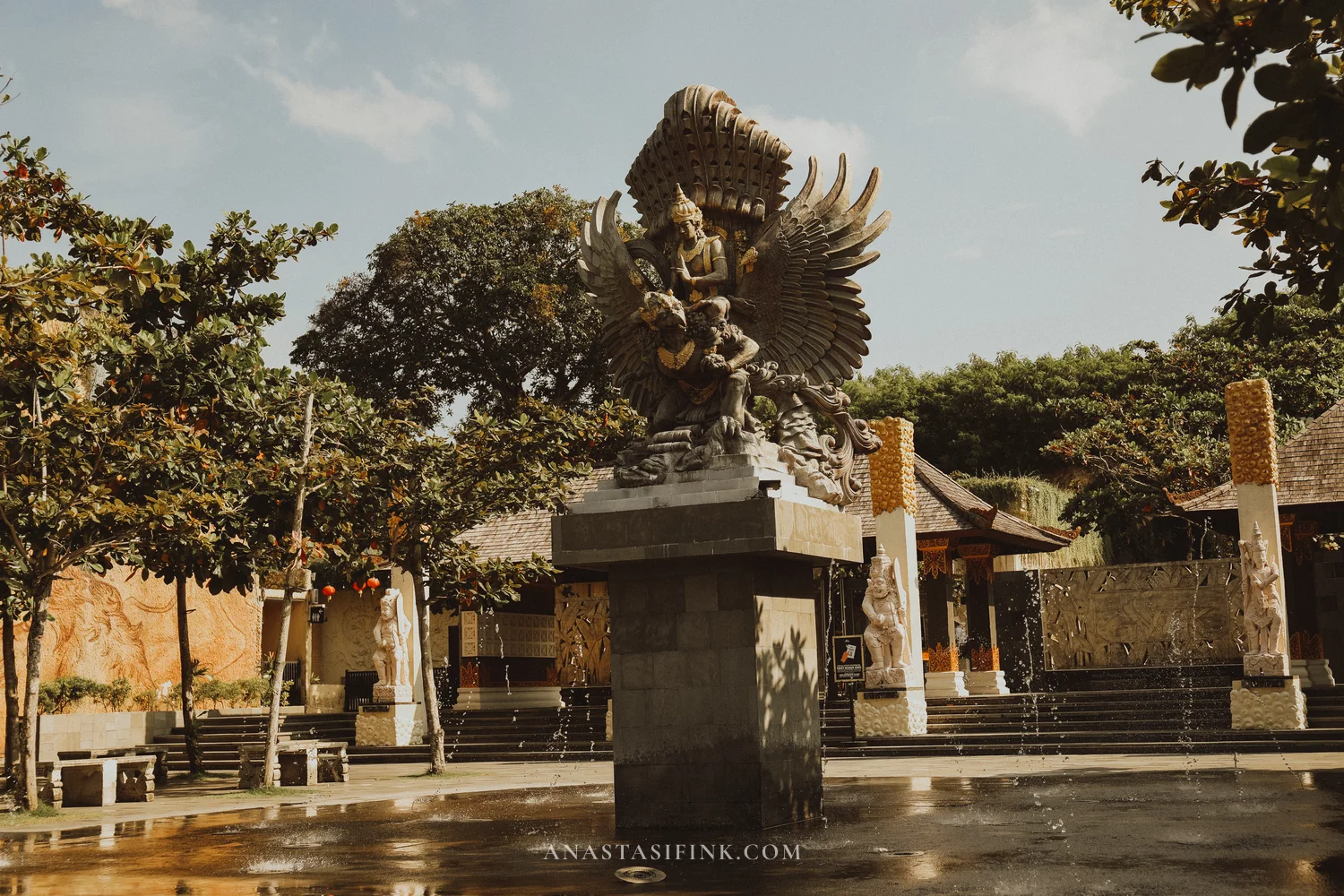
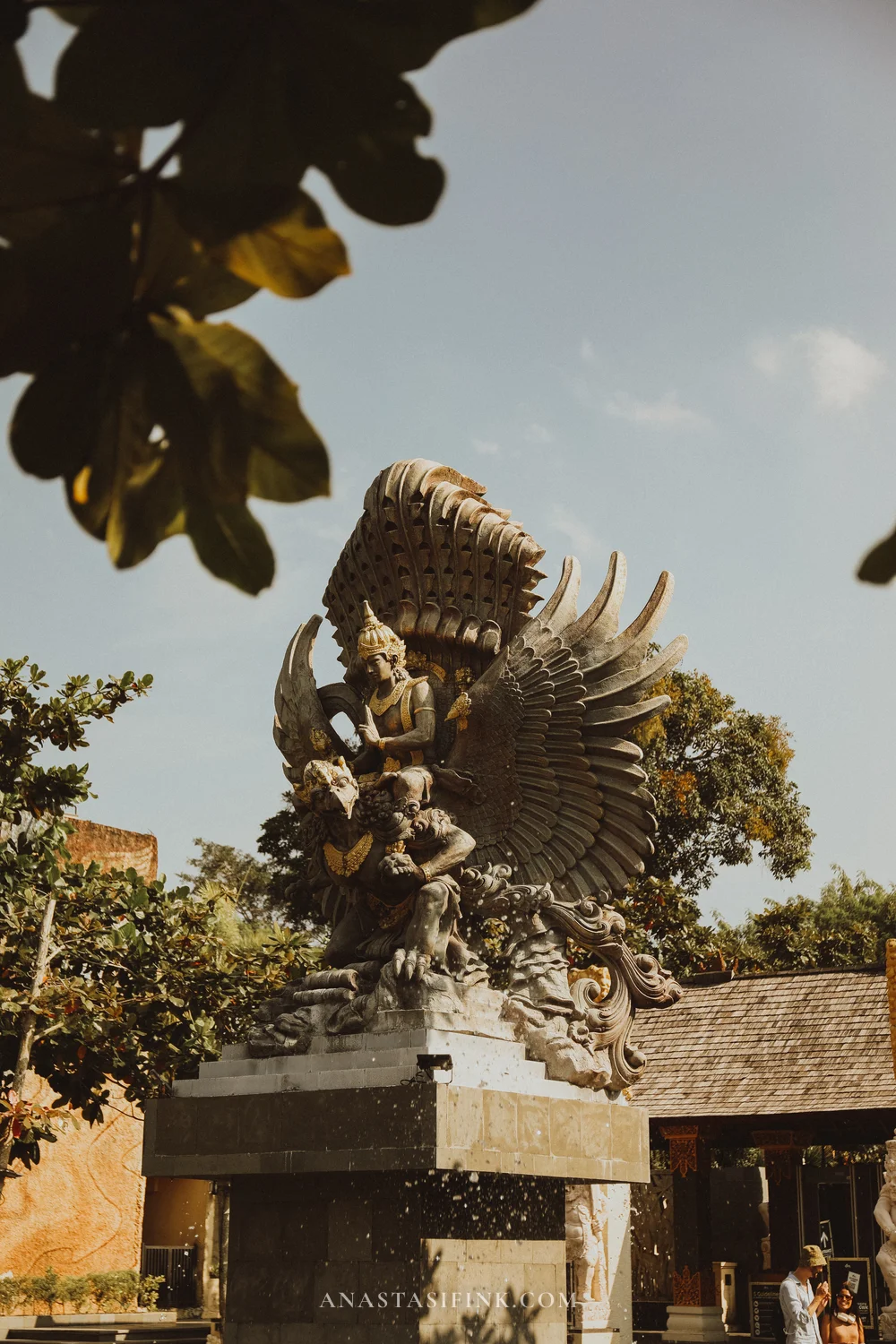
Tip: if you arrive at opening time, you’ll basically have the place to yourself!
Past the plaza, the main path winds into the shade — between pavilions and carved walls. The park is built on multiple levels: stairs, climbs, descents. Like a light little hike.
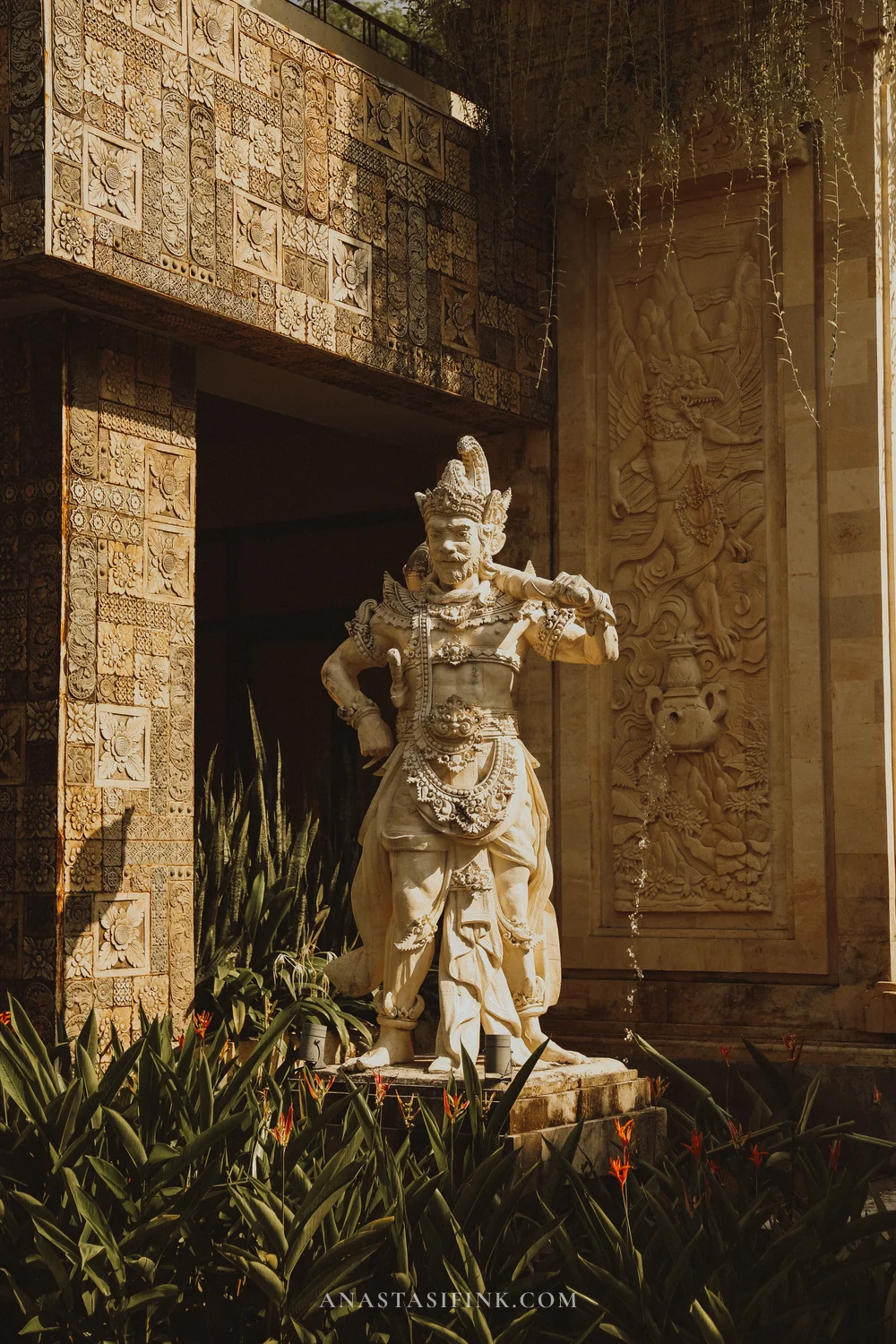
These figures (Balinese call them dvarapalas) stand at every Balinese temple. Their job is to ward off evil spirits.
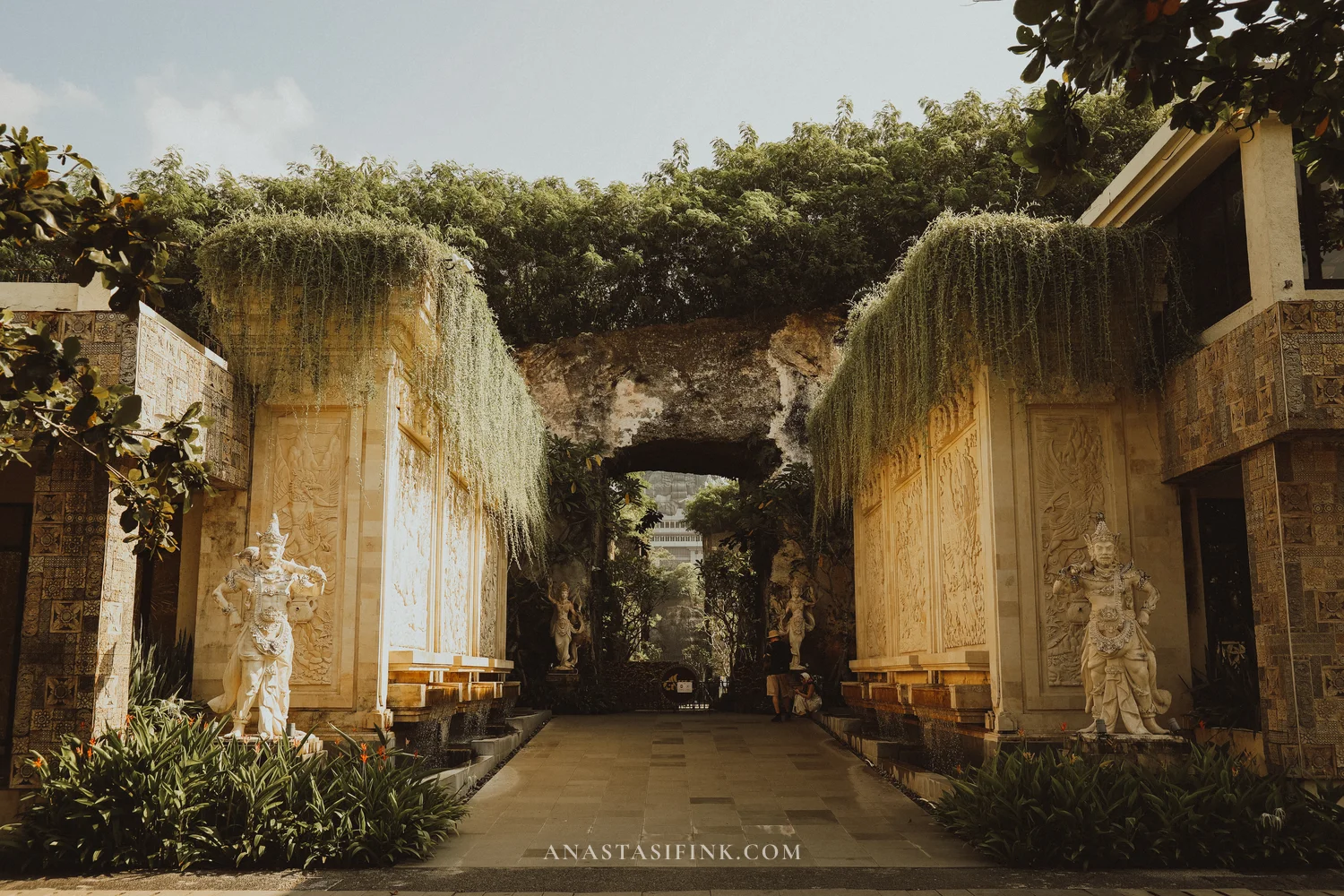
Gardens and statues
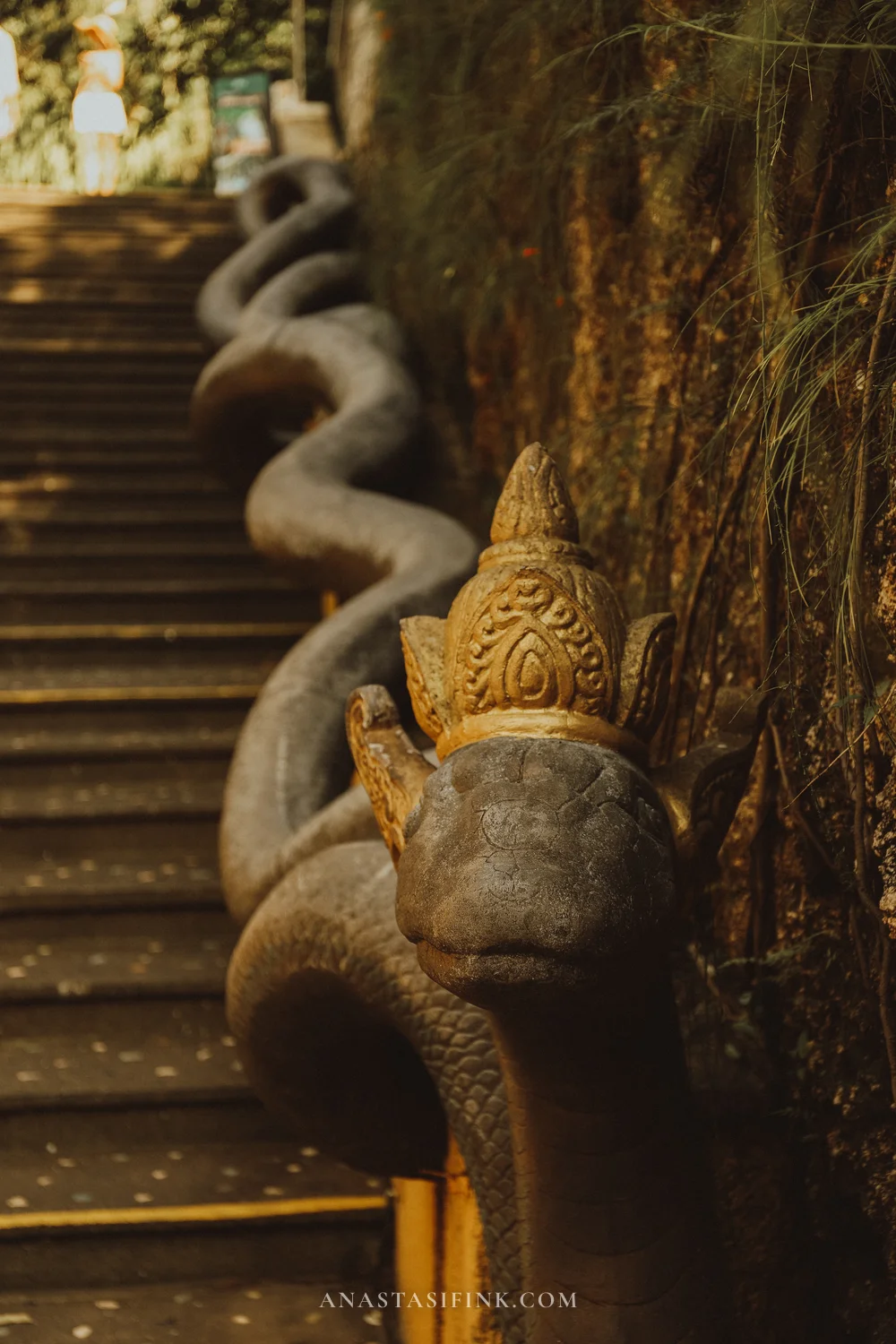
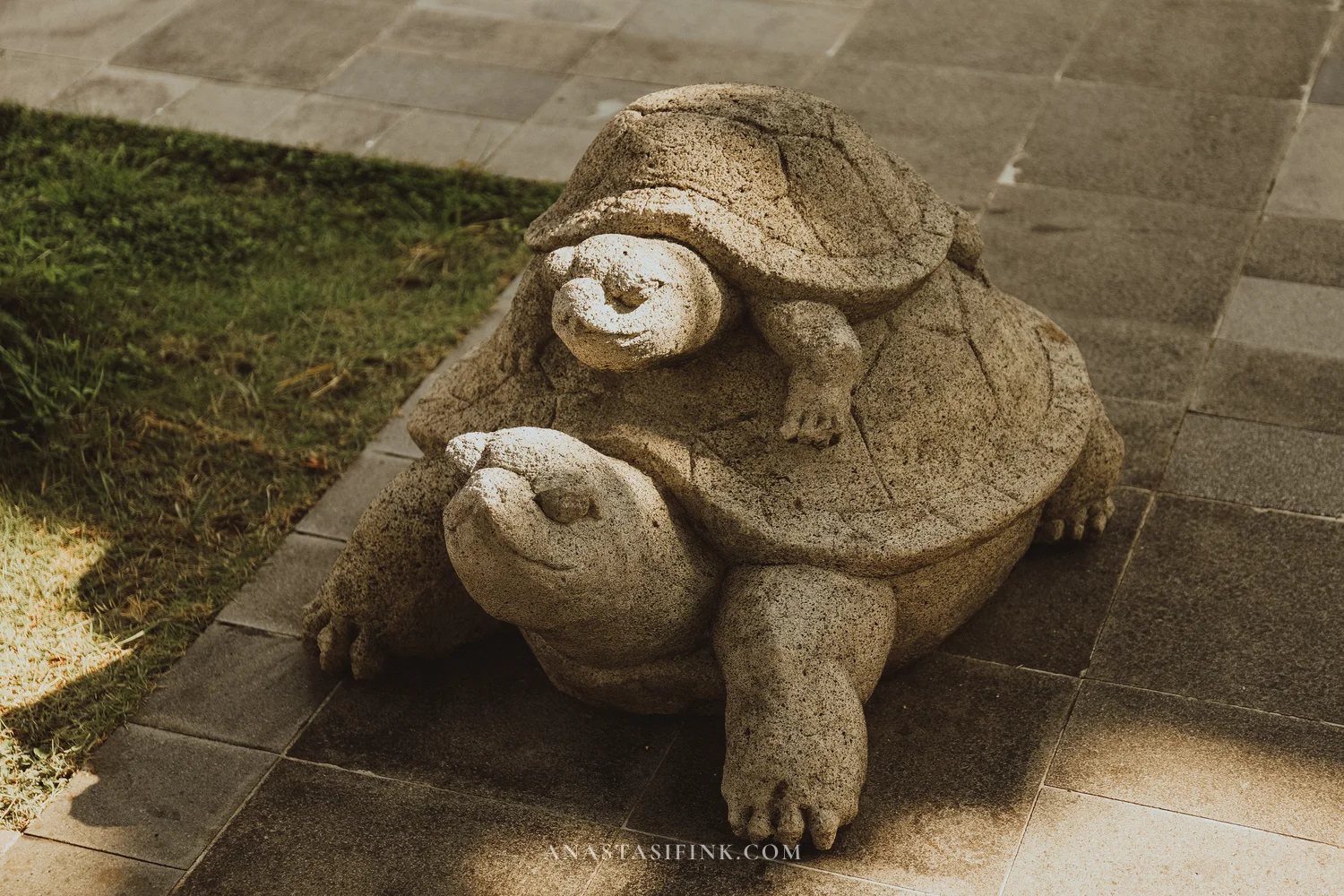
Further in, the park turns into a chain of tropical gardens and small open-air temples. Figures everywhere — goddesses, dancers, nagas, turtles.
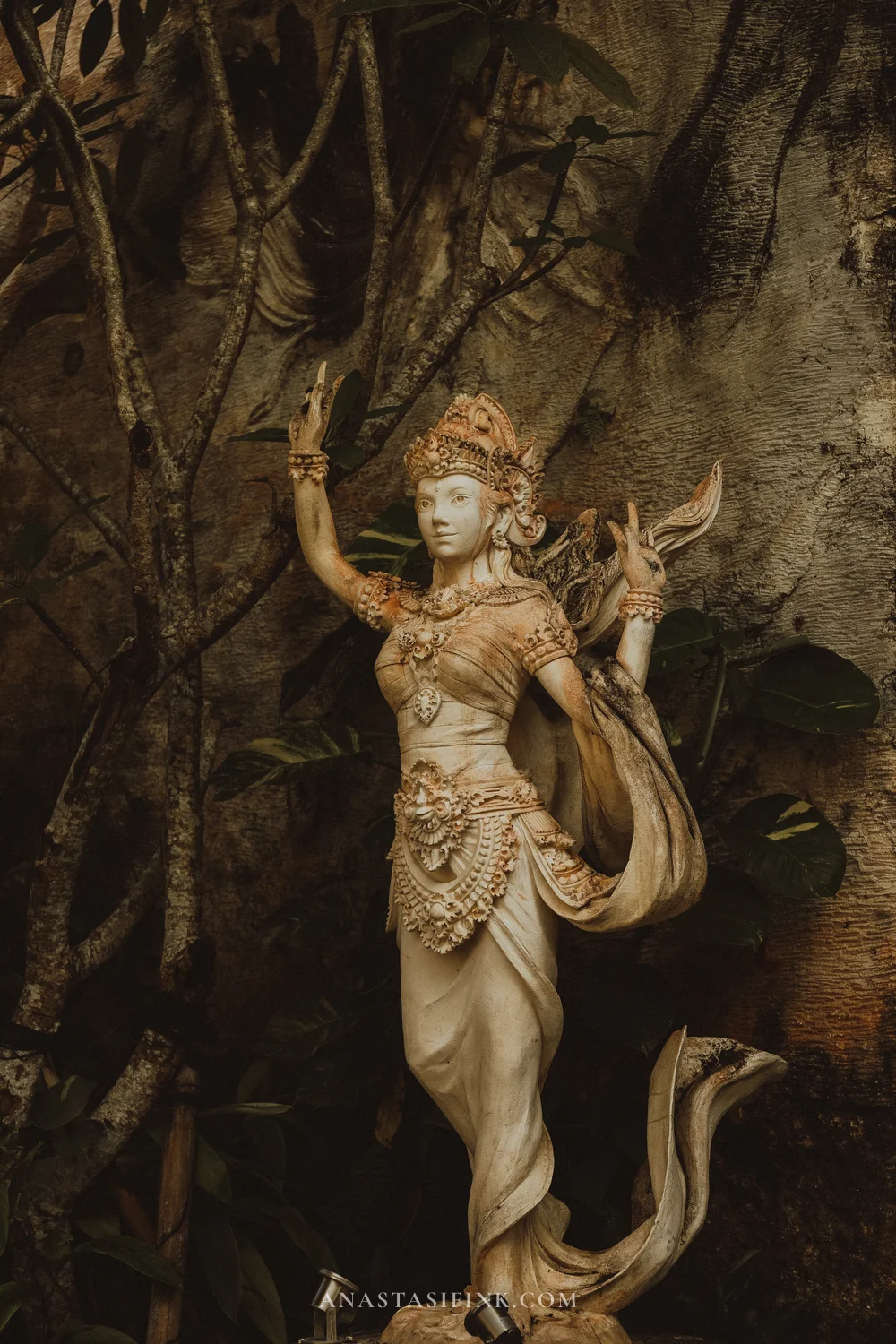
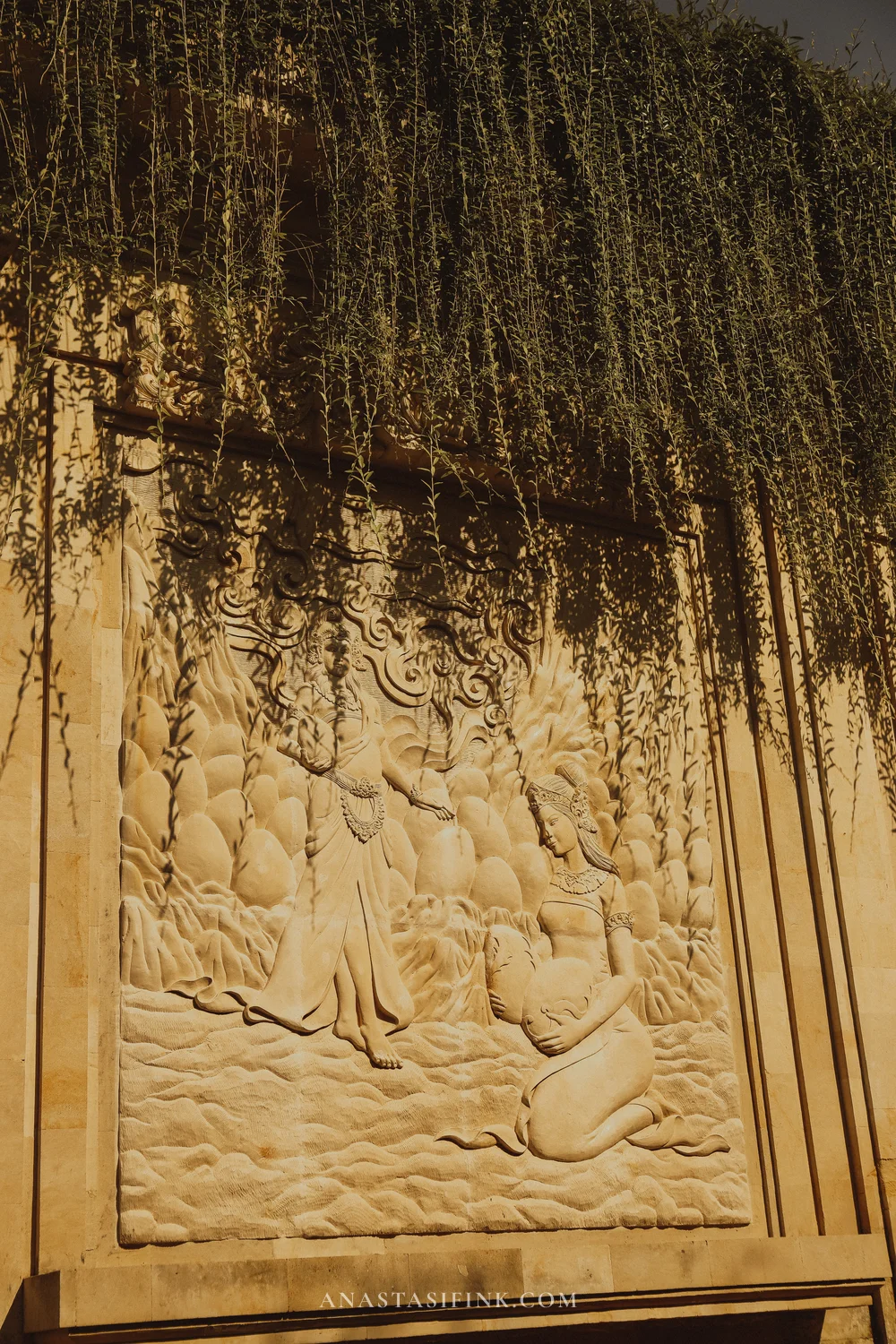
Statues and bas-reliefs tucked into greenery
The poses on the statues felt familiar — I’d seen them at dance evenings in Ubud. Splayed fingers, wide-open eyes, foot pointed.
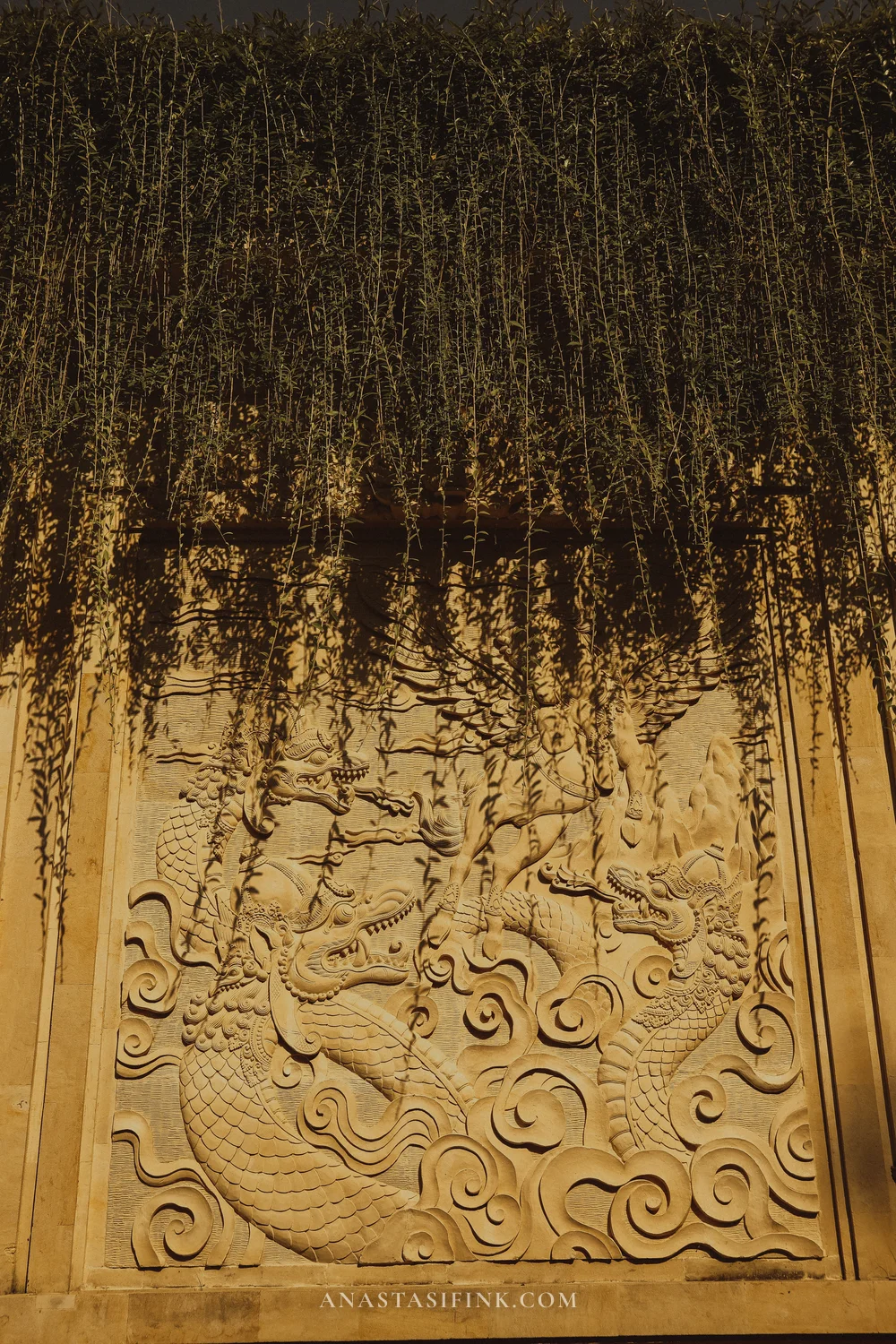
In Balinese tradition, nagas live in the water. Their mood, supposedly, decides whether or not it’ll rain.
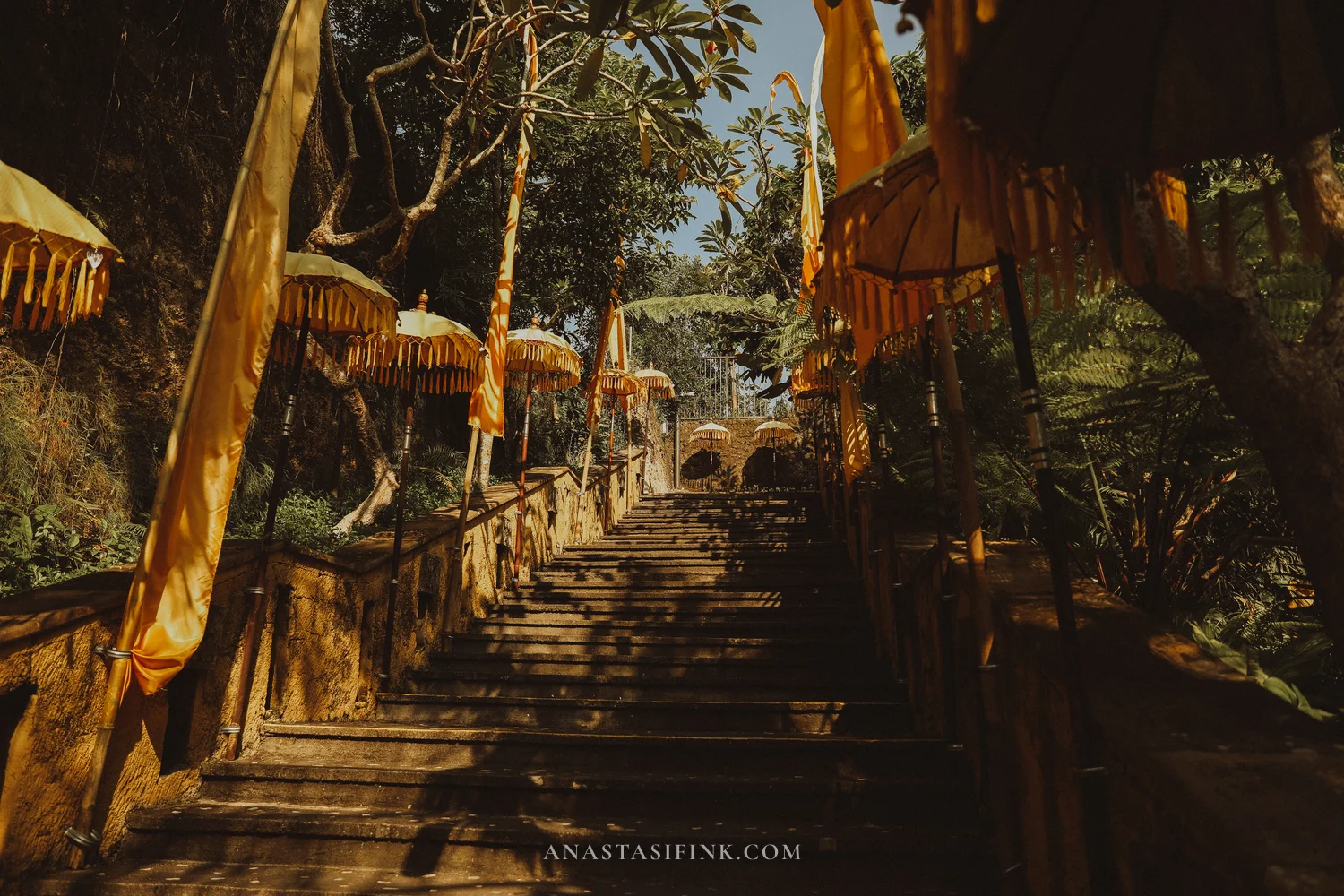
You see payung umbrellas everywhere in Bali. They’re not just decoration — they’re part of the temple tradition, a symbol of spiritual protection. Each color carries its own meaning: yellow ones, like the ones here in the park, represent prosperity and spiritual light; white ones stand for purity; black ones for protection from evil; red ones for strength and passion. Payung get placed near altars, at temple entrances, beside sacred trees. If you look closely, you’ll spot them at almost every Balinese ceremony.
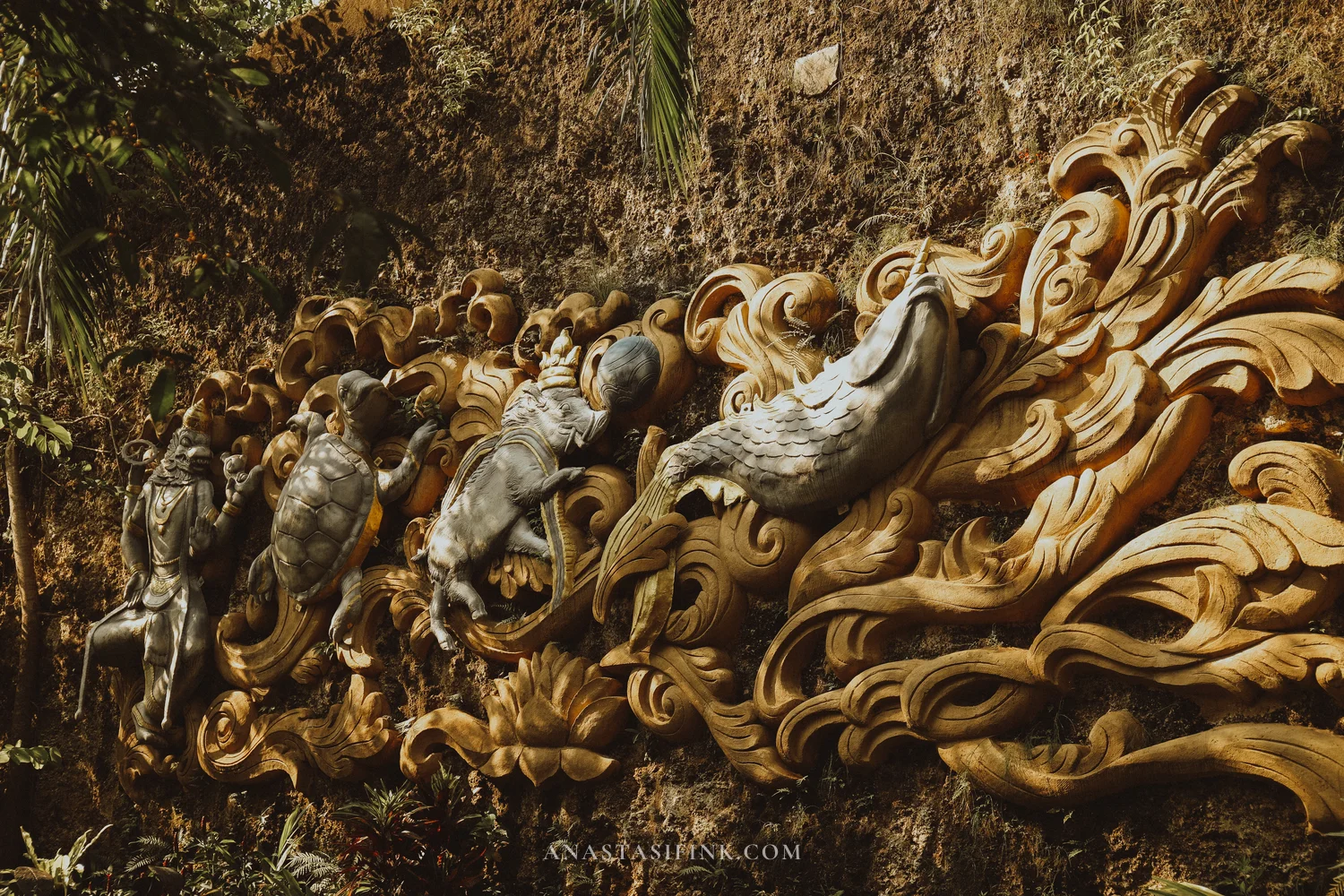
According to local myth, the world rests on the back of a giant turtle named Bedawang Nala. Two serpents — Vasuki and Anantaboga — coil around her, and together they hold the universe in balance. When the turtle stirs, earthquakes shake the island. Balinese people often carve this scene into the bases of temples and pagodas as a reminder of how fragile the world beneath our feet really is.
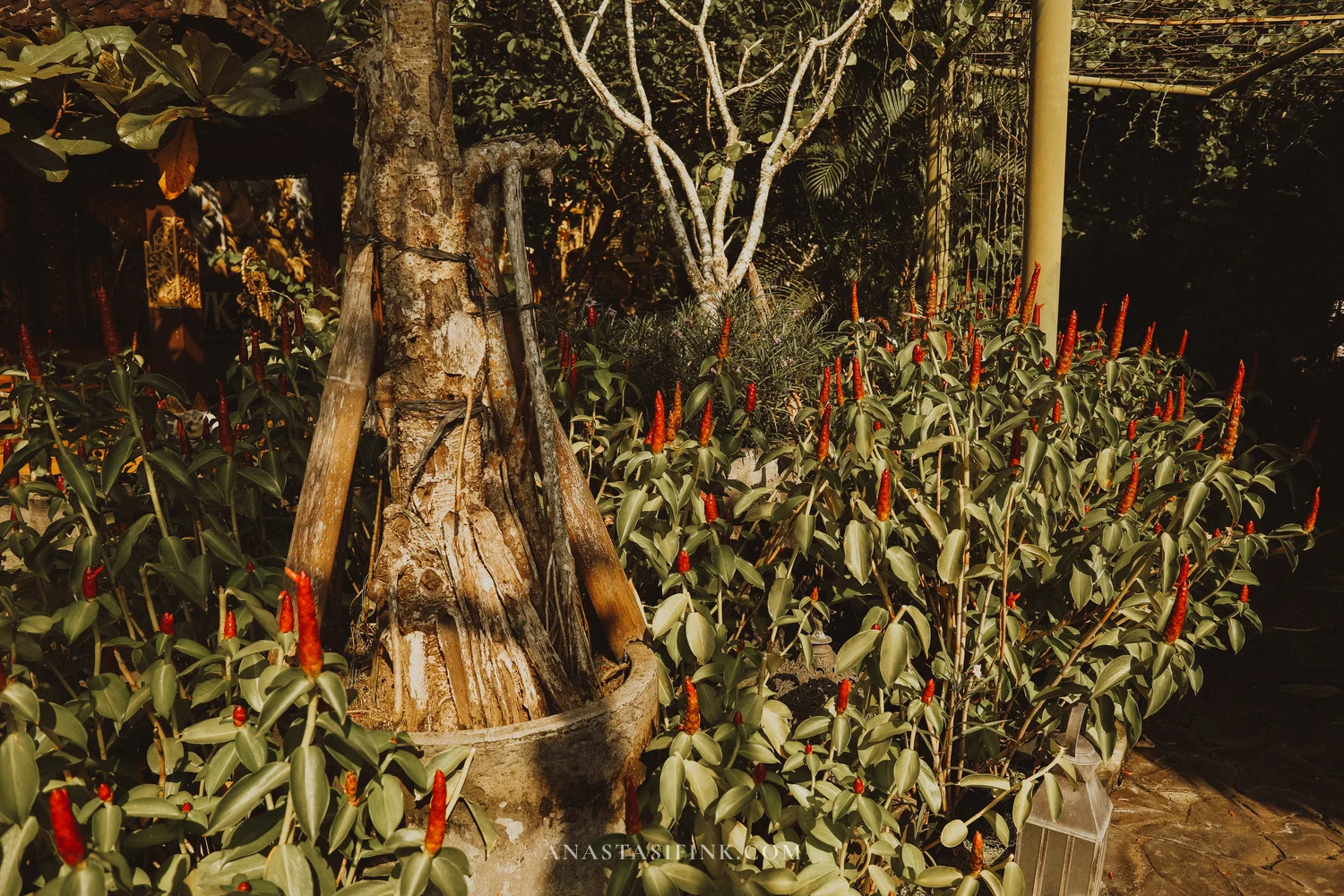
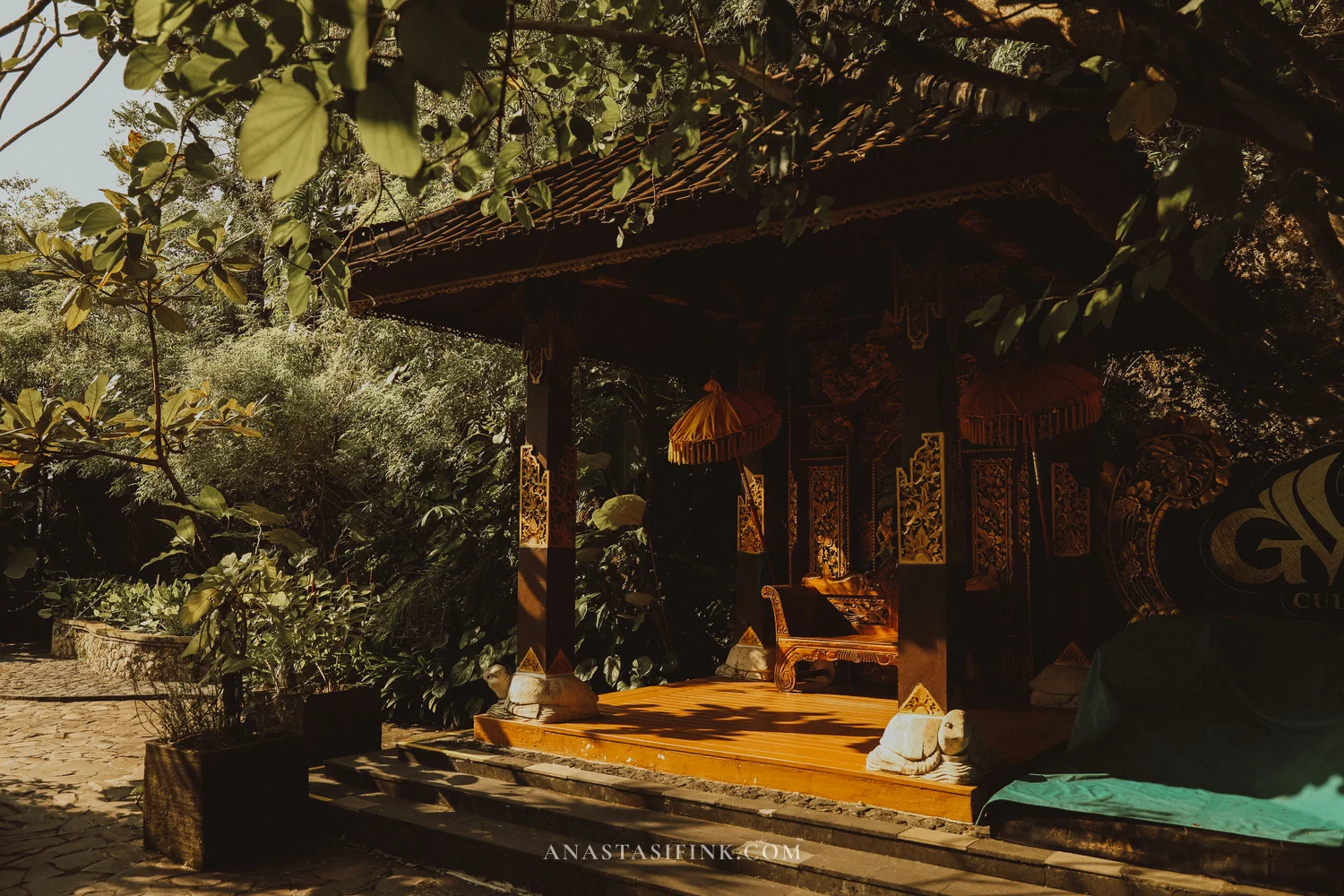
You’ve probably seen these before! These bales sit in pretty much every Balinese family compound. A perfect spot to take a breather.
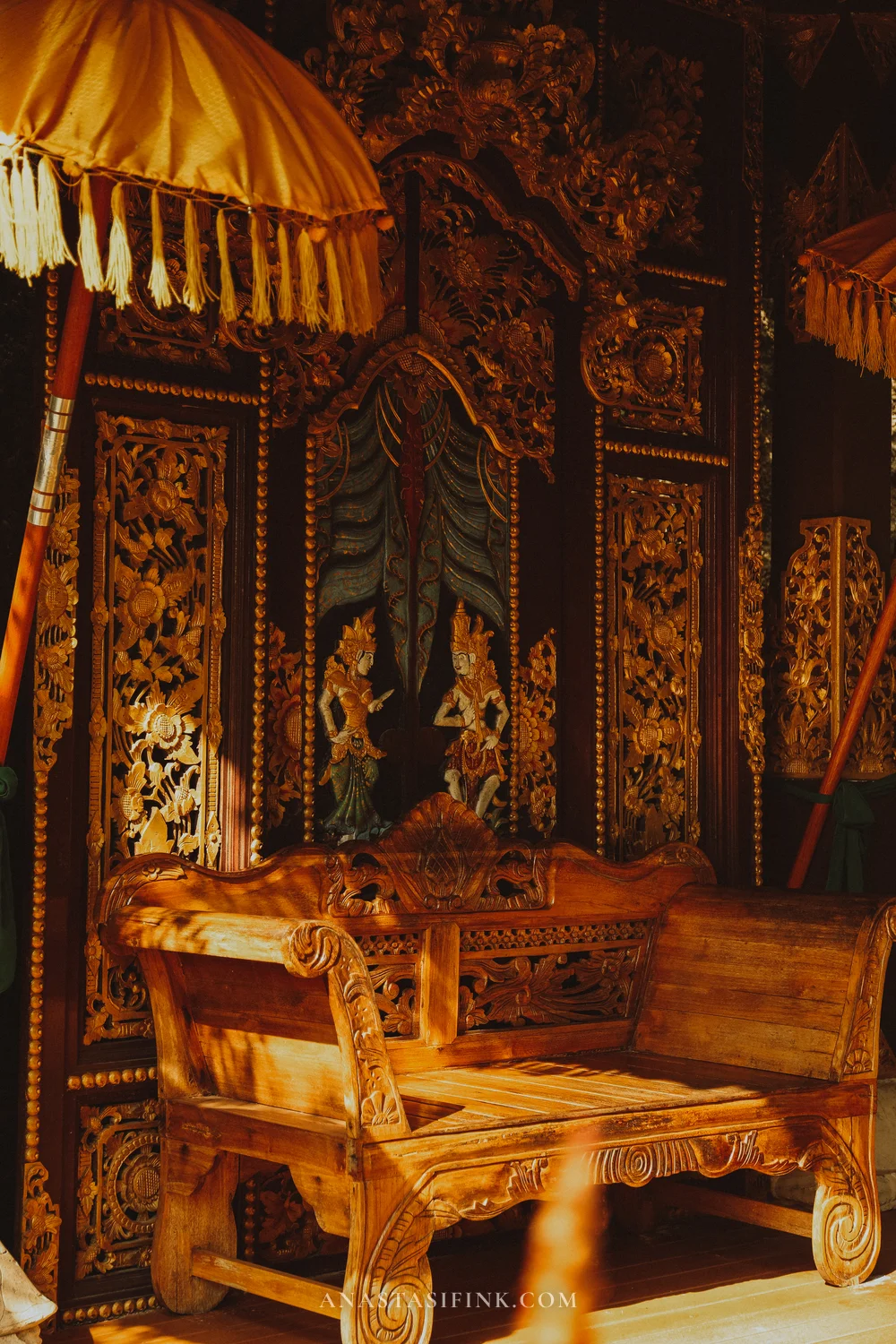
Balinese woodcarvers work without blueprints — the craft passes from generation to generation, and every pattern lives in the master’s head before the chisel ever touches the wood. The swirls and curls hide the elements (fire, water, wind), mythical creatures, and protective symbols. Even a single Balinese pavilion can hold your attention for hours — every detail has its own story.
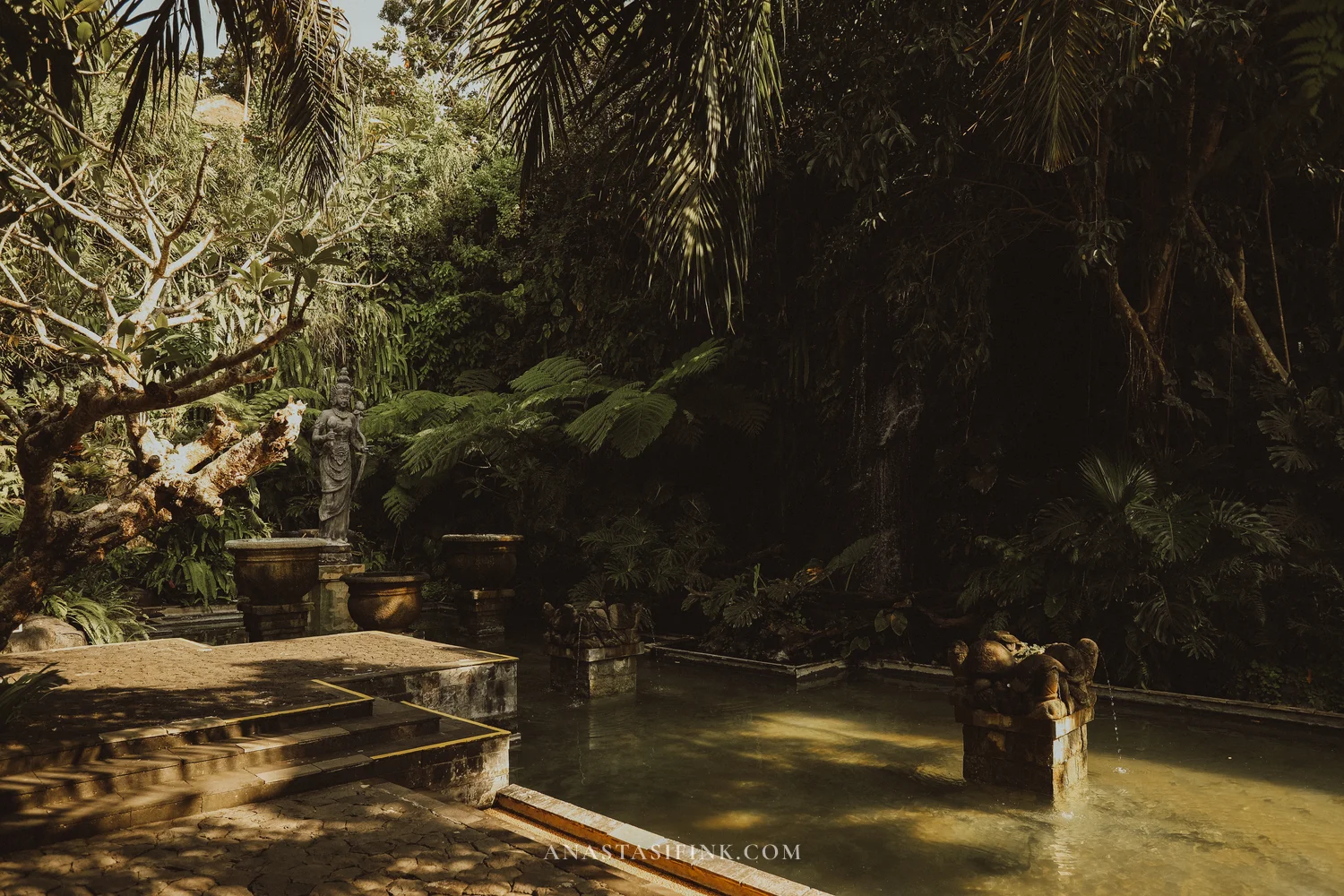
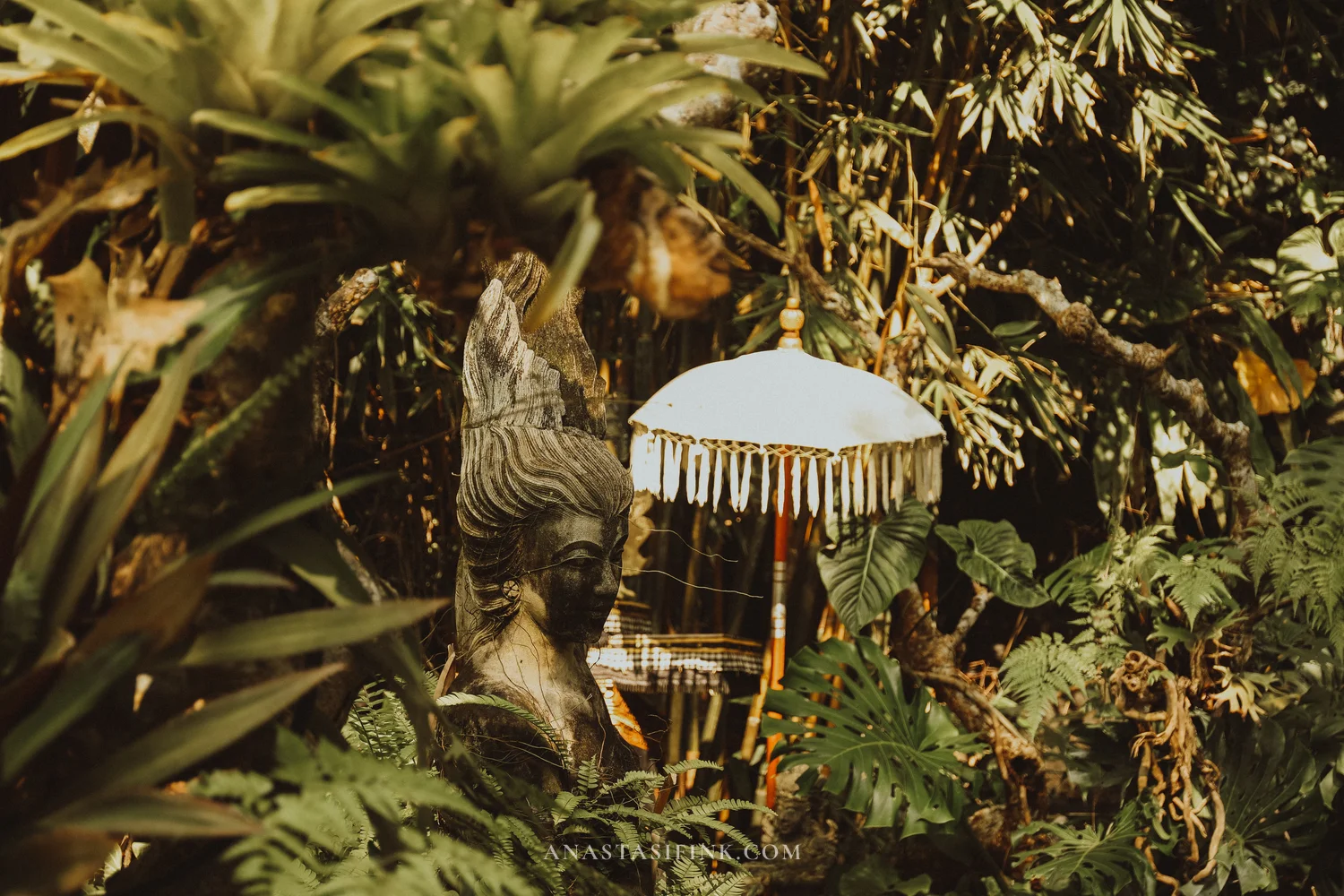
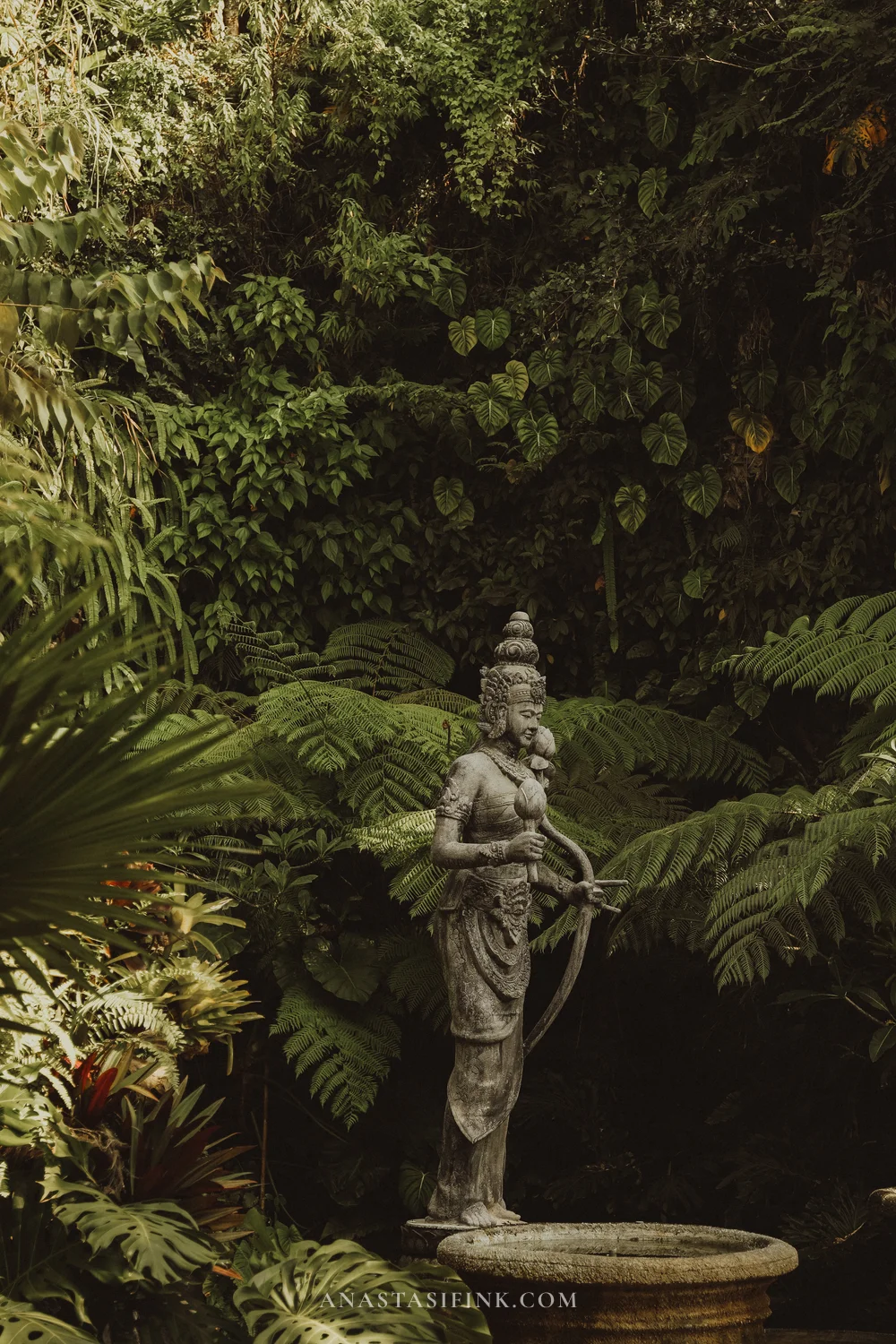
Statues and altars in the greenery
My main piece of advice: don’t try to power through the whole park in an hour. It’s built for a slow stroll.
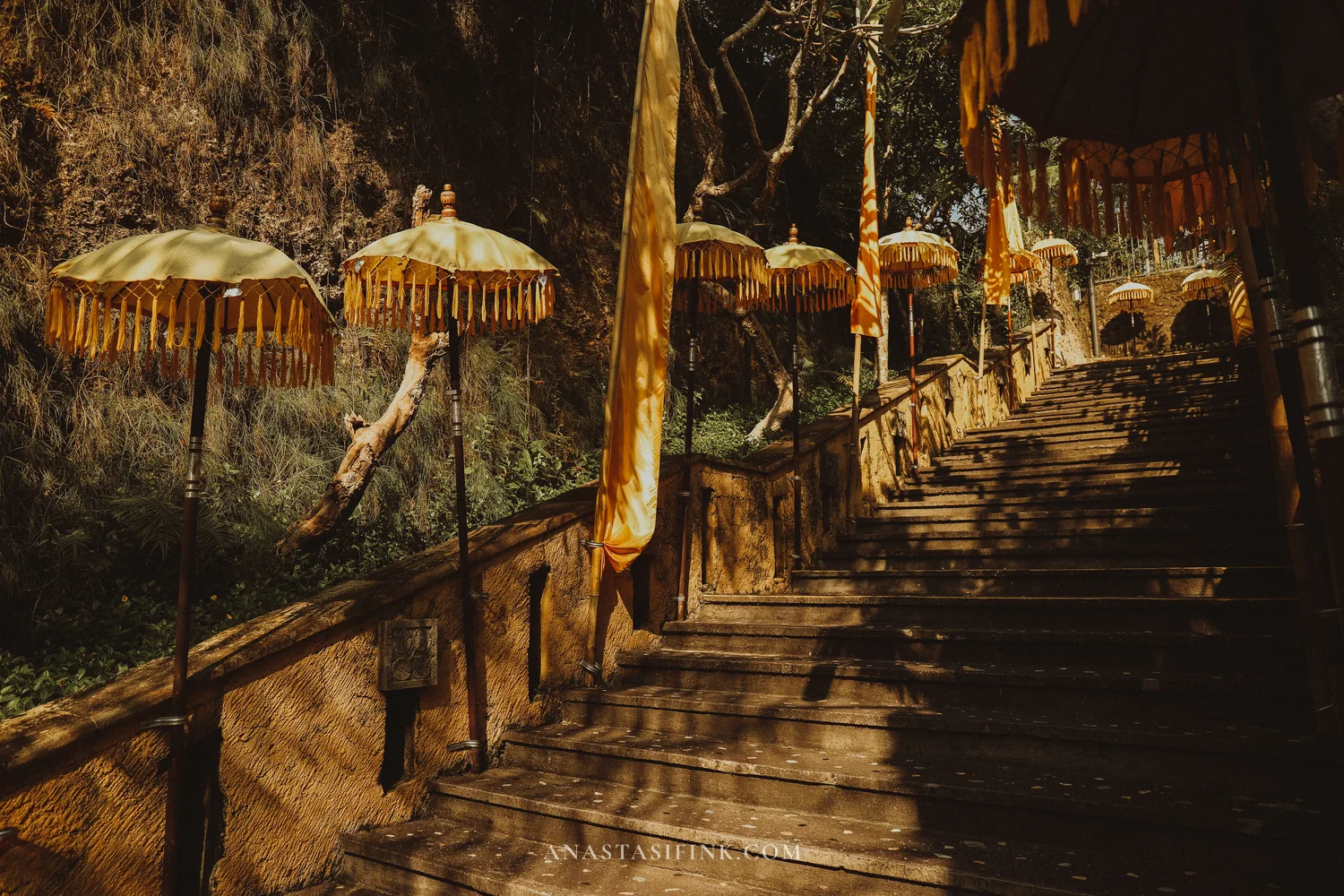
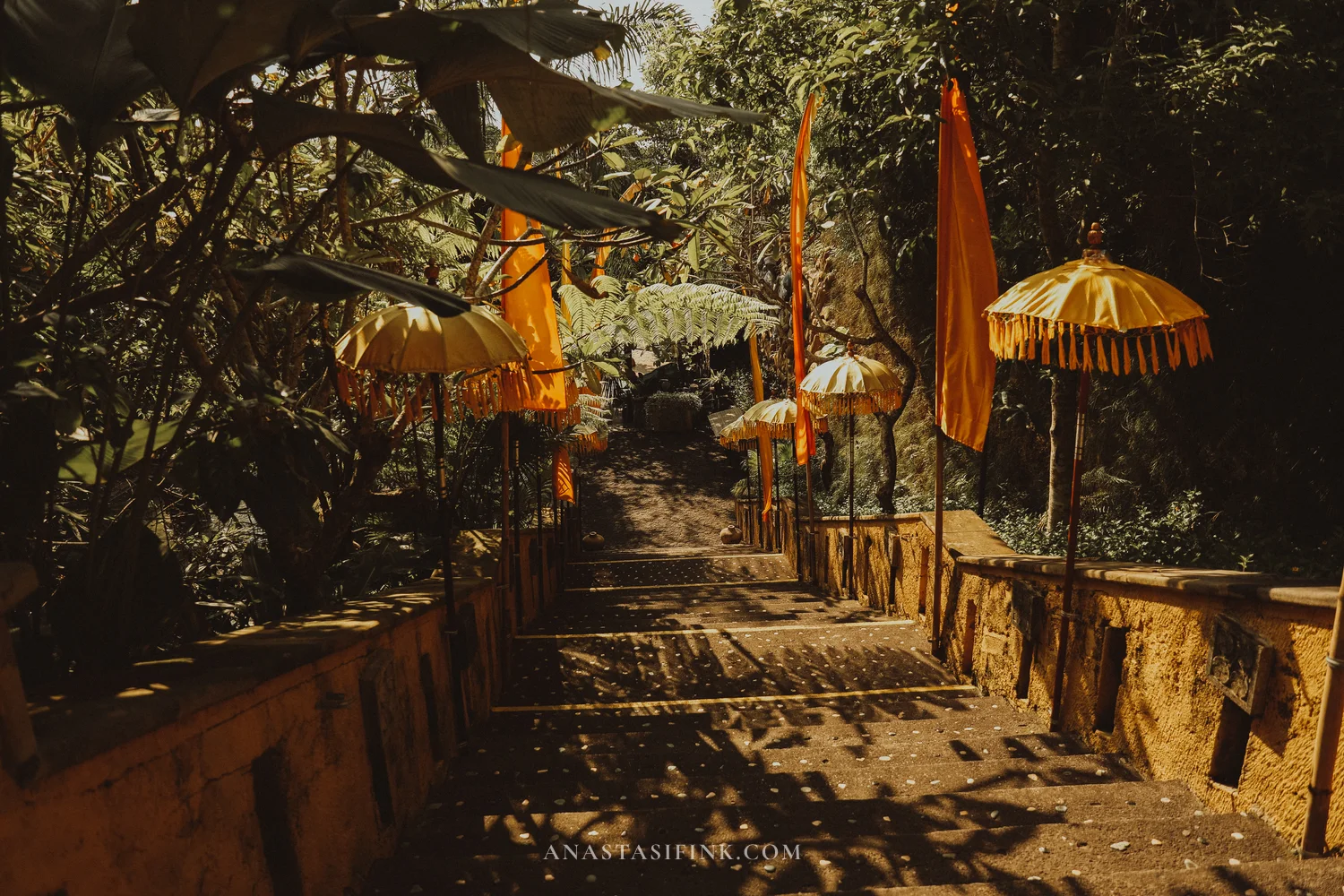
Stairs and transitions between levels
Tip: Midday heat can be intense. Bring water — prices inside the park are 2 to 3 times higher.
Balinese offerings
In a few of the pavilions, there are display cases showing offerings — the same kind you see every day at the doors of homes and shops across Bali.
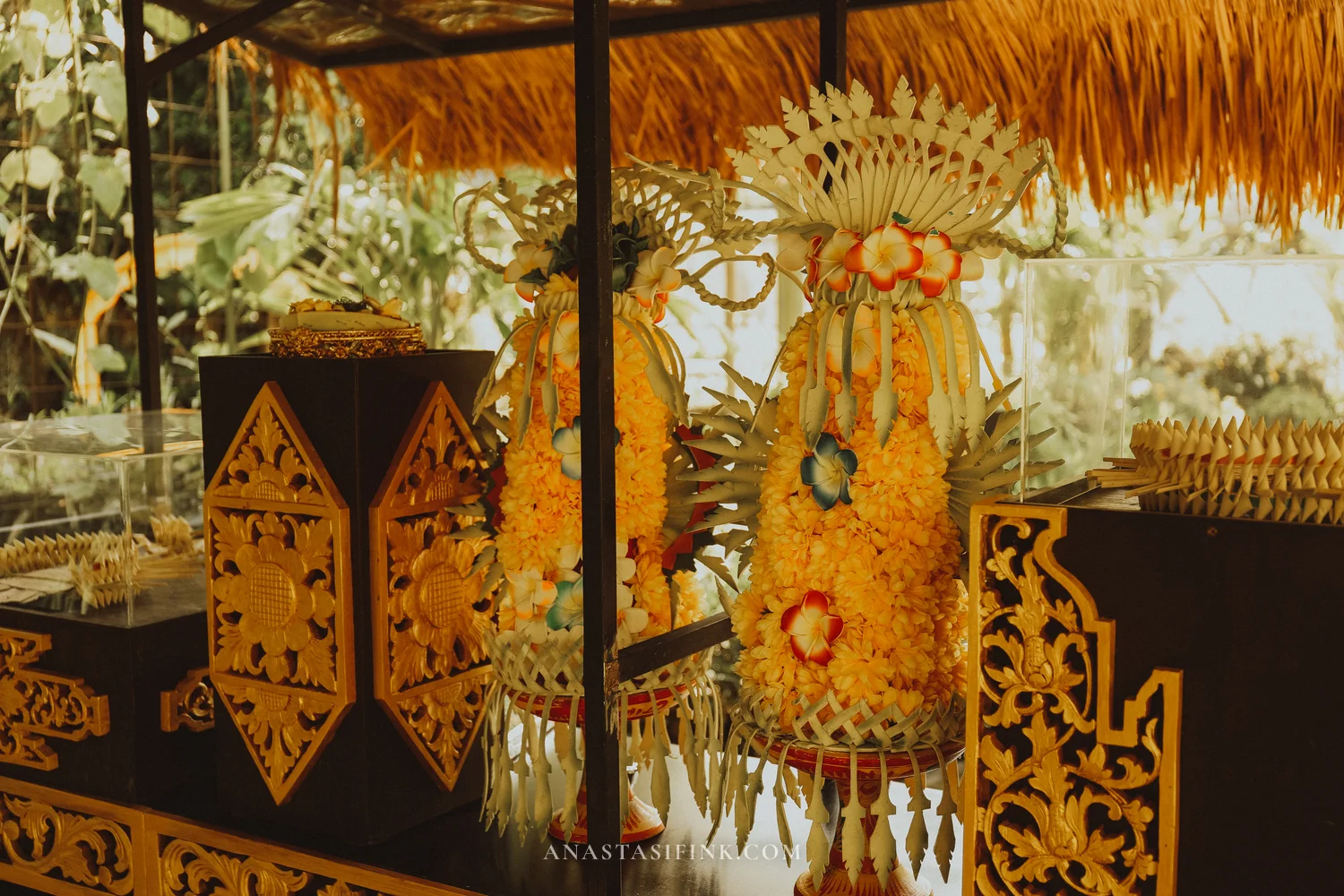
Those tiny palm-leaf squares with flowers and rice (canang sari) are made by Balinese women every morning and placed everywhere: on doorsteps, scooter hoods, at the ocean’s edge. Thousands of them go out across the island every single day.
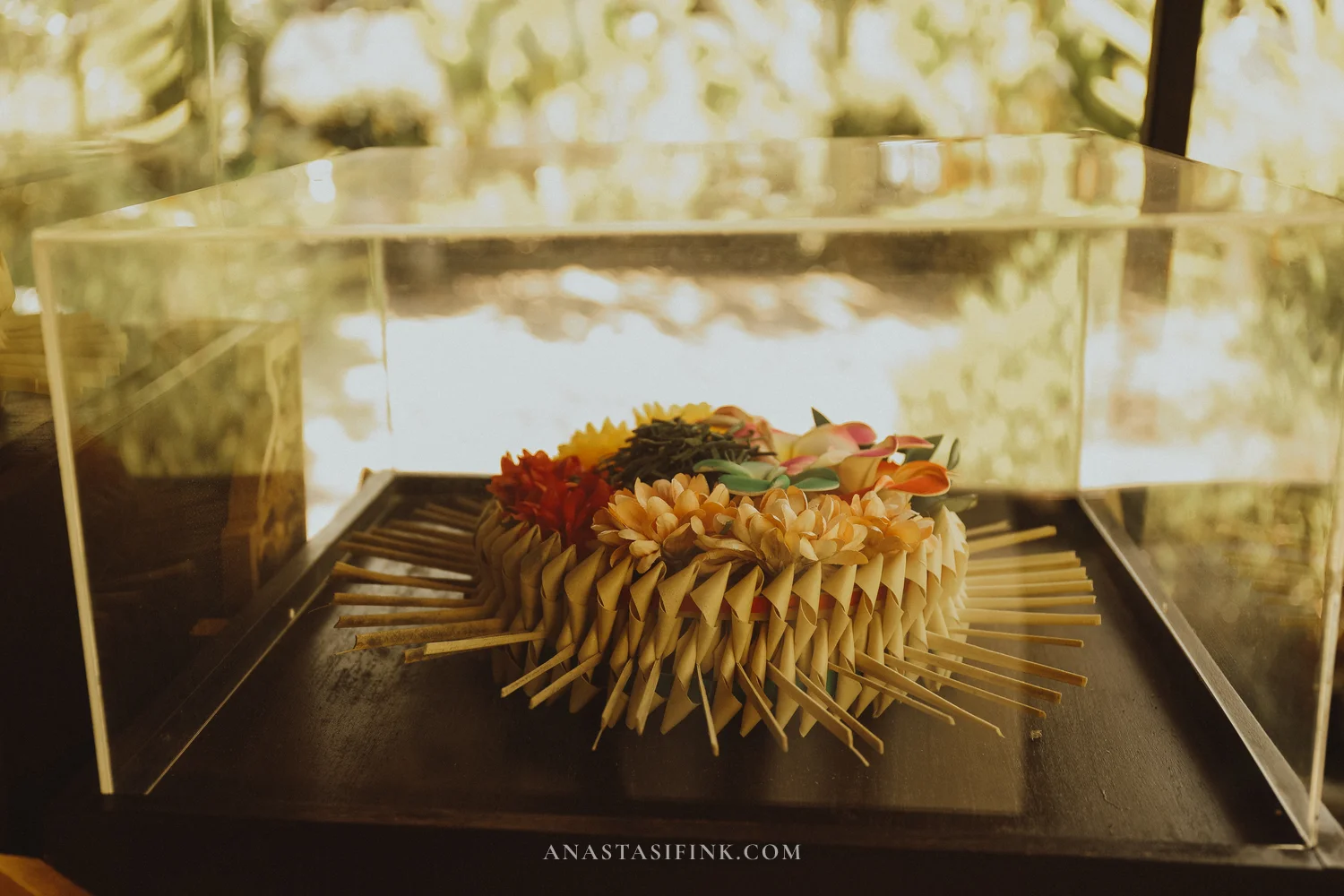
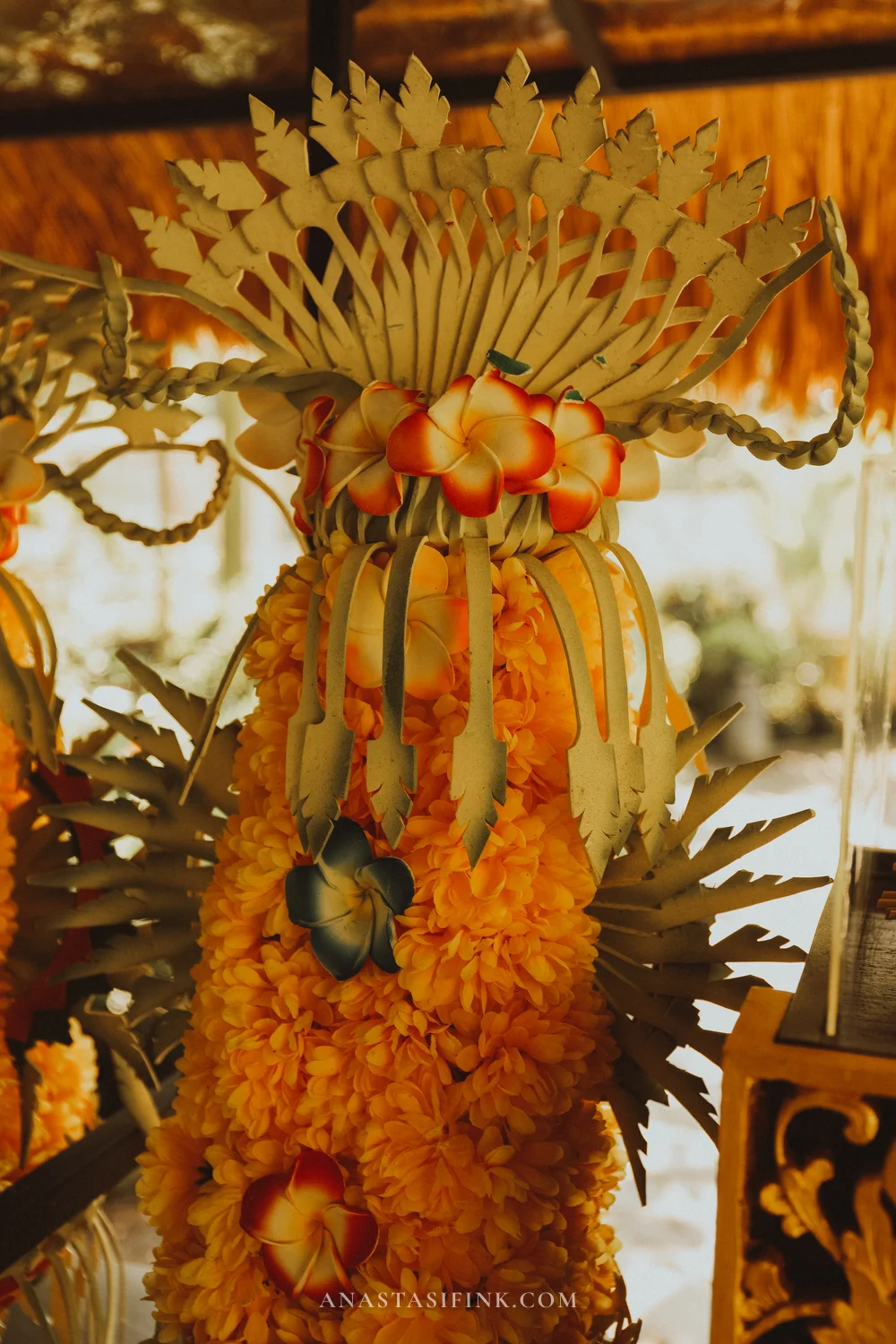
Left — mini offering under a dome. Right — a festive decoration
The big offerings (gebogan) are the ones women carry to the temple balanced on their heads. They only make these before the major festivals — Galungan and Kuningan. These are the two most important events on the Balinese calendar, celebrated every 210 days (the Balinese year is shorter than ours). Galungan marks the victory of good over evil — the days when ancestors’ souls descend back into their family homes. Ten days later comes Kuningan, when those souls return. If you happen to be in Bali during these celebrations, you’ll see the entire island decked out in decorations and penjor (tall bamboo poles with offerings) standing in front of every house.
The main statue
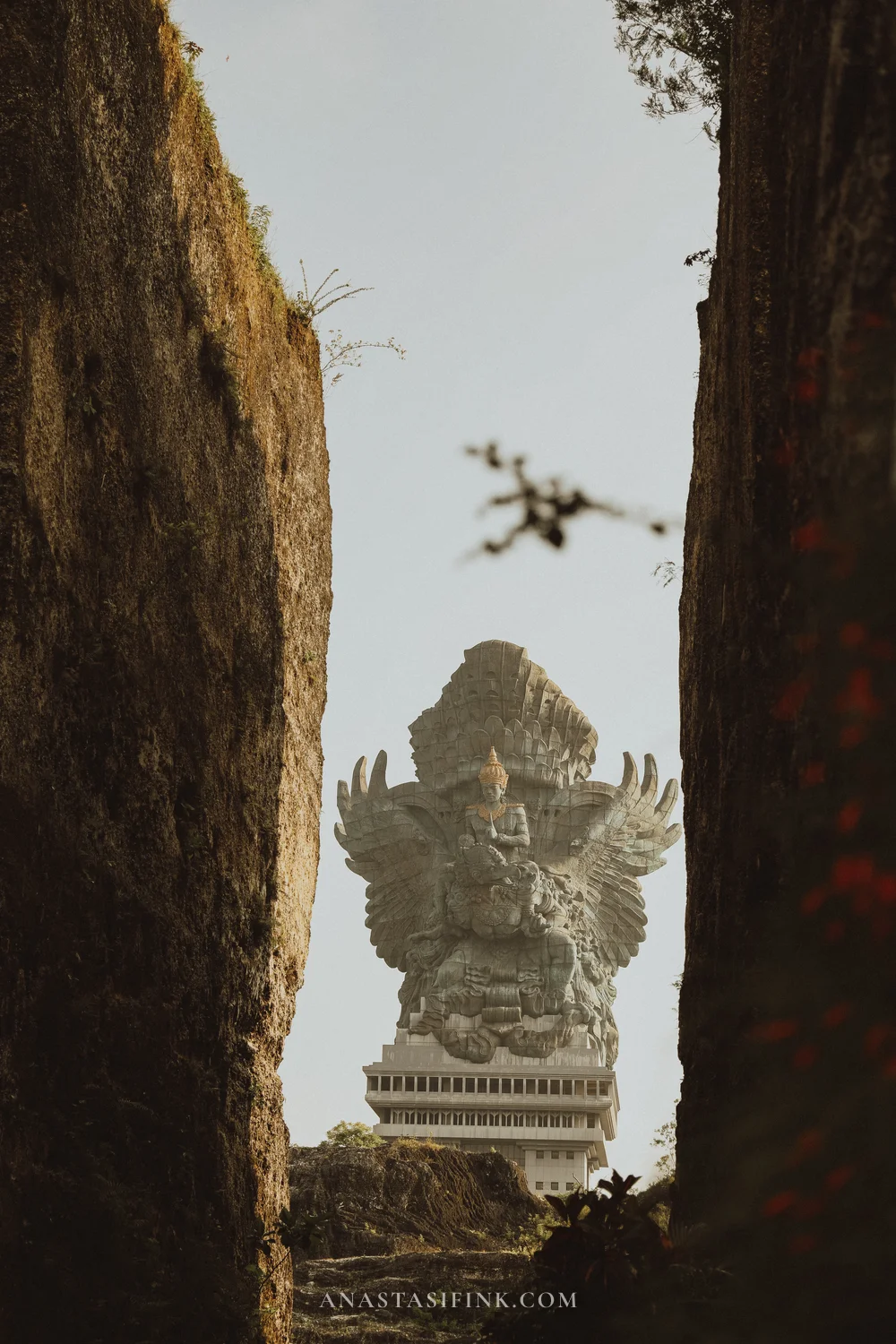
The final stop on the route — the statue itself. It floats into view through gaps in the trees, then disappears behind branches again.
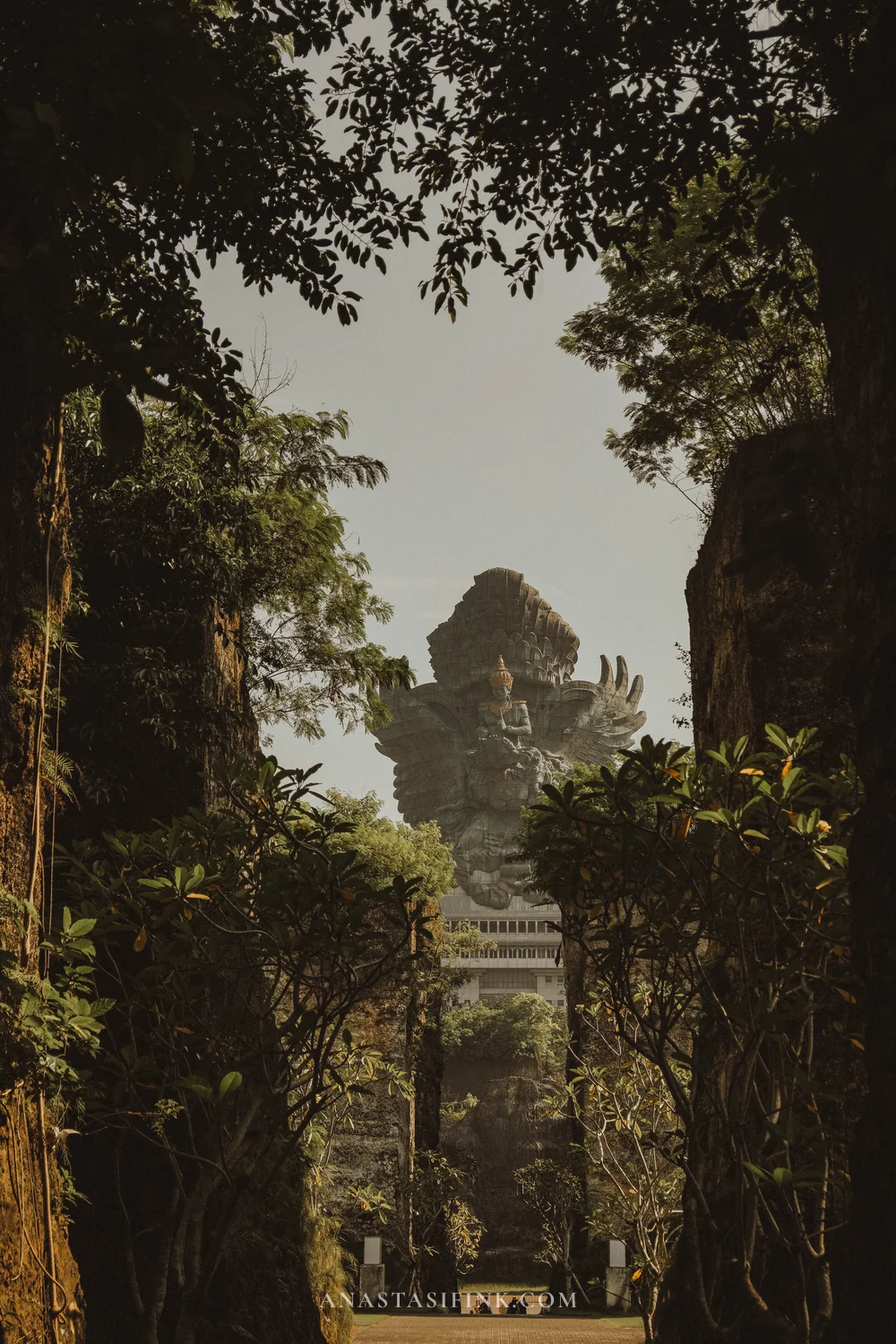
This is intentional — the artist’s vision. Nuarta designed the route so the statue “reveals” itself slowly, instead of just appearing all at once. It’s actually a little like Petra in Jordan — except there it bursts into view when you step out of the canyon, while here it’s the opposite: it grows on you with every step.
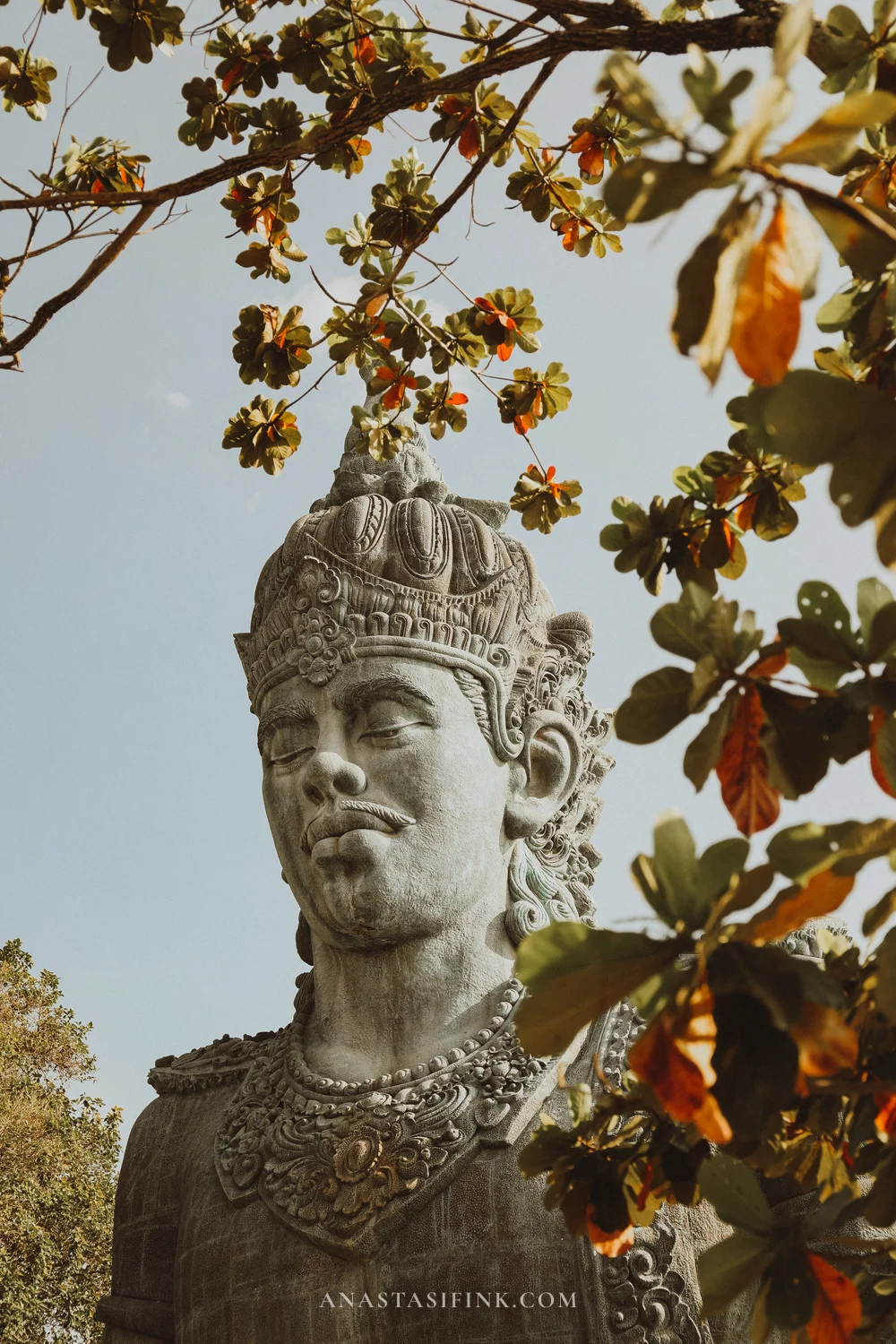
Eyelids lowered, gaze cast down — like Vishnu is watching over what’s happening below. I read that Nuarta worked on the face alone for over a year!
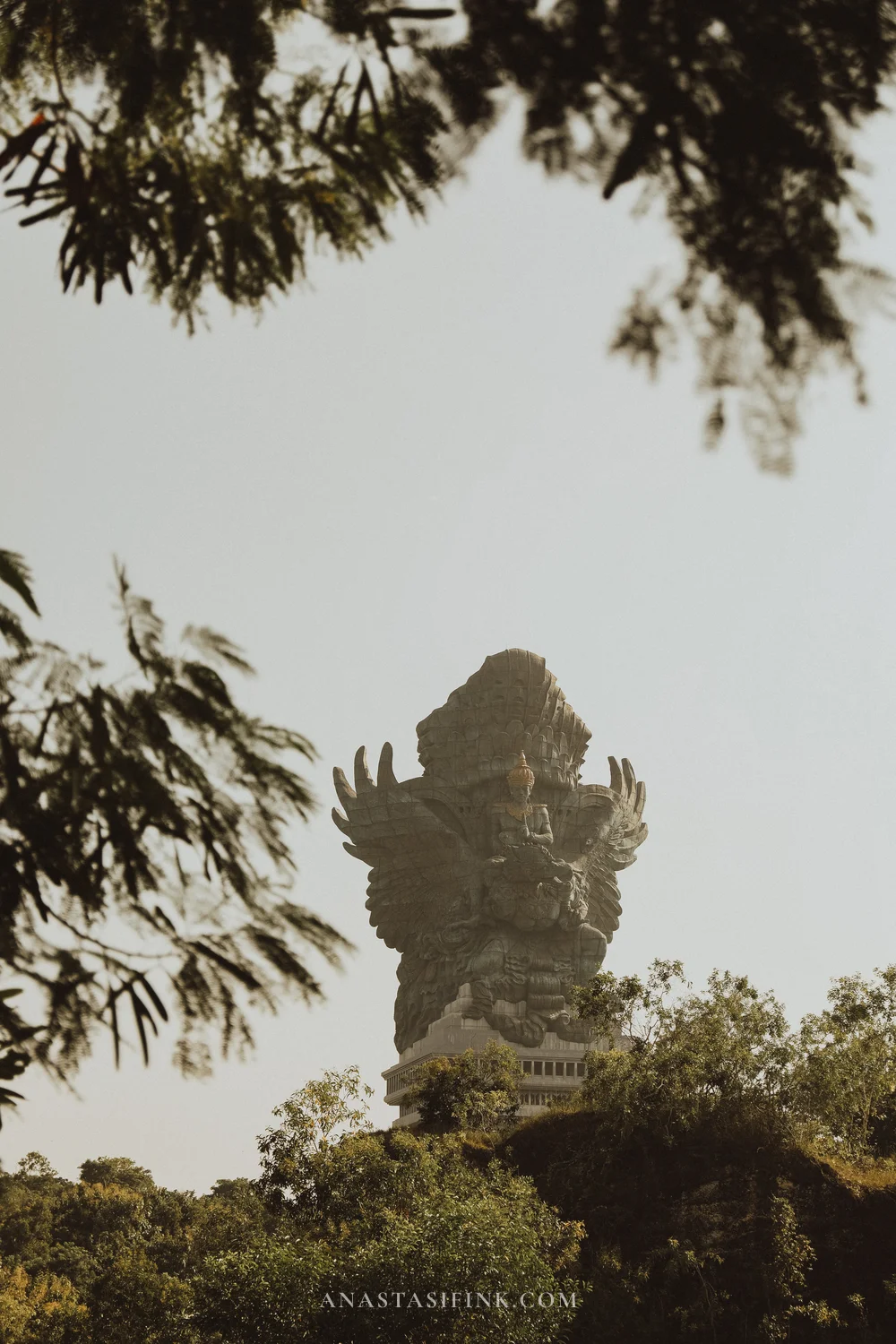
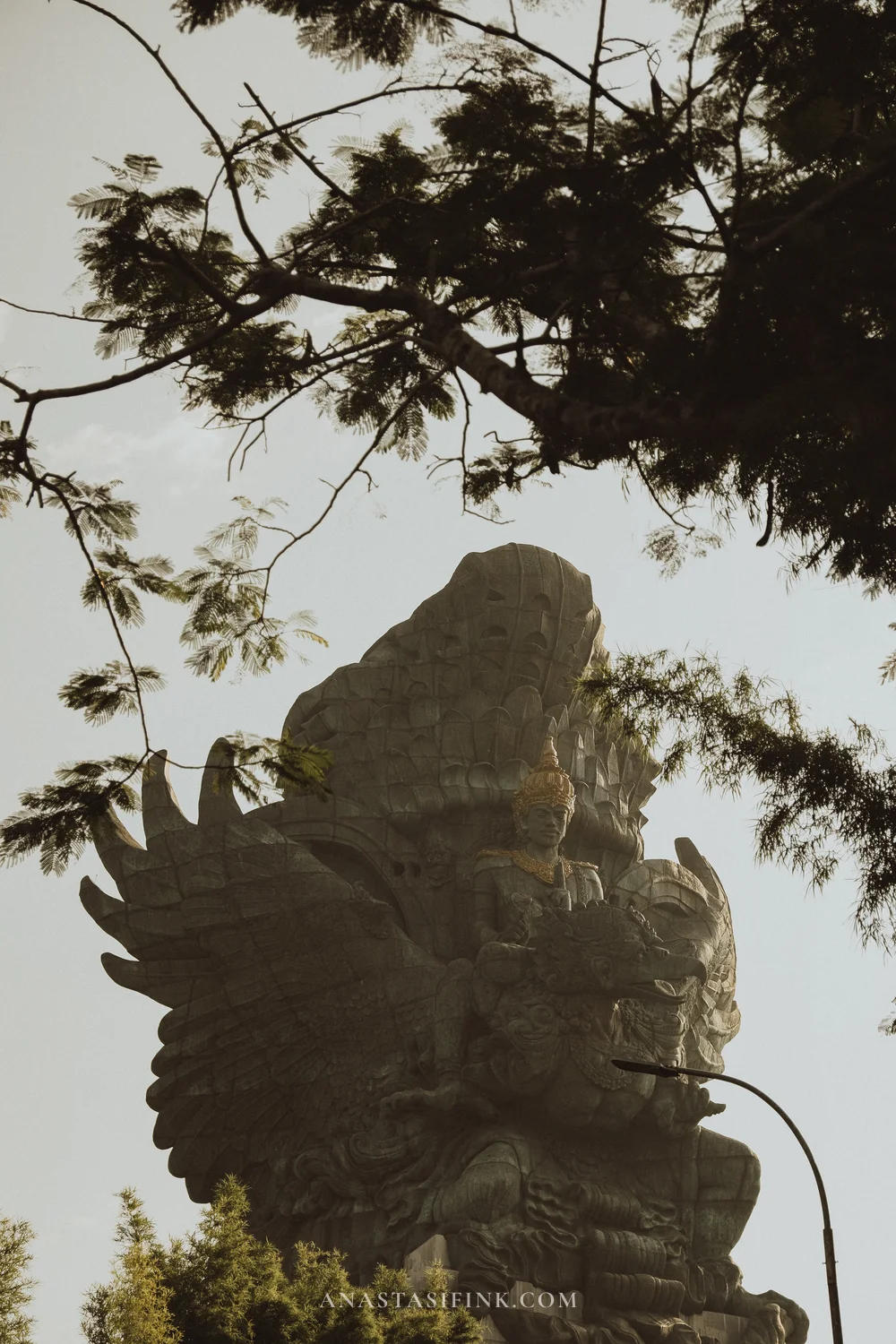
Views of the statue from different points in the park
It really is enormous! And you feel it most at the base. The scale takes a while to sink in. The statue stands on a pedestal that’s another 30 meters or so — meaning the whole structure is nearly 150 meters! For comparison, that’s taller than London’s Big Ben (96m) and the Statue of Liberty (93m with pedestal), and roughly the height of a 50-story skyscraper.
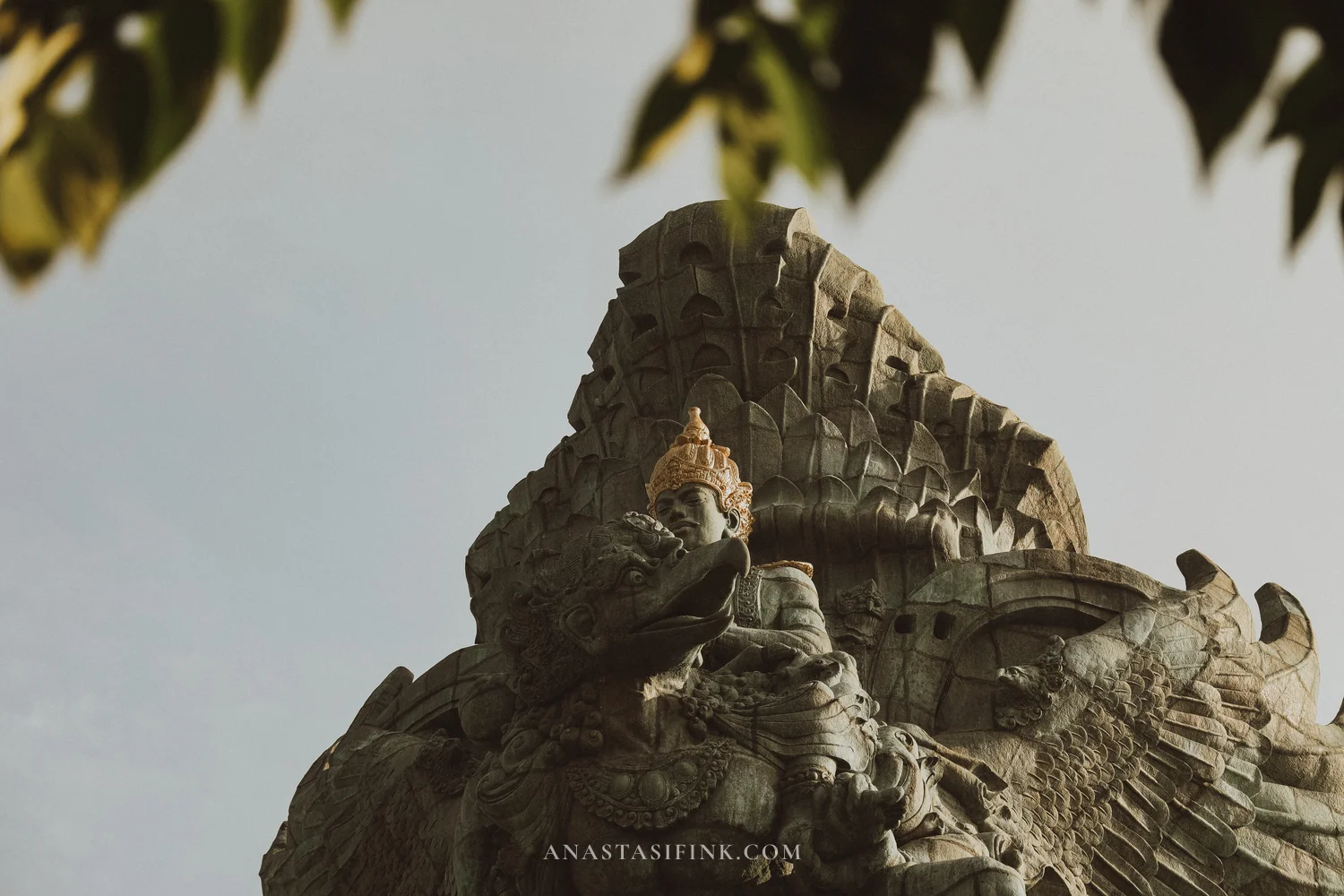
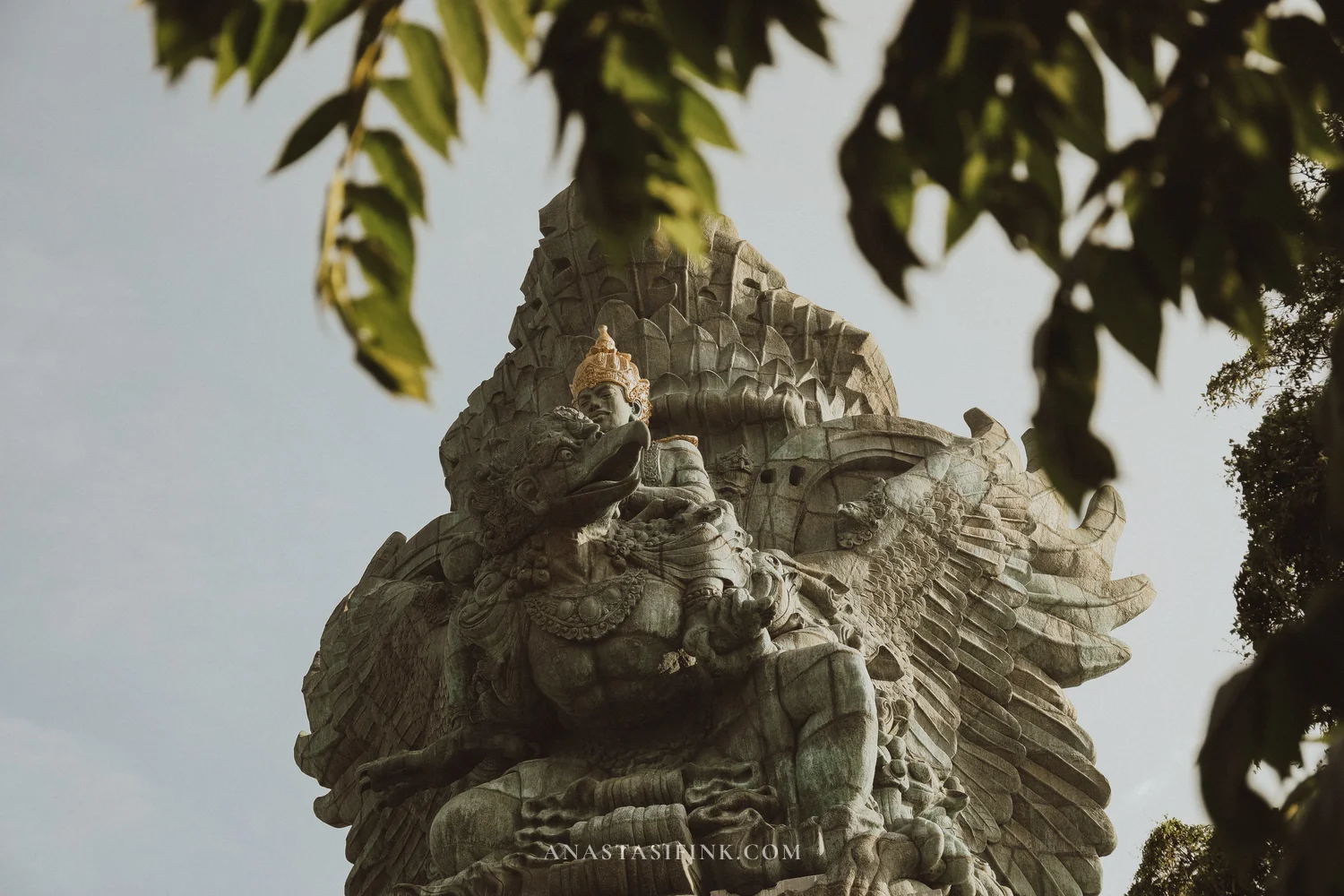
You can actually go up inside the statue. The elevator stops on the 9th and 23rd floors. From the 23rd, you get a view of the entire southern tip of Bali — the airport, Nusa Dua, the ocean, and on the horizon, Mount Agung volcano. That ticket is sold separately (350,000 IDR, around $22).
I didn’t go up myself — ran out of time, so I don’t have any photos from the observation deck.
Dances and ceremonies
What sets GWK apart from the other “must-see” spots in Bali — the dances. All day long, performances run throughout the park, and they’re all included in the regular ticket. And we’re not talking about resort entertainers either — these are professional Balinese performers who work here full time.
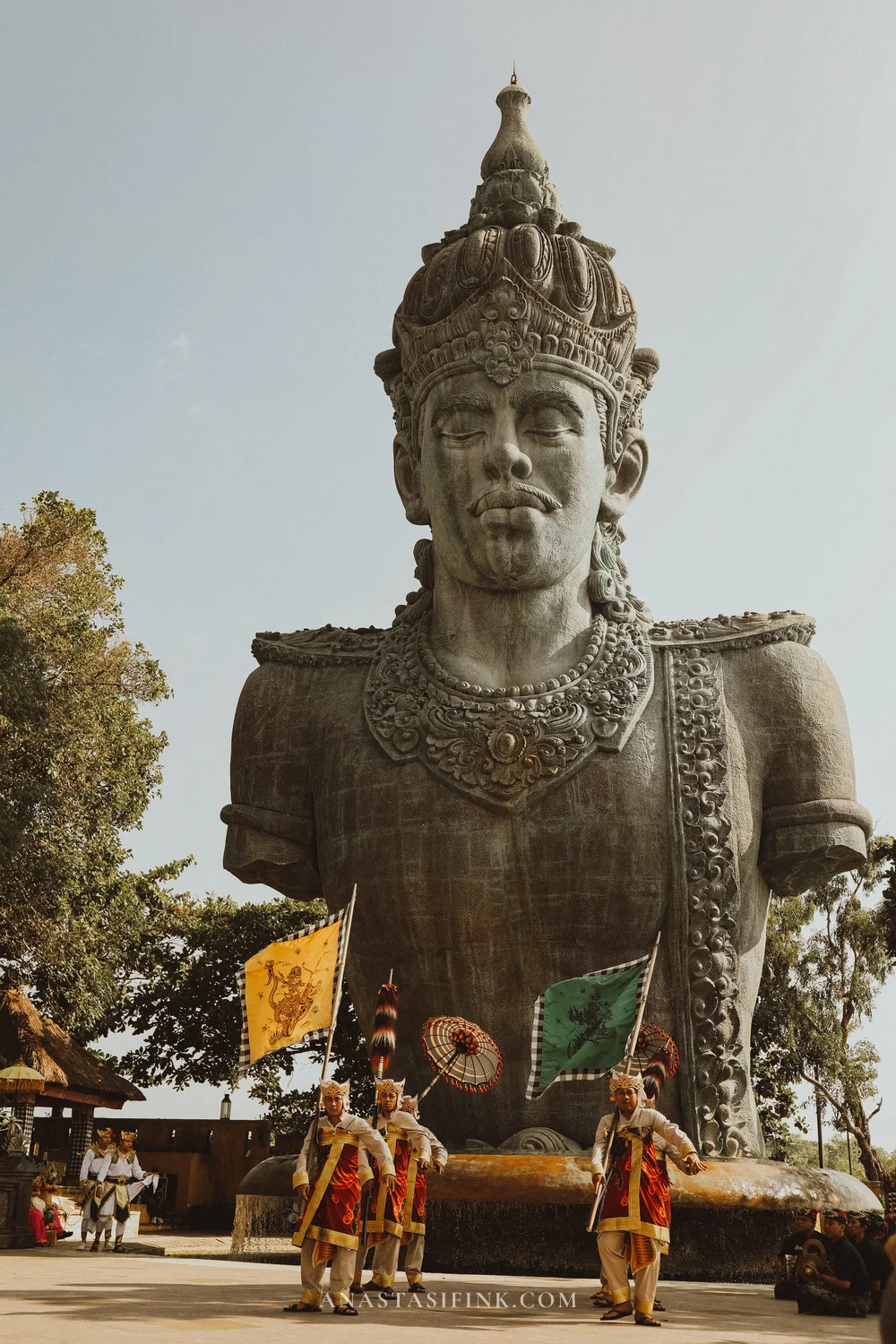
I caught a daytime performance right at the foot of the main statue — and it was probably the second strongest impression of the entire day. Dancers in red and gold costumes, gamelan music, processions with offerings balanced on heads!
The contrast between the small figures in sarongs and the massive statue behind them — that alone is worth timing your visit around the dance schedule.
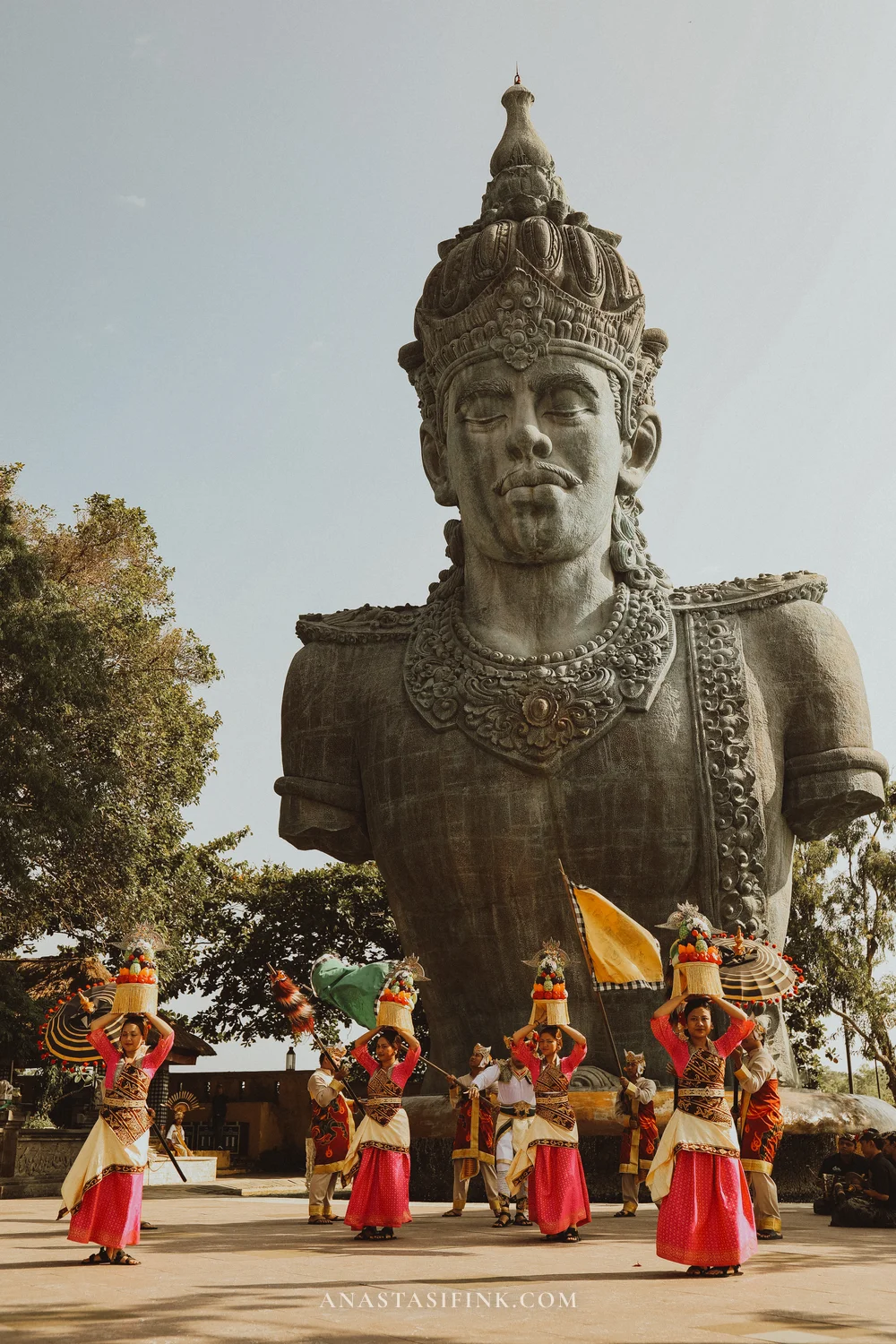
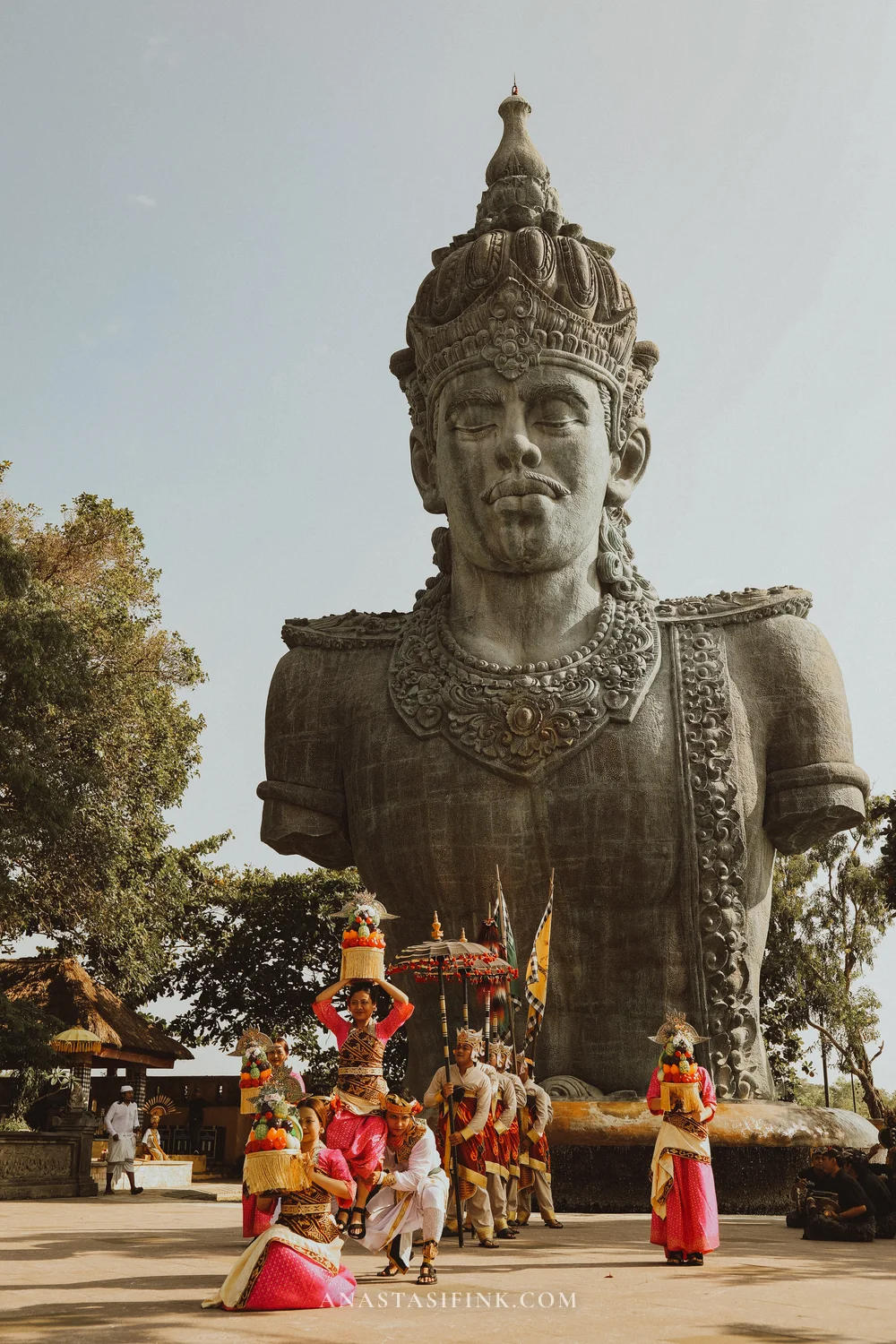
Women’s procession with offerings
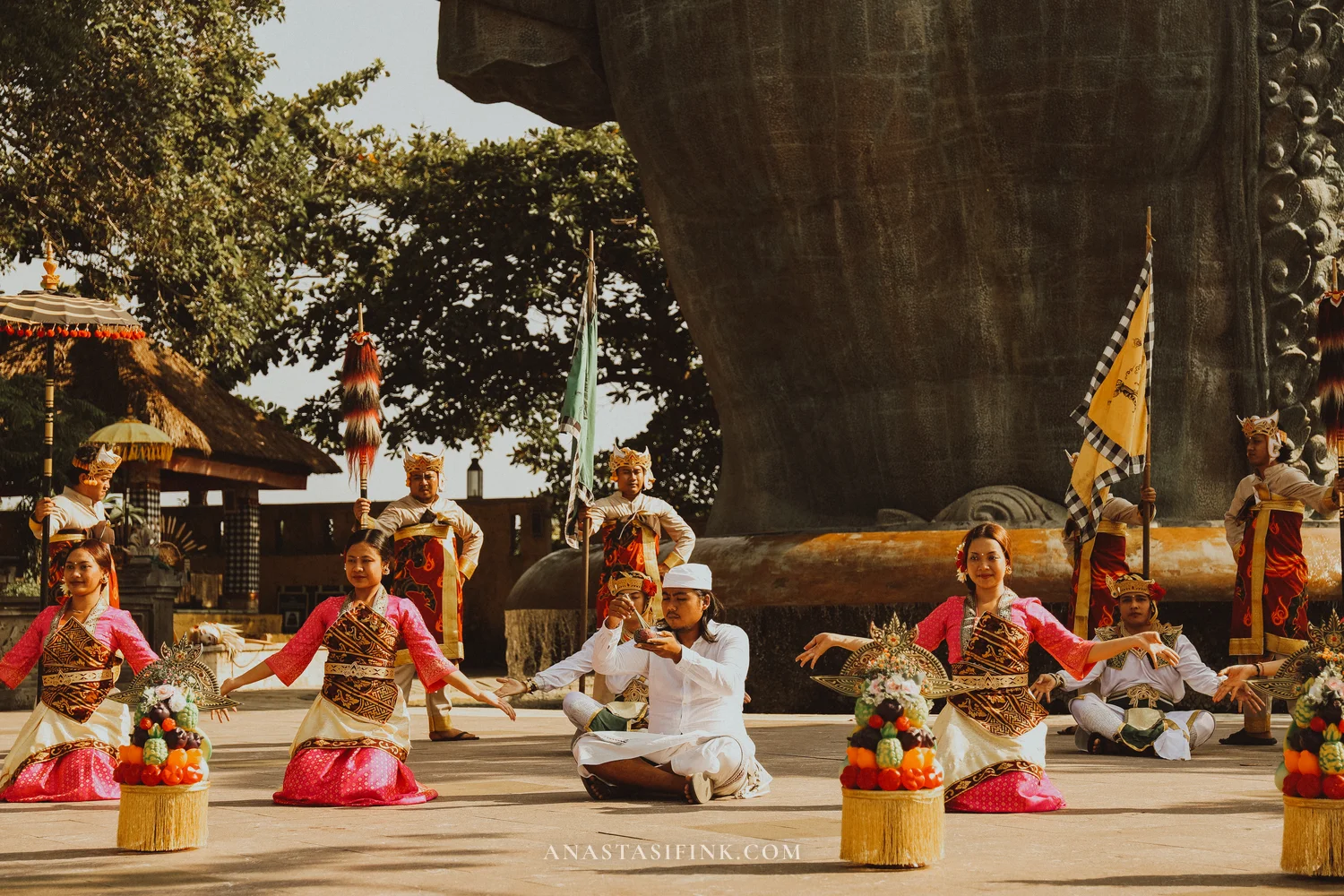
The Balinese make offerings both upward (to the gods) and downward (to spirits and demons). On stage, it’s all just beautifully stylized.
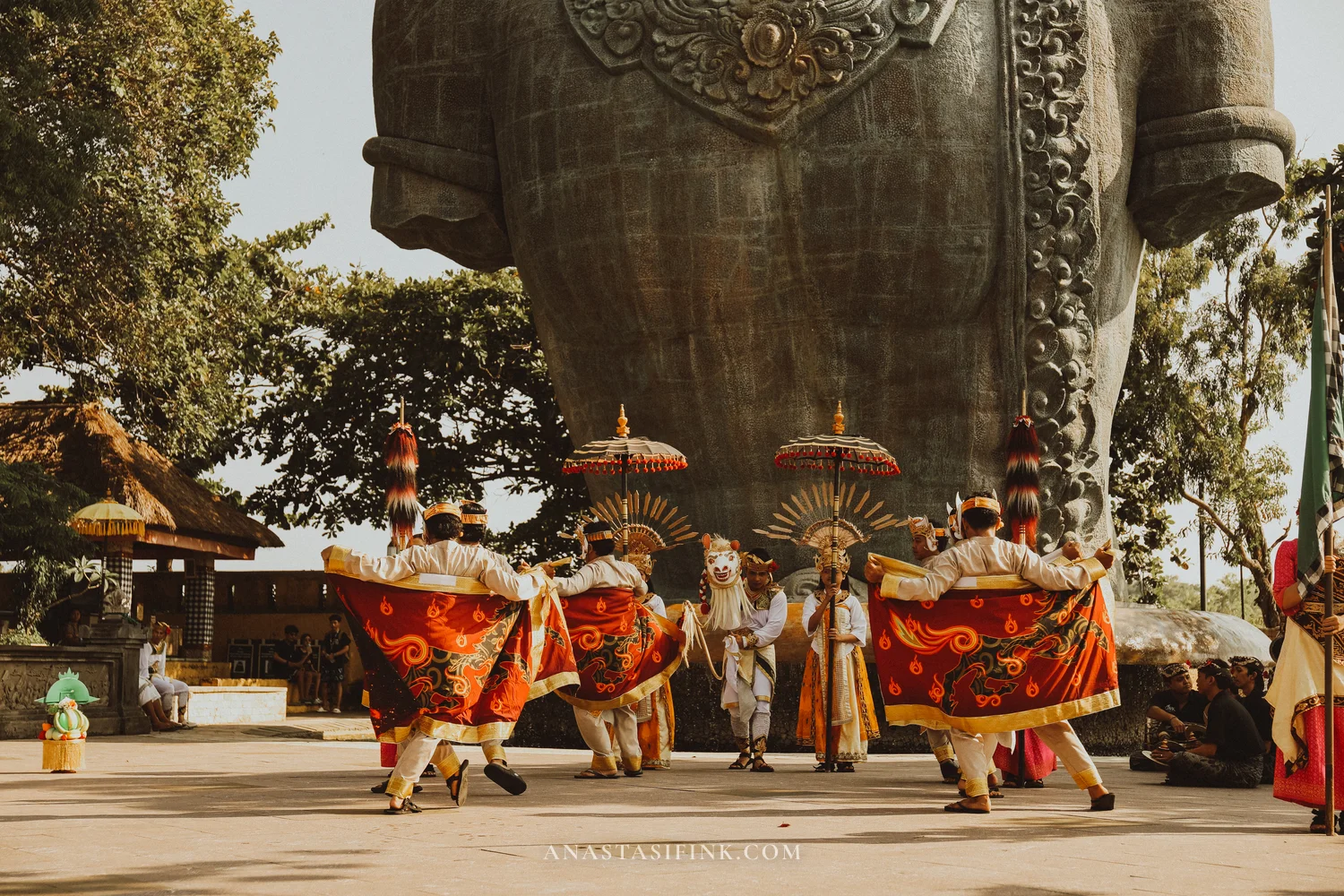
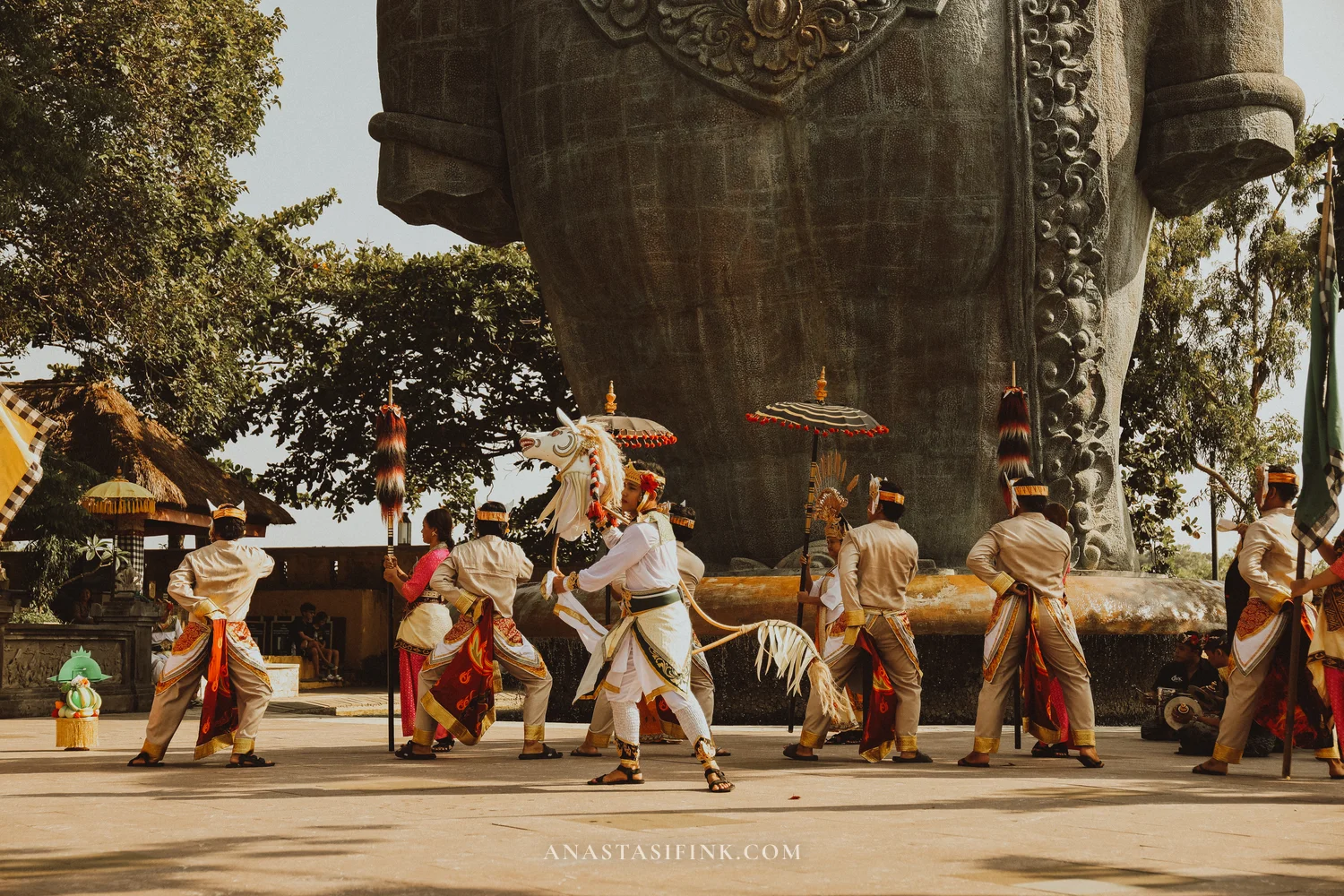
The Barong dance — the most iconic Balinese dance
Barong is a white-bearded mythical creature, the good guy of Balinese mythology. His eternal nemesis is Rangda, the witch queen of black magic. According to the dance, they fight each other forever, but neither one truly wins. For the Balinese, good and evil are equal forces — neither side ever takes the trophy.
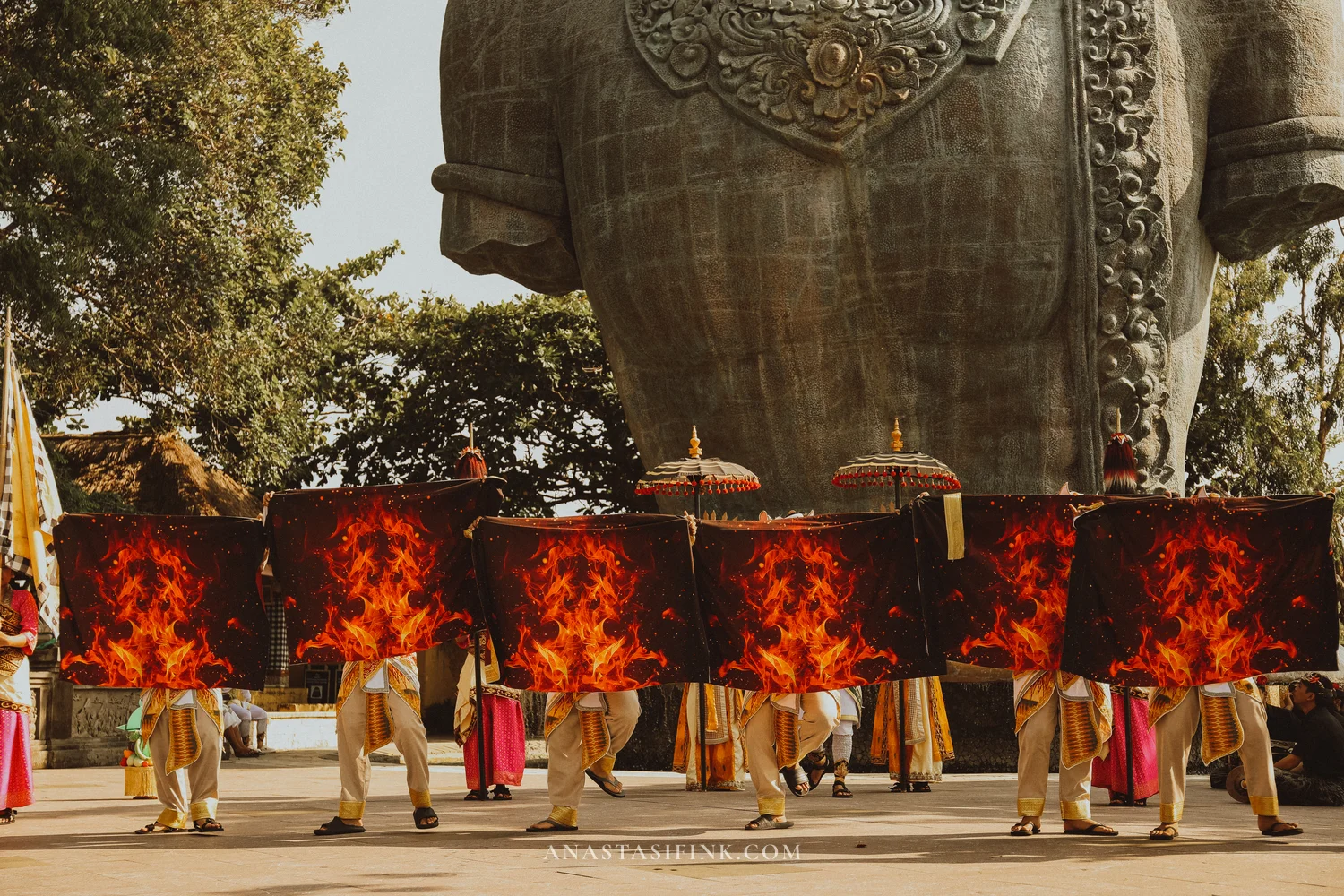
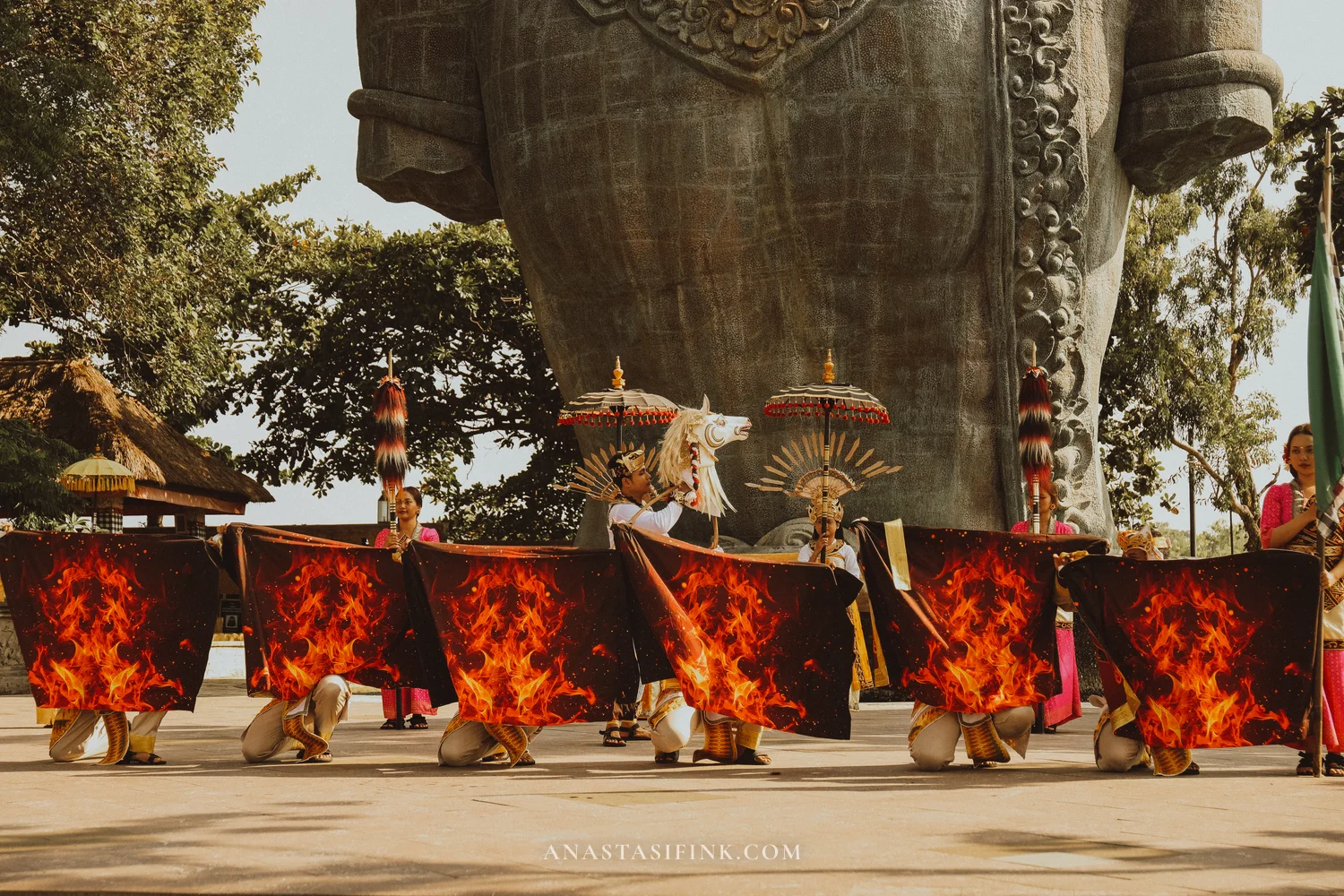
Warrior dance with fire shields
The shields are painted like flames — a nod to the scene from the Ramayana where Hanuman’s army burns down Lanka. Sharp movements, leaps, and pounding feet on the stone plaza alongside the gamelan.
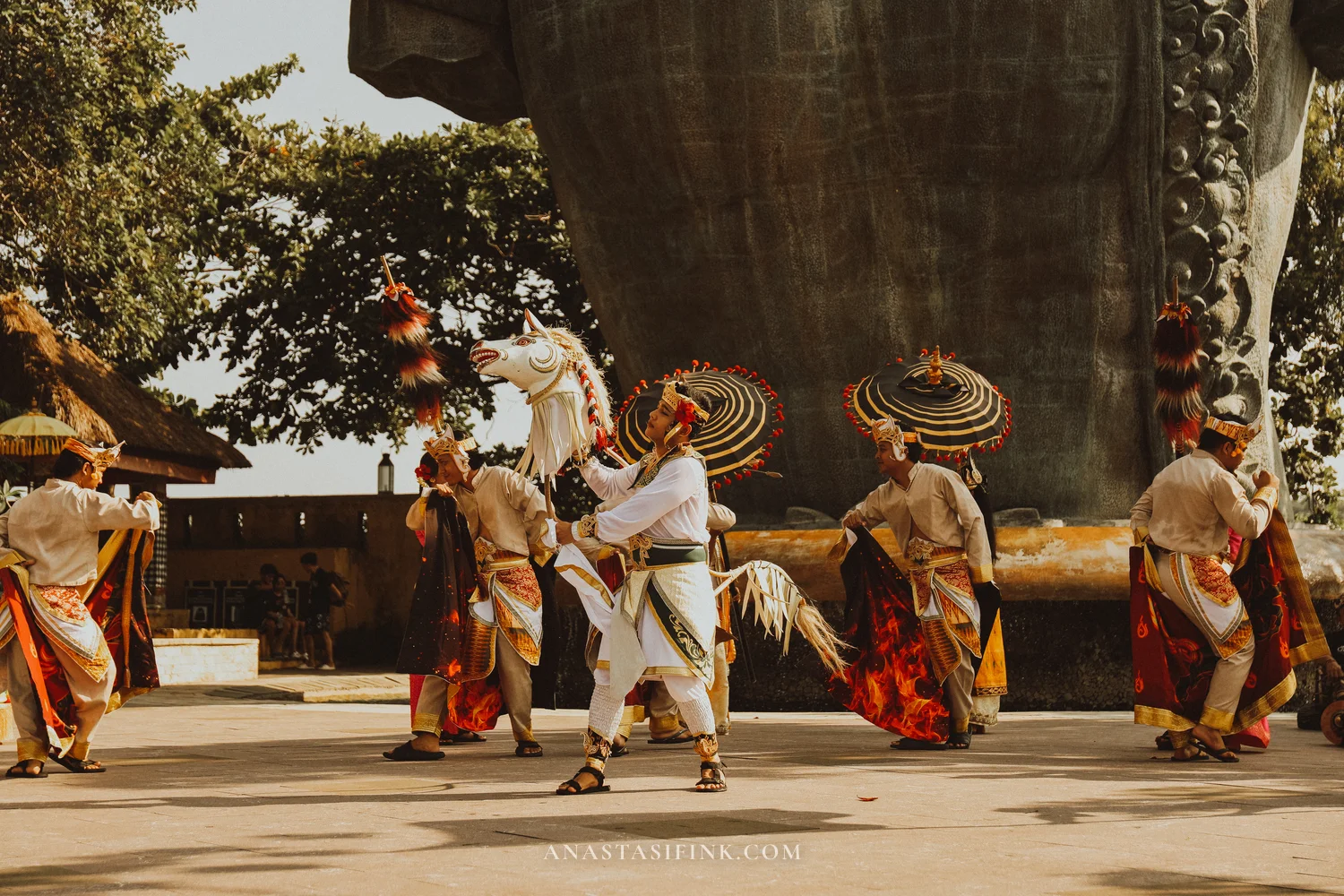
Balinese masks count as sacred objects. They’re stored separately, kept with offerings beside them, and never placed face down.
Performance schedule – 10:00 to 18:00 — traditional dances every hour – 15:00 — Barong dance – 18:00 — Kecak dance at Lotus Pond – 18:00 to 18:30 — Barong show in the amphitheater (Wednesday to Saturday, separate ticket) Check gwkbali.com for the exact schedule — it changes
Plaza Garuda
A standout feature of the park is Plaza Garuda. There’s a giant Garuda head right in the center.
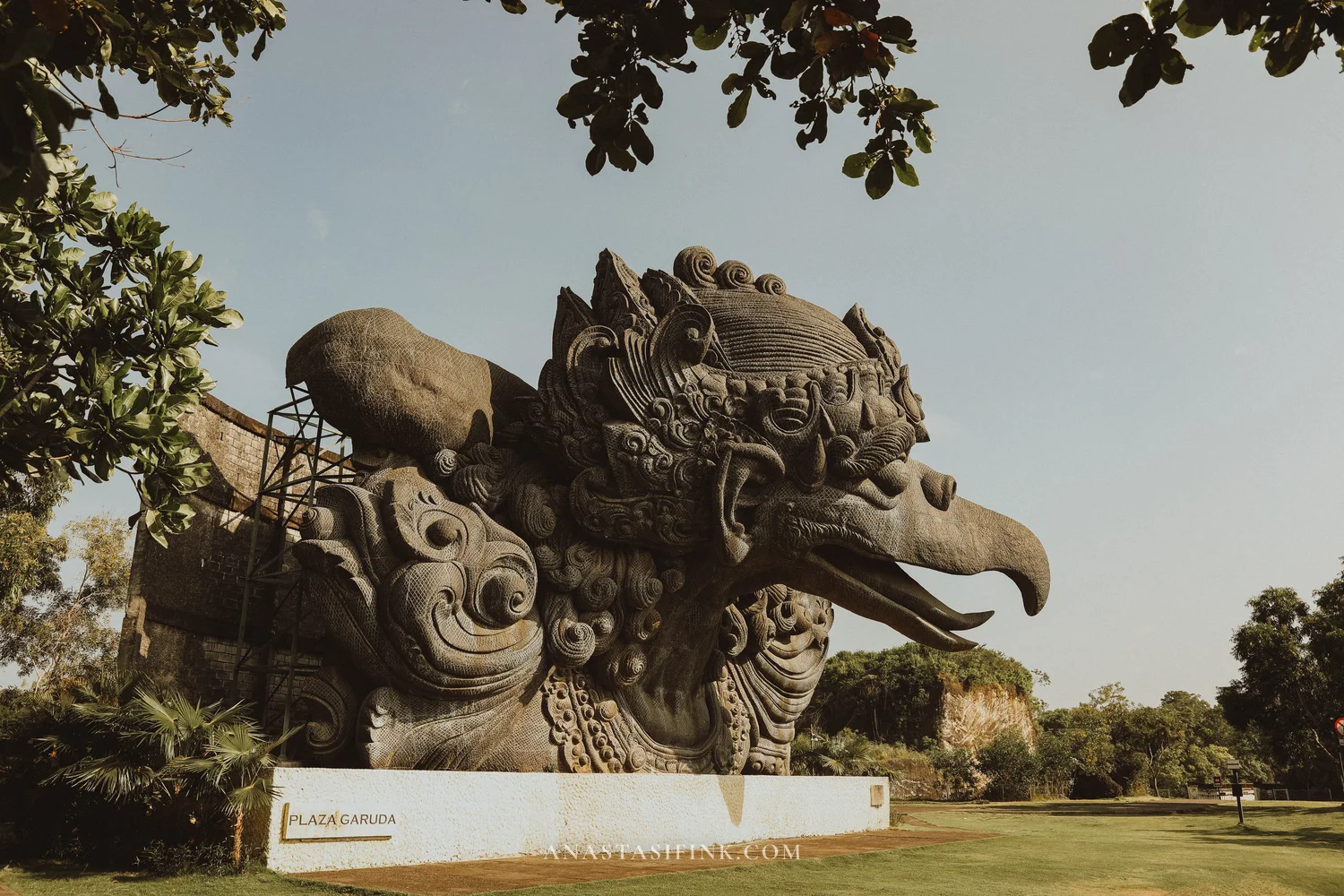
This head was actually cast separately from the main statue back in the 1990s, as a test prototype. And it just stayed there on its pedestal — became a standalone art piece.
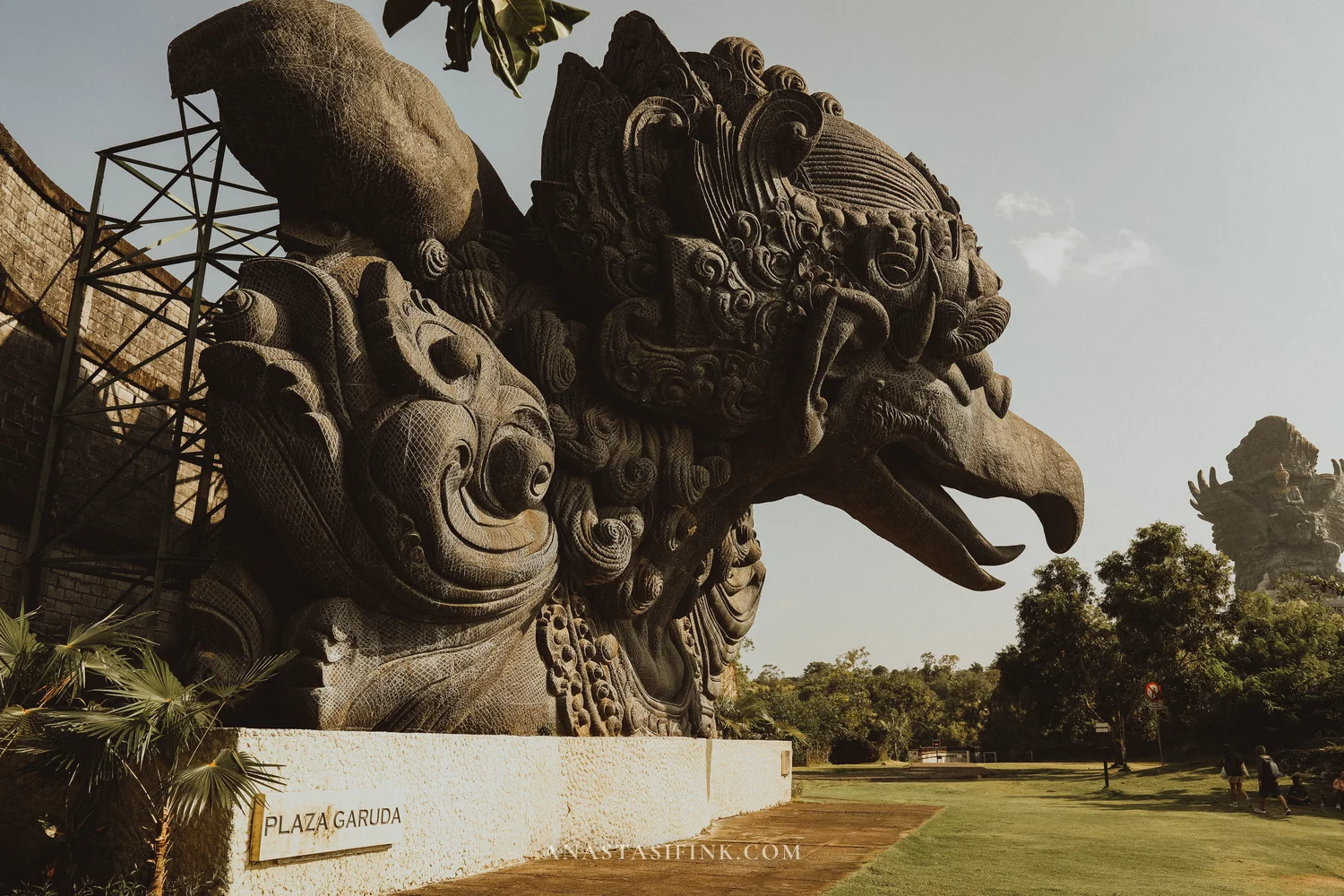
Garuda is the national symbol of Indonesia. A stylized bird sits on the country’s coat of arms, and the national airline is called Garuda Indonesia.
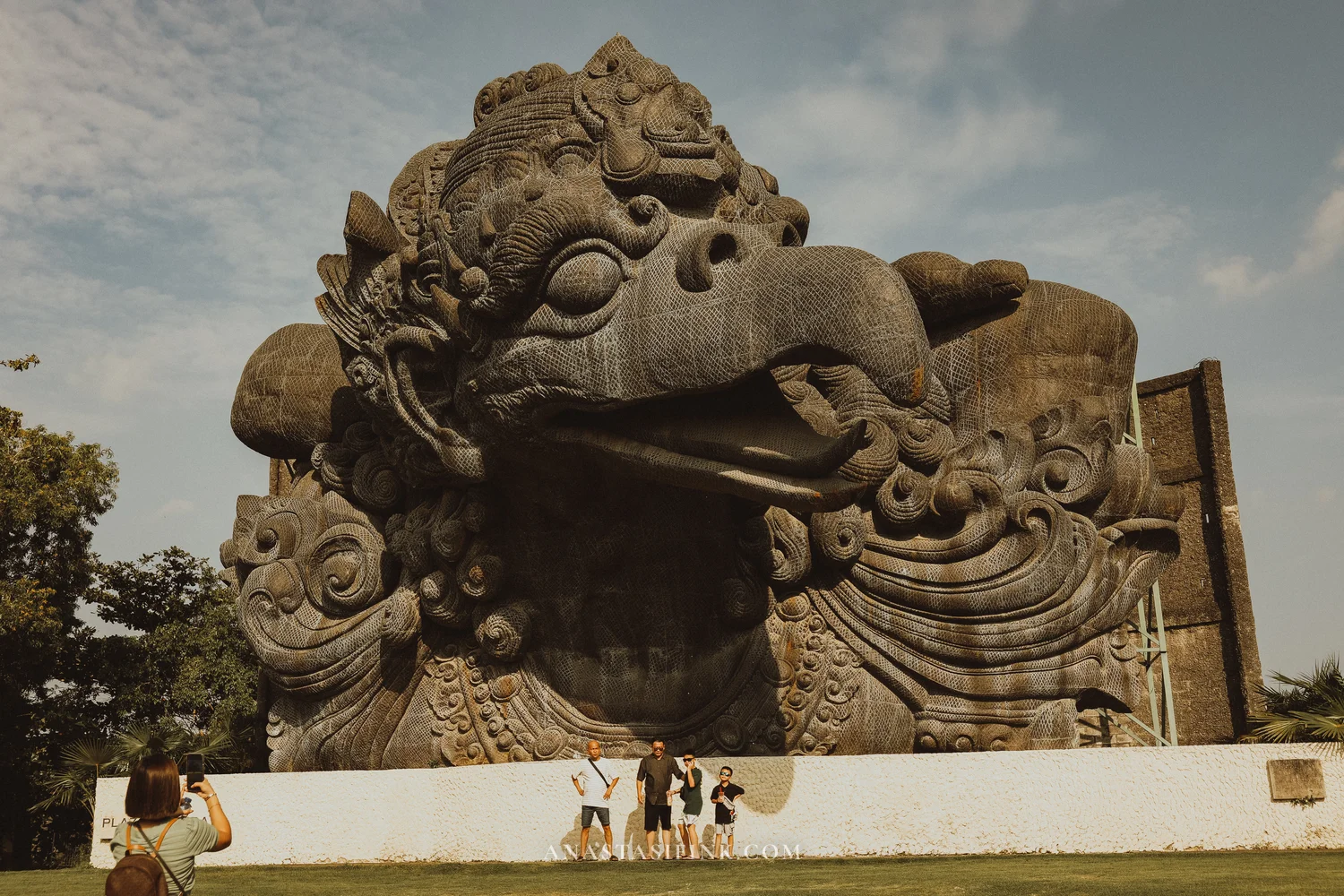
Up close, you really get the scale, and you can see all the details. Standing five meters from a beak the size of a car is something else!
The quarry corridors
And now — the part that, in my opinion, makes GWK absolutely worth visiting.
The park sits on the site of an old limestone quarry. For decades, stone was hauled out of here for villages in southern Bali. When the land was handed over for the park in the 1990s, the architects made a bold call: leave the vertical quarry walls exactly as they were, and run pathways straight between them. The result is something completely un-Balinese — narrow stone canyons that open up onto the main statue.
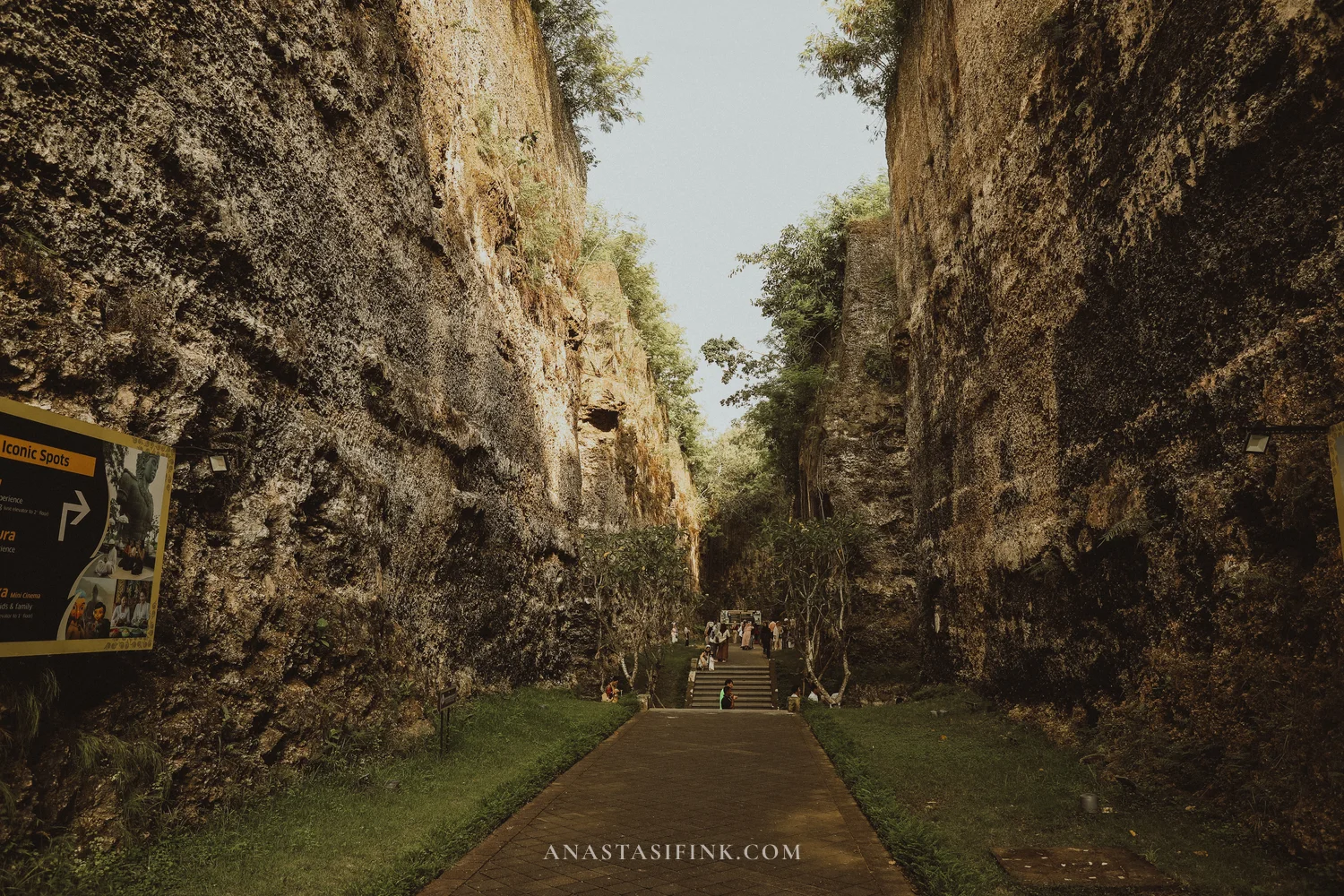
The walls rise about 25 to 30 meters, and the corridor is maybe ten meters wide. The second you step inside, the noise of the park fades out — all you hear is your own footsteps and birds somewhere up high. It’s a strange feeling, almost like you’ve wandered onto a movie set.
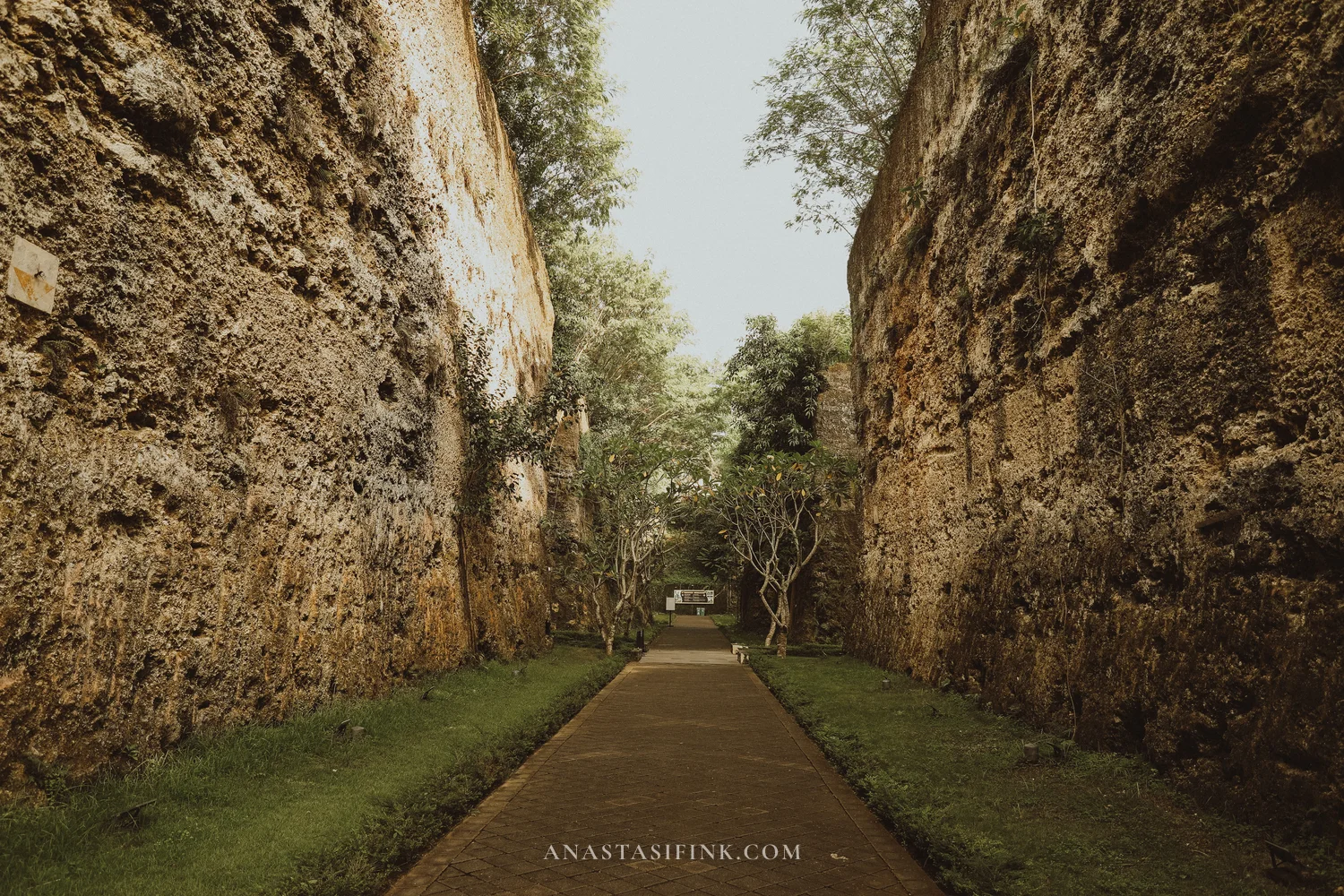
A lot of people mistake these corridors for ancient ruins. But they’re actually less than 50 years old — just the leftover marks of industrial limestone mining.
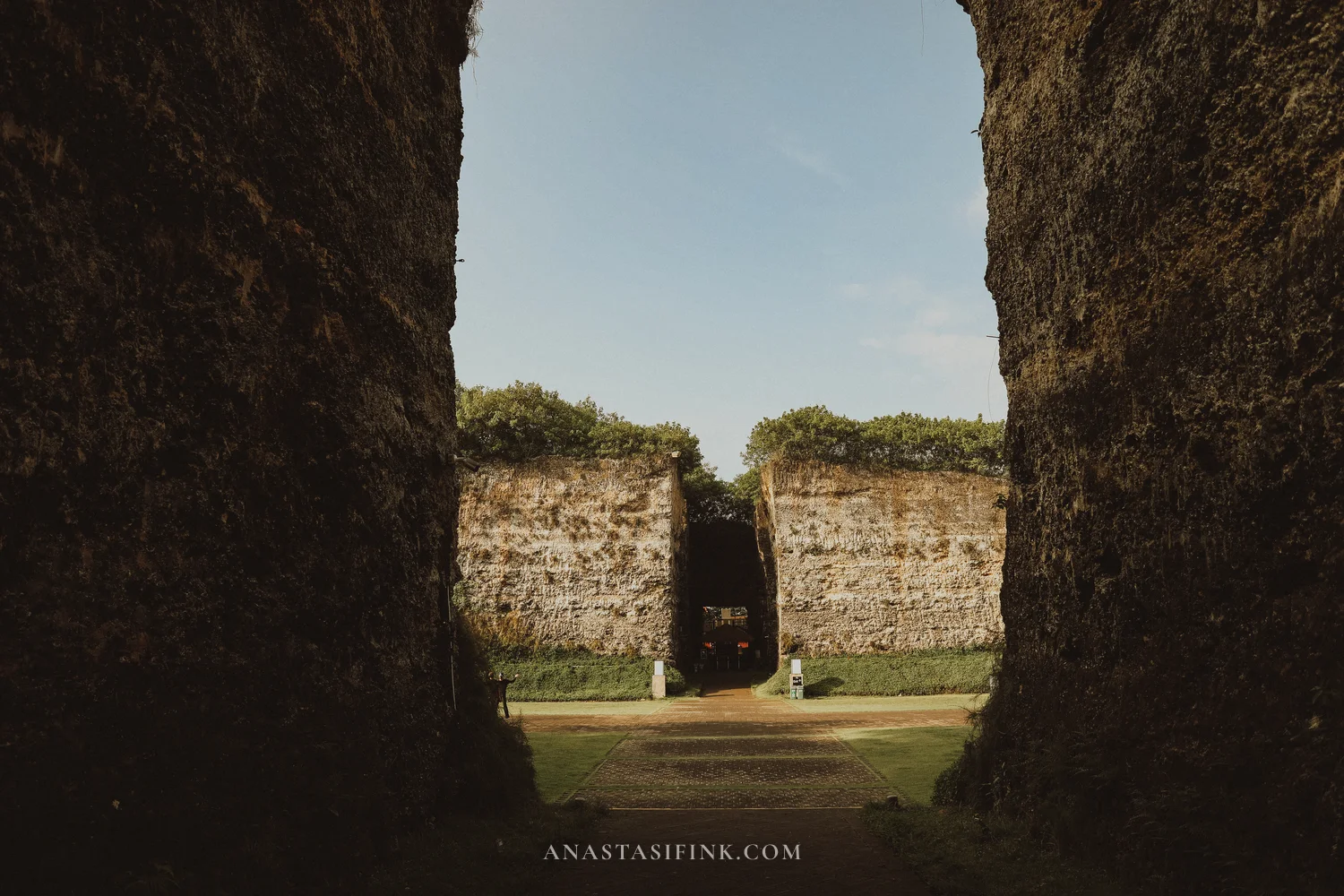
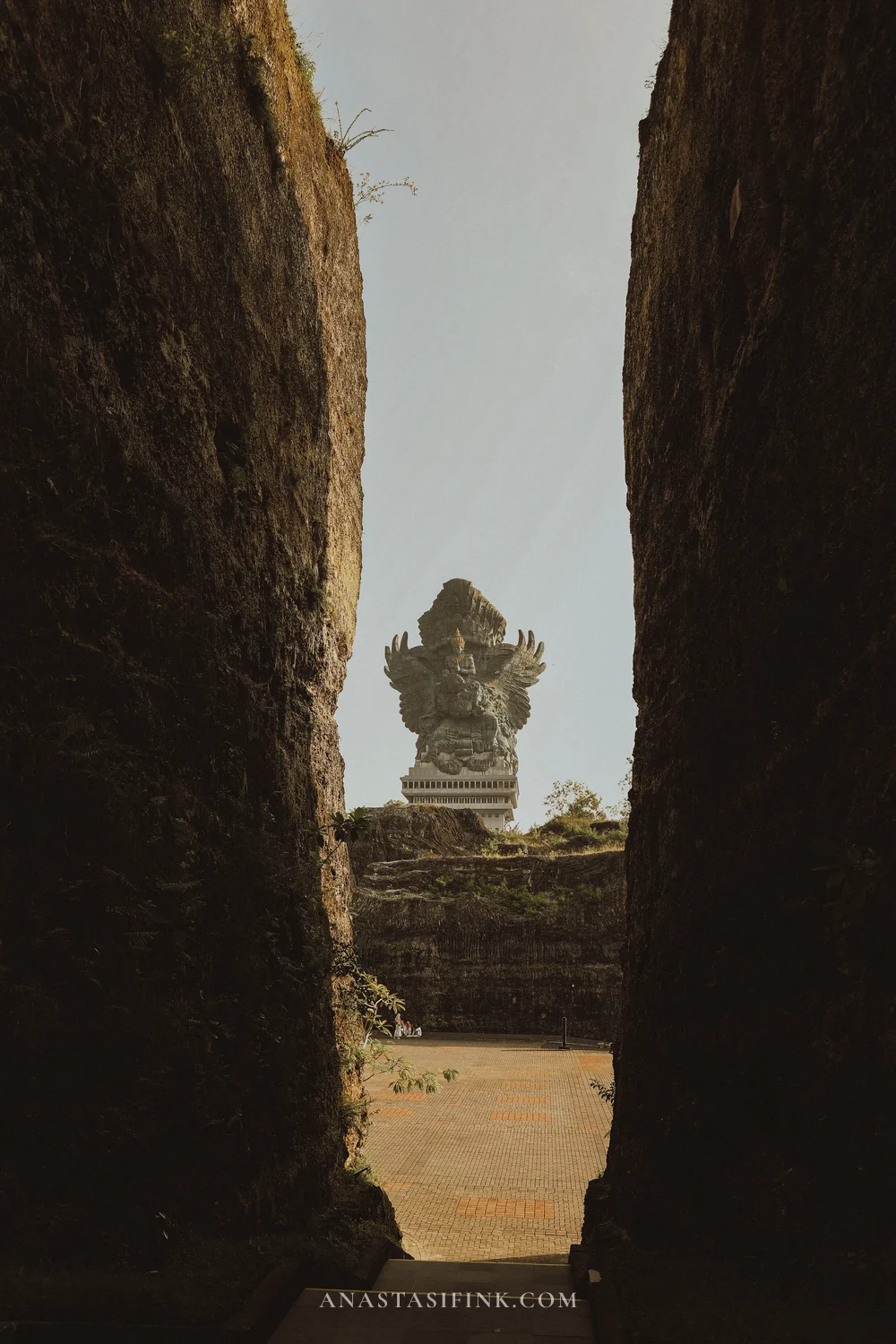
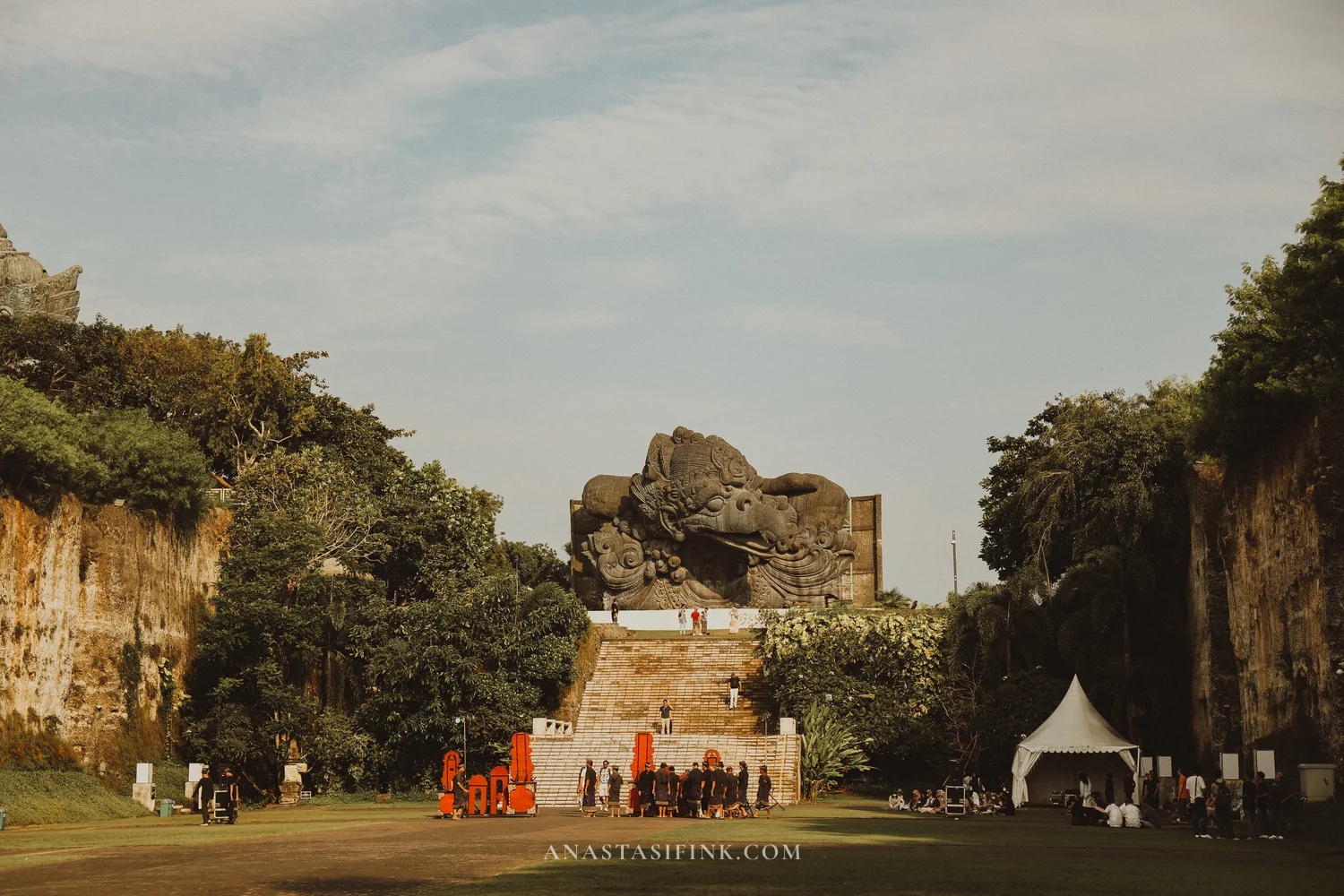
This angle is the most photogenic in the entire park. The limestone walls work as a natural frame, with the statue right in the middle. To find this spot, walk to the end of the main canyon (the “Iconic Spots” sign points the way) and look to your left.
Photographer’s tip: In the morning (before 11:00) or close to sunset (after 17:00), the light hits the canyon at an angle and lights up one of the walls. A wide-angle lens (16-24mm) works best — the walls are tall, and 35mm just won’t capture them.
Quiet corners
Between the main highlights, there are tons of small details. I doubled back on my own footsteps a few times — I kept noticing things I’d missed the first time around.
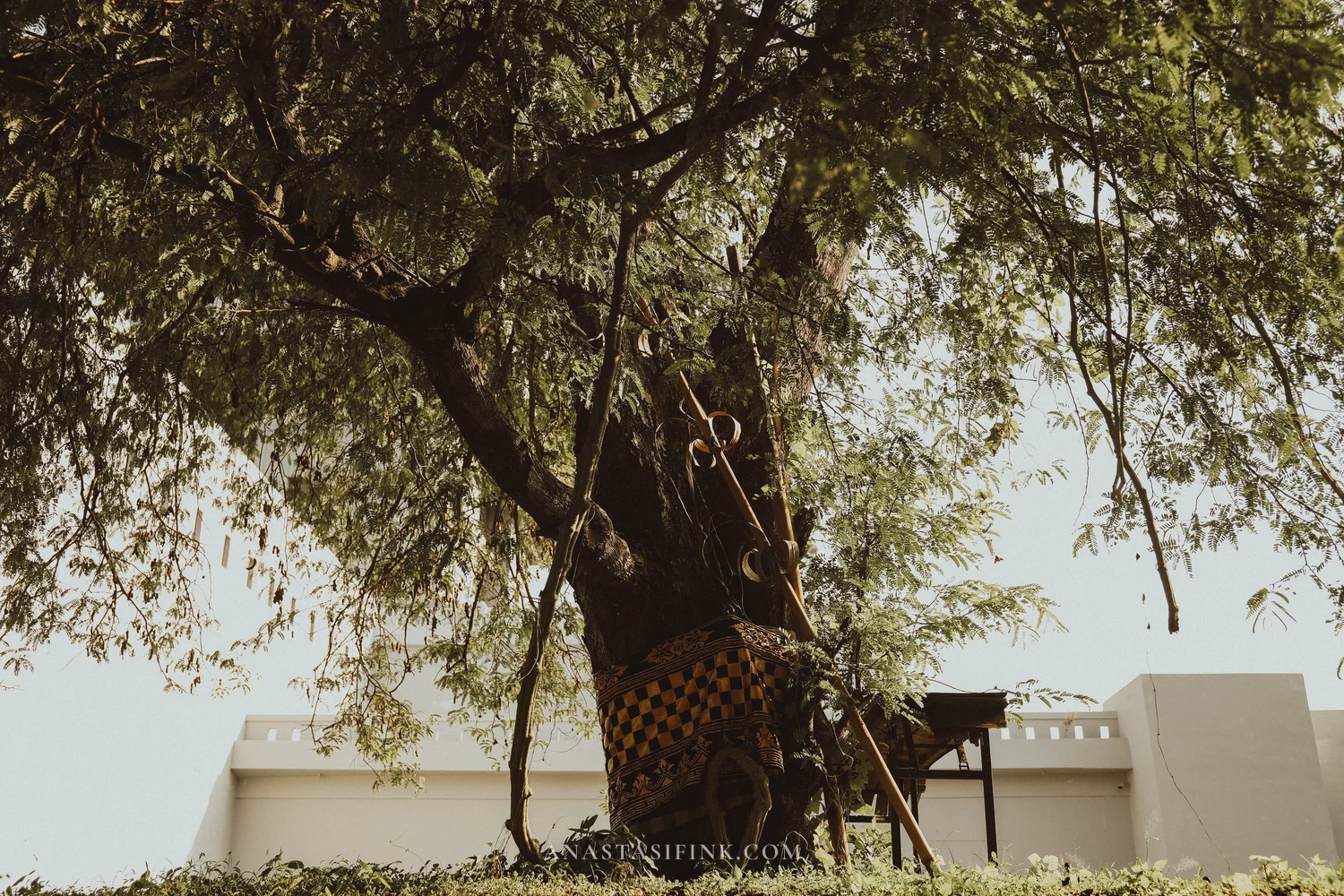
The black-and-white checkered cloth in Bali (poleng) marks a sacred place. Black and white are equals — neither one works without the other.
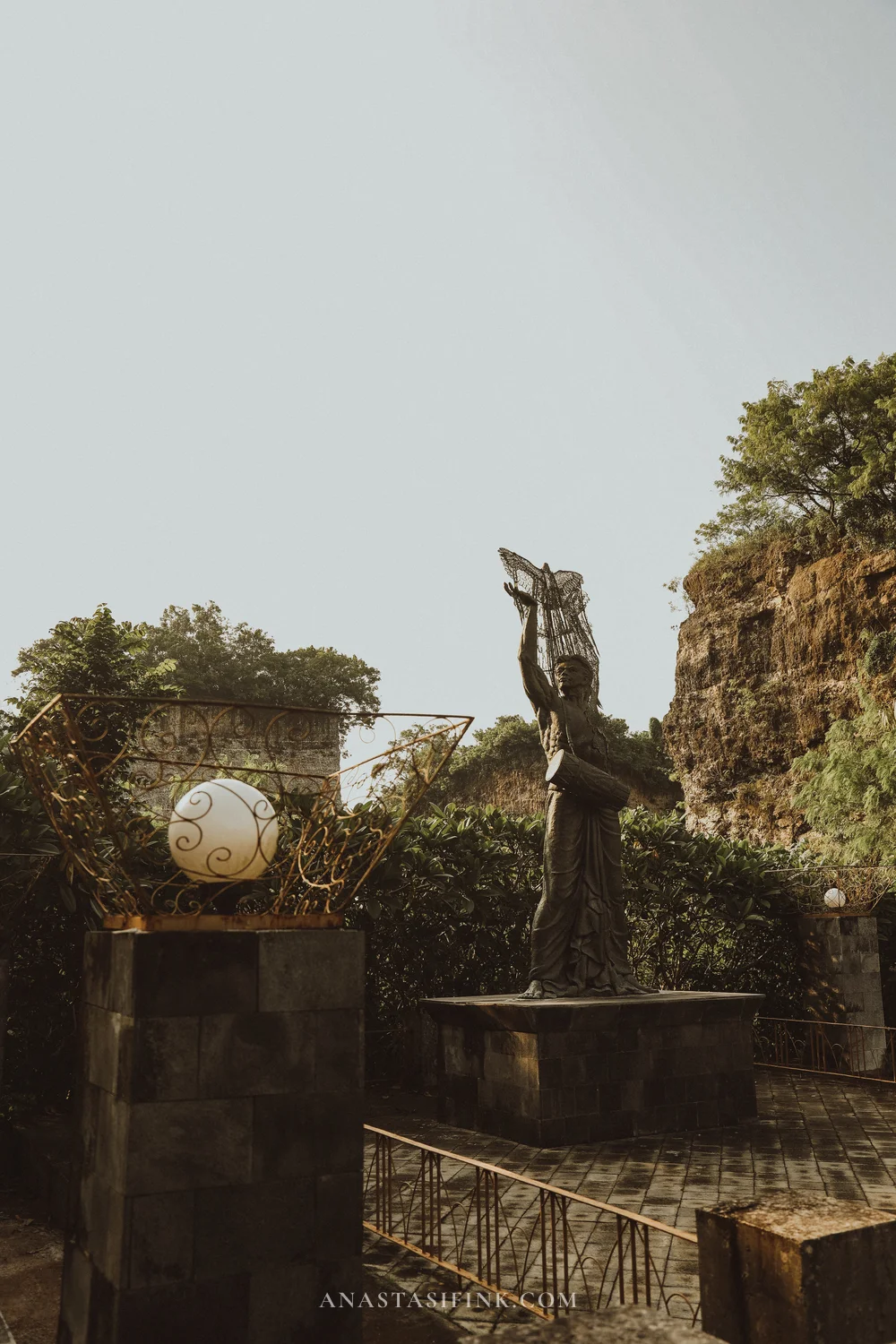
The bronze pieces are by Nuarta’s students. Not all of them land equally, but a couple are worth pausing for.
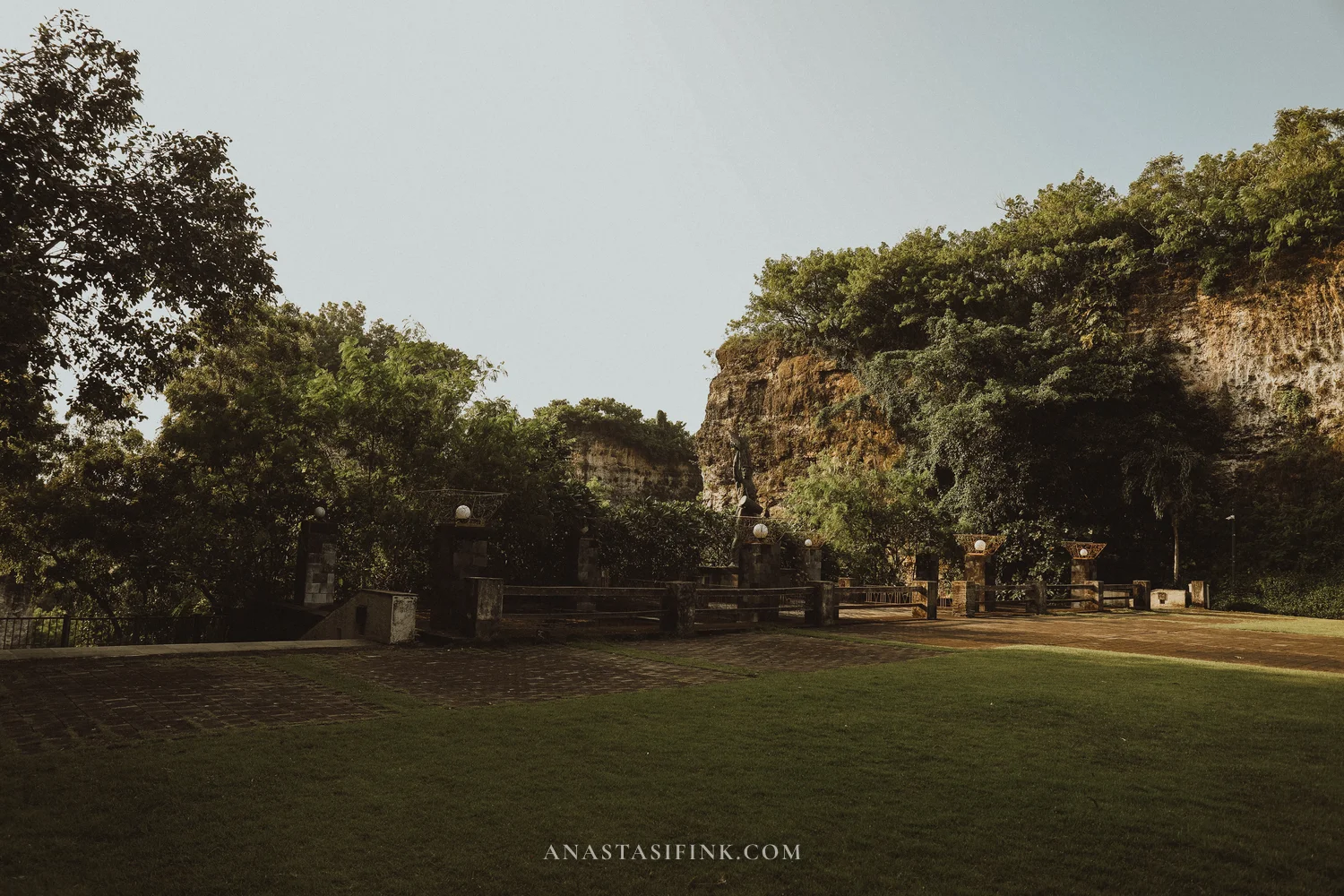
This plaza hosts concerts, corporate events, and weddings. Sometimes world tours stop by — an unusual venue for them.
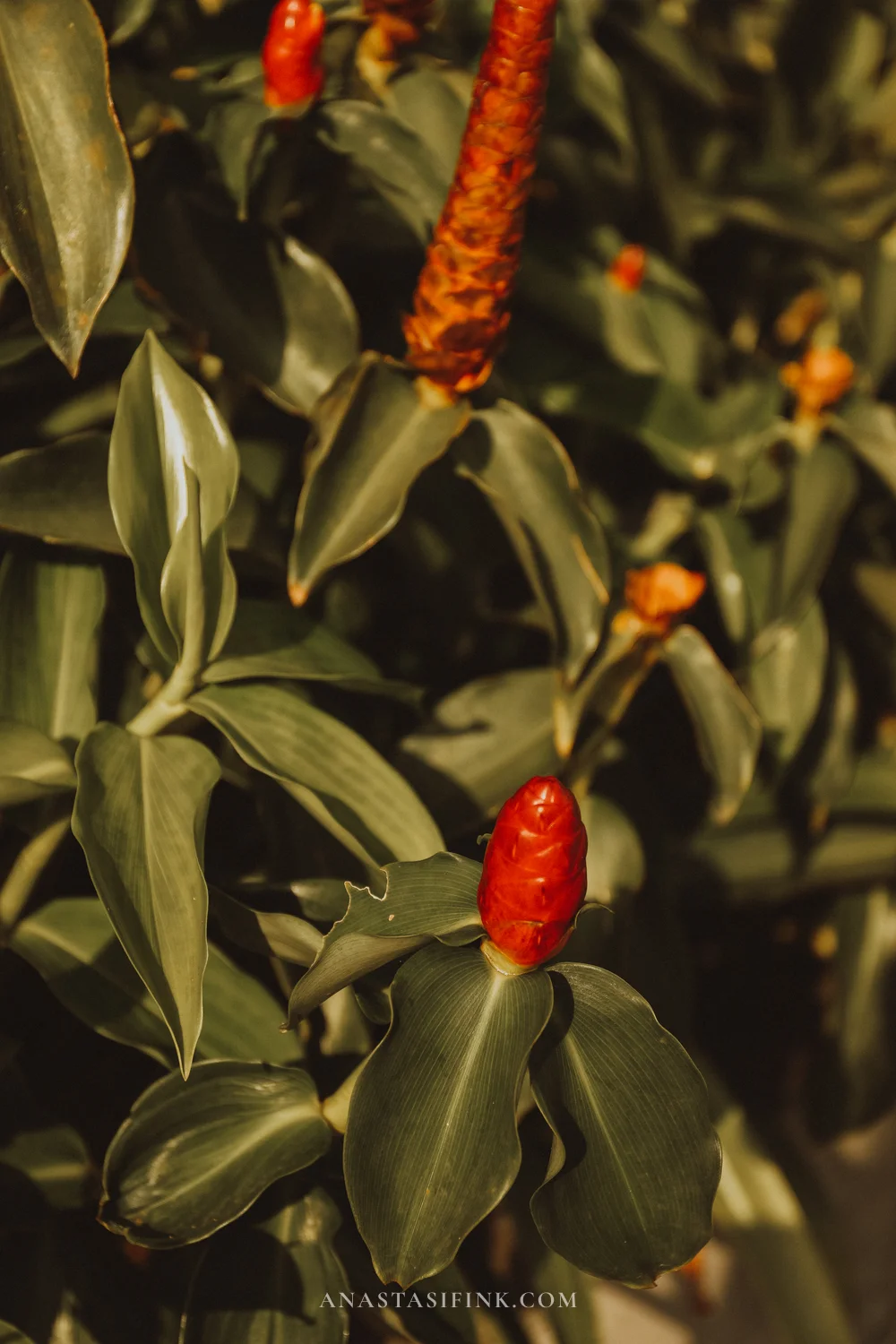
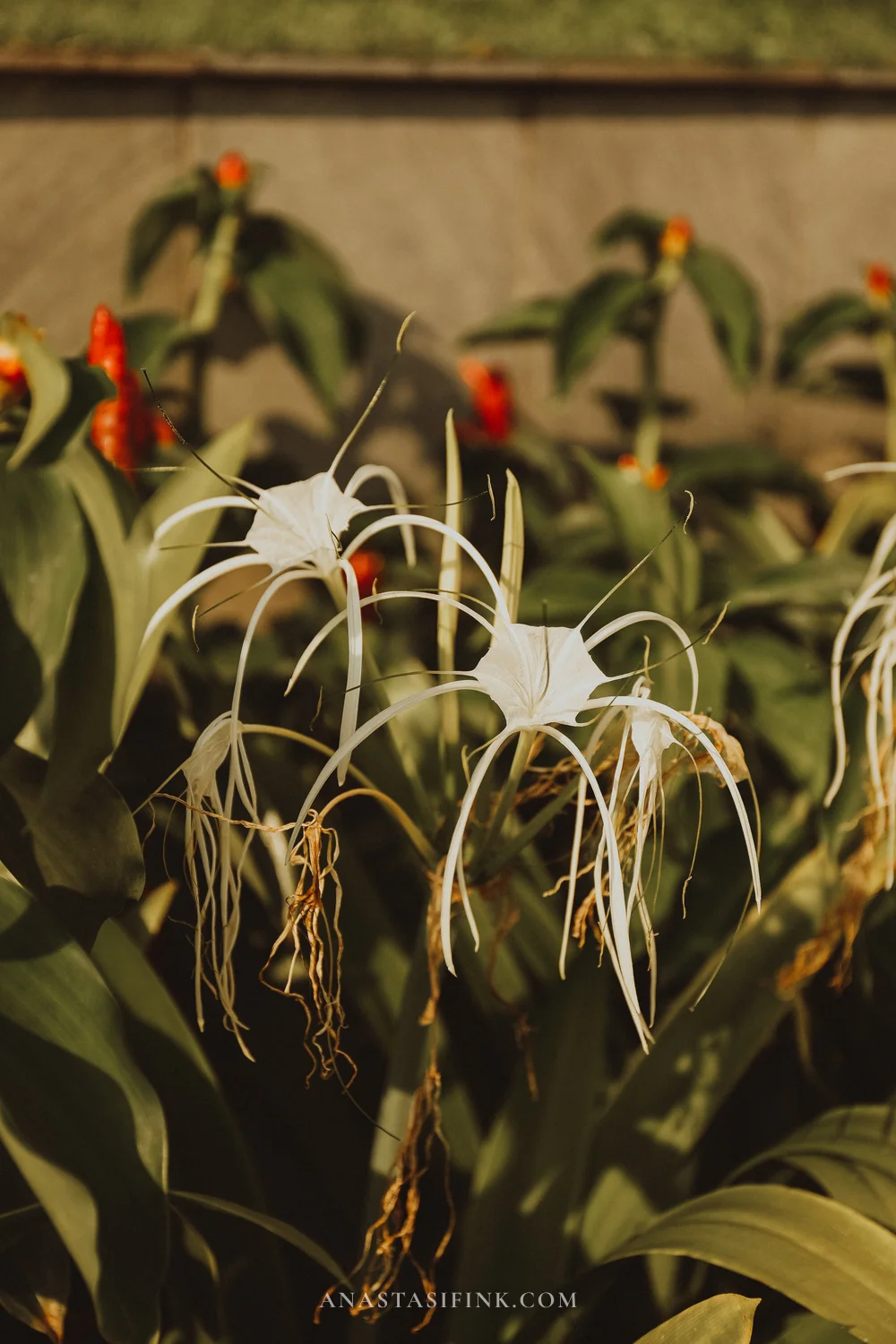
Tropical plants throughout the park
Lotus Pond
Lotus Pond is a huge open plaza between limestone walls — over 4,000 square meters. In the evening, this is where the Kecak dance happens, and thousands of spectators gather to watch.
Kecak is the most recognizable Balinese dance. The wild thing about it — there’s no orchestra. Just a chorus of 50 to 100 men chanting “chak-chak-chak” in rhythm, weaving together this incredible wall of sound. The story is the kidnapping of Sita from the Ramayana. The grand finale involves a fire scene with hot coals.
Practical info – Address: Jl. Raya Uluwatu, Ungasan, Kuta Selatan, Bali 80364 – GPS: -8.8104, 115.1675 – Hours: 09:00 to 21:00 (shuttle runs until 20:00) – Standard ticket: 150,000 IDR (~$9) – Ticket with statue elevator access: 350,000 IDR (~$22) – Barong show (separate evening event): 100,000 IDR (~$6.50) – Entry + Barong show: 200,000 IDR (~$12.50) – Kids under 100cm: free – Buggy shuttle inside the park: 40,000 IDR (~$2.50) round trip – Scooter parking: free – Visa: Visa on arrival ($35) for most Western travelers, including US, UK, Australia, Canada, EU – Google Maps: GWK Cultural Park
How to get there
The park sits on the southern tip of the Bukit Peninsula, near Ungasan. Further south, it’s just beaches and Uluwatu Temple.
- From Ngurah Rai Airport (DPS): 20 to 25 minutes by taxi (100,000 to 150,000 IDR / ~$6 to $10)
- From Kuta / Seminyak: 30 to 45 minutes, 150,000 to 200,000 IDR (~$9 to $12.50) on Grab
- From Canggu: 1 to 1.5 hours, 250,000 to 350,000 IDR (~$15 to $22)
- From Ubud: 1.5 to 2 hours, 400,000 to 500,000 IDR (~$25 to $32) — better to hire a private driver for the day
- By scooter: easy, parking is free. Rental runs 70,000 to 100,000 IDR per day (~$4.50 to $6.50)
Most international flights connect through Singapore, Doha, or Dubai. Bali’s Ngurah Rai airport (DPS) is just 25 minutes from GWK, so you can honestly hit this park first thing if you land early.
The grounds inside the park are huge. A free shuttle runs between the main points — I’d recommend using it. If you do everything on foot, plan on 3 to 4 hours.
Tips
- When to go: at opening (9:00) or after 16:00, so you can catch the dances and the sunset at Lotus Pond
- How long: minimum 3 hours without going up the statue, 4 to 5 hours with the elevator, the whole day if you’re staying for the evening Kecak
- What to bring: water (2 to 3 times more expensive inside), a hat, sunscreen, comfortable shoes
- Dress code: regular summer clothes for the daytime visit, no temple rules to worry about. For the evening, bring a light cover-up — it can get cool after sunset
- What to combine it with: Uluwatu Temple at sunset with Kecak (15 minutes away), Melasti Beach, Padang Padang Beach, the seafood restaurants in Jimbaran
- Camera gear: wide-angle (16 to 35mm) for the canyons and wide shots, portrait lens (50 to 85mm) for details and dancers
FAQ
Yes. Especially if you’re into Balinese culture and dramatic photography — the park delivers all of that in one place.
The easiest option is Grab or GoJek. From Kuta or Seminyak it’s 30 to 45 minutes, from Canggu it’s about 1.5 hours.
Minimum 3 hours. With the statue elevator, 4 to 5. If you stay for the evening Kecak, plan on the whole day.
Standard ticket is 150,000 IDR (about $9). With elevator access up the statue, 350,000 IDR (~$22). Kids under 100cm get in free.
Morning right after opening — fewer people, cooler temps. Or after 16:00 — you’ll catch the daytime dances, softer light, and can stay for Kecak.
Yes, there’s an elevator that stops on the 9th and 23rd floors. The ticket is sold separately.
The main statue, Plaza Garuda with the giant head, the quarry corridors (best photos), and at least one daytime performance.
Not really. The signage is good and the main spots are easy to find on your own.
For most Western travelers (US, UK, Australia, Canada, EU citizens), it’s a visa on arrival for $35, valid for 30 days and extendable once for another 30. Just have a passport with at least 6 months of validity, a return ticket, and the cash or card ready at the airport.
Definitely. Kids under 100cm are free, the shuttle covers the longer walks, and the dance performances usually grab their attention. Just bring water, sun protection, and snacks — and skip the elevator up the statue if you have toddlers, since the observation deck has limited space.
So is it worth it?
Yes, absolutely. This is one of those places that looks like a “tourist attraction” you’d want to skip on first glance, but turns out to be a real find: the dances are authentic, the architecture is incredible, and those limestone passages cut through the rock let you take some of the best photos you’ll get anywhere in Bali!