Ephesus: Complete Guide to the Ancient City in Turkey — 10 Must-See Spots, Sunset, Night Illumination and How to Plan Your Visit

The hot stone, warmed by the Anatolian sun all day, still radiates heat under my palm. The marble of Ephesus isn’t white — it’s honey-gold, almost alive in the fading sunset light. I’m standing on a paved street that is two thousand years old, and I think: these aren’t ruins. This is a city that simply fell asleep.

Ephesus — the Second Rome on the Aegean Shore
Ephesus is one of the best-preserved ancient cities in the world. At its peak, in the 2nd century AD, between 200,000 and 400,000 people lived here. It was one of the largest cities of the Roman Empire — a major trading port, an intellectual hub, a place of pilgrimage. Today it’s an archaeological park just a few kilometers from the small Turkish town of Selçuk, in Izmir Province.
If you have even a passing interest in history — Ephesus is a must. This is a real city you can wander through for hours, and every turn reveals something new. Yes, there are plenty of tourists. But once you’re here, something stirs deep inside — that spark of discovery, that passion for travel. It’s like stepping into a time machine, going back 2,000 years, and it becomes easy to imagine yourself as an ancient Roman who once walked these very stones — stones that have remained unchanged since then.
What to See in Ephesus: 10 Must-See Highlights
1. The Library of Celsus — the Star of the Show
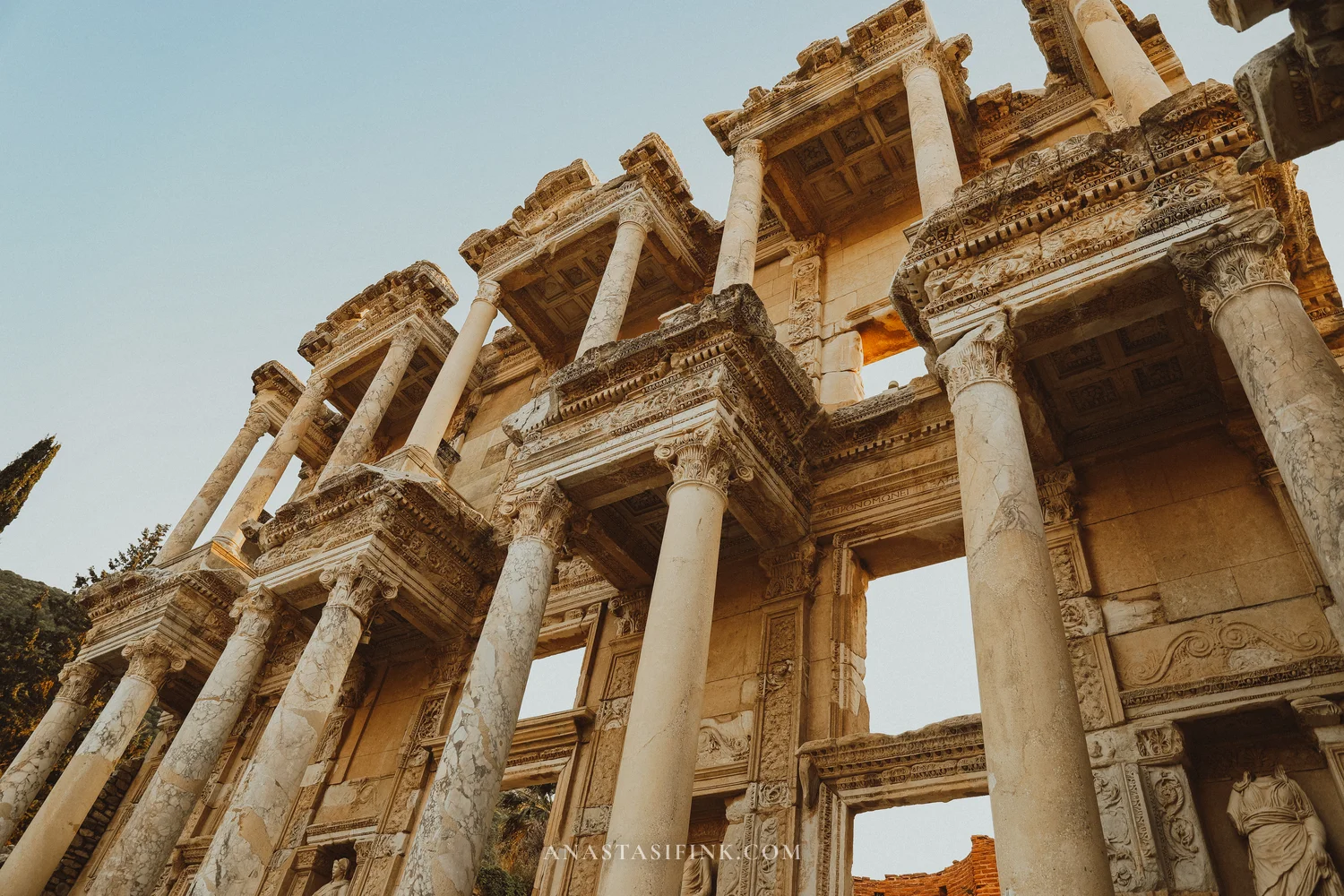
It takes your breath away. Literally. A two-story marble facade with columns, niches, statues, and carved friezes — I’ve never seen such a concentration of ancient splendor anywhere else.
The library was completed around 117 AD in honor of the Roman proconsul Tiberius Julius Celsus Polemaeanus. It once held around 12,000 scrolls and was the third-largest library of the ancient world — after the Library of Alexandria in Egypt and the Library of Pergamum (modern-day Bergama in Turkey). Celsus was buried right here, beneath the reading room — in a sarcophagus that has survived to this day.
Four allegorical statues stand in the niches of the facade — Wisdom (Sophia), Knowledge (Episteme), Virtue (Arete), and Intelligence (Ennoia). The originals are in the Vienna Kunsthistorisches Museum; sadly, only copies remain here now. Look for the Greek inscriptions beneath each statue. Try translating them with an app — it makes you feel like a real antiquity explorer.
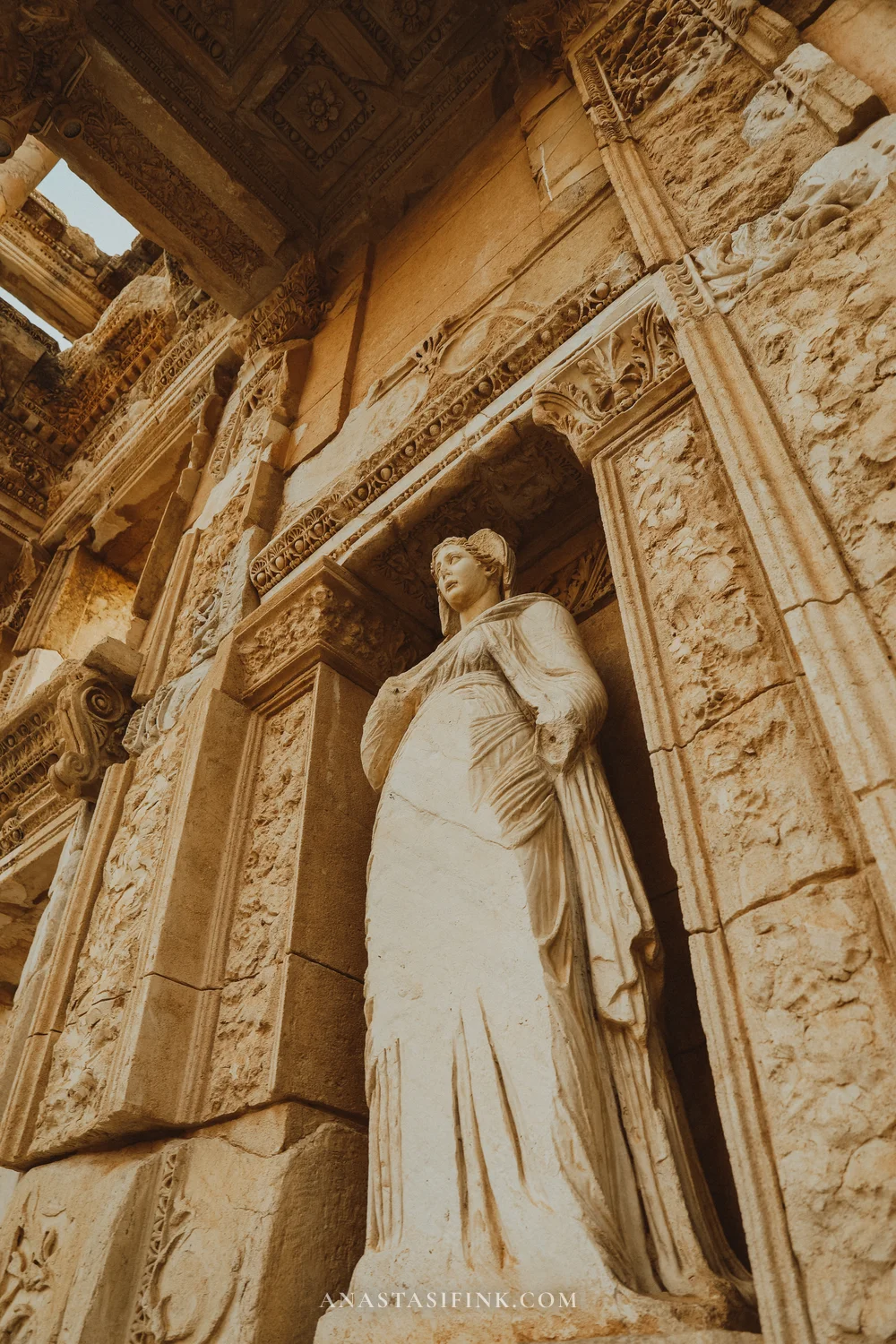

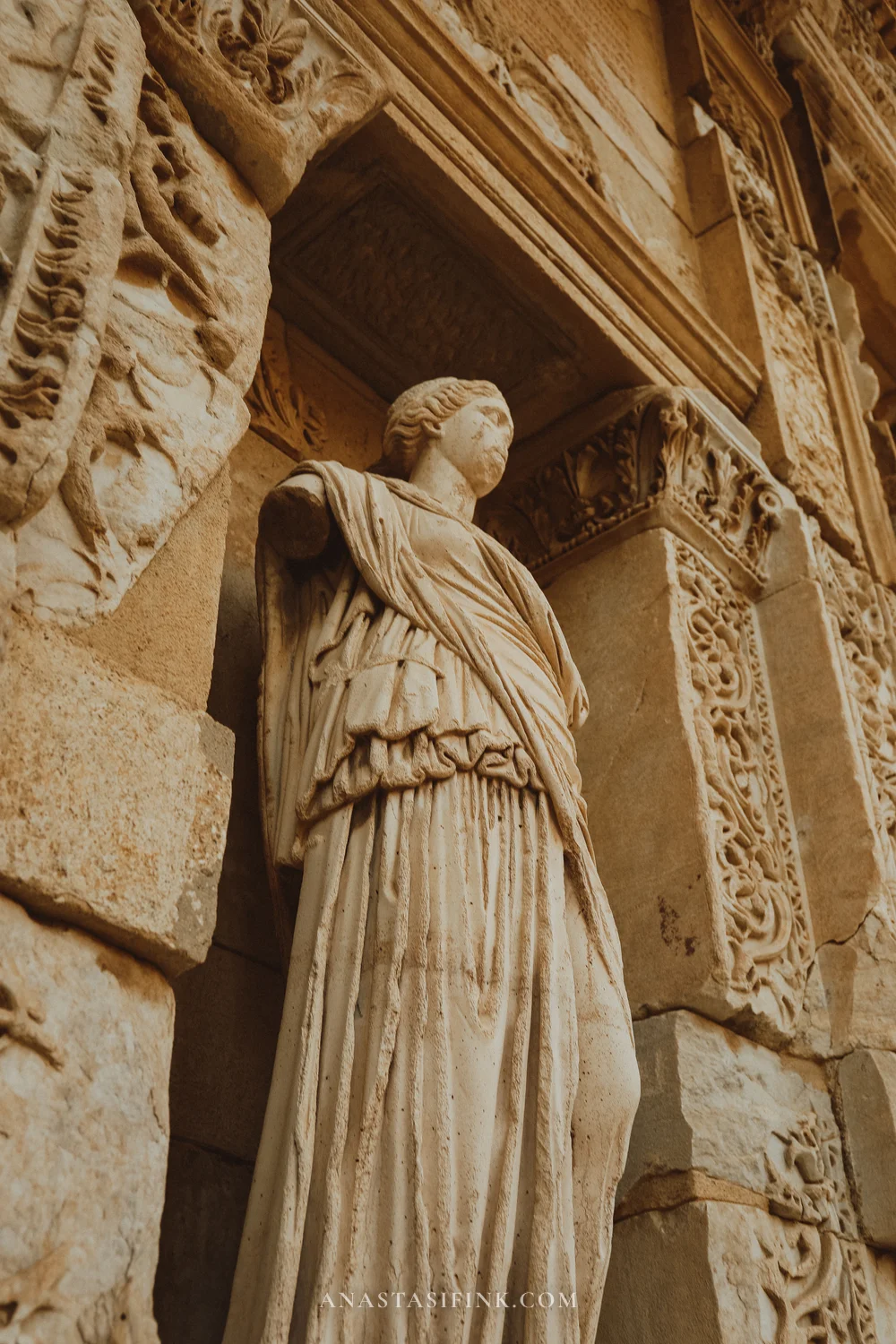
Allegorical statues on the Library of Celsus facade
While admiring the statues, don’t forget to look up! Fragments of a carved coffered ceiling survive between the columns. The details are stunning! Every centimeter of the facade is covered in carvings — acanthus leaves, garlands, ornamental patterns…
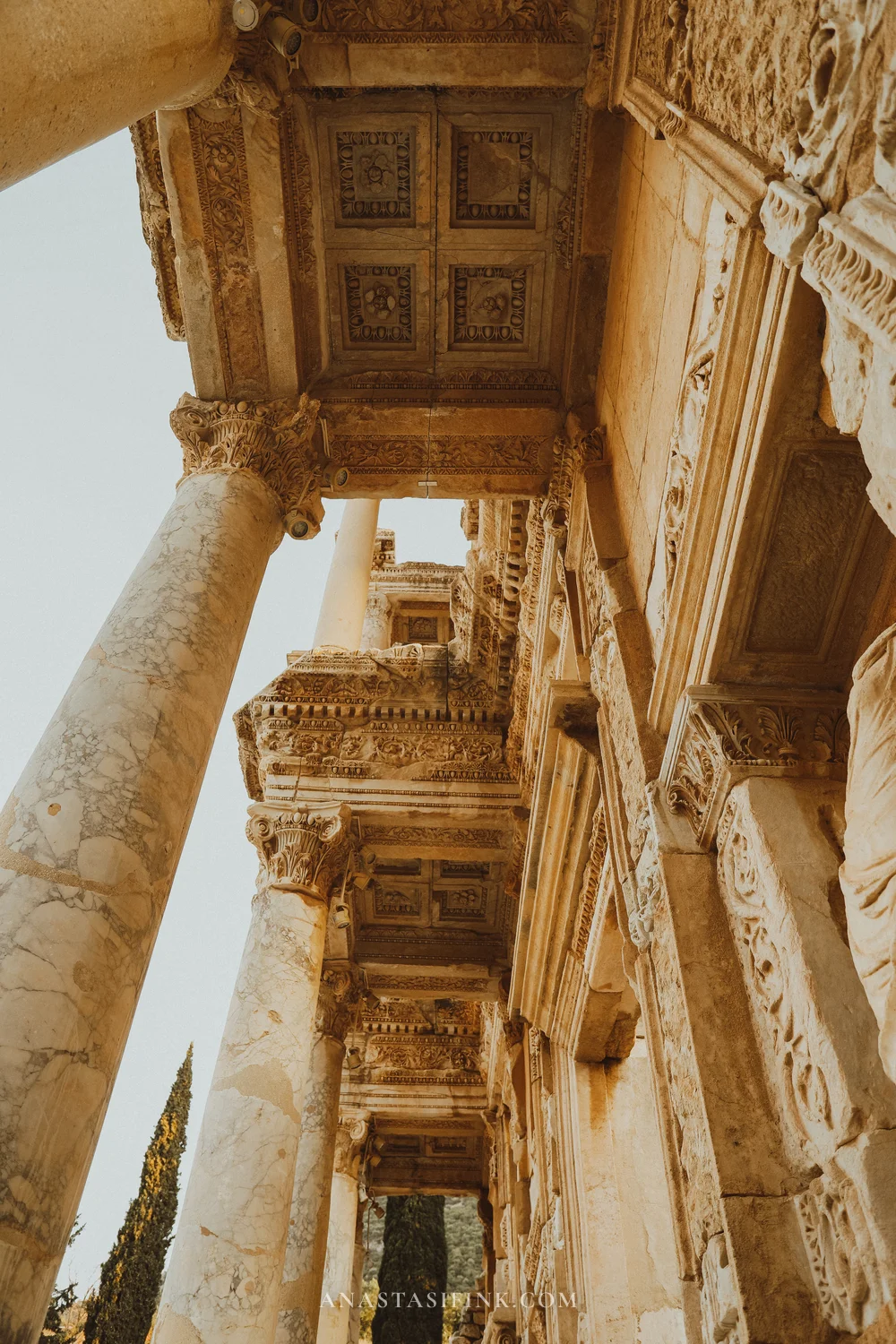
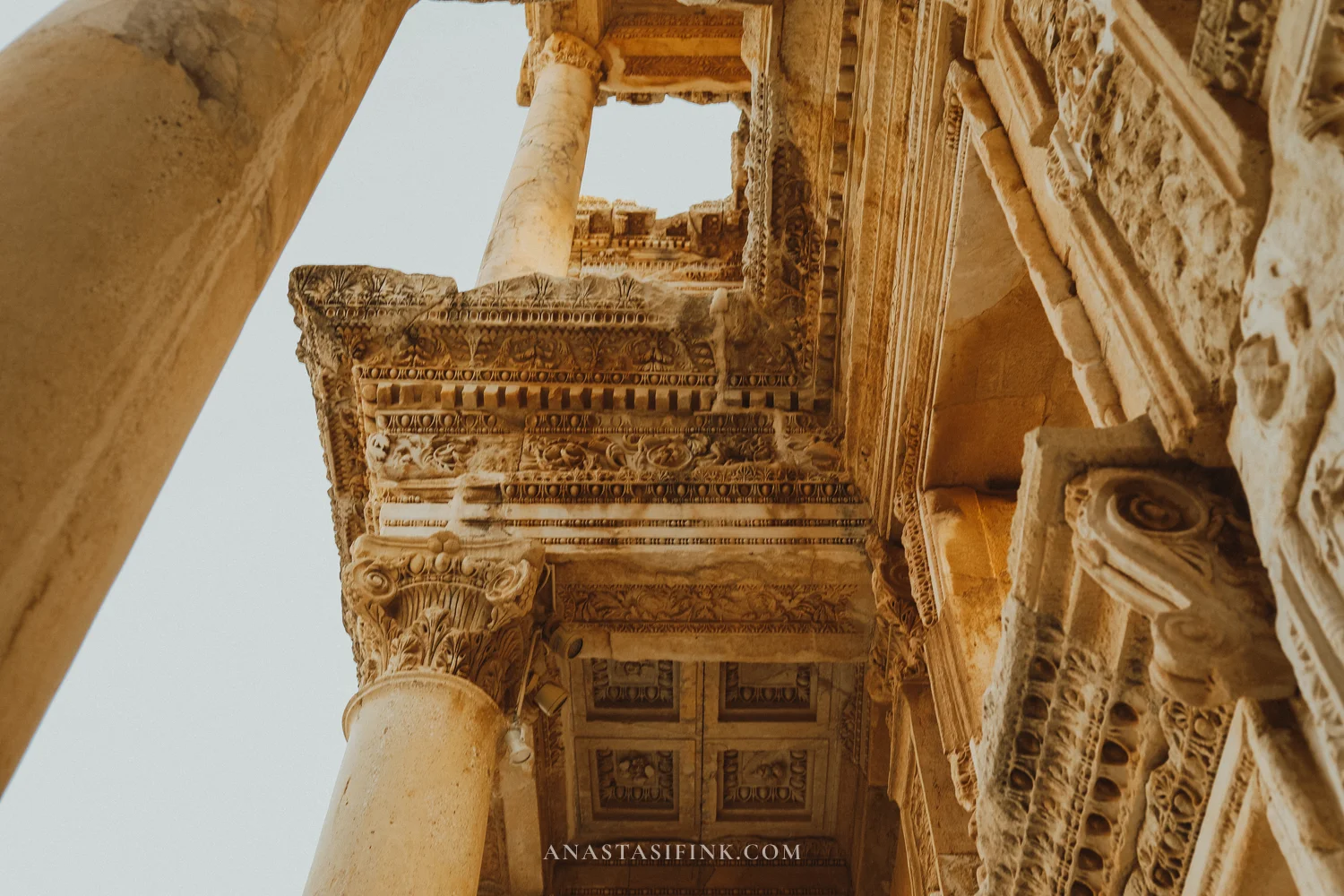
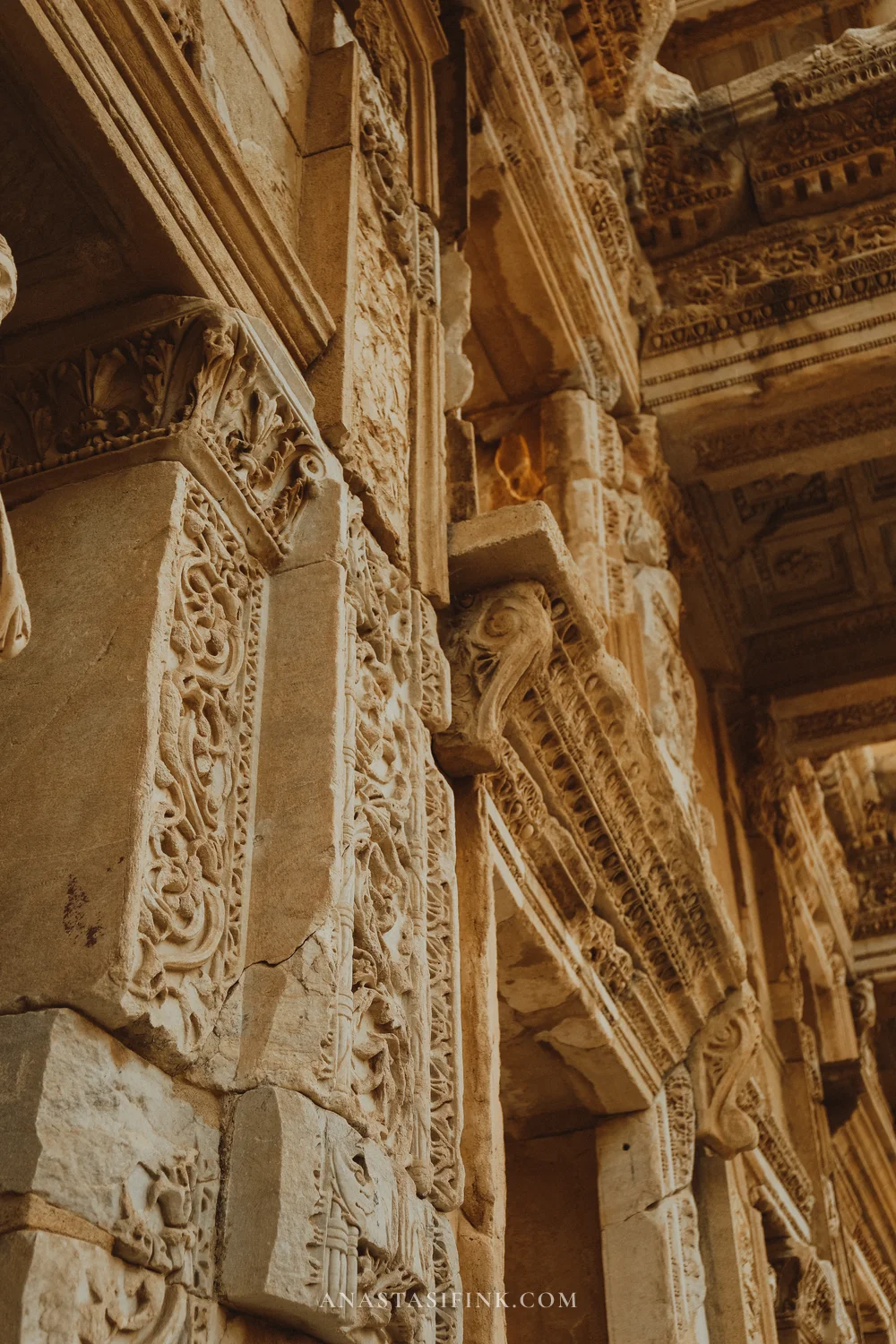

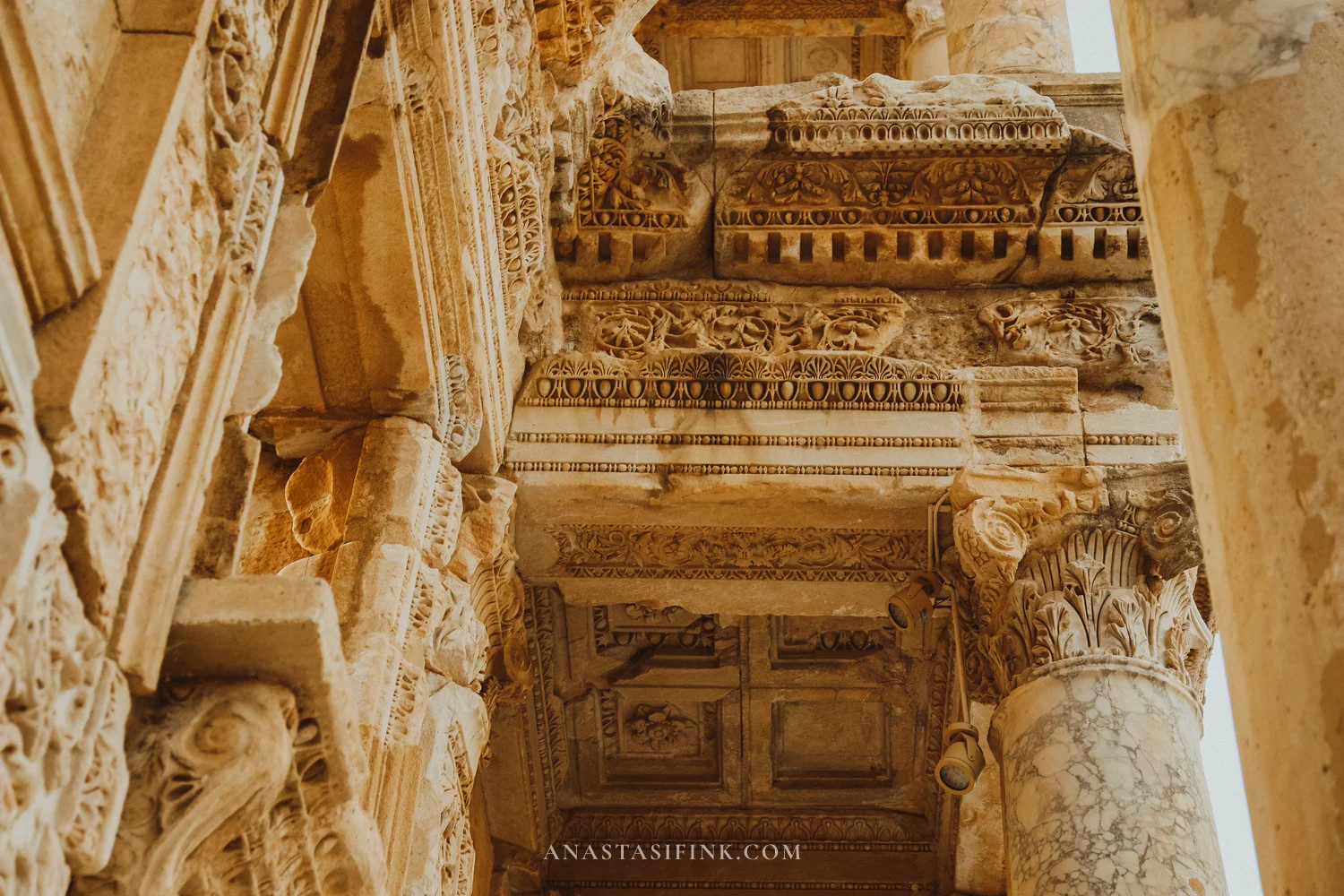
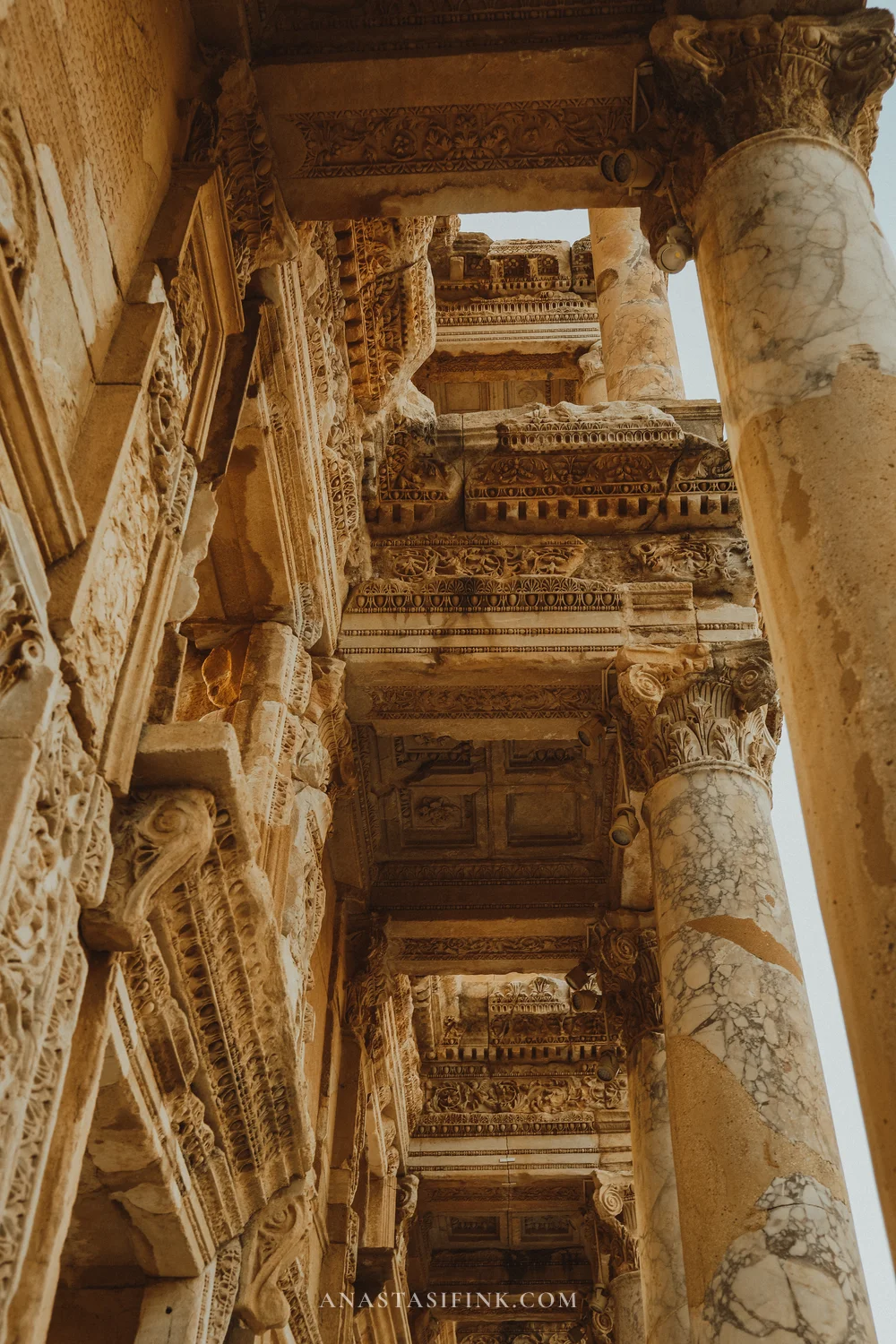

The upper tier of the facade — ornaments, capitals, and reliefs of different orders
By the way, here’s an interesting fact I learned: the library walls were built double — with an air gap inside. This helped protect the scrolls from humidity.
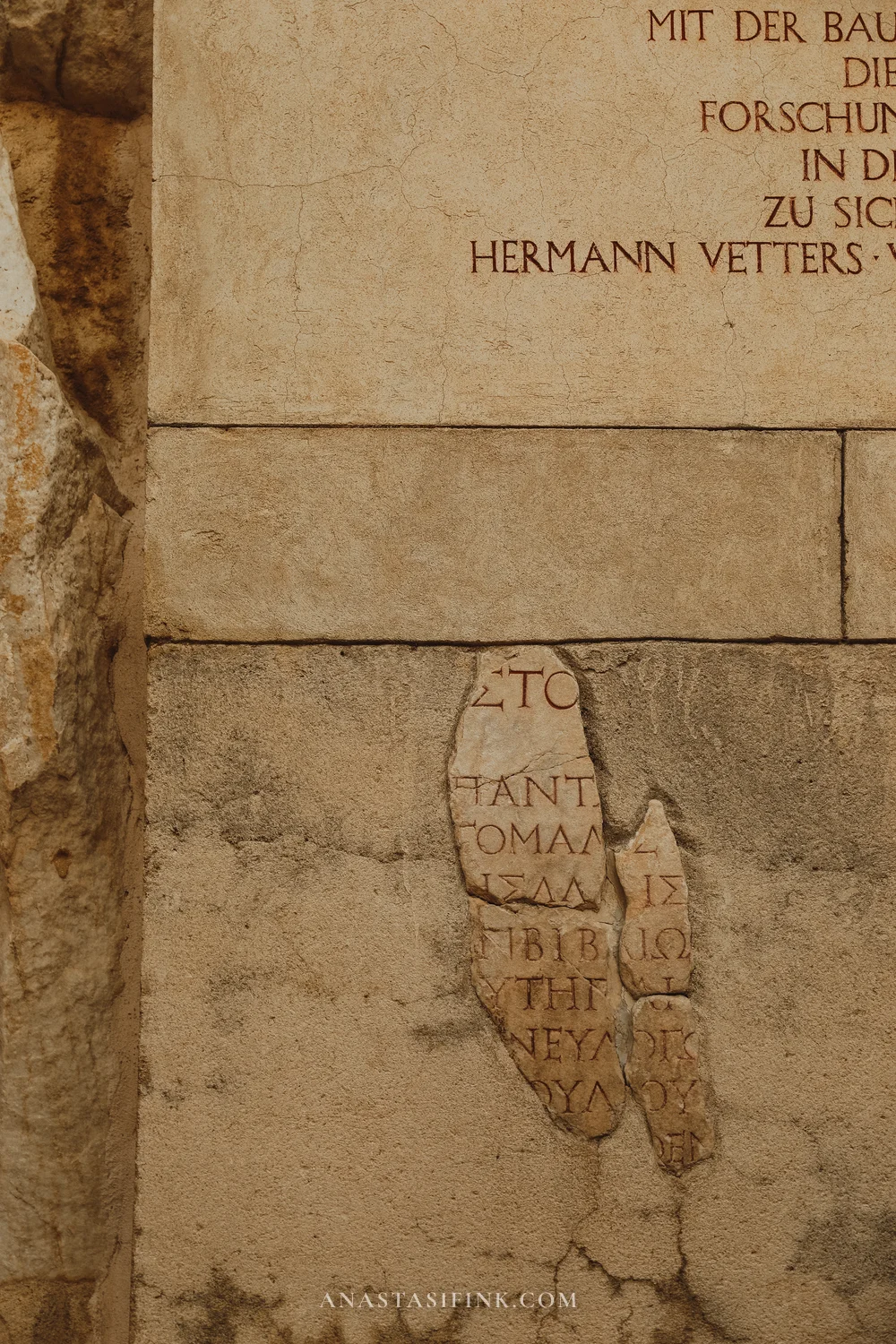
On the back wall of the building, there’s a bronze plaque in German: the library was restored by Austrian archaeologists between 1970 and 1978. It’s thanks to their work that we can see the facade today as it originally looked.

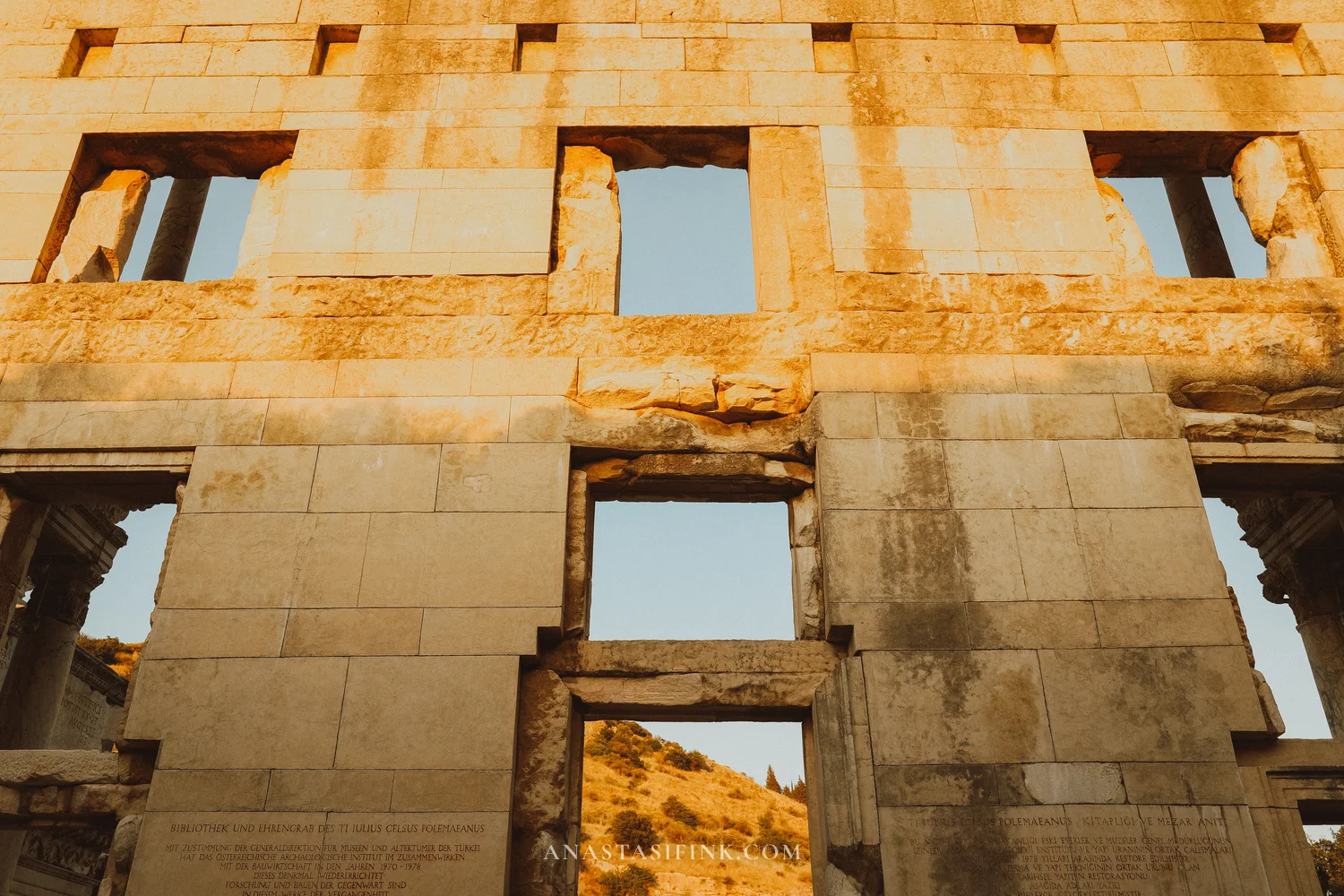
The back of the Library. The plaque reads: “Library and honorary tomb of Tiberius Julius Celsus Polemaeanus”
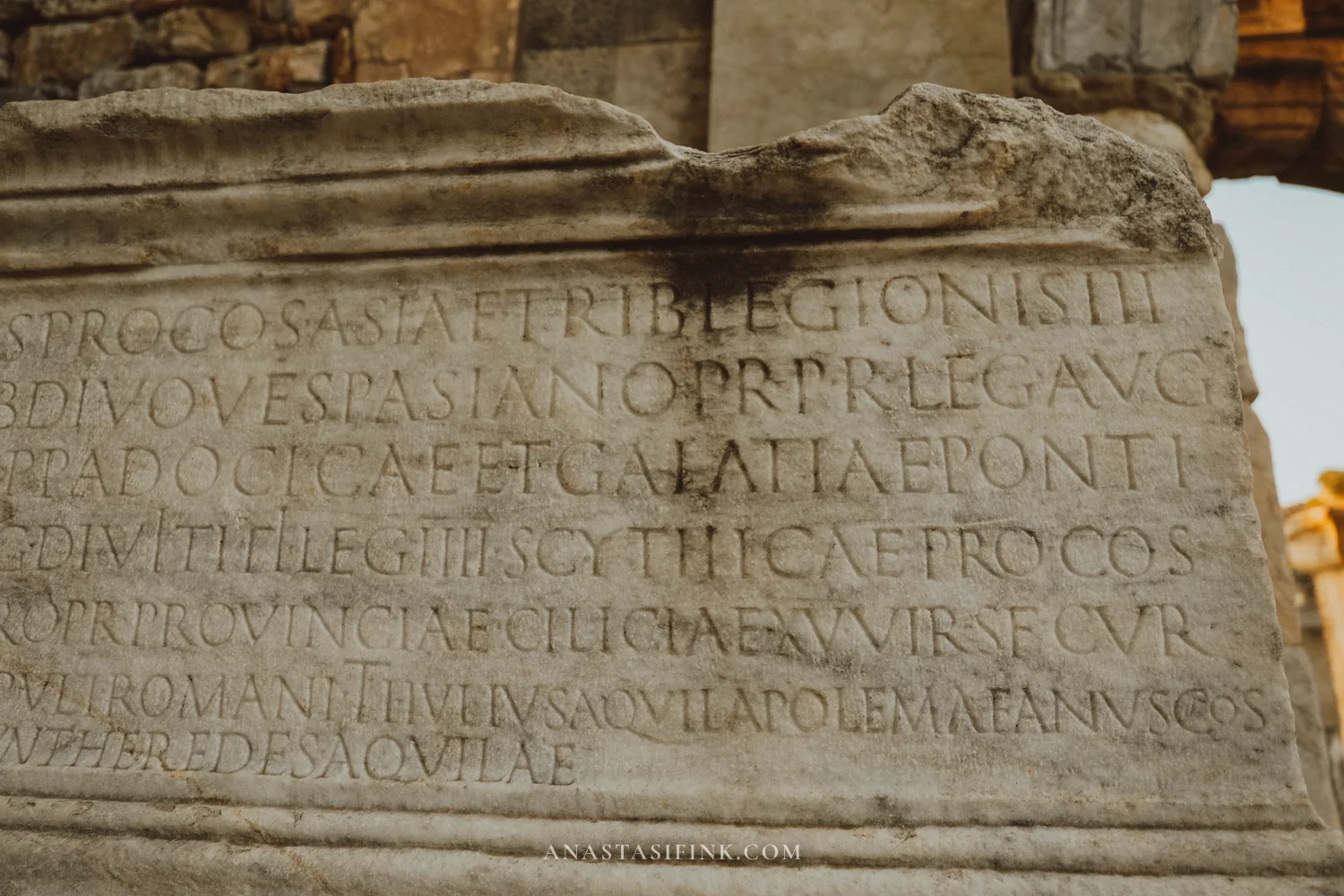
Original inscriptions survive on the walls: a Latin one listing Celsus’s offices (consul, governor of Asia), and Greek fragments.
Practical Info — Library of Celsus
- GPS: 37.9394, 27.3414
- Included in the Ephesus ticket
- Best time: sunset (5:00–7:00 PM) — the setting sun hits the facade directly!
- It gets very crowded at sunset in summer, be prepared for that
The Library facade is the main photographic magnet of Ephesus. At different times of day, it looks completely different.
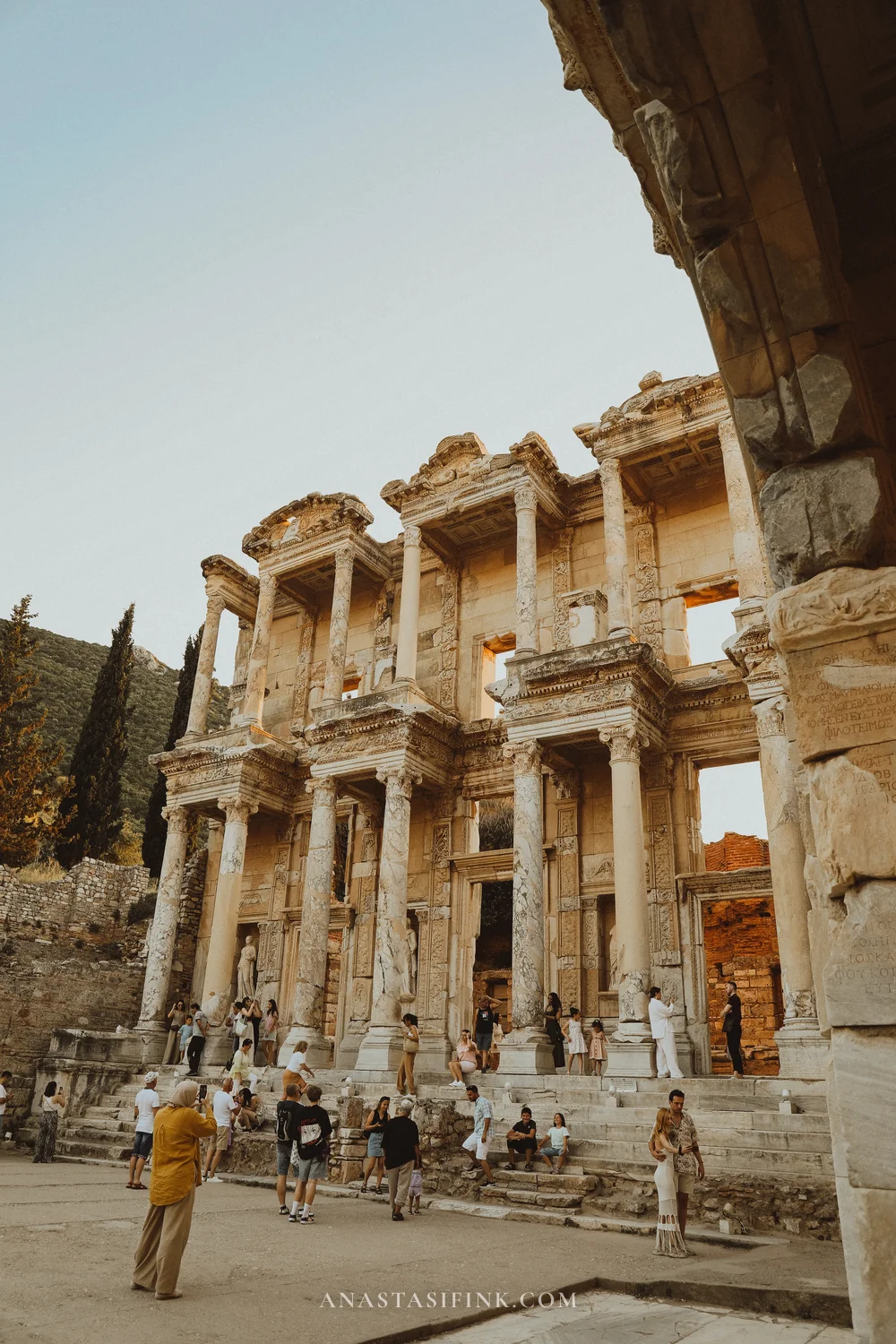
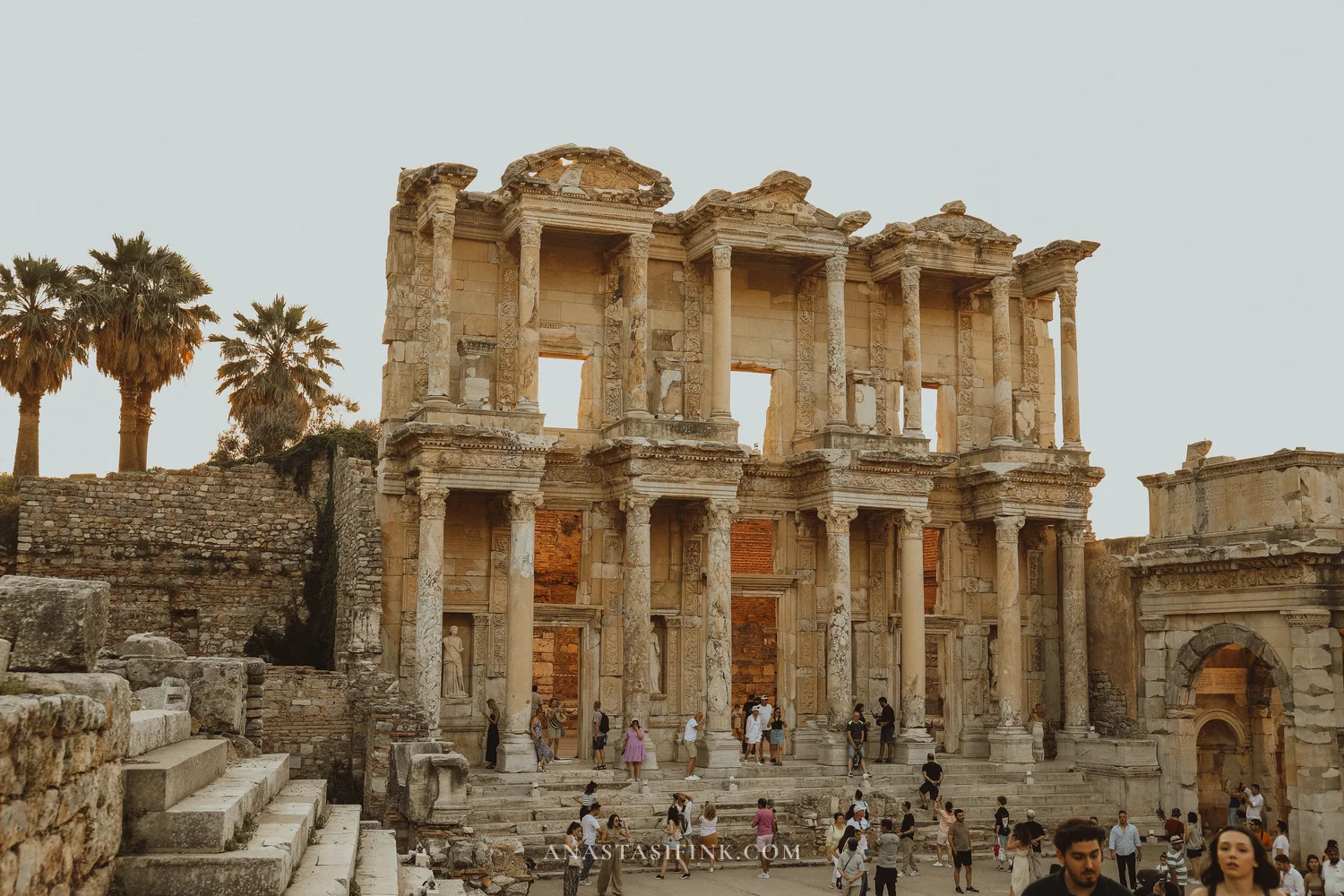
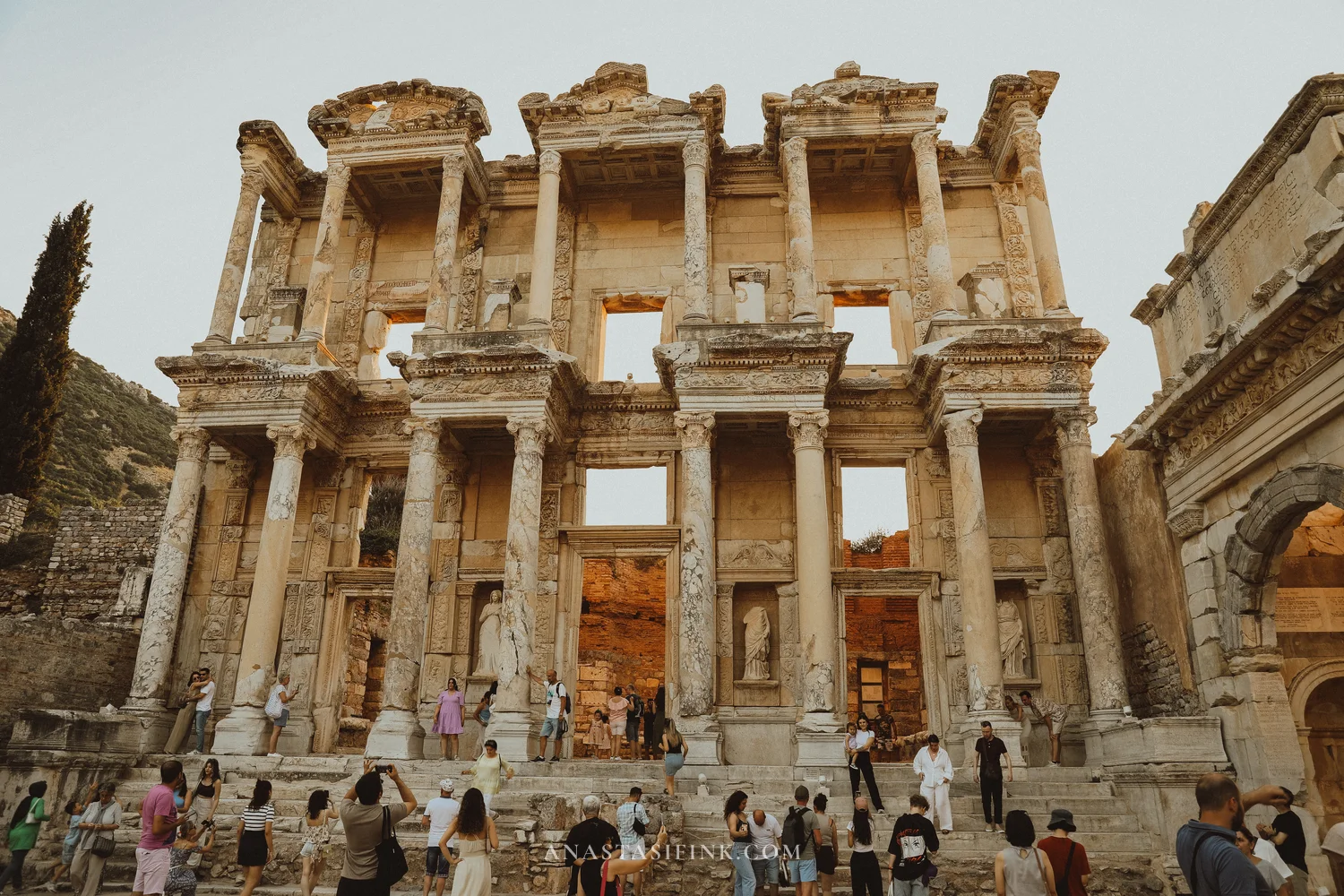
The Library of Celsus from different angles — with and without tourists
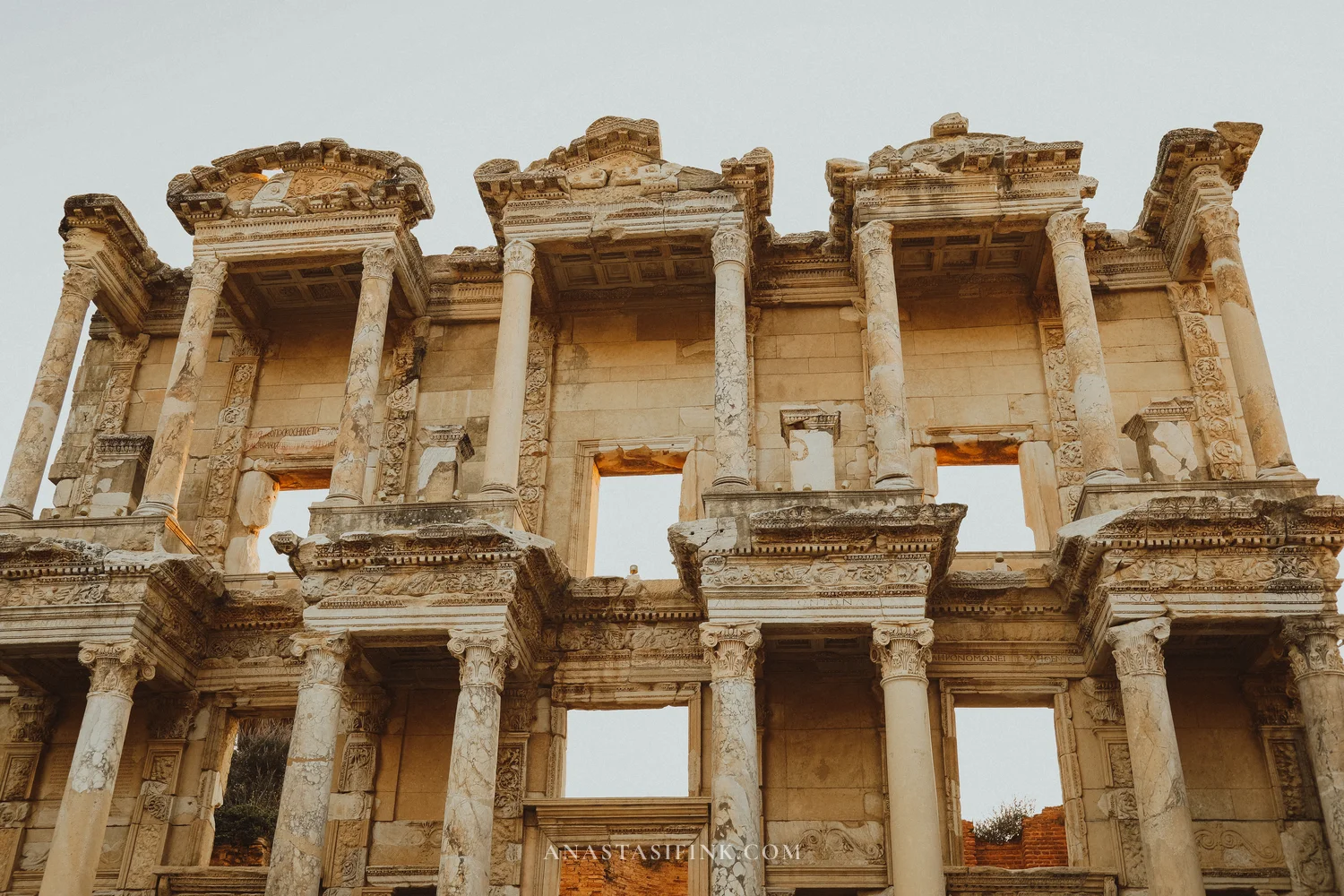
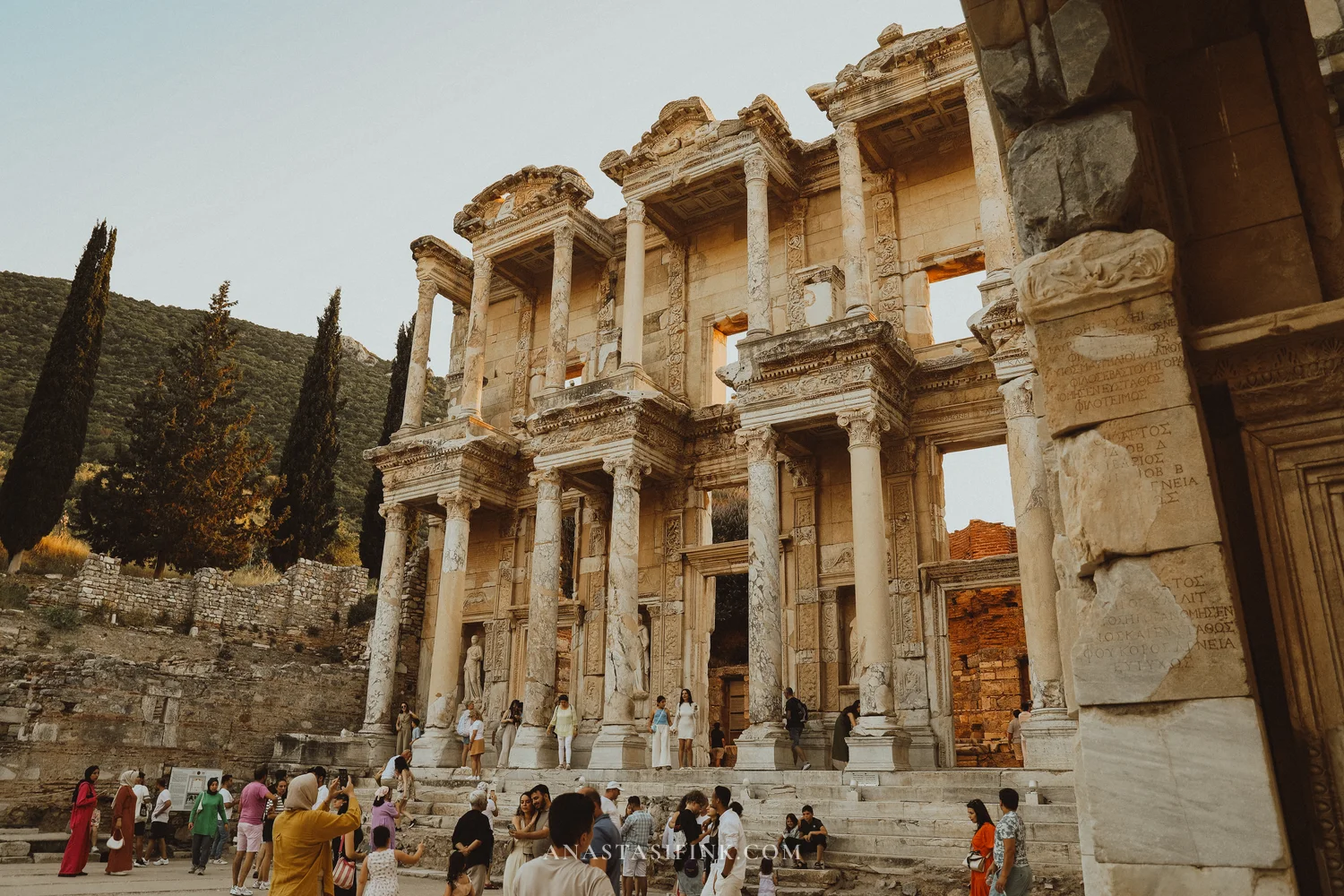
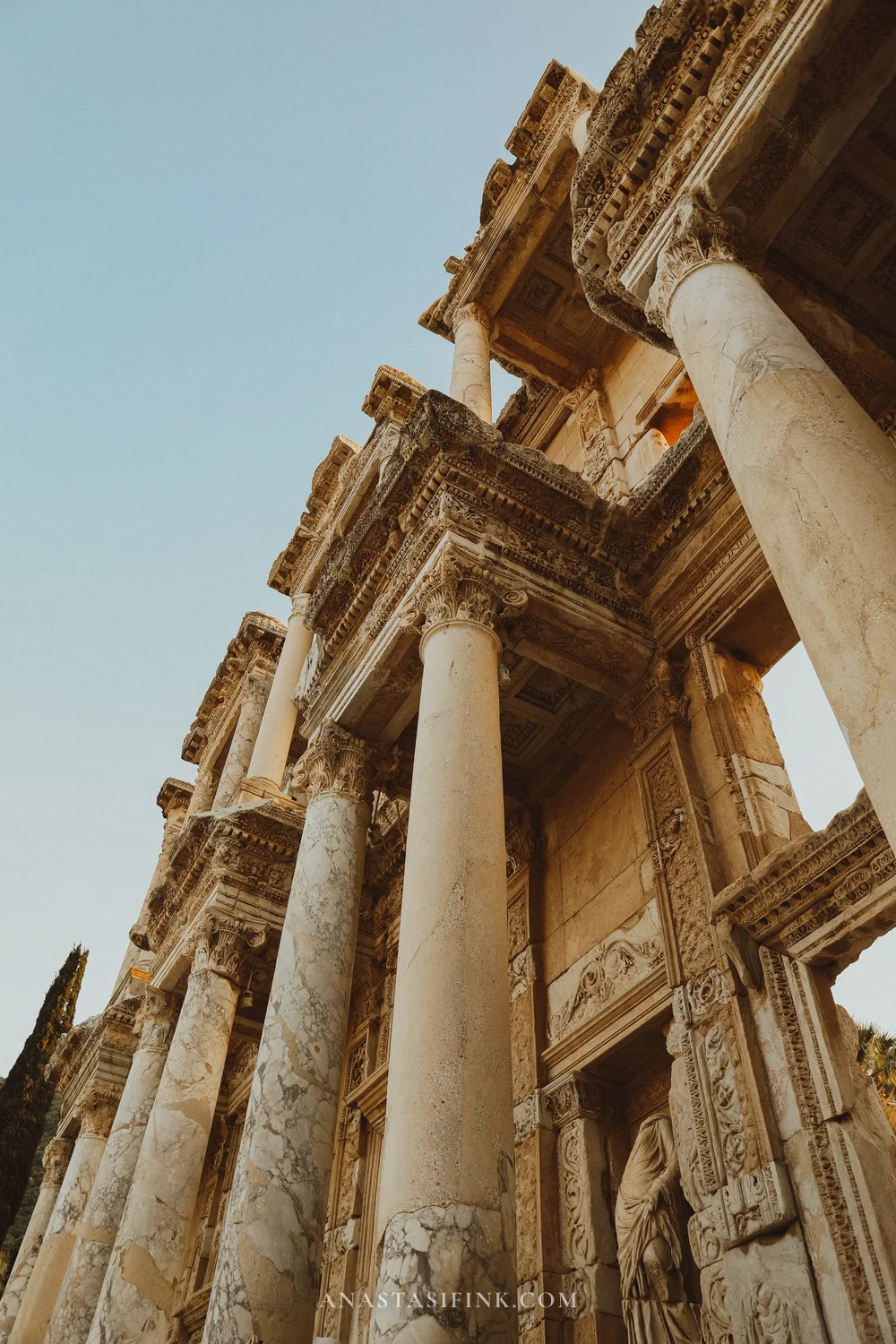
And at sunset — when the sun drops behind the hill above the Library, something magical begins!
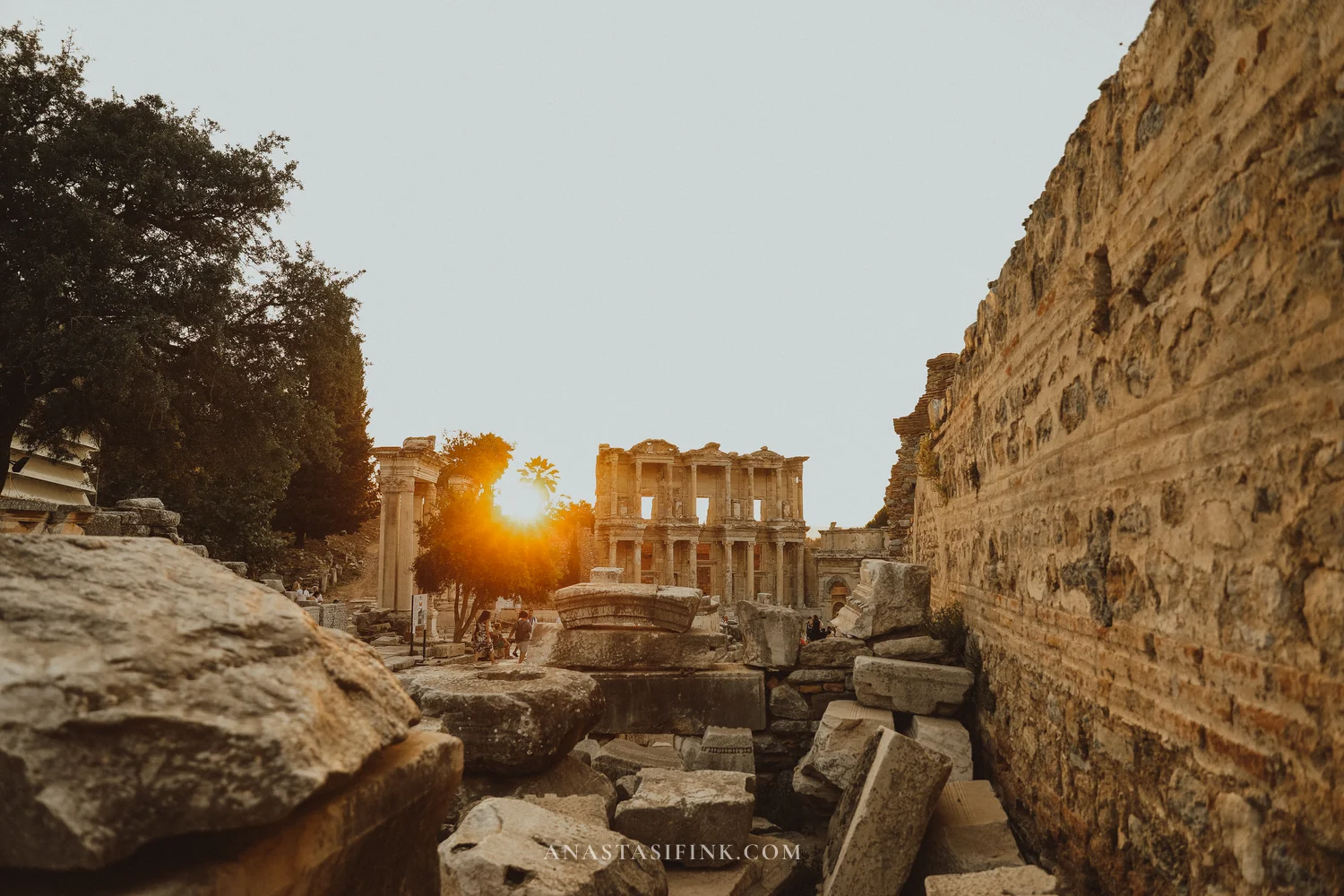
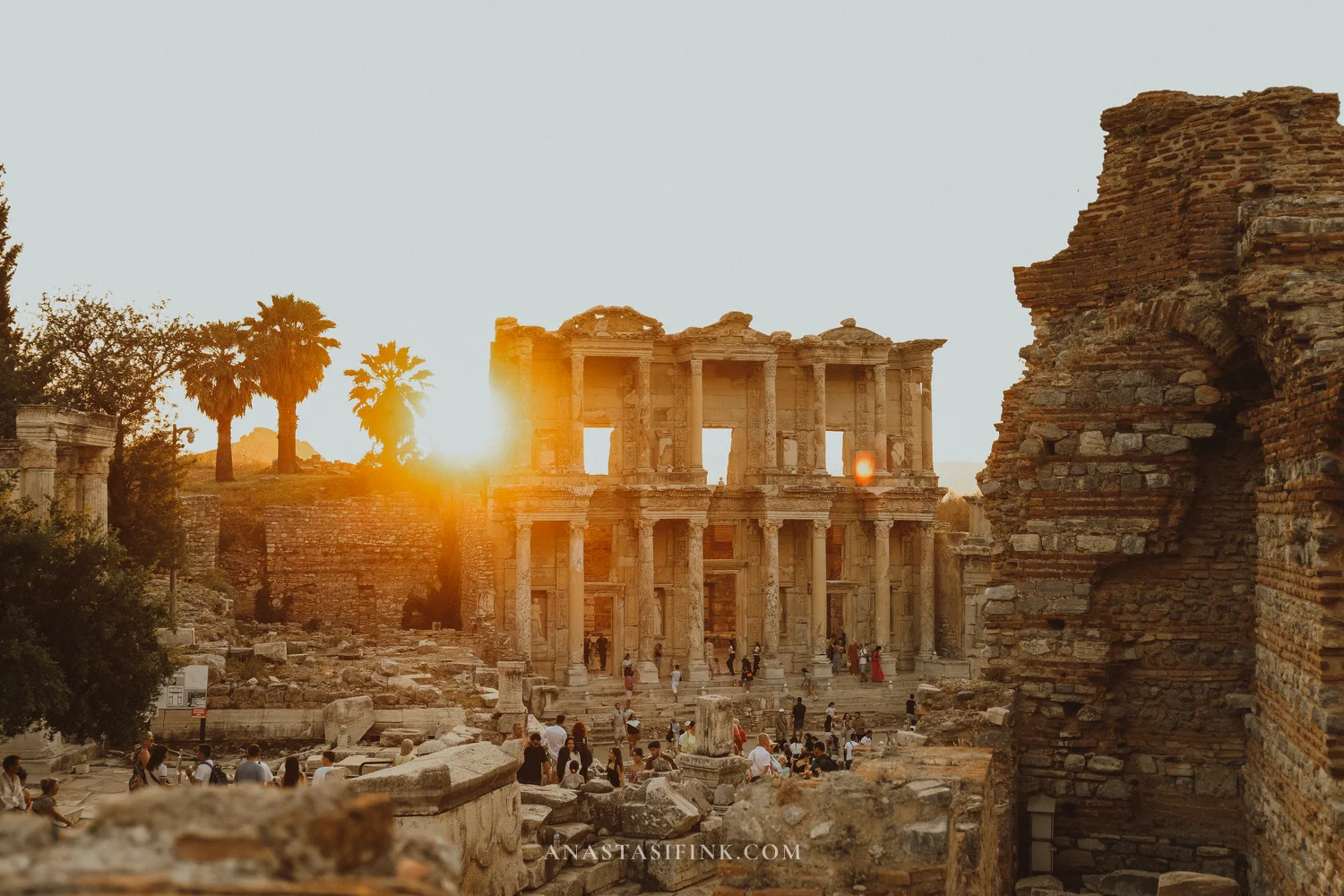


Sunset around the Library of Celsus and the surrounding ruins
2. Temple of Hadrian
It stands further along Curetes Street — the main pedestrian avenue of lower Ephesus. This is a small but strikingly beautiful temple: a delicate arch with a tympanum depicting Tyche — the goddess of fortune and the city’s patron. The inner portico is decorated with reliefs showing the founding of Ephesus — Androcles slaying the wild boar, Dionysus in procession.
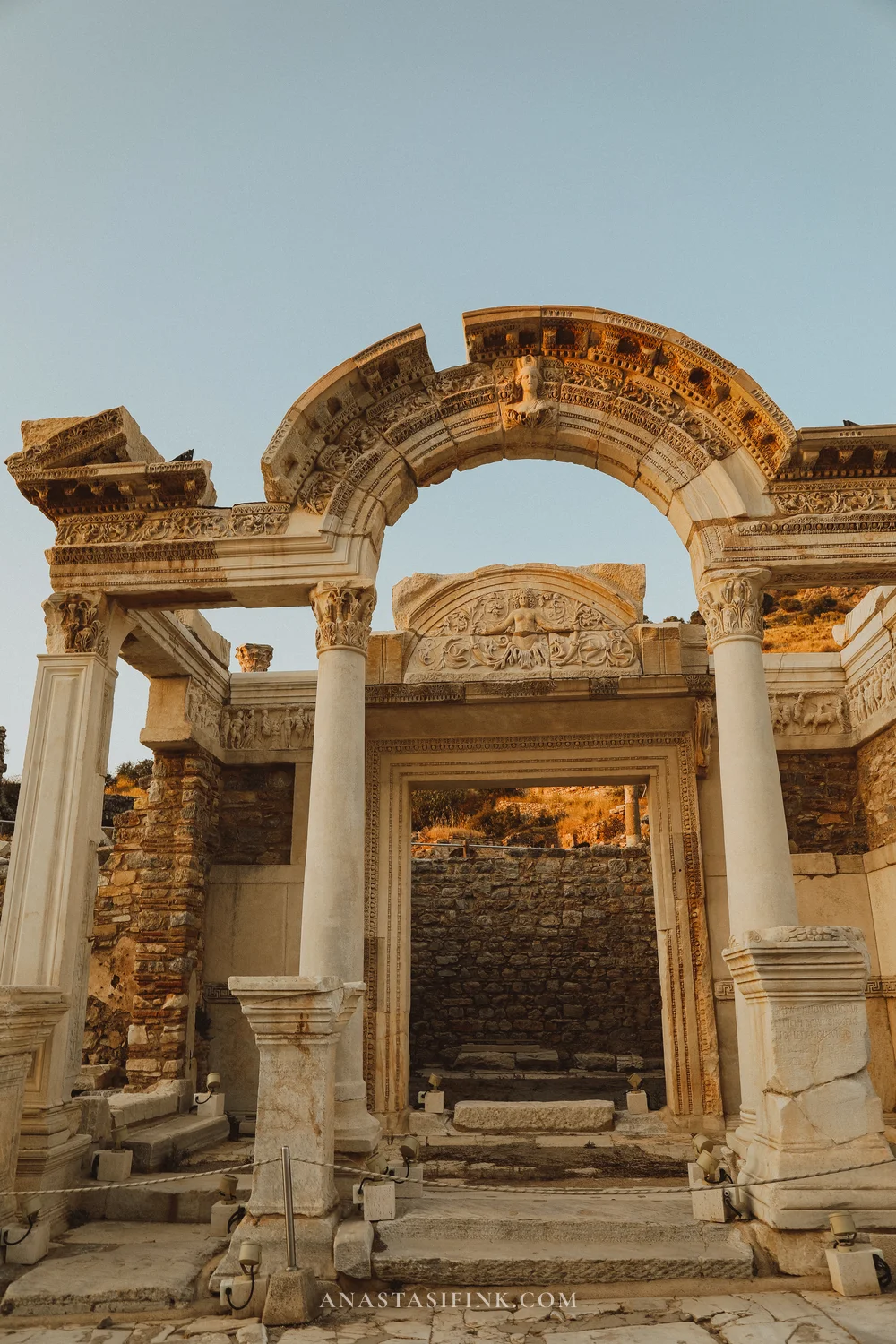
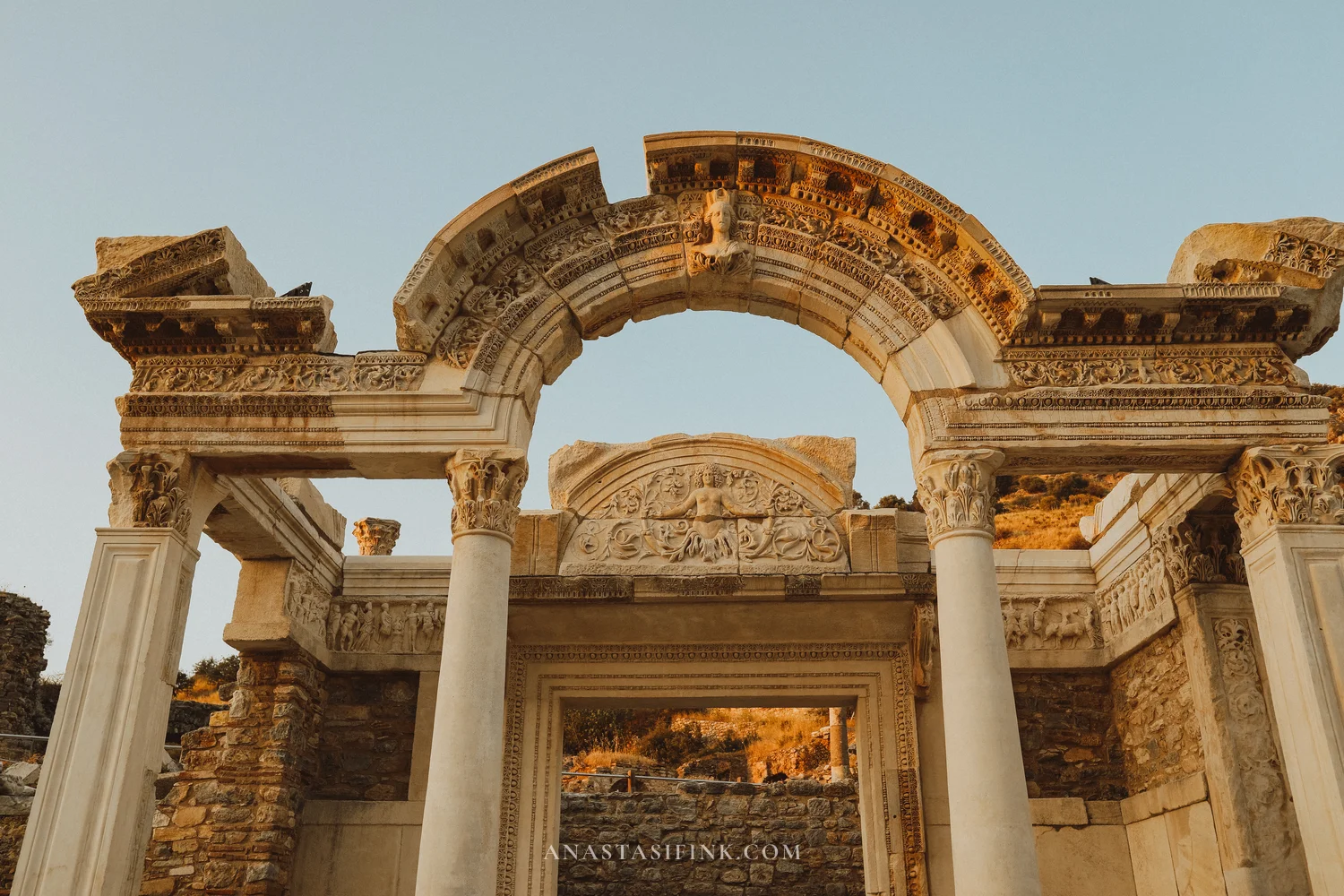
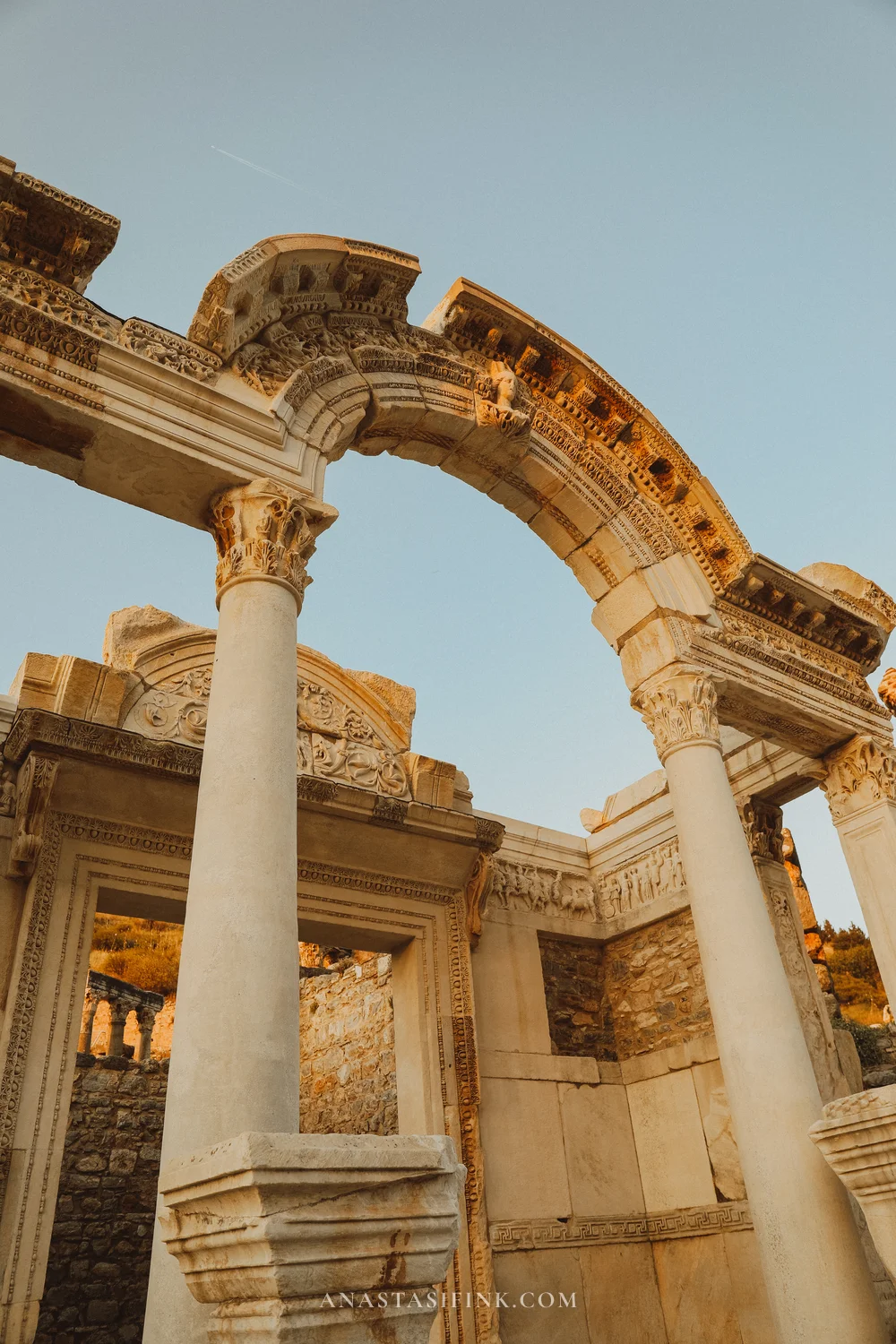
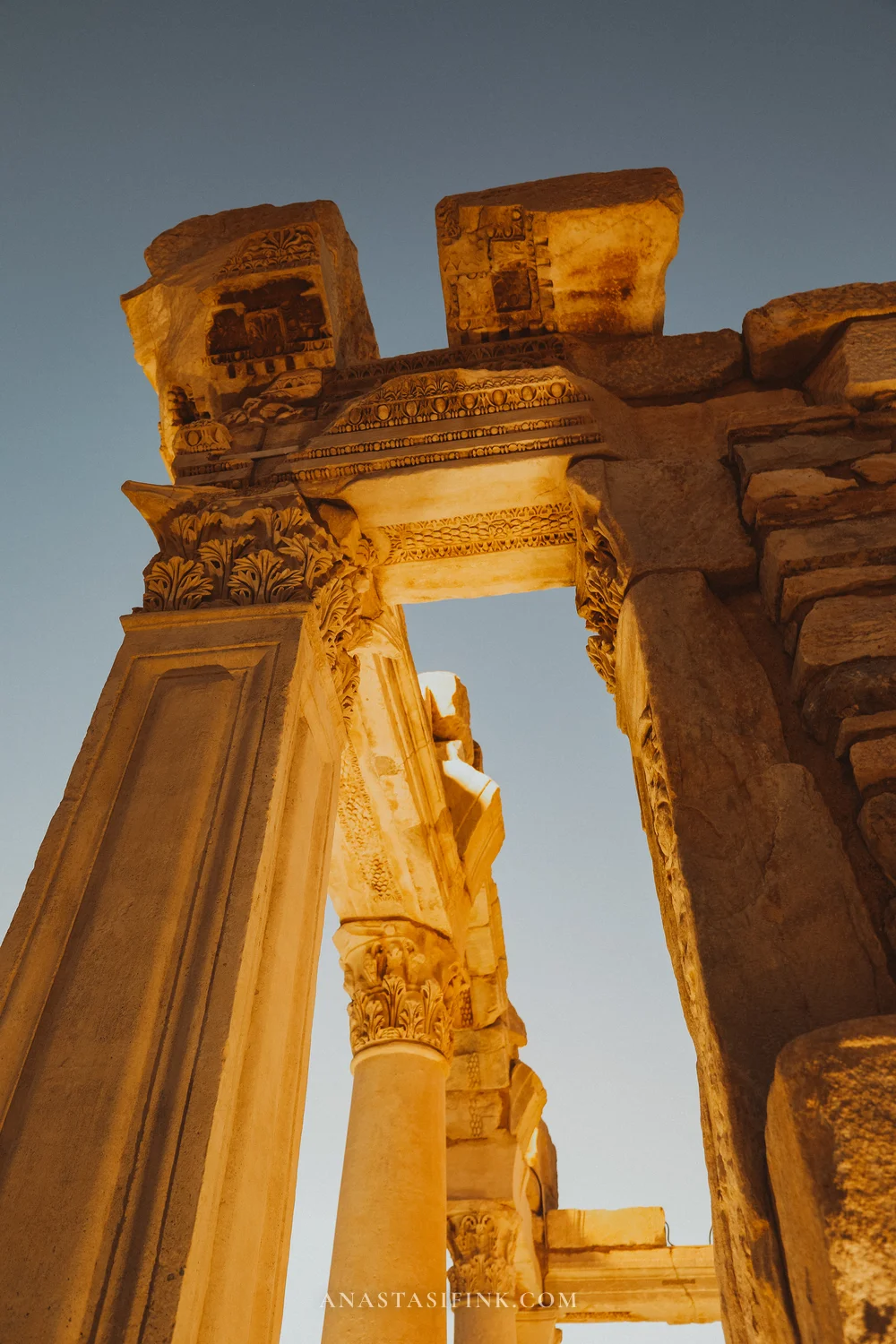
Details of the Temple of Hadrian arch — every element is meticulously crafted
The temple is small — if you don’t know about it, you might even walk right past it.
The Temple of Hadrian was built around 128 AD in honor of Emperor Hadrian — the emperor who built Hadrian’s Wall in Britain and oversaw the rebuilding of the Pantheon in Rome. At that time, Ephesus was one of the wealthiest cities of the Mediterranean.
3. Curetes Street and the Colonnades
Curetes Street is a marble-paved road leading from the Gate of Hercules down to the Library of Celsus. On both sides stand the remains of colonnades, porticos, fountains, and statues. This was the main commercial and ceremonial avenue of the city.
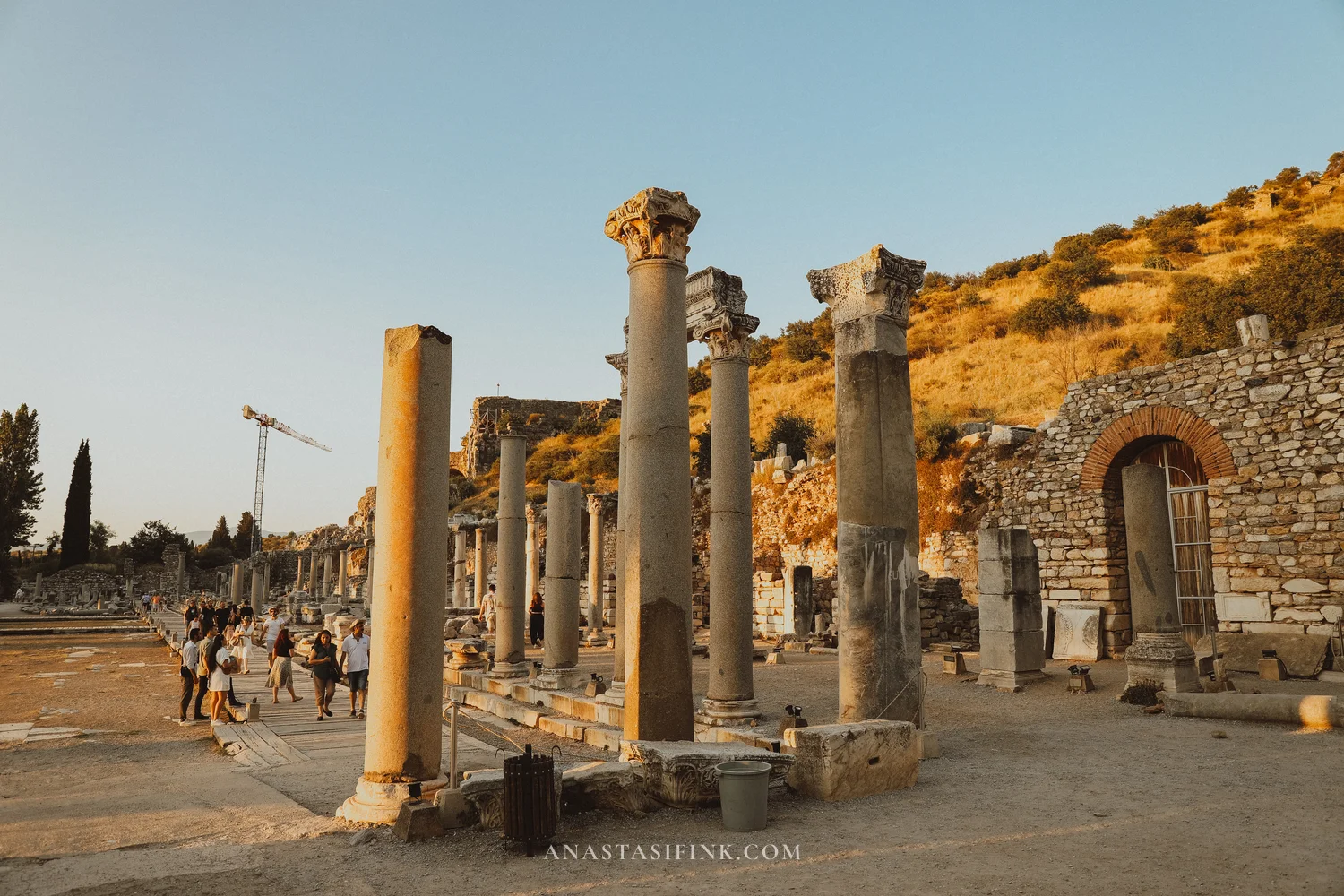
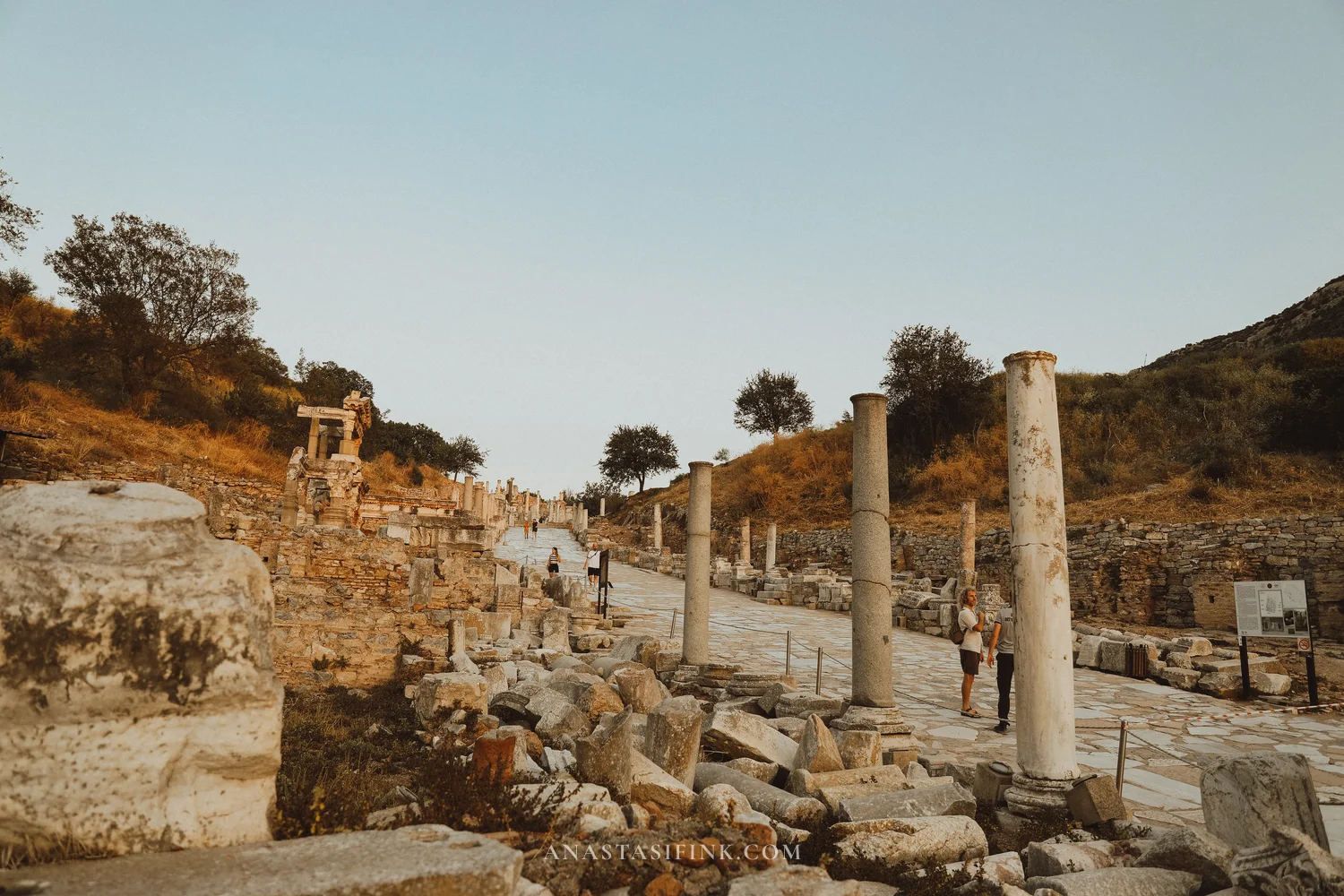
Curetes Street — the central avenue of lower Ephesus
The wooden boardwalk over the marble is there for protection: beneath it lie still-unexcavated layers of the city. Only about 20% of Ephesus has been studied — most of it is still underground.
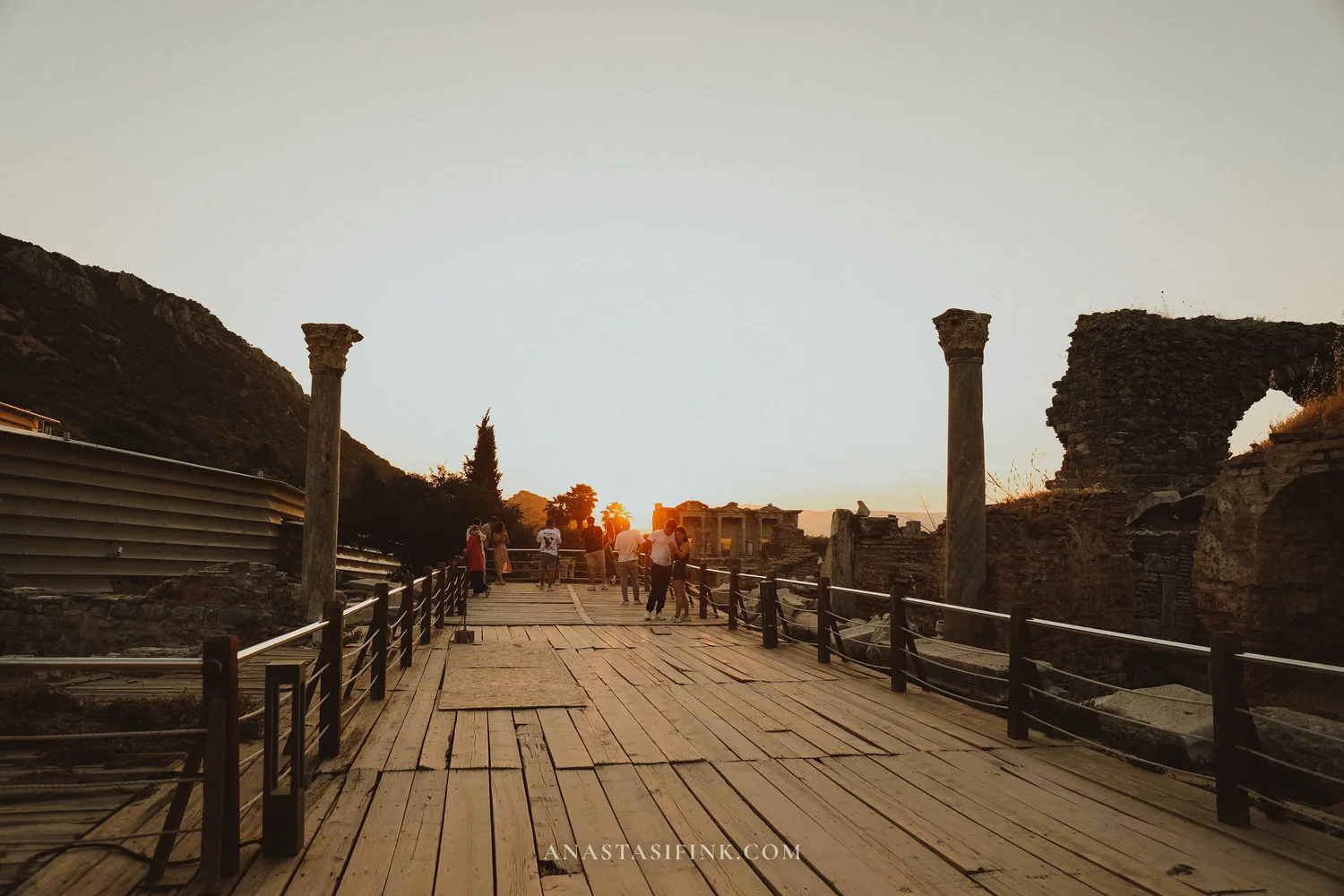
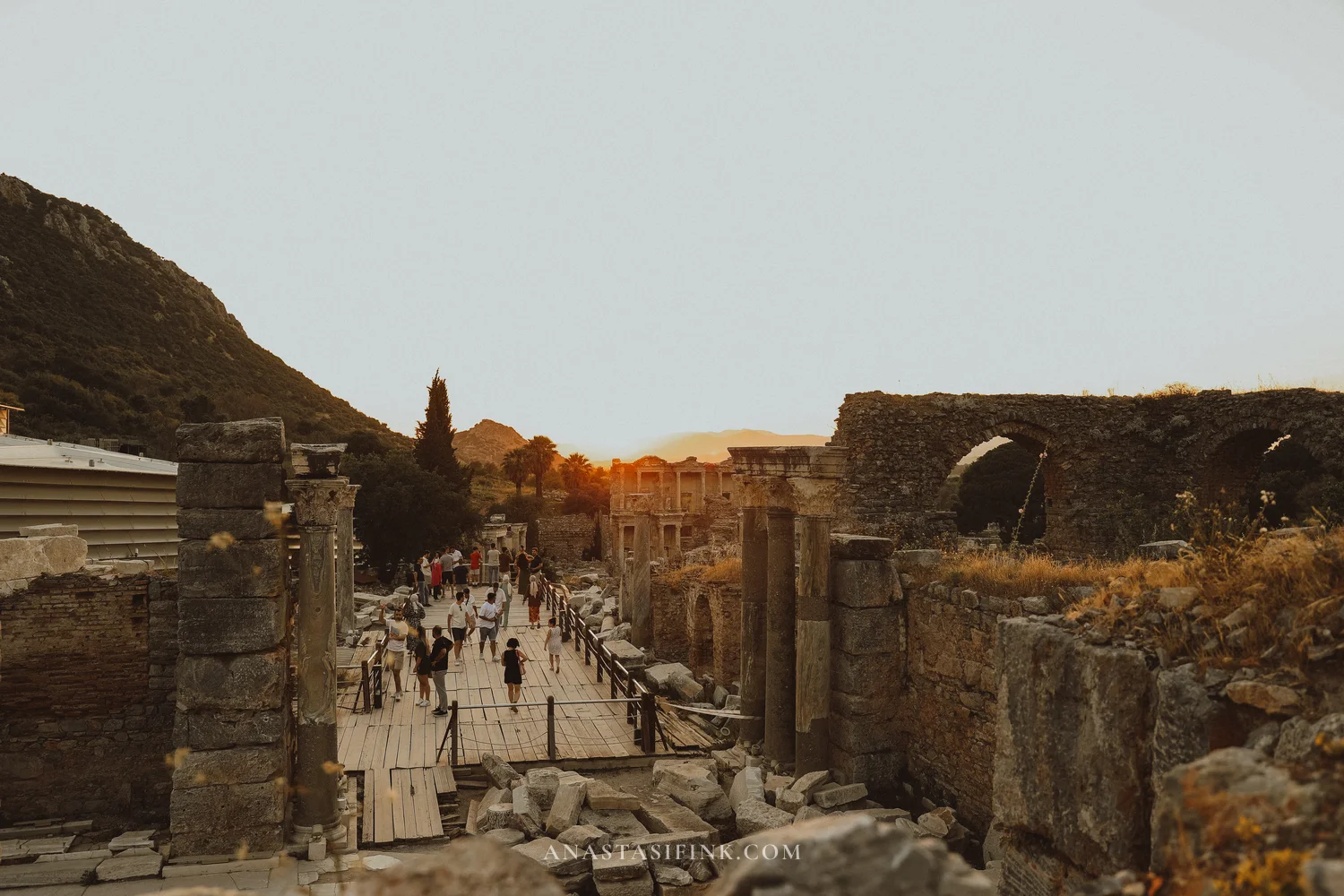
The wooden boardwalk protects unexcavated layers beneath your feet
4. Nymphaeum of Trajan and the Stoa
The Nymphaeum — a monumental fountain on Curetes Street — was dedicated to Emperor Trajan. Next to it stands the Stoa of Verulanus, a long portico with columns. It’s worth pausing here to photograph the details: carved capitals, fallen blocks, shadows between the columns.
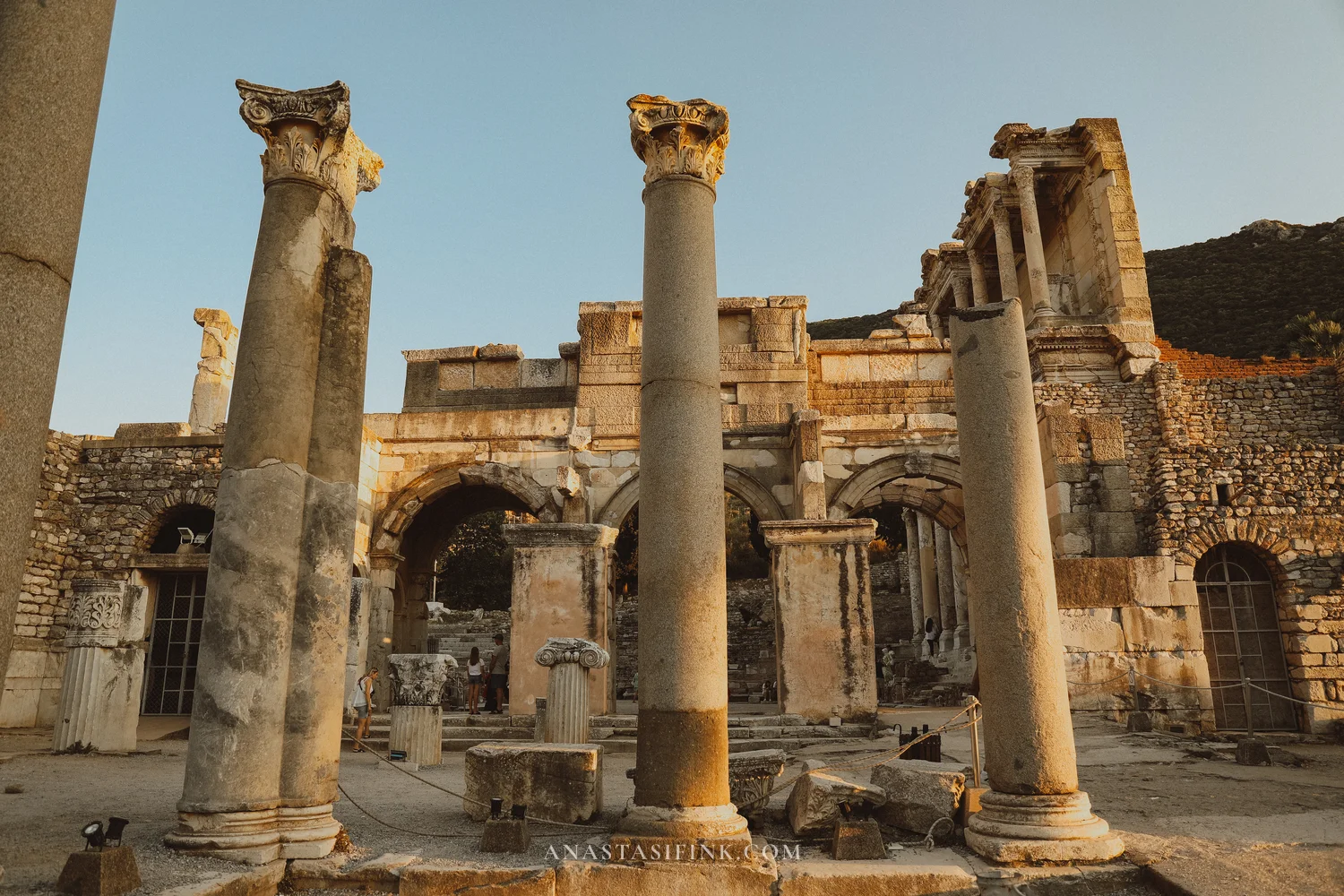
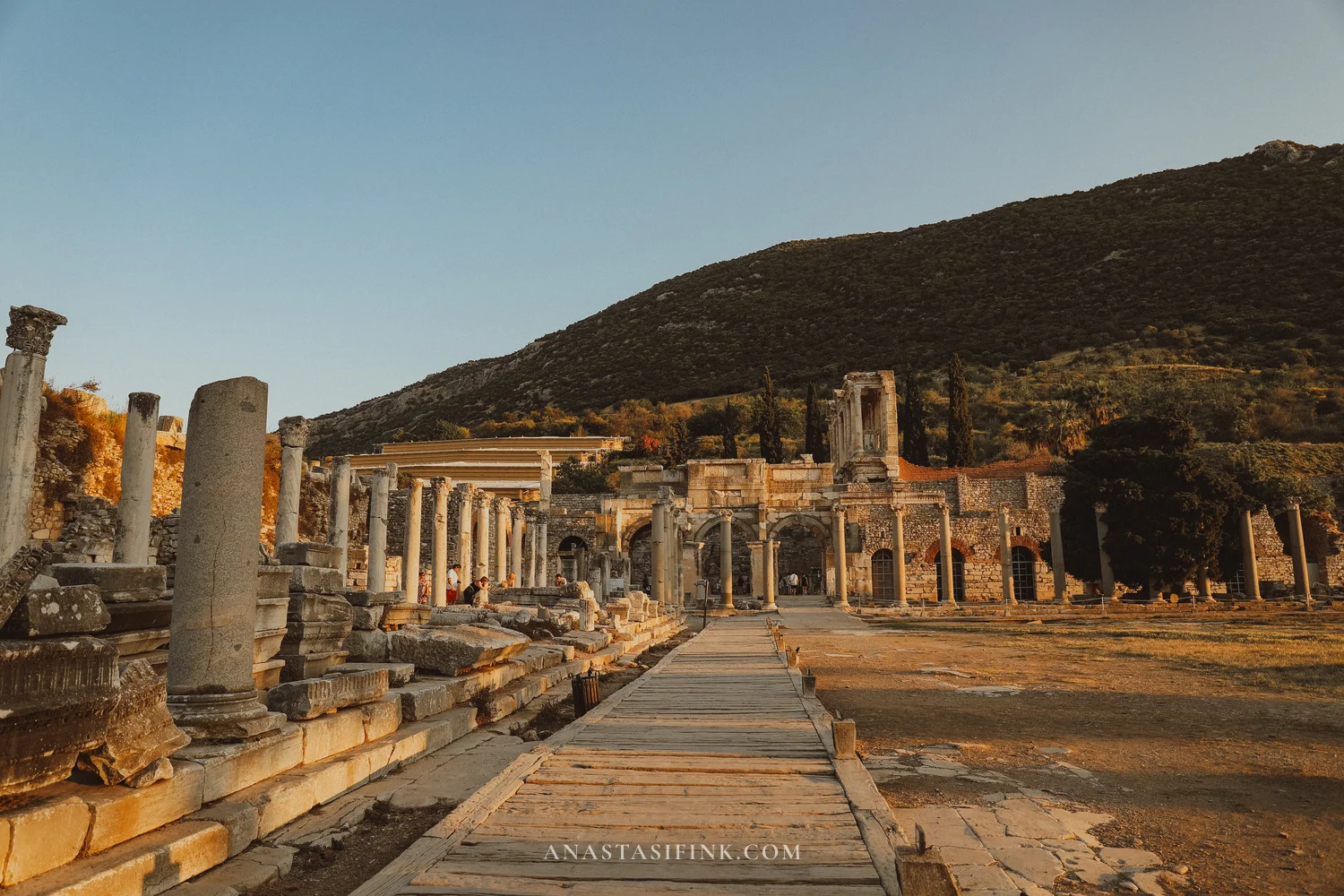
The Nymphaeum of Trajan and the Stoa — monumental structures of Curetes Street

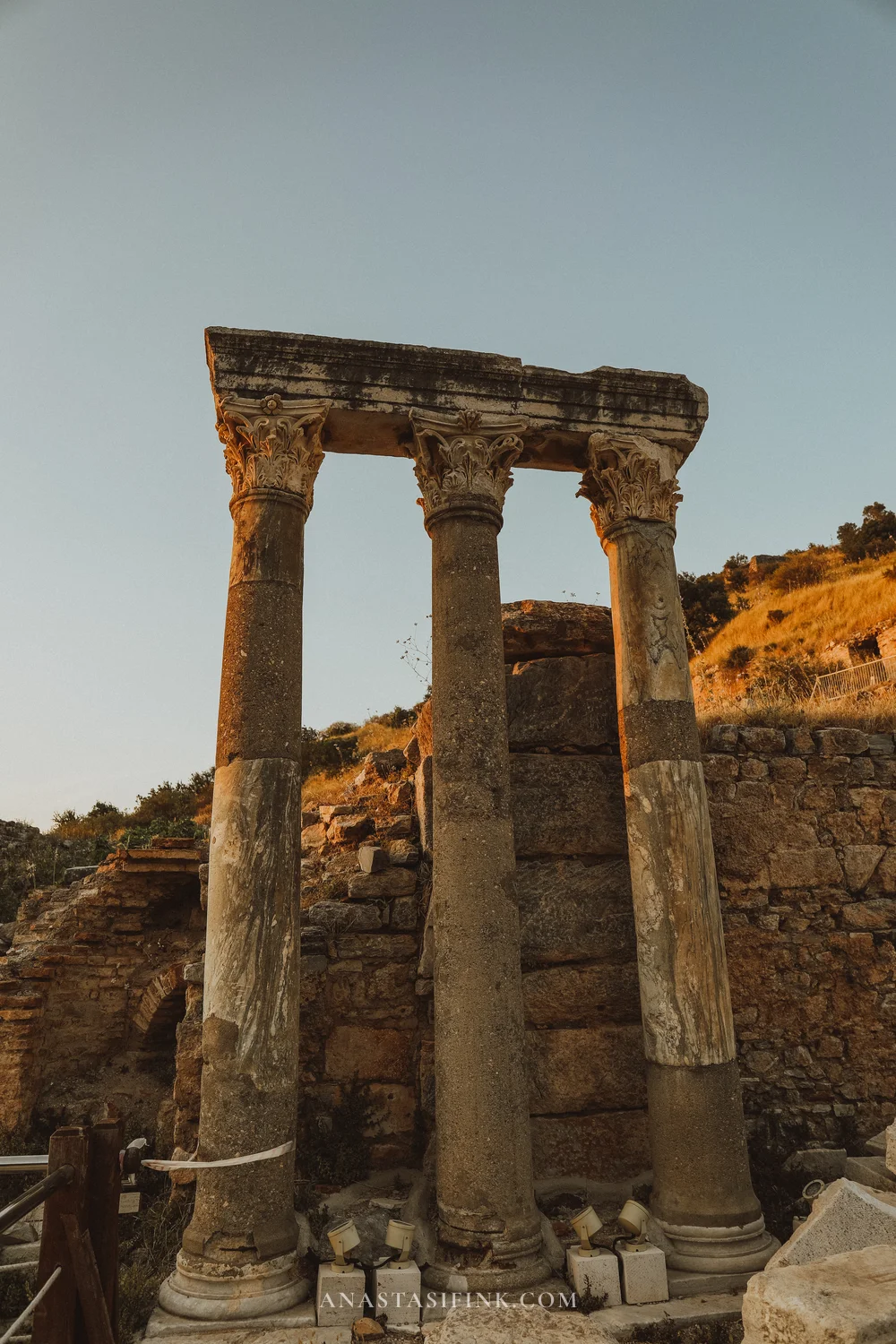

Freestanding columns and gates — the quintessential image of Ephesus
5. Gate of Mazaeus and Mithridates
Right next to the Library stands a monumental gate, built by two freedmen in honor of Emperor Augustus. The Latin inscription on the architrave is almost completely intact. Through this gate you can enter the Lower Agora — the city’s commercial square.
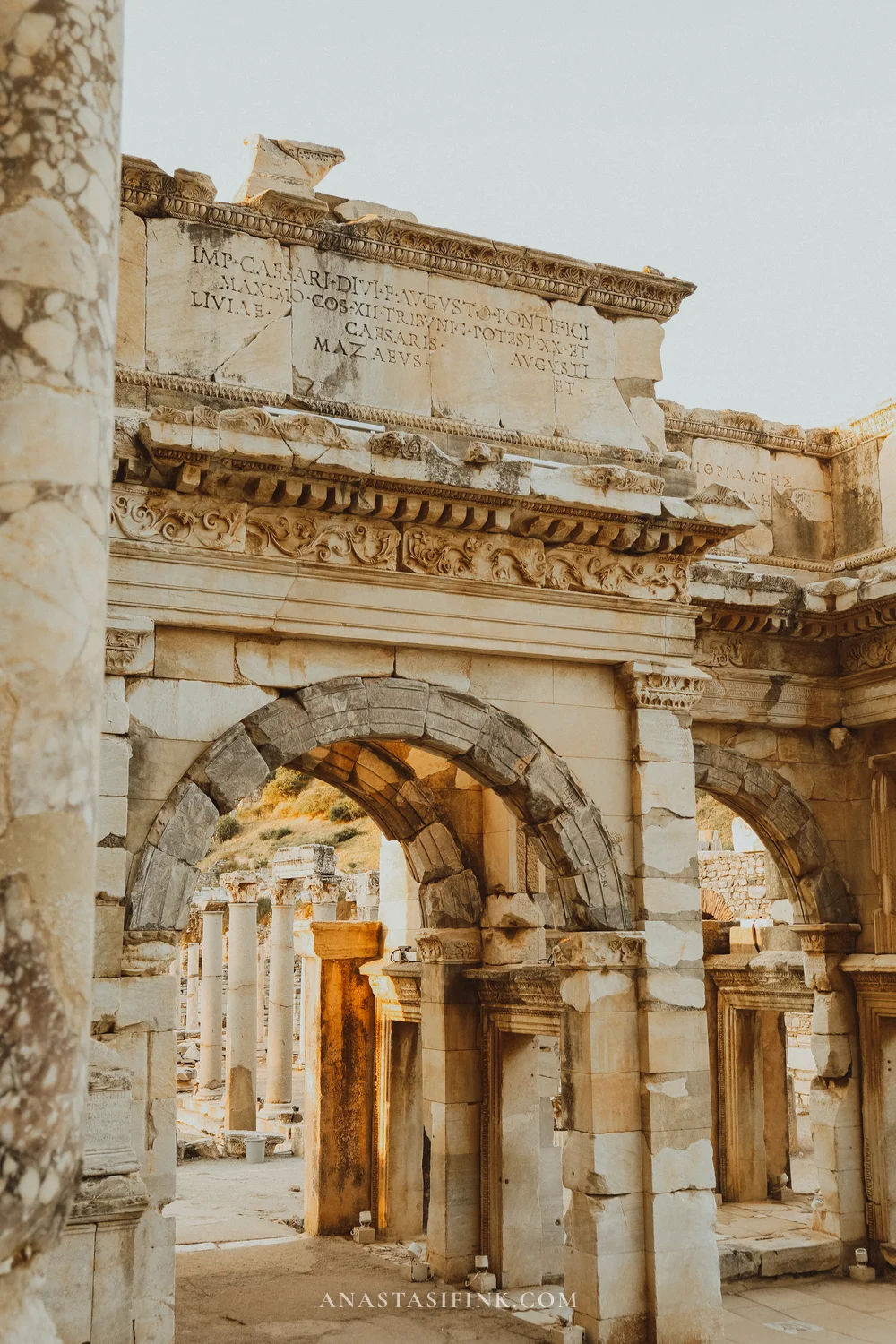
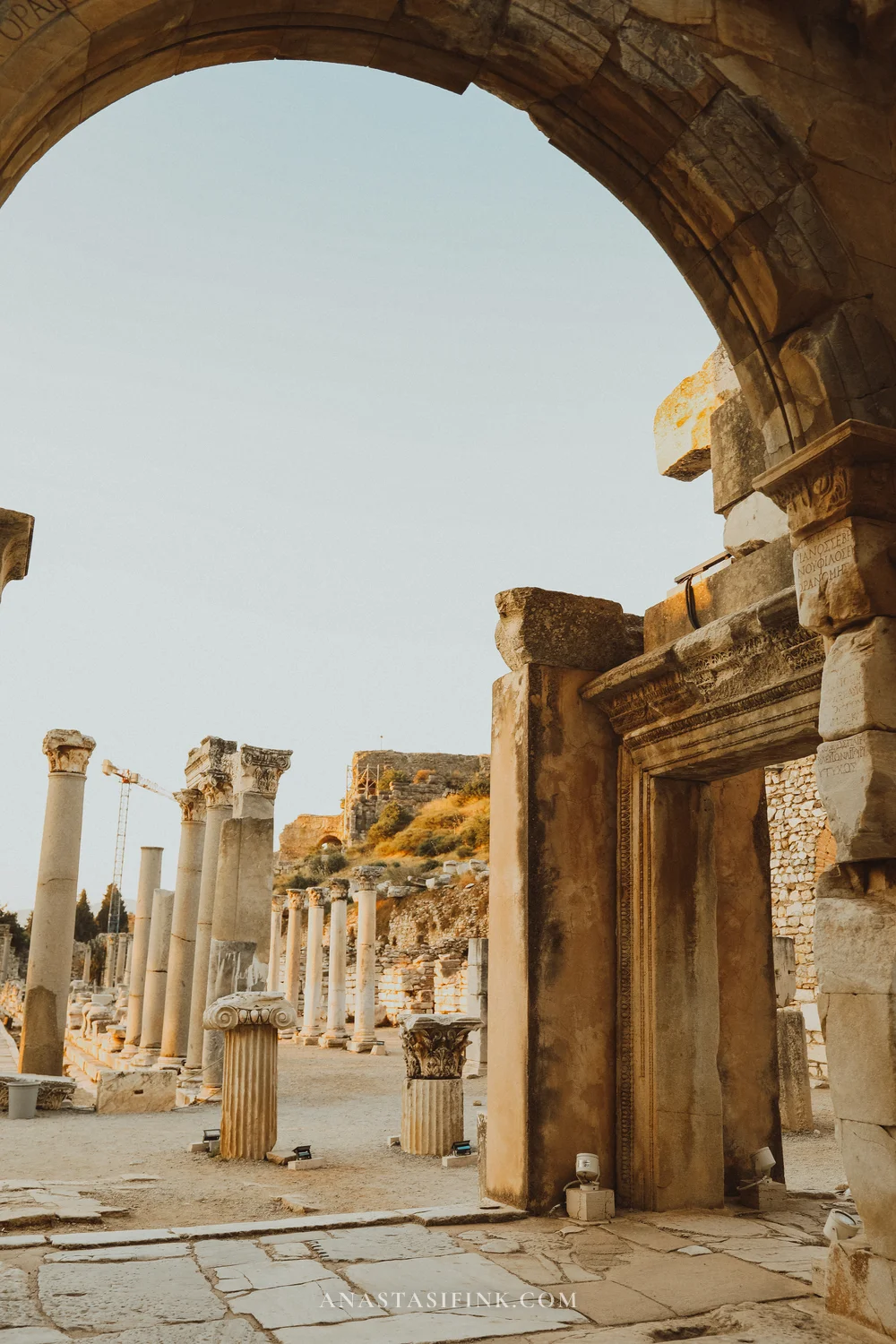
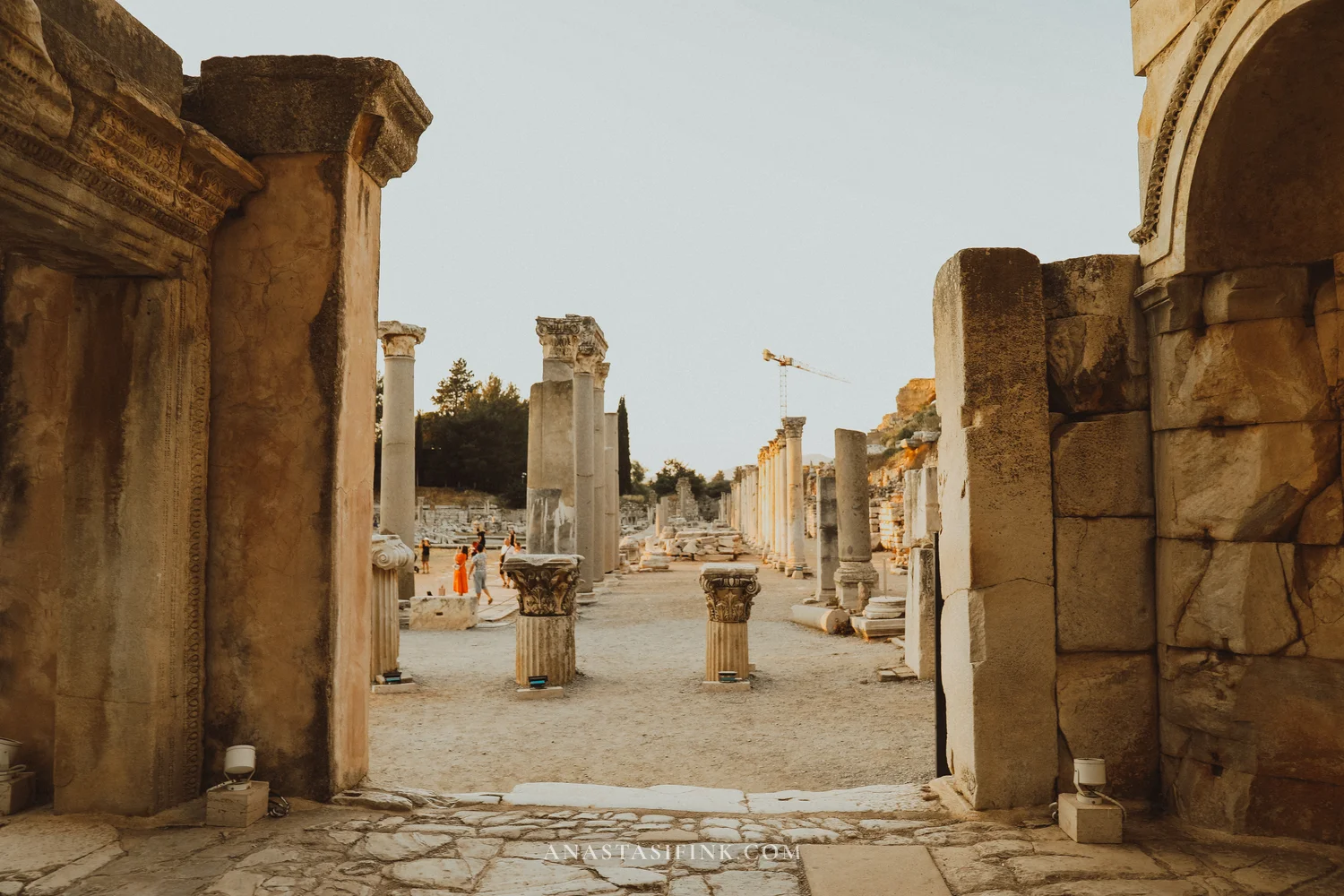
6. The Lower Agora
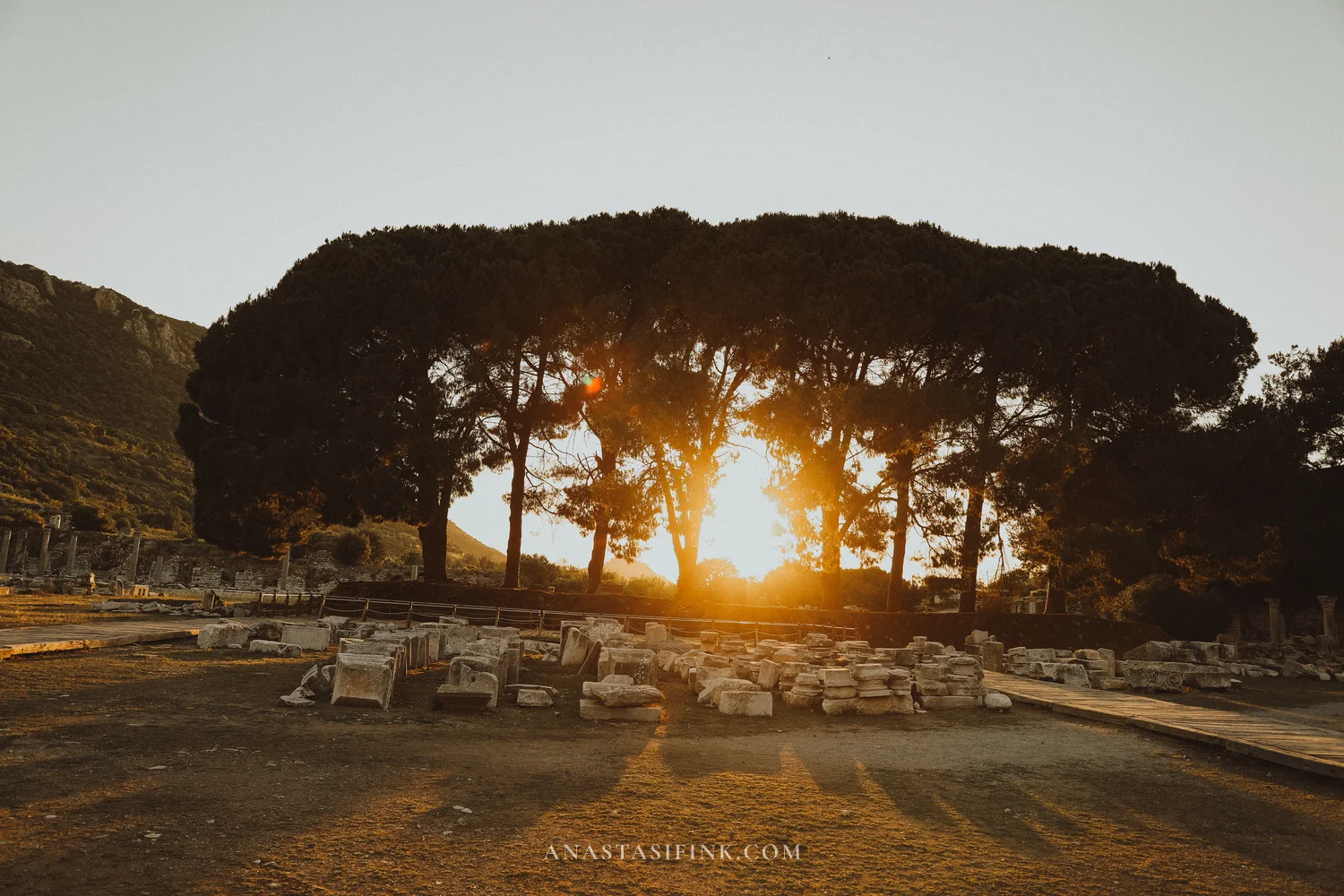
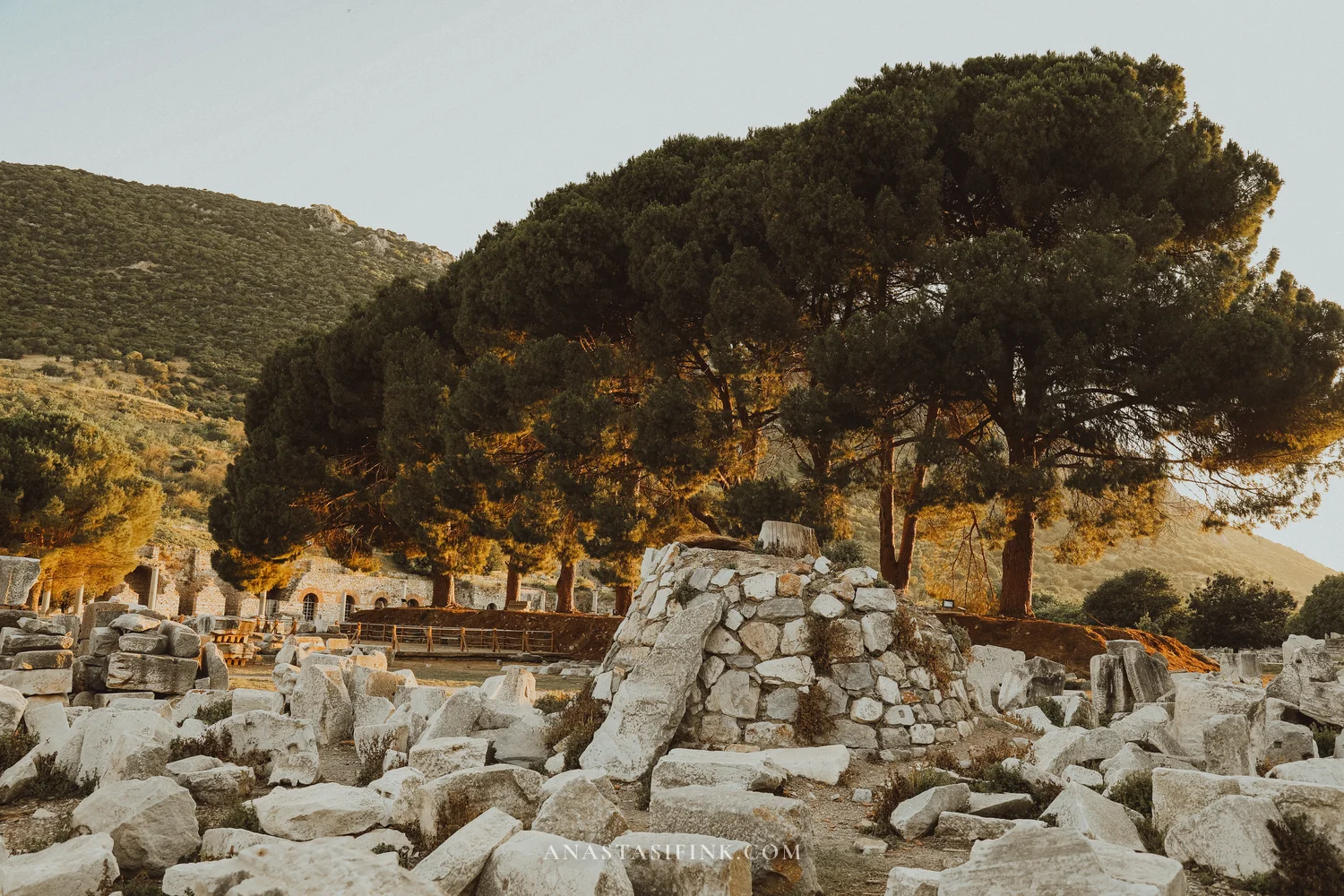
The commercial square — a vast space surrounded by colonnades. Today it’s a field scattered with marble blocks, but your imagination easily fills in the shops, the noise, the smell of spices. A few surviving columns stand in the center. Wide-angle shots from here are particularly striking. Just imagine how alive this place was 2,000 years ago!
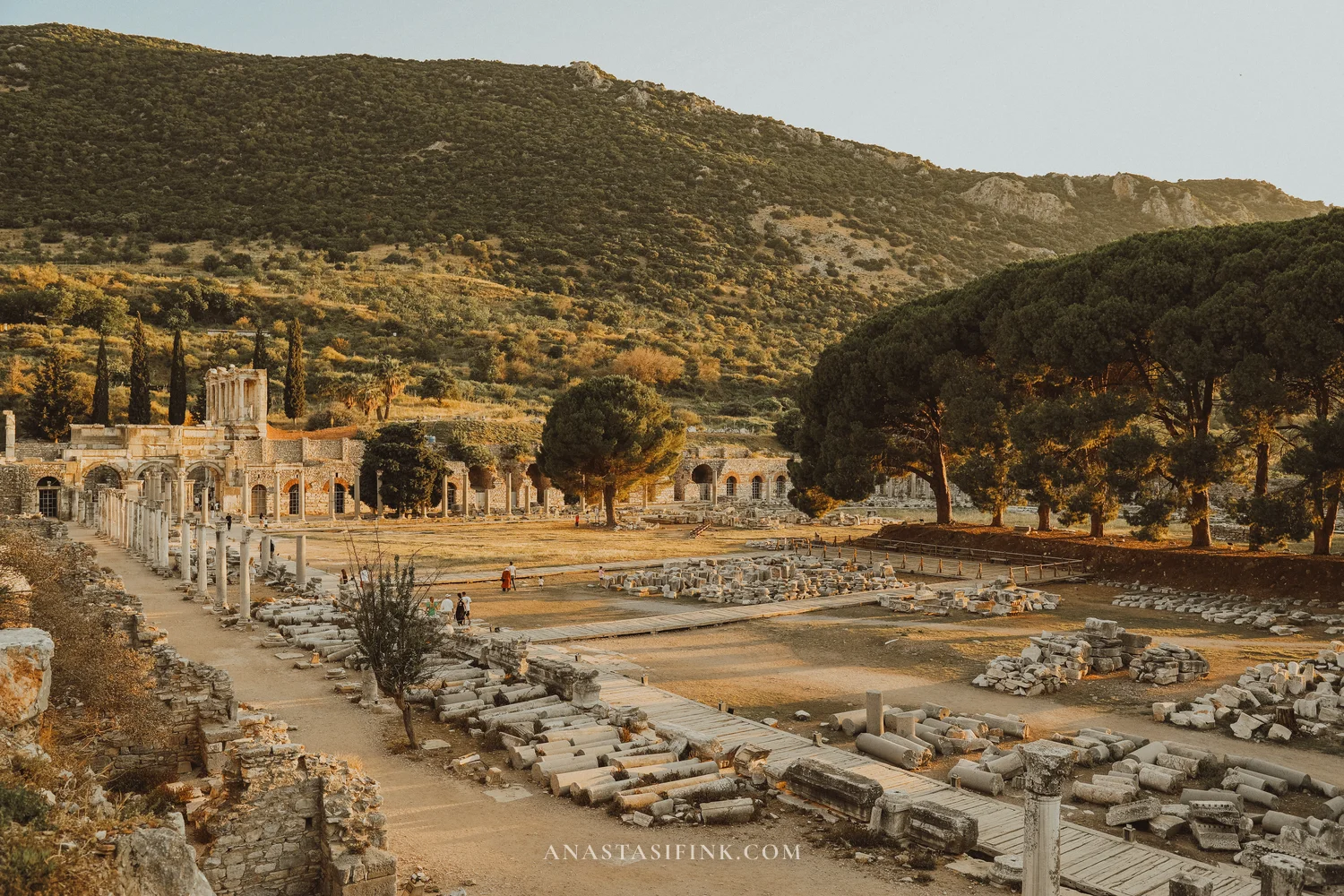

7. The Great Theatre
This theatre held up to 25,000 spectators! It’s one of the largest theatres of the ancient world. According to the Acts of the Apostles, it was here that the famous revolt of the silversmiths against the Apostle Paul took place. Note: the theatre section is currently closed to visitors due to restoration work — check the official site before your visit.
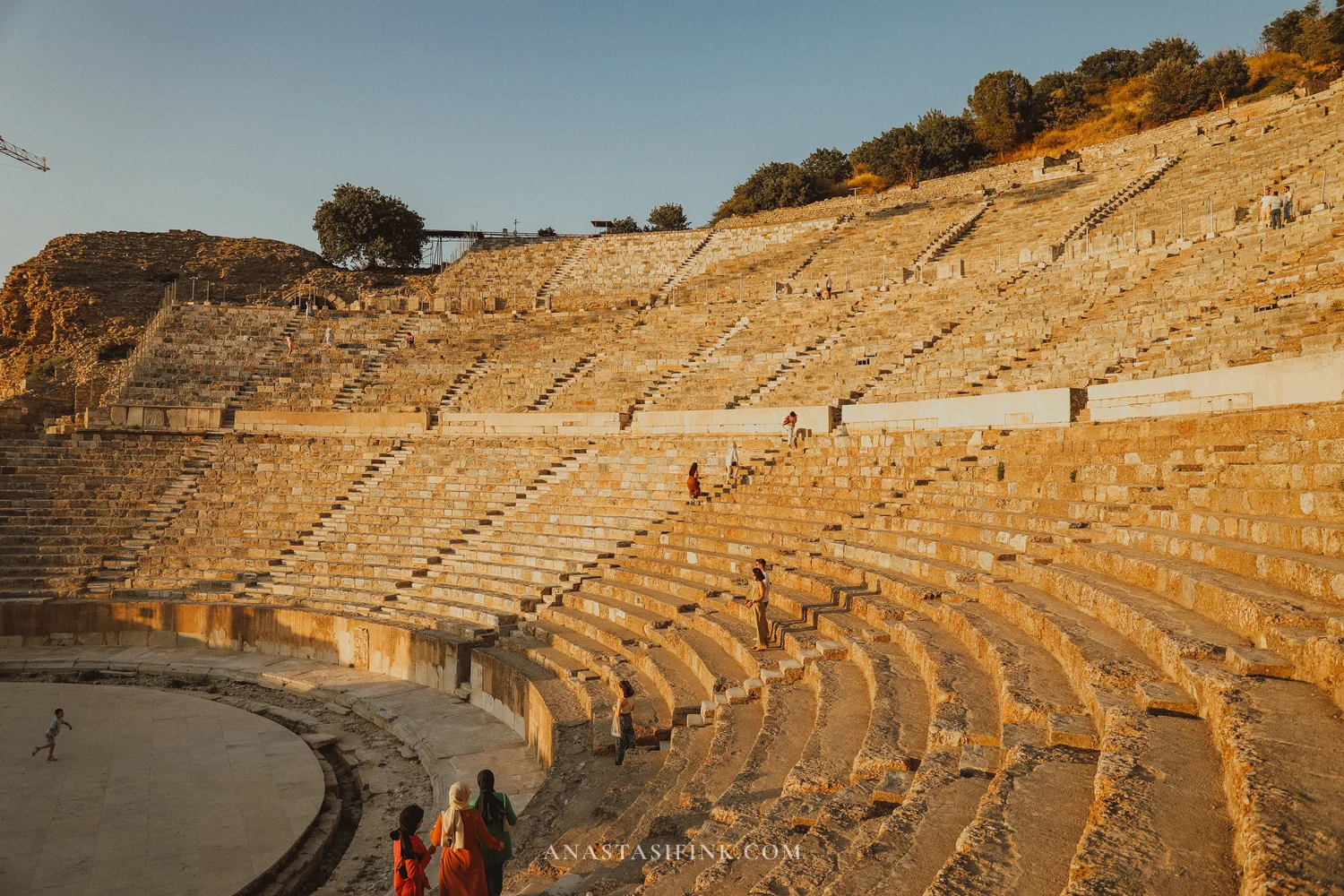
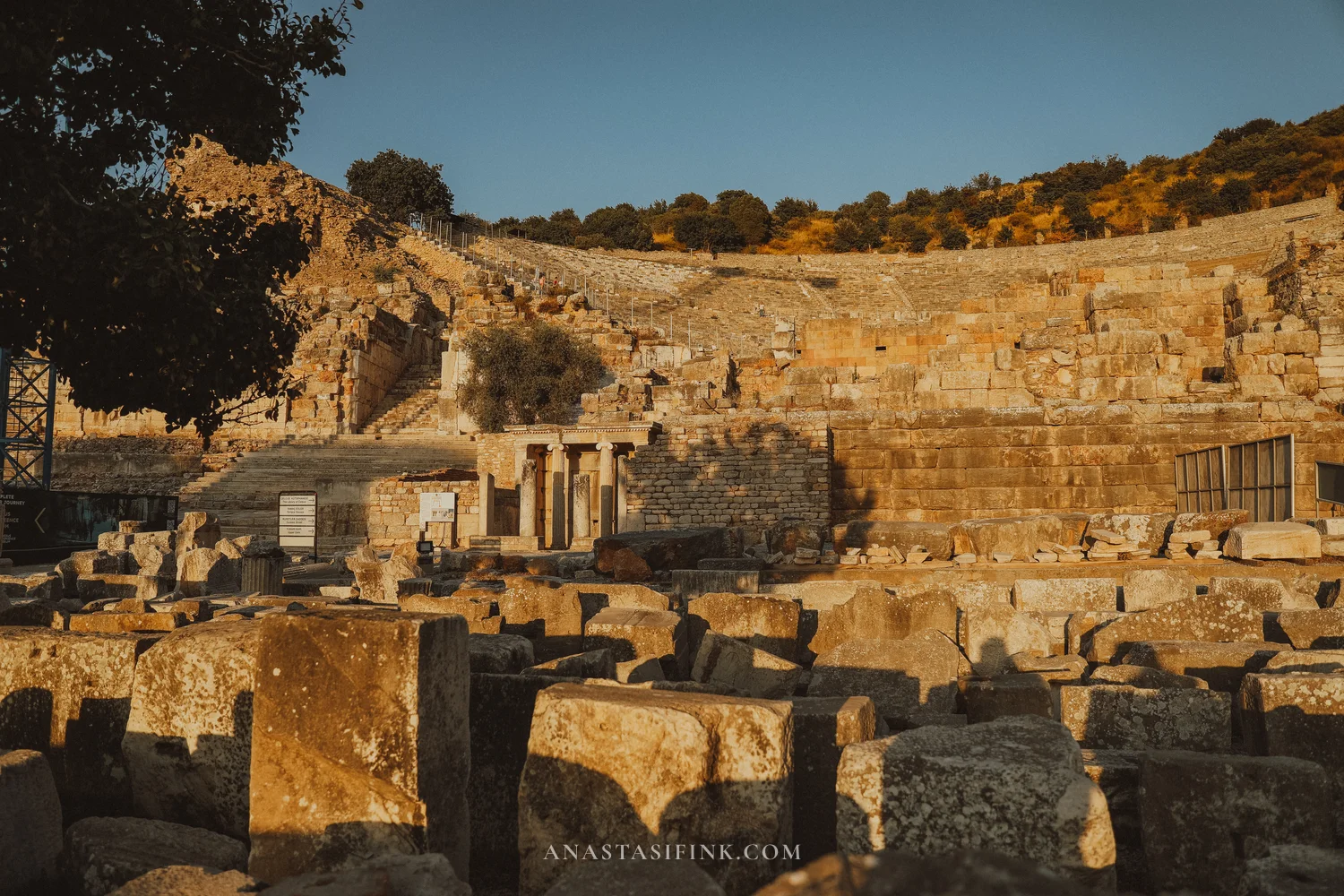
The Great Theatre and the Odeon — two major performance spaces of ancient Ephesus
Above it sits the Odeon (small theatre), a well-preserved chamber used for city council meetings. From its steps you get one of the best views of the entire lower city.
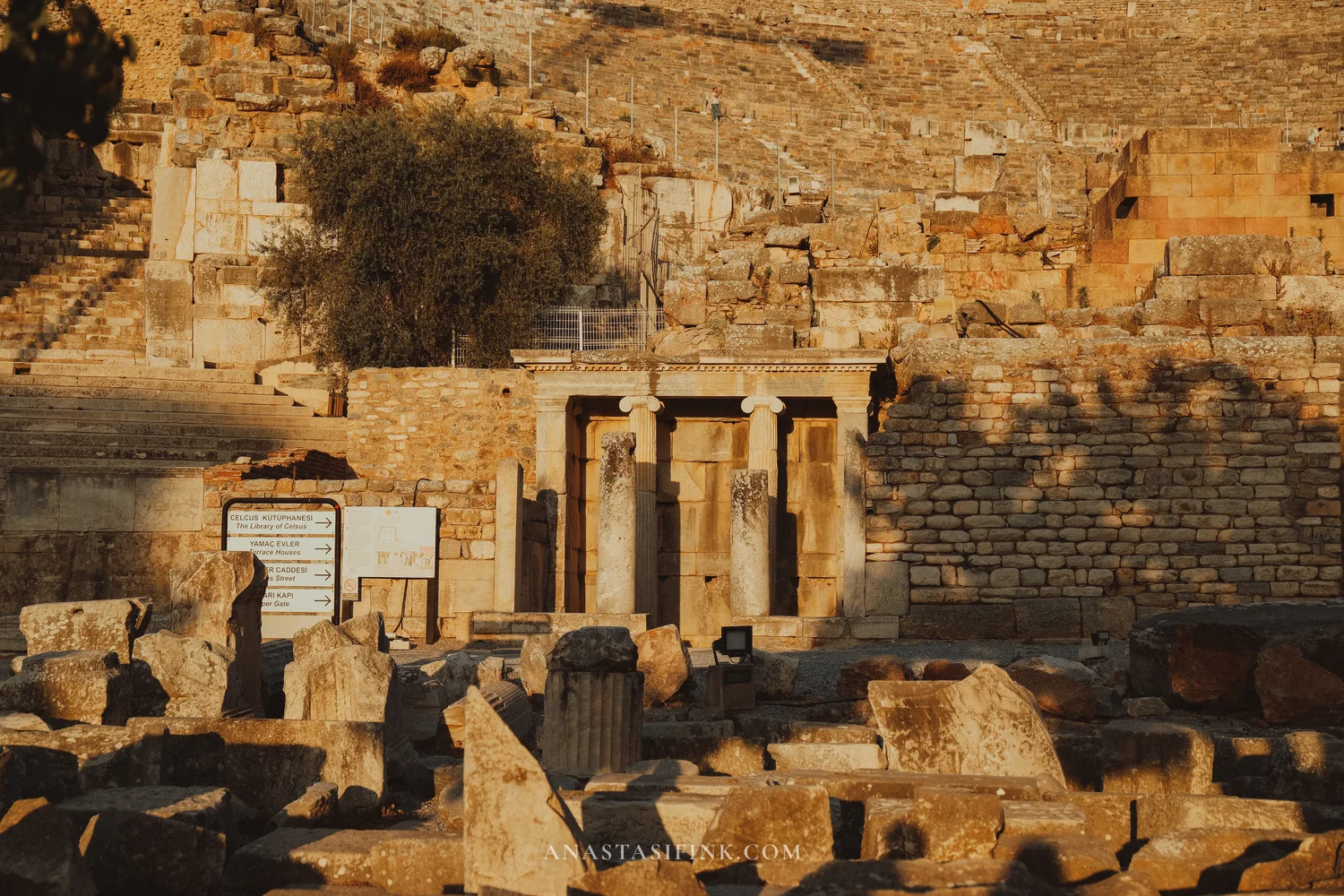
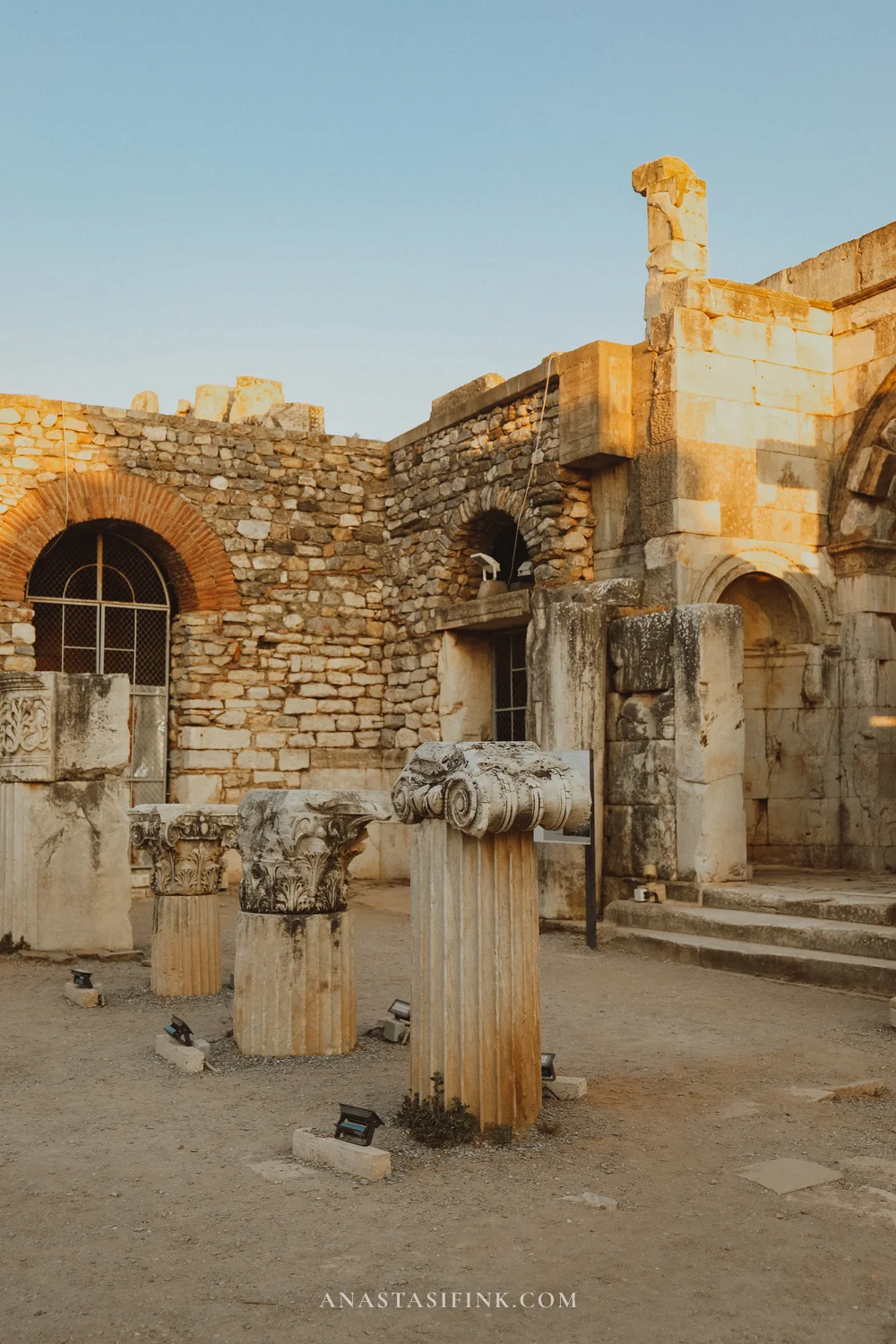
8. Corinthian Capitals, Fallen Columns, and Just Stones
The charm of Ephesus is in the details. A capital with acanthus leaves lying in the grass. Column drums scattered like the bones of a giant. A carved console. A fragment of an inscription. Just imagine how magnificent this city looked in its prime — even now, thousands of years later, we marvel at only a small fraction of what has survived.
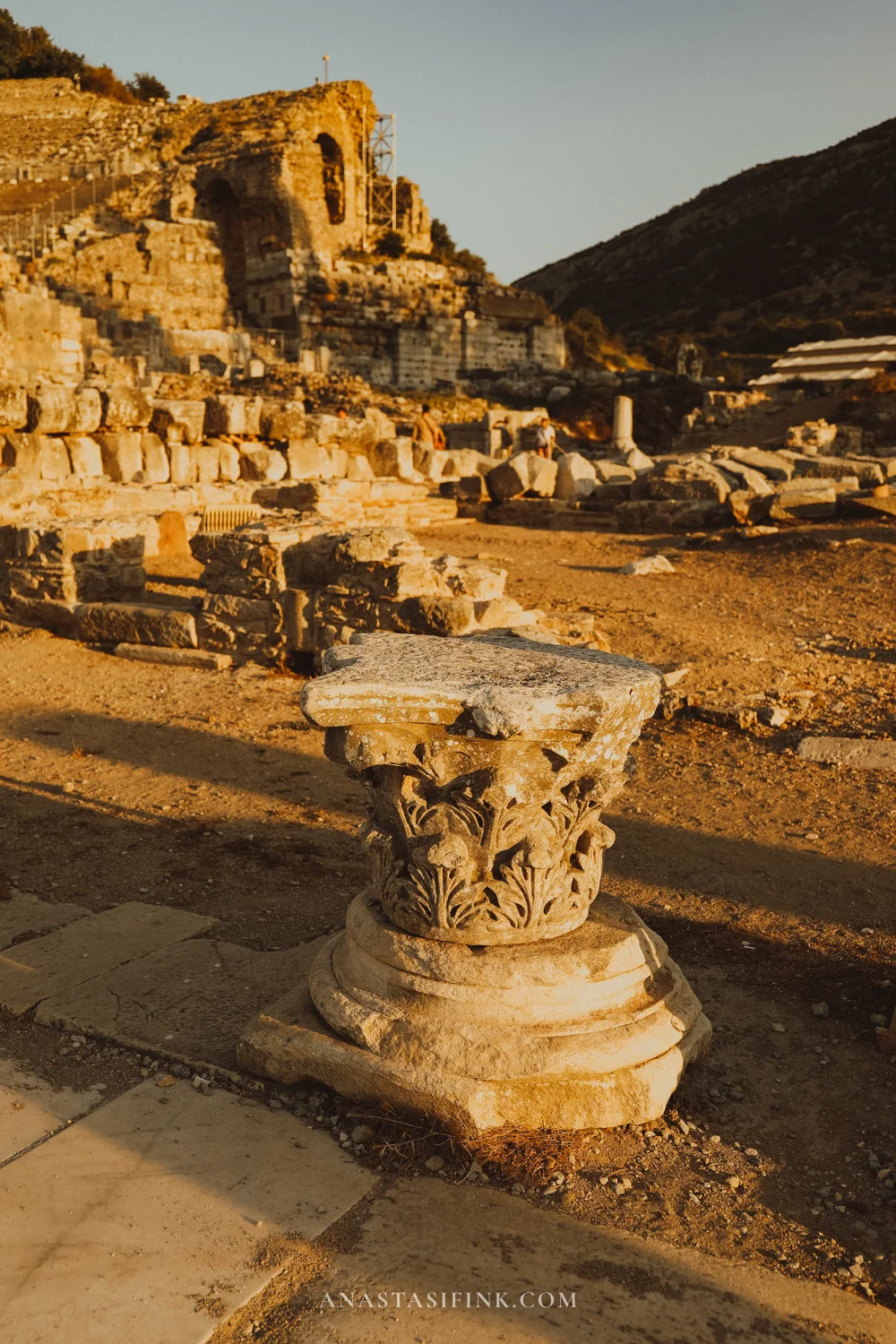
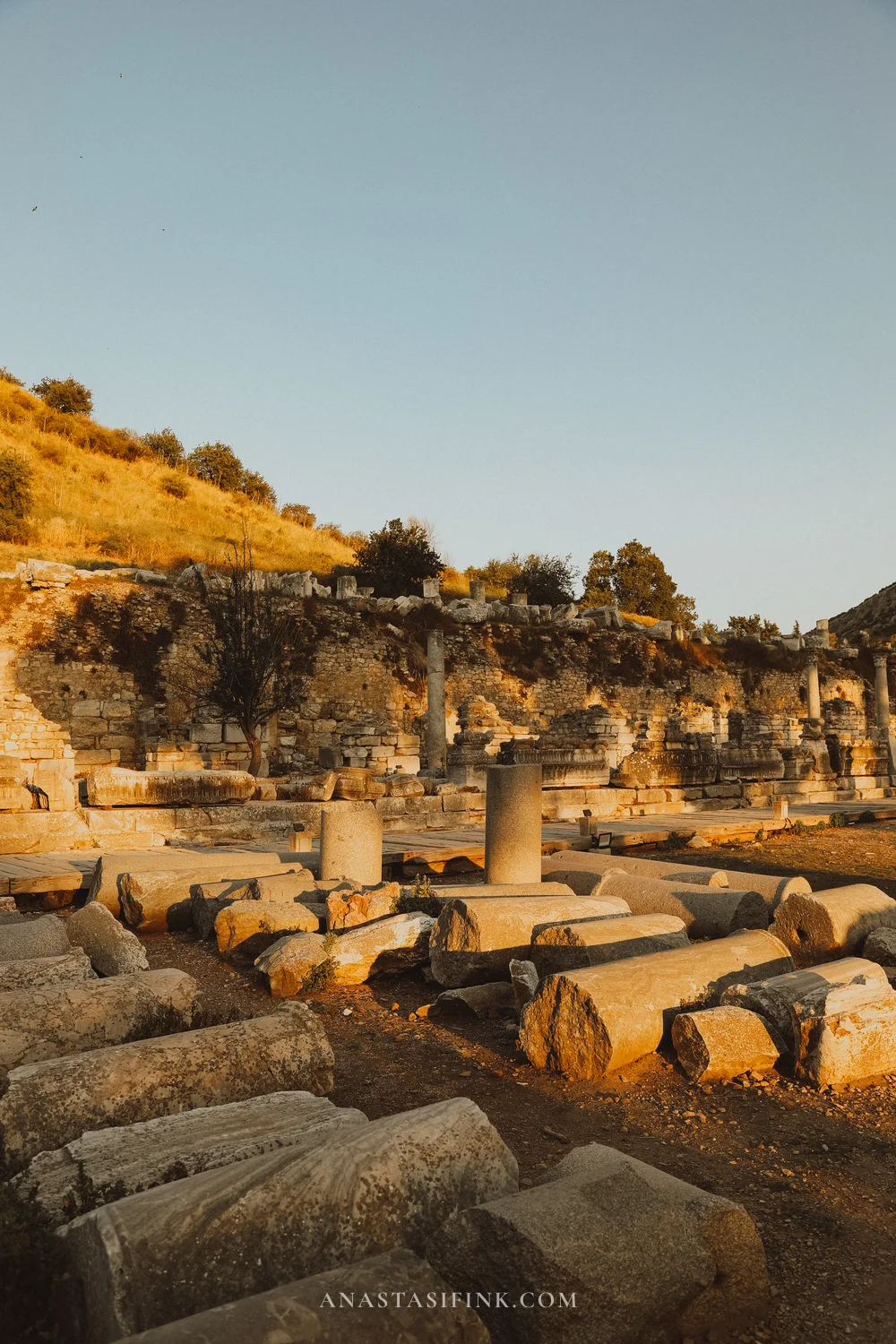
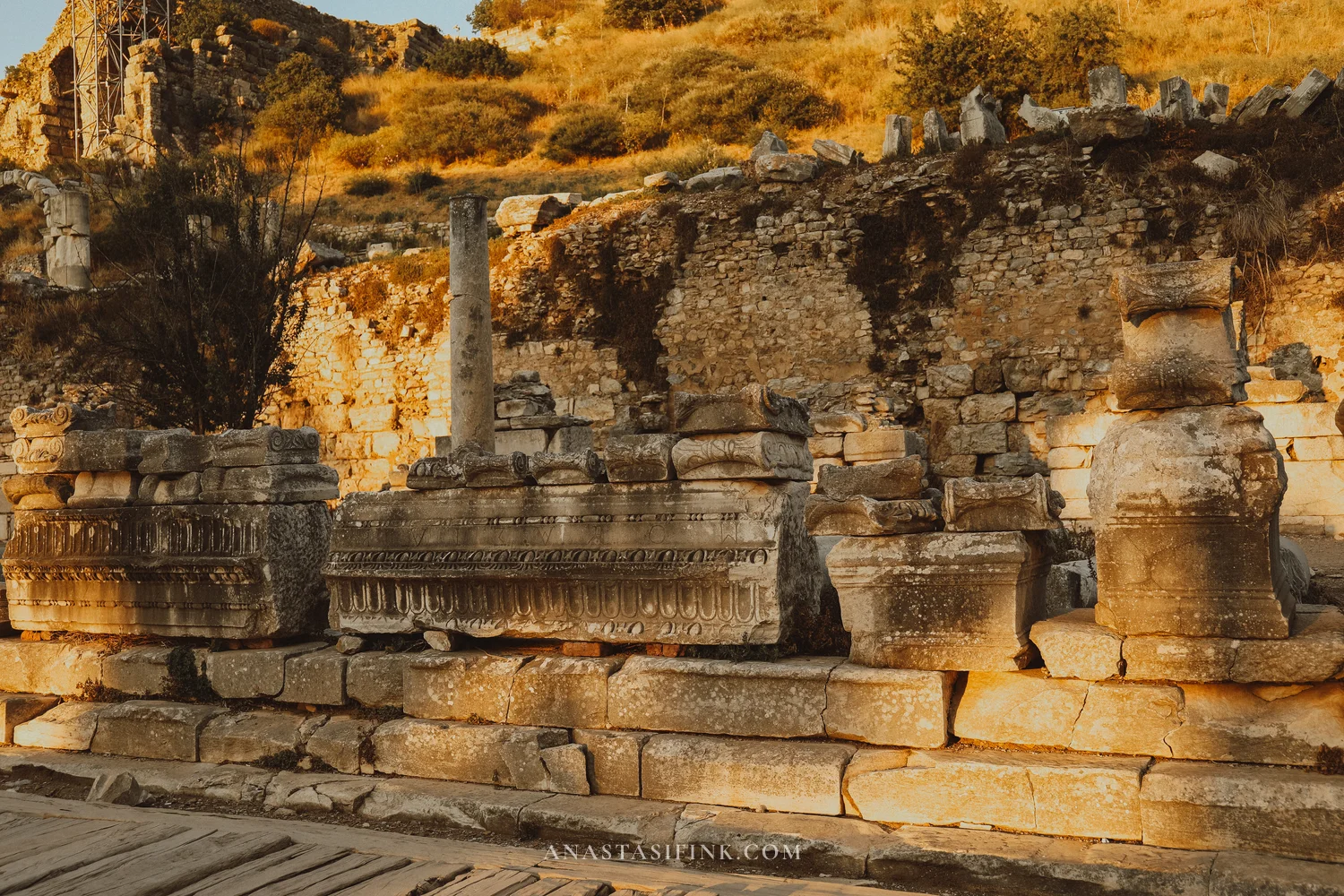
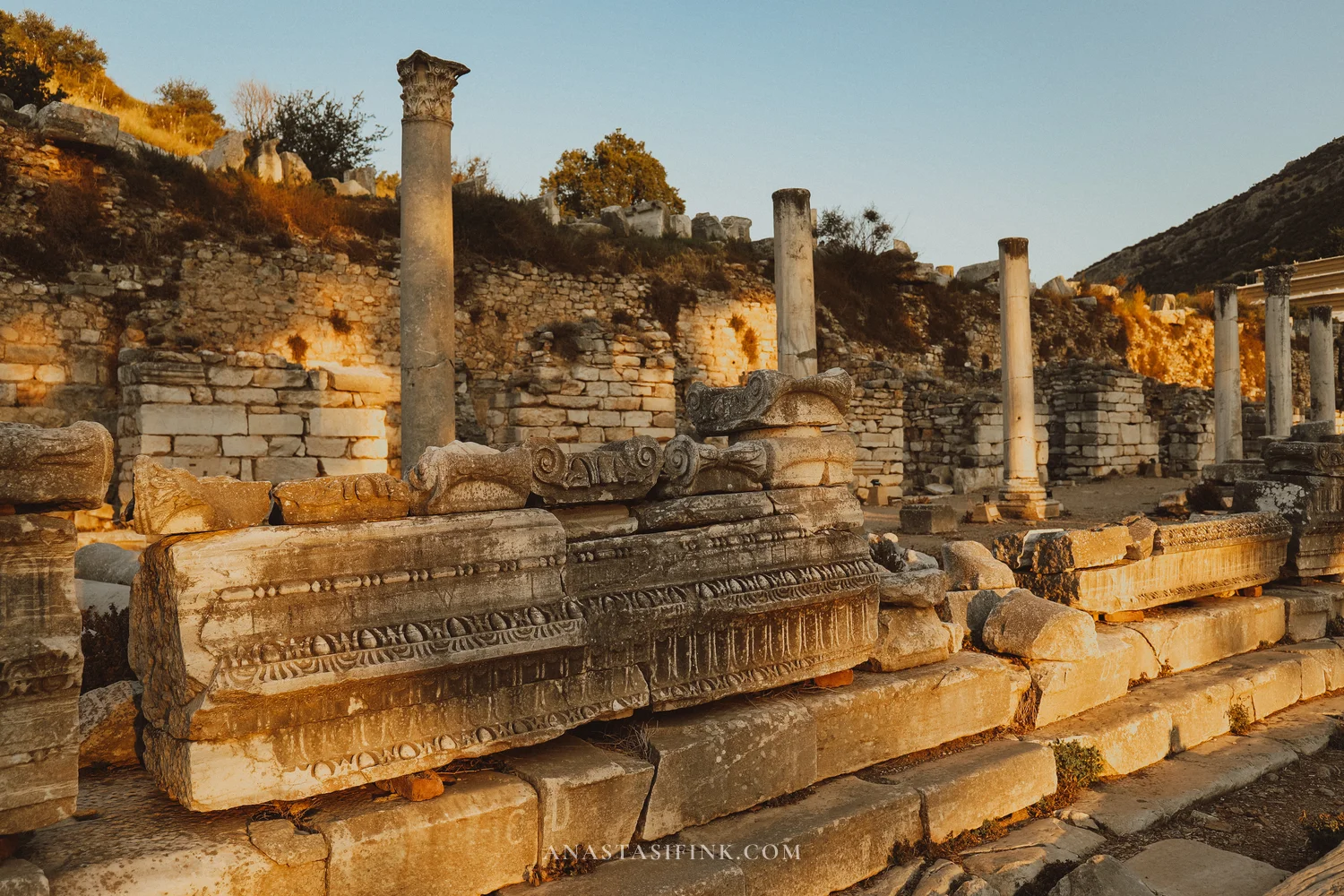
Details of Ephesus — stop, look down and around you
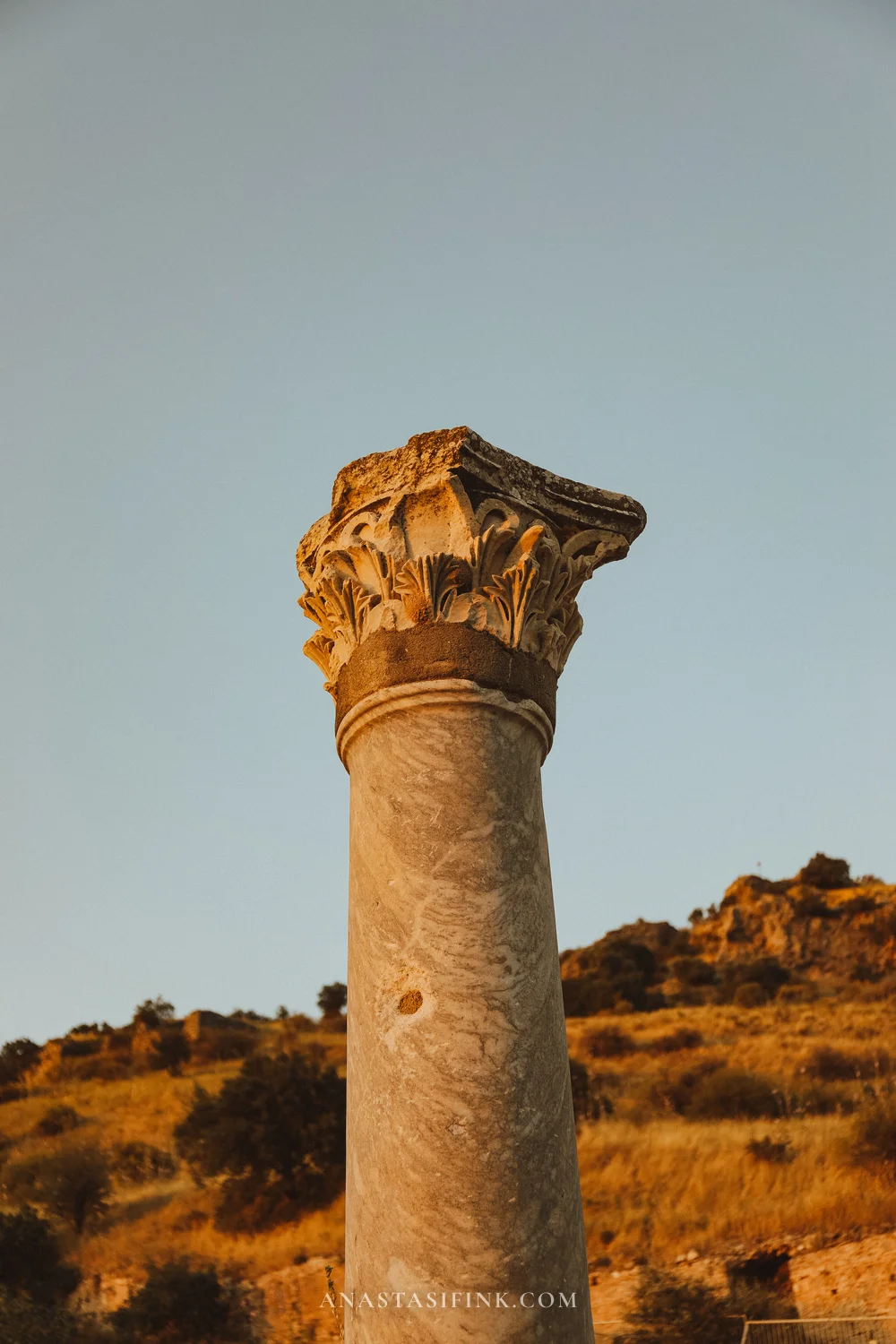
9. The Public Latrines — Yes, This Is Also a Landmark
It sounds strange, but this is one of the most visited spots in Ephesus — and deservedly so! An ancient public toilet with 40 seats, dating to the 1st century AD. Marble seats with openings, plumbing beneath them, flowing water in front of the seats for washing. A level of comfort that many modern cities can only dream of.
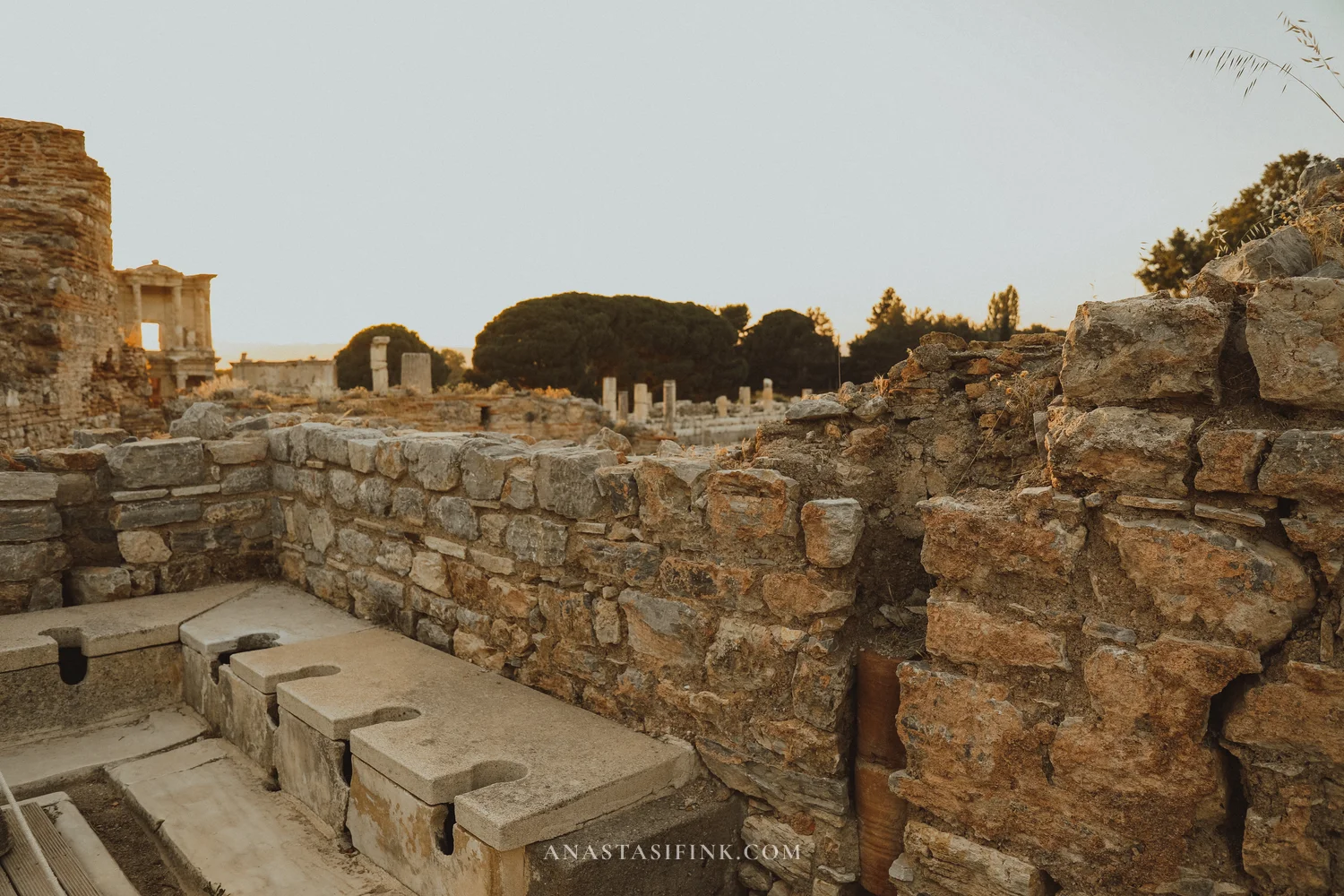
10. Byzantine Traces
Ephesus didn’t vanish with the fall of Rome — the city continued to thrive in the early Byzantine period. Here you can find the remains of the Basilica of the Virgin Mary (one of the earliest Christian cathedrals in the world), Byzantine ruins with brick arches, and other traces of the Christian era.
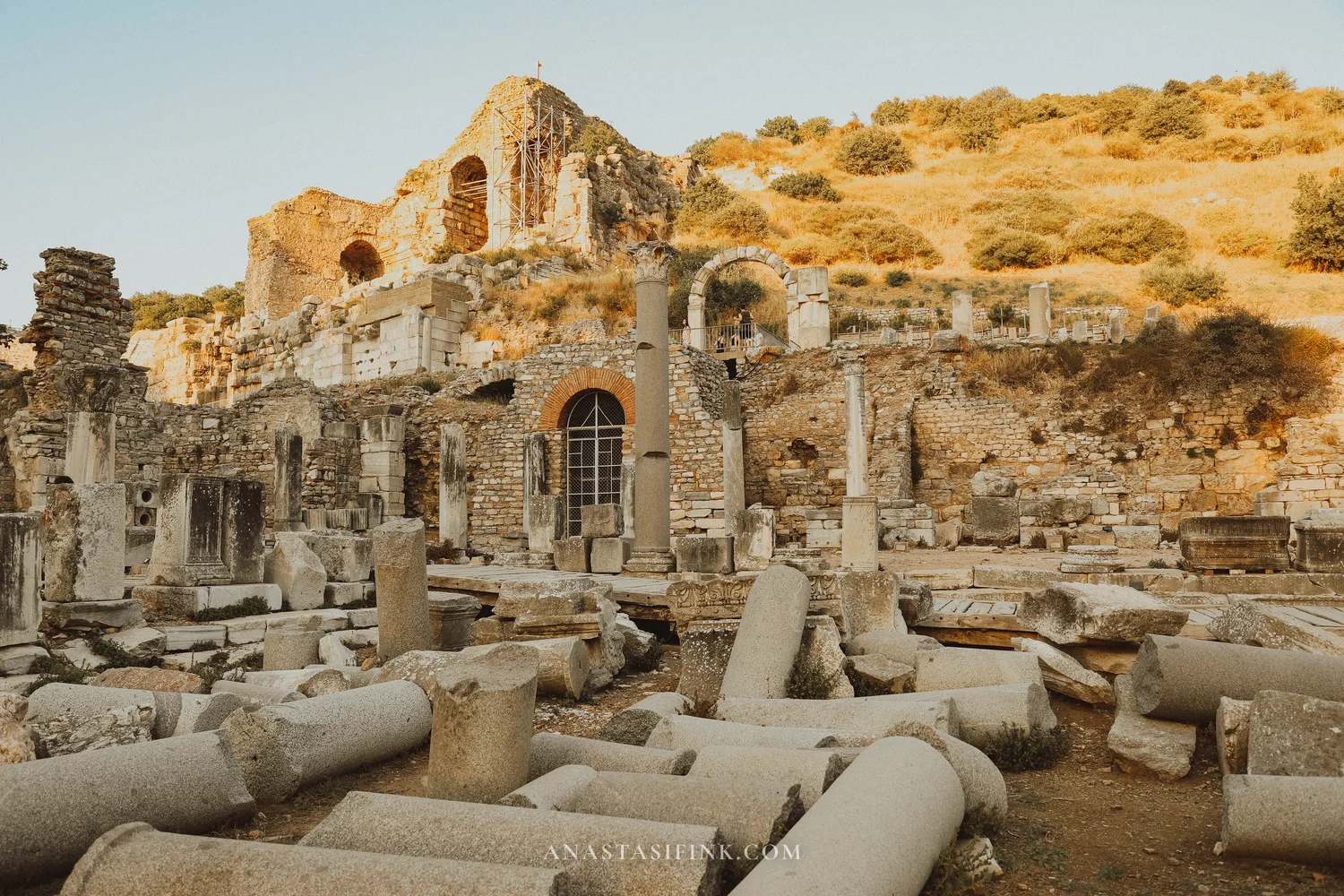
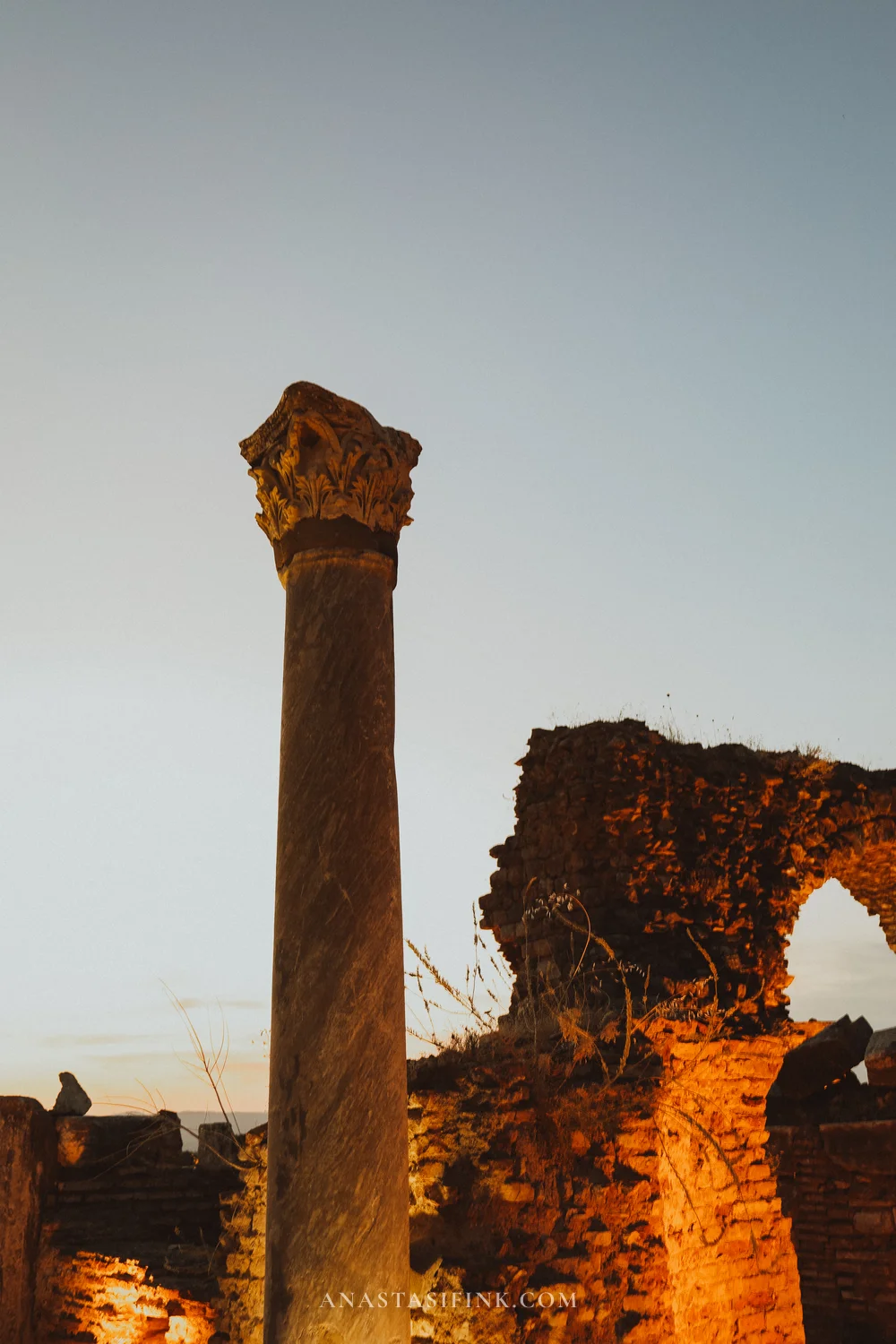
Traces of the Byzantine era — brick arches amid ancient marble
Ephesus at Night: Summer Evening Hours
If, like me, you find it frustrating that nearly every museum in Turkey closes before sunset — I have great news for you!
In summer (approximately early June through late September), on select days of the week, Ephesus stays open until 11:00 PM. After 7:00 PM, only the lower entrance (Lower Gate) is open. Check their website before visiting to confirm the schedule.
It’s truly magical! The entire lower city is lit up with warm amber floodlights — the Library of Celsus, the Temple of Hadrian, Curetes Street, the colonnades. It’s like stepping into a fairy tale: the marble shifts color, the crowds thin out, silence settles in…
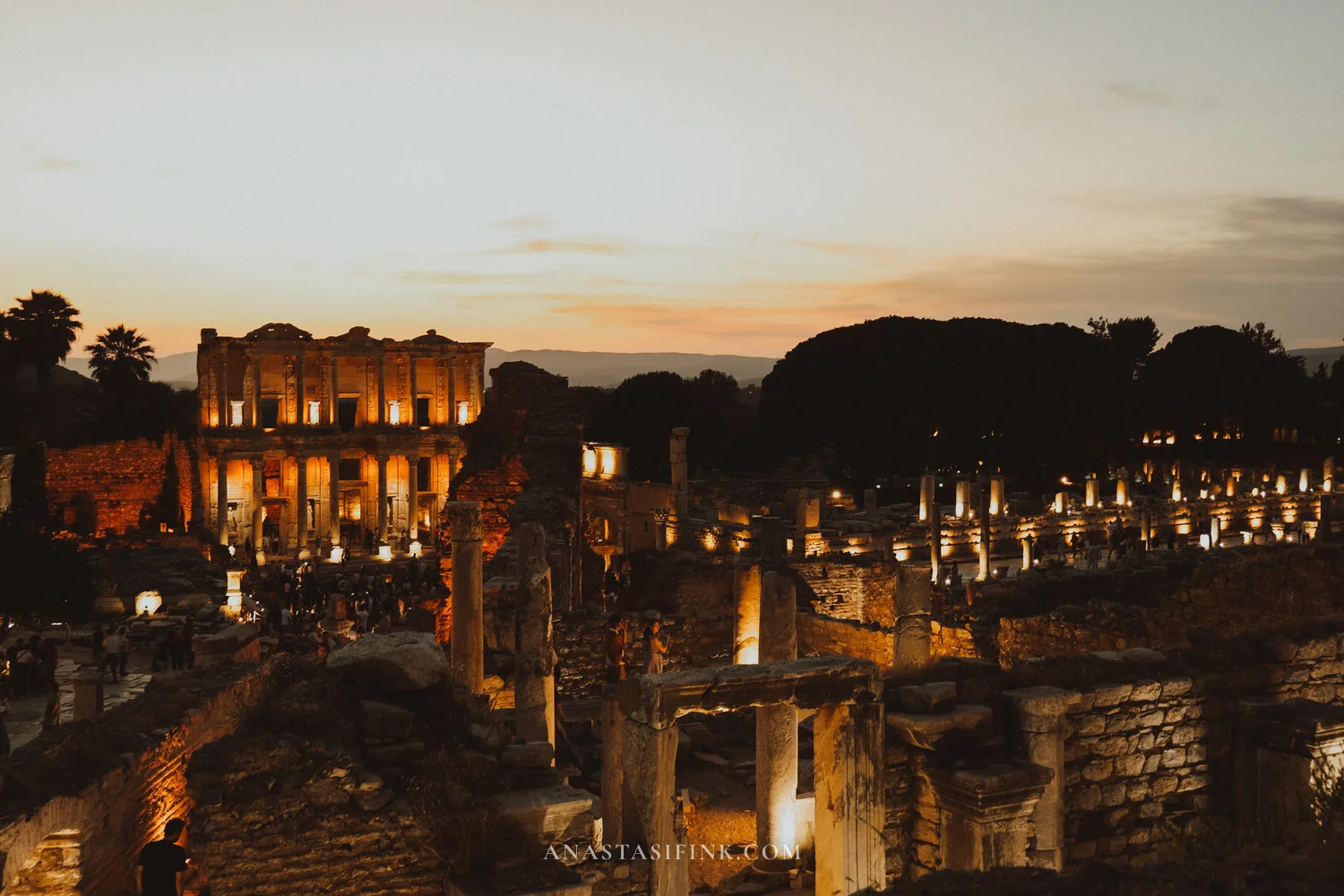
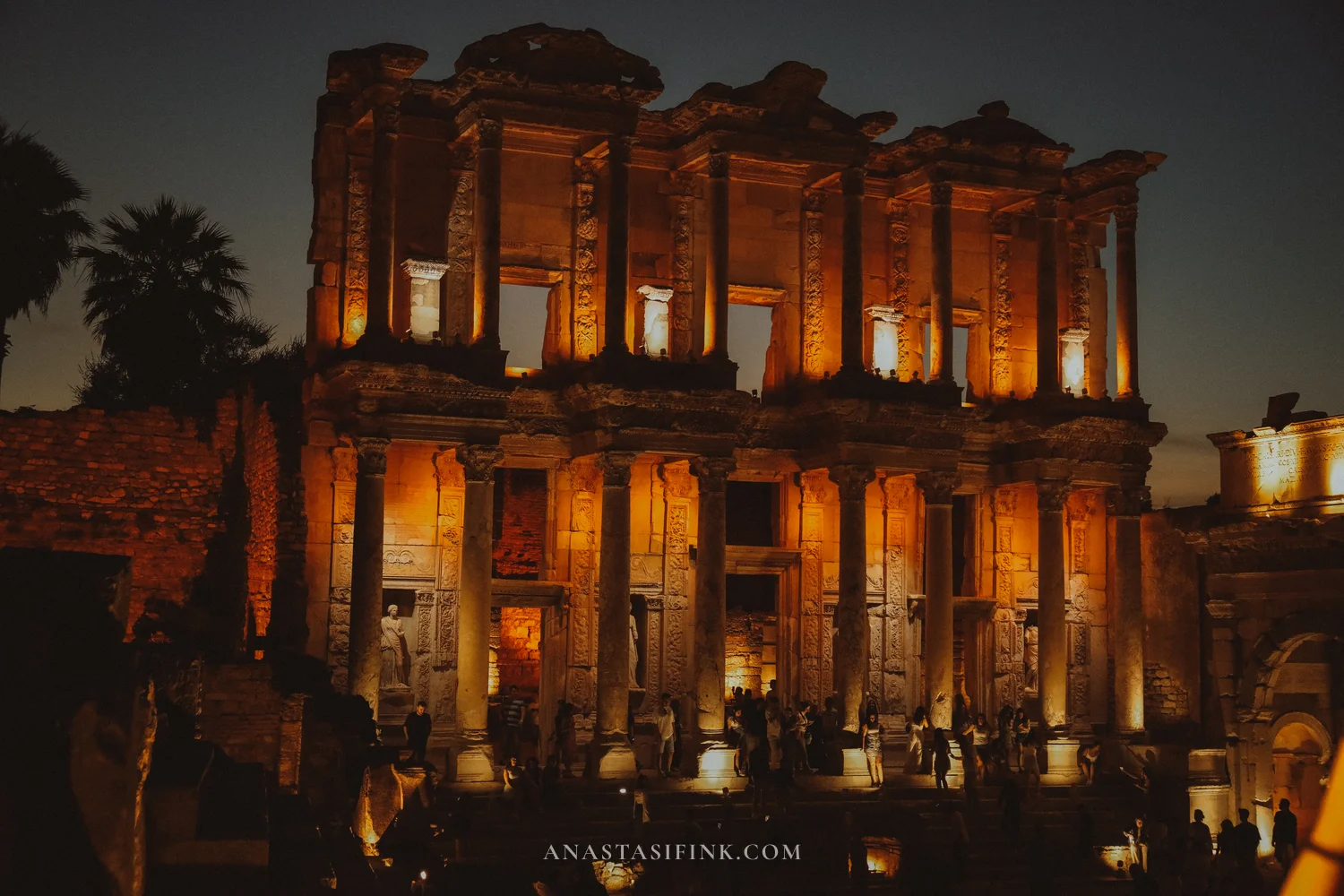
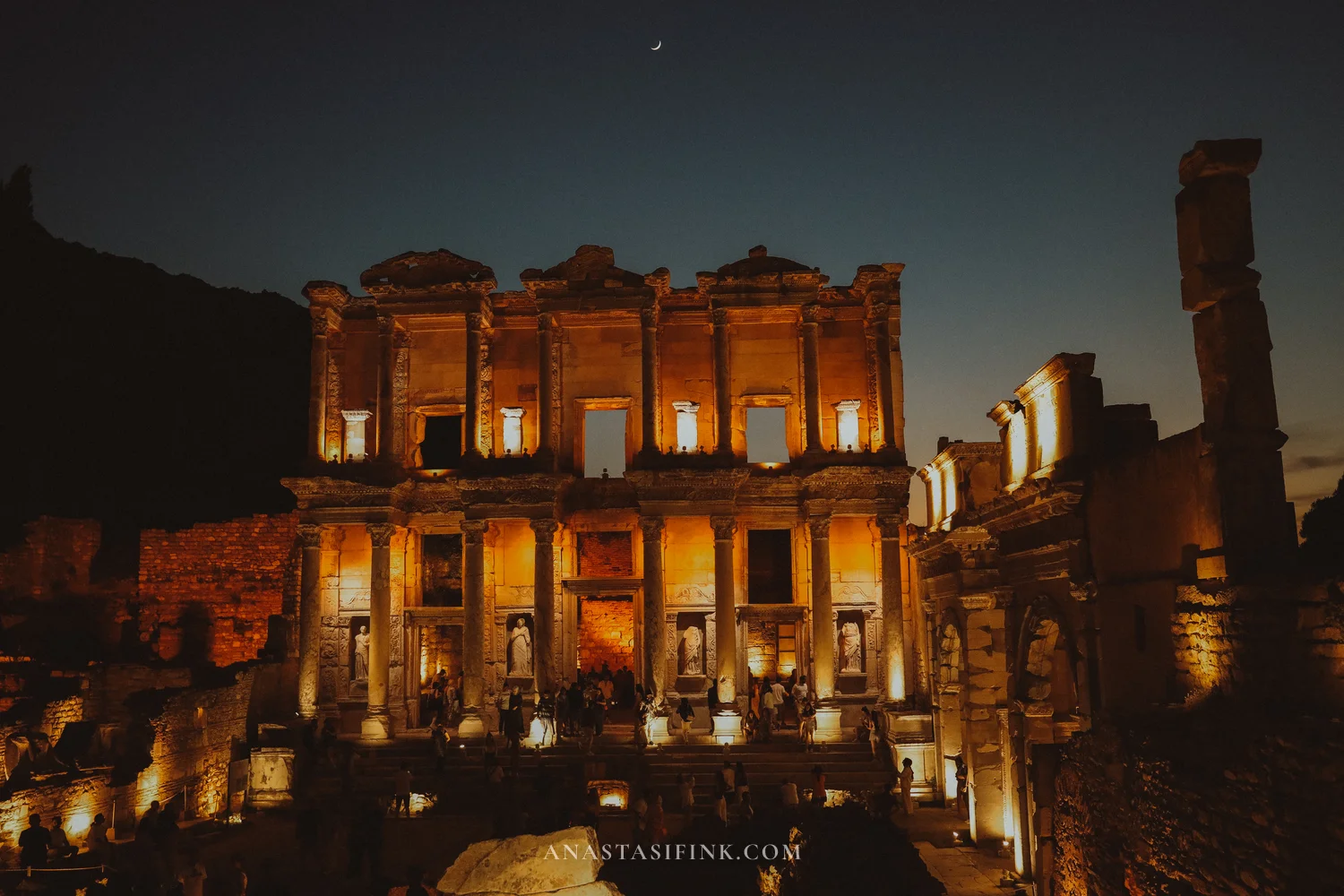
The Library of Celsus at night — with a crescent moon
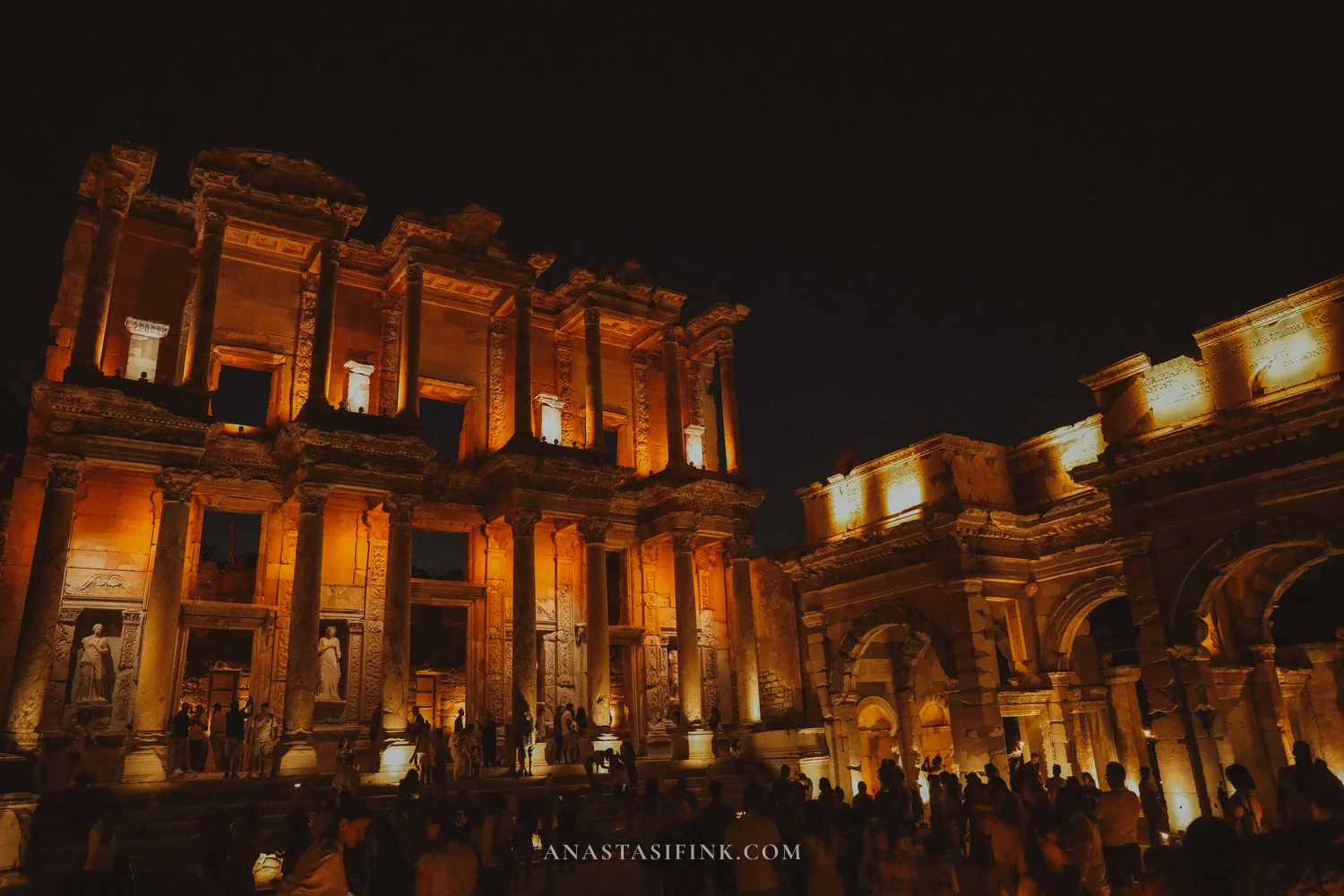
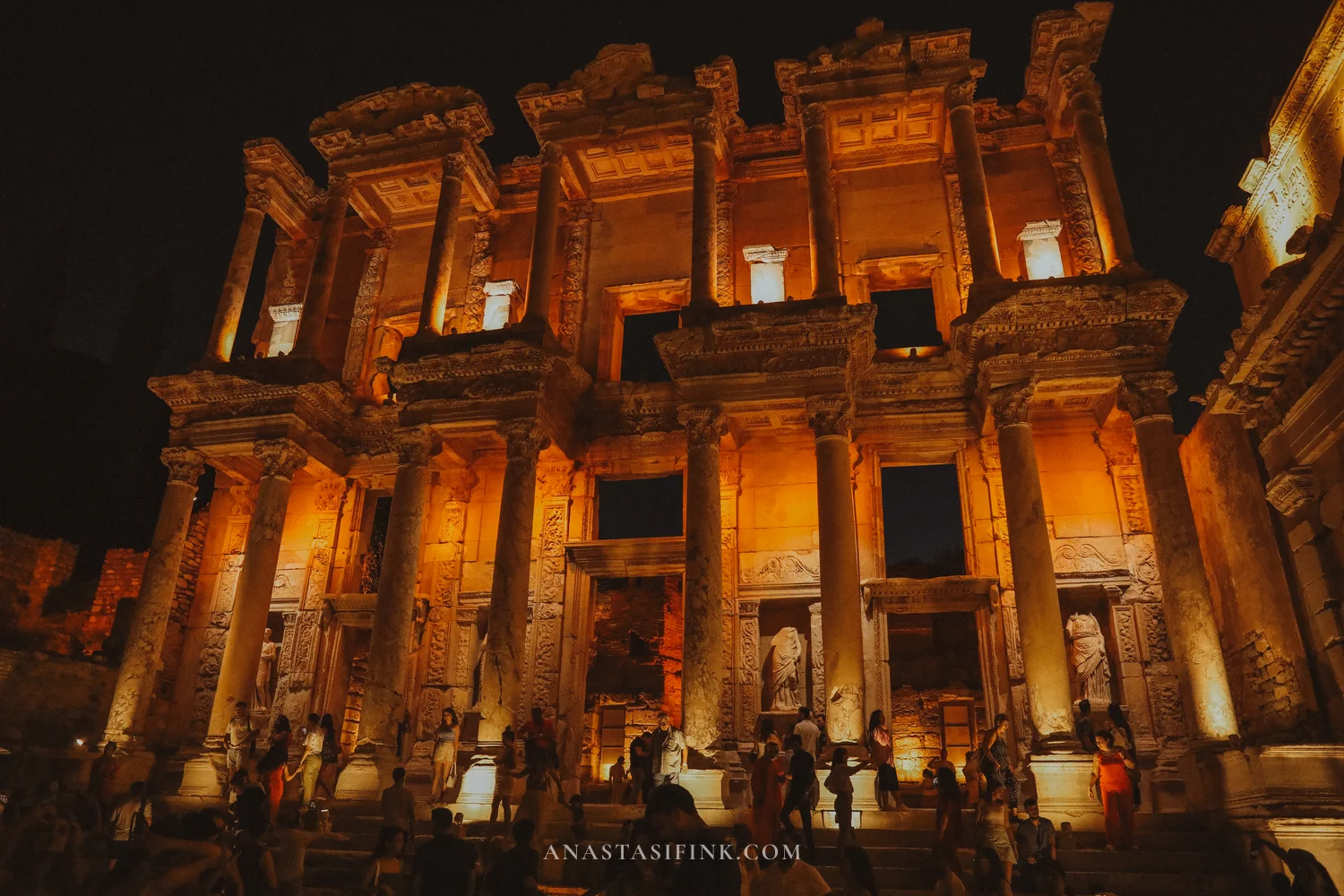
The Library of Celsus in amber lights
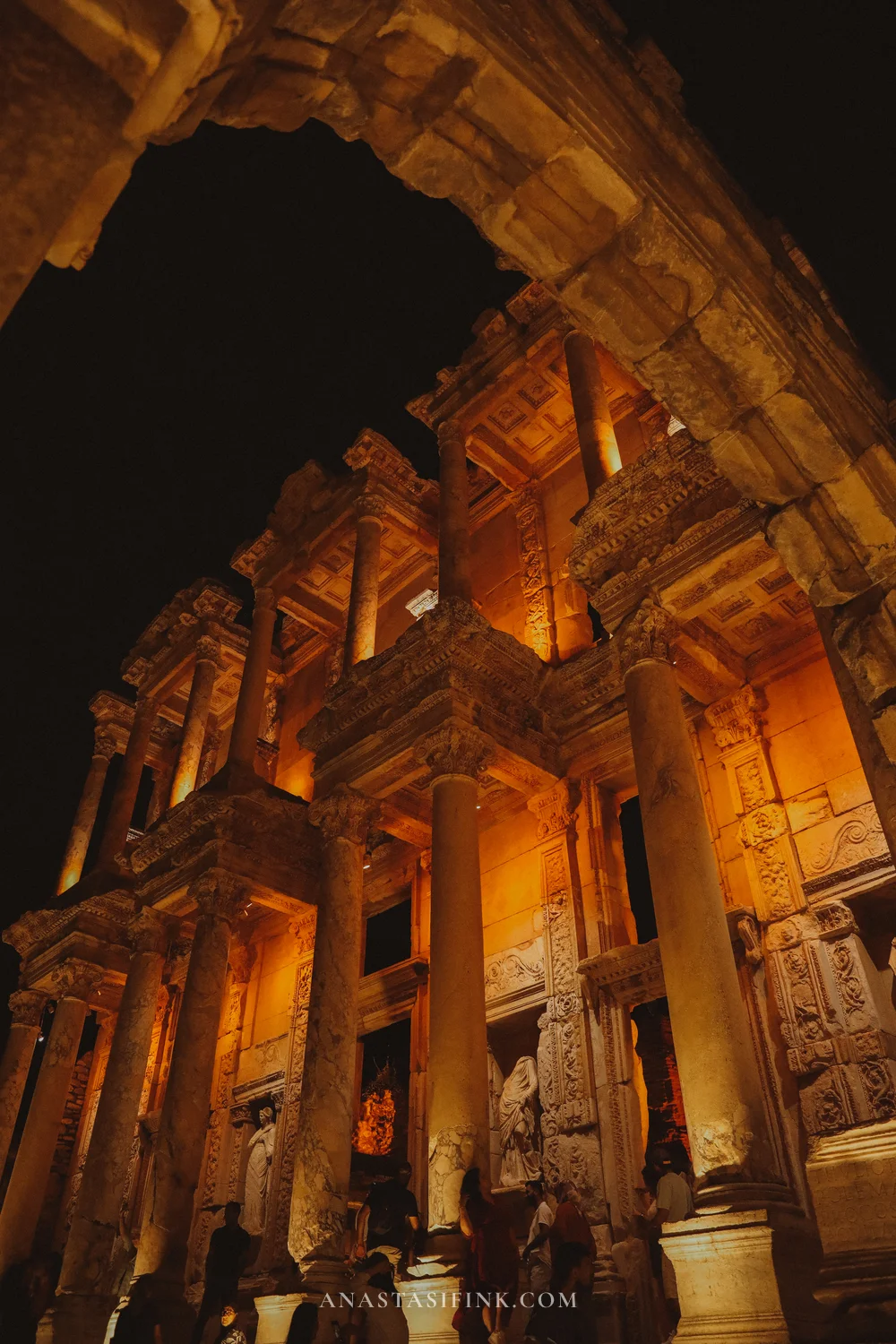
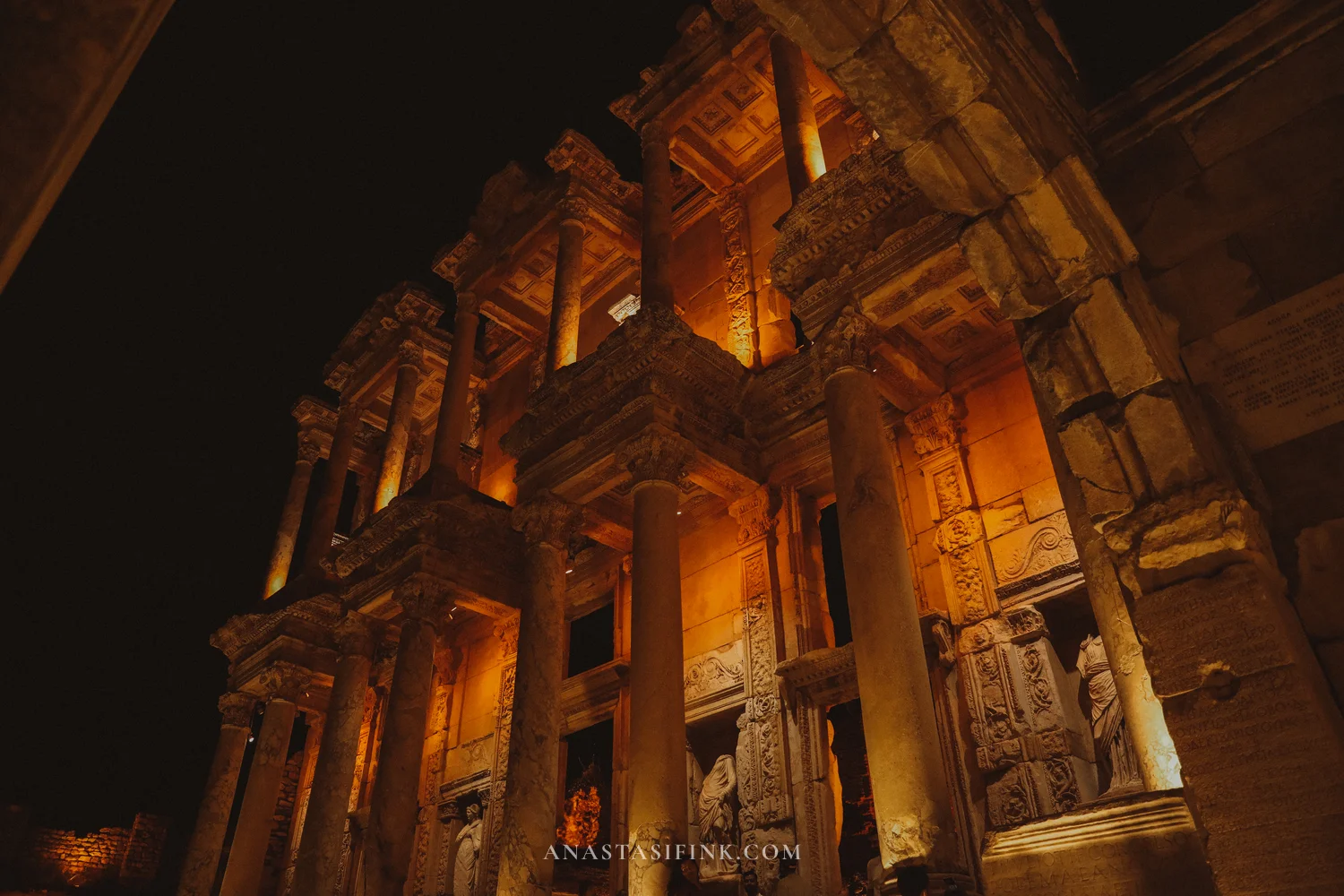
The facade details reveal themselves anew in artificial light — the carvings appear more three-dimensional, the shadows deeper.

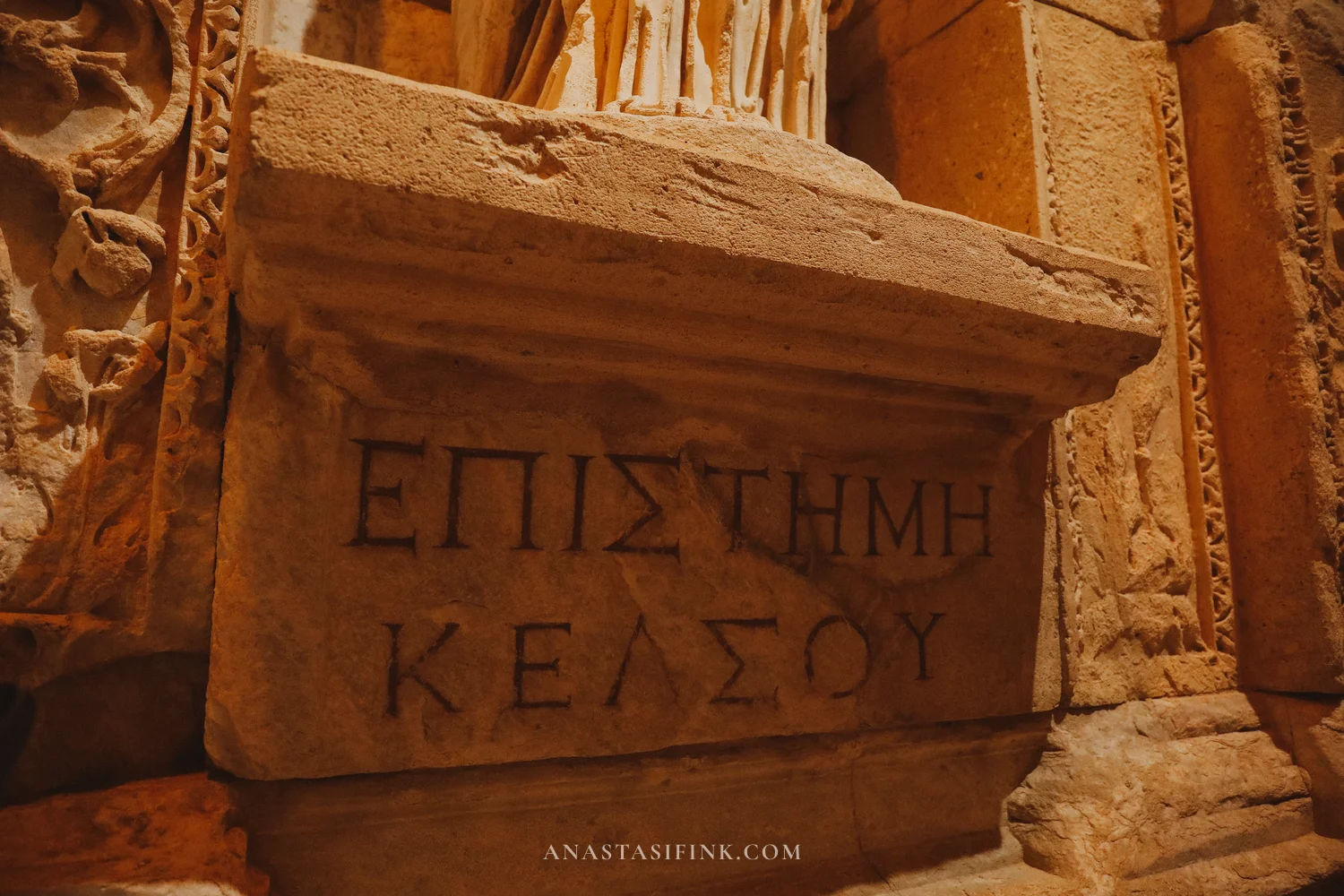
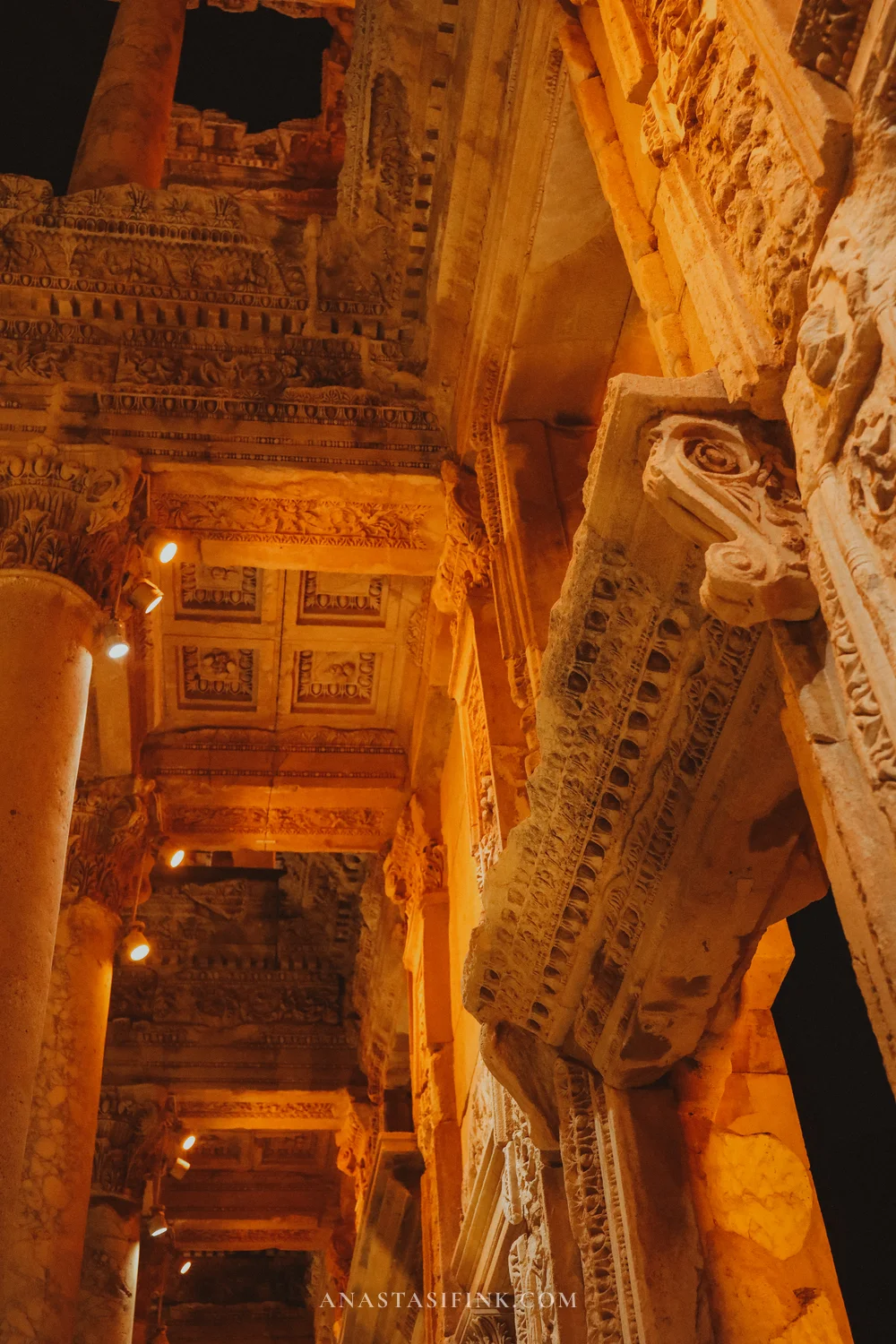
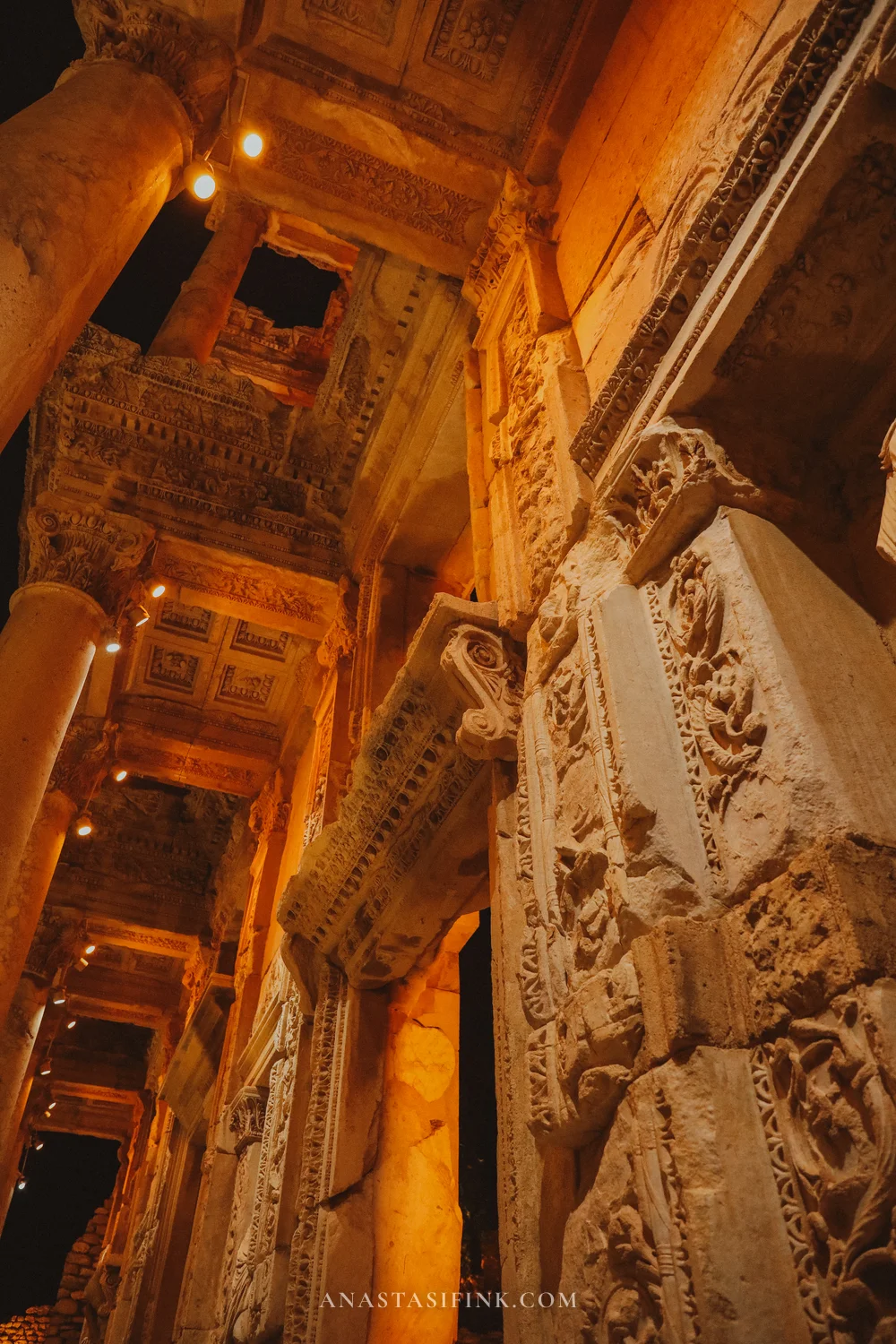

Details of the Library of Celsus in night illumination
The Temple of Hadrian at night is a story of its own:
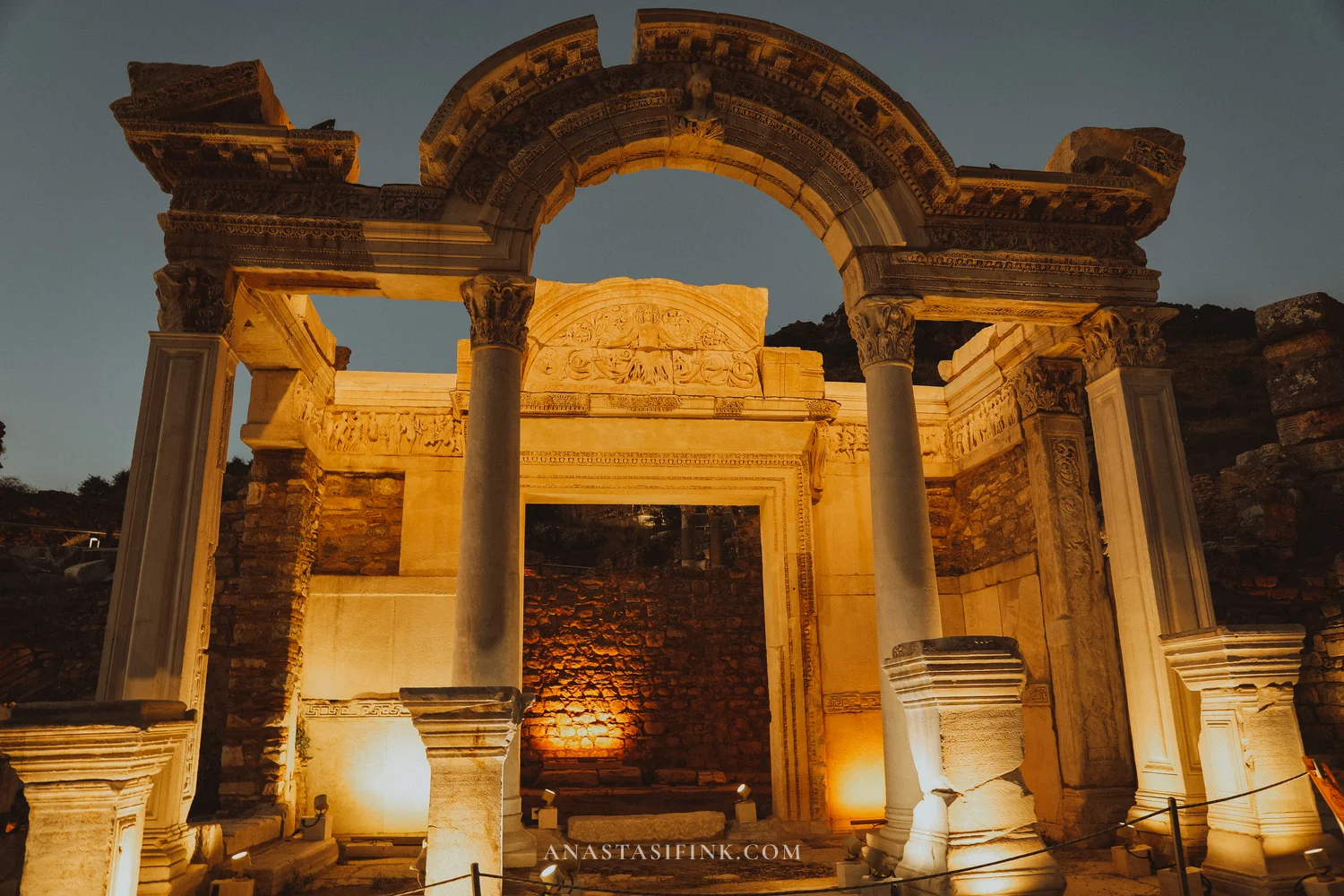
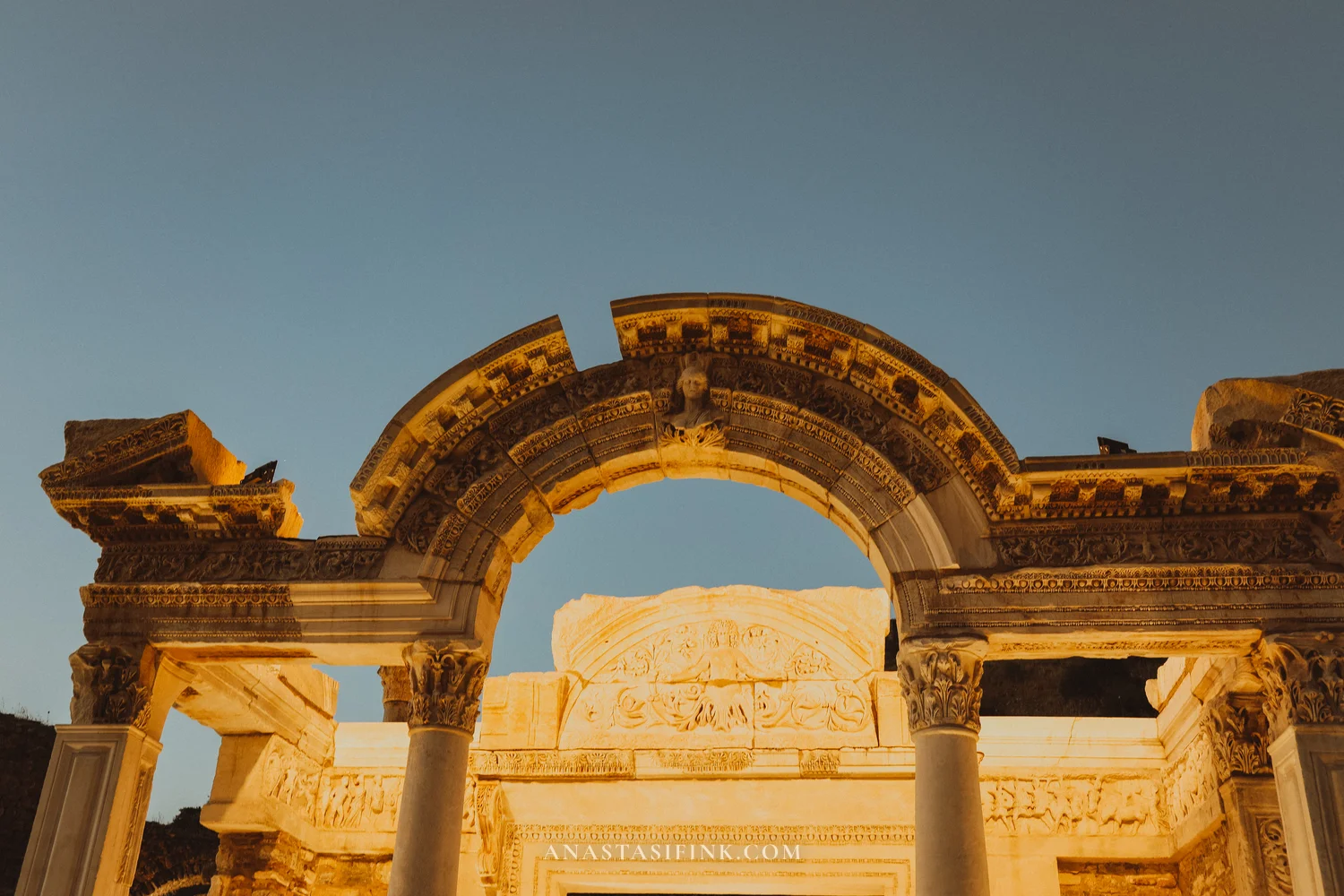
The Temple of Hadrian at night
And Curetes Street — an entirely different atmosphere:
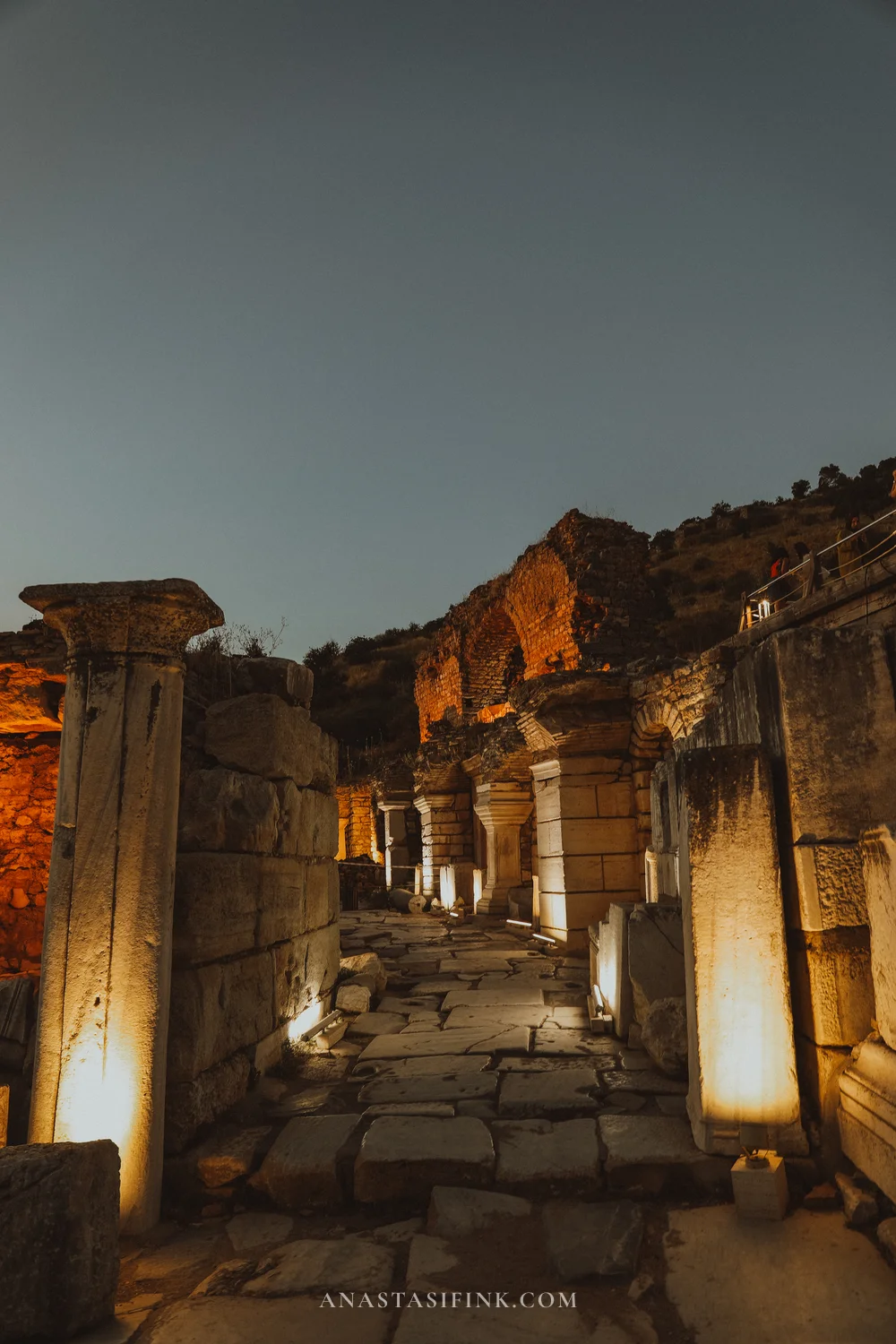
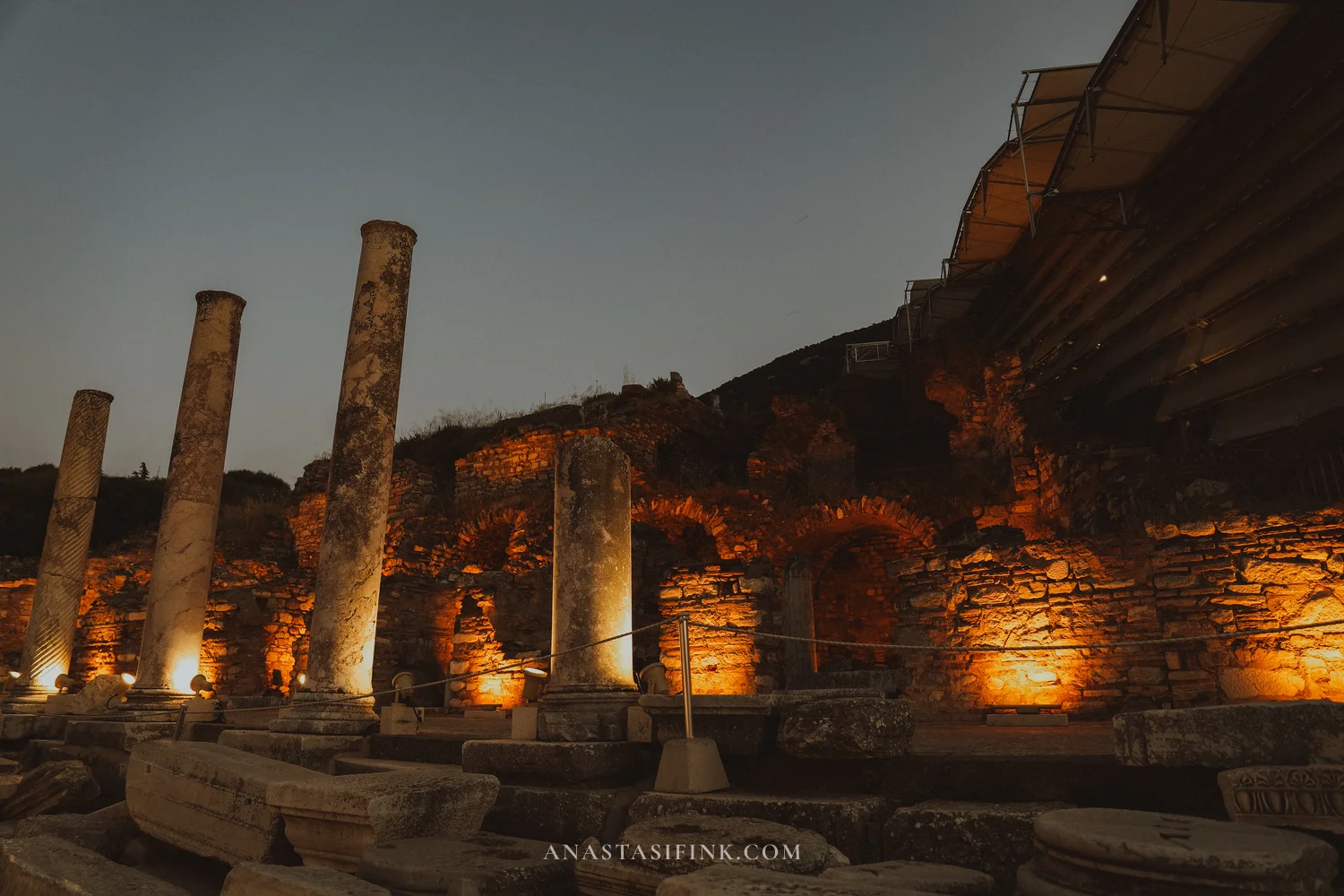
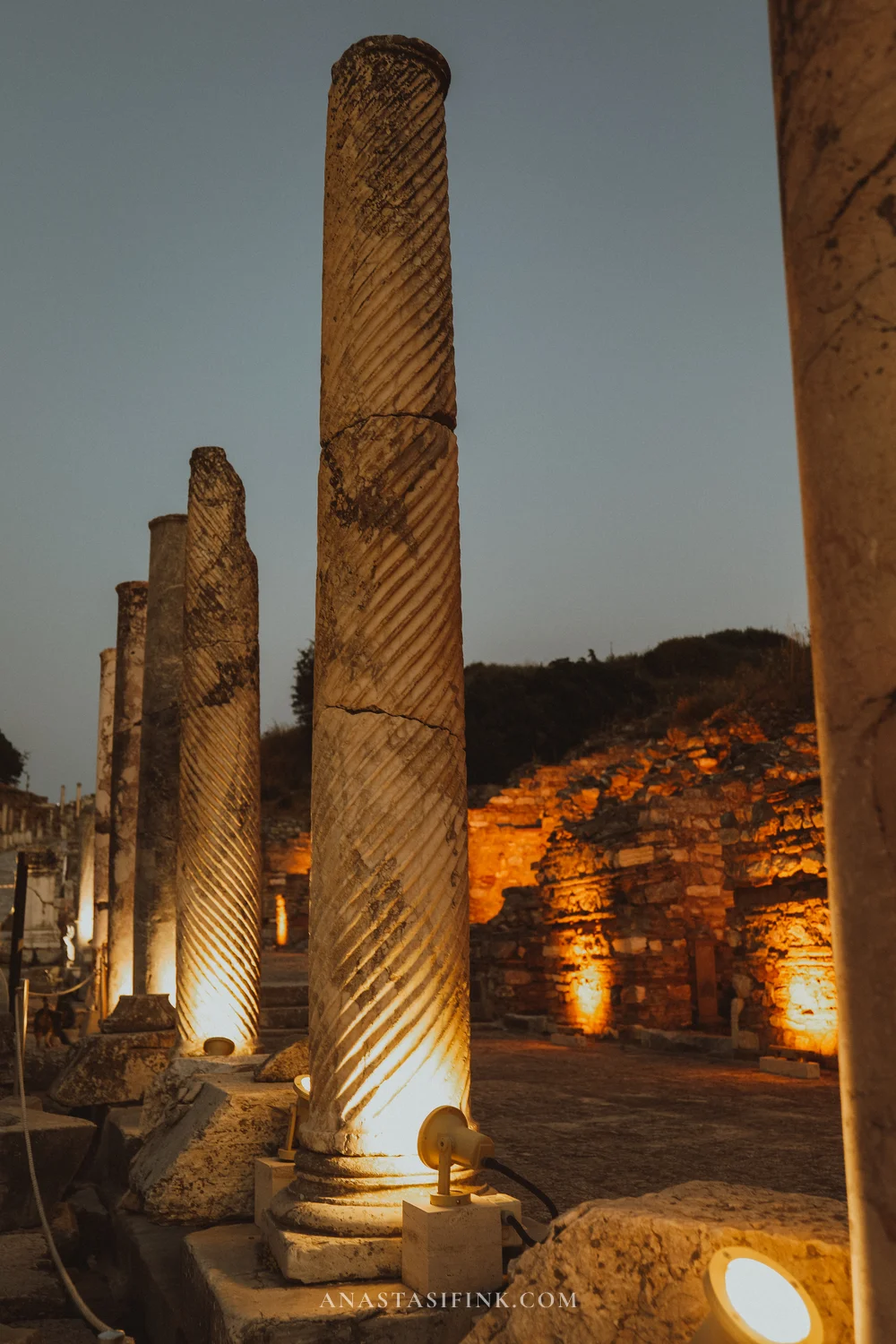
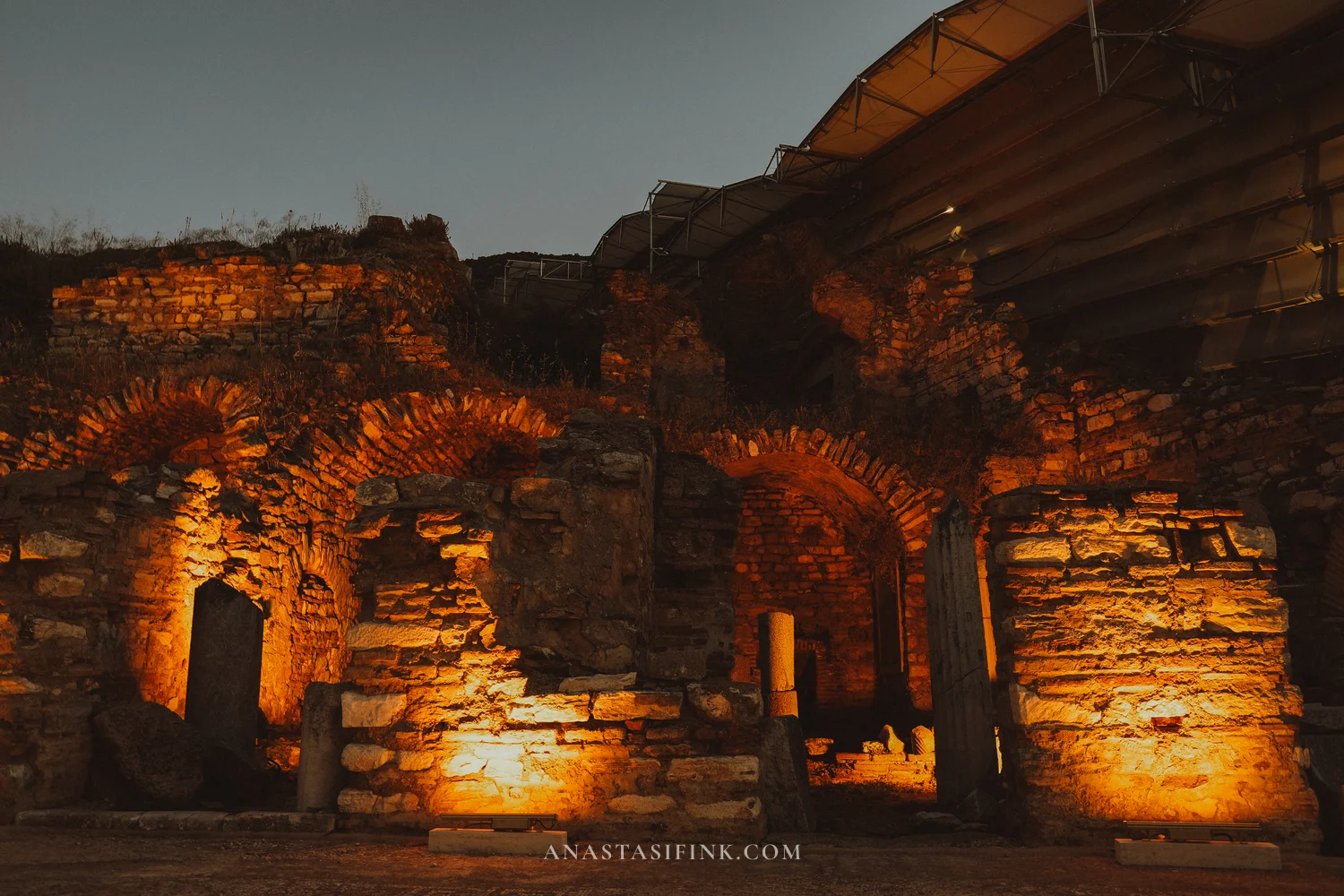


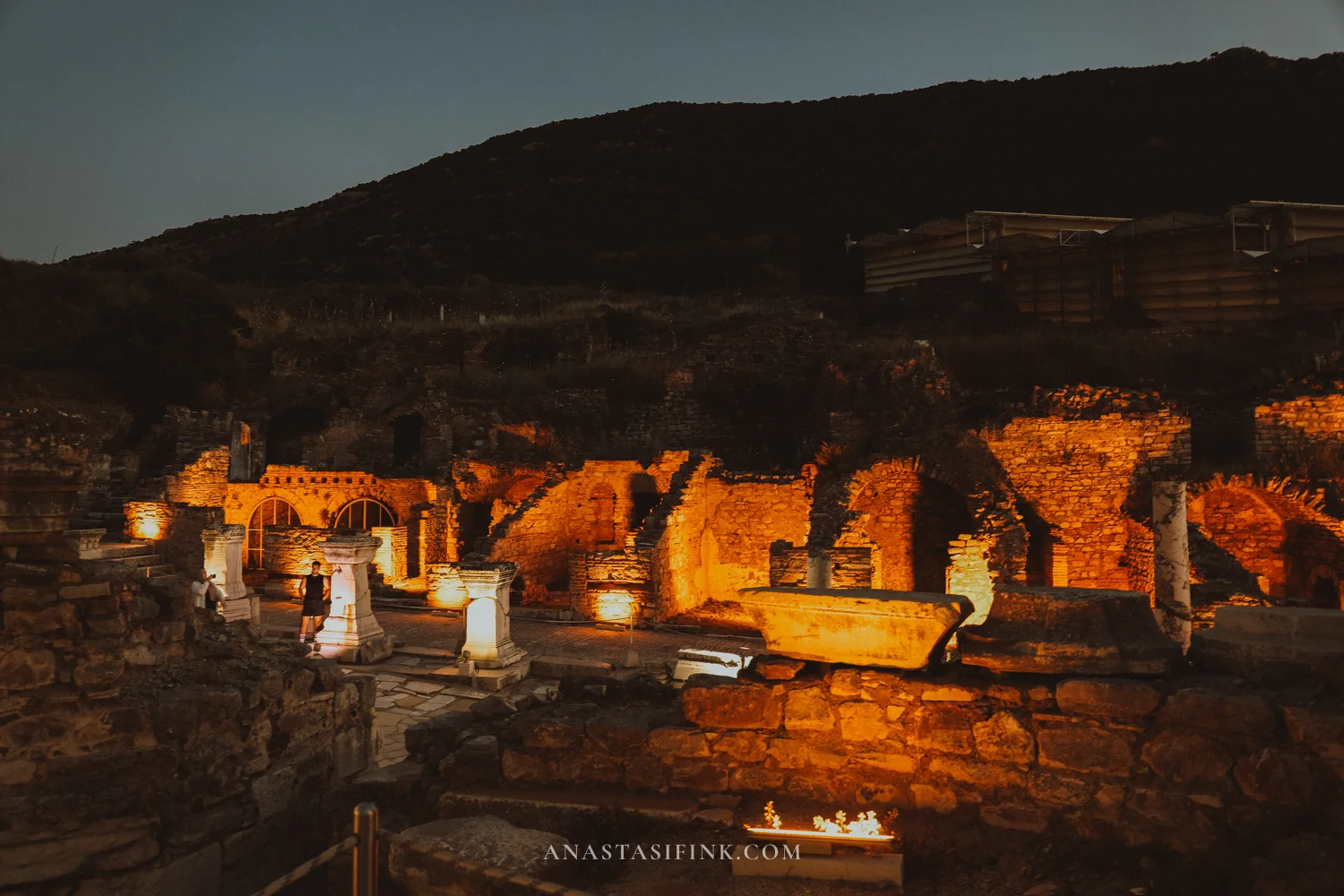

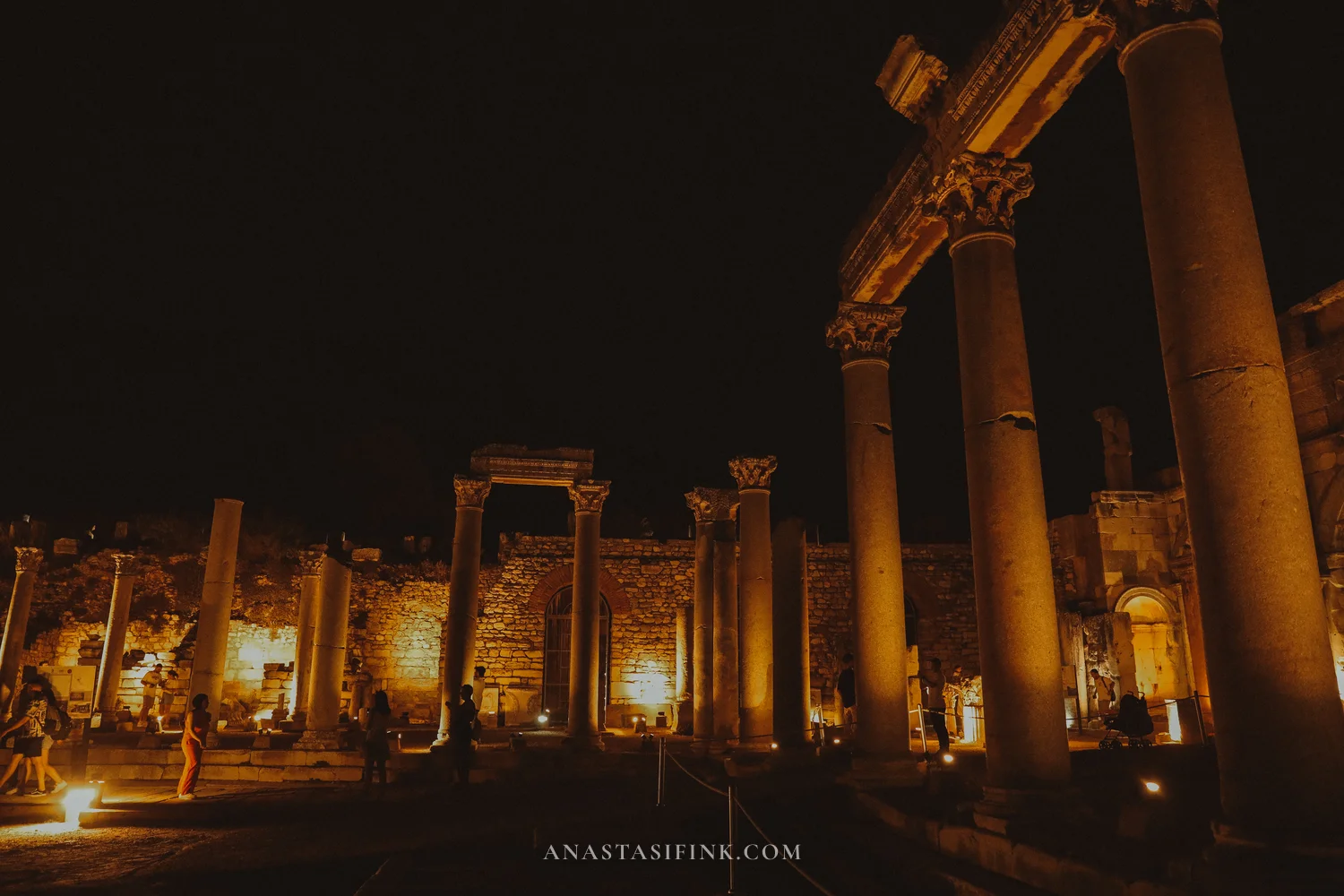
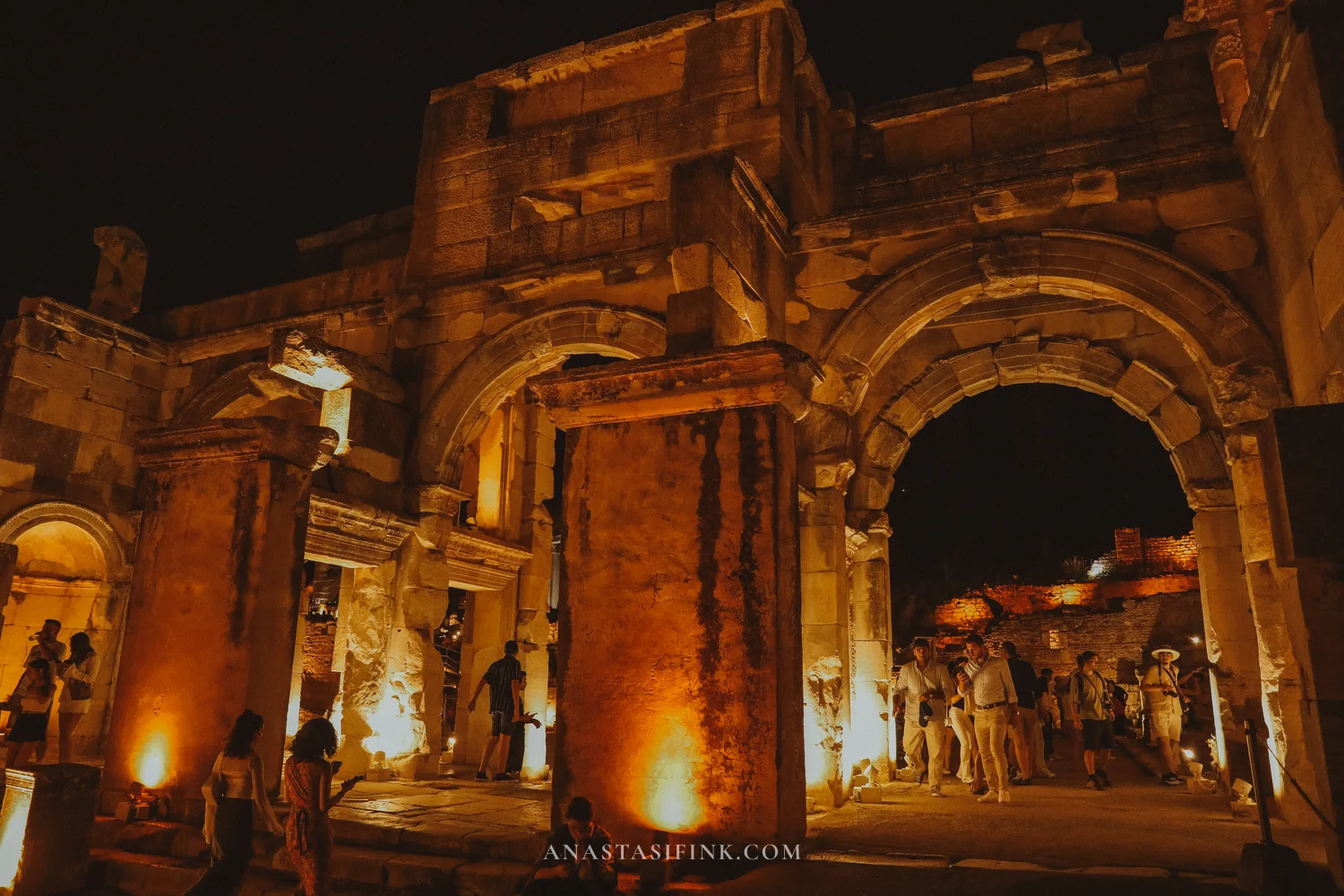
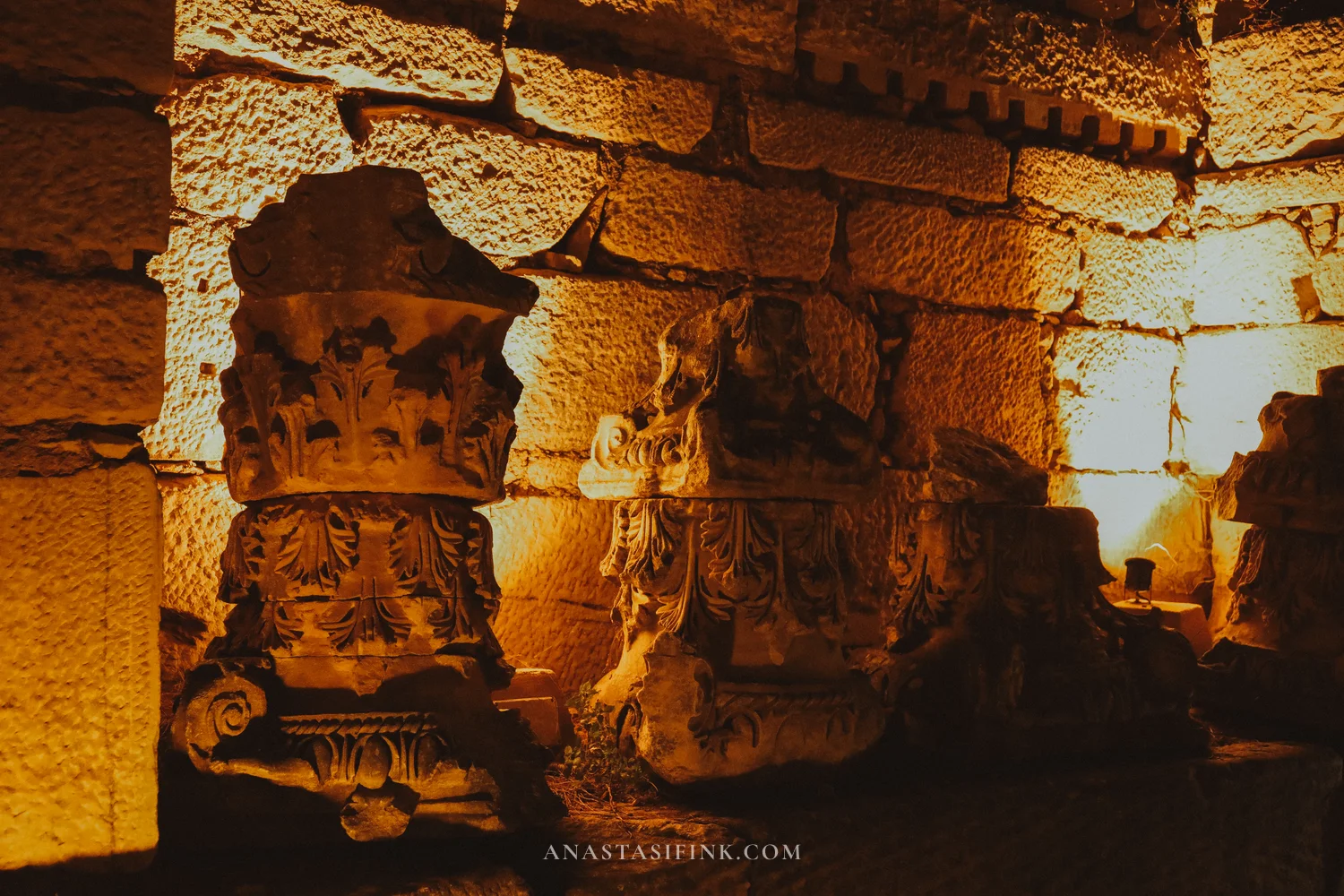
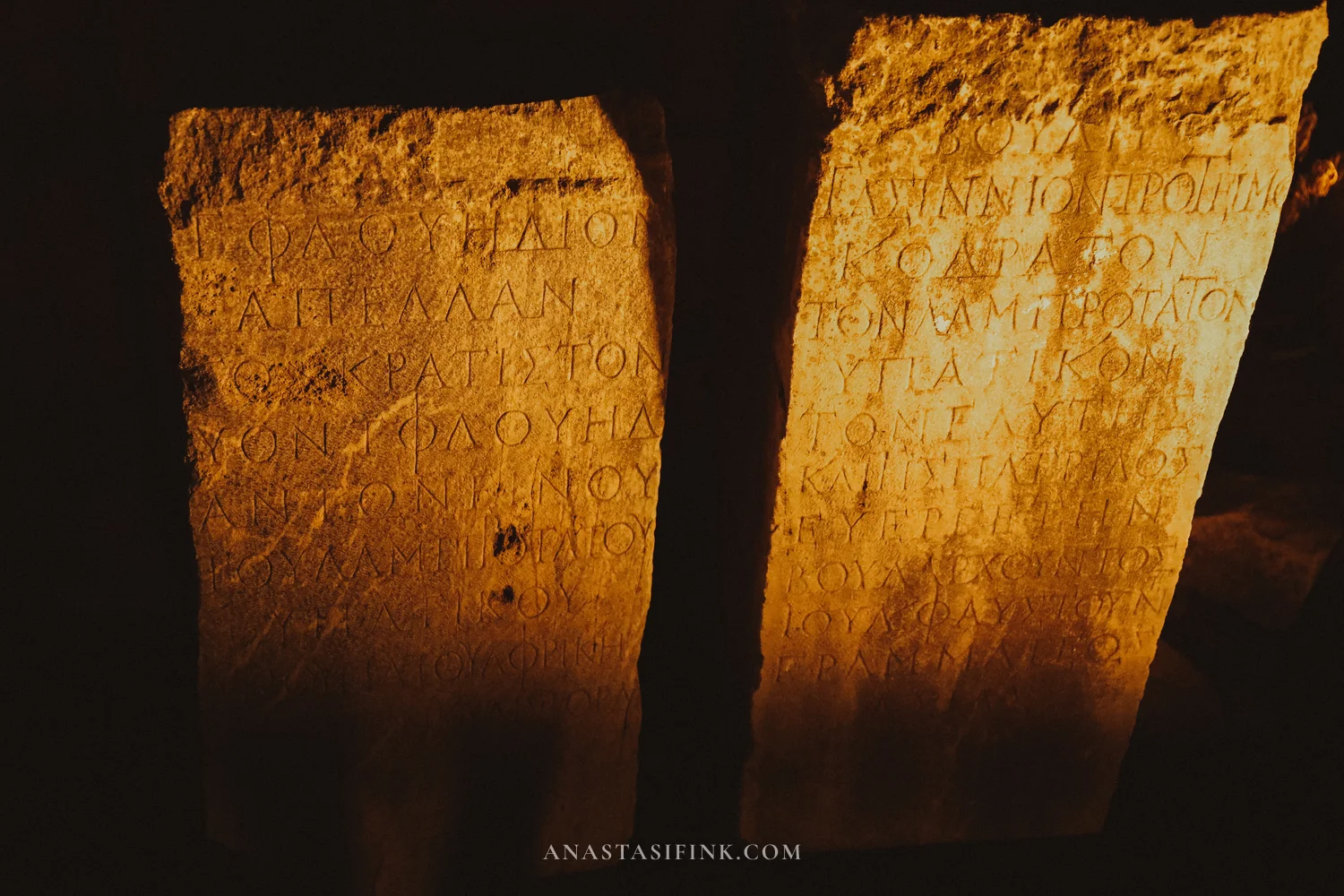
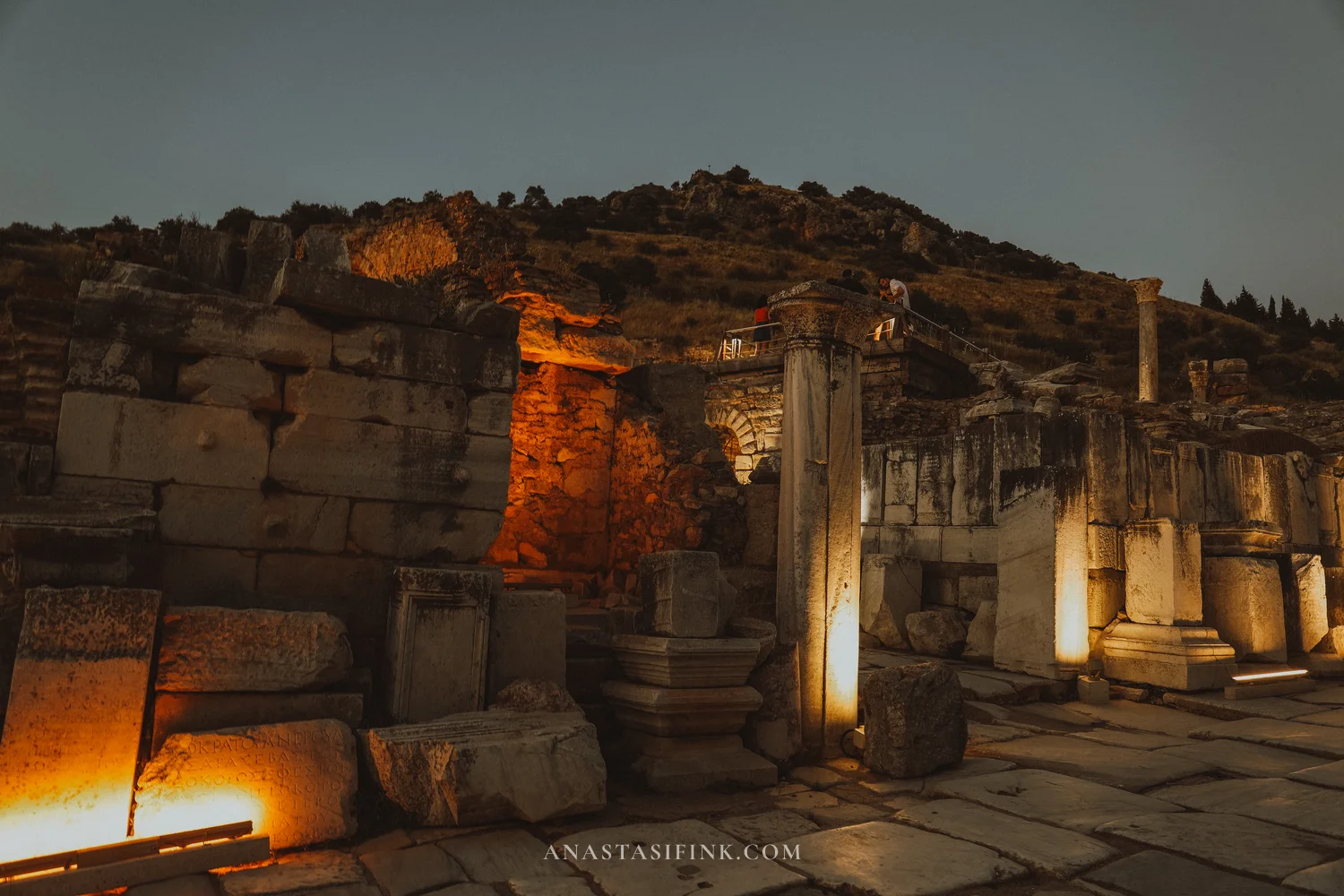
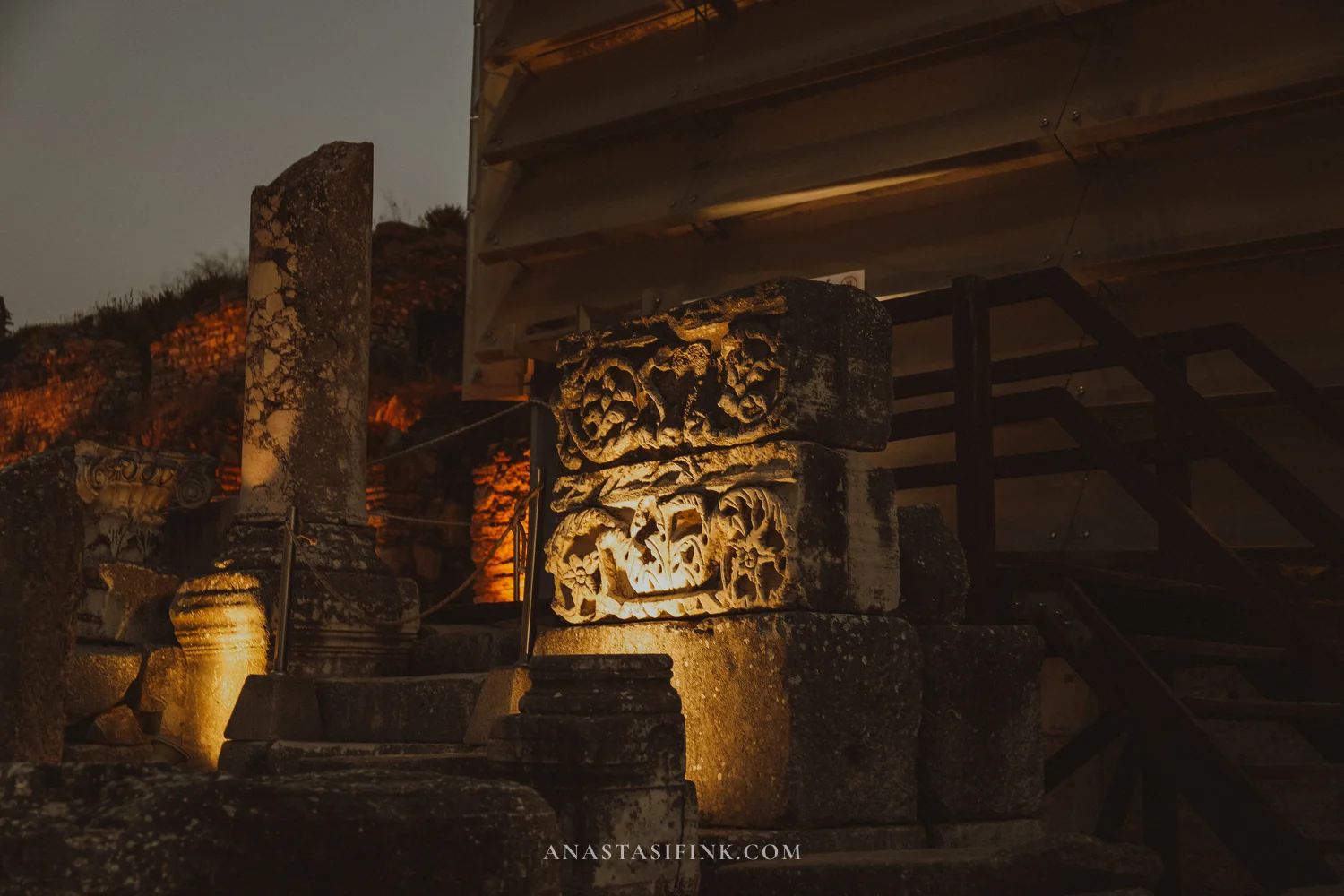
Night details of Ephesus

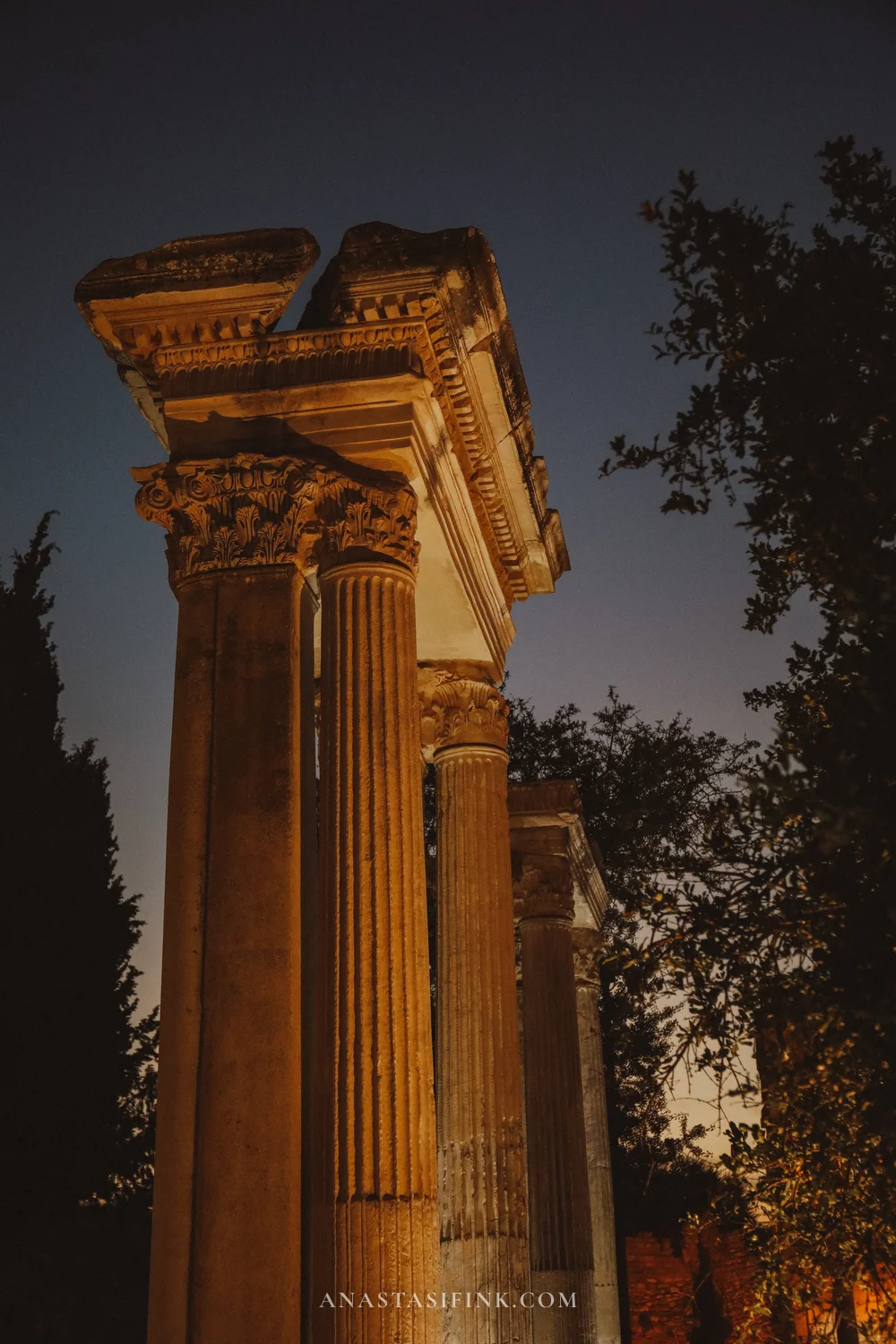
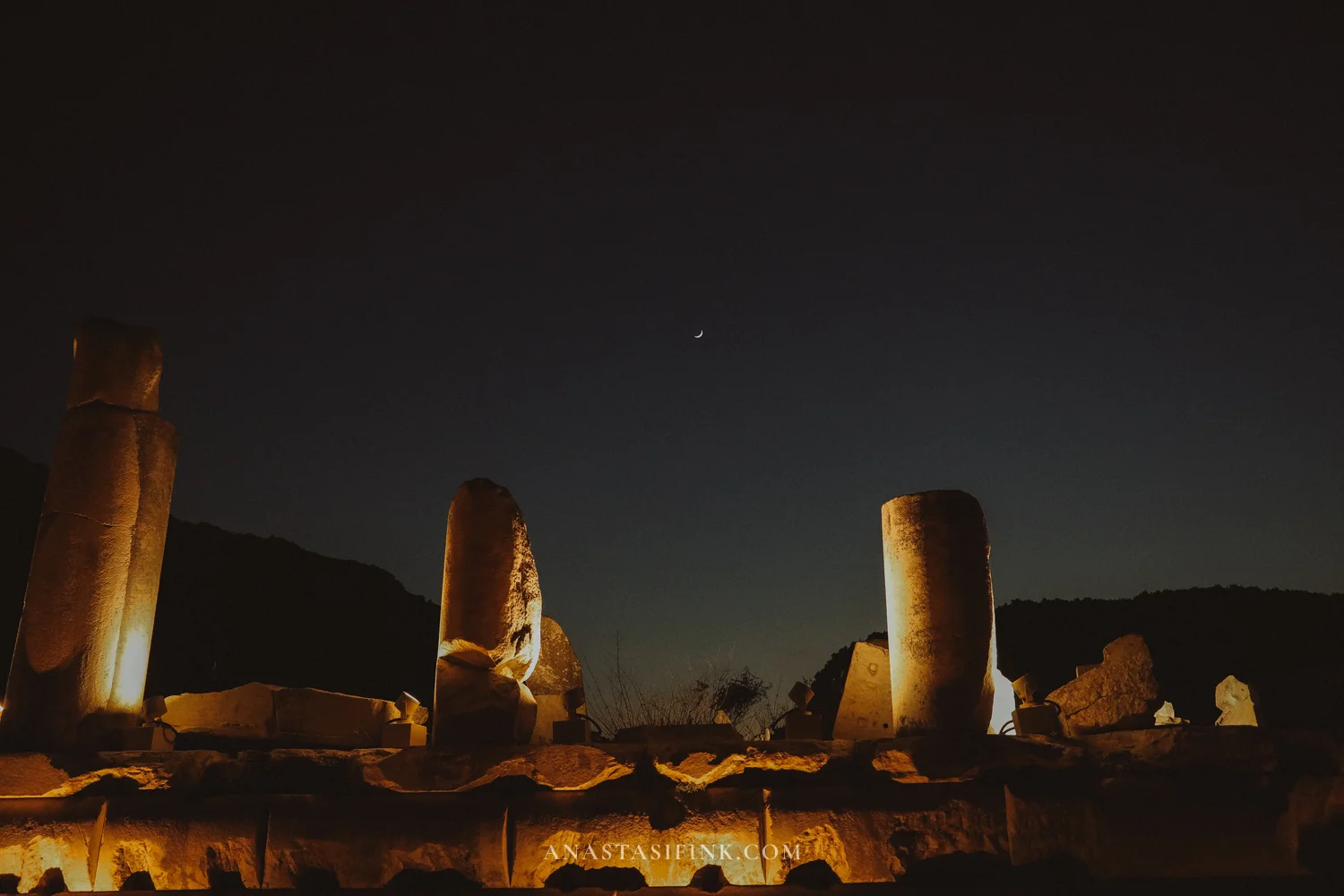
Important Note About Night Hours: During the summer season, Ephesus opens on select evenings until 11:00 PM. Entry after 7:00 PM is only through the lower (south) entrance. Only the lower part of the city is accessible — Library of Celsus, Temple of Hadrian, Lower Agora, Curetes Street. The upper part (Odeon, Great Theatre, upper entrance) is not accessible with evening tickets. Night opening is seasonal and schedules change annually — verify dates and times on the official site before your visit.
I bought a regular daytime ticket and stayed through sunset and beyond — the lower part that was accessible turned out to be the most breathtaking. If your goal is the Library of Celsus and the Temple of Hadrian, an evening visit is absolutely worth it. If you want to see the entire city — plan a daytime visit.
Practical Information
Ephesus (Efes Antik Kenti) — Essentials
- Address: Efes Harabeleri, Selçuk, İzmir Province, Turkey
- GPS lower entrance: 37.9390, 27.3393
- GPS upper entrance: 37.9497, 27.3570
- Opening hours: 08:00–18:00 (box office closes 17:30). Seasonal hours vary — always check the official site before visiting. Note: the theatre section is currently closed for restoration.
- Ticket: €40 / ~1,700–1,800 TL (only Turkish Lira accepted at the ticket office) — prices as of early 2026
- Terrace Houses: +€15 — separate tickets, absolutely worth visiting
- MuseumPass Aegean: covers Ephesus + Ephesus Museum + other regional sites — check current inclusions and night-access rules on the official site
- How much time: at least 3 hours, ideally 5–6
- Official website: https://muze.gov.tr/muze-detay?SectionId=EFS01&DistId=EFS
Getting There
From Izmir (IZM, Adnan Menderes Airport):
– Bus to Selçuk: ~1 hour, 150–200 TL (~€4–5), runs regularly from Izmir bus station
– Taxi to Selçuk: ~€80, not recommended
From Kuşadası (popular resort, 18 km):
– Dolmuş (shared minibus) to Selçuk: 20–25 minutes, ~30 TL
– A dolmuş is a minibus that runs on a schedule and fills up as it goes — a very convenient way to get around in Turkey
From Selçuk to Ephesus:
– On foot: 3–4 km, about 40 minutes
– Dolmuş from Selçuk bus station: 10 minutes, 20–30 TL
– Taxi: ~€8–10 one way
From Istanbul:
– Flight to Izmir: 1 hour, from 500 TL (~€14) when booked in advance
– Bus Istanbul–Selçuk: 9–10 hours, overnight services are convenient
Photography Tips
Tips for Photographers
- Morning (8:00–10:00 AM): nearly empty park, soft light, shadows from columns
- Sunset (5:00–7:00 PM): golden light falls directly on the Library of Celsus facade from the west — the best time for photography
- Night: in summer after 8:00 PM, the illuminated Library makes for fantastic long-exposure shots
- Wide angle: Library of Celsus from the lower steps
- Details: facade carvings, inscriptions, capitals — all day
- Fewest tourists: early morning and weekdays
- Sunscreen and water — essential, there’s no shade in summer
Where to Stay
Selçuk is the perfect base. A small, pleasant town with good infrastructure.
– Nestor Hotel or Belvi Hotel — cozy family-run hotels in the center, ~€40–60 per night
– Airbnb — plenty of options in private homes right near the ruins, from €25
Kuşadası is an alternative if you want to combine ruins with the sea. 20 minutes from Ephesus.
What Else to See Nearby
– Ephesus Museum in Selçuk — original statues found in Ephesus (including Artemis of Ephesus), €10
– Basilica of St. John in Selçuk — a major early Christian basilica
– House of the Virgin Mary (Meryem Ana Evi) — 9 km from Ephesus, a pilgrimage site
– Selçuk Bird Sanctuary — right in the center of town, herons and flamingos in spring
Entering Ephesus: What You Need to Know
The first thing you see at the entrance is the ticket office. Payment is in Turkish Lira only.
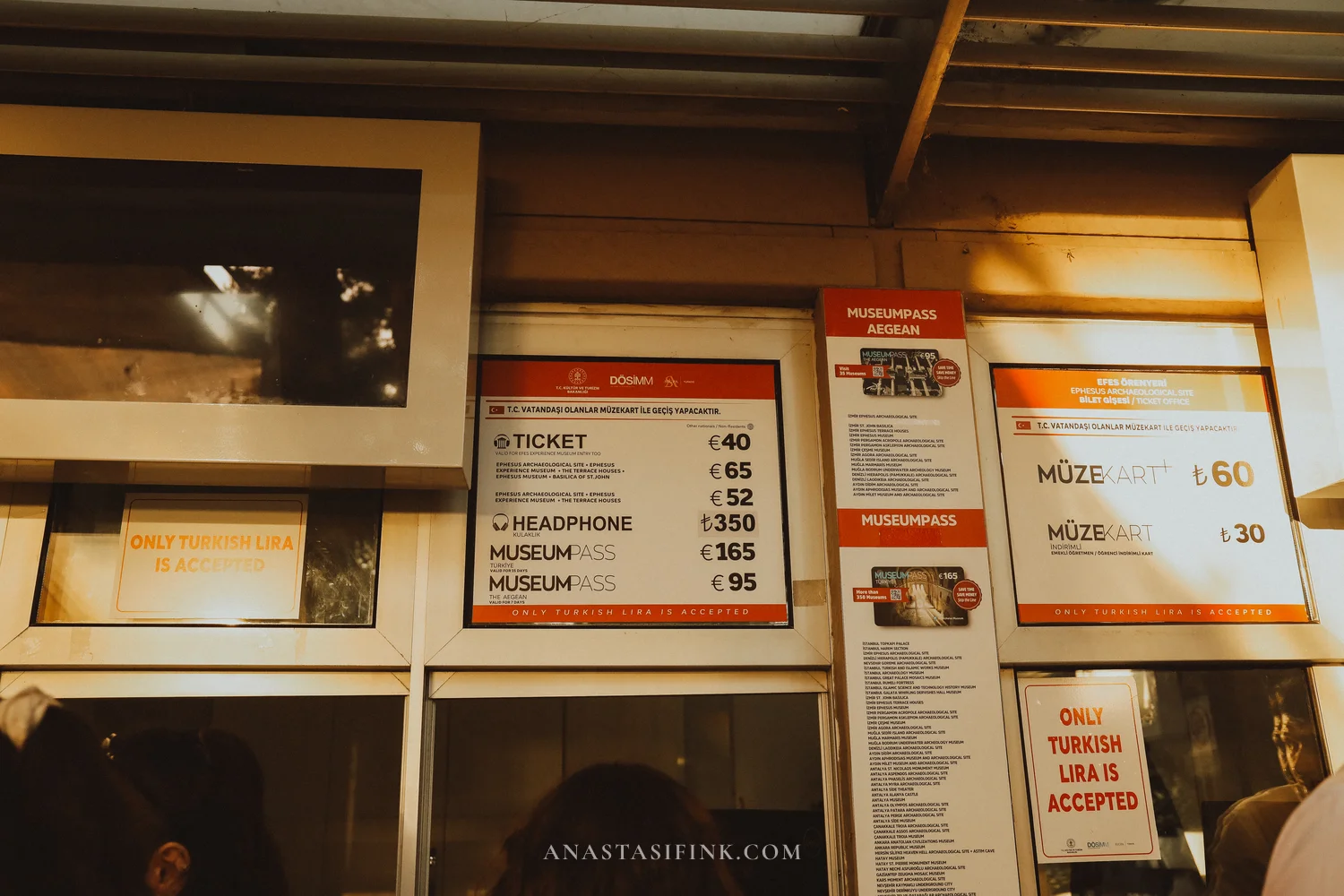
At the ticket board during my visit, the sign read: “Only Turkish Lira is accepted.” You can exchange money in Selçuk or withdraw from an ATM. The exchange rate at booths near the entrance is unfavorable.
Instead of a Conclusion
Two millennia is an abstract number that you can’t truly feel — until you step onto a marble road polished by millions of feet. Until you touch a column that was erected under Trajan. Until you watch the sun disappear behind the hill — and this entire city, long asleep, suddenly ignites in the amber glow of floodlights, and seems alive once again.
Ephesus isn’t an open-air museum. It’s a conversation with another time. It’s a real time machine. I recommend coming here without a plan and taking your time. Stop at every stone that catches your eye.
And make sure you stay for the sunset.
FAQ
Buses run regularly from Izmir’s Adnan Menderes Airport to Selçuk — the ride takes about an hour. From Selçuk, it’s a 3 km walk or a 10-minute dolmuş ride to Ephesus. Taxis are also available.
The entrance ticket costs approximately €40 (~1,700–1,800 TL as of early 2026). Terrace Houses require a separate ticket — an additional €15. Only Turkish Lira is accepted at the ticket office.
At least 3 hours for the main highlights. For a thorough visit including the Terrace Houses, photography, and sunset, plan for 5–6 hours.
Early morning (8:00–10:00 AM) for the fewest crowds, or sunset (5:00–7:00 PM) for the best light on the Library of Celsus. In summer, you can stay until 11:00 PM for the night illumination. Avoid midday — it’s scorching hot with no shade.
Yes, during the summer season (roughly June–September), Ephesus is open on select evenings. The lower part of the city is illuminated. Schedules change annually — check the official website before your visit.
Both work well. Going independently gives you freedom to manage your time, stay for sunset, and explore at your own pace. A guided tour offers more historical context. Audio guides are available at the entrance.
The Ephesus Museum in Selçuk (original statues from the site), the Basilica of St. John, the House of the Virgin Mary (9 km away), and the resort town of Kuşadası — just 20 minutes from Ephesus.