Alaçatı and Urla, Turkey — Two Aegean Coast Towns You Should Visit

An hour and a half from İzmir by car — and you find yourself in a place where stone houses are draped in bougainvillea, antique shops sell century-old clay jugs, and the best gelato is made by an Italian who came to Alaçatı one day and never left.
Two Towns — One Day Trip
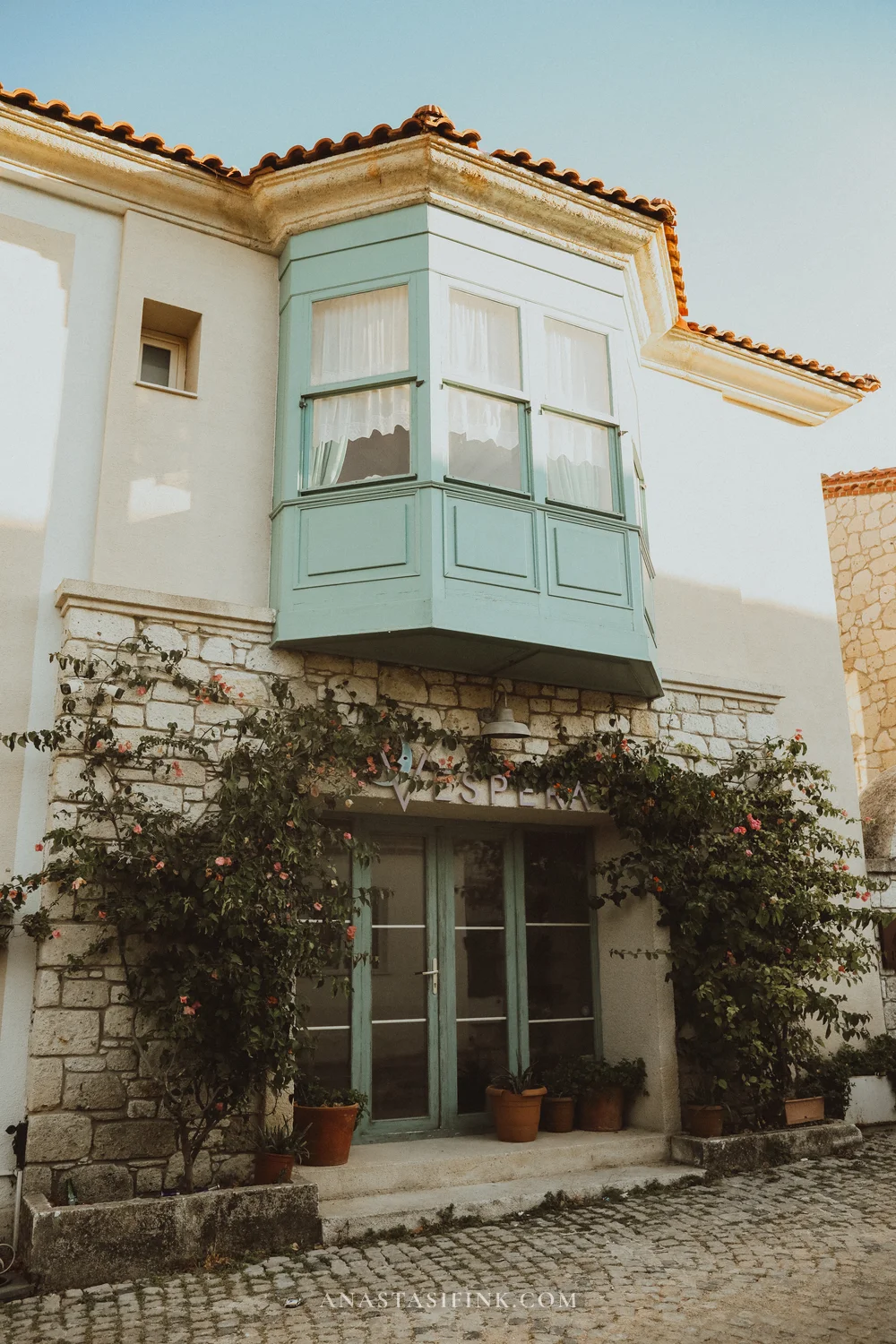
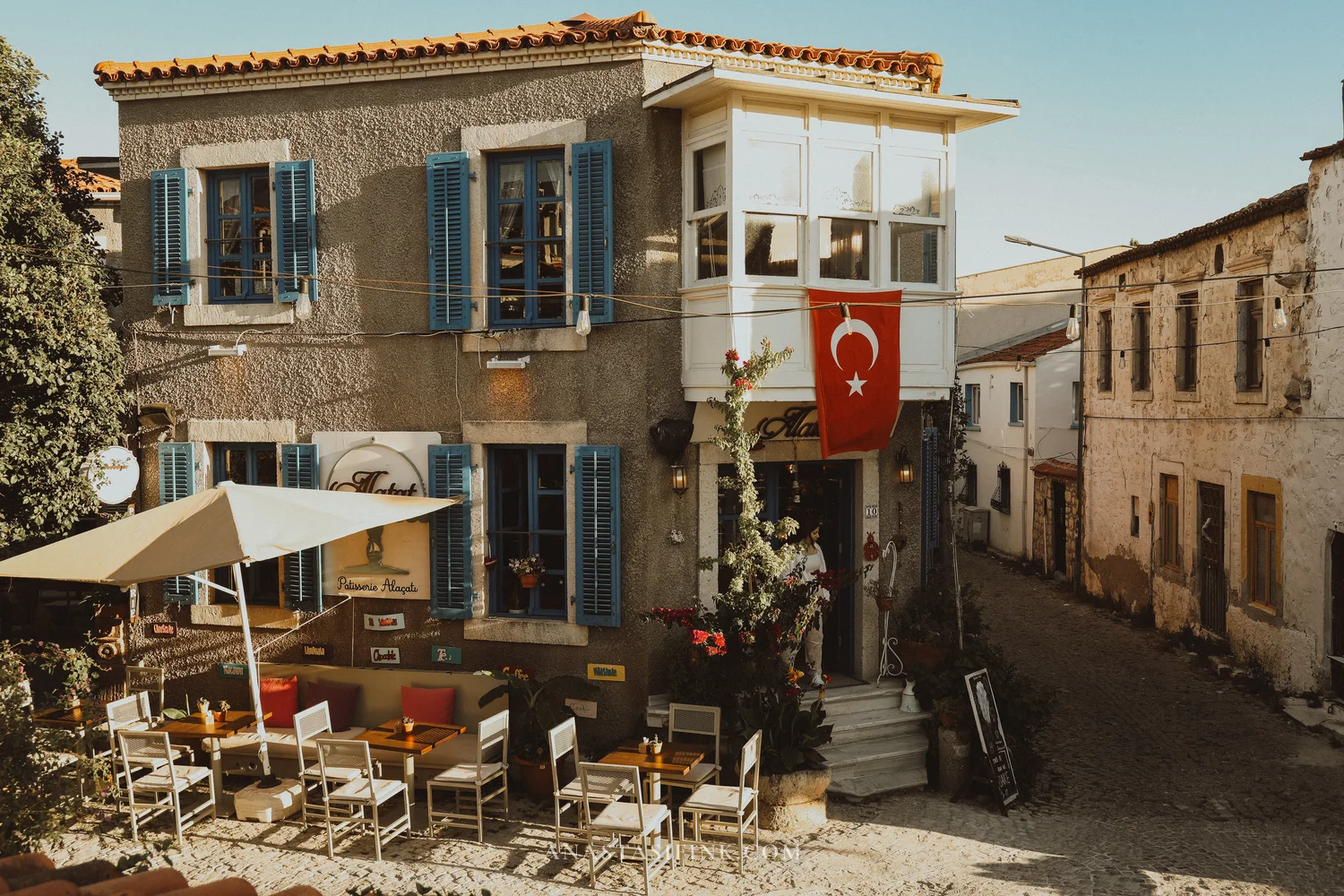
Urla and Alaçatı sit on the same stretch of Aegean coastline, 54 km apart, and make for a perfect day trip. Urla is closer to İzmir (35 km), quieter, with creative energy: an Art Street, boutiques selling Balinese furniture, and murals on old stone walls. Alaçatı is on the Çeşme peninsula — louder, more polished, with 300 restored Greek stone houses, a mosque inside a former church, and gelato worth queuing for.
Both towns were once Greek settlements. After the population exchange of 1923, Turkish families from Crete moved in, bringing their own traditions — and the stone streets took on a different life. Today, both Urla and Alaçatı are a mix of ancient heritage, Ottoman architecture, and contemporary Turkish art side by side.
Urla — A Quiet Creative Town
Urla is one of the twelve Ionian cities, with a history stretching back 4,000 years. Ancient Klazomenai was here, and Bronze Age settlements were discovered at the Liman Tepe excavations. But I didn’t come for the archaeology — I came for the atmosphere.
Urla is sometimes called the “Aegean Tuscany” for its vineyards, olive groves, and food scene. But what hooked me wasn’t the restaurants — it was the small shops where you can find things that exist nowhere else.
Malgaca Pazarı and Sanat Sokağı
In the center of Urla, two neighborhoods are worth exploring on foot: Malgaca Pazarı — one of the oldest markets in the region, operating since the 15th century — and Sanat Sokağı (Art Street), about 200 meters long.
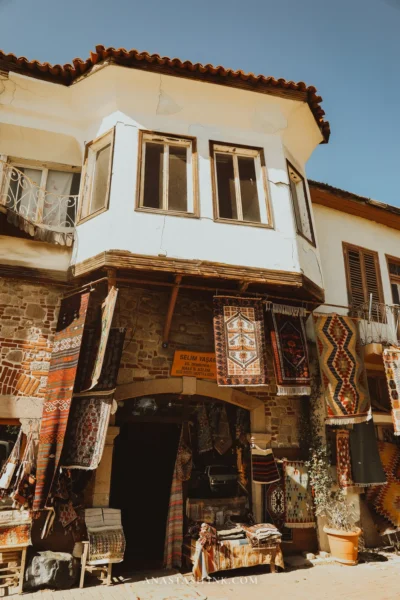
Malgaca Pazarı is not a tourist bazaar. Shops here pass from grandfather to grandson; watchmakers and jewelers still work their trade. On a nearby street stands Tarihi Urla Fırını 1924, a historic Greek bakery now operating as Chakra Cafe. The building has kept its character: stone walls, wooden frames, the smell of fresh bread.
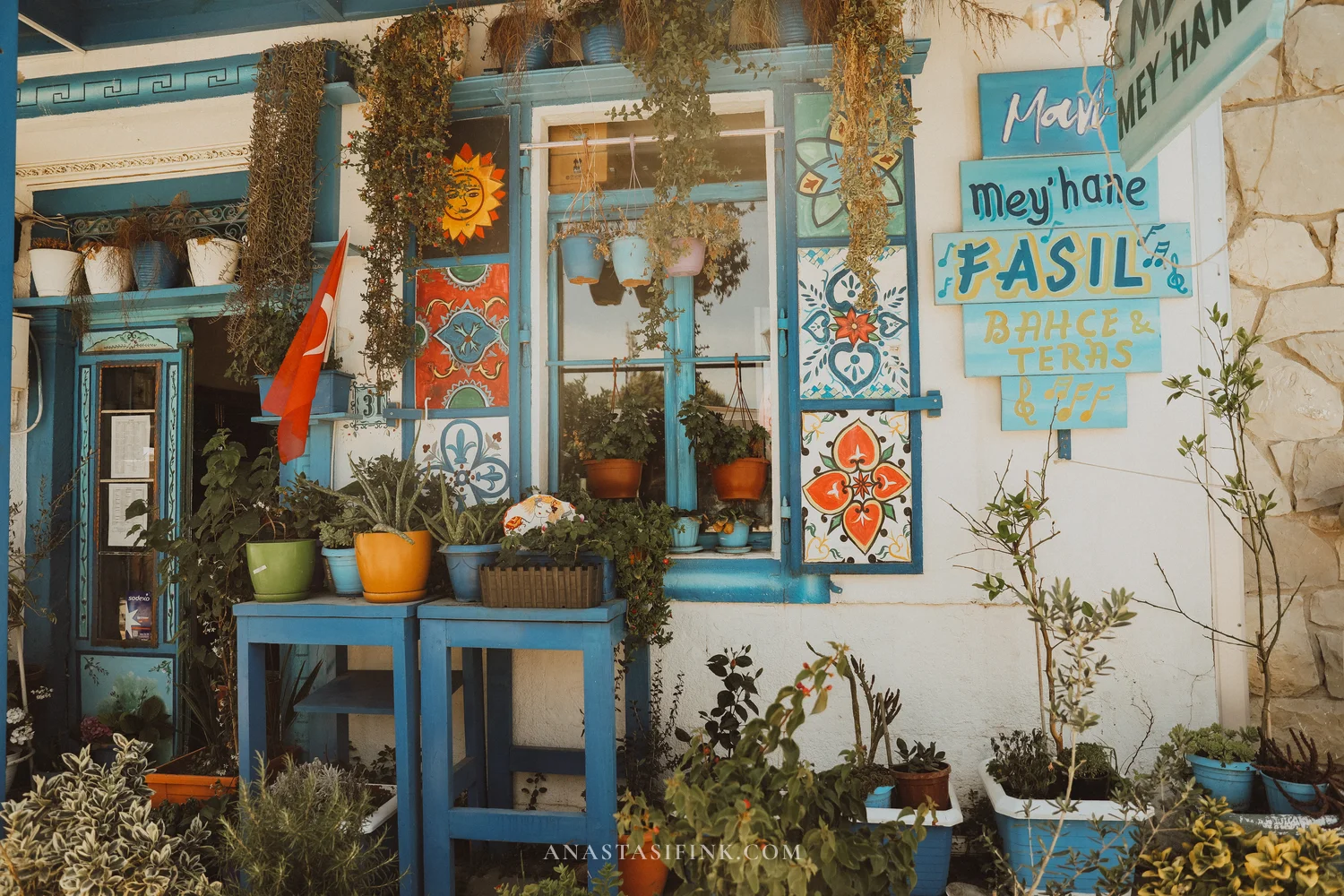
Art Street is lined with mid-19th-century stone buildings that now house galleries, cafés, and workshops. It all started with “Urla Sanat Geceleri” — art nights organized by local artists. Then the street took on a life of its own.
Ekrou Boutique
Ekrou Boutique is a shop on Uzun Street (Uzun Sk. No:4) that deserves its own visit. Inside — a long corridor of an old stone building filled with things brought from Bali and Southeast Asia: rattan chairs, wooden sculptures, carved lanterns, handwoven textiles.
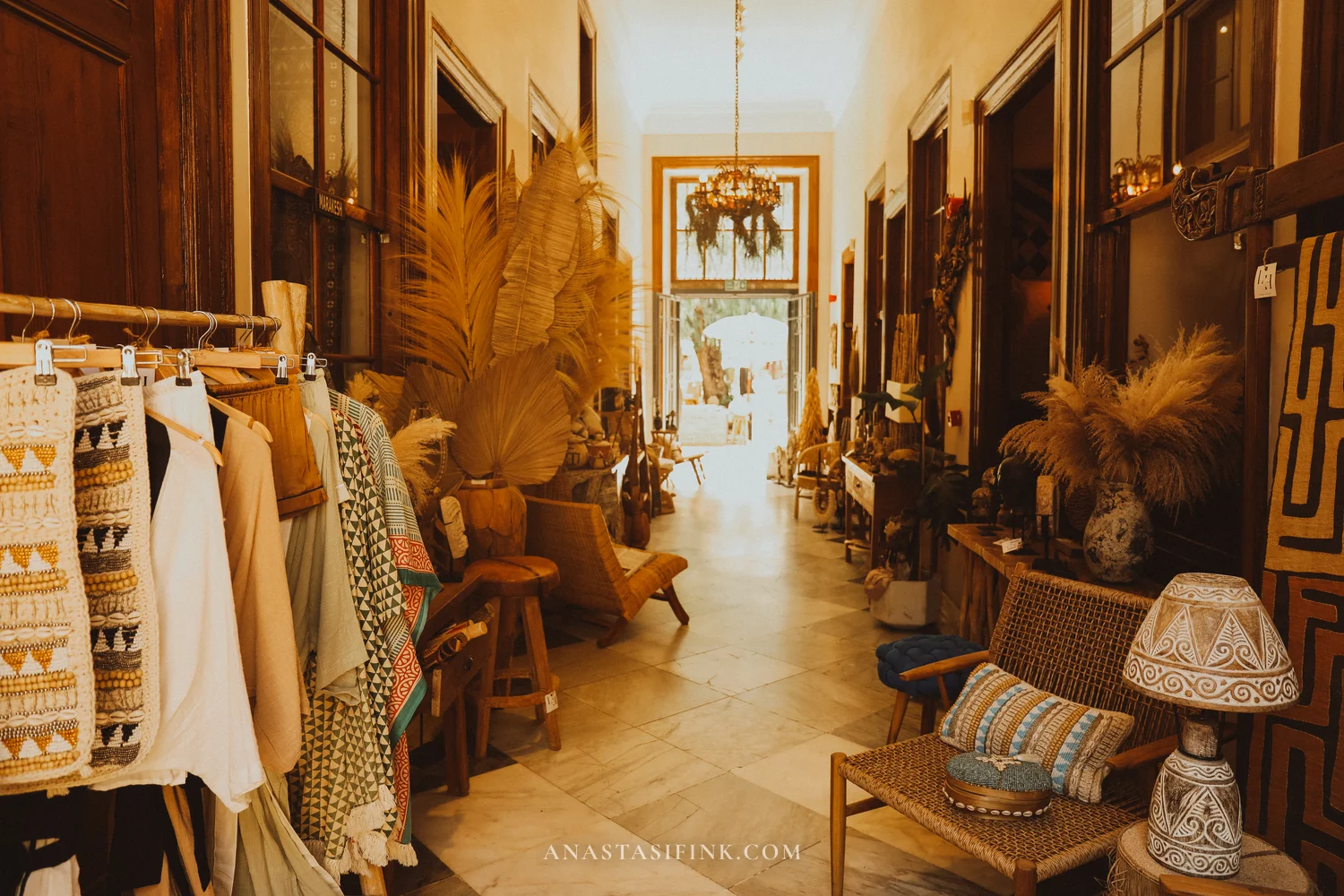
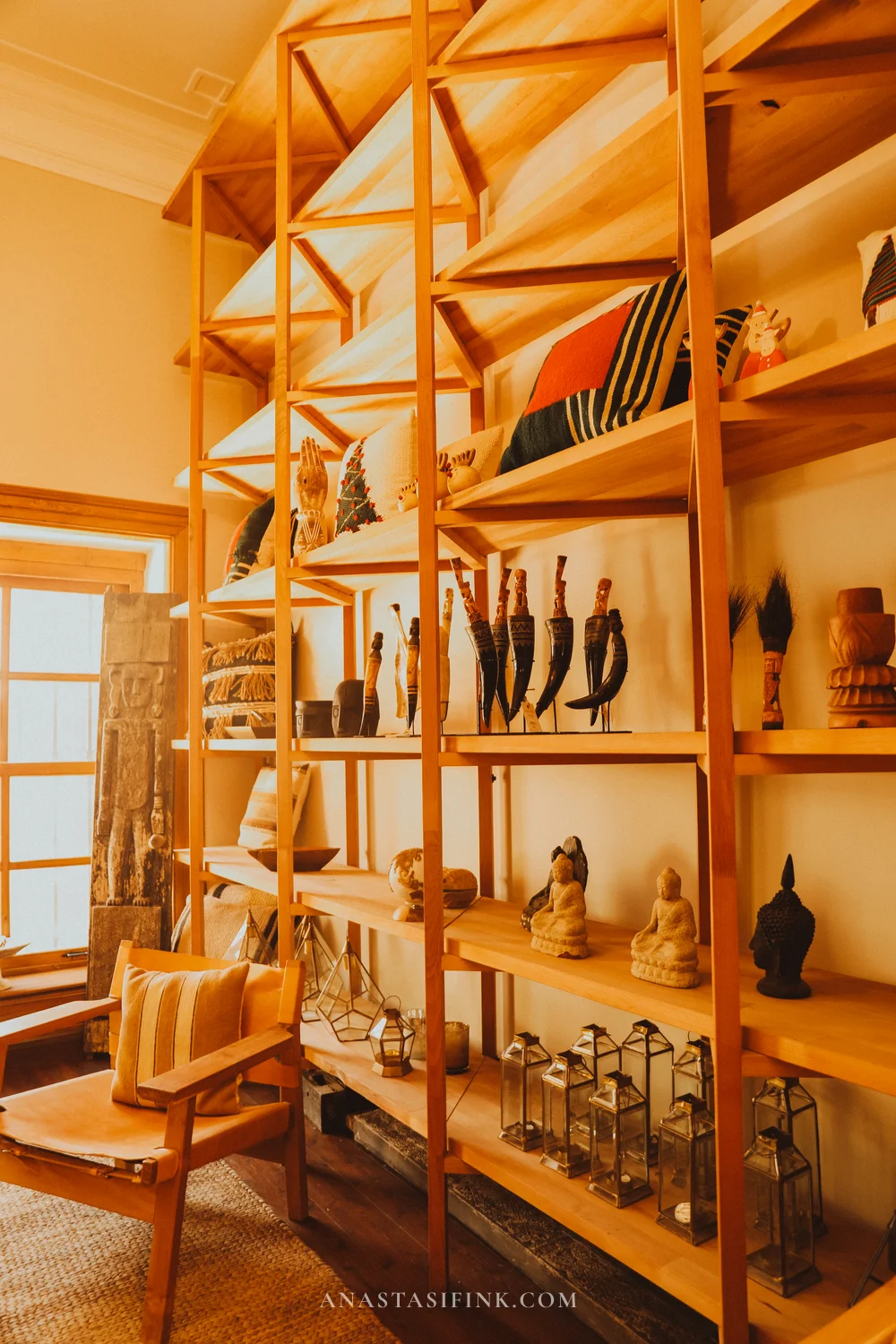
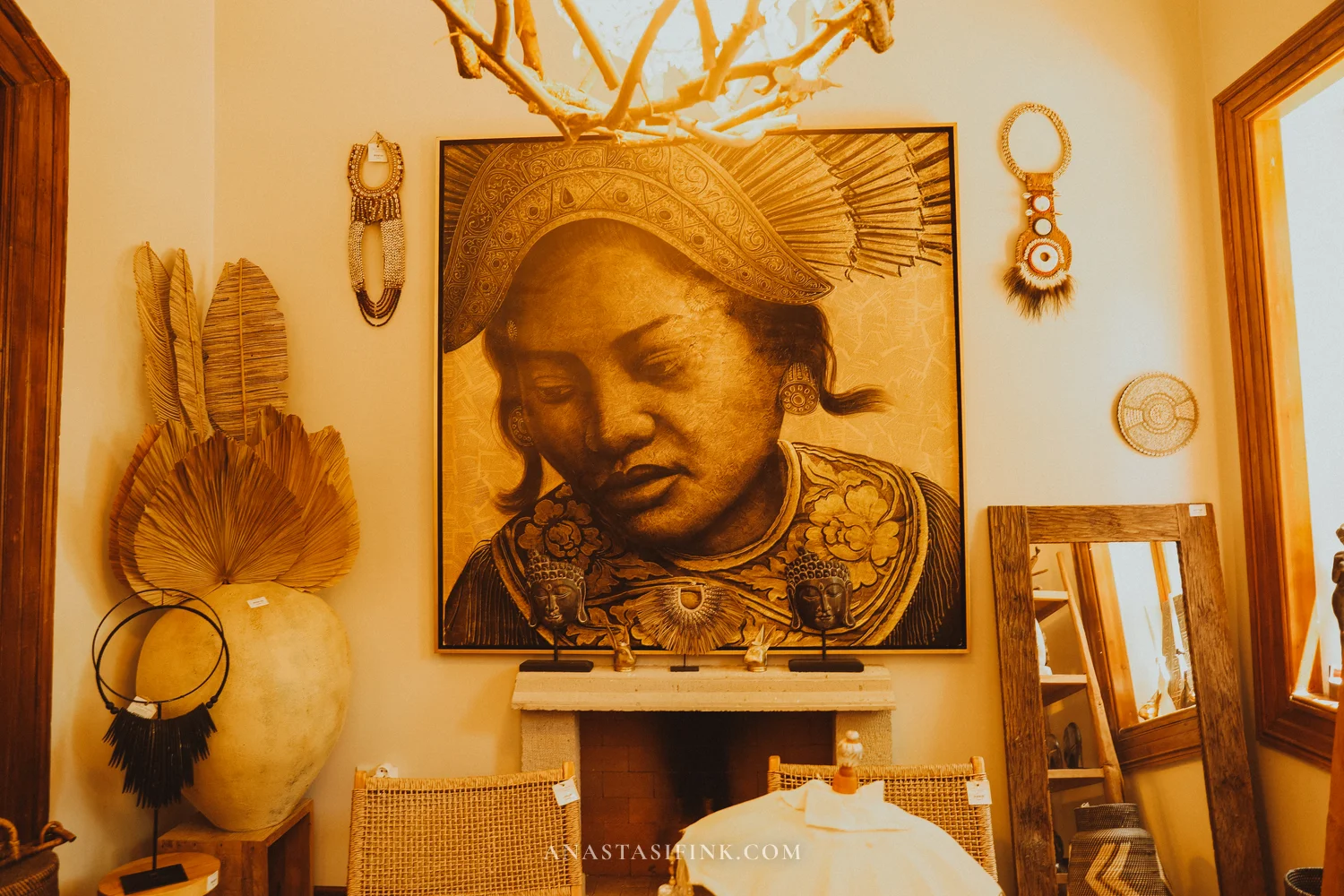
Inside Ekrou — a blend of Balinese, African, and Indonesian styles. You can buy anything from a Buddha figurine to a full-size armchair
The courtyard has even more furniture, arranged like an interior design catalog. Rattan chairs, ethnic cushions, parasols.
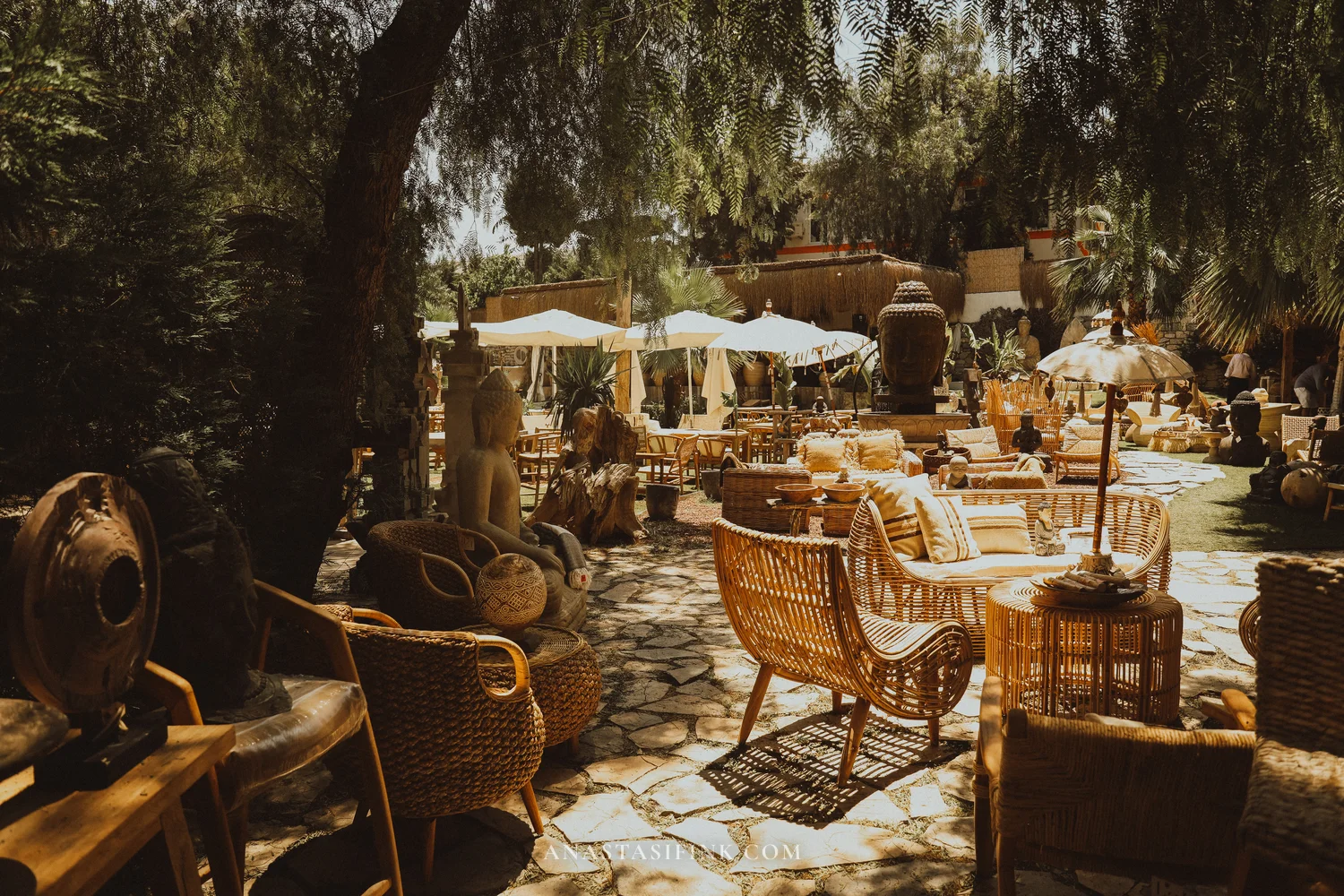
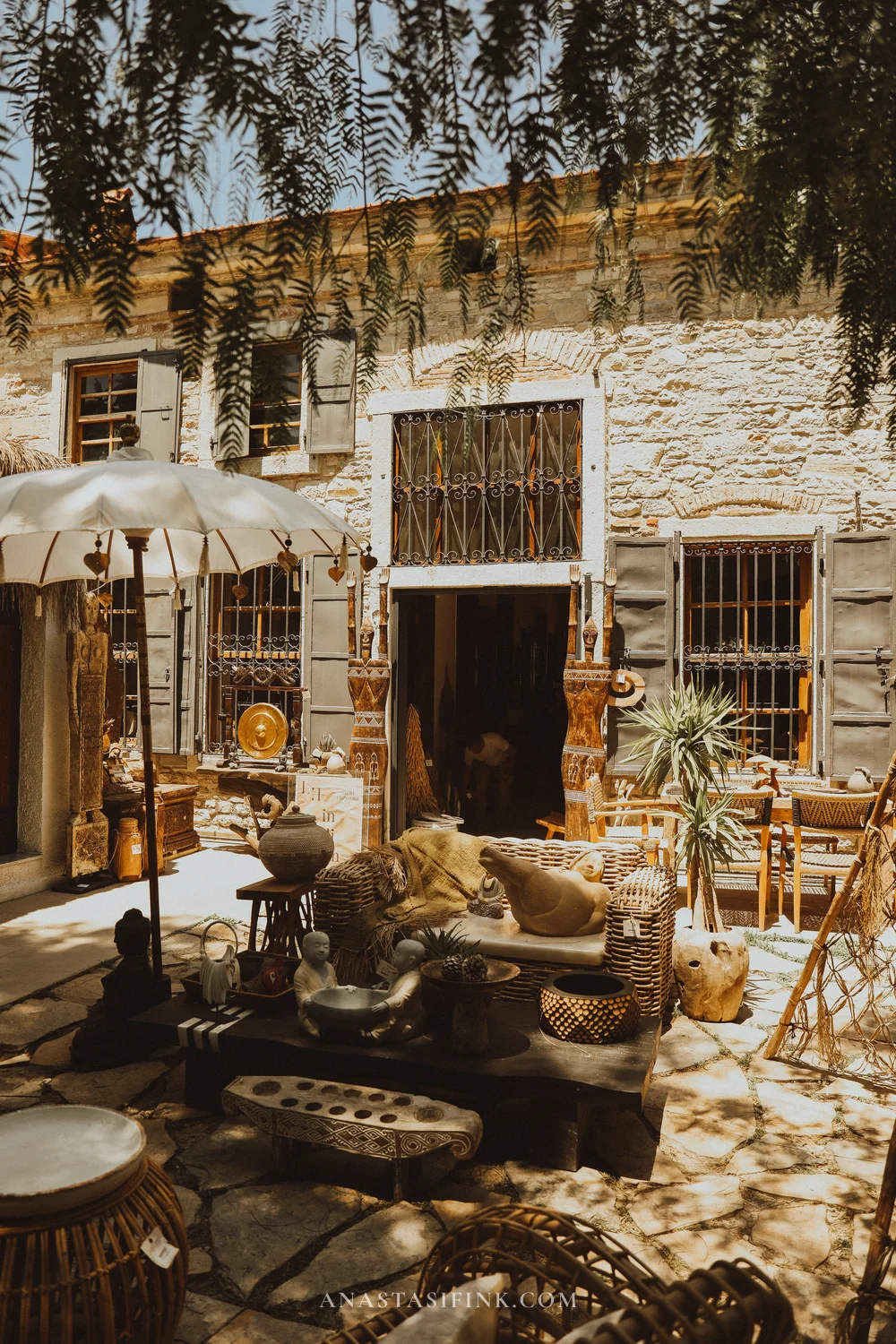
Ekrou’s courtyard — furniture set under the trees, like a Balinese lounge
Street Art of Urla
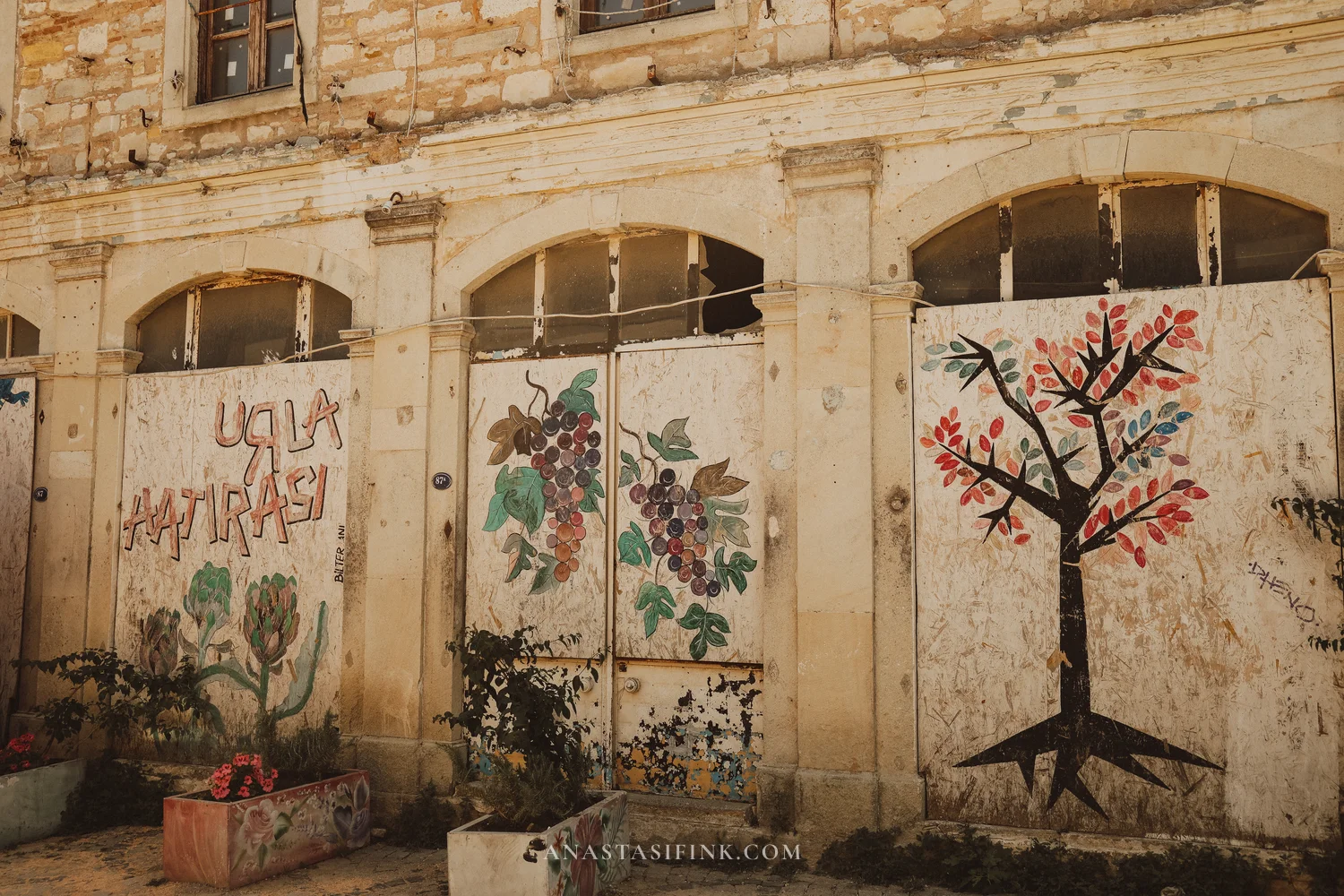
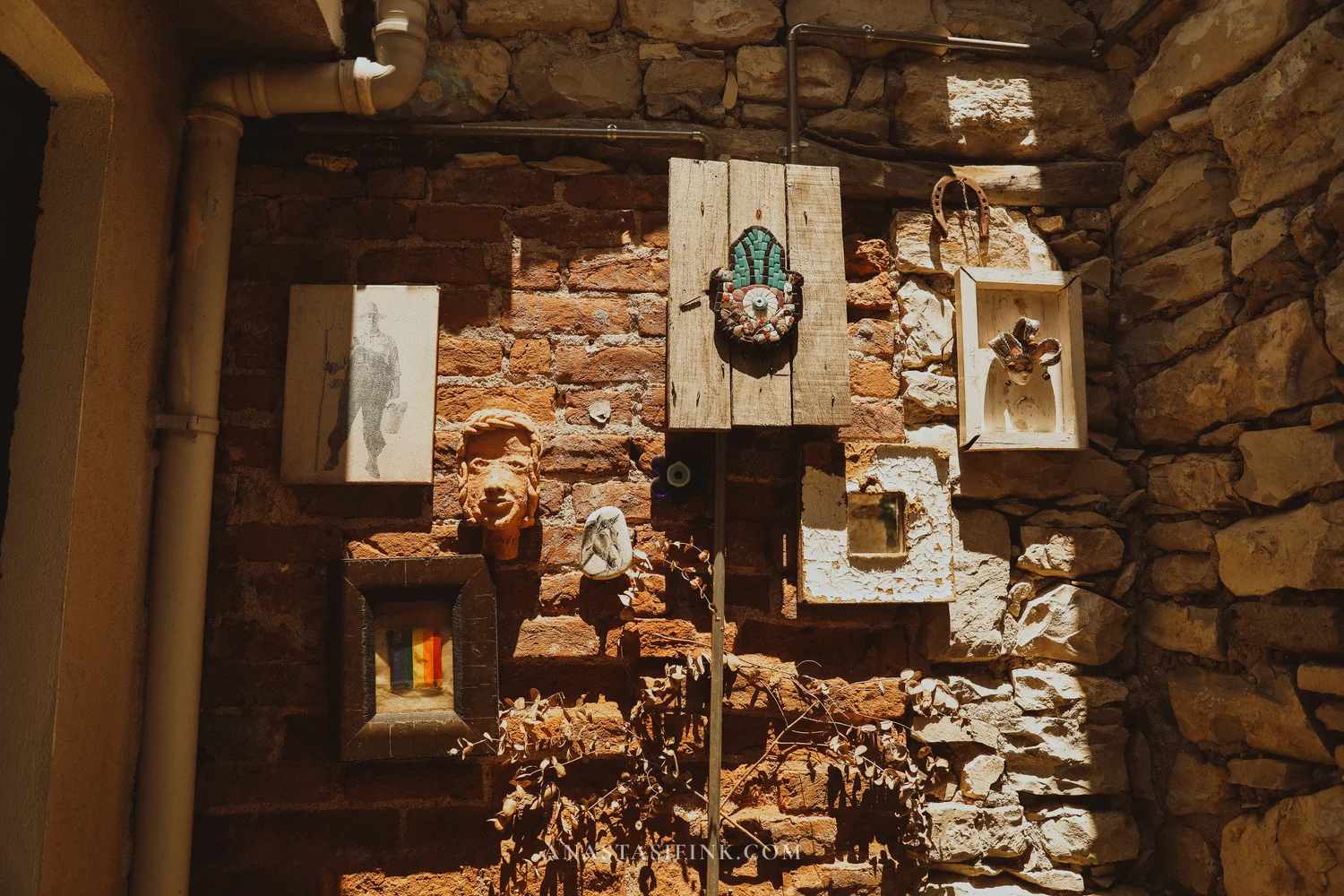
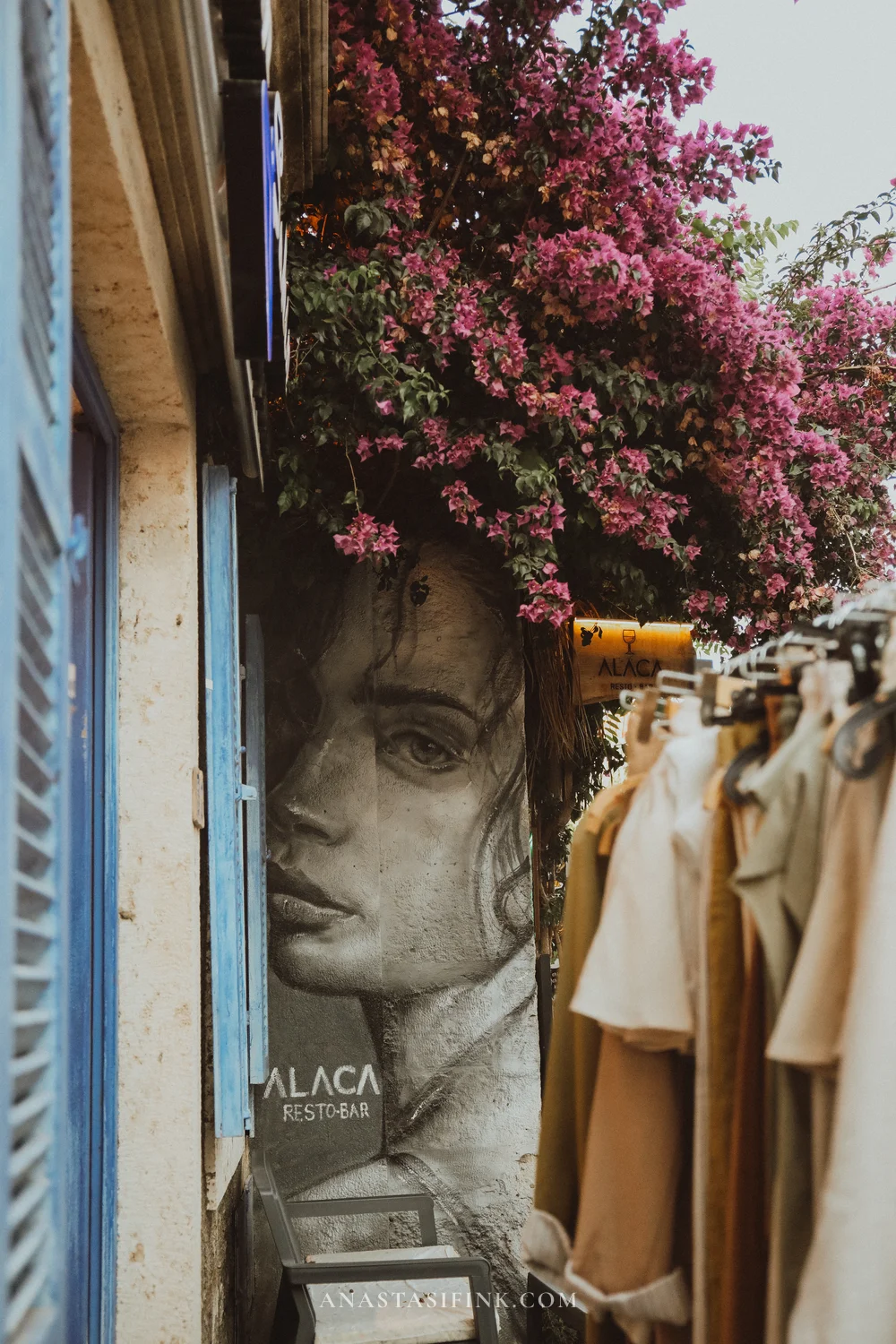
Murals are everywhere in Urla. Old buildings are painted with grapes and trees, walls display small frames with miniatures and ceramics.
On one of the streets, a bright yellow wall is painted with a medieval apothecary scene: a cauldron, scales, bottles of herbs, books. This is VienUrlaBahçe — you can spot the yellow walls from far away.
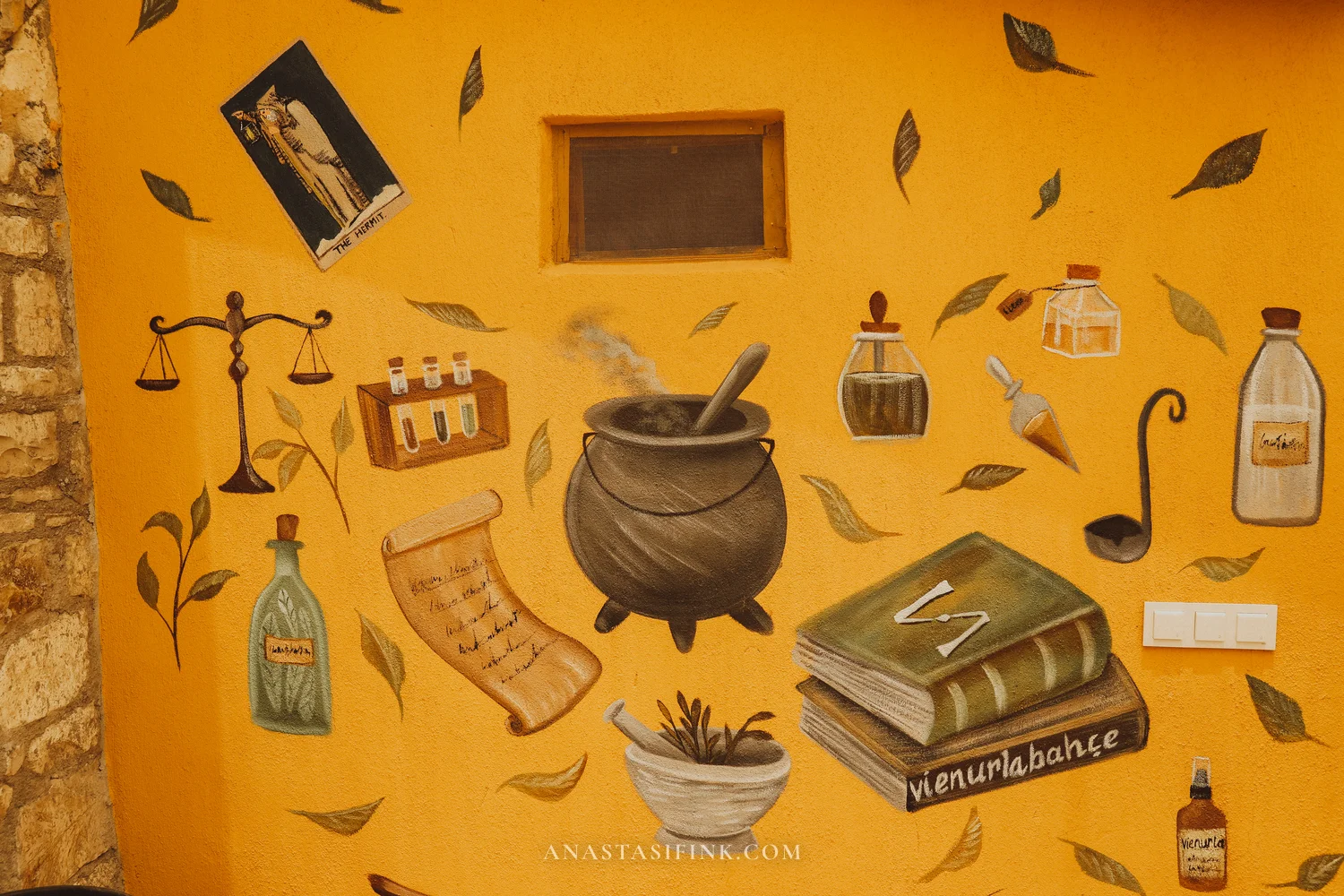
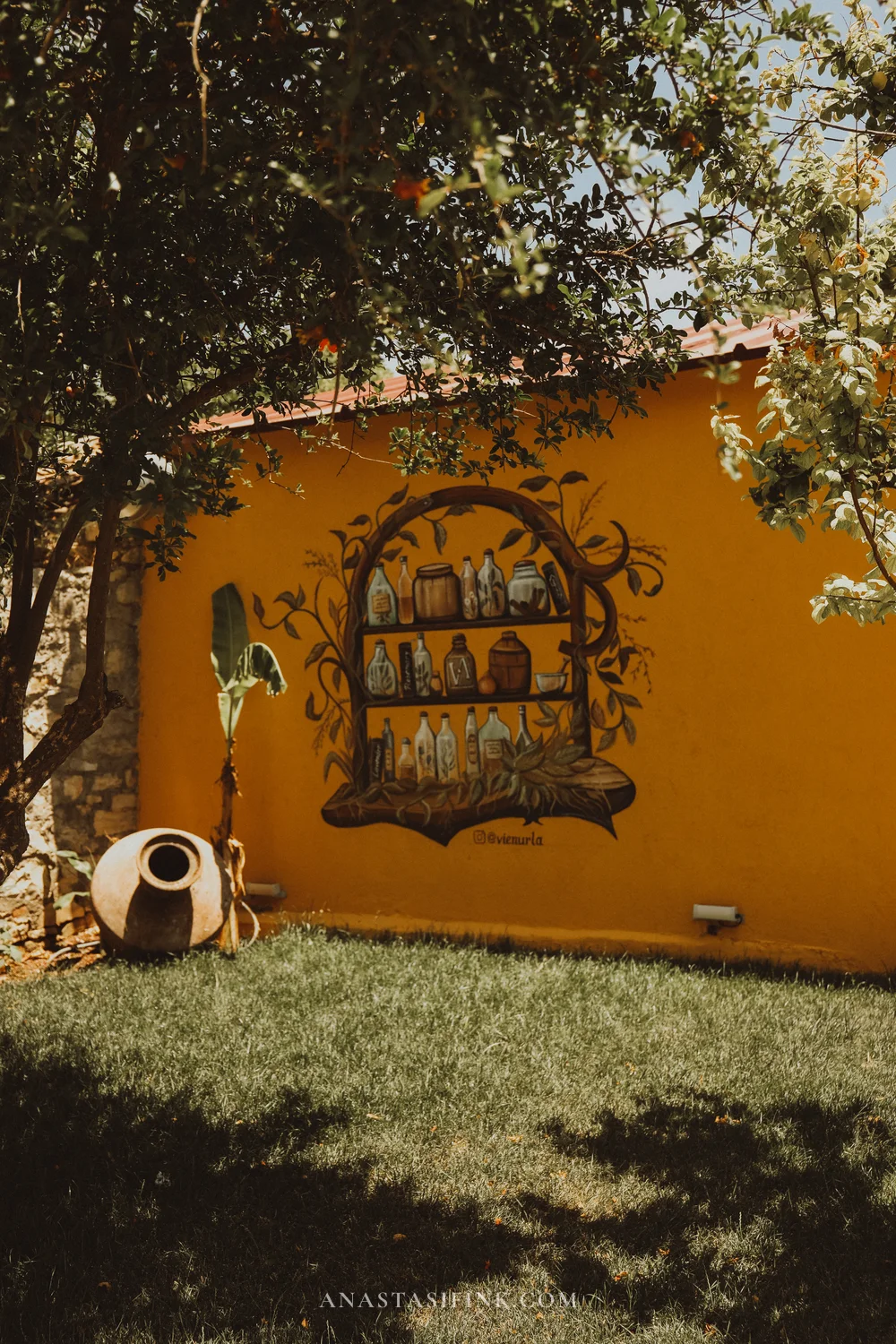
VienUrlaBahçe — a medieval apothecary-style mural
Necco Dondurma Ice Cream
You have to try ice cream in Urla. Necco Dondurma (owner — Necati Karakoç) is a small shop with an orange display case and handwritten price tags. Sakızlı (with mastic tree resin), “Yasak Mevsim,” and other flavors you won’t find in chain cafés.
Mastic (damla sakızı) is a resin from a tree that grows only on the Greek island of Chios and on the Çeşme peninsula. Ice cream made with it is an Aegean classic: chewy, not too sweet, with a subtle piney flavor.
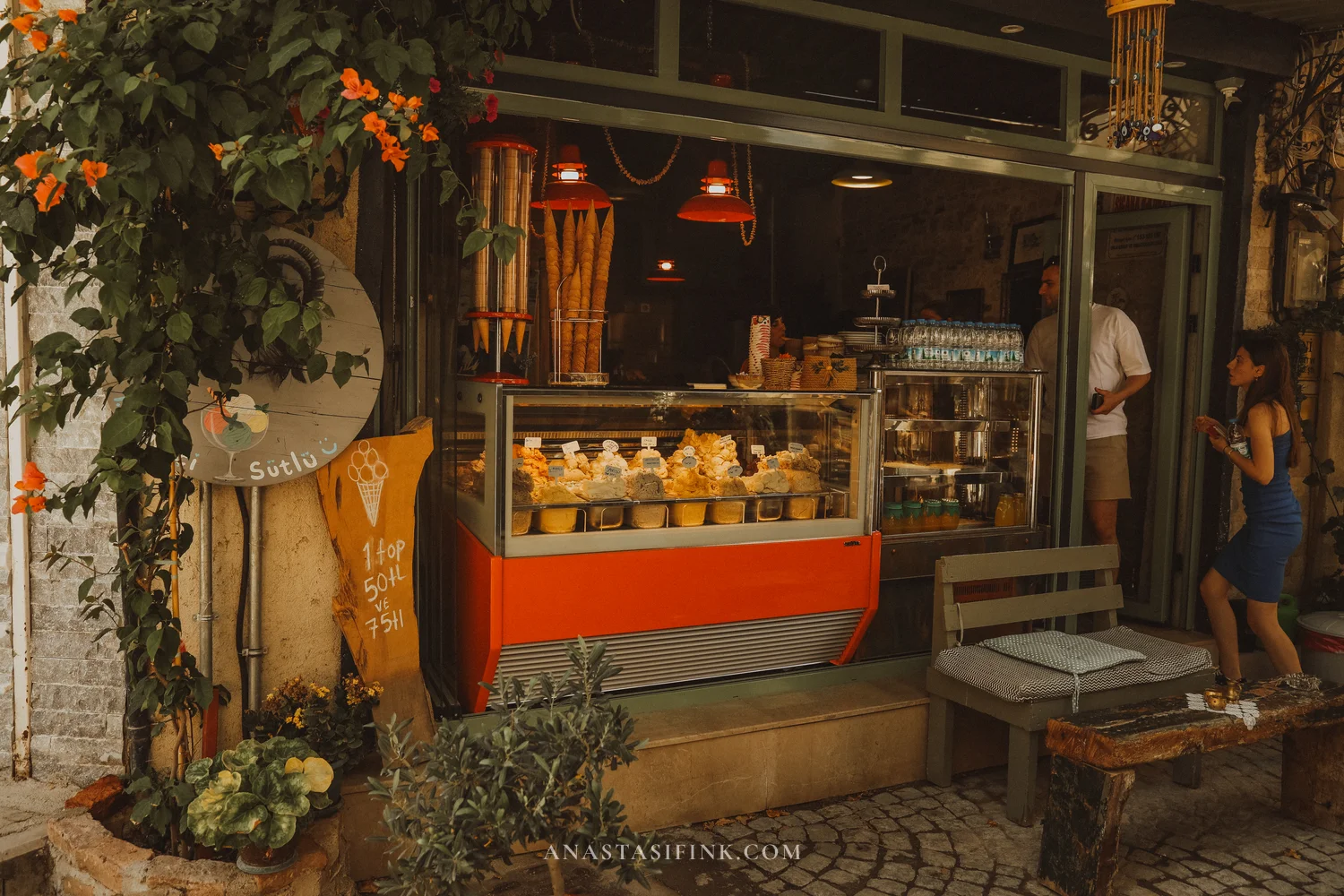
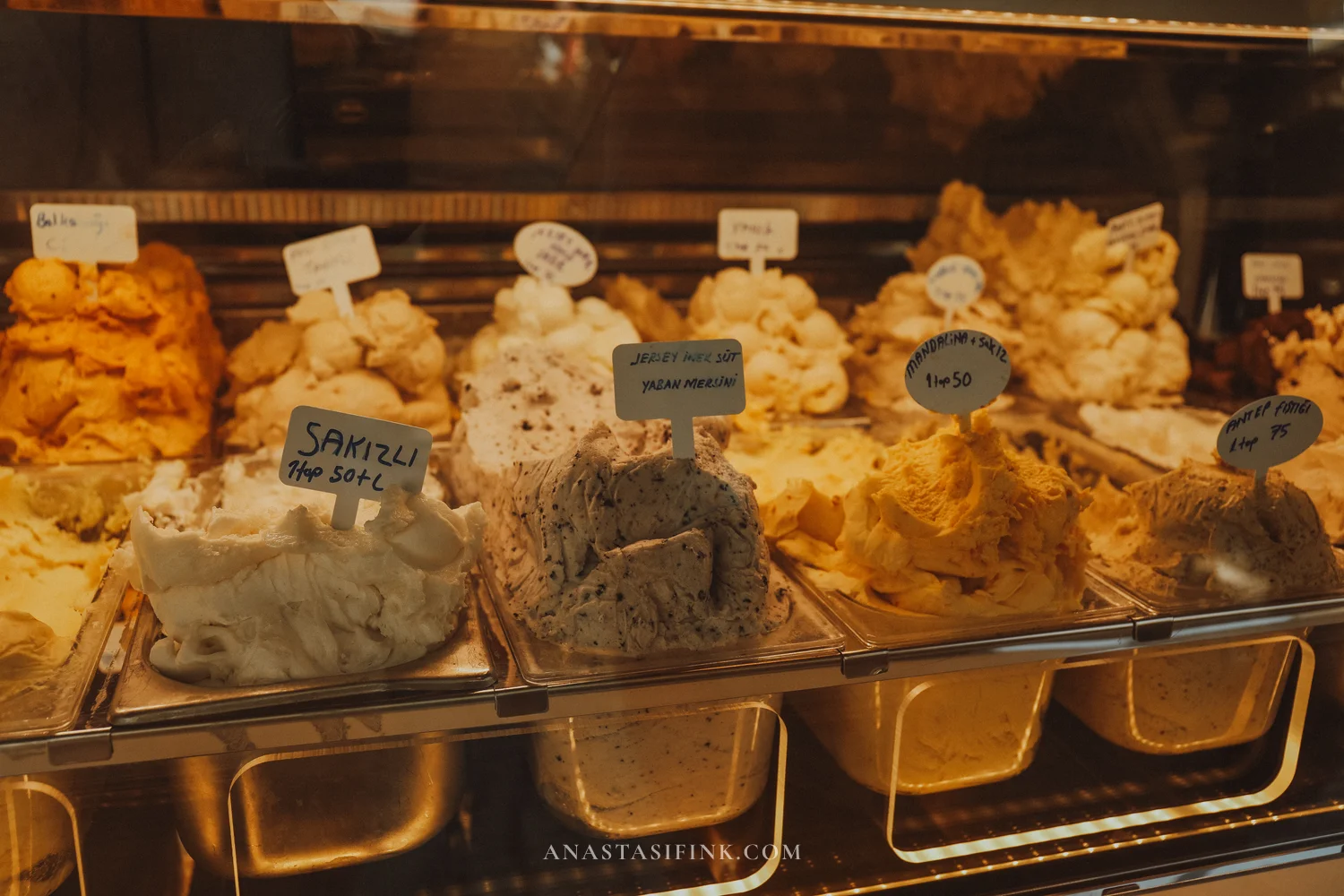
Necco Dondurma — ice cream at 50 TL per scoop (~$1.50). Sakızlı is a must try
Practical Information — Urla
- GPS: 38.3236, 26.7647
- Getting there from İzmir: 35 km, ~25 min by car. ESHOT buses lines 738, 984. Metro Turizm (twice daily, ~44 min)
- Ekrou Boutique: Uzun Sk. No:4, Urla
- Malgaca Pazarı: Urla center, open daily
- Necco Dondurma: Google Maps
- Malgaca Pazarı: Google Maps
- Tarihi Urla Fırını 1924: Google Maps
- Ekrou Boutique: Google Maps
Alaçatı — A Stone Town with Character
Alaçatı is 300 restored Greek stone houses, narrow cobblestone streets, and bougainvillea everywhere. Quiet and sunny during the day, buzzing with restaurants, bars, and crowds in the evening. The town sits on the Çeşme peninsula, 10 km from the resort of the same name.
Windmills
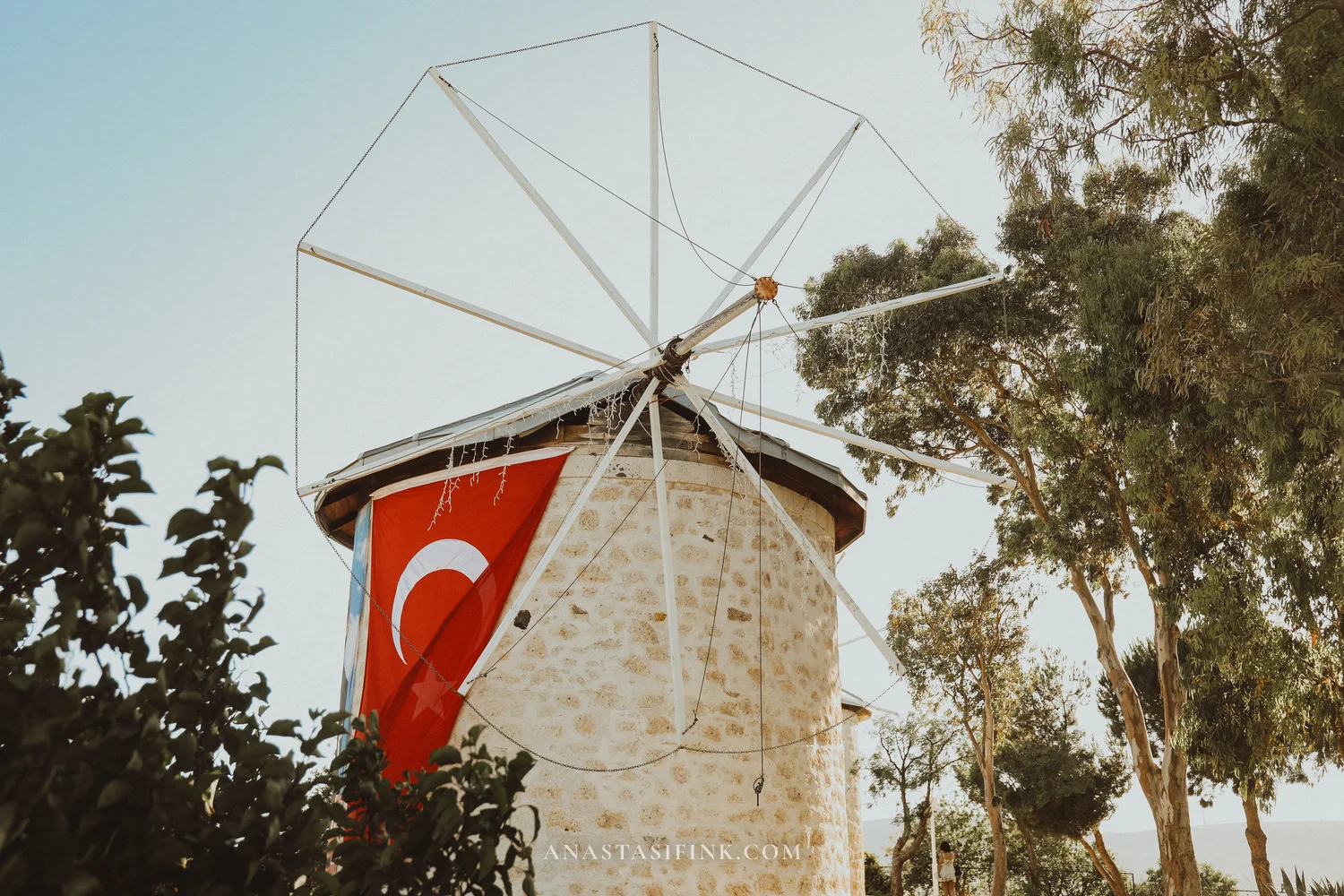
The windmills are Alaçatı’s symbol. They were built around 1850 for grinding wheat and olives. Of the original twenty, four stone towers remain on the highest point of the town. They were restored in 1986 and opened to visitors.
Streets and Architecture
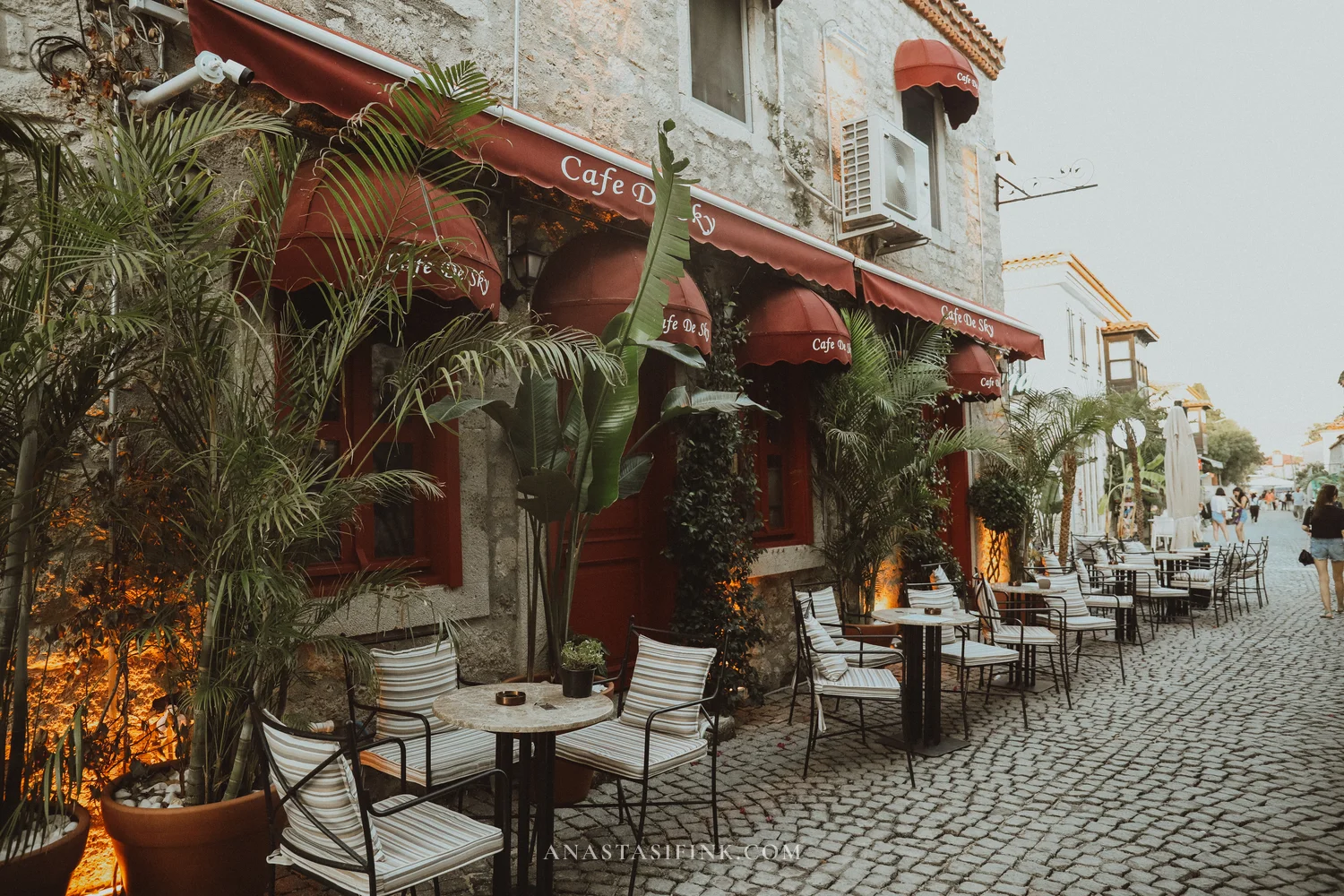
The best thing about Alaçatı is simply walking. Decorative tiles on the steps, carved stone arches, walls covered in bougainvillea — it’s everywhere you look.
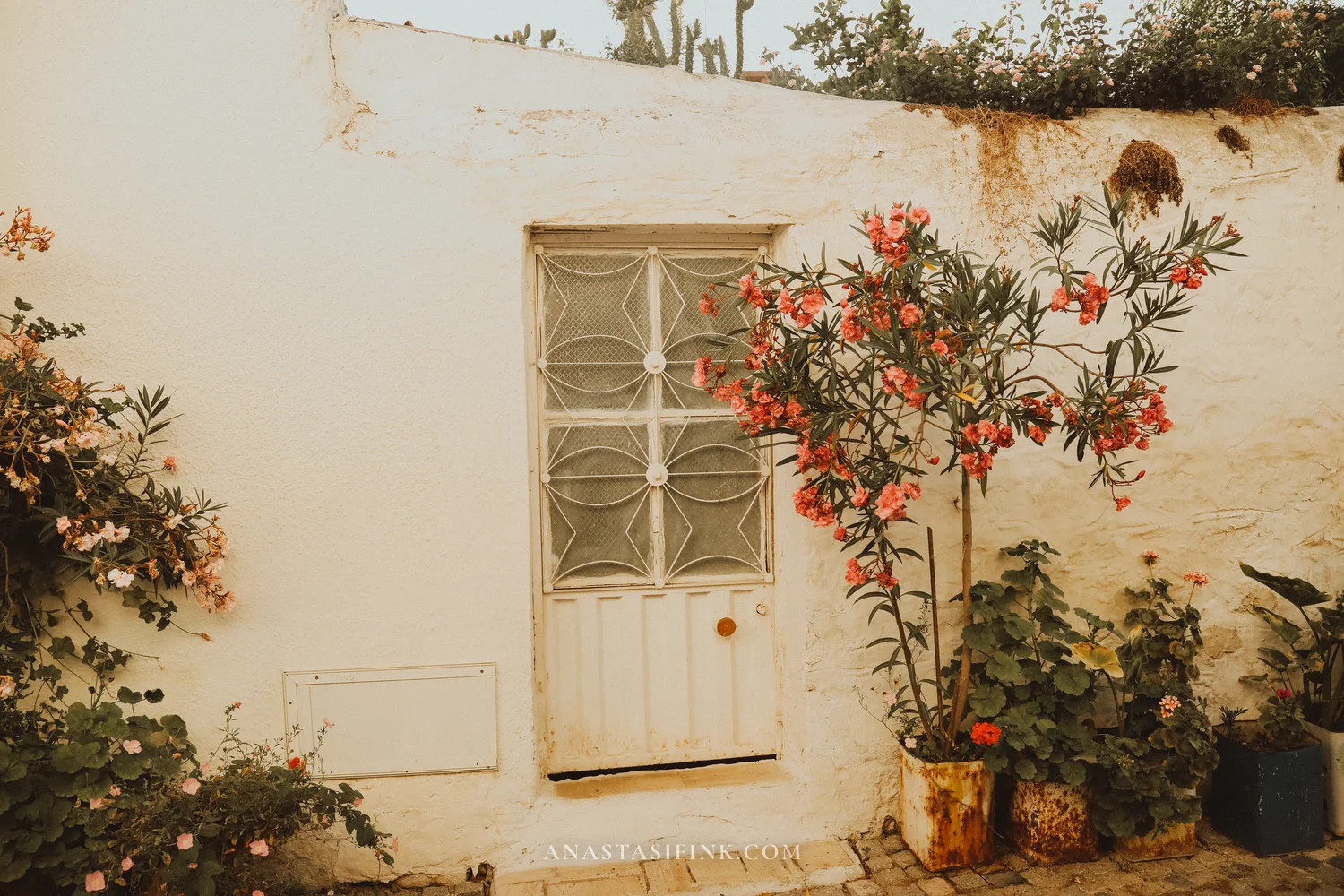
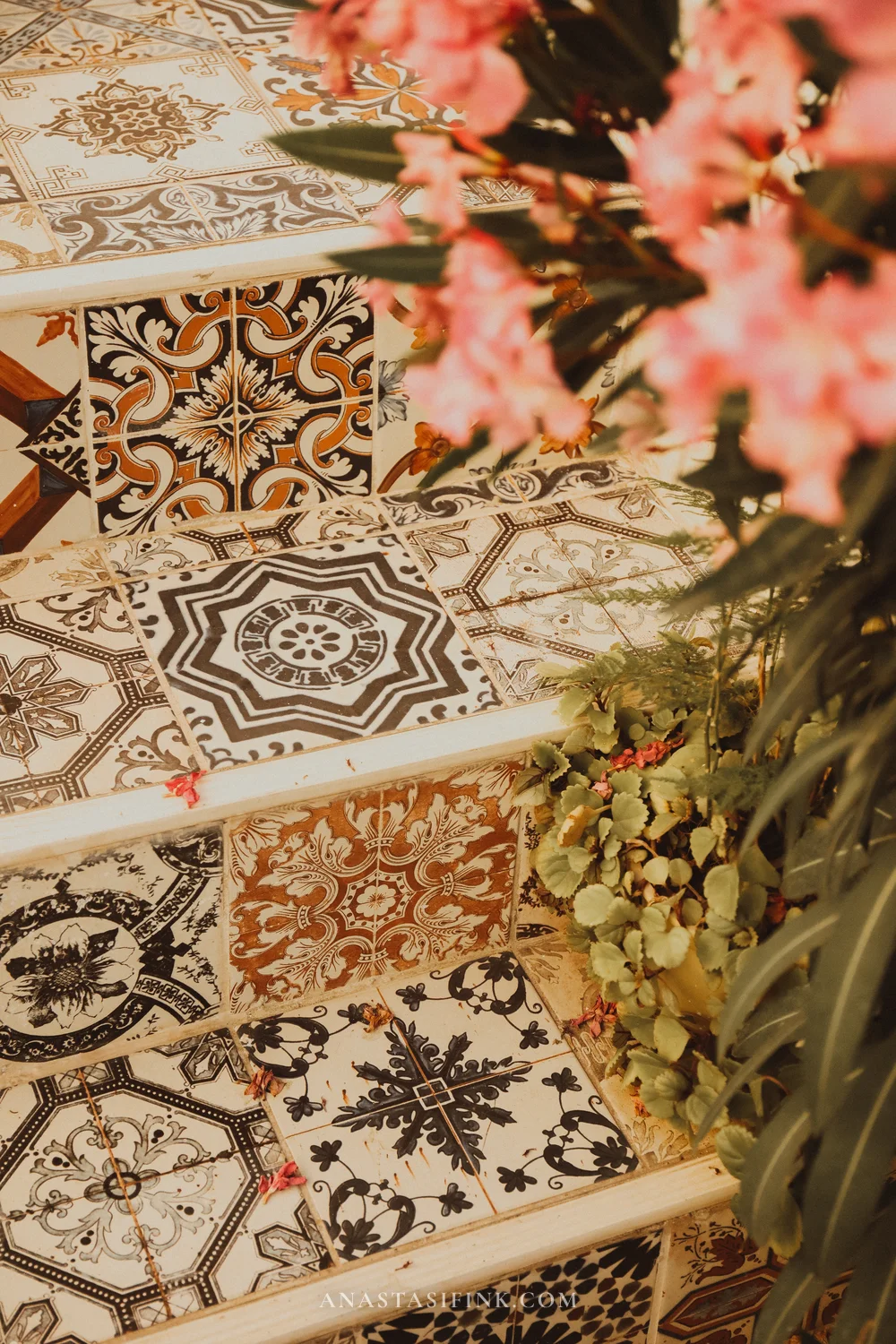
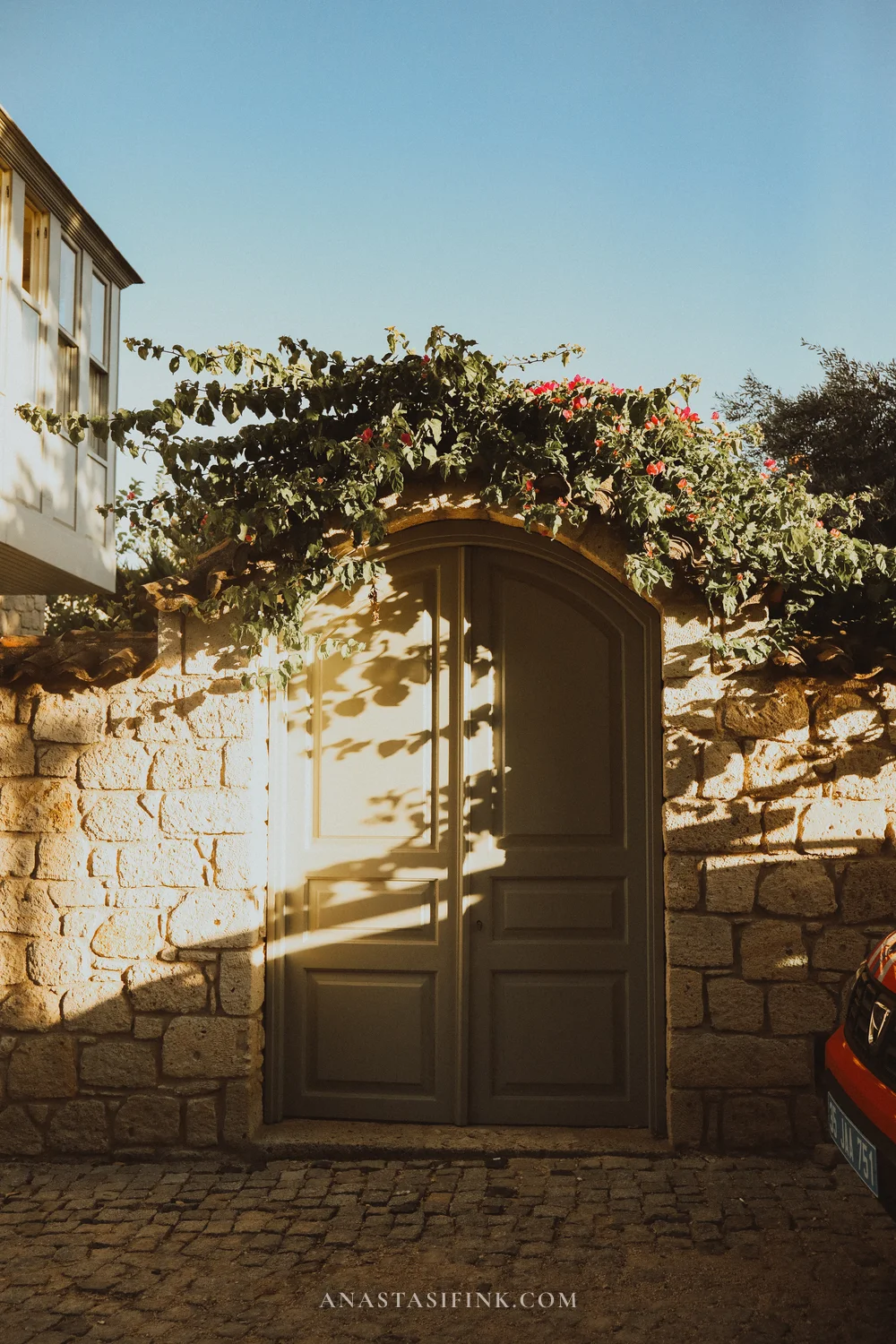
Tiles on the steps — each one with a different pattern. And archways hiding inner courtyards
Pazaryeri Camii — A Mosque Inside a Church
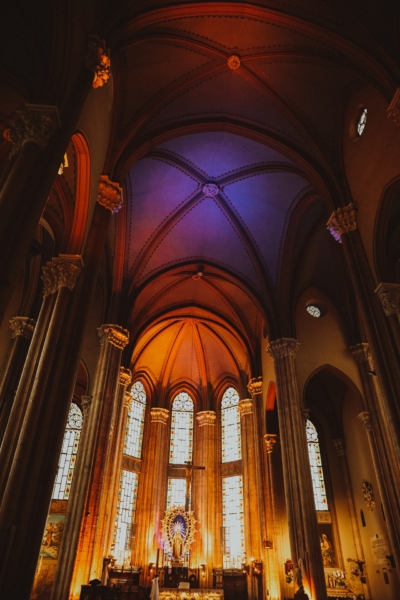
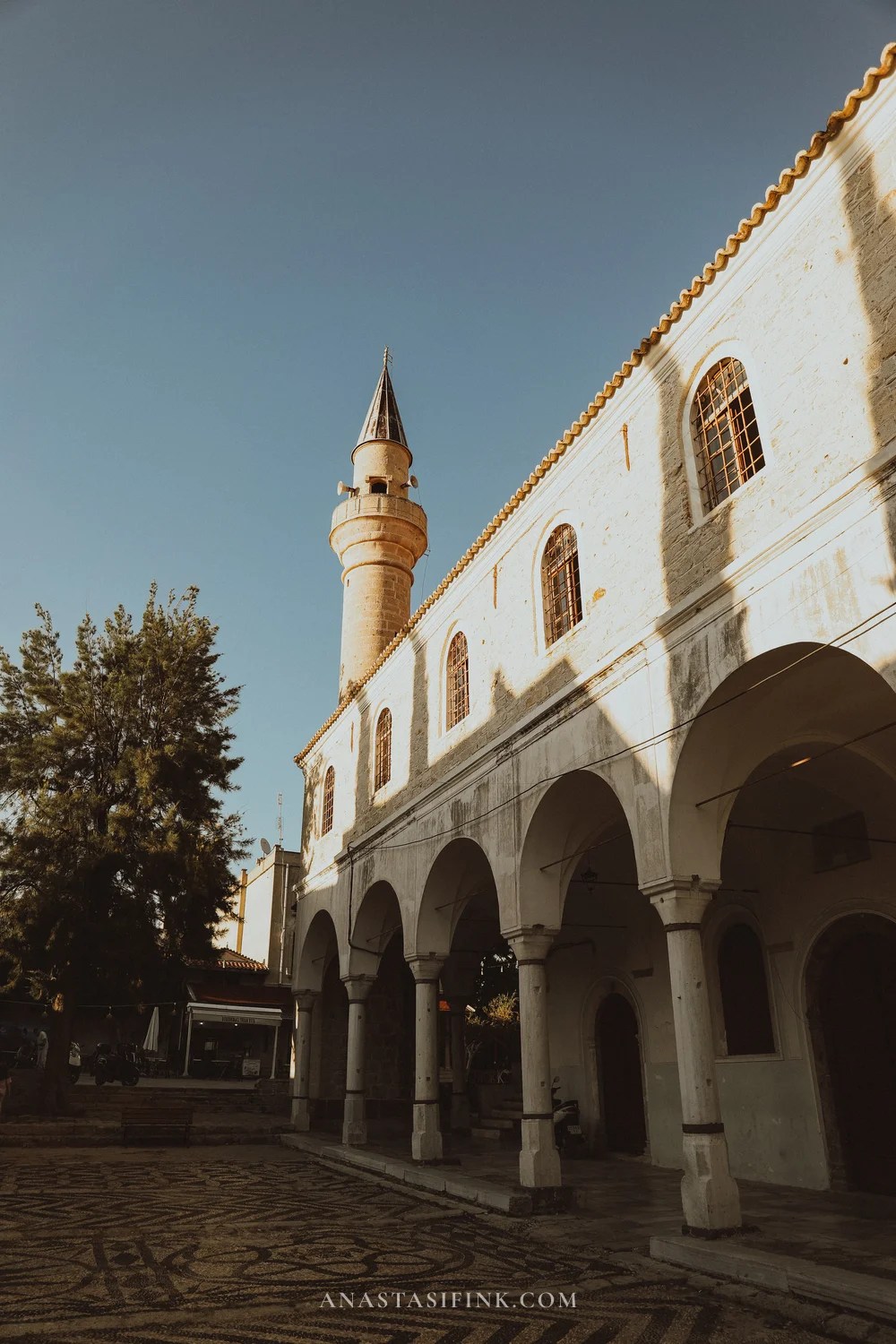
One of Alaçatı’s most unusual buildings is Pazaryeri Camii, a mosque on the central square. Construction was started by a Greek man, Yohannis Halapes, in the 1830s as an Orthodox church; it opened in 1874. After the founding of the Turkish Republic and the population exchange, the building was converted into a mosque.
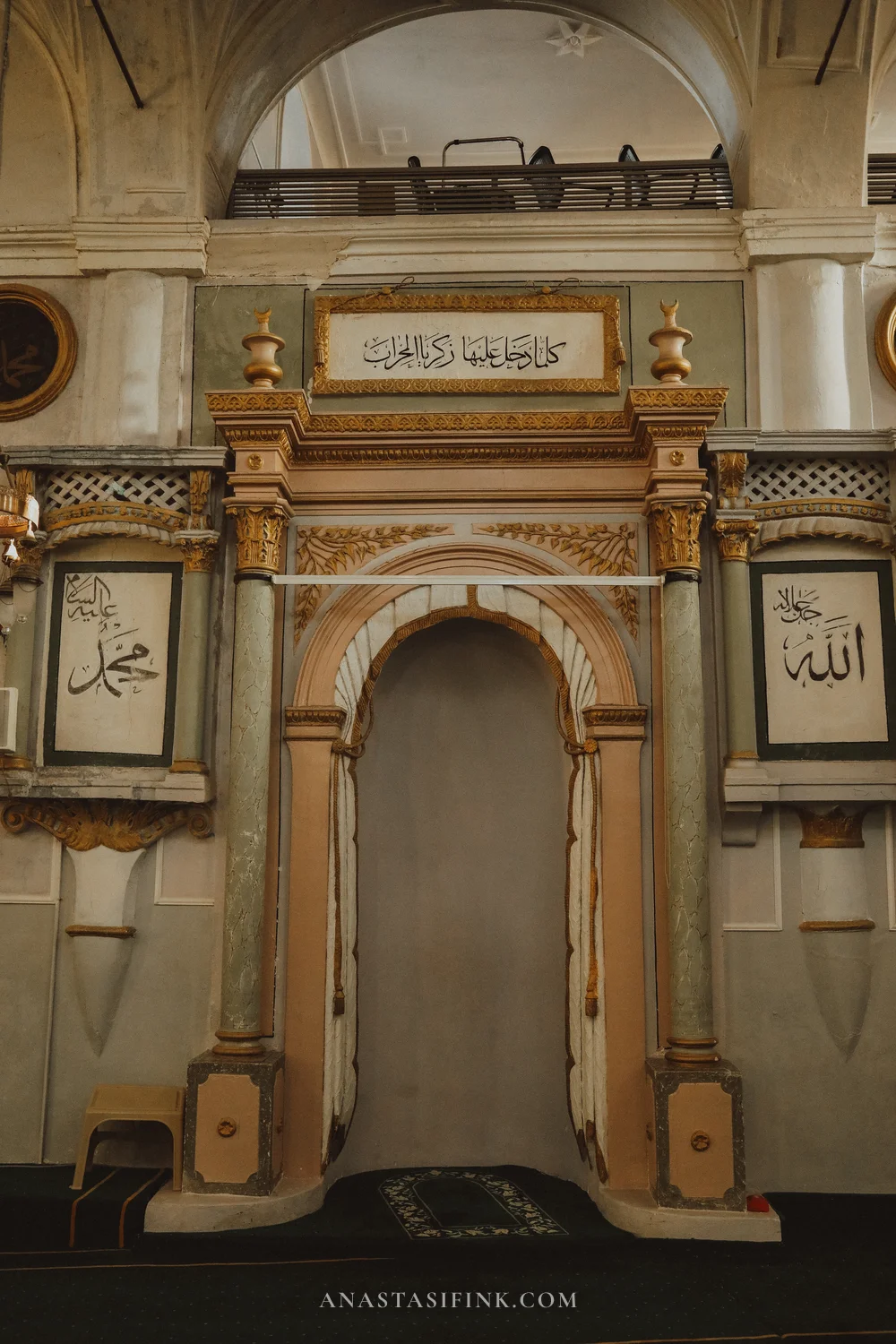
During restoration in 2009–2010, original icons and religious paintings were discovered beneath the plaster. Now, during prayer time they are covered with a curtain, but the rest of the time you can see both the mihrab and the surviving Greek art. A three-nave basilica with arched columns — icons and a mihrab under one roof.
Practical Information — Pazaryeri Camii
- Address: central square of Alaçatı (Pazaryeri)
- Admission: free (as with all mosques in Turkey)
- When to visit: outside of prayer times, you can walk in freely
- Google Maps: Alaçatı Pazaryeri Camii
BASHAQUES — Wearable Art
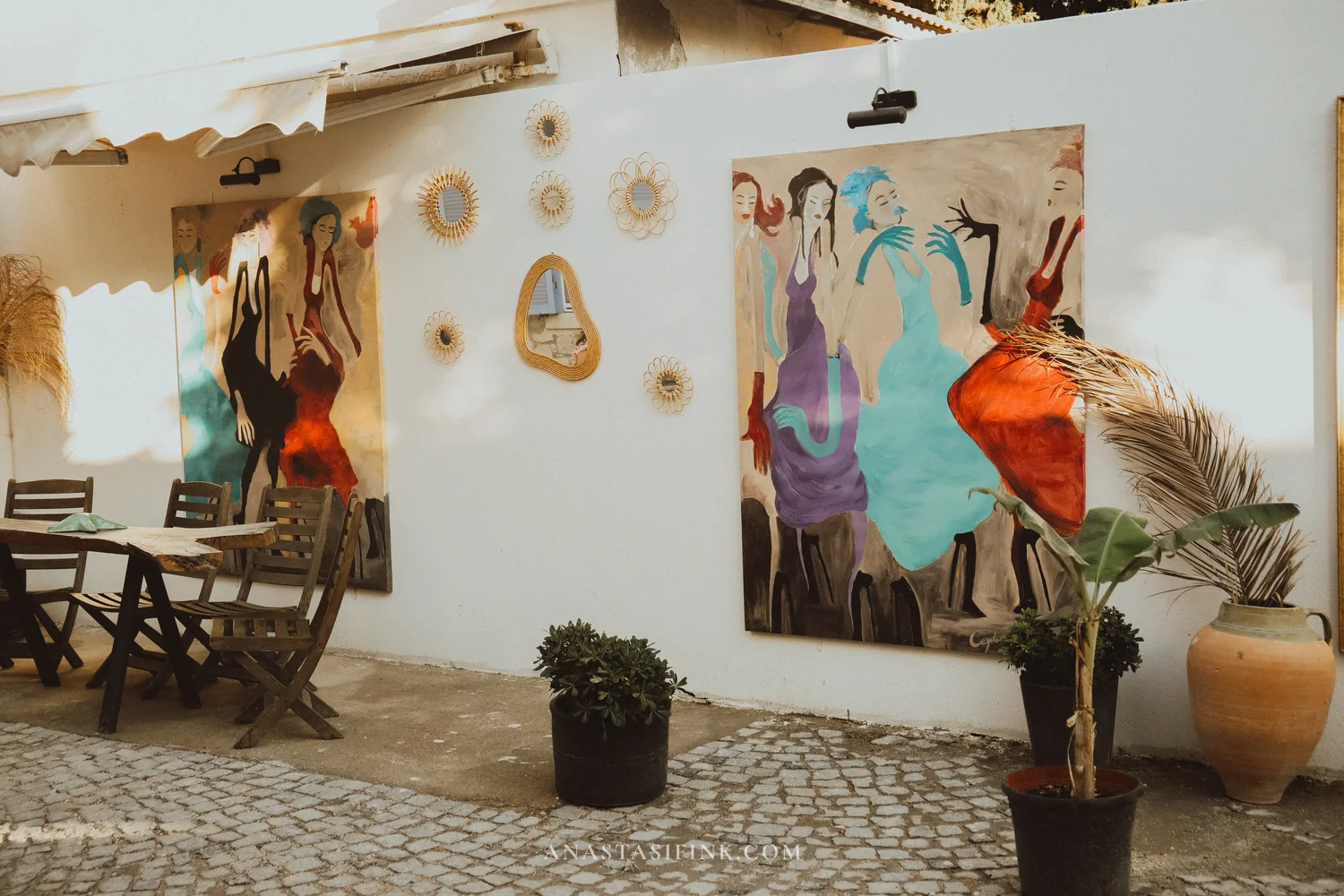
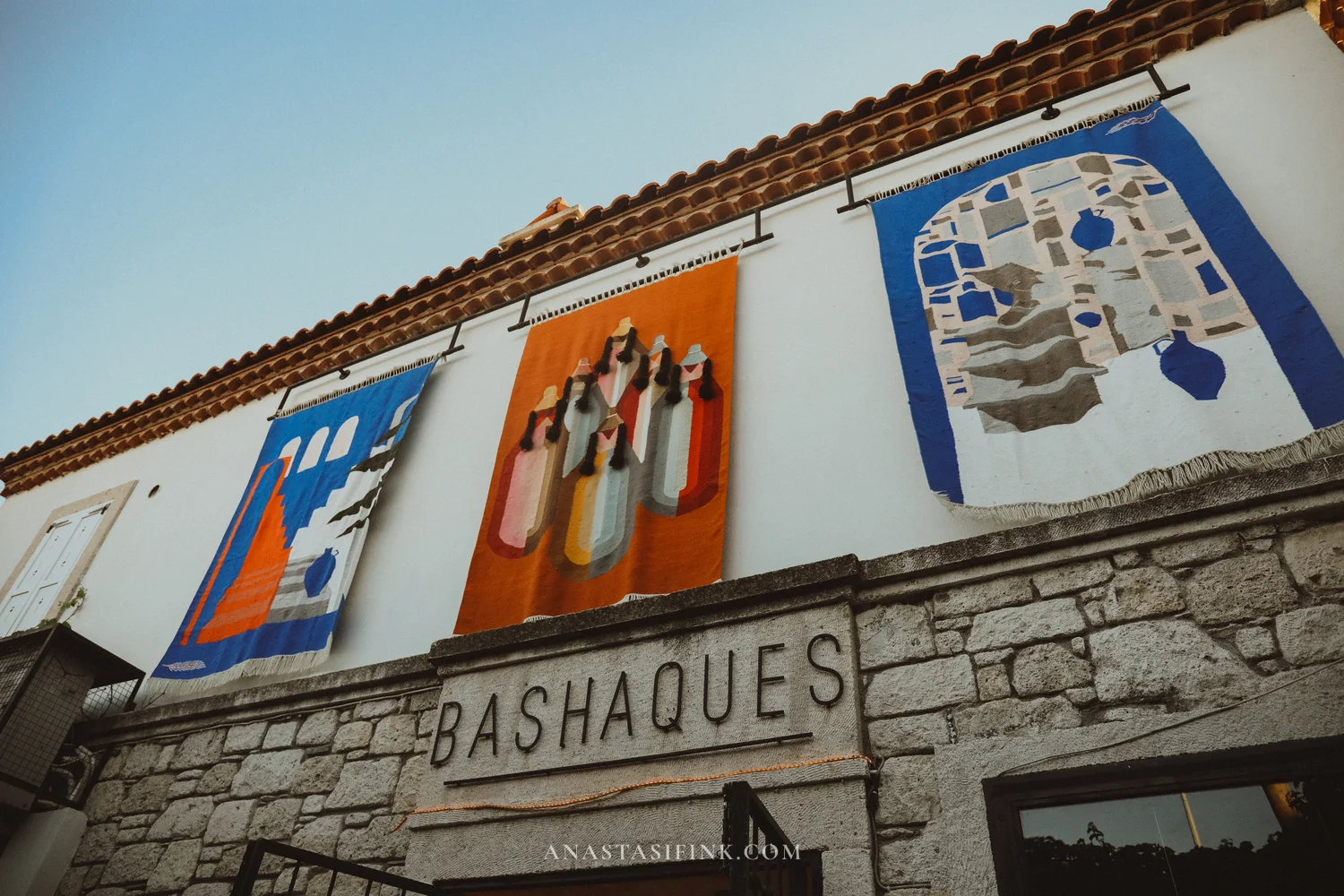
BASHAQUES is a gallery-showroom by designer Başak Cankeş. It’s not a regular clothing store: the concept is wearable art. The facade displays large canvases with abstract prints; inside — the designer’s own collections and a curated selection of international brands.
Antique Shops
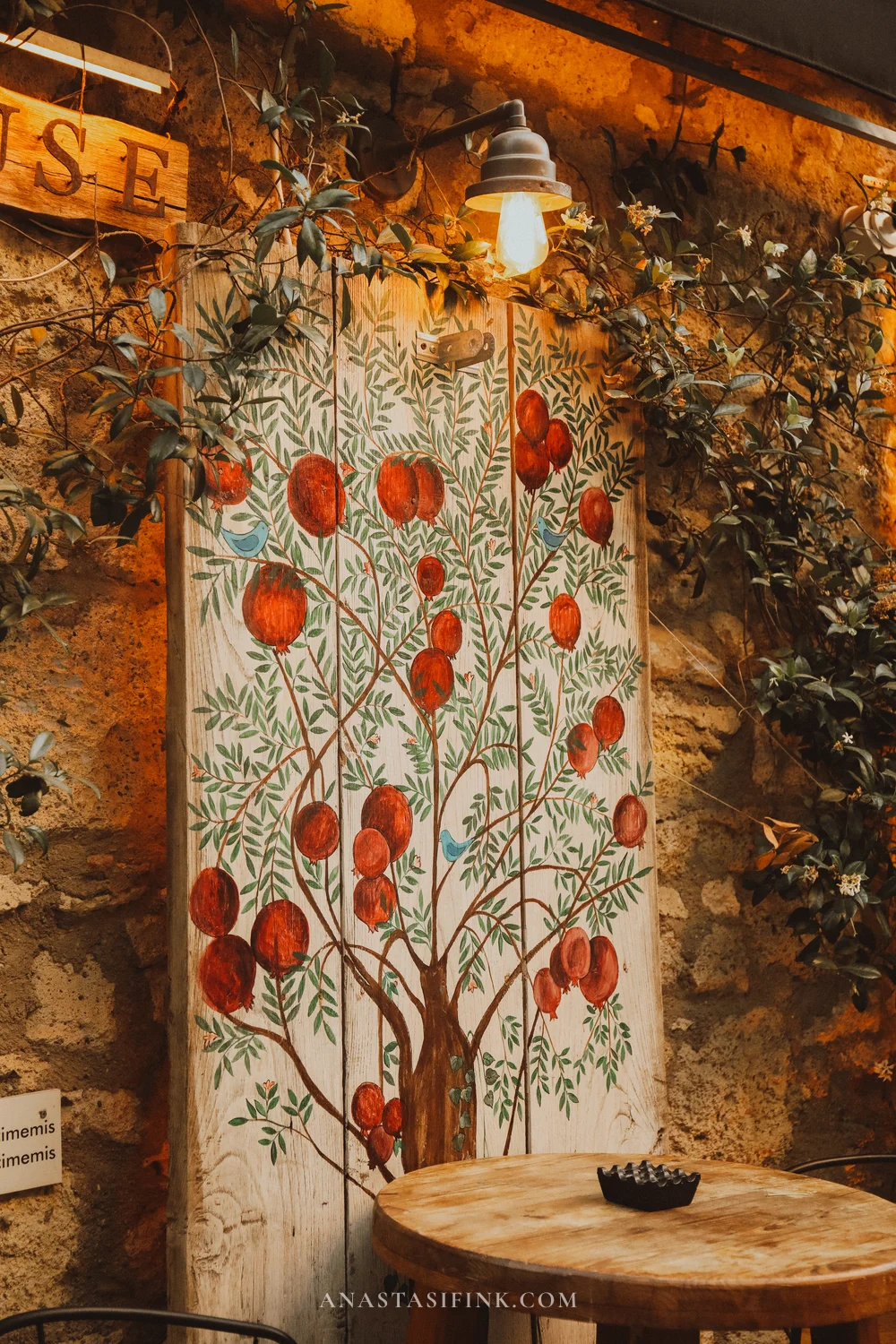
Alaçatı has more antique shops than souvenir stores. Old clay jugs, glass jars, wooden boards, dried flowers — all for sale. In one shop, I found jugs that the owner claimed were over a hundred years old. Whether that’s true or not doesn’t matter — they look like something you’d want to take home.
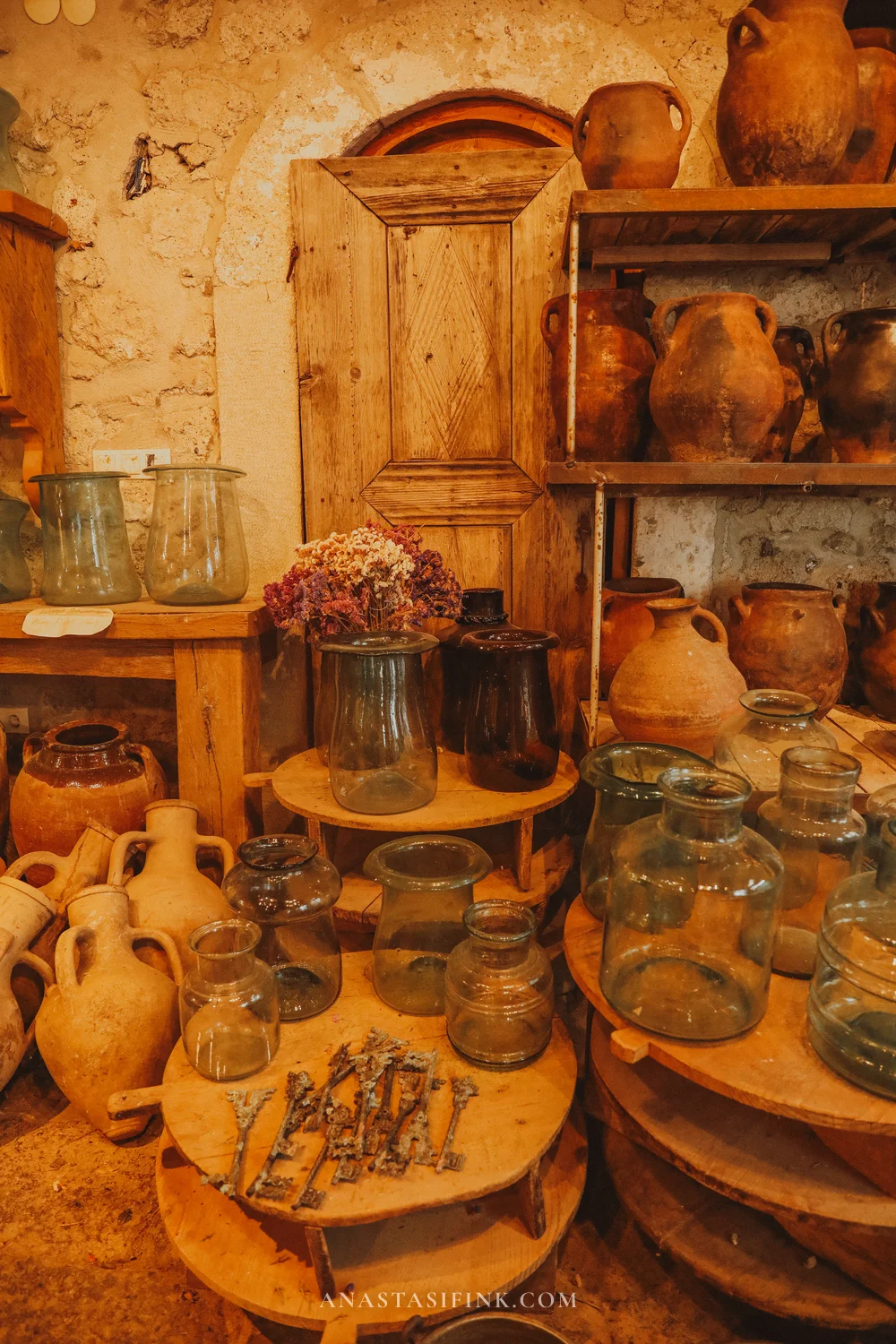
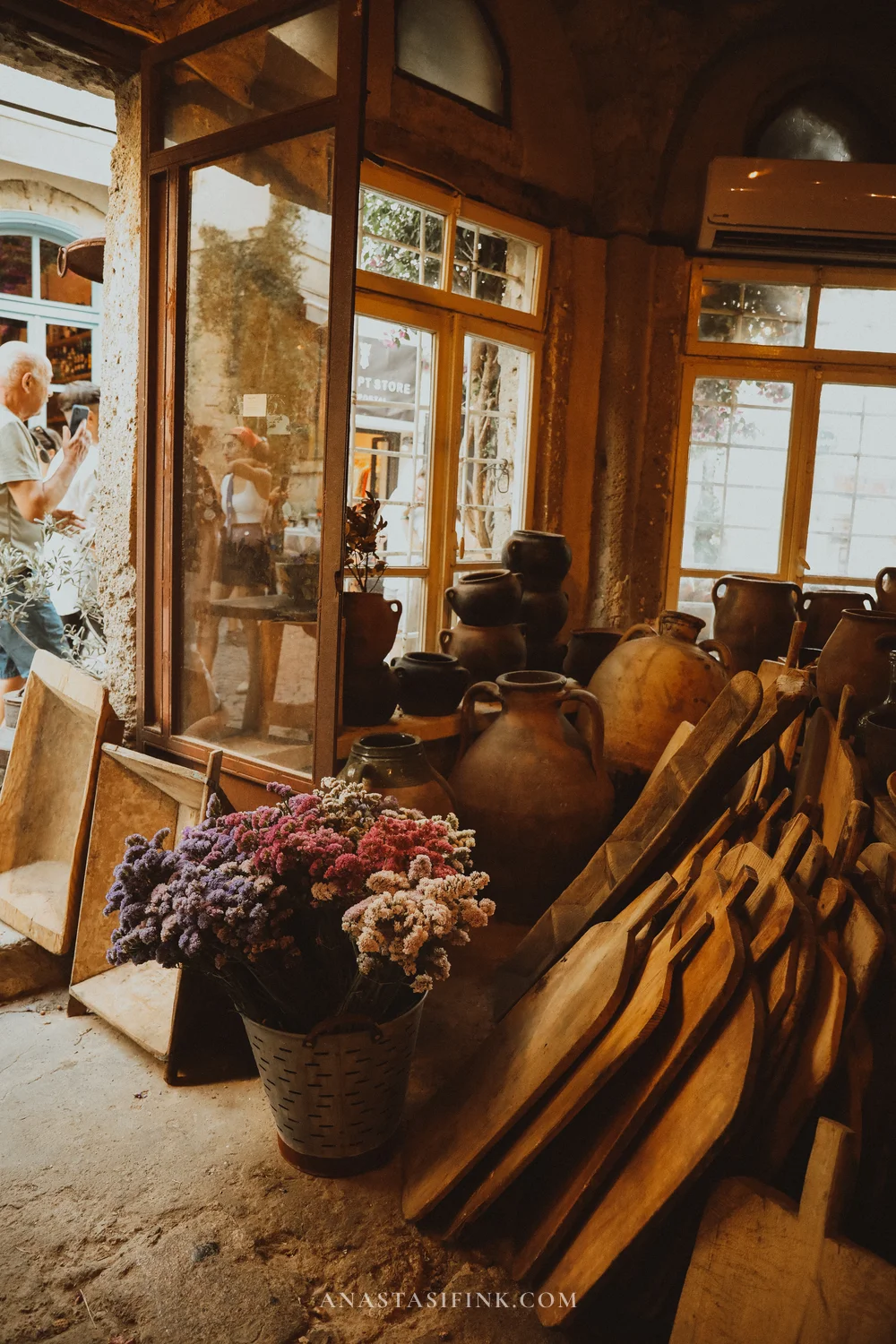
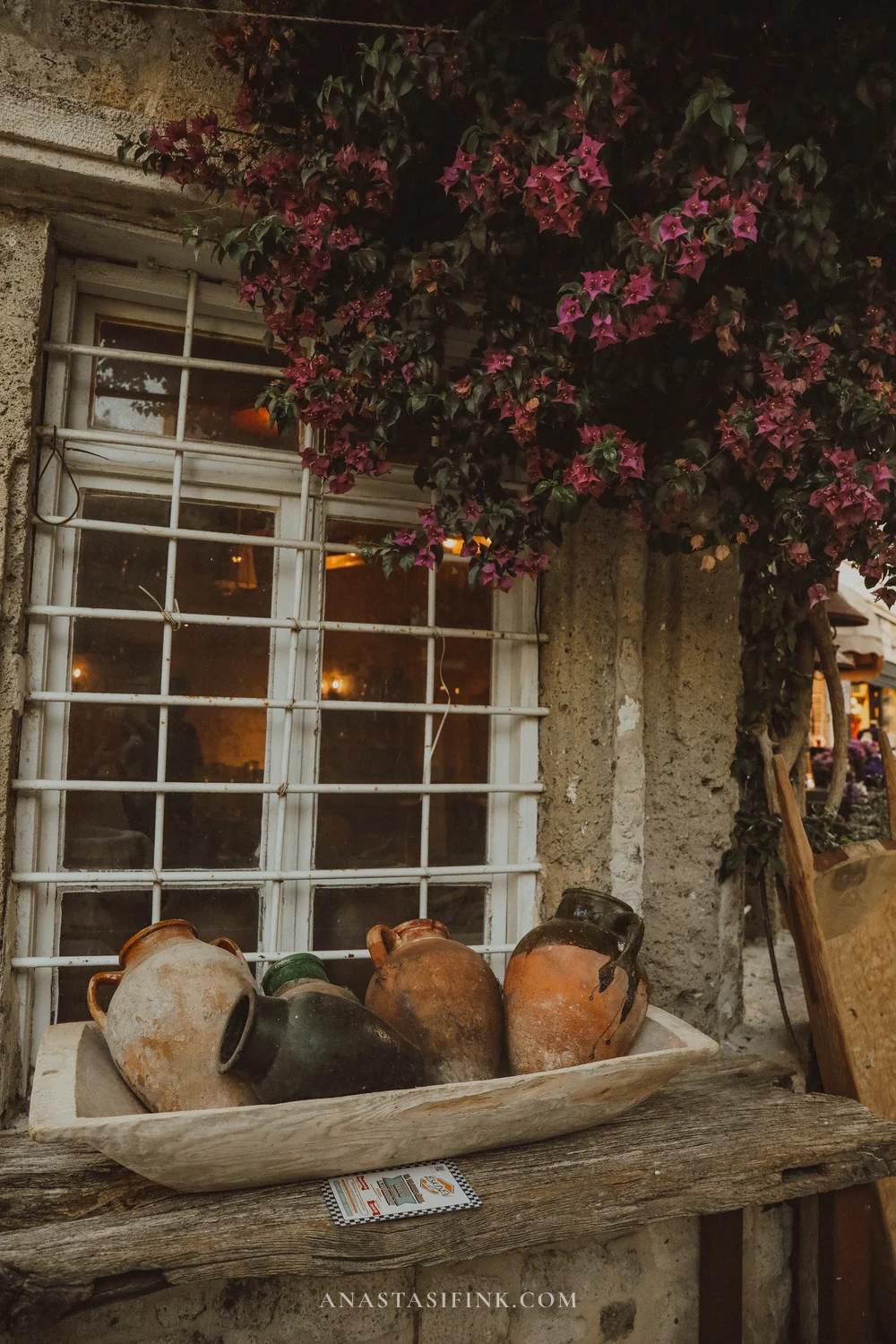
Antique shops are one of the main reasons to wander Alaçatı. Jugs, glass jars, wooden boards — all authentic
Nearby — boutiques with handmade jewelry and shops with eclectic décor where Balinese style meets Aegean.
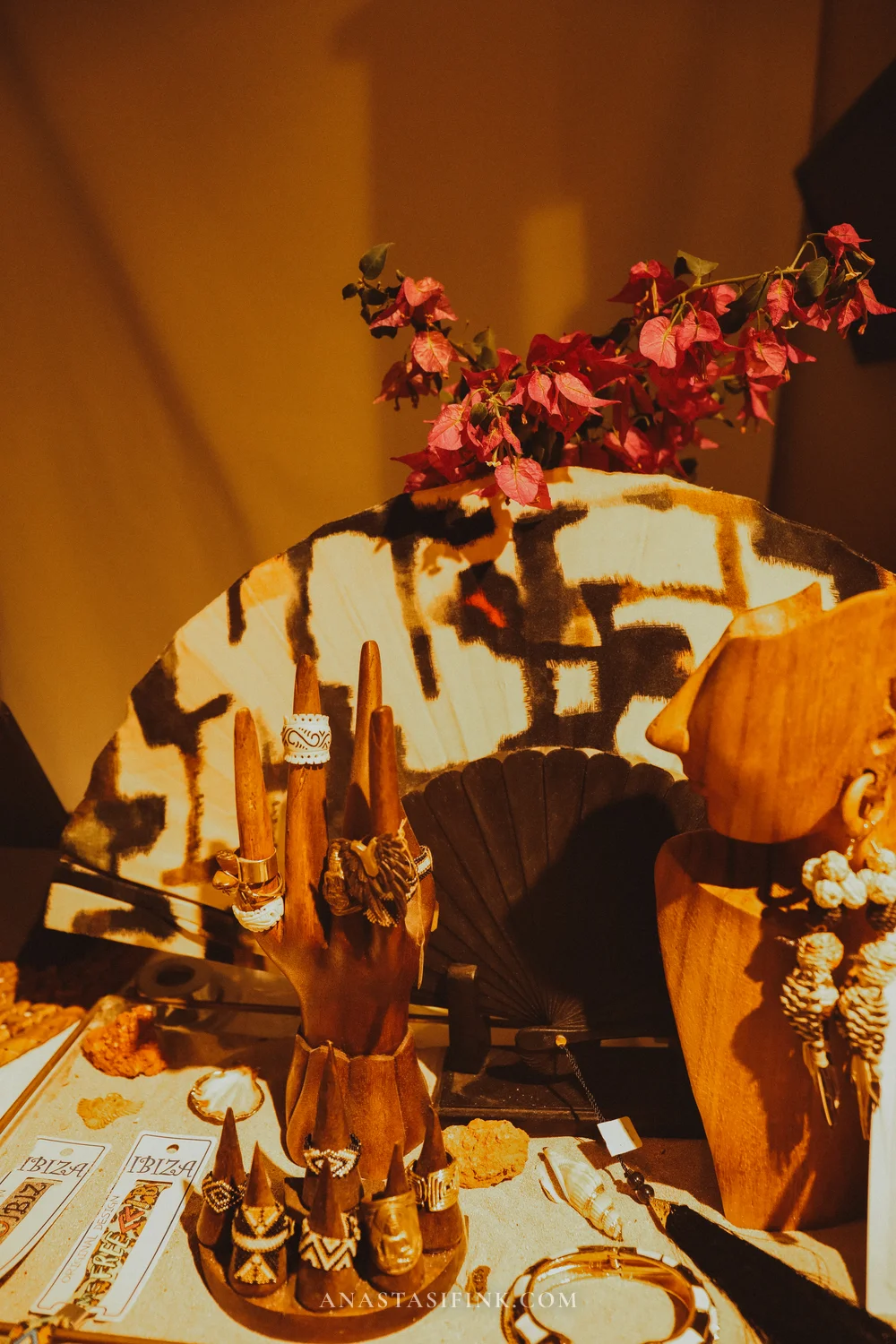
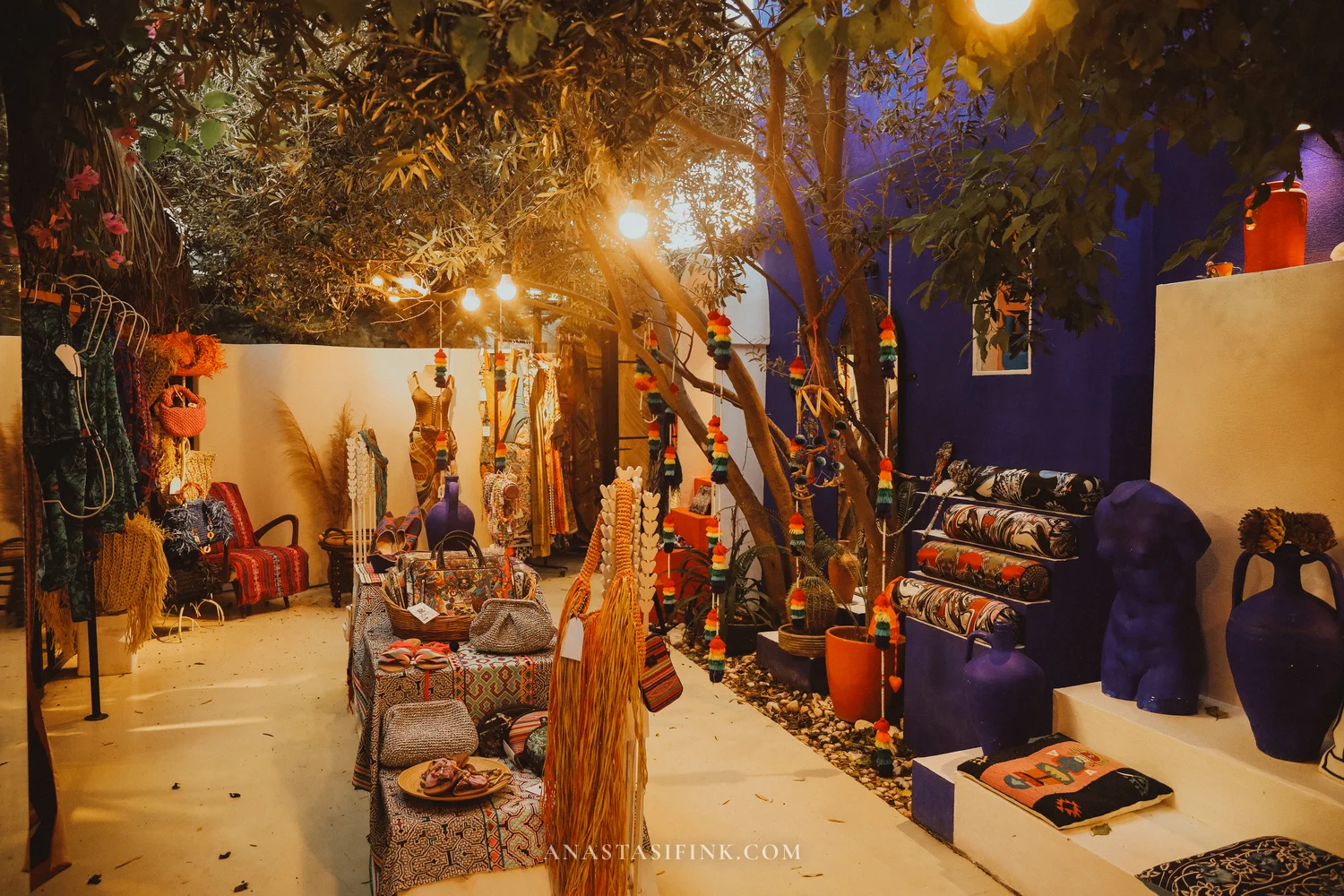
Handmade jewelry and eclectic décor — from Bali to the Aegean coast
Selanik Reçelleri 1945 — Jams and Cookies
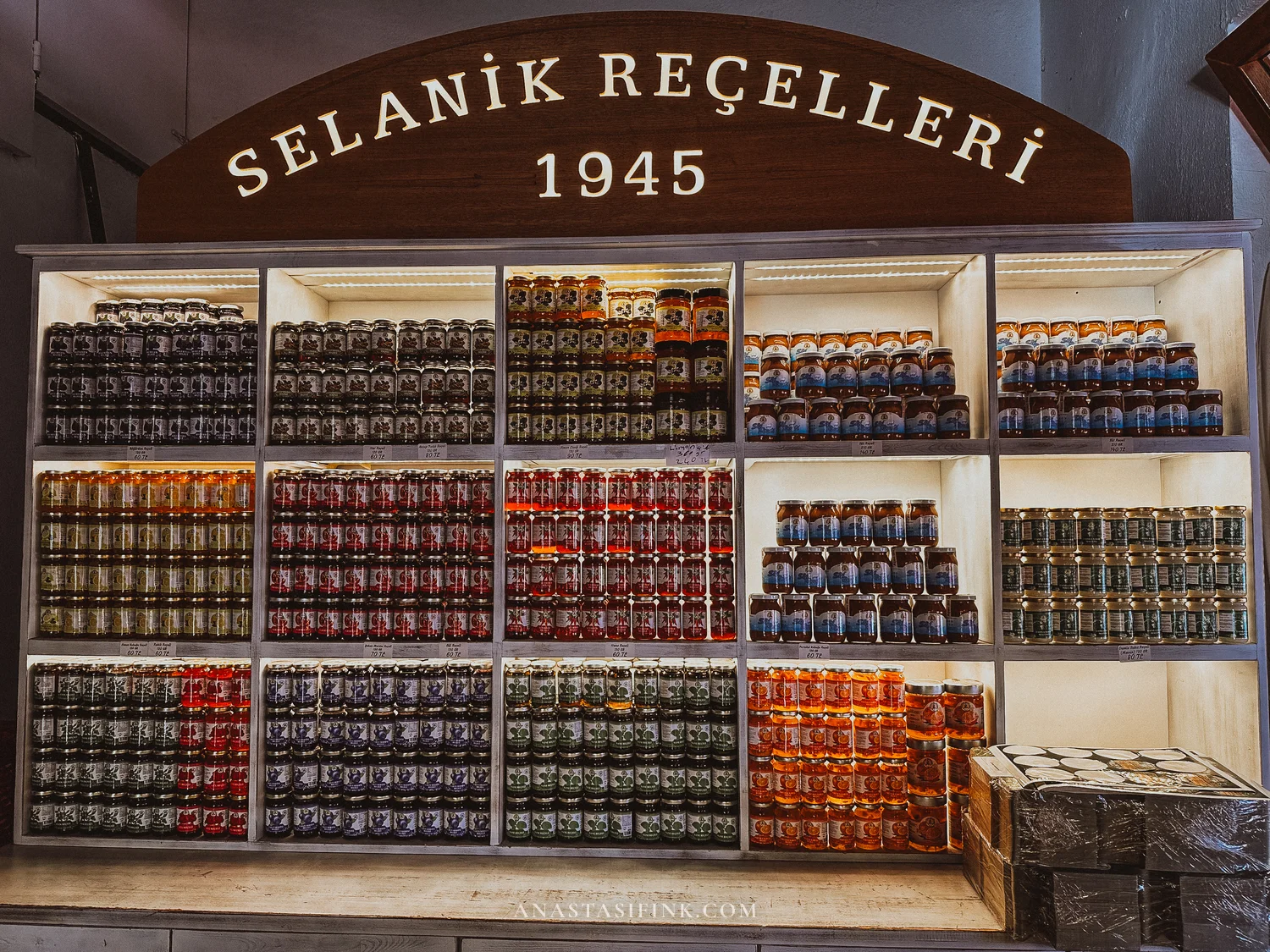
At the entrance to Alaçatı, opposite the windmills, stands the bakery-shop Alaçatı Selanik Pastanesi 1945. A family business founded by settlers from Thessaloniki (Selanik is the Turkish name for Thessaloniki). They specialize in jams, cookies, and everything mastic: mastic ice cream, mastic pudding, mastic cookies.
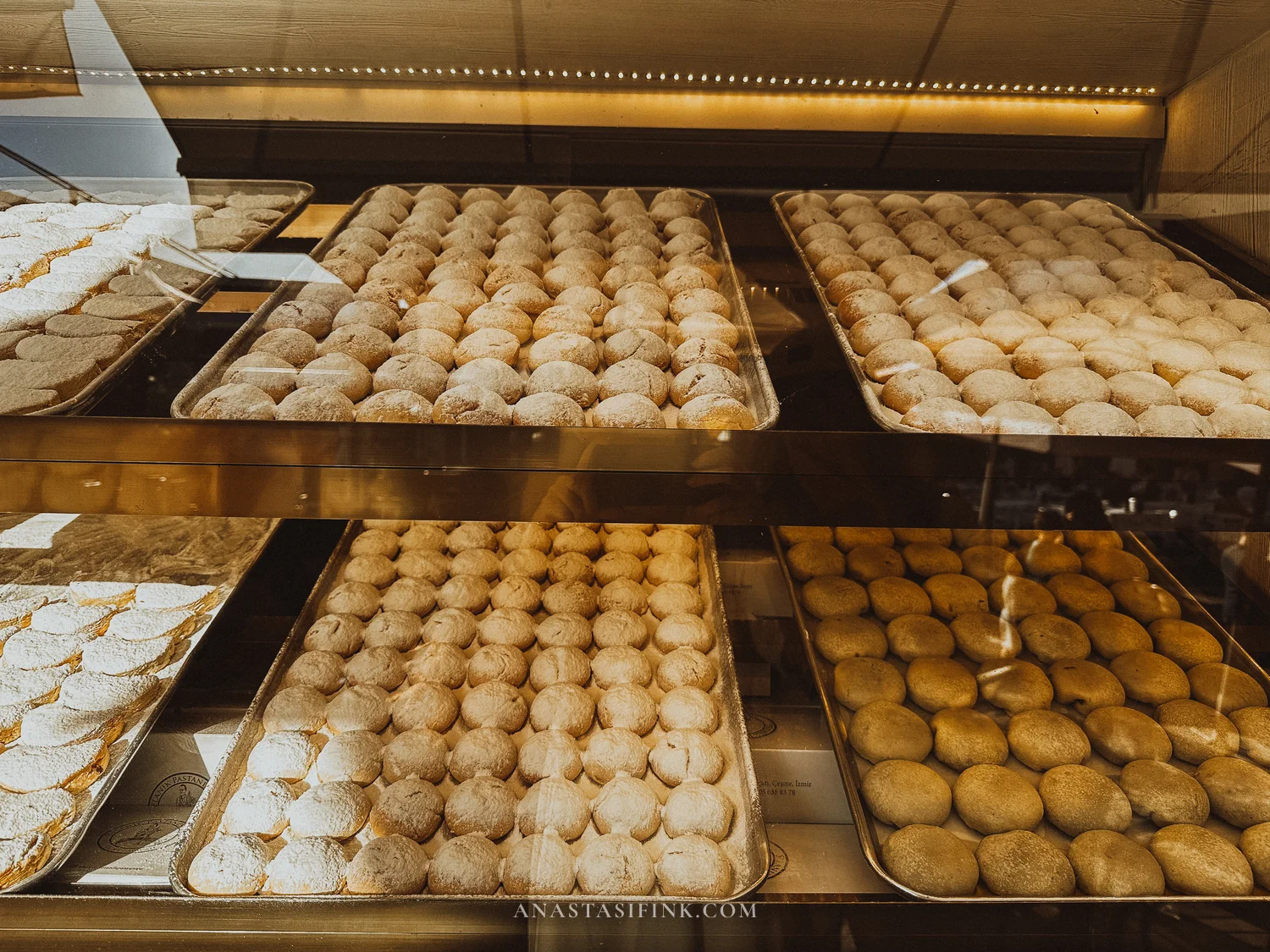
The shelves hold dozens of jam varieties: orange, lemon blossom (limon çiçeği reçeli), fig, rose petal. Cookies are sold by weight — crumbly, with mastic and almond.
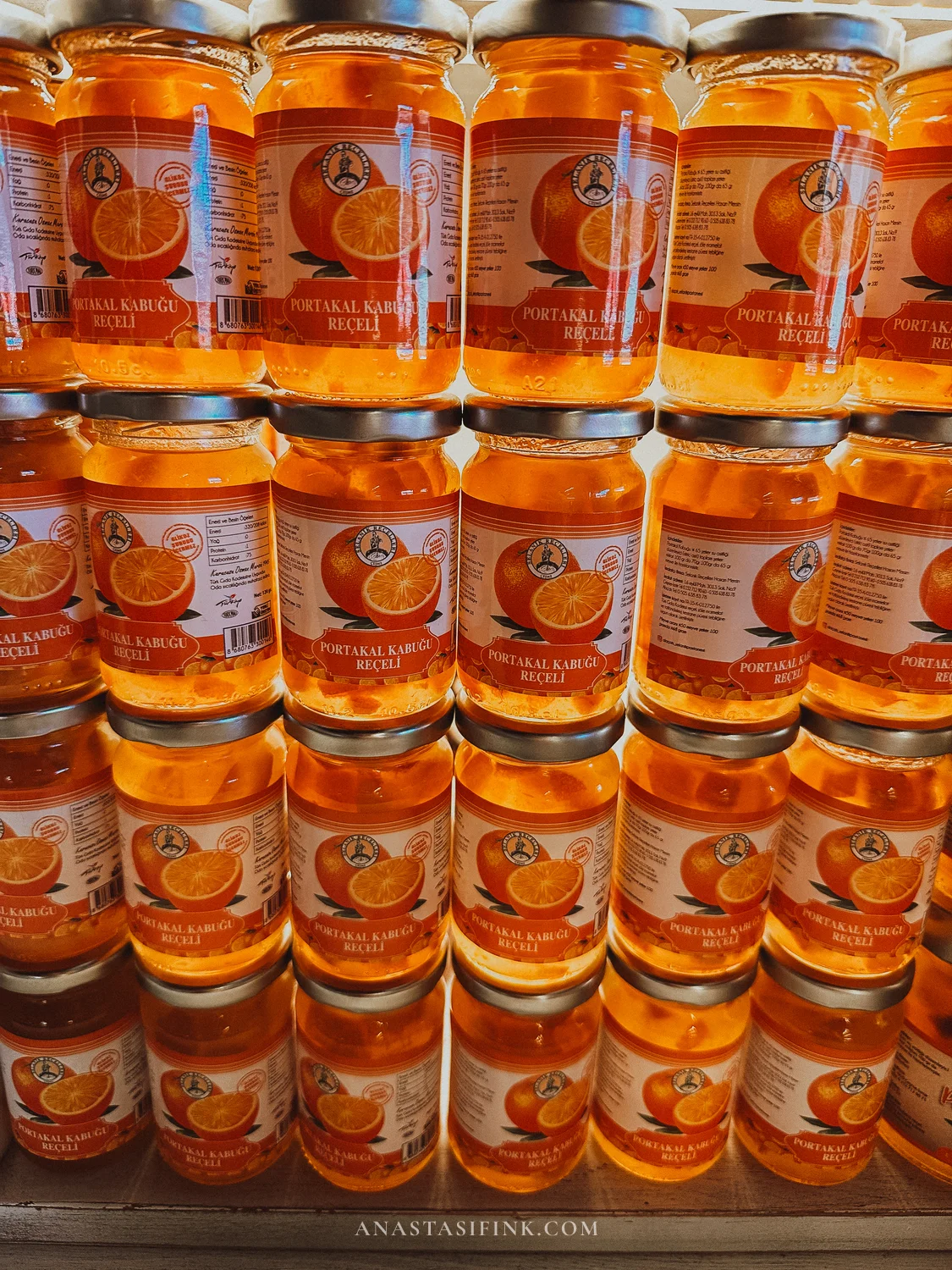
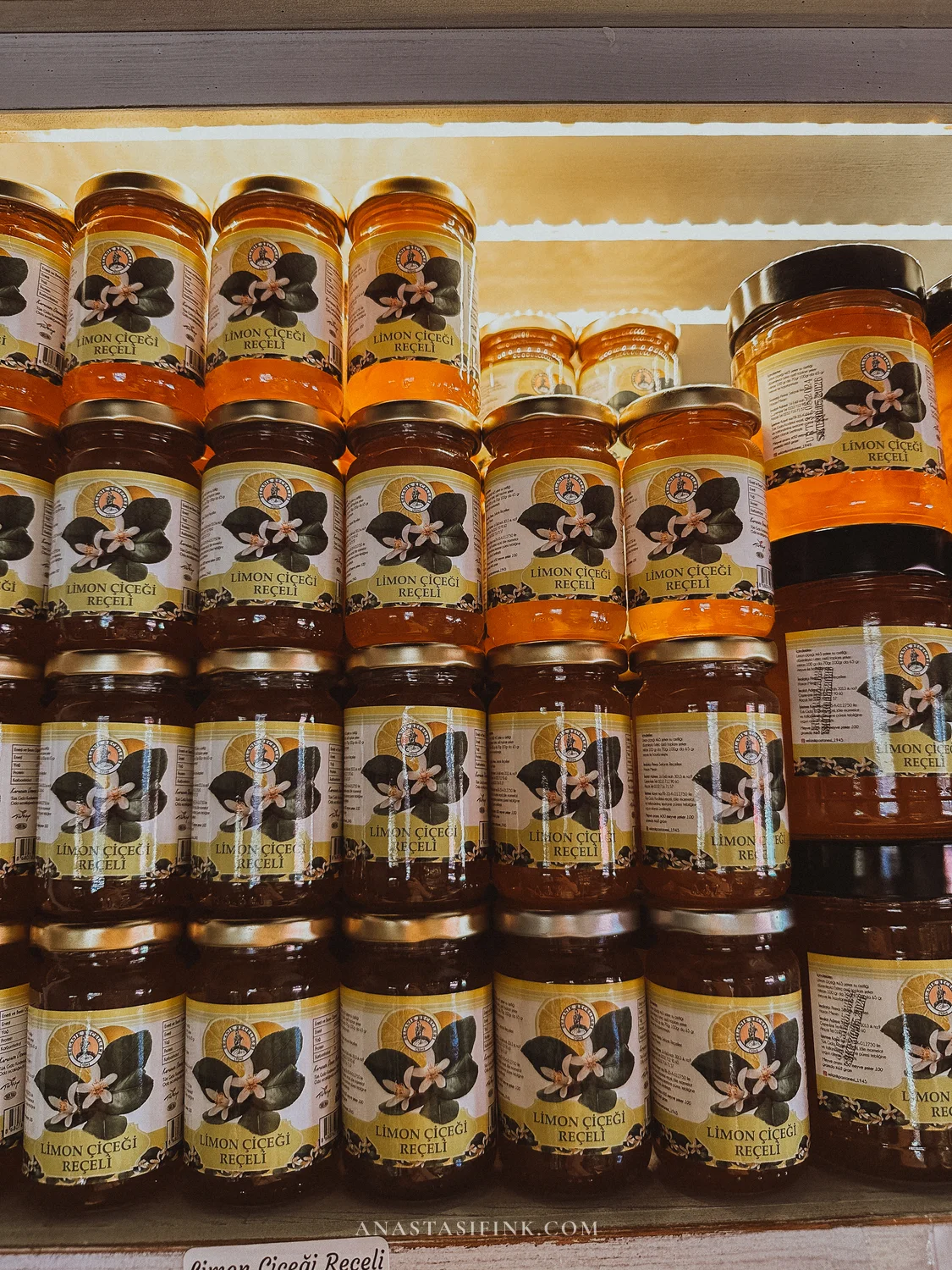
Orange marmalade and lemon blossom jam (limon çiçeği reçeli) — two signature flavors of the region
Da Franco Gelato — The Best Gelato in Alaçatı
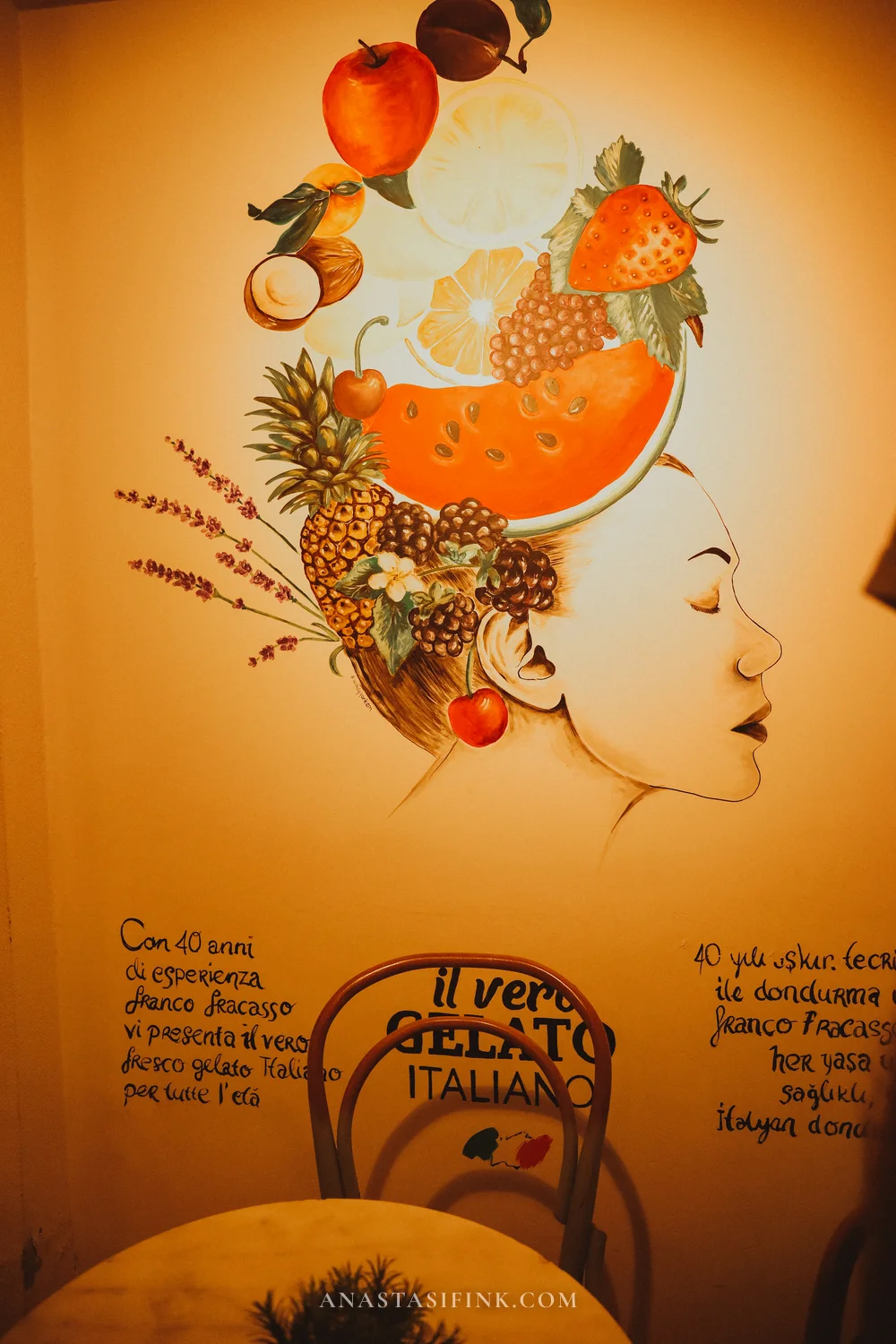
Da Franco Gelato is Italian gelato by Franco Fracasso. The Italian came to Alaçatı and stayed. The gelato is made fresh daily from natural ingredients, with minimal sugar. Coffee almond, coconut, chocolate — the selection is wide, the portions generous.
Next door is Da Roberto — his brother’s pizzeria.
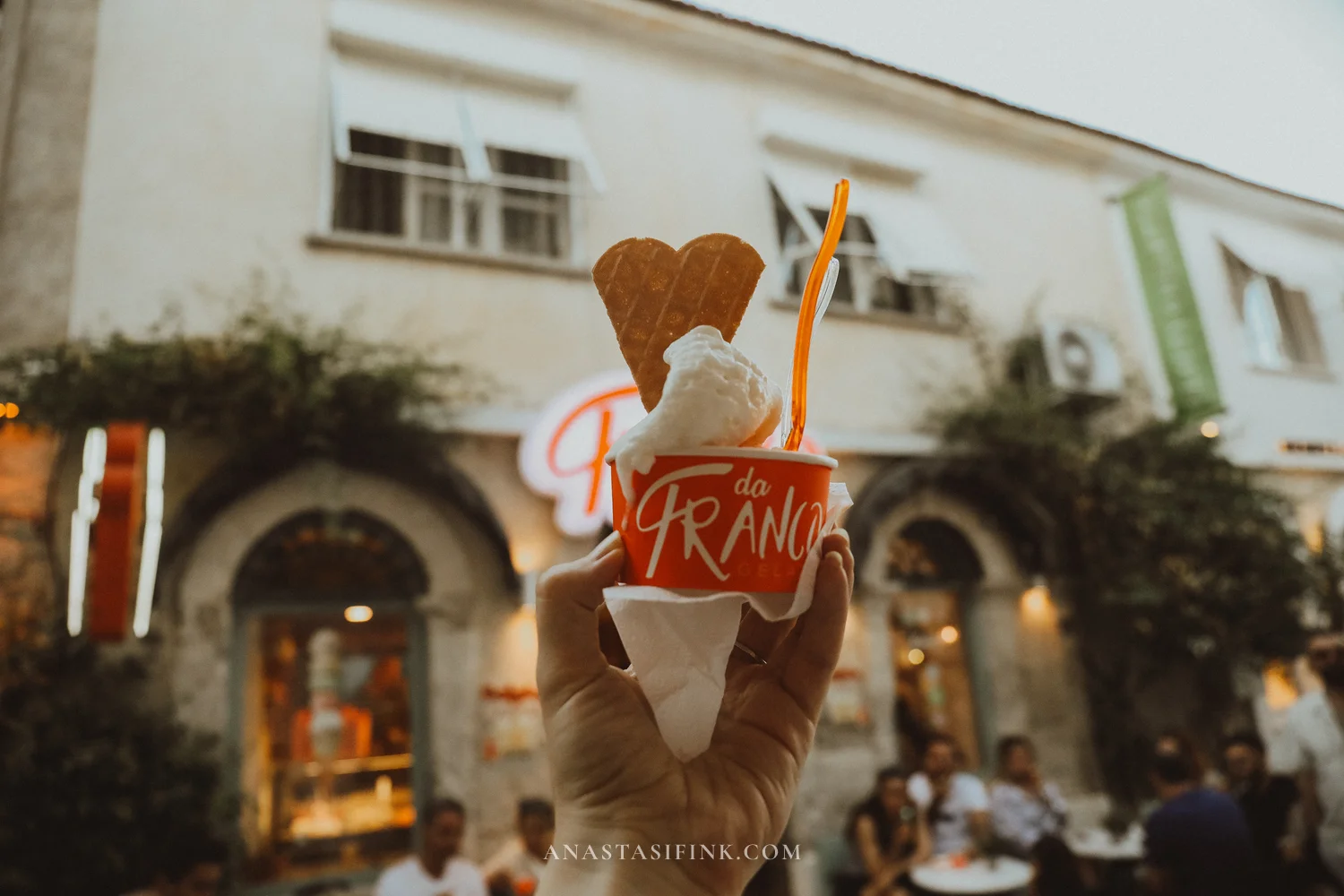
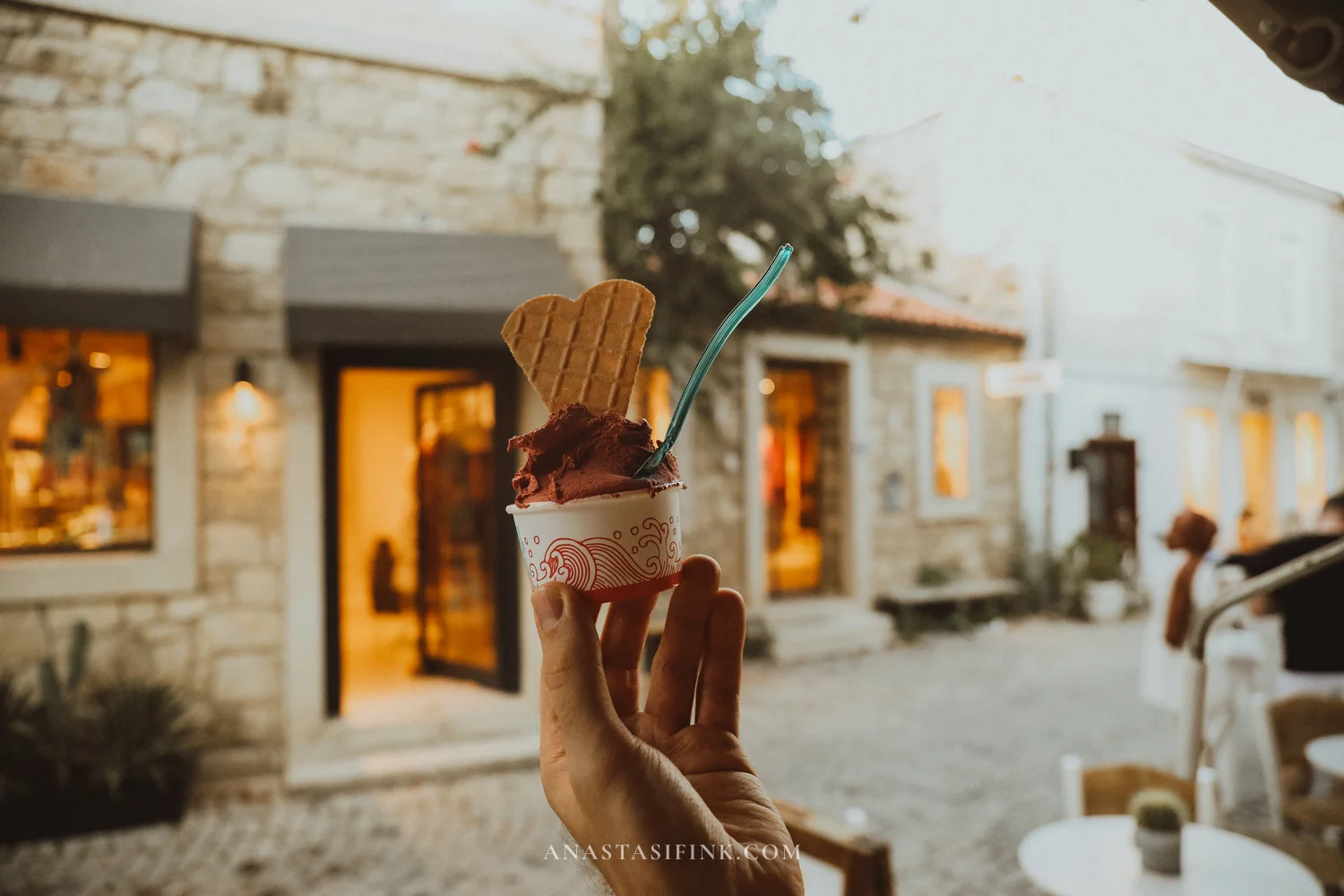
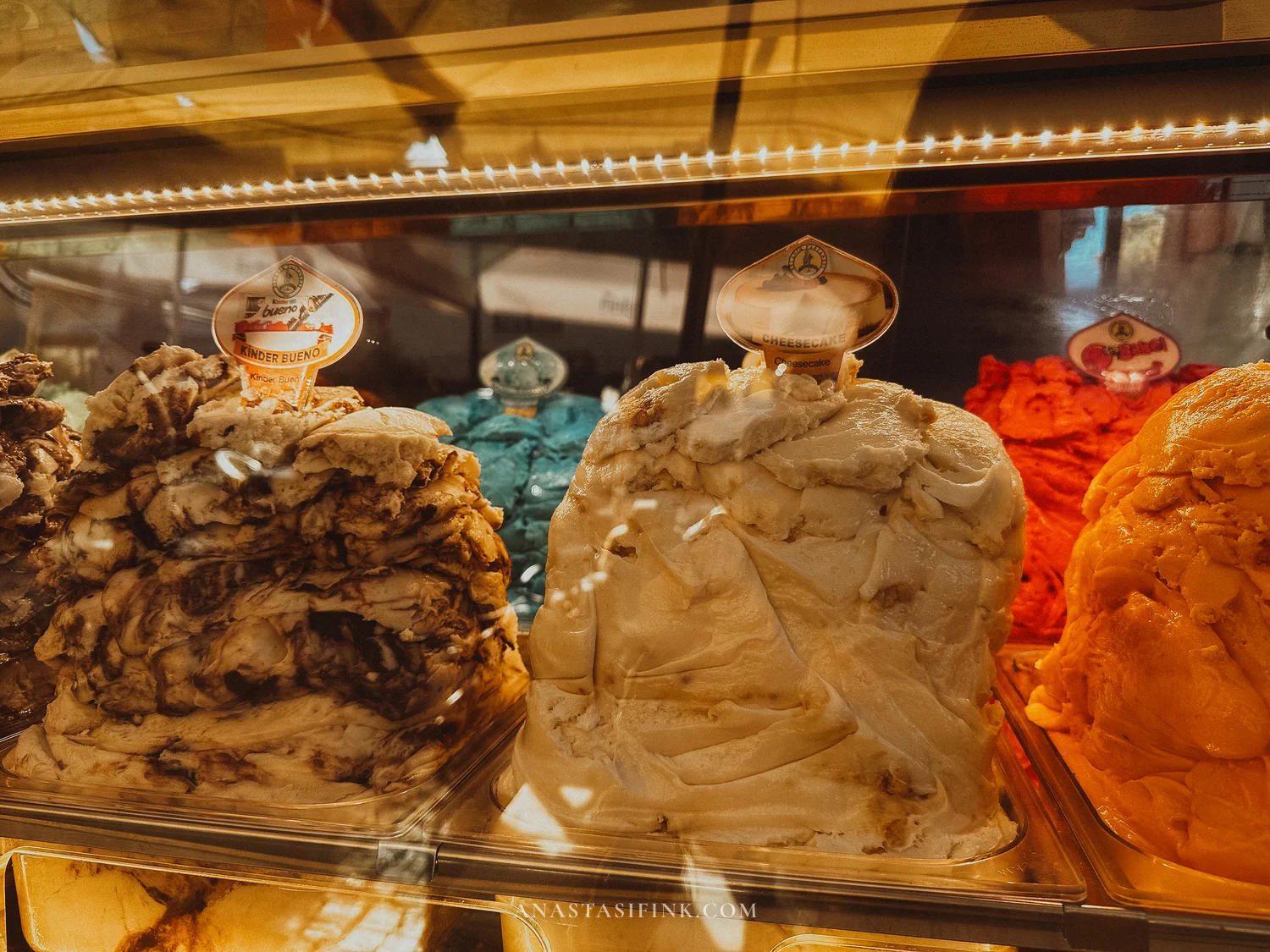
Da Franco chocolate gelato — dense, rich, not overly sweet
Practical Information — Da Franco Gelato
- Address: Alaçatı Mahallesi, 2012 Sokak No.25, Hacımemiş, Alaçatı
- Google Maps: Da Franco Gelato
- Rating: 4.3/5 on TripAdvisor
- Prices: above average for Turkey (artisanal Italian gelato)
Dondurmino Gelato — Another Gelato Spot in Alaçatı
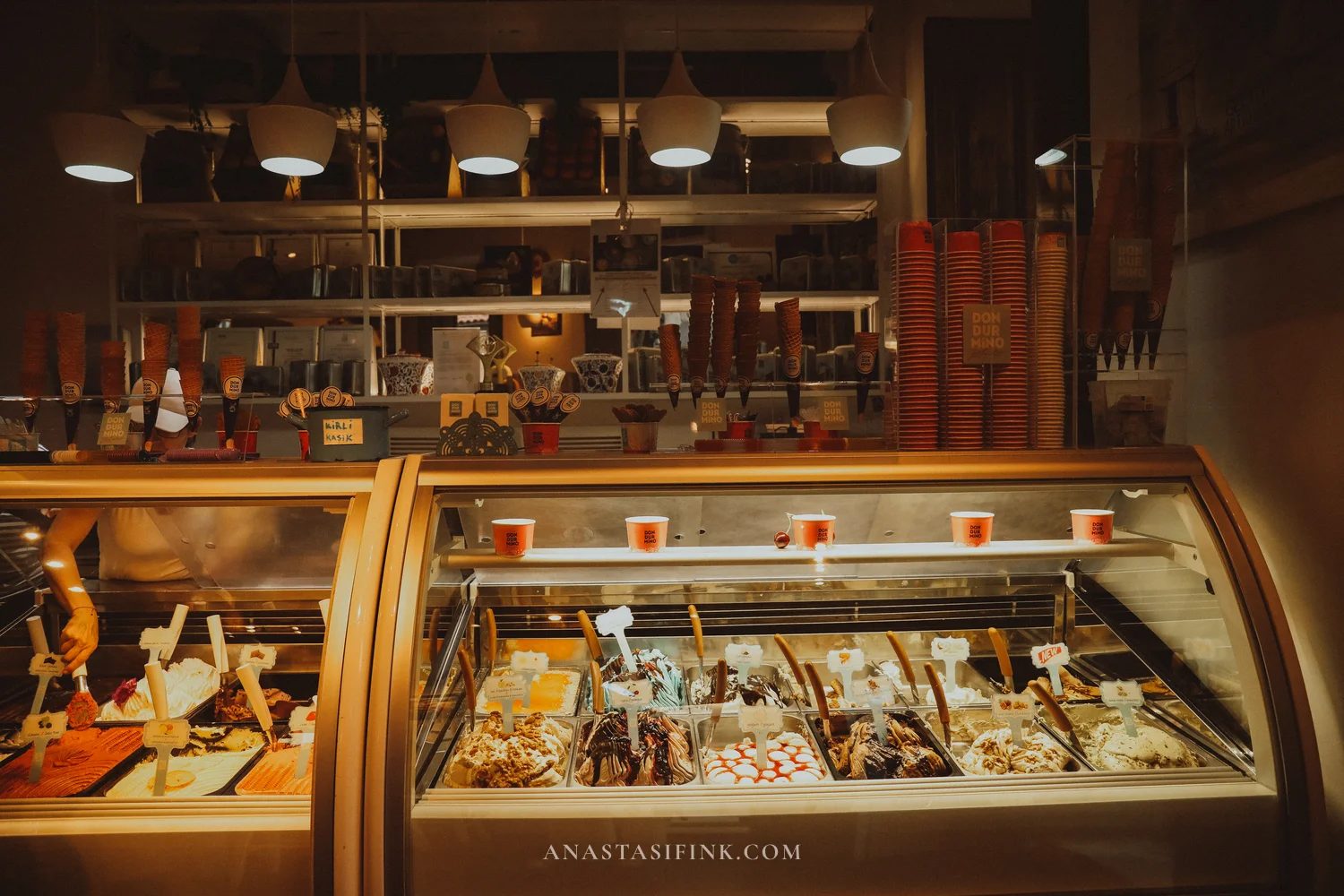
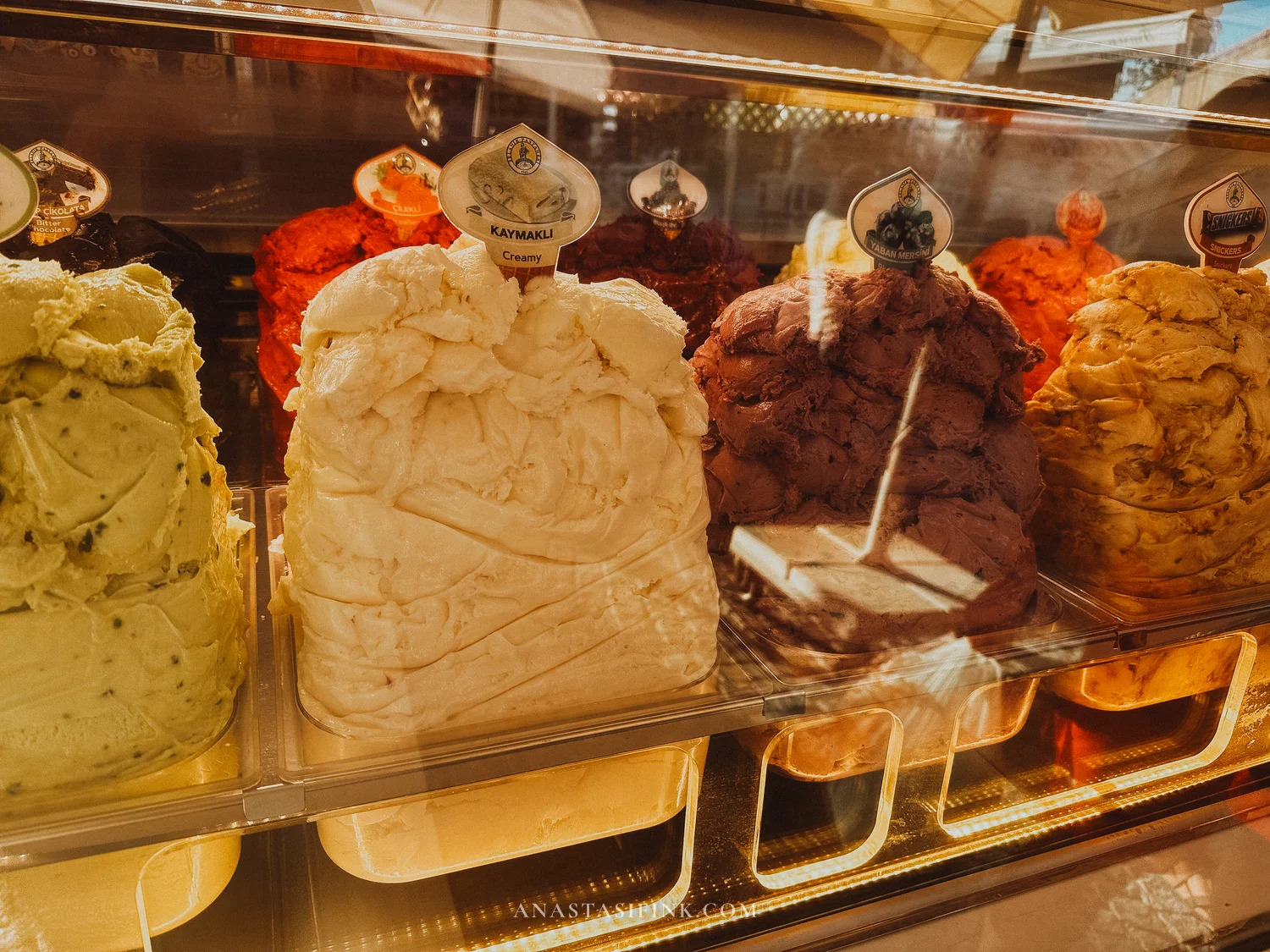
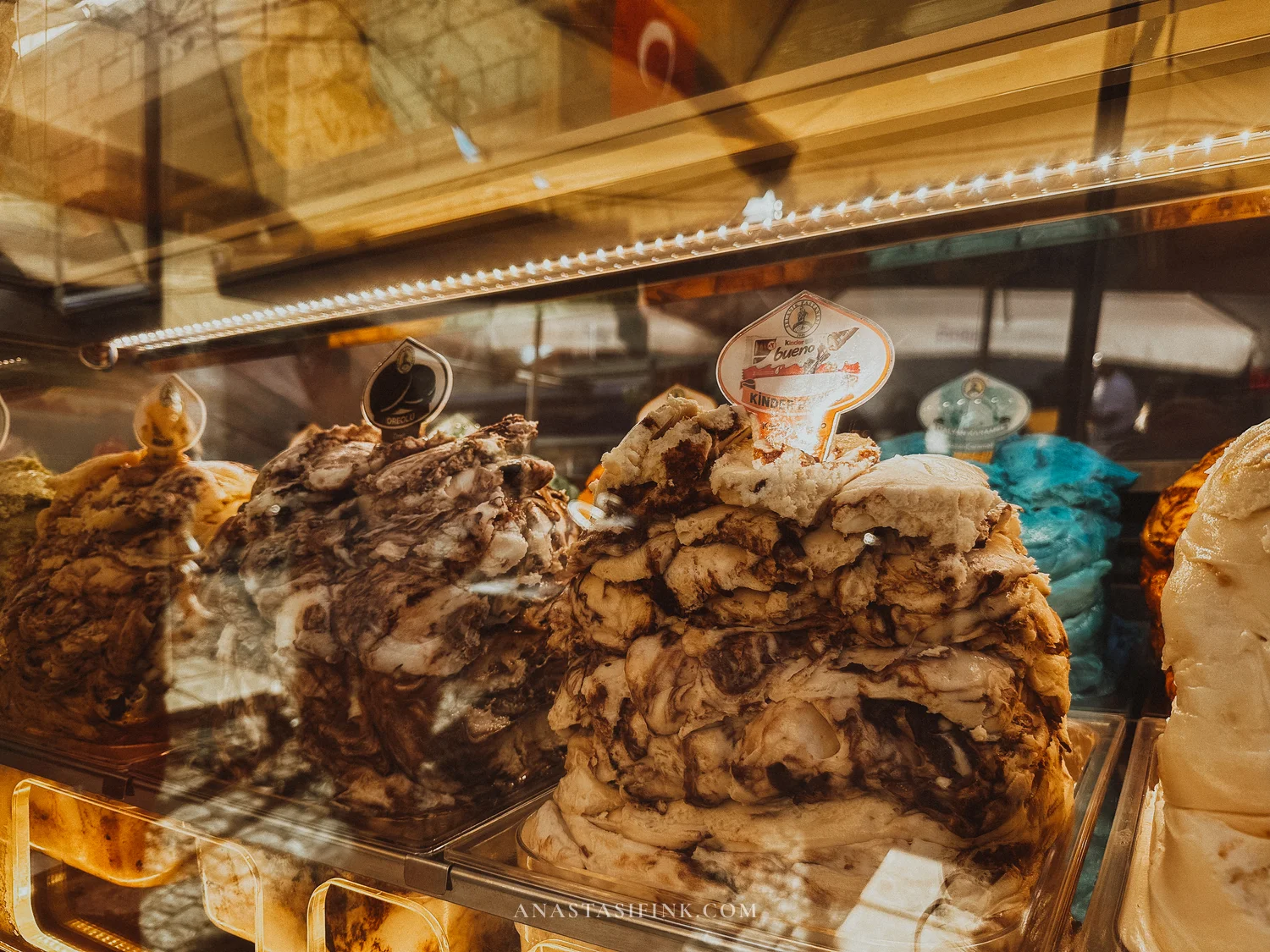
Dondurmino Gelato is another gelato spot in Alaçatı. A display case with dozens of flavors — kaymaklı (clotted cream) is one of the most popular.
Practical Information — Dondurmino Gelato
- Google Maps: Dondurmino Gelato
Practical Information — Alaçatı
- GPS: 38.2825, 26.3746
- Getting there from İzmir: 77 km, ~45 min by car. Çeşme Seyahat bus from Fahrettin Altay terminal, every 15 min (6:00–18:00), ~1 h 5 min
- Getting there from Urla: 54 km, ~45 min by car
- Selanik 1945: Uğur Mumcu Cad. No:6, opposite the windmills
- BASHAQUES: Alaçatı Mahallesi, 12000 Sokak No:15
Tips
- Best time: early fall (September–October) — not too hot, fewer crowds, soft light for photos
- Route: start with Urla in the morning (closer to İzmir), then drive to Alaçatı for lunch
- Transport: a car is best. Public transport exists but isn’t convenient between the two towns
- Budget: Urla is cheaper, Alaçatı is pricier. Restaurants in Alaçatı charge European-level prices
- For photographers: the best light in Alaçatı is 2 hours before sunset, when stone walls turn golden. Mornings bring soft light and empty streets
Tip for photographers
FAQ
To Urla — 35 km, about 25 minutes by car or by ESHOT bus (lines 738, 984). To Alaçatı — 77 km, about 45 minutes by car or by Çeşme Seyahat bus from Fahrettin Altay terminal (departures every 15 minutes).
Yes, it makes a great day trip. Start with Urla in the morning, spend 2–3 hours there, then drive to Alaçatı for the afternoon and evening. The distance between the towns is 54 km, about 45 minutes by car.
The most comfortable period is September–October: not hot, fewer tourists, beautiful light. In summer (July–August) it’s hot and crowded, but the evenings are lively. April brings the Herb Festival (Ot Festivali).
Gelato at Da Franco Gelato and lemon blossom jam at Selanik 1945 are musts. Mastic ice cream is a local specialty. At restaurants, look for Aegean cuisine with herbs and olive oil.
Absolutely — especially if you like off-the-beaten-path places. Urla has an Art Street, boutiques with unusual décor (Ekrou Boutique with Balinese furniture), great ice cream at Necco Dondurma, and murals on stone walls.
Mastic is a resin from the mastic tree, which grows only on the Greek island of Chios and on the Çeşme peninsula. It’s added to ice cream, cookies, puddings, and drinks. The flavor is subtle, piney, and slightly sweet. In Alaçatı and Urla, mastic products are part of the local food culture.
A car is the most convenient option, especially for getting between Urla and Alaçatı. Without a car, you can take buses from İzmir, but there’s no direct route between the two towns — you’d need to go back through İzmir or take a taxi.
Urla is for those who like stumbling onto things: take a wrong turn and discover a shop full of Balinese furniture. Alaçatı is for those who want a beautiful backdrop and great gelato. Best of all — visit both in a single day.
Anastasi Fink