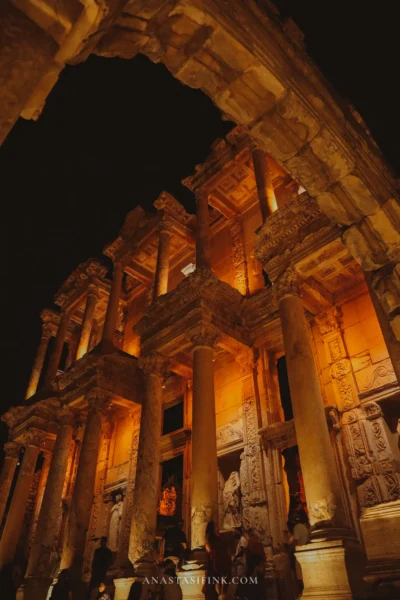
Tlos, Turkey: Ancient Lycian City Near Fethiye You Should Not Miss

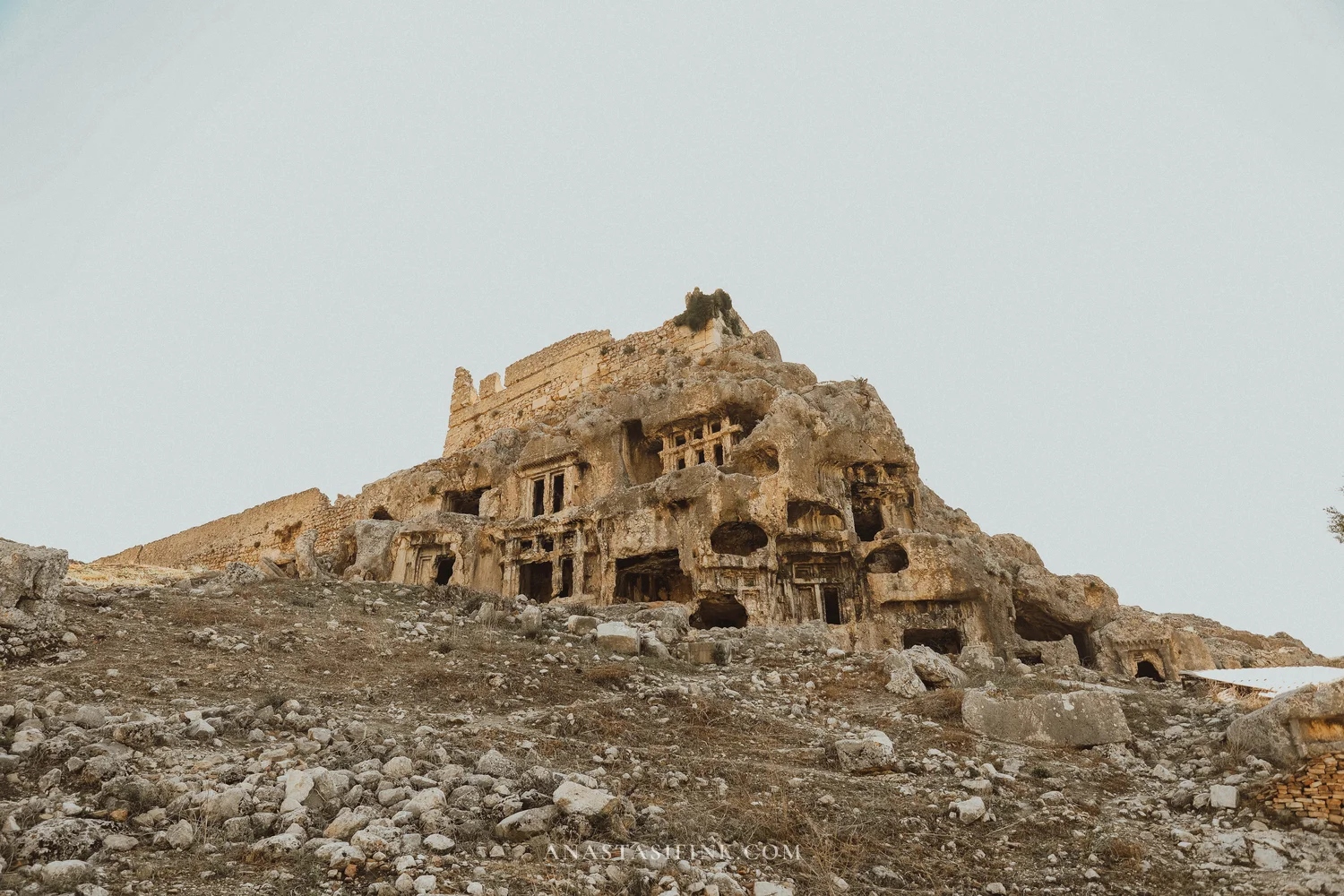
Forty minutes on a motorbike from Fethiye, and there I was — standing in front of a cliff face carved with dozens of tombs. Not a single tourist in sight. Just me, a tortoise on the path, and four thousand years of history.
Why Visit Tlos
Tlos is not Ephesus. It is not Pamukkale. There are almost no tourists here. People come not for postcard-perfect shots but to wander among ruins, run their fingers over stones inscribed in Ancient Greek, and look out over a valley where an entire civilization once thrived.
For history lovers: Tlos was a member of the Lycian League — an alliance of six major cities, something like an ancient parliament. Each city had between one and three votes, and Tlos held the maximum of three. In other words, it was one of the most powerful cities in the region.
Rock-Cut Tombs — A City of the Dead Carved Into Stone
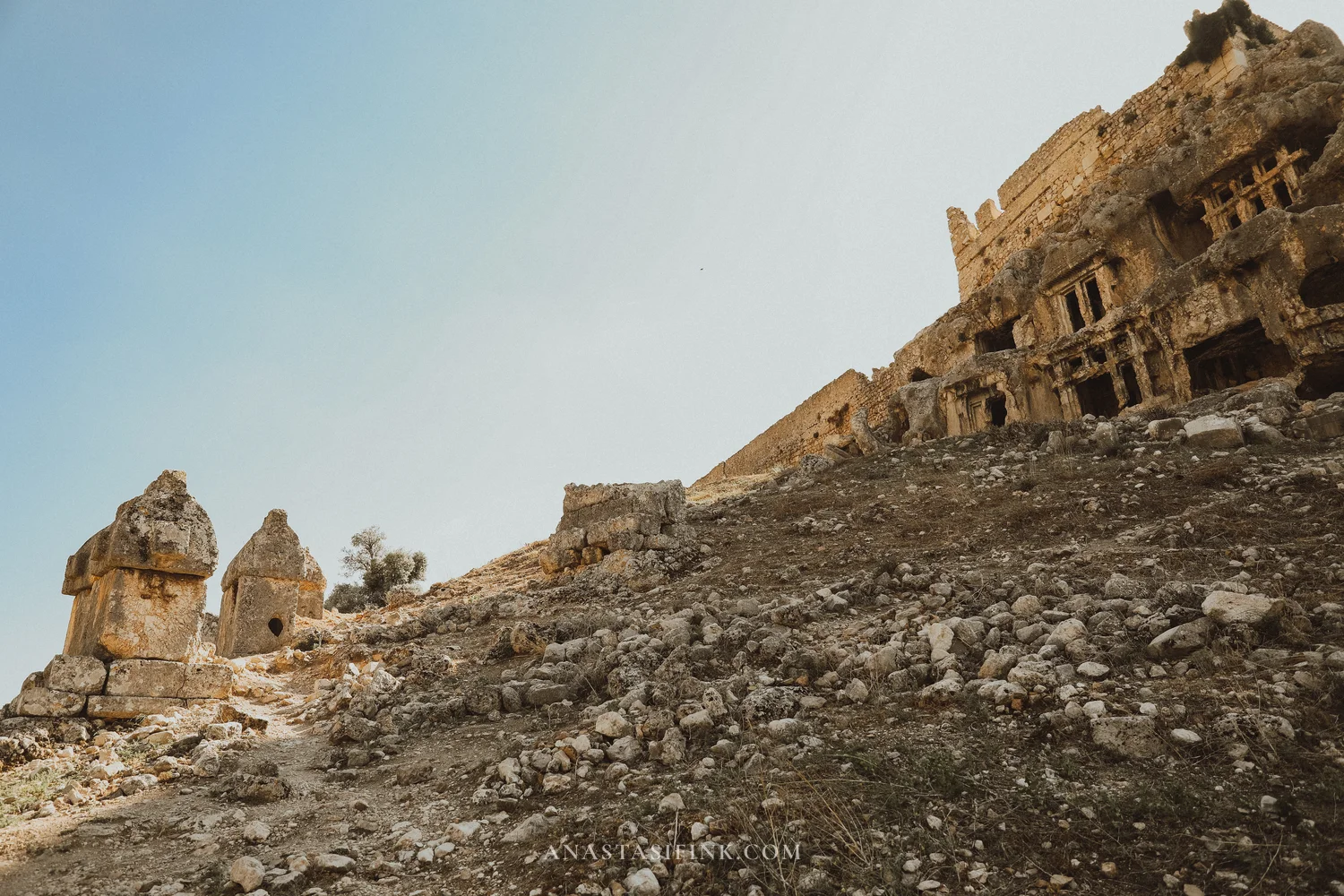
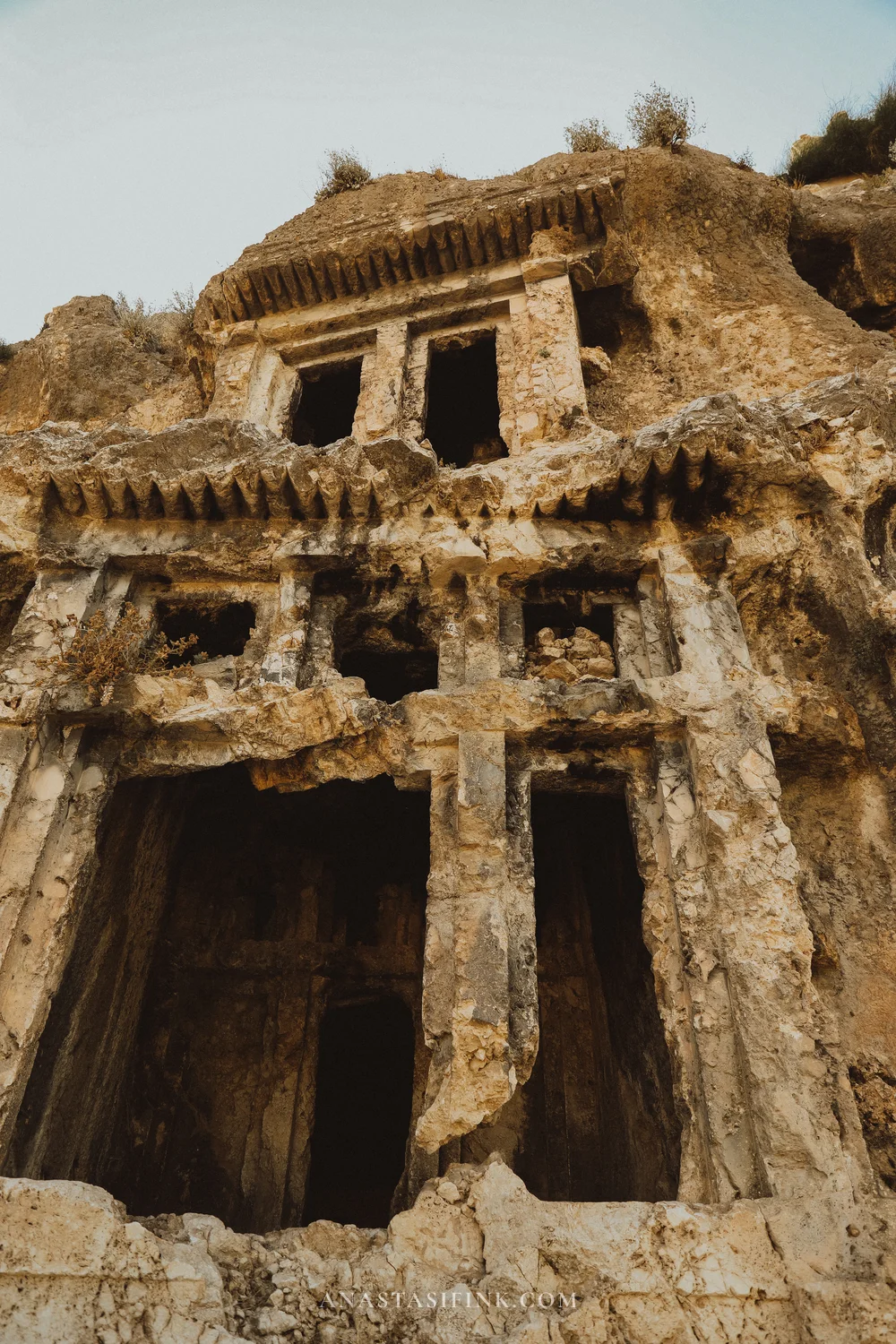
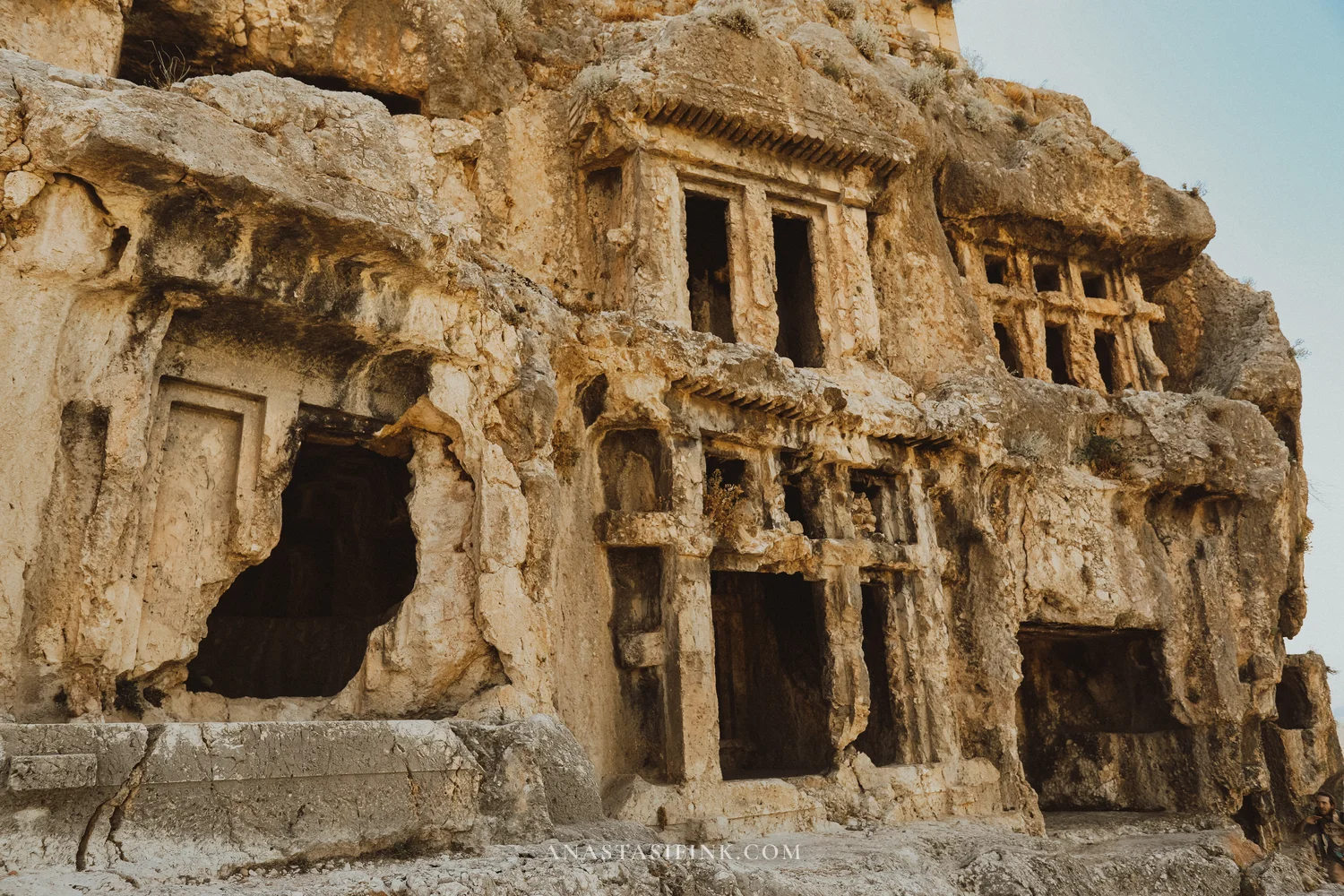
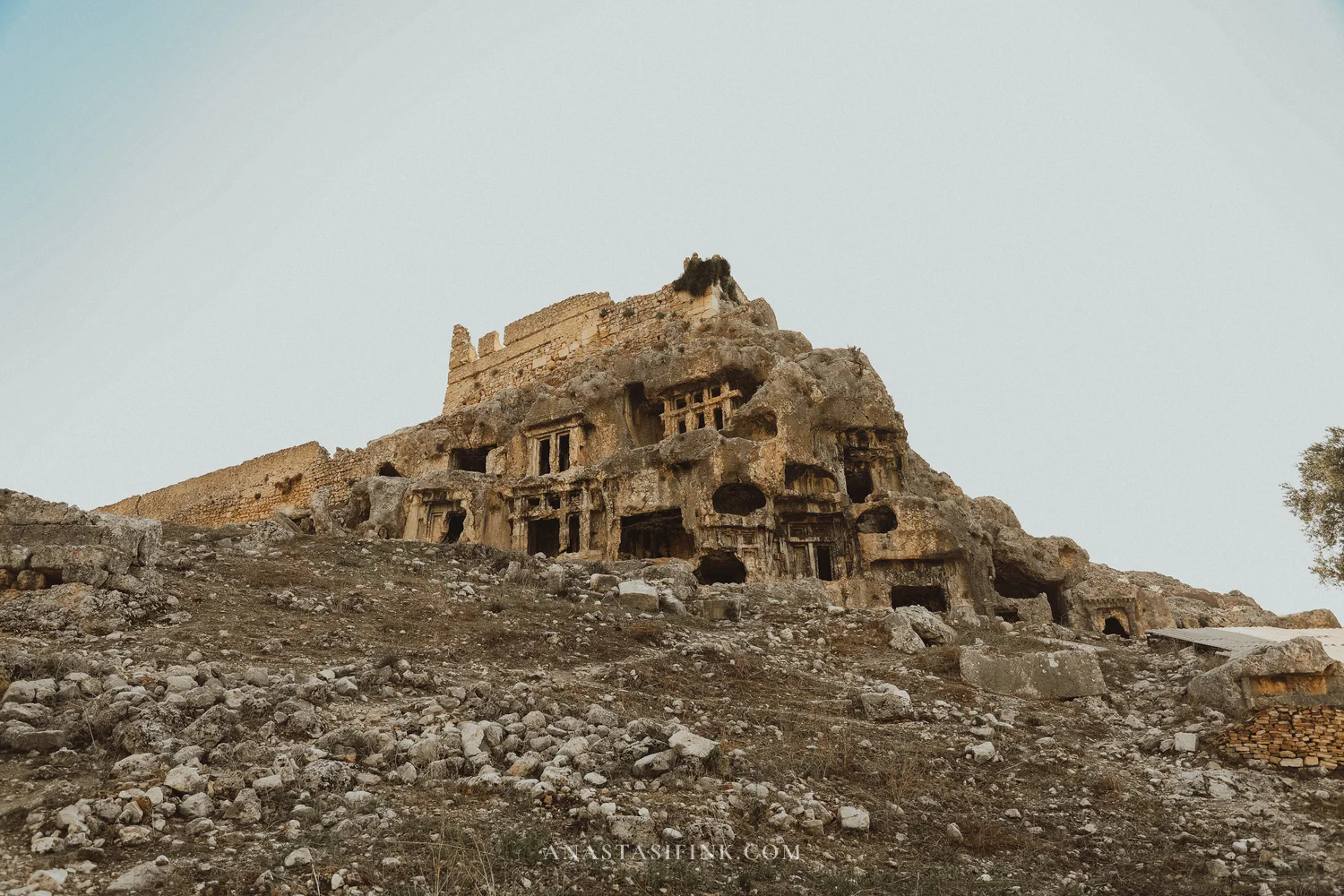
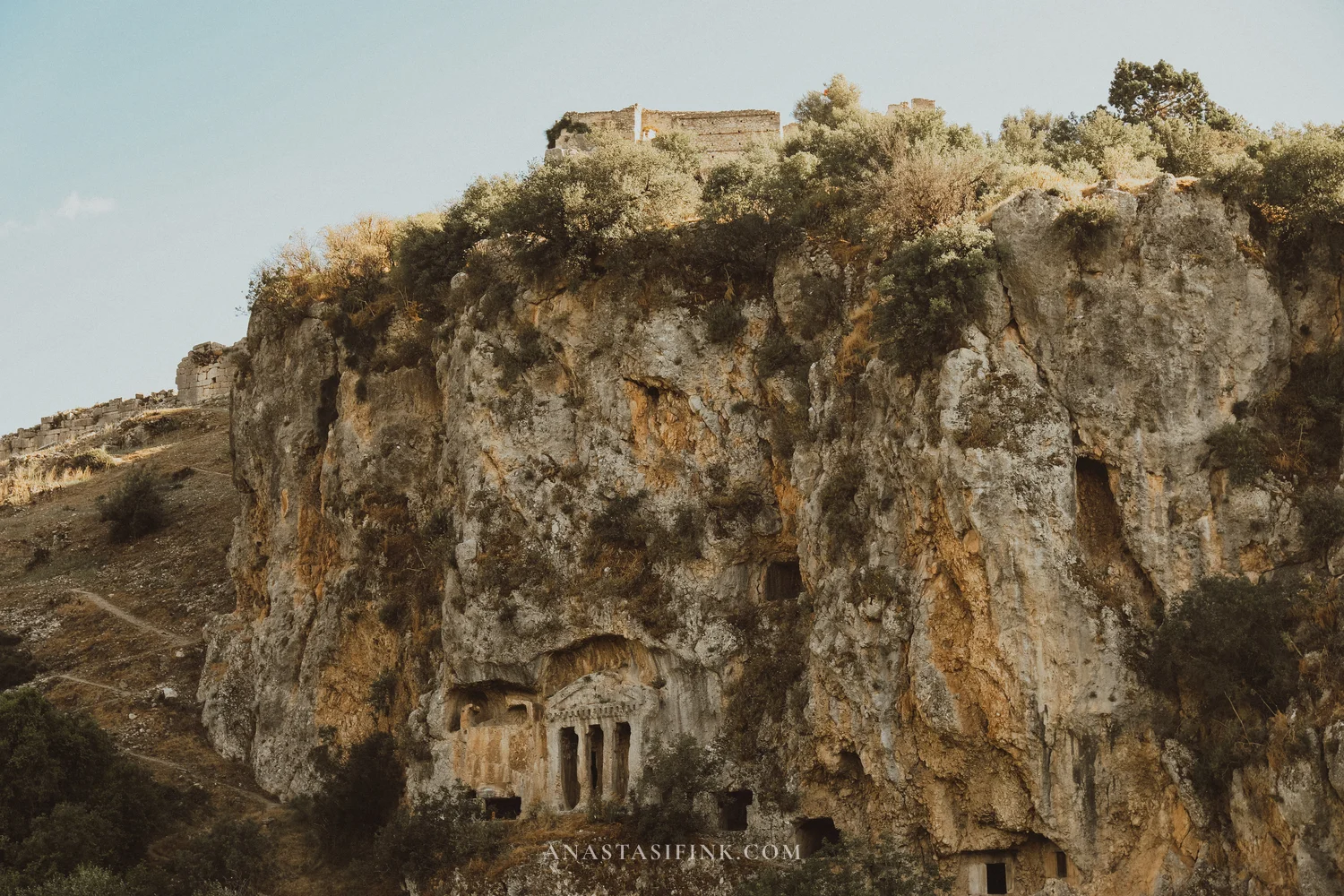
The first thing you see at Tlos is a massive cliff riddled with tombs. Dozens of burial chambers are carved into the rock face at different heights — from ground level all the way to the top. The Lycians buried their dead as high as possible, believing it helped the soul reach the sky.
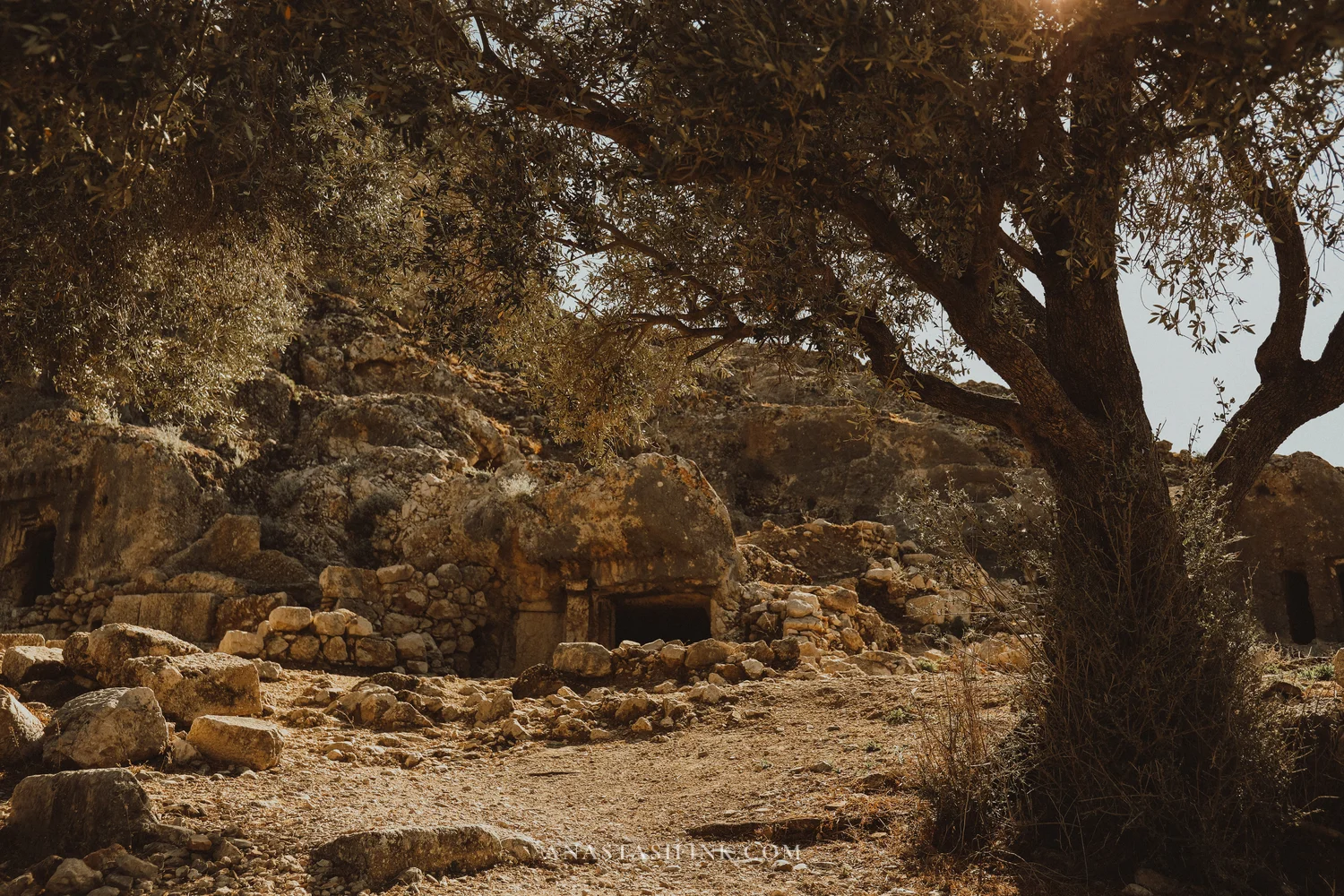
The tomb facades imitate traditional Lycian wooden houses, complete with beams, columns, and pediments. Some look more like Greek temples with Ionic columns — the Lycians had extensive contact with the Greeks, and it shows.
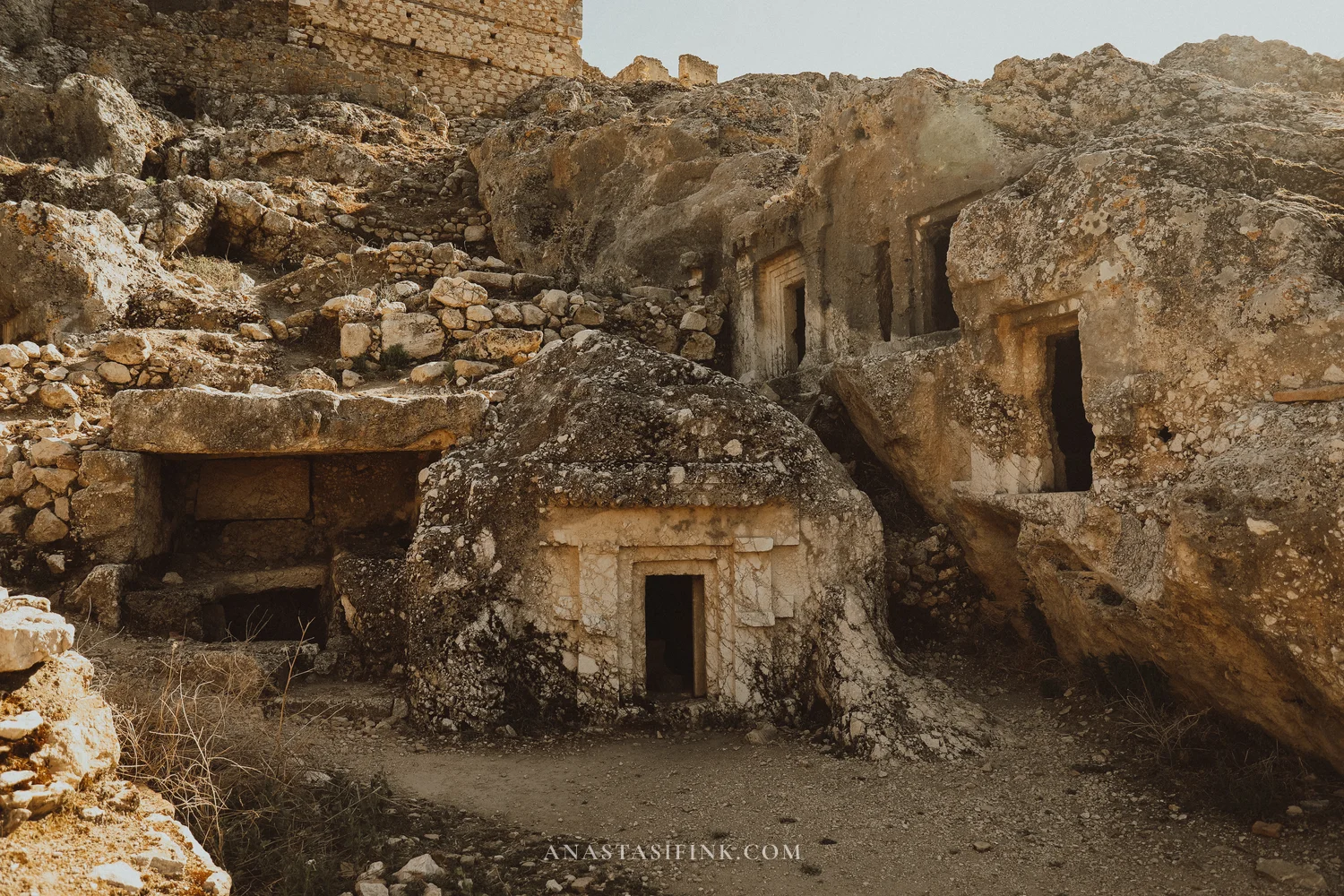
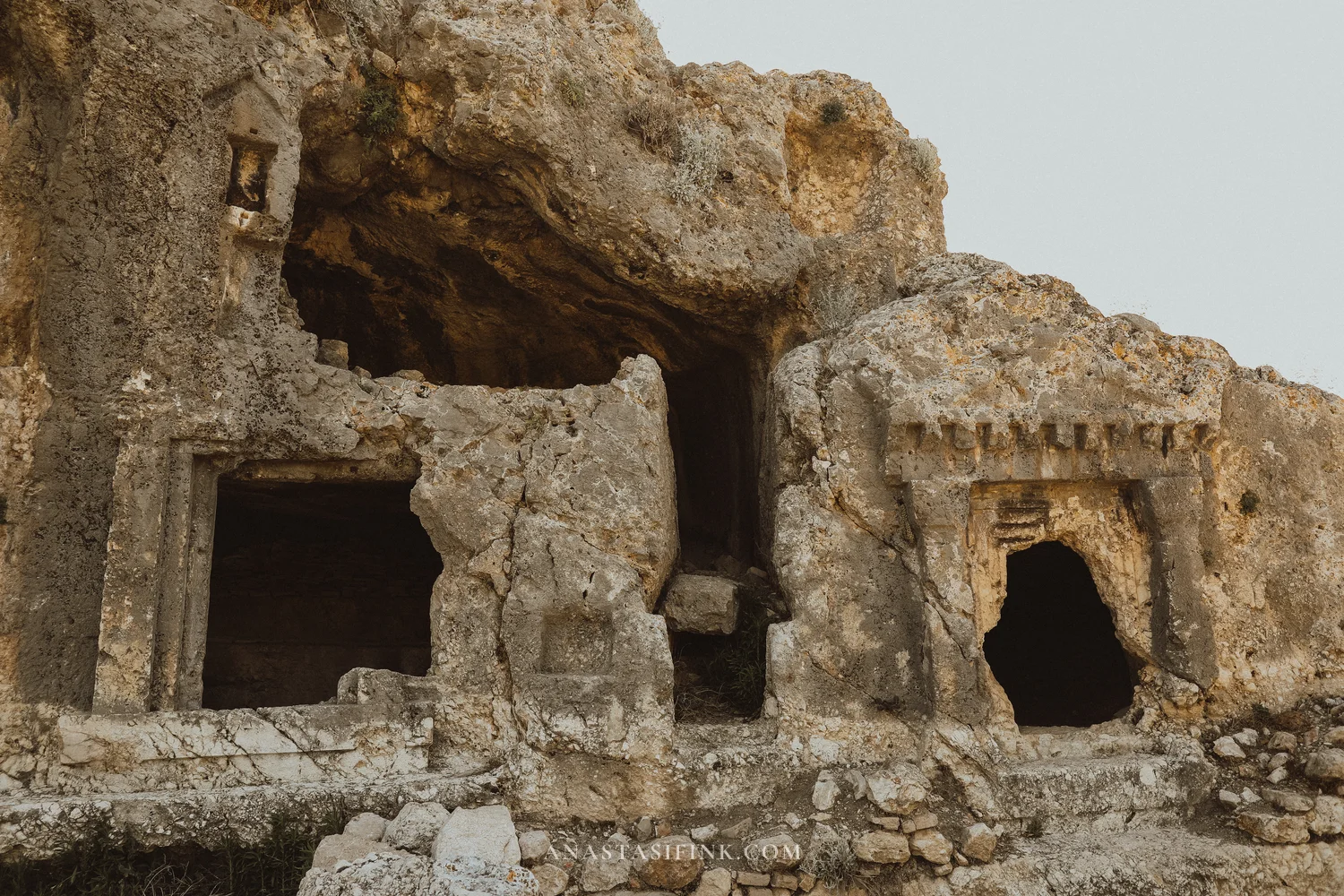
Every tomb is unique. The carvings are so well-preserved they look like they were finished yesterday
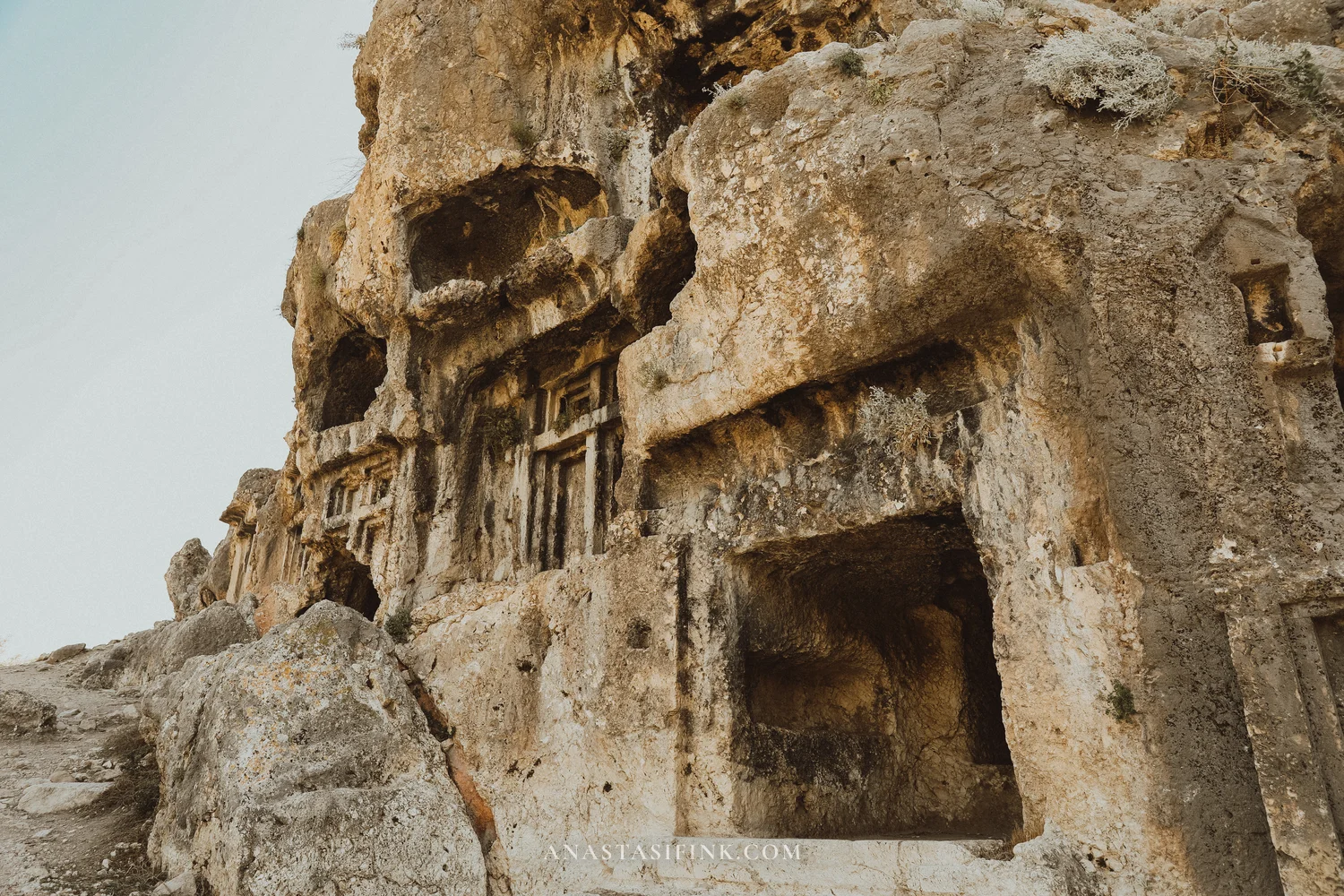
The Tomb of Bellerophon — Tlos’ Crown Jewel
The most famous tomb at Tlos belongs to Bellerophon — the Greek hero who rode the winged horse Pegasus and slew the Chimera (a monster with the head of a lion, body of a goat, and tail of a serpent). The facade still bears a relief of Pegasus, which is exceptionally rare for Lycian tombs.
Here is what makes it even more interesting: Bellerophon had deep ties to Lycia. According to Homer’s Iliad, he was sent to the Lycian king, proved his valor, and was rewarded with half the kingdom. For the locals, he was not some foreign hero — he was one of their own.
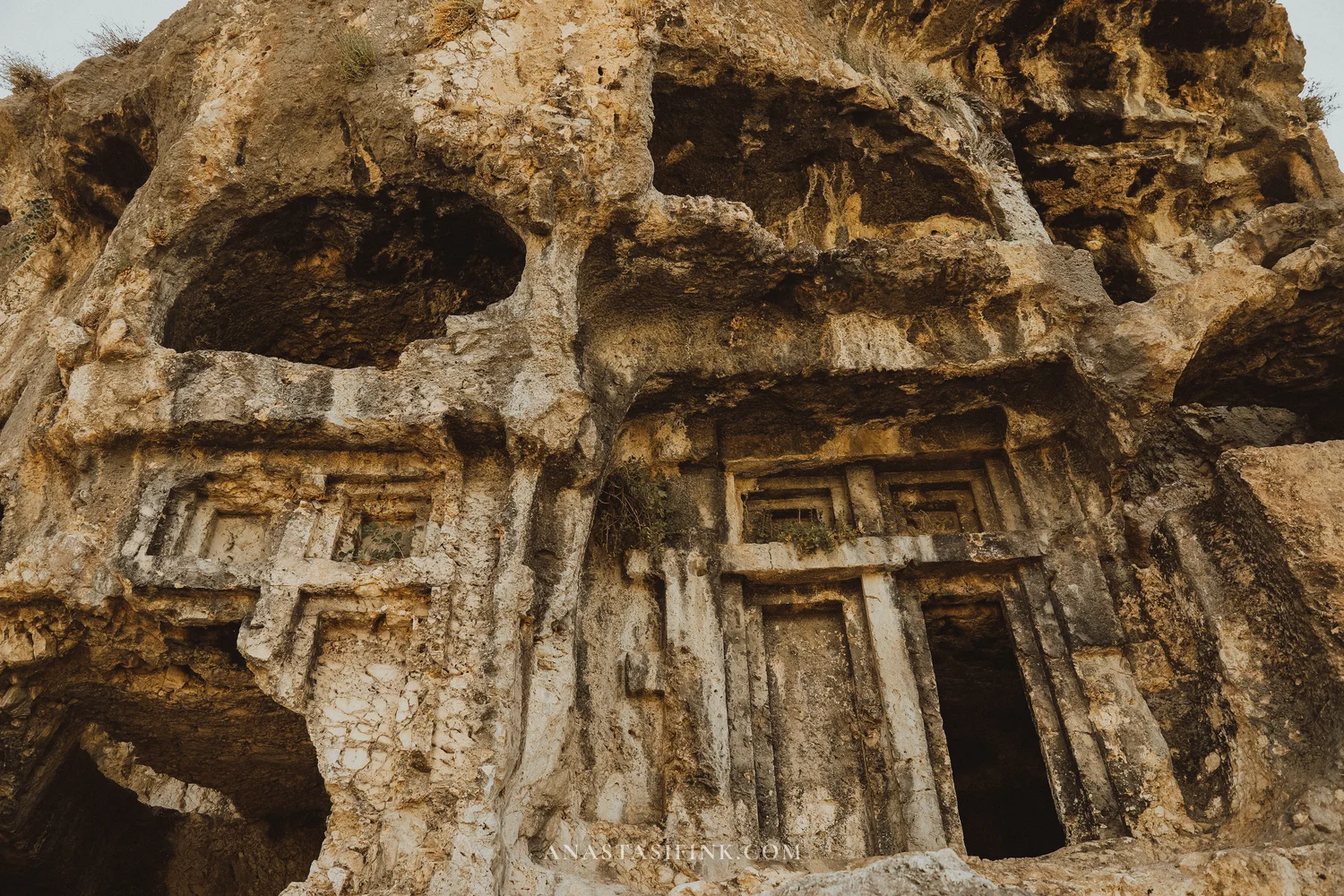
Inside the Tombs
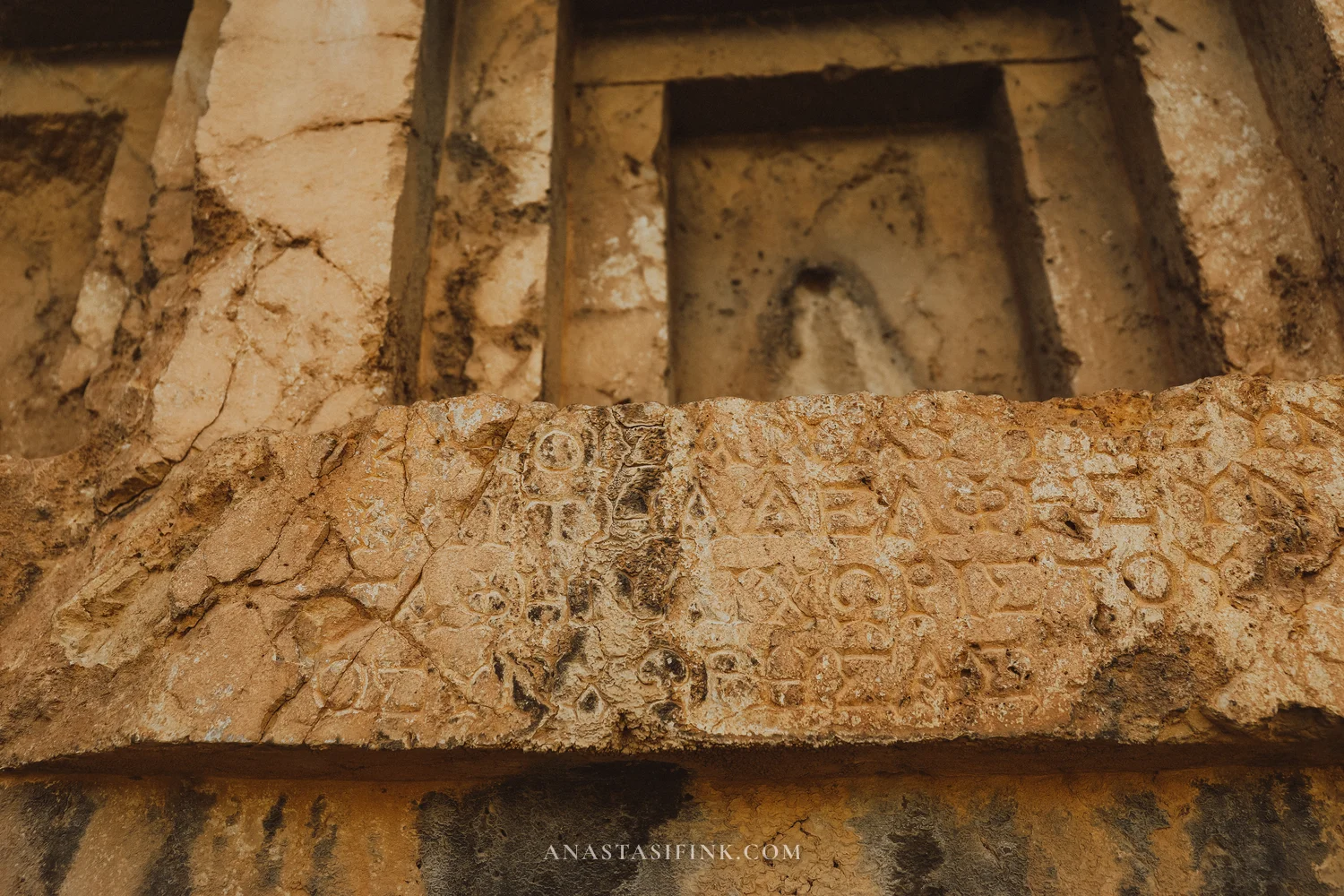
Some tombs are open, and you can peer inside. Ceilings are decorated with geometric carvings, and lintels bear inscriptions in Ancient Greek. These inscriptions have helped historians reconstruct names, titles, and family connections — who lived here and what role they played.
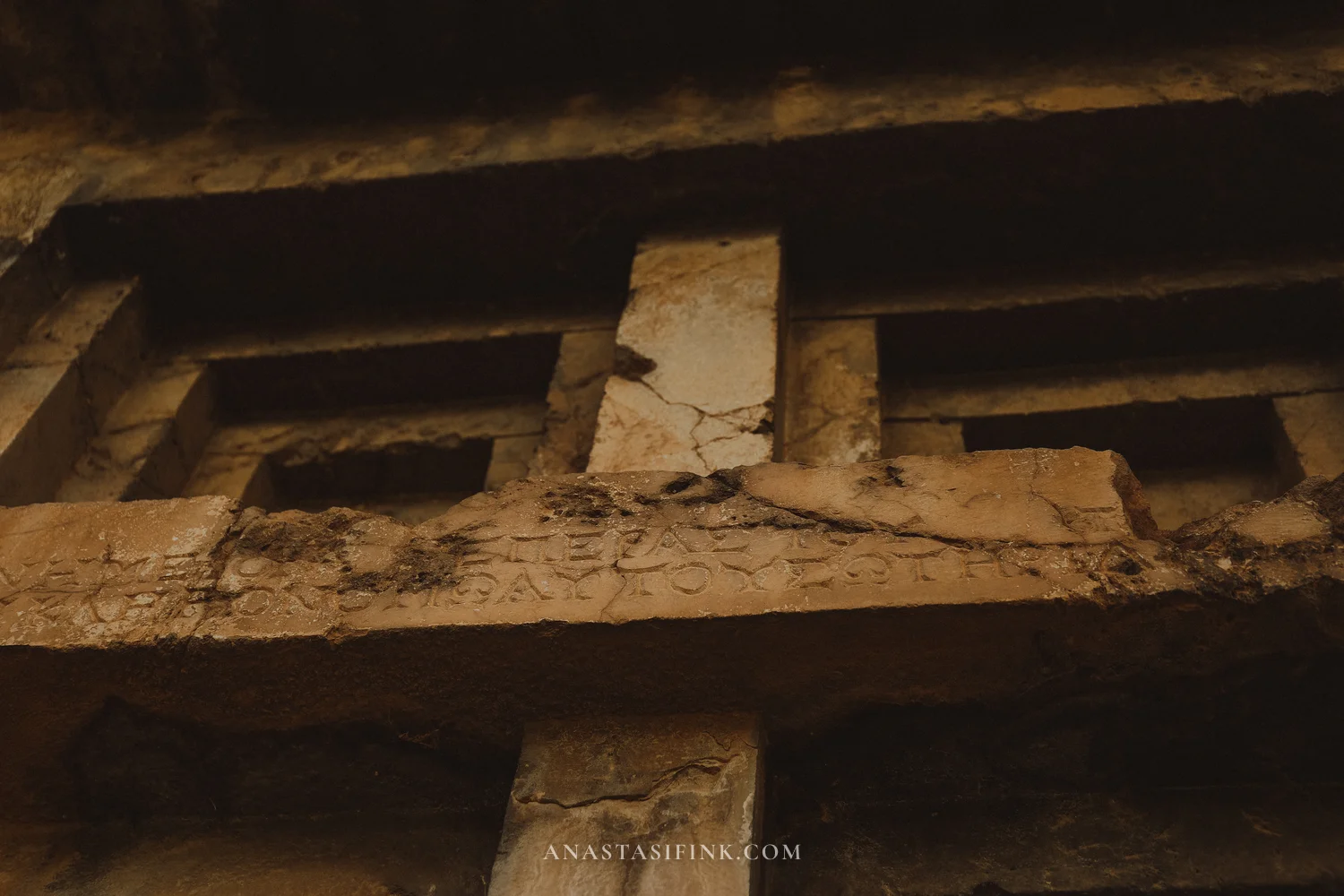
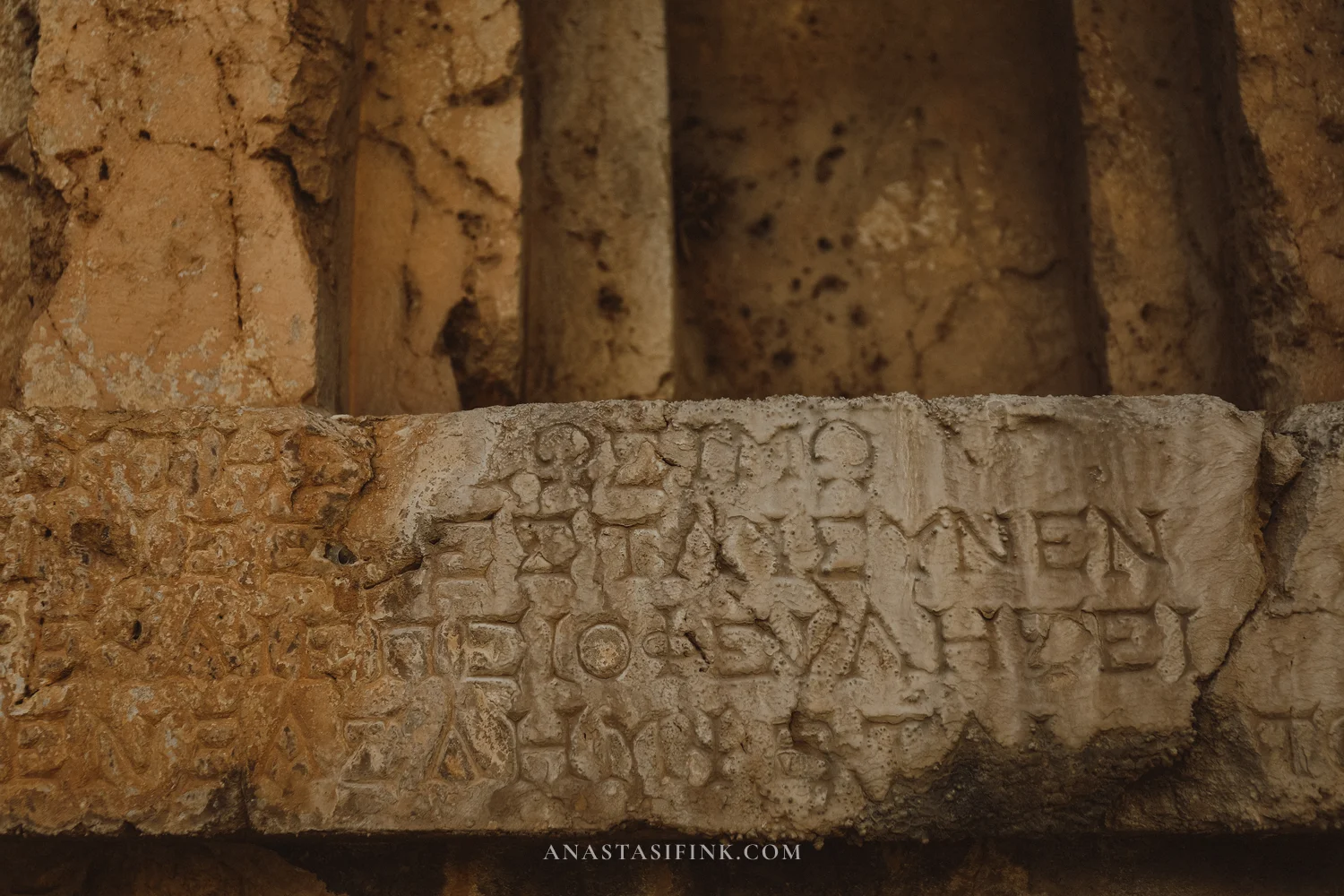
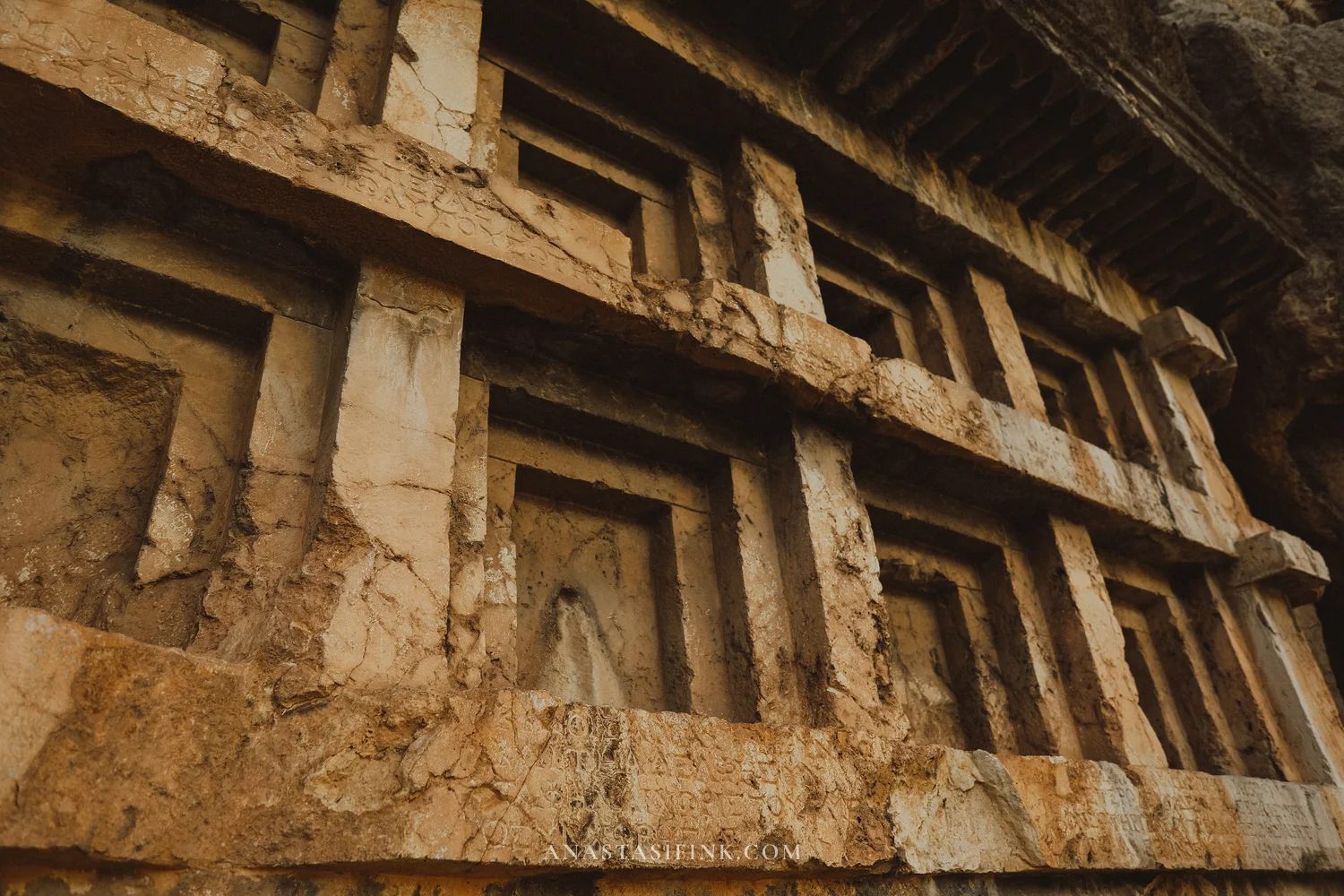
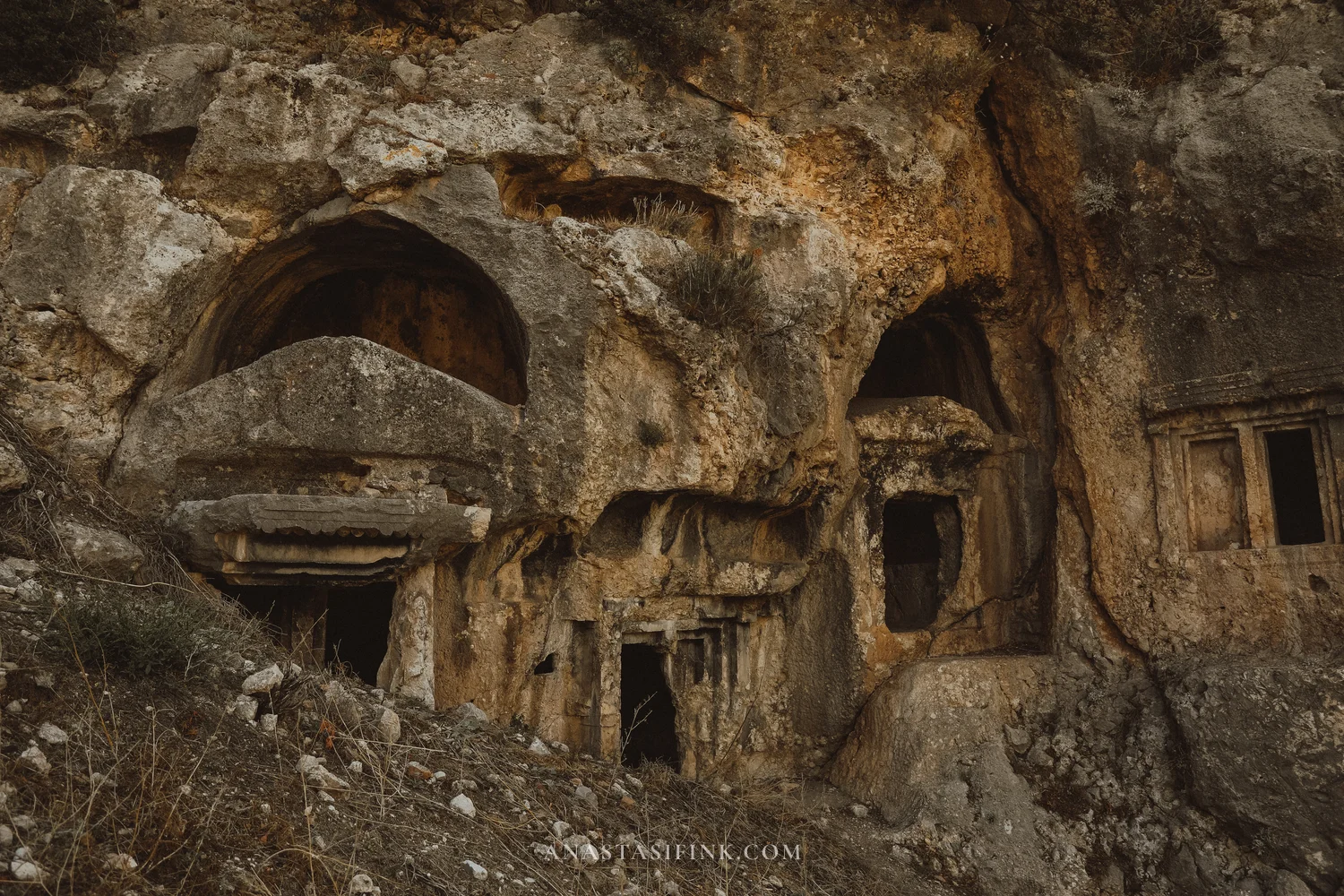
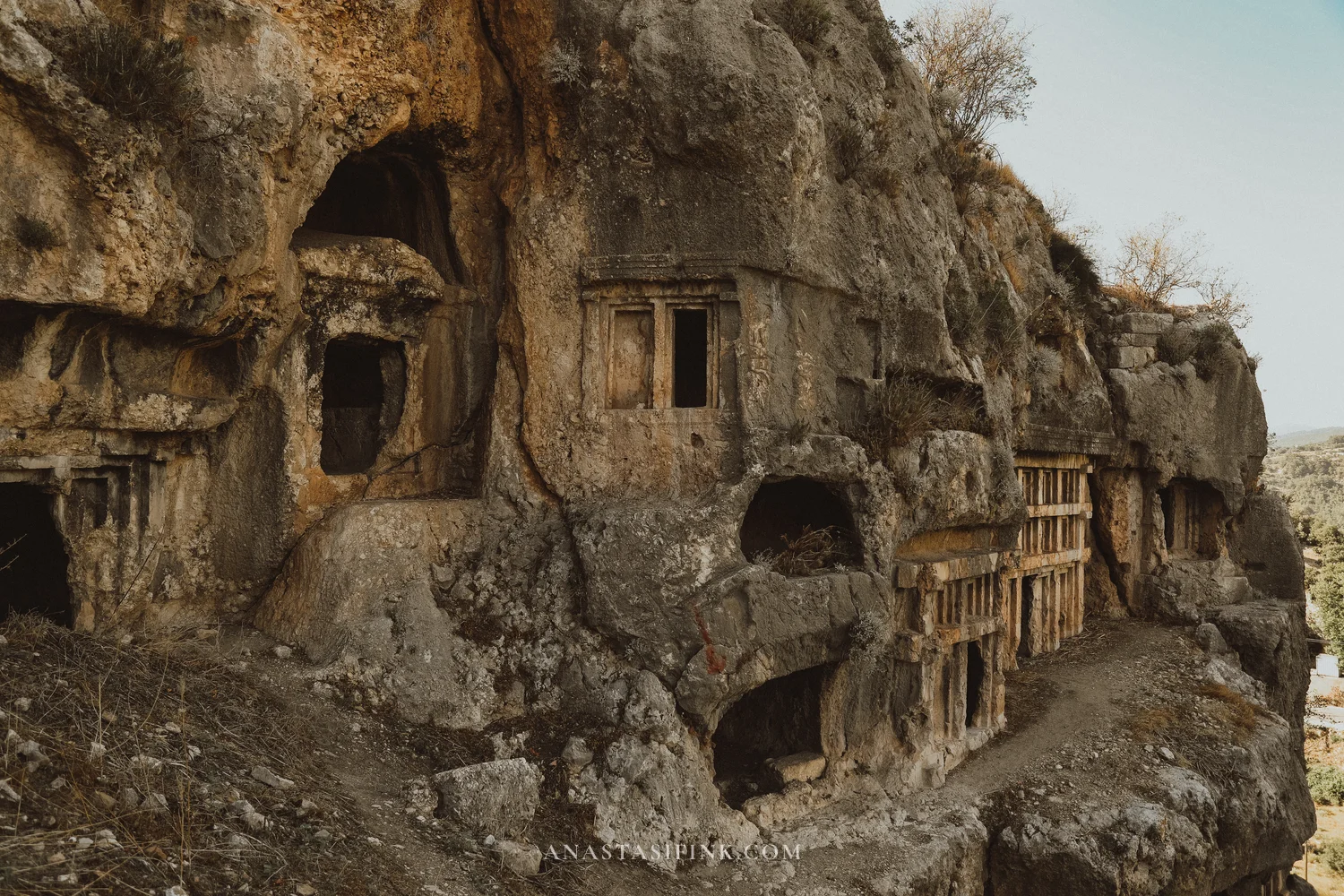
Tombs on multiple levels — reaching the upper ones means scrambling over rocks
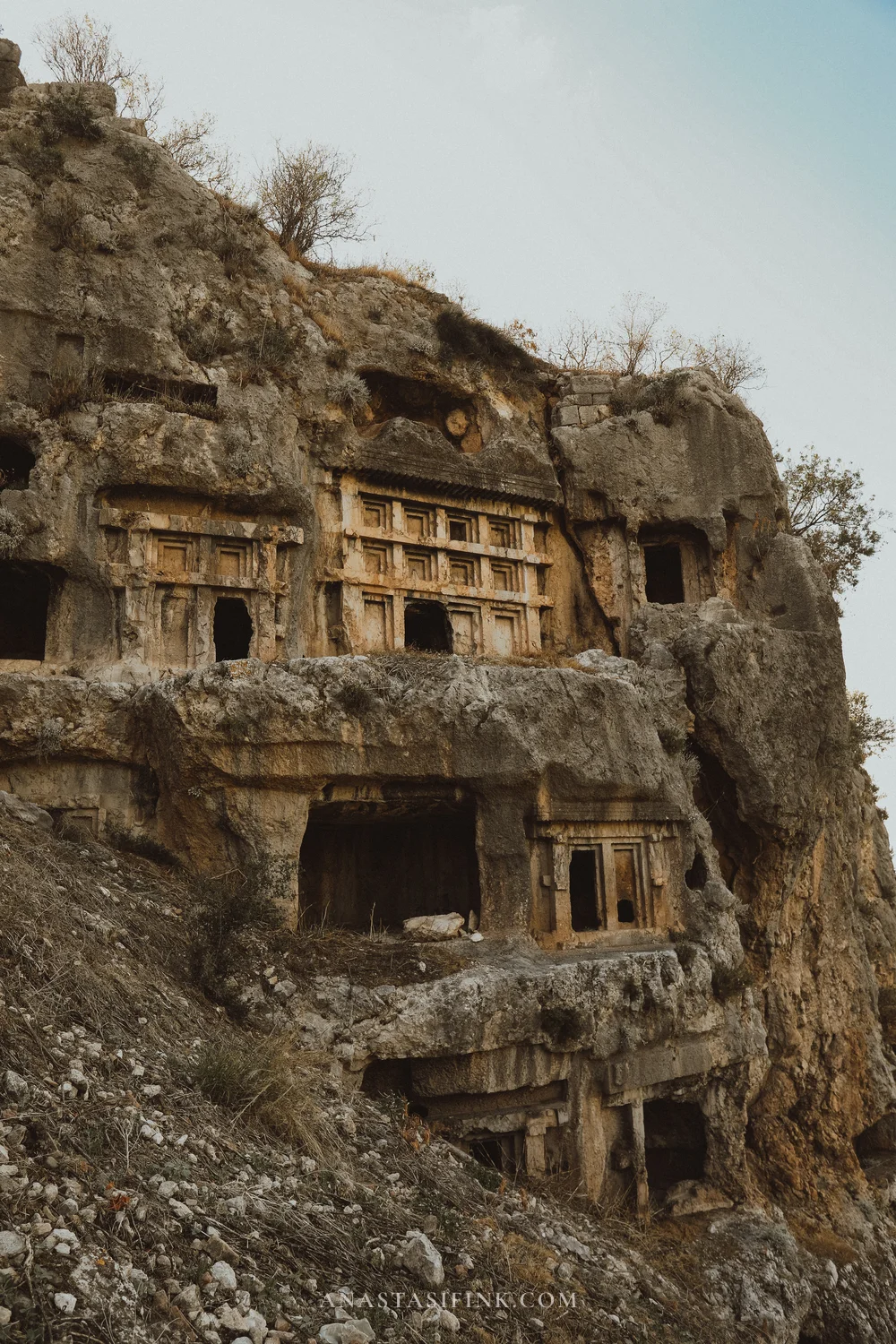
The Acropolis and Fortress — Layers of History
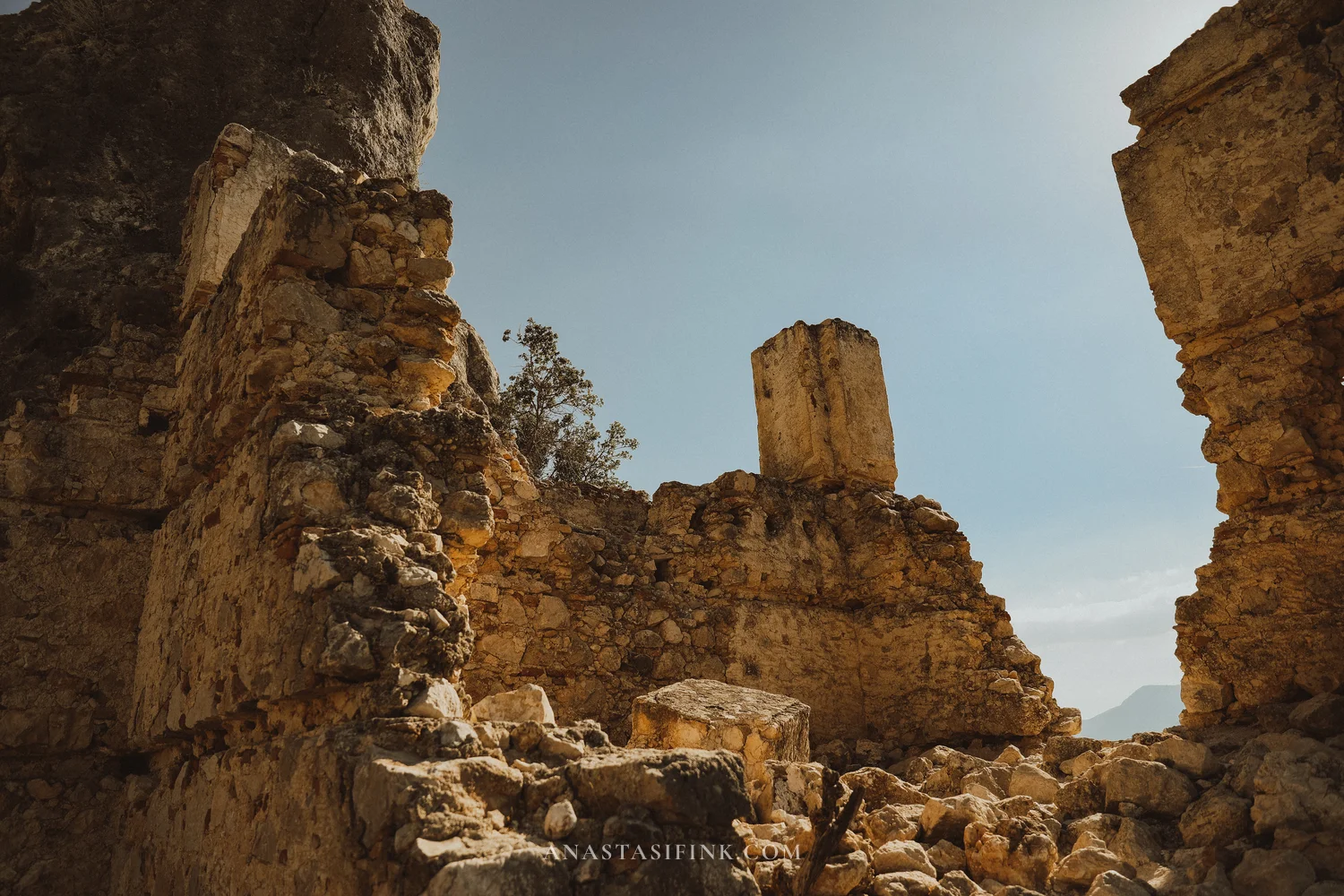
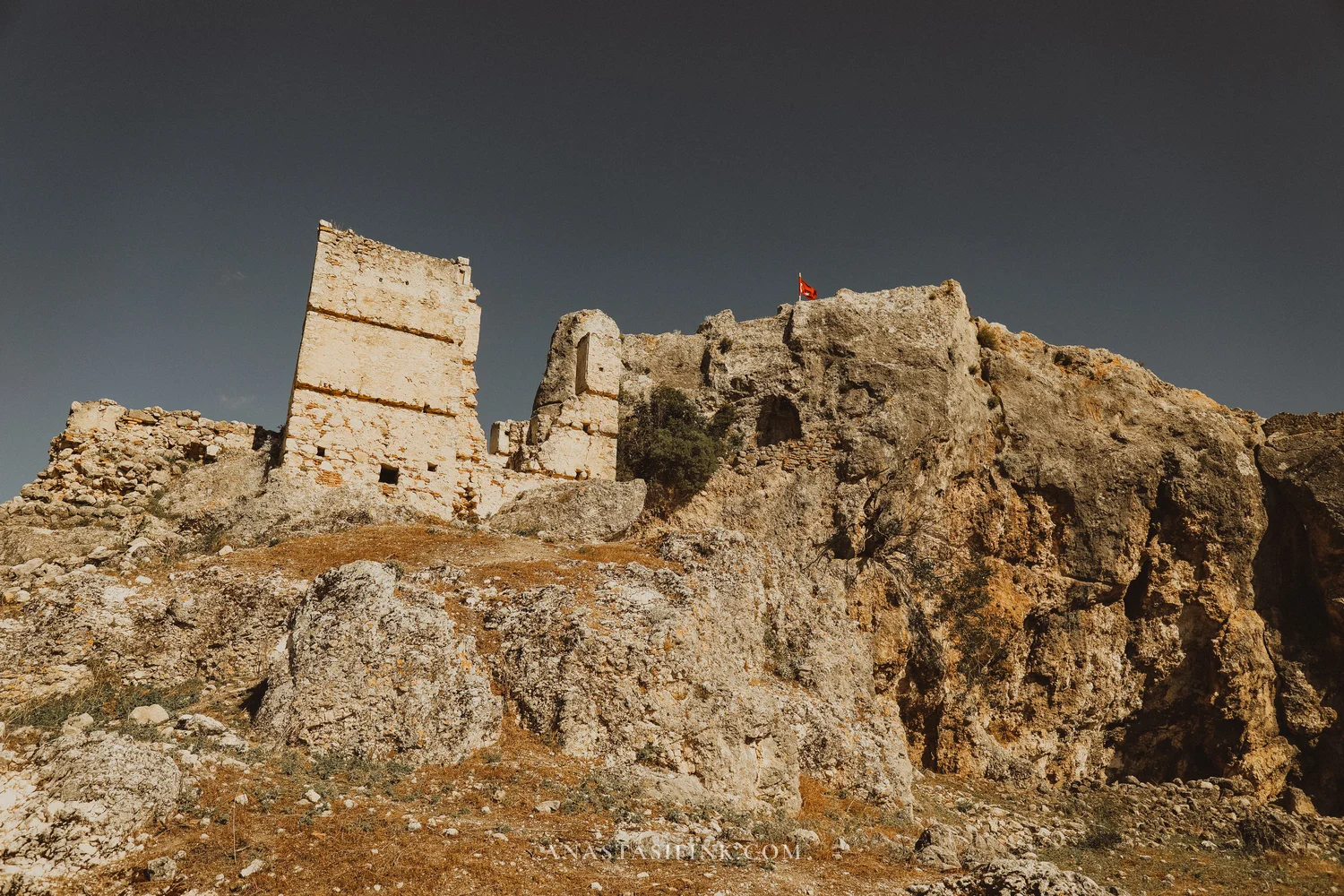
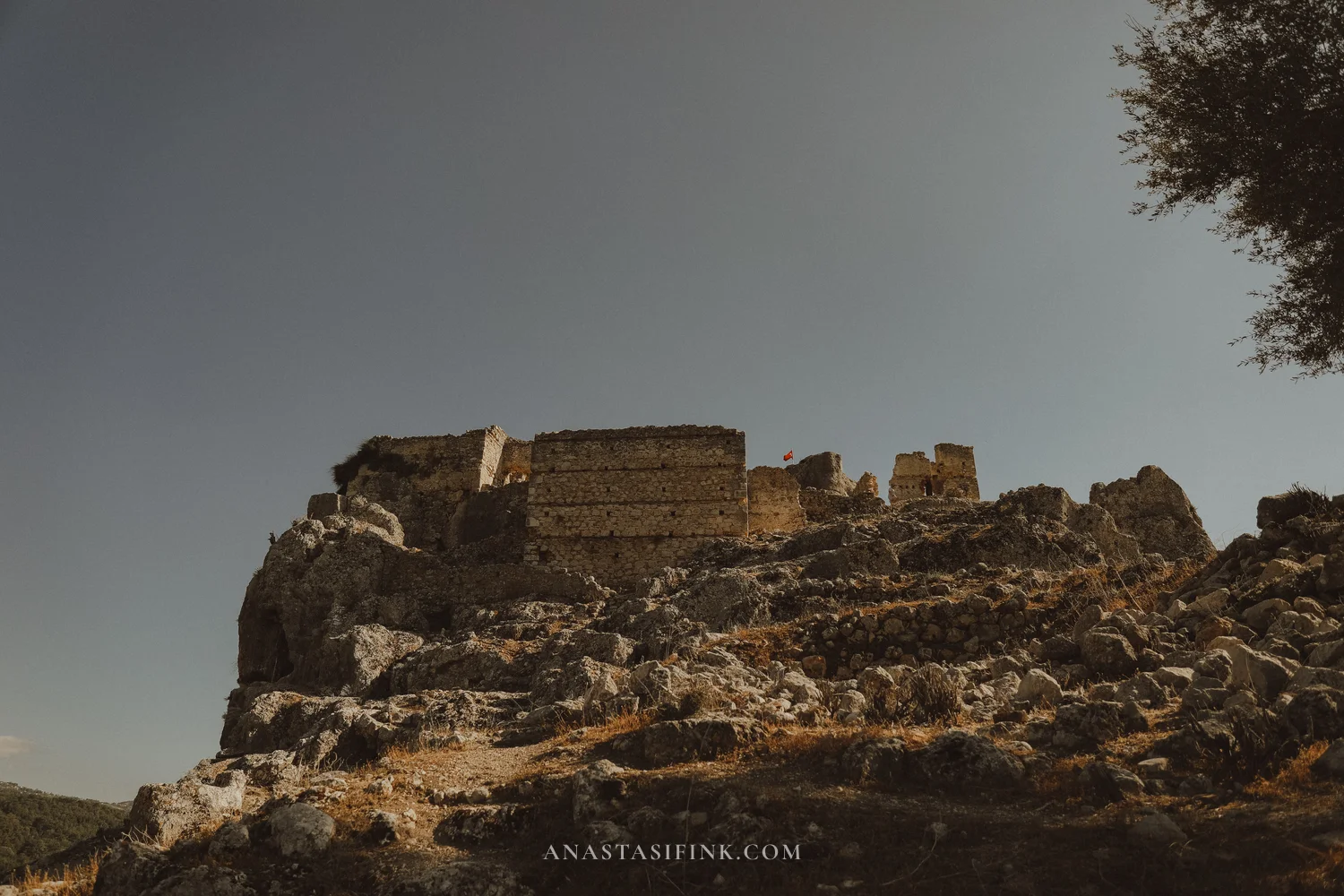
A rocky trail leads to the summit — loose gravel in places, steep in others. Sturdy shoes here are not a suggestion but a necessity. At the top stands a fortress, though not an ancient one. It dates to the early 19th century, when a local Ottoman warlord named Kanli Ali Aga built his fortified estate here, recycling stones that were already two thousand years old. The result is Lycian tombs, Roman walls, and an Ottoman fortress all side by side, layer upon layer.
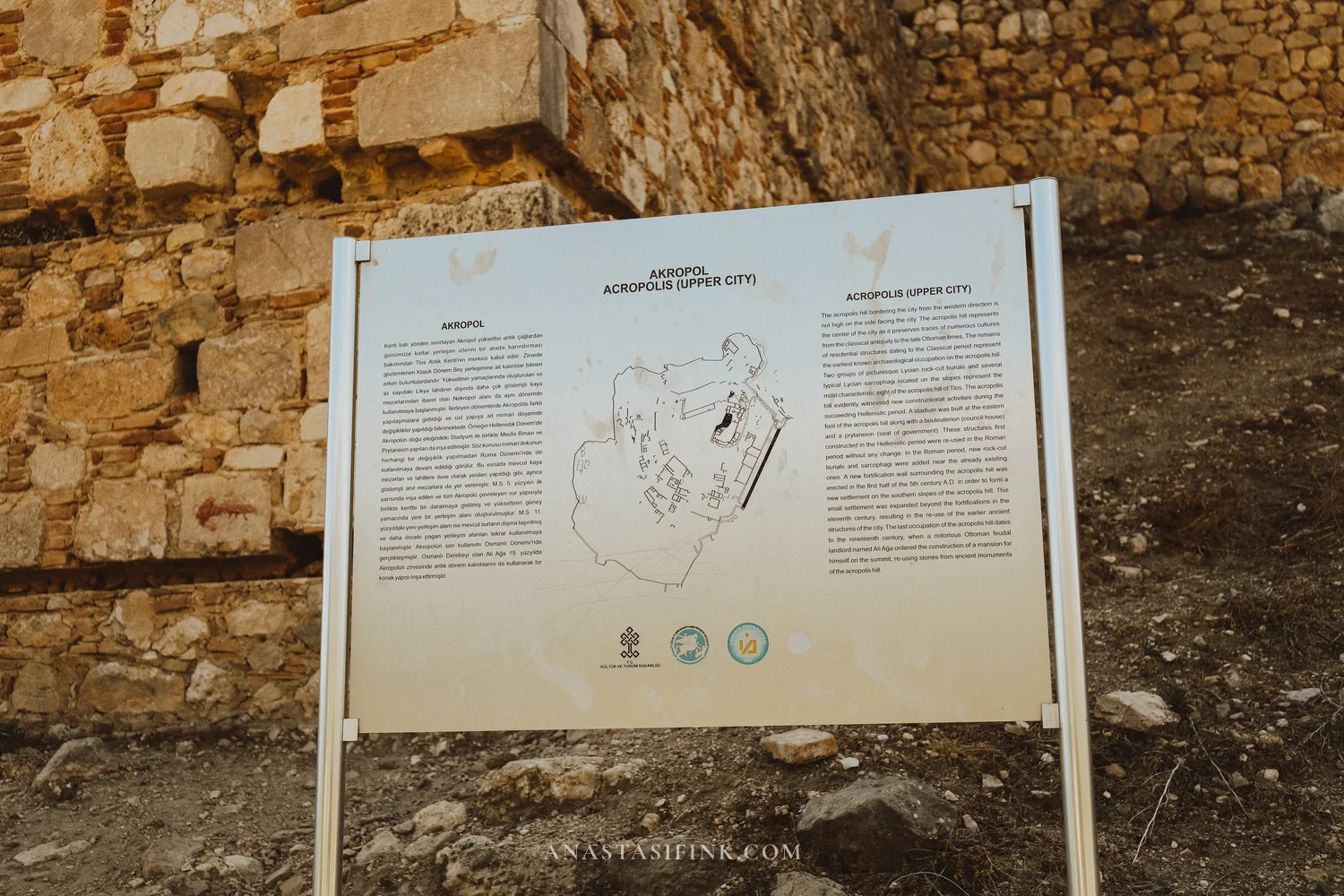
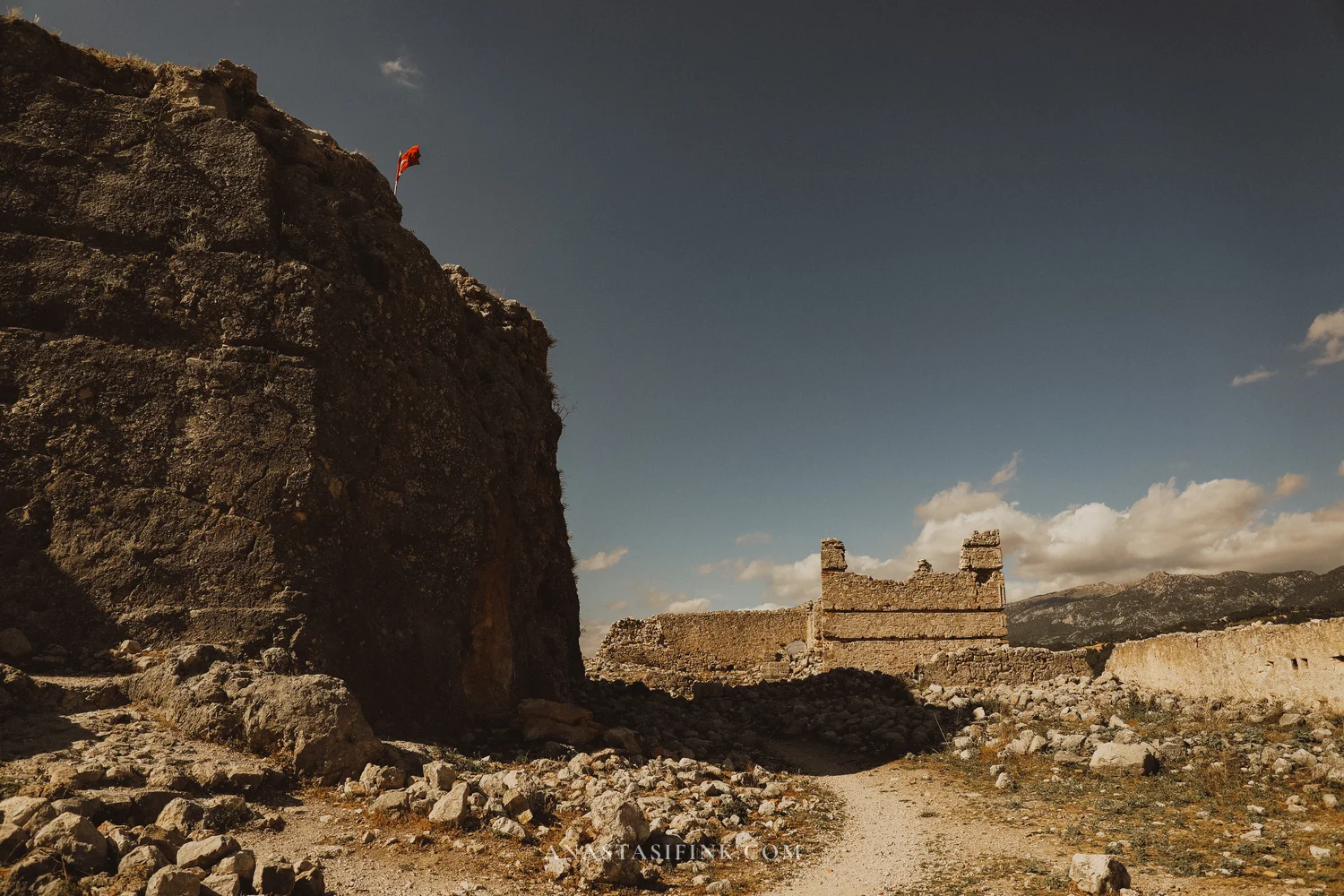
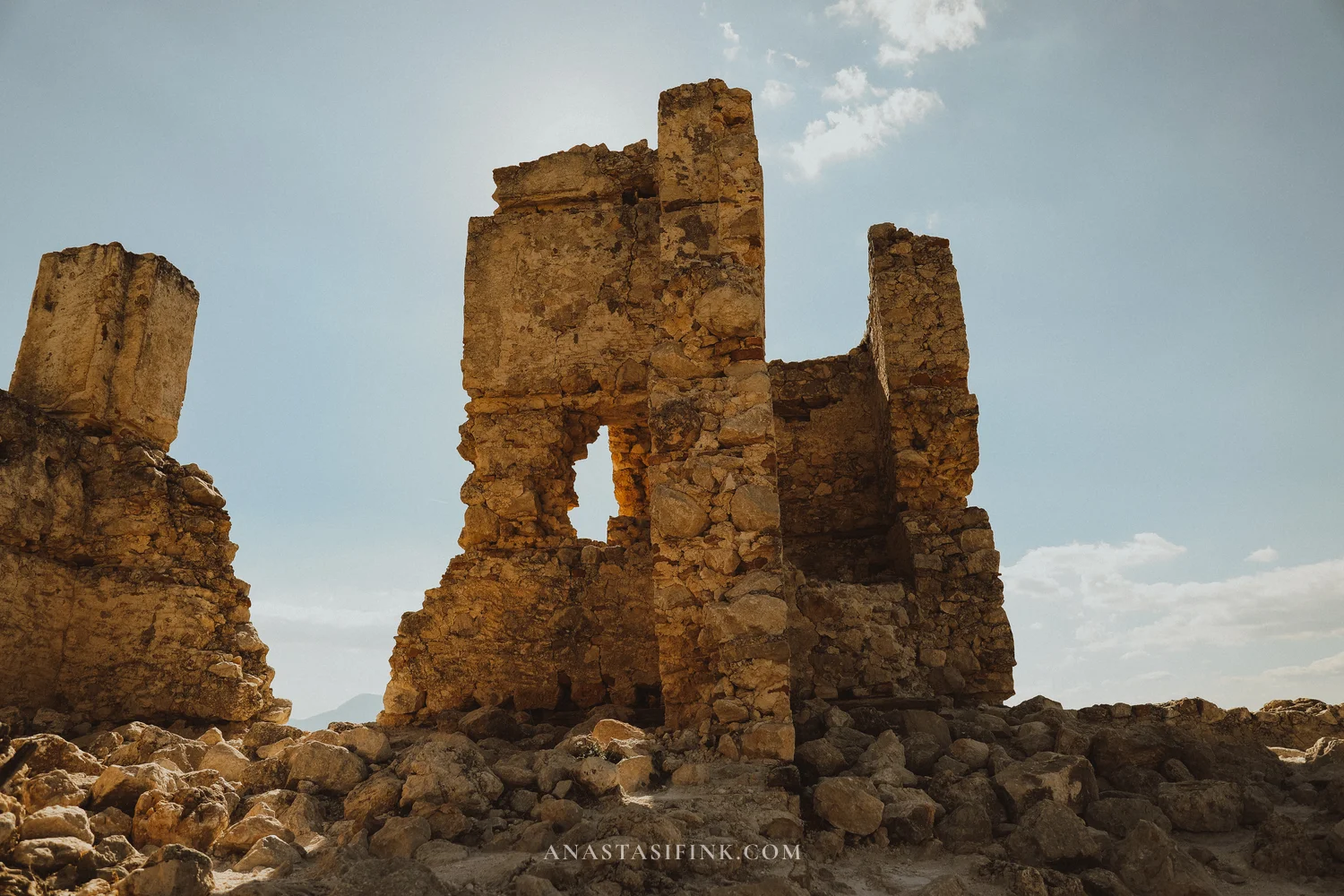
The fortress atop the acropolis — 19th-century walls on foundations thousands of years old
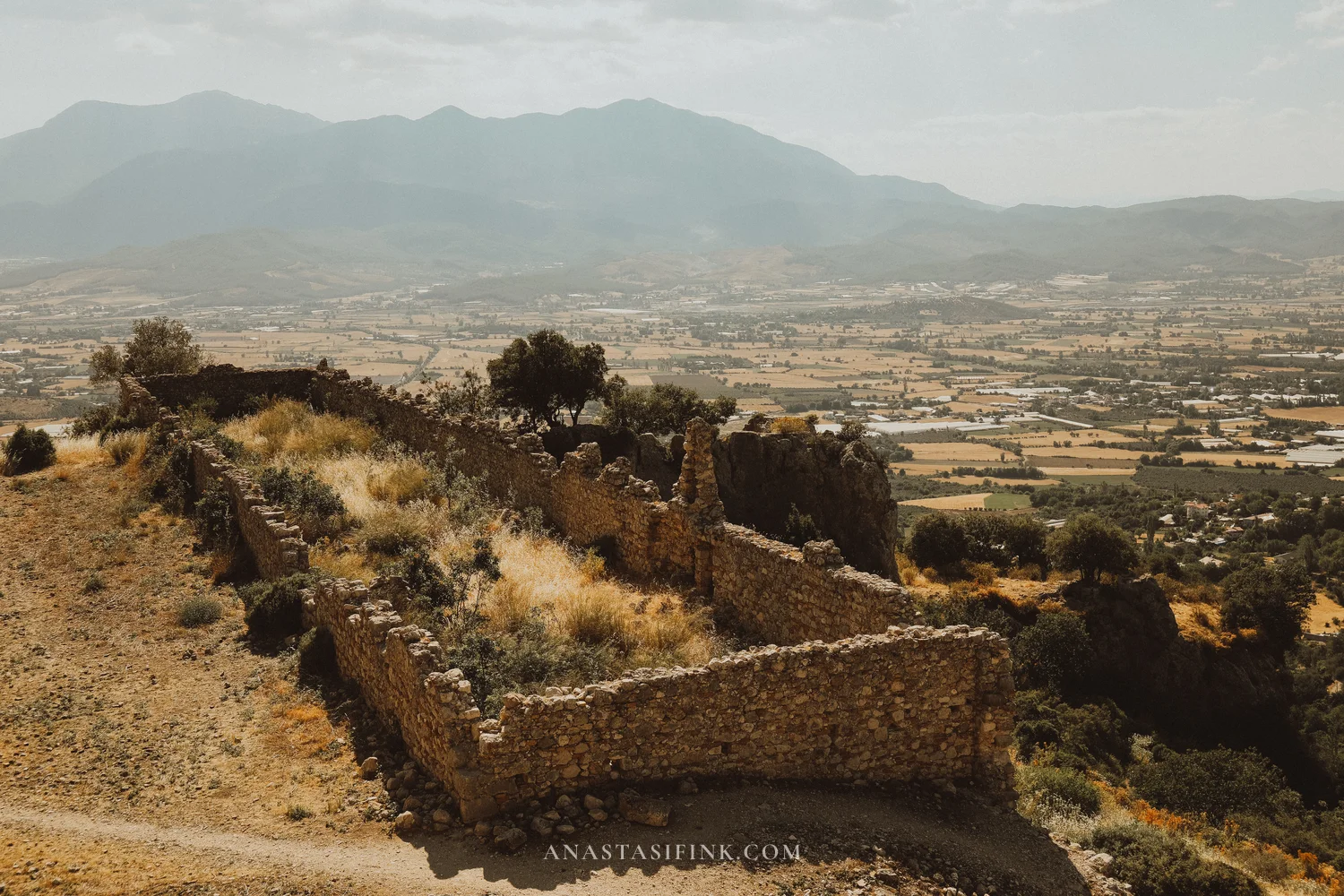
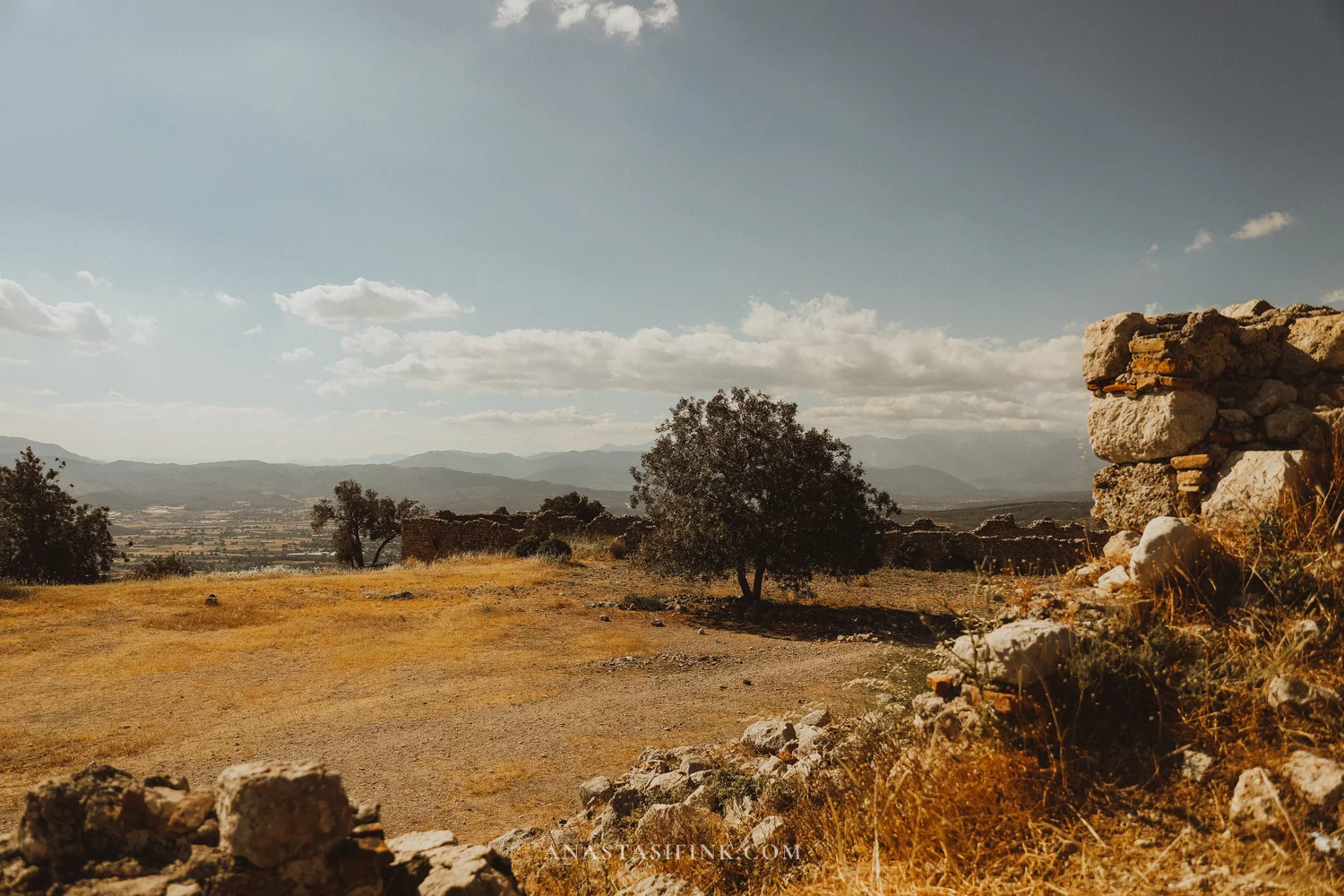
From the top of the acropolis, the view alone is worth the climb: the entire Xanthos Valley — the river, the fields, mountains on the horizon. The Xanthos Valley was the heart of Lycian civilization. All six major League cities were located here, and from Tlos you can trace the roads that once connected them.
The Stadium and Lower City
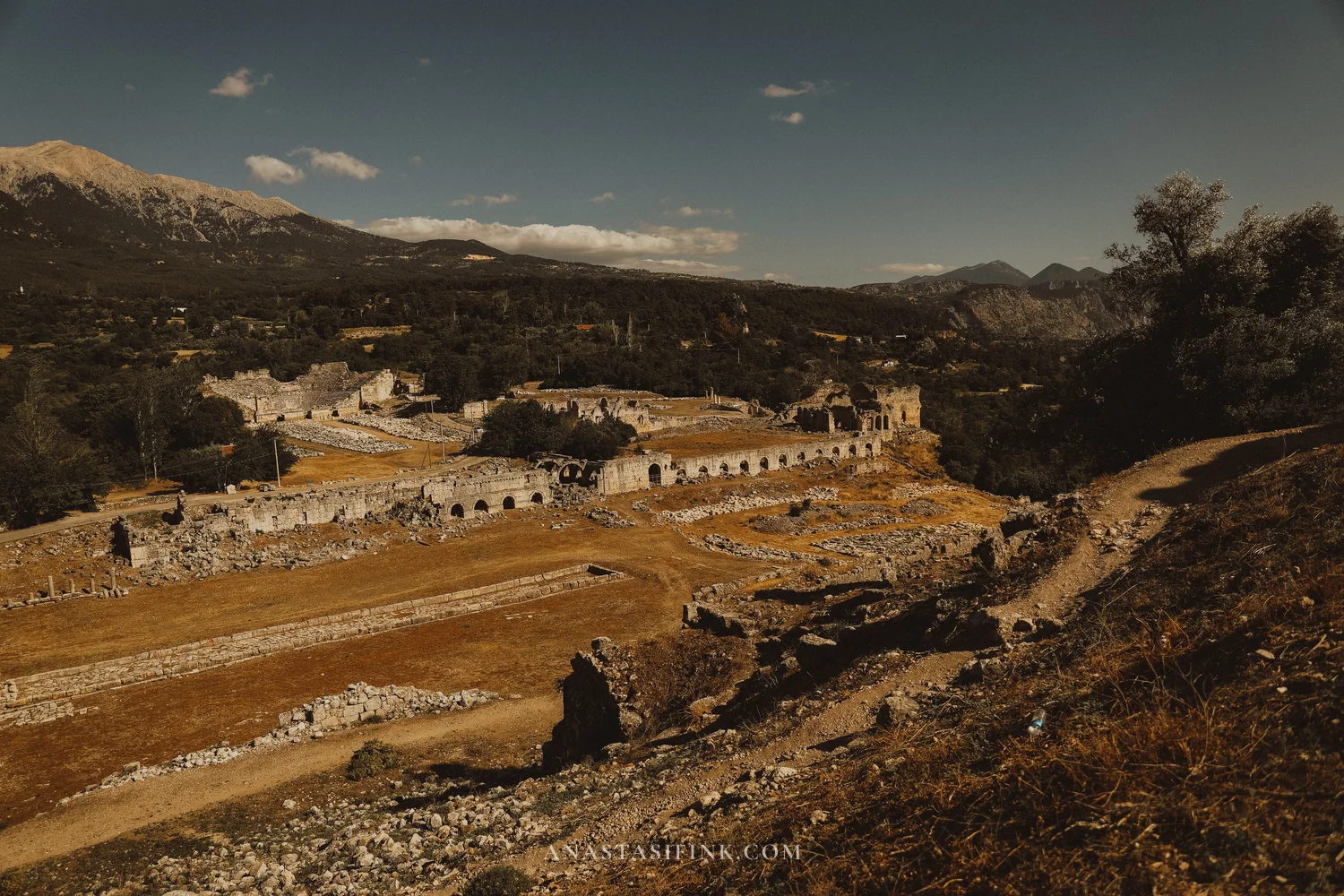
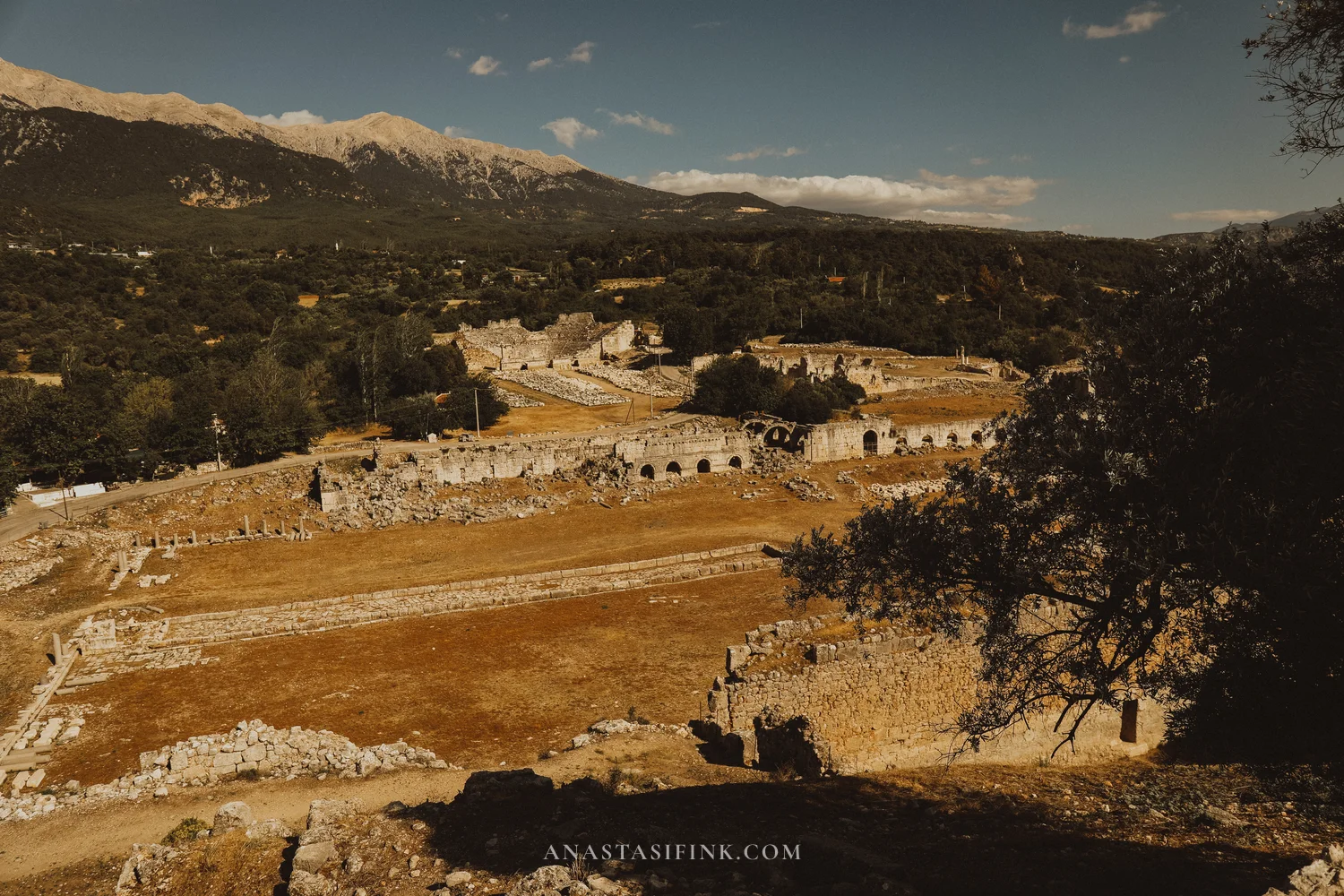
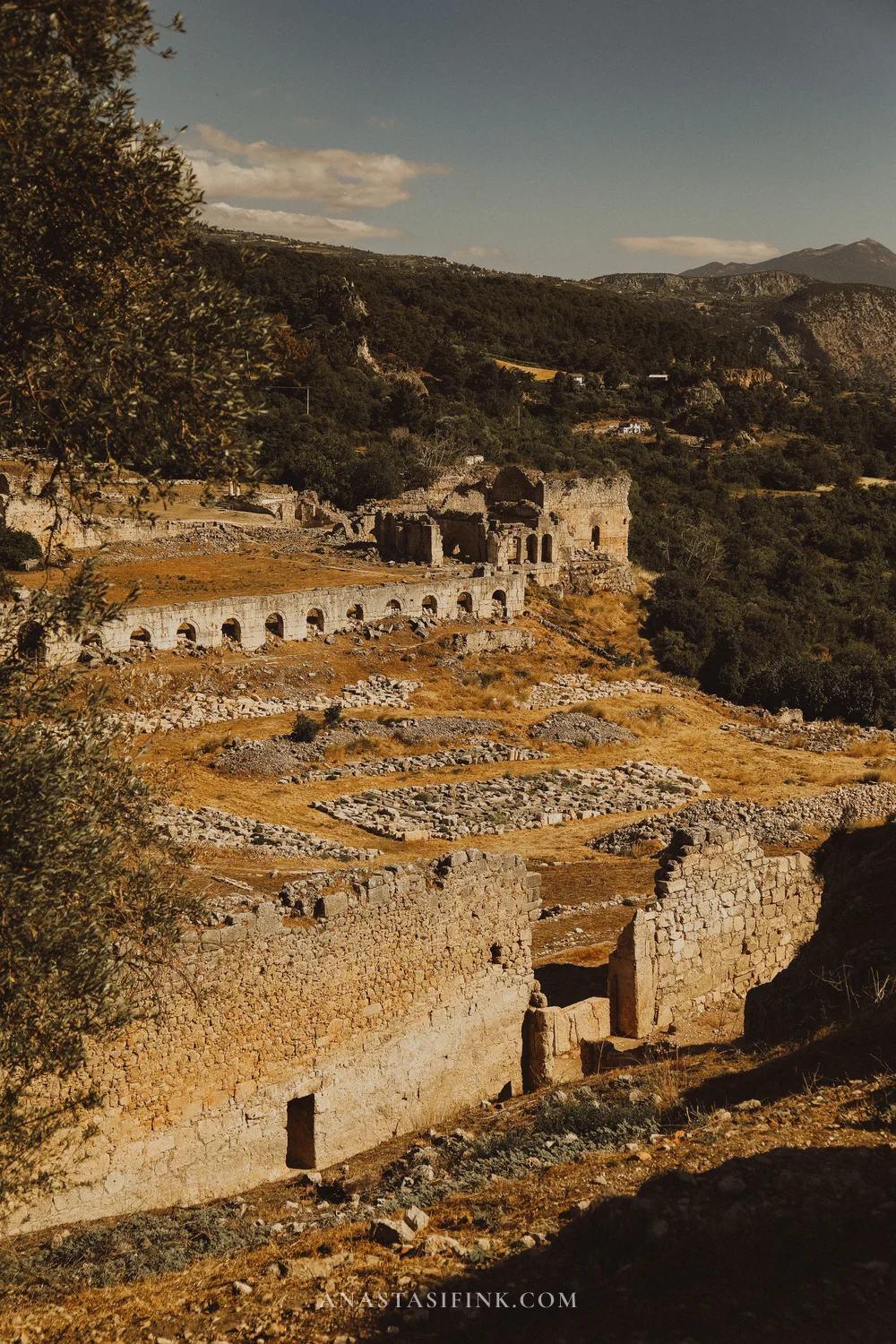
Below the acropolis lies the Roman stadium, dating to the 2nd century AD. Athletic competitions were once held here, and the stands could seat several thousand spectators. Nearby are the ruins of Roman baths with arches and vaults still intact, the remains of an agora, and residential quarters.
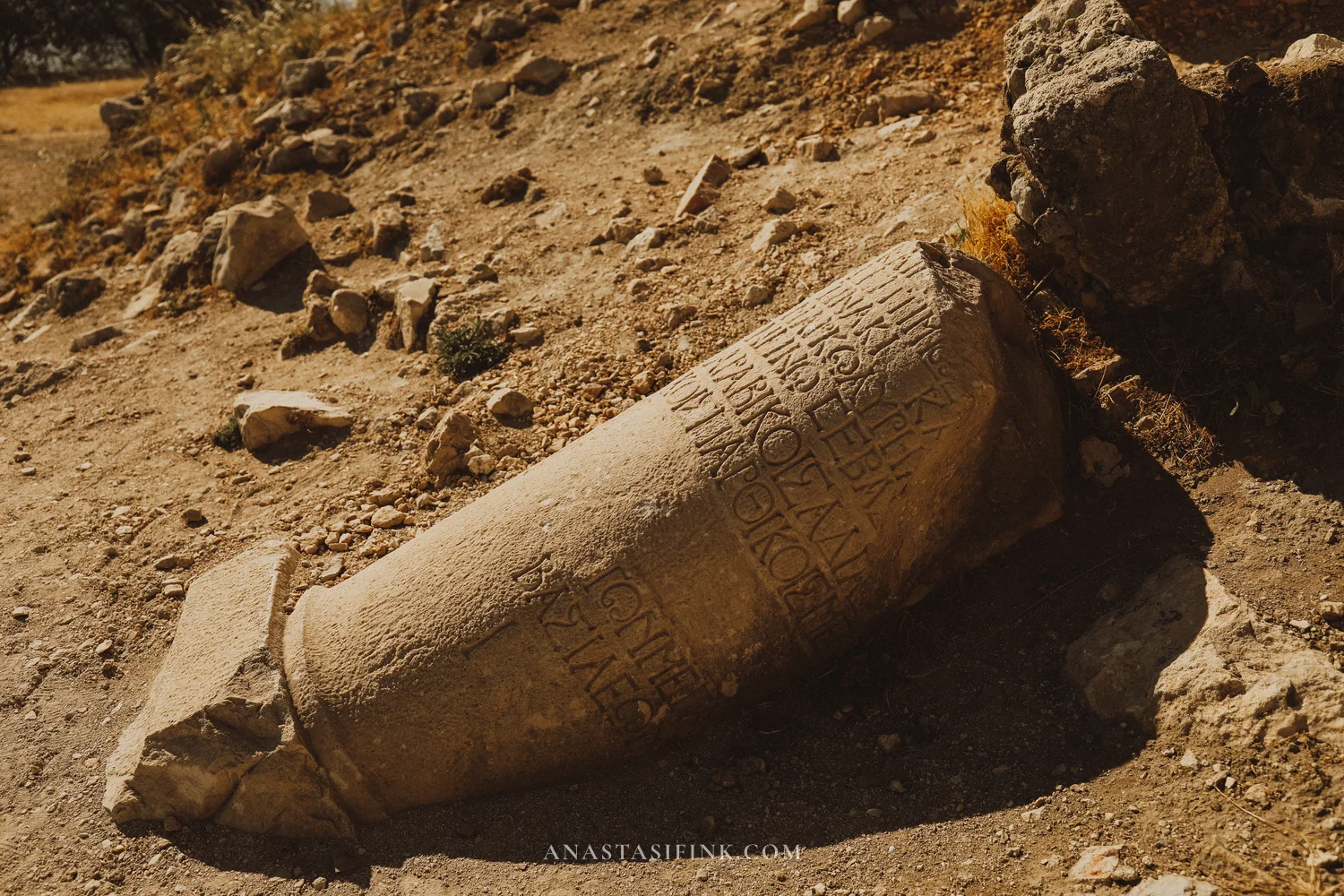
A column with an inscription lying right on the path
Spring at Tlos — Poppies and Tortoises
I visited in April, and it was the perfect time. The hills were blanketed with wild poppies, the air still fresh rather than scorching as it would be in summer.
And I spotted tortoises! Right there among the ruins, on the path. It was wonderful — though tortoises are actually pretty common in Turkey. The key is to watch your step and look around, and you are bound to see one. They are unhurried, completely unfazed by people, and look like they have been living here since before the Lycians arrived.
In summer Tlos gets seriously hot — 35-40 degrees Celsius with almost no shade. Autumn works well too: warm but without the blazing sun, and even fewer tourists.
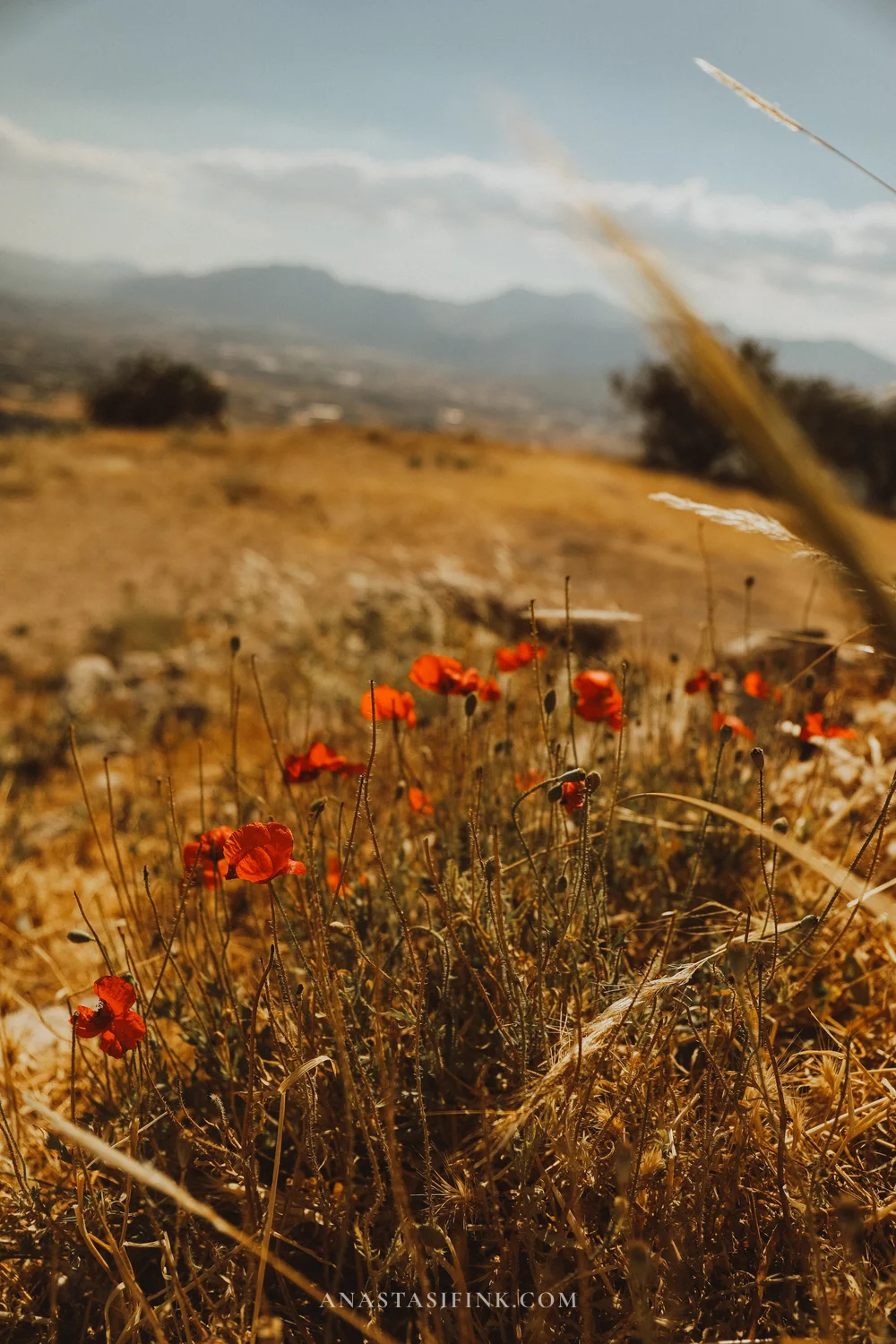
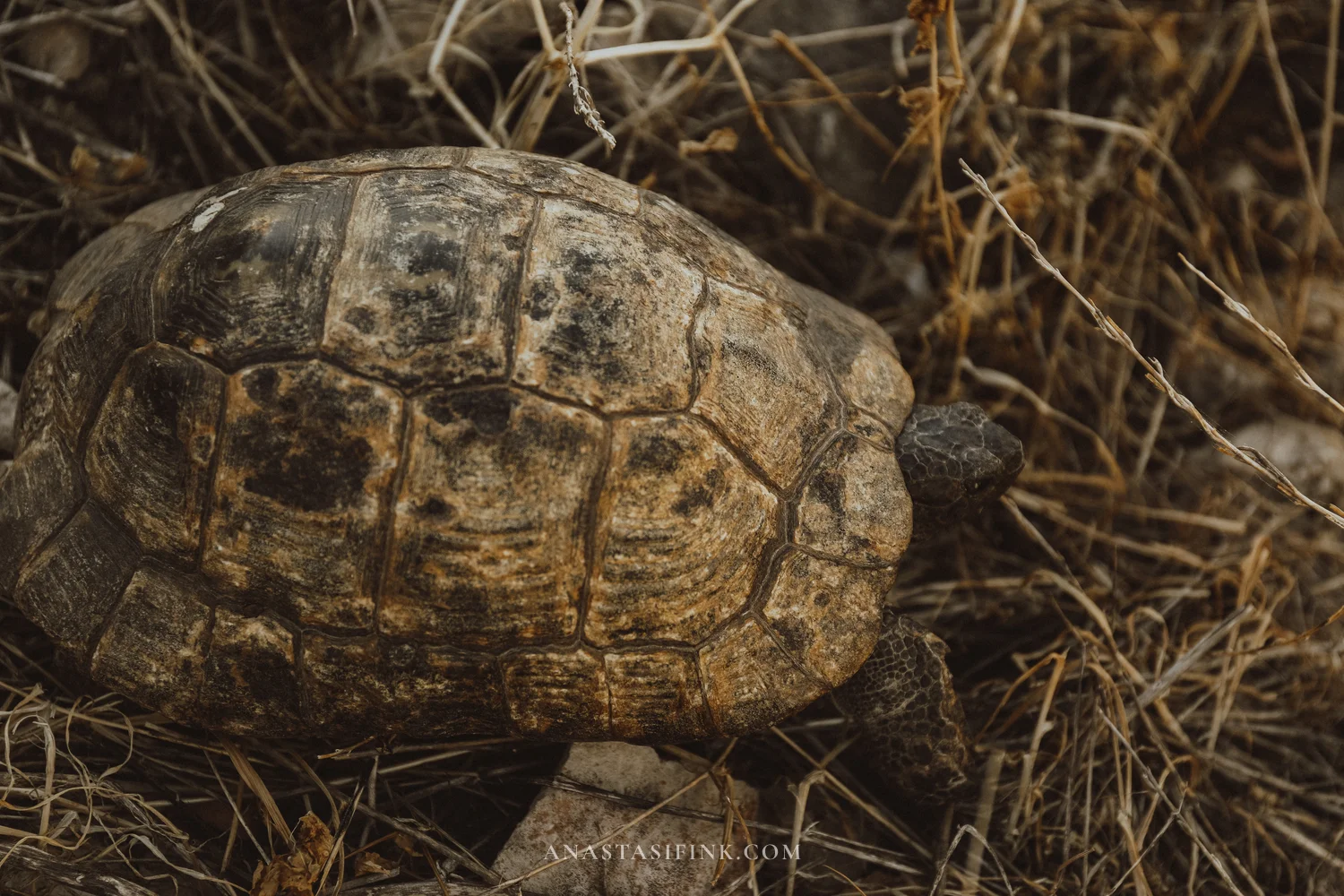

Spotting a tortoise among the ruins — one of the best moments at Tlos
The Walk Back
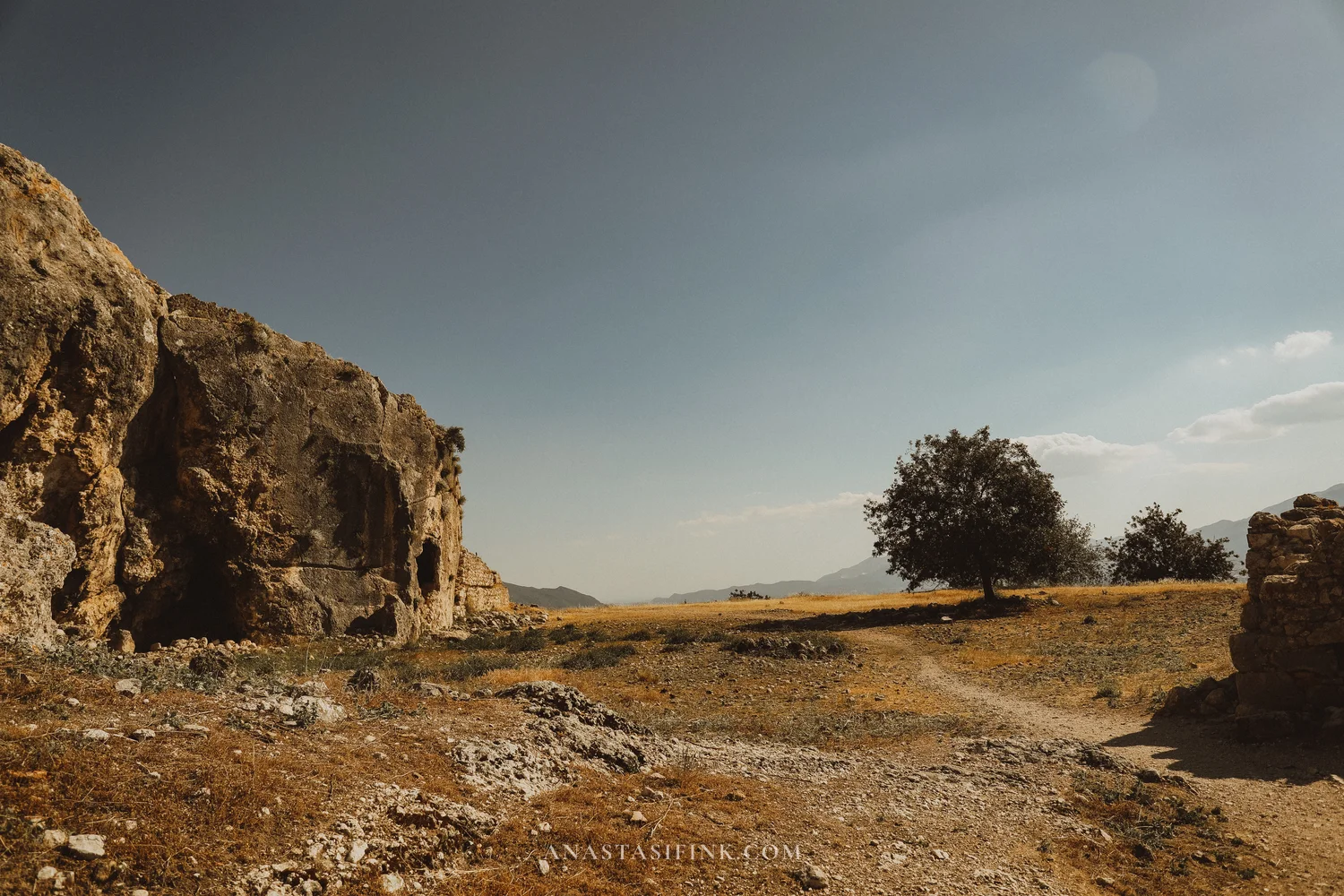
Between the tomb cliff and the fortress, a wide dusty trail stretches out. No people, just silence and cicadas. A good place to simply walk and take it all in without rushing.
Practical Information
- Address: Tlos Orenyeri, Seydikemer, Mugla, Turkey
- GPS: 36.5522, 29.4192
- Opening hours: 08:30-19:00 (summer, April-October), 08:30-17:30 (winter)
- Admission: around 200-300 TL (~$6-9). Check muze.gov.tr for current prices — they are updated annually
- Distance from Fethiye: 40 km, ~45 minutes by car or motorbike
- Getting there: take the D400 highway toward Korkuteli, then follow signs for Tlos near the village of Guneykoy. There is no direct public transport — rent a vehicle or join a tour
- Parking: free at the entrance
- Time needed: 2-3 hours for the visit
Tip for photographers: The best light is in the morning right after opening (the rock tombs face east and catch the first rays) and 1-2 hours before closing (golden light on the fortress). Midday means harsh shadows and heat — not ideal for shooting.
What Else to See Nearby
Tlos is easy to combine with other spots in a single day:
- Patara Beach — one of Turkey’s best beaches, 18 km of sand and almost nobody on it. The entrance goes through the ancient city of Patara (also Lycian, also with ruins). About 50 km from Tlos, ~40 minutes by car. Great plan: ruins in the morning, beach in the afternoon
- Saklikent Gorge — one of the deepest canyons in Turkey, 15-20 km from Tlos. You can wade through an ice-cold mountain river
- Yakapark — a riverside restaurant 5 km from Tlos serving fresh trout right by the water. Perfect lunch spot after the ruins
- Xanthos and Letoon — the capital of Lycia and the League’s main sanctuary, both UNESCO World Heritage Sites. 30-35 km from Tlos
- Pinara — another Lycian city with rock tombs, ~30 km away
Travel Tips
- Bring water, sunscreen, and a hat — there is almost no shade at the site
- I rode a motorbike from Fethiye — the road is beautiful and takes about 45 minutes. Highly recommended as a way to travel around Turkey, but do not forget your international driving permit
- Scooter rental in Fethiye starts at 300-500 TL per day (~$9-15)
- Best time to visit is early morning or late afternoon
Final Thoughts
Tlos is not the kind of place that hits you over the head like Ephesus. It is quiet, uncrowded, and it takes a moment to tune in. But once you do, things start to surface: an inscription on a stone, a tortoise on the trail, the light shifting across the cliffs toward evening. It is one of those places you want to come back to when the well-trodden routes start to wear thin.
By car or motorbike — about 45 minutes (40 km). Take the D400 highway toward Korkuteli, then follow the signs near the village of Guneykoy. There is no direct public transport, so rent a vehicle or join an organized tour.
Spring (April-May) and autumn (September-October) are ideal. Summer temperatures can hit 40 degrees Celsius, and there is almost no shade on-site. In spring, you get the bonus of wild poppies among the ruins.
At least 2-3 hours to cover the main sights: the rock tombs, the acropolis with the fortress, and the Roman stadium. If you like taking photos or want to explore at a leisurely pace, plan for 4 hours.
Around 200-300 TL (~$6-9). Prices are updated annually — check muze.gov.tr for the latest. Parking is free.
The highlights are the rock-cut tombs (especially the Tomb of Bellerophon with its Pegasus relief), the acropolis with the Ottoman fortress and its Xanthos Valley panorama, and the 2nd-century Roman stadium and baths.
Absolutely. Nearby options include Saklikent Gorge (15-20 km), Patara Beach (50 km), and the ancient cities of Xanthos and Letoon (30-35 km). A great itinerary: Tlos in the morning, lunch at Yakapark by the river, then Saklikent or Patara in the afternoon.
Yes — sturdy, closed-toe shoes are a must. The climb to the acropolis is steep and loose in places, and the trails between ruins are rocky. Flip-flops or sandals are a bad idea.