Sumela Monastery, Trabzon — What to See and How to Get There

Sumela Monastery is one of Turkey’s most extraordinary places — a cliff-side temple perched 300 meters above the valley floor, covered in frescoes dating from the 4th to 18th century. I visited from Trabzon in April and came back with plenty of impressions and practical tips to share.
What Is Sumela and Why You Should Go
Panagia Sumela Monastery is a rock-hewn temple complex in the mountains above Trabzon. According to tradition, the first monks arrived here around 386 AD and discovered an icon of the Virgin Mary in a rocky niche — an icon attributed to the Apostle Luke. But what we see today mostly dates to the 14th century and later: the monastery as a formal complex took shape under Emperor Alexios III of the Trapezuntine Empire.
Later, under Ottoman rule, the complex kept growing — an aqueduct, chapels, utility buildings, and new layers of frescoes were added. After the population exchange of 1923, the monks left and the icon was taken out of the country (it’s now in Greece, at the Panagia Sumela Monastery near Veria). The monastery sat abandoned for decades; restoration began in 2015, with the latest phase completed in 2021.
Sumela is often compared to Meteora in Greece or Tiger’s Nest (Taktsang) in Bhutan. The common thread: people built temples in places that seem impossible. But Sumela is less touristy and more accessible — just an hour’s drive from Trabzon.
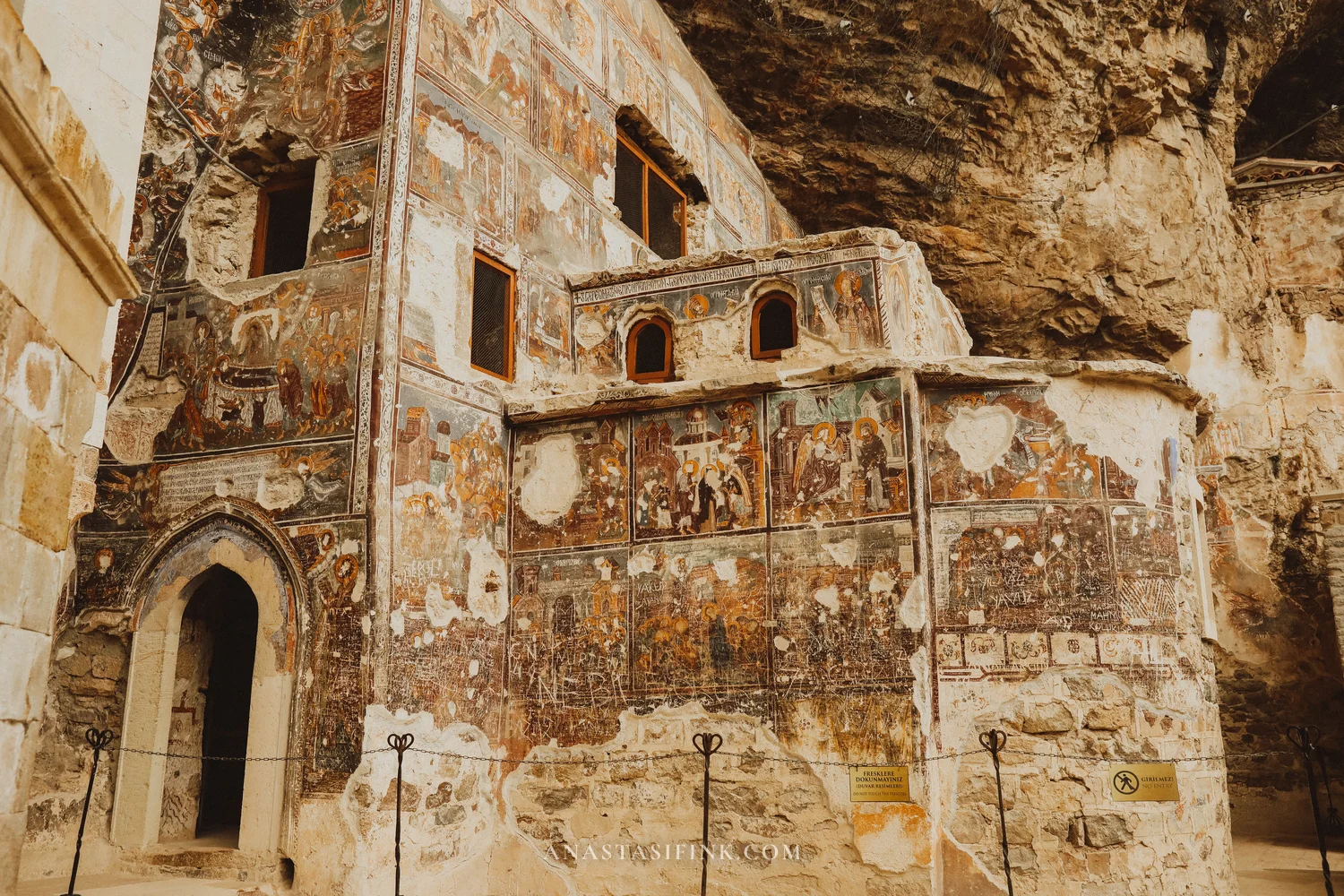

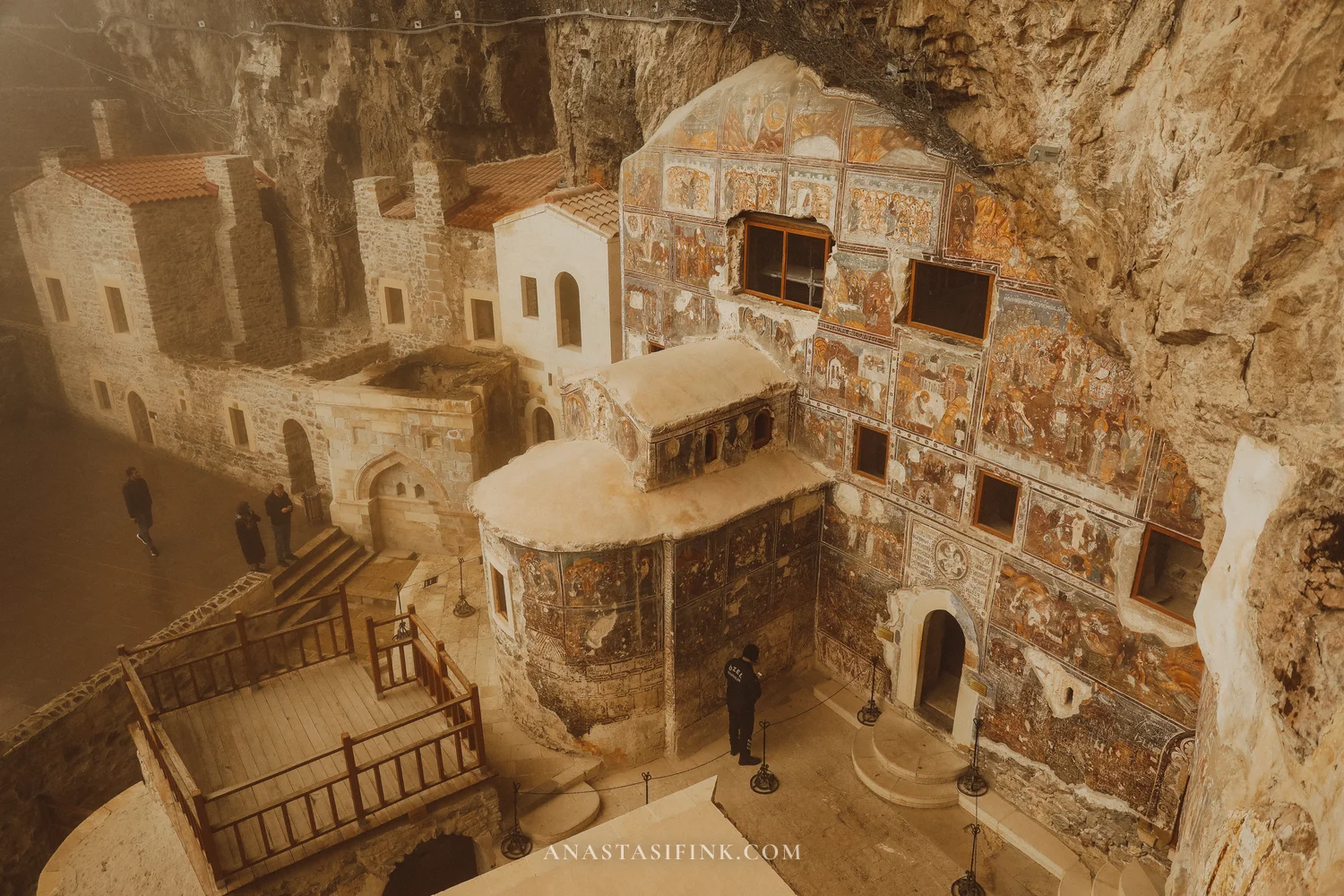
Frescoes cover the walls from floor to ceiling, and the inner courtyard is a whole little town under the rock
How to Get to Sumela Monastery
The monastery is 50 km south of Trabzon, in the mountains above the town of Macka, inside Altindere National Park (Altındere Vadisi Milli Parkı). By car or taxi you drive through Macka to the park, transfer to a shuttle, and walk the final stretch through the forest.
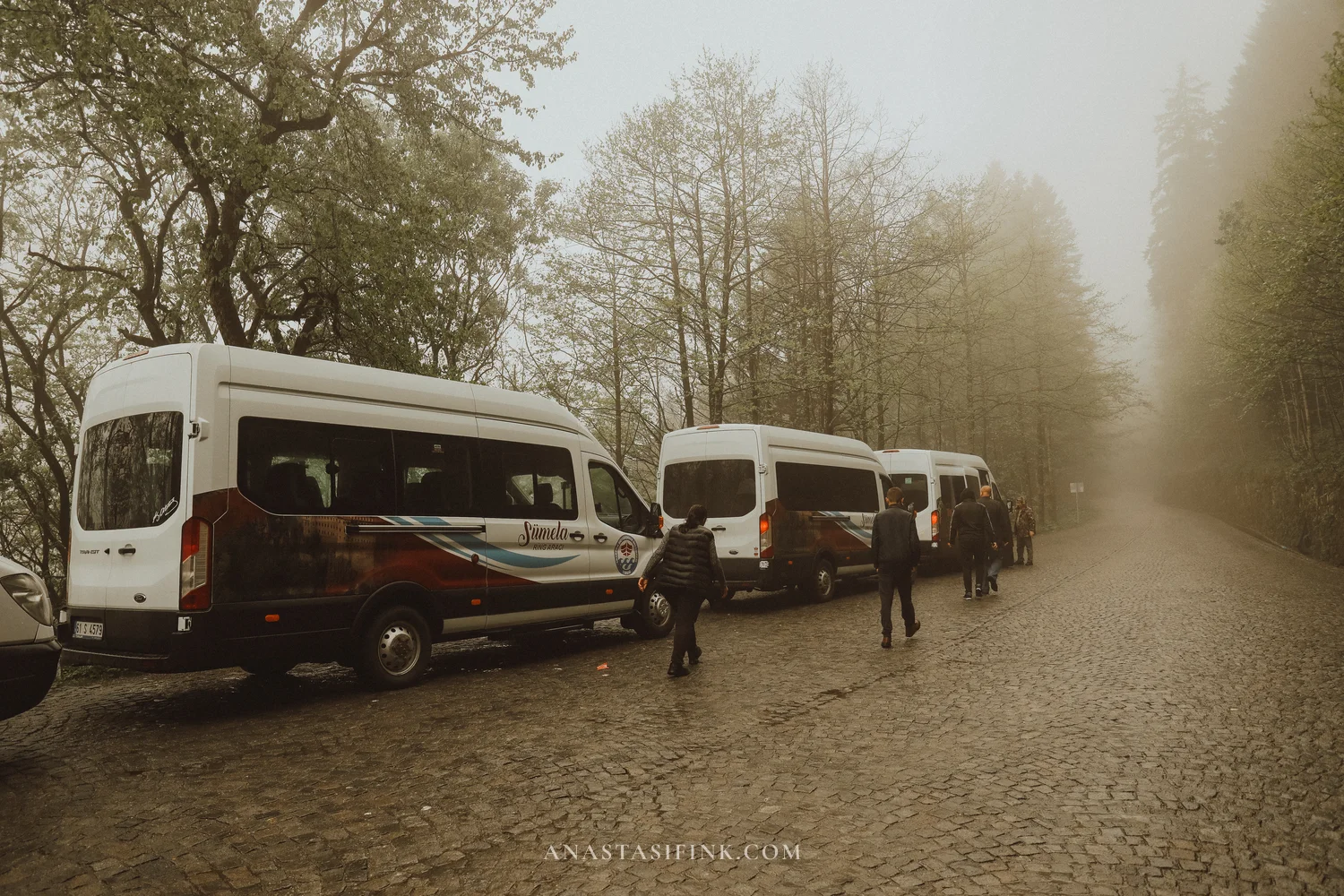
Options
- By car / taxi: about 1 hour from central Trabzon via the E97/D885 through Macka
- Public transport: first get to Macka, then local transfer or taxi to Altindere; check schedules the day before
- Organized tour: day trips from Trabzon often combine Sumela with Hamsiköy village (famous for sütlaç — rice pudding) and Karaca Cave
Practical Information
- Address: Altındere Vadisi Milli Parkı, Maçka, Trabzon
- GPS: 40.6919, 39.6578
- Status: as of March 2026, the site is partially open; some areas may be closed for restoration
- Hours: 08:00–17:00, ticket office closes at 16:30; hours may be extended in peak season
- Tickets: Turkish citizens can use MüzeKart; other visitors pay a separate admission fee — check current prices on Turkey’s official museum e-ticket page
- Shuttle: the shuttle from the lower parking lot is paid separately
- From Trabzon: 1–1.5 hours by car to the park, then shuttle and walking
- Time needed: 2–3 hours at the monastery, half a day including the round trip from Trabzon
What to See at Sumela Monastery
The Frescoes — The Main Reason to Visit
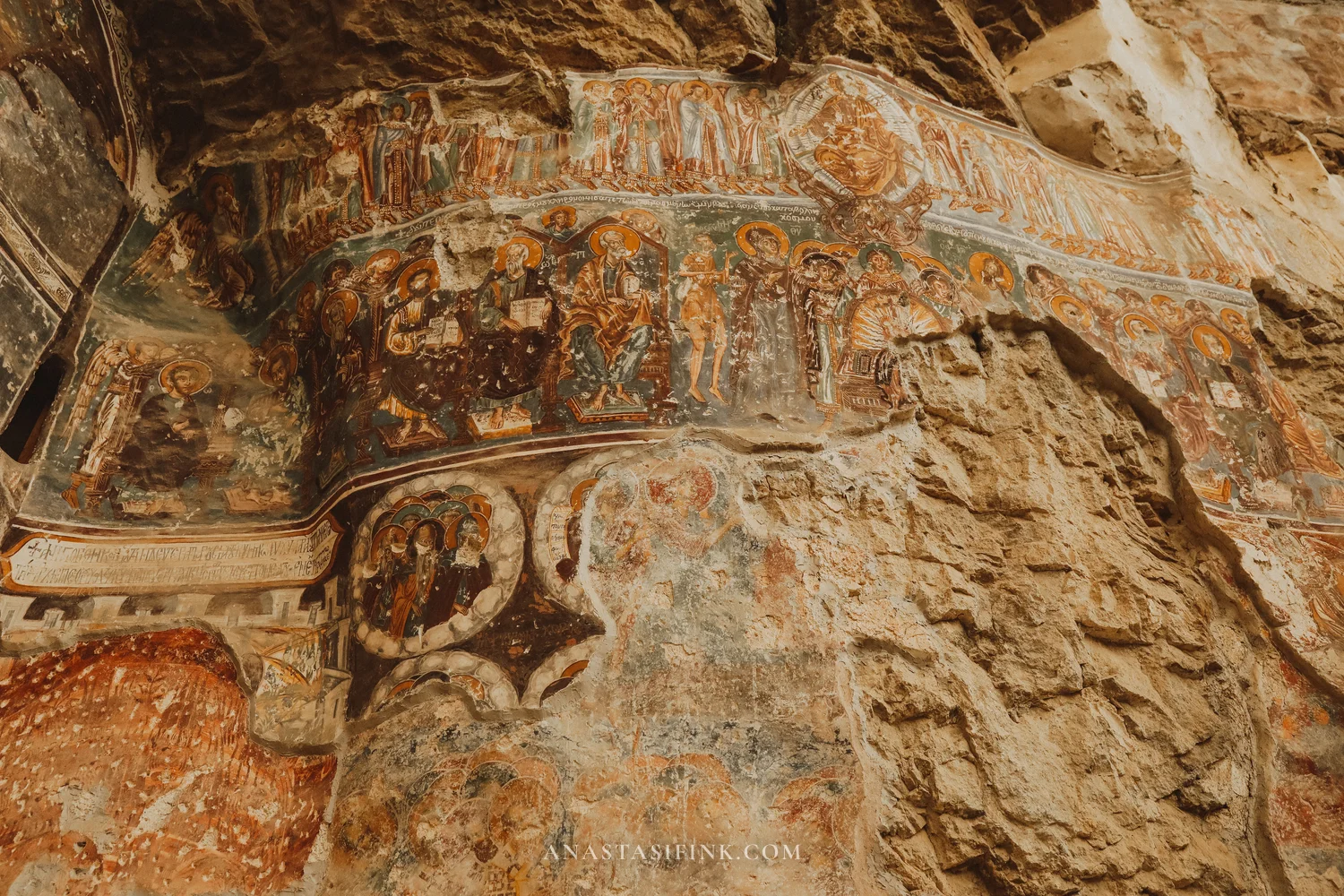
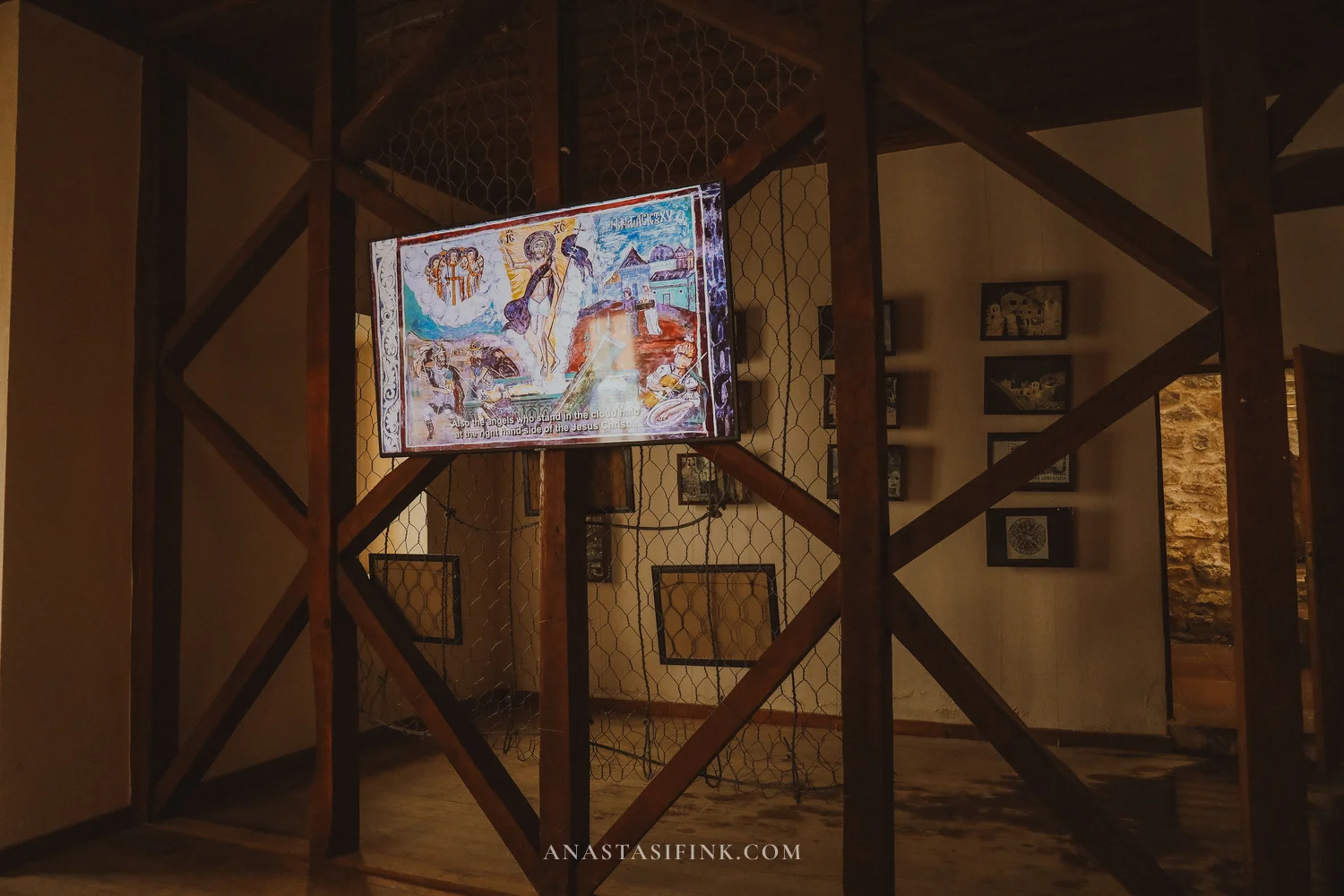
The main temple is a rock-cut church carved straight into the cliff. Its walls are covered in frescoes from top to bottom: biblical scenes arranged in rectangular panels. The Virgin Mary, angels, apostles, scenes from the life of Christ. The paintings were created in stages — some date to the late Byzantine period, others to the 18th century.


The upper part of the facade is better preserved — it was harder to reach. I made out scenes from the Gospels, a medallion above the entrance with Greek inscriptions, and ornamental patterns.
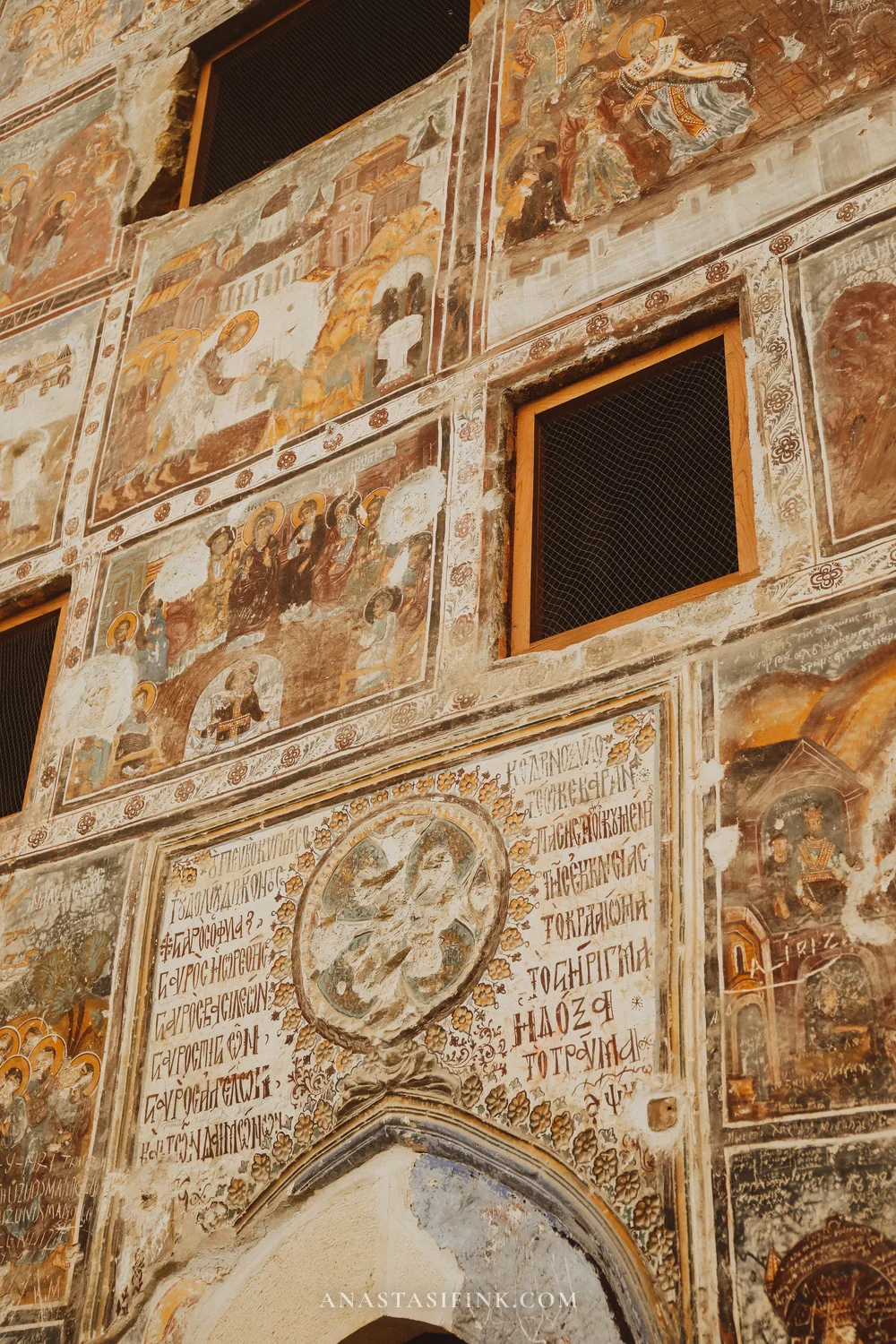

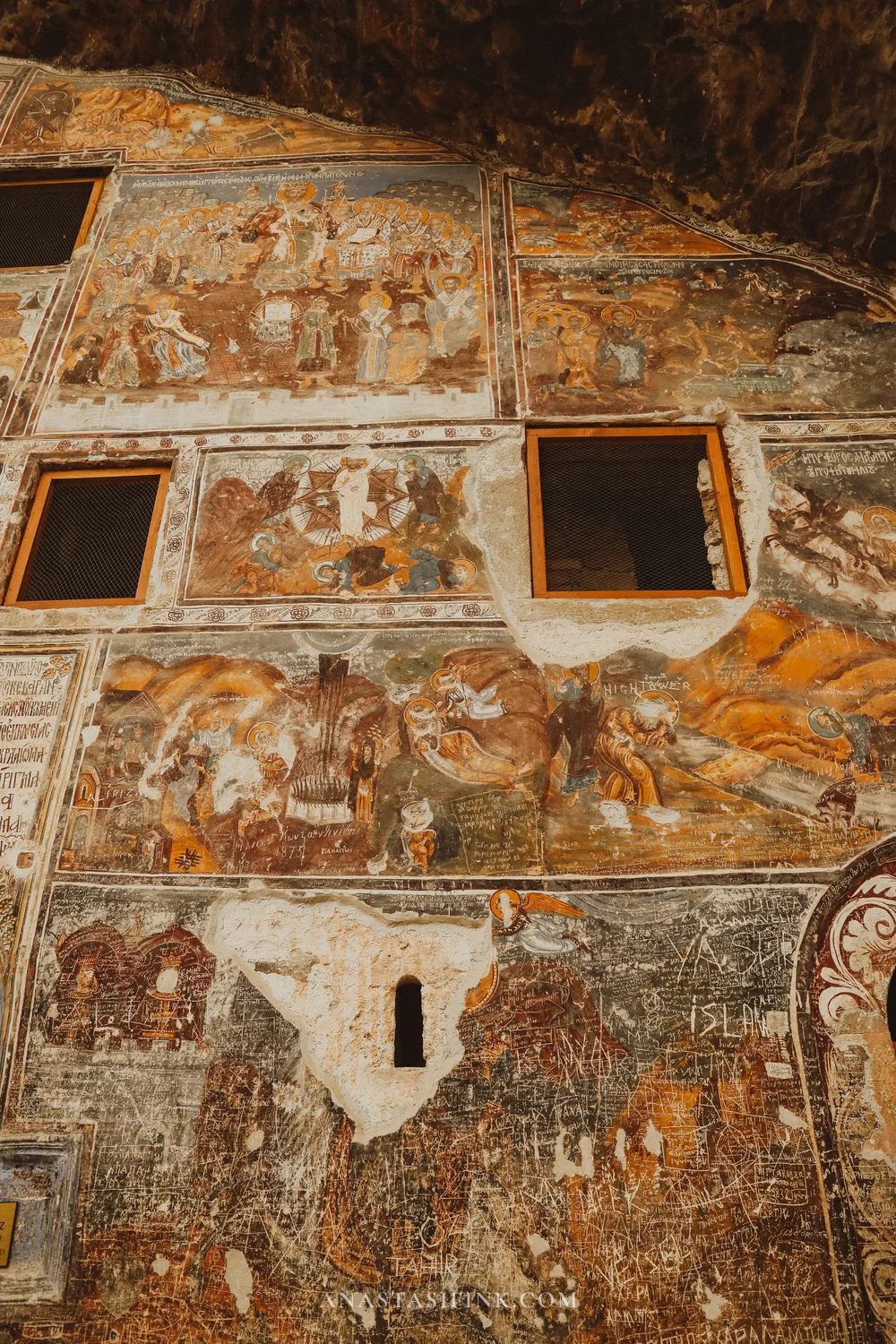
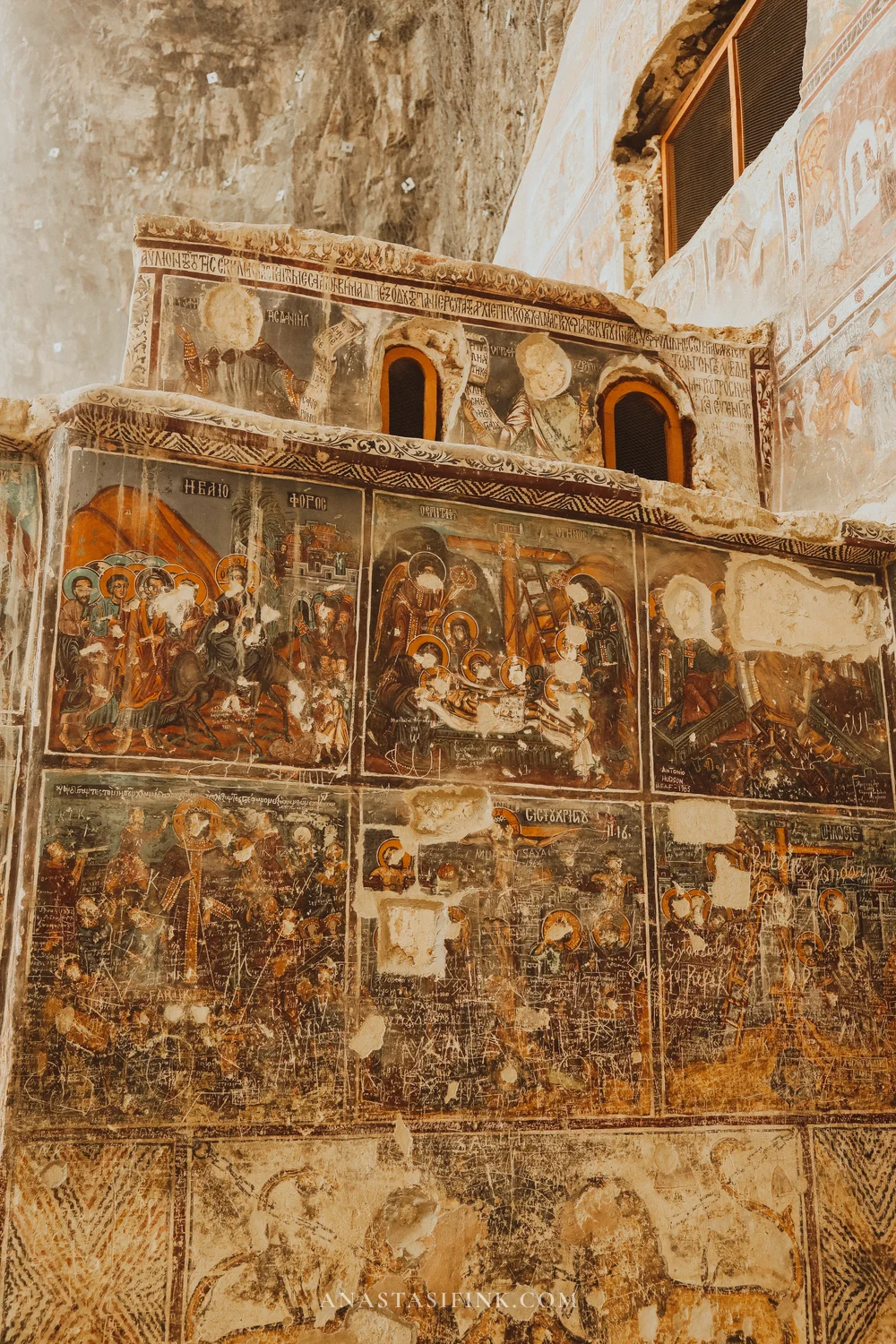

Biblical scenes in panels on the church walls
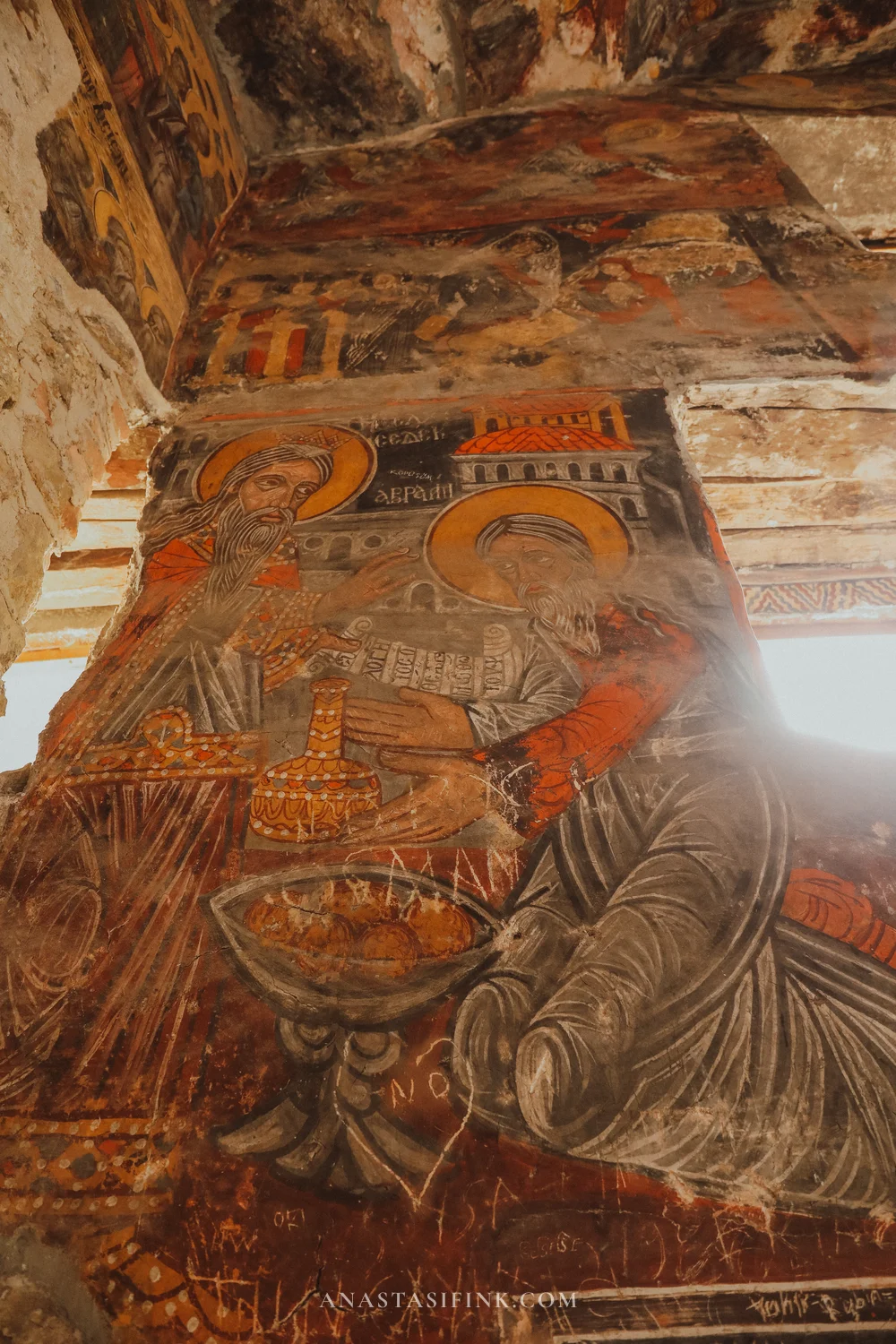
The lower section is a different story. The frescoes are scarred with graffiti: names, dates, scratches carved over the faces of saints. “DAVUT,” “YAKUP,” “1879.” Decades without any protection. Restoration is now underway — specialists are removing the graffiti, trying not to damage the originals.
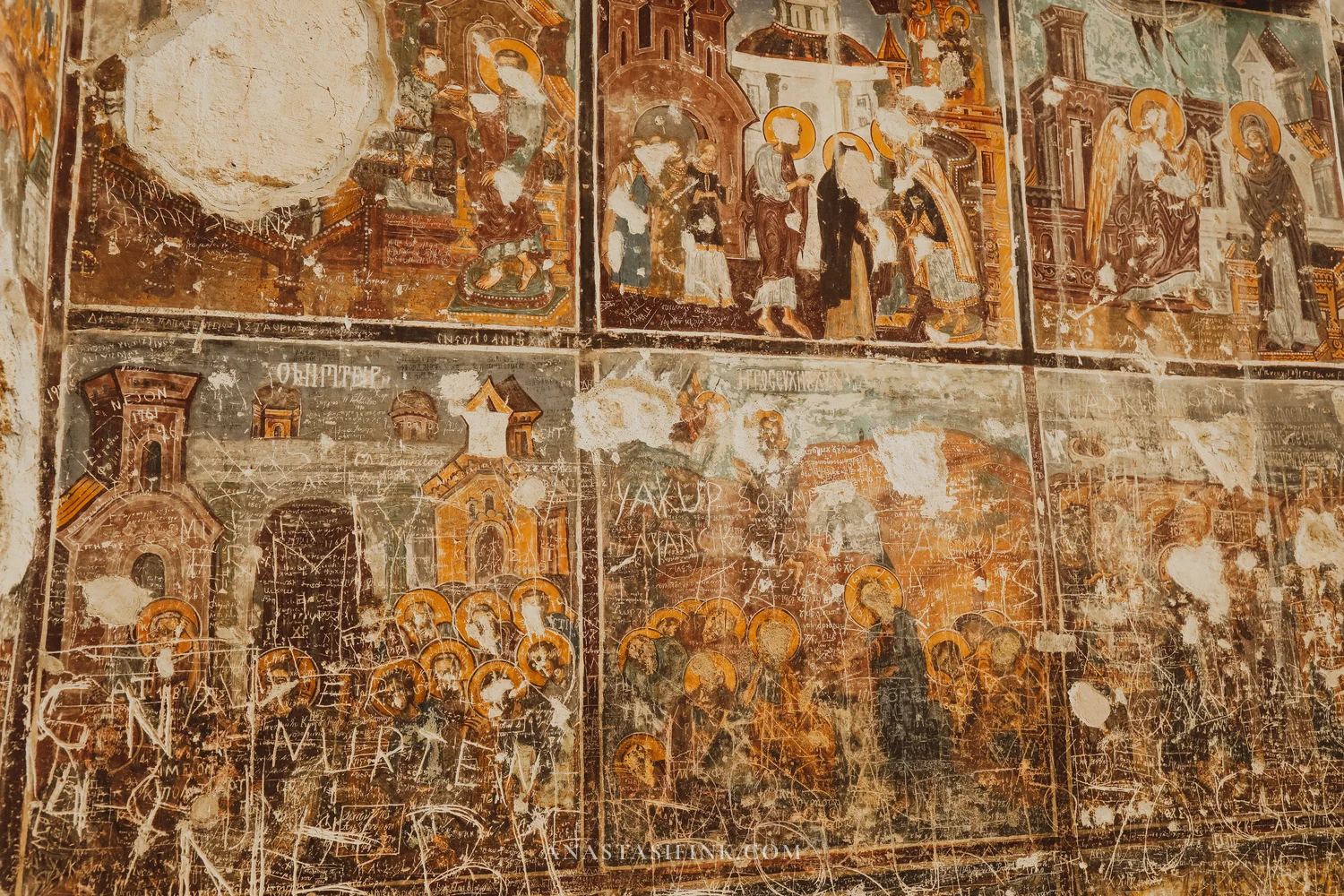


The lower you look, the worse the damage

Inside the church, preservation is better in places. The ceiling vaults are covered in frescoes: the Virgin Mary with a halo, angels, biblical scenes. The colors are still striking — ochre and terracotta.
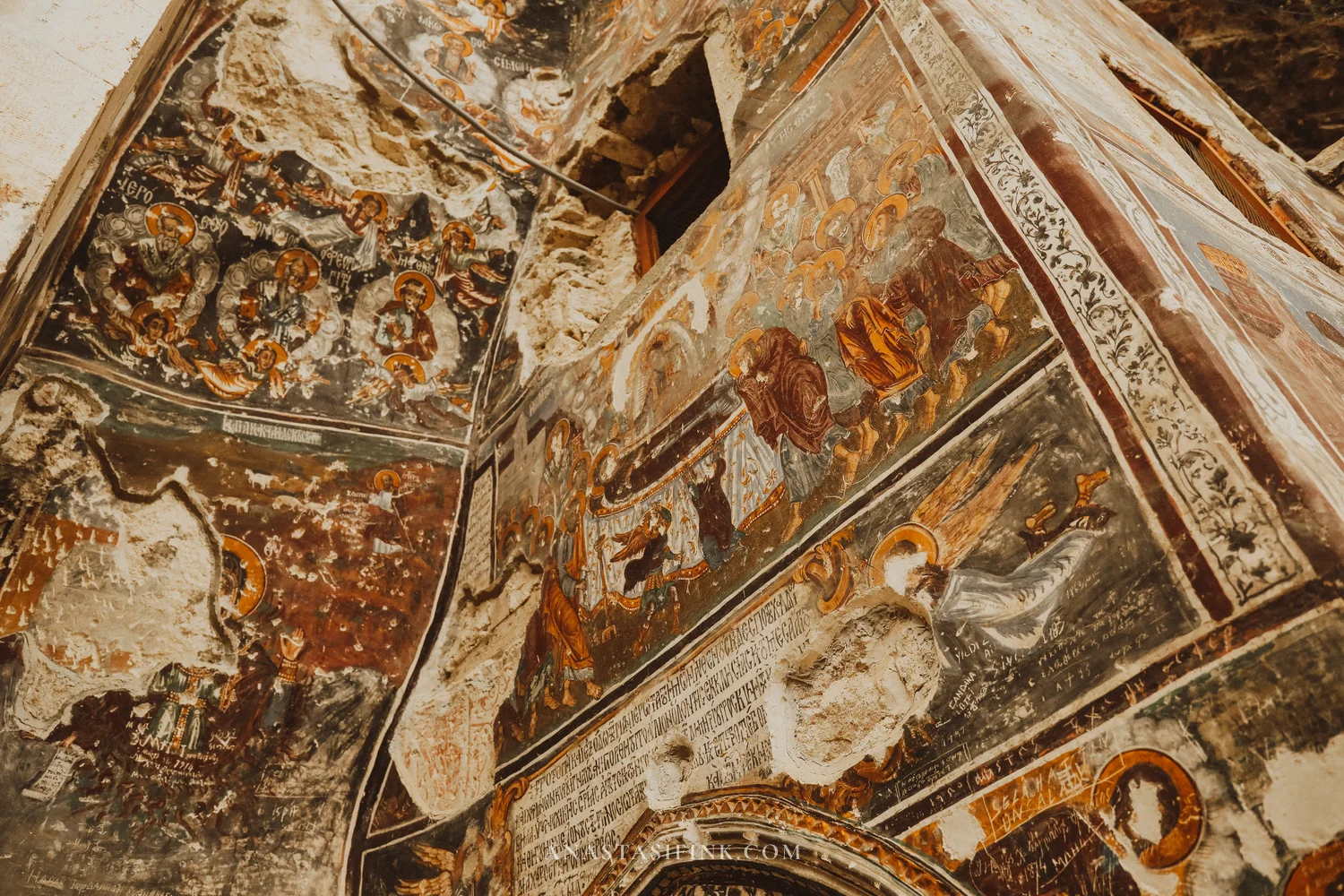

Ceiling vaults — Greek inscriptions and biblical scenes

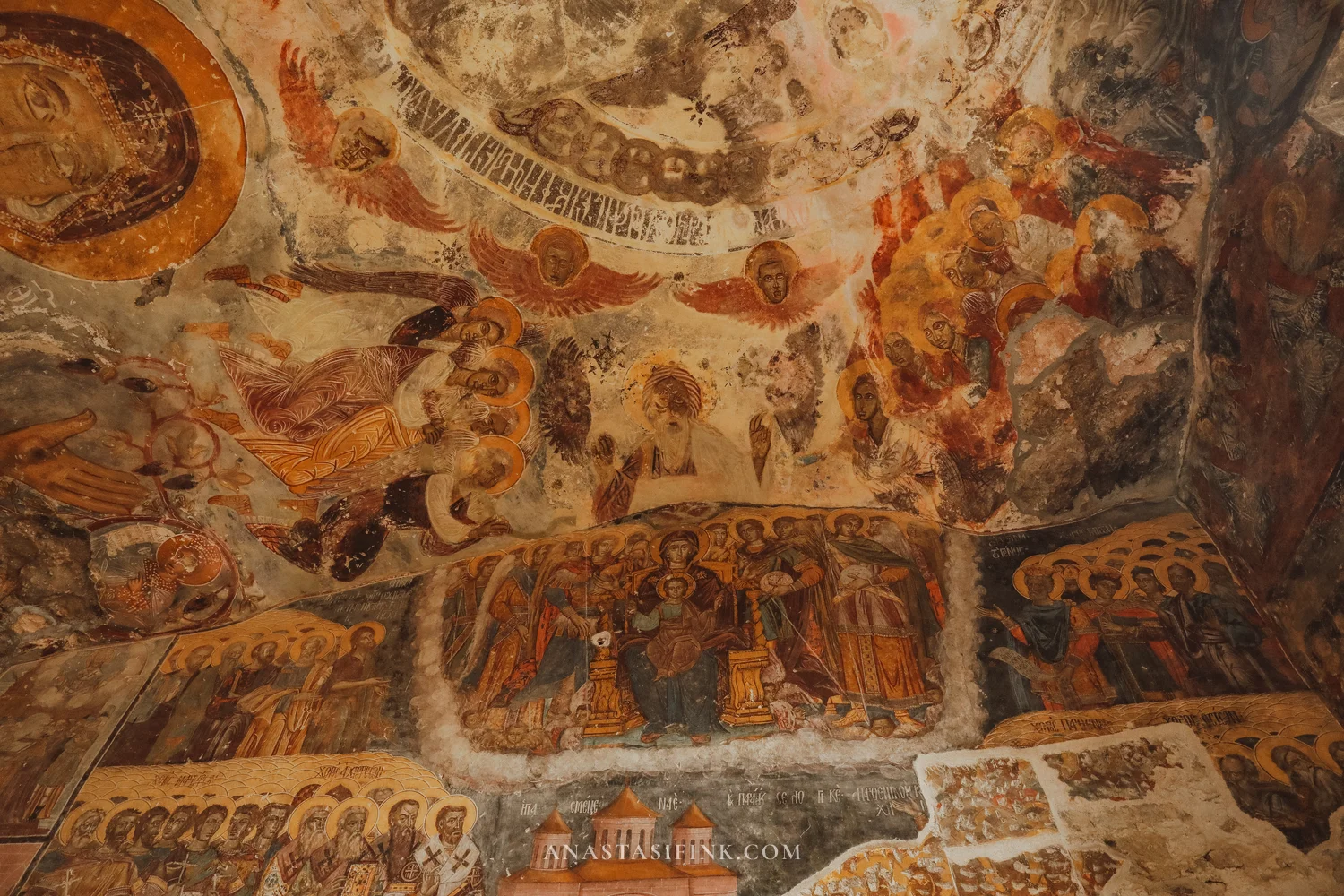

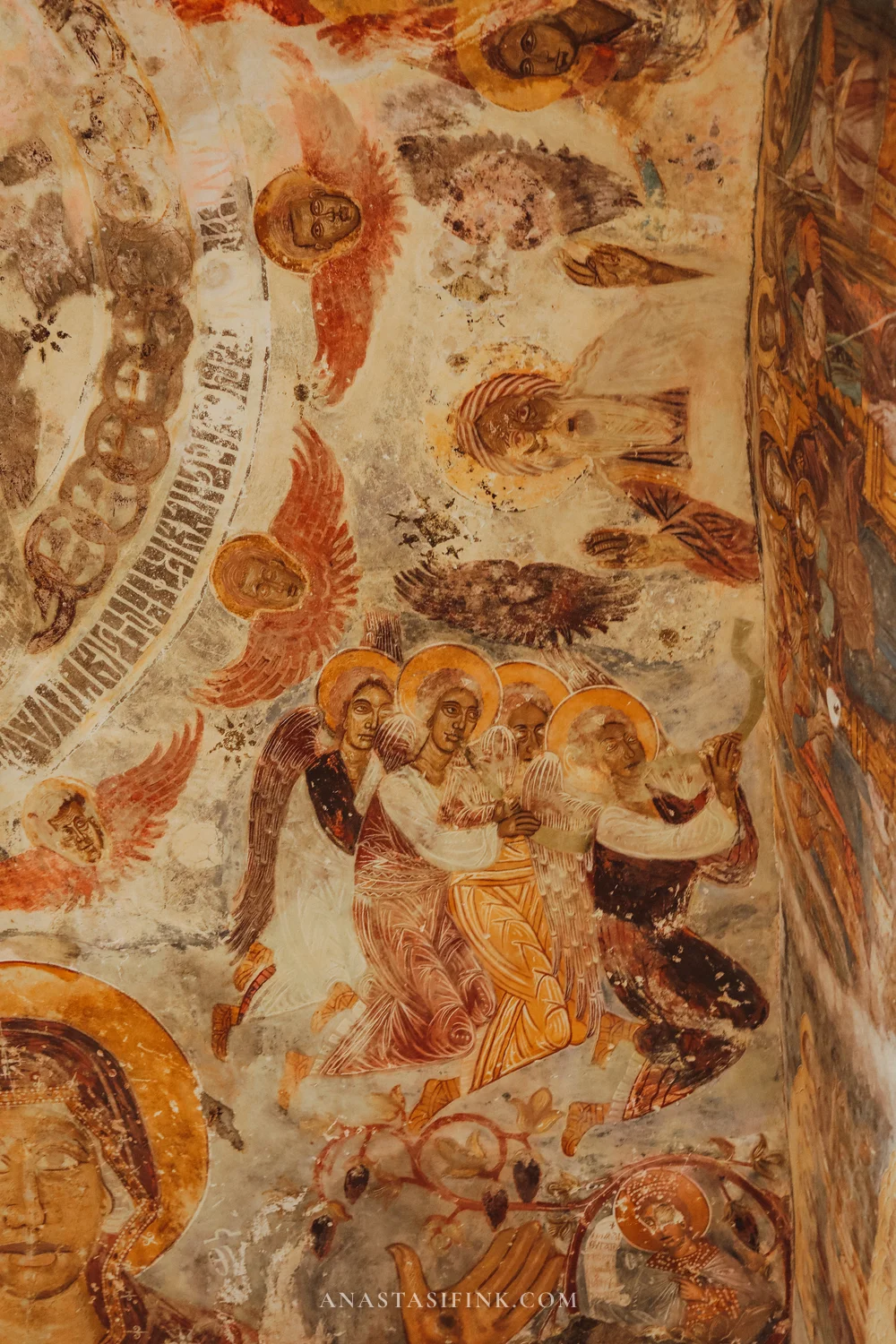
Window light falling on the saints’ faces. Skip the flash — it’s safer for the frescoes and the photos look more natural

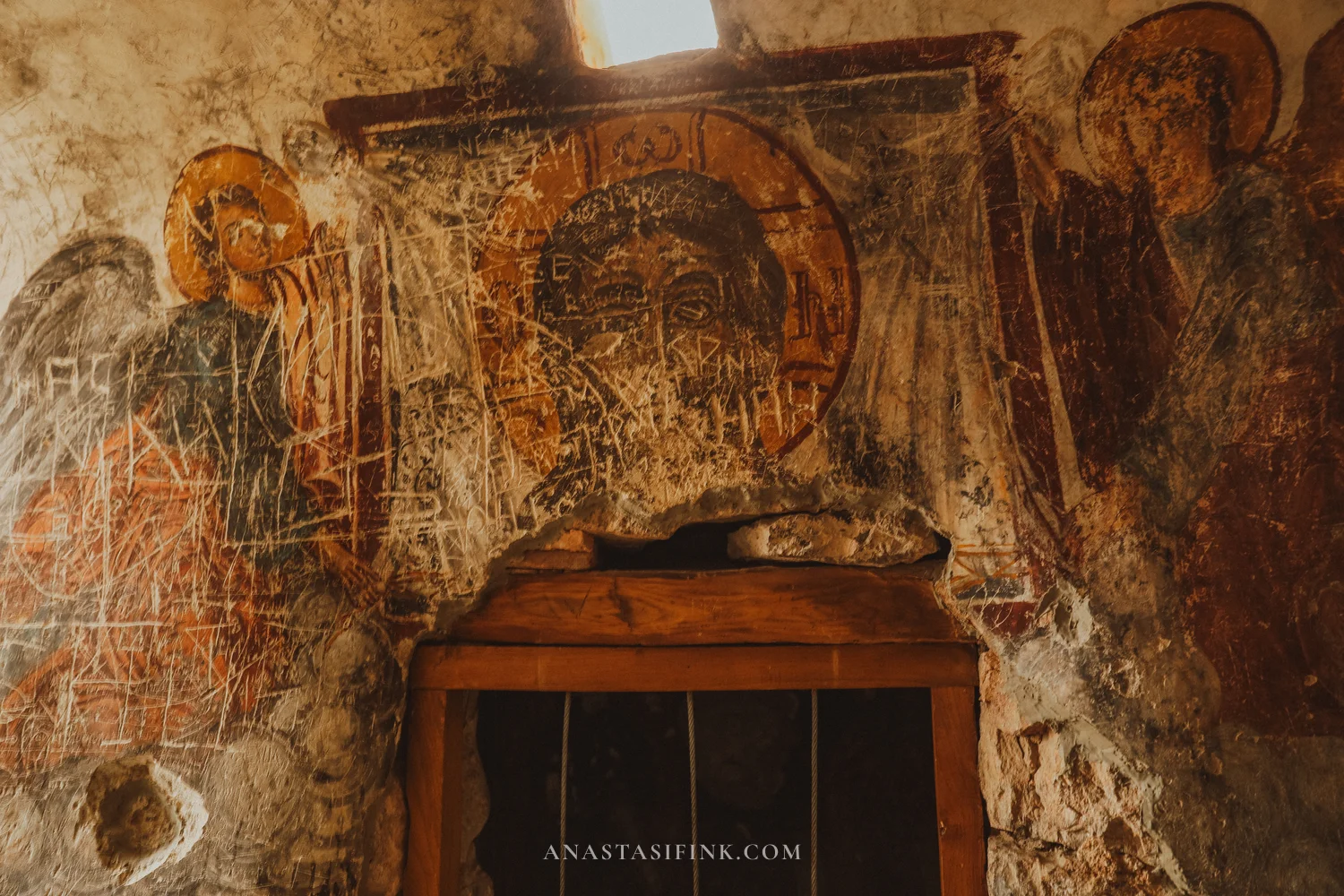
In one of the rooms I found angel frescoes above a doorway. Covered in scratches too, but the craftsmanship still shows. An angel in orange robes, with large wings.


The Inner Courtyard and Buildings
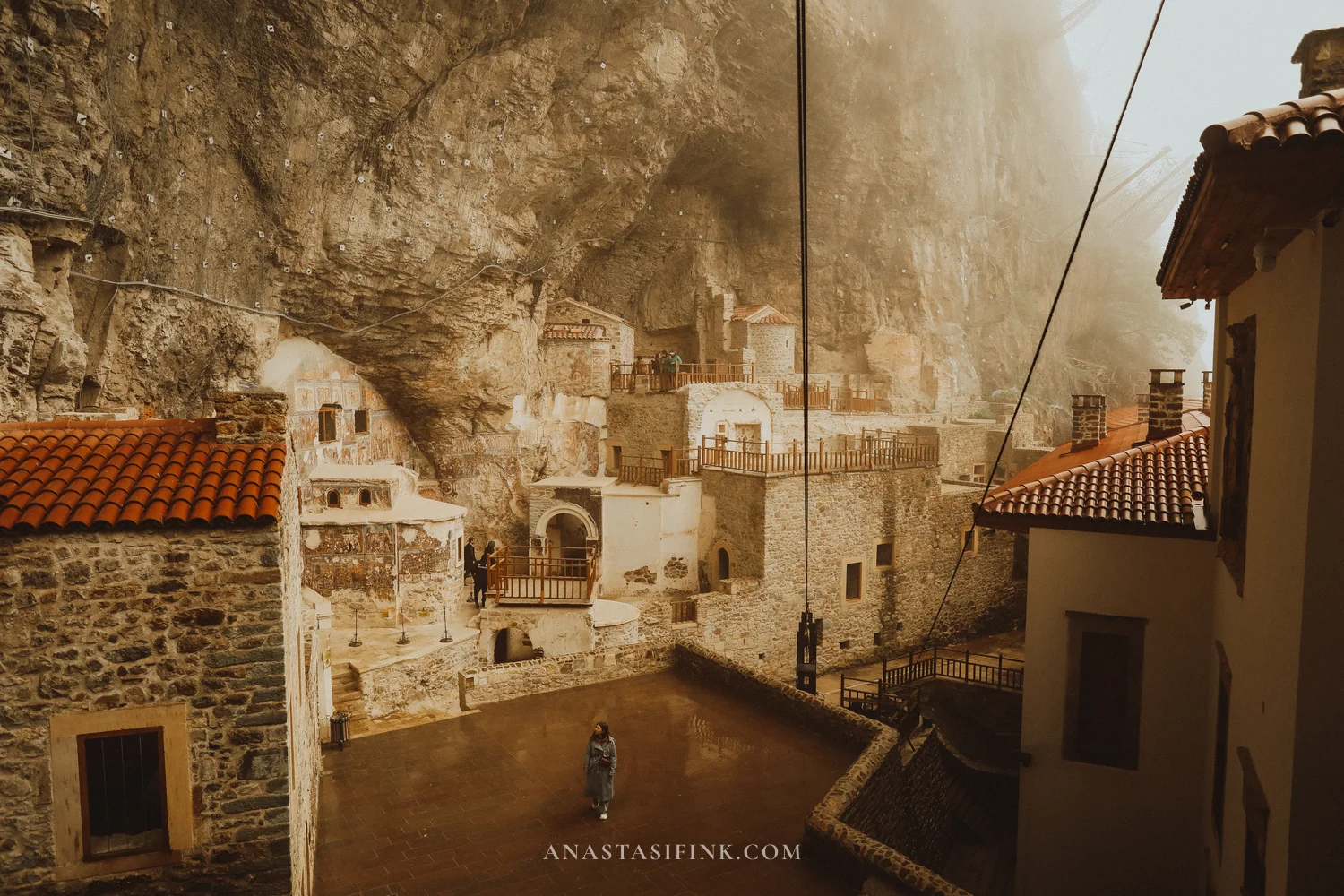
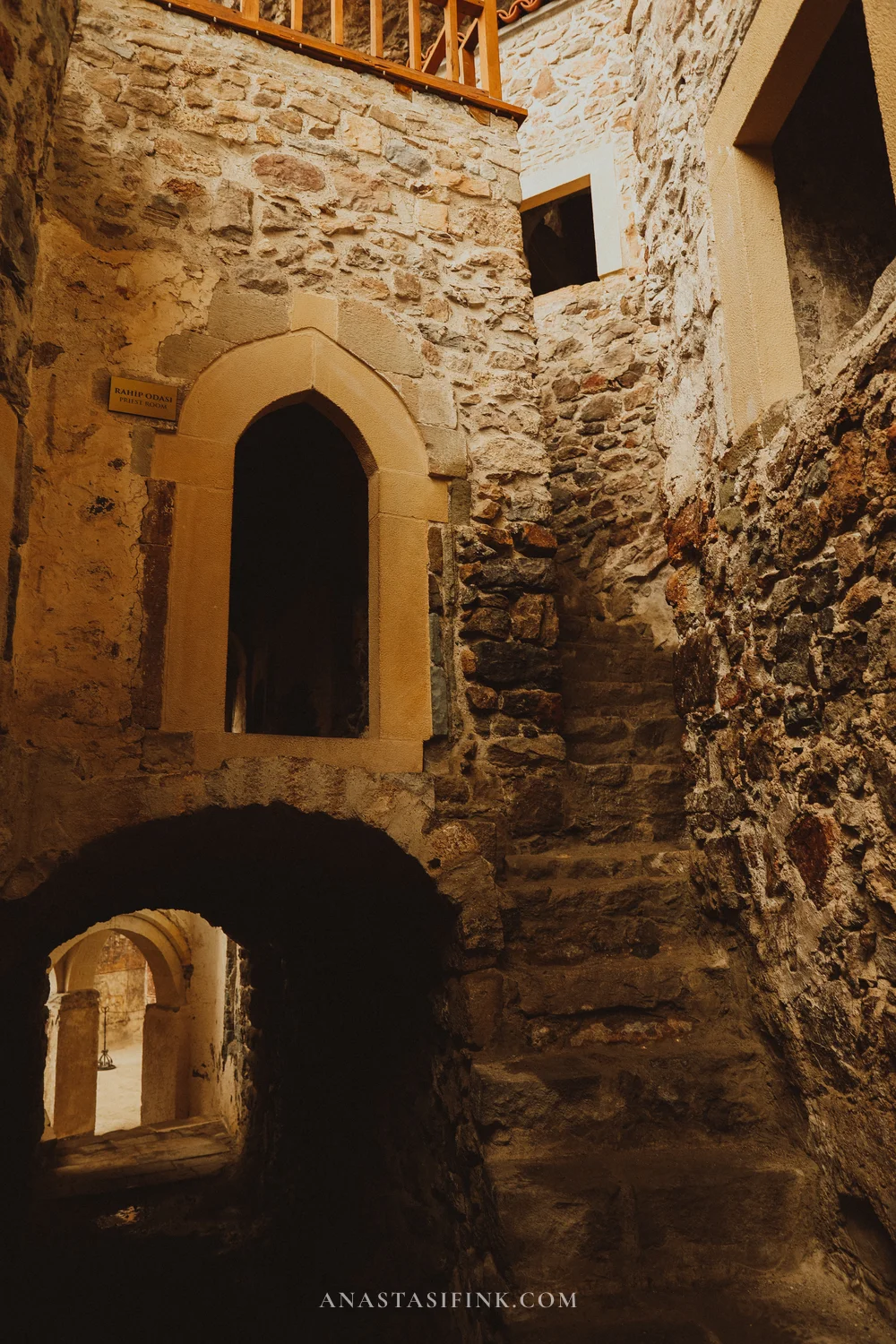
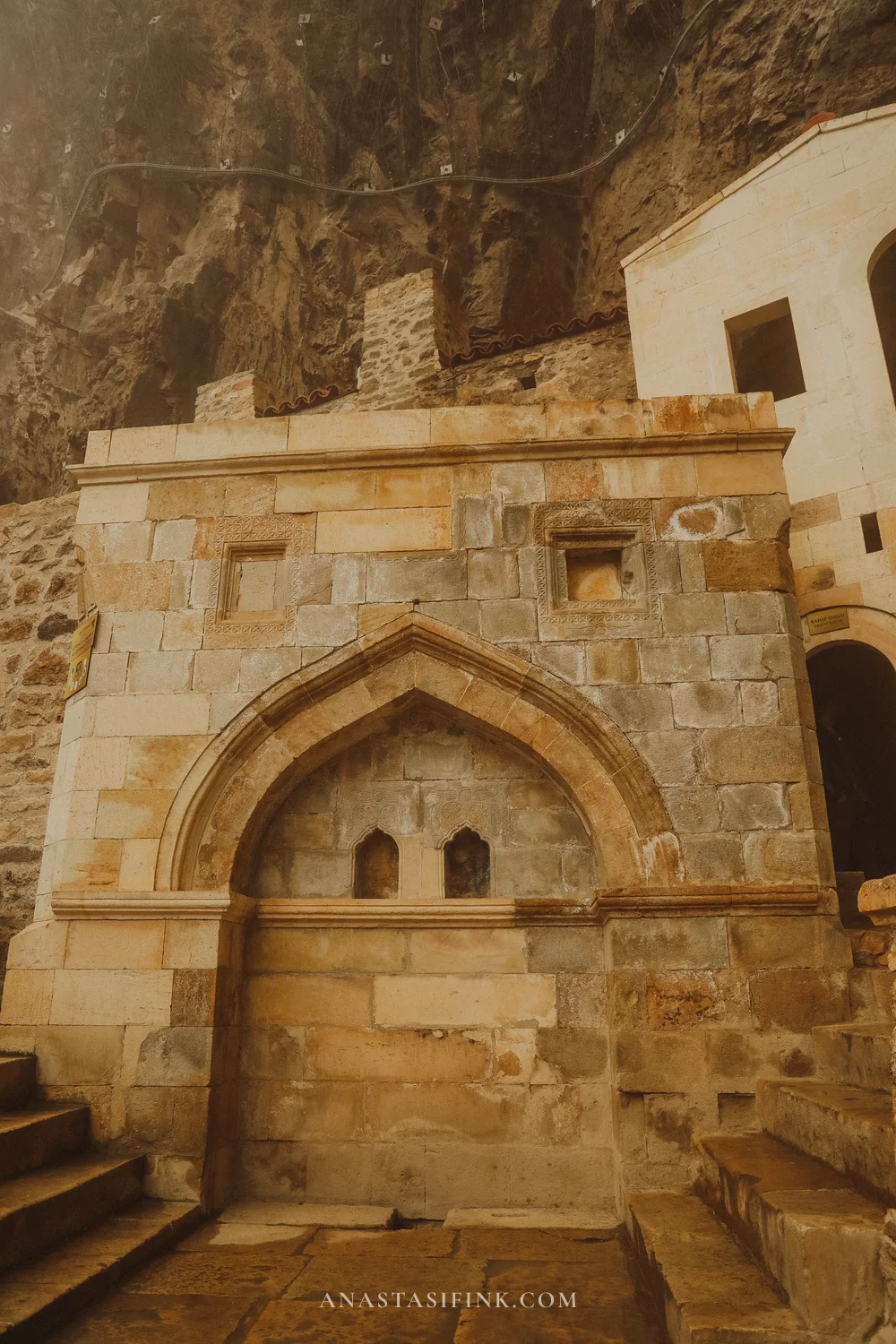
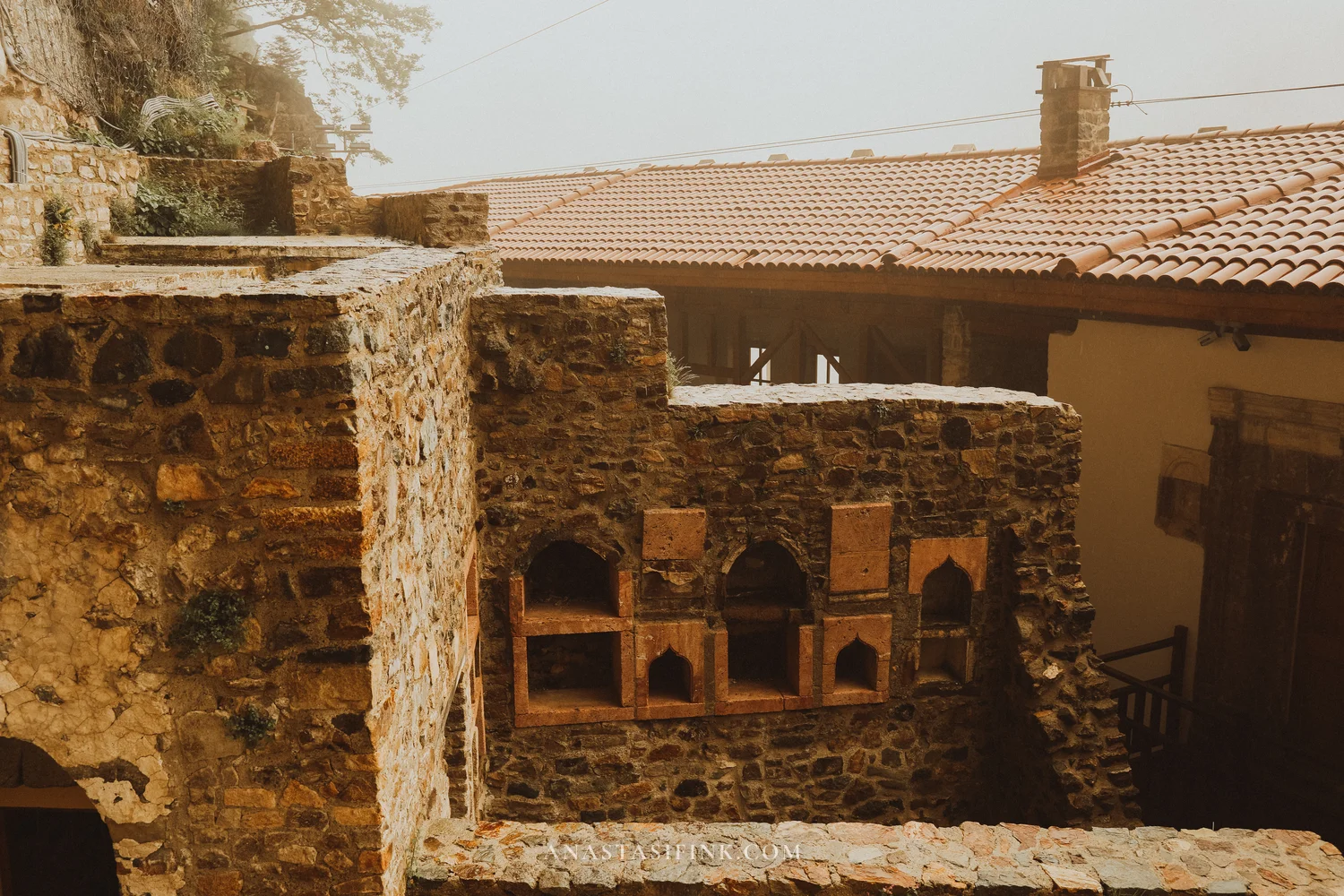
Inside the monastery there’s a whole complex of buildings under the rock overhang: monks’ cells, a kitchen, a bakery, a library, guest rooms. I entered from above, down a narrow stone staircase. The courtyard was wet after the rain, the buildings reflected in puddles.

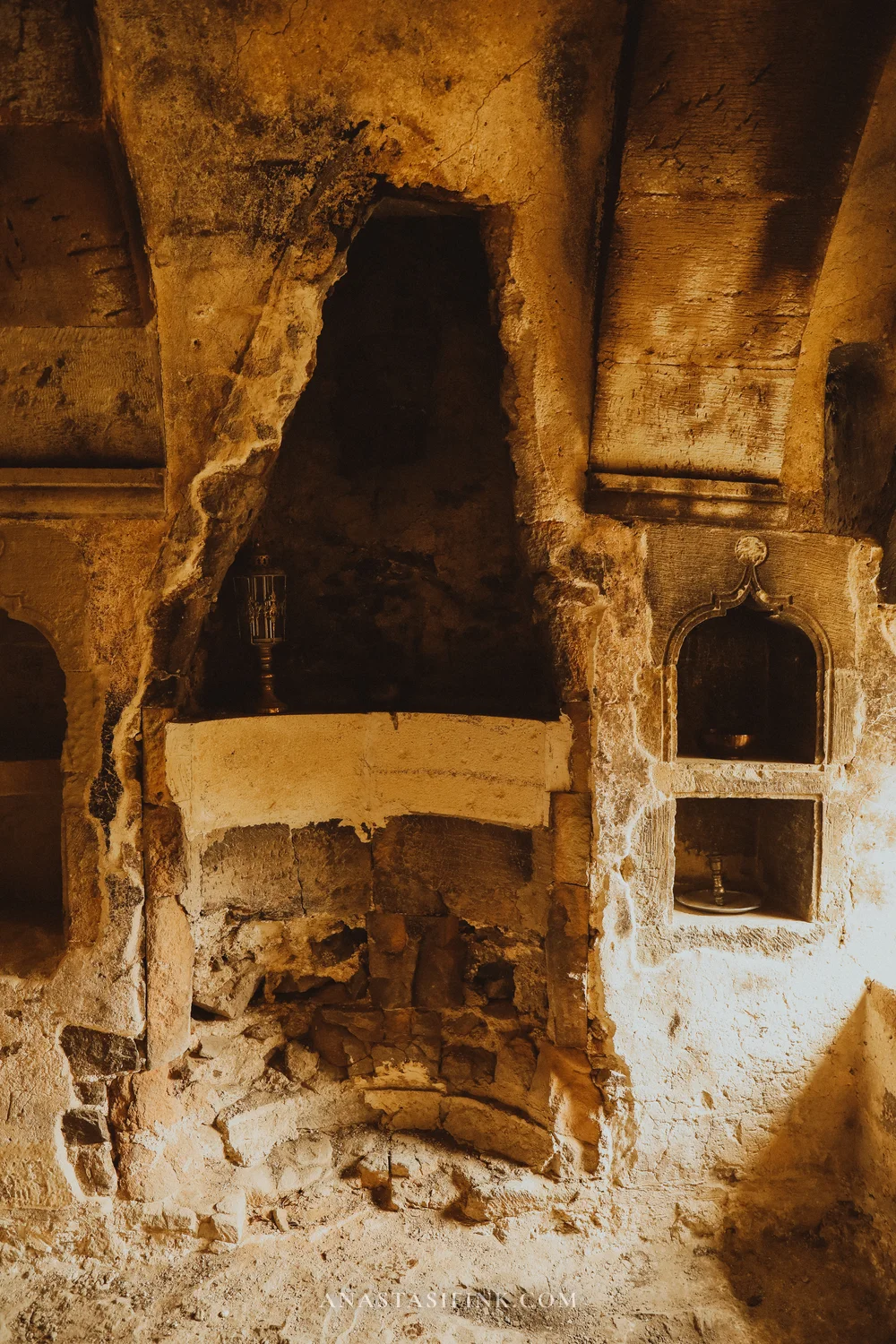
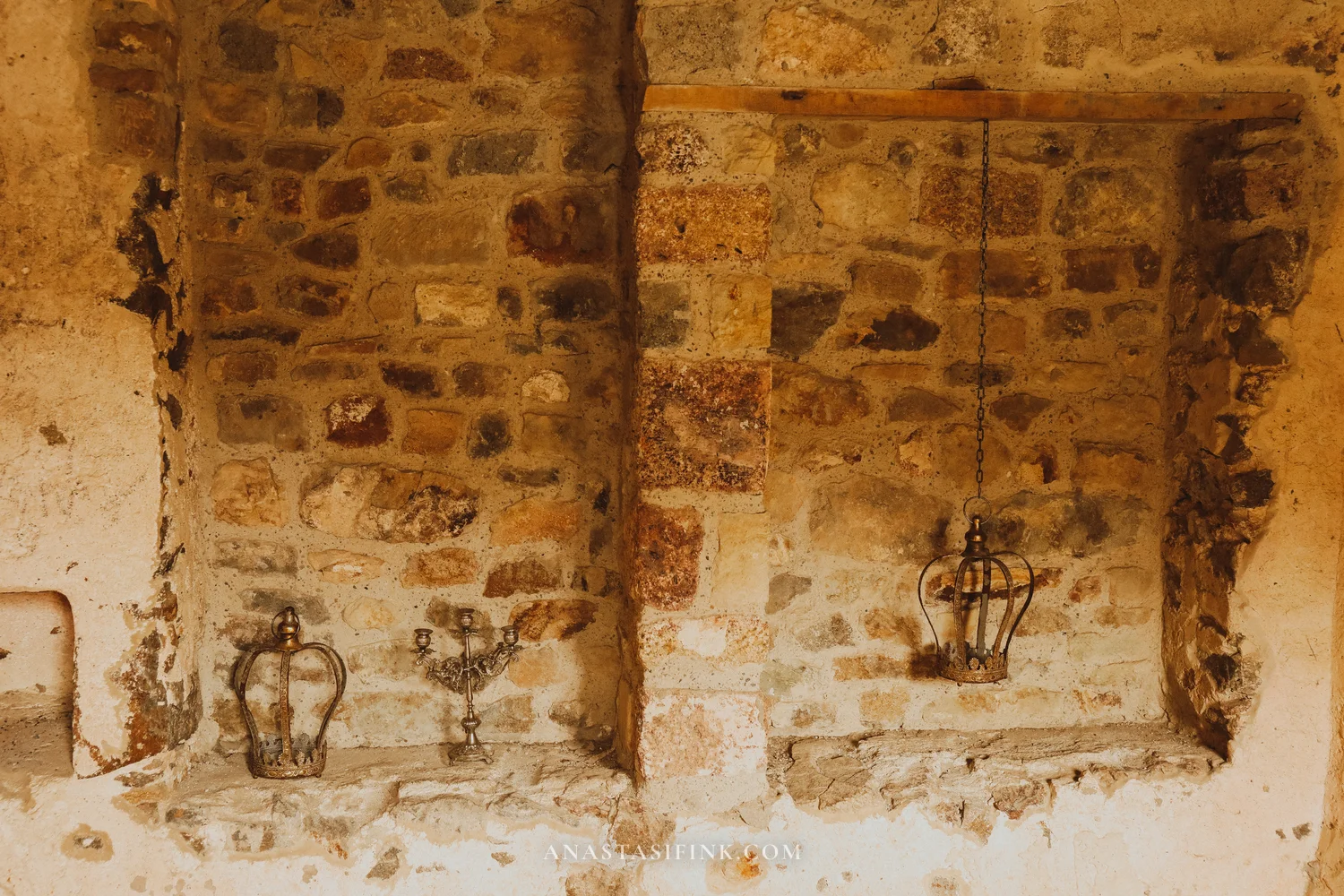
The cells have stone vaults, arched niches, and narrow windows. Some rooms still have traces of fireplaces — winters at this altitude without heating would have been brutal.
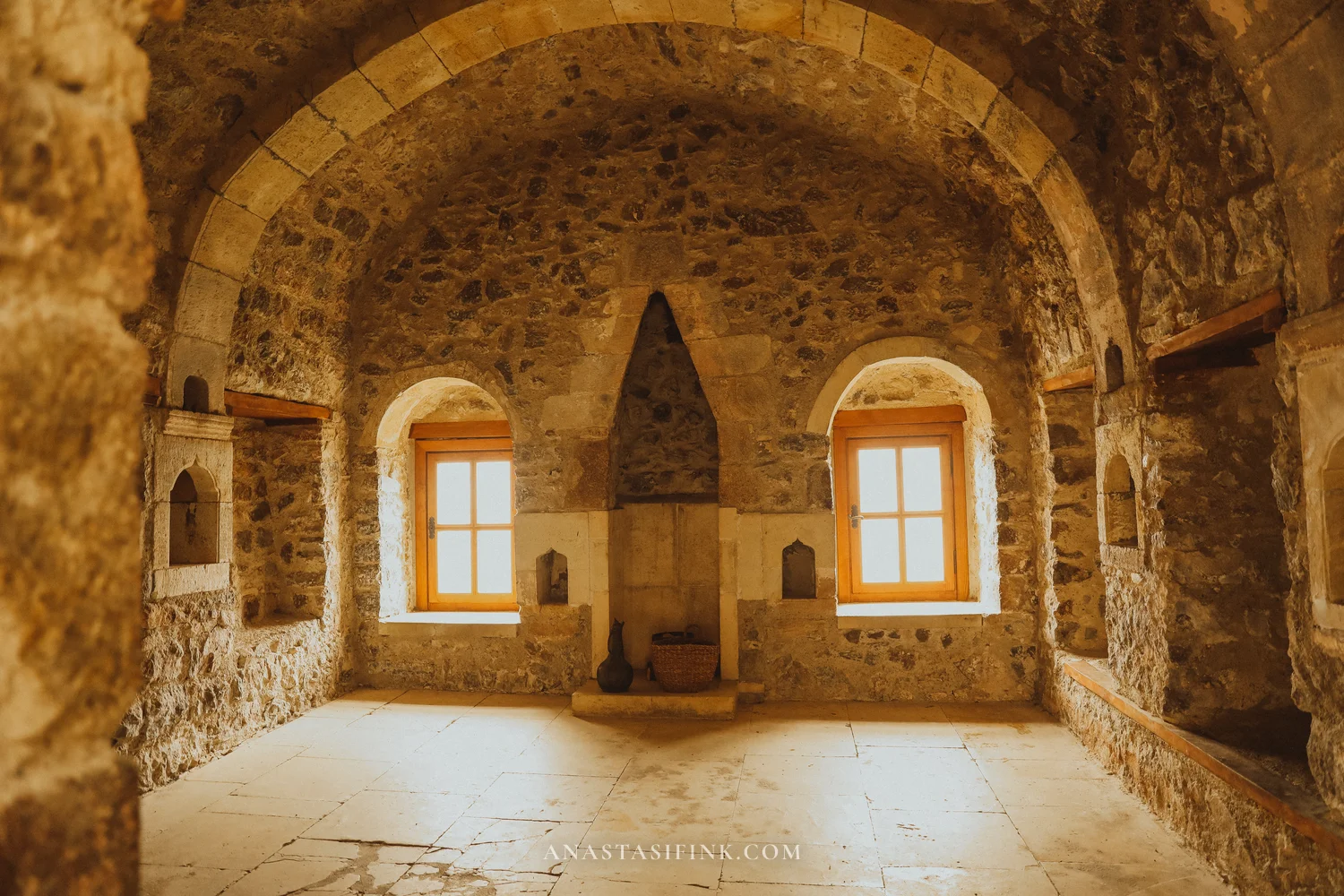
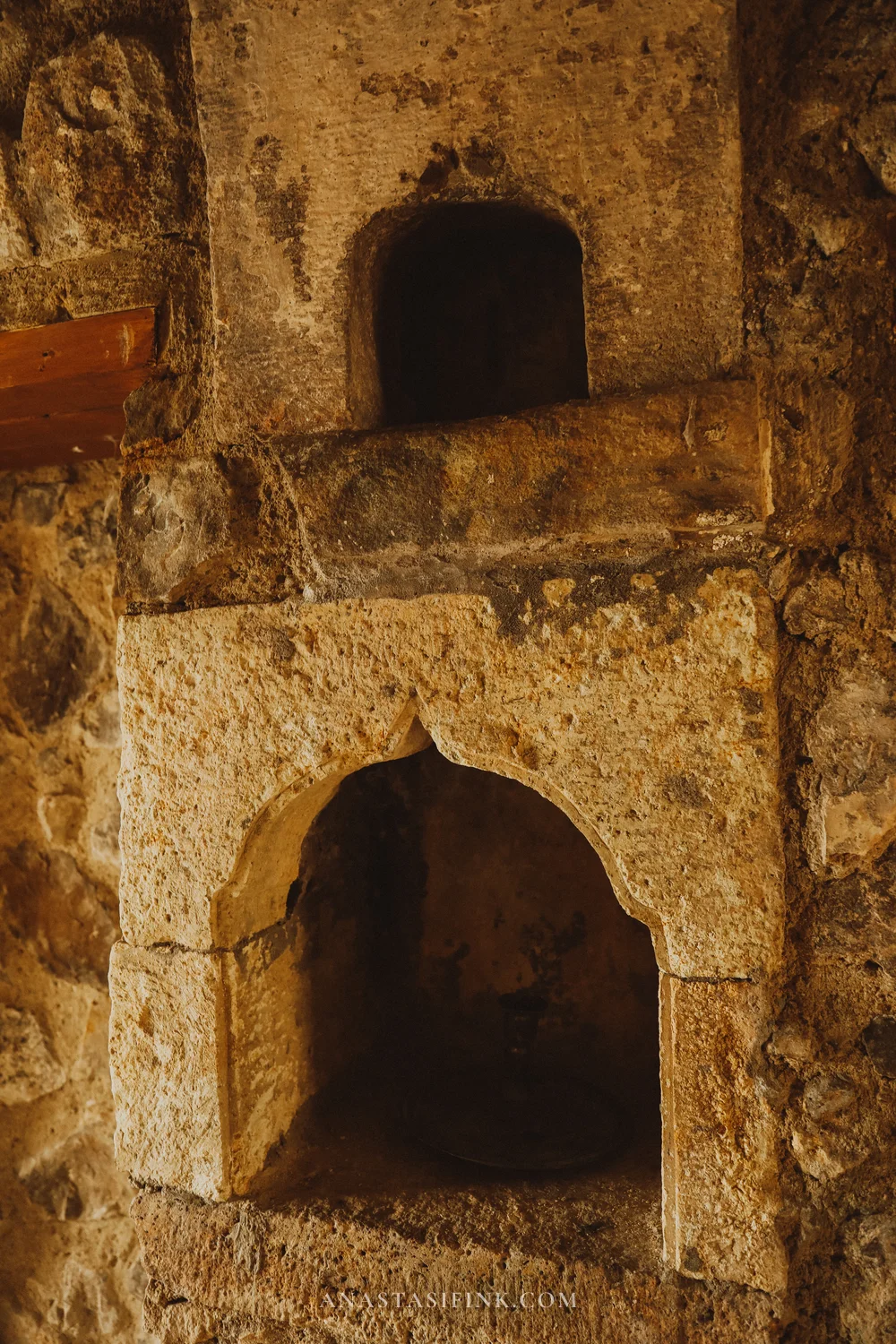
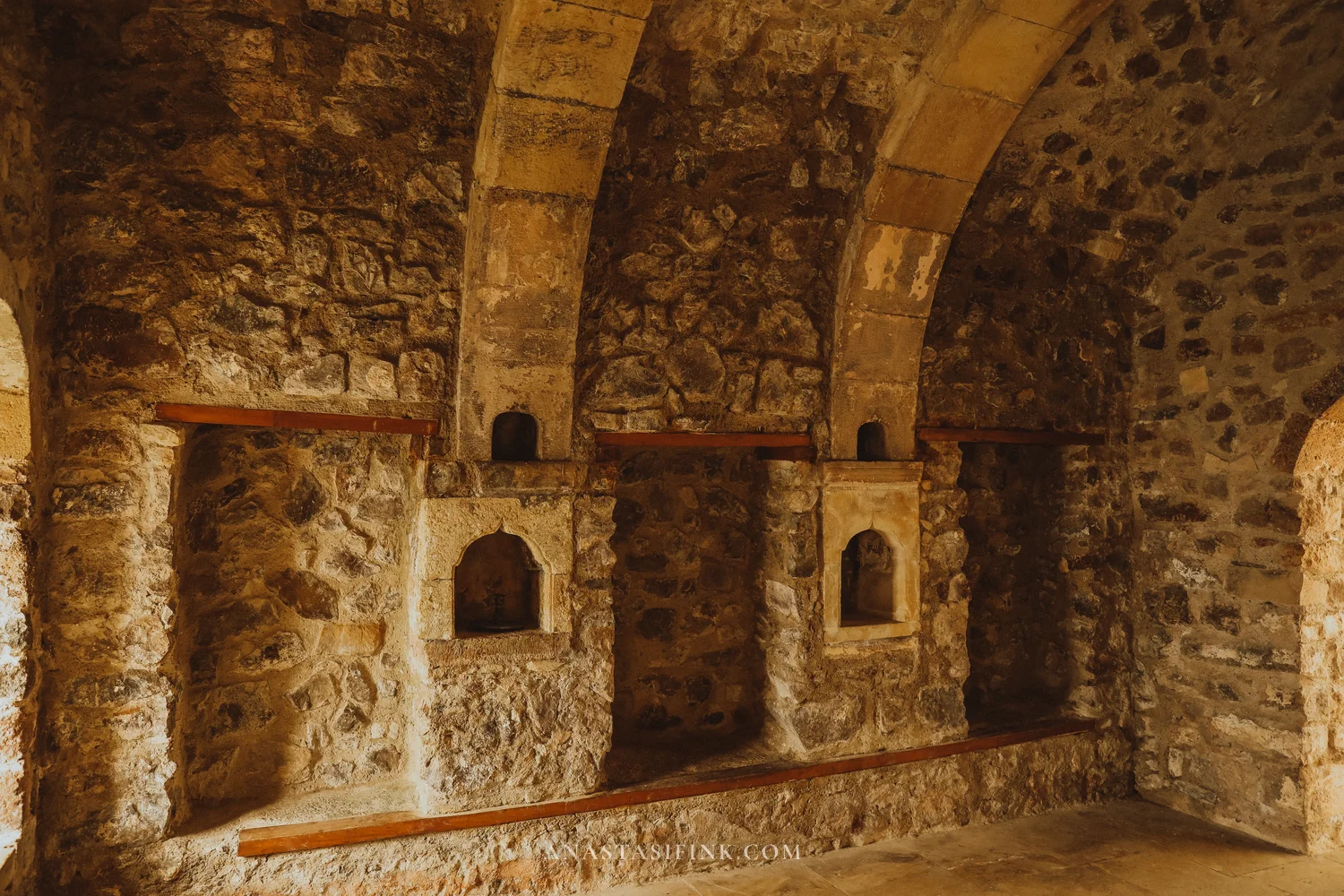
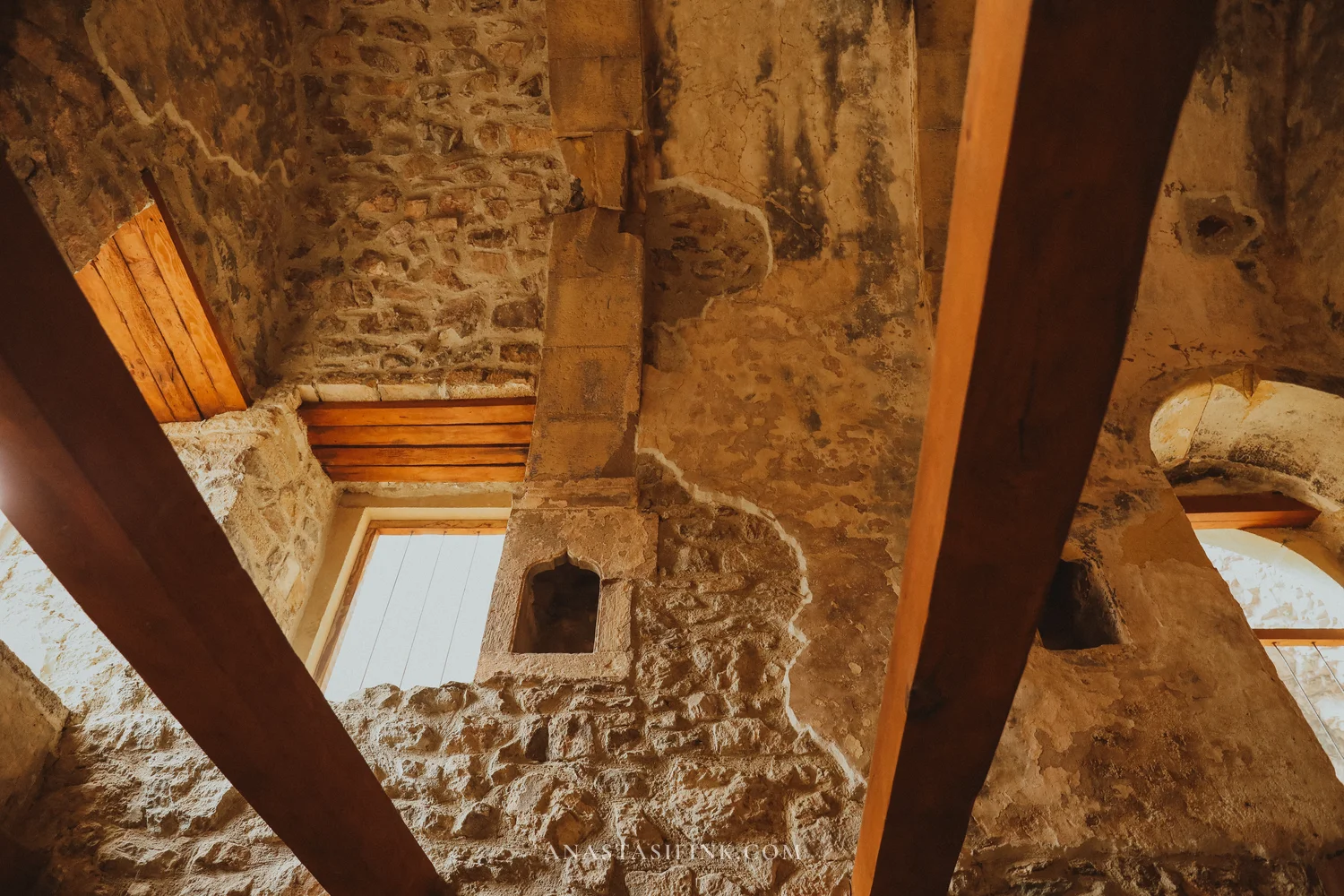

Stone masonry, wooden beams, and niches instead of cabinets
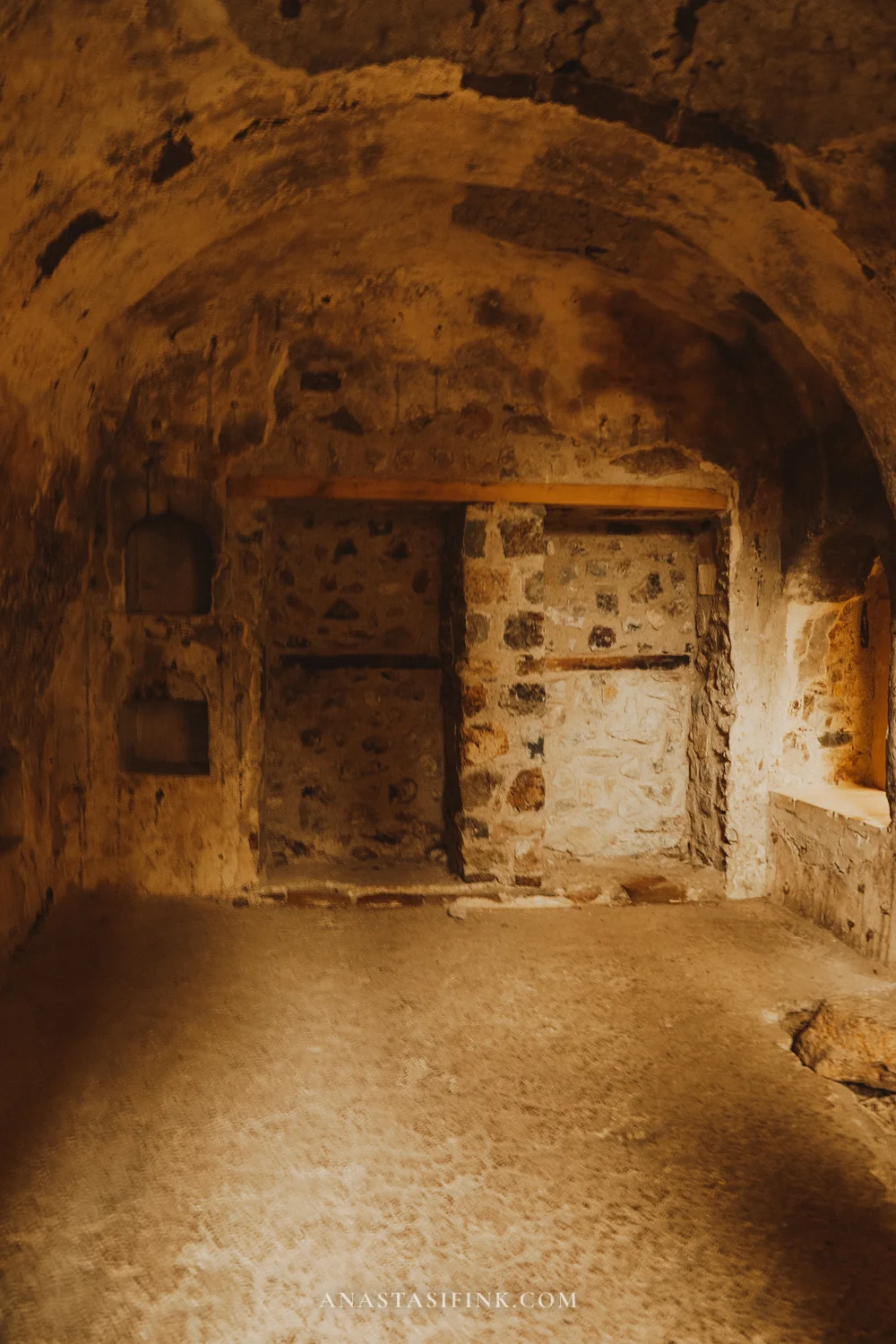
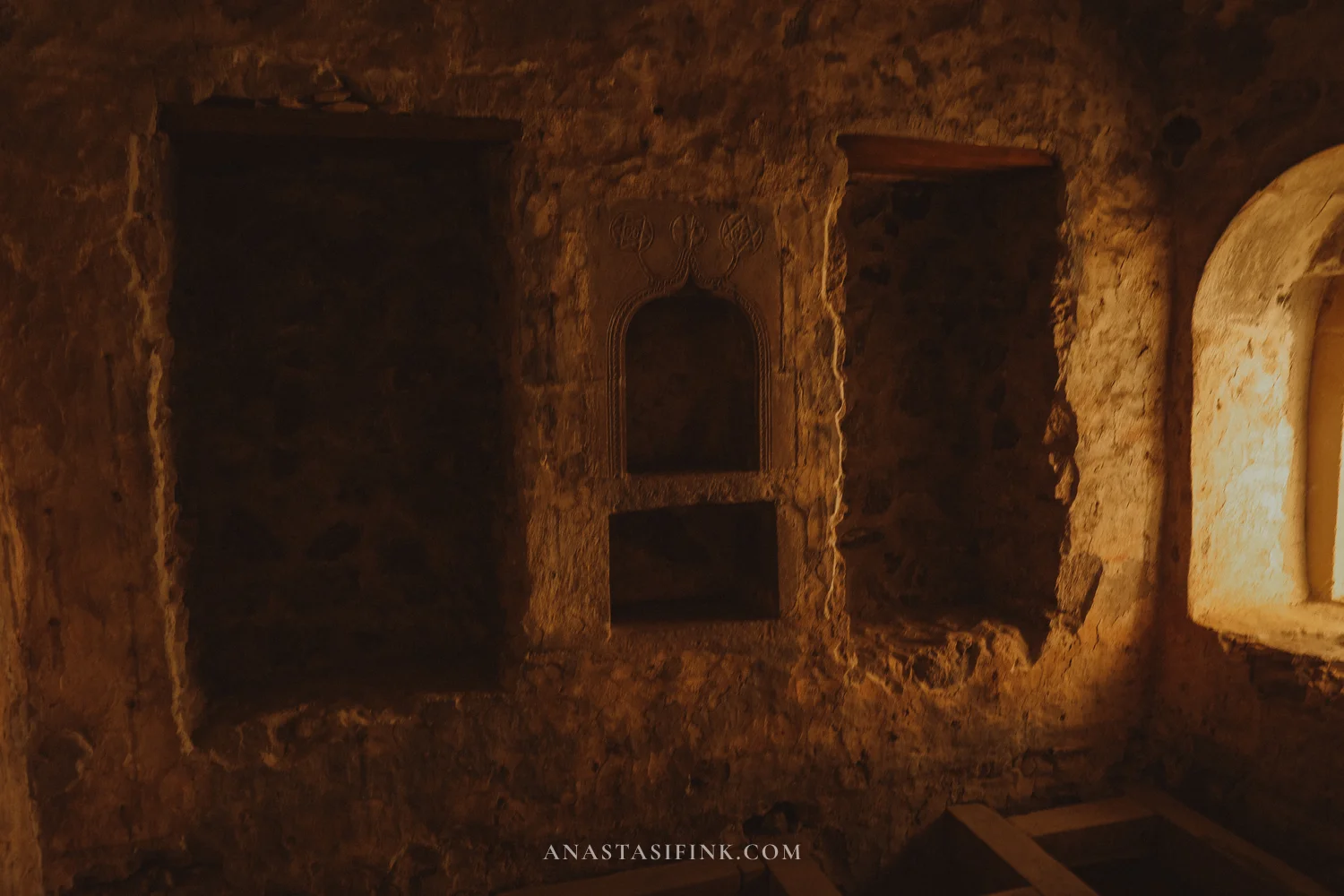


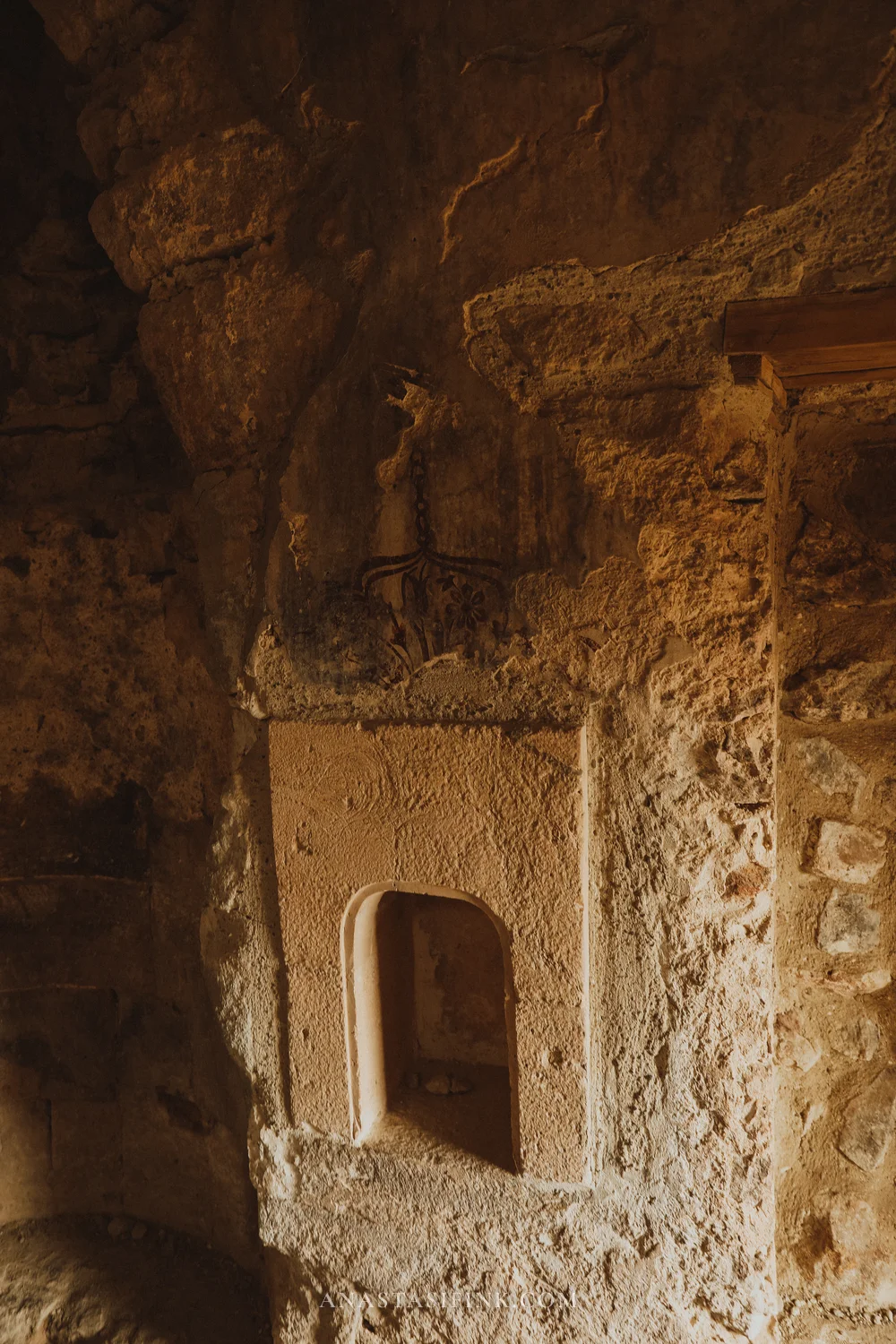
The kitchen was one of the most interesting rooms. A big stone fireplace with a cauldron, soot on the vaults. Next to it — the bakery with a stone oven.
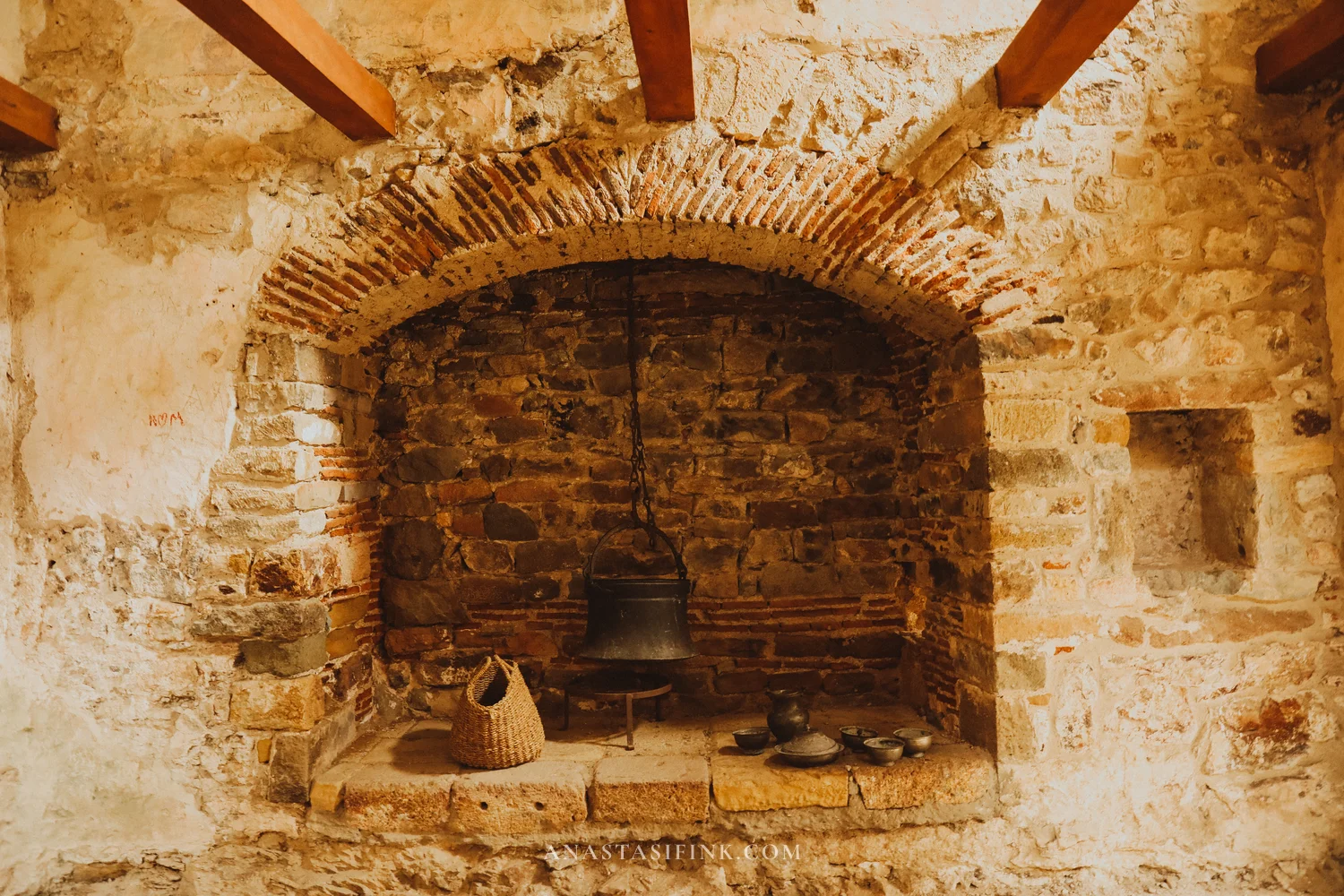

Kitchen and bakery (fırın means “oven” in Turkish)
The Rock Church, Views, and Architecture
Step back a few paces and you can see the full complex: the rock church with its frescoes, the apse (the semicircular altar extension), the white cell buildings under the rocky overhang.
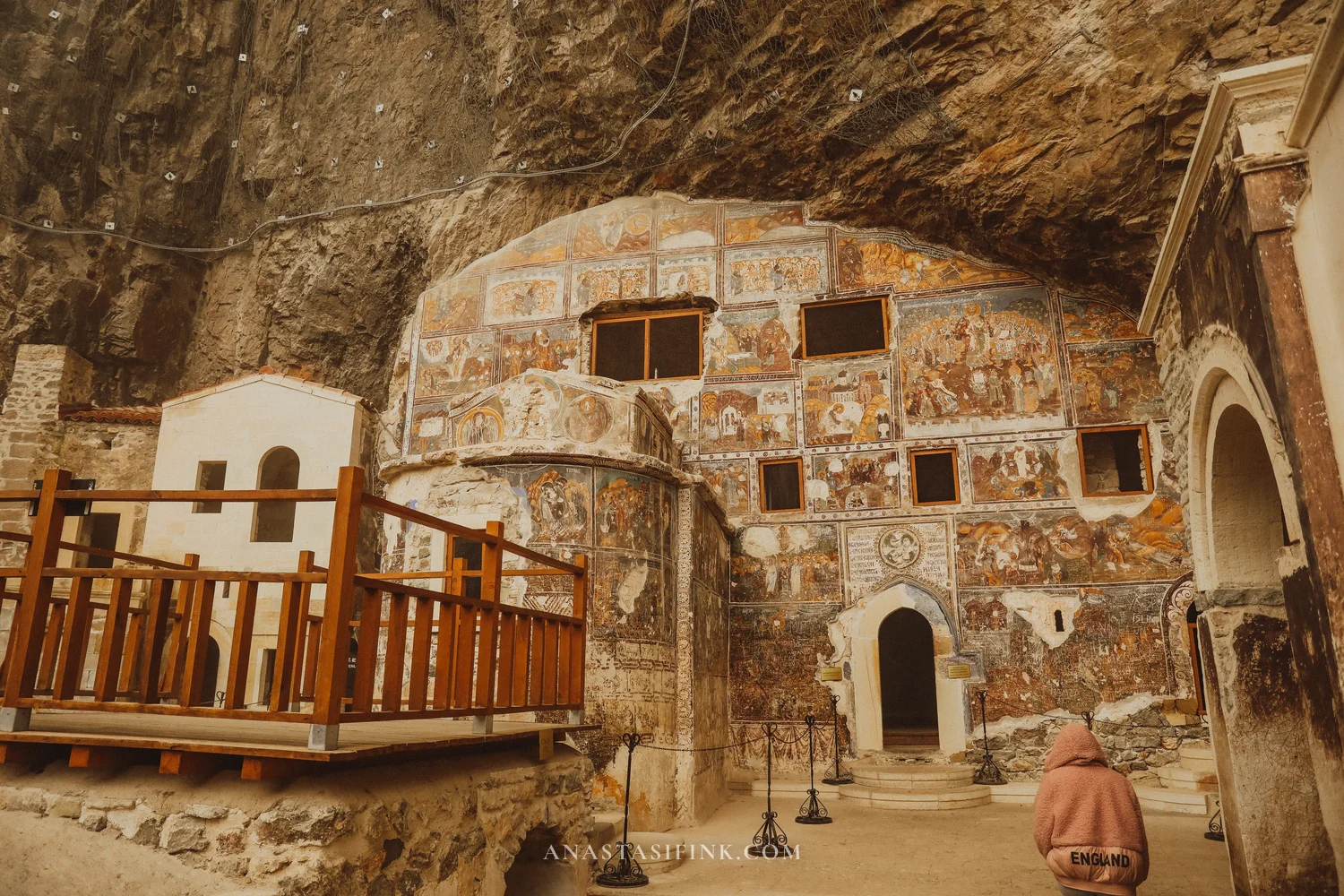
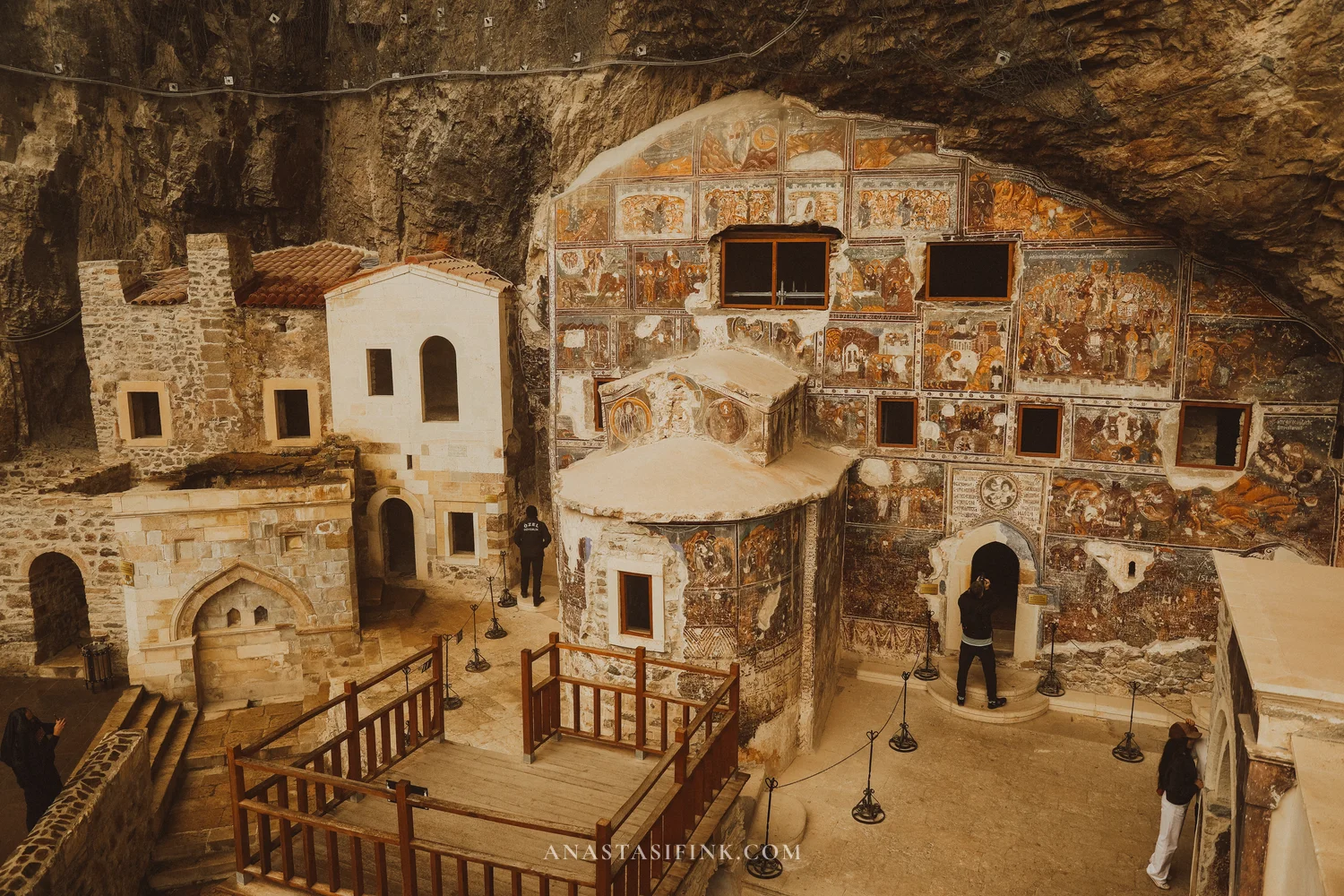
The church and courtyard. The person in the frame is there for scale

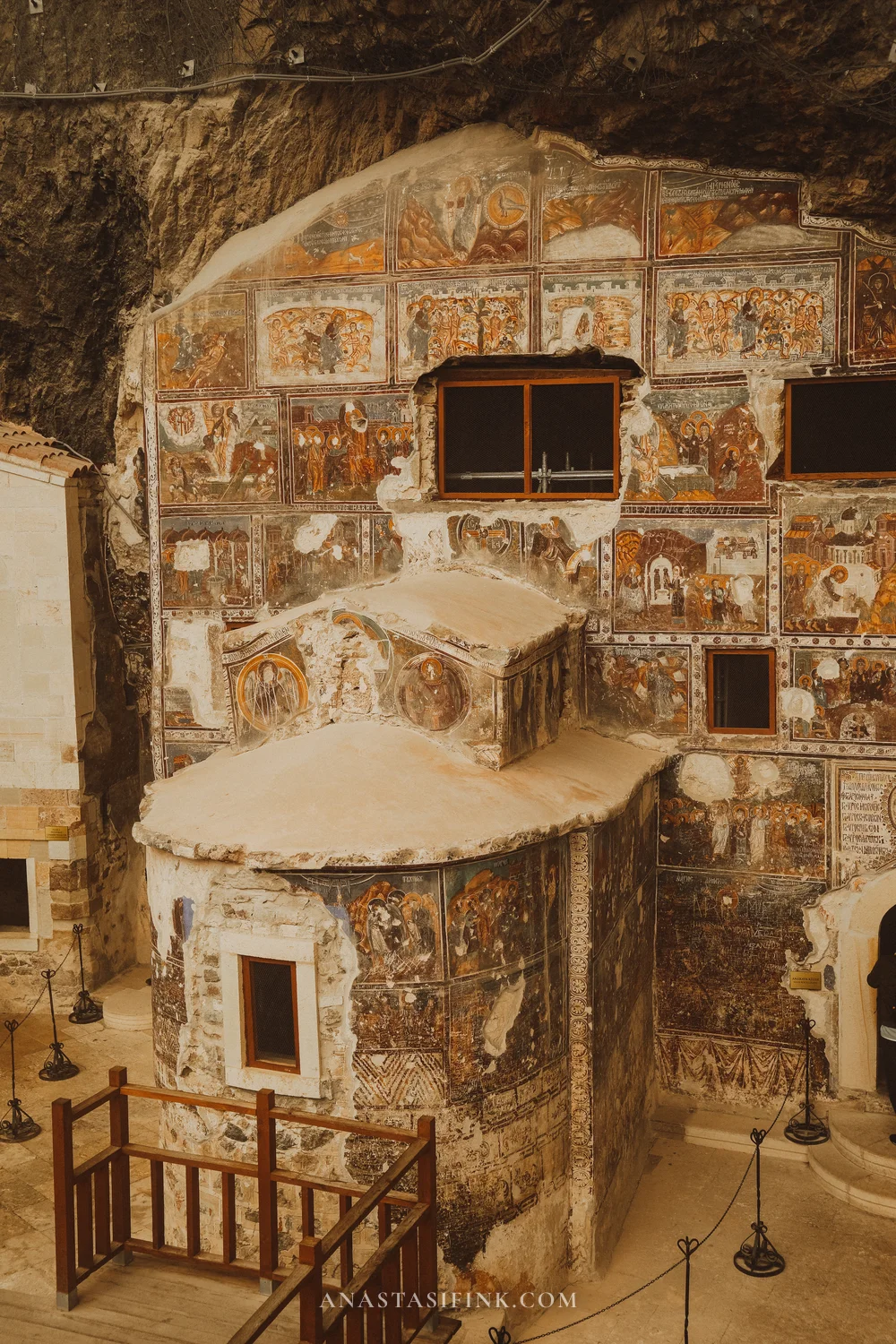
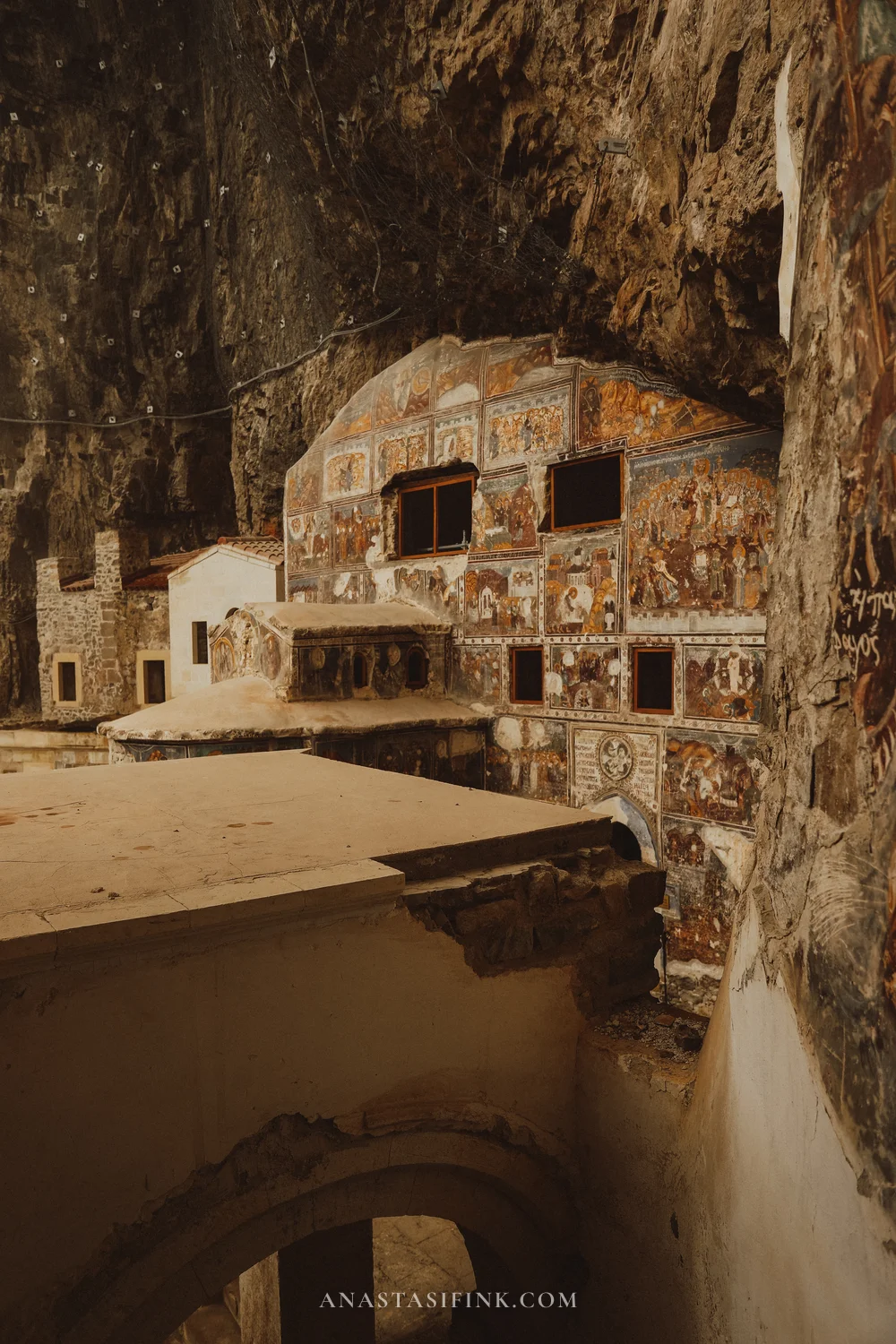
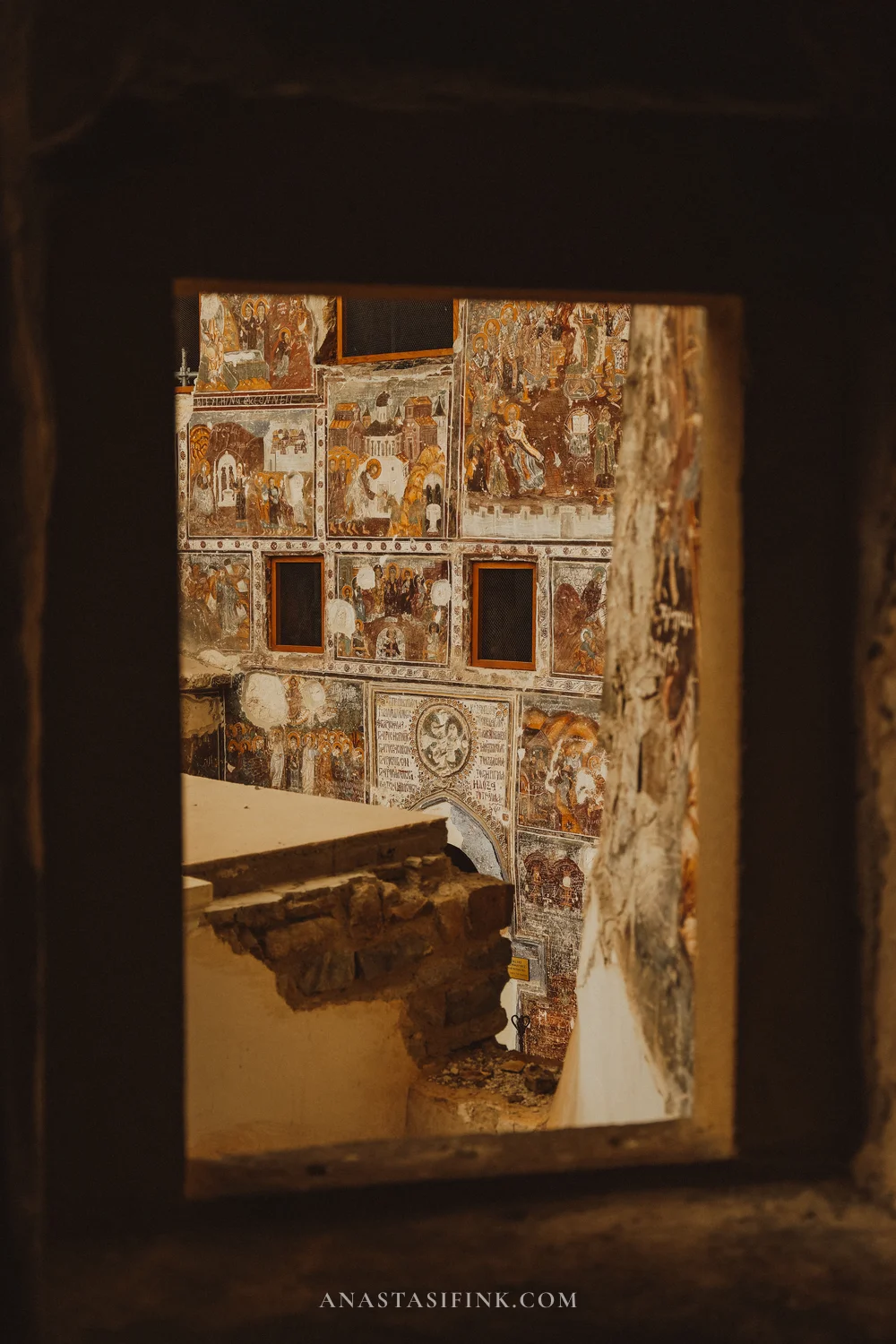
Views of the church — across the courtyard and through window openings
From the observation platform, you can see how the monastery hangs on the cliff face, with the valley disappearing into fog below.


The view from the observation platform

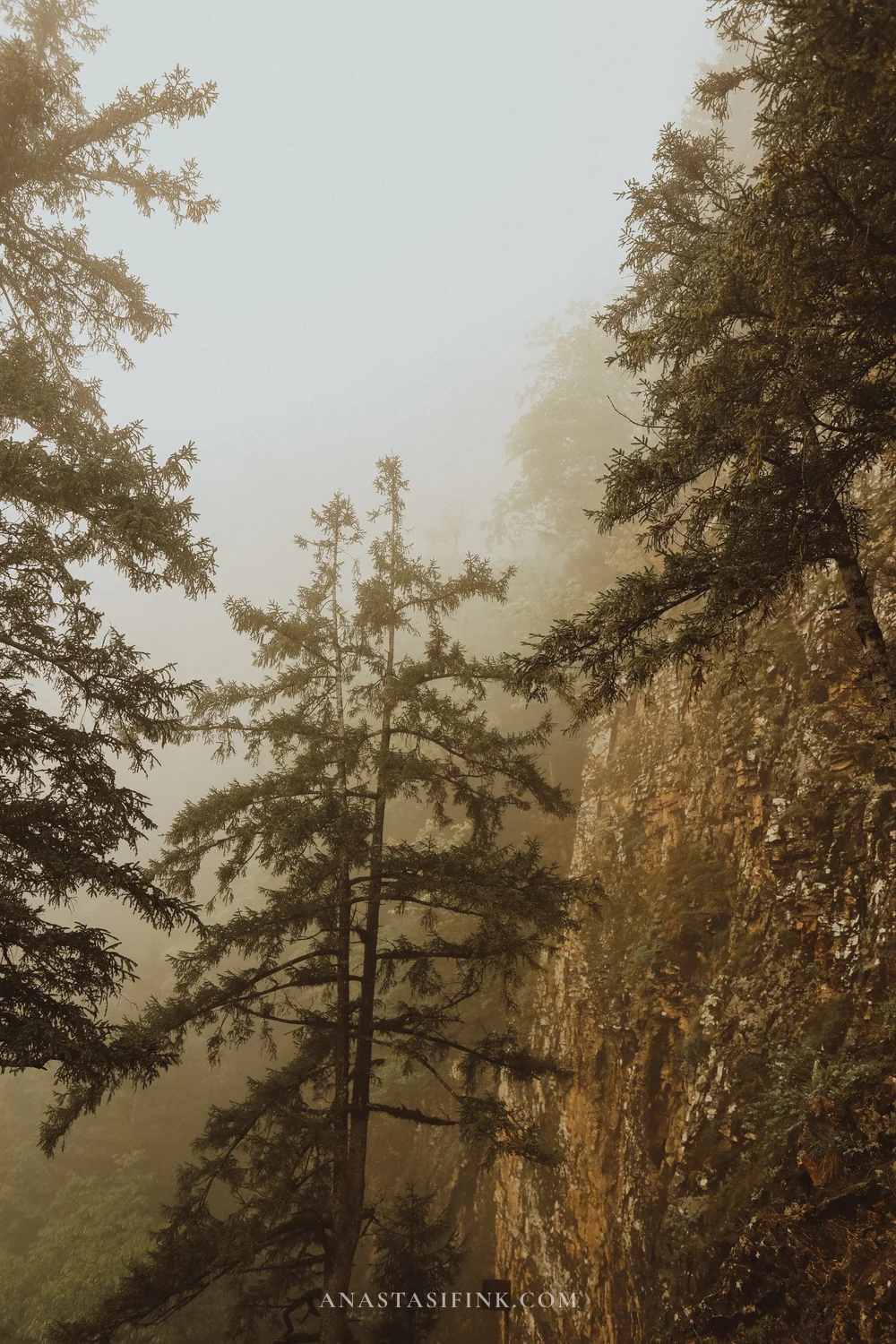
The Forest Walk to the Monastery
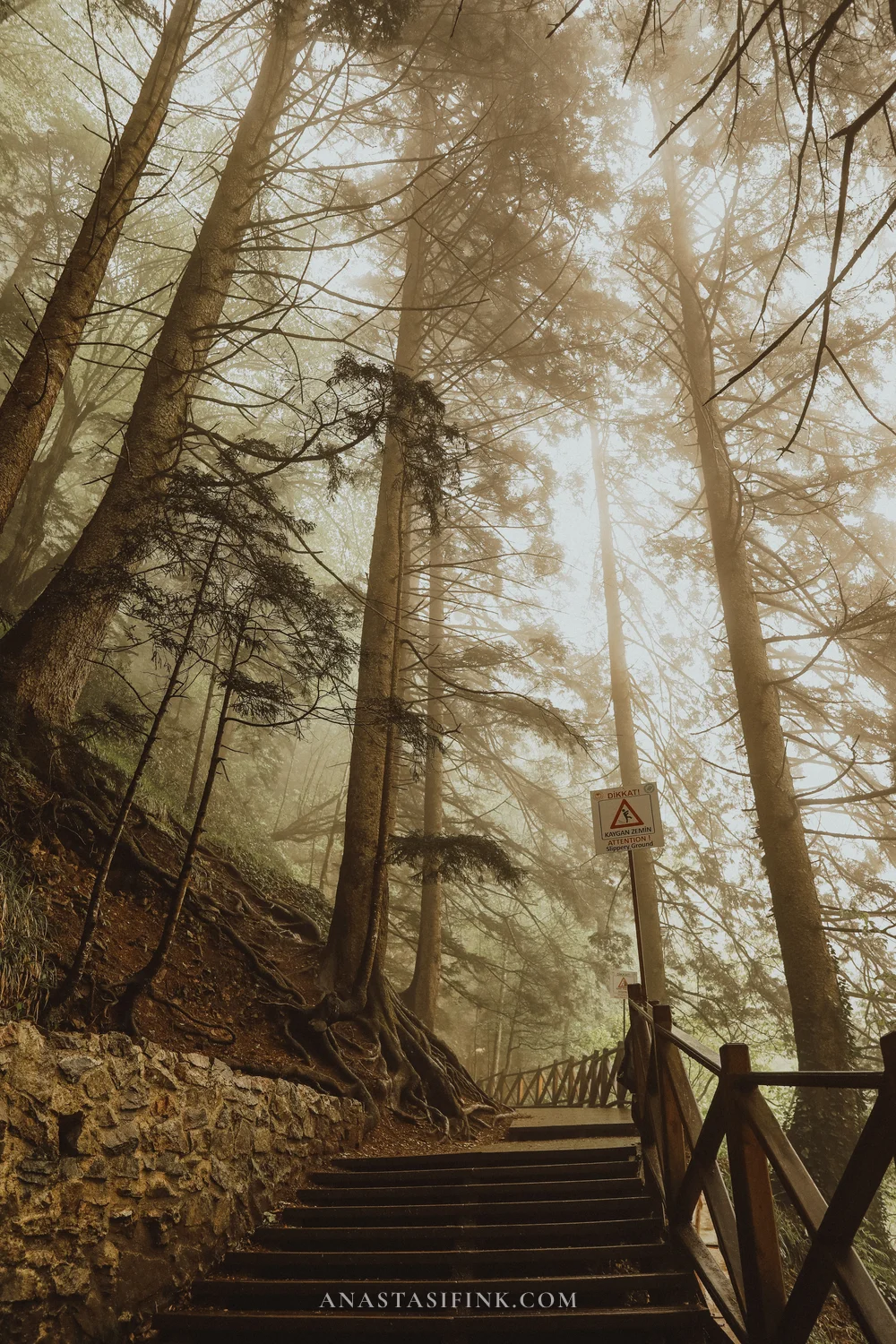
The walk from the shuttle stop to the monastery through Altindere National Park is an experience in itself. A wooden boardwalk with railings winds through a forest of ancient spruces, firs, and chestnut trees. I was there in April — low clouds, light drizzle, the smell of wet pine needles. No crowds, just silence.
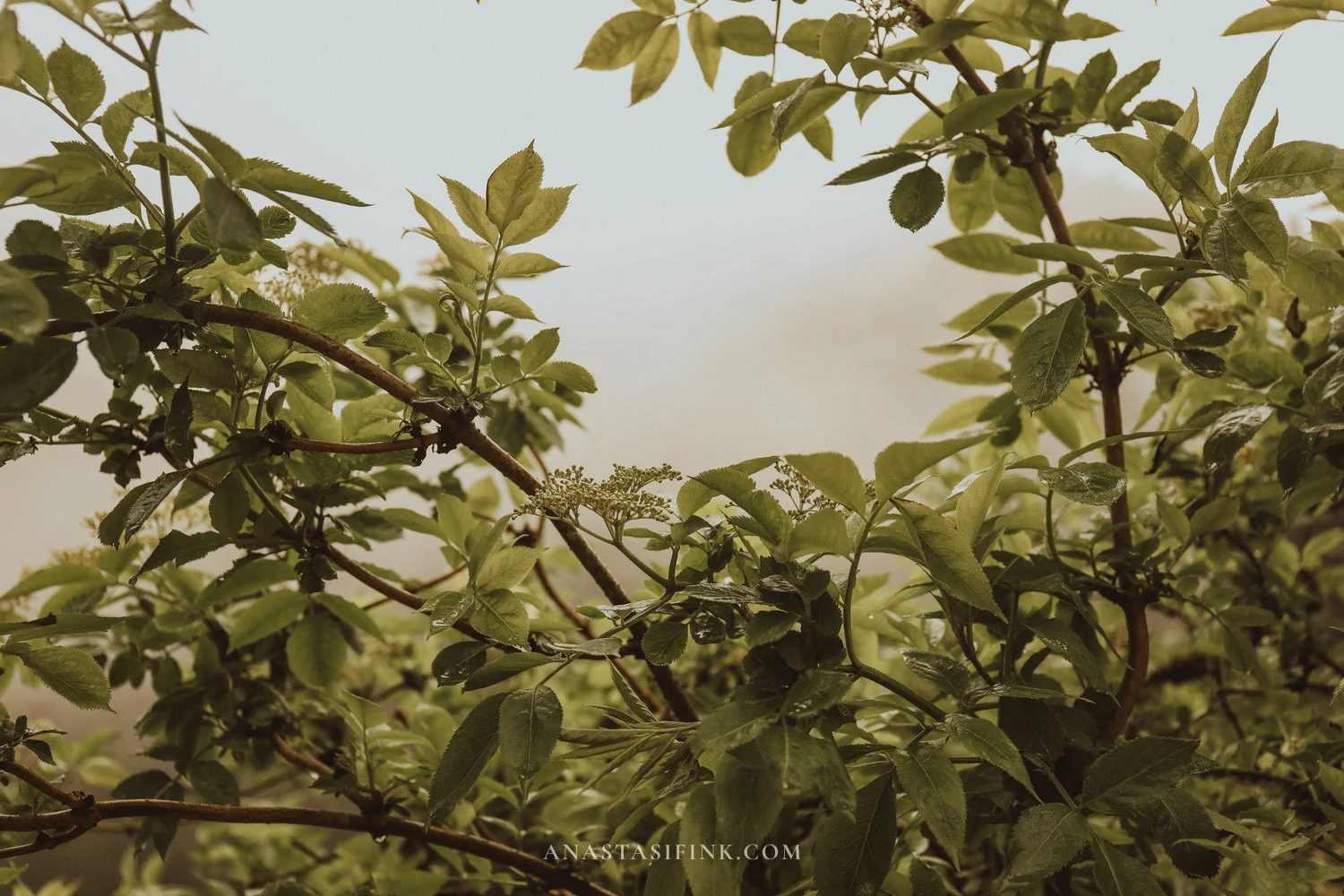

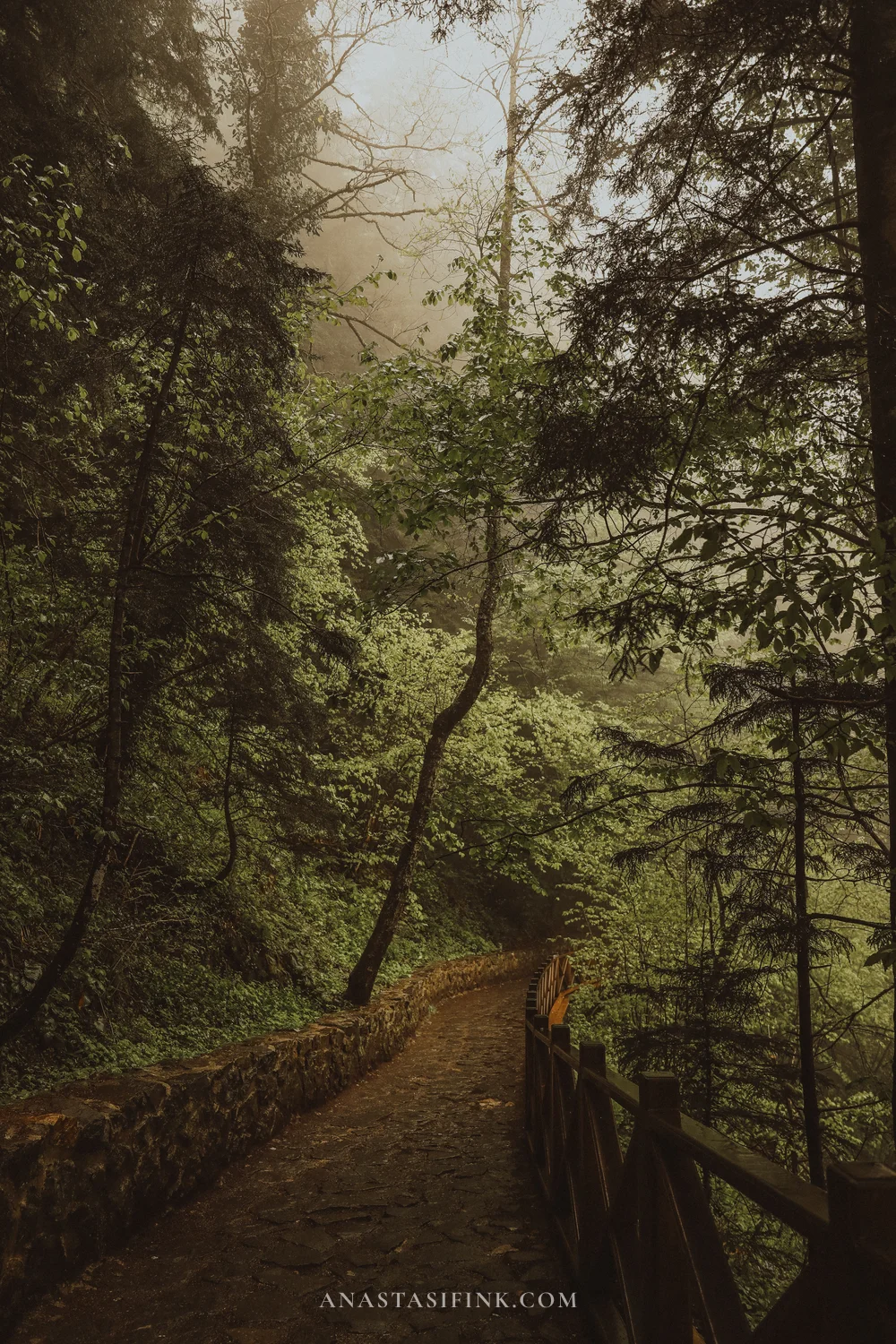
Wooden boardwalks and railings — easy and comfortable walking
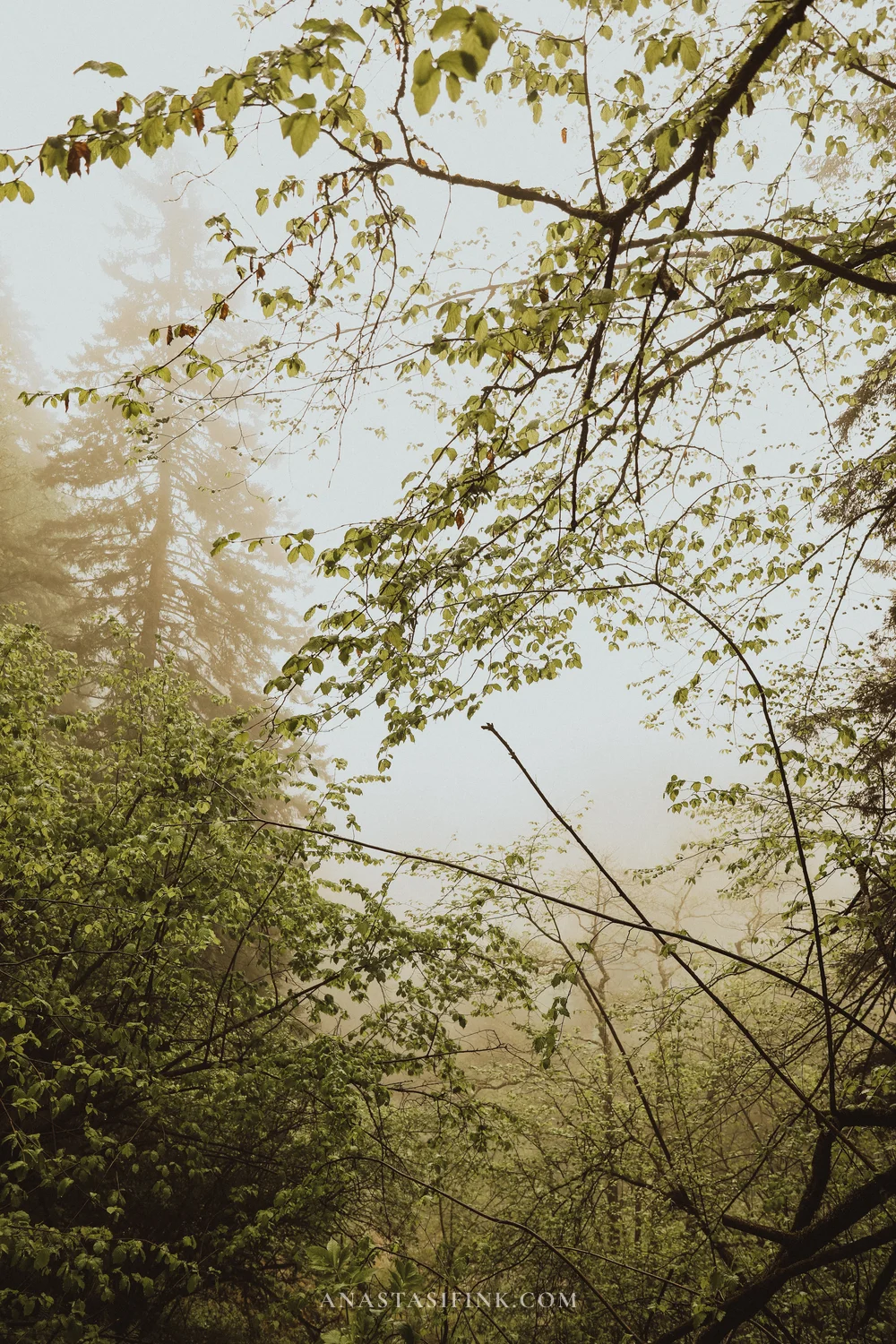
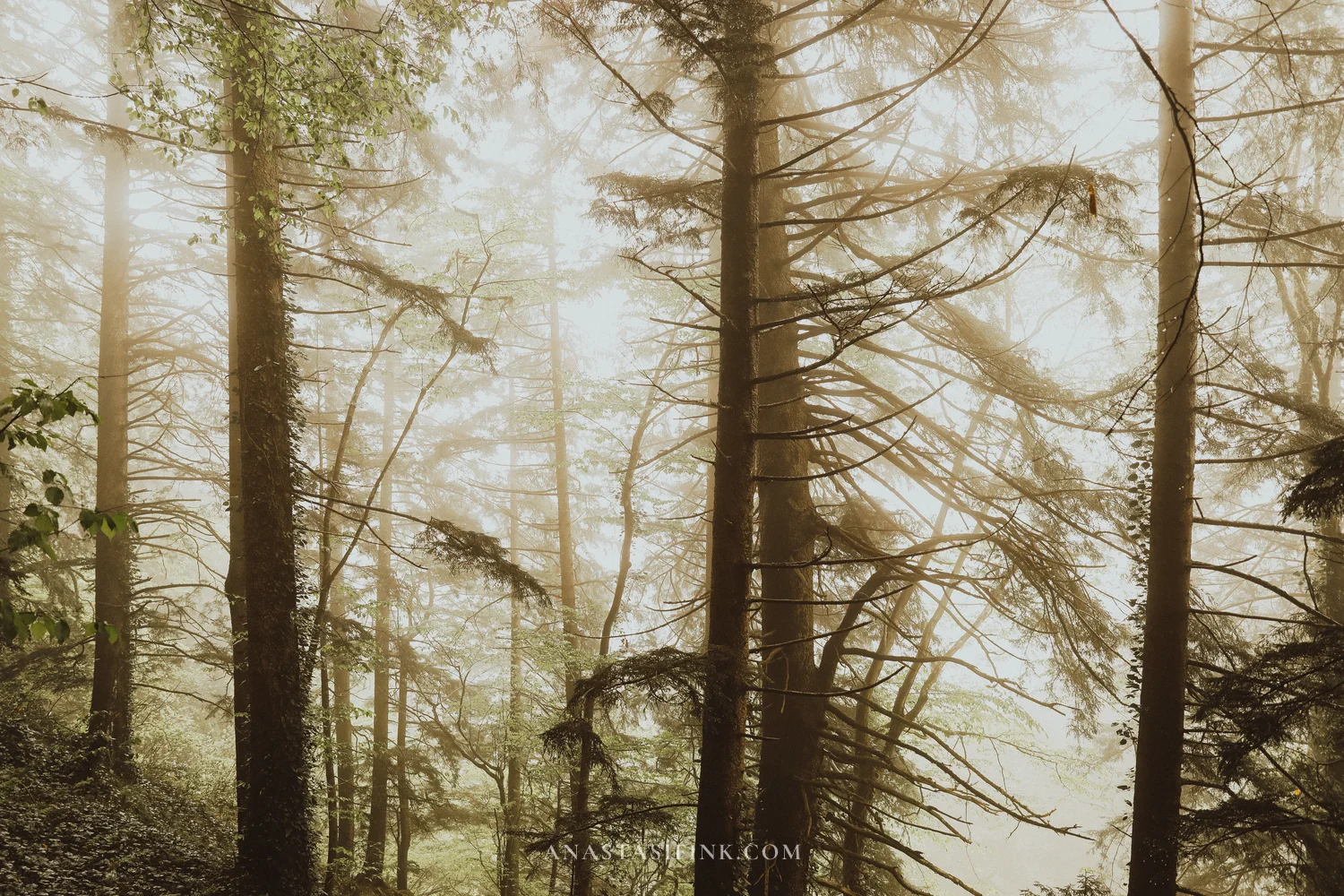
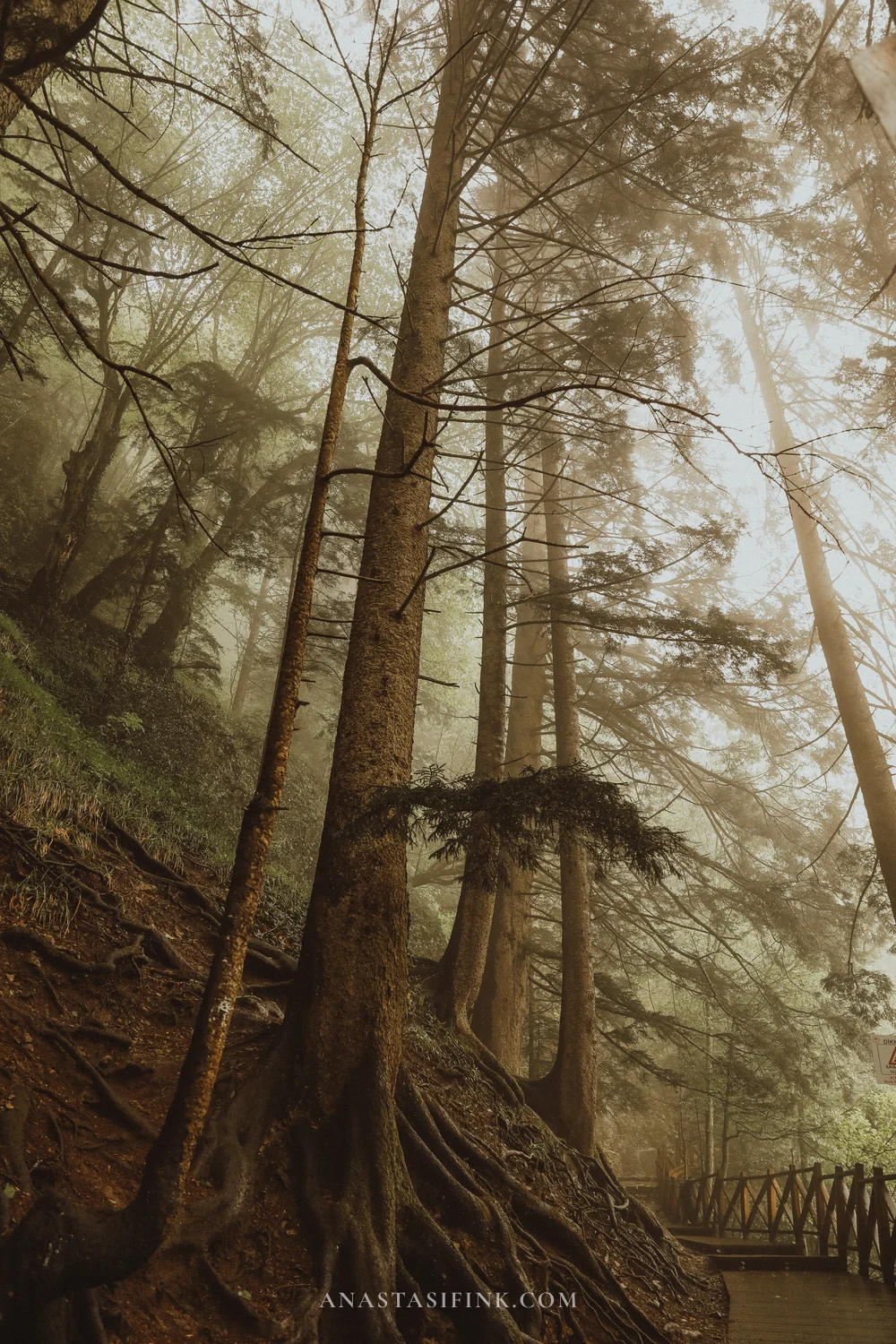
The path alternates between flat wooden boardwalks and stone steps climbing along the cliff face.
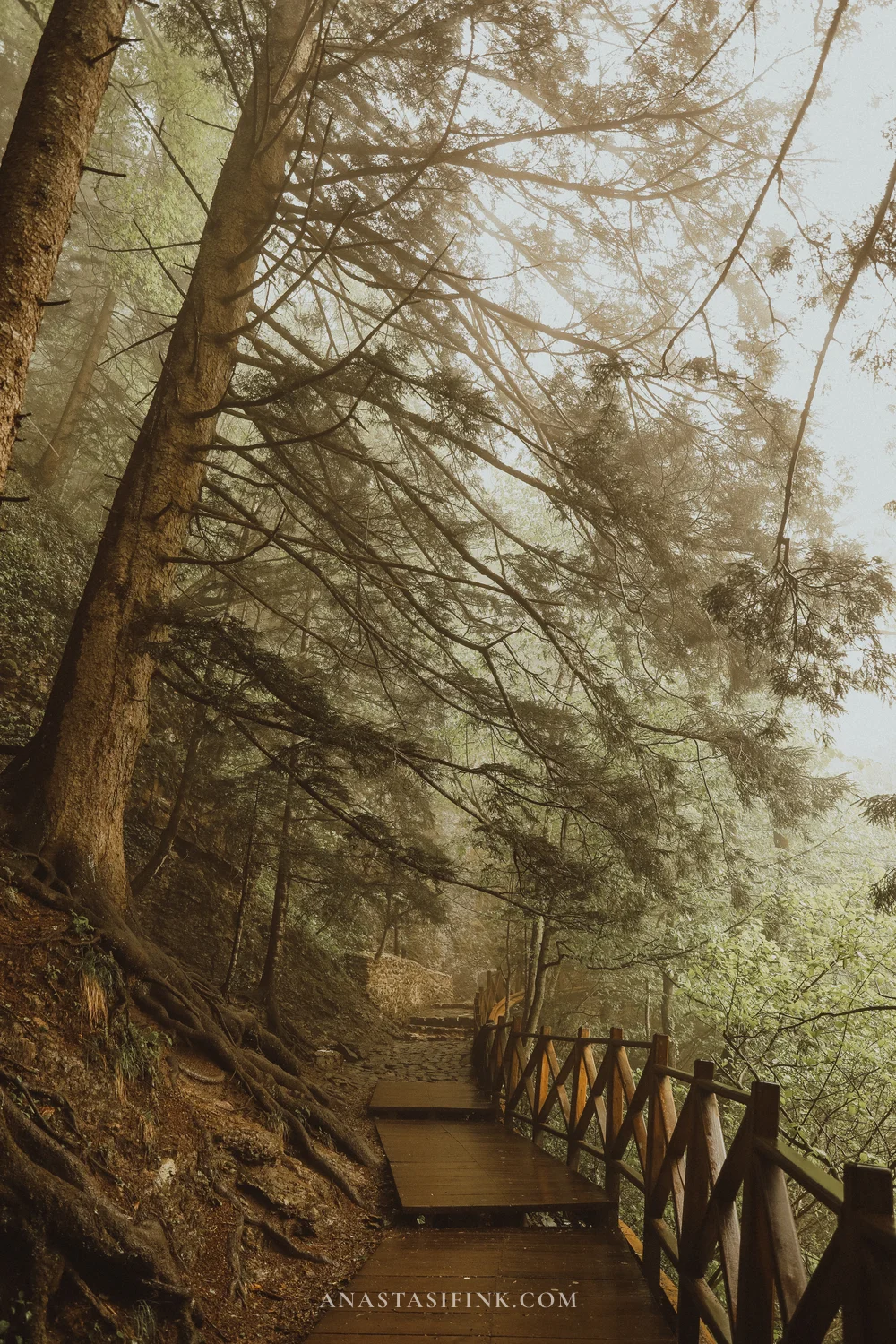
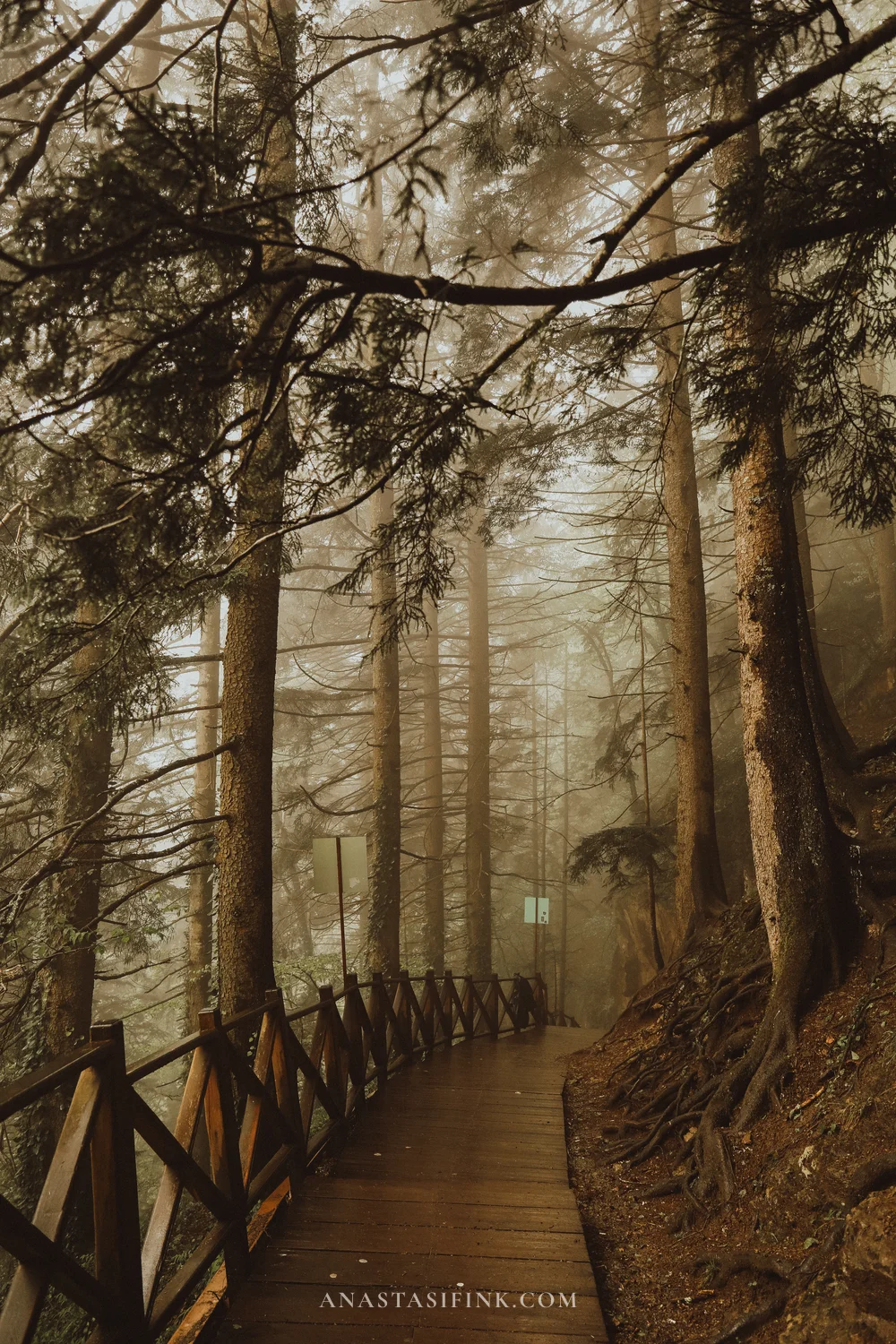
Wooden boardwalks

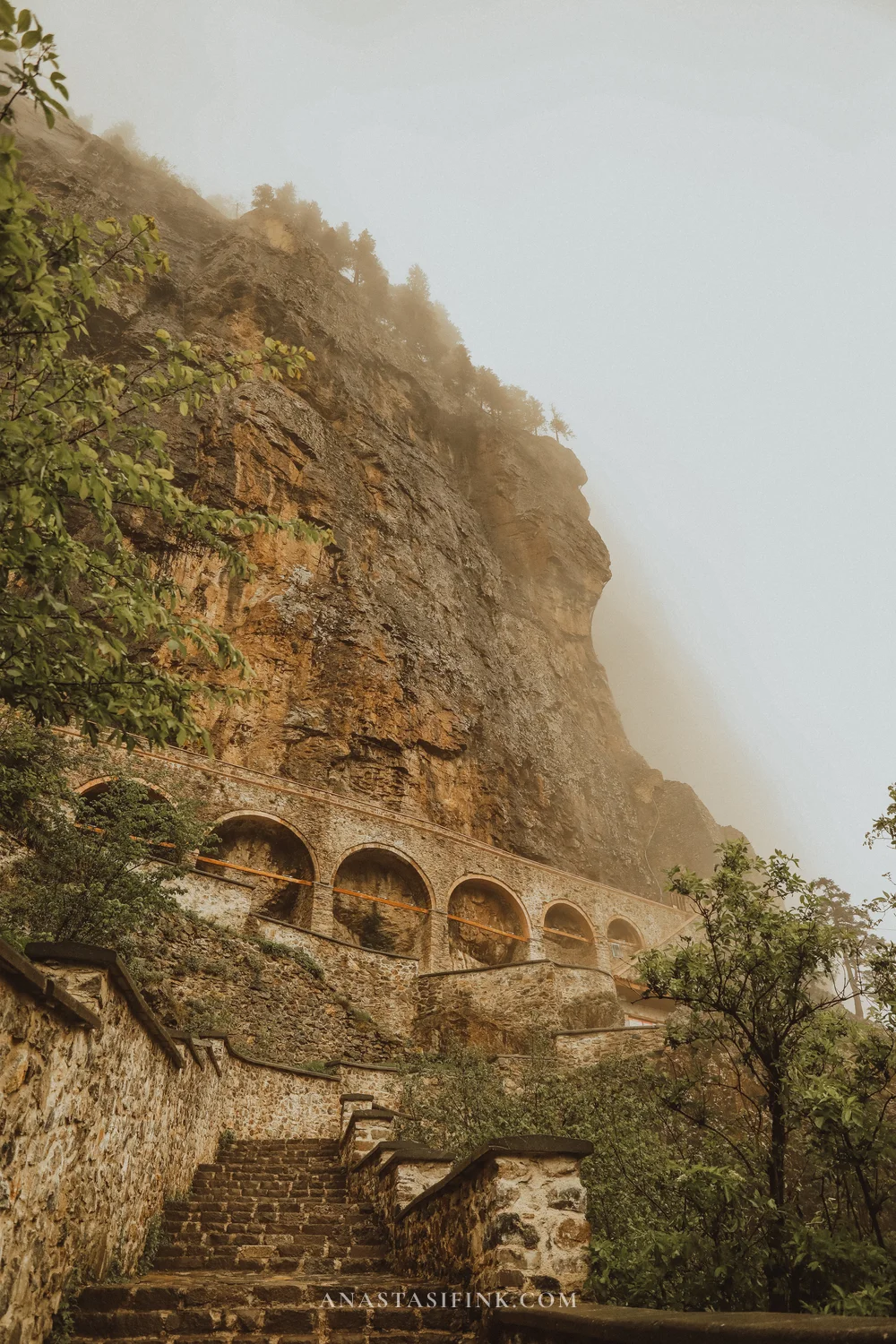
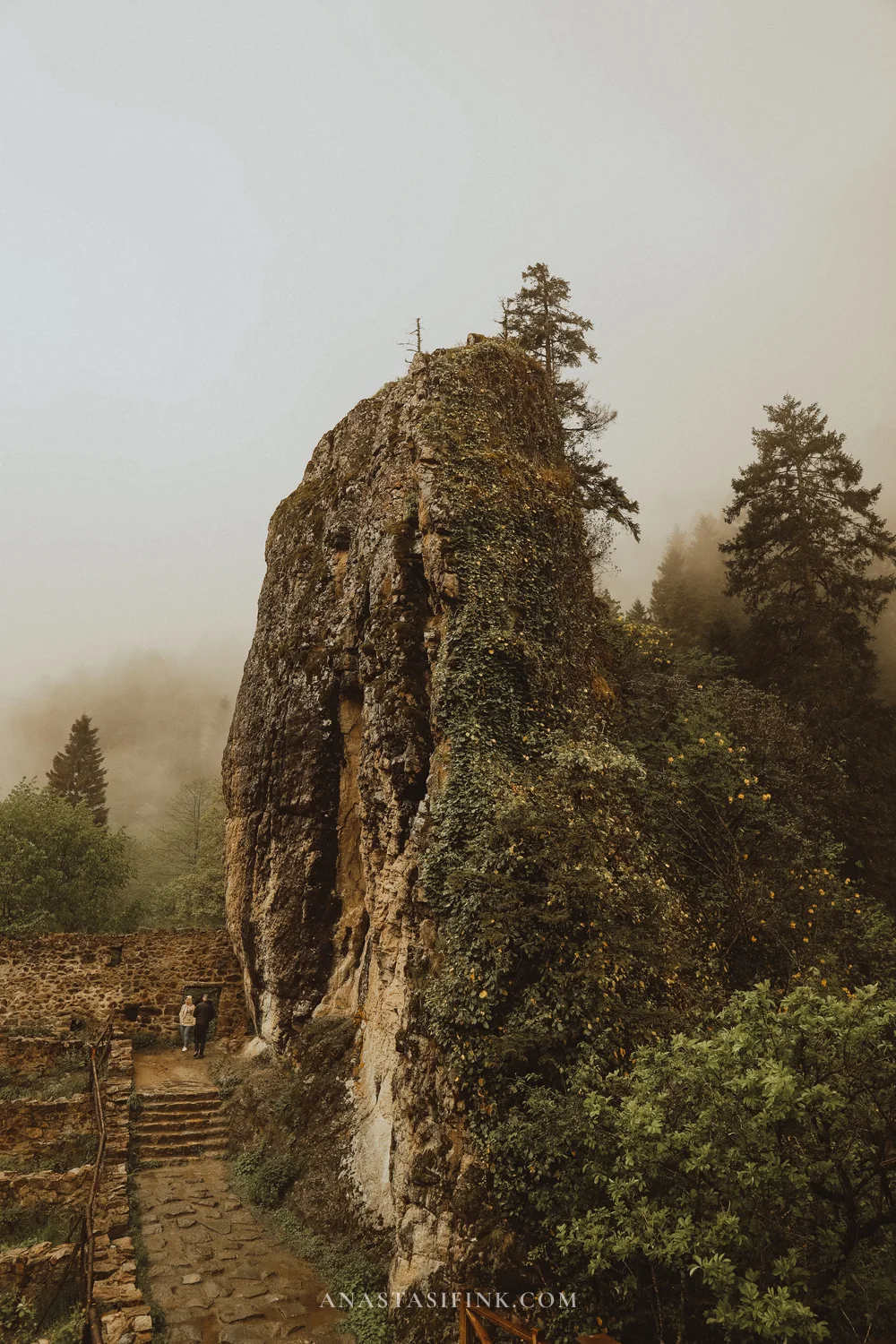
Then the forest opens up — and you see the rock. A massive stone pillar with trees on top, ruins of a staircase at its base.

The trail turns, and aqueduct arches emerge from the fog — your first glimpse of Sumela.

Tips
- Shoes: wear comfortable ones with non-slip soles — the steps are wet and the trails are slippery
- Rain jacket: a must. The Black Sea coast is Turkey’s rainiest region
- Time: allow at least 2–3 hours for the monastery, plus an hour each way for the drive
- Currency: bring cash in Turkish lira for the shuttle and small expenses
- Combine with: Hamsiköy village (sütlaç — rice pudding), Karaca Cave, Zigana Pass, Uzungöl Lake
Tip for photographers: Overcast weather is not a downside. Fog and rain make Sumela incredibly photogenic — soft light, dramatic clouds, glistening stones. Inside the church, skip the flash. Bring a fast lens.
FAQ
How do I get to Sumela Monastery from Trabzon?
By car or taxi it takes about an hour through Macka to Altindere National Park. From there, take the shuttle to the upper platform and walk the rest. You can also take public transport to Macka and transfer to a local shuttle.
How much does it cost to visit Sumela Monastery?
Turkish citizens can use MüzeKart. Foreign visitors pay a separate admission fee — check the latest prices on Turkey’s official museum e-ticket page. The shuttle is paid separately.
How much time do I need for the visit?
About 2–3 hours for the monastery itself, half a day with the round trip from Trabzon.
When is the best time to visit?
Spring and fall — fewer tourists and comfortable temperatures. Summer is warmer but more crowded. Overcast weather is not a downside — the monastery looks stunning in the fog.
Can I visit on my own?
Yes, it’s straightforward. Drive or taxi to the park, take the shuttle, walk up. A guided tour is convenient because it often includes other stops like Hamsiköy and Karaca Cave.
What else is there to see nearby?
Hamsiköy village (rice pudding), Karaca Cave, Zigana Pass, Uzungöl Lake. You can combine them over one or two days.
Is the monastery open?
As of March 2026, it is partially open. Some areas are closed for restoration. Check the official page before your trip for the latest status.
Is Sumela Worth the Trip
The frescoes have suffered, and much has been lost. But there’s no glossy tourist polish here — instead, there’s real history in stone and paint. It’s one of those places you want to come back to when you’re tired of the well-trodden routes.