Pergamon Acropolis, Turkey — What to See at This Ancient Hilltop City Near Bergama

Two hours of driving from Izmir — and I was in Bergama, at the foot of the hill where one of the most powerful capitals of the ancient world stood over two thousand years ago. Up top: the ruins of Pergamon, which almost nobody sees because everyone heads to Ephesus instead.
Pergamon — the Capital Nobody’s Heard Of
I’ll be honest: before this trip, the only thing I knew about Pergamon was that the word “parchment” comes from it. Turns out, this was a city that genuinely rivaled Athens and Alexandria in the 3rd–2nd centuries BC. The Attalid dynasty amassed a library of 200,000 scrolls — the second largest in the ancient world after the Library of Alexandria. The Egyptians, by the way, got so worried about the competition that they banned papyrus exports. So the people of Pergamon started writing on treated animal skin instead — and that’s how parchment was born.
Later, the last king Attalus III simply bequeathed his entire kingdom to Rome — no war, no conquest. From then on, Pergamon became the capital of the Roman province of Asia. Today it’s a UNESCO World Heritage Site, but it gets a fraction of the visitors that Ephesus does.
How to Get to the Acropolis
I drove from Izmir — about two hours on a good road. Bergama makes a convenient stop if you’re road-tripping along Turkey’s Aegean coast. There’s a parking lot at the top of the acropolis, so you can drive all the way up along the winding mountain road.
Flying in from abroad? Izmir has direct flights from London (around 4 hours), and you can reach it from New York with one connection through Istanbul. From Izmir, Bergama is an easy two-hour drive north. Most Western passport holders (US, UK, EU, Canada, Australia) can get a Turkish e-Visa online in minutes — it’s a very straightforward process.
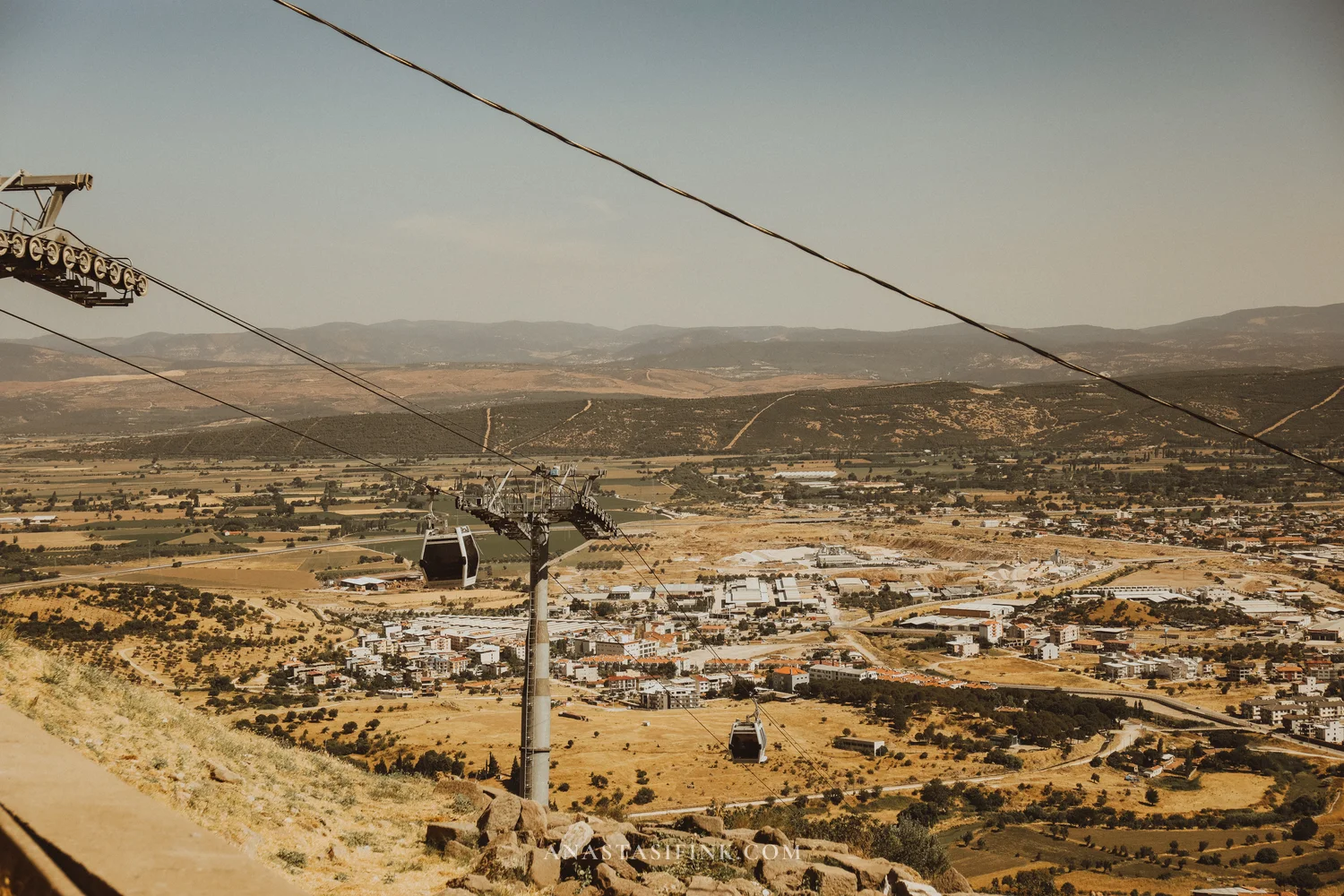
The acropolis sits on a 335-meter hill directly above the modern town of Bergama. If you don’t have a car, there’s a cable car (teleferik) from the lower station in the town center — the ride takes about four minutes. You could also walk up, but it’s a solid 30–40 minutes in the heat, and you’ll arrive at the ruins completely drained.
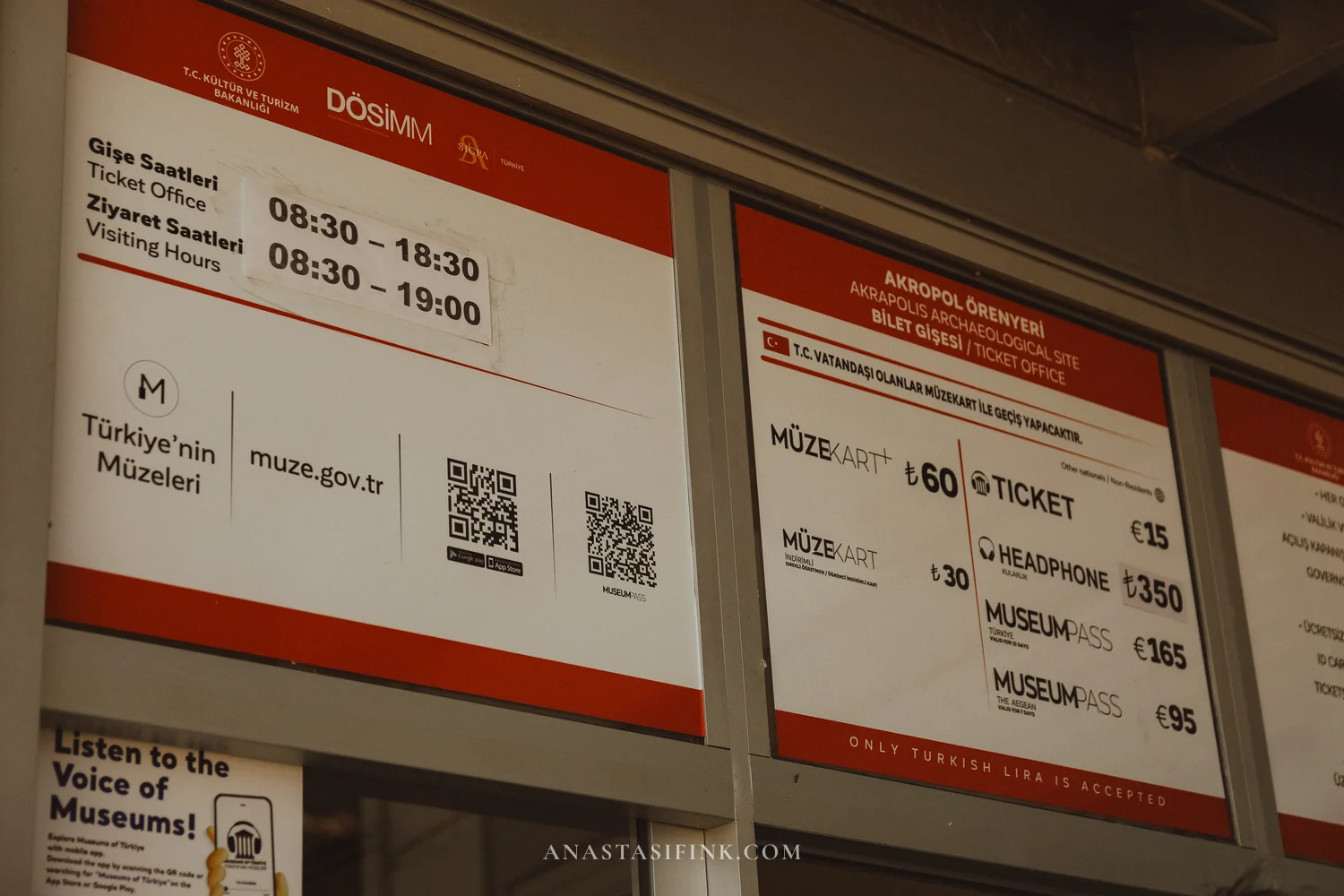
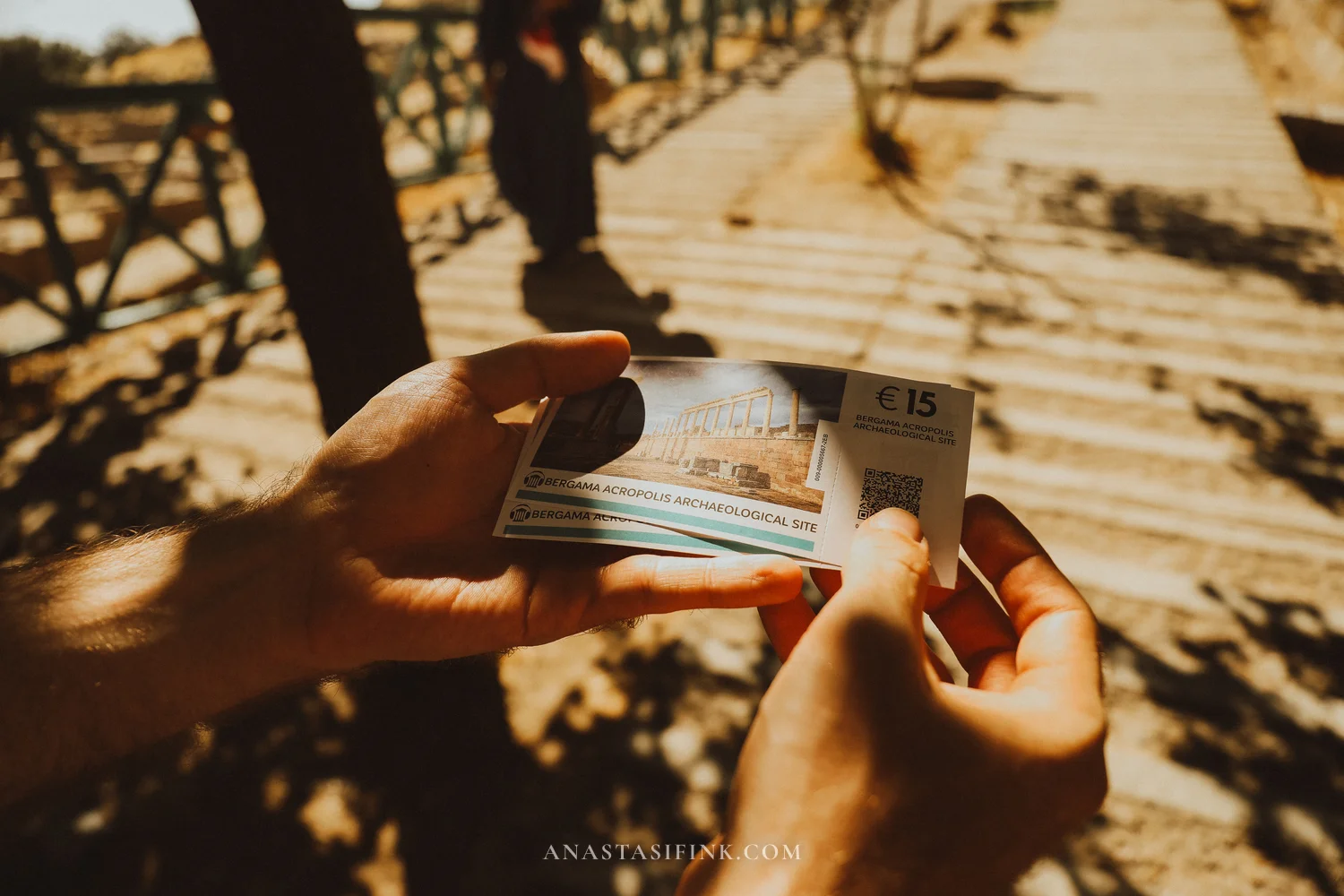
The ticket office opens at 08:30. You can pay in euros or Turkish lira, and they accept Muzekart and Museum Pass
What to See at the Pergamon Acropolis
First Impressions — the Sheer Scale
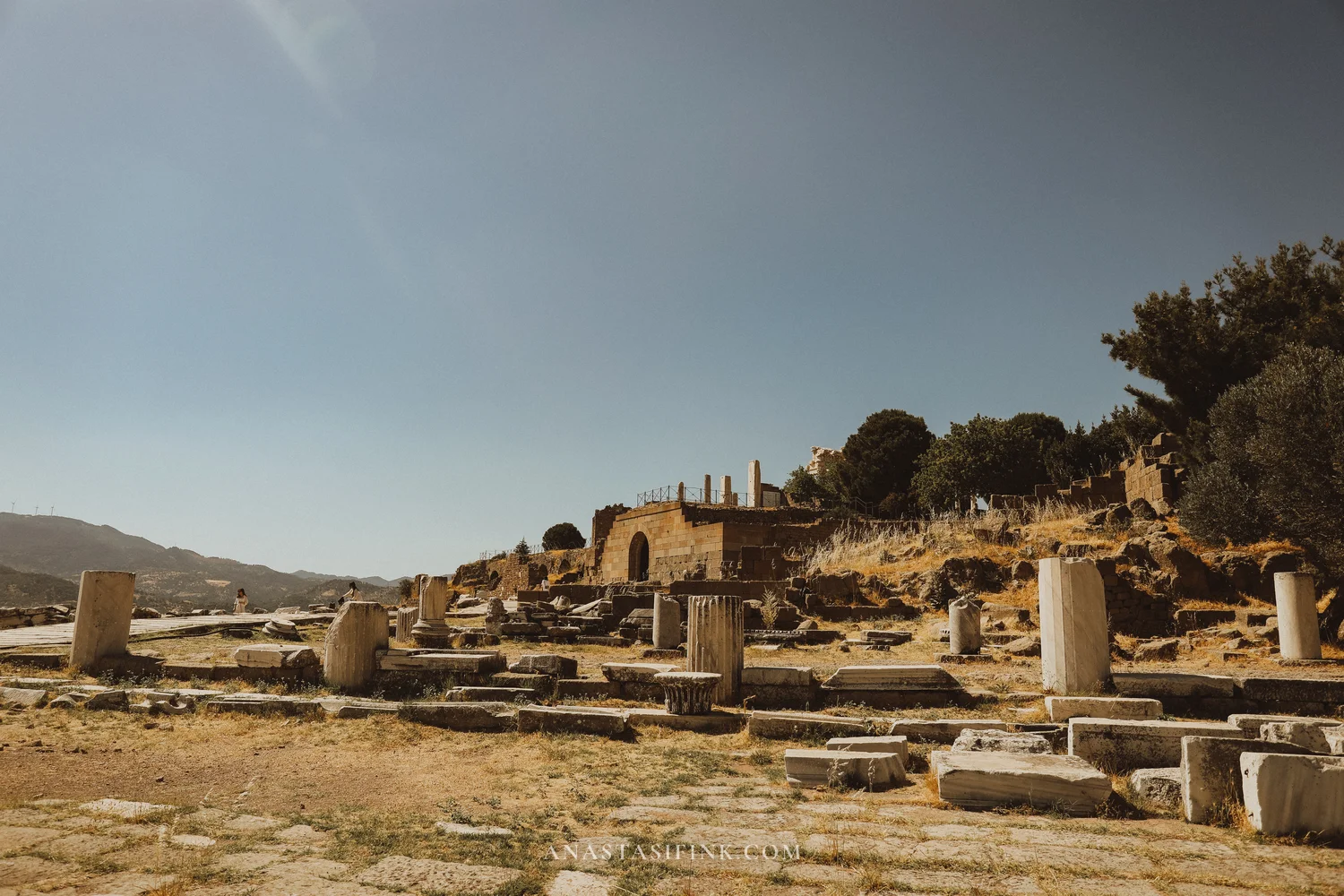
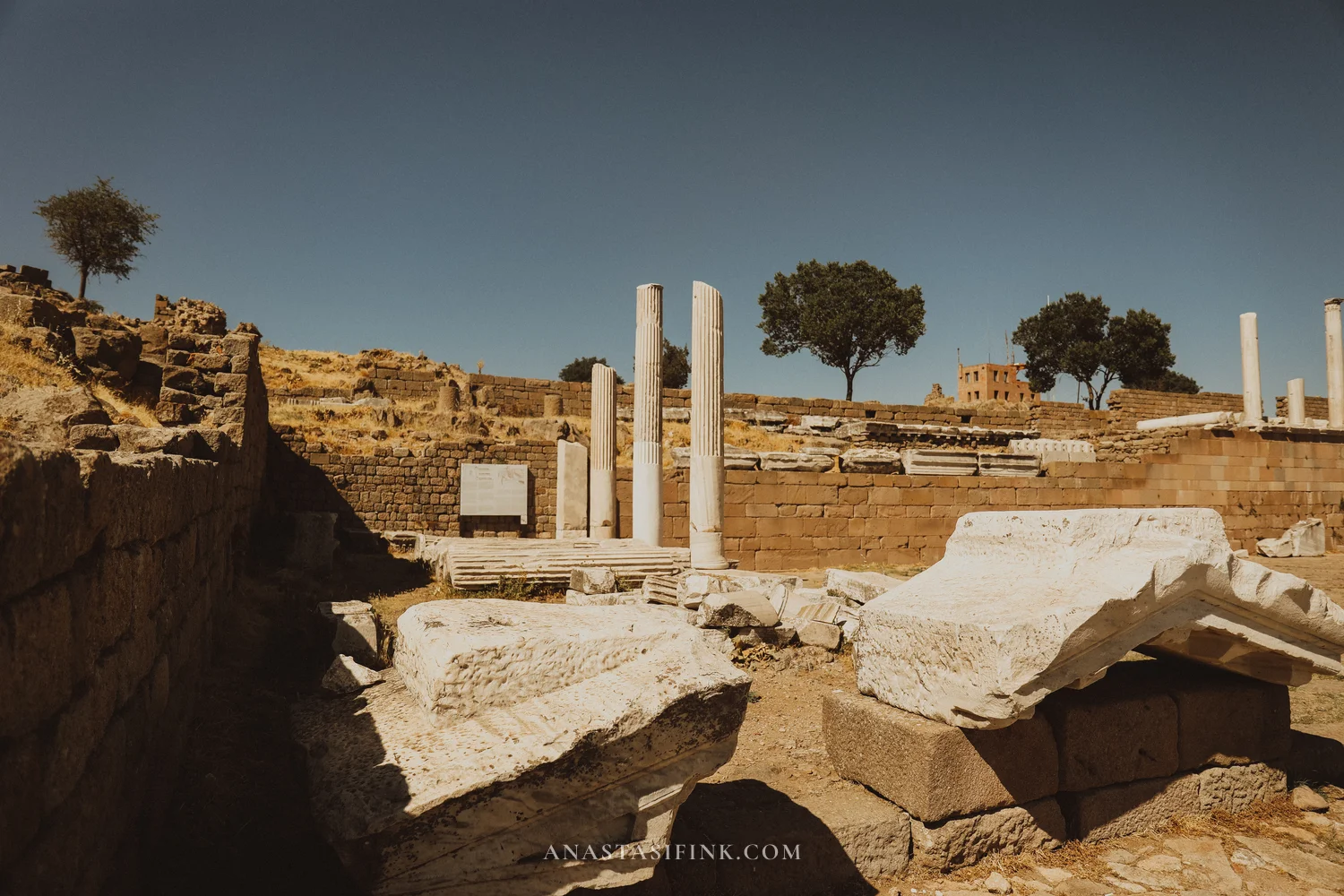
Right after you walk through the entrance, the scale of this place hits you. Everywhere you look — broken columns, wall foundations, fragments of buildings. The acropolis covers a huge area, and you’ll need at least two to three hours to see everything properly.
Underground Galleries
Beneath the Temple of Trajan terrace, there are stone arched corridors. They’re essentially the foundation that supports the entire temple platform above. But when you step inside after baking on the sun-scorched acropolis — pure bliss, easily ten degrees cooler. We just stood there for a good five minutes, cooling off.
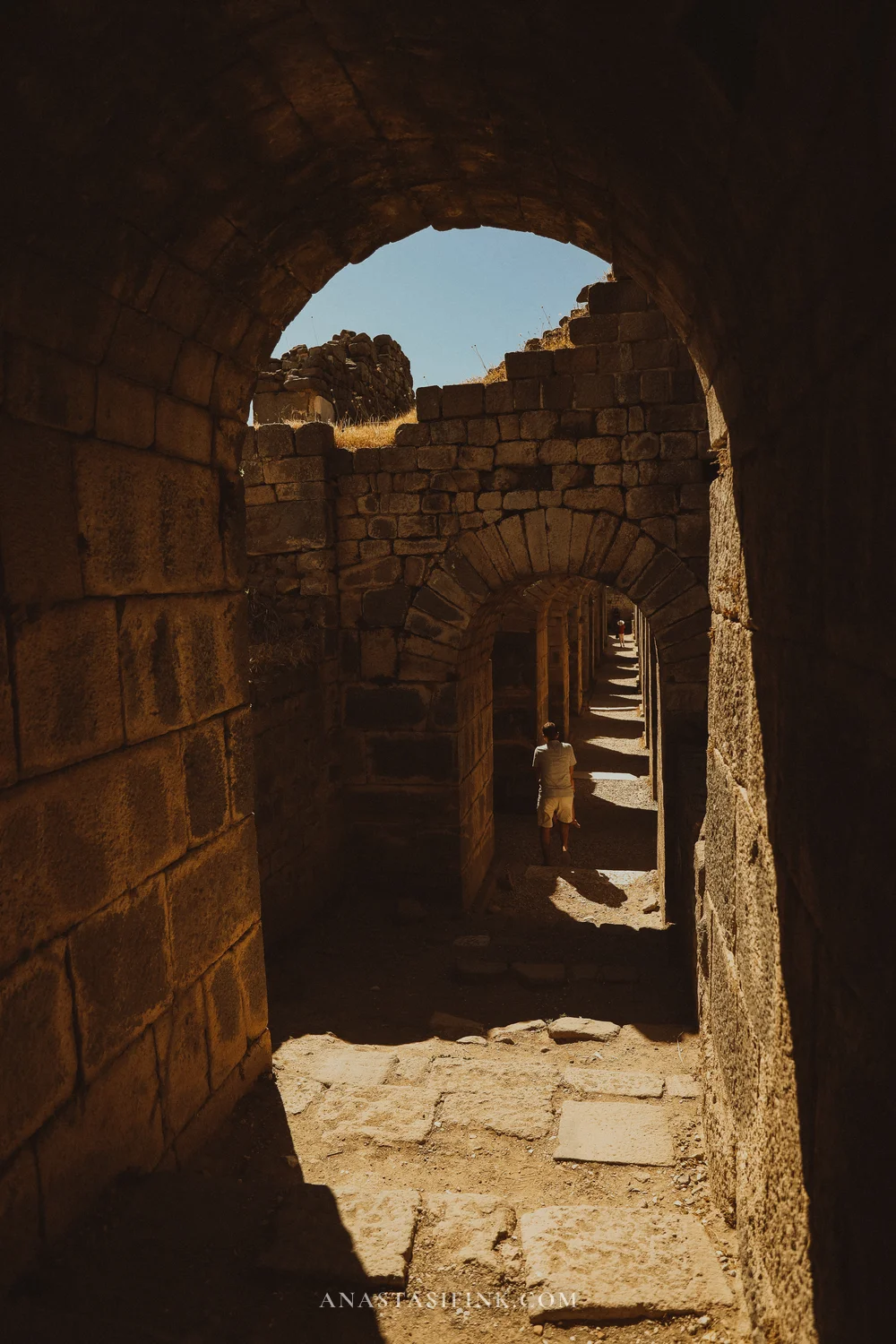
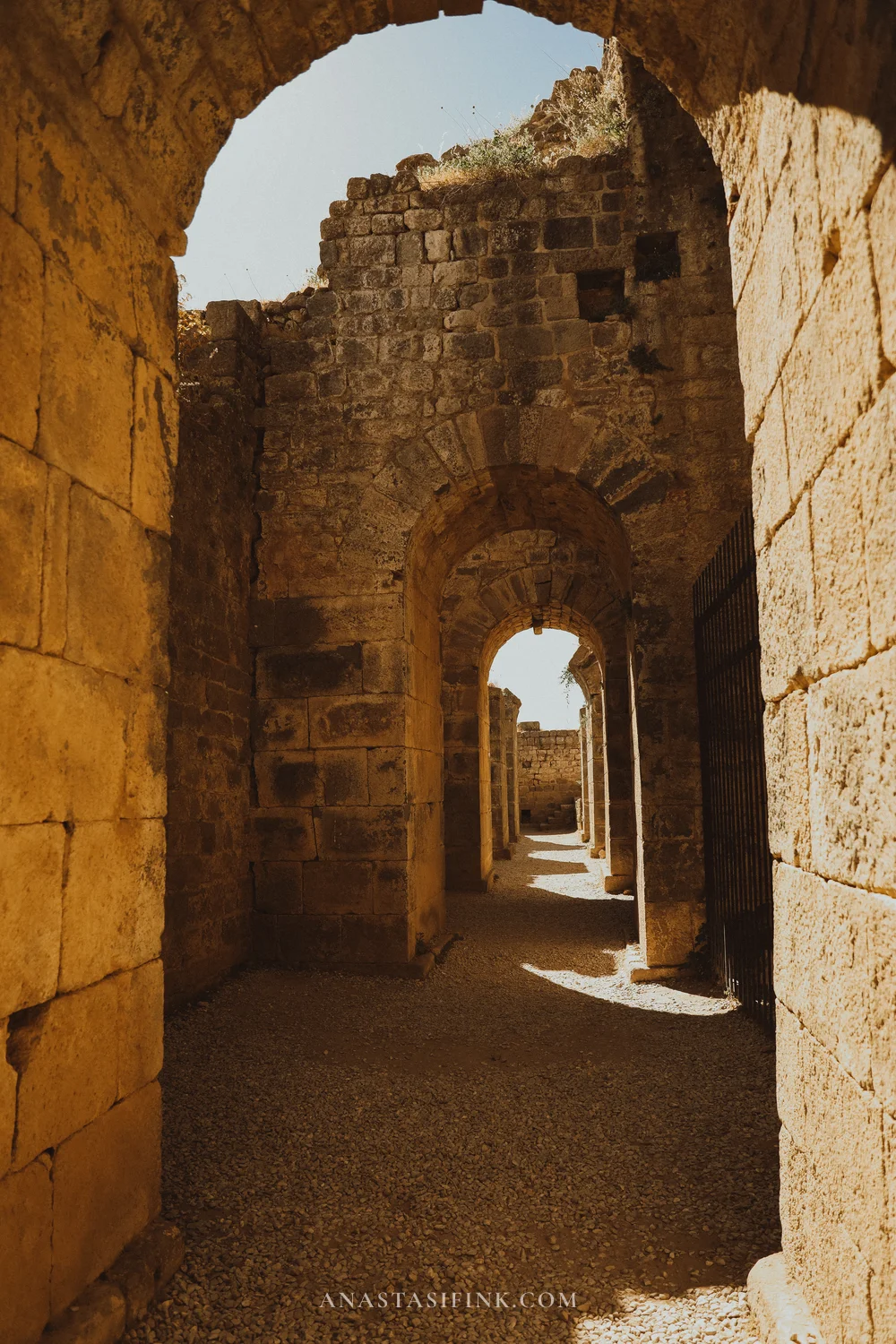
Underground galleries beneath the Temple of Trajan — cool even in the heat of summer. The structures are remarkably well preserved
The Theater of Pergamon — the Steepest in the Ancient World
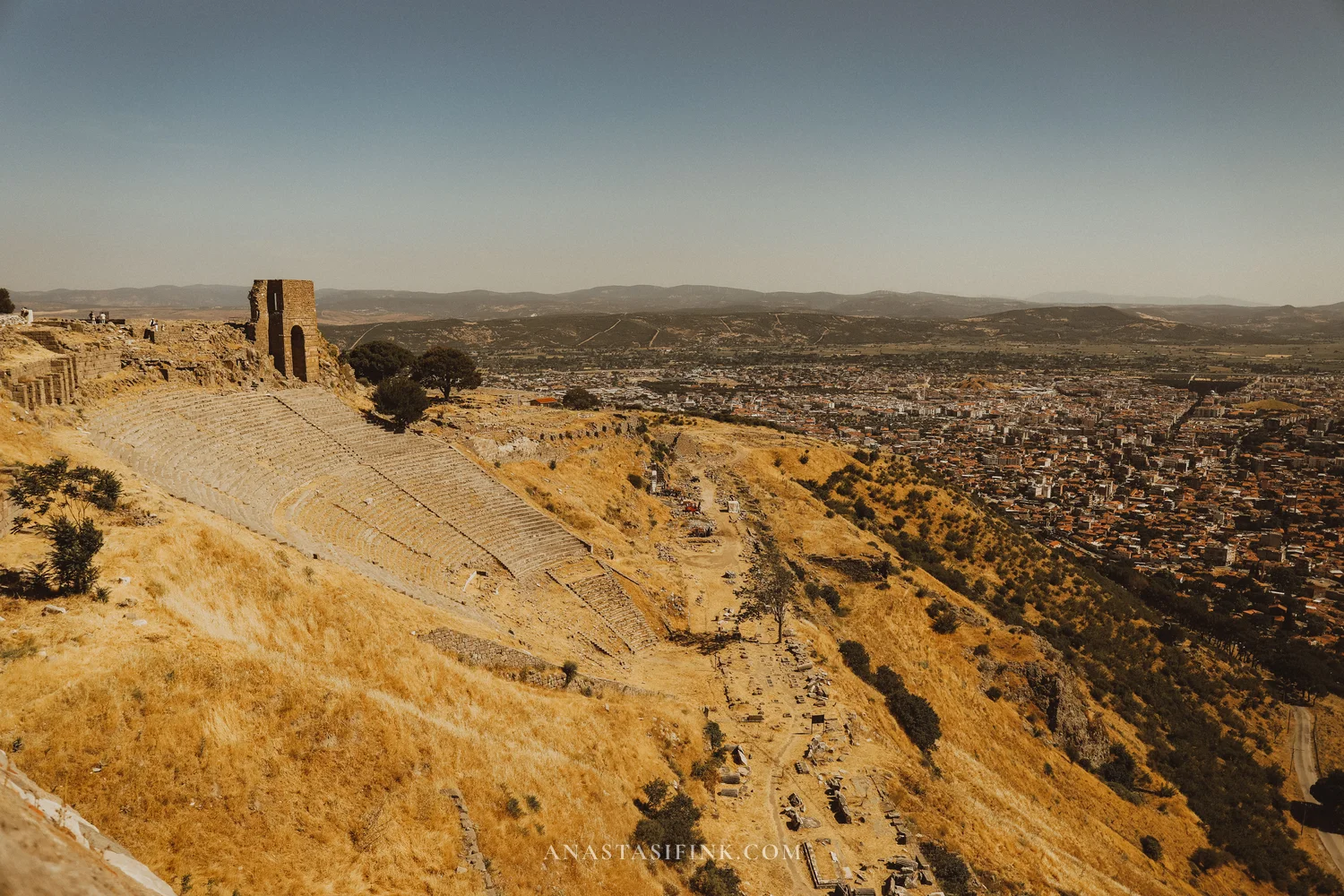
When you walk up to the edge and look down — it genuinely takes your breath away. 80 rows, 10,000 seats, all carved into the hillside at an almost vertical angle. I’ve seen plenty of ancient theaters, but most of them are wide and gently sloped. This one is narrow, steep, and the feeling is completely different: like standing at the edge of a cliff.
Here’s a fun detail: the stage was wooden and portable. They’d set it up for performances and take it down afterward — so it wouldn’t block the view of the valley. In other words, the panorama mattered more to the people of Pergamon than any stage set.
Temple of Trajan (Trajaneum) — Pergamon’s Postcard Shot
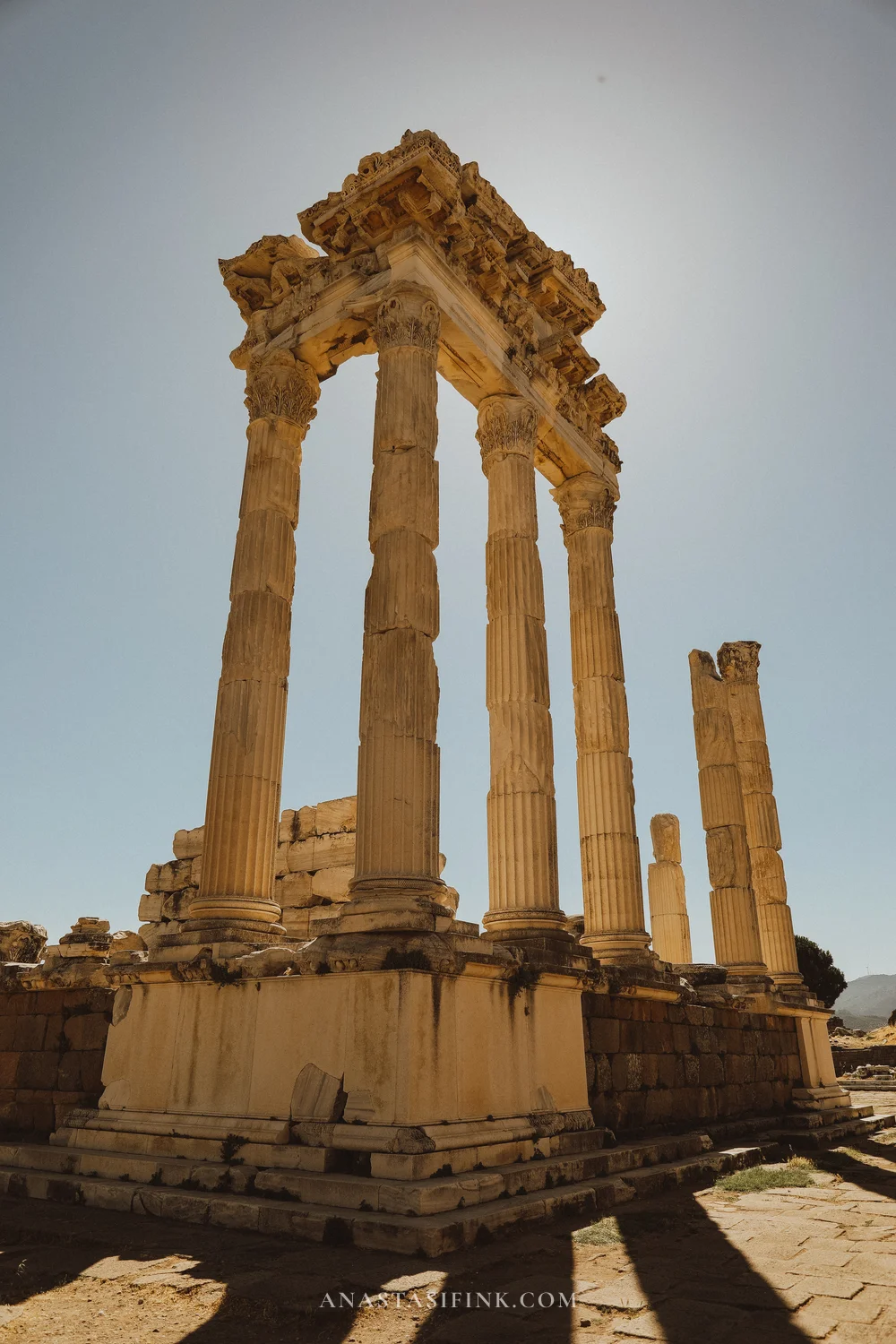
The Trajaneum is the only building on the acropolis that has been partially reassembled. Archaeologists call it “anastylosis” — using the original blocks and putting them back in place. The temple was built during the reigns of Trajan and Hadrian (2nd century AD) and sits at the very highest point of the hill — visible from everywhere.
This is the classic postcard image of Pergamon: white columns against a deep blue sky. I was there around midday and the light was harsh, but if you’re after great photos, try to come closer to sunset — warm light on white marble looks so much better.
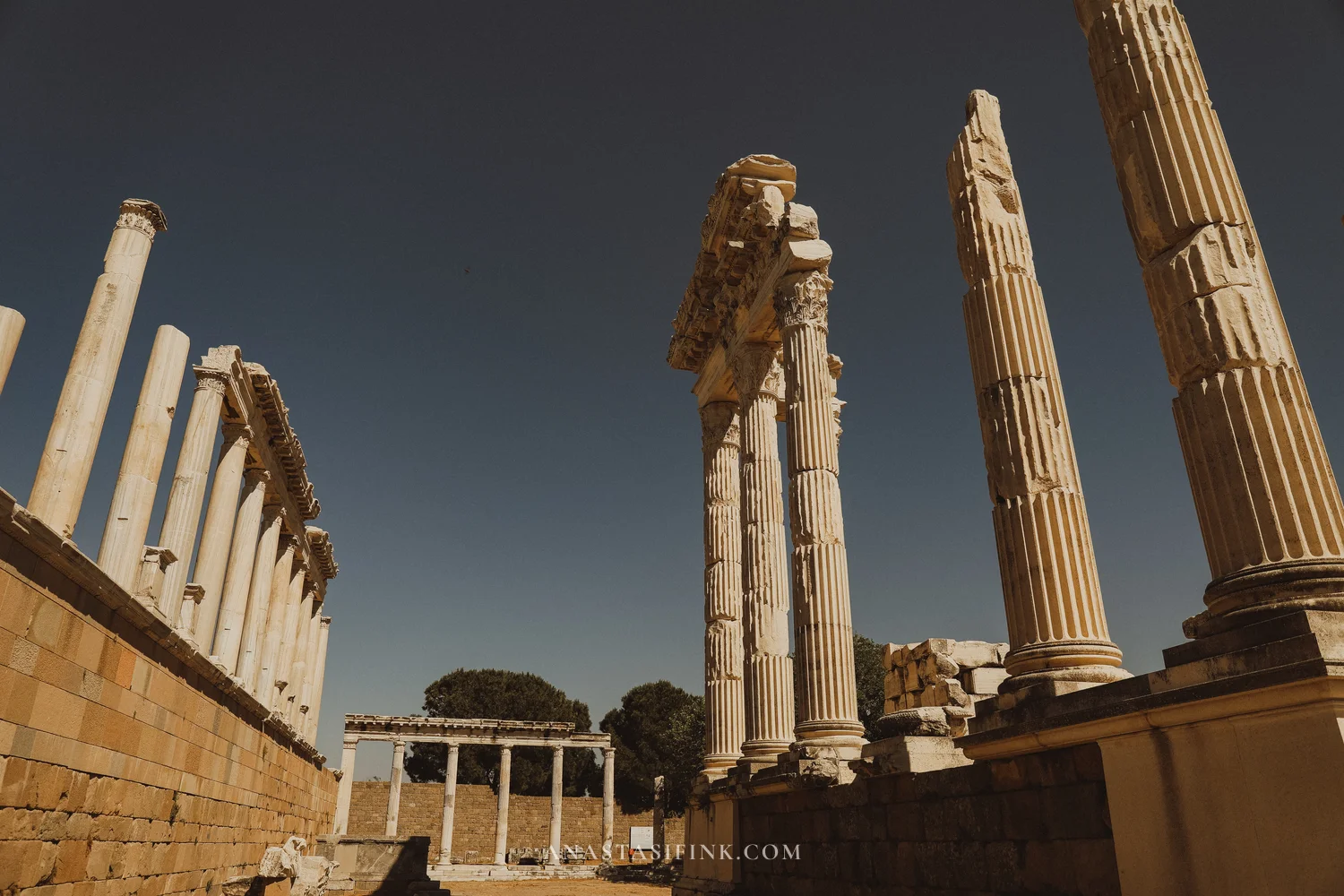
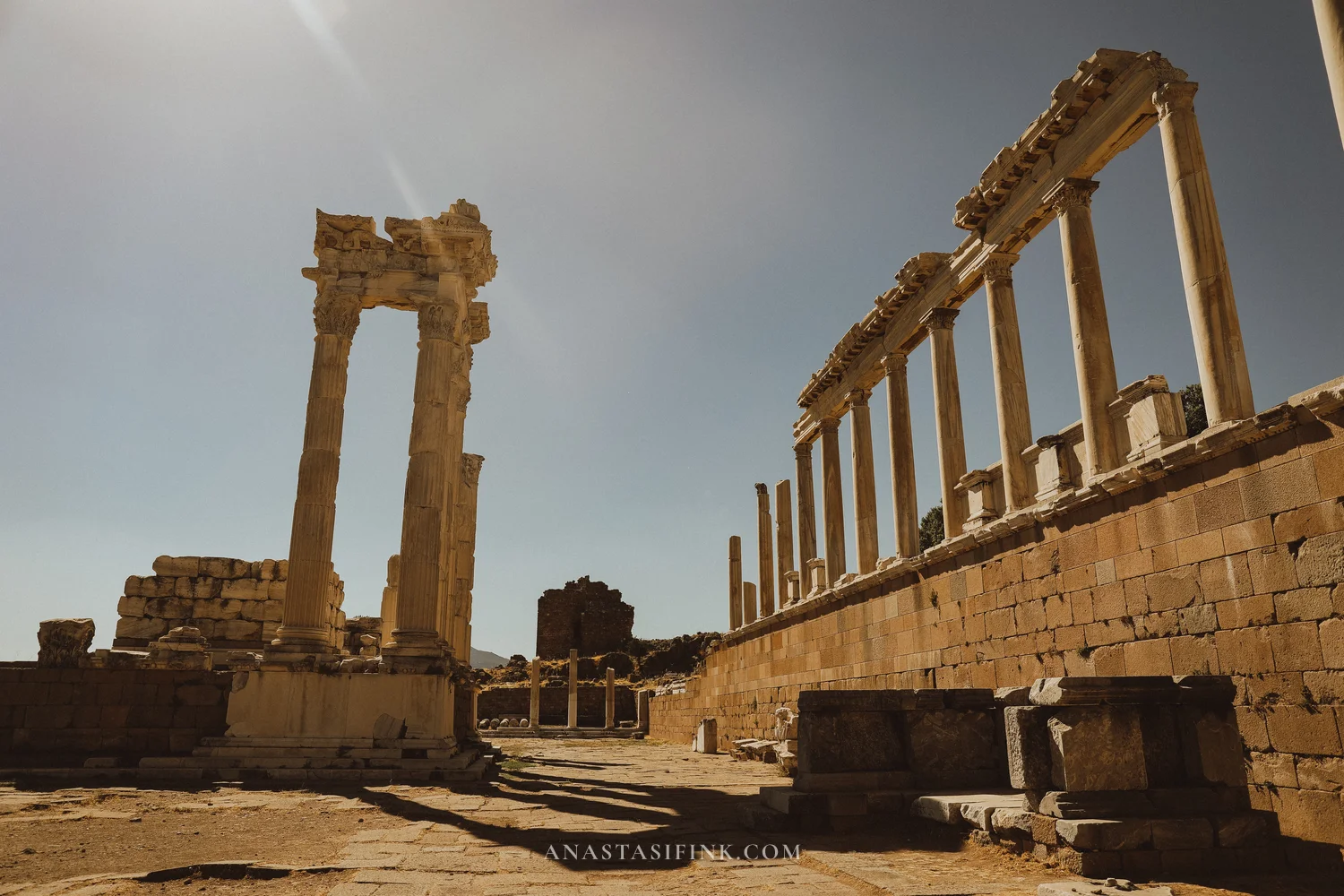
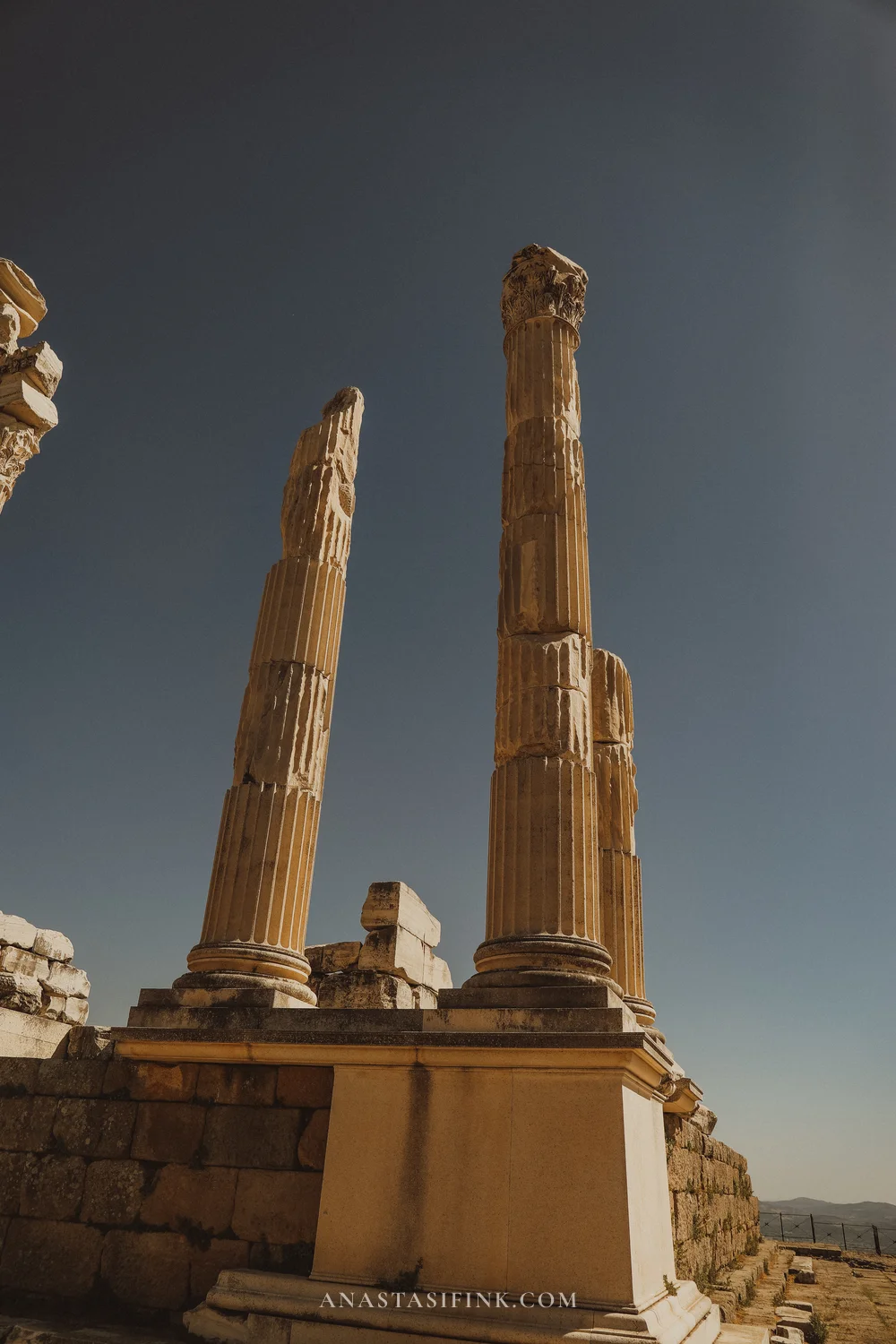
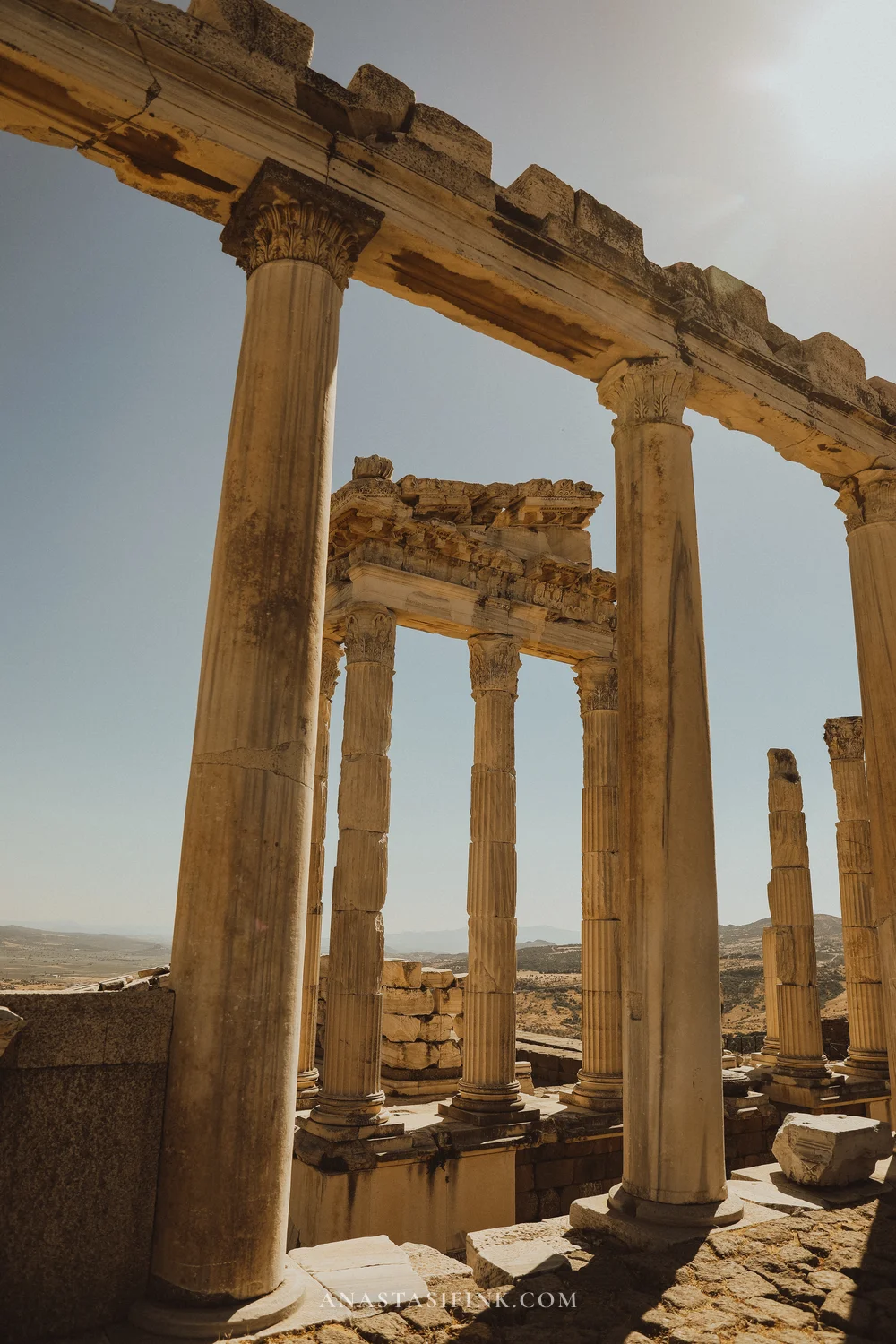
Trajaneum columns — each one assembled from individual drums. Through them, you can see the valley and surrounding hills
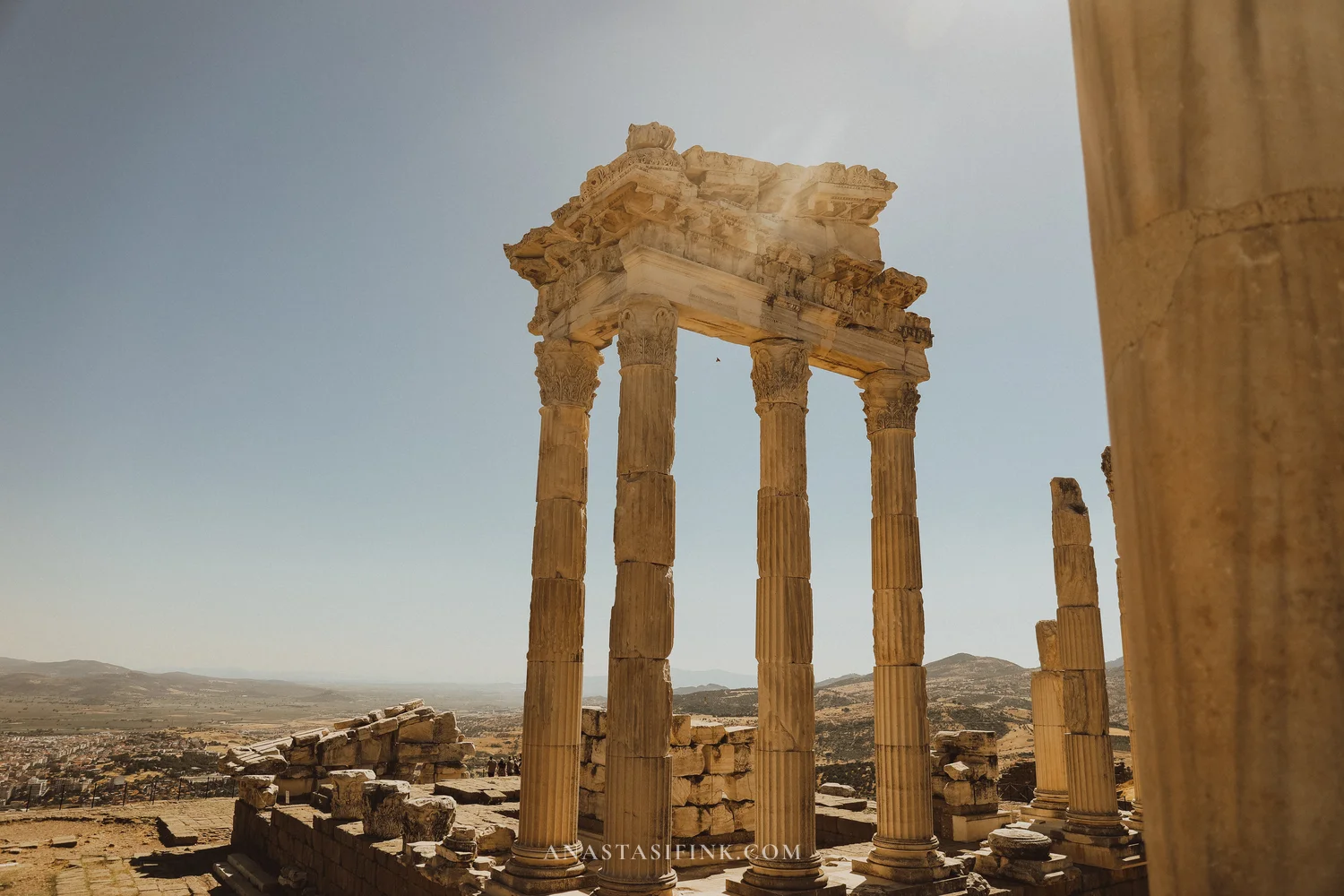
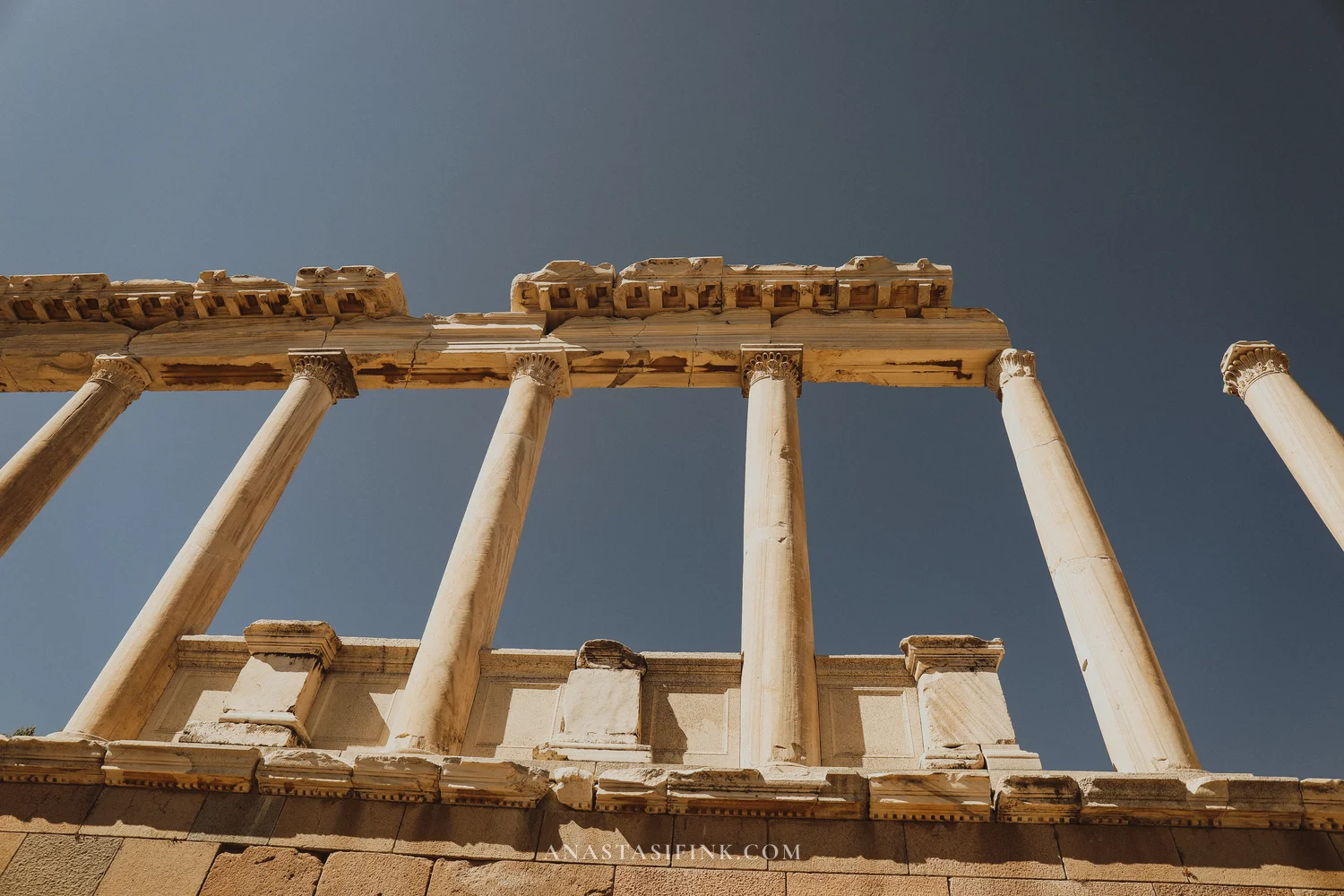
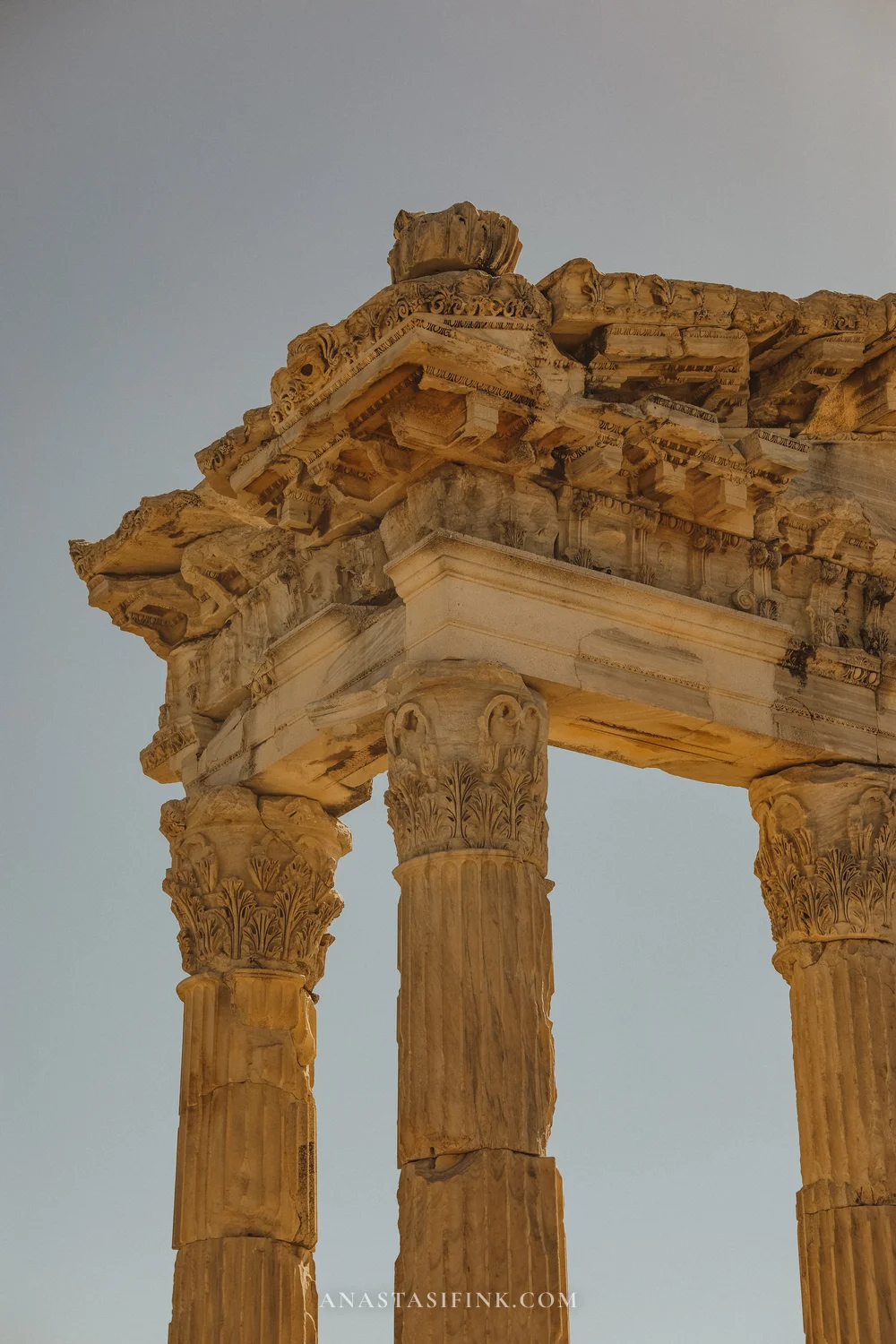
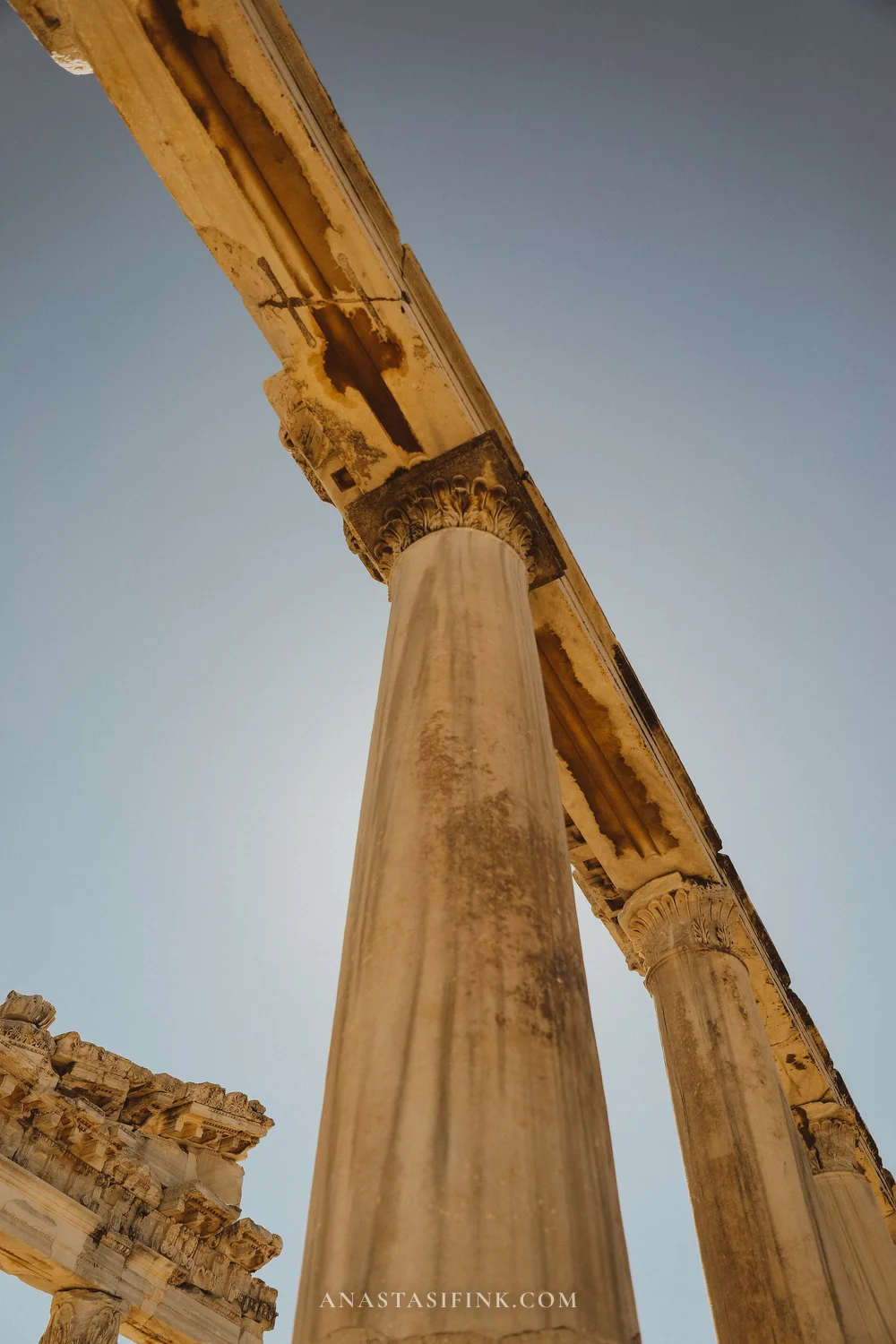
Pediment and capital details. The Corinthian order — the most ornate of the three classical orders, with its signature acanthus leaves
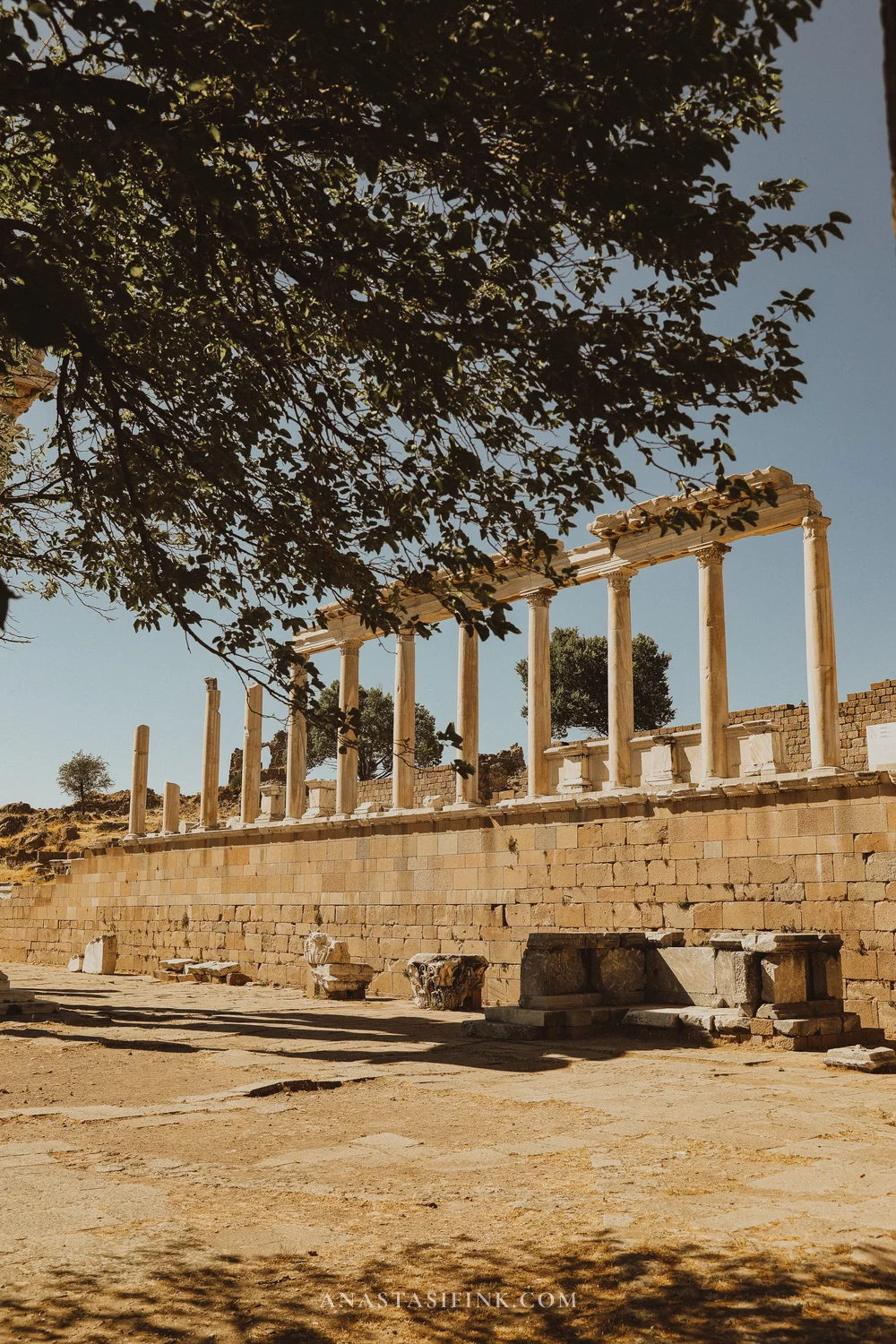
Marble Columns and the Library Ruins
Near the Temple of Athena, there are several reconstructed white columns — remnants of a covered colonnade (stoa). Somewhere around here stood that famous library of 200,000 scrolls. Only the foundations survive, but the story is great: if you believe Plutarch, Mark Antony took the entire collection and gave it to Cleopatra.
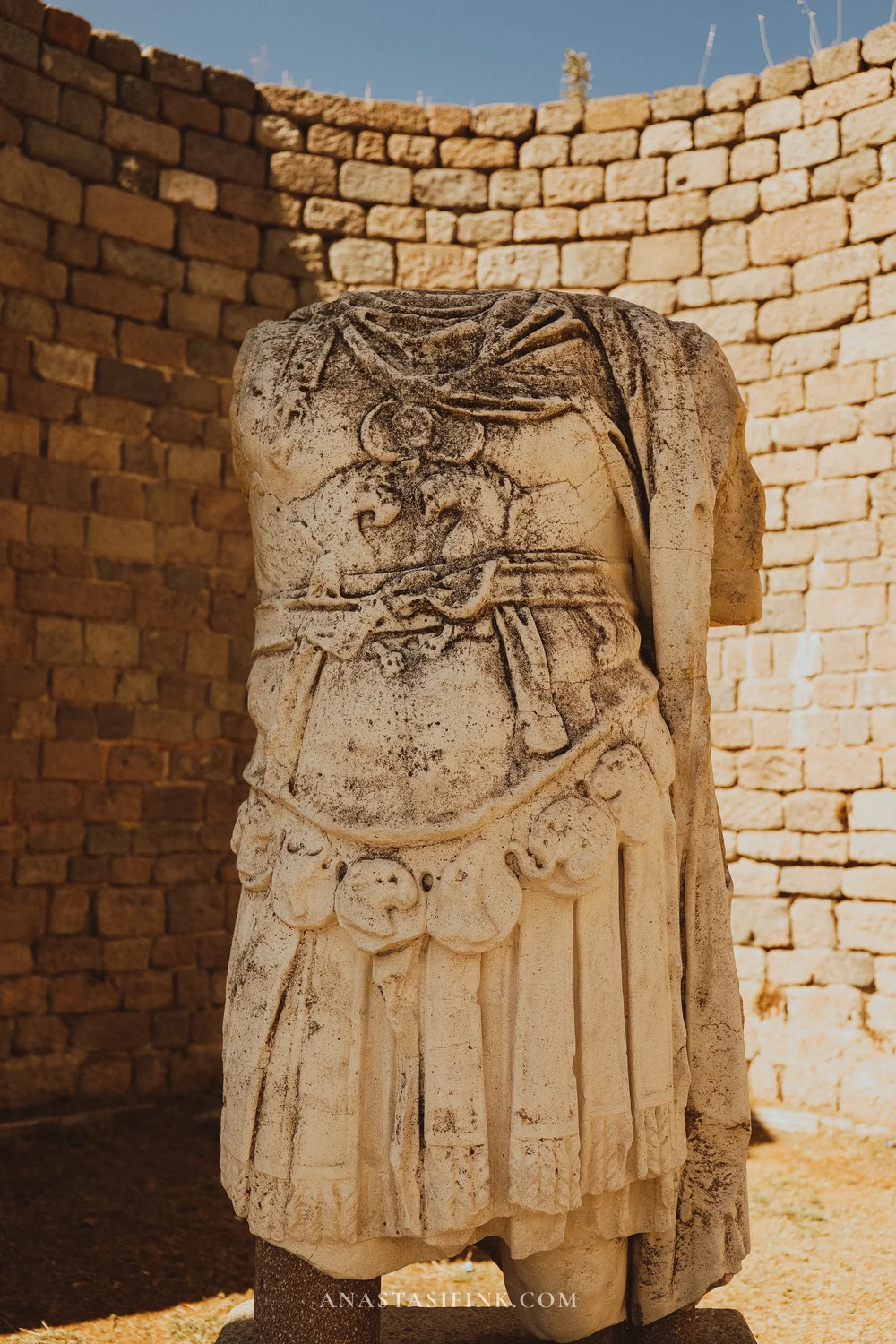
Roman Sculptures
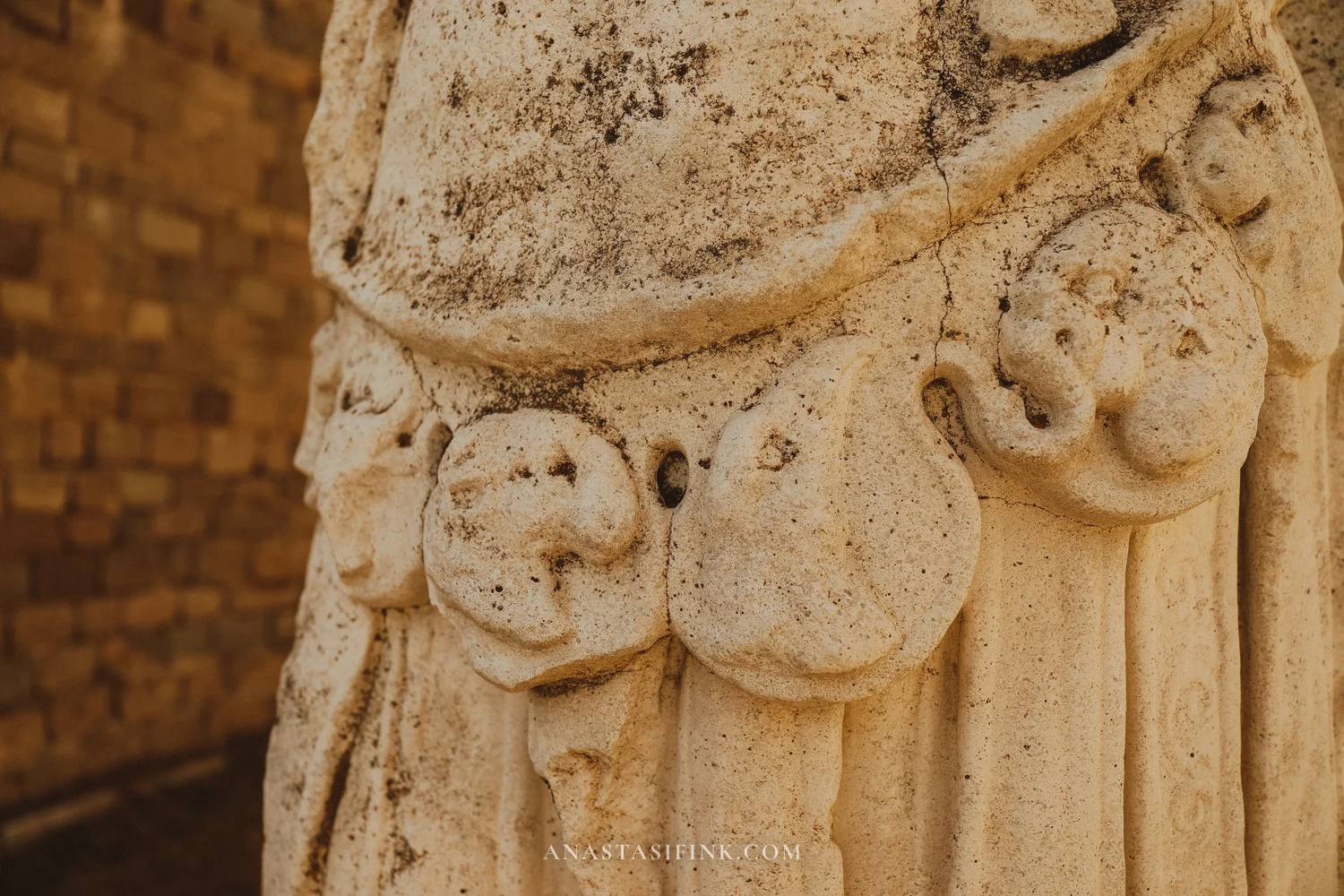
On the acropolis, there’s a headless statue of a warrior in armor — most likely one of the emperors. The head was lost long ago, but everything else is so well preserved that you can make out every detail: the cuirass, the leather strip skirt, and the Medusa Gorgon medallions on the belt. Worth getting up close.
Stone Carving Fragments
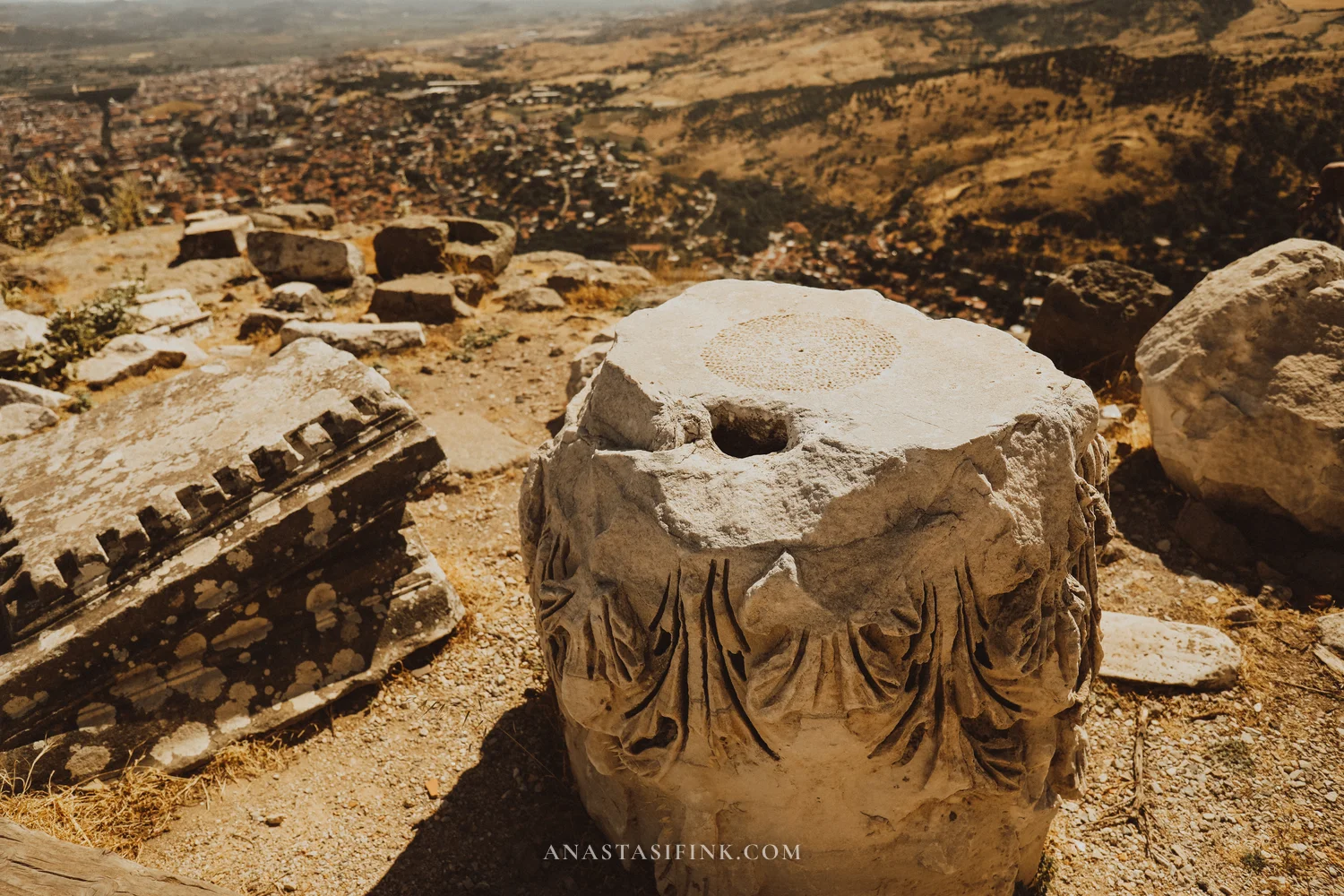
Along the walls, fragments of column capitals are displayed — the decorated tops of columns. Acanthus leaves, scrolls, ornaments — all hand-carved two thousand years ago. You can walk right up to them and look as long as you like, with no barriers in the way.
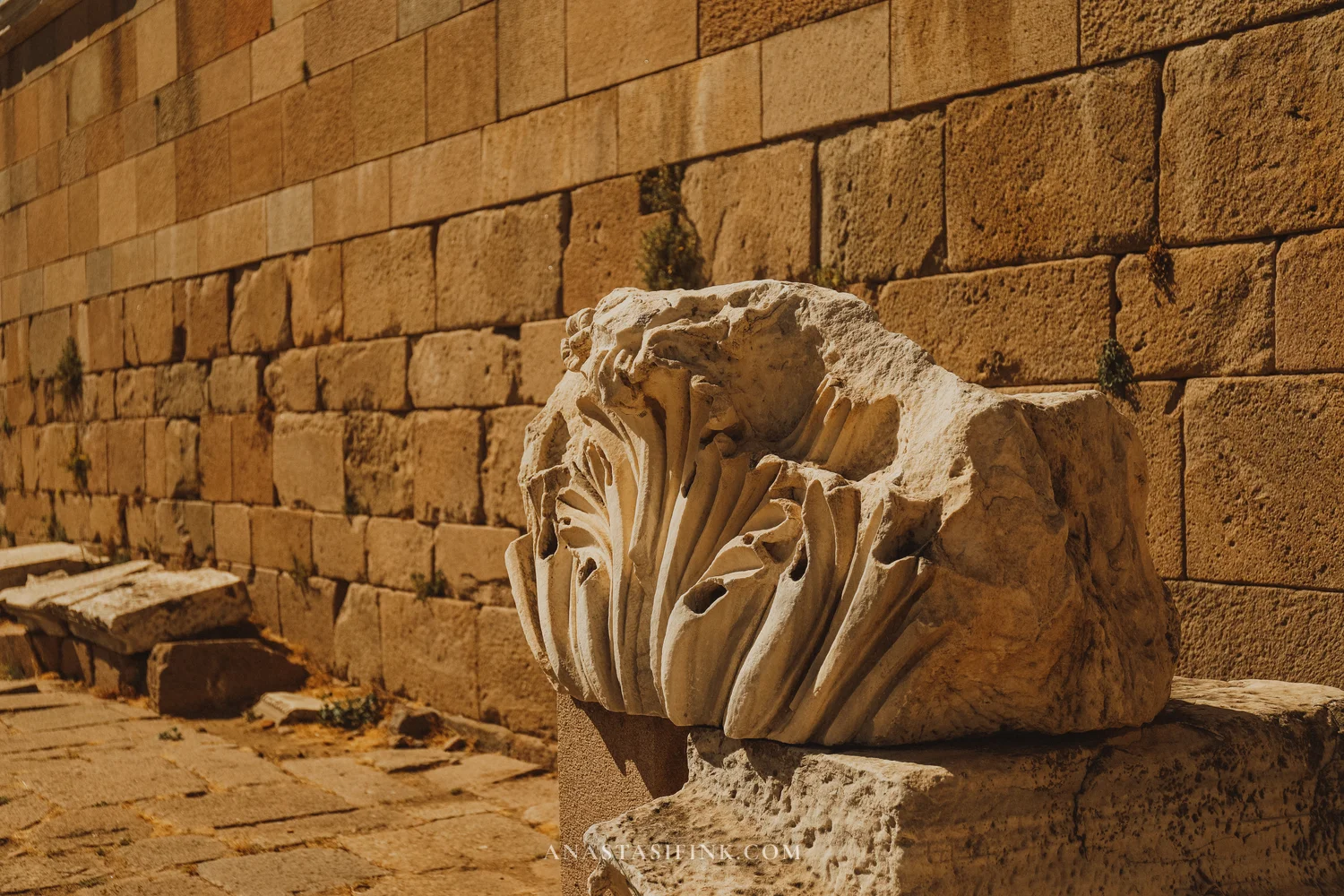
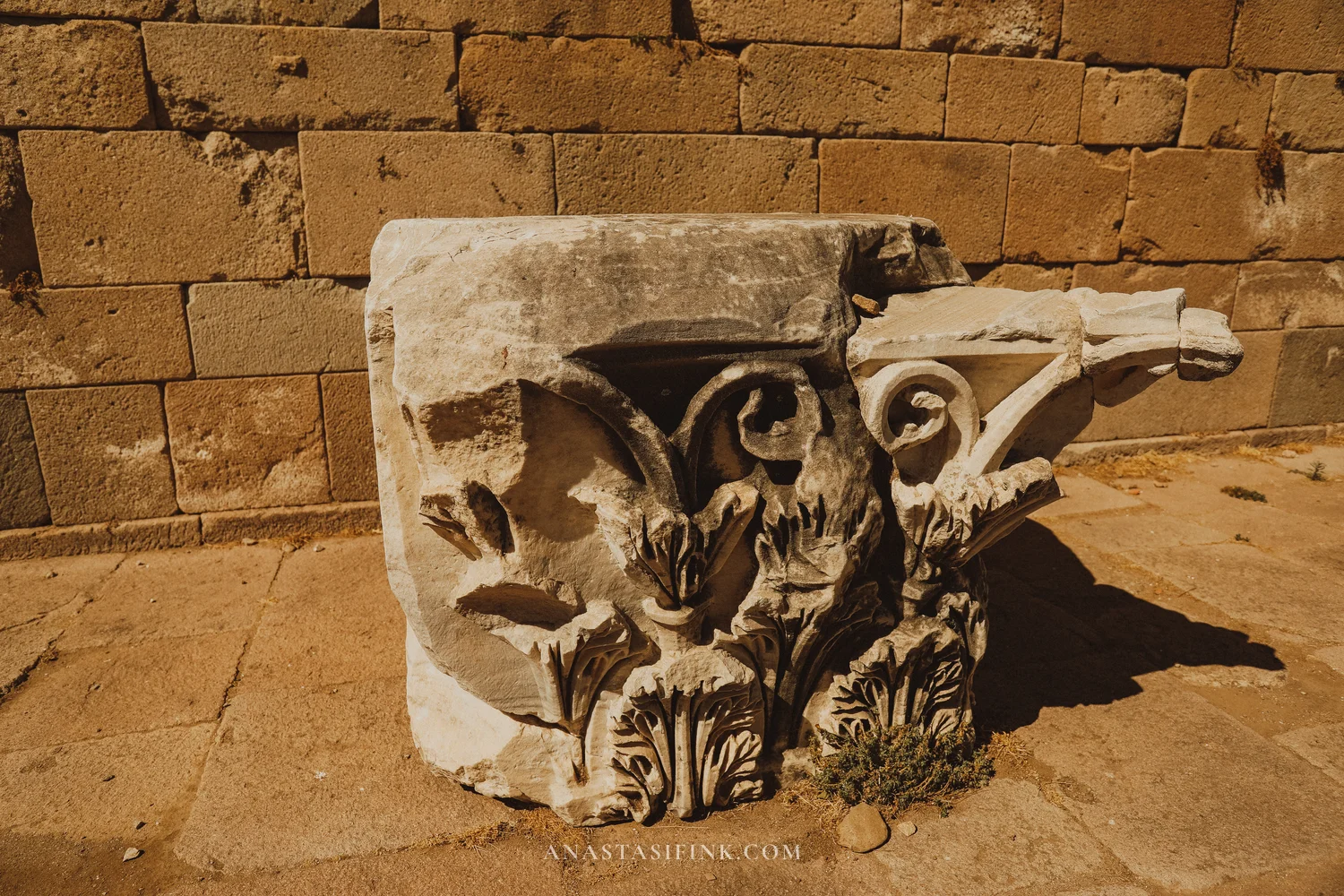
Capital fragments along the walls — acanthus leaves and the characteristic volute scrolls of the Corinthian order
Fortress Walls and Palace Ruins
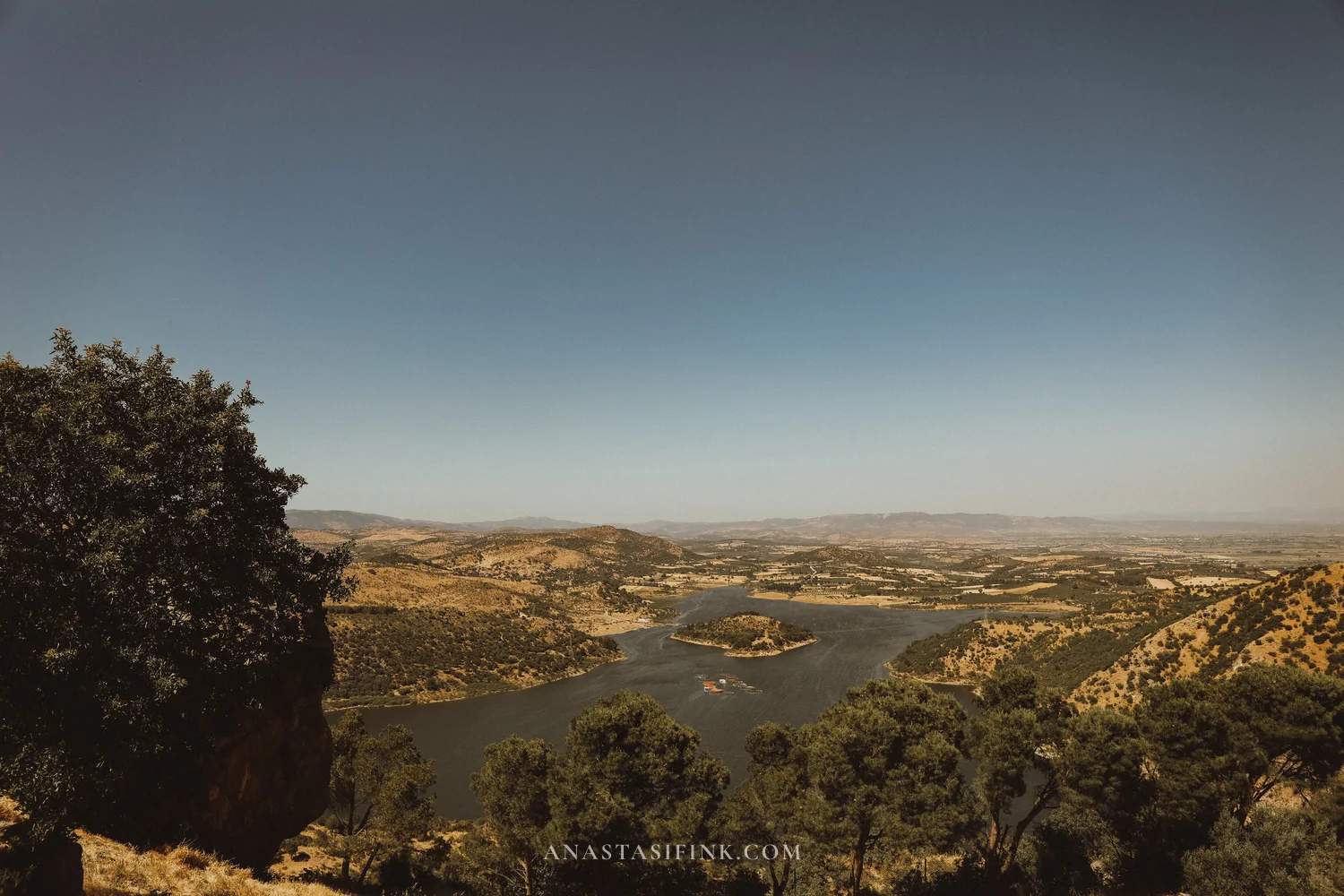
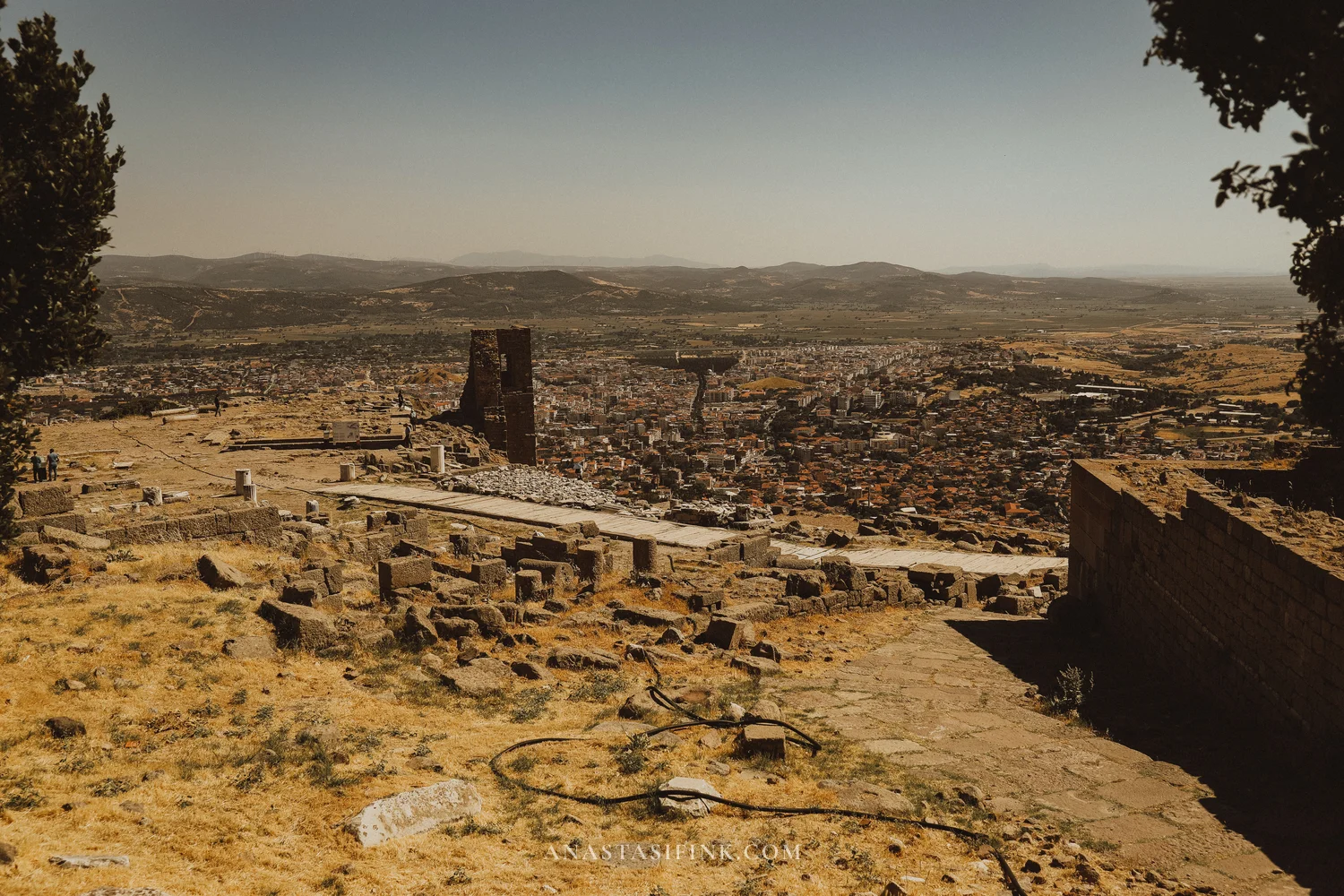
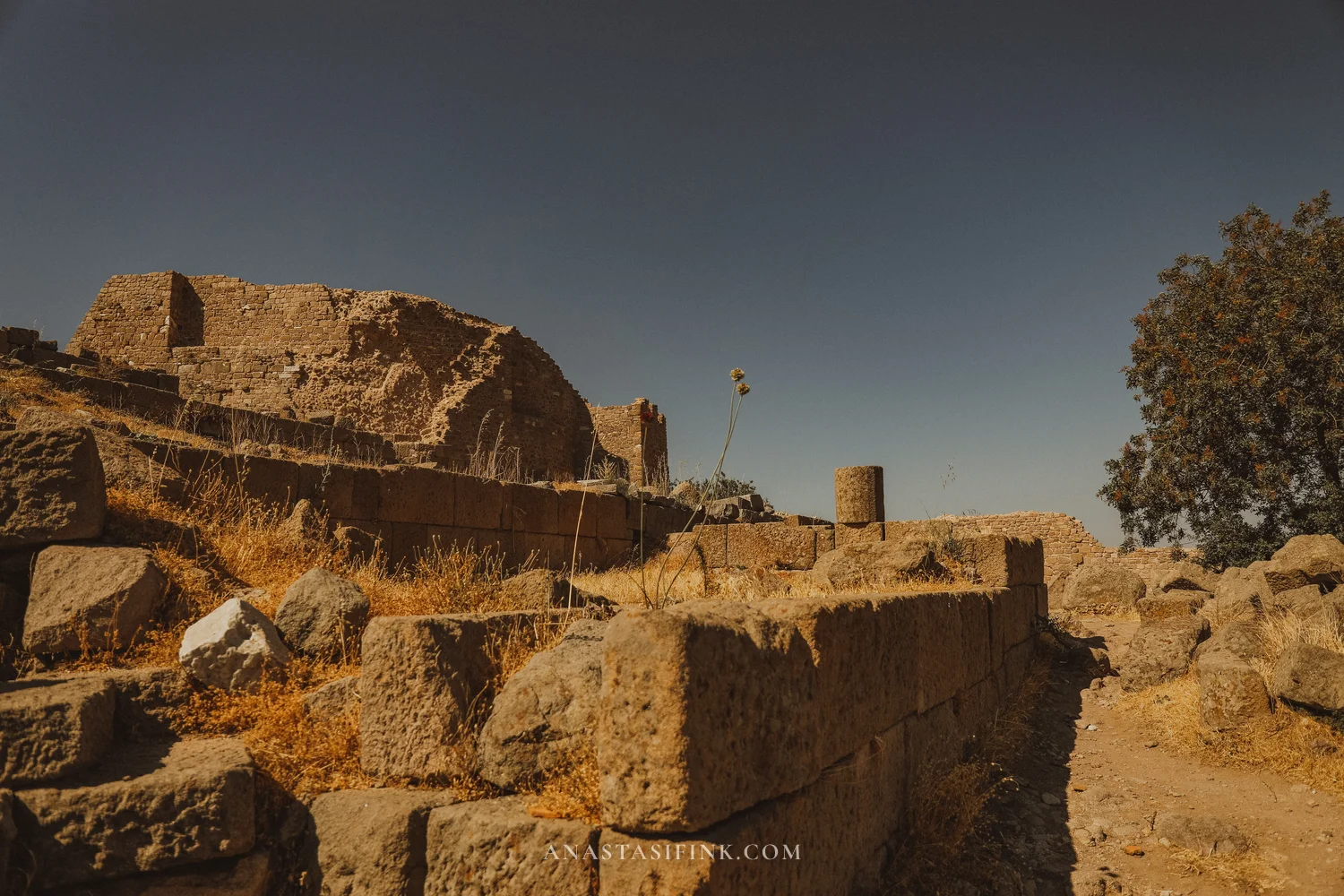
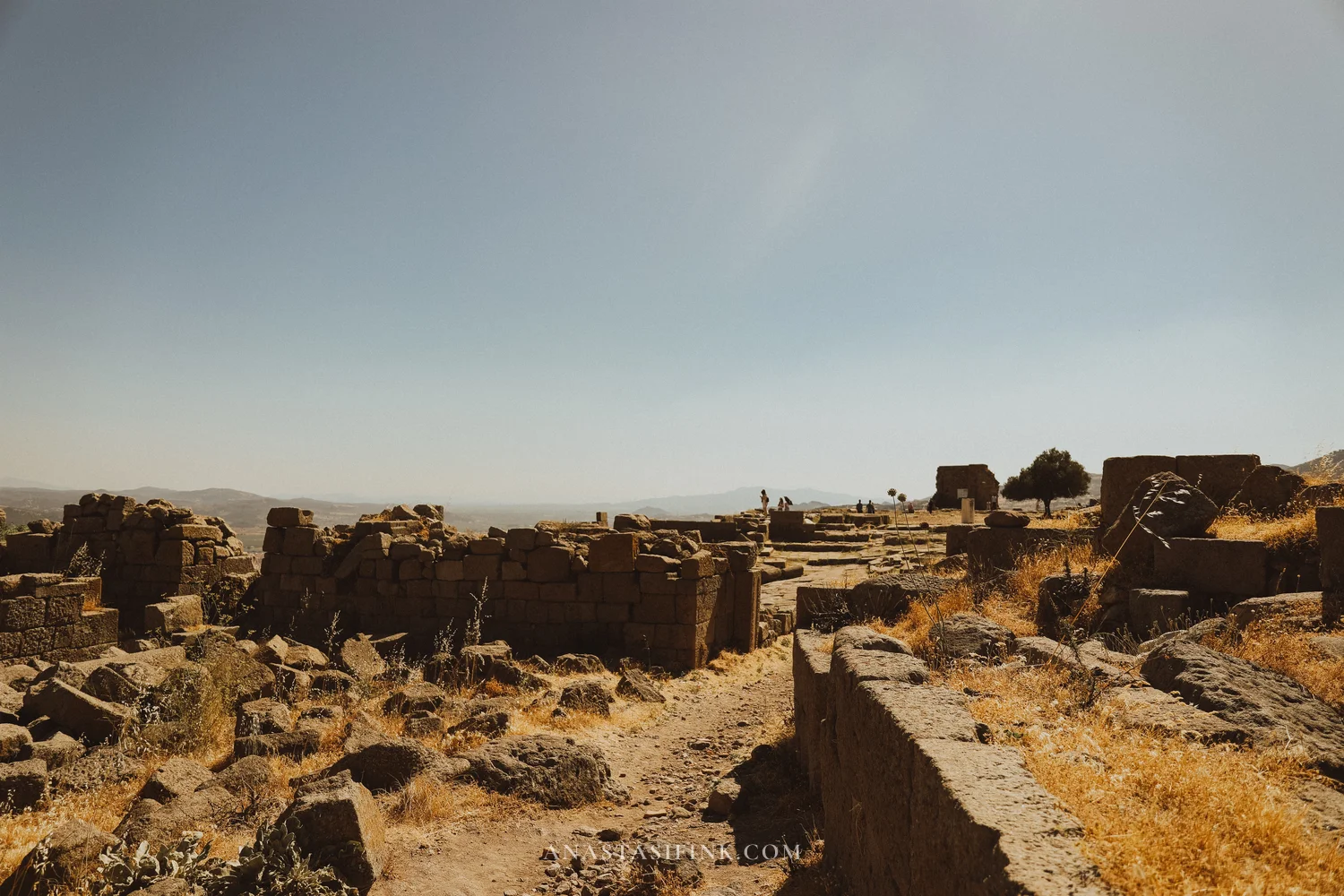
At the very top, you’ll find the arsenal, royal palaces, and fortress walls. The palaces are mostly just foundations now — they were actually modest by ancient capital standards. But the views from up here are a full 360 degrees: the valley, the mountains, the town below. You can see exactly why the kings chose to live here.
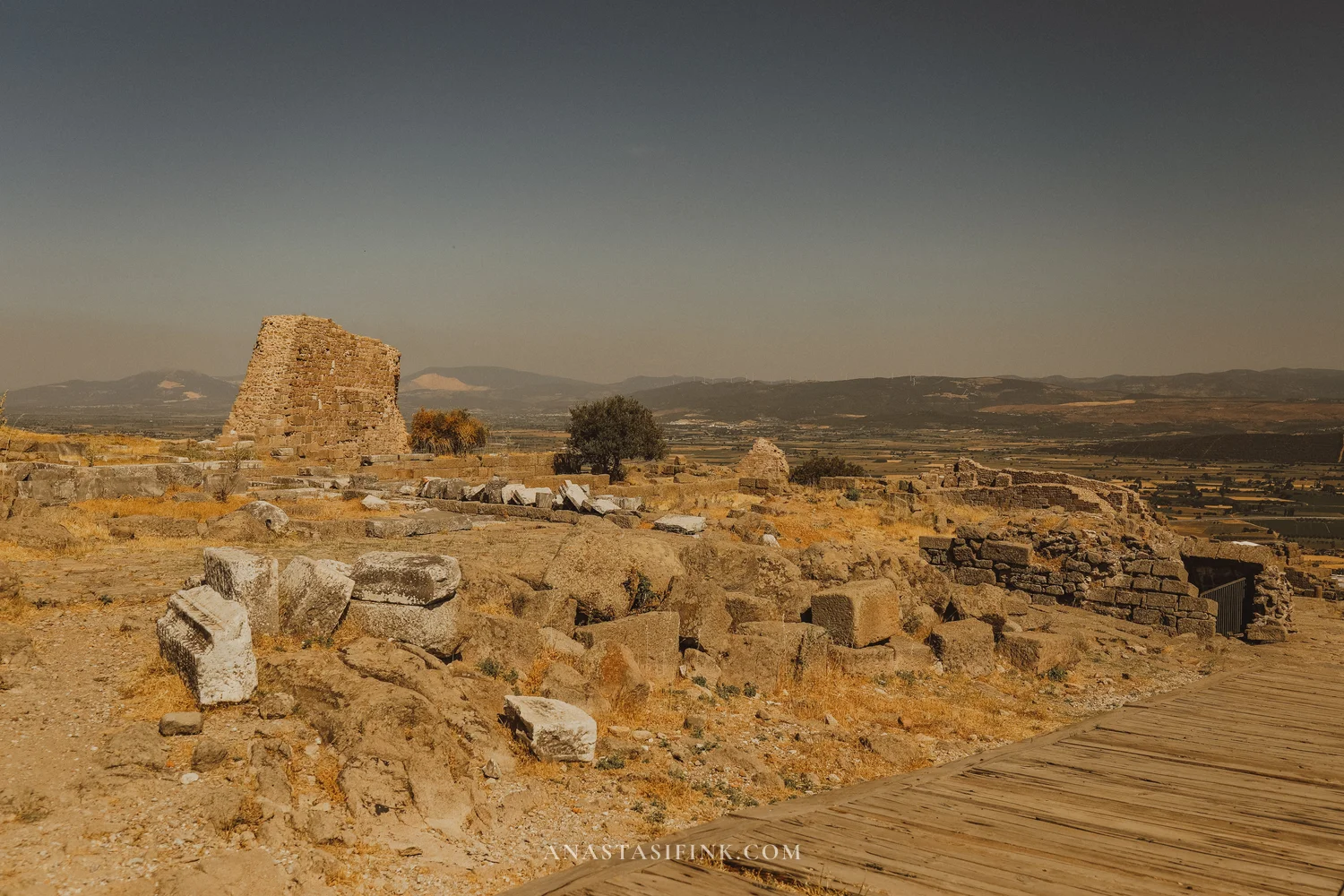
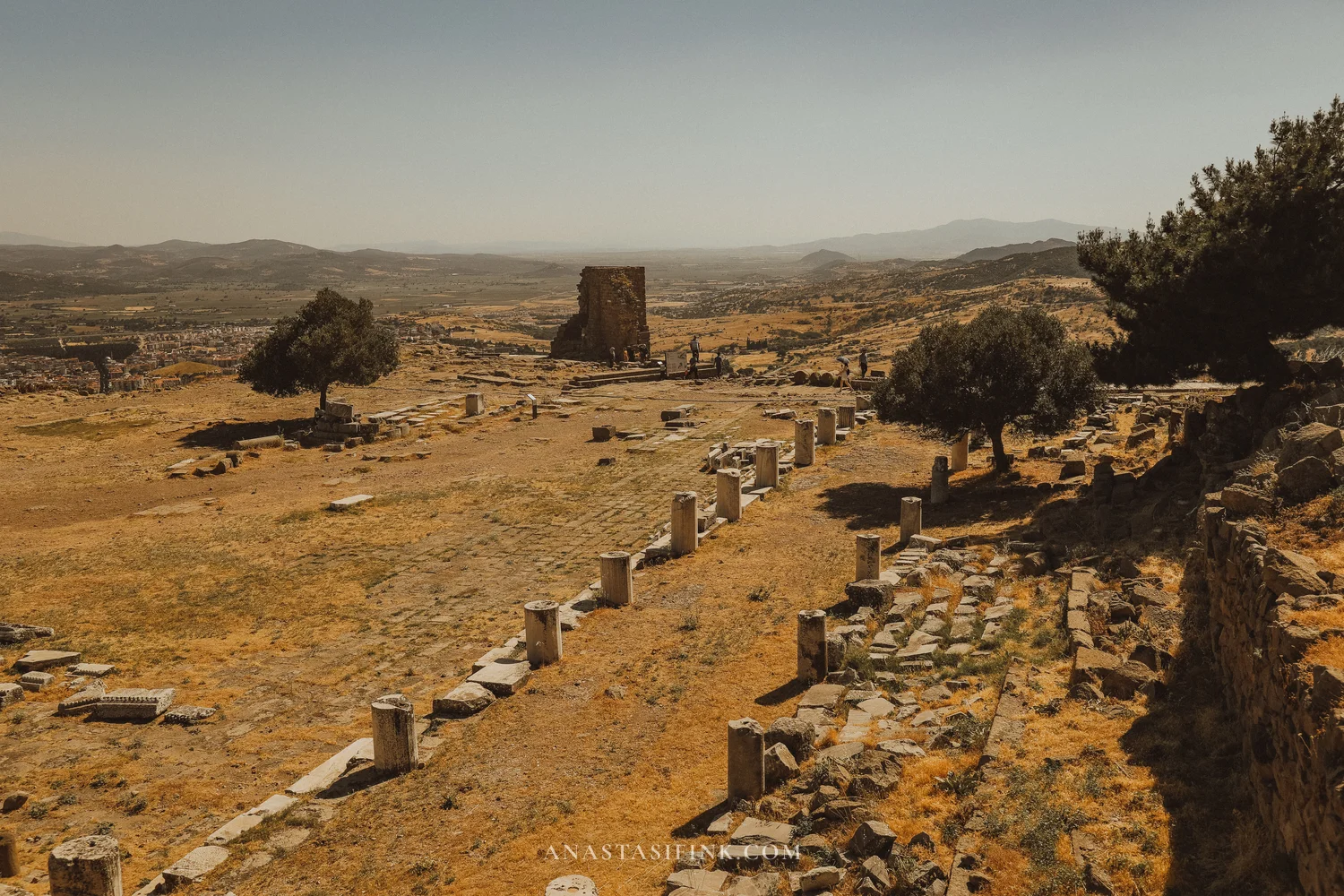
The upper part of the acropolis — colonnade remnants and a tower. Wooden walkways have been laid along the main route
Maps and Acropolis Model
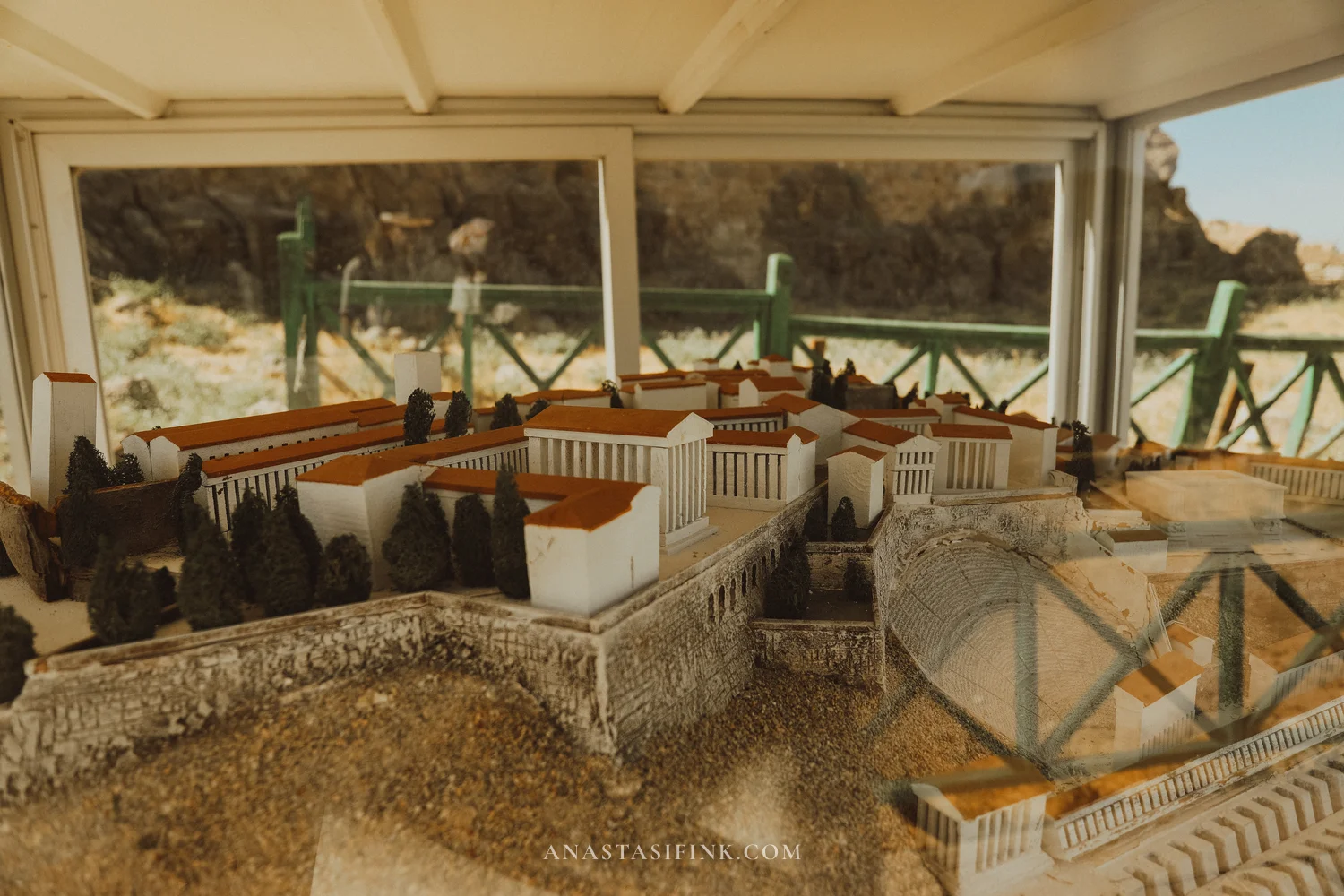
Information boards with maps are placed around the site — I’d recommend snapping a photo of one at the start so you can find your way around more easily. There’s also a scale model of the acropolis under a glass canopy — it instantly shows you what the place looked like in its heyday: temples, palaces, colonnades, red-tiled roofs. The scale is impressive.
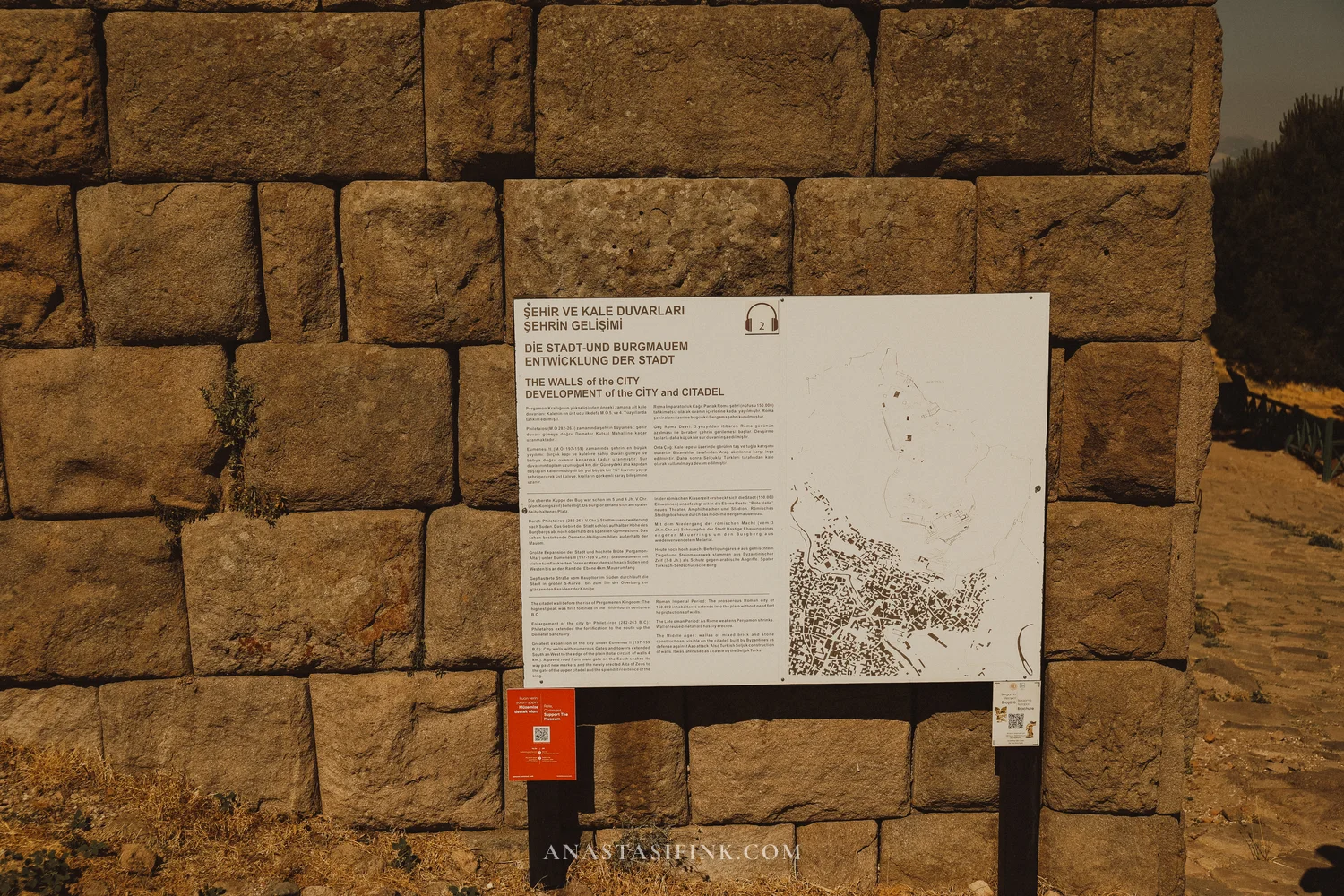
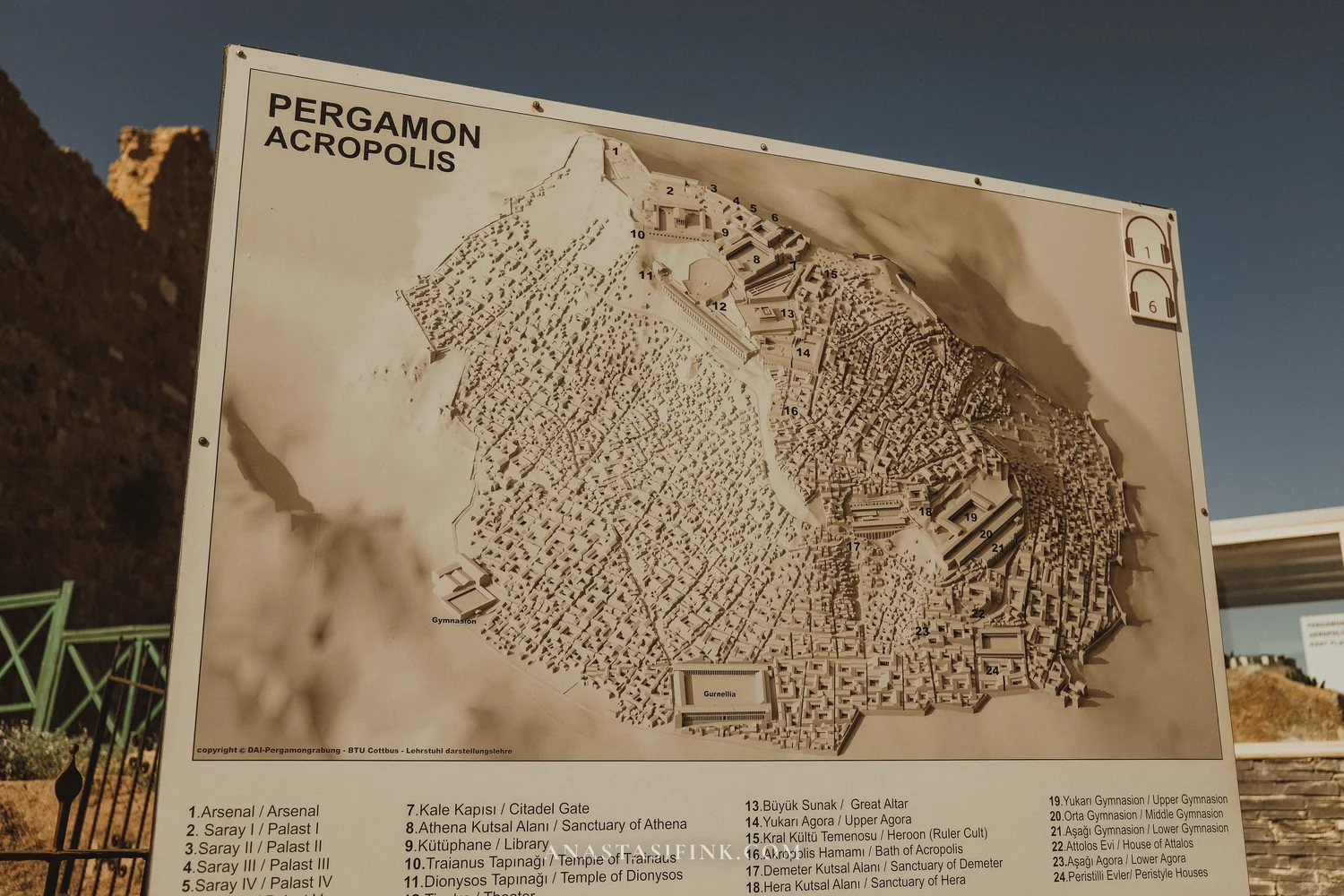
Information boards — snap a photo of the map before you start exploring so you don’t miss anything important
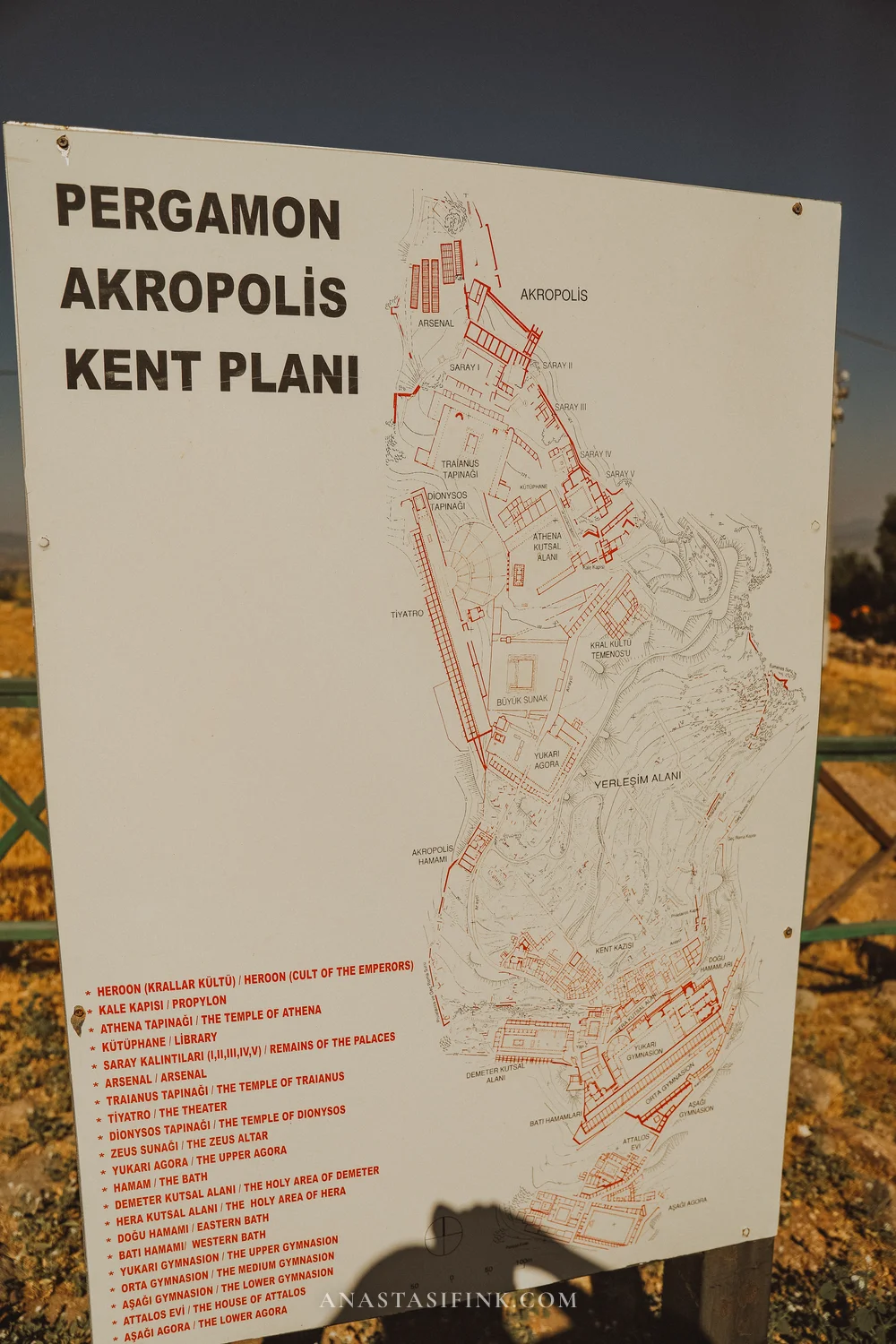
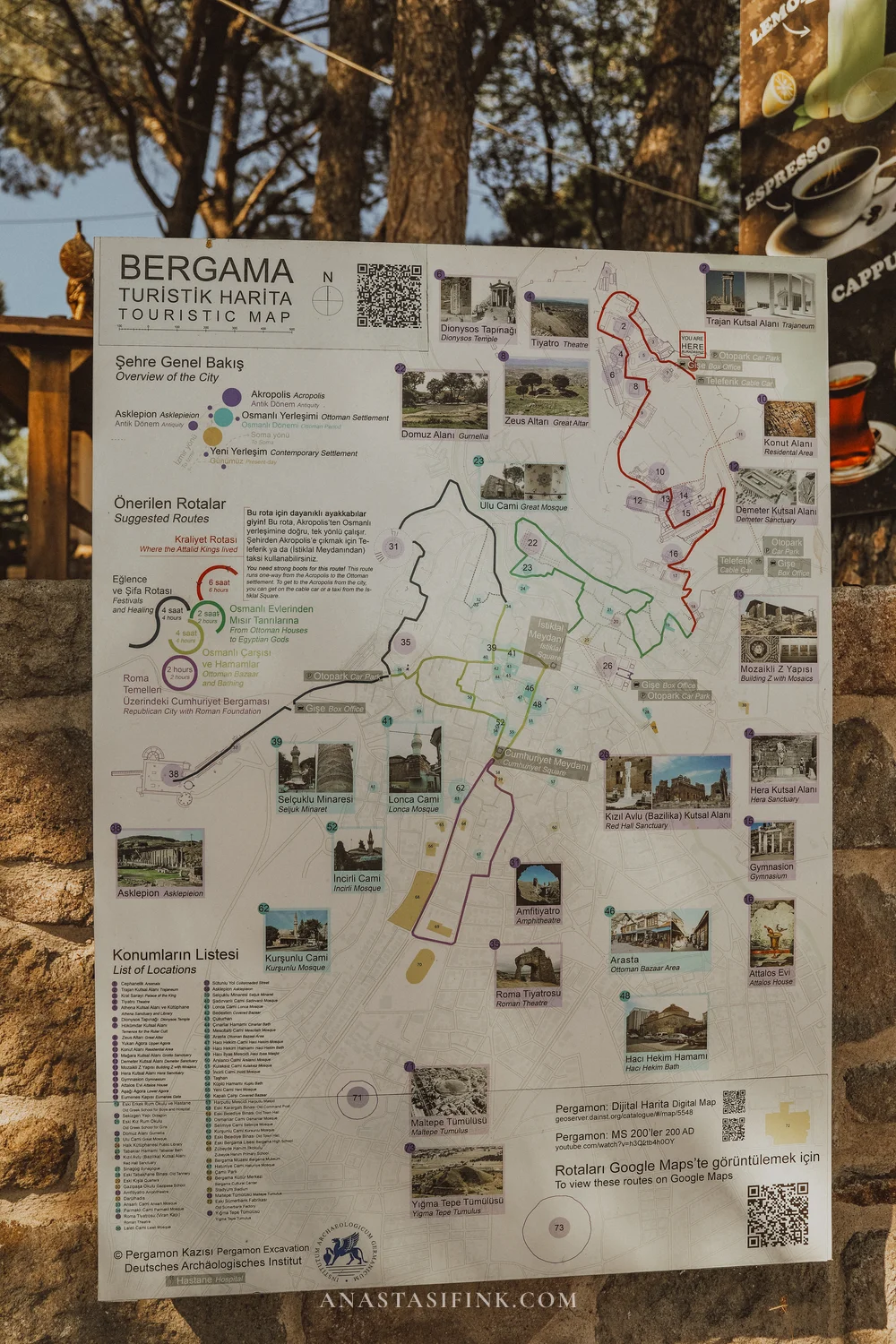
Left: detailed plan of the acropolis with a legend. Right: map of all of Bergama with suggested routes and QR codes for Google Maps
What Else to See in Bergama
The acropolis is the main draw, but it’s not the only reason to visit Bergama. If you have time, two more spots are well worth it:
The Asclepeion — an ancient healing center, something like an antiquity-era spa resort. This is where Galen worked — the physician whose medical texts were studied for fifteen centuries after his death. The Asclepeion is about 2 km from the town center, with a separate entrance fee or covered by the Museum Pass. Allow about an hour to an hour and a half.
Red Basilica (Kizil Avlu) — an enormous red-brick building right in the center of town. It started as a temple to Egyptian gods, then became a Christian church (one of the Seven Churches of Asia from the Book of Revelation). A river still flows through the building via underground tunnels — it’s quite unlike anything else.
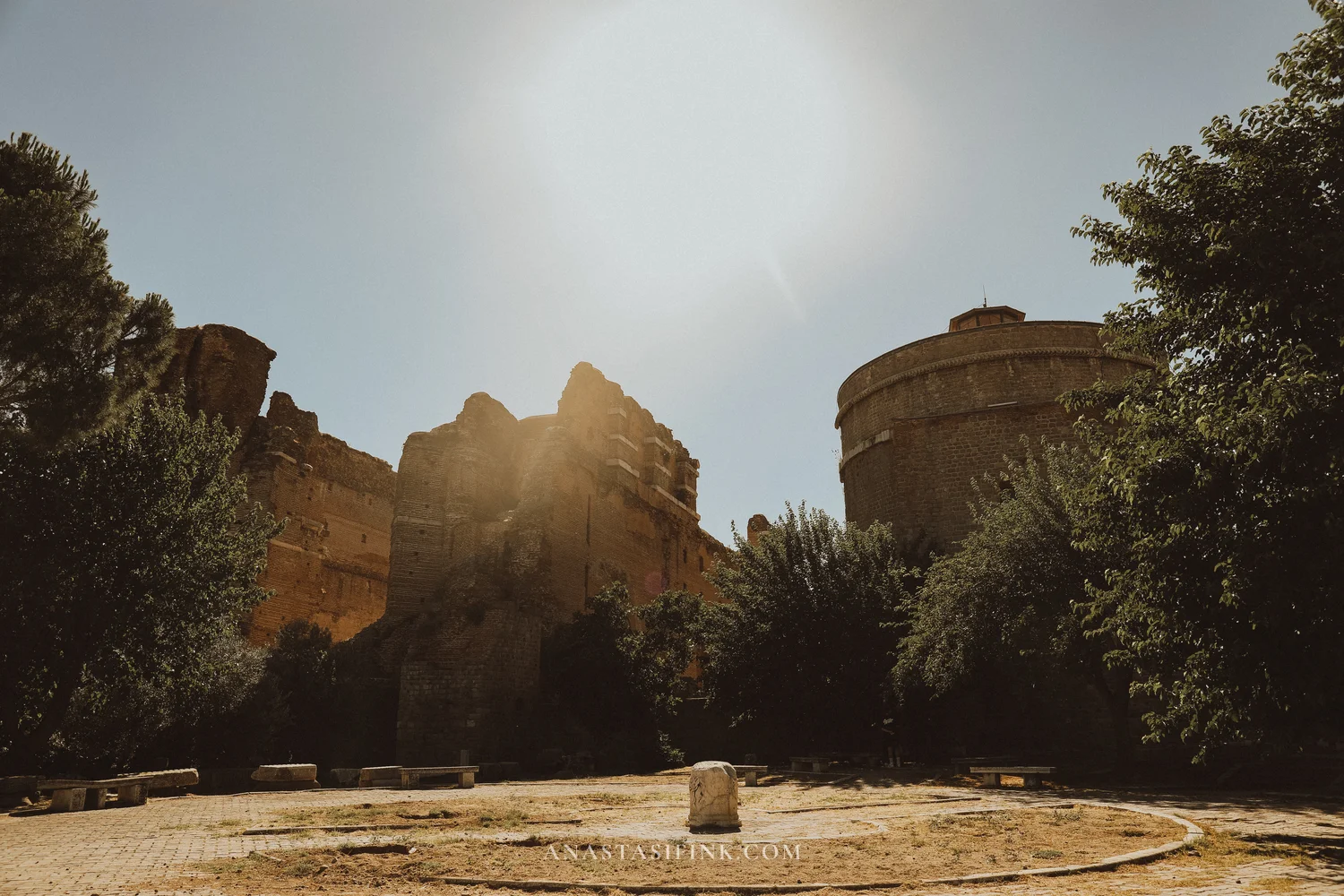
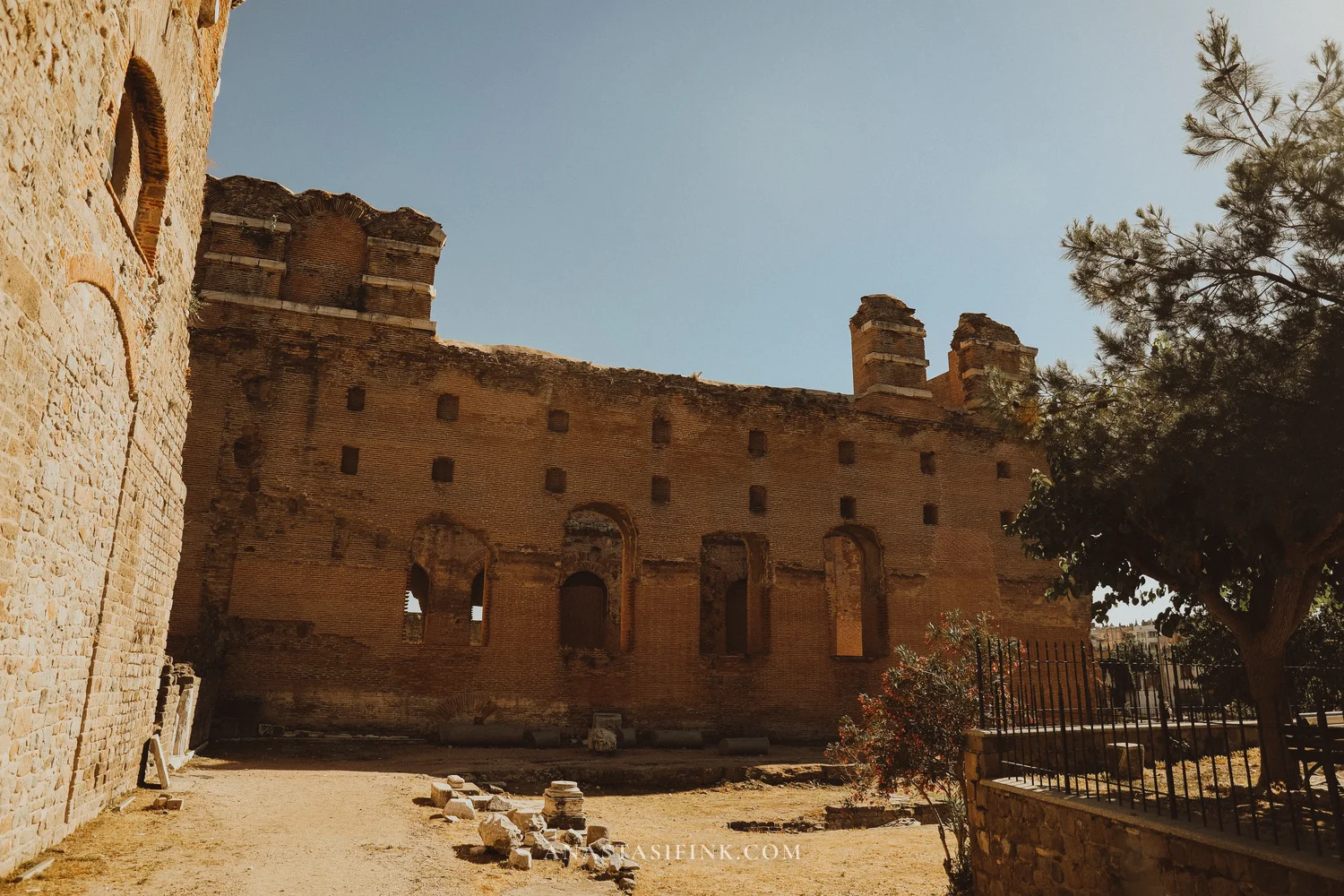
The Red Basilica (Kizil Avlu) — one of the most unusual ancient buildings in Turkey. More in our detailed guide
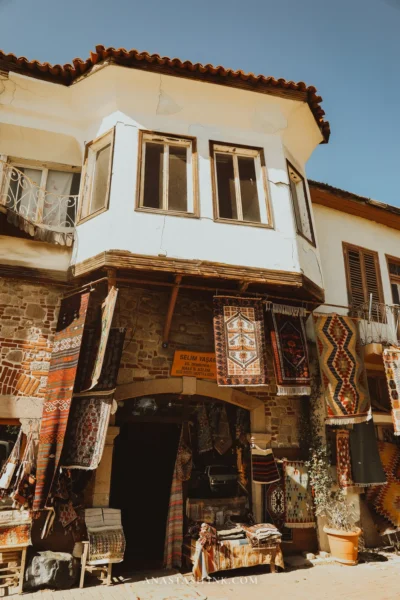
Bergama itself — don’t rush off after the acropolis. The town at the foot of the hill deserves a stroll of its own: the covered Arastas bazaar with carpets and antiques, a parchment workshop where they still make it by hand, old stone houses, and a glass of cold mulberry compote in the heat. More details in our full Bergama article.
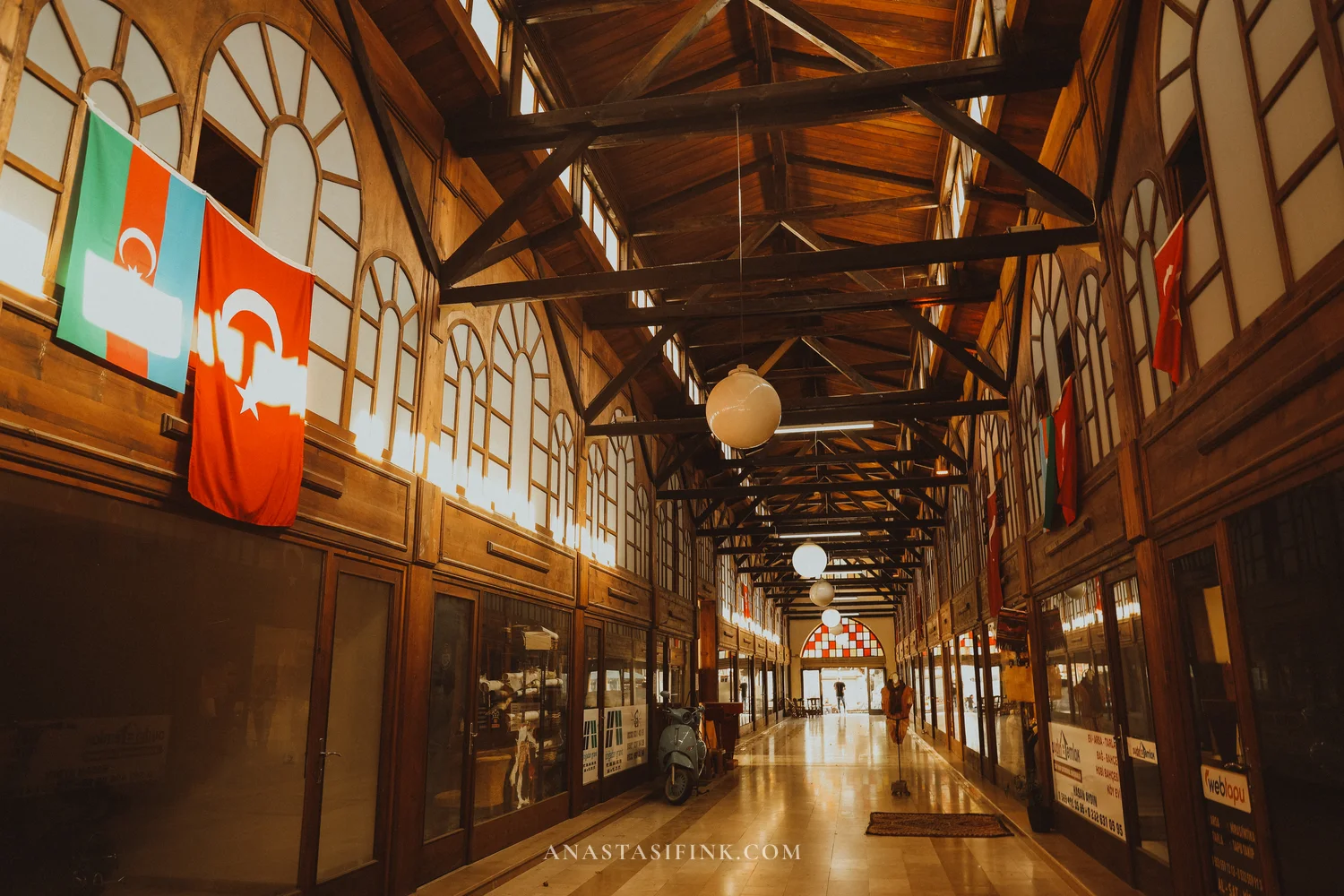
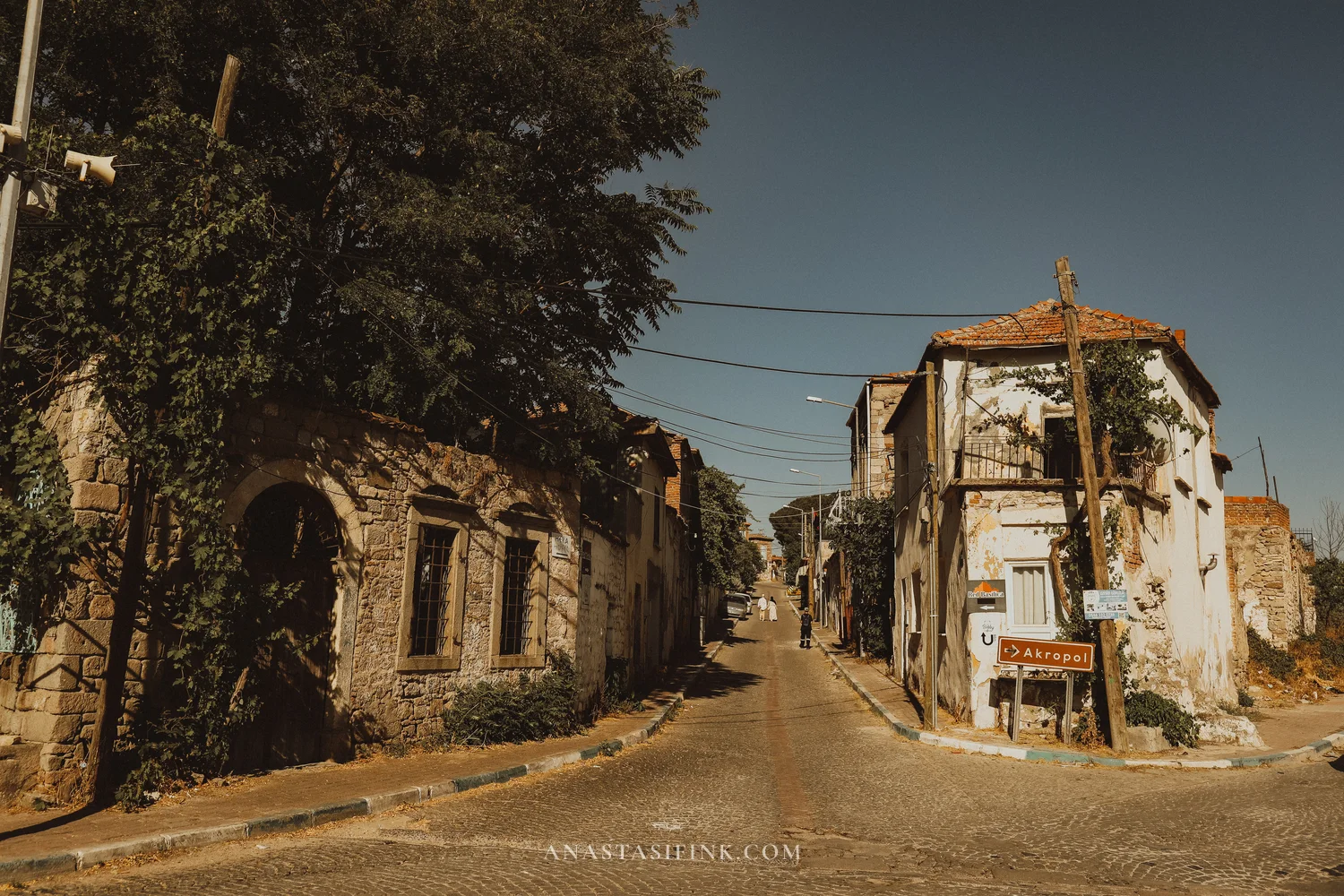
Bergama’s old town — covered bazaar and charming streets. Worth at least a couple of hours. Full Bergama guide here
Practical Information
- Address: Pergamon Akropol Oren Yeri, Bergama, Izmir, Turkey
- GPS: 39.1317, 27.1840
- Opening hours: 08:00–19:00 (summer, April–October), 08:30–17:30 (winter, November–March)
- Admission: ~€15 (or equivalent in Turkish lira). Muzekart and Museum Pass accepted
- Cable car: ~€5–7 round trip, departures every few minutes. Closed during strong winds
- Getting there: by car from Izmir — ~2 hours, parking available at the top. Without a car: bus to Bergama (~2 hours, ~150–250 TL / ~€5–7), then cable car or taxi up. From Istanbul — fly to Izmir (~1 hour), then drive or bus. From London — direct flights to Izmir (~4 hours). From New York — fly via Istanbul to Izmir
- Visa: most Western passport holders (US, UK, EU, Canada, Australia) can get a Turkish e-Visa online quickly and easily
- How long to allow: at least 2–3 hours for the acropolis. With the Asclepeion and the Red Basilica — a full day
- What to bring: water (no shade or shops on the acropolis), a hat, comfortable shoes
Tips
- Best time to visit — early morning (at opening) or about two hours before closing. Morning gives you soft light and fewer people; evening brings golden-hour light on the Trajaneum columns.
- Museum Pass pays for itself if you plan to visit several sites in Turkey — it covers more than 300 museums and ruins across the country.
- It gets brutally hot in summer — temperatures in Bergama can hit 40°C (104°F). There’s almost no shade up there. Bring at least one liter of water per person.
- Combine it with the Asclepeion — both sites are covered by the Museum Pass. Do the acropolis in the morning (before it gets too hot), then the Asclepeion in the afternoon (more greenery and shade there).
- For photographers: a wide-angle lens is a must for the theater and the Trajaneum. The best light on the columns is during the last two hours before sunset.
Photography tip: The Trajaneum looks best when shot from the southeast corner — from there you can capture the colonnade, the pediment, and the valley behind. For the theater, shoot from top to bottom to convey the steepness. For capital and sculpture details — bring a telephoto lens.
By car — about two hours on a good road, with parking available at the top of the acropolis. Without a car: buses run from Izmir to Bergama (~2 hours), and from there you can take the cable car to the summit (4 minutes) or a taxi up the winding road.
Admission is around €15 (or the equivalent in Turkish lira). The cable car is a separate charge — approximately €5–7 round trip. If you have a Museum Pass, acropolis entry is included, but the cable car still needs to be paid for separately.
At least two to three hours to see the main highlights: the Temple of Trajan, the theater, the underground galleries, the library ruins, and the fortress walls. If you want to add the Asclepeion and the Red Basilica in town, plan for a full day.
The best seasons are spring (April–May) or fall (September–October), when it’s not too hot. In summer, arrive at opening time in the morning before the heat builds up. For photography, the evening light is ideal — come about two hours before closing.
Absolutely, especially if you’re into ancient ruins. Pergamon is far less crowded than Ephesus but just as impressive — and with a fraction of the tourists. The theater and Trajaneum are among the most photogenic ancient monuments in Turkey.
Yes, you can hike up along the winding road in about 30–40 minutes. But in summer it’s tough going — relentless heat with no shade. You can also take a taxi up; there’s a parking lot at the top.
The famous Pergamon Altar was removed by German archaeologists in the 19th century and is now in the Pergamon Museum in Berlin. Only the foundation platform remains at the acropolis site.
Pergamon or Ephesus?
If you’re choosing between Pergamon and Ephesus — don’t choose, go to both. But if time is tight: Ephesus is all about scale and preservation — the Library of Celsus, the marble streets. Pergamon is far less touristy, with a fraction of the crowds, and the hilltop views are something Ephesus simply can’t match. It’s one of those places I want to go back to once I’ve had enough of the tourist hordes.