Izmir, Turkey — What to See in 1 Day: Bazaar, Mosques, Elevator, and Ferry

Izmir is Turkey’s third-largest city, but most tourists blow right past it on the way to Ephesus or the beach resorts. Honestly, that’s their loss. One day here was enough for me to understand why locals are so fiercely proud of their city — an ancient bazaar, Ottoman mosques, a century-old elevator built into a clifftop, and an evening ferry across the bay. Izmir has a vibe all its own, and I’m already thinking about going back.
Konak Square — Starting Point
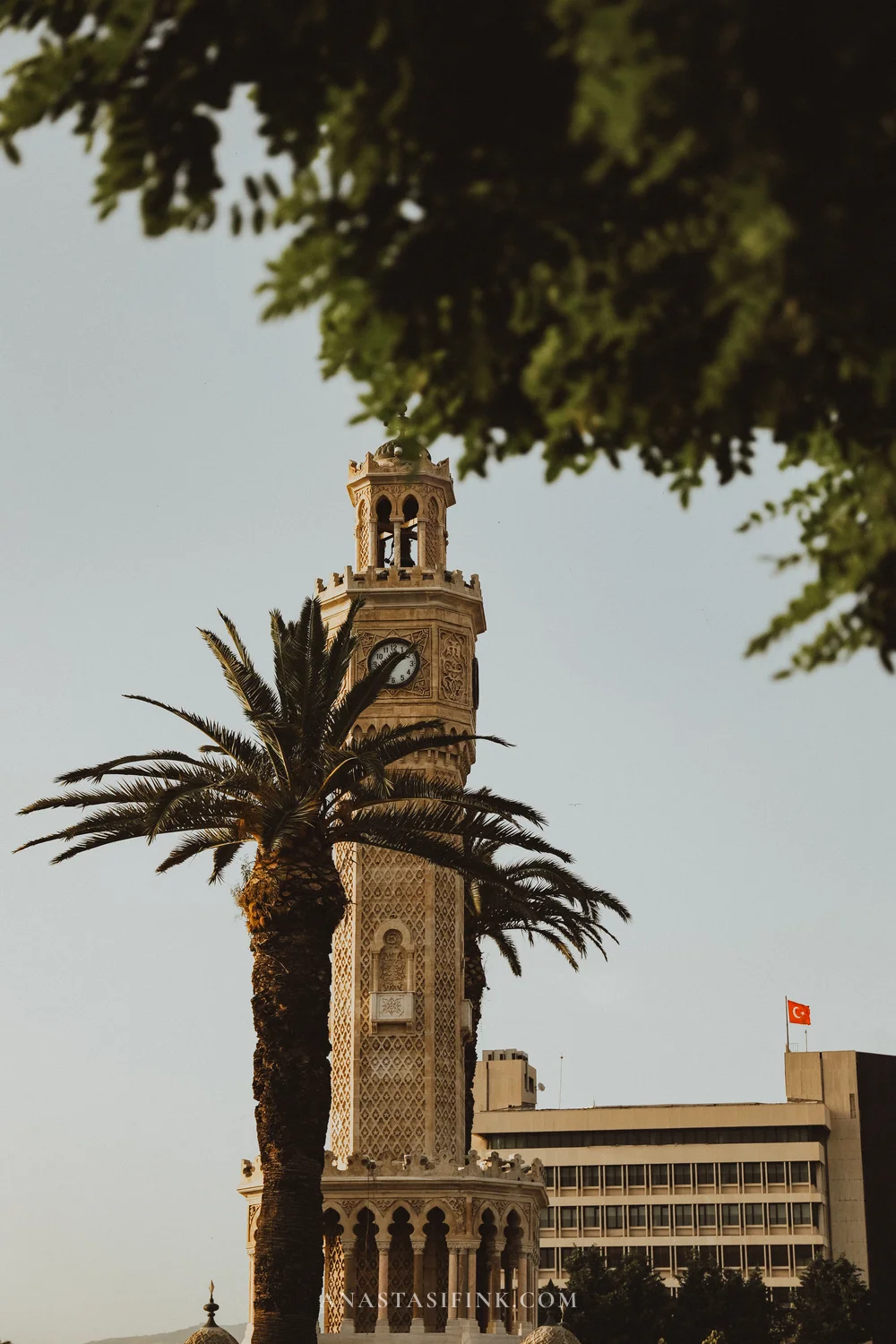
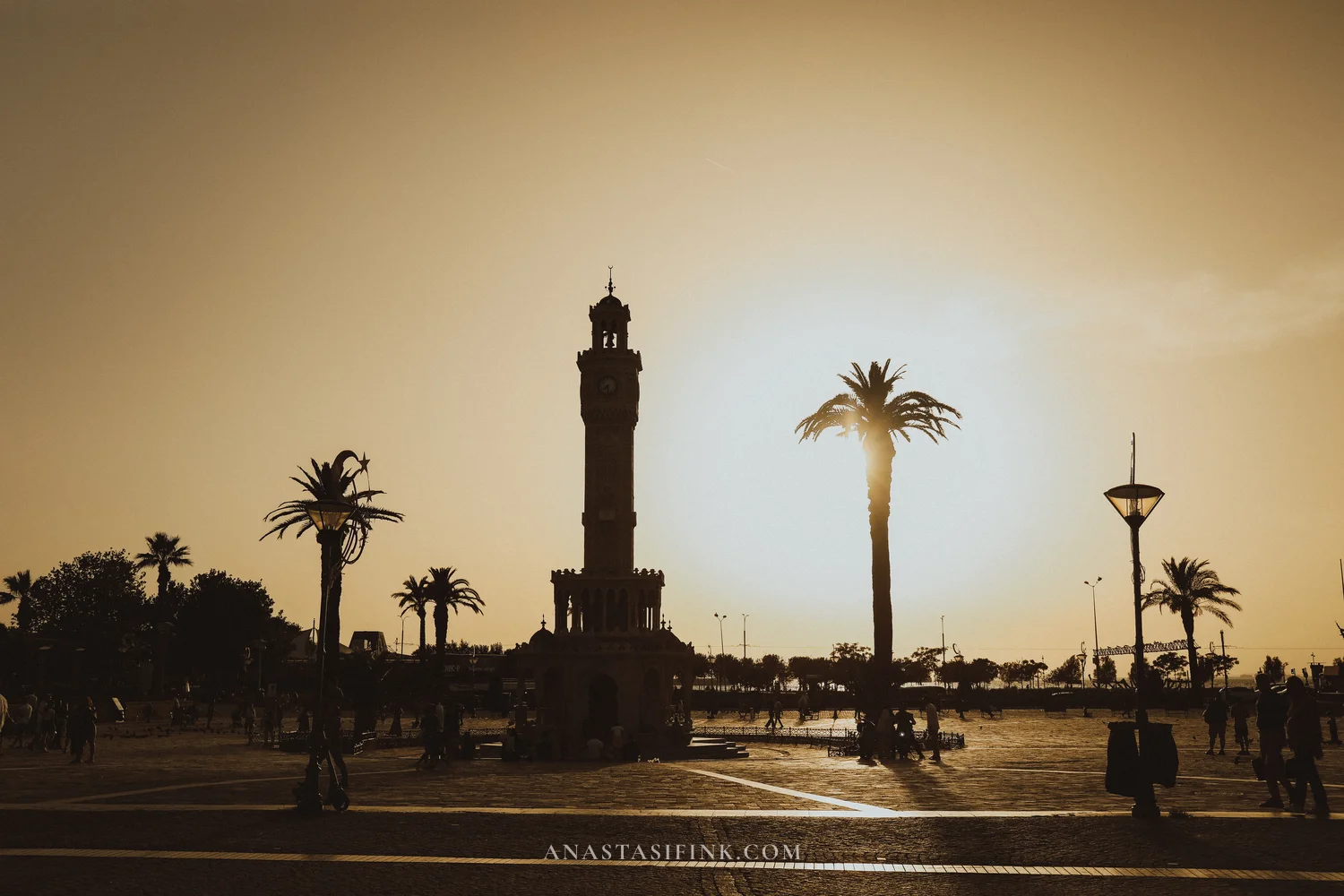
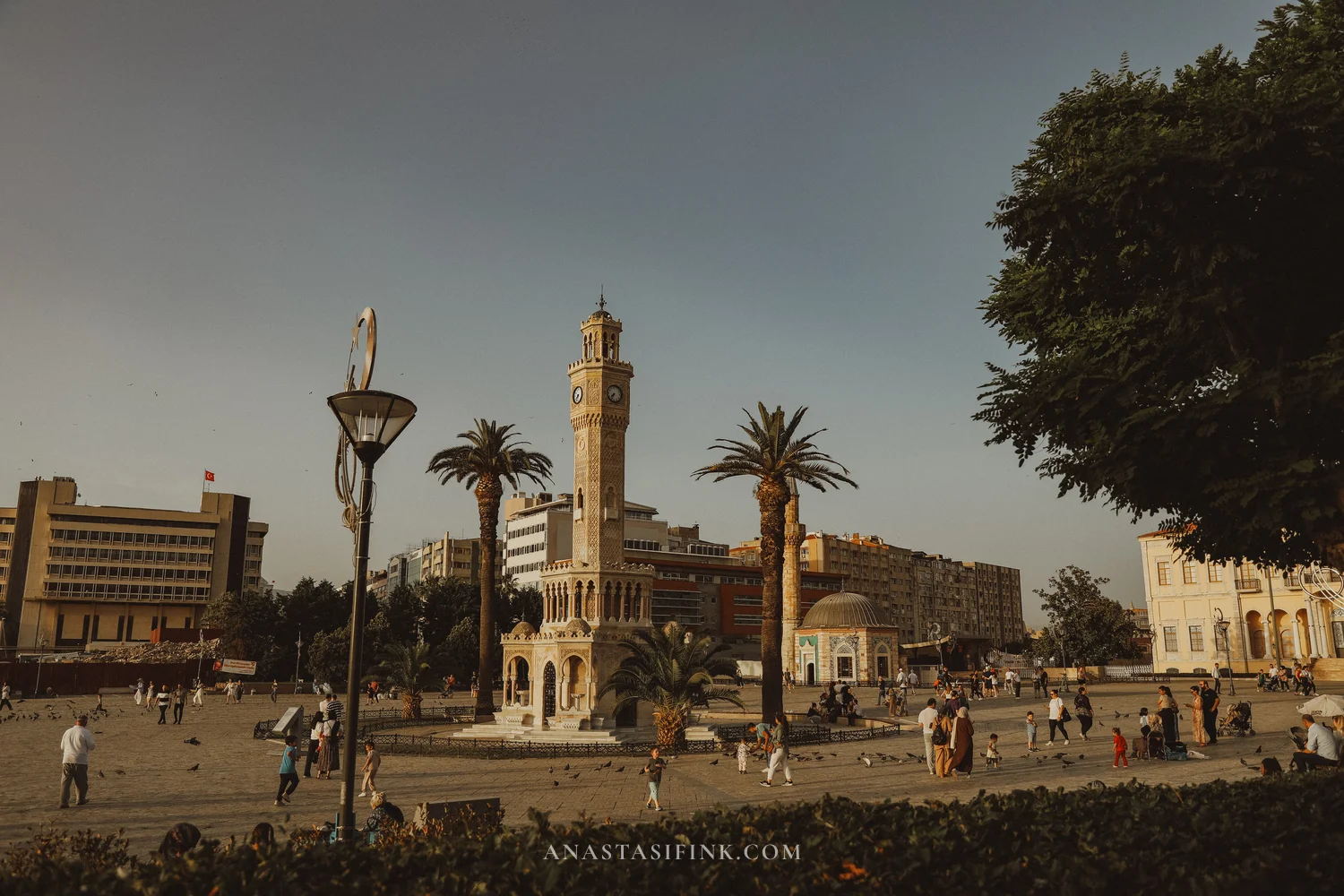
We kicked off our day at Konak Square (Konak Meydanı) — a wide open plaza right on the bay, lined with palm trees and anchored by the famous Clock Tower (Saat Kulesi). The tower was built in 1901 to mark the 25th anniversary of Sultan Abdulhamid II’s reign, and the clock mechanism itself was a gift from Kaiser Wilhelm II of Germany. It stands 25 meters tall, octagonal, with four stories — and it survived two major earthquakes and a full restoration. Today it’s the definitive symbol of Izmir: its silhouette is literally on the city’s coat of arms.
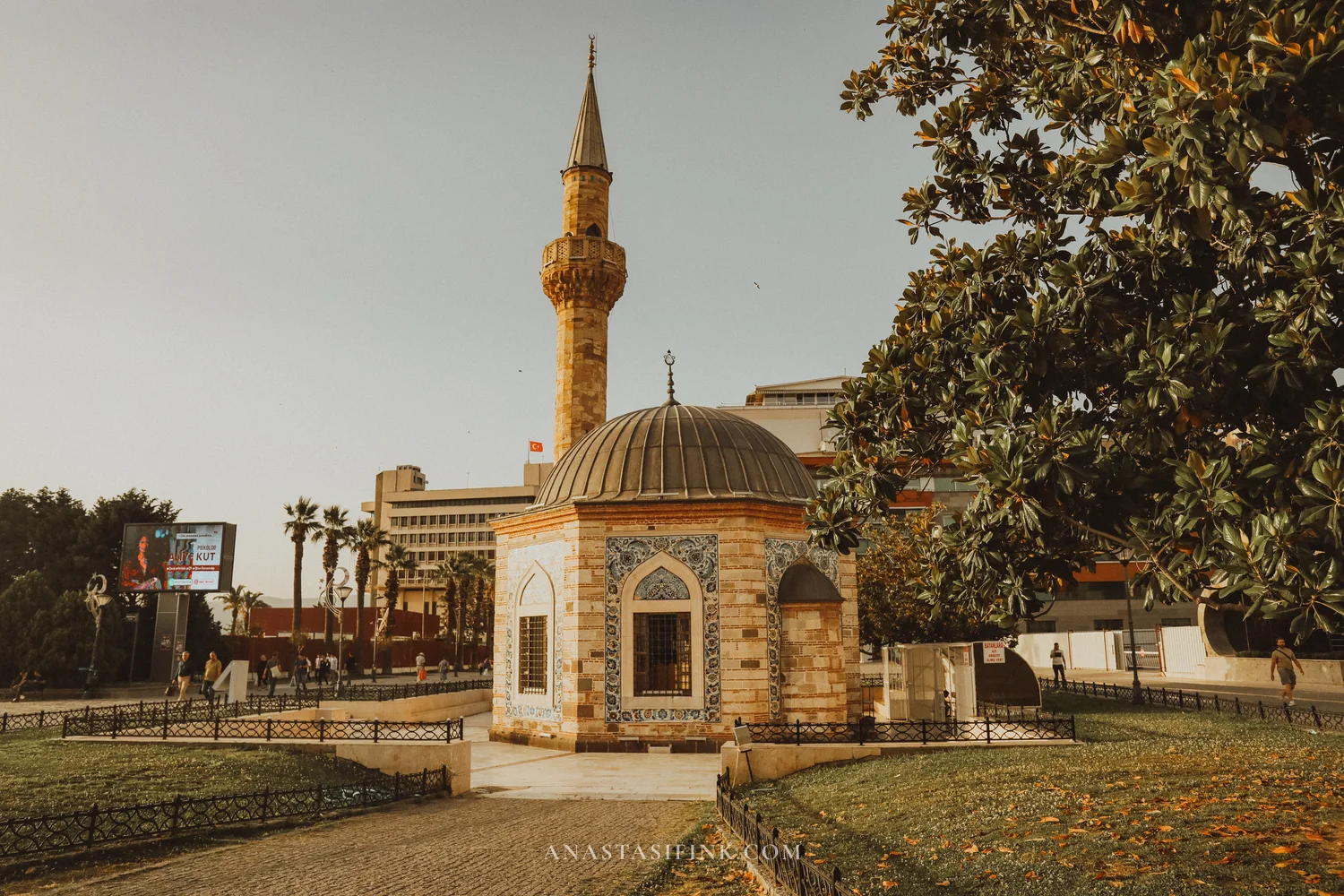
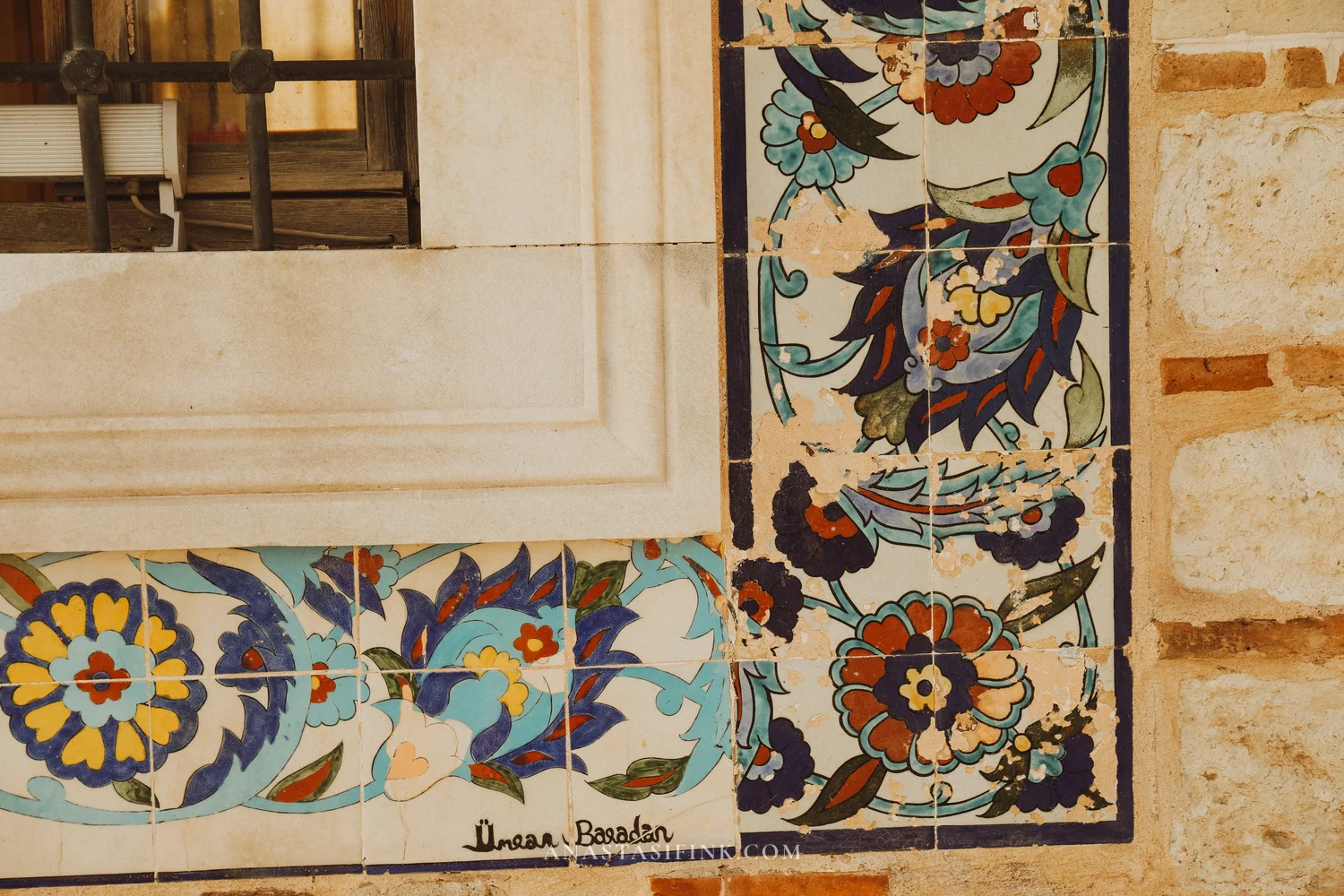
Right beside the clock tower stands the petite Yali Mosque (Yalı Camii), with its tiled facade and slender minaret. It dates back to the 17th century — around 1615 — and while it’s tiny, the tilework makes it one of the most photogenic spots on the whole square. Don’t rush past it.
Practical Information
- Address: Konak Meydanı, Izmir
- GPS: 38.4189, 27.1287
- How to get there: Tram or metro to Konak station
- Google Maps: Konak Meydanı
Kemeralti Bazaar — Izmir’s Most Colorful Spot
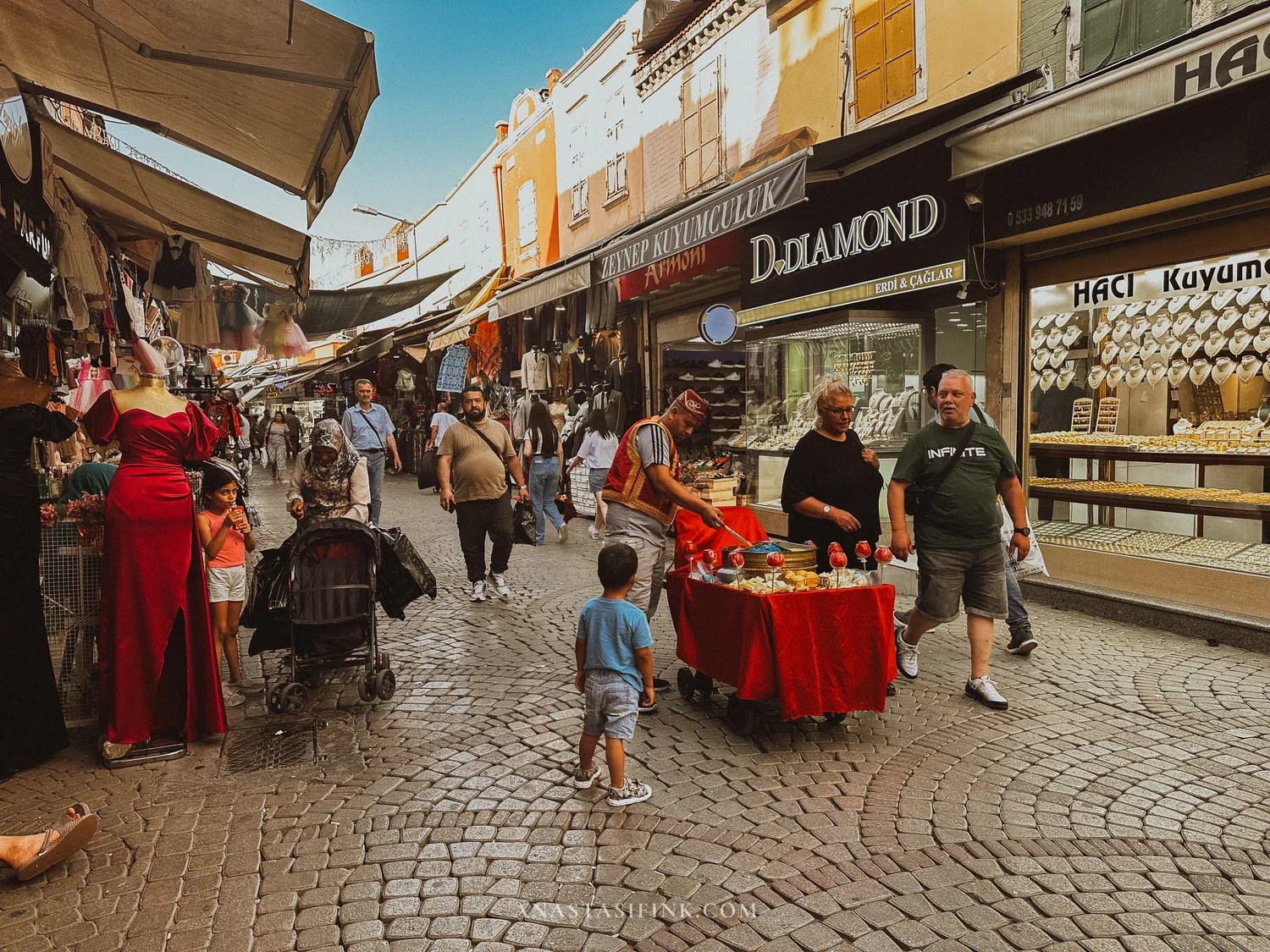
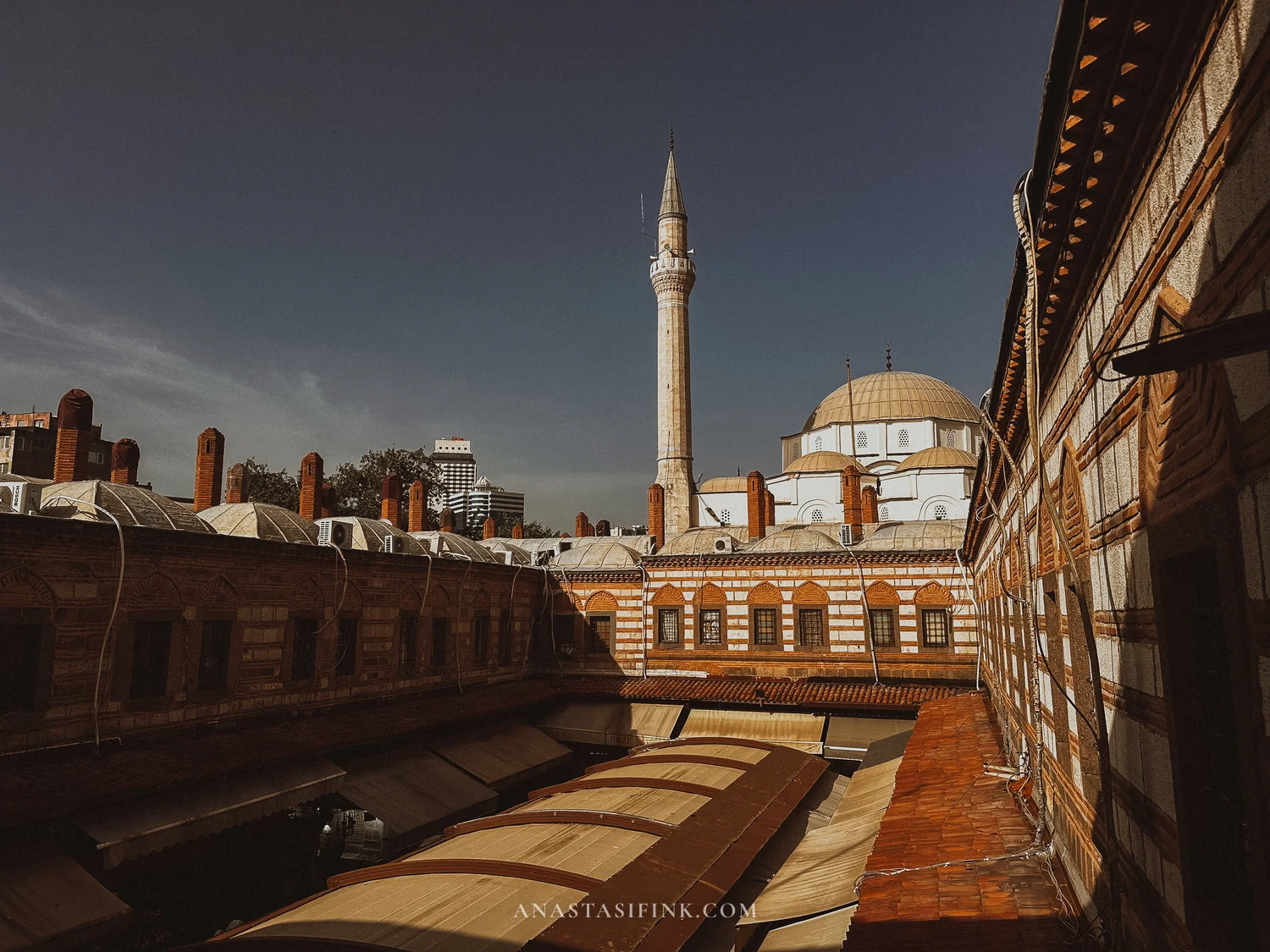
From Konak Square, Kemeralti Bazaar (Kemeraltı Çarşısı) is a five-minute walk. This is one of the oldest trading districts in the world — commerce here goes back to antiquity, and the Ottoman-era structure we see today took shape in the 17th century. The name literally means “under the arch,” a nod to the vaulted passages of the original layout.
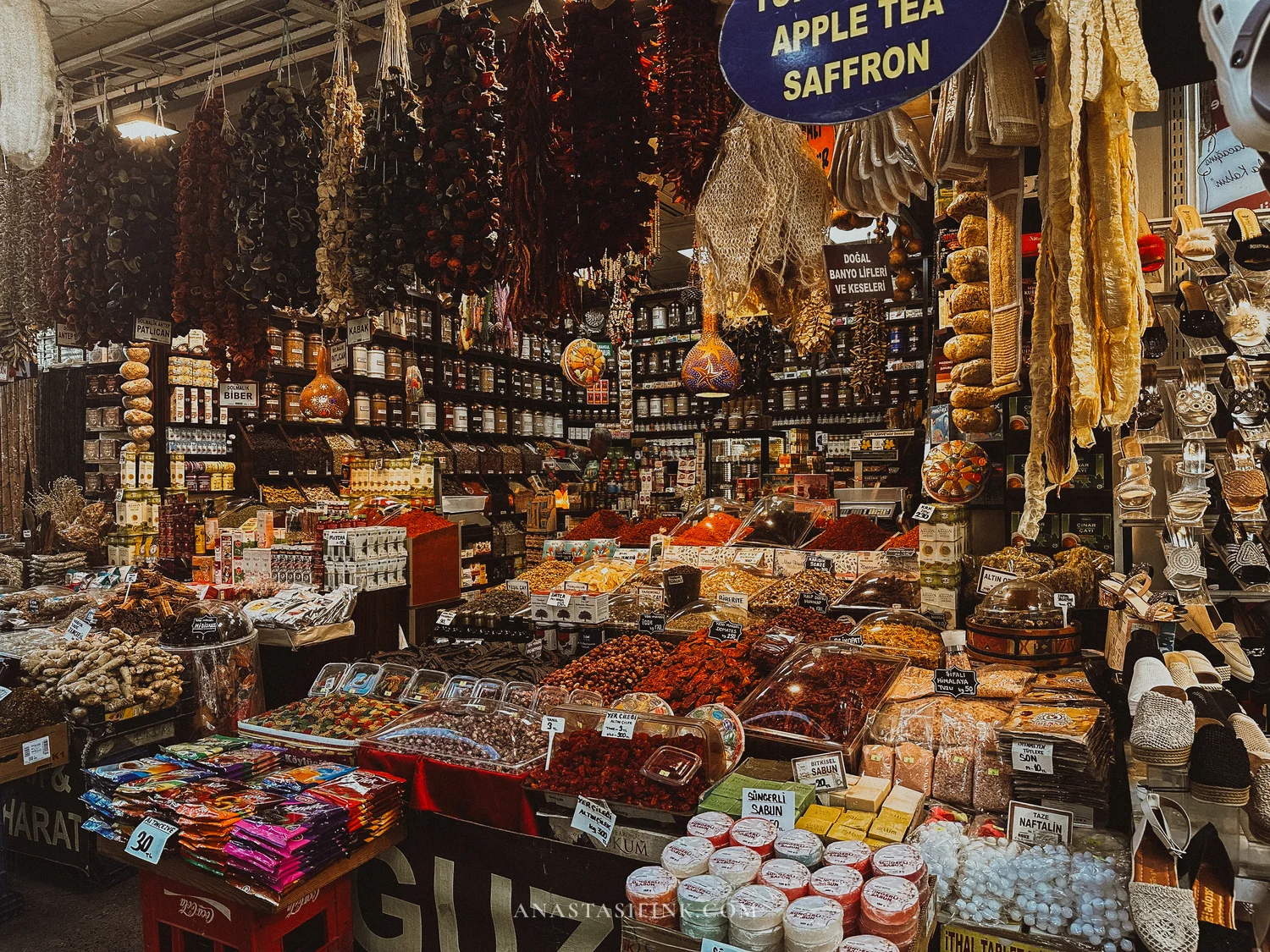
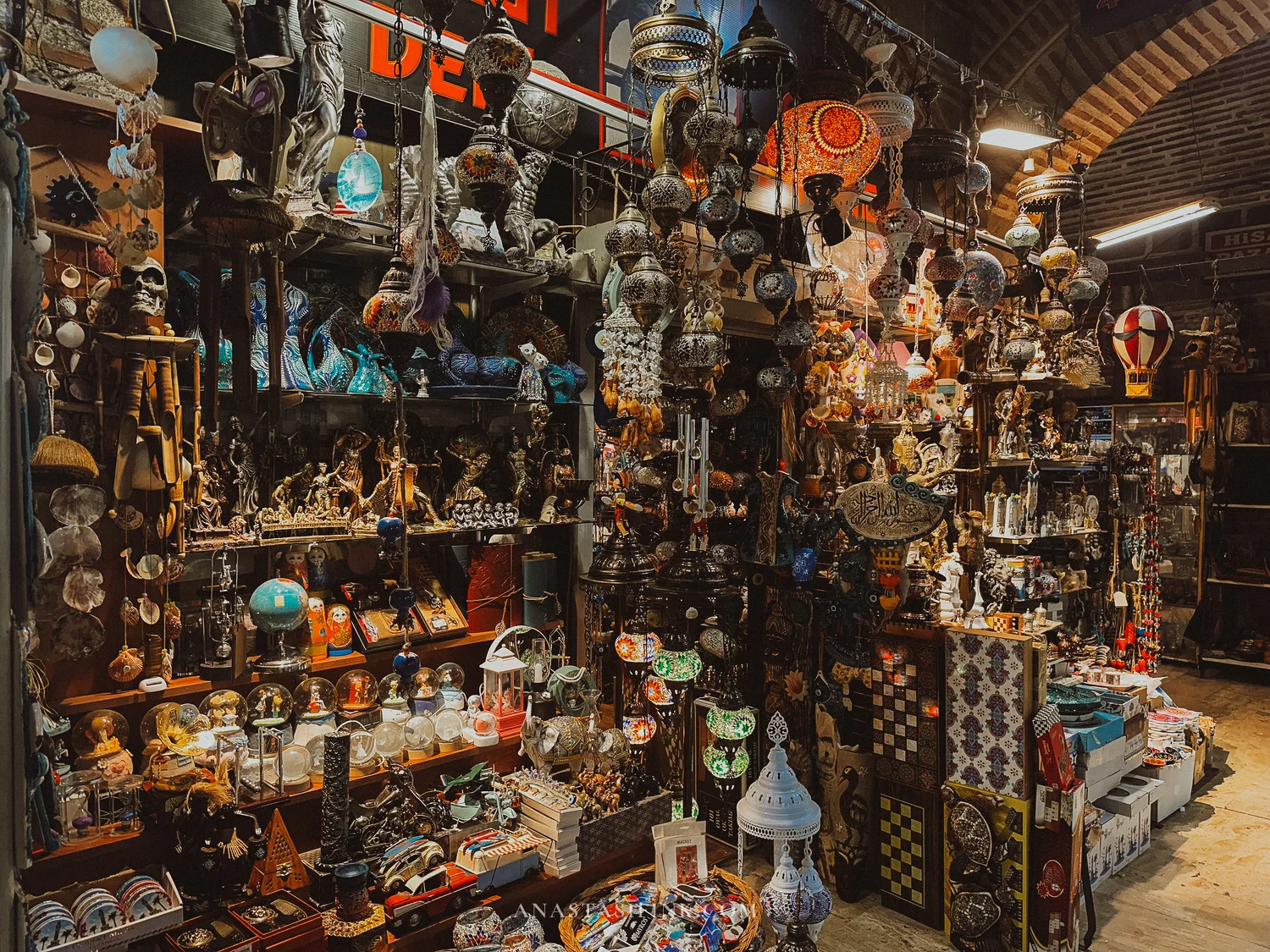
Of the hundreds of hans (historic caravanserais) that once filled this area, only about a dozen survived the devastating 1922 fire. But the bazaar never stopped. Today it’s a living, breathing place — jewelry stalls, spice vendors, antique dealers, street food, and locals actually shopping rather than posing for photos. In 2020, Izmir’s historic center including Kemeralti was added to UNESCO’s tentative World Heritage list.
Practical Information
- Address: Kemeraltı Çarşısı, Konak, Izmir
- GPS: 38.4210, 27.1340
- Hours: Most shops 09:00–19:00, closed Sundays (some open)
- Google Maps: Kemeraltı Bazaar
Kizlaragasi Han — the Bazaar’s Hidden Gem
Tucked inside Kemeralti is Kizlaragasi Han (Kızlarağası Hanı) — a stone caravanserai built in 1745. It was commissioned by Haji Beshir Aga, the chief eunuch of the Topkapi Palace harem, and it’s an impressive structure: two stories, 258 rooms, and a courtyard spanning some 600 square meters. The han survived the 1922 fire, fell into neglect, and was eventually restored between 1993 and 1995. Now it houses shops and cafes.
But the real reason to visit? The ceilings. Painted domes covered in flowers, clocks, and scenes of old Izmir. We would have walked straight through without noticing if we hadn’t happened to glance up.
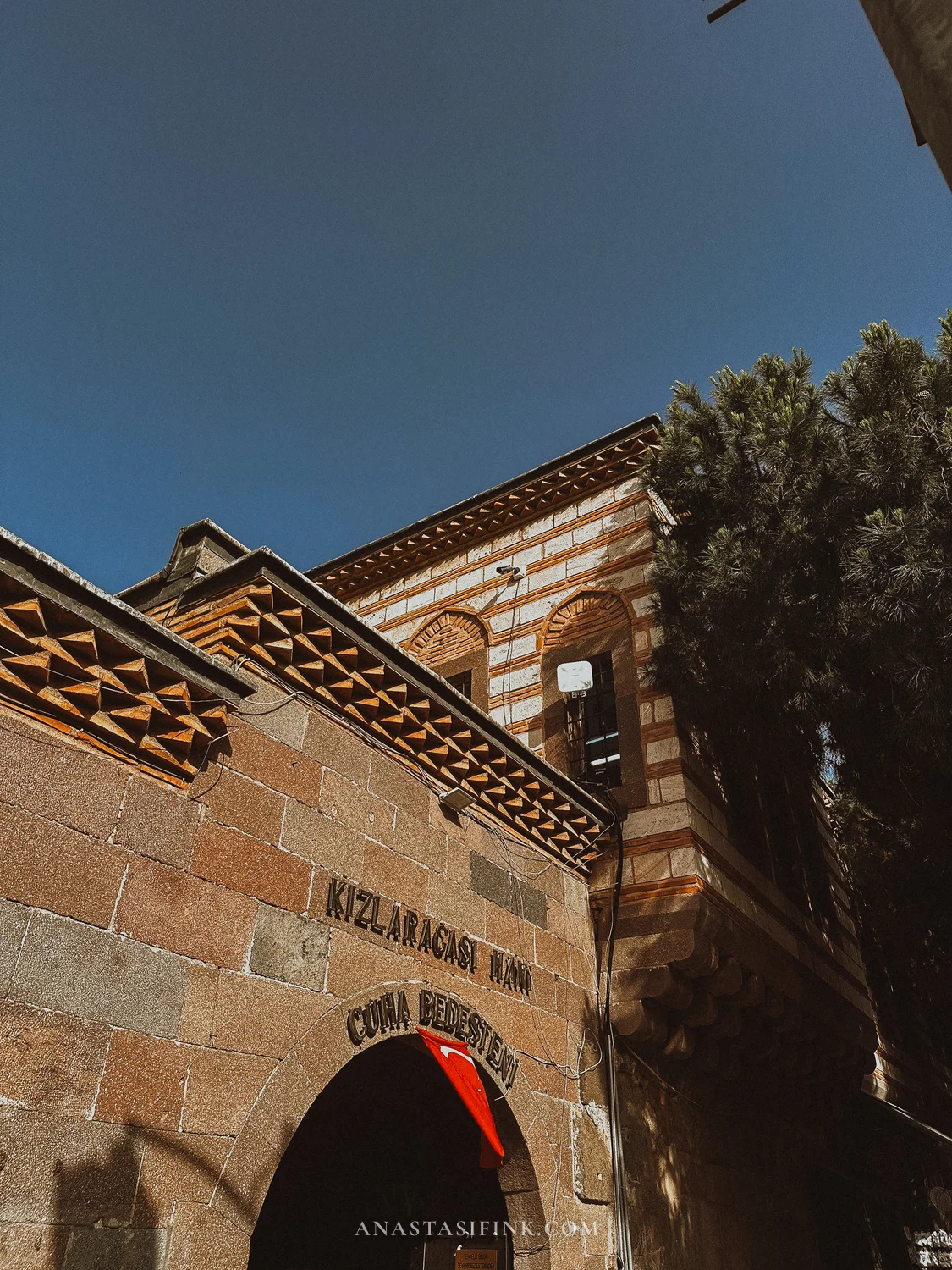
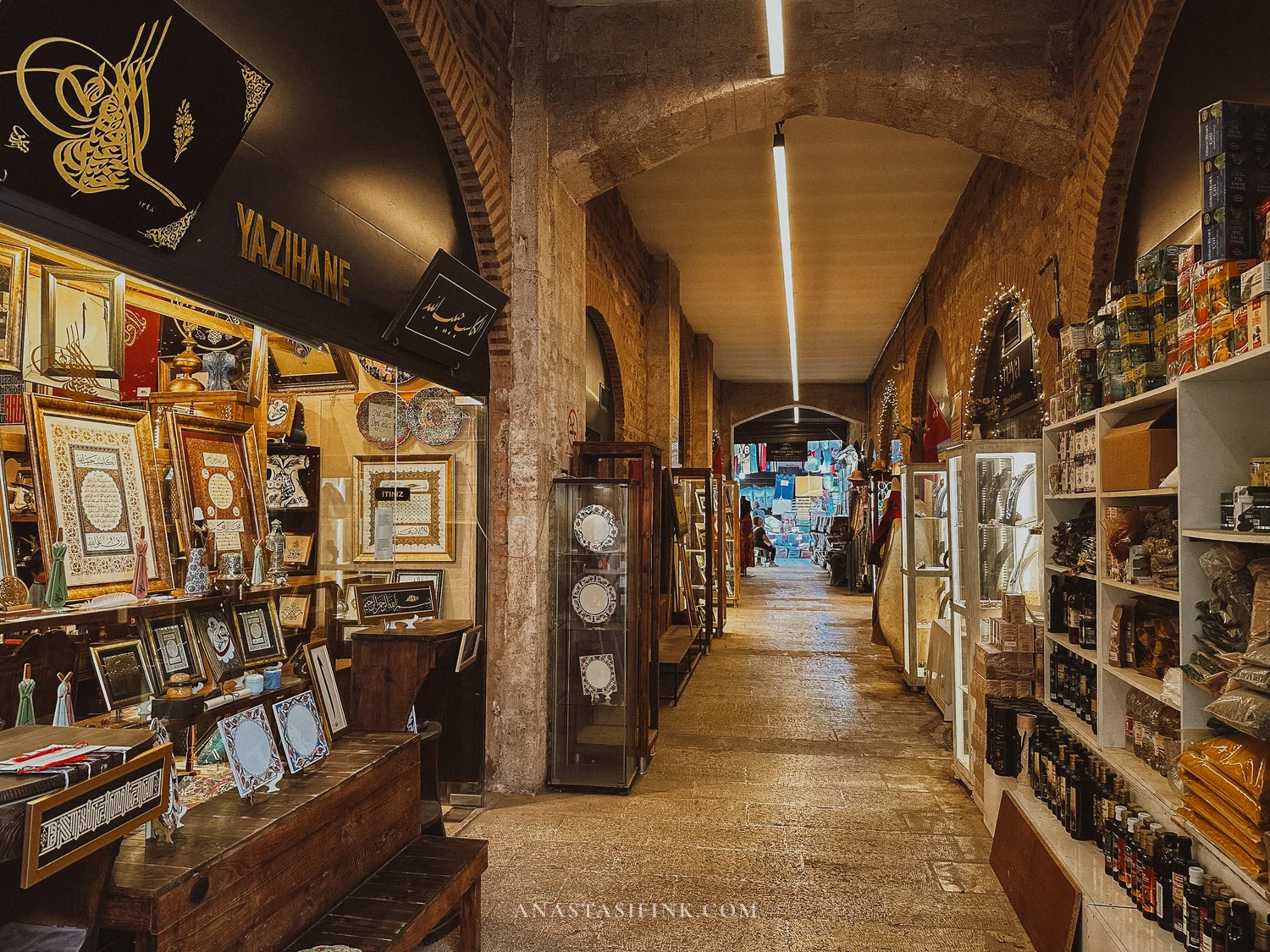
The antique shops inside are a trip — vintage radios, old guitars, dusty clocks. Some of them feel more like private collections than actual stores, which makes it all the more fun to browse.
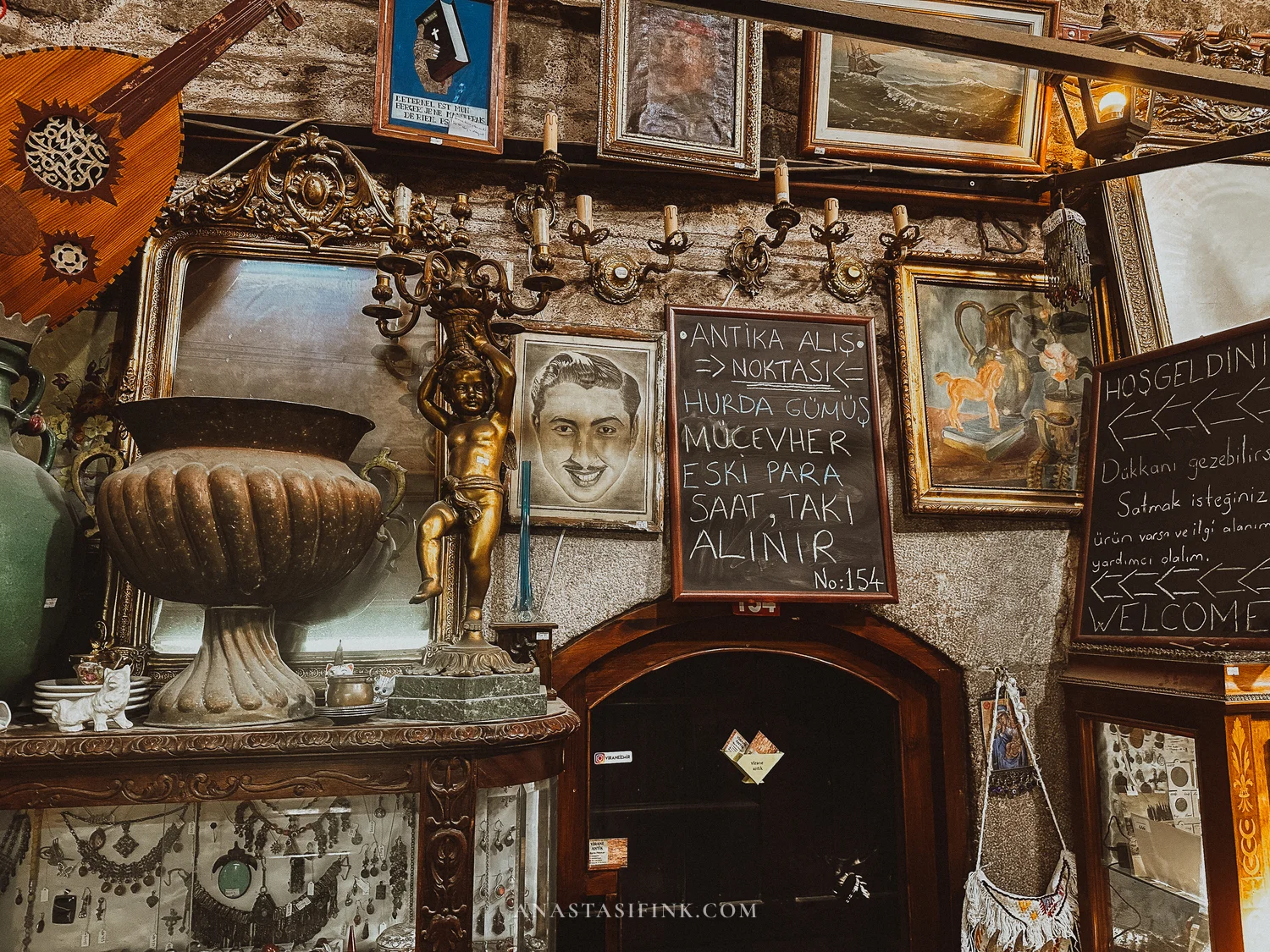
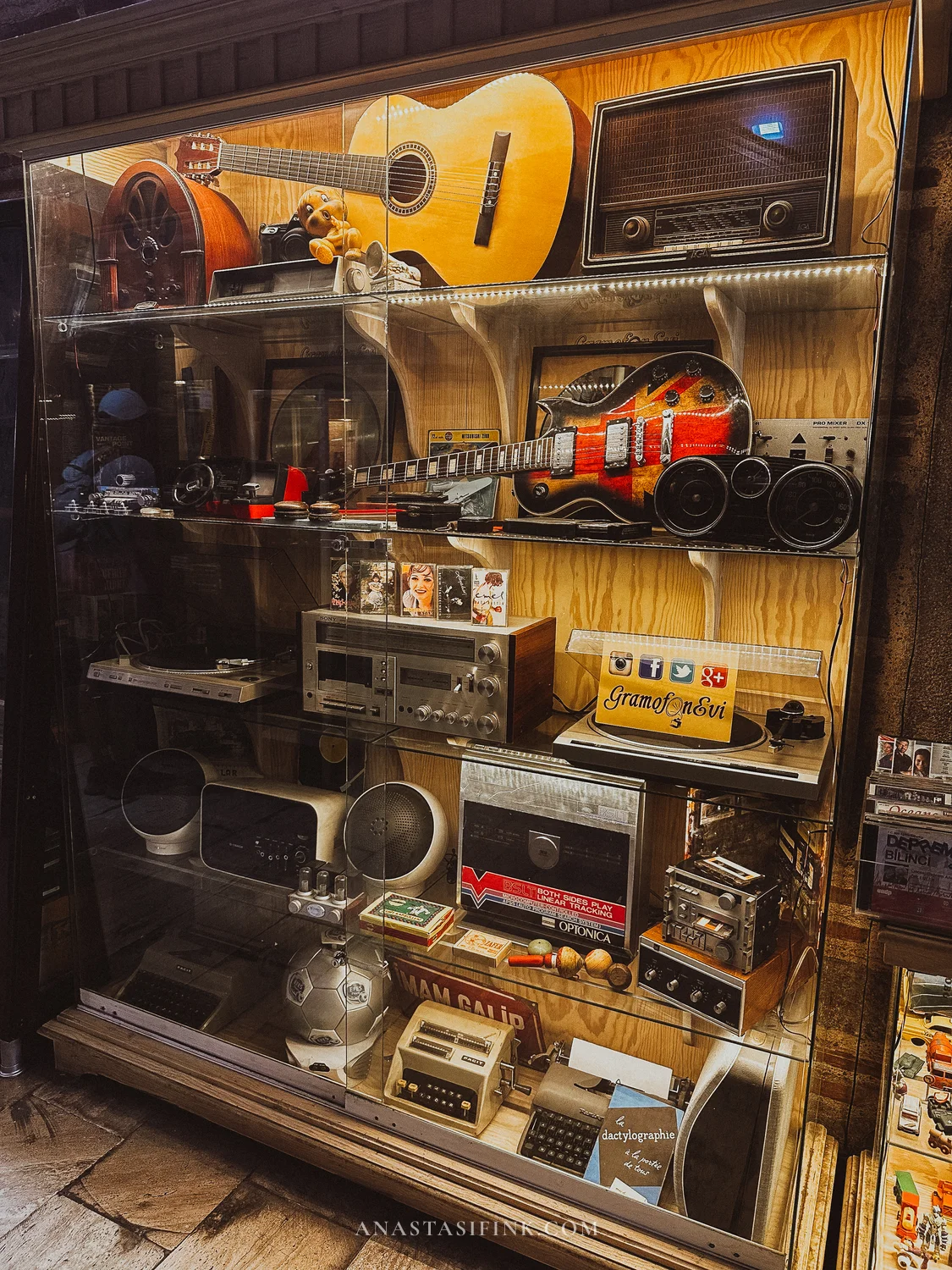
Antique shops inside the han — more like mini-museums than stores
Practical Information
- Address: Kızlarağası Hanı, Kemeraltı, Konak, Izmir
- GPS: 38.4215, 27.1330
- Entry: Free
- Google Maps: Kızlarağası Inn
The Felt Art Master
While wandering through Kemeralti, we stumbled on something I wasn’t expecting — a craftsman in a checkered apron creating paintings from felt (keçe). Wool felting is one of humanity’s oldest techniques; felt is considered the earliest textile in the world. In Izmir province, particularly in the town of Ödemiş, this tradition has never really died out.
His work was nothing like the usual tourist trinkets. These were proper paintings — dancing figures, birds, abstract compositions — each one handmade. He was happy to explain the process to anyone who stopped and asked, which I loved.
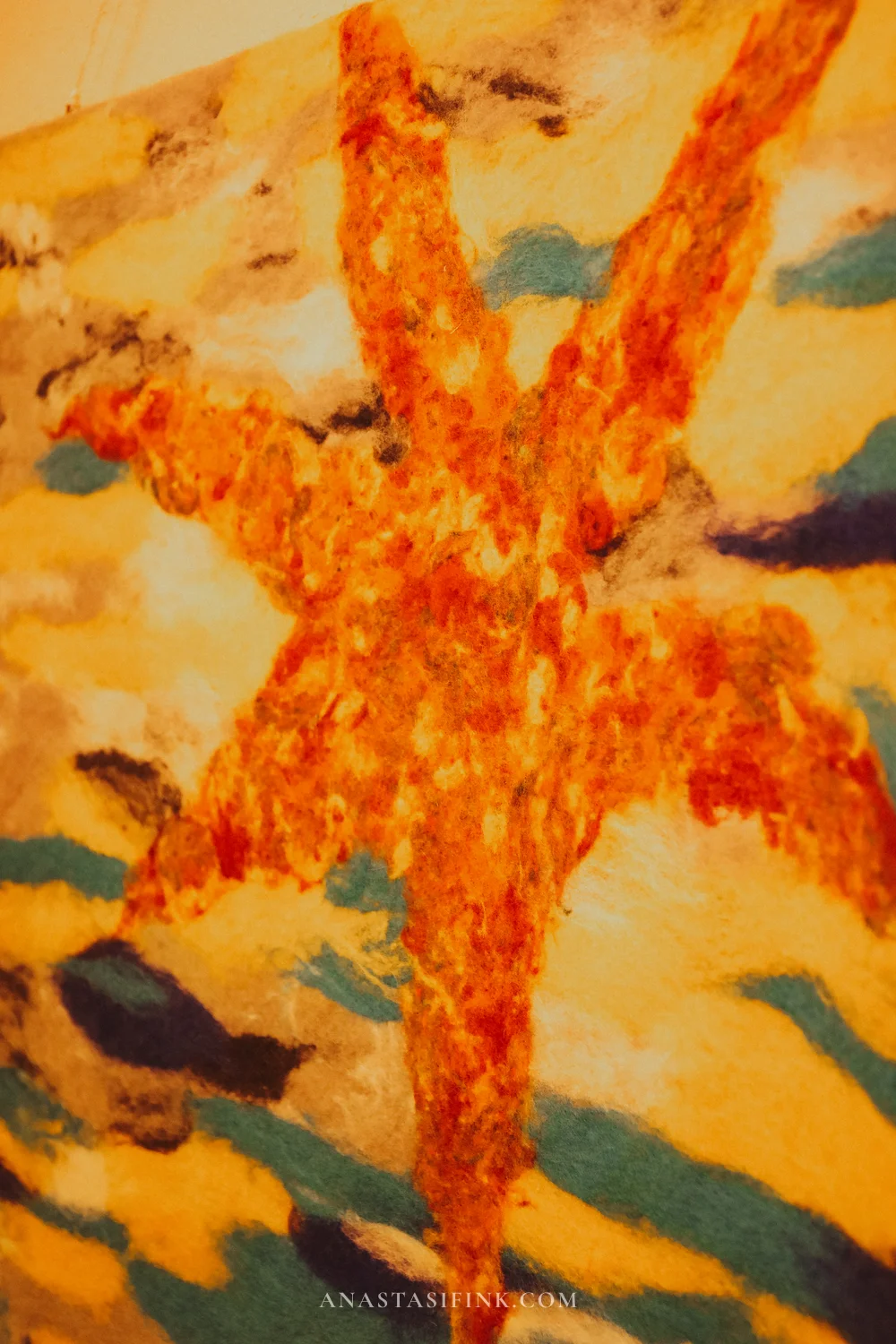
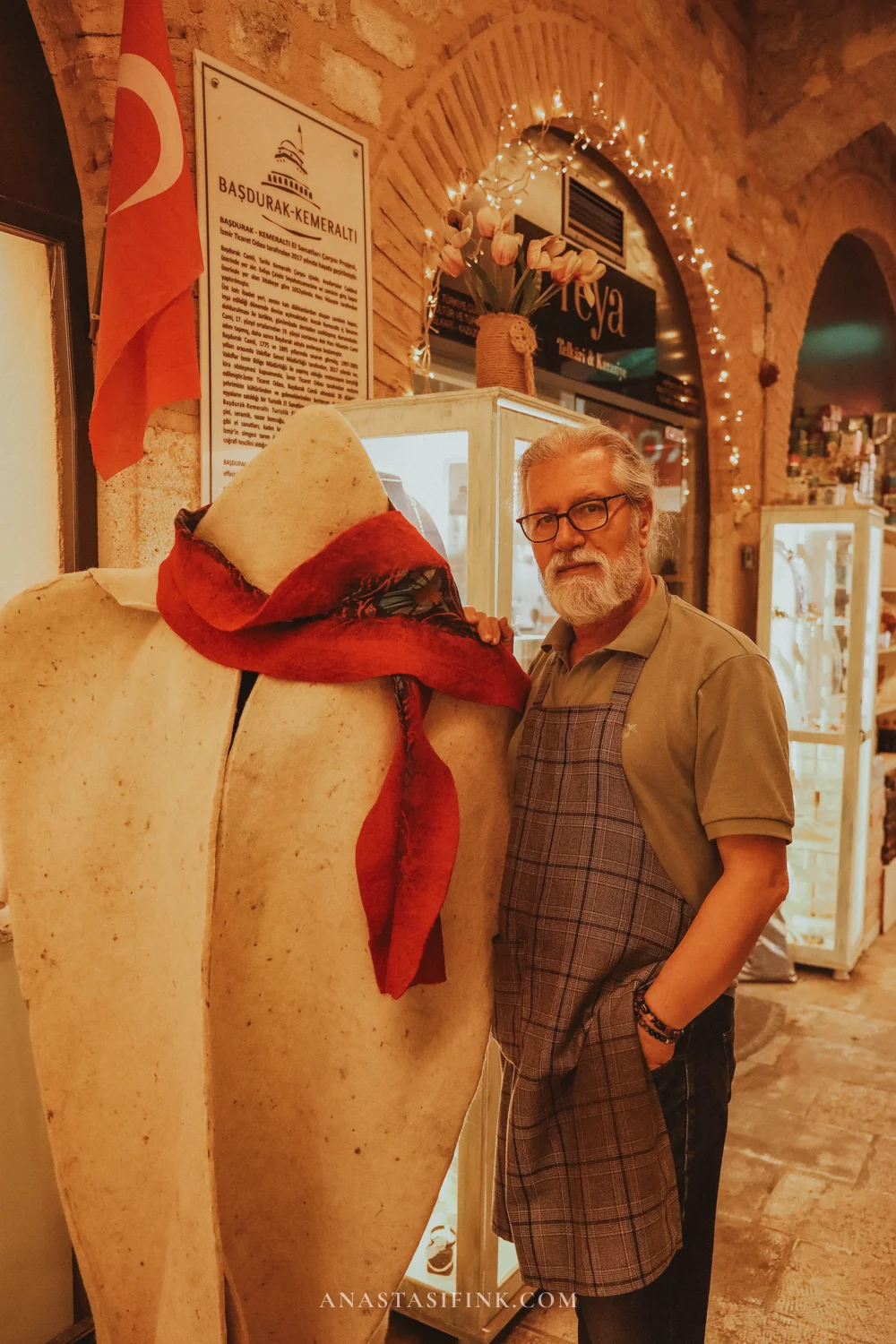
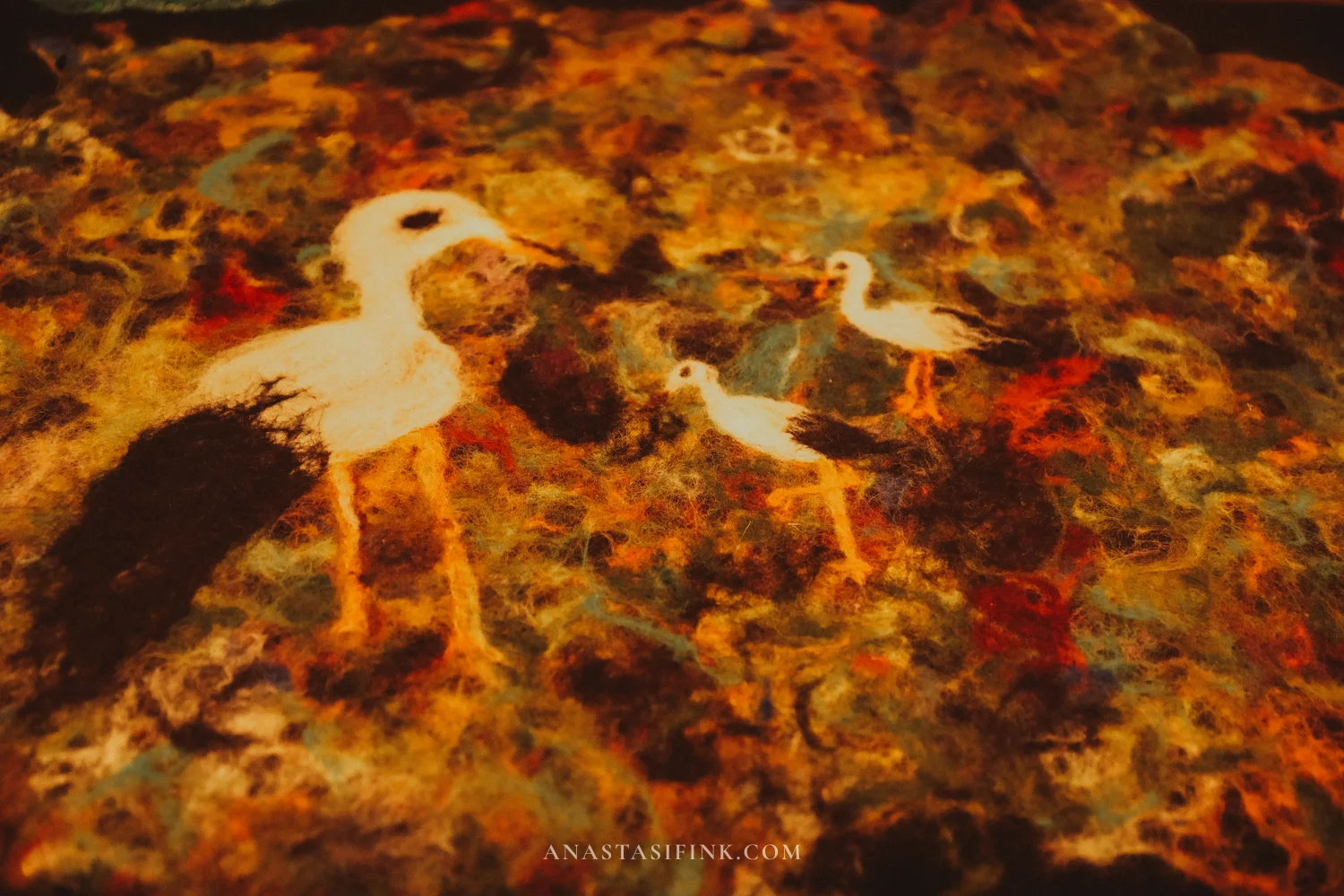
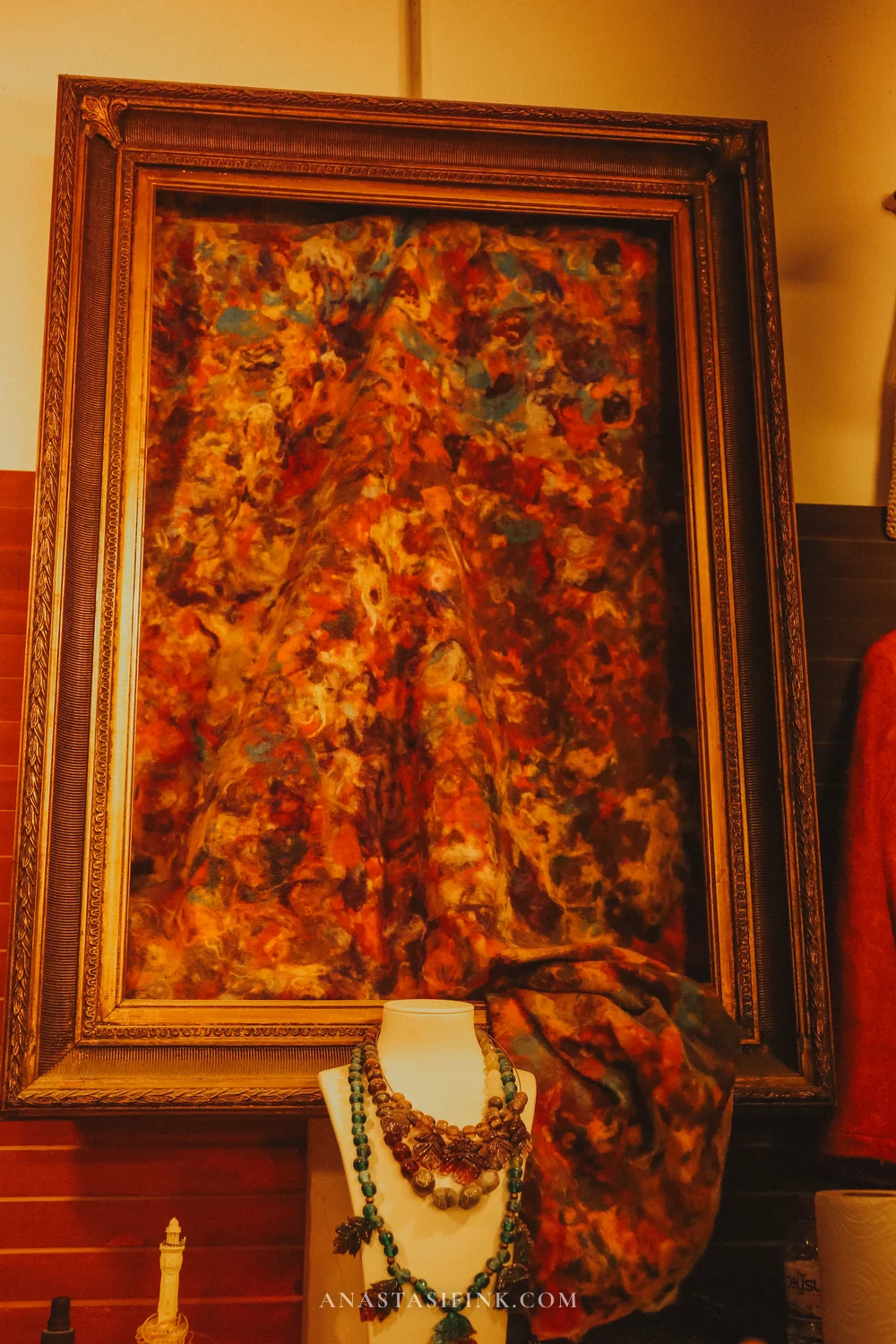
Framed felt paintings and handmade jewelry — the workshop doubles as a gallery
Practical Information
- GPS: 38.4218, 27.1338
- Google Maps: Workshop at the bazaar
Kemeralti Mosques — Hisar and Sadirvanalti
Two mosques sit right within the bazaar grounds, and both are worth stepping inside. Entry is free — just take off your shoes and make sure your shoulders are covered. Women should cover their heads; scarves are available at the entrance if you don’t have one.
Hisar Mosque (Fortress Mosque)
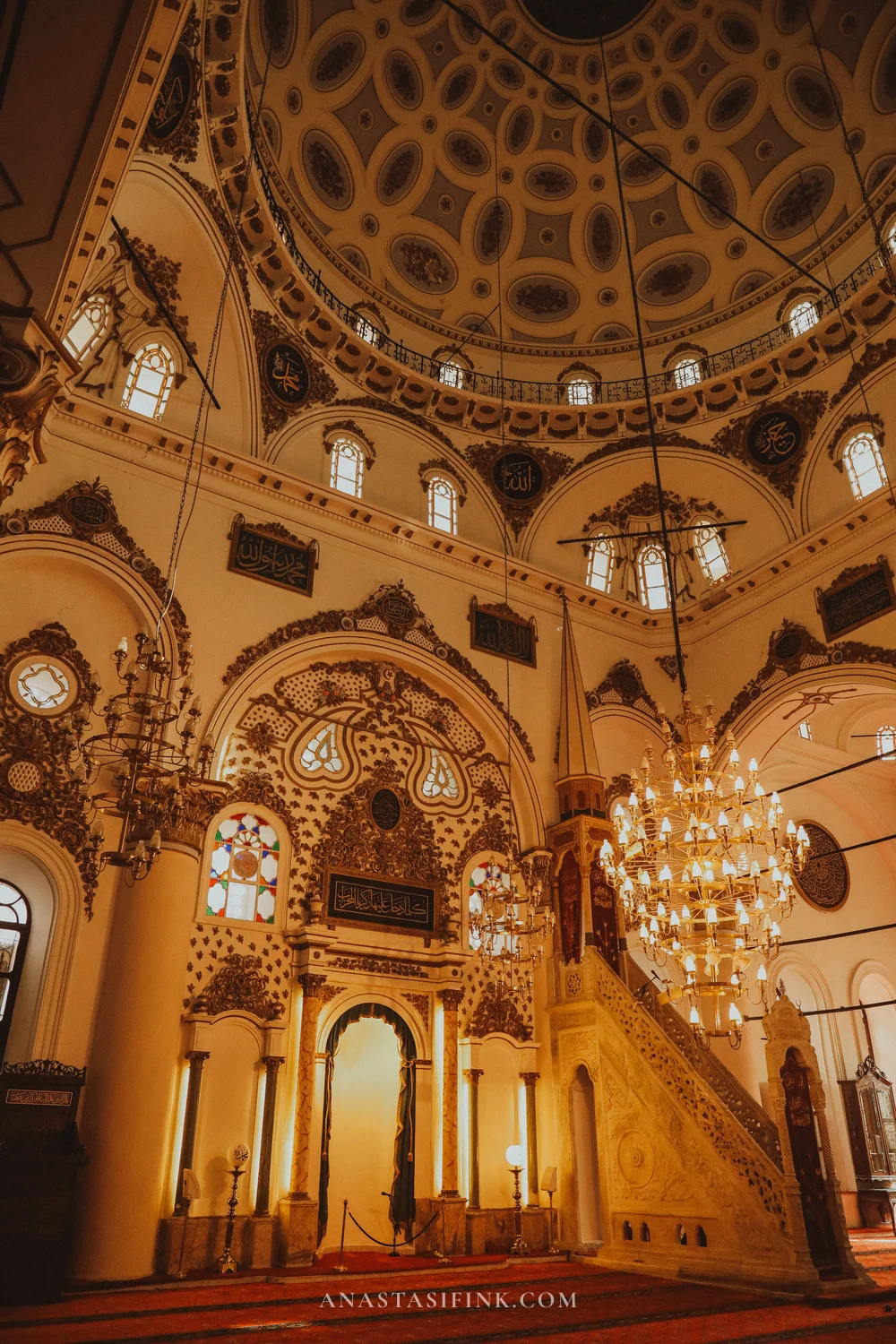
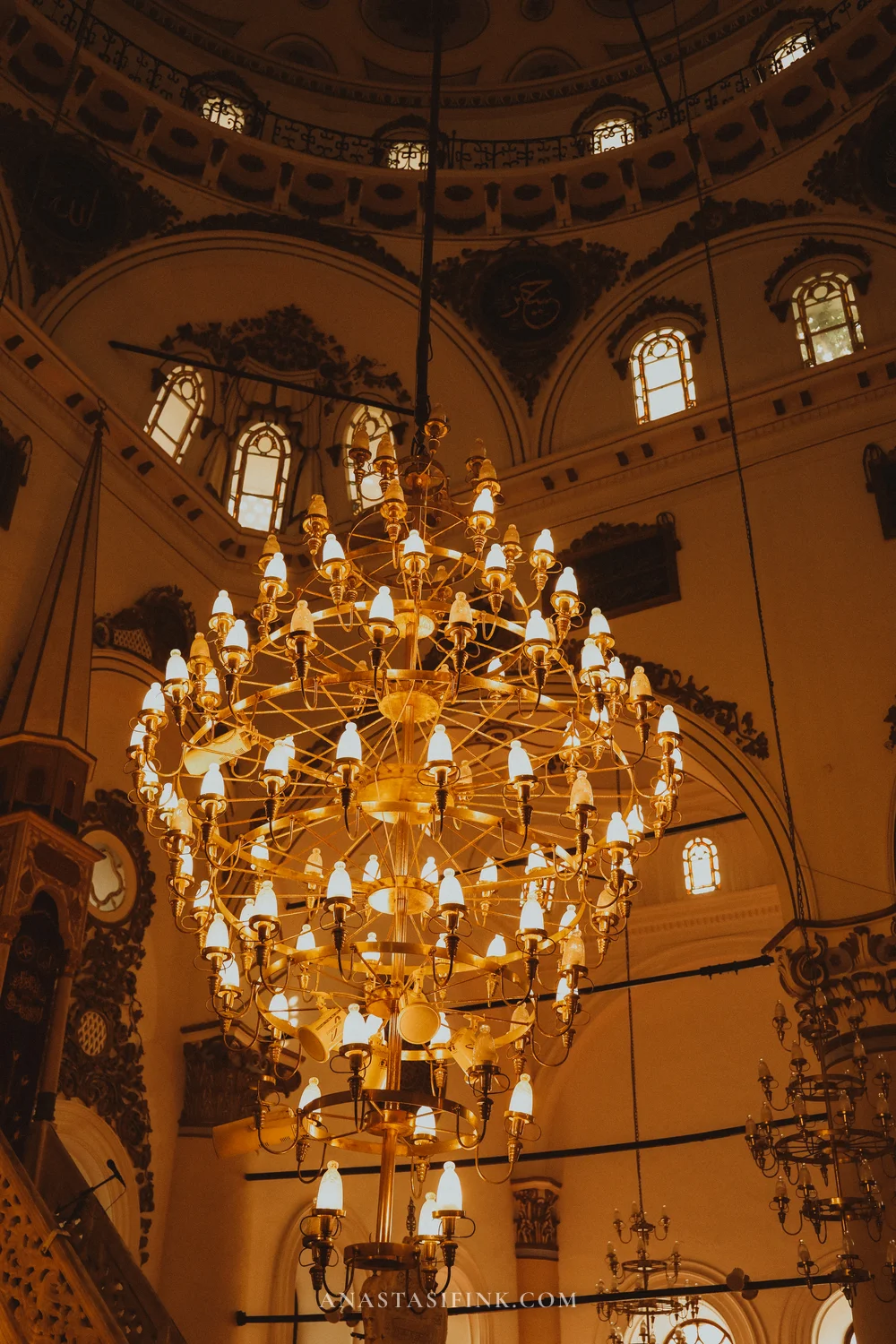
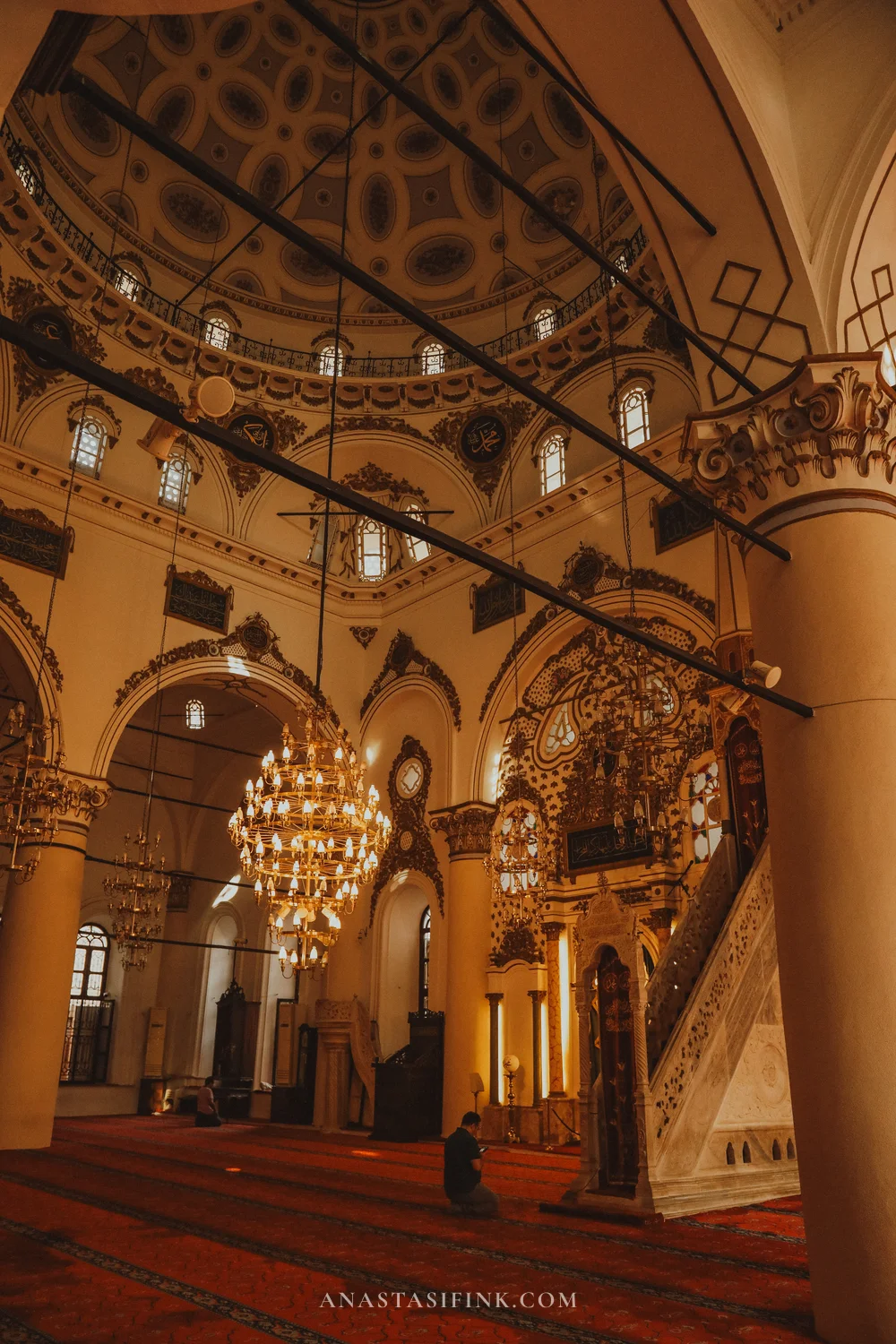
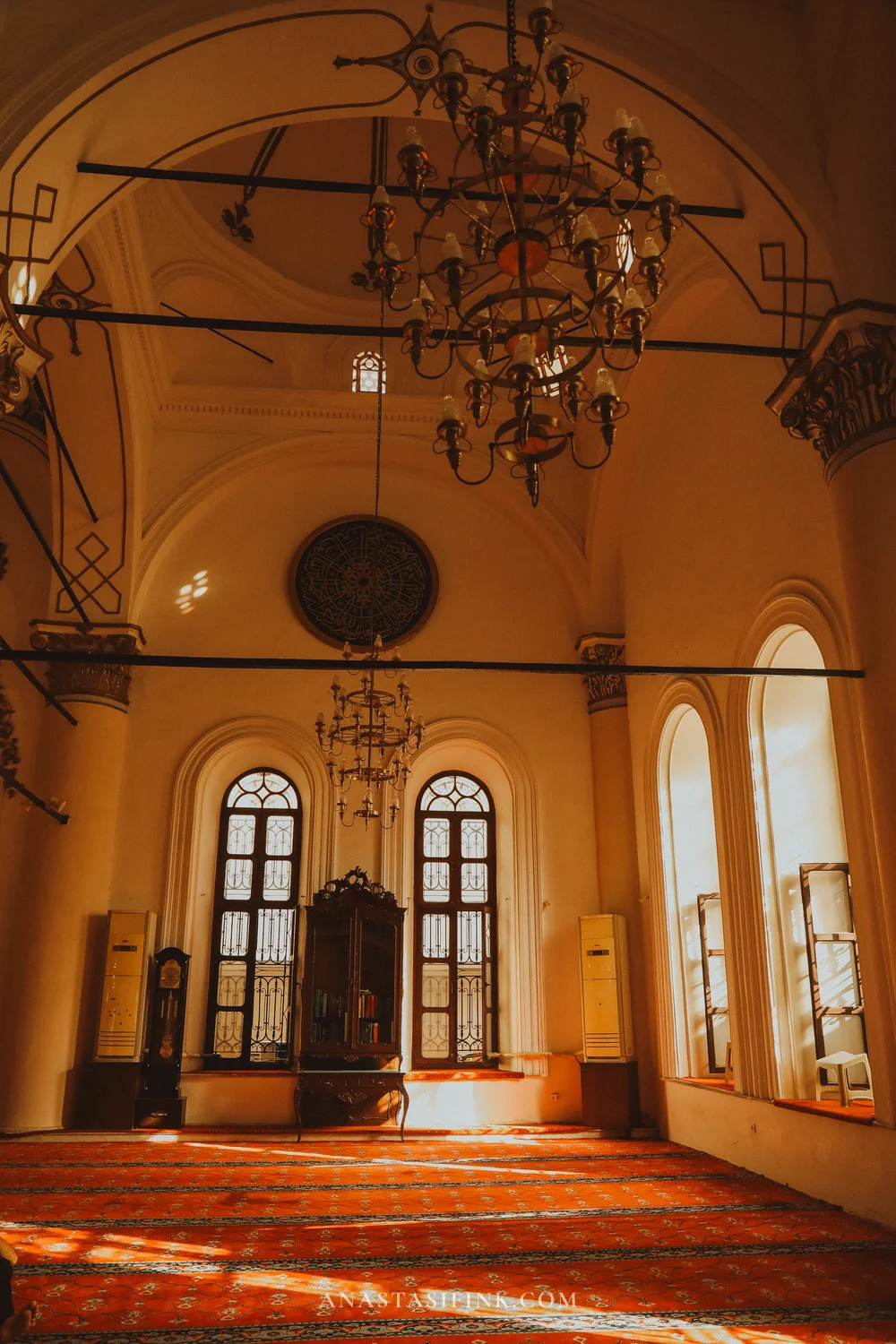
Hisar Camii is one of the largest mosques in central Izmir, built between 1592 and 1598. Inside, the space opens up dramatically: one large central dome resting on eight columns, three additional domes along each side, and enormous chandeliers hanging overhead. It’s quiet and spacious — a complete contrast to the noise of the bazaar just outside the wall.
Practical Information
- Address: Hisar Camii, Kemeraltı, Konak, Izmir
- GPS: 38.4226, 27.1365
- Entry: Free
- Google Maps: Hisar Mosque
Sadirvanalti Mosque
Şadırvanaltı Camii is just a couple of streets away, built in 1636. The name translates roughly as “mosque with fountain below” — the courtyard features a sadirvan (the traditional fountain used for ritual washing before prayer), topped with a wrought-iron dome and crescent.
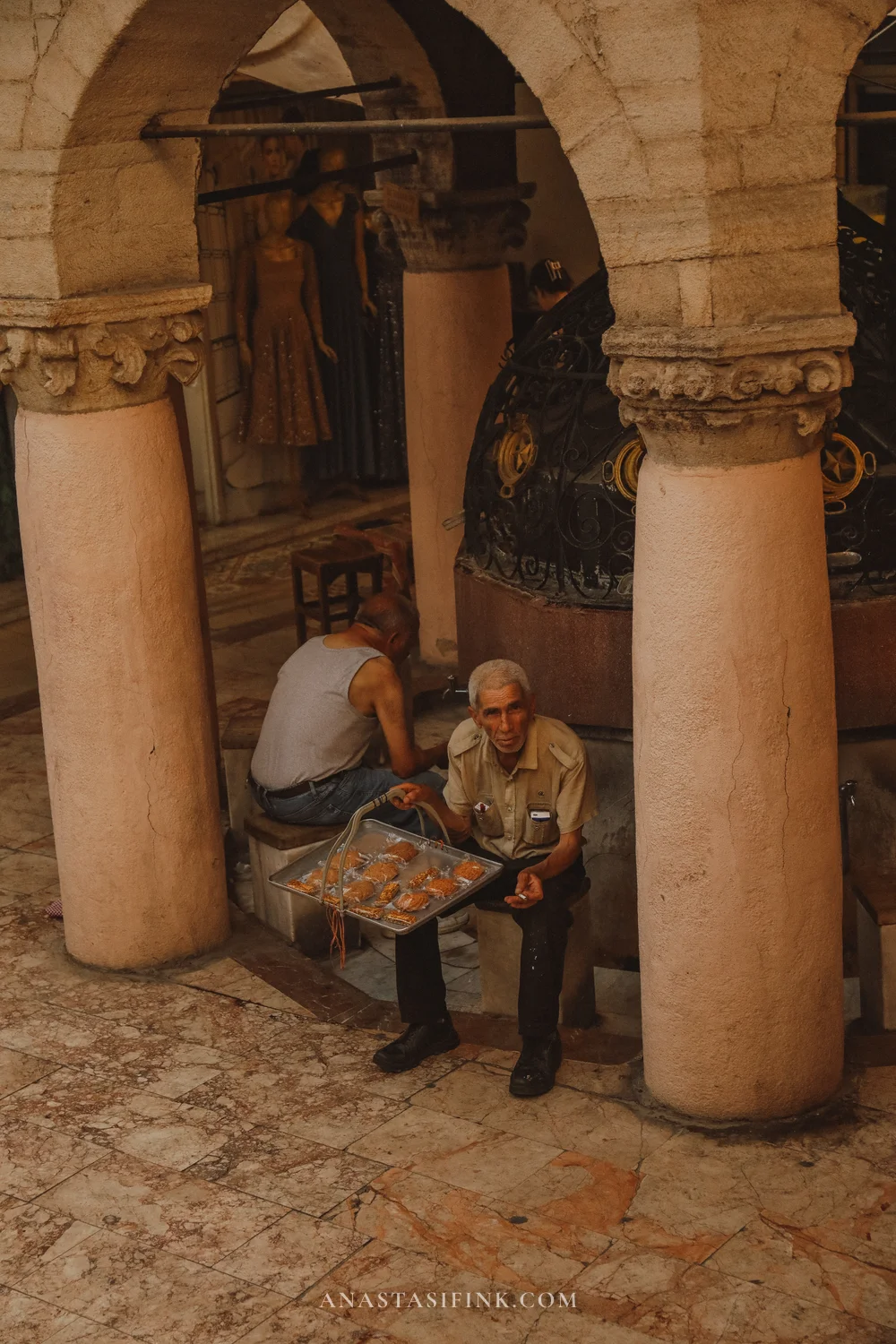
What really caught my attention was outside the mosque itself. Running between the mosque and the fountain is a vaulted passage with painted ceilings from the 1830s: bunches of flowers, scenes of old Izmir, clocks set into the keystones. It’s the kind of thing you’d completely miss if you didn’t look up. Vendors still sell under the arches today — the scene can’t have changed much in two hundred years.
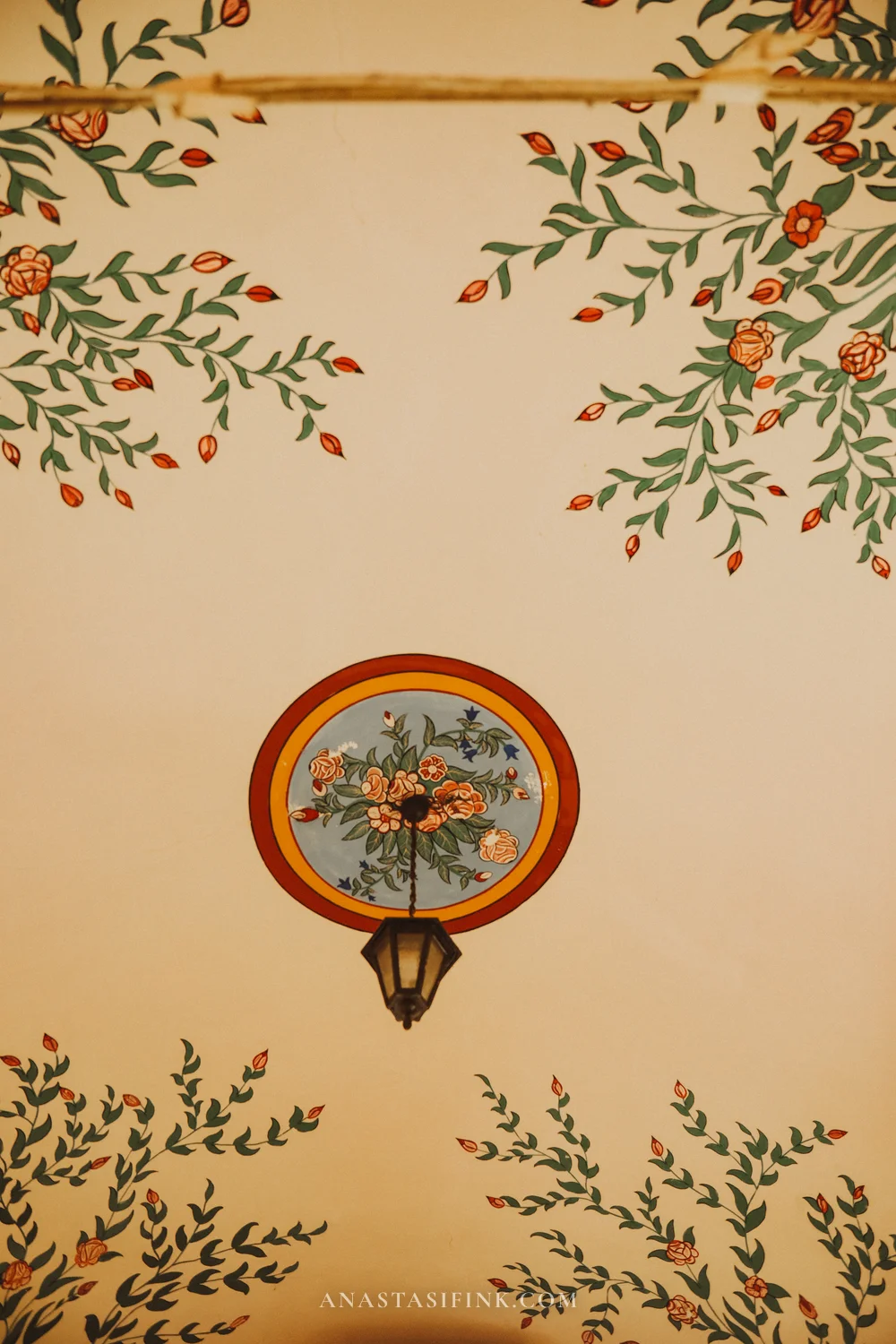
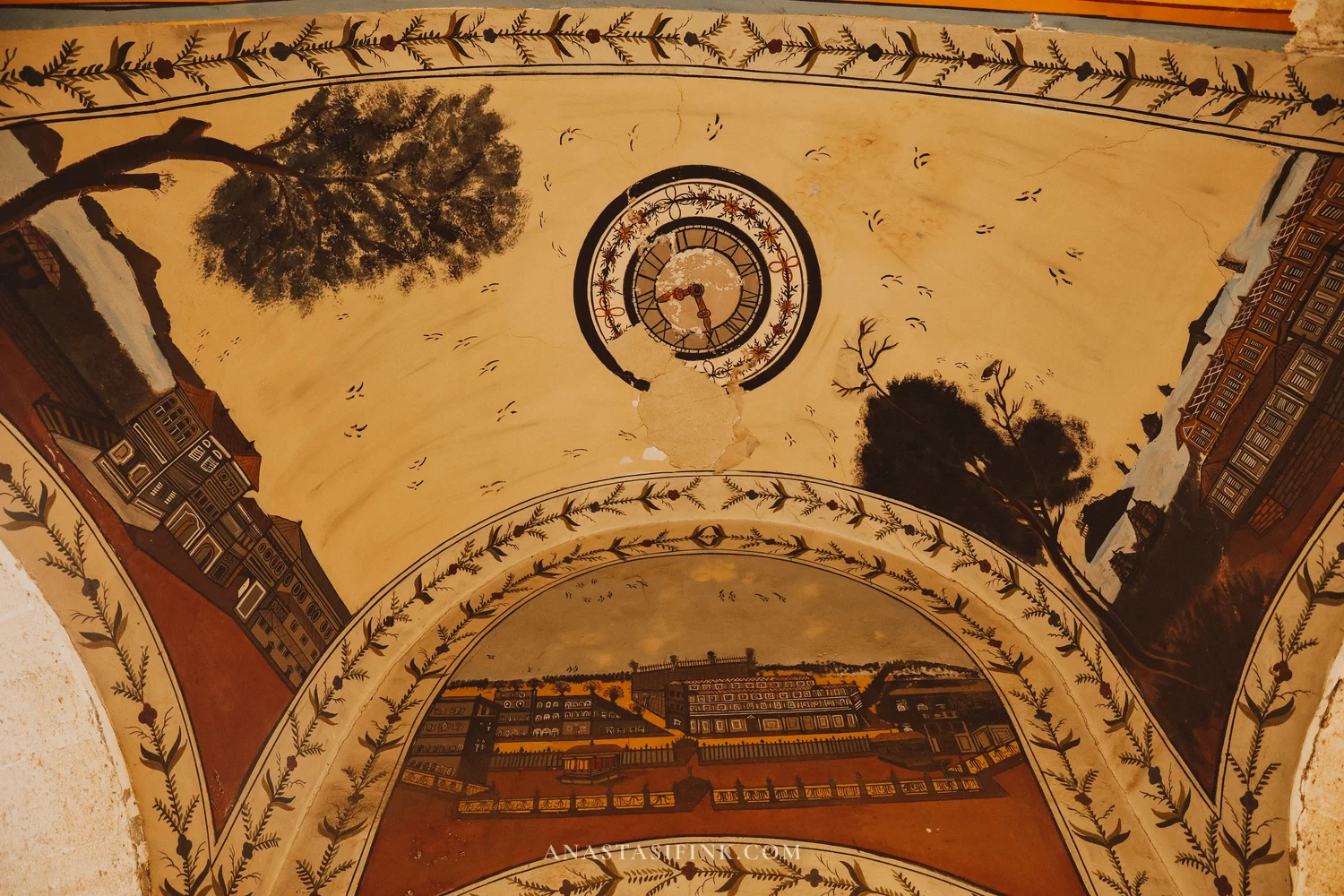
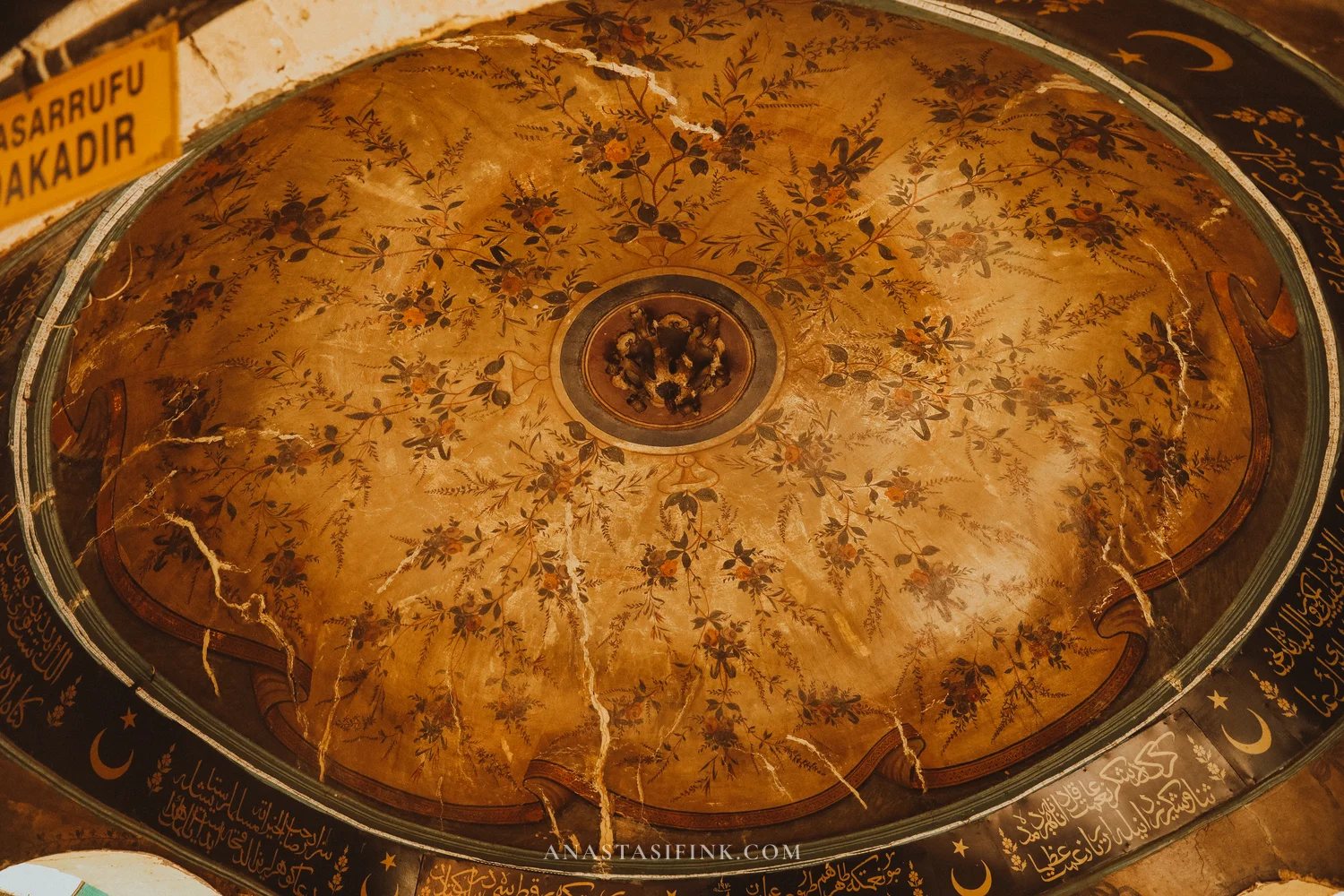
Ceiling paintings in the passages — survived even after two centuries
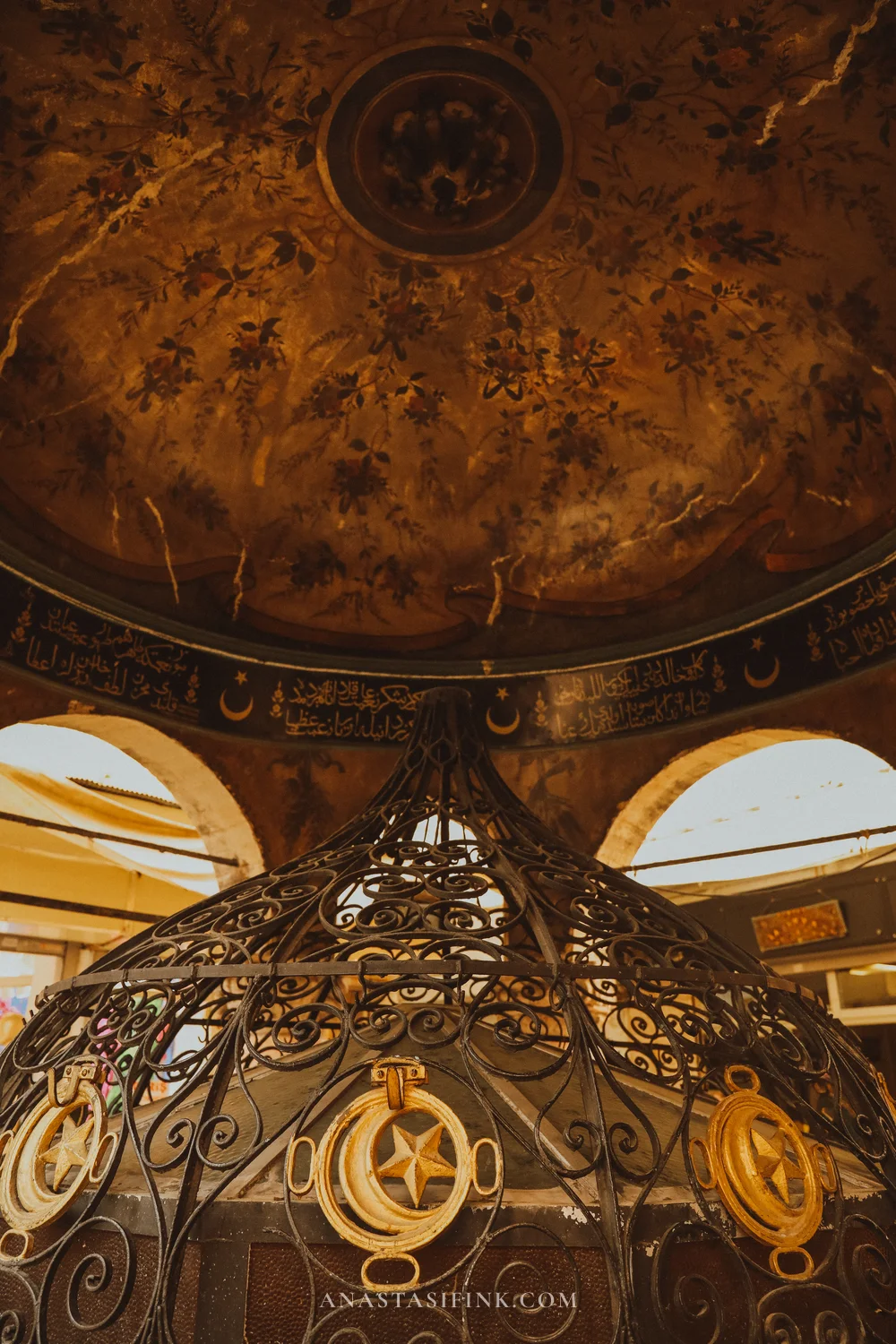
Inside, the mosque feels completely different from Hisar — white walls with gold trim, a painted dome, floral motifs everywhere. Lighter, airier, and somehow even more beautiful.
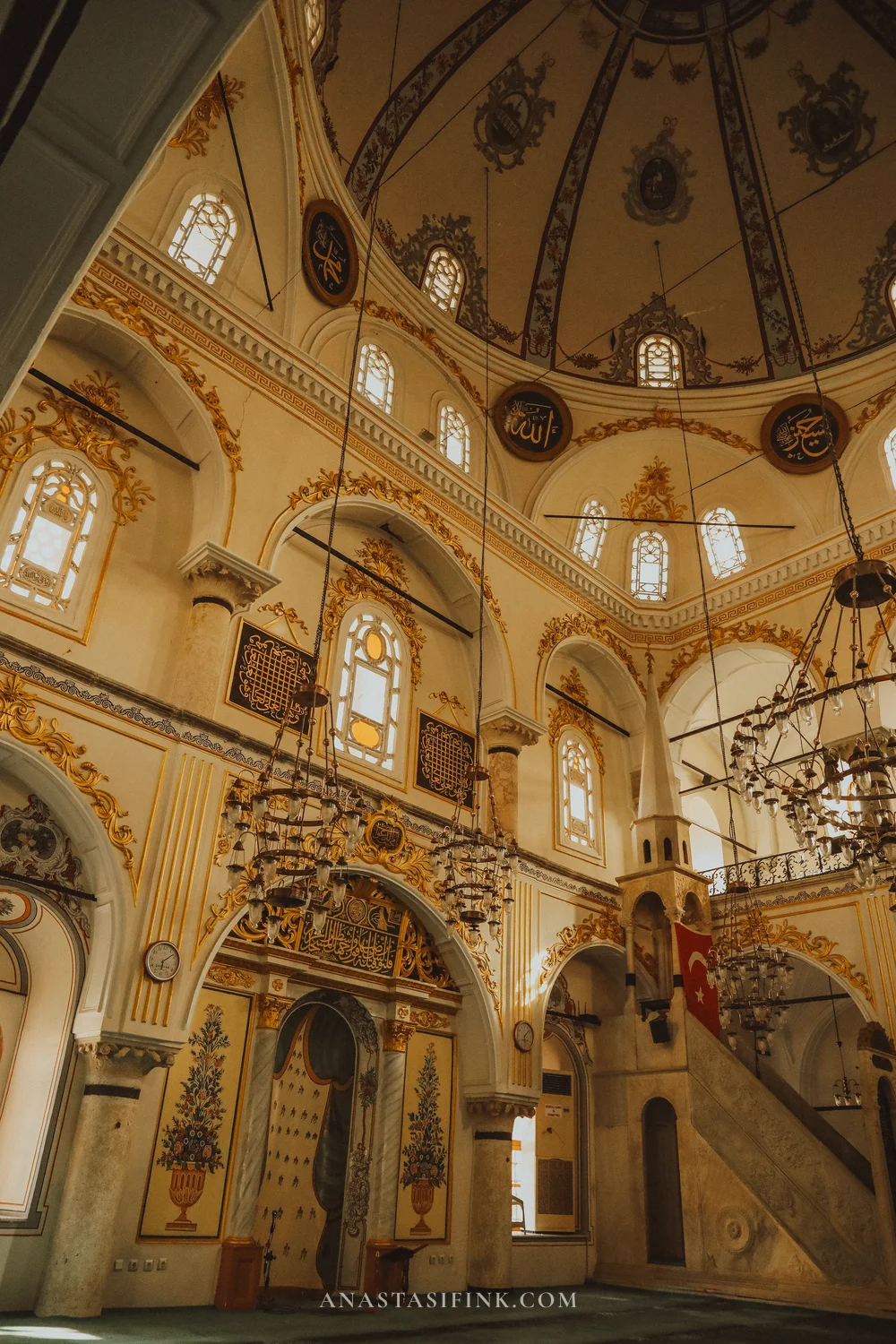
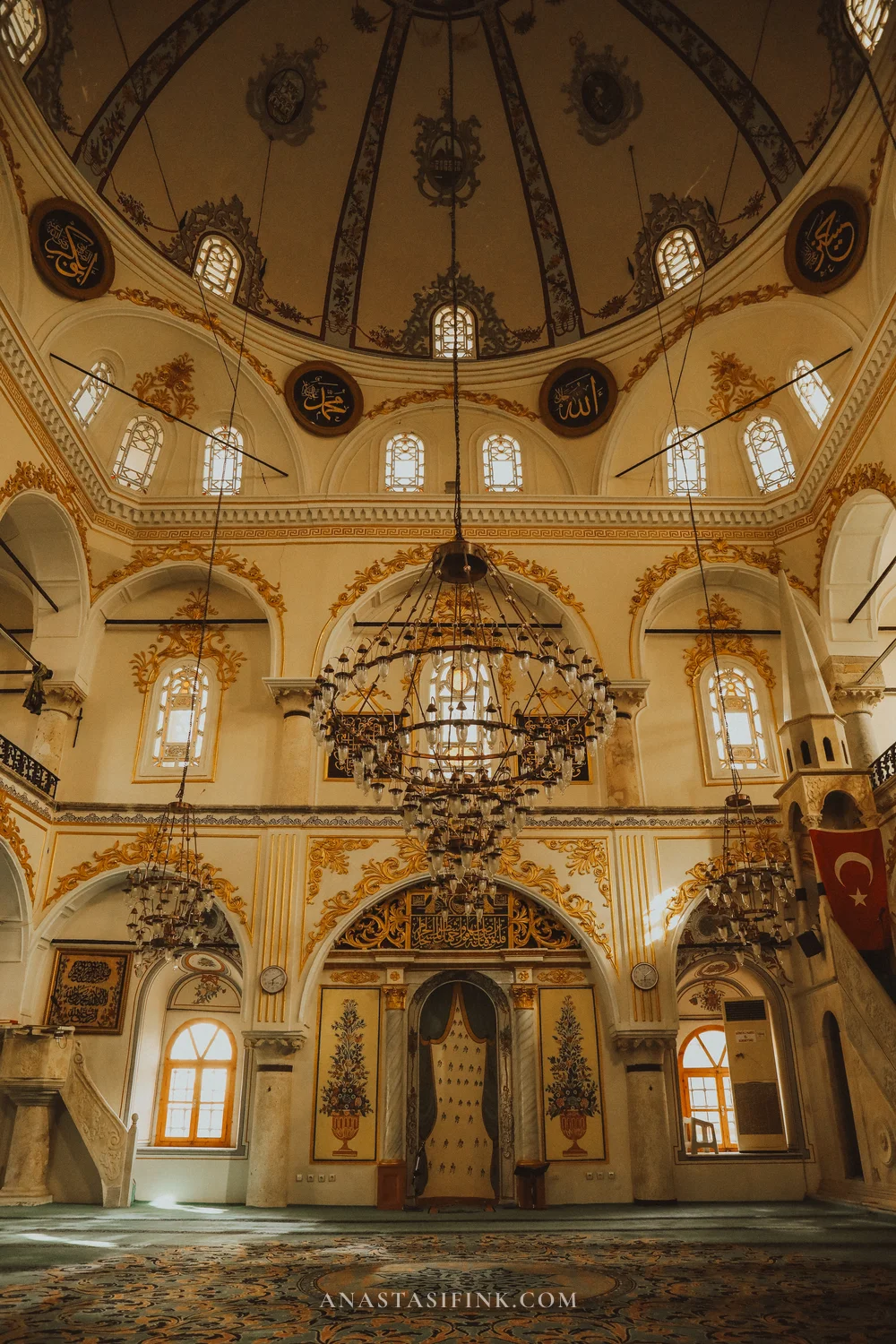
Sadirvanalti Mosque — less known than Hisar but equally beautiful
Practical Information
- Address: Şadırvanaltı Camii, Kemeraltı, Konak, Izmir
- GPS: 38.4222, 27.1380
- Entry: Free
- Google Maps: Şadırvanaltı Mosque
Where to Eat: Izmir’s Sweet Side
If you have any kind of sweet tooth, Izmir will absolutely get you. In one day we made it to four pastry shops and still bought sambali at the bazaar. There were queues at every single one — locals lined up for their favorites, which is always a good sign.
Reyhan Pastanesi — First Pastry Stop
Reyhan Pastanesi is one of Izmir’s oldest patisseries, open since 1965 in the Alsancak neighborhood. The family is originally from the Hemşin region on the Black Sea coast, and they’ve been passing down their pastry traditions for three generations. Turkish food writer Sinai Çömert once called Reyhan the finest patisserie in the entire Aegean region — and after visiting, I’m not going to argue.
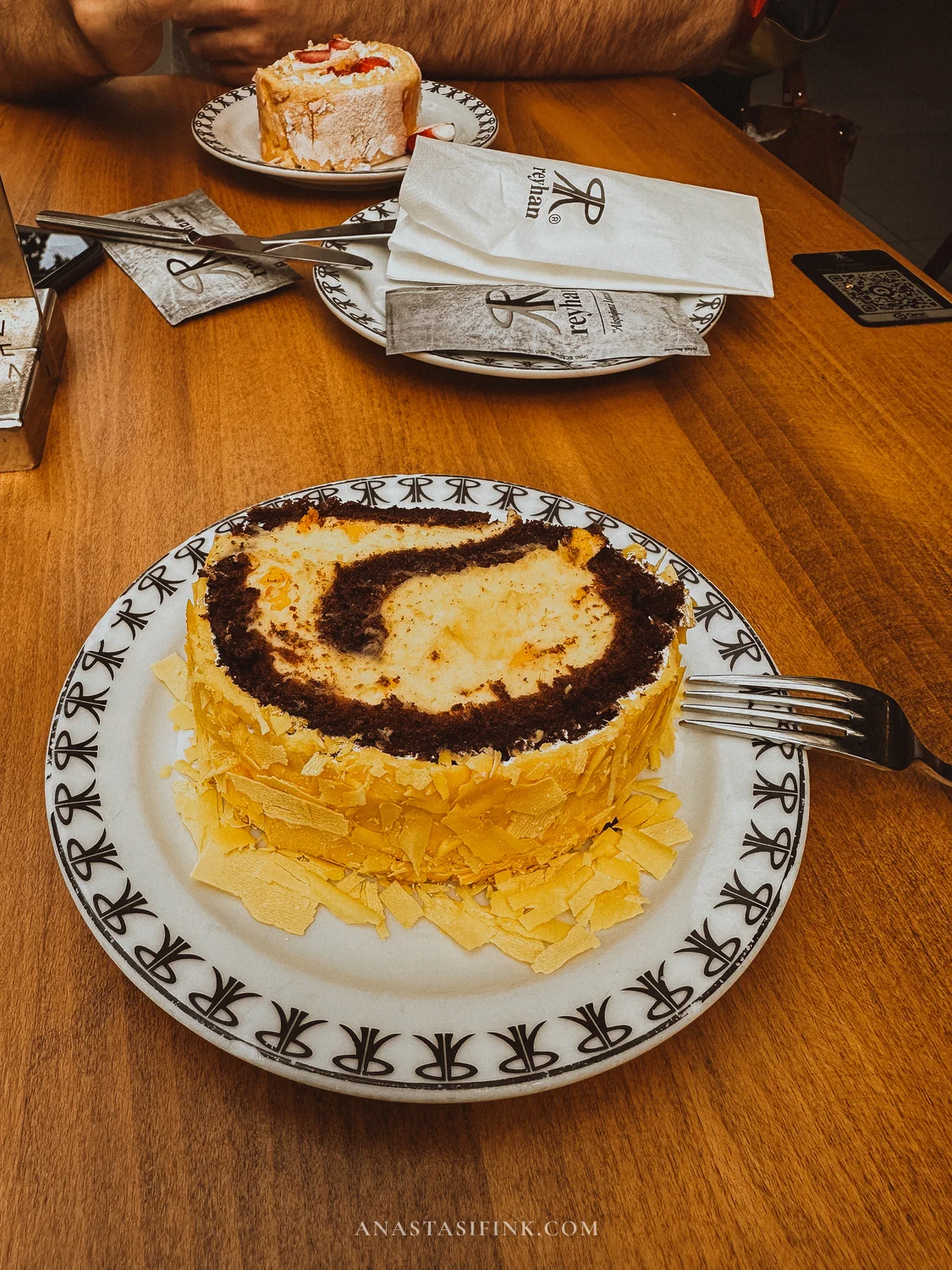
We went for the yellow cake — the rococo, Reyhan’s signature dessert. The display cases are lined with cakes in every color imaginable, from white chocolate to strawberry. Give yourself extra time here because choosing is genuinely hard.
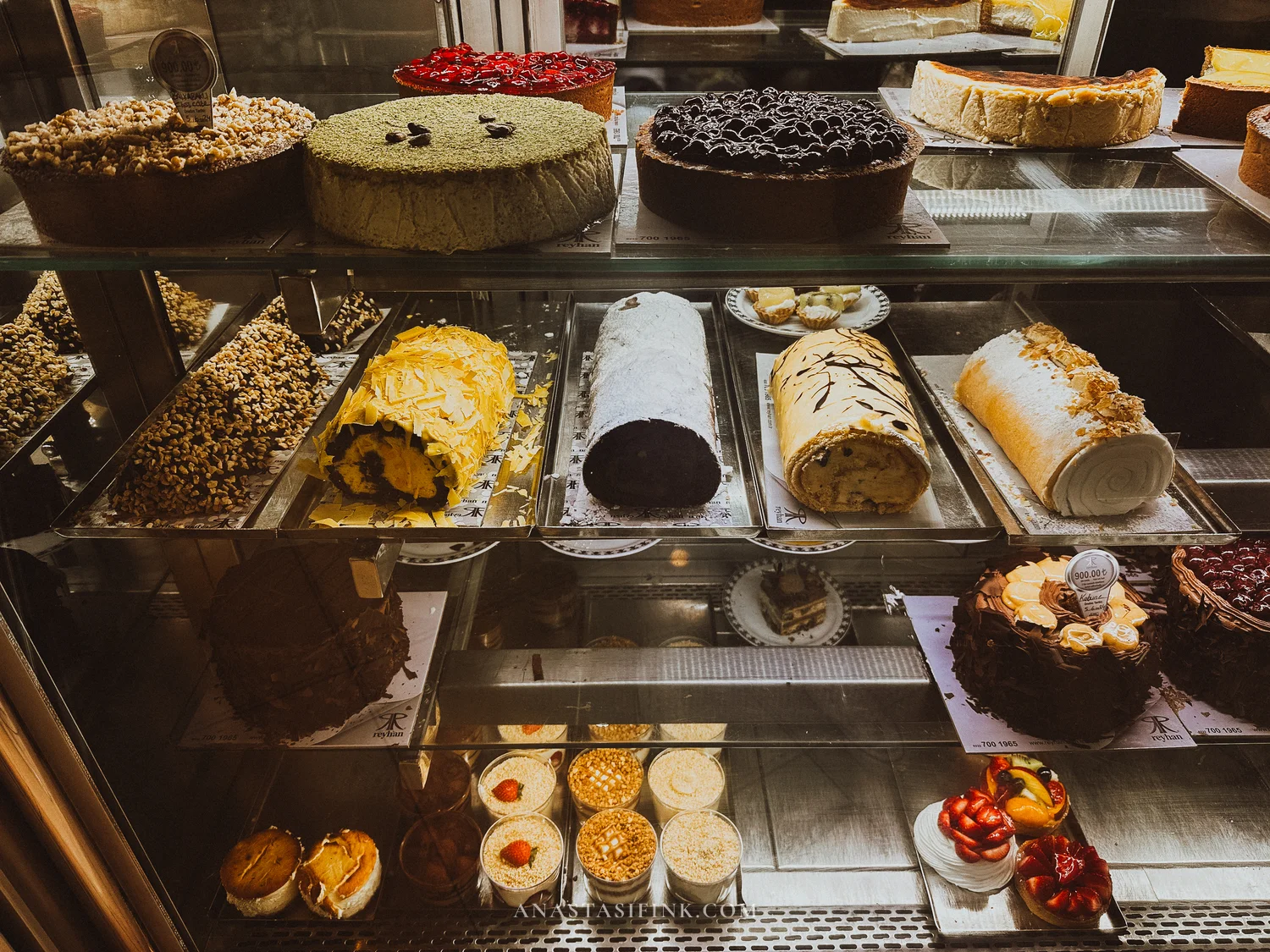
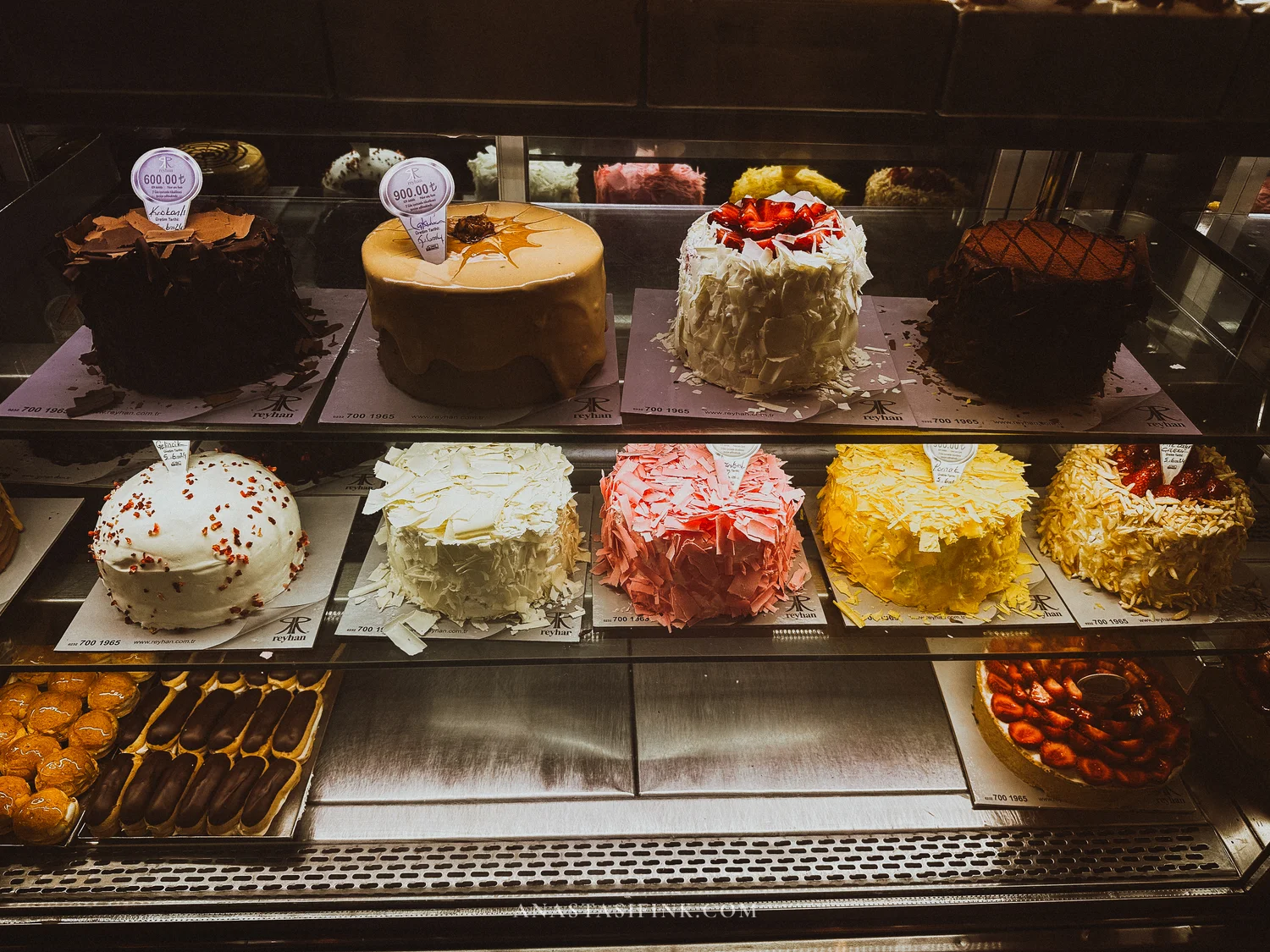
Reyhan’s display cases — impossible to choose. They’ve been baking since 1965
Practical Information
- Address: Mustafa Enver Bey Cad. No:24, Alsancak, Izmir
- Hours: 07:00–01:00
- Google Maps: Reyhan Pastanesi
Çelebi Unlu Mamüller — Bombis and Boyoz
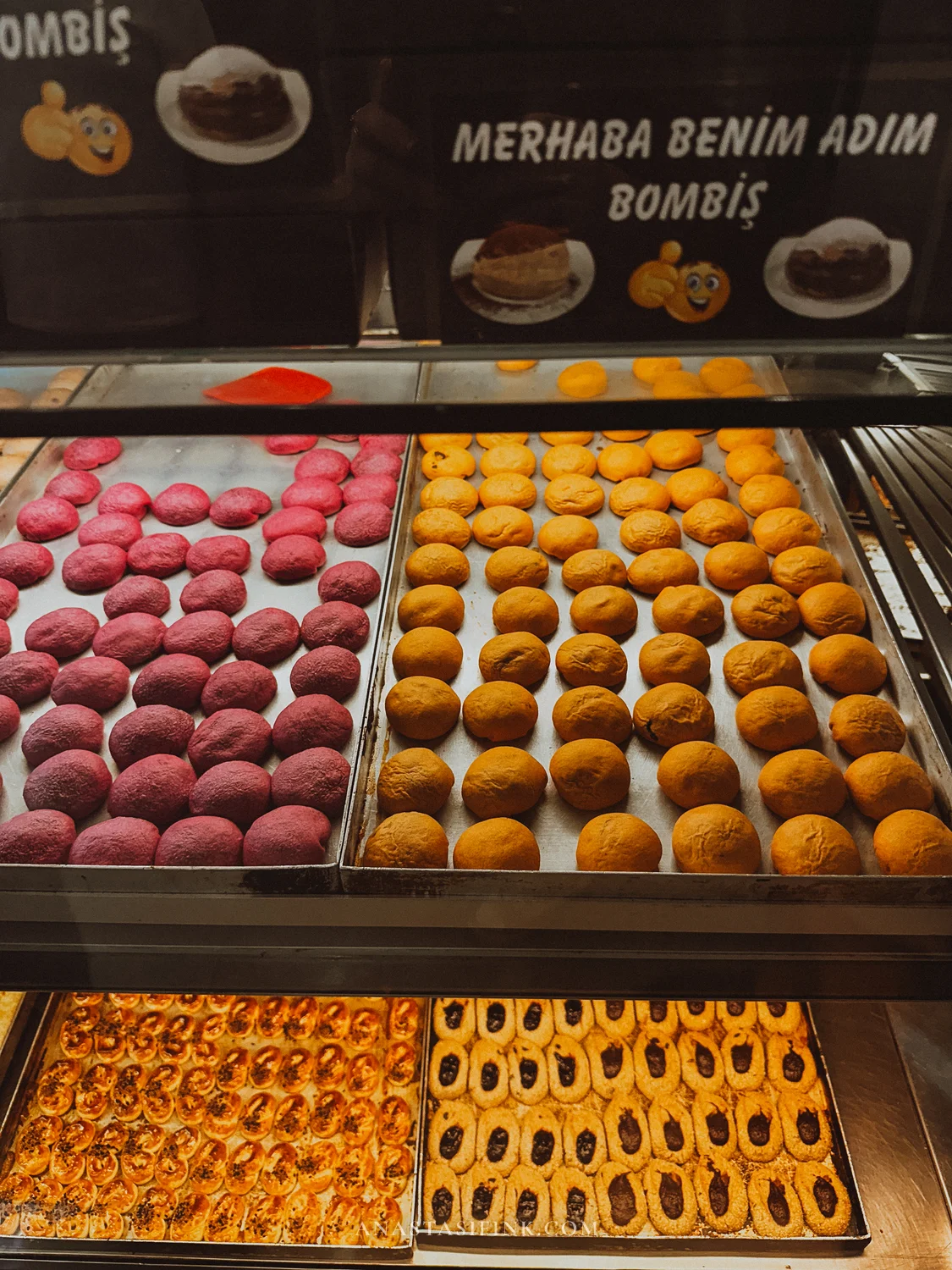
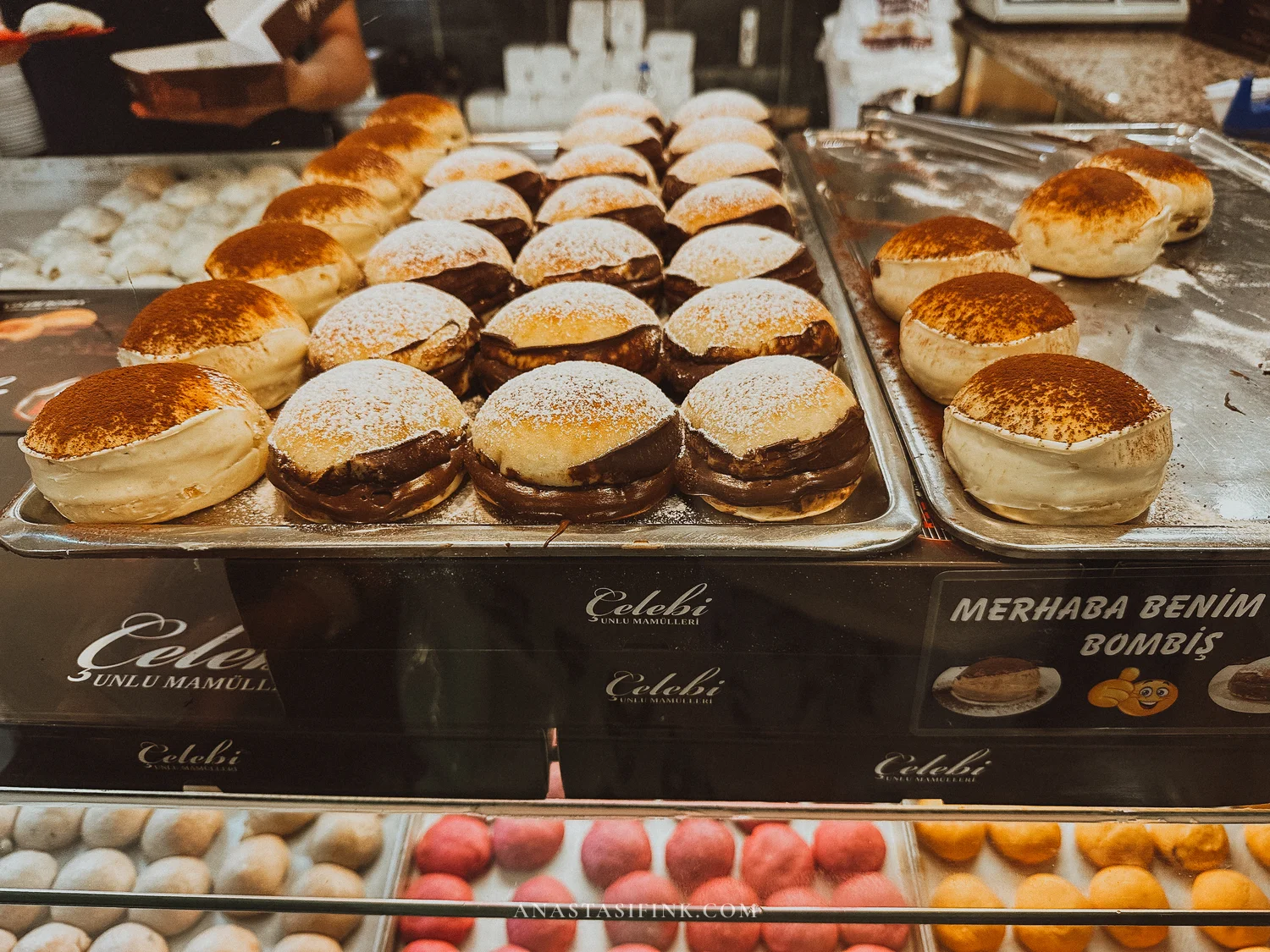
Çelebi is a bakery started by nine brothers from Mardin that has quietly become a cult institution in Izmir. Their signature invention is the “bomba” — a boyoz filled with chocolate. Boyoz is Izmir’s traditional pastry, made from a very thin, flaky dough and typically eaten for breakfast. At Çelebi, there’s almost always a line, and everything is baked fresh right in front of you.
They also do “bombis” — small, colorful little balls in pink, orange, and yellow. They look almost too cheerful to eat, but they’re surprisingly delicious.
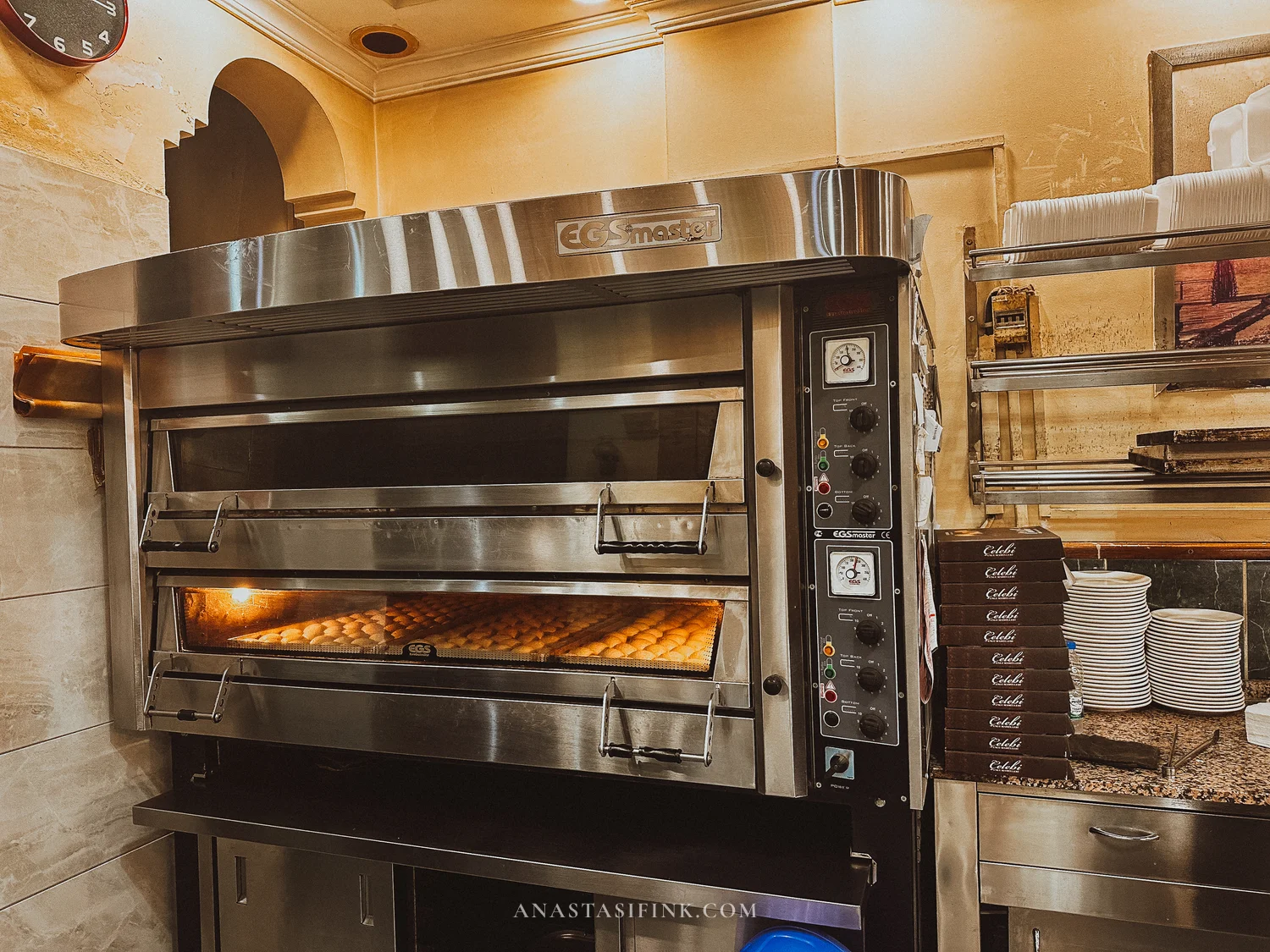
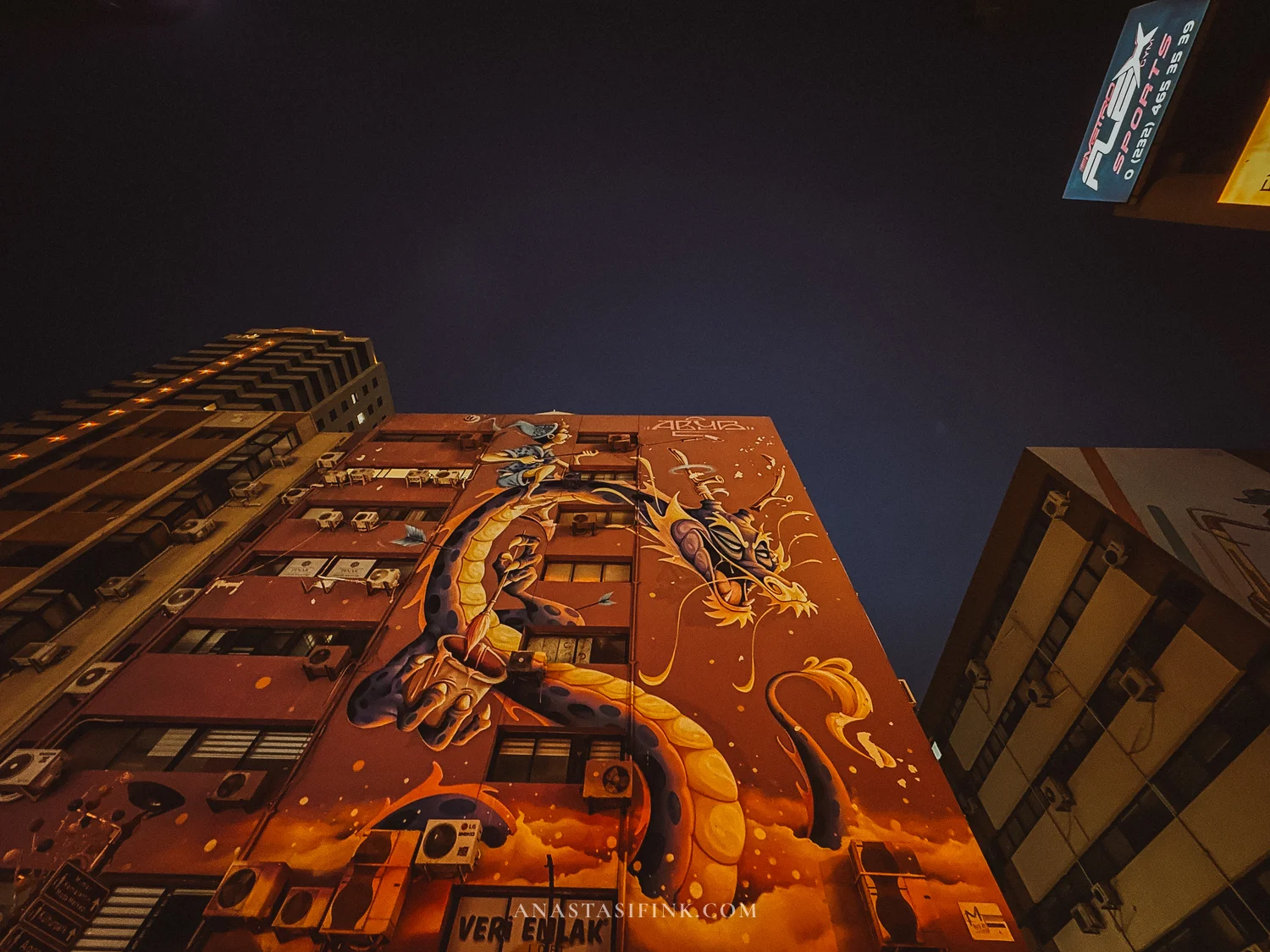
One more thing — on the building wall near Çelebi there’s an enormous dragon mural. At night it looks genuinely striking, and it’s hard to miss when you’re leaving the bakery.
Practical Information
- Address: Alsancak, Kıbrıs Şehitleri Cad., Izmir
- Google Maps: Çelebi Unlu Mamuller
Sambali — Izmir’s Golden Dessert
Sambali (şambali) is a traditional Turkish dessert made from semolina soaked in syrup. The name comes from “Şam balı” — literally “Damascus honey” in Turkish — which tells you something about its origins. The sweet traveled from Syria through the Ottoman Empire and ended up becoming so closely associated with Izmir that “İzmir Şambalisi” now has protected geographical indication status.
The recipe is elegantly simple: semolina, sugar, yogurt, and baking soda — no eggs, no flour. It’s baked in a tray, then immediately drenched in cold syrup so it soaks right in. We tried it at the legendary Meşhur Hisarönü Şambalicisi, which has been operating since 1942 in the heart of Kemeralti bazaar.
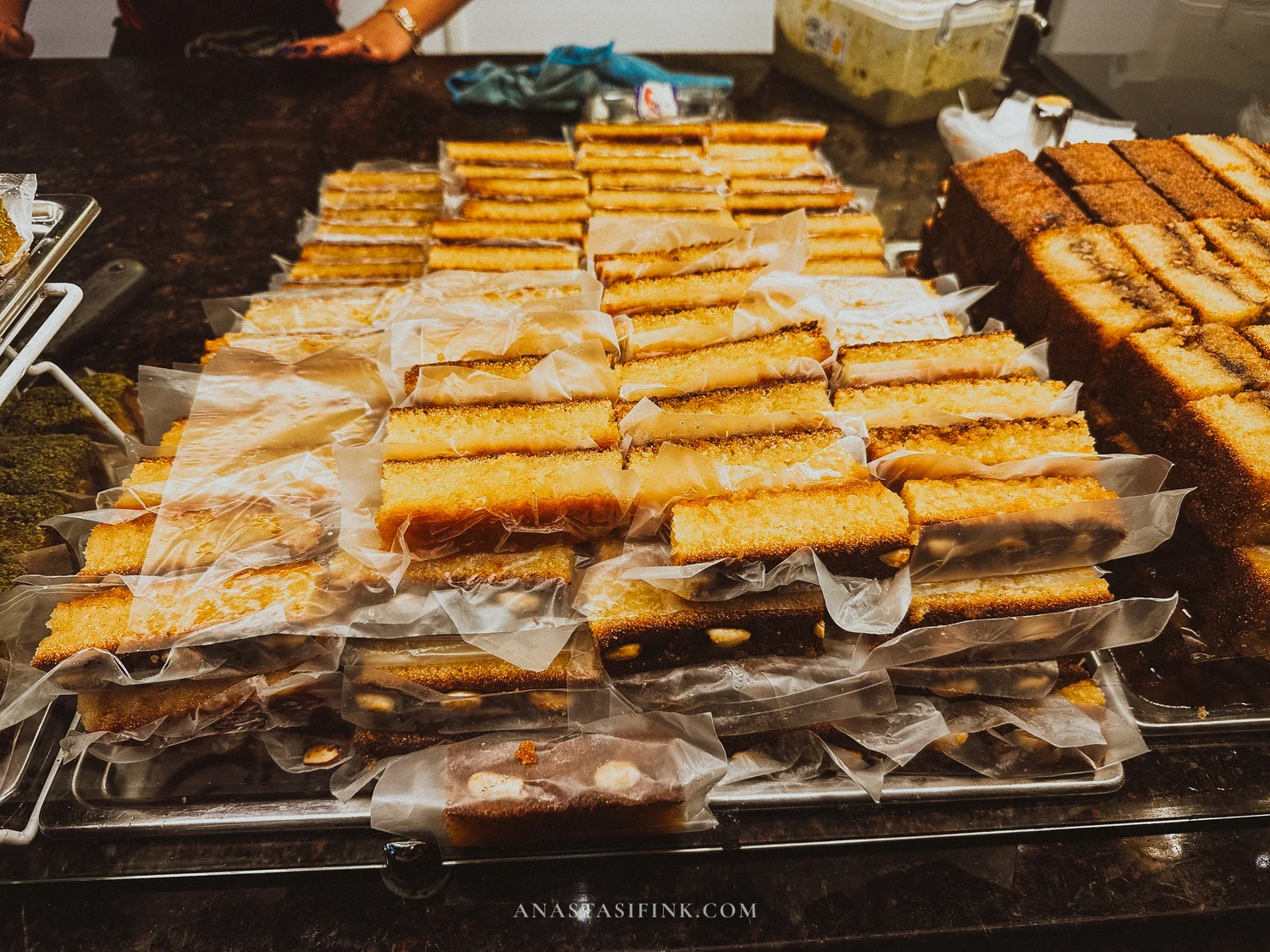
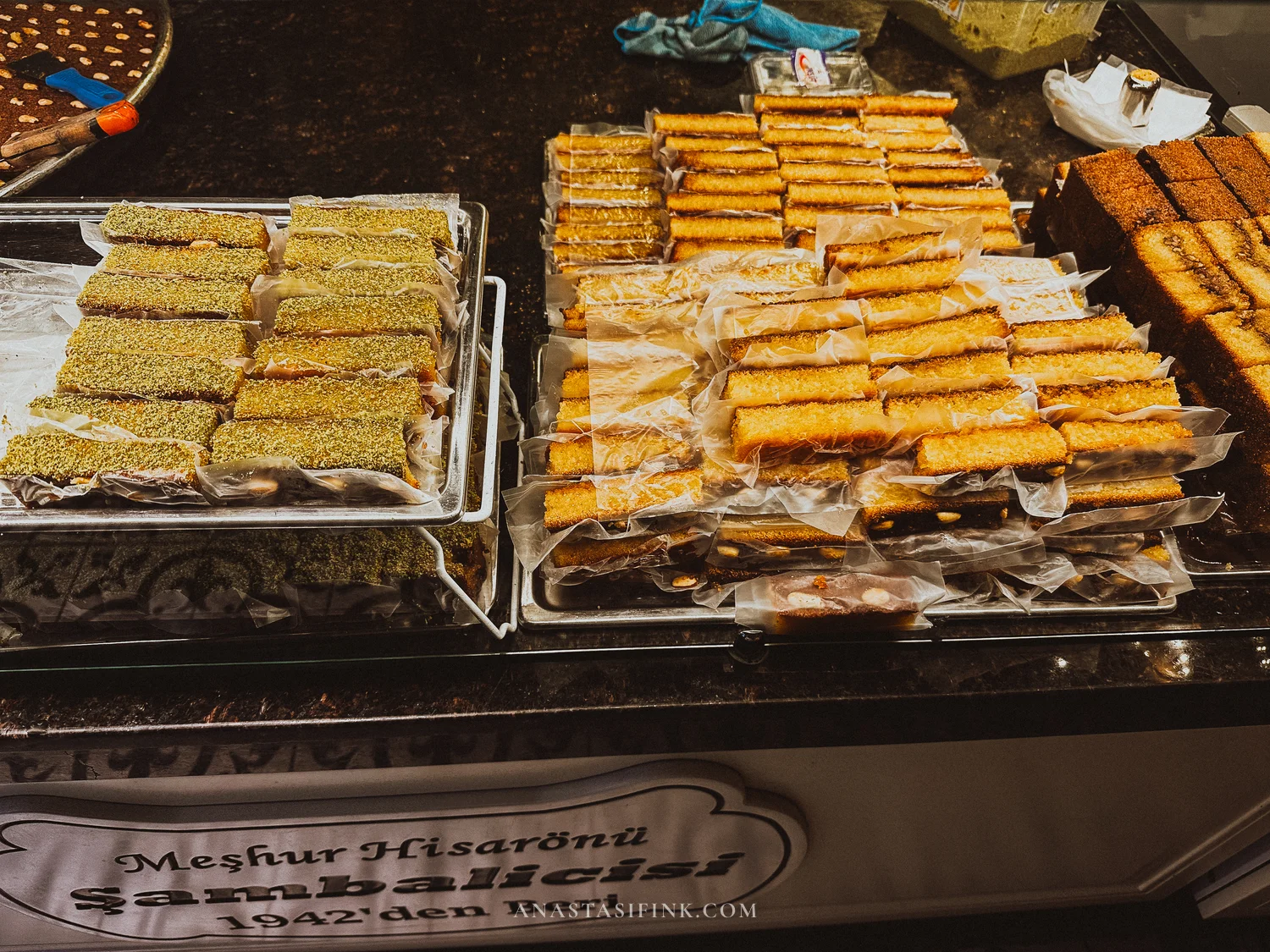
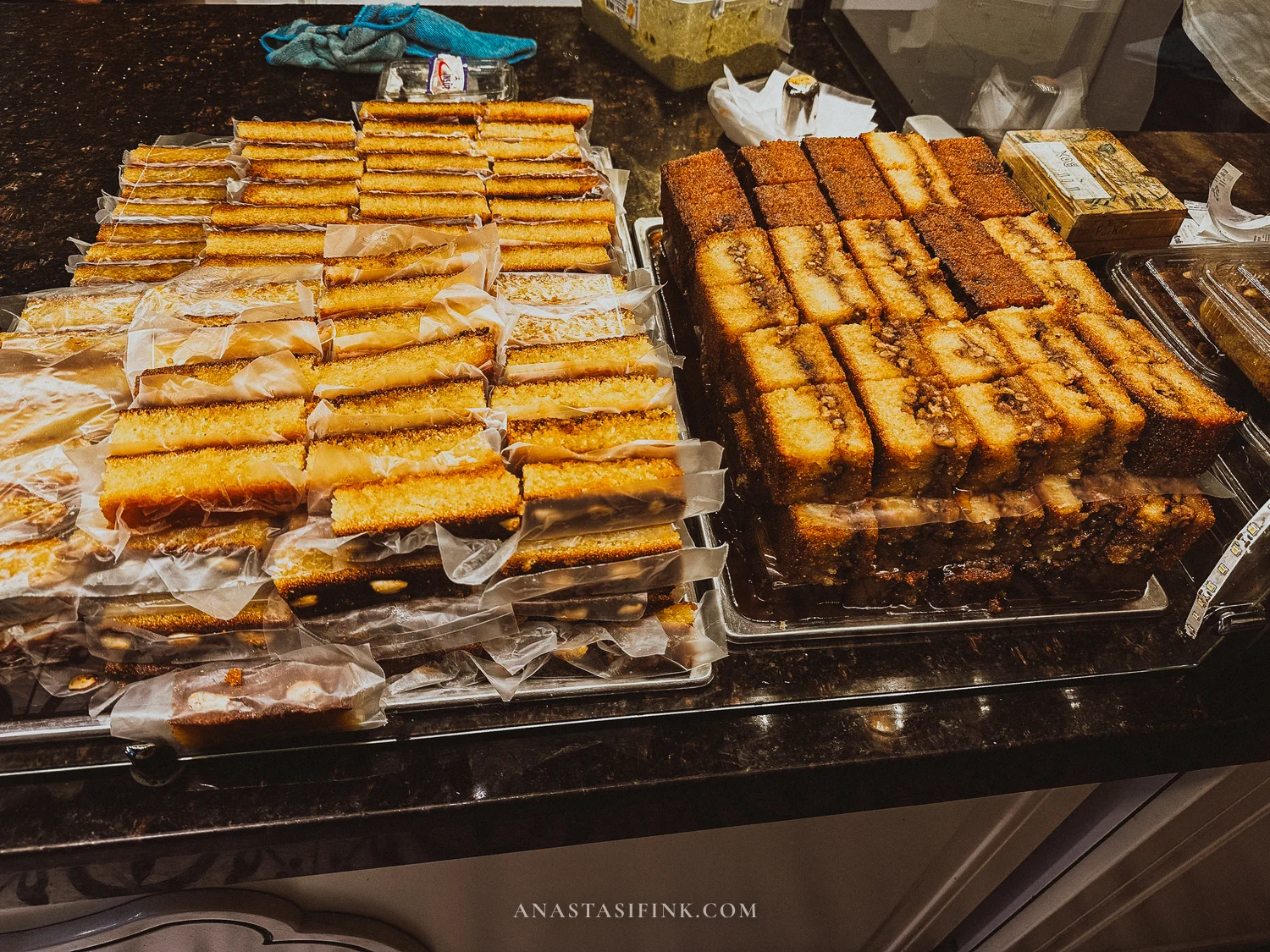
Sambali varieties — with sesame, nuts. All delicious, all sweet
Practical Information
- Place: Meşhur Hisarönü Şambalicisi 1942’den Beri
- Address: Kemeraltı, Konak, Izmir (near Hisar Mosque)
- Google Maps: Meşhur Hisarönü Şambalicisi
Historic Asansor Elevator
From the bazaar to Asansor is about a fifteen-minute walk through the Karatas district.
The elevator was built in 1907 by Nesim Levi Bayraklıoğlu, a wealthy local businessman, for a very practical reason: the height difference between the lower street and the upper residential quarter is 51 meters, and his friend had broken a leg on the steep stairs. Rather than accepting that as just a fact of life, Levi built an elevator — steam-powered, constructed from special bricks imported all the way from Marseille.
Over the decades it changed hands several times, closed down, sat empty as a warehouse, and was finally restored in 1993. Today it runs as free public transport — you just walk in and ride up.
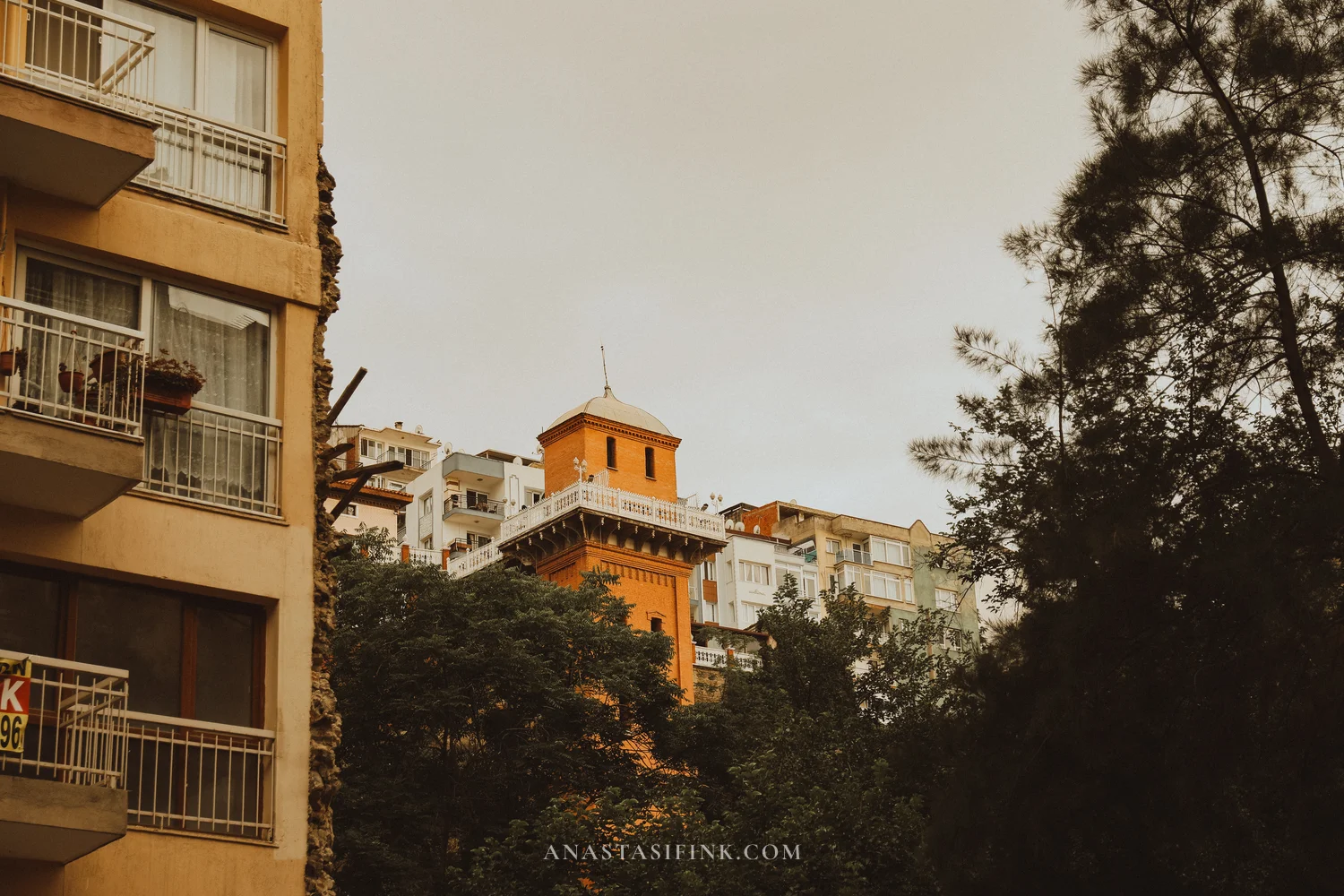
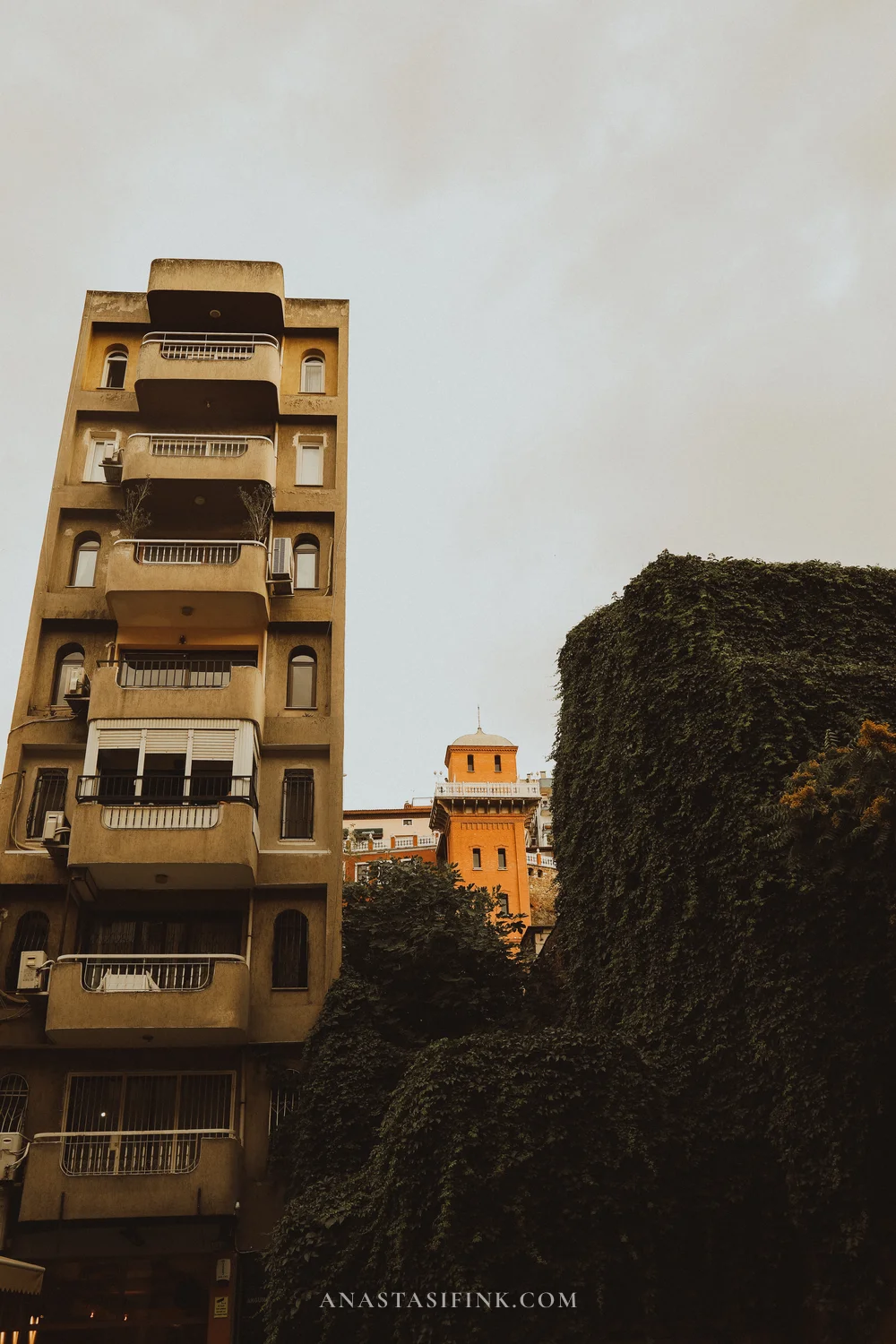
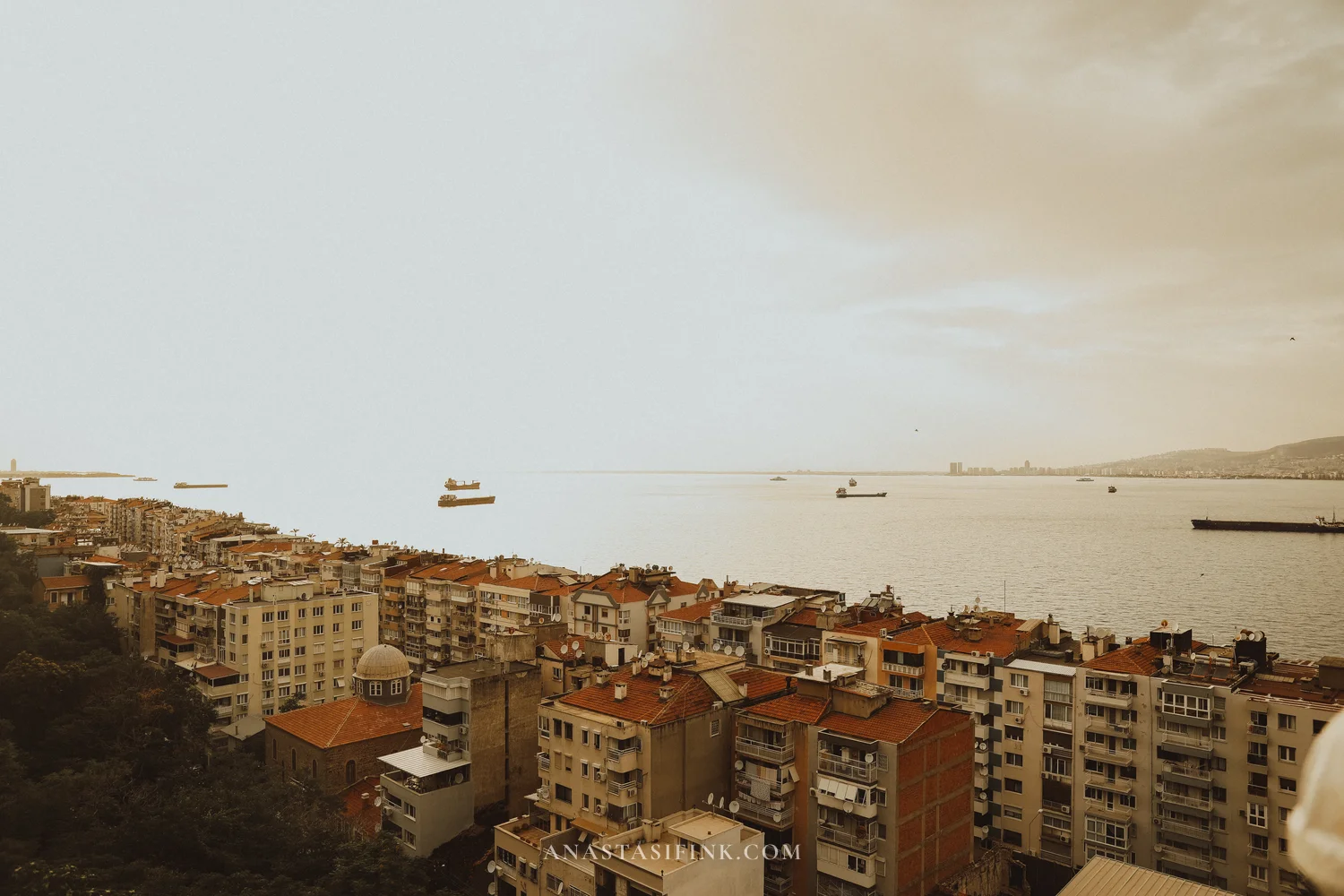
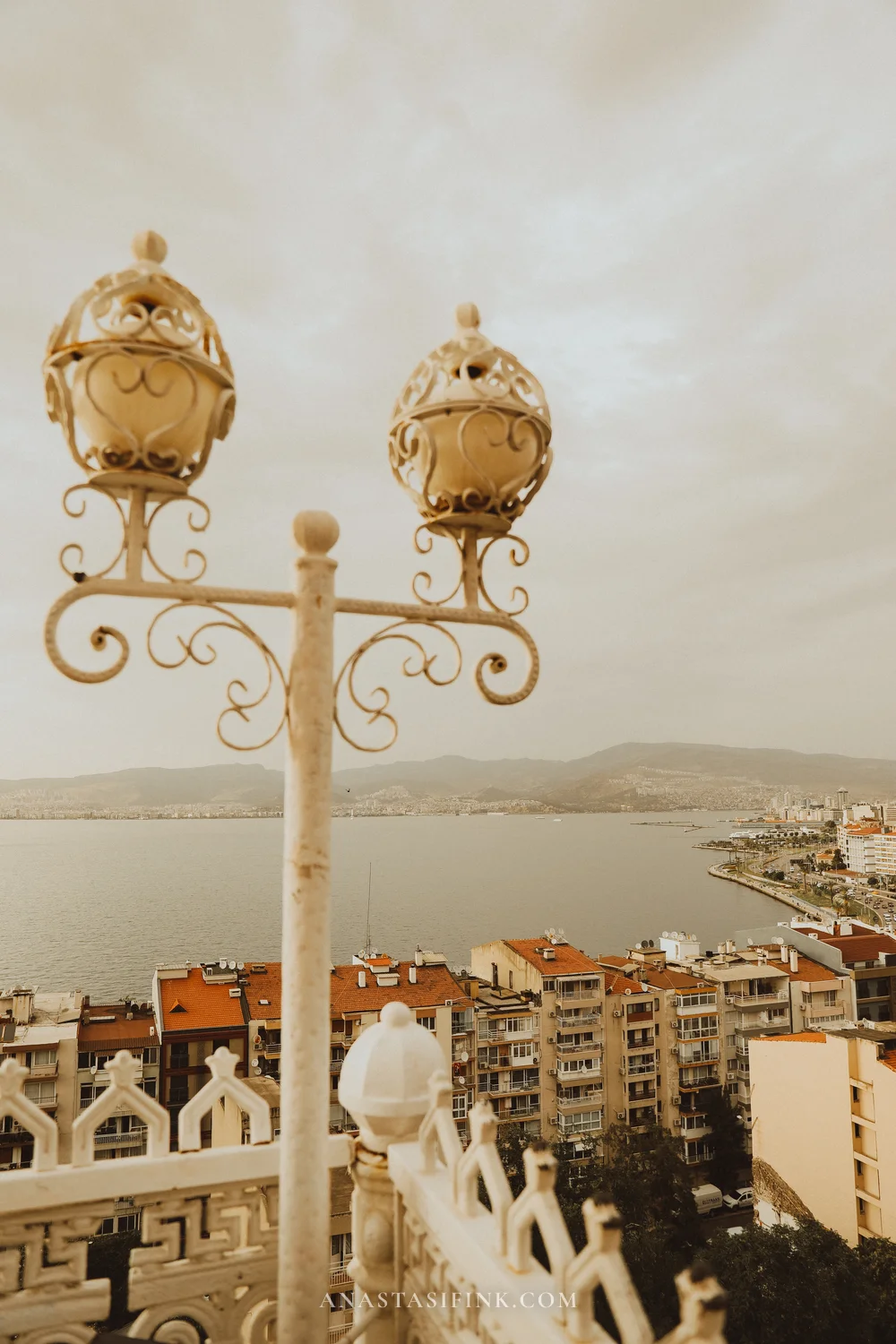
At the top there’s an observation deck with a sweeping panorama of Izmir Bay, plus a restaurant with a terrace. Some of the best views in the entire city are up here.
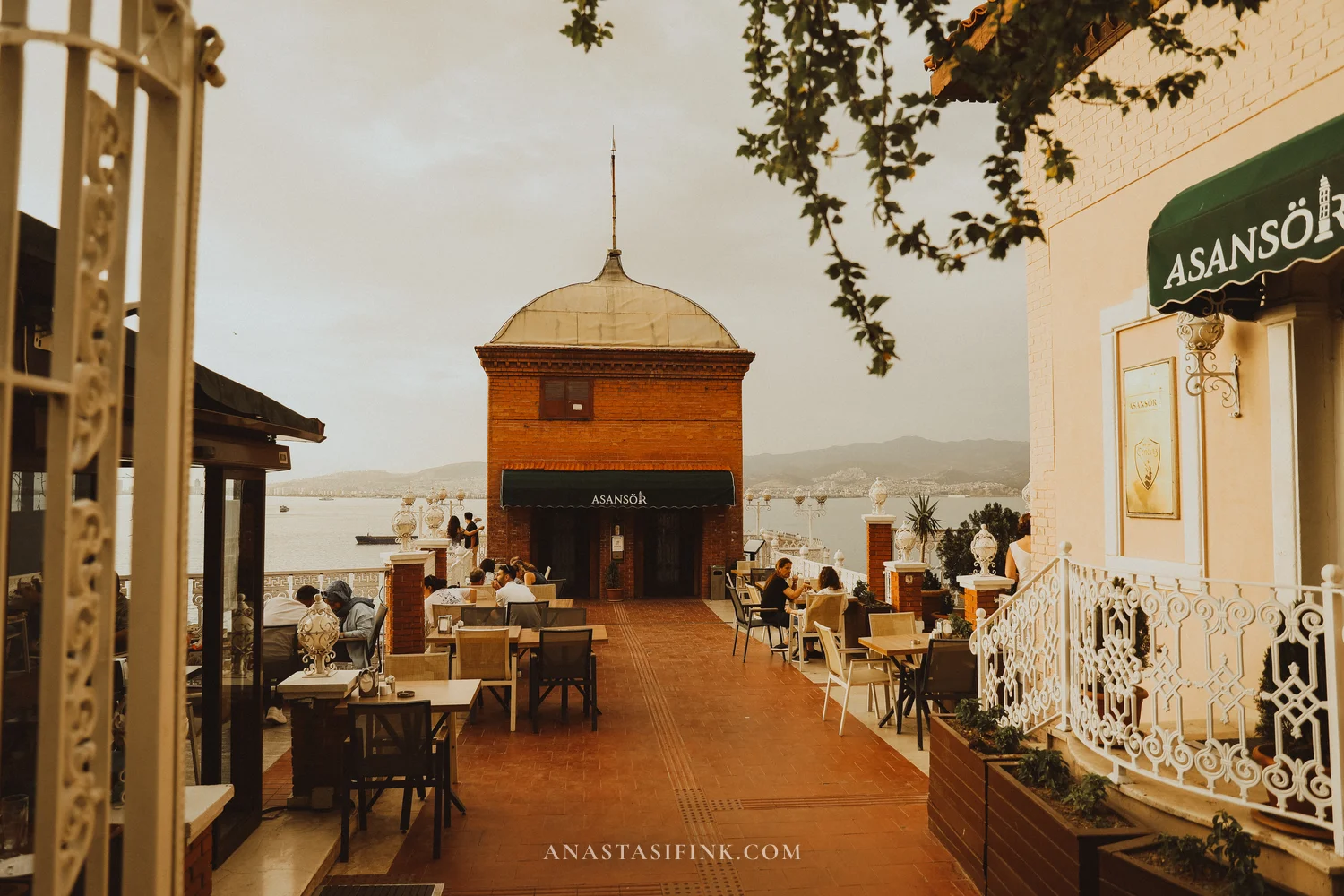
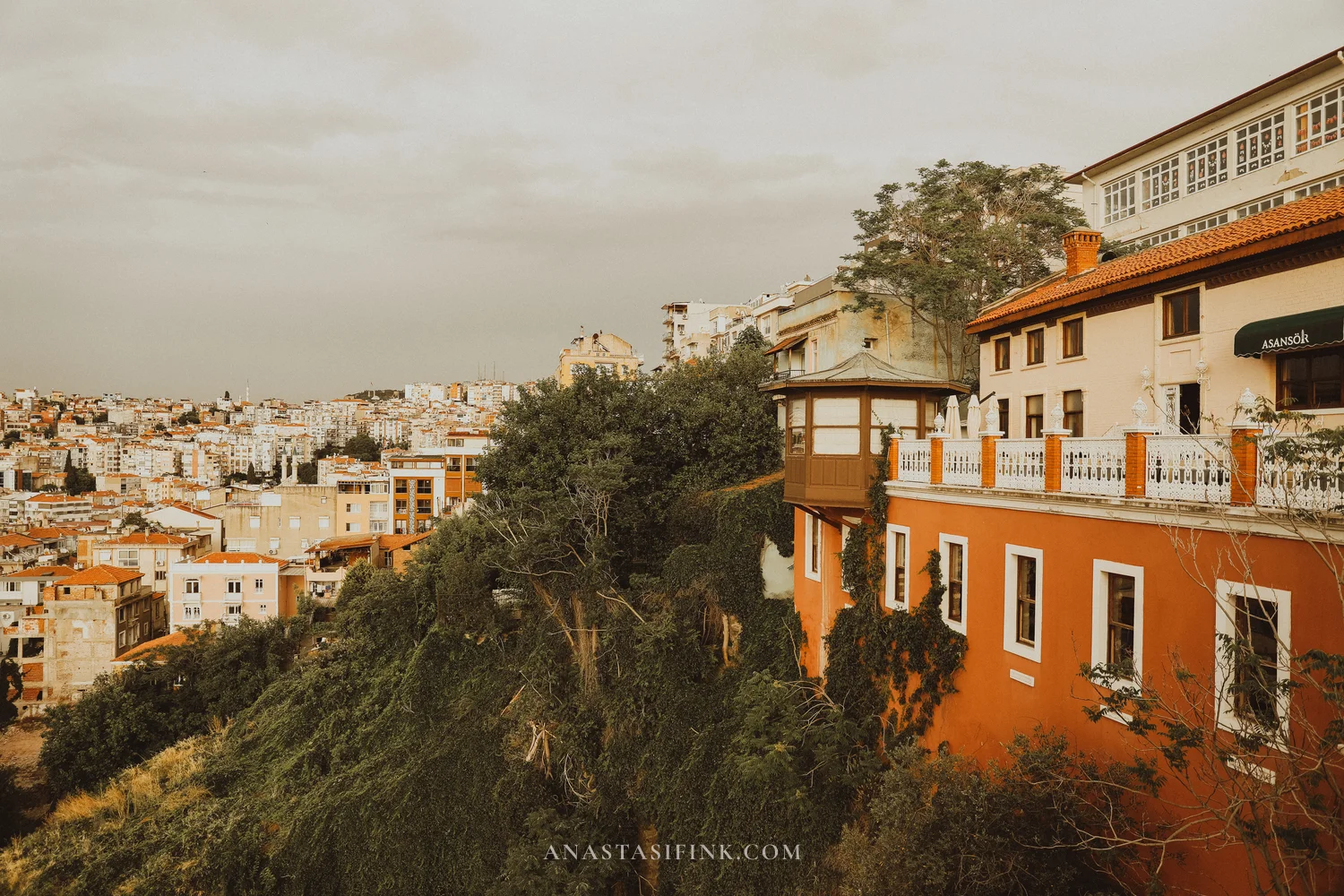
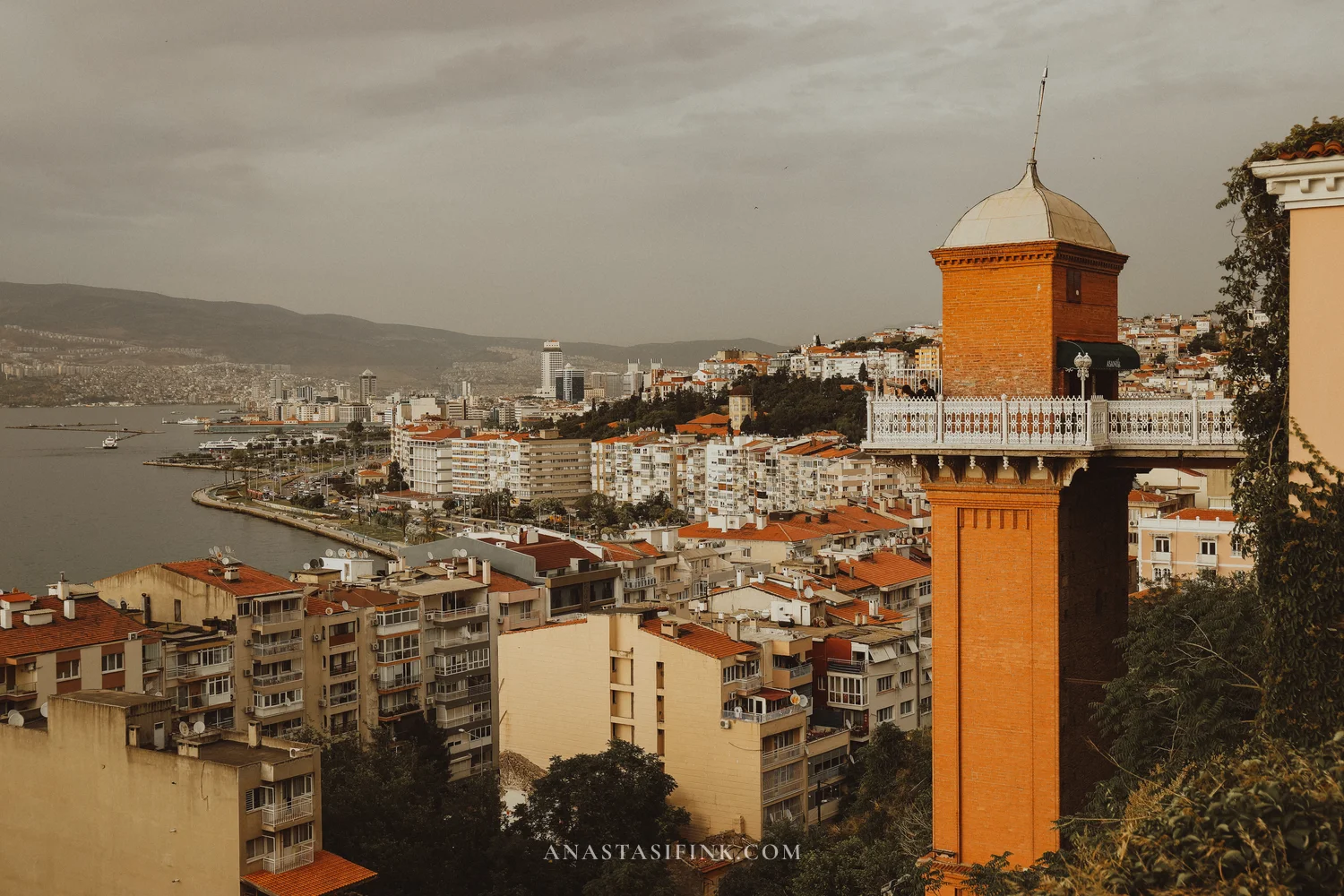
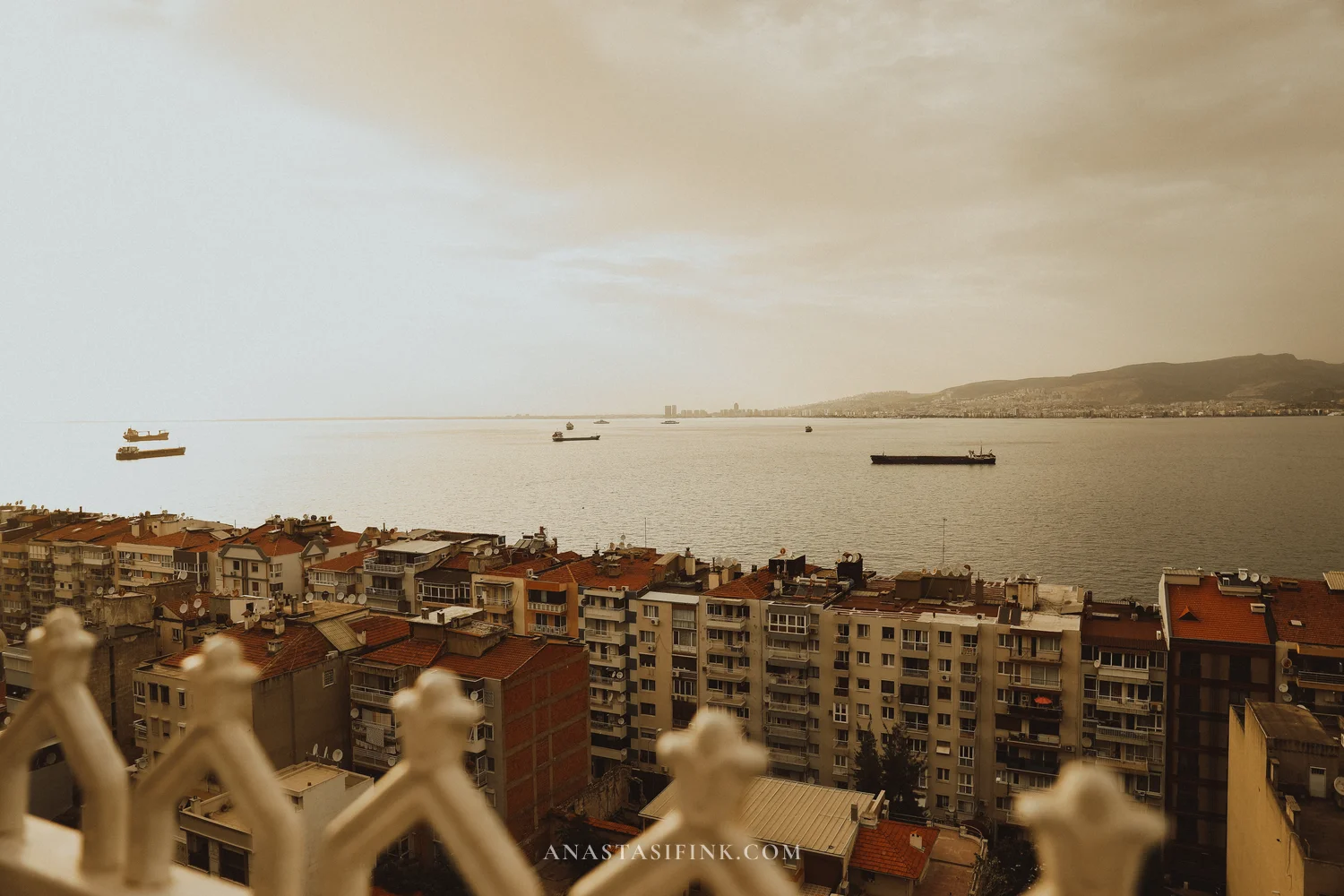
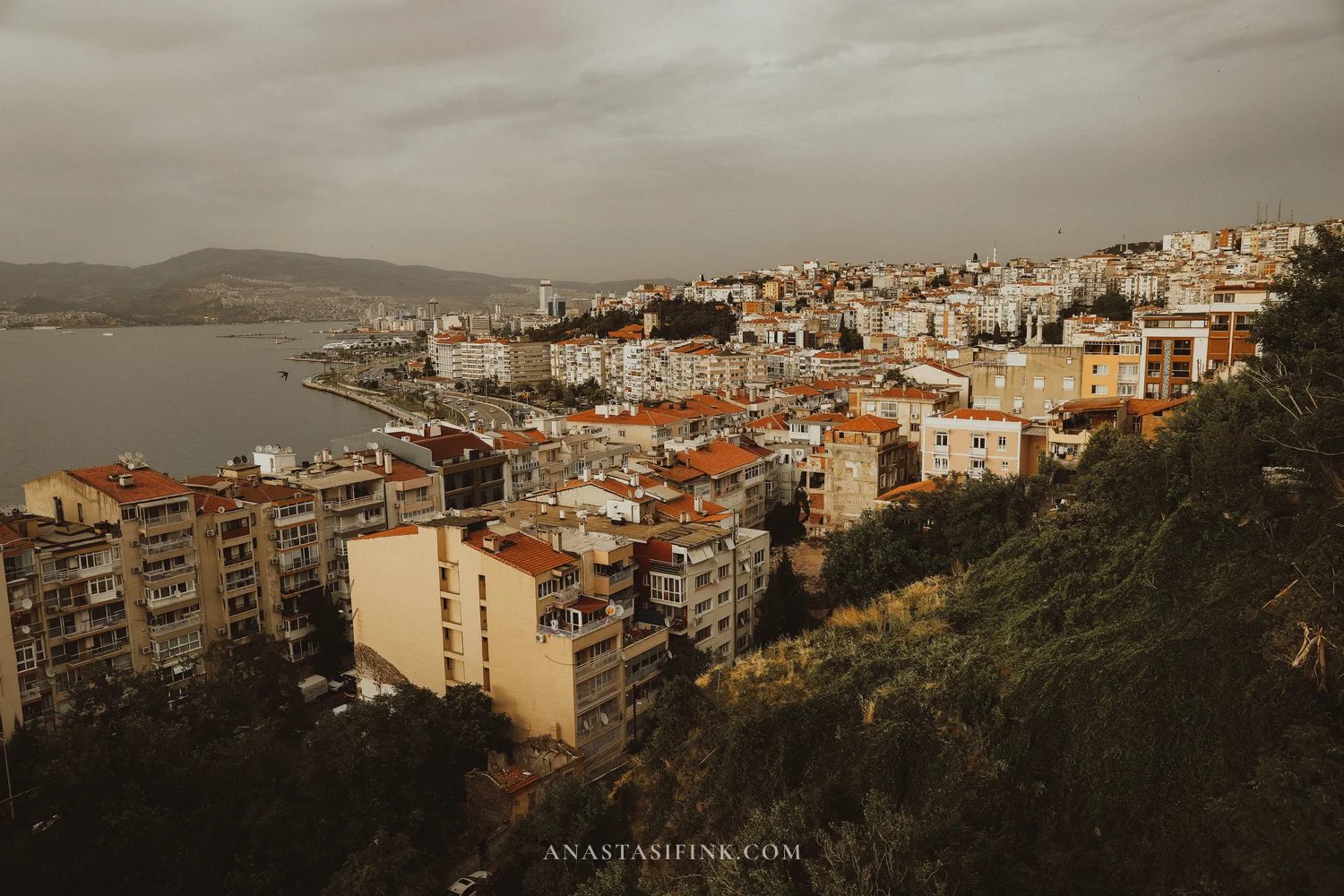
Izmir Bay panorama — the whole city visible from Konak to Alsancak
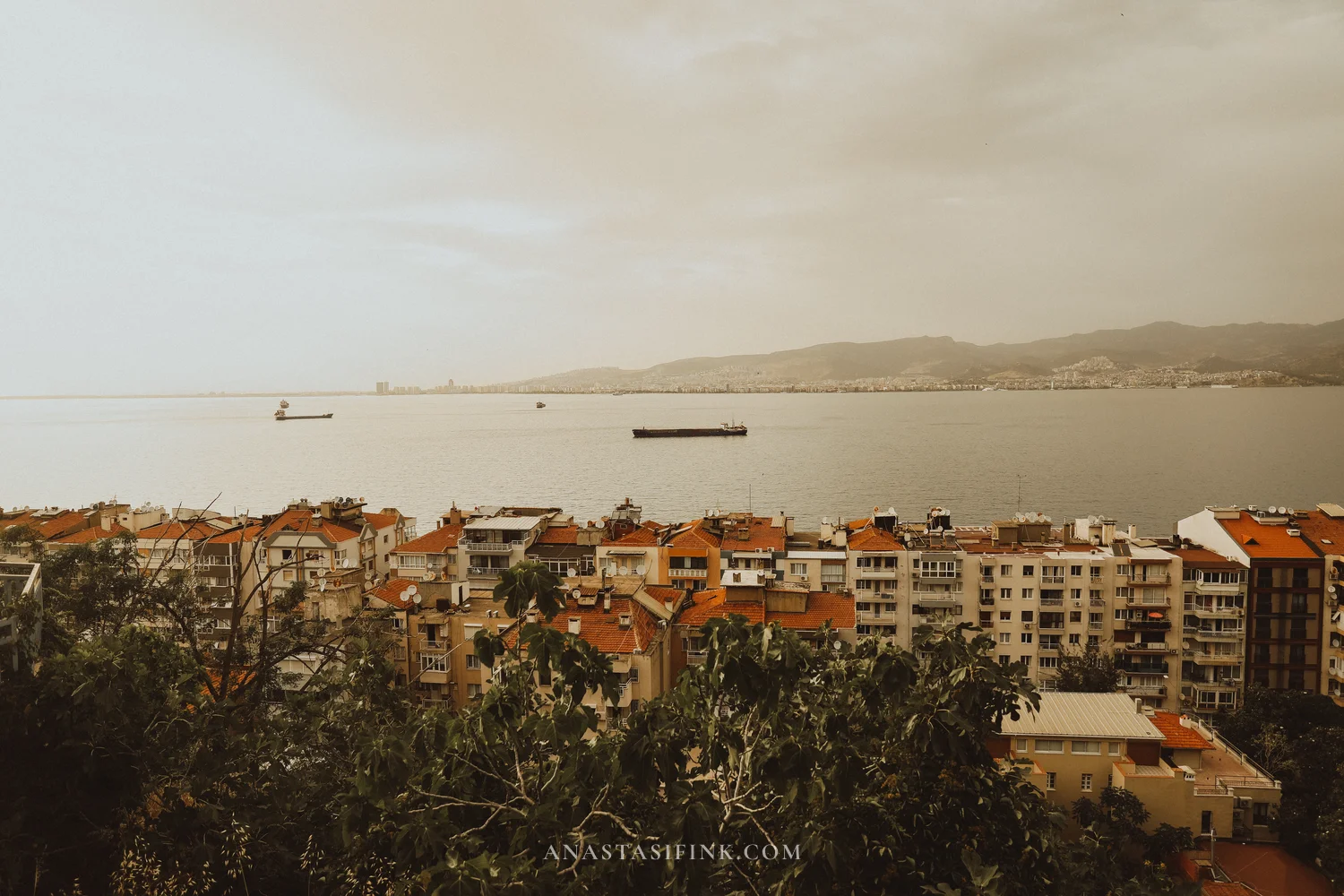
Same rooftops and bay, slightly different angle — you notice something new each time
Practical Information
- Address: Asansör, Konak, Izmir
- GPS: 38.4148, 27.1285
- Hours: 08:00–24:00, daily
- Entry: Free
- How to get there: Metro to Konak, then 15 min walk; or buses 104, 157, 202, 253
- Google Maps: İzmir Historical Elevator
Dario Moreno Street
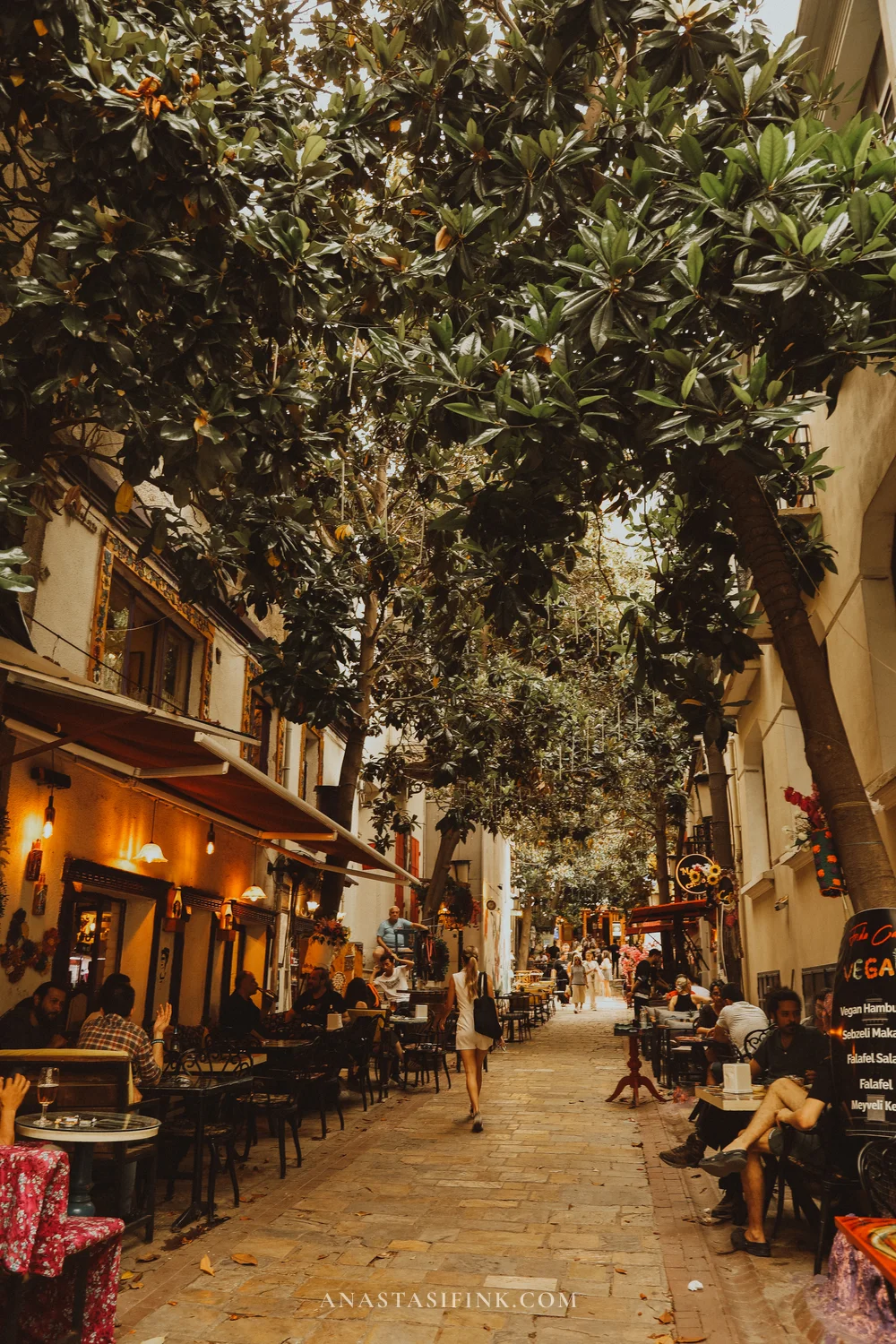
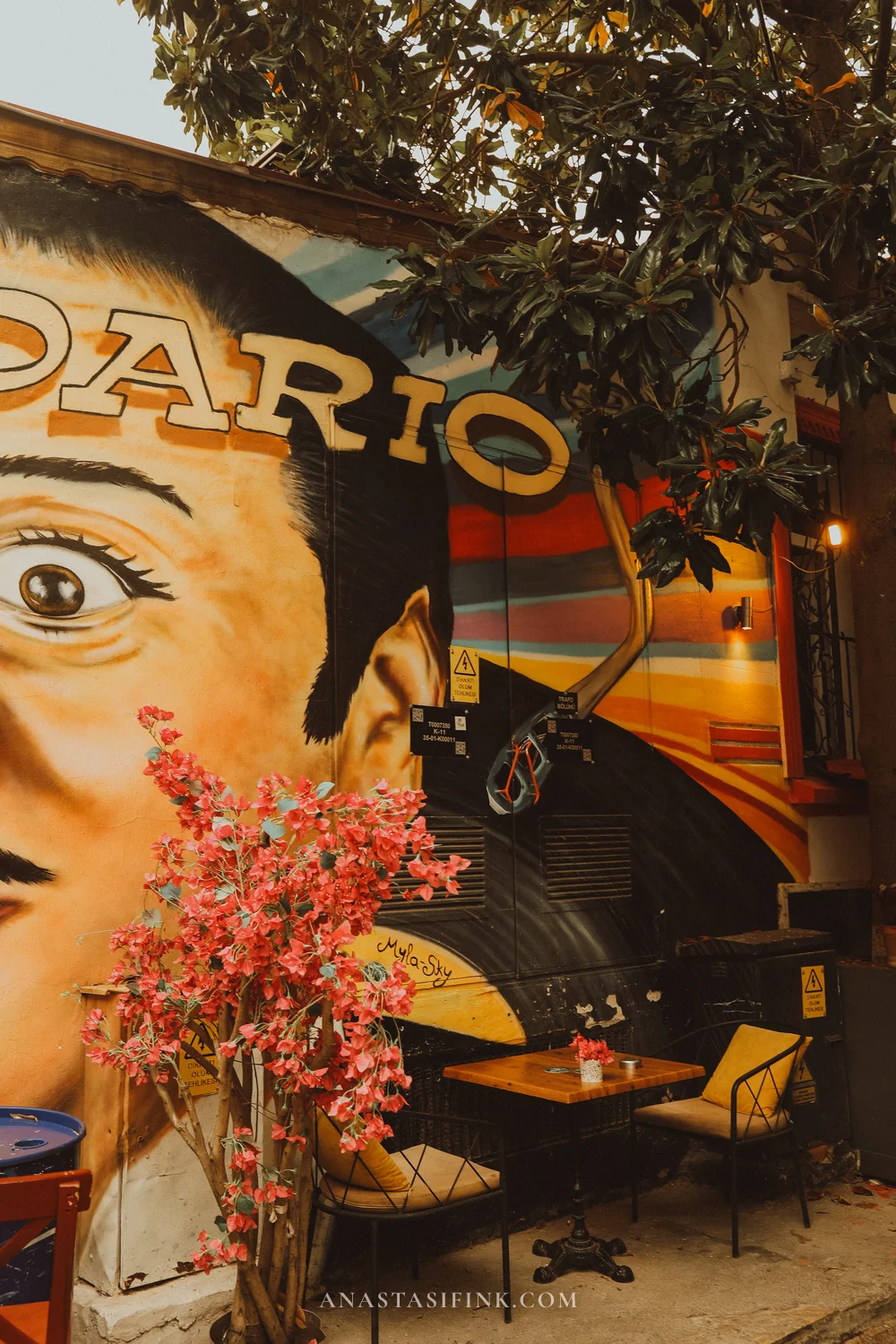
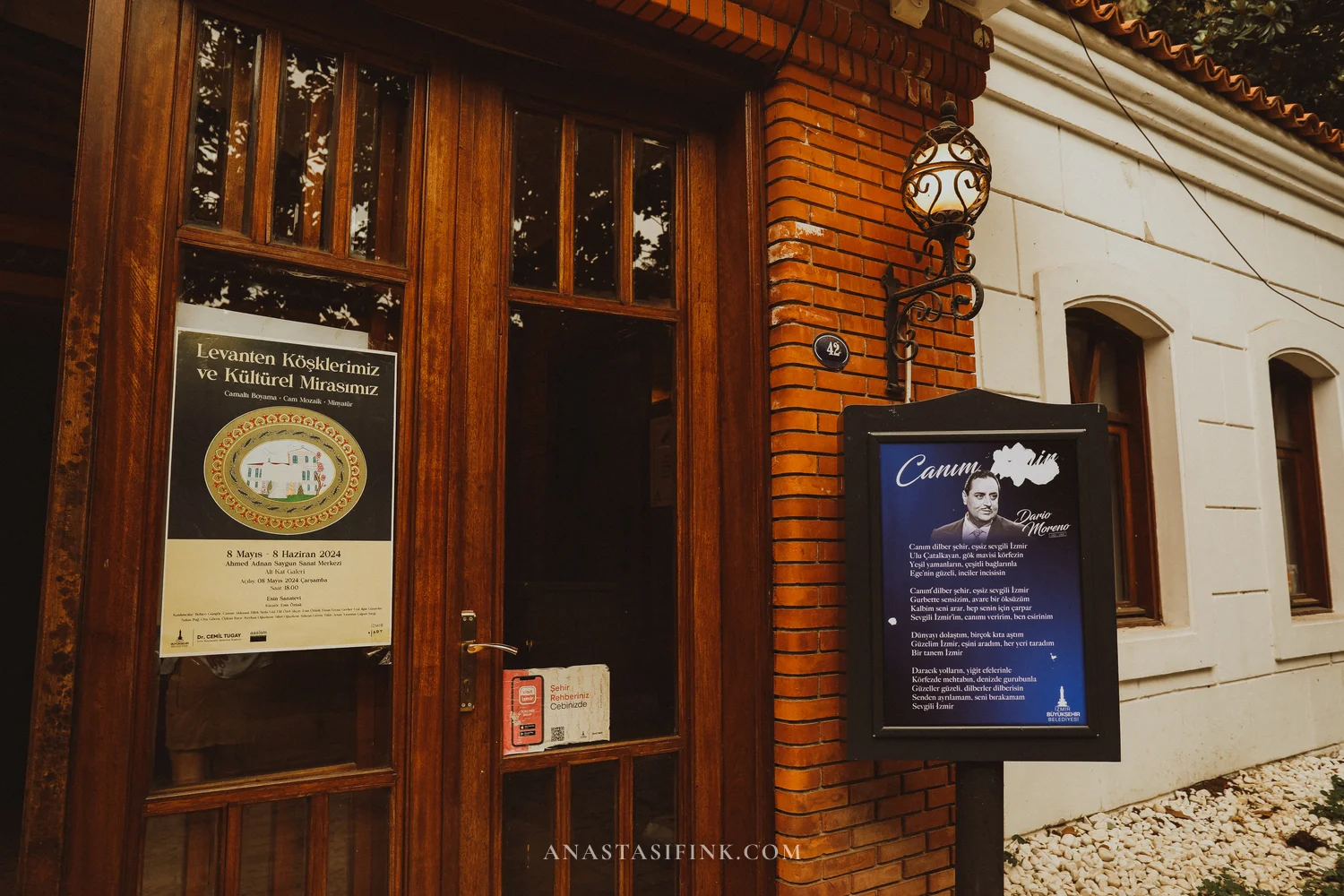
You reach the elevator along Dario Moreno Street (Dario Moreno Sokağı) — a narrow pedestrian lane with cafes, shady trees, and street art. Dario Moreno was born David Arougeti in Izmir in 1921 and went on to become a celebrated singer and actor in France, though he loved his hometown to the end. In Turkey he’s remembered above all for the song “İzmir’in Kavakları” (Poplars of Izmir).
Together, the street and the elevator feel like a small monument to the multicultural Izmir that once was — where Turks, Greeks, Jews, Armenians, and Levantine traders lived side by side for centuries.
Practical Information
- GPS: 38.4150, 27.1290
- Google Maps: Dario Moreno Sk.
Hoi Coffee and Plants — Coffee Near the Elevator
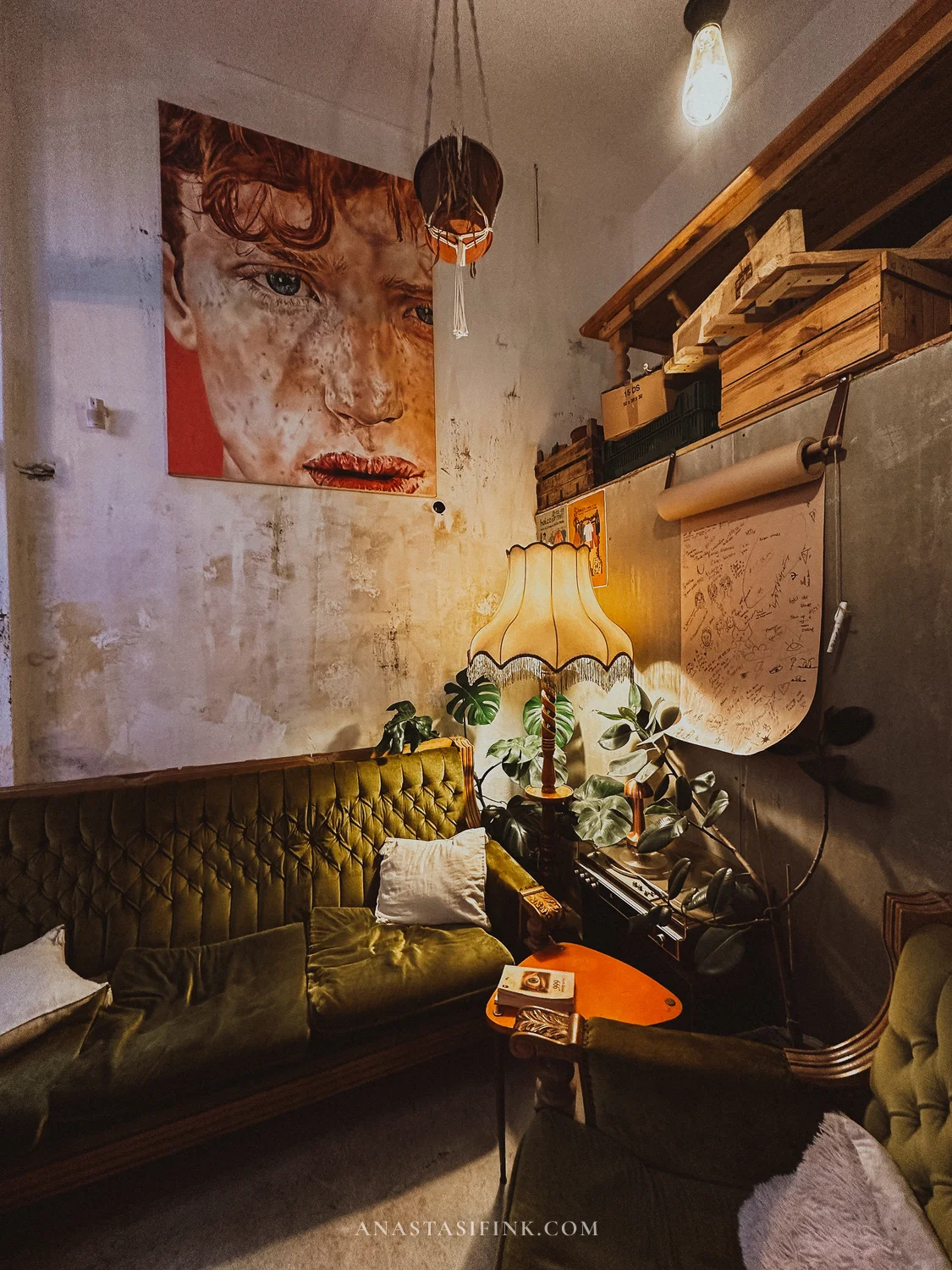
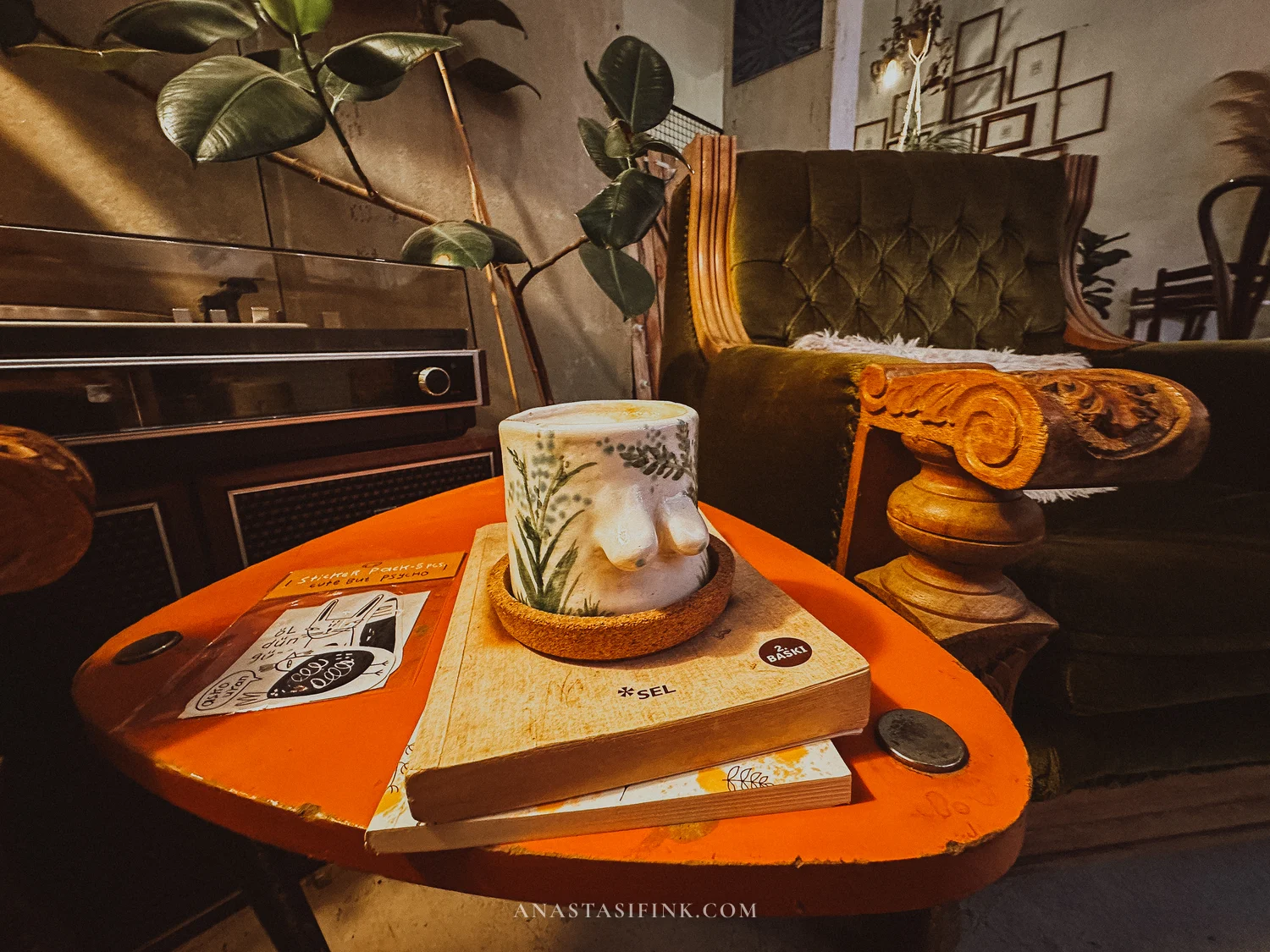
This one I’m recommending without any hesitation — it’s an absolute gem. Close to Asansor in the Karatas neighborhood, Hoi Coffee and Plants is a coffee shop with a seriously good vintage interior: green velvet sofas, oil portraits on the walls, old radios, and books scattered across the tables.
Practical Information
- Address: Karataş, Konak, Izmir
- Google Maps: Hoi Coffee and Plants
Evening Ferry Across the Bay
End your day on the water — the evening ferry is not optional. Locals use it as regular commuter transport, but for visitors it’s 20 minutes of the most effortless city sightseeing imaginable. IZDENIZ ferries connect Konak, Karşıyaka, Bostanlı, and Alsancak. The Konak–Karşıyaka crossing takes about 20 minutes, which is just enough time to watch the whole skyline drift past.
Ticket price: 30 TL (around $0.85) with an Izmirim Kart — a rechargeable transit card sold at the piers. Without the card you pay 33.46 TL. The card also gives you free transfers within 90 minutes, so it’s worth getting even for a one-day visit.
Ferries run from 07:00 to 20:00 every 20–30 minutes. On Friday and Saturday nights there are also late-night “Baykuş Seferleri” (Owl Sailings) from midnight to 2 AM.
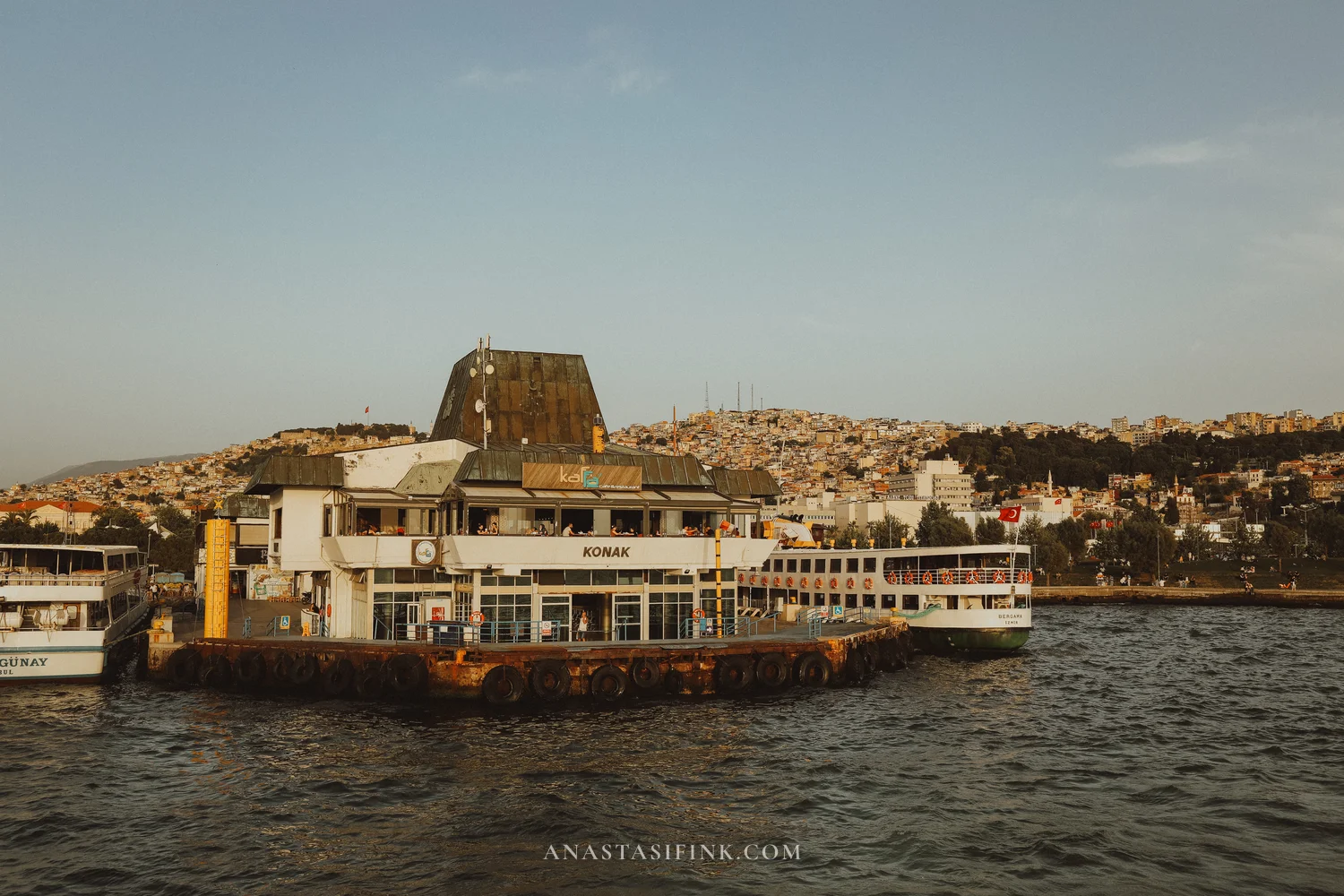
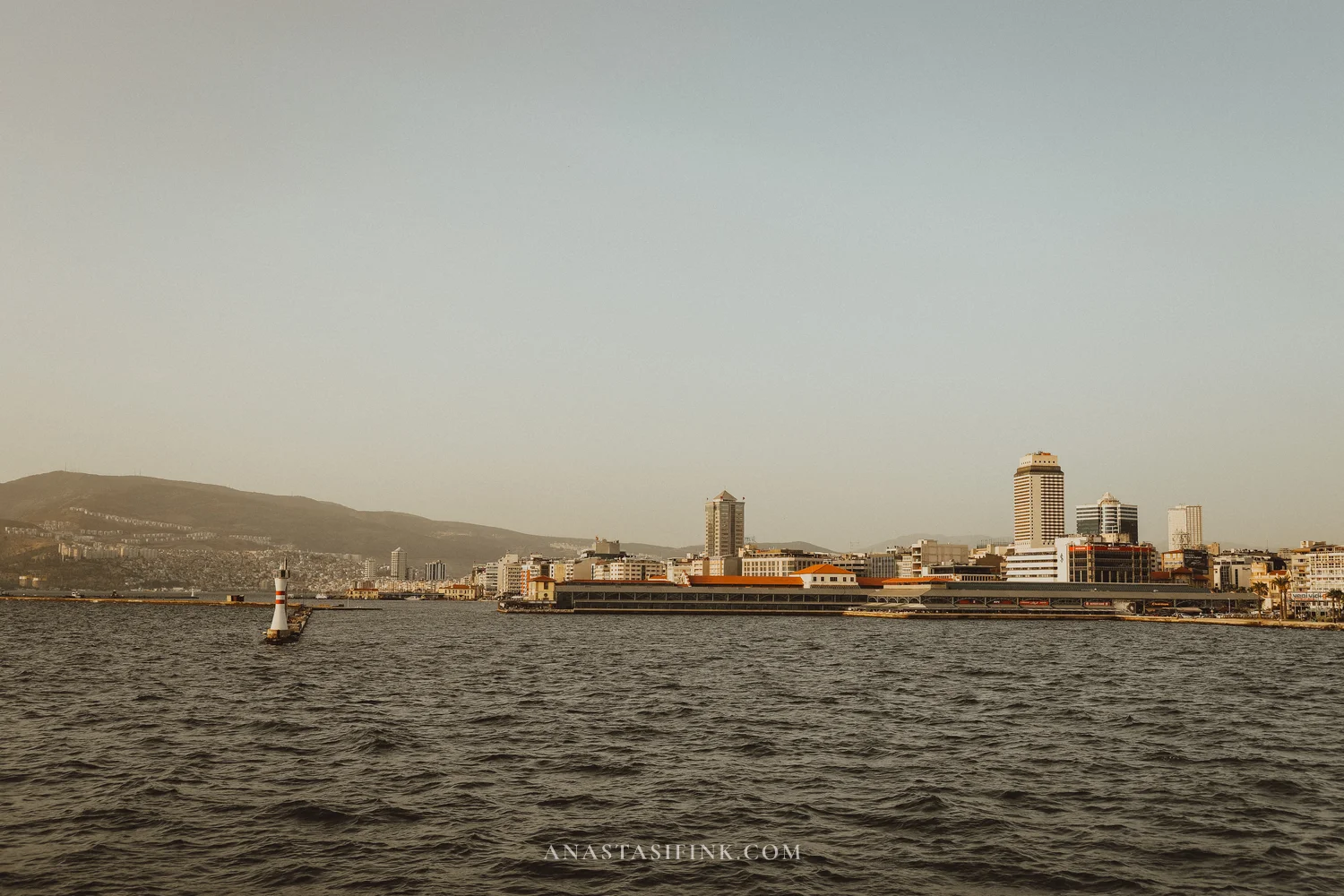
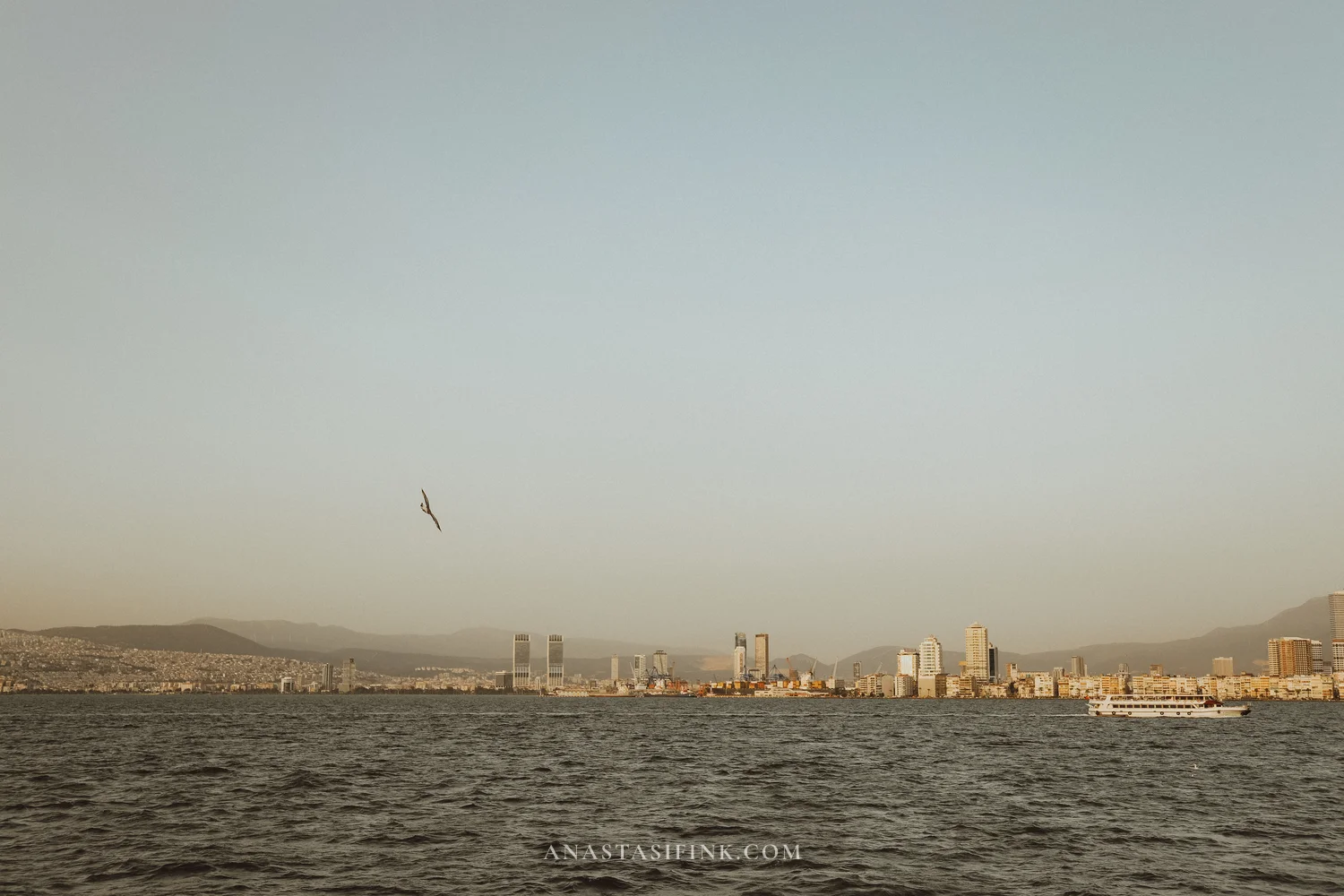
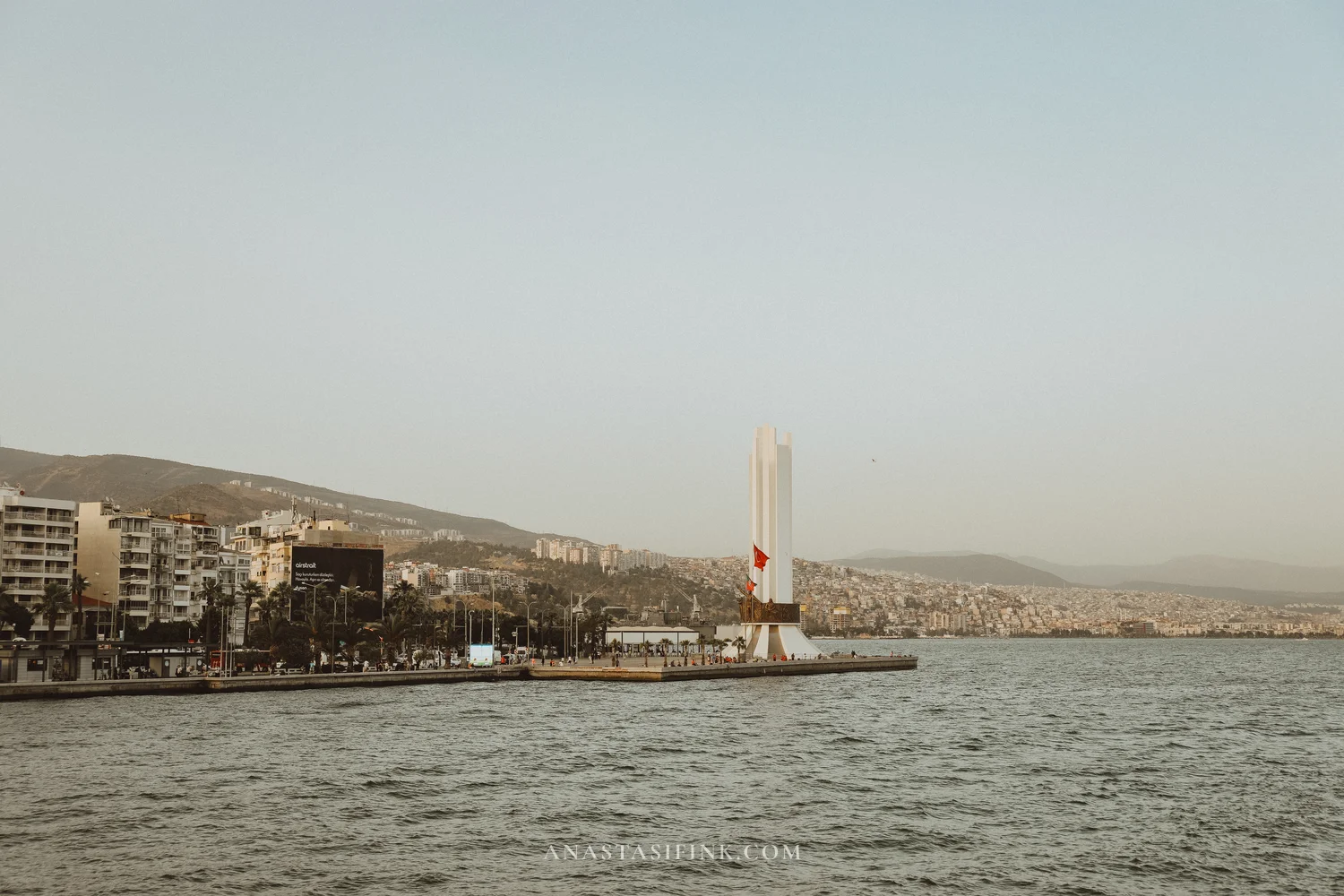
Pro tip: Board an hour before sunset. The golden light on the bay and city is stunning, and seagulls fly close enough to photograph with just a phone camera.
Practical Information
- Route: Konak → Karşıyaka (~20 min) or Konak → Bostanlı (~25 min)
- Cost: 30 TL (~$0.85) with Izmirim Kart
- Schedule: Every 20–30 min, 07:00–20:00
- Izmirim Kart: Sold at piers and ticket machines
Kordon Waterfront — Sunset Walk
After the ferry (or instead of it), walk the Kordon waterfront in Alsancak. It’s a long pedestrian promenade along the bay — bike lanes, cafes, benches, and uninterrupted water views. In the evenings it fills up with locals: people jogging, walking with kids, sitting with glasses of tea. It’s a lovely, low-key way to wind down after a packed day.
Practical Information
- Google Maps: Kordon Alsancak
How to Get to Izmir
By Air
Adnan Menderes Airport (ADB) is 18 km from the city center. To reach Konak, take bus 202 or the İZBAN suburban commuter train. A taxi to the center runs around 300–400 TL.
By Bus
Izmir’s bus terminal (Otogar) has intercity services from all major Turkish cities. Journey times: Istanbul ~6 hours, Antalya ~5–6 hours, Fethiye ~4 hours. From the bus terminal, take the metro (Otogar → Konak).
Getting Around
The historic center is very walkable — most of what’s described in this article is reachable on foot. For longer distances, there’s one metro line, a tram, and city buses. All work with the Izmirim Kart. Free transfers within 90 minutes.
Tips
- Best time to visit: Spring (April–May) and autumn (September–October). Summers are hot — up to 40°C (104°F).
- Footwear: Wear comfortable shoes. Lots of cobblestones and uphill walking, especially around Asansor.
- Izmirim Kart: Buy one as soon as you arrive at the pier or metro station — it saves money on every ferry and bus ride.
- Bazaar: Go in the morning when shops are just opening. Fewer crowds, more relaxed atmosphere.
- Suggested route: Konak Square → bazaar → mosques → sambali → Asansor → coffee → waterfront → sunset ferry
- Day trips: Ephesus (1 hour by bus), Çeşme (1.5 hours), Alaçatı (1.5 hours)
FAQ
Fly into Adnan Menderes Airport (ADB), then take bus 202 or the İZBAN train into the center. From other Turkish cities, take an intercity bus to the Otogar (bus terminal), then connect by metro to Konak.
One full day is enough to cover the main sights in the historic center: the bazaar, mosques, Asansor Elevator, and the ferry. If you want to add day trips to Ephesus, Çeşme, or Alaçatı, budget 2–3 days total.
Absolutely. Izmir isn’t a preserved open-air museum — it’s a real, working city where history is woven into everyday life. There are no overwhelming tourist crowds, prices are noticeably lower than Istanbul, and the entire historic center is walkable in a day.
Sambali (semolina cake soaked in syrup), boyoz (the local flaky pastry), bomba at Çelebi (boyoz with chocolate filling), and cakes at Reyhan Pastanesi. At the bazaar, have Turkish tea and grab some lokum (Turkish delight).
Spring (April–May) or autumn (September–October). Summer is very hot. Winter is mild and can be rainy, but comfortable — temperatures rarely drop below 10°C (50°F).
Izmir is generally considered one of Turkey’s safest large cities. The center is pedestrian-friendly, lively, and well-lit at night. Take the same sensible precautions you would in any large city.
It’s not strictly required — you can pay with a bank card. But the Izmirim Kart is cheaper (30 TL vs. 33.46 TL per ride) and gives you free transfers within 90 minutes. It’s sold at piers and metro stations, and worth picking up for even a one-day visit.
Izmir is the kind of city you don’t plan to return to — and then you find yourself thinking about sambali from the bazaar, tea on the Asansor terrace, and that sunset ferry. And the thought creeps in: should have stayed for a second day.
Anastasi Fink