Datça, Turkey — Day Trip from Marmaris: Old Town, Beaches & Sunset Guide

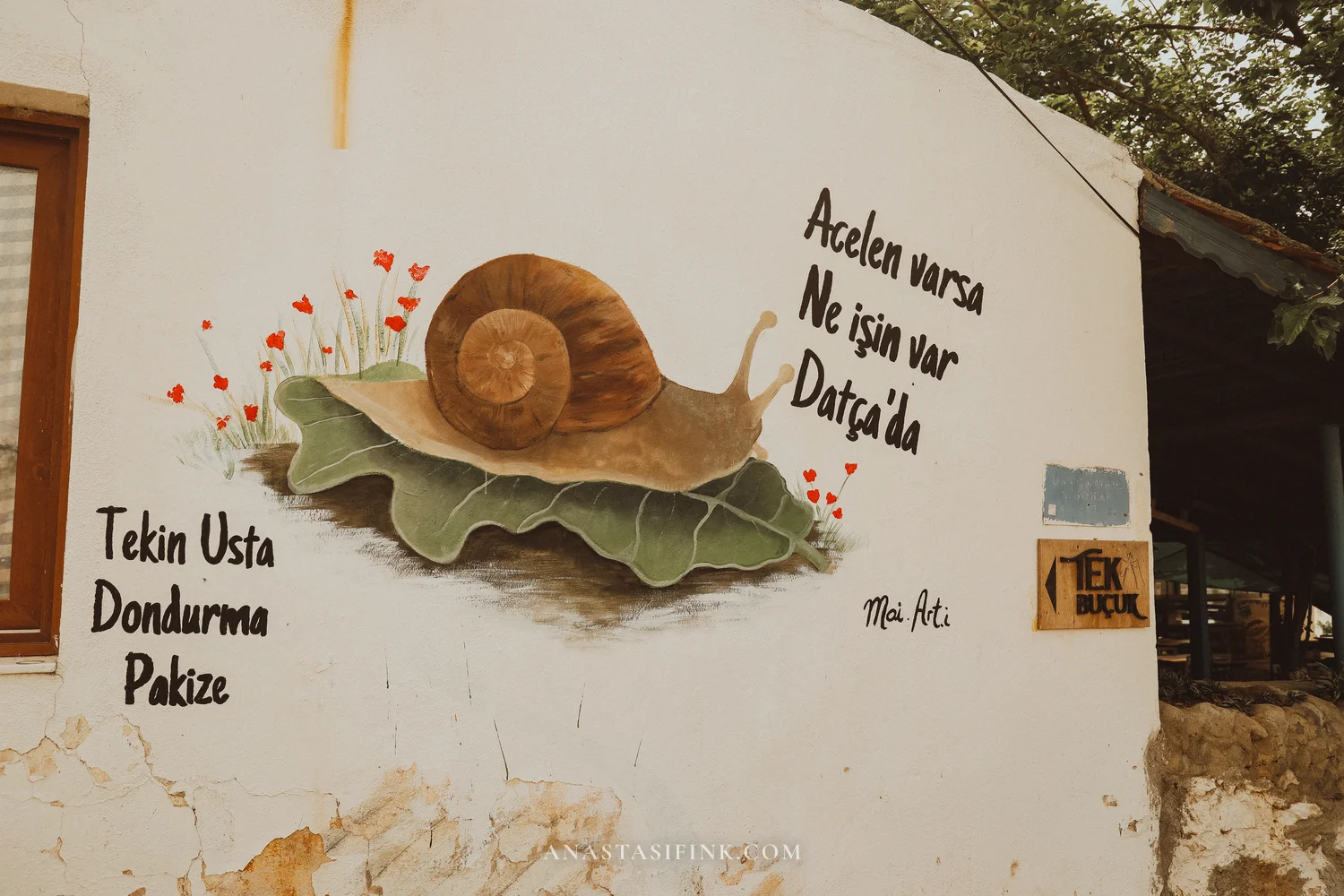
“If you’re in a hurry — what are you doing in Datça?” asks a painted snail on a wall in the old town. We rode out to the peninsula on a motorbike from Marmaris for the day: morning — stone lanes lined with shops and cats, afternoon — wild beaches along the winding coastal road, evening — sunset on the pebbles. Here’s the full route.
Why Datça — and Why by Motorbike
It’s about 75 km and an hour and a half of winding mountain road from Marmaris to Datça. You can drive, or take a dolmuş (a local minibus that runs from the bus station). But I’d recommend a motorbike, and here’s why: half the fun is the ride itself. On a scooter, the switchbacks feel completely different from behind a car window. Plus, once you’re on the peninsula, it’s easy to pull off to beaches that no dolmuş will ever reach.
A scooter rental in Marmaris starts at 800–1000 TL per day (~$25–30), and you’ll need a category A license. There are gas stations along the way, and one tank is enough for the entire round trip.
Datça Old Town (Eski Datça)
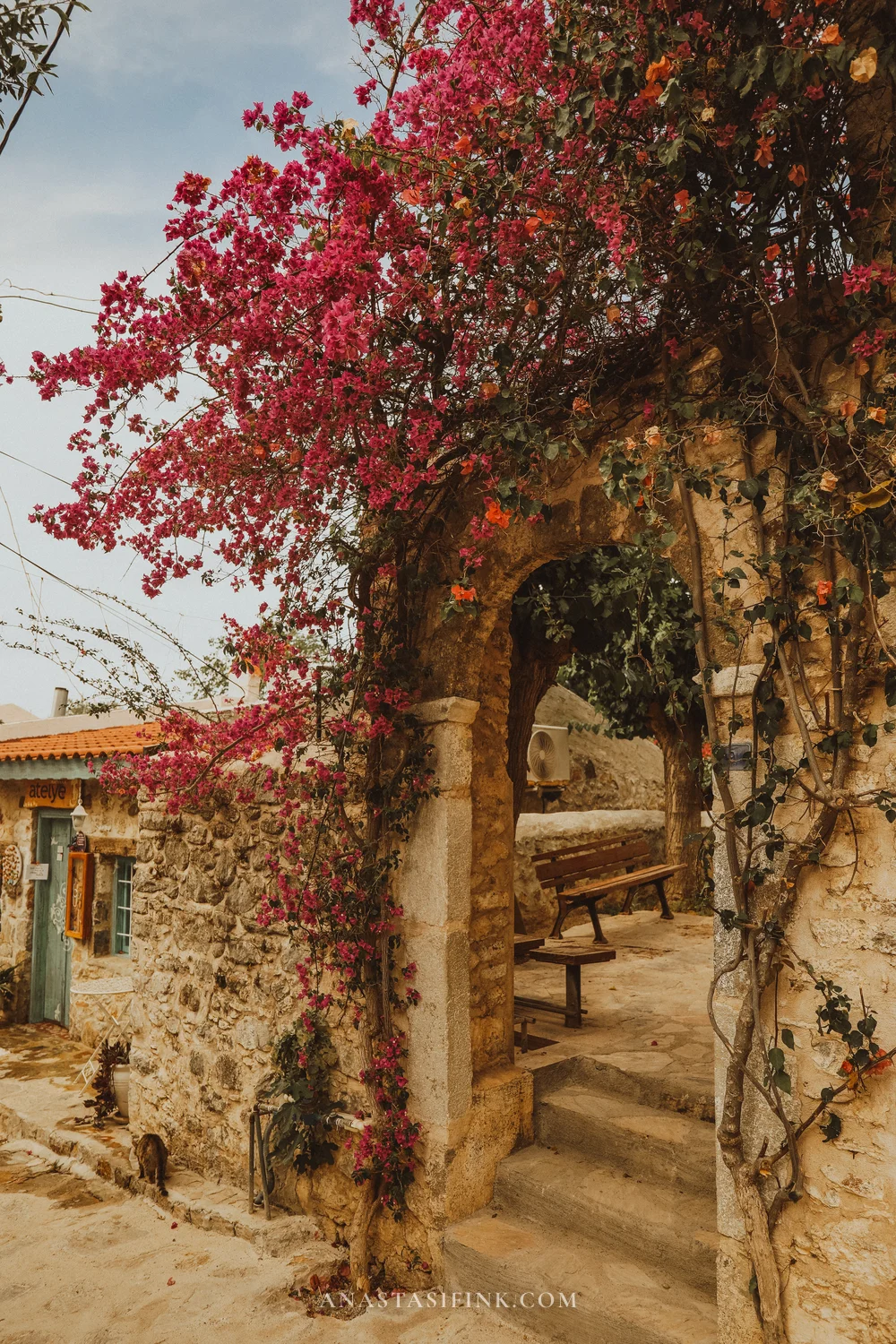
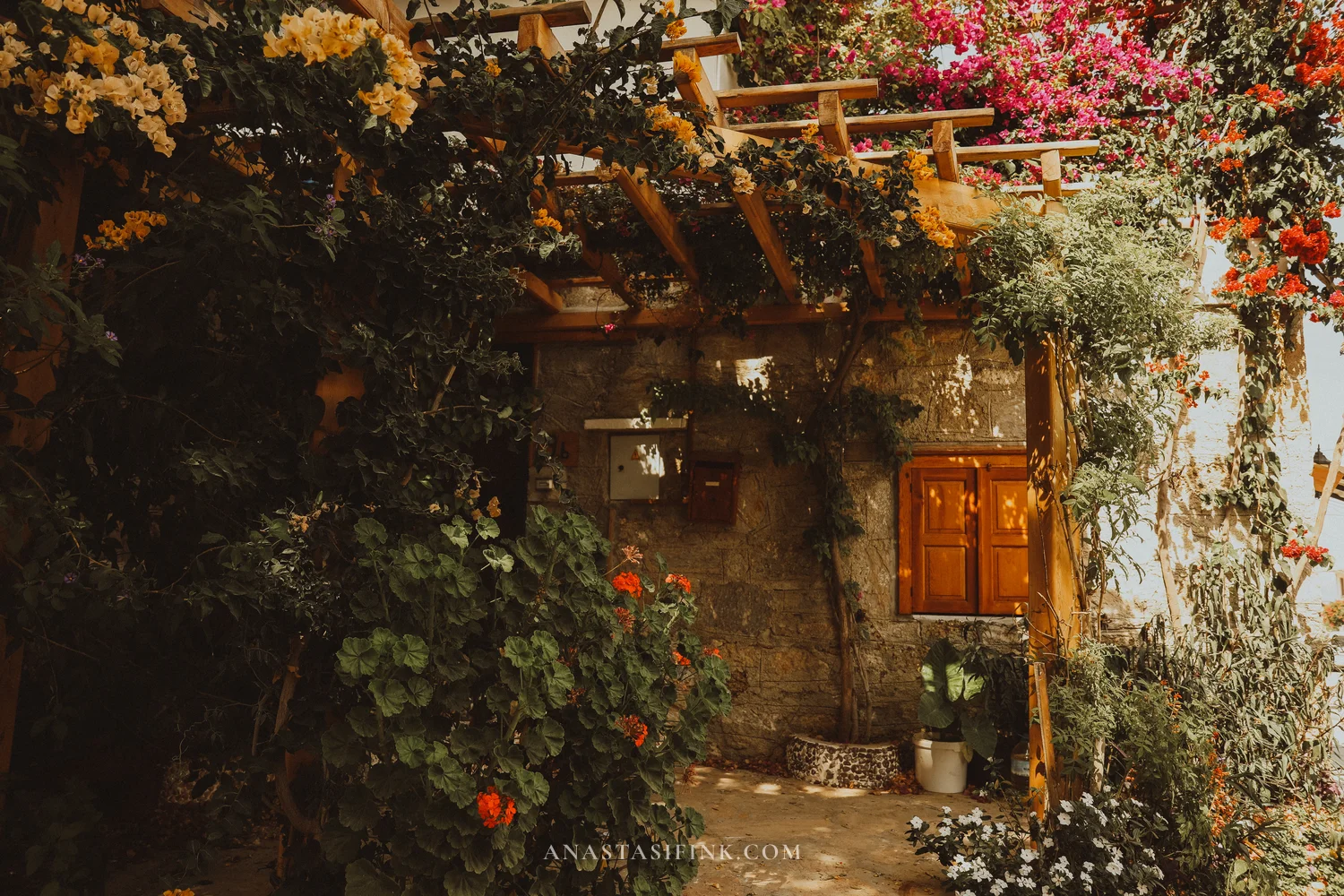
The old town (Eski Datça) is a separate neighborhood a few kilometers from the center. Twenty years ago it was practically an abandoned village. Now the houses have been restored, and boutique hotels, workshops, and cafés have moved in. But it hasn’t been polished to a shine — it’s still quiet, cats roam the streets, and bougainvillea spills out from every corner.
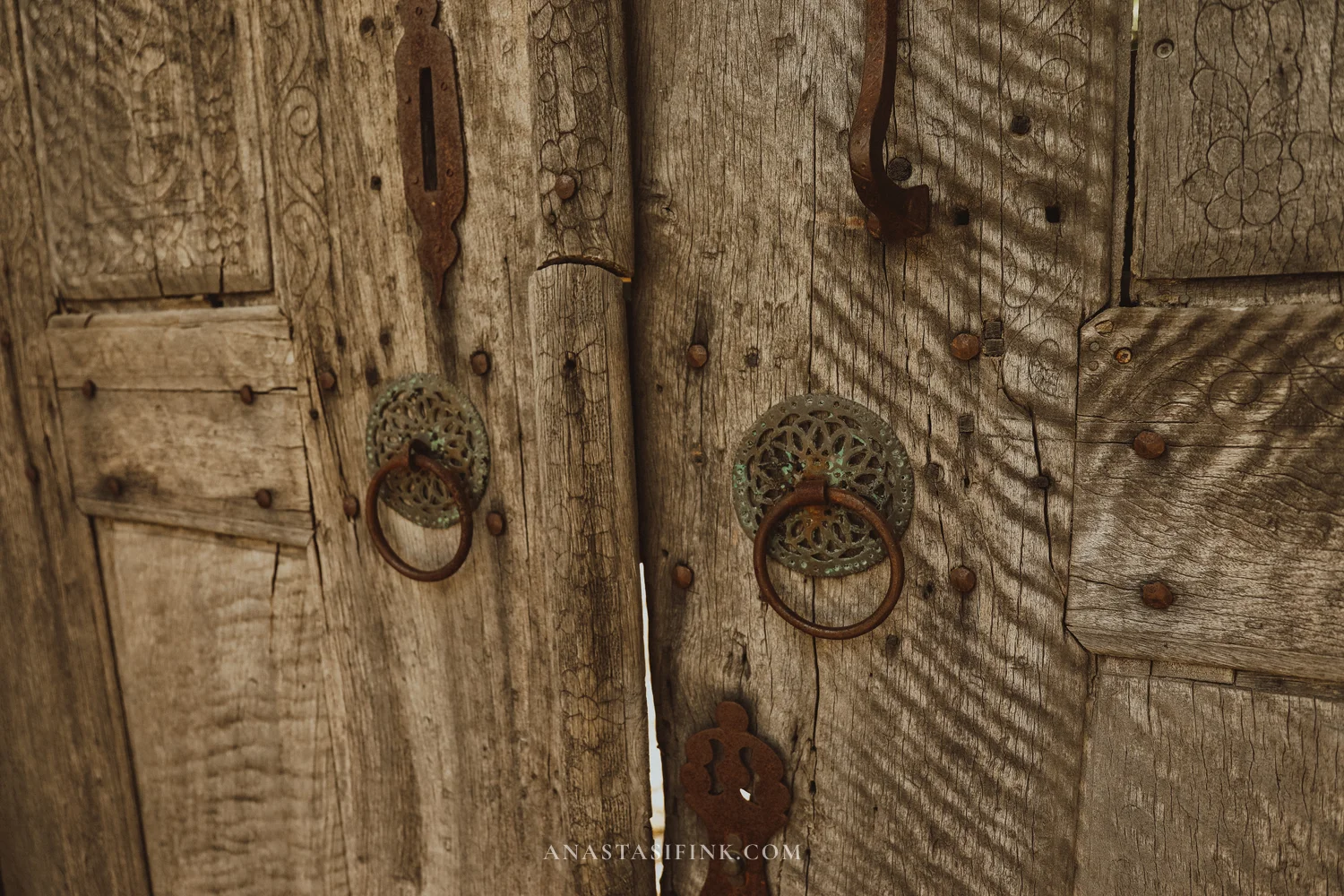
On the way to the old town, I’d suggest stopping by one spot — here are the coordinates. It was closed when we visited, but if you’re lucky enough to find it open — go in. There are beautiful antique doors and a courtyard inside.
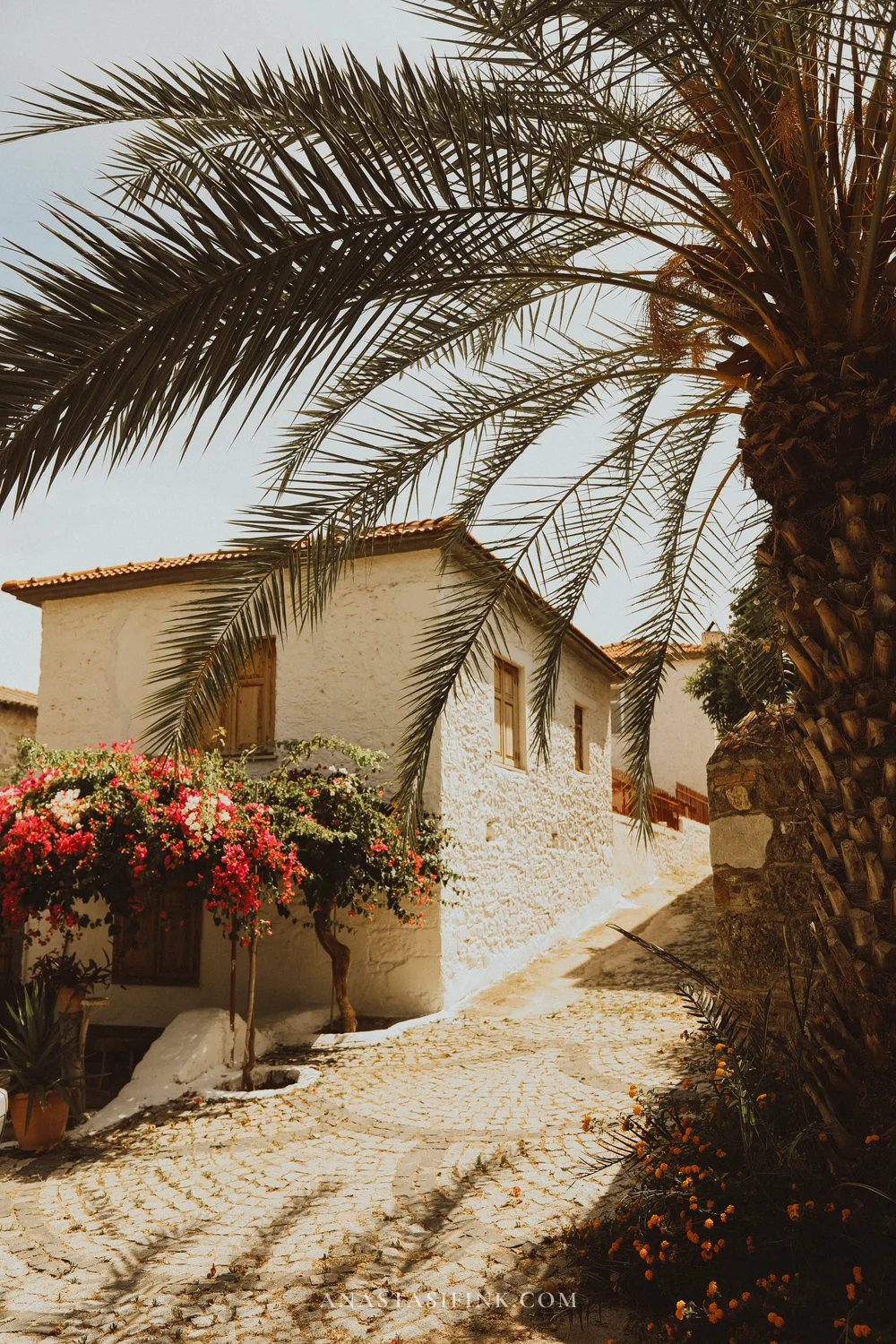
Turkish poet Can Yücel lived and is buried in Eski Datça — think of him as Turkey’s answer to Bukowski, a rebel poet with a razor-sharp tongue. His house stands on one of the lanes, and the café “Orhan’ın Yeri” has a corner dedicated to his photos and poems.
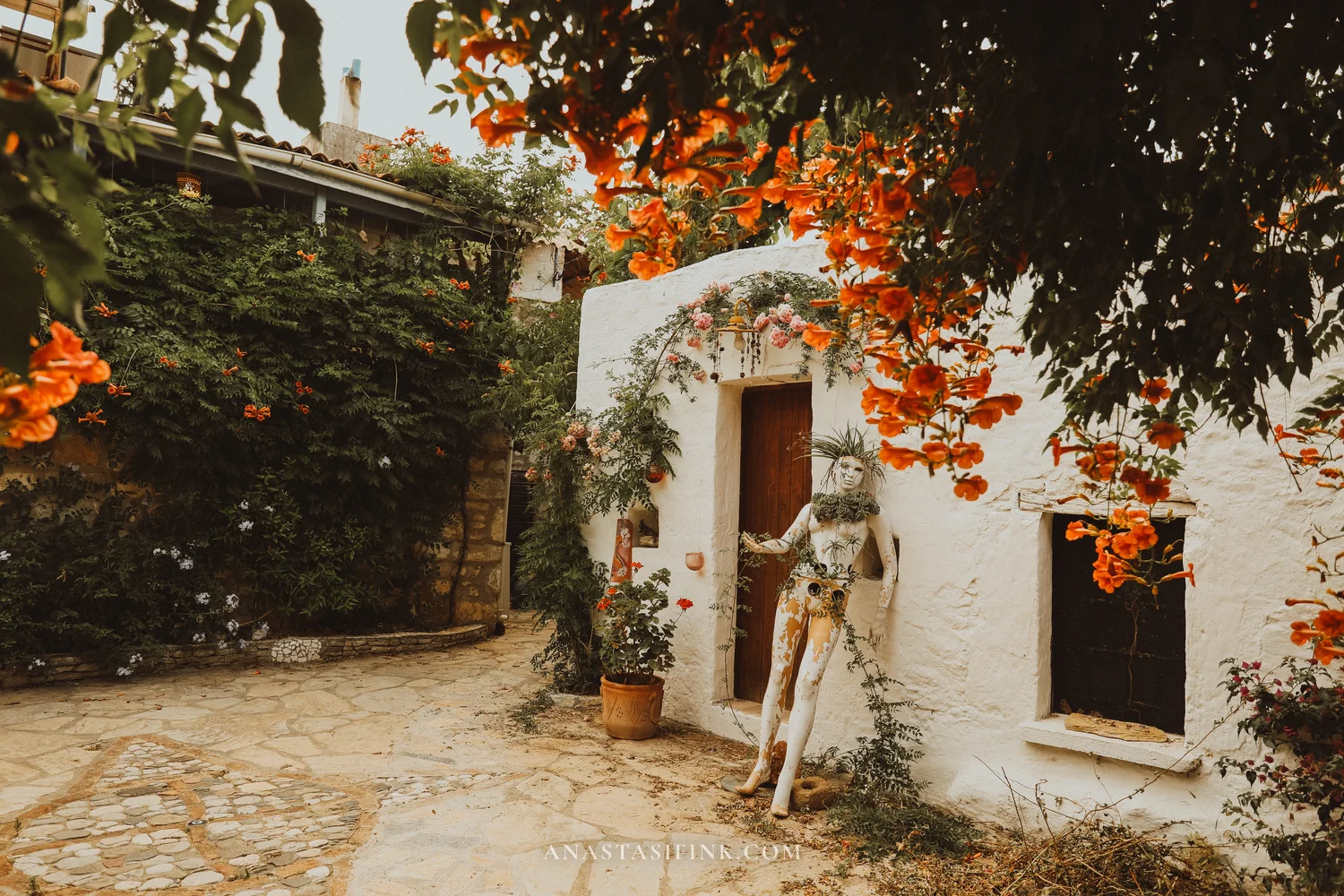
Doors and Details
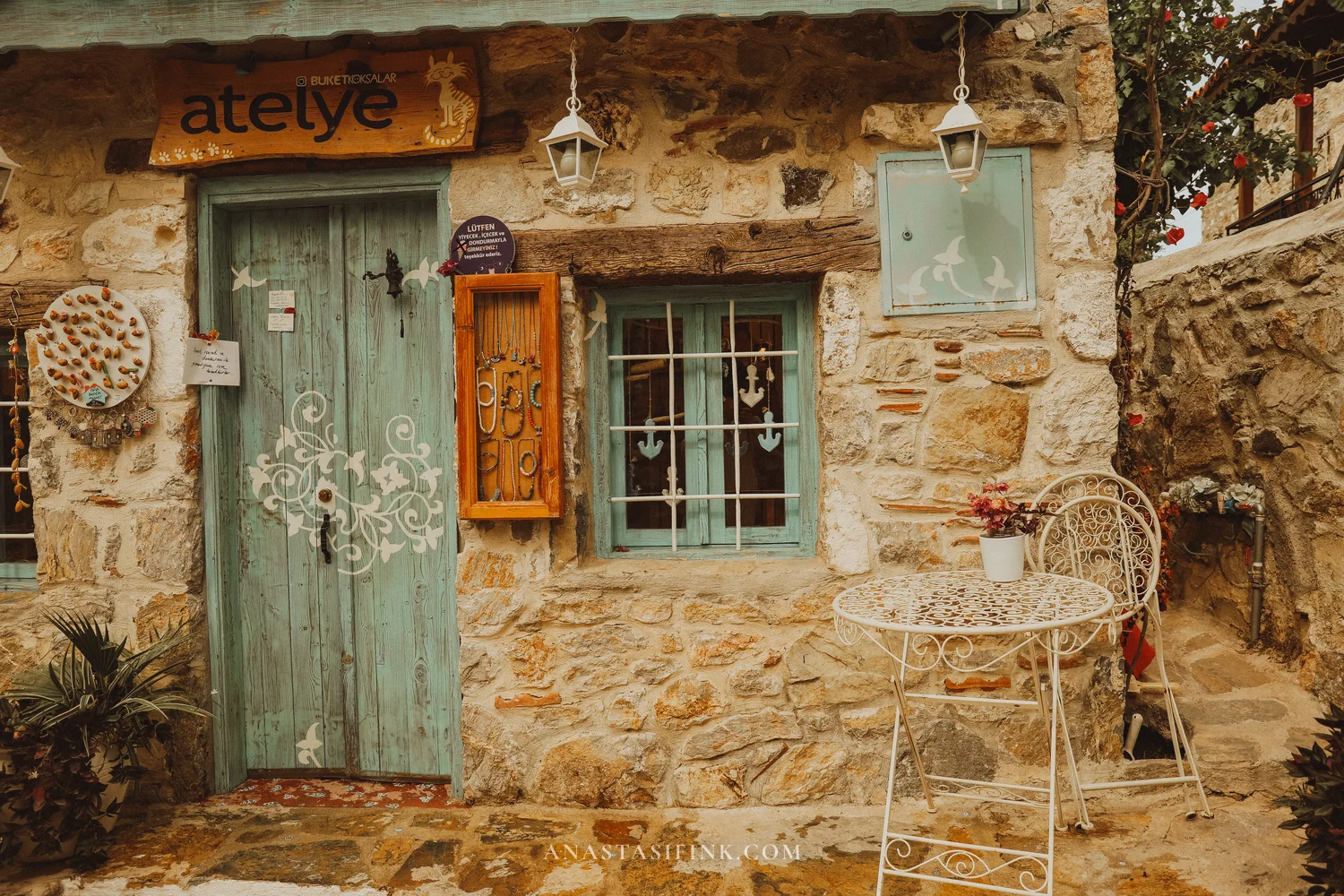
Every door here is different. Some are old wooden ones with wrought-iron ring knockers. Others have been freshly restored and painted turquoise or green, with matching shutters.
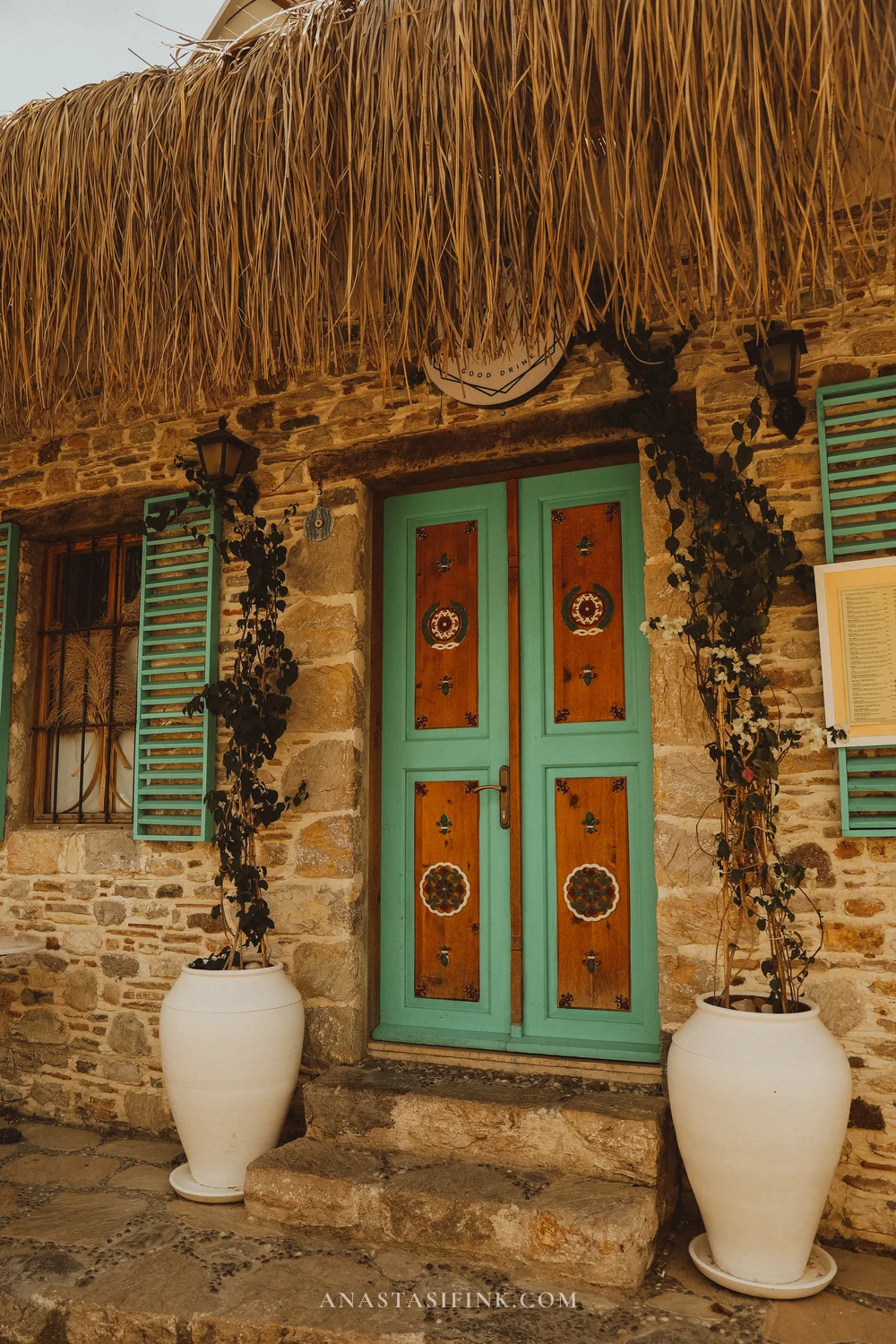
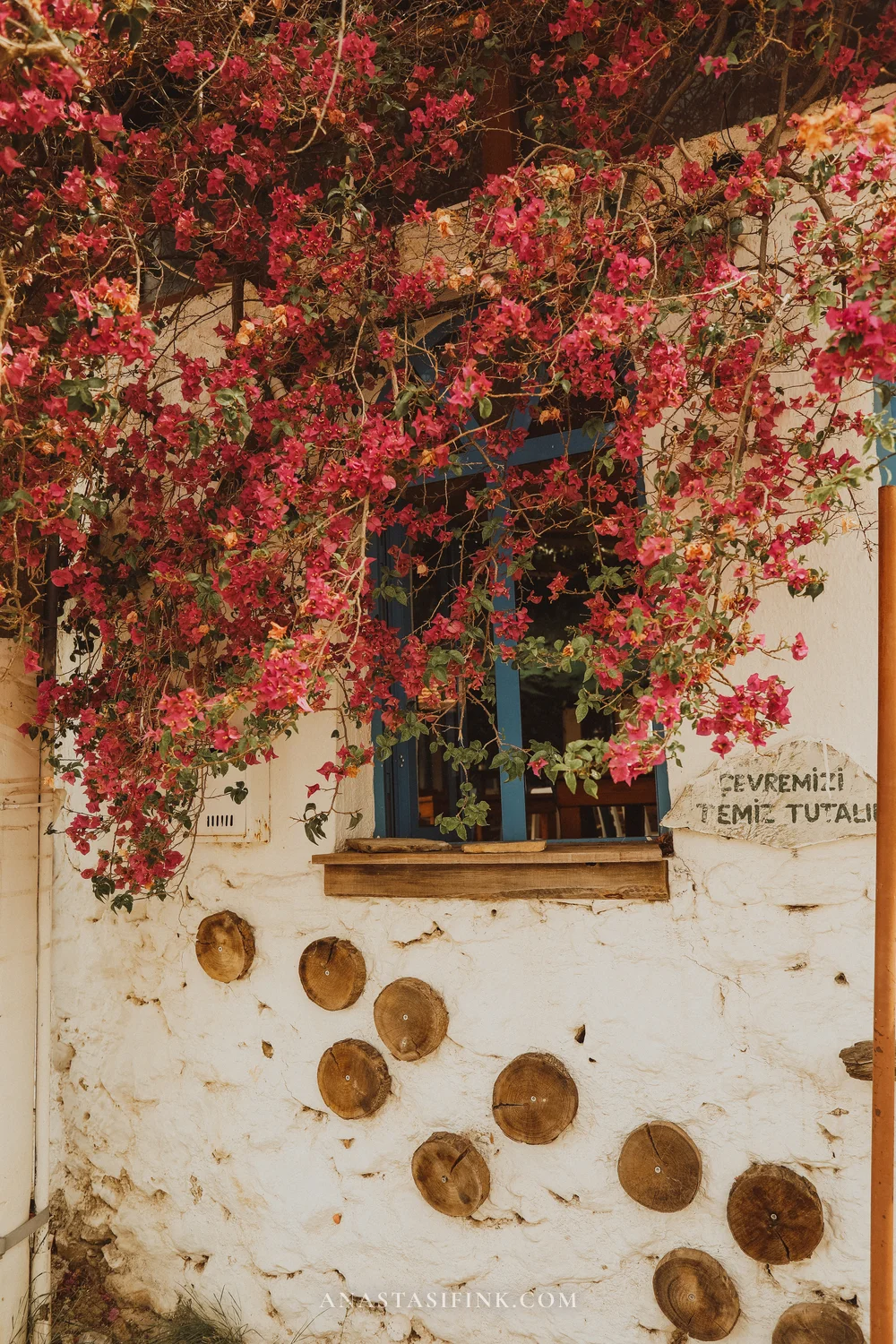
Each house restored in its own style
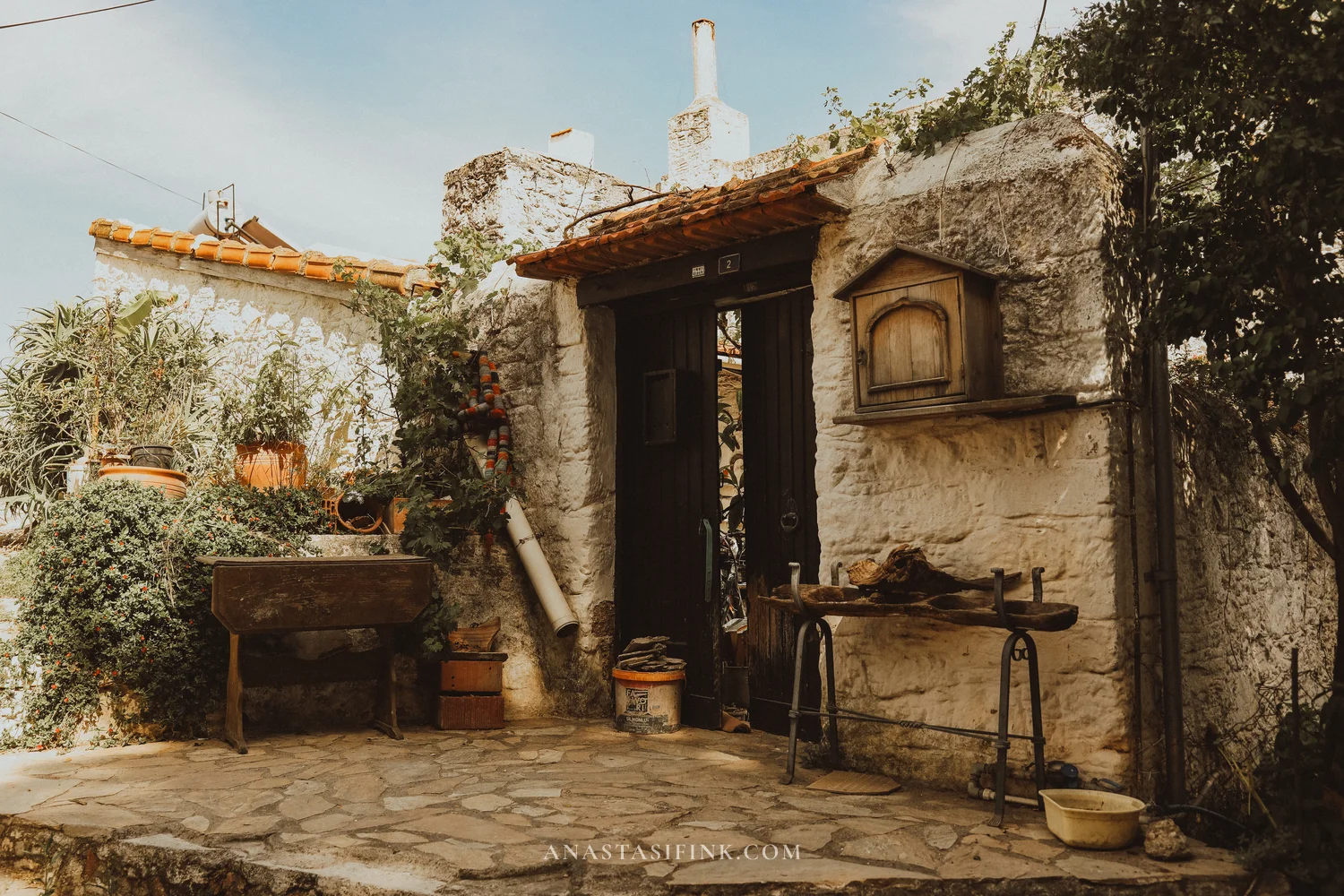
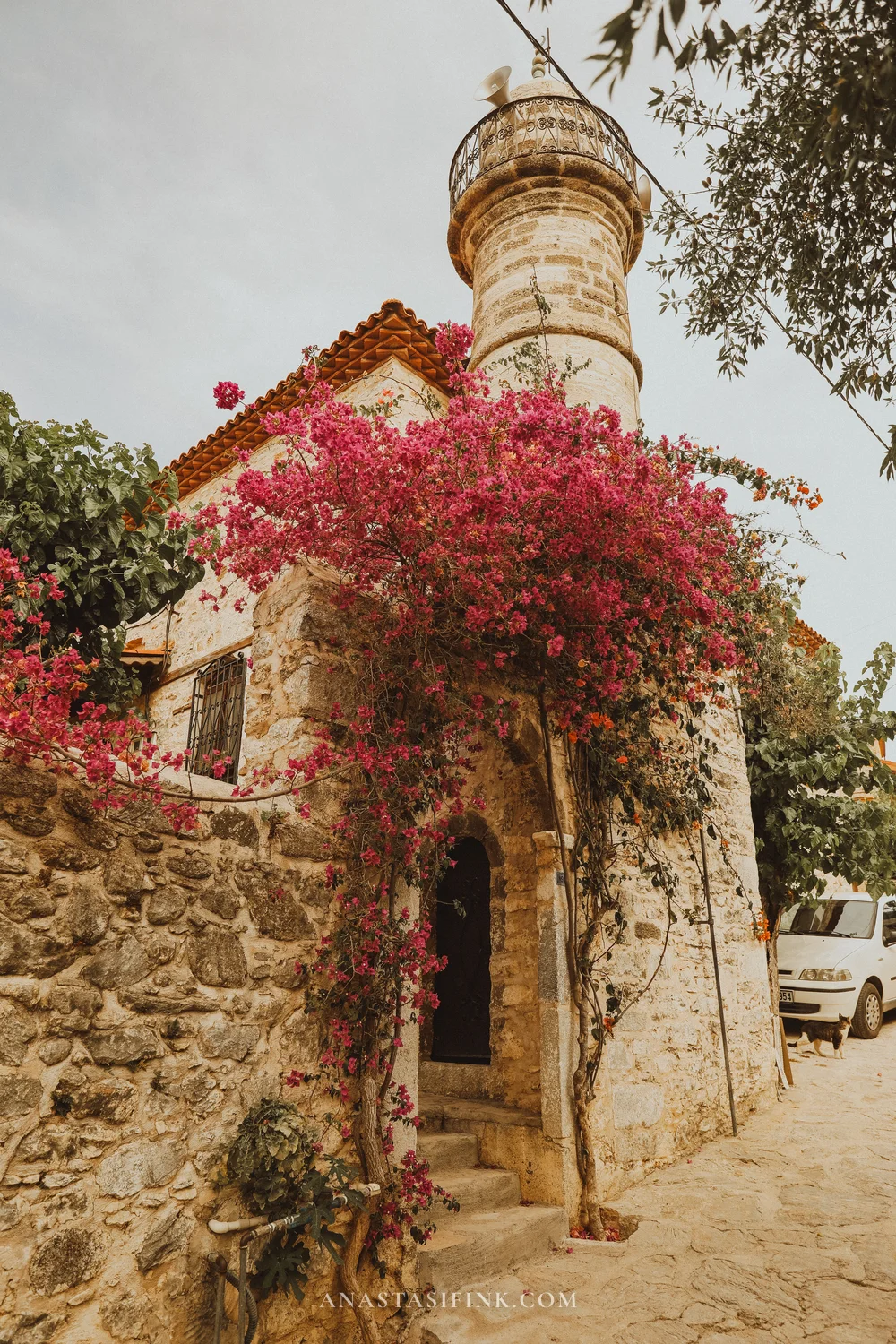
The Mosque in Bougainvillea
There’s a small mosque in the old town that’s easy to miss in summer — pink bougainvillea covers it almost entirely. Only the minaret peeks through.
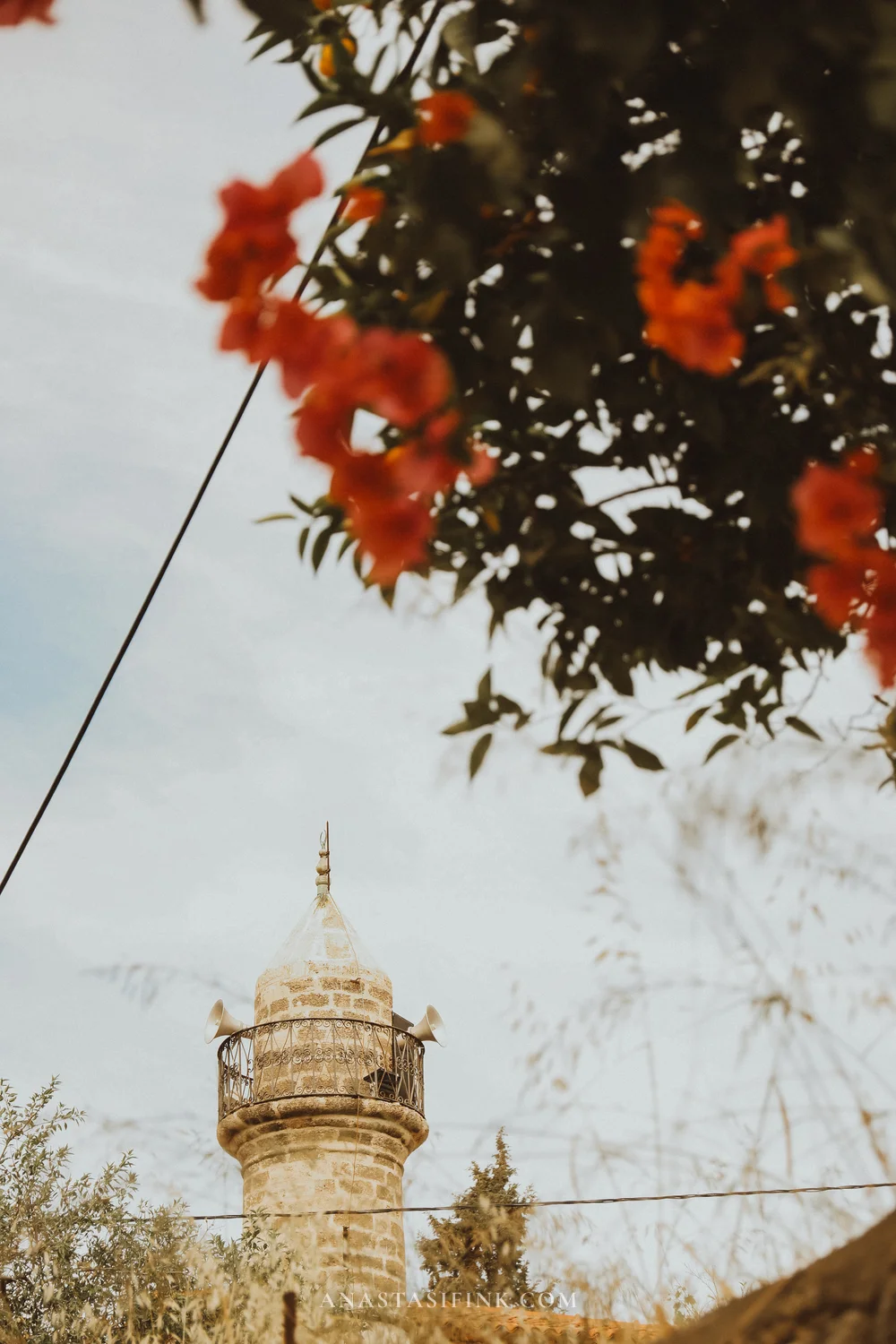
Same mosque, different angles
Flowers
If you visit in June — everything is in bloom. Bougainvillea wraps around every other house, campsis (those orange trumpet-shaped flowers) pushes through the stones, and courtyards are full of jasmine in pots.
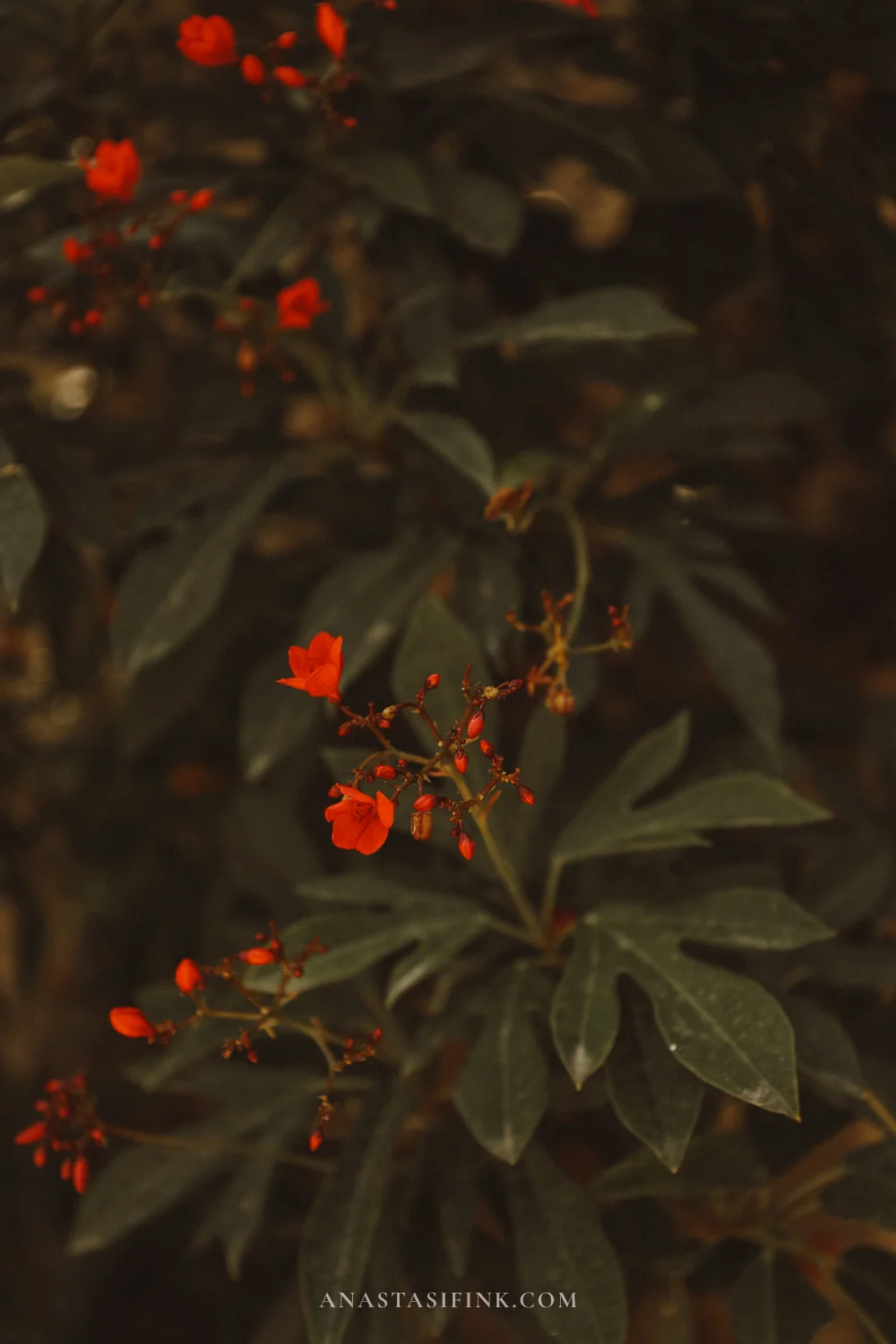
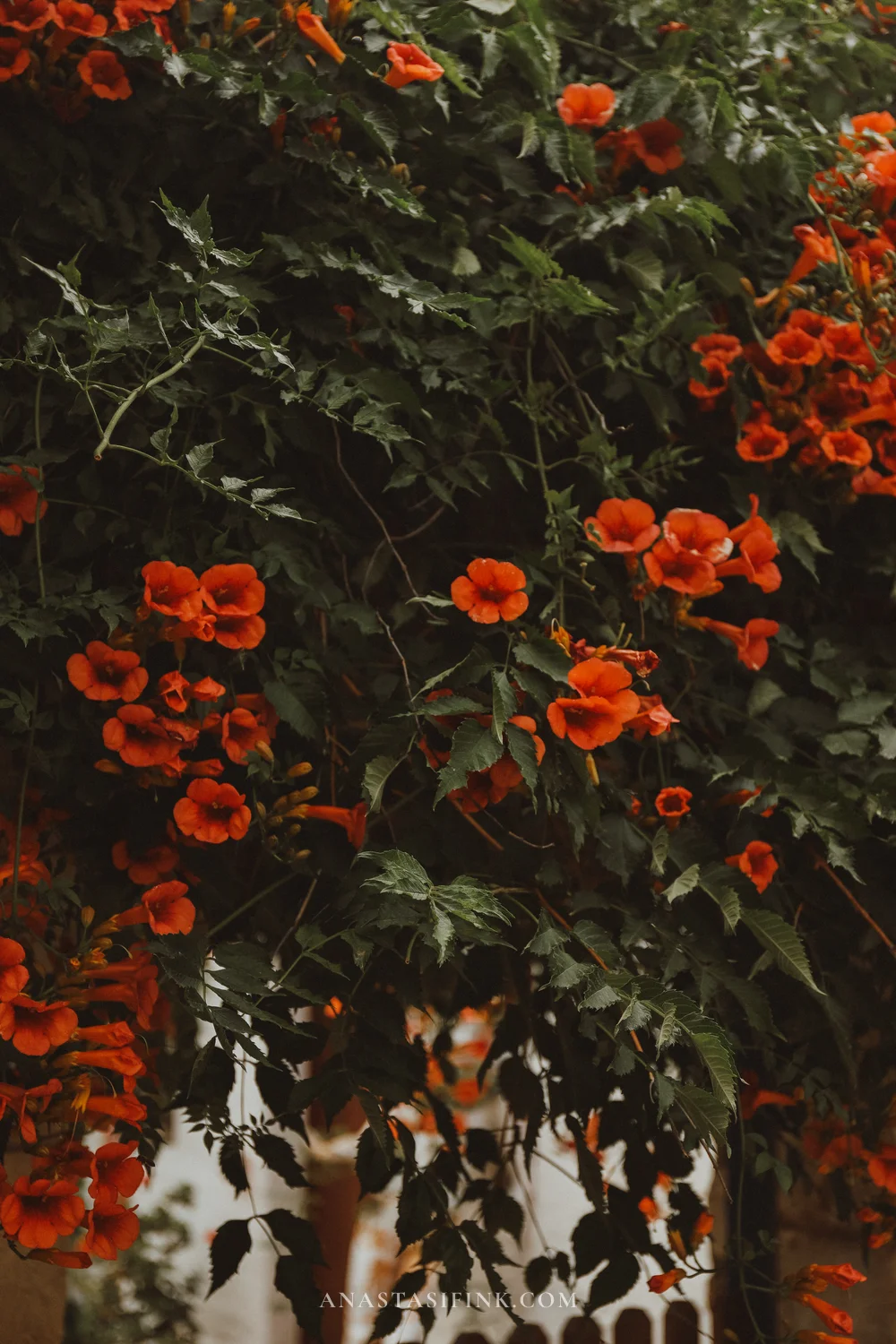
The red ones are campsis, not bougainvillea. Grows on every fence here
Cats and Dogs
There are cats everywhere. They lie in the shade, pose for photos, and don’t budge even if you walk right up to them.
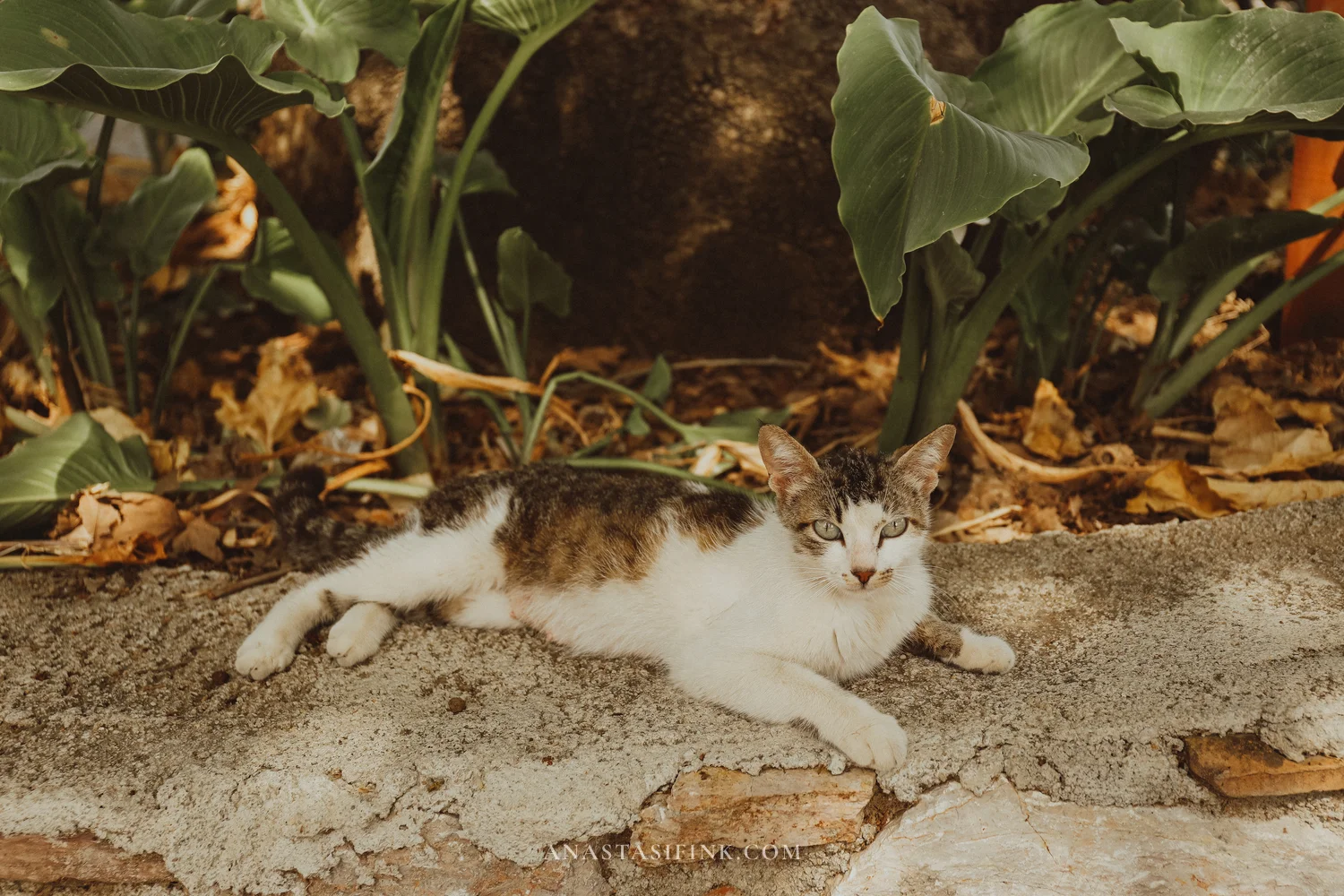
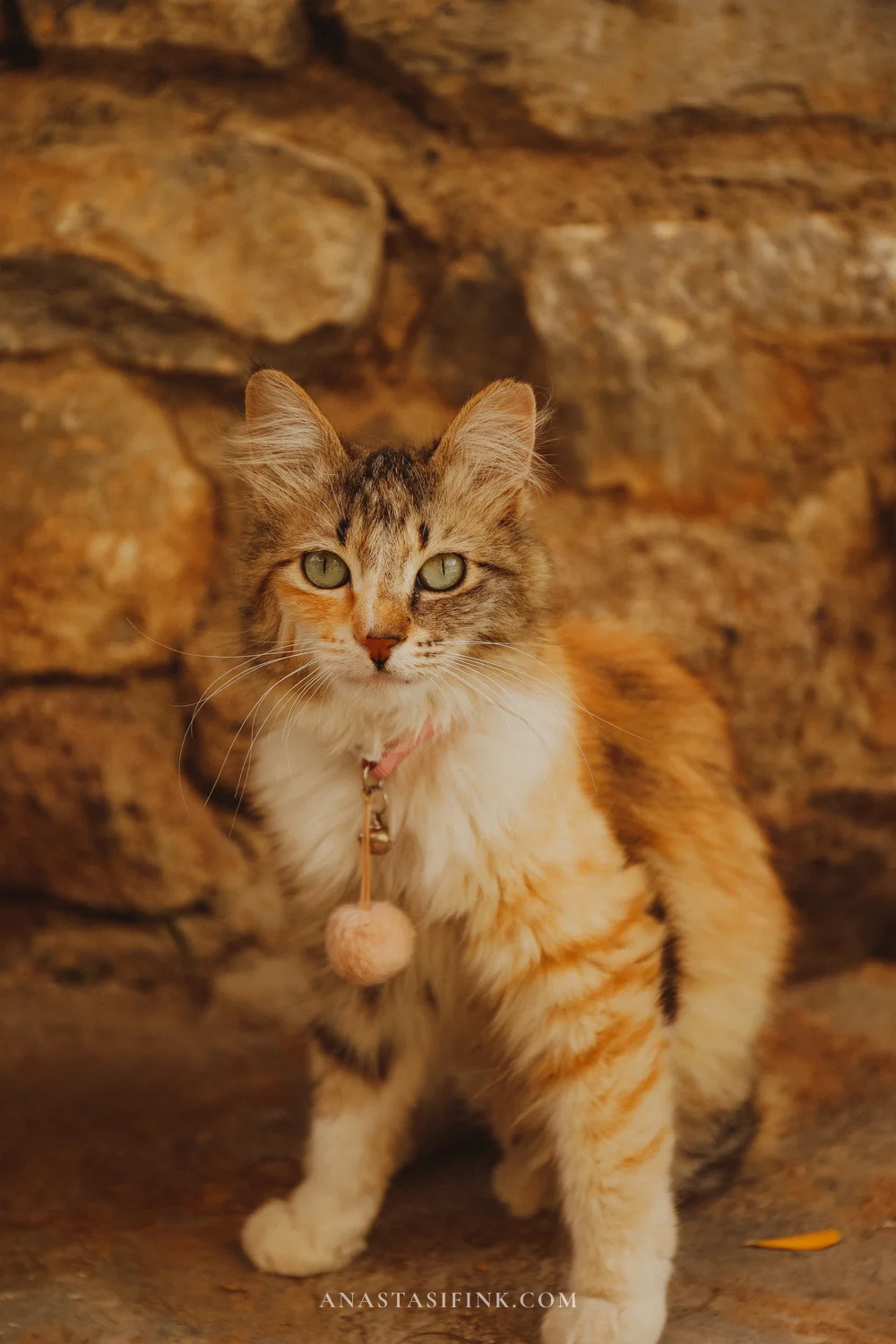
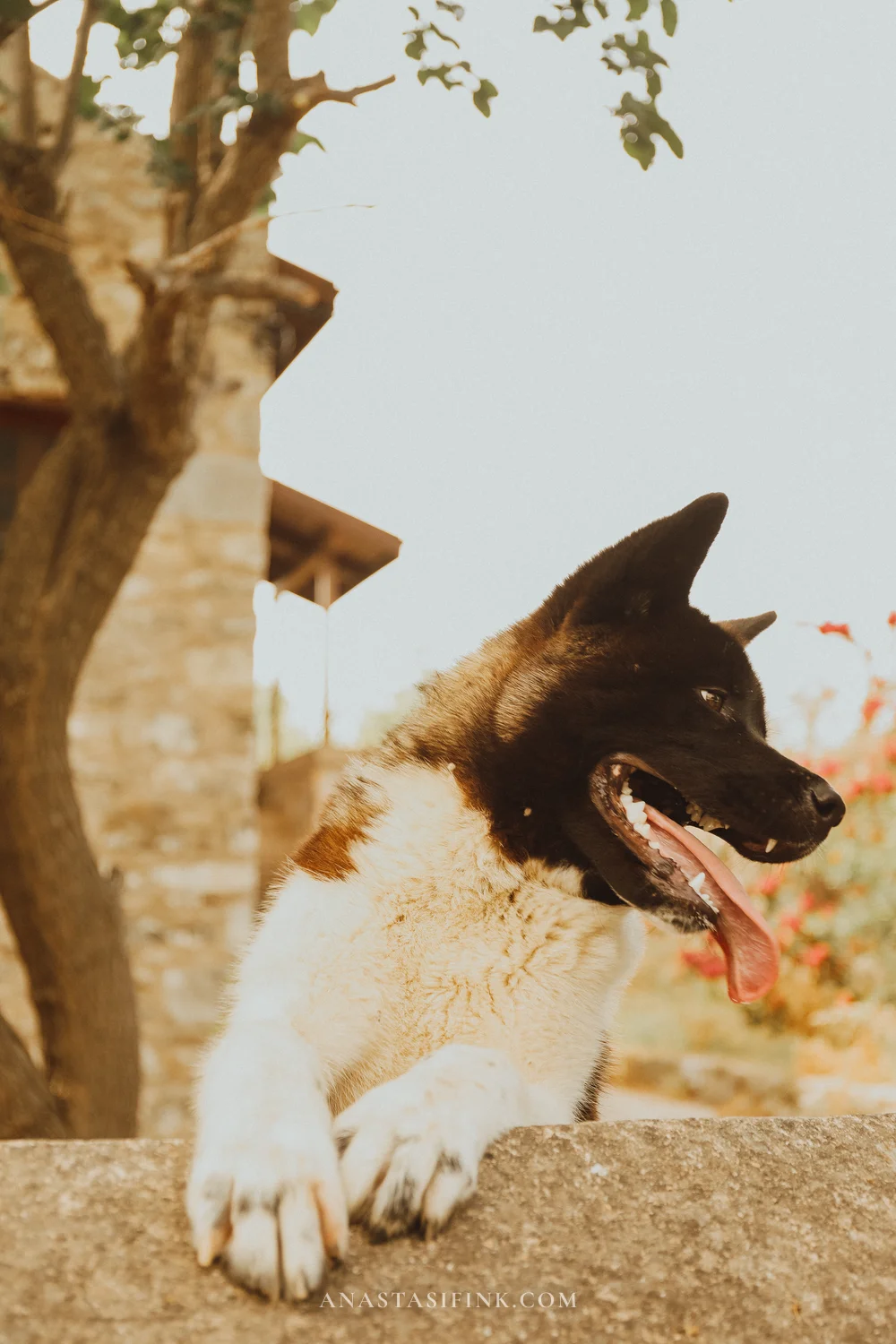
Locals — fluffy and not so fluffy
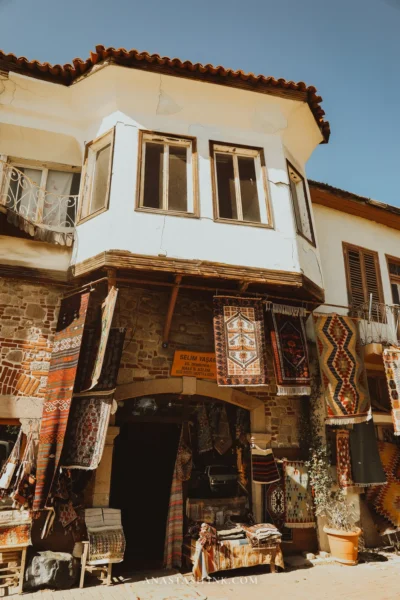
Shops and Souvenirs: Almonds, Honey, Olive Oil
Datça is all about almonds. The peninsula is covered in almond trees, and every shop sells almond paste, almond oil, and almond sweets. You’ll also find local olive oil, homemade jams made from figs and citrus, fresh lemonades, and handmade soap.
On the old town square there’s a shop called “Elif’in El Sanatları” — shell jewelry, magnets, handmade crafts. Right next to it is the “Badem” café (badem means almond in Turkish, naturally).
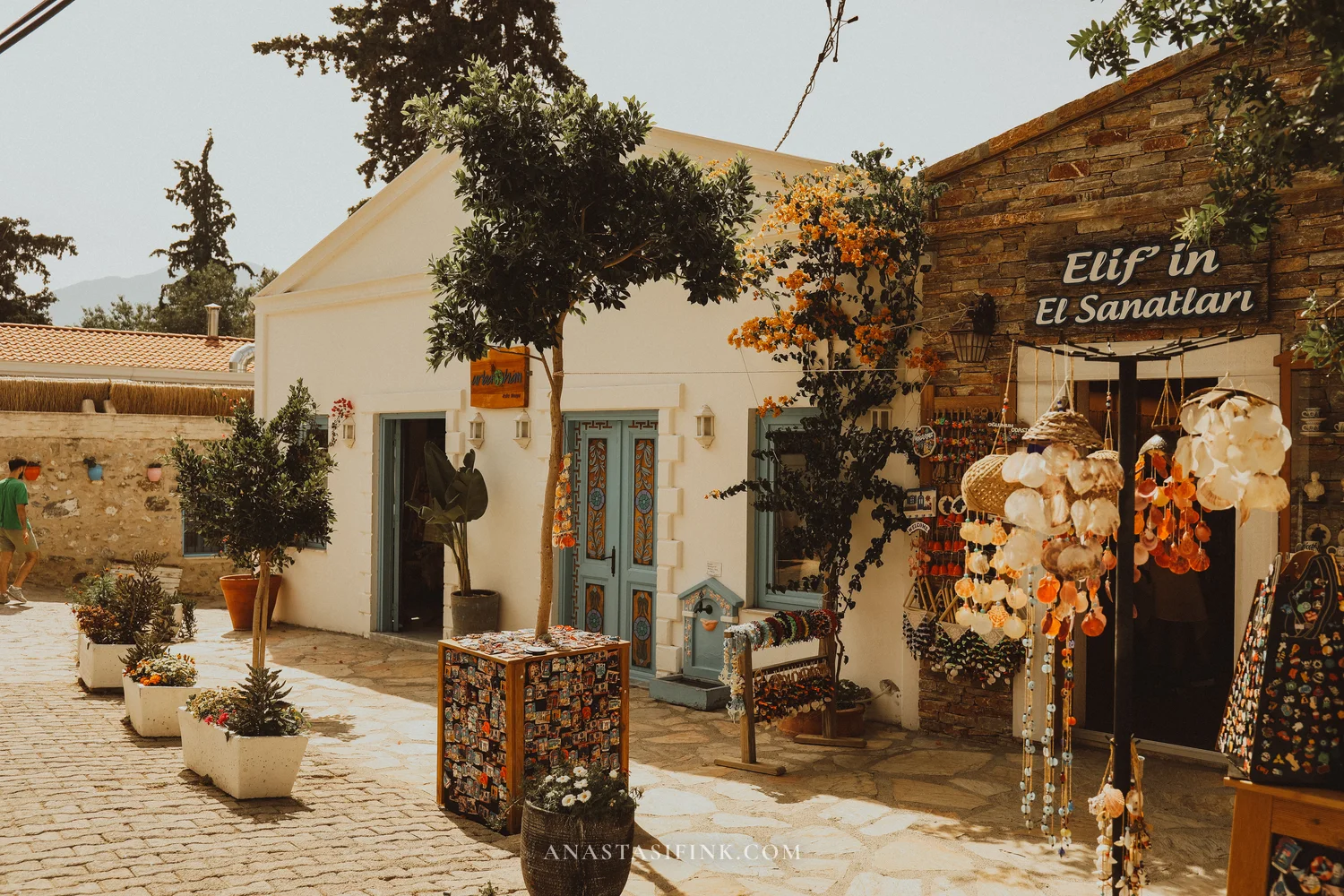
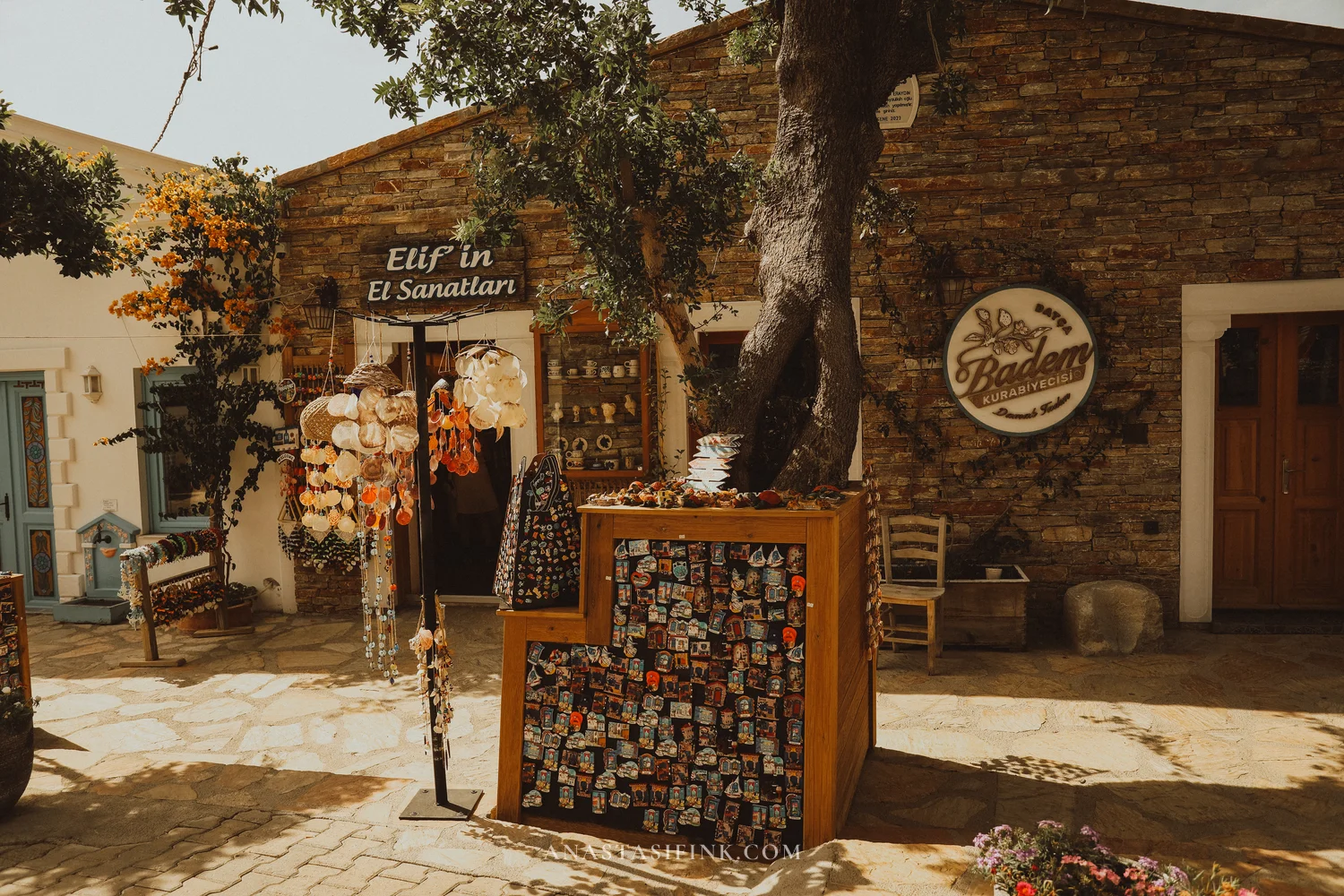
Google Maps
- Google Maps: Souvenir shop
I’d recommend popping into one of the grocery shops and trying the local jams and lemonades. A bottle of homemade lemonade goes for 50–100 TL (~$1.5–3), and a jar of jam starts at about 80 TL (~$2.5).
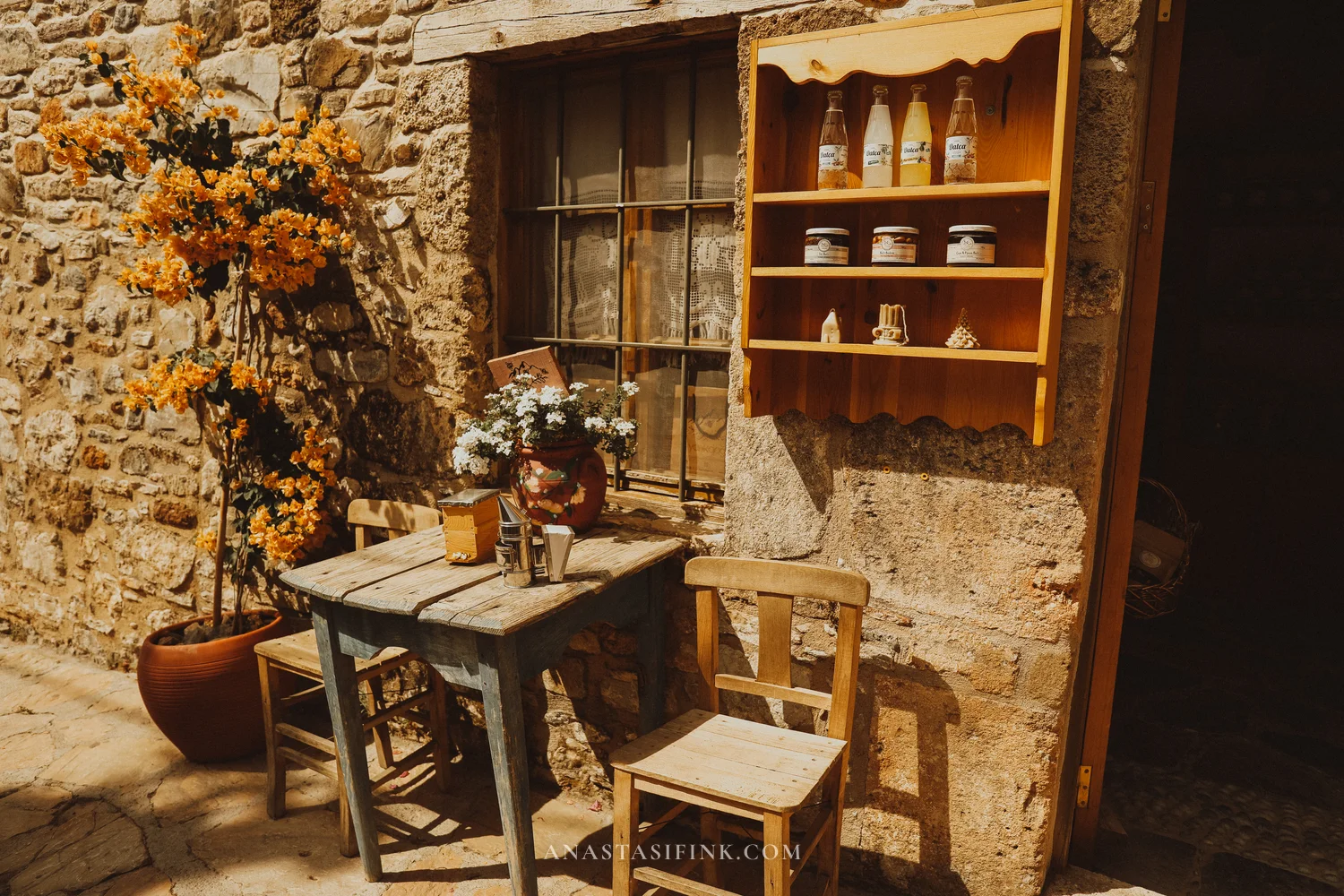
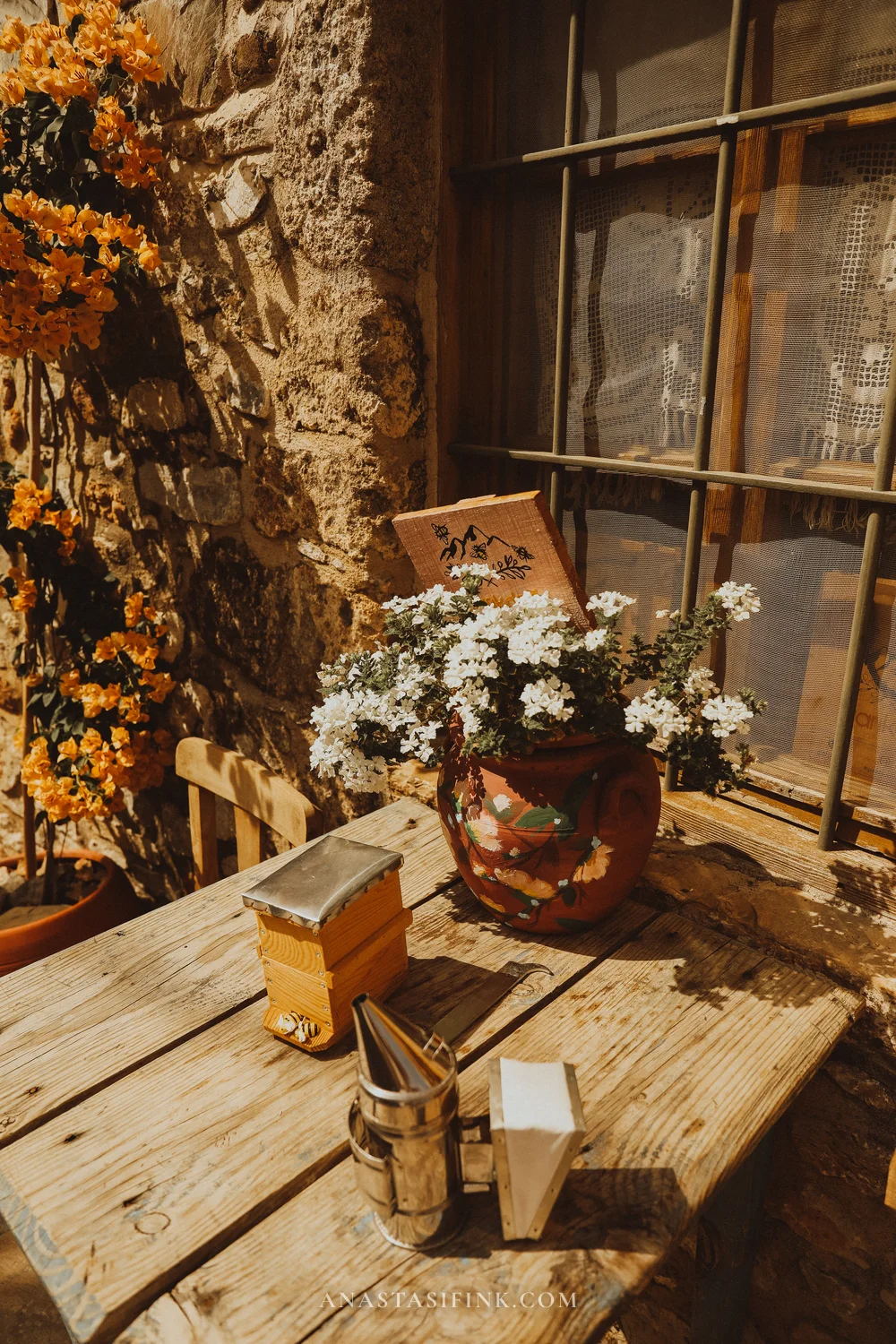
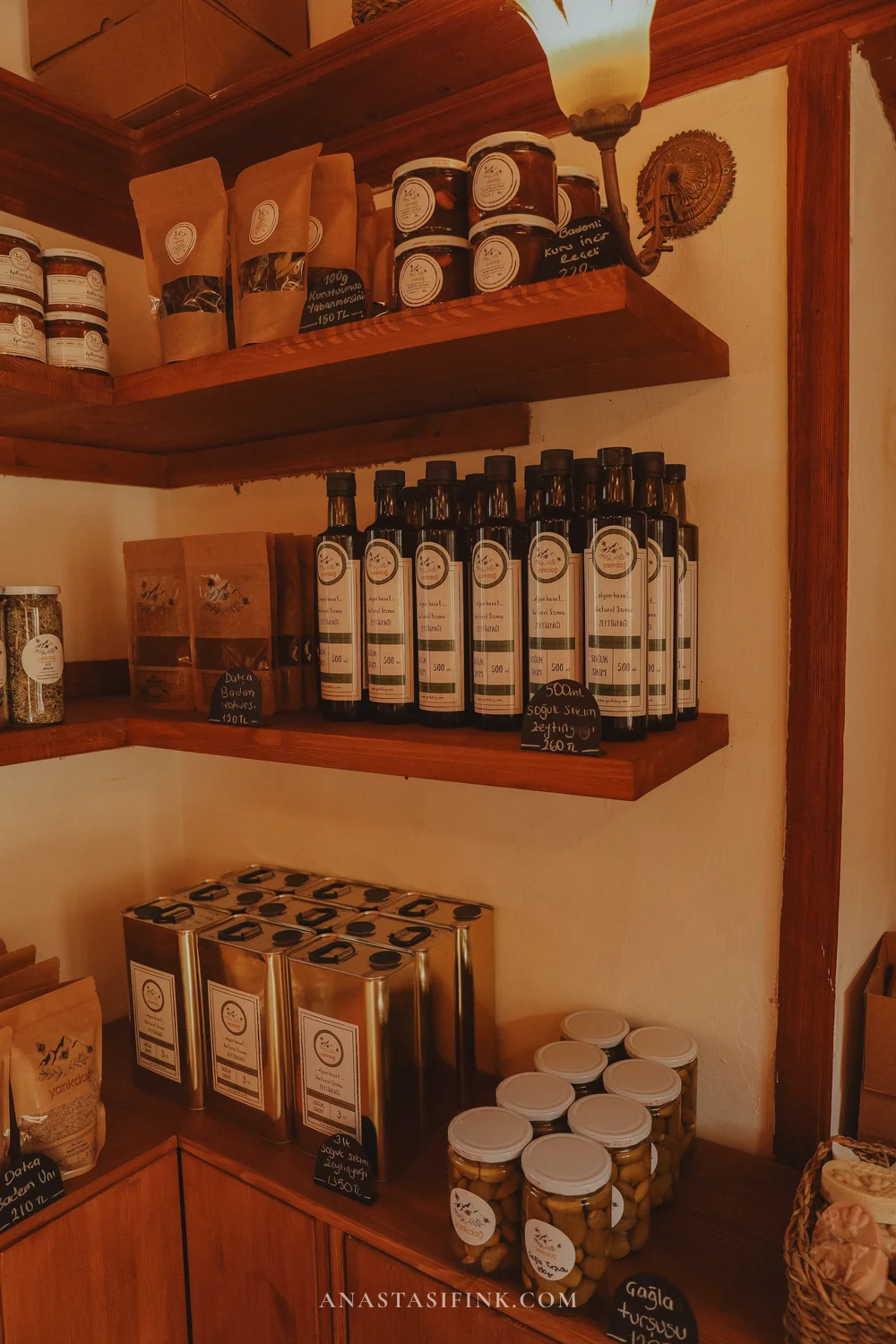
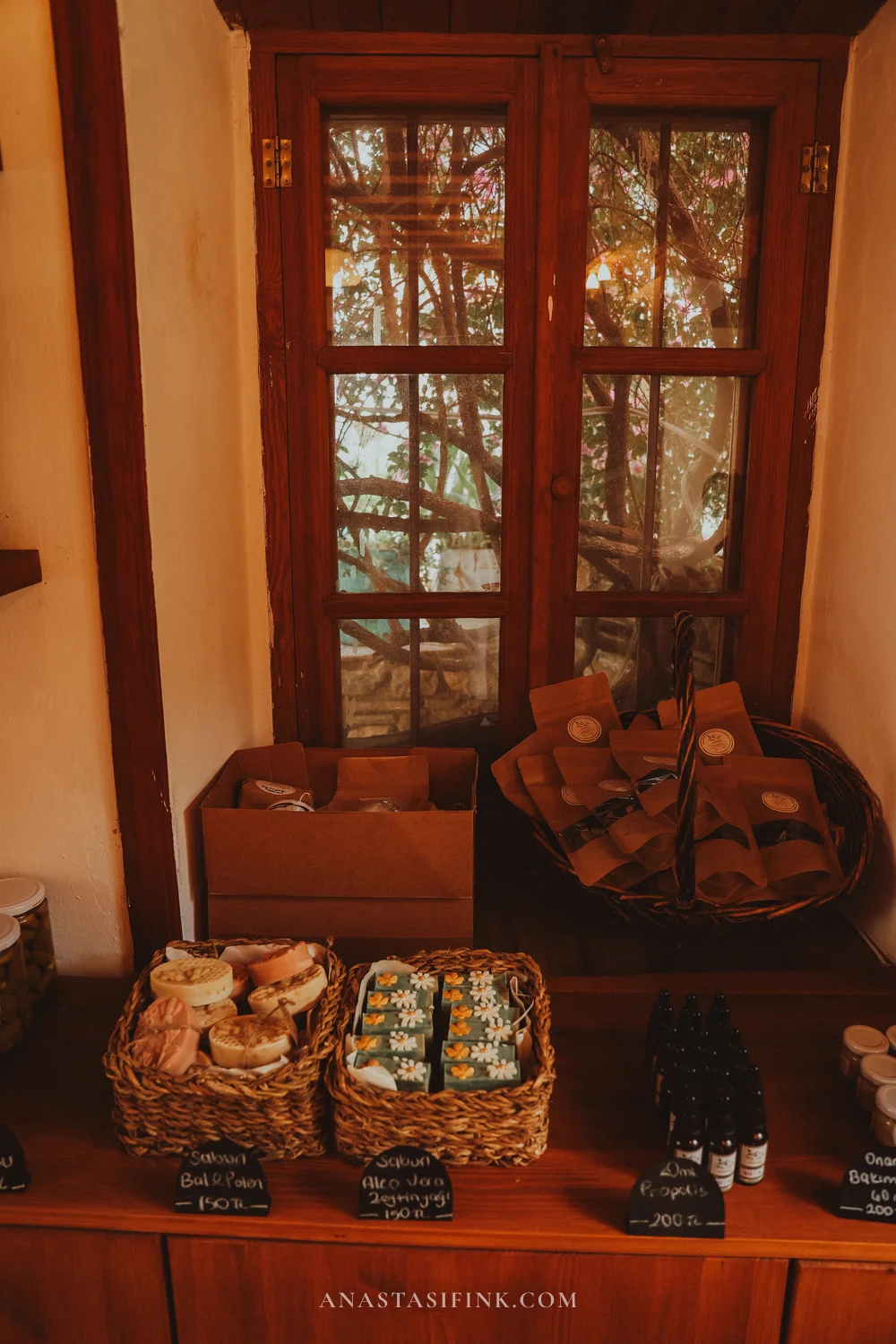
Good souvenir — olive oil or handmade soap
Street Art and Workshops
The most famous mural in Datça is the snail with the inscription “Acelen varsa, ne işin var Datça’da” (“If you’re in a hurry — what are you doing in Datça?”). It’s painted on the wall of the “Tek Buçuk” café, and right next door is “Tekin Usta Dondurma Pakize” — a pastry shop with genuinely good ice cream, by the way.
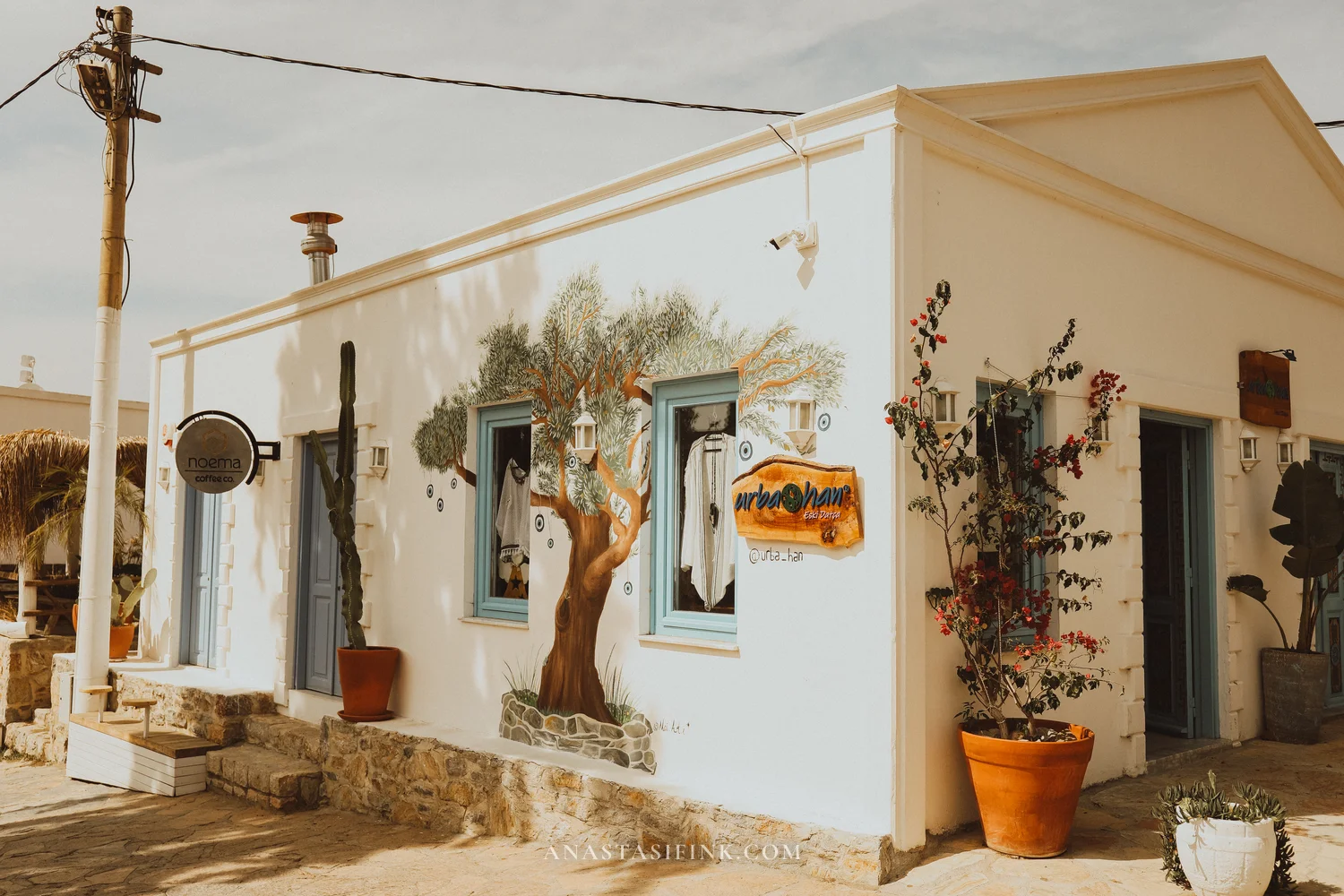
On the next street over there’s a mural of an olive tree and a few art workshops.
Coastal Road: Mountains, Beaches, and Bays
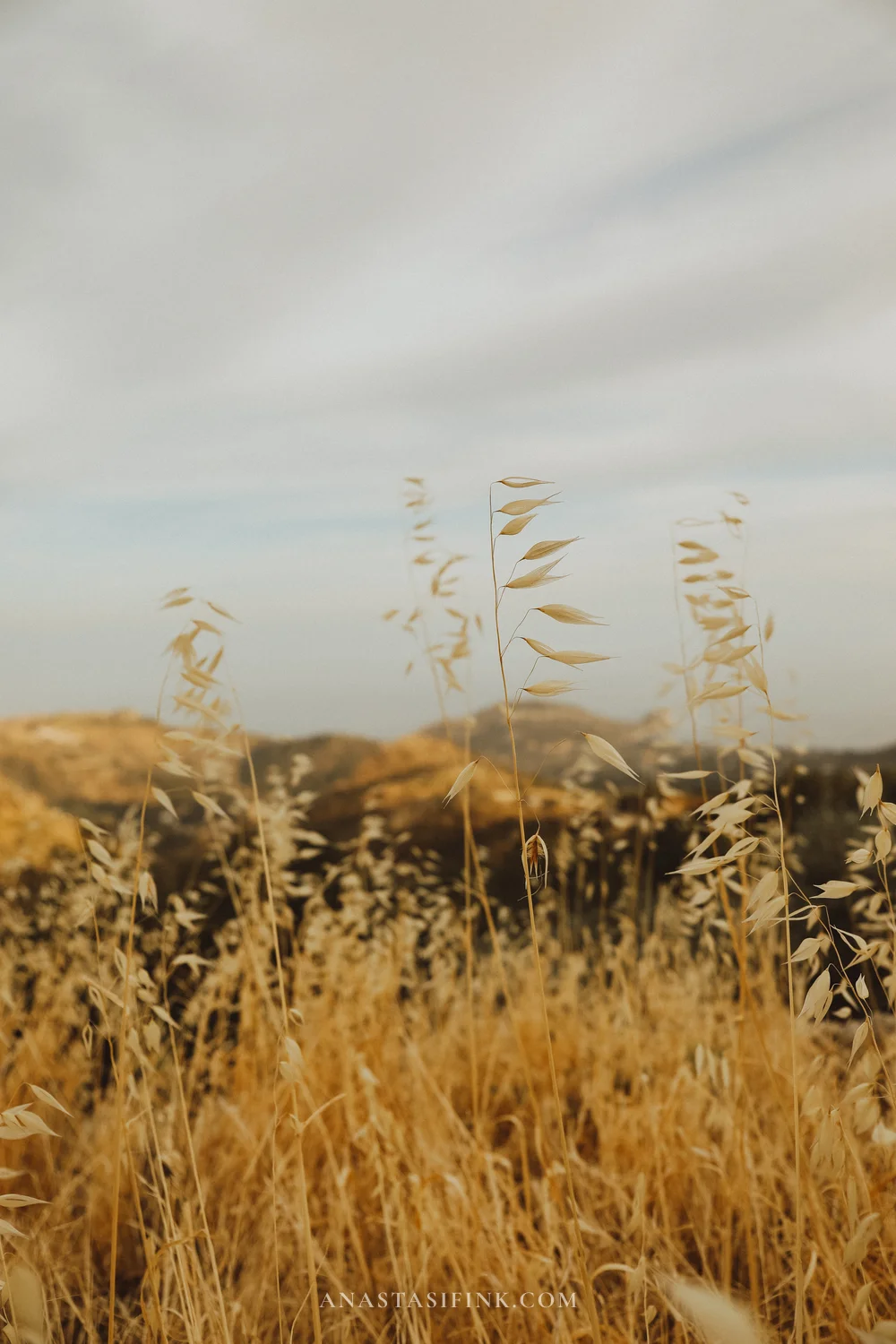
After the old town, we hopped back on the bike and kept riding along the peninsula toward the beaches. The road winds through the mountains with the sea and bays spread out below. Every few kilometers there’s a turnoff leading down to another beach.
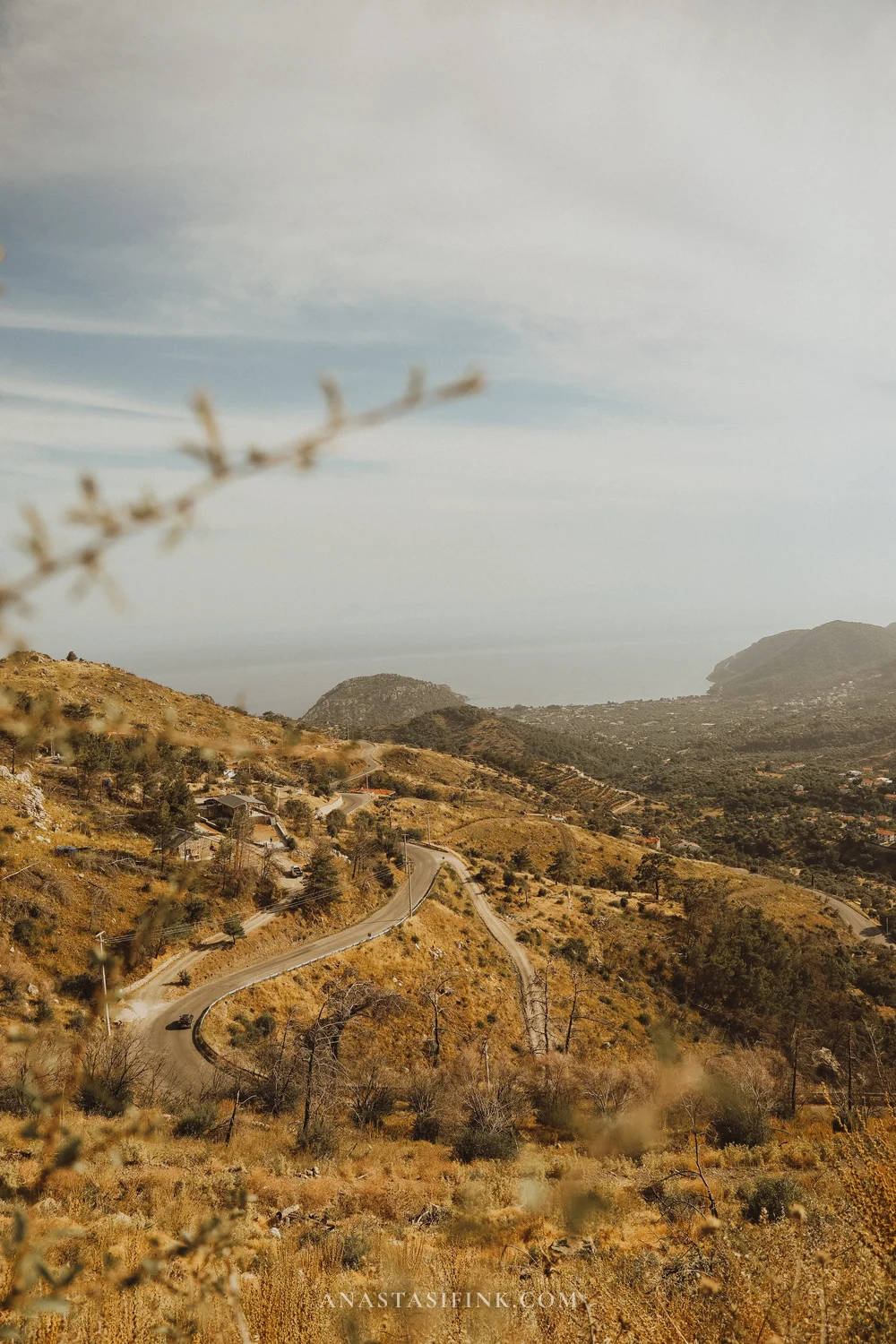
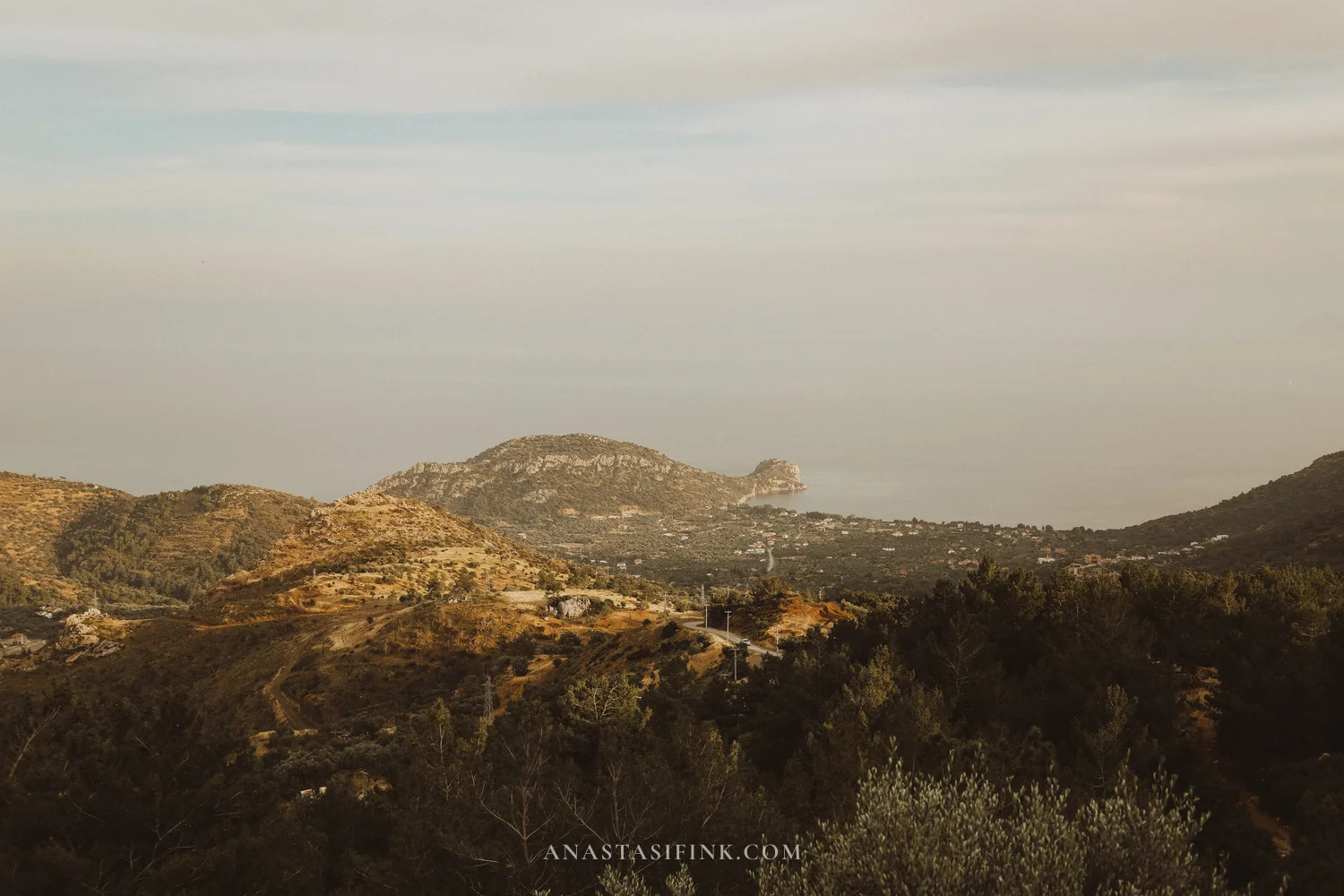
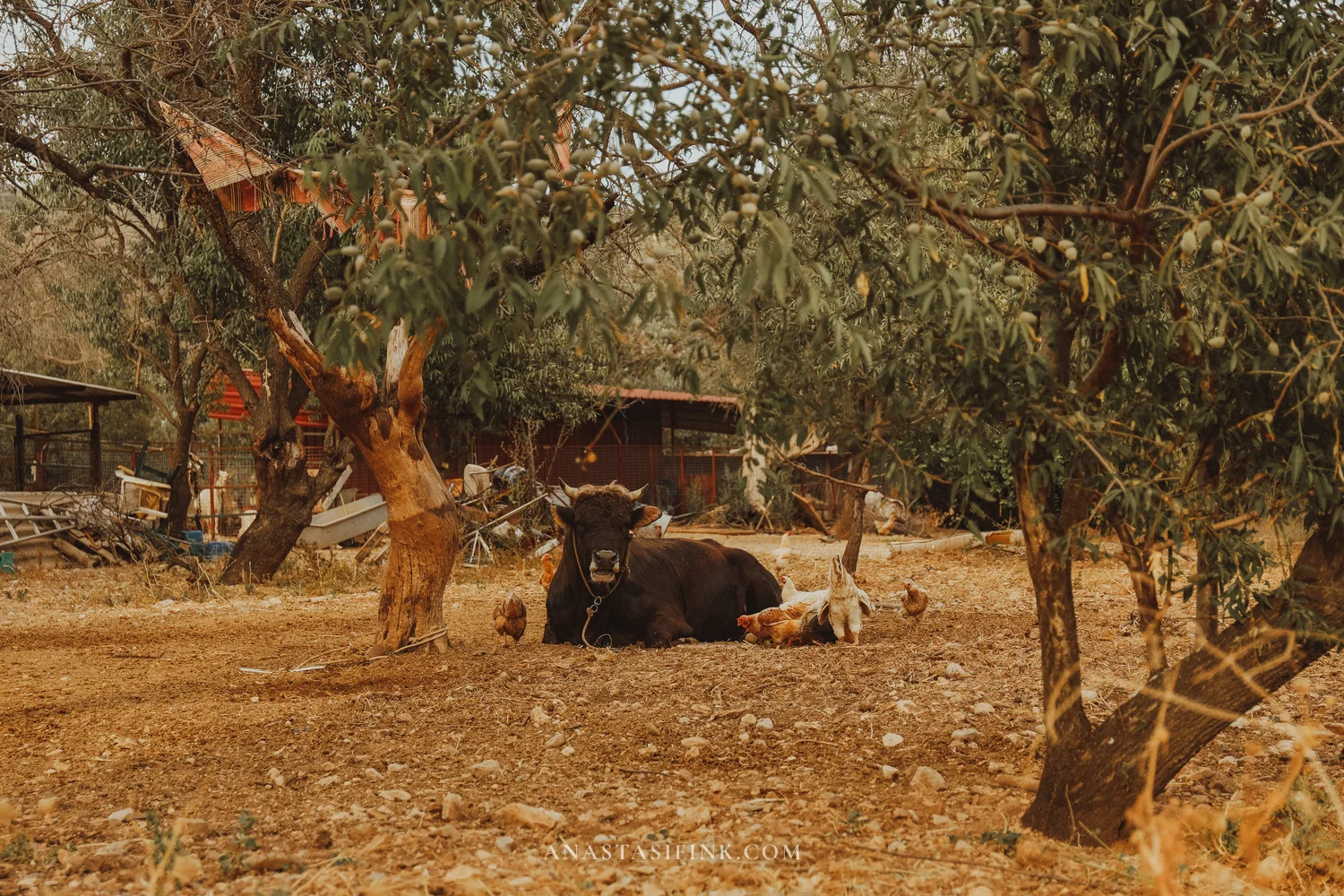
The beaches here are all different: some have sunbeds and a café, others are completely deserted. The water is crystal clear, and the bottom is pebbles and rocks, so water shoes will come in handy.
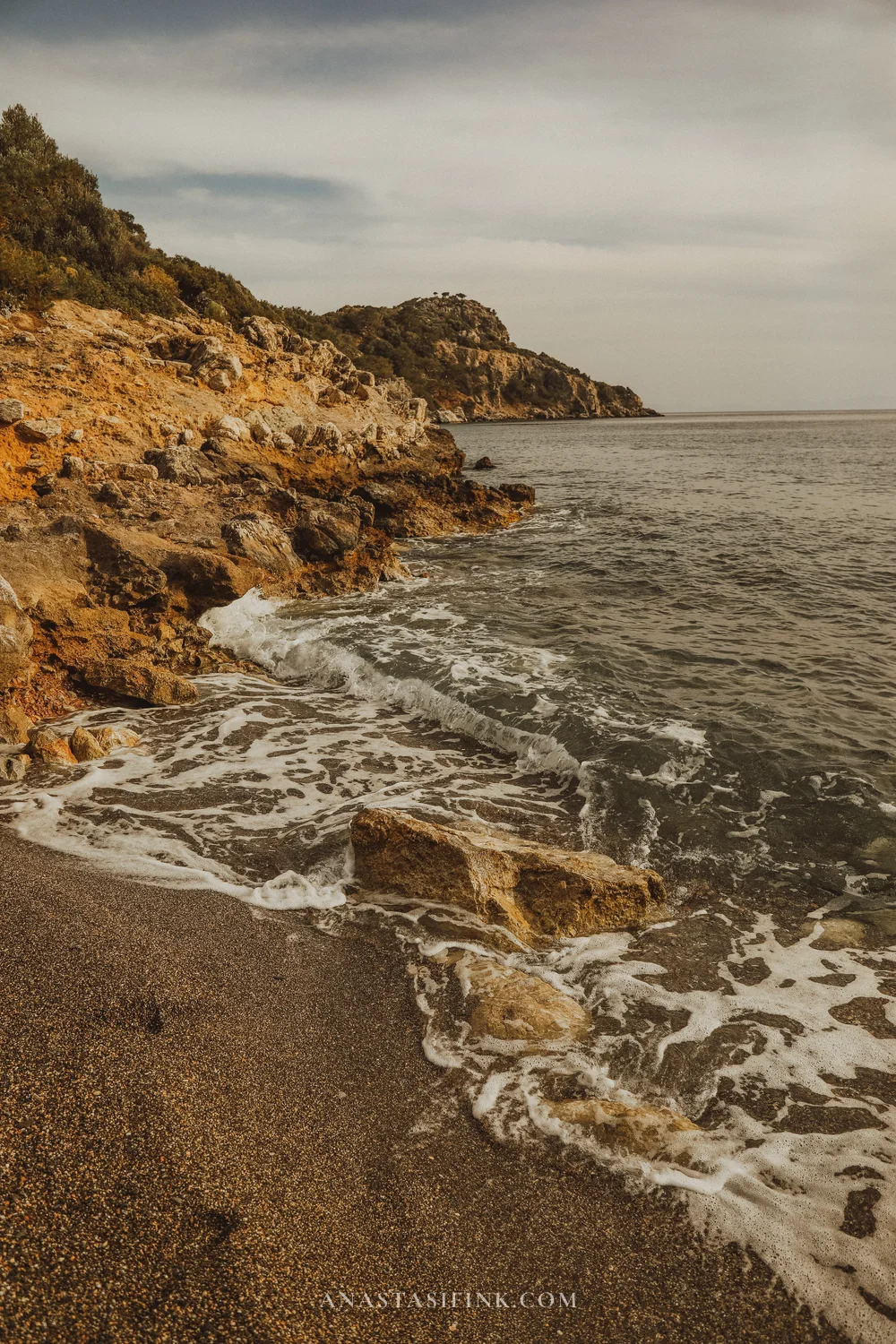
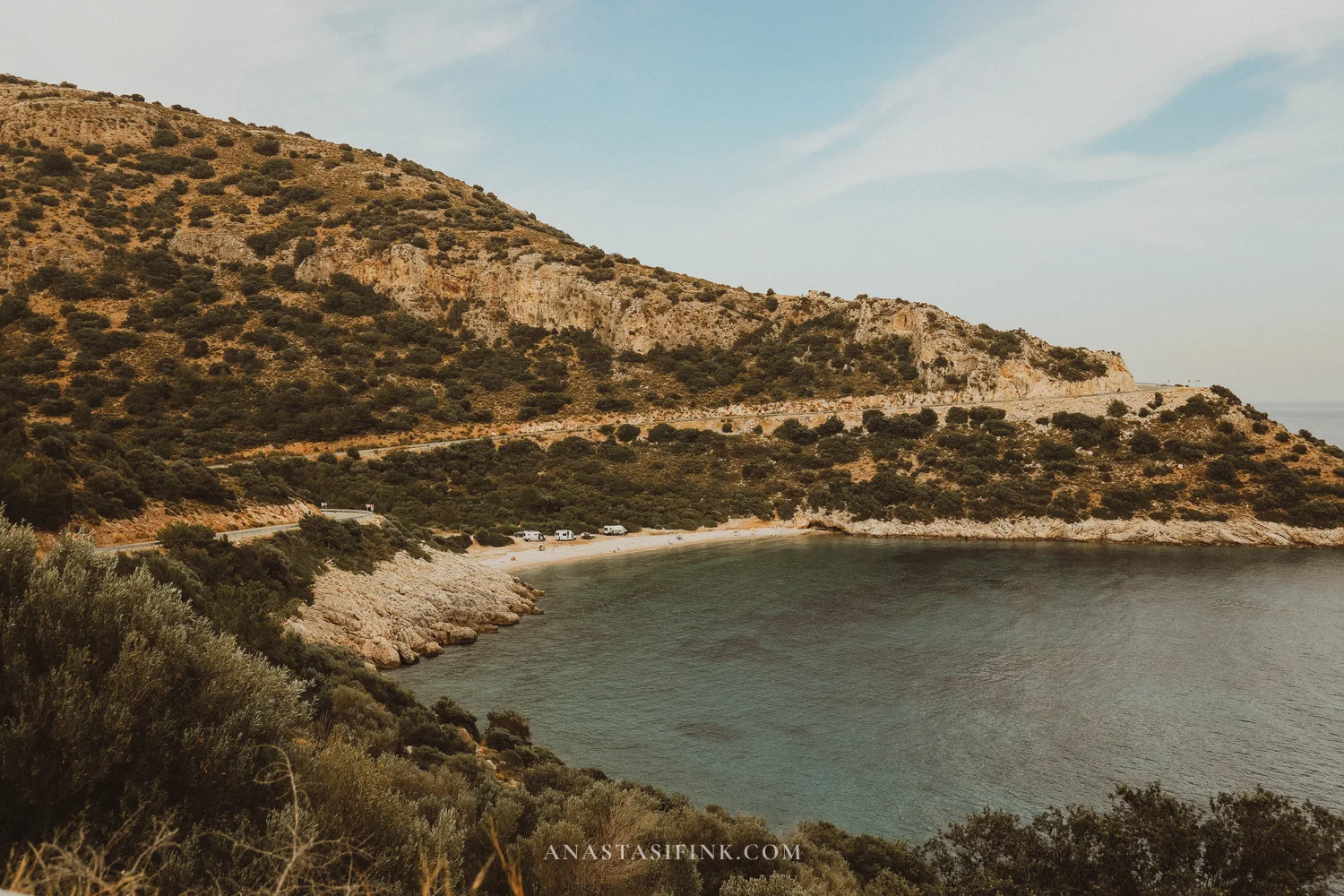
Practical Information
- Beach GPS: 36.7368, 27.5496
- Water: bring your own, no shops at wild beaches
- Footwear: water shoes recommended — rocky entry
Our Beach Route
Here’s the map of our coastal ride — use it as a ready-made route:
Sunset on the Coast
We wrapped up the day on a beach on the north side of the peninsula. I picked this spot on purpose — in June, the sun sets right there, straight into the sea. We arrived around 19:30, sat down on the pebbles, and just watched.
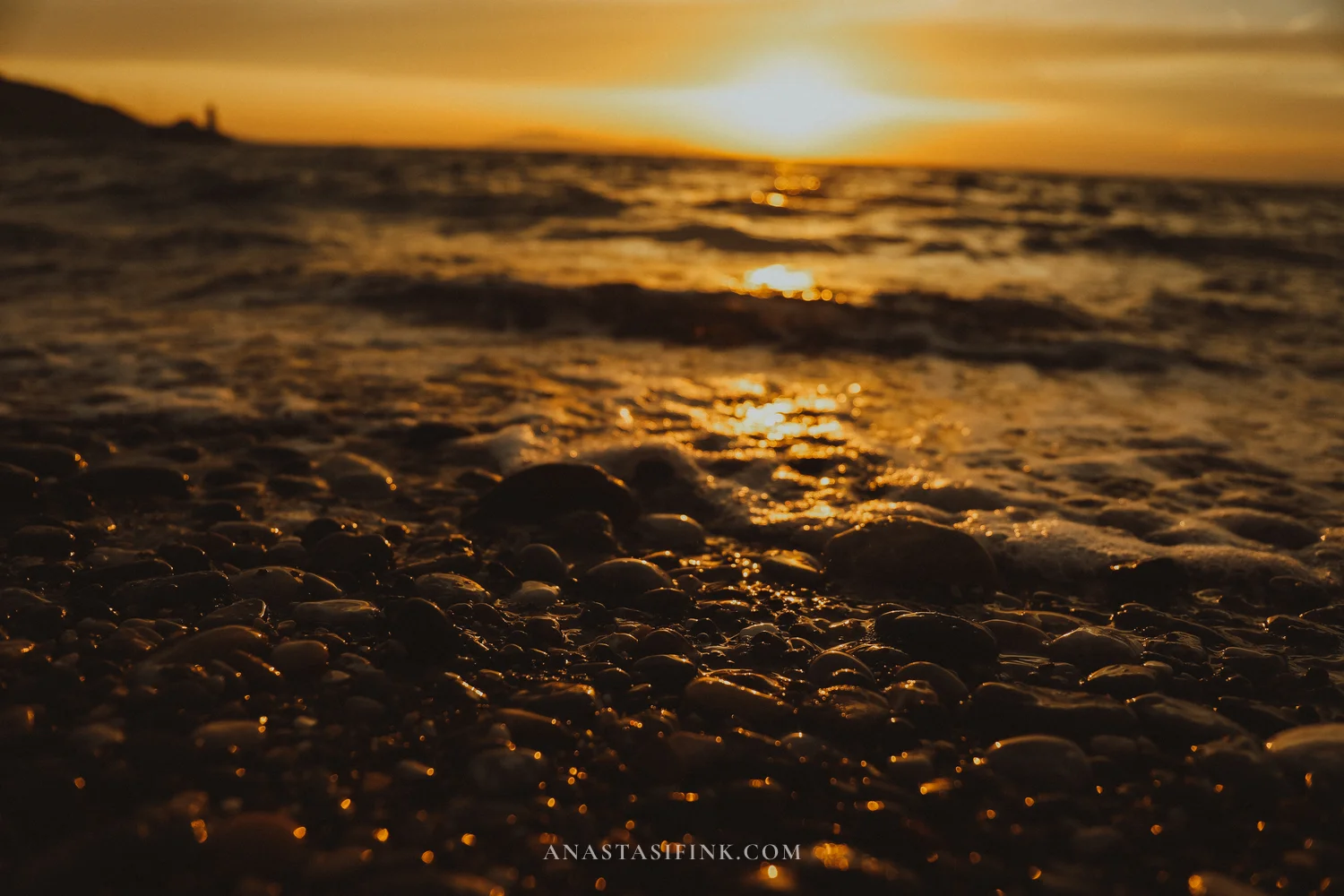
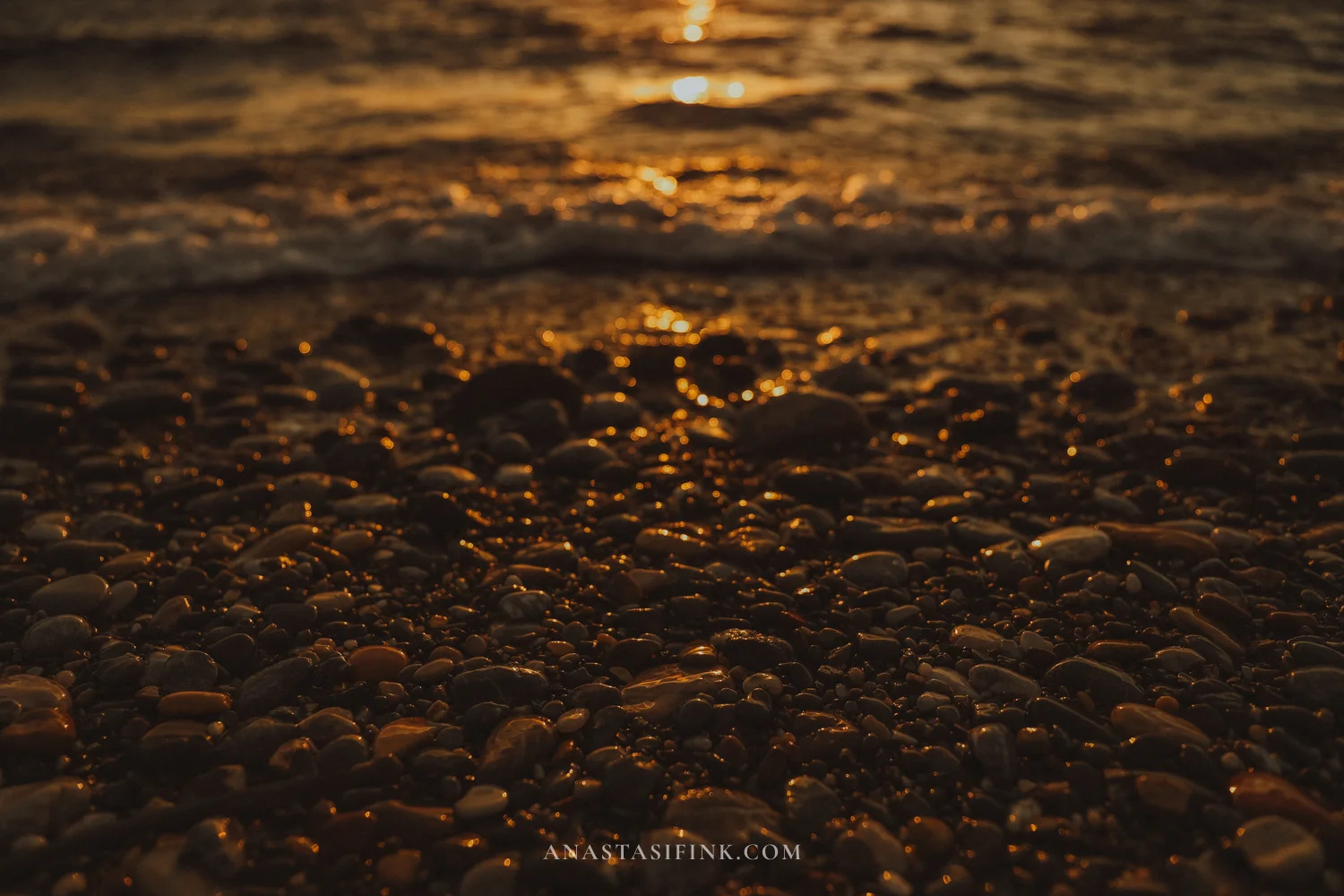
Pebbles at sunset — wet stones glistening
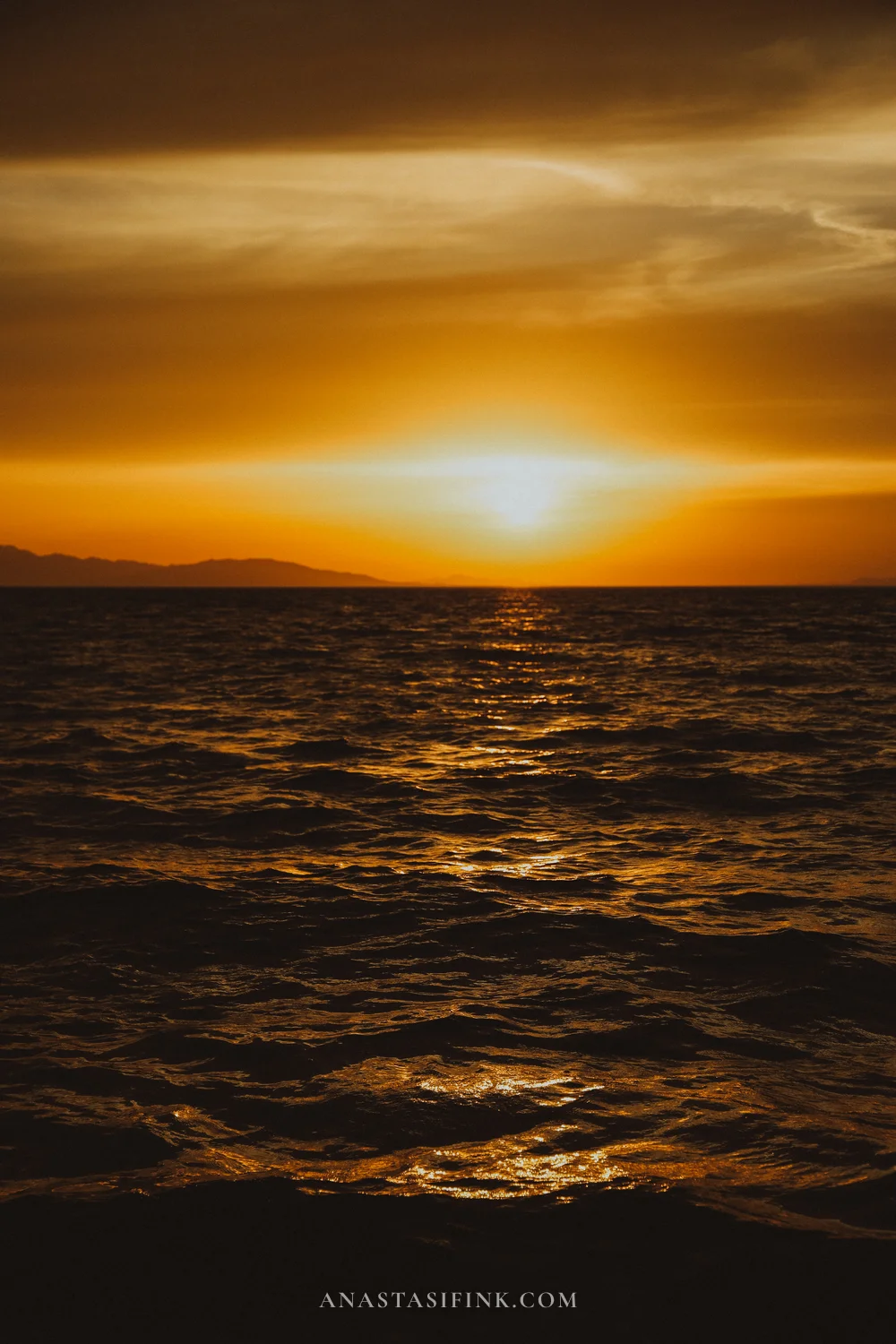
Sunset spot
- Sunset spot: GPS — this is where the sun sets right over the sea in June
How to Plan Your Trip
Practical Information
- Distance: Marmaris — Datça ~75 km, ~1.5 hours by motorbike
- Transport: motorbike (800-1000 TL/day, ~$25-30), car, or dolmuş from Marmaris (from bus station, ~100 TL, ~$3)
- Old Town GPS: 36.7346, 27.6543
- Eski Datça: free, open always
- Time needed: old town — 2-3 hours, full route with beaches and sunset — a full day
- Food: plenty of restaurants in Datça, average check 300-500 TL (~$9-15) for two
- Fuel: one scooter tank is enough for the whole round trip (~150 TL, ~$4.5)
Tips
- Leave Marmaris in the morning, around 9-10. That gives you time for the old town, beaches, and sunset
- Bring water and sunscreen — not much shade on the peninsula
- If riding a motorbike — wear closed shoes and bring a light jacket for the mountain road (cooler in the hills)
- Dolmuş is the budget option, but it runs infrequently and won’t take you to the peninsula beaches
Photography tip
- Photography tip: Best light for the old town — morning, before 11:00. For beaches and mountains — golden hour, after 17:00. Sunset from 19:30, on the north side of the peninsula.
Rent a motorbike or car in Marmaris — it’s about 1.5 hours. Dolmuş (minibus) also runs from Marmaris bus station, around 100 TL (~$3).
Scooters go for 800-1000 TL per day (~$25-30). You need a category A driving license. Helmets are usually included.
2-3 hours for the old town. If you want to ride the peninsula, hit the beaches, and catch the sunset — plan a full day.
May through October. We went in June — warm enough to swim, but no August crowds or heat. Bougainvillea in full bloom.
Yes. We fit everything into one day: old town, coastline, sunset. If you want a slower pace, spend the night at a boutique hotel in Eski Datça.
Mostly pebble beaches with very clear water. Some have sunbeds and cafés, others are completely wild. Bring water shoes — rocky entry.
The road is good, smooth asphalt. But it’s a steep winding road with lots of turns — ride carefully, especially if you’re not used to mountain driving. Gas stations along the way.
Final Thoughts
If you’re in Marmaris and want to see a different side of Turkey — grab a motorbike and ride to Datça. An hour and a half of mountain roads, a day of wandering and swimming, sunset on the pebbles. We got back to Marmaris after dark and didn’t regret a thing.