Dalyan Boat Tour to the Kaunos Rock Tombs: What to Expect, Prices & Tips

We drove to Dalyan in a rental car, accidentally turned to the wrong bank — and instead of the boat dock, we ended up right across from the rock tombs. Four thousand years ago, the nobility of ancient Kaunos were buried here. Today, wooden boats full of tourists cruise up to these cliffs. Later that evening, we hopped on one too.
Dalyan — a small river town in southern Turkey
Dalyan is a little town in Muğla Province, sitting on the river that connects freshwater Lake Köyceğiz to the Mediterranean Sea. The name “Dalyan” literally translates from Turkish as “fishing weir” — people have been catching fish in these river channels for centuries. Today the town is known for three things: the Kaunos rock tombs, Iztuzu Beach where loggerhead sea turtles (caretta caretta) nest, and river boat tours through the reed-filled delta.
Dalyan isn’t a resort in the typical sense. There are no beachfront hotels or loud bars. It’s a quiet place where life revolves around the river: tour boats carry visitors along it, and local fishermen head out on it for their daily catch. We were here closer to evening — and barely saw any foreign tourists. Just locals.
The drive to Dalyan — worth renting a car for this alone
If you’re traveling along the Turkish coast, Dalyan is a great reason to rent a car. The drive from Fethiye or Marmaris takes about an hour and a half along the D400 highway, and it’s gorgeous: mountains, switchbacks, valley views. Dalyan is only 25 km from Dalaman Airport — one of the easiest routes if you’ve flown in there.
We had a rental car and it was absolutely the right call. With your own wheels you’re not tied to bus schedules (dolmuş — that’s what shared minibuses are called in Turkey), and you can stop at any viewpoint. And there are plenty.
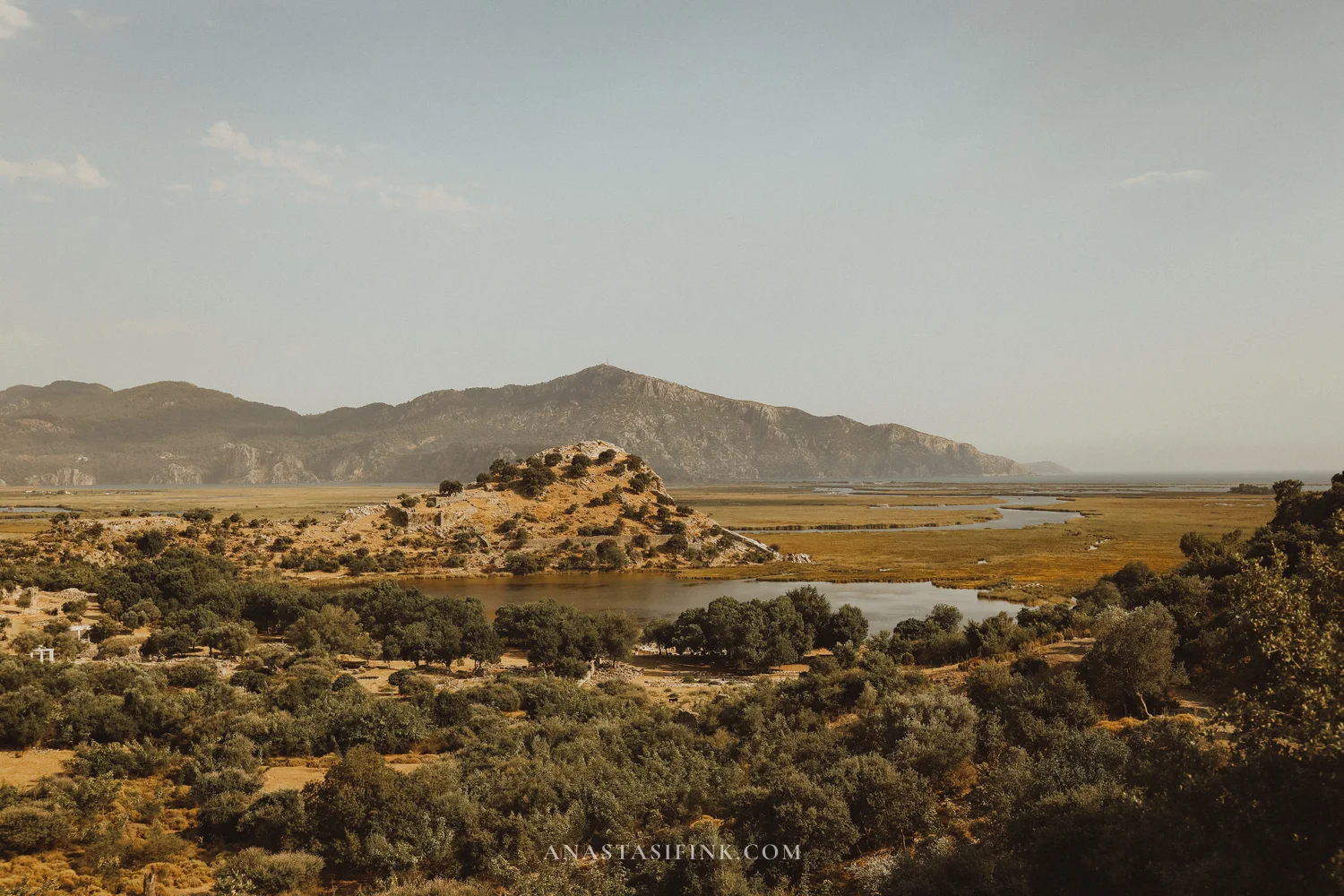
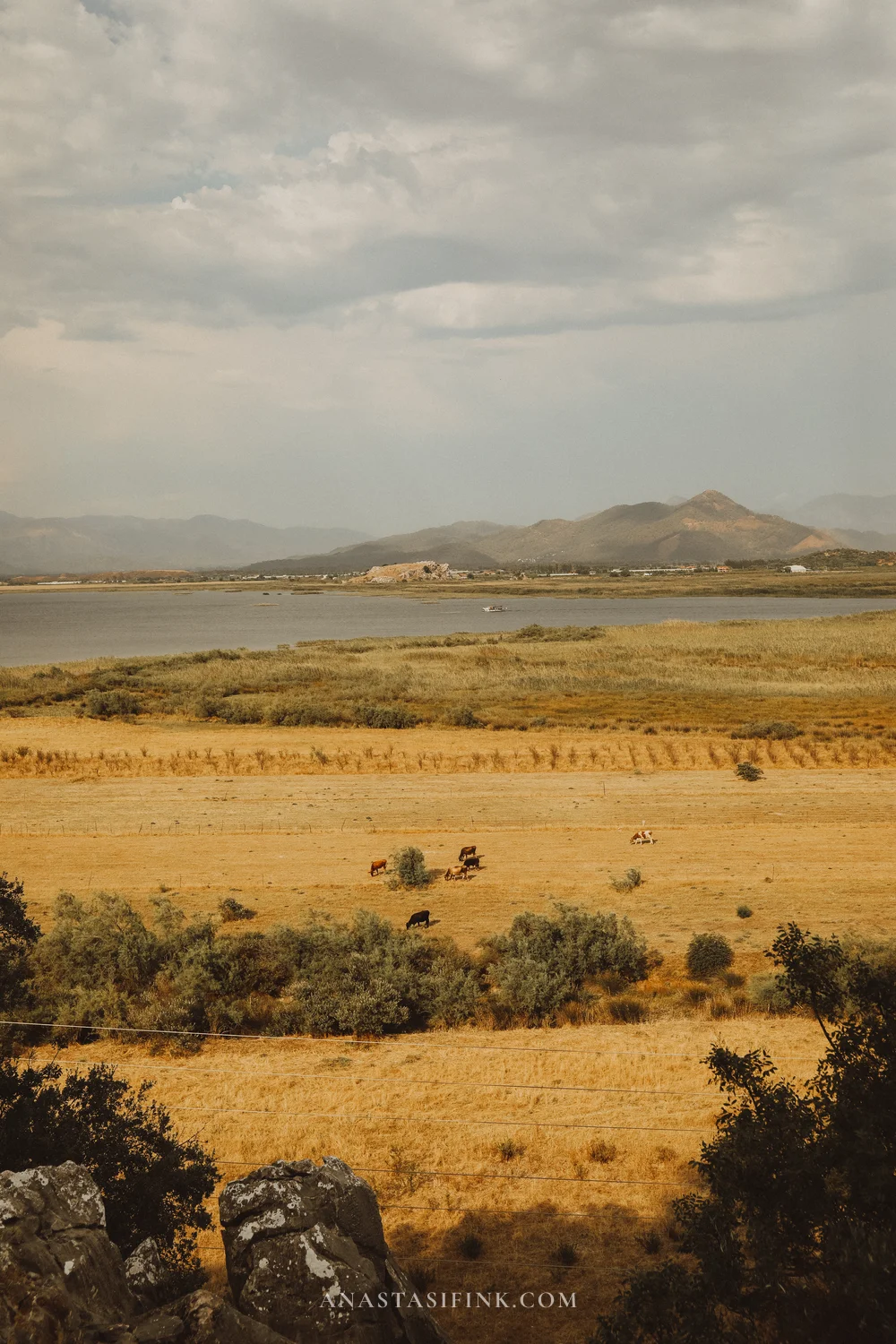
The Kaunos tombs — first encounter from the shore
We planned to head straight for the boat dock, but the GPS took us to the wrong bank of the river. Turned out to be a lucky mistake — we got to see the Kaunos rock tombs up close, from land, with no crowds and no boat.
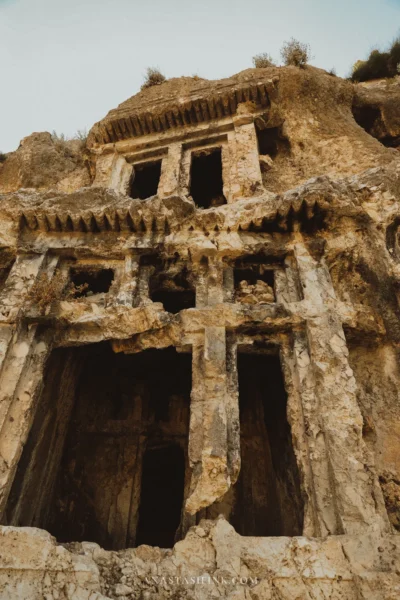
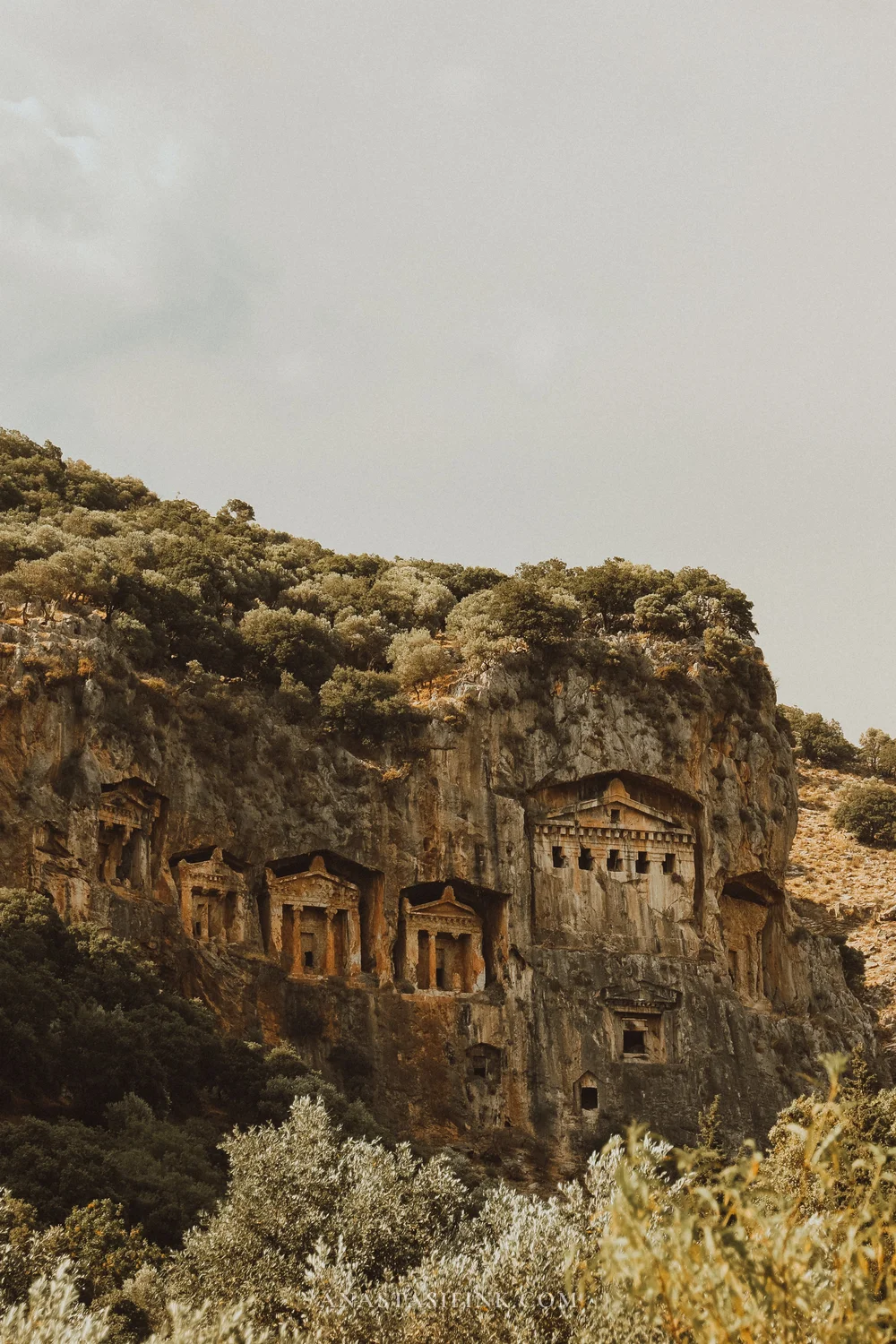
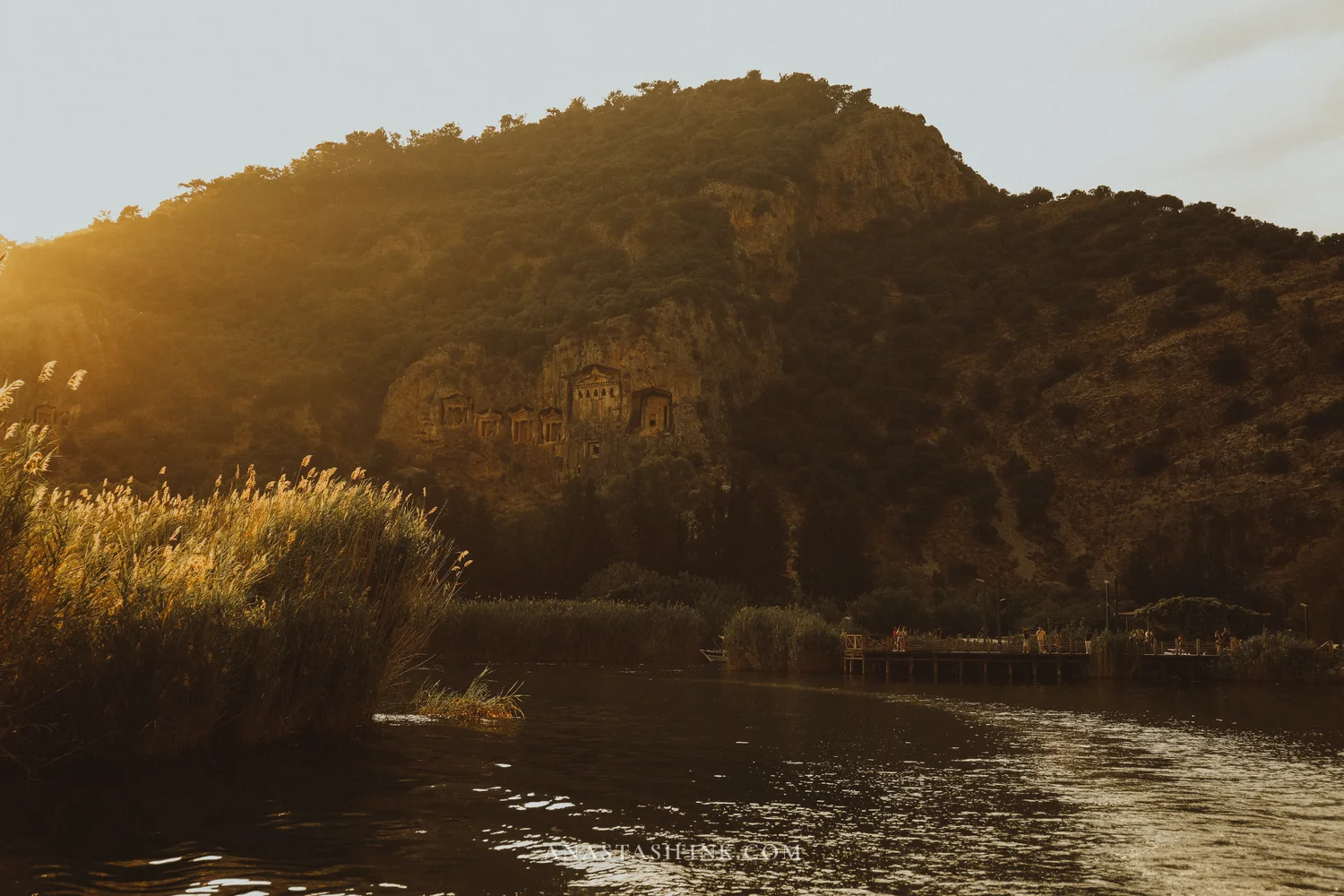
The tombs are carved directly into a limestone cliff, dozens of meters up. Their facades are shaped like ancient temples — complete with columns, pediments, and ornamental carvings. In total, there are about six large temple-style tombs and many smaller burial chambers.
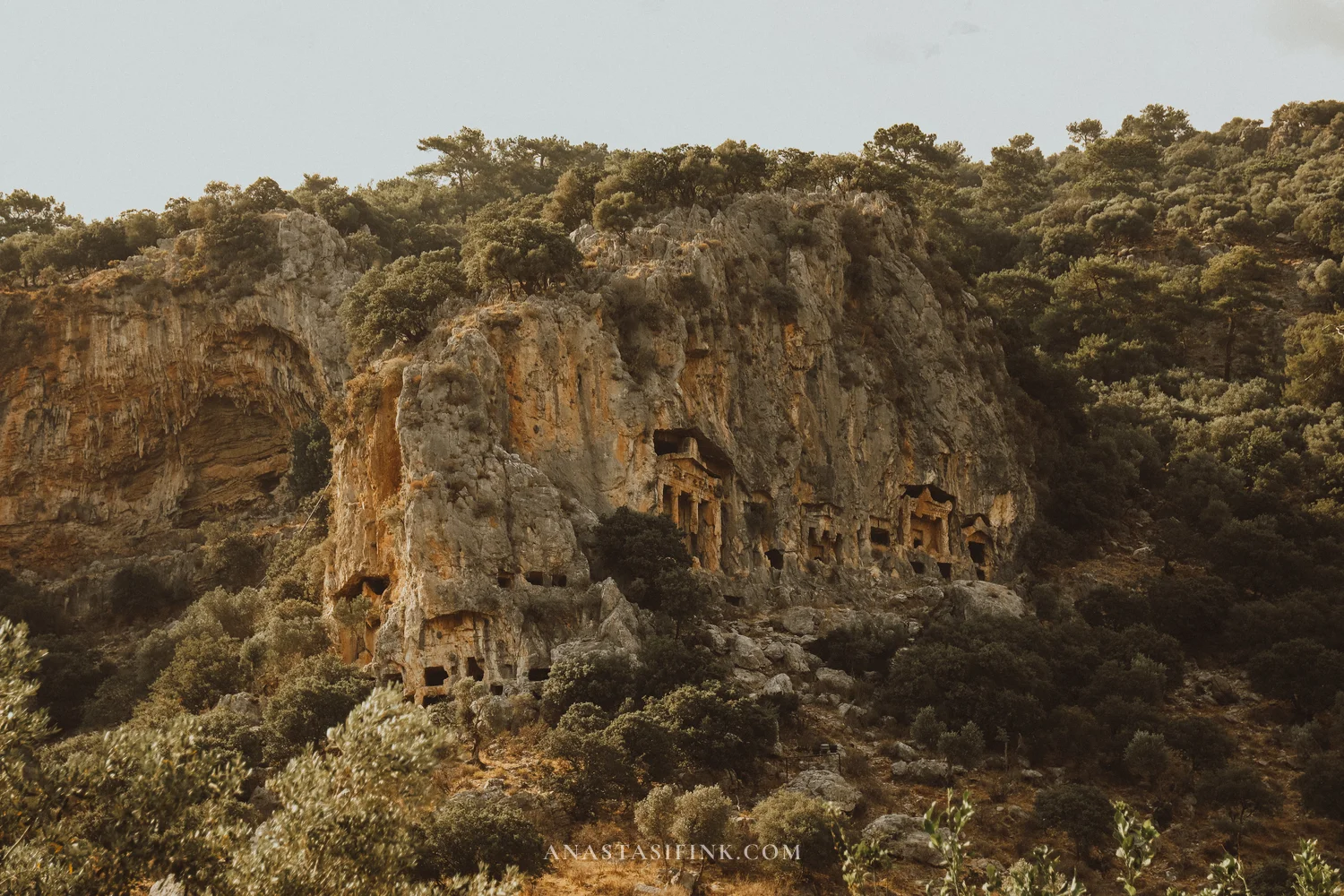
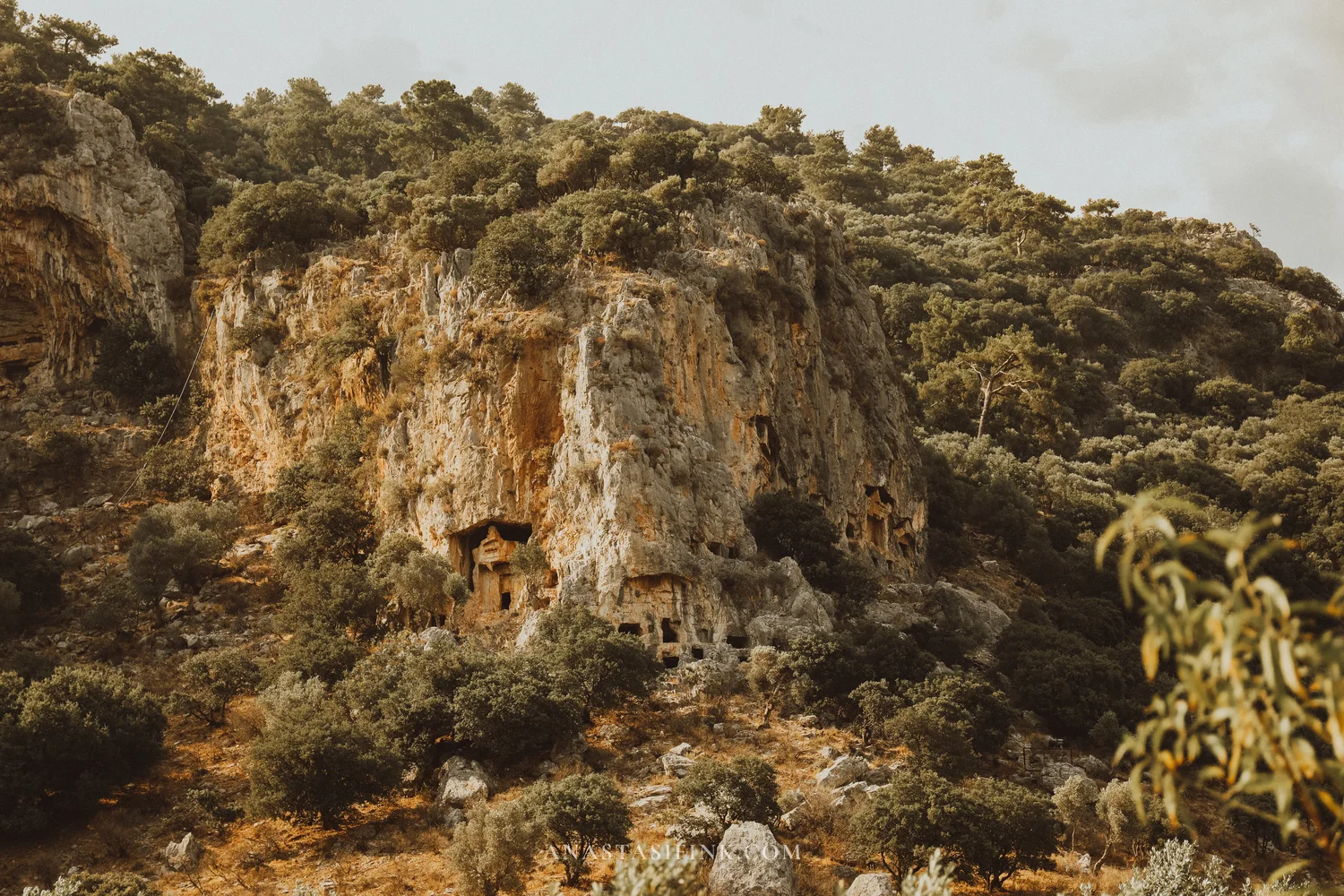
You can spot the tombs from far away — they take up the entire cliff face. We ended up here by accident, turning to the wrong bank
A quick note for the history buffs: these tombs are often called “Lycian,” but they actually belong to the ancient city of Kaunos, which was Carian. Kaunos sat on the border of Lycia and Caria — two ancient civilizations that divided this coastline between them. The temple-facade style was borrowed from the Lycians, but the builders were Carian. They date to the 4th century BC. This is where local elites were buried — rulers and wealthy citizens.
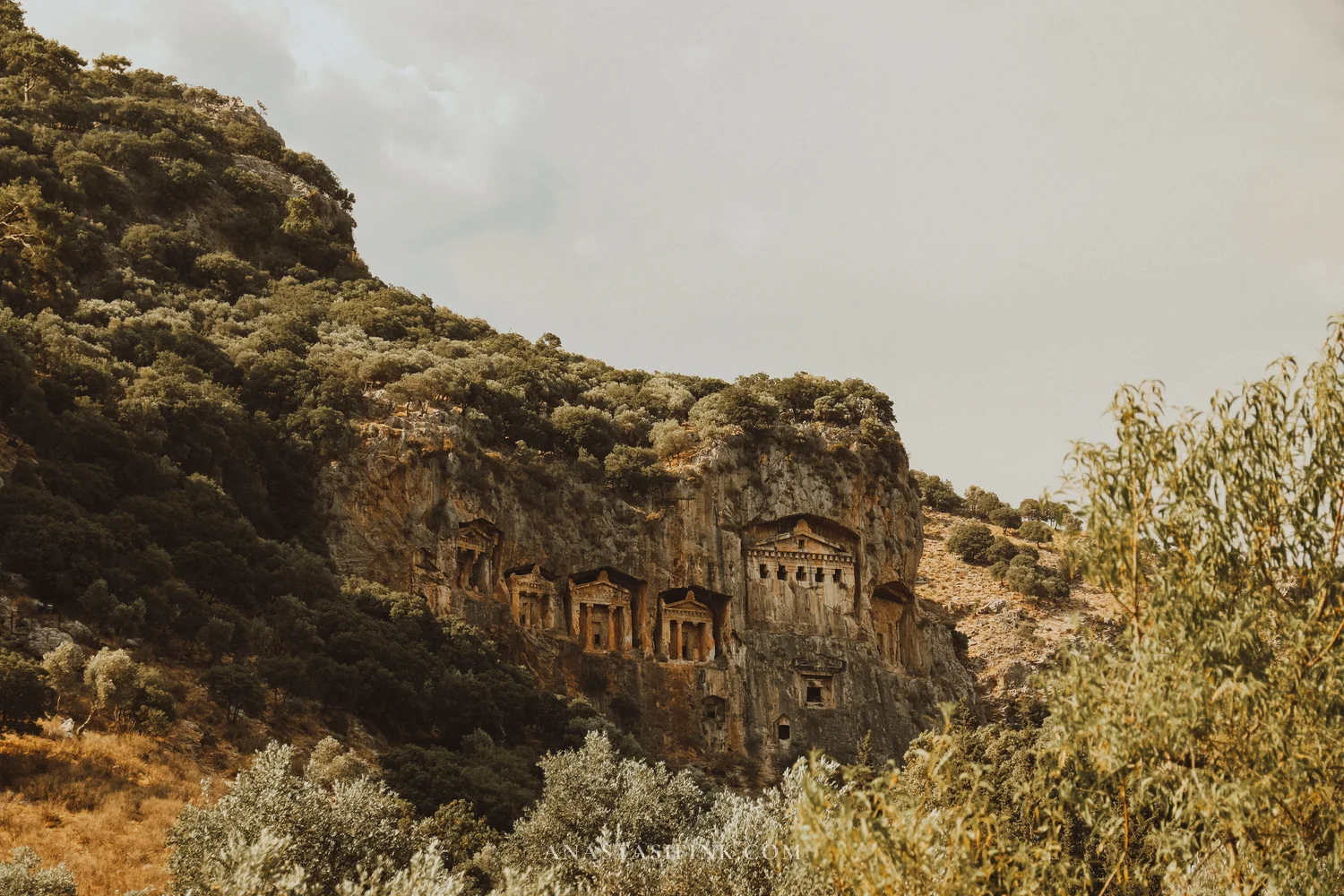
Kaunos was an ancient Carian port city, founded, according to legend, by Kaunos, son of Miletus. The city once stood on the seashore, but over millennia the coastline retreated 5 km inland. Today Kaunos is ruins surrounded by reeds and hills. The city is on the UNESCO World Heritage tentative list.
The ferry across the river — or better to drive around
From the bank where we were standing, we could see the other side of the river — that’s where Dalyan proper was, with all the boats. We thought about taking the ferry across. There is one here — a tiny cable-pulled platform that carries 3–4 cars at a time. But when we got closer, it was obvious that driving our car onto it was a sketchy idea. The platform is tiny and the approach is awkward.
We decided not to risk it and drove around through Ortaca — the nearest town on the D400. It added 20–25 minutes, but on a proper road and without the stress. If you’re in a car, I’d recommend doing the same.
Dalyan from the water — boats, the river, and the start of the tour
Dalyan from the water is a completely different town. Wooden tour boats line the river, cafes dot the waterfront, and on the water there’s a calm bustle: boats departing, returning, turning around. All of it against a mountain backdrop.
River cruises are the main thing to do in Dalyan. The standard route includes the Kaunos tombs (from the water), the ancient city of Kaunos, mud baths, thermal springs, and Iztuzu Beach. The full loop takes 5–7 hours. But you can also take a shorter 2–3 hour ride — just along the river, past the tombs and through the reedy delta. That’s what we did.
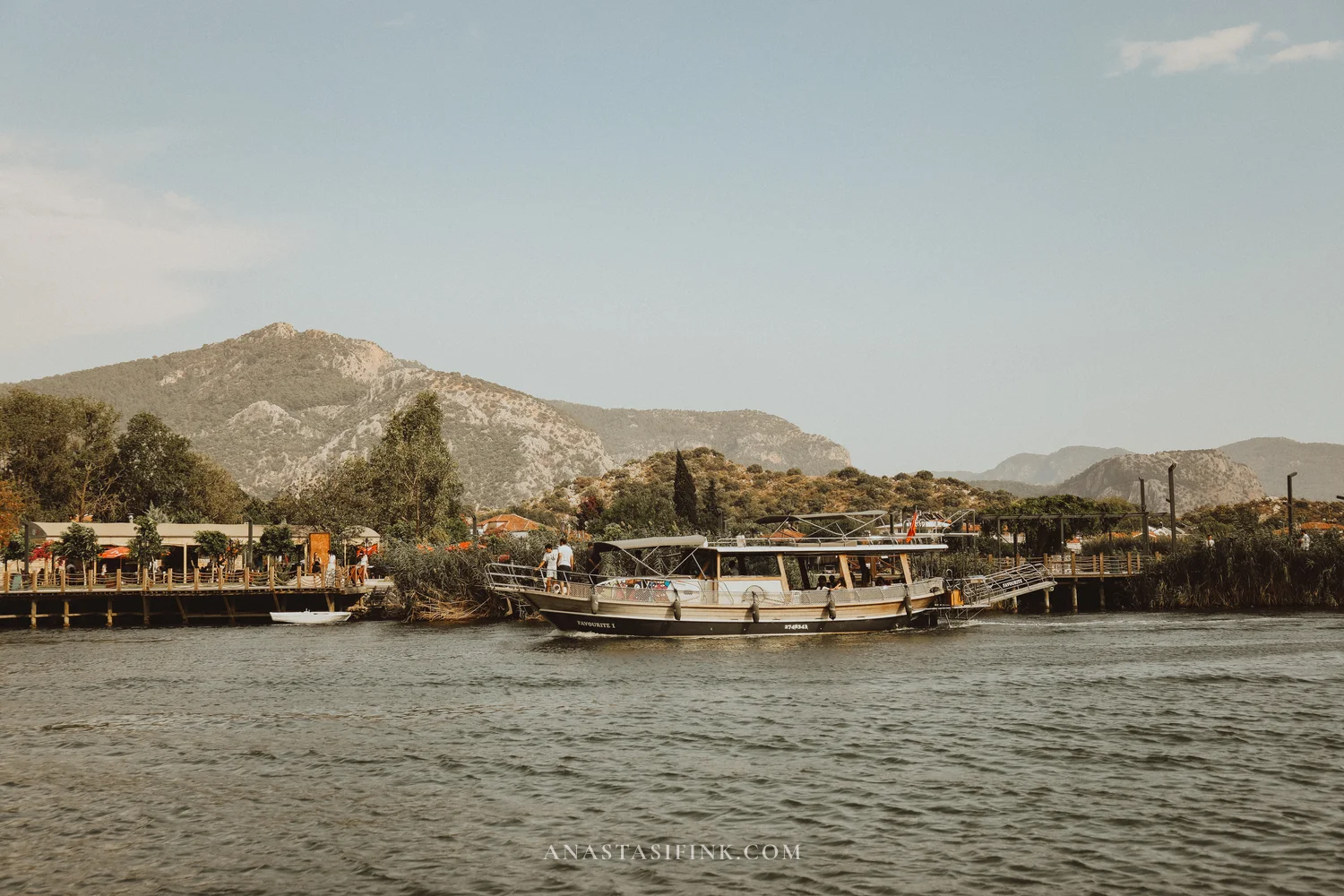
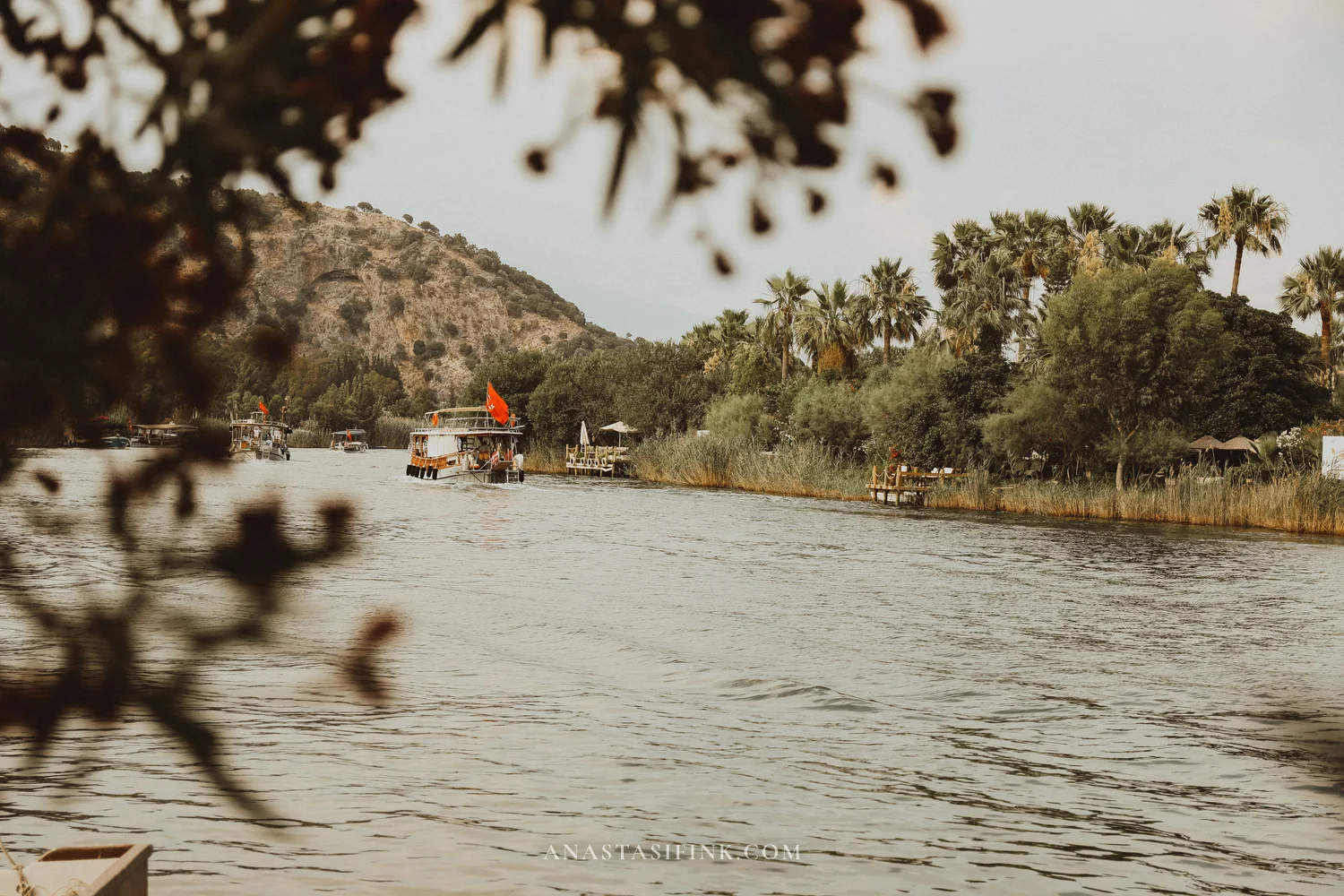
The Dalyan dock — this is where river tours depart from. The mountains in the background are the very ones where the tombs are carved
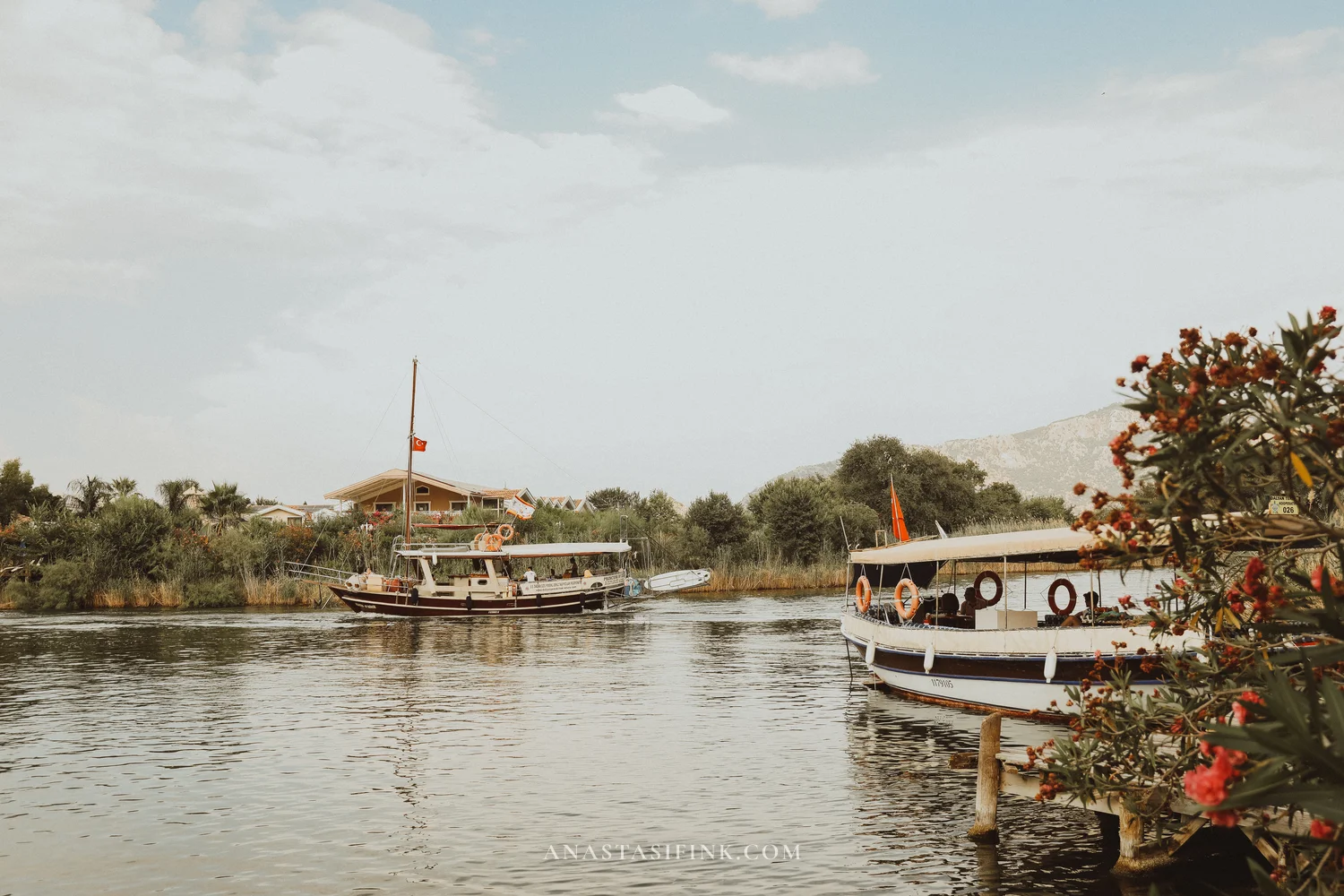
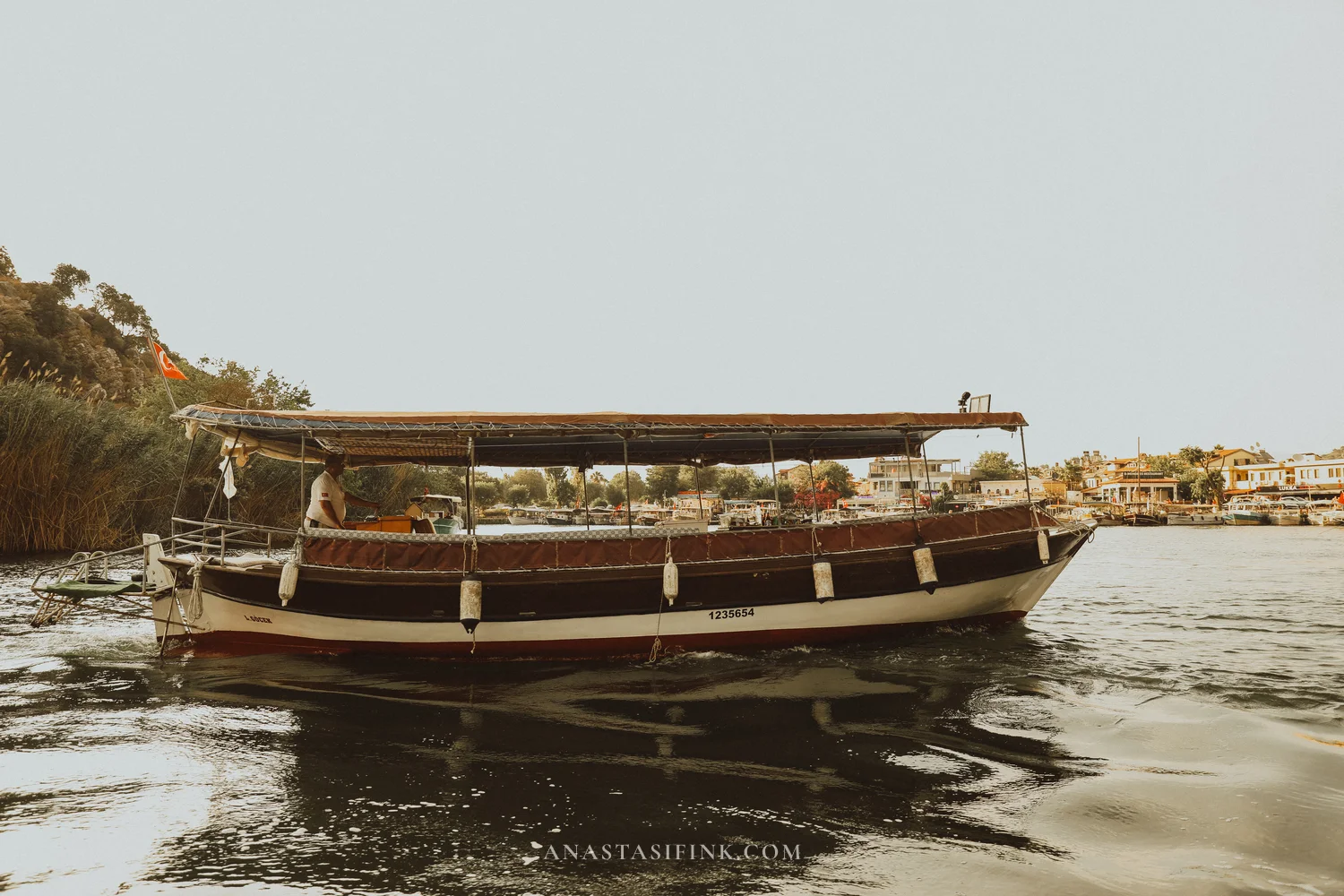
The boats here are wooden, with sun canopies. They hold 12–20 people. You can join a group tour or hire a whole boat privately
On board — the river, a minaret, and a captain in a plaid shirt
We got on a boat in the late afternoon. There weren’t many people — mostly local families. Not a single organized tour with an English-speaking guide. It was nice: no fuss, no “look to your right, look to your left.” Just the river, the boat, and quiet.
Dalyan from the water looks really cozy: the mosque minaret, palm trees, boats with Turkish flags, low-rise houses along the bank. It felt like I’d stumbled into the real Turkey, not the tourist version.
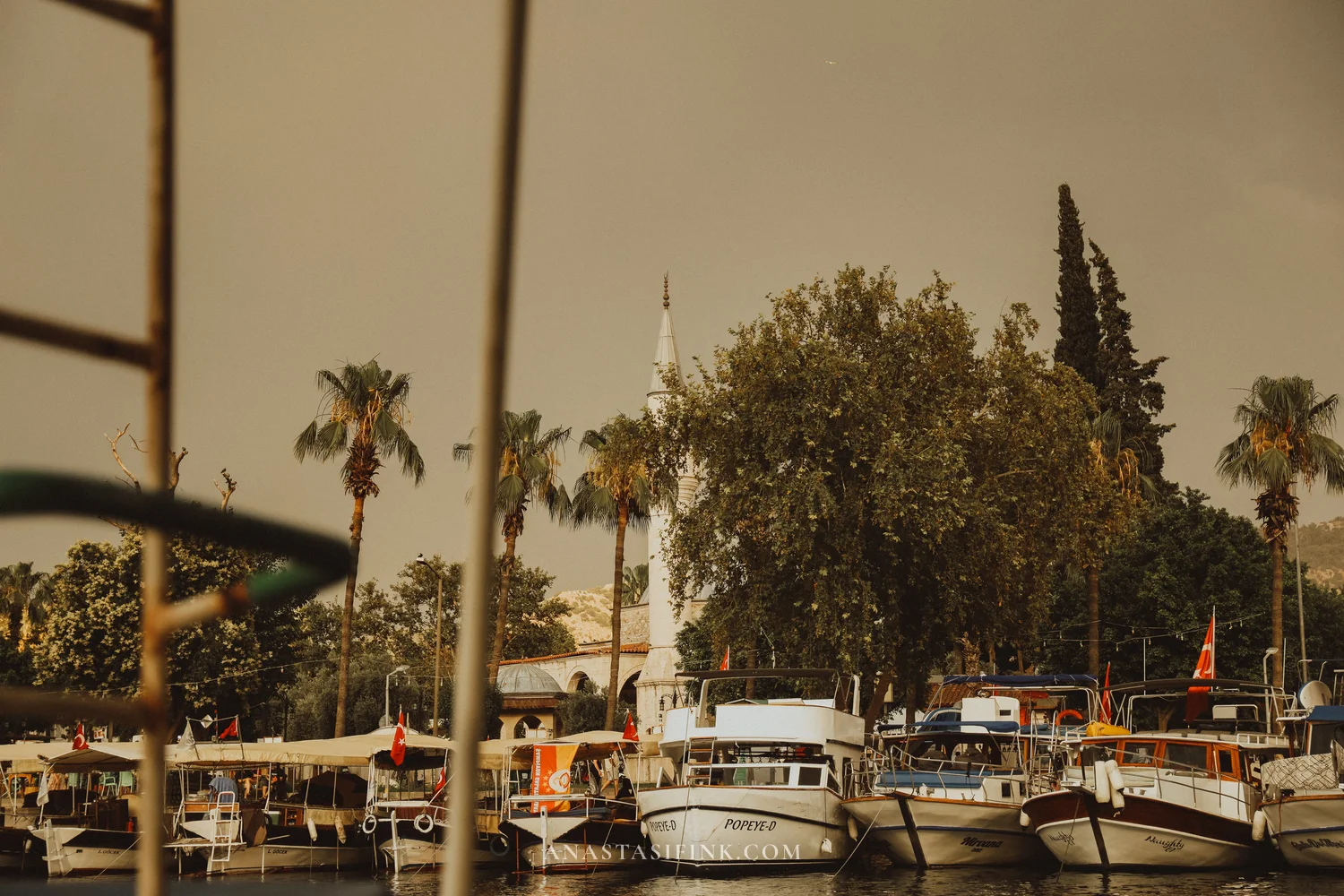
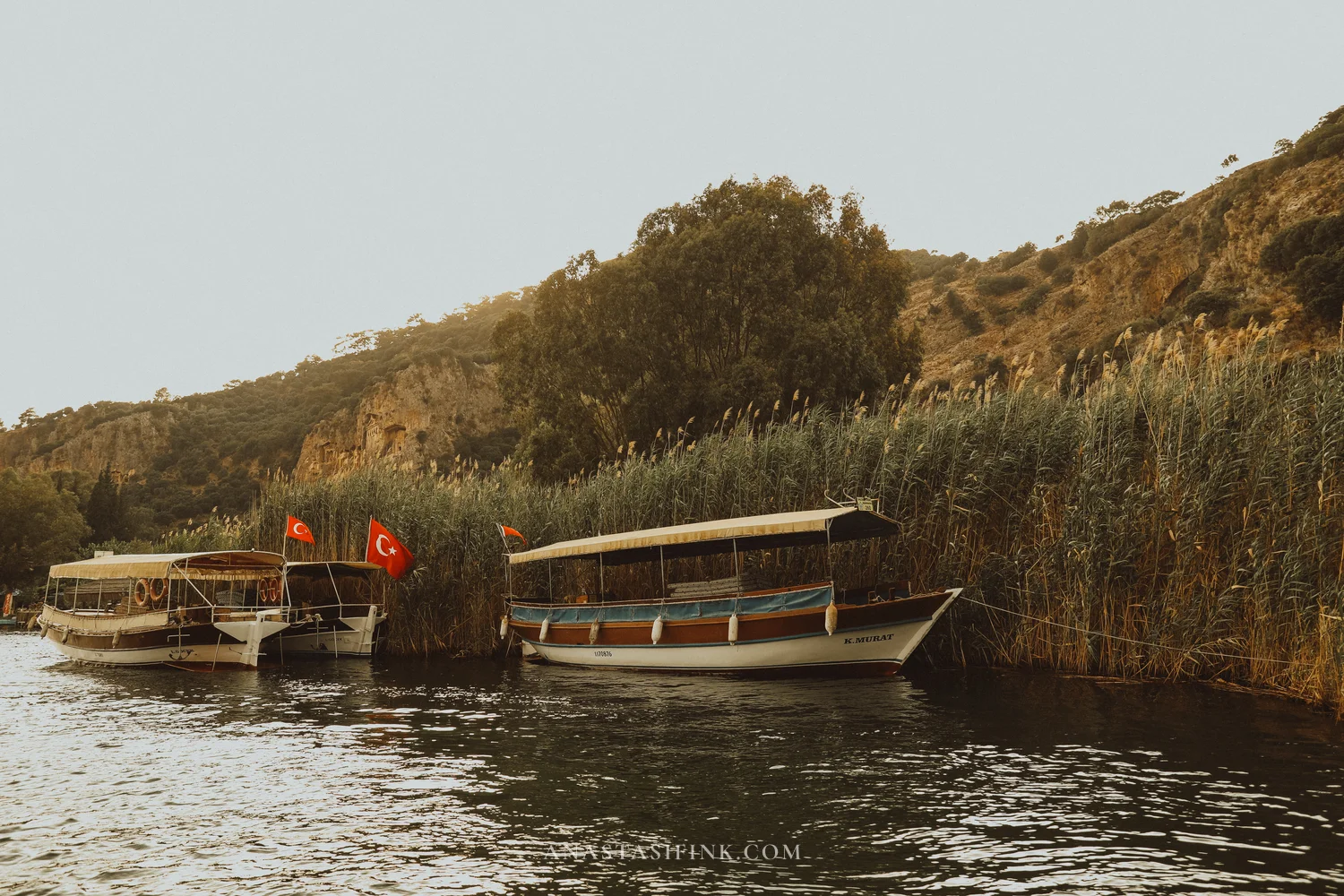
Dalyan from the water — a minaret, palm trees, and Turkish flags on the boats. A classic shot, but no less beautiful for it
The boats moor right in the reeds — the banks here aren’t built up, just overgrown with reed grass. Our captain — an older man in a plaid shirt — steered the boat silently and confidently. He’d clearly done this route a thousand times.
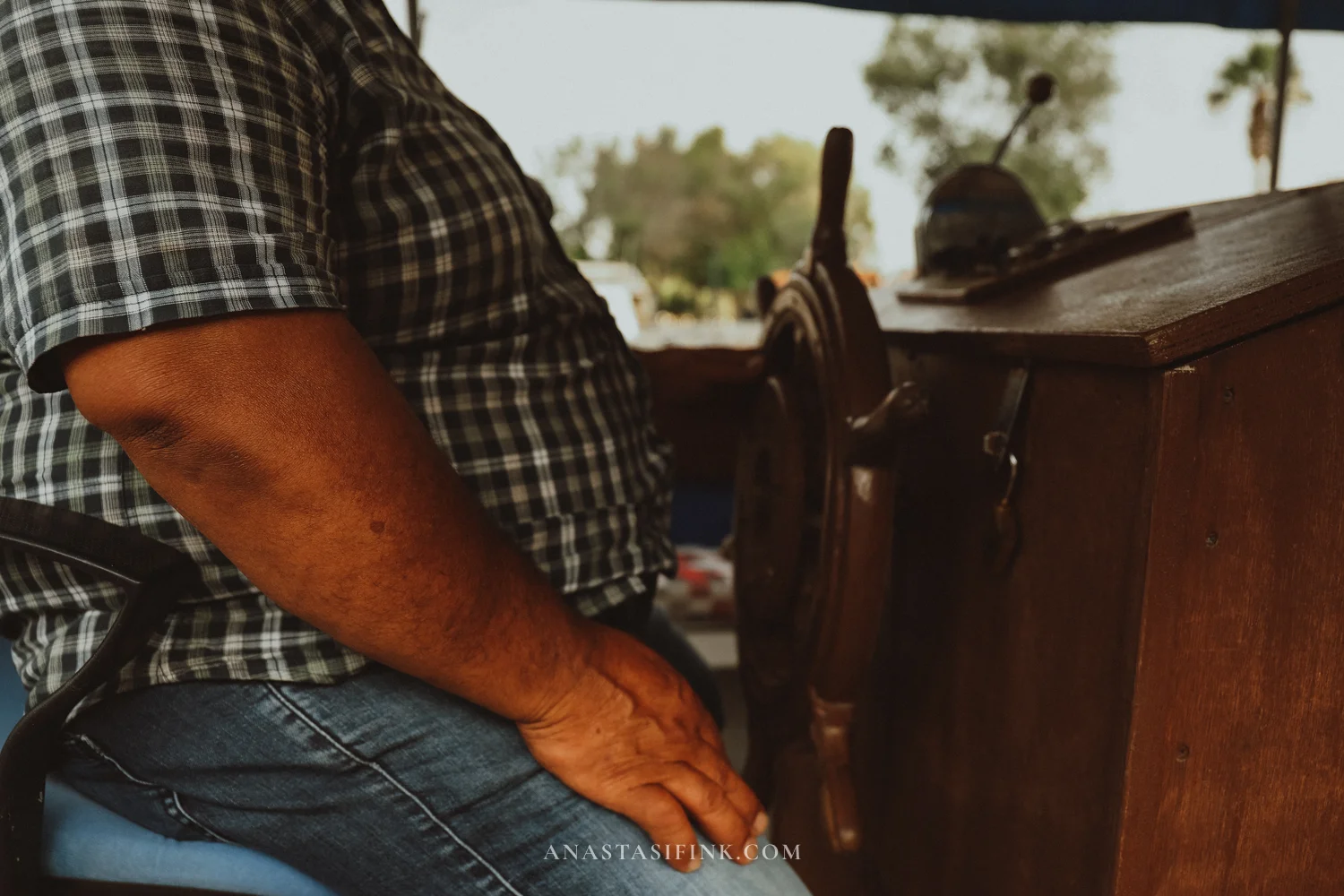
The captain steered calmly and quietly — clearly knew this route by heart
The Kaunos tombs from the river — a completely different experience
From the water, the tombs look nothing like they do from the shore. Here they’re part of a massive landscape: cliff, river, reeds, sunset light. The boat gets close enough to make out the carved details, but the scale is what really hits you. Six temple facades in a row on a sheer cliff face — it’s a sight that’s hard to capture in photos.
When we passed by, the sun was already setting and the cliff was bathed in warm light. This is probably the best time to see the tombs from the water.
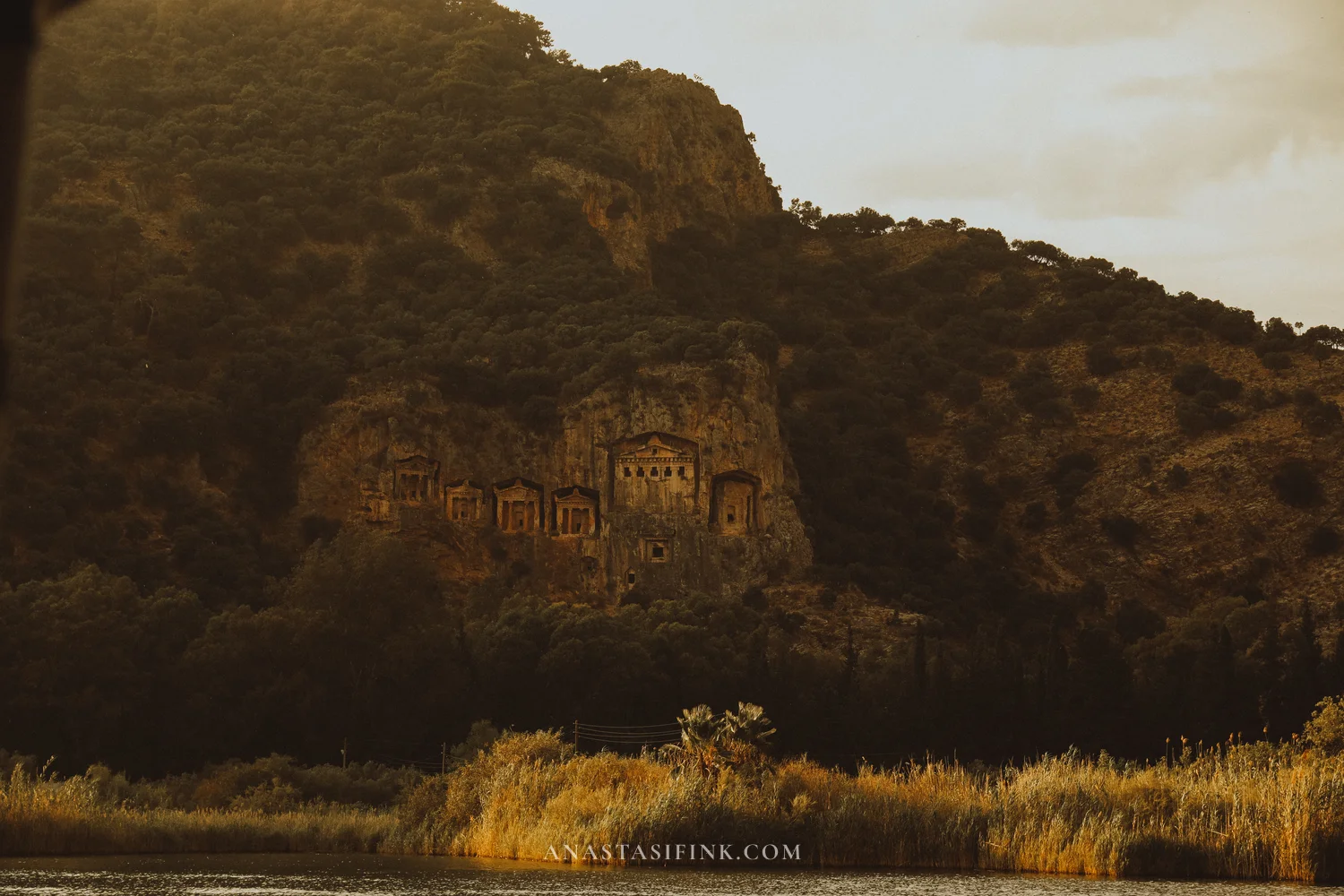
The tombs from the river at sunset — this view alone is reason enough to take an afternoon tour
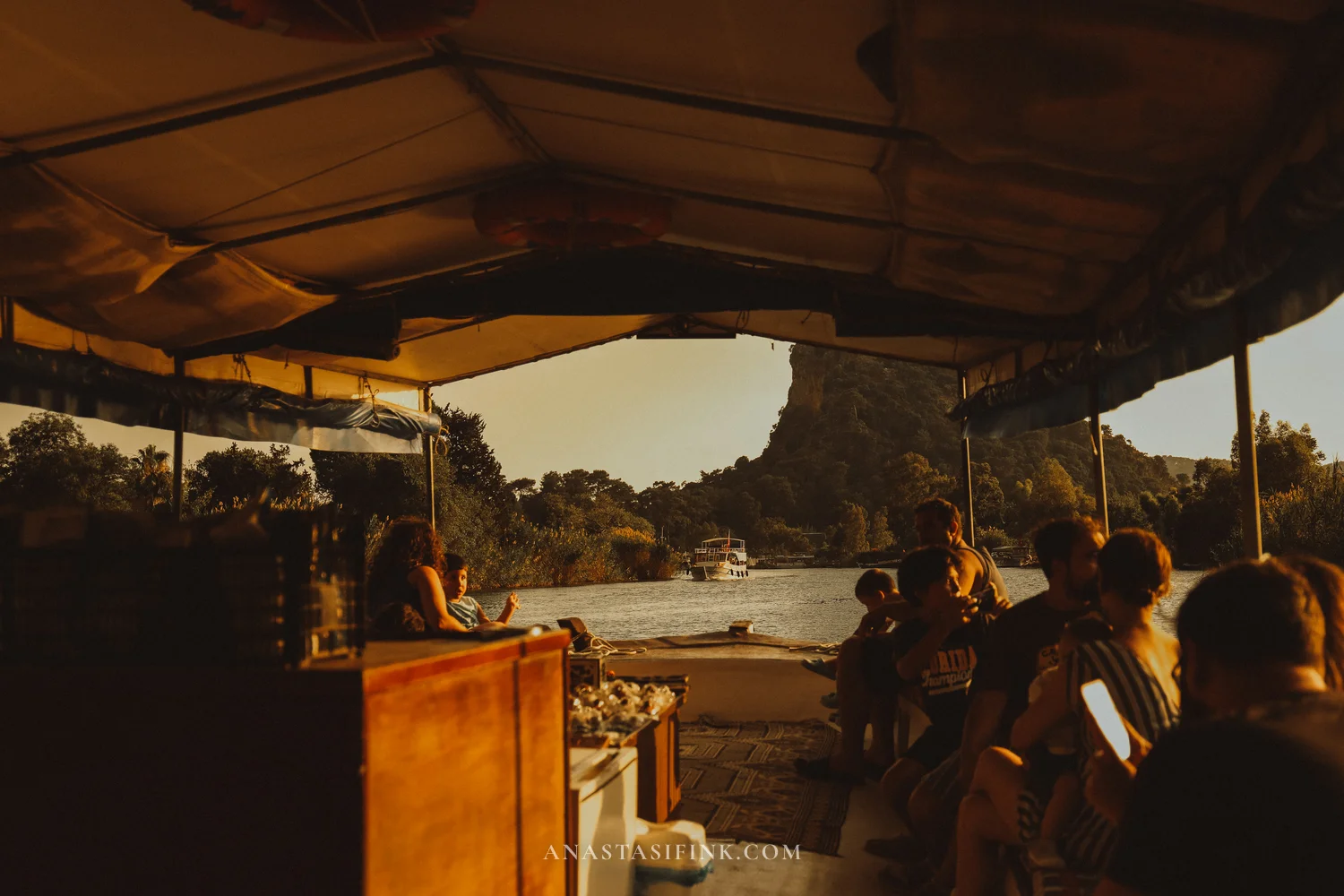
Down the river at sunset — reeds, boats, and silence
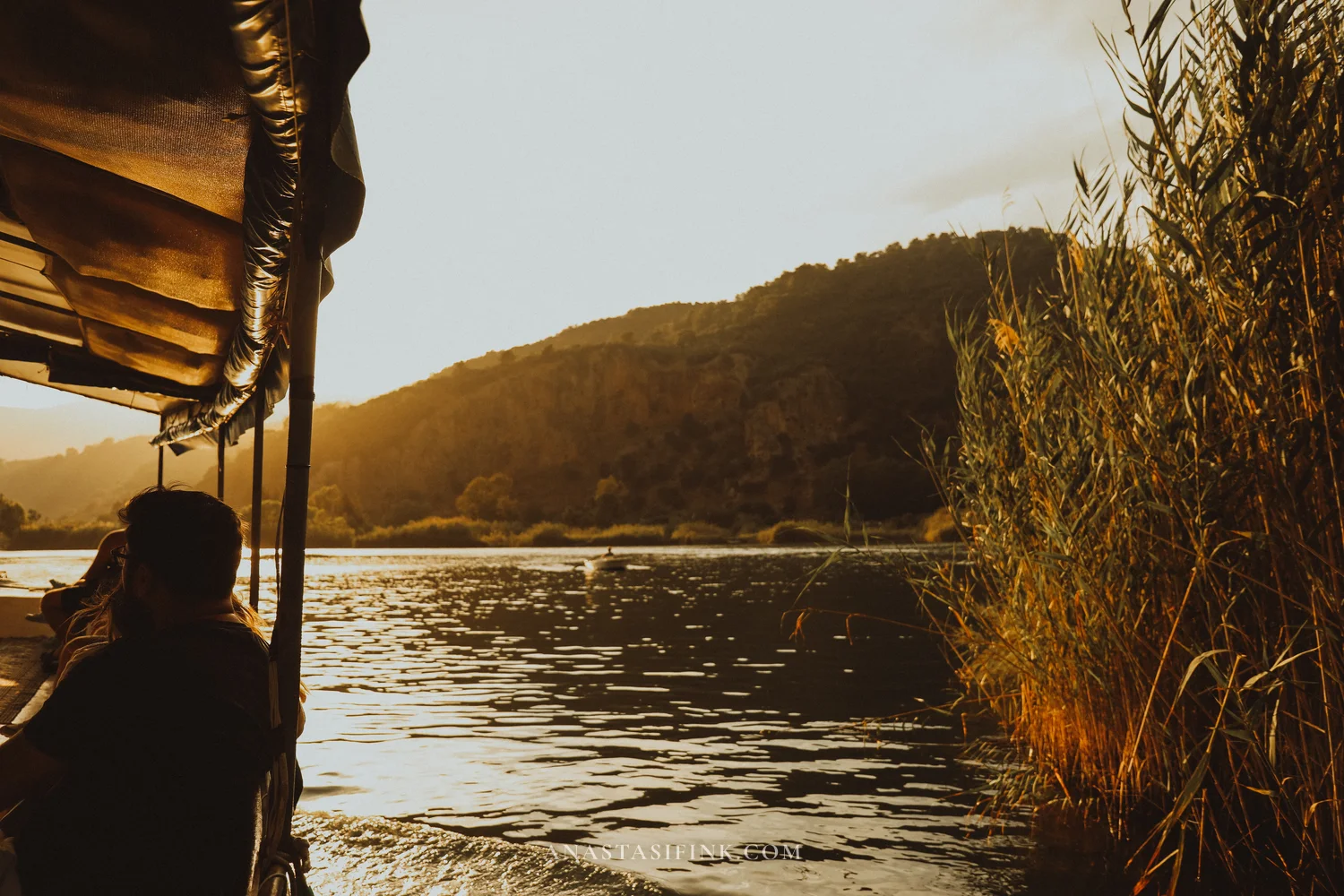
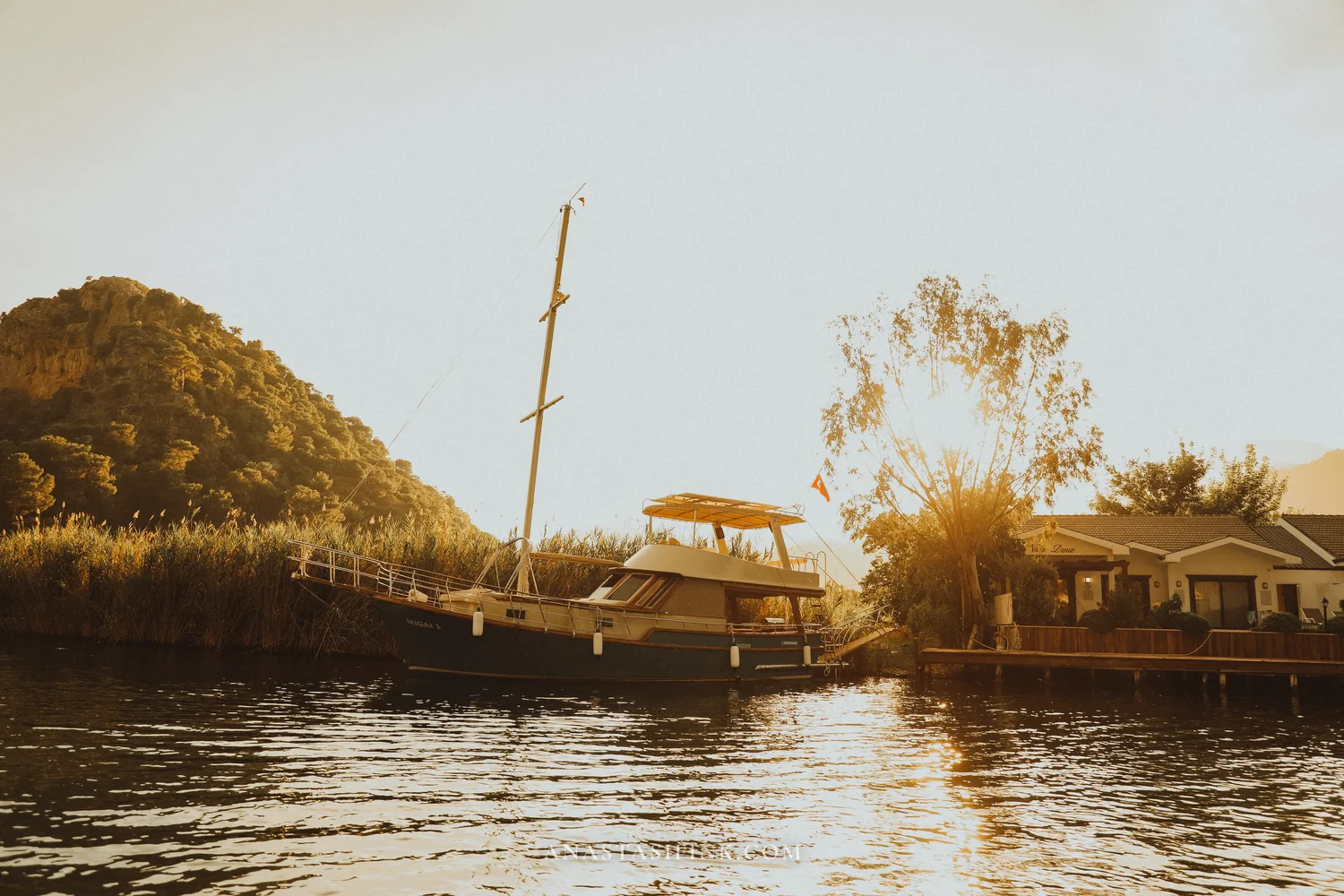
After the tombs, the boat continued along the river toward the lake. The banks here are nothing but reeds — tall, dense. Between them are channels where boats weave through. Here and there, yachts and motorboats are moored along the banks — people apparently live right on the water.
Sunset on the Dalyan River is something else. The light turns thick and golden, everything around shifts to warm tones. Reeds, water, mountains — all the same color.
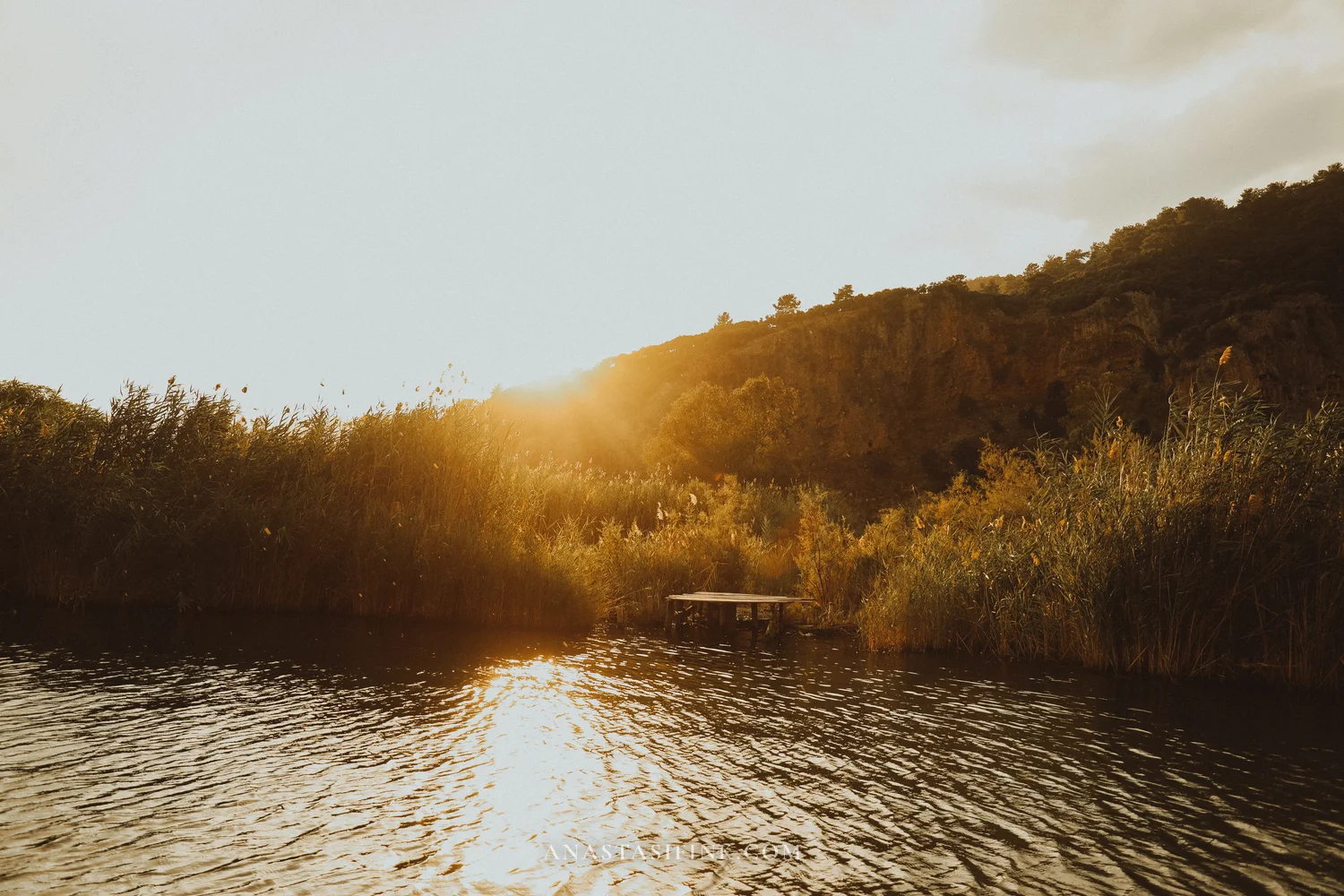
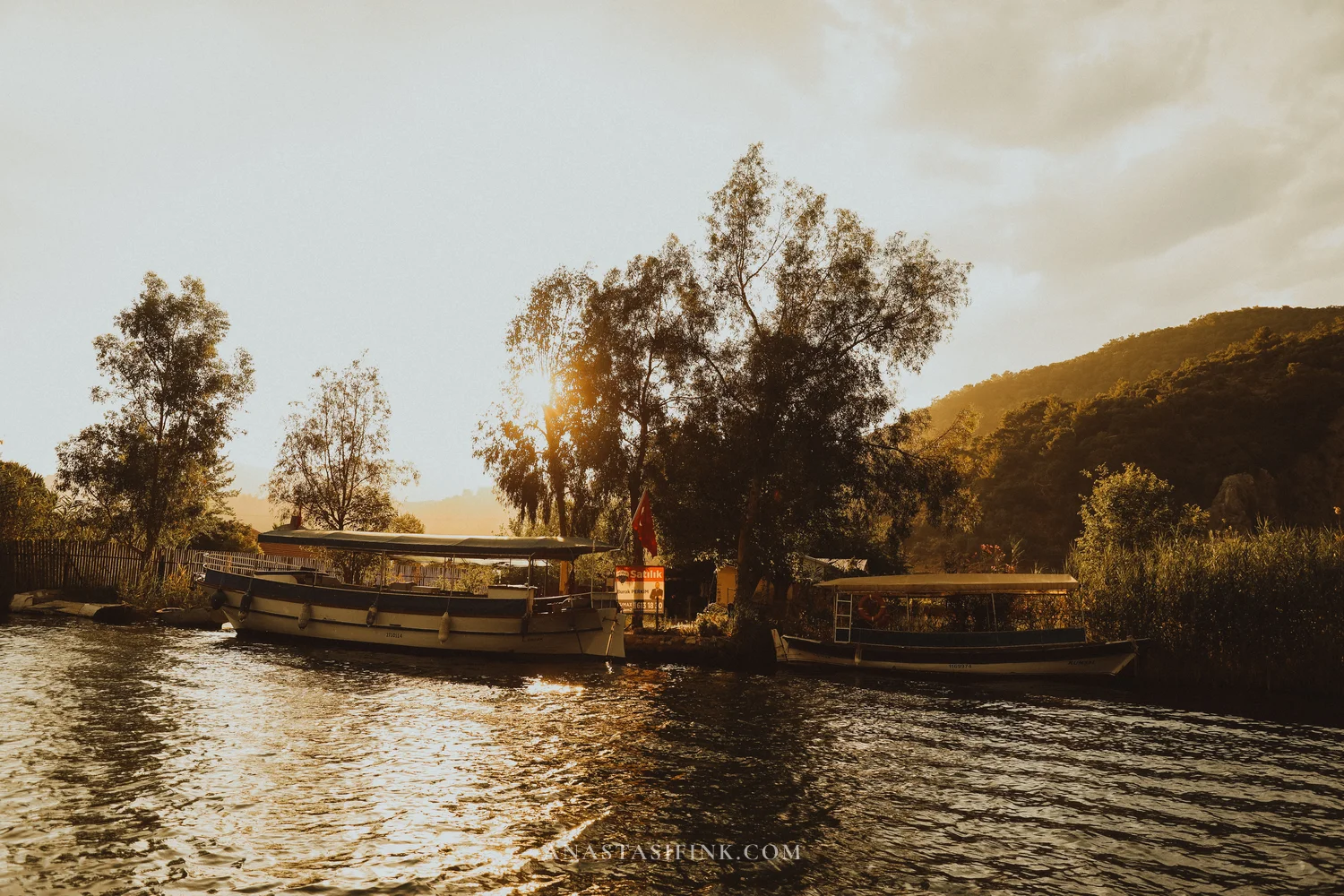
The Dalyan River at sunset — at some point everything around turns the same shade of gold
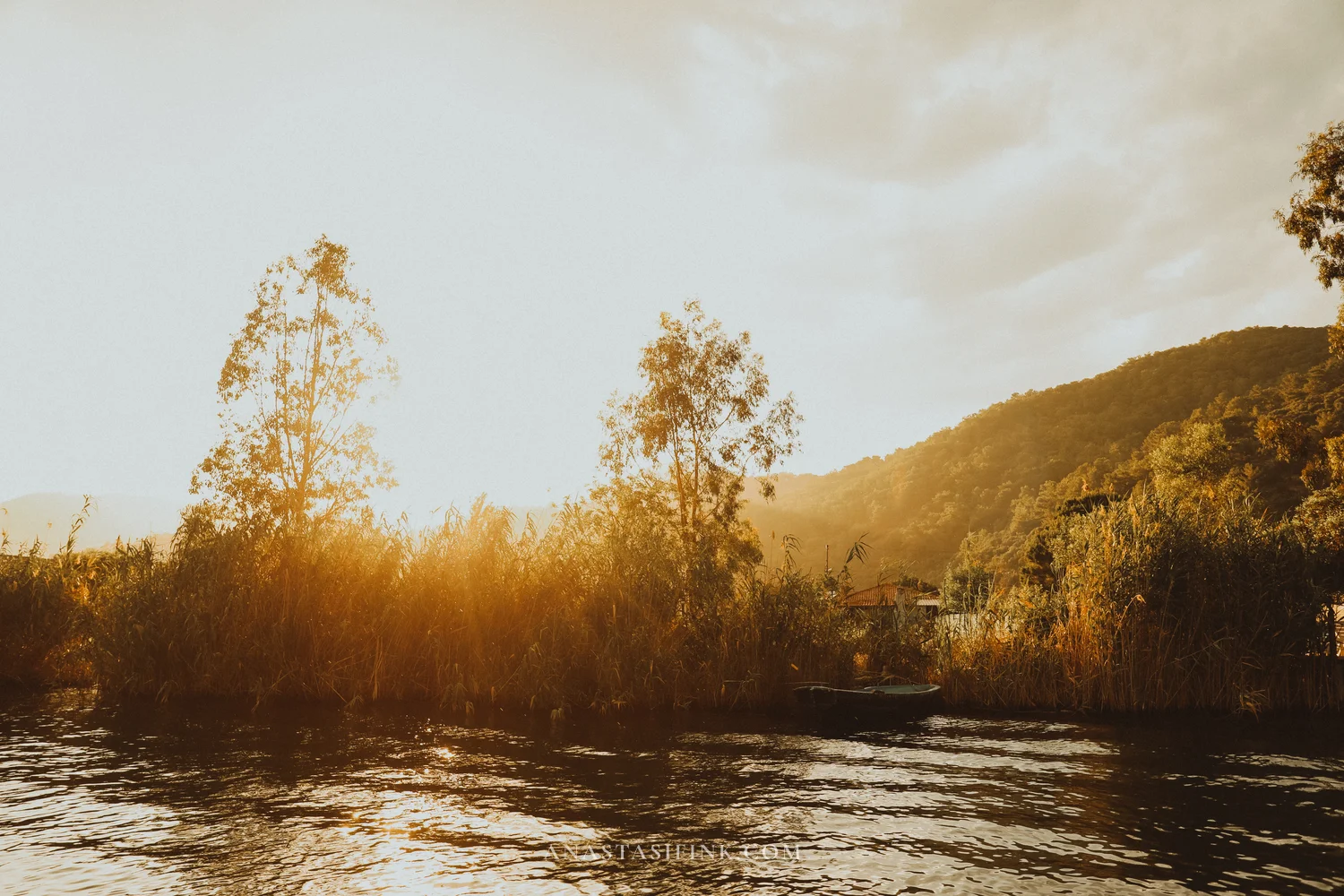
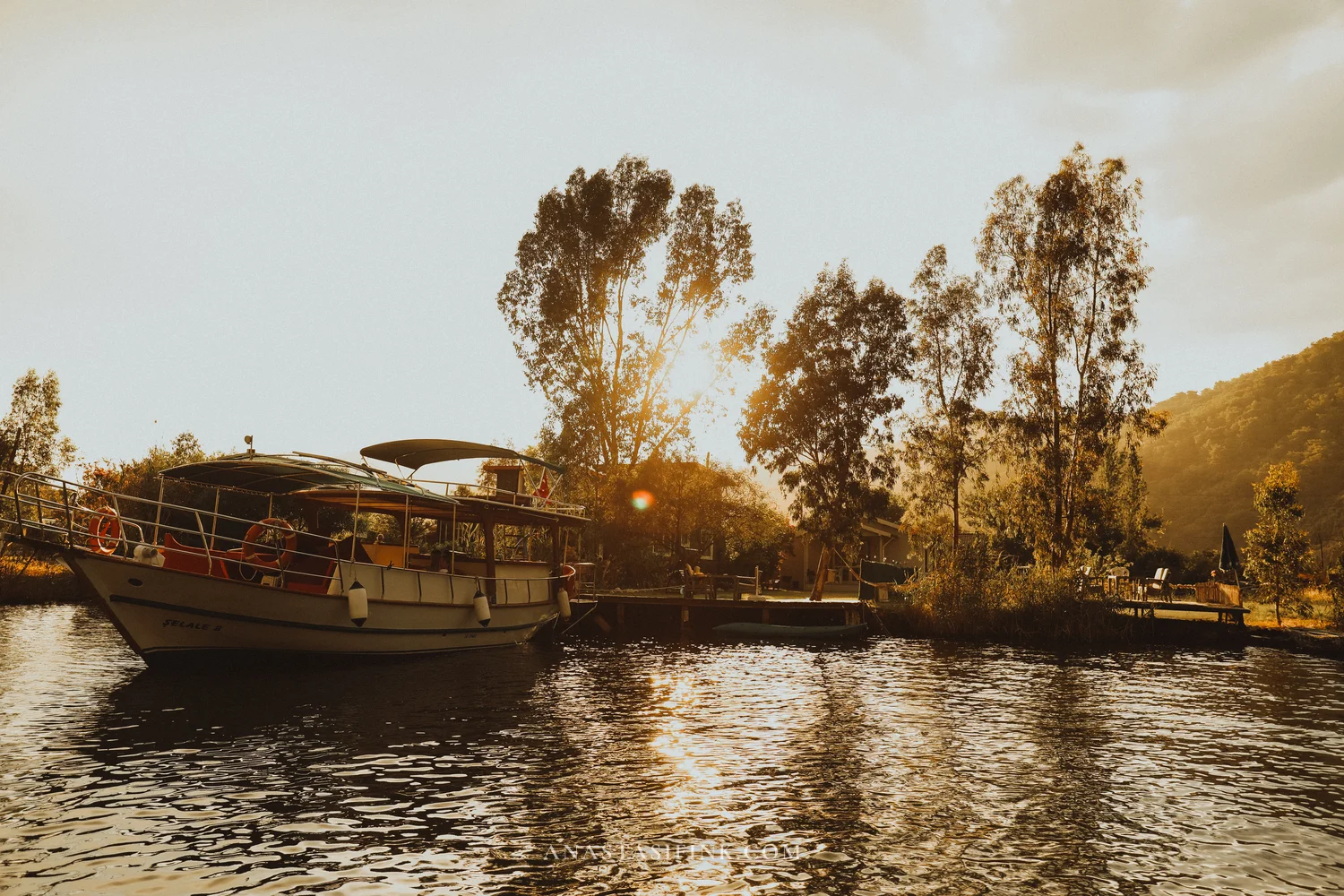
Boats by the bank — in some spots, people seem to live right on the water
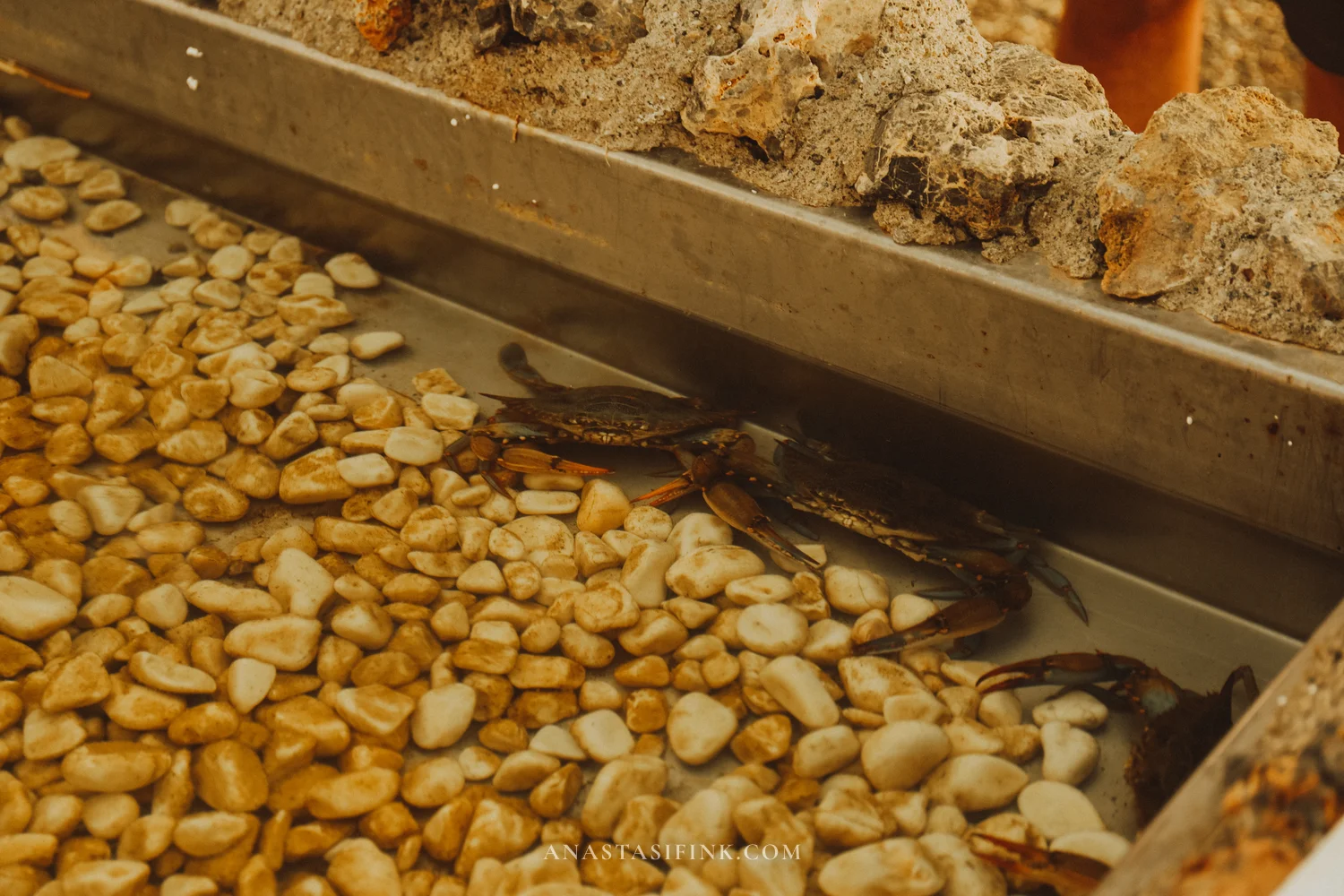
The blue crab stop
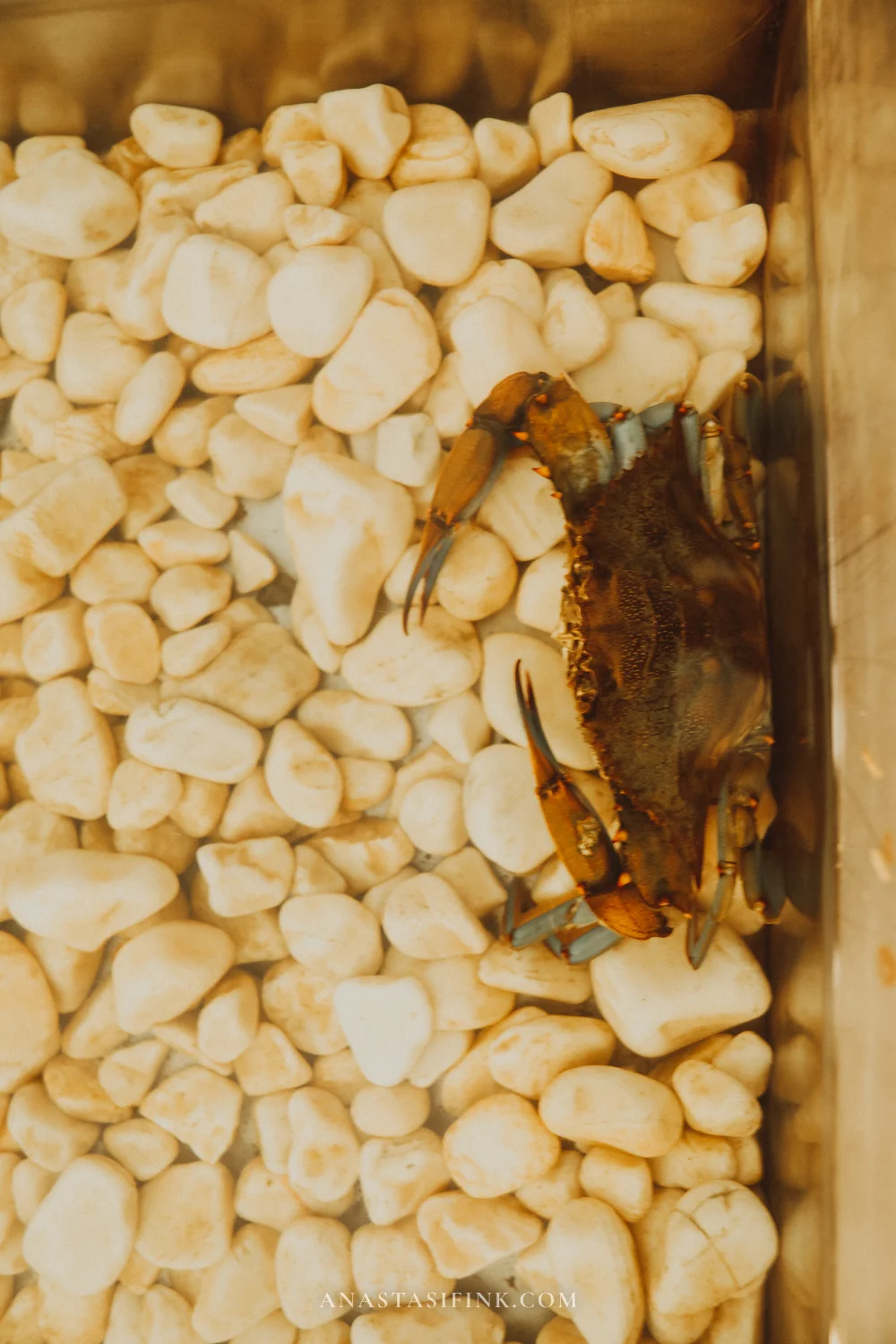
The boat made a stop at a small dock where they showed us blue crabs. The blue crab (Callinectes sapidus) is an invasive species that reached the Mediterranean from the Atlantic via ships’ ballast water. In the Dalyan delta and Lake Köyceğiz, the crabs found ideal conditions and multiplied like crazy.
At first, it was a disaster for local fishermen — the crabs were tearing nets and eating the catch. But then the situation flipped: they started catching the crabs for export (mainly to the US and Asia) and serving them at local restaurants. What was once a problem became a source of income. Today, Dalyan blue crab is a recognized local product.
Lake Köyceğiz — sunset over the water
After the crab stop, the boat moved into more open water — closer to Lake Köyceğiz. The lake is huge, 52 square kilometers, and at sunset it looks endless. Mountains on the horizon, reed islands, birds — the landscape feels completely wild and untouched.
This entire area is a specially protected nature zone (Köyceğiz-Dalyan Special Environmental Protection Area), established in 1988. Loggerhead sea turtles (caretta caretta) nest here, the rare African softshell turtle lives here, and you’ll find herons, kingfishers, and birds of prey.
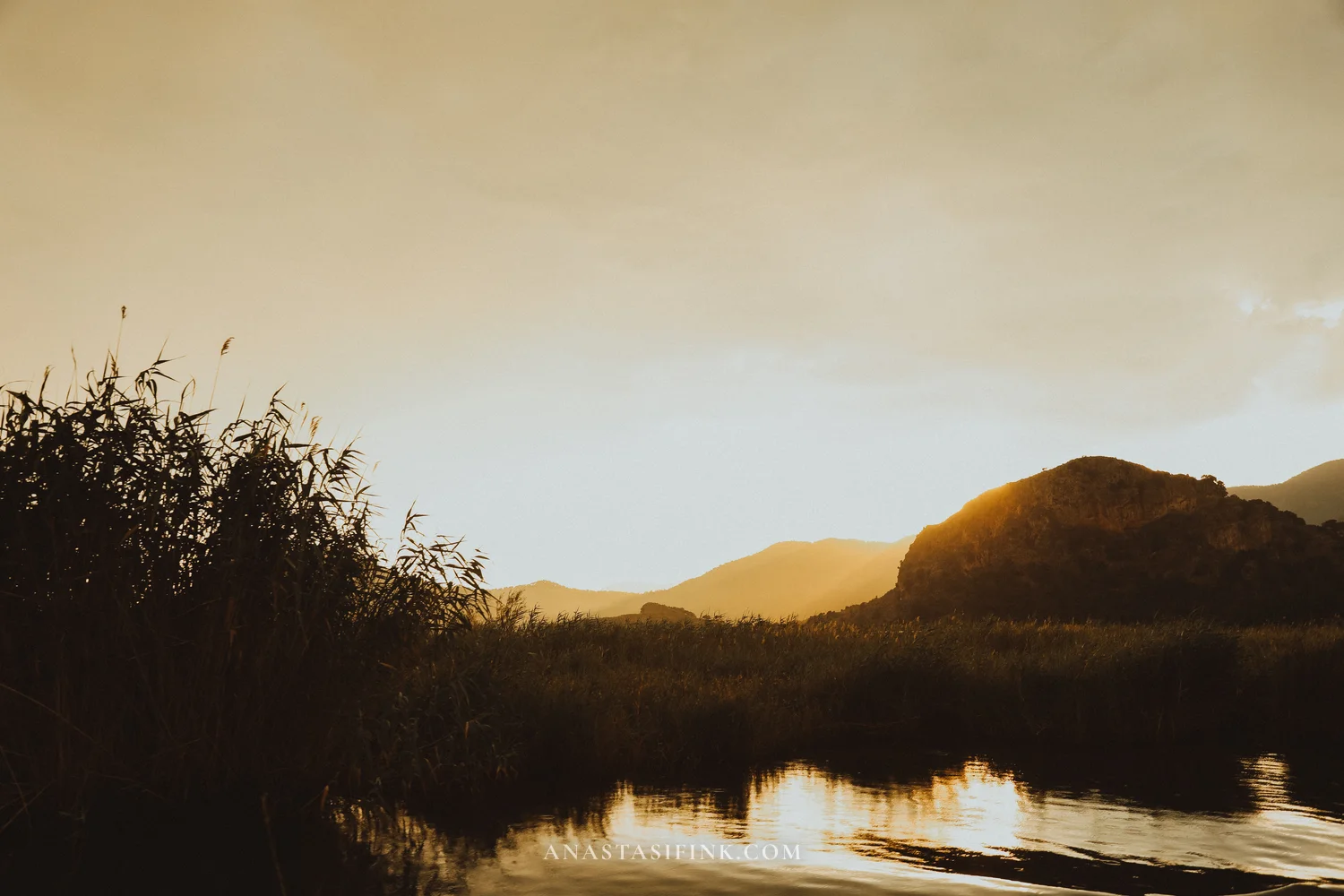
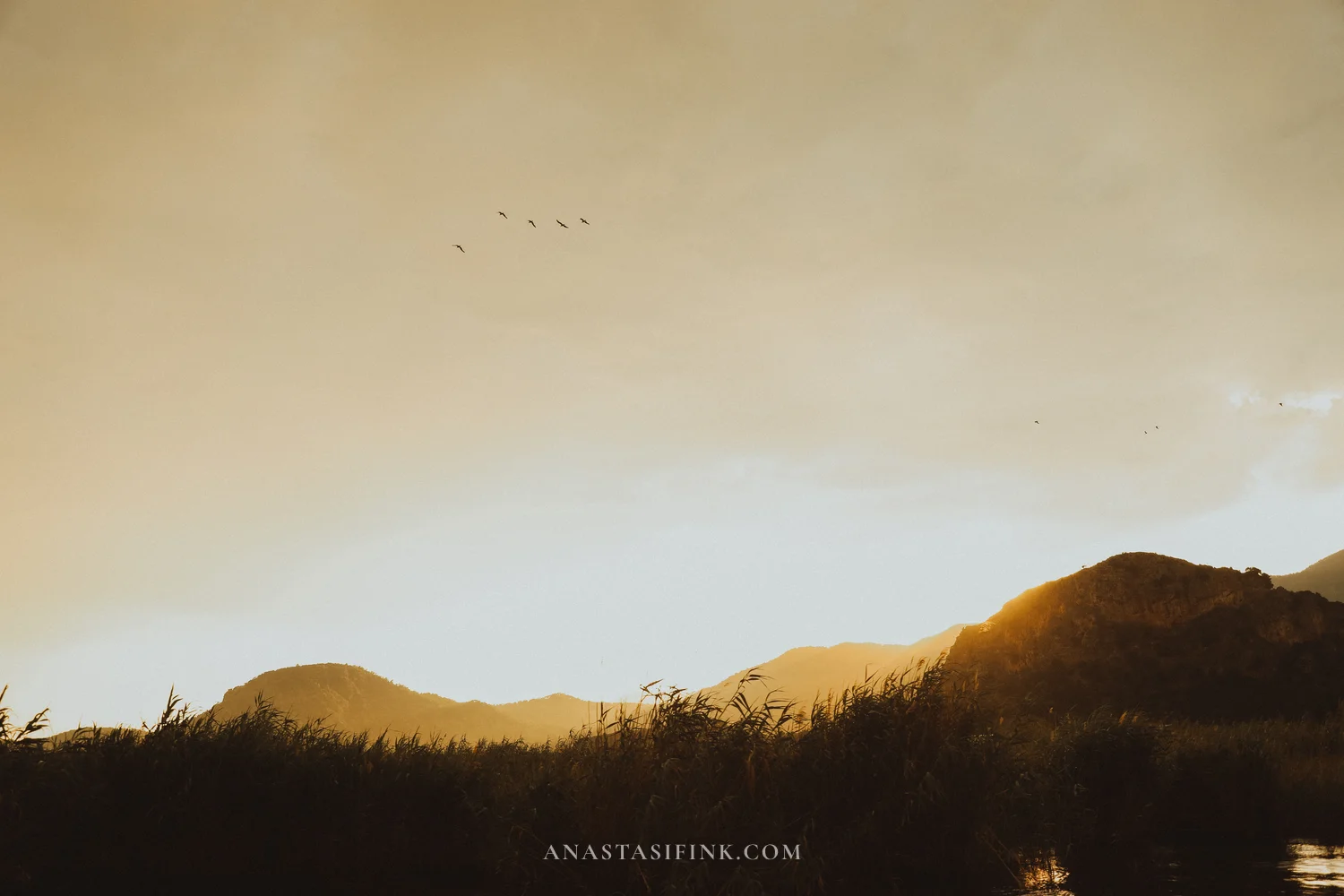
Sunset over the lake — birds flying against the mountains. Wild, untouched
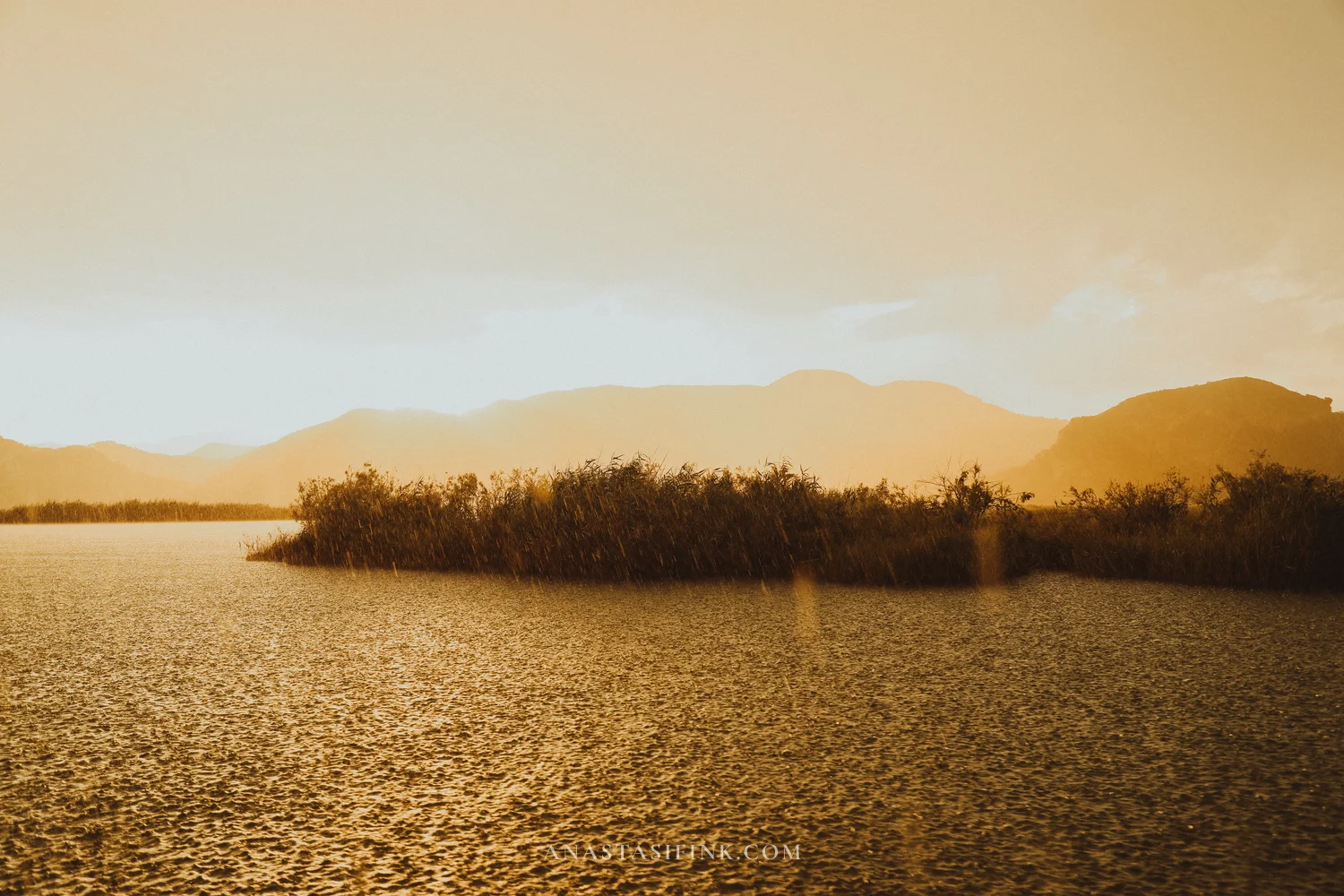
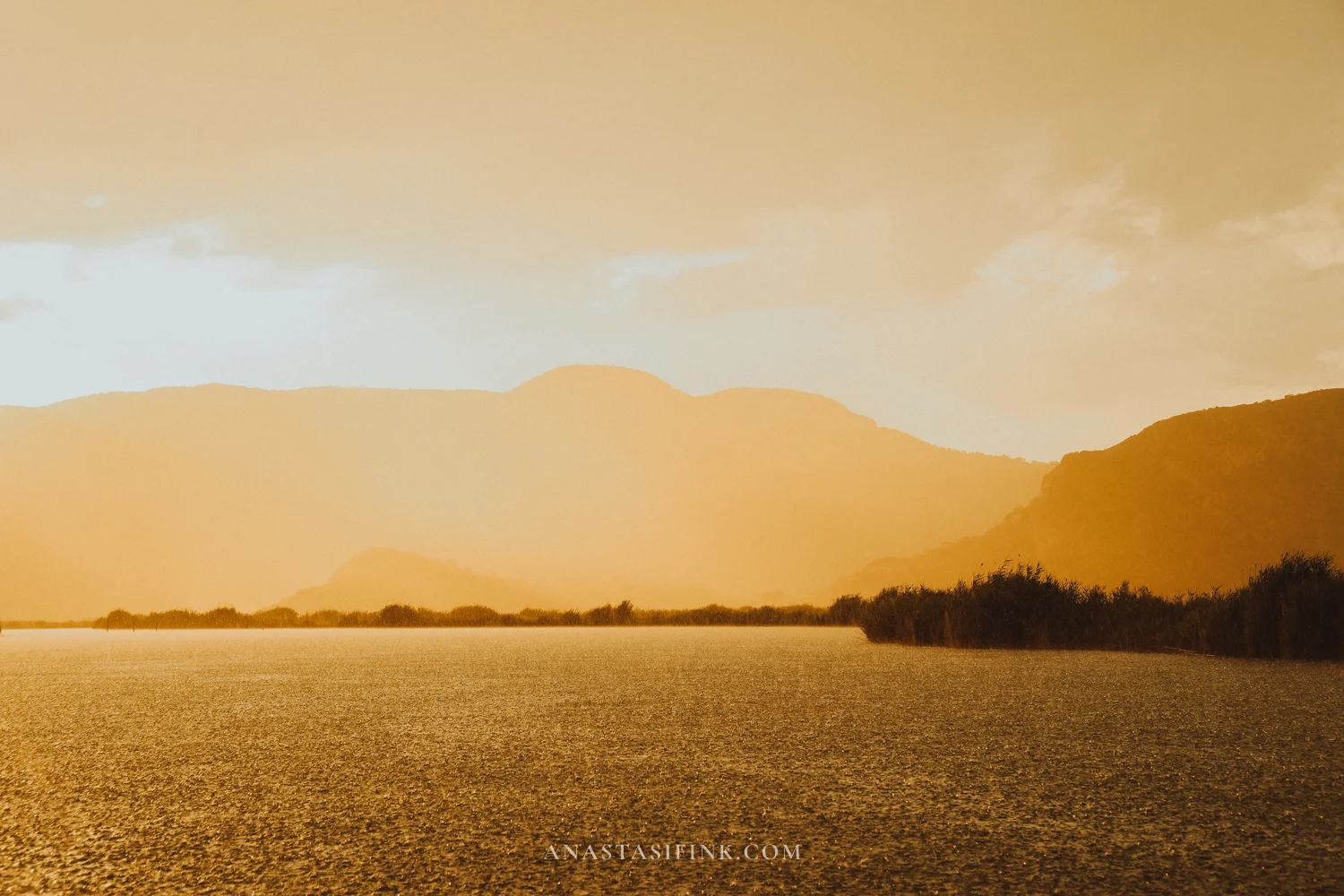
Lake Köyceğiz at sunset — 52 square kilometers of water, reeds, and silence
The downpour on the way back
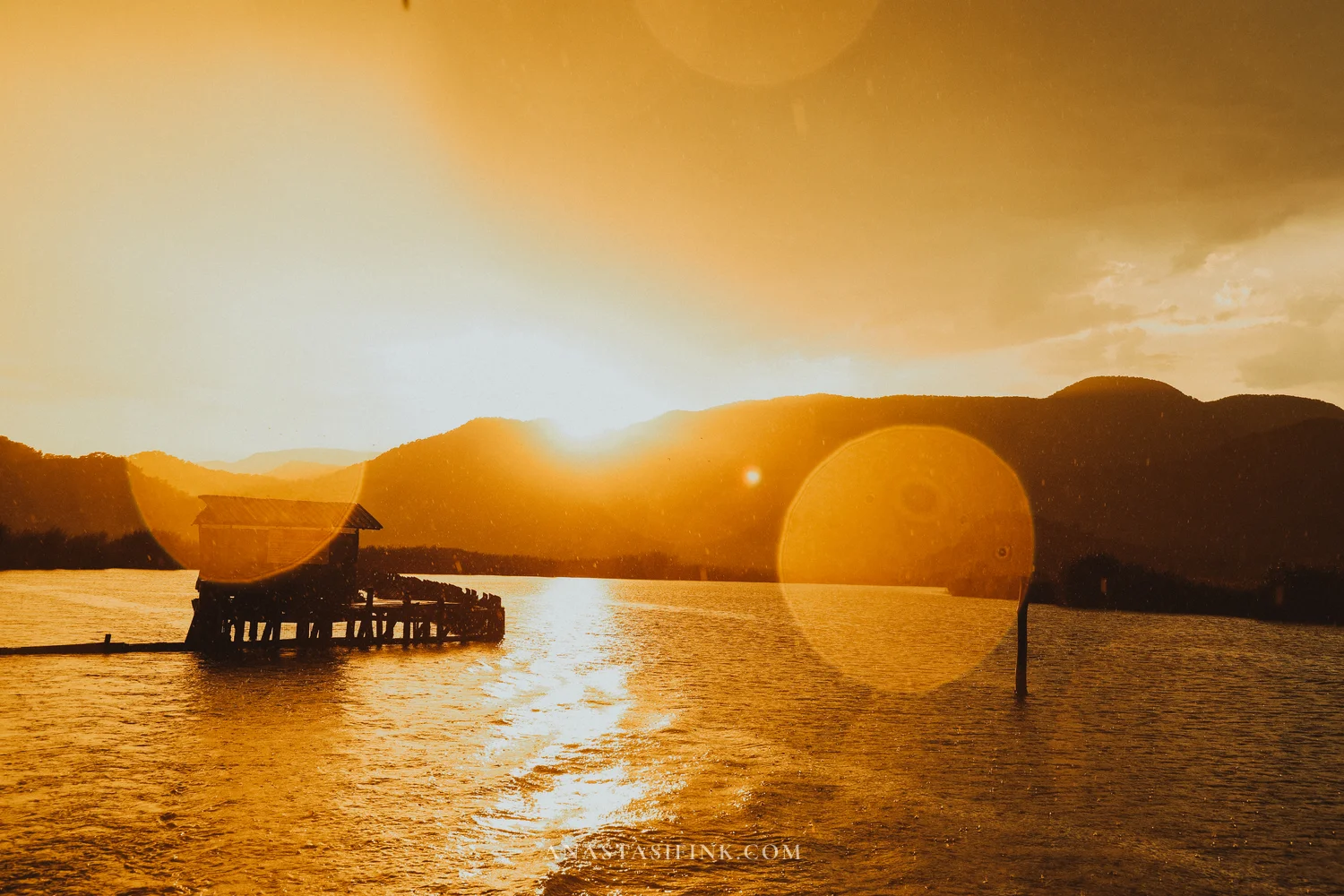
And then it started raining. Not a drizzle — a proper downpour, sudden, warm, southern. The boat turned back, but there was no rush: the canopy kept the water off us, and the sunset through the rain looked absolutely unreal. Raindrops against golden light, mountains in haze, boats ahead — honestly, it looked unreal.
Other boats were moving around us — all heading back to Dalyan. Rain drummed on the canopy, the water around us was splashing with drops, but the light just kept going. You don’t plan moments like these — they just happen.
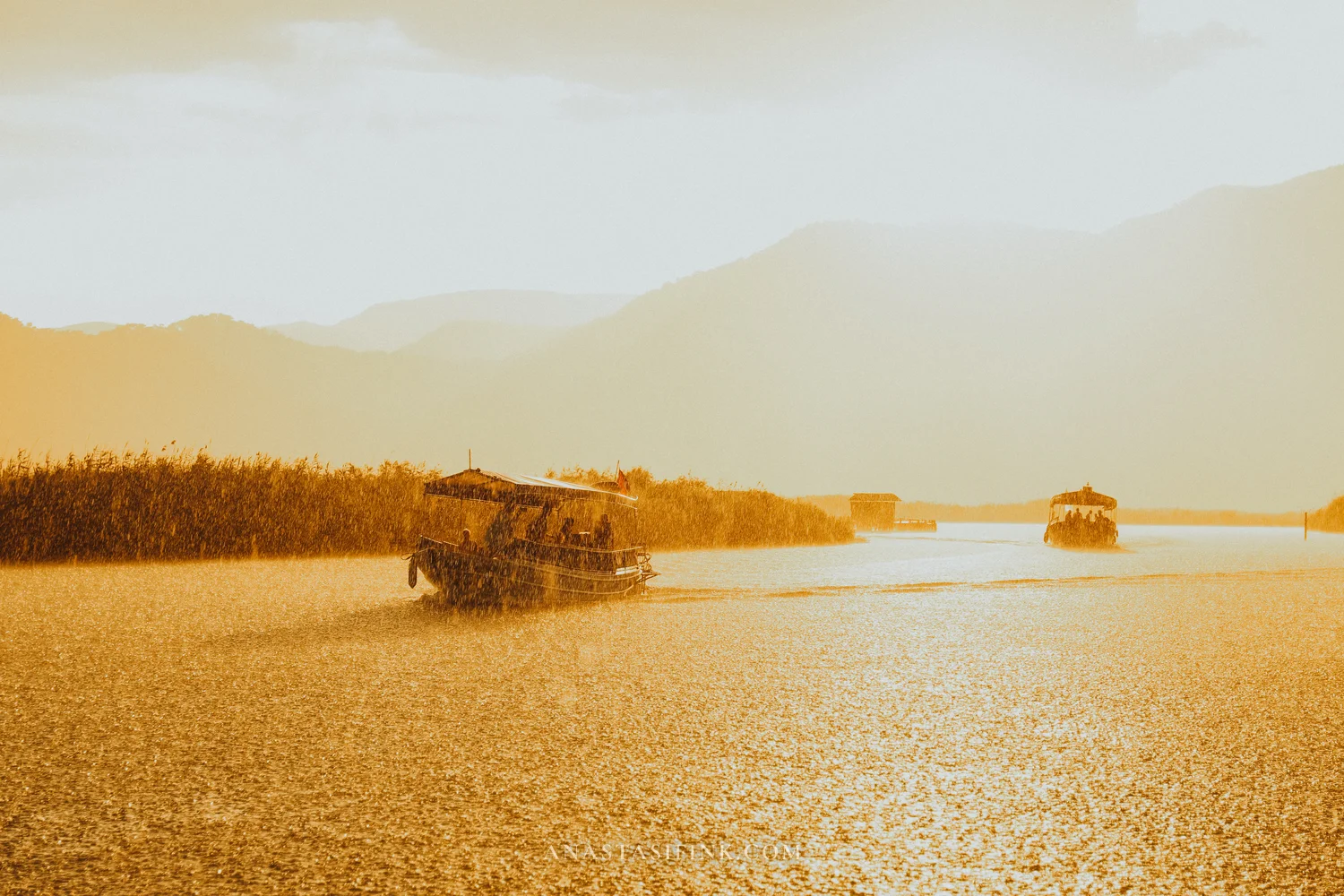
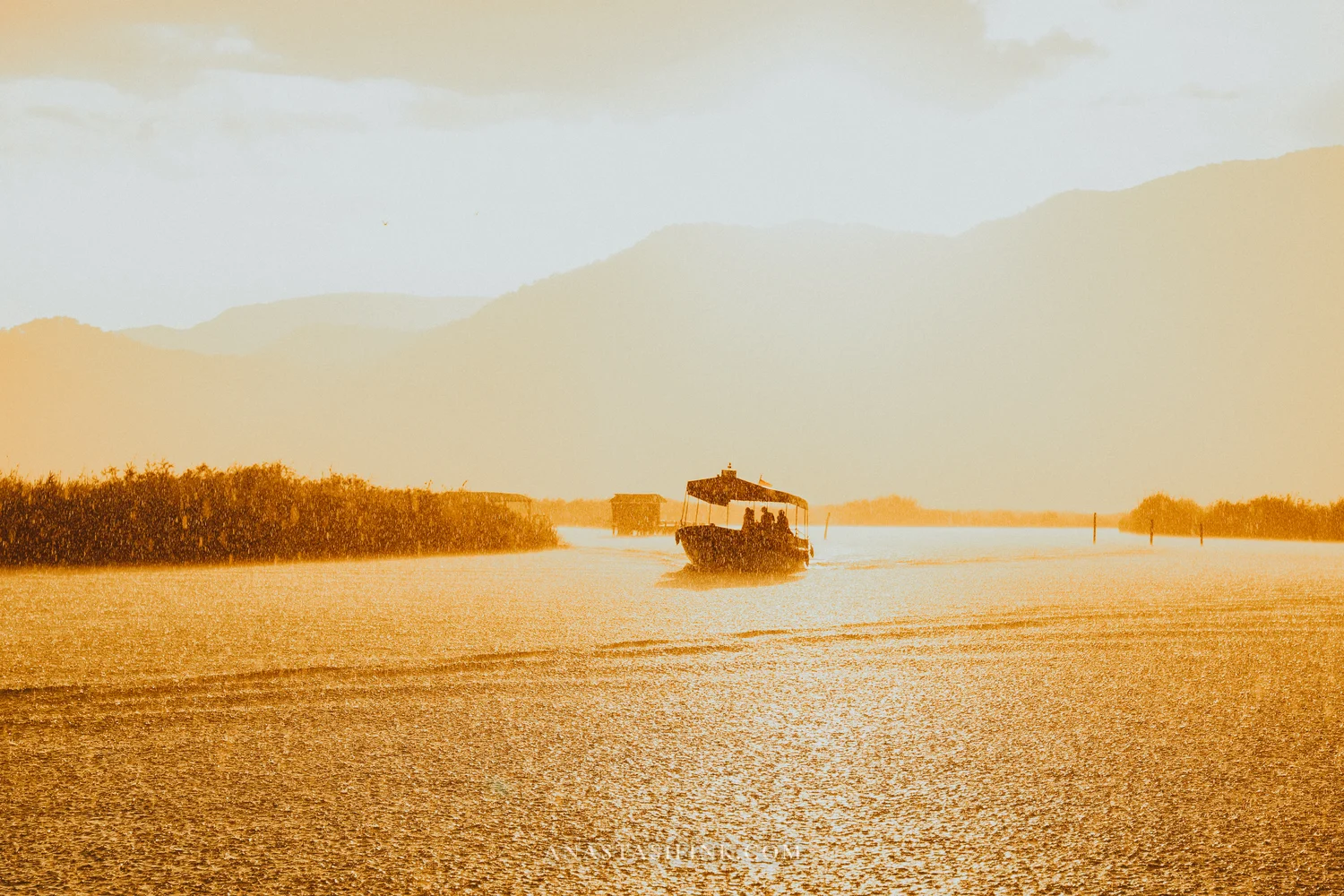
The downpour started suddenly, but the sunset didn’t end — the combination was fantastic
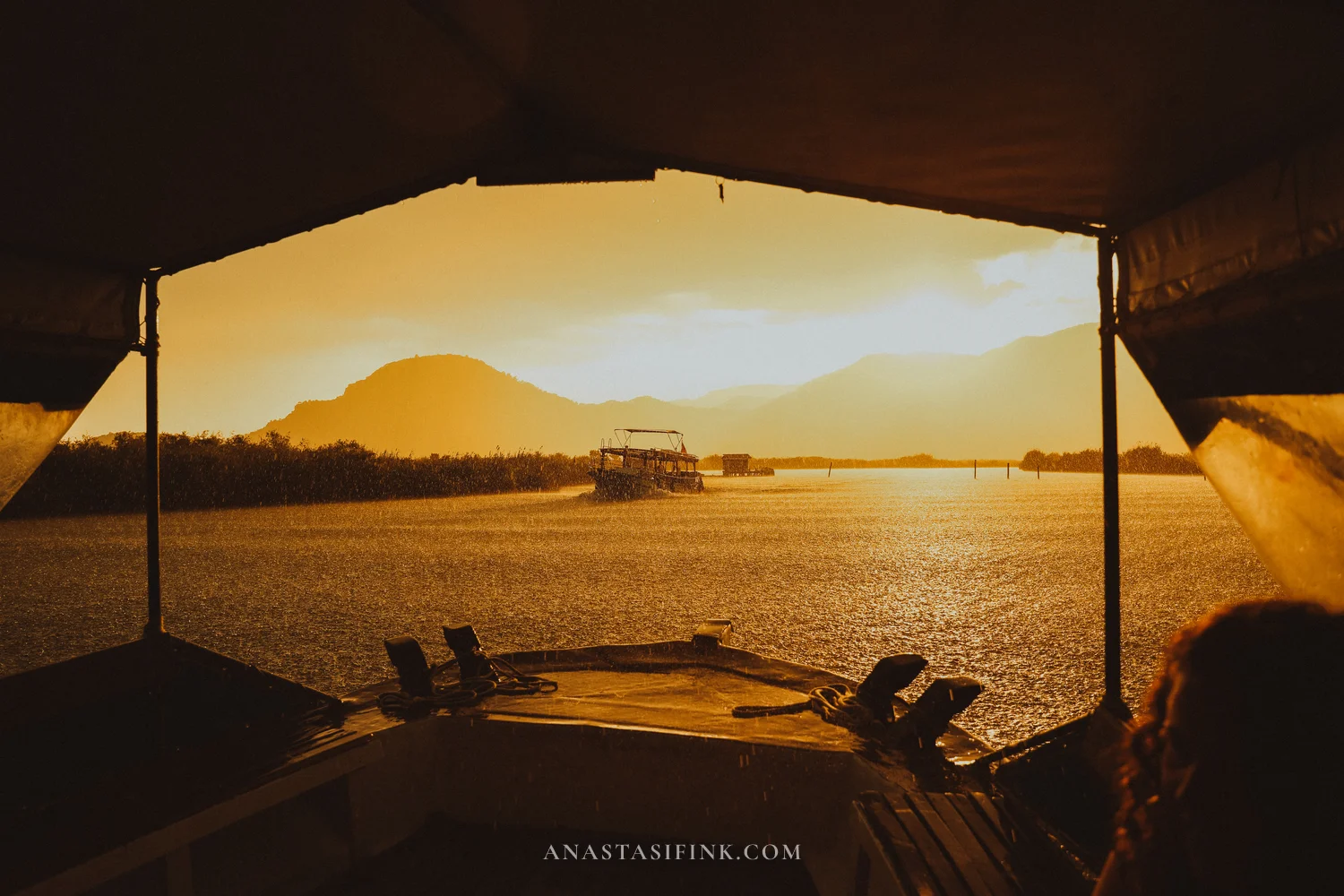
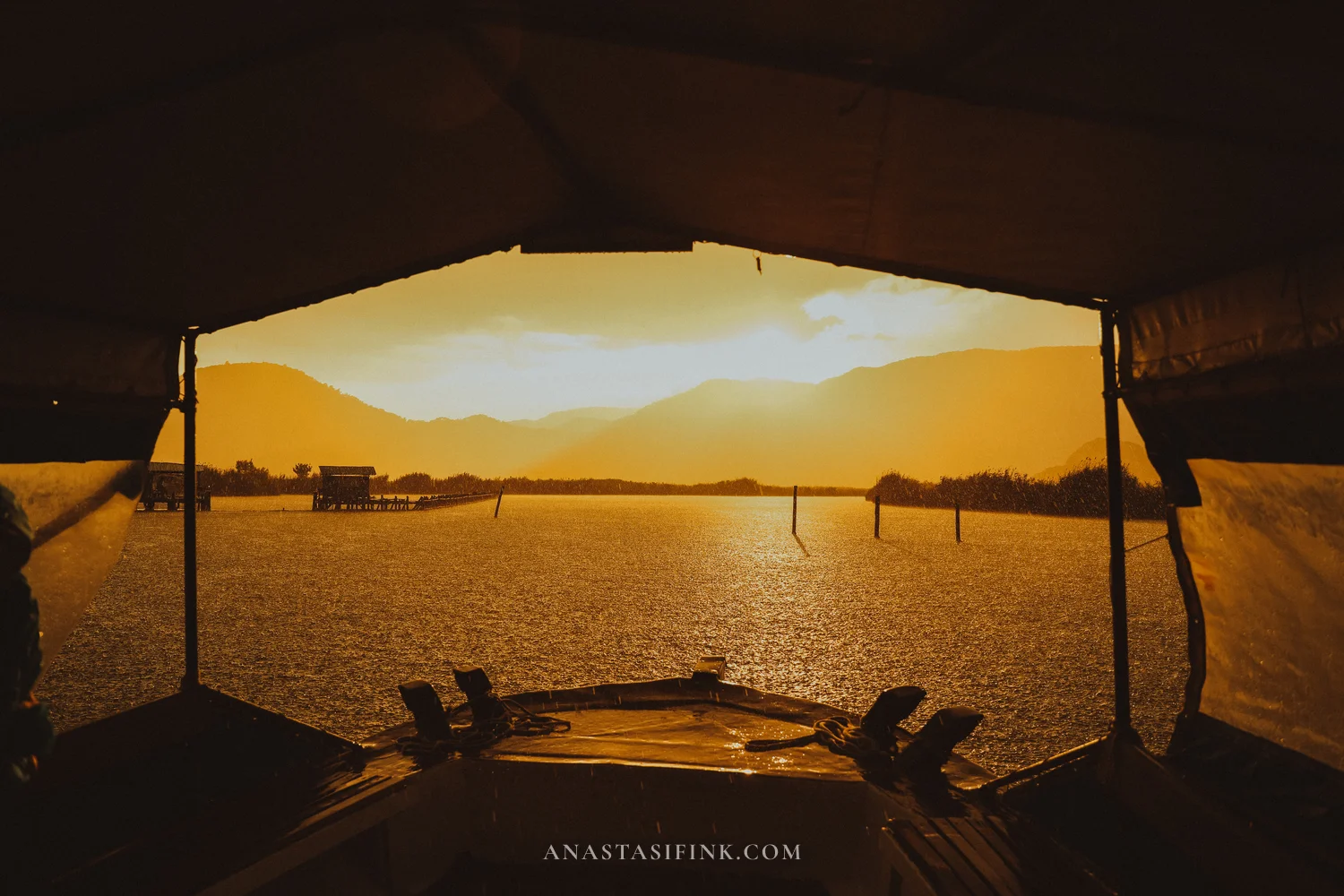
From under the boat canopy — rain, sunset, and mountains. The canopy did a great job keeping us dry
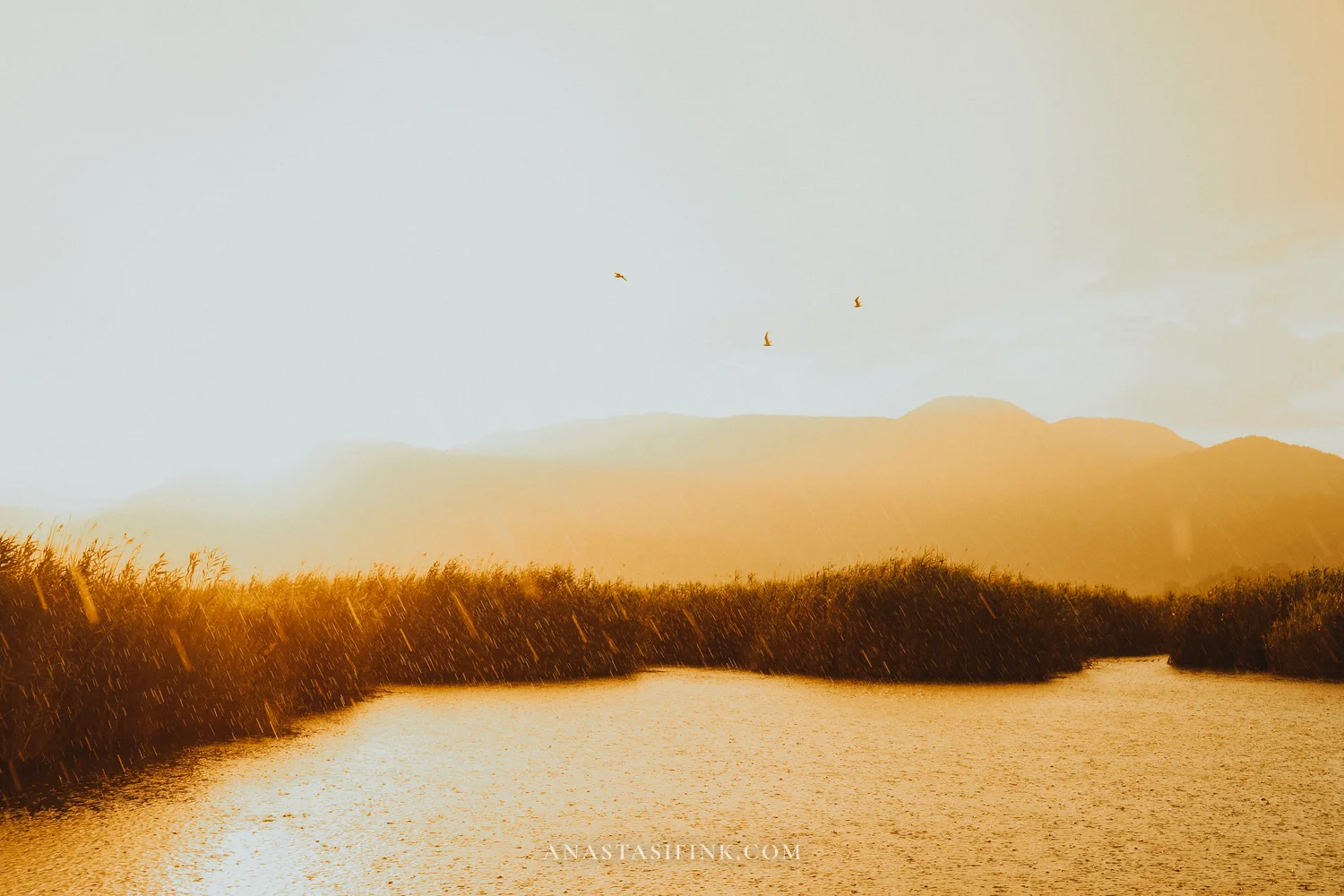
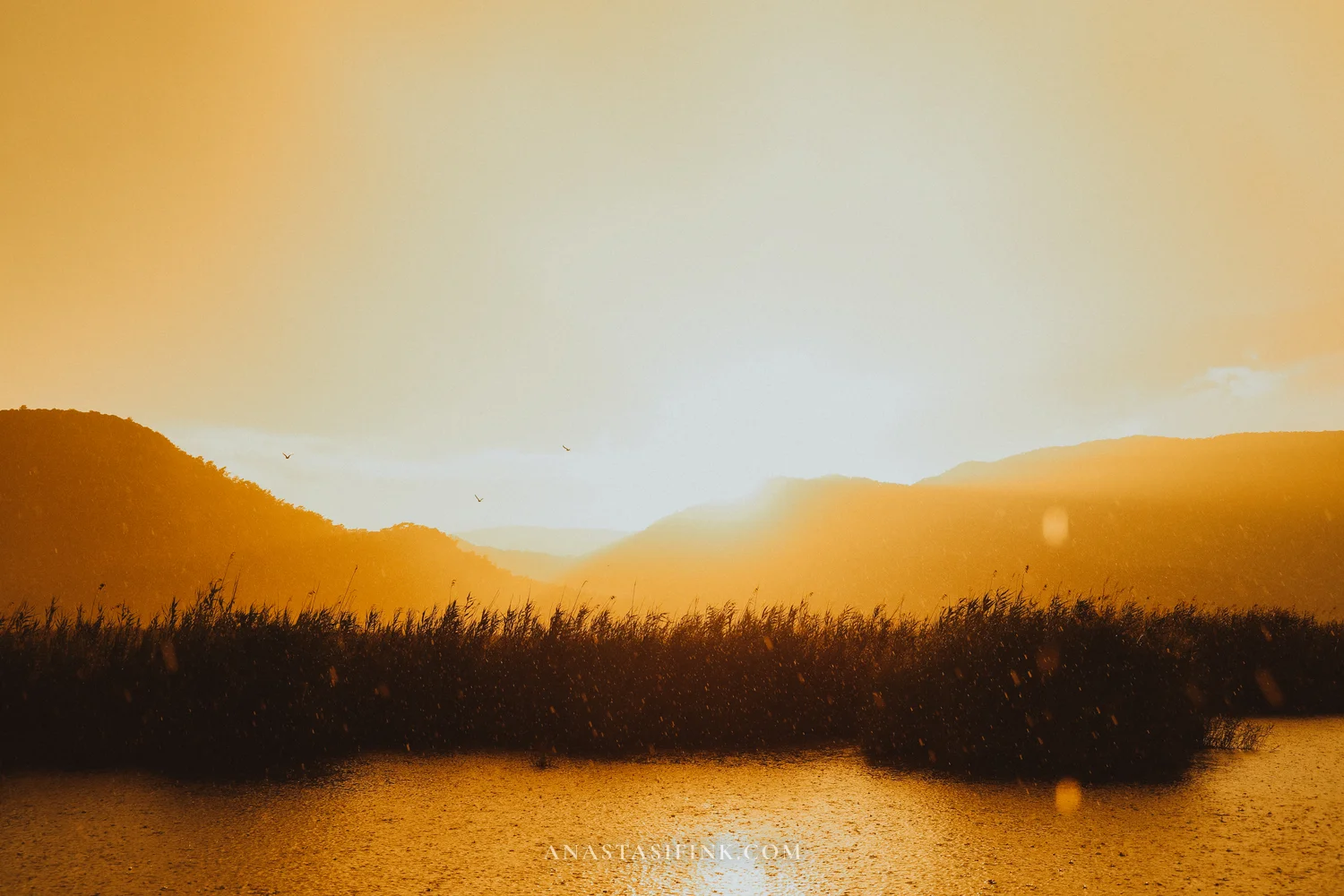
The way back through reed channels — raining, but the light wouldn’t quit
Returning to Dalyan — gold, rain, and reflections
The last stretch back to Dalyan was the most beautiful. The sun was already setting behind the mountains, the rain wouldn’t stop, and everything around looked like a movie scene. Boats ahead, light dancing on the water, a Turkish flag on the stern — and complete silence, just the engine and the rain.
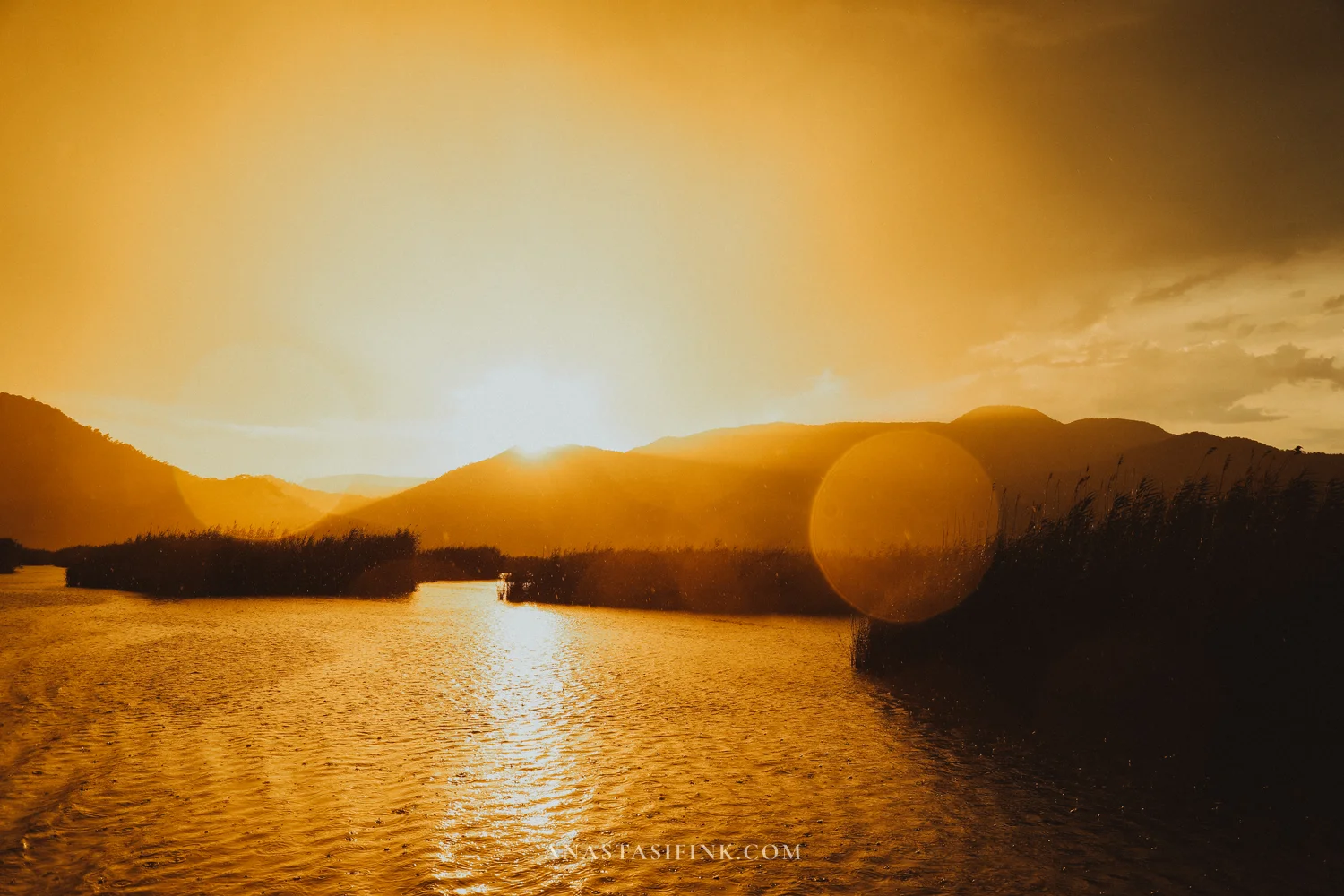
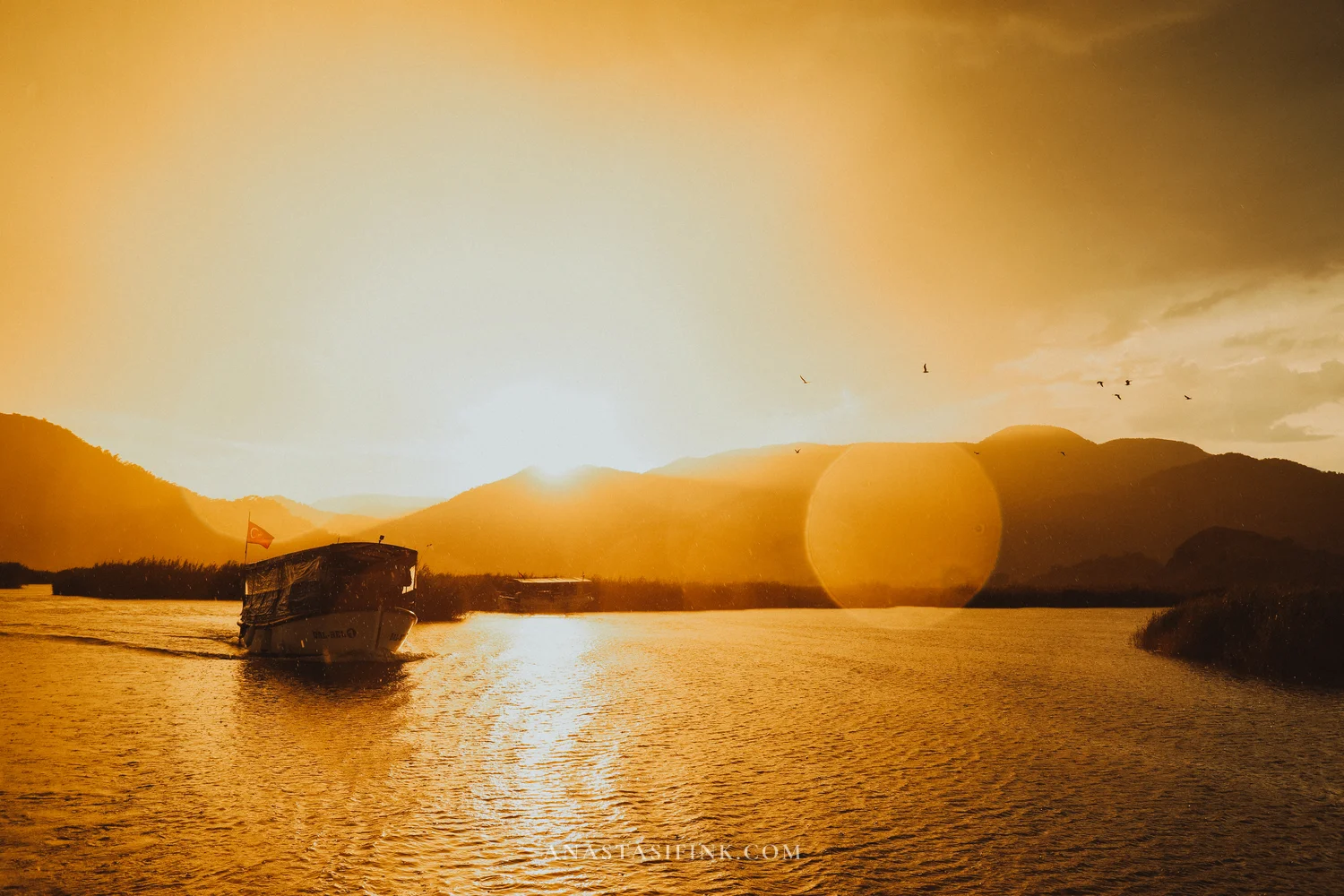
Sunset through the rain — lens flare only added to the drama
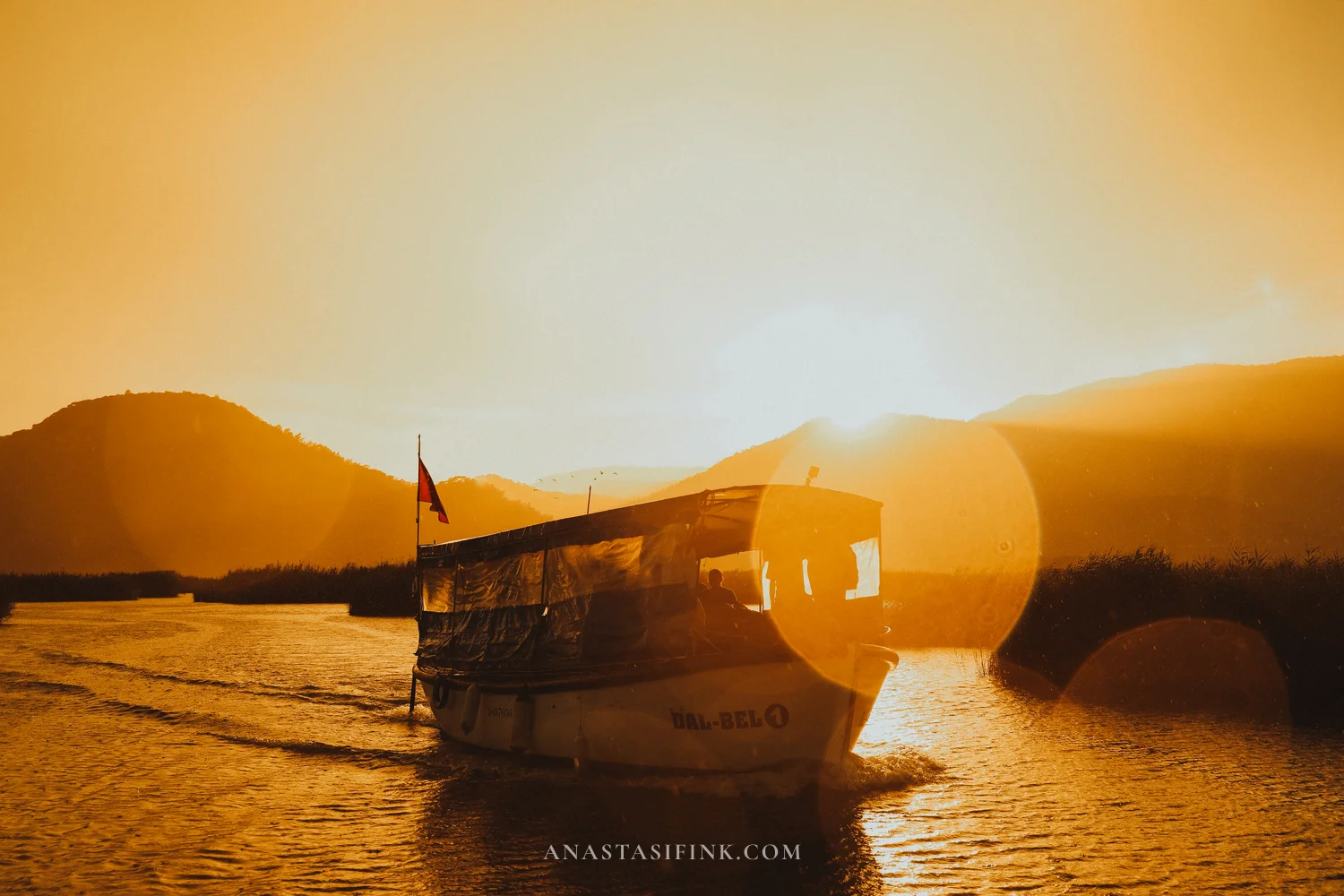

Last minutes on the water — boats heading back to Dalyan
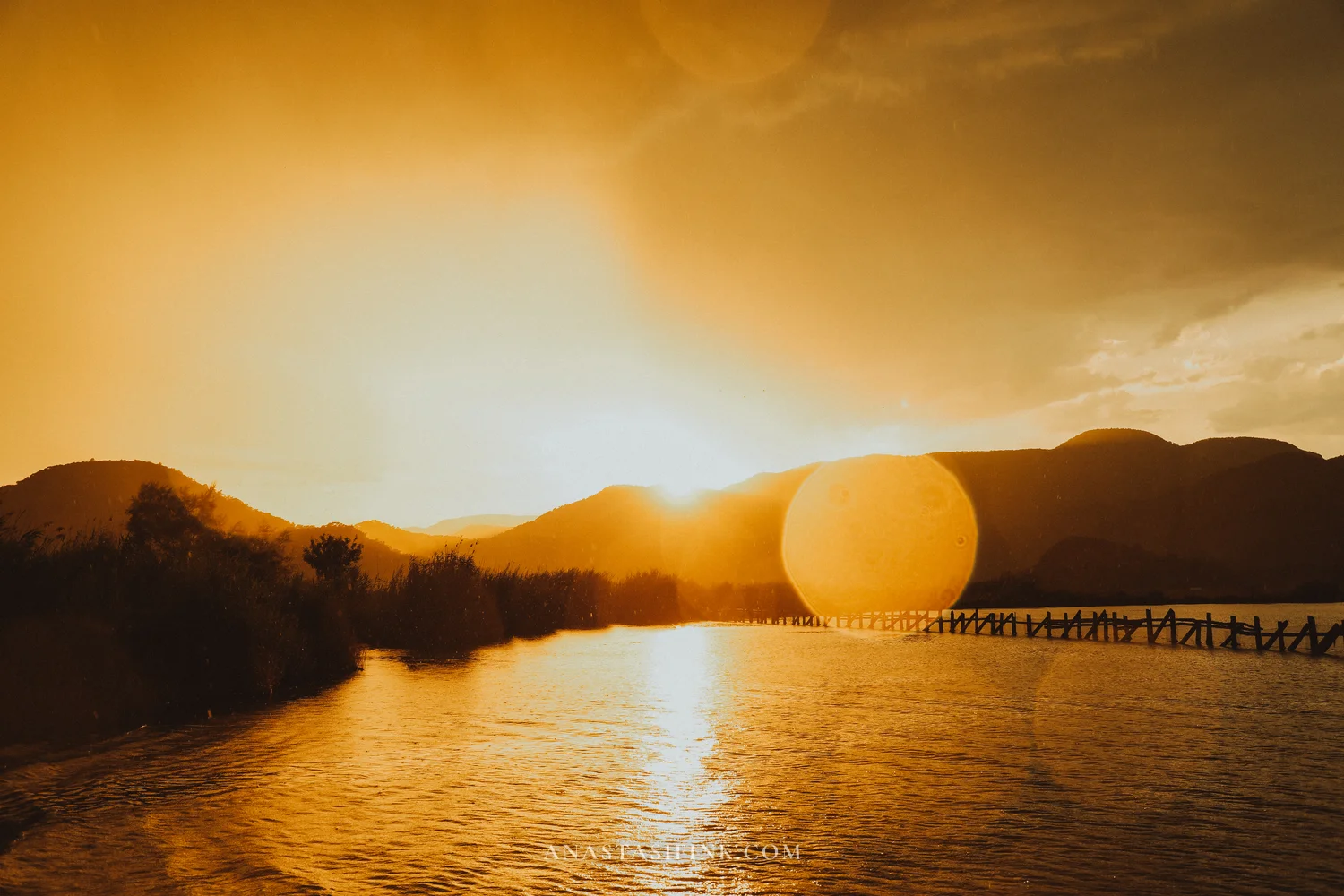
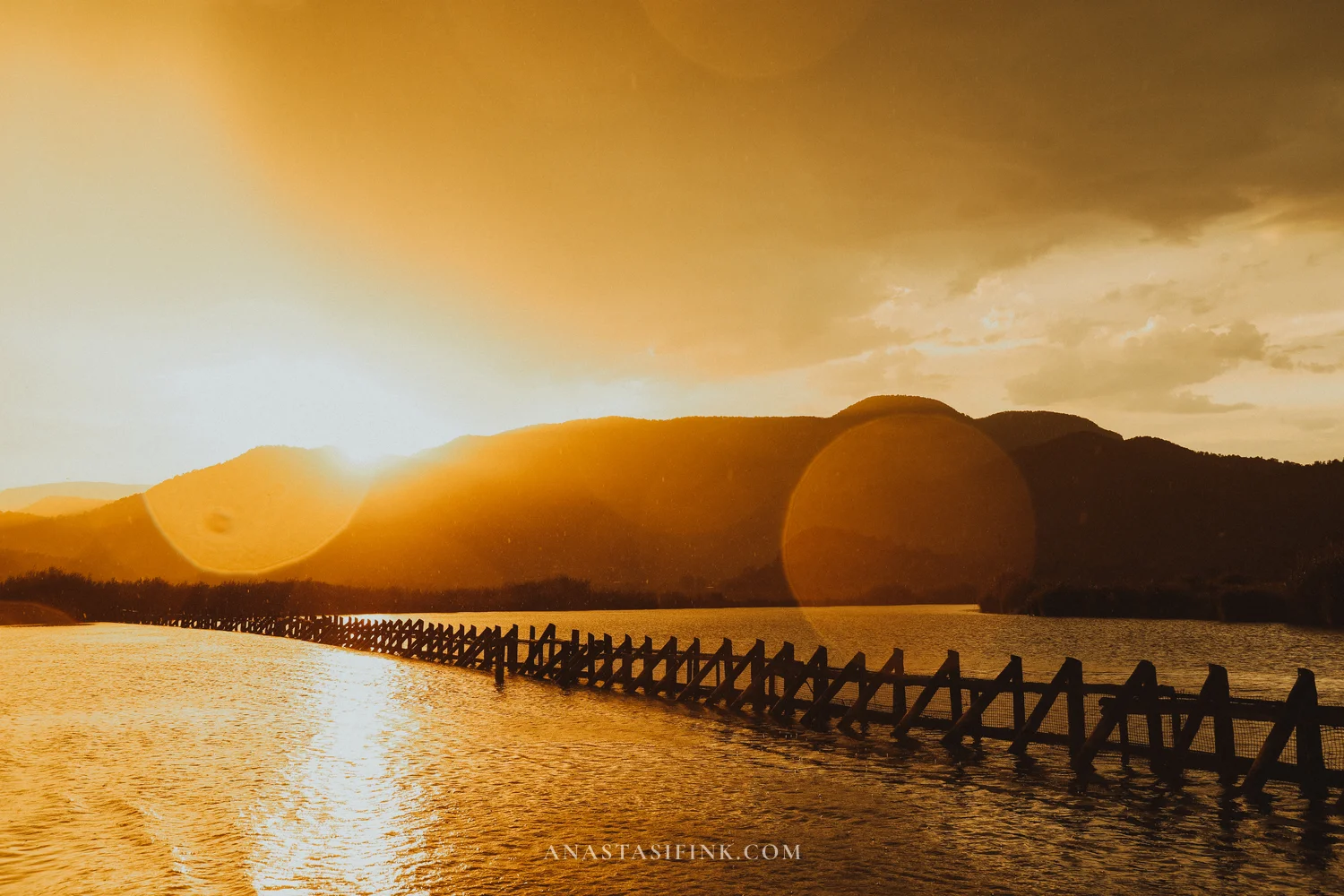
Fishing barriers on the river — part of the actual “dalyan,” the fishing weir that gave the town its name
Practical information
- Where: Dalyan, Muğla Province, Turkey
- GPS: 36.8350, 28.6430
- Getting there: Dalaman Airport is 25 km away (30 min by car). From Fethiye or Marmaris — about 75 km (1.5 hours via the D400 highway). Turn off at the town of Ortaca
- River tour: 400–600 TL per person (~$12–18) for a full-day group tour. Private boat — 2,500–4,000 TL (~$75–120) for the whole day
- Short cruise (2–3 hours): 250–400 TL per person (~$8–12)
- Kaunos ancient city entrance: 200–300 TL (~$6–9), Müzekart (Turkey museum pass) accepted
- River ferry: 30–80 TL per car. Small platform, fits 3–4 vehicles
- Best time to visit: May–June or September–October. Summers are hot (35–40°C / 95–104°F) and more crowded
- Google Maps: Dalyan
Tip for photographers: Book an afternoon tour — starting around 3:00–4:00 PM. The Kaunos tombs are lit by the setting sun, and the light on the river turns golden. A 70–200mm telephoto is great for tomb details, and a wide-angle for river panoramas. After dark, the tombs are lit up by spotlights — they reflect beautifully in the water.
Tips
- Rent a car if you’re traveling the coast. Dalyan pairs easily with Fethiye, Ölüdeniz, or Marmaris. Public transit exists too (dolmuş — shared minibuses — run from Ortaca), but a car gives you way more flexibility
- Don’t try the ferry if you have a large or unfamiliar car. Better to drive around through Ortaca — it’s an extra 20 minutes, but zero stress
- Take an evening tour — better light, fewer tourists, and a chance to catch the sunset on the water
- Try the blue crab at one of the waterfront restaurants — it’s the local specialty
- Bring a rain jacket or light windbreaker — downpours start out of nowhere here, especially in the evening
- What to combine it with: Iztuzu Beach (the turtle beach), mud baths, Sultaniye thermal springs on the shore of Lake Köyceğiz, the ancient city of Kaunos
FAQ
Dalaman Airport is 25 km away by car or taxi. From Fethiye and Marmaris it’s about 1.5 hours via the D400 highway — turn off at the town of Ortaca. You can also take a dolmuş (shared minibus) from Ortaca.
A full-day group tour is 400–600 TL per person (~$12–18). A shorter 2–3 hour ride is 250–400 TL. You can hire a private boat for 2,500–4,000 TL for the whole day.
May–June or September–October. Summer is hot and crowded. For photography, the afternoon is best — the sunset light on the Kaunos tombs is incredible.
Absolutely. A 2–3 hour river tour plus lunch on the waterfront makes a solid half-day plan. If you want the full route with Iztuzu Beach and the mud baths, set aside a whole day.
They’re an invasive species from the Atlantic that thrived in the local delta. At first, the crabs were a nightmare for fishermen, but now they’re caught for export and served at restaurants as a delicacy.
Yes. Dolmuş minibuses run from Ortaca. You can grab a taxi from Dalaman Airport. Within Dalyan itself, everything is walkable — the waterfront and the boats are all close together.
Yes, a small cable-pulled car ferry. It fits 3–4 cars. But the approach is awkward, and I’d recommend just driving around through Ortaca — it’s only 20 extra minutes.
Dalyan — one of those places you keep coming back to in your mind
We didn’t explore the town of Dalyan itself. We skipped the mud baths and never made it to the turtle beach. We just took a boat ride along the river, saw the tombs at sunset, got caught in a downpour, and came back wet and happy. And that was more than enough.
Dalyan is one of those places you won’t find in any “top 10 things to see in Turkey” list. There are no crowds and no assembly-line feeling. There’s the river, the reeds, 2,400-year-old tombs carved into a cliff, and local fishermen who take tourists out on the same boats their grandfathers used for fishing. That alone is worth the detour.