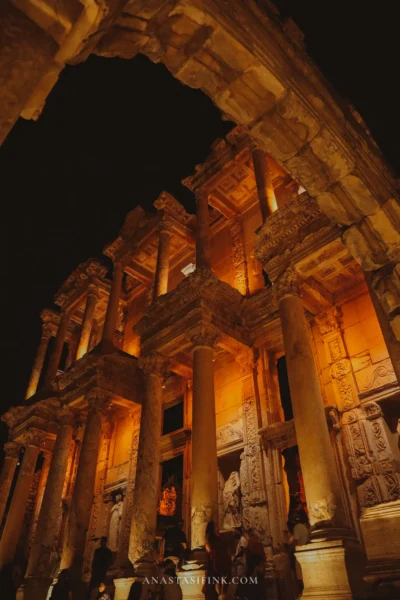
Bergama, Turkey — What to See Beyond the Pergamon Acropolis

An hour and a half from Izmir, I left behind the beaches and sun loungers and found myself in a small Anatolian town where at every corner there are carpets, ancient stones, and the smell of freshly baked bread. Bergama. Most people come here for Pergamon on the hill, but the town itself deserves a full day of exploration.
About Bergama — A Town That’s More Than Just Pergamon
Bergama is a small city with just over 100,000 inhabitants in Izmir Province. For most tourists, it’s simply a stopping point on the way to the Pergamon Acropolis — one of the major ancient cities of Asia Minor. But if you spend even half a day in Bergama, the town reveals itself in a completely different way.
Here in the city center stands a Roman temple to Egyptian gods, in a covered bazaar dating back to the 14th century they serve ice-cold sherbet made from black mulberries, and in a former Ottoman hammam from the 16th century, there’s now a museum of parchment — the very material that was invented here two thousand years ago. By the way, the English word parchment comes from the Latin pergamenum — “from Pergamon.”
In 2014, this entire “multi-layered cultural landscape” — from ancient ruins to Ottoman quarters — received UNESCO World Heritage status. Not just the acropolis, but the entire city.
Kızıl Avlu — The Red Basilica
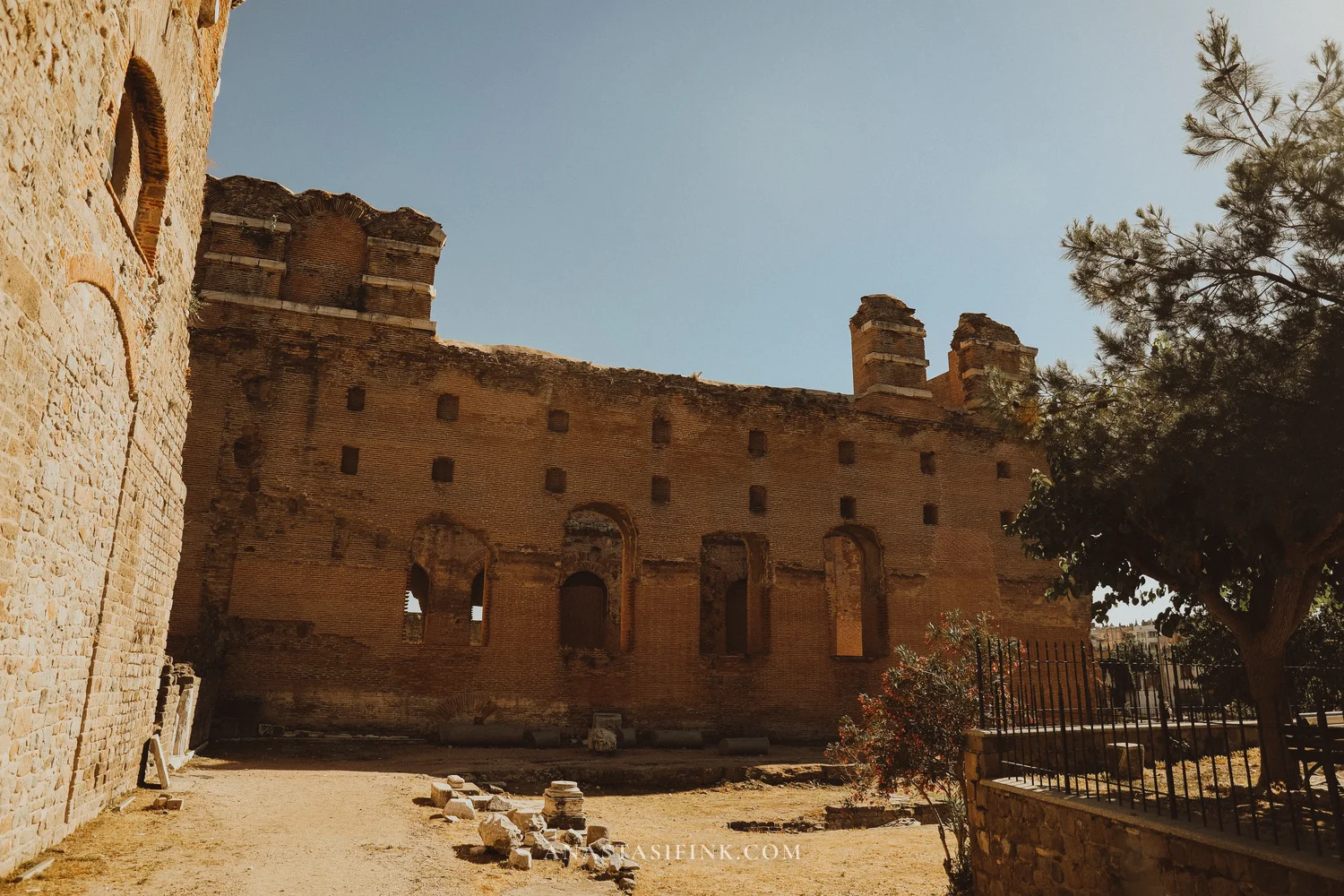
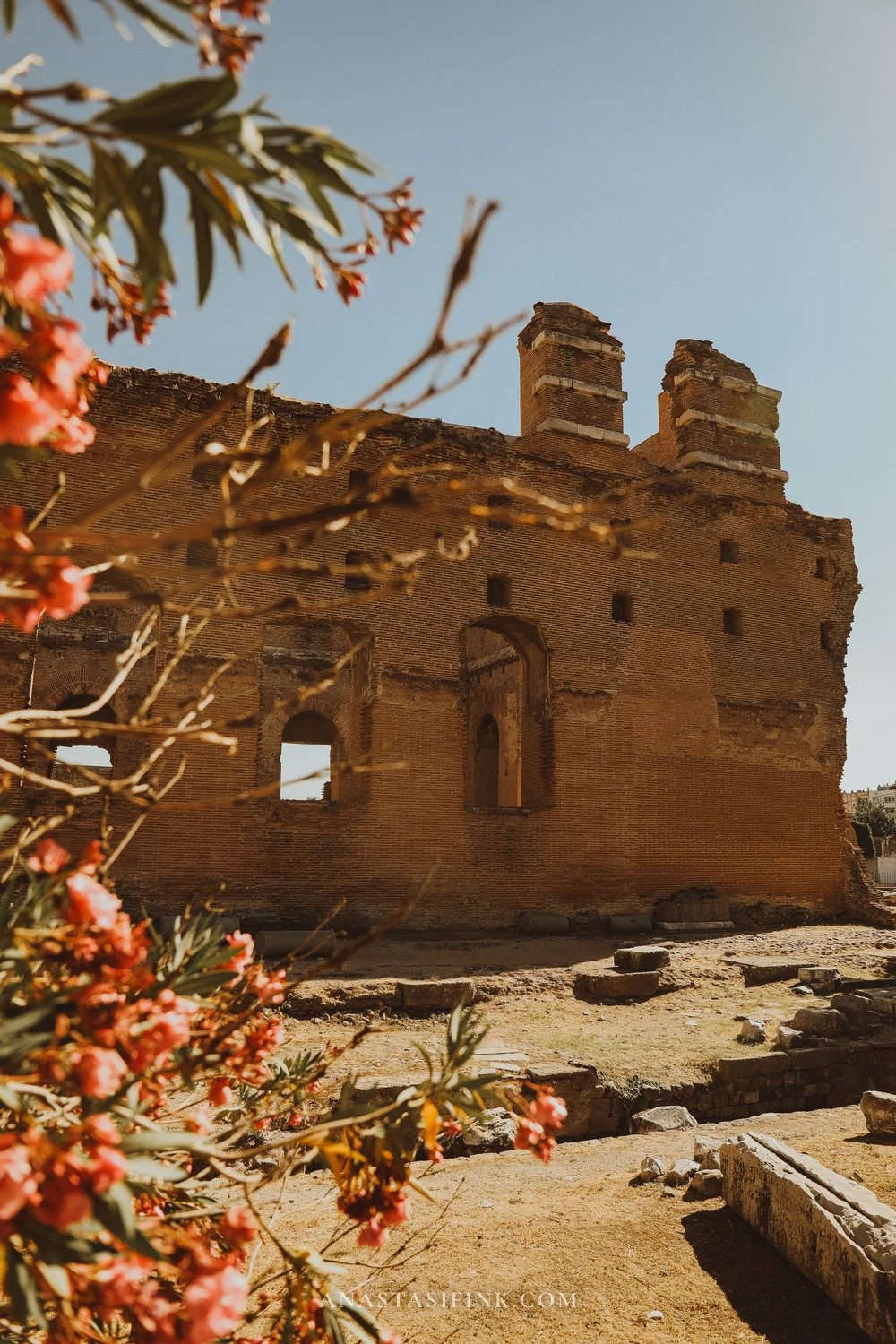
The first thing that catches your eye when walking through central Bergama are the massive red brick walls visible everywhere. This is Kızıl Avlu, the Red Basilica (or Red Court, if you translate literally) — one of the largest Roman structures still standing in the ancient Greek world.
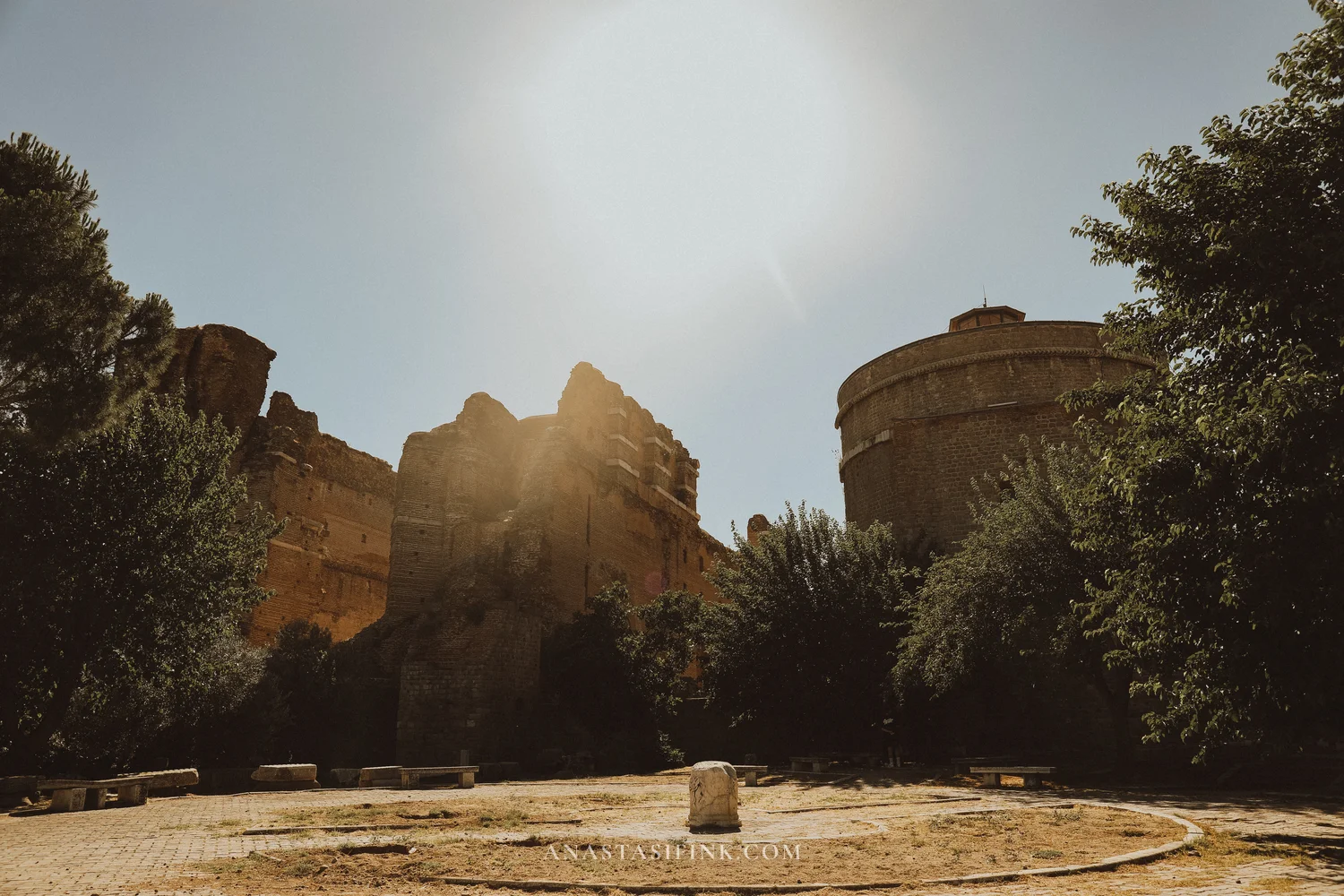
The temple was built in the 2nd century AD, most likely by order of Emperor Hadrian. Originally it was a temple to Egyptian gods — Isis, Serapis, and Osiris. The use of red brick on such a large scale was unusual for Asia Minor, but typical for Rome, indicating that the architect was specially brought in from Italy.
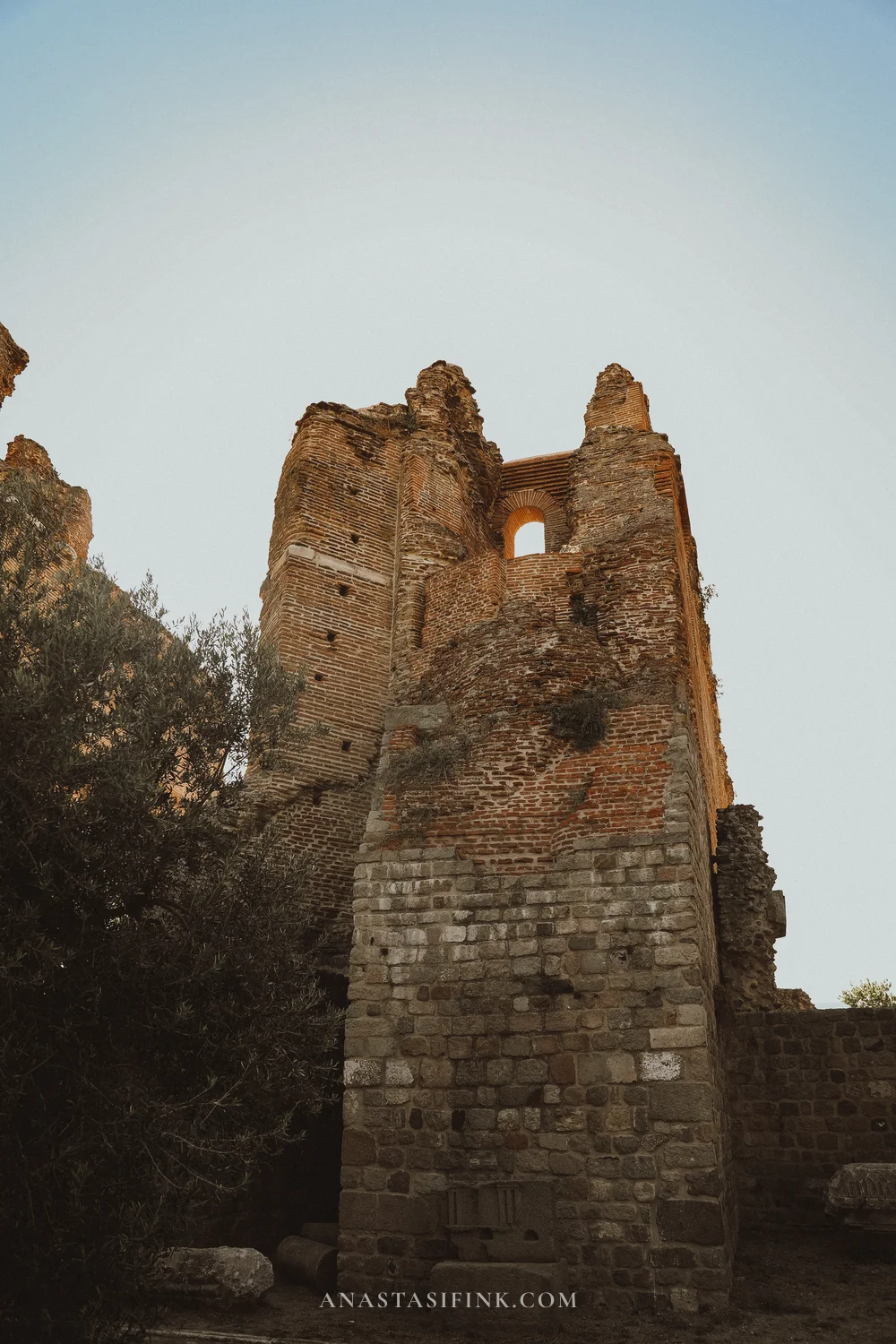
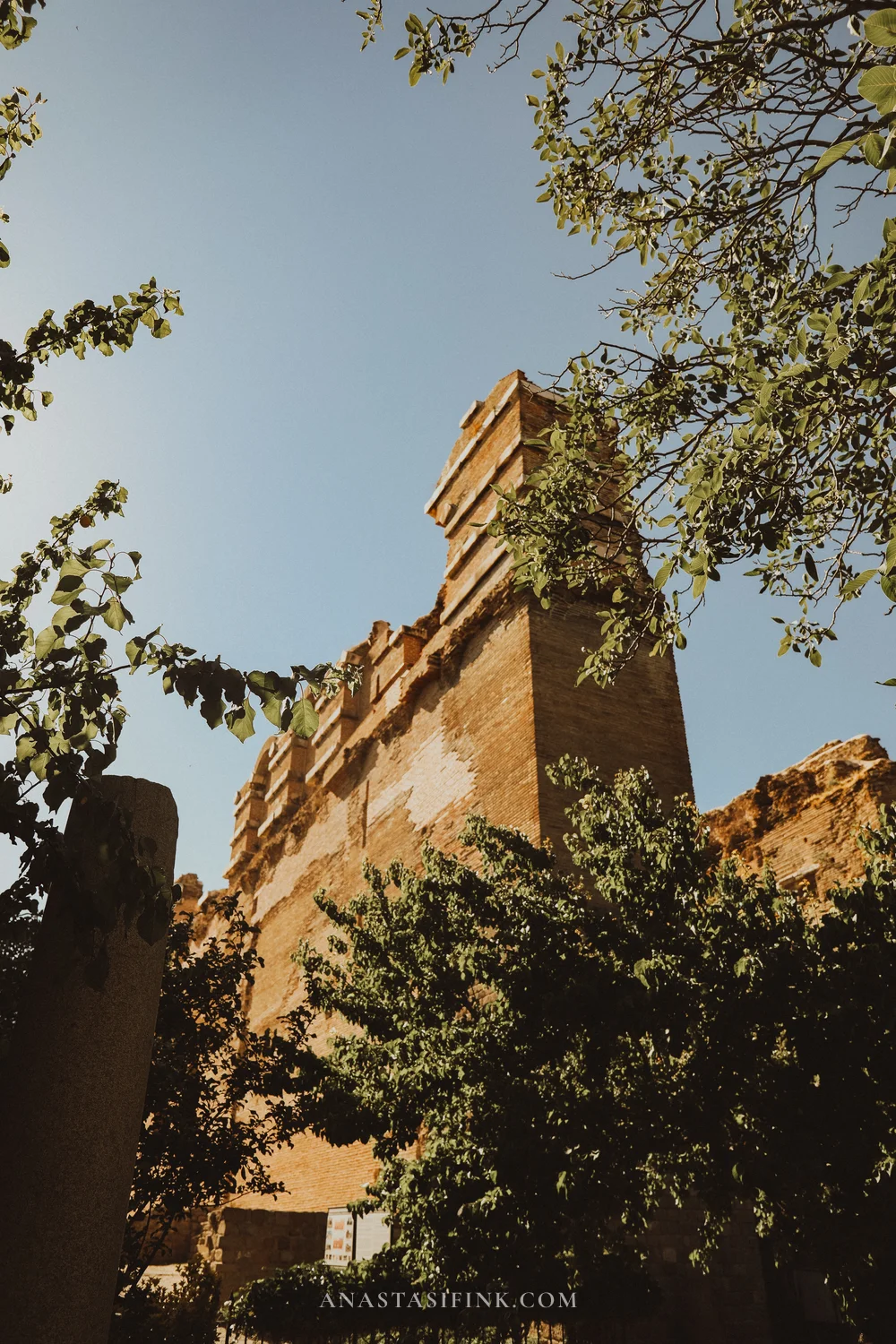
Two thousand years — and the masonry looks as if it was completed in the last century
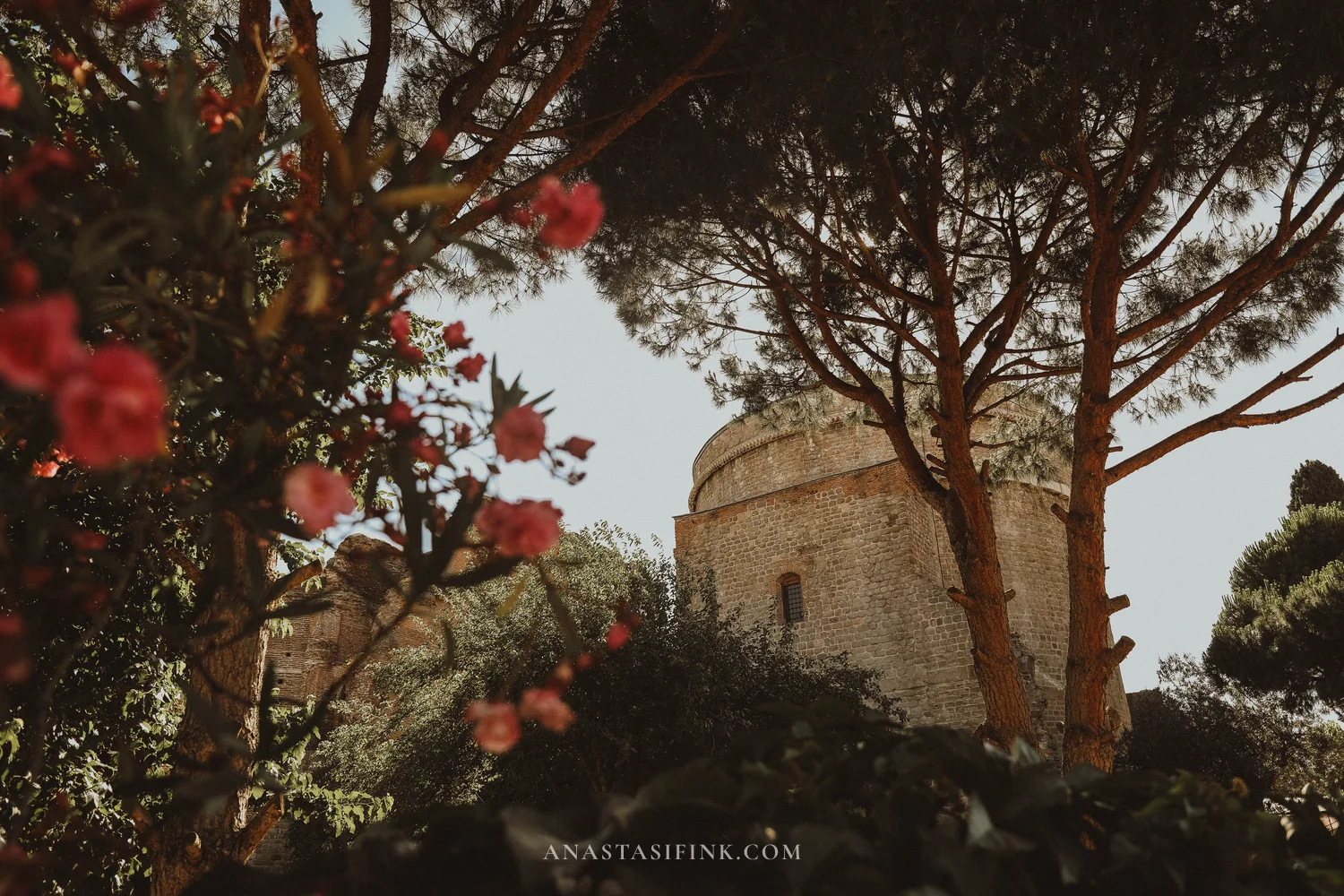
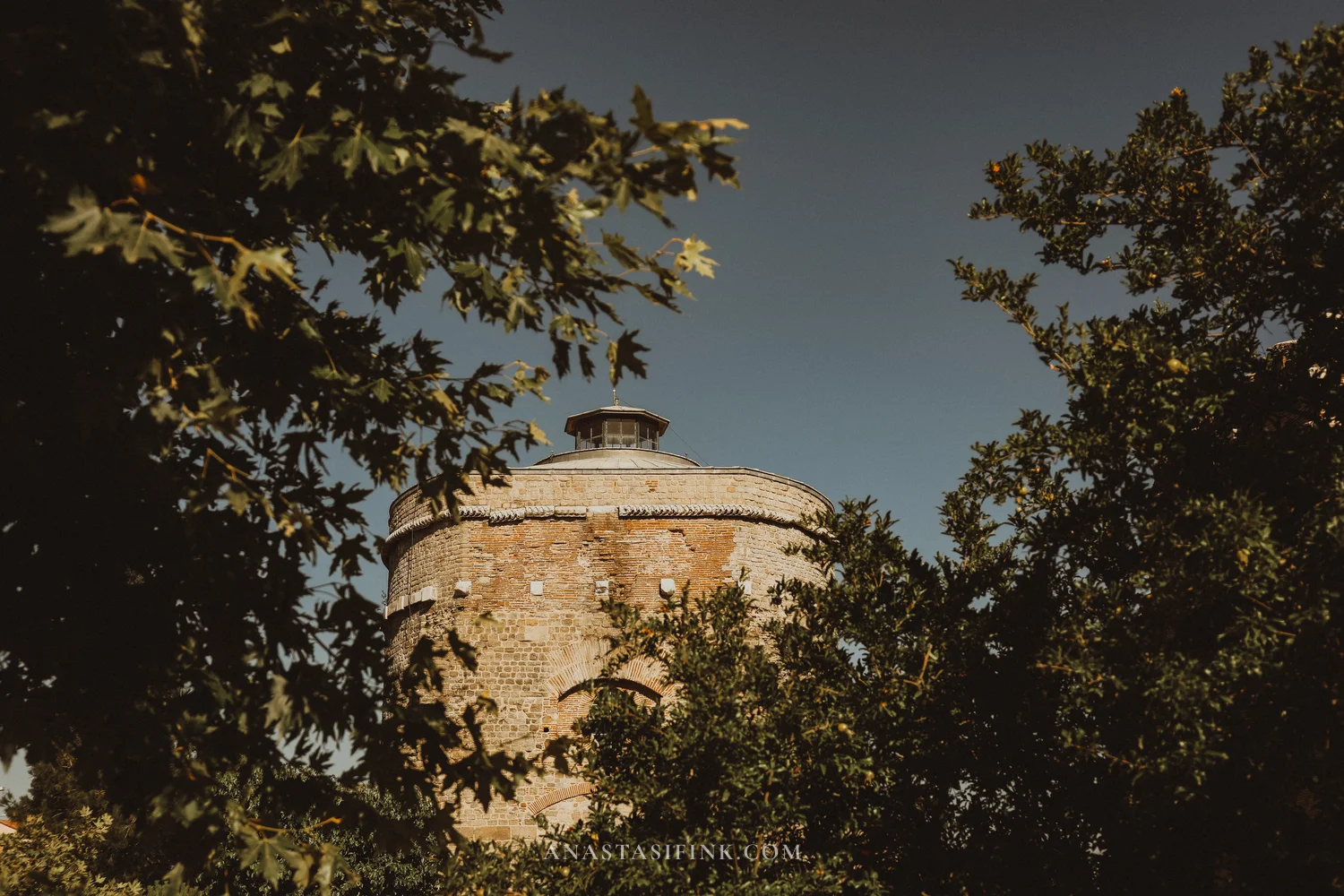
The entire complex once occupied 270 by 100 meters — on either side of the main temple stood two round rotunda towers, which have survived nearly intact. One of them now houses the Kurtuluş Mosque.
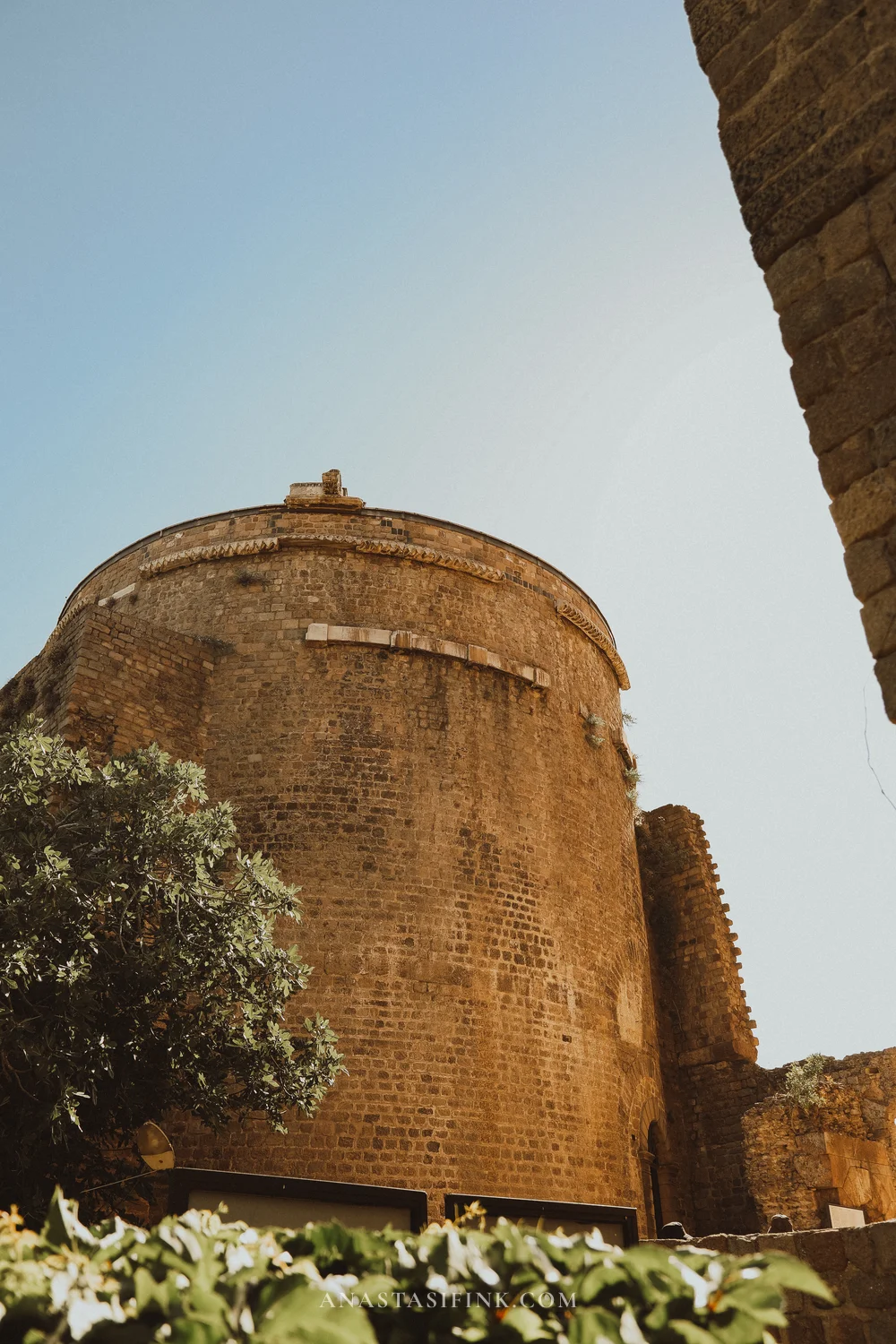
In the 5th century, the temple burned and a Christian basilica was built within its walls — hence the name. Inside the territory, between the walls, scattered fragments of carved stone — column capitals, marble blocks with plant ornaments. Just lying on the ground, under olive trees.
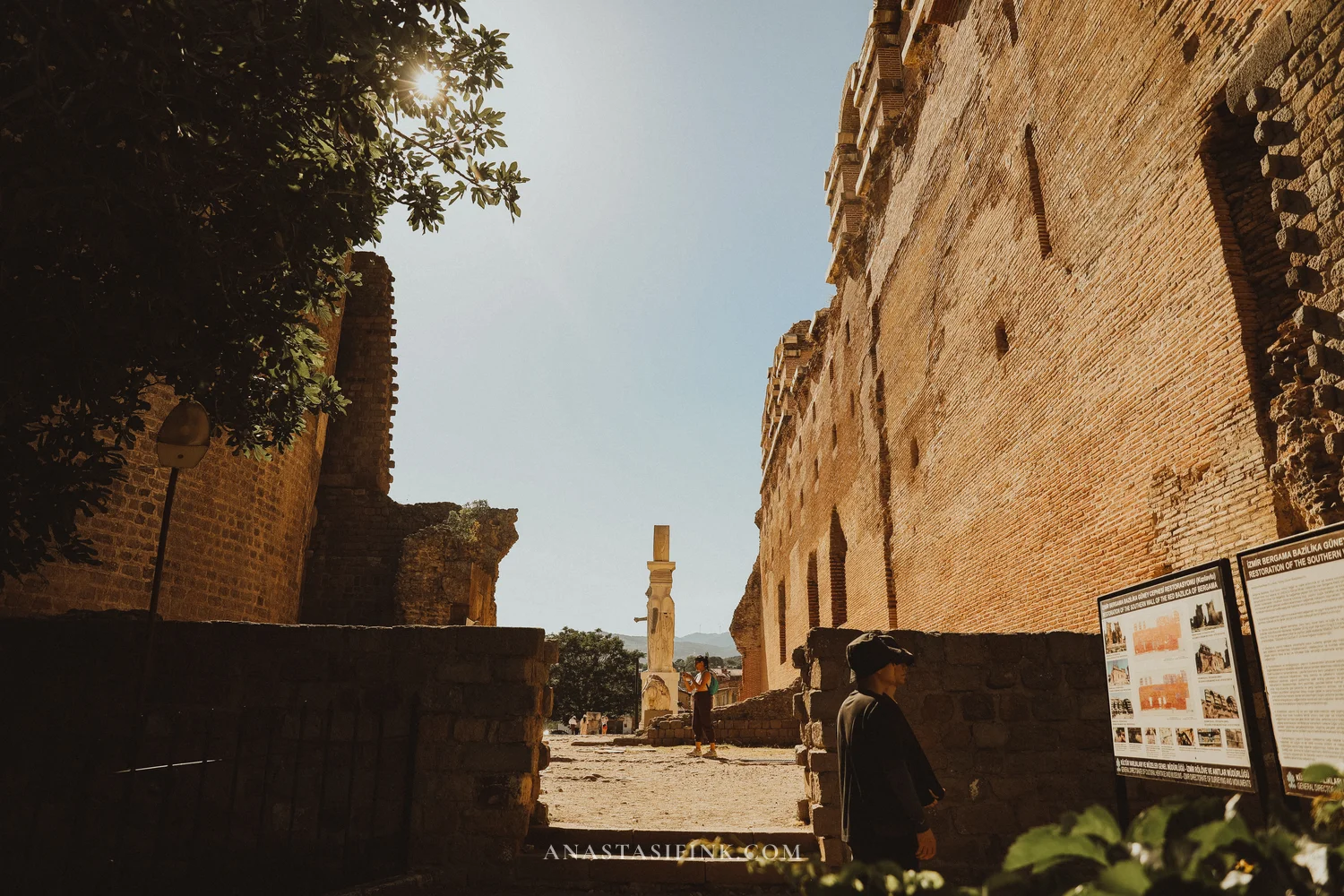
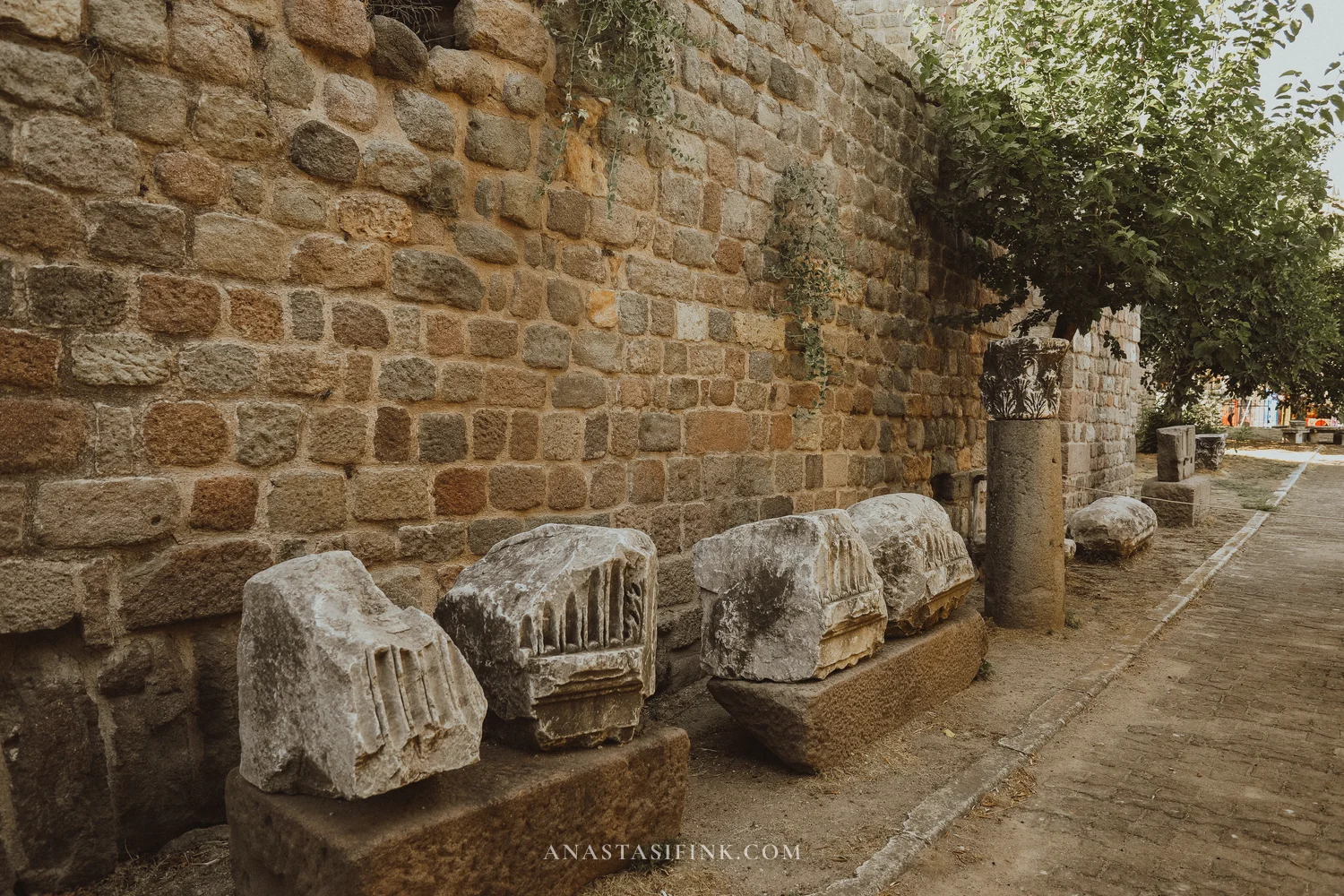
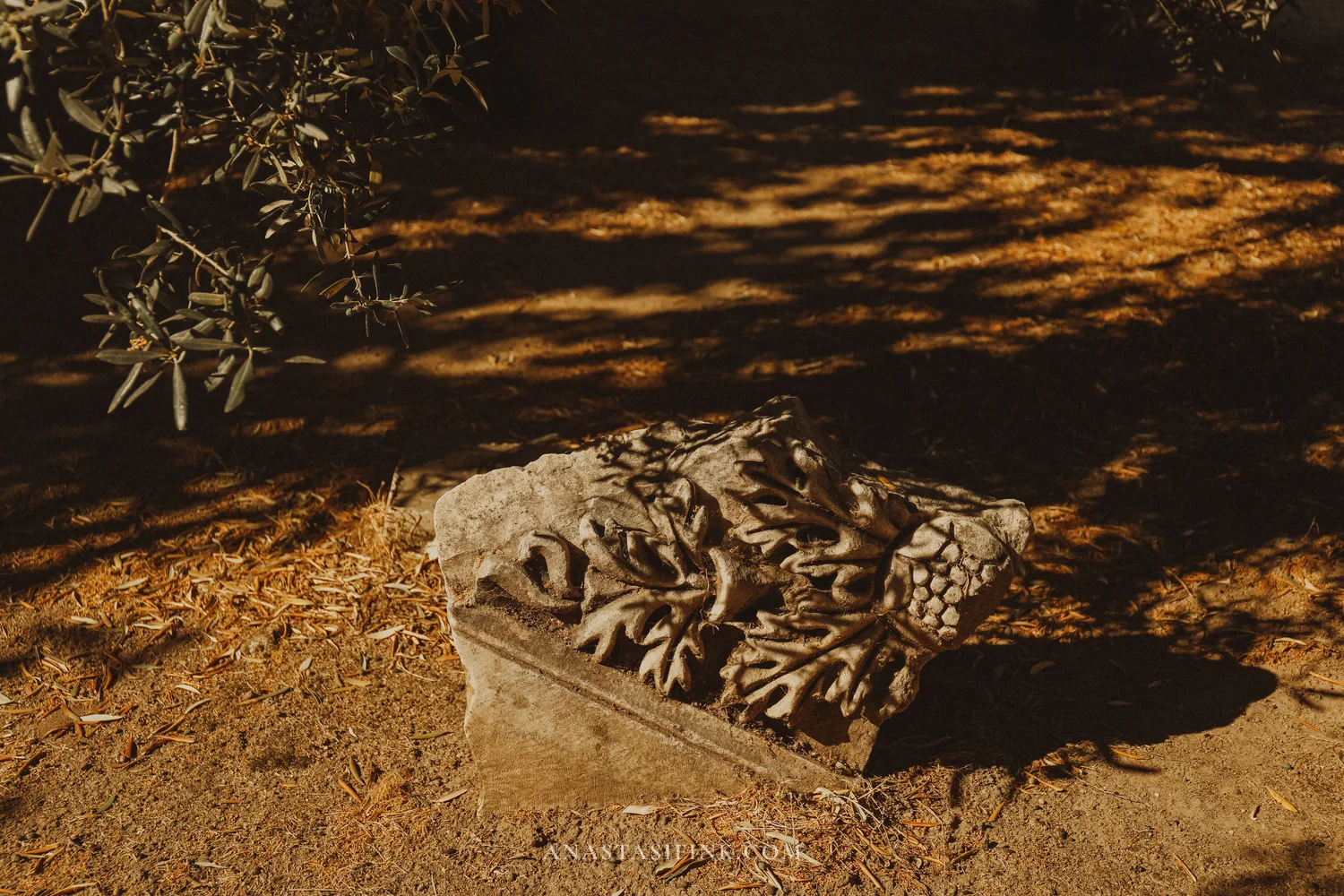
Ancient fragments lying right on the territory — a grapevine carved in stone two millennia ago
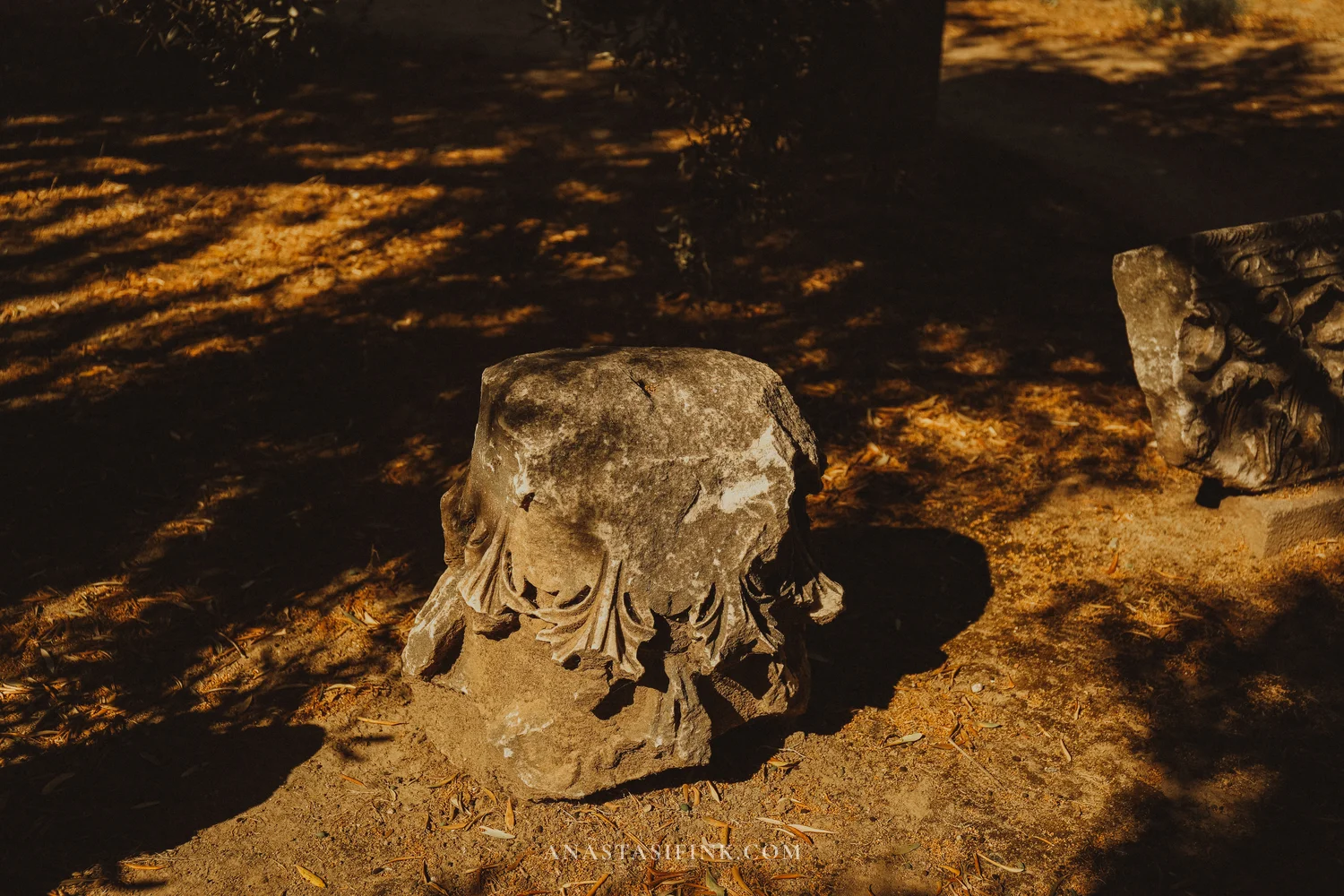
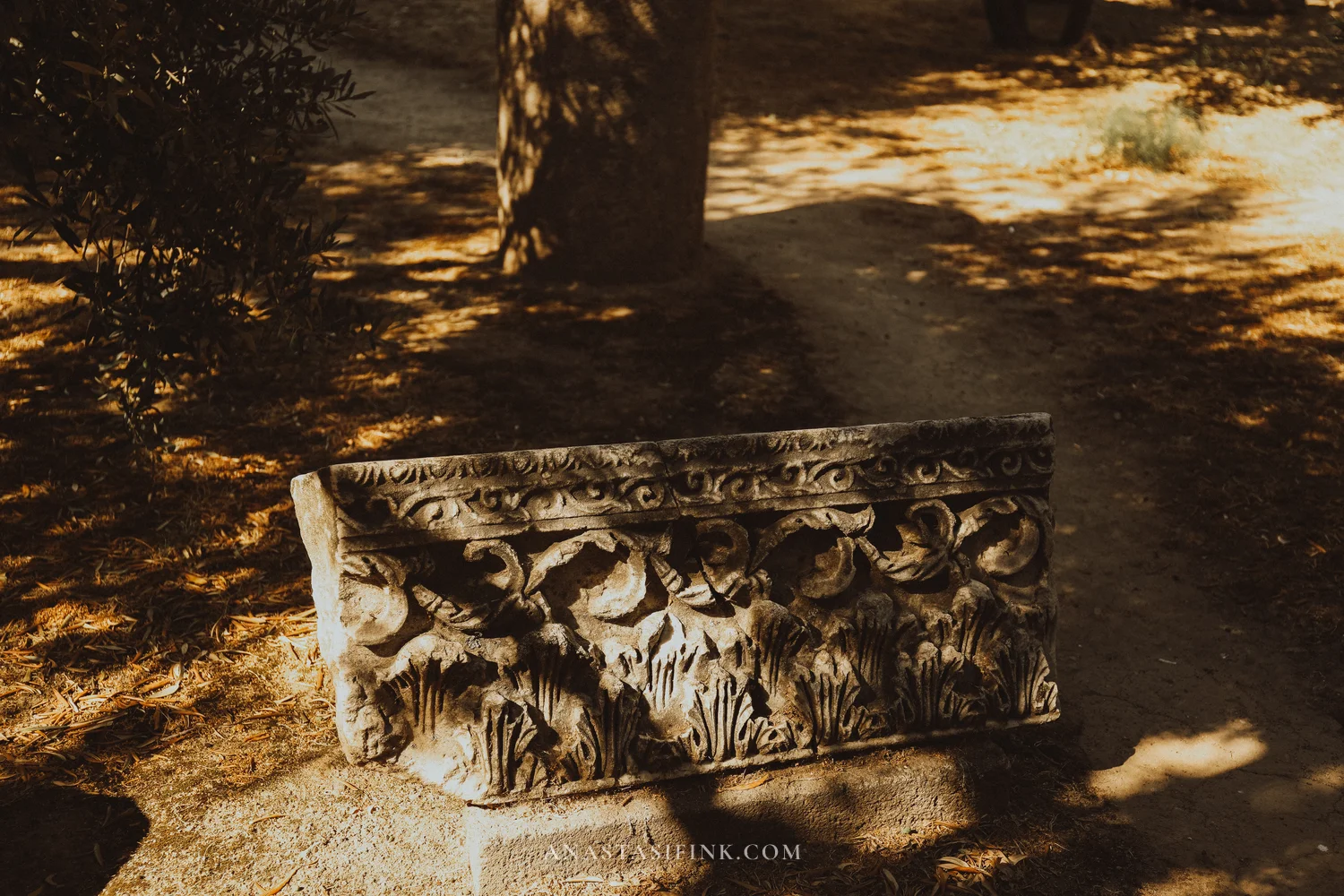
Capitals and marble blocks — remnants of the temple’s decoration. The intricacy of the carving is impressive
Practical Information — Kızıl Avlu
– Address: İslamsaray Mahallesi, Bergama, Izmir
– GPS: 39.1219, 27.1833
– Status: Under restoration since January 2025. Planned opening — 2026, with a new visitor center and night lighting
– Admission (before closure): €3 for foreign visitors
– UNESCO: Yes, part of the “Pergamon and its Multi-layered Cultural Landscape” site (2014)
– Google Maps: [link](https://maps.app.goo.gl/AMtL1ndL75HHZJjH7)
The Streets of Bergama — Carpets, Stone, and Cats
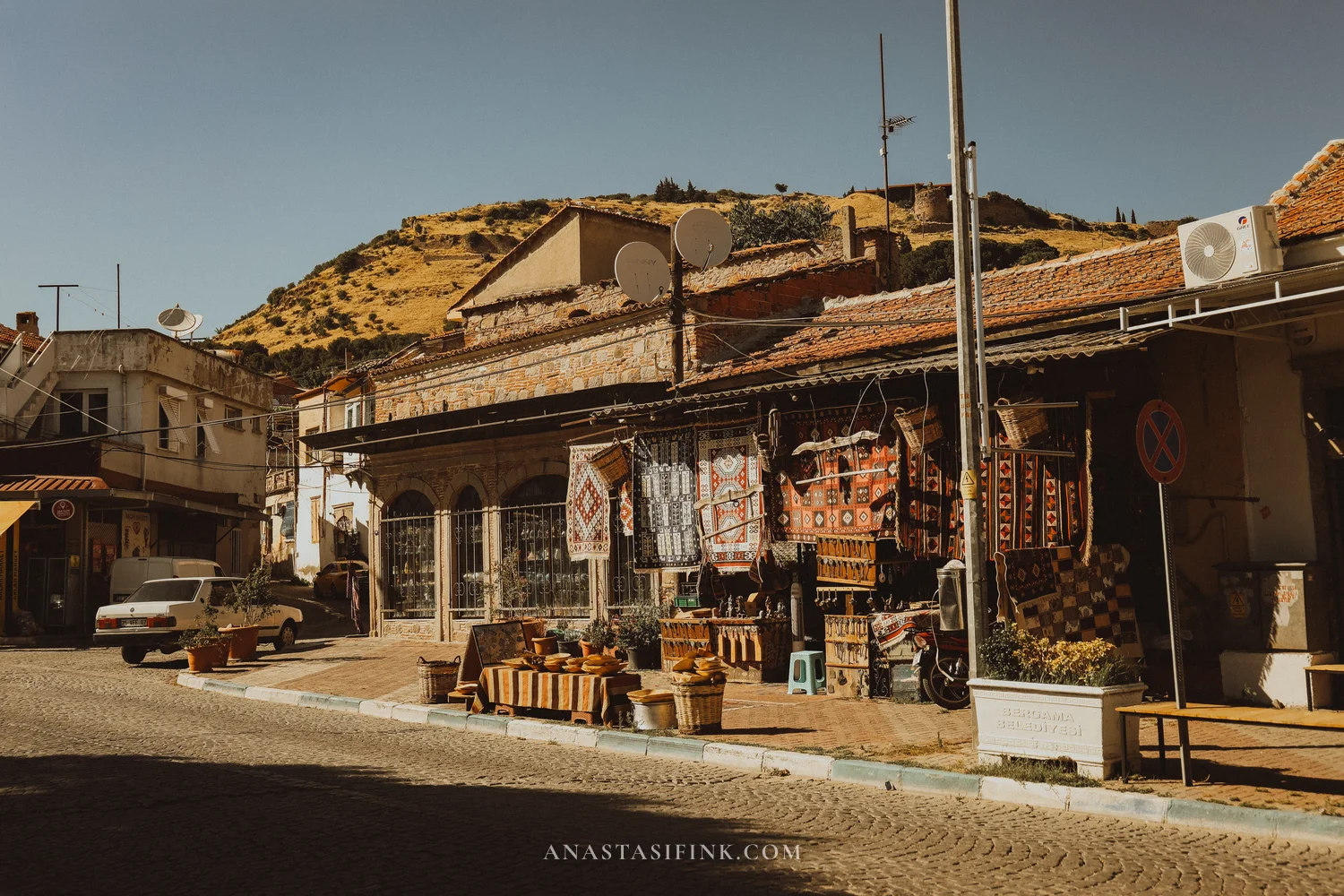
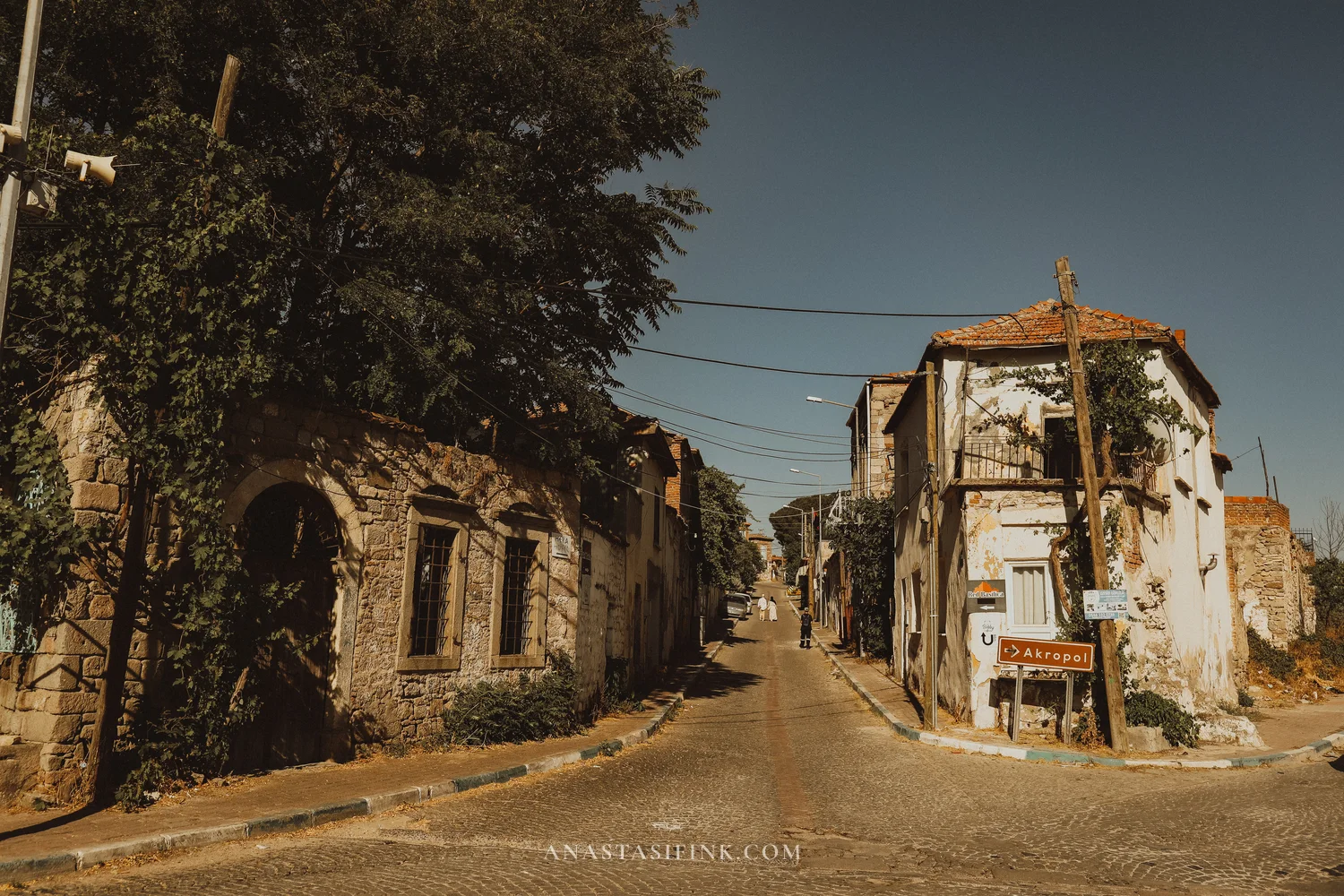
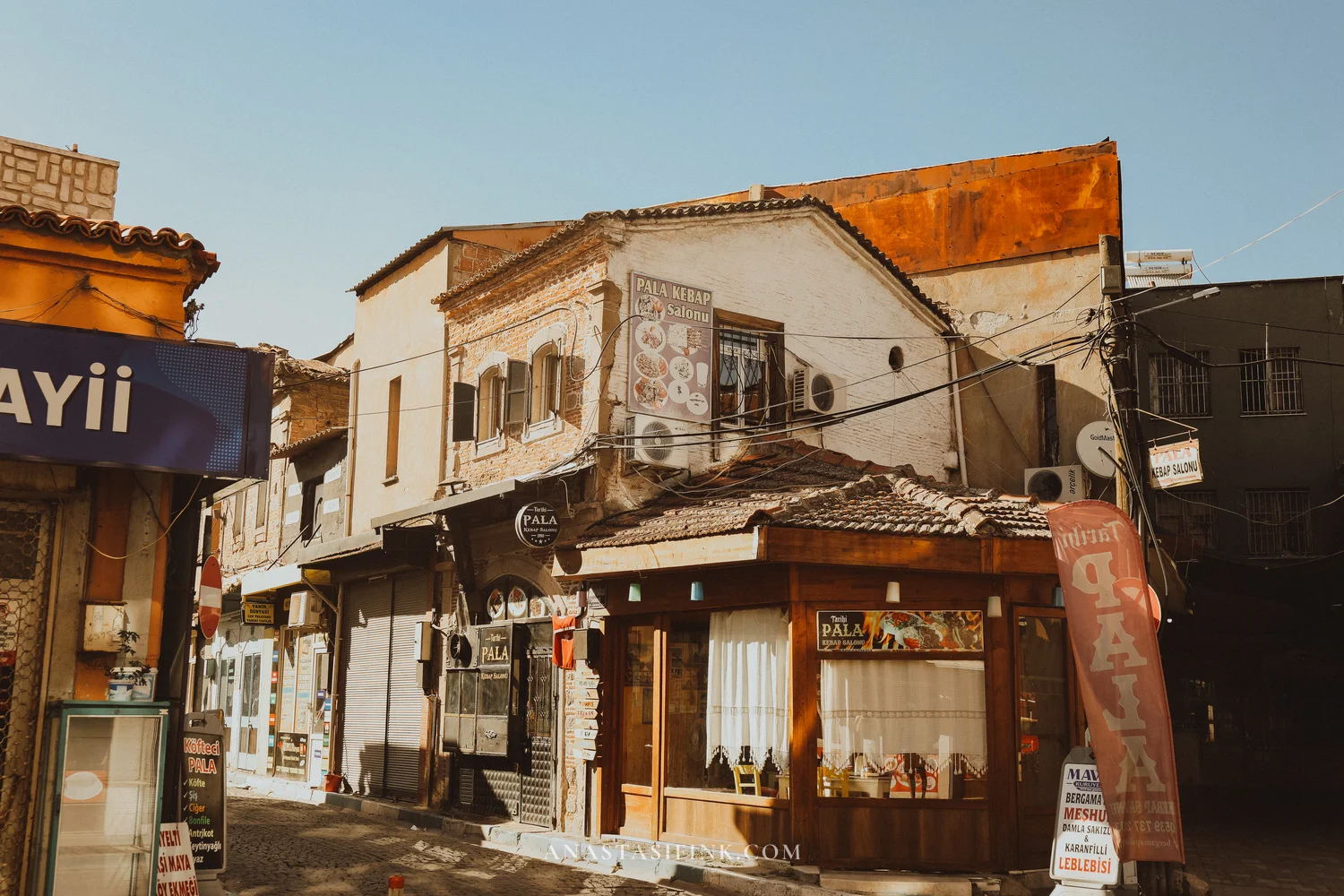
The city itself is a labyrinth of narrow streets with old stone houses. Many houses are Greek, with characteristic bay windows and wooden shutters. On the ground floors are carpet shops. Carpets are everywhere here: on walls, on balconies, hung along sidewalks like flags.
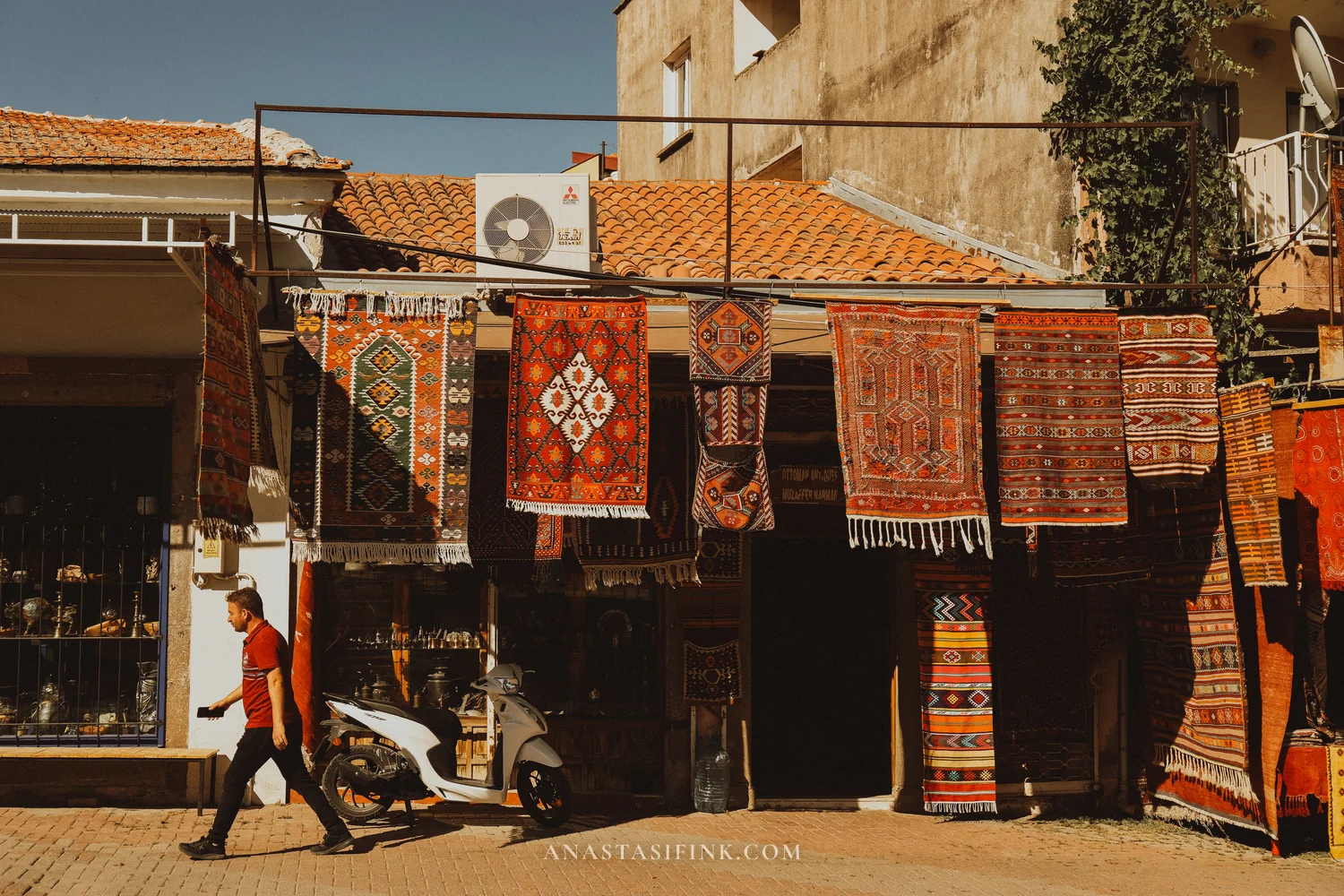
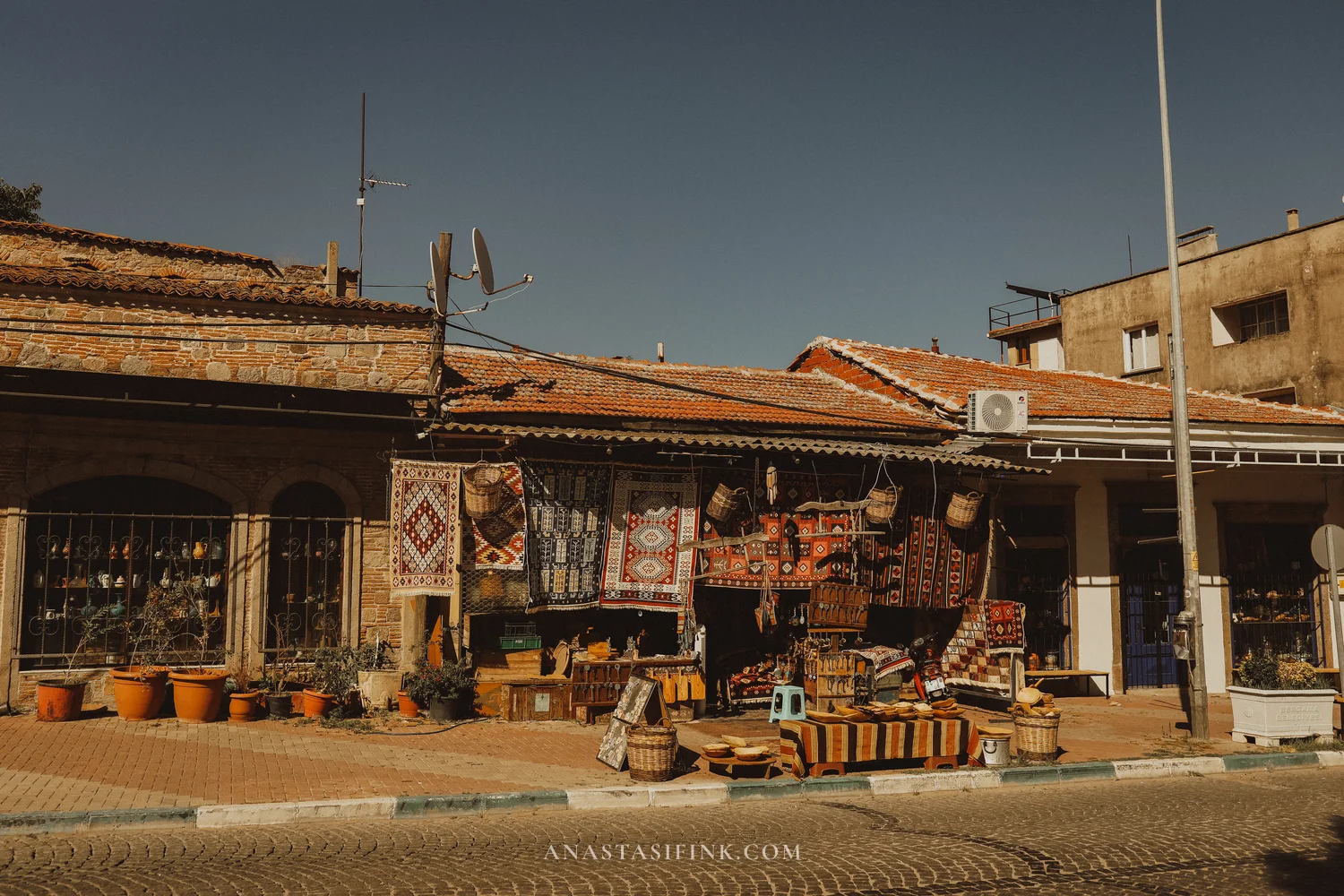
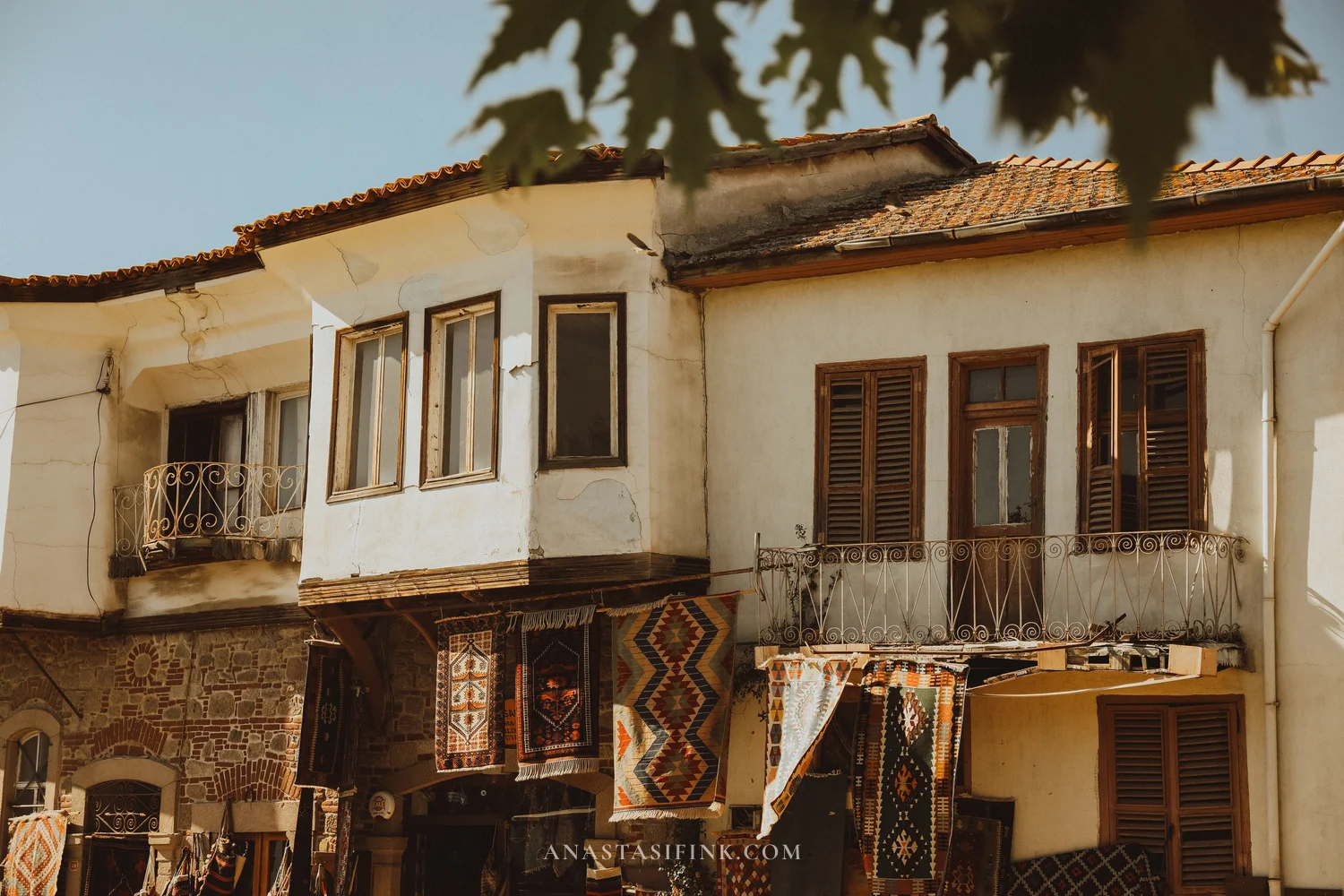
They sell not only carpets here — baskets, ceramics, handmade bags
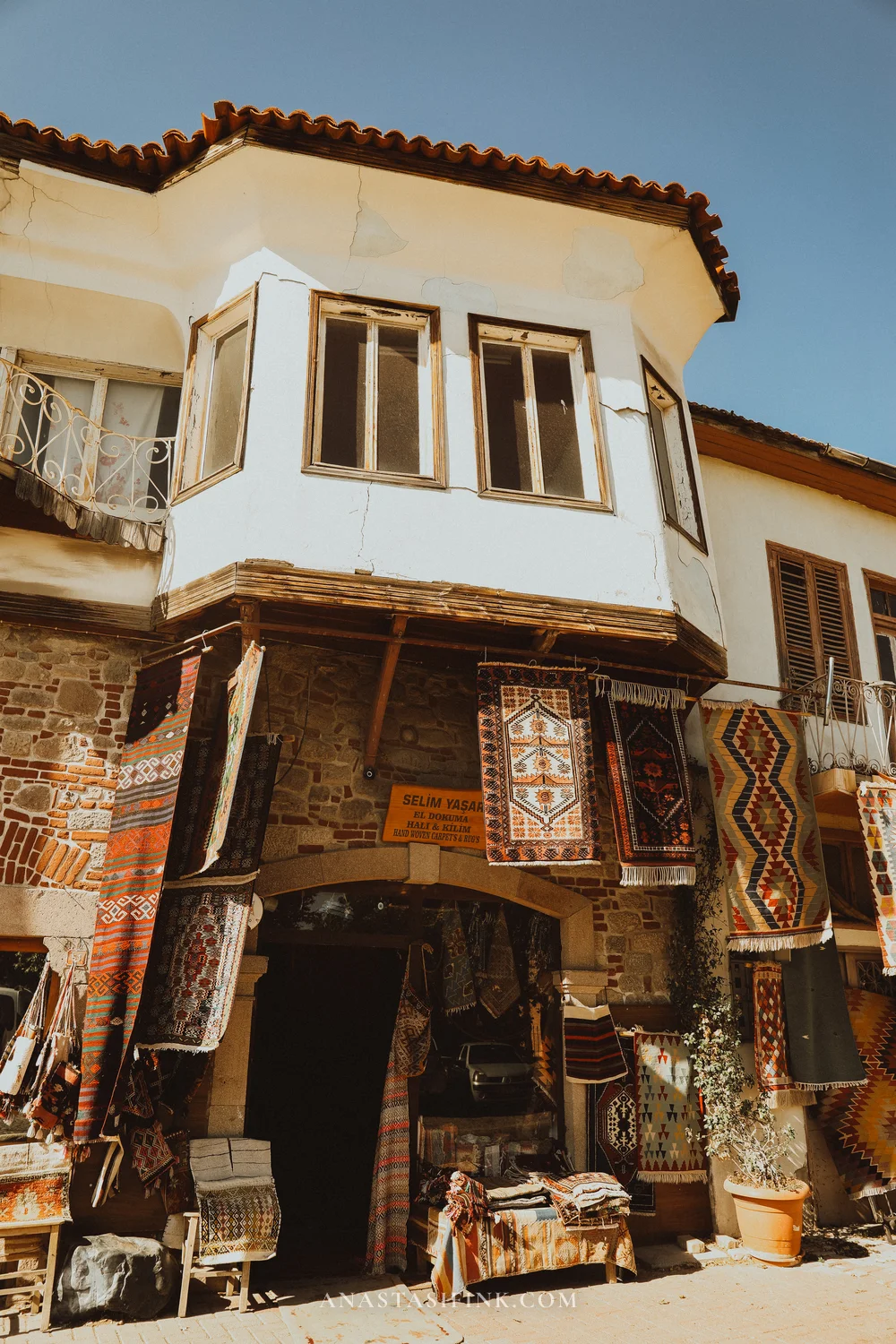
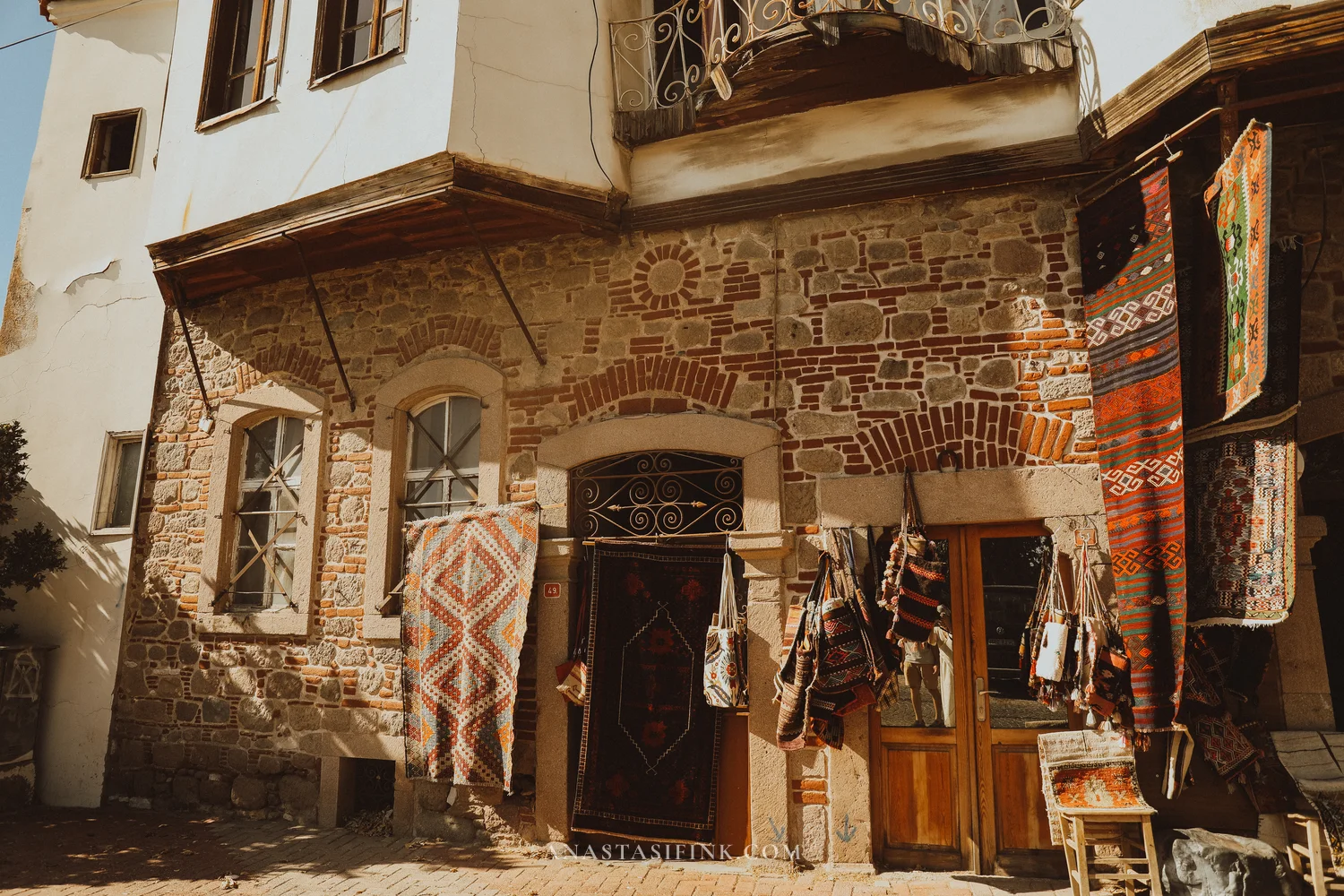
Among the residential houses are real architectural gems — 19th-century buildings with arched windows and openwork balconies. Many of them need restoration, but it’s precisely this that creates the atmosphere of undisturbedness you won’t find in popular tourist towns.
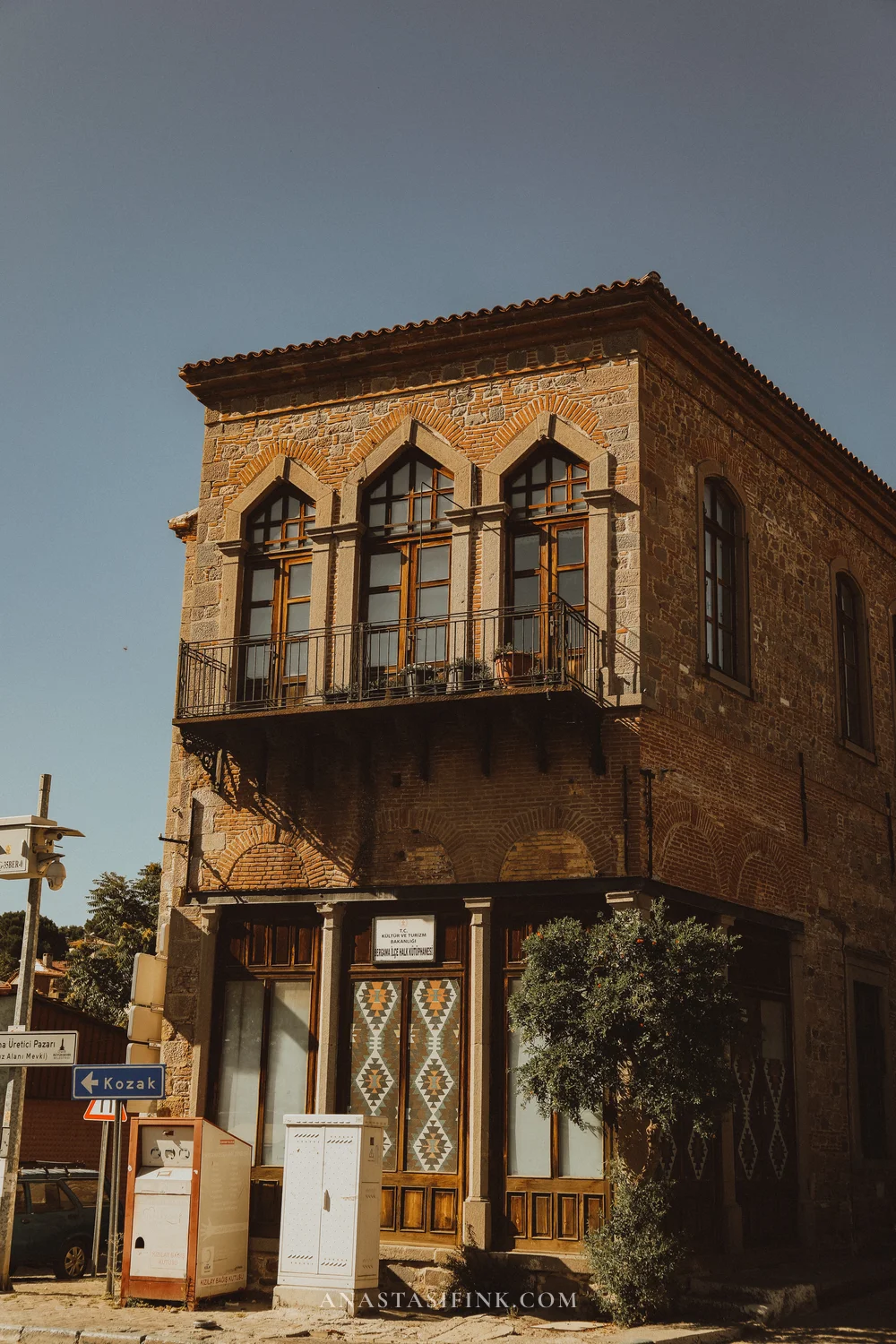
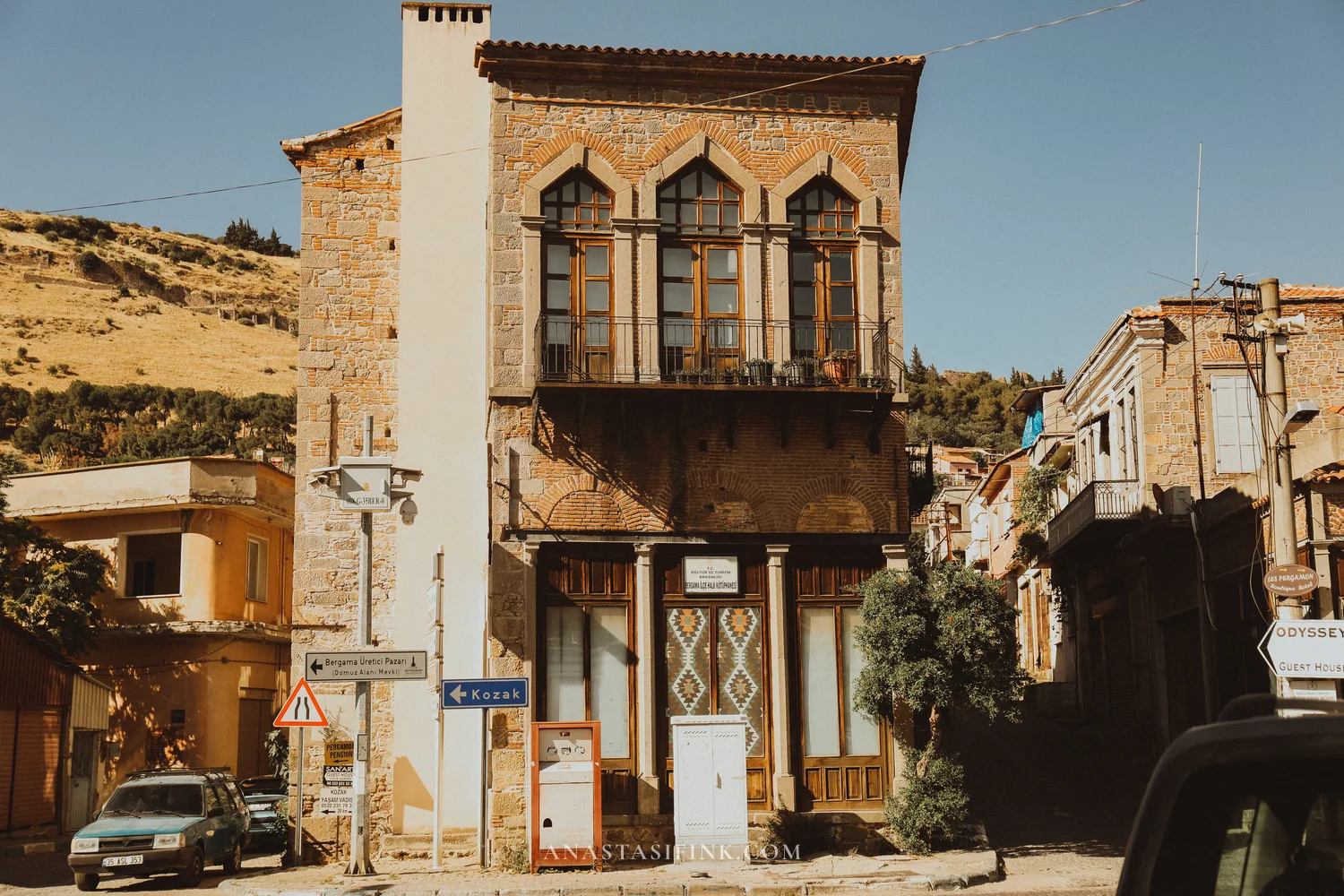
A beautiful 19th-century building at the intersection — the sign points to the Kozak plateau. In the background — the acropolis hill
Bergama Arastası — A 14th-Century Covered Bazaar
In the heart of the city, literally steps away from Kızıl Avlu, is Bergama Arastası — a covered Ottoman bazaar that has existed since the 14th–15th centuries. Once upon a time, shoemakers, saddlers, tailors, and basket weavers traded here. Now it’s souvenirs and goods for tourists, but the building itself is impressive.
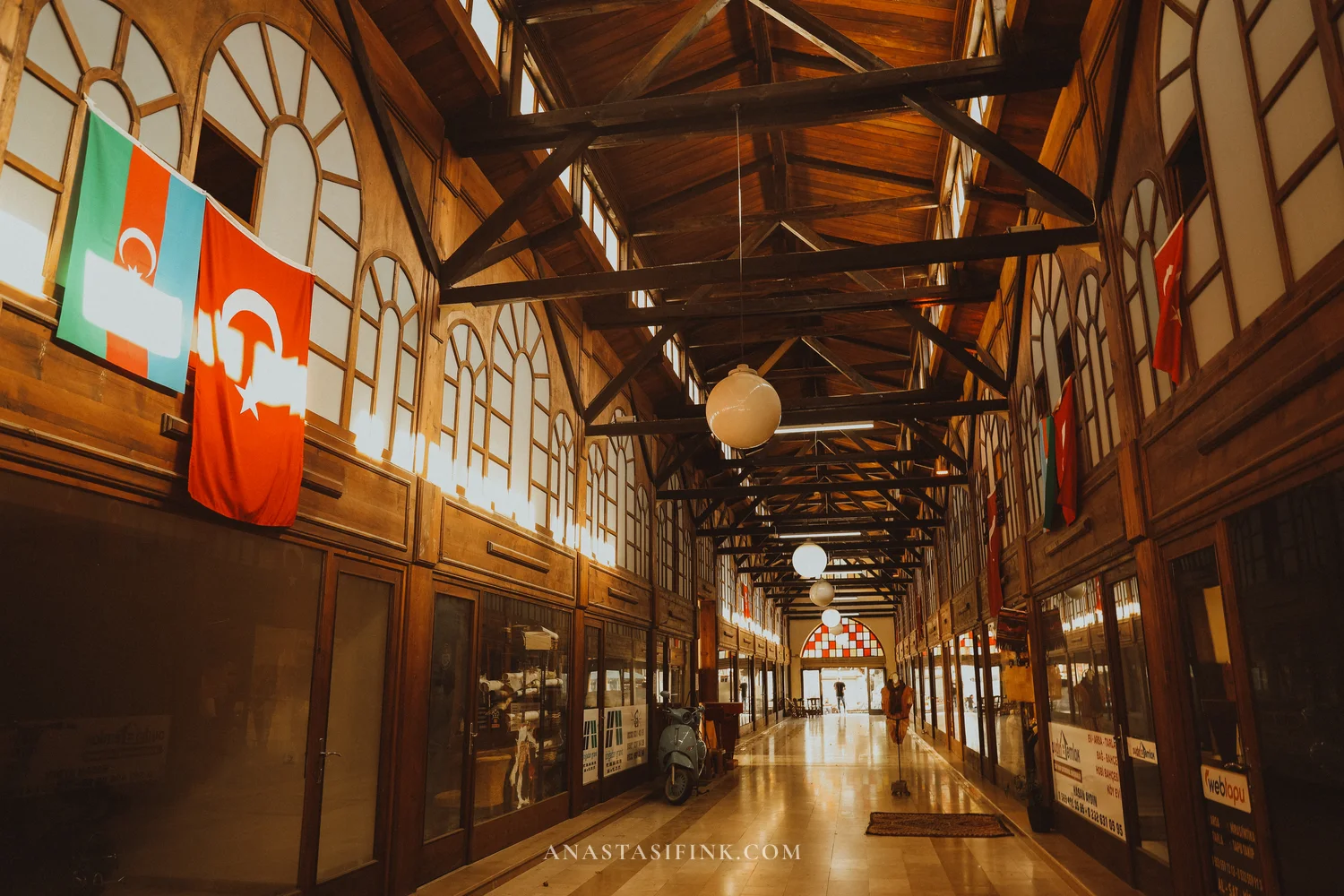
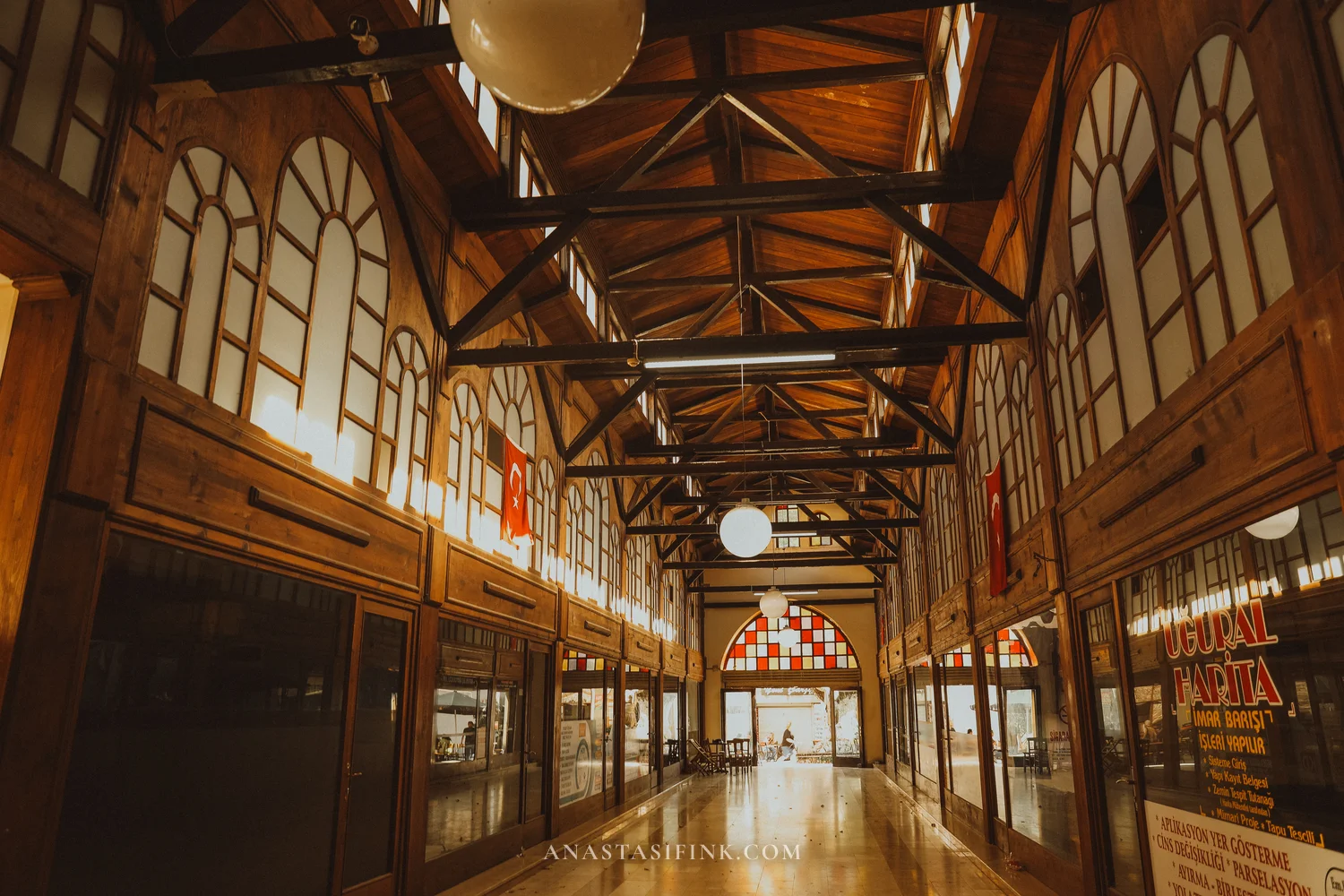
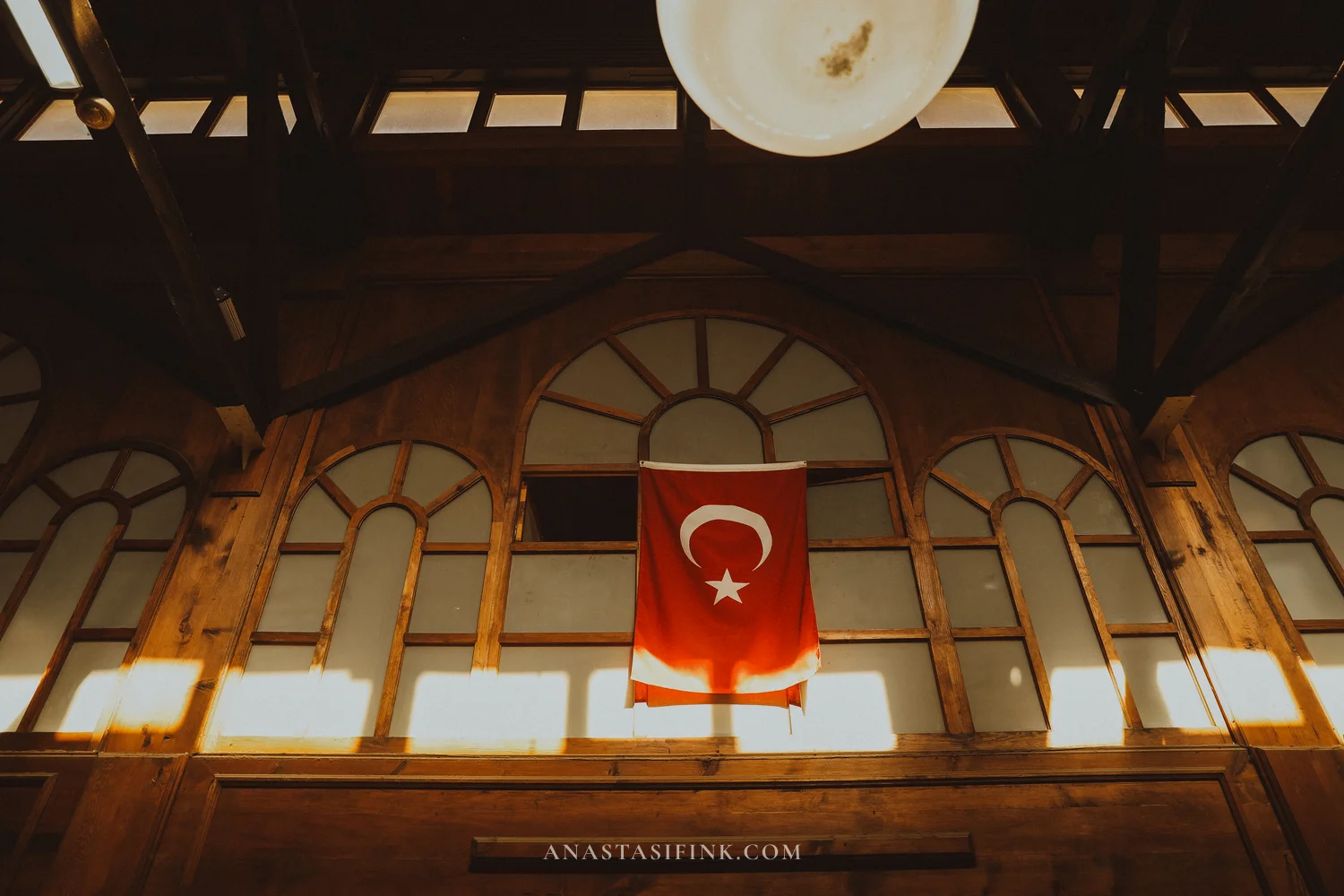
Wooden beams, stained glass windows and well-restored space. It’s cool and quiet during the day
Practical Information — Bergama Arastası
– GPS: 39.12144, 27.17972
– Admission: Free
– Google Maps: [link](https://maps.app.goo.gl/ZuqiEhTr6DrTkBSr8)
The Square by the Bazaar — Cafés, Plane Trees, and That Famous Compote
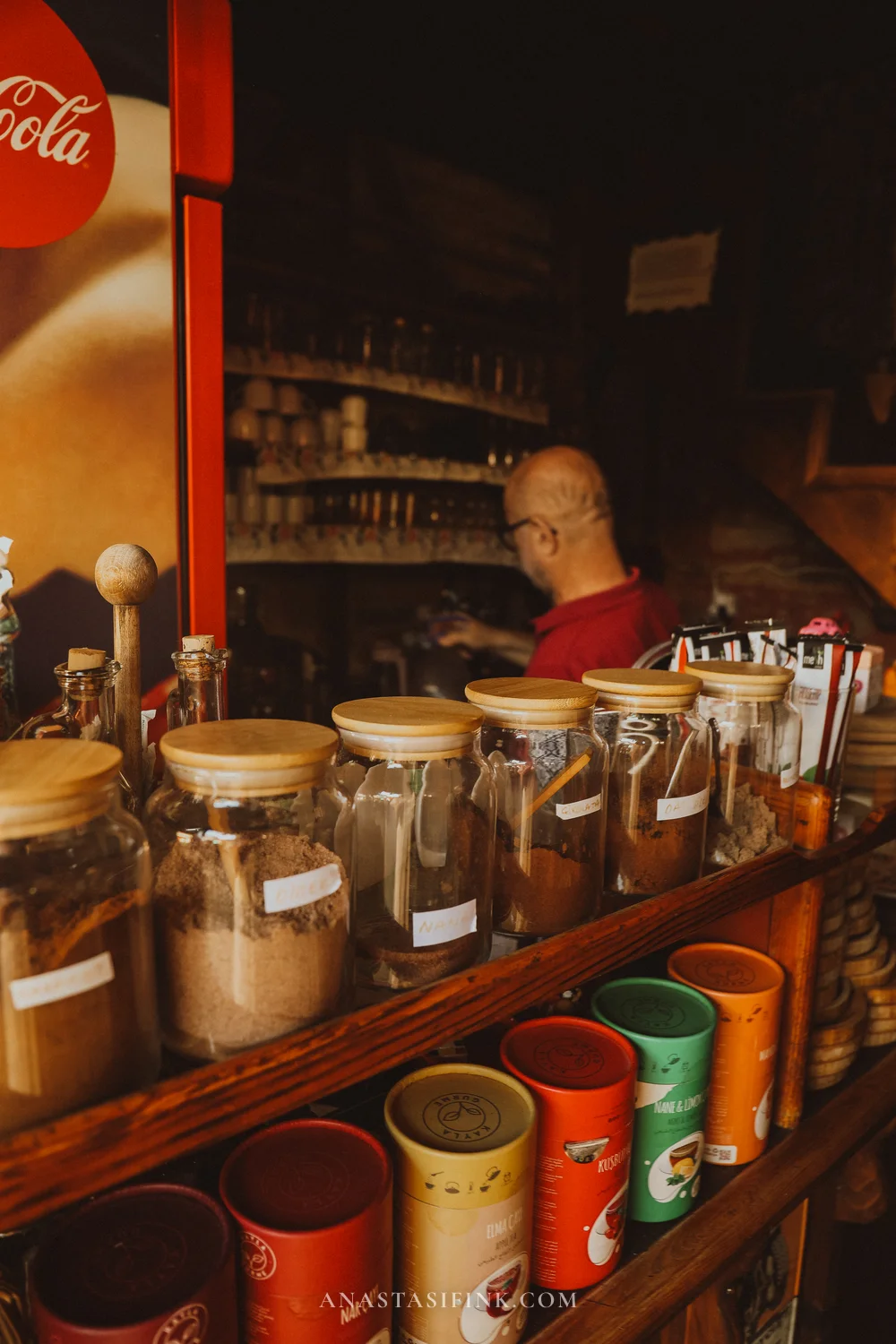
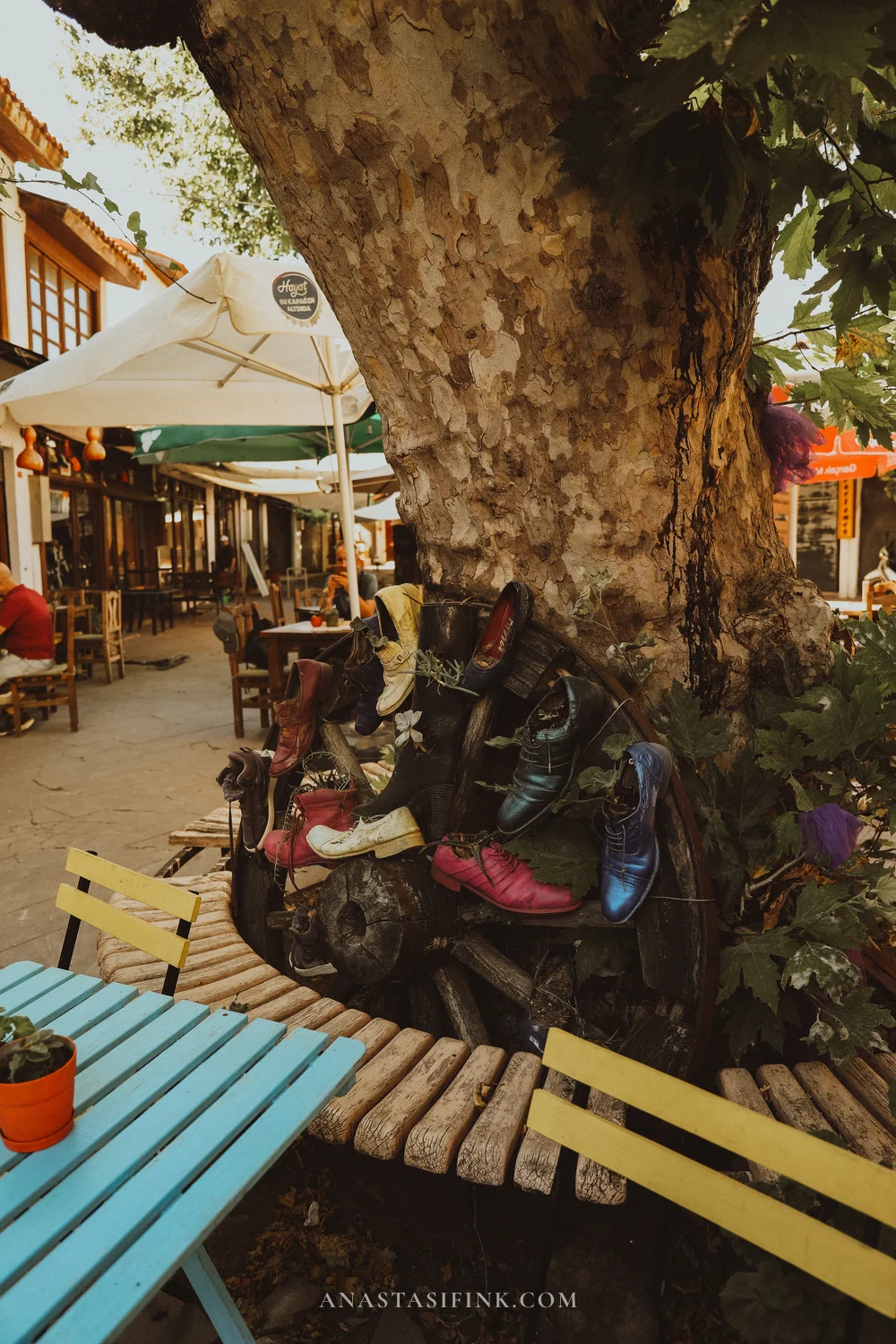
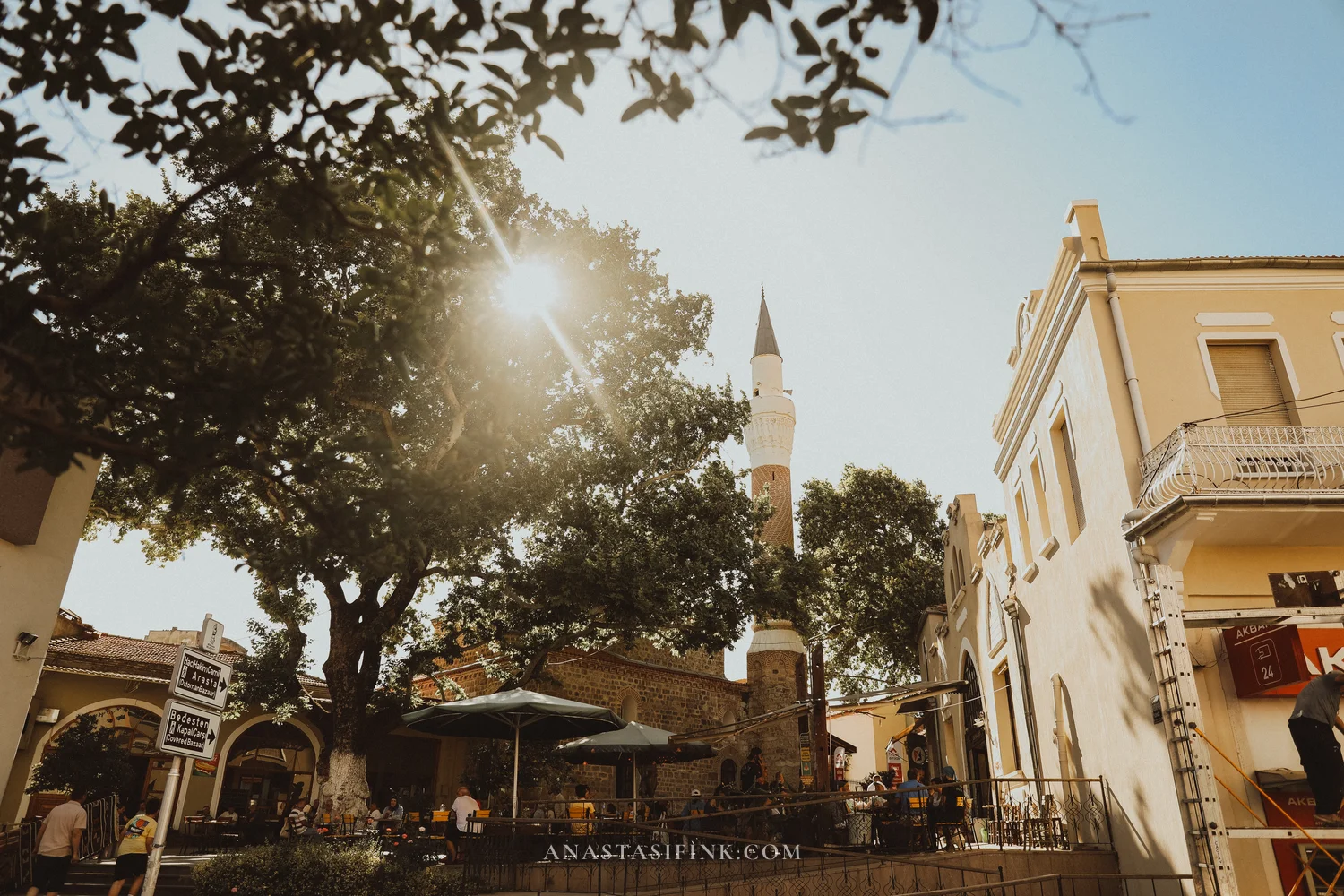
Next to Arastası is a small square planted with enormous plane trees. Under them are cafés with wooden tables and colorful chairs. This is the most pleasant place in the city to rest.
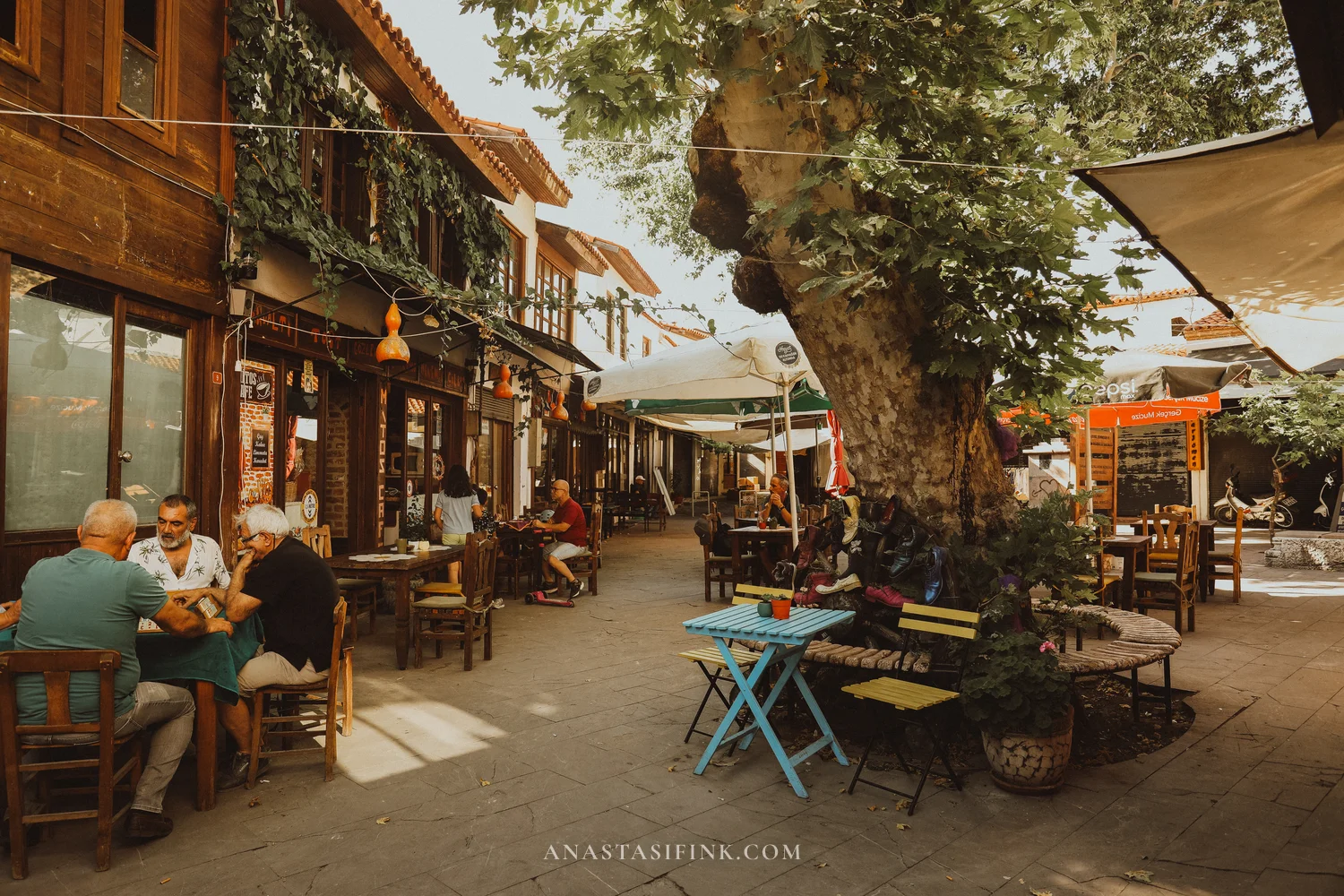
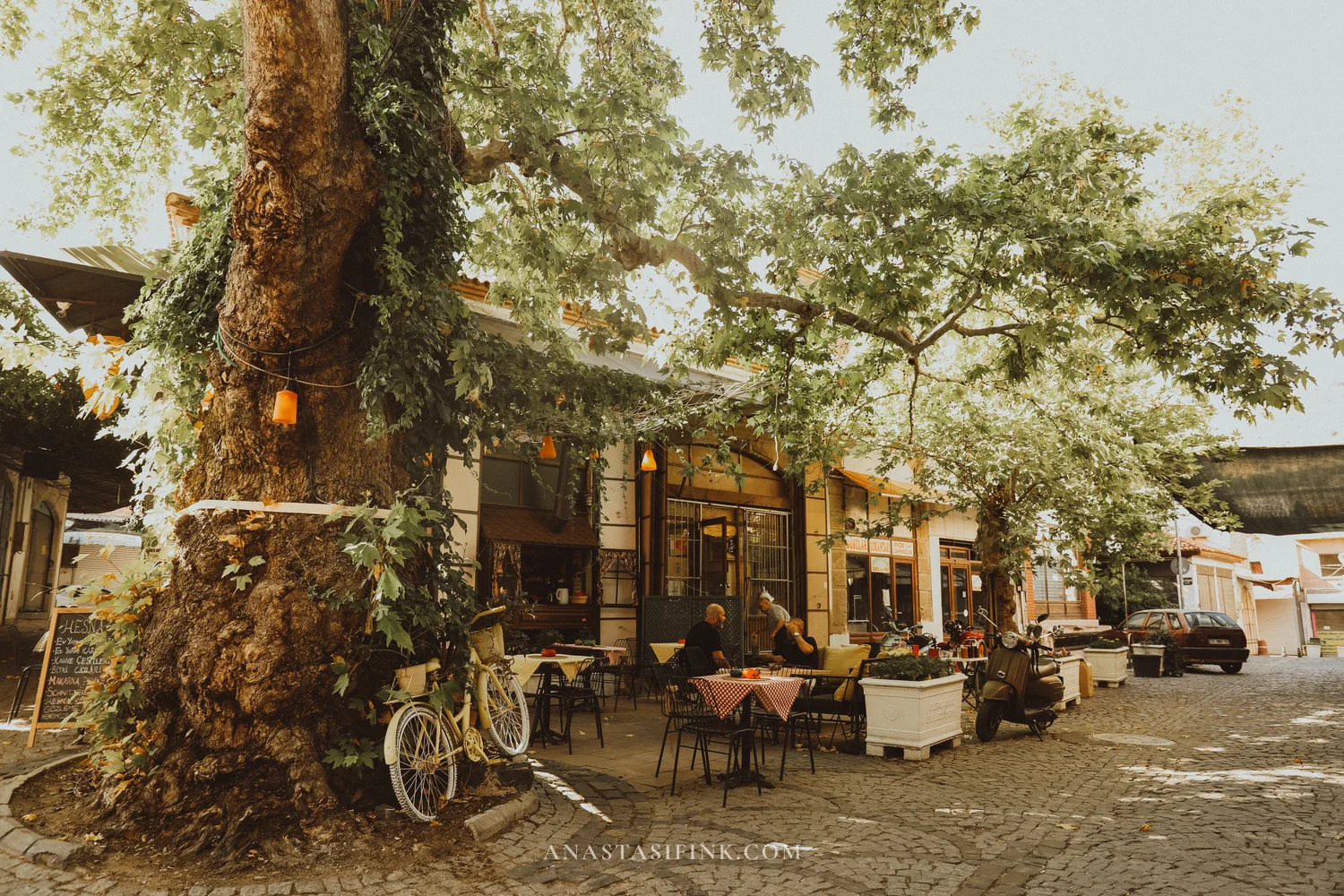
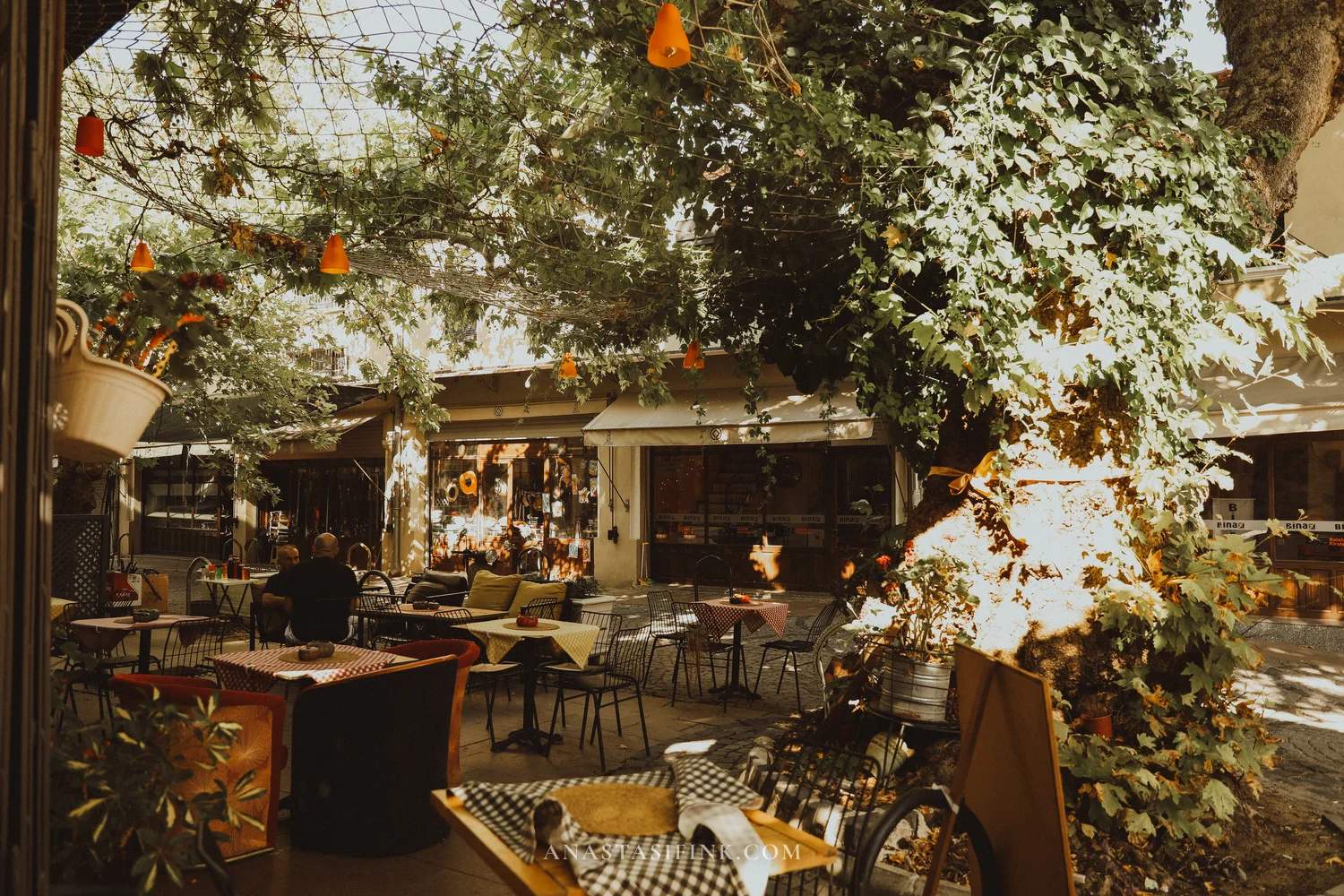
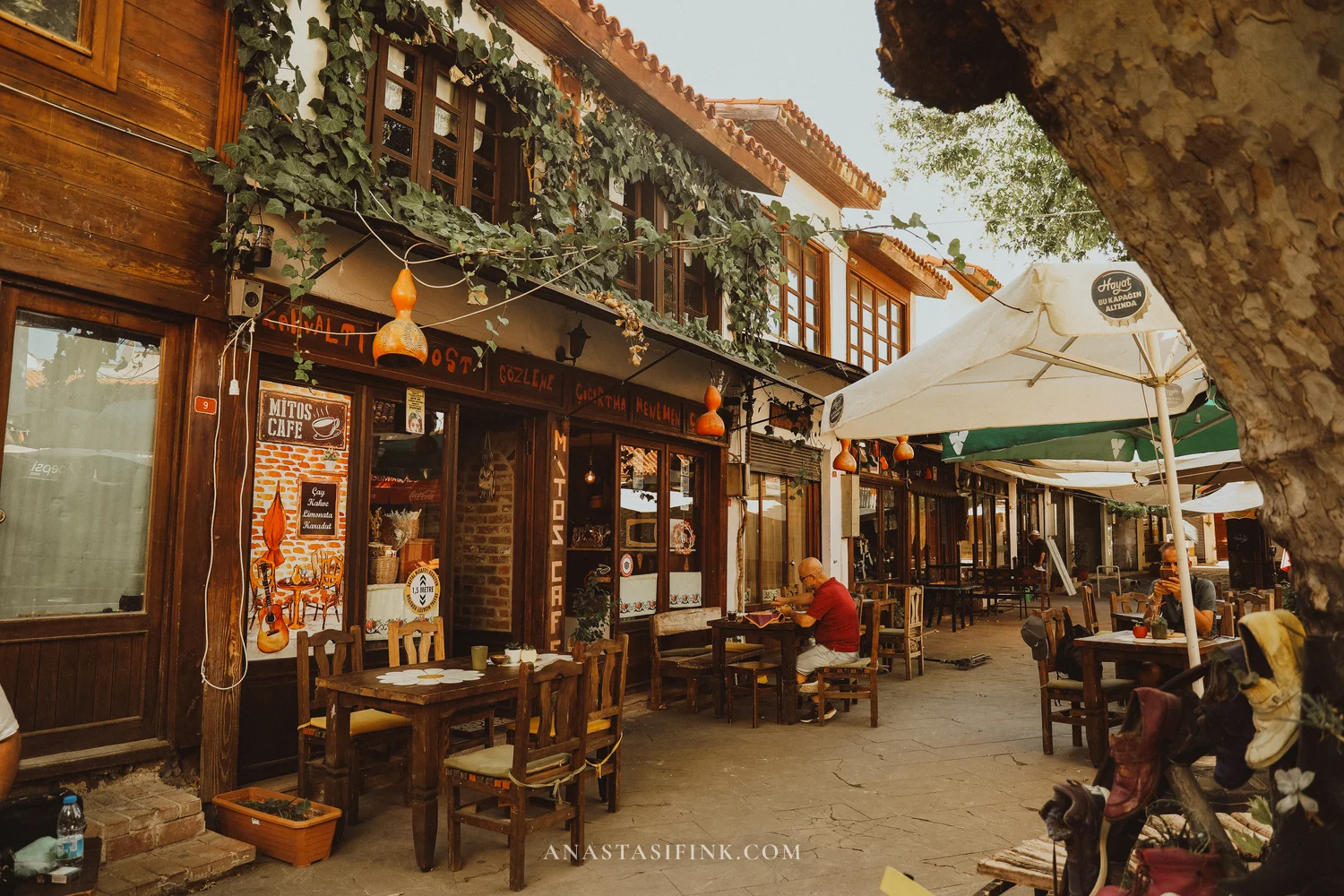
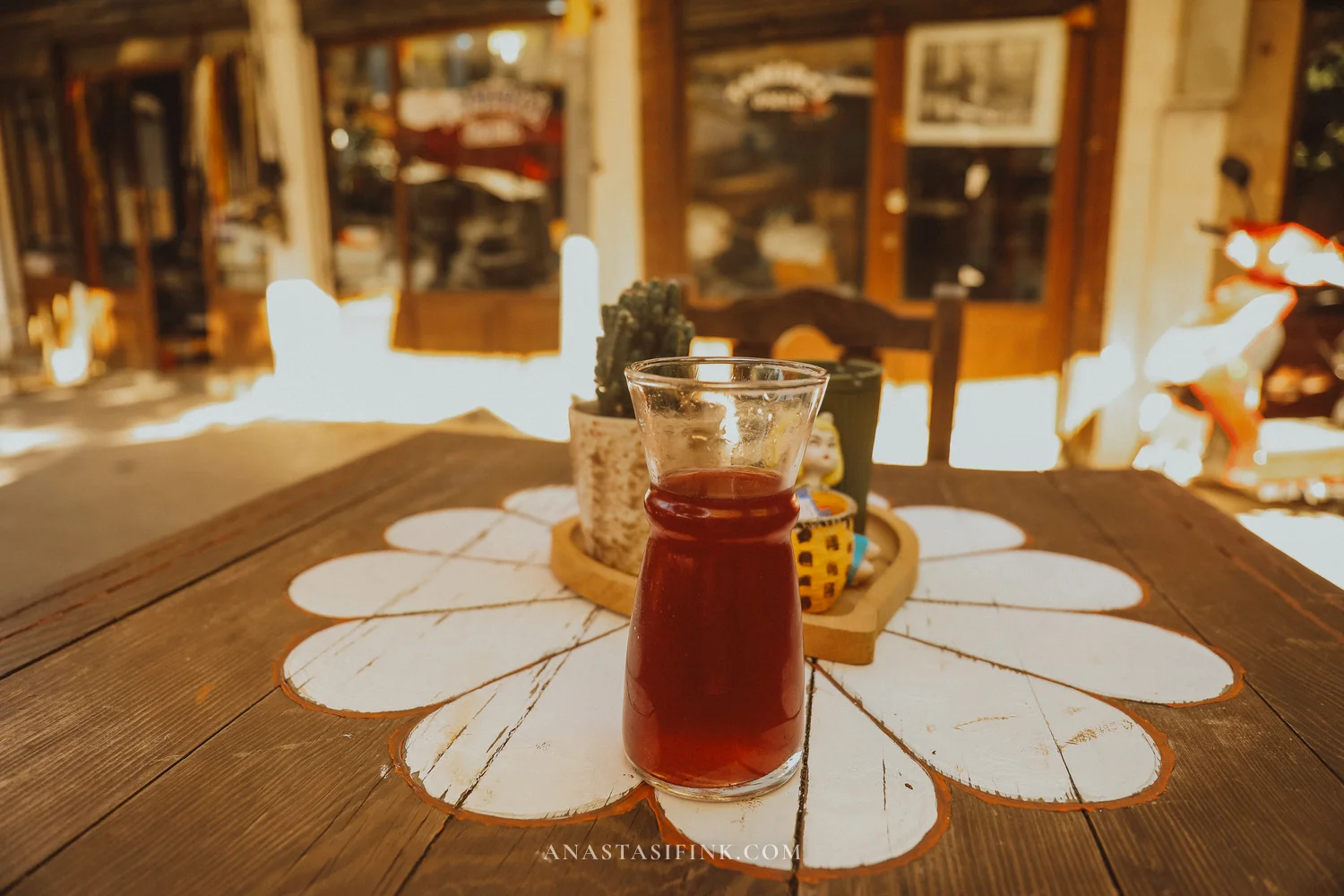
And you absolutely must try the local drink. The main drink of Bergama is karadut suyu, a cold sherbet made from black mulberries. It’s served in small glass pitchers, ice-cold, dark red, and sweet-and-sour. The tradition goes back to Ottoman times, when sorbets were the main refreshing drink. In Bergama, it’s still a living tradition, not a museum piece.
Kardelen Bakery and the Fountain
Along the way between the sites, I noticed the Kardelen bakery — organic bread right in the window, golden loaves looking like they’re from a cookbook. And next to it — an old stone fountain (çeşme), one of those that were installed throughout Turkish cities for travelers.
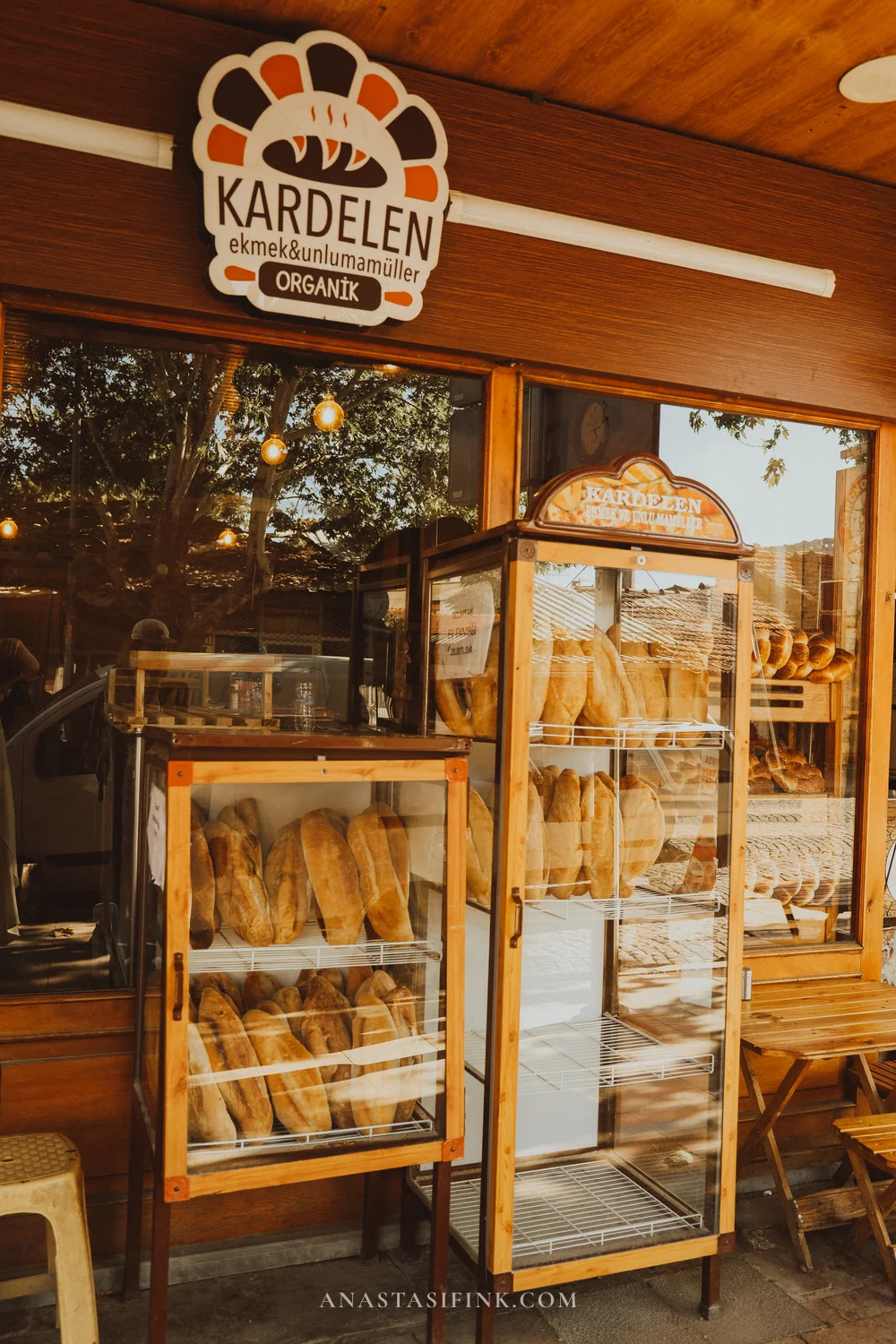
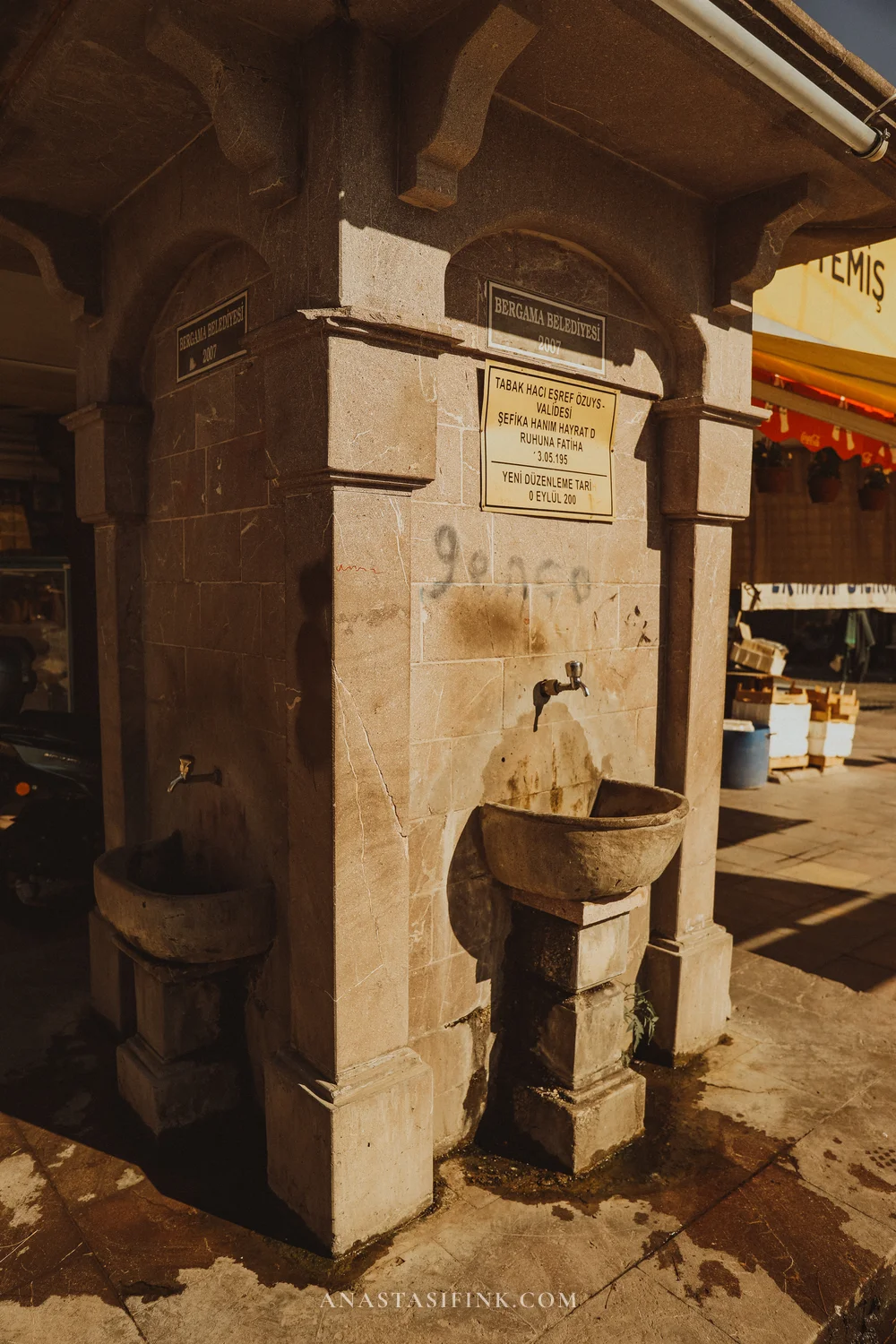
Kardelen bakery with organic bread and an old çeşme — such fountains once stood on every corner
Hacı Hekim Hamamı — From Hammam to Parchment Museum
A double-domed stone building next to the bazaar is the Hacı Hekim Hamamı, a hammam built in 1513. For over 200 years it functioned as a public bath, then stood idle for a long time. And in February 2026, it opened as the Parchment Museum (Parşömen Müzesi) — the first and only one in Turkey.
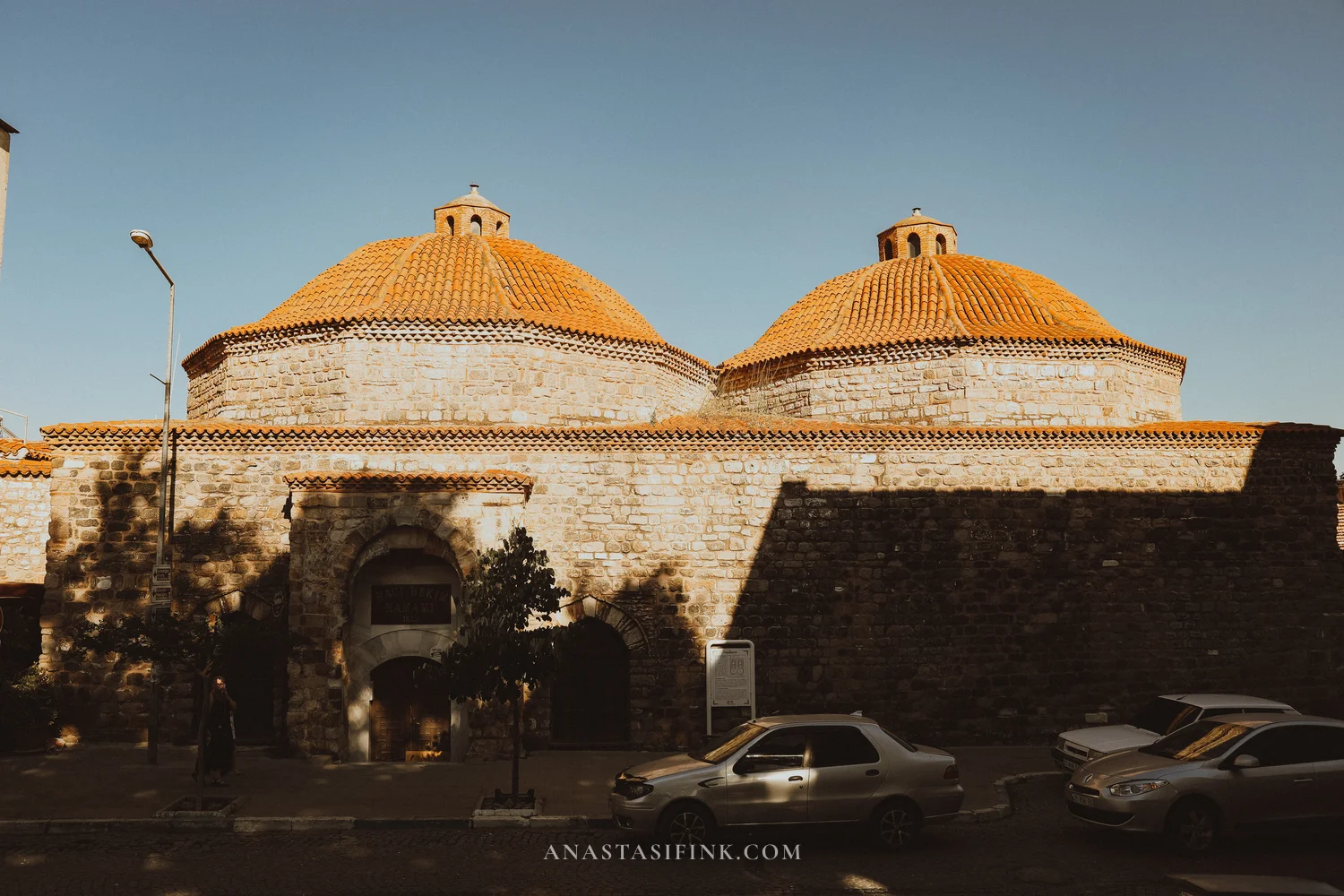
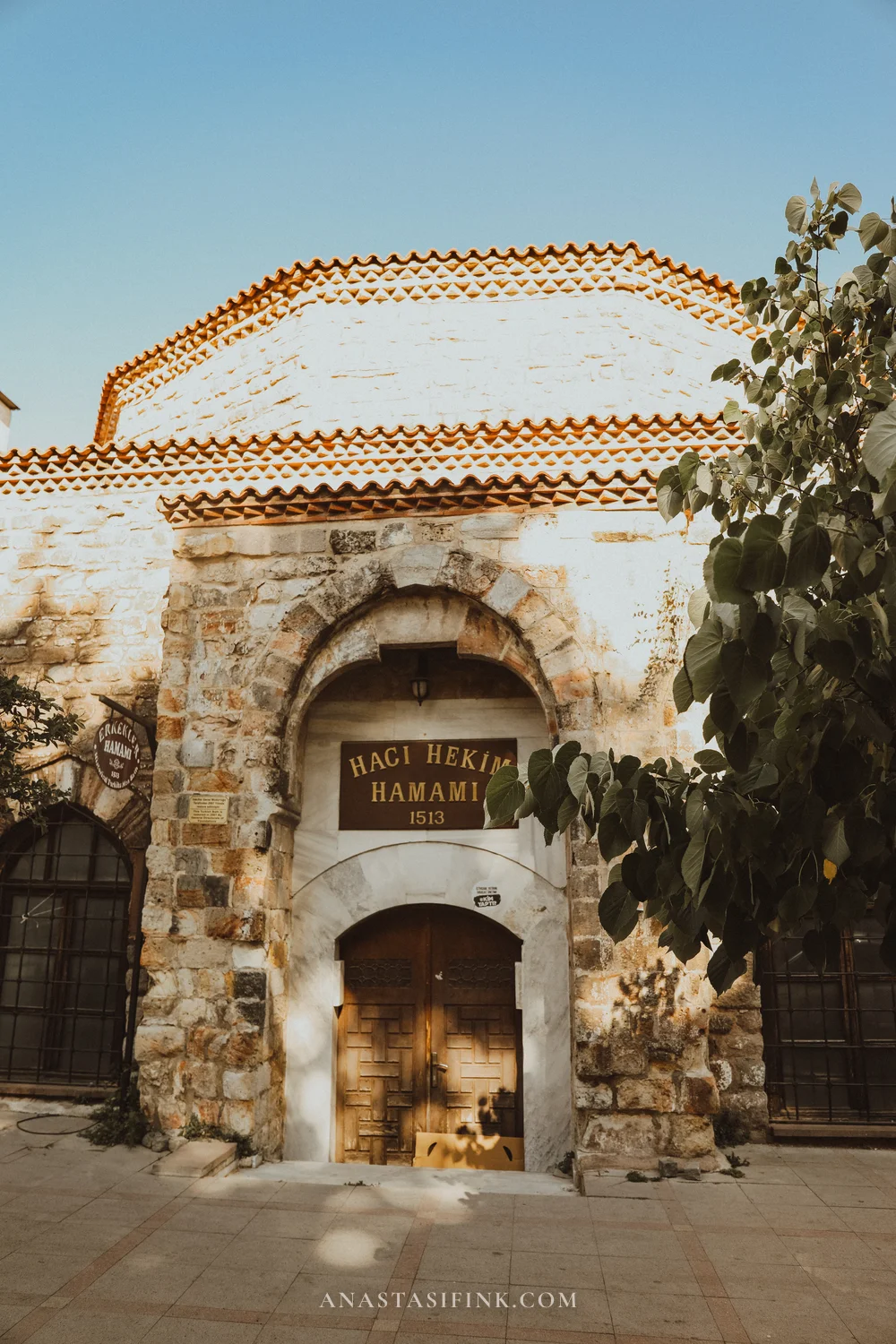
Inside is an exhibition that tells about the parchment-making technology, from soaking the hide in lime to final polishing. The entire process takes about a month and is still done by hand.
Practical Information — Parşömen Müzesi
– Address: Next to Bergama Arastası
– Opening: February 28, 2026
– Inside: Parchment exhibition + artist workshops
The Parchment Workshop — A Word Invented Here
If you see a sign for Bergama Parşömen in the city — go in. This is a workshop where parchment is still made using technology from two thousand years ago.
The story goes like this: In the 2nd century BC, Egypt banned the export of papyrus to prevent the library of Pergamon from surpassing Alexandria’s. Then in Pergamon they developed an alternative — specially treated leather that could be written on from both sides. The material was named pergamenum — “from Pergamon.” This is how a word was born that in English became parchment, in German — Pergament, in French — parchemin.
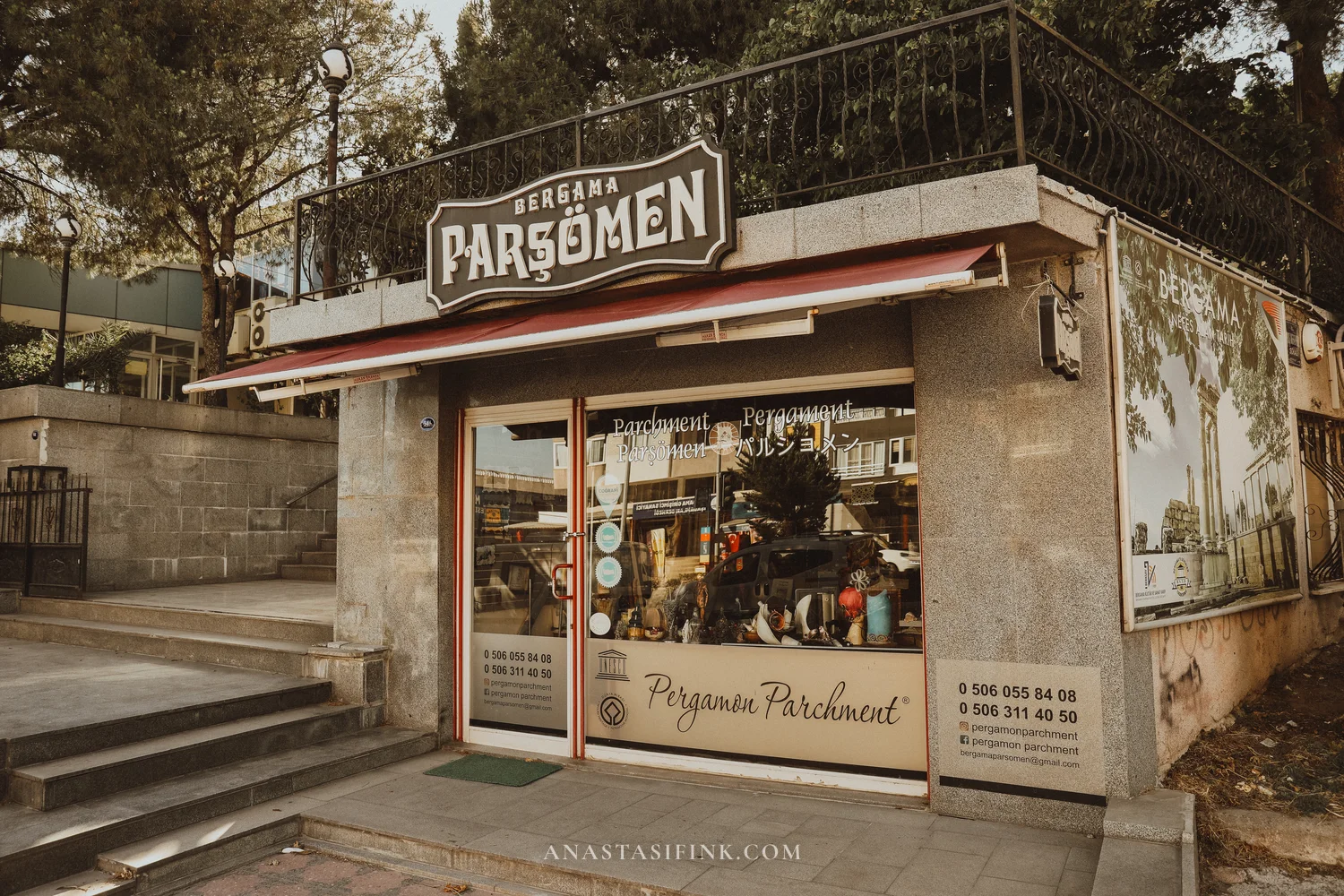
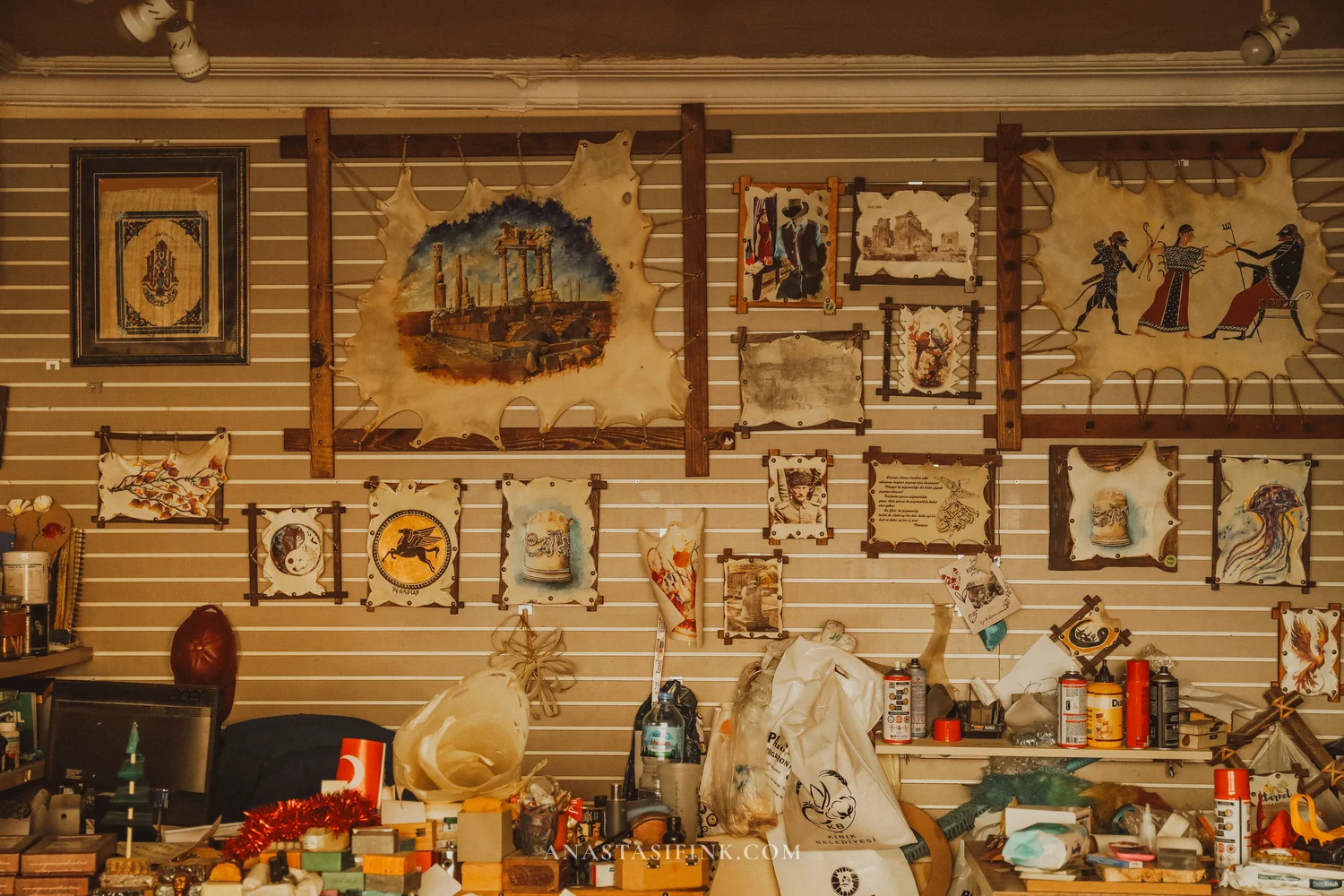
Inside the workshop — paintings on parchment with ancient subjects. Each work is done by hand
In 2021, parchment from Bergama received the status of a geographical indication (like Champagne or Parmesan). Now the process of including the craft in UNESCO’s list of intangible cultural heritage is underway.
Pergamon — A Separate Story
As for the ancient Pergamon Acropolis on the hill above the city — that’s a separate article. I’ll just say that you can reach it by cable car (teleferik) right from Bergama’s center. The ride takes about 5 minutes, and the views are stunning.
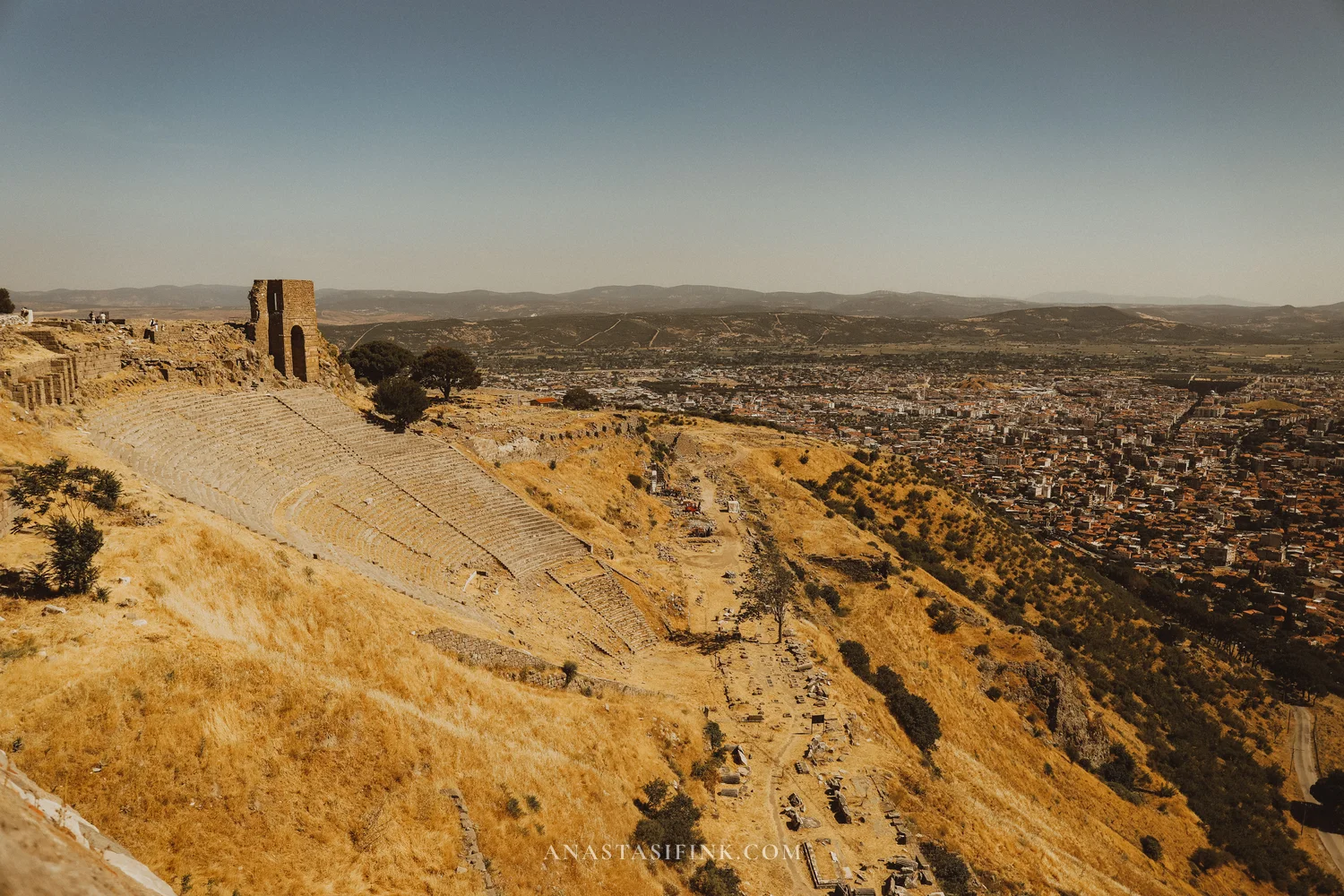
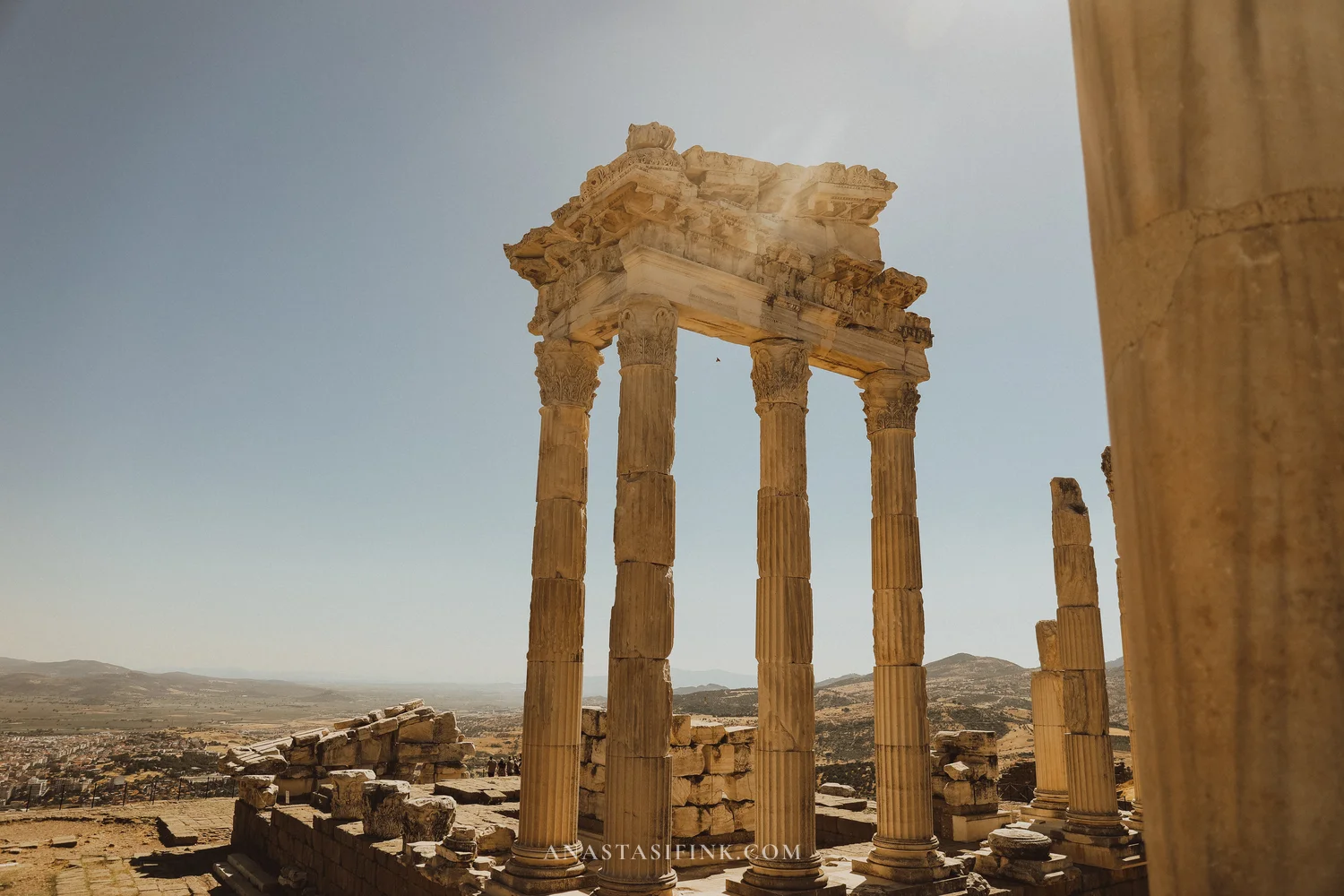
The theater with a view of the city and the Trajaneum at the peak — it’s worth climbing to the acropolis for this
A Quick Note on the Acropolis
– Admission: €15 for foreign visitors
– Cable car: 500 TL one way (~€13), 800 TL round trip (~€21)
– Hours: 08:00–18:00
– Google Maps: [link](https://maps.app.goo.gl/p1Z7DAA2zmuKmU129)
Getting to Bergama
I drove from Izmir — it’s about 107 km and an hour and a half on the Izmir–Çanakkale highway. The road is good, easy to drive.
If you’re without a car:
- Bus from Izmir: Direct buses from the bus station (Otogar), travel time ~1 hour 20 minutes, from $6–8
- IZBAN + bus: IZBAN train to Aliağa station, then bus 835 to Bergama (every 30 minutes). Total time — about 2 hours, the most budget-friendly option
Tips
- How much time: For the city itself (without the acropolis) 3–4 hours is enough. With the acropolis — a full day
- Best time: Morning or sunset hours. Midday in summer it’s very hot
- What to try: Karadut suyu (black mulberry sherbet) on the square by the bazaar — it’s a must
- What to bring back: Parchment items and handmade carpets
- For photographers: The best light is early morning for Kızıl Avlu (east-facing) and sunset hour for the café square
Tip for photographers: Bergama has almost no tourists compared to Ephesus or Pamukkale. This means clean shots without crowds. Come at 9 AM — the city is already awake, but tour groups haven’t arrived yet.
FAQ
How do I get to Bergama from Izmir?
By car — an hour and a half on the highway (107 km). Without a car — by bus from Izmir bus station (~1 hour 20 minutes, from $6) or by IZBAN train to Aliağa and then bus 835.
How much time do I need to see Bergama?
For the city itself without the acropolis — 3–4 hours. If you want to include a trip up Pergamon — a full day. I spent about 5 hours in the city without rushing.
What is karadut suyu and where can I try it?
It’s a cold sherbet made from black mulberries — Bergama’s signature drink from Ottoman times. Served in cafés on the square by Bergama Arastası. Dark red, sweet-and-sour, refreshing.
Is it worth going to Bergama if you’re only planning to see Pergamon?
Yes. The city itself is a separate experience. The Red Basilica, parchment workshop, covered bazaar and streets with old houses are worth arriving early and taking your time.
When will Kızıl Avlu reopen after restoration?
Planned opening — 2026. After restoration, they promise a visitor center, walking routes and night lighting. Check muze.gov.tr for current information.
Can I visit Bergama on my own?
Of course. The city is compact, all attractions are within walking distance of each other. Public transportation from Izmir runs regularly. A rental car gives you more freedom, but it’s not necessary.
What is parchment and why is it connected to Bergama?
Parchment — writing material made from specially treated leather — was developed in ancient Pergamon in the 2nd century BC as a replacement for papyrus. The word parchment itself comes from the Latin pergamenum. In Bergama today, there are still workshops where it’s made by hand.
Bergama doesn’t try to be a tourist showcase. There are no hustlers, pushy guides, or restaurants with pictures of dishes on the entrance. This is a working Anatolian town that simply lives next to two-thousand-year-old history. And that’s precisely why it’s so good.
anastasi fink