Barbaros, Turkey — The Scarecrow Village Near Izmir You Didn’t Know You Needed

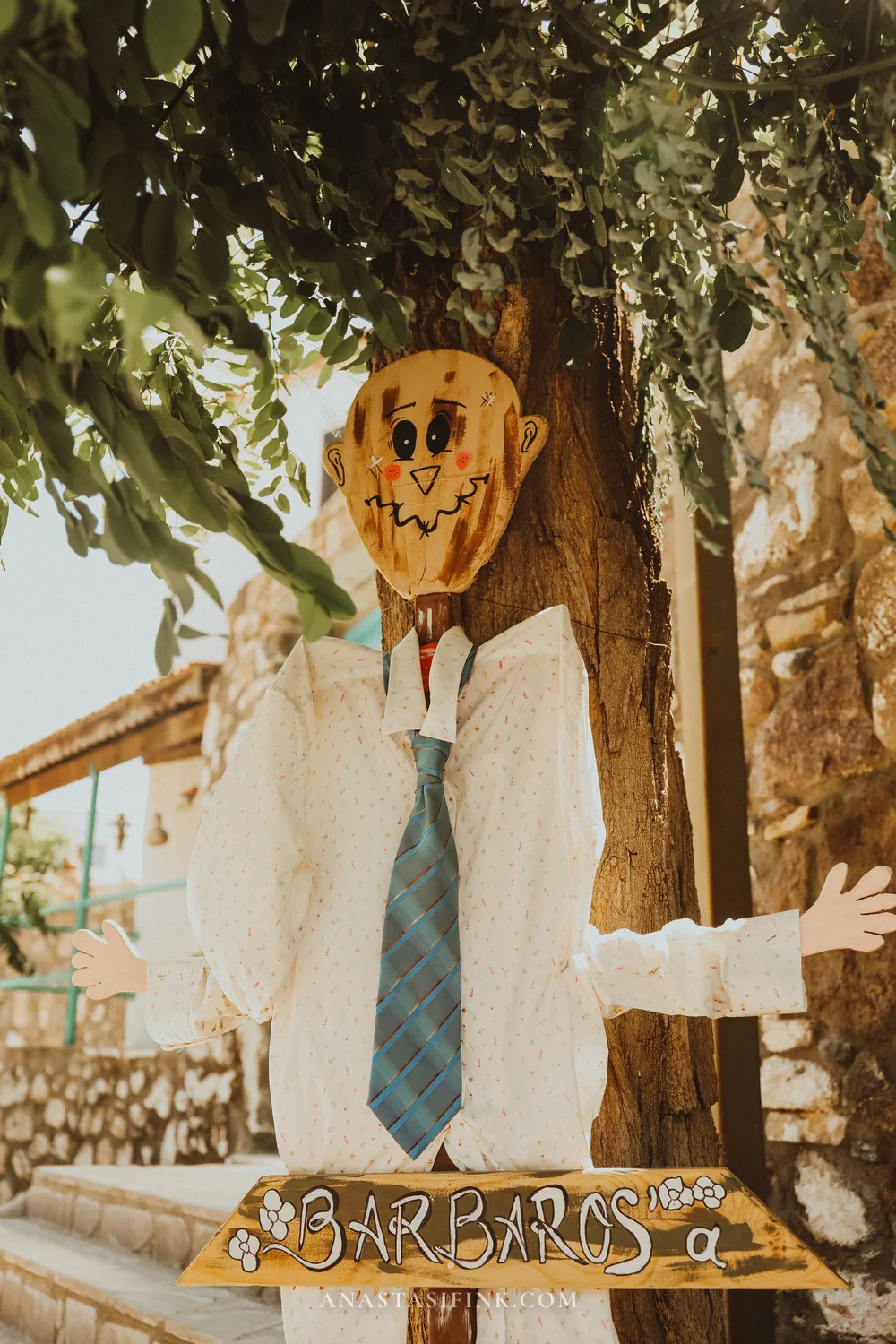
Barbaros is a scarecrow village on the road from Izmir to Alaçatı. There are dozens of them — in suits, hats, and ties — and walking through felt like stepping into a surrealist film. If you’re heading to Alaçatı or Çeşme, this is a mandatory stop. Here’s everything from my visit.
Barbaros — Where Scarecrows Became Art
Barbaros (Barbaros Köyü) is a tiny village in the Urla district, tucked between Izmir and the Çeşme peninsula. About 700 people live here, and honestly, it felt like there were just as many scarecrows.
Officially, the village is around 700 years old, though people have lived on this spot for roughly 5,000 years — the Barbaros Baskov tumulus nearby is a first-category archaeological heritage site. The village was once called Sıradamlar — “rows of roofs” — after the flat-roofed adobe houses lining the creek. It was later renamed Barbaros after the Ottoman admiral Barbaros Hayrettin Paşa, a common naming tradition across Turkey.
But nobody comes here for the history. They come for the scarecrows — or as locals call them, “oyuk.”
The Scarecrows of Barbaros
In 2016, locals and a handful of Istanbul transplants created the Scarecrow Festival — Oyuk Festivali. The idea was to draw tourists and keep the village from fading away. It worked: Barbaros earned the title of Best Tourism Village from UNWTO, the United Nations tourism body.
The festival happens every year in late August, but the scarecrows stay up year-round. Each one is handmade — straw, corn stalks, burlap, and someone’s old clothes.
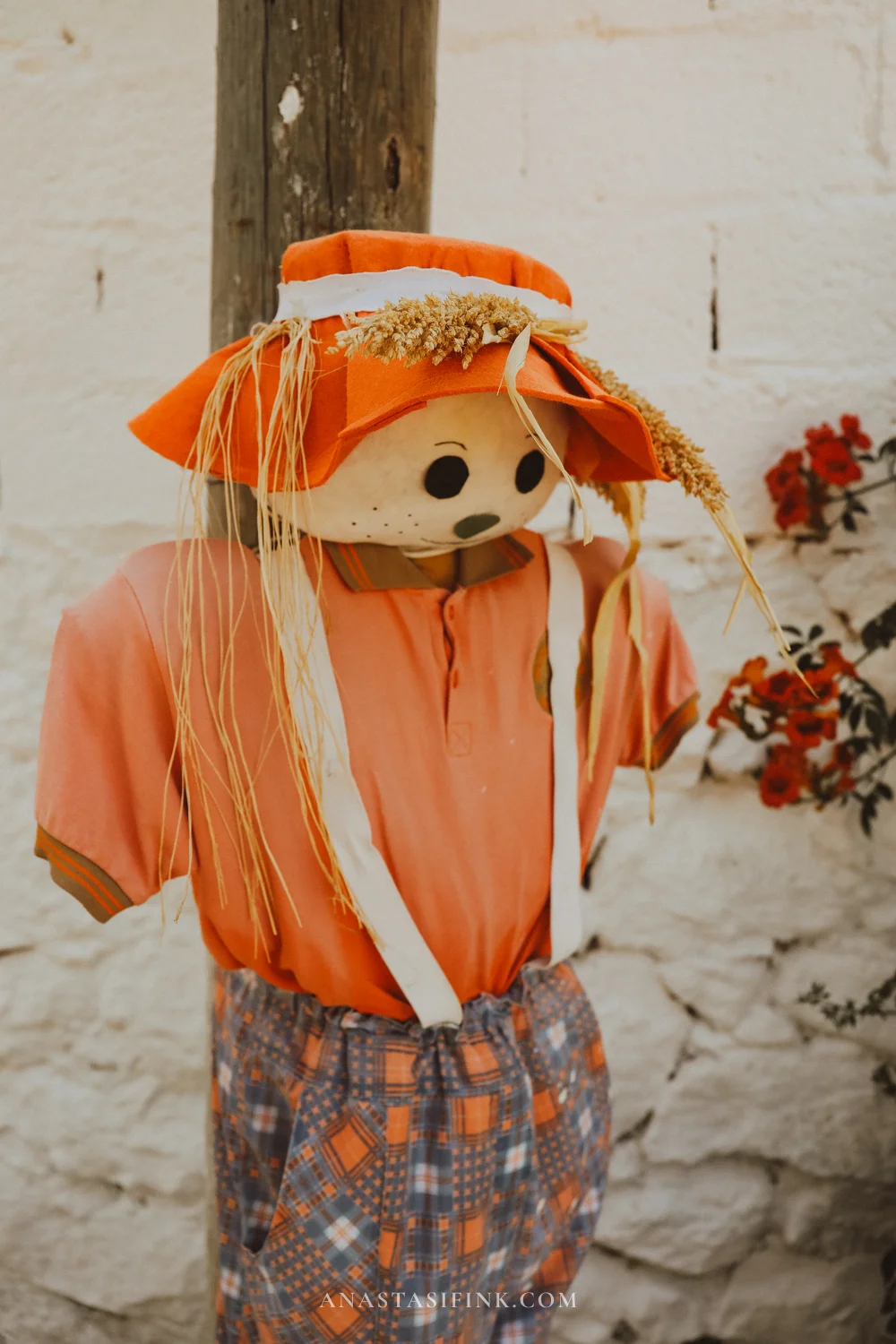
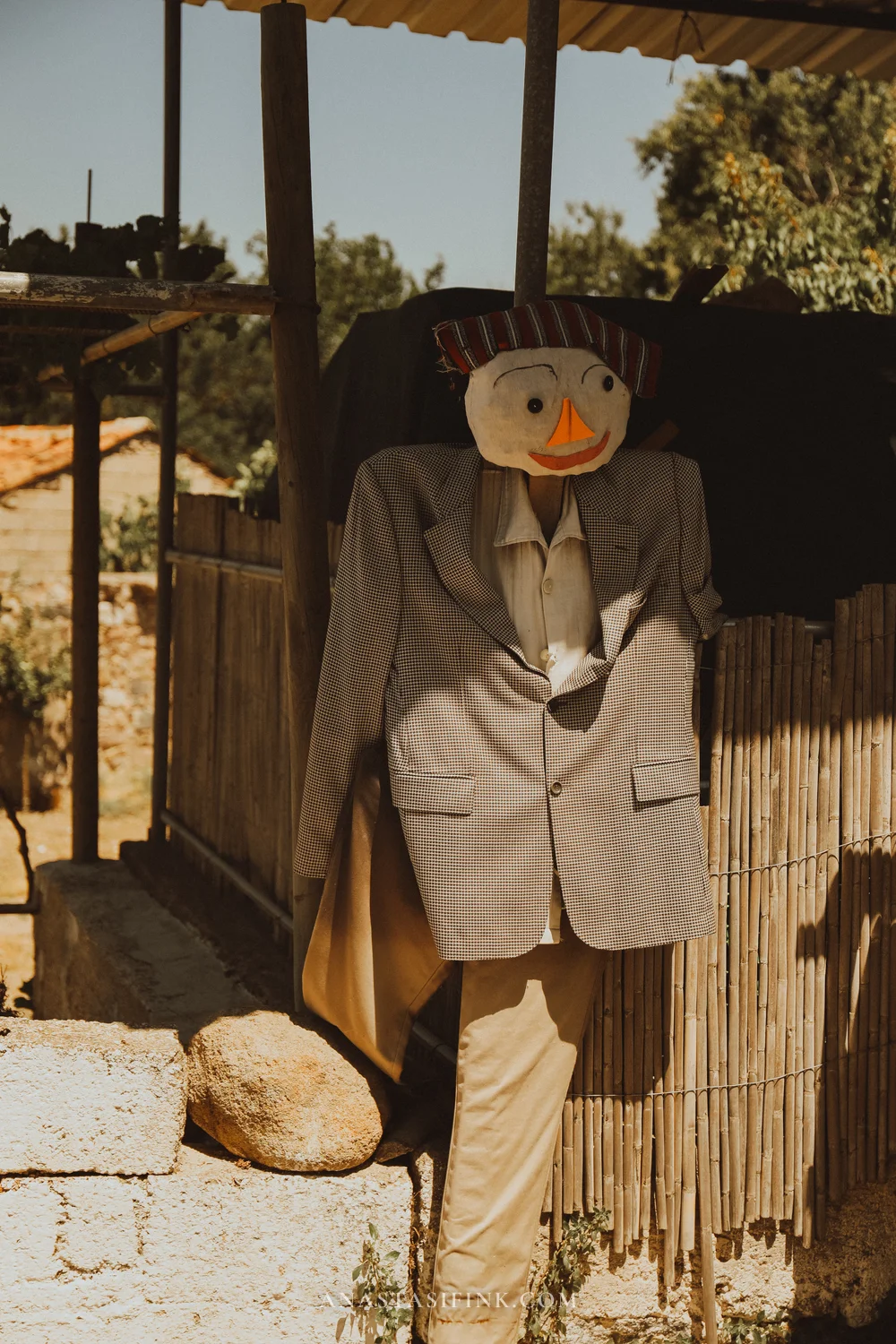
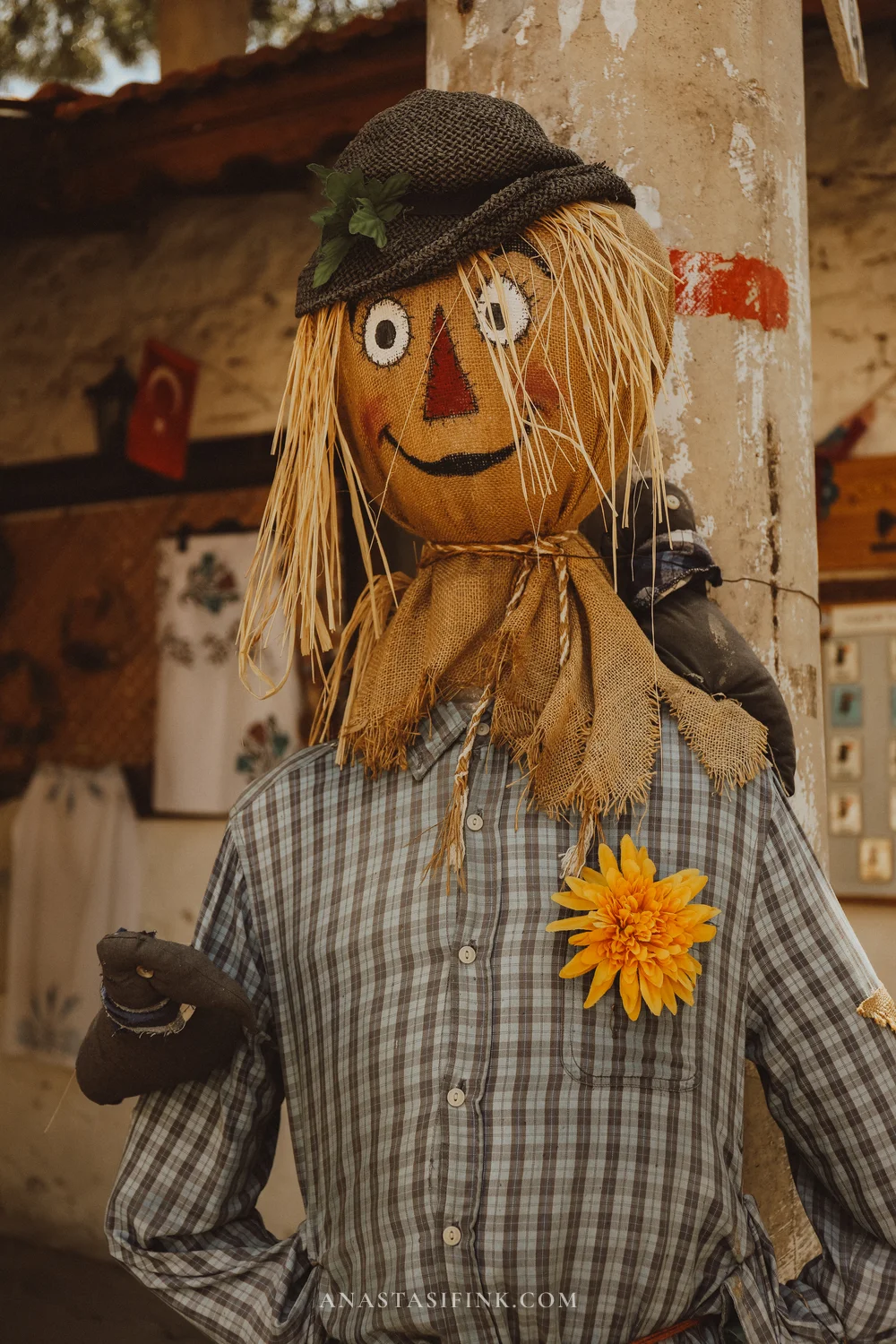
Every scarecrow is handmade. And every single one has personality.
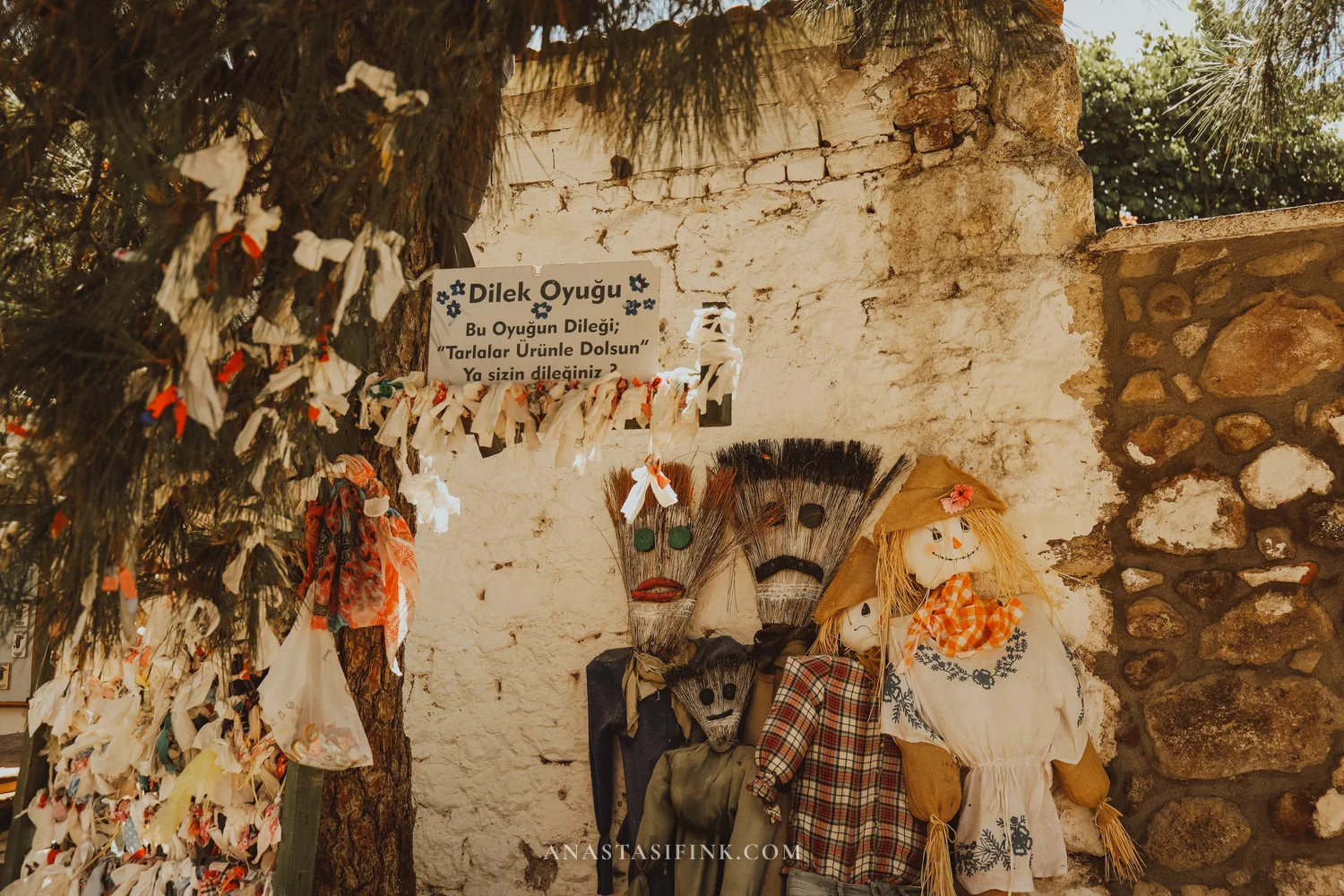
One scarecrow stood in a business suit with a red tie, another wore a green headscarf with a painted-on face. There were couples, whole groups. Some held signs with Turkish proverbs and jokes — I wished I could translate them all.
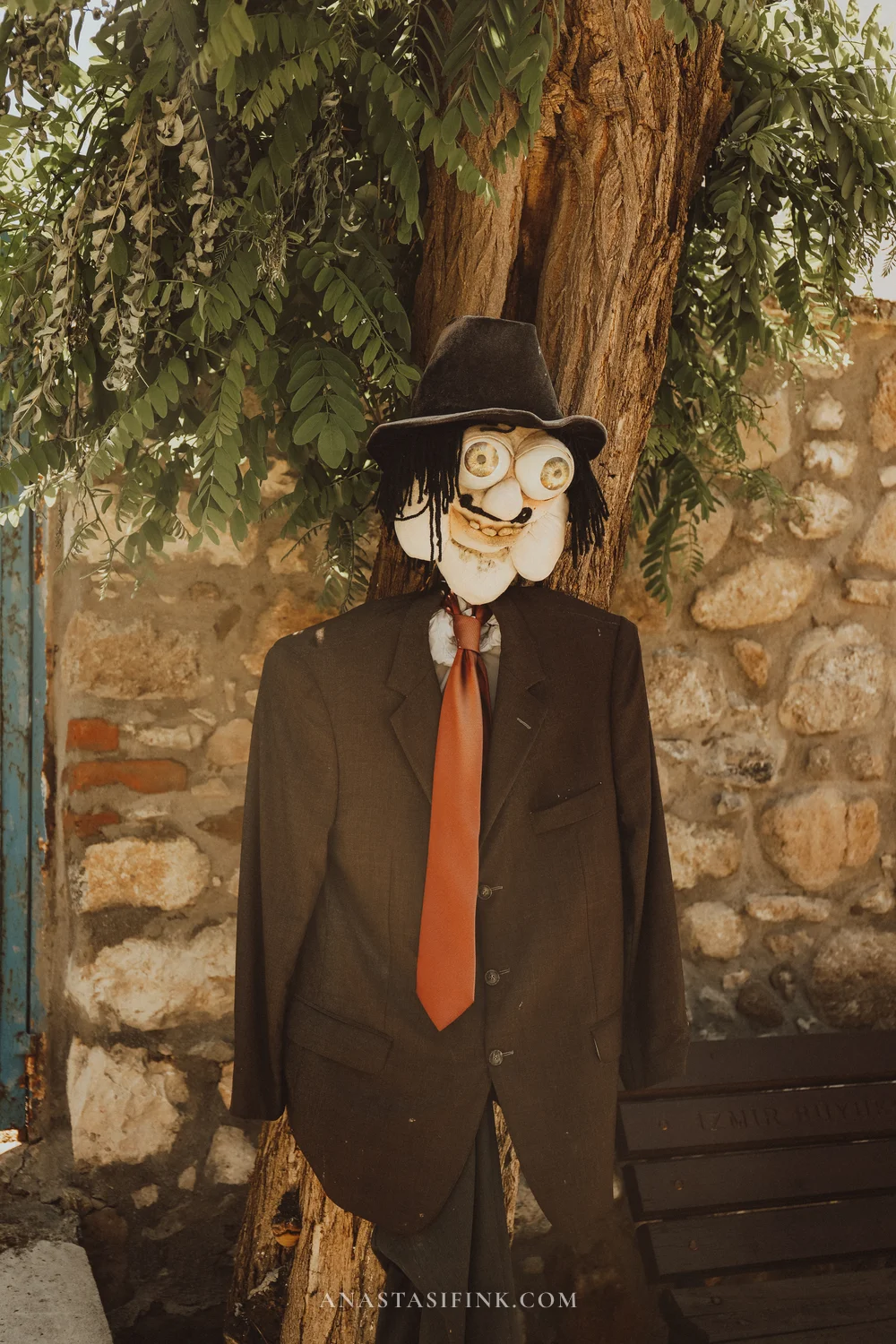
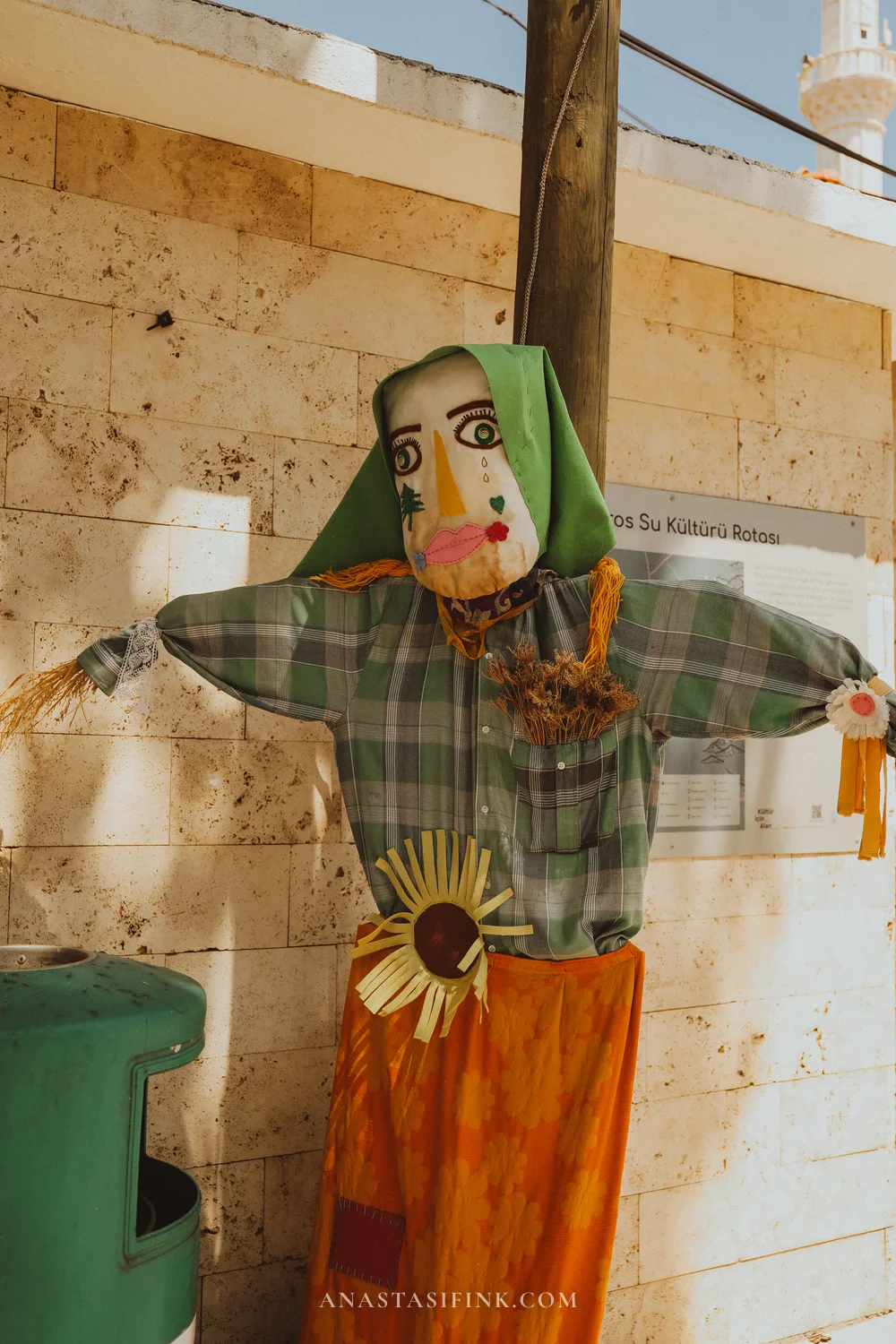
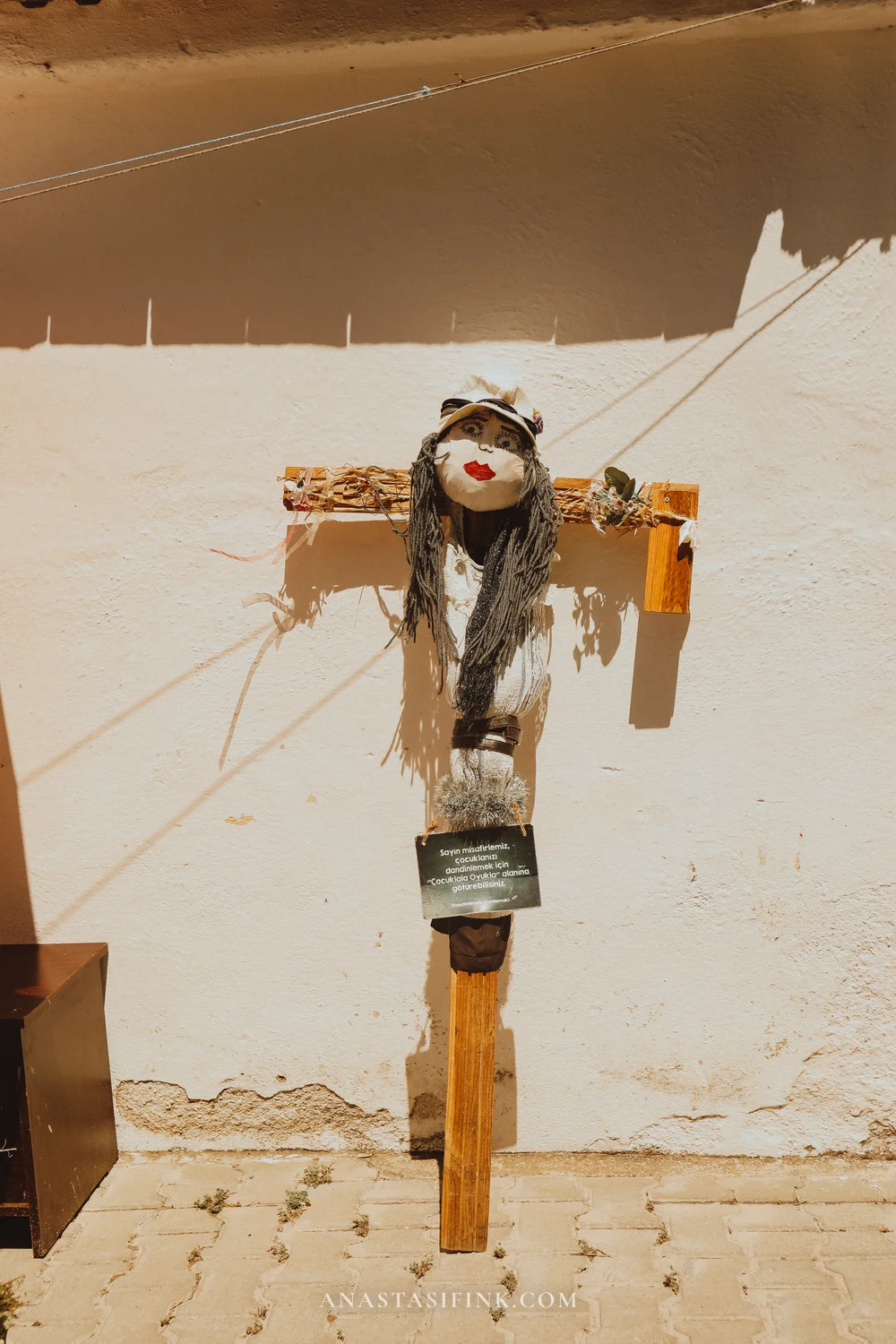
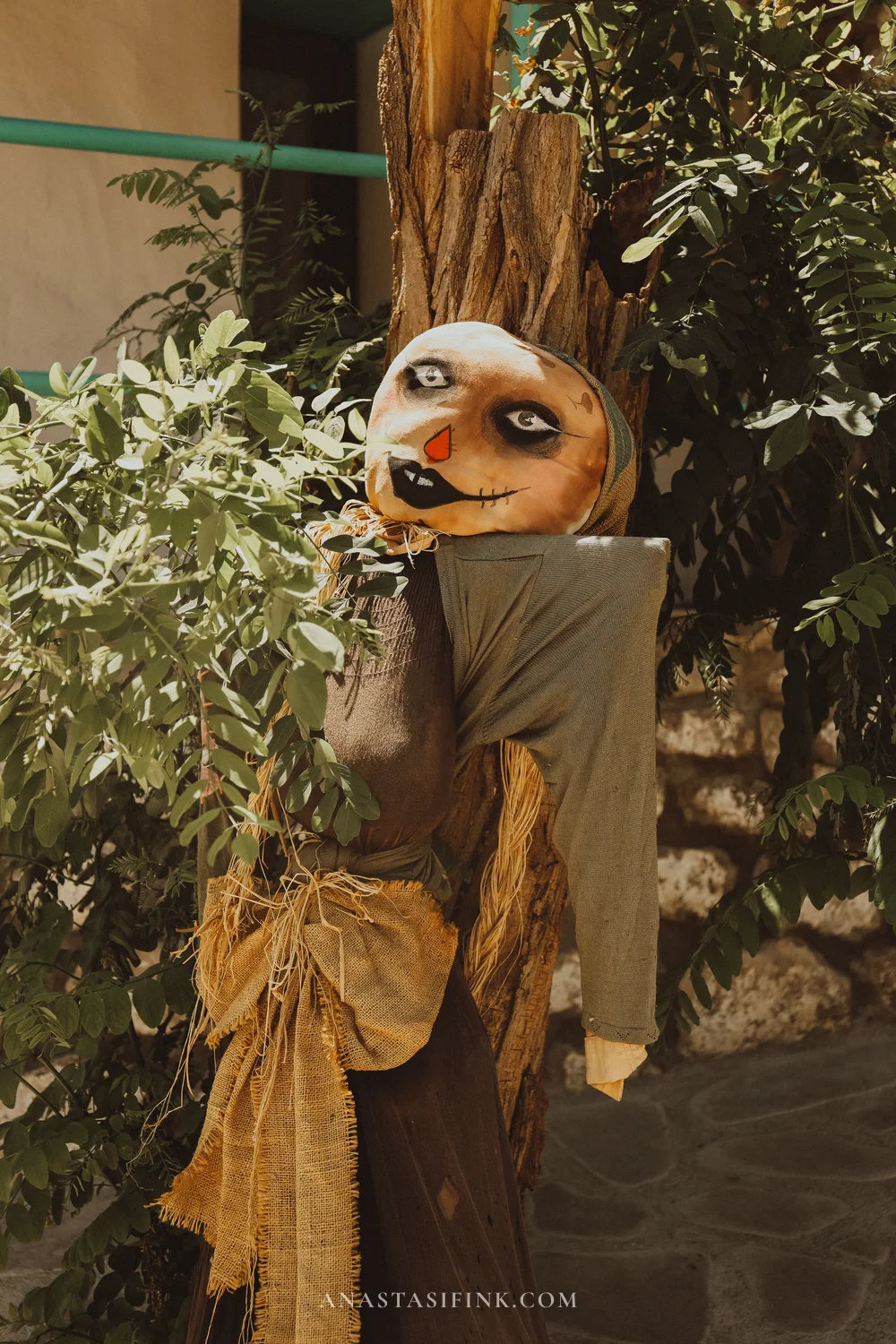
Some scarecrows were funny. Some were genuinely creepy.
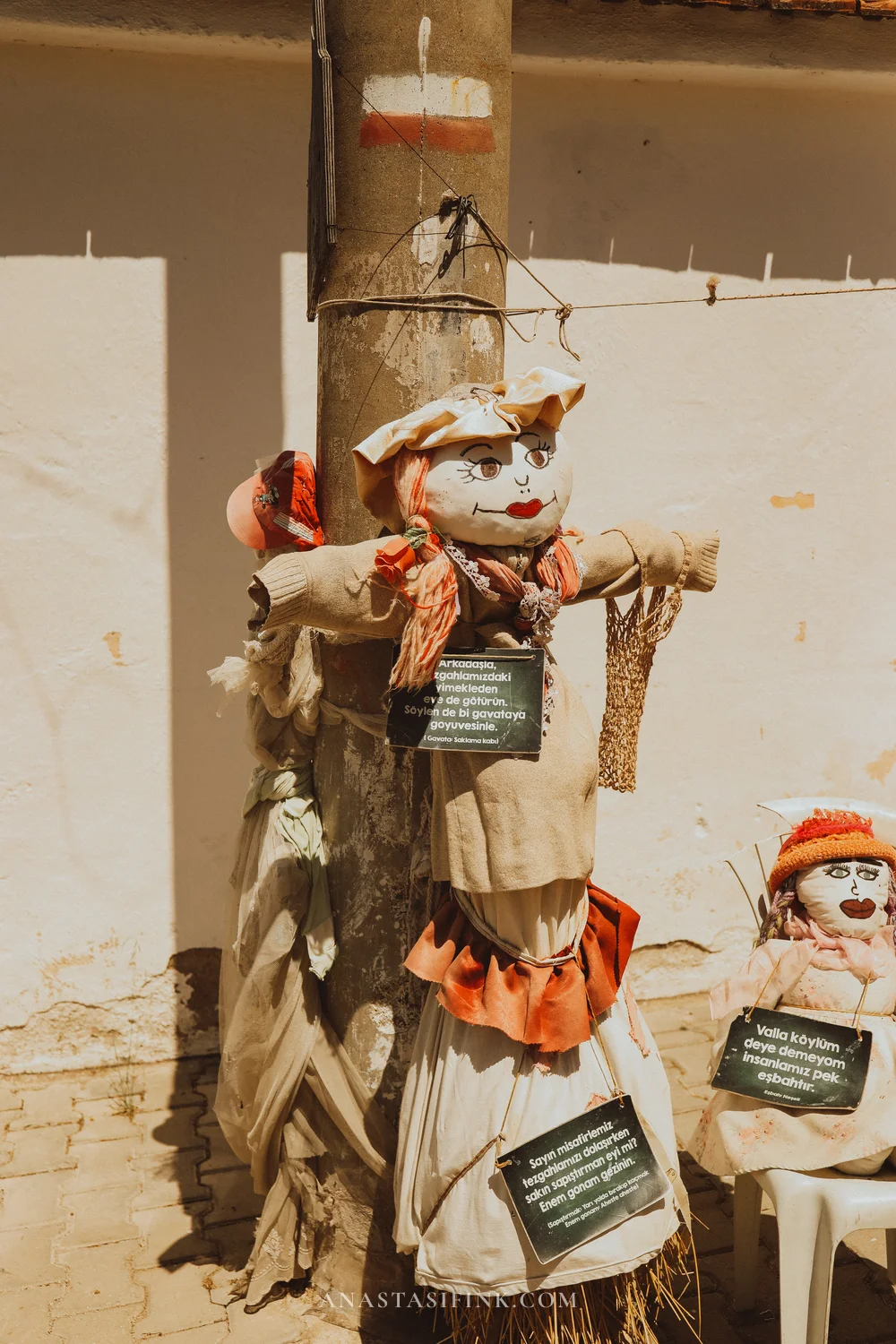
Many of the scarecrows had name tags. On one pole, a whole group was perched — each with a sign saying something like “Oh, come on, I’m just a village girl, but the people here are great.”
Street Art and Outdoor Installations
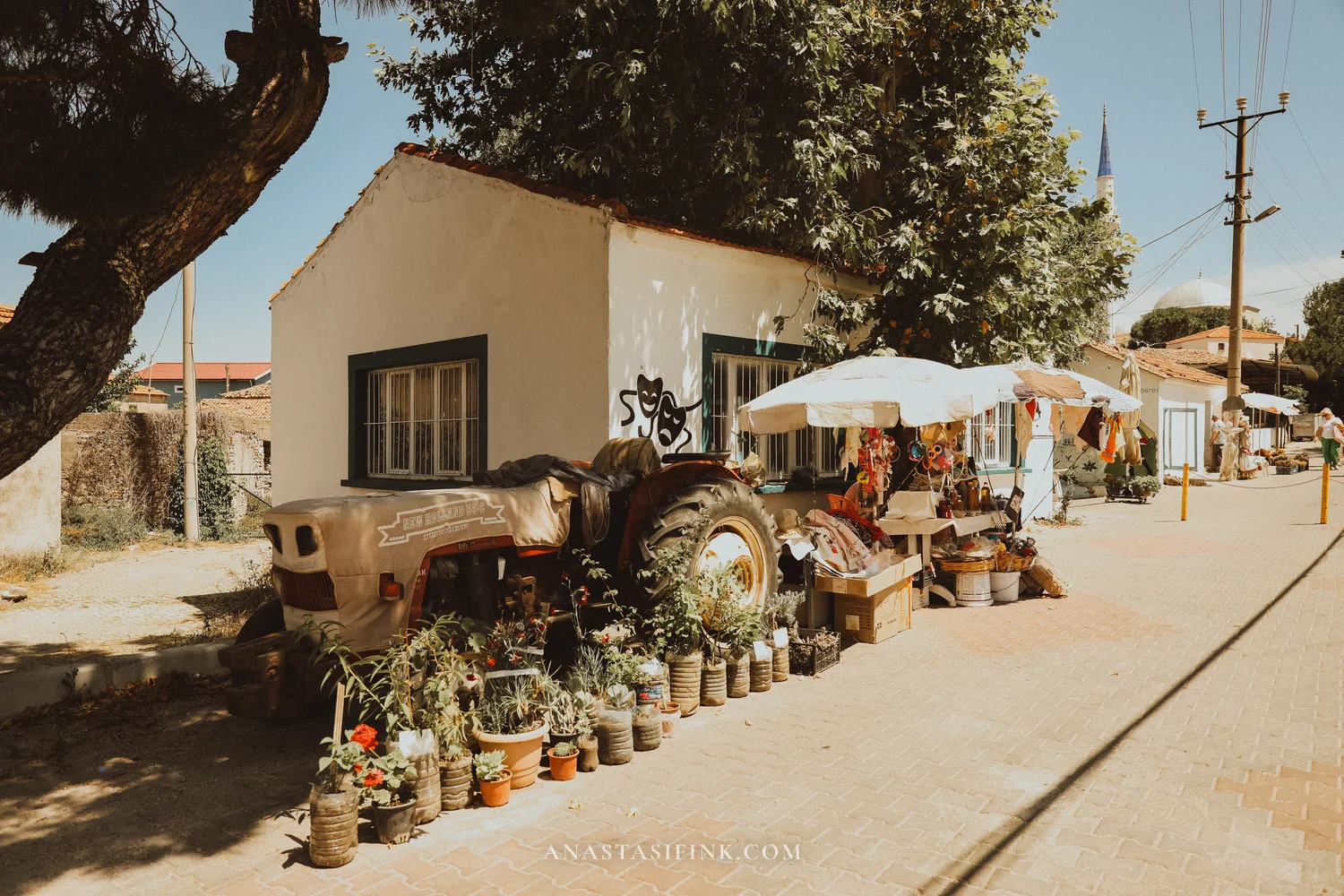
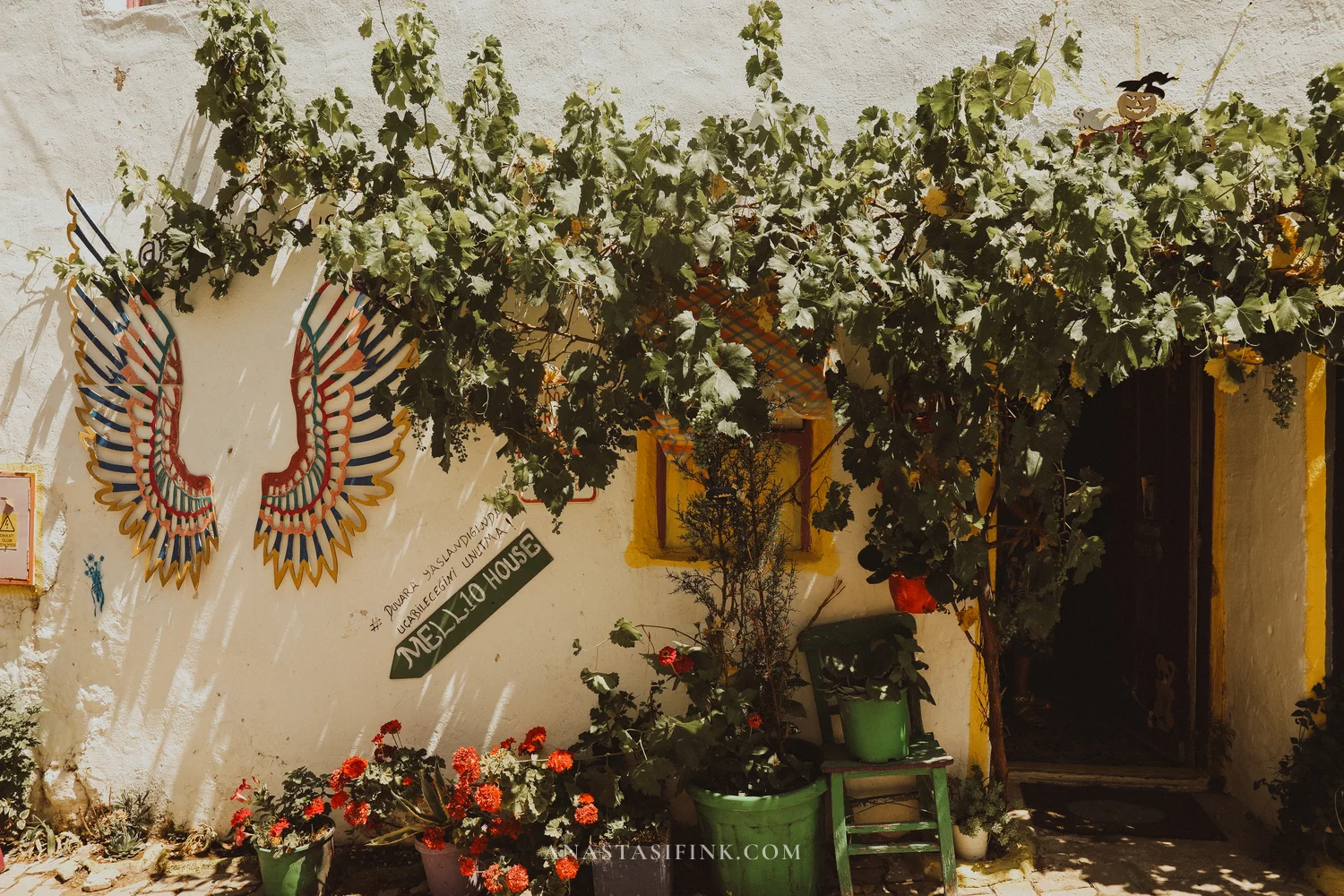
Barbaros isn’t just scarecrows. The walls are covered in murals: one shows a figure in a traditional Aegean costume, another features angel wings. Against the faded paint and grapevines crawling over old stone walls, the art felt perfectly at home.
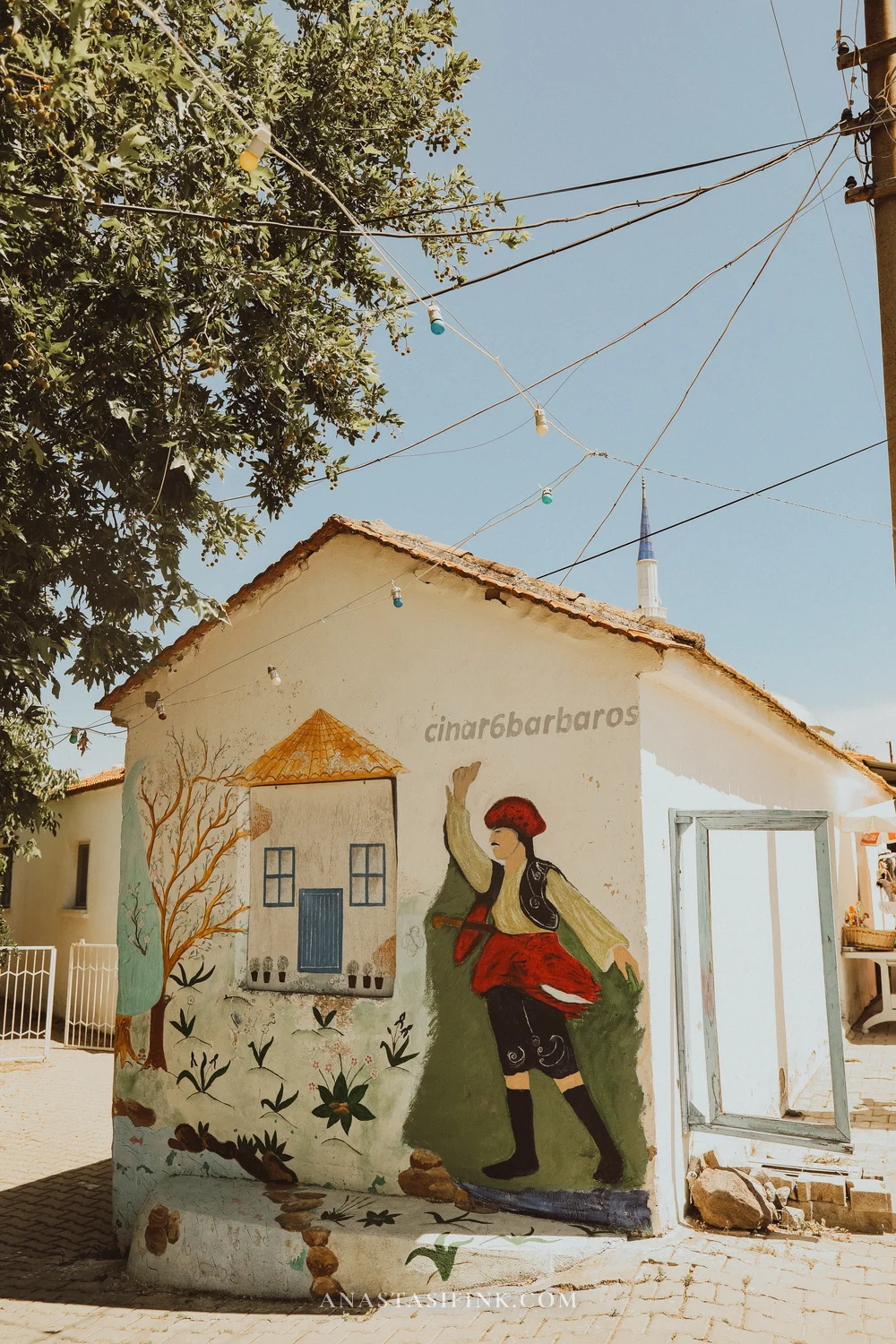
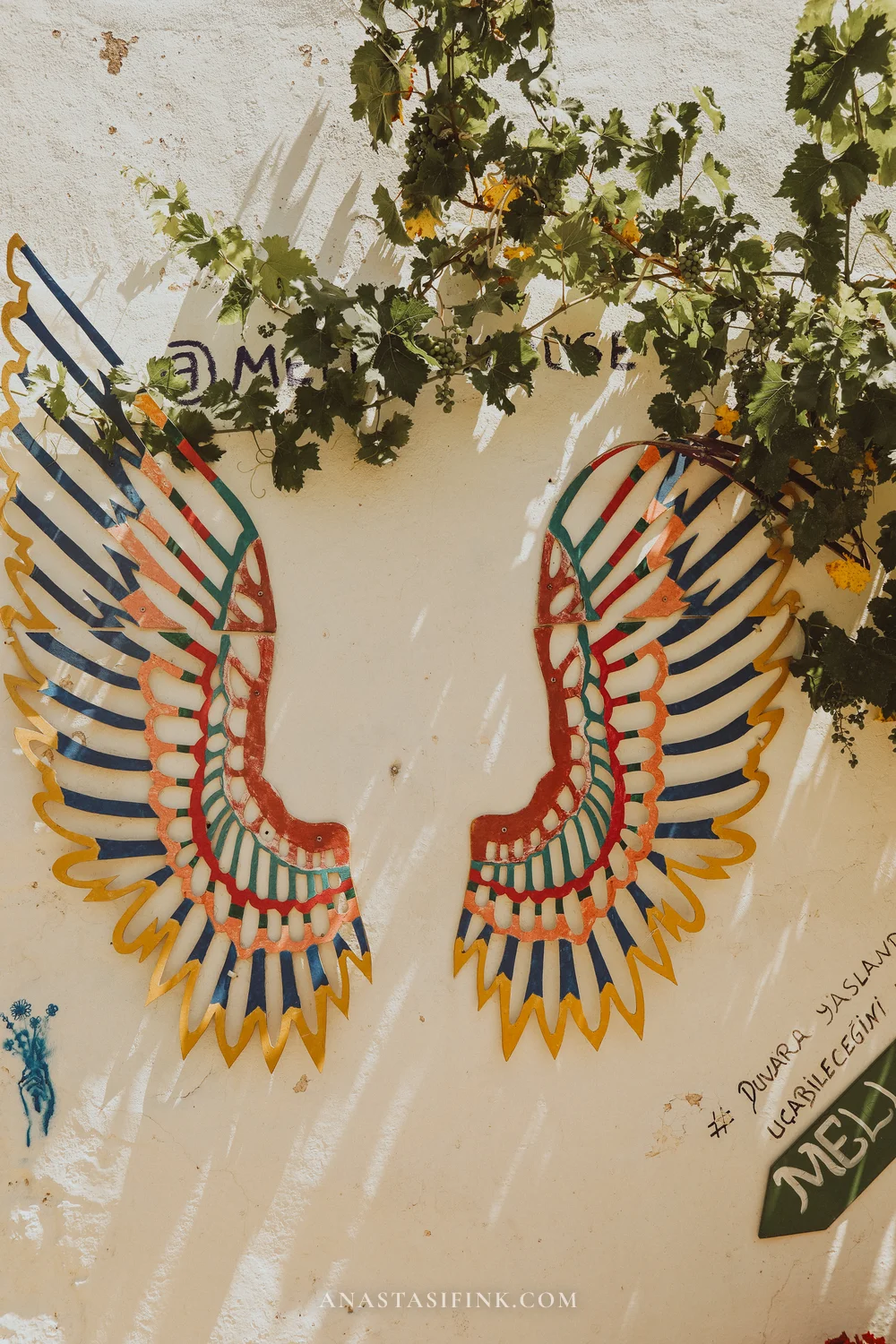
Murals on the walls of Barbaros
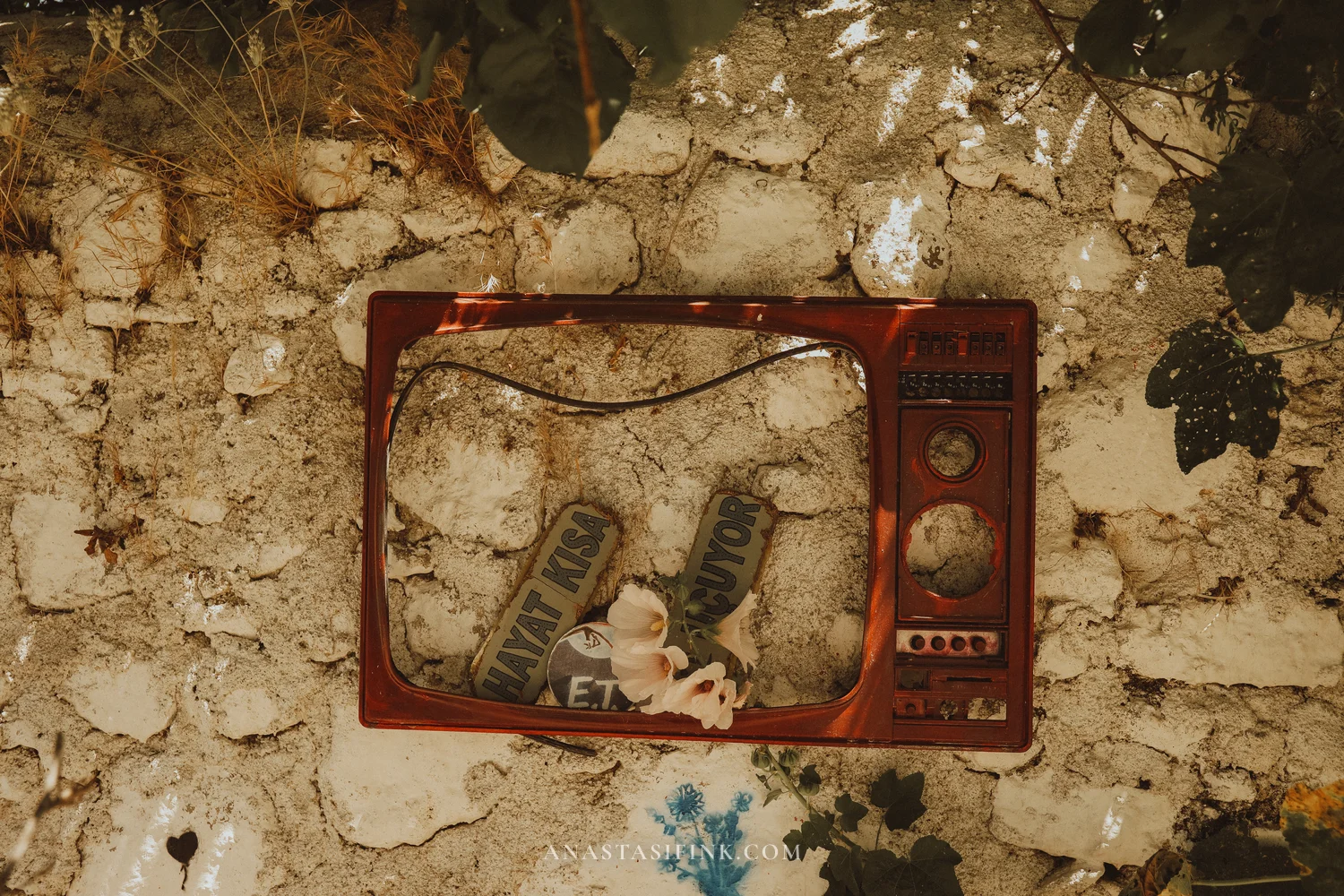
There was also an old TV frame embedded in a stone wall with the words “Hayat kısa” — “Life is short.” That’s the kind of humor you get in Barbaros.
The Wish Tree and the “Sky-Watching Stop”
Barbaros has a Dilek Oyuğu — a place for making wishes. Strips of fabric with handwritten notes dangled from a tree, scarecrows stood guard nearby, and a sign read: “May the fields fill with harvest. What’s your wish?” Tying cloth to tree branches is an ancient Anatolian tradition; the scarecrows are a local twist.
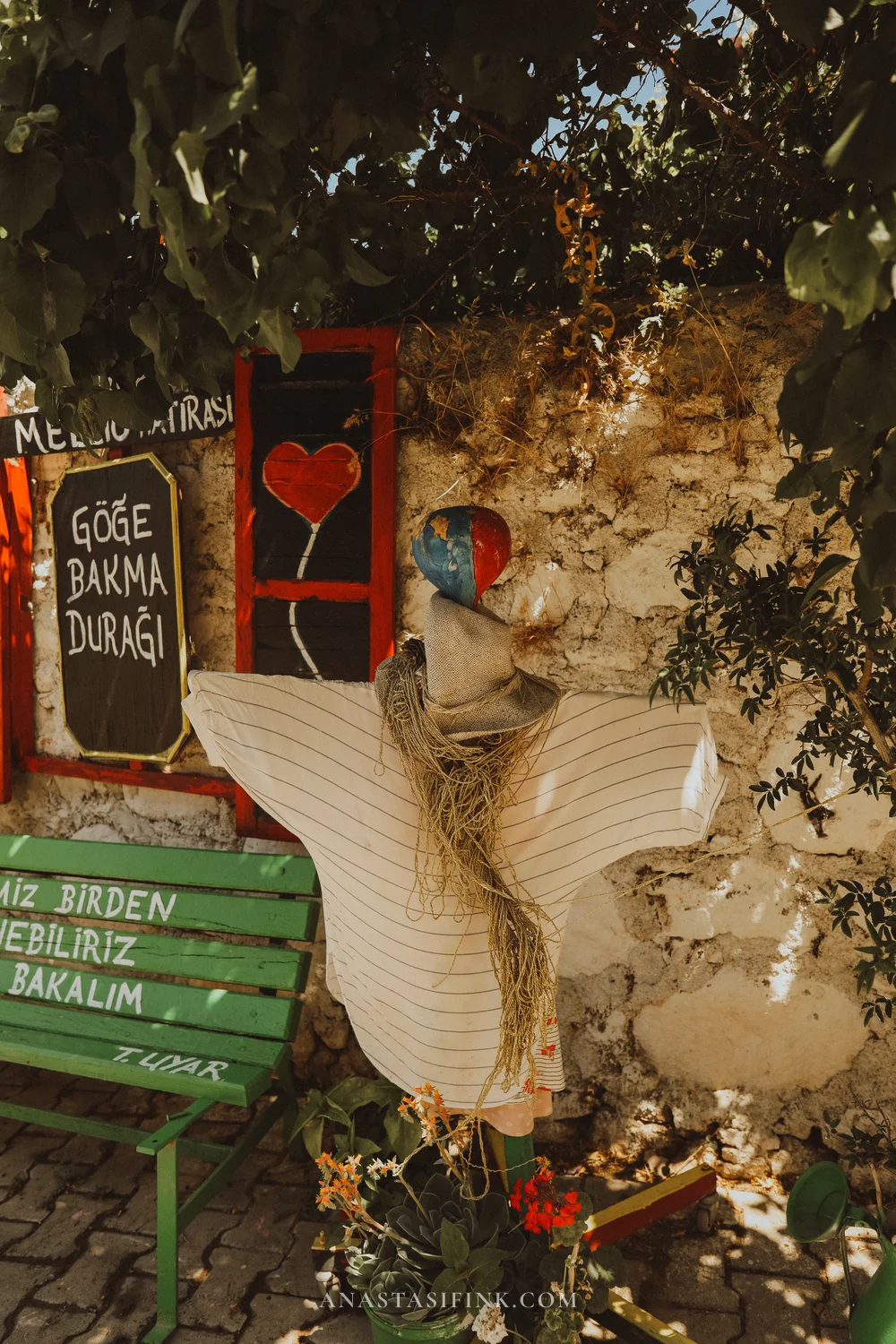
And then there was the “Göğe Bakma Durağı” — literally, “The Stop for Watching the Sky.” Just a green bench where you sit and do absolutely nothing in a hurry.
Cafés, Workshops, and “Knock on the Door”
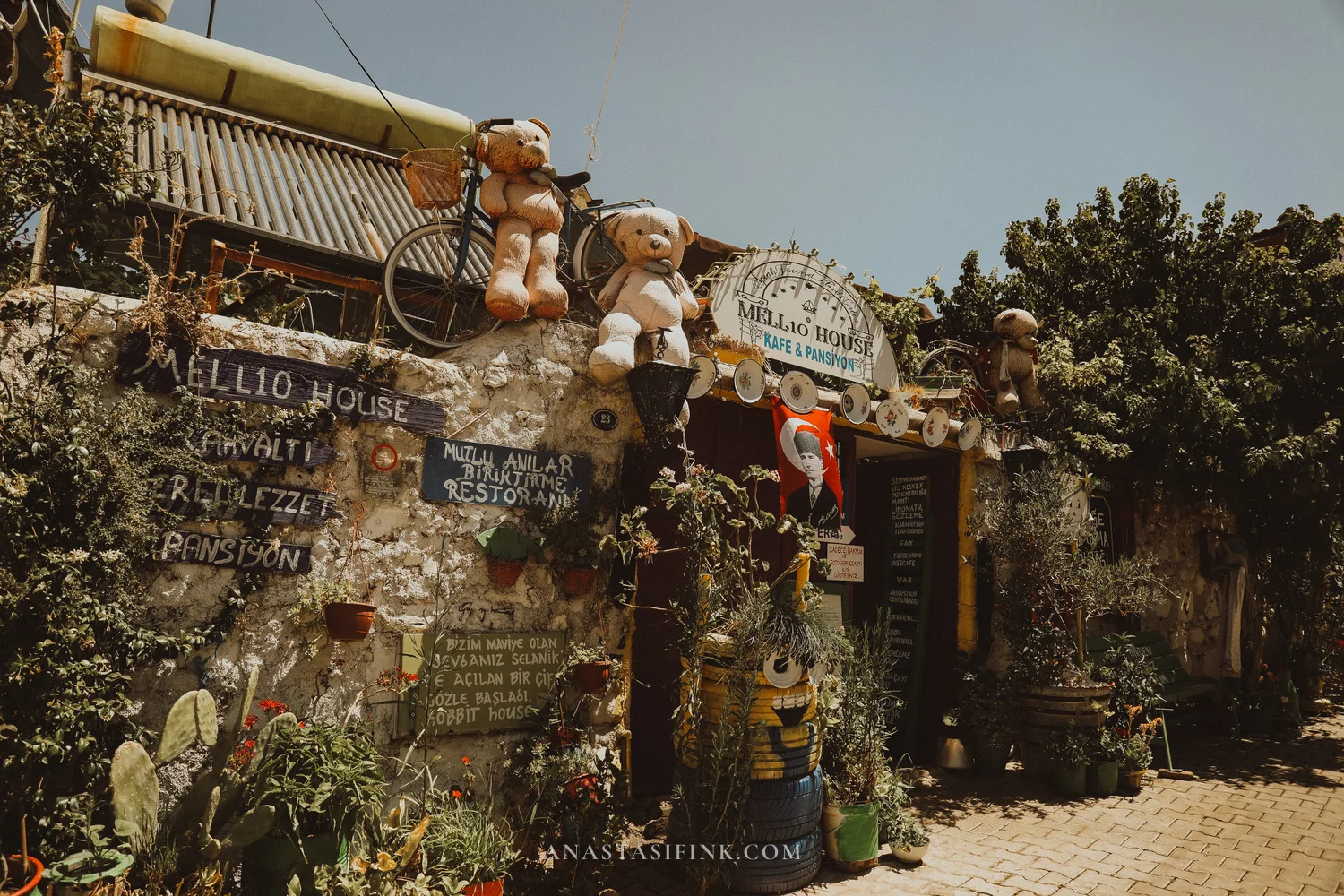
Here, women cook at home and feed guests. The tradition of “çatkapı evleri” — literally “knock-on-the-door houses” — works like this: signs hang on doors, you knock, walk in, and eat homemade food. Katmer (layered flatbread with cheese and herbs), patlıcan balığı (an eggplant dish despite the “fish” in its name), çalkama (slow-cooked meat from a wood oven) — everything made with local ingredients.
On the main square and along the streets, a few cafés operate — Ebruli, Çağdaş, Baharin Kahvesi. The last one serves dibek kahvesi — coffee made from beans ground in a stone mortar. Absolutely worth trying.
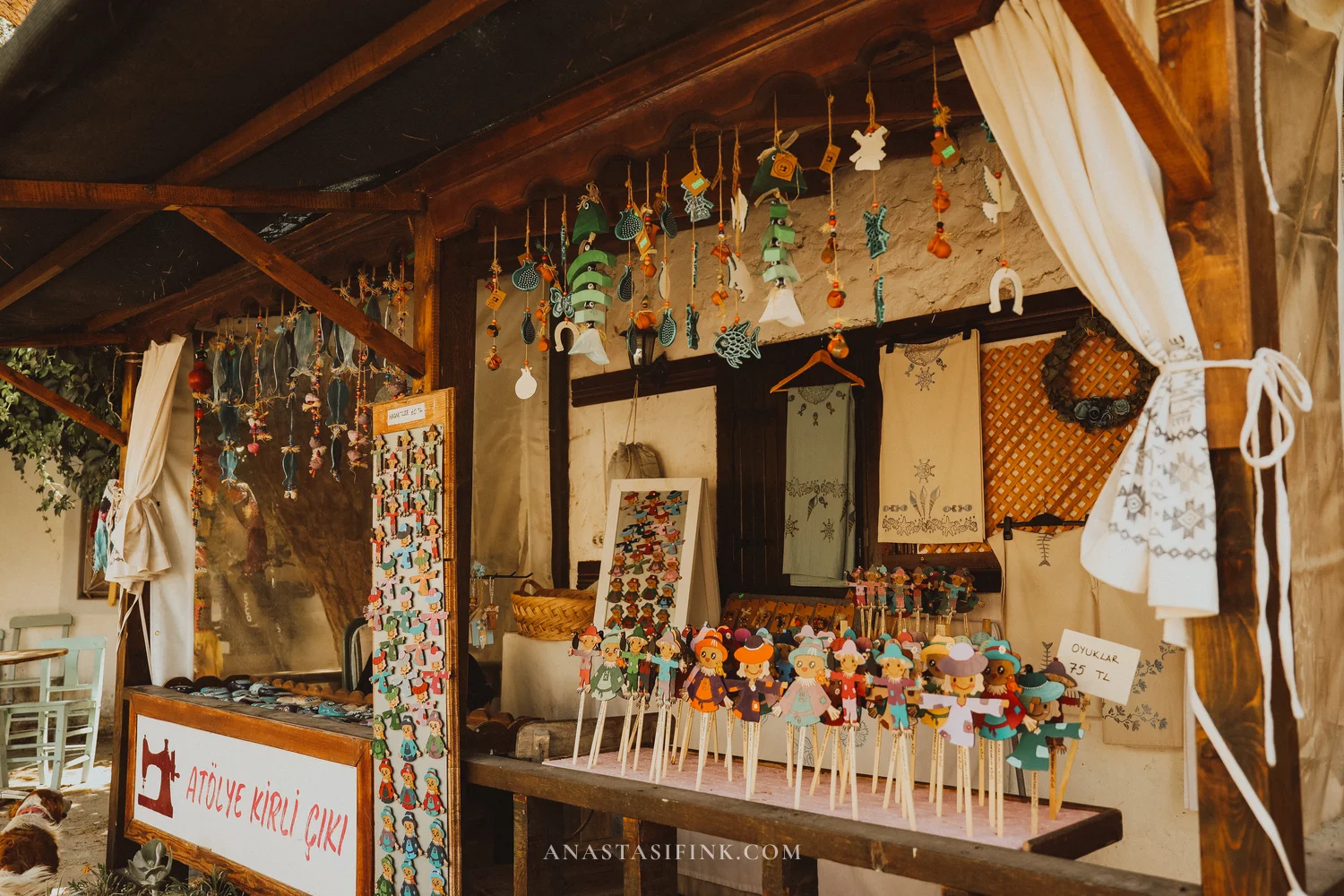
The “Kirli Çıkı” workshop (a Turkish idiom for someone who looks modest but is secretly wealthy) sells handmade dolls, ceramics, and souvenirs. You can also try making a traditional doll yourself — the workshop takes about an hour.
Barbaros Sineması — The Village Cinema
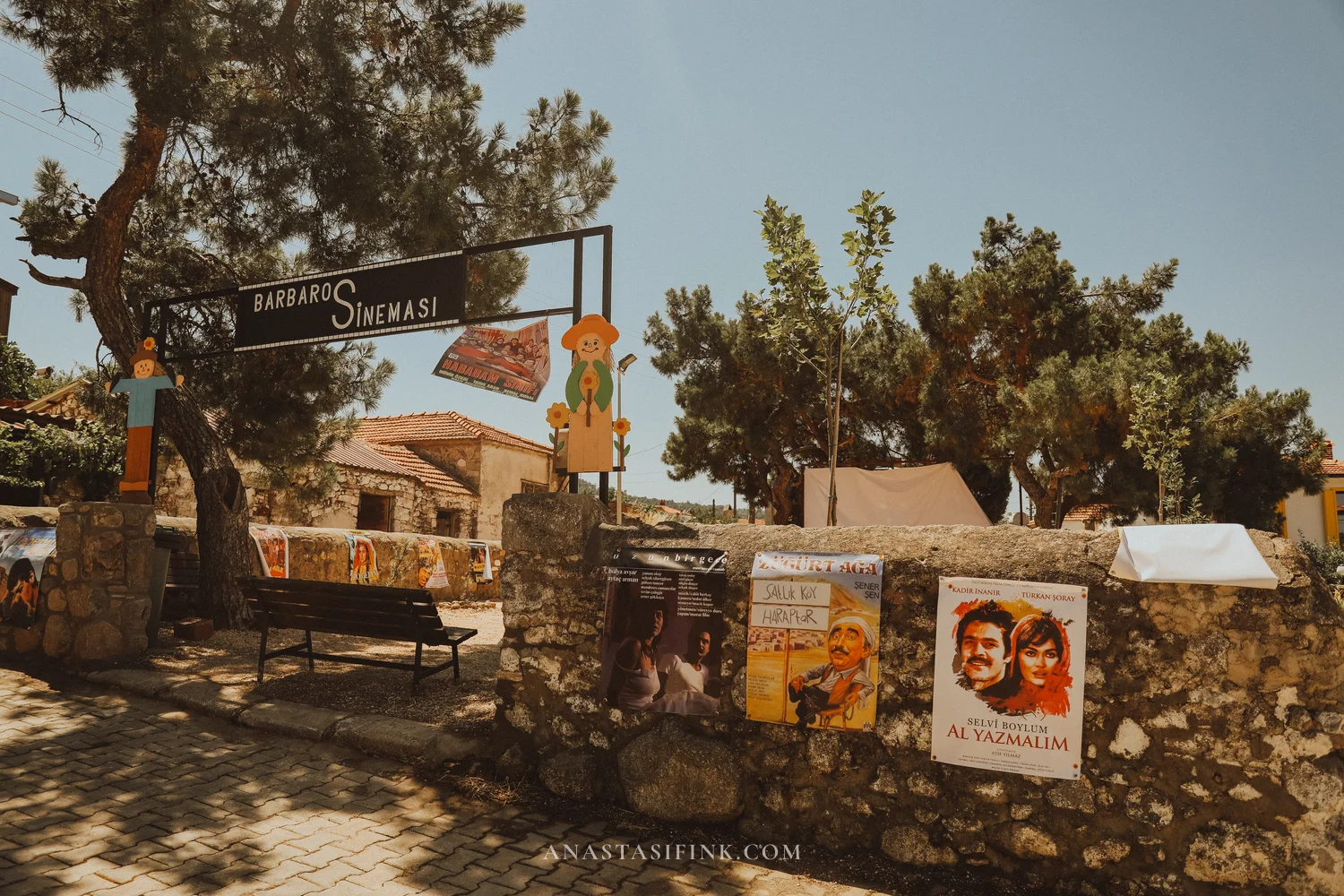
The village has its own cinema club — “Barbaros Sineması.” The movie tradition goes back to the 1970s. Locals told me they screen films outdoors in summer and in the village library during winter. On a stone wall by the square, posters of classic Turkish films hung side by side — “Selvi Boylum Al Yazmalım,” “Süt Kardeşler.” Next to them: a bench and a scarecrow playing ticket collector.
Fun fact — several Turkish TV series have been filmed in this area, so the cinematic connection runs deep.
Details That Stuck With Me
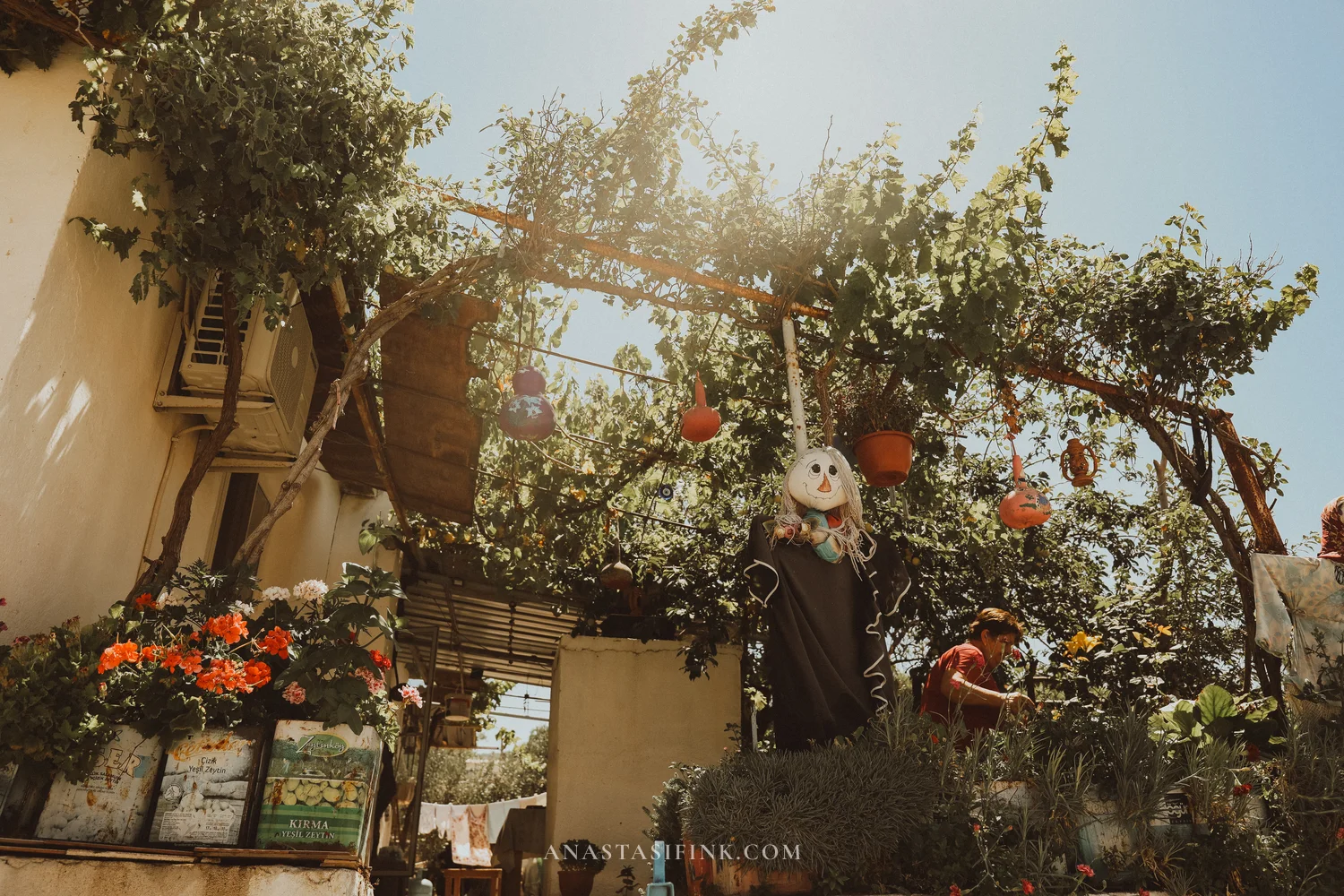
Beyond the scarecrows, it was the small things that caught my eye. A rooster weathervane on a stone chimney, pink oleander reaching up to the roofline. The cracked minaret of the old mosque with its wrought-iron balcony. Courtyards draped in grapevines, with hanging pots and a scarecrow standing guard among the geraniums.
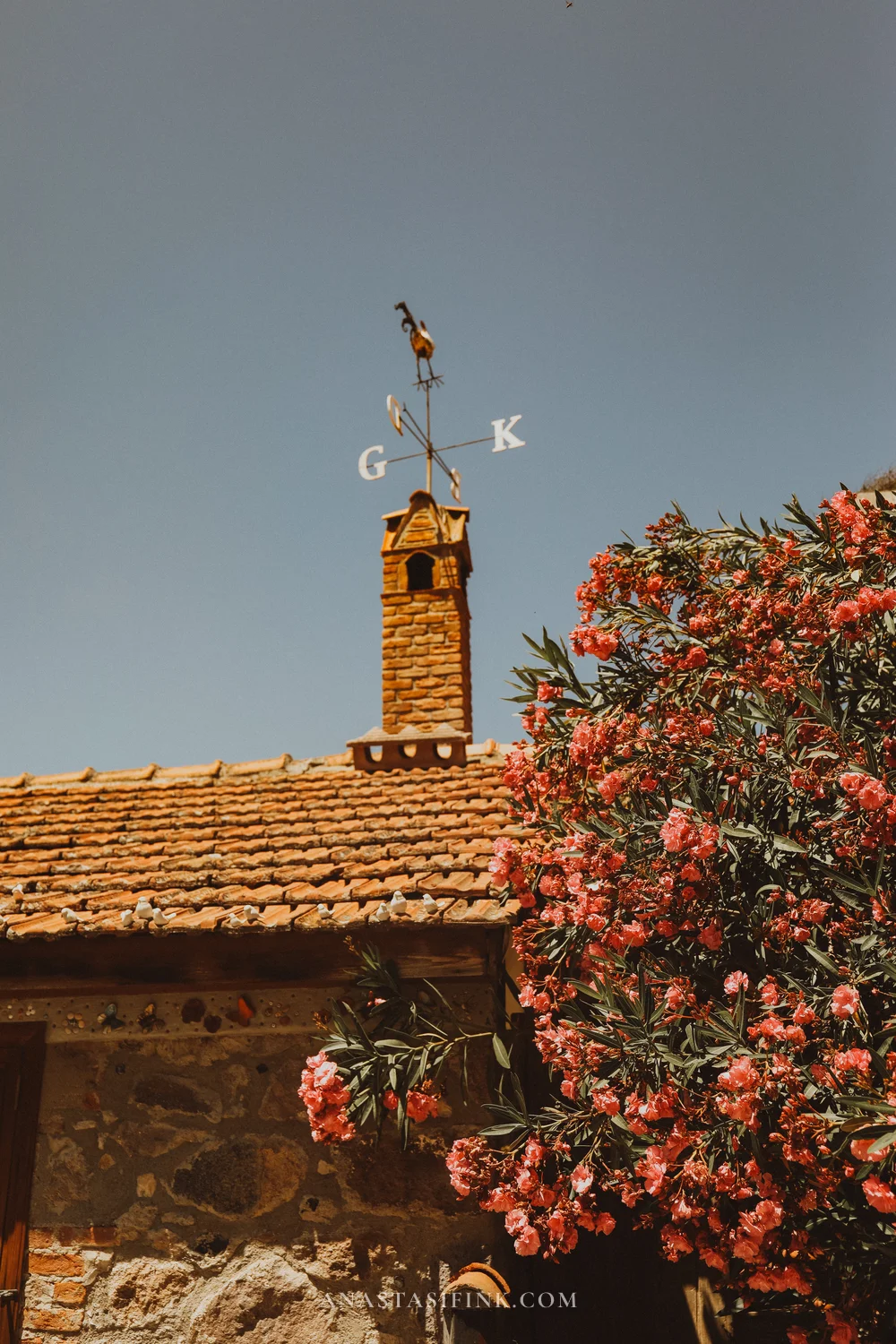
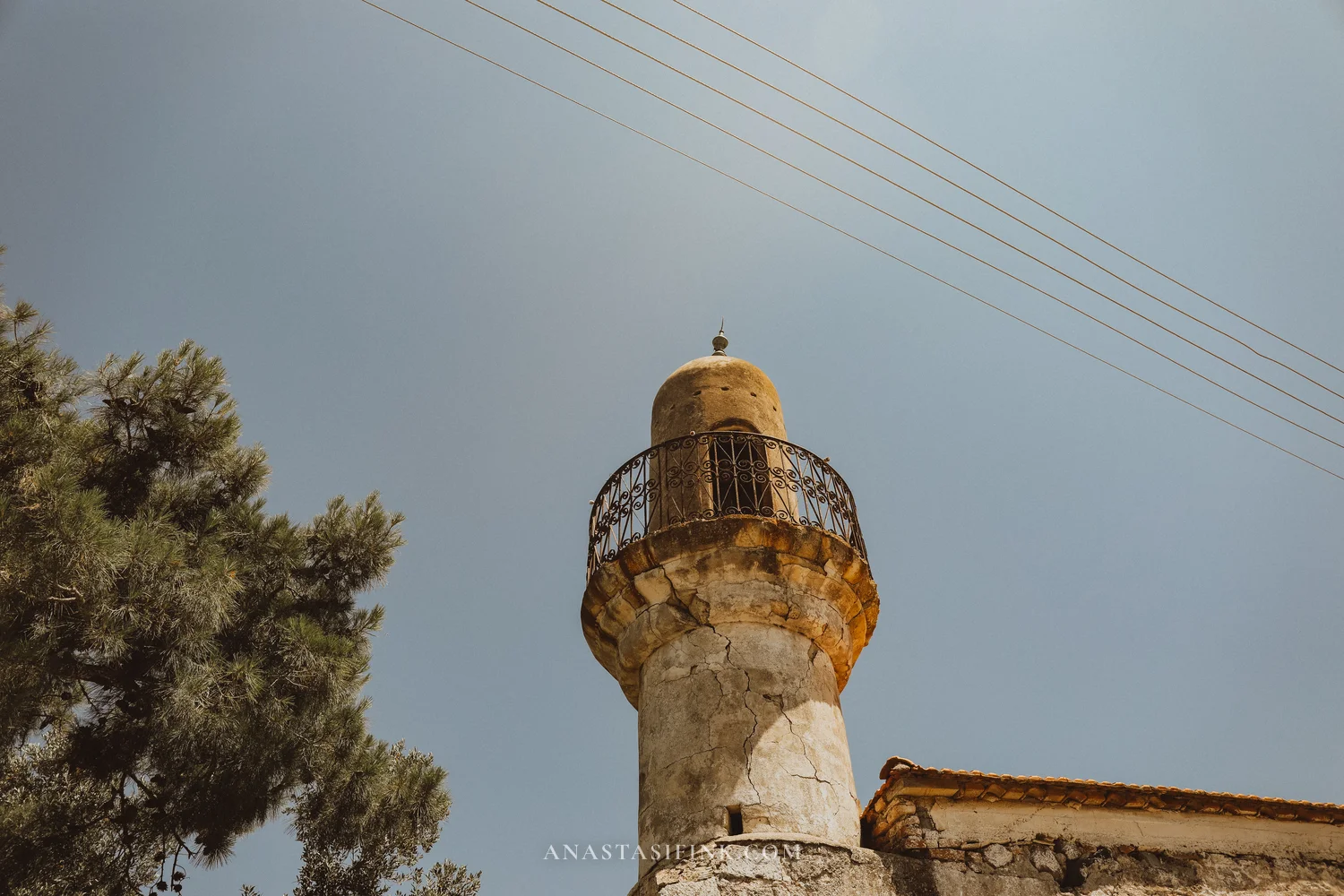
A weathervane on a stone chimney and the old minaret
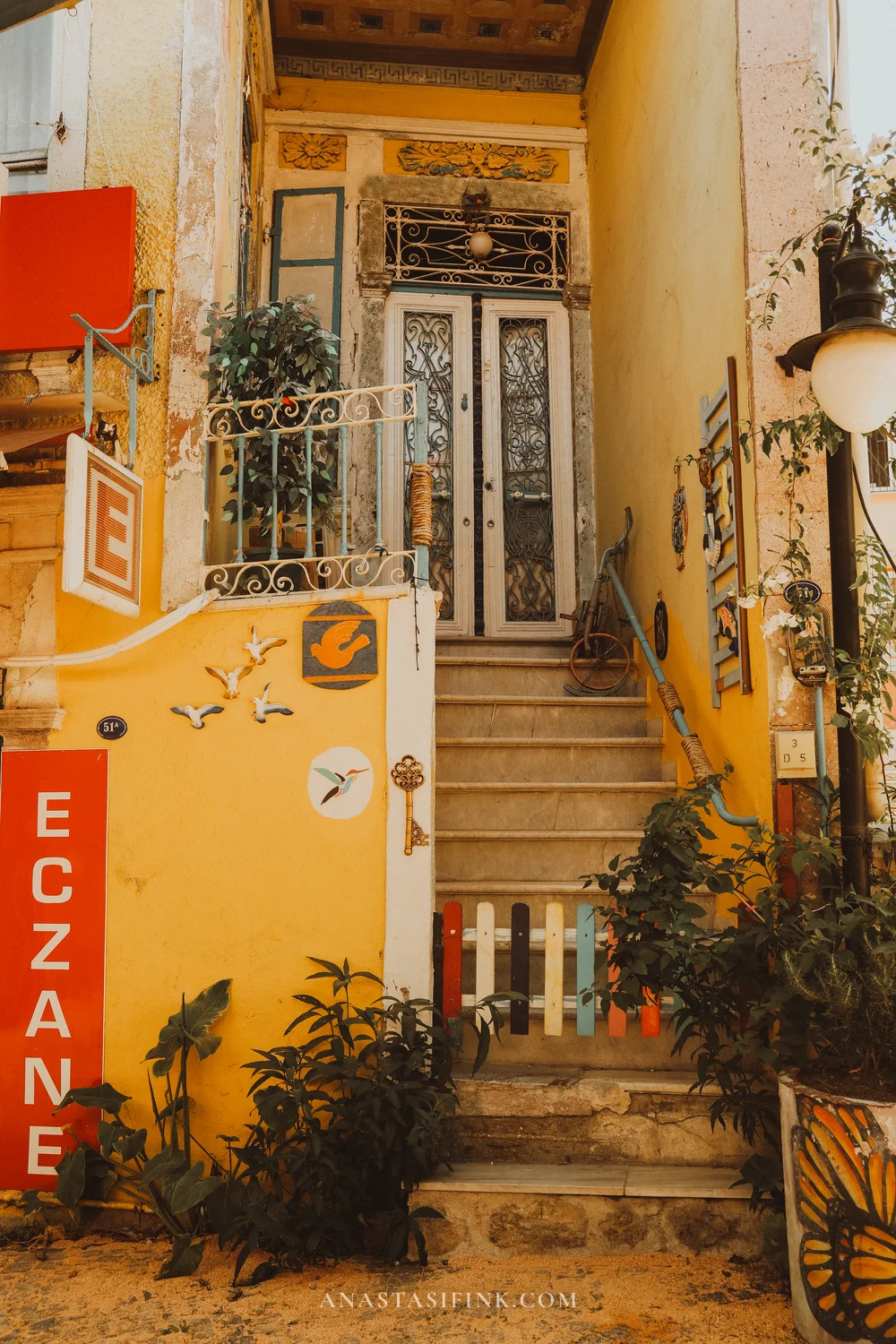
On the way out, I passed a yellow building — the old pharmacy (Eczane) — with a decorated entrance, a colorful fence, and birds painted on the wall.
How to Get There
From Izmir
55 km, about an hour by car. Take the Izmir–Çeşme highway, follow signs toward Urla, then turn toward Gülbahçe and follow signs to Barbaros. The village is near the Izmir Institute of Technology (İYTE) — if you see the university campus, you’re almost there.
By public transport: Bus #984 from Izmir to Urla, then a local bus to Barbaros (schedule: 06:10, 08:00, 15:30, 17:30 on weekdays).
From Alaçatı
27 km, about 25 minutes by car toward Urla. Barbaros is literally halfway — easy to stop at if you’re driving between Alaçatı and Izmir in either direction.
Practical Information
- Address: Barbaros Mahallesi, Urla, İzmir
- GPS: 38.321893, 26.580879
- Admission: Free (it’s a residential village, not a museum)
- Best time to visit: Year-round, but spring and fall are ideal. Scarecrow Festival — late August
- Time needed: 1–2 hours for a stroll, plus lunch
- Food: From 200–300 TL (~$6–9) for lunch at a çatkapı evleri
- Google Maps: Barbaros, Urla
Tips
- Best light for photos — early morning or golden hour before sunset. Midday gets hot and the light is harsh, but the shadows from grapevines create beautiful patterns on the walls.
- Try the çatkapı evleri — look for signs on doors. Knock, walk in, eat homemade food. It’s not a restaurant. It’s literally someone’s home.
- Combine with Alaçatı — if you’re driving from Izmir to Alaçatı or Çeşme, Barbaros is worth a one-hour detour. Or hit it on the way back.
- Scarecrow Festival takes place in late August (usually 3 days). Expect contests, workshops, and concerts.
- Bring cash — not all cafés and workshops accept cards.
Tip for photographers: Barbaros is perfect for portrait and genre photography. The scarecrows make excellent “models” — they don’t move, don’t squint, and stand still in any light. Best shots are in the shade under grapevines and against stone walls. A wide-angle lens works great for the streets; 50–85mm is ideal for details and scarecrow “portraits.”
FAQ
By car — about an hour via the Izmir–Çeşme highway, turning off toward Urla. By public transport — Bus #984 to Urla, then a local bus to the village.
No. Barbaros is a regular residential village — entry is free. You only pay for food at cafés and purchases at workshops.
Every year in late August, usually over three days. It’s been running since 2016. But the scarecrows are up year-round, so you can visit anytime.
At least an hour to walk through the village. If you’re planning lunch at one of the homes and a workshop visit, set aside 2–3 hours.
If you’re anywhere near Izmir, Urla, or Alaçatı — absolutely. The village is right along the route and doesn’t require a big detour. The hour or two you spend here won’t feel wasted.
Katmer (layered flatbread with cheese), dibek kahvesi (stone-mortar coffee), and homemade food at the çatkapı evleri — homes where you knock on the door and get fed.
Yes, and you should. Kids love it — the scarecrows, the dolls, the hands-on doll-making workshops. The village is compact, safe, and the narrow streets are car-free.