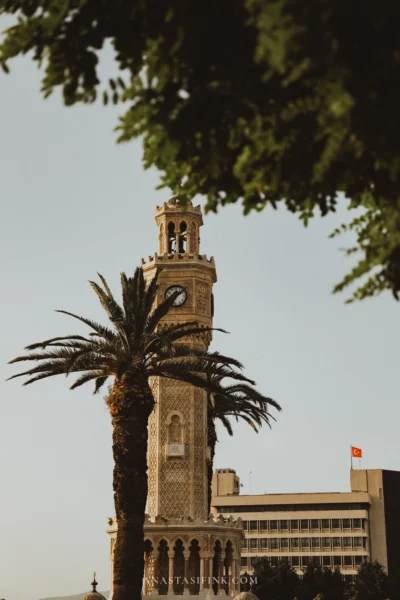
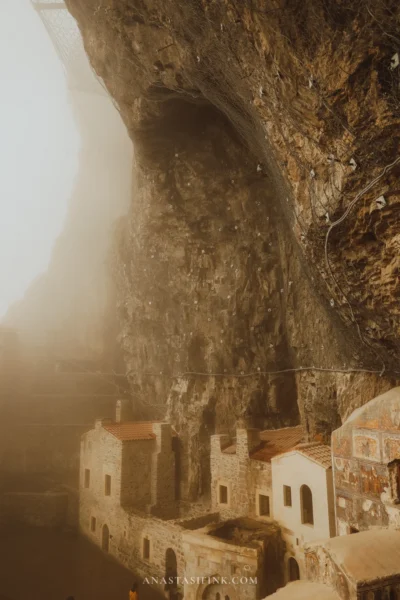
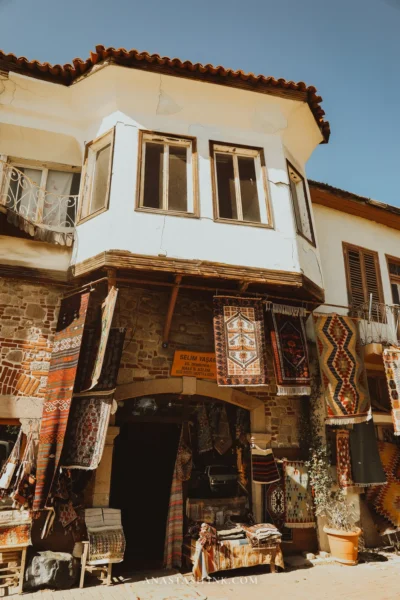
5 Best Day Trips from Izmir, Turkey — Pergamon, Alaçatı, Urla, Barbaros & Ephesus

Izmir is a convenient base for exploring the Turkish Aegean coast. Within ninety minutes by car, you’ll find ancient cities, medieval villages, stone towns full of cafés, and vineyard routes. I put together five day trips — each one fits comfortably into a single day.
1. Bergama and Pergamon — Ancient Capital on a Hilltop
An hour and a half north of Izmir. Pergamon was the capital of the Attalid Kingdom, which in the 2nd century BC was a serious rival to Alexandria and Athens. The city’s library held 200,000 scrolls — the second largest in the ancient world. When Egypt stopped selling papyrus to Pergamon, the city’s scholars invented a new writing material made from treated animal skin. They named it after the city: parchment.
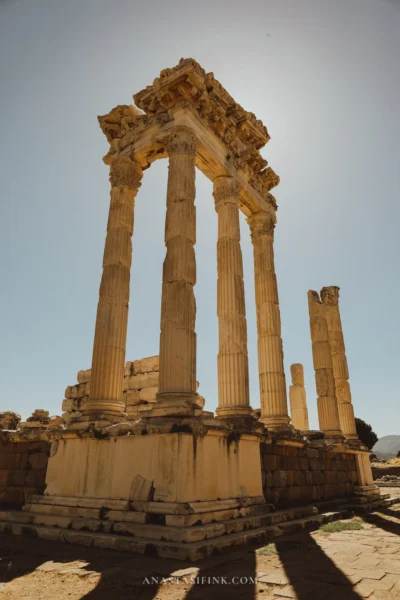
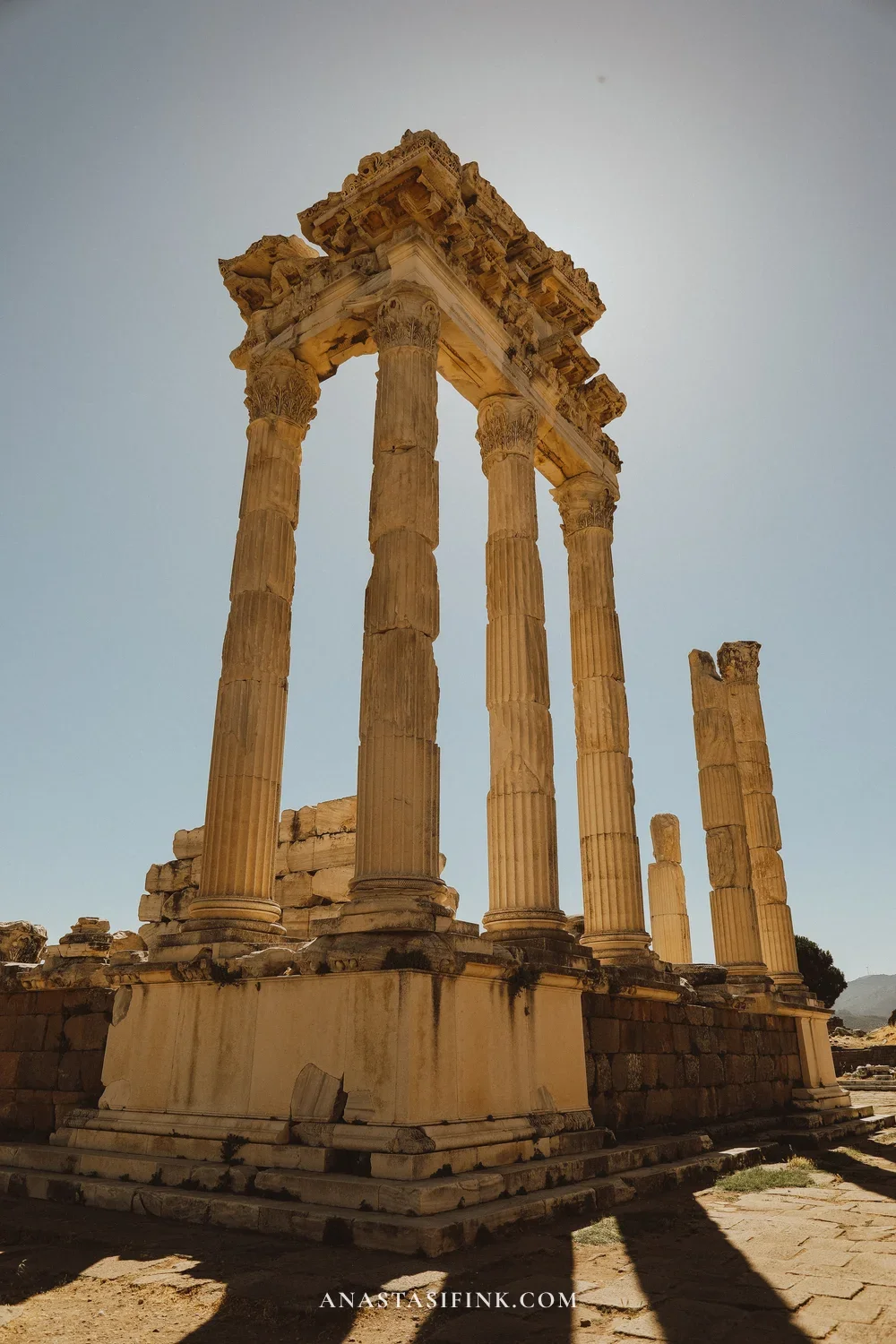
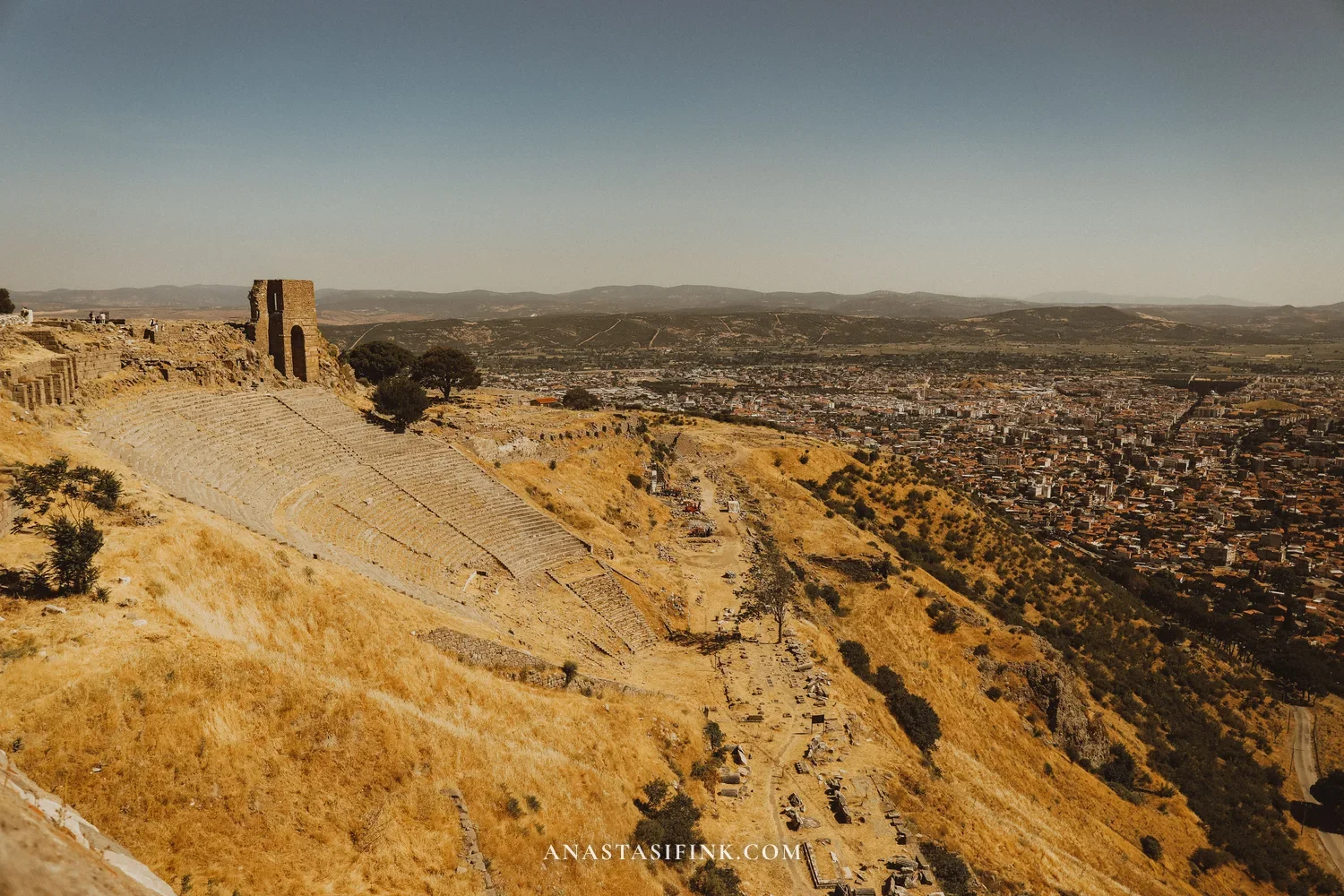
You reach the acropolis by cable car. At the top: the Temple of Trajan, with marble columns standing against the sky and the valley below. The Pergamon Theatre is the steepest in the ancient world — the rows descend at a 33-degree angle.
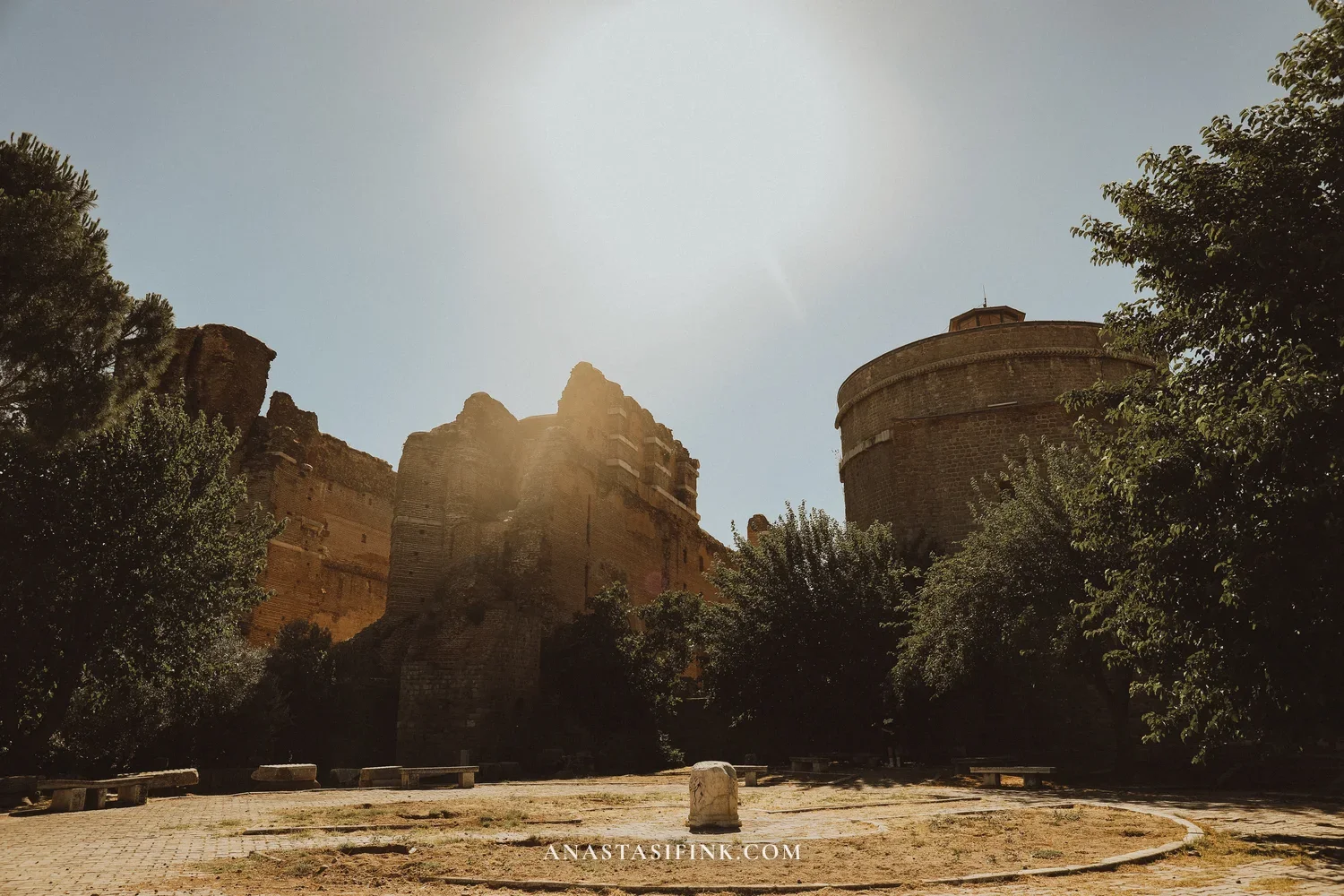
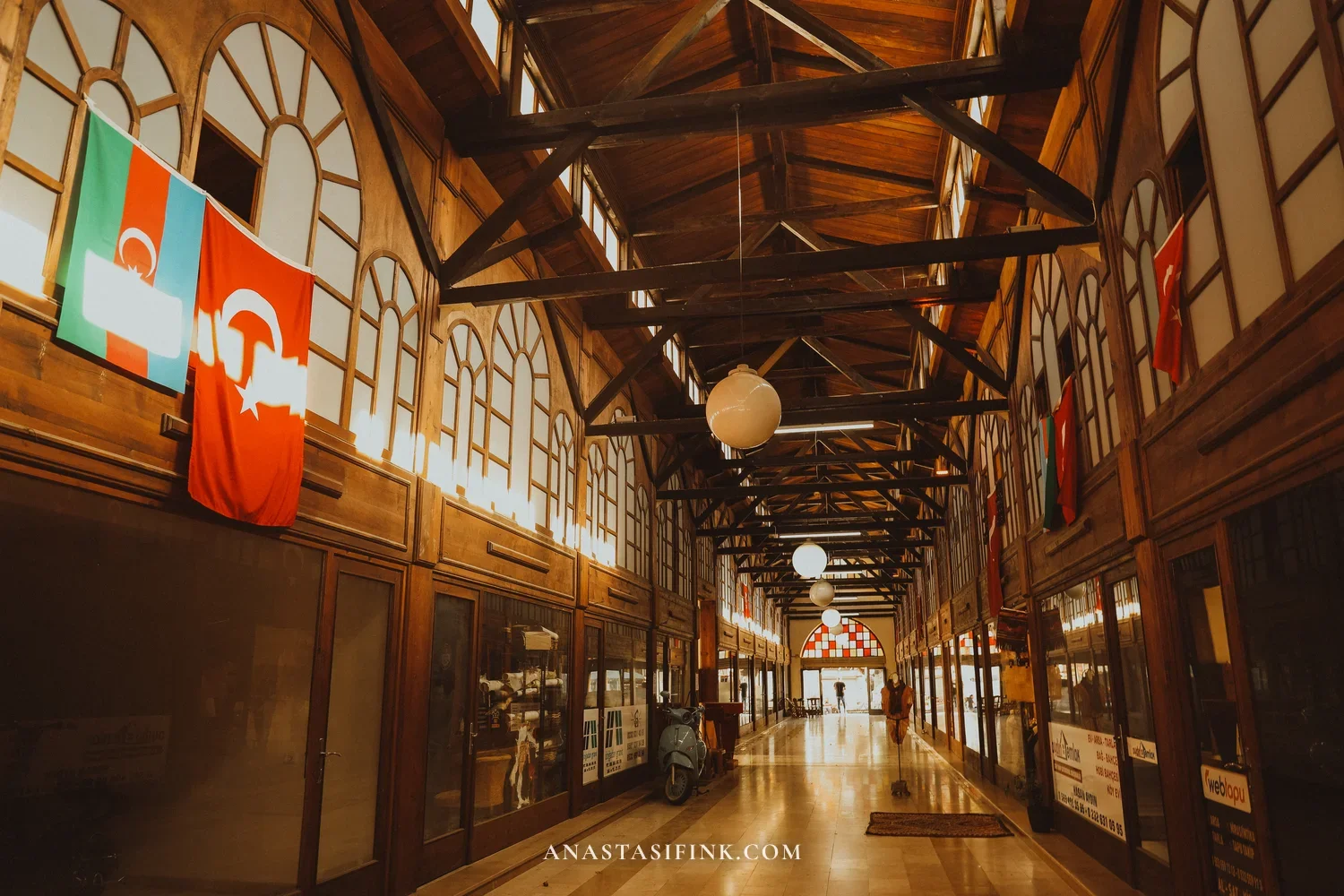
Down in Bergama itself, the Red Basilica (Kızıl Avlu) is worth a stop — a massive brick structure that started as a Roman temple and later became a Byzantine church. The covered Arasta Bazaar is wooden, quiet, lined with carpet shops and the smell of spices — a good place to breathe after the climb.
Practical Information: Bergama and Pergamon
- Distance from Izmir: ~80 km, 1.5–2 hours by car
- GPS Acropolis: 39.1325, 27.1842
- Time needed: 3–4 hours (Acropolis + Red Basilica + town)
- Opening hours: 08:00–19:00 (summer), 08:00–17:00 (winter)
- Entrance: Acropolis — 650 TL (~€18), cable car — 200 TL (~€5.50)
- Tip: Start with the Acropolis in the morning before the sun gets harsh
- Visa for EU citizens: No visa required for stays up to 90 days
- Read more: Pergamon Acropolis — full guide and Bergama beyond the Acropolis
2. Alaçatı — Stone Town with Windmills and Bougainvillea
Forty-five minutes west of Izmir, on the Çeşme Peninsula. Alaçatı was founded by Ottoman Greeks in the 17th century, and the stone houses have barely changed since — except that every other one is now a boutique or café.
The main street winds past shops selling lavender soap, rose petal jam, and handmade ceramics. At the highest point in town stand four stone windmills from 1850 — the symbol of Alaçatı. They once ground wheat; now they’re the town’s most-photographed landmark.
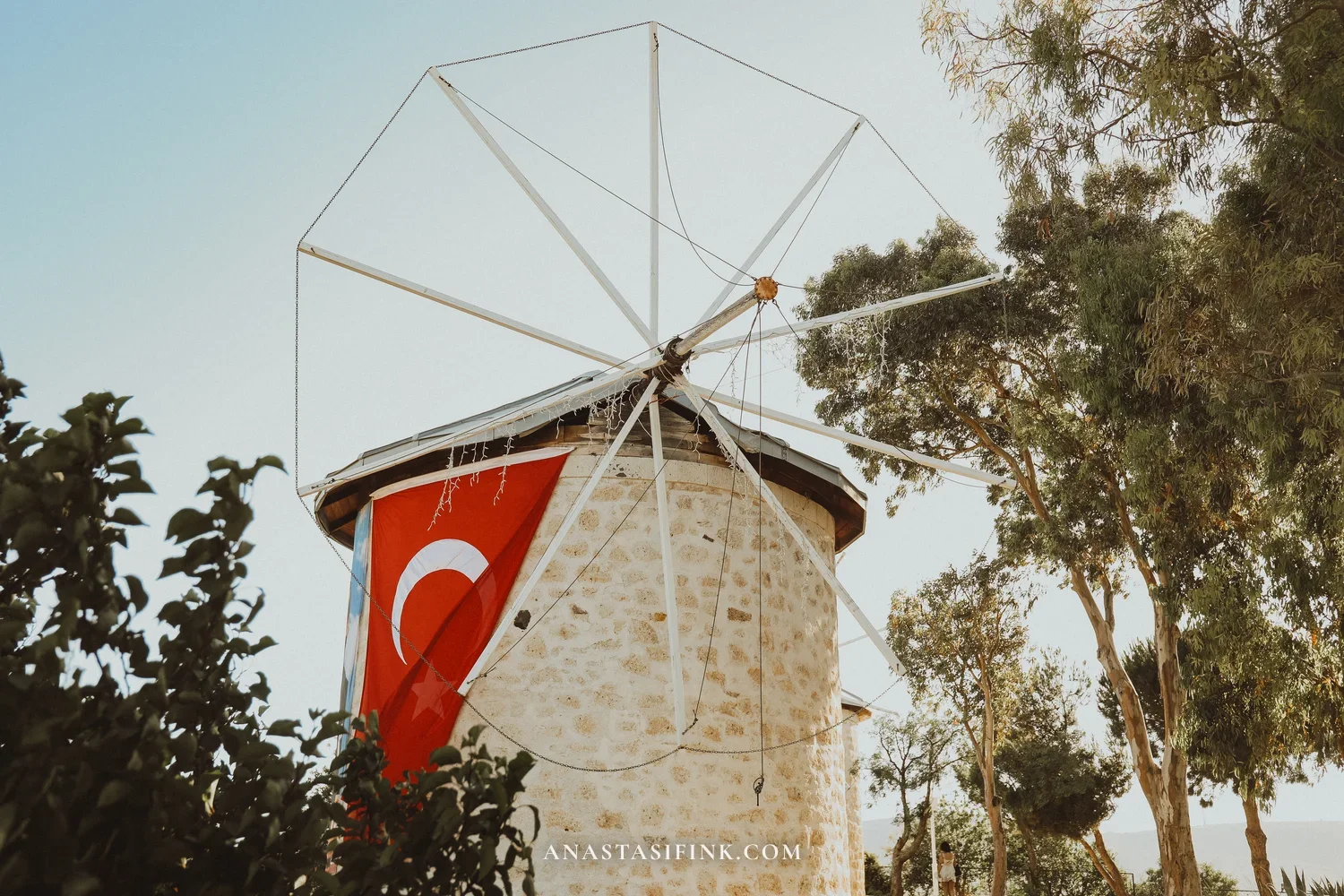
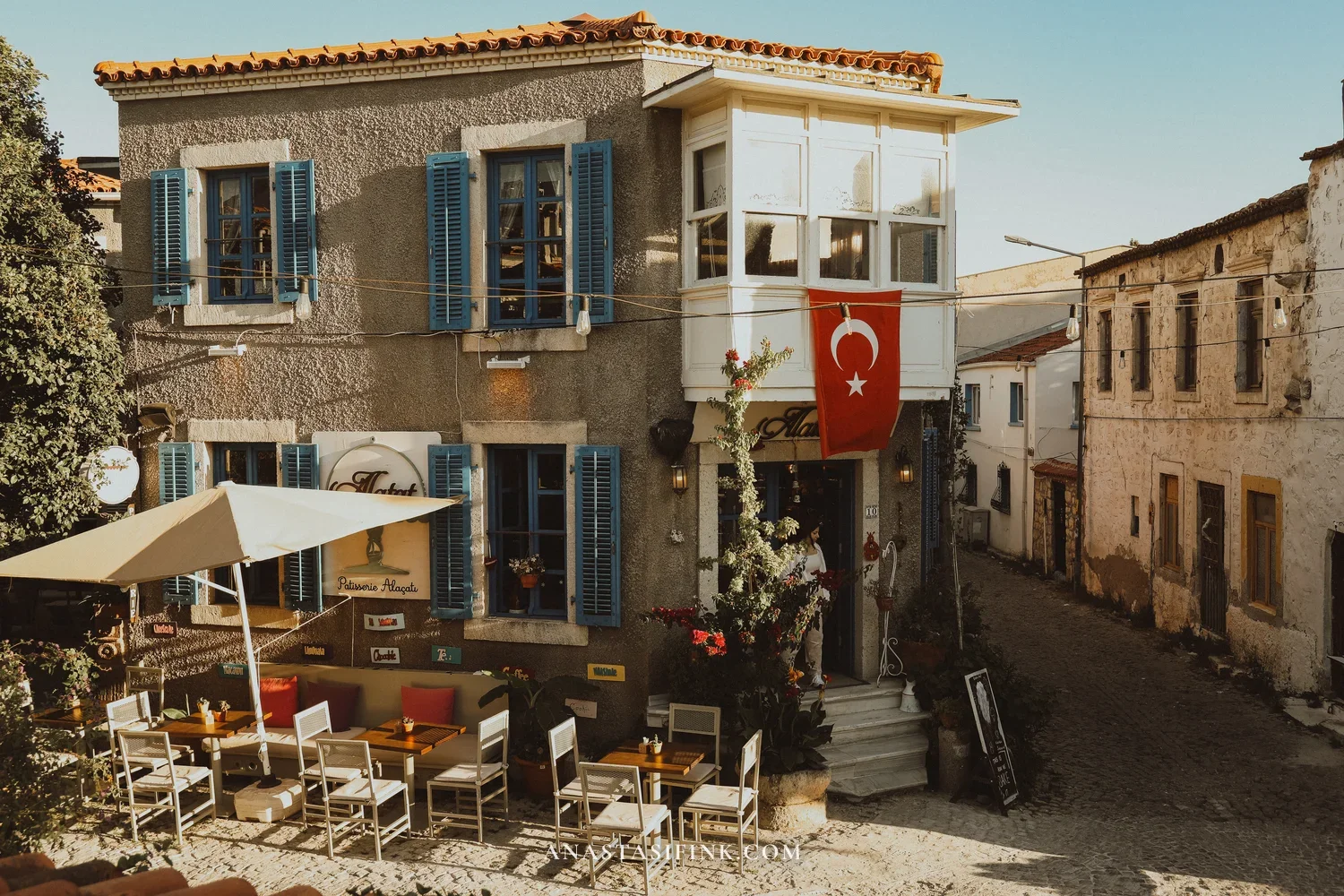
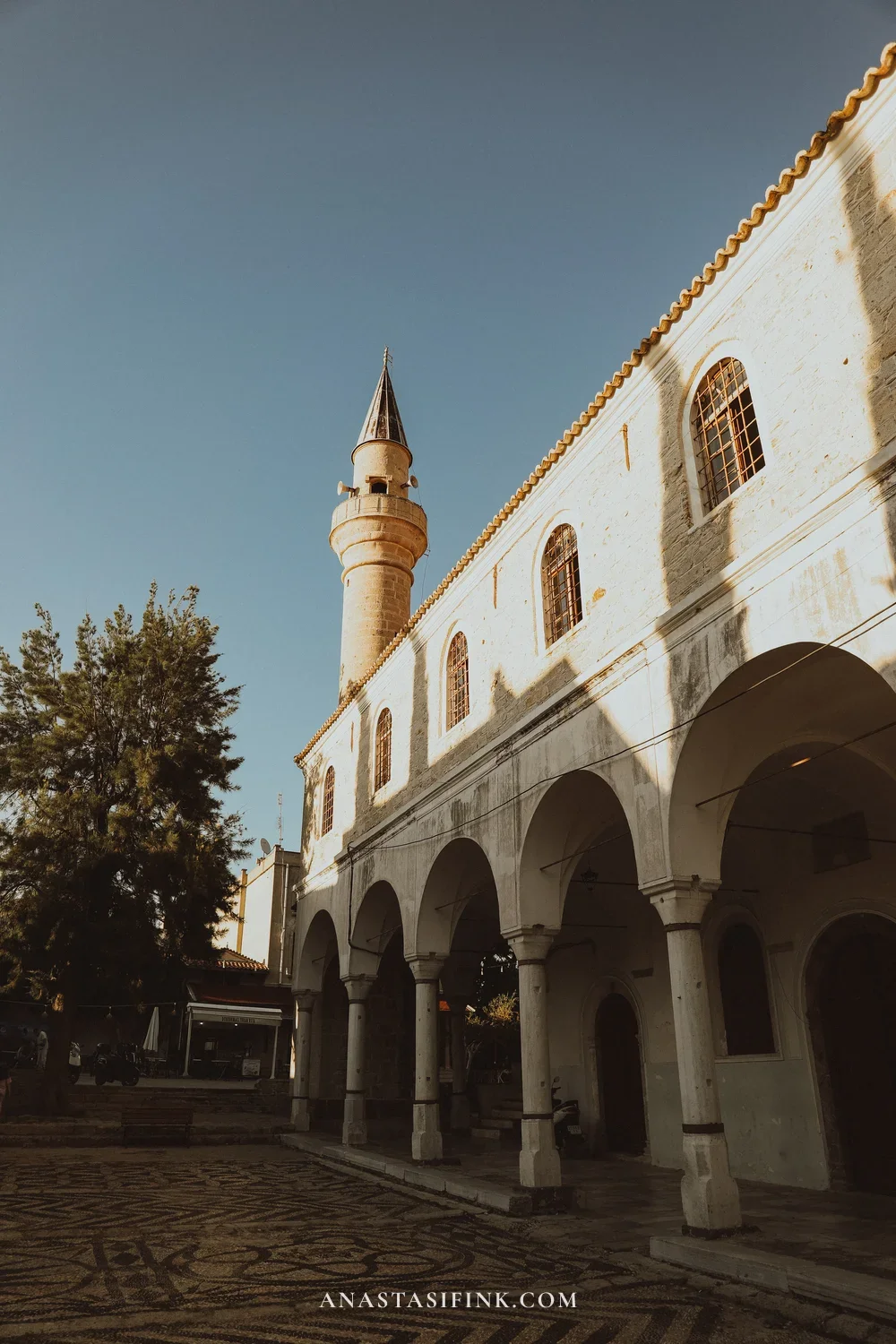
The Pazaryeri Mosque has its own story. The building was constructed in 1874 as a Greek Orthodox church, then converted into a mosque after the population exchange of the 1920s. The architecture stayed: the arched gallery, the minaret where the bell tower used to be, the same golden stone as the rest of the town.
Alaçatı is one of Turkey’s top windsurfing destinations: the wind is consistent, the bay is shallow, and an international championship is held here each year. Even if you’re not planning to get on a board, come on Saturday for the market: fresh olives, cheese, honeycomb, dried lavender.
Practical Information: Alaçatı
- Distance from Izmir: ~77 km, 45–50 minutes
- GPS: 38.2828, 26.3756
- Time needed: full day (town + beach)
- Best time: April — Herb Festival; summer — windsurfing; autumn — quiet and warm
- Tip: Weekends get crowded — weekdays are better
- Nearby: Çeşme (15 min) with beaches and thermal springs
- Read more: Alaçatı and Urla — full guide
3. Urla — Food Scene, Street Art, and Gelato
Urla is the closest escape from the city: 35 minutes by car. Not long ago it was a quiet farming district; now National Geographic covers it as Turkey’s farm-to-table capital, and local restaurants have Michelin recognition.
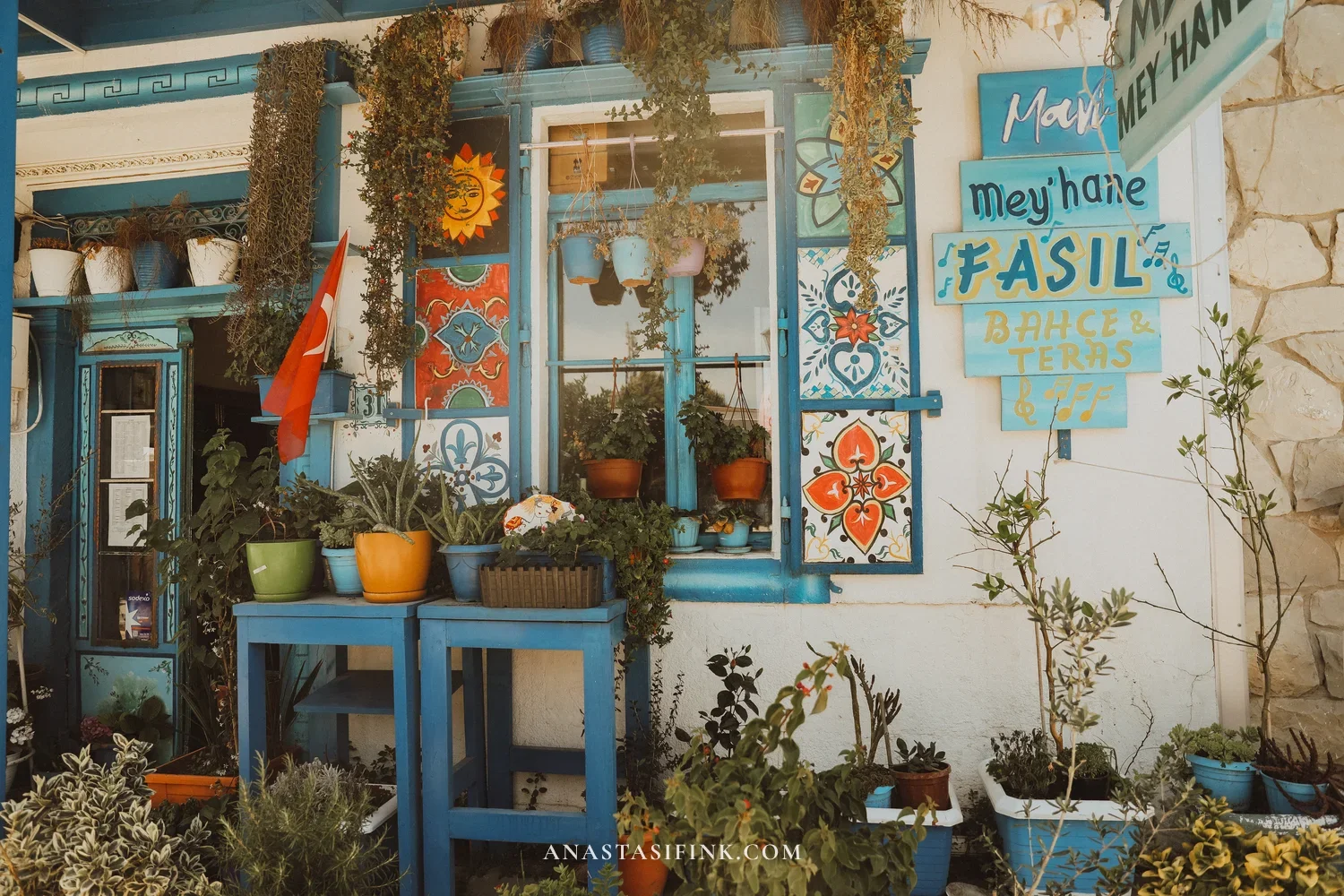
You want to stop at nearly every building. The meyhanes (Turkish taverns) and cafés are painted by hand — not by designers, but by the owners themselves. Meyhane “Fasıl” with its blue facade, hand-painted tiles, and potted plants is a destination in its own right.
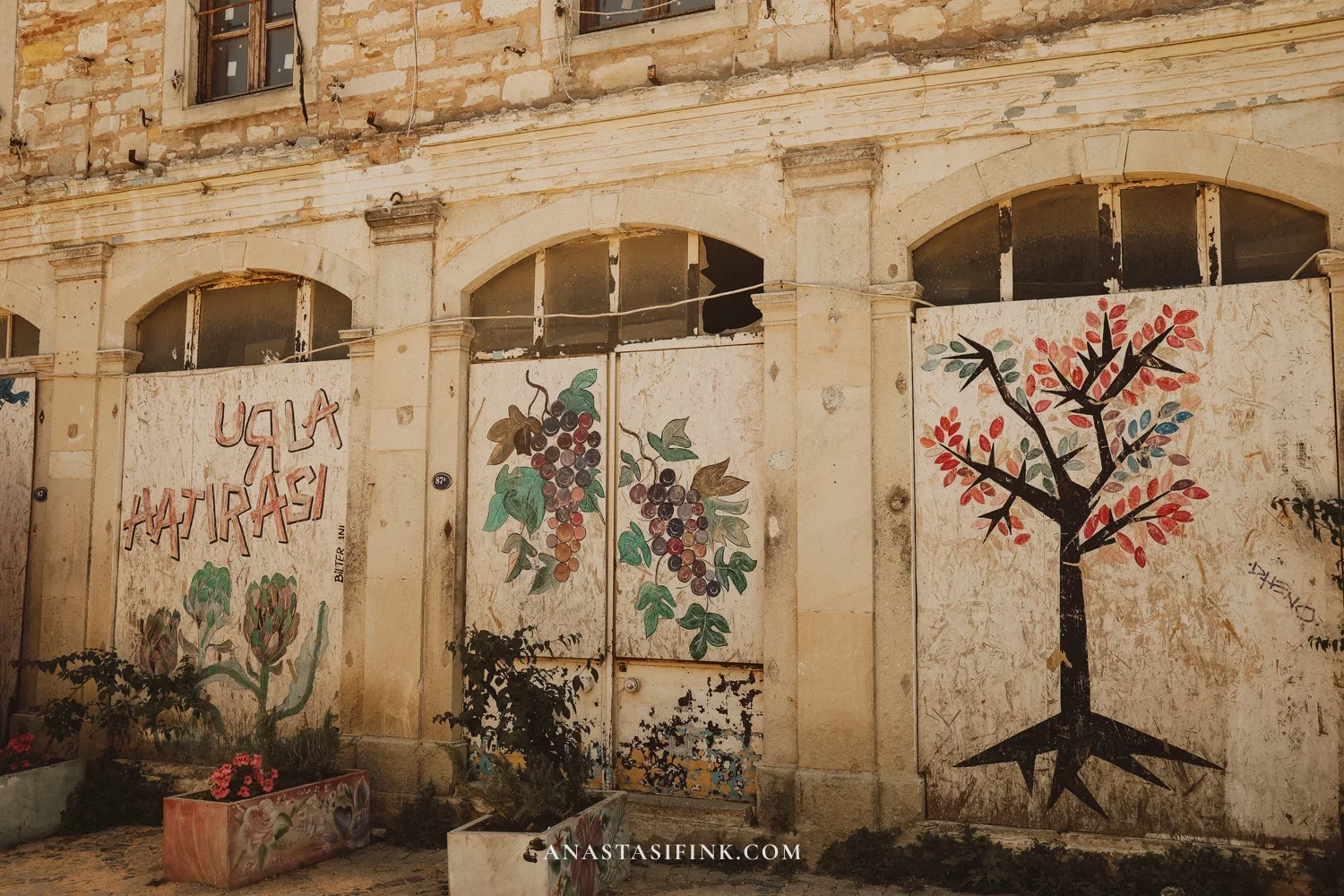
Old building walls carry murals. “Urla Hatırası” is a whole wall painted with artichokes, grapes, and trees. The artichoke is something of a cult vegetable here: every April, a three-day Artichoke Festival takes place with workshops and tastings.
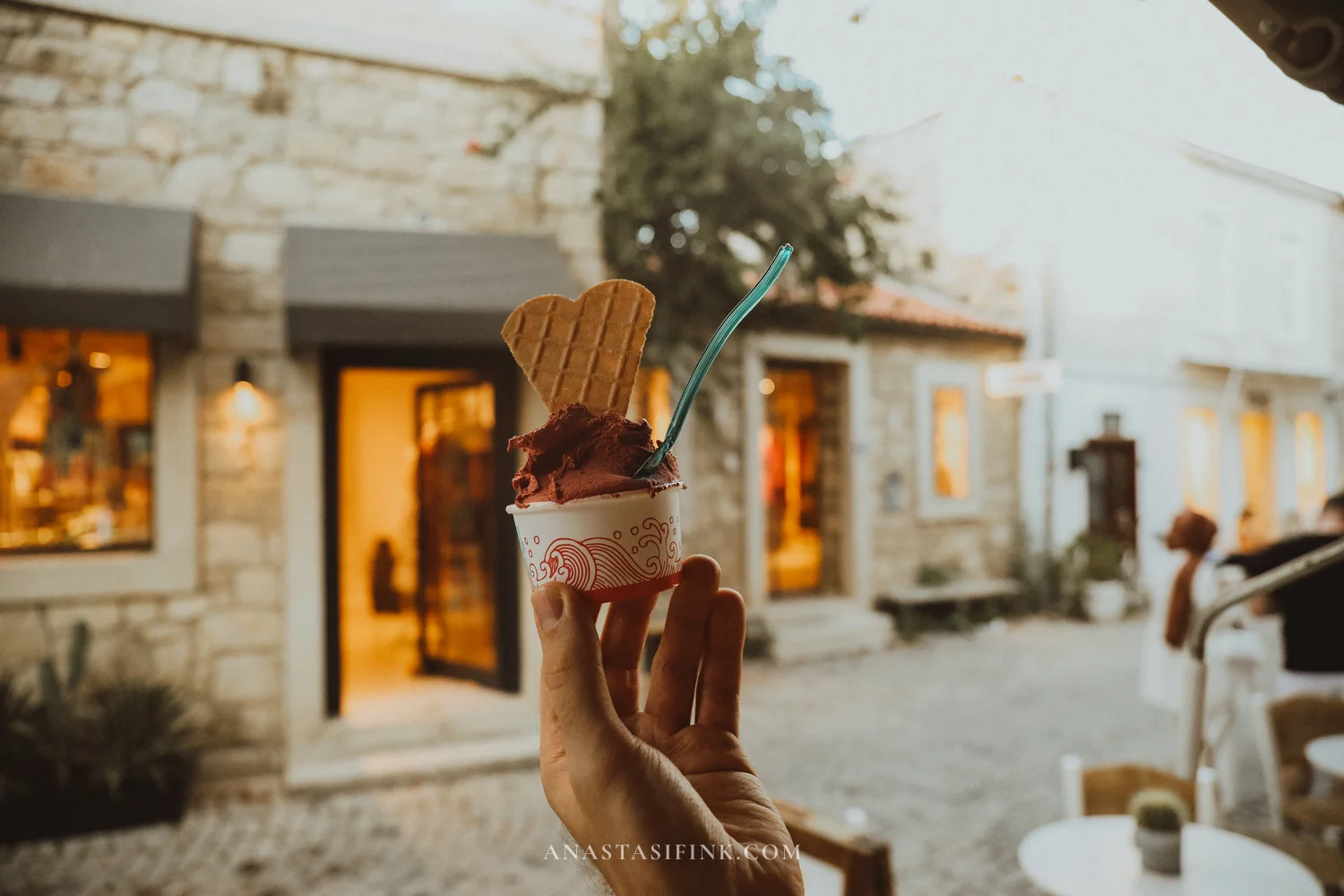
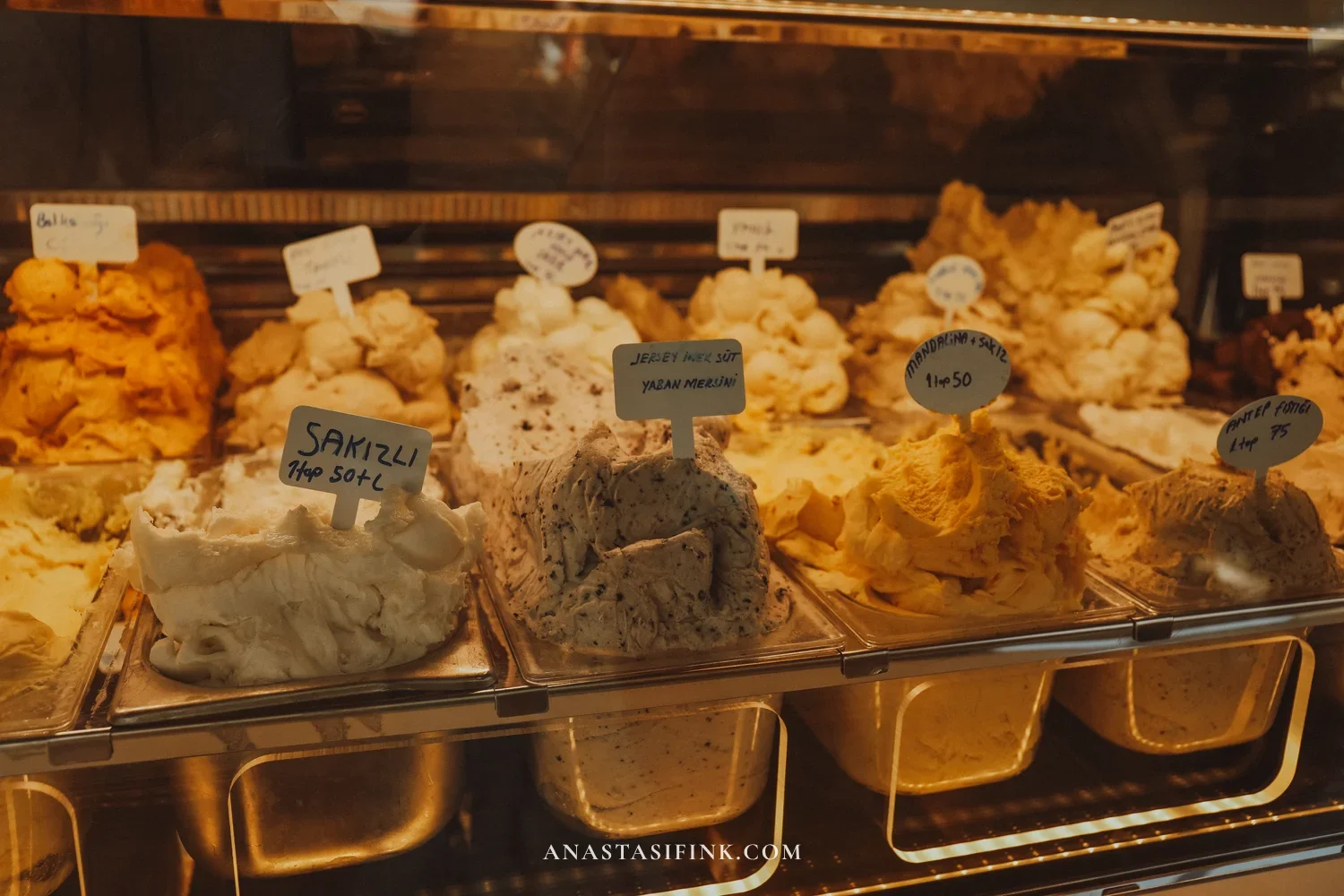
And then there’s the gelato. At Necco: mastic ice cream (sakızlı), jersey milk, pistachio. The display case looks Italian; the flavours are Turkish.
Practical Information: Urla
- Distance from Izmir: ~40 km, 35–45 minutes
- GPS: 38.3225, 26.7644
- Time needed: full day (town + wineries + lunch)
- April: Artichoke Festival (3 days, food, music, workshops)
- Wineries: Urlice, USCA, Mosaik, Limantepe — tastings along the Urla Bağ Yolu wine route
- Tip: Book restaurants in advance, especially on weekends
- Read more: Alaçatı and Urla — full guide
4. Barbaros — The Scarecrow Village with Handmade Dolls and Home Cooking
22 kilometres from Urla — and you’re in Barbaros. A 700-year-old village that in 2025 made it onto the UNWTO list of the Best Tourism Villages in the world. If you’re already in Urla, add a couple of hours for Barbaros.
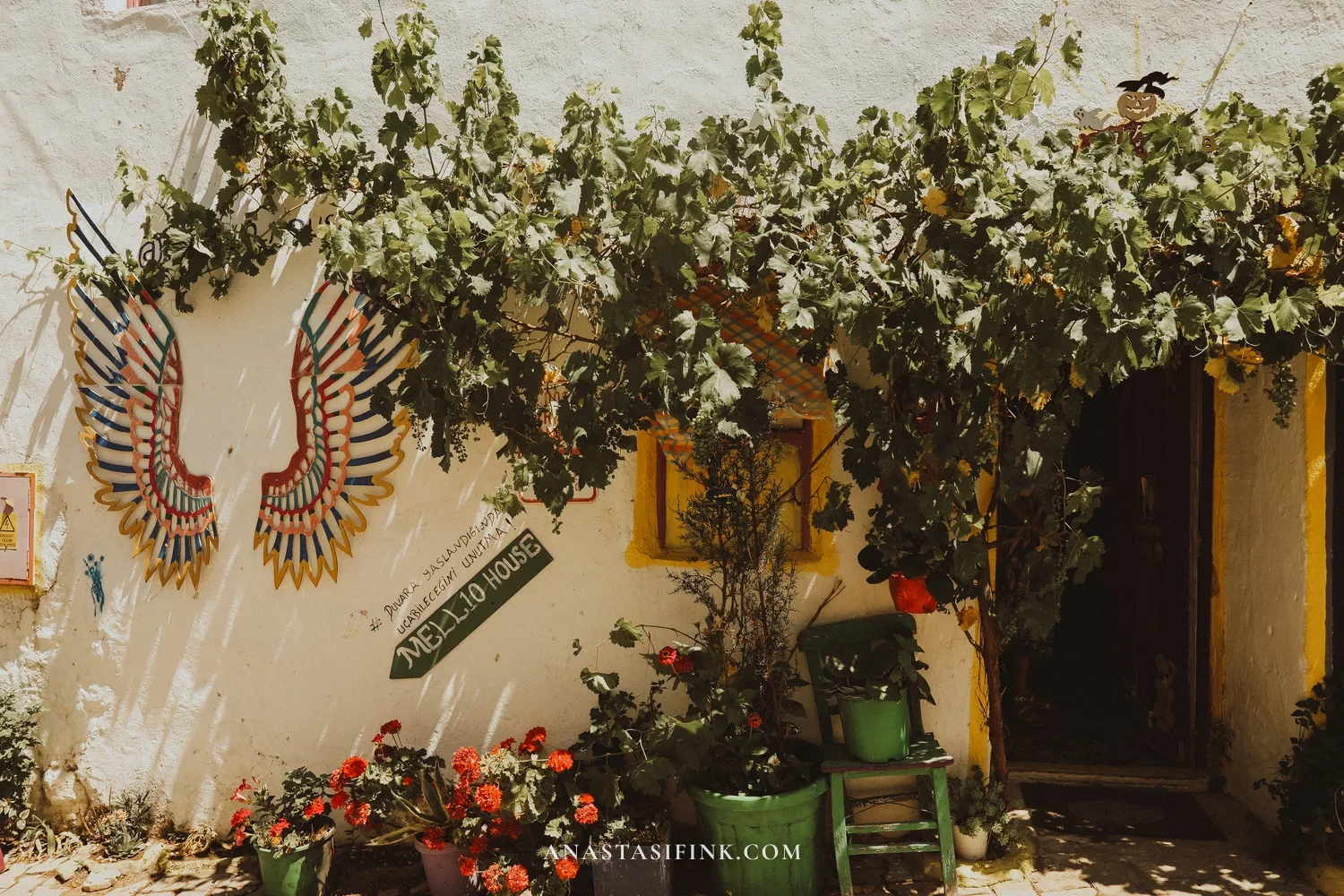
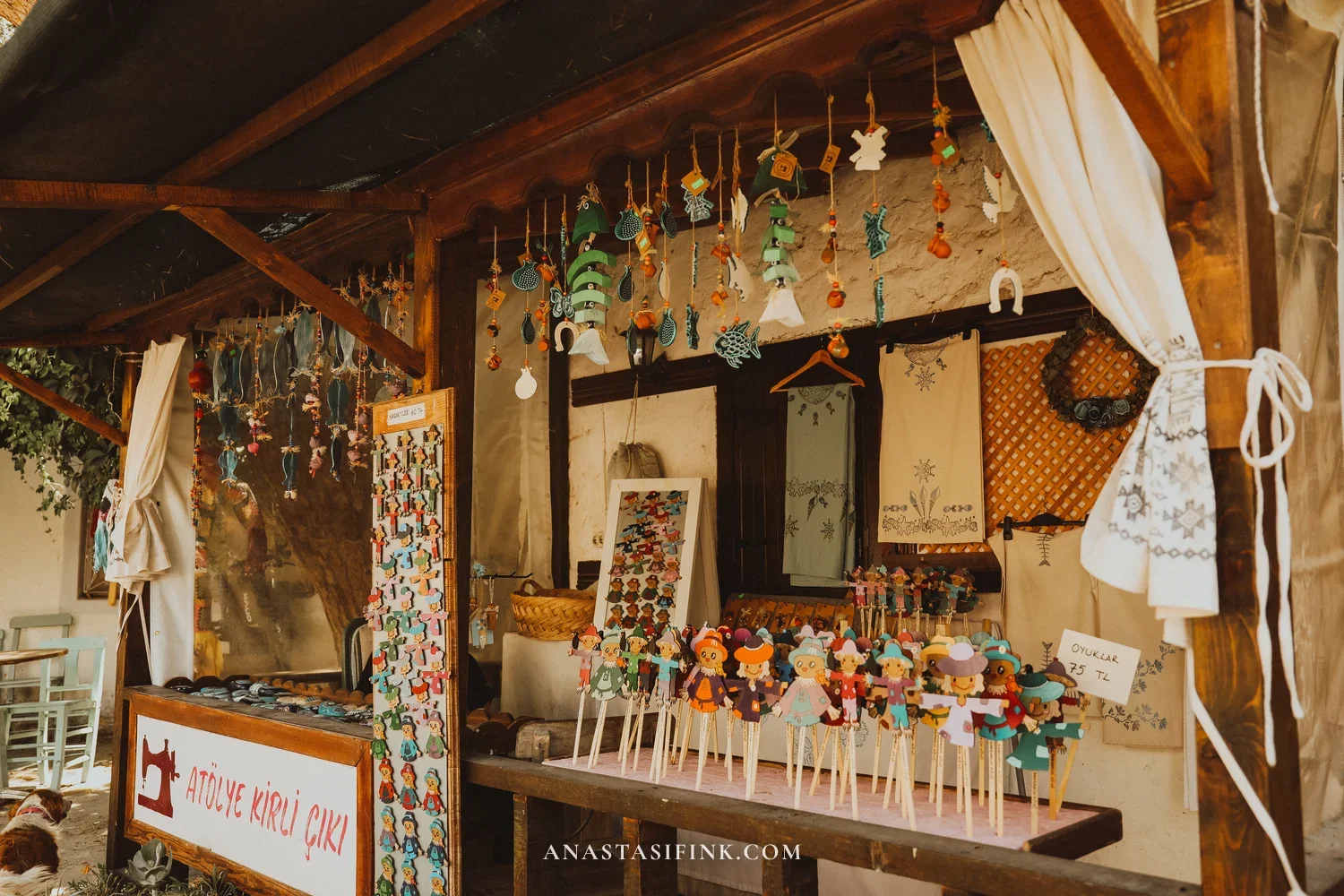
Scarecrows are everywhere. On the streets, in courtyards, by front doors, tied to trees. In late August, residents make hundreds of figures for the Scarecrow Festival (Oyuk Festival), but some stay up year-round. Some are dressed in suits, others in work clothes — every one has a painted face.
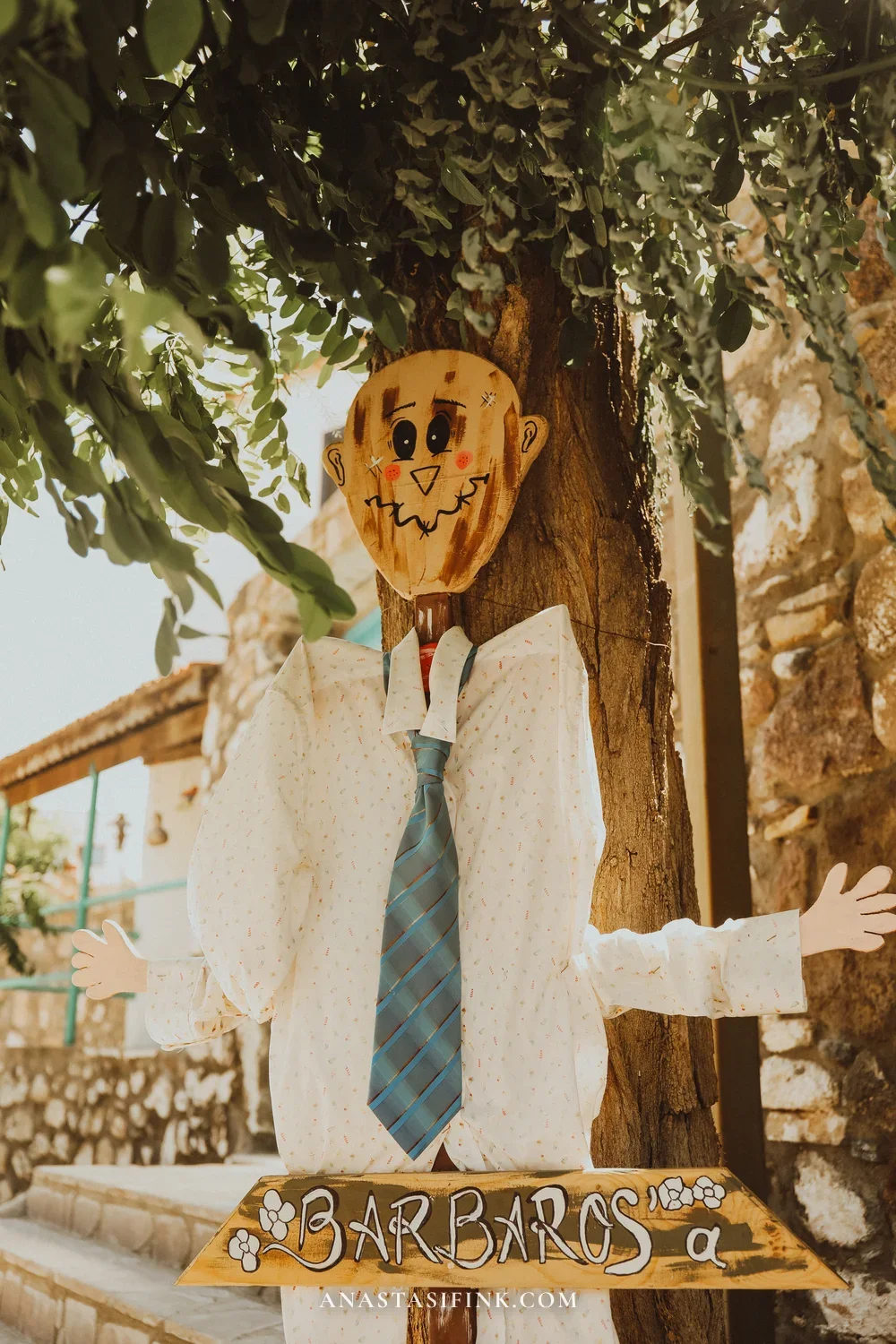
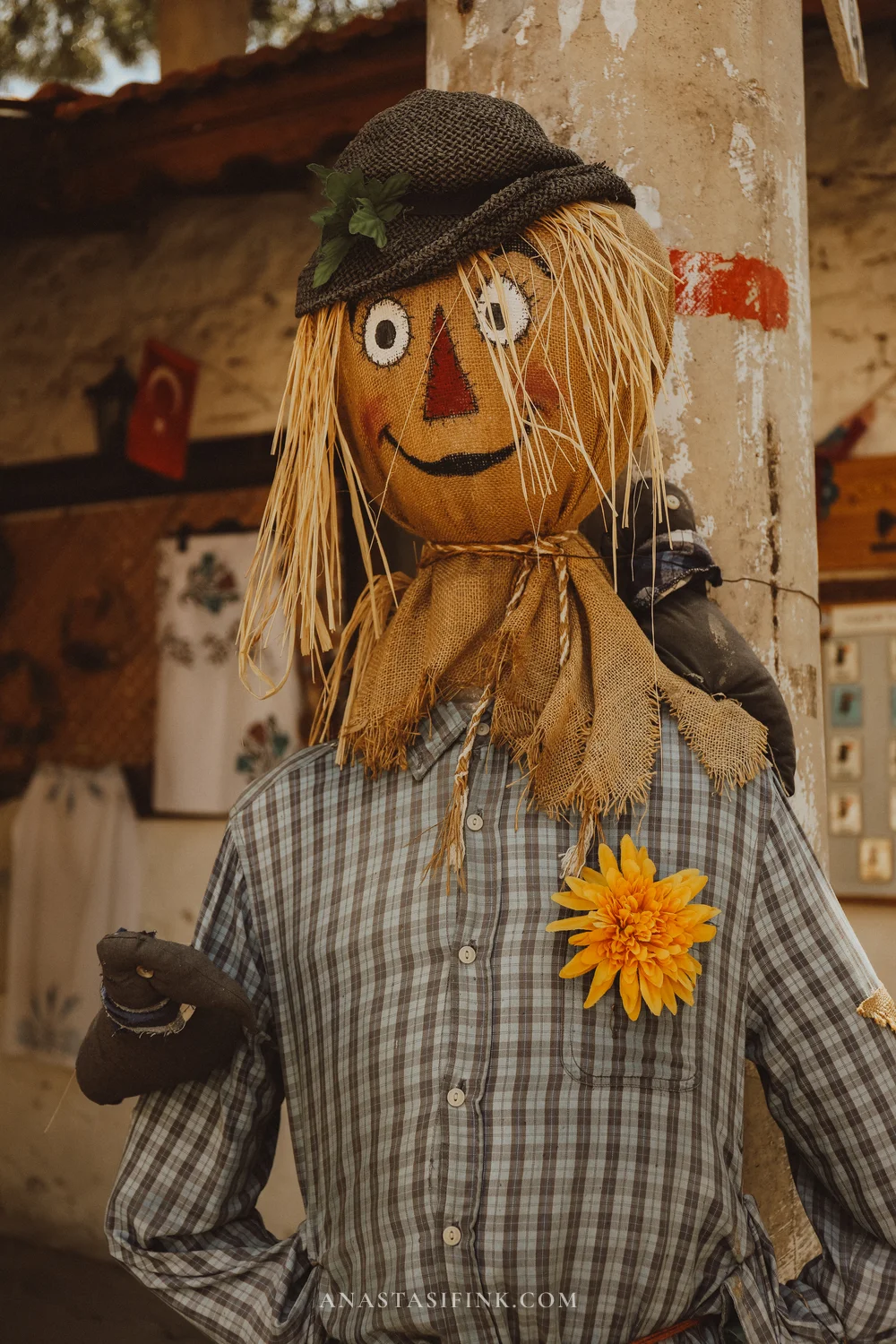
Barbaros scarecrows — each one has its own personality. Left: the greeter at the entrance; right: the local “gentleman”
The walls and courtyards are busy too — wing murals, grapevines, painted chairs. The Atölye Kirli Çıkı workshop sells handmade rag dolls, and you can try making one yourself.
Practical Information: Barbaros
- Distance from Izmir: ~55 km, 45–50 min (or 22 km from Urla)
- GPS: 38.3533, 26.6558
- Time needed: 2–3 hours
- Spring: Scarecrow Festival (Oyuk Festival) — hundreds of figures on the streets
- Knock Knock Houses: knock on a door with a sign — the host will serve you a home-cooked meal
- Try: katmer (flatbread with cheese and herbs), lavender jam, dibek coffee
- Read more: Barbaros — full guide
5. Ephesus — Three Kilometres of Marble Streets and Night Illumination
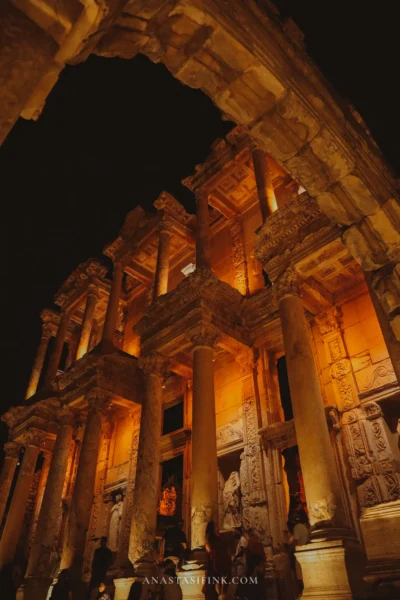
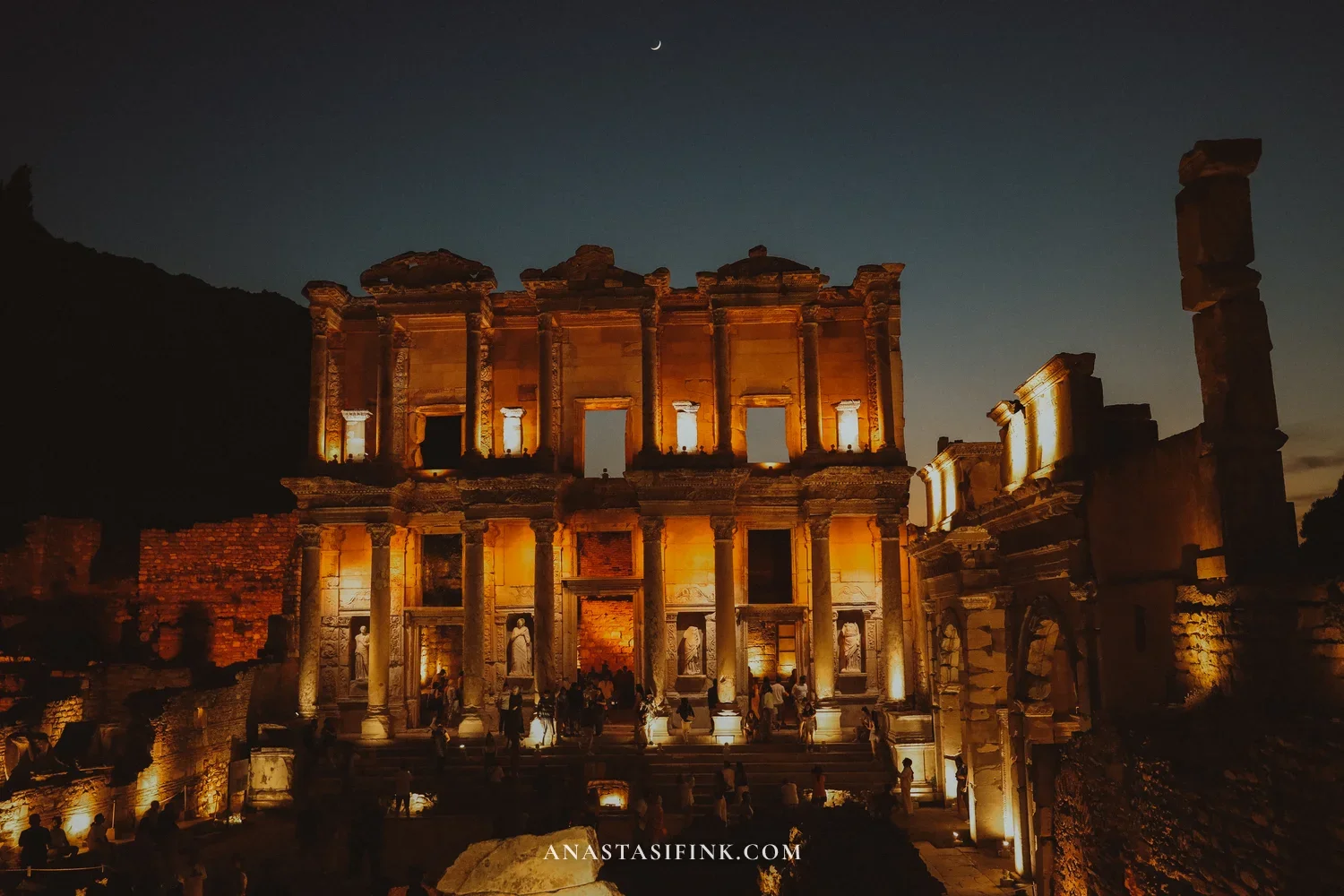
Ephesus is the best-known destination on this list, and the scale here is different: three kilometres of marble streets, a theatre, a library, temples — all original, not reconstructed. One tip: come in the late afternoon. At sunset, the Library of Celsus photographs itself.
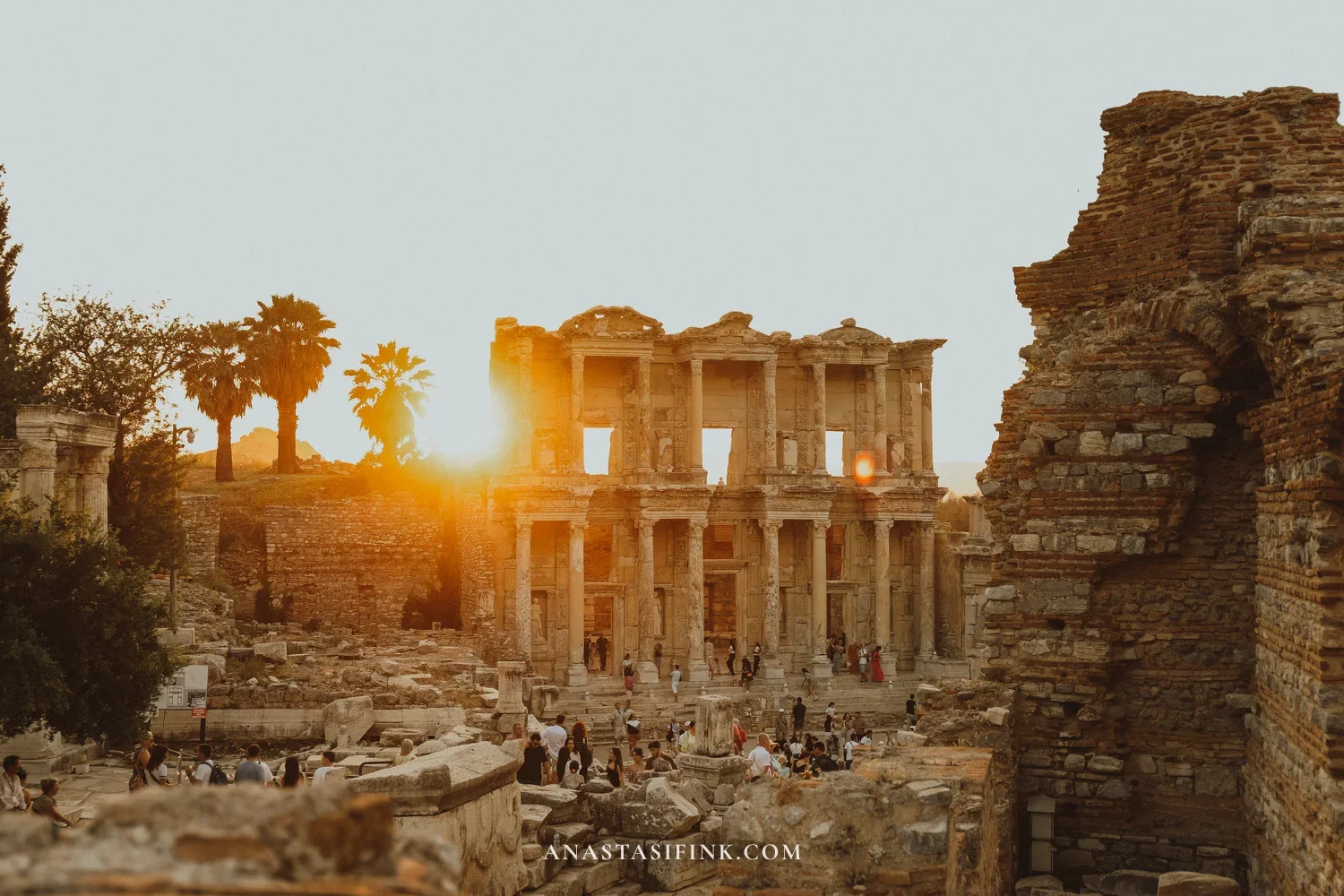
The Library of Celsus is the main shot. A two-storey facade with statues representing Wisdom, Knowledge, Intelligence, and Virtue. It once held 12,000 scrolls — the third largest library in the ancient world, after Alexandria and Pergamon.
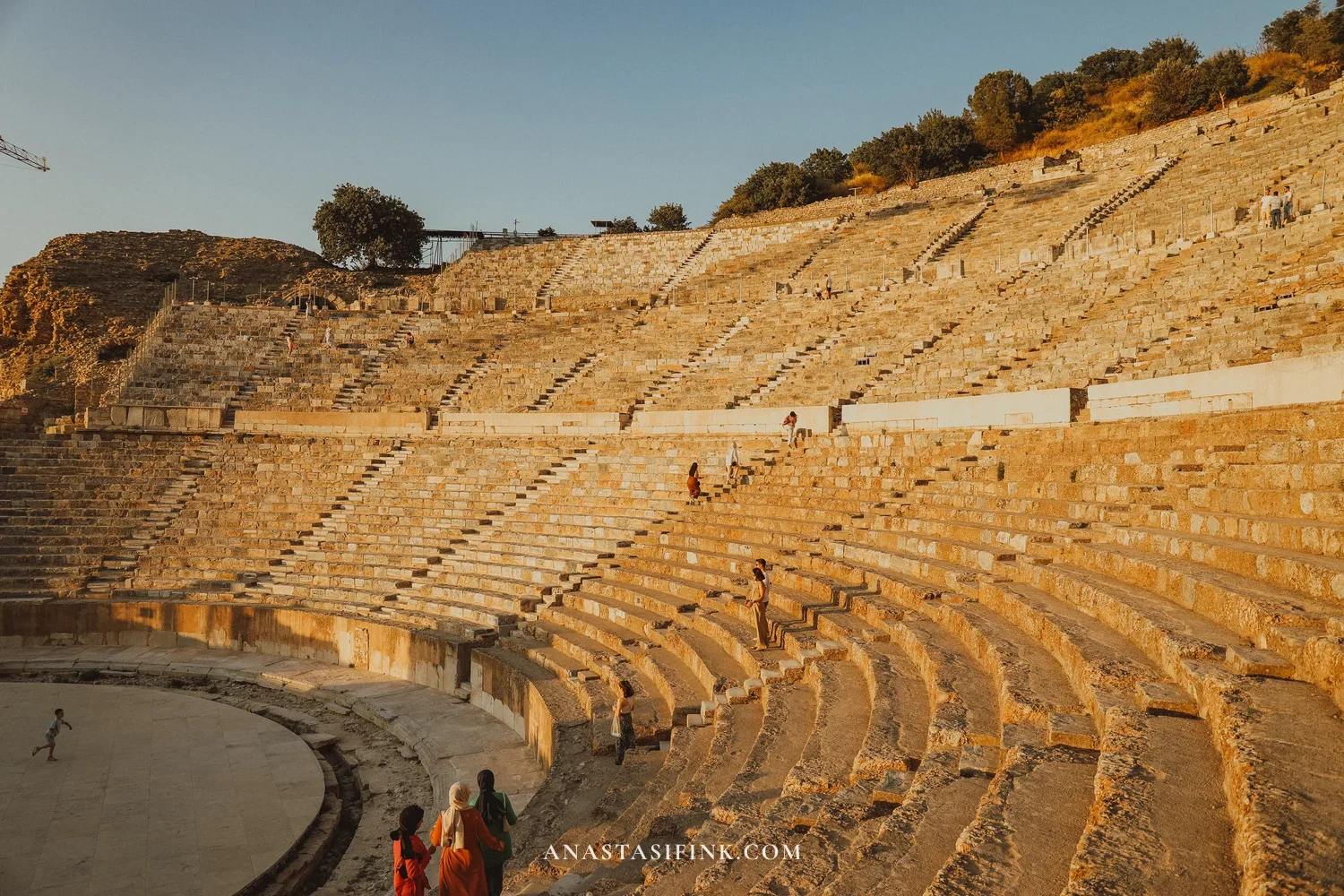
The Great Theatre held 25,000 spectators. The Apostle Paul preached here. The acoustics still work: someone speaking on the stage floor can be heard from the top rows.
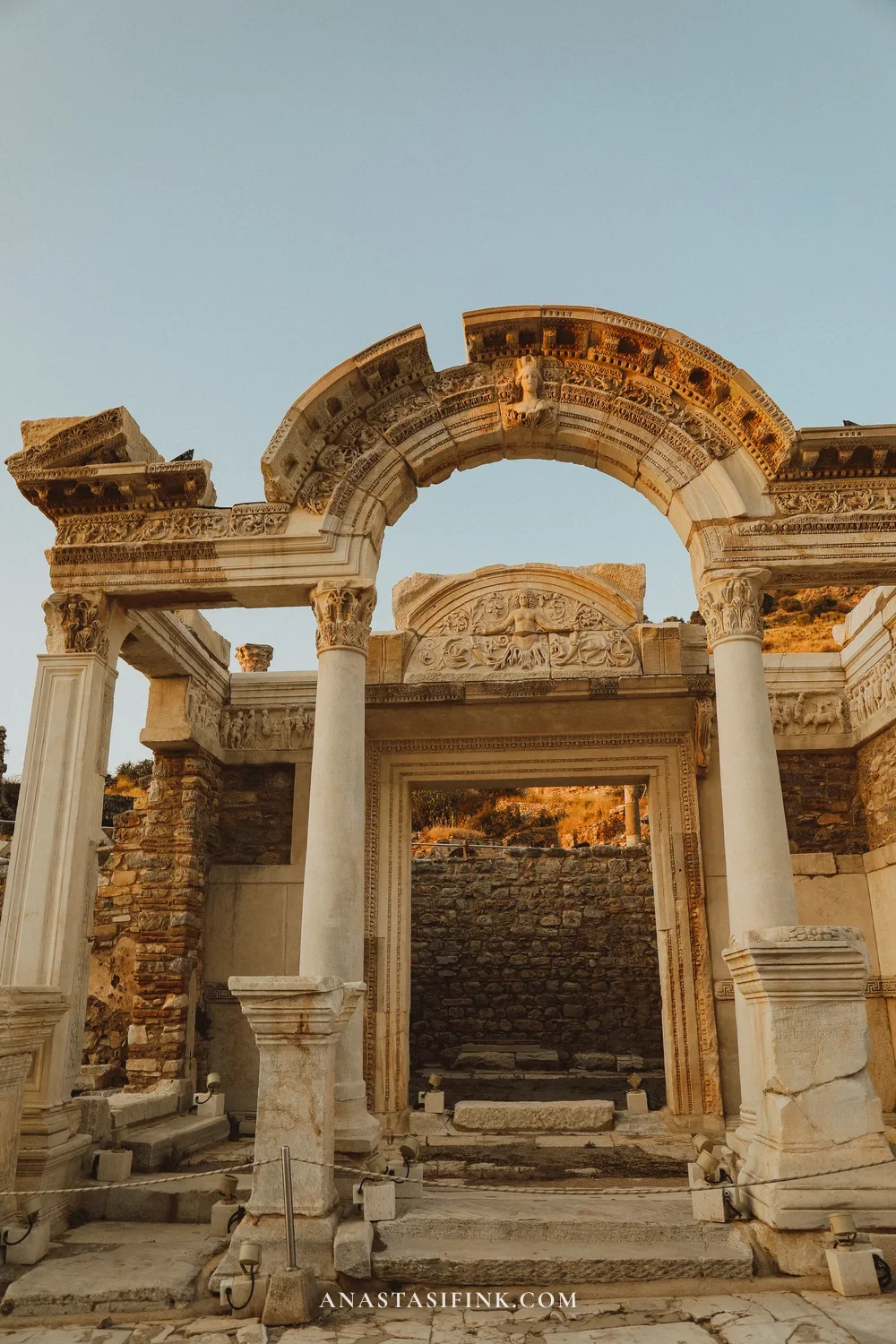
The Temple of Hadrian is small but highly detailed: an arch with the head of Medusa above the entrance, Corinthian columns, carved frieze. Easy to walk past — don’t.
From spring to autumn, Ephesus is also open in the evening: the Library of Celsus is lit in warm amber, the site is dark around it, fewer tourists. The photo above shows exactly this — the illumination and a thin crescent moon over the facade.
Practical Information: Ephesus
- Distance from Izmir: ~75 km, 1–1.5 hours
- GPS: 37.9411, 27.3418
- Opening hours: 08:00–19:00 (summer); evening sessions — check the official site
- Entrance: 600 TL (~€17); Terrace Houses — separate ticket 350 TL (~€10)
- Time needed: 3–4 hours daytime; +1.5 hours if staying for the evening illumination
- Tip: Enter through the upper gate — walking downhill is much easier
- Note: The Ephesus excavations have been led by the Austrian Archaeological Institute since 1895 — one of the longest-running digs in the world
- Read more: Ephesus — complete guide
How to Plan Your Trips
All five places can be visited over three days:
- Day 1: Urla + Barbaros (22 km apart)
- Day 2: Alaçatı (+ Çeşme if time allows)
- Day 3: Bergama/Pergamon (morning) or Ephesus (better in the late afternoon)
A rental car is by far the most convenient option. Public transport exists, but schedules are inflexible, and smaller spots like Barbaros are only reachable by taxi without a car.
For photographers: Bergama and Alaçatı are best in the morning — soft light, fewer people. Ephesus is unquestionably better at sunset and during the evening illumination. Urla and Barbaros are good any time of day.
FAQ
The top options are Bergama/Pergamon (ancient ruins), Alaçatı (stone town with windmills), Urla (wineries and restaurants), Barbaros (scarecrow village), and Ephesus (one of the best-preserved ancient cities in the world). All within 90 minutes of Izmir.
By car it’s 1.5–2 hours heading north. Buses also run from Izmir’s main bus terminal to Bergama (about 2 hours, from 100 TL). From central Bergama to the acropolis, take the cable car or a taxi.
Spring (April — Herb Festival) and autumn are ideal: warm, not too crowded. Summer brings windsurfing and beach season but weekends get very busy. Weekdays are always calmer.
Yes, especially if you’re already in Urla — Barbaros is just 22 km away. The village is small, 2–3 hours is enough. Scarecrows, home-cooked food, handmade dolls — it’s genuinely unusual.
The main entrance ticket is 600 TL (~€17). The Terrace Houses (a separate section inside the site) cost an additional 350 TL (~€10). Evening illumination tickets — check on-site for current prices.
Technically yes — about 40 km apart. But both places deserve a full day, especially if you want to visit Urla’s wineries and explore Alaçatı without rushing.
Strongly recommended. You can reach Bergama and Ephesus by bus, and Alaçatı by dolmuş (shared minibus). But Urla, Barbaros, and moving between smaller spots without a car is genuinely inconvenient.