Bali Bird Park — Complete Guide with Shows, Feeding & Tips

Bali Bird Park turned out to be so much more than a zoo — it’s a lush tropical garden where lorikeets literally hop onto your hand for food. I definitely recommend a visit, and here’s my full review.
About the Park — 1,300 Birds and a Tropical Garden
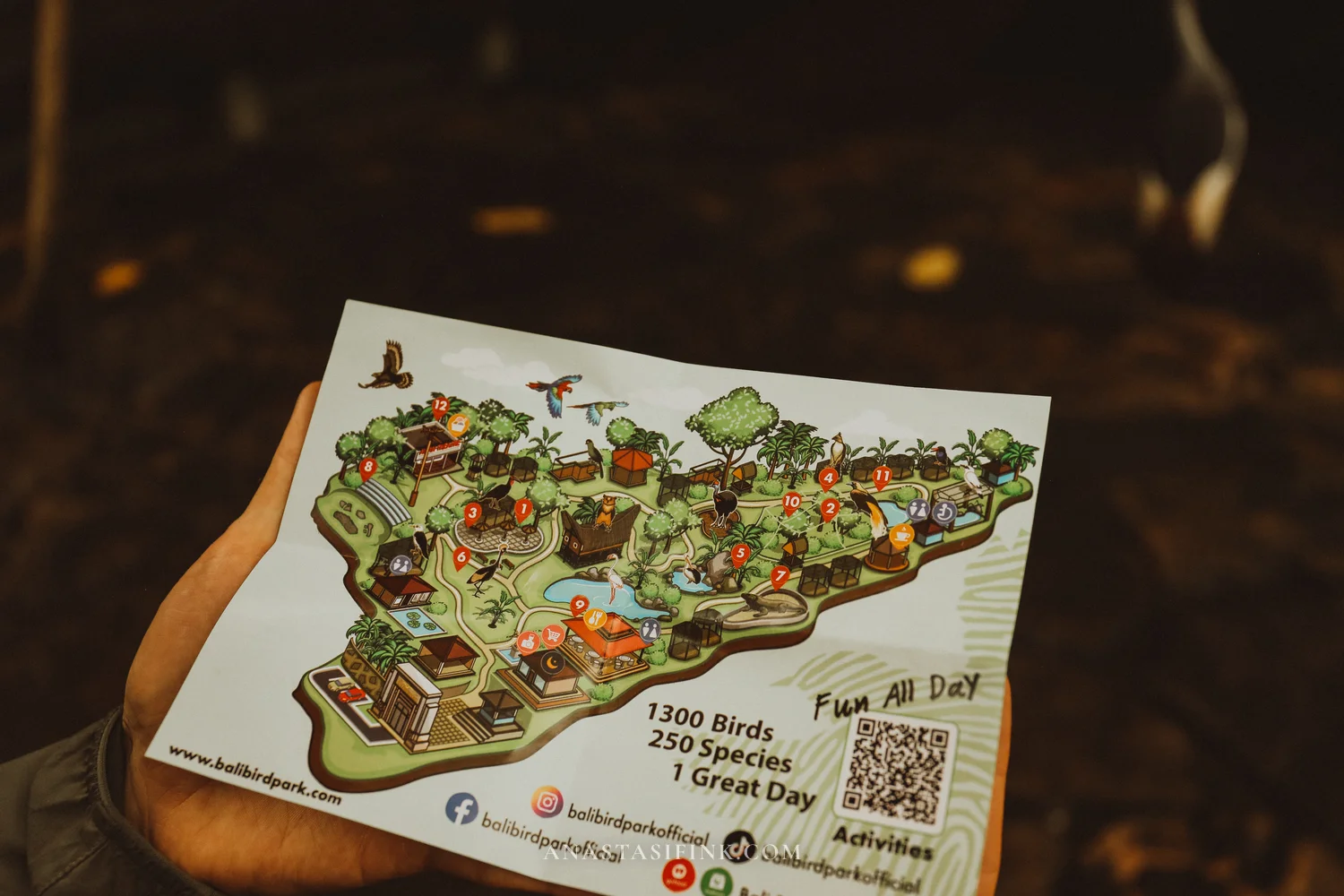
Bali Bird Park (Taman Burung) covers 2 hectares of tropical gardens in the village of Batubulan, between Ubud and Denpasar. The park opened in 1995, founded by German entrepreneur Edi Swoboda. It’s home to over 1,000 birds of 250 species — from tiny lorikeets to massive cassowaries. And a couple of Komodo dragons, which you definitely don’t expect to find in a bird park.
The park has gathered birds from different Indonesian islands: Papua, Borneo, Sumatra, and Java. Many species are rare and nearly extinct in the wild.
What to See at Bali Bird Park
Parrots
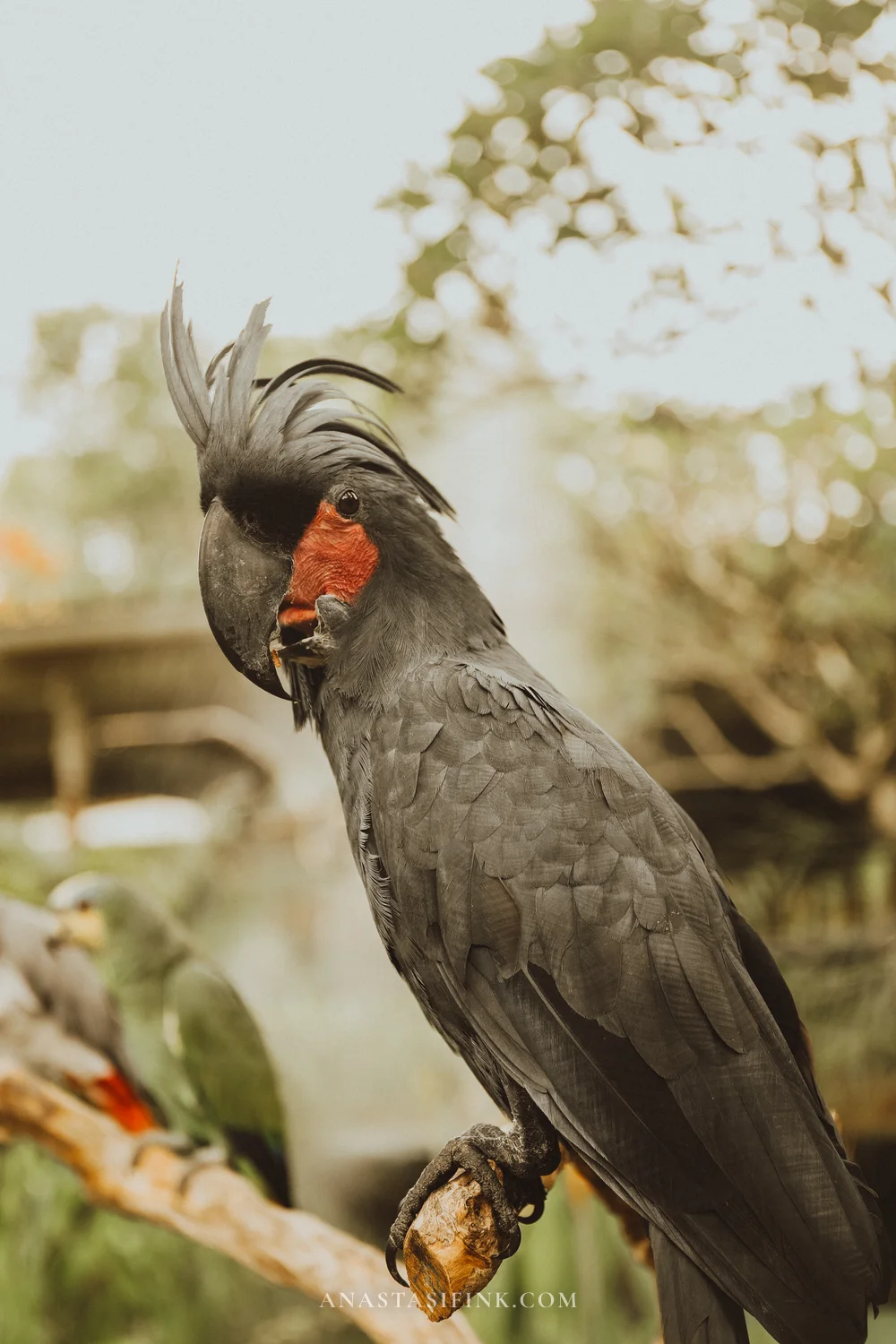
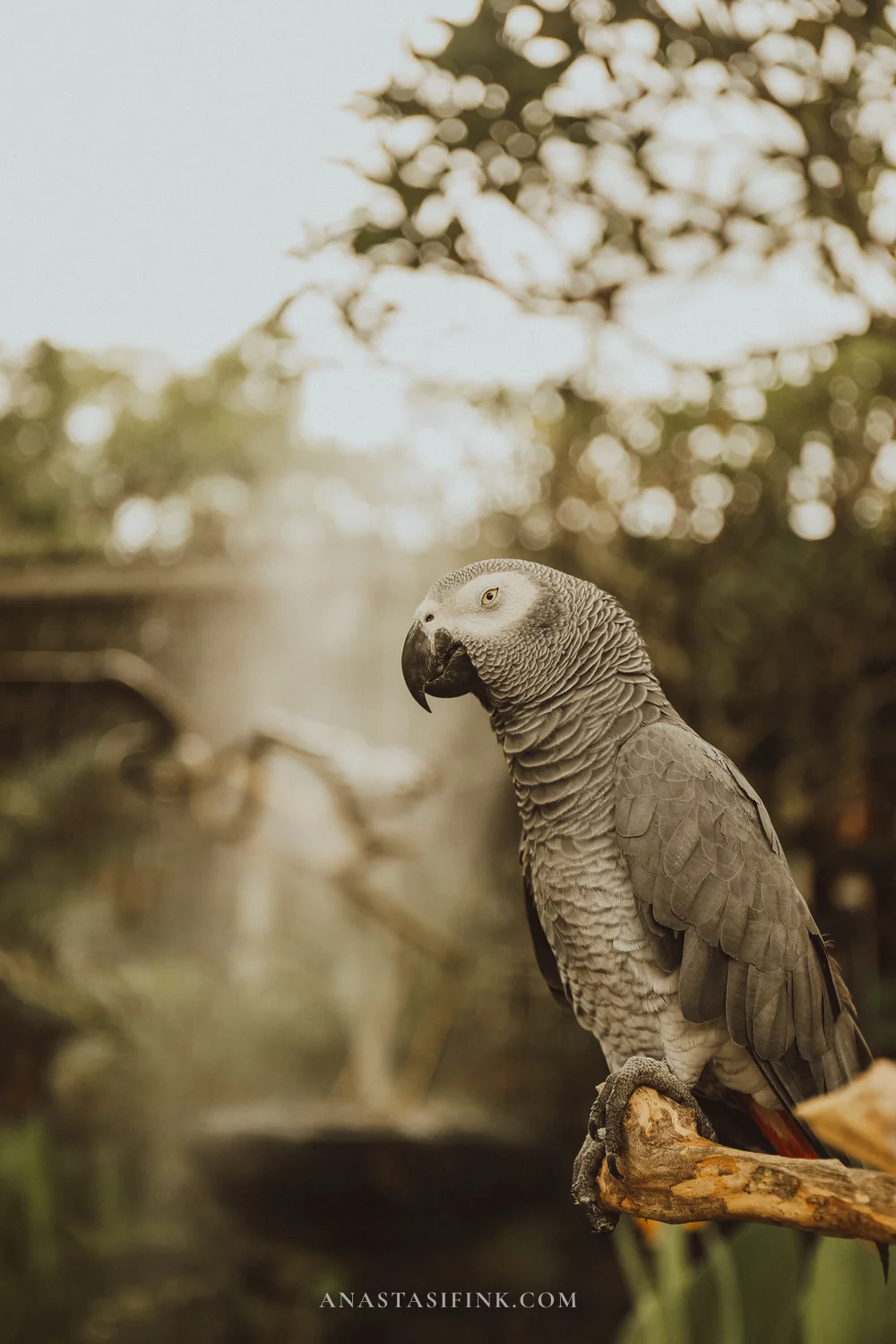
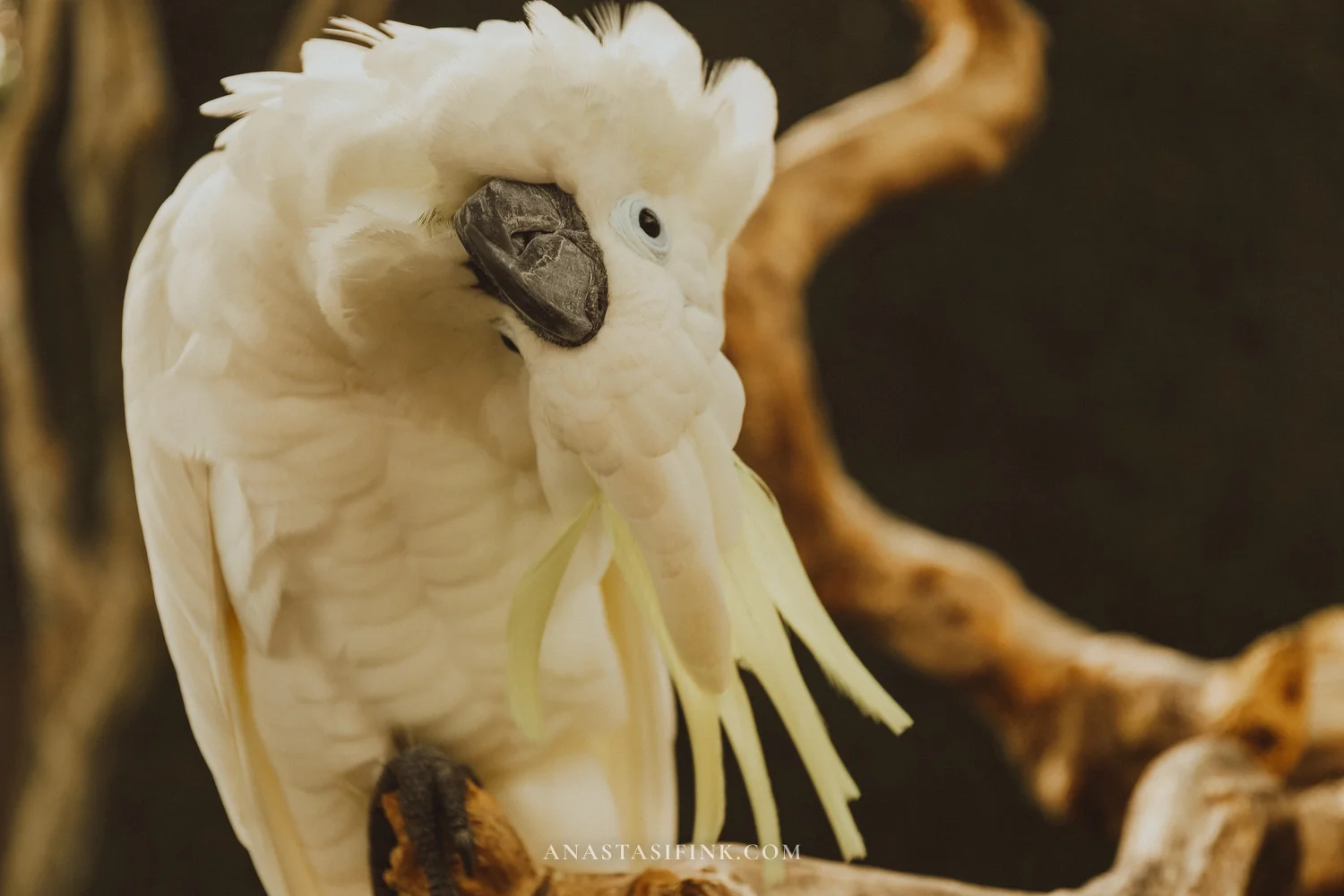
There are dozens of parrot species here. The Black Palm Cockatoo is huge, with red cheeks and an impressive crest. The African Grey sits on a branch watching you intently — these guys are considered among the smartest birds alive. The White Cockatoo is fluffy and surprisingly large.
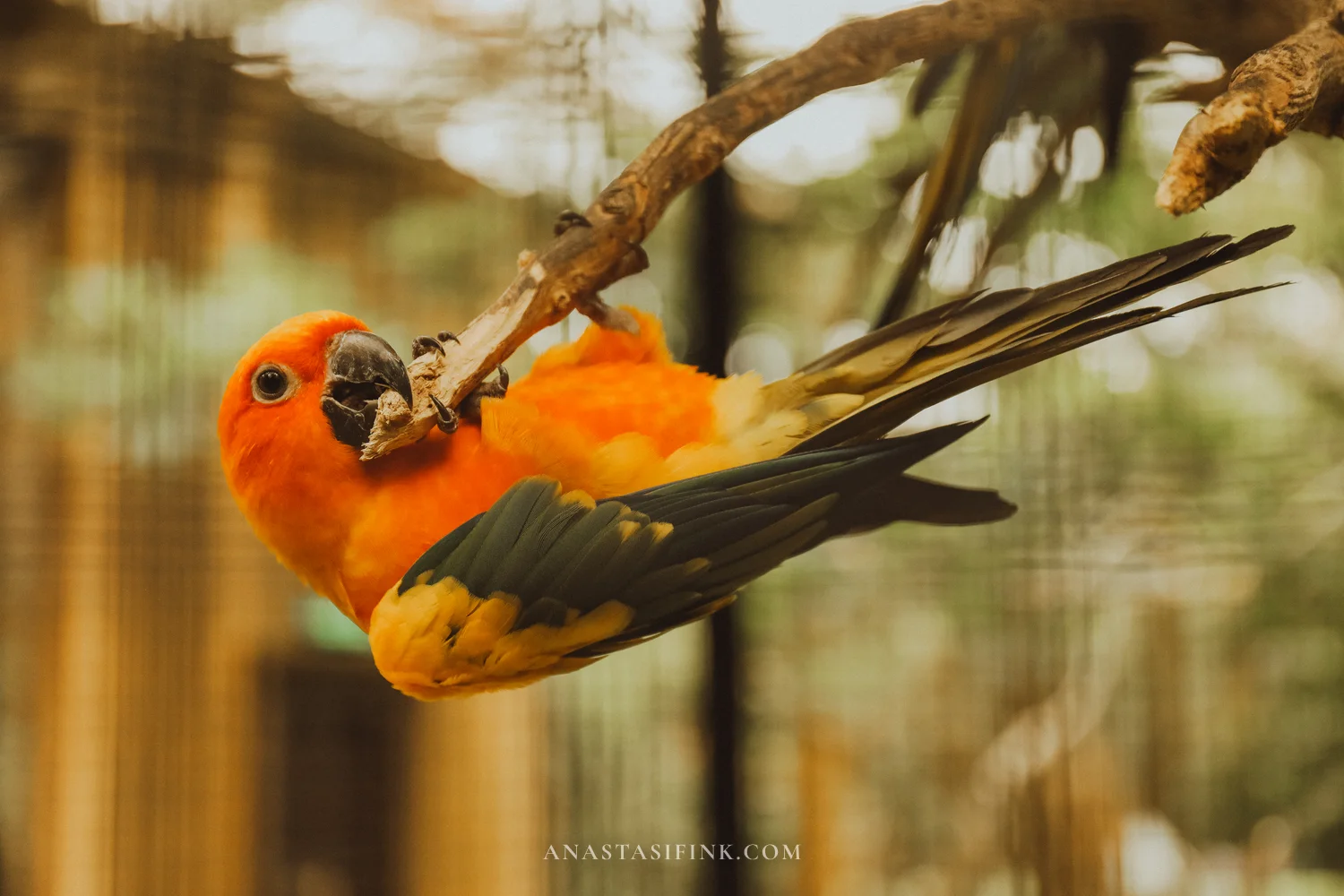
The Sun Conure — a small orange parrot — was hanging upside down from a branch, clearly loving the attention. These little guys pose for the camera better than most people.
Hand-Feeding the Birds
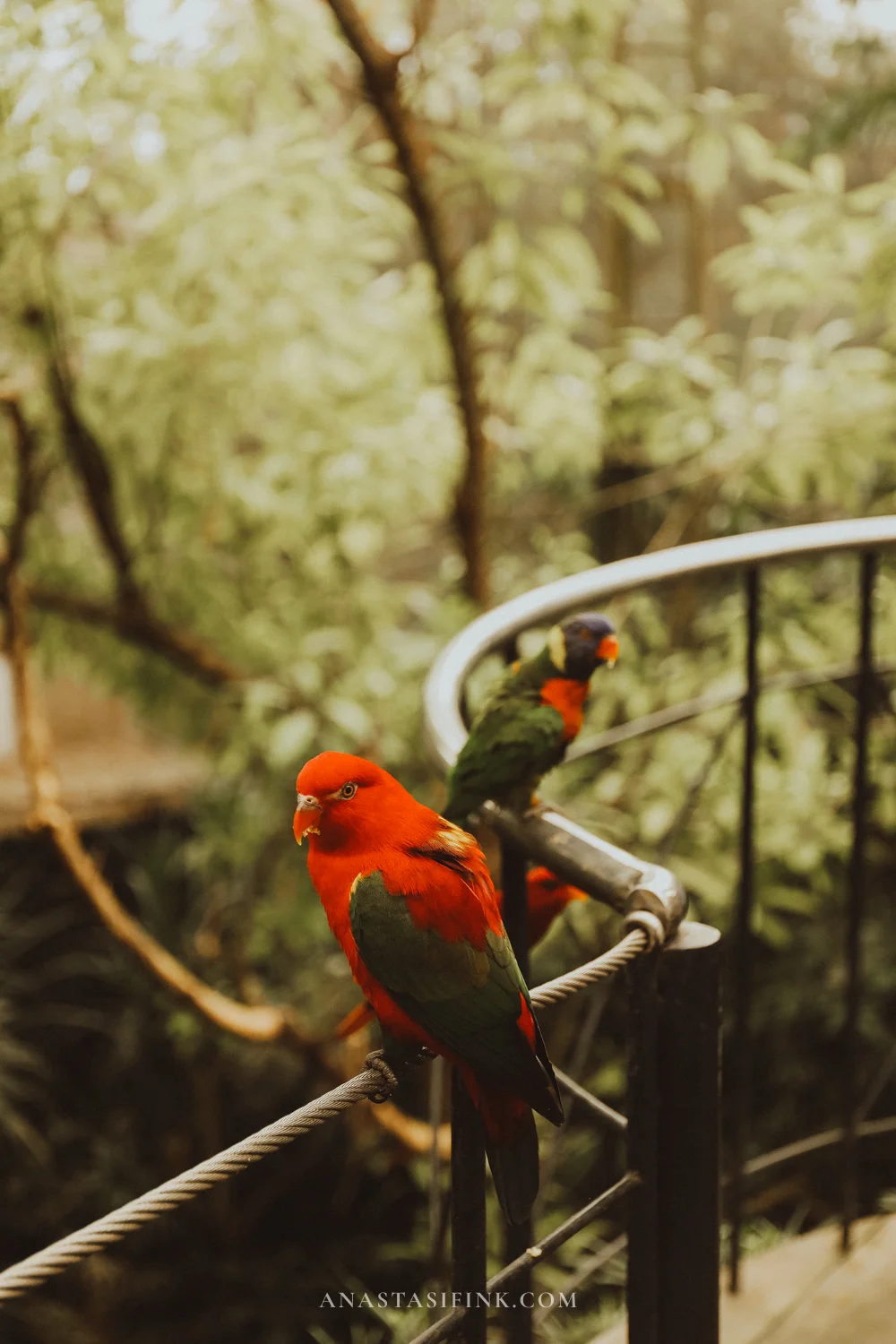
Several areas in the park let you feed birds by hand. The keepers provide the food — they’re stationed inside walk-in aviaries and some open areas. Just hold out your palm, and the lorikeets (small, colorful parrots) fly right over. The Guyu Guyu zone offers feeding all day long.
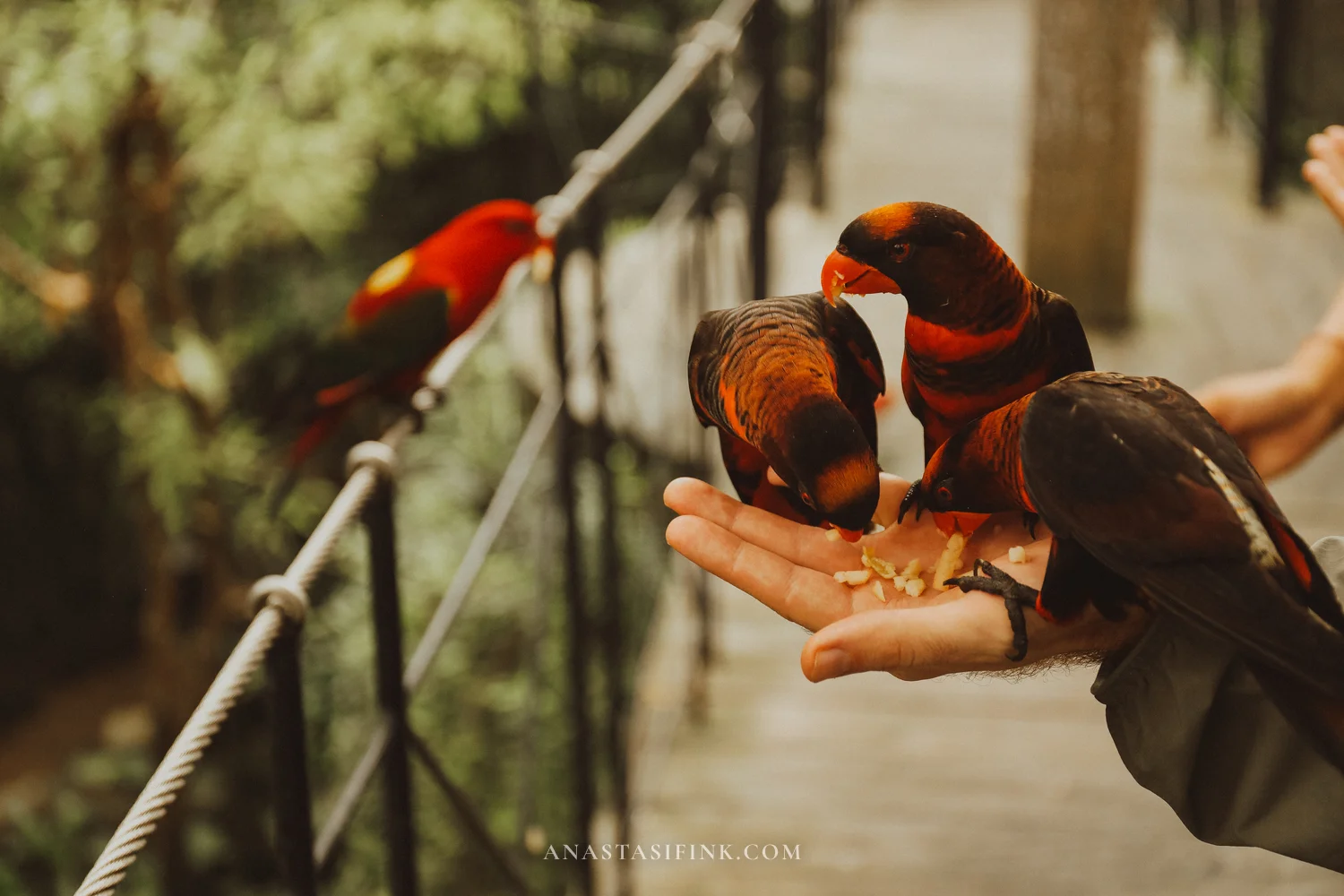
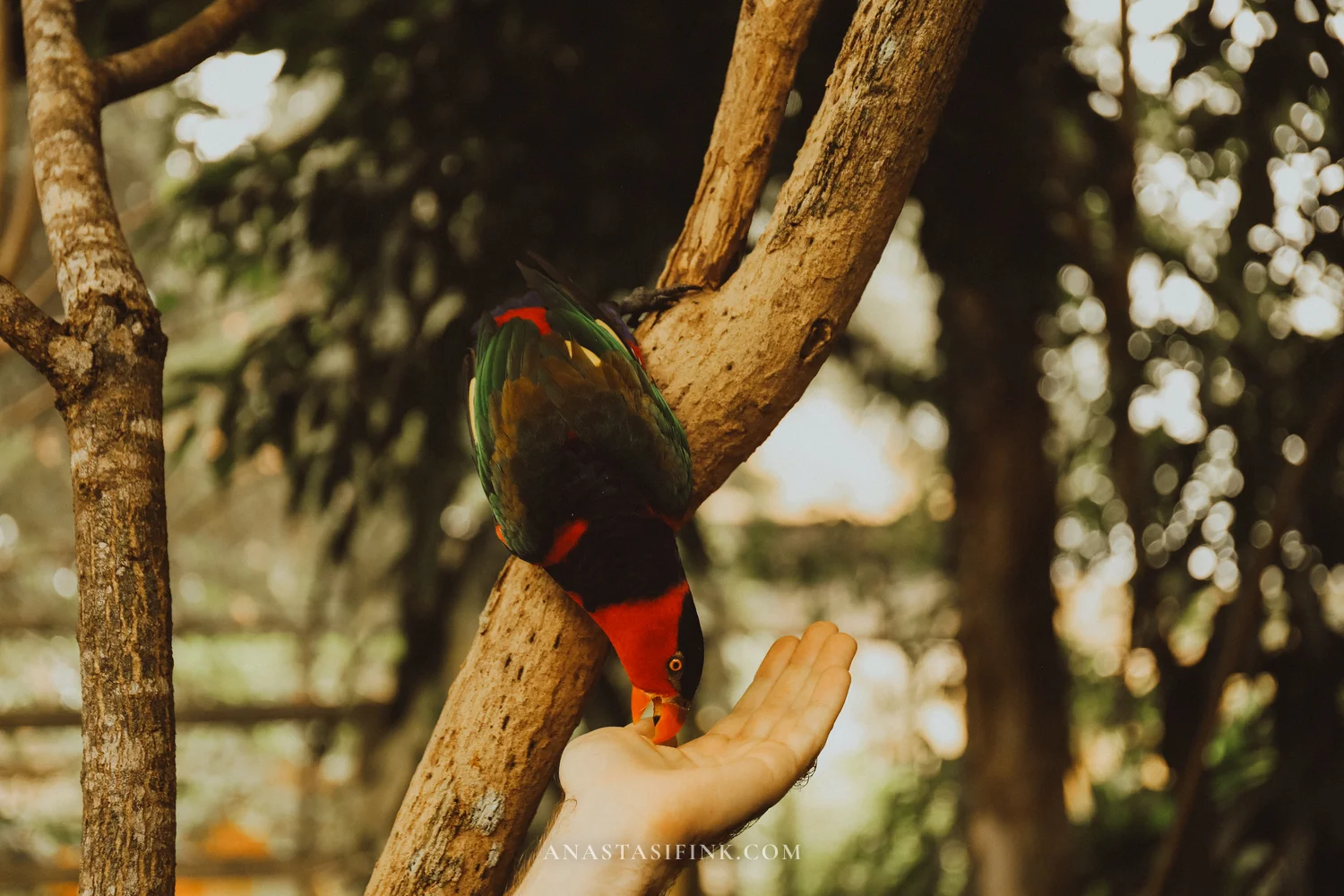
Just be careful with the bigger parrots — they have powerful beaks and can give you a real nip. It’s not aggression, just their way of interacting.
Flamingos
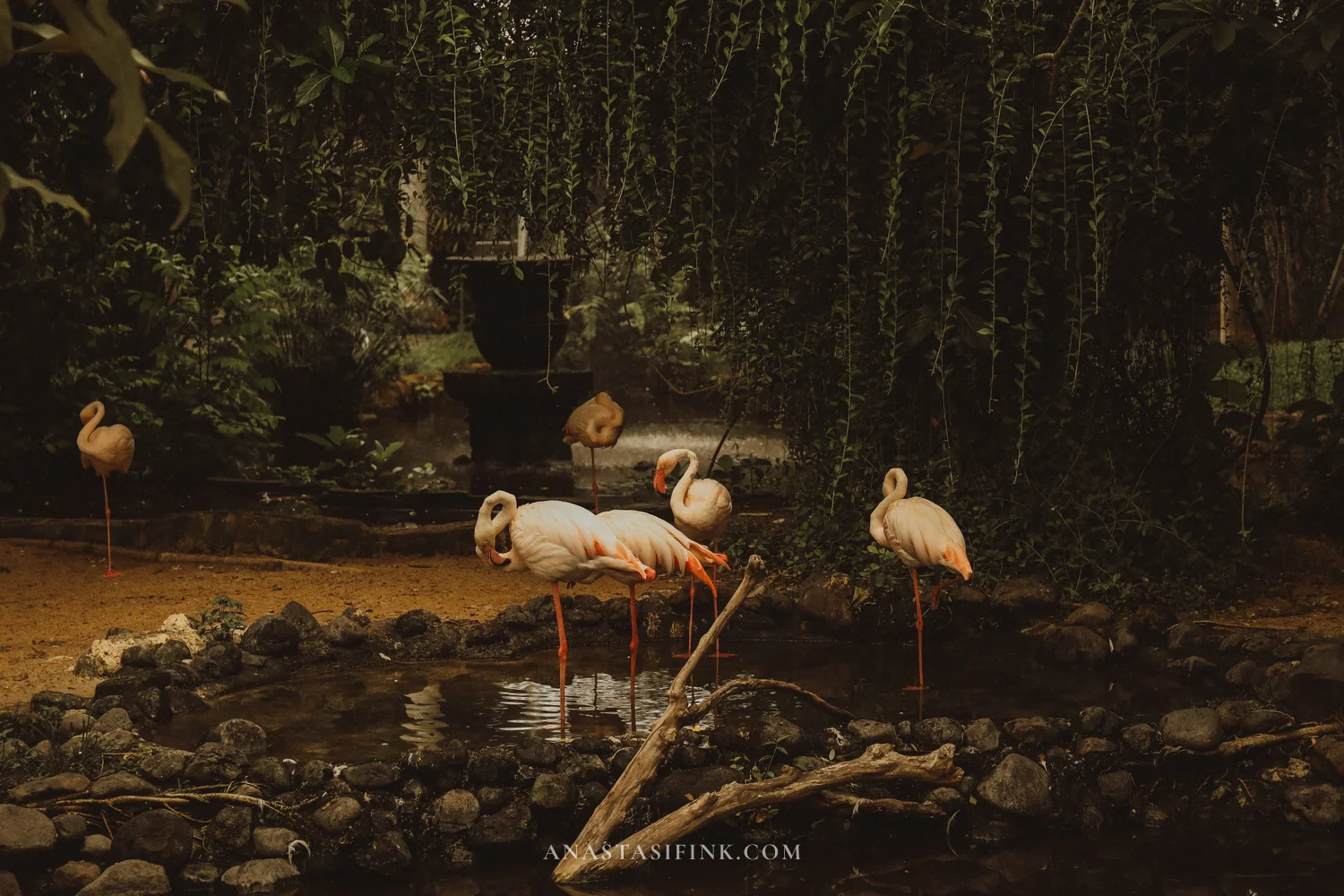
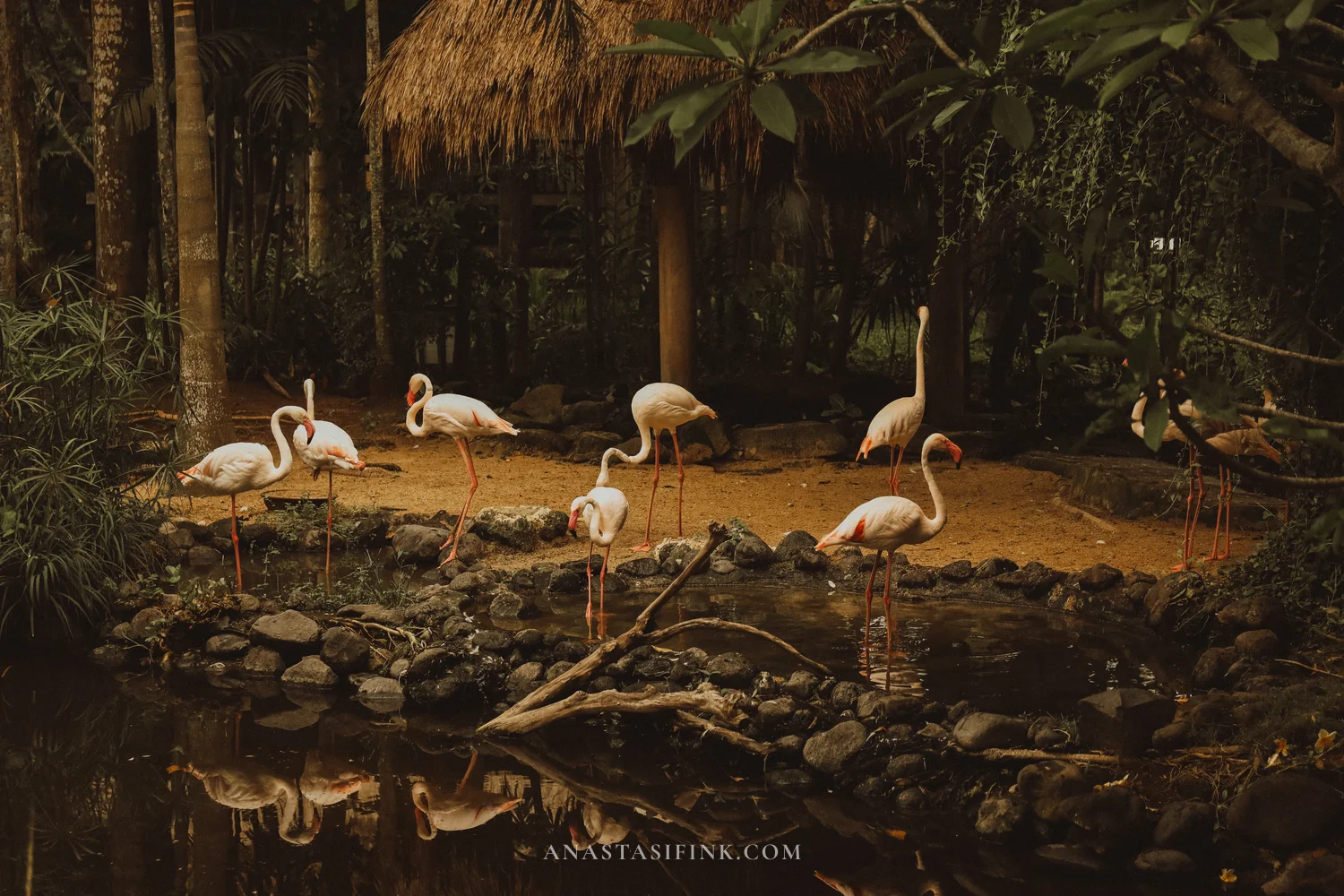
The park has a flamingo enclosure where they stroll around a pond and stand in the water. These are Greater Flamingos, the largest of all six flamingo species.
Grey Crowned Cranes
Grey Crowned Cranes wander the grounds with their golden “crowns” of delicate feathers. They couldn’t care less about people — you can walk right up and get great photos.
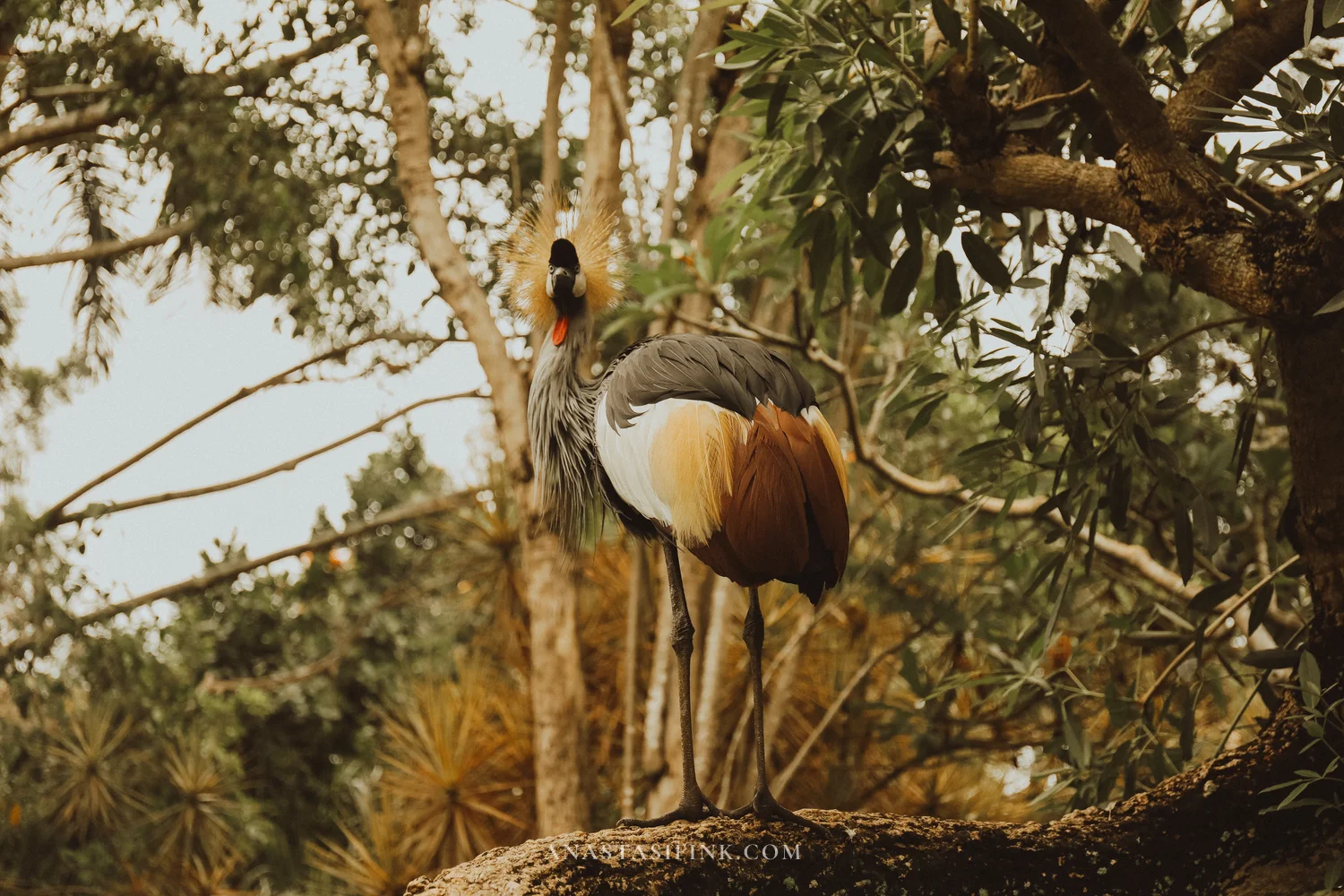
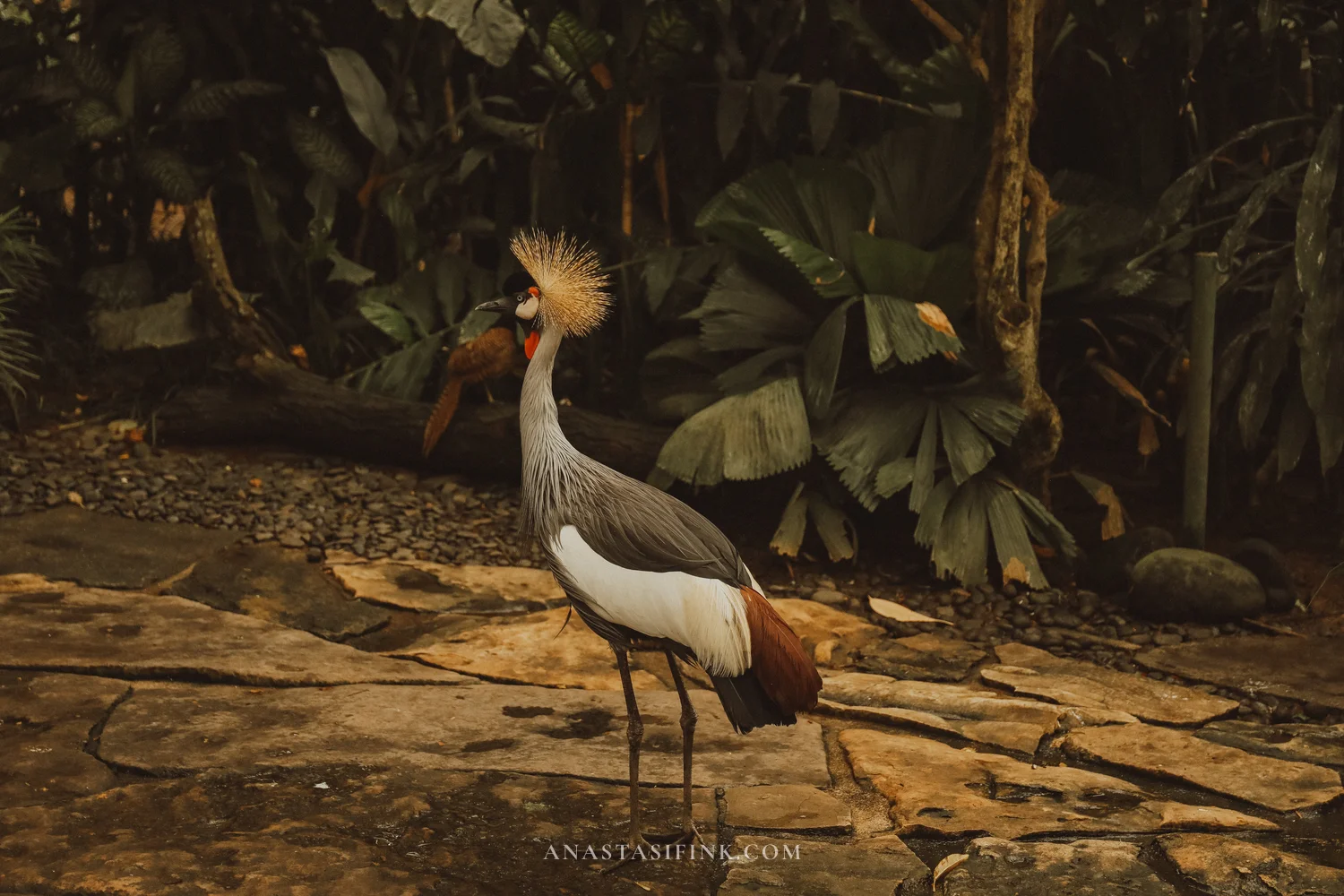
Grey Crowned Cranes — originally from Africa, but thriving in Bali’s climate
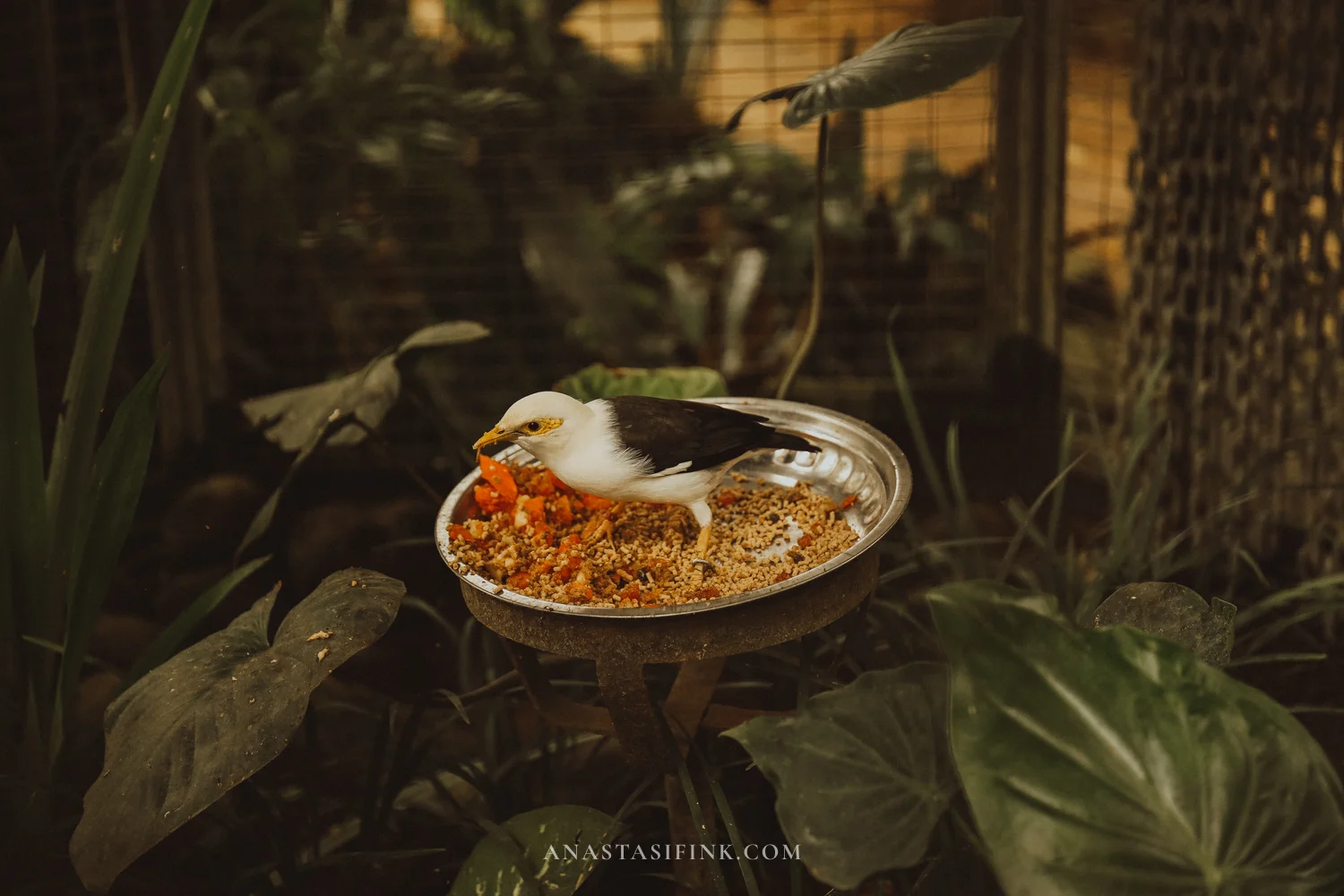
Bali Myna
The Bali Myna (Leucopsar rothschildi) is endemic to Bali — it’s found in the wild only on this island. In 2001, just 6 individuals remained in the wild. Thanks to breeding programs, including the one at Bali Bird Park, the wild population has grown to around 520 birds. The park is one of the key centers for breeding and reintroducing the Bali Myna into the wild.
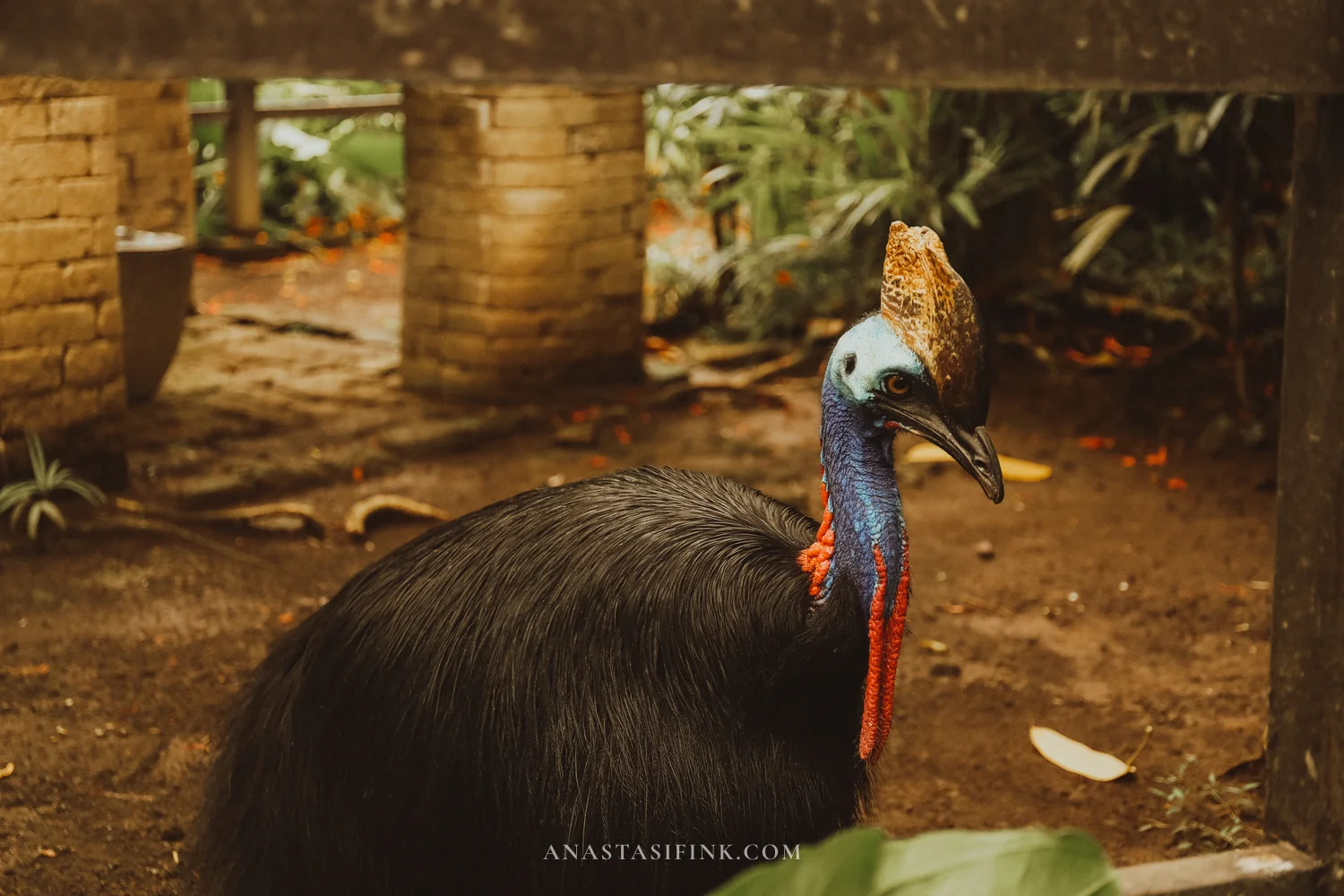
Cassowary
The Cassowary is a massive flightless bird from New Guinea and Australia. They can stand up to 1.8 meters tall, weigh up to 60 kg, and sport a bony casque on their heads. In the wild, you really don’t want to get close — their claws can cause serious injuries. In the park, they’re behind a barrier so you can get a good look safely.
Pelicans and Waterfall
In the center of the park there’s a pond with a waterfall where pelicans live. Large and white, they perch on rocks and preen their feathers.
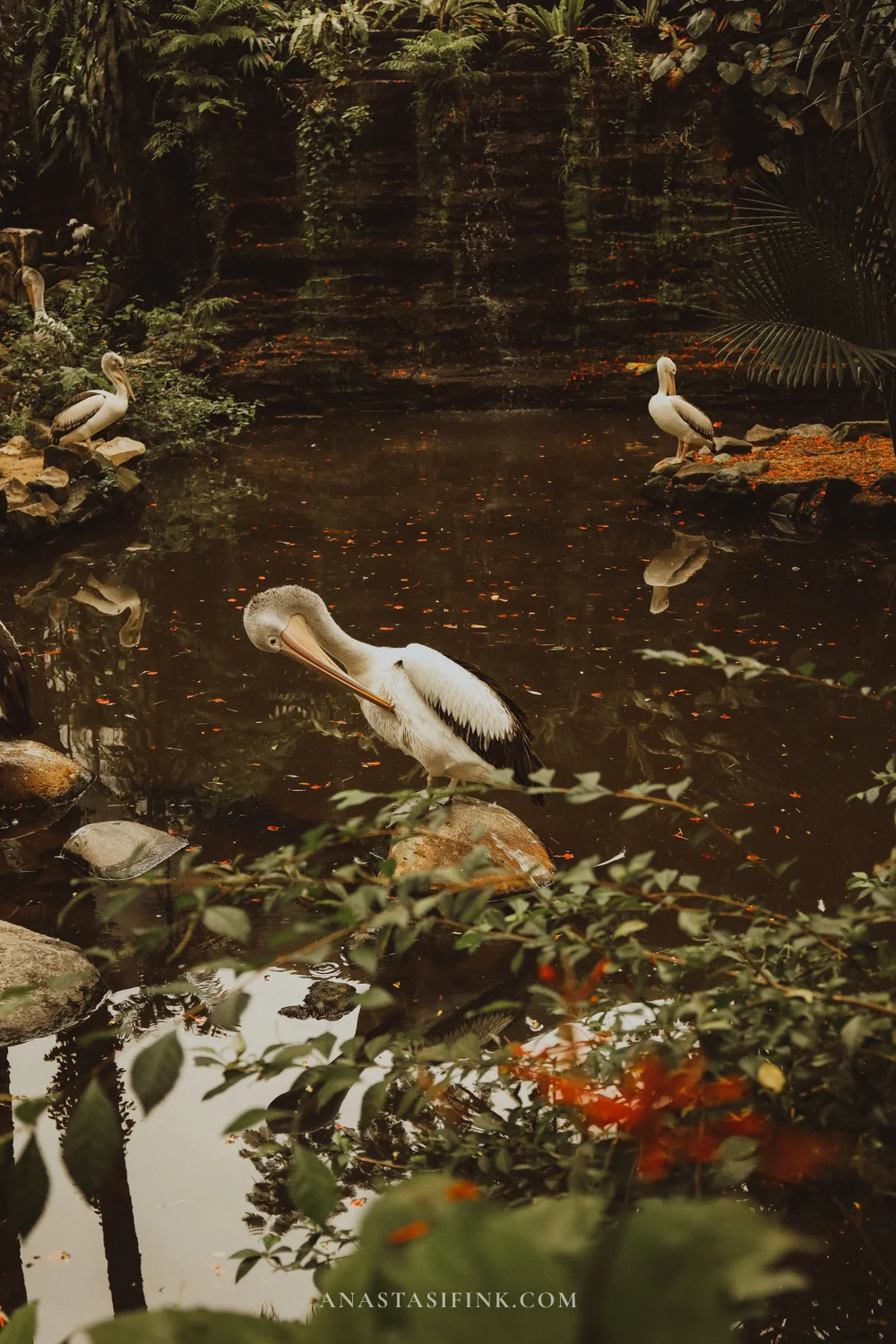
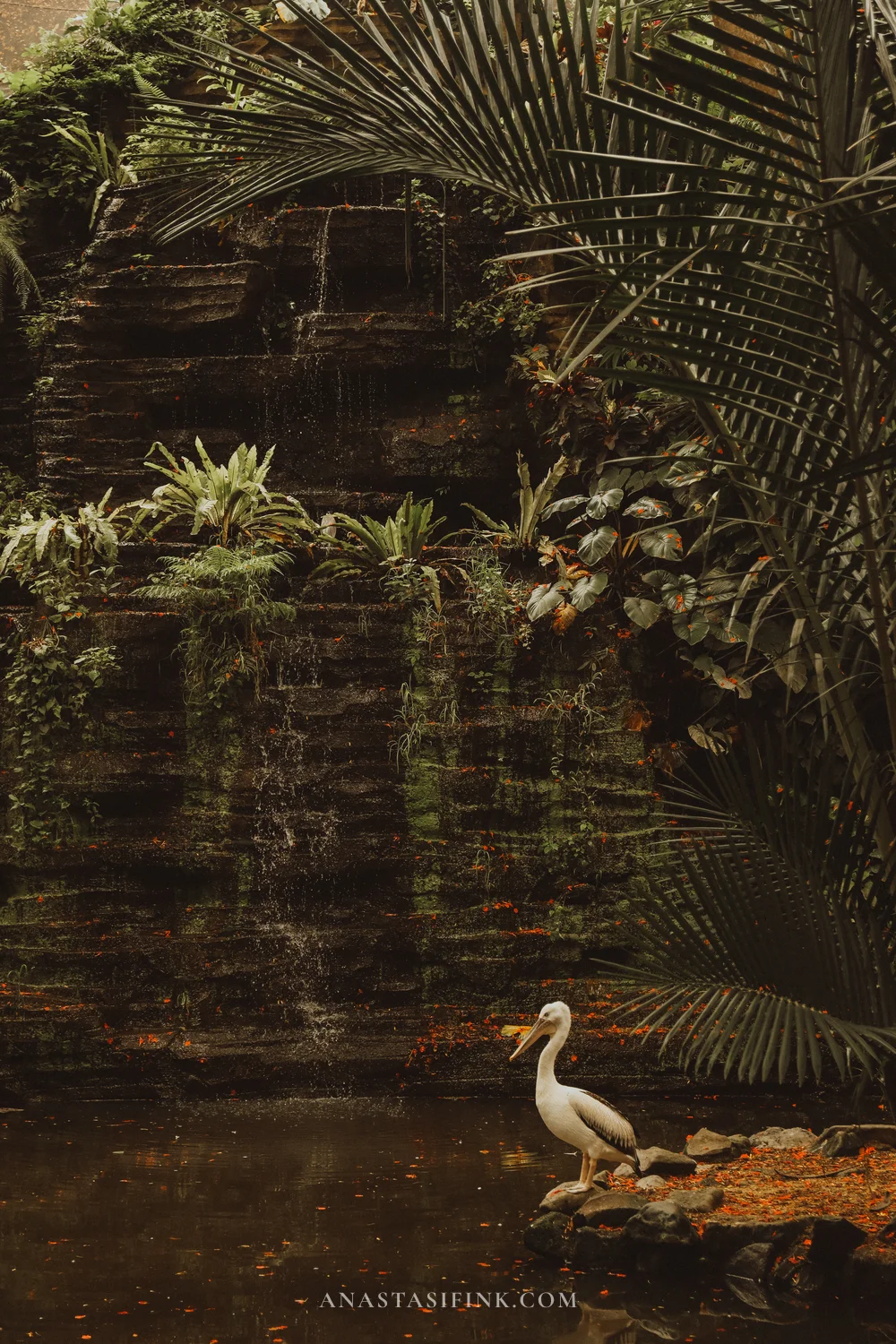
Pelicans by the waterfall — there’s a bench nearby where you can sit and watch
Peacocks — White and Green
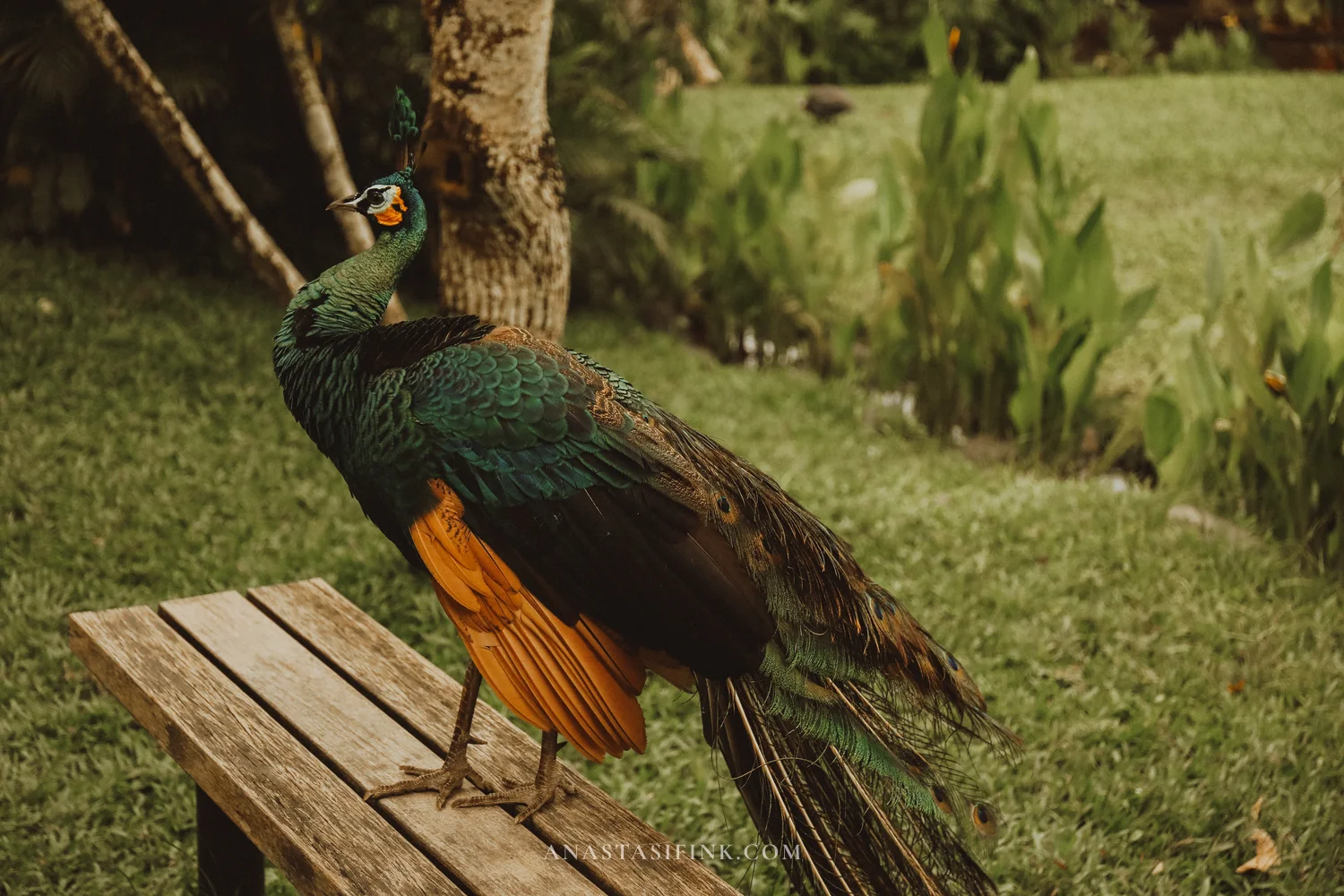
The park has two types of peacocks. White peacocks roam freely along the paths and aren’t the least bit afraid of people. The Green Peafowl (Pavo muticus) is a Southeast Asian species that’s endangered in the wild. It’s much more vivid than the common Indian peacock — emerald green with orange.
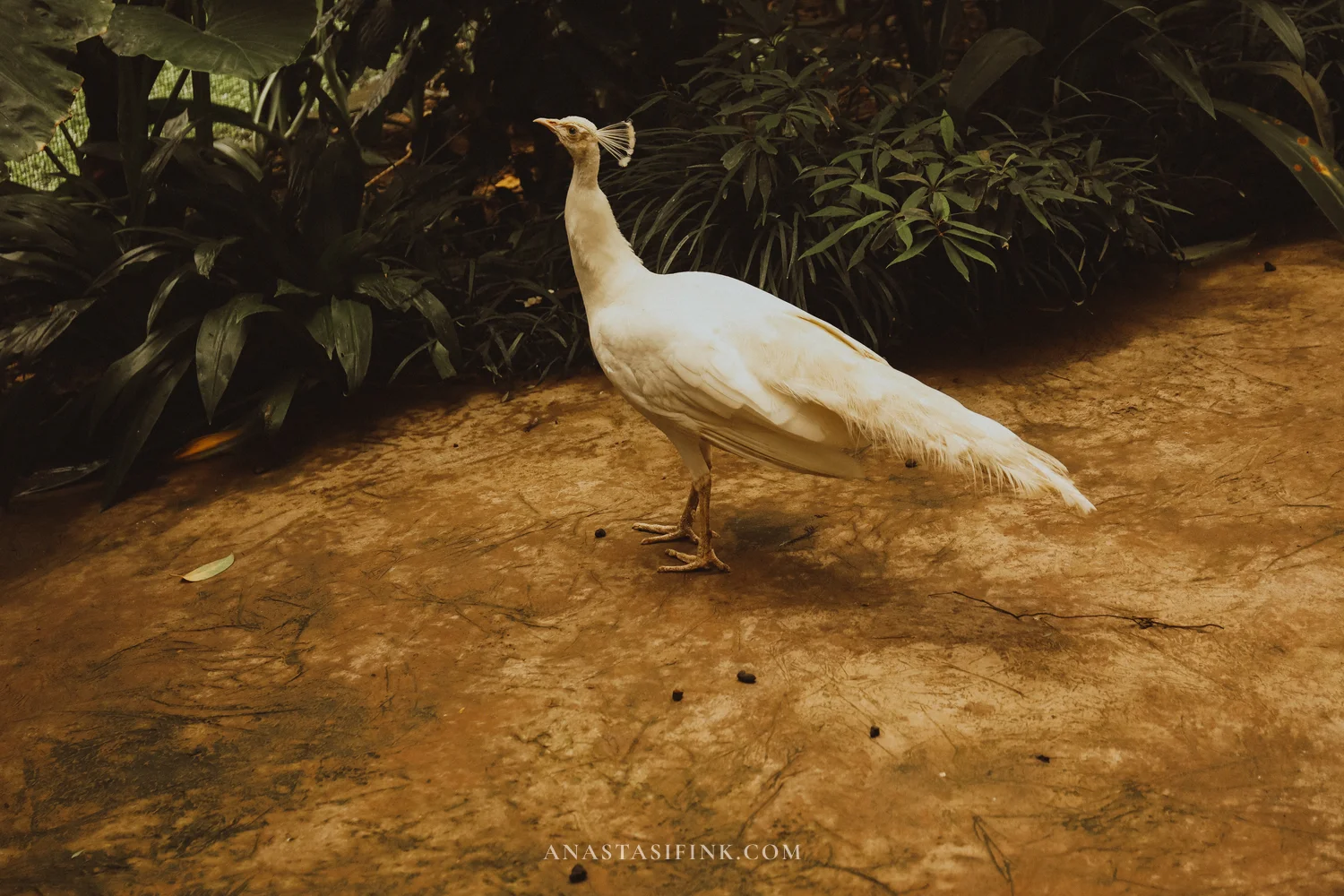
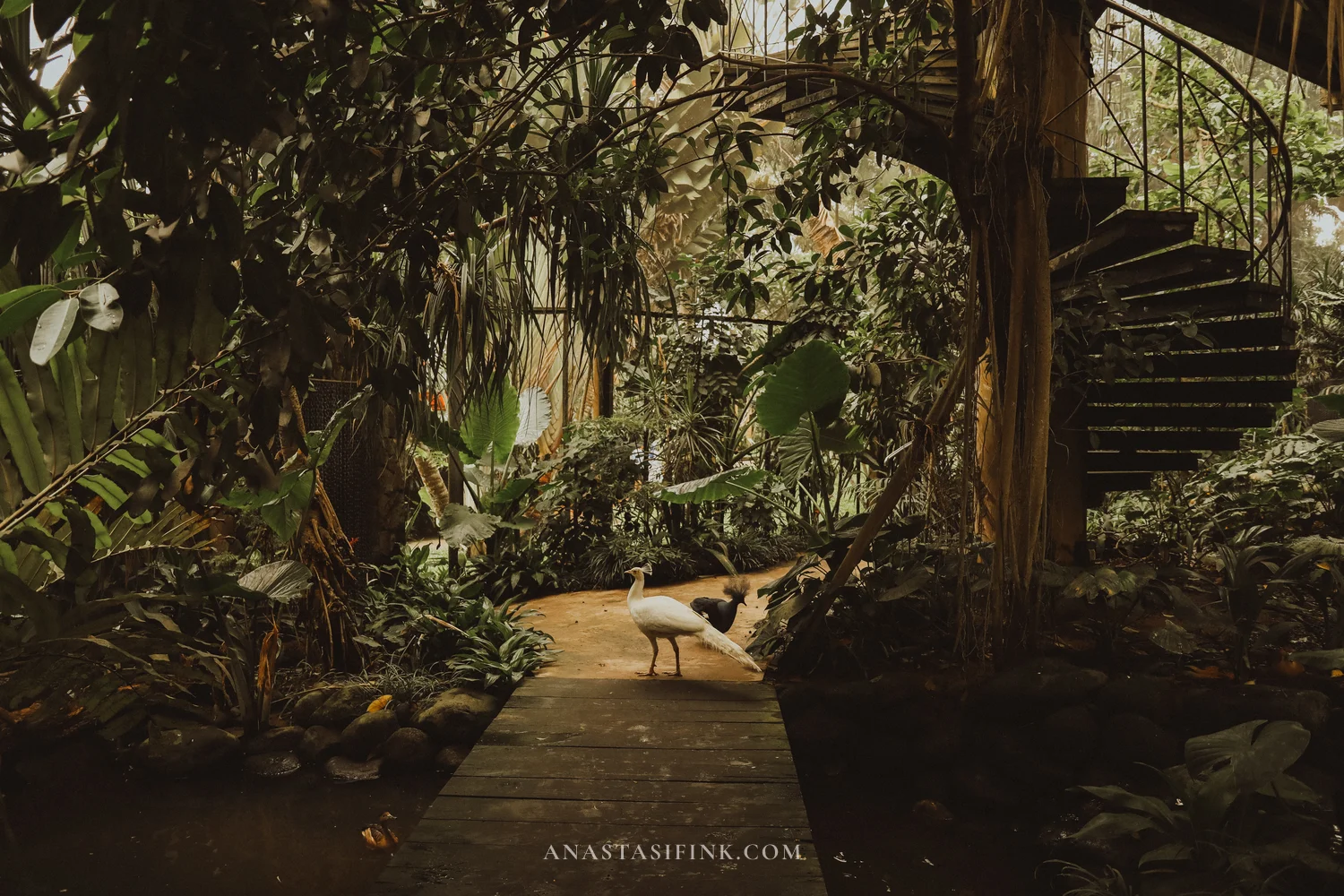
White peacocks roam freely — you can get really close
Bird of Paradise
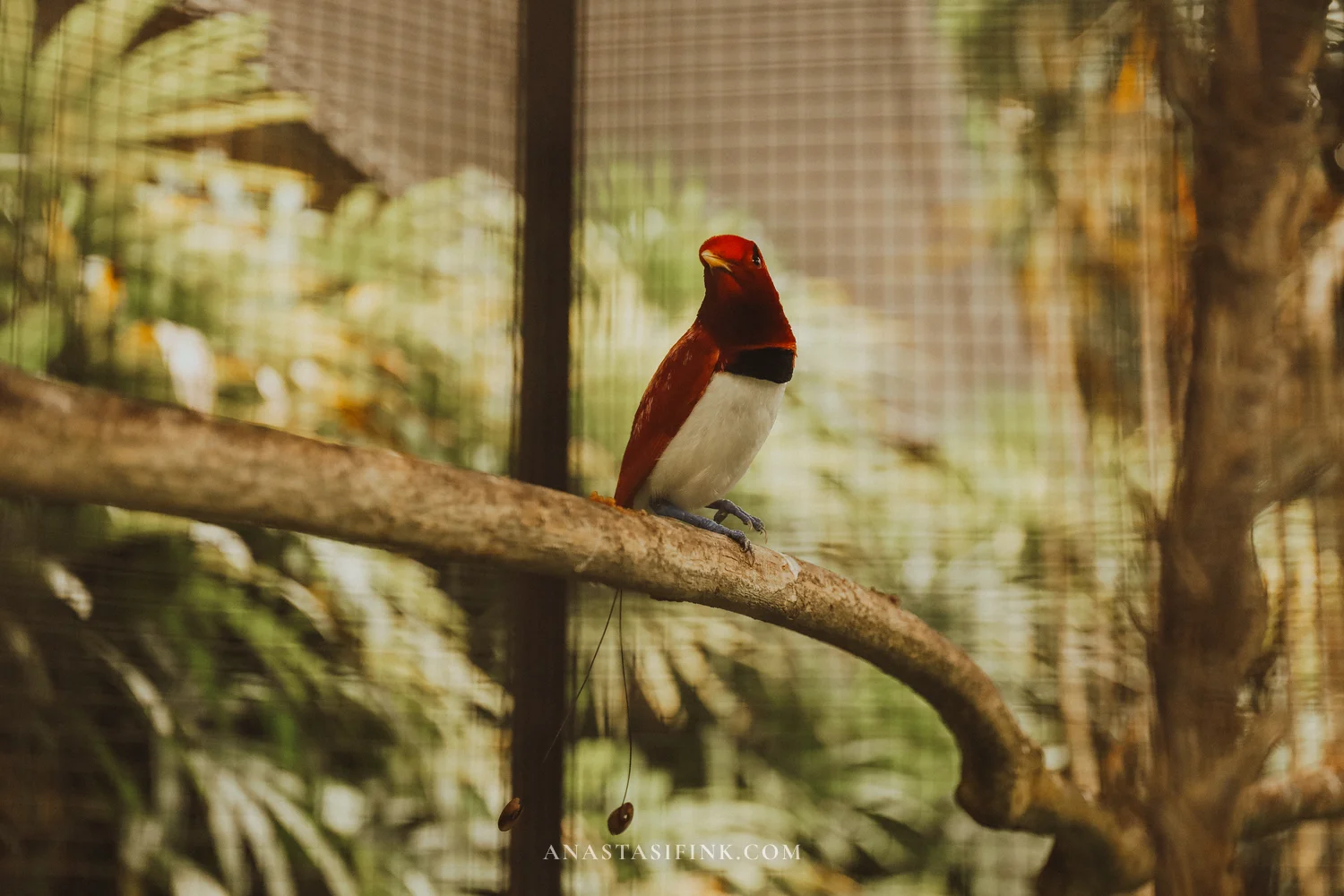
The King Bird-of-Paradise is small and brilliantly red with a white belly. In the wild, they live in the forests of New Guinea, where spotting one is incredibly difficult. Here it sits behind a mesh, but you can get a great view.
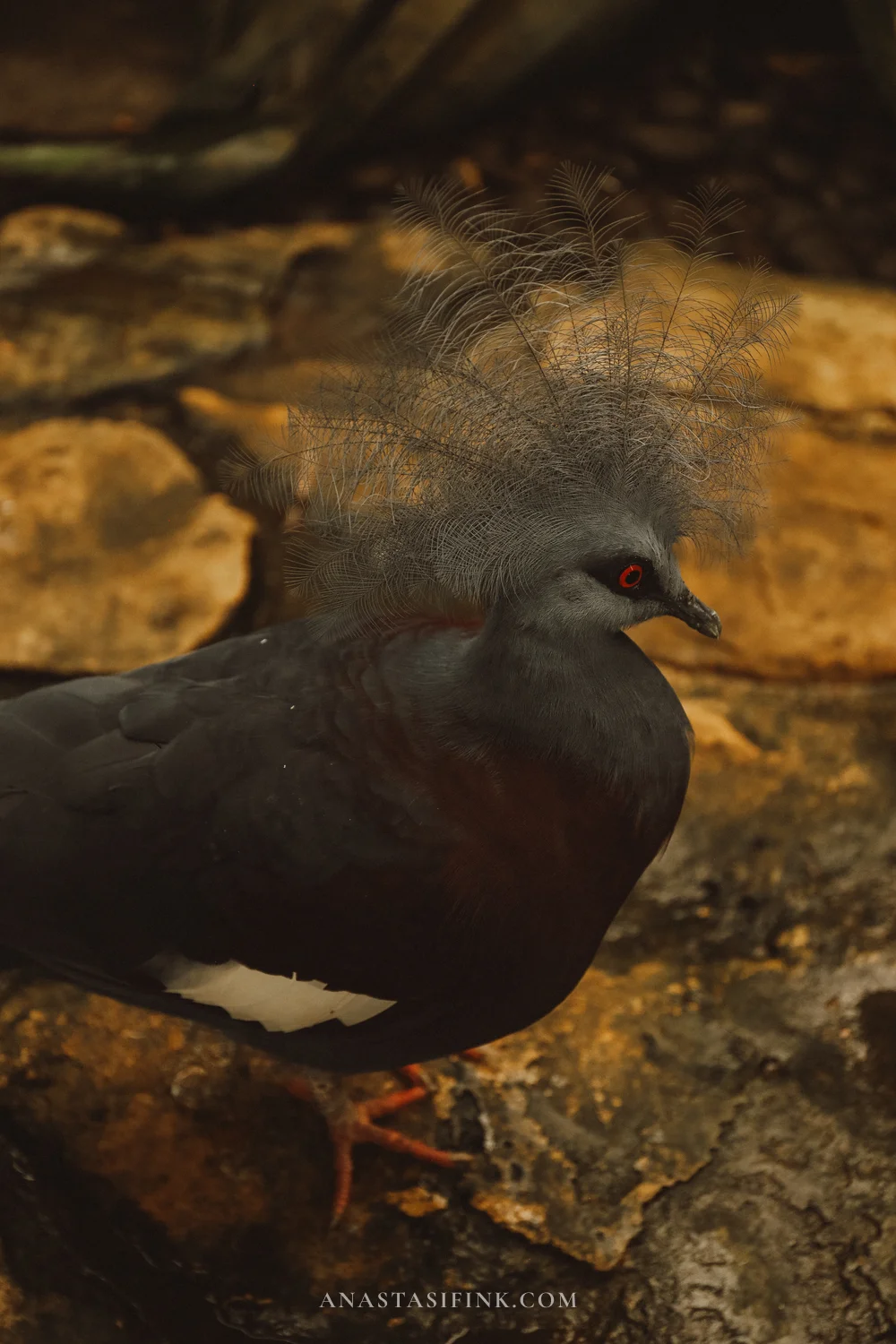
Victoria Crowned Pigeon
The largest pigeon on the planet — about the size of a chicken. Blue-grey with a lacy crown of feathers on its head. Native to New Guinea, and the species is threatened.
Owls, Storks, and Other Birds
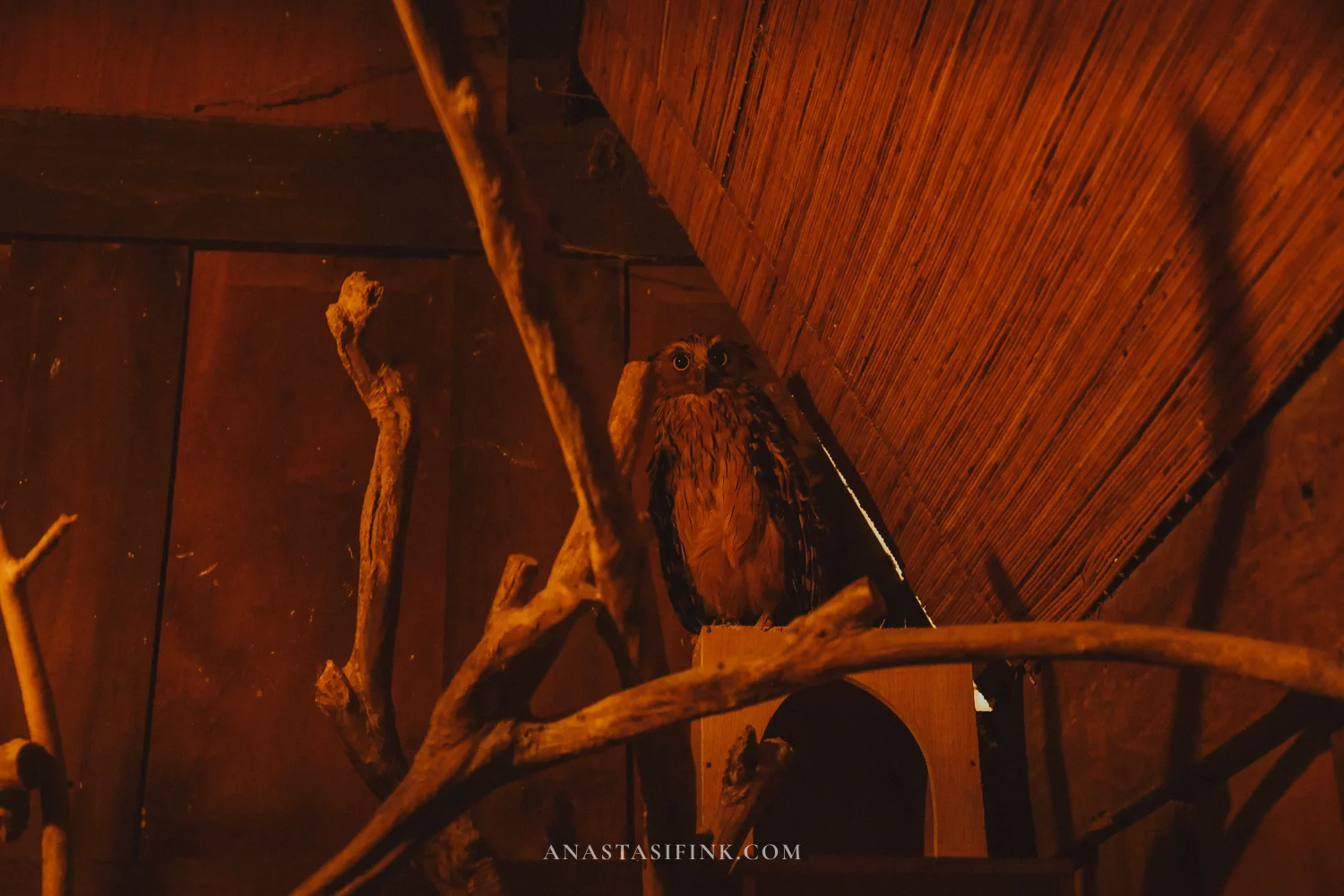
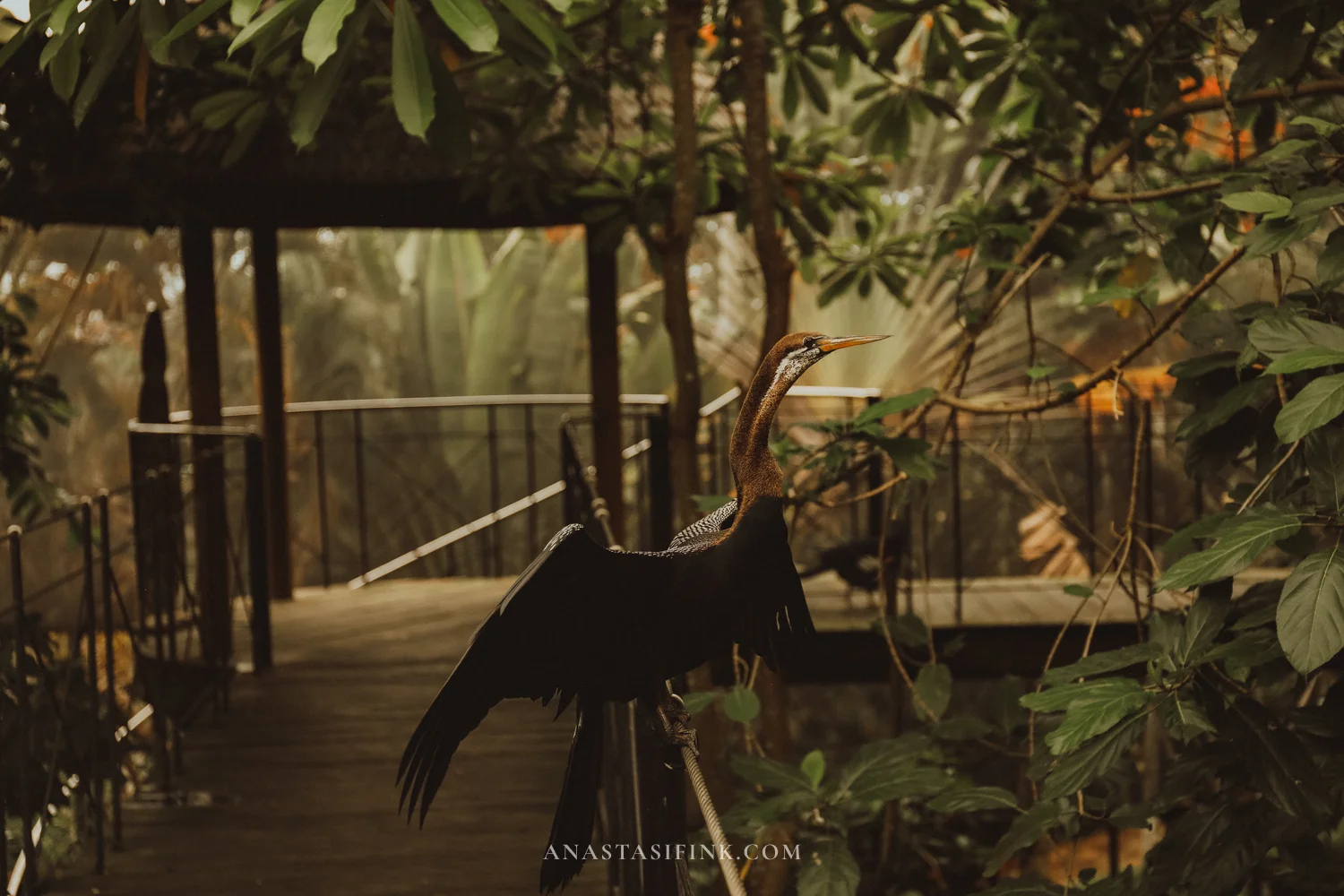
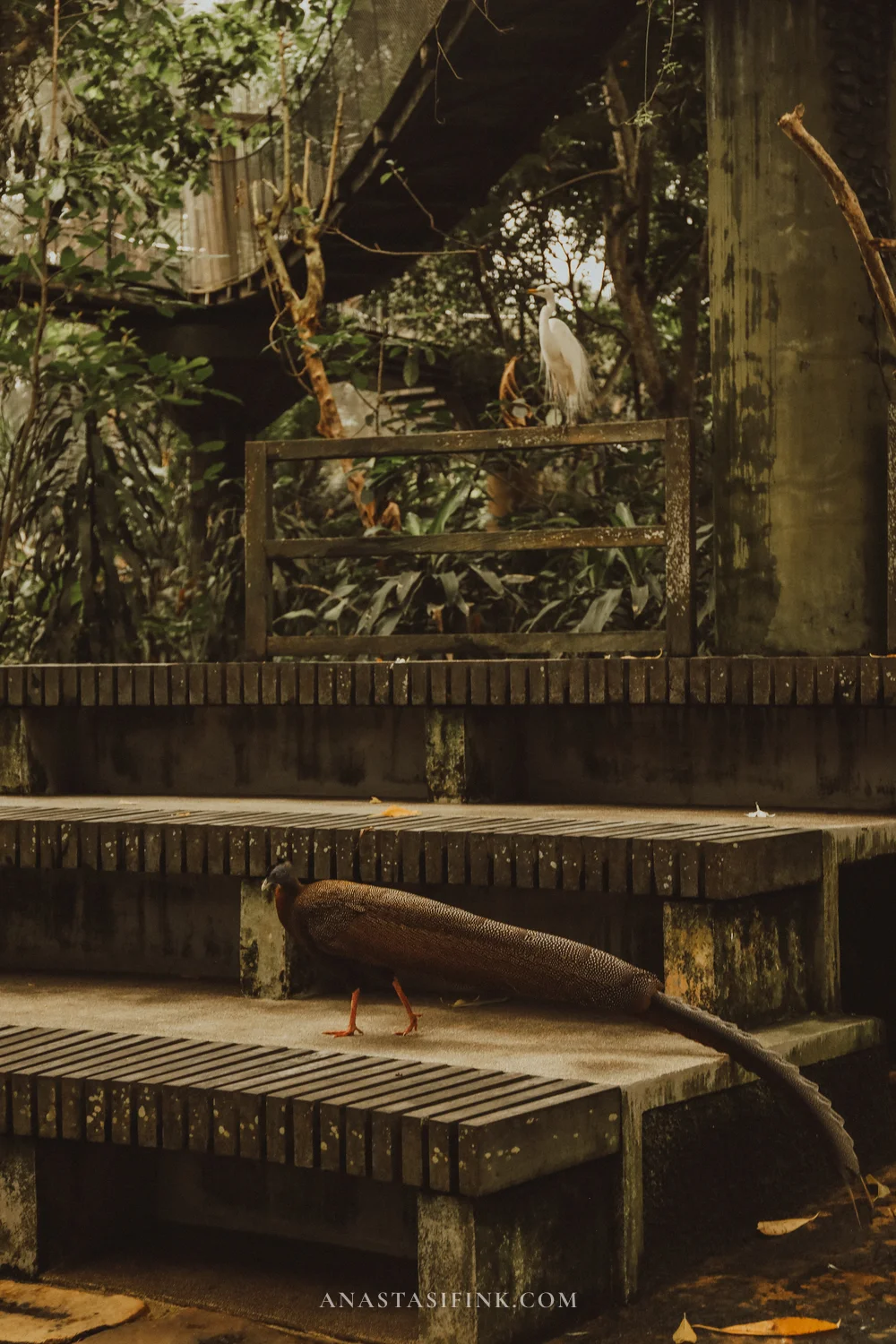
The park has an owl pavilion — inside there’s a reddish light that lets you see while creating a twilight atmosphere. An owl sits on a branch and stares at you with those big round eyes. There are also Marabou Storks, Anhingas spreading their wings to dry, and a Great Argus Pheasant on the amphitheatre stage.
Hornbills
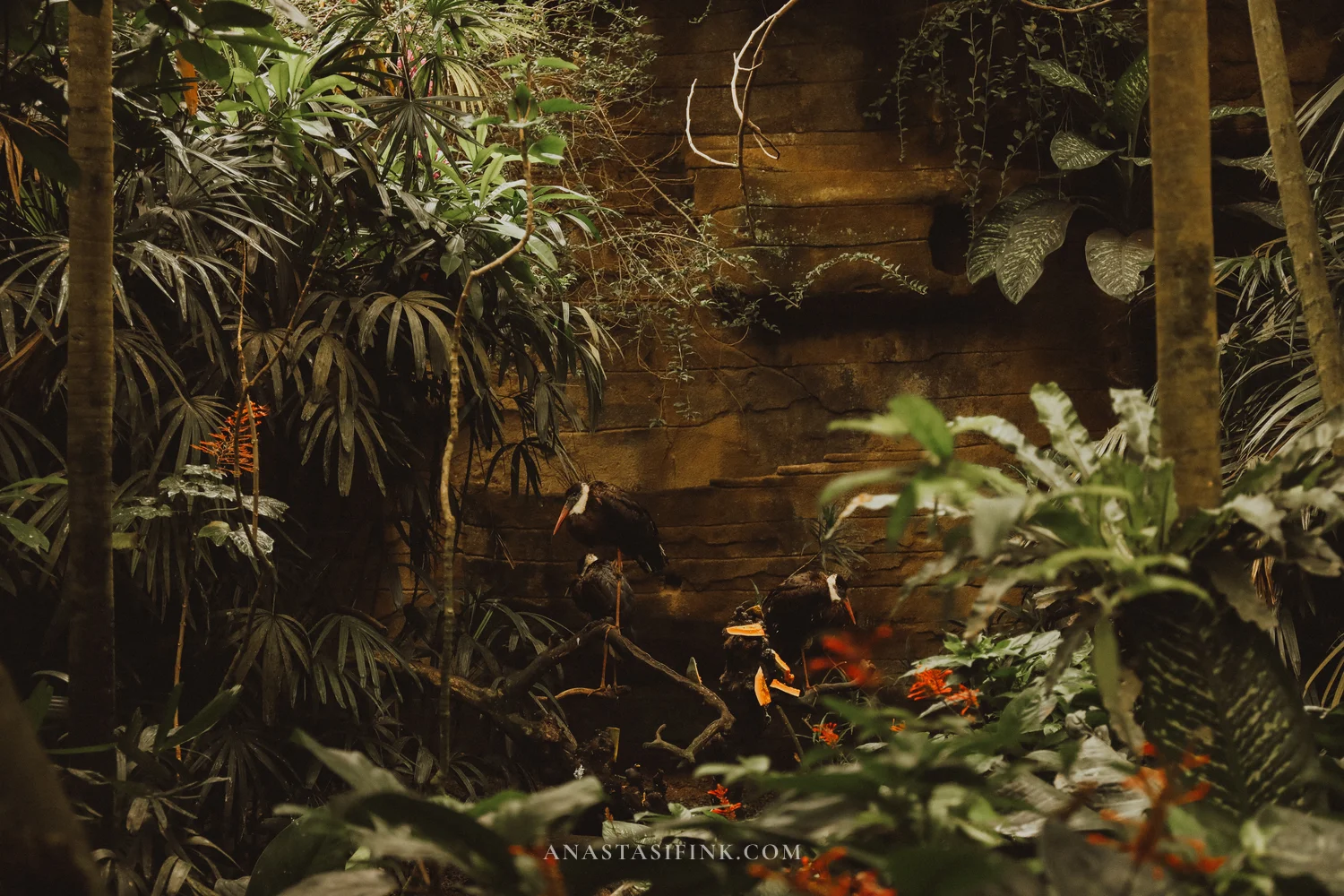
A separate enclosure houses hornbills — large birds with massive beaks. They hide among the foliage, so you have to look carefully to spot them.
Not Just Birds — Komodo Dragons
The park has a Komodo Experience zone with actual Komodo dragons. Yes, the world’s largest lizards, endemic to Indonesia. Komodo dragons live on the islands of Komodo, Rinca, and a few neighboring ones — and at Bali Bird Park, you can see them without flying to those islands. According to the schedule, dragon feeding takes place on Tuesdays at 11:00 and Fridays at 14:30.
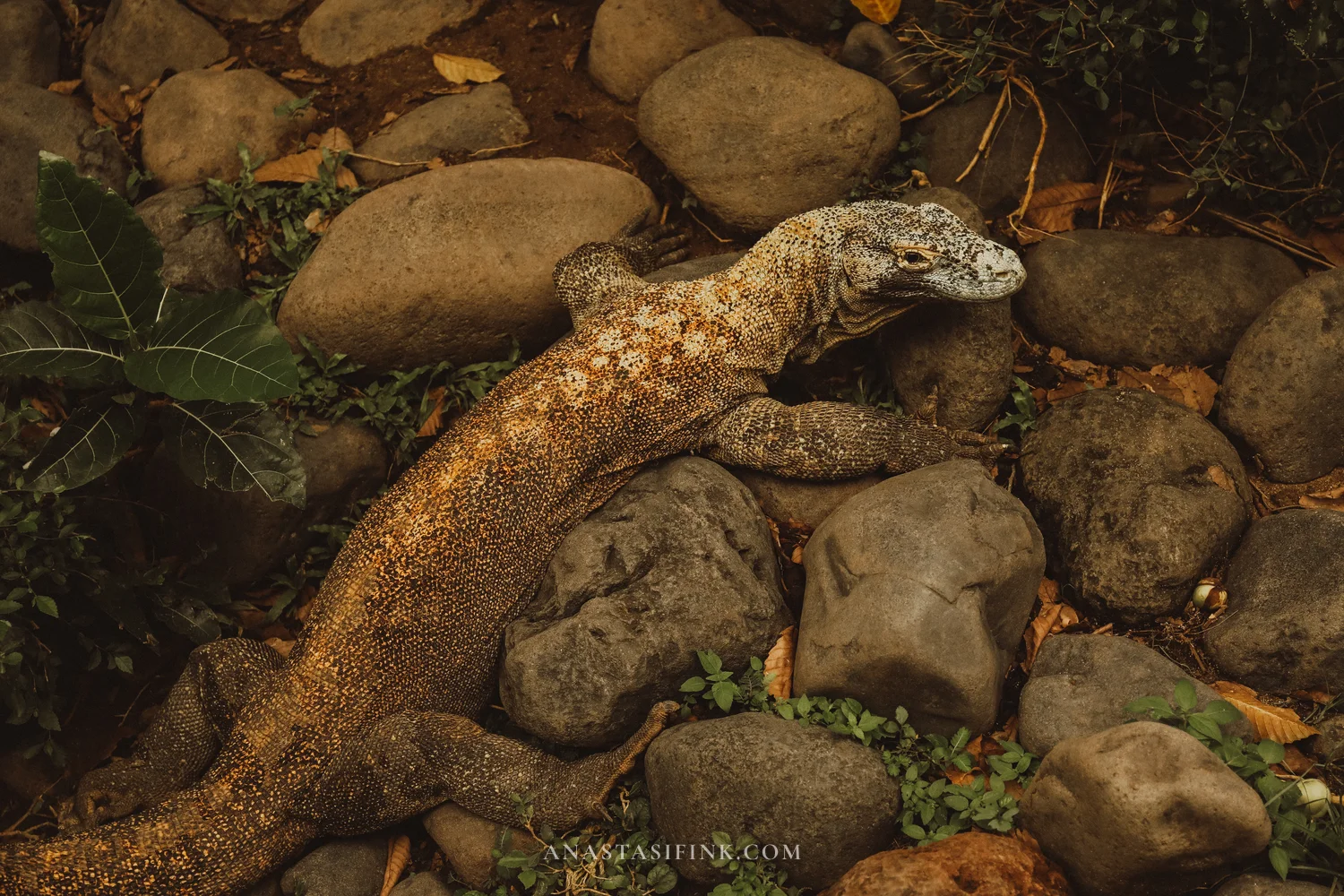
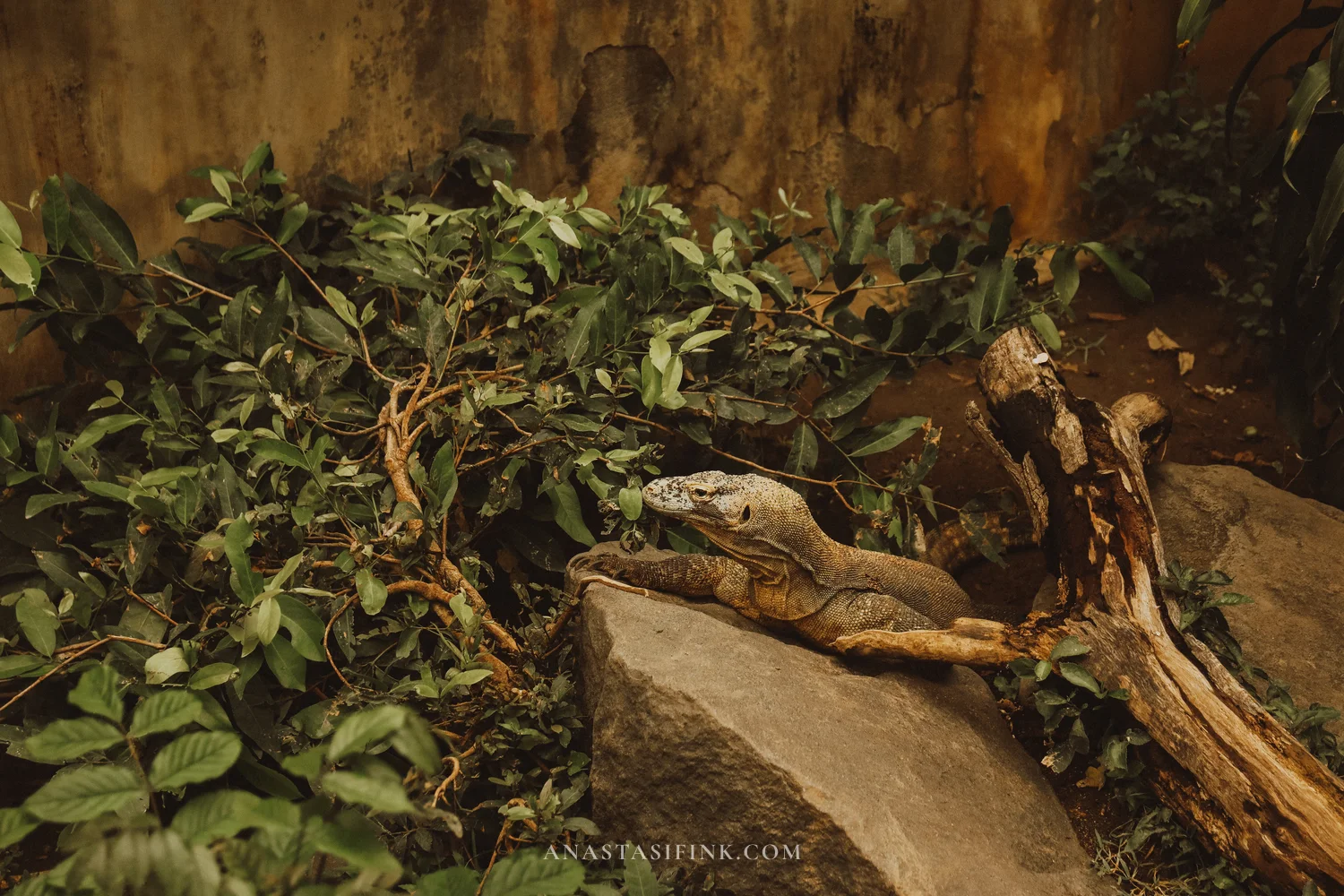
Komodo dragons — the largest lizards on the planet. They can grow up to 3 meters long
Park Zones
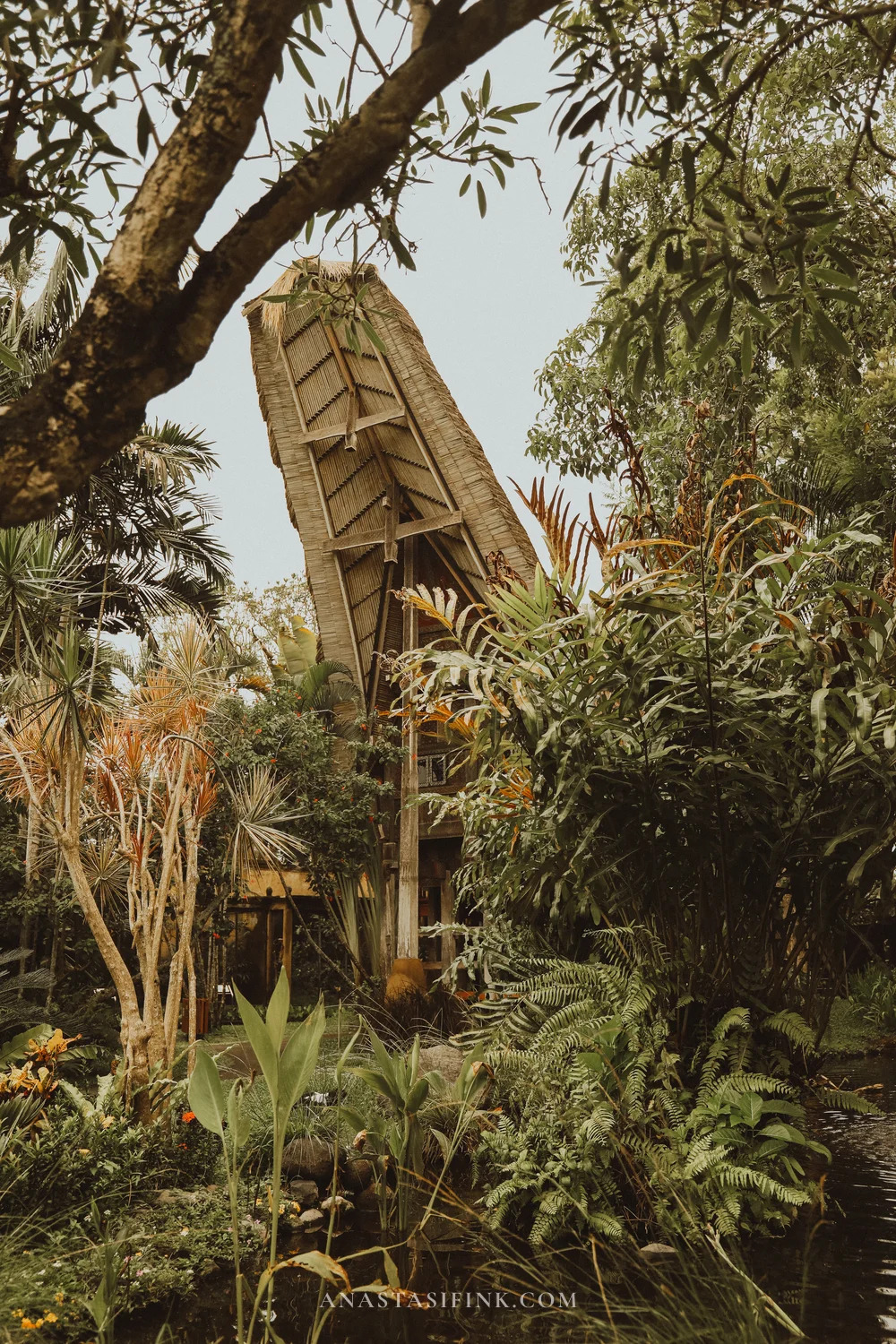
The park is divided into 7 zones: Bali, Java, Sumatra, Borneo, Papua, South America, and South Africa. Each features birds from the corresponding region. There’s also a standalone Owl House built in the Toraja style, where owls live in dim light.
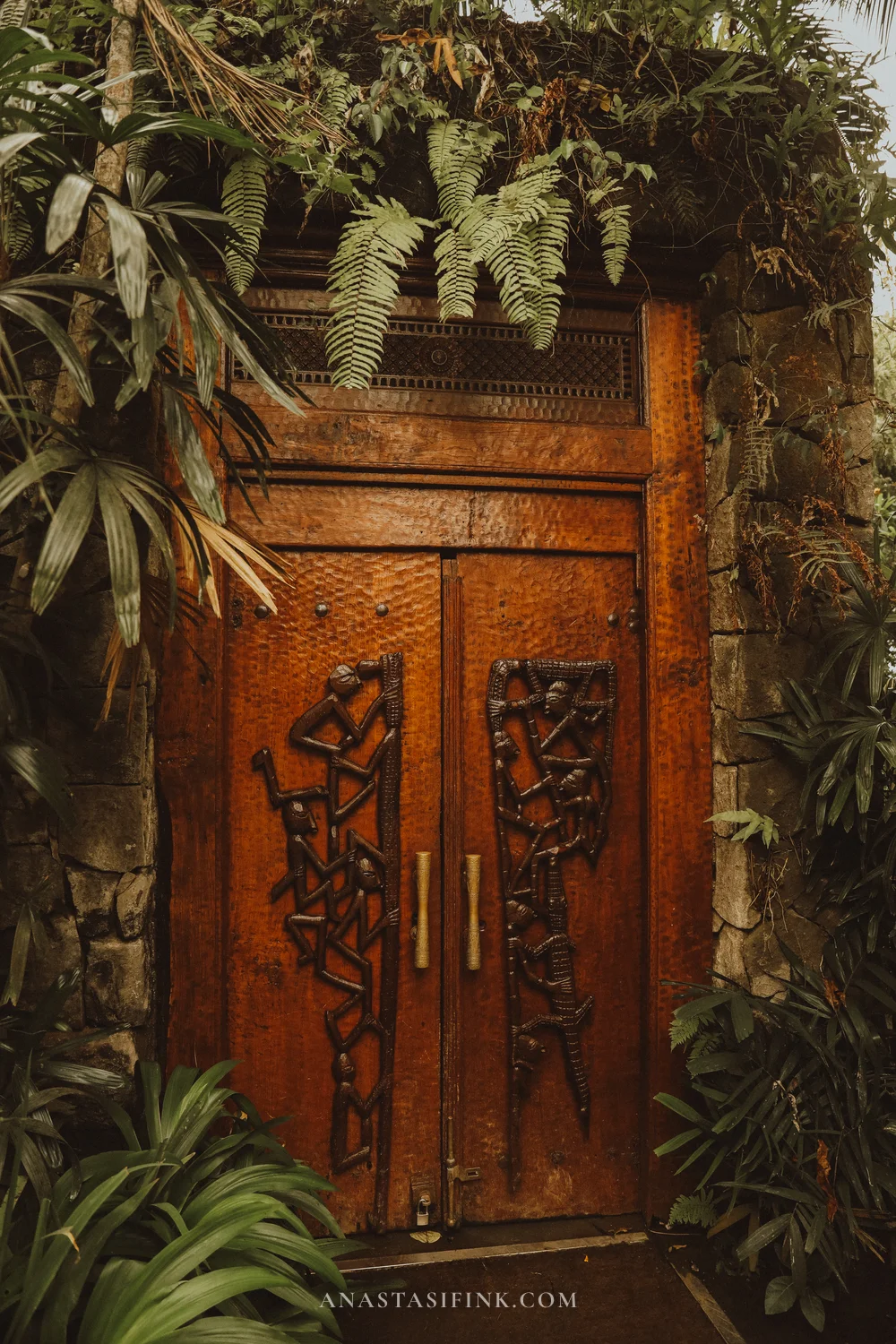
Some zones are walk-in aviaries — you enter through a special door and find yourself inside with the birds. No mesh or bars between you — birds fly around, sit on railings and branches, and land on your shoulders. These walk-in zones are where you can hand-feed lorikeets. The doors are heavy and beautiful — some are carved with birds in traditional Balinese style.
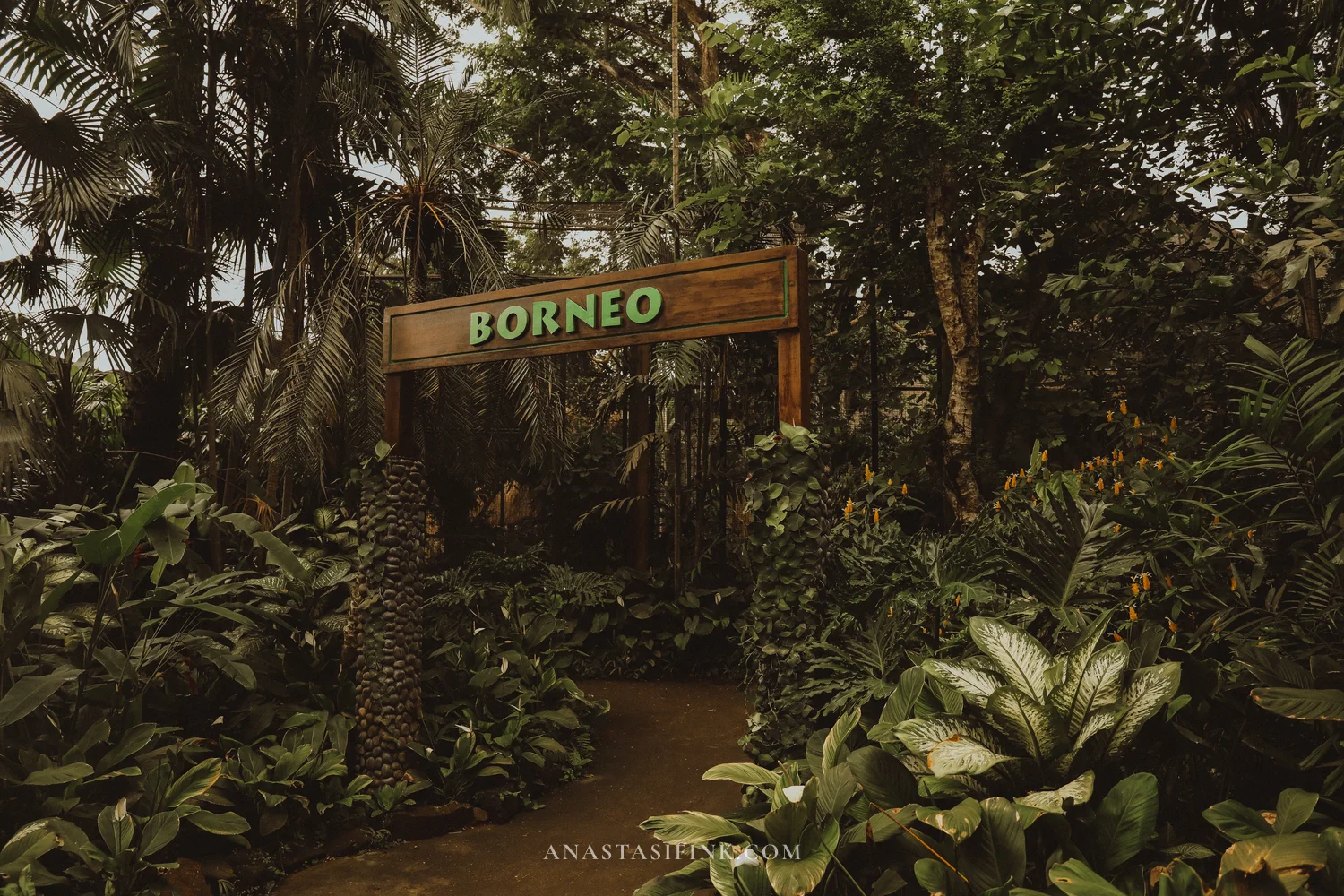
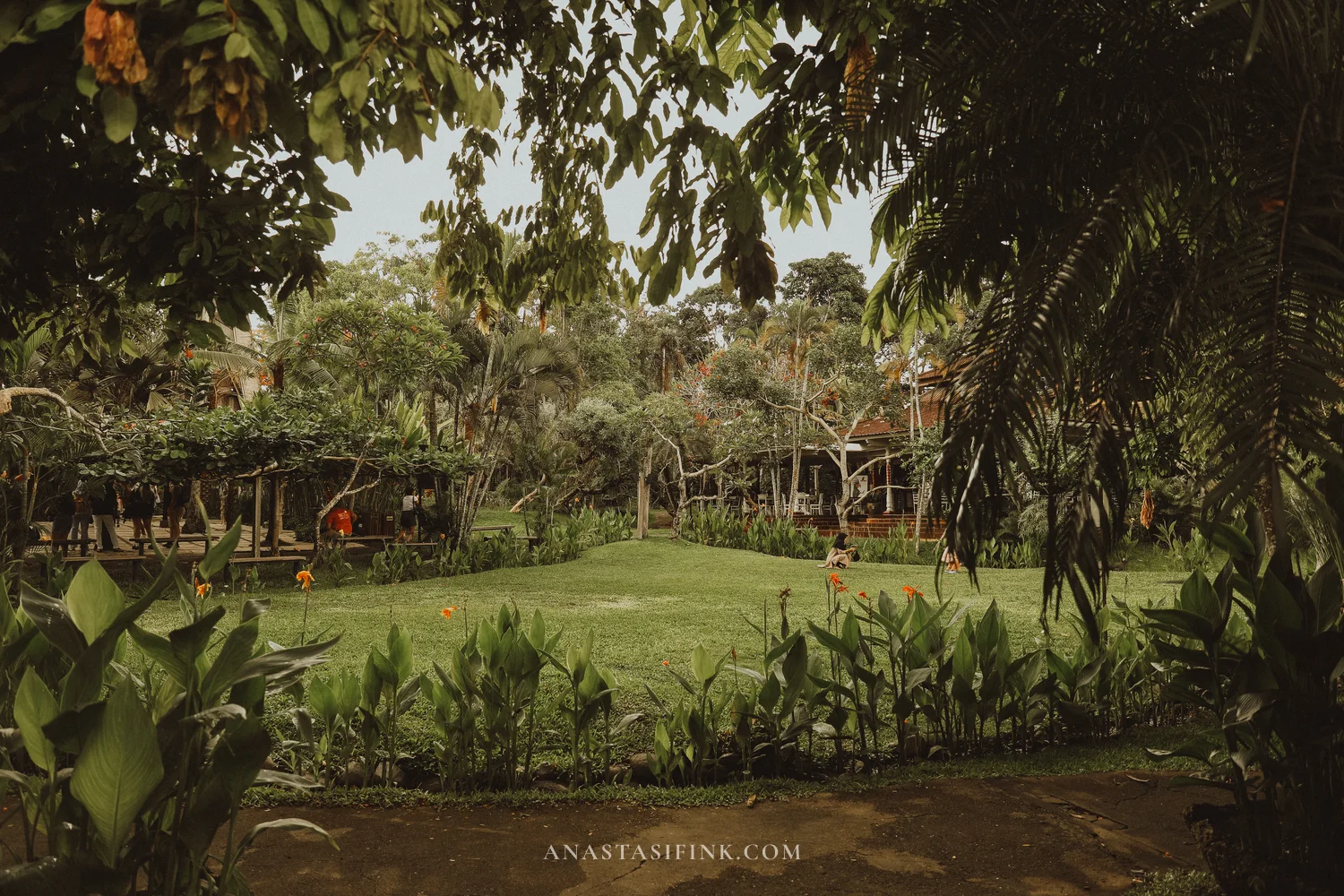
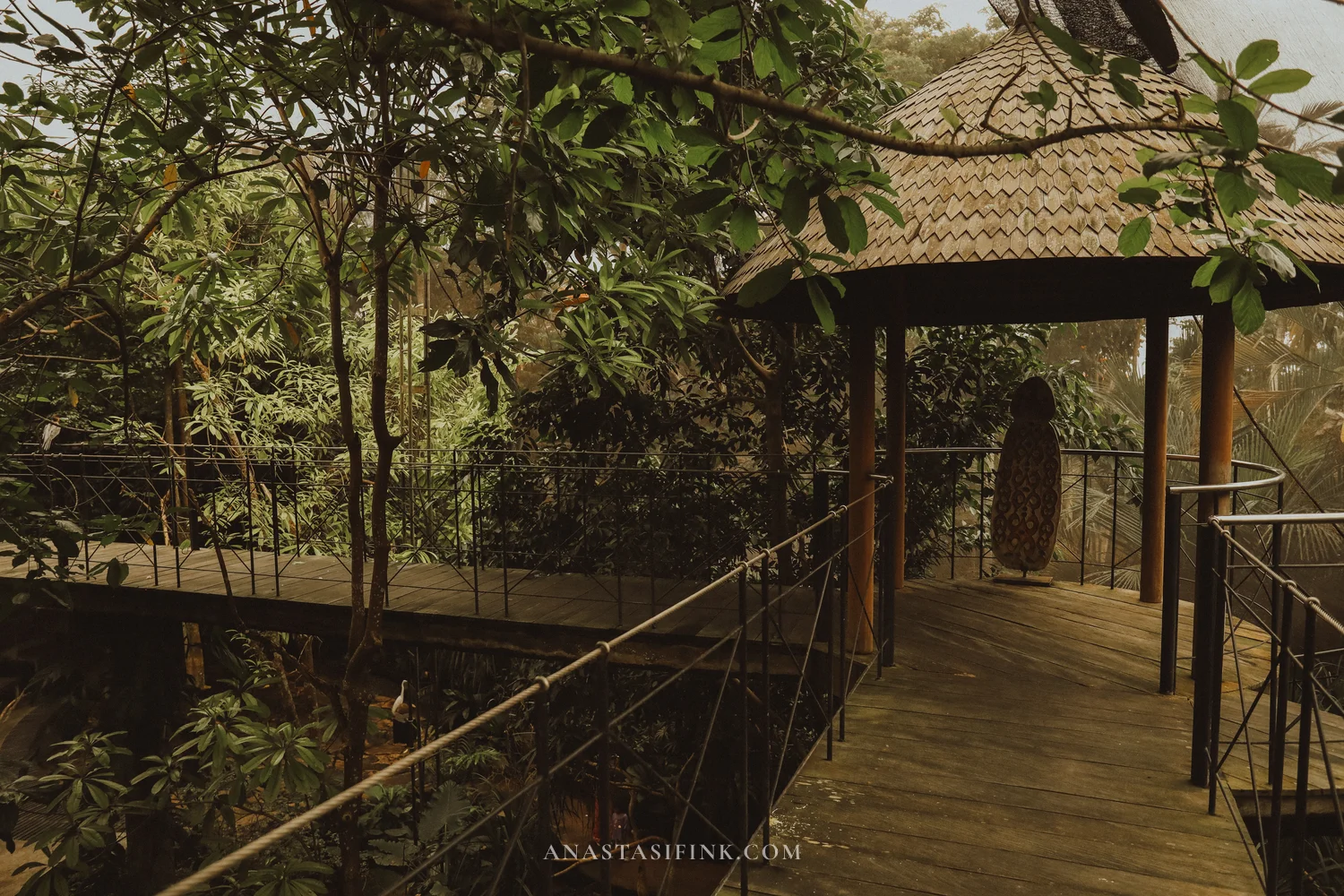
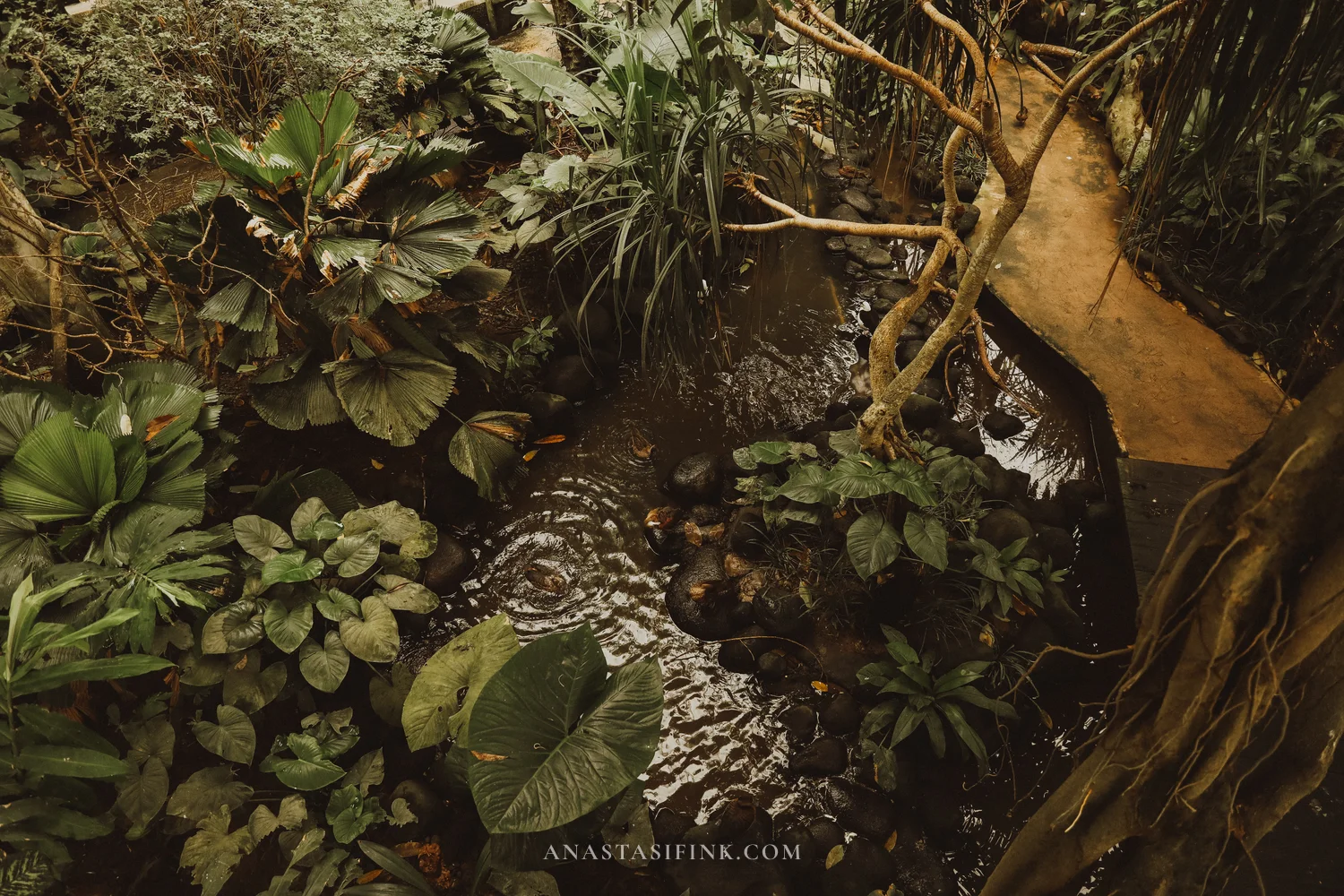
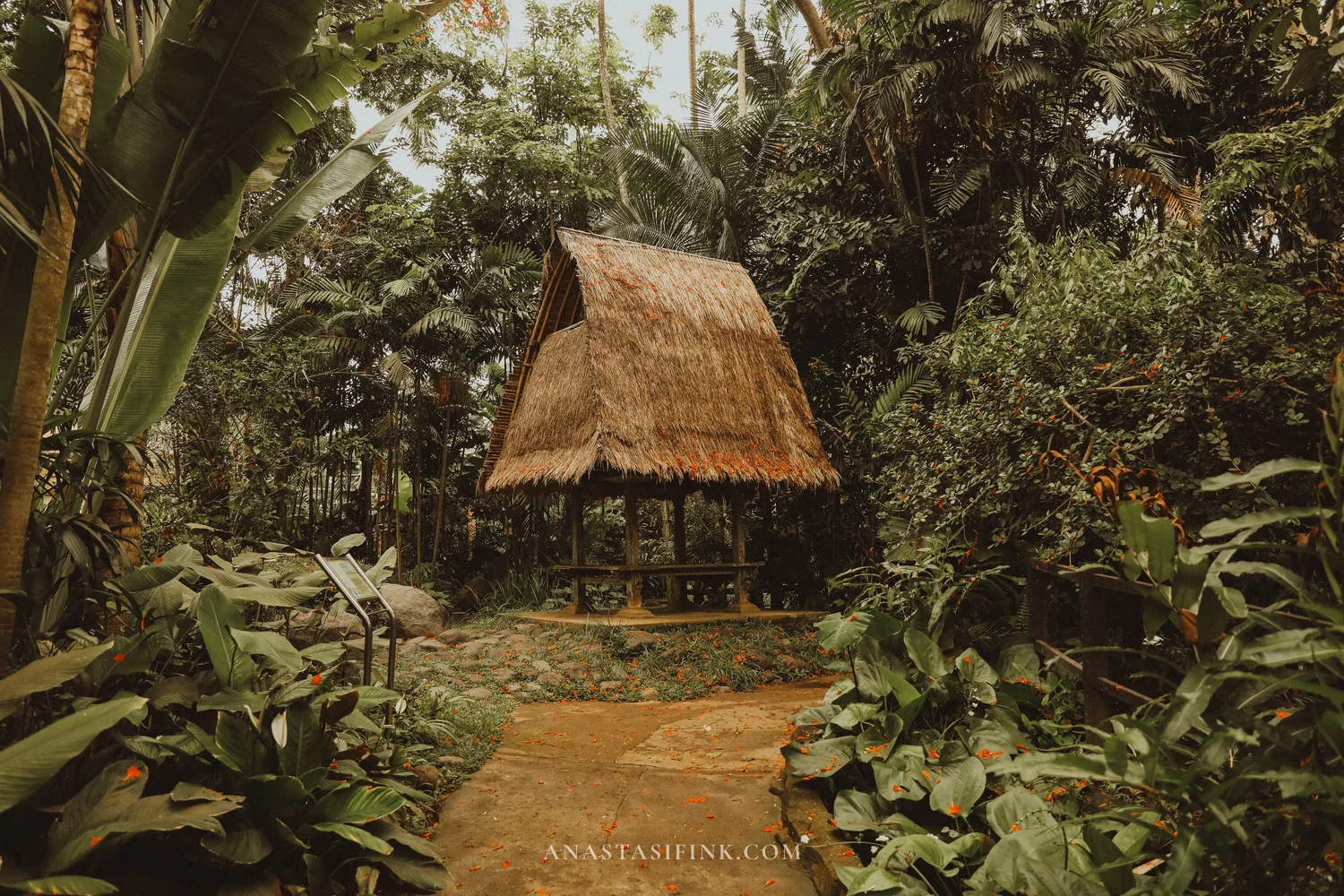
The park grounds are more than just aviaries. Between zones you’ll find tropical trees, flowers, waterfalls, and wooden bridges. It’s a lovely walk even without the birds.
Architecture and Decor
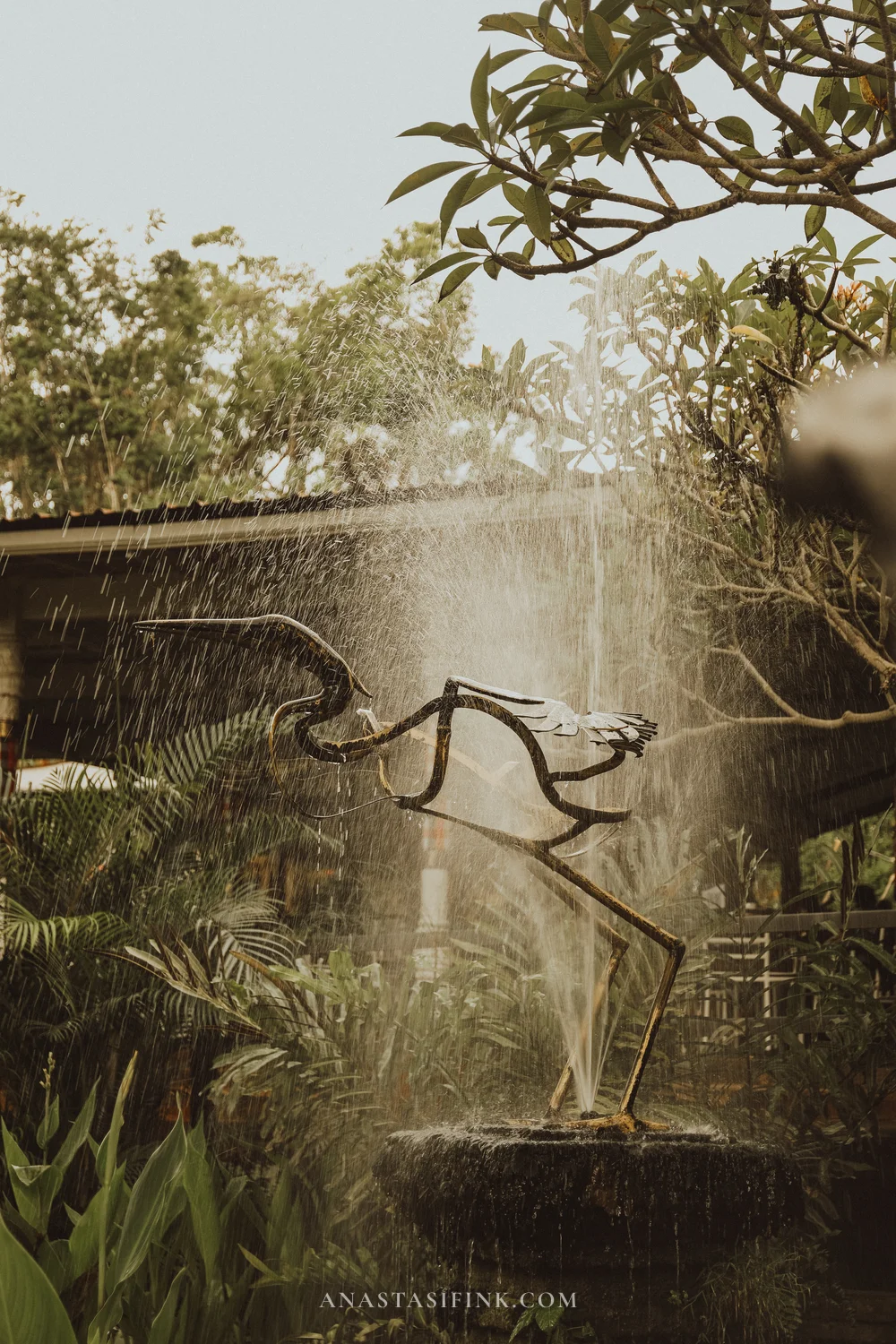
Traditional Indonesian structures are scattered throughout the park: Toraja-style houses (with “horned” roofs — the architecture of the Toraja people from the island of Sulawesi), Balinese huts with thatched roofs, carved doors, and metal bird sculptures.
Tropical Plants and Insects
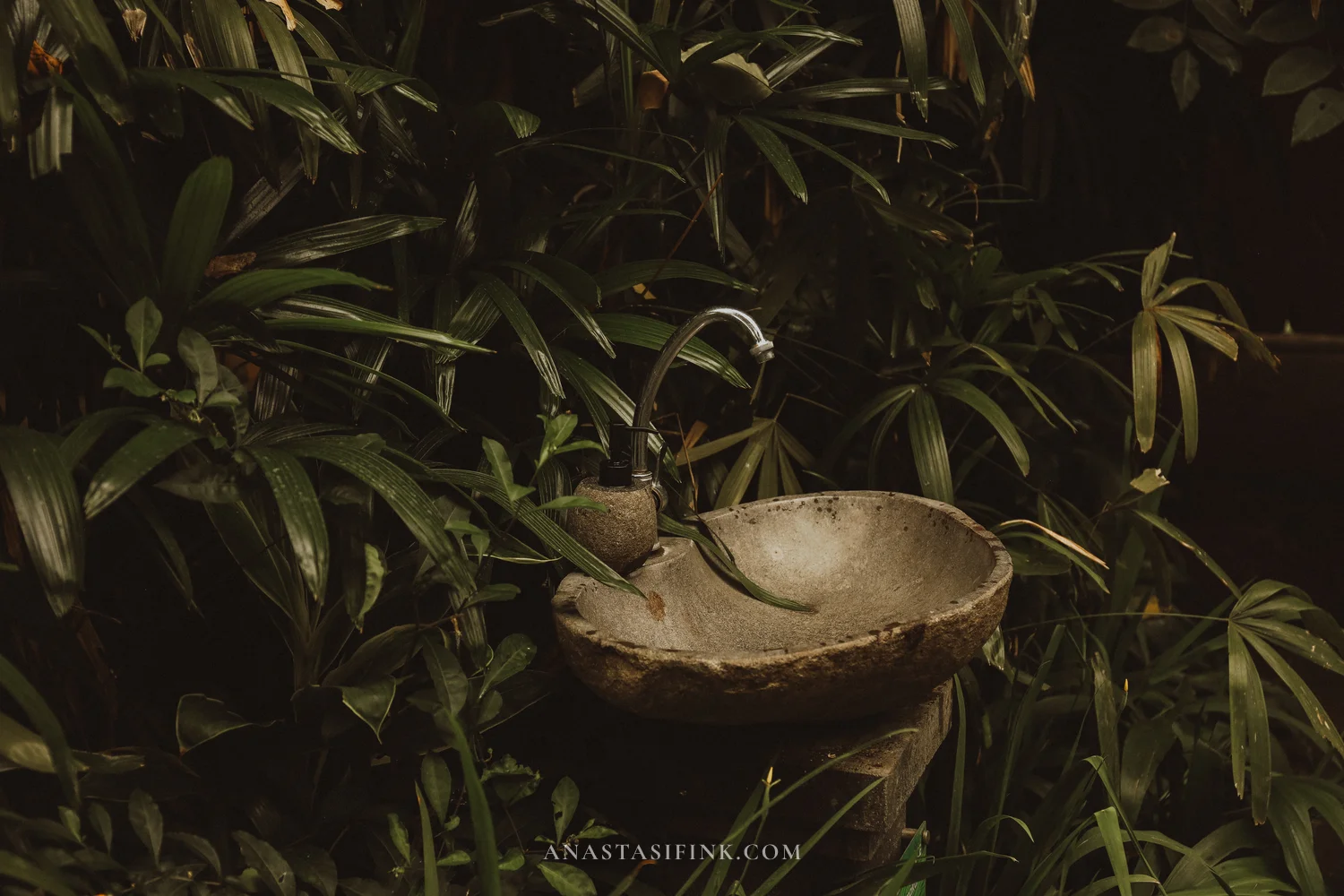
Beyond birds, there’s plenty of interesting flora here. Heliconias with orange-red “claws,” cannonball tree flowers, passionflower, yellow shrimp plant, and pomelo growing right on the trees.
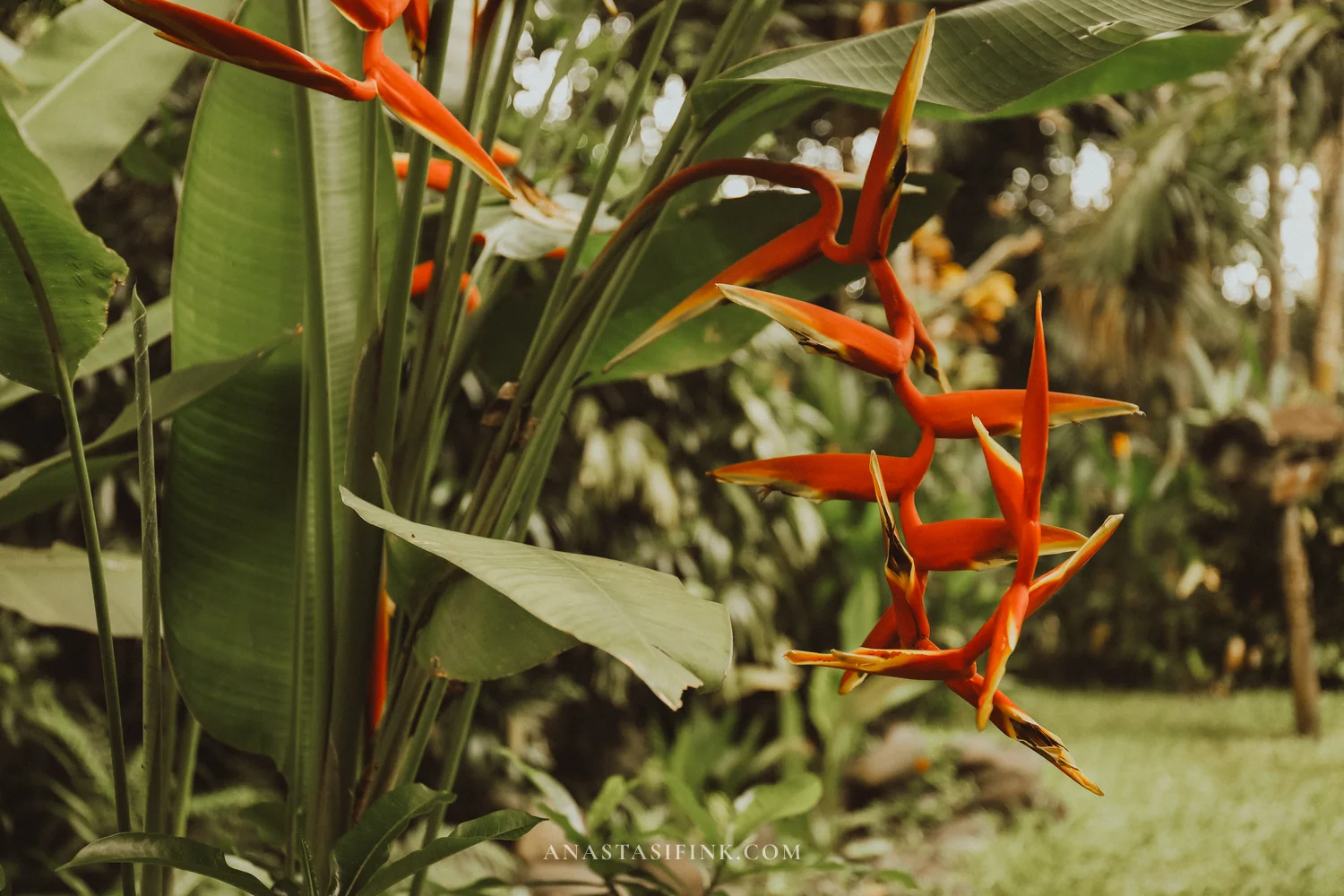
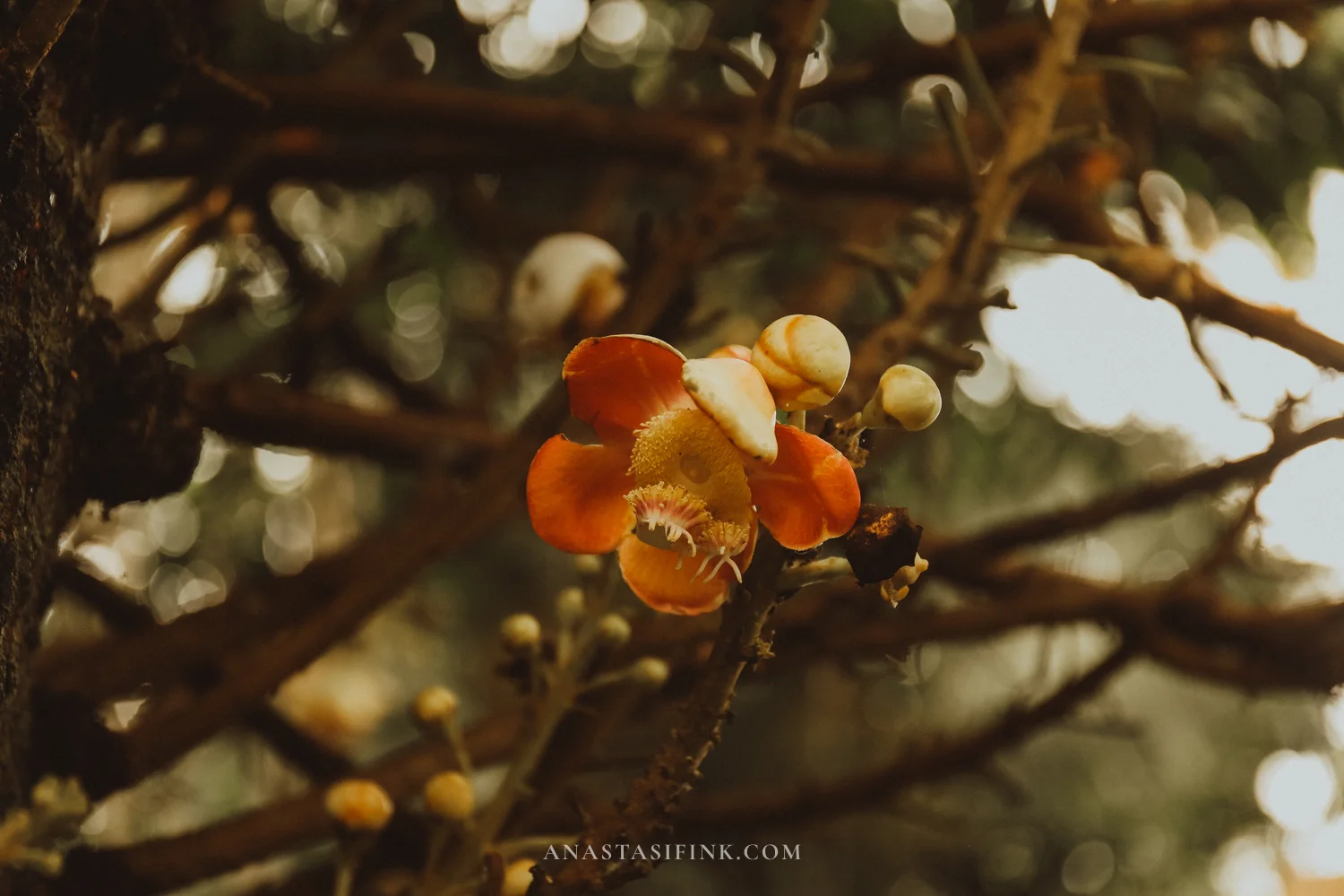
Heliconia and cannonball tree flower — tropical botany at the park
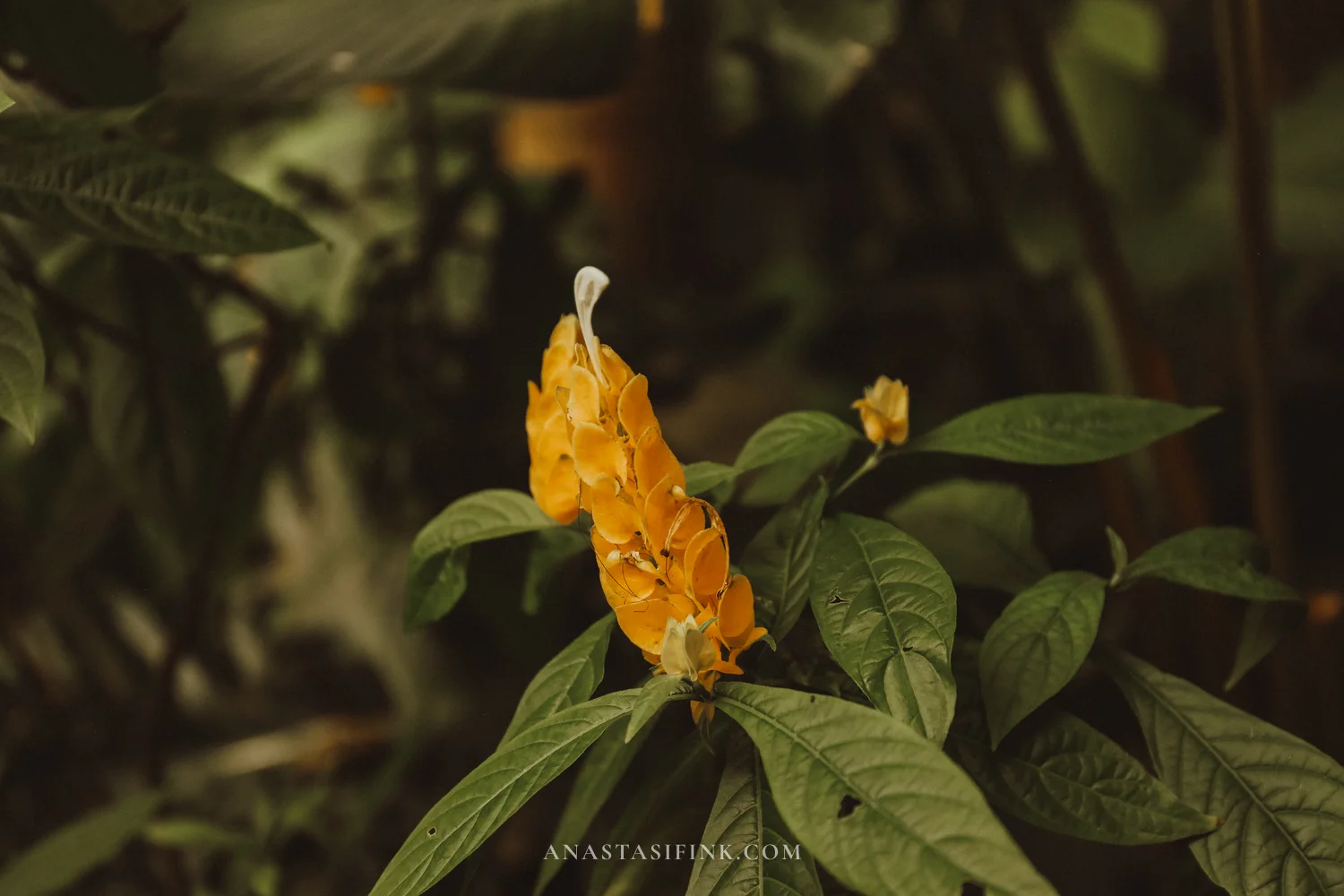
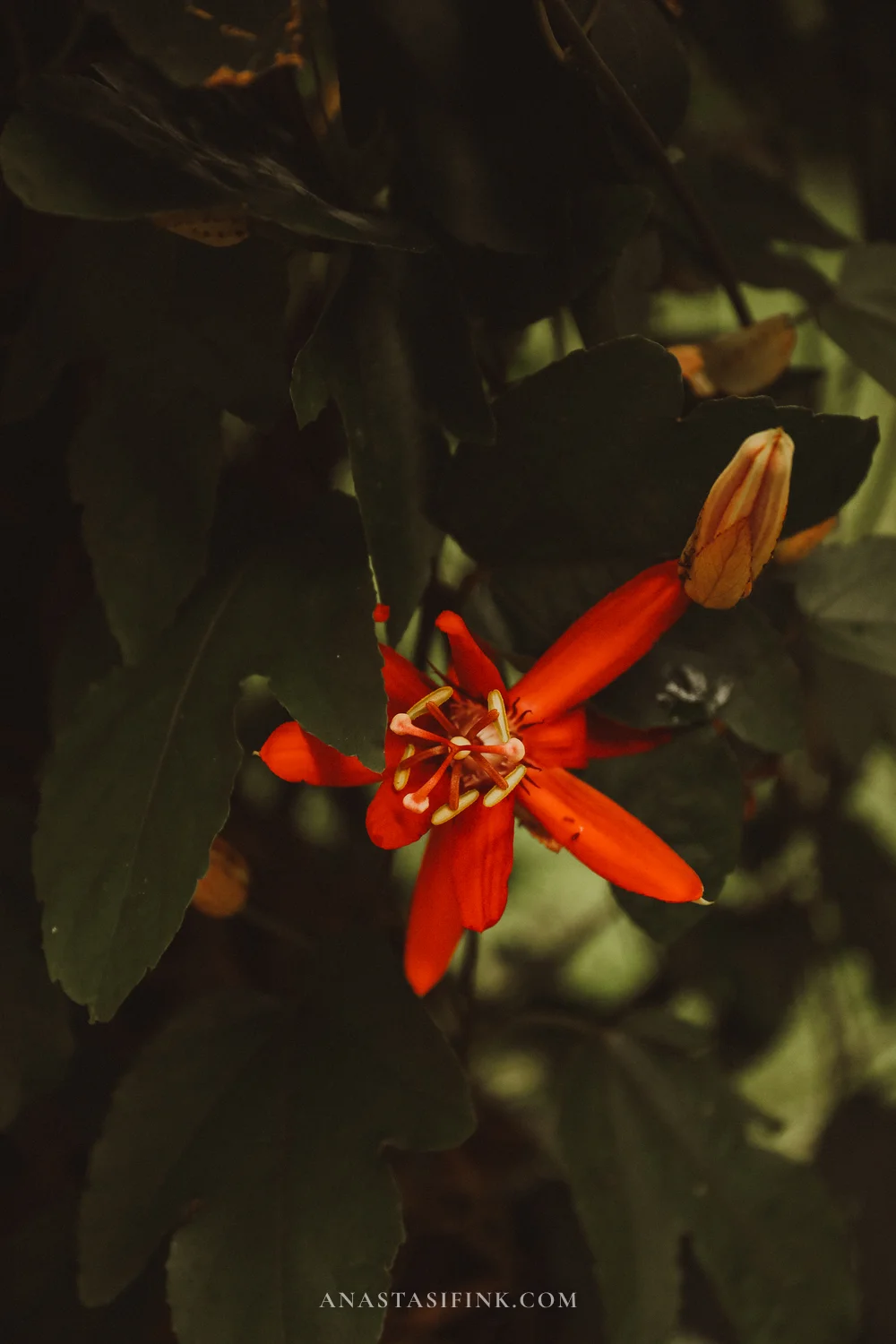
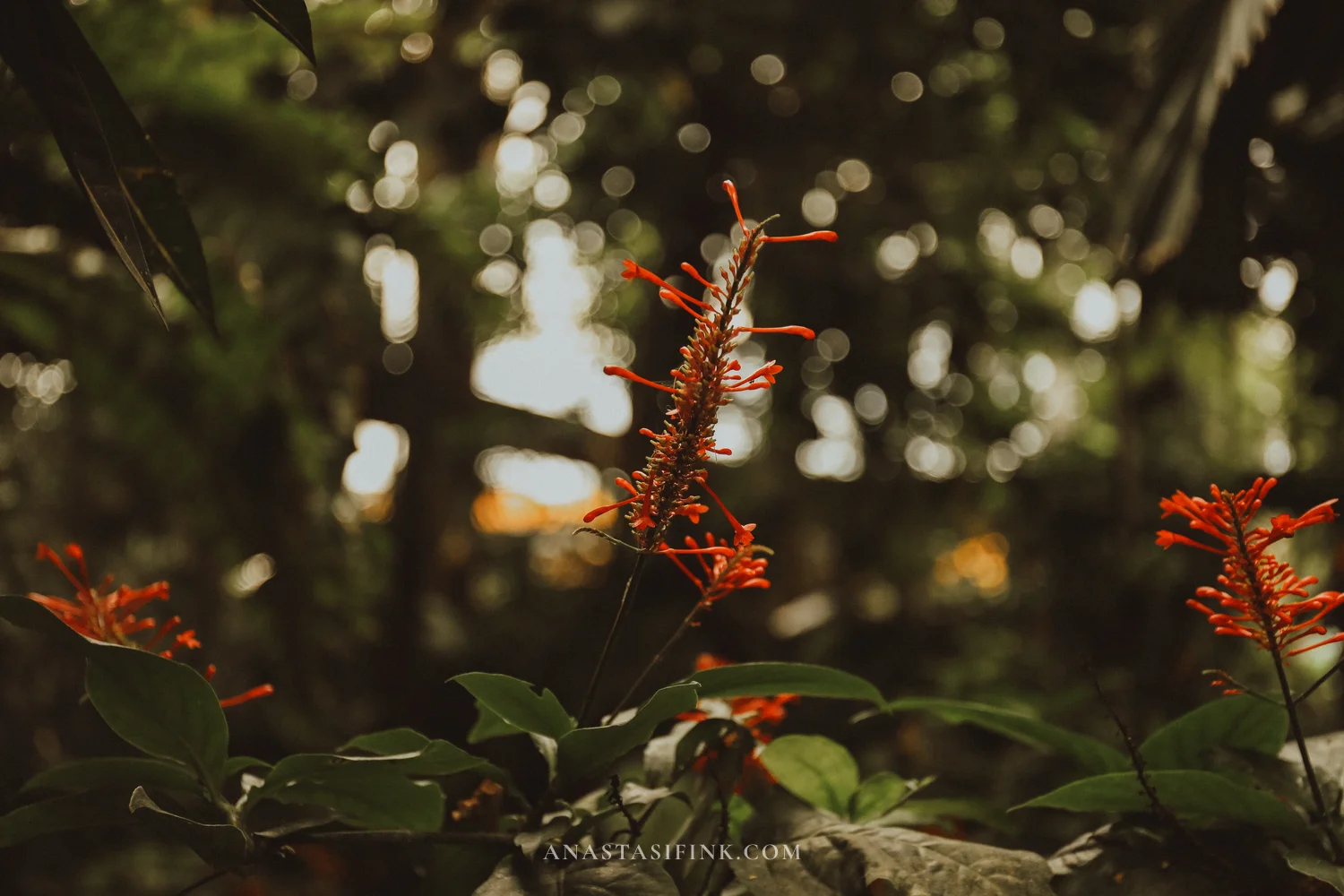
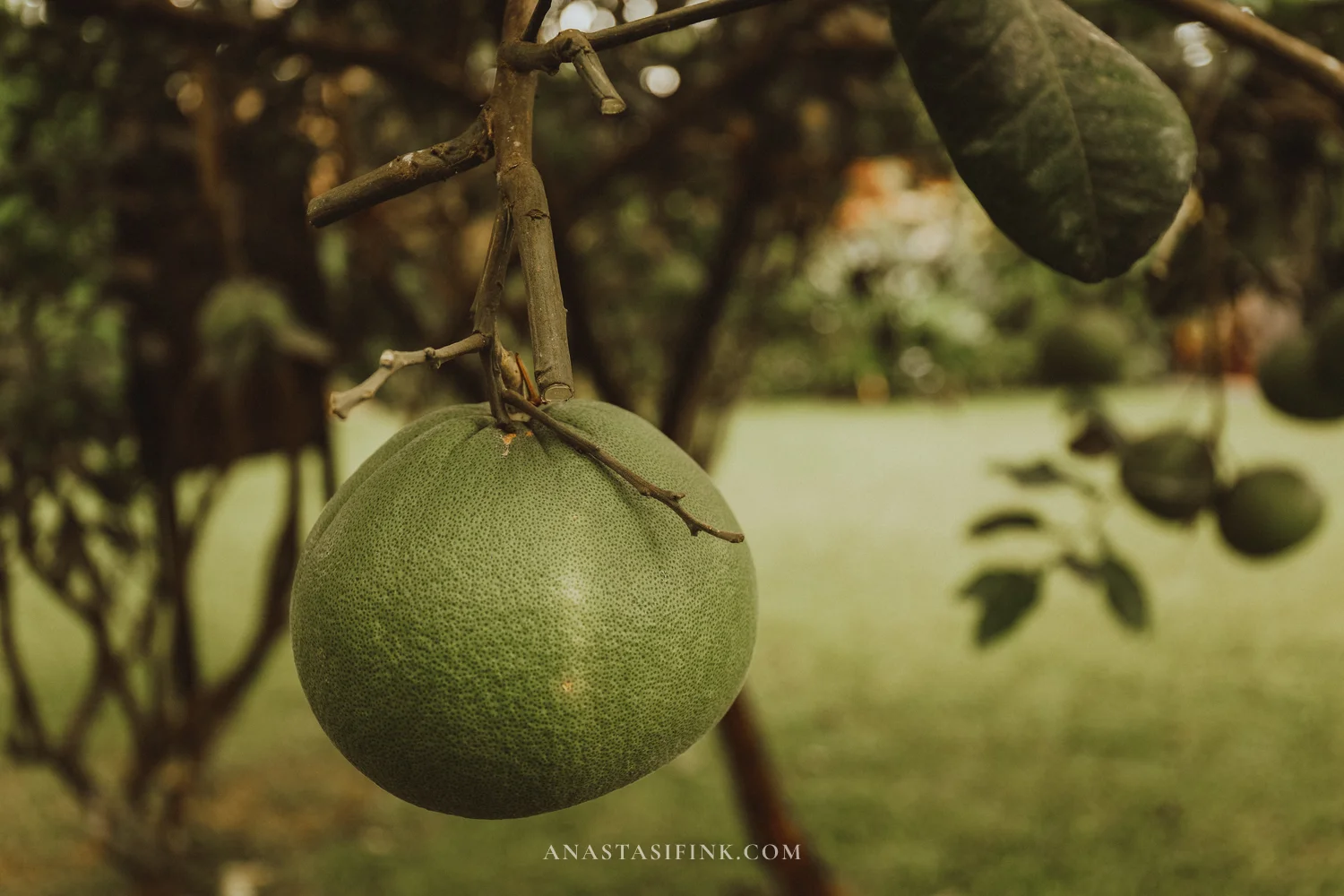
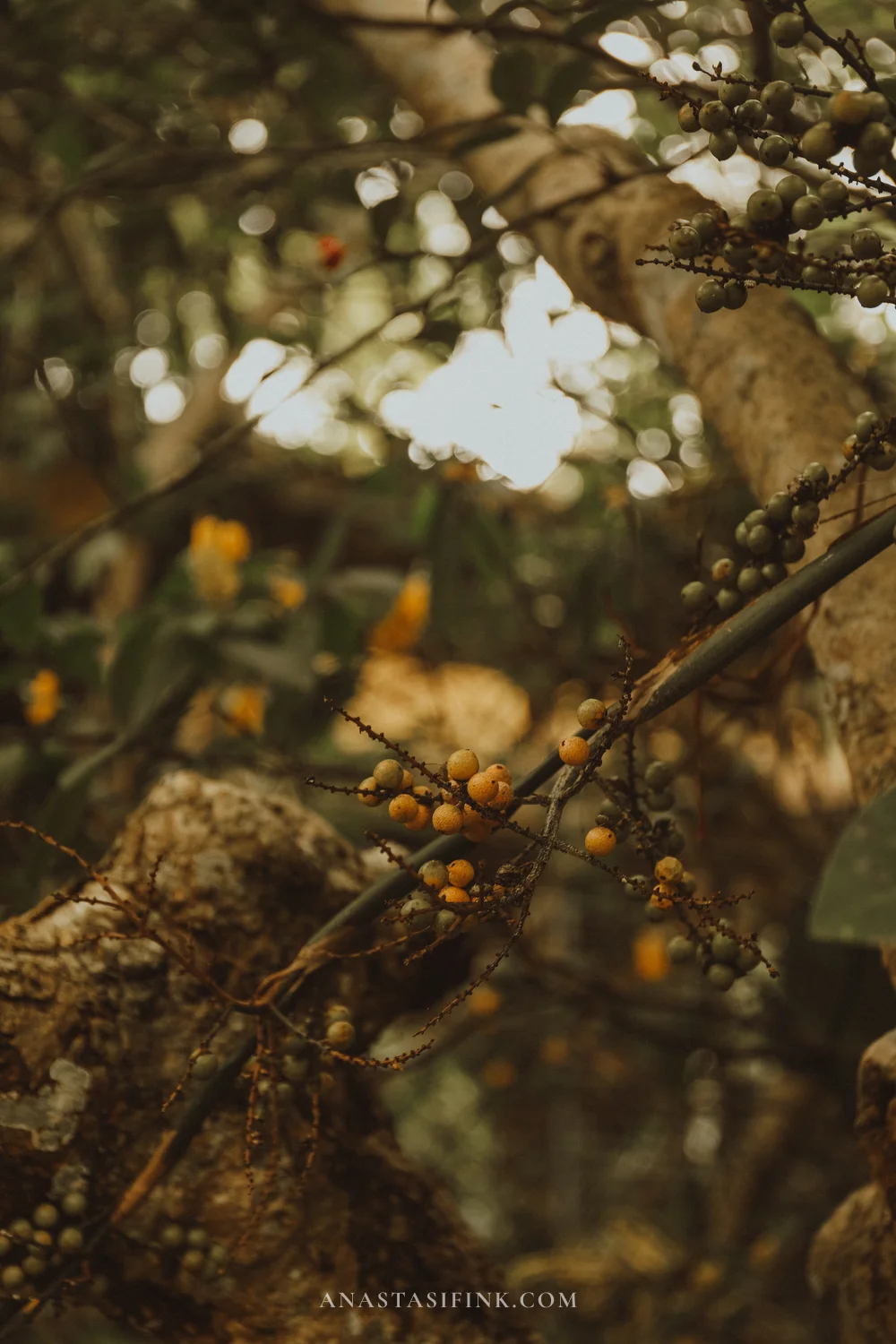
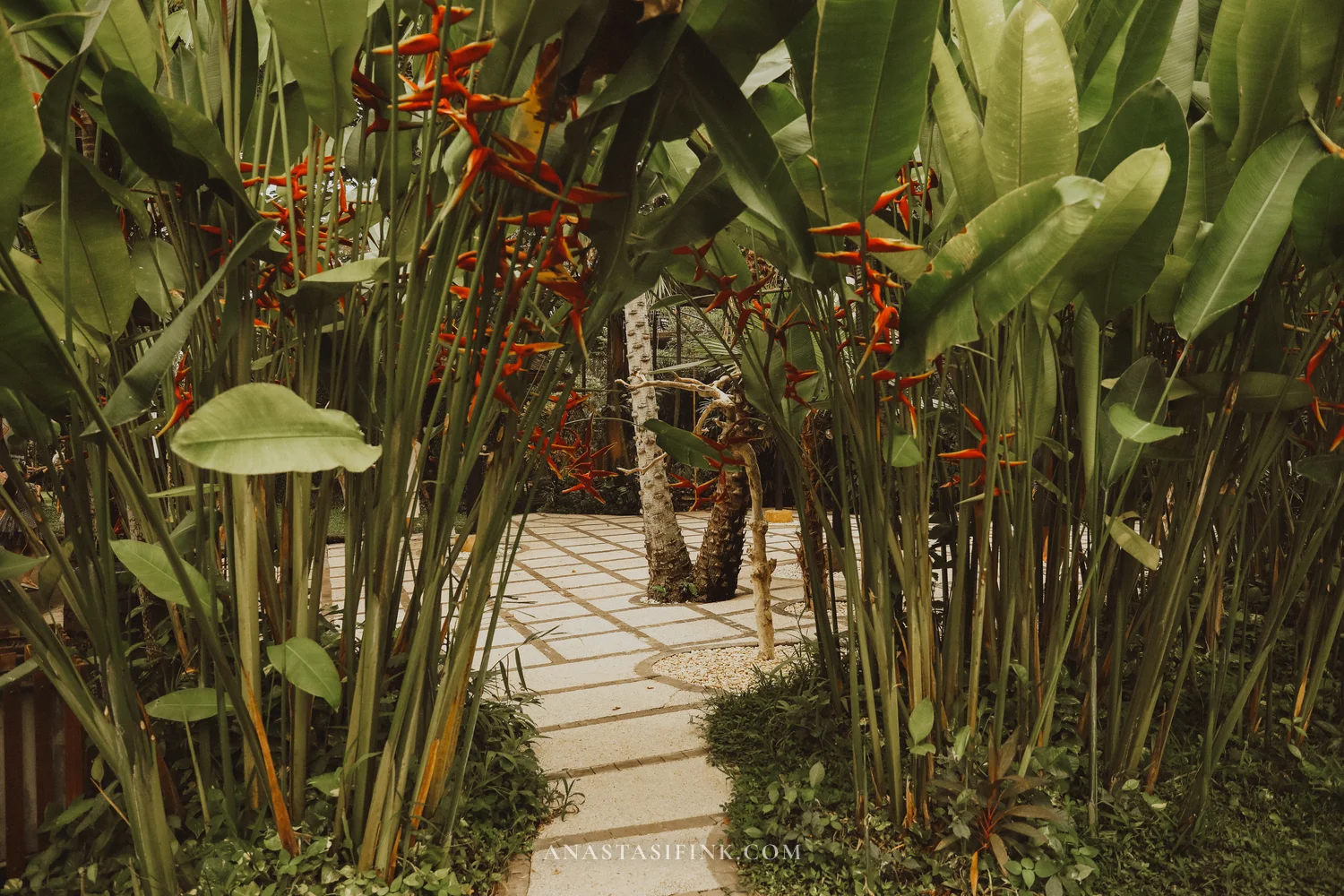
You’ll also spot colorful tropical ladybugs on leaves — orange with black spots, and bigger than what we’re used to back home.
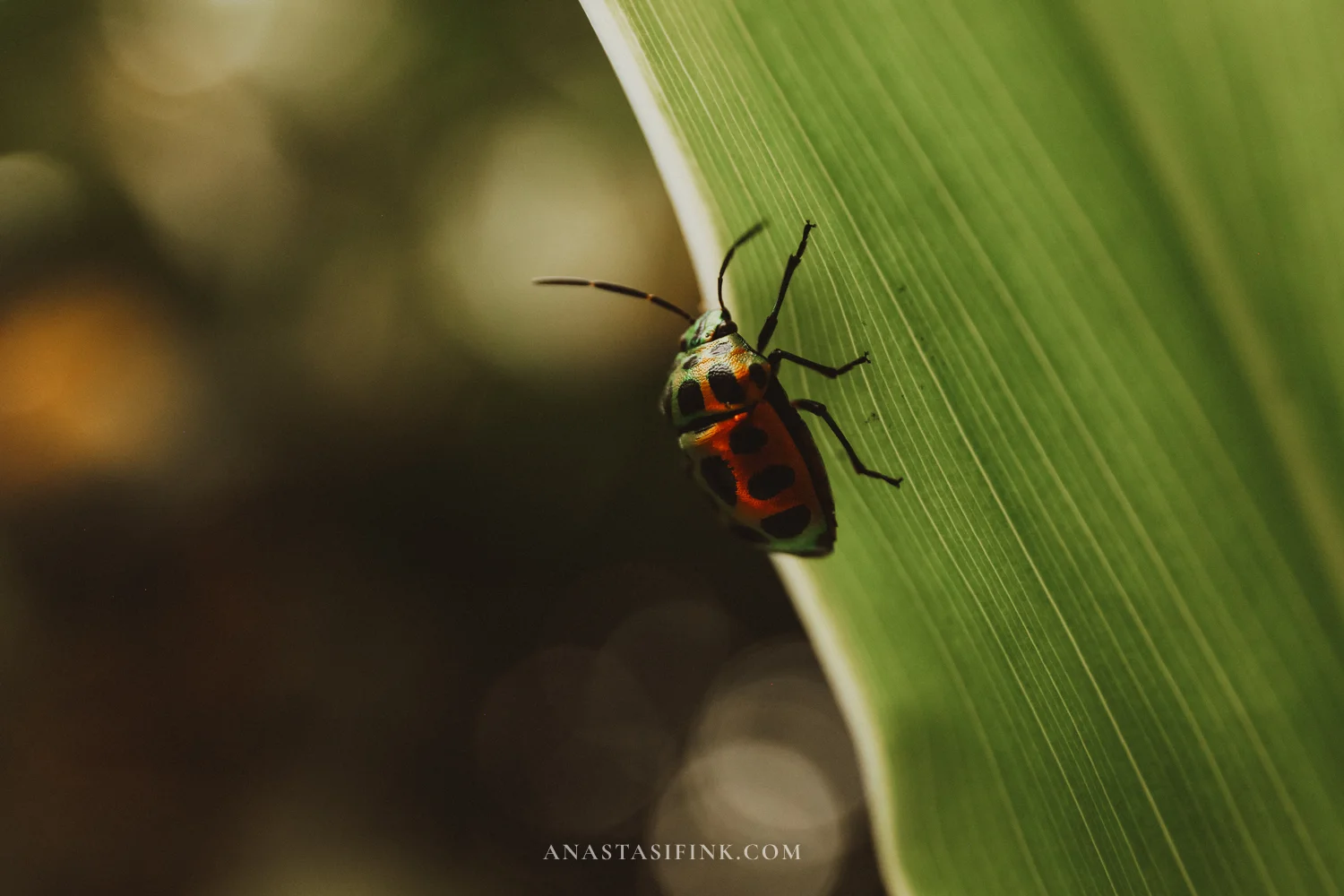
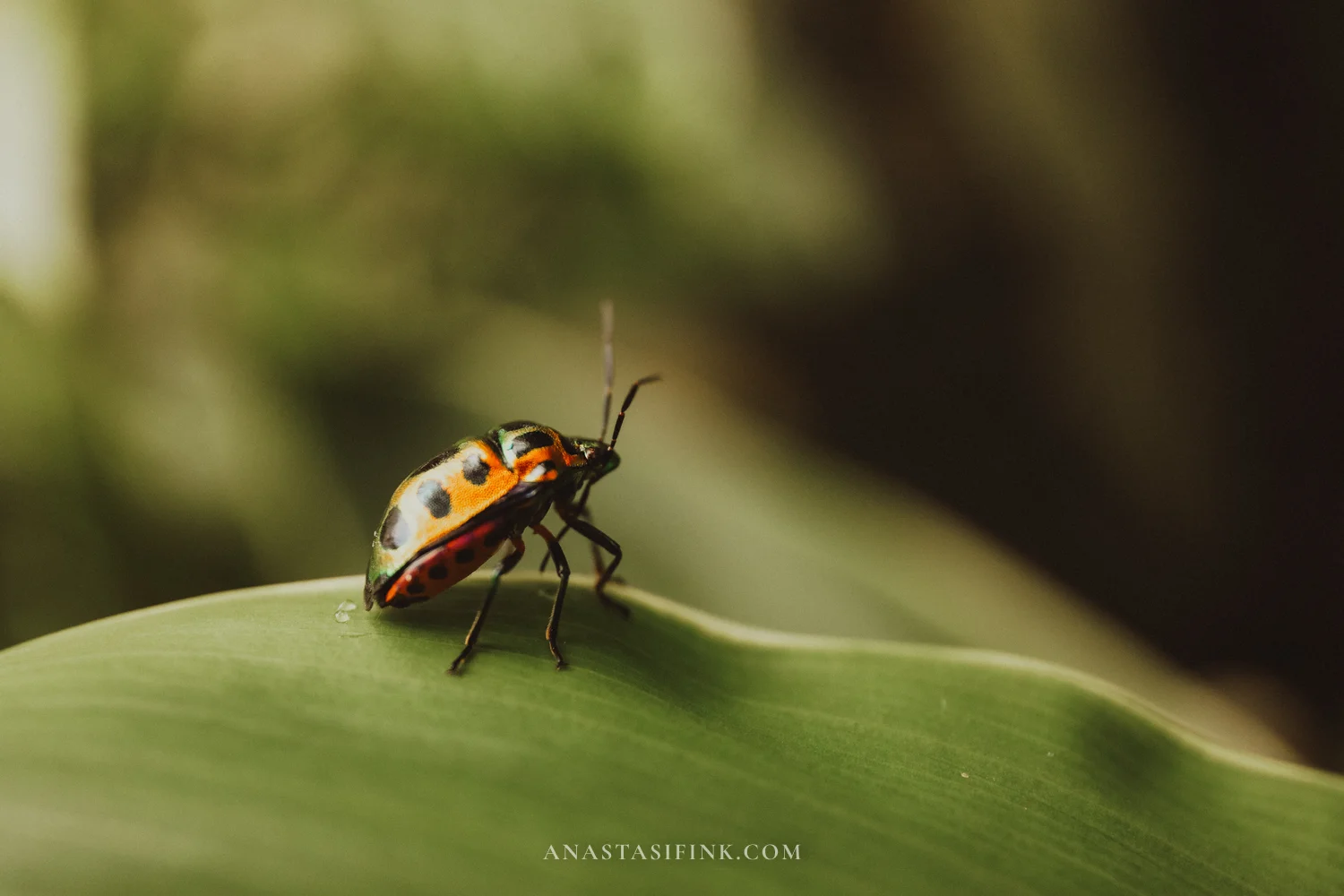
Tropical ladybugs — spotted these between aviaries
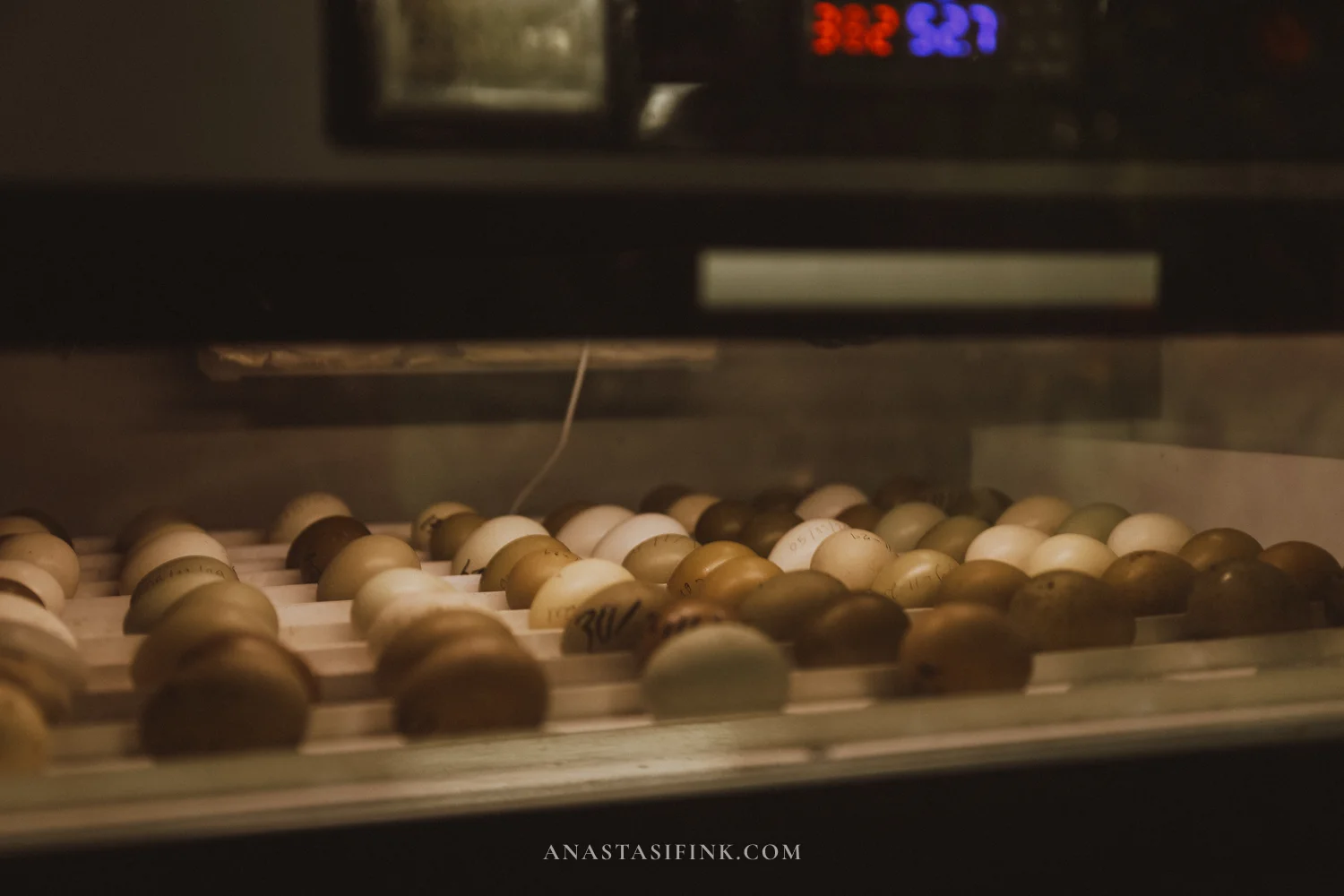
Incubator — Watch Chicks Hatch
The park has an incubator where you can see eggs from different bird species. Under glass, dozens of eggs sit in rows — small to large, in different shades. Temperature and humidity are electronically controlled. If you’re lucky, you might even catch a chick hatching.
Shows and Events — Check the Schedule
This is important: the park runs daily bird shows. There are several, and it’s worth checking the schedule in advance so you don’t miss anything good.
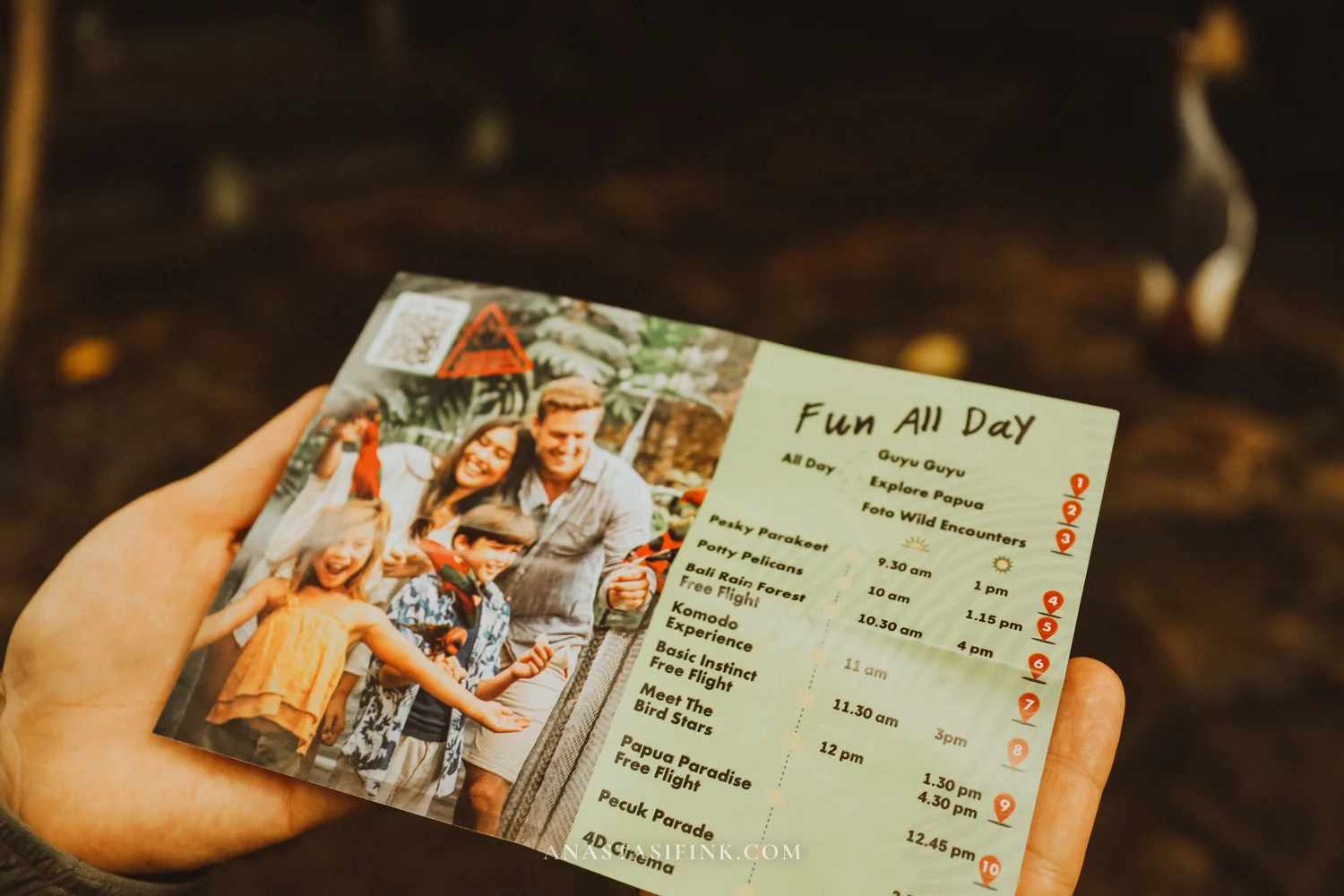
Here are the main shows (from the park brochure):
- Guyu Guyu — all day, hand-feed the birds
- Explore Papua — all day, Papua zone
- Foto Wild Encounters — photo ops with birds, all day
- Pesky Parakeet — 9:30 and 13:00
- Potty Pelicans — 10:00 and 13:15
- Bali Rain Forest Free Flight — 10:30 and 16:00
- Komodo Experience — check for times
- Basic Instinct Free Flight — 11:00
- Meet The Bird Stars — 11:30 and 15:00
- Papua Paradise Free Flight — 12:00, 13:30, and 16:30
- Pecuk Parade — throughout the day
- 4D Cinema — 12:45
When I was leaving, one of the bird events was just starting at the amphitheatre. I wish I’d stayed — from what I’ve read, the free flight shows with birds soaring over the audience are truly spectacular.
How to Get There
The park is in the village of Batubulan, halfway between Ubud and Bali’s southern resort areas. The easiest way to get there is by motorbike (scooter) — the most popular mode of transport on Bali.
Travel time by motorbike:
- From Ubud: 25–35 minutes (about 17 km)
- From Seminyak: 45–60 minutes (about 22 km)
- From Kuta: 40–55 minutes (about 20 km)
- From Canggu: 50–70 minutes (about 27 km)
- From Sanur: 20–30 minutes (about 12 km)
- From Nusa Dua: 40–50 minutes (about 25 km)
You can also take a ride-hail taxi via the Grab or Gojek app. From Ubud, the ride costs around 80,000–120,000 IDR (~$5–8). Motorbike parking at the park is free.
Practical Information
- Address: Jl. Serma Cok Ngurah Gambir, Singapadu, Batubulan, Sukawati, Gianyar, Bali 80582
- GPS: -8.5999, 115.2518
- Opening hours: 09:00–17:30, daily
- Admission (foreigners): Adult — 385,000 IDR (~$24), Child 2–12 years — 192,500 IDR (~$12)
- Admission (residents with KITAS): 180,000 IDR (~$11)
- Free entry: Children under 2
- How long to spend: 1.5–2 hours for a relaxed stroll, 3–4 hours if you want to catch shows
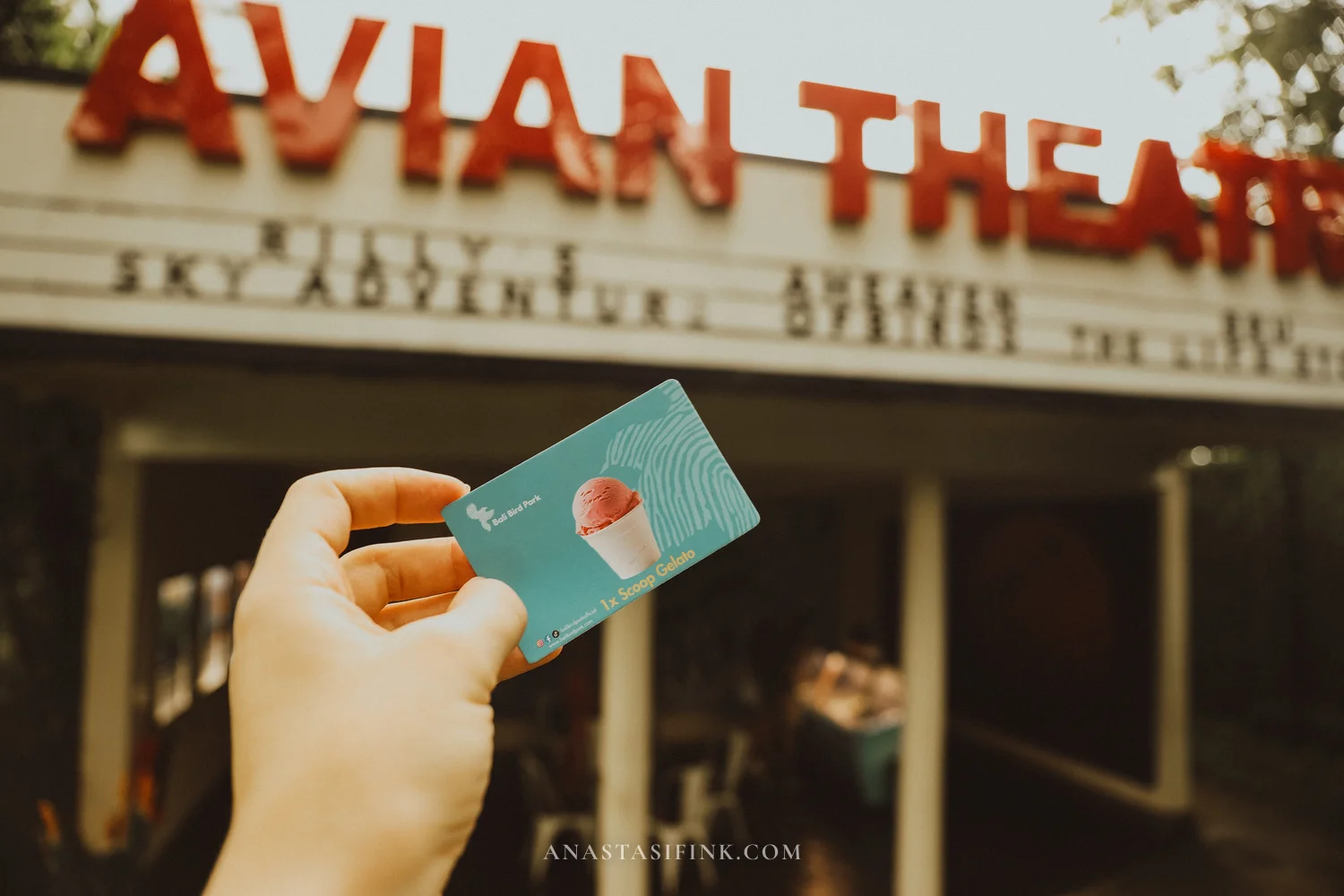
- Bonus: Free ice cream voucher at the entrance
- Website: www.balibirdpark.com
- Google Maps: Bali Bird Park
Tips
- Arrive at opening (9:00–9:30) — fewer people and more comfortable for both the birds and you
- Snap a photo of the show schedule at the entrance — makes it easier to plan your route through the park
- Bring water — the park is big and Bali is hot. That said, there’s a cafe and vending machines inside
- Wear comfortable shoes — the paths are well-maintained but uneven in places
- Be careful with large parrots — they can nip your fingers
- Don’t skip the incubator — it’s easy to walk past, but it’s really interesting
- Combine with Ubud — the park is on the way from the southern resorts to Ubud, so it’s easy to stop by en route
Photography tip: Morning light (9:00–11:00) is best for photographing birds — less contrast and softer shadows. For parrot portraits, use a telephoto lens from 70 mm. Lorikeets on your hand look great even shot on a phone.
What to See Nearby
Batubulan is a village known for stone carving and traditional Balinese Barong dance performances. If you arrive in the morning, you can catch the morning Barong show (usually starting at 9:30 at several nearby theatres) before heading into the bird park. Also right next door — literally across the road in the same parking area — is the Bali Reptile Park. Since 2017, it’s been a separate park with its own ticket.
Within a 10–15 minute ride by motorbike: the village of Celuk with silver jewelry workshops, the village of Batuan with Pura Desa Batuan temple and traditional painting, and the Sukawati Art Market. On the way to or from Ubud, you can also stop at Tegenungan Waterfall (20 minutes) or the Tegallalang Rice Terraces (40 minutes from the park).
FAQ
From Ubud, it’s about 25–35 minutes by motorbike or scooter via Batubulan. You can also book a ride through Grab/Gojek for around 80,000–120,000 IDR (~$5–8).
Adult tickets are 385,000 IDR (~$24), children’s tickets are 192,500 IDR (~$12). Children under 2 get in free. You also get a free ice cream voucher at the entrance.
A relaxed walk takes about 1.5–2 hours. If you want to catch shows and hand-feed birds in all the zones, plan for 3–4 hours. Shows run throughout the day on a set schedule.
Yes, in several areas (Guyu Guyu and others) you can hand-feed lorikeets and other birds. Food is provided by the park. Just be careful with the bigger parrots — they can bite.
Absolutely. Hand-feeding birds, the egg incubator, the 4D cinema, and the shows — kids love all of it. The grounds are well-maintained with plenty of shade and places to rest.
Try to arrive at opening (9:00) — fewer crowds and cooler temperatures. The dry season (April–October) is more comfortable, but the park is open year-round. If it rains, there are plenty of covered areas.
Yes, the park has a Komodo Experience zone with real Komodo dragons. It’s a convenient way to see the world’s largest lizards without flying to Komodo Island.
Final Thoughts
I went in expecting a typical tourist attraction and came away pleasantly surprised. The grounds are beautifully maintained, there are species you’d never see in the wild, and you can easily spend half a day here. My only regret is not staying for the free flight show.